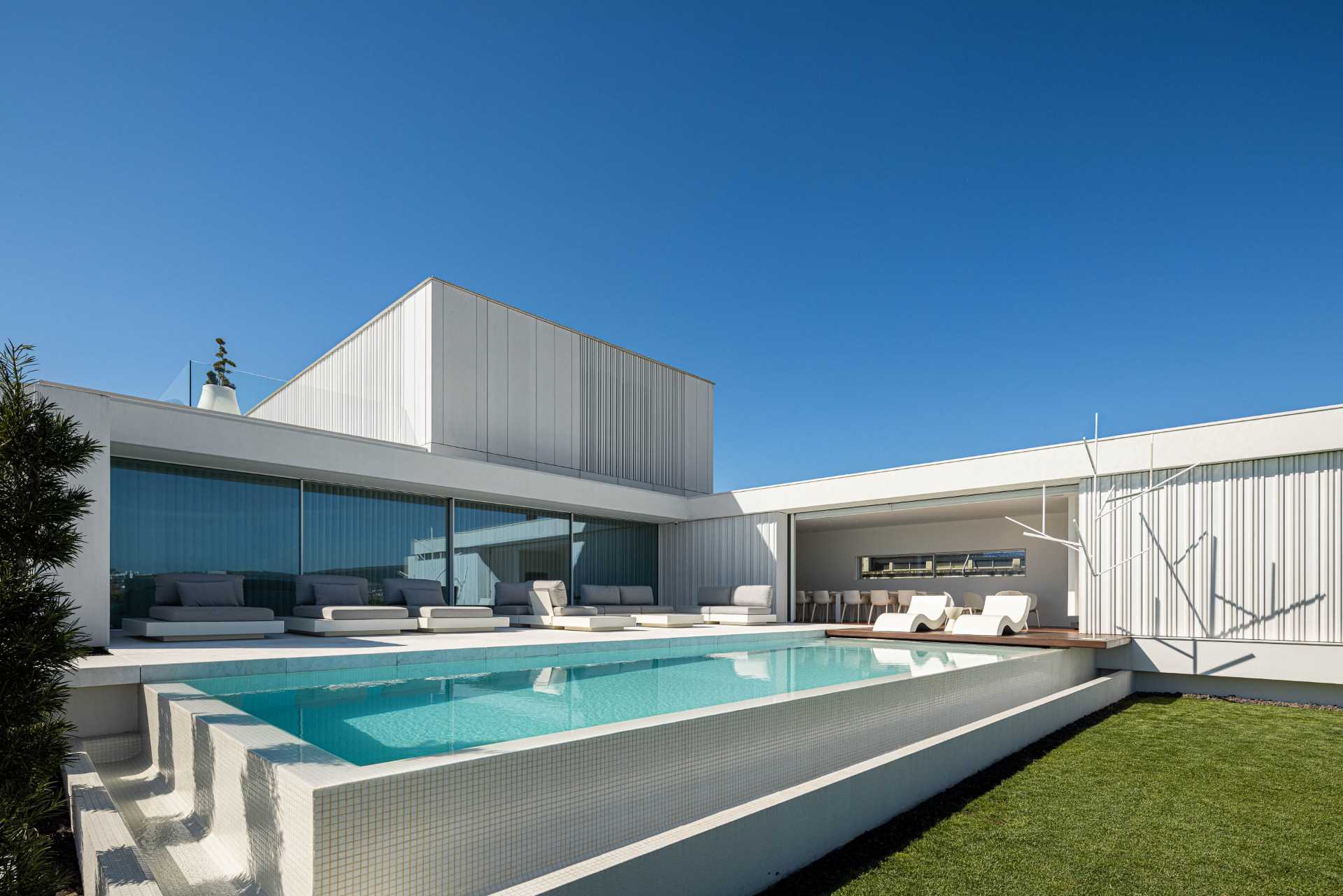
Architecture studio Risco Singular has completed a modern home in Barcelinhos, Portugal, where white concrete becomes both structure and surface. From the outset, the house presents itself as calm and deliberate, using texture rather than ornament to define its identity.
Set on the south bank of the River Cávado, the home sits within a broad green landscape shaped by centuries of history. In the distance, landmarks like the Palace of the Dukes of Braganca and a medieval tower quietly frame the setting, grounding the project in its regional context without competing for attention.
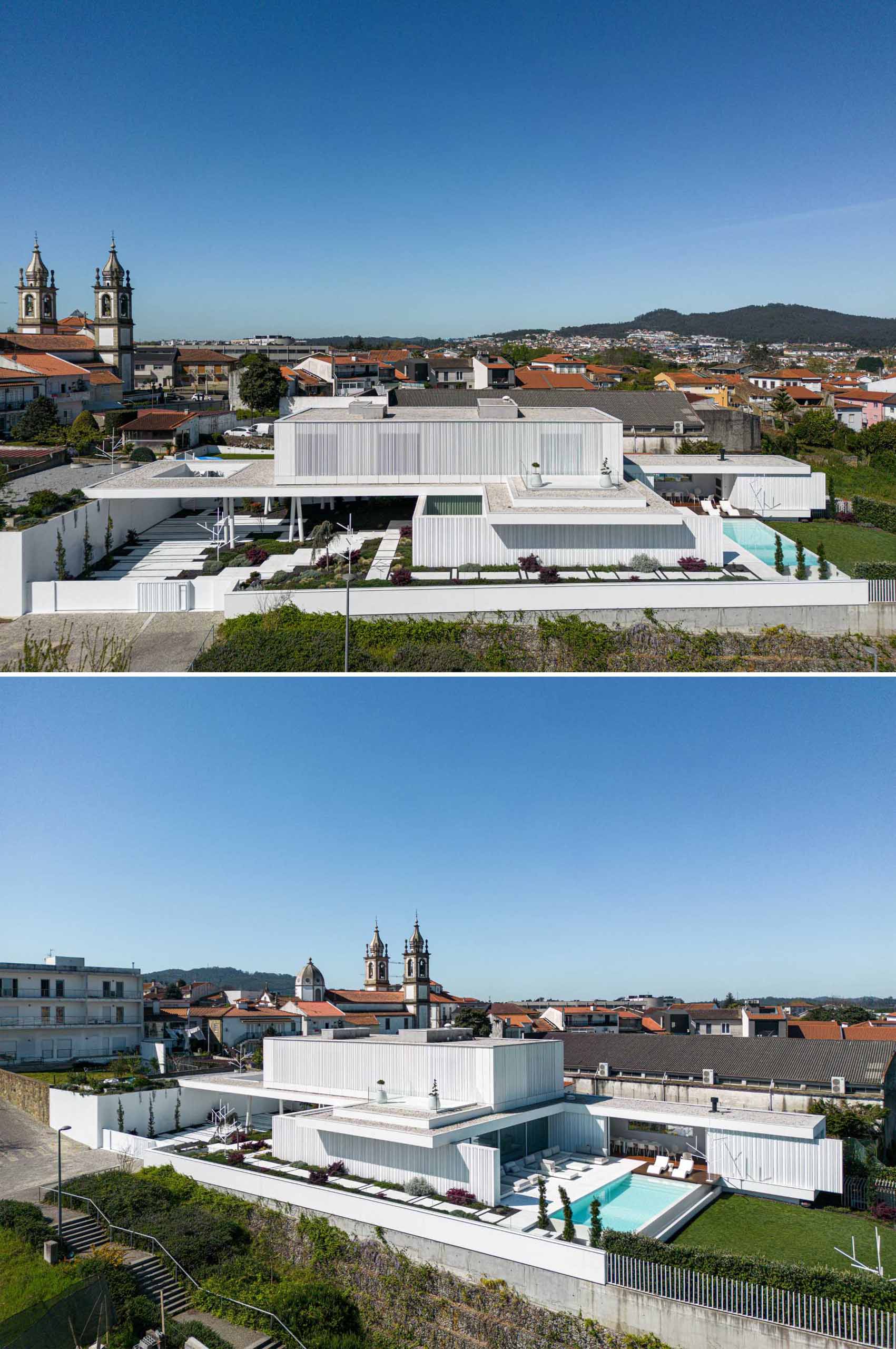
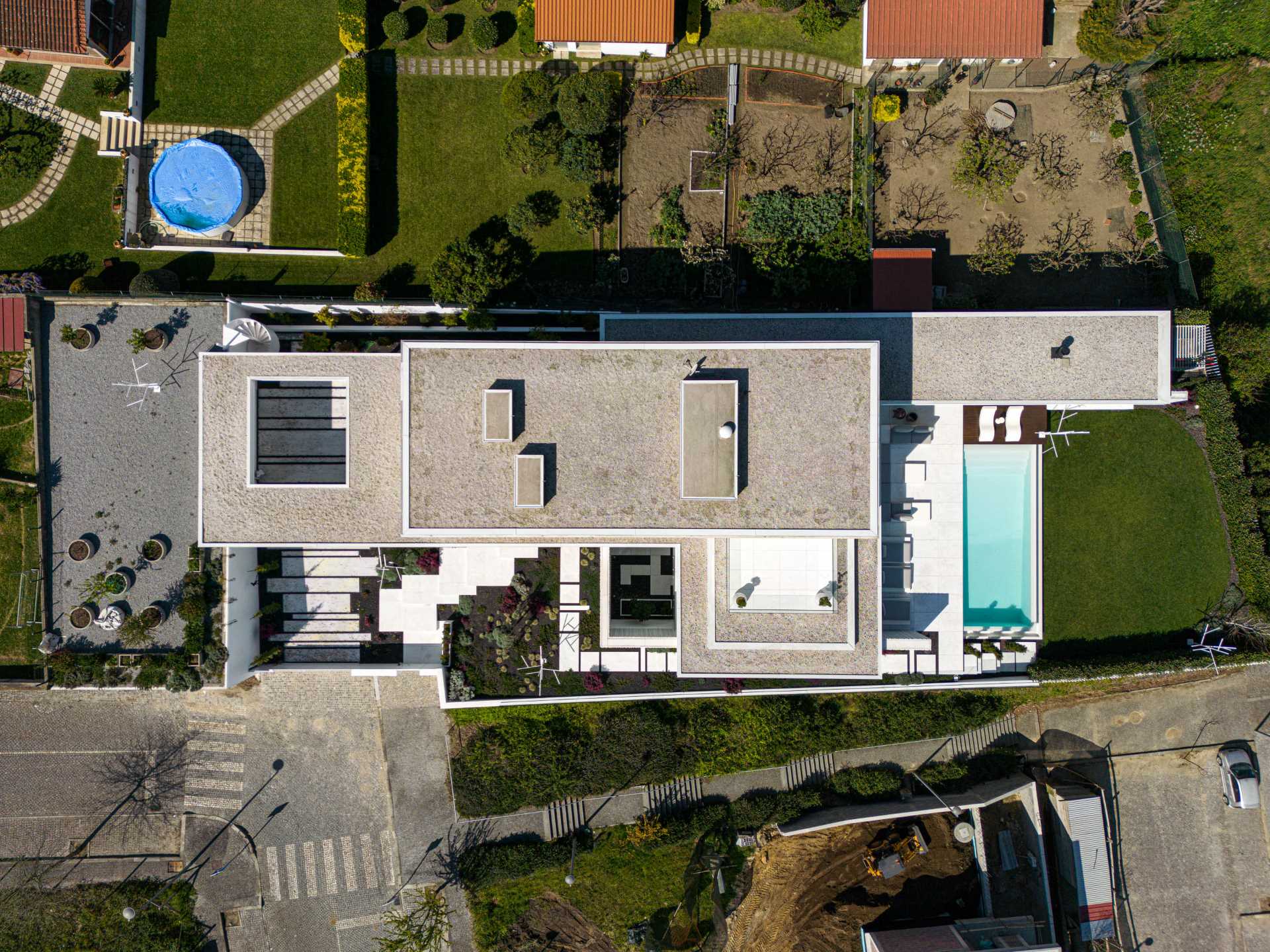
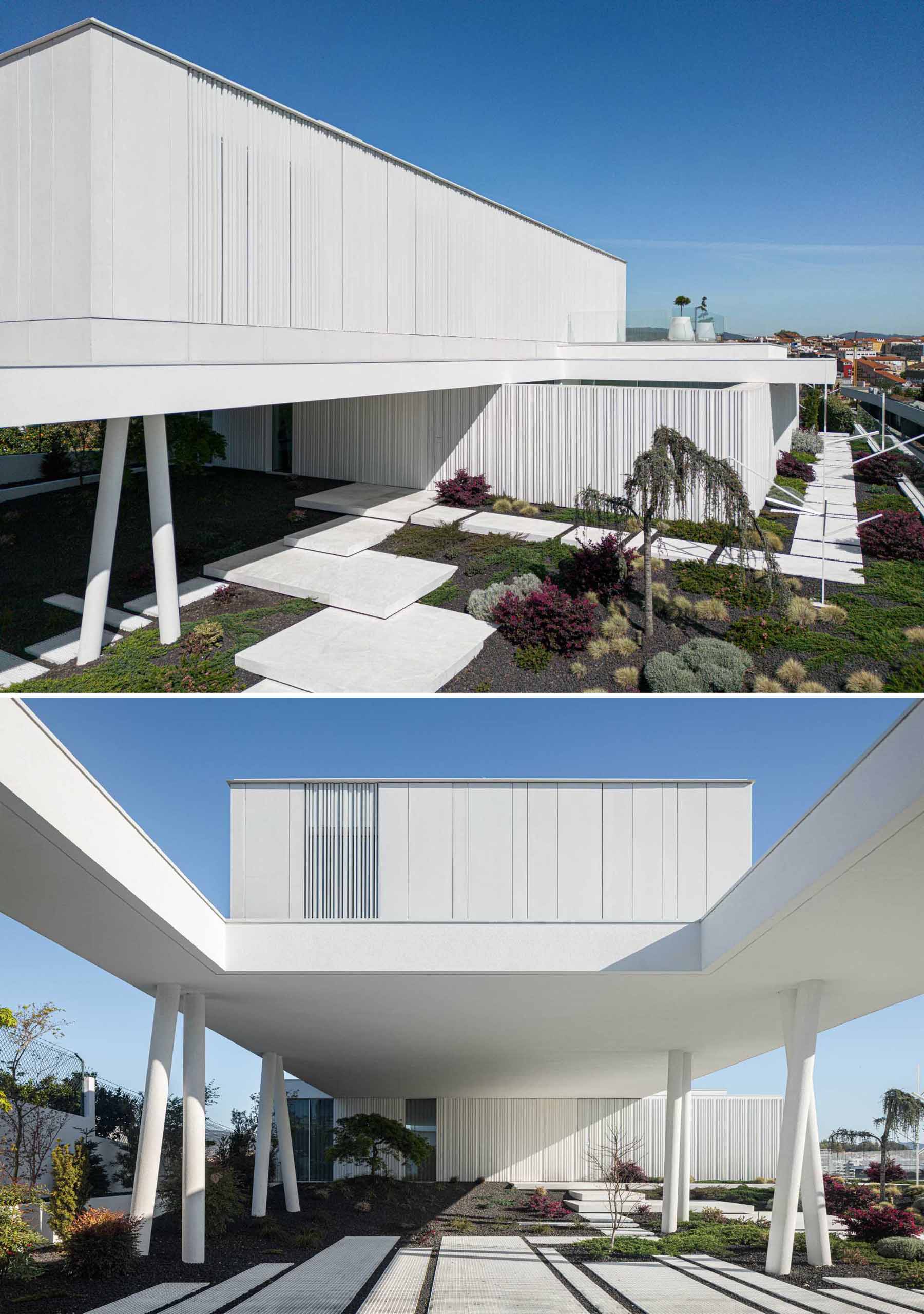
From above, the layout of the home becomes immediately legible. The entrance is positioned to the left, while the swimming pool and yard unfold to the right, creating a clear separation between arrival and leisure. This clarity continues throughout the design, where circulation and outdoor spaces are treated as part of the architecture rather than an afterthought.
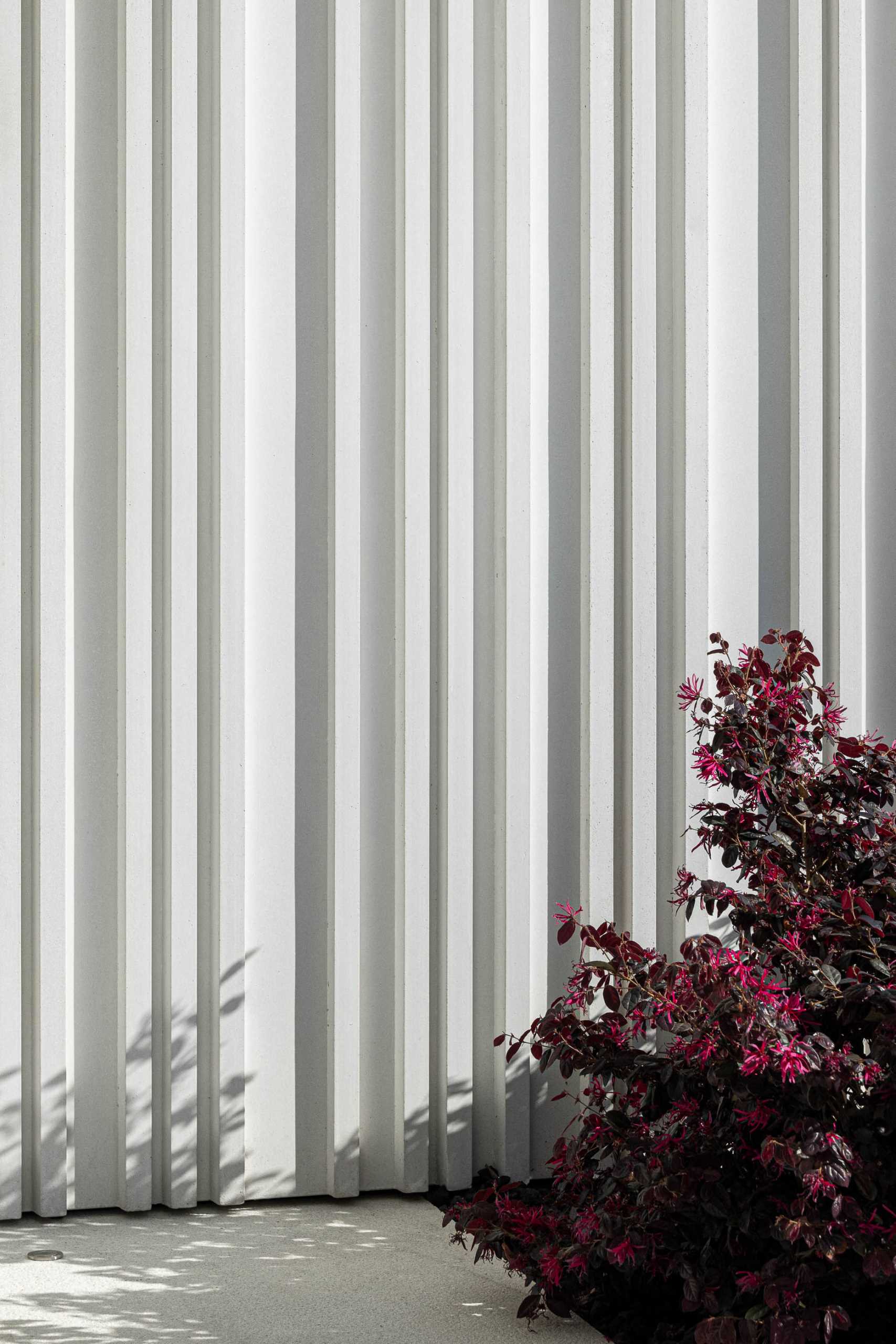
A side view highlights the home’s defining feature. Vertical stripes carved into white concrete wrap the exterior, giving the building a sculptural presence that shifts with the light. As the sun moves, shadows settle into the grooves, adding depth and rhythm to what might otherwise feel monolithic.
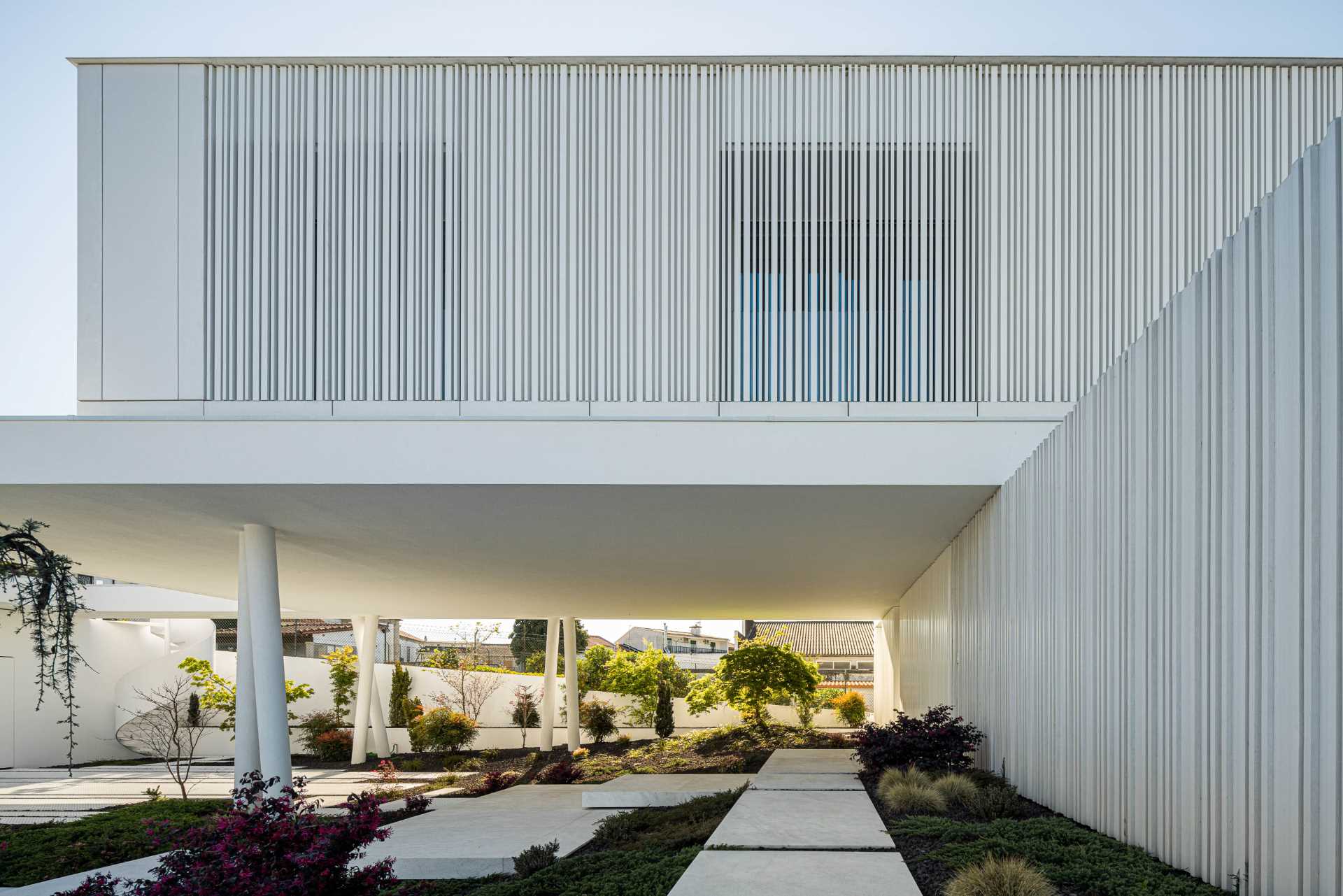
Visitors are guided in by landscaped pathways that soften the geometry of the structure. The path leads beneath the upper level to the front door, creating a moment of compression before entry, while another route runs along the side of the house, reinforcing a slow and intentional approach.
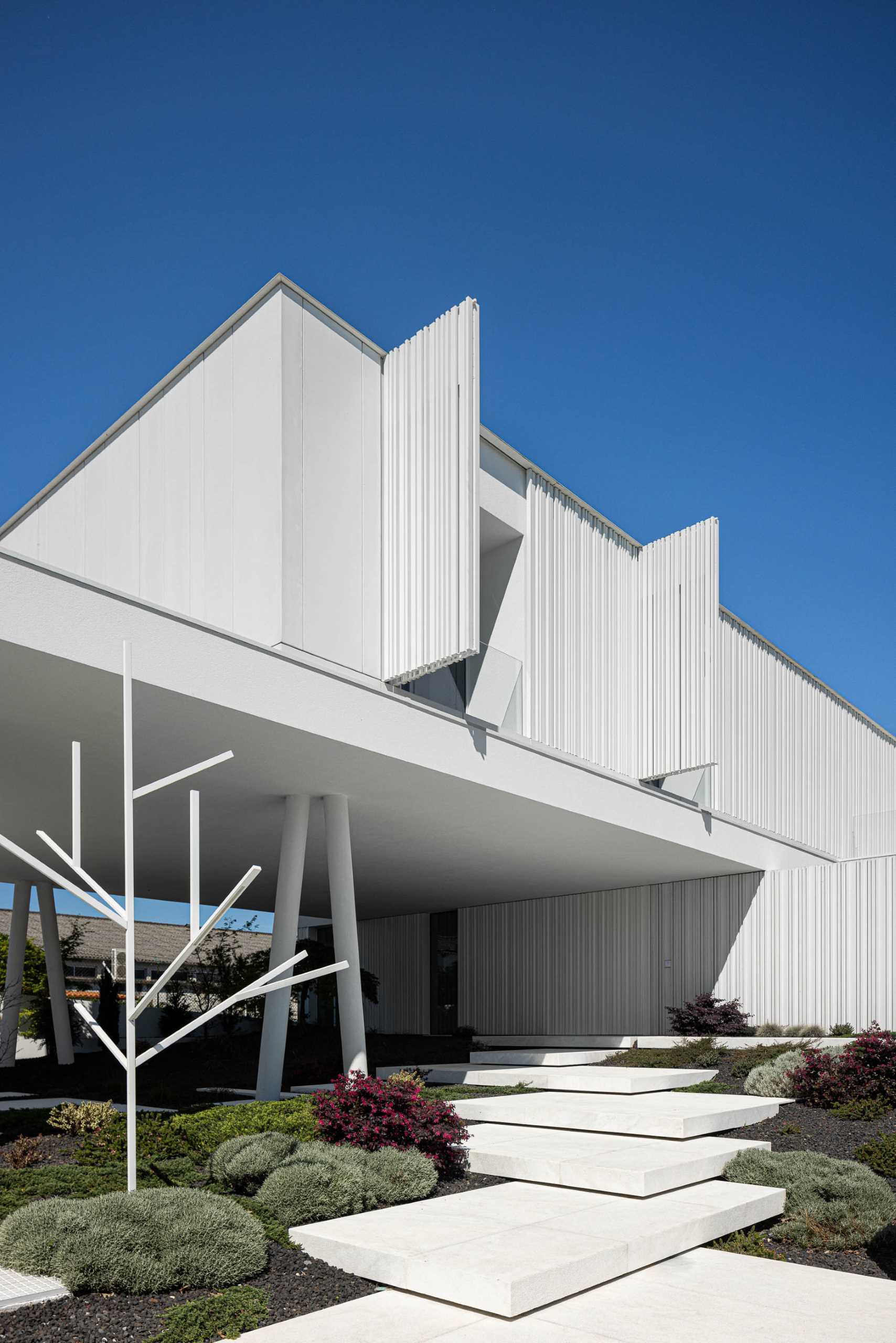
Large white shutters sit flush with the exterior, almost disappearing when closed. When opened, they reveal generous windows while maintaining the clean lines of the facade, allowing the house to remain visually composed even as it opens itself to light and air.
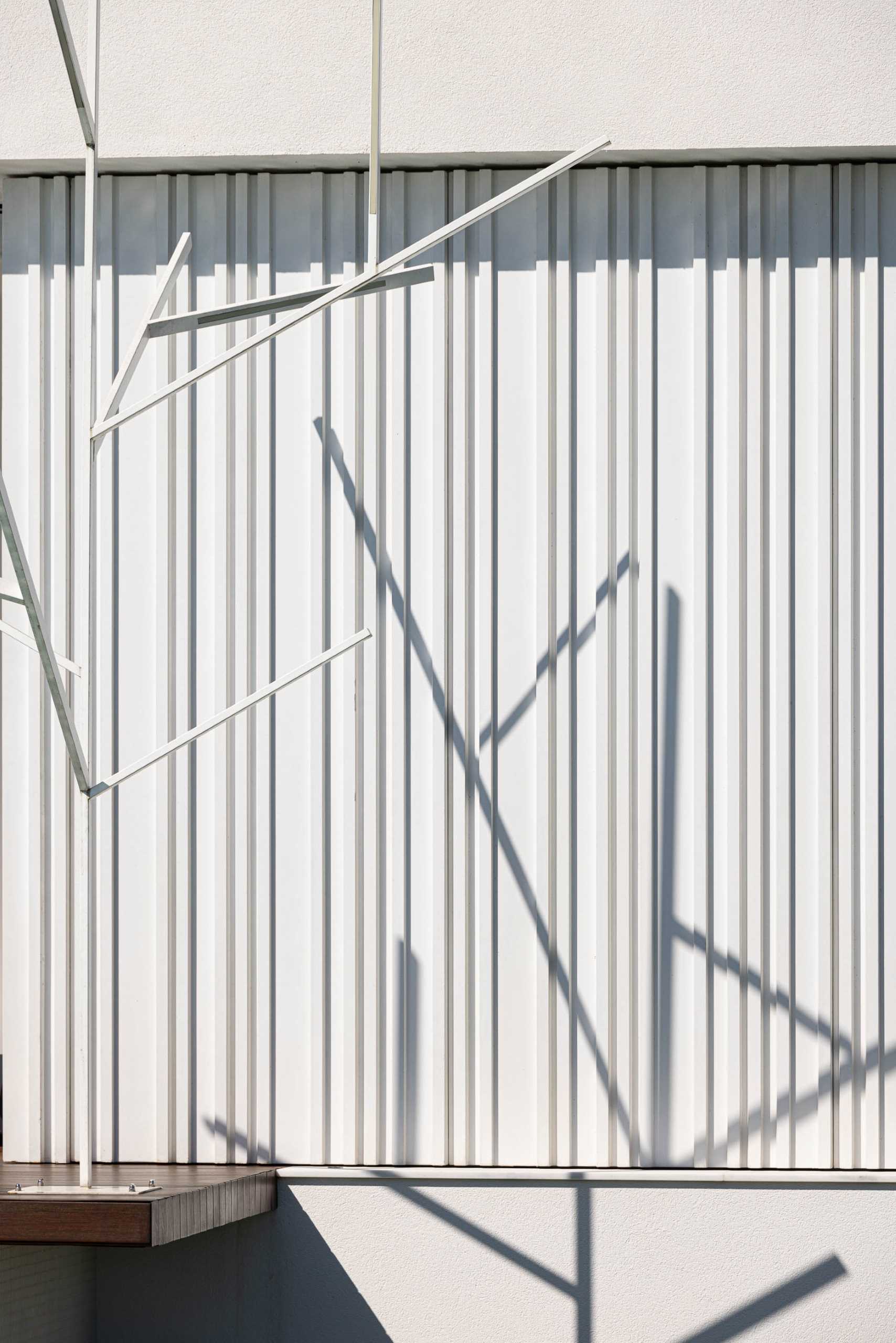
Up close, the vertical stripes reveal their true character. The depth of each line is accentuated by shadow, turning the walls into a constantly changing surface. What reads as minimal from a distance becomes richly tactile when experienced at human scale.
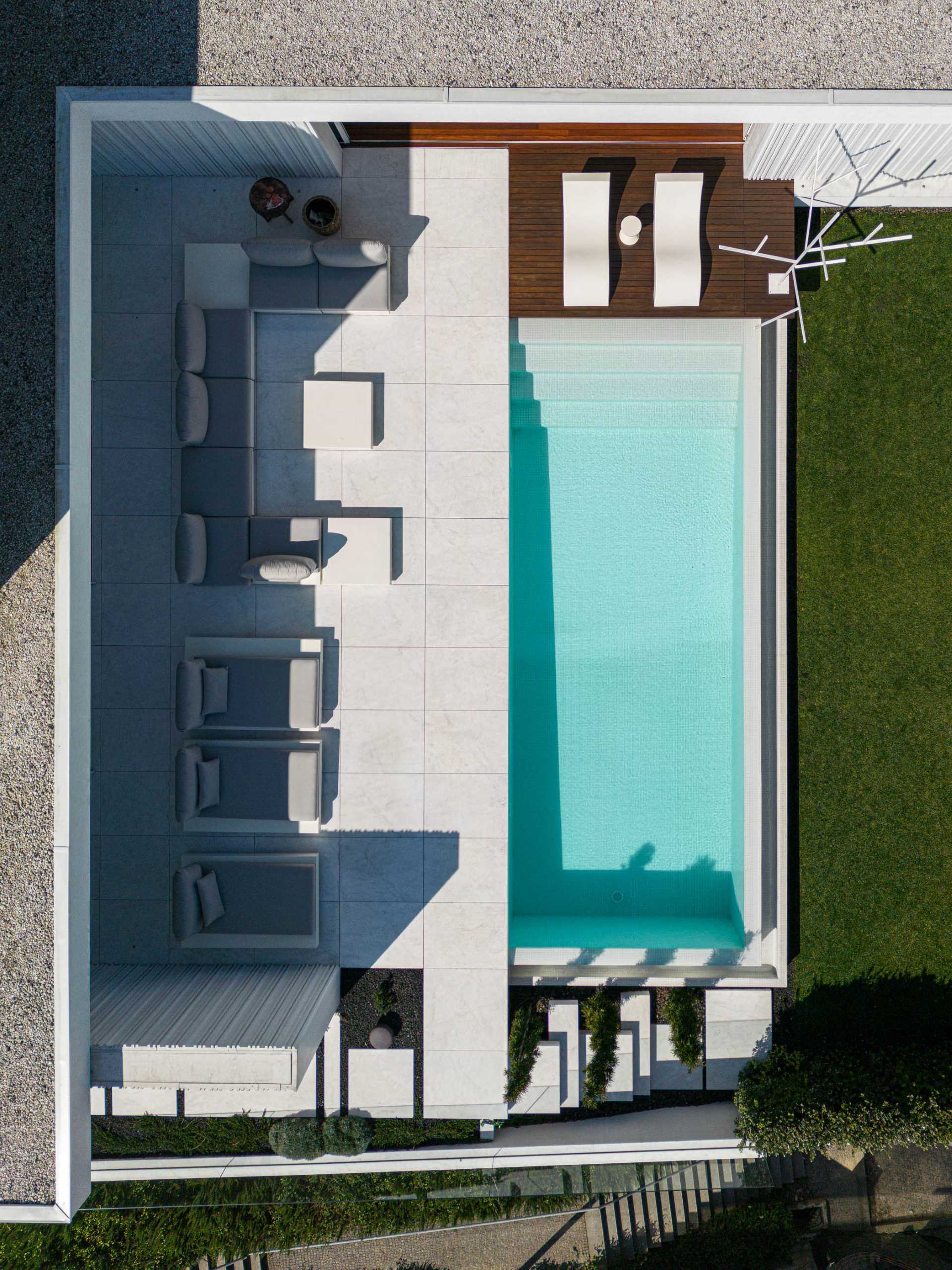
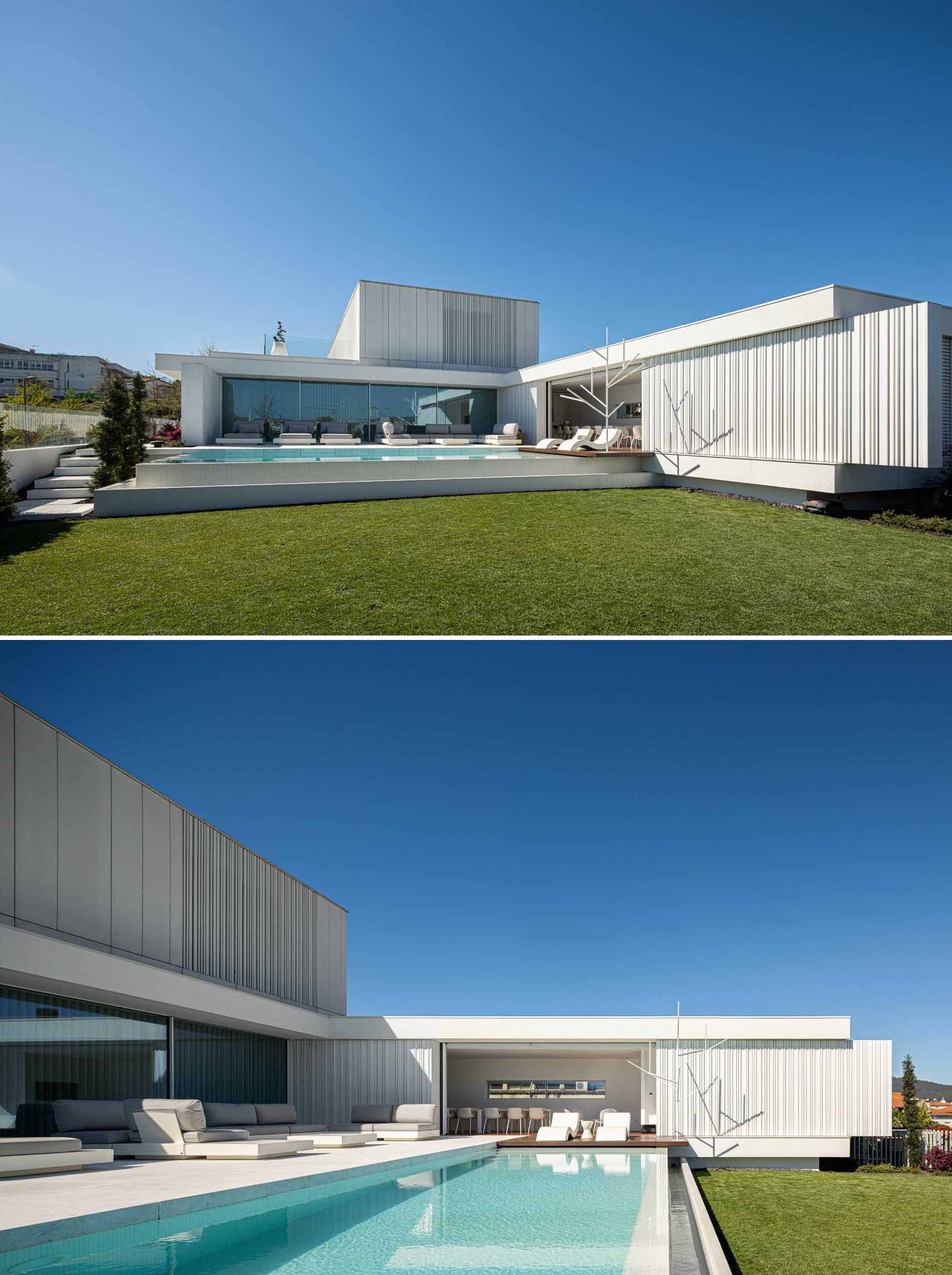
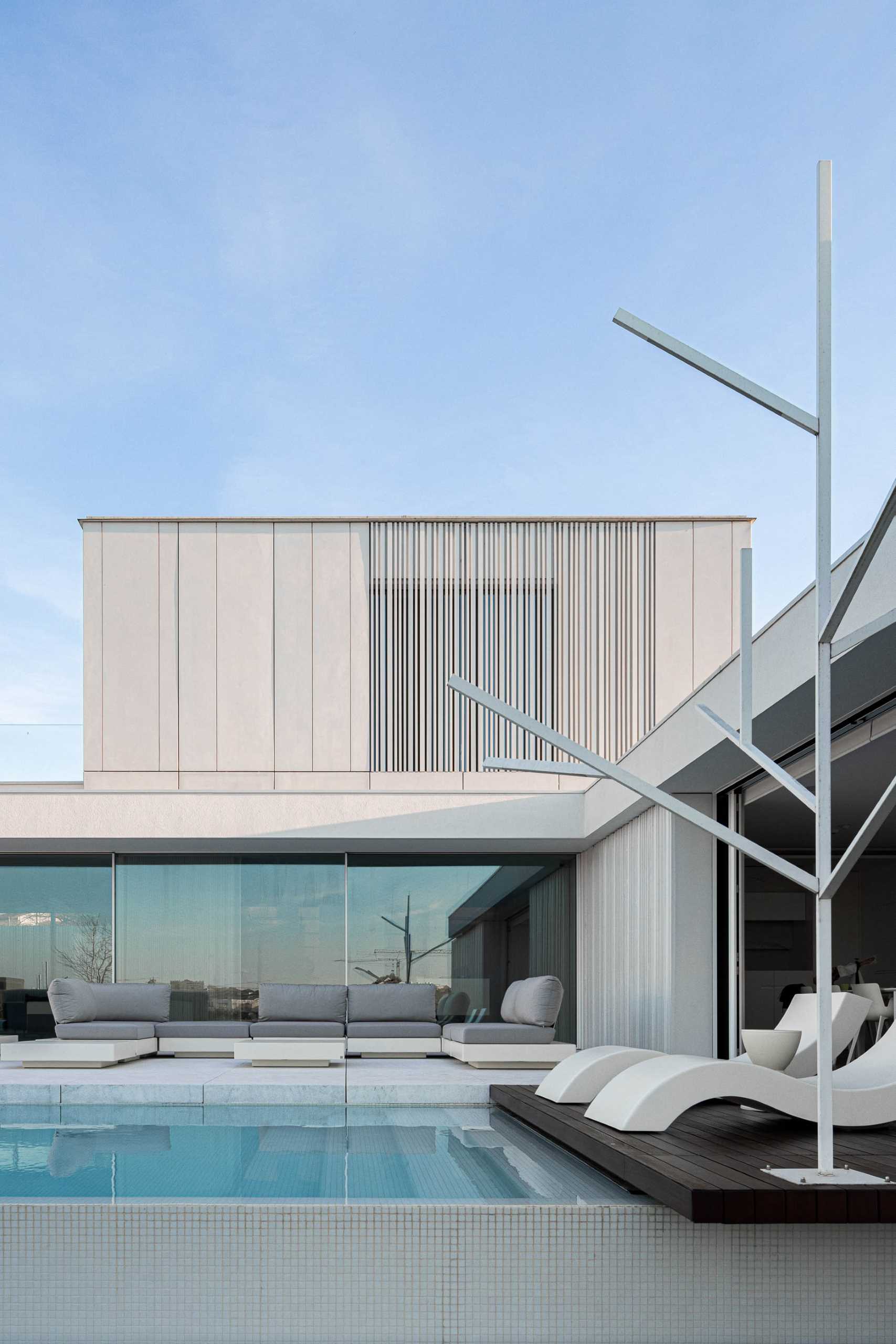
At the rear, the house wraps itself around the pool and yard, forming a protected outdoor zone. Expansive glass walls slide open, allowing the interior living spaces to flow directly outside. This seamless indoor and outdoor connection makes the pool feel like an extension of the living room rather than a separate feature.
Inside, the striped concrete continues. In the living room, the textured wall becomes a backdrop for the television, proving that a functional element can still sit within a highly considered architectural gesture.
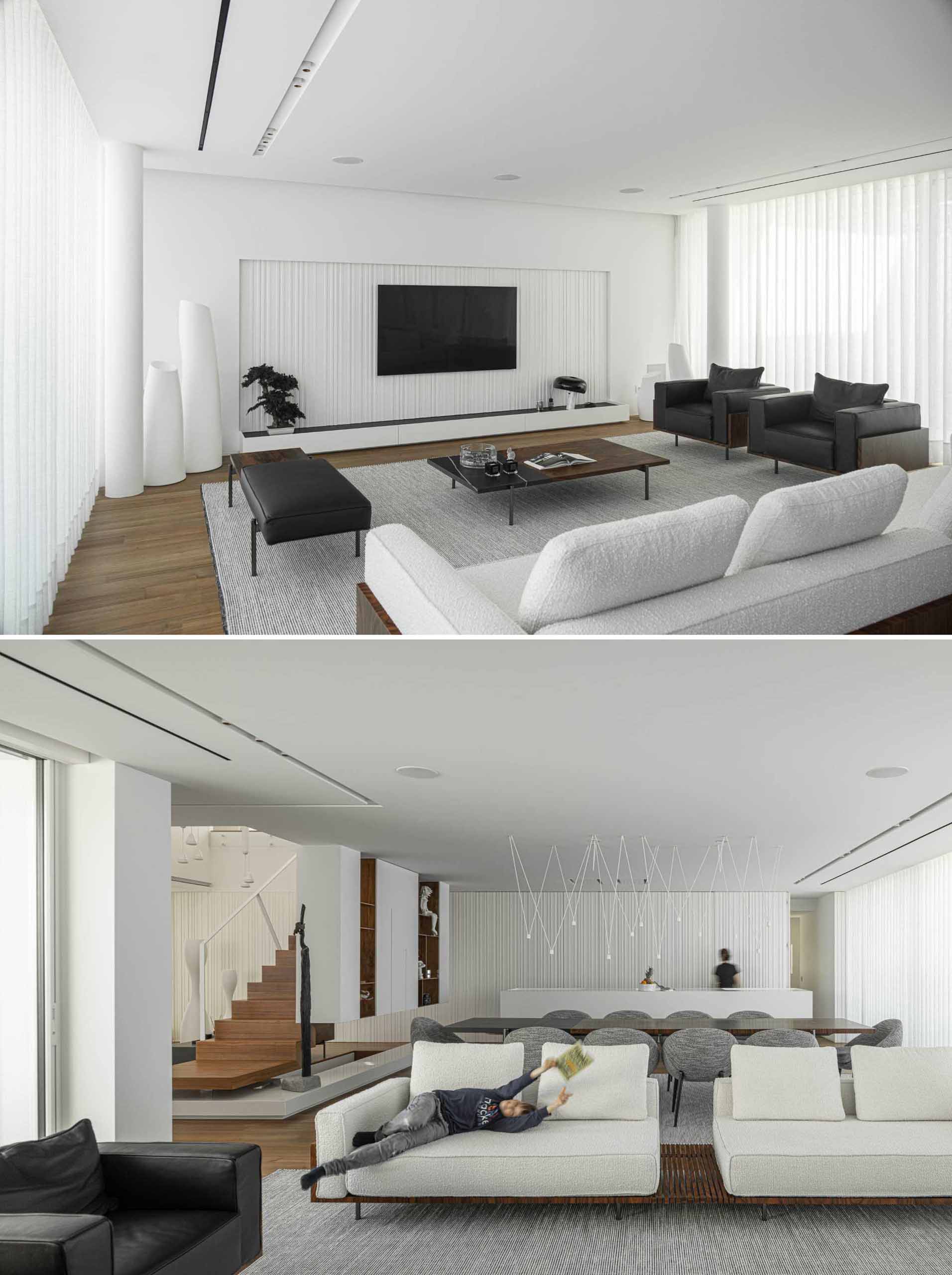
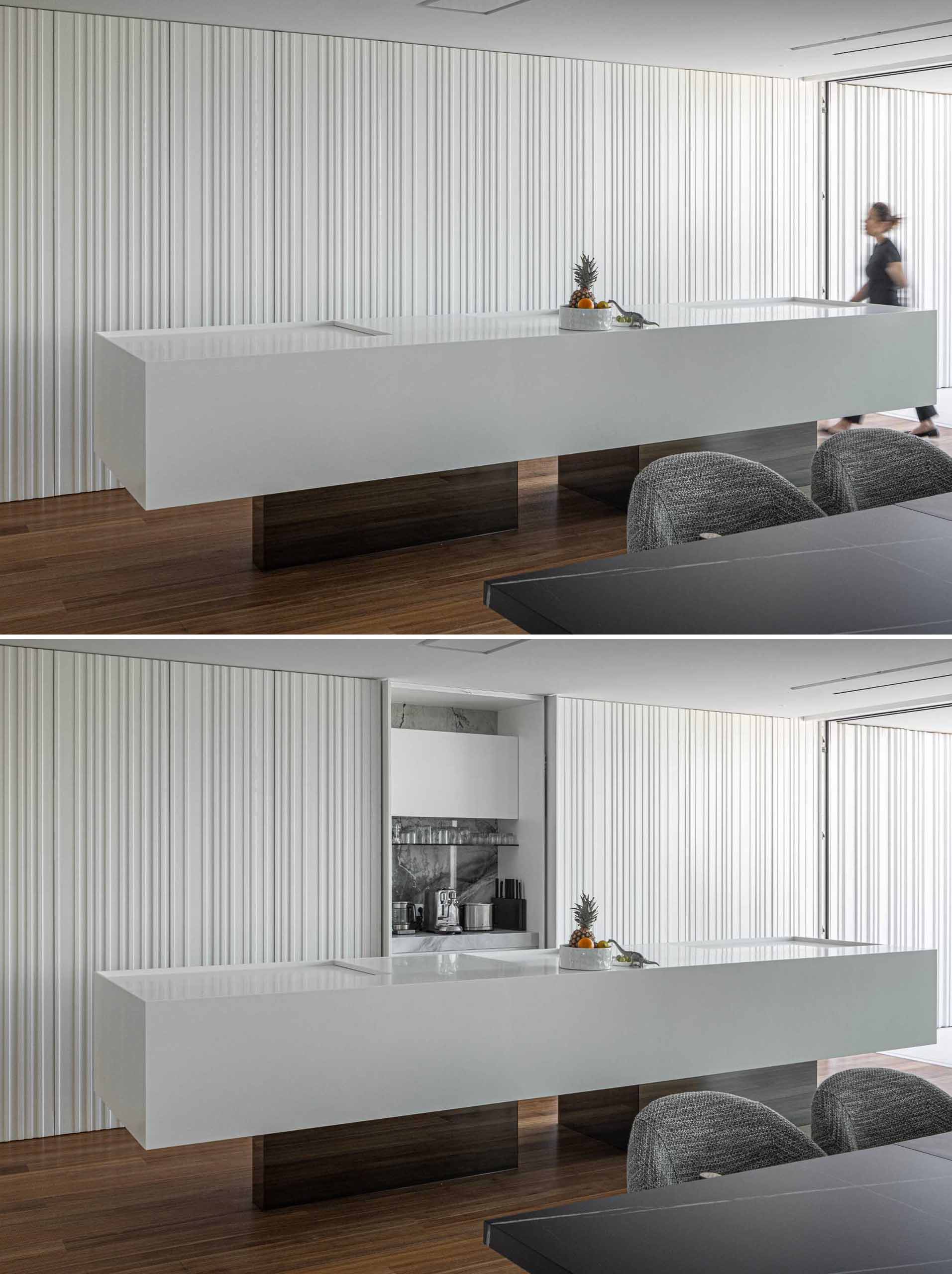
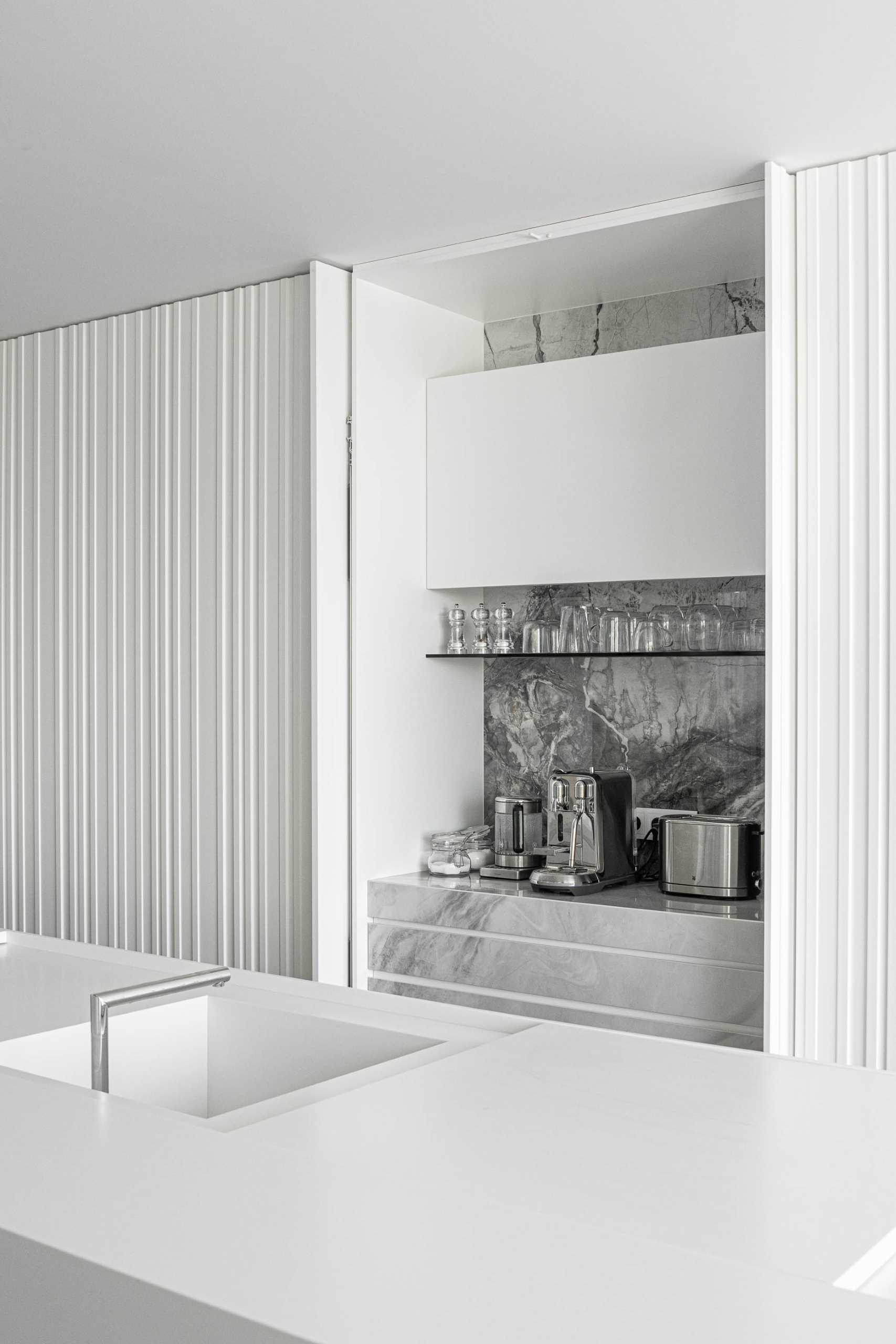
The kitchen carries this idea further. Here, the textured wall discreetly conceals cabinetry, allowing the space to read as sculptural rather than utilitarian. A carefully chosen sculptural light introduces a moment of softness and artistry against the crisp white surfaces.
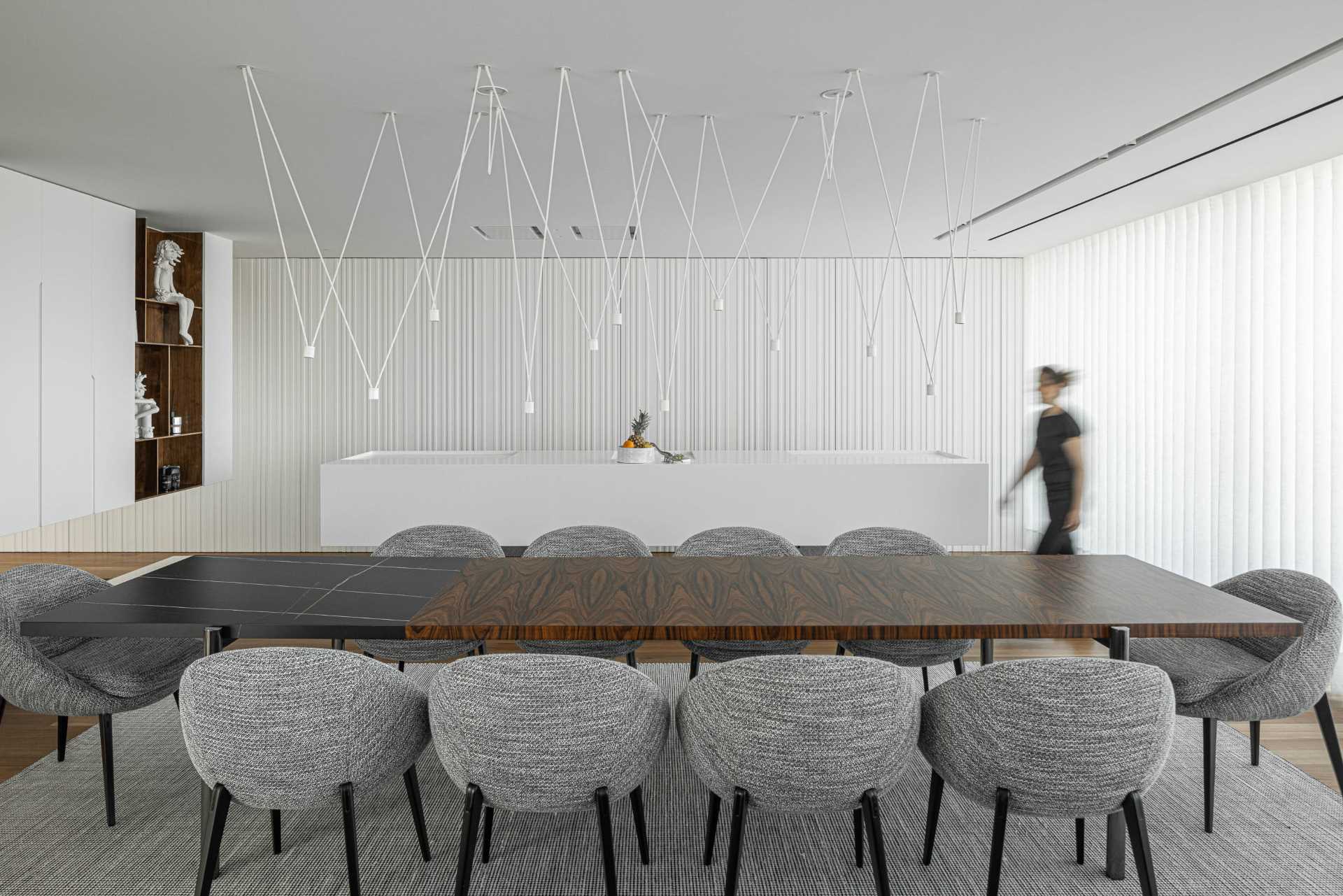
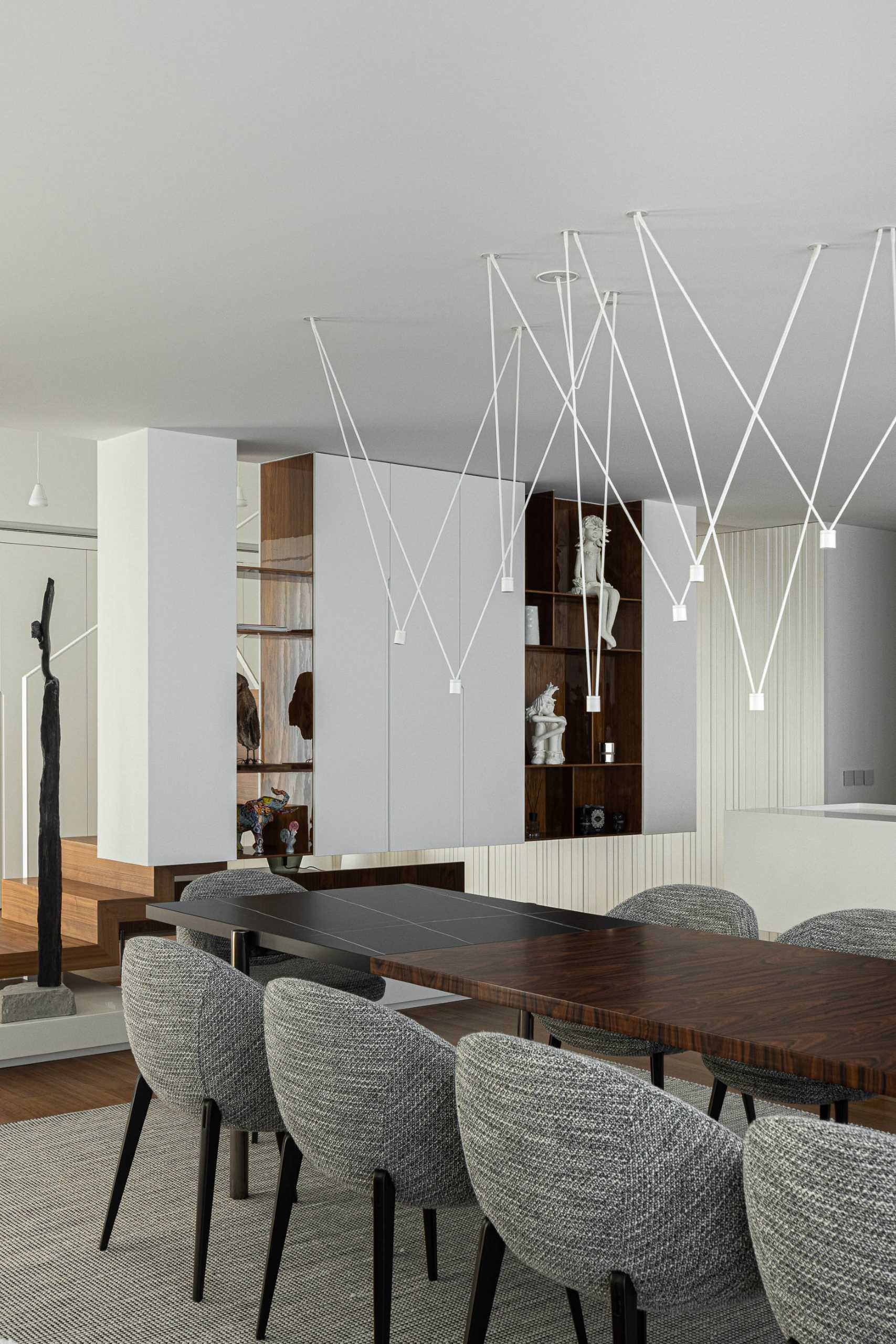
Anchoring the kitchen is a large minimalist island with a smooth white finish. Its simplicity allows it to act as both a workspace and a gathering point, reinforcing the kitchen’s role as part of the social heart of the home.
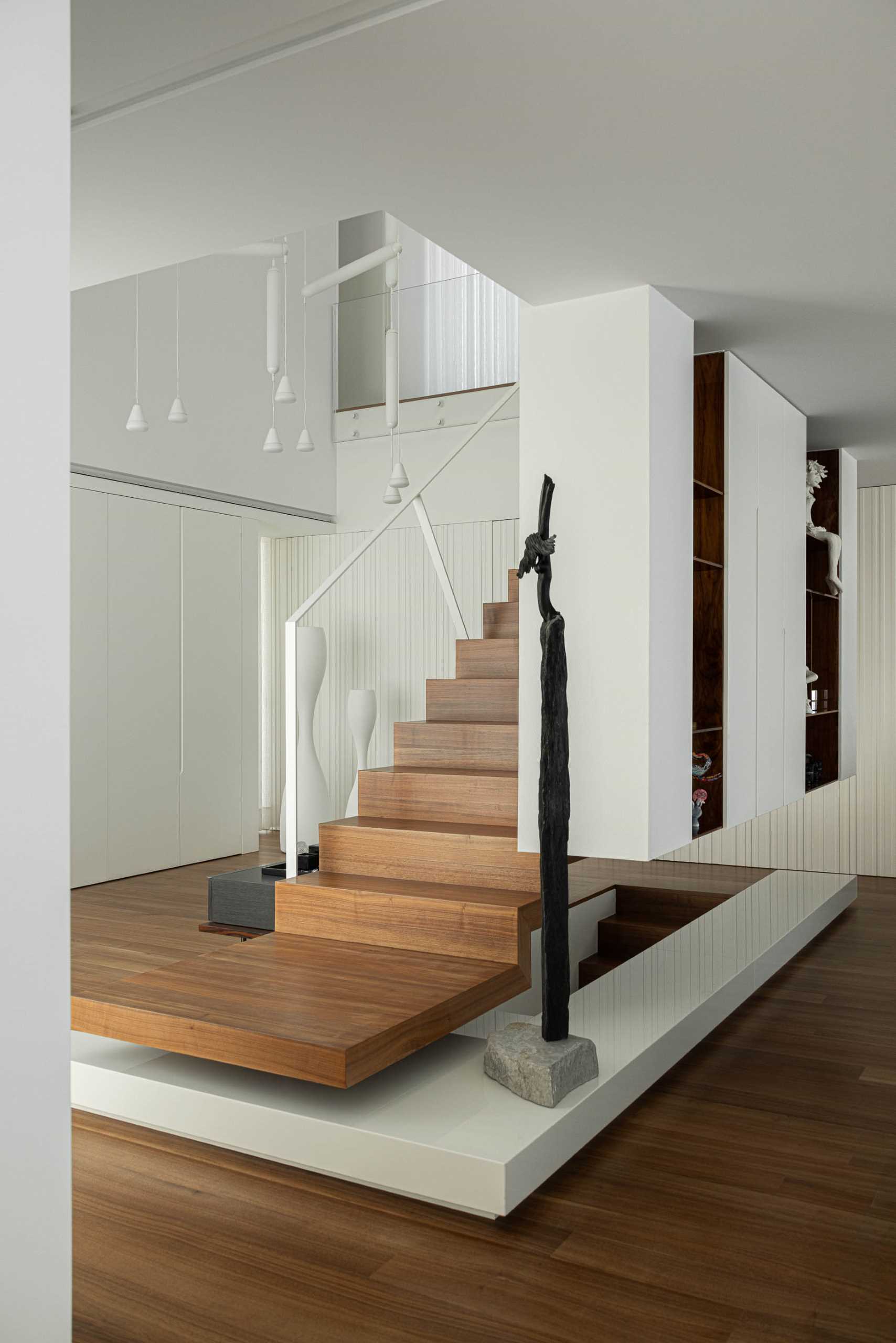
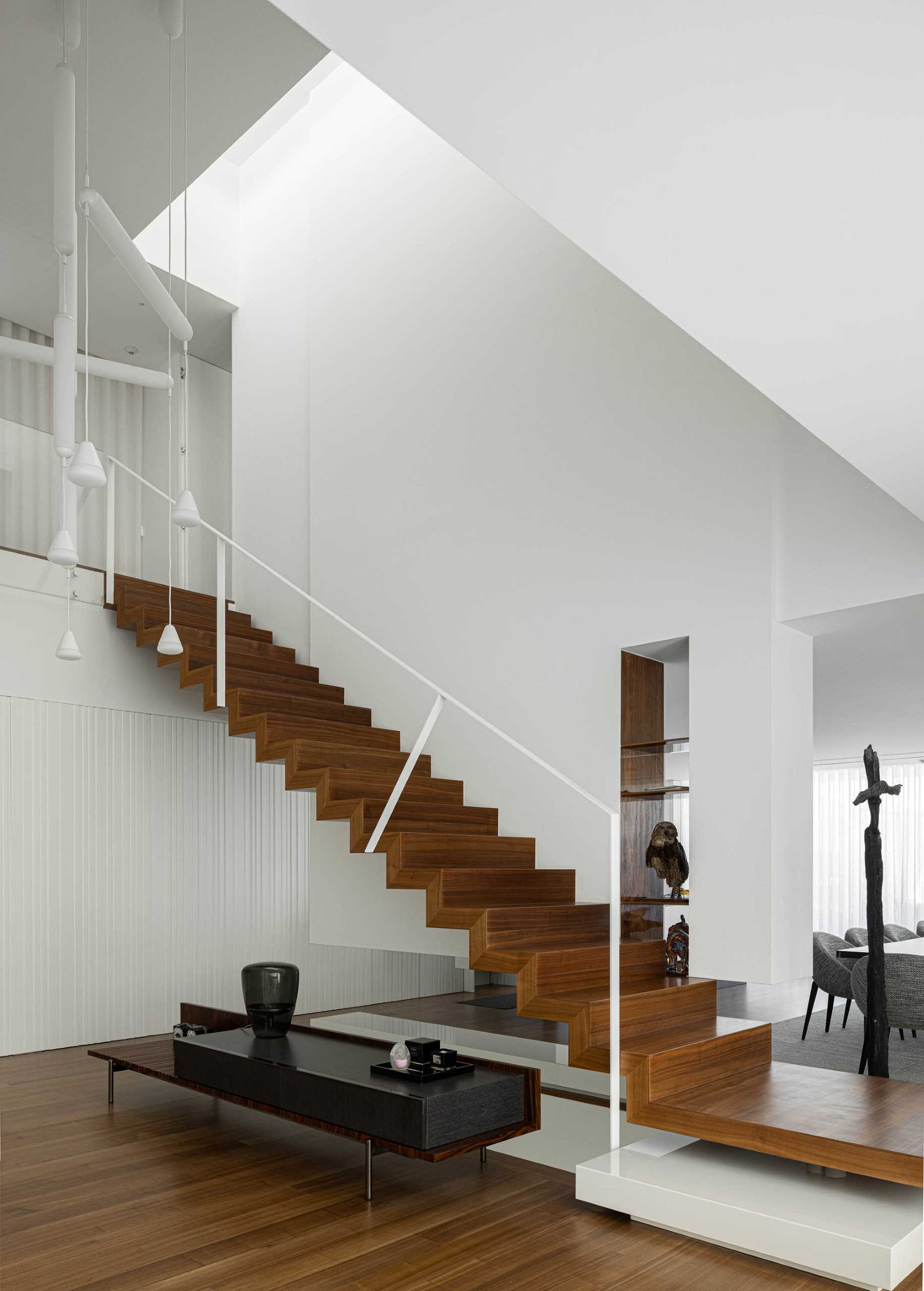
Wood stairs with white handrails connect the shared areas below to the more private spaces upstairs. The warmth of the timber introduces contrast, subtly breaking up the home’s restrained palette while maintaining its calm atmosphere.
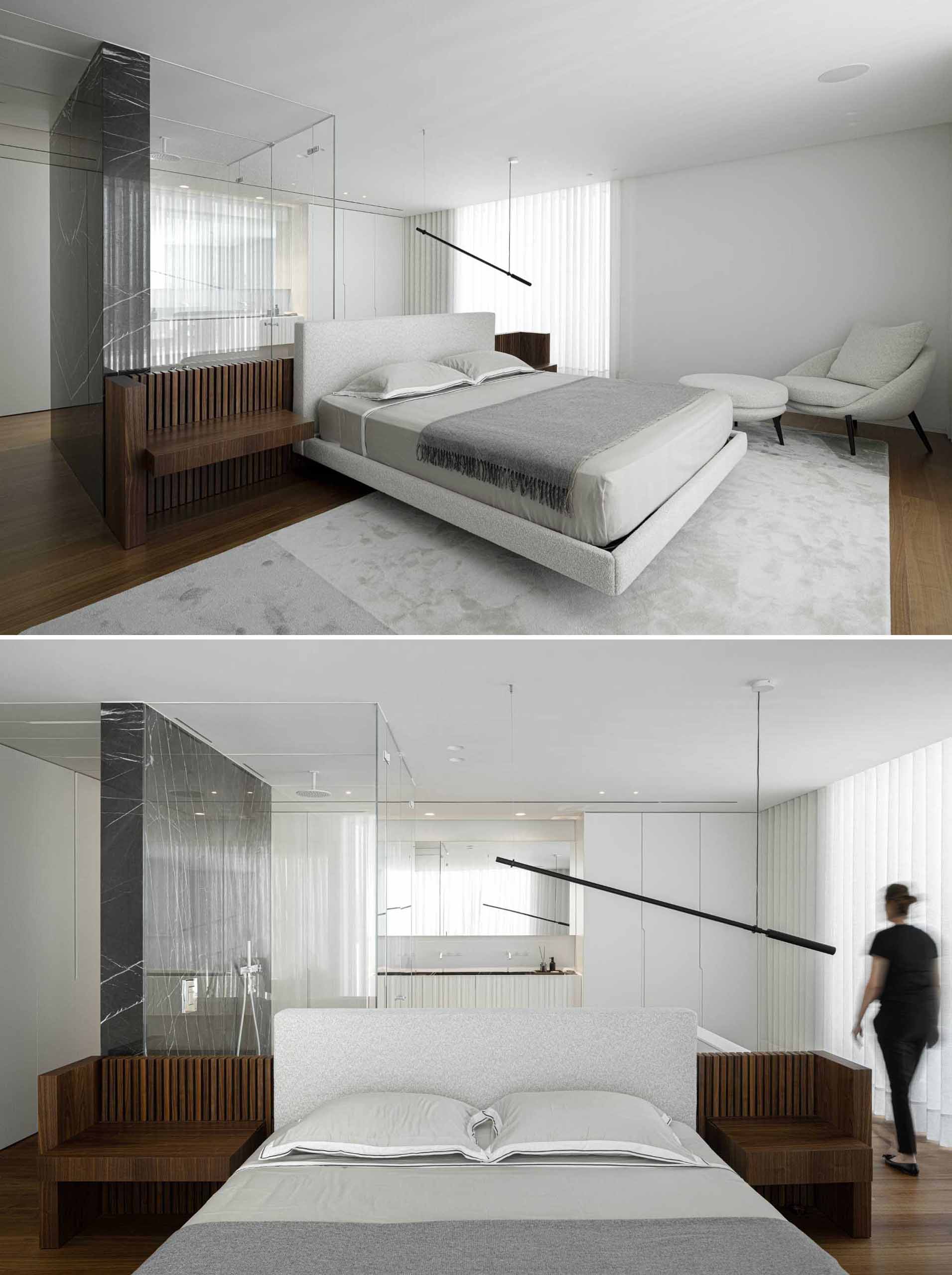
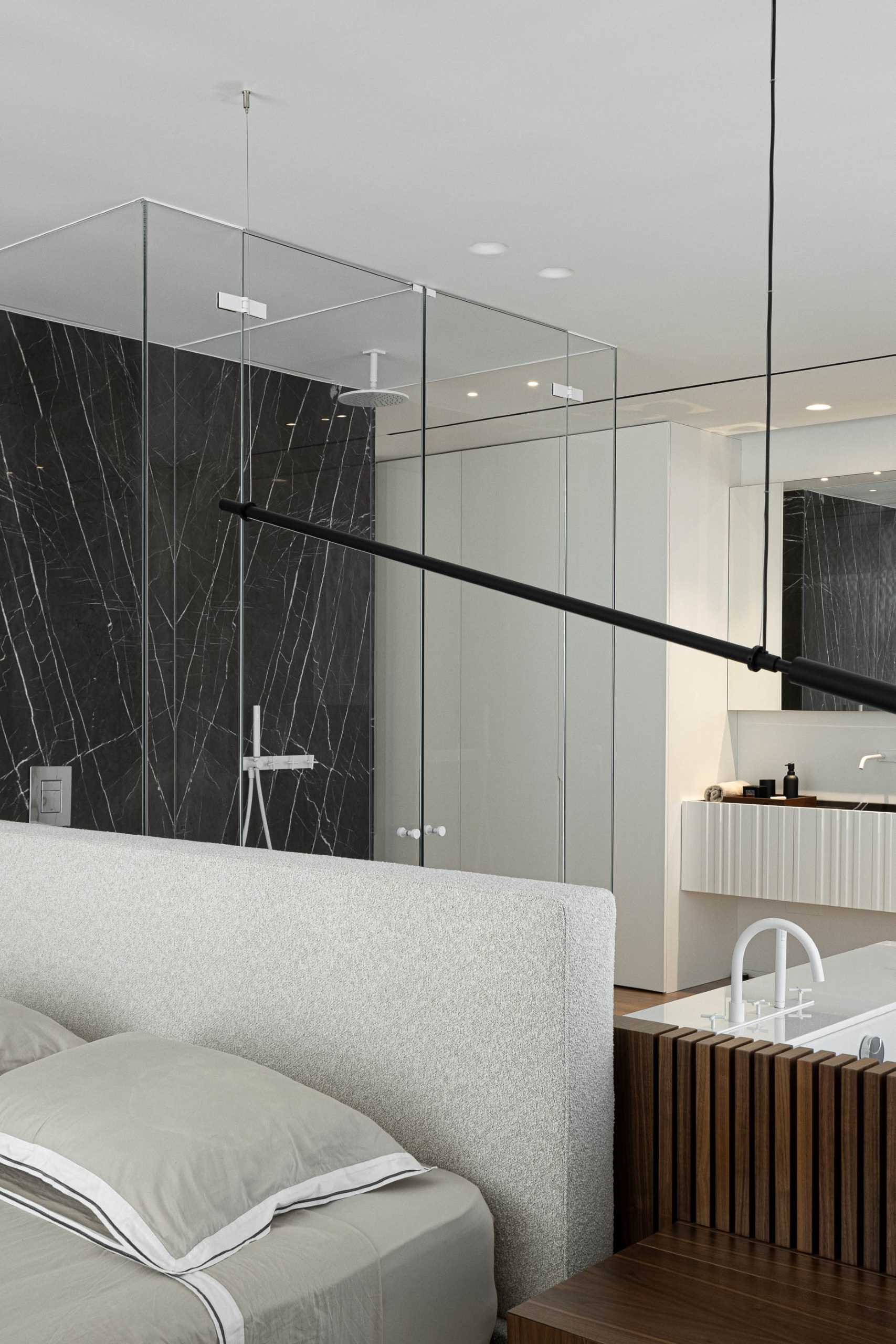
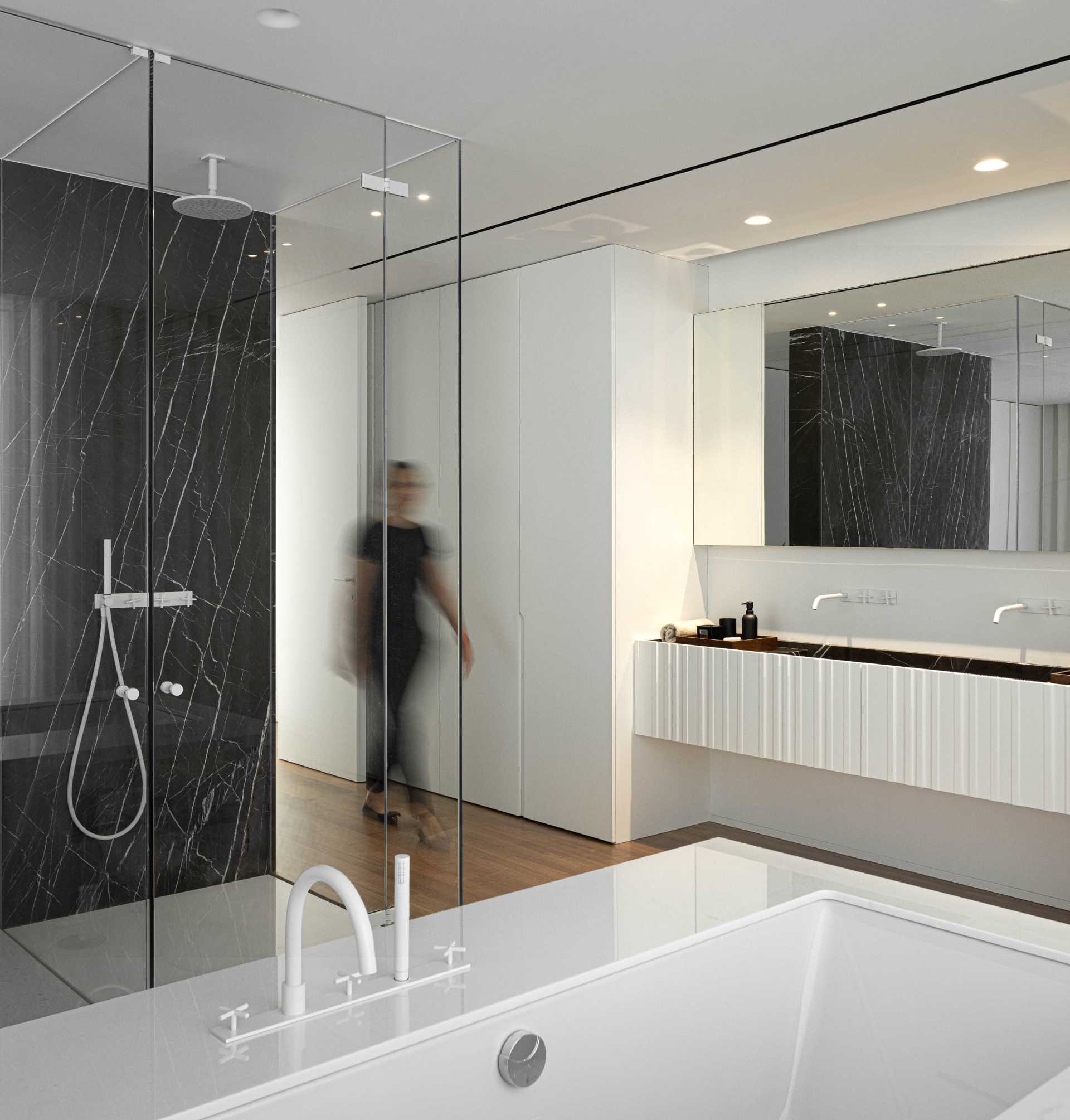
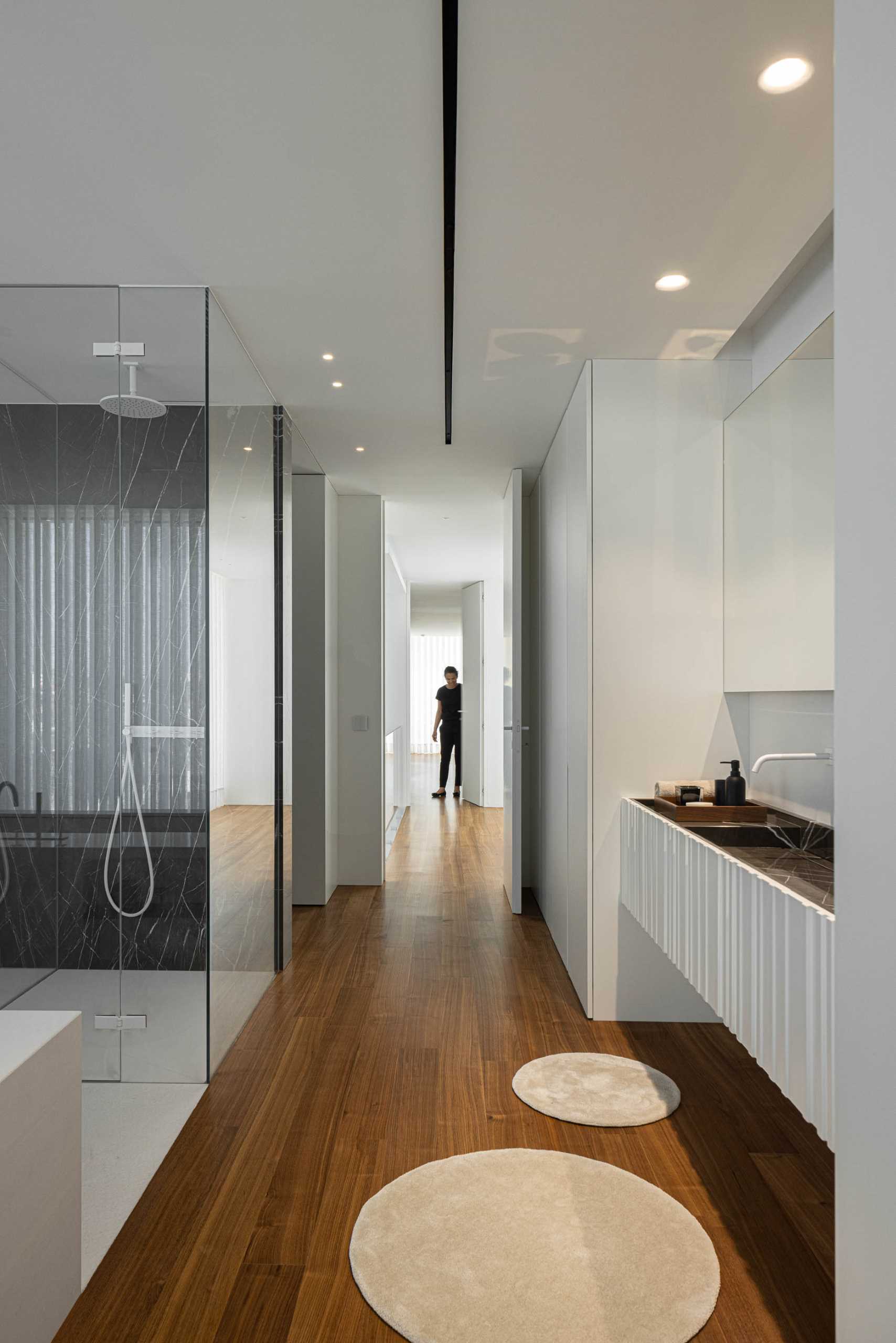
In the primary bedroom, the bed is positioned to face the window, emphasizing light and outlook. Behind it, an ensuite bathroom is partially revealed, with a glass enclosed shower and a vanity flanked by storage cabinets, creating a layered and functional retreat without visual clutter.
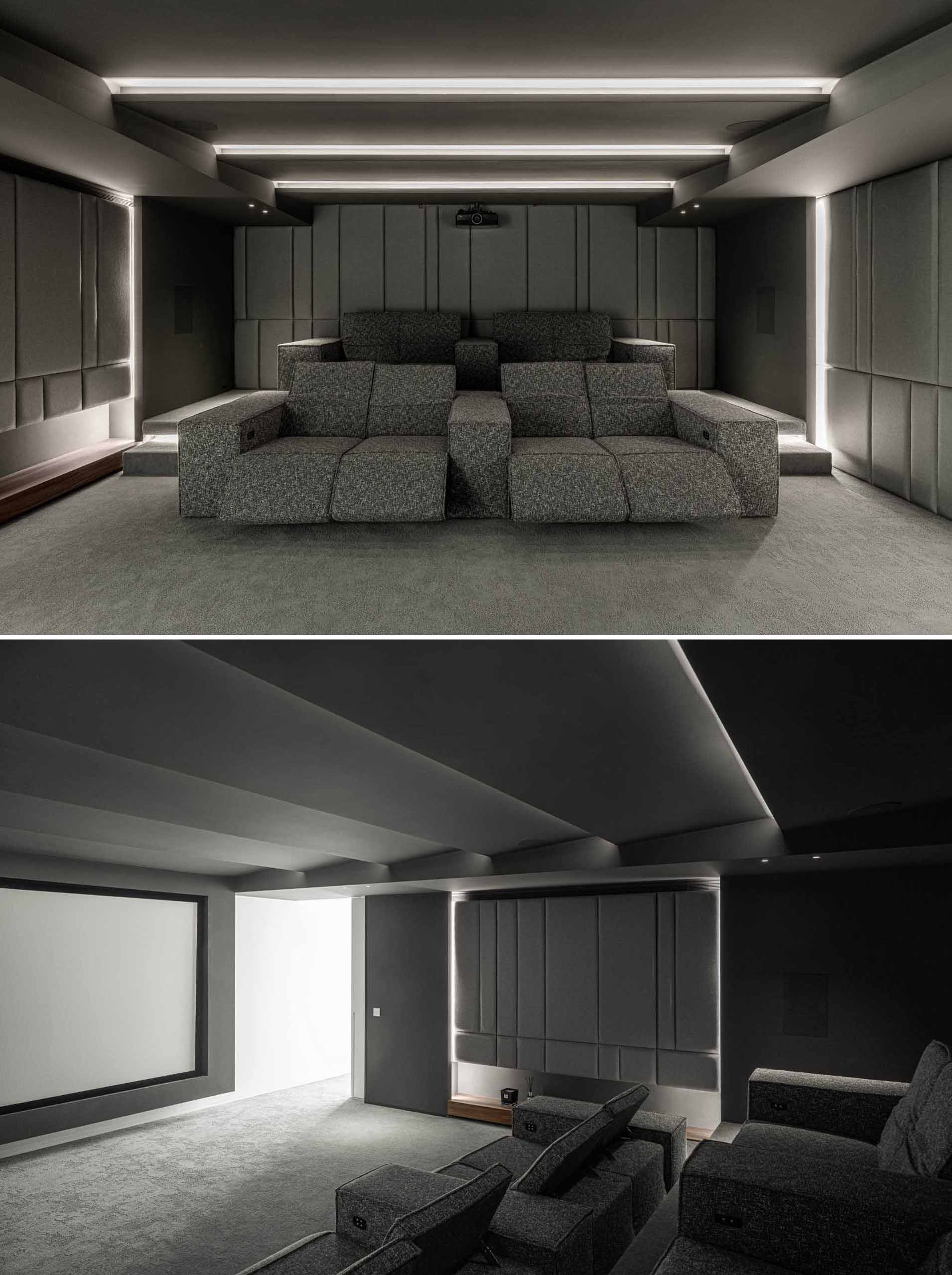
The home also includes a dedicated cinema room, where the mood shifts entirely. Dark walls and sound absorbing panels create an immersive environment, offering a dramatic contrast to the bright, textured spaces found elsewhere in the house.
By using concrete stripes as both an exterior statement and an interior language, this home explores how a single material idea can shape an entire living experience.