A Madrid House Designed Around Geometry That Feels Natural

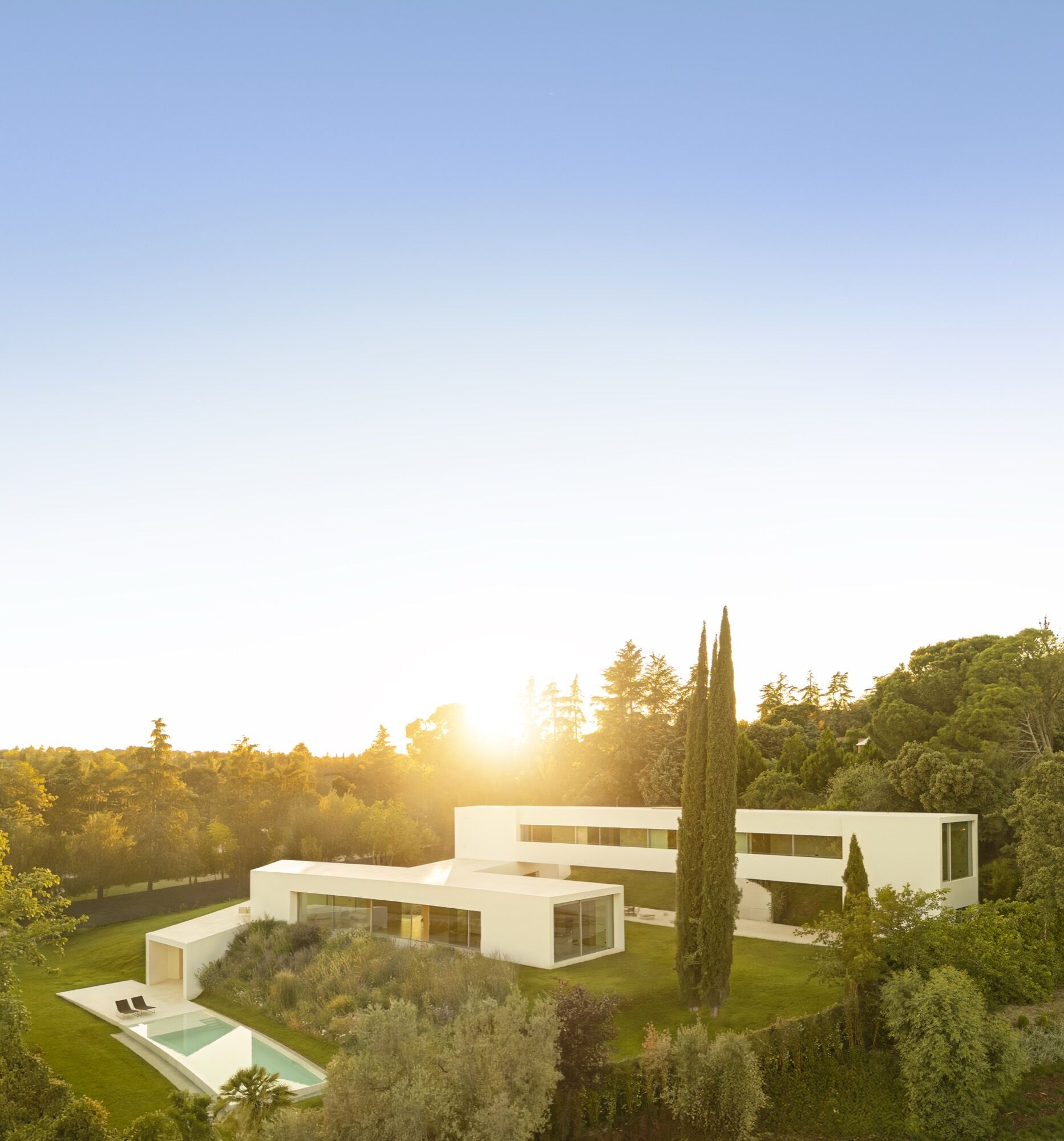
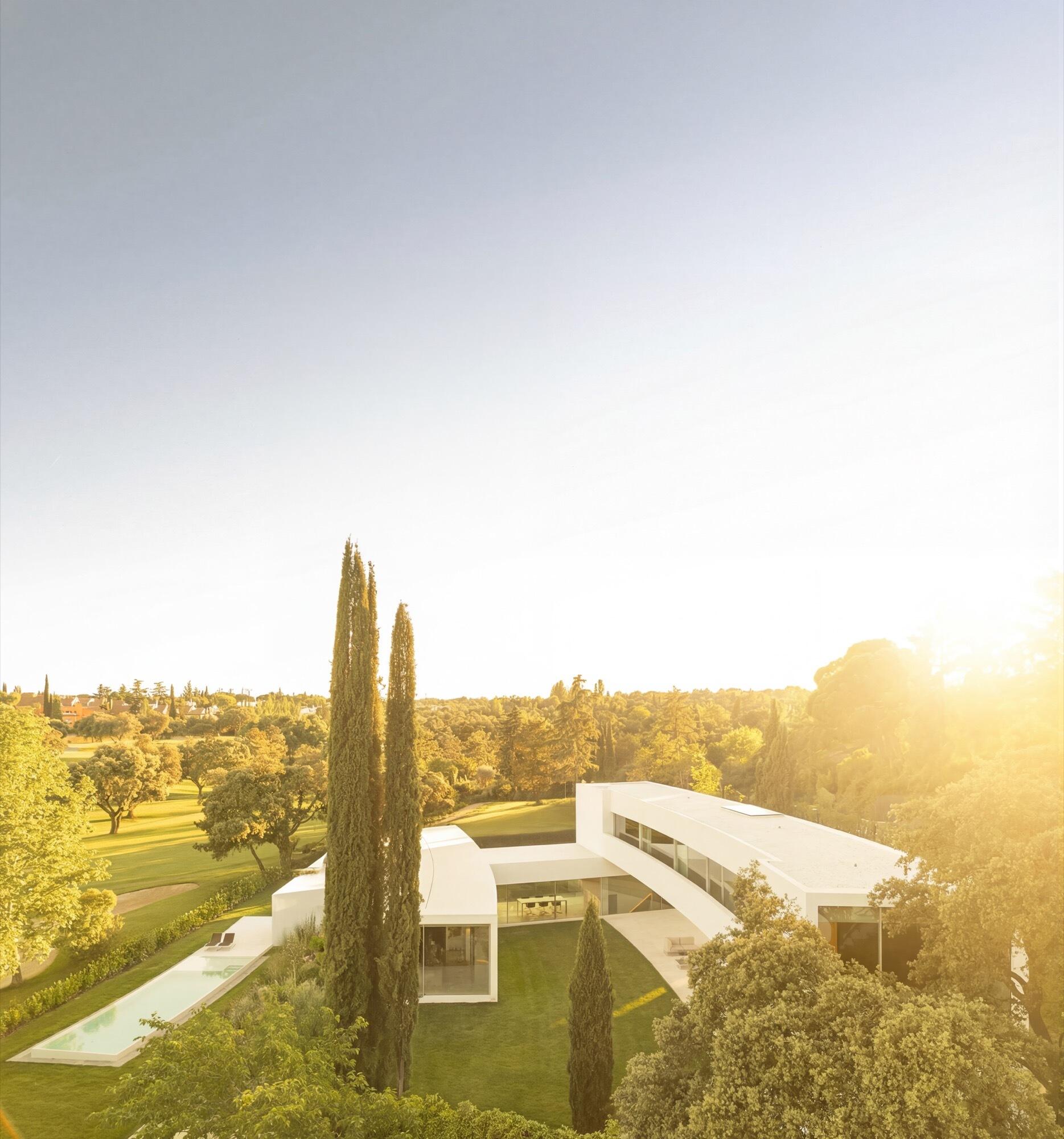
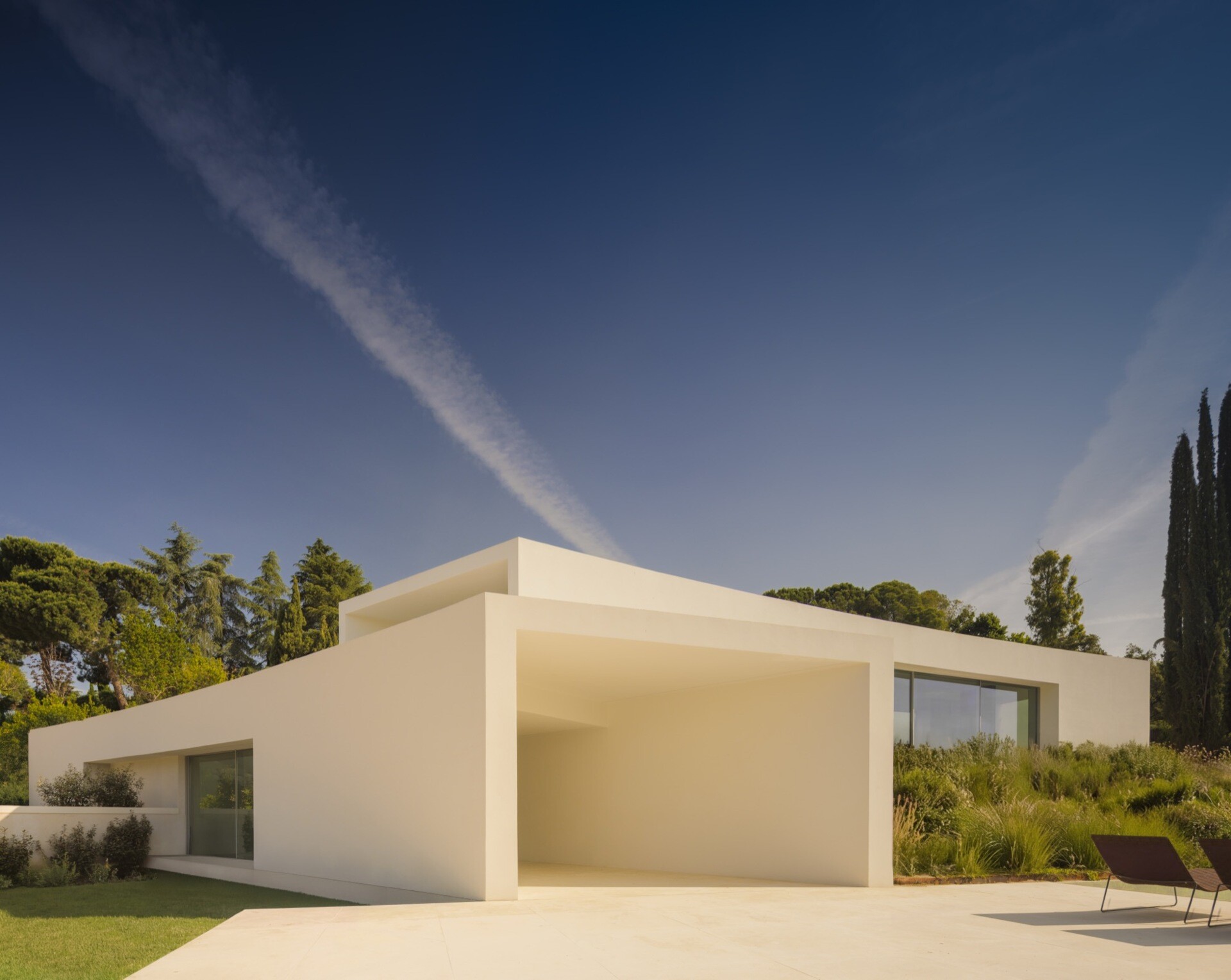
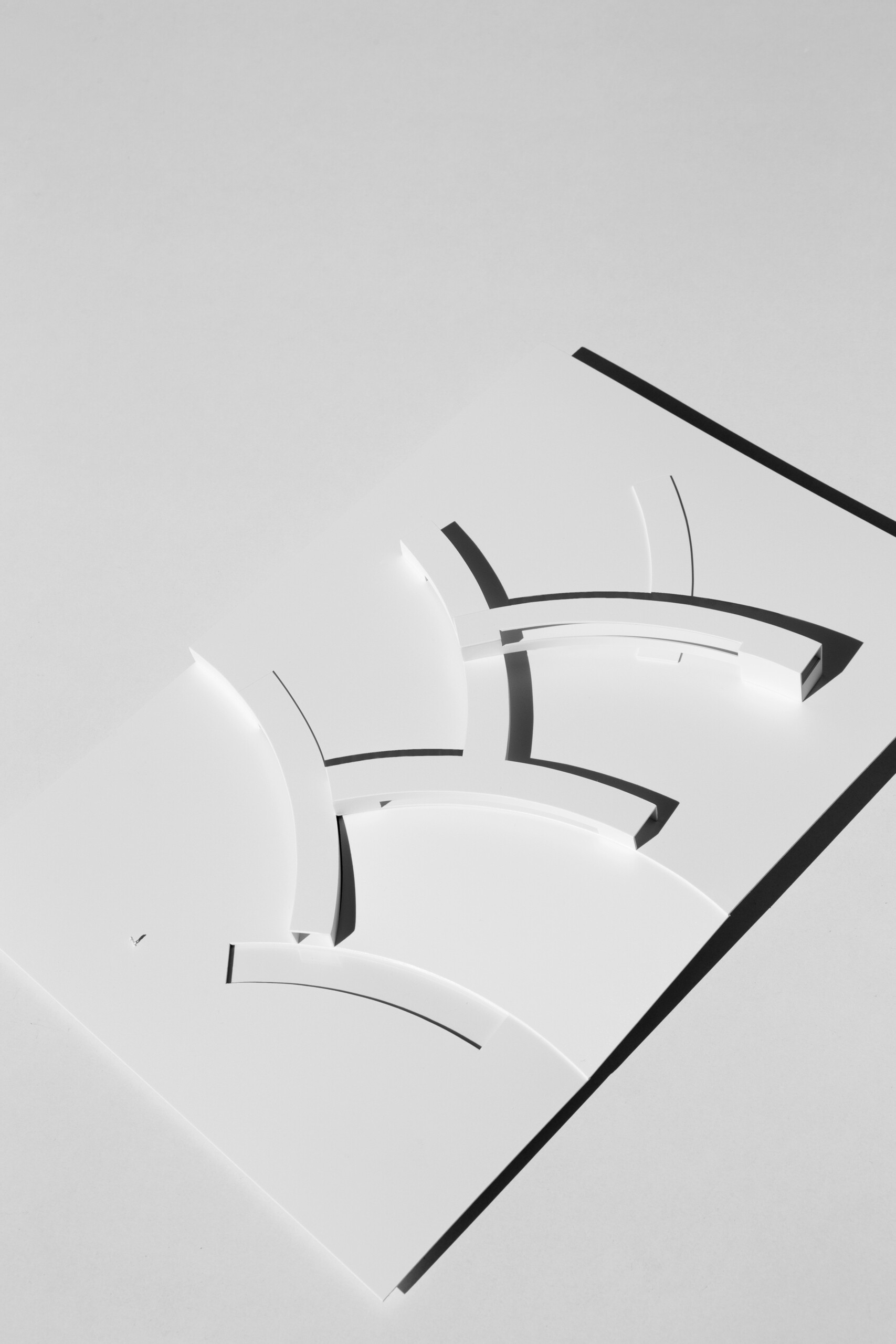
Architecture made from long curved volumes arranged in sequence, shaping circulation and movement throughout this Madrid house by Fran Silvestre Arquitectos.

In Madrid, Spain, Fran Silvestre Arquitectos have created a house that does not feel fixed or formal, despite its precise geometry. Rather than designing a compact object, the home unfolds through a series of curved volumes that rise gently across the site. The experience is calm and intuitive, shaped by proportion, movement, and spatial clarity. This is a project where architecture feels carefully controlled, yet surprisingly natural to live in.
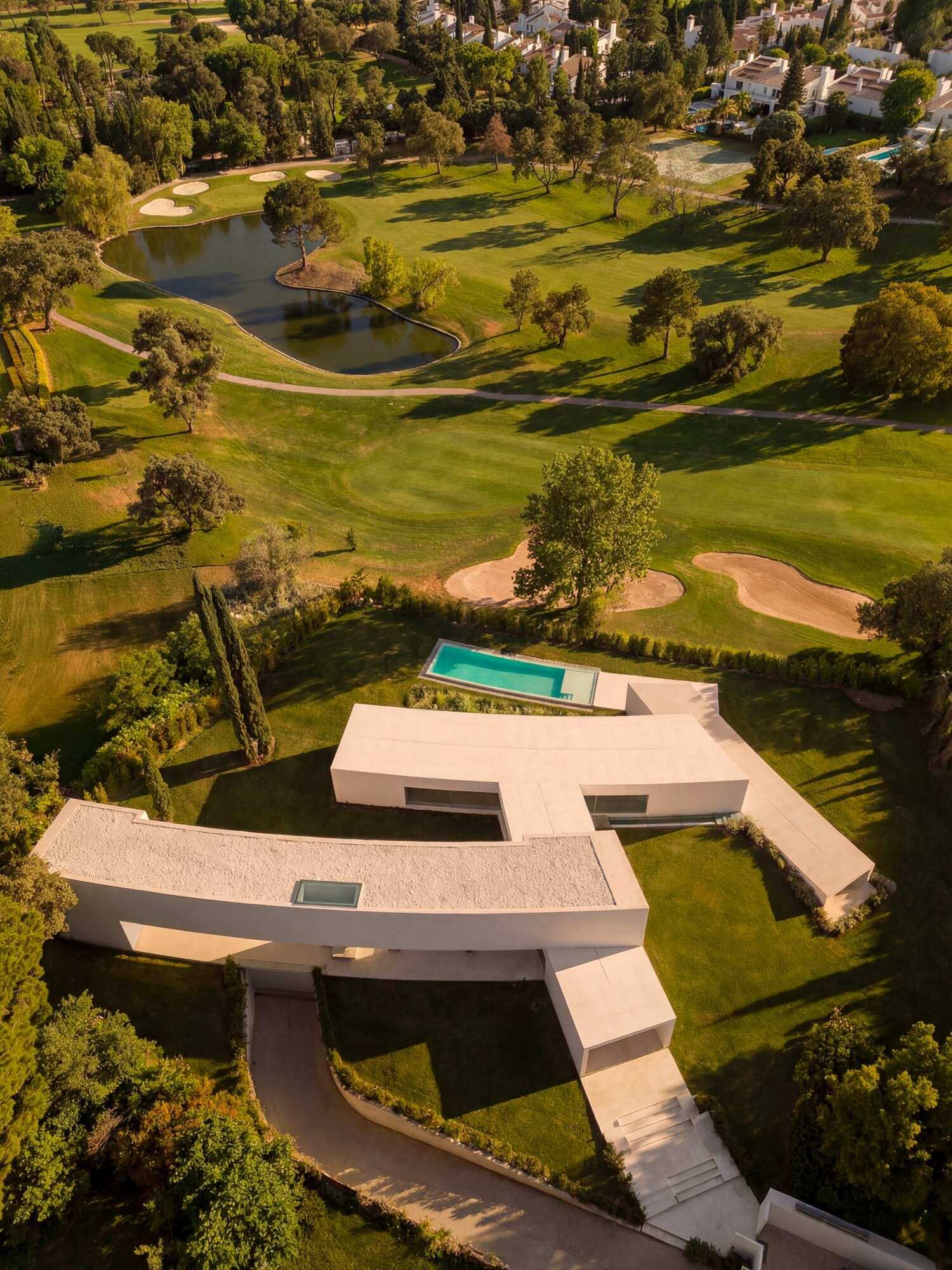
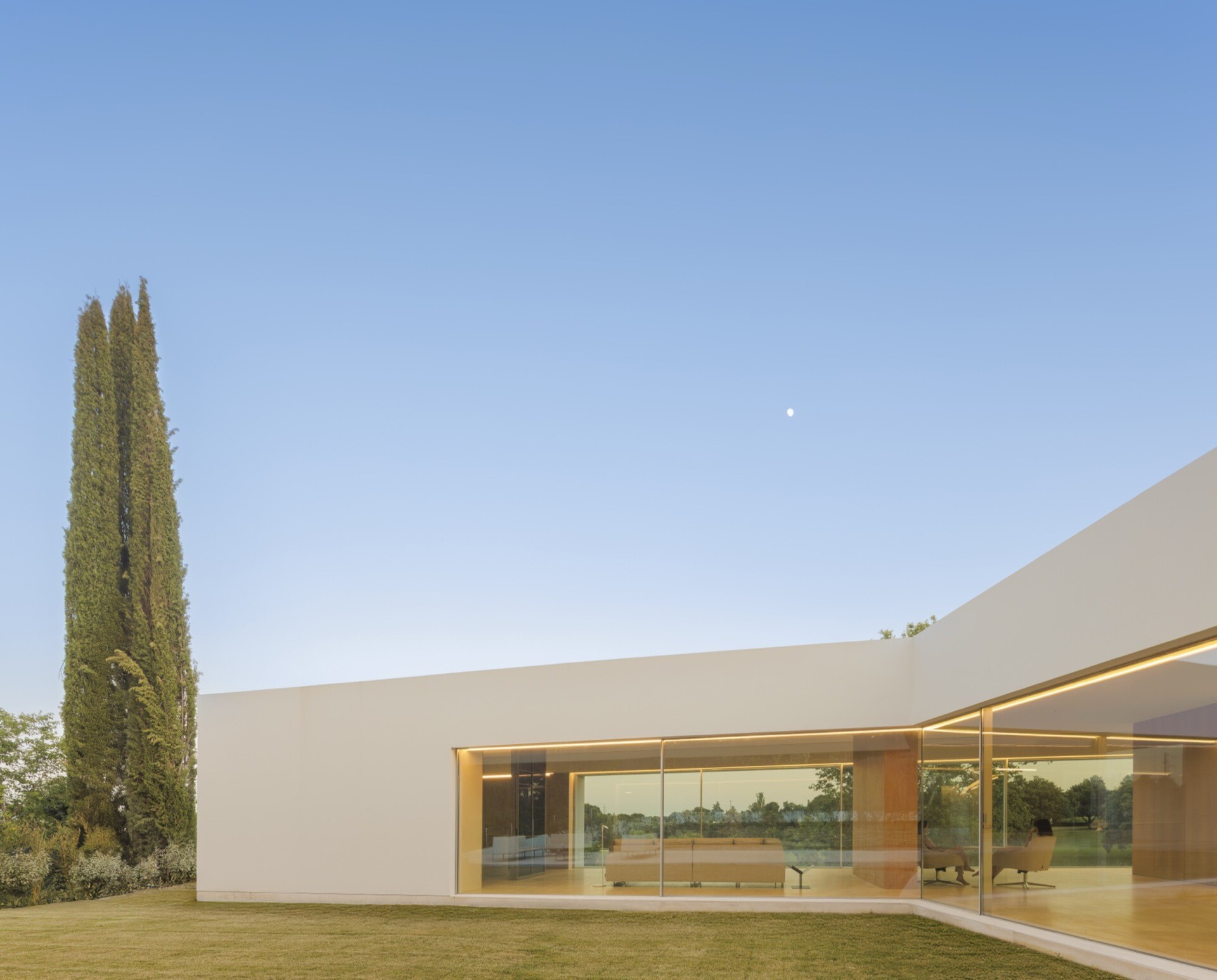
Architecture made from long curved volumes arranged in sequence, shaping circulation and movement throughout this Madrid house by Fran Silvestre Arquitectos.

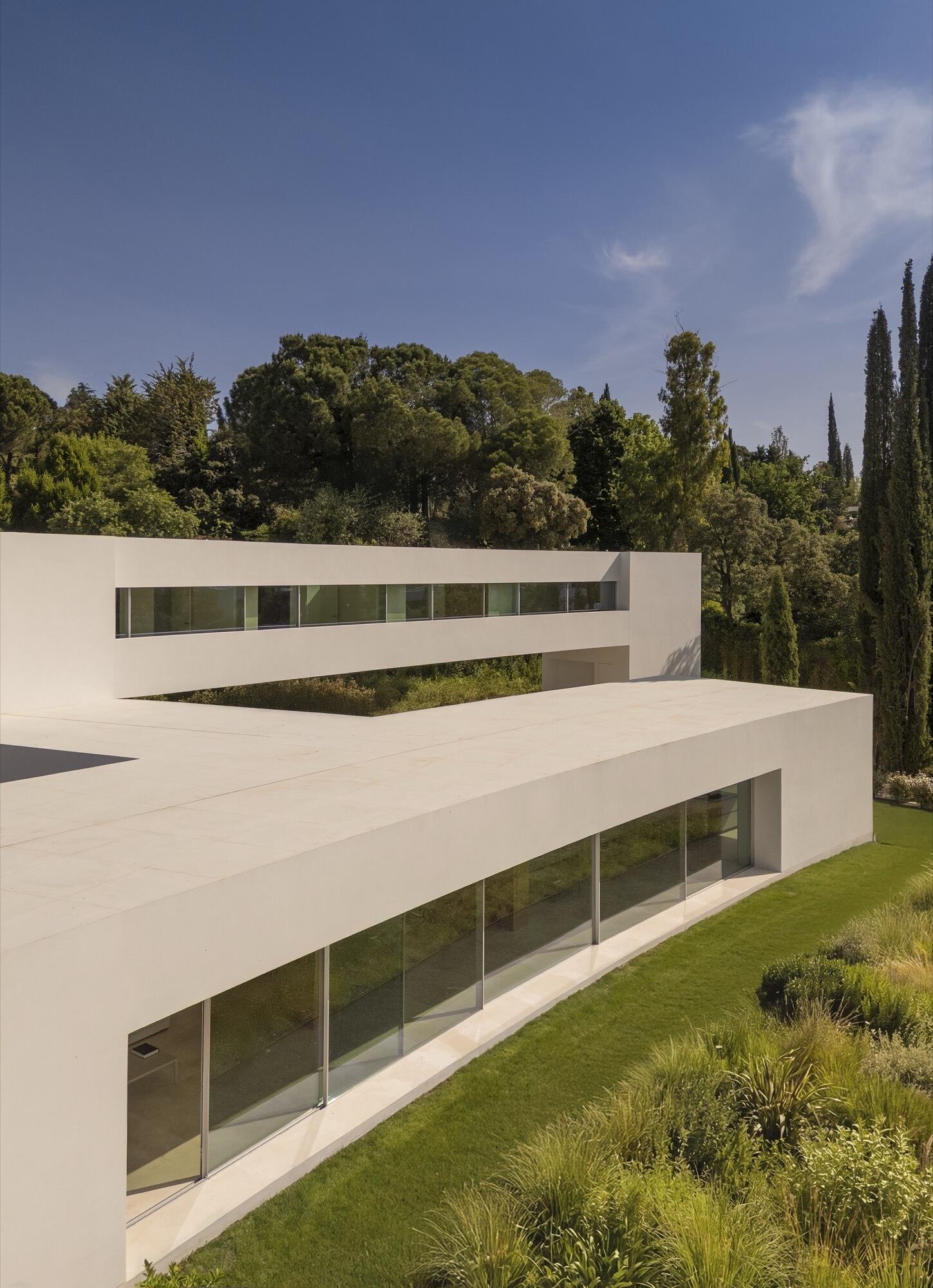
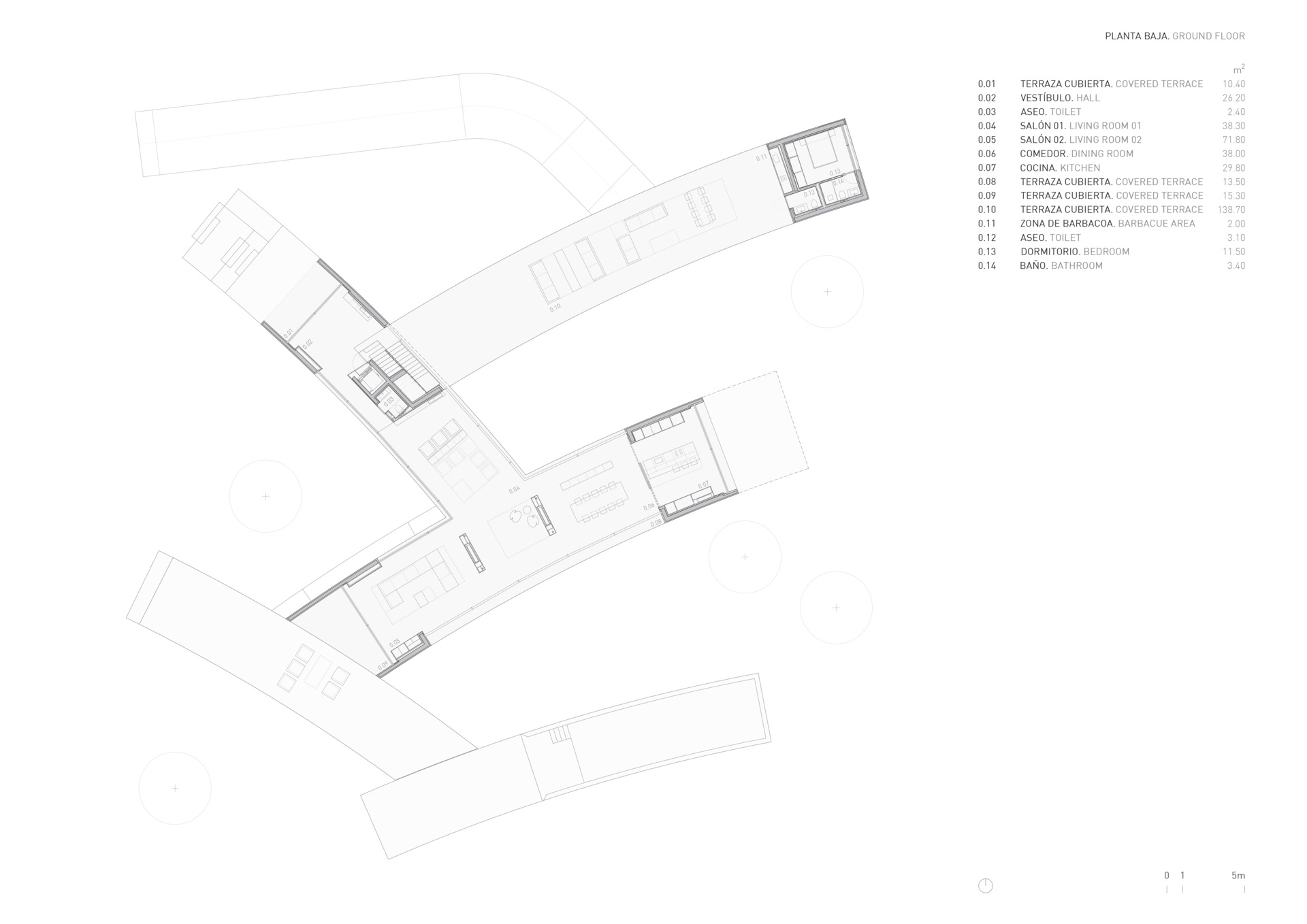
The architecture is composed of several elongated volumes, each formed with a large radius curve. These pieces are arranged to sit alongside one another, creating a layout that feels structured without being rigid. Because the volumes run lengthwise, movement through the house happens gradually rather than all at once. Spaces open up in sequence, and circulation becomes part of the experience rather than something hidden.
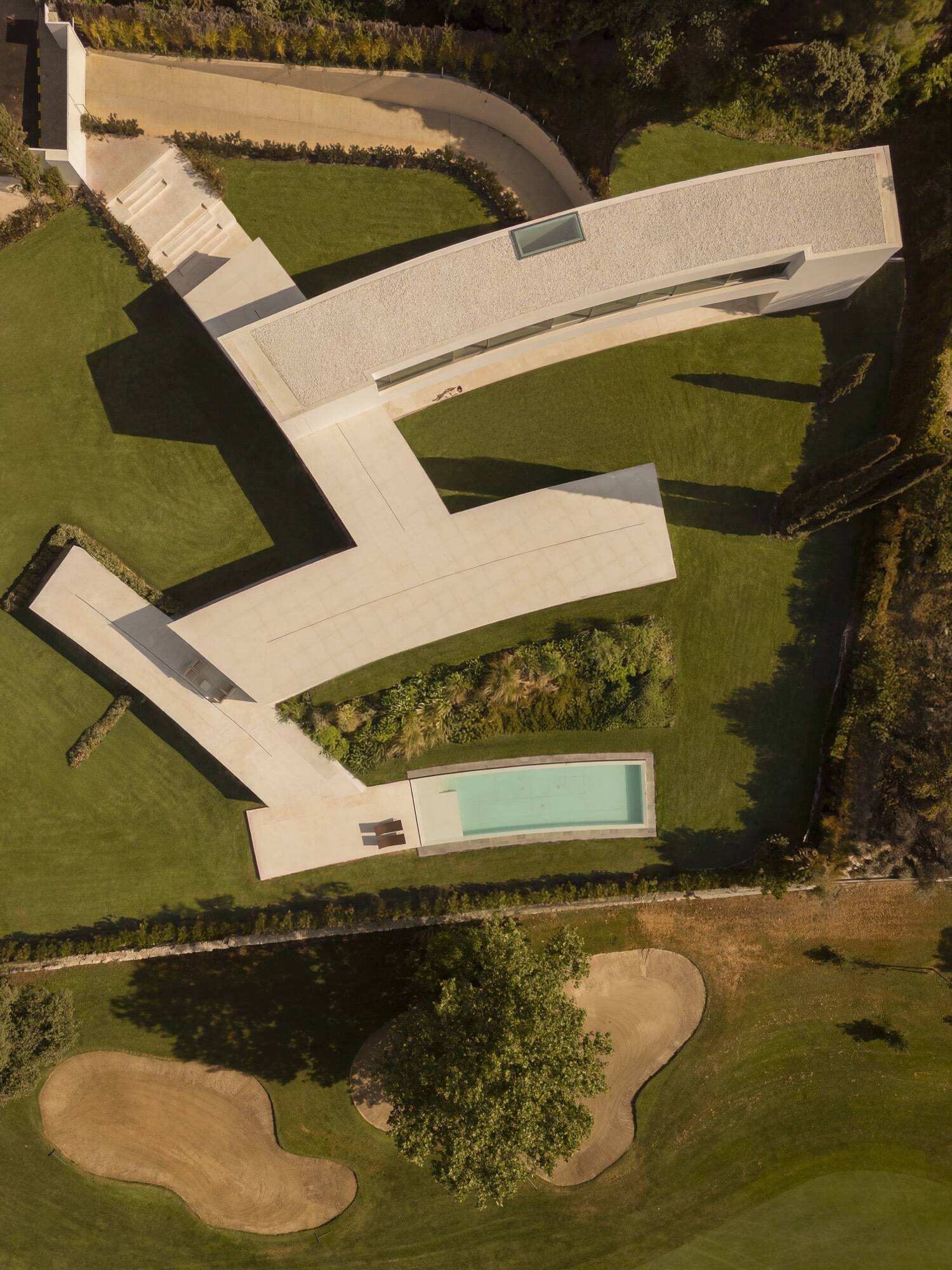
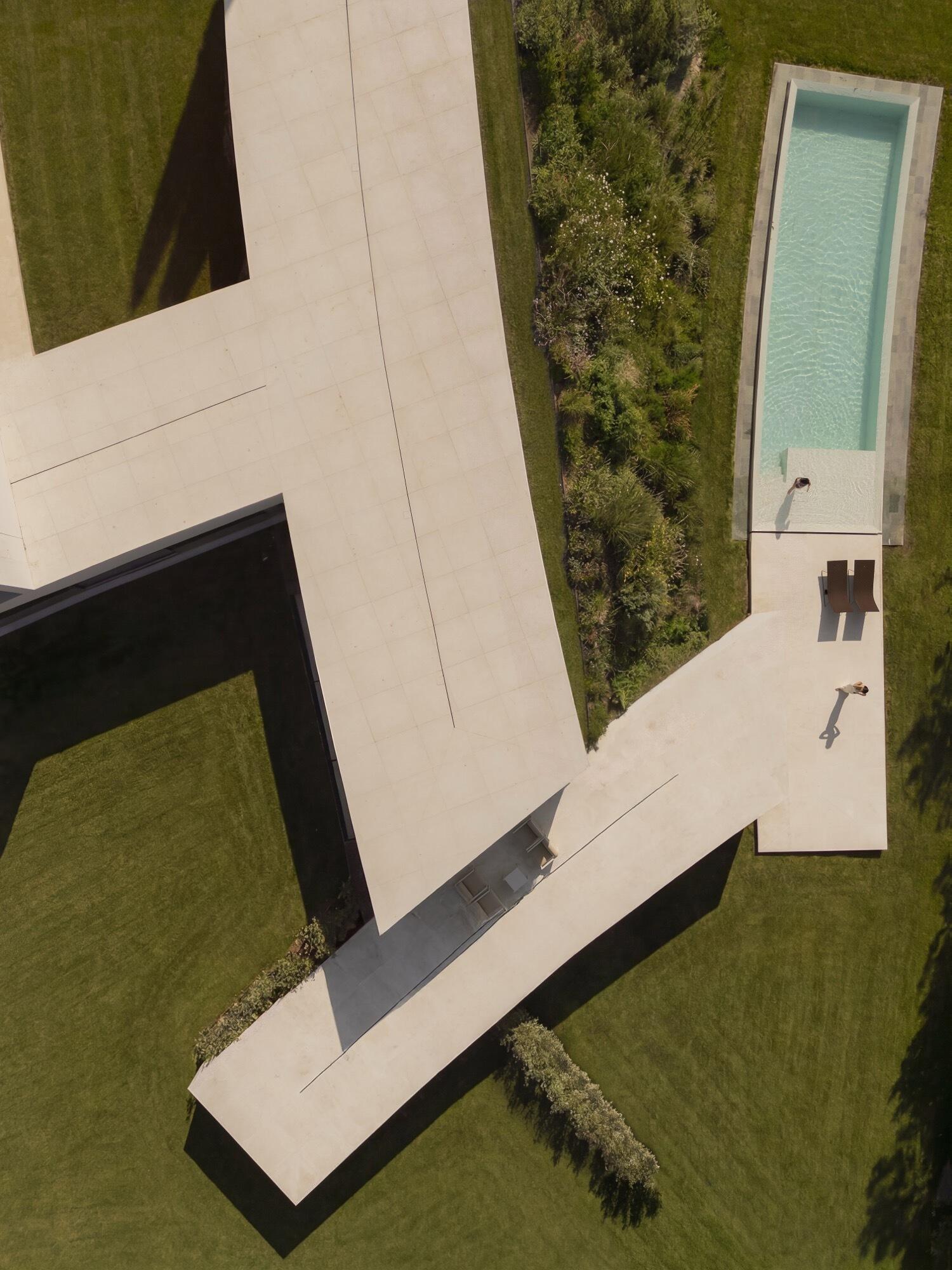
Architecture made from long curved volumes arranged in sequence, shaping circulation and movement throughout this Madrid house by Fran Silvestre Arquitectos.

The curved geometry helps soften the precision of the structure. While the design is carefully controlled, it avoids feeling strict, allowing the house to be read as something fluid and continuous. Together, these volumes create a clear architectural order. The home is not experienced as a single moment, but as a series of connected spaces shaped by form, proportion, and movement.
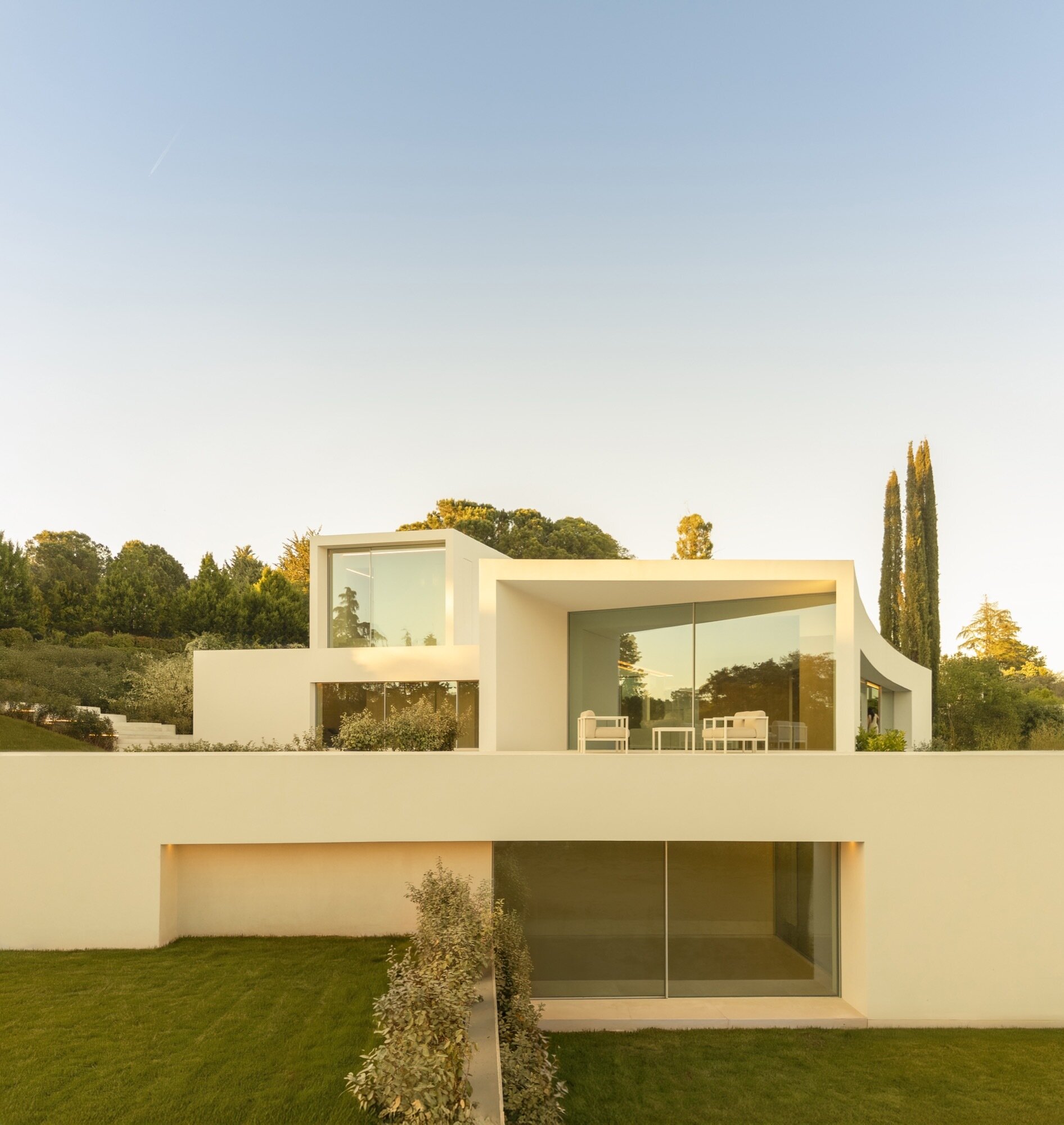
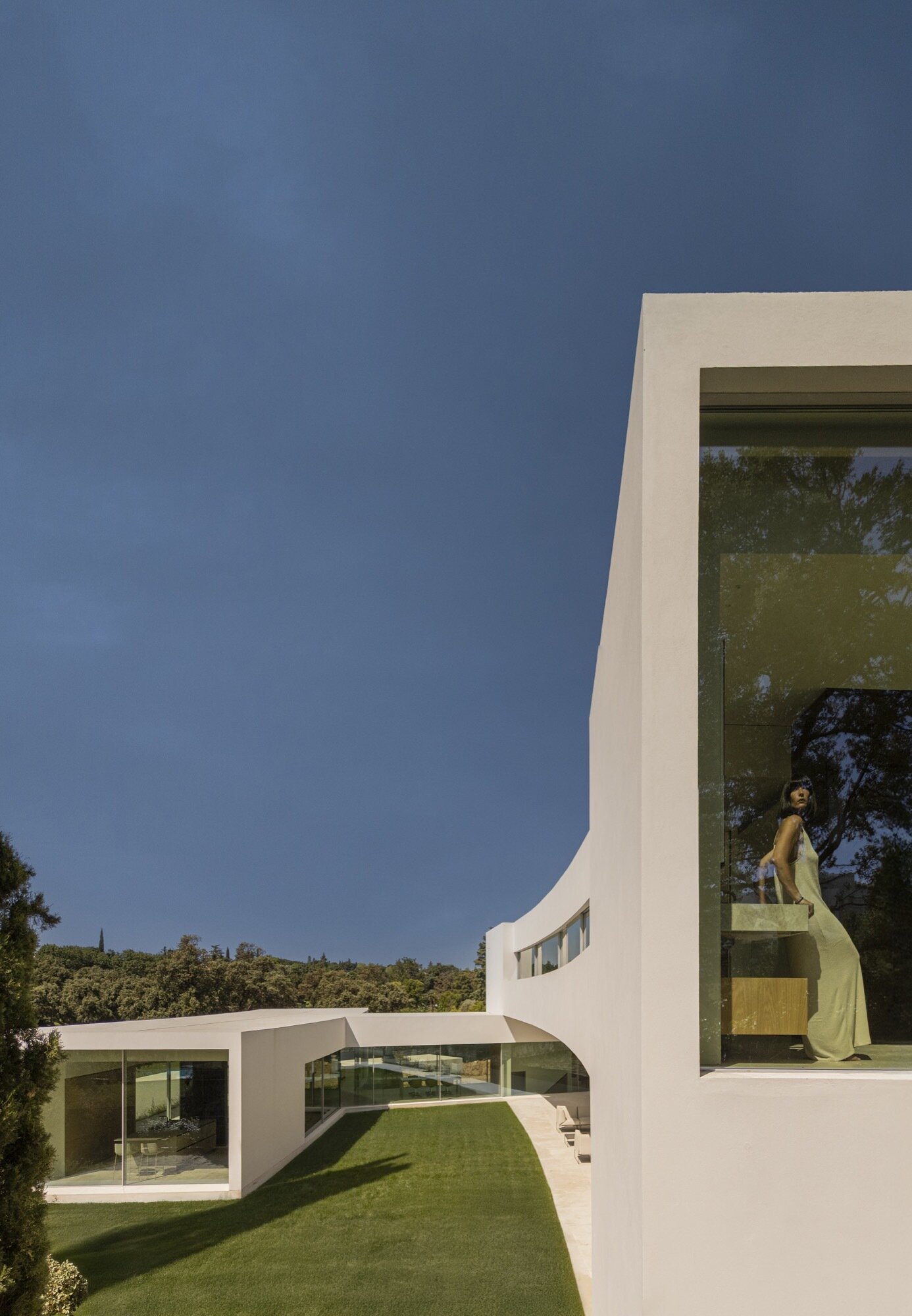
Architecture made from long curved volumes arranged in sequence, shaping circulation and movement throughout this Madrid house by Fran Silvestre Arquitectos.

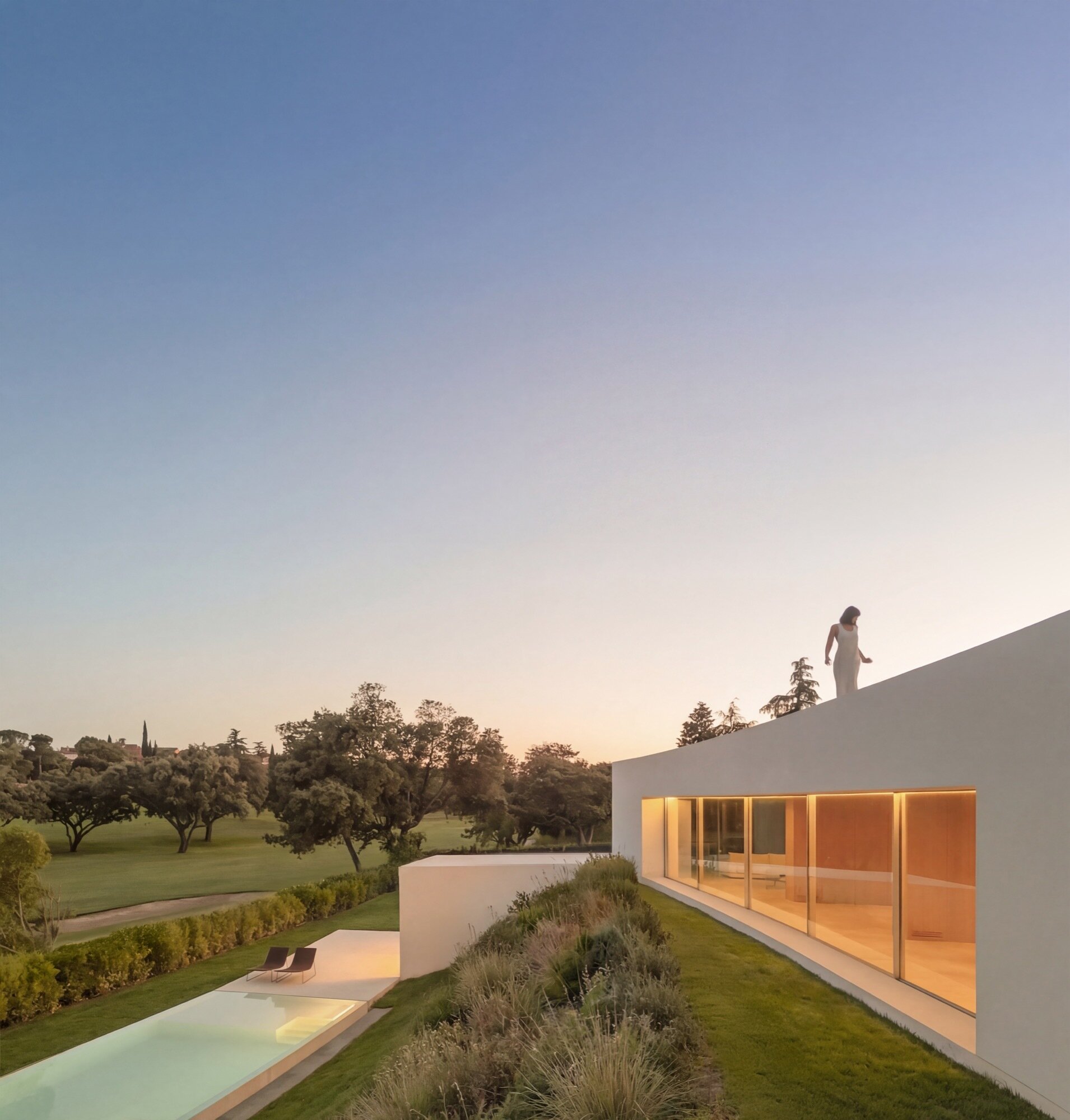
The swimming pool sits on the lowest level of the house. This location establishes the starting point of the overall layout.Positioned alongside the guest rooms, the pool becomes part of the everyday spatial sequence. It is integrated into the architecture rather than treated as a separate feature.
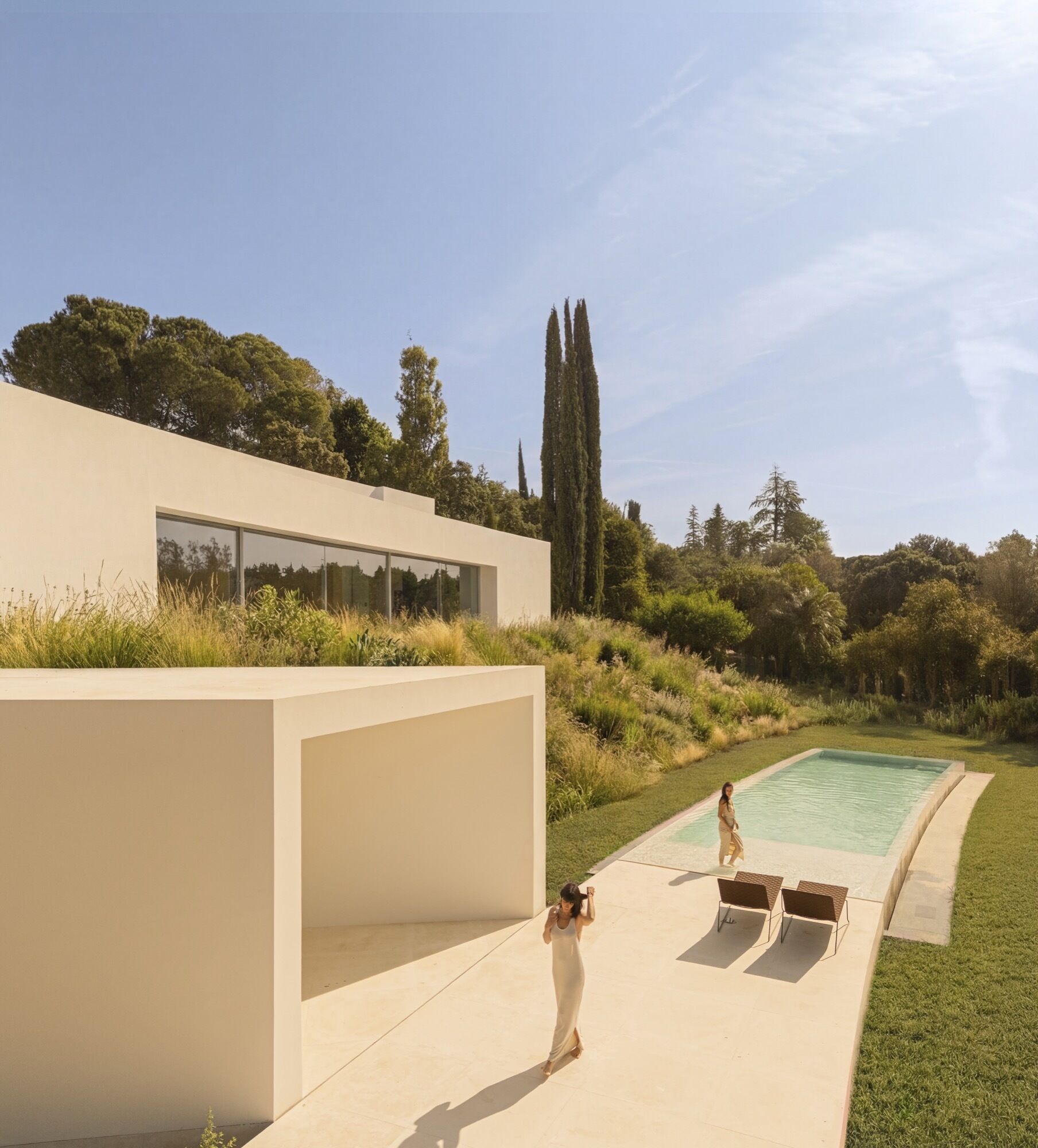
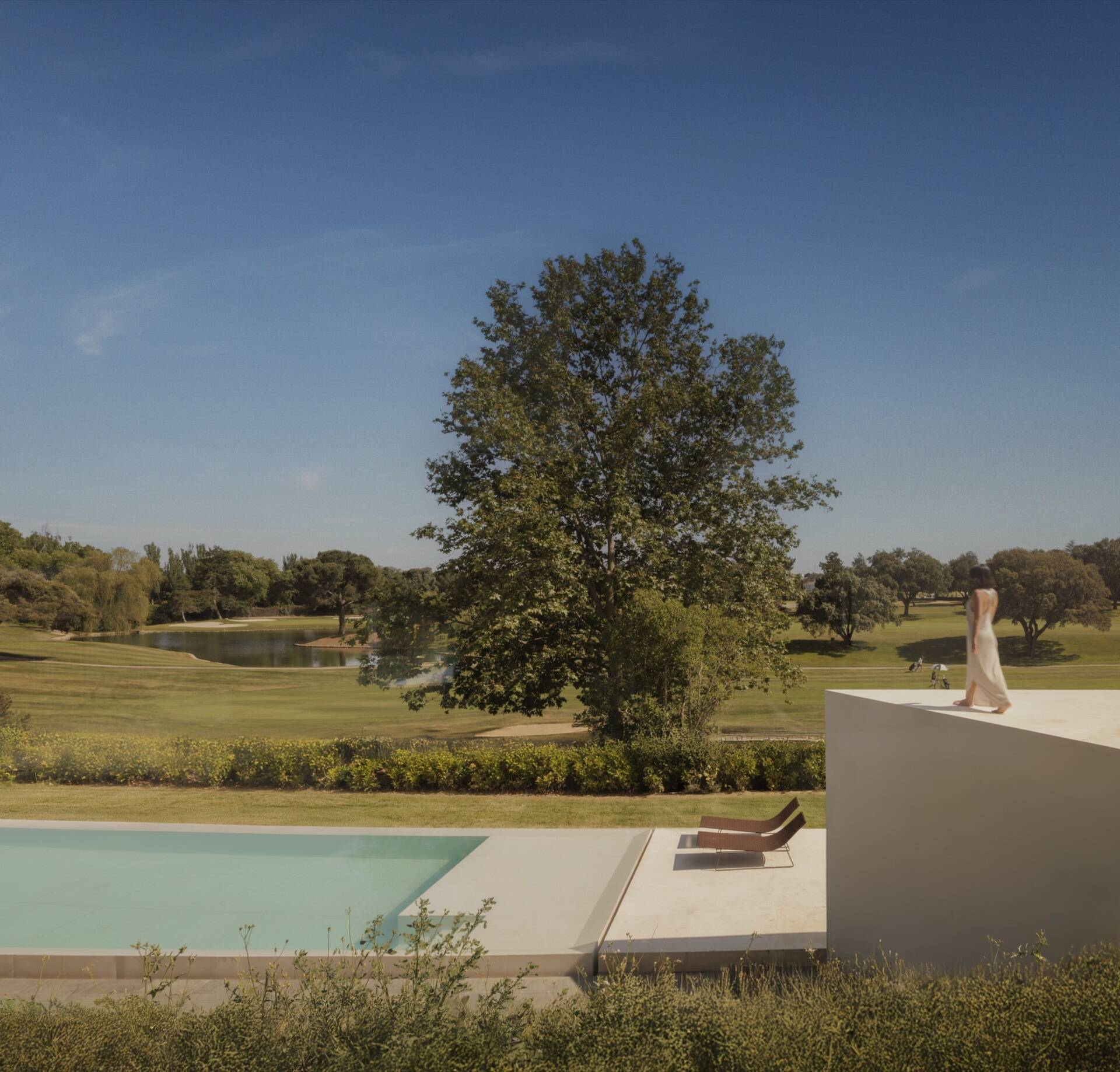
The swimming pool sits on the lowest level of the house, anchoring the start of the ascending architectural layout.

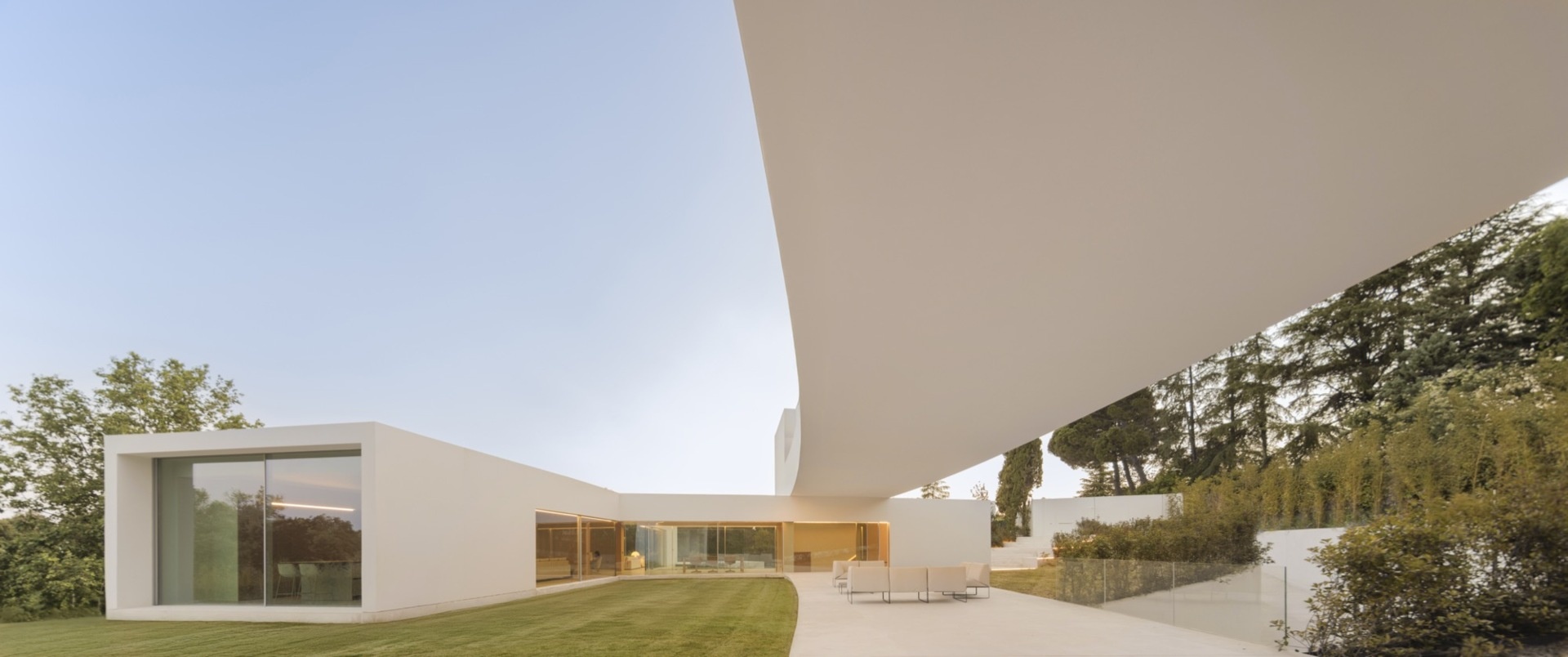
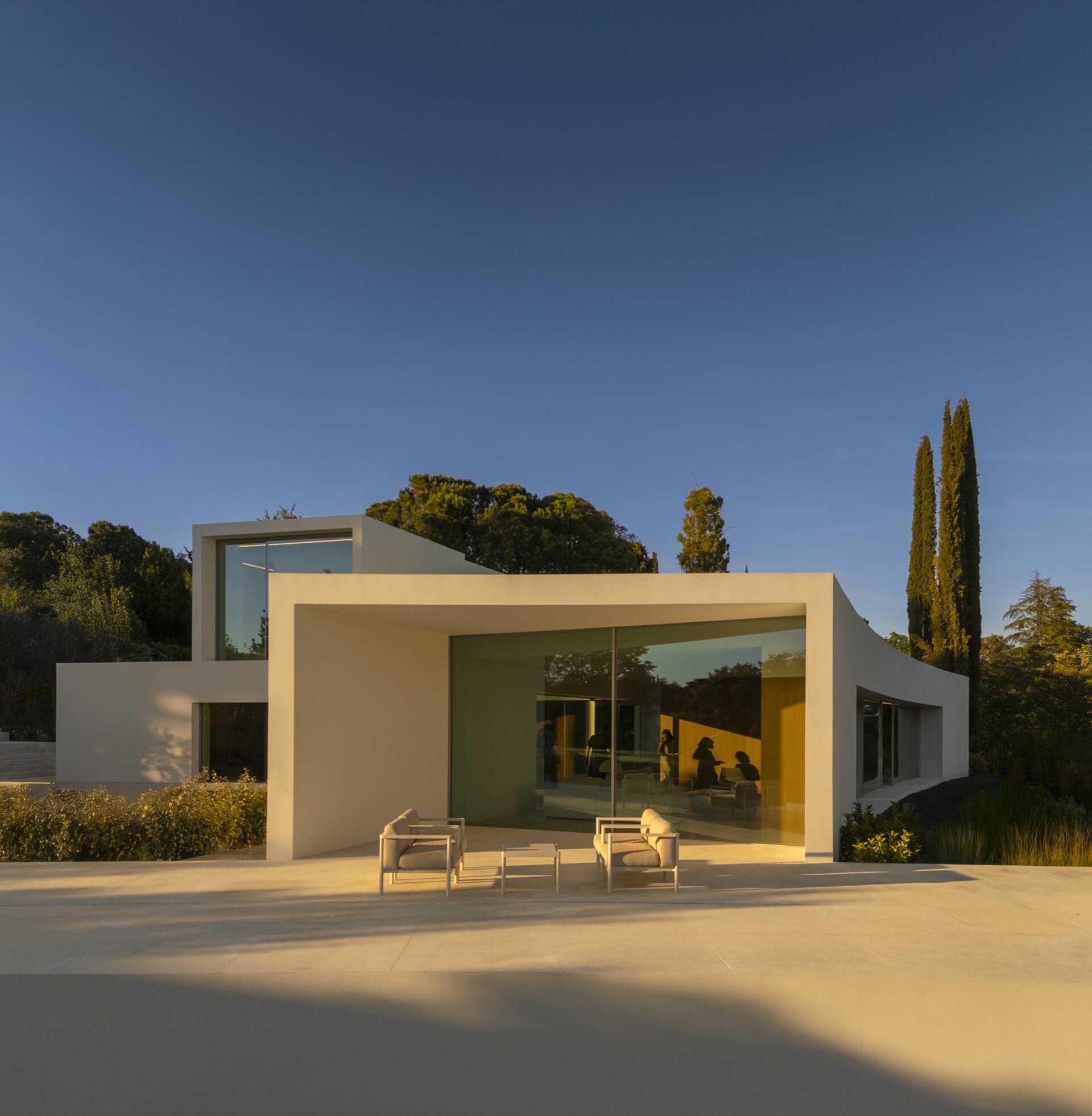
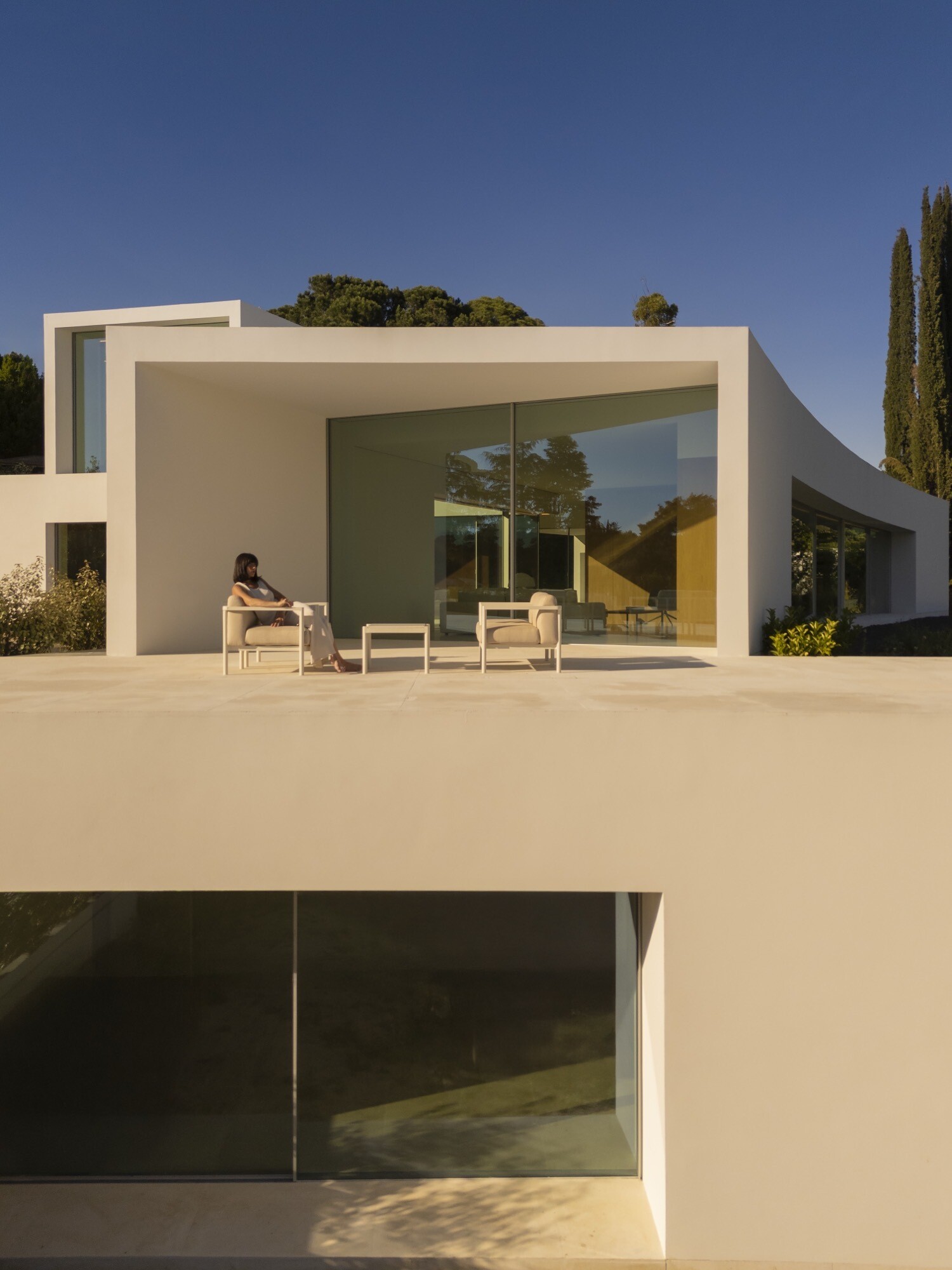
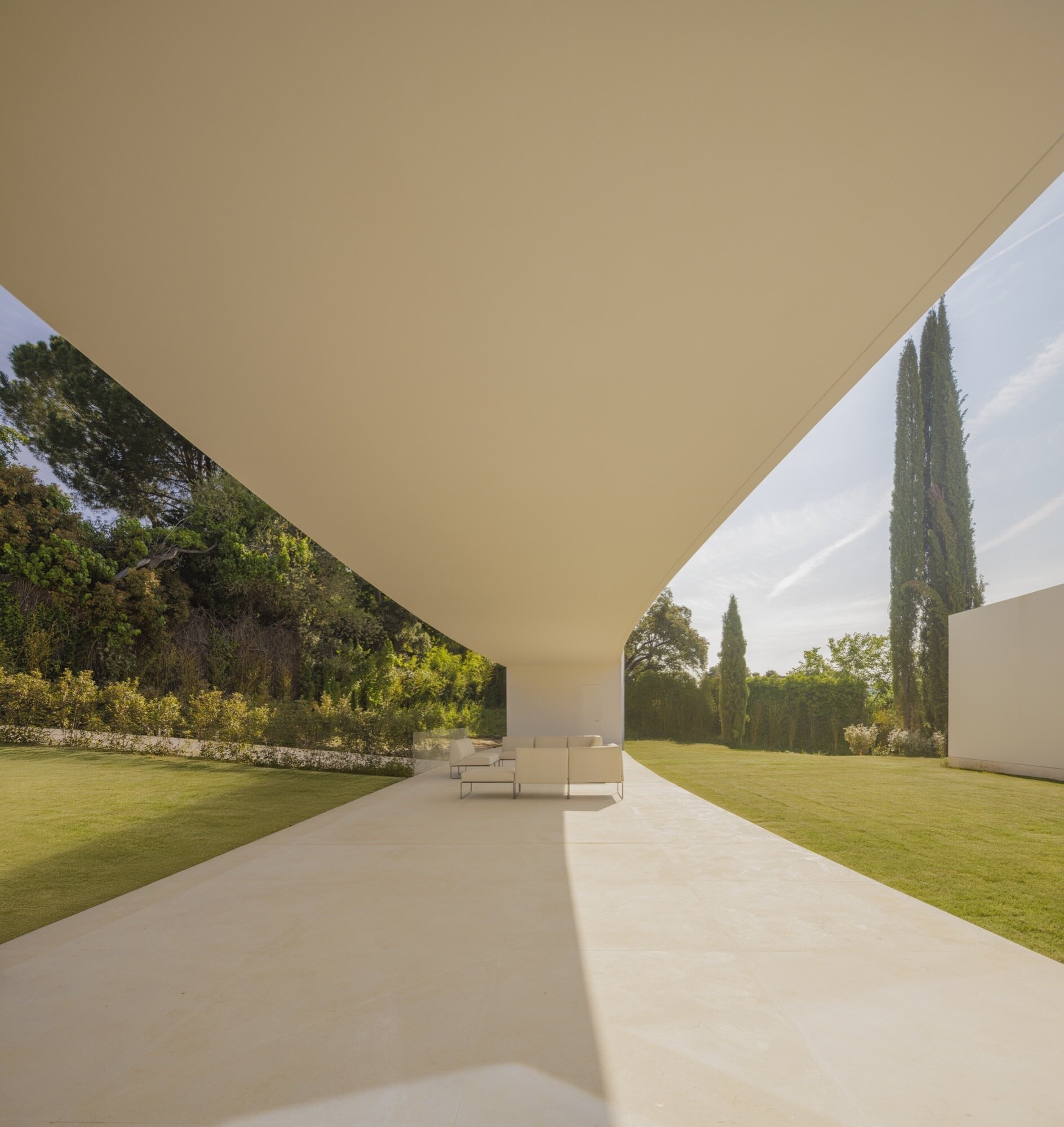
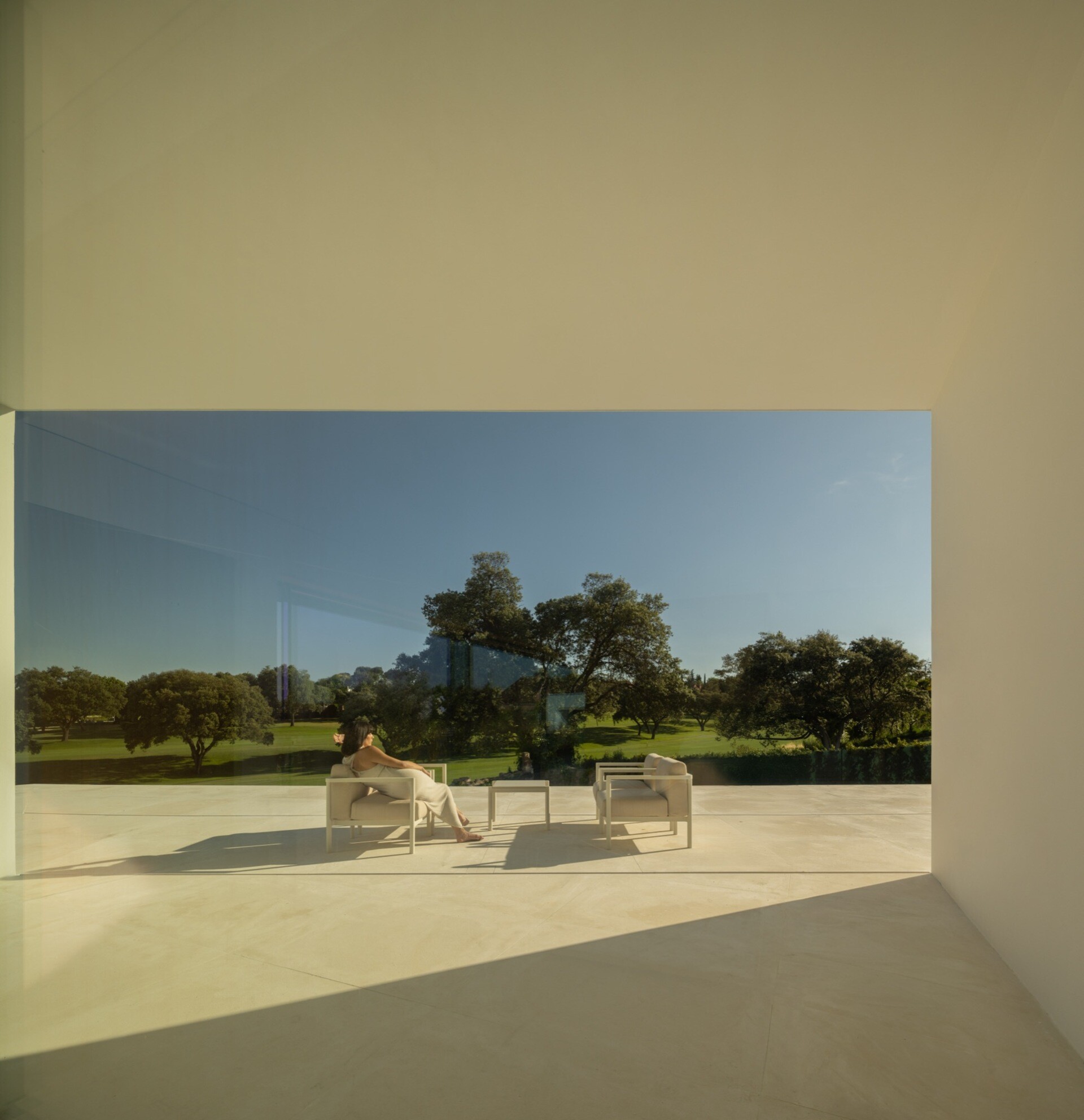
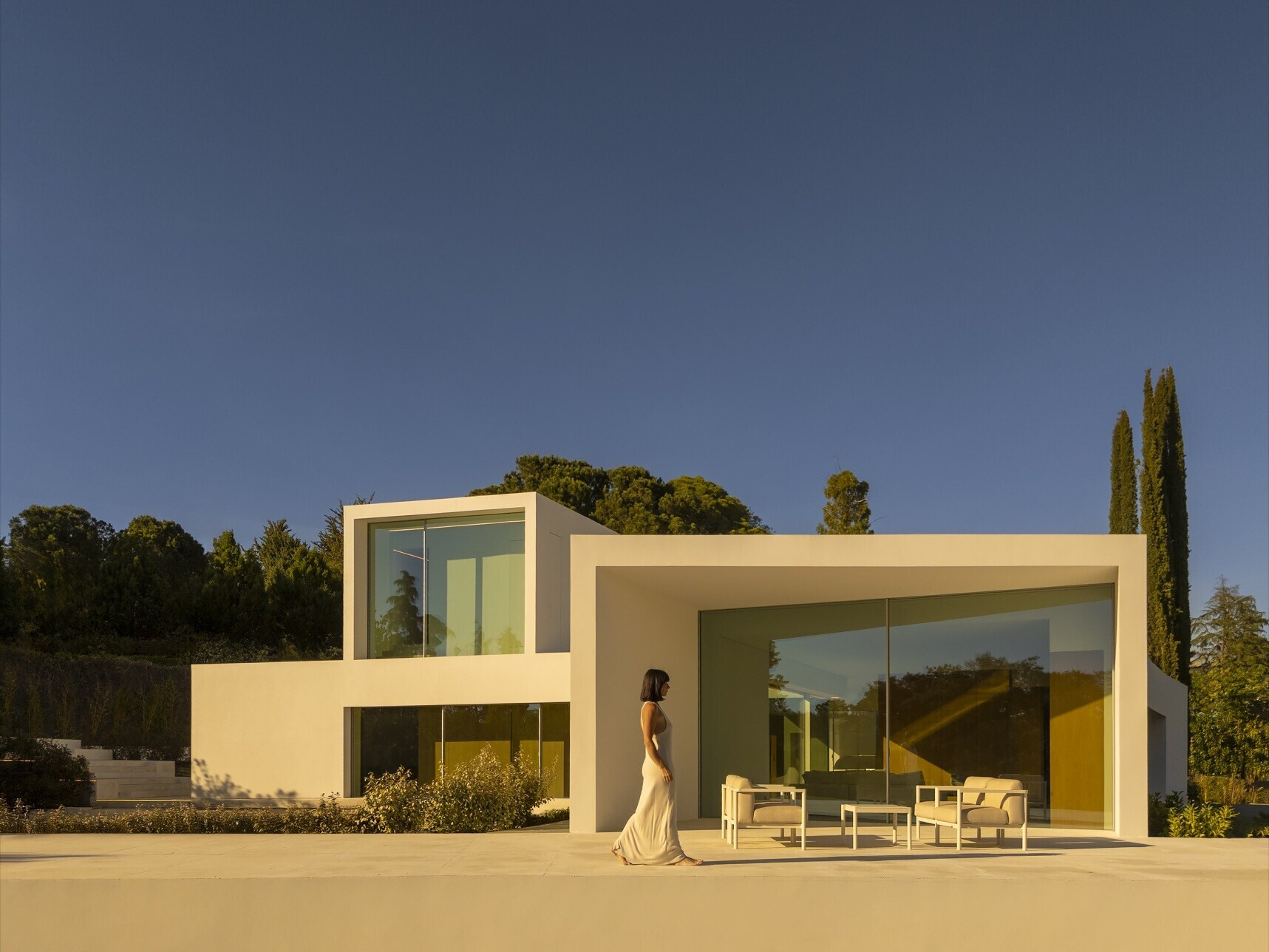
A wide shaded terrace is formed beneath the highest volume of the house. This space exists because of the way the architecture bridges above it. Instead of being added later, the terrace feels like a natural result of the structure. Shade, openness, and proportion all come directly from the building’s form.
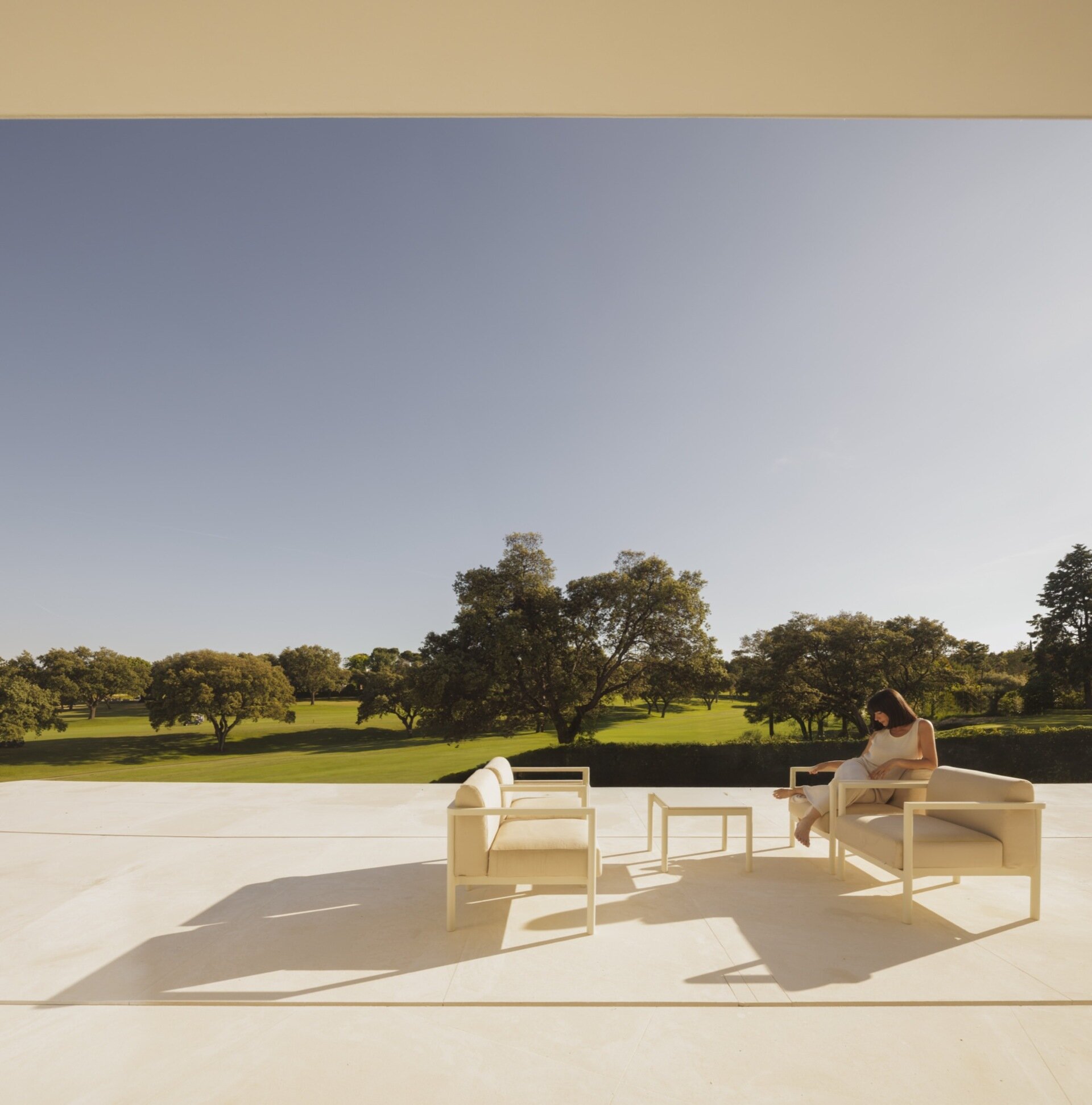
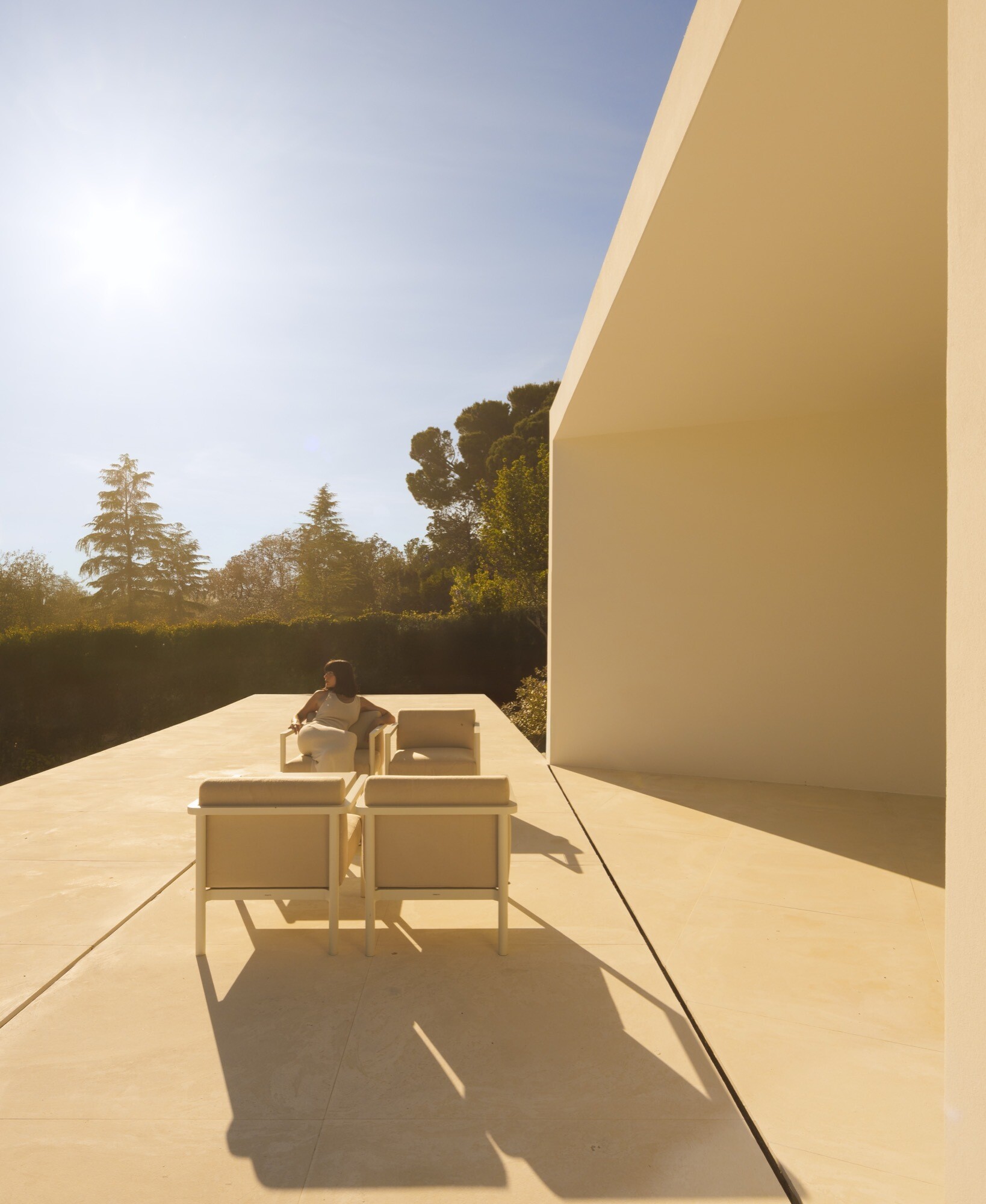
A minimalist home has a variety of patio areas and a shaded terrace.

The living room is part of the main day area, located on the middle level. This floor is oriented toward views of a nearby lake. Its position makes it the heart of the house. It sits between the more grounded spaces below and the private rooms above, reinforcing the upward flow of the design.
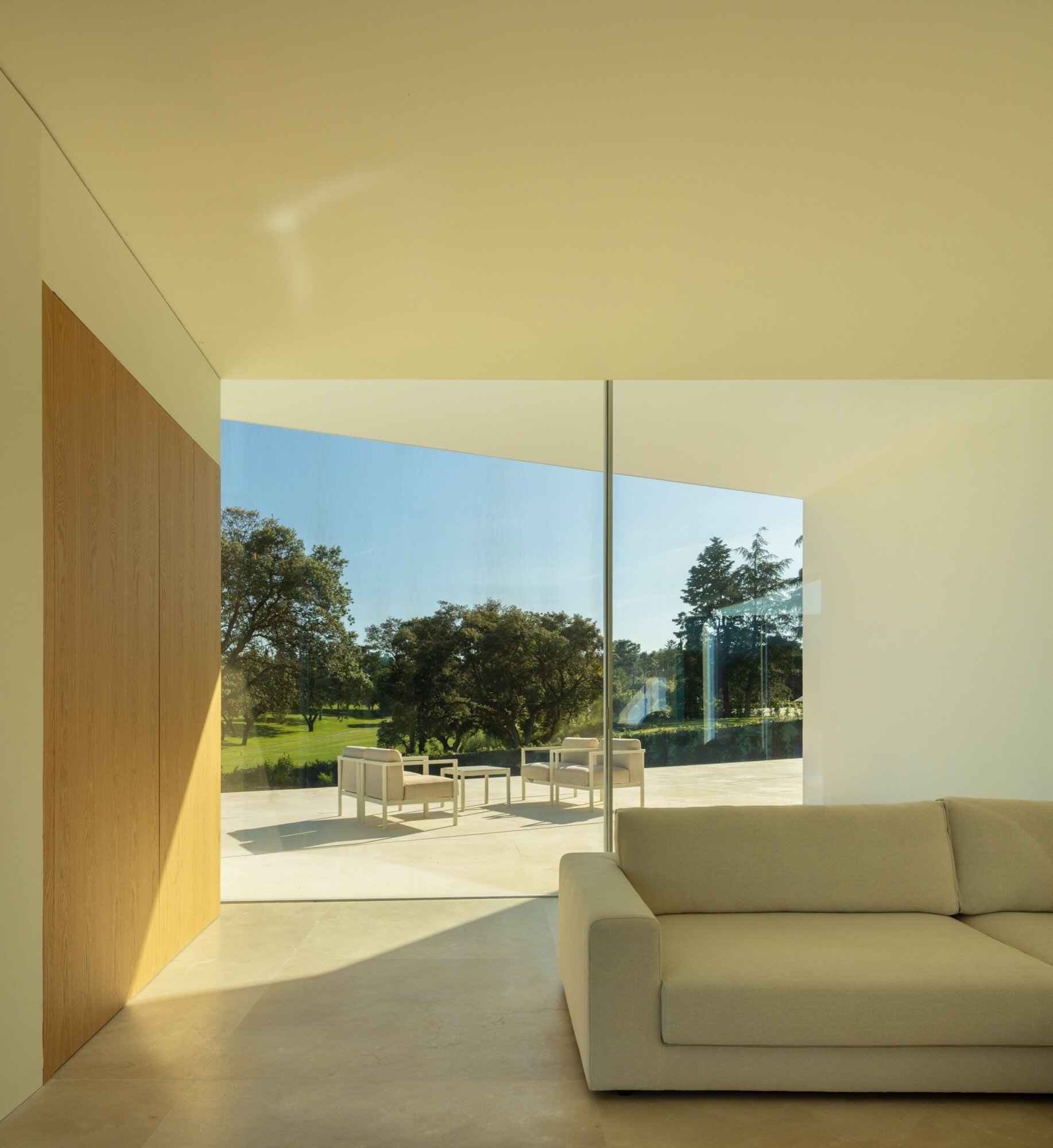
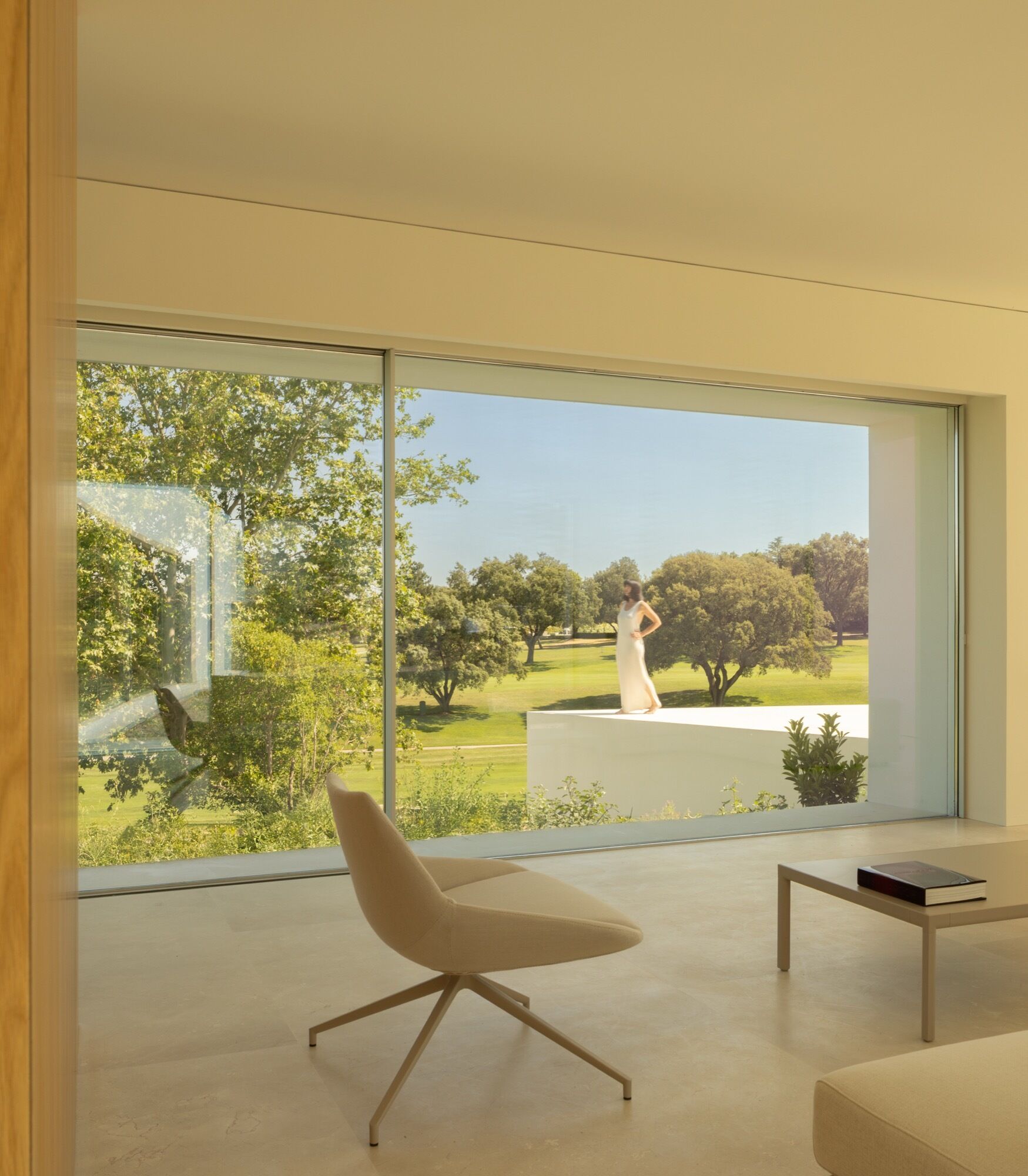
A minimalist living room with oversized windows.

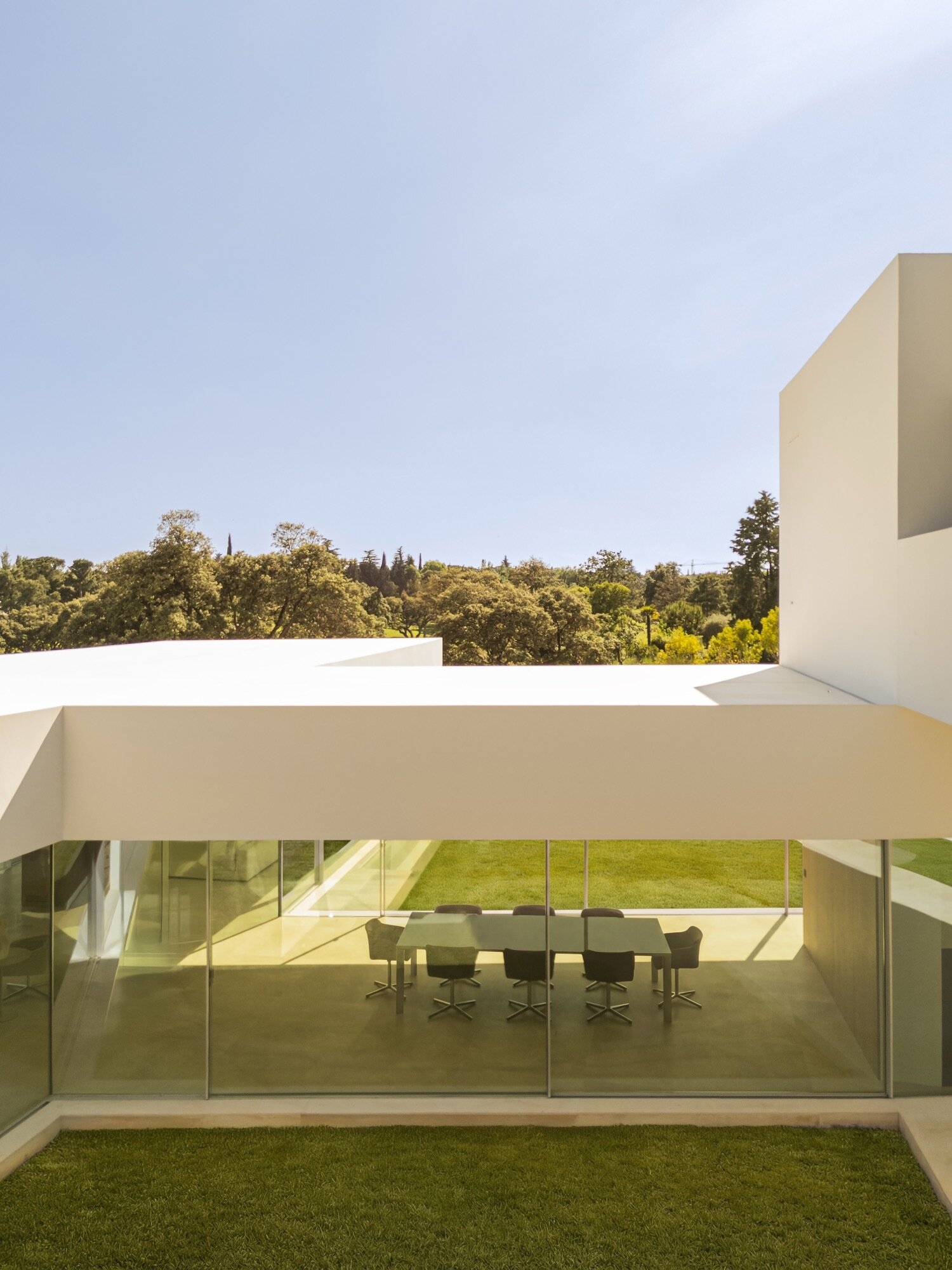
The dining area shares the same open arrangement as the rest of the day spaces. It follows the same curved geometry and elongated layout. Rather than being defined by walls, the space is shaped by movement and alignment. Visual connections remain strong throughout this level.
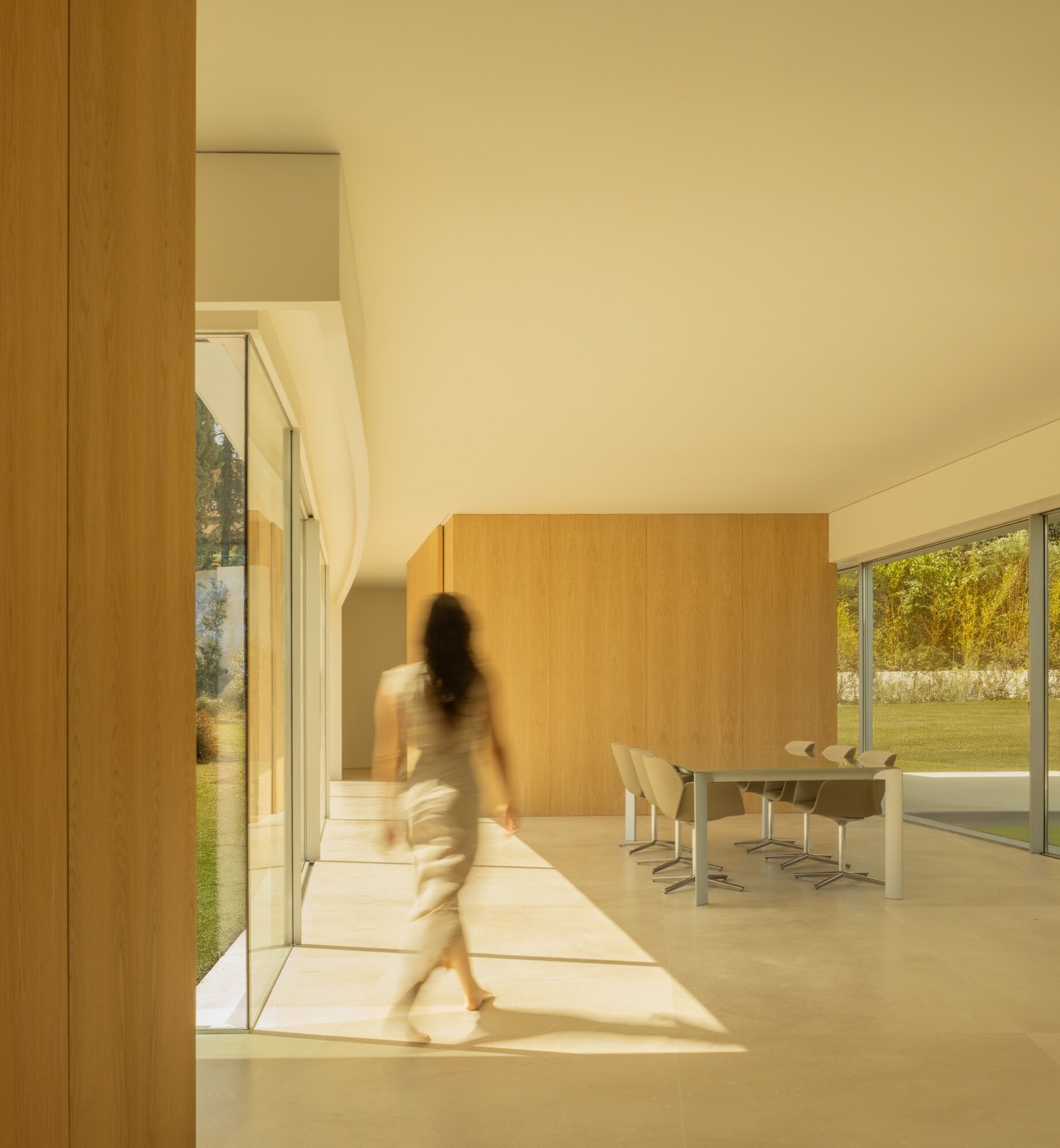
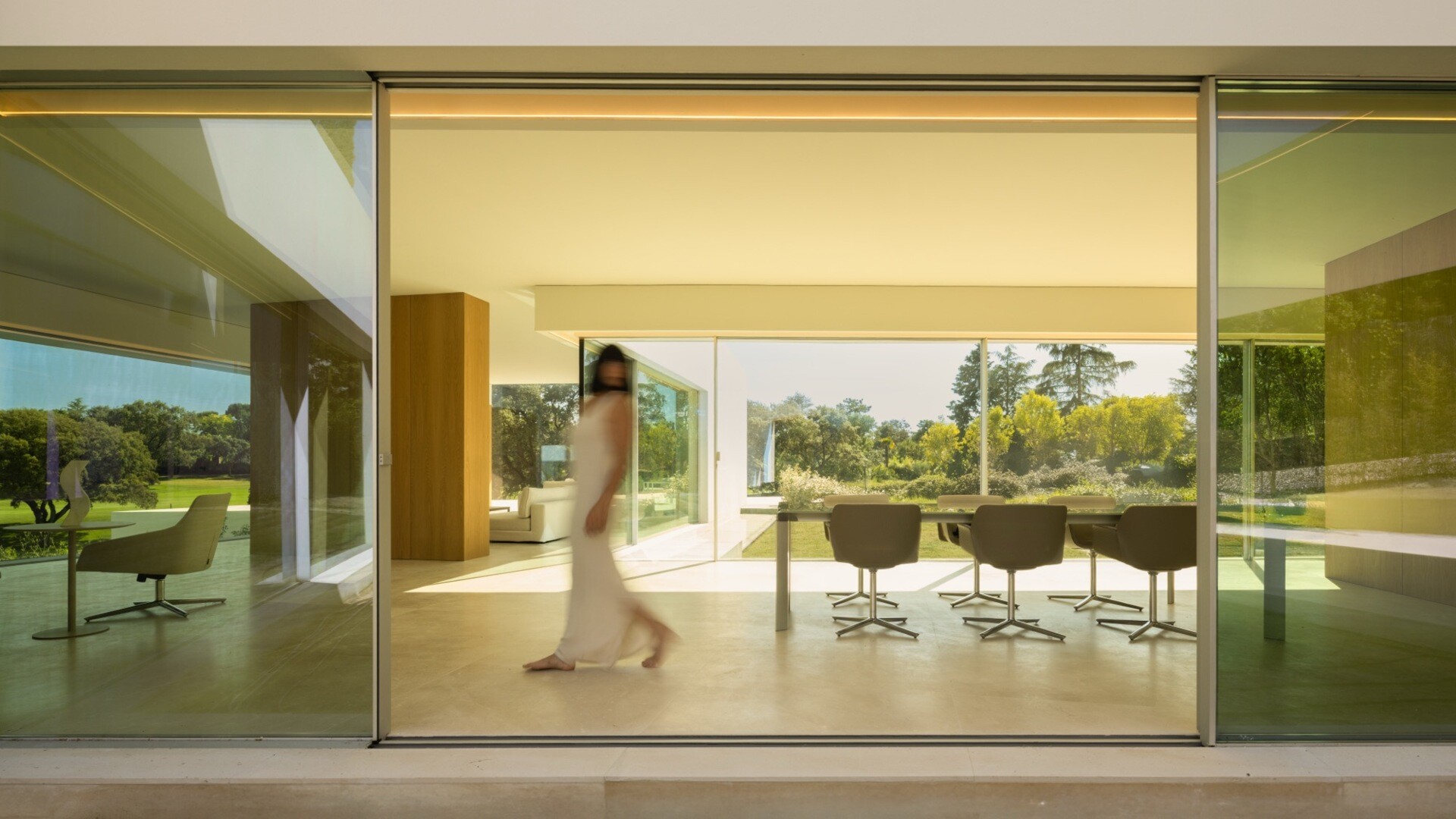
A minimalist dining room with sliding glass walls that connect to the outdoors.

The kitchen is woven into the day area and follows the same spatial logic. It is not treated as a closed or isolated room. Its placement supports the idea of the pavilion as an open space that spreads outward. Daily functions are organised by geometry instead of strict boundaries.
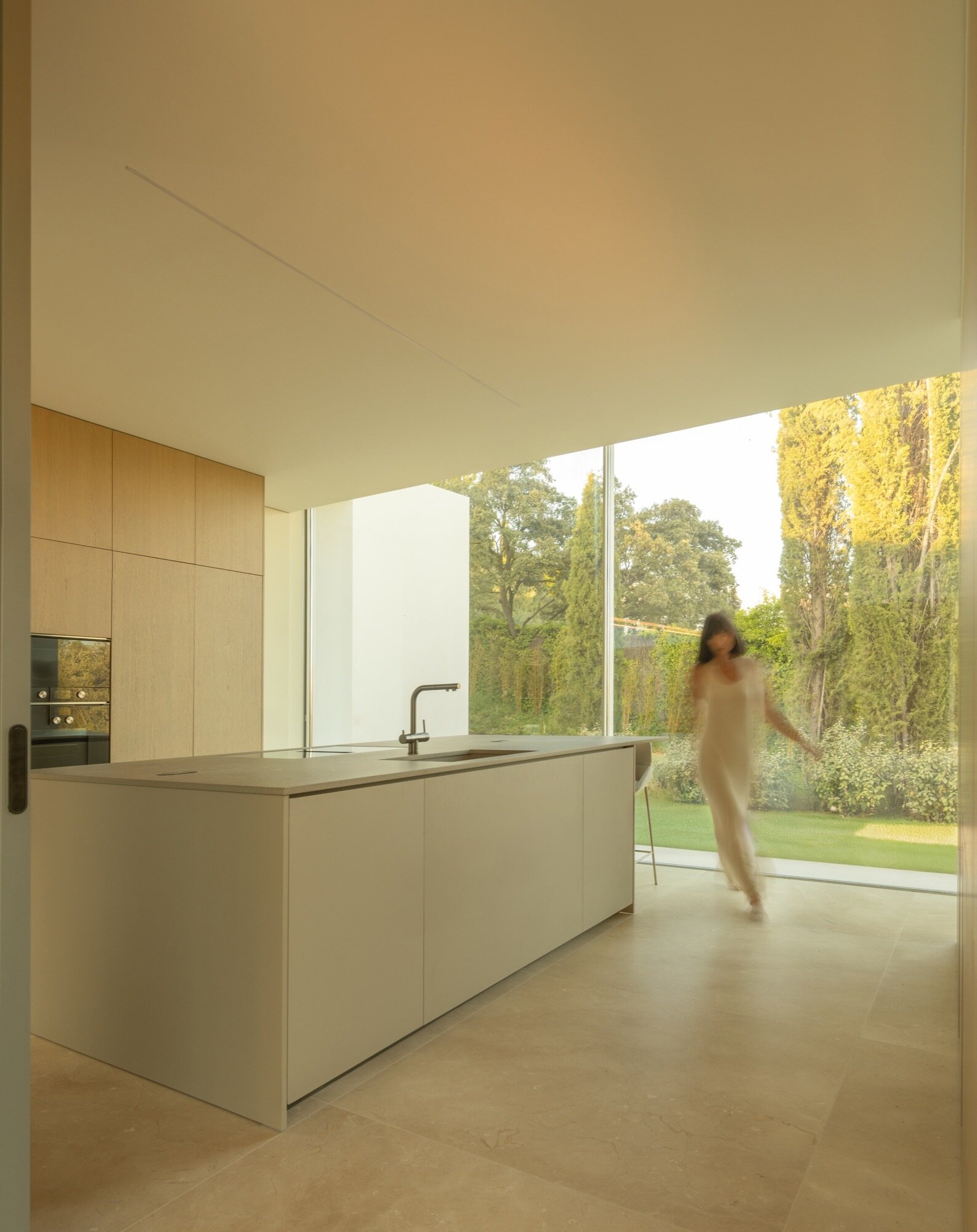
A minimalist kitchen with a large island and oversized windows.

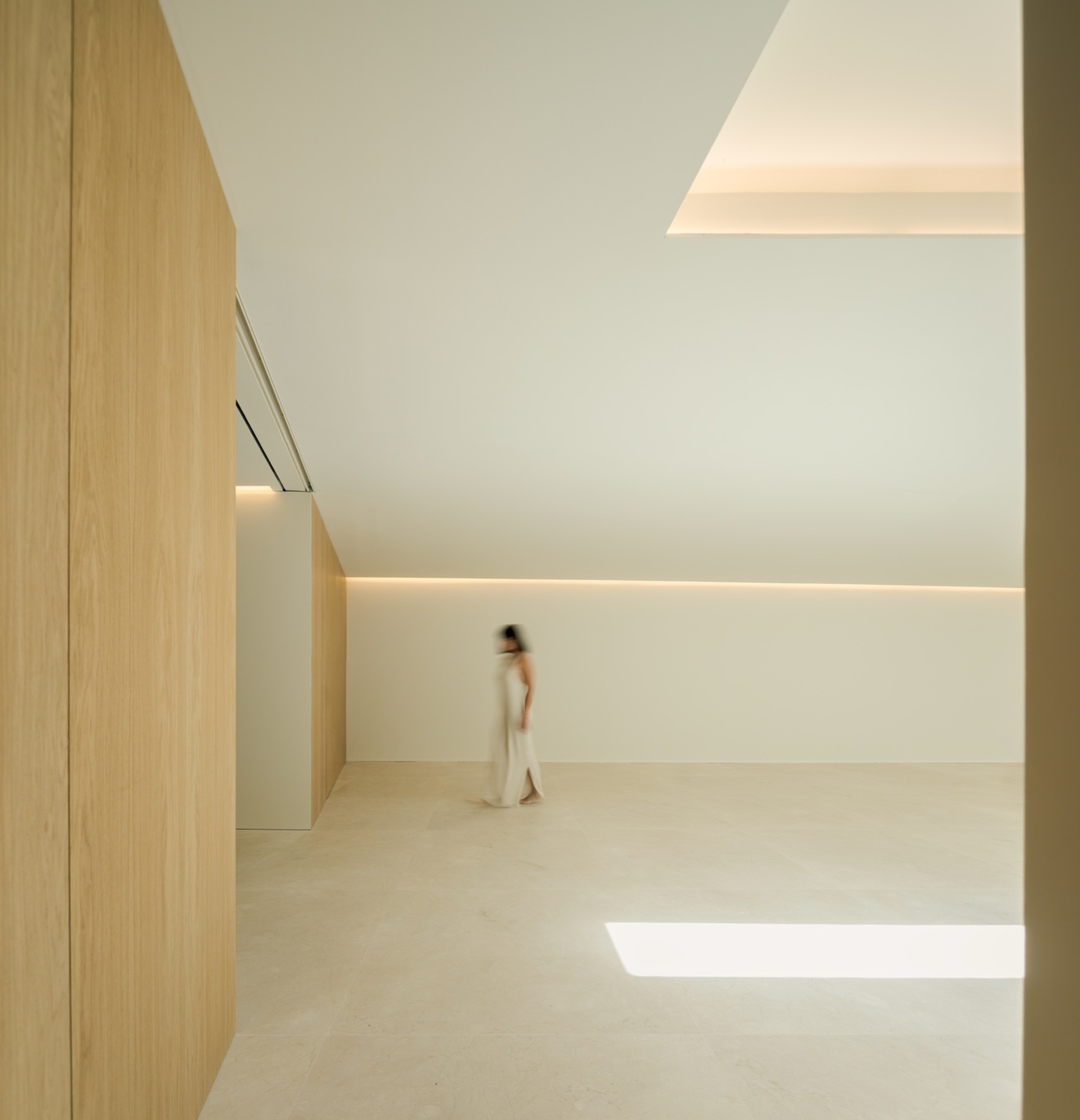
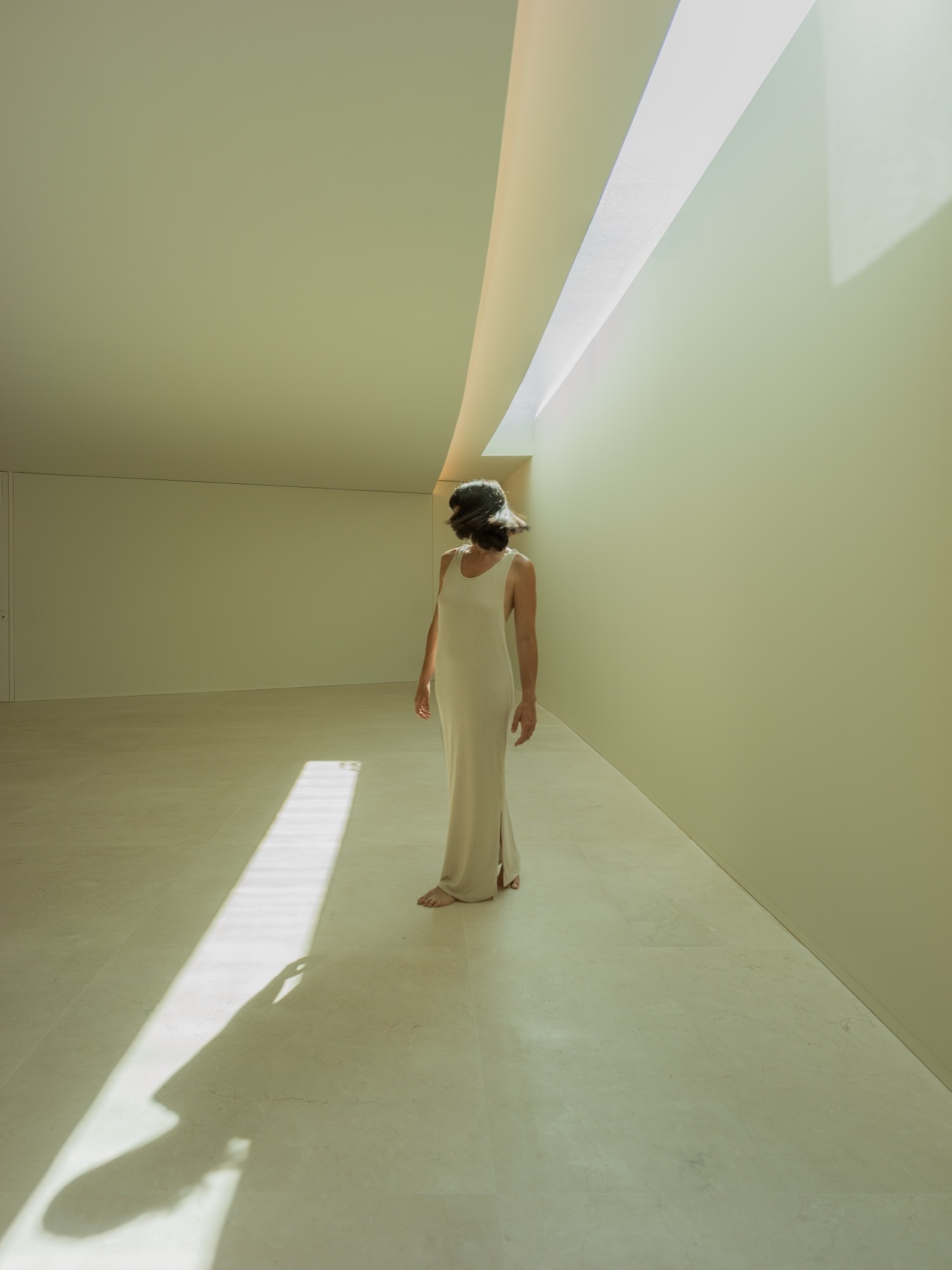
Circulation plays a major role in how the house feels. Hallways are designed as active spaces formed by the meeting of the curved volumes. At the point where the different parts of the house come together, a central communication core links all levels. This makes moving through the home feel fluid and continuous.
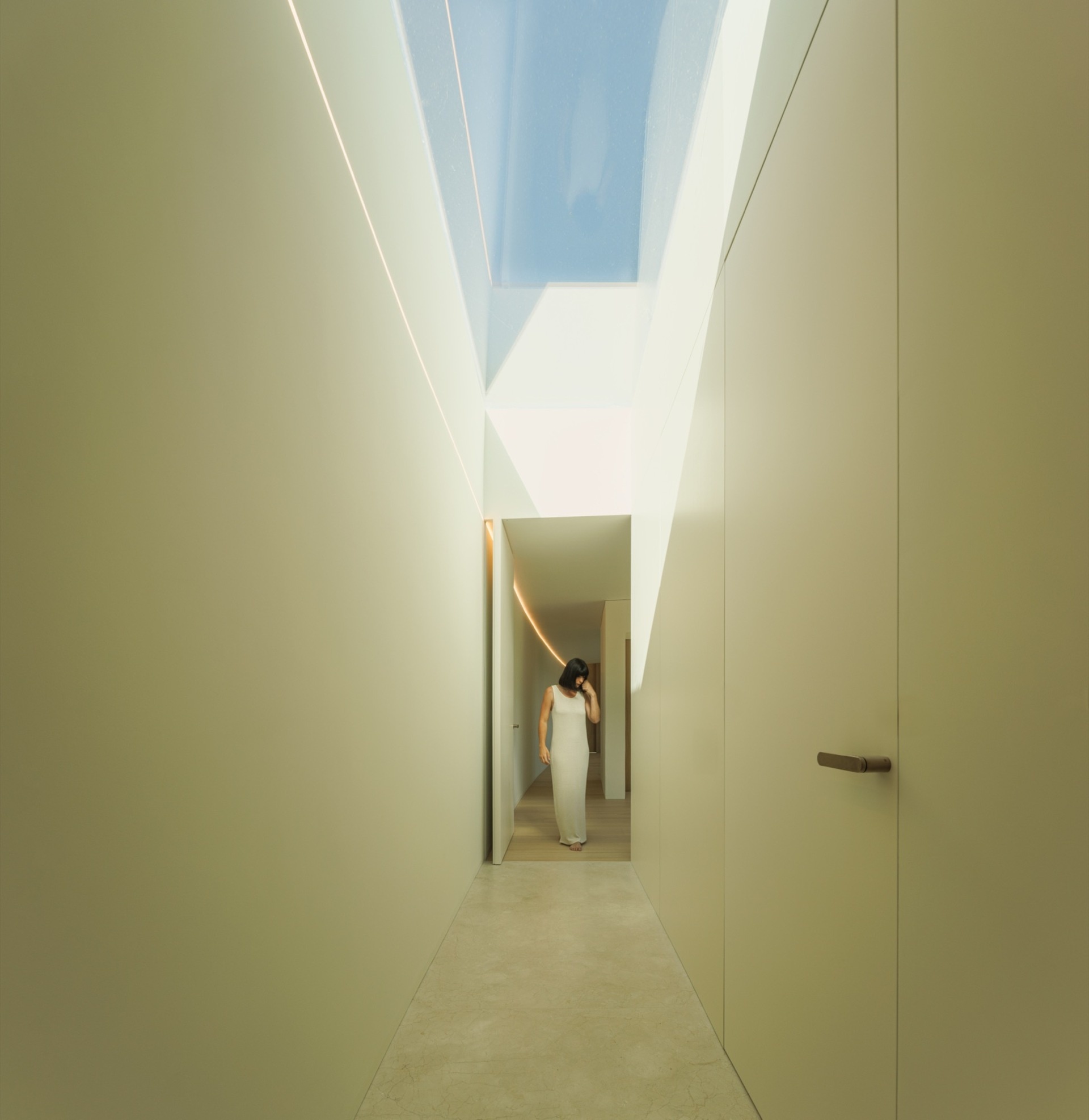
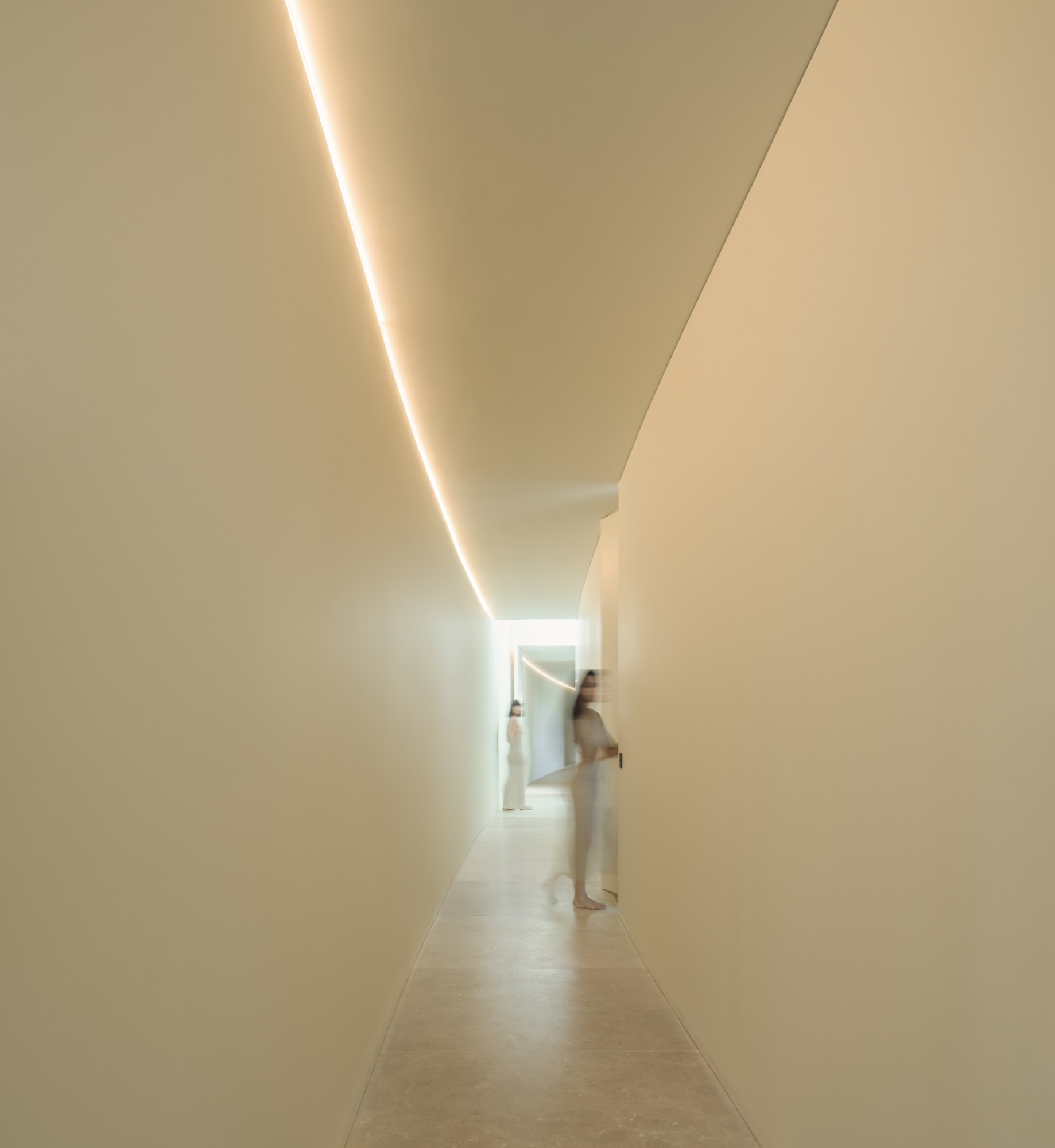
In this minimalist home, hallways are shaped by curved volumes, turning them into active connectors rather than leftover space.

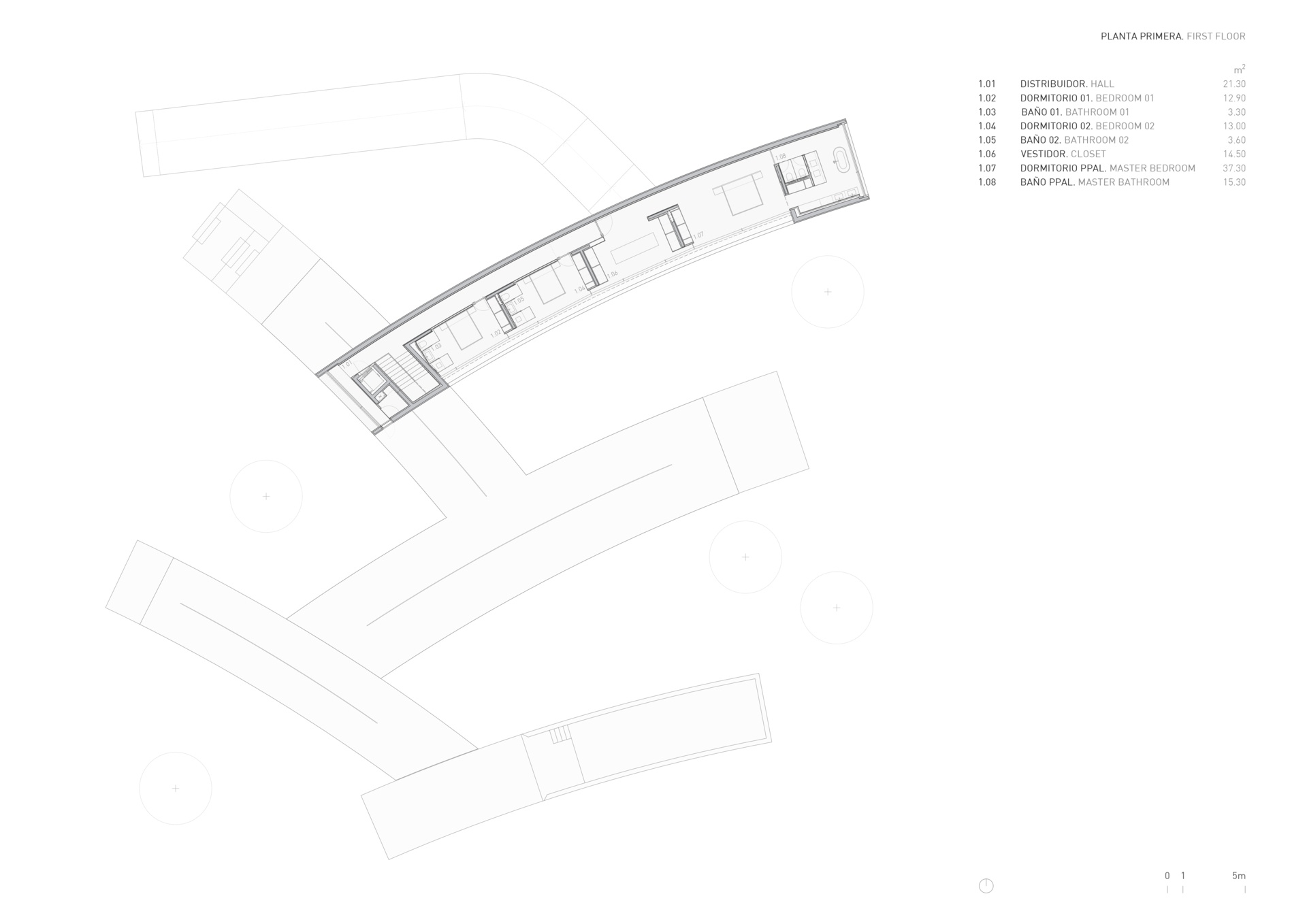
The bedrooms and bathrooms are located on the highest level, gathered into a single architectural piece. This volume acts like a bridge across the house. By lifting these private spaces above the rest, the design creates separation without disconnecting them from the overall flow.
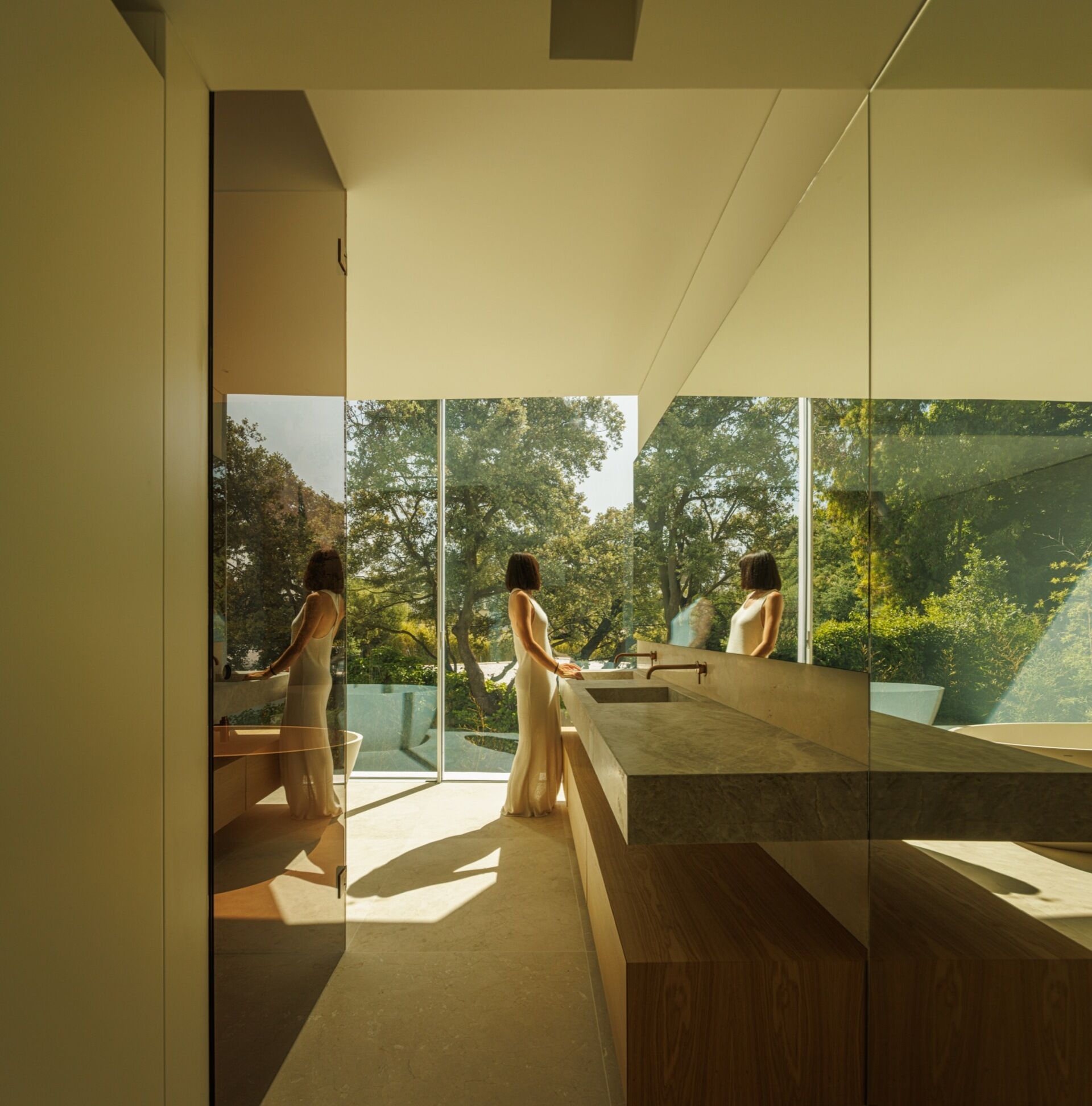
A modern bathroom with large windows that look out onto the garden.

There’s also an indoor pool that’s integrated into the architecture rather than treated as a special feature, reinforcing the consistency of the design.
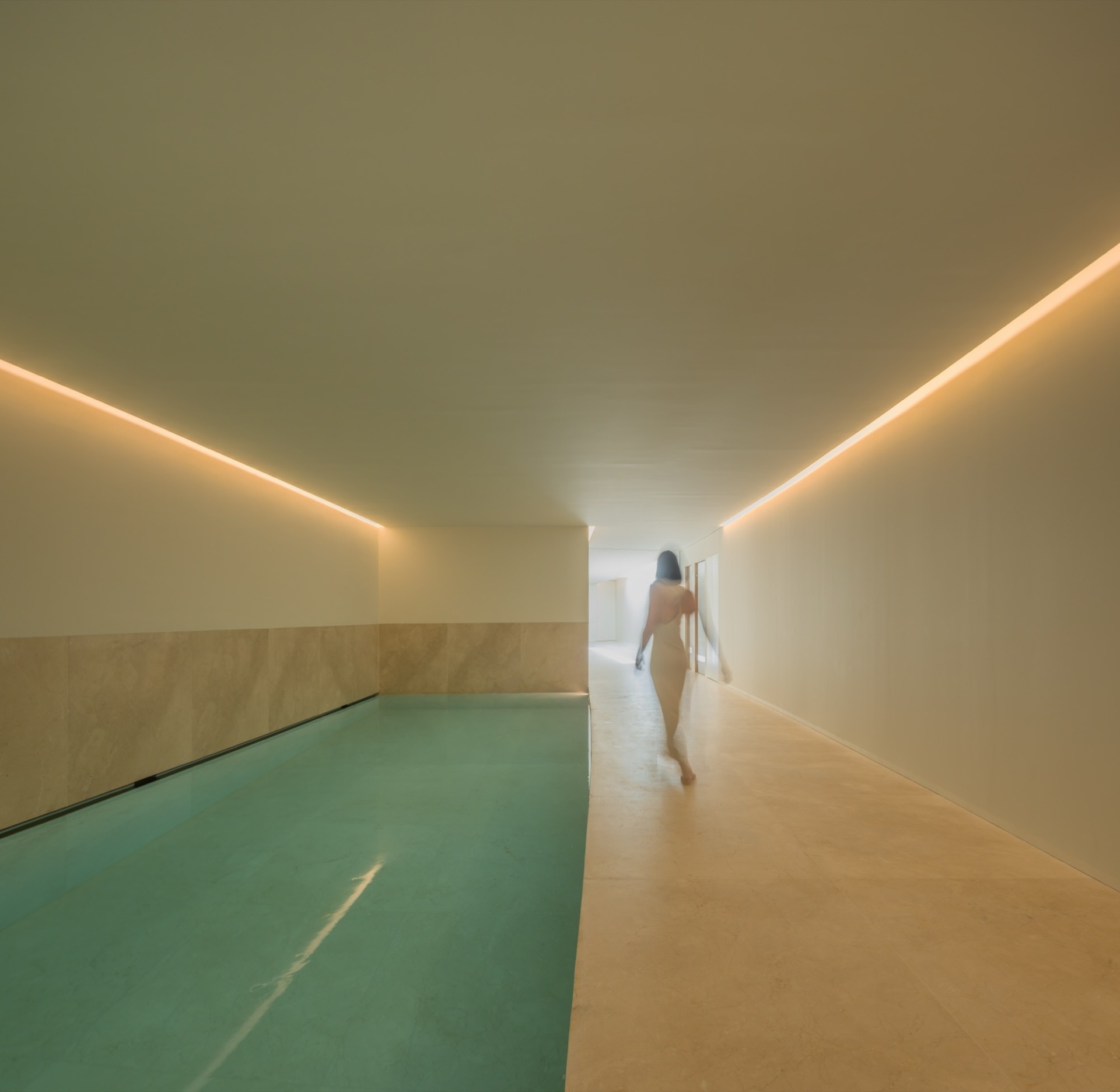
An indoor pool is included within this modern home and is positioned according to the same ascending layout as the rest of the house.

This short video tour shows how the curved forms, vertical layout, and circulation work together as one continuous architectural experience.

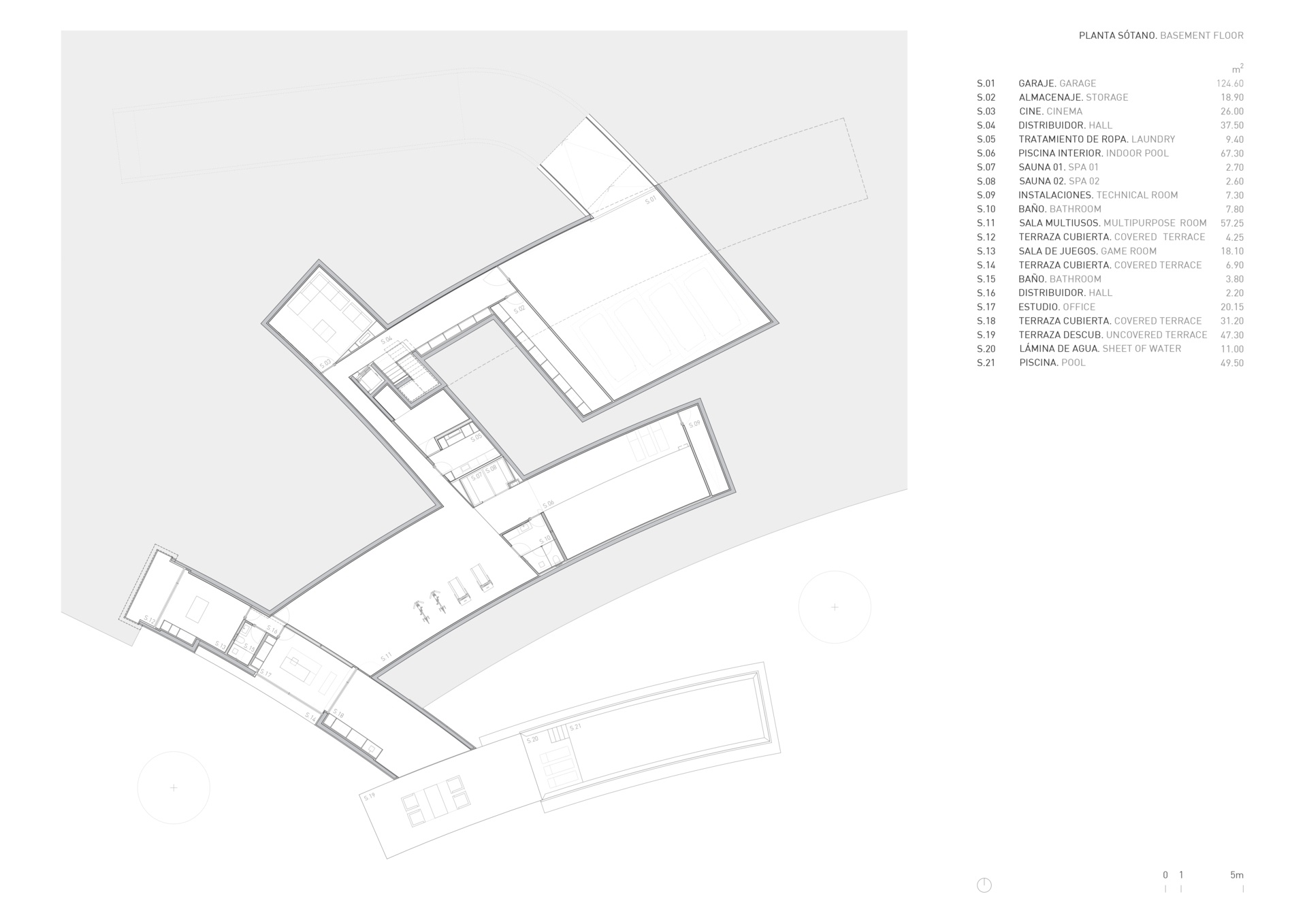
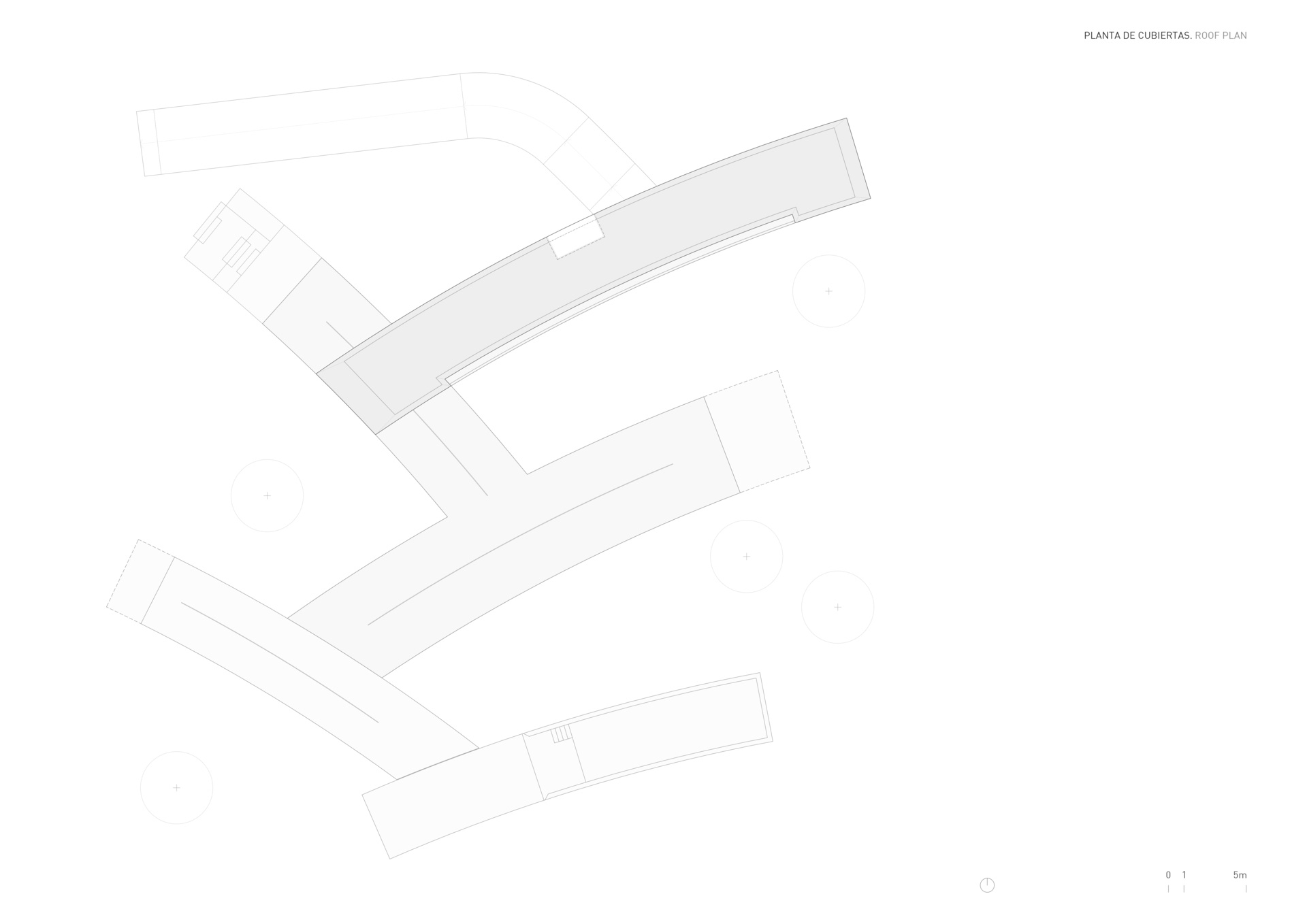
The architectural drawings highlight the importance of proportion throughout the project. Every width and dimension is carefully considered.
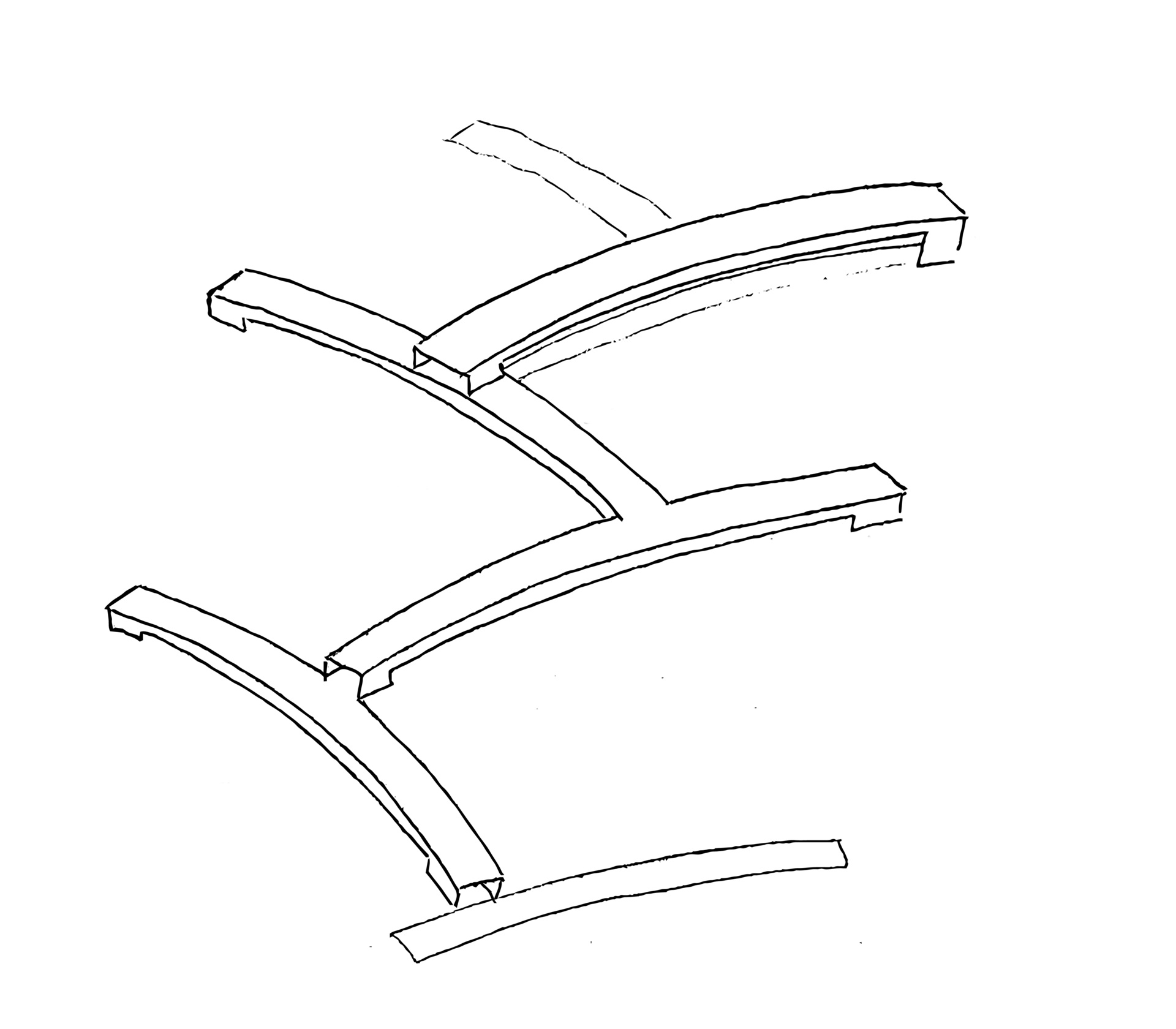
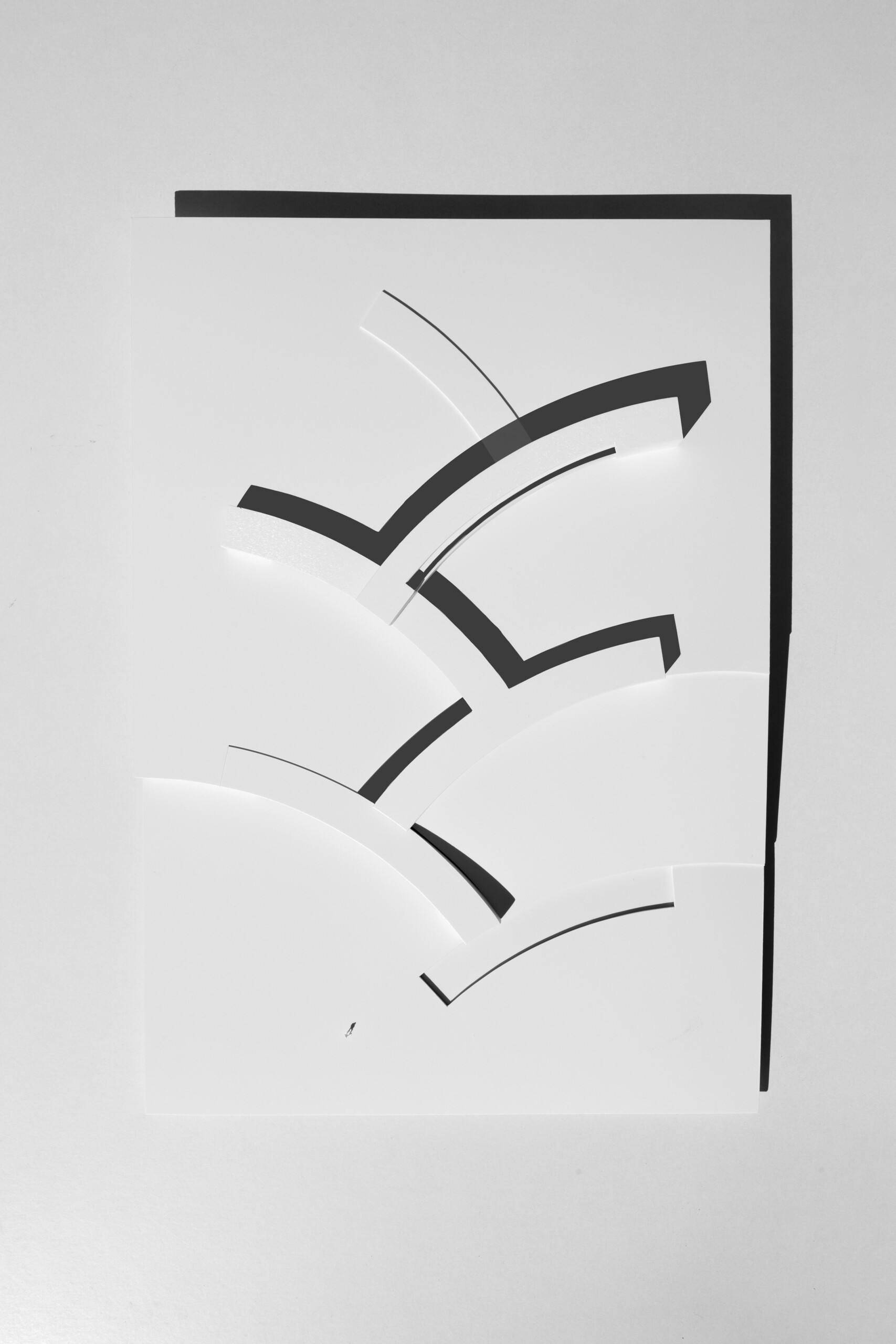
A Madrid house by Fran Silvestre Arquitectos that uses curves, proportion, and an ascending layout to create architecture that feels calm and natural.

A Madrid house by Fran Silvestre Arquitectos that uses curves, proportion, and an ascending layout to create architecture that feels calm and natural.

A Madrid house by Fran Silvestre Arquitectos that uses curves, proportion, and an ascending layout to create architecture that feels calm and natural.

A Madrid house by Fran Silvestre Arquitectos that uses curves, proportion, and an ascending layout to create architecture that feels calm and natural.

A Madrid house by Fran Silvestre Arquitectos that uses curves, proportion, and an ascending layout to create architecture that feels calm and natural.

A Madrid house by Fran Silvestre Arquitectos that uses curves, proportion, and an ascending layout to create architecture that feels calm and natural.

A Madrid house by Fran Silvestre Arquitectos that uses curves, proportion, and an ascending layout to create architecture that feels calm and natural.

This Madrid house is ultimately shaped by a simple idea. Proportion. Through carefully measured volumes and a clear ascending layout, Fran Silvestre Arquitectos have created a home that feels calm, logical, and easy to move through.


Photography by Fernando Guerra | Video: Jesus Orrico | Architecture: Fran Silvestre Arquitectos | Project Team: Fran Silvestre (Principal in Charge), Maria Masia (Collaborating Architect), Estefania Soriano (Collaborating Architect), Carlos Lucas (Collaborating Architect) | Interior Design: Alfaro Hofmann | Developer: 37 ThreeSeven | Technical Architect: Jorge Carrion Ponce, Jose Miguel Cota San Andres | Structural Engineer: Estructuras Singulares | General Contractor: Project Work