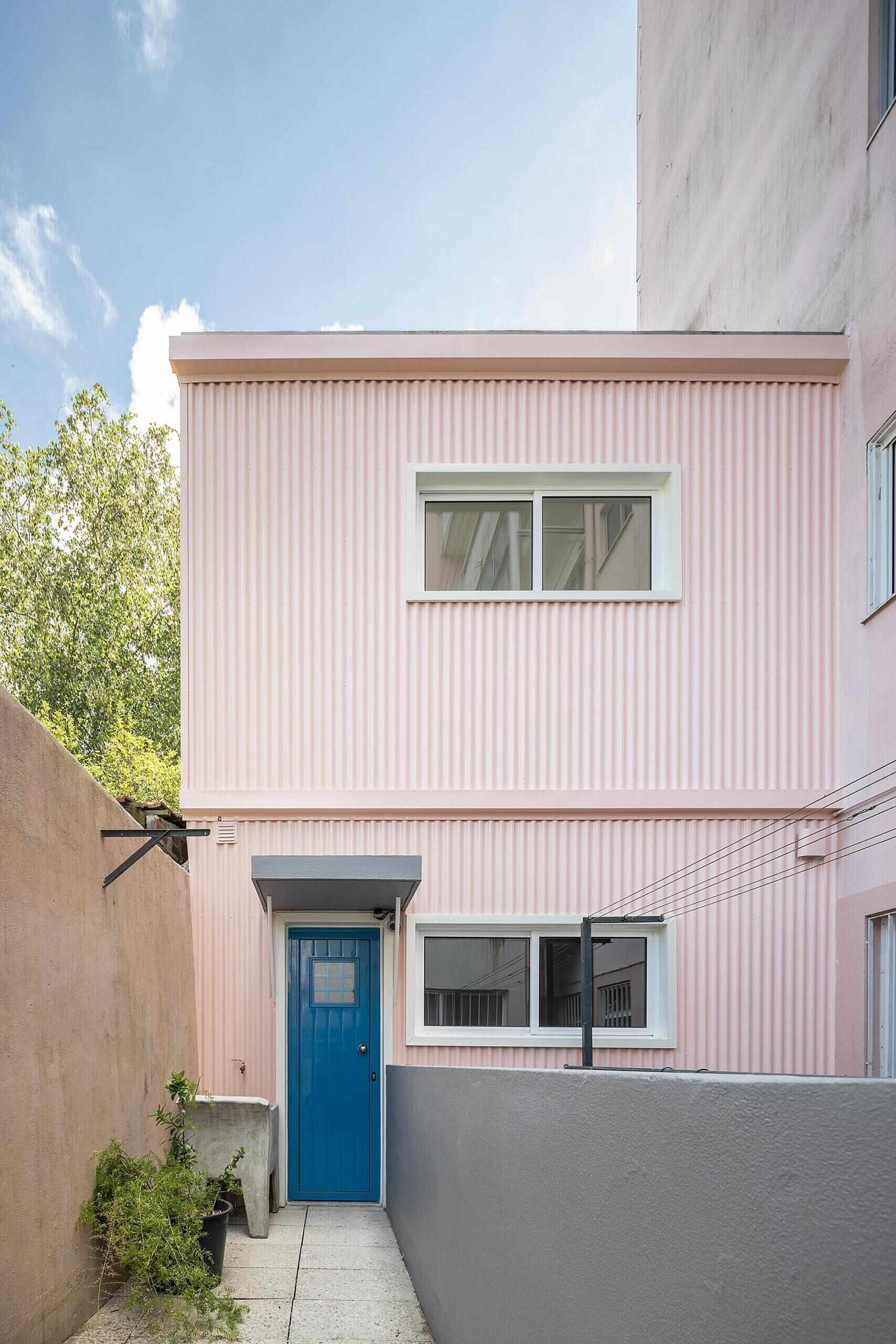
Tucked quietly behind a modernist apartment building on Rua do Zaire in Porto, Portugal, Casa Zaire is the kind of home you would never notice from the street. Hidden from the noise and pace of urban life, this tiny house once served as the living quarters for the building’s porter. Today, it has been carefully brought back to life through a contemporary renovation by Paulo Moreira Architectures.
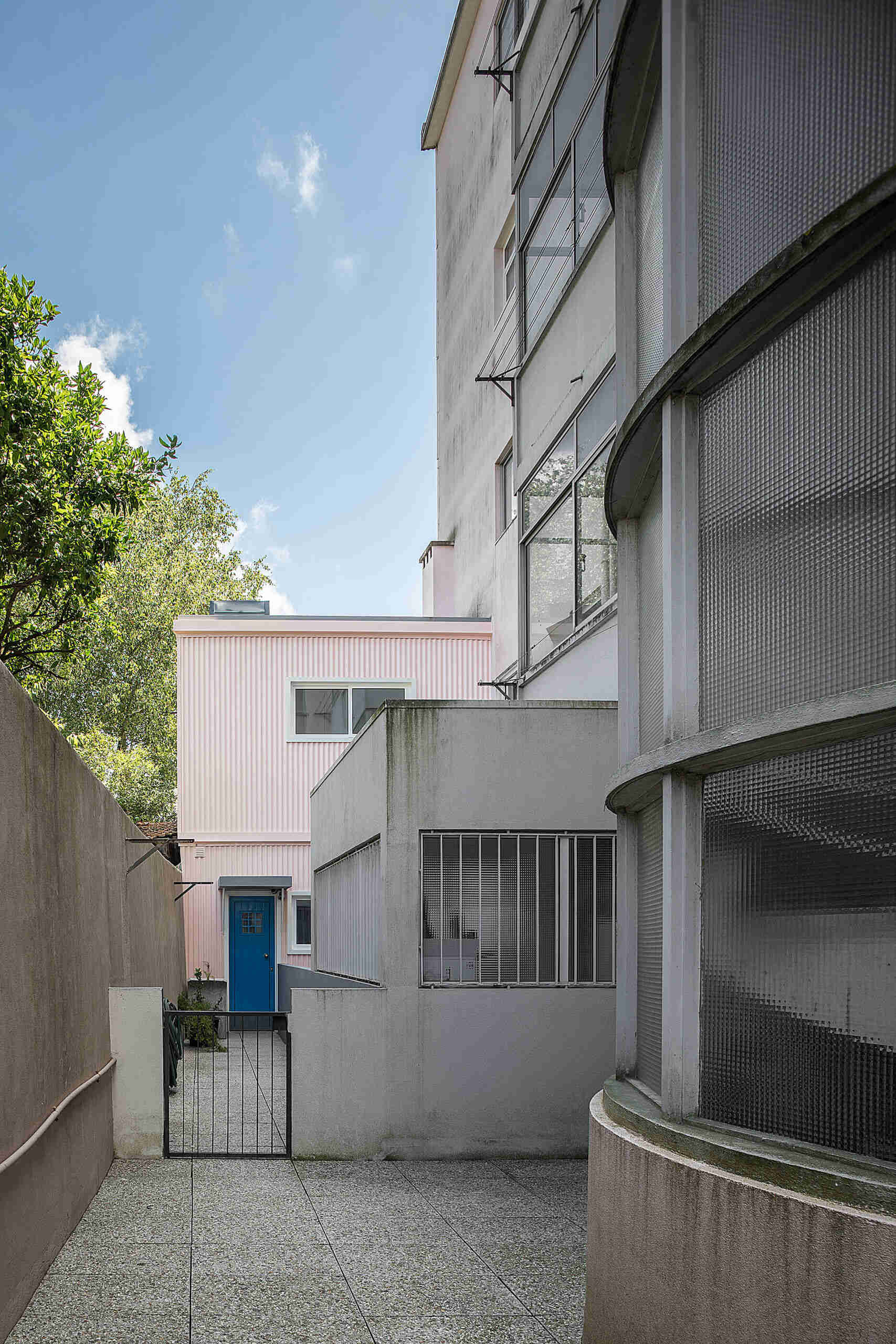
Because of its isolated position at the rear of the site, the architects approached the project as an autonomous object rather than a typical urban home. Small in size but rich in intention, Casa Zaire proves that thoughtful design can transform even the most overlooked spaces.
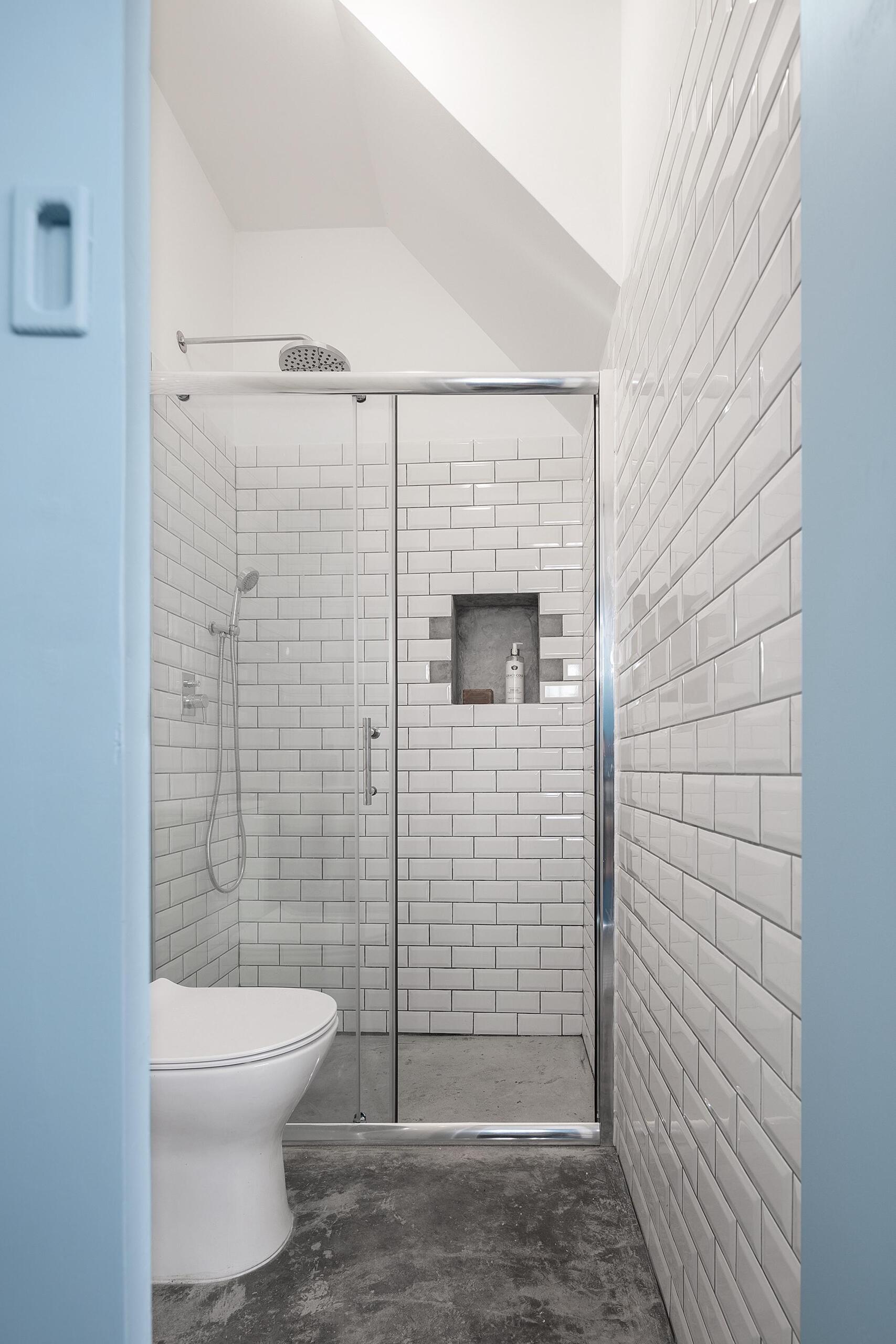
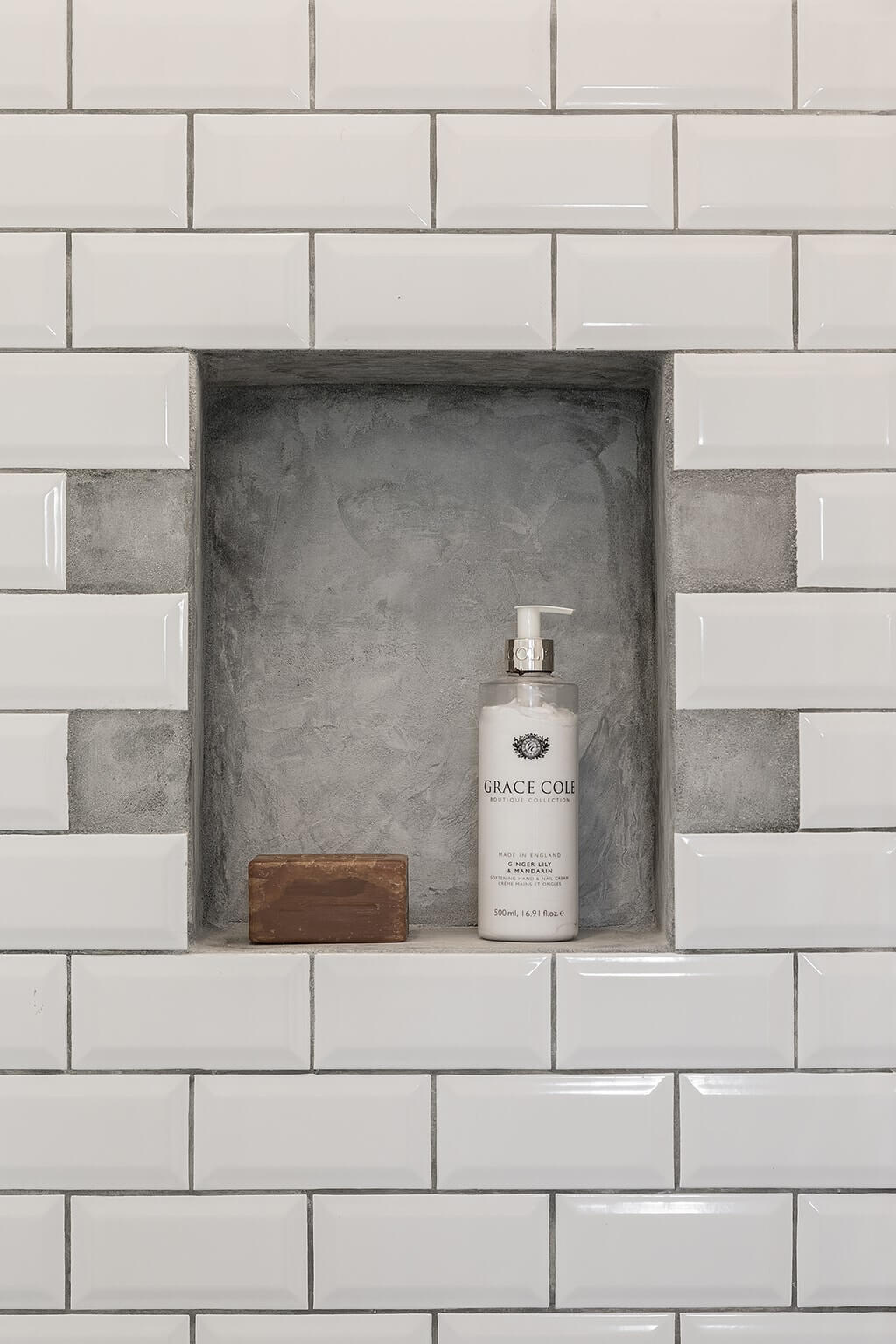
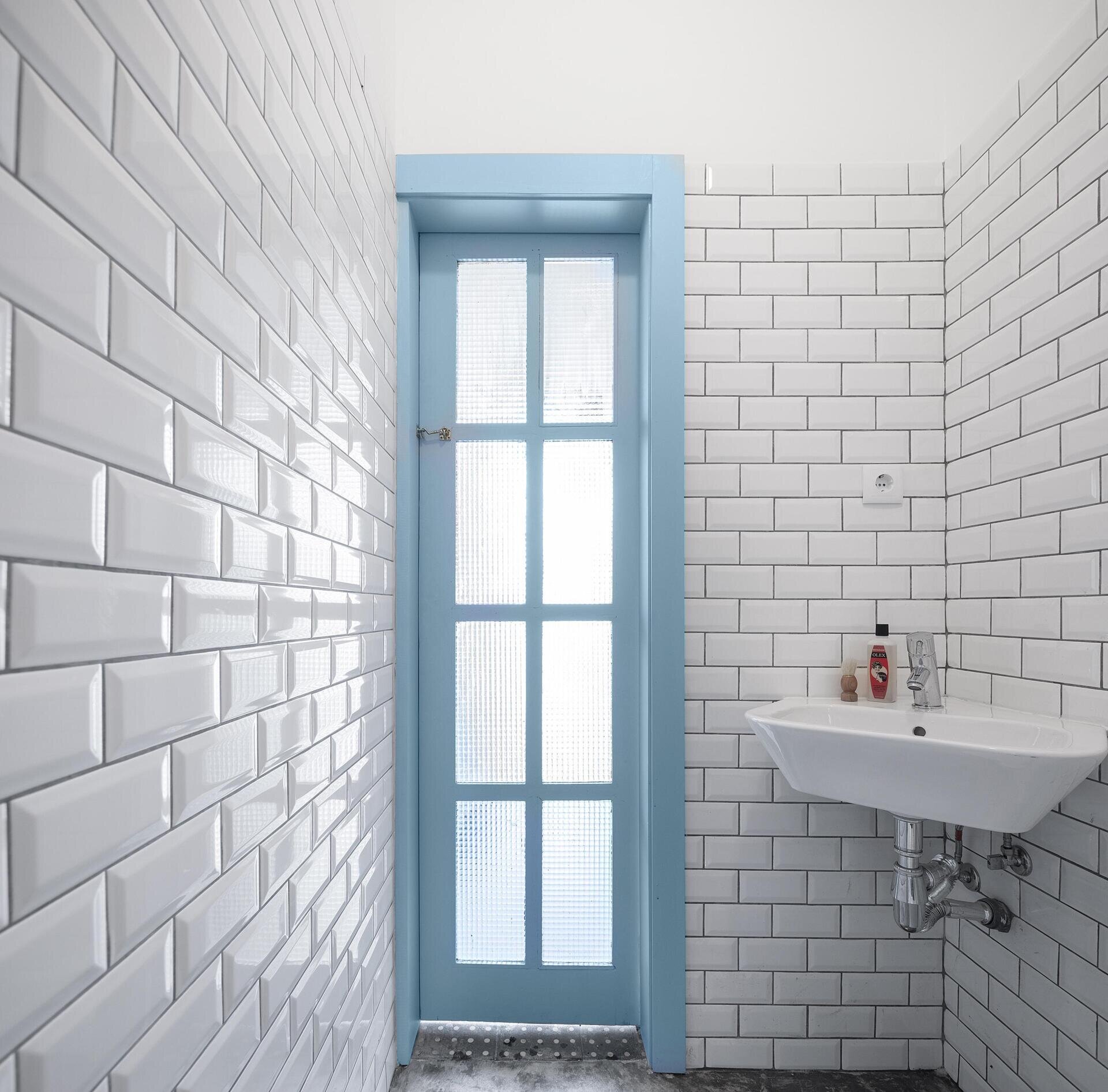
Step just inside the front door and the bathroom immediately sets the tone. Compact yet considered, the space uses simple materials to create a calm, functional room. White subway tiles wrap the shower area, where a built-in shelf offers storage without clutter. The basin is neatly tucked into the corner, making efficient use of every available inch.
Rather than over-complicating the design, the architects focused on small gestures. Affordable materials and careful detailing help the bathroom feel practical and familiar, creating a quiet connection between the architecture and everyday routines.
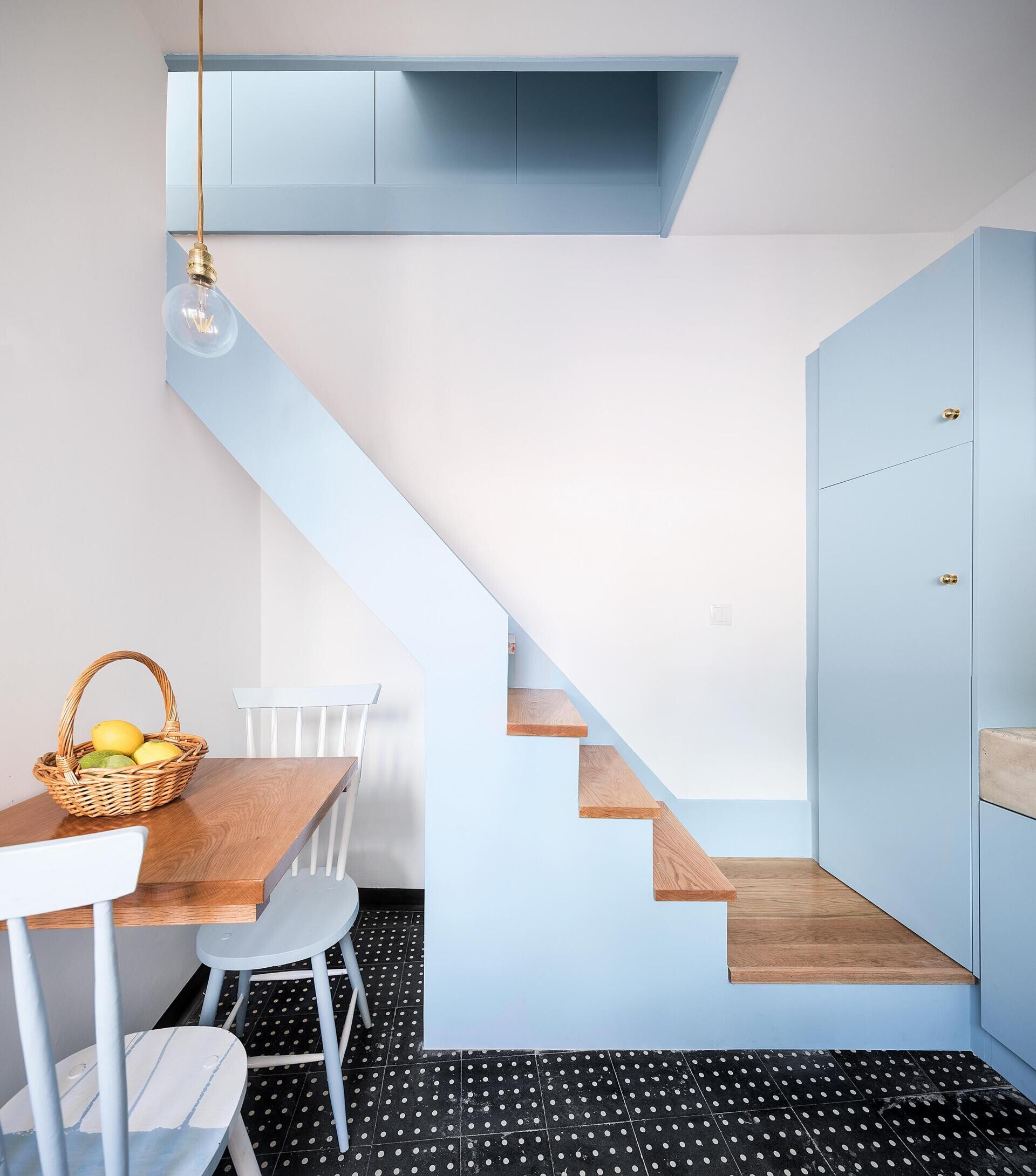
Around the corner from the bathroom, the layout opens into a small dining area designed for two. Partially tucked into an alcove beneath the stairs, this modest space feels intentional rather than squeezed in. The architects reshaped the connections between rooms, allowing the center of the house to remain open while key elements hug the outer walls.
Underfoot, the original tiled flooring has been kept despite its worn appearance. Rather than replacing it, the architects embraced its patina, allowing the marks of time to add character and warmth to the newly revived interior.

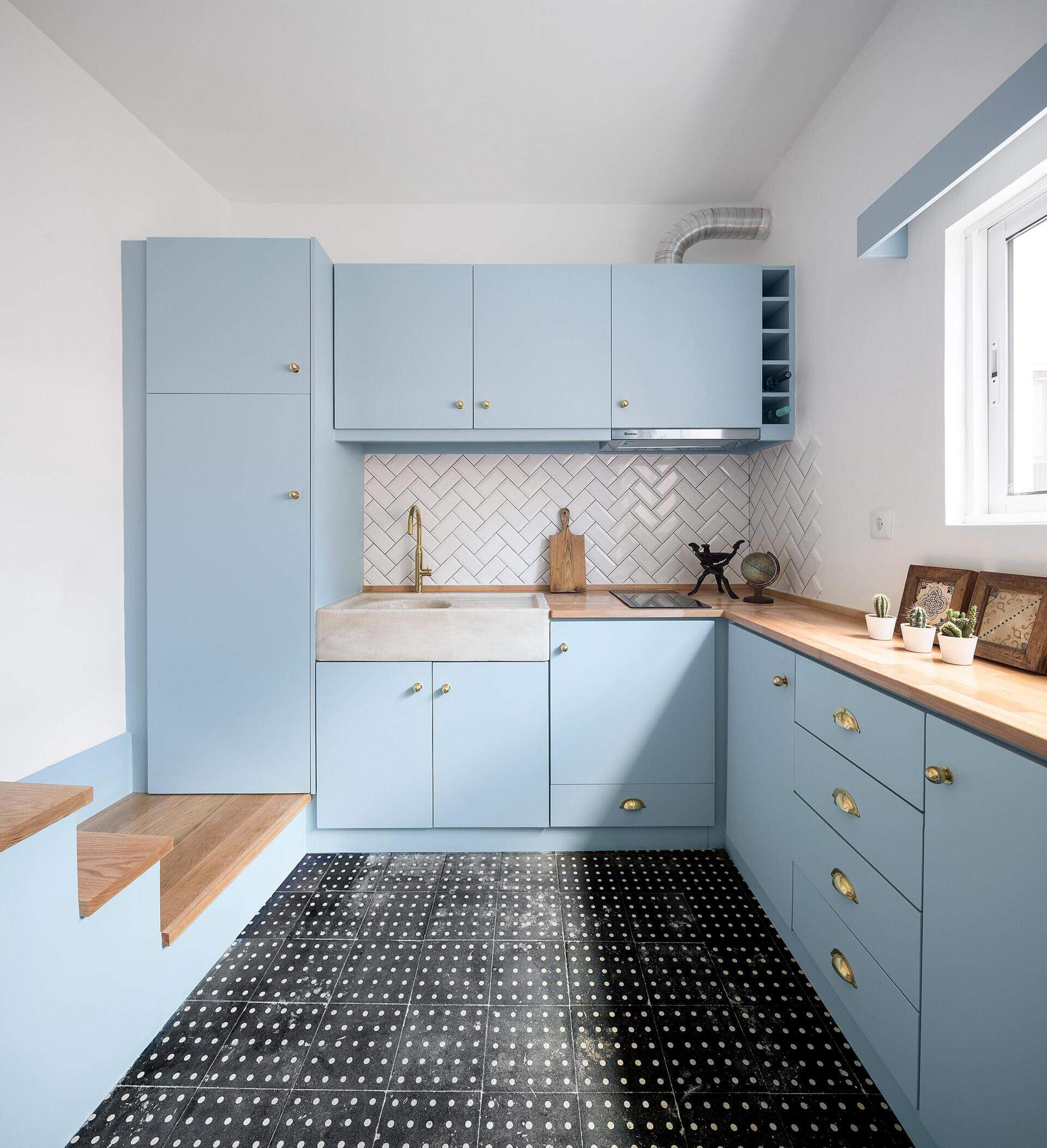
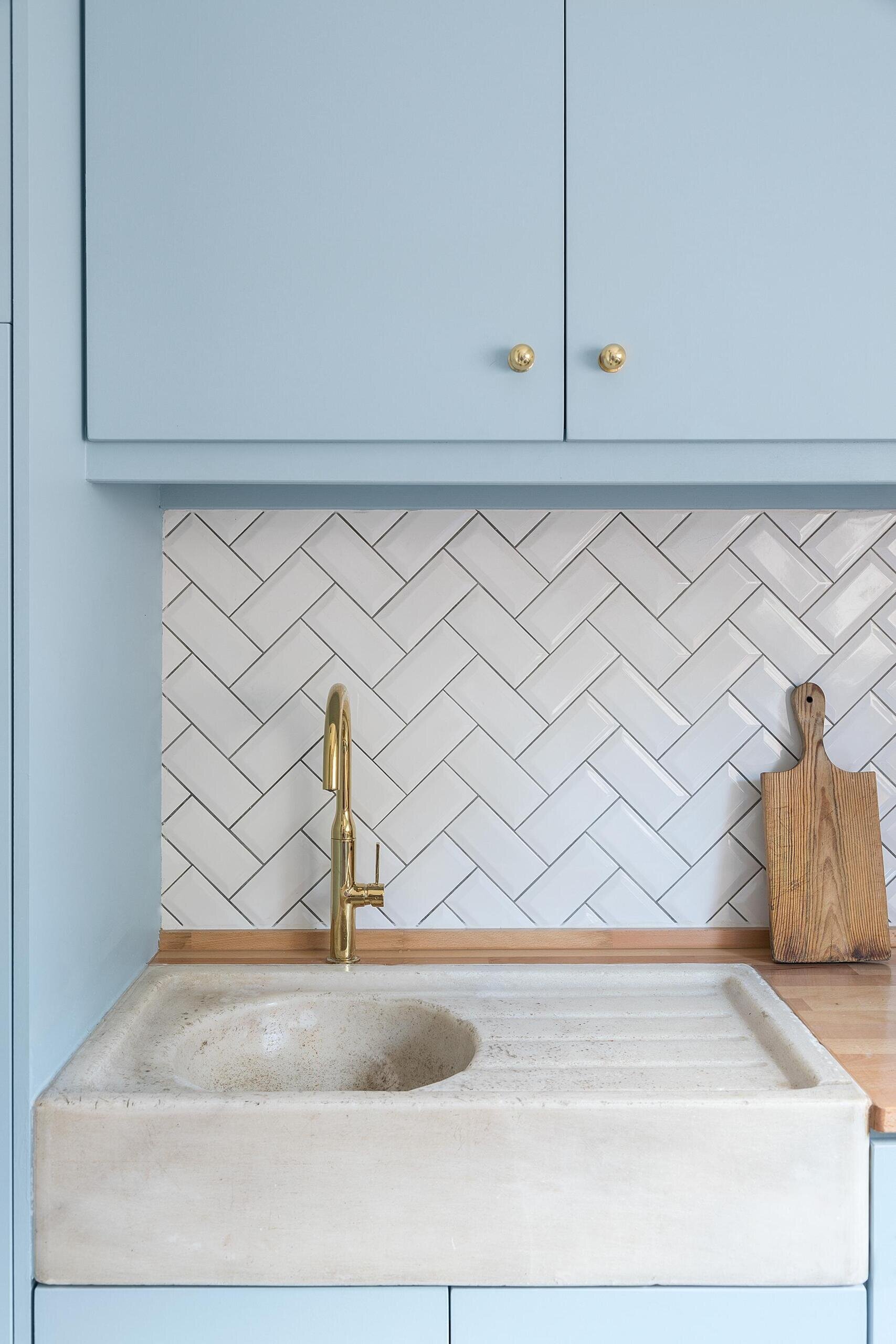
From the dining area, the house flows directly into the kitchen. Powder blue cabinets bring a soft wash of color to the space, paired with a warm wood countertop that adds contrast and texture. White subway tiles laid in a herringbone pattern line the walls, subtly elevating the compact kitchen without overwhelming it.
Positioned along the outer wall, the kitchen helps free up the center of the house, reinforcing the sense of openness despite the limited footprint. It is a practical workspace that feels light, calm, and quietly confident.
Running neatly alongside the wall, the stairs are deliberately simple. Wood treads add warmth as they guide you upward, reinforcing the home’s material palette and understated approach. Placed along the perimeter, the stairs continue the strategy of keeping circulation elements out of the central living space.
This careful planning allows the ground floor to feel more generous than its size suggests, with each element placed exactly where it works best.
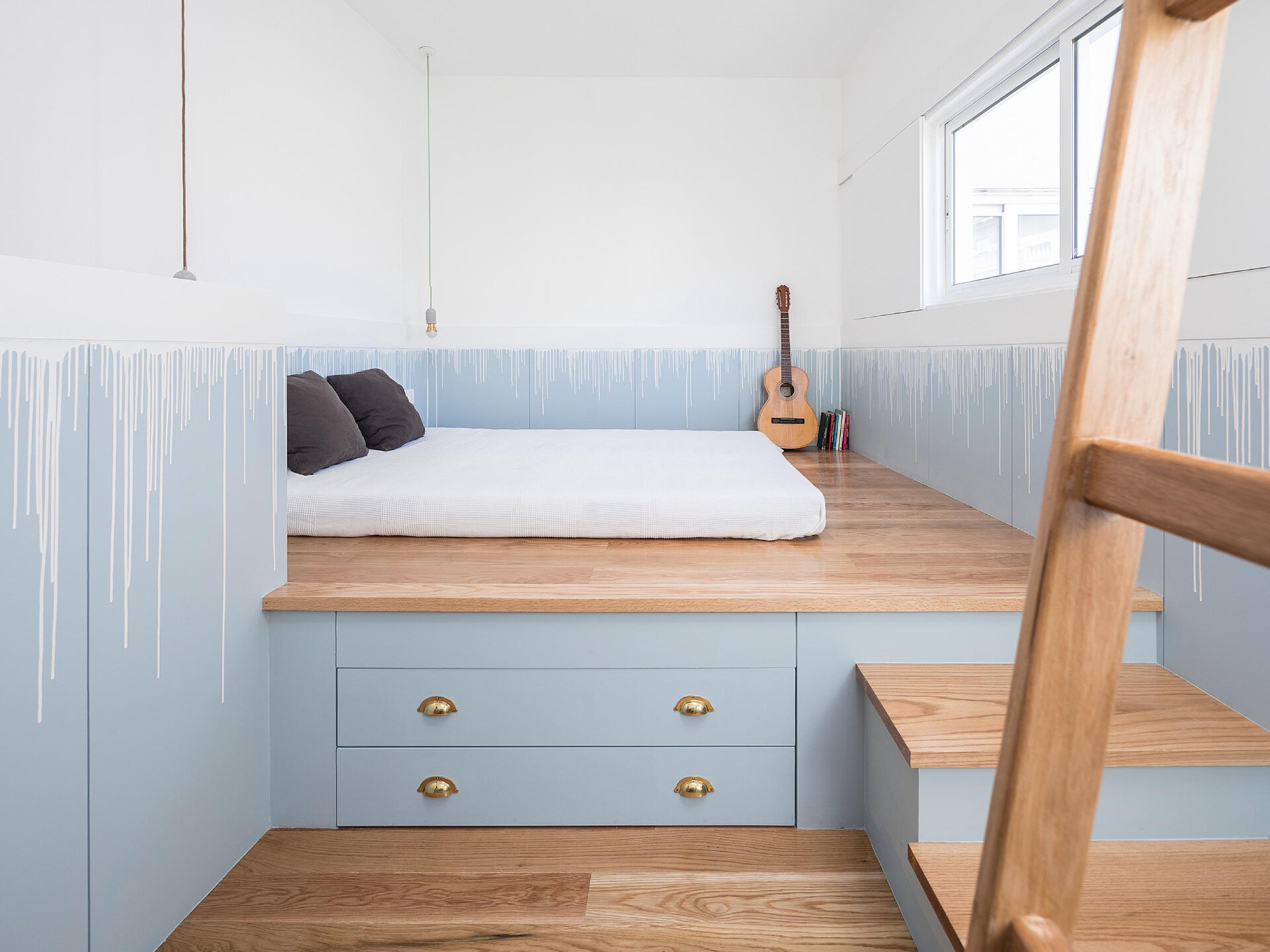
At the top of the stairs, the bedroom reveals one of Casa Zaire’s most playful details. The lower half of the walls is painted in the same soft blue used in the kitchen and stairs, visually tying the spaces together. Instead of a clean line between colors, a subtle drip effect transitions into the white upper walls, adding texture and personality.
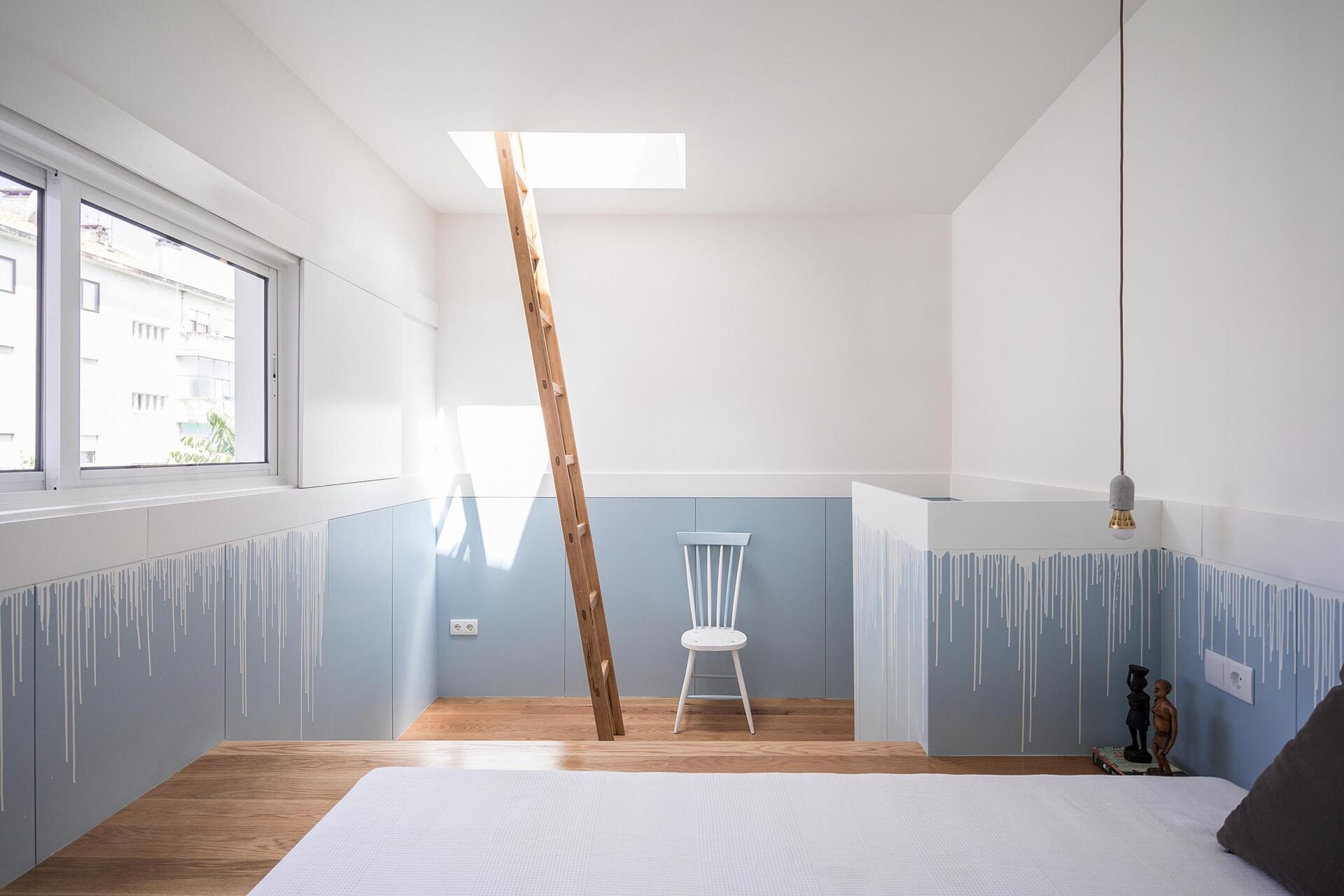
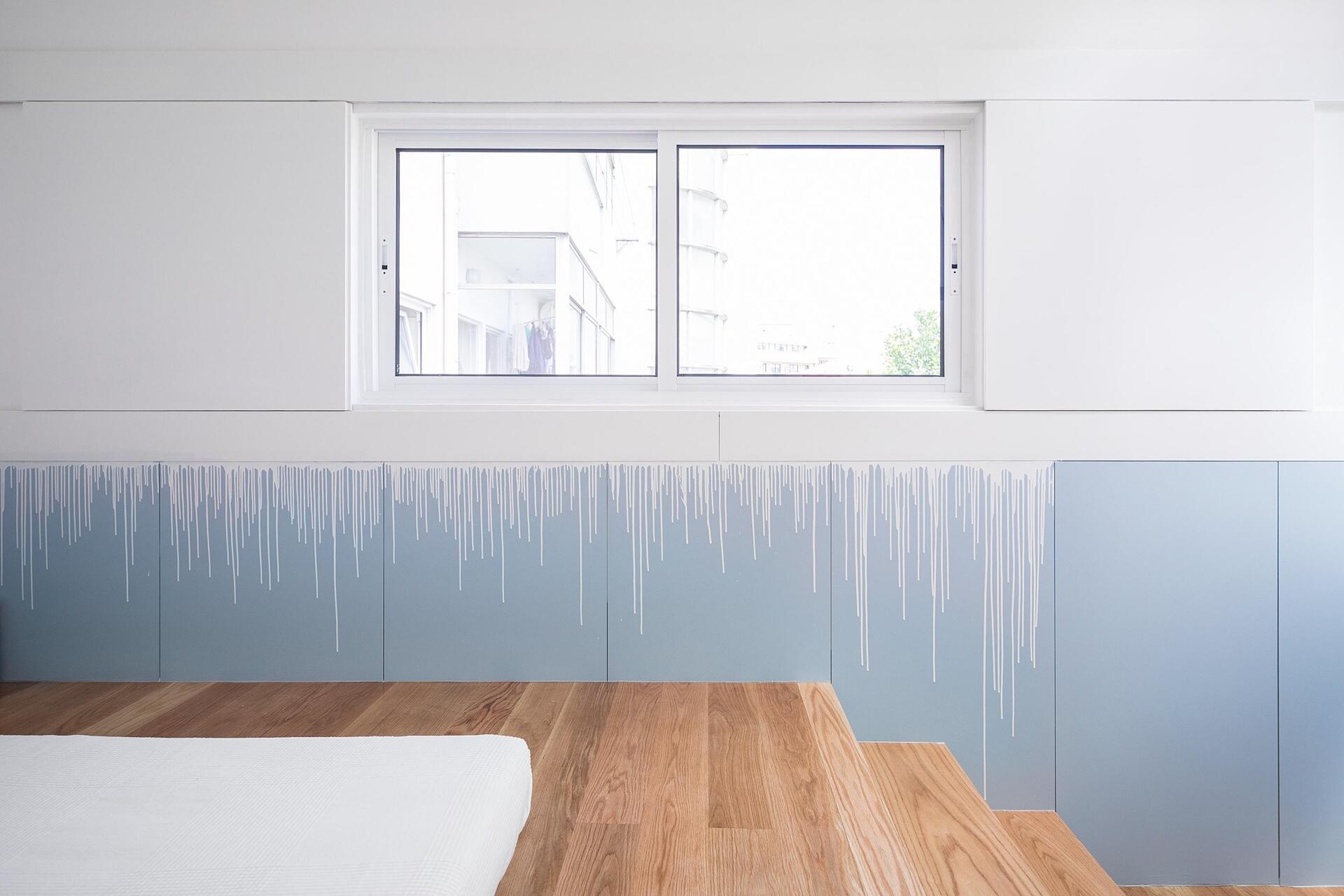
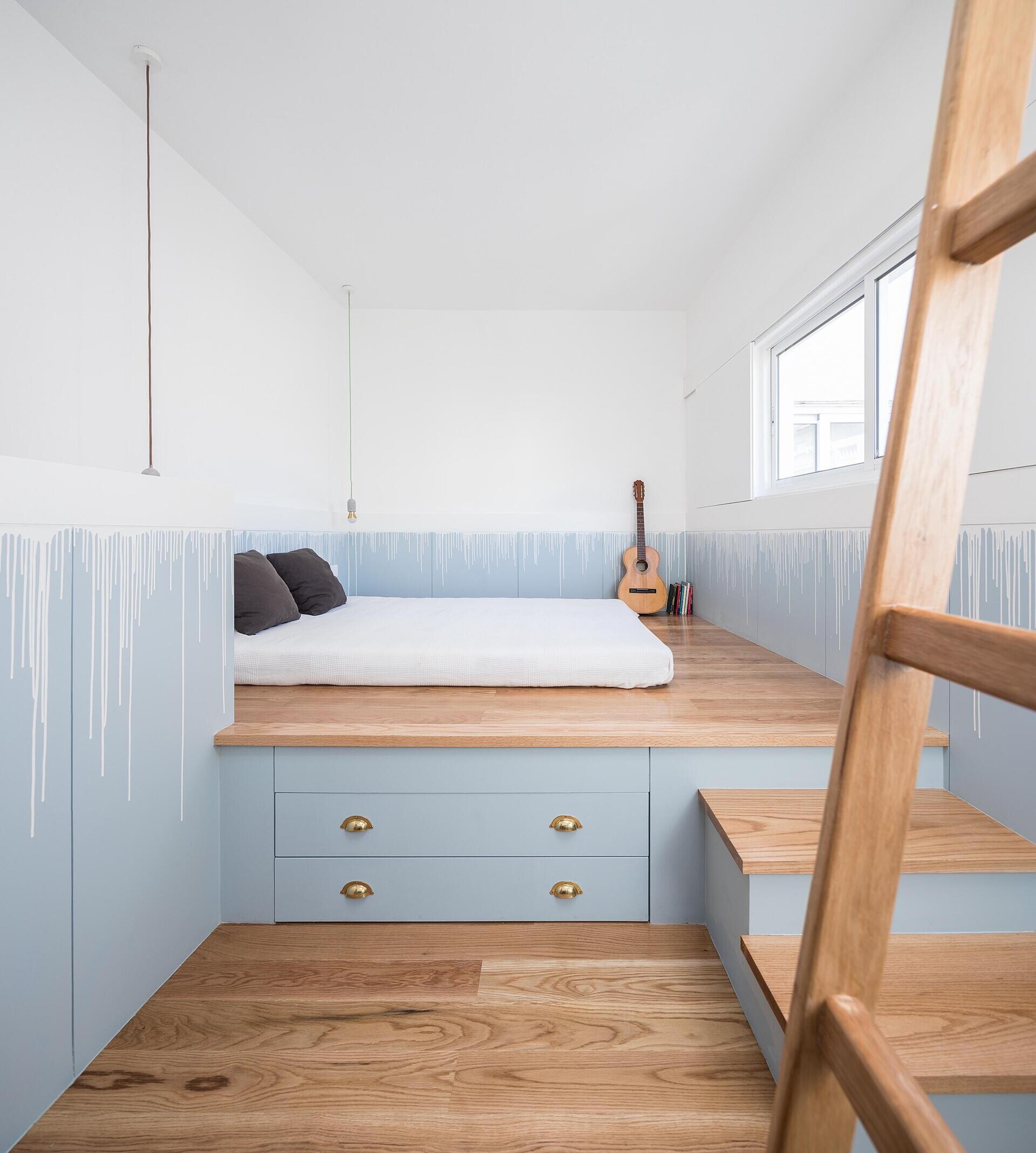
The bed sits atop a custom-designed wooden platform, raised to create valuable storage beneath. By introducing a slight level difference, the architects were able to optimise storage while repositioning the bed to make the room feel more balanced. Particular attention was given to material choices here, creating unexpected relationships between surfaces that add depth to the small space.
Casa Zaire shows how restraint, empathy, and careful planning can breathe new life into even the most modest structures. By embracing what already existed and enhancing it with subtle, meaningful interventions, this tiny house has been given a future that feels both grounded and personal.