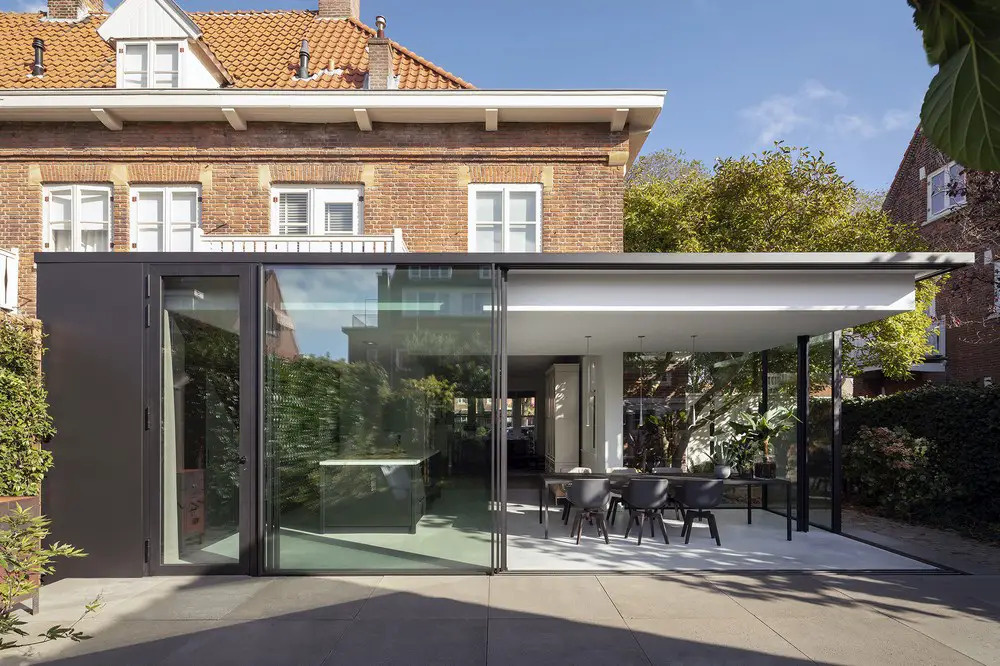
On a quiet street in The Netherlands, a 1927 brick house has quietly been given a new chapter. Designed by Bloot Architecture, the minimalist extension sits in deliberate contrast to the original home, offering a modern counterpoint to its expressive brickwork while revealing parts of the property that had long been hidden from view.
At the front of the house sits an original annex, a reminder of the home’s early twentieth century roots and its ties to Art Nouveau and the Amsterdam School. Behind it, however, was a surprise. A mature fig tree stood in the garden, beautiful but almost invisible from inside the old house. Rather than building around it, the architects made it central to the redesign.
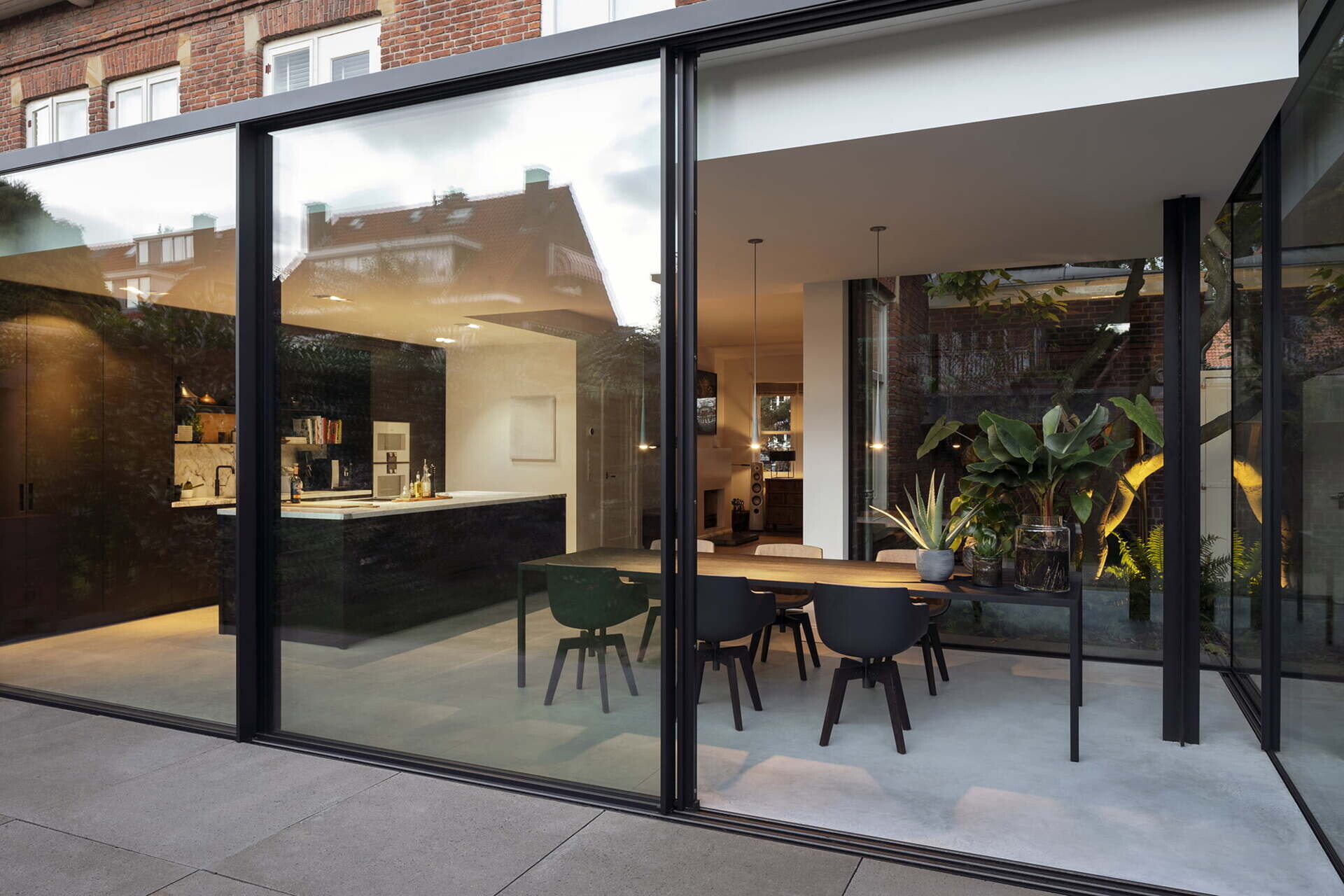
The new extension stretches beyond the original width of the house, allowing it to form a relationship with the existing annex. In doing so, it creates a semi enclosed outdoor space wrapped around the fig tree. The architects describe this as a third world, sitting between the old house and the new addition, where garden and architecture meet.
Retractable glass walls play a key role in this connection. They allow the fig tree to be enjoyed year round and flood the interior with natural light. When closed, the glass still maintains a strong visual link to the garden. When open, the boundary between inside and outside almost disappears.
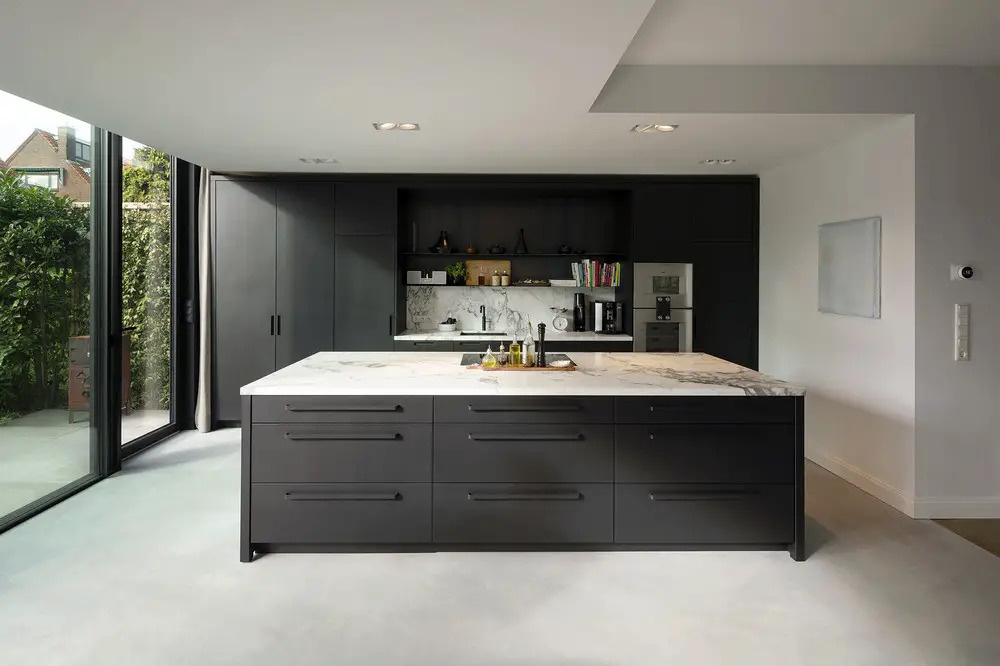
Inside the extension, a new kitchen has been introduced. Dark cabinetry anchors the space and provides a striking contrast against the white walls, ceiling, and light concrete floor. The palette is restrained and minimalist, allowing light and views to take precedence.
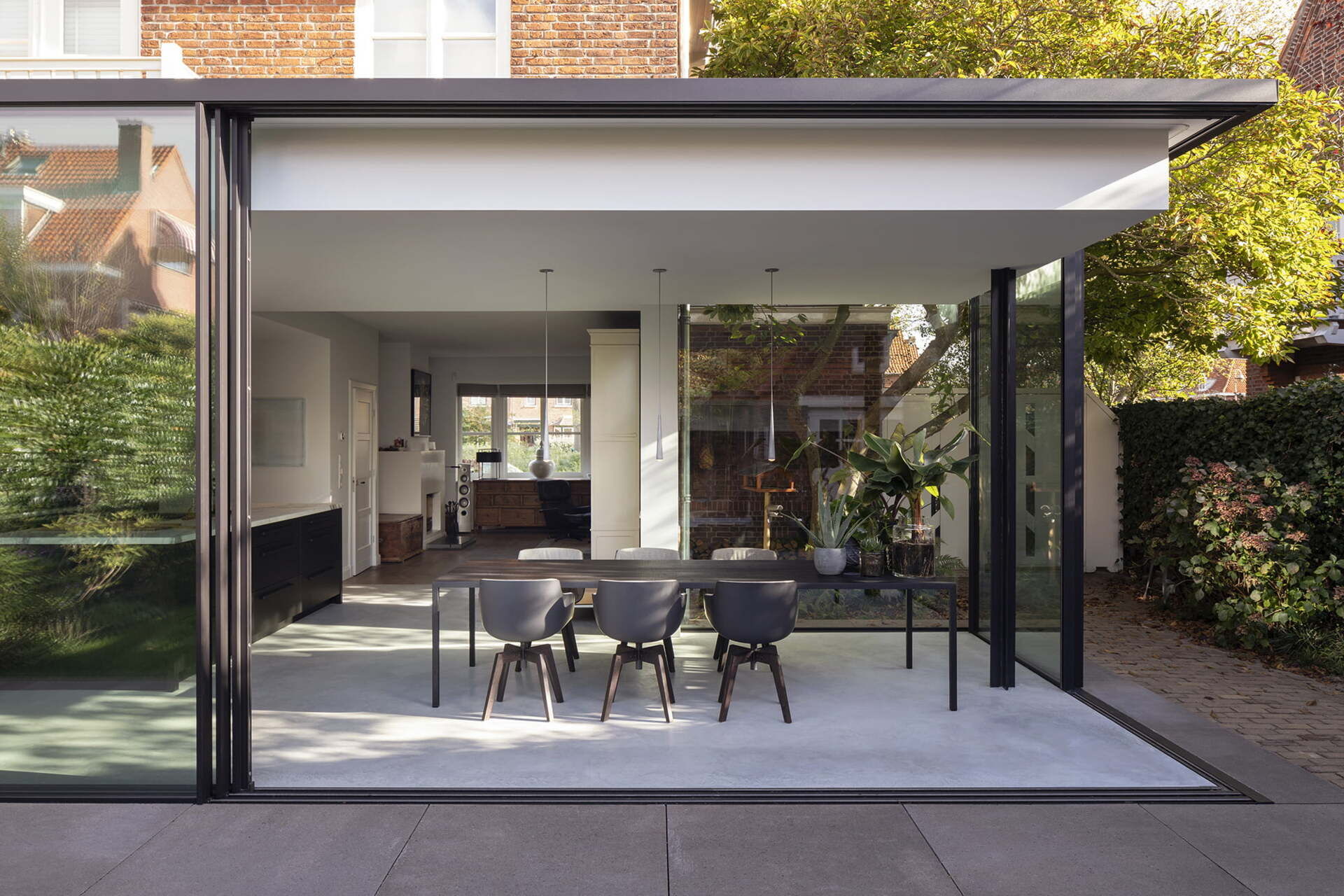
Adjacent to the kitchen is the dining area. This is where the design truly comes into its own. With the glass walls fully open, the dining table feels as though it sits outdoors, nestled within the semi enclosed garden space. This is a dramatic shift from the original kitchen and dining room, which were more modest and received far less daylight.
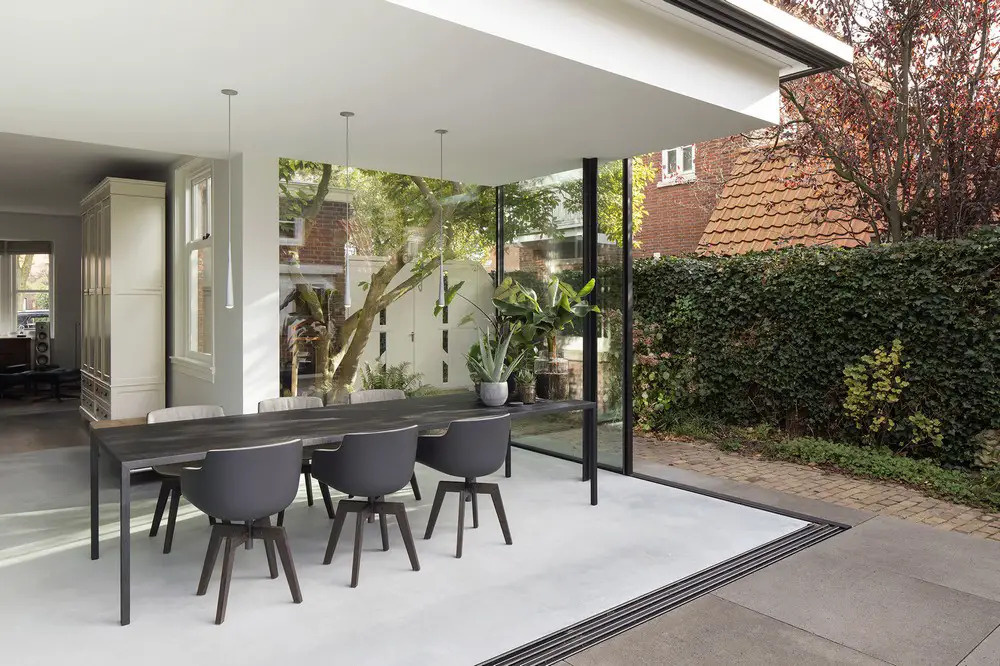

The fully glazed facade is detailed with precision. A minimal roof ledge and glass panels that run down to garden level remove visual interruptions. From inside, there are virtually no visual barriers at all. The structure of the extension is carefully concealed, with just one plus shaped column left exposed. This single element gives the impression that the roof is floating above the space.
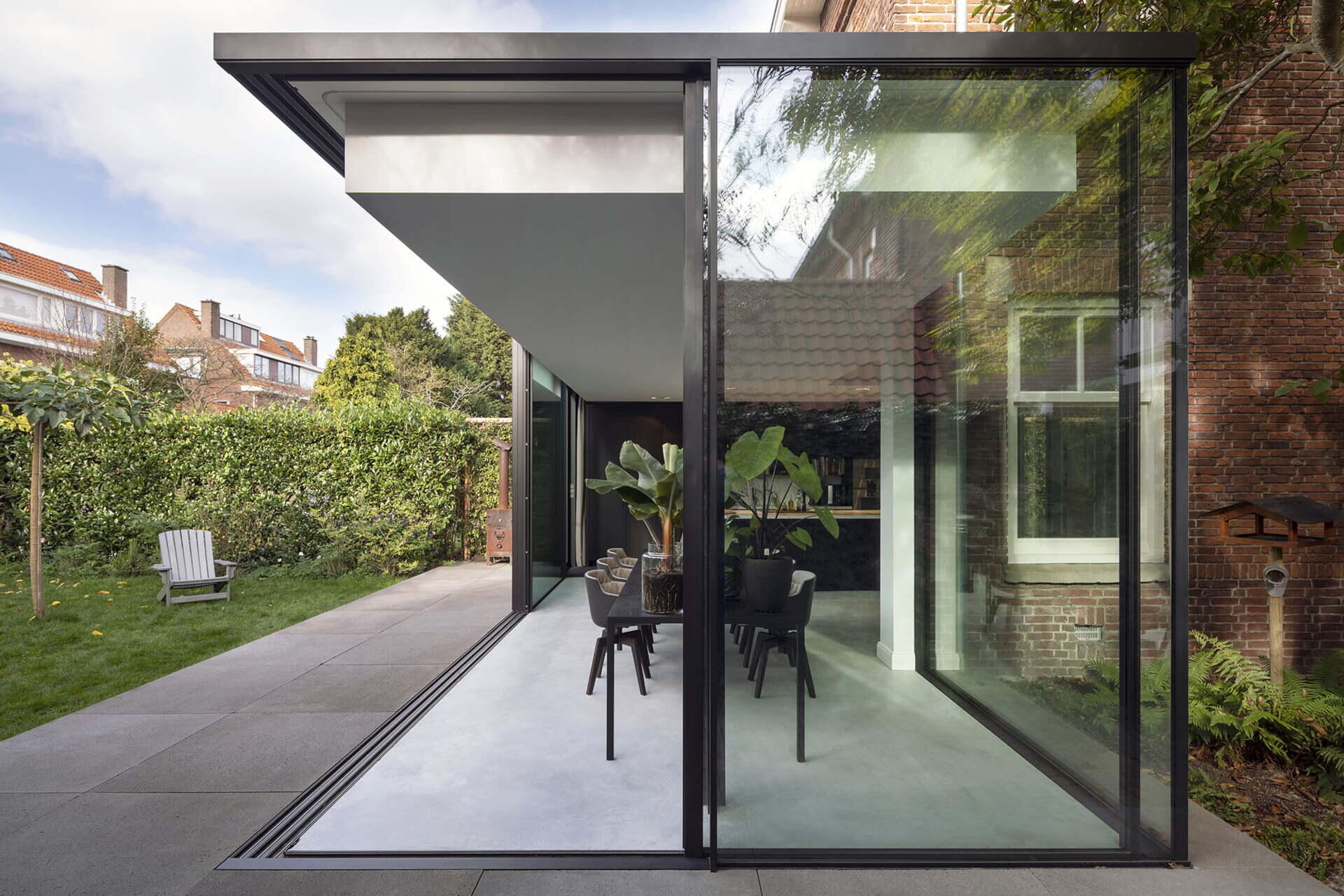
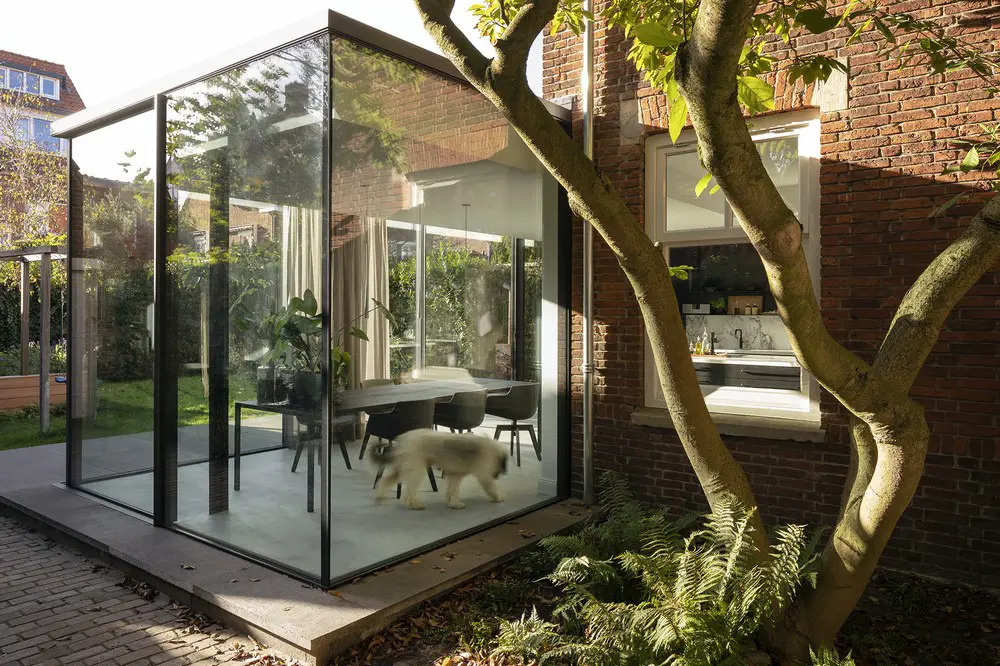
By embracing contrast and opening the home to its garden, Bloot Architecture has transformed a once hidden fig tree into the defining feature of daily life inside this 1927 Dutch house.