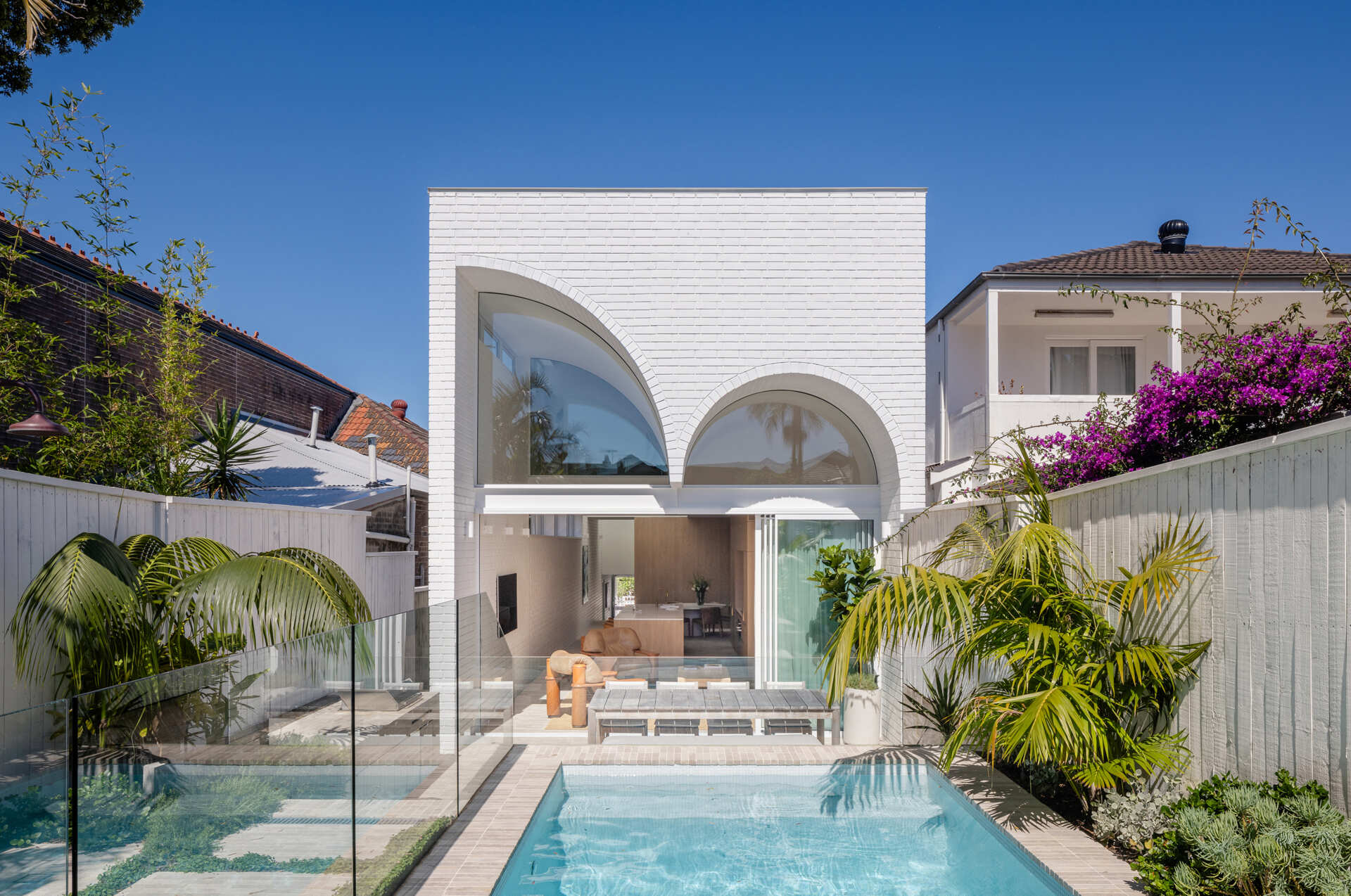
Moon House by James Garvan Architecture brings together optimism and precision in a new family home in Sydney’s Eastern Suburbs. Designed for Ben and Laura, the house replaces a deteriorating Federation structure with a contemporary form shaped by light, flow and social living.
Behind a carefully scaled facade, generous volumes unfold. Curves, brick and a restrained palette work together to create calm spaces that feel open, connected and grounded in daily life.
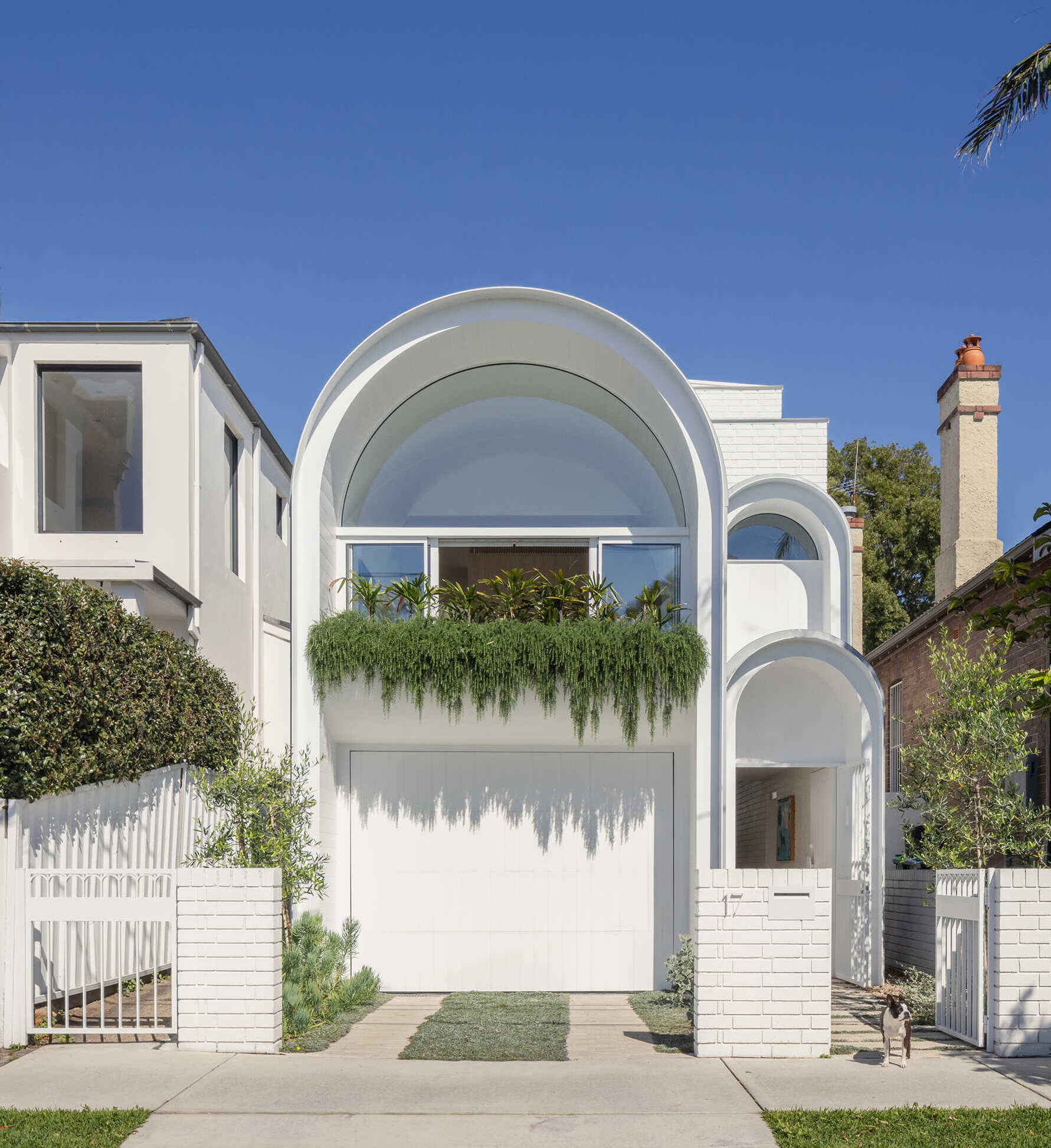
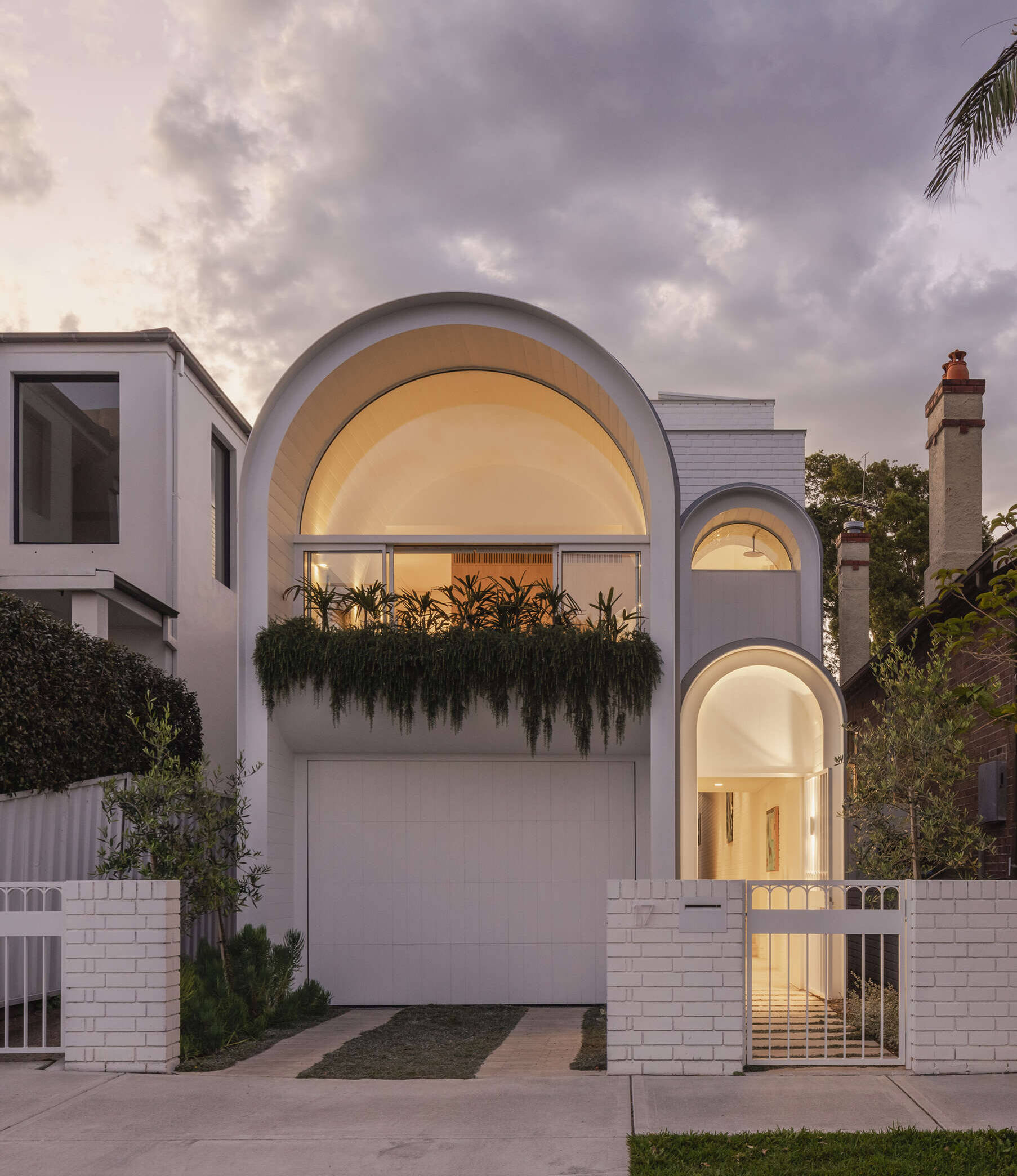
Set within a diverse streetscape, Moon House responds to both Federation and neoclassical neighbors. Its facade acts as a bridge between these styles.
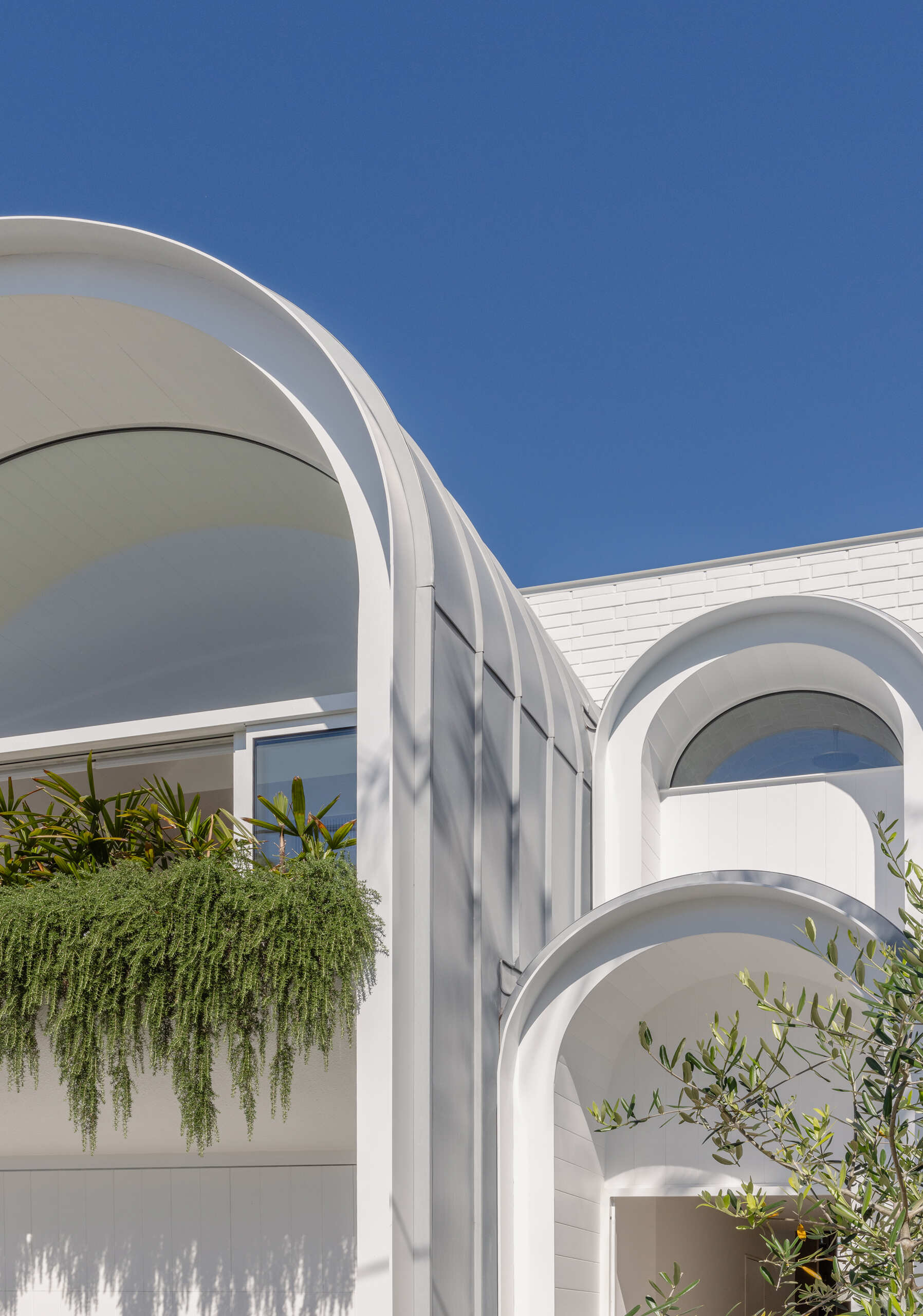
Three curved, zinc clad stepped forms reinterpret Federation gables. They emerge from a boxy brick volume that reflects the rectangular proportions of nearby neoclassical houses.
A planter box introduces greenery, privacy and color. The flush finish from eaves to ceiling liner adds depth, while at night the facade glows with a soft halo of light.
Entry into the house begins with a moment of compression. A framed garden view and a strong brick axis draw the eye upward.
As you move inside, the living area opens dramatically. The scale feels far more generous than the facade suggests, shaped through careful detailing rather than size alone.
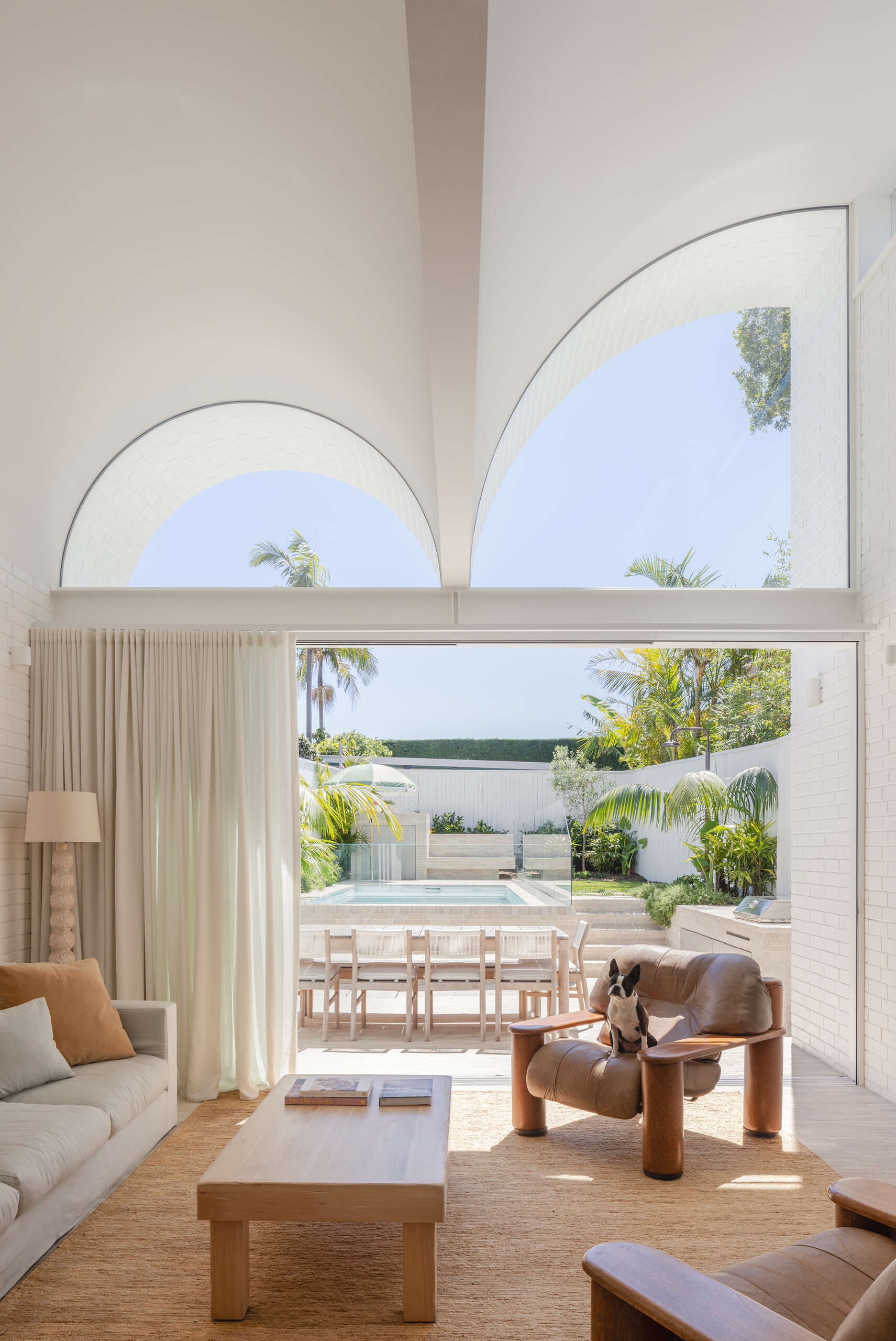
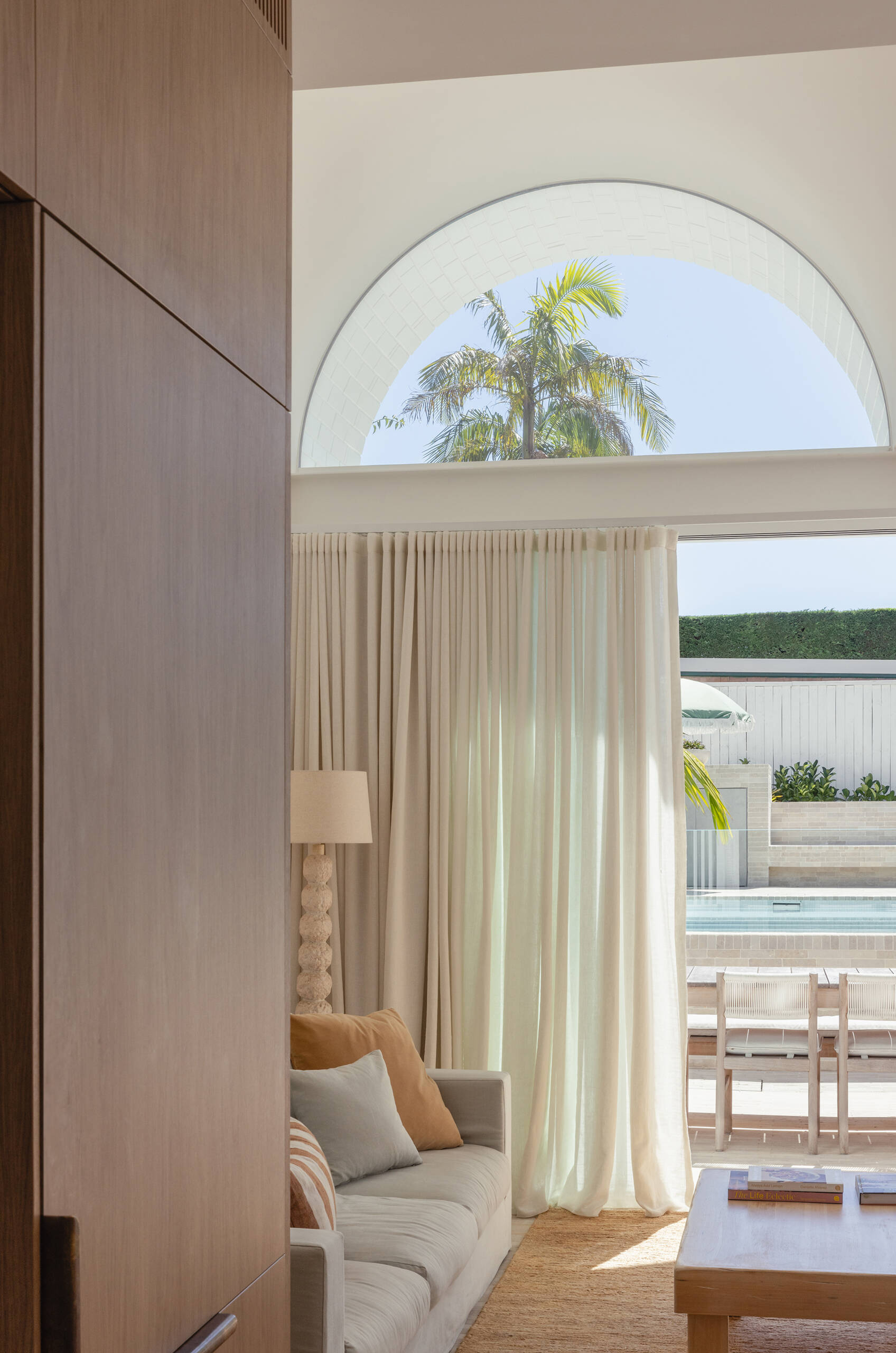
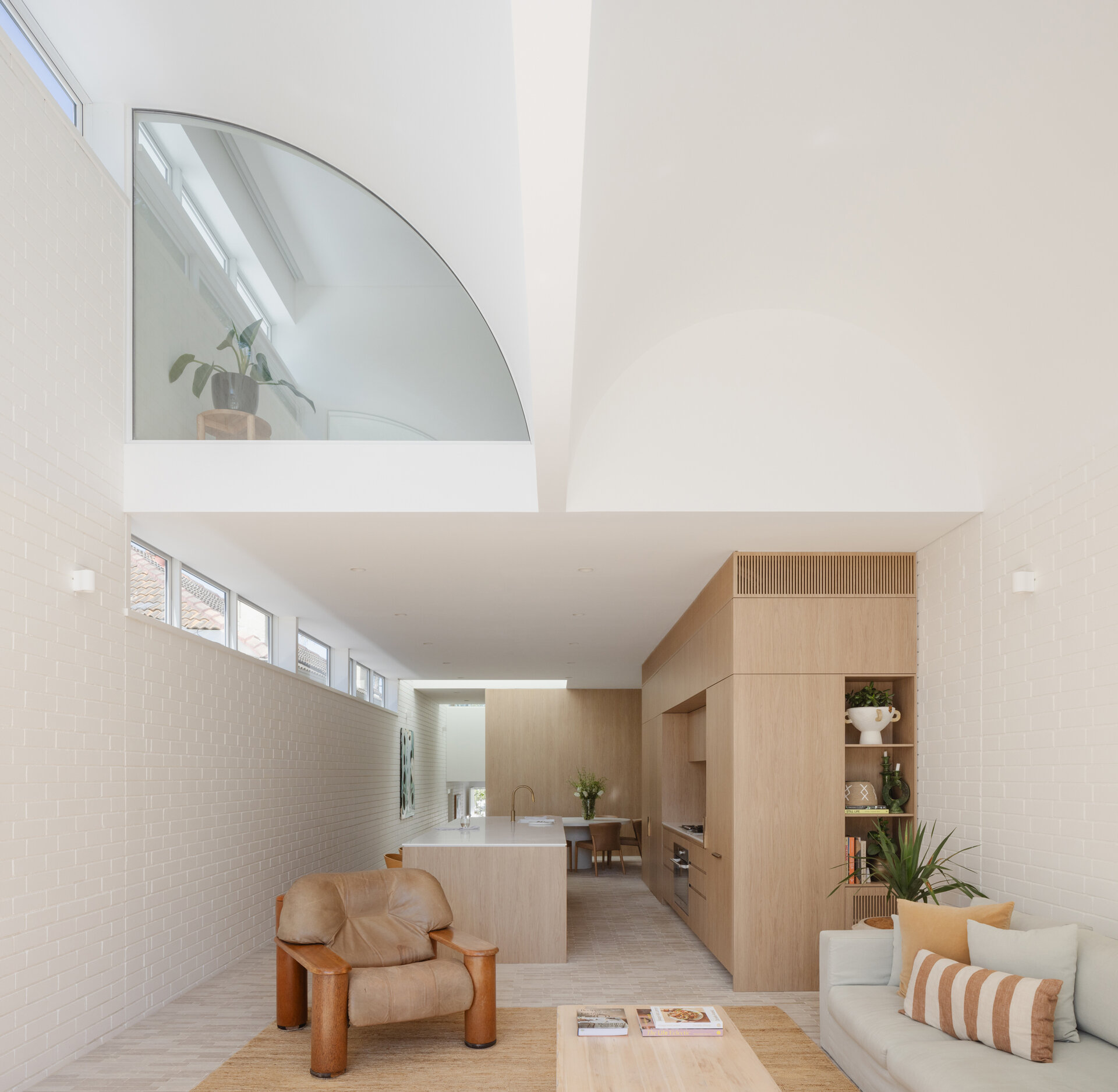
Above the living area, the ceiling expands into two soaring curves. These forms define the rear of the house.
Here, the curves are pressed into the solid brick mass. They appear weighty and monumental, reversing the lighter expression seen at the front of the home.
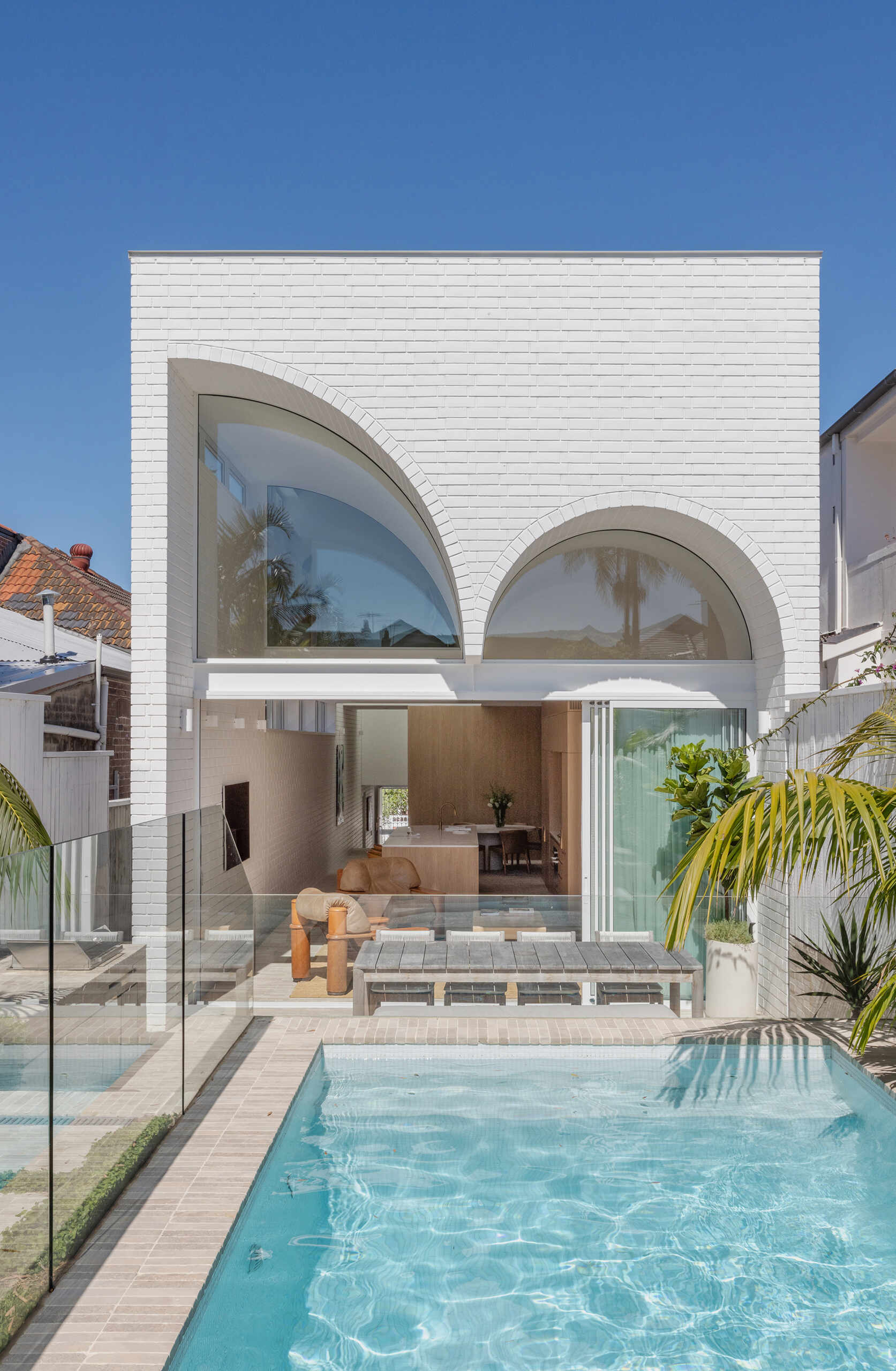
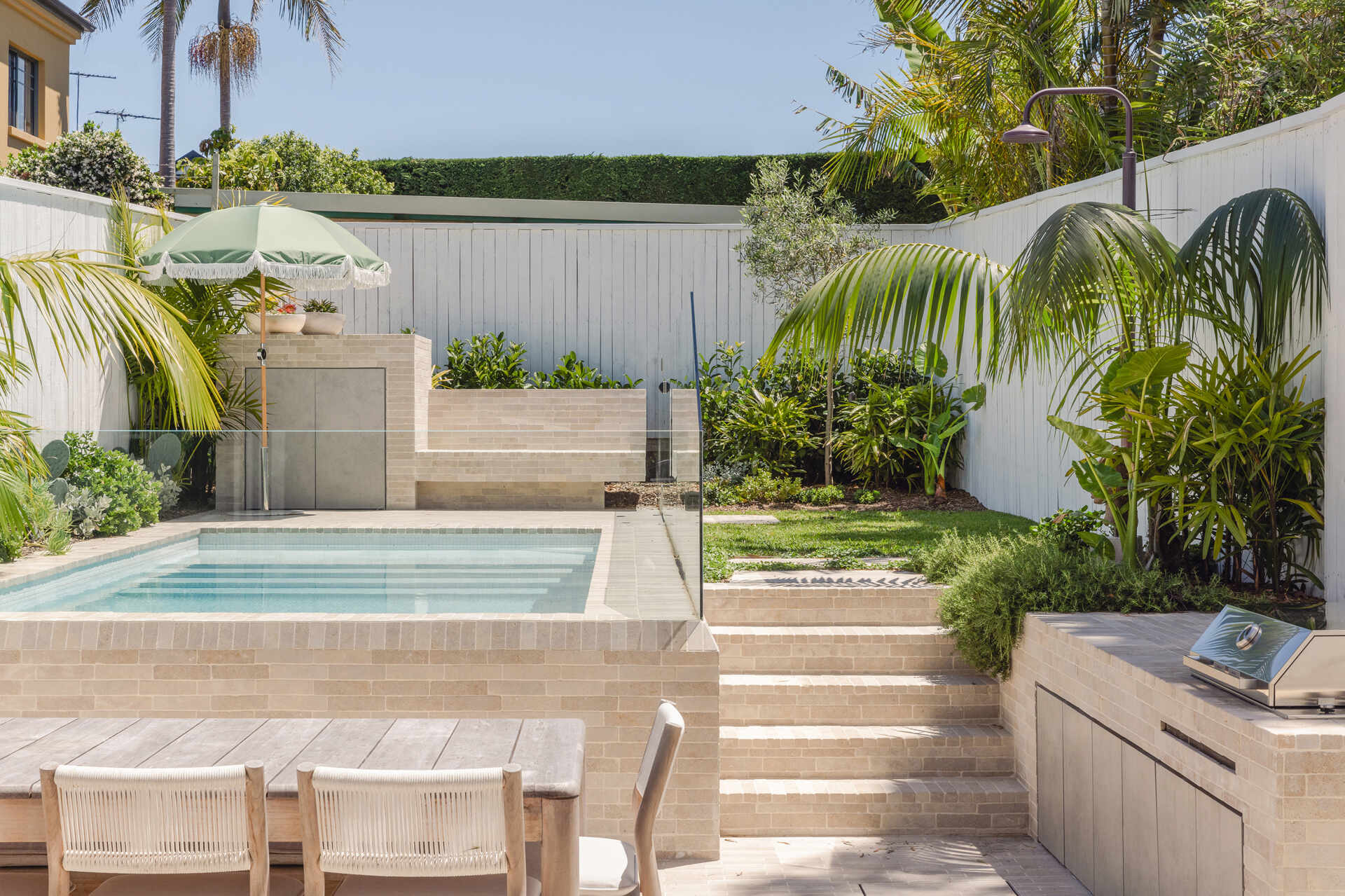
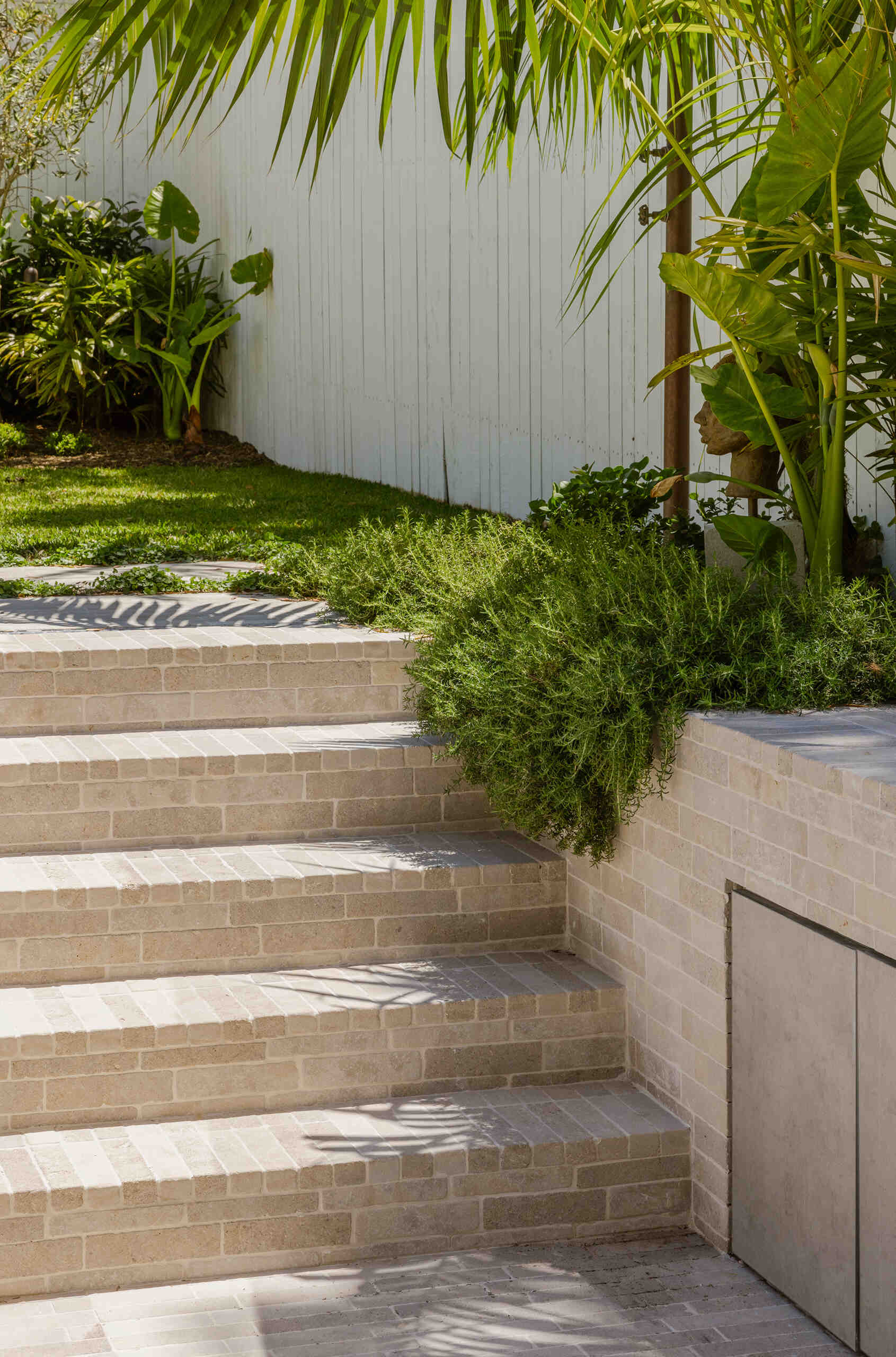
Earthy limestone pavers ground the interior spaces. They continue seamlessly from the front door through to the swimming pool.
This continuous surface follows the natural slope of the site. It strengthens the connection between inside and out while reinforcing a sense of flow.
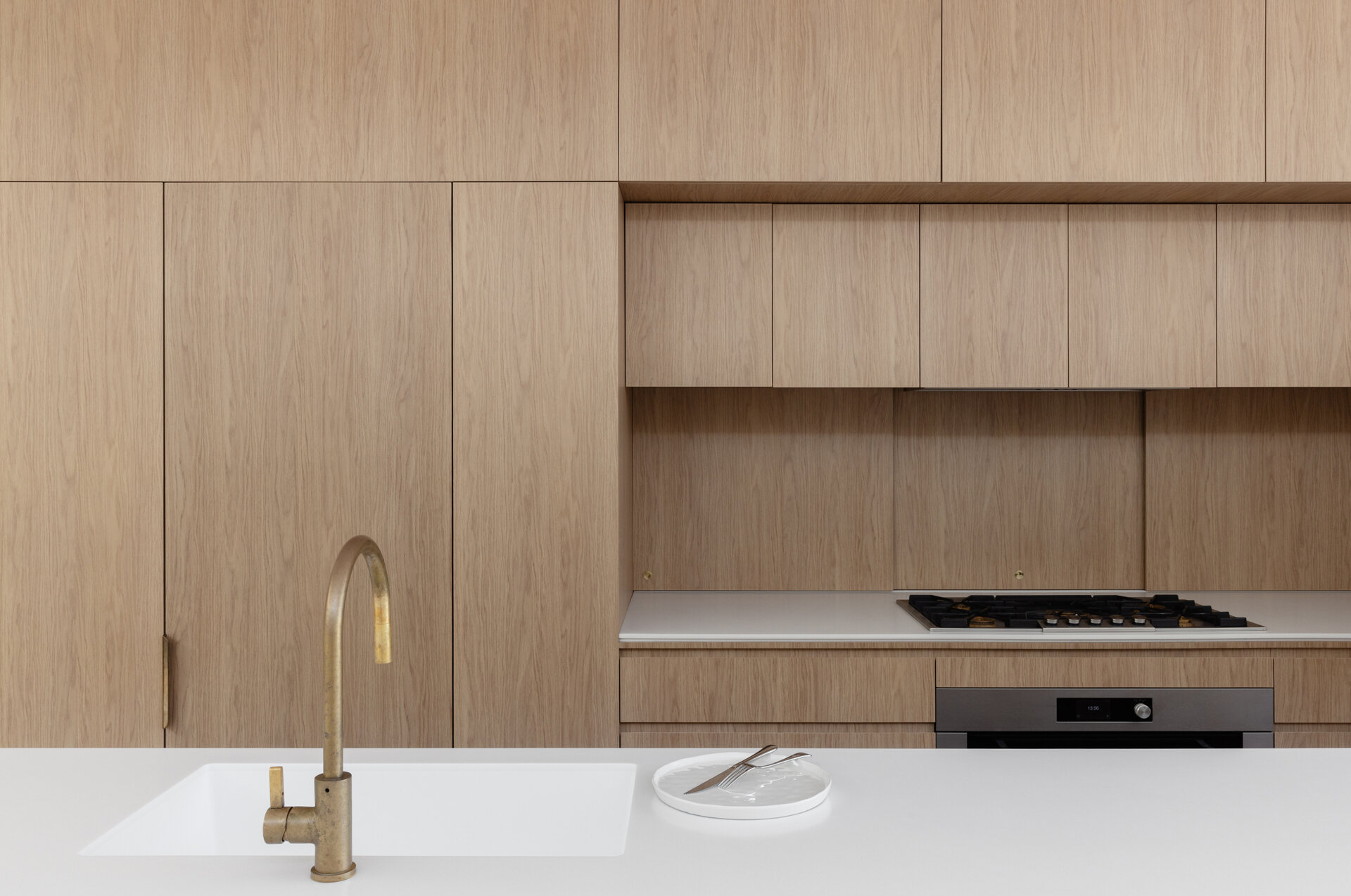
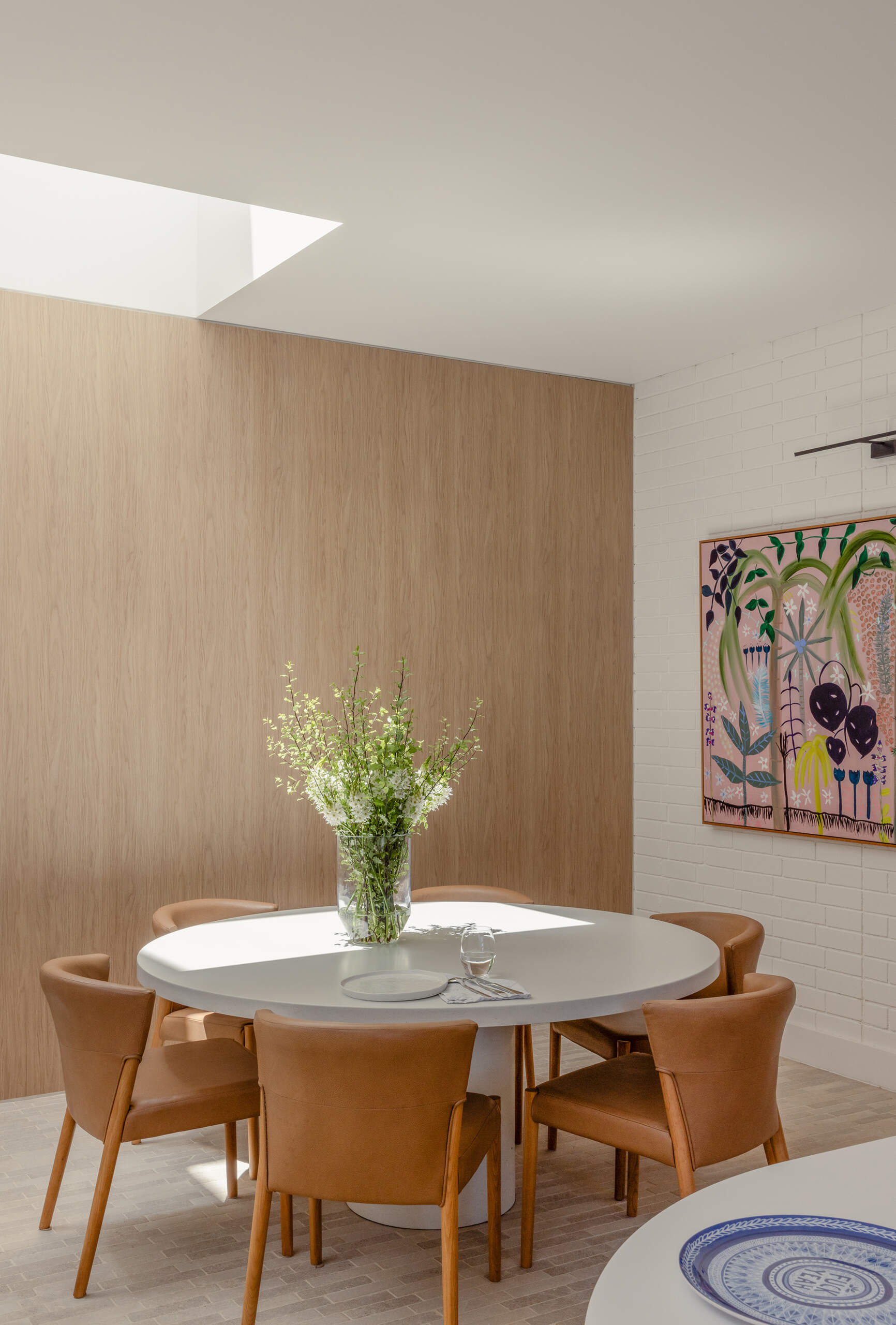
The kitchen sits within the open ground floor plan, defined by integrated joinery. It forms part of a shared zone with the dining and living spaces.
Operable highlight glazing above brings northern light and ventilation. Light filters down through interspersed volumes and voids overhead.
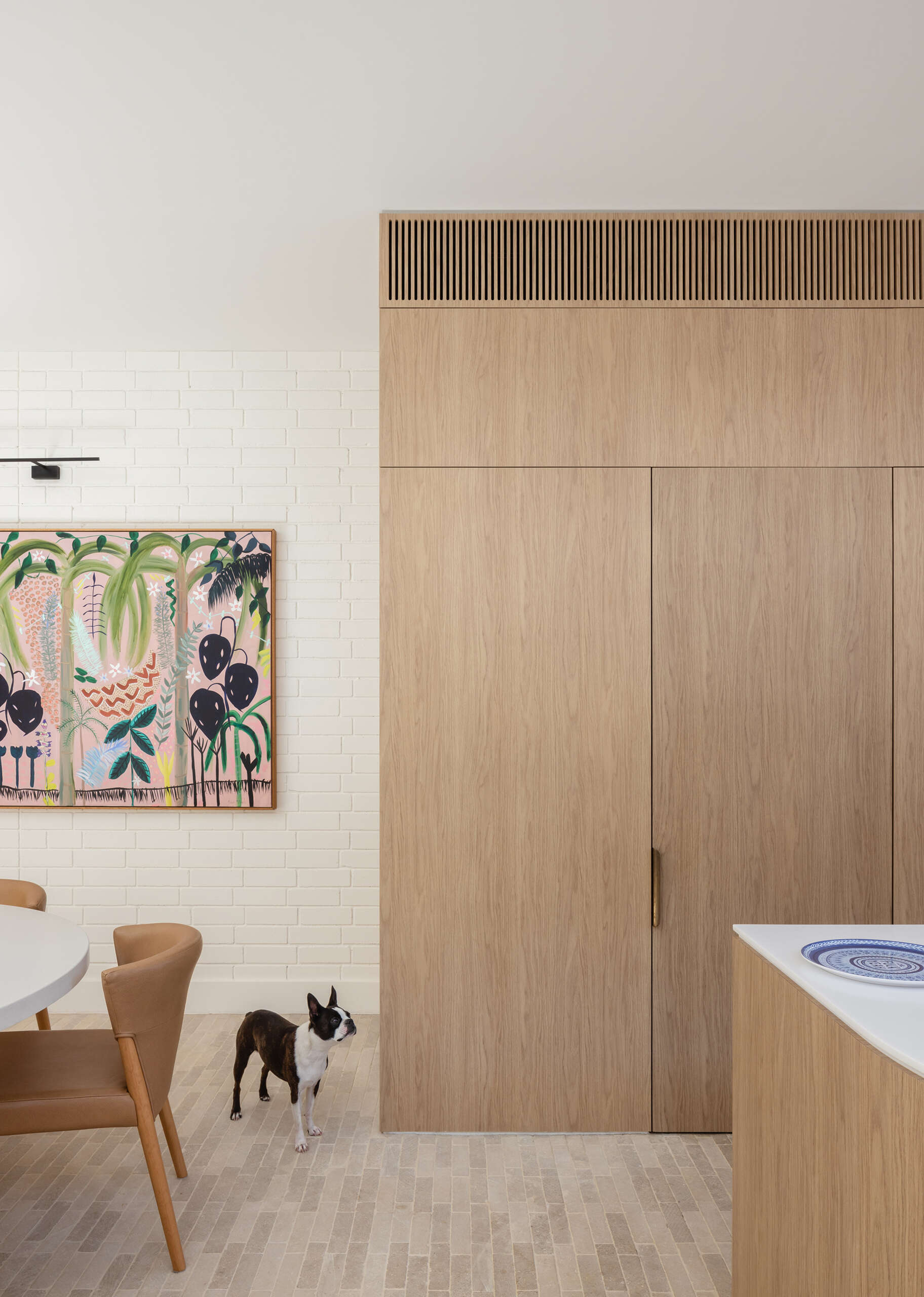
The dining area is framed by joinery that subtly separates it from surrounding spaces. It remains visually connected to the kitchen and living room.
Above, voids link the ground floor with private rooms upstairs. These openings allow light to move through the house and create moments of visual connection.
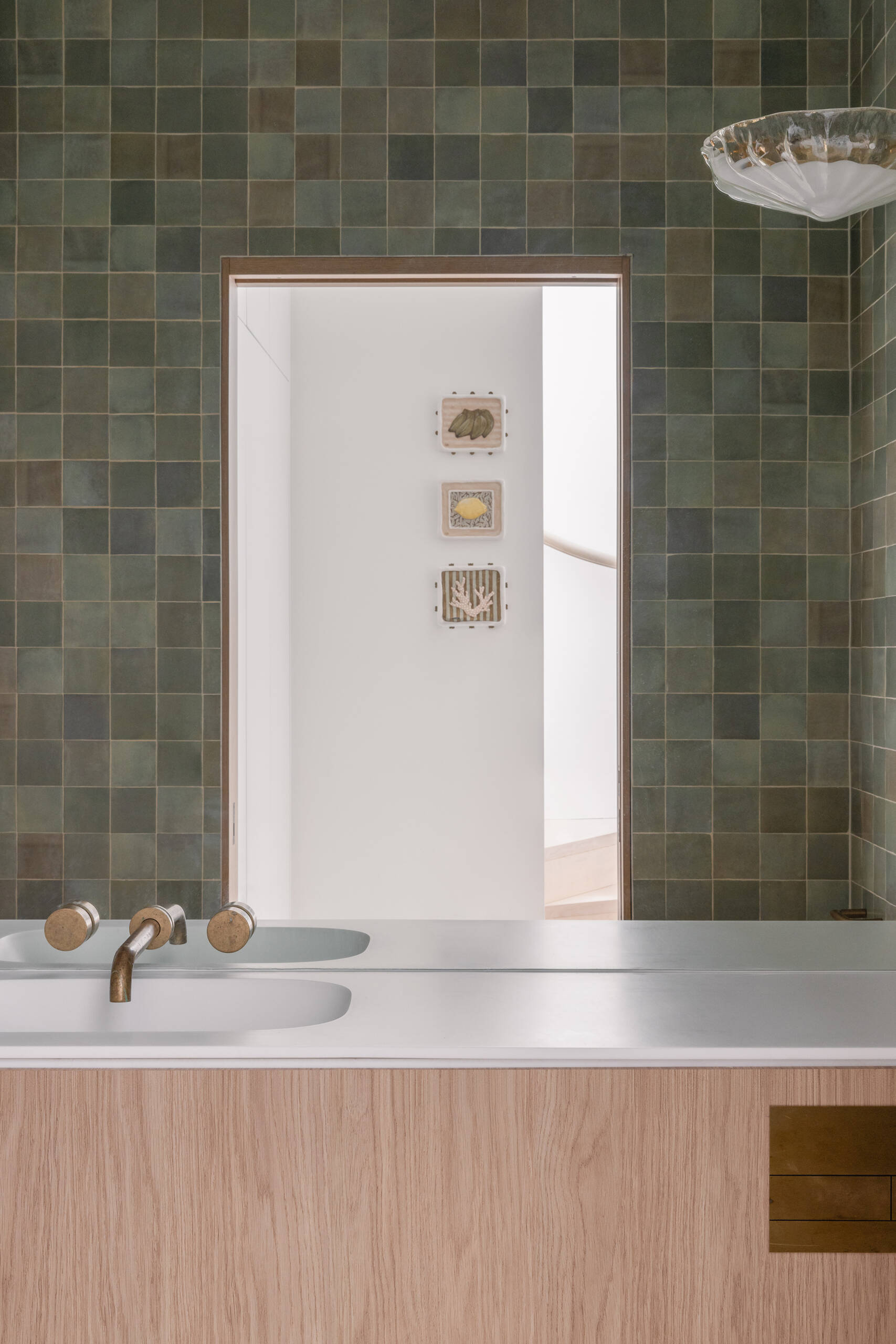
In the powder room, texture and tone do the heavy lifting. Deep green square tiles wrap the walls, creating a quiet, immersive backdrop that feels grounded and tactile, while the pale timber vanity softens the space.
Brickwork draws you toward the stairs by entry. This strong axis anchors movement through the house.
As you ascend, views open back toward the living areas below, reinforcing the sense of vertical connection and layered space.


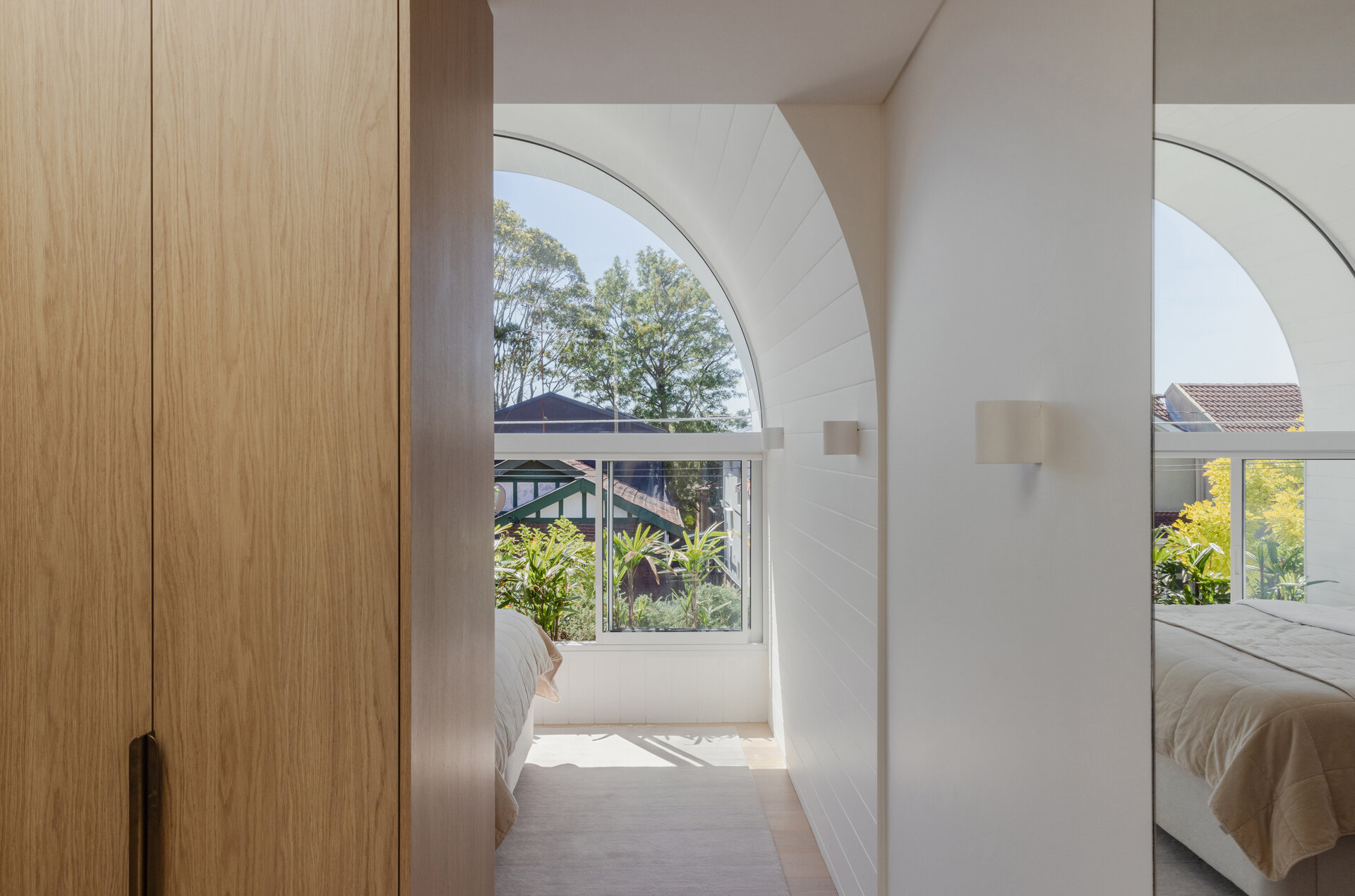
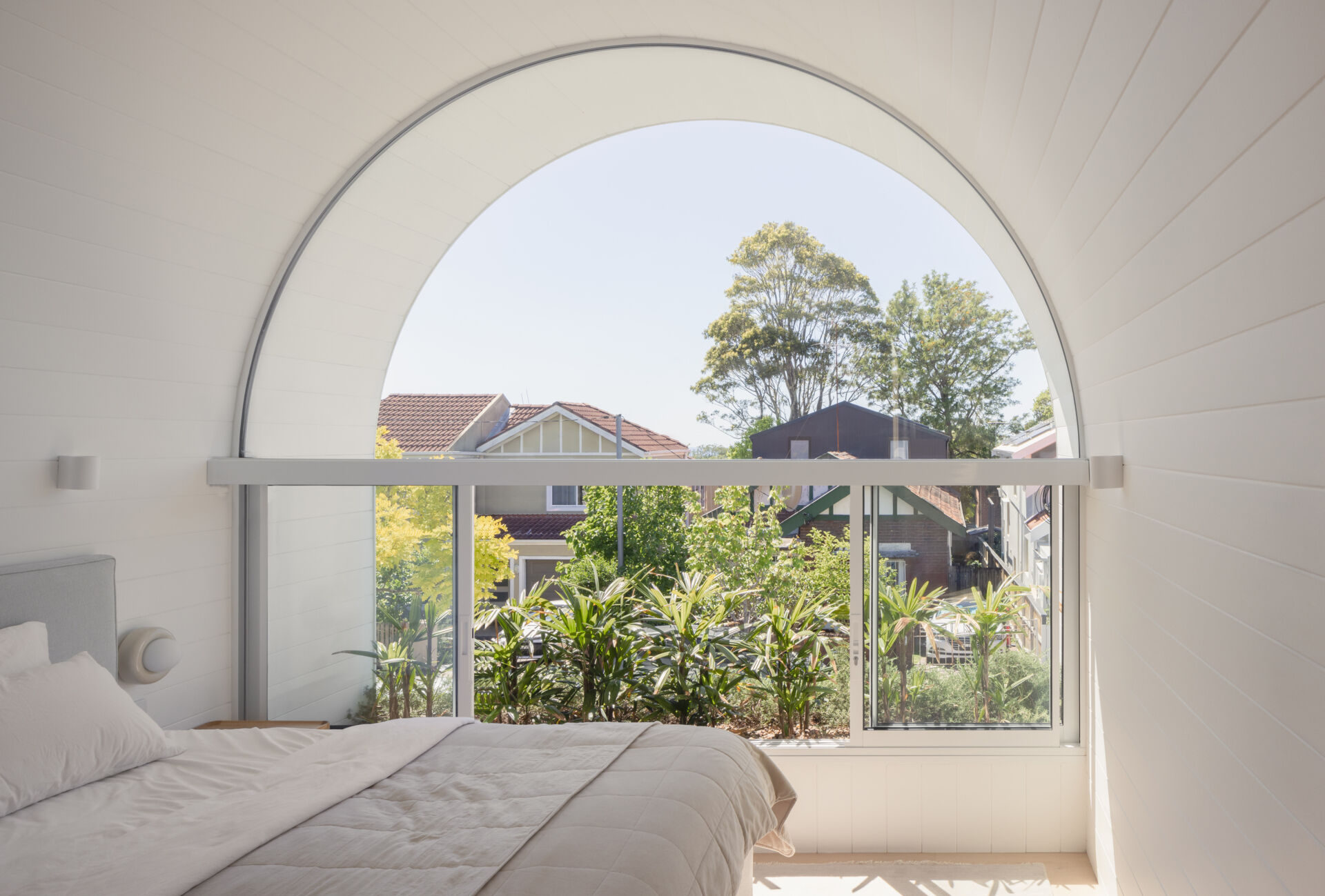
Upstairs, the main bedroom and ensuite sit a half storey higher to reduce the apparent mass of the facade, while a large curved window frames views of the street.
Beyond are a nursery, guest bedroom, bathroom and a study. The study includes a glass wall that overlooks the living room from above.
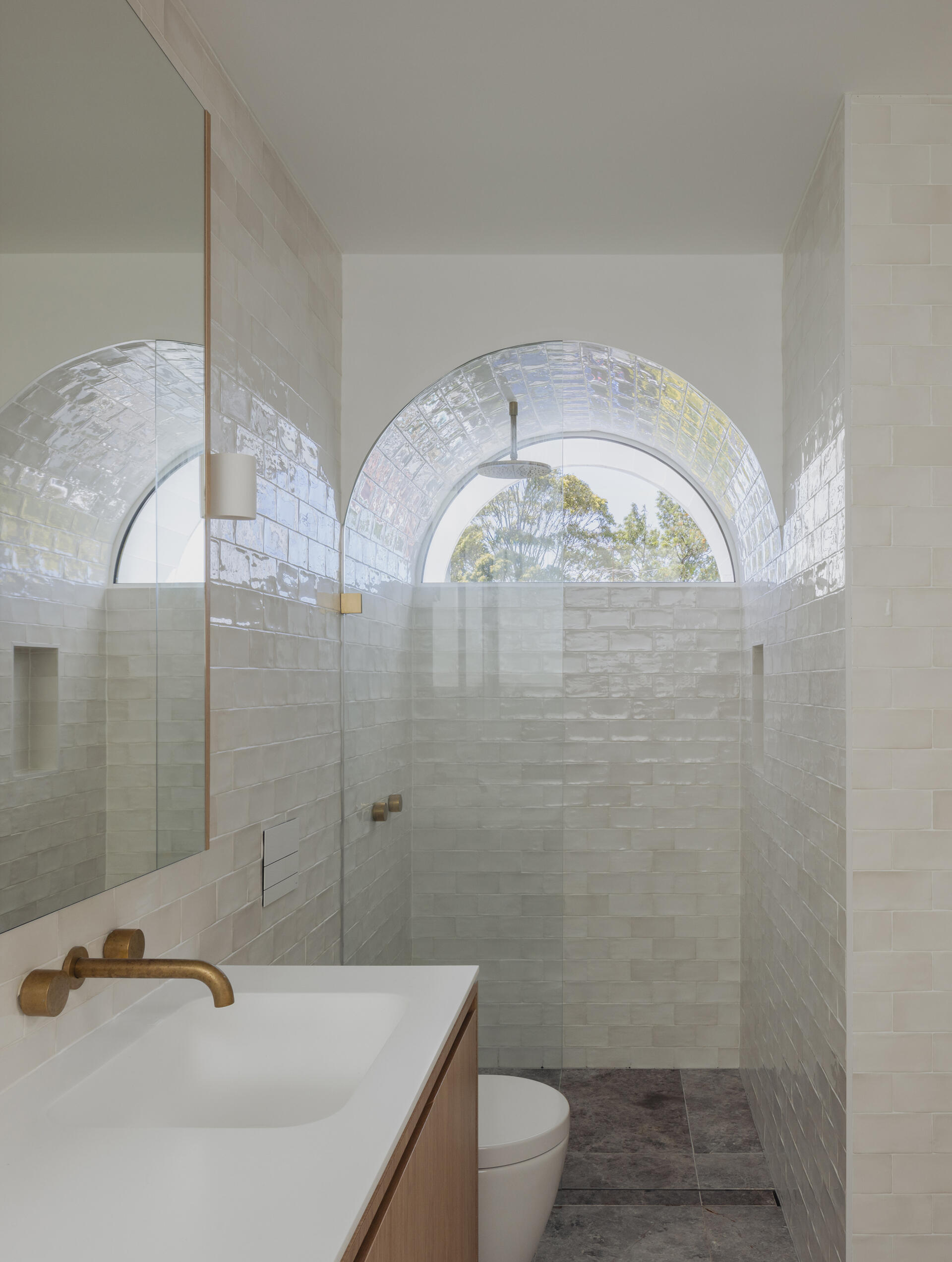
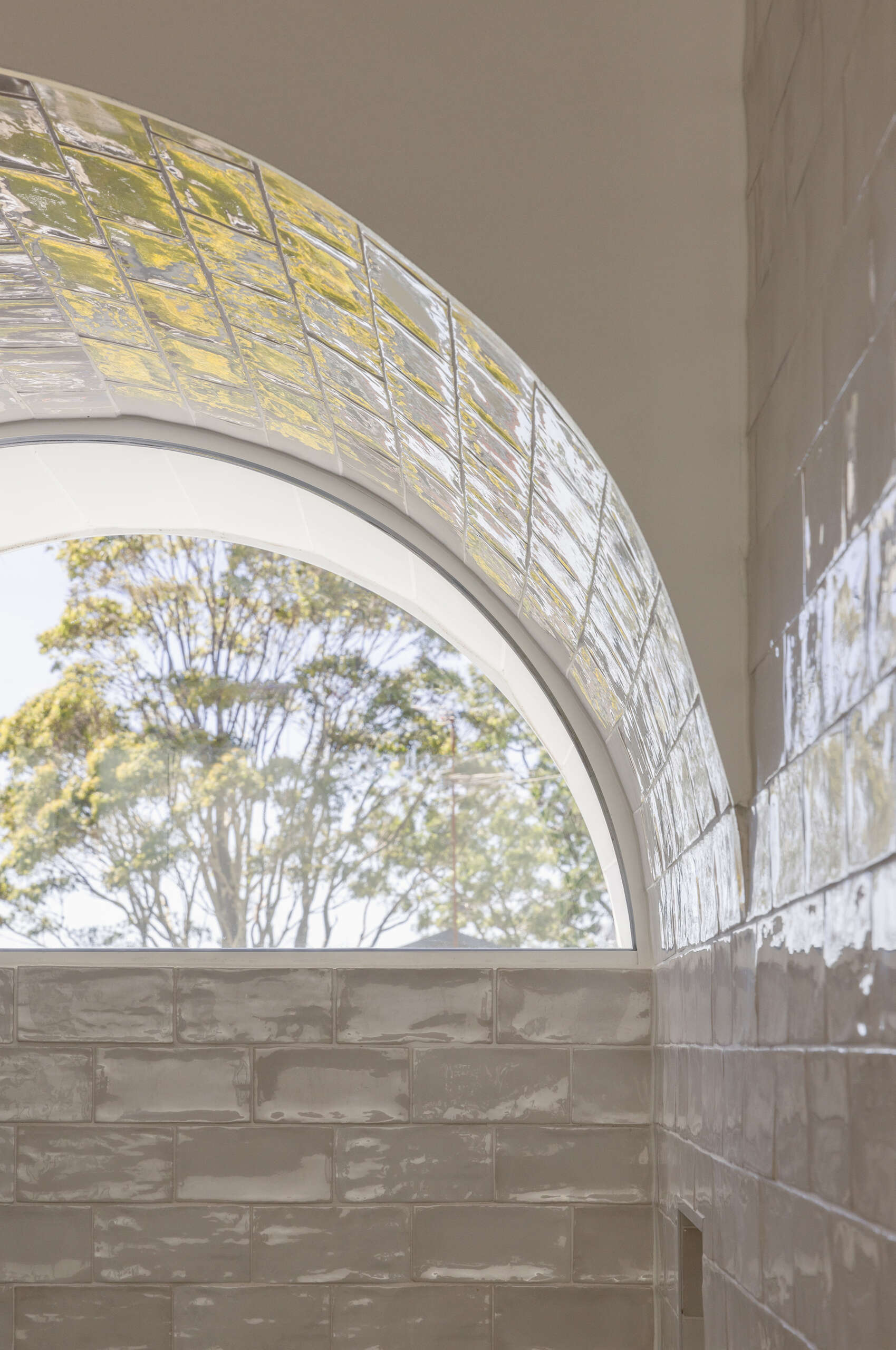
In the bathroom, an arched window crowns the shower, drawing daylight deep into the space and framing soft views of greenery beyond. Glossy pale tiles wrap the walls, while a timber vanity and warm brass tapware introduce texture and warmth, balancing the crisp surfaces.
Moon House is both joyful and considered. Its expressive curves reflect the personalities of its owners, while rigorous detailing and a restrained palette create a calm backdrop for family life. Compact to the street yet generous within, the house is a confident addition to its neighborhood and a carefully crafted home for Ben, Laura and their new baby.