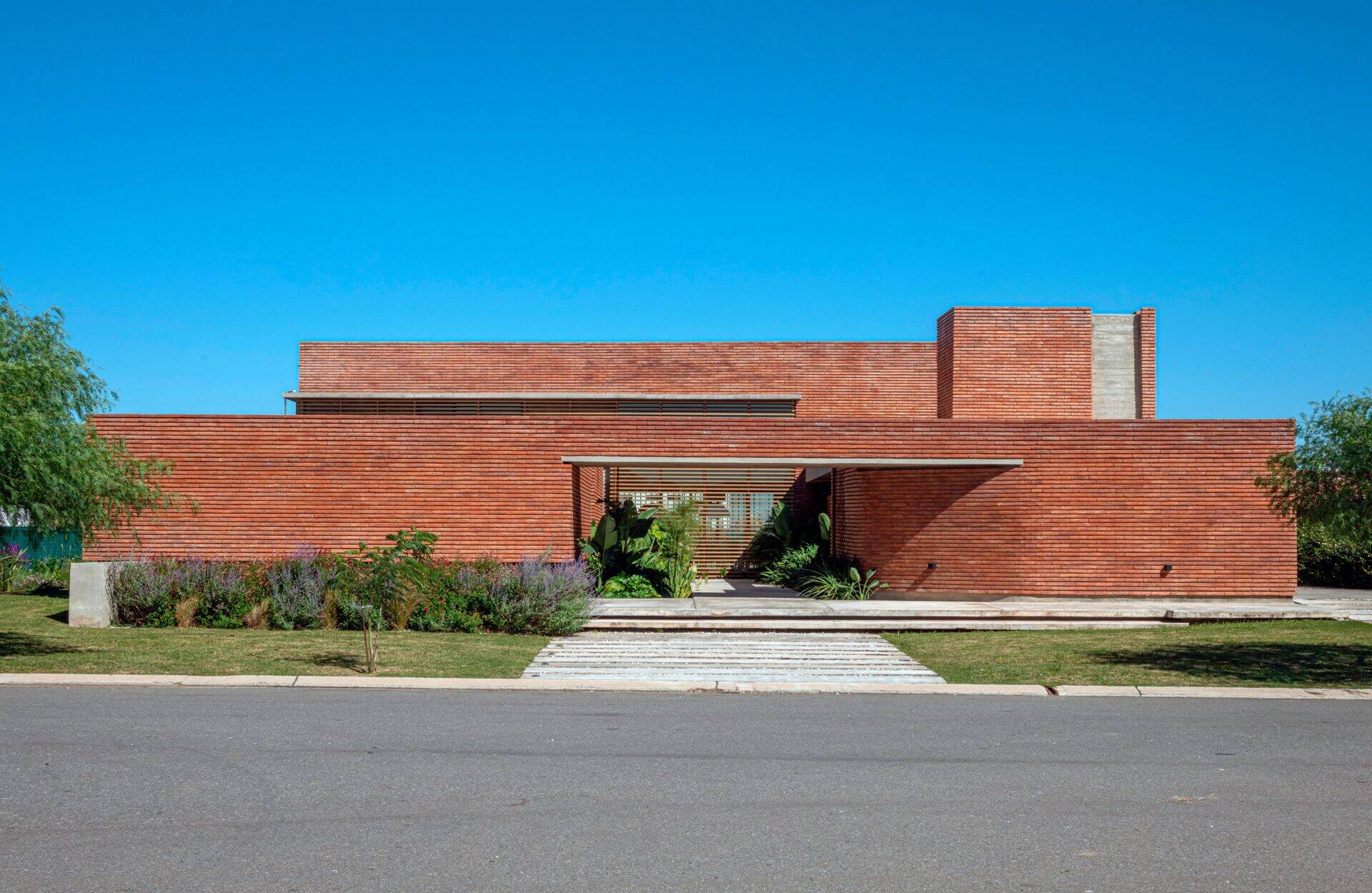
Moving from an apartment in Buenos Aires to a house on the outskirts of Córdoba was not just a change of address. It was a shift in how a family wanted to live. Designed by Barella Arquitectura, this brick family house is organized around arrival, light, and the relationship between inside and outside.
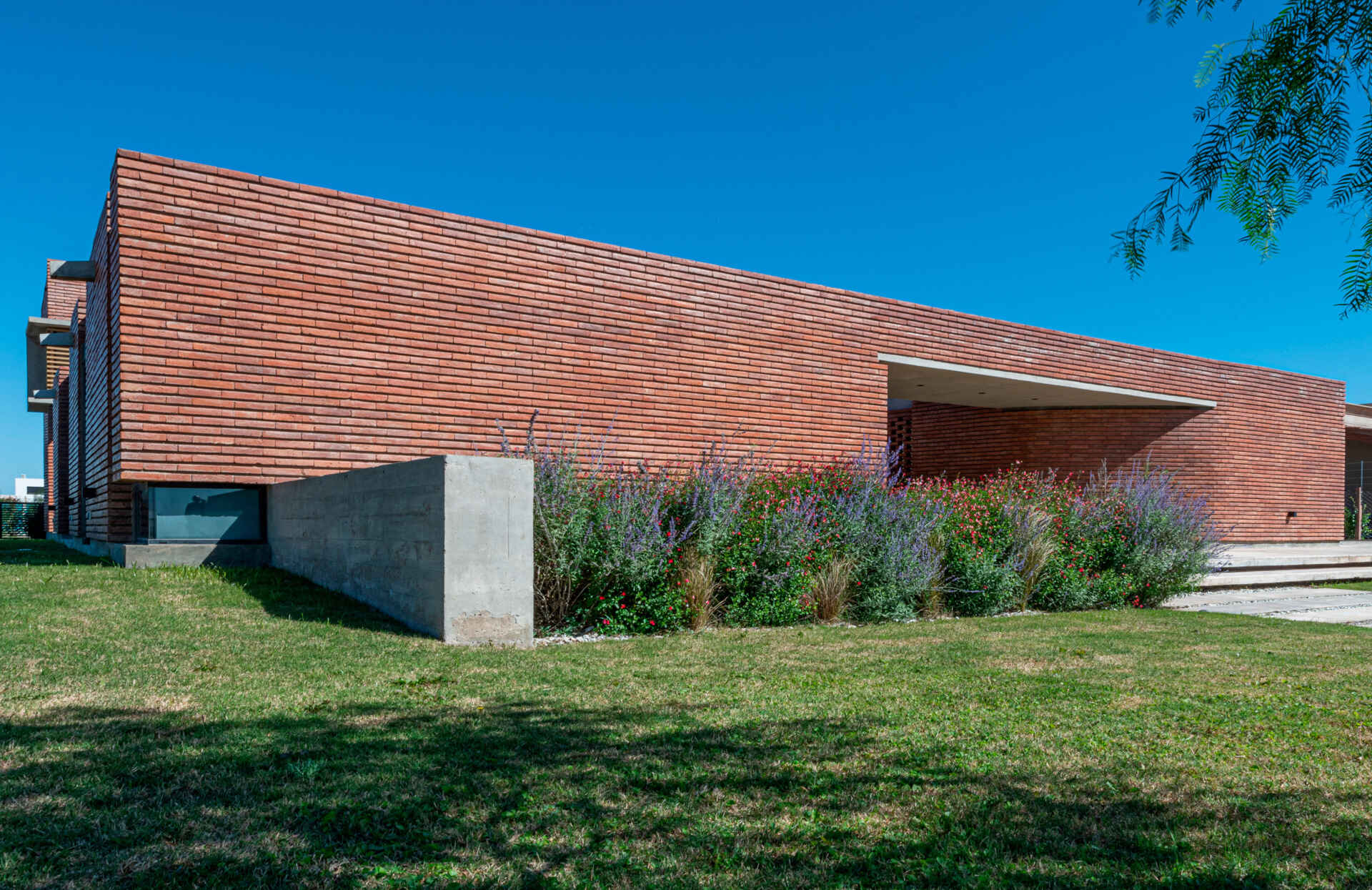
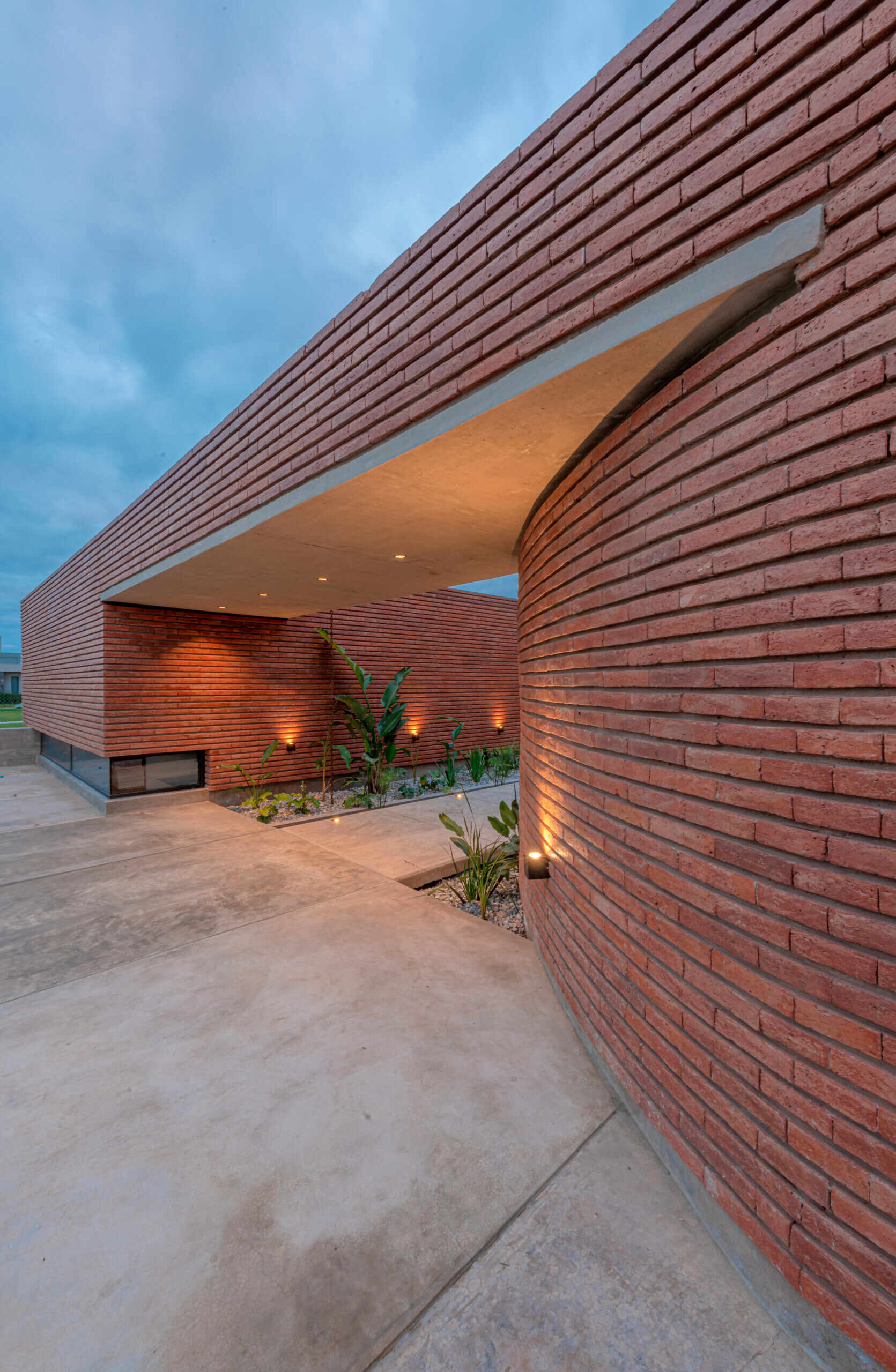
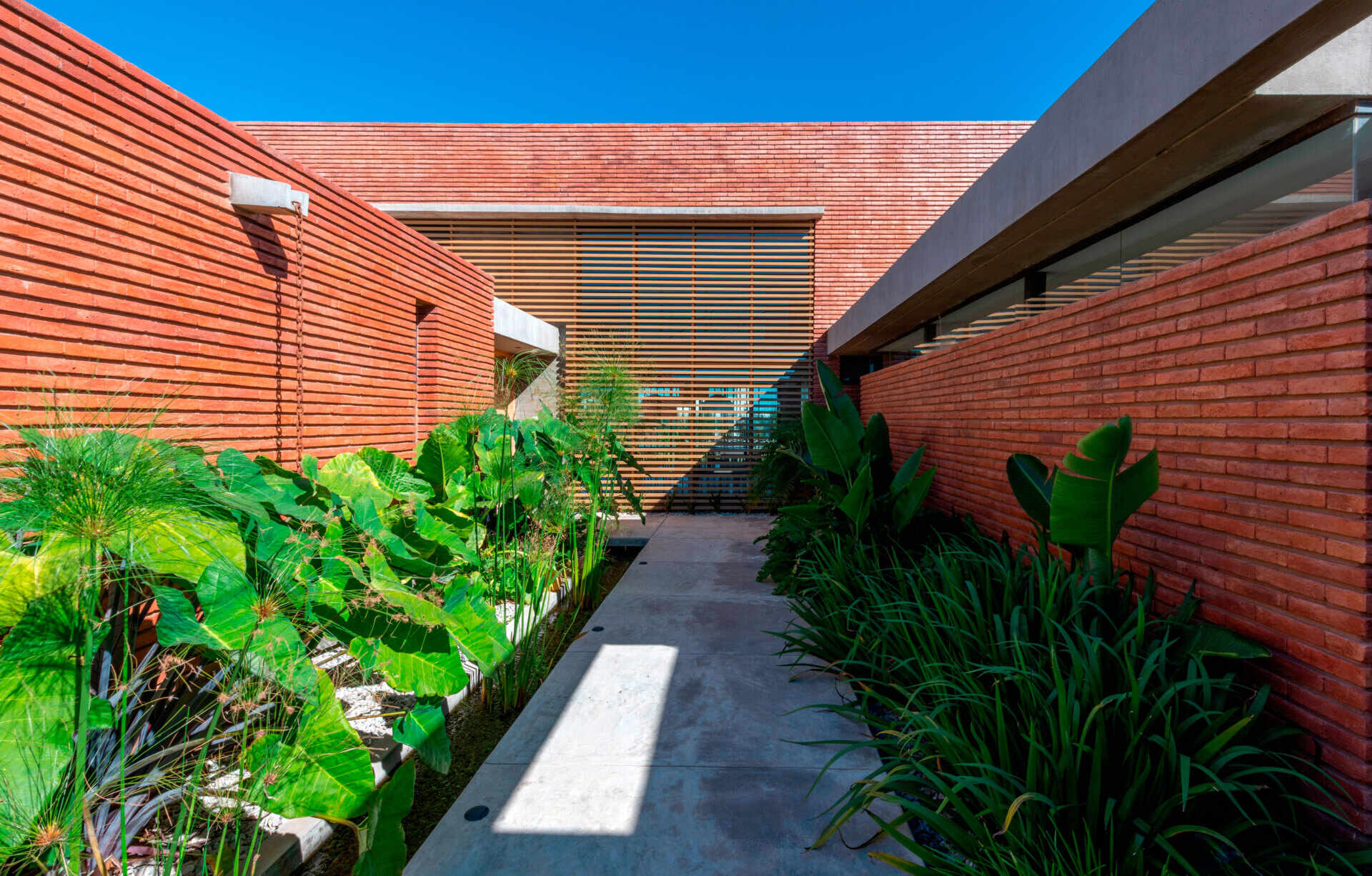
The house sits on a plot in a gated community, with a gentle downward slope and a north-facing frontage. Its architecture is defined by a clear functional layout expressed through volume. Three distinct blocks, service, social, and private, are arranged in a U shape that wraps around a central courtyard. This courtyard is not only the heart of the home but also the main point of entry.
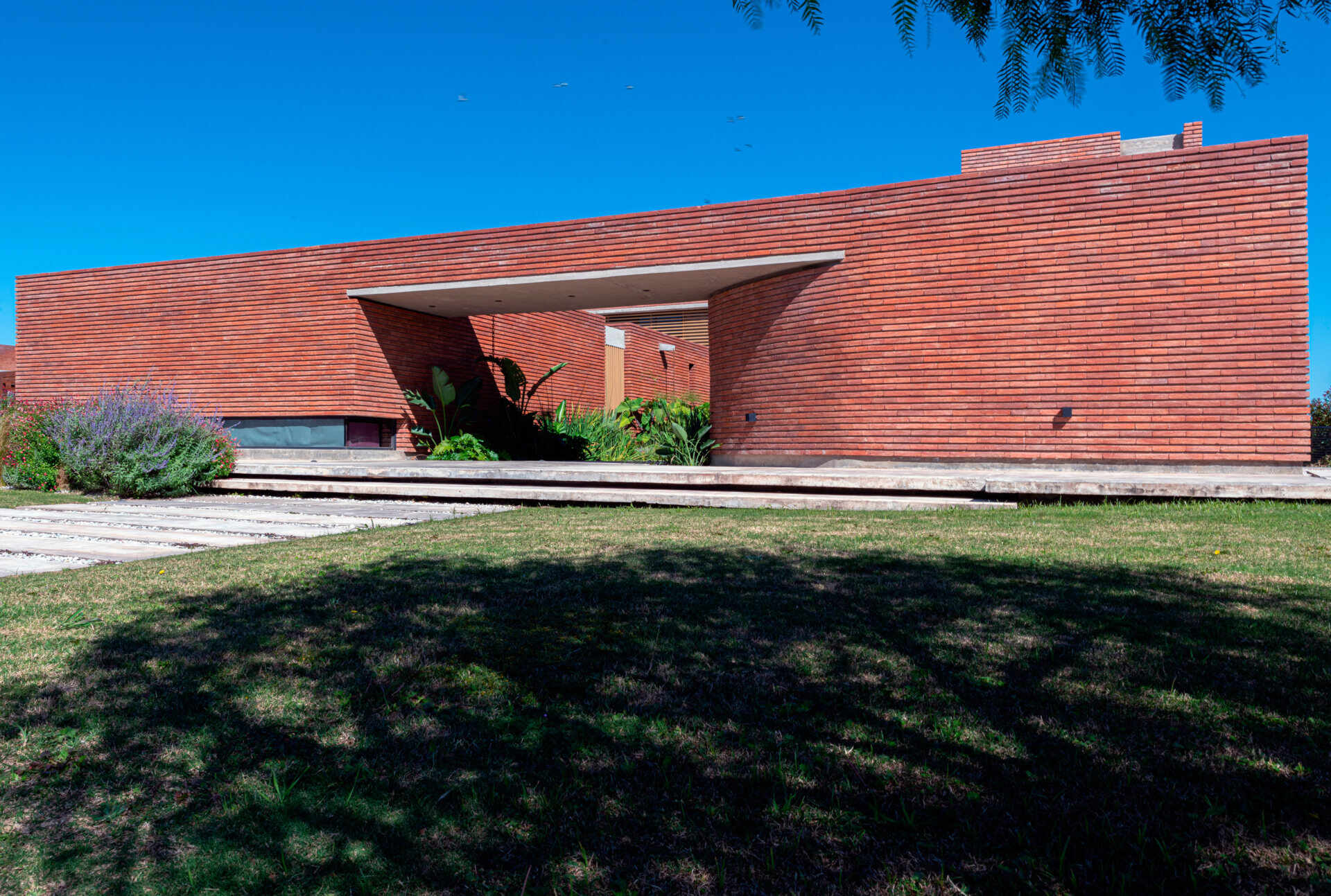
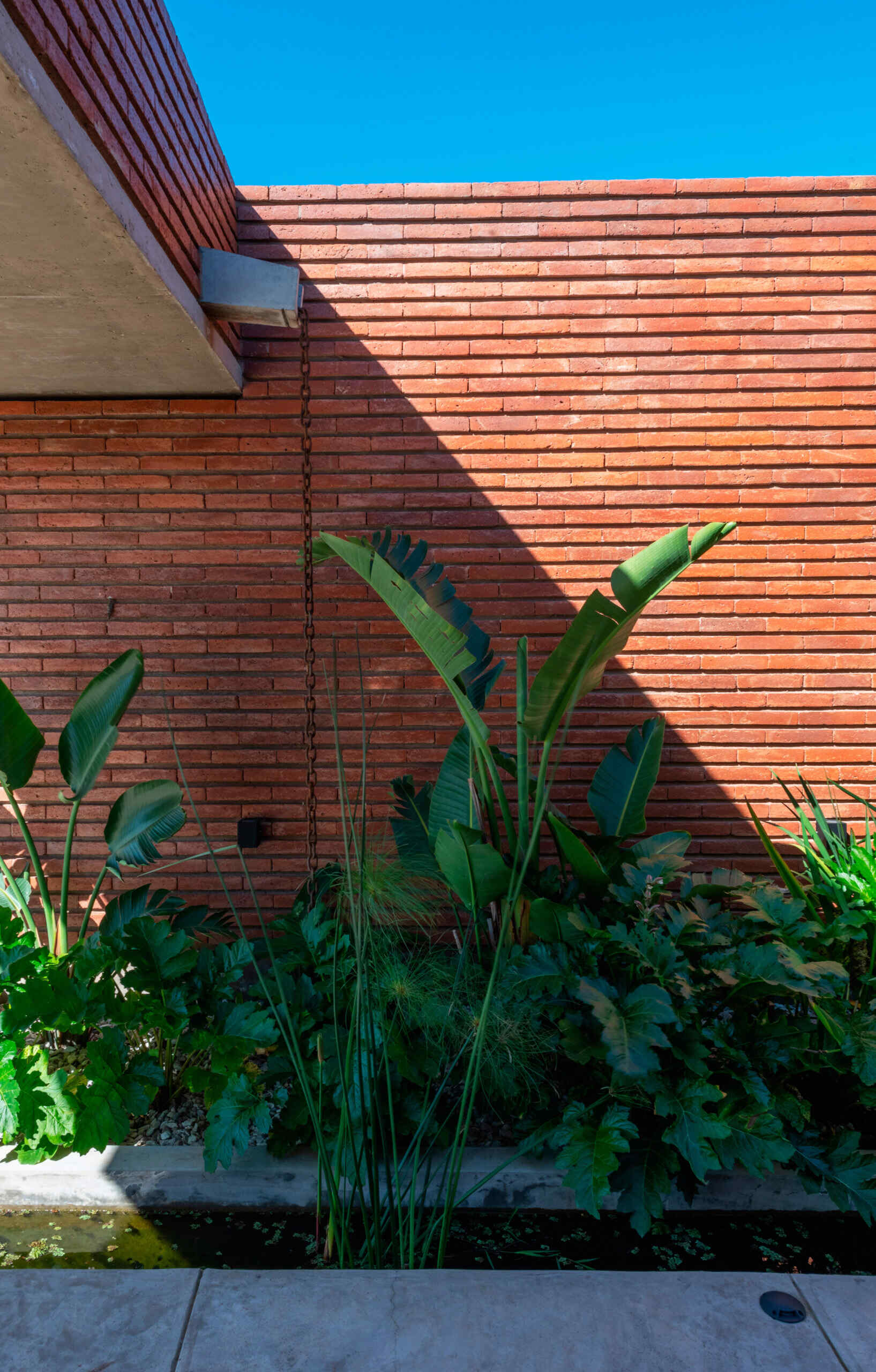
Brick gives the house its physical presence and sense of permanence. It reinforces the clarity of each volume while allowing the architecture to read as a unified whole. The material supports the idea of thresholds and transitions, grounding the house as it opens and closes to different orientations and outdoor spaces across the site.
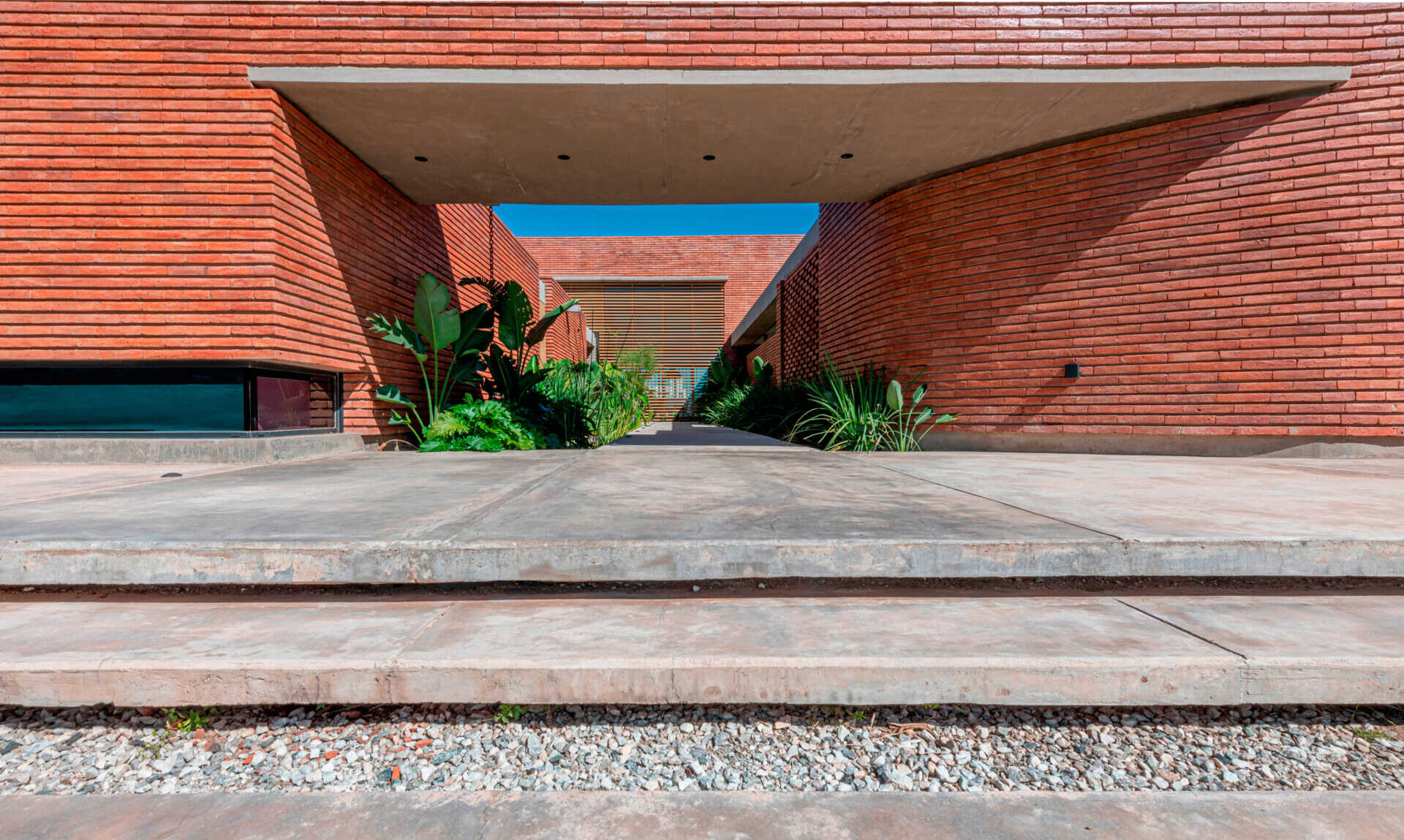
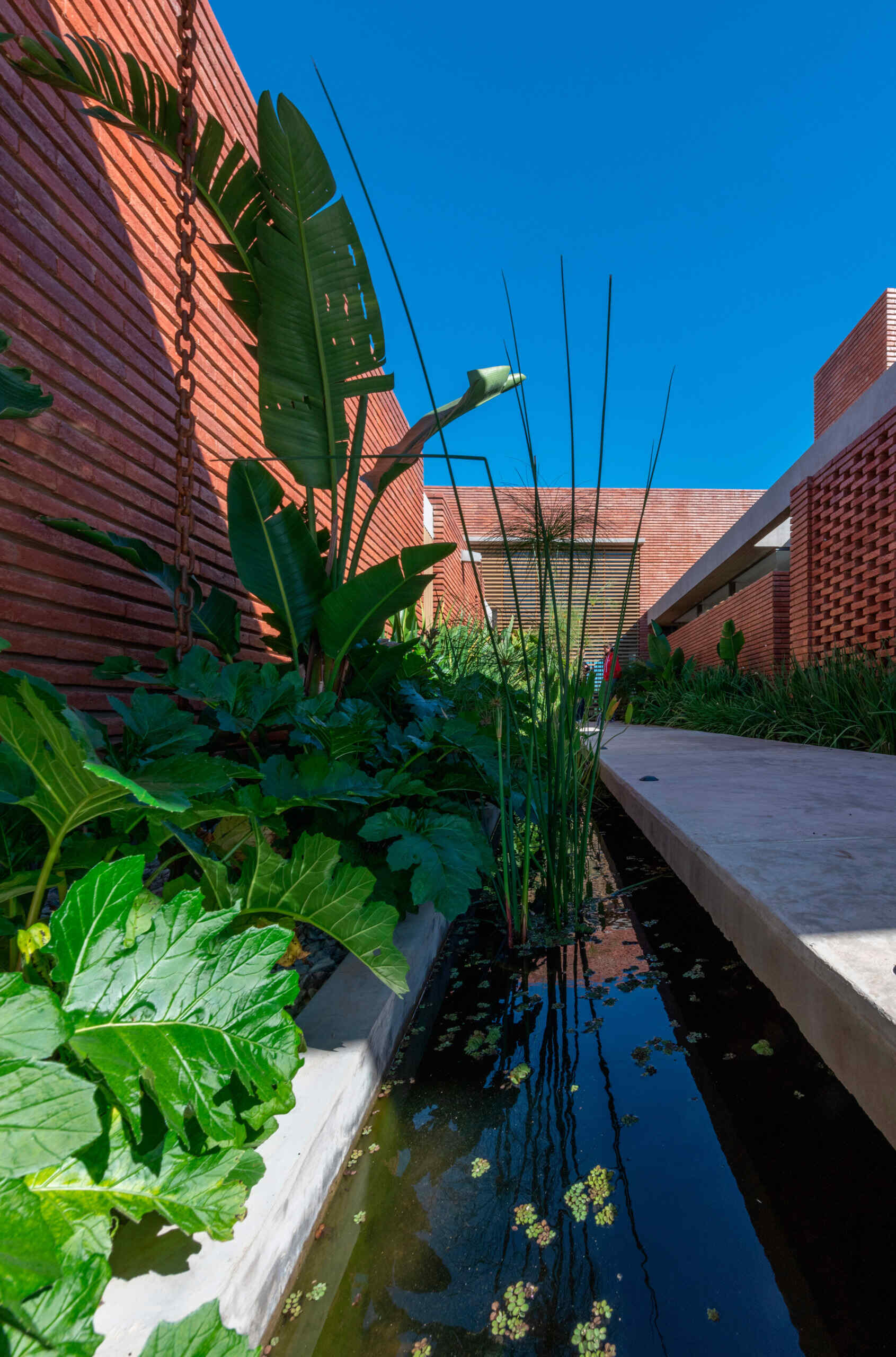
The entry is conceived as more than a point of access. Barella Arquitectura extends the threshold of the main entrance into a slow promenade that clearly defines the boundary between public and private. Movement is intentional here, inviting pause and awareness as the house gradually reveals itself.
Water and greenery is introduced along this approach as a symbolic and vital element. Its presence reinforces the idea of arrival as a conscious act, marking both entry and departure as meaningful moments within daily life rather than something to pass through unnoticed.
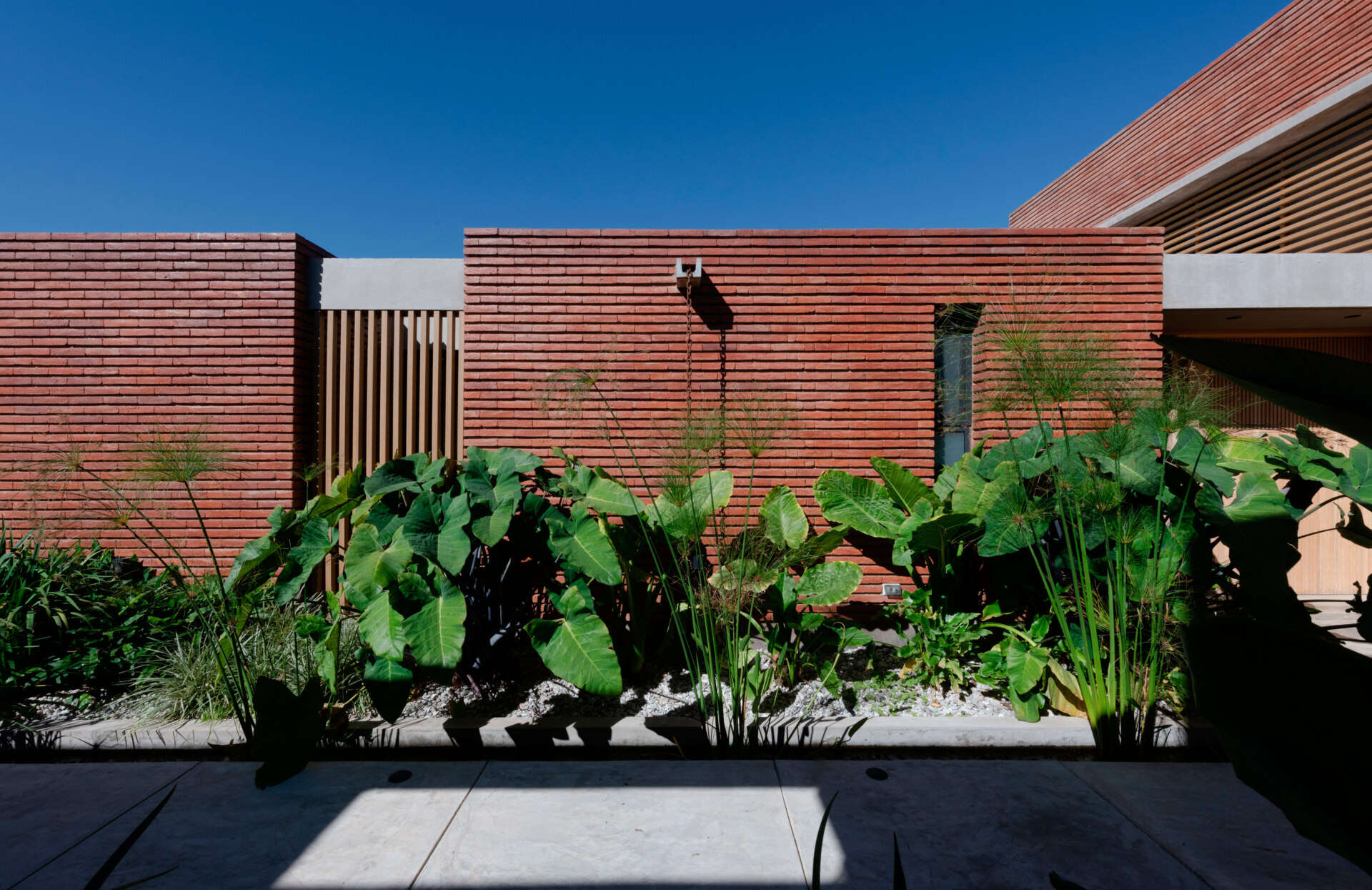
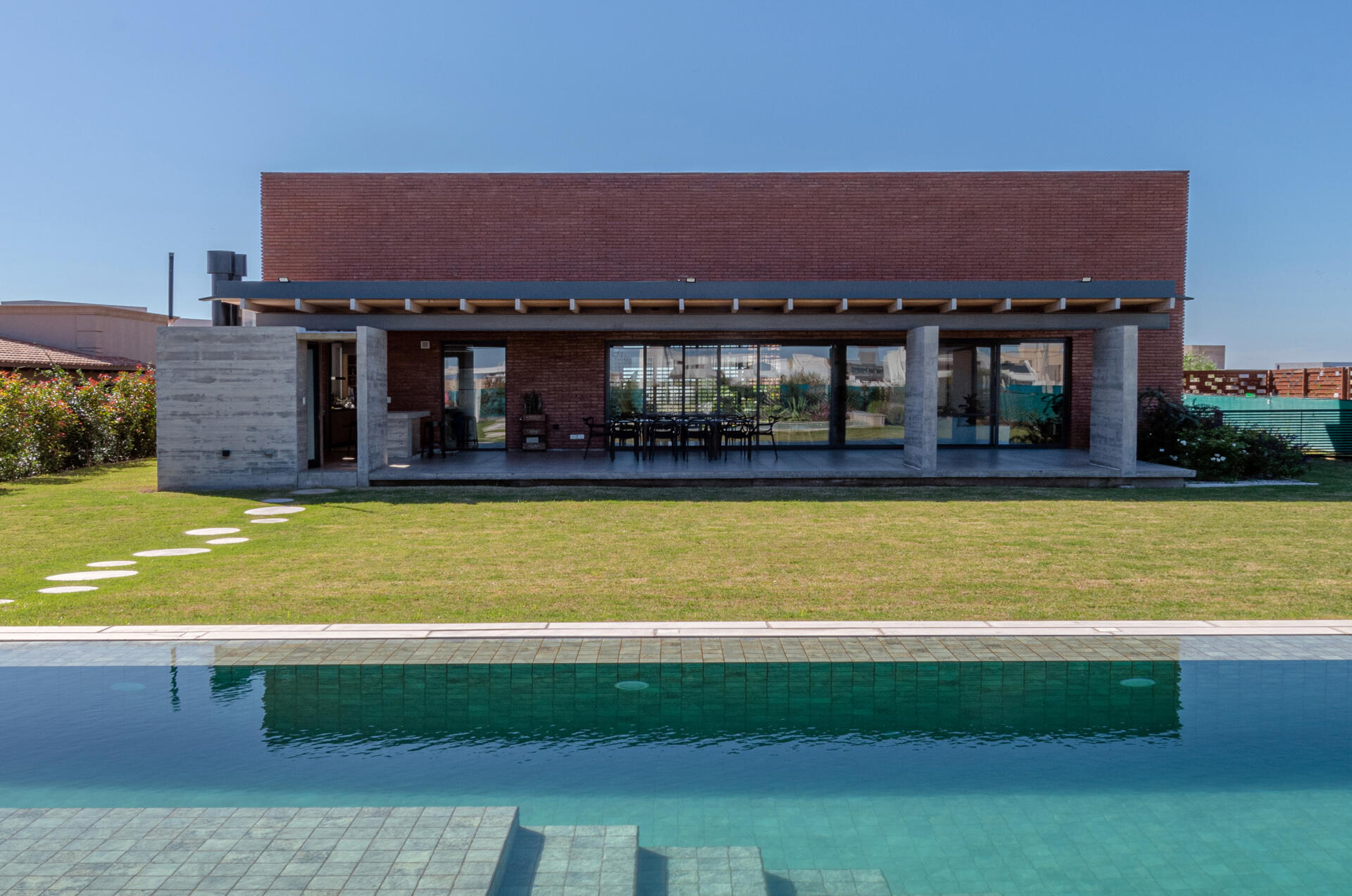
At the rear of the house, the home opens up to a covered terrace with an outdoor kitchen, as well a lawn area and swimming pool.
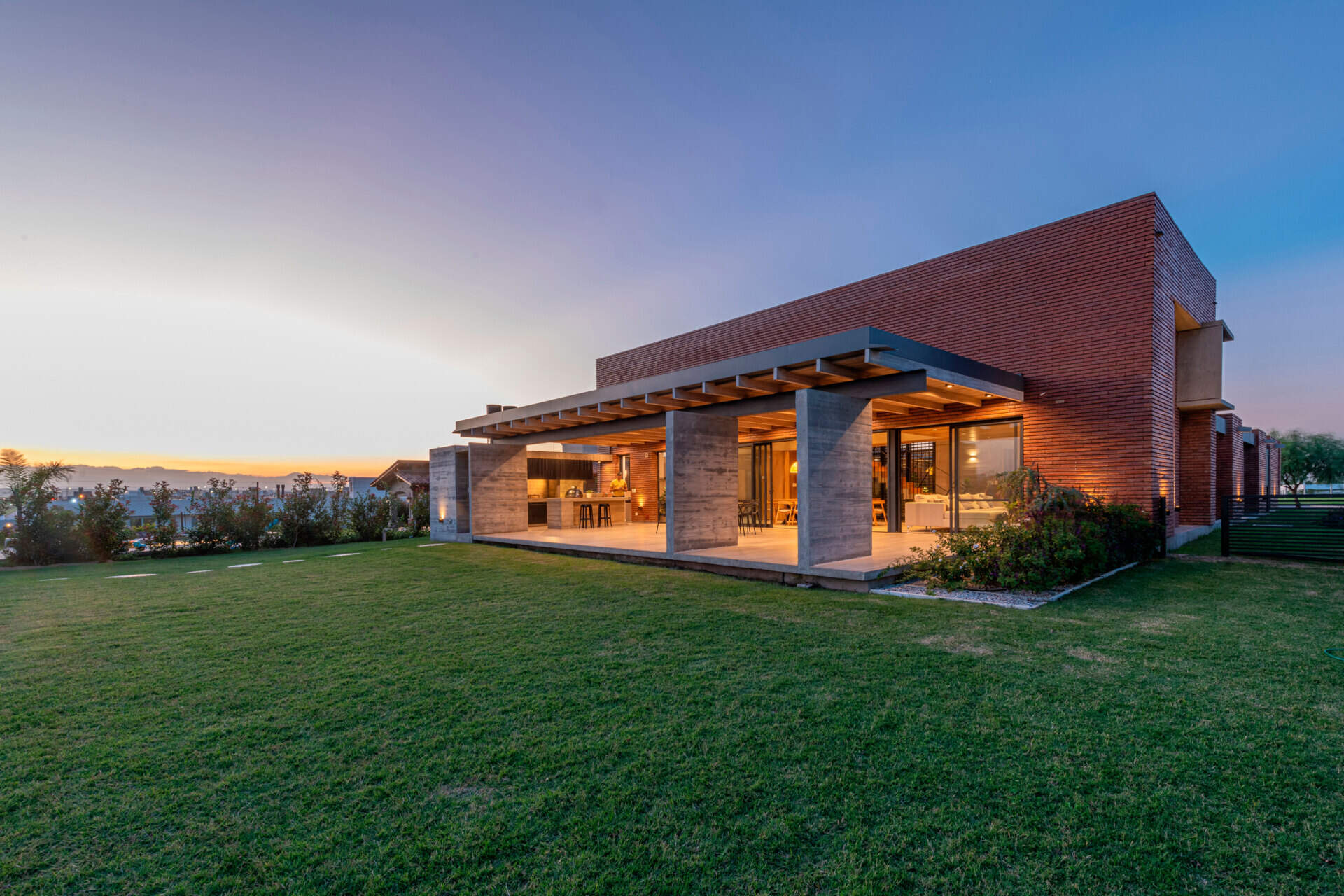
Inside, the living room forms part of the open social space, alongside the dining area and kitchen. A double-height window opens to the north, overlooking the entrance courtyard and drawing in sunlight throughout the day. This vertical openness reinforces the importance of the courtyard as both a spatial and experiential anchor.
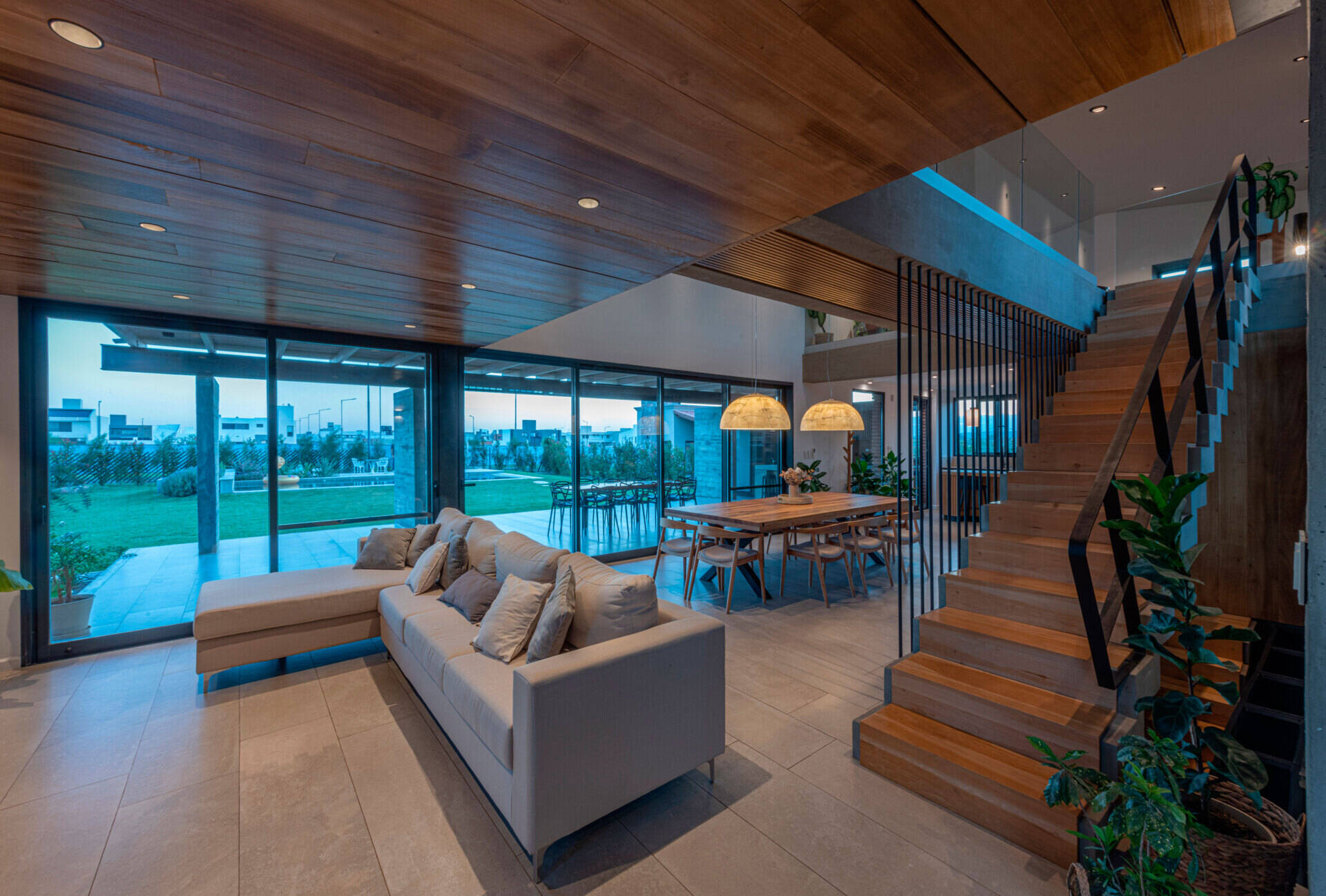
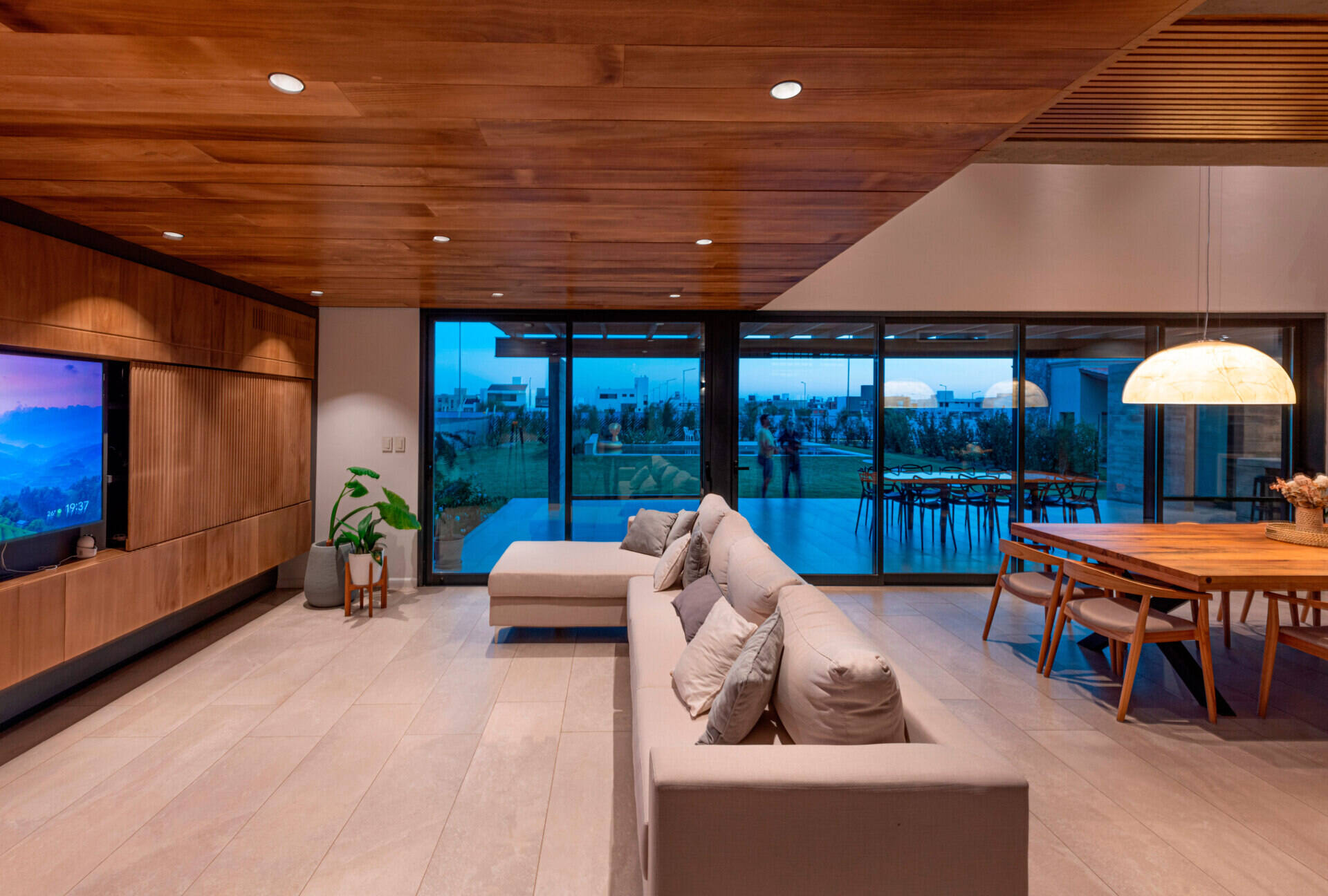
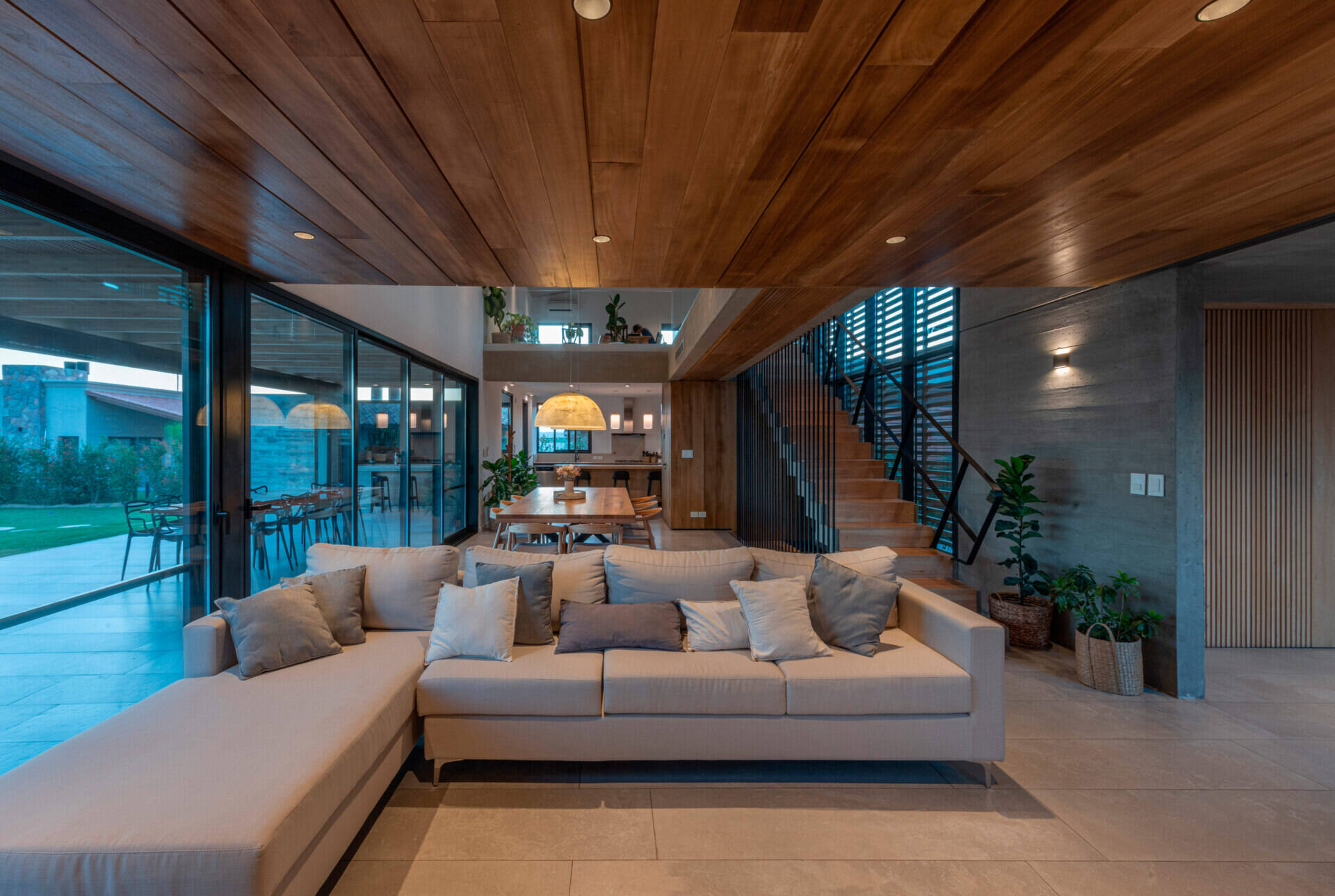
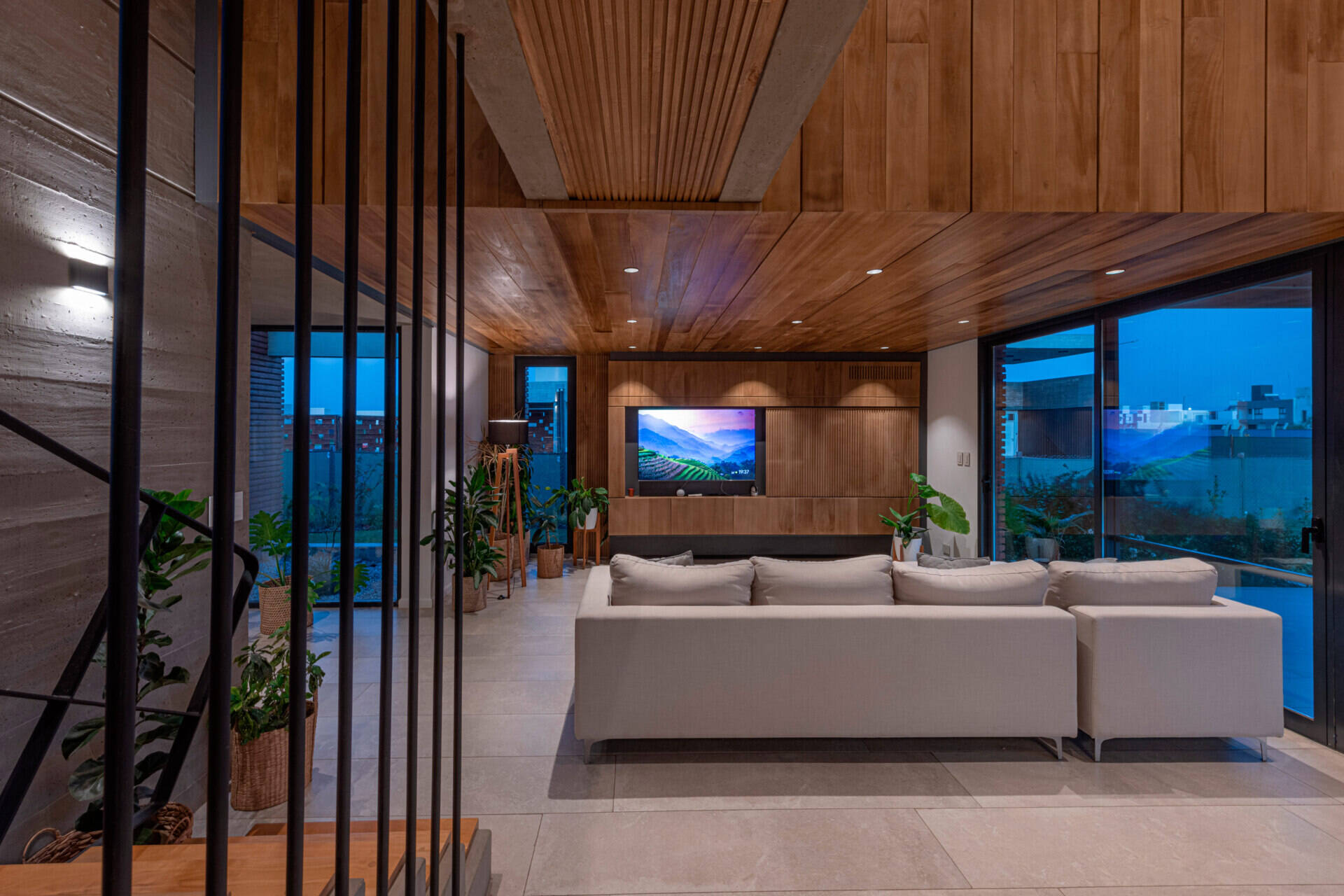
Positioned within the social block of the home, the dining area benefits from light on both sides of the house. It sits between the north-facing courtyard and the south-facing gallery, creating a constant visual and spatial relationship with the outdoors that shapes everyday family routines.
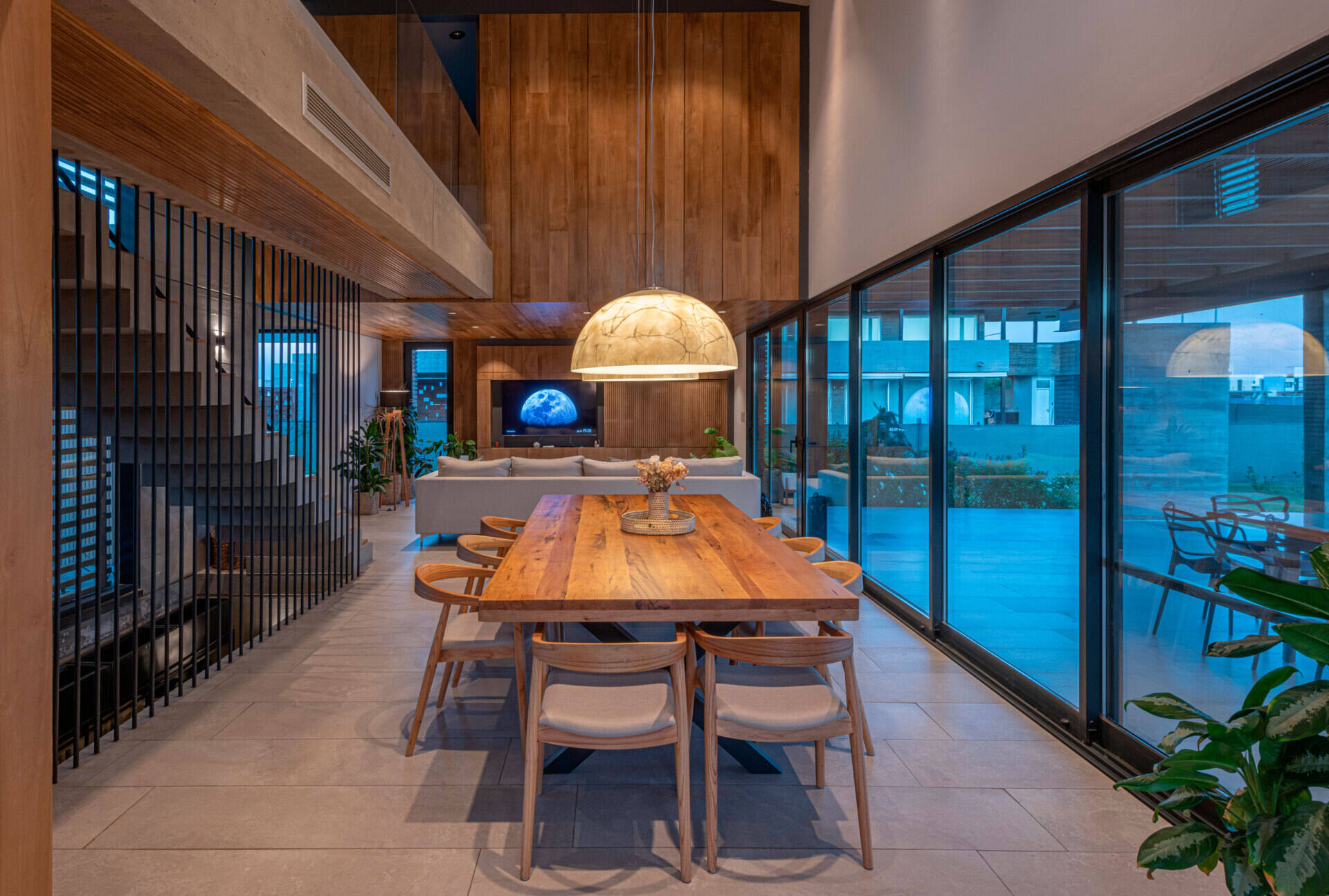
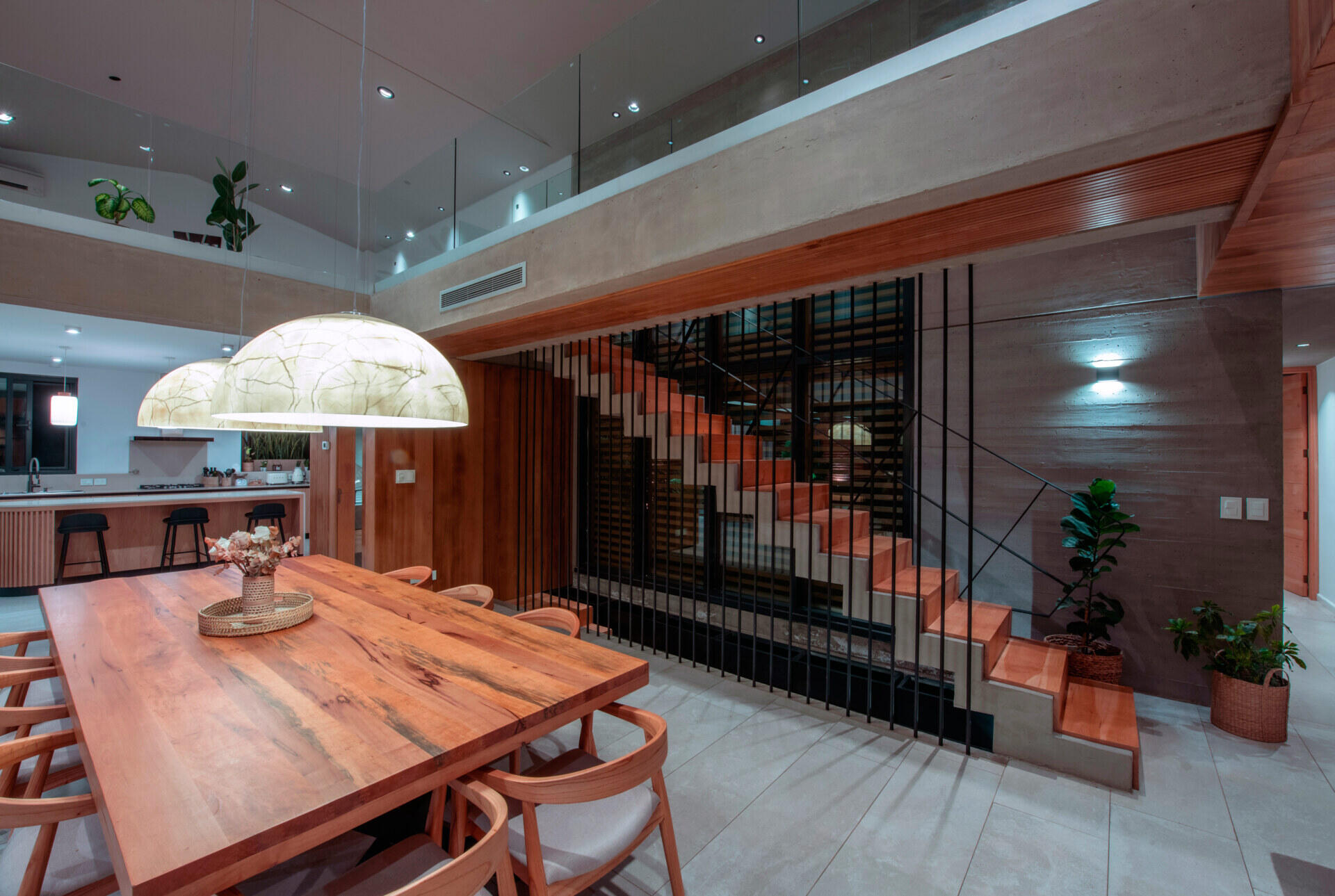
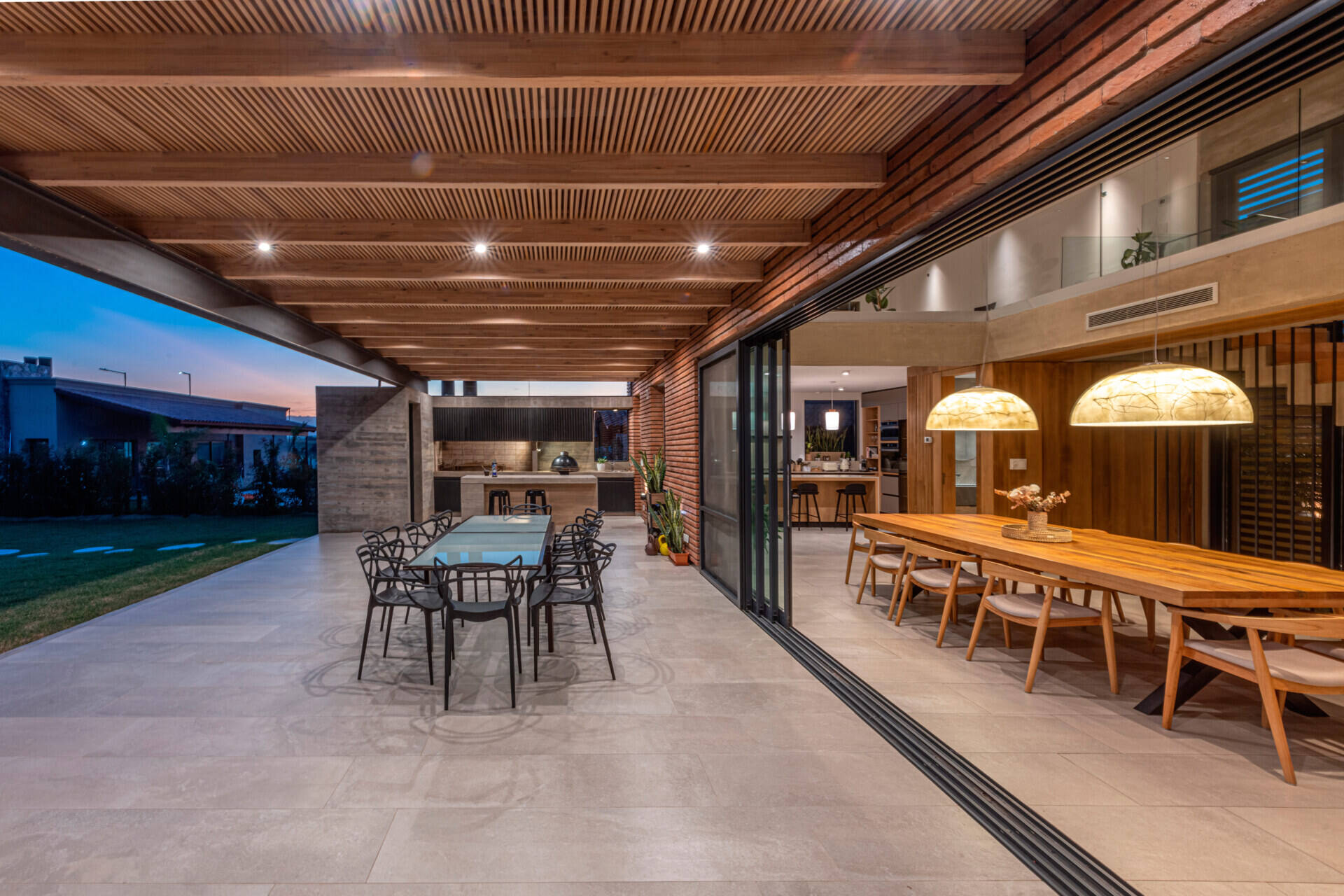
The kitchen, located at the end of the open space, is positioned to allow it to remain connected to both the entrance courtyard and the outdoor space, supporting the idea of continuous and shared family life.
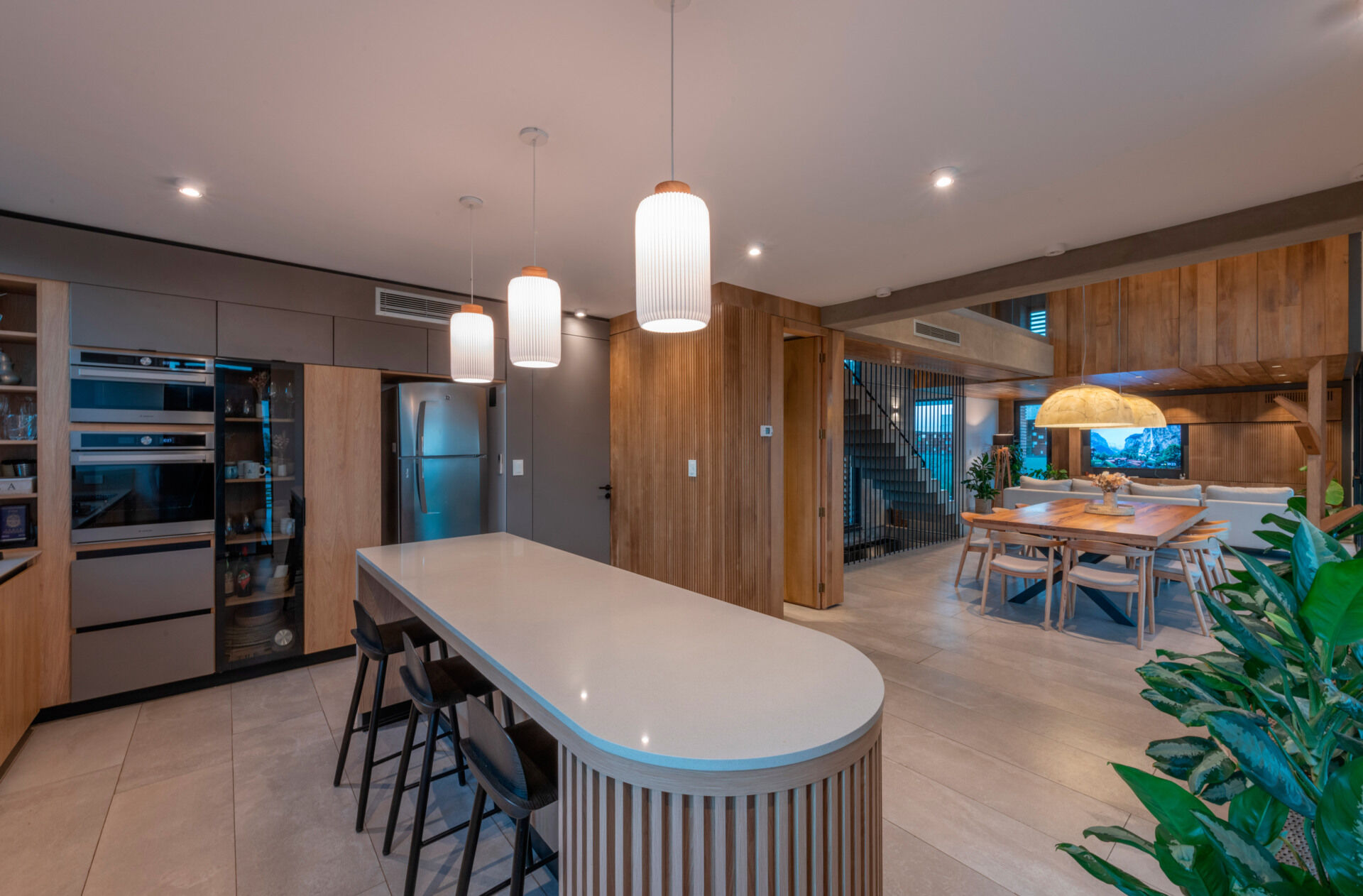
At its core, this brick family house by Barella Arquitectura is about transitions. From public to private, outside to inside, arrival to dwelling.