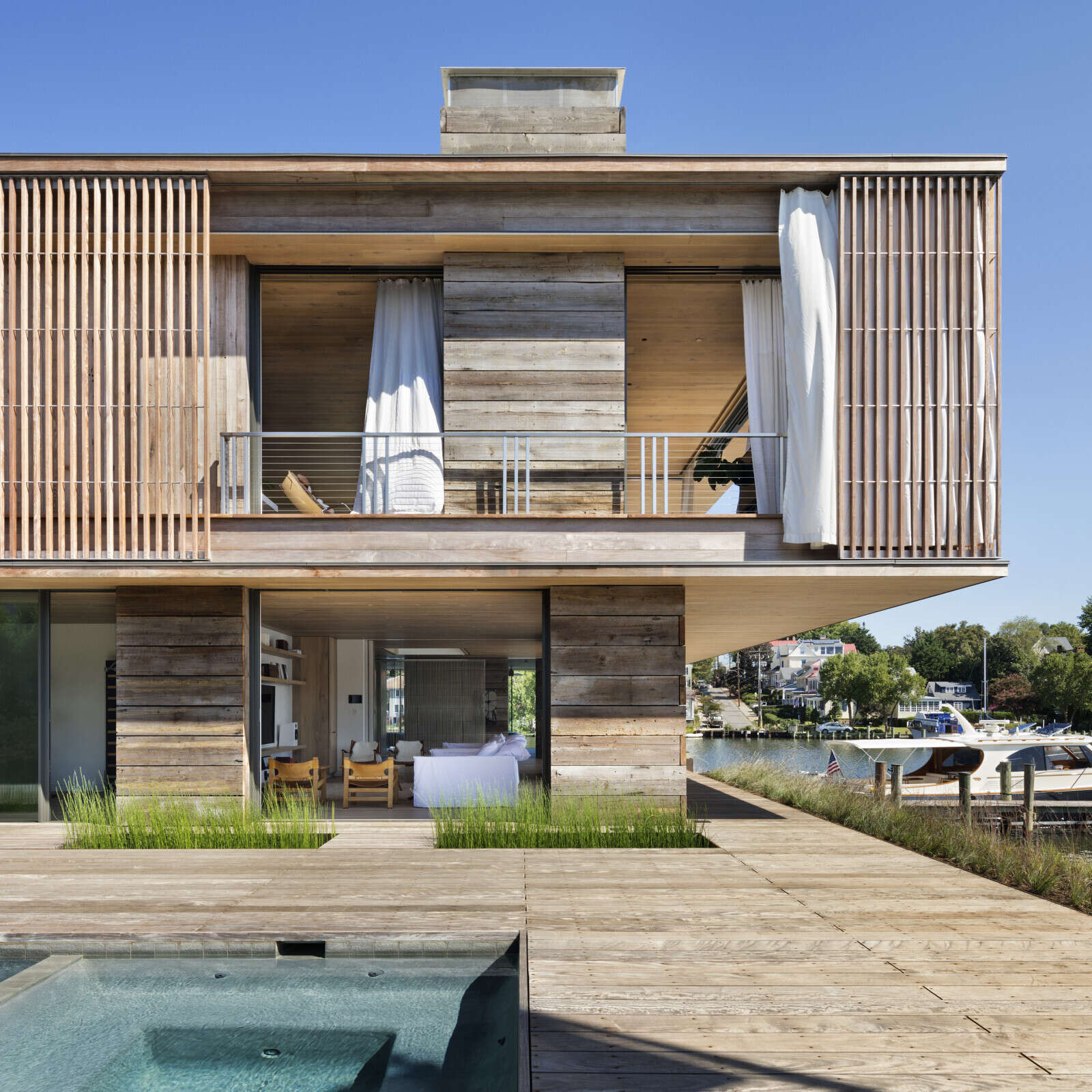
Designed by Bates Masi + Architects, this modern waterfront house sits on Chesapeake Bay near Annapolis, Maryland. Created for an active family with a love of boating, the home is closely tied to its setting, with architecture that responds directly to life on the water and the rhythms of the harbor.
The house embraces its waterfront location with outdoor living spaces, layered materials, and flexible elements that allow the family to move easily between inside and out while staying protected from sun, wind, and changing conditions.
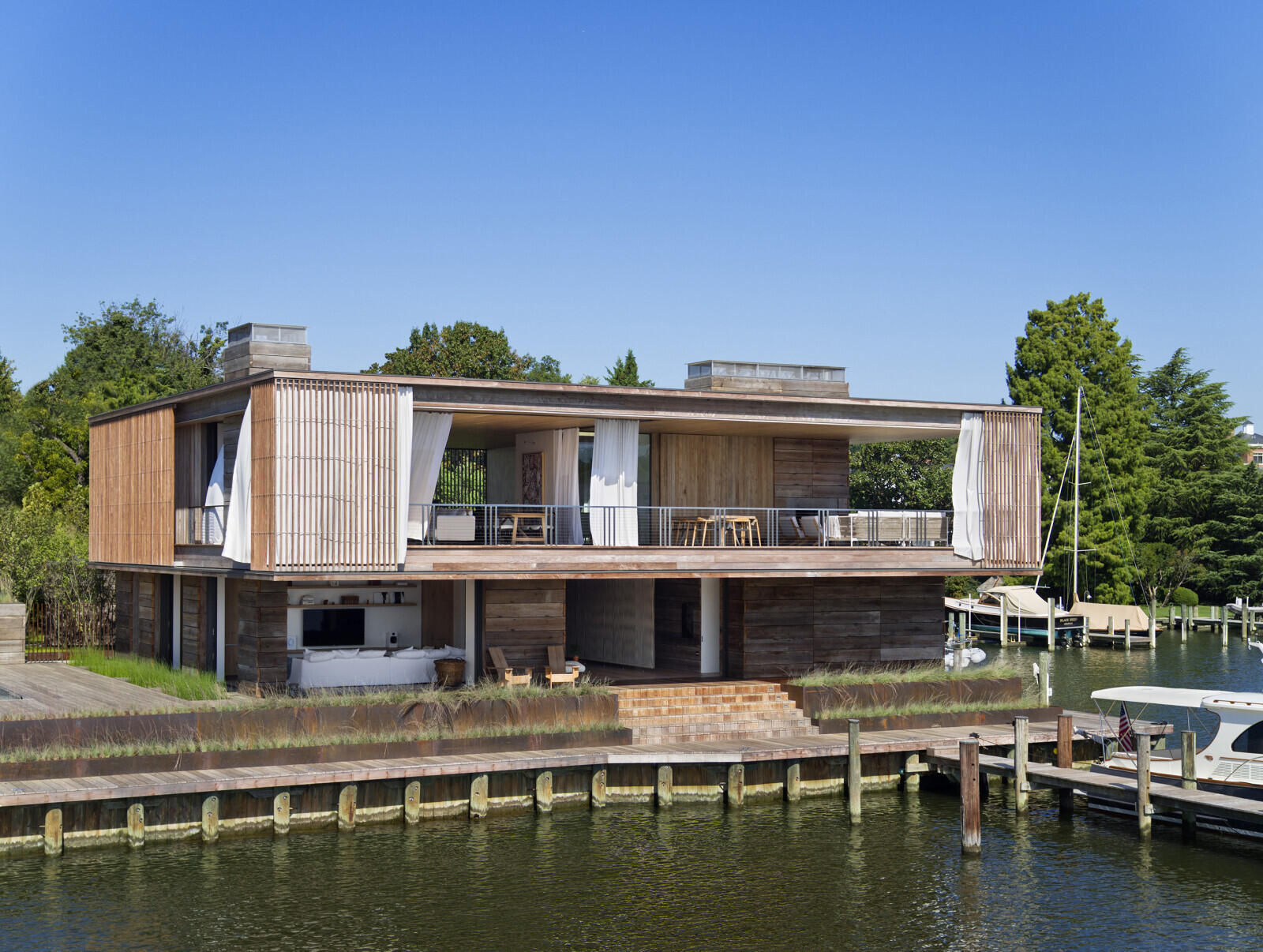
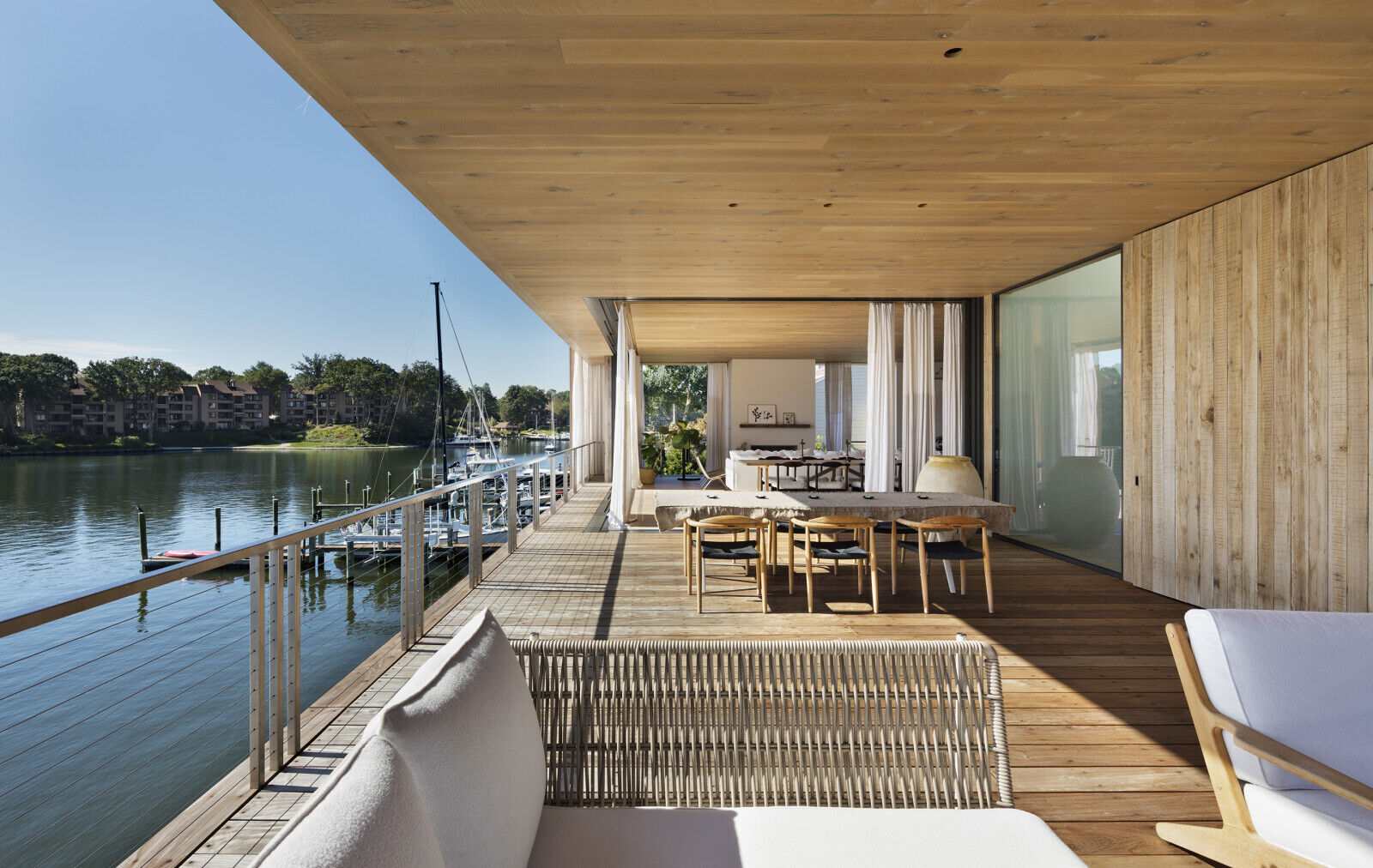
Deep overhangs wrap the house, providing shade and protection to the decks that surround it. These overhangs soften the strong coastal light and make the outdoor spaces usable throughout the day. On the second floor, cantilevered decks and balconies extend around the building, forming a continuous connection to the landscape and the water beyond.
This level is wrapped in fixed Ipe screens paired with operable canvas drapes. Together, these layers allow the family to adjust privacy, shade, and openness depending on how the space is being used. The architecture supports outdoor living without sacrificing comfort or control.
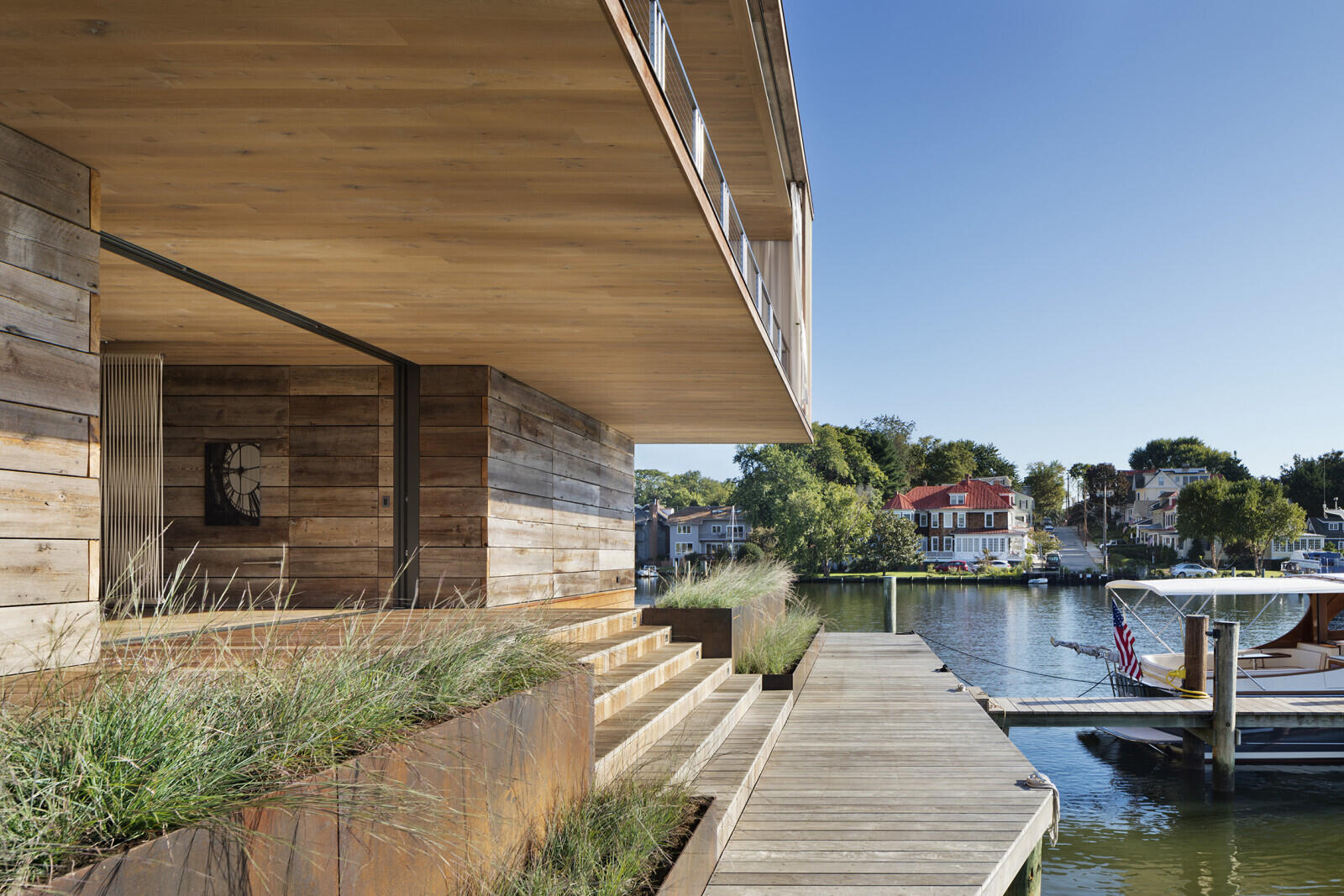
Ipe decking continues beyond the house, forming a boardwalk that connects several docks on the property. This creates a direct and natural link between the home and the water, reinforcing boating as part of everyday life.
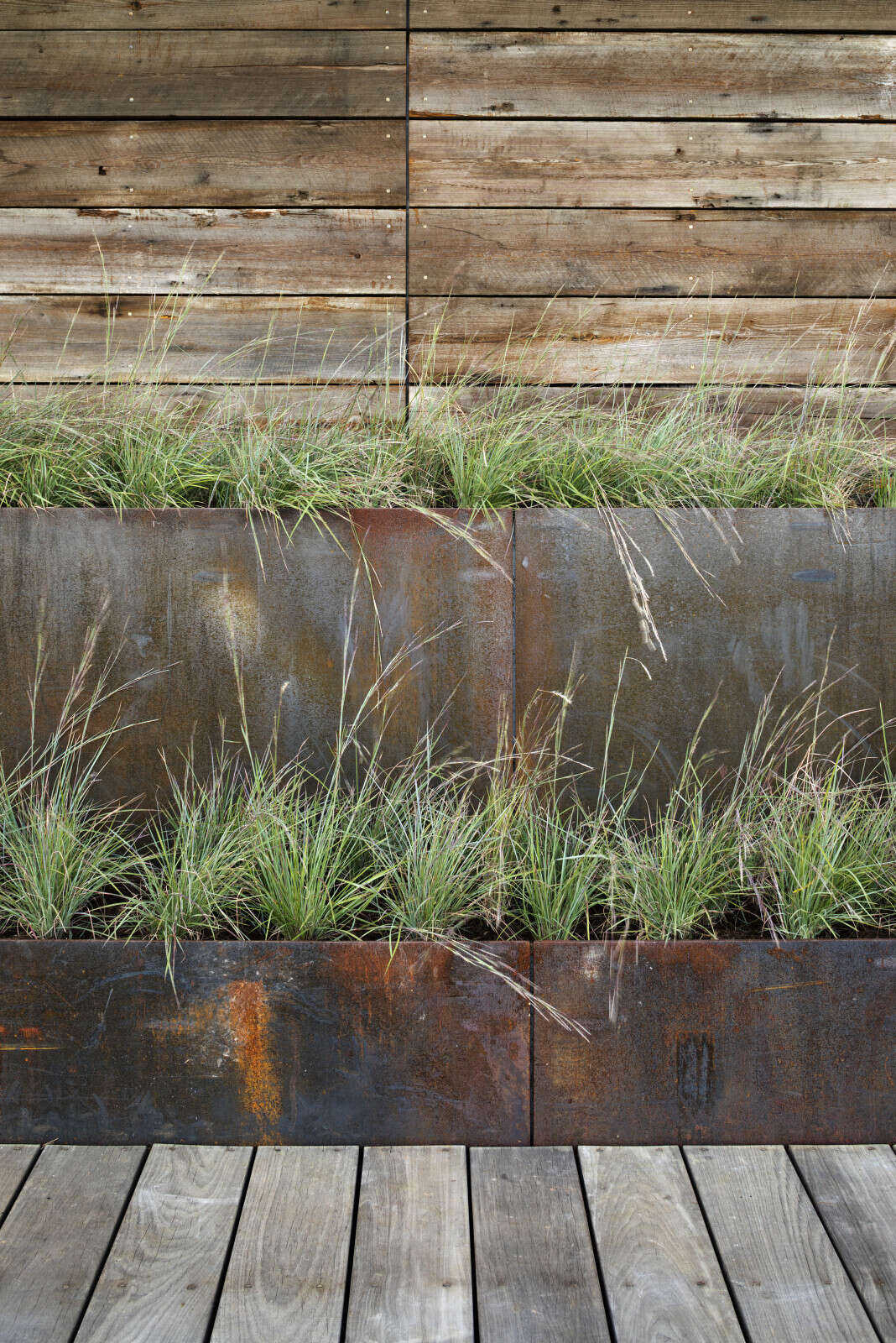
Stepped weathering steel planters sit between the boardwalk level and the ground level of the house. The ground plane is elevated above the floodplain, allowing the home to remain protected while maintaining a strong relationship with the bay. The planters introduce texture and structure, helping the site transition from water to architecture.
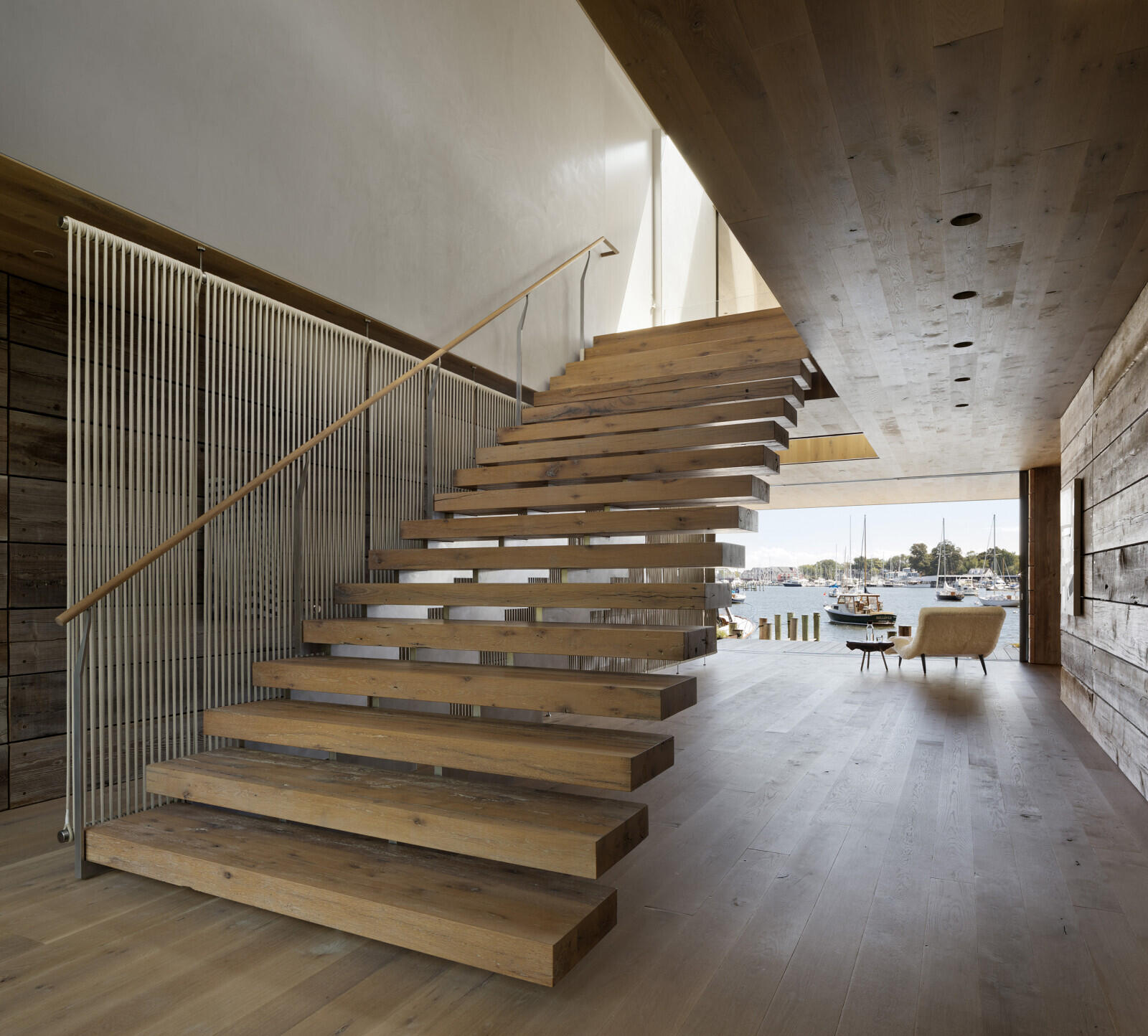
Wide wood stairs connect the ground level with the upper floor, emphasizing vertical movement through the house. Positioned beside the stairs is a see through rope screen that draws inspiration from local crafts and traditional maritime materials.
This detail introduces softness and transparency while referencing the working character of the harbor. It acts as both a visual element and a subtle divider, reinforcing the home’s connection to its coastal surroundings.
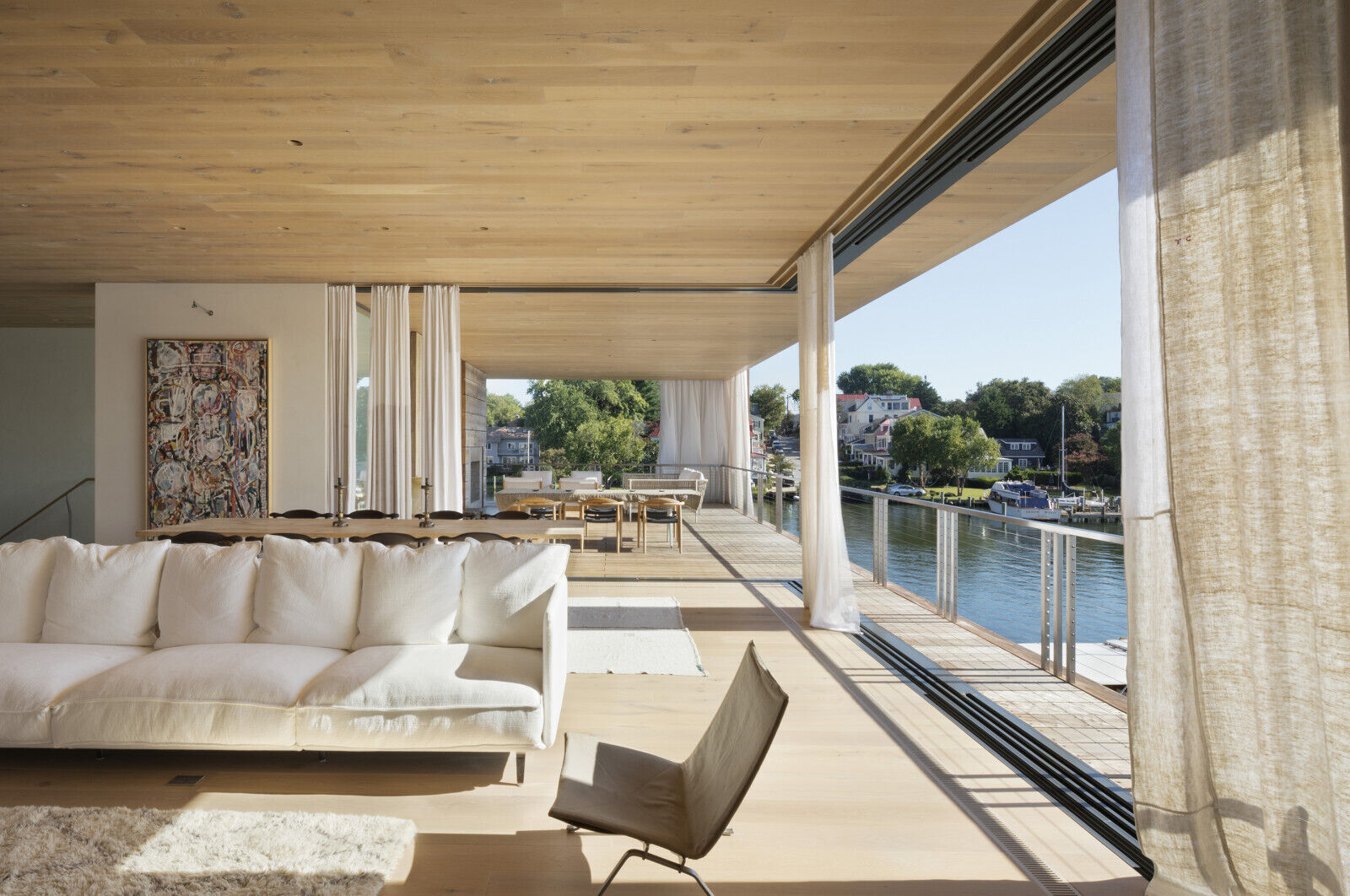
The main living areas are located upstairs, where views across the harbor are uninterrupted. Pocketing sliding glass doors open fully, allowing the interior spaces to flow directly onto balconies and decks. When open, the boundaries between inside and outside dissolve, creating spaces that feel expansive and connected to the water.
Balconies wrap the living areas, providing multiple vantage points and allowing the family to engage with the harbor from different angles throughout the day.
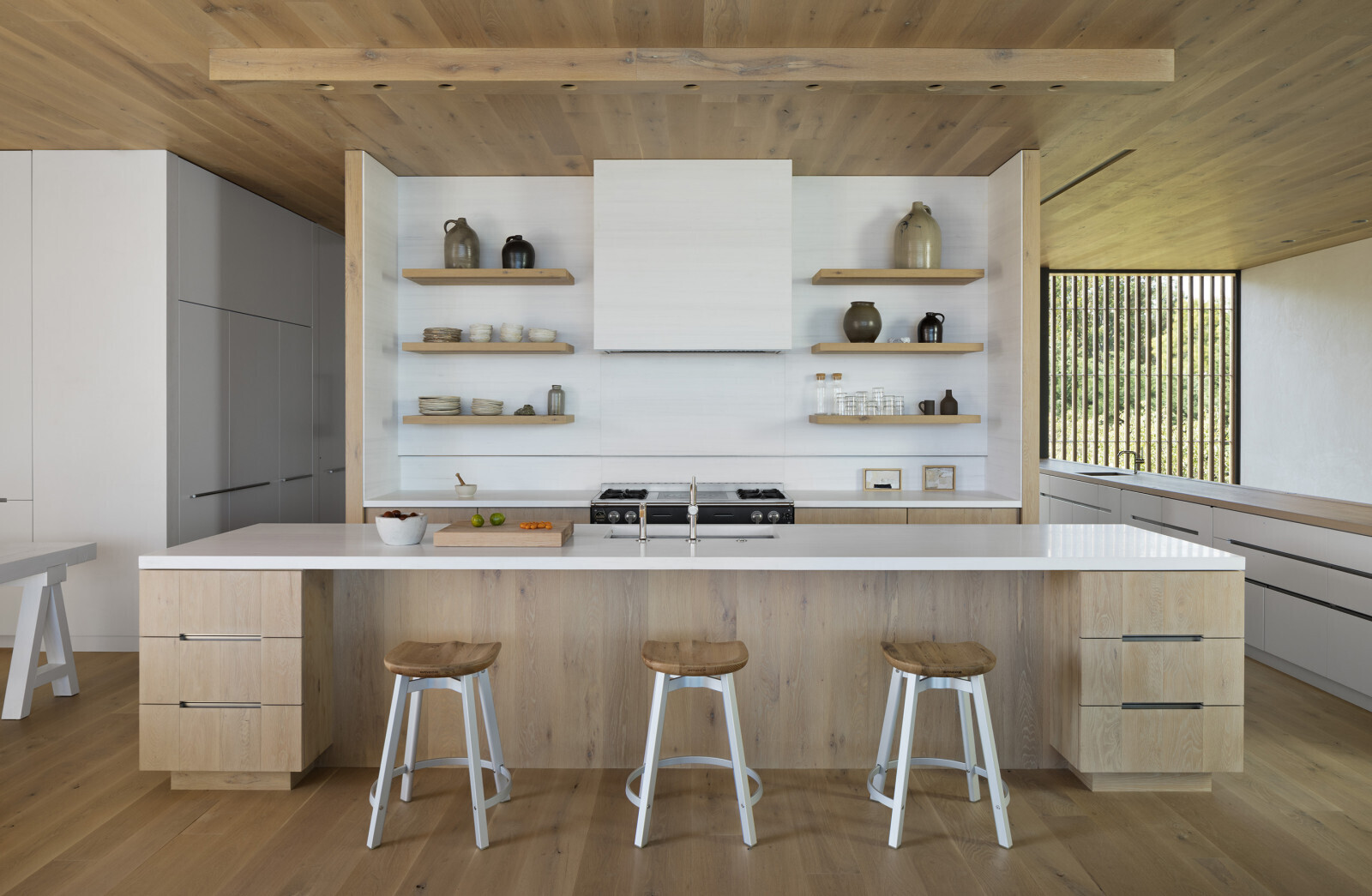
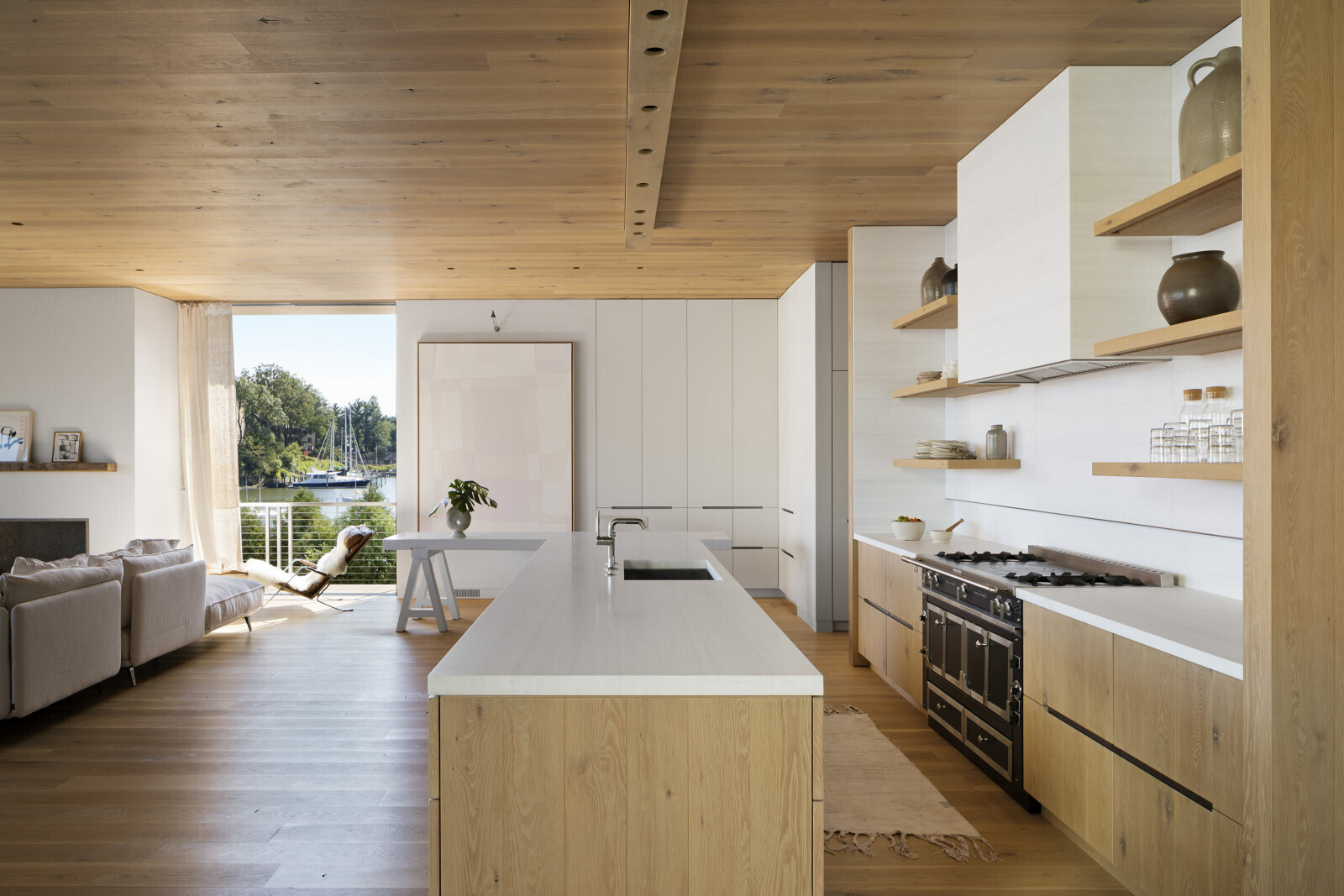
In contrast to the layered exterior, the kitchen is deliberately restrained. White walls, cabinets, countertops, and furniture create a light and calm interior that complements the surrounding wood rather than competing with it.
The simplicity of the kitchen allows the architecture and views to remain the focus, reinforcing a sense of ease and everyday livability within the home.
This Chesapeake Bay home shows how architectural layers can extend outdoor living with decks, screens, stairs, and carefully chosen materials.