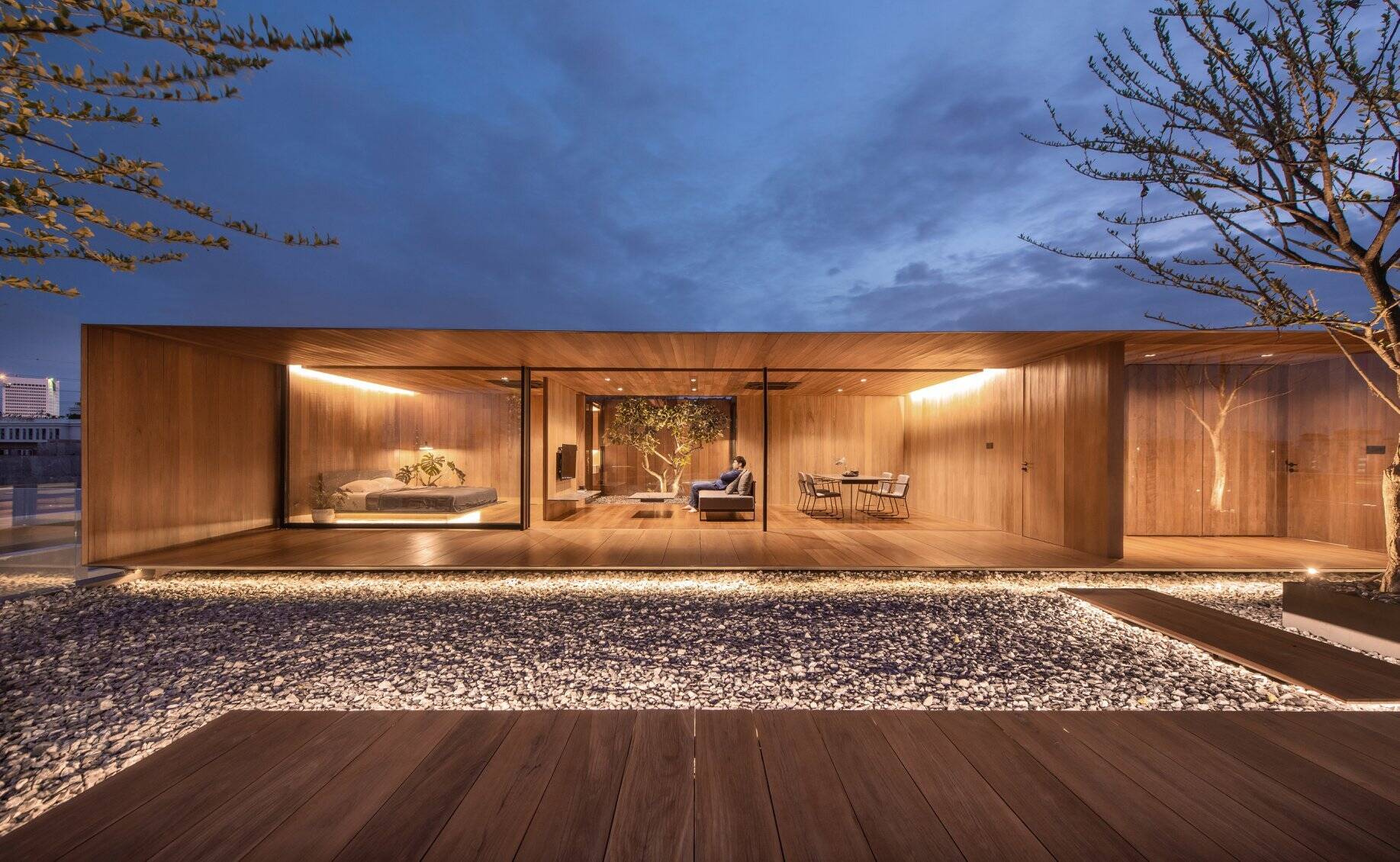
High above the busy streets of Bangkok, a quietly remarkable home sits where few would expect it. Designed by WARchitect, this modern wood house was built on top of a five storey apartment building in the Lat Phrao district, transforming a once forgotten rooftop into a warm and welcoming home.
The owner had long used the rooftop for a purely practical purpose. It was home to water tanks and little else, leaving a large expanse of concrete unused. Rather than letting that space go to waste, he envisioned a small private house for himself, one that would sit above the city yet remain calm, simple, and hidden from view.
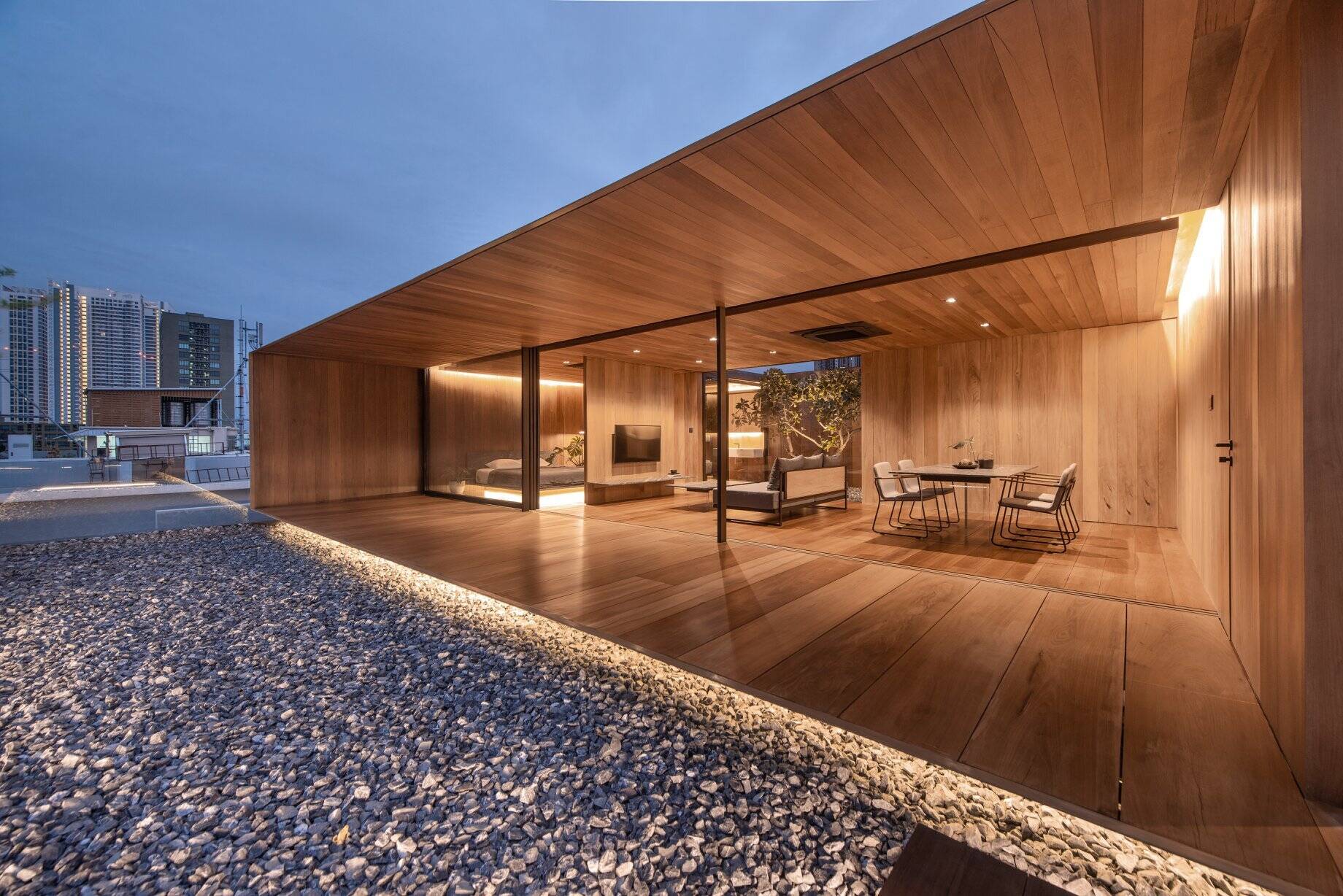
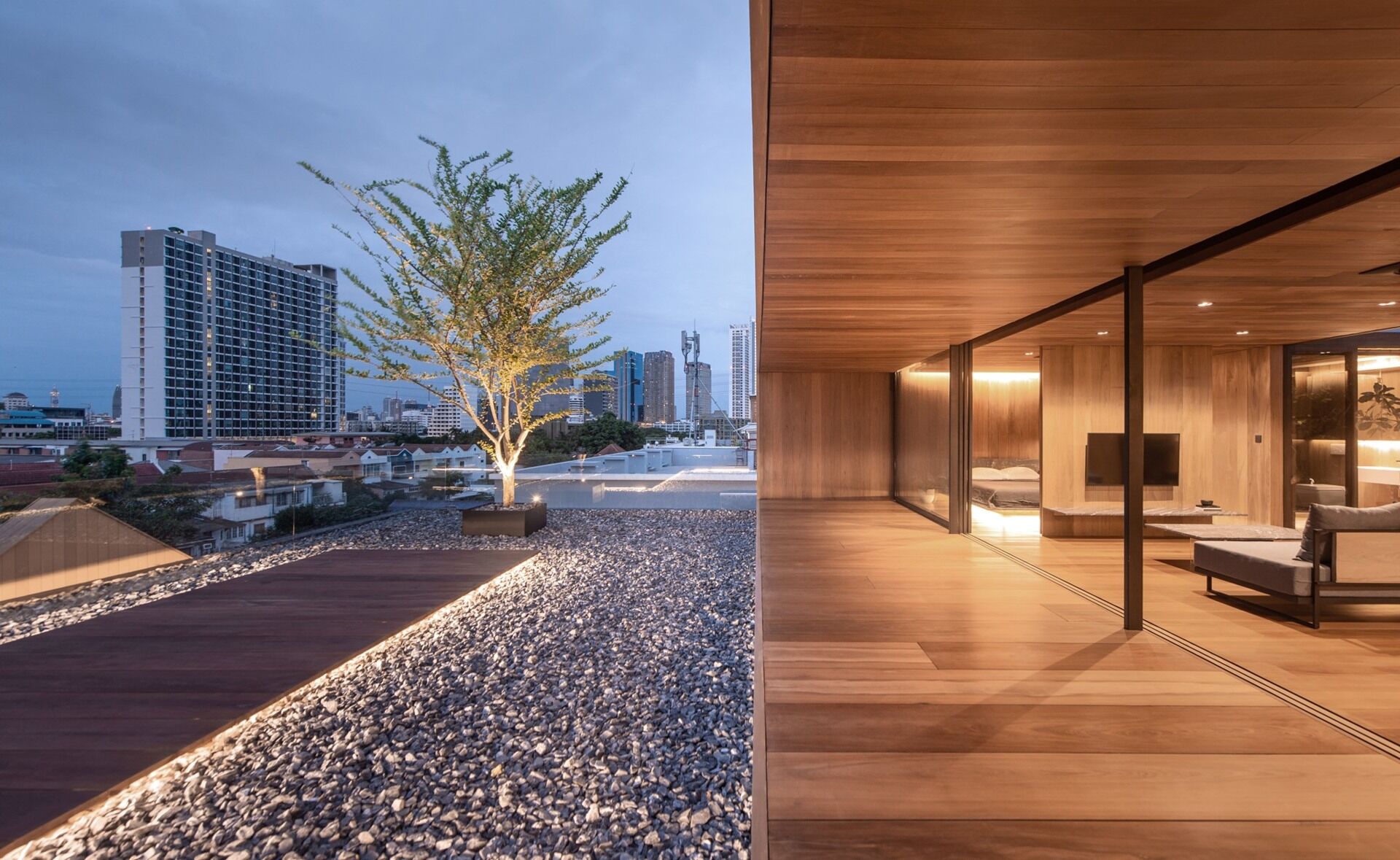
That idea came with challenges few residential projects face. This was not a plot of land with trees and gardens, but a concrete rooftop elevated more than 15 meters above street level. Surrounding greenery was replaced by the vertical outlines of neighboring high rise buildings. From the ground, only the front facade could ever be seen.
To prevent the new house from clashing visually with the apartment below, WARchitect set it back from the building edge. From public roads, the house is invisible, allowing the apartment block to retain its original presence while the rooftop home exists quietly above it.
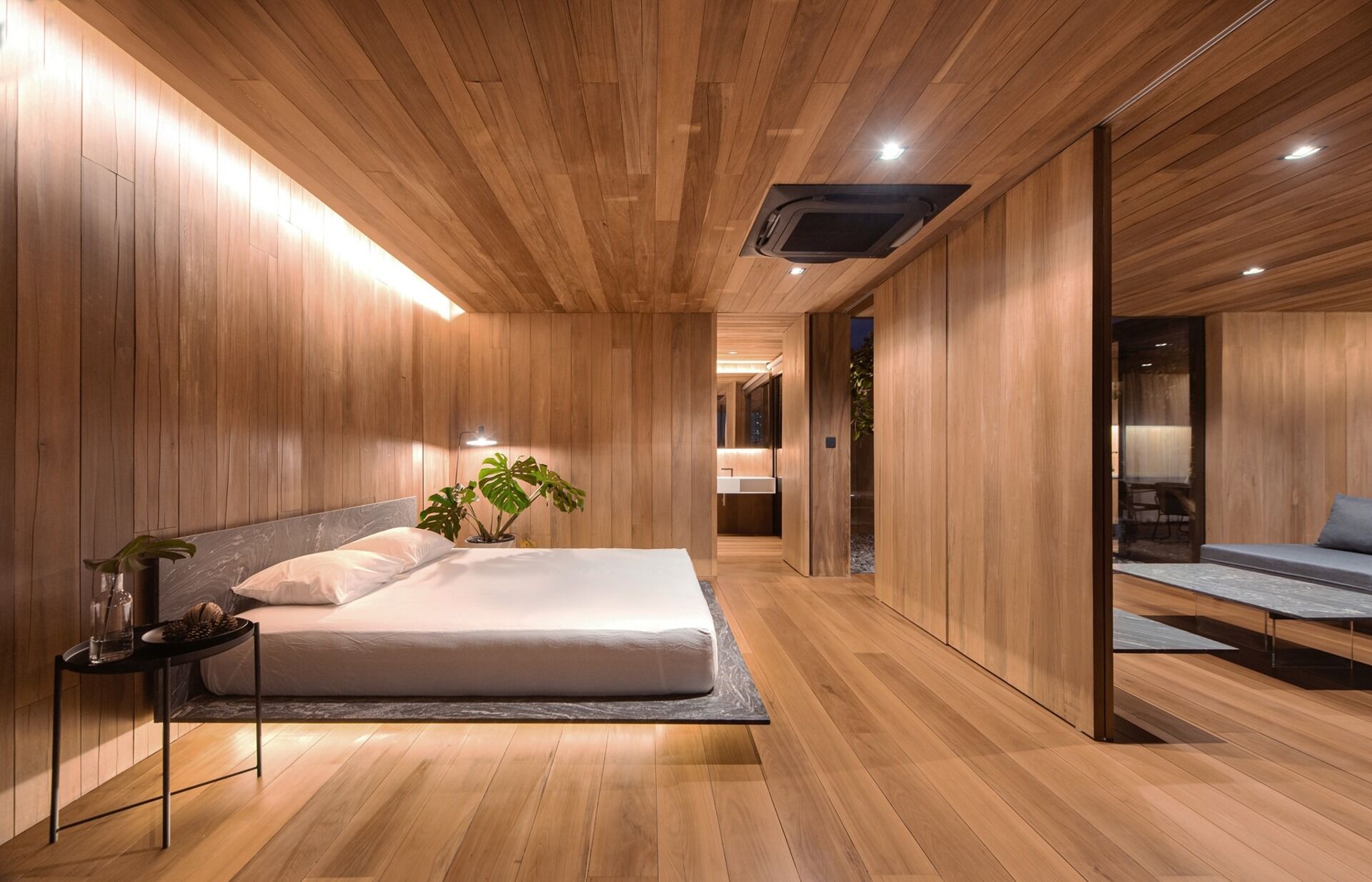
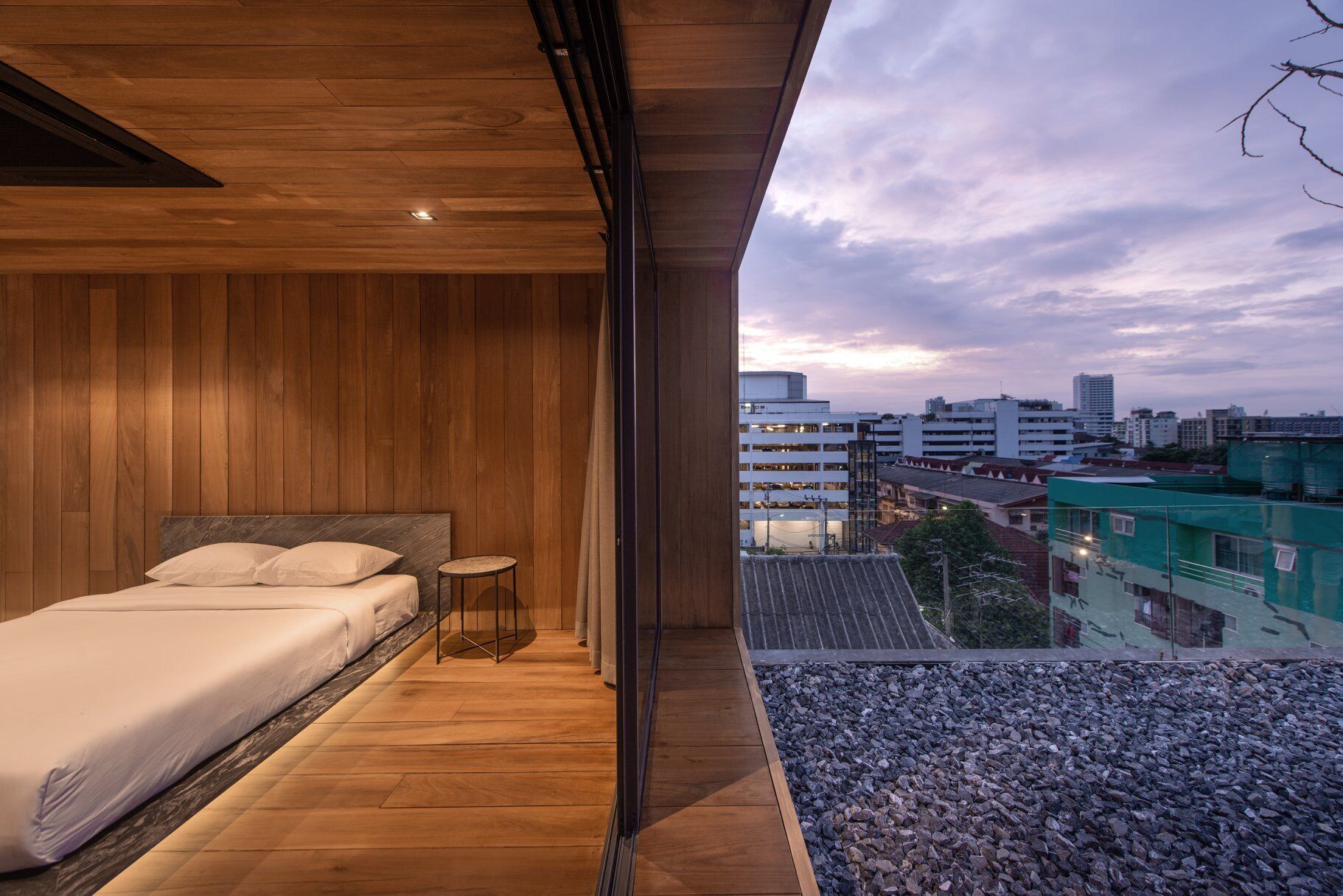
One of the defining features of the house is the way the wood ceilings and walls flow continuously from inside to out. WARchitect treated the walls and roof as if they had no thickness, using subtle architectural techniques to create the illusion of a thin, floating surface. Drop ceilings and gentle slopes hide lighting, curtains, and air conditioning, making the space feel seamless and calm rather than technical.
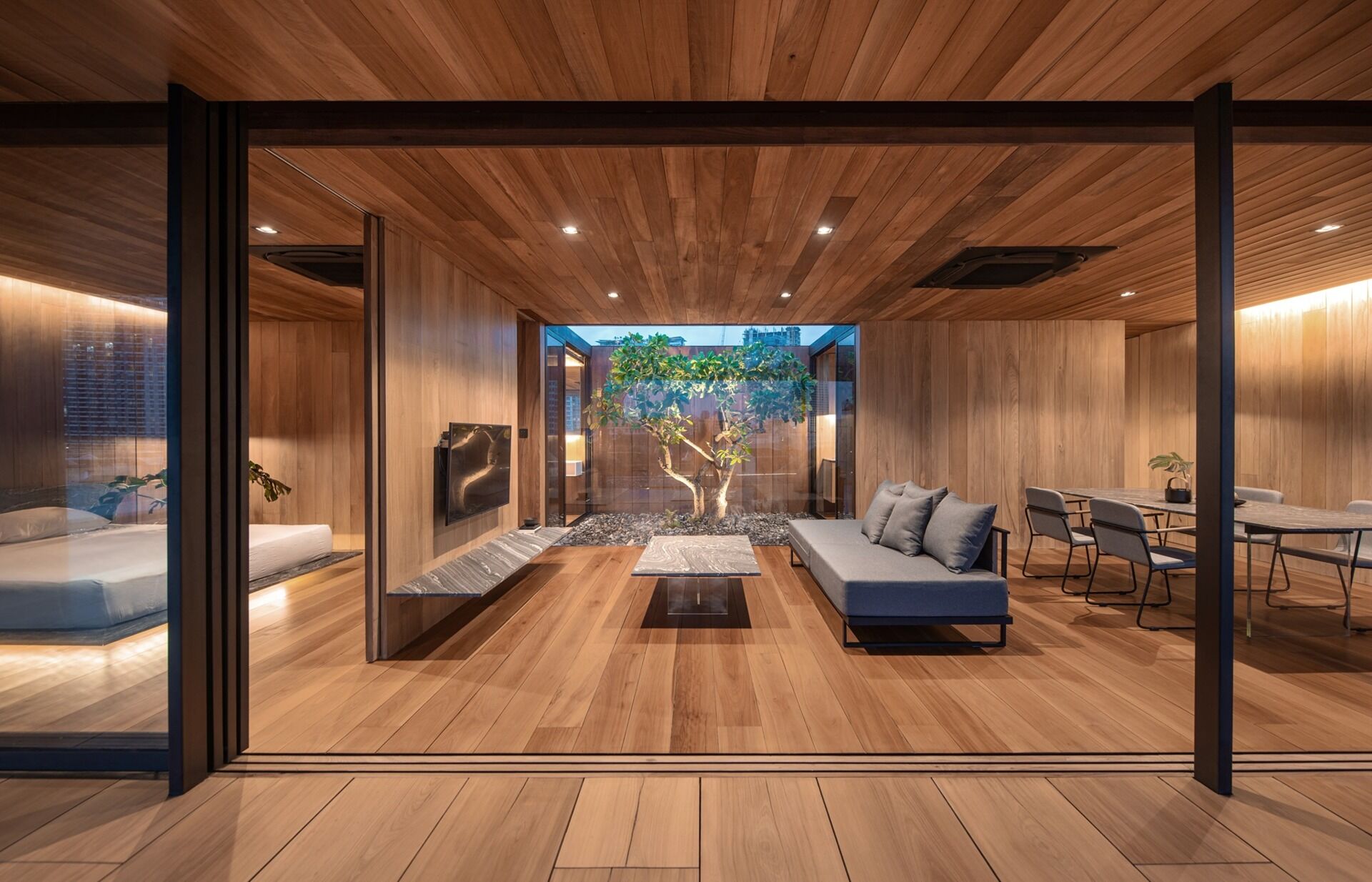
Throughout the home, material choices play a key role in its character. The architects used Balau wood planks that the owner already owned, embracing natural imperfections such as cracks, knots, saw marks, and variations in colour. Rather than hiding these details, WARchitect treated them as part of the wood’s natural charm.
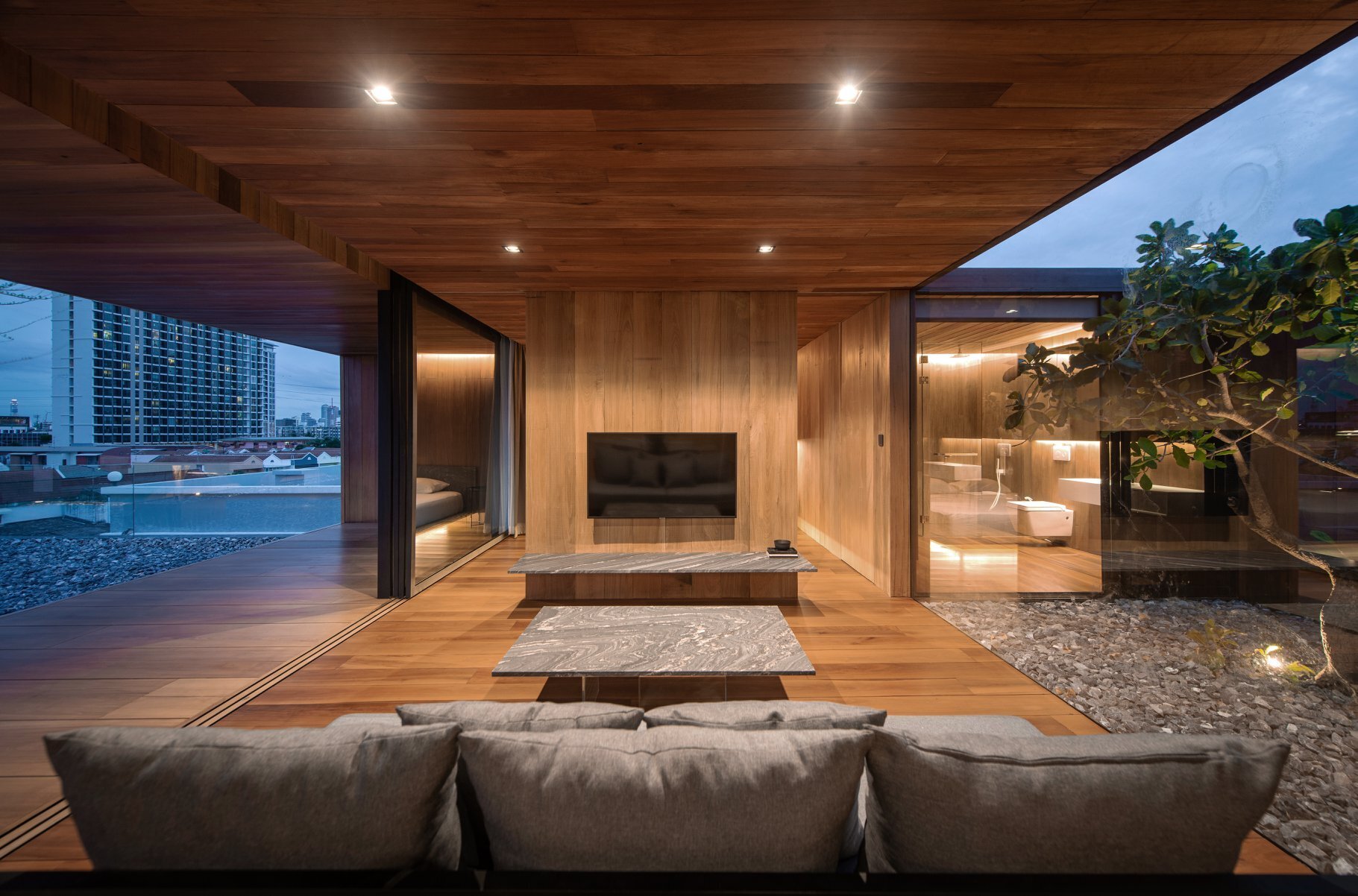
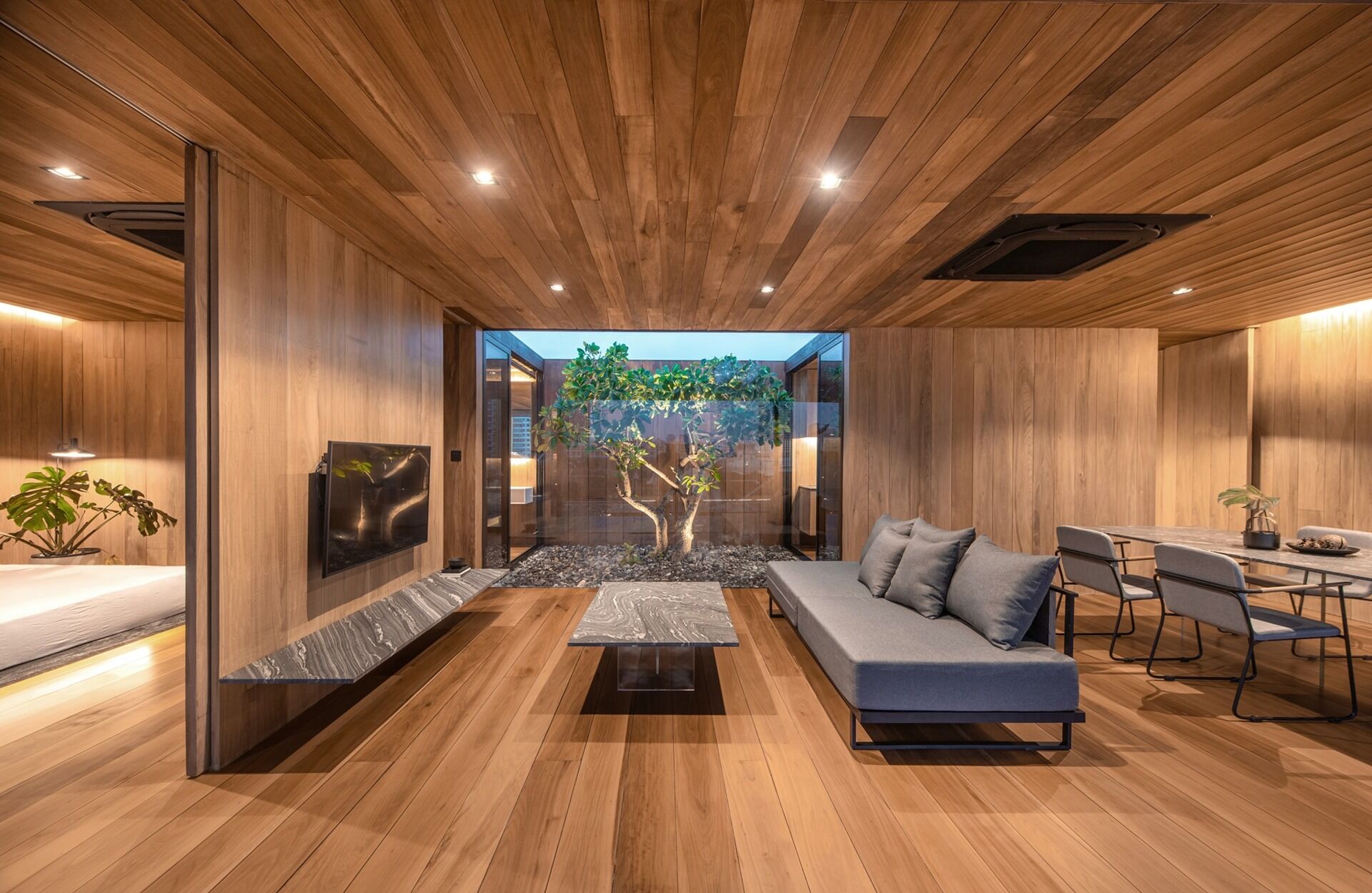
Inside, the home opens up into a light filled living and dining space wrapped in wood and glass. Large openings frame panoramic views of the surrounding cityscape, turning the skyline into a constantly shifting backdrop. Because the owner rarely hosts guests, the architects leaned into simplicity, designing a space that feels deliberately uncluttered and almost bare in its honesty.
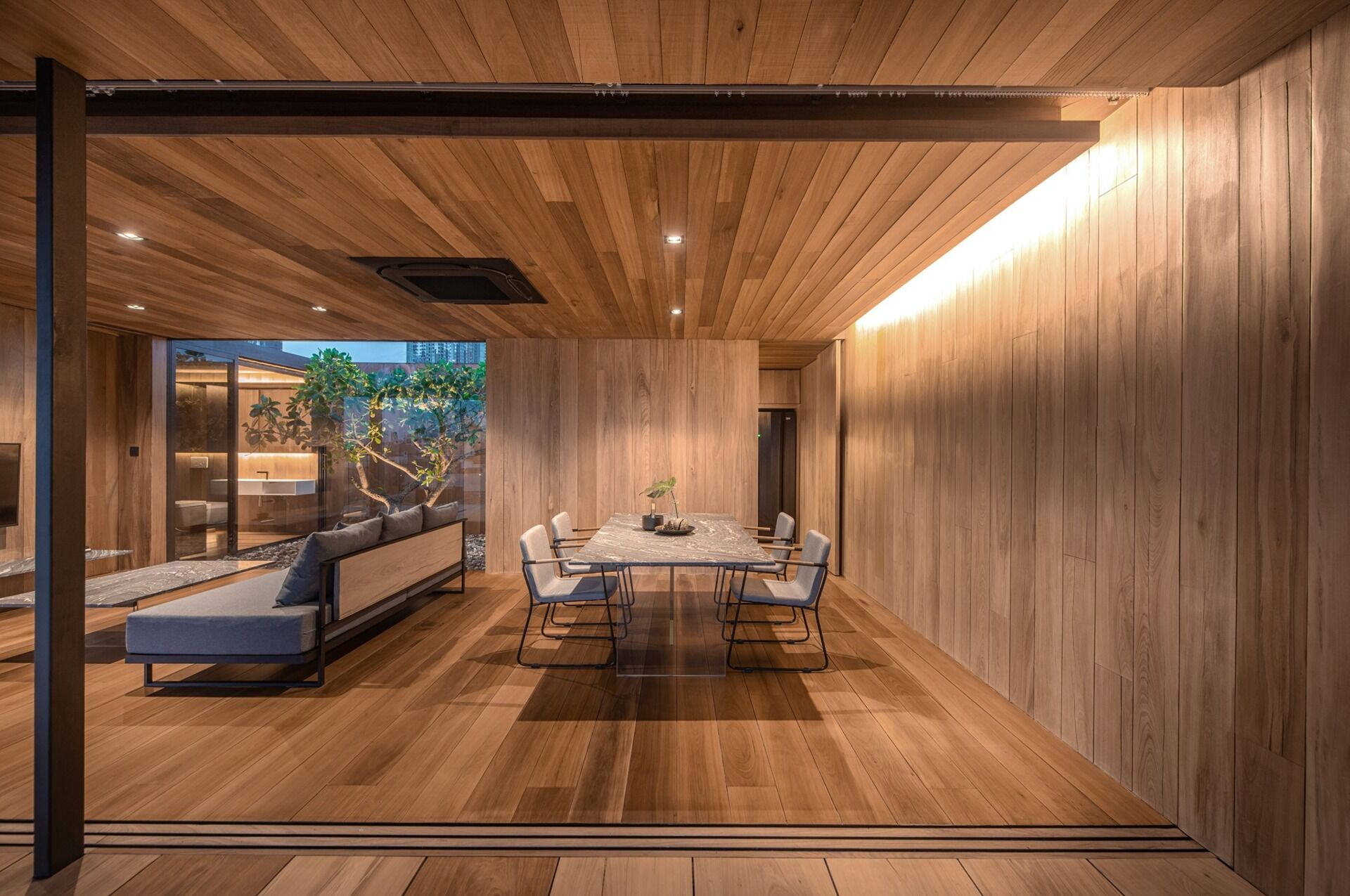
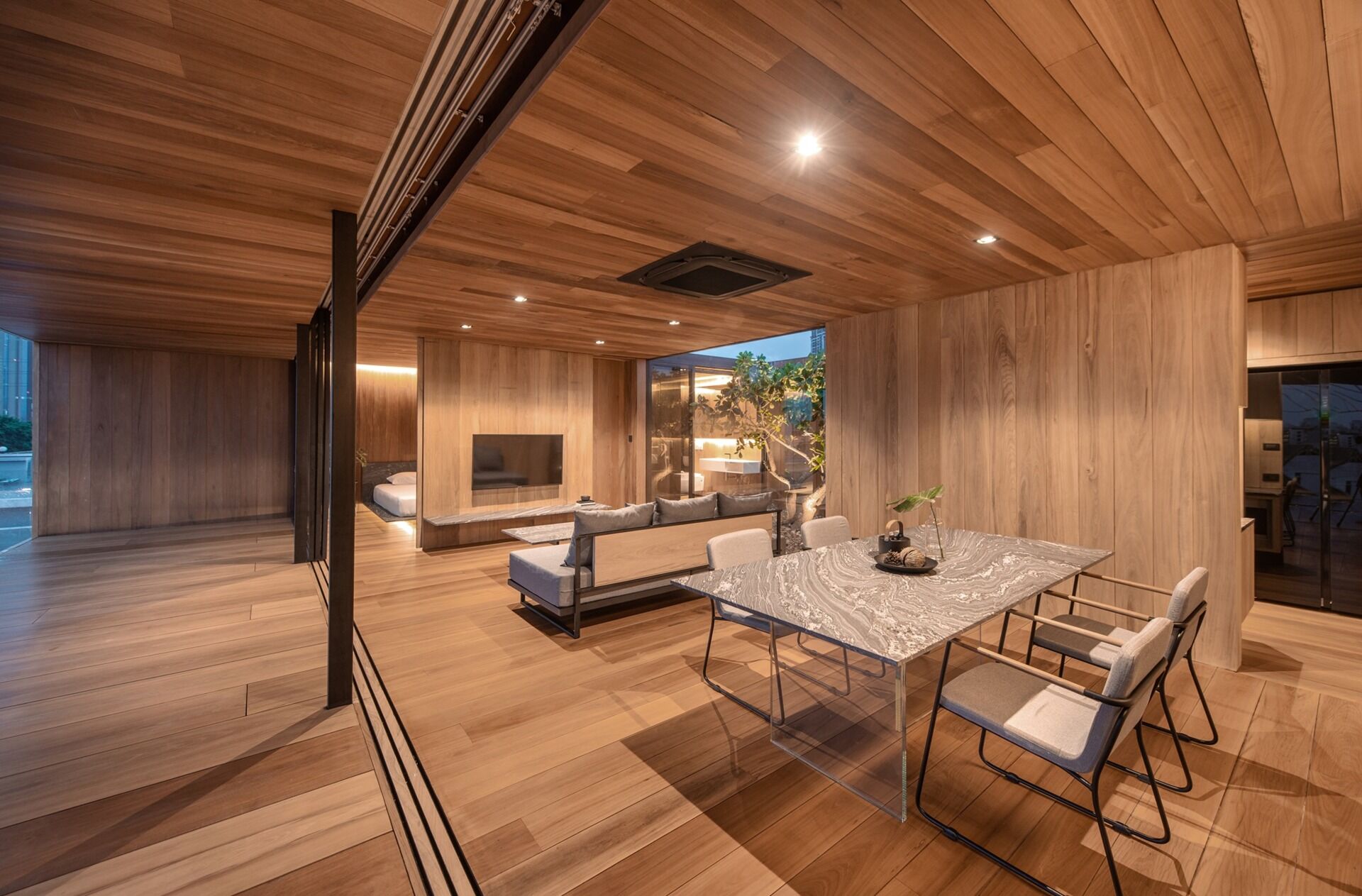
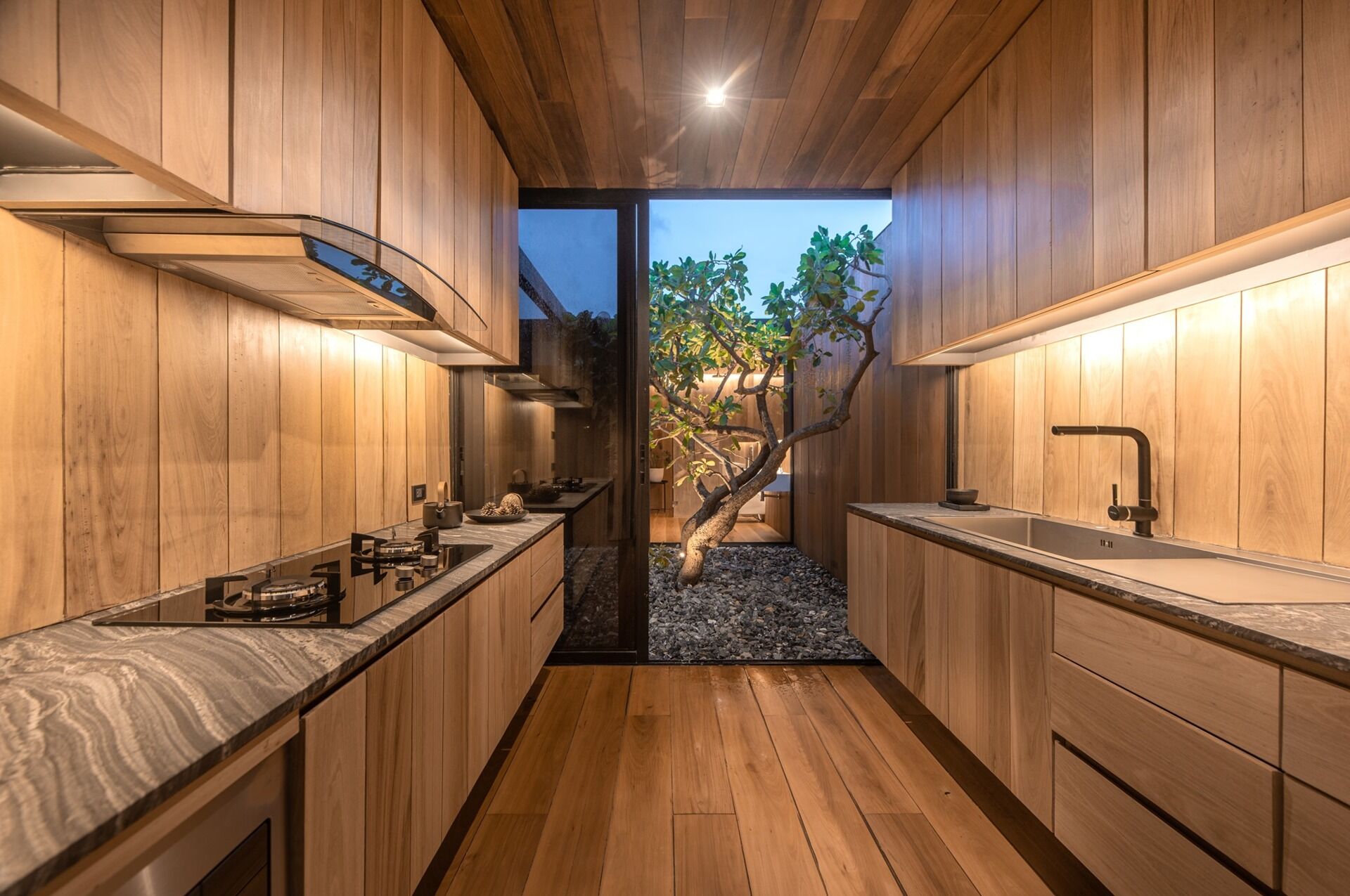
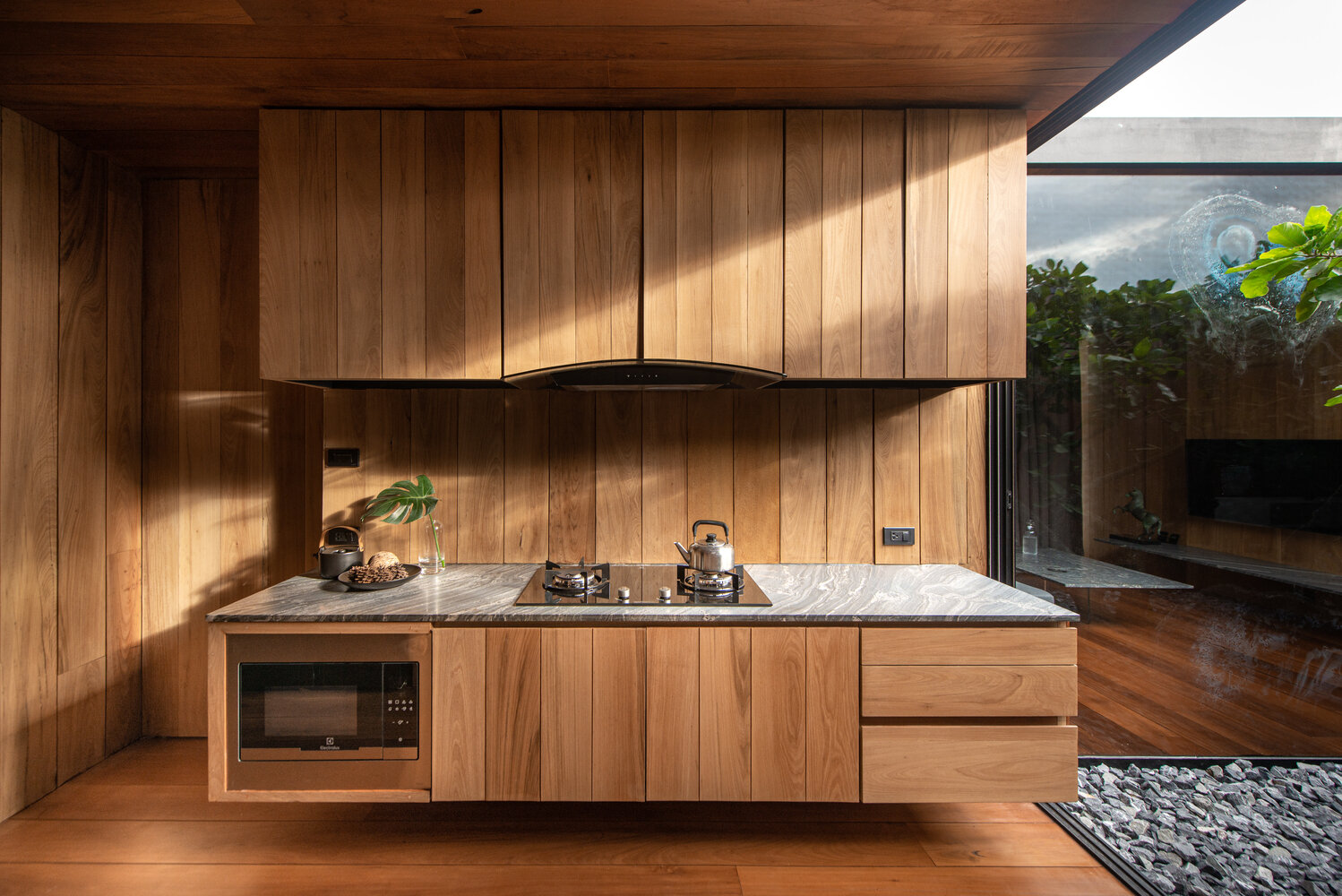
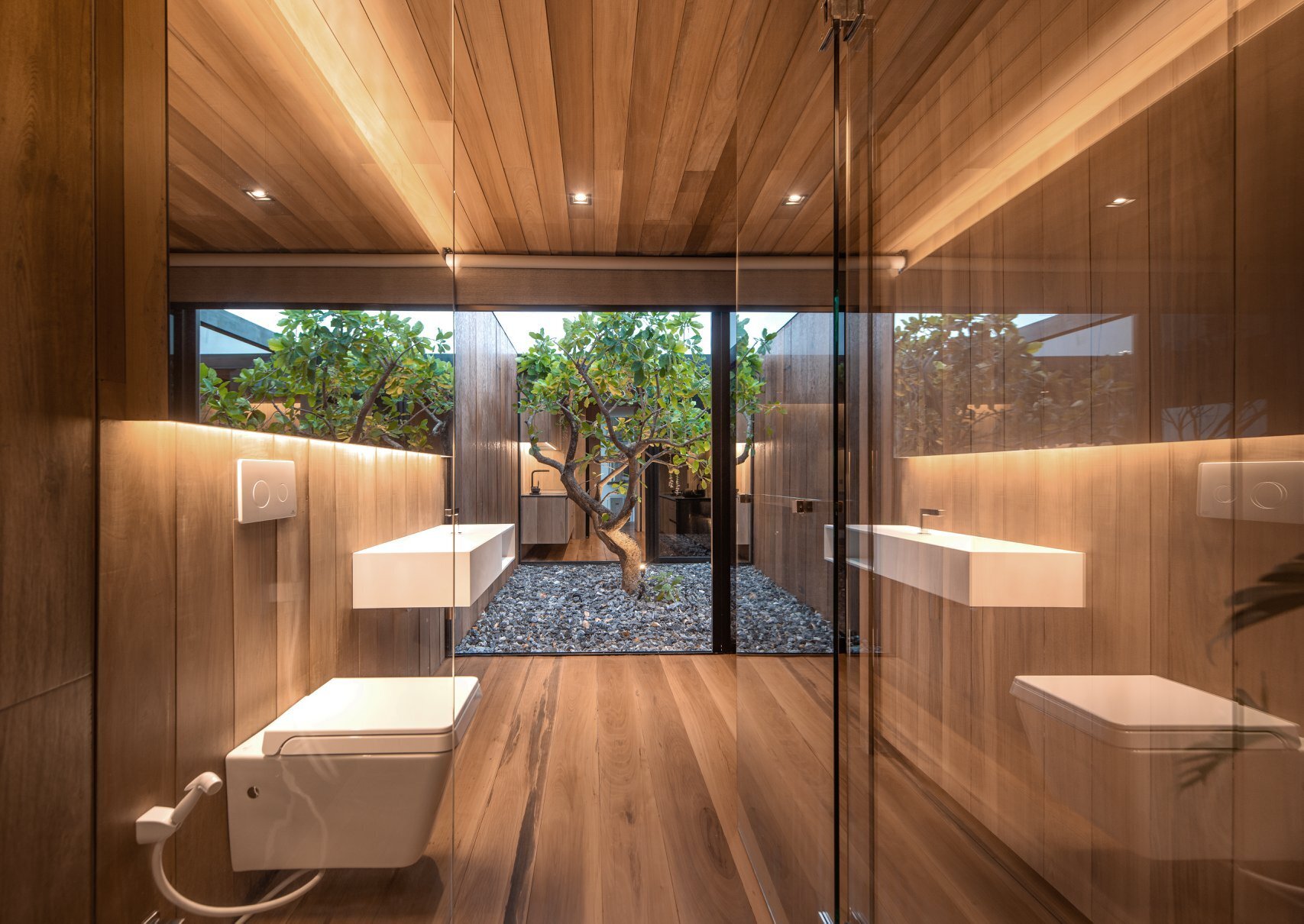
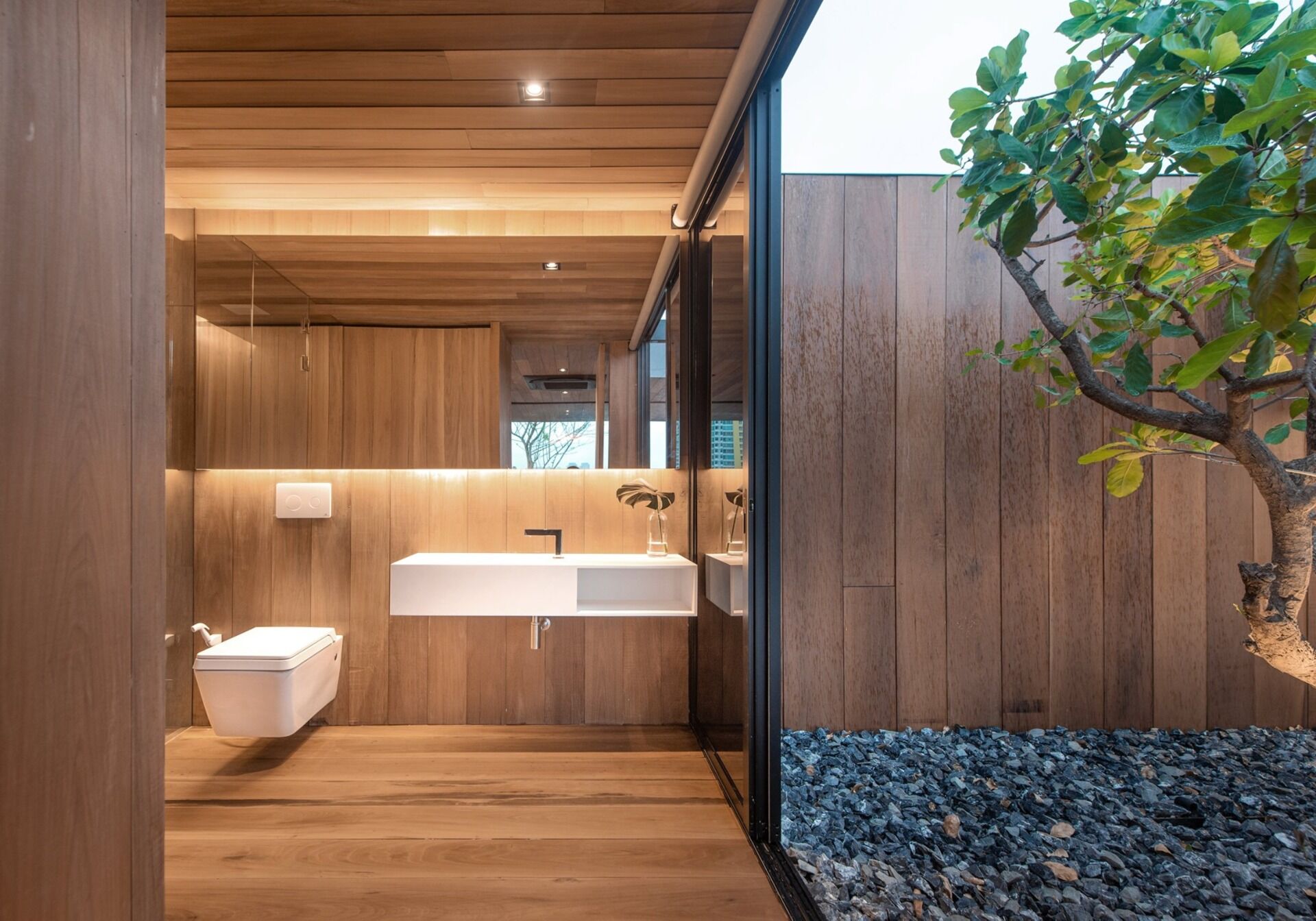
The kitchen sits just off the dining area, fitted with floating wood cabinets that reinforce the sense of lightness throughout the home. From here, there is direct access to a small internal courtyard. This courtyard, complete with a tree, acts as the heart of the house and is visible from nearly every room, blurring the line between indoors and outdoors.
Sleeping spaces are tucked discreetly into the layout. One bedroom sits behind the television wall in the living room and is accessed through a pocket door. Inside, concealed lighting casts a soft, even glow across the wood surfaces, creating a relaxed and intimate atmosphere suited to rest.
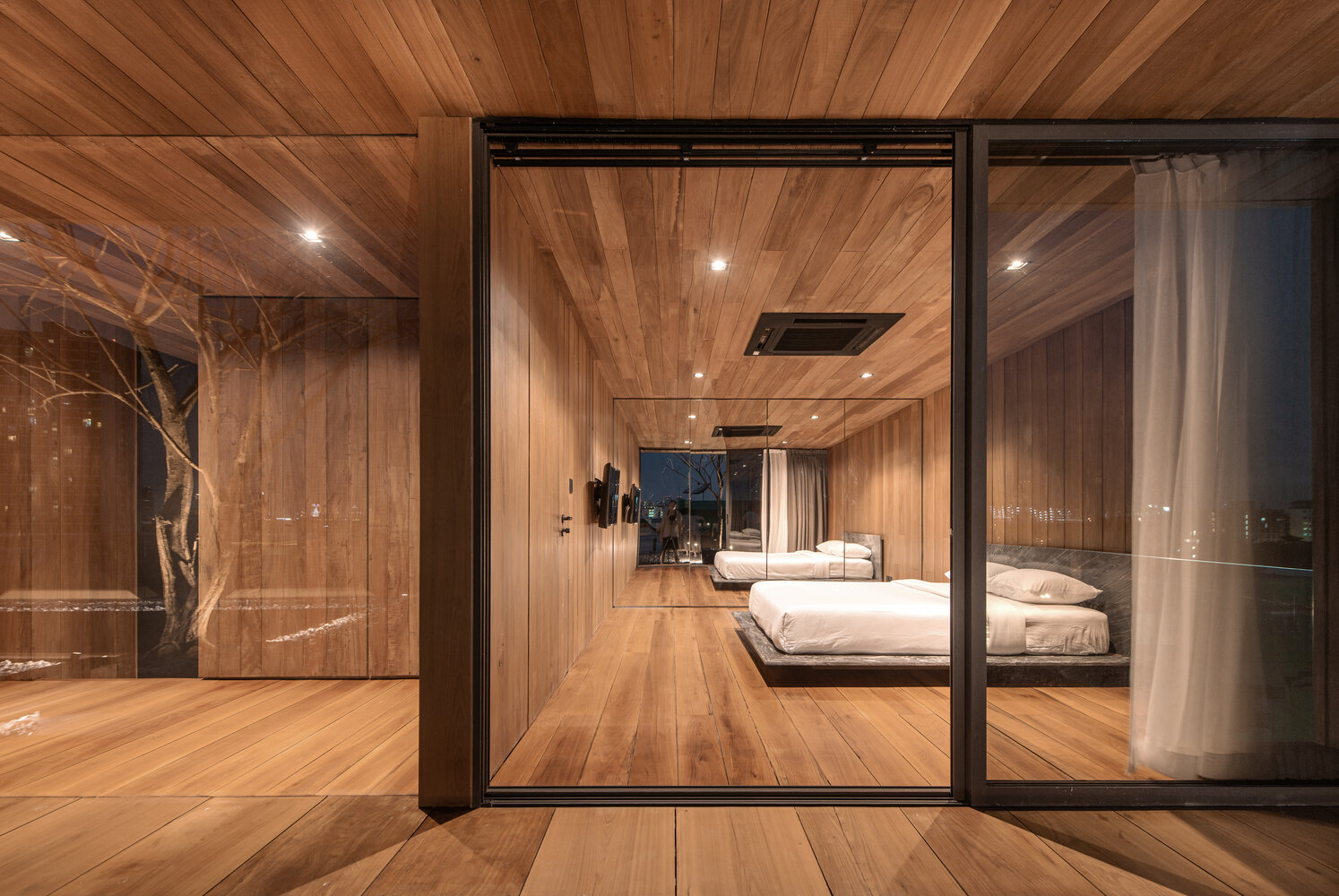
Another bedroom opens directly onto the outdoor space through a sliding glass door. Outside, the hard concrete rooftop has been softened with a layer of pebbles, turning what was once a purely functional surface into an extension of the living environment.
The bathrooms introduce a subtle contrast. White accents break up the warmth of the wood, while a backlit mirror and a floor to ceiling window ensure the space remains bright and airy without losing its sense of privacy.
In a city defined by density and height, this rooftop home proves that privacy, simplicity, and warmth can still exist above it all.