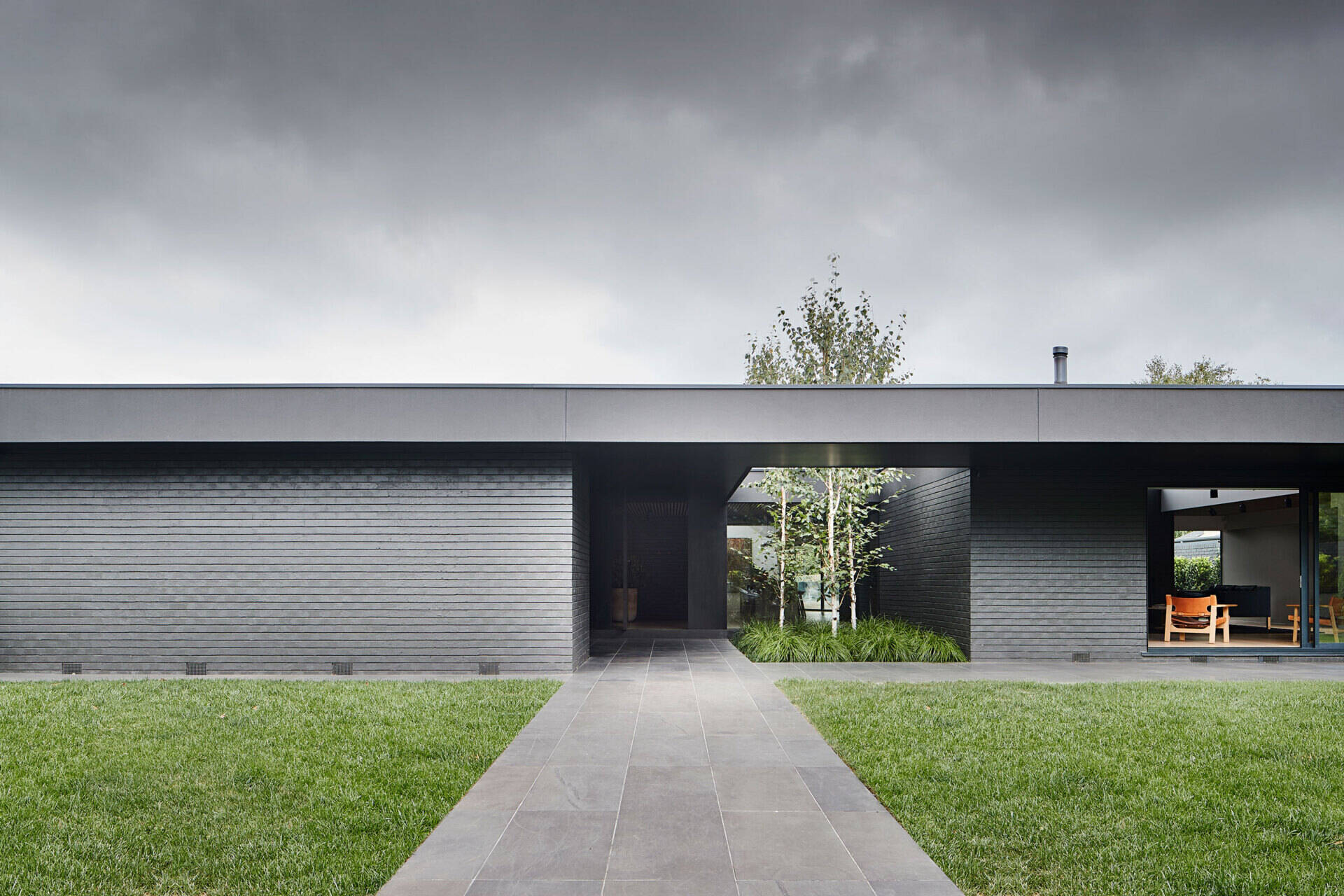
Architecture and design firm studiofour completed the renovation of the Central Park Road Residence I, a modern Australian home that quietly balances restraint, warmth, and a strong sense of identity. Working entirely within an existing envelope, the project transforms a previously overlooked house into a place that feels deeply personal, considered, and calm.
From the outset, the brief was clear. The clients wanted an authentic home with a strong sense of self, one that reflected their Danish heritage and embraced Hygge, the uniquely Danish idea centered on comfort, contentment, and connection. Rather than chasing trends or surface-level finishes, the renovation focuses on atmosphere and feeling, creating spaces that encourage family life while maintaining stillness and privacy.
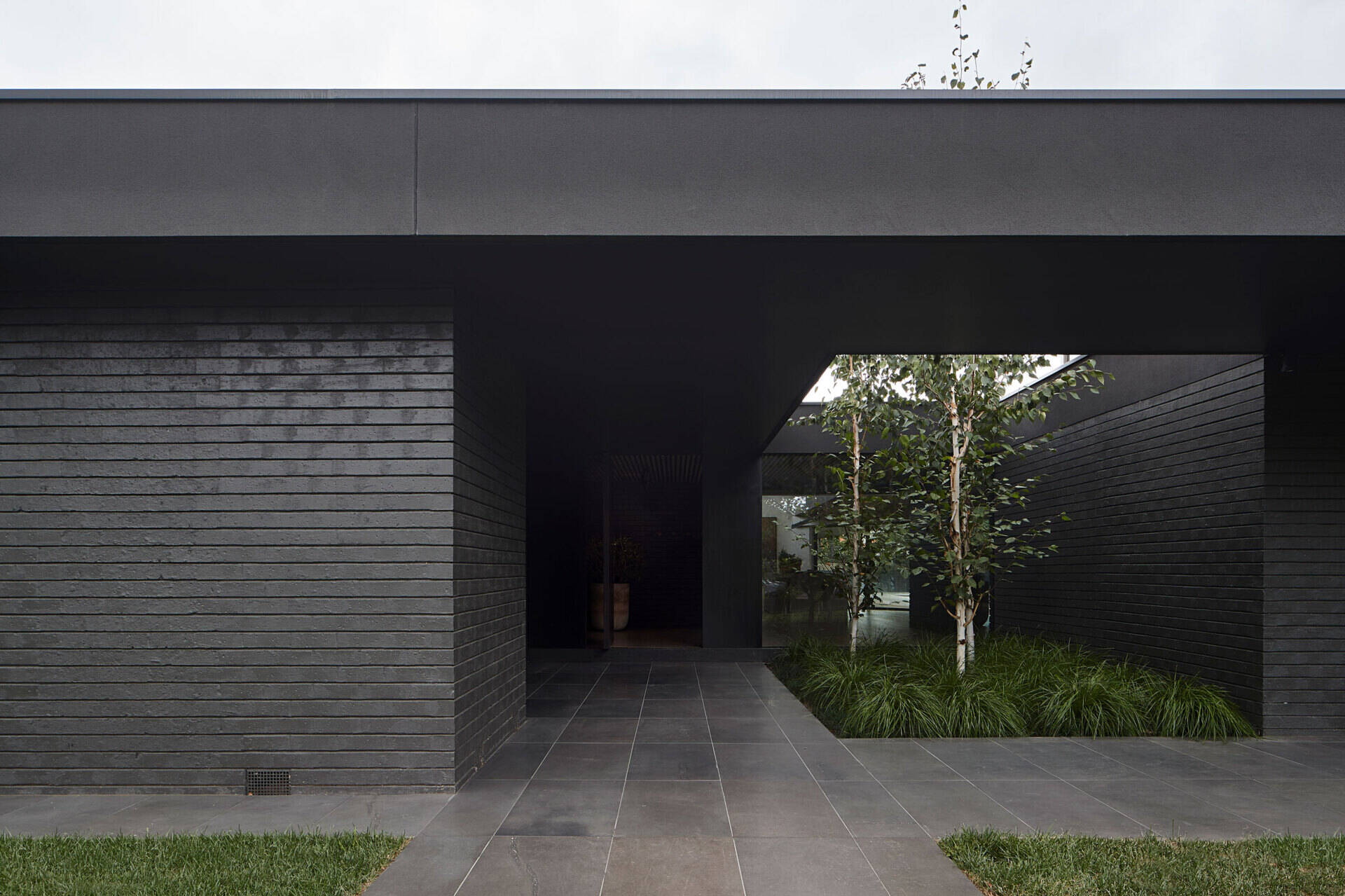
On arrival, the home presents a modest yet deliberate presence. An oversized eave now defines the entry, stretching horizontally across the facade to reinforce the original form of the house. Carefully punctured, it allows soft landscaping to sit close to the entrance while drawing natural light deep into the interior. The result is a welcoming threshold that feels both protective and open, offering privacy without shutting the house off from its surroundings.
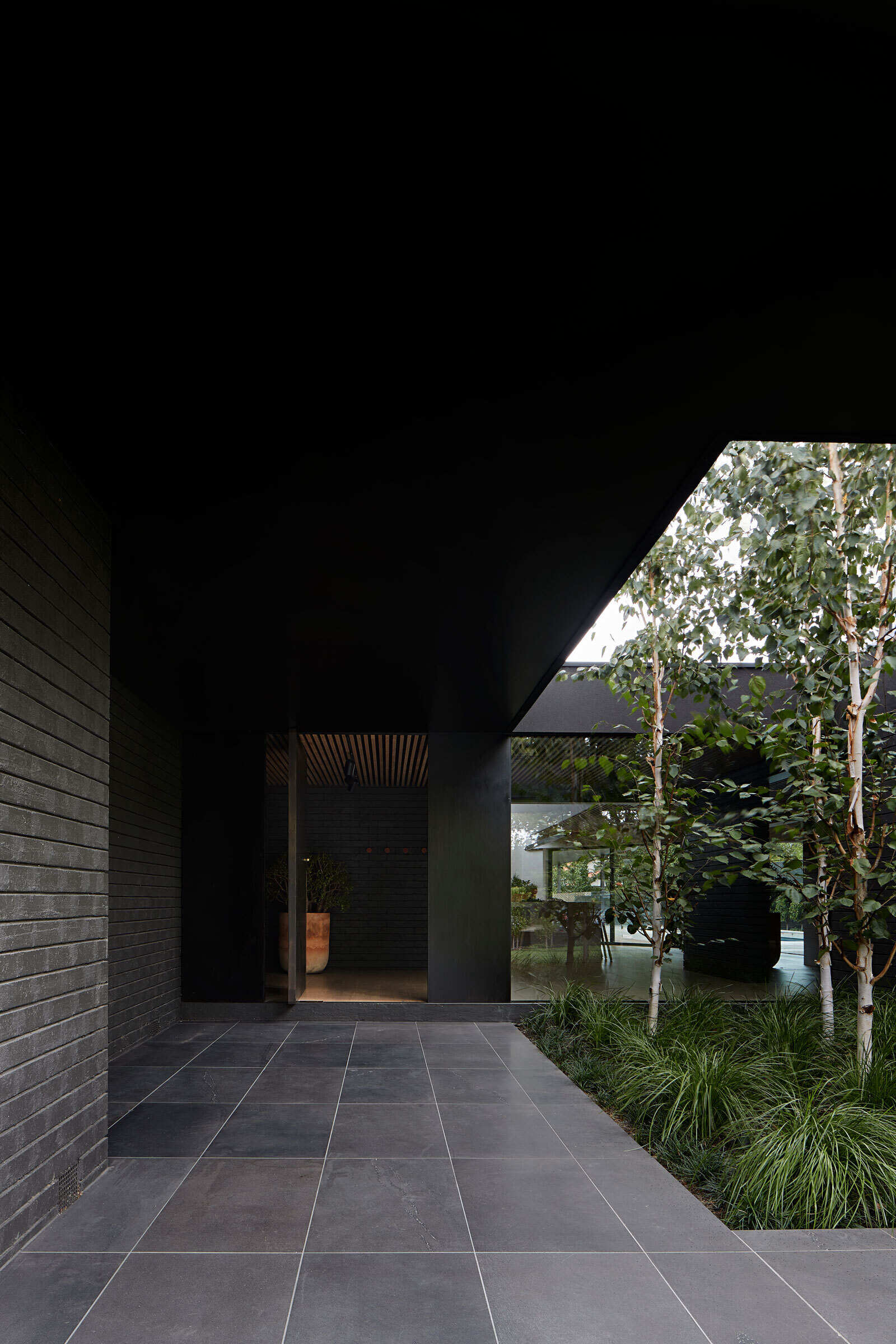
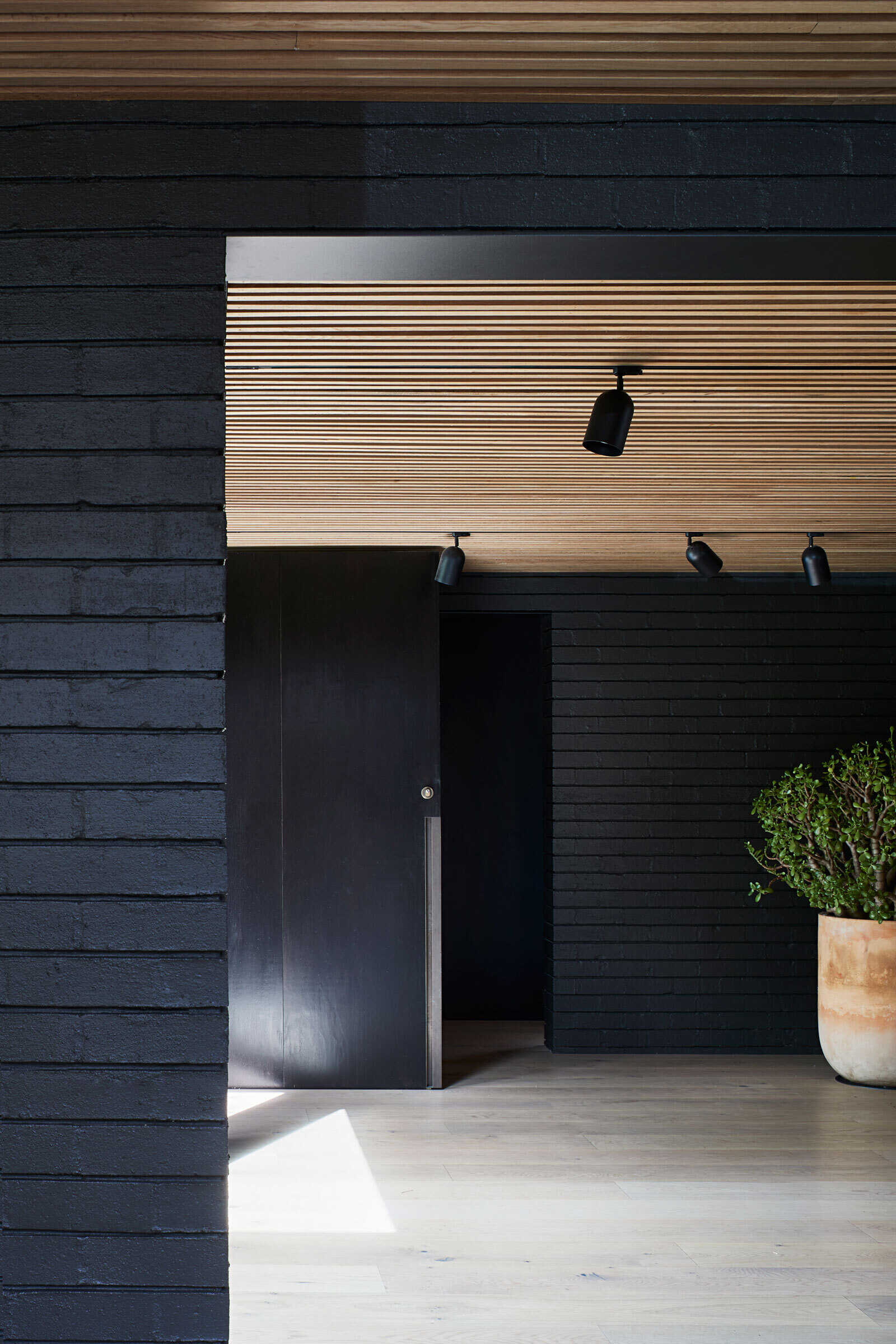
The exterior language continues inside, where materials are carried through to create a cohesive and grounded interior. Brickwork remains unadorned and honest, with horizontal joints emphasized to strengthen the sense of continuity. Rather than masking imperfections, the interiors celebrate them. There are no embellishments or decorative distractions, only a focus on material integrity and spatial clarity.
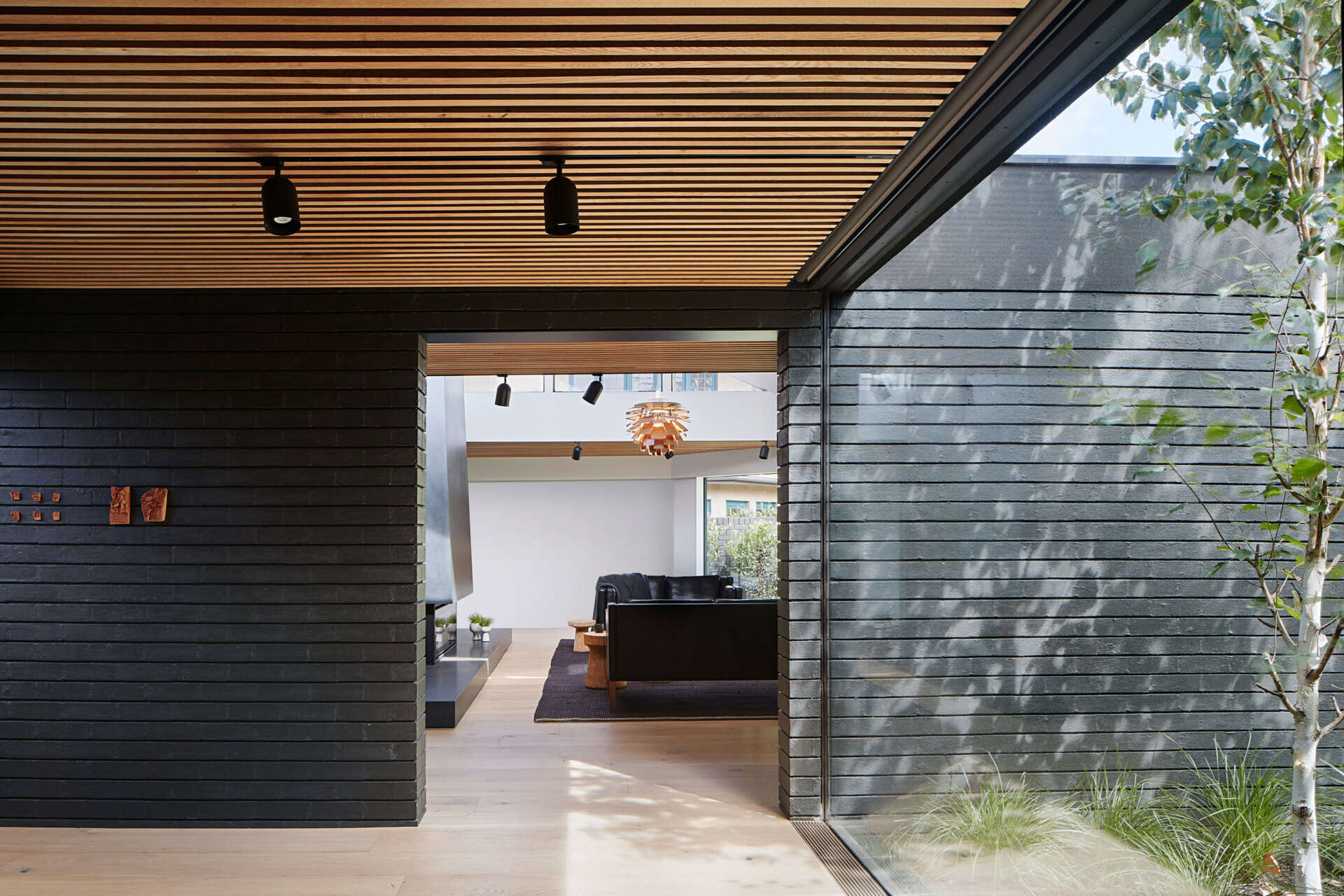
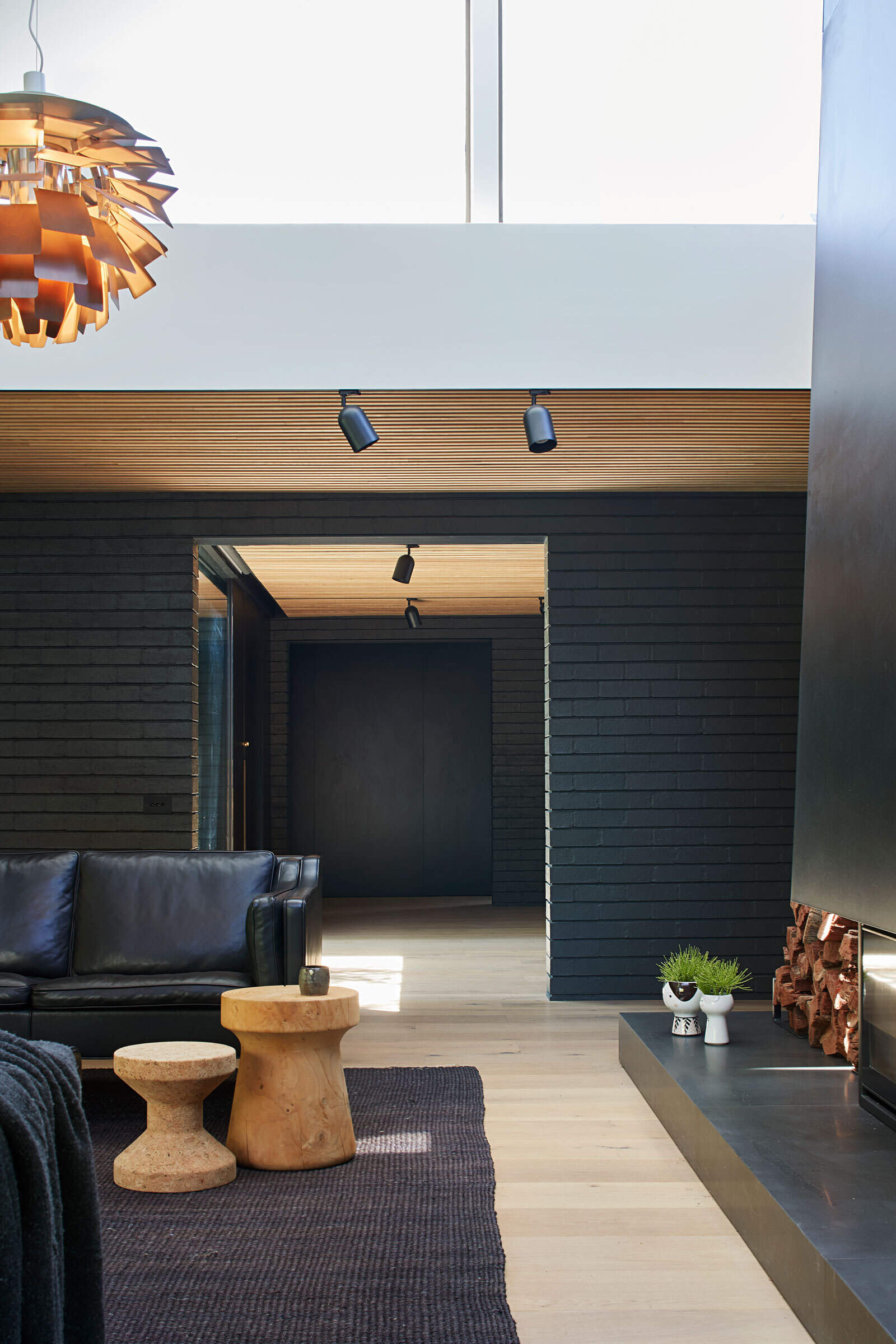
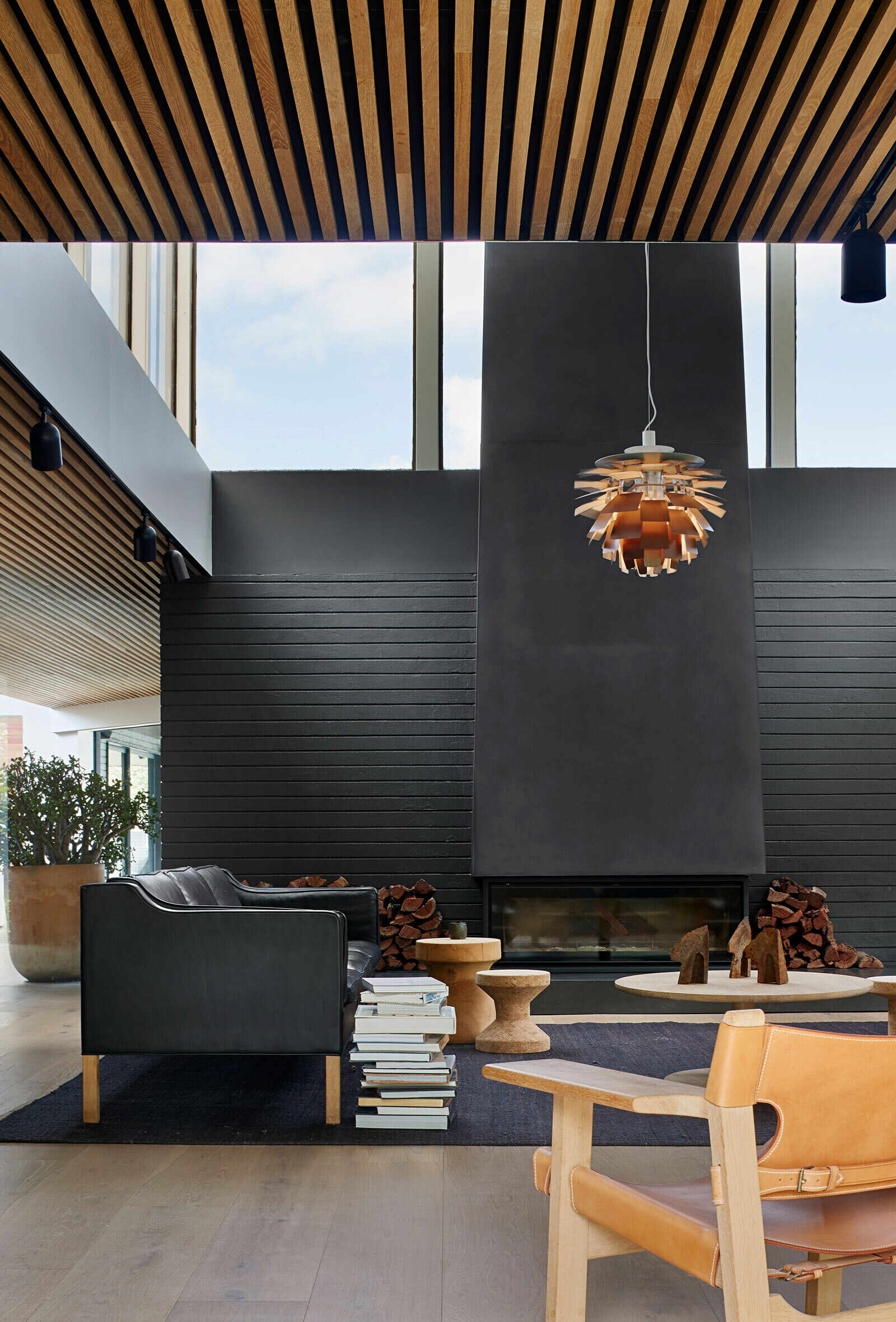
In the living room, this approach comes into sharp focus. A large black steel fireplace becomes the visual anchor of the space, commanding attention without overwhelming it. A single pendant light hovers above, grounding the rug and furniture arrangement and reinforcing the idea that each element has a clear purpose. The room feels open yet contained, encouraging conversation without noise or clutter.
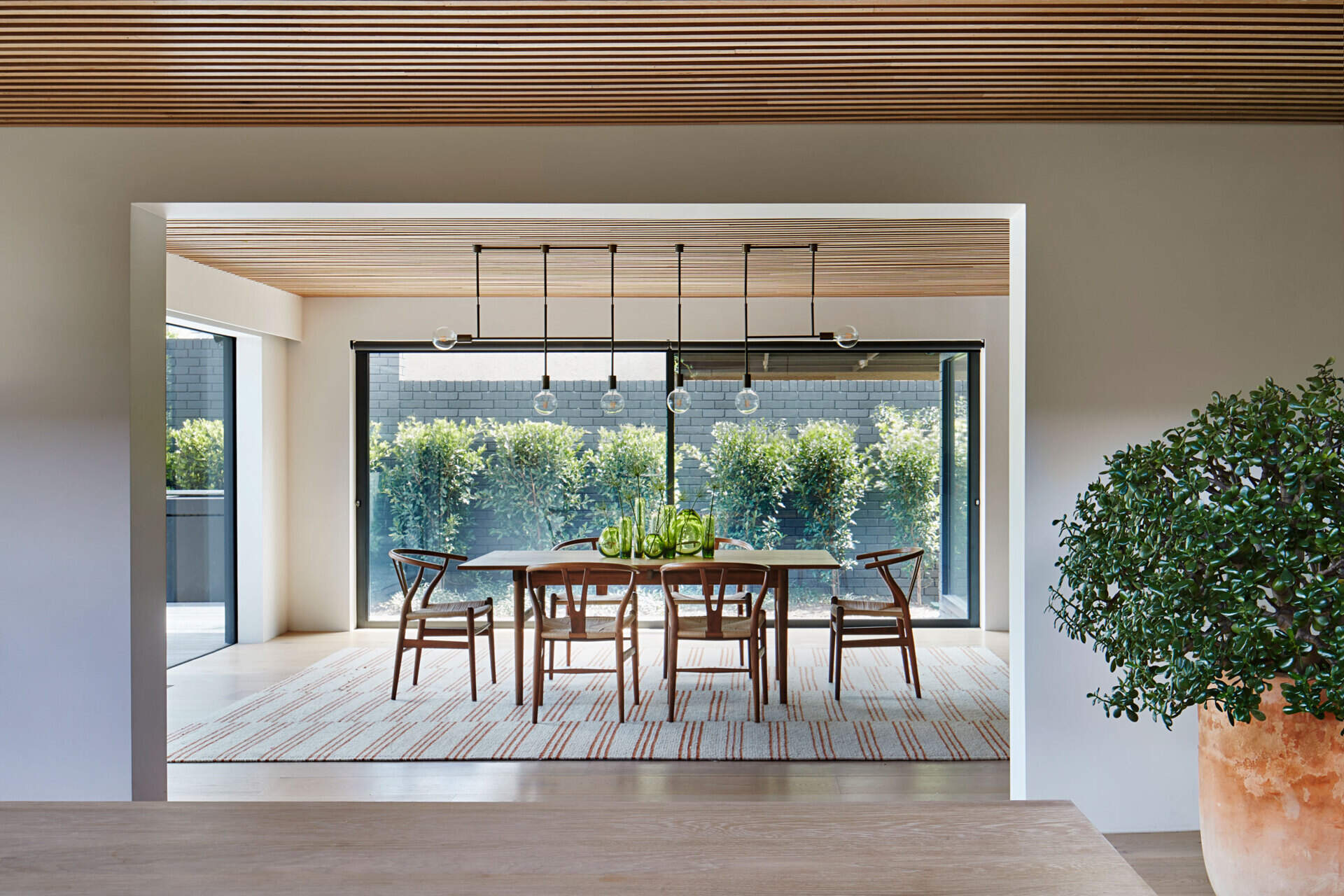
Moving into the dining area, plate glass walls introduce generous light and views of the garden beyond. These transparent planes intersect with solid brick walls, allowing spaces to be visually connected while remaining acoustically separate. Above the dining table, a series of minimalist lights hangs quietly, adding rhythm without spectacle. It is a space designed for gathering, but also for lingering.
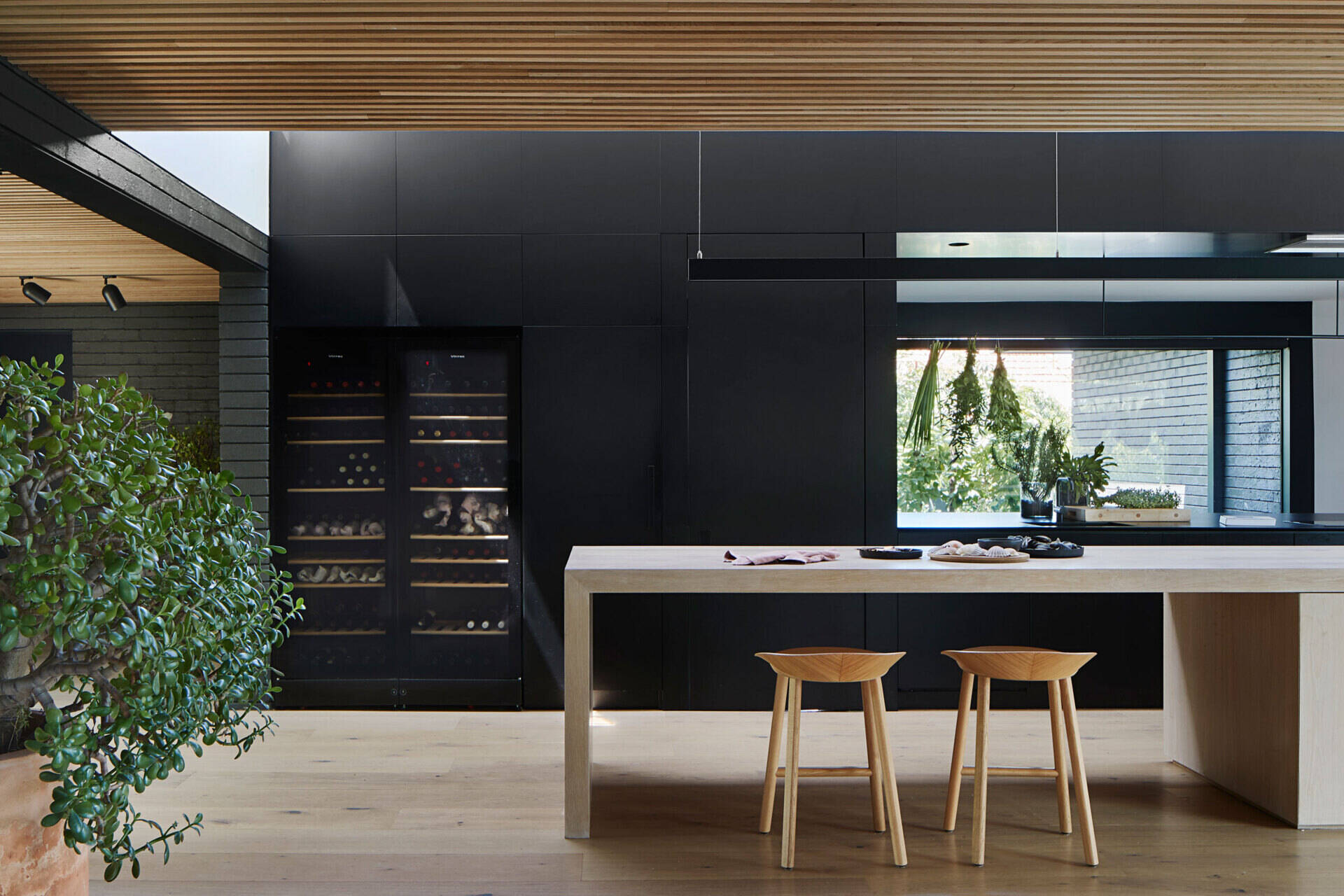
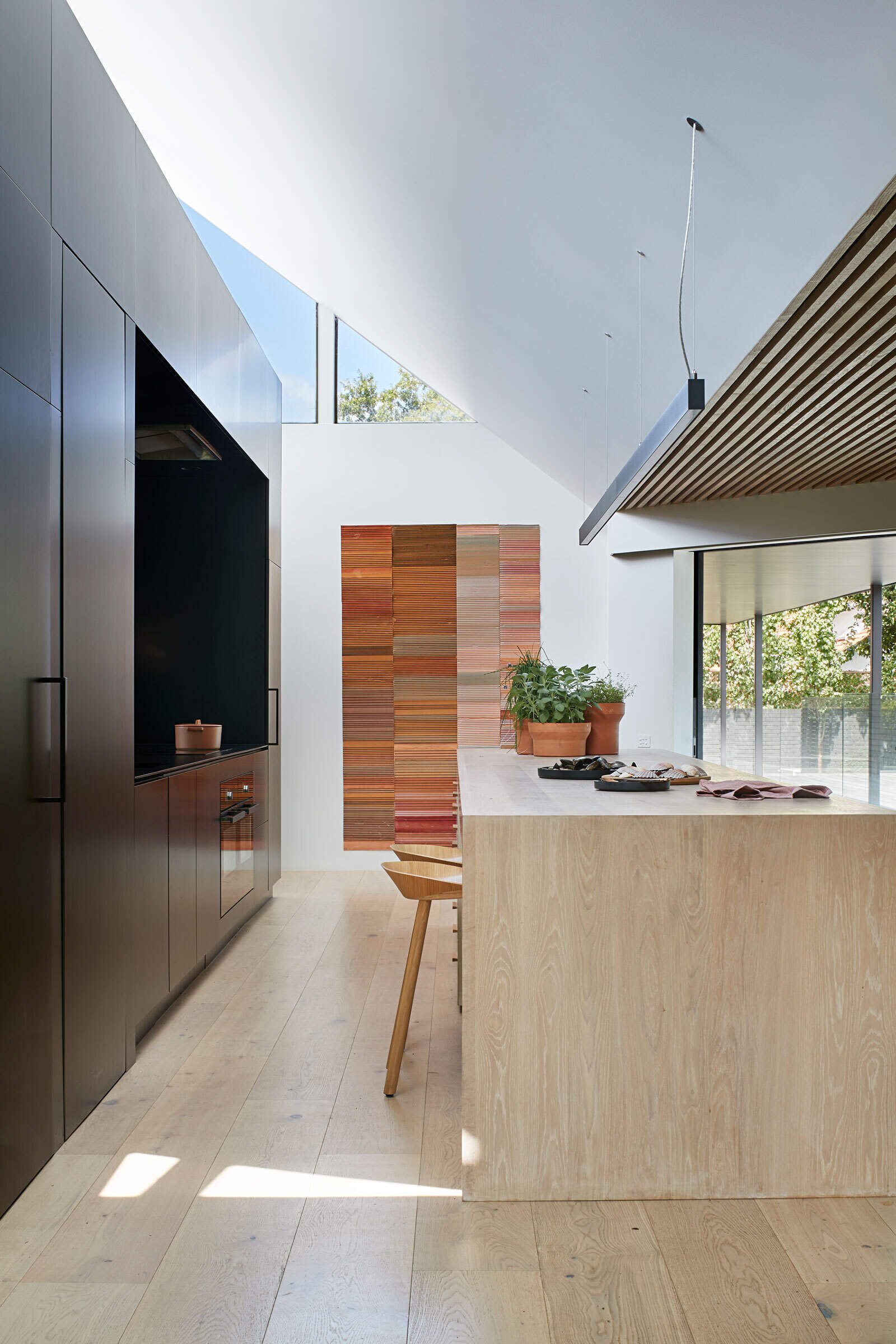
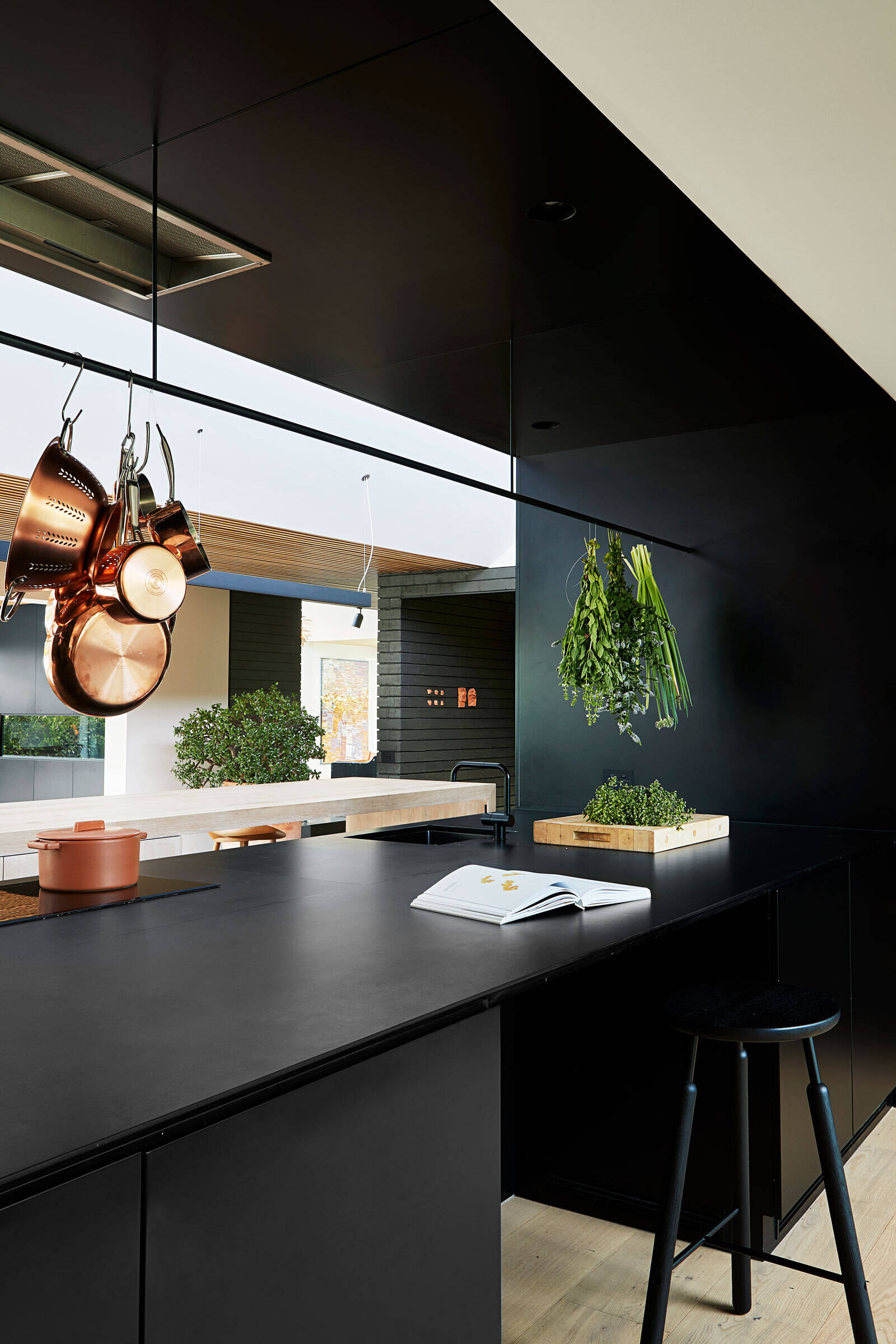
The kitchen continues the home’s restrained palette. Black detailing carries through in the form of minimalist cabinetry that lines the wall, creating a calm and ordered backdrop. A large island sits at the center, offering generous counter space and an informal place to sit, work, or talk.
A void within the cabinetry connects the kitchen to the pantry behind, allowing movement and communication without visual clutter. This layering of spaces supports daily family life while maintaining a sense of calm control.
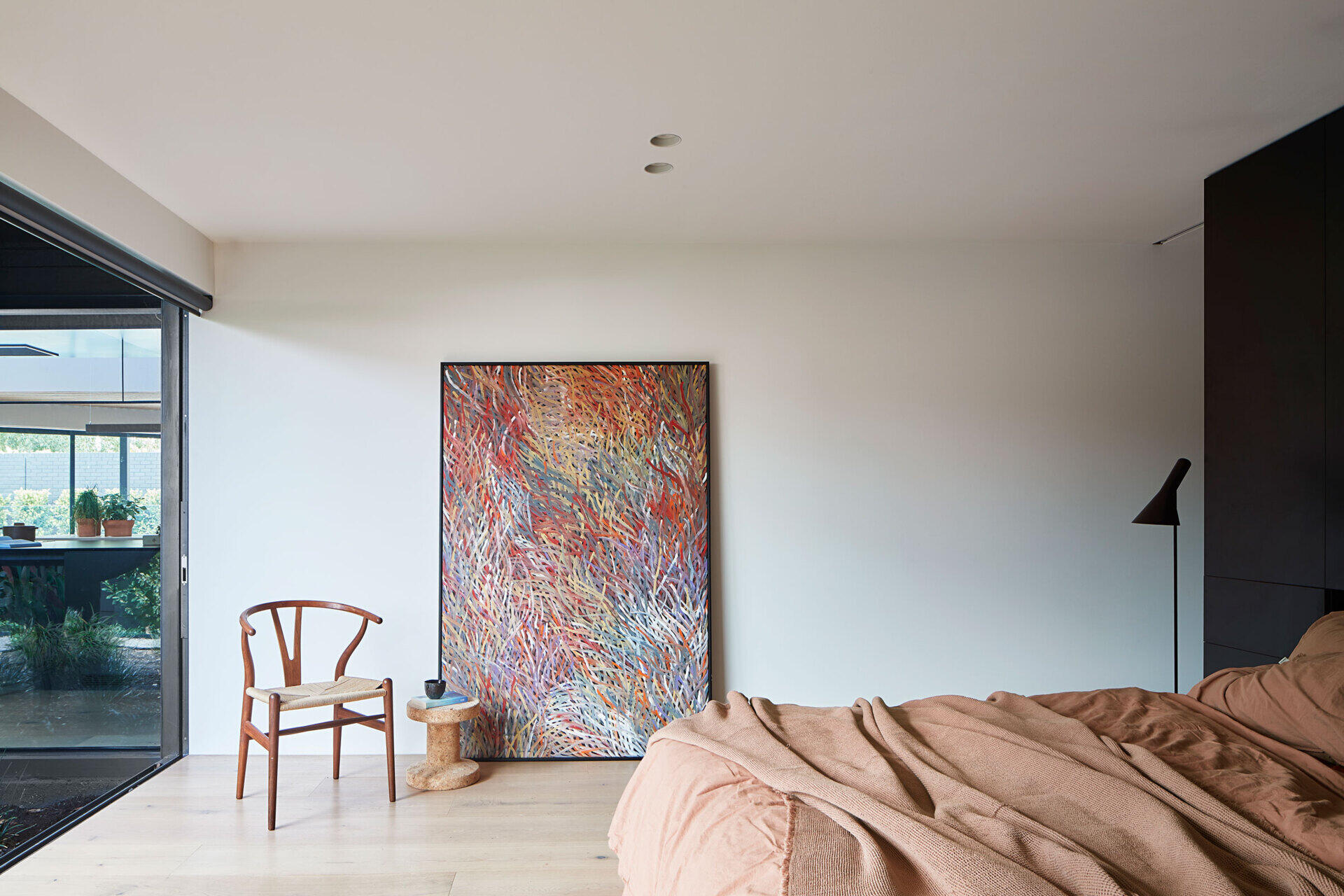
In the primary bedroom, the mood shifts to something more intimate. A black accent wall forms a bold yet grounding backdrop for the bed, drawing the eye forward toward a small garden outside. The connection to greenery brings softness into the room, reinforcing the feeling of comfort and retreat without excess.
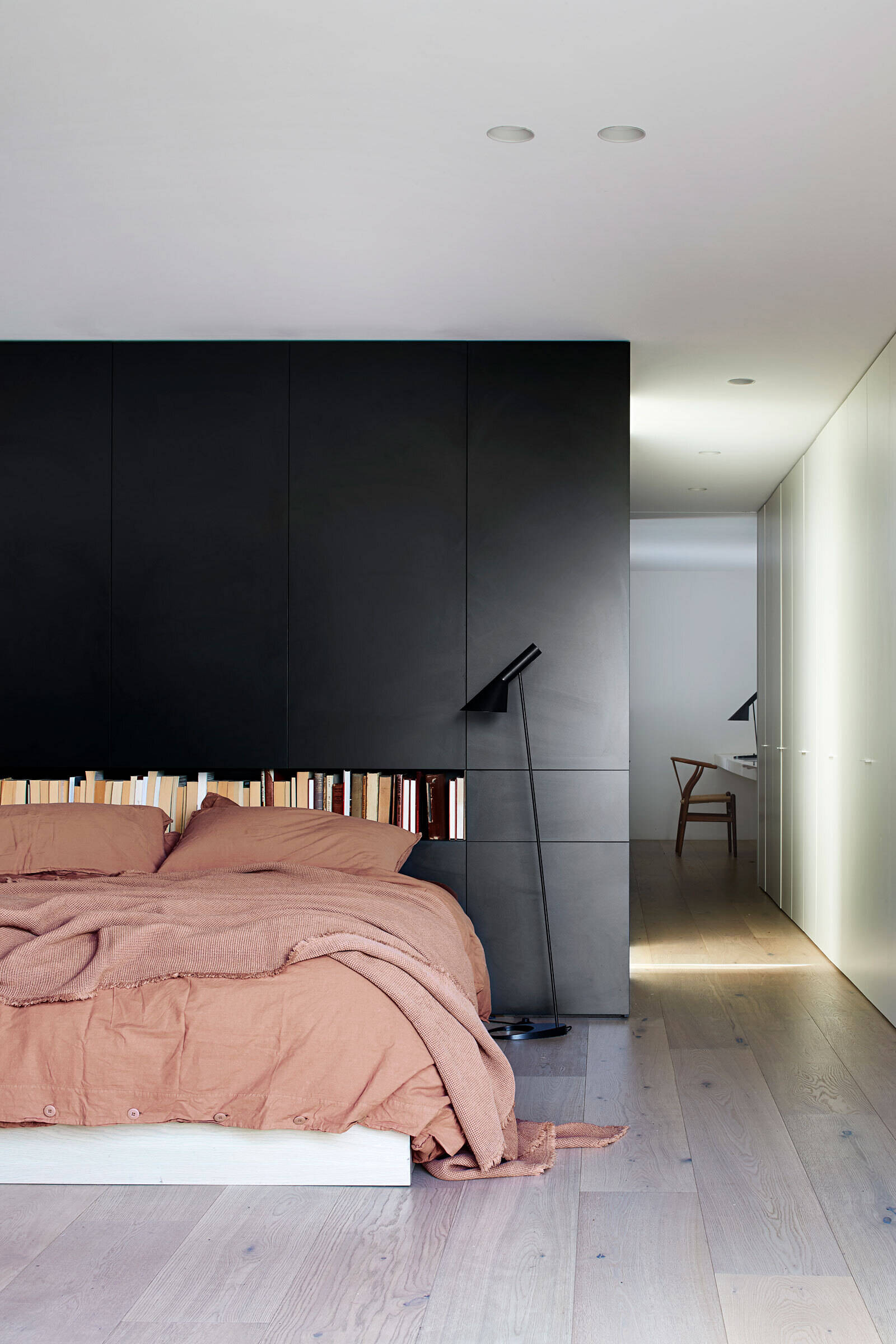
Tucked behind the bedroom’s accent wall is the ensuite bathroom, where the same design language continues. A narrow wood front vanity runs the length of the wall, introducing warmth and texture while remaining understated. The space feels deliberate and calm, designed for daily rituals rather than display.
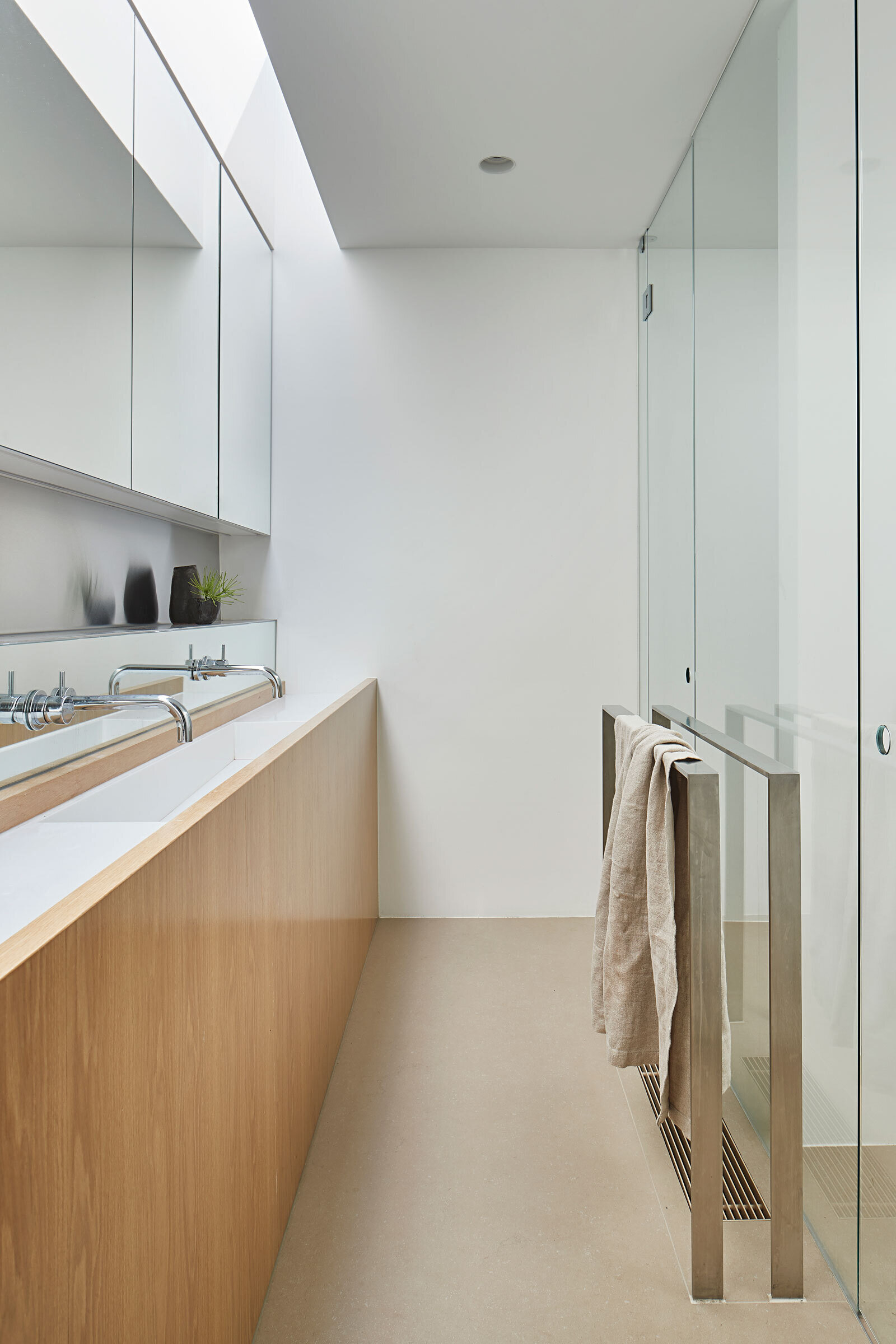
Throughout the home, the renovation balances openness with separation. Spaces unfold gradually, layered to allow interaction without distraction. Solid walls and plate glass work together to frame views, filter light, and connect the interior to the surrounding garden. The result is a house that feels light filled and fresh, yet grounded by an inner stillness.