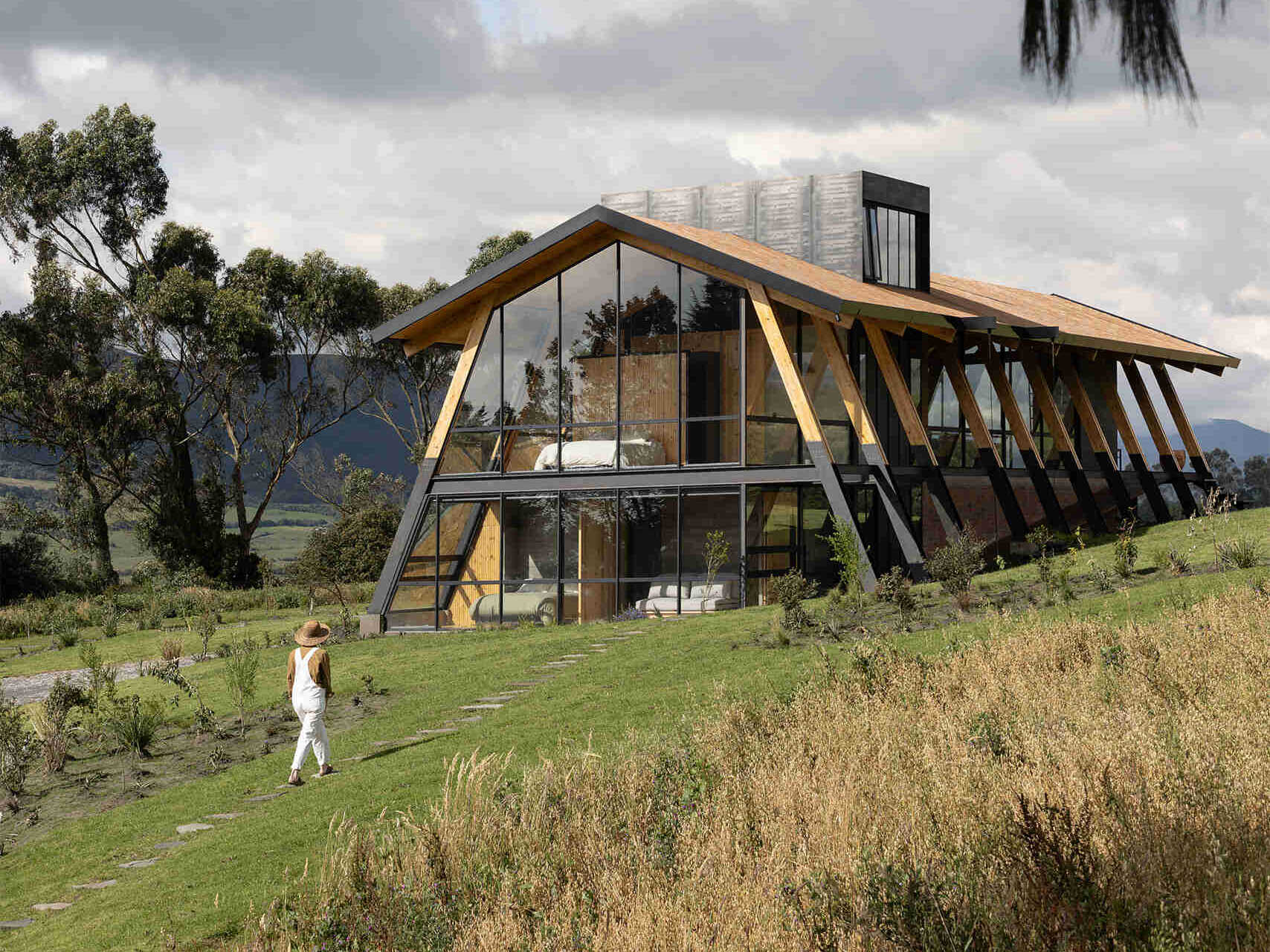
Set in Ecuador’s central highlands, La Miradora shows how architecture can work with extreme landscape instead of against it. Perched at the highest point of an elongated plot in Machachi, the house uses its slope, orientation, and structure to unlock uninterrupted views in every direction.
Designed by Taller General, the home responds directly to the páramo ecosystem, neighboring meadows, and nearby volcanoes. The result is a carefully organized two-level house that balances privacy for a couple with space for visiting family.
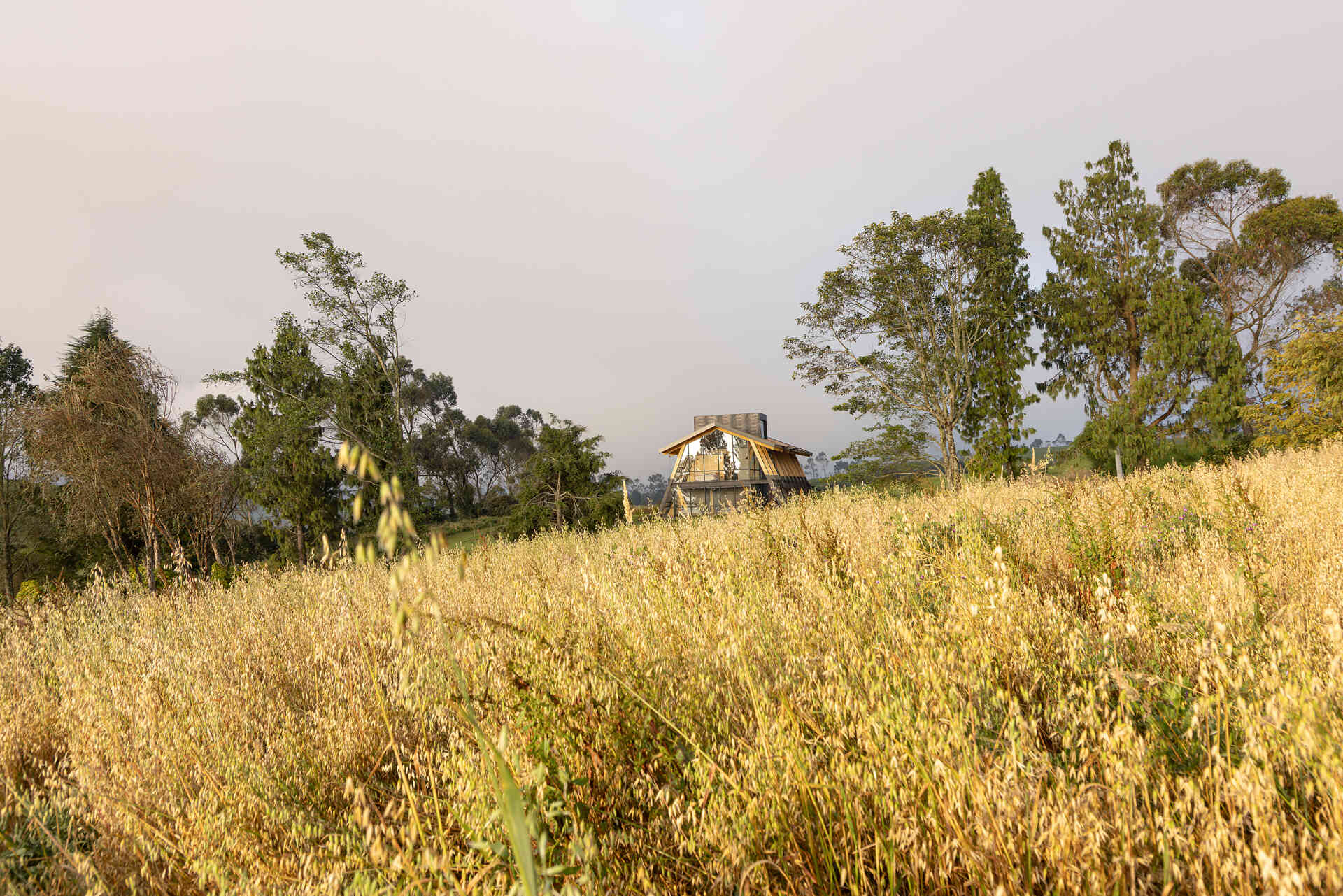
Shaped by Slope, Framed by Wooden Ribs
La Miradora sits at the highest point of its lot, opening toward a ravine on one end and a local road on the other. The slight natural slope is not corrected but embraced, shaping both the layout and the way the house meets the ground.
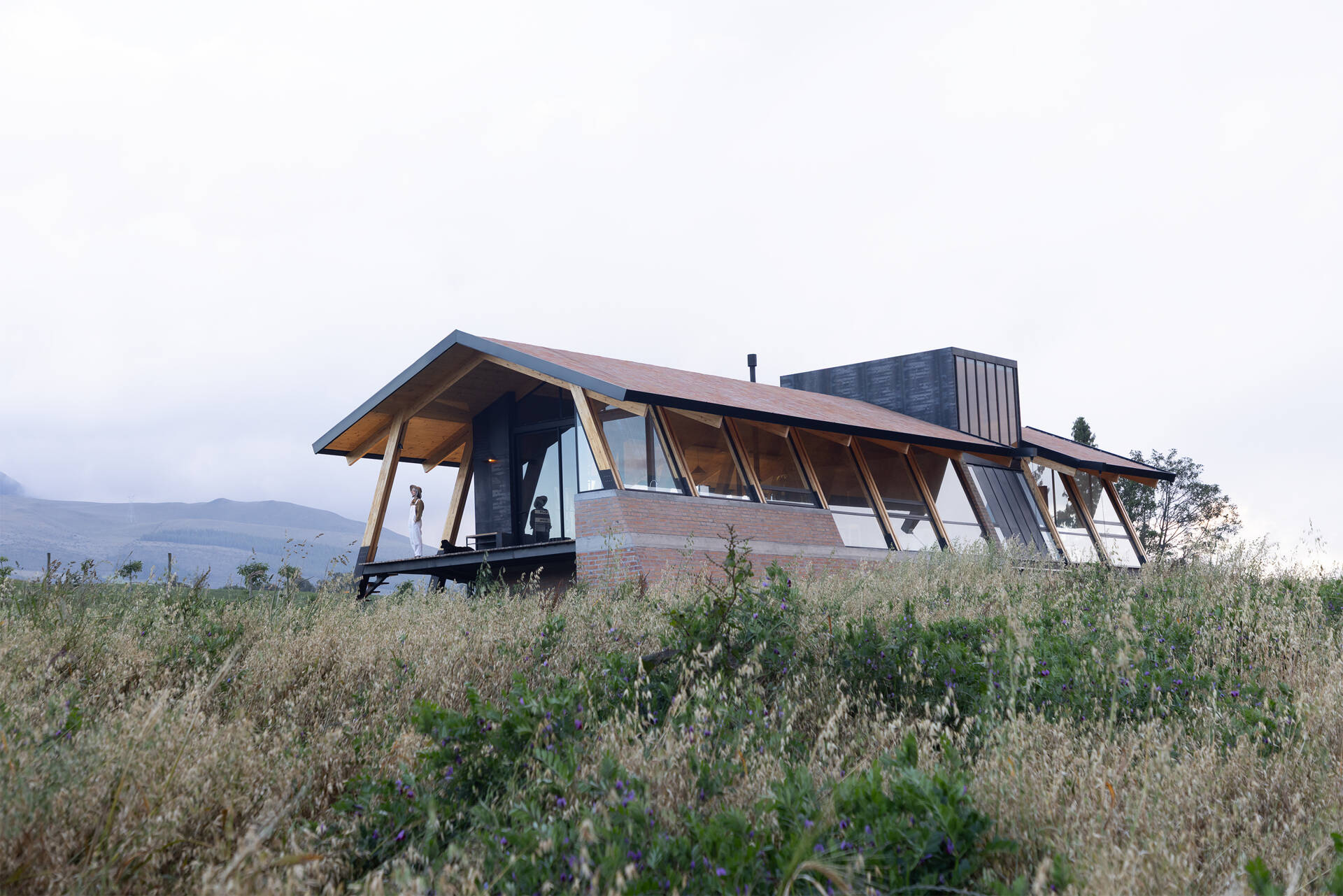
Most of the program is placed on the upper floor, where wide views stretch in all directions. A ramp provides direct outdoor access, allowing movement around the house while staying connected to the landscape.
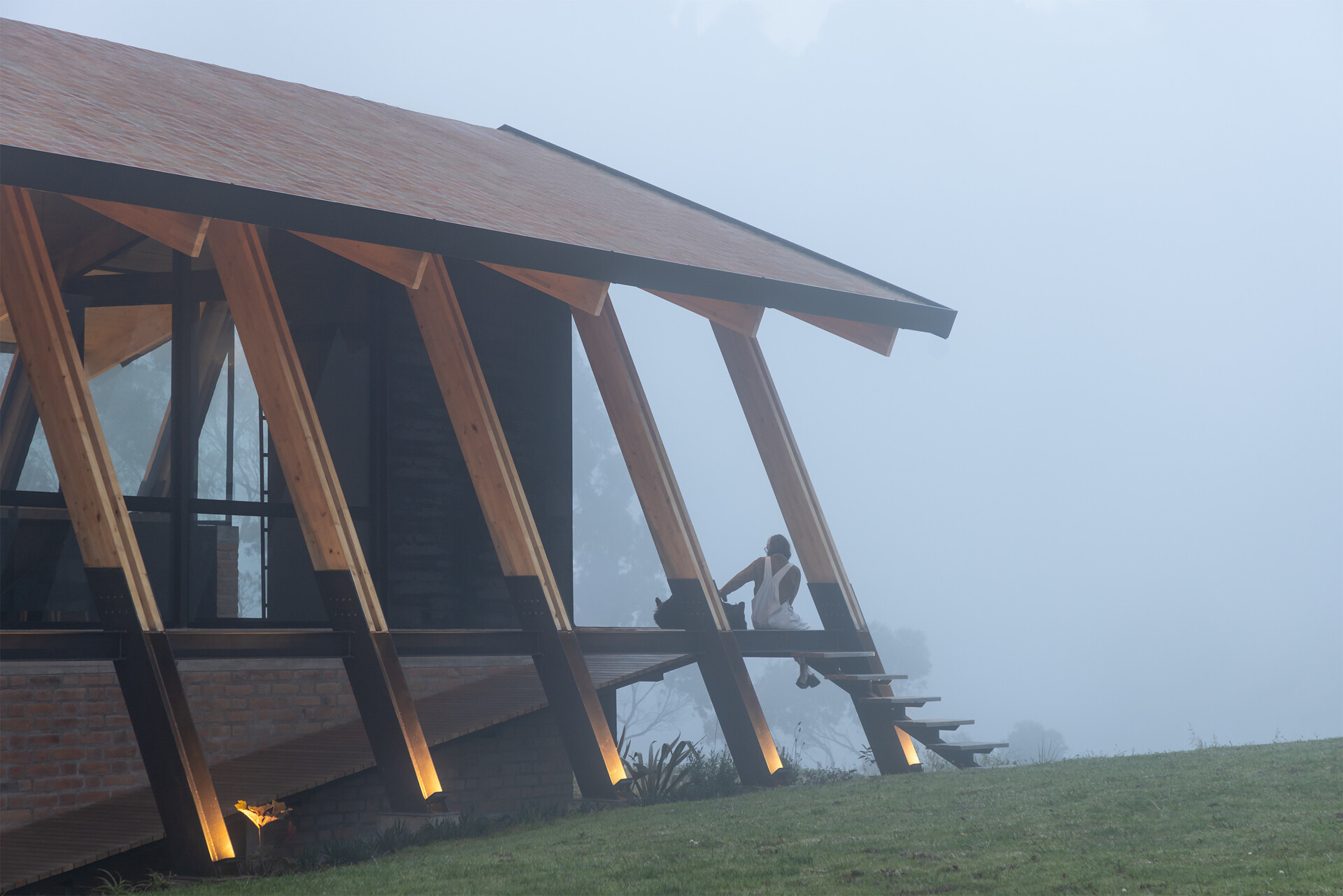
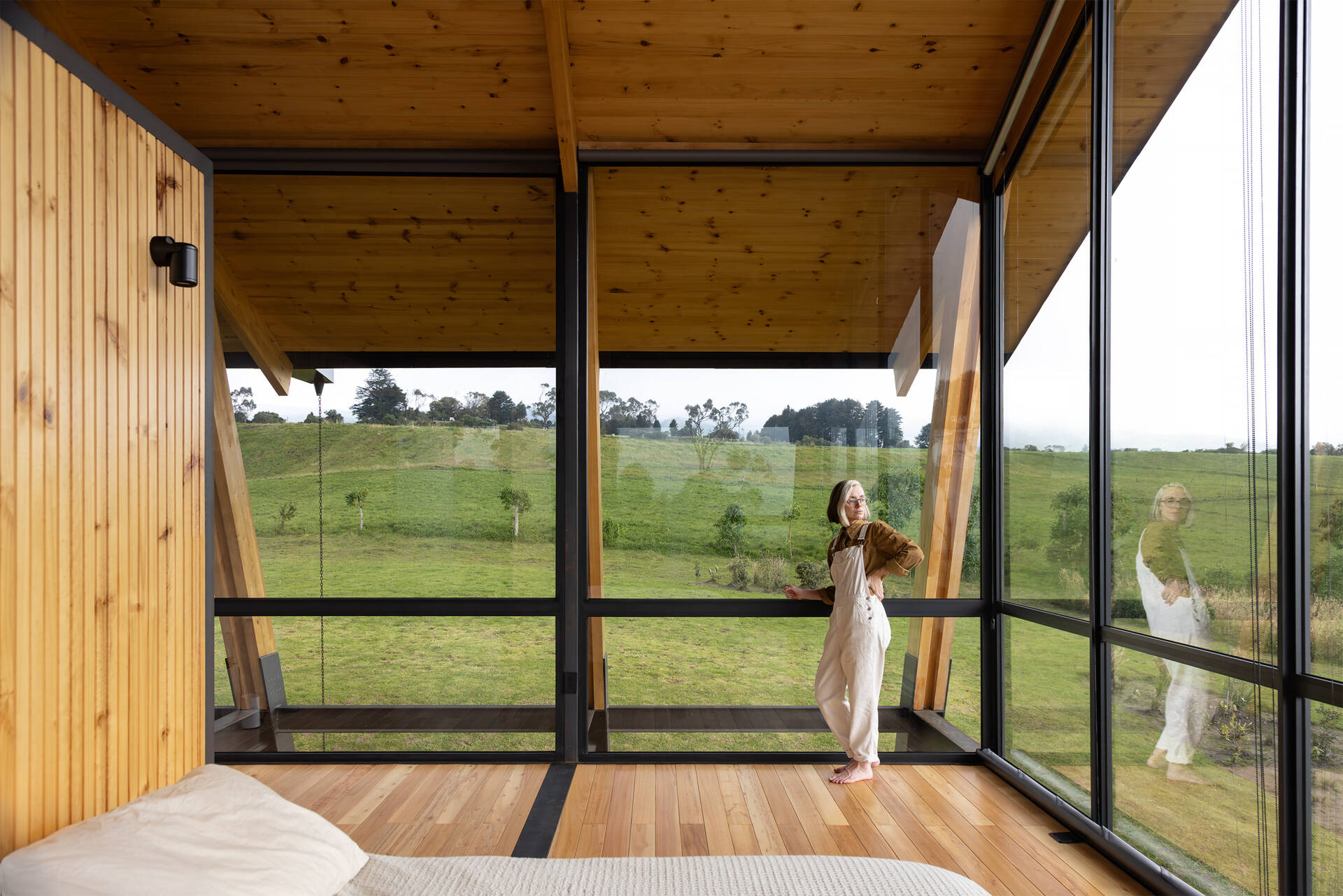
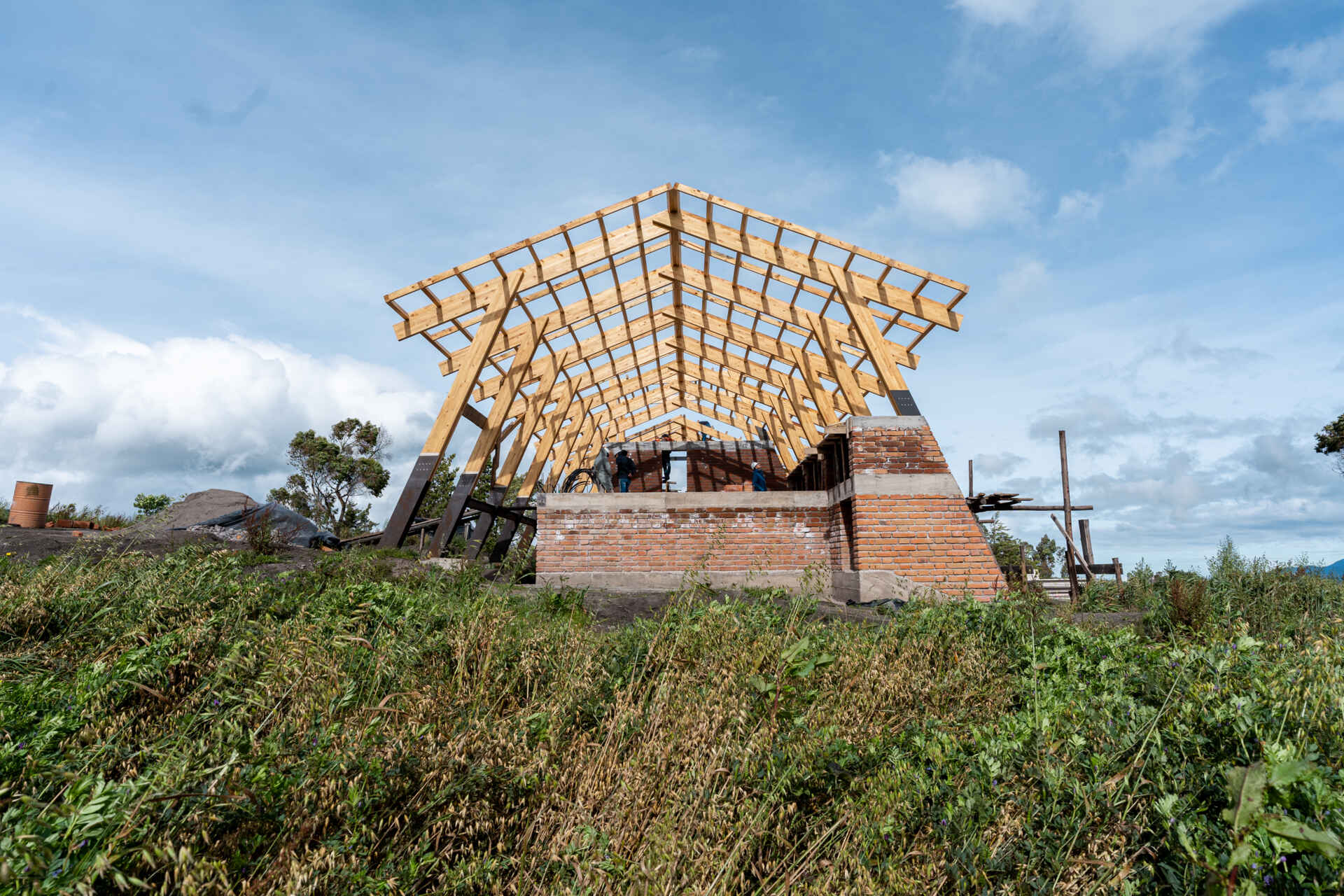
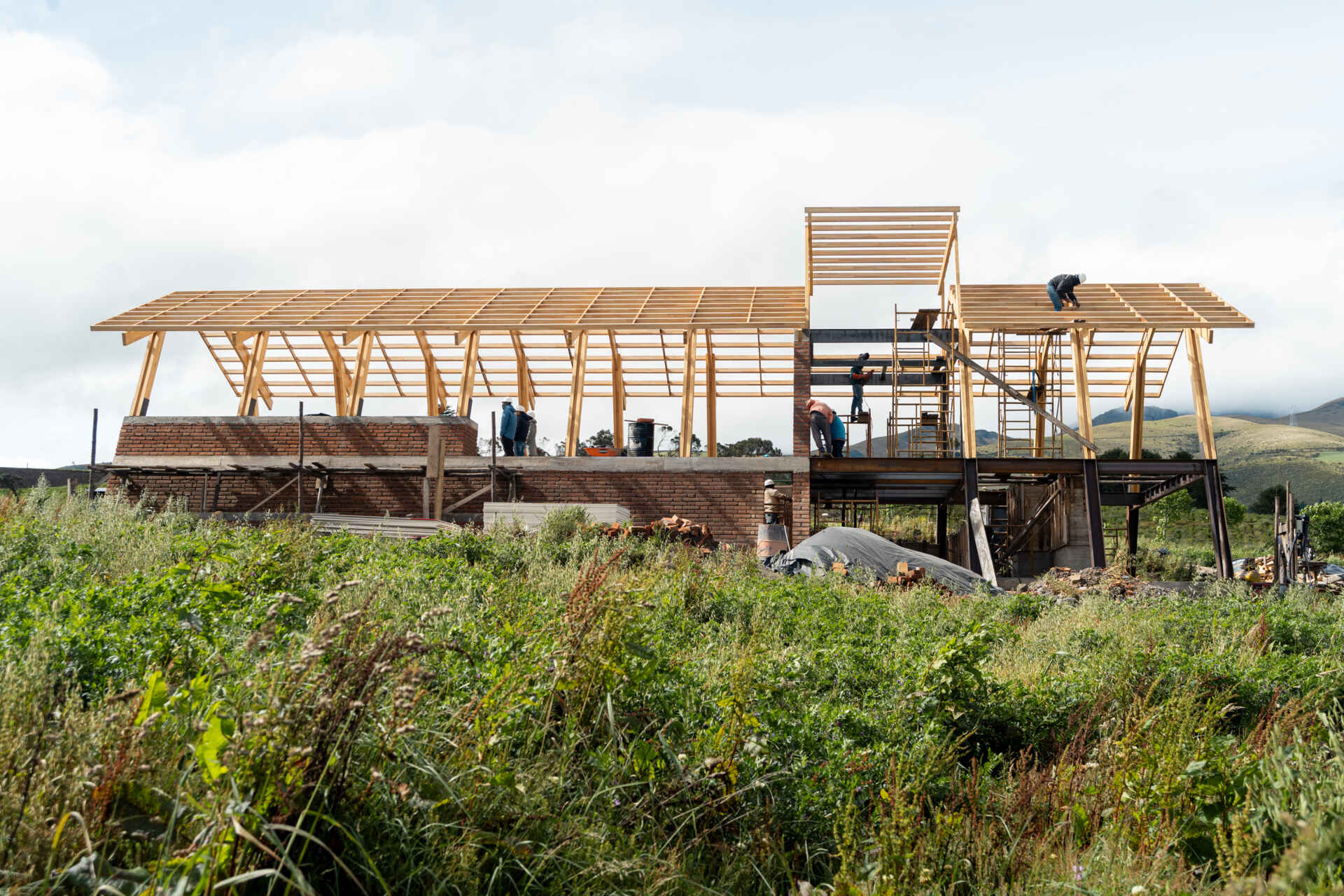
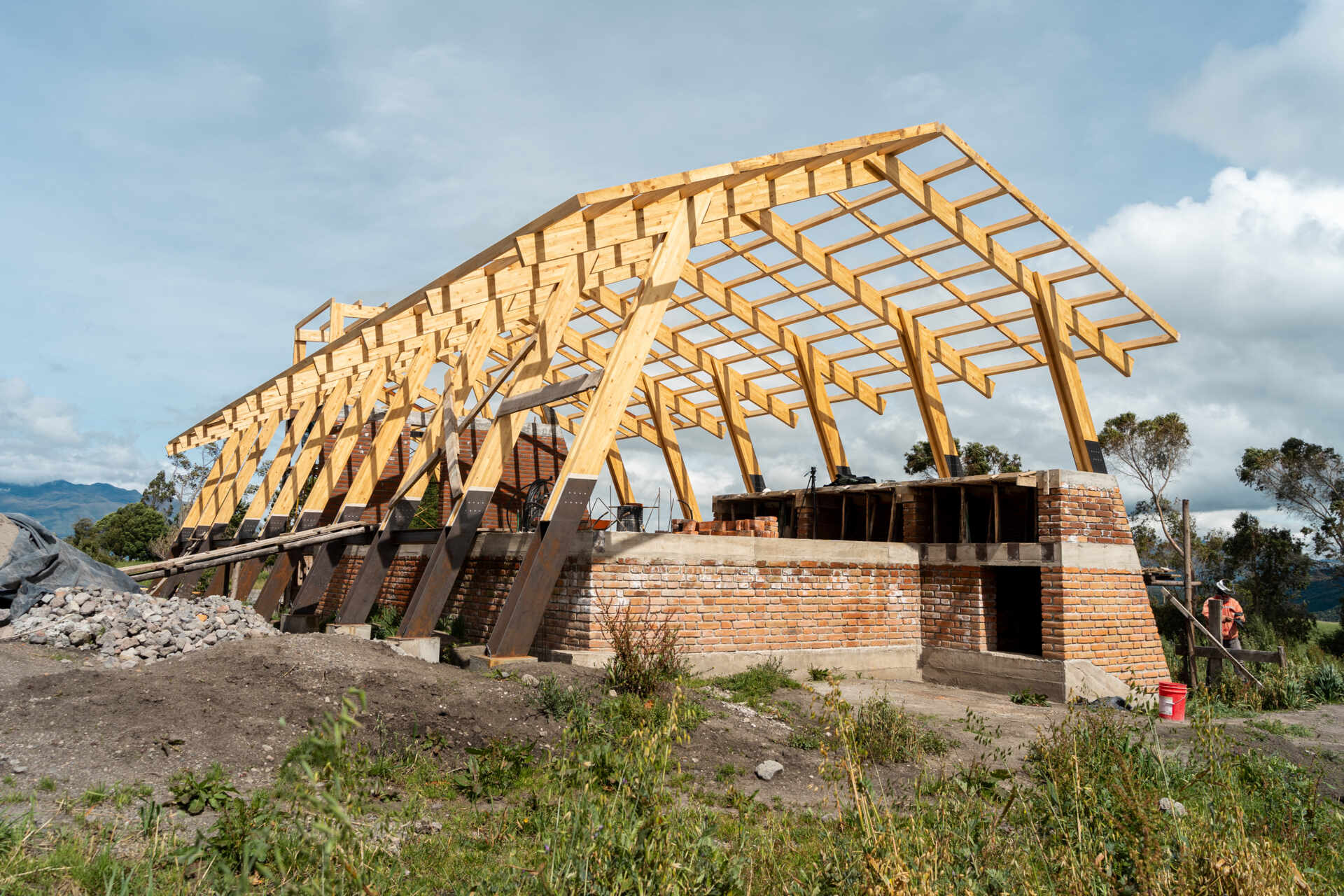
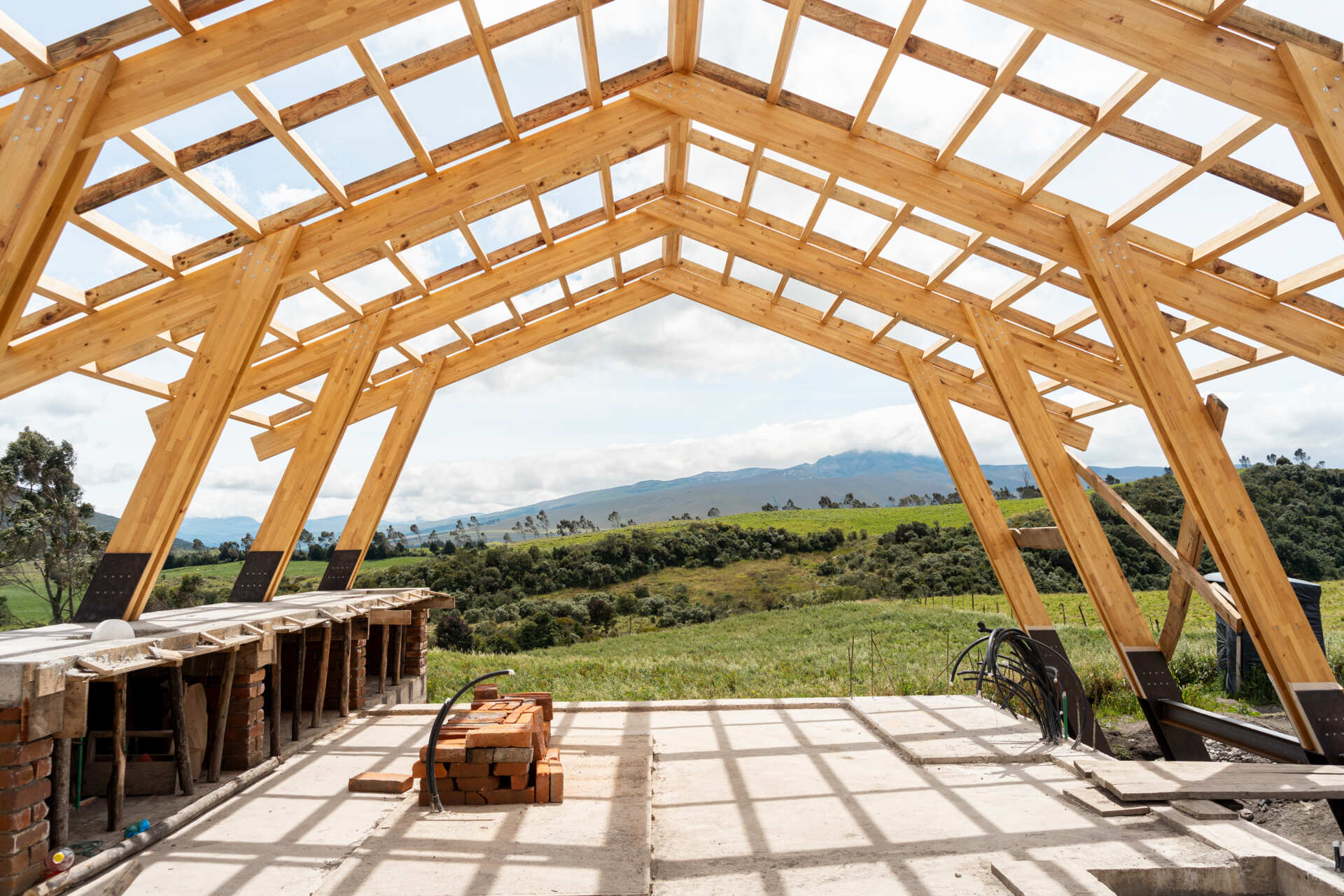
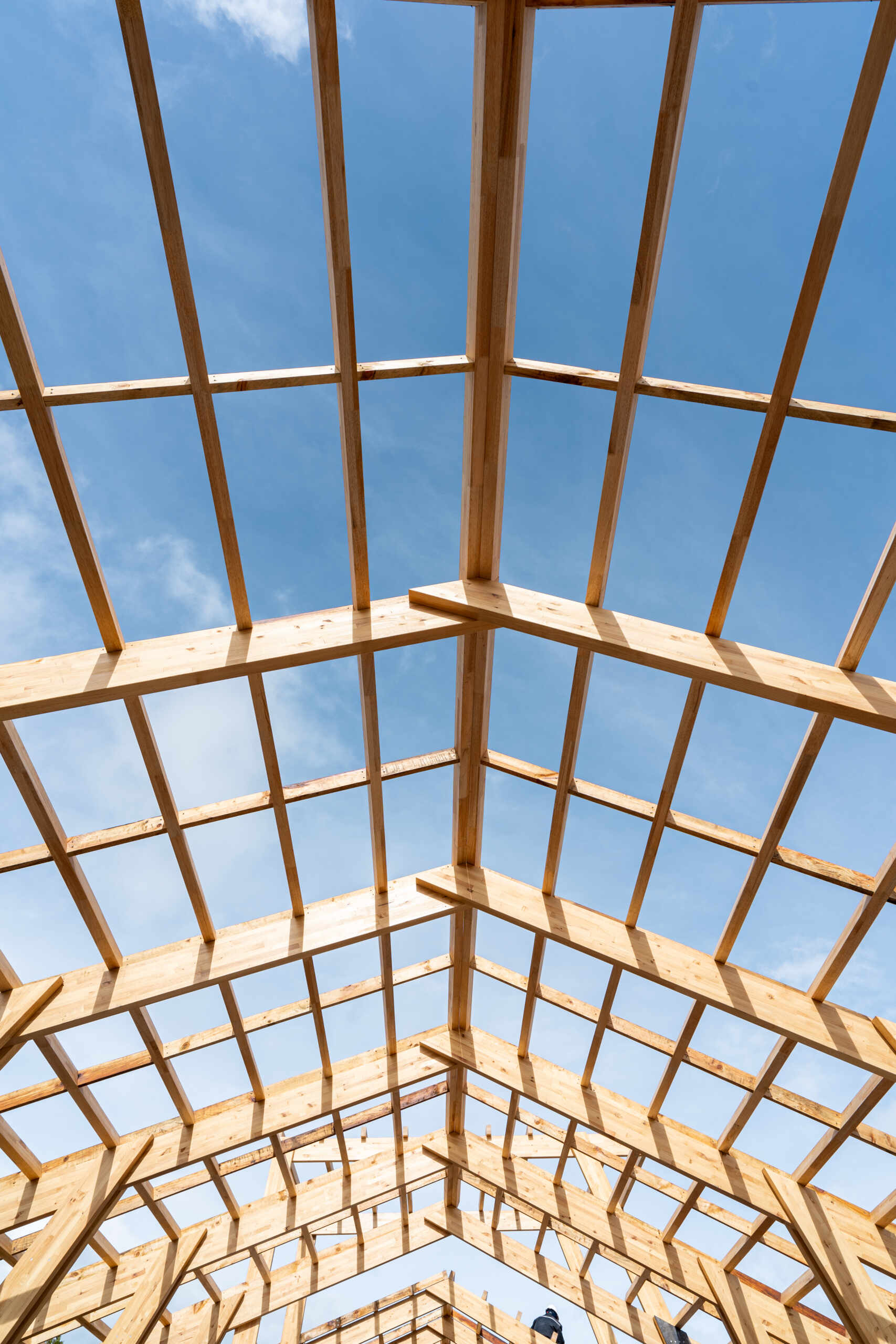
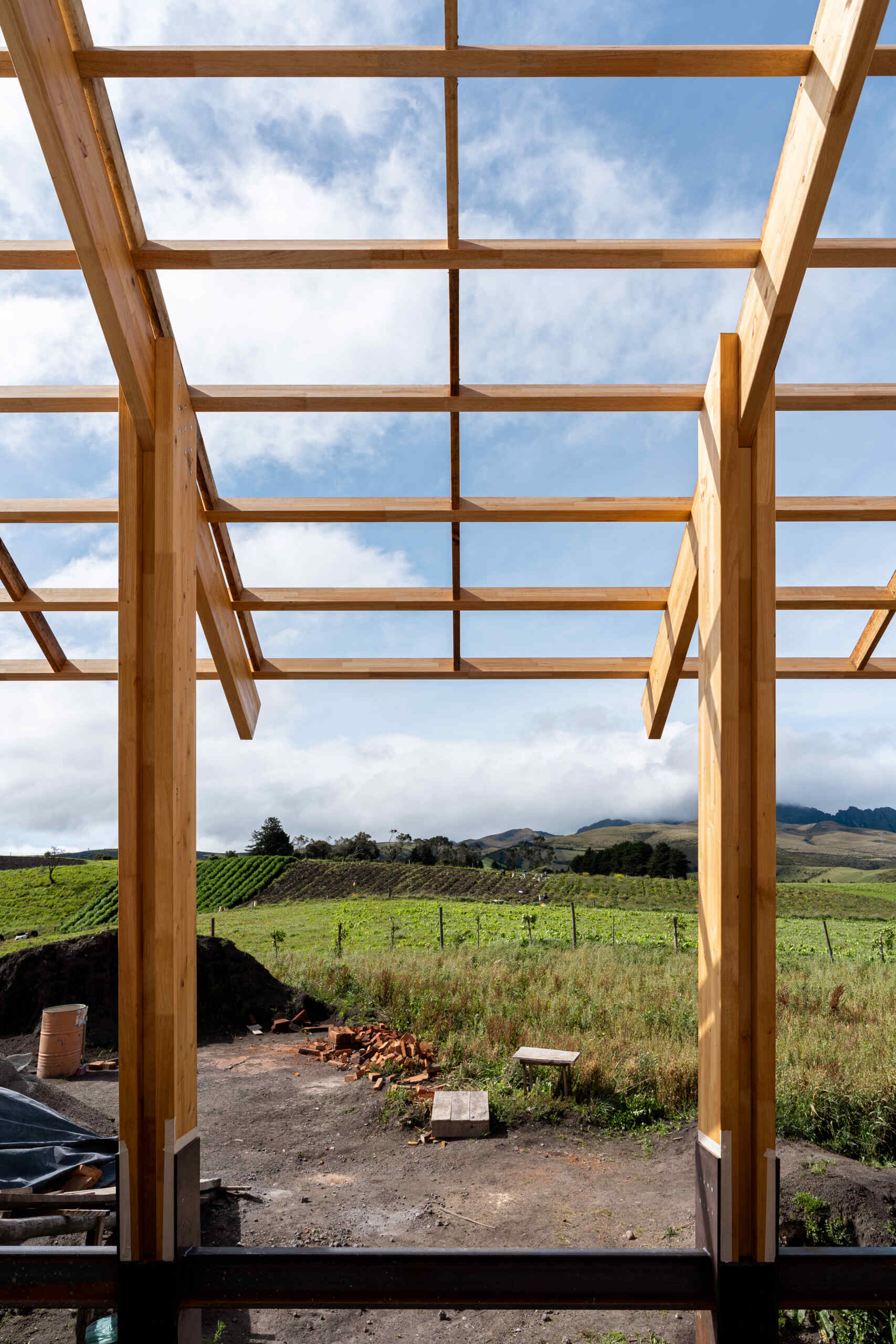
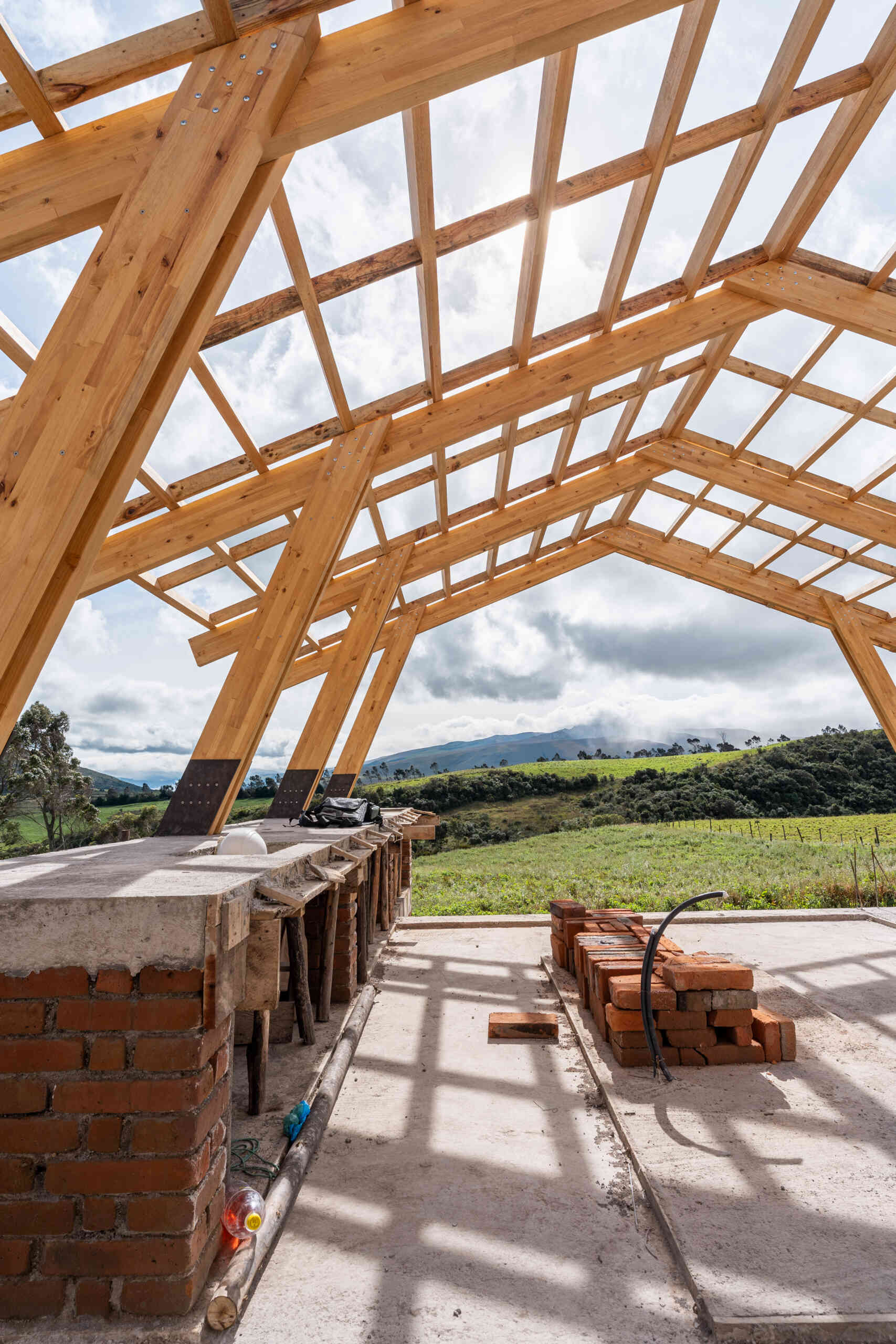
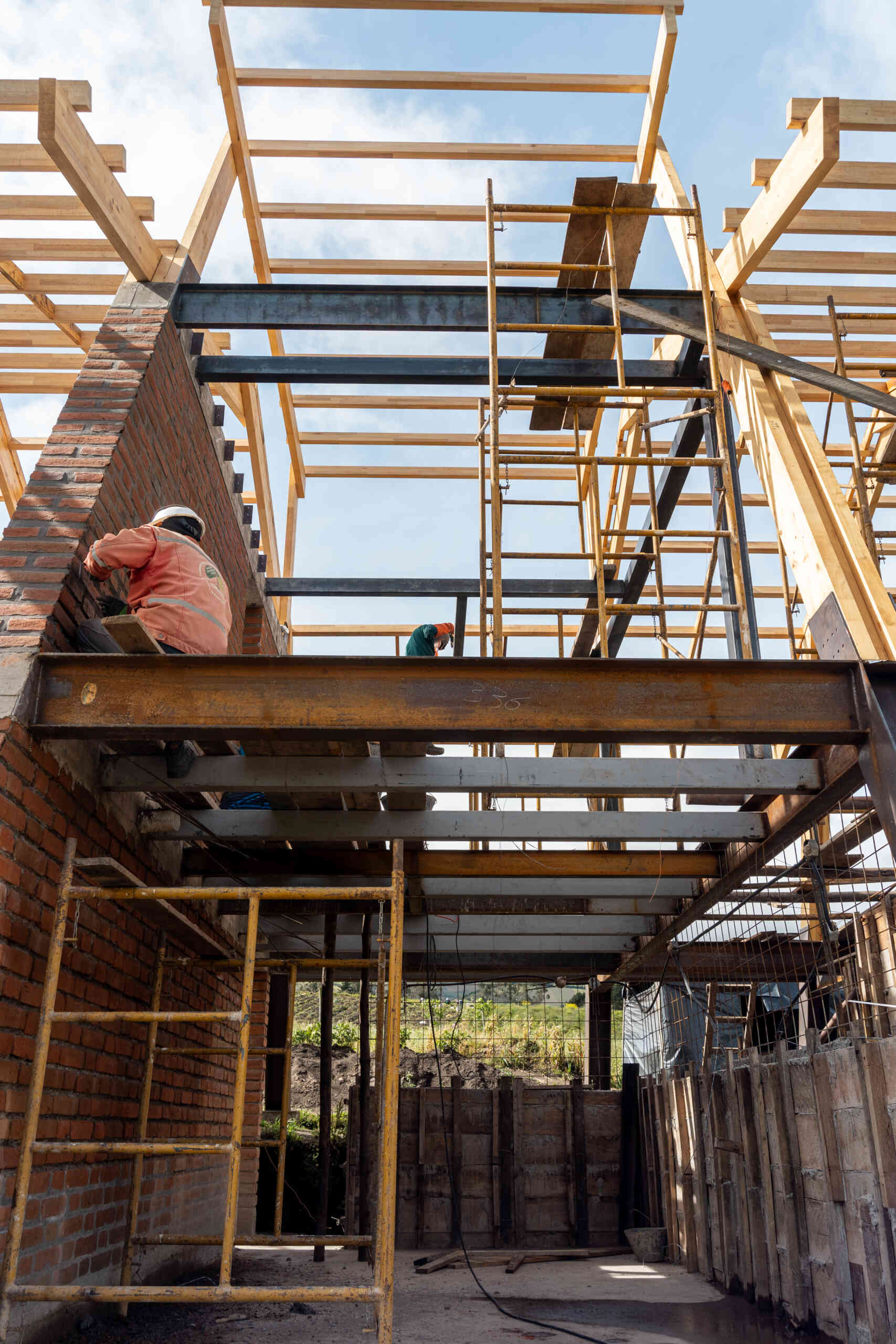
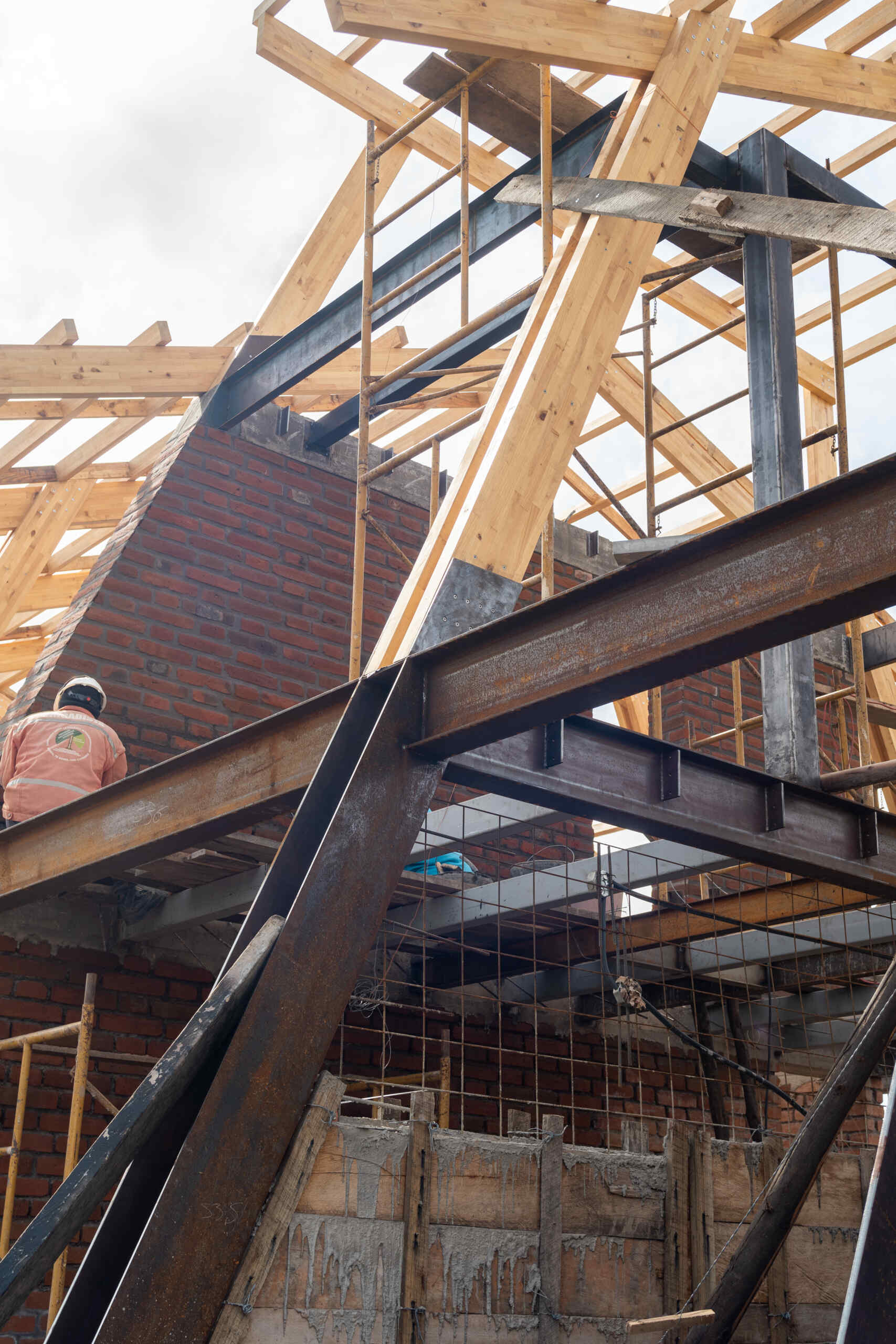
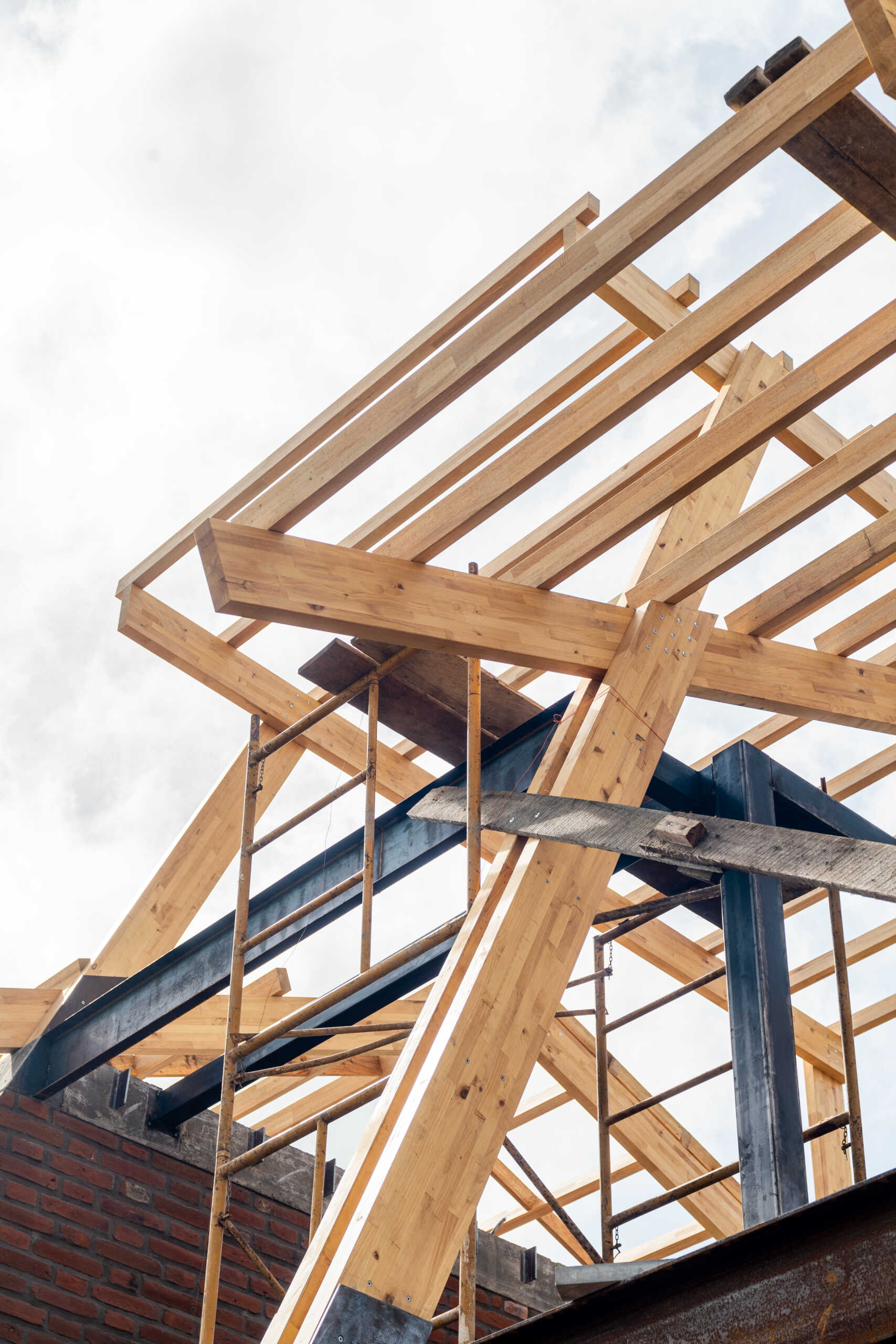
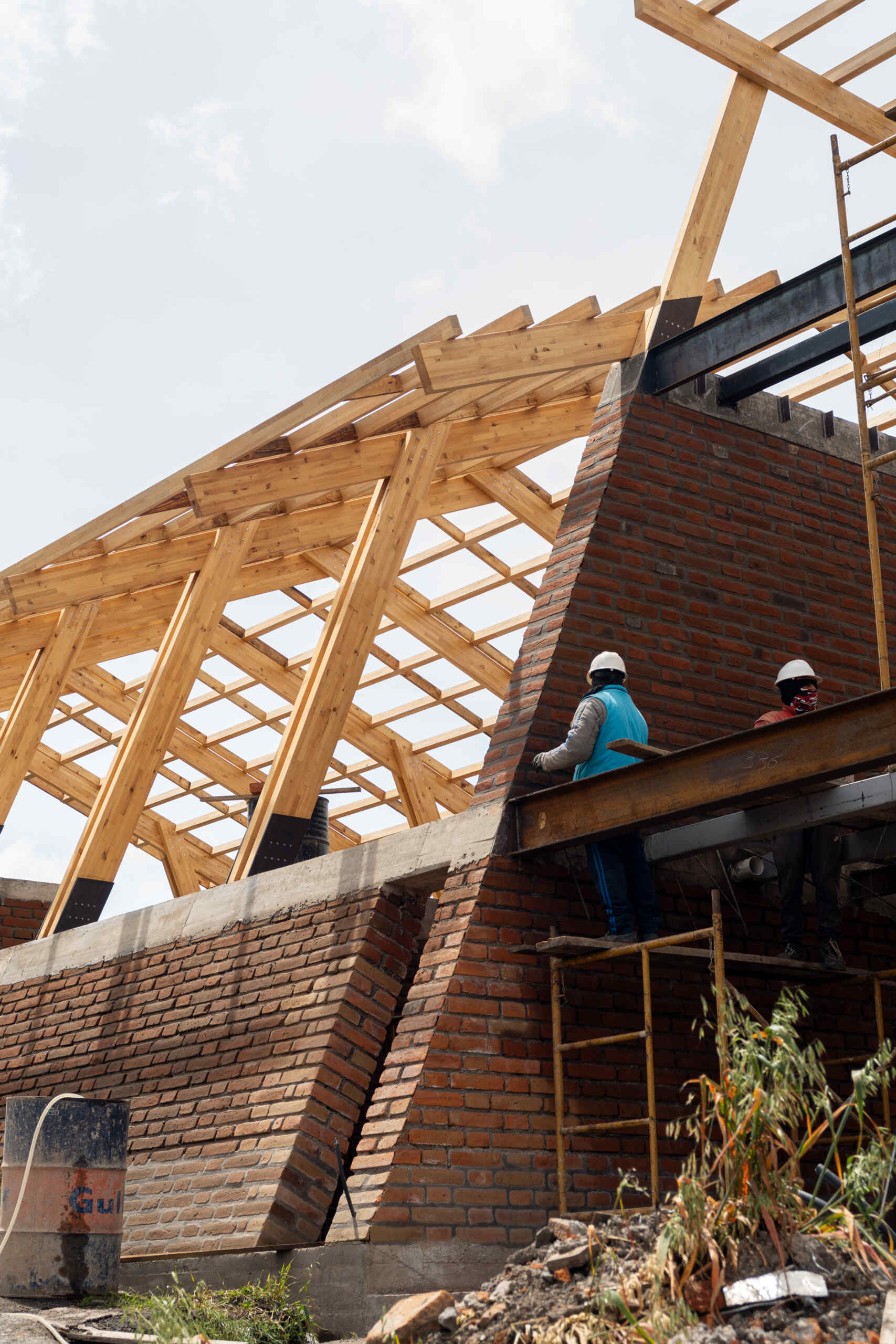
Ten wooden ribs define the structure. These porticos, spaced every 2.44 meters, are composed of four inclined pieces that converge upward to provide greater shelter to the upper level.
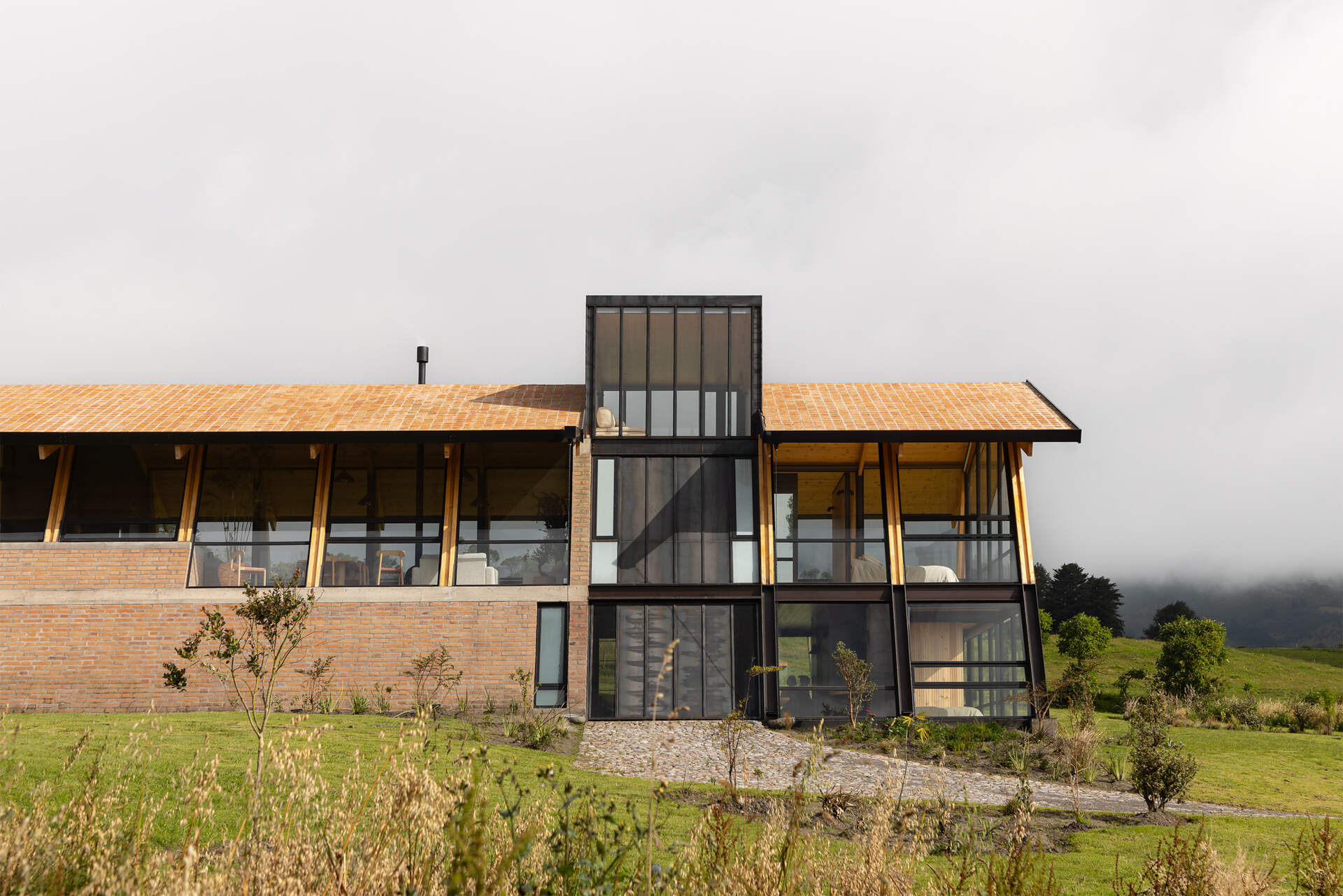
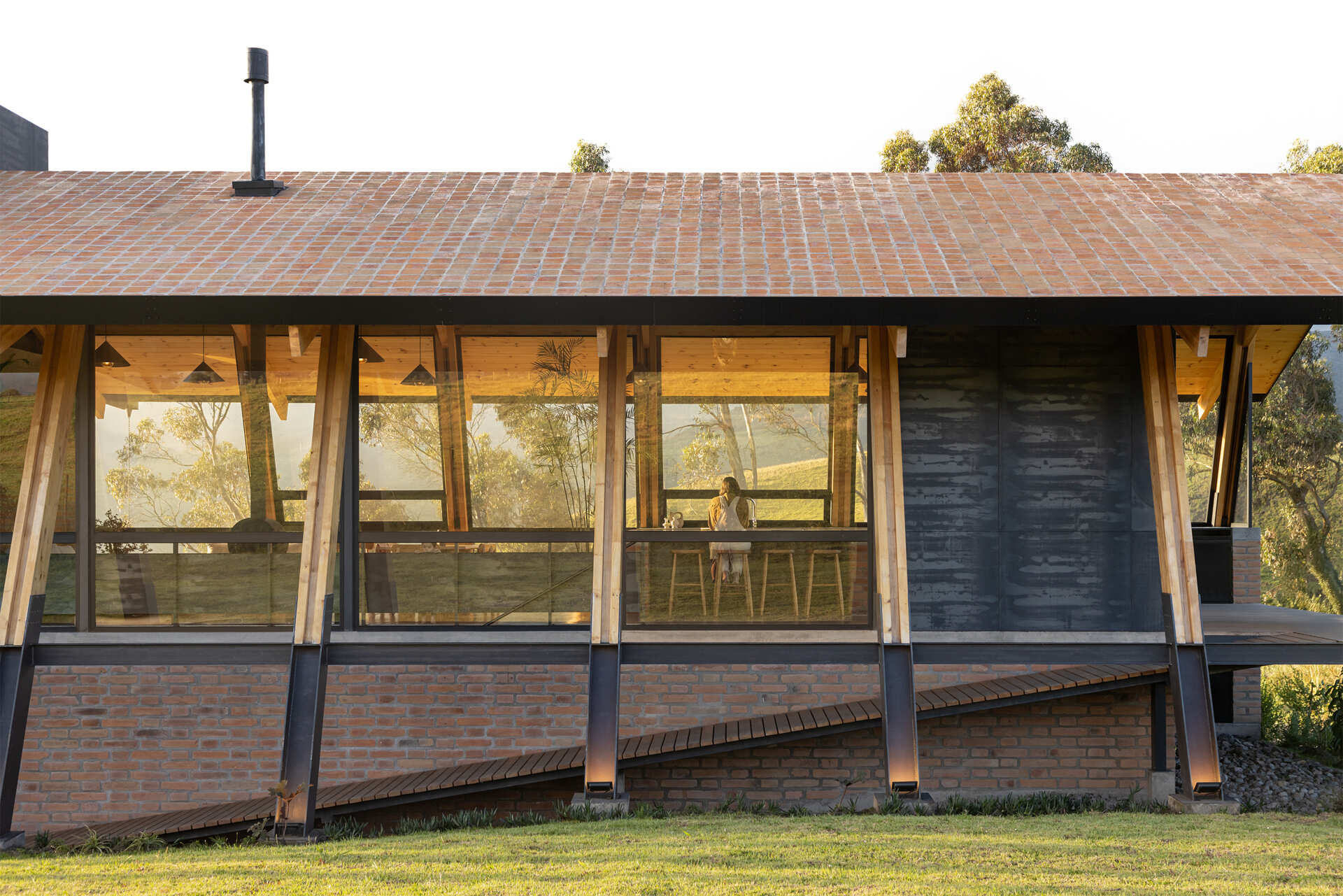
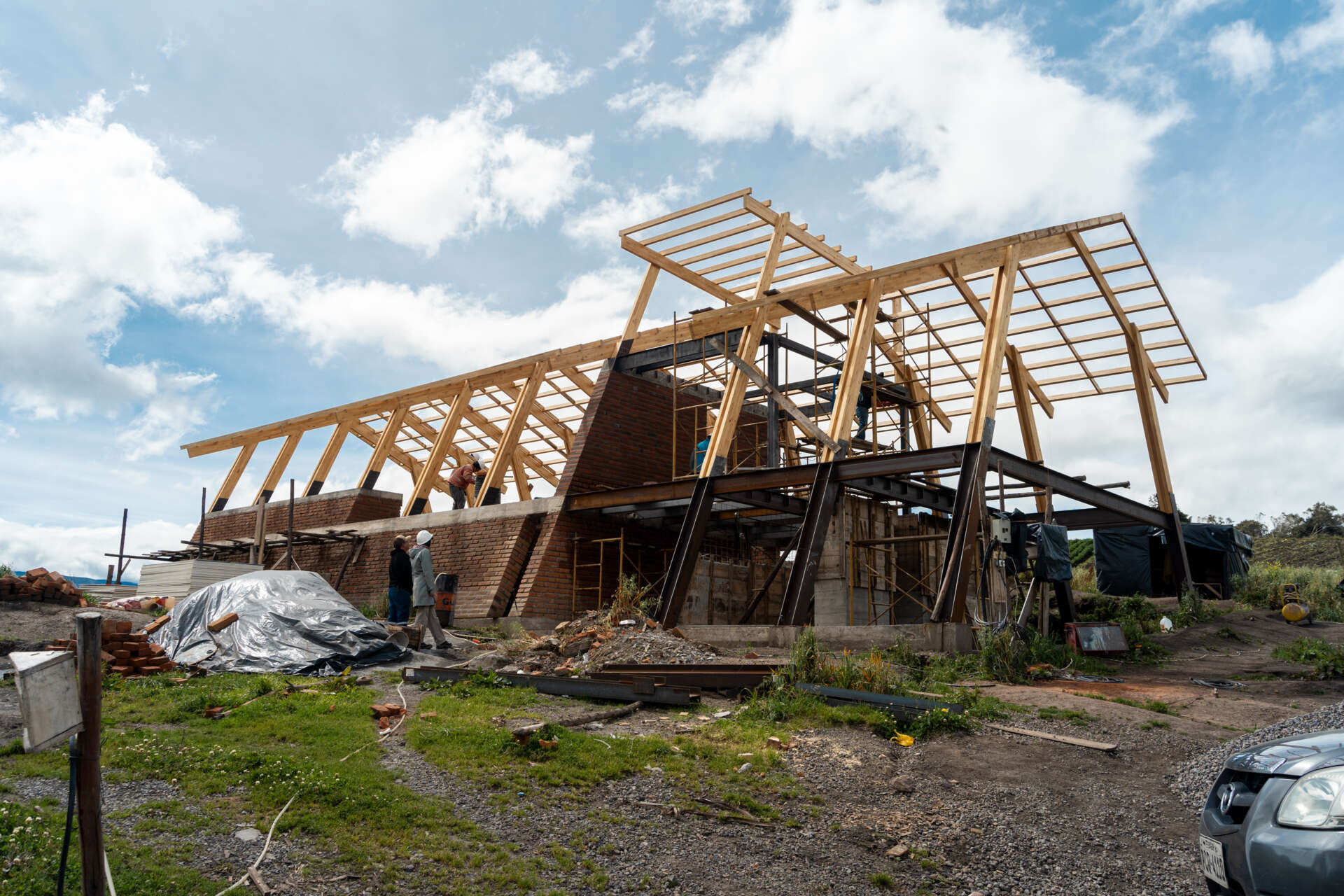
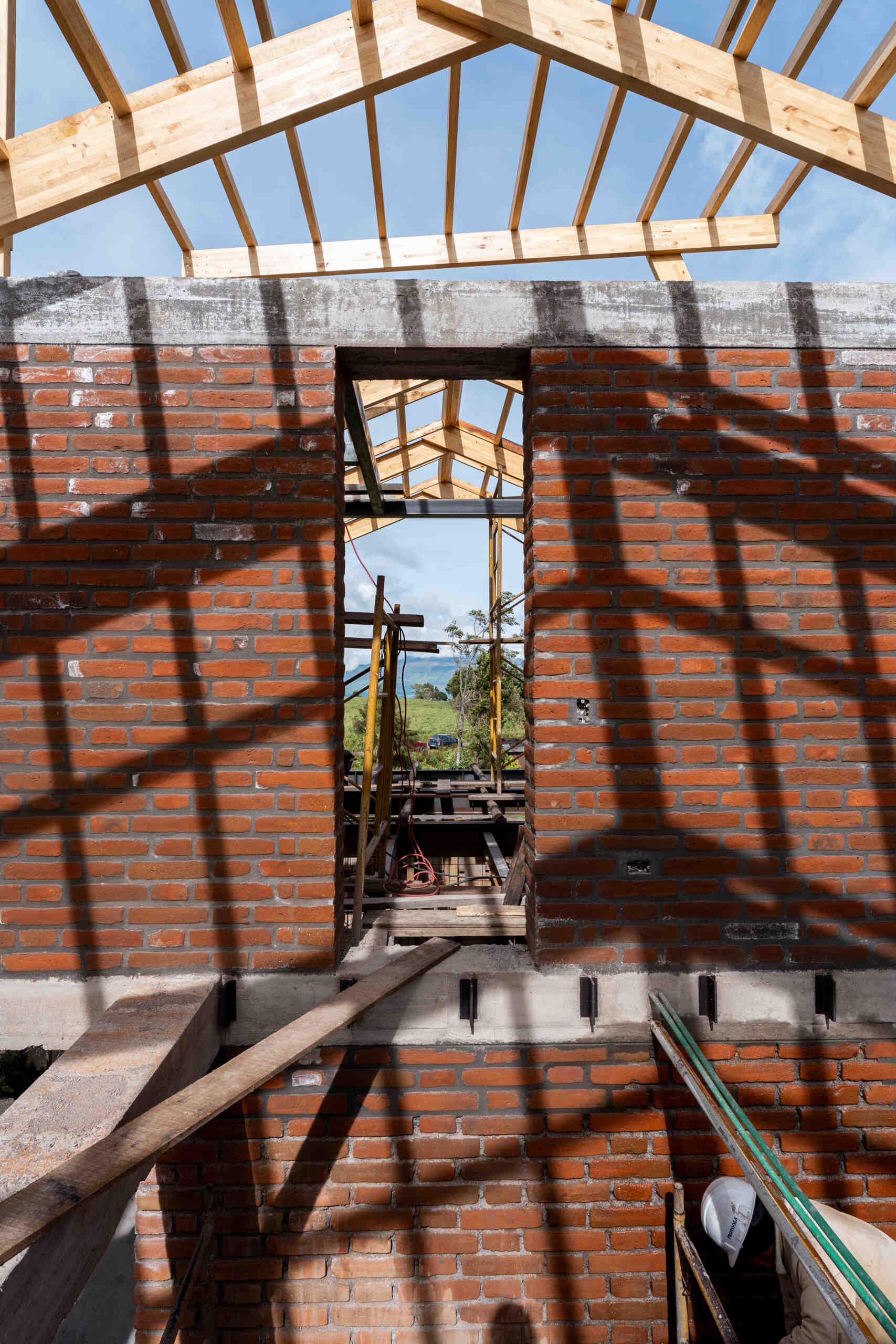
On the north side, the ribs rest on a brick base that follows their inclination and disappears where the lower floor fits beneath. On the south side, where the ramp runs, the lower pieces shift in length to adapt to the terrain and transition to metal to withstand rain and direct sun.
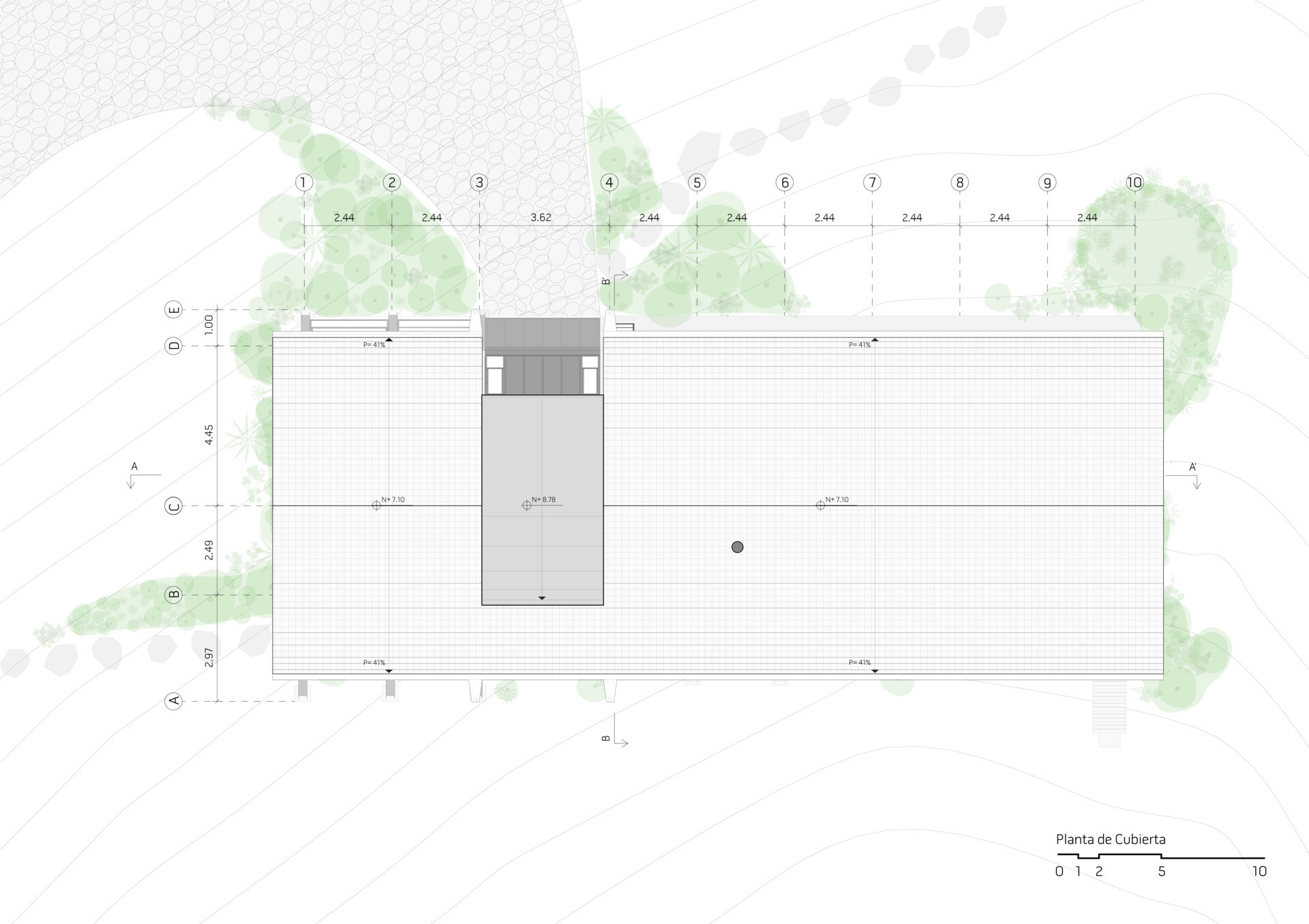
Large eaves extend from this rhythm of ribs, protecting the wood and shading the interior. The pattern adjusts where the loft opens up for wider views.
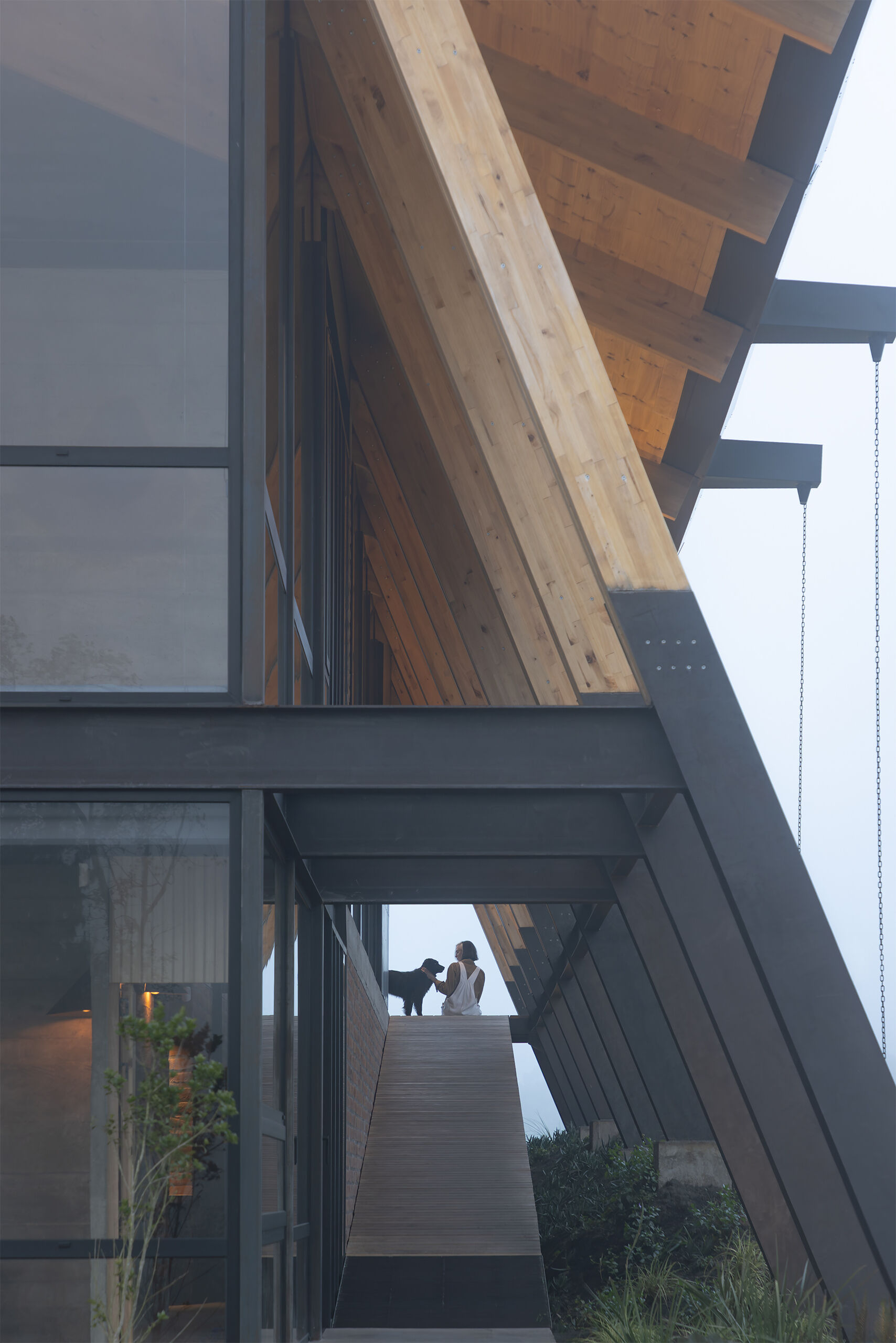
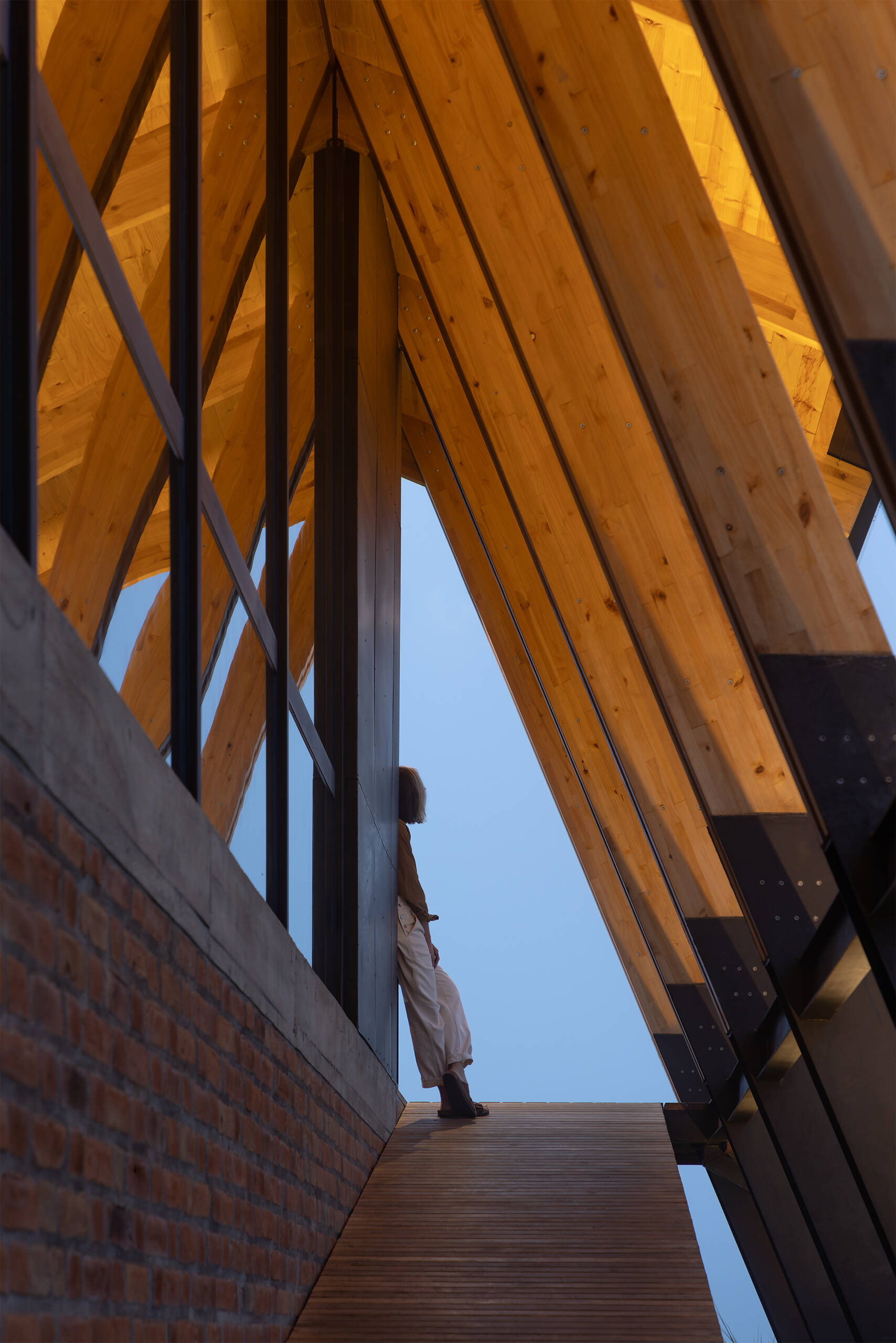
Material choices stem from a contextual analysis of climate, market availability, and speed of execution. No coatings or plasters conceal the structure. By leaving materials exposed, construction waste is minimized and the building process remains transparent. This approach required defining the design in detail from the beginning and training the workforce accordingly.
Solar panels supply electricity. Gray and black water are treated through grease traps, a biodigester, and a wetland system before passing through a small lagoon and infiltrating the ground.
An Elevated Space Open to Every Direction
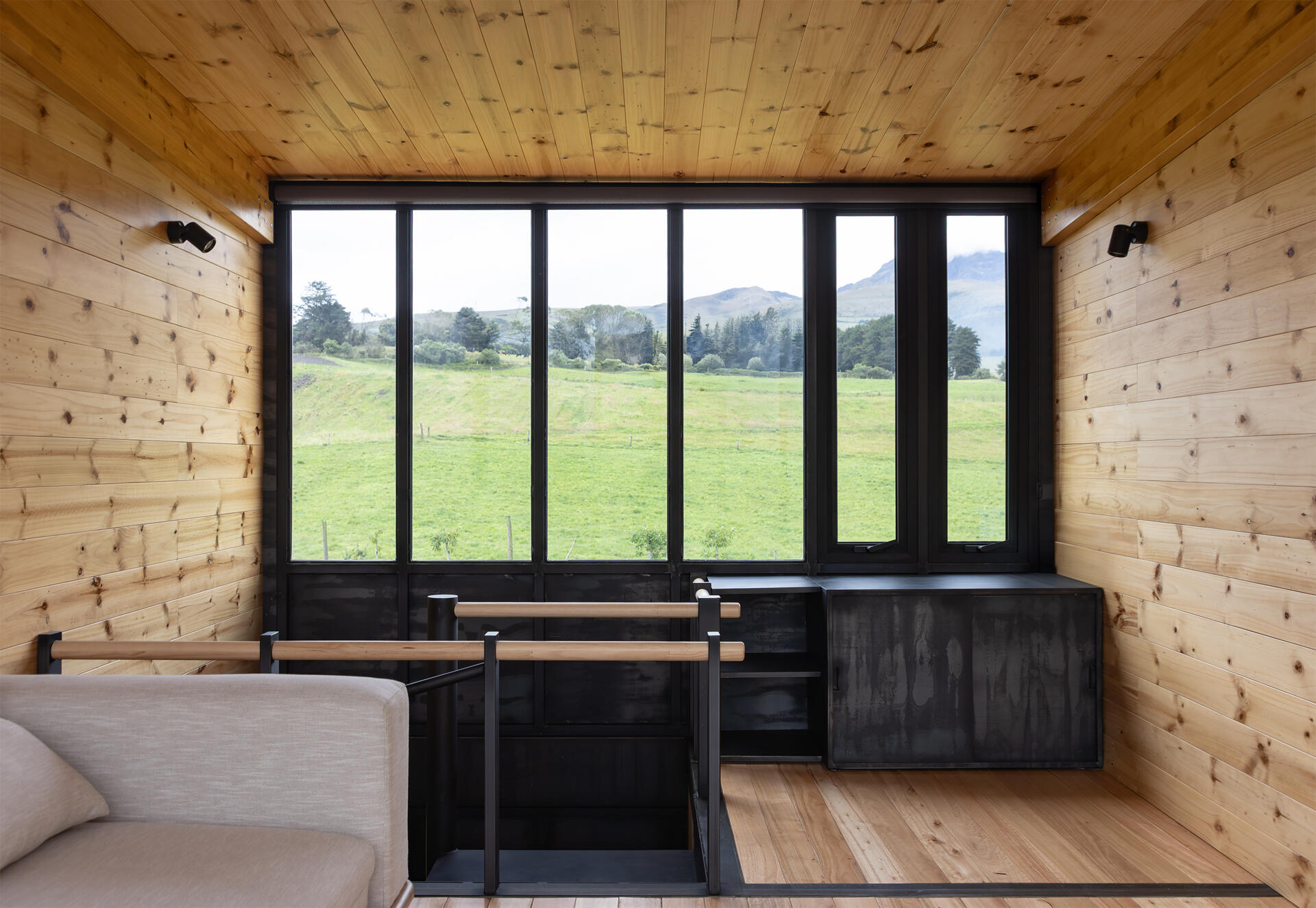
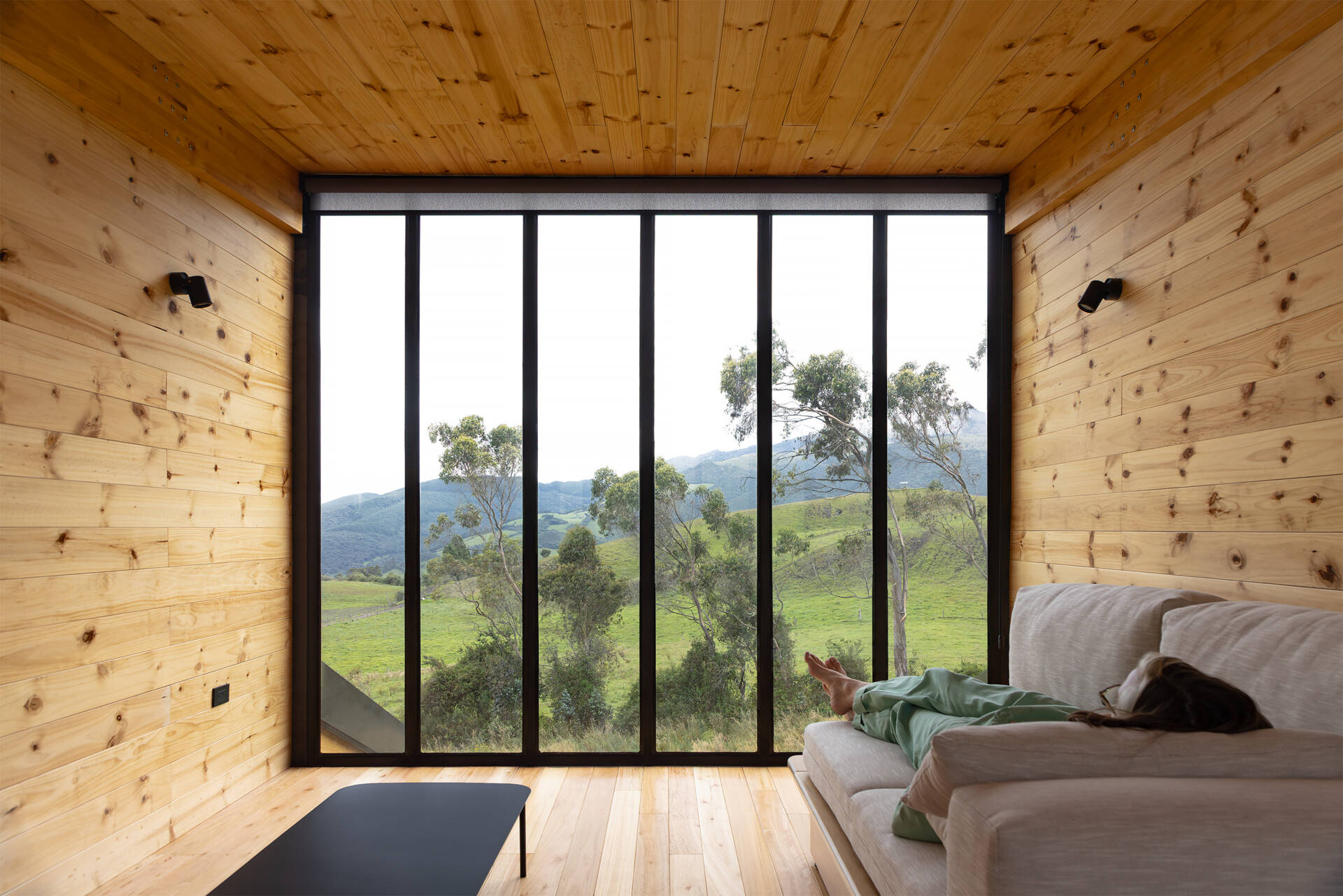
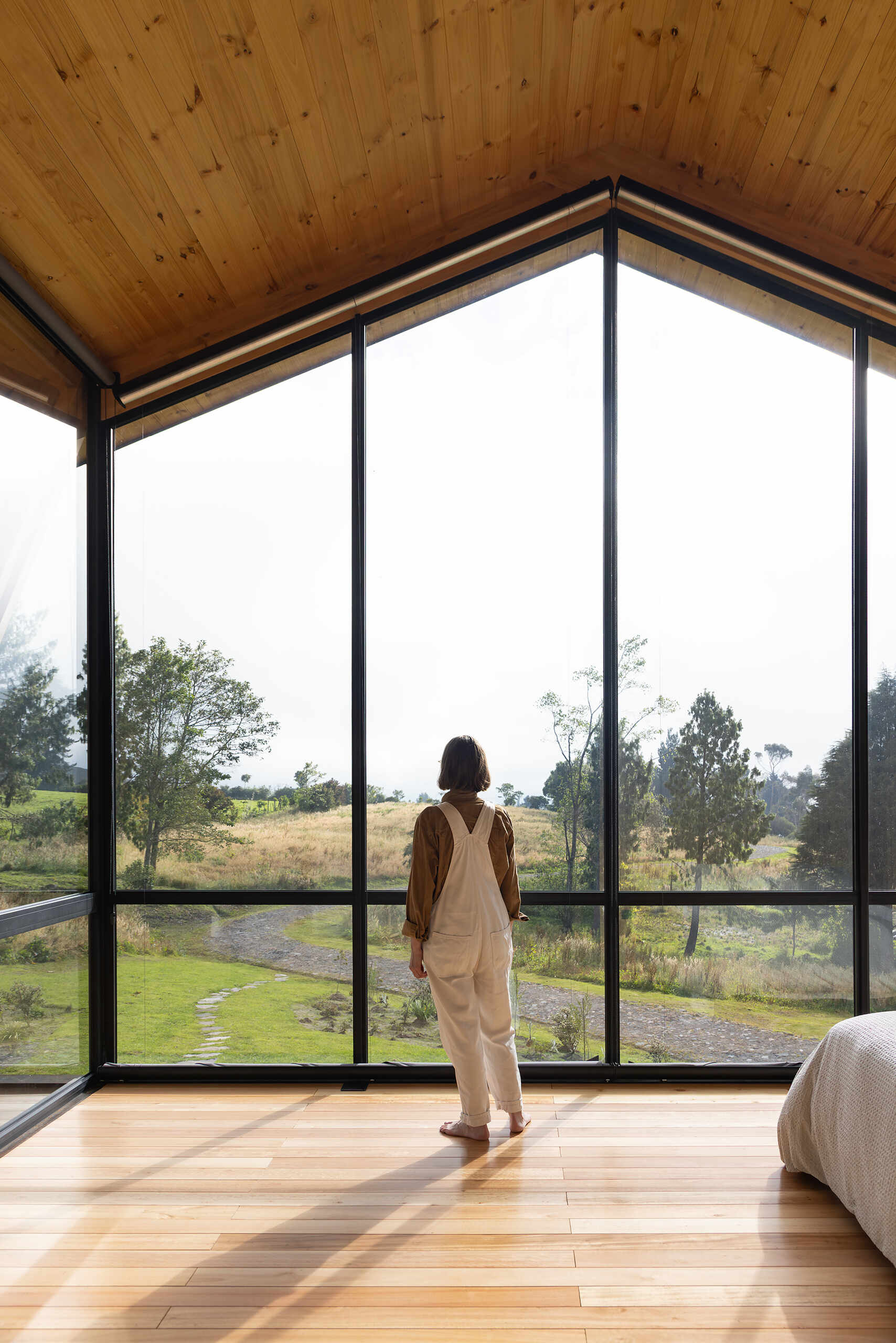
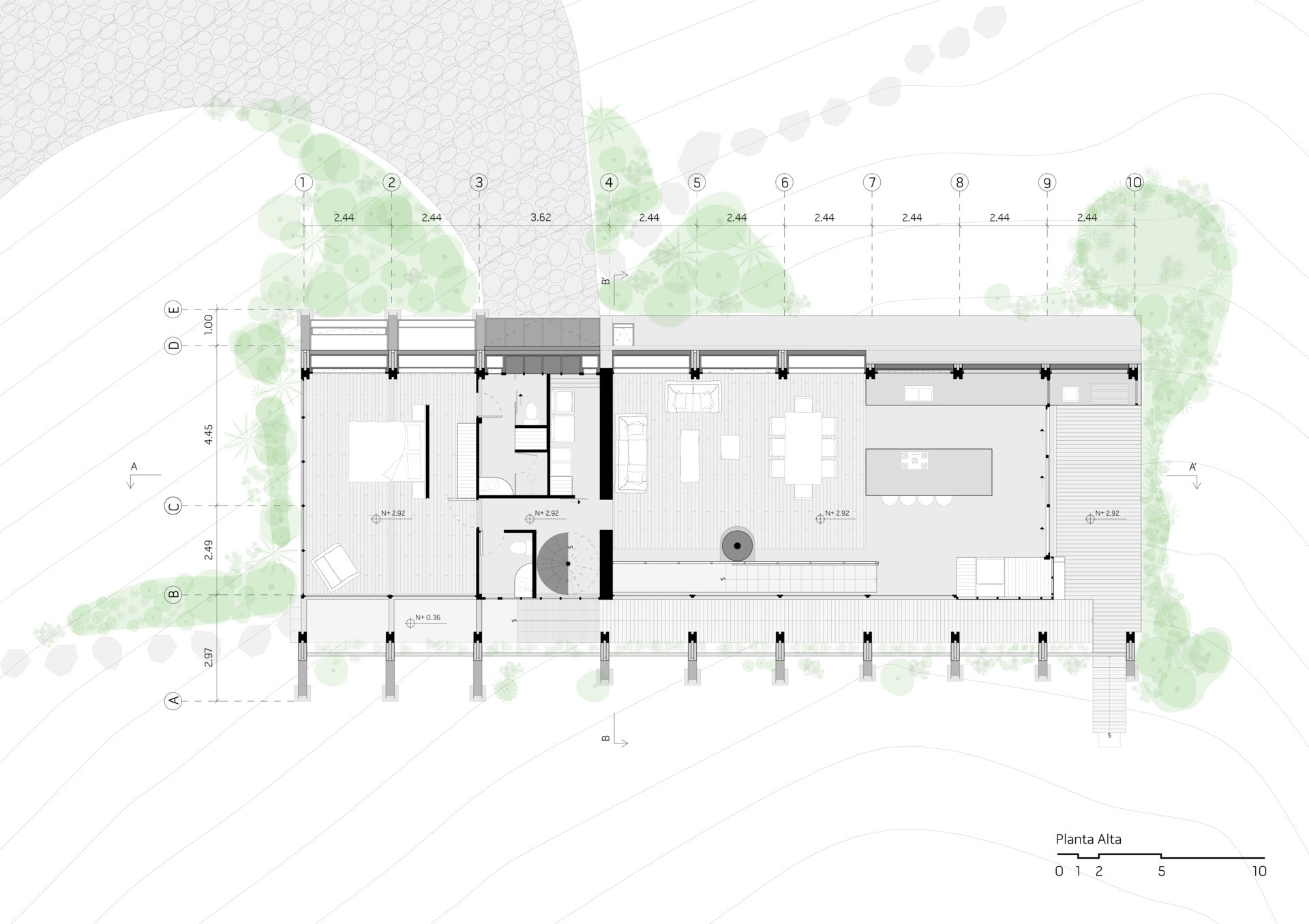
The upper level gathers the primary living spaces. Positioned to take full advantage of the elevation, the great room captures expansive views across meadows and toward nearby volcanoes. Living, dining, and kitchen areas are unified within this elevated platform. From here, the house feels fully immersed in the highland setting. The openness reflects the daily life of the couple who occupy the home, placing their shared spaces at the center of the experience.
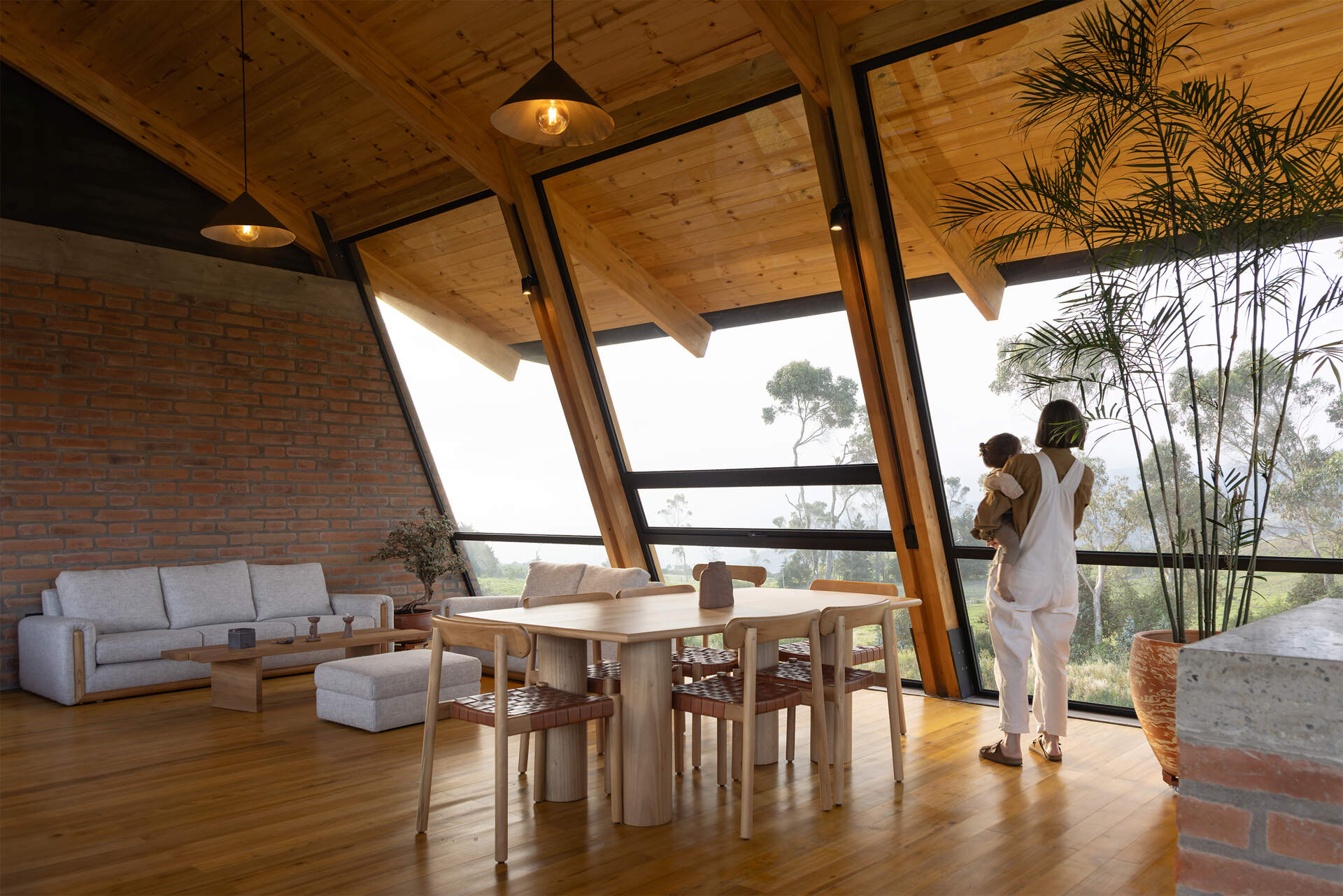
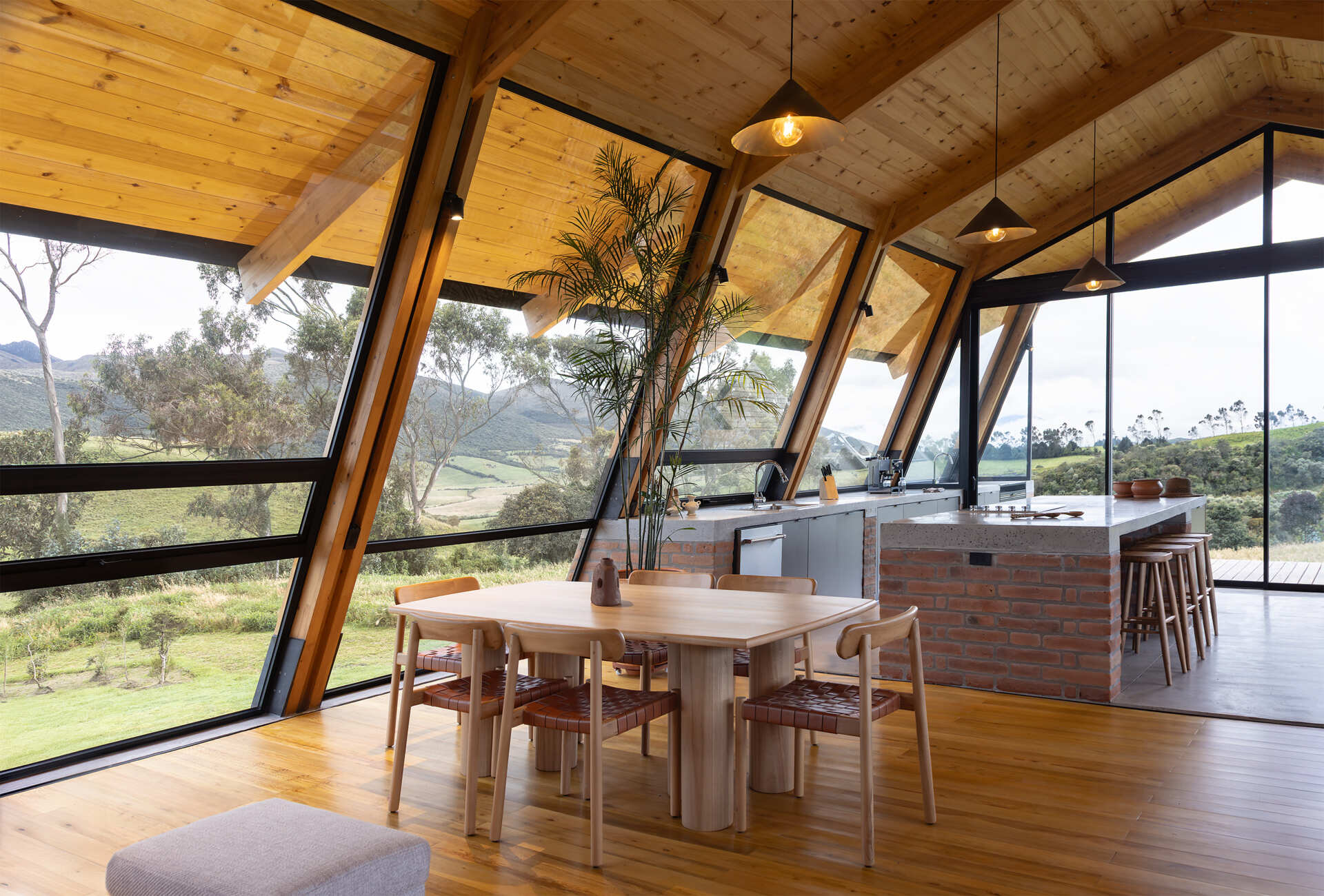
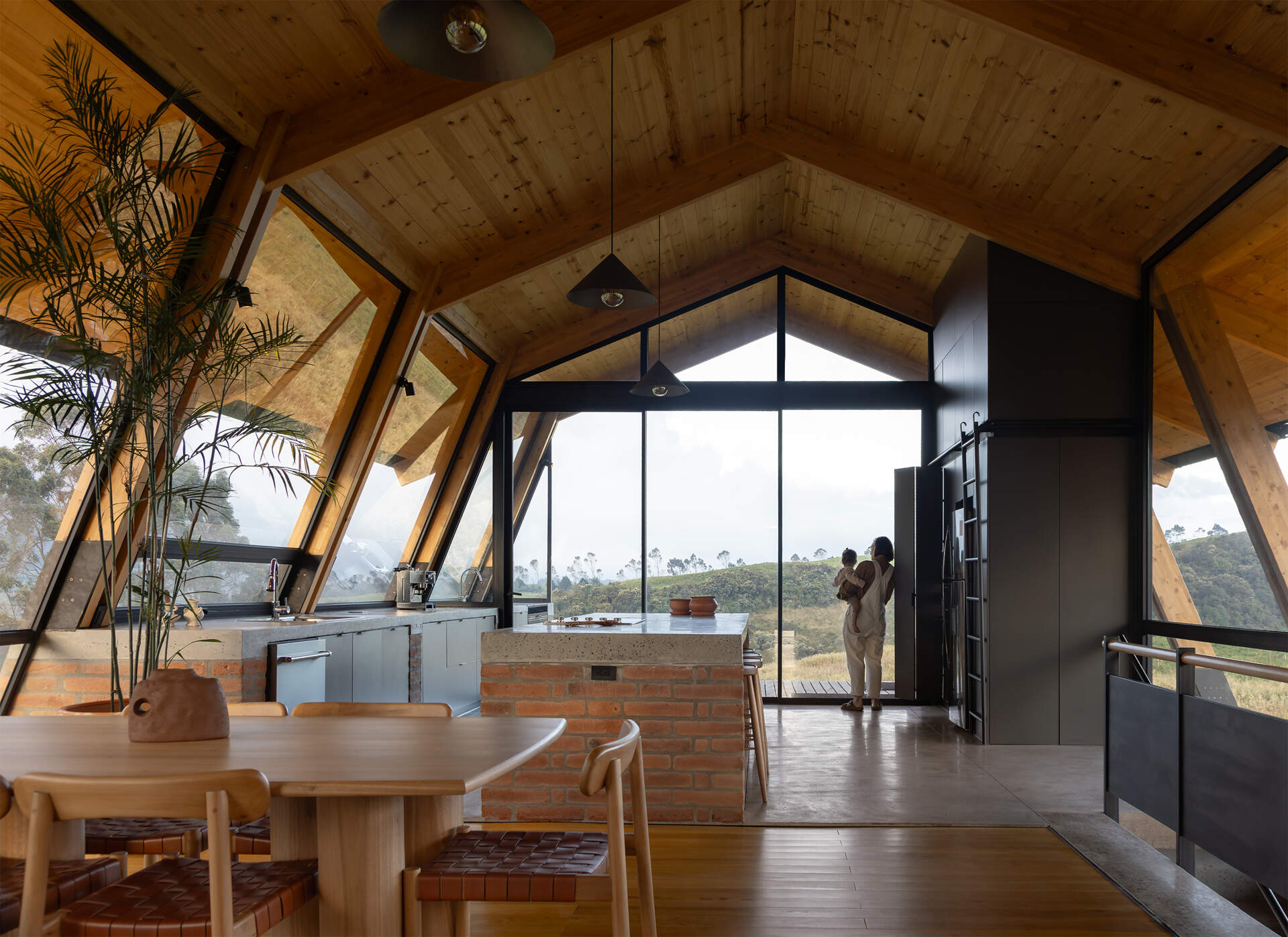
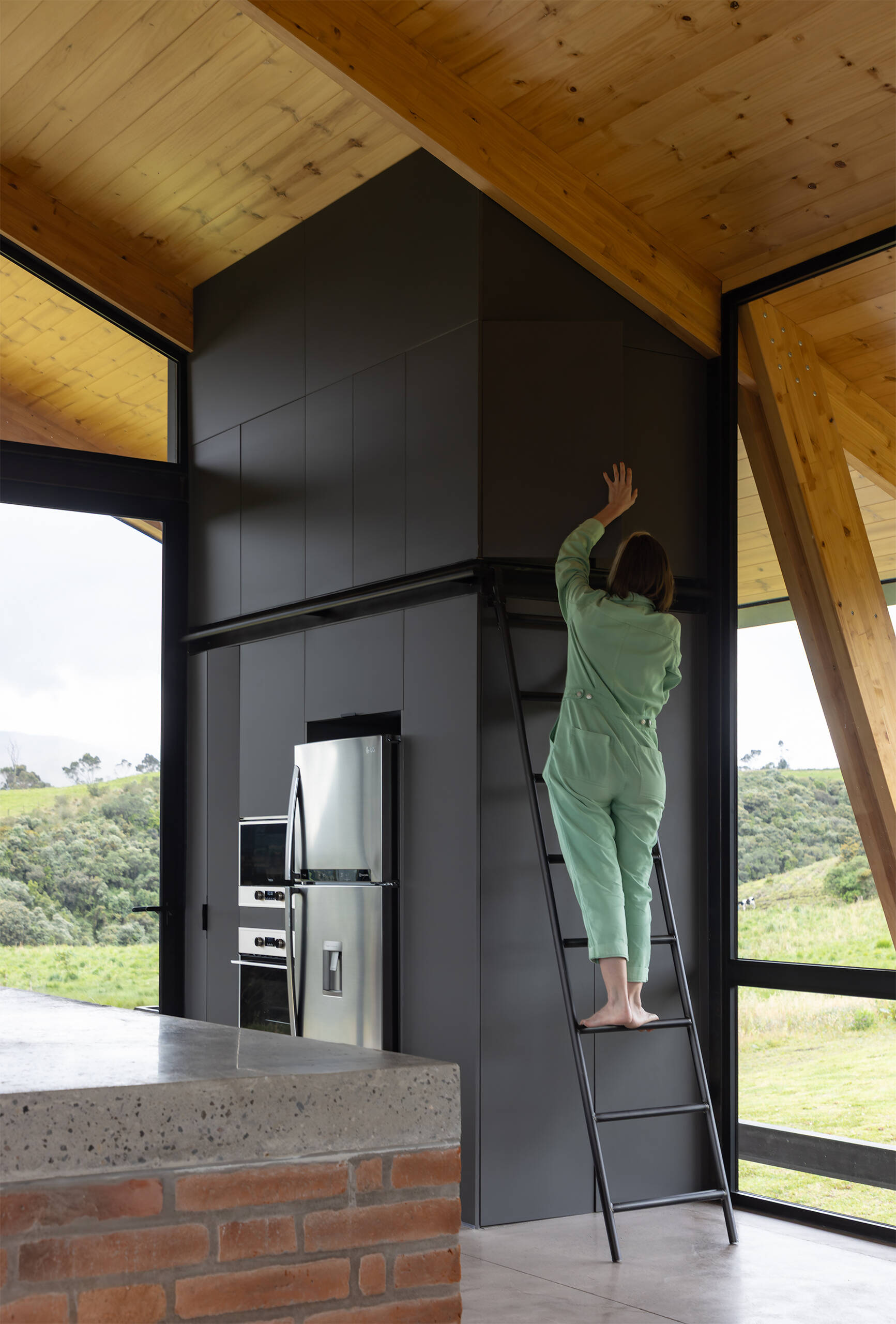
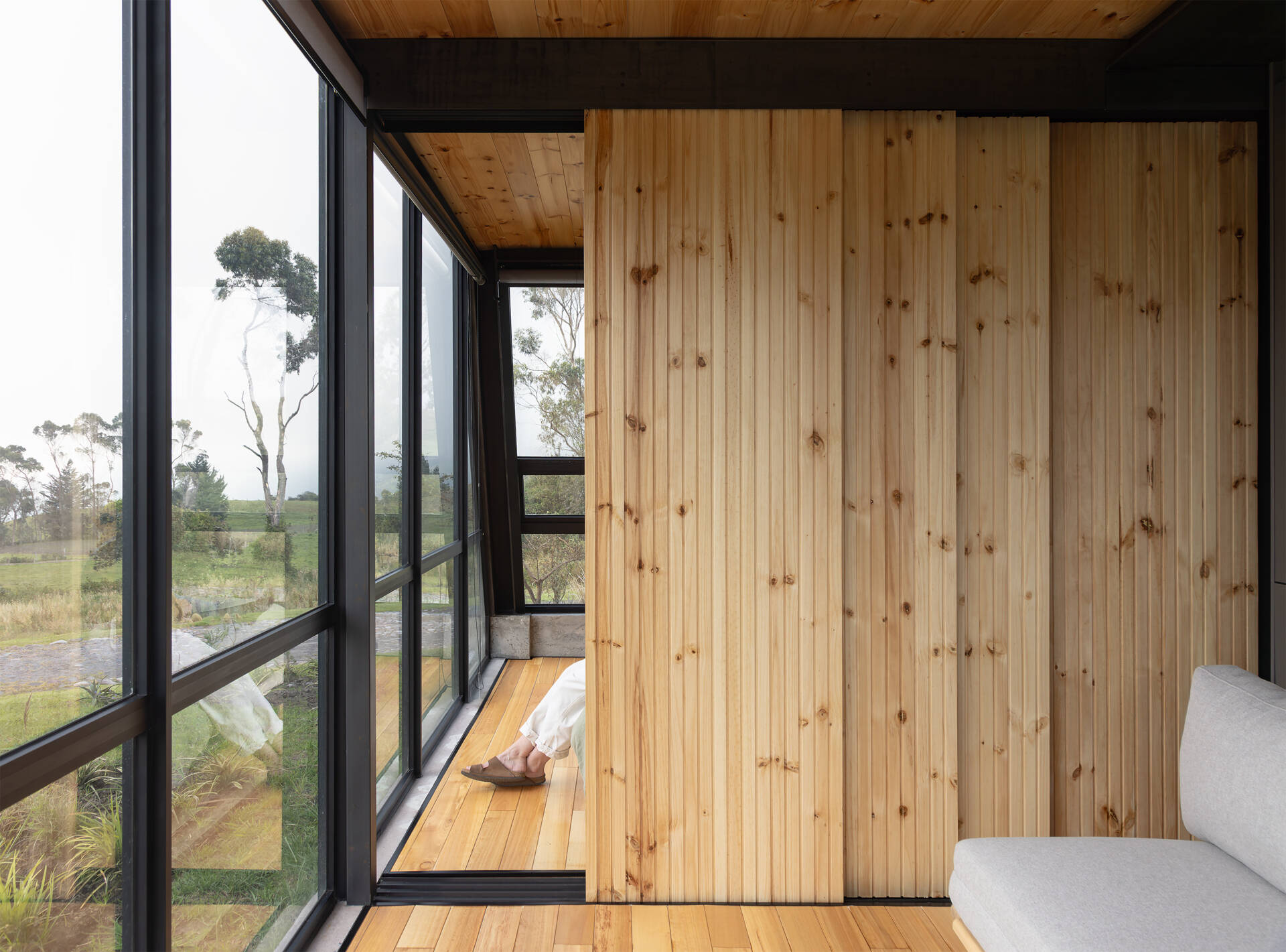
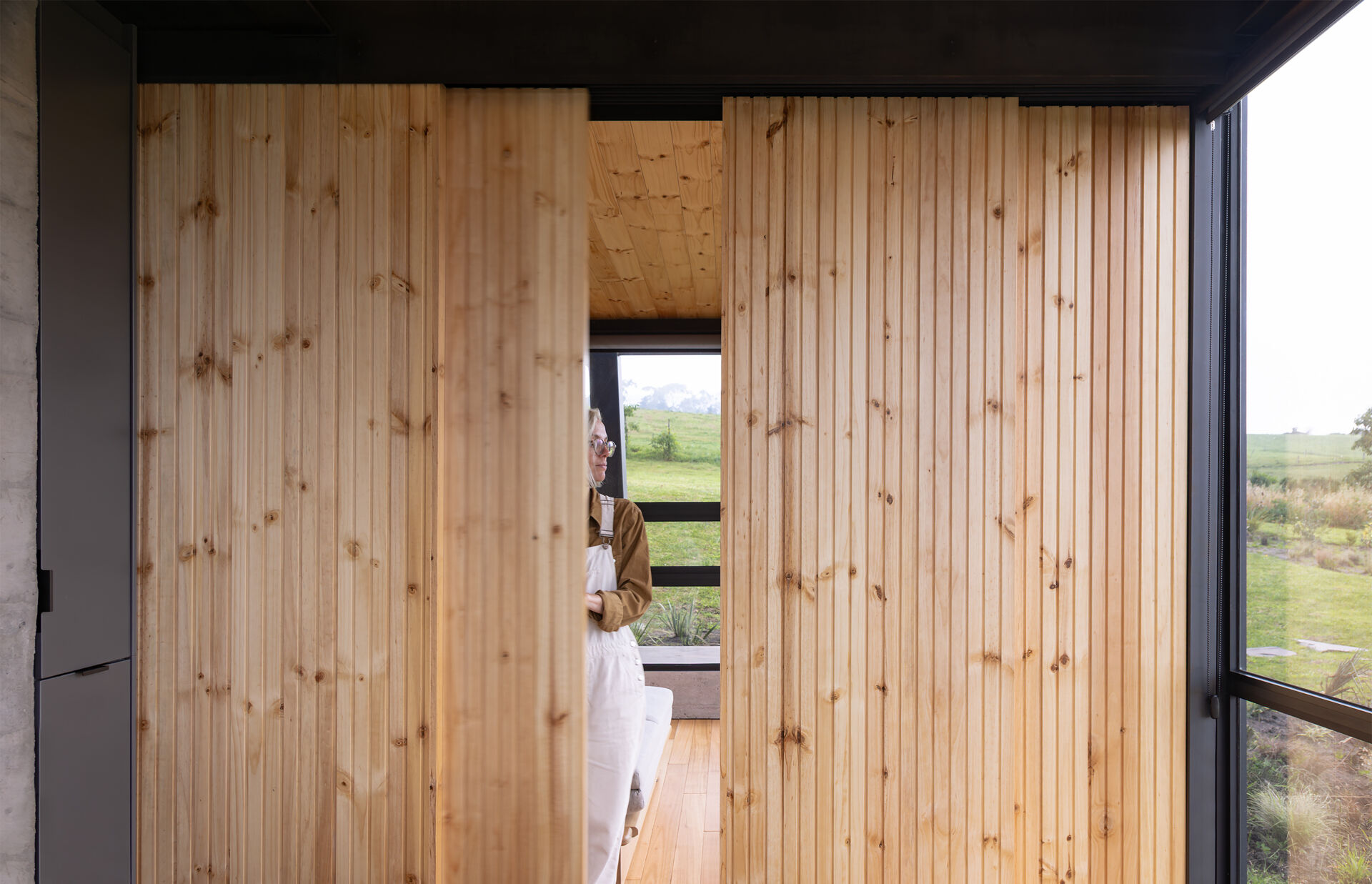
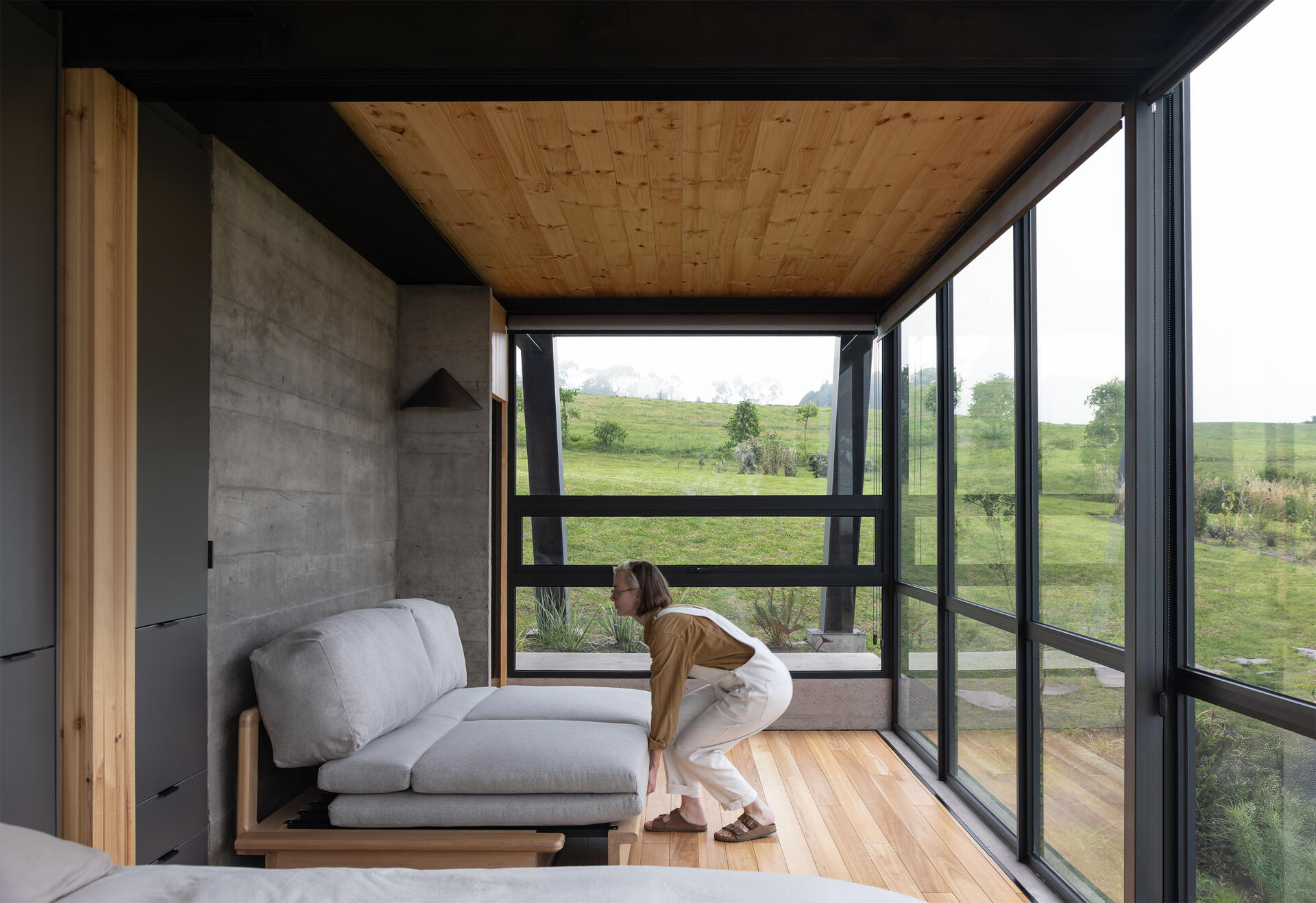
Craftsmen specializing in metal, wood, ceramics, and fabric resolved elements such as lamps, fixed storage, stairs, curtains, and partitions, embedding detail directly into the build.
Private Spaces with Expansive Views
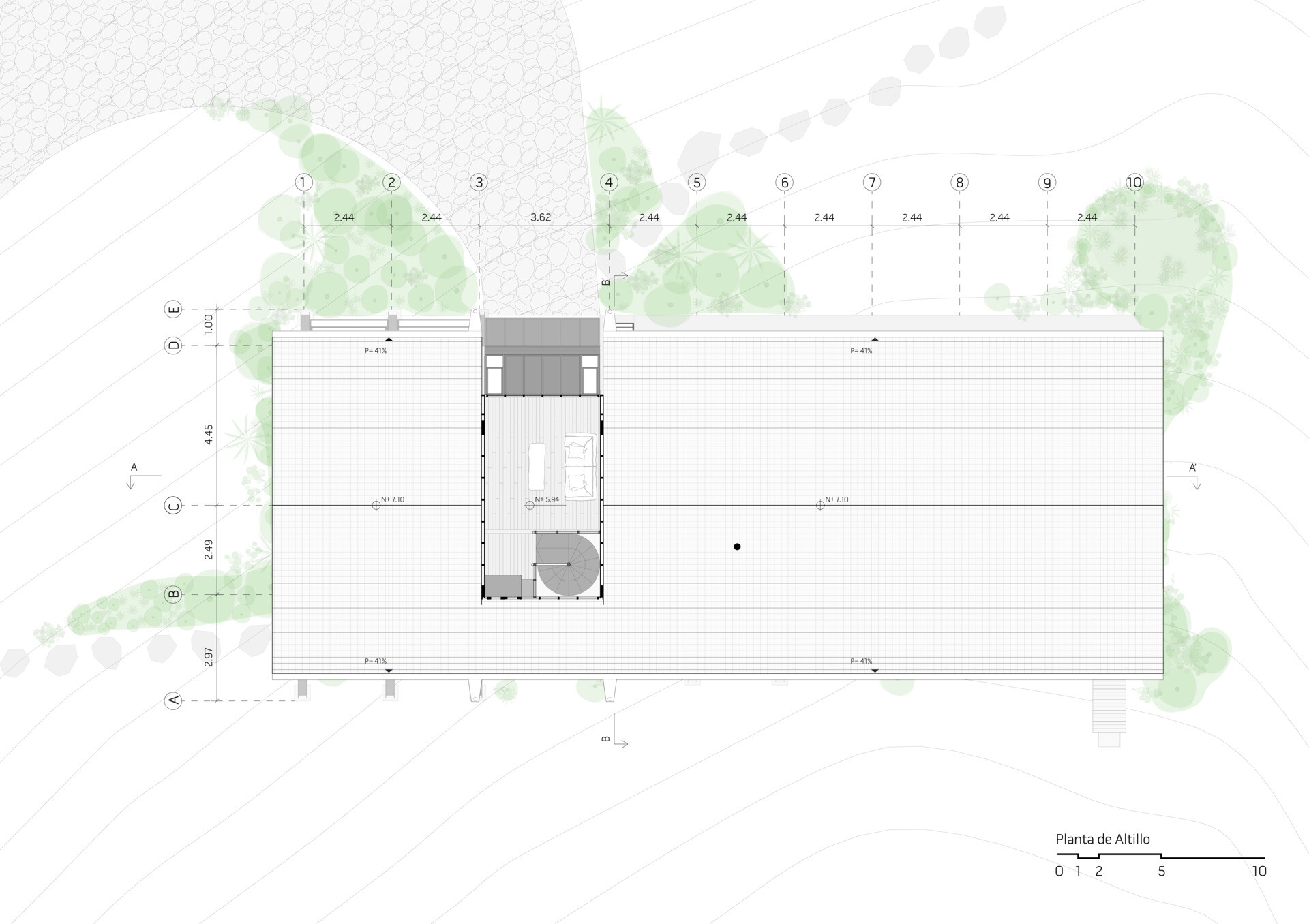
The upper level contains spaces primarily for the homeowners. From here, wide views extend in every direction. A small viewing loft opens to both north and south, offering direct sightlines to the closest volcanoes. This elevated point intensifies the connection between private spaces and landscape.
A Vertical Link Between Two Levels
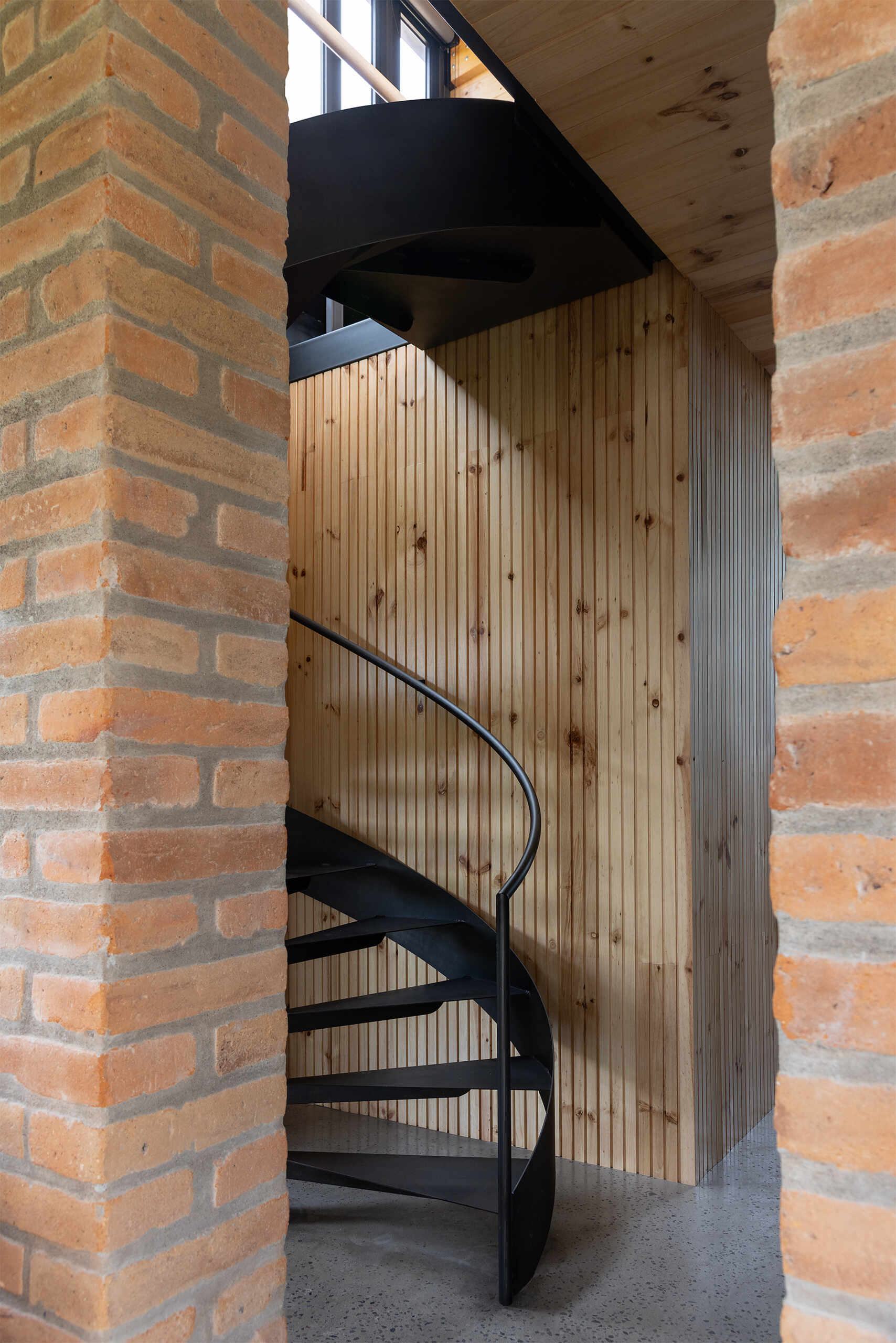
Vertical circulation connects the two levels while reinforcing the compact footprint of the lower floor. The stairs become a pivotal link between everyday life upstairs and the more flexible private spaces below. Crafted as part of the integrated design process, the stair detailing reflects the collaboration between architects and specialized craftsmen.
A Flexible Lower Level for Gathering
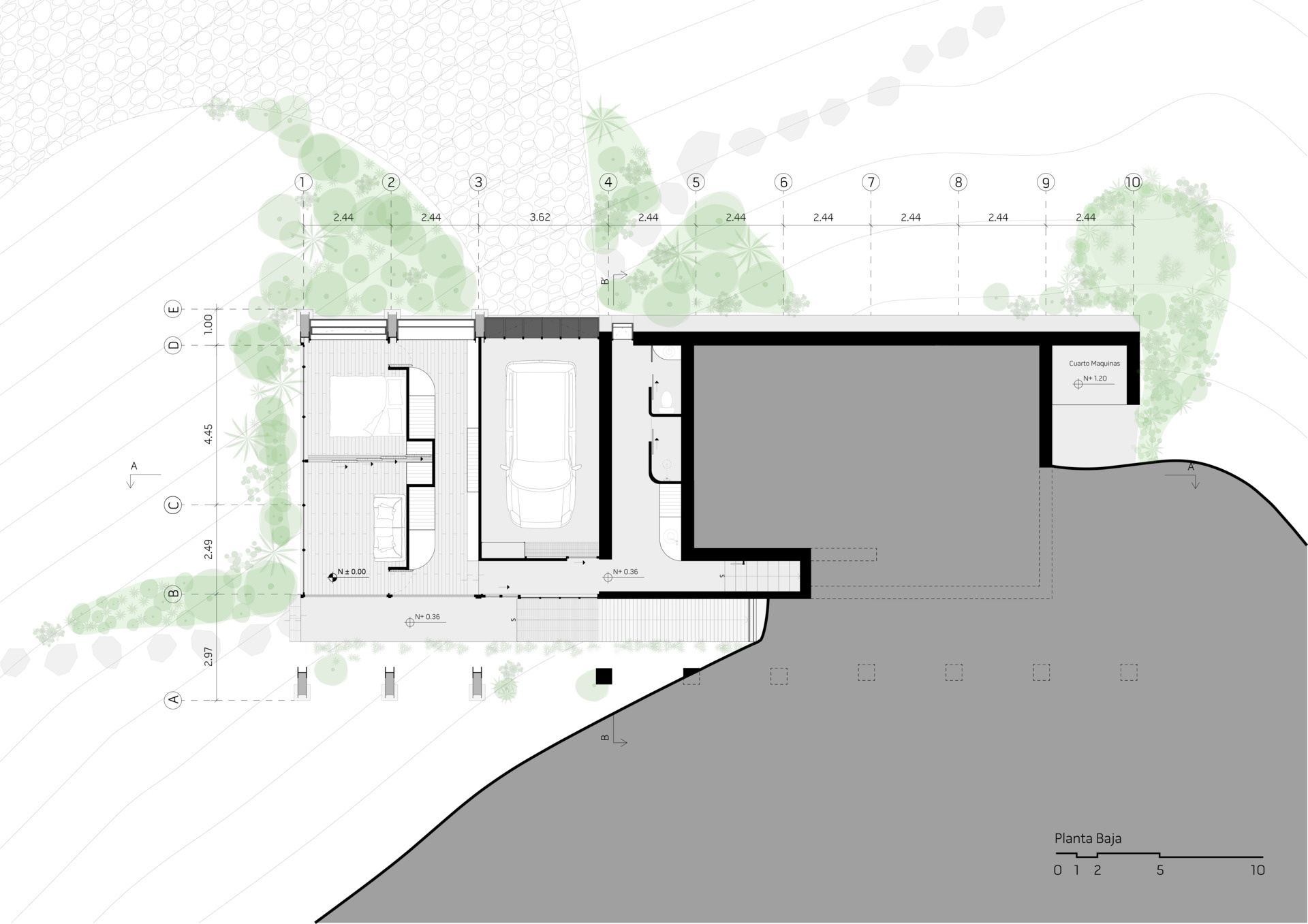
The lower level is smaller due to the slope but plays a key role when family visits. This floor accommodates additional people and becomes more active during gatherings. Its position beneath the upper structure allows it to nestle into the terrain while still remaining connected to the rest of the house.
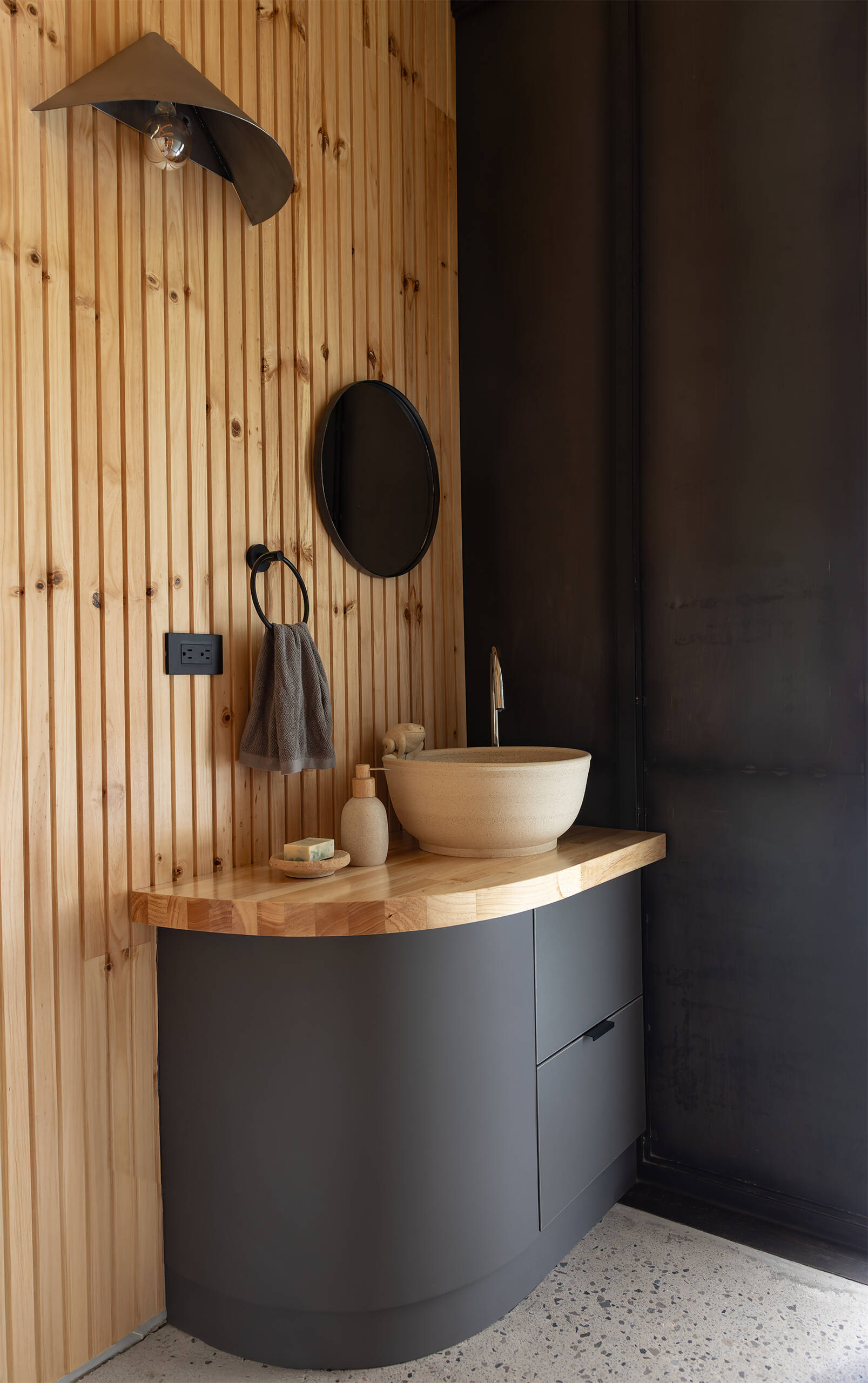
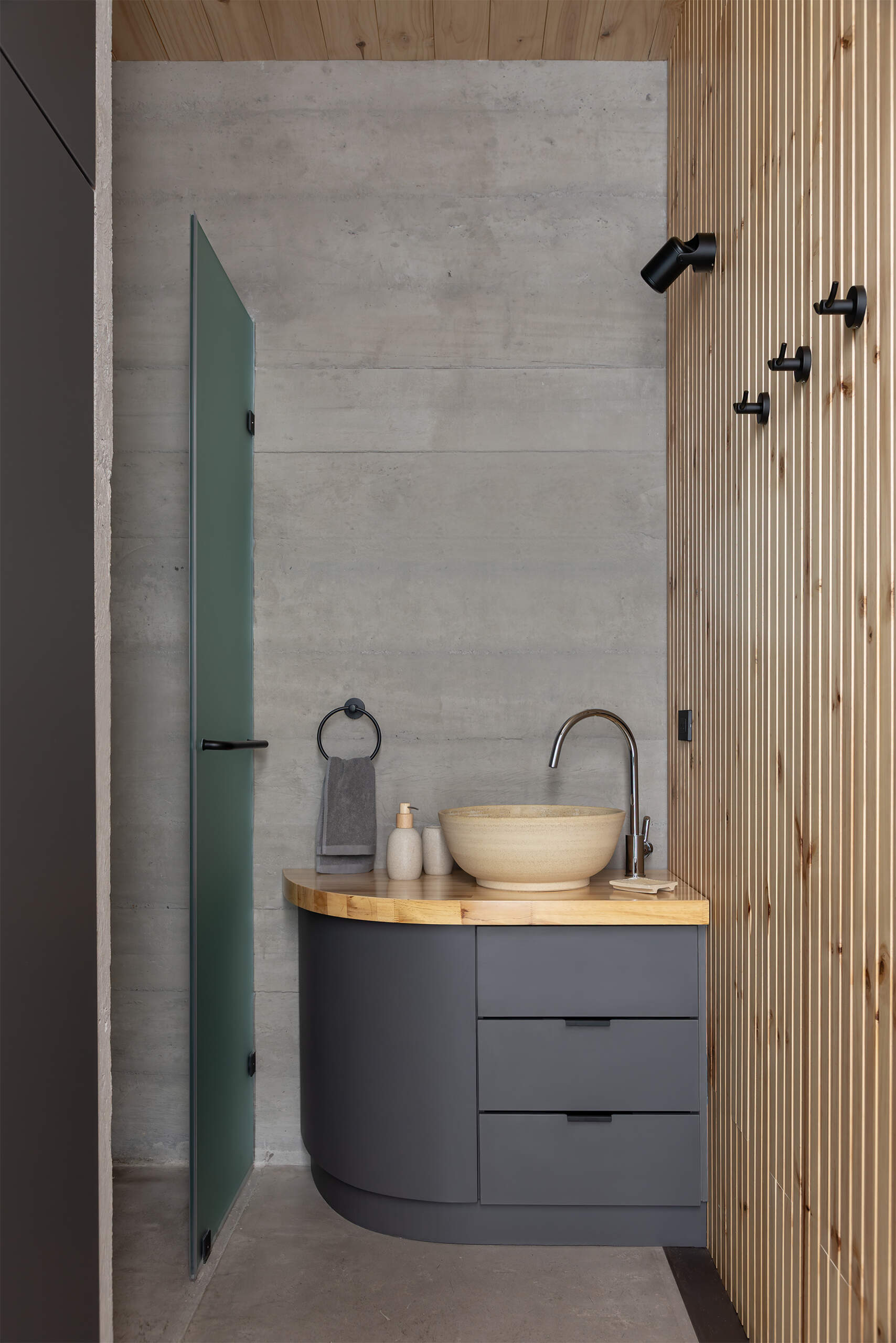
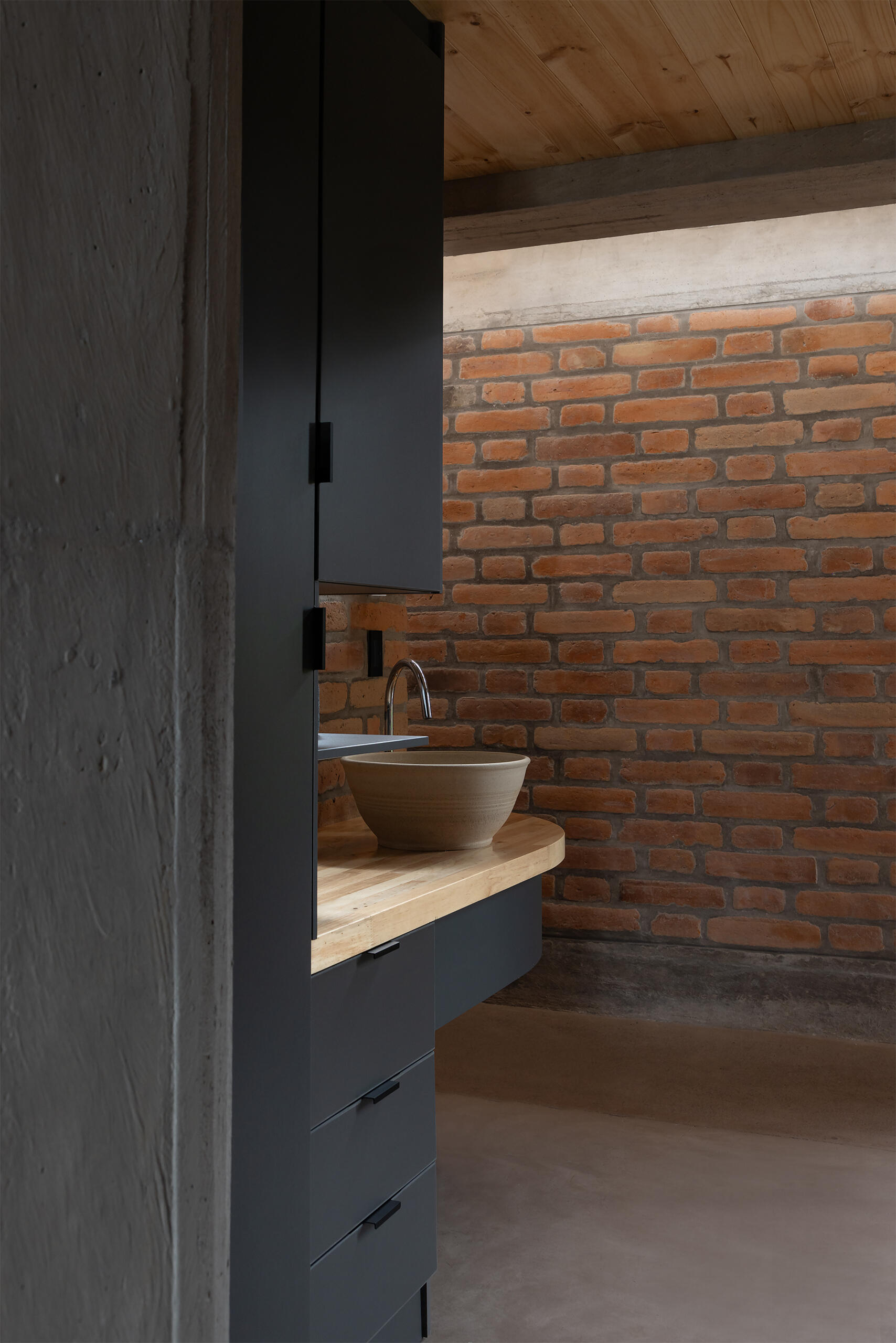
Bathrooms with Custom Fixed Furniture
Wet areas are strategically located within the adjusted structural pattern that supports the loft extension. These functions are integrated into the lower portions of the structure, along with covered parking, consolidating services in a compact footprint. Custom fixed bathroom furniture, resolved by specialized craftsmen, reinforces the clarity of the exposed material palette.
A Glimpse at the Building Process
These behind-the-scenes images highlight key moments from the build, from the exposed ribs to the evolving form.
Reading the Structure
The clarity of La Miradora’s structure is evident in its drawings. The rhythm of ribs, the adaptation to slope, and the shift in pattern at the loft are all legible at a glance.
Plans reveal how the upper level dominates while the lower floor tucks beneath, shaped by the terrain. Sections highlight how the brick base rises and disappears, and how the ramp mediates between inside and out.
La Miradora demonstrates how a house can be defined by its altitude and surroundings. By positioning itself at the highest point of the lot and structuring every decision around views, slope, and climate, the home transforms a remote highland plot into a precisely organized place to live.