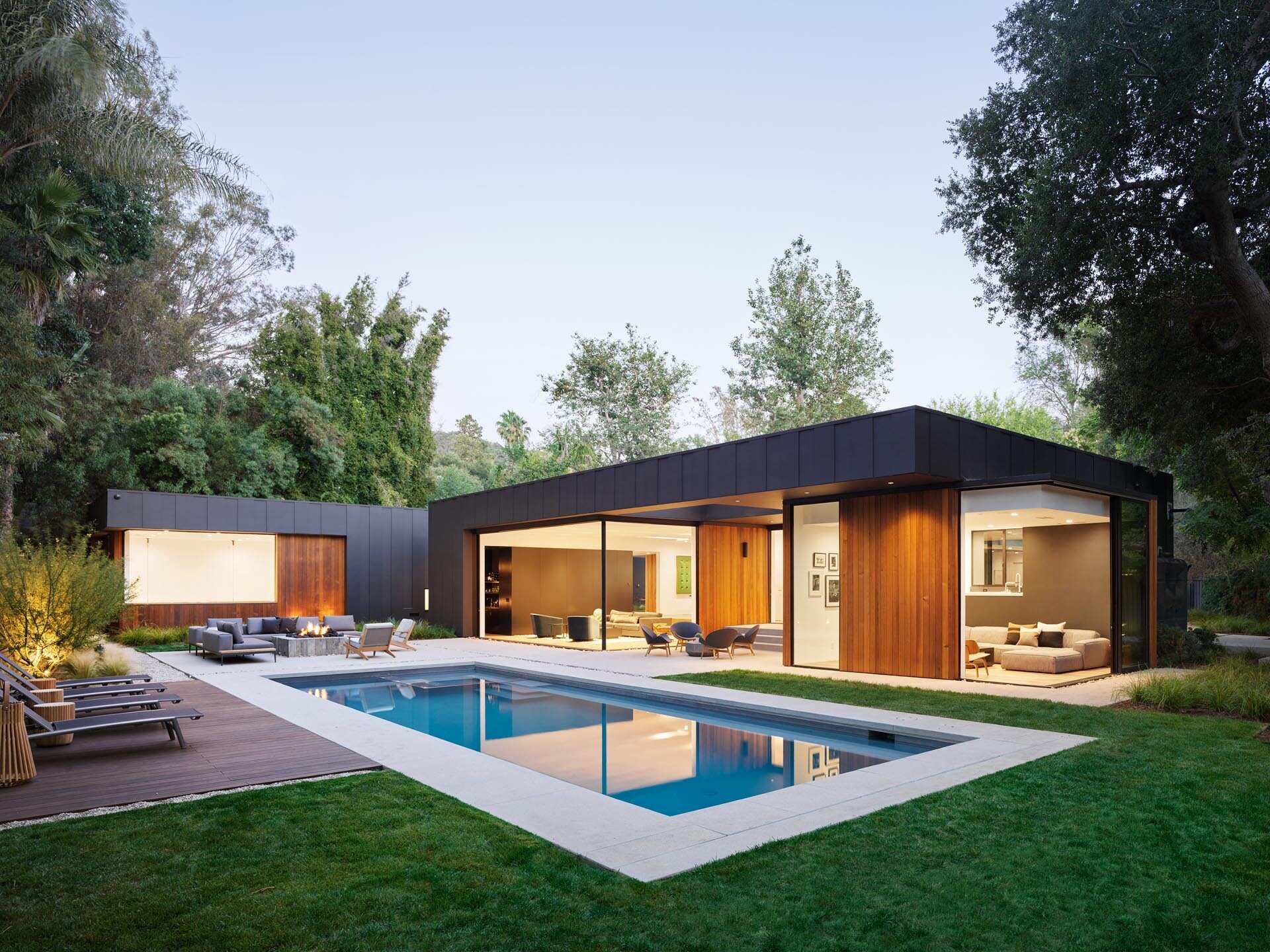
In Los Angeles, Assembledge+, in collaboration with Susan Mitnick Design, created a modern residence organized as three single-story pavilions linked by glass corridors. Rather than reading as one solid volume, the house reveals itself gradually through a sequence of light-filled spaces.
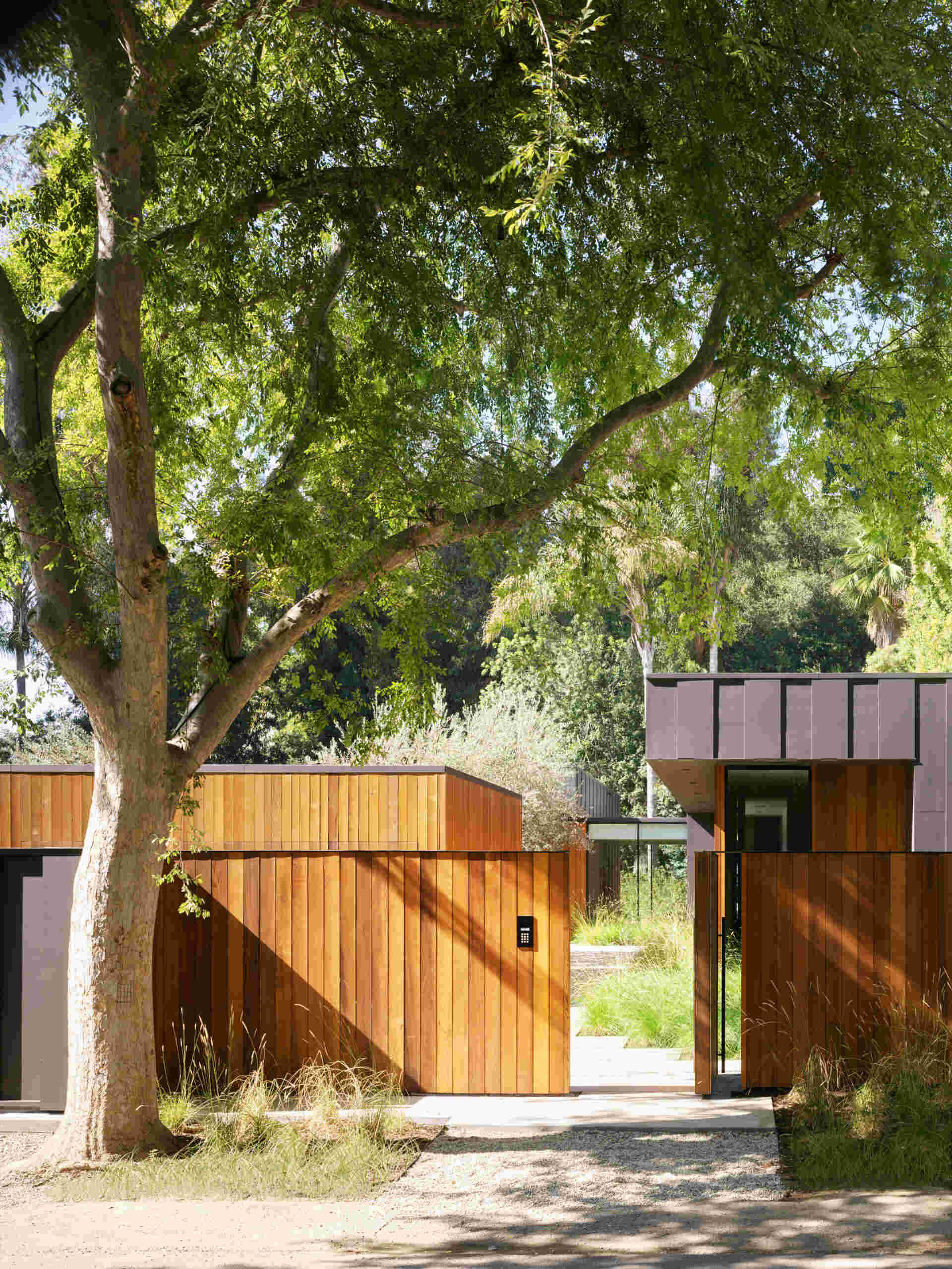
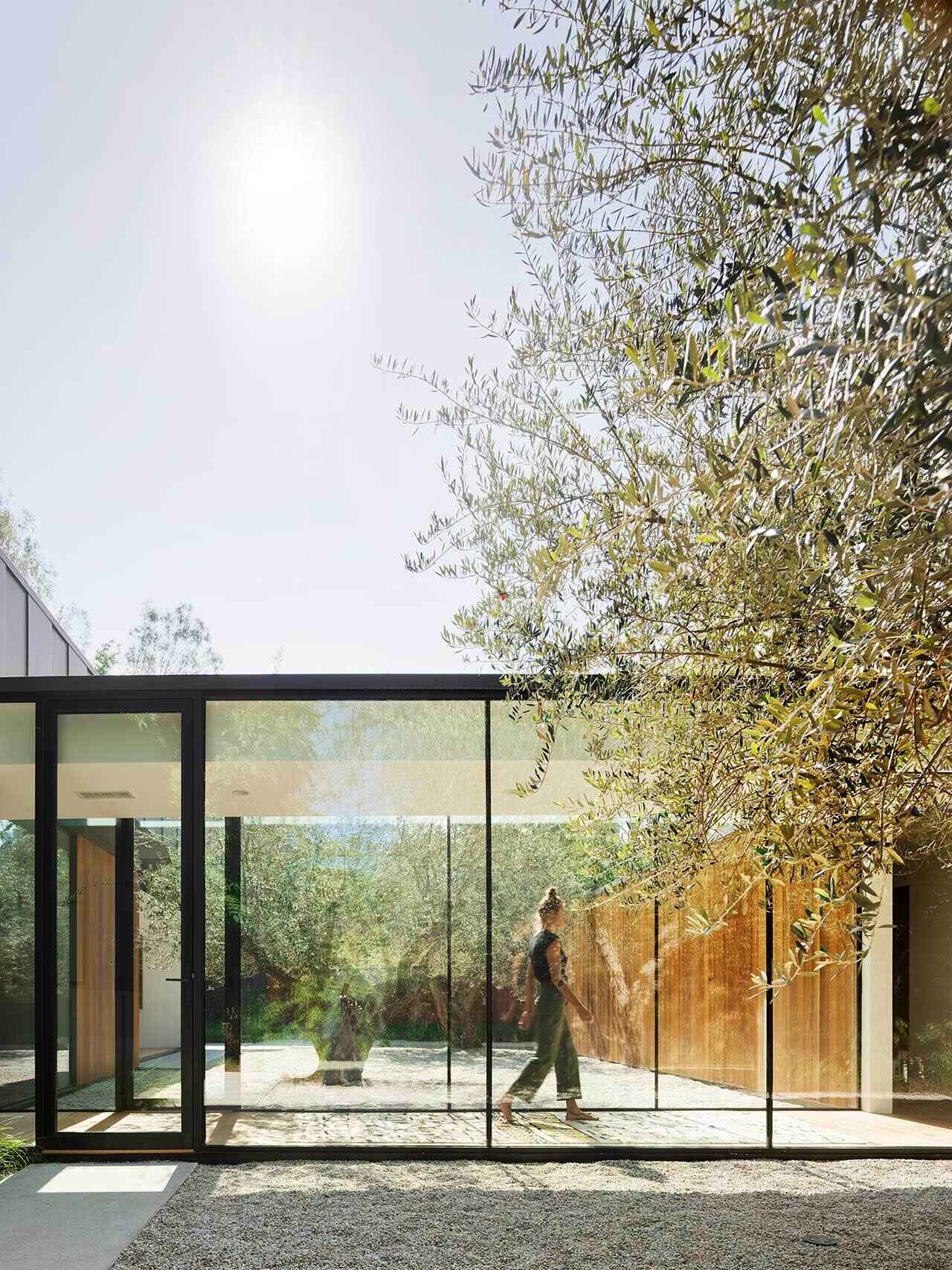
A walkway of concrete pavers, softened by wild grasses, guides visitors past a courtyard planted with olive trees. The planting feels native and relaxed, aligning with the architects’ intent to engage the house with its natural landscape from the very beginning.
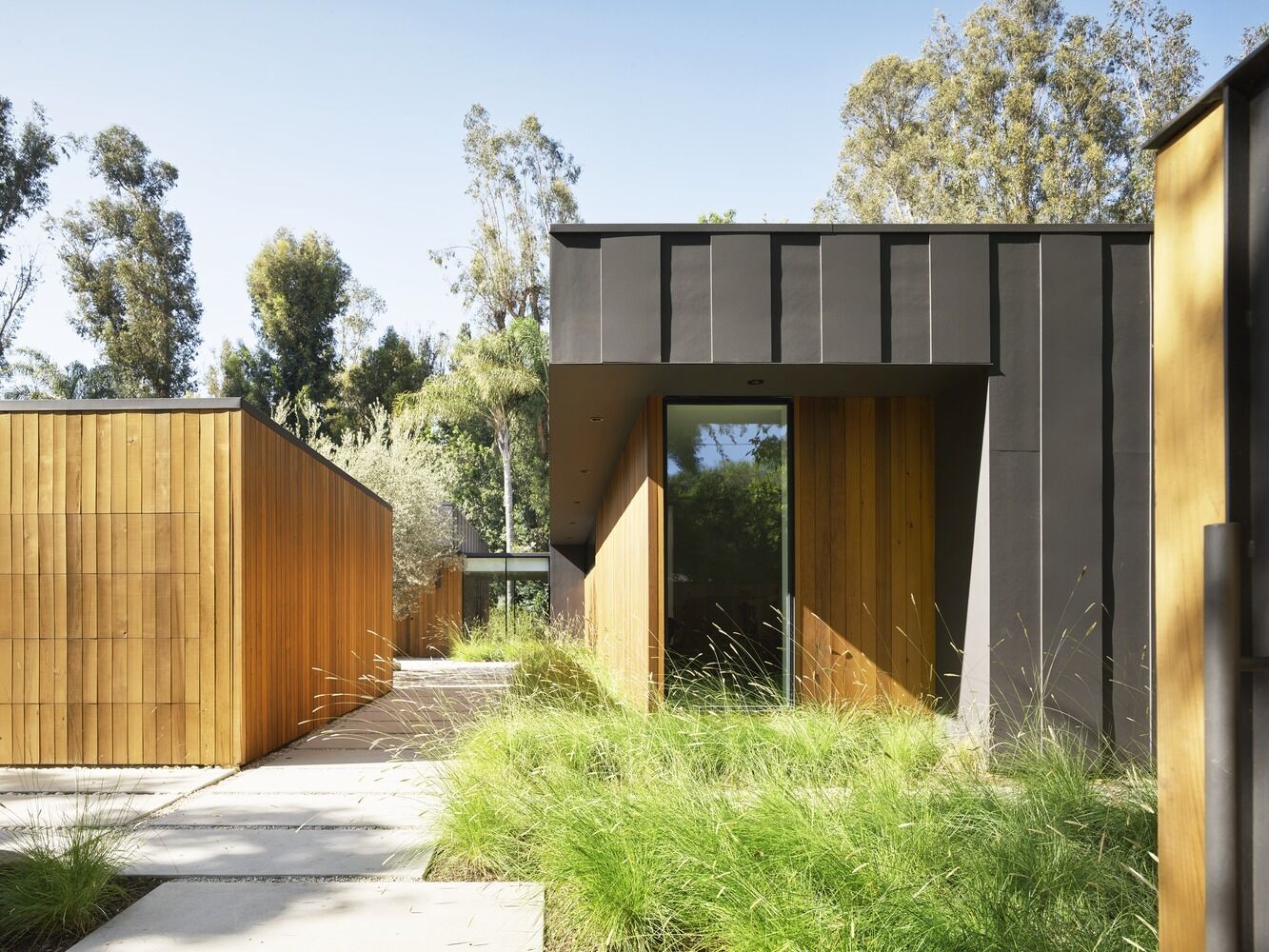
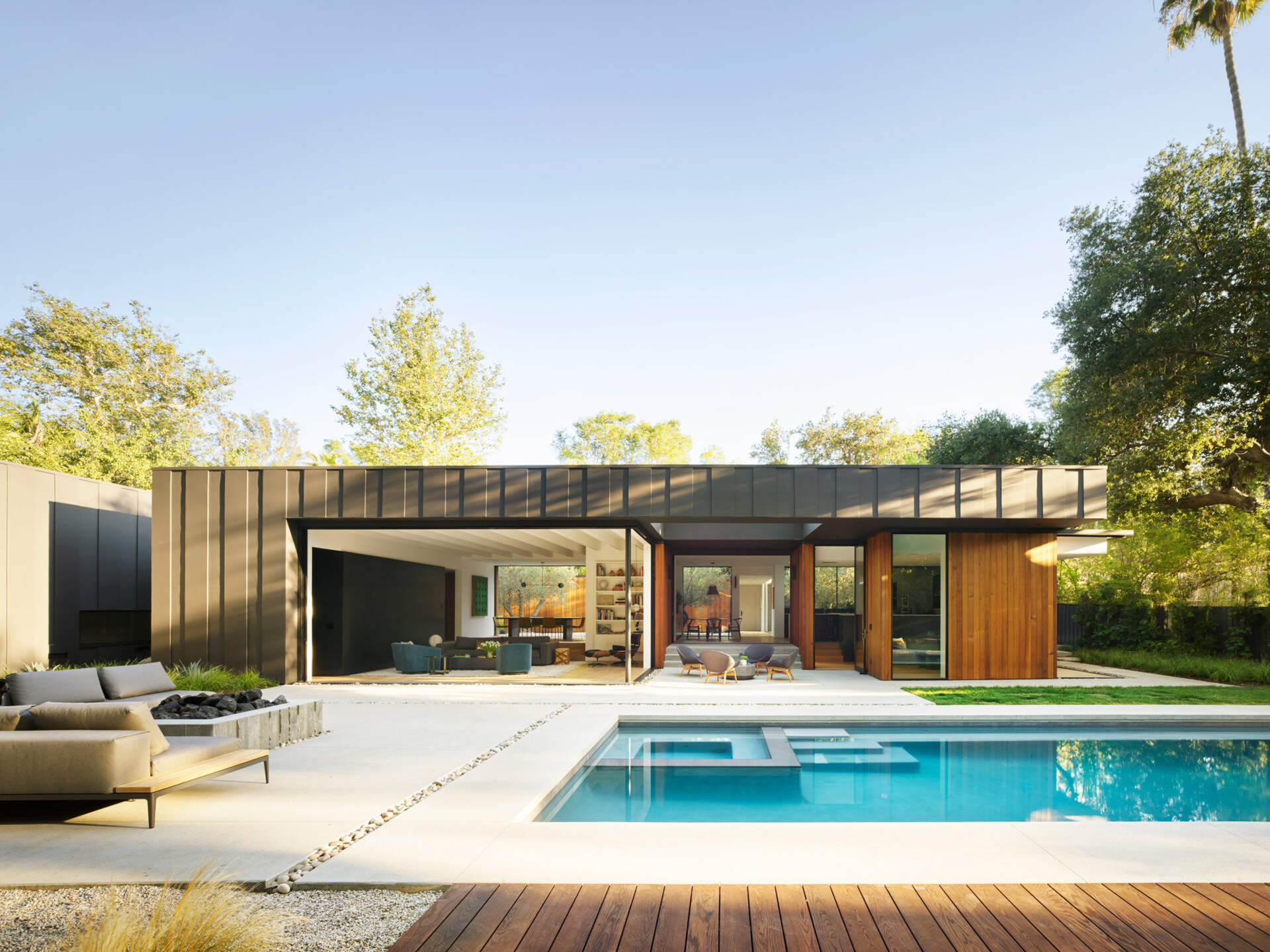
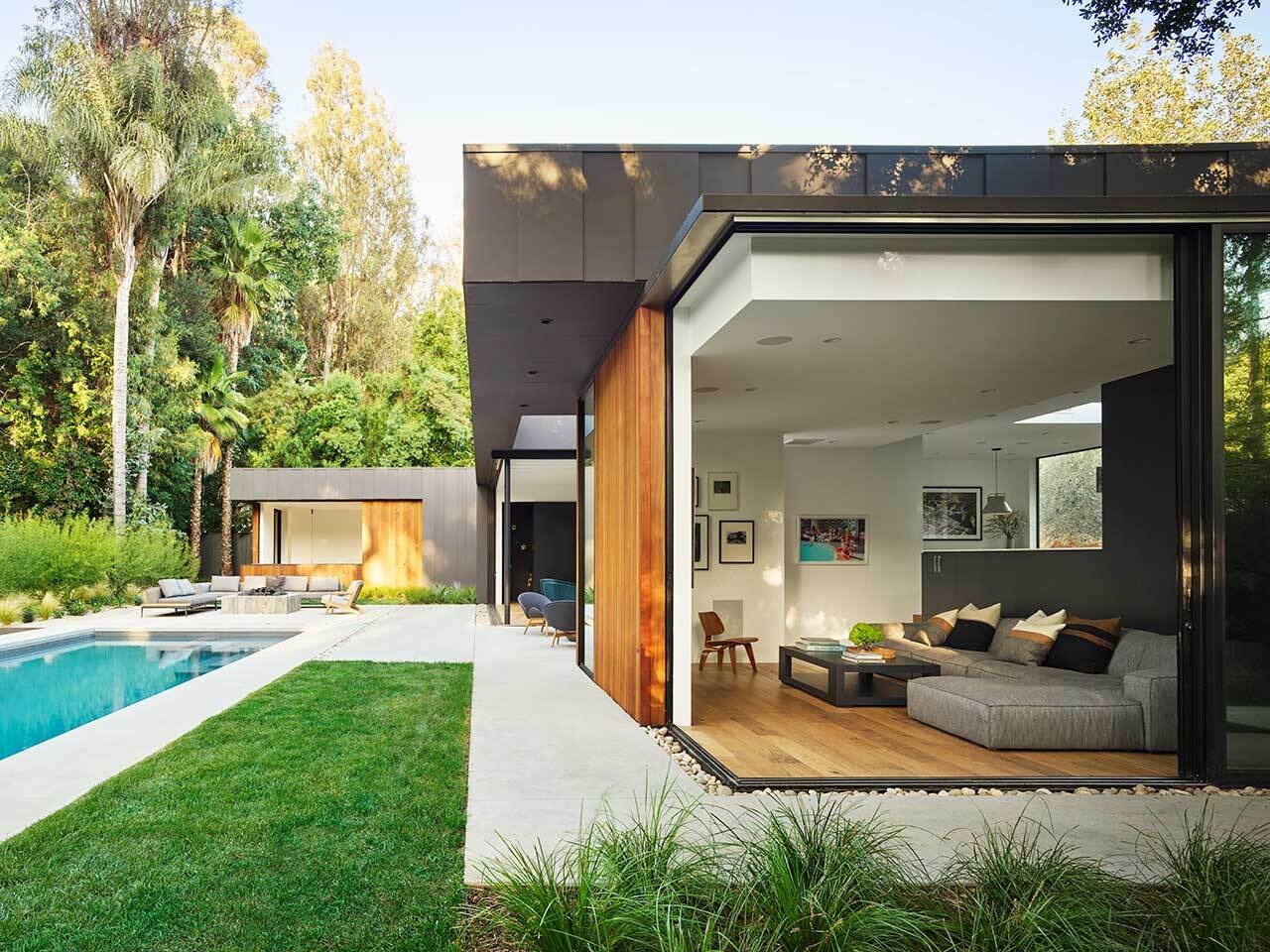
The exterior establishes the tone. Western Red Cedar wraps portions of the facade, paired with oversized charcoal-colored board and batten and cement board siding. The cedar-lined guest house and garage pavilion sets a datum line that visually links the larger living and sleeping volumes. Deep overhangs extend outward, tempering solar heat and shielding interiors from direct sun exposure while reinforcing the home’s horizontal profile.
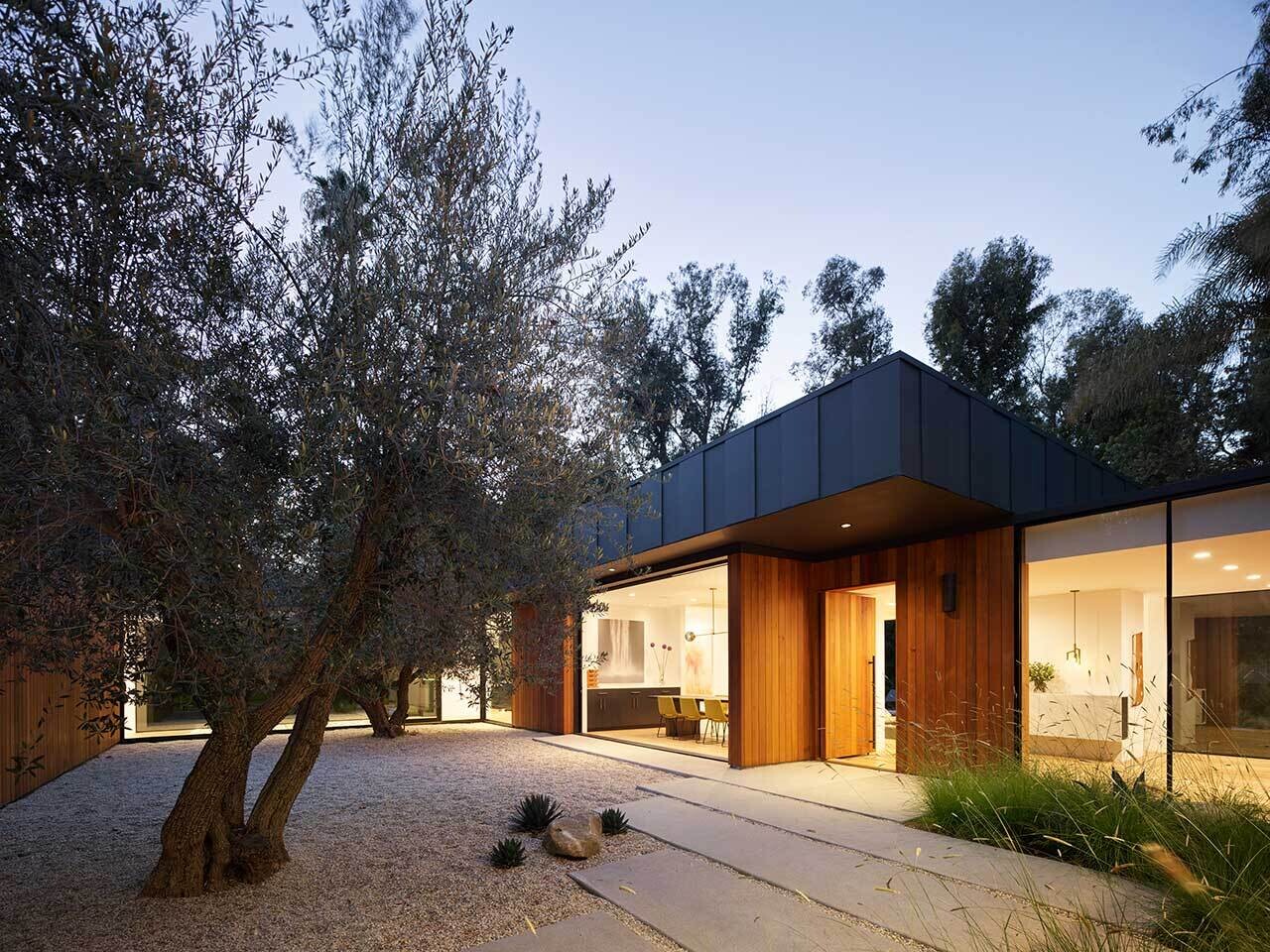
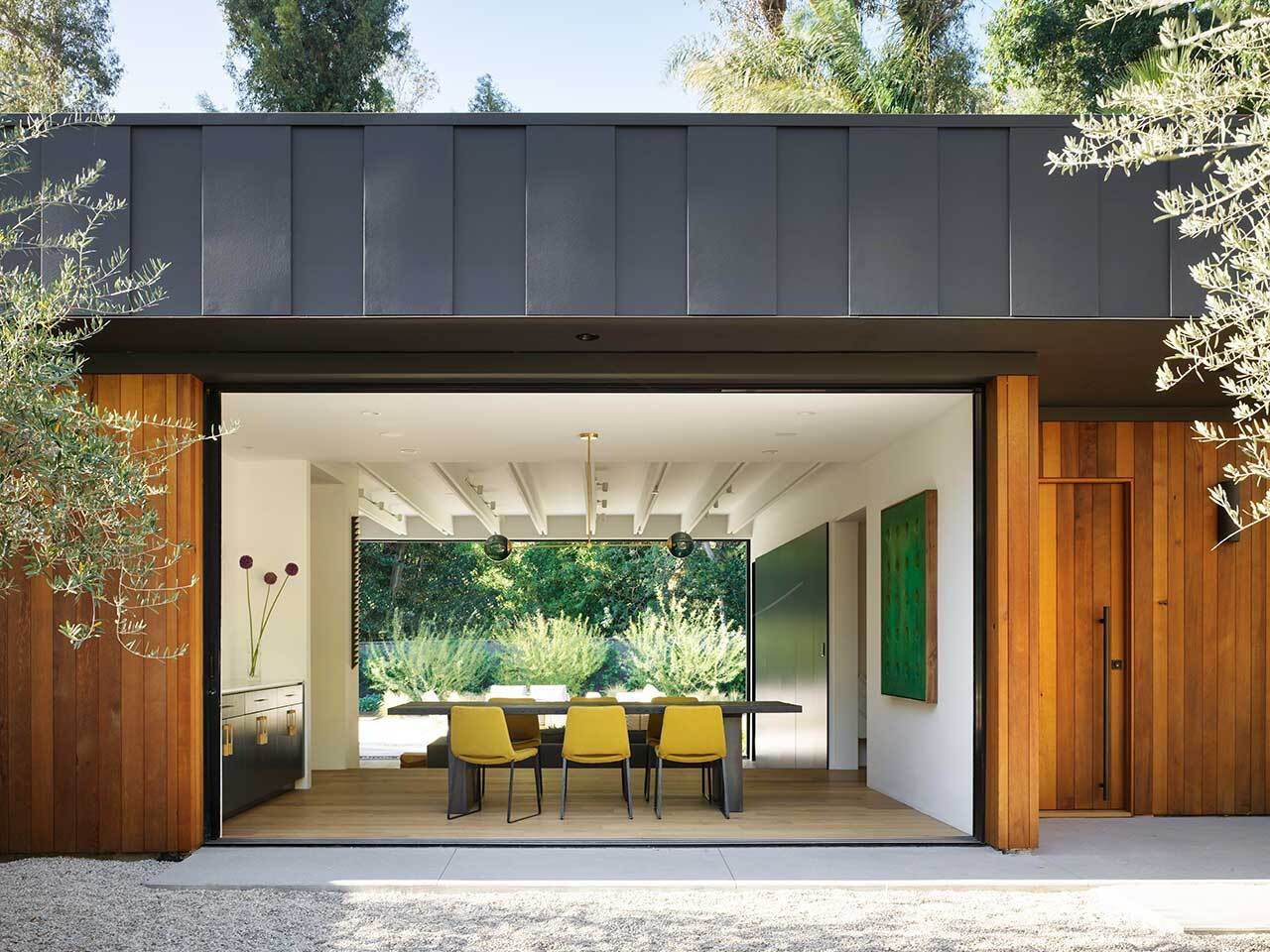
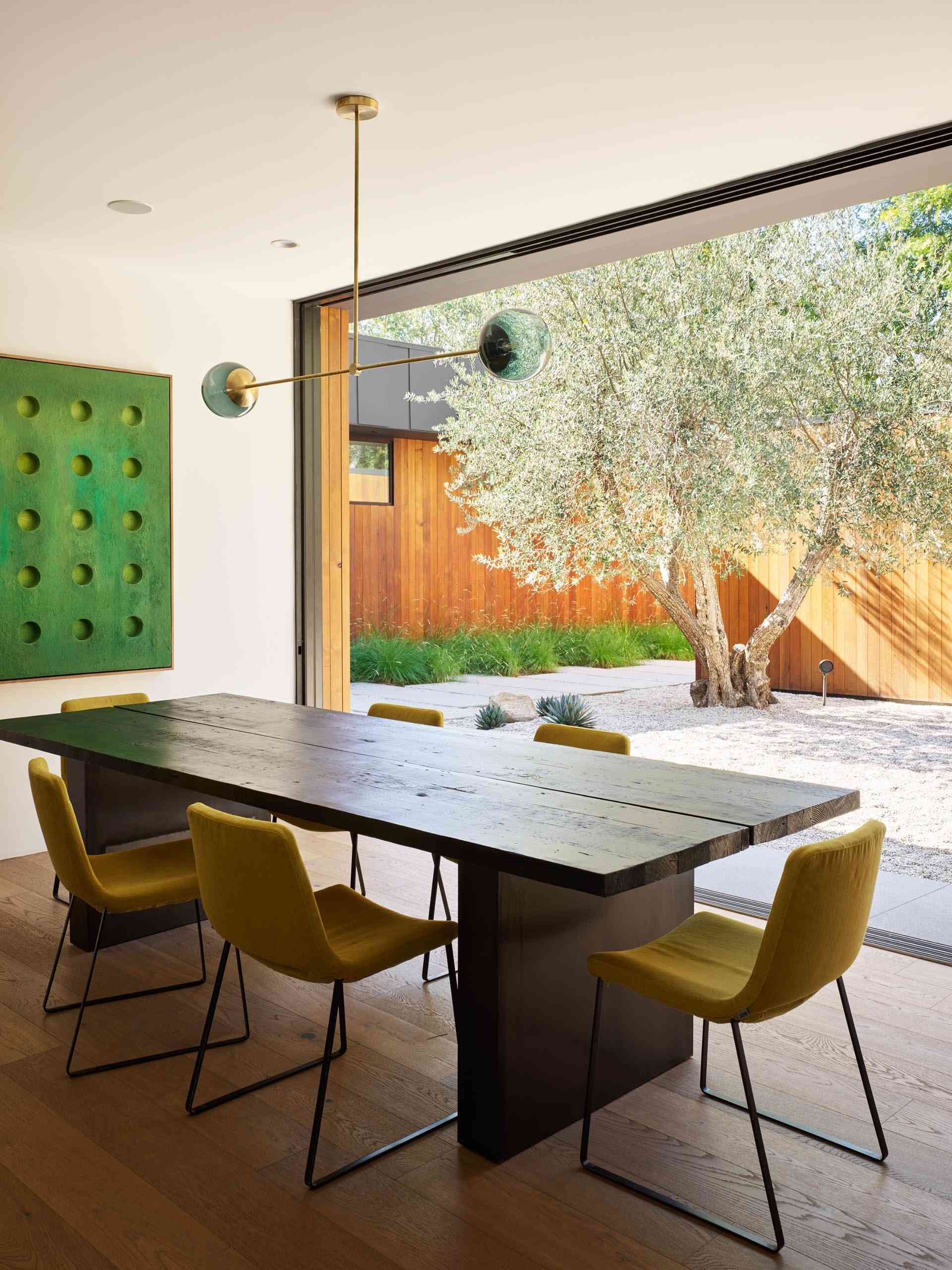
Just inside the front door, the dining room sits within easy reach of the courtyard. Sliding doors allow it to open directly to the olive trees outside, turning meals into indoor-outdoor occasions. Light filters through large expanses of glass, one of several strategies used to create what the architects describe as layered scenes.
Throughout the house, large windows, skylights and pocketing doors work together to dissolve boundaries. Sunlight moves across wooden floors and glances off marble surfaces, animating the otherwise restrained material palette.
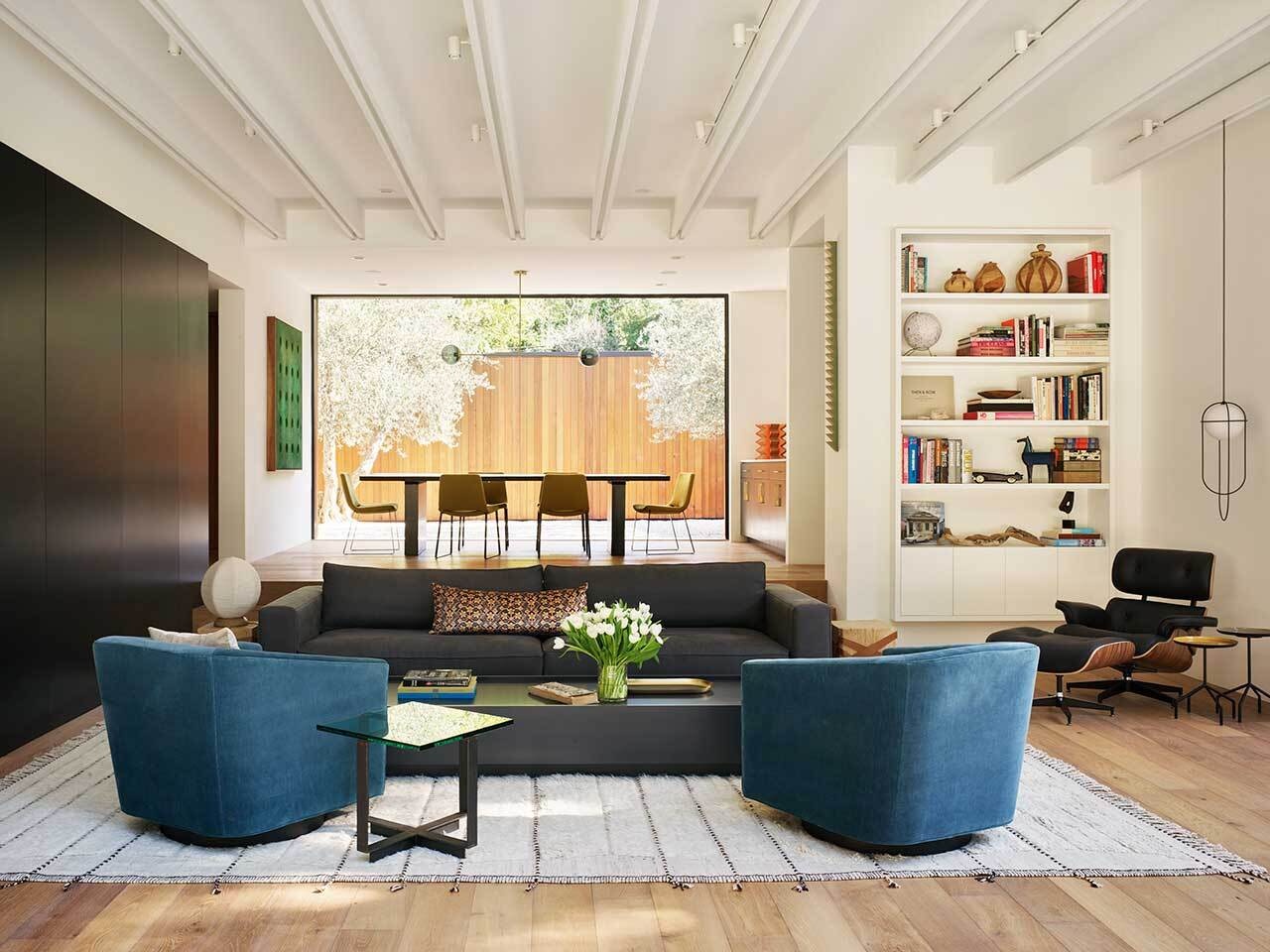
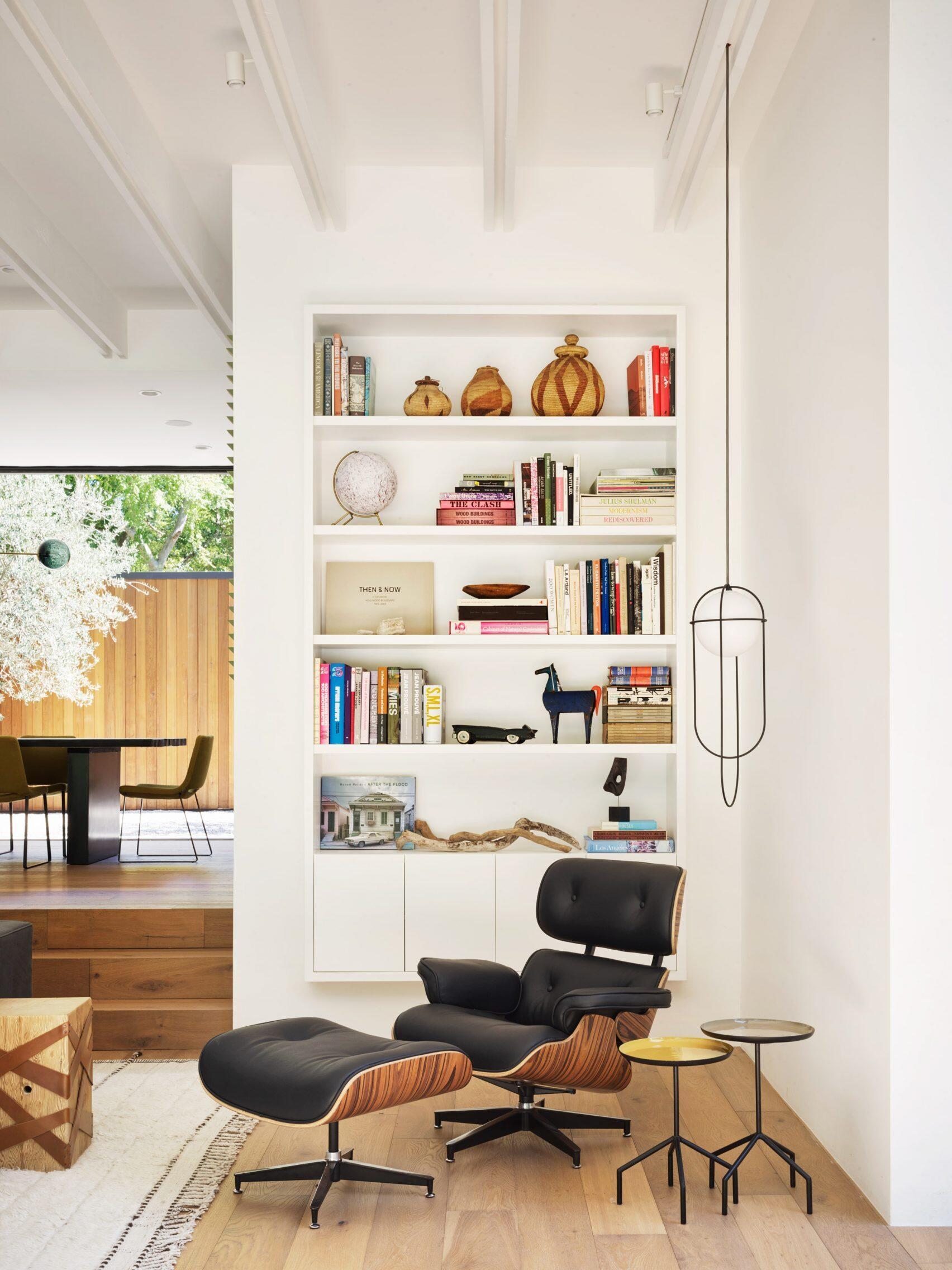
Stepped down from the dining area, the living room creates subtle spatial drama without breaking the home’s single-story logic. One corner is dedicated to reading, anchored by a built-in bookshelf and an Eames Lounge Chair and Ottoman. The placement draws attention to the height of the space while maintaining intimacy.
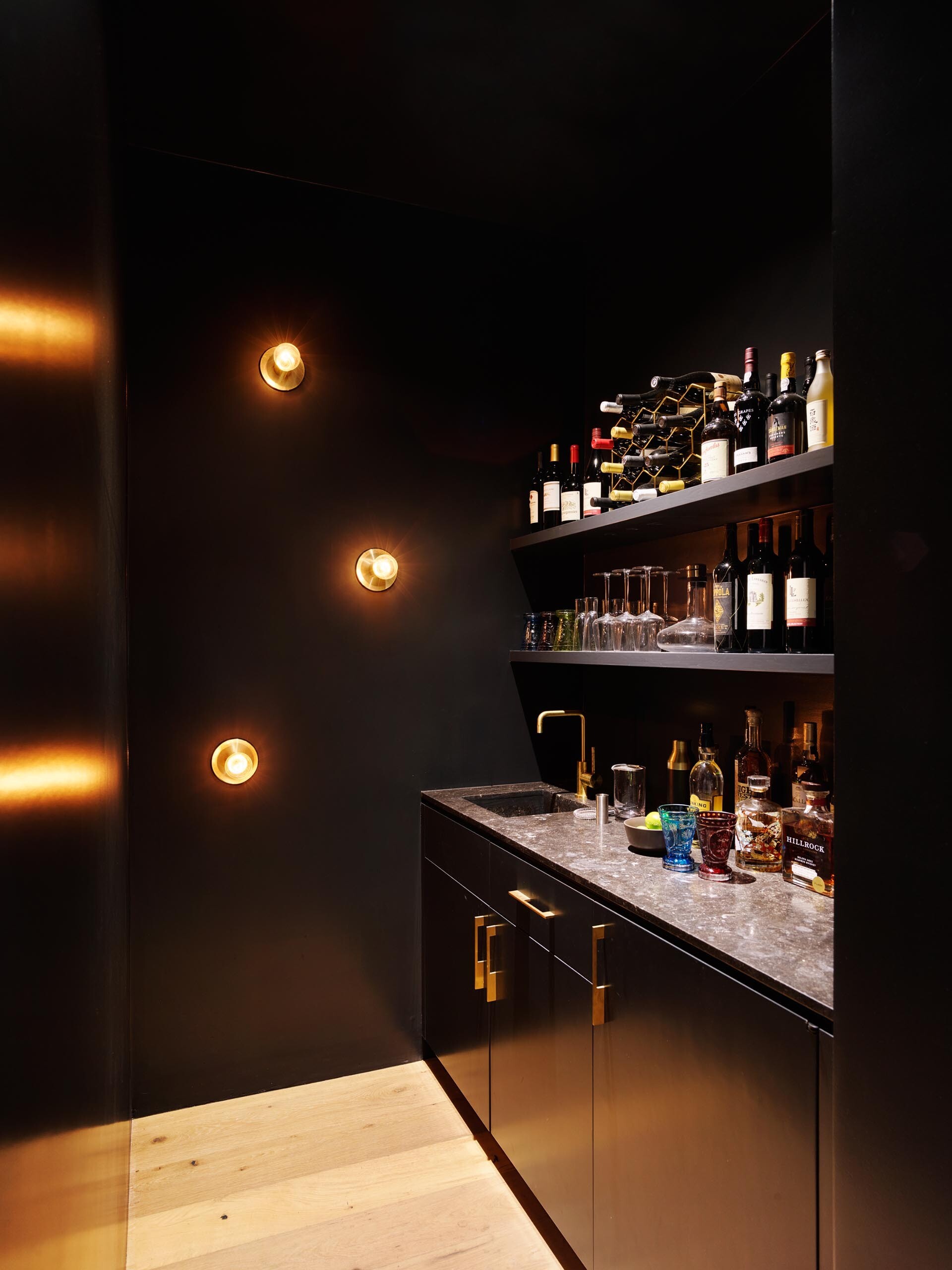
Nearby, a small black bar is tucked discreetly to the side. Shelving displays bottles and glassware, reinforcing the home’s focus on entertaining without overwhelming the room’s minimalist composition.
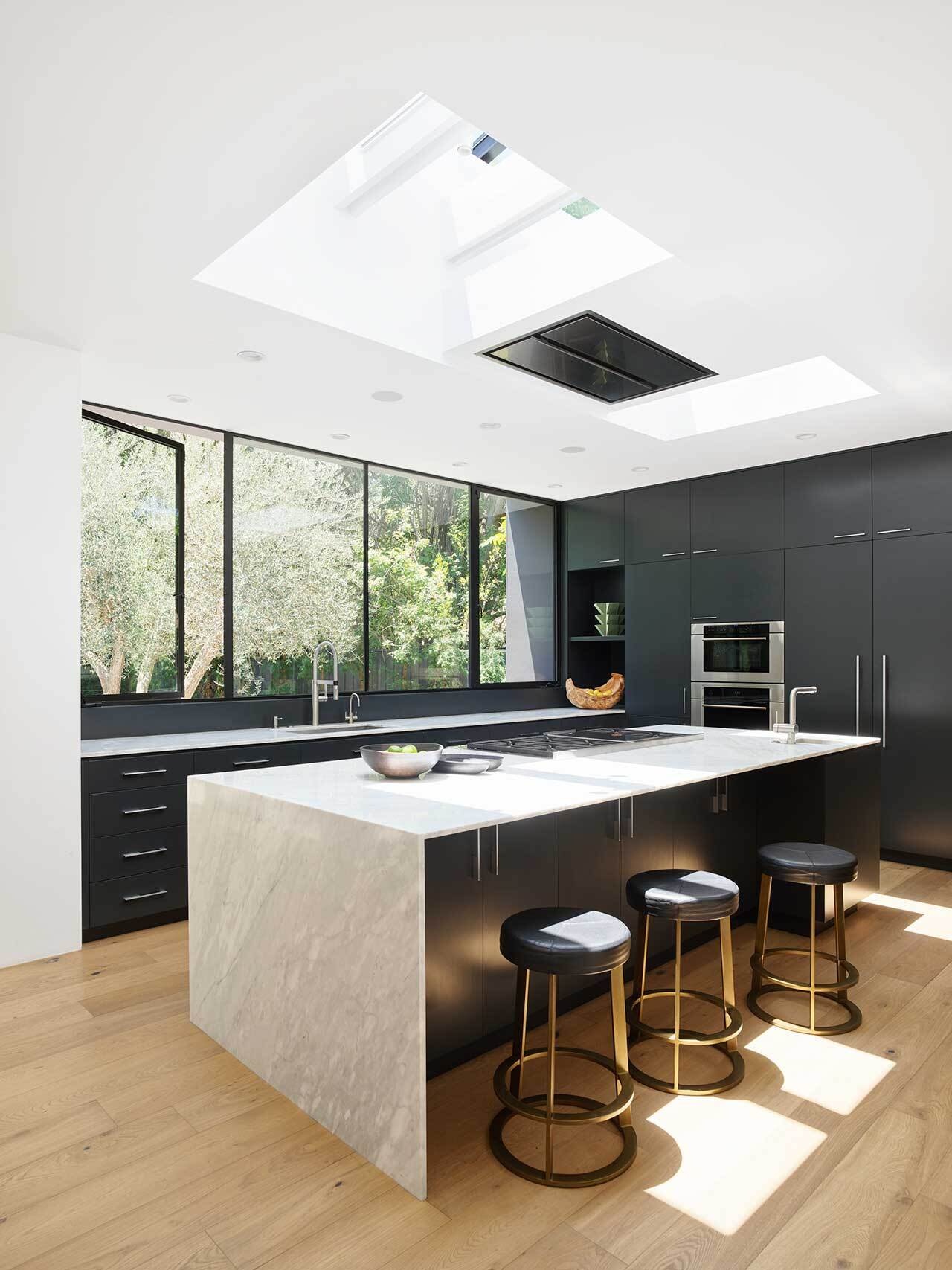
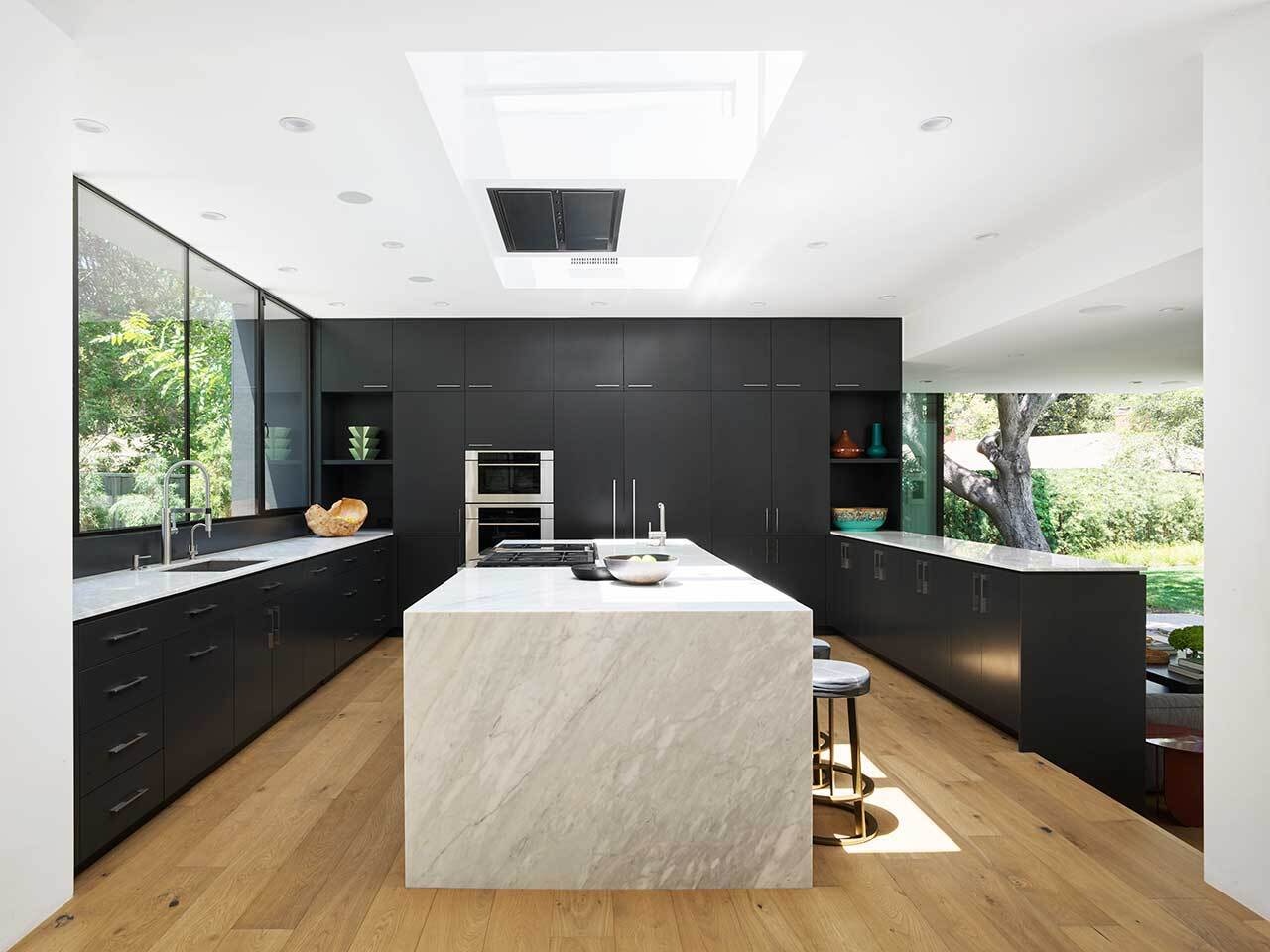
The kitchen lies just beyond a short hallway, its skylights pulling daylight down into the core of the house. Calcutta Cream marble countertops contrast with matte black cabinetry, balancing warmth and restraint.
Designed for uninterrupted flow between the kitchen, breakfast area and family room, the main living spaces operate as a single continuous volume. Transparency and movement define the experience more than walls do.
The living areas extend outward to the backyard, where a 40-foot-long pool anchors the outdoor entertaining zones. An outdoor lounge with a fire pit creates another gathering space, echoing the openness inside.
Above, more than fifty solar panels sit atop the expansive roof plane, allowing the house to operate with sustainable autonomy from the city power grid.
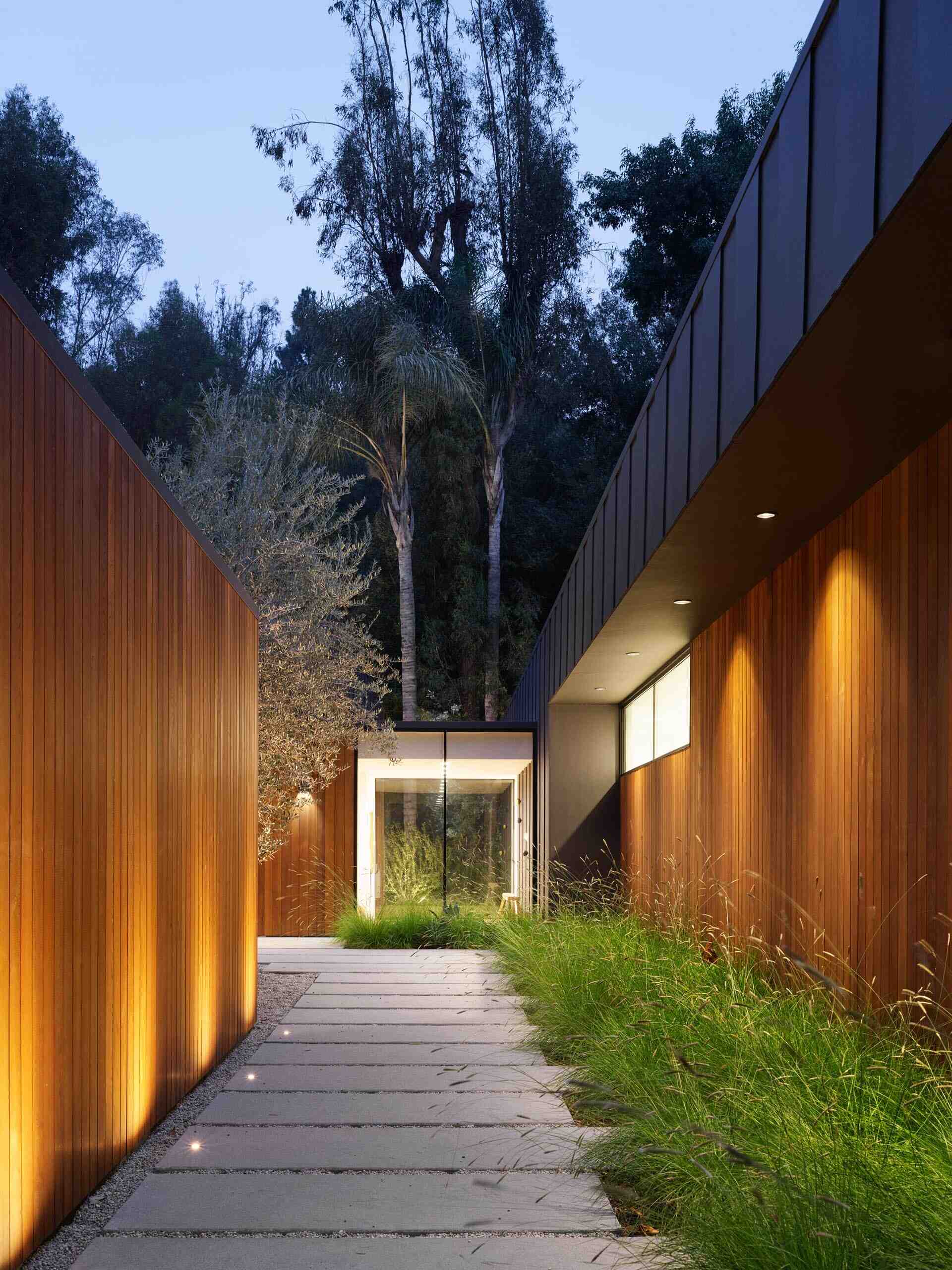
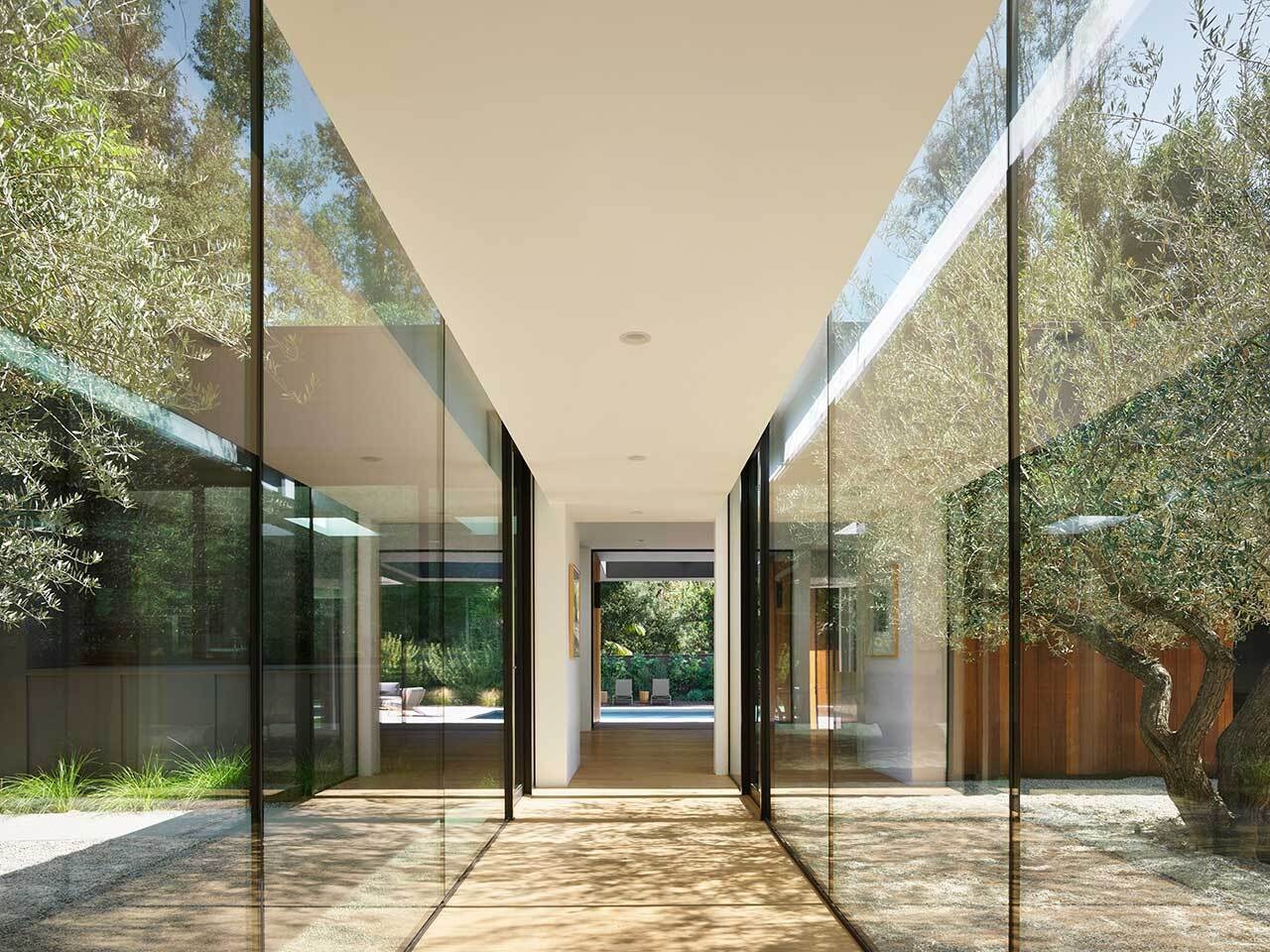
A closer look at one of the glass-lined hallways reveals how the pavilions communicate. These transparent connectors frame views of planting and sky, making transition itself an experience.
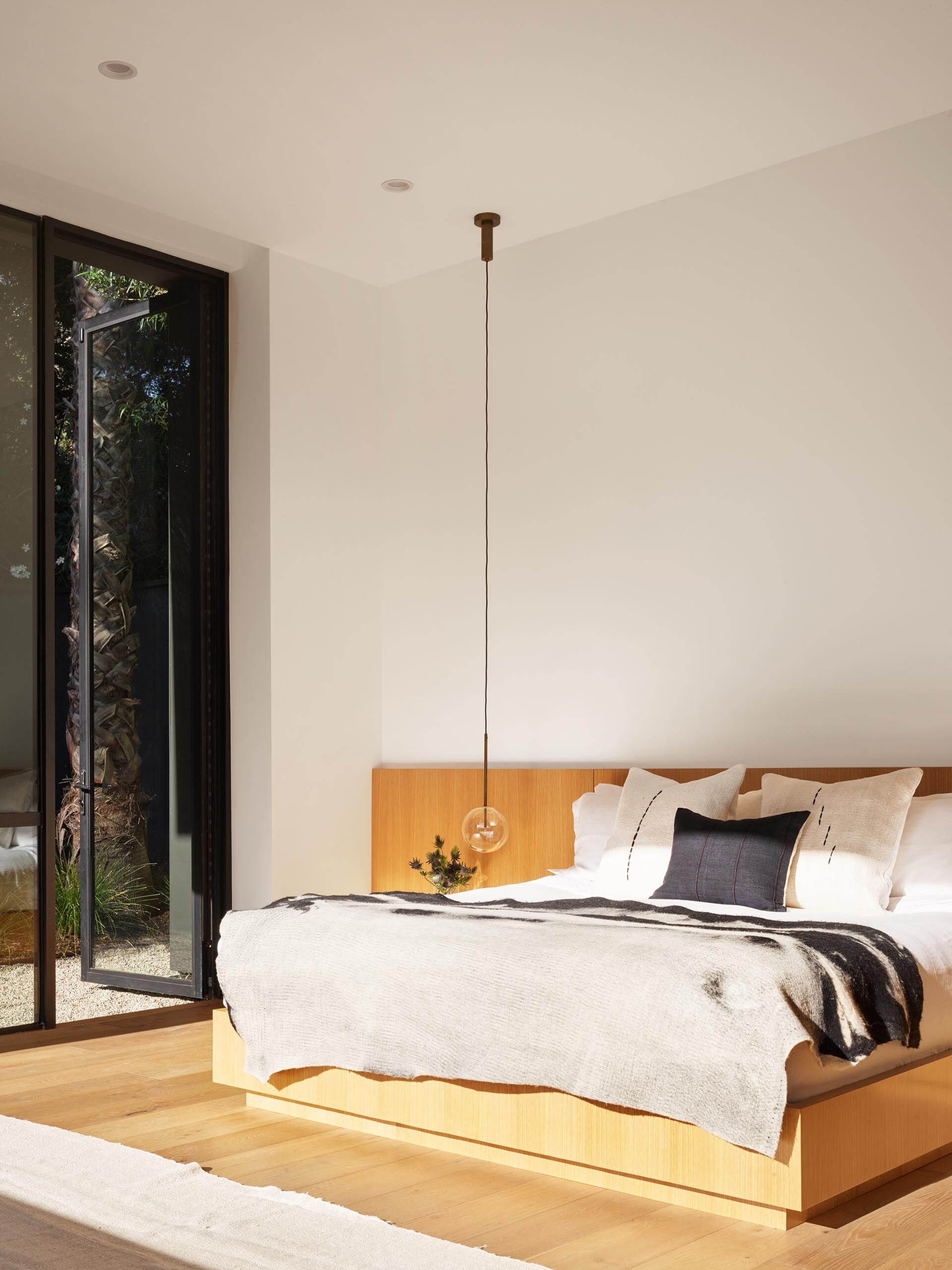
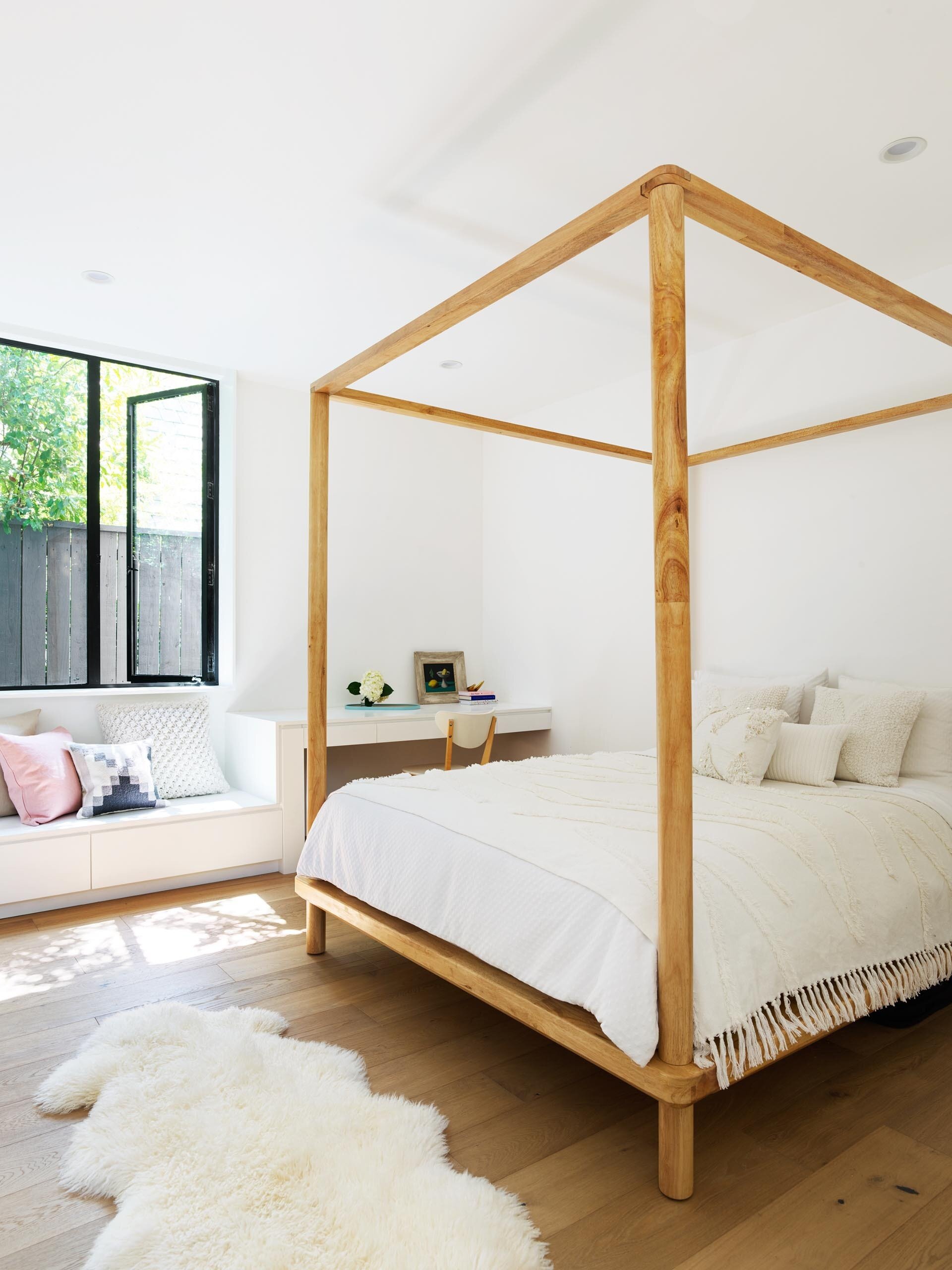
In one bedroom, a pendant light hangs low beside the bed, doubling as a bedside lamp and a vertical accent that emphasizes ceiling height. In another, a four-poster wood bed frame anchors the room, complemented by a built-in desk and bench that line the wall.
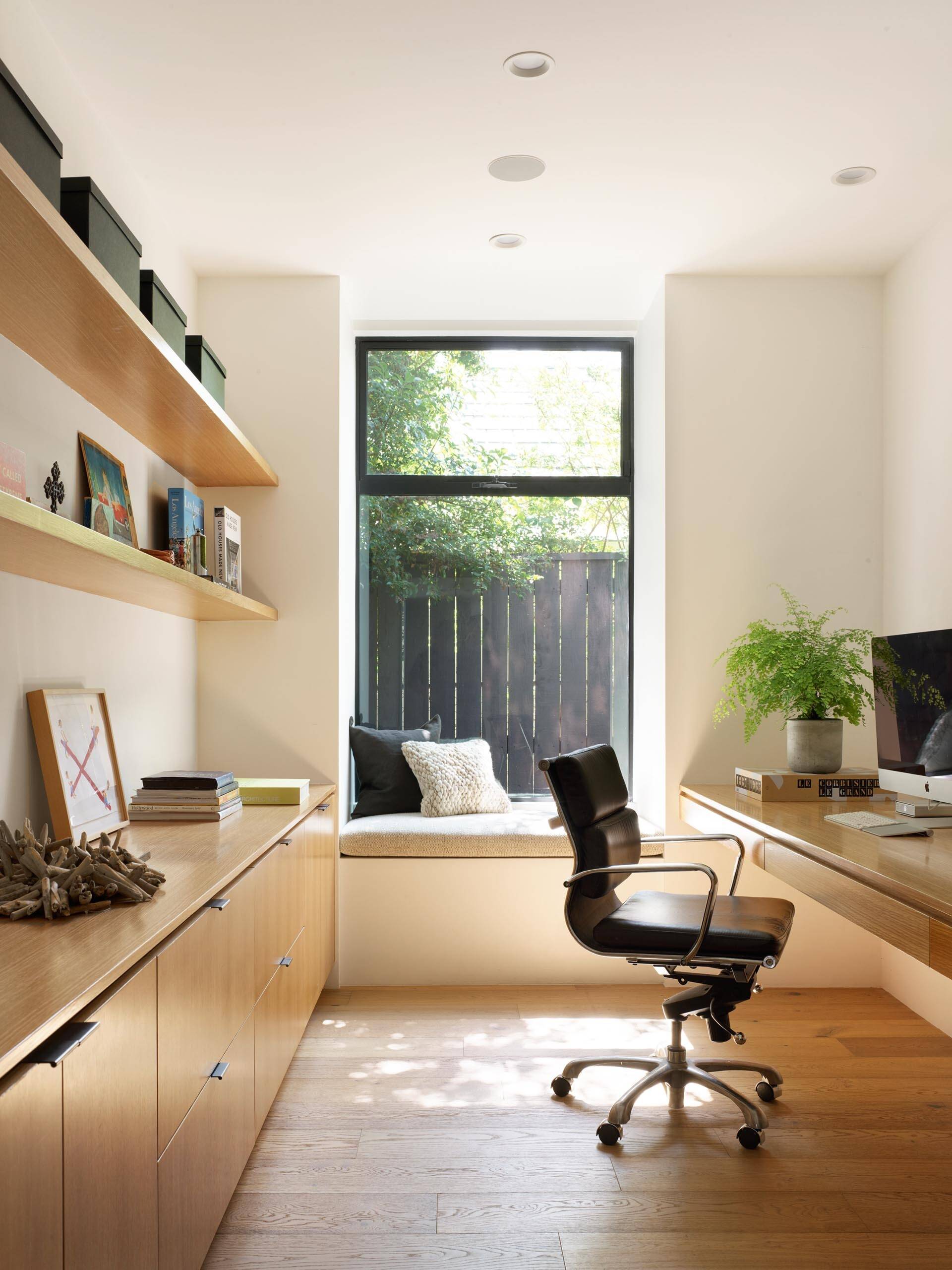
The home office includes a desk, window seat, shelving and cabinetry, offering a quieter space while maintaining visual connection to the outdoors.
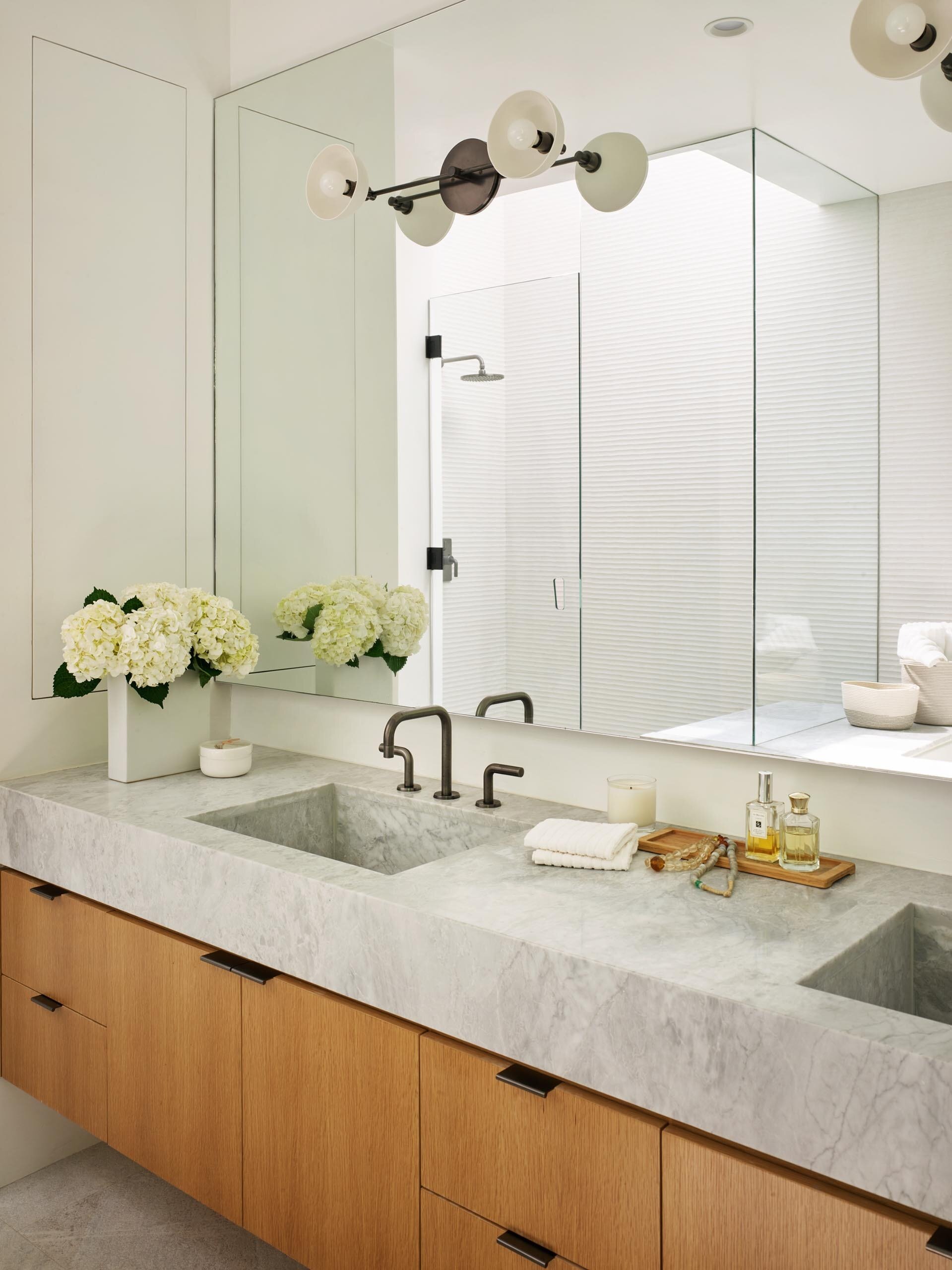
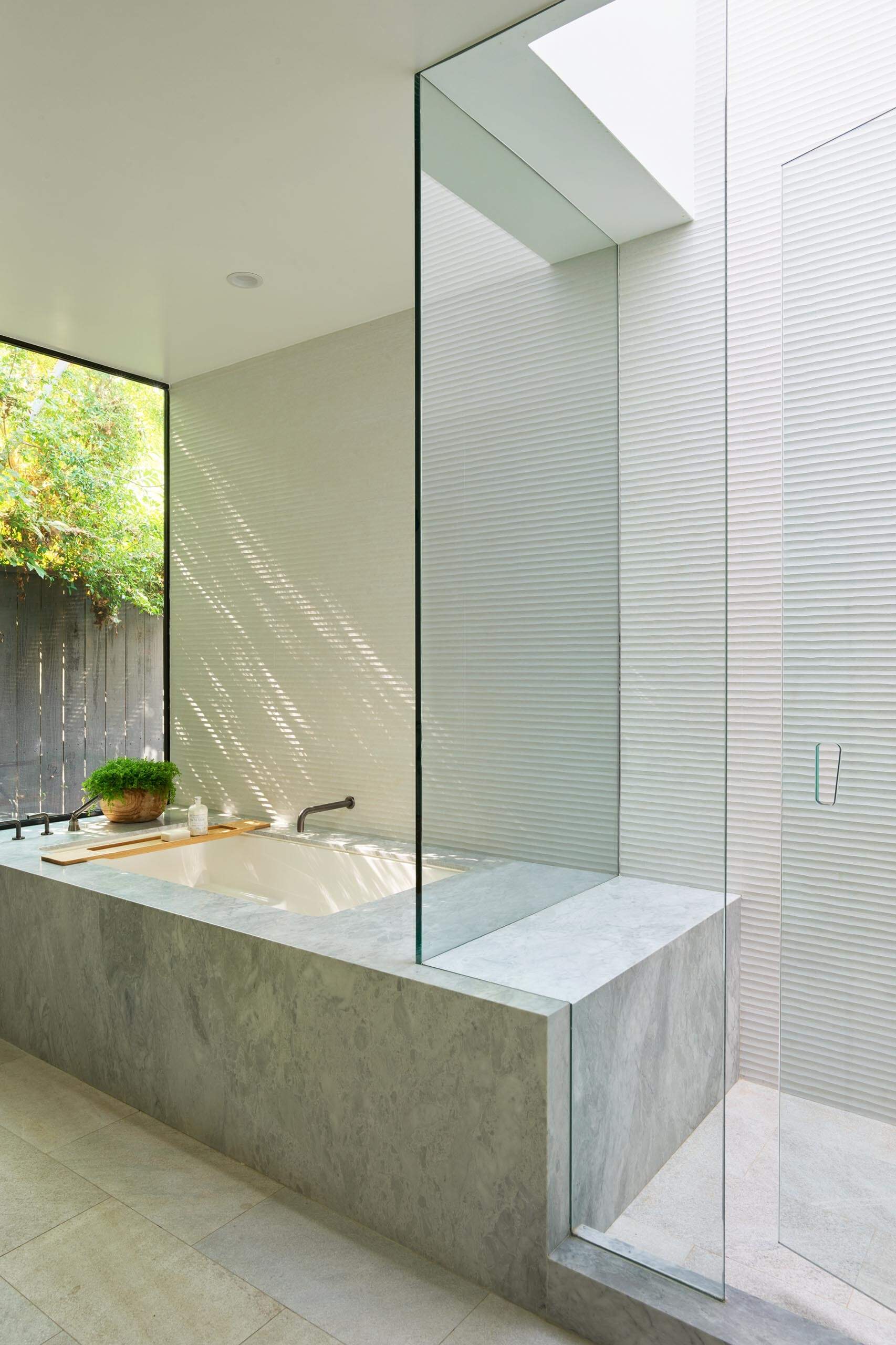
In the primary bathroom, a marble counter with integrated sinks rests on a wood vanity. Opposite, a walk-in shower lined in white tile benefits from a skylight that floods the space with natural light. Adjacent to the shower, a built-in bathtub looks out toward greenery.
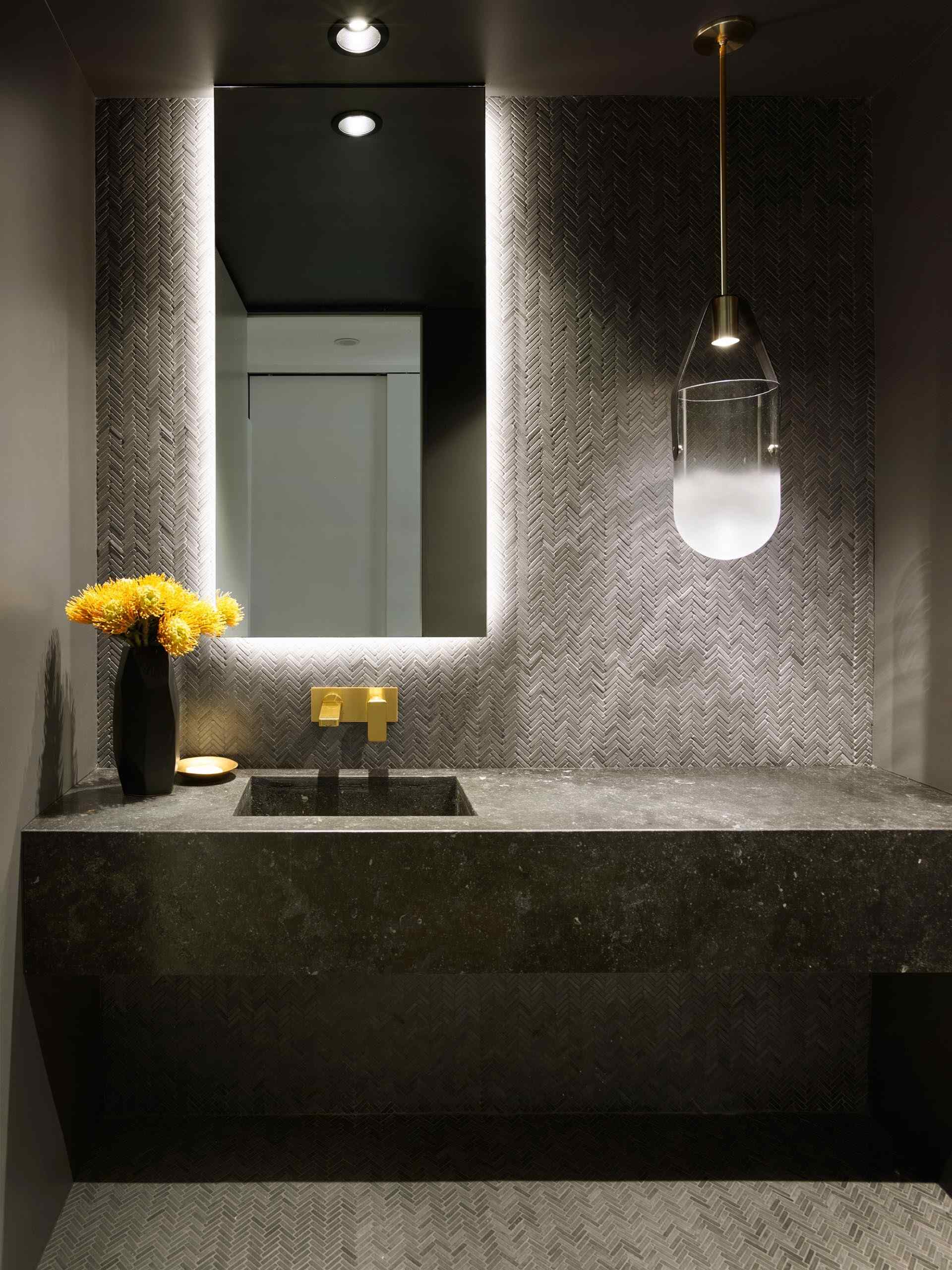
Even the powder room carries a sense of drama. Dark grey tiles, a backlit mirror and a glass pendant light create a compact but atmospheric interior that contrasts with the sunlit expanses elsewhere.
By merging architecture, interiors and landscape, the design of this home offers a contemporary model for California living.