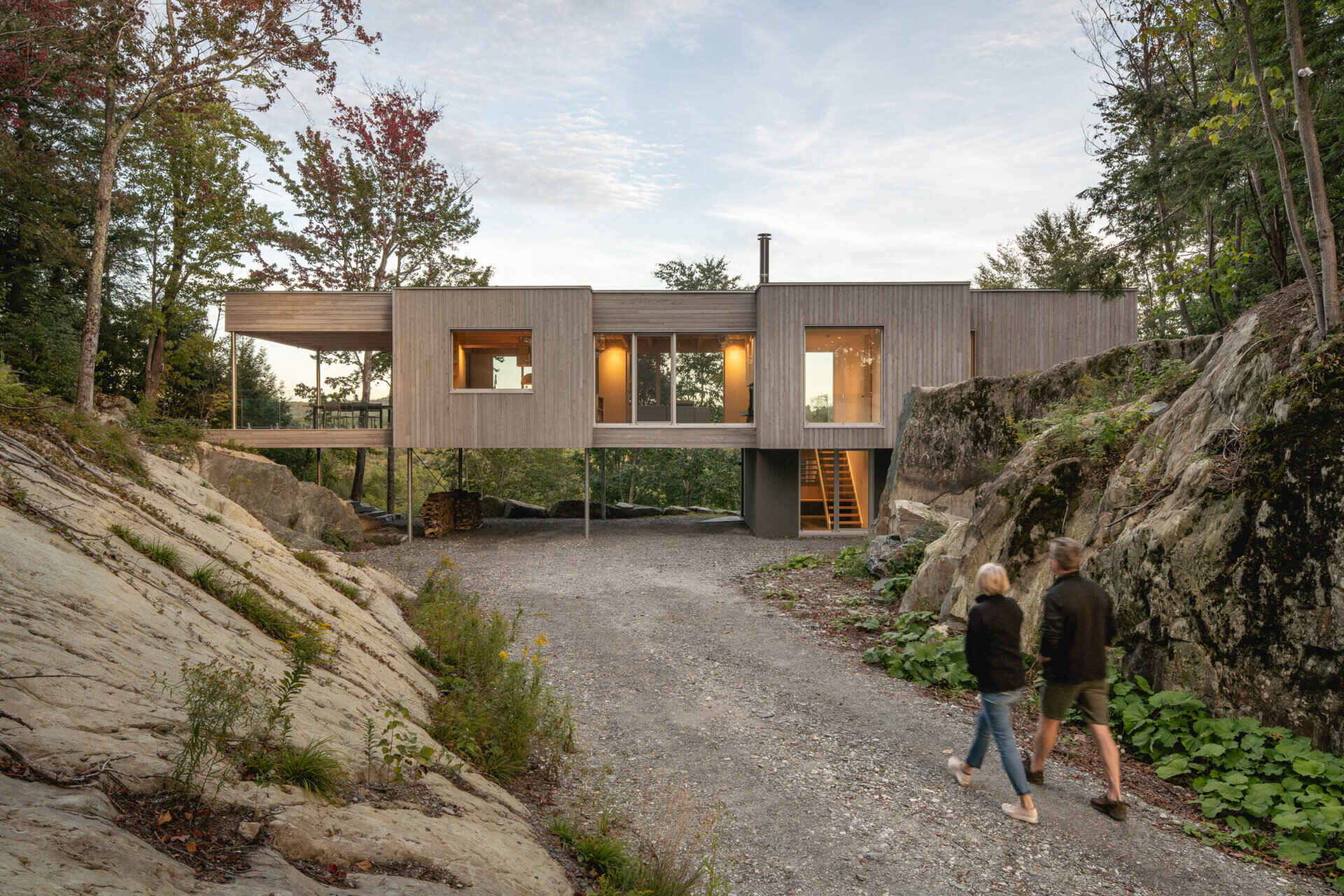
About 60 miles southeast of Montreal, in Quebec’s Eastern Townships, Natalie Dionne Architecture designed this modern home for a couple who had long imagined living closer to nature. Surrounded by mature hemlock and deciduous trees, the project began with a simple goal, create a home immersed in the forest.
The three acre property included rocky embankments and dense tree cover. Rather than clearing the site, the architects studied the terrain carefully to find a location that preserved the landscape while allowing the house to receive natural light.
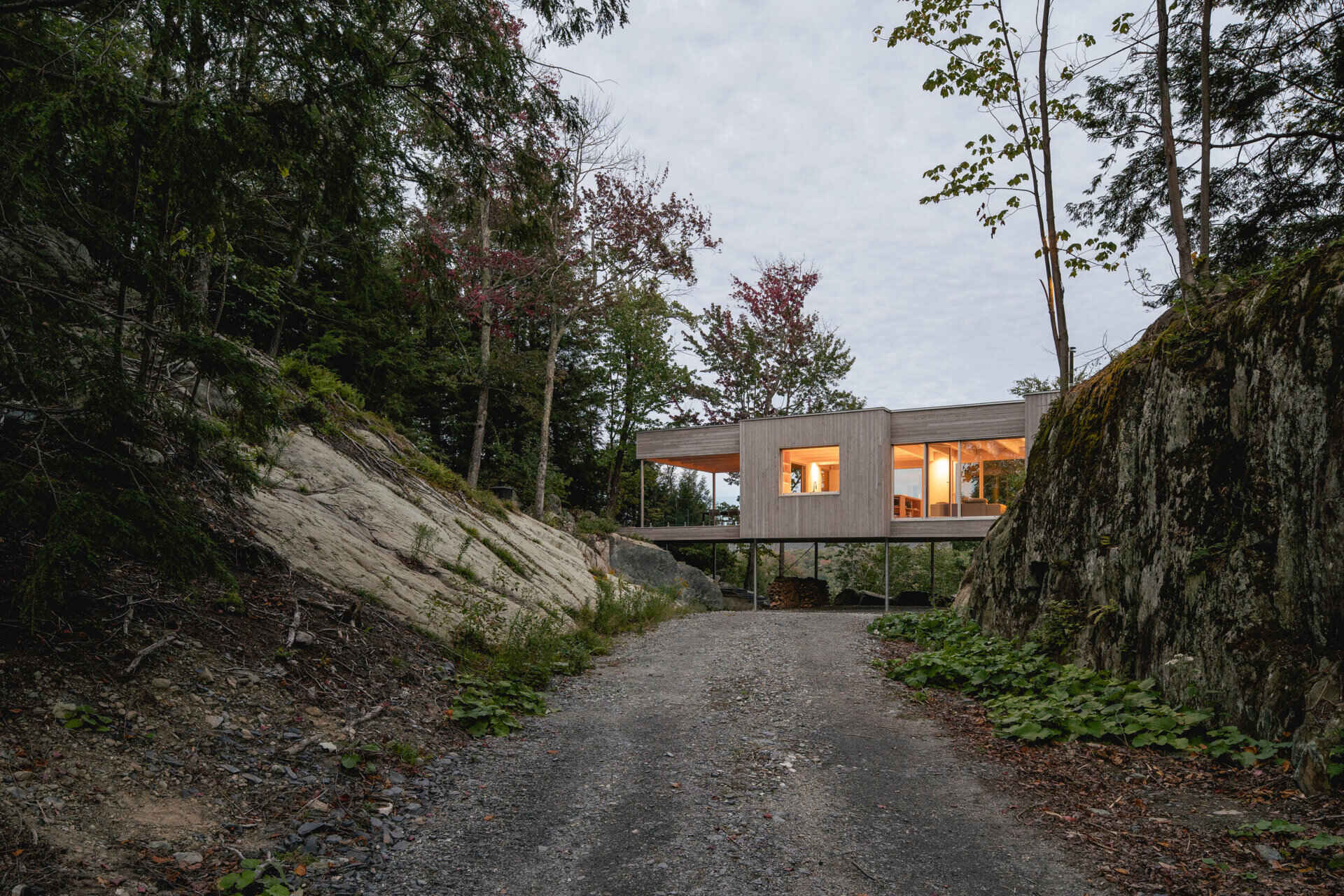
A Cedar Exterior Designed to Blend Into the Landscape
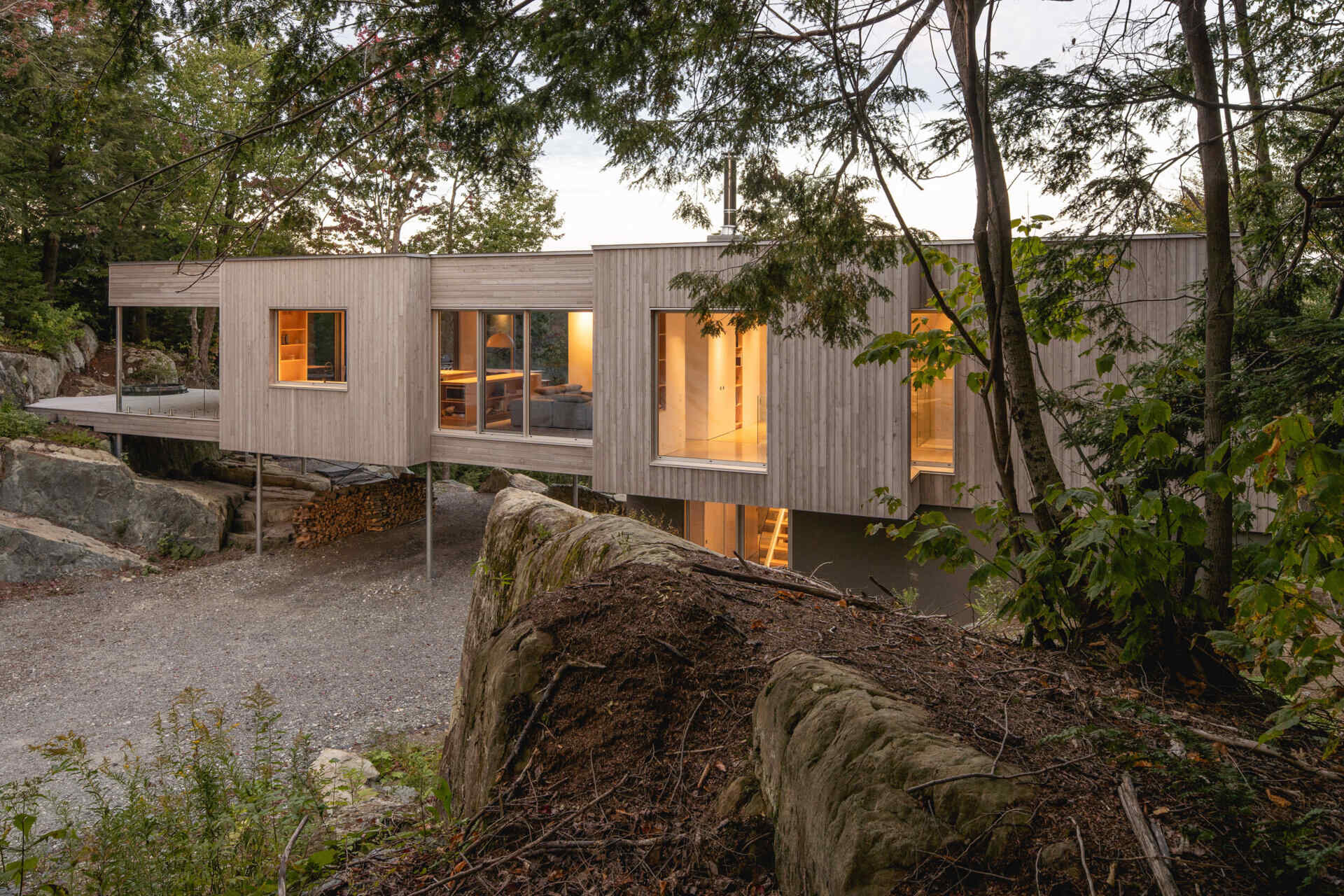
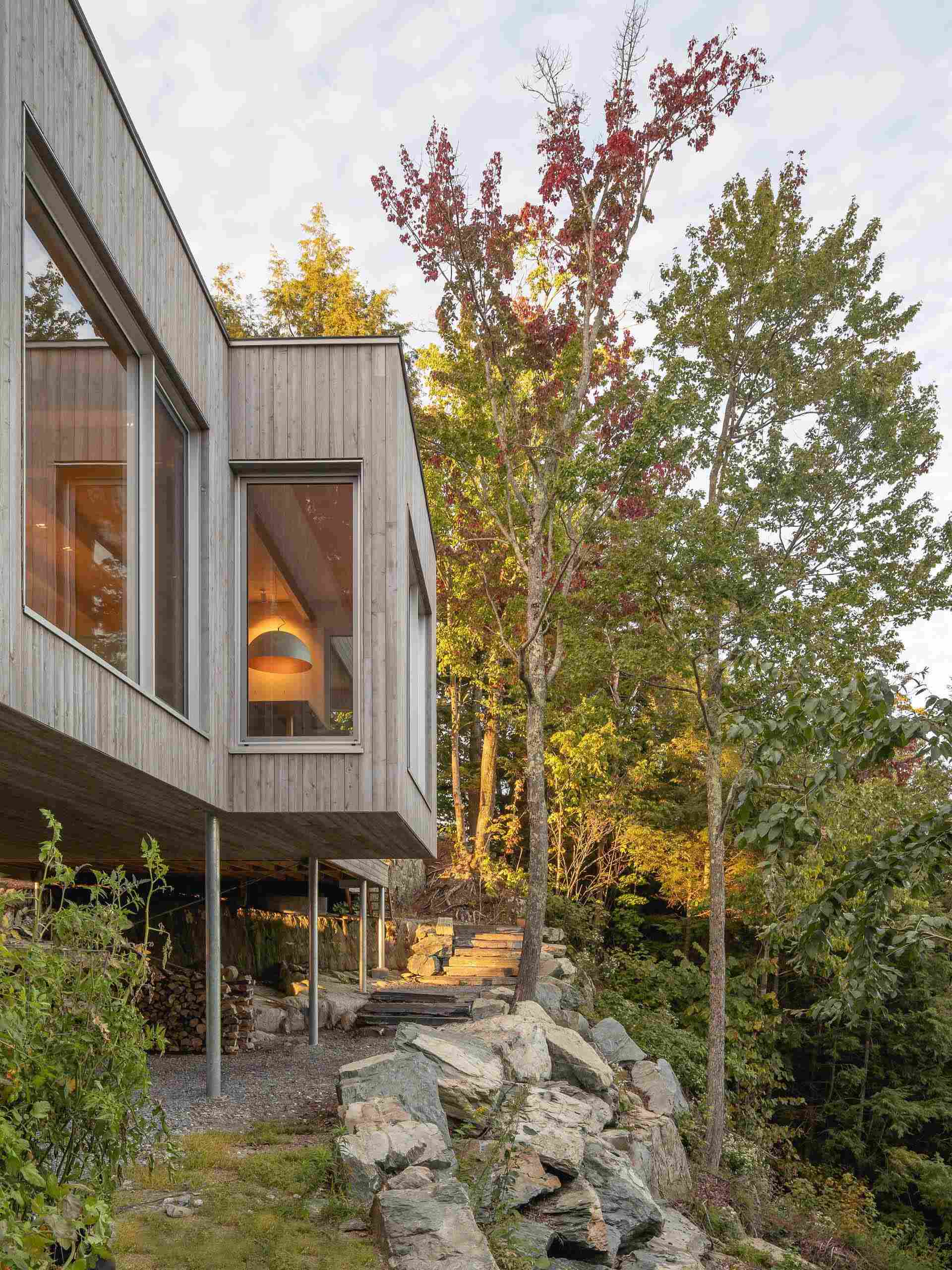
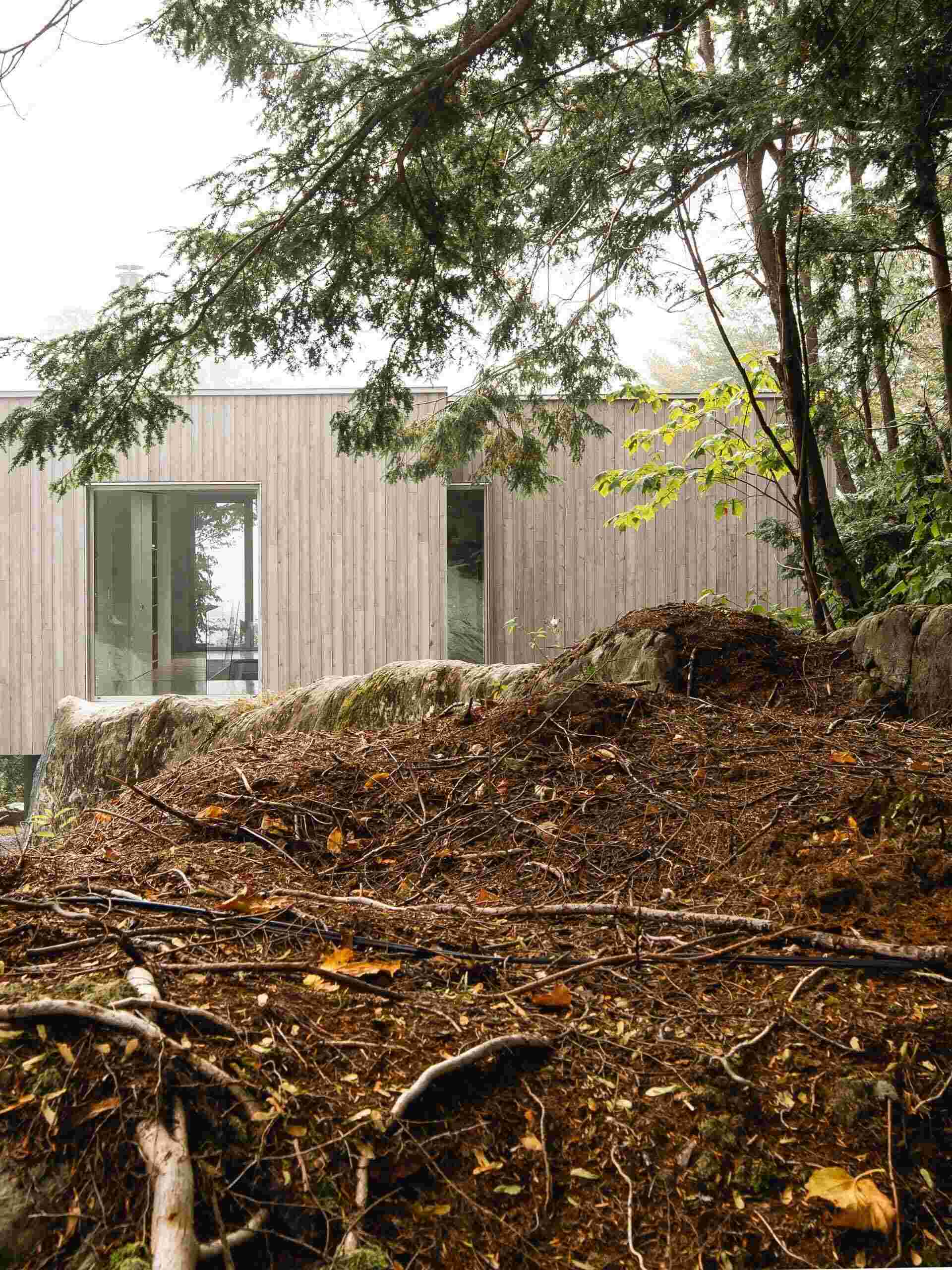
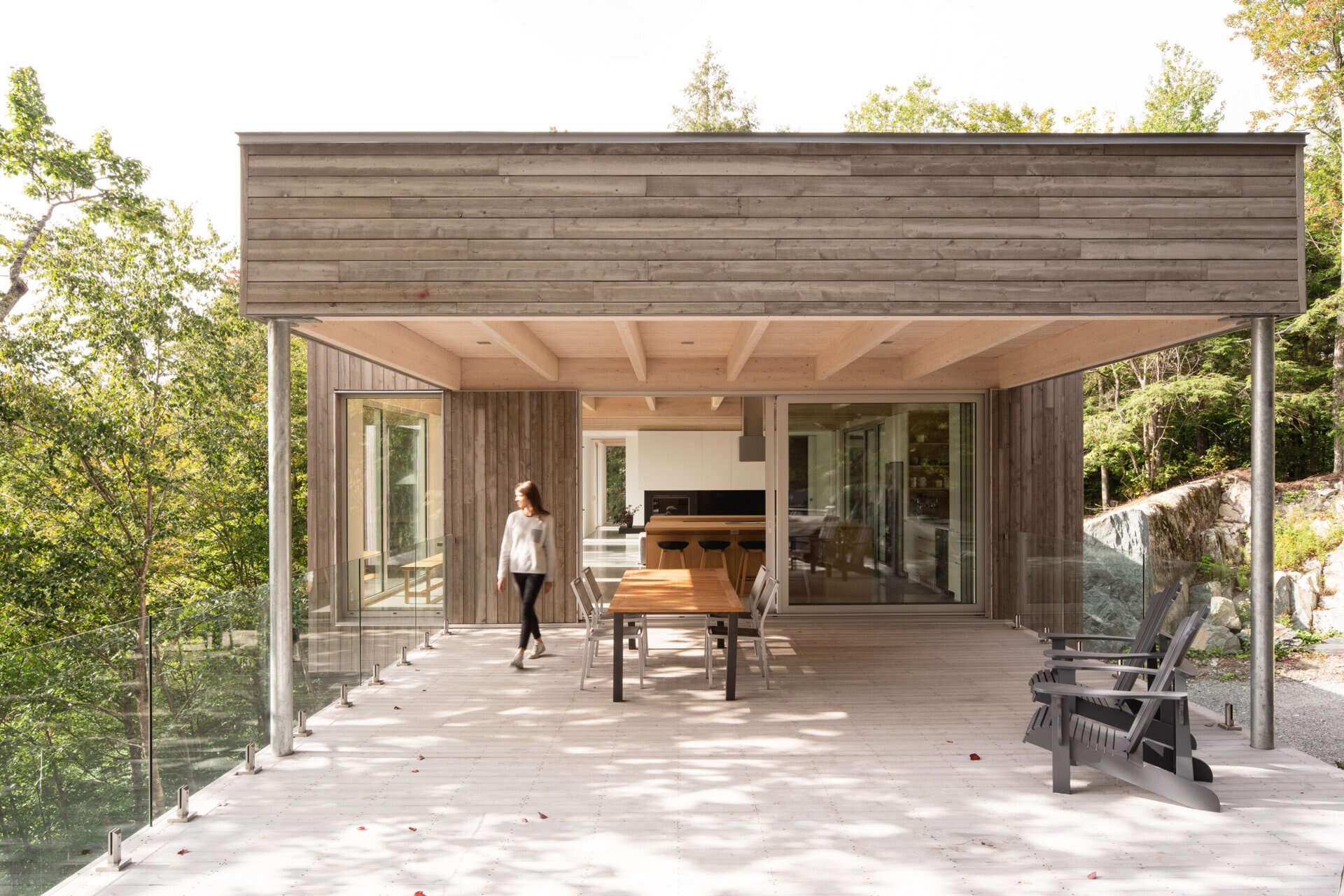
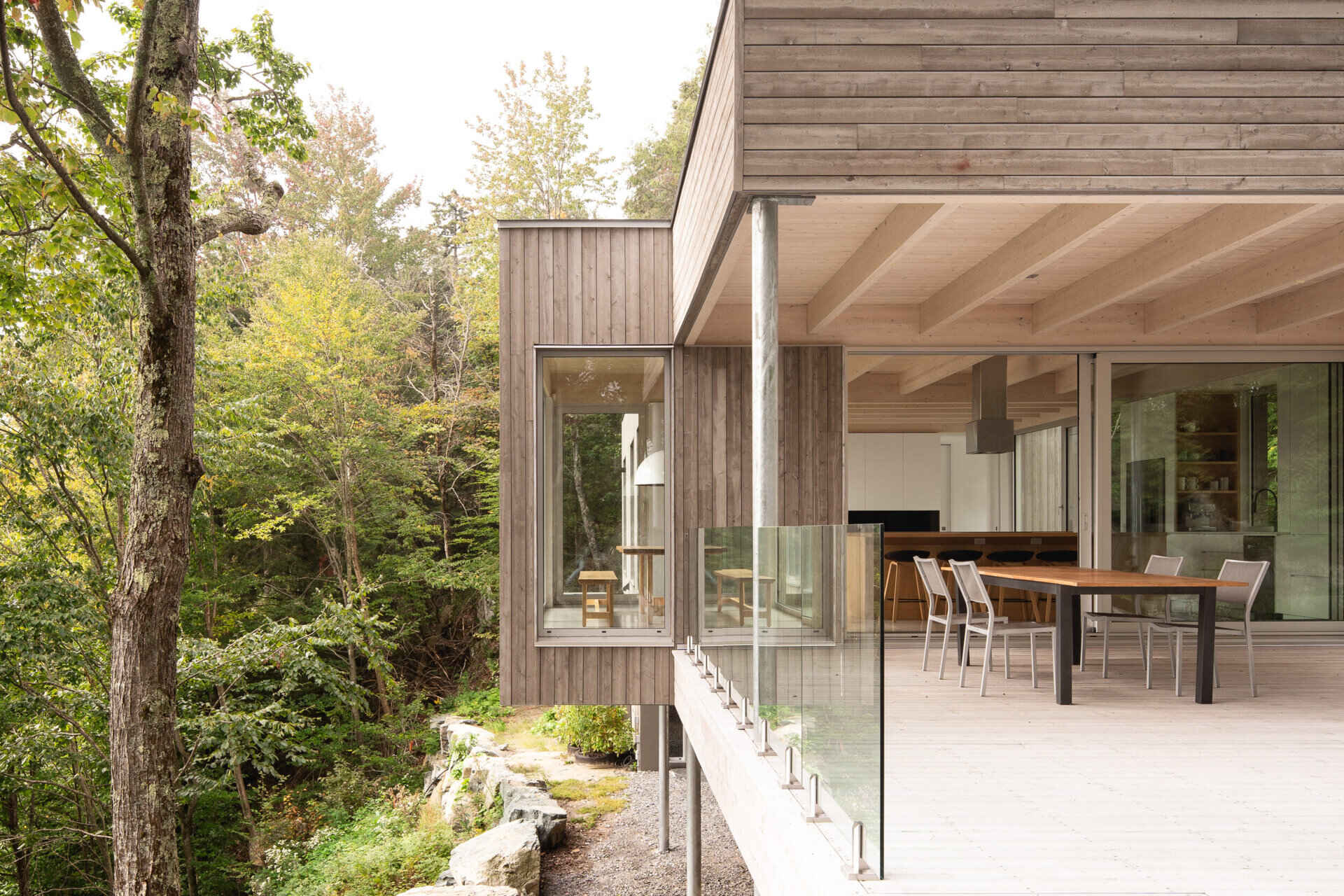
The home is clad in eastern white cedar boards that were pre-treated to accelerate the natural greying process. Over time, the wood will continue to weather, helping the building blend into the surrounding forest while reducing future maintenance.
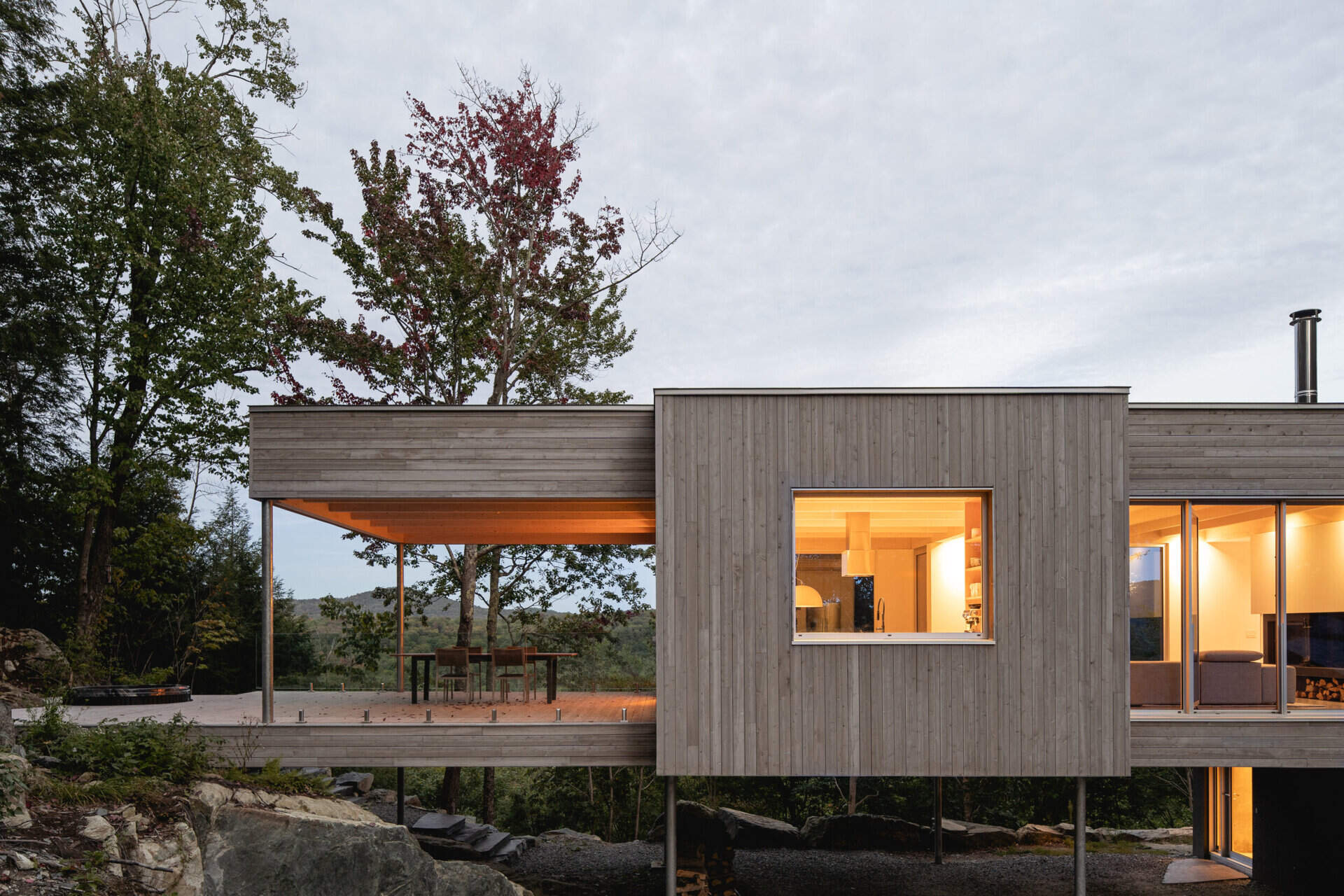
The structure also responds to the site’s rock formations. One end rests on a large rock while the other sits on a concrete base, raising the house about three meters above the ground and opening views through the trees.
A Bunk Room That Welcomes a Crowd
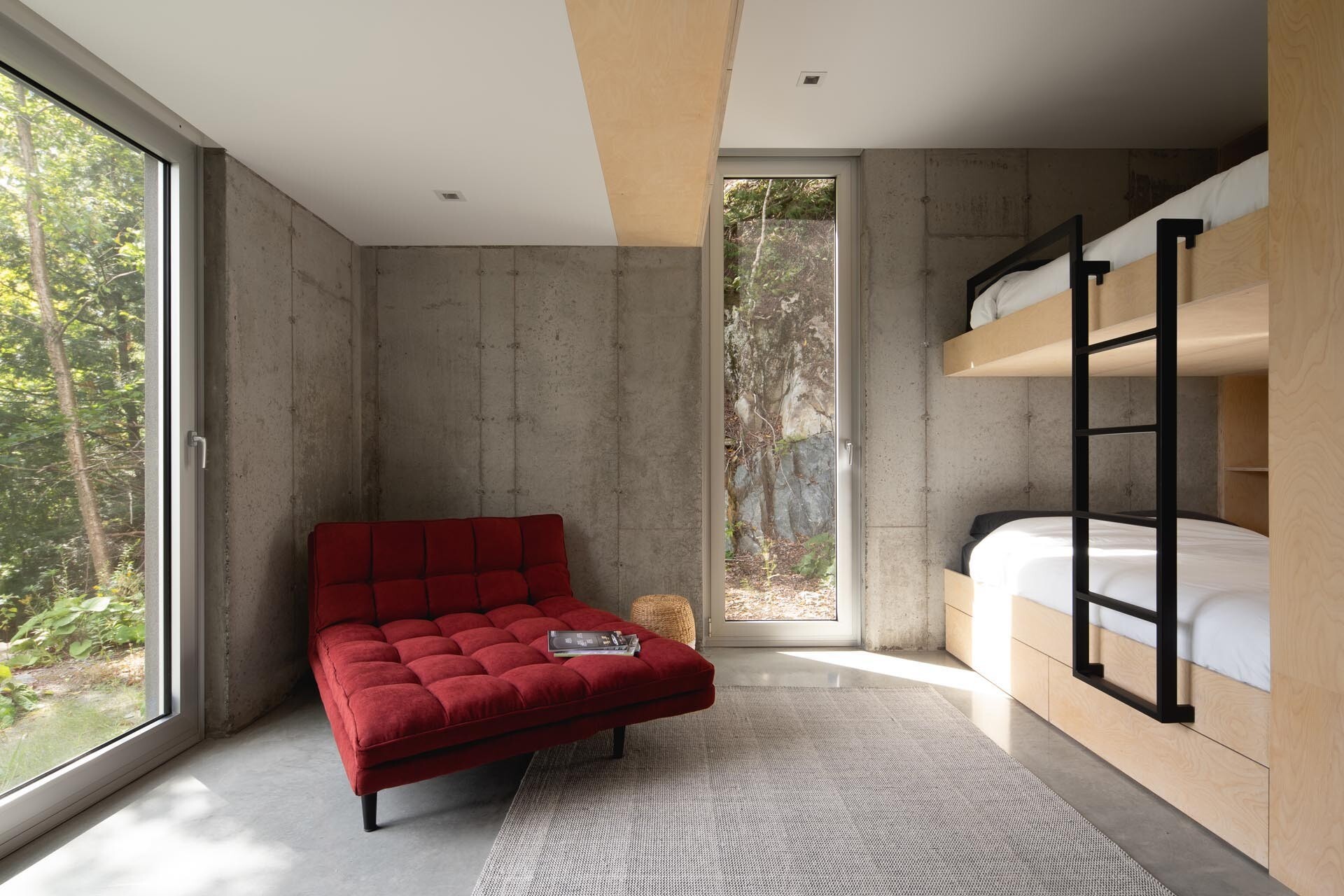
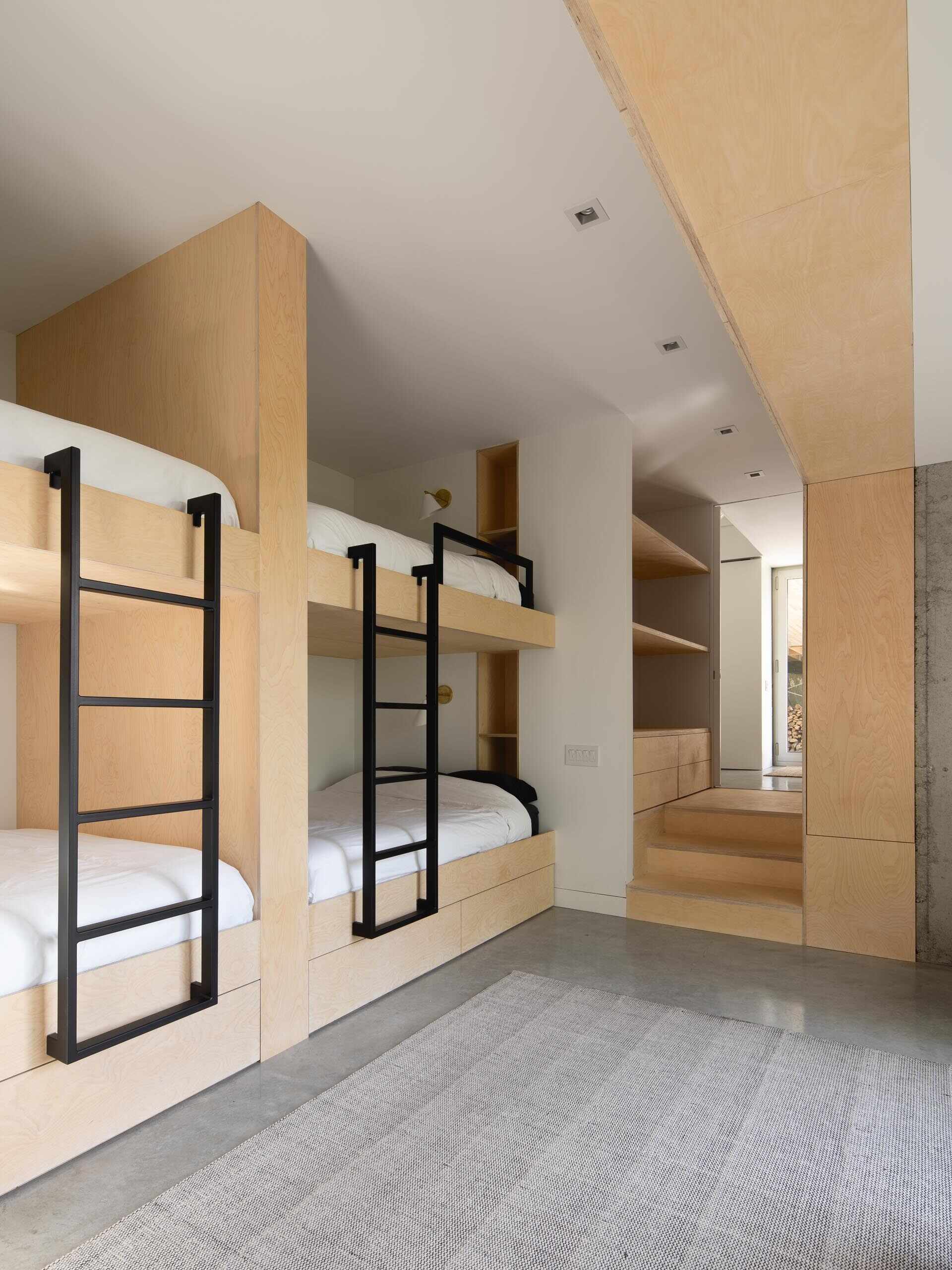
Just inside the entrance is a bunk room designed to accommodate up to ten guests. The space reflects the owners’ intention to make the house a gathering place for friends and family.
A Staircase That Divides the Home
Stairs lead from the entry level to the main floor of the house. The staircase divides the layout into two zones. Living areas occupy one side, while the bedroom suite sits on the other. This simple arrangement keeps shared and private spaces clearly organized.
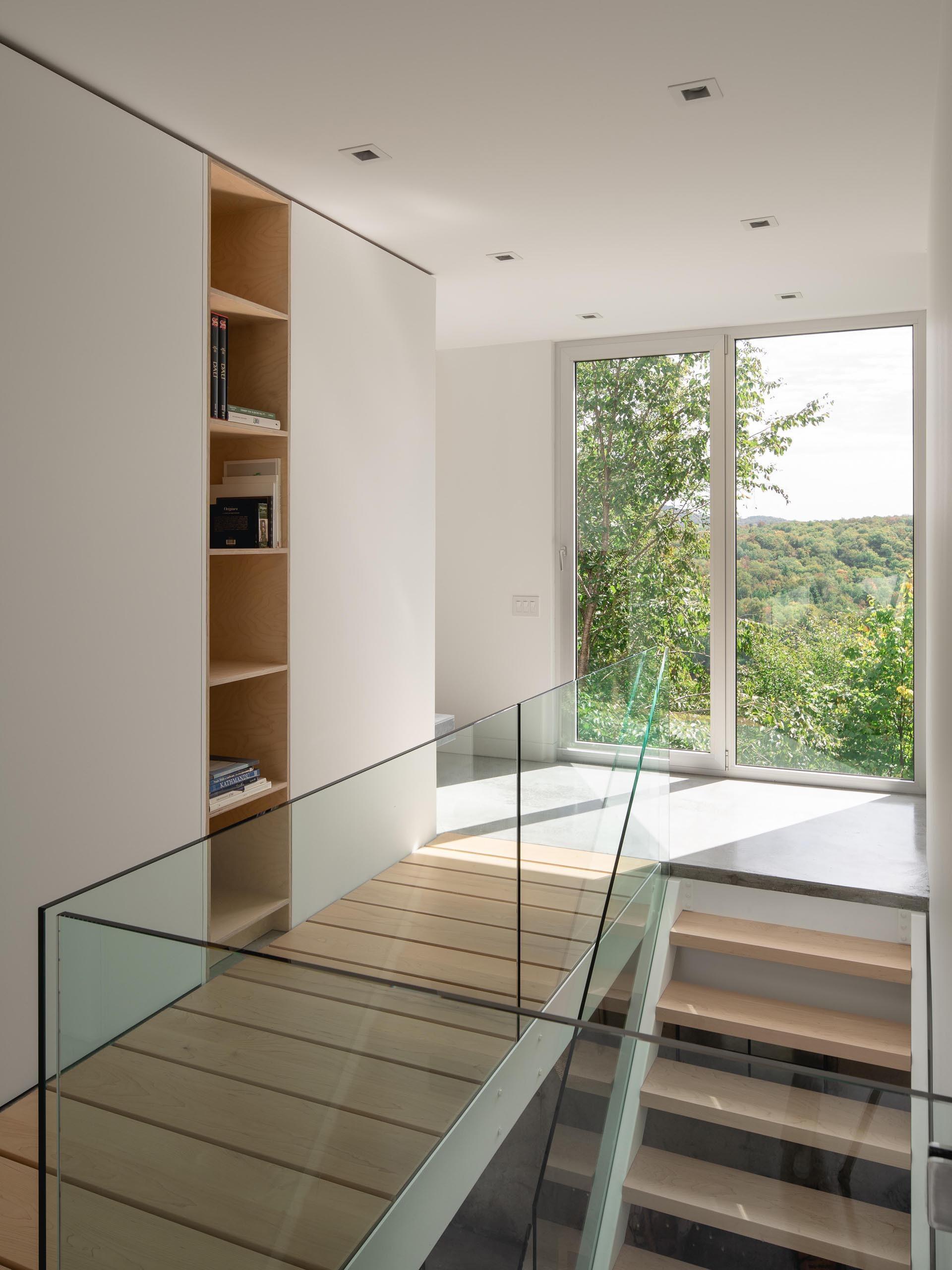
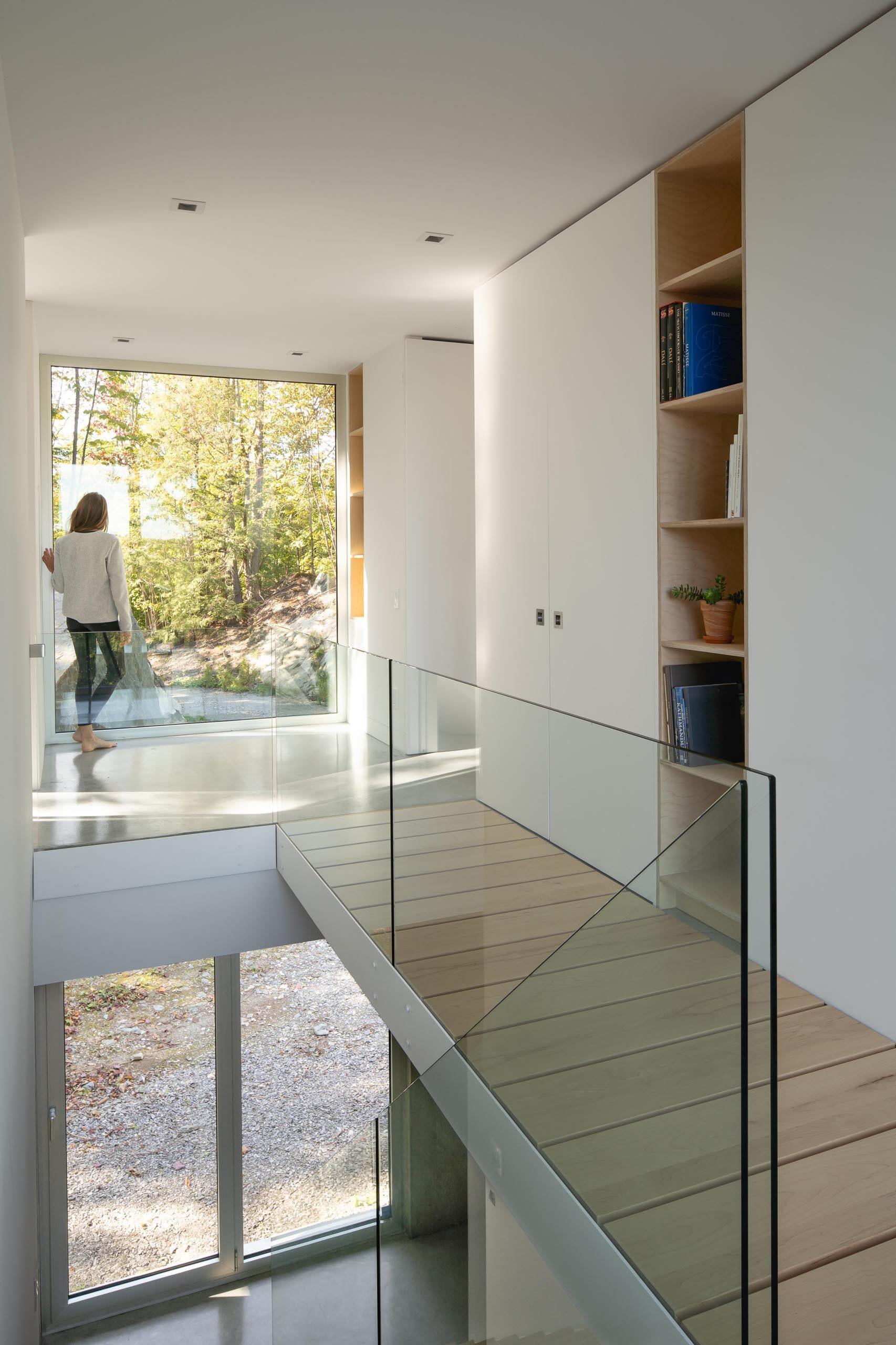
Open Living Spaces Filled With Light
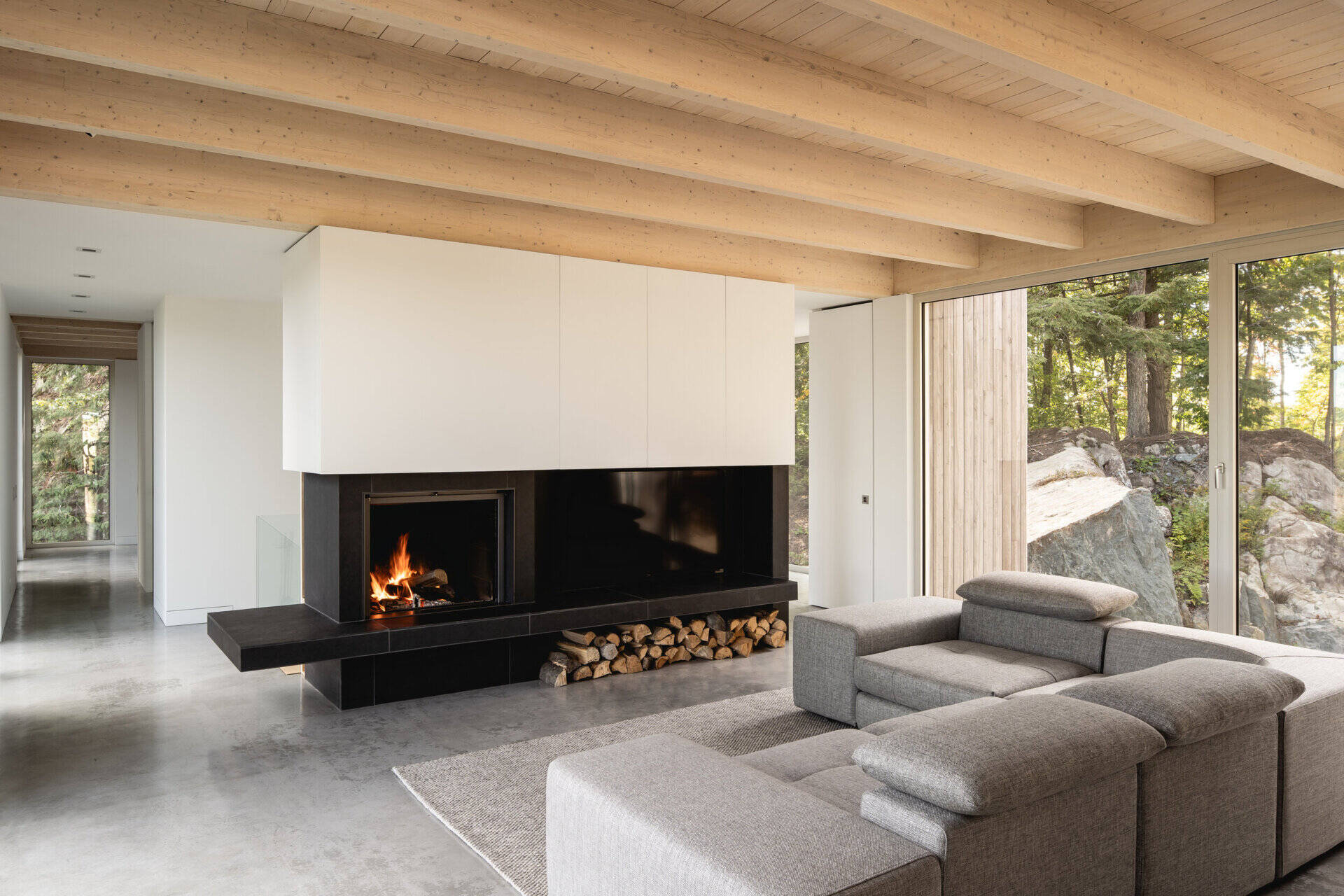
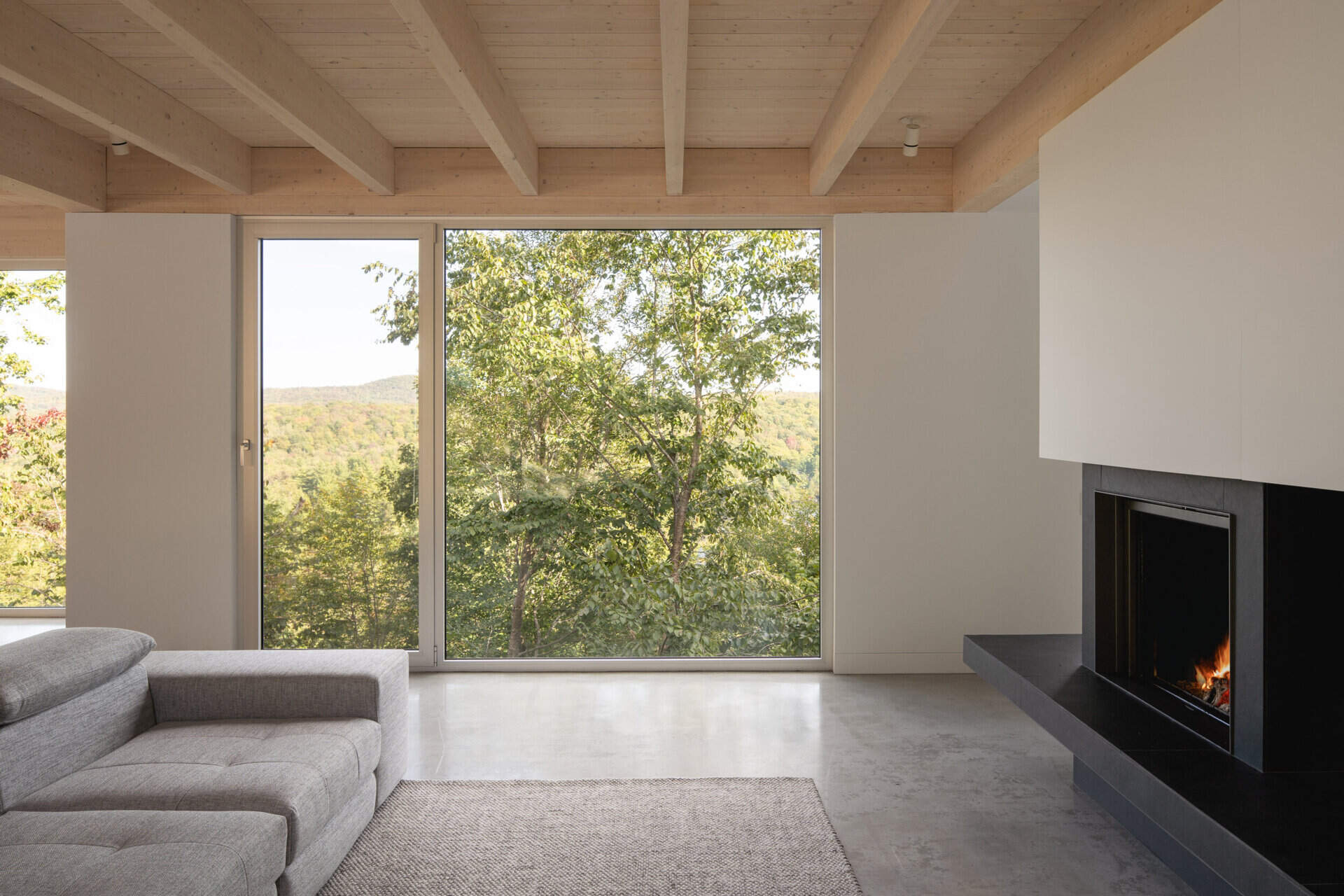
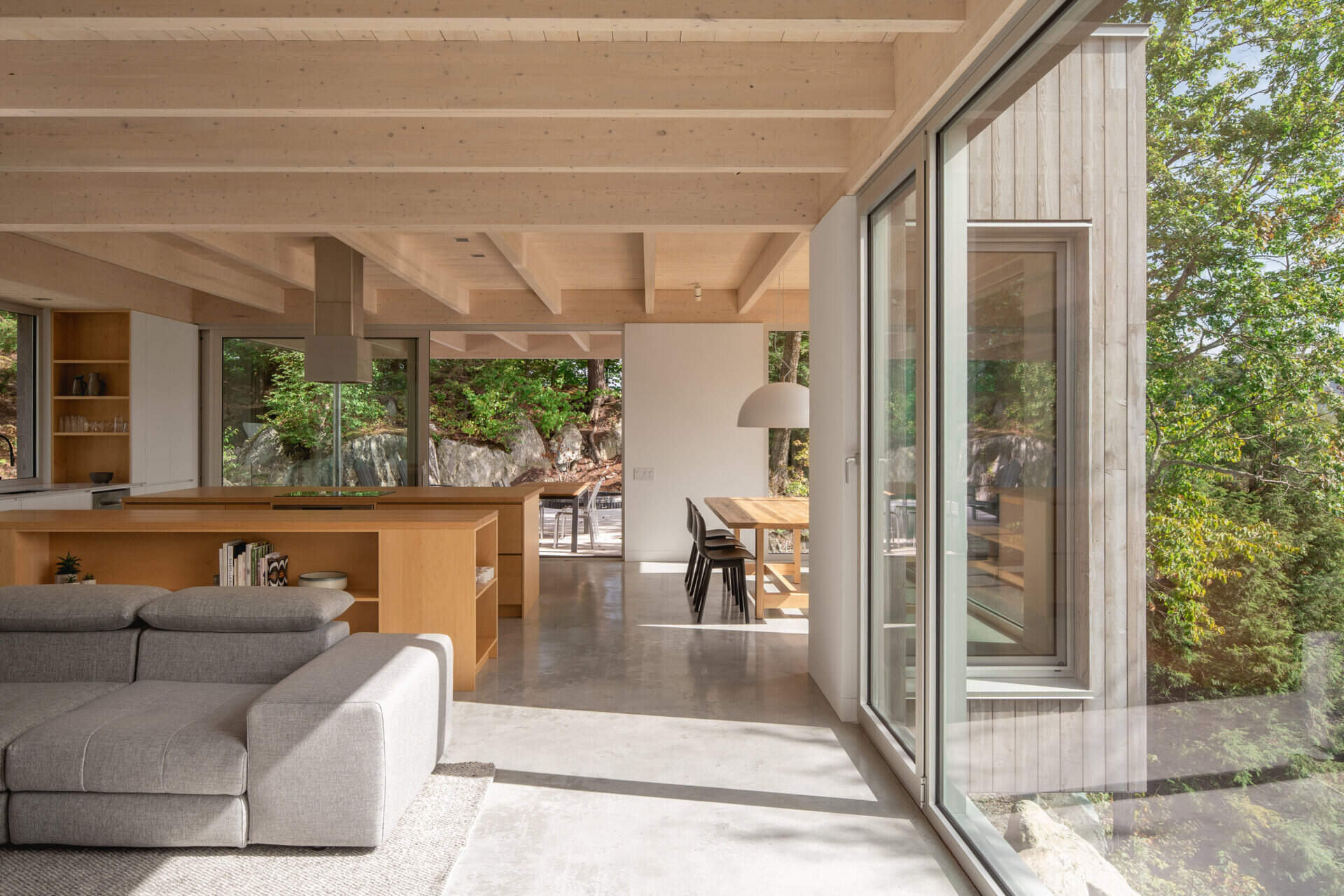
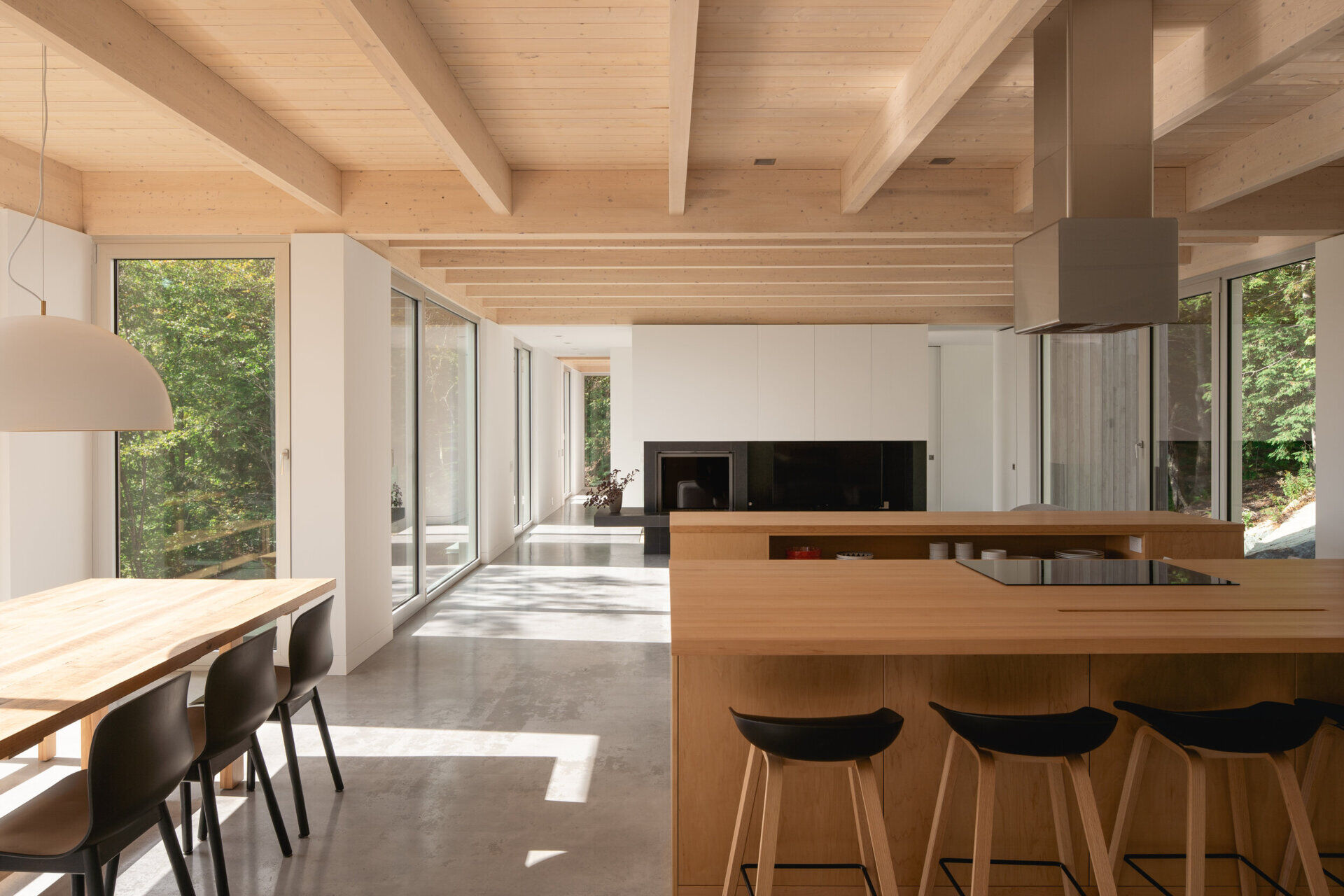
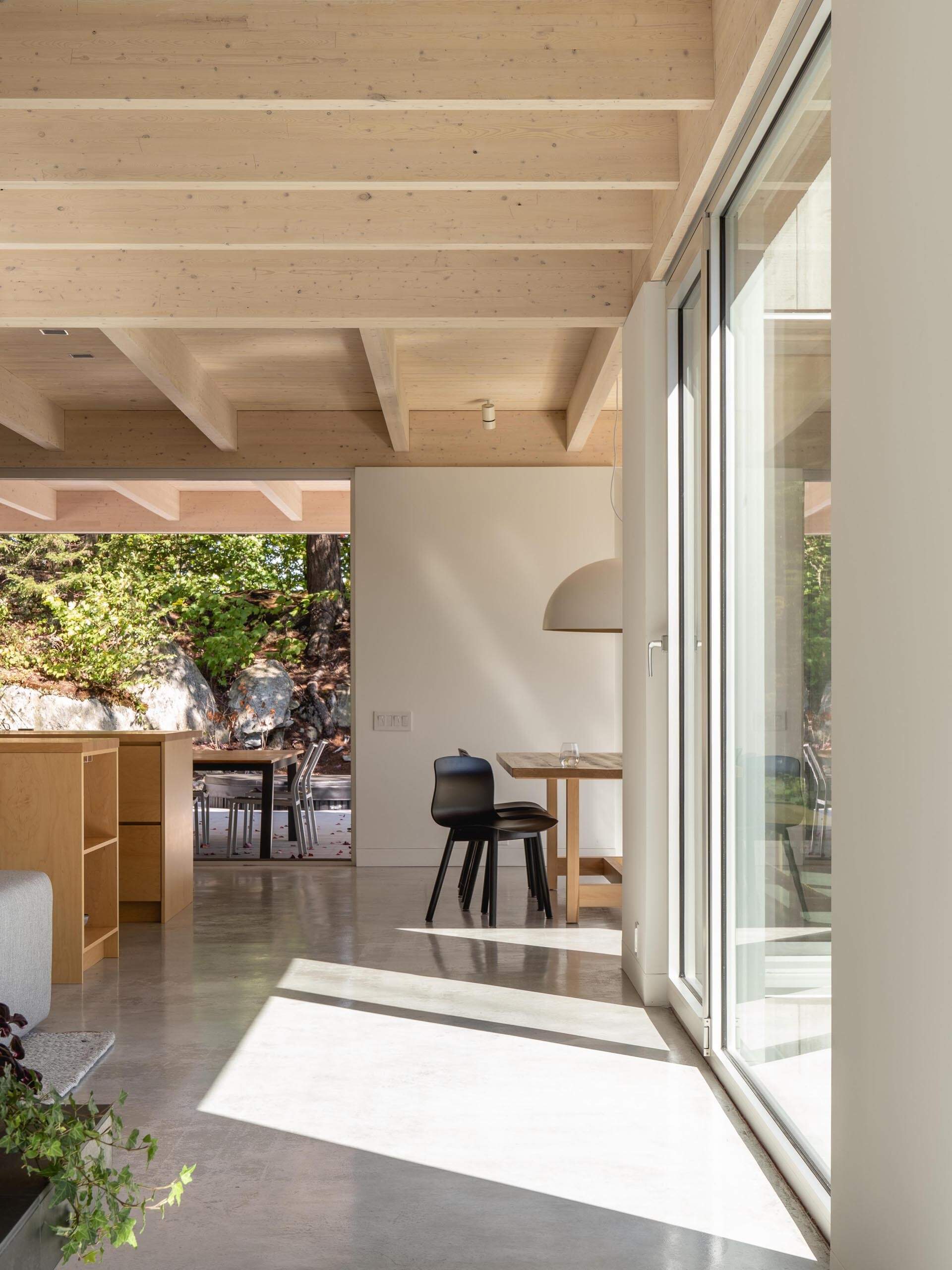
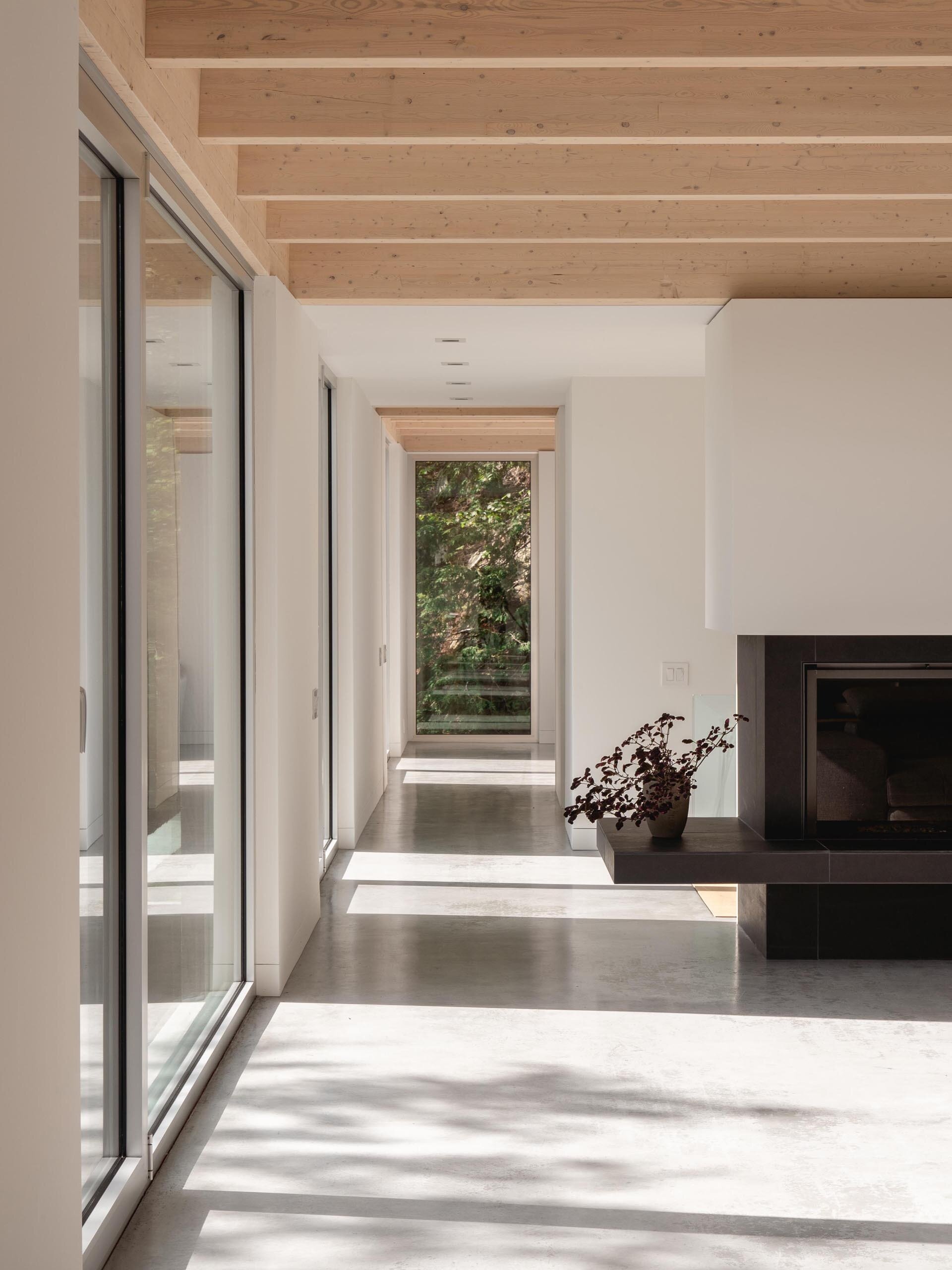
The main living areas combine the living room, dining room, and kitchen in an open plan layout. Floor-to-ceiling windows on both sides of the living room fill the space with natural light and frame views of the surrounding trees.
A black fireplace surround adds contrast to the wood interior. Above, the exposed roof structure reveals engineered beams made from Northern Quebec black spruce.
A Kitchen Built Around Wood and Craft
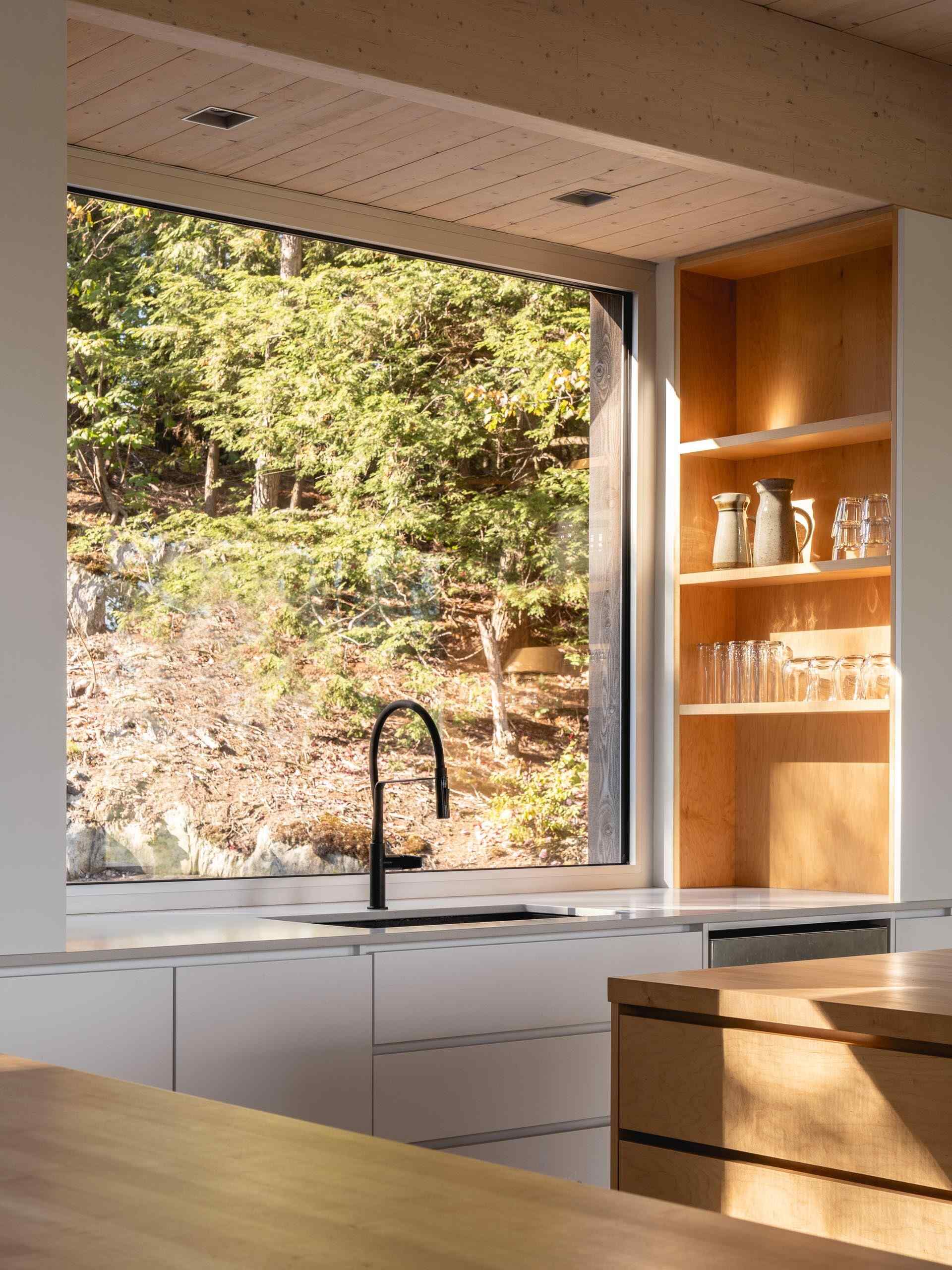
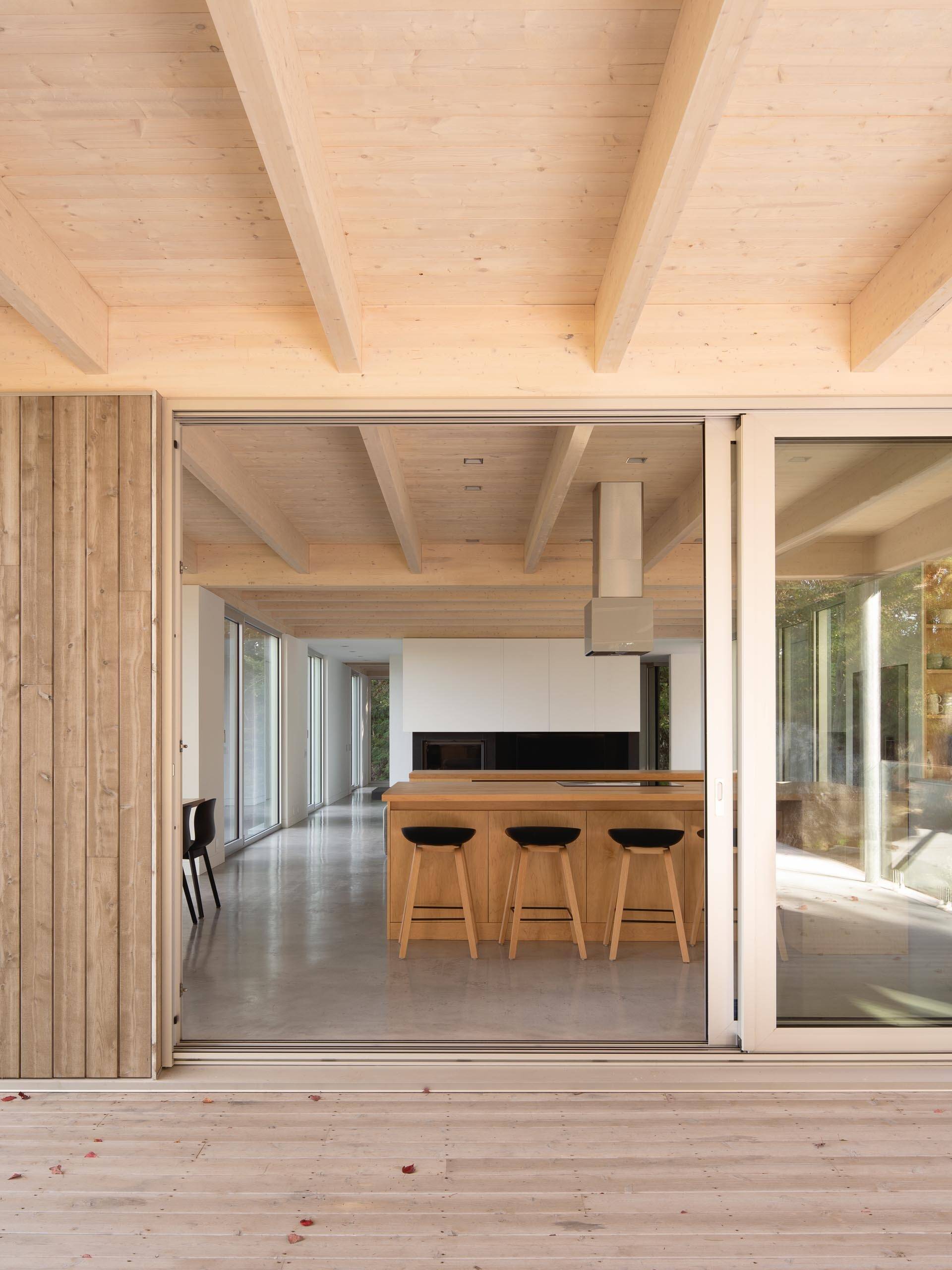
The kitchen features two islands made from solid maple, providing generous space for cooking and gathering. Built-in cabinetry throughout the space is made from Russian plywood, continuing the home’s palette of natural wood materials.
A Terrace That Extends the Living Space Outdoors
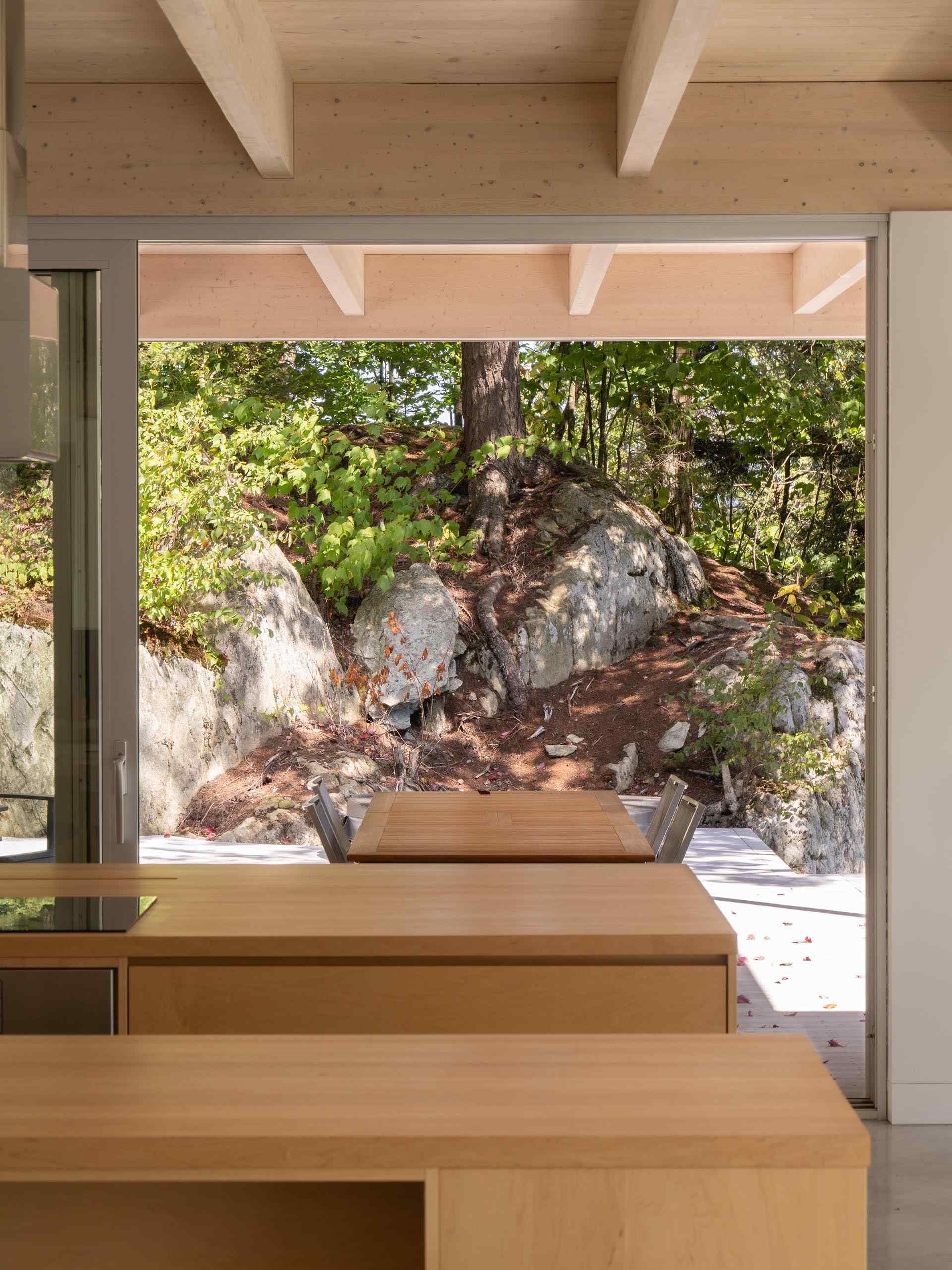
Large sliding doors open from the living areas onto a partially covered terrace. The outdoor space extends the interior and provides a place to relax within the surrounding forest. The terrace includes room for lounge chairs and a spa, creating a quiet outdoor area connected to the landscape.
Natural Materials That Define the Interior
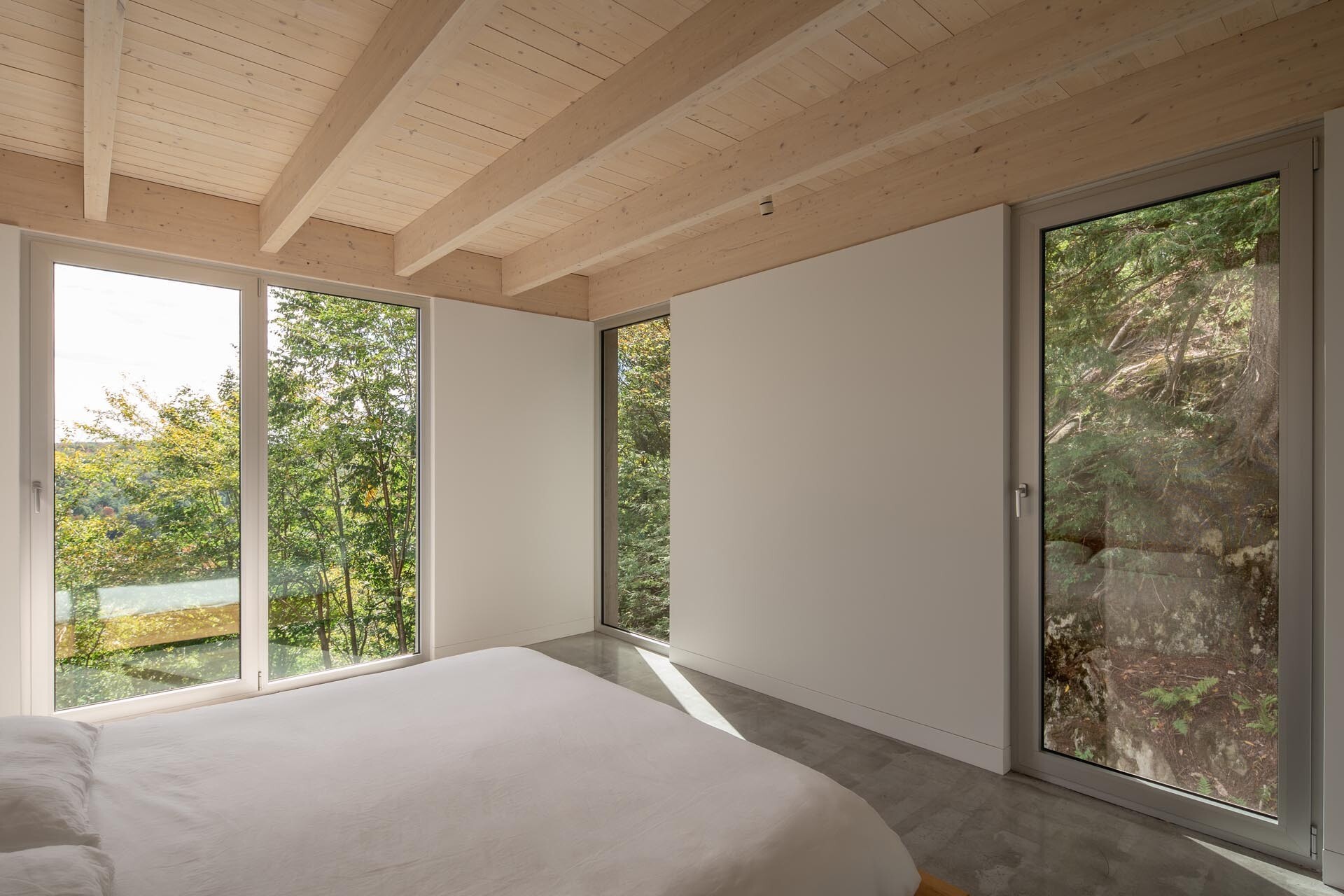
The interior uses a simple palette of materials that repeats throughout the house. Polished concrete floors, white gypsum walls, and natural aluminum window frames create a calm backdrop. These elements work alongside the wood finishes to keep the interior consistent and connected to the surrounding landscape.
A Bedroom Designed Around the Forest View
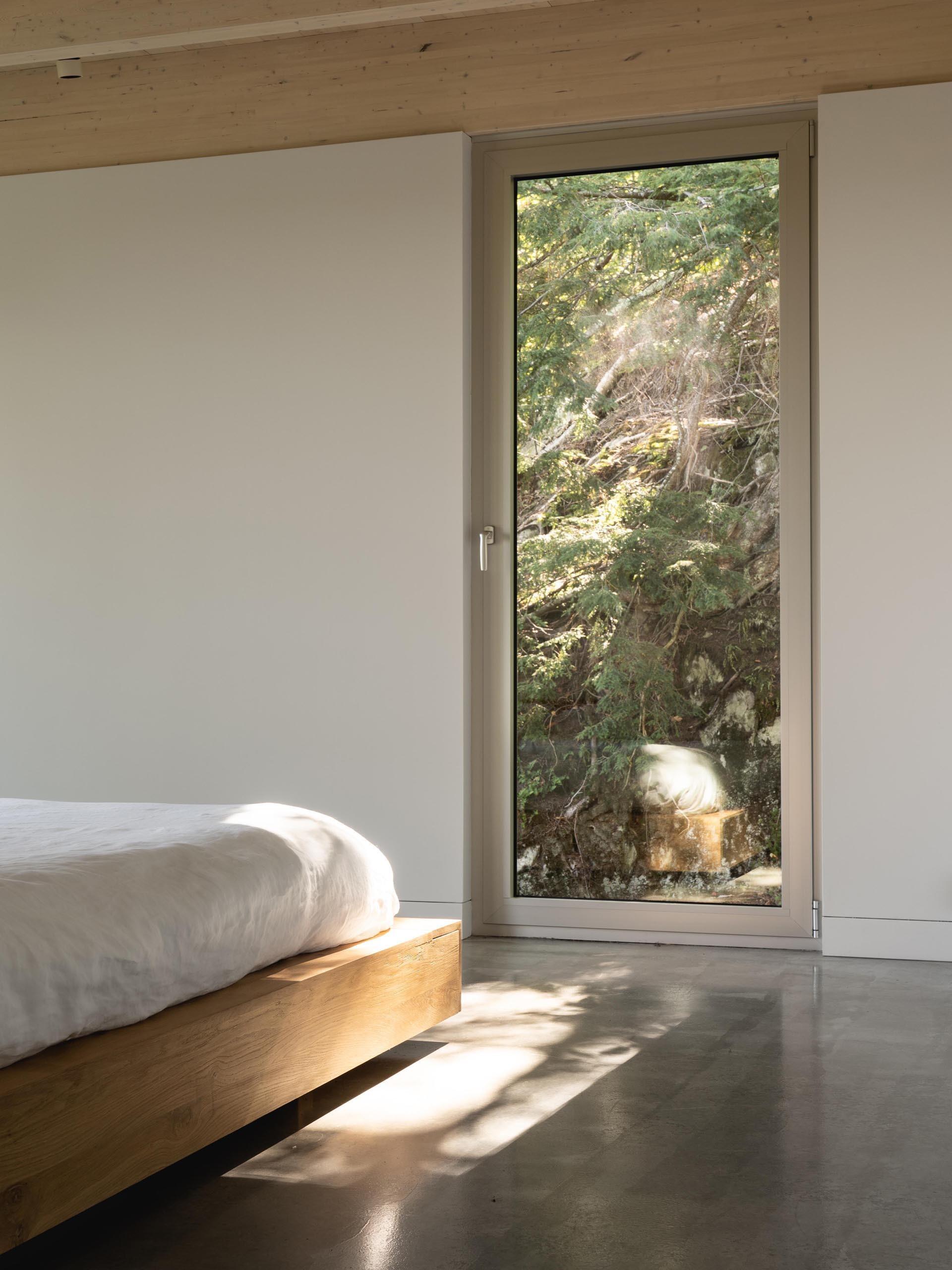
The primary bedroom suite sits at the end of the house and is furnished minimally. Tall windows frame views of the surrounding trees and rock formations. One window aligns with the circulation axis of the house, creating a direct view through the interior toward the forest beyond.
A Bathroom Framed by Nature
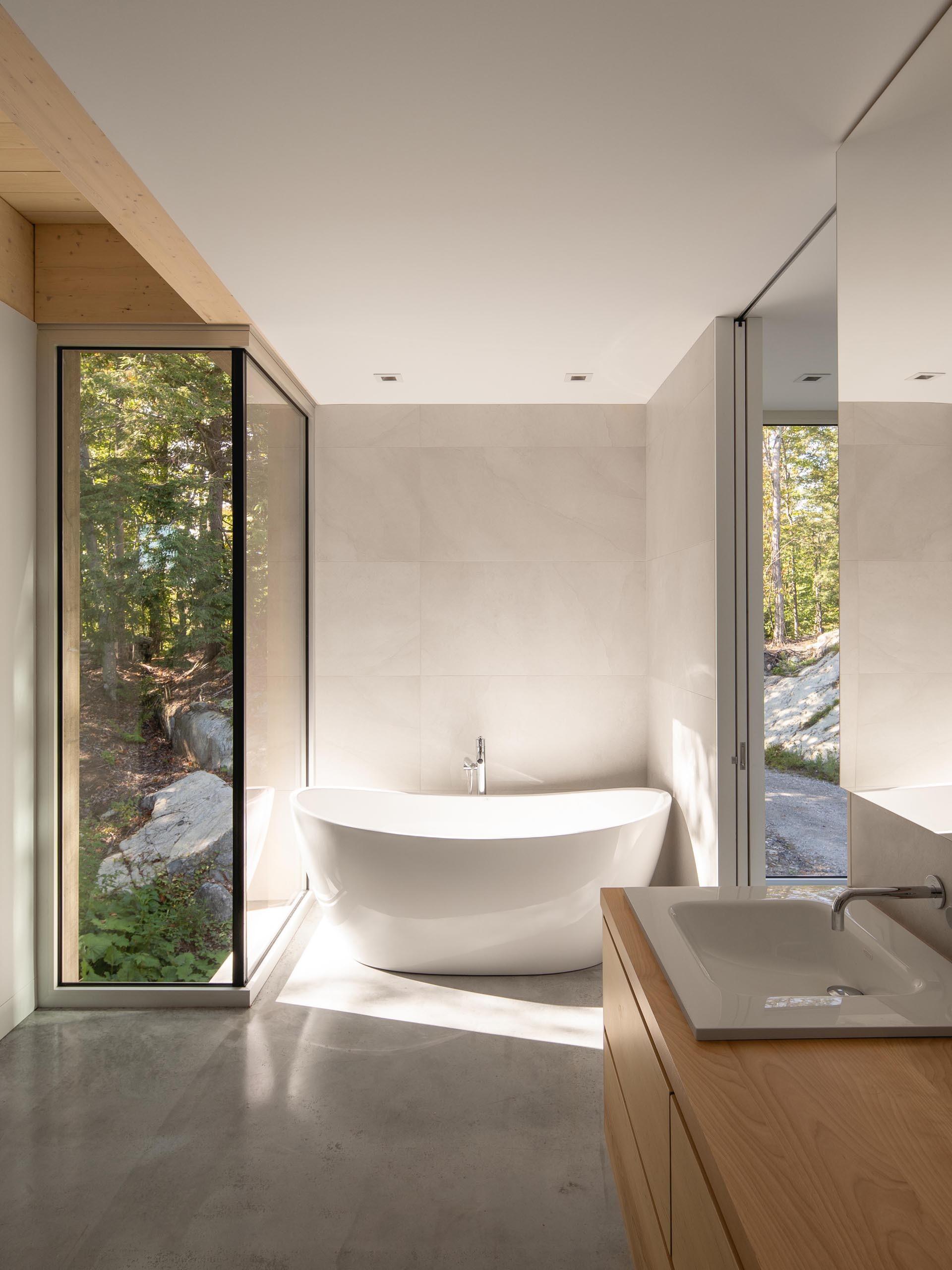
In the bathroom, a freestanding bathtub is positioned near large windows with views of the forest. The placement turns the space into a quiet place for relaxation. A wood vanity continues the natural material palette used throughout the home.
A Look at the Floor Plan
The floor plan reveals how the house is organized across two levels that respond directly to the terrain.
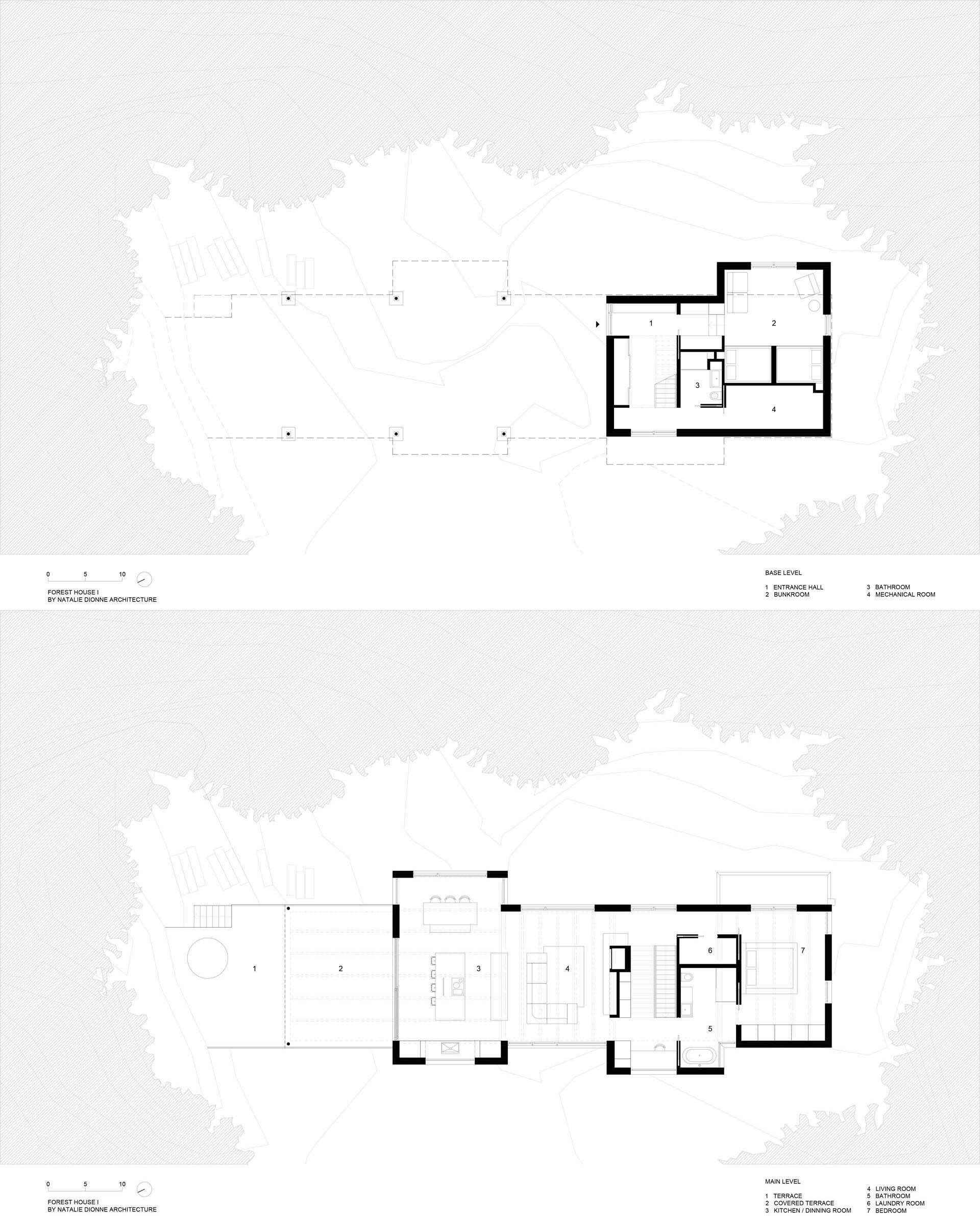
By responding carefully to the rocky terrain and dense forest, the architects created a house that feels grounded in its environment. The project shows how modern design can adapt to nature while still offering bright, functional living spaces.