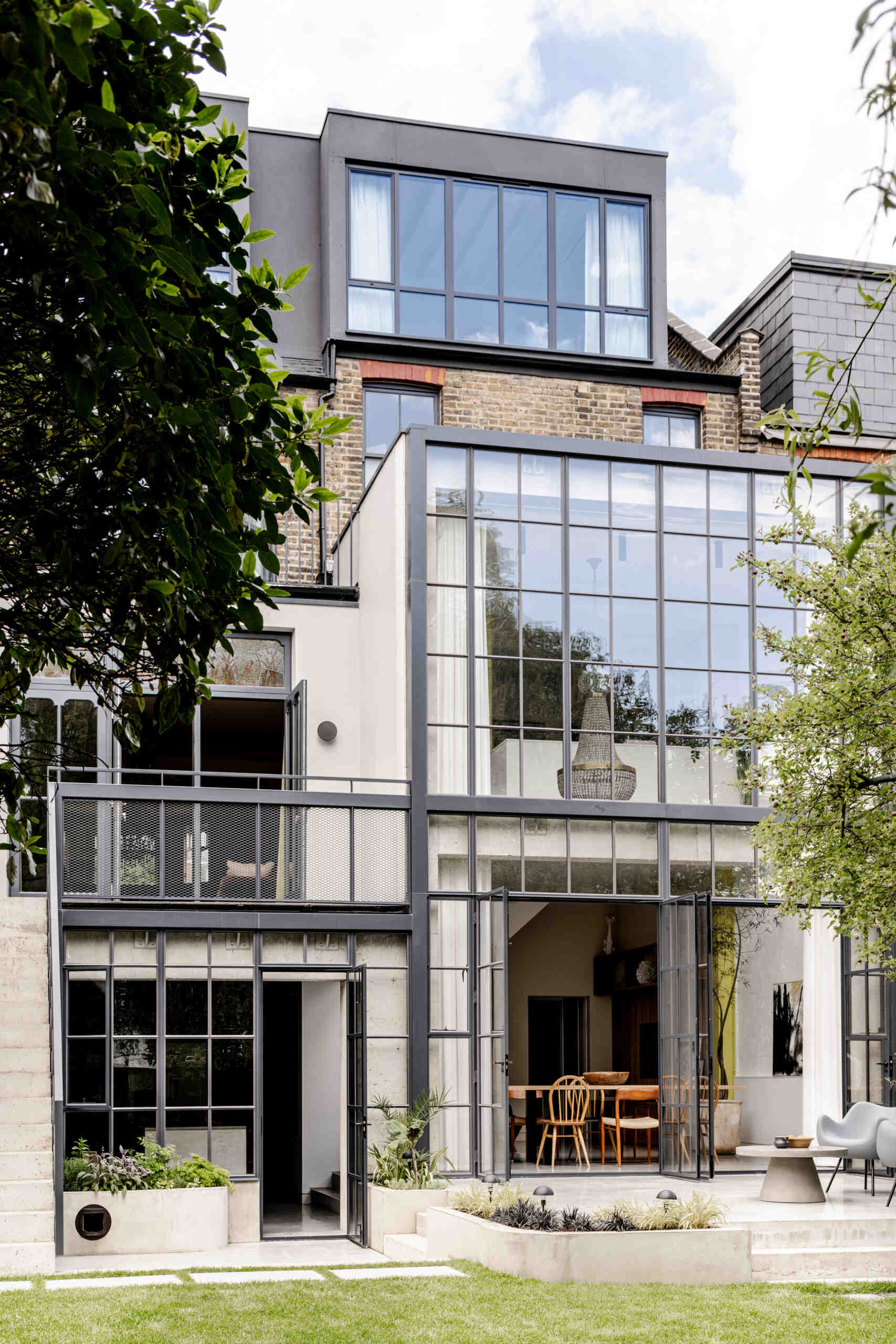
In Muswell Hill, a suburb of London, an Edwardian terrace has been carefully reworked to bring in more daylight and open the home toward its garden. House of Panes by Matthew Giles Architects introduces a steel-framed rear extension inspired by the roof structure of Alexandra Palace.
The design reshapes circulation inside the house, creating a sequence of connected levels that lead naturally toward a garden centered on a willow tree.
Created for homeowners Alice and George, the project balances the original Edwardian fabric with a bold contemporary addition that fills the home with light.
A Steel-Framed Extension Inspired by Alexandra Palace
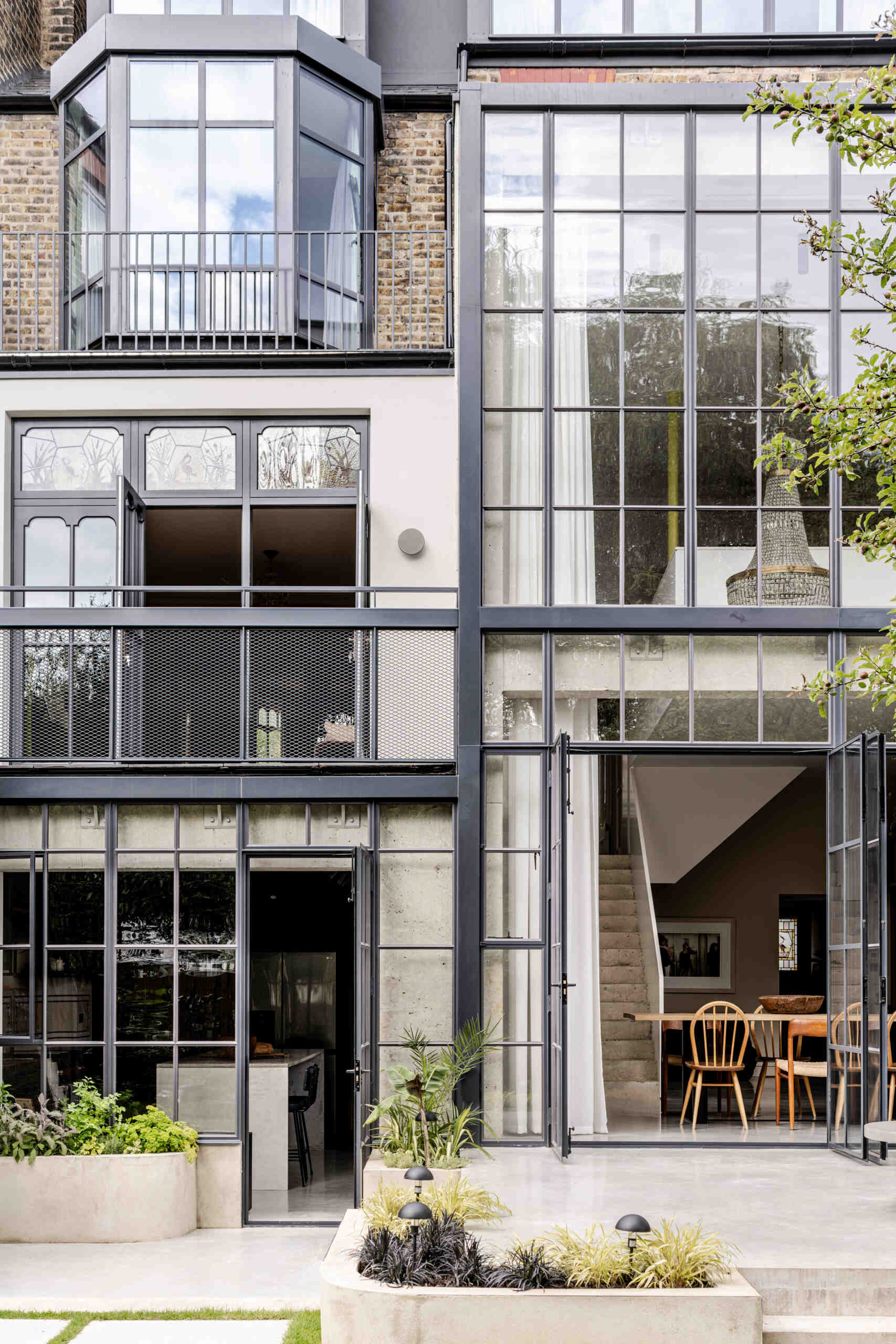
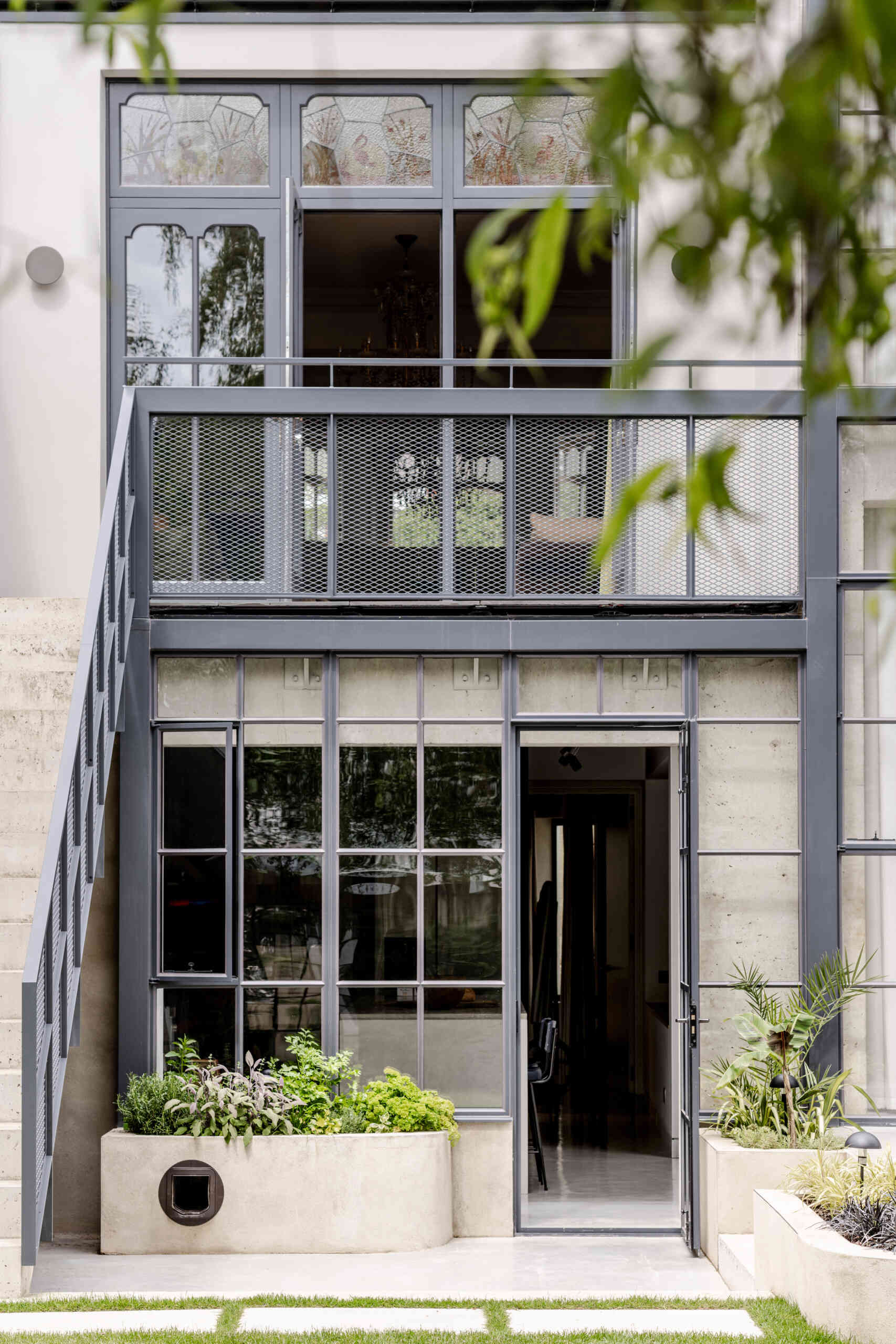
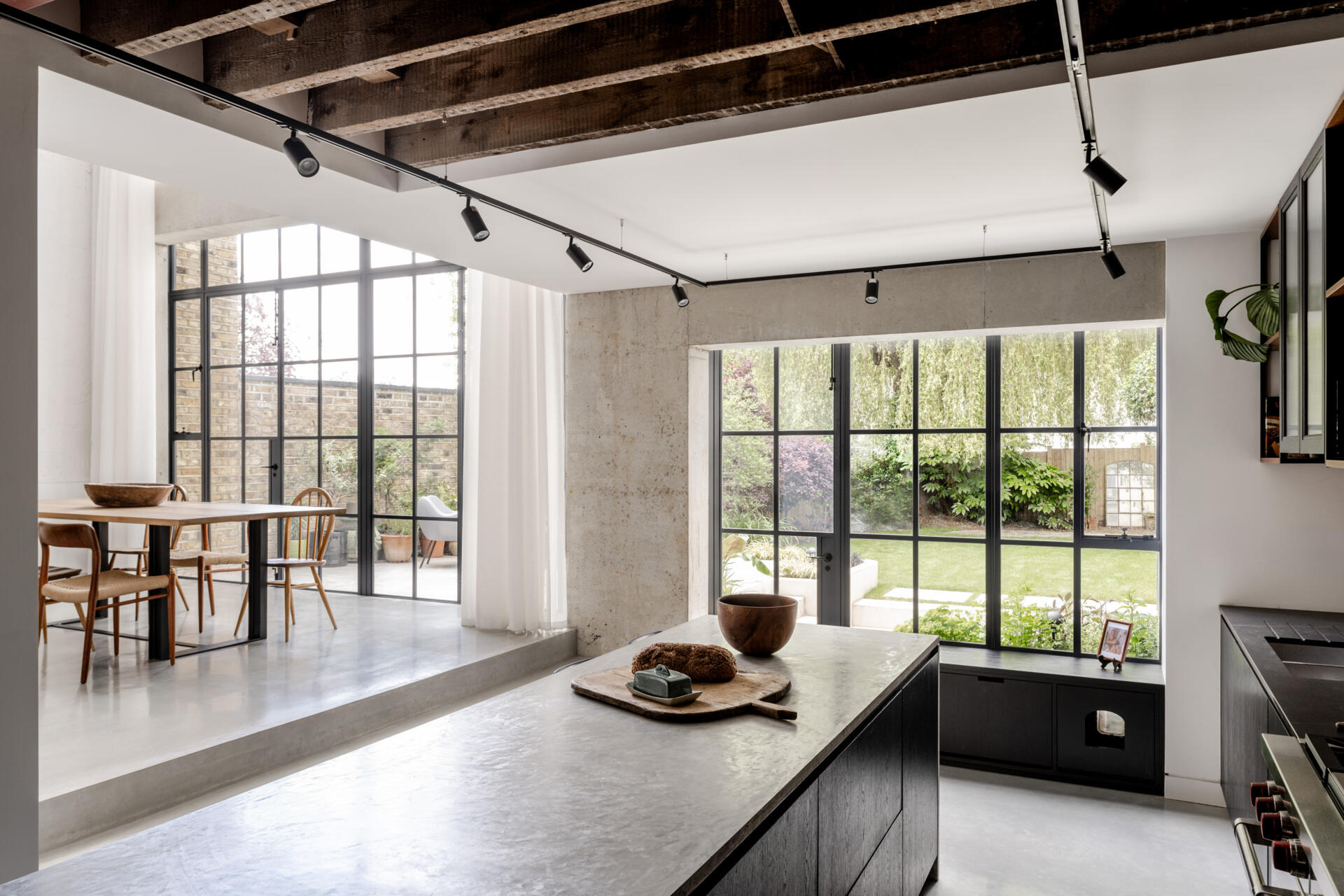
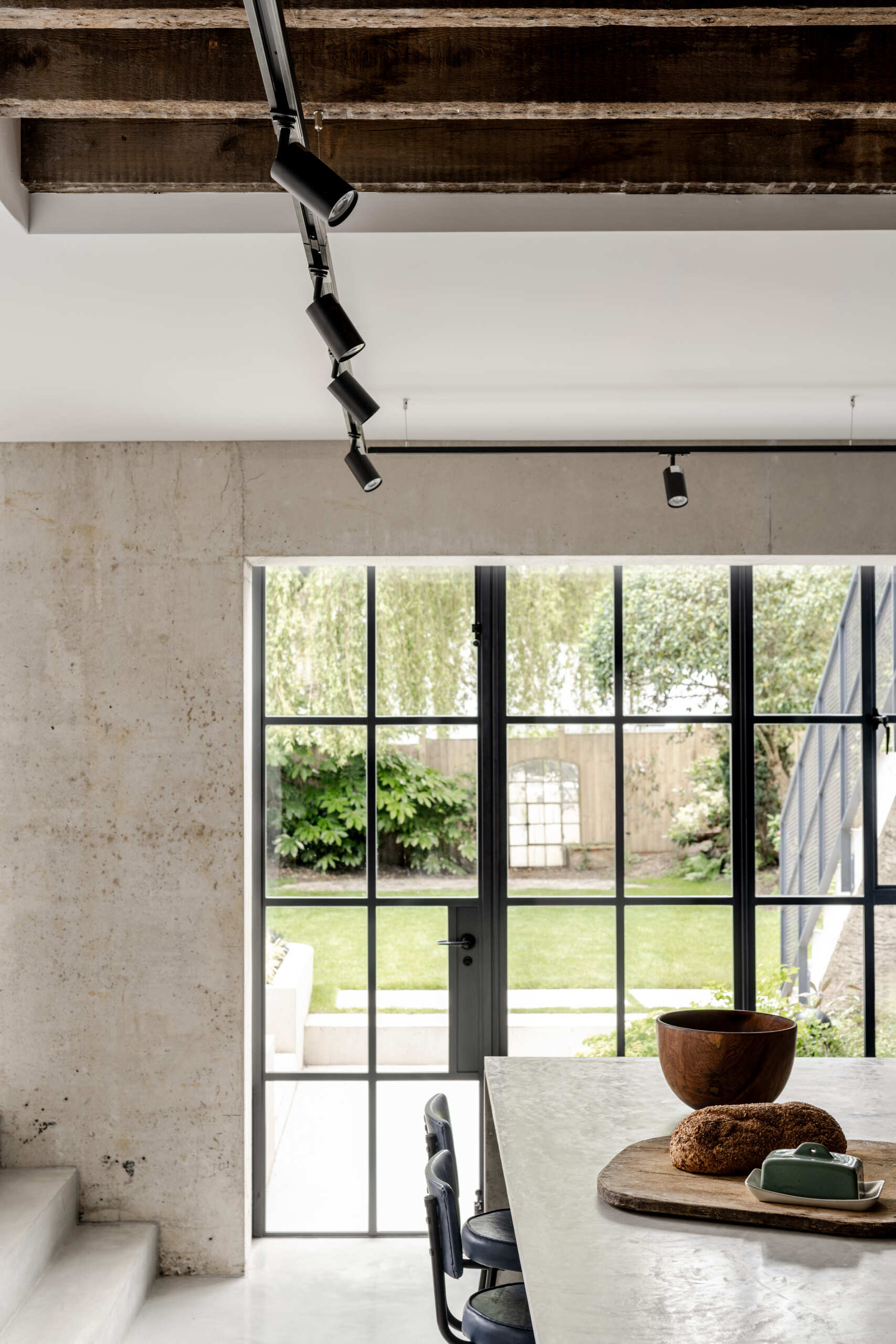
The defining move is a double-height rear extension built from exposed concrete and slender steel glazing. The glazing references the intricate roof structure of Alexandra Palace, creating a contemporary interpretation that runs across the rear elevation and into the dormer windows.
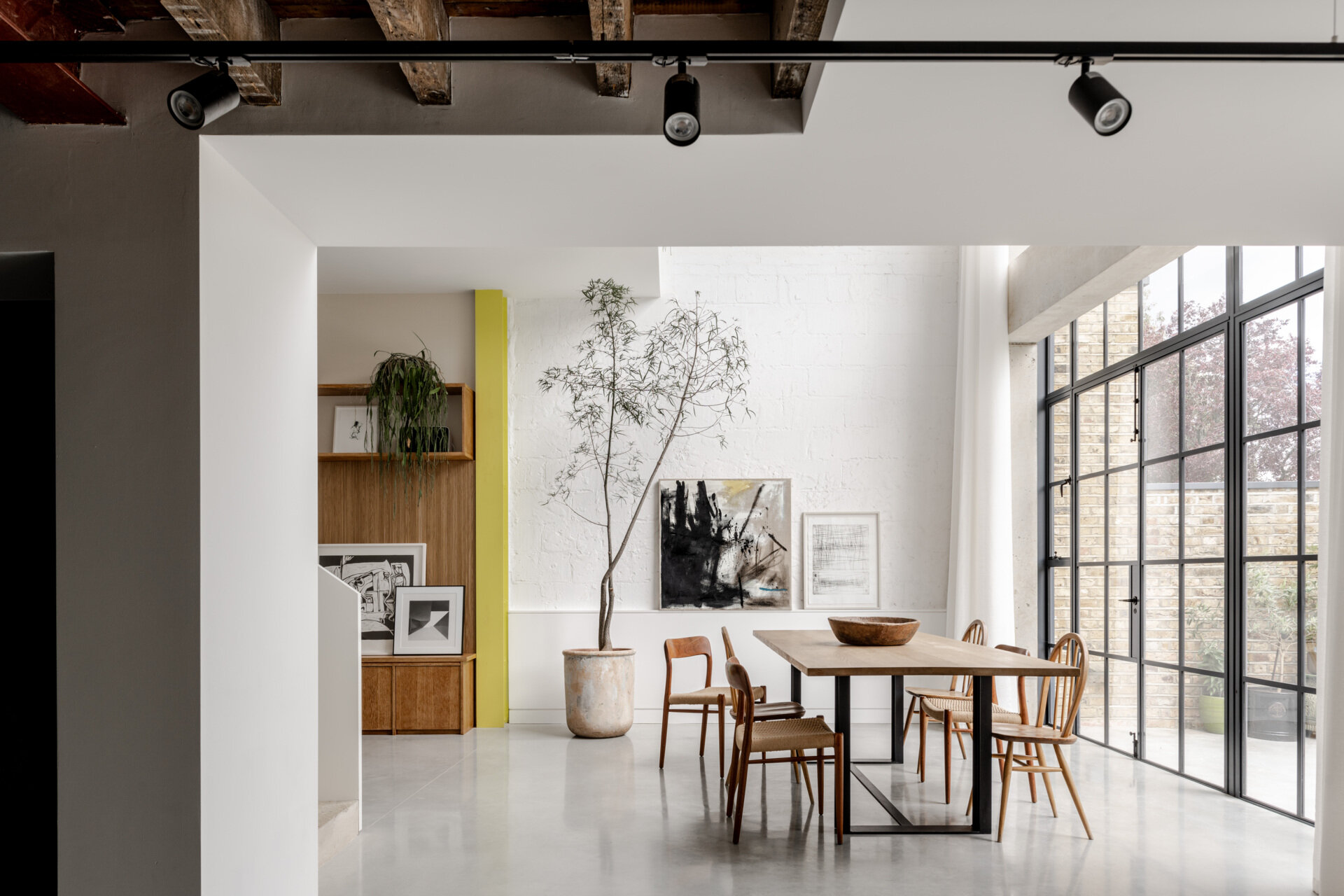
Inside, the home unfolds across a series of tiered spaces rather than a single open plan. Each level connects to the next, maintaining the character of the original split-level layout while improving movement through the house.
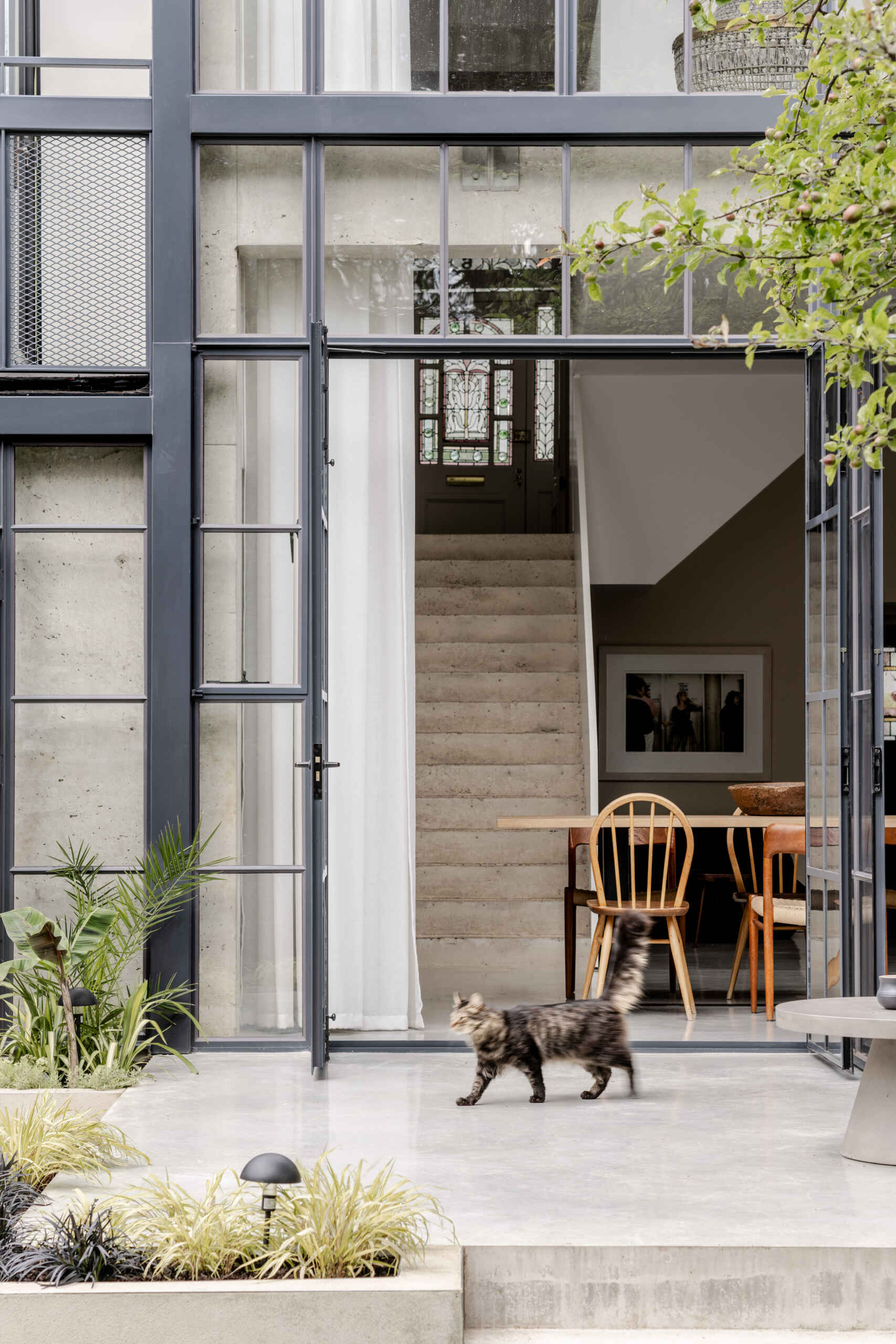
A Light-Filled Dining Space Framed by the Garden
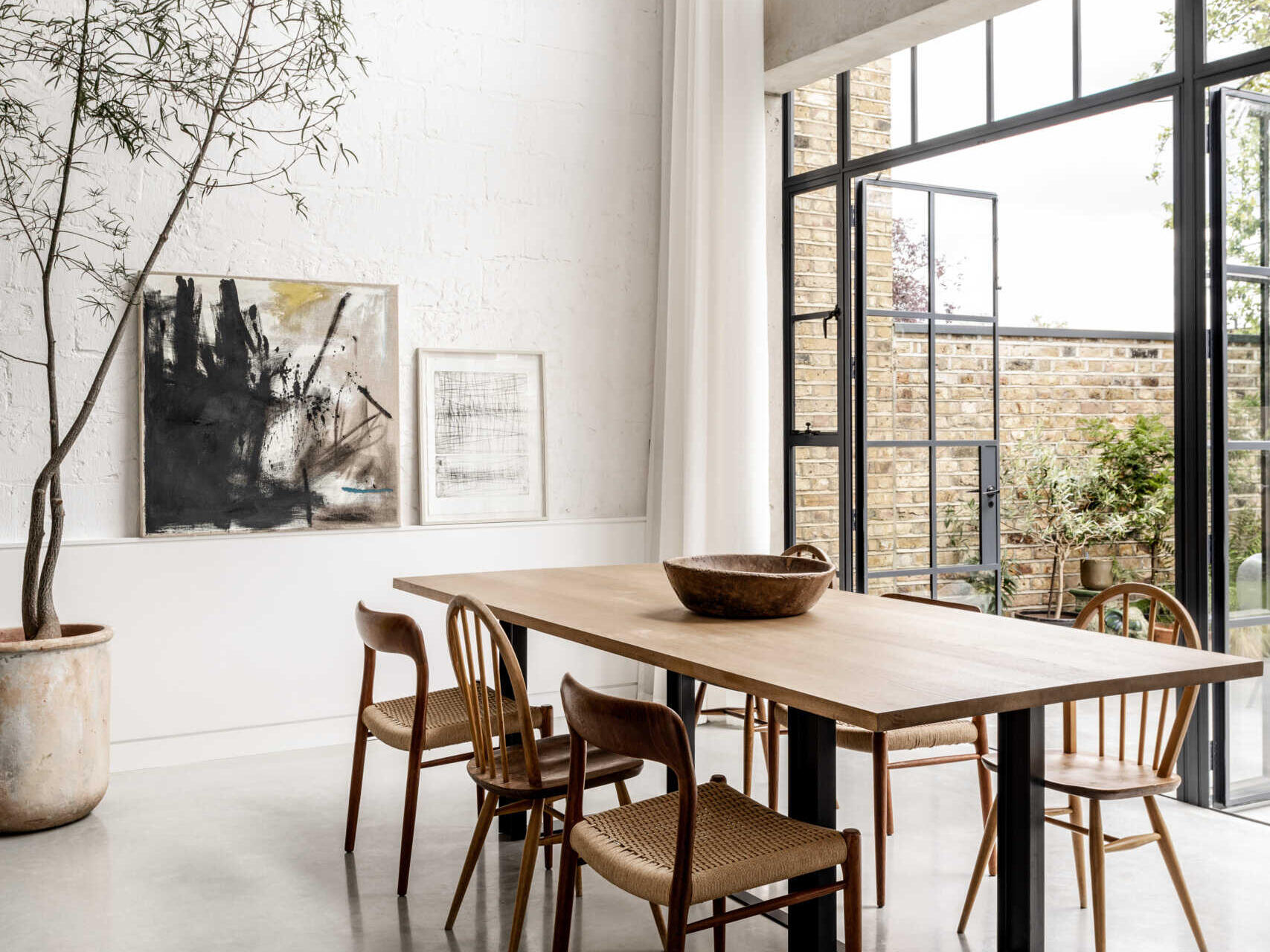
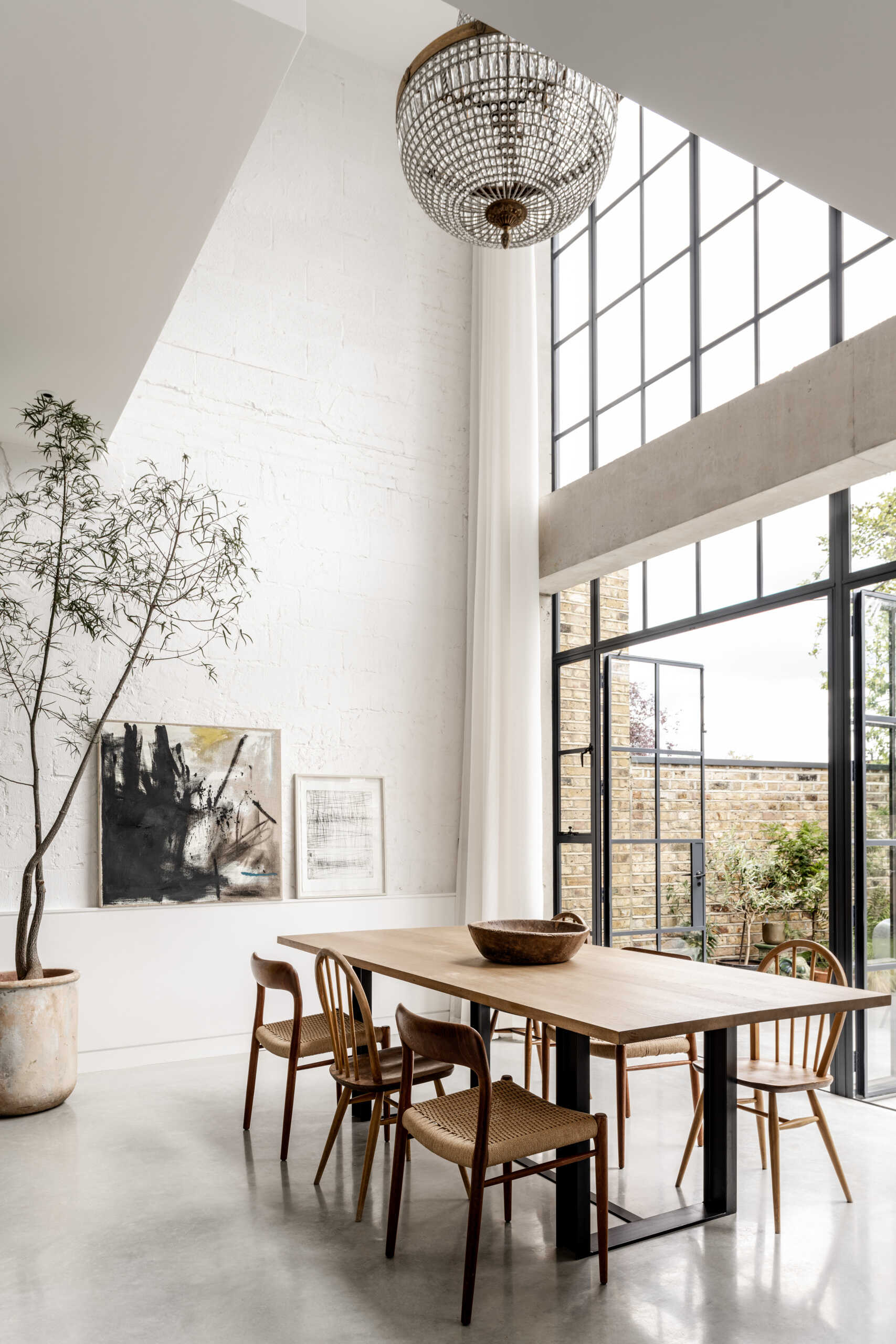
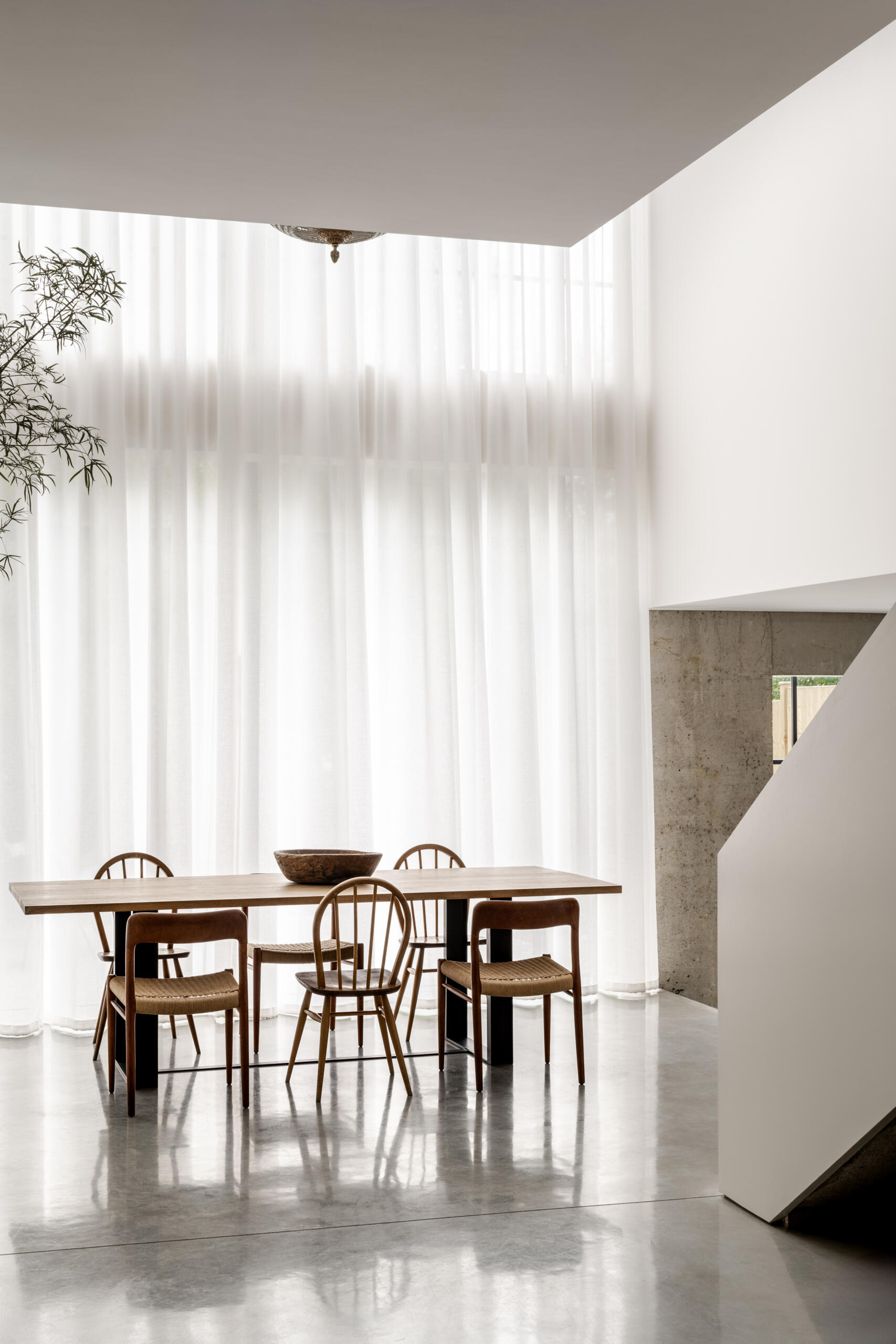
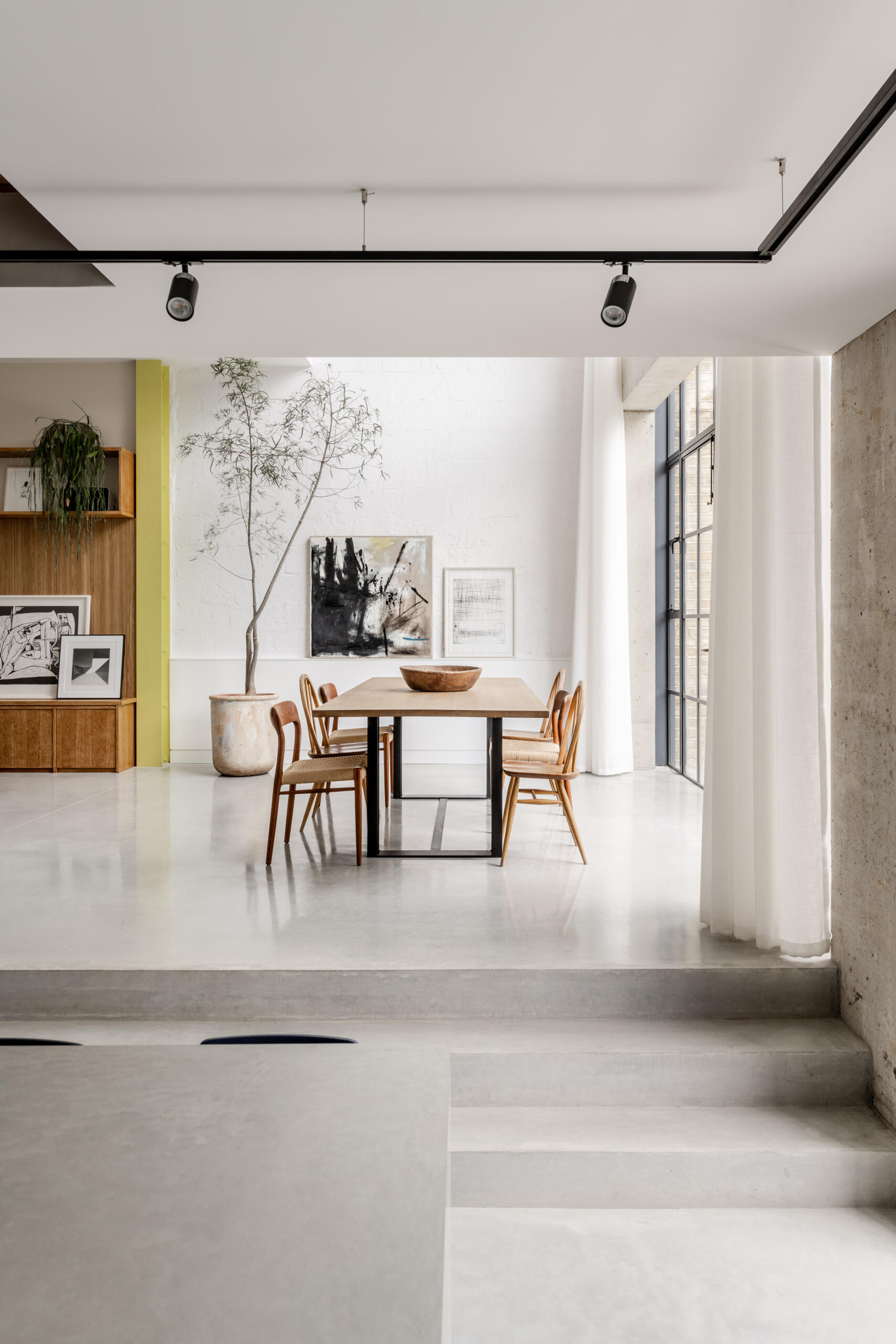
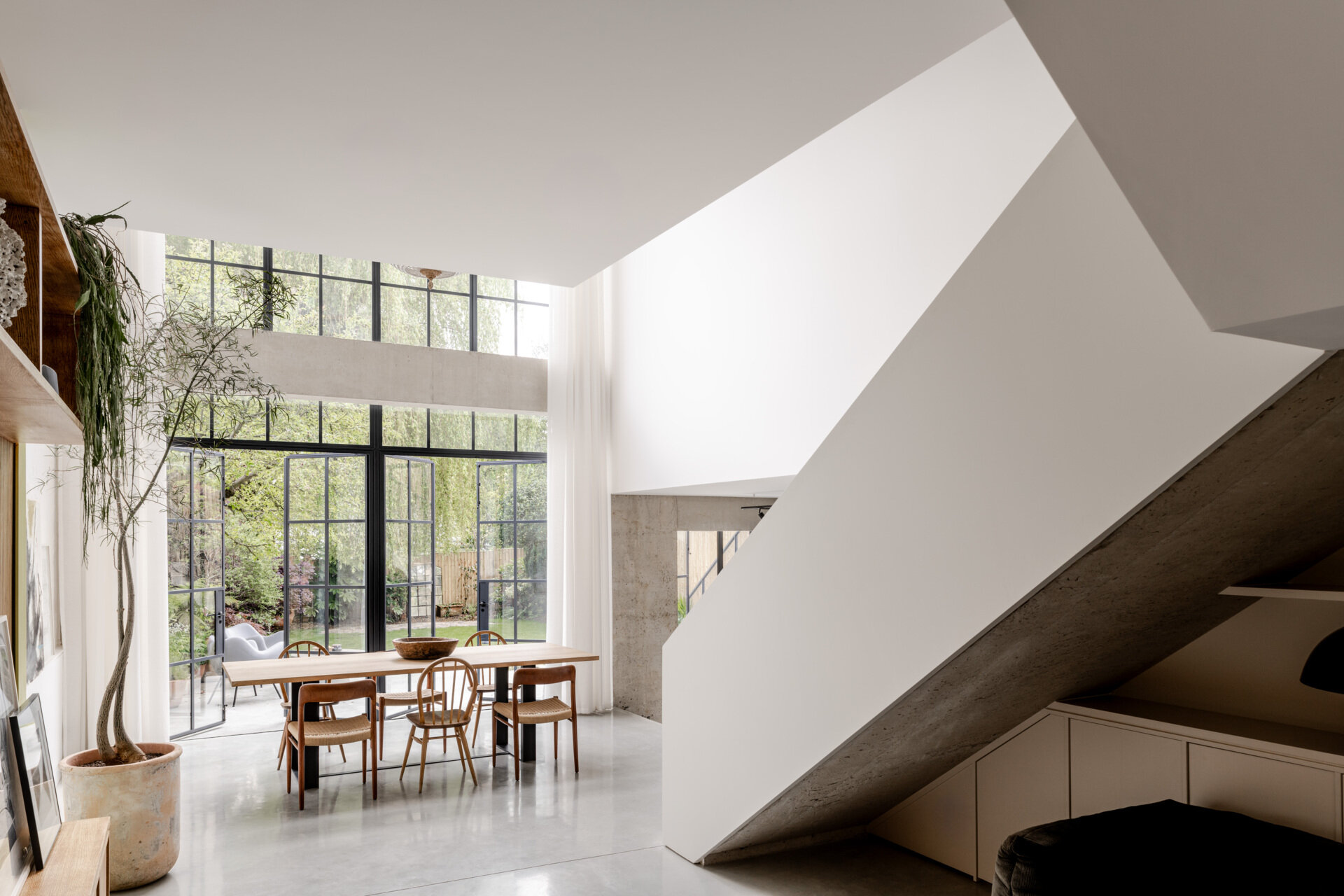
Within the extension, the dining area sits inside the new double-height volume. Floor-to-ceiling glazing draws in daylight and frames views toward the garden and the willow tree beyond.
The restrained interior palette allows the architecture to take the lead, with white walls highlighting the textures of concrete, steel, and original Edwardian details. Soft curtains balance the industrial character of concrete and steel, keeping the atmosphere comfortable and domestic.
A Kitchen With a Backsplash Inspired by Harrods
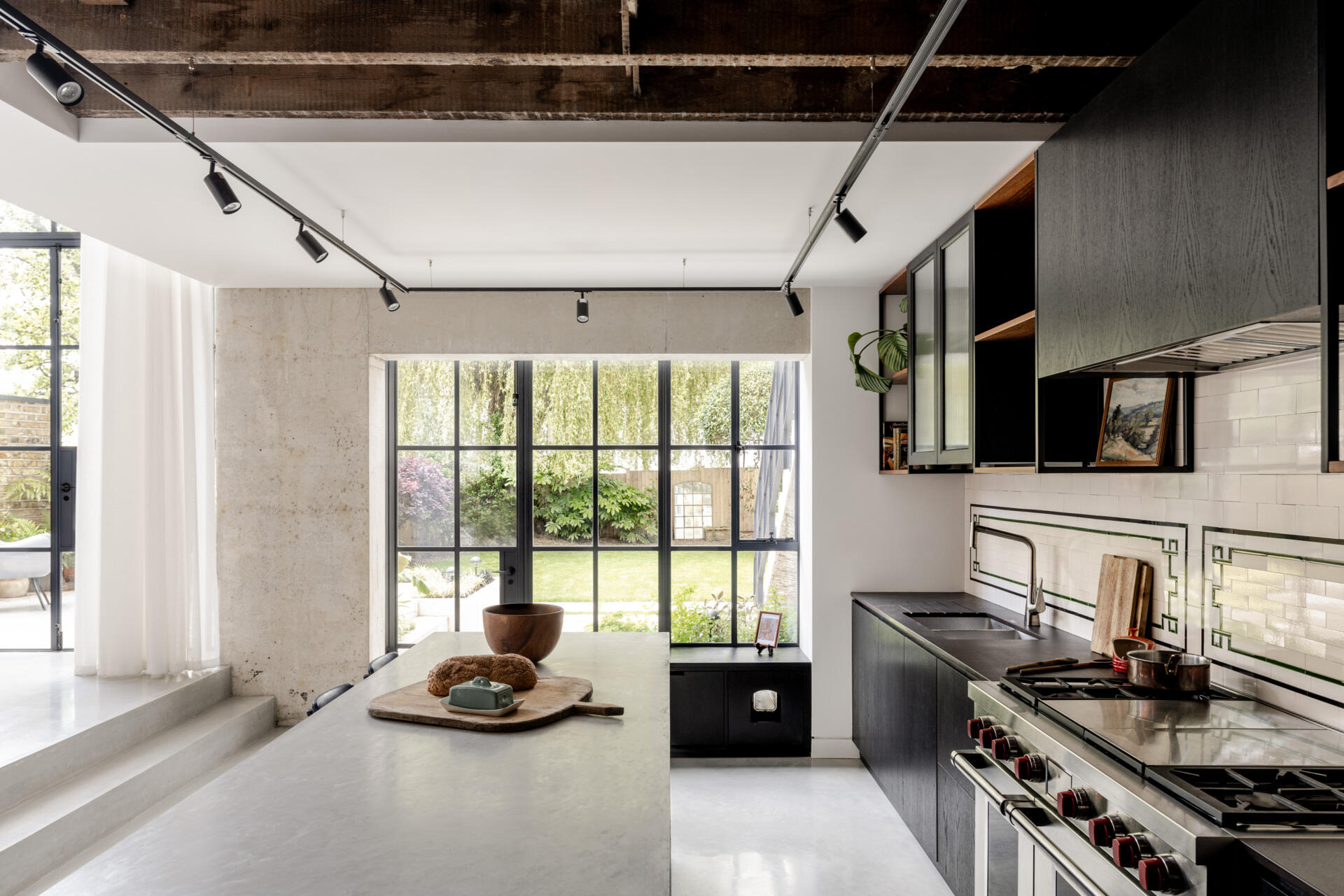
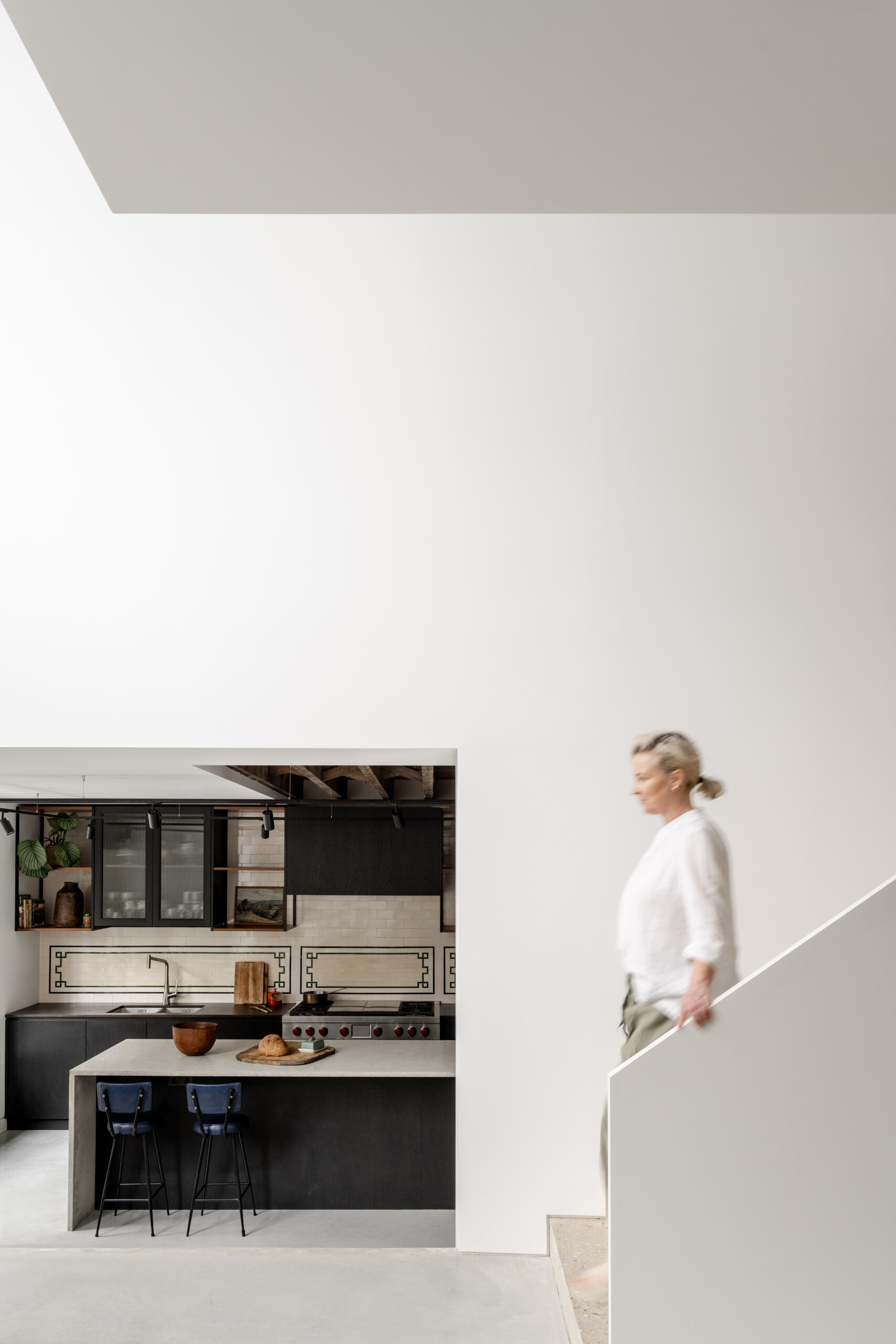
The kitchen sits at the center of daily family life and carries one of the home’s most distinctive details. A tiled backsplash takes inspiration from the decorative columns of Harrods Food Hall, bringing a small reference to London’s architectural history into the space.
Personal touches from the homeowners, including vintage furniture collected by Alice during her years as a dealer, add character throughout.
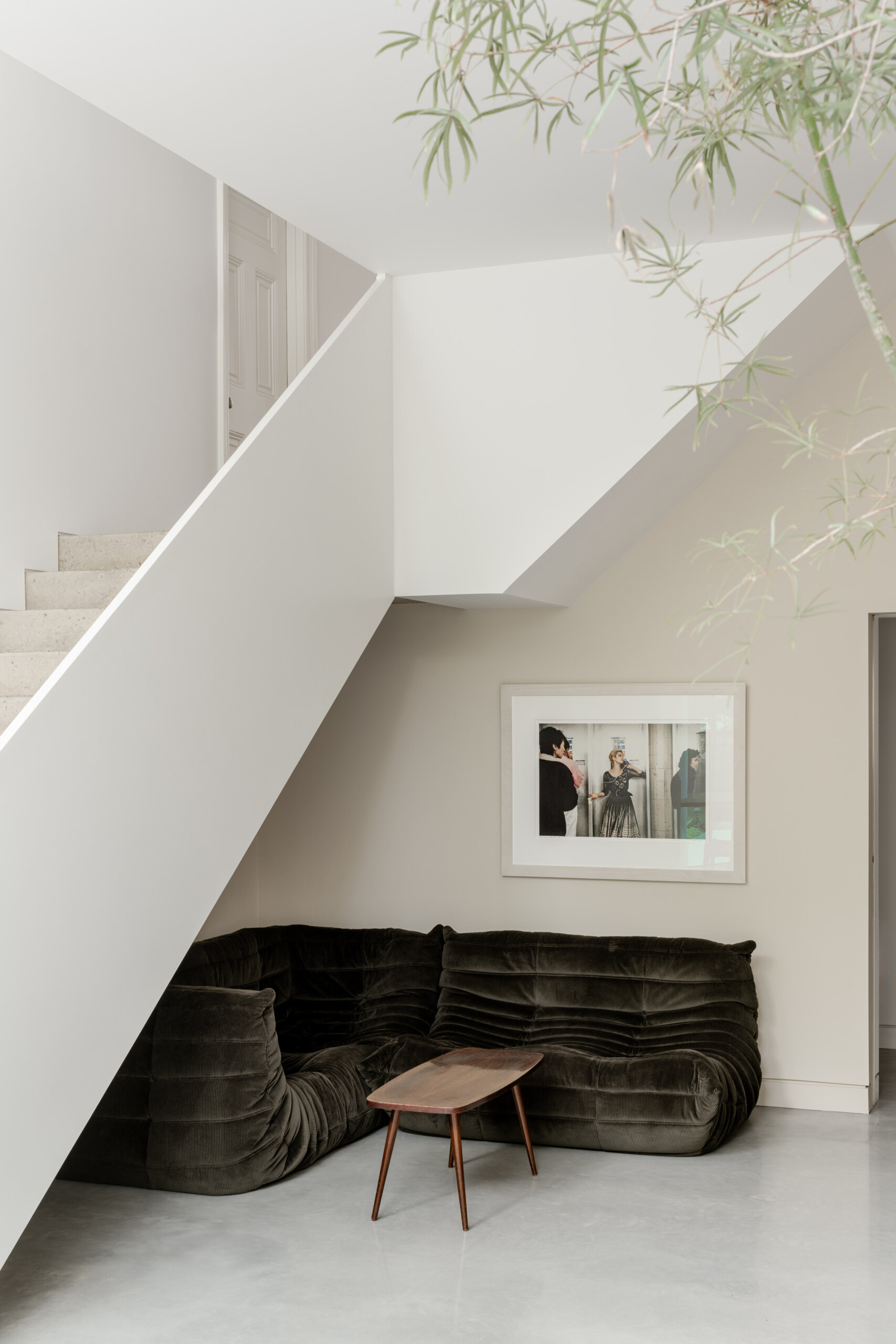
A Quiet Sitting Spot Tucked Beneath the Stairs
Beneath the staircase, a small sitting area creates a quieter corner within the layered layout of the home. This tucked-away space adds another level to the sequence of rooms, offering a place to pause while still remaining connected to the main living areas.
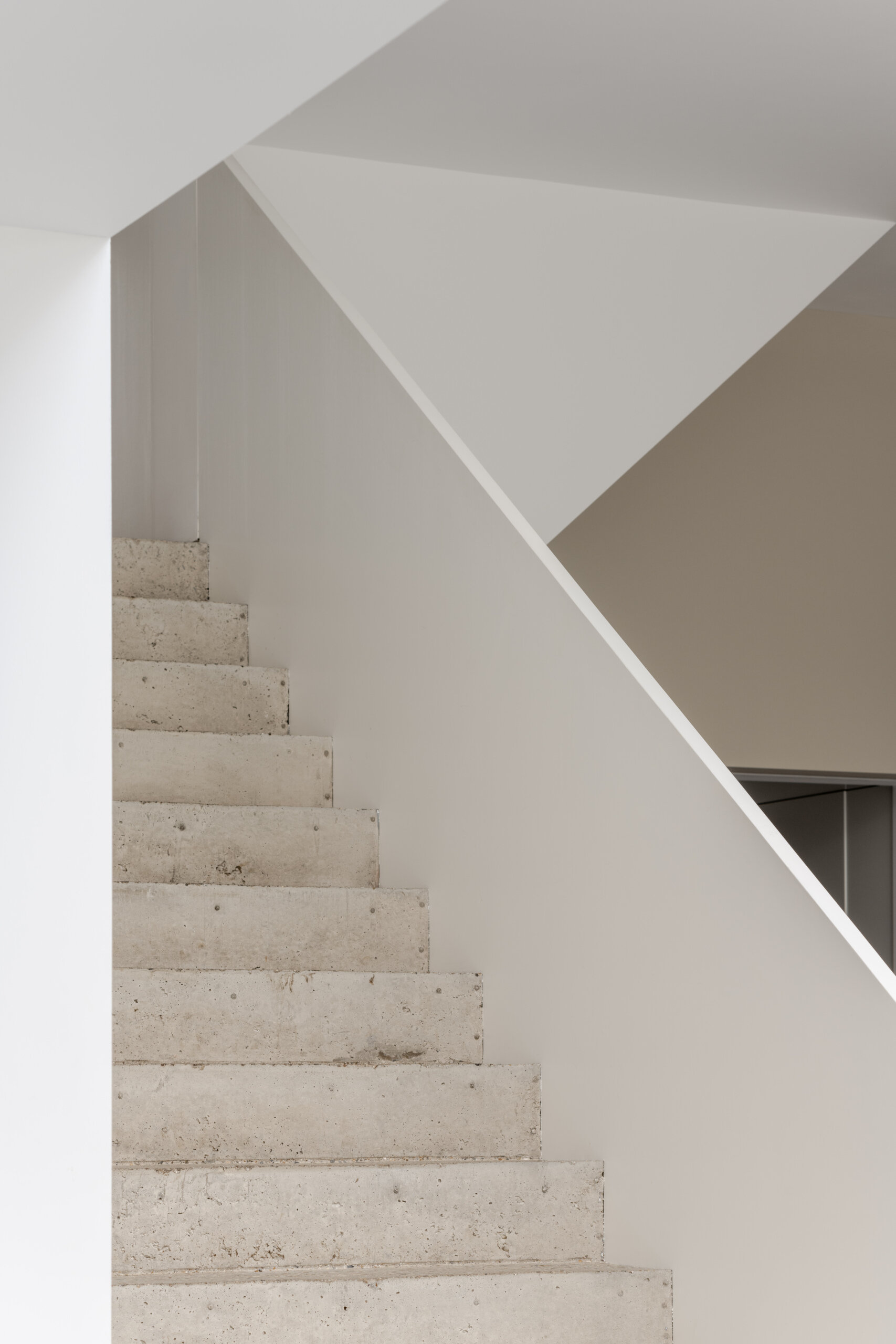
A Concrete Staircase Made From Reclaimed Aggregate
A new concrete staircase connects the different tiers of the house. The concrete uses reclaimed aggregate from demolition waste on site, giving the structure a second life while reducing material waste. Beyond its structural role, the concrete also helps regulate indoor temperatures by acting as thermal mass.
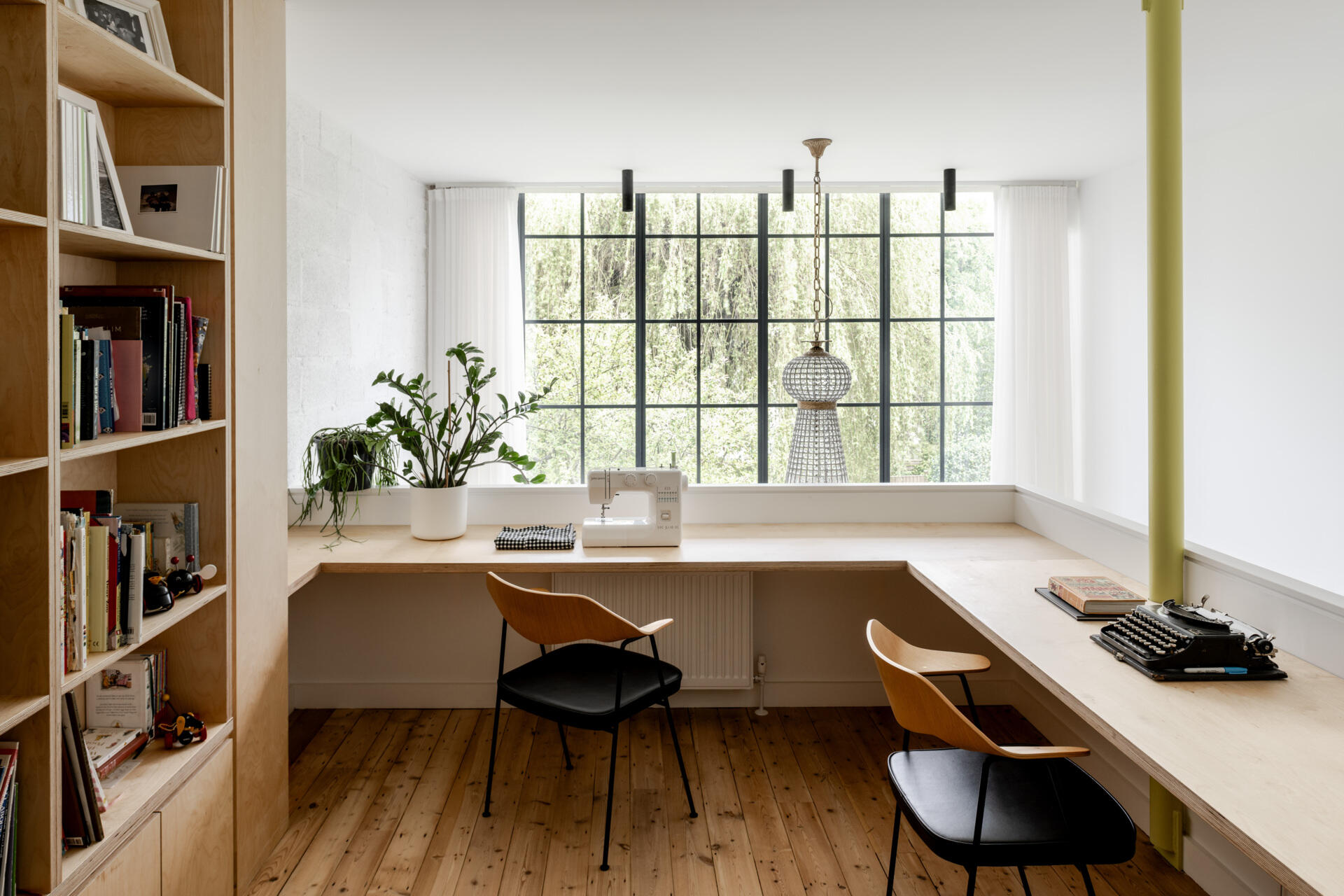
A Home Office Designed for Study and Family Life
With Alice returning to university while raising the couple’s children, the home office became an important part of the brief. The space supports both study and family life, reflecting the homeowners’ goal of creating a house that adapts to different daily routines.
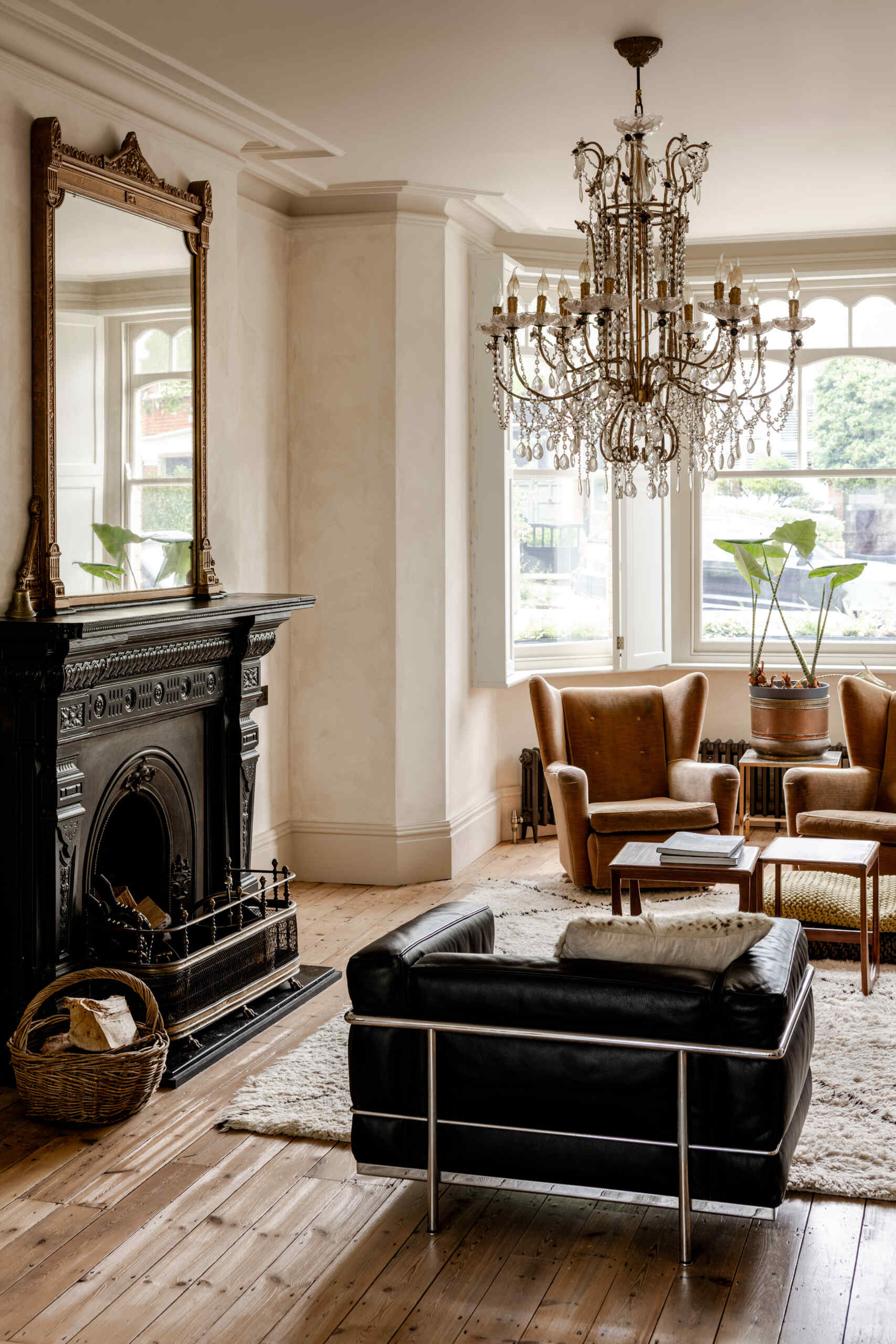
An Edwardian Lounge With Fireplace and Bay Windows
At the front of the house, the original lounge preserves the character of the Edwardian interior. A black cast iron fireplace forms the focal point, topped with a tall decorative mirror that reflects light from the bay window, while a crystal chandelier hangs centrally, reinforcing the room’s historic atmosphere.
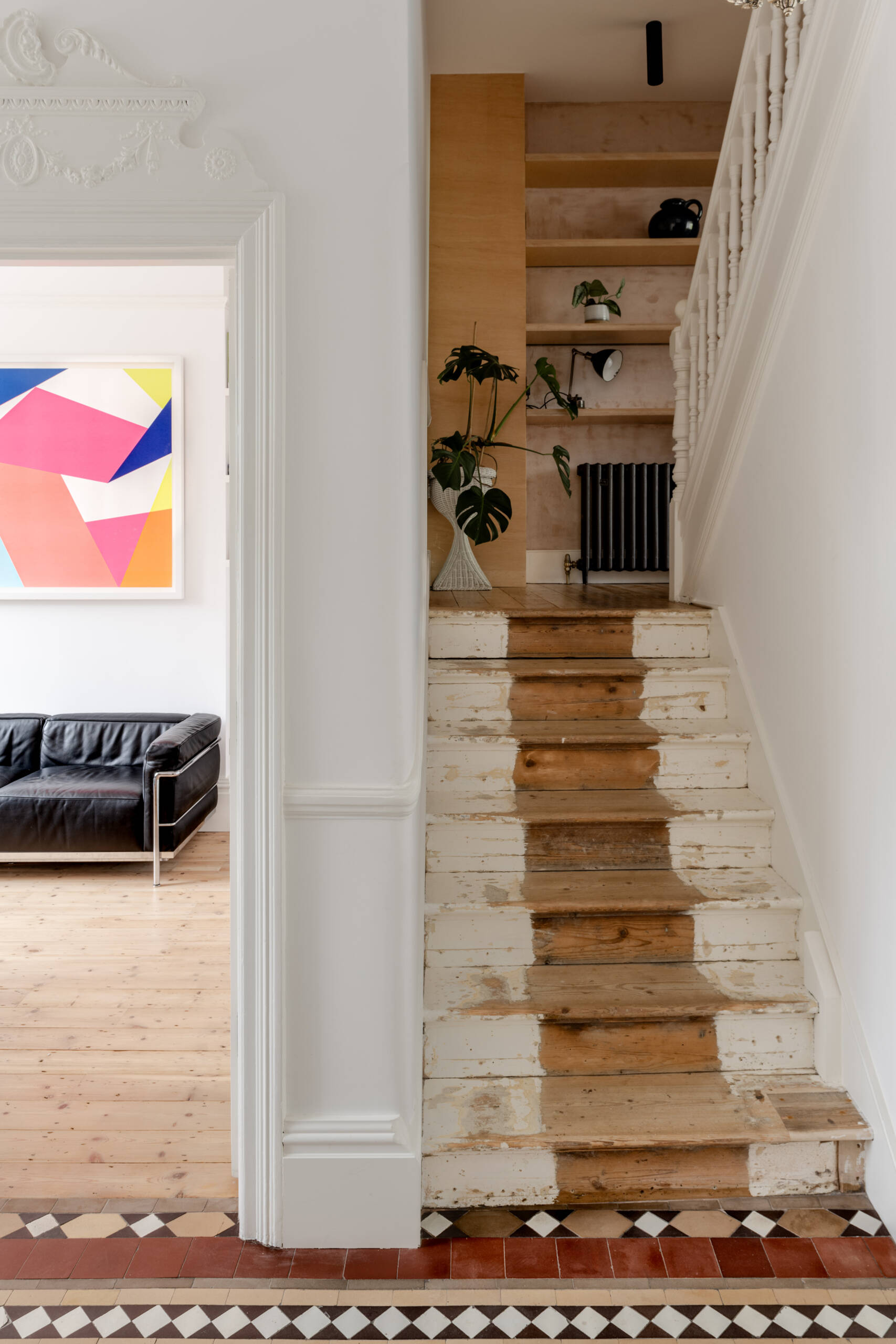
Preserving the Edwardian Staircase and Historic Details
Original elements from the Edwardian house remain visible throughout the project. Timber beams, cornicing, tiled floors, and the original staircase were preserved, maintaining the home’s historic character while reducing embodied carbon. These details help anchor the new architecture within the building’s past.
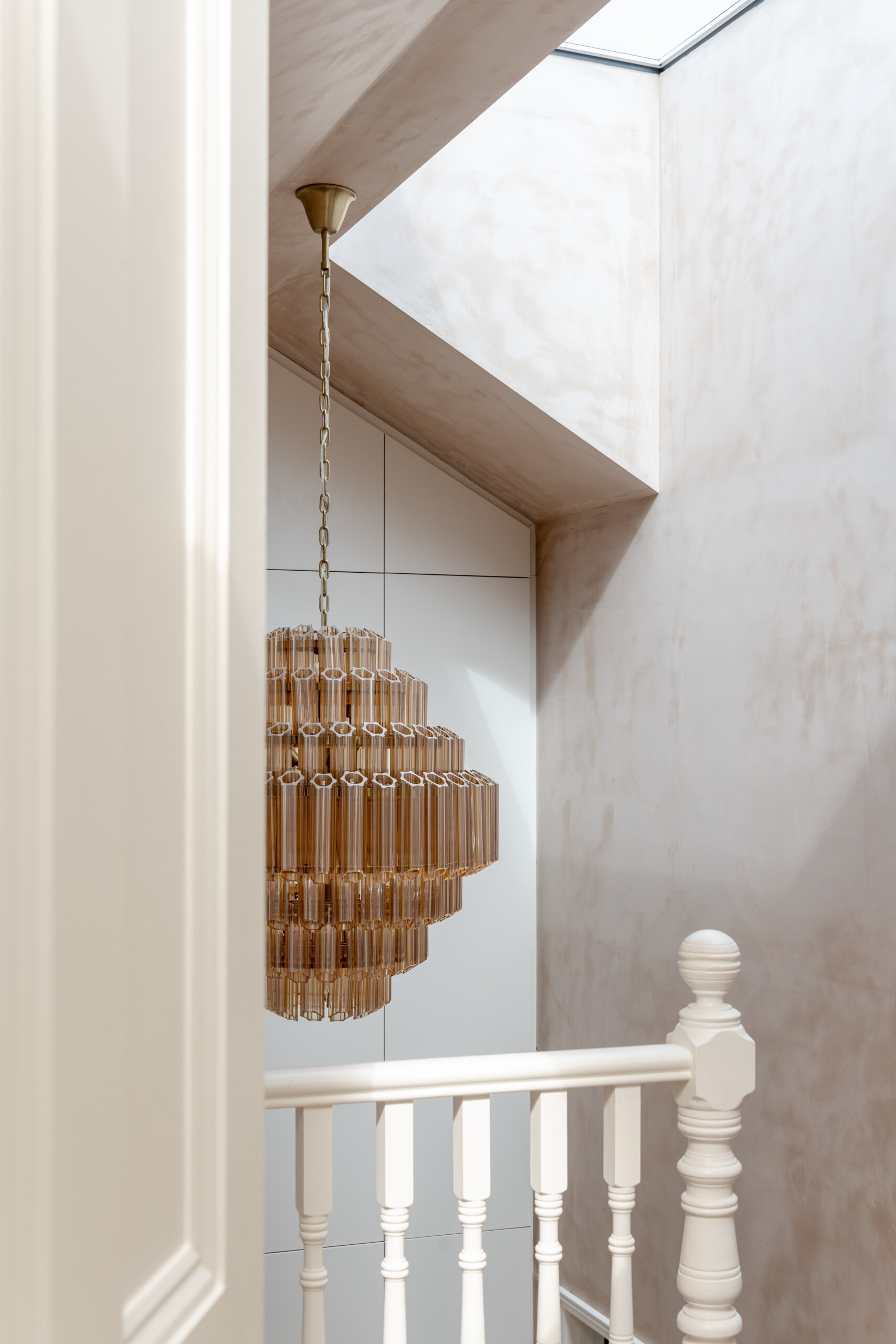
Bedrooms and Bathrooms Linked by Steel-Framed Dormers
Upstairs, the bedrooms and bathrooms continue the restrained material palette found throughout the home. The slim steel-framed windows extend into the dormers, reinforcing the architectural language introduced by the extension below. This consistency helps tie together the historic structure and the contemporary addition.
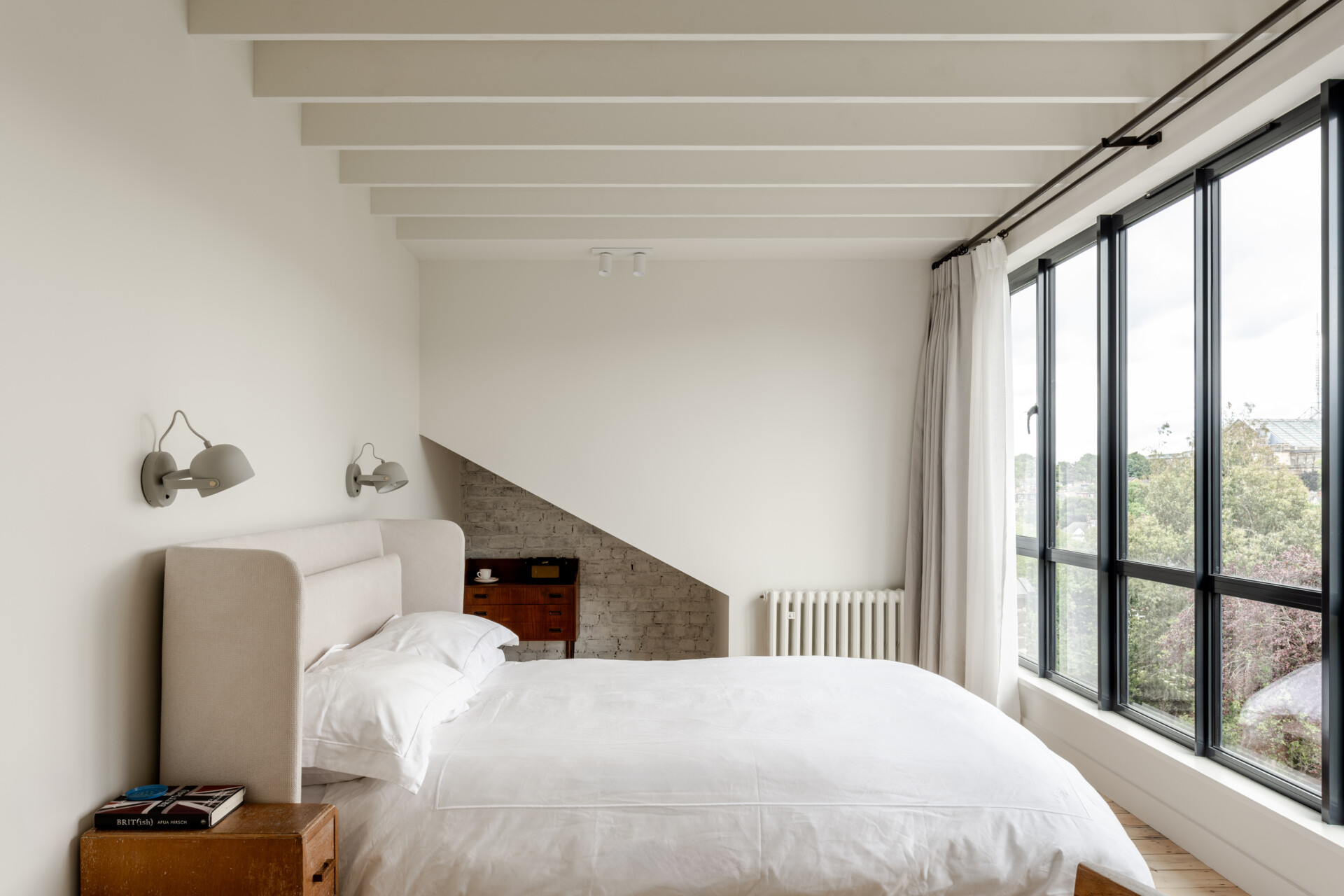
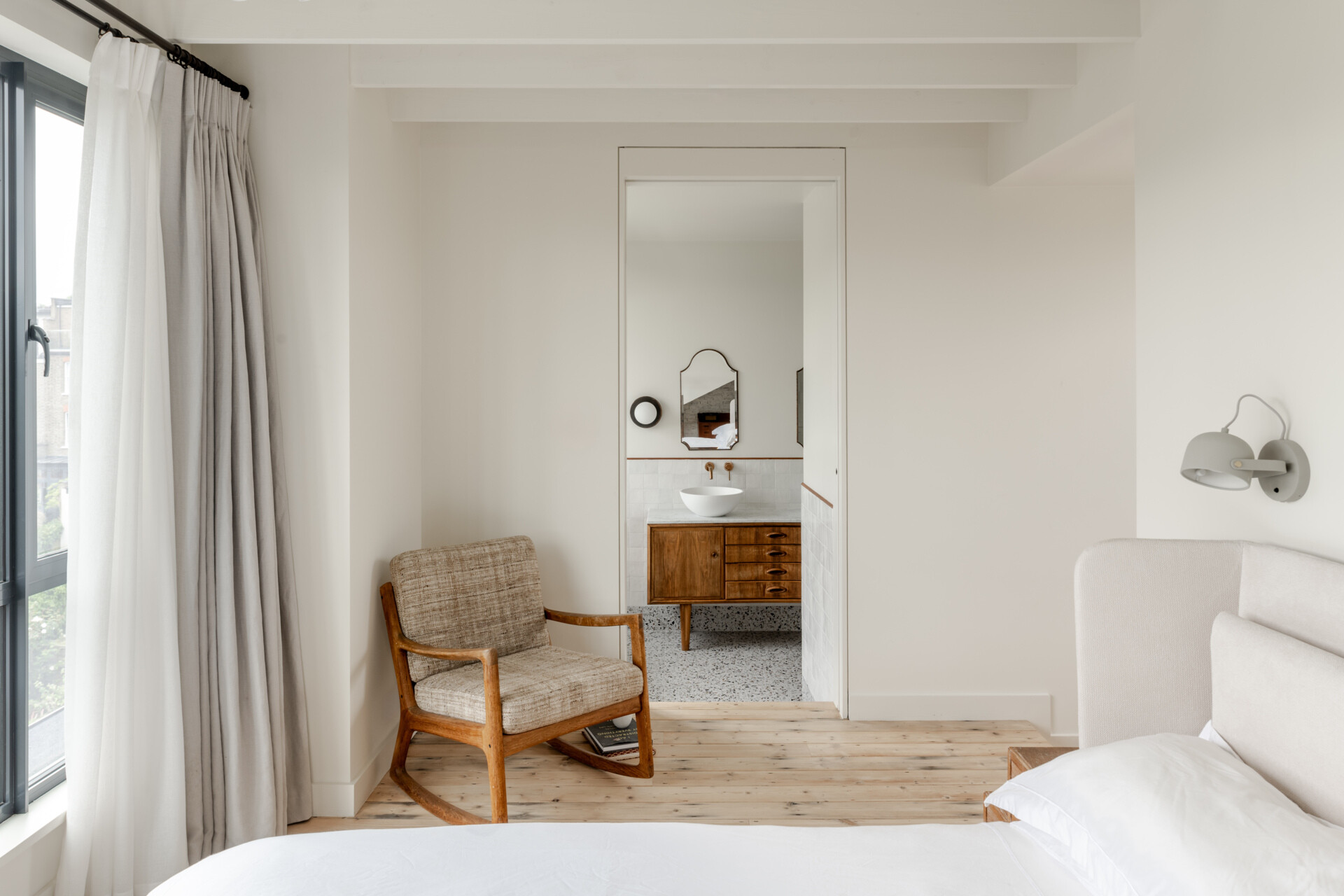
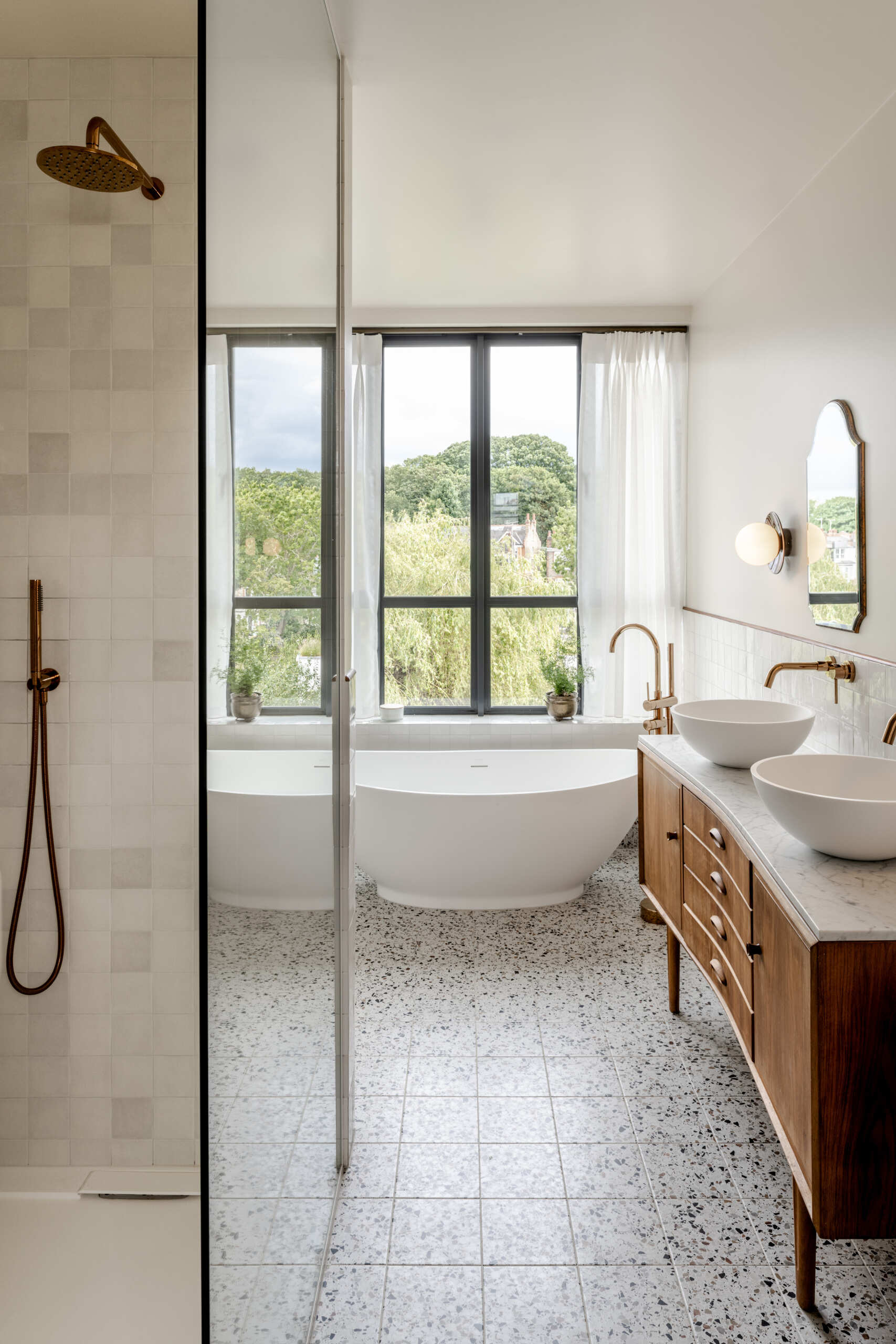
House of Panes shows how a historic terrace can evolve while keeping its identity intact. By combining steel glazing, concrete, and preserved Edwardian details, Matthew Giles Architects reshaped the home into a sequence of connected spaces filled with daylight.