Local Blackbutt Defines This Timber-Framed House Overlooking a Vineyard

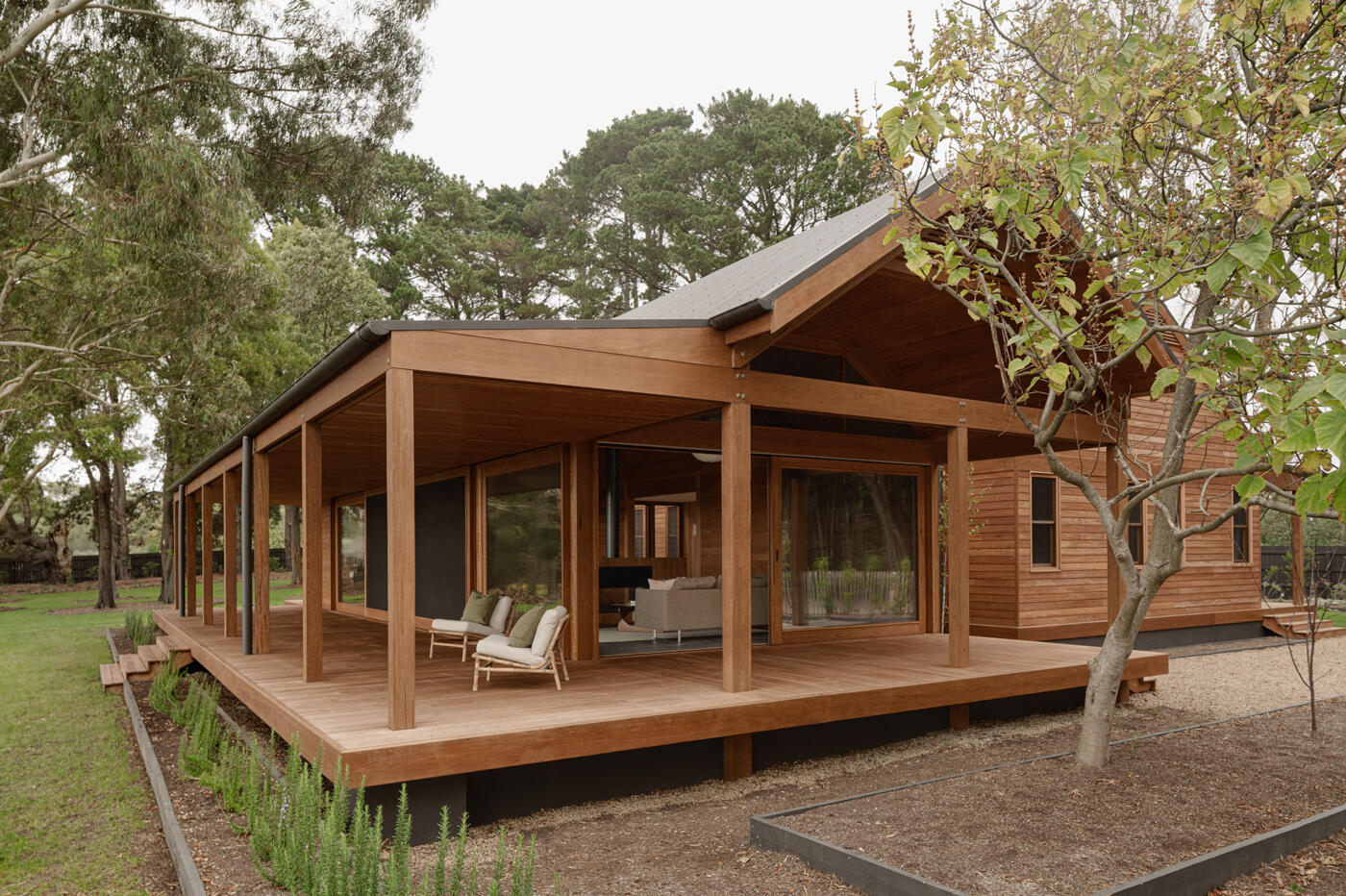
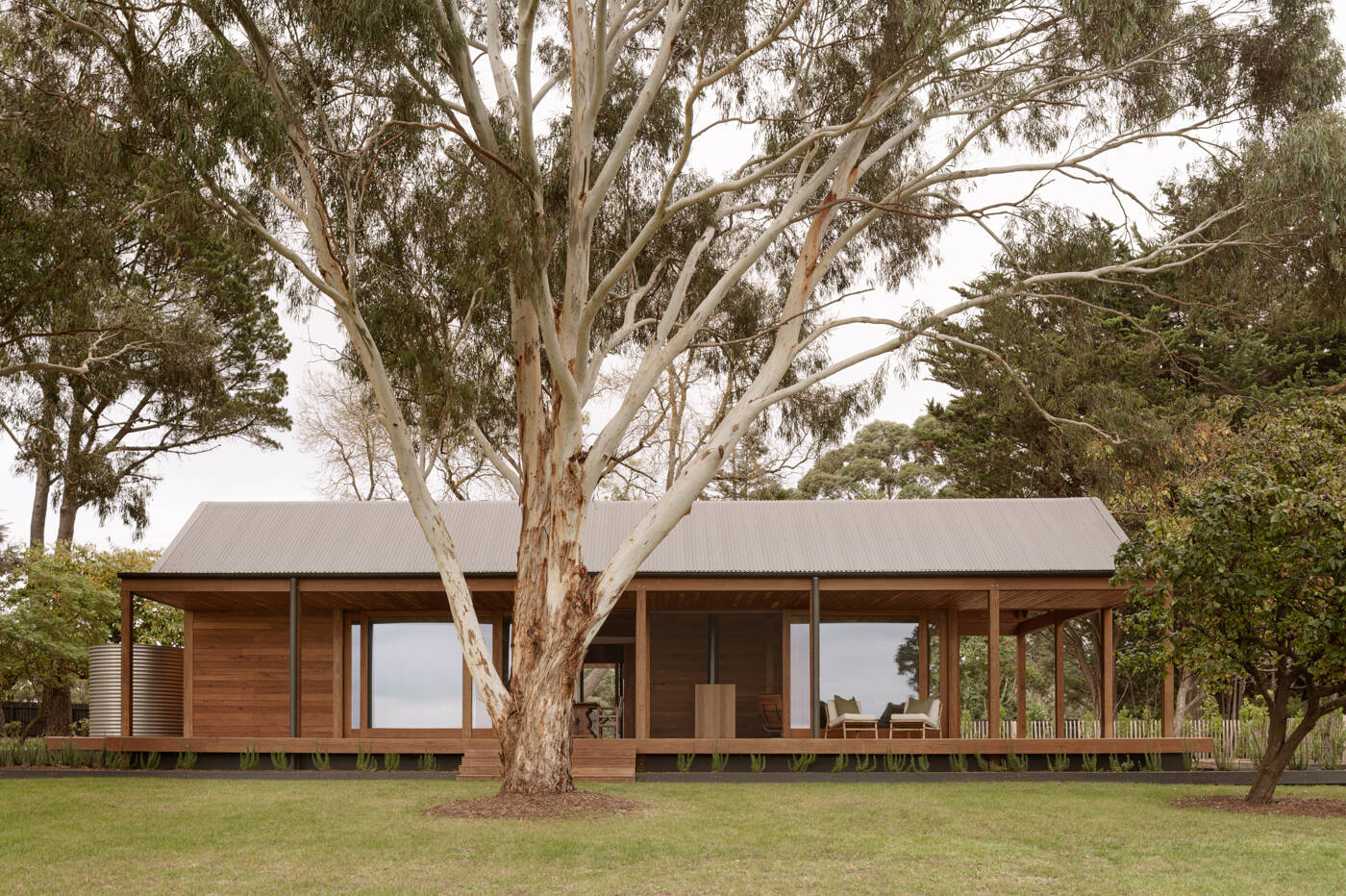
Local blackbutt timber defines the exterior of this vineyard house in Main Ridge. Designed by Porebski Architects, the two pavilion structures are clad in ship-lapped boards and raised lightly above the landscape.

At Main Ridge on Victoria’s Mornington Peninsula in Australia, a timber house sits beside a newly acquired vineyard. Designed by Porebski Architects for long-time clients, the project builds on a 20-year collaboration and a shared appreciation for timber construction.

Replacing a previous house on the site, the design was carefully planned to minimize disturbance to the land. Two raised pavilions organize the layout, separating living areas from the private wing while opening views toward the vineyard.

Local blackbutt timber defines the exterior of this vineyard house in Main Ridge. Designed by Porebski Architects, the two pavilion structures are clad in ship-lapped boards and raised lightly above the landscape.

Two Timber Pavilions on the Vineyard

The house is composed of two pavilions positioned along the site. The rear pavilion faces the vineyard and contains the kitchen and living spaces. The front pavilion accommodates the bedrooms, bathrooms, a media room, and a mudroom.

Both structures are raised from the ground. The living pavilion cantilevers over a bushfire wall, giving the structure a light presence while responding to site conditions.

Externally, the buildings are clad in ship-lapped boards. All timber used throughout the house, including the structural elements, interior linings, and flooring, is locally sourced blackbutt.

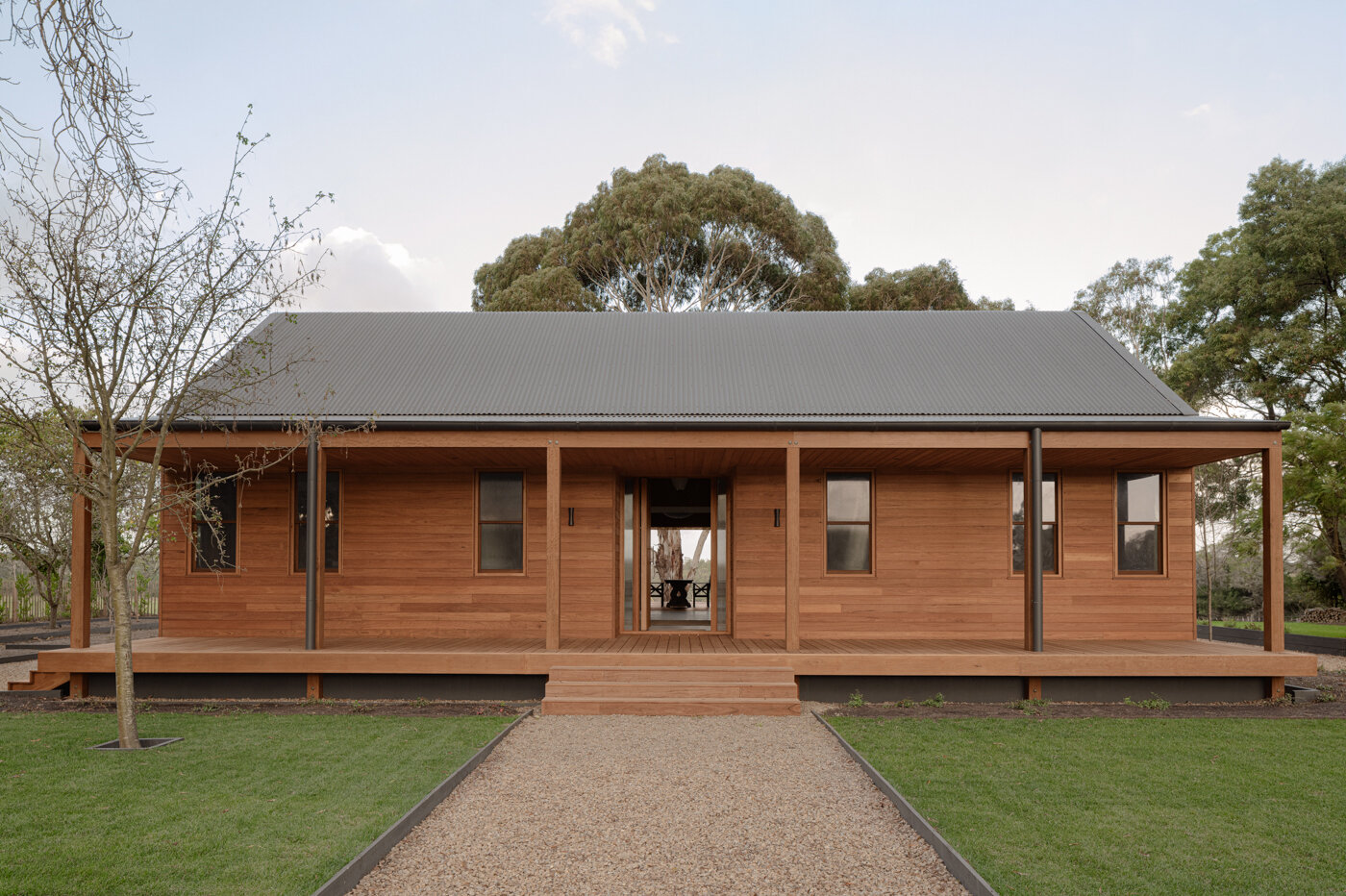
Local blackbutt timber defines the exterior of this vineyard house in Main Ridge. Designed by Porebski Architects, the two pavilion structures are clad in ship-lapped boards and raised lightly above the landscape.

A Verandah Inspired by Australian Tradition

Verandahs draw inspiration from Australian vernacular architecture and help soften the scale of the house. They provide sheltered outdoor spaces while forming a gradual transition between the interior and the surrounding landscape.

These covered edges help anchor the building to its rural setting while extending usable living space outdoors.

Verandas inspired by Australian vernacular architecture wrap the timber house, softening its scale and creating sheltered outdoor spaces that connect the home to its vineyard setting.

A Living Room Framed by Timber Structure

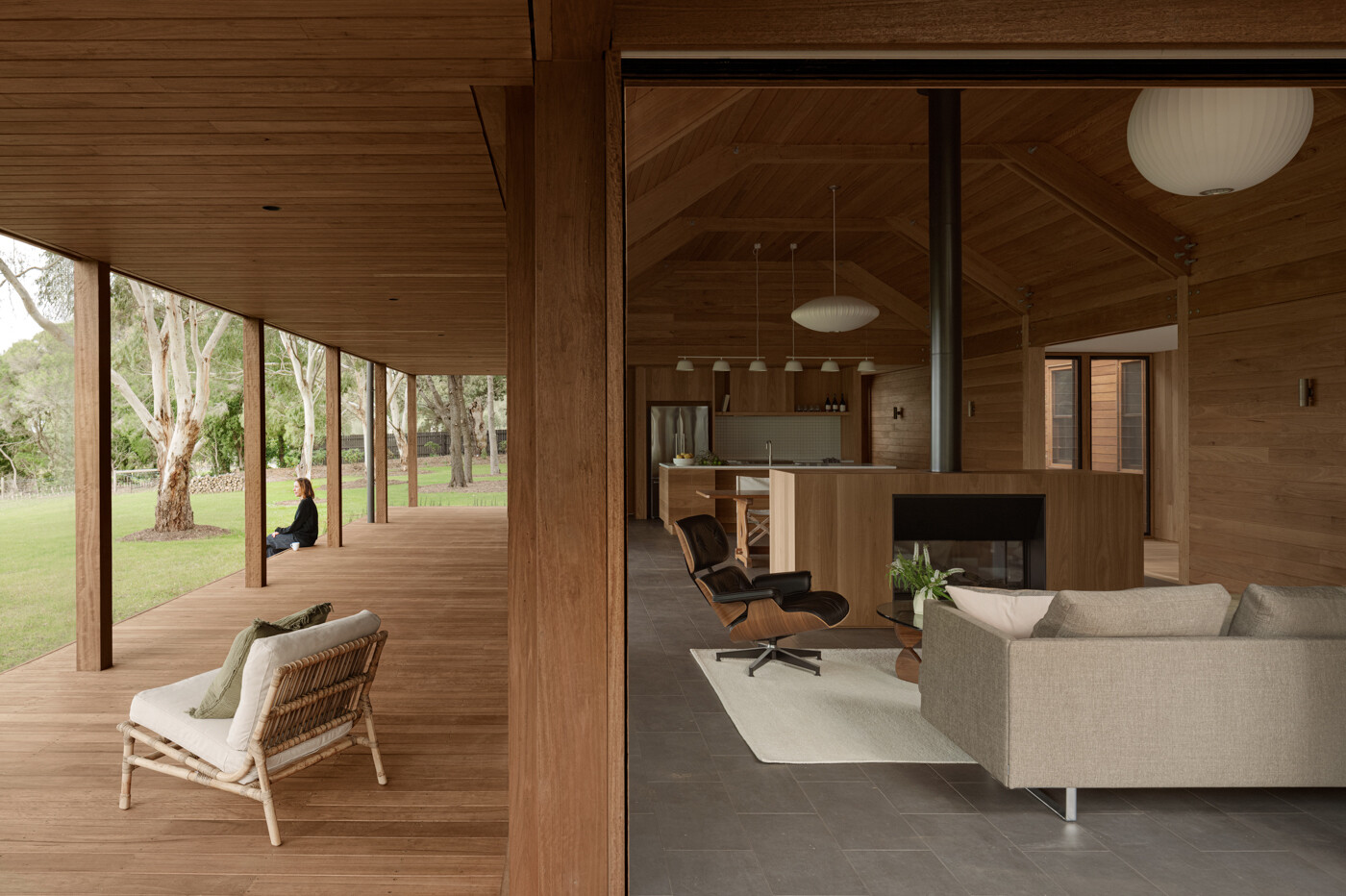
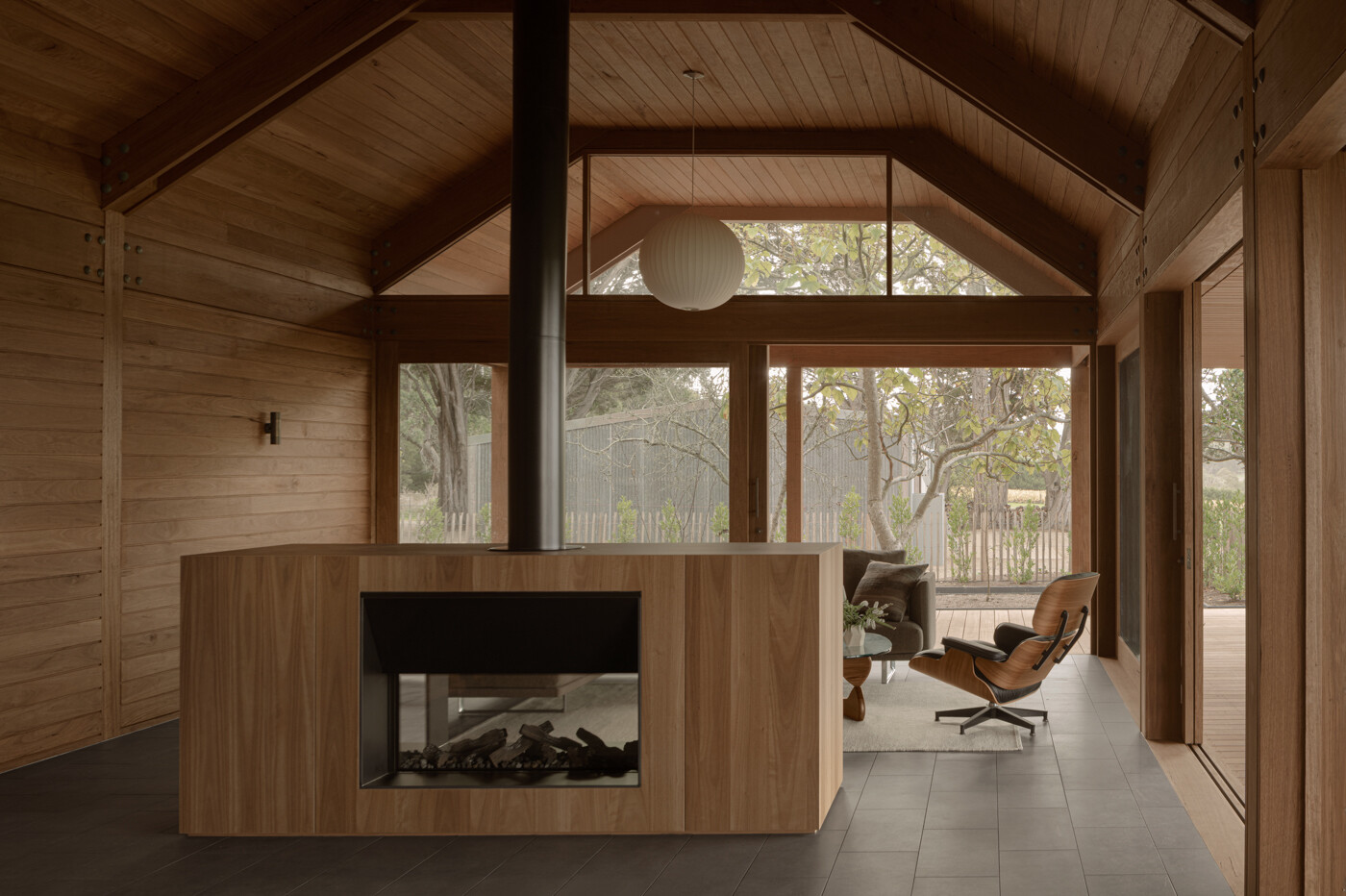
The living pavilion reveals the full expression of the timber structure. Exposed columns, beams, and collar-tied rafters sit beneath ship-lapped timber ceilings and walls, while a double-sided fireplace is central to the space, and assists in dividing the open plan.

Large windows and glazed doors frame views toward the vineyard. The rhythm of the exposed collar ties continues outward toward a covered northern terrace.

The living pavilion reveals the full expression of the timber structure. Exposed columns, beams, and collar-tied rafters sit beneath ship-lapped timber ceilings and walls, while a double-sided fireplace is central to the space, and assists in dividing the open plan.

A Kitchen That Blends In

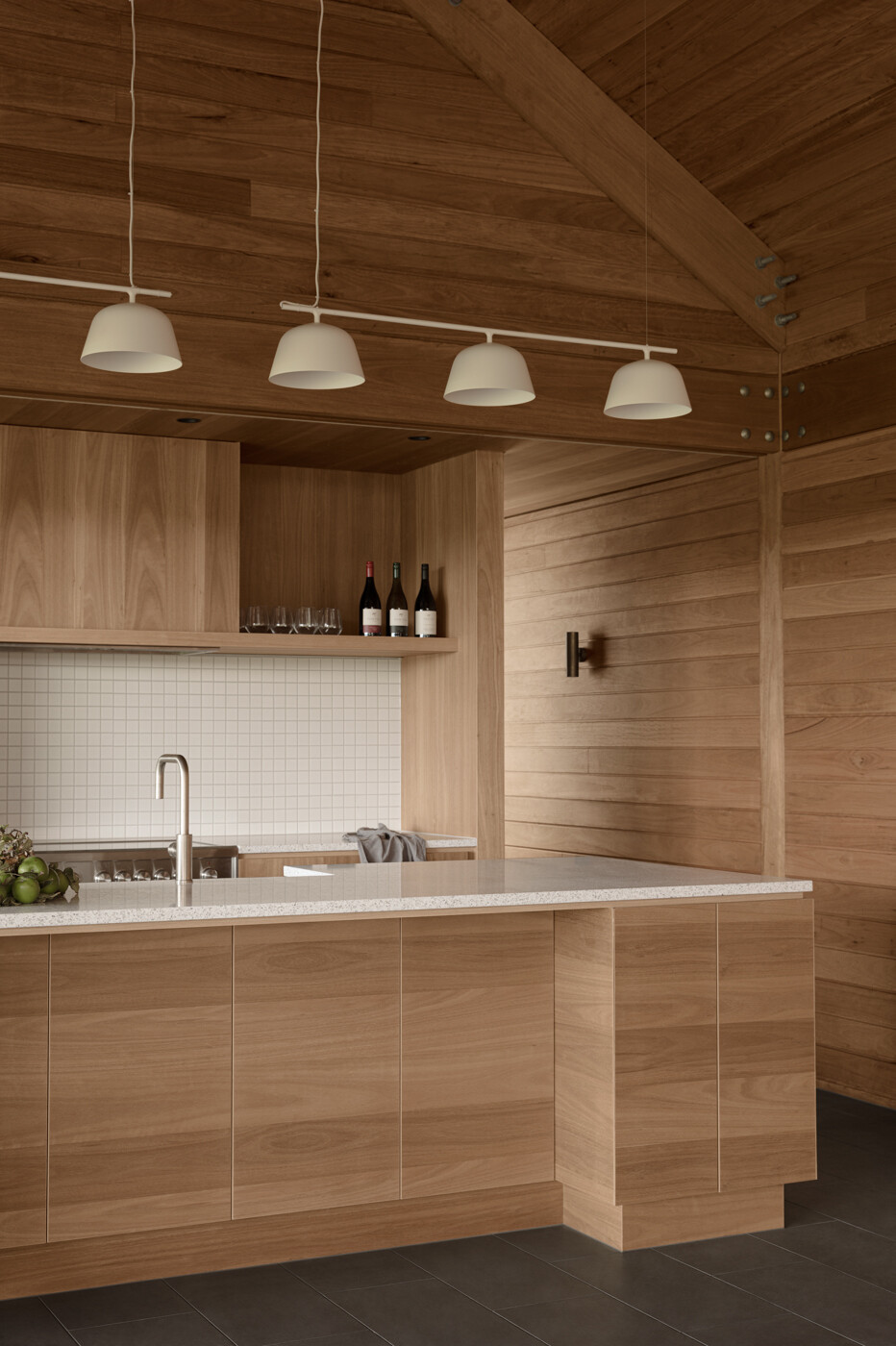
The kitchen sits within the rear pavilion alongside the living area and is positioned to face the vineyard. Wood cabinetry matches the surrounding walls and ceiling, while white counter tops, lighting, and backsplash provide a contrasting element.
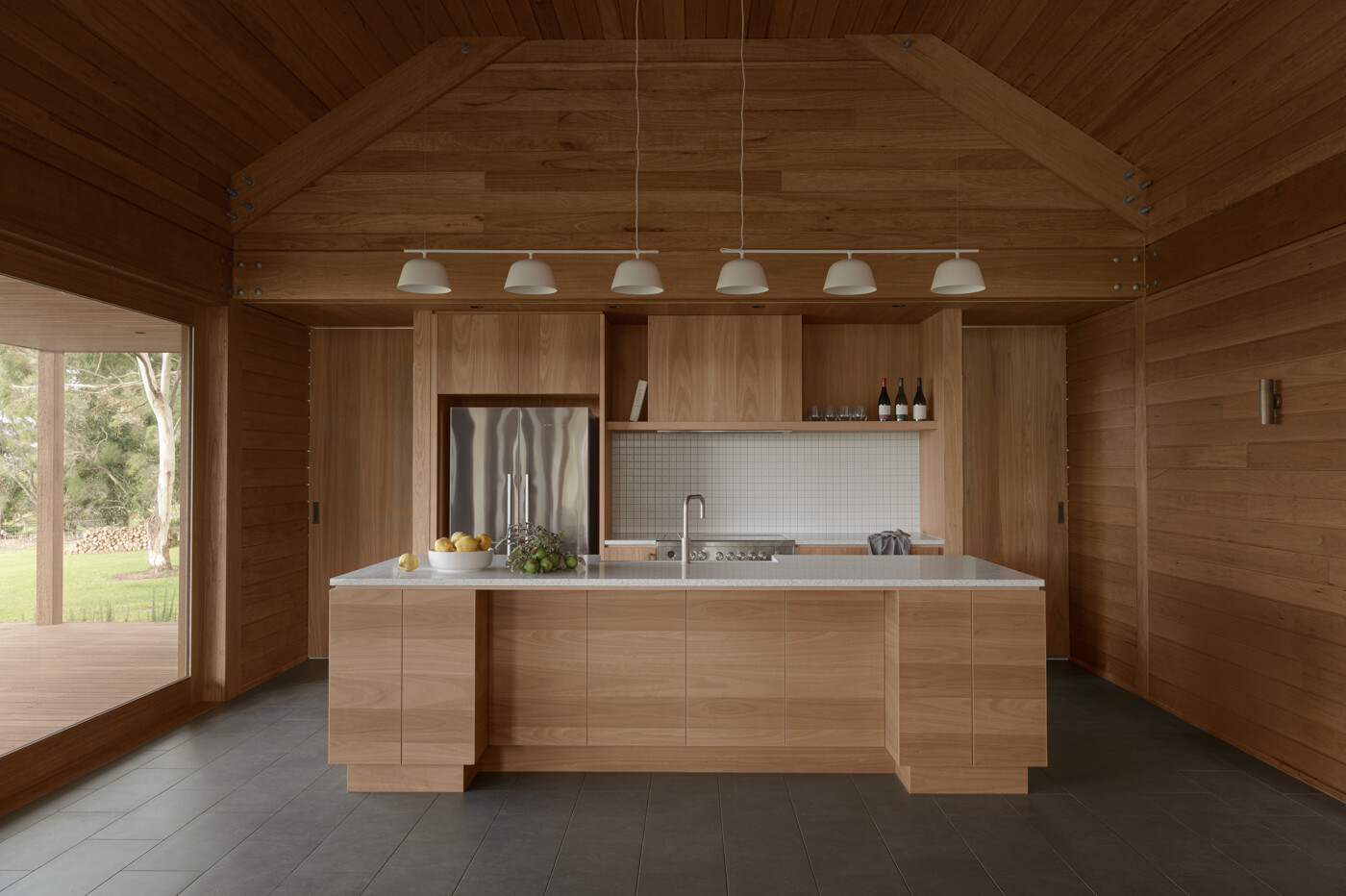
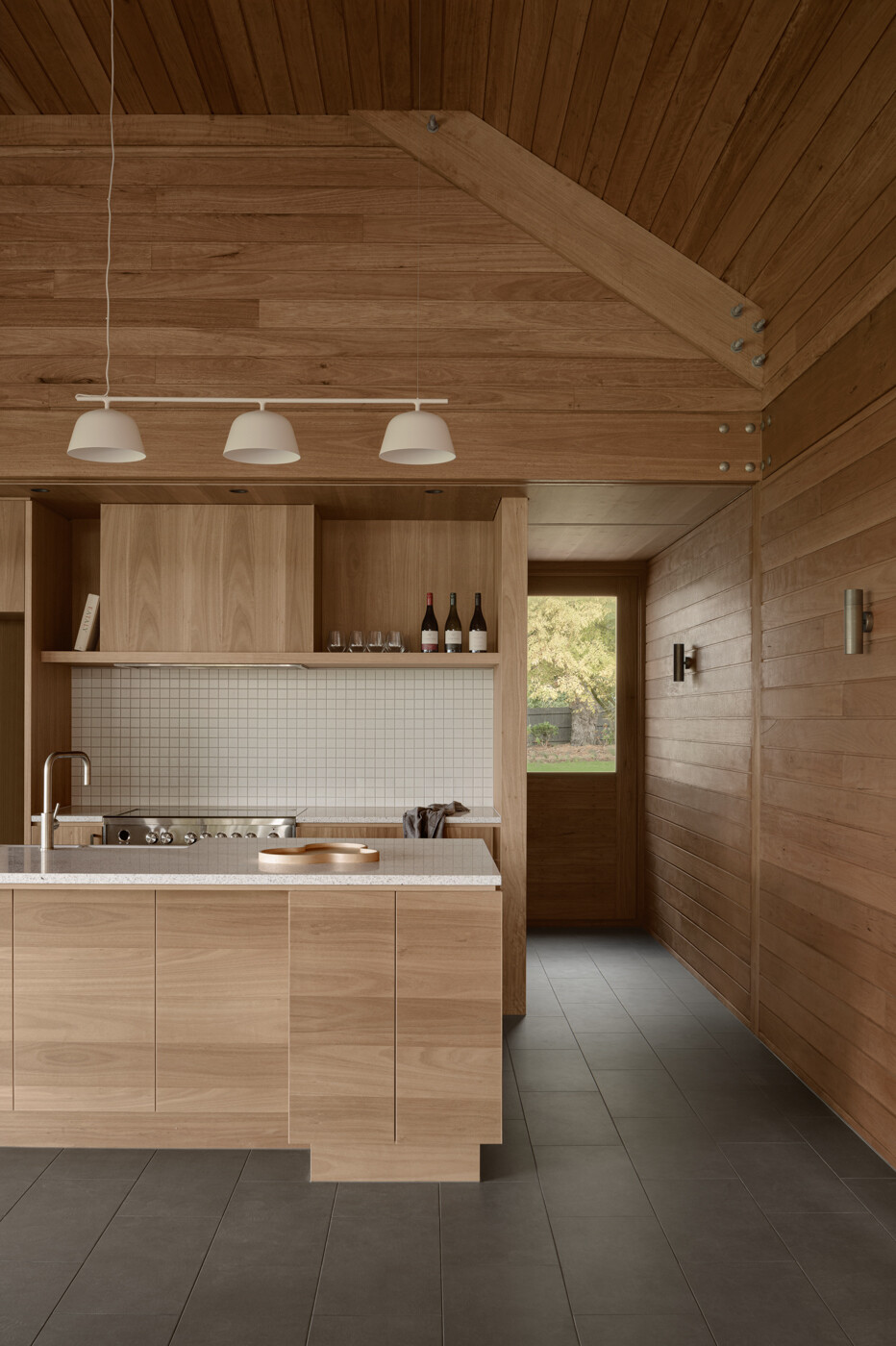
The kitchen sits within the rear pavilion alongside the living area and is positioned to face the vineyard. Wood cabinetry matches the surrounding walls and ceiling, while white counter tops, lighting, and backsplash provide a contrasting element.

The Hallway Between the Two Pavilions

Skylights bring daylight into the entry before the path continues through a narrow linkway that connects the two pavilions. This compressed passage heightens the transition before arriving in the larger living volume.
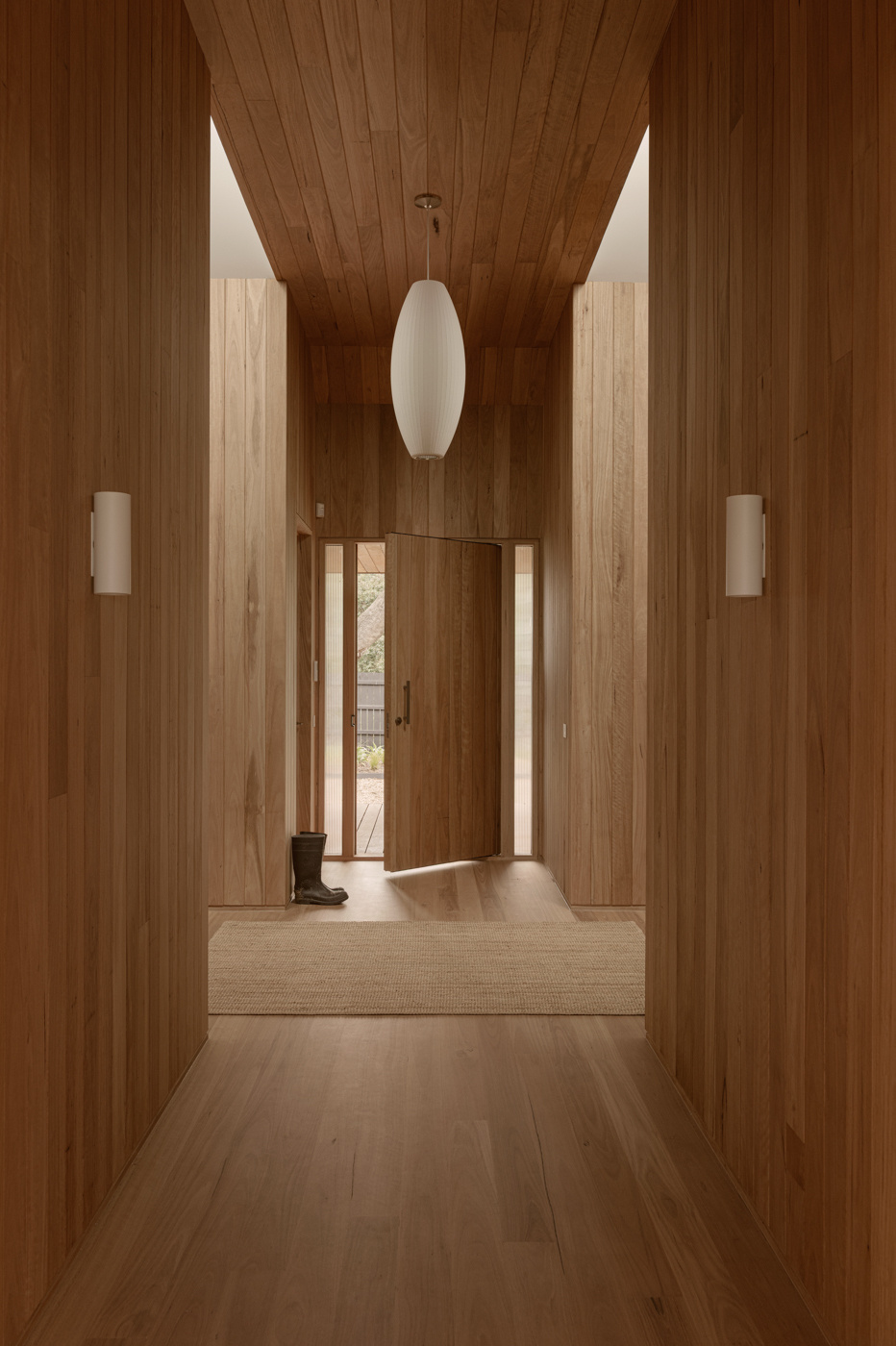
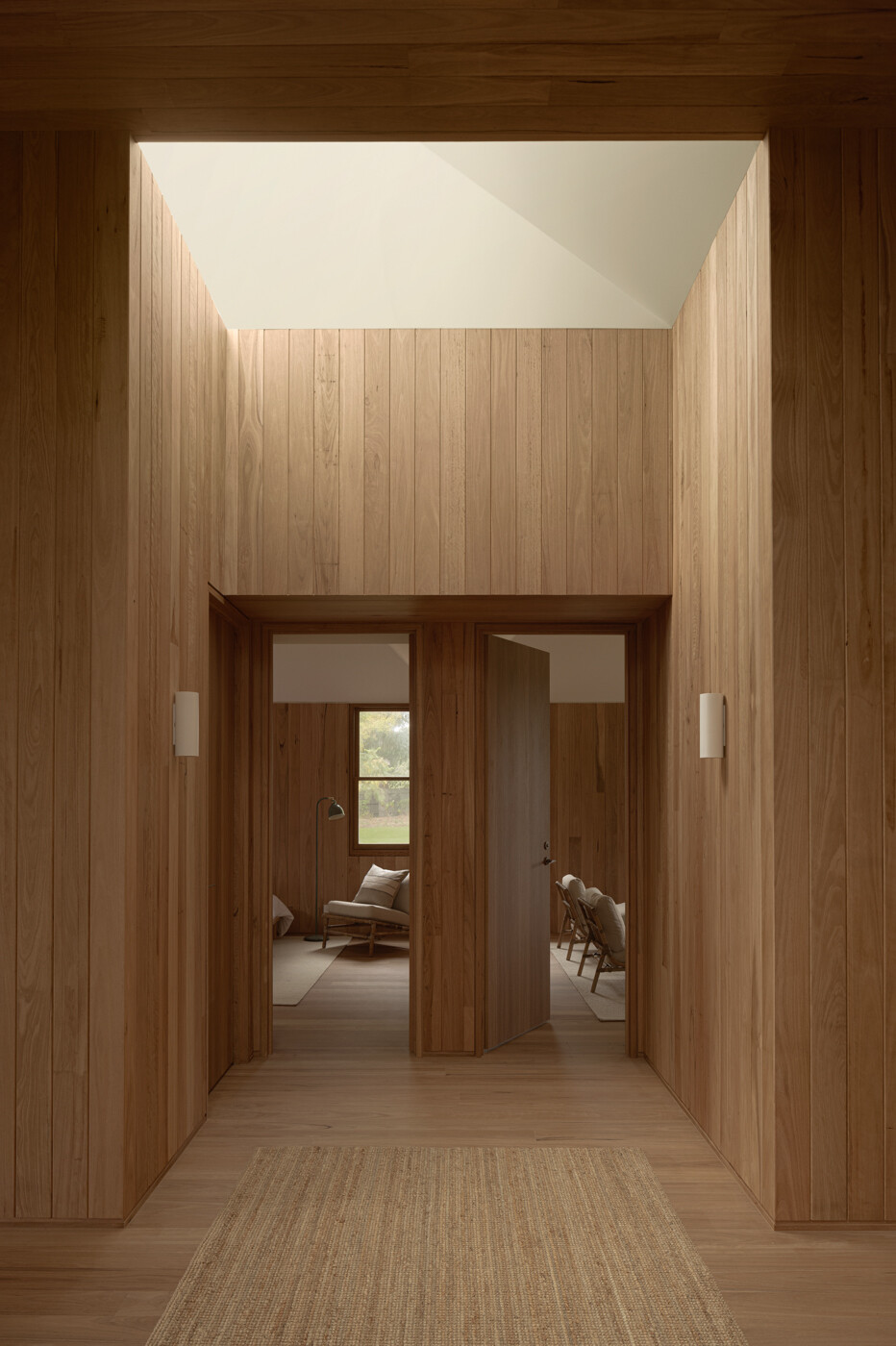
A timber-lined entry hall with skylights leads into a narrow linkway between the two pavilions, creating a sequence of shifting spaces throughout the house.

Bedrooms With Timber Walls and Steep Ceilings

The bedroom pavilion offers a different spatial experience from the living areas. Here, interiors feature tongue-and-groove timber linings. Steep raked plasterboard ceilings create a distinct volume that shapes the more private areas of the house.
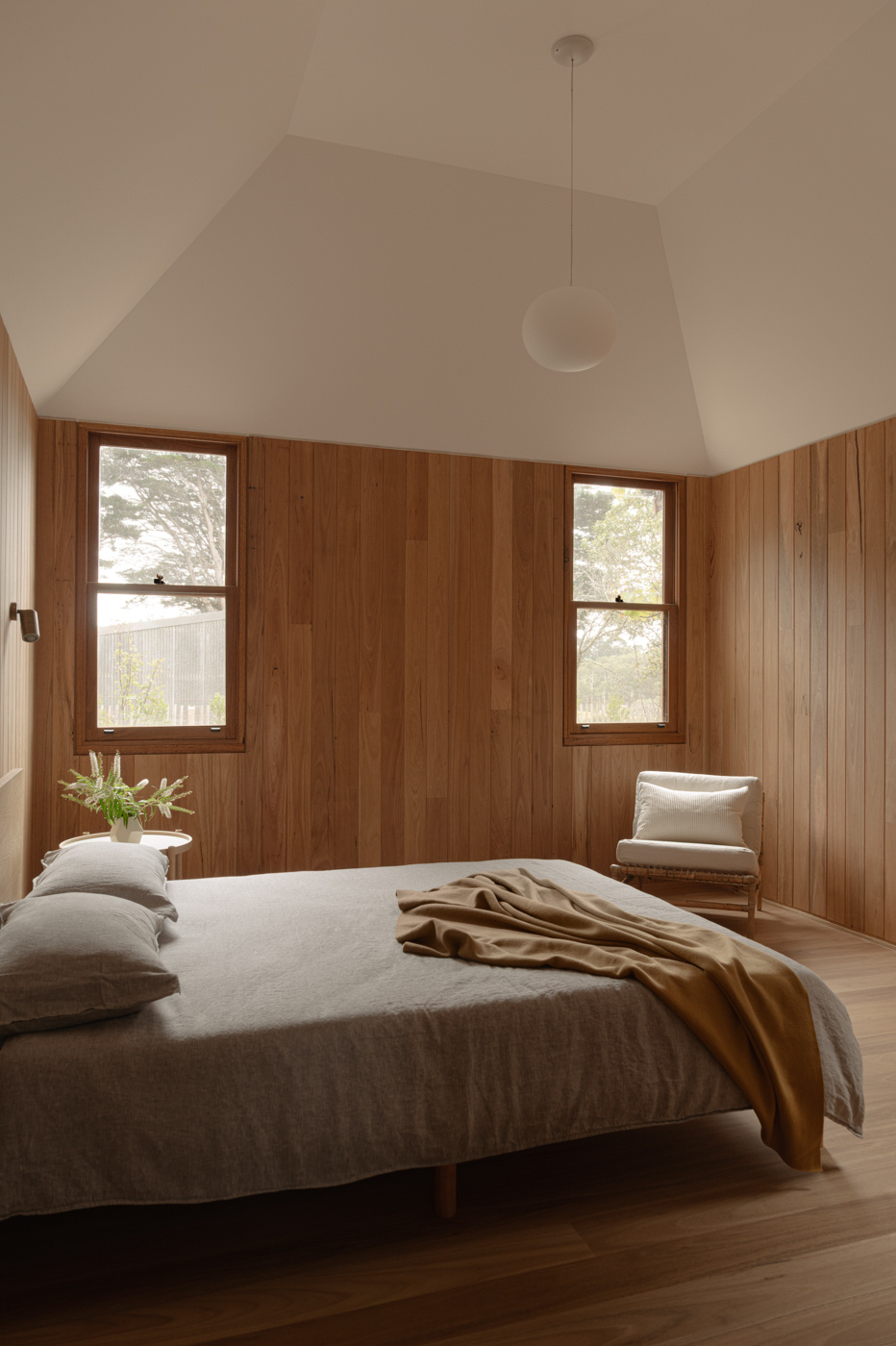
In the bedroom pavilion, tongue-and-groove timber linings and steep raked ceilings create a quieter spatial character within the private wing of the house.

Simple Bathrooms

Bathrooms are located within the front pavilion alongside the bedrooms. Their placement reinforces the separation between the private wing and the shared living spaces facing the vineyard. This arrangement allows the house to balance openness with privacy.
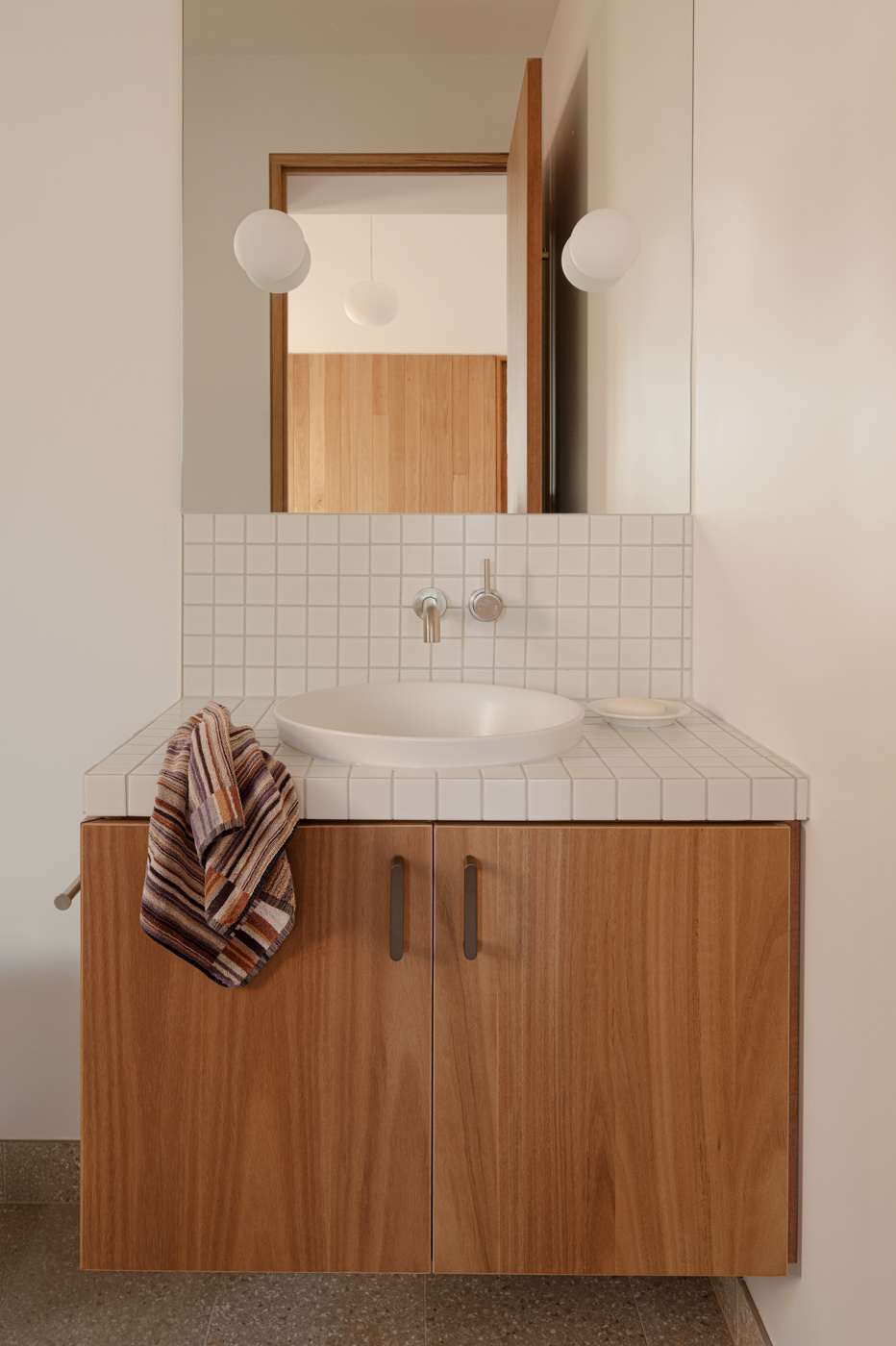
A modern bathroom with white tiles and a floating wood vanity.

At Main Ridge, this house reflects a long relationship between architect and client. The use of local blackbutt timber, exposed structure, and two carefully arranged pavilions creates a home closely tied to its setting.


Photography by Jack Lovel | Architecture: Porebski Architects | Builder: Old Man Pine | Structural engineers: Fitzgerald Associates | Landscaper: Kate Ardlie Design