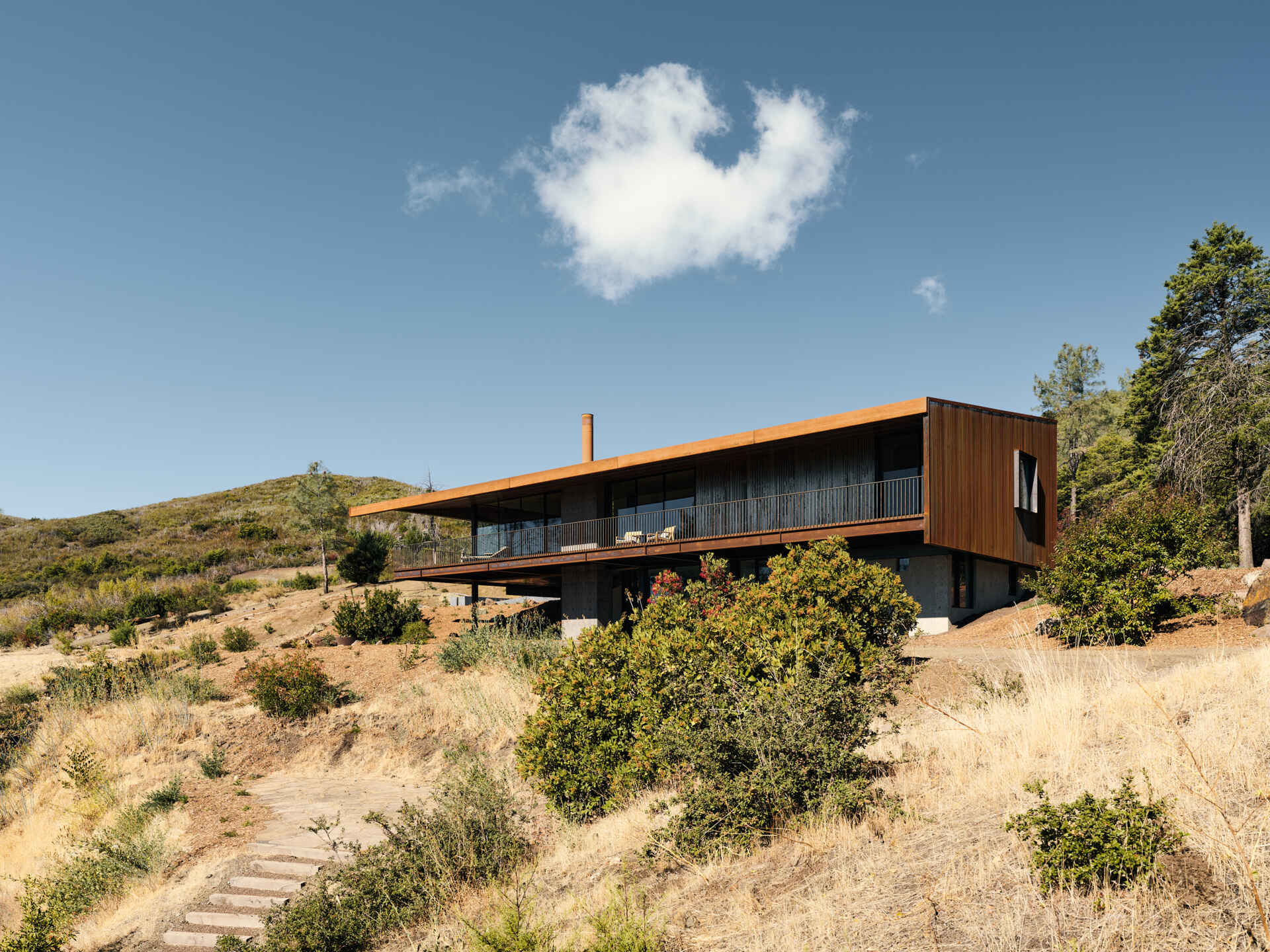
Rebuilding After Fire, This California Home Is Designed to Withstand the Next One

After the Kincade Fire, this California home is rebuilt with a focus on resilience, accessibility, and long-term living shaped by the land.

After losing their off-grid home in the 2019 Kincade Fire, the owners of Pine Flat Residence chose to rebuild with a clear goal. Create a house that could endure future wildfire conditions while supporting daily life over time.

Set in the hills north-east of Healdsburg, California, the project by Faulkner Architects focuses on resilience, accessibility, and a deep connection to the site.
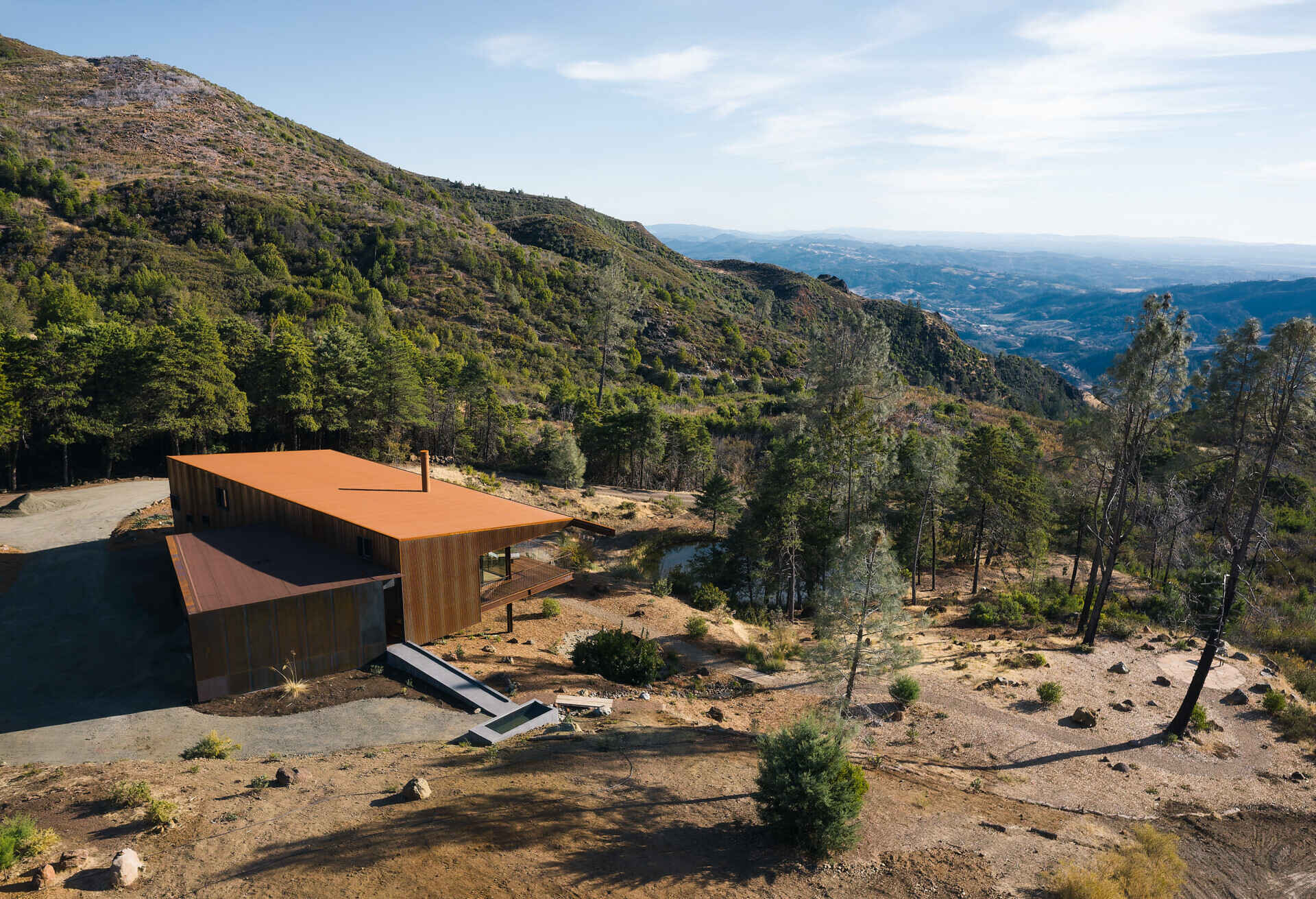
After the Kincade Fire, this California home is rebuilt with a focus on resilience, accessibility, and long-term living shaped by the land.

Building on What Remains

The new house sits on the remains of the original structure, reusing 90 percent of the existing concrete foundation and walls. This decision preserved embodied energy and reduced the need for new excavation.

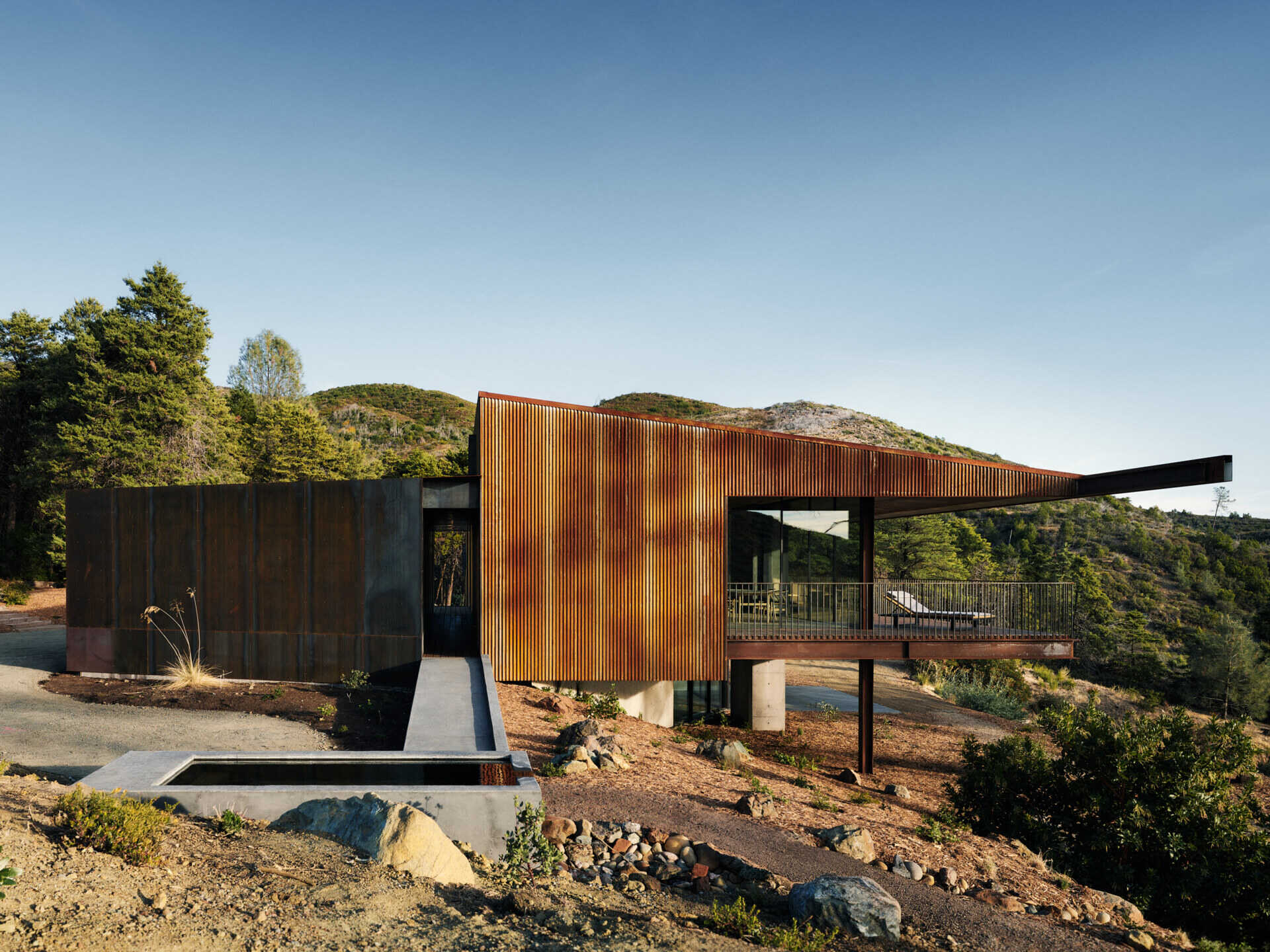
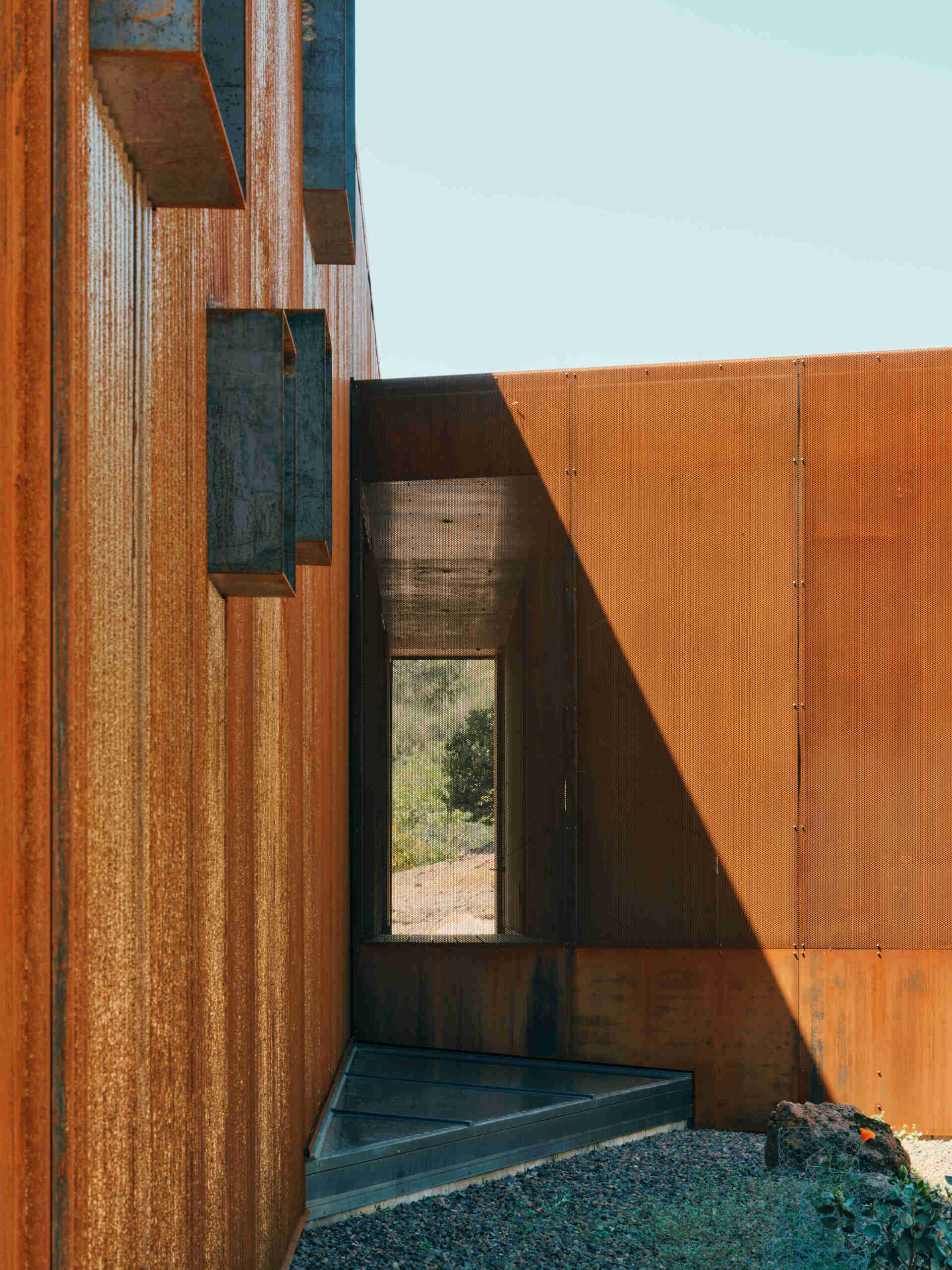
A simple rectangular form now occupies the previously angular footprint. Portions of the old foundation extend outward, becoming a sculptural entry step and a glazed light well.

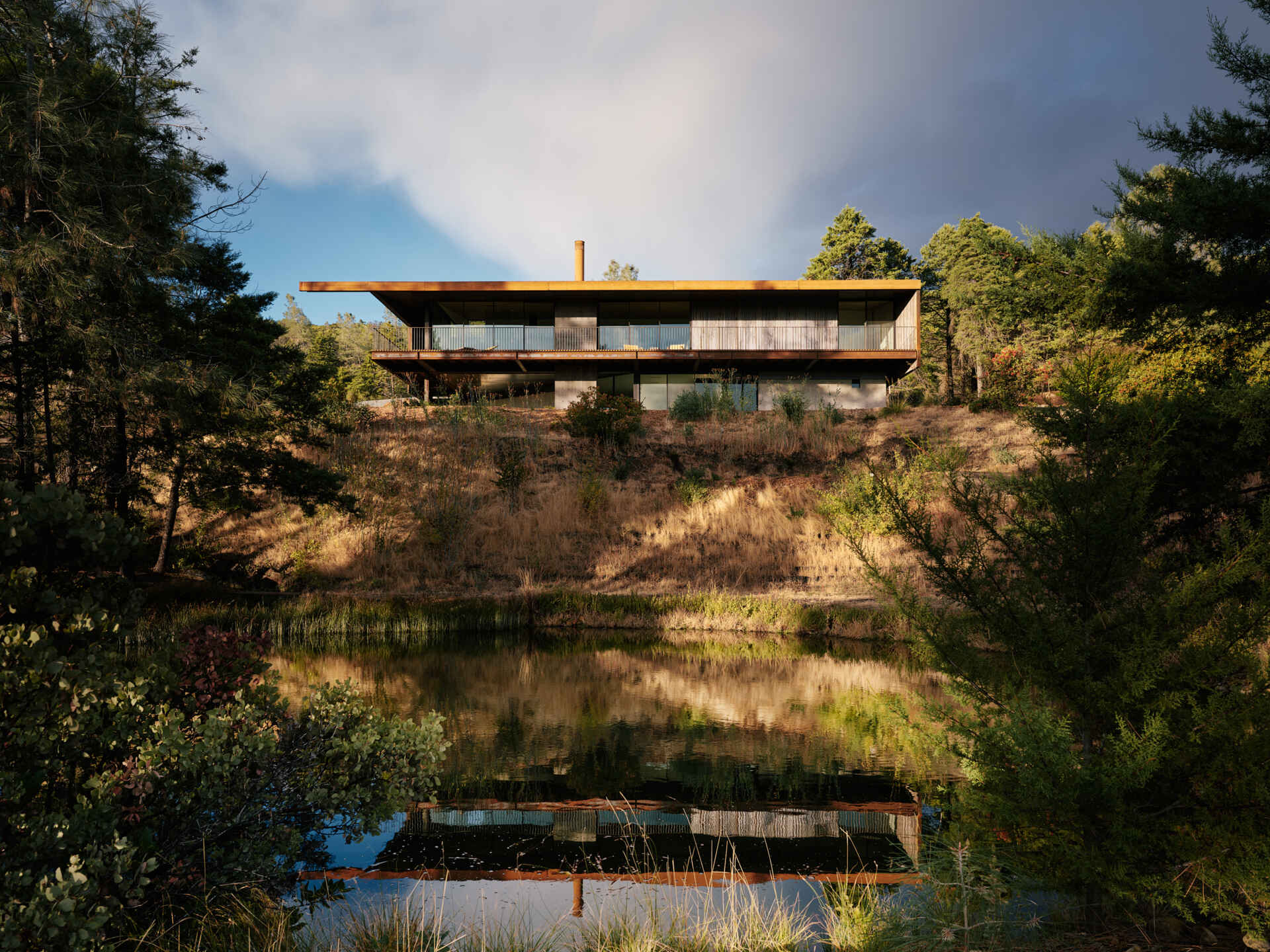
Half buried into the hillside, the preserved base contrasts with the elevated structure above, while the form follows the ridgeline.
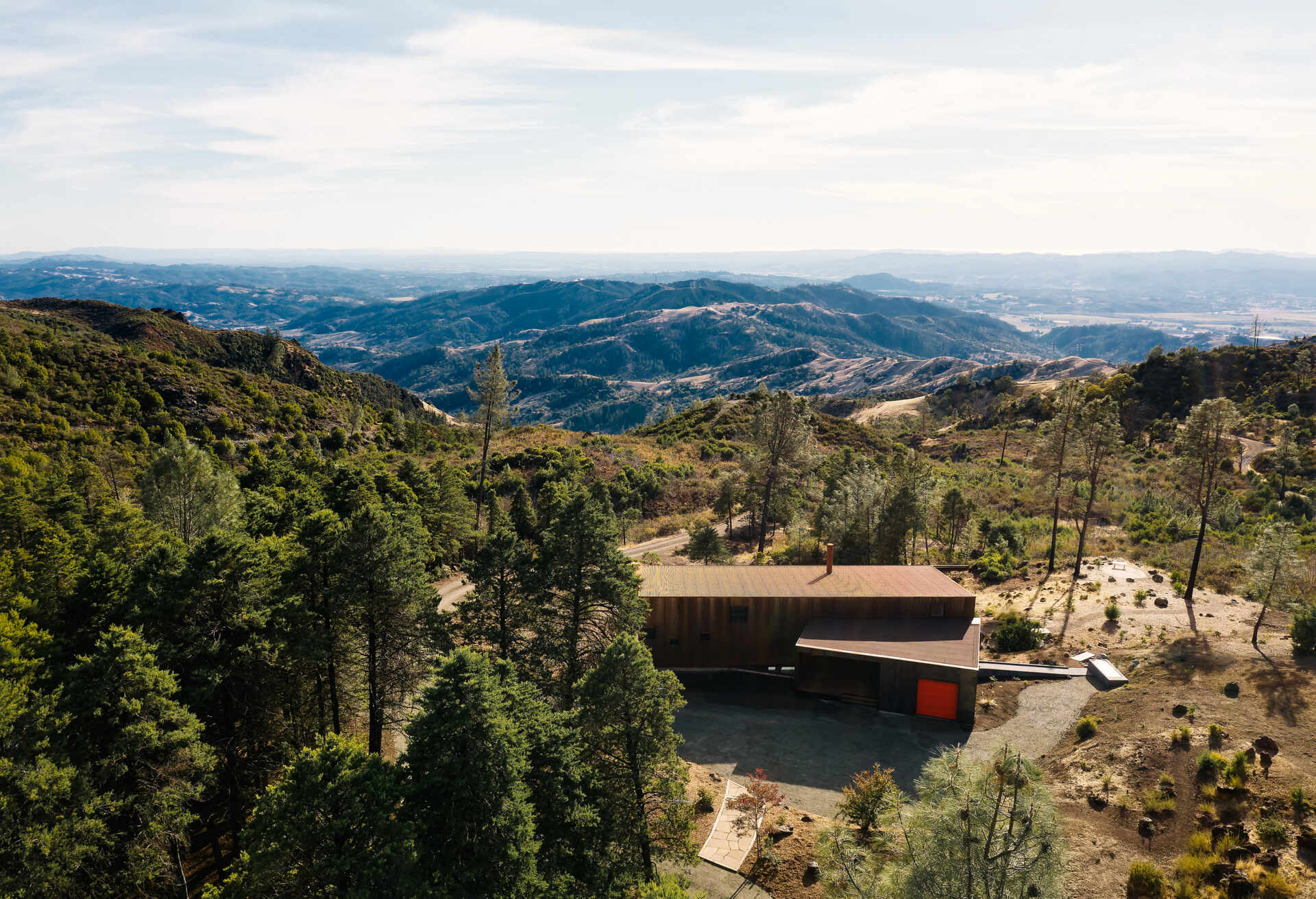
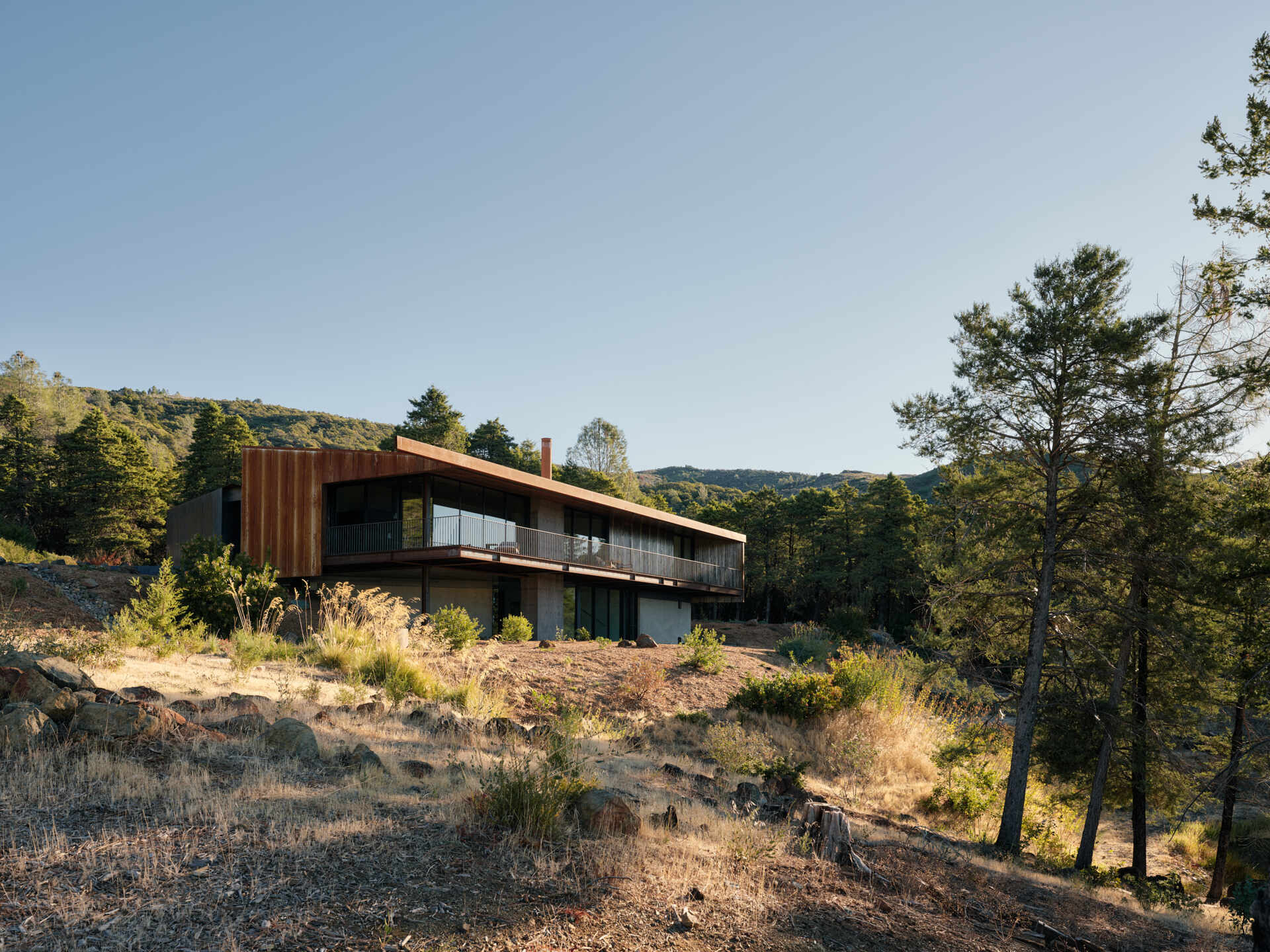
By reusing 90 percent of the original foundation, this home reduces waste while creating a simple, grounded form that follows the ridgeline.

Designed to Resist Fire

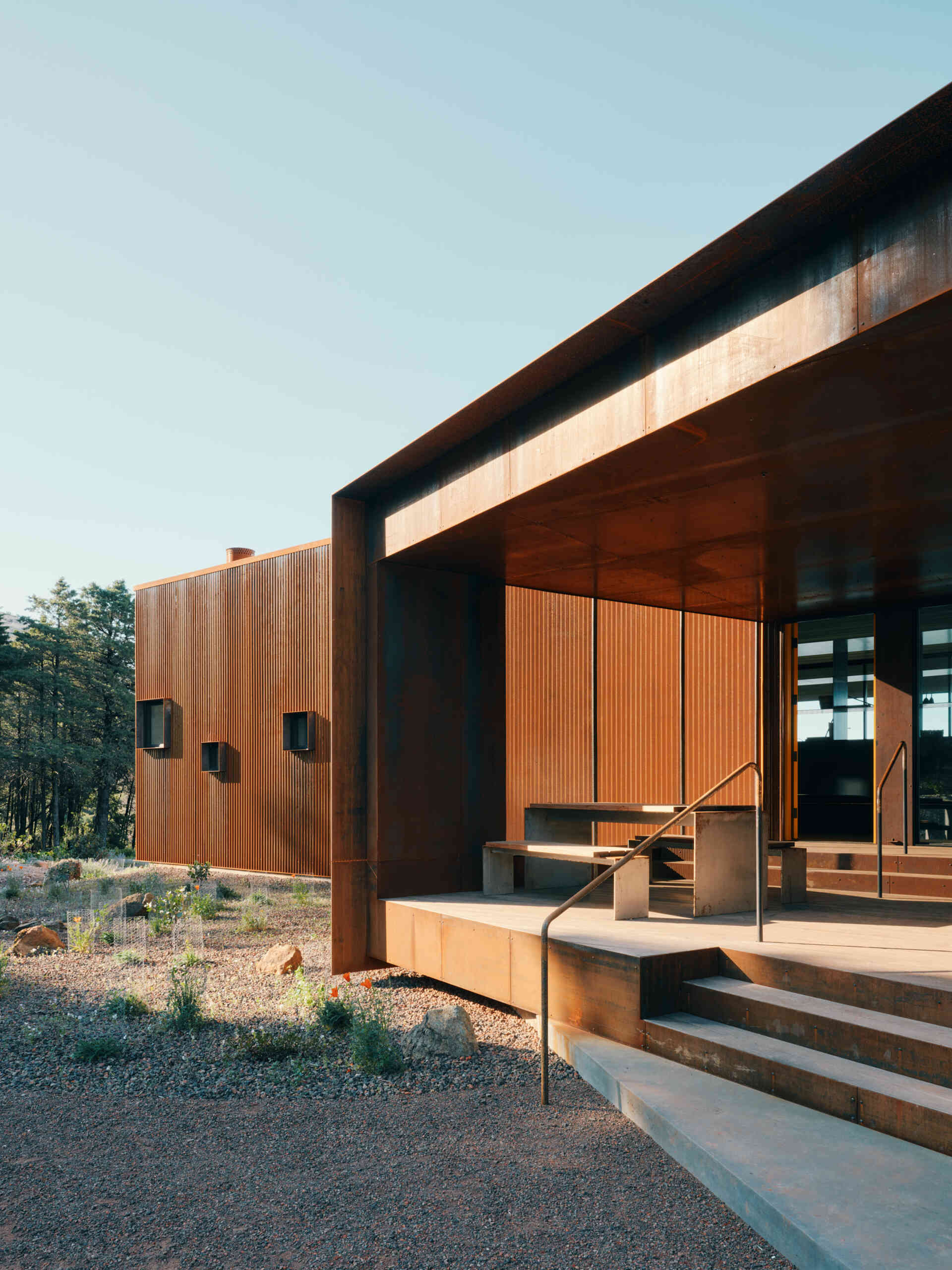
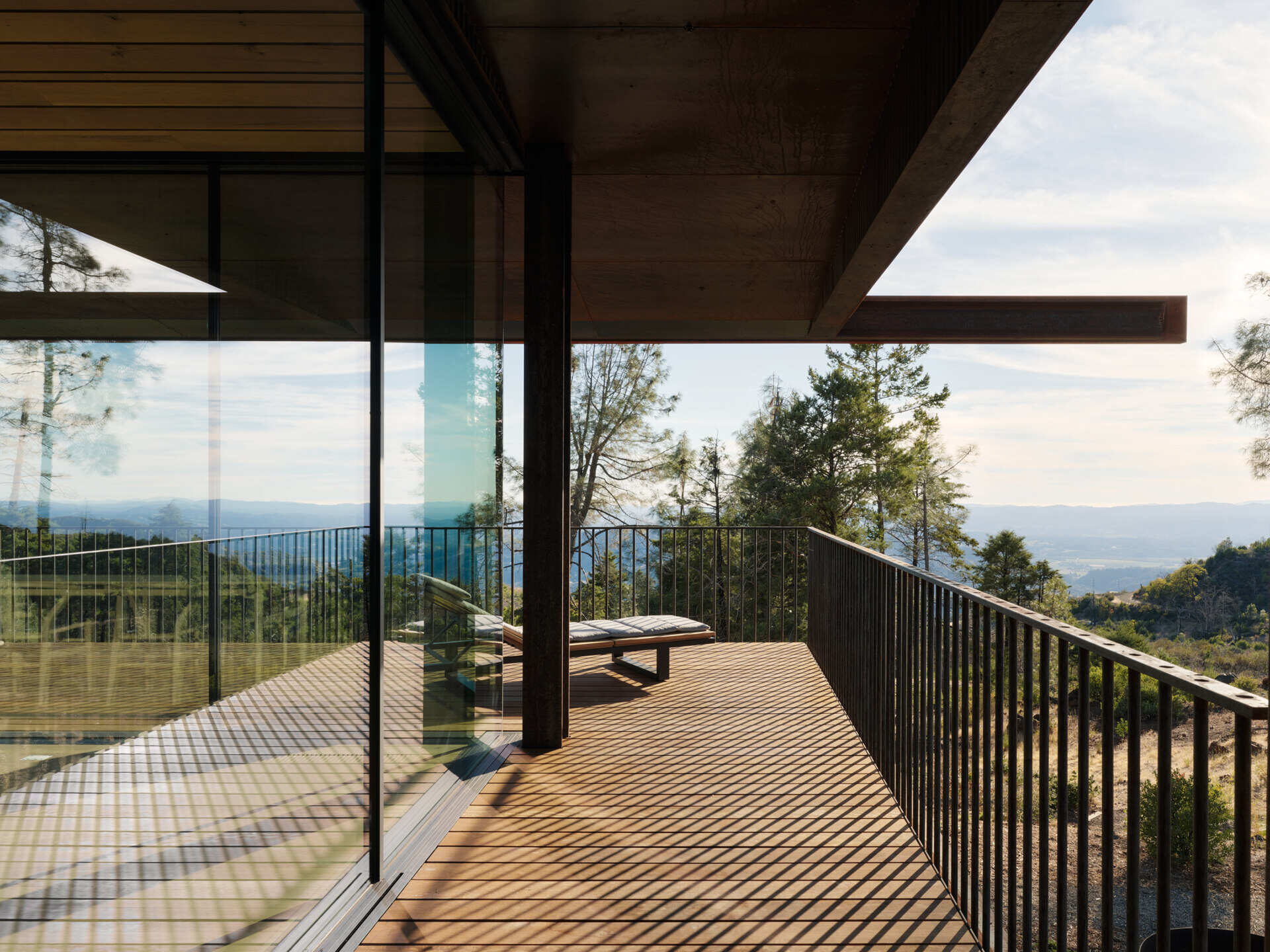
Durability drives the material palette. A fire-resistive corten steel shell wraps the home, paired with sliding ember screens and exterior sprinklers positioned above the decks.

These elements work together to reduce fire risk while requiring minimal maintenance over time. The structure is designed to withstand exposure, with materials chosen for longevity in a remote setting.
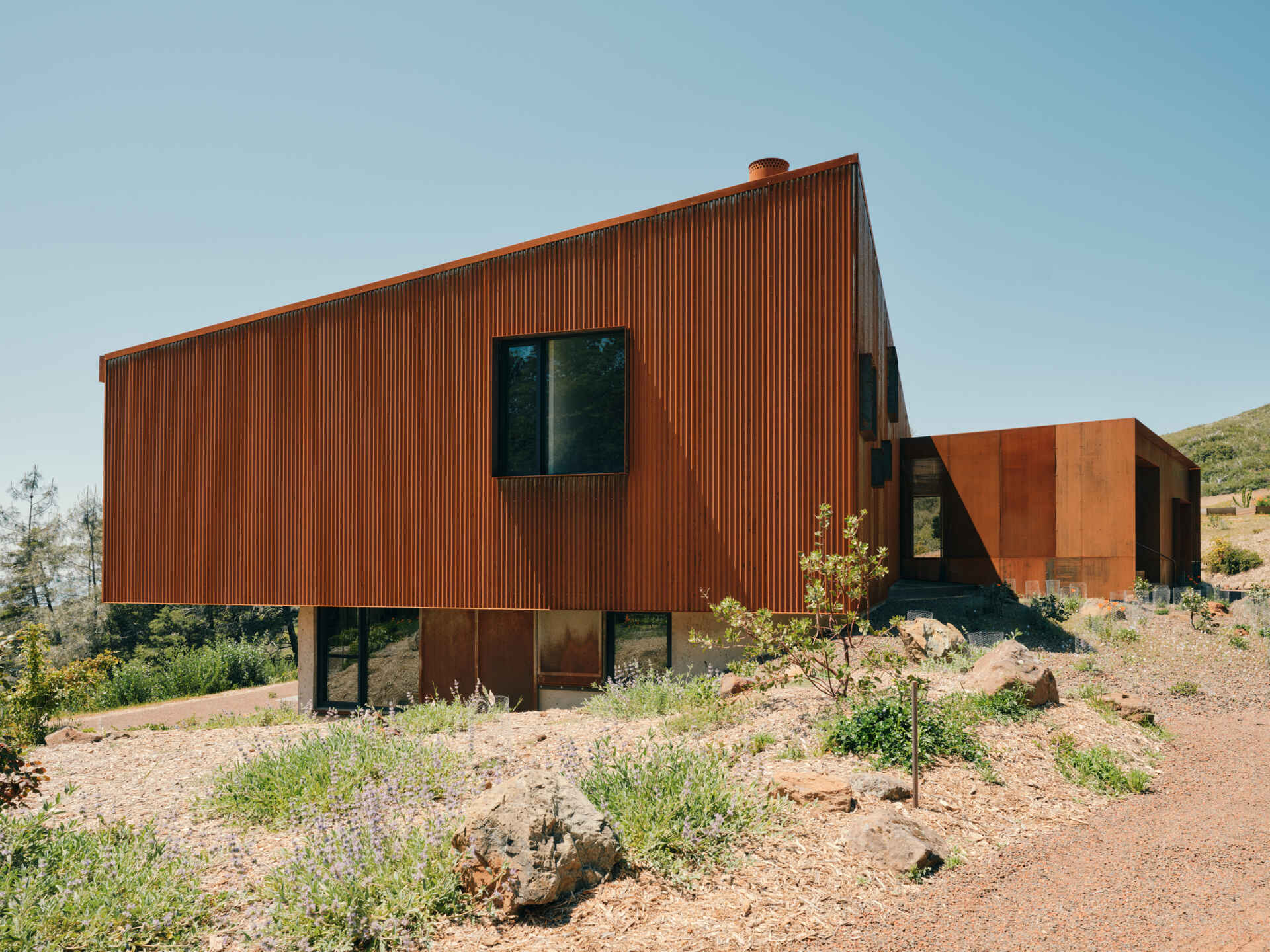
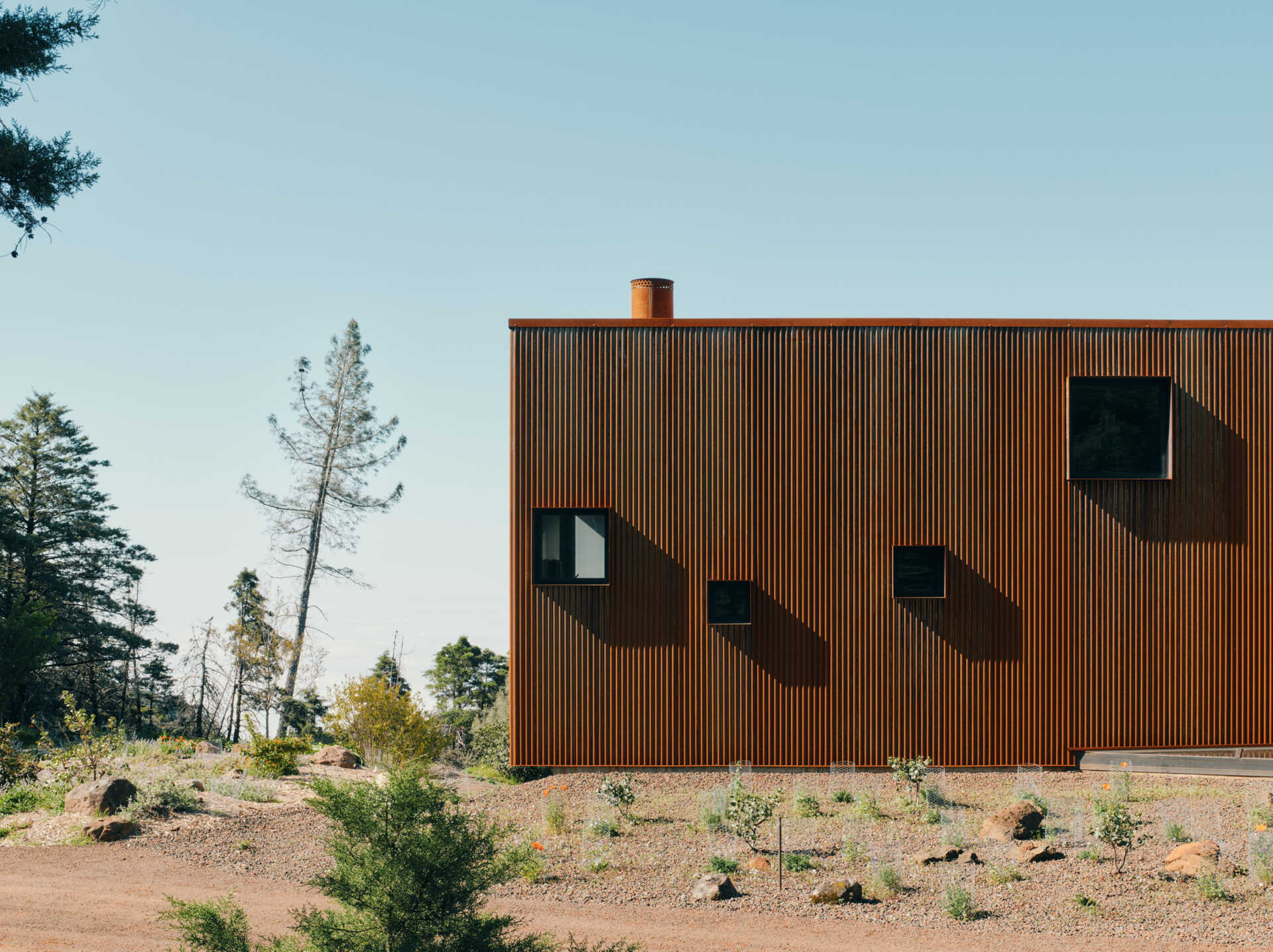
A corten steel exterior, ember screens, and integrated sprinklers work together to protect this home while keeping maintenance low.

Outdoor Space With Built-In Protection

The deck extends outward, protected by overhead sprinklers that activate during fire events. This system adds a defensive layer while maintaining usable outdoor space.

Water management is integrated into the design. A cantilevered gutter directs runoff into a steel basin, where it is filtered through a vegetated bioretention area before reaching a retention pond.
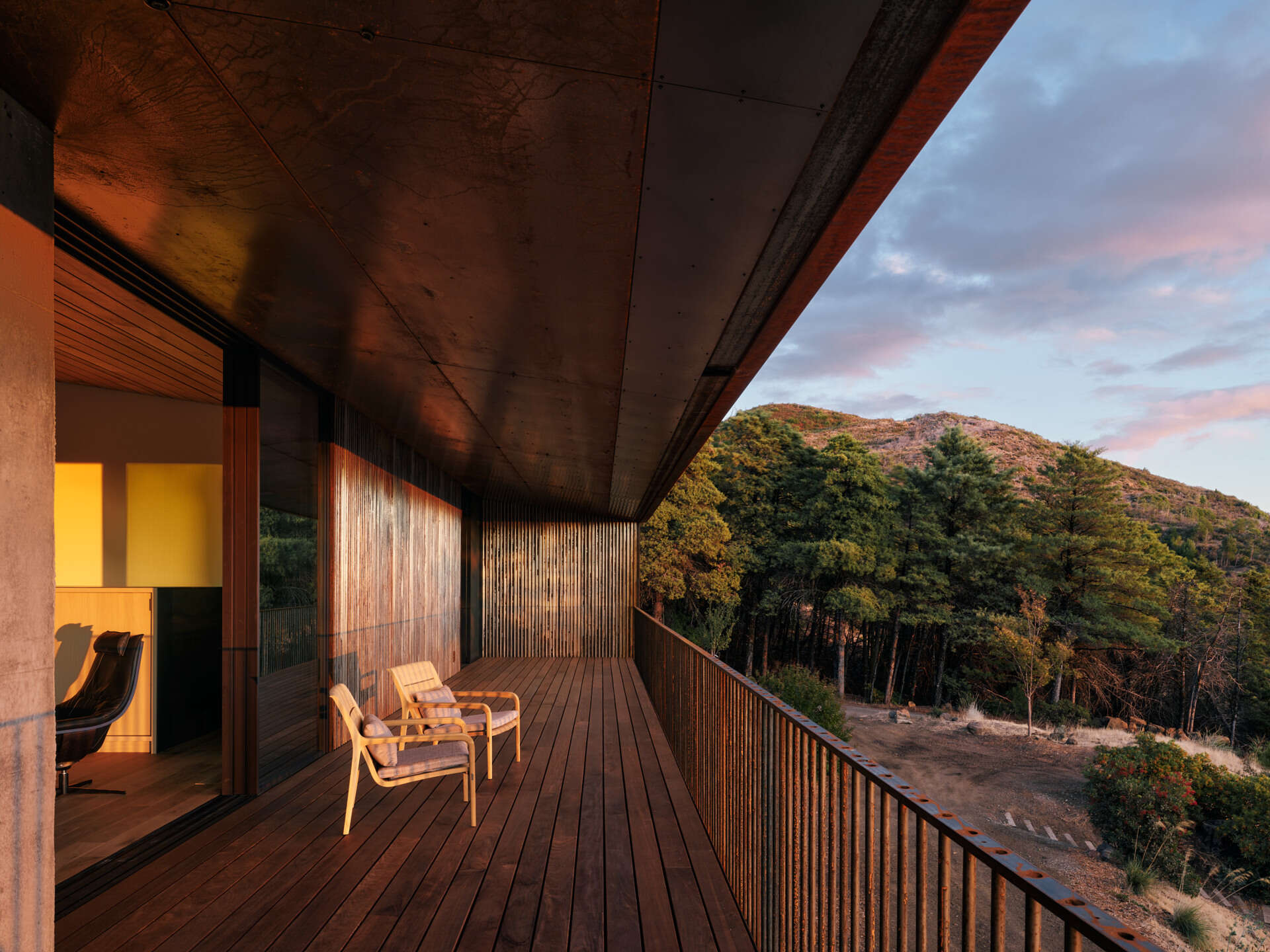
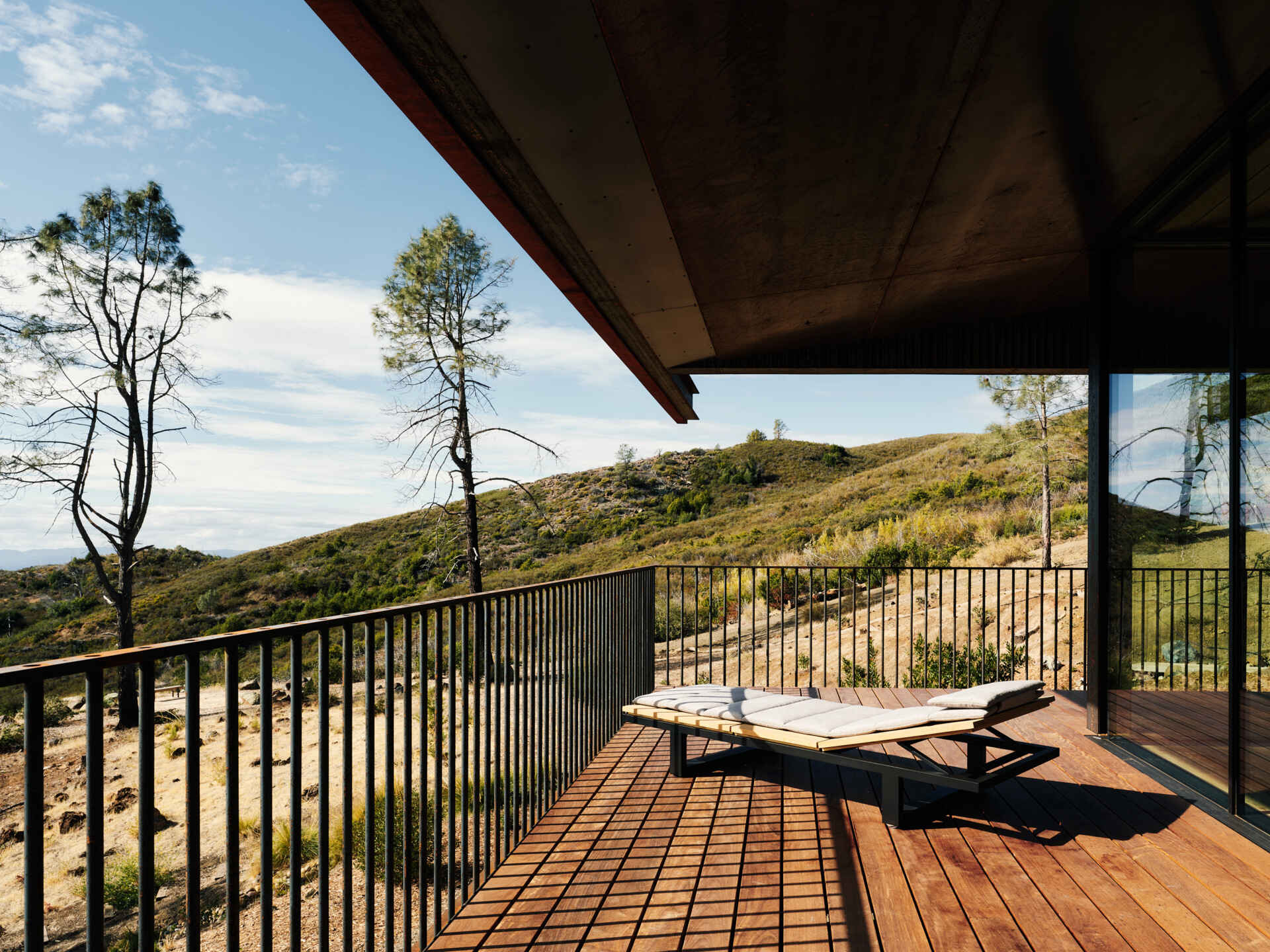
This elevated deck is designed with overhead sprinklers and smart drainage, turning outdoor living into a more resilient experience.

An Open Living Space Designed for Everyday Ease

At the center of the home, a new concrete chimney anchors the main floor. It frames the presence of fire within the landscape, a reminder of both necessity and risk.

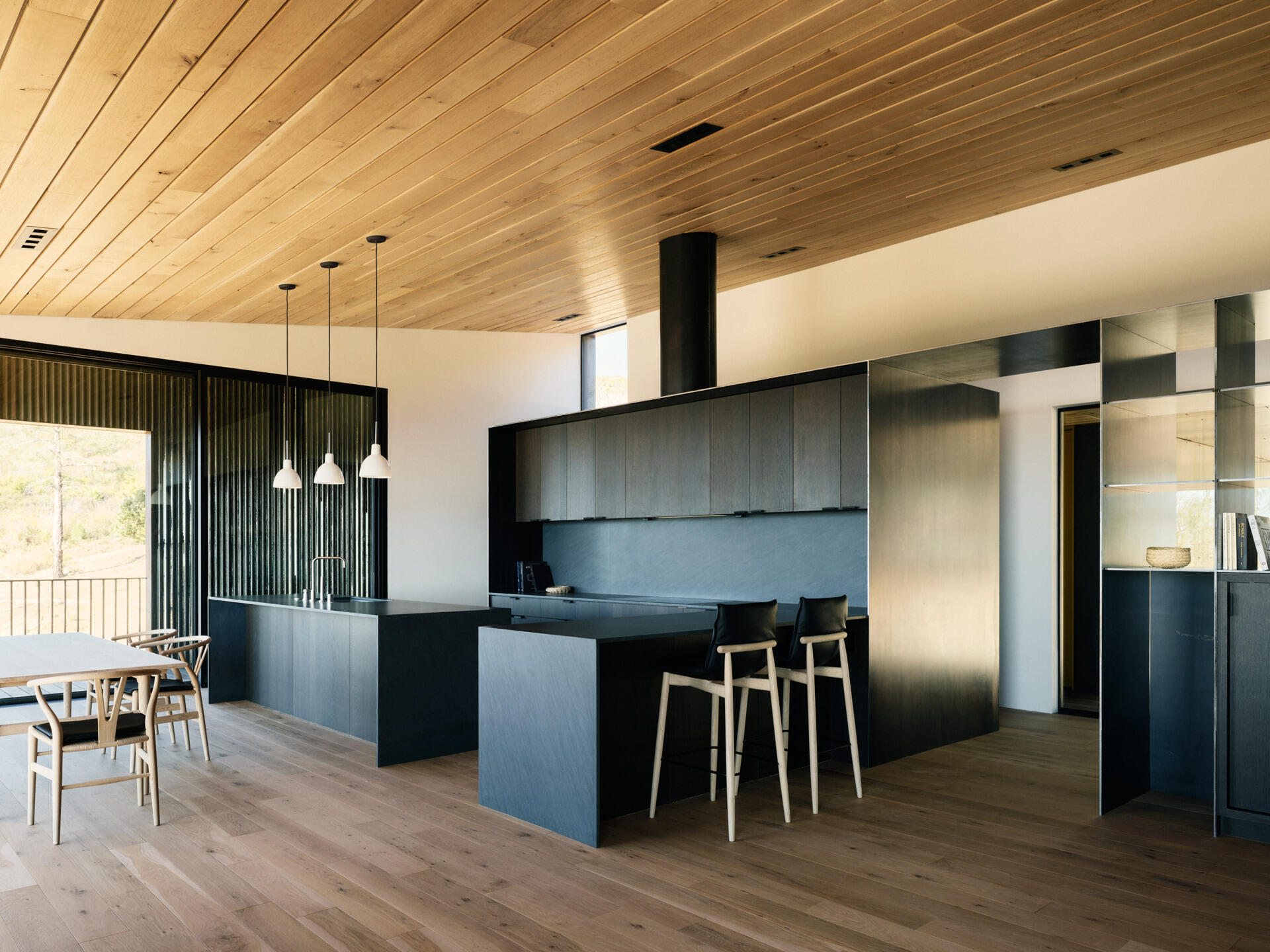
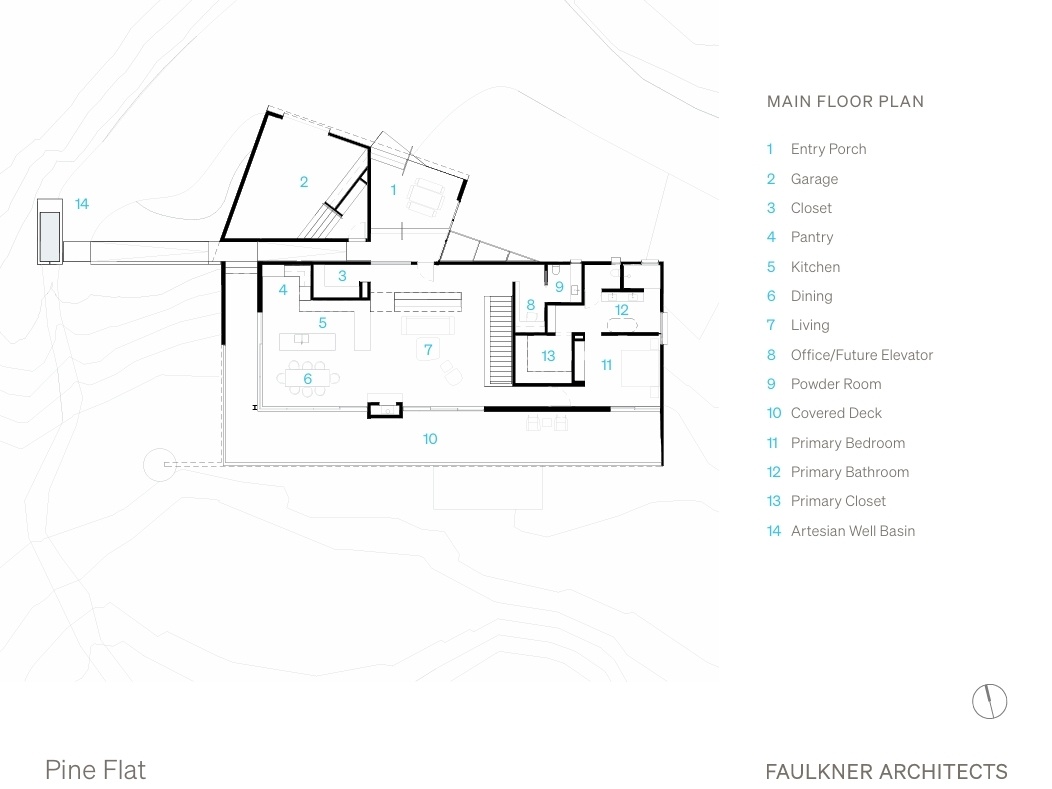
The living area sits on the primary level alongside the kitchen and dining spaces, supporting ease of movement and long-term accessibility. Clearances are designed for wheelchair maneuvering, and the overall plan anticipates future adaptability, including a pre-framed location for a potential elevator.
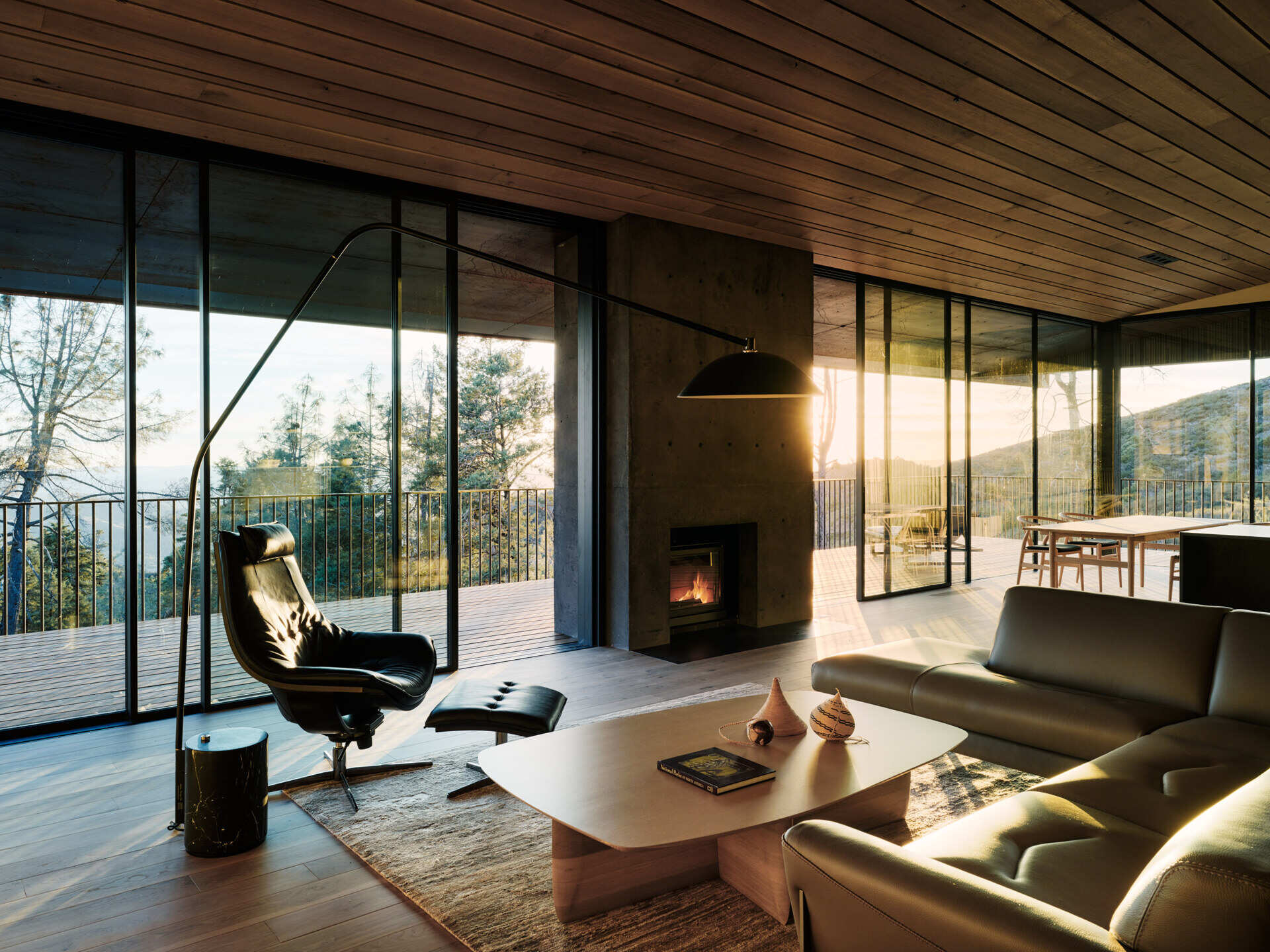
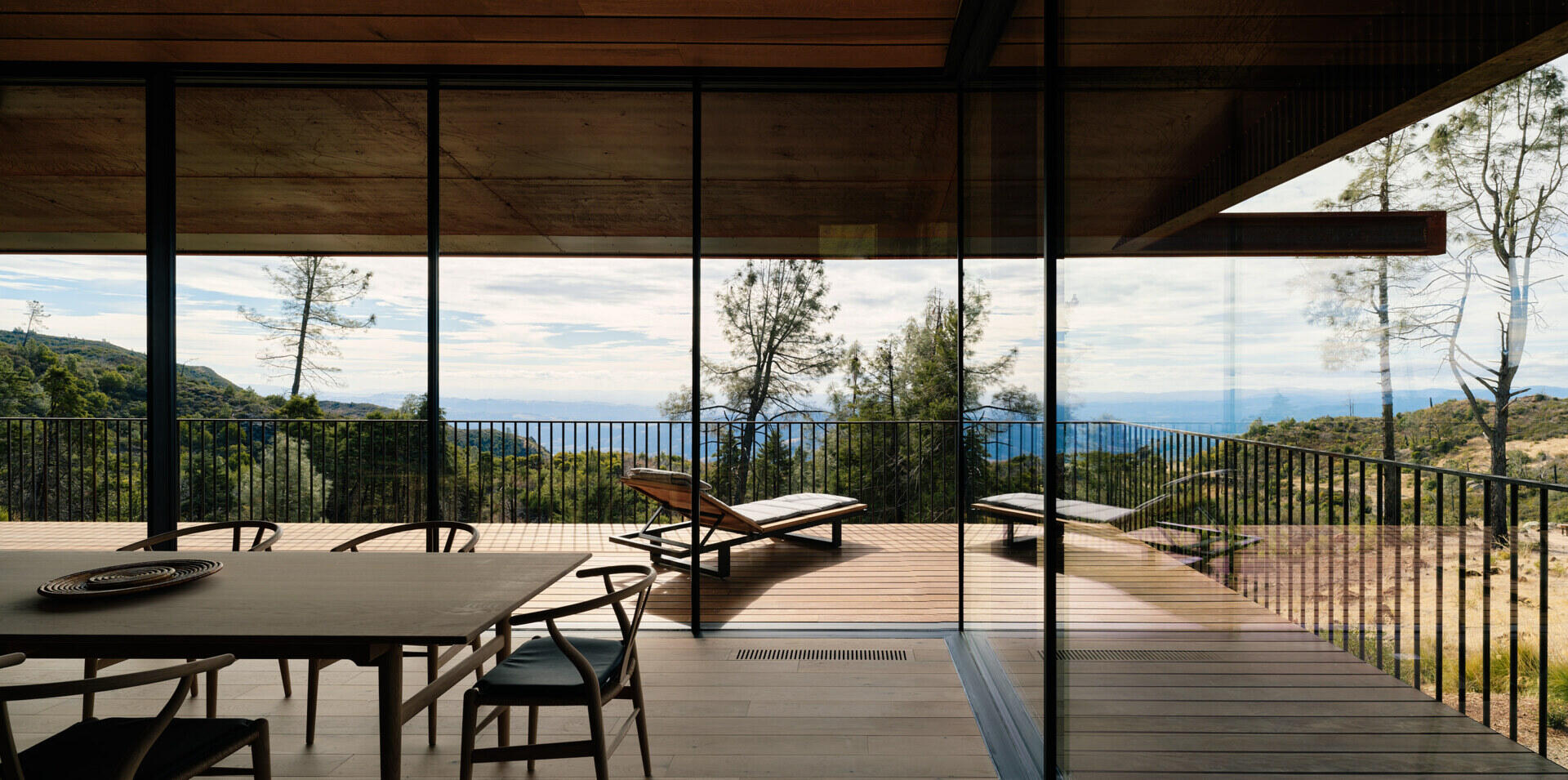
A concrete chimney anchors the living space, framing fire as both a necessity and a reminder of the surrounding environment.
The dining area sits within an open layout, keeping everyday living simple, connected, and easy to navigate.
With wheelchair clearances and a future-ready layout, this black kitchen supports long-term living without compromise.

Private Spaces Designed for Comfort and Longevity

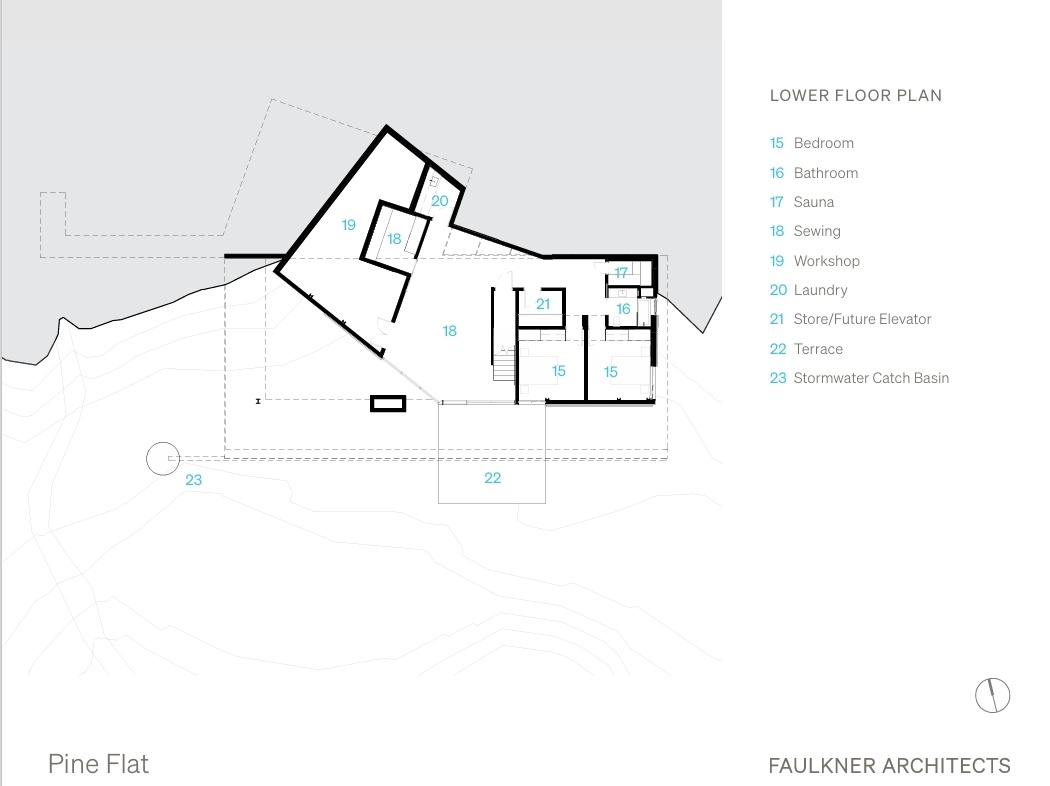
The primary bedroom is located on the main level, ensuring it remains easily accessible as the owners age, while the other bedrooms are located on the lower level of the home.
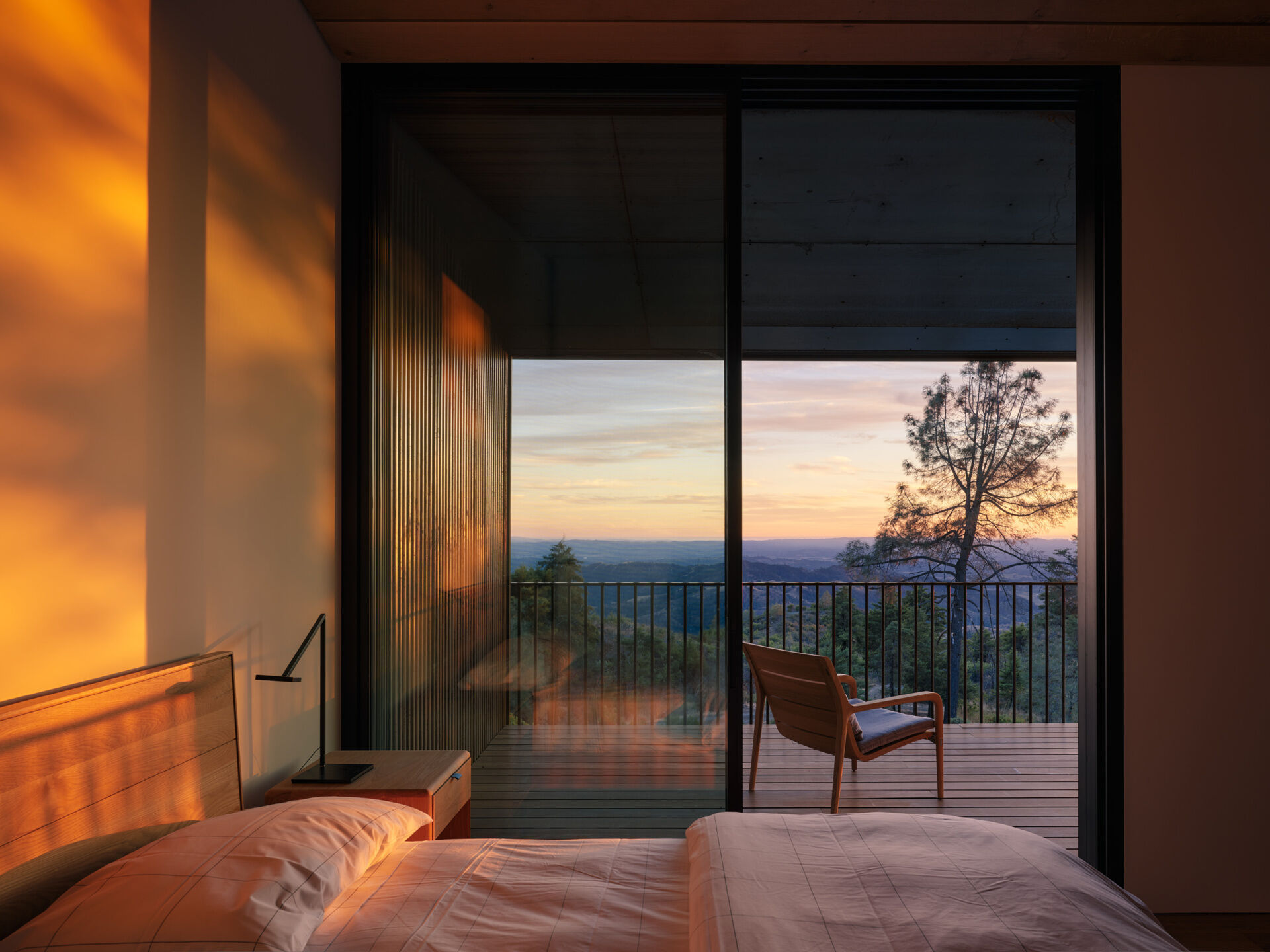
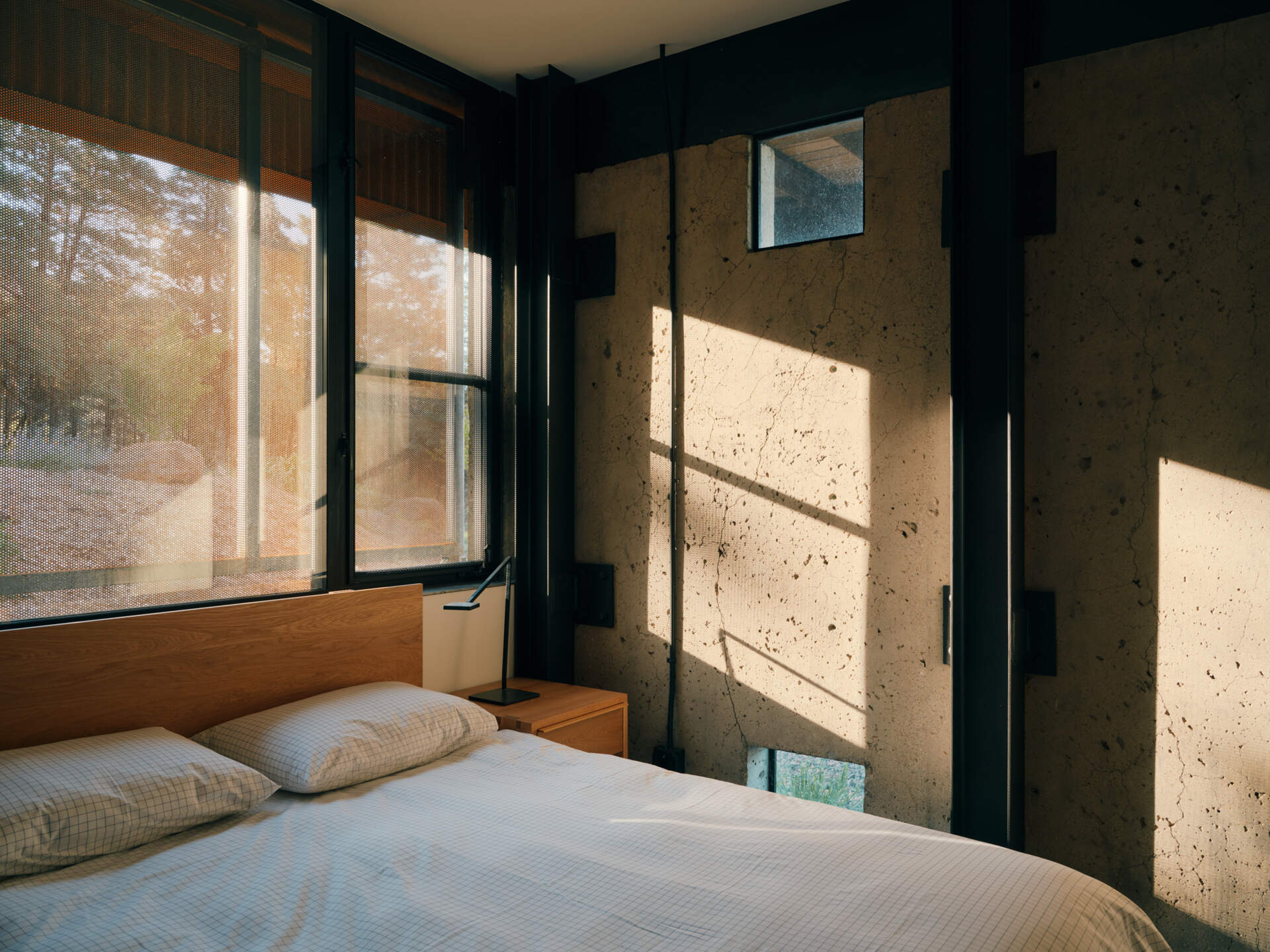
The primary bedroom is located on the main level, ensuring it remains easily accessible as the owners age, while the other bedrooms are located on the lower level of the home.
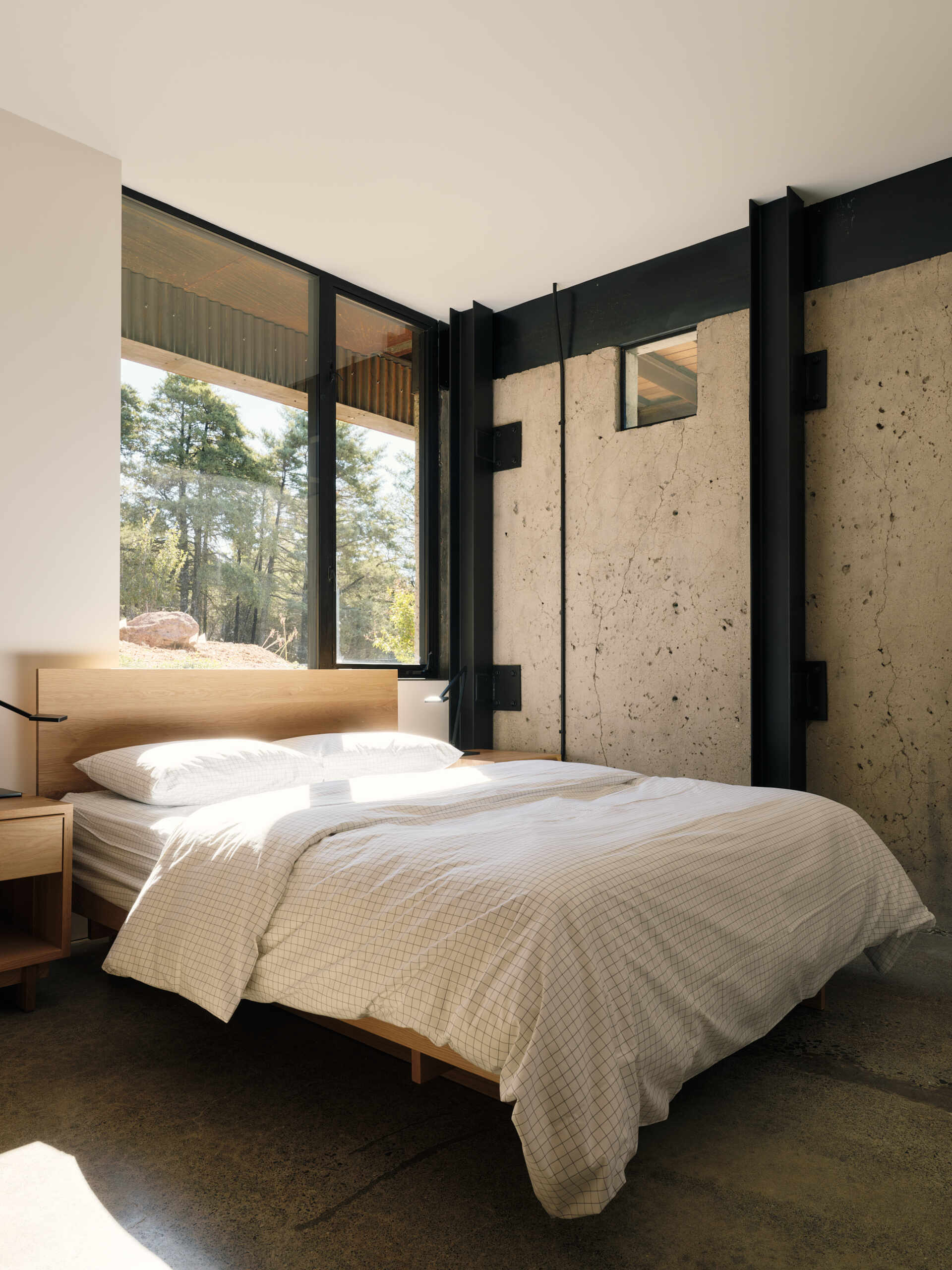

Practical Design That Lasts

Bathrooms are designed with accessibility in mind, with spatial allowances that support ease of use.
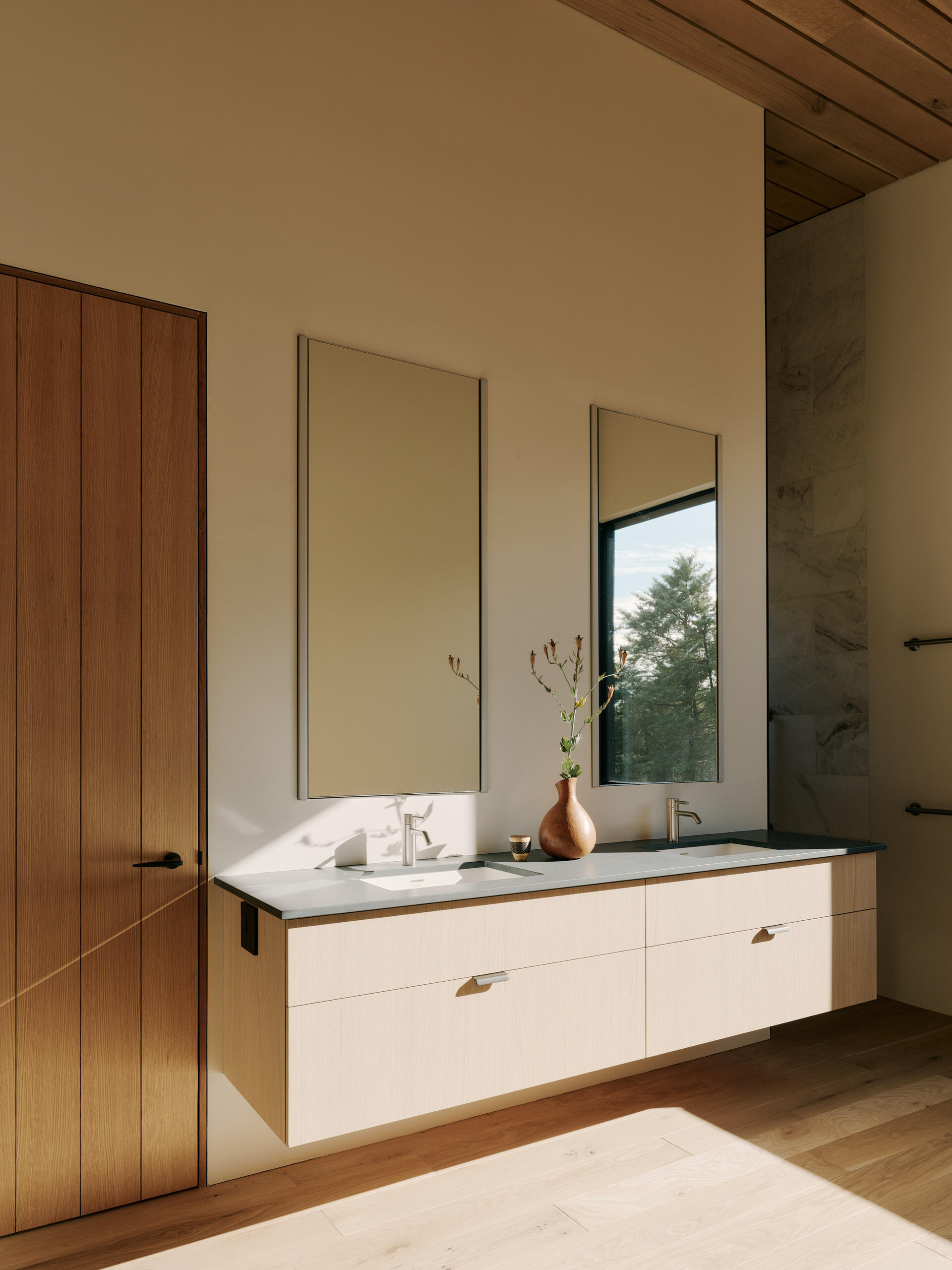
Bathrooms are planned with durability and accessibility in mind, focusing on function over short-term trends.

A Plan Shaped by Site and History

The design reflects a careful response to both site and history. The reused foundation defines the footprint, while the new rectangular volume simplifies construction and reduces waste.

An entry ramp extends outward toward the west hillside, becoming both a functional and expressive element. The integration of systems, structure, and landscape is evident throughout the planning.
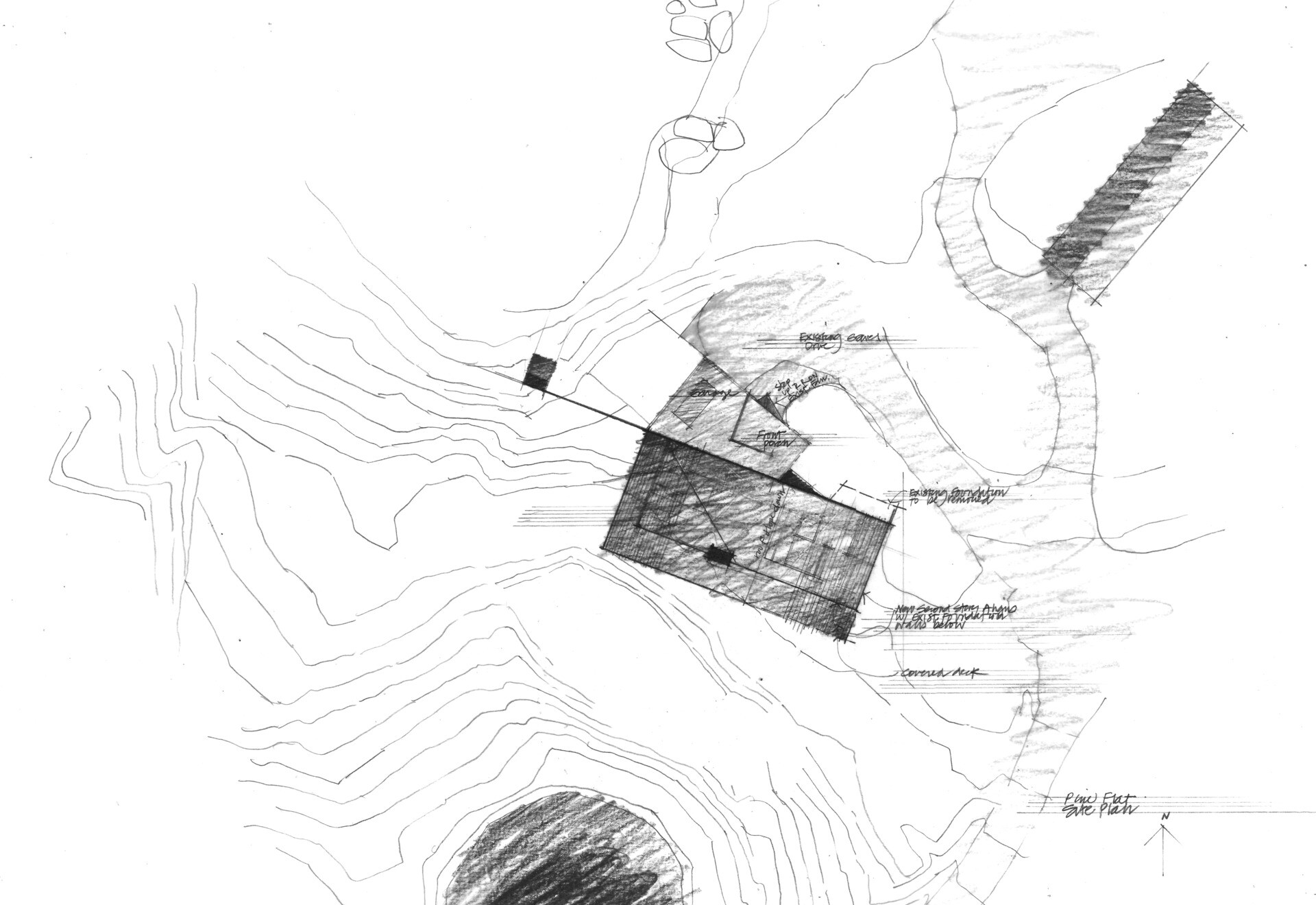
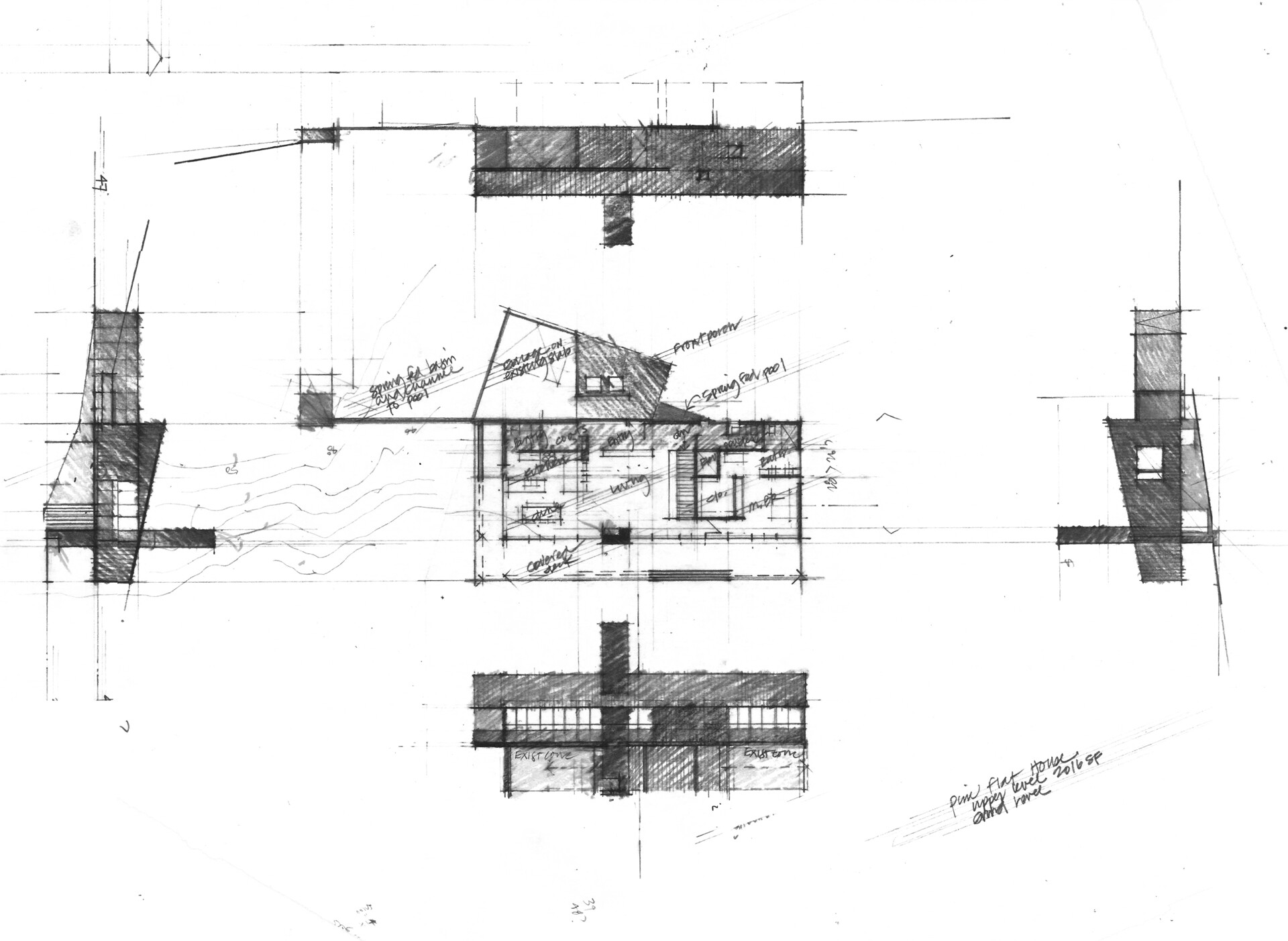
From the reused foundation to the entry ramp and light well, the design reflects a careful response to the land and what came before.

From the reused foundation to the entry ramp and light well, the design reflects a careful response to the land and what came before.

From the reused foundation to the entry ramp and light well, the design reflects a careful response to the land and what came before.

From the reused foundation to the entry ramp and light well, the design reflects a careful response to the land and what came before.

Pine Flat Residence shows how rebuilding can go beyond replacement. It becomes an opportunity to rethink how a home performs under pressure, from wildfire risk to long-term use. Here, architecture is shaped by necessity.


Photography by Joe Fletcher | Architecture and Interior Design: Faulkner Architects – design team: Greg Faulkner (FAIA, Principal), Jag Kievenaar (Project Architect), Jenna Shropshire (Project Manager + Interior Design), Owen Wright (Project Architect), Daniel Thompson (Architect), Lesa Faulkner (Interior Design Furnishings), Chris Carbajal (Team), David Regina (Team), Kirt Hilker (Team) | Contractor: Annadel Builders, INC | Civil Engineer: Summit Engineering | Structural Engineer: Strandberg Engineering | Mechanical Engineer: Sugarpine Engineering | Electrical Engineer: Sugarpine Engineering | Geotechnical Engineer: RGH Consultants | Landscape: Terremoto | Lighting: O-Lighting | Surveyor: Munselle Civil Engineering | CALGreen: Soldata Energy Consulting