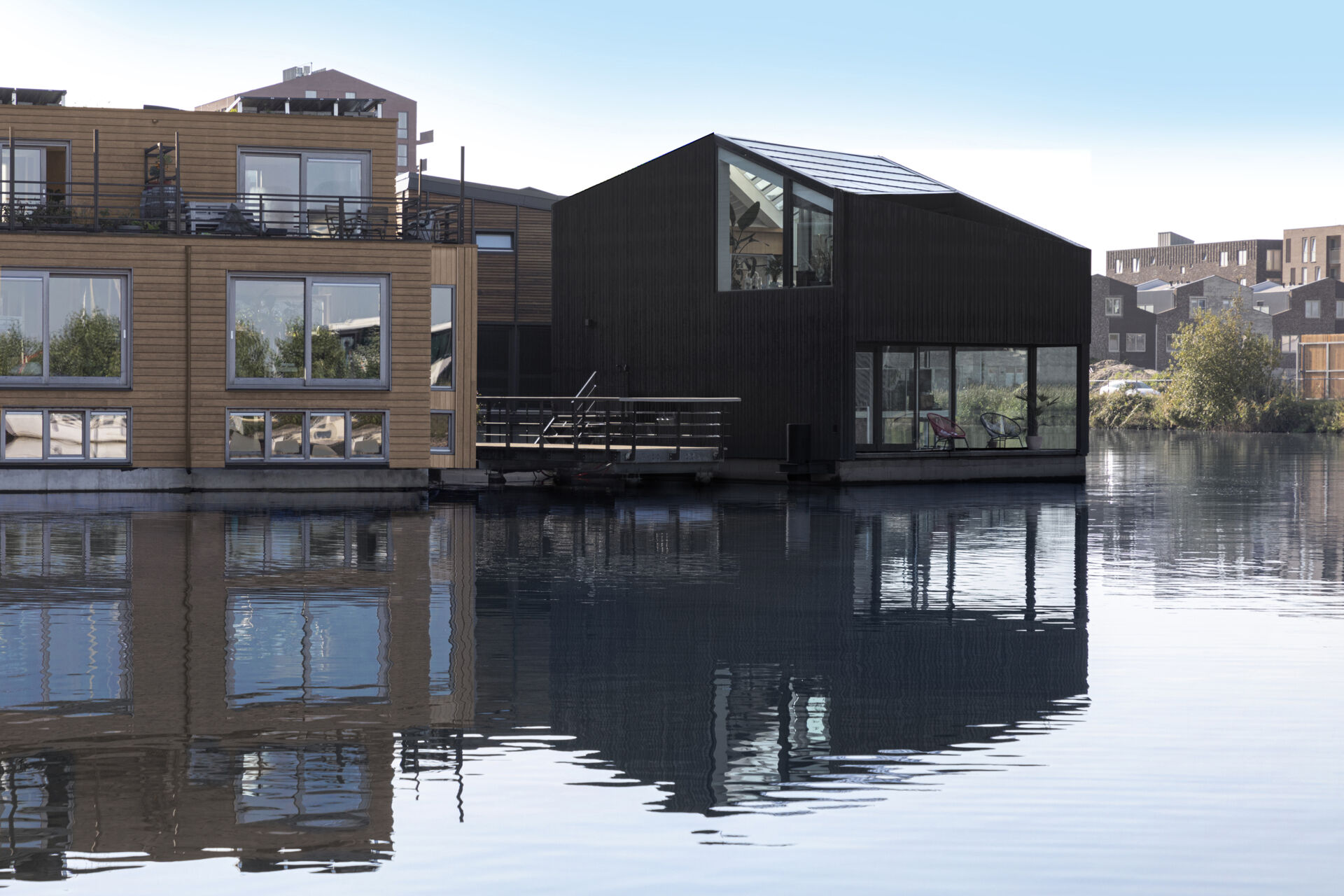
In North Amsterdam, a stretch of canal once left unused has taken on a new role. What was quiet and industrial now supports daily life, where a collection of homes sits directly on the water. Among them is a black-clad floating house by i29 architects, part of Schoonschip, a community built with a focus on sustainability and shared living.
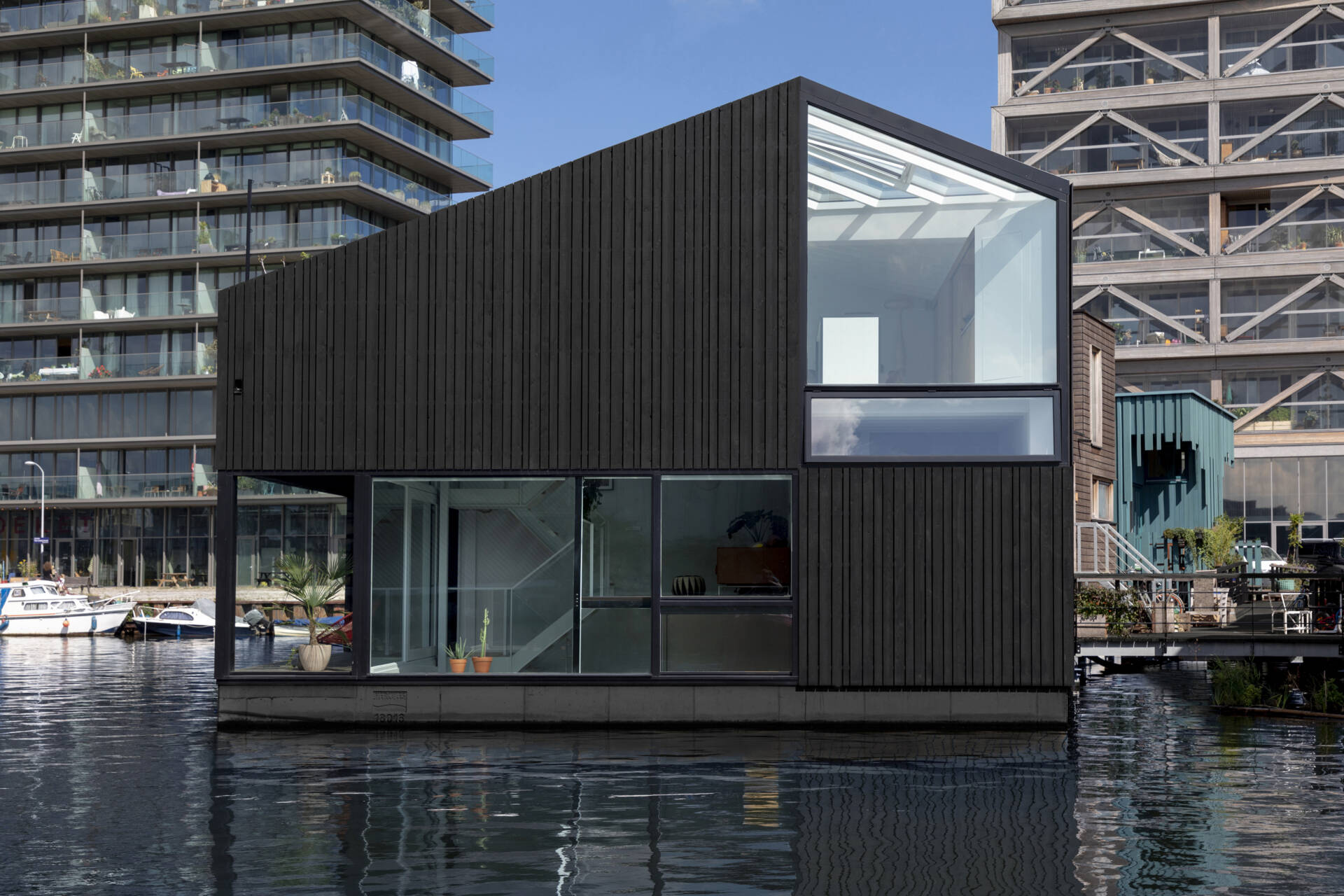
The home is one of 46 in the development, each positioned within a framework that allows individuality while contributing to a larger idea. Residents moved into the canal and began shaping a neighborhood that feels both experimental and grounded. Pathways and a shared jetty link the homes, while energy and resources are managed collectively, forming a system where efficiency and cooperation matter as much as design.
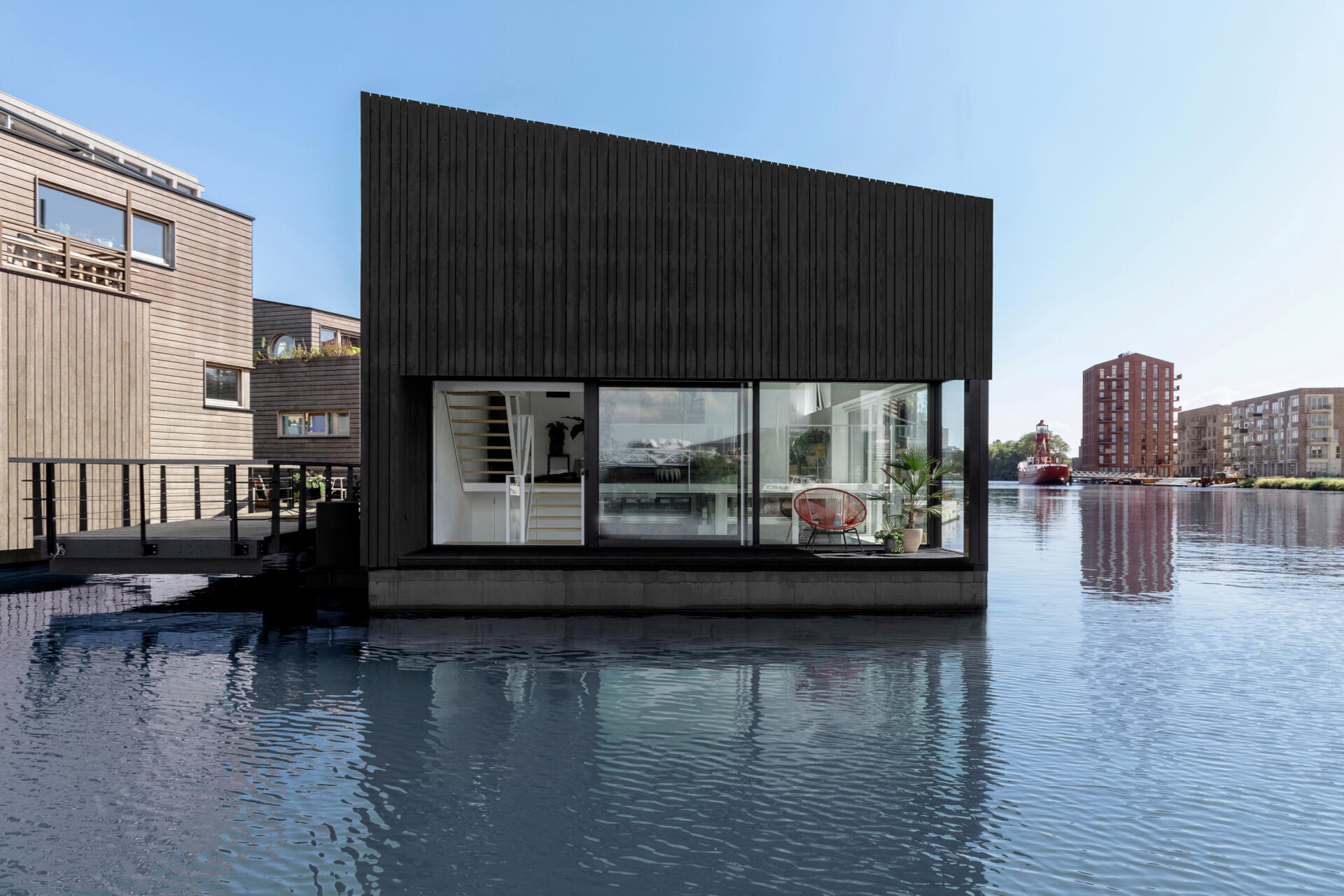
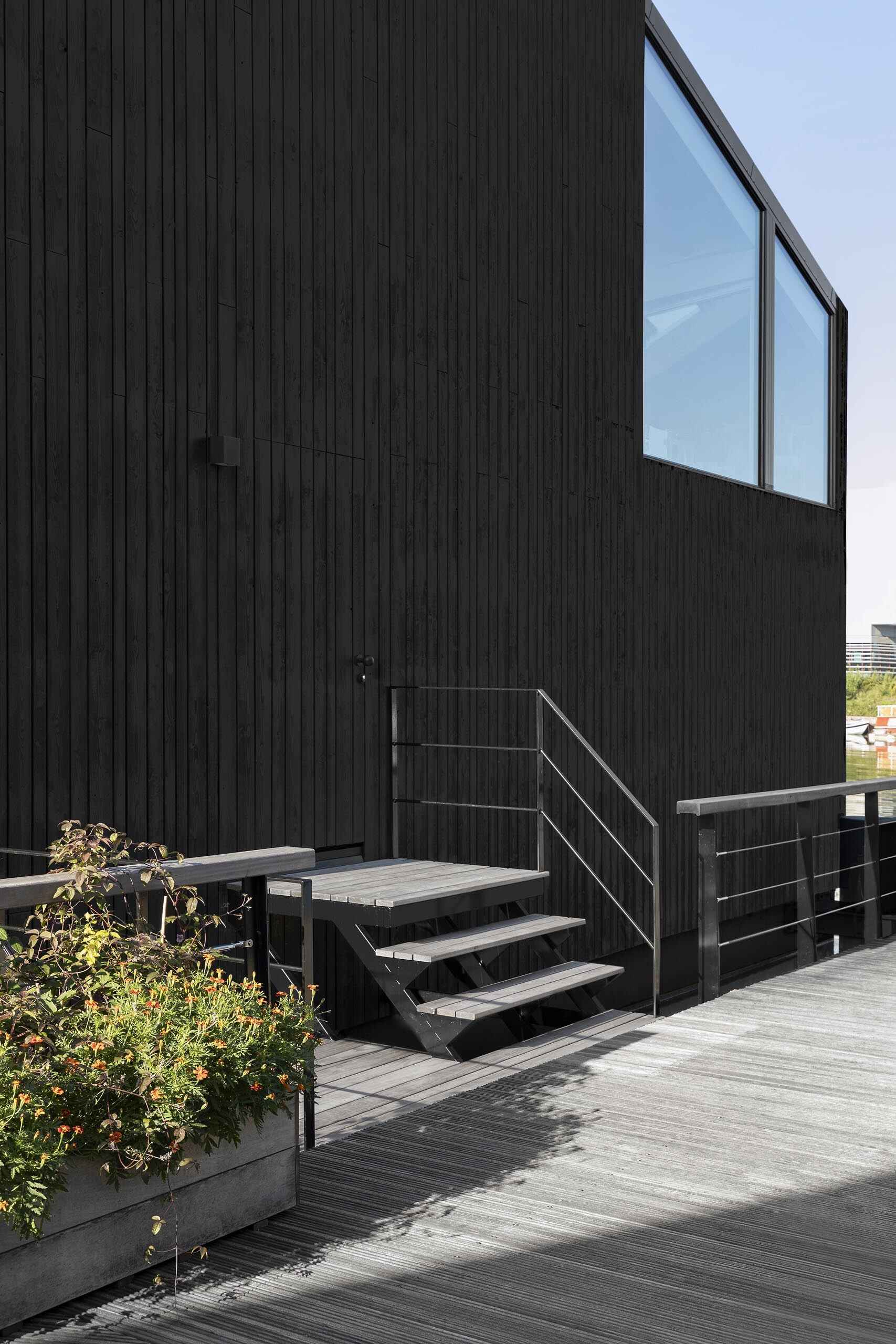
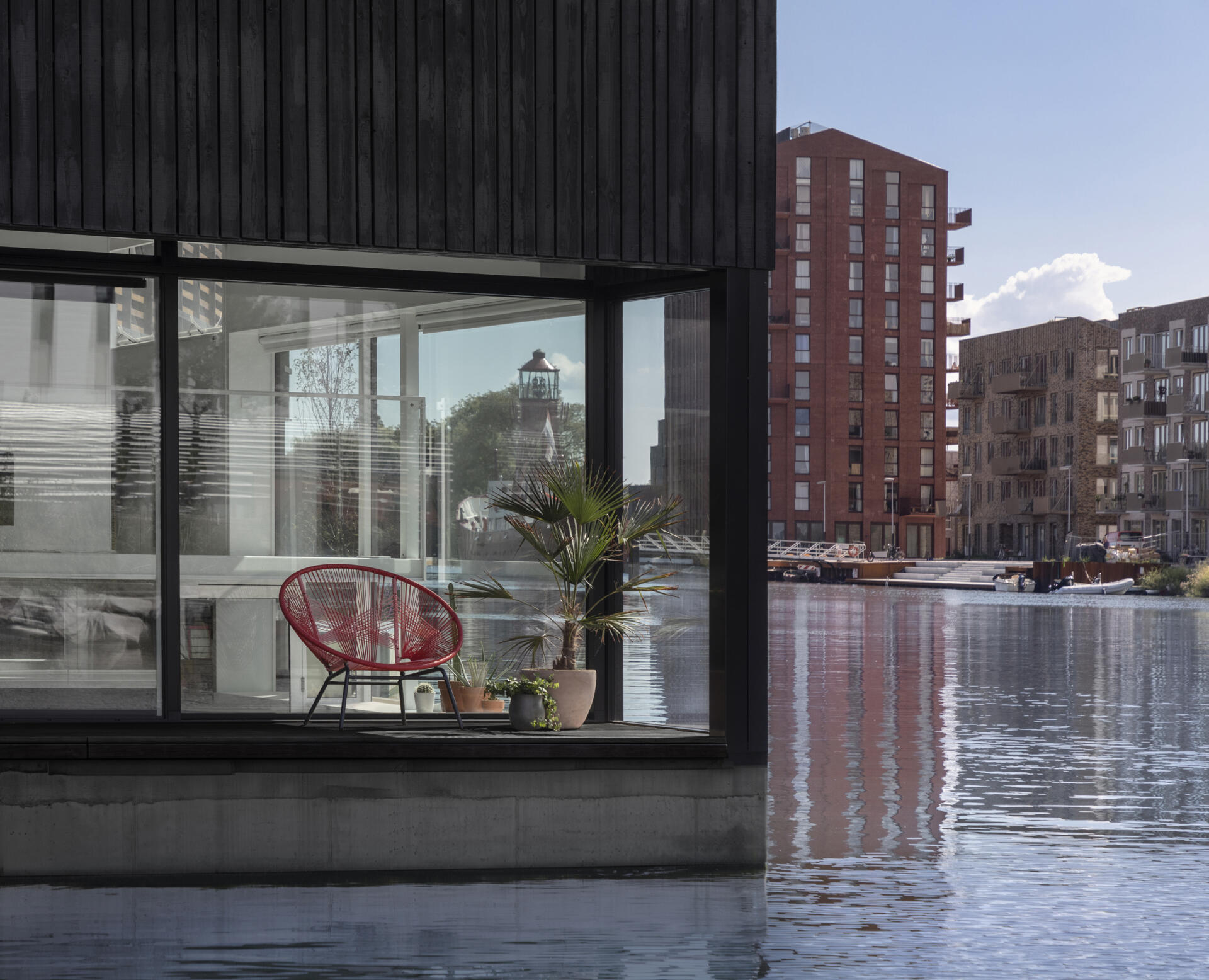
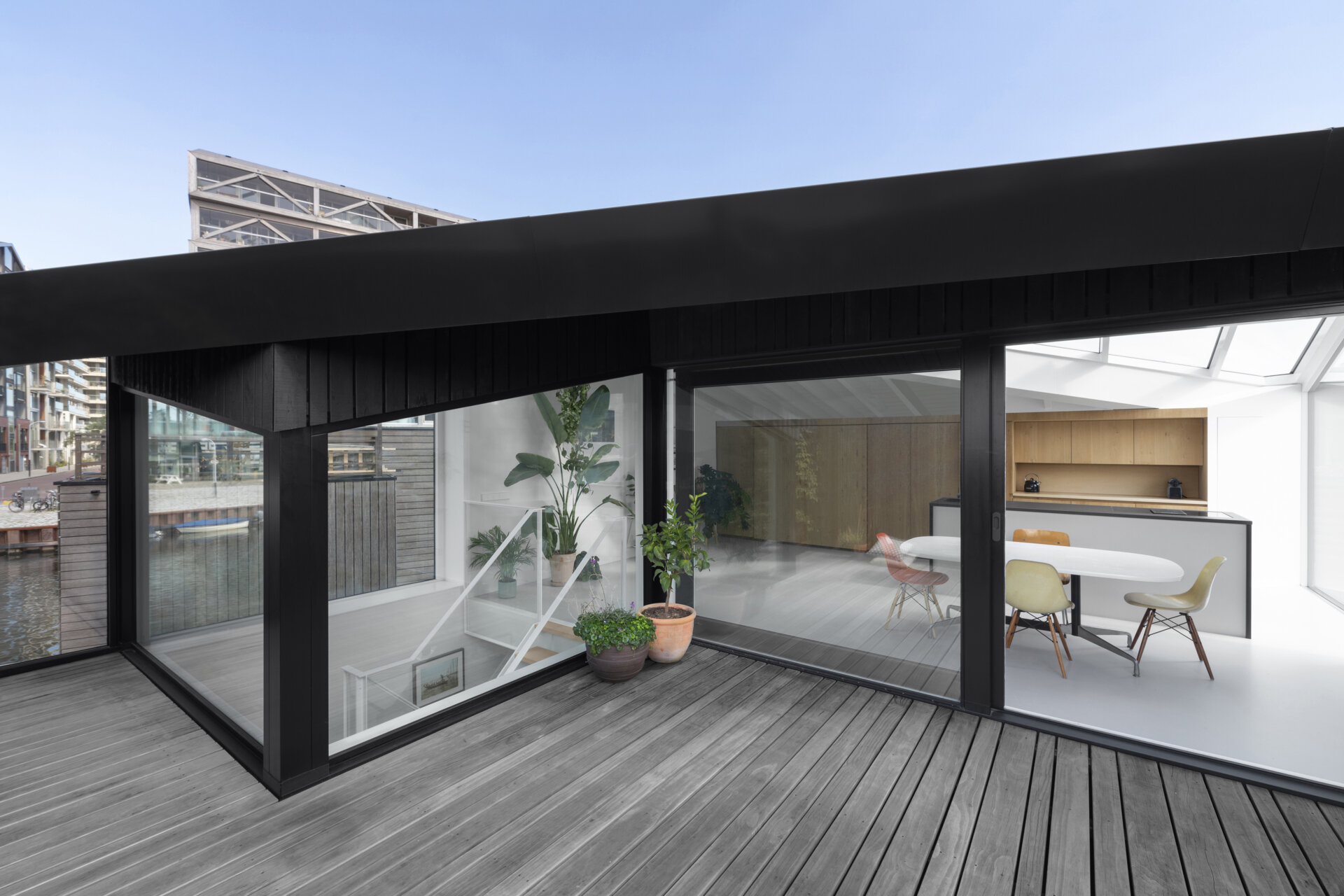
From the outside, the house presents itself with a quiet confidence. Its black wood exterior gives it a clear identity, while the form introduces a subtle shift. The architects describe a pitched roof whose coping is turned diagonally in plan, a move that increases usable space inside while giving the structure a distinct outline. It reads as familiar at first glance, then reveals its differences the longer you look.
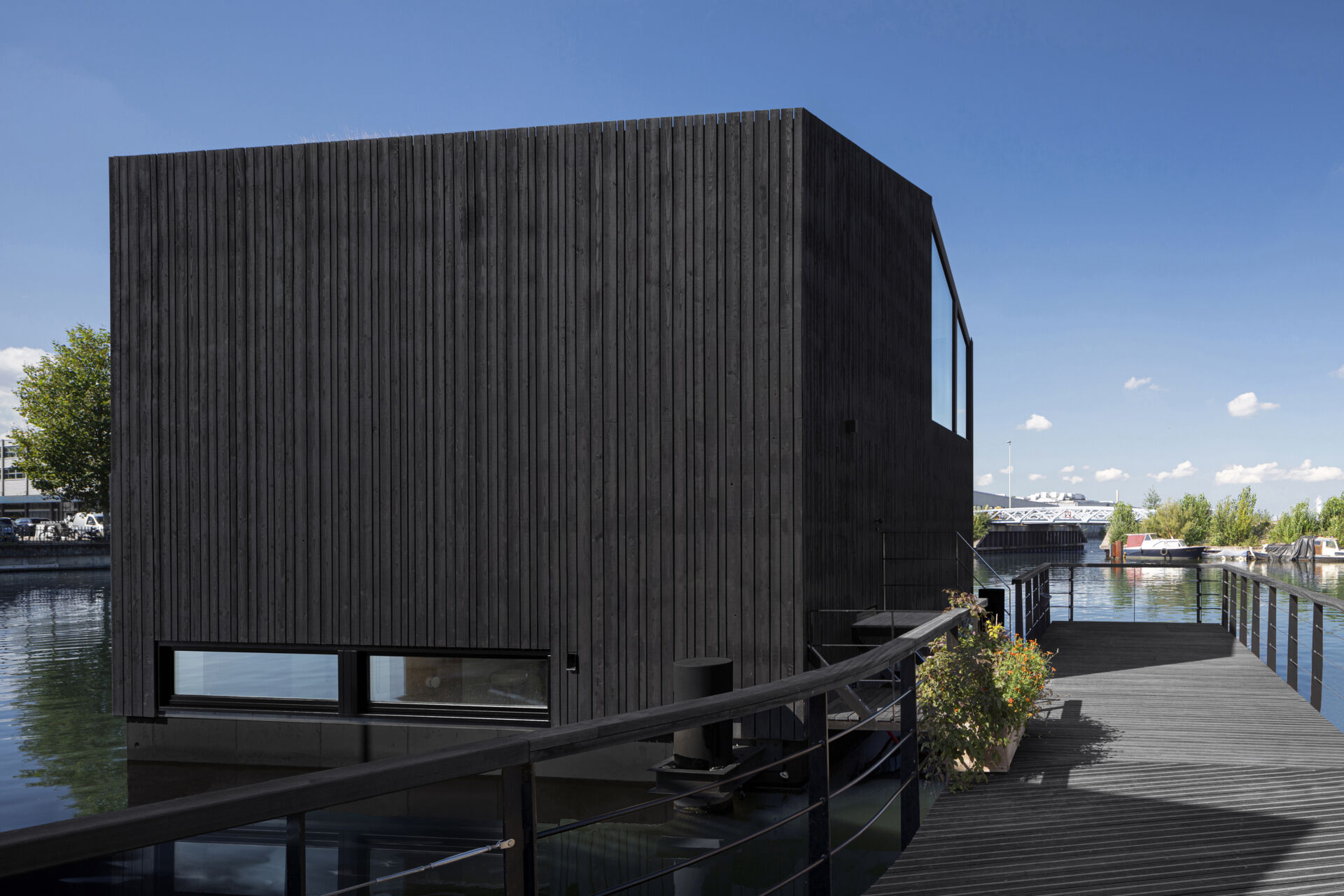
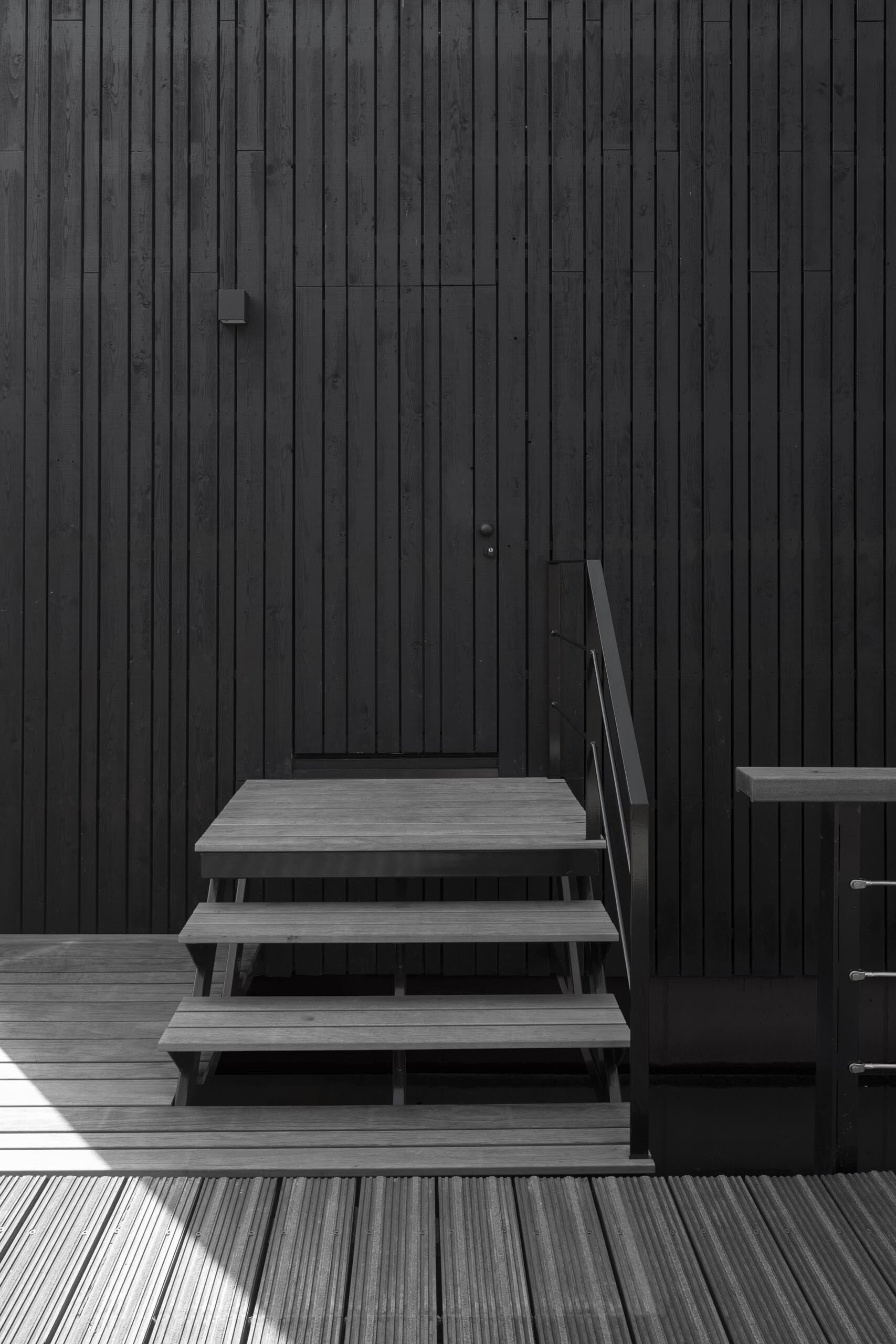
The entrance continues this sense of restraint. The front door is set into the timber facade, nearly disappearing into it. There is no grand gesture here, just a careful alignment of elements that keeps the exterior clean and uninterrupted.
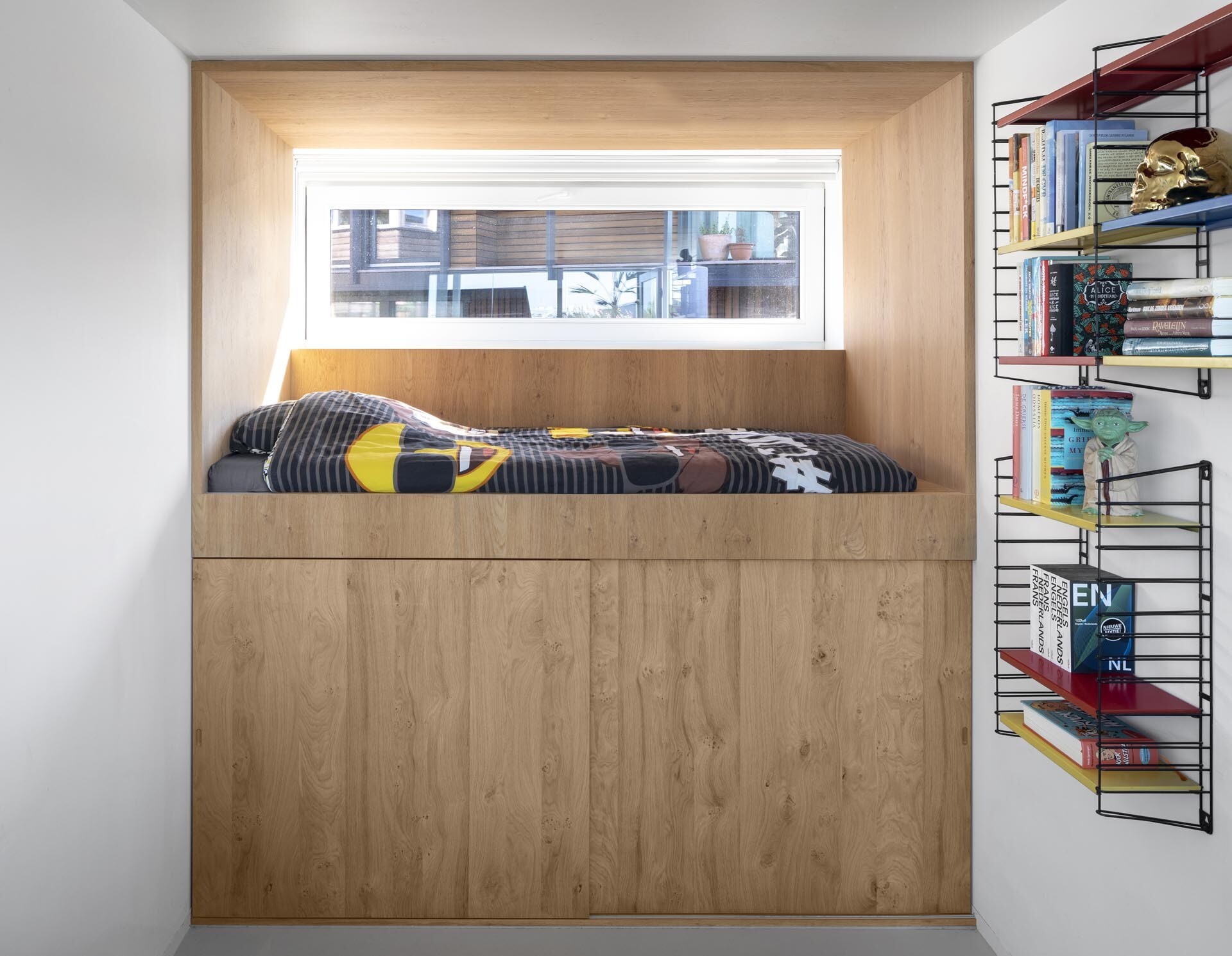
Inside, the layout unfolds from the bottom up. Bedrooms occupy the lower level, where custom loft beds are built into the architecture. Wood lines these sleeping spaces, adding warmth and a sense of enclosure close to the water.
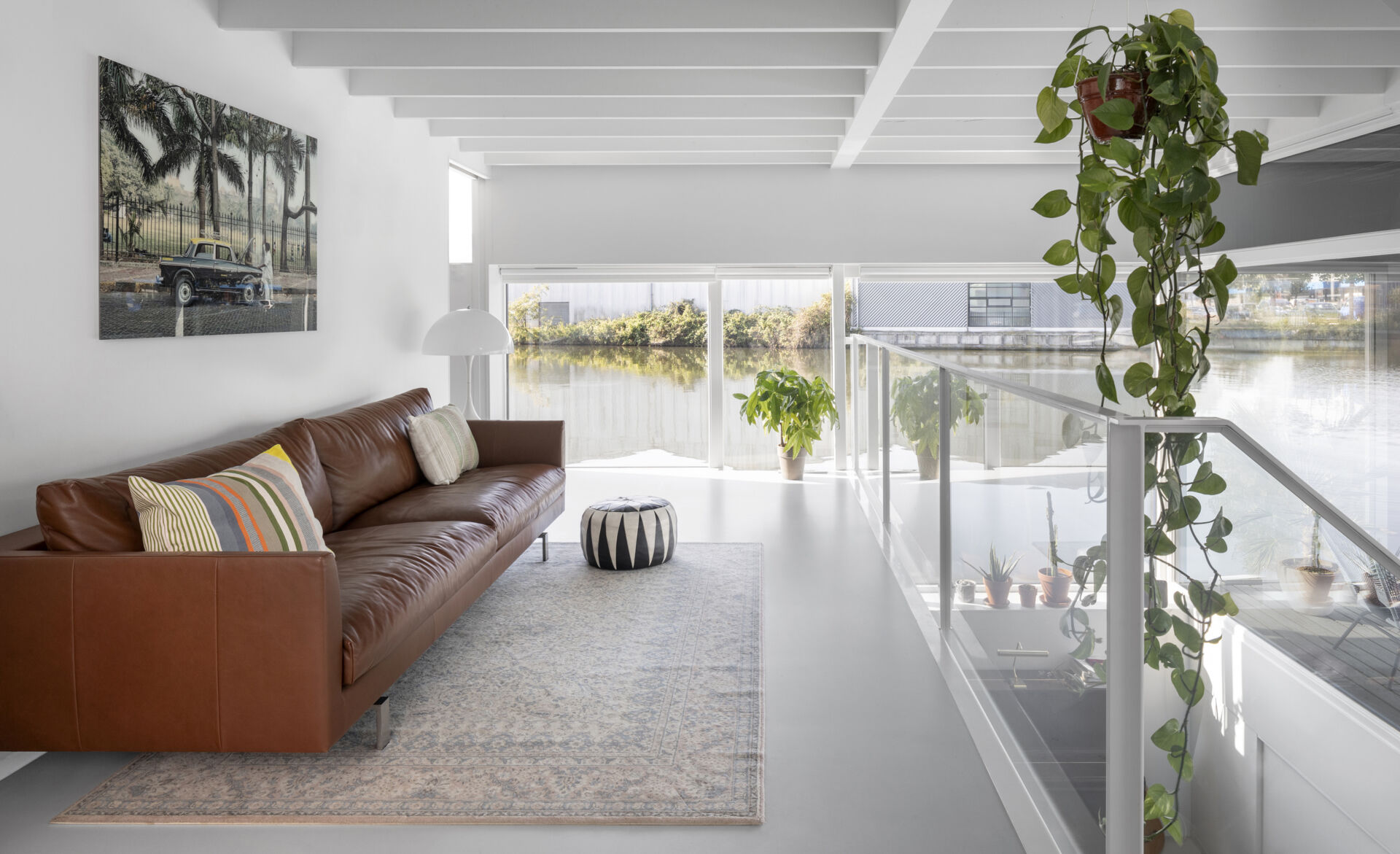
Above, the living room opens up. Furnished with a light touch, it allows the structure and the shifting views outside to take focus. The interior palette stays minimal, creating a calm setting that feels consistent from one level to the next.
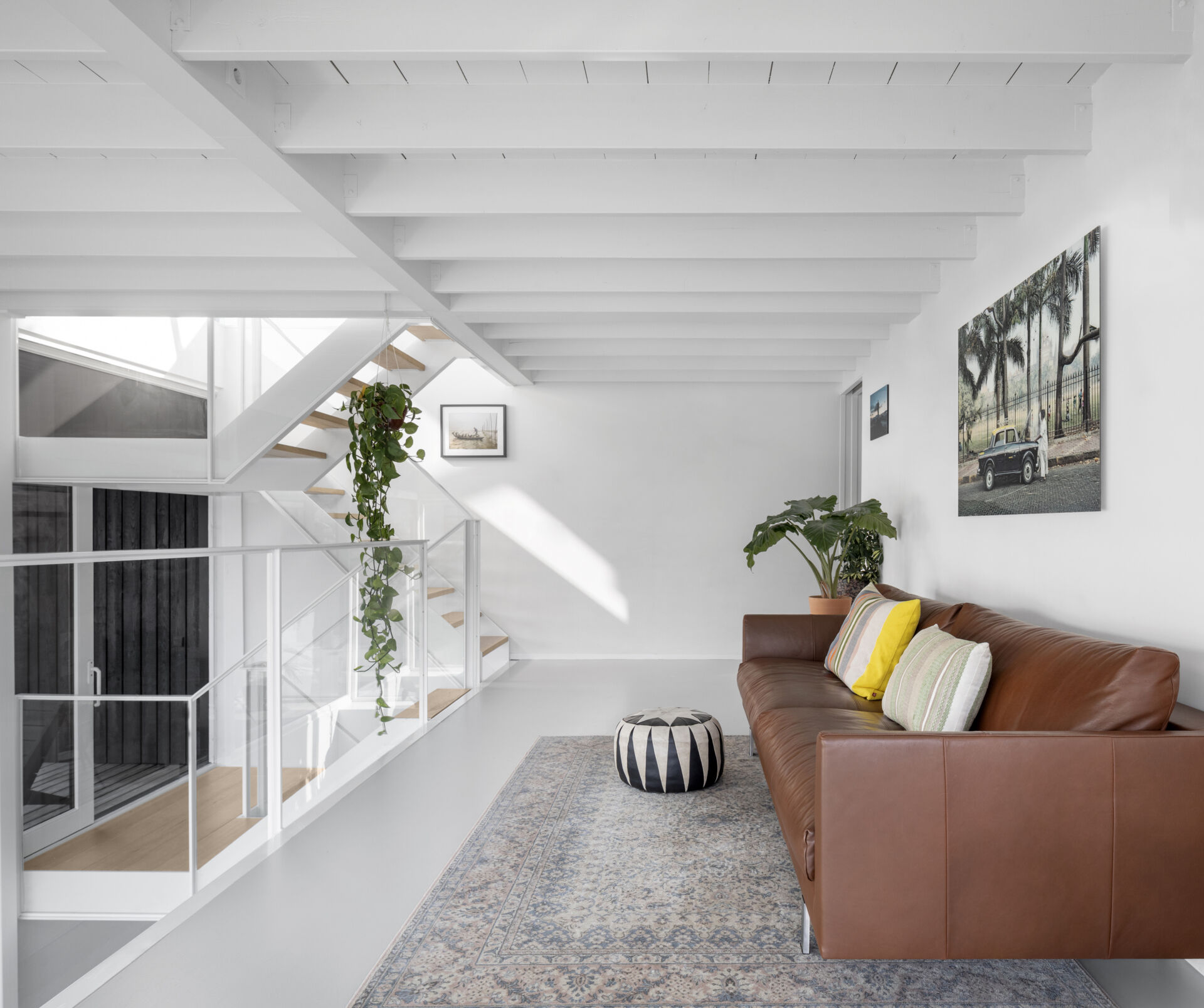
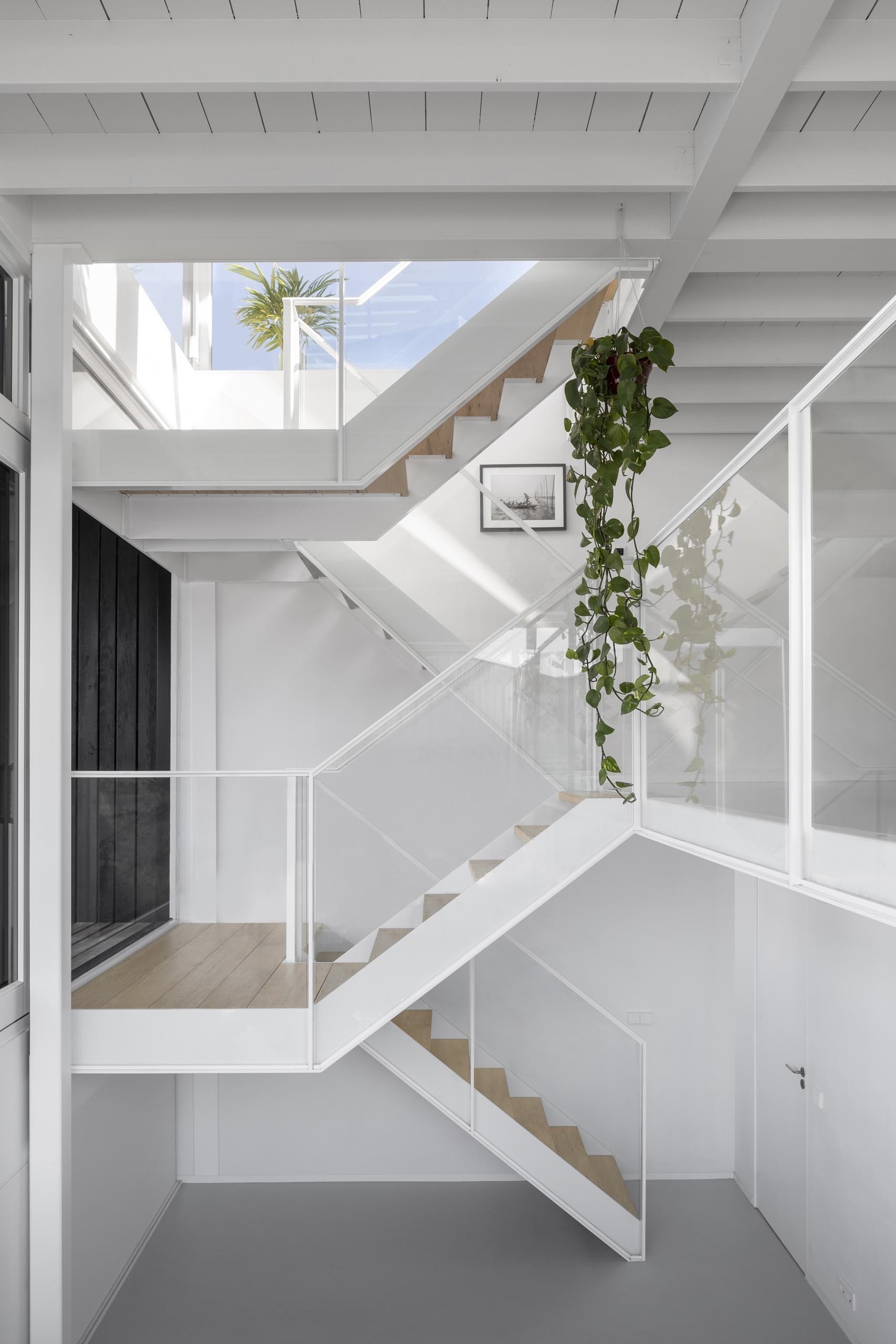
Running through the home is a white staircase that ties everything together. It blends into the walls and ceiling, while subtle wood details introduce contrast. As it moves upward, it guides both movement and sightlines, shaping how each space is experienced.
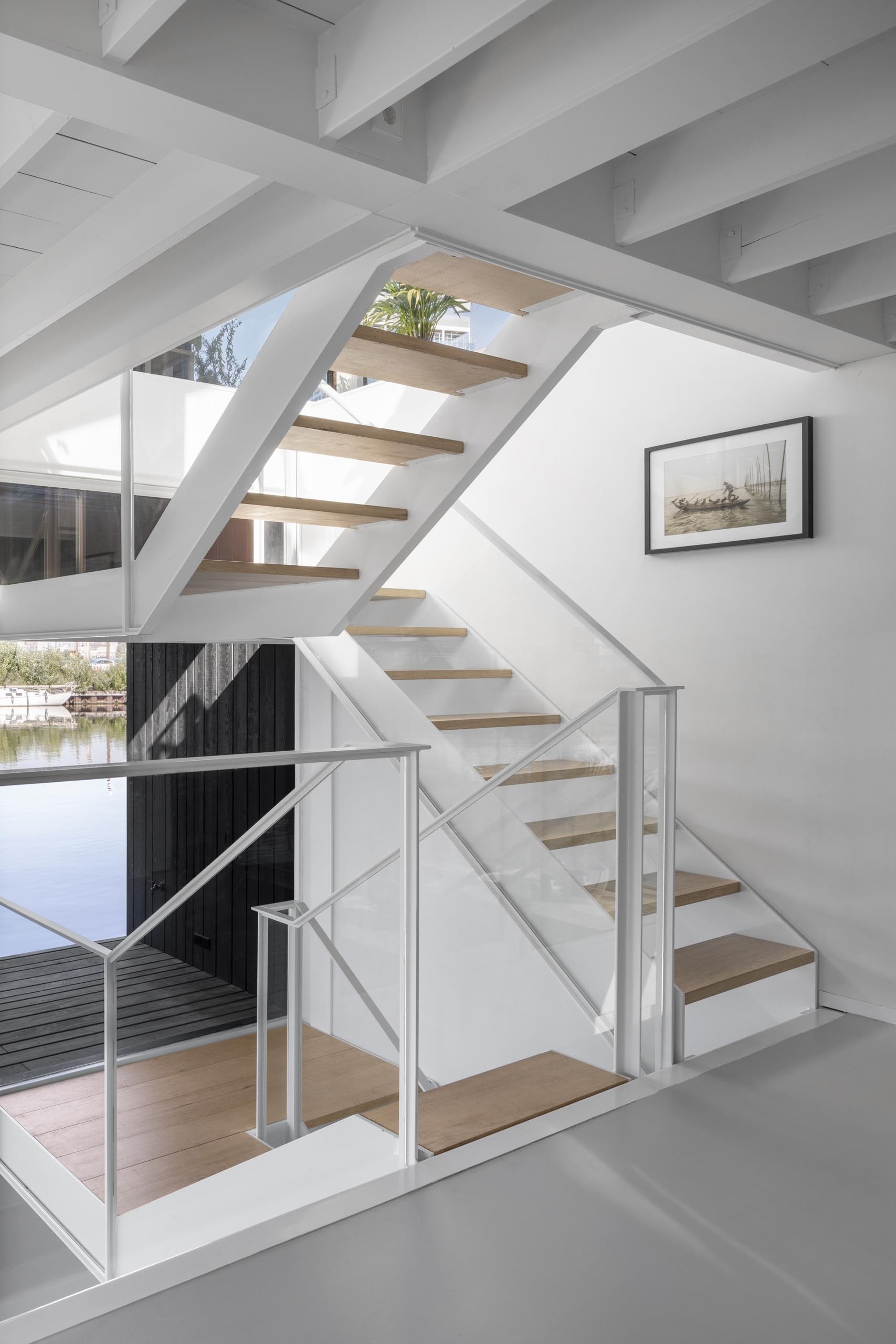
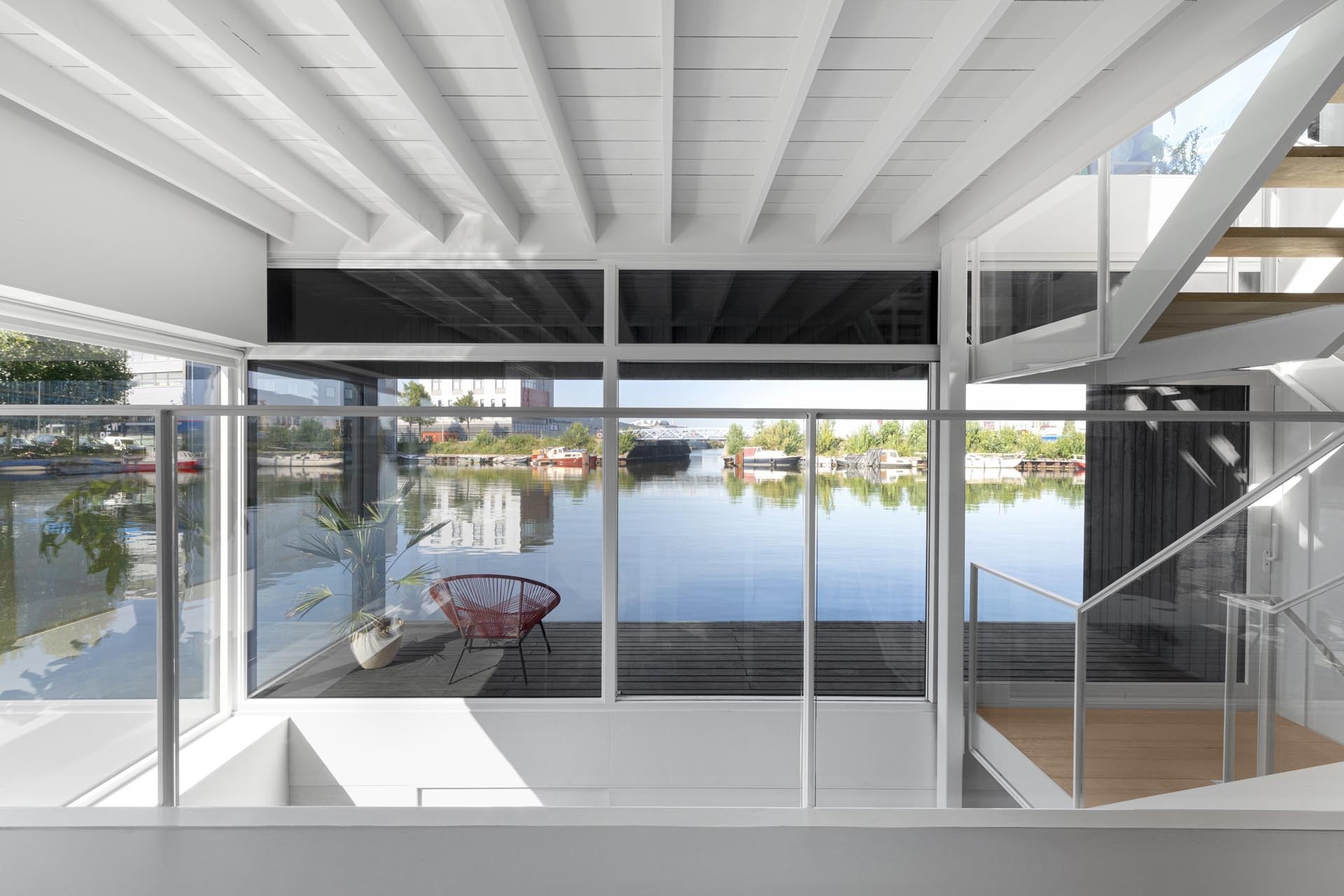
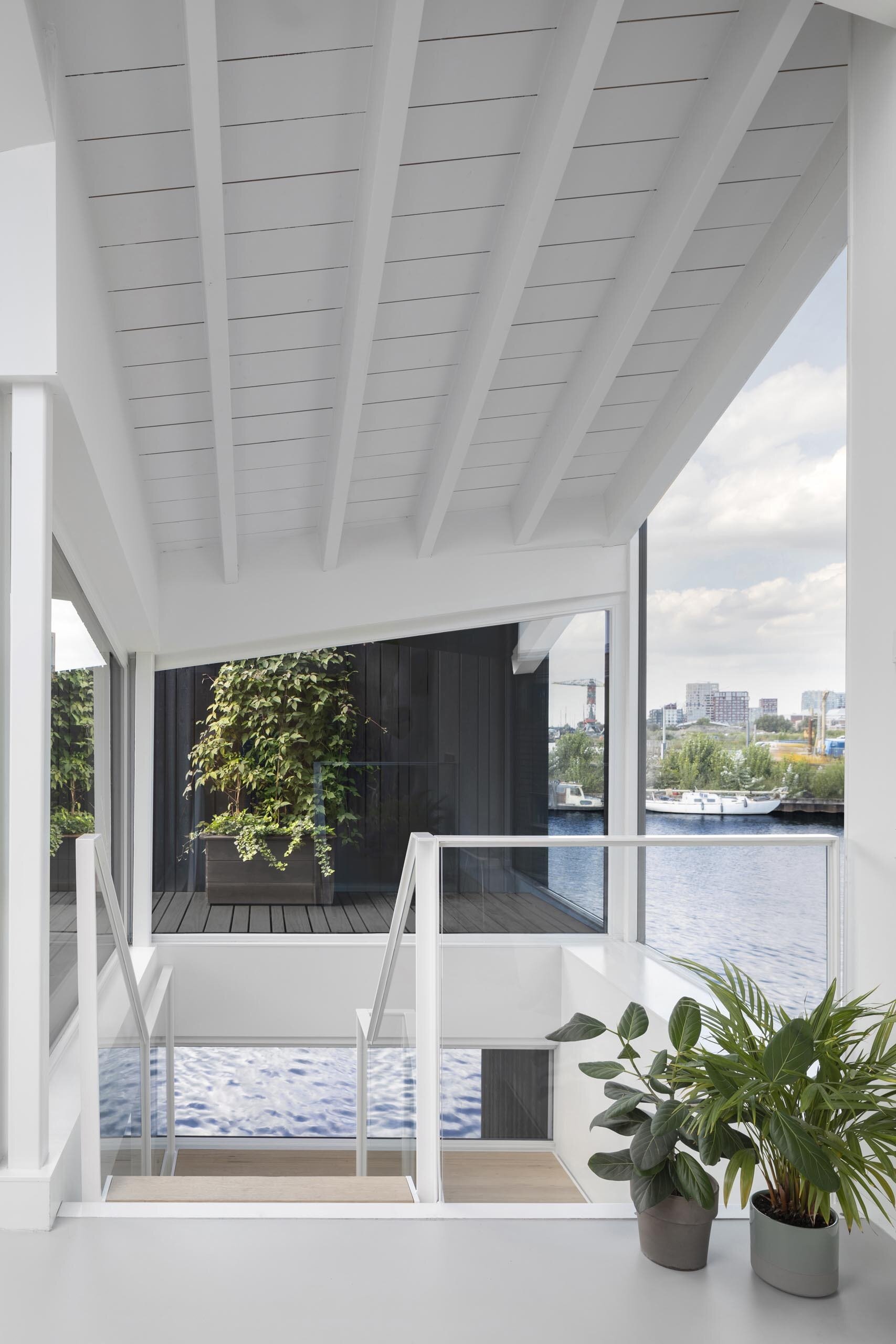
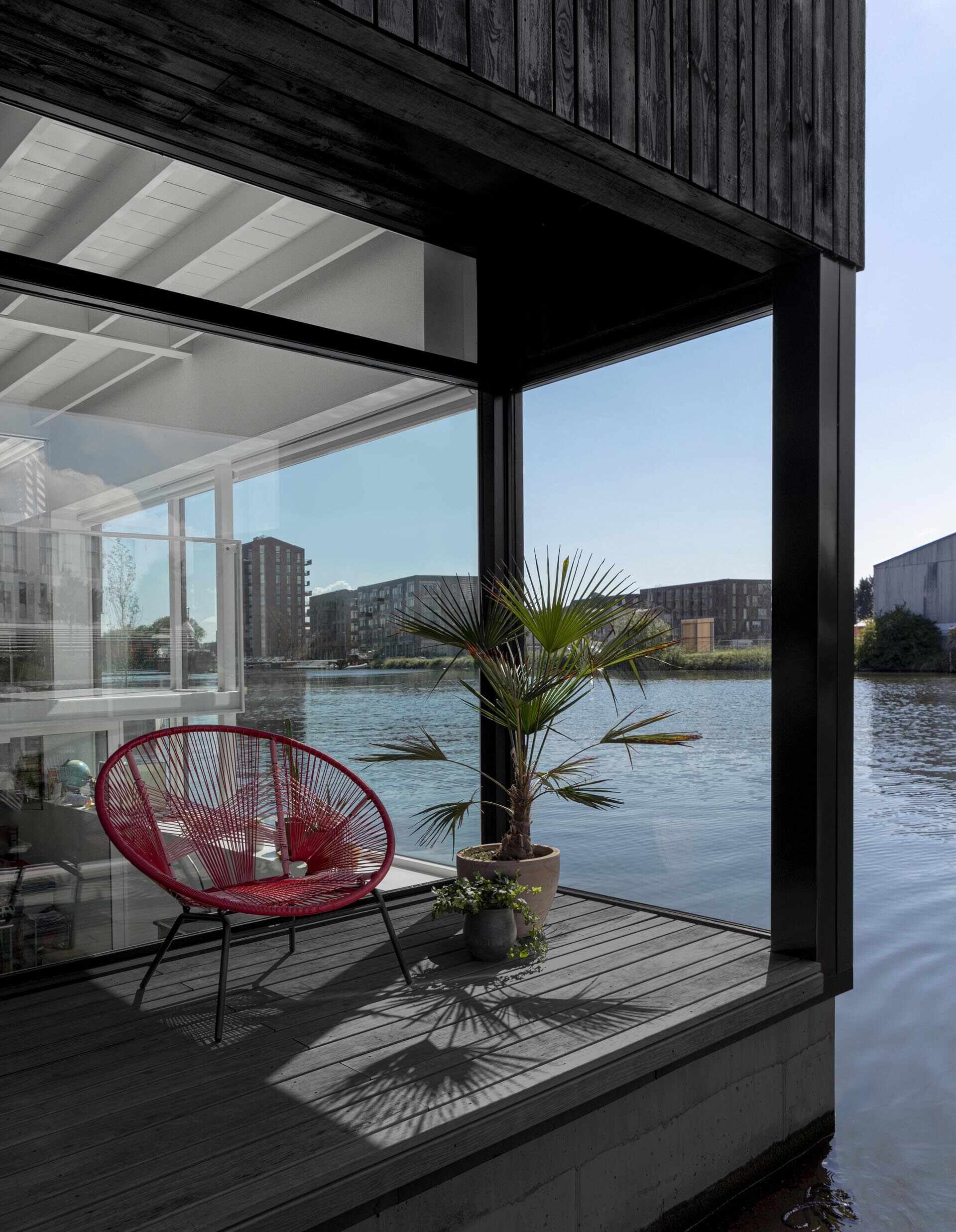
Near the stairs, a small covered deck extends outward. Positioned just above the water, it offers a direct connection to the canal. The view remains uninterrupted, reinforcing the feeling of living alongside, not apart from, the water.
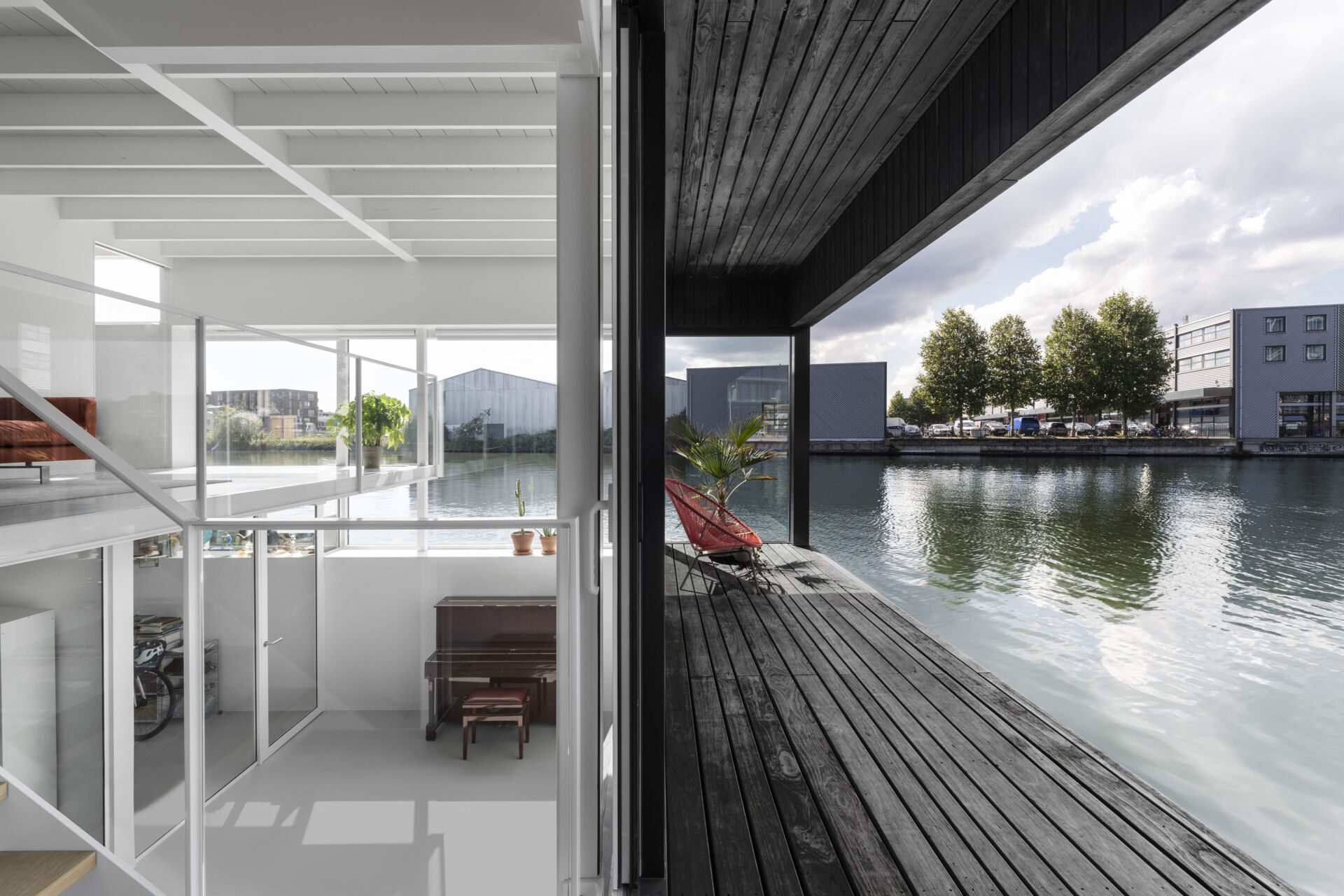
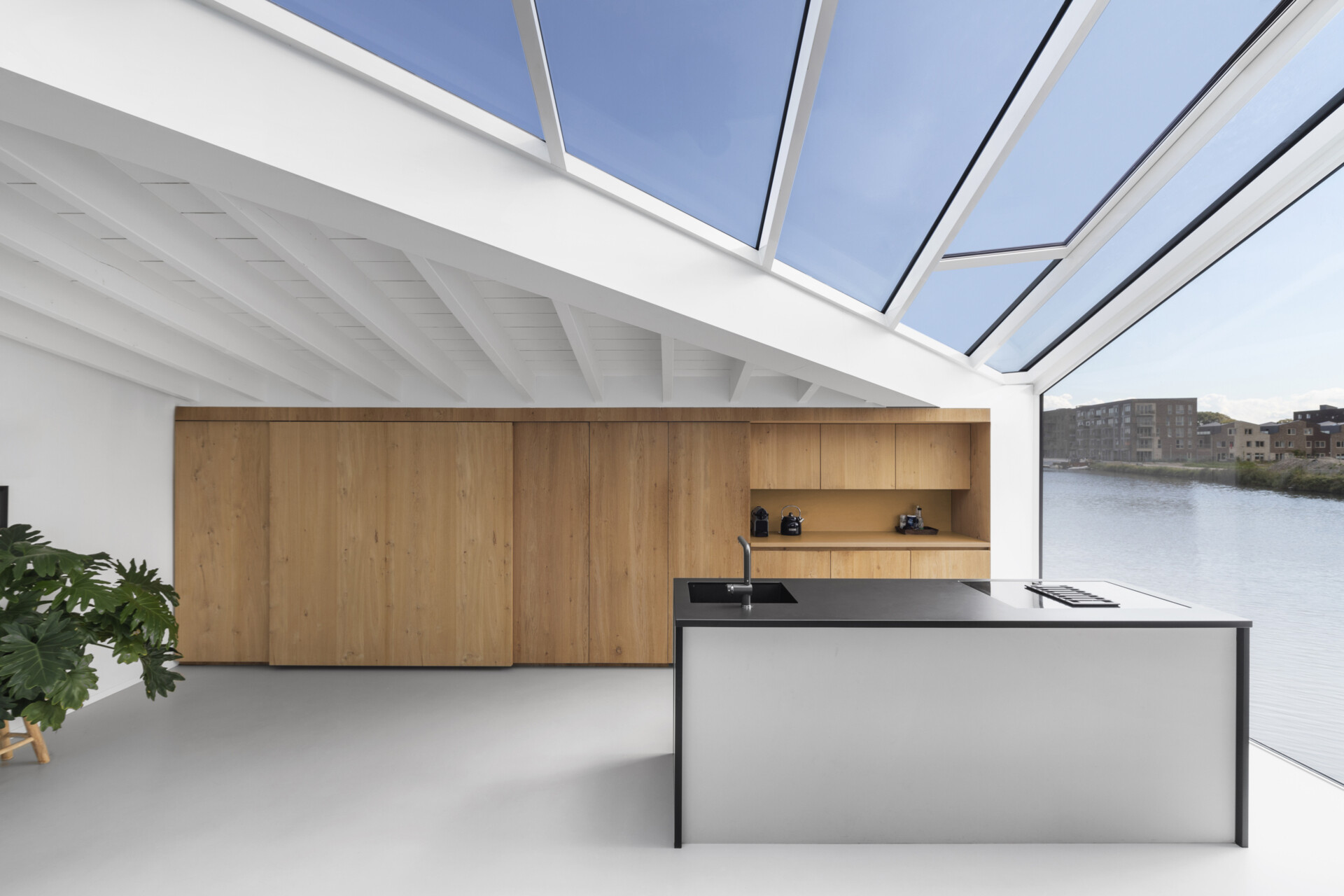
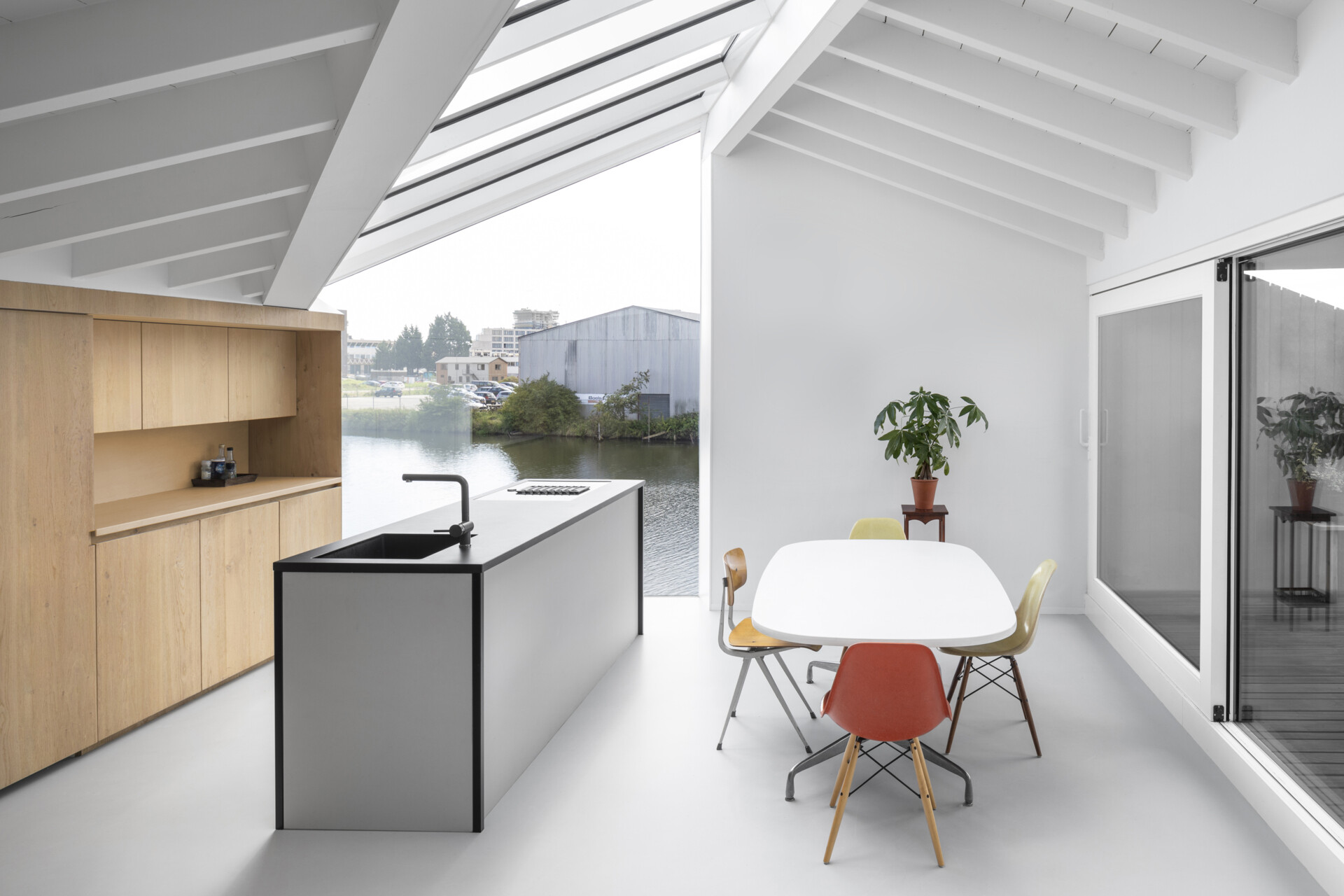
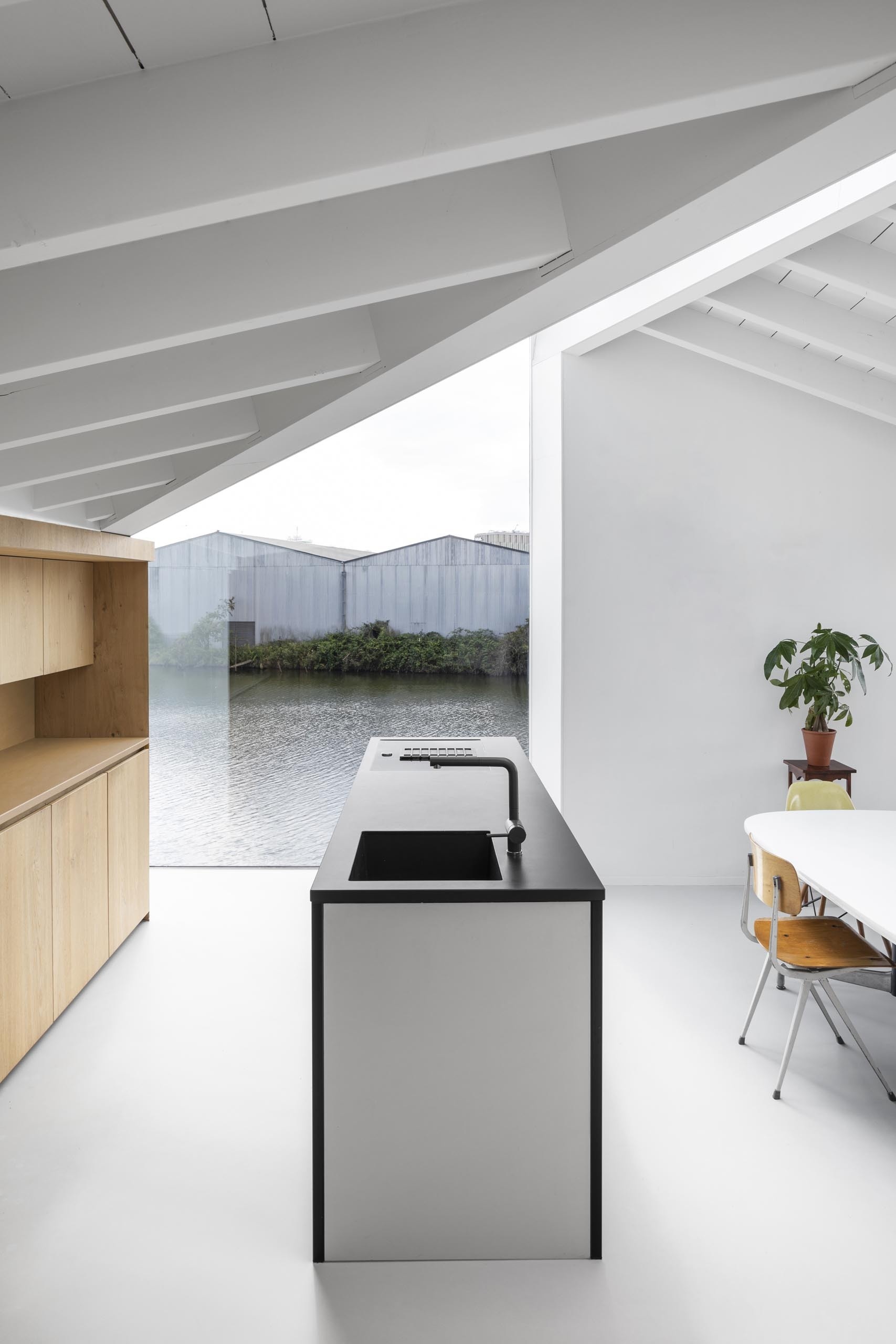
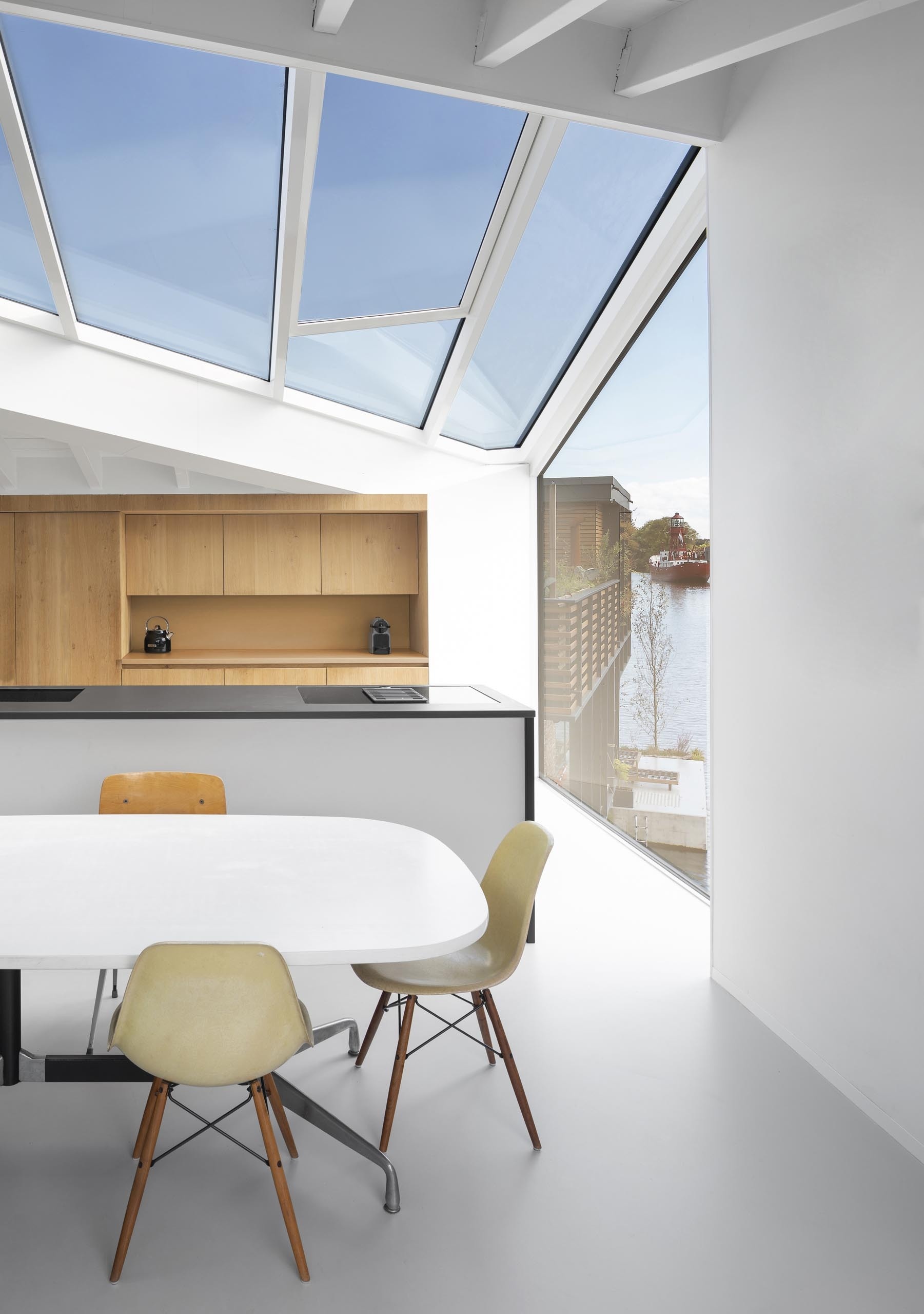
At the top level, the house reaches its most open point. The kitchen and dining area sit beneath the roof, where a wall of wood cabinetry pairs with a dark island. Large windows bring in daylight, keeping the space bright and expansive despite the compact footprint.
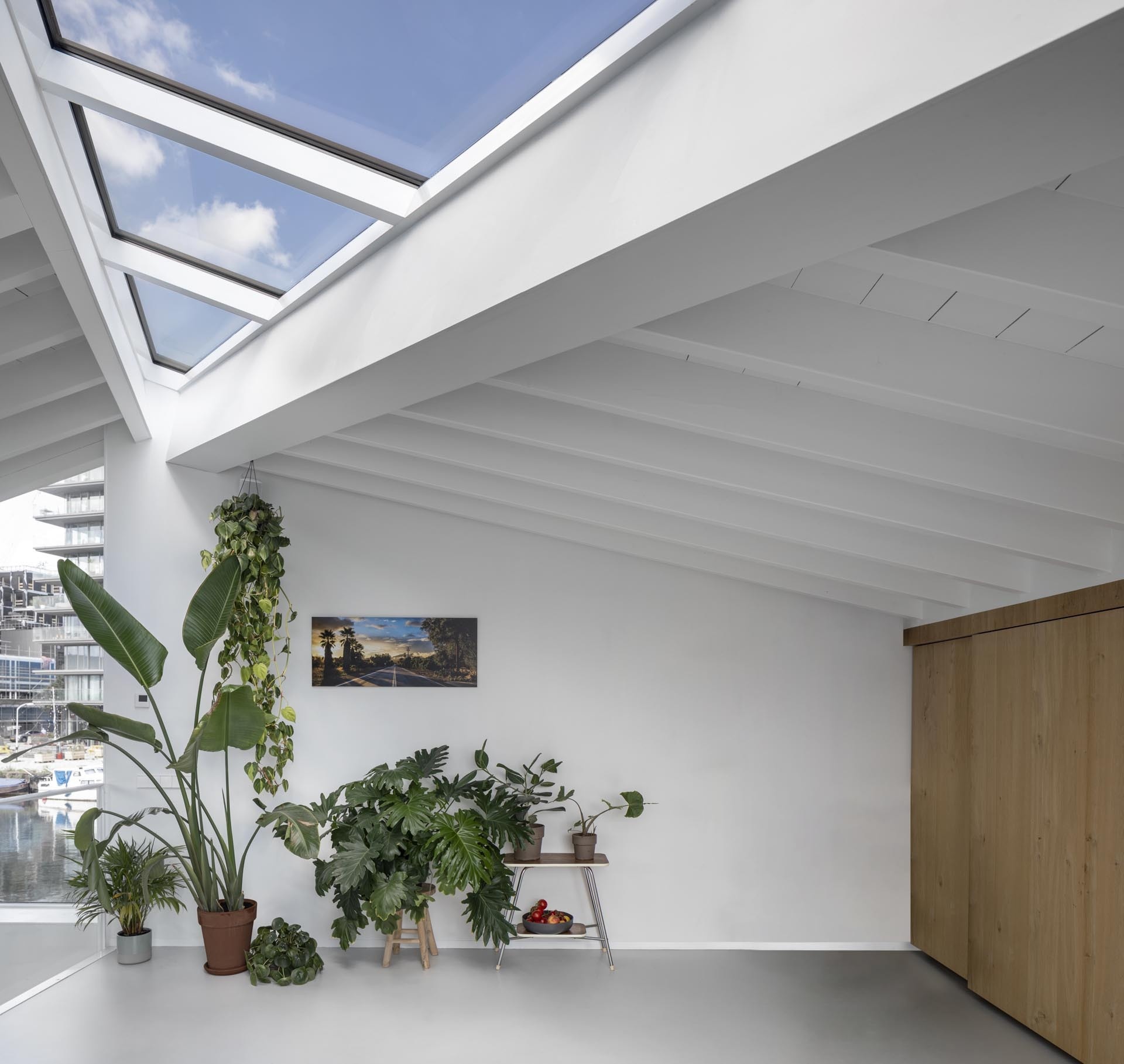
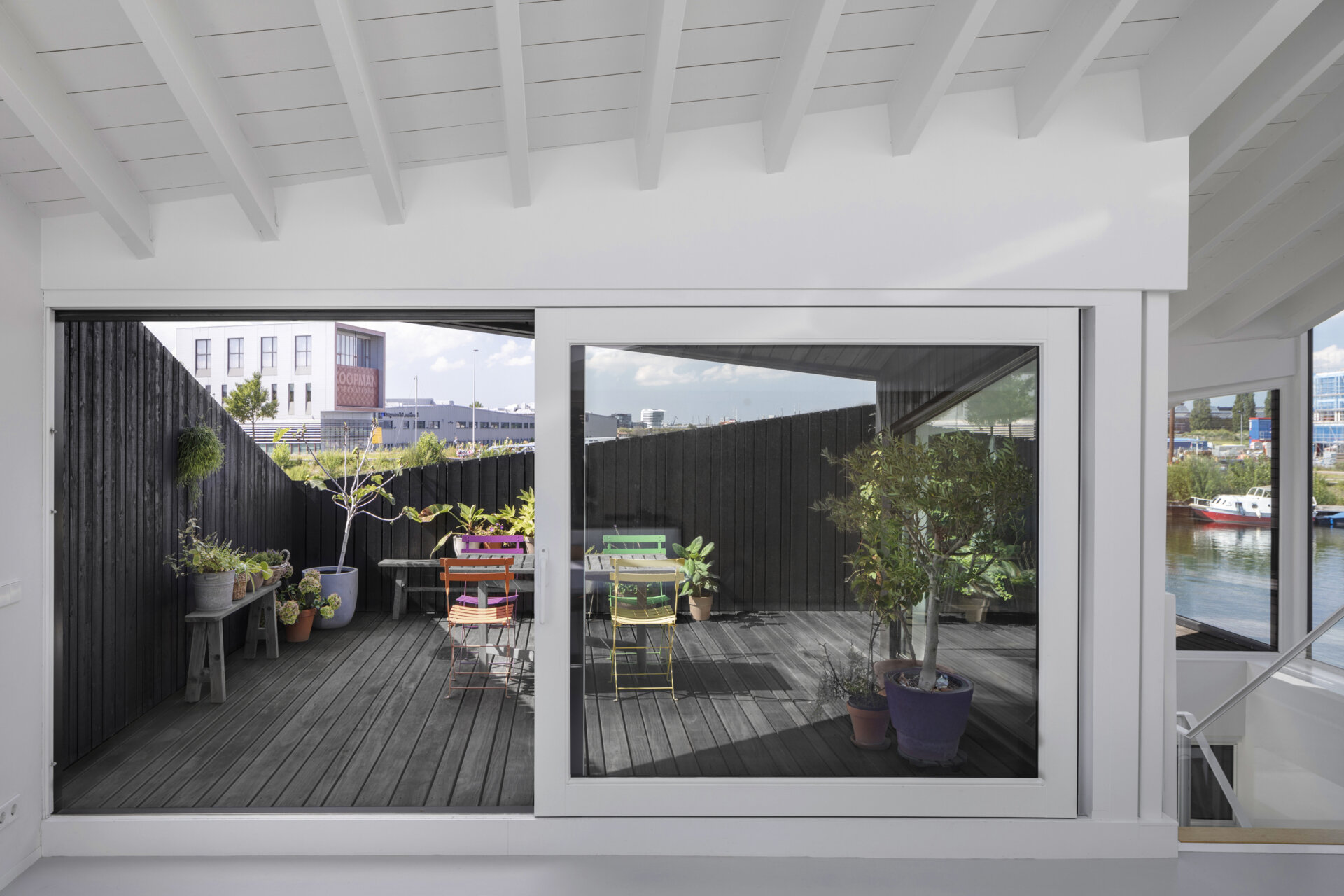
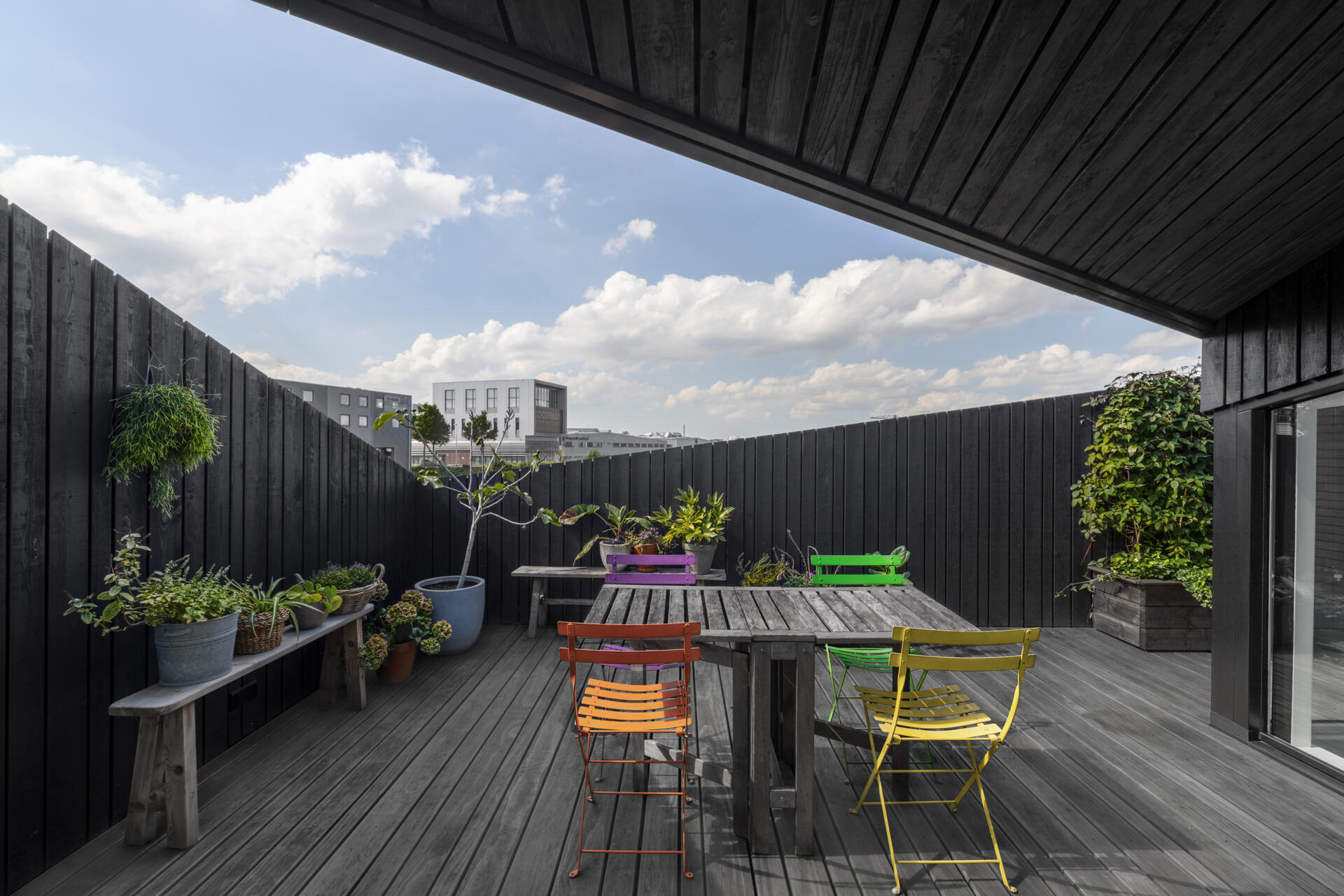
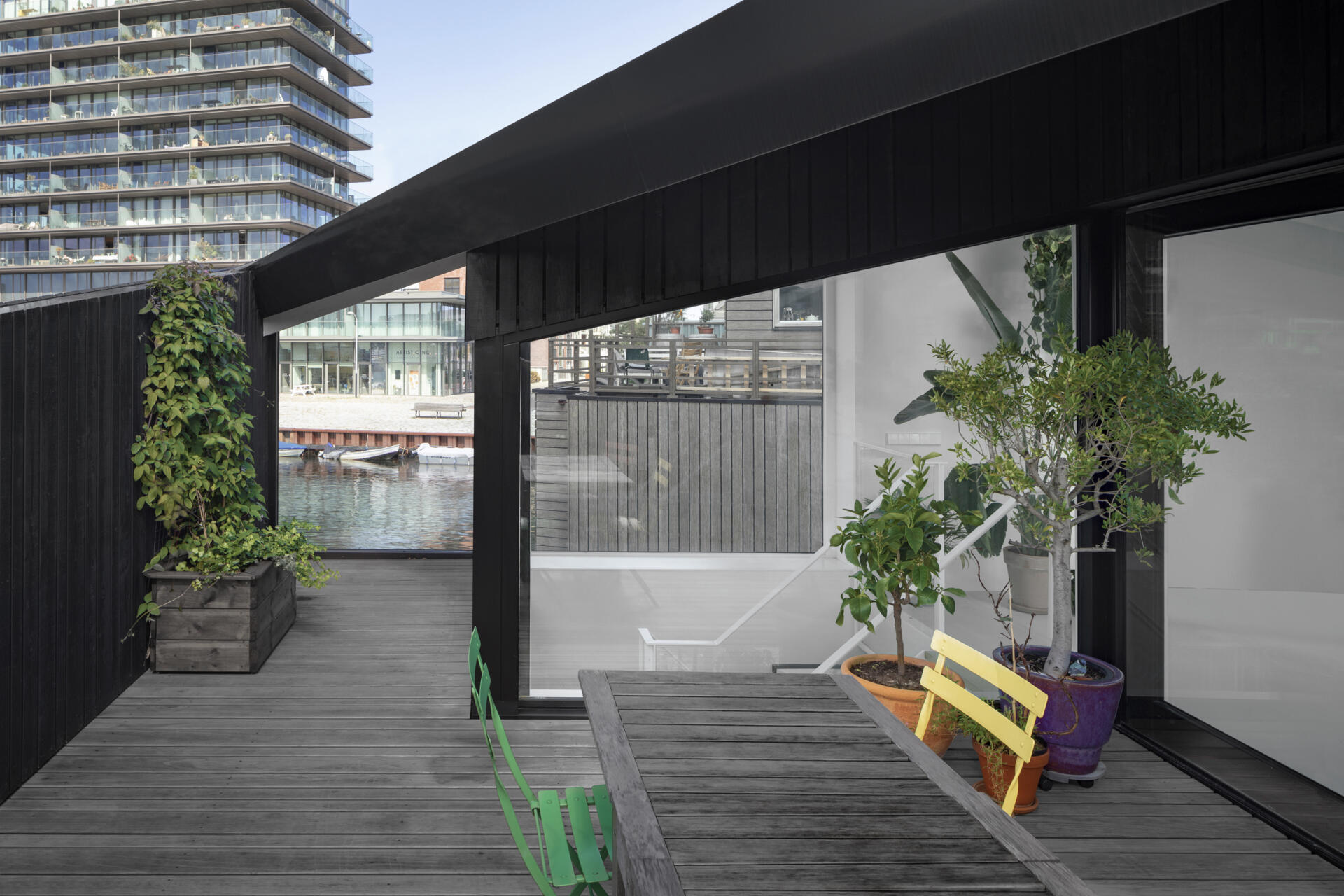
A sliding glass door leads out to the rooftop deck. Here, angled walls provide a sense of privacy without closing the space off completely. The result is an outdoor area that feels sheltered yet open, a place to look out across the water and back toward the growing neighborhood.
As more cities look for ways to rethink how space is used, projects like this offer a different path forward. Here, living on water is part of everyday life, shaped by design choices that prioritize efficiency, flexibility, and a sense of community.