A Portuguese Home Defined by Wood Slats and Dark Tiles

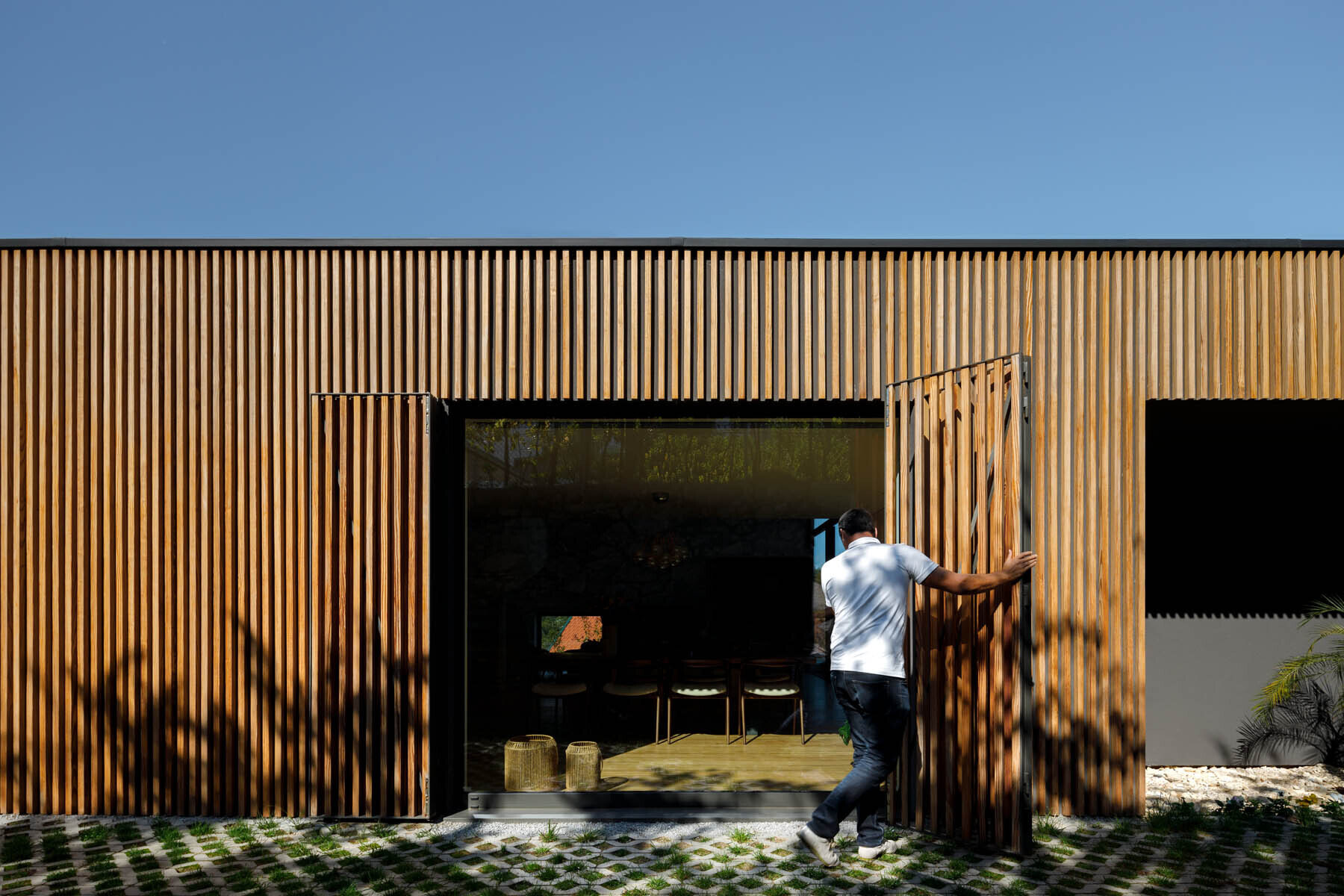
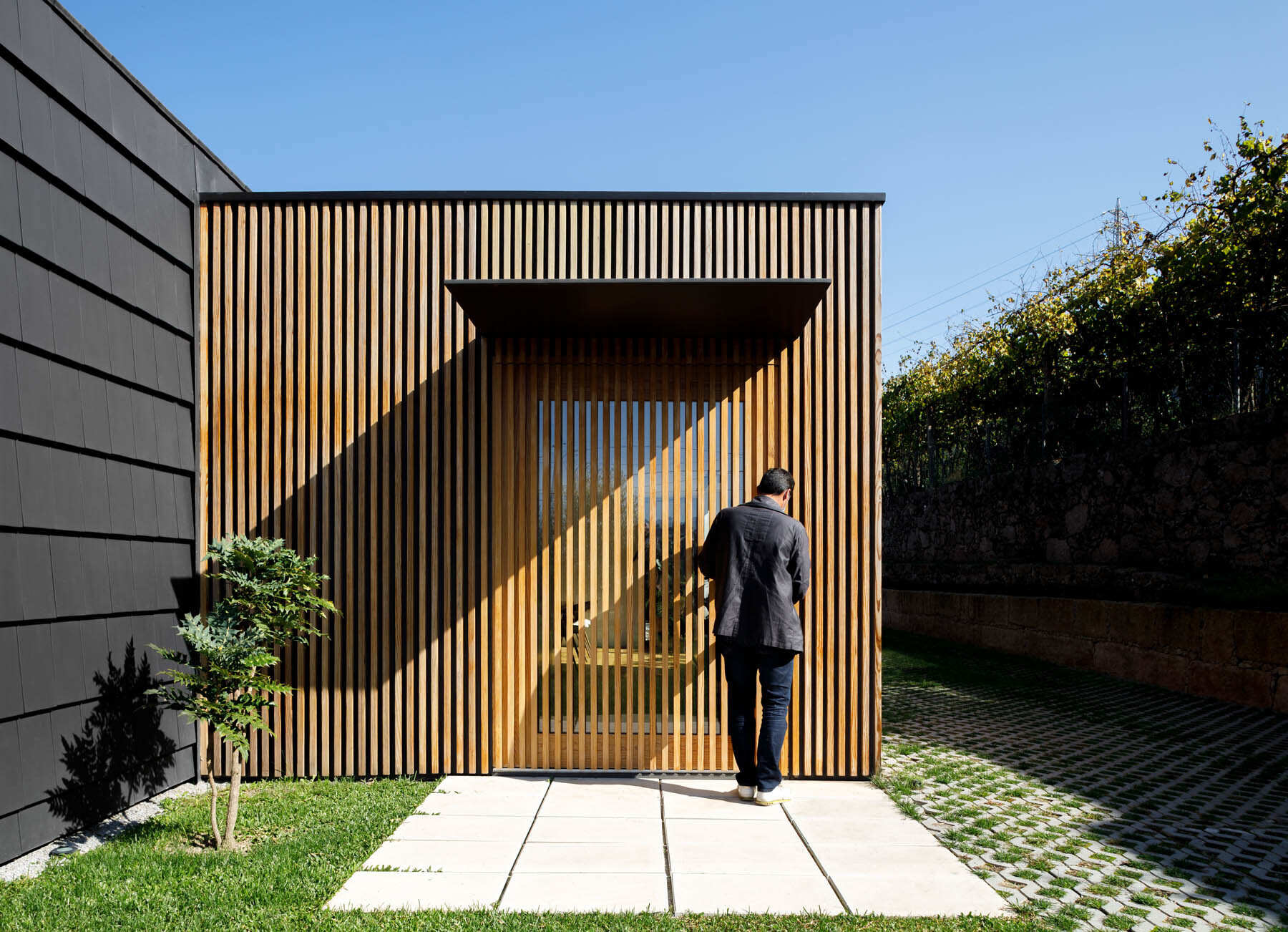
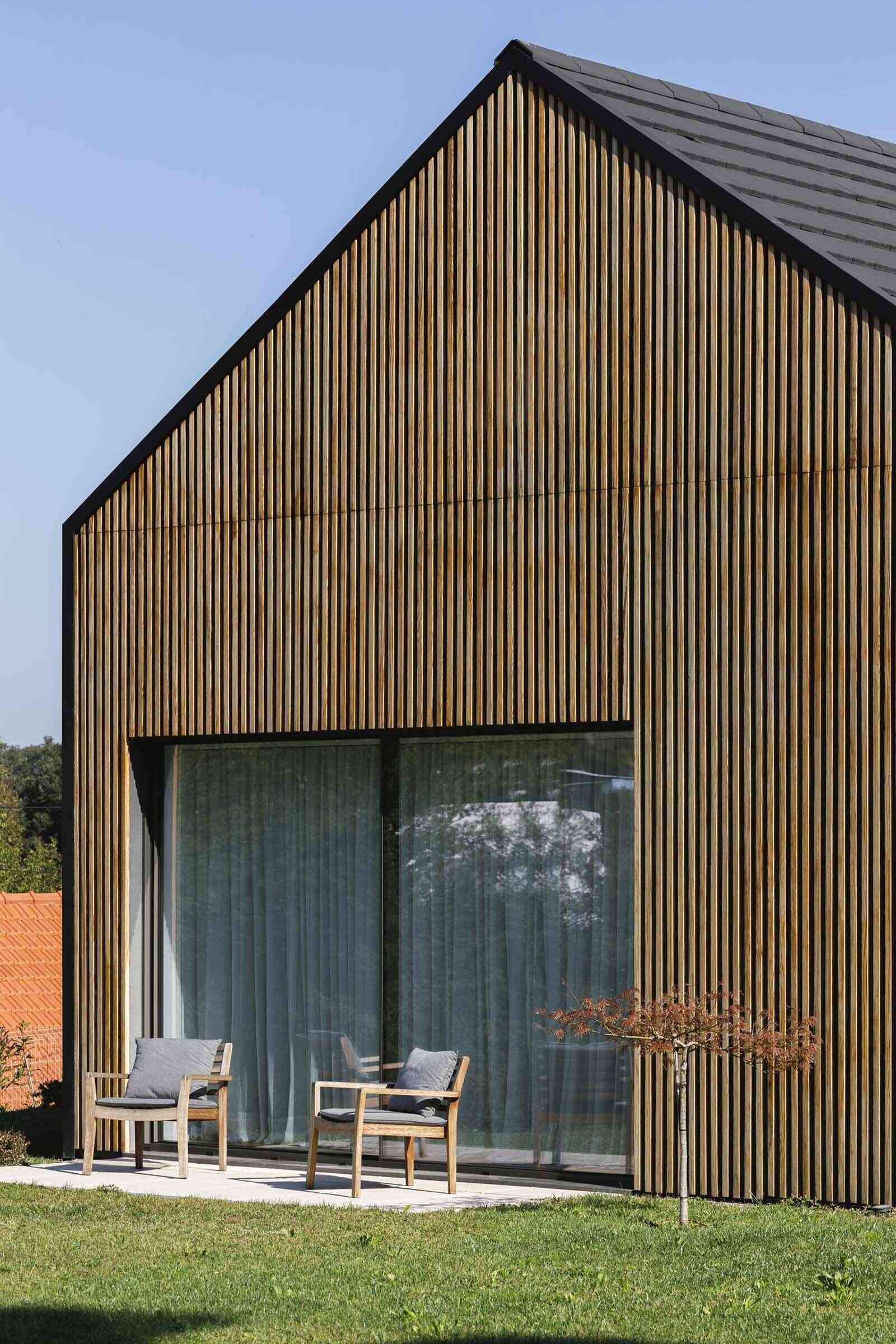
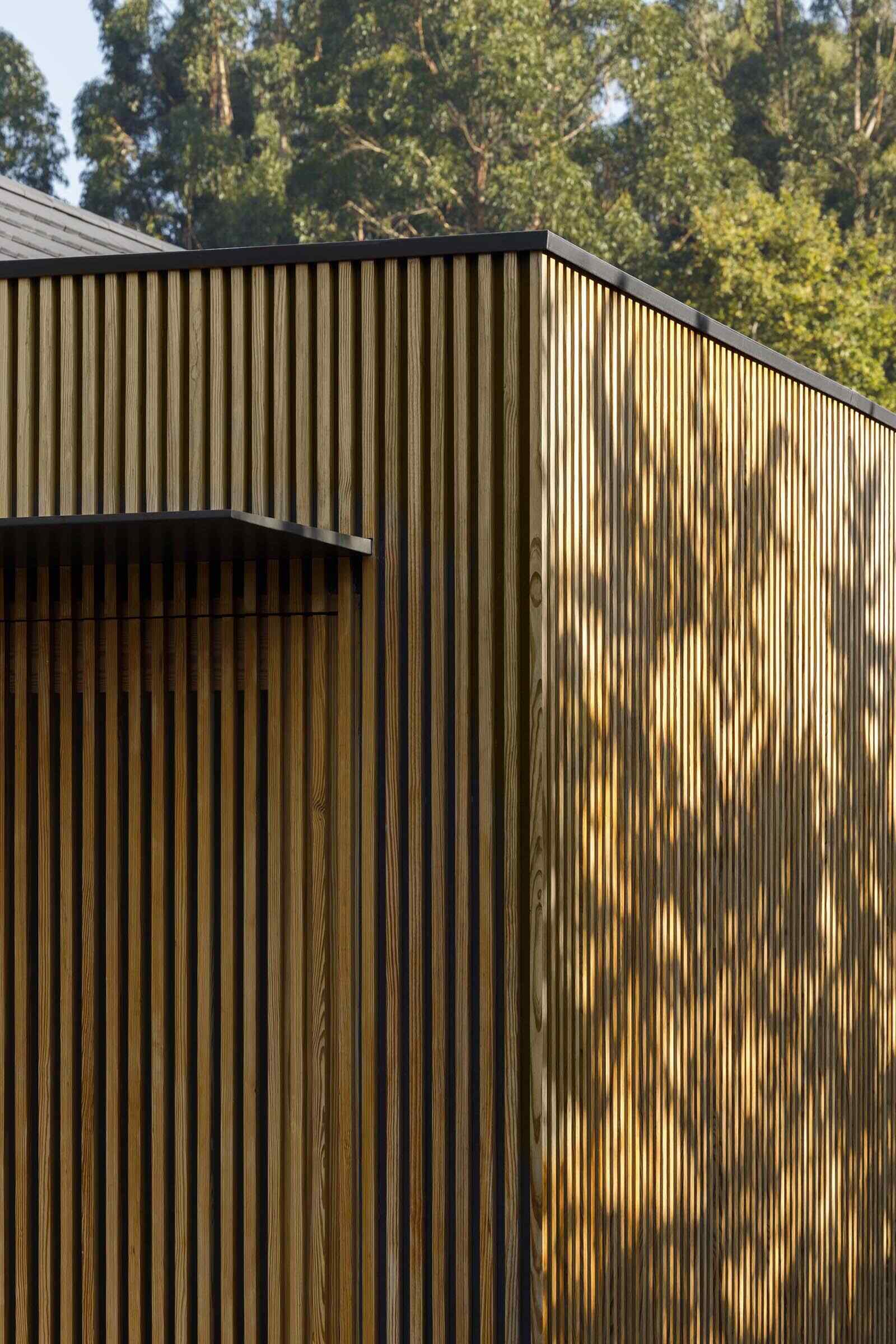
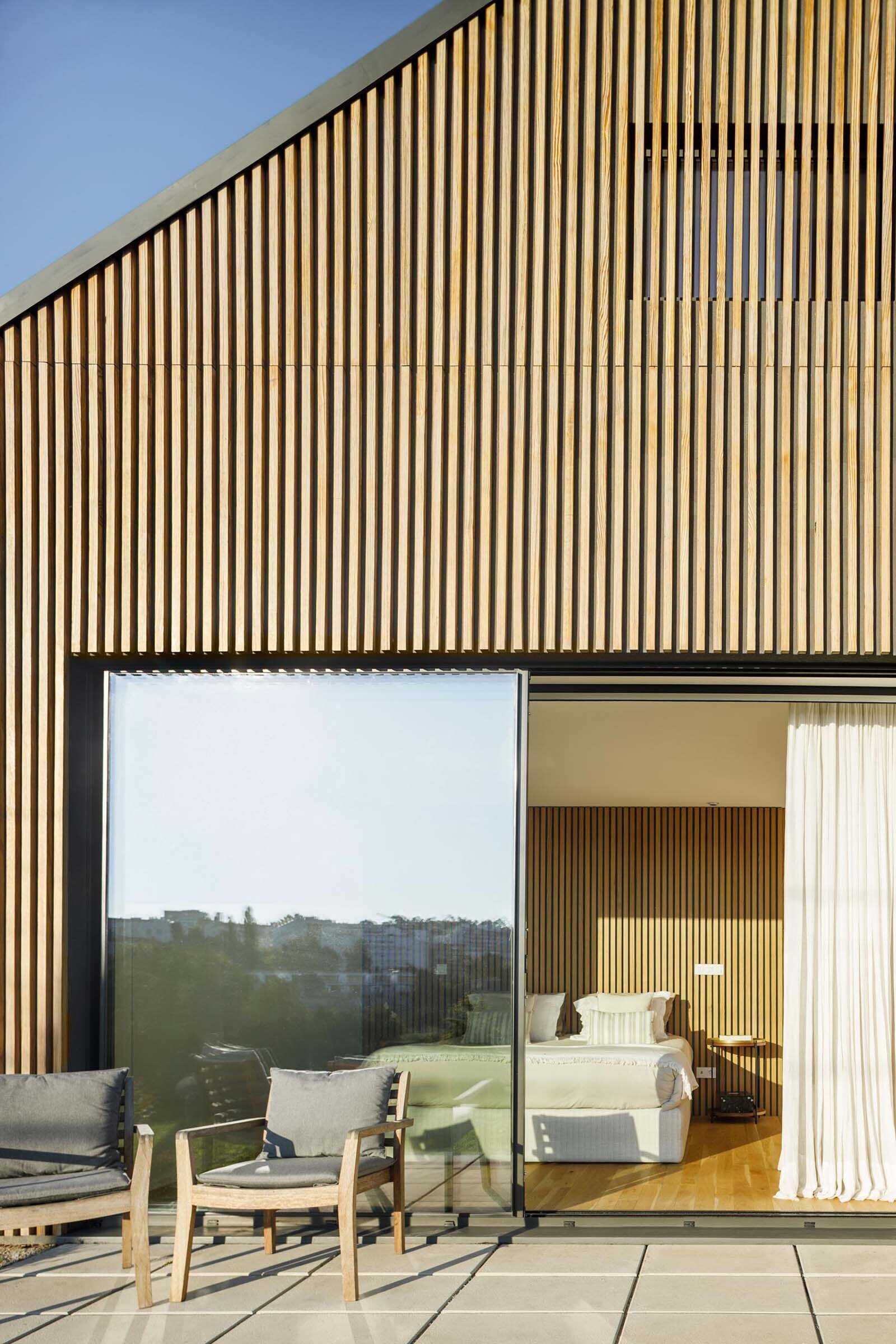
Wood slats wraps sections of the exterior of this home, creating a clean facade that shifts between solid and open as you move around it.

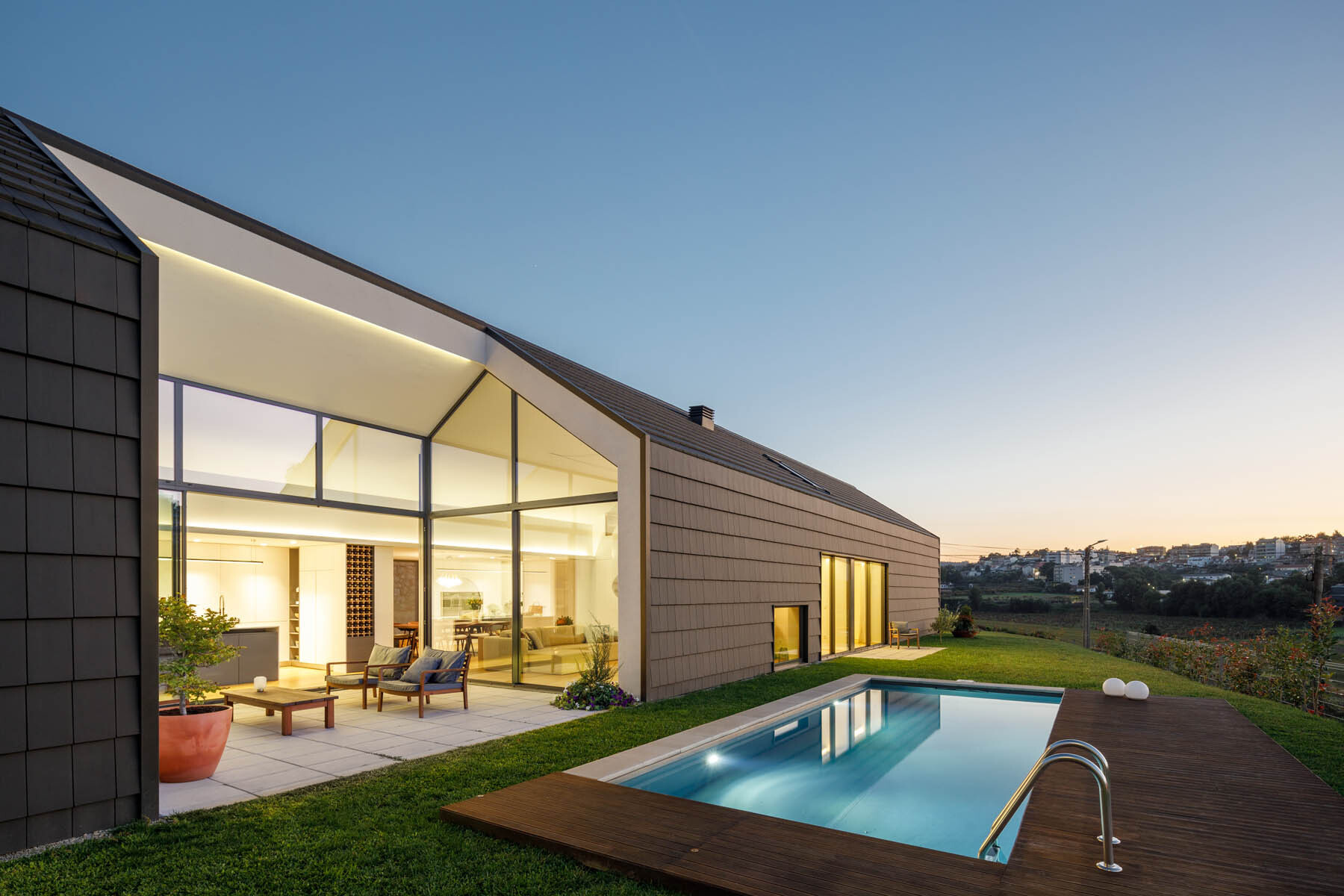
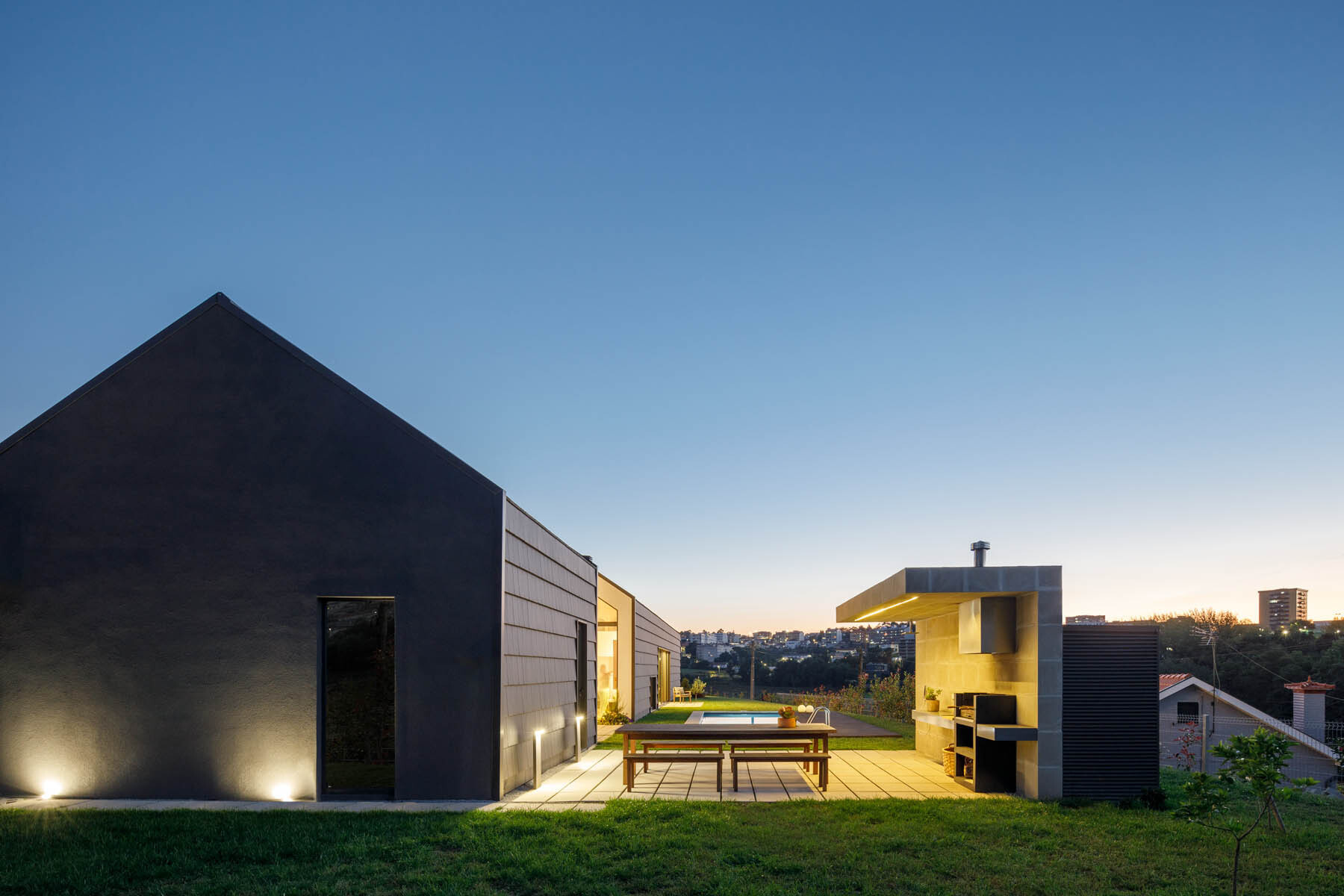
Set on a small hill in Santo Tirso, a house by Hous3 Arquitectura appears as a dark silhouette against the landscape, its form familiar at first glance. The gabled roof recalls the traditional Portuguese home, but the simplicity of its lines hints at something more deliberate. From the road, it holds a wide view over the town, its position and orientation carefully aligned along a northeast to southeast axis to capture the best outlook.

A Facade Built From Layers

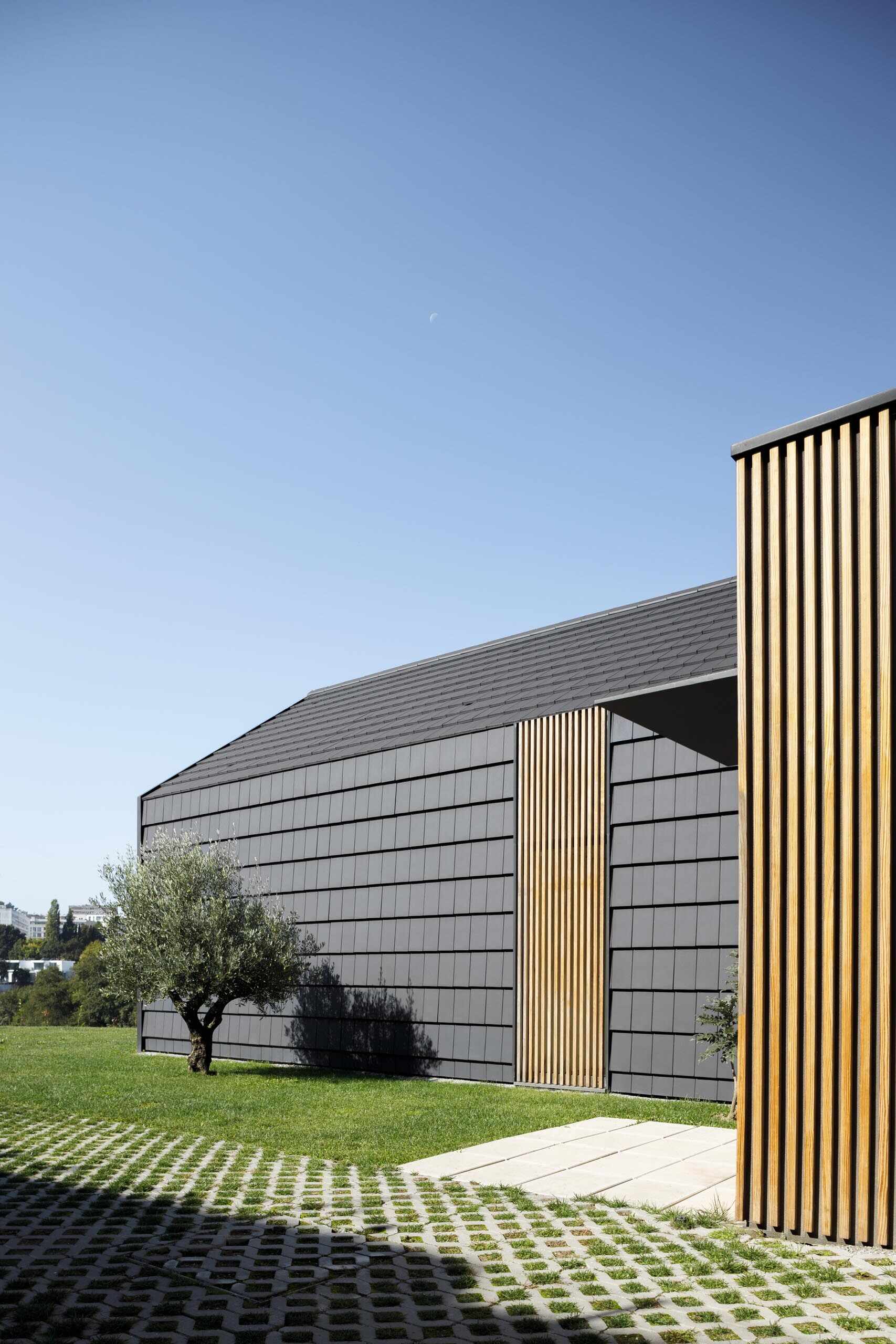
What defines the house most clearly is its outer layer. Wood slats wrap sections of the structure, creating a surface that feels both solid and permeable. From a distance, the facade reads as a continuous skin, but up close, it reveals a more nuanced approach.
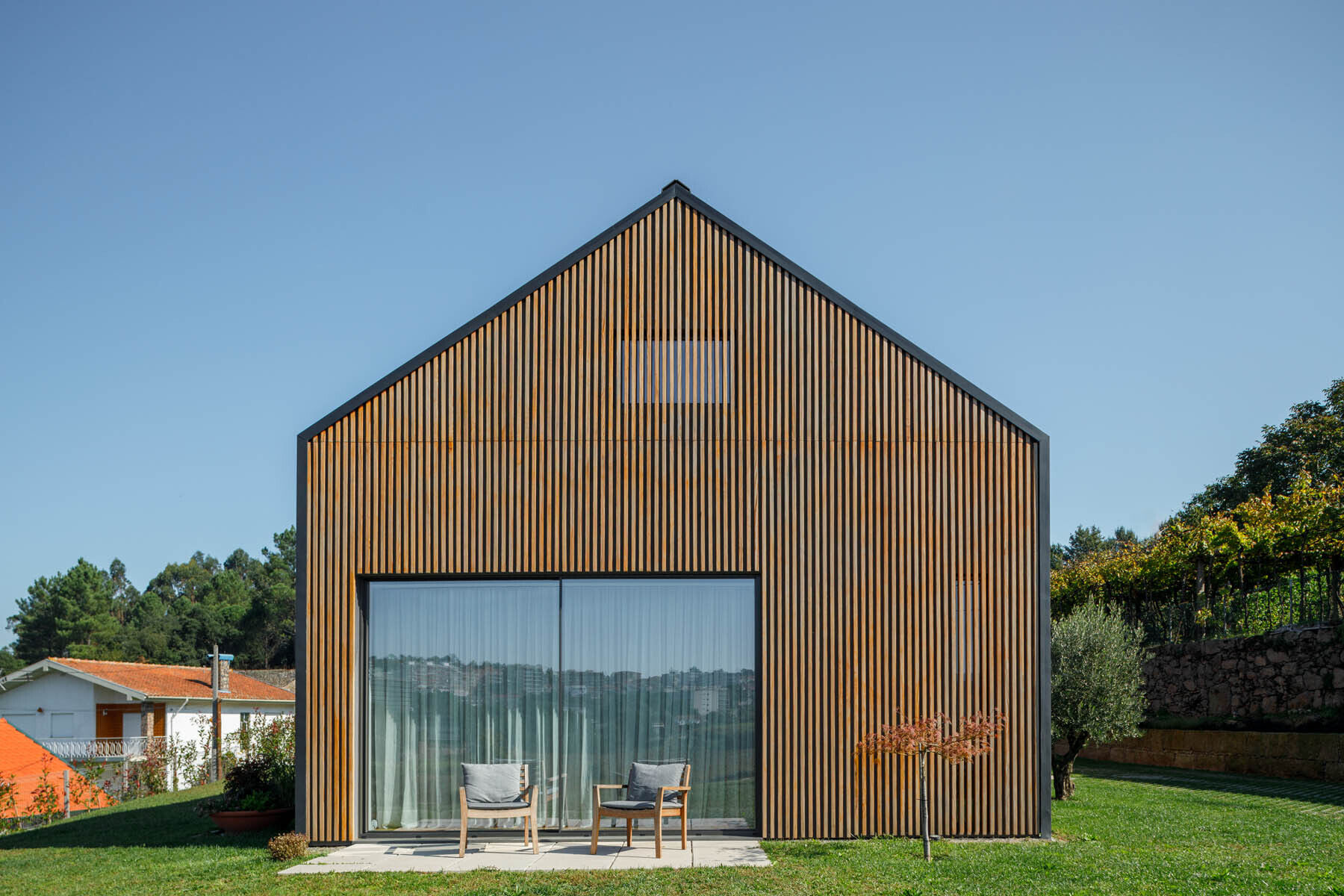
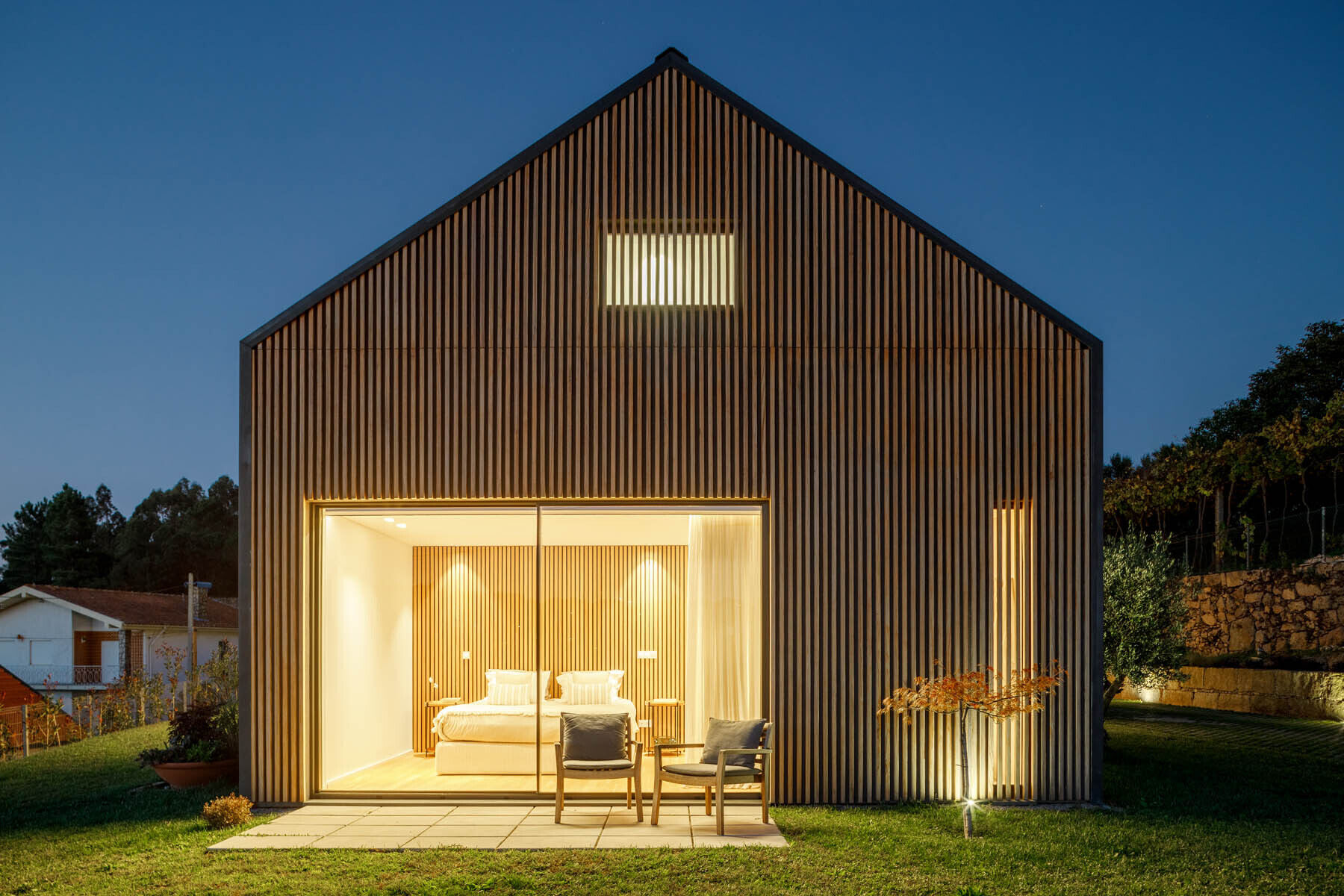
Wood slats wrap the exterior of this home, creating a clean facade that shifts between solid and open as you move around it.

Openings Hidden in Plain Sight

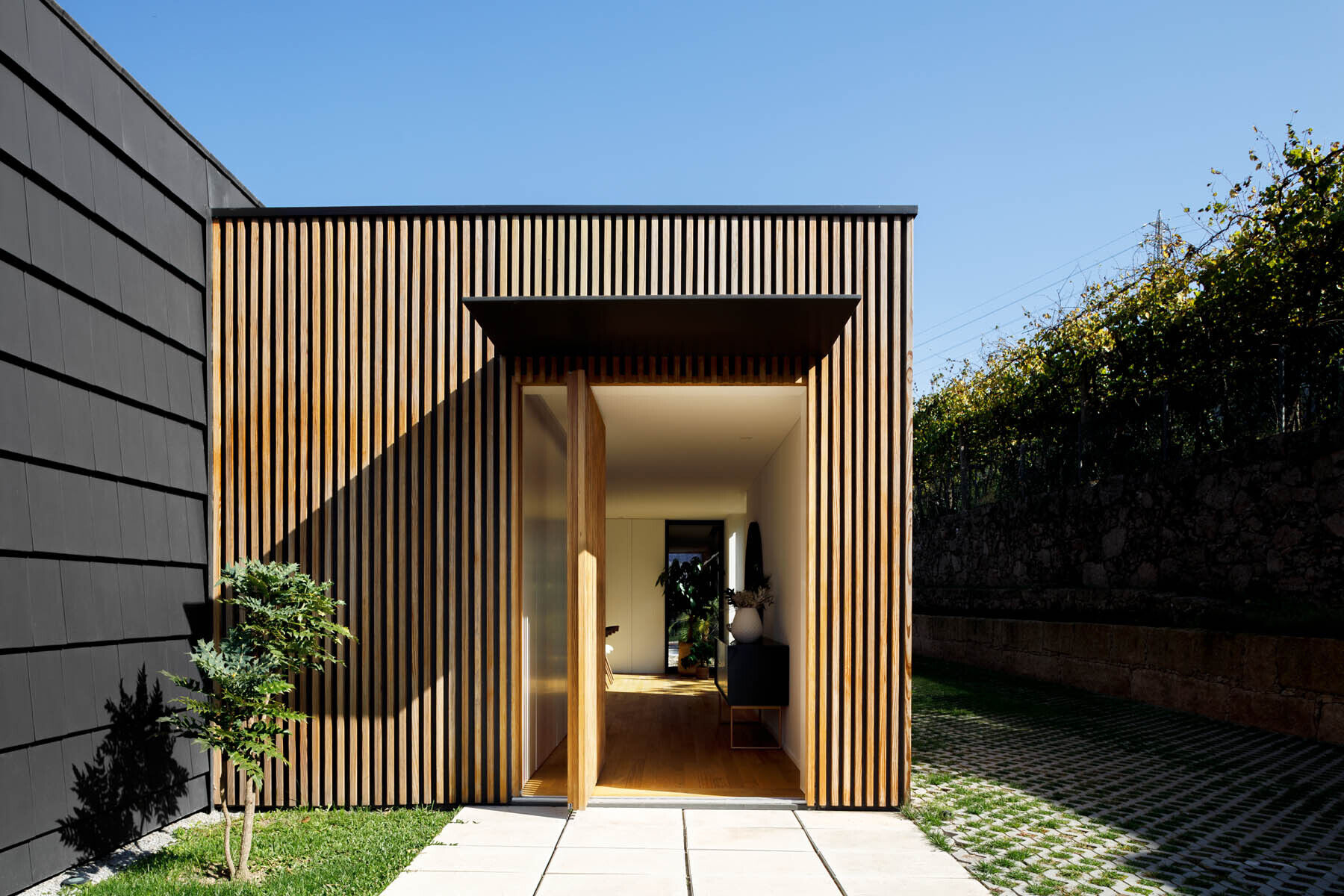
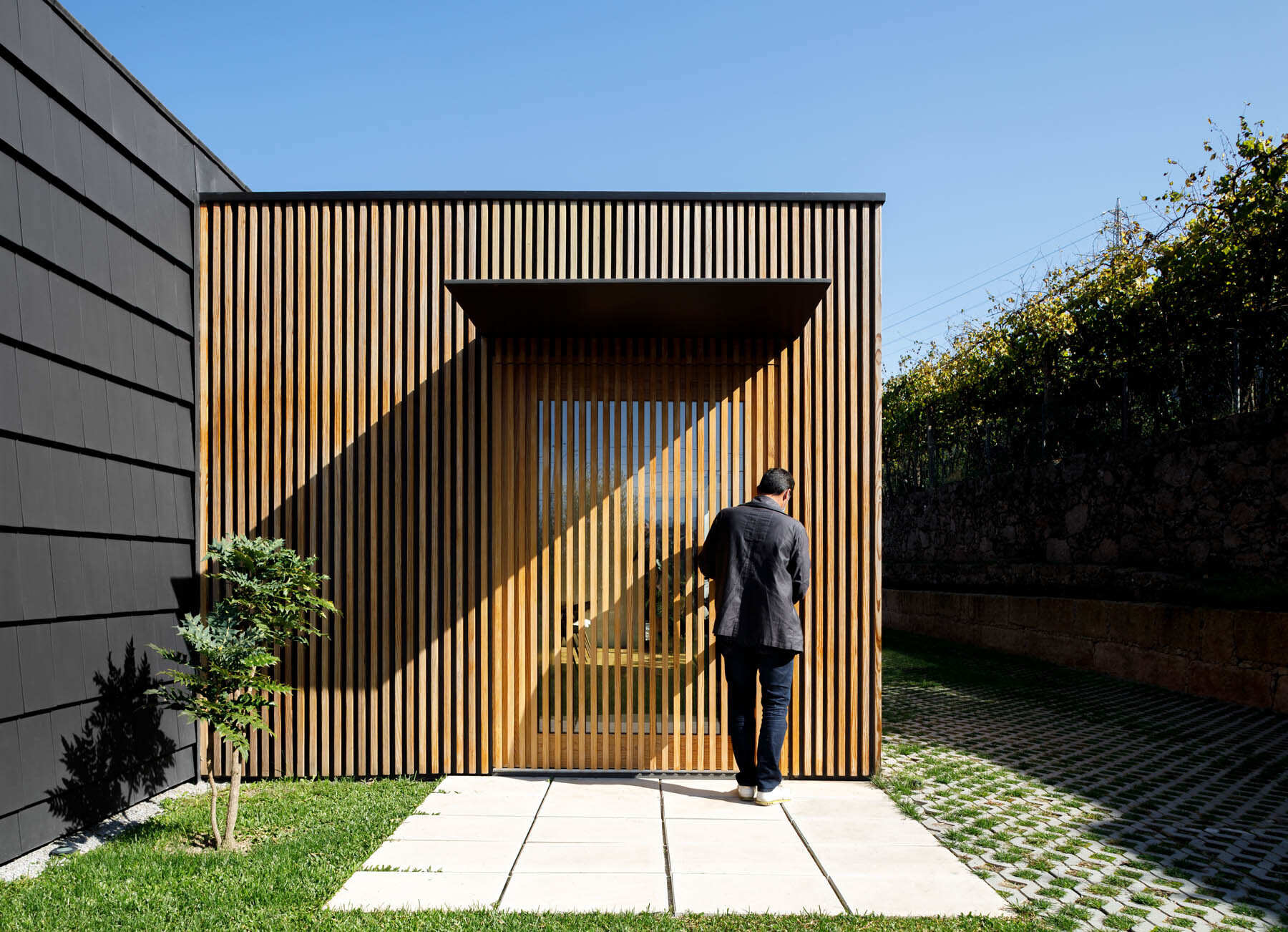
Windows and doors are not immediately visible. They sit within the rhythm of the wood slats, concealed in plain sight. Some of these slats are operable, opening to reveal entry points and views, while maintaining the integrity of the facade when closed. This approach allows the house to feel composed and uninterrupted, with openings that appear only when needed.
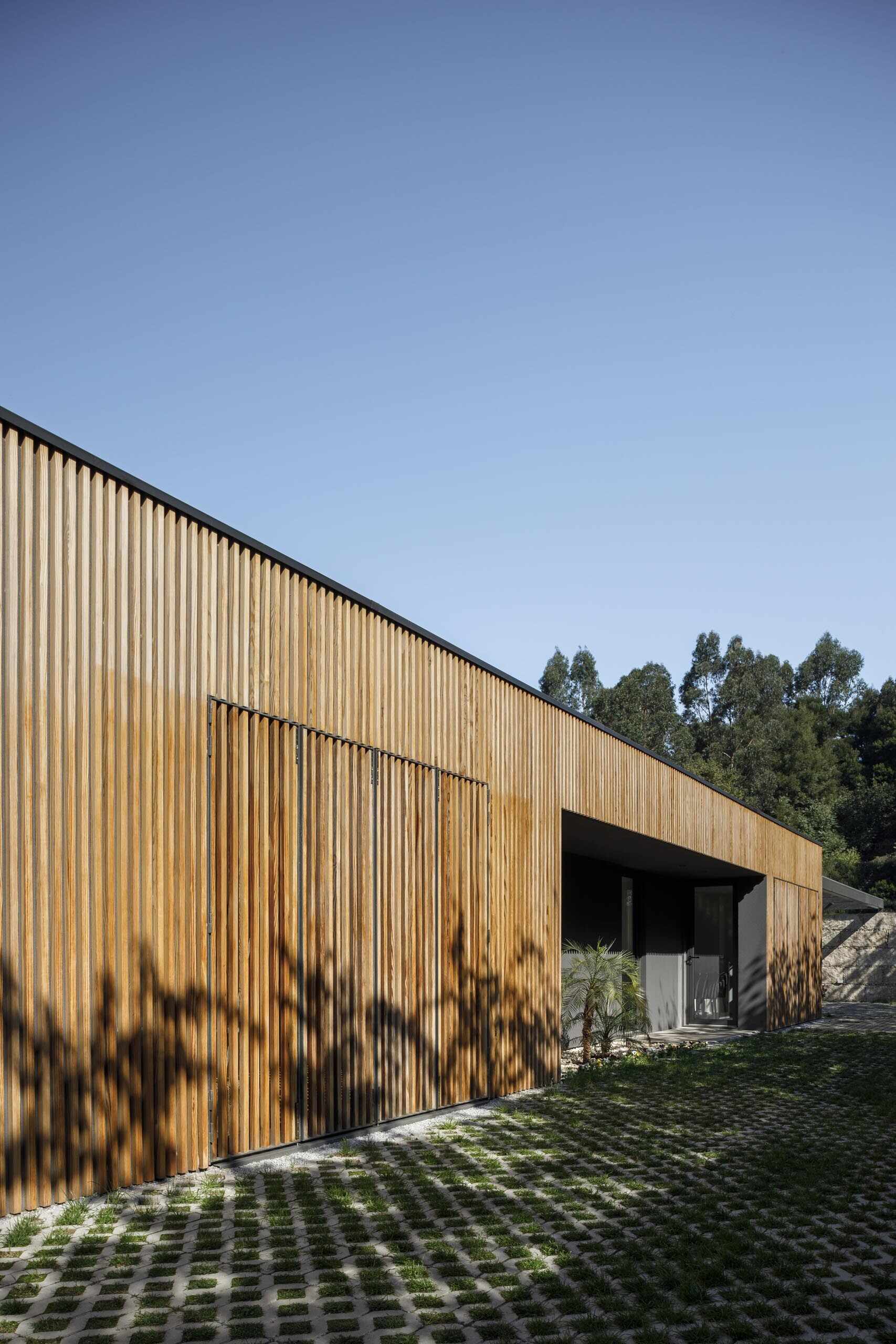
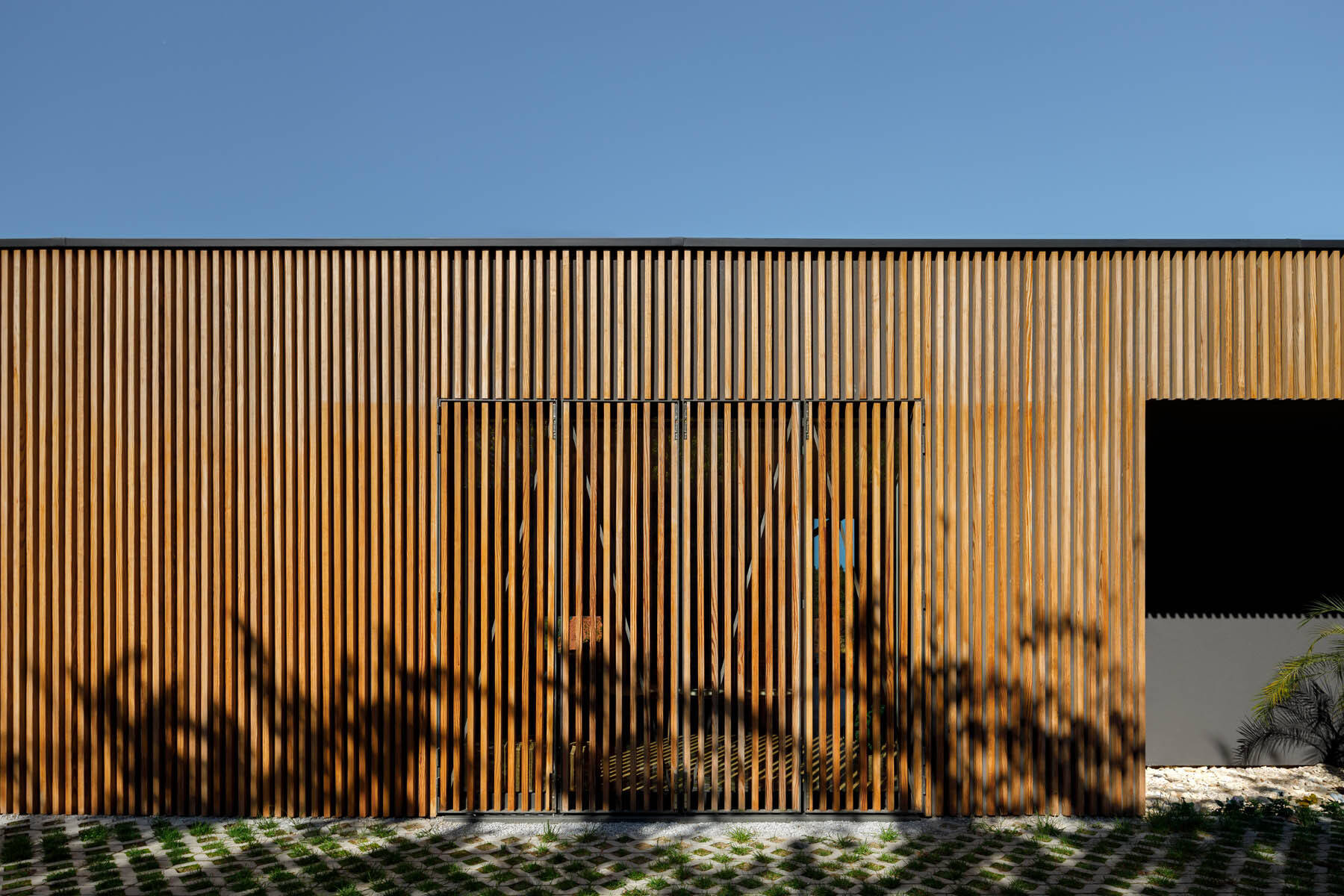
Hidden windows and doors sit behind movable wood slats, creating a seamless facade that reveals itself only when opened.

Light Filtered Through Timber

Inside, the same slats take on a different role. They filter light, provide privacy, and cast shifting shadows across white walls and wood floors. As the day moves, so does the pattern of light, adding a quiet sense of movement to otherwise minimal interiors.
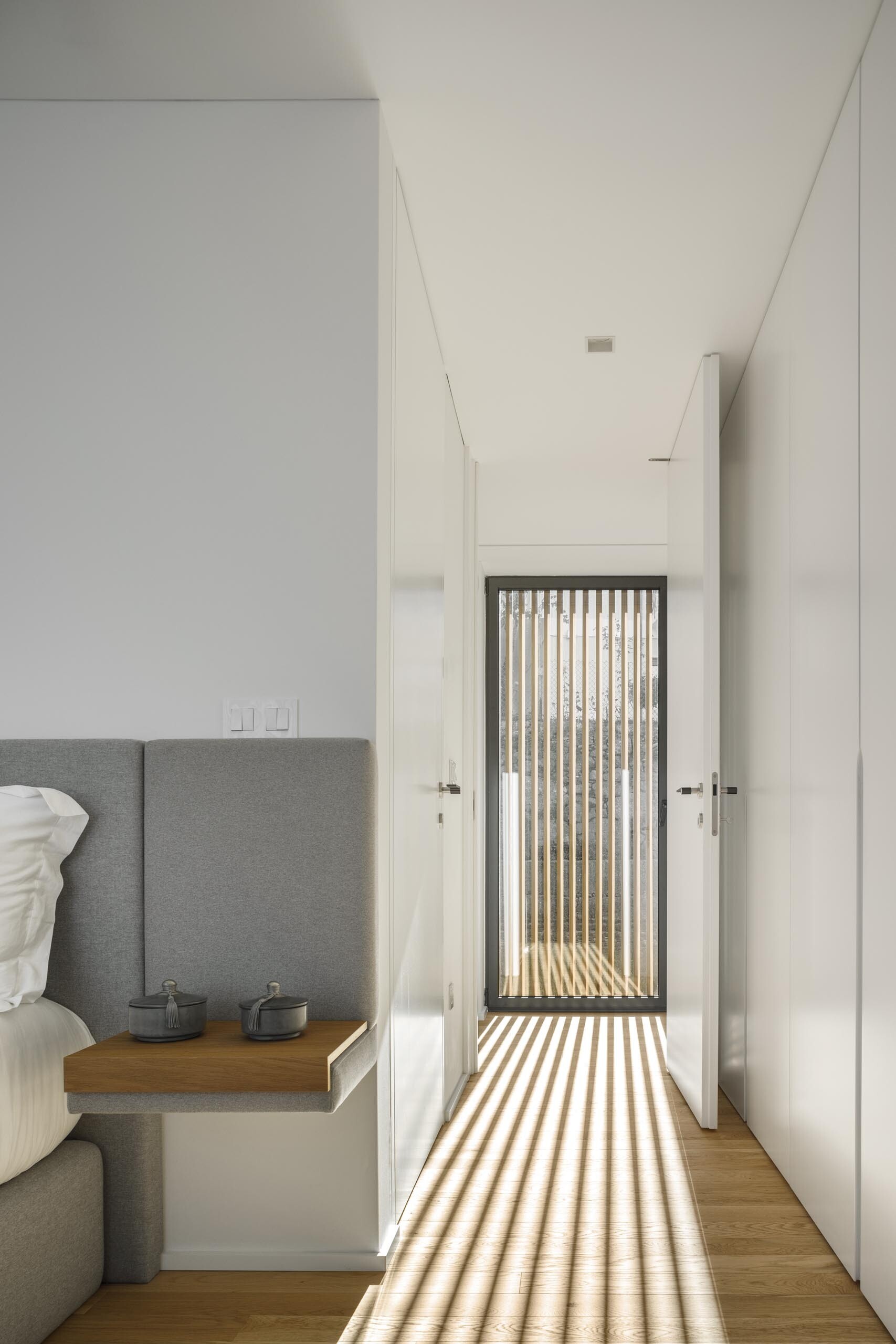
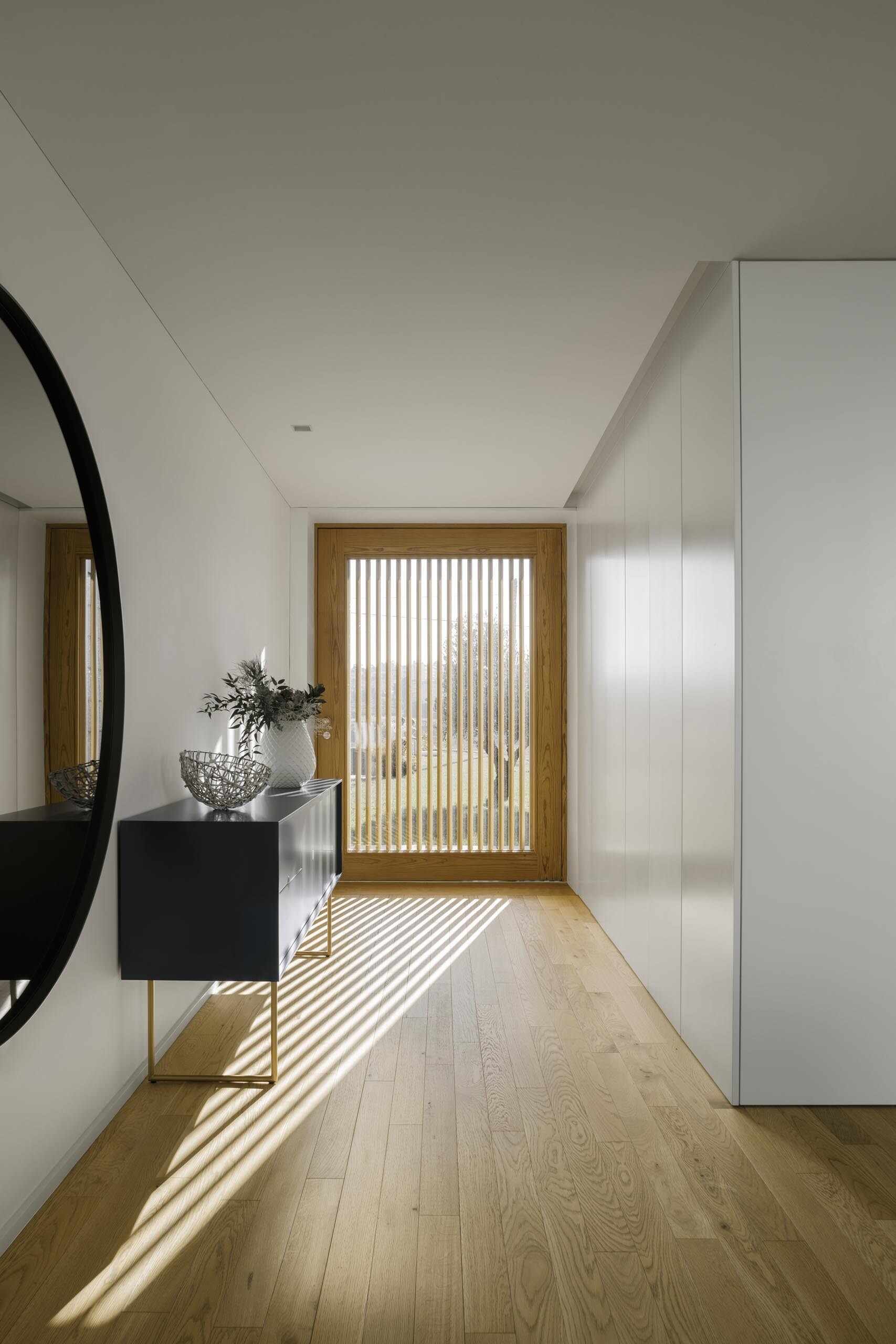
From the inside, wood slats filter light and cast soft shadows across white walls and timber floors, adding depth to minimal spaces.

A Dark Shell With a Sharp Edge

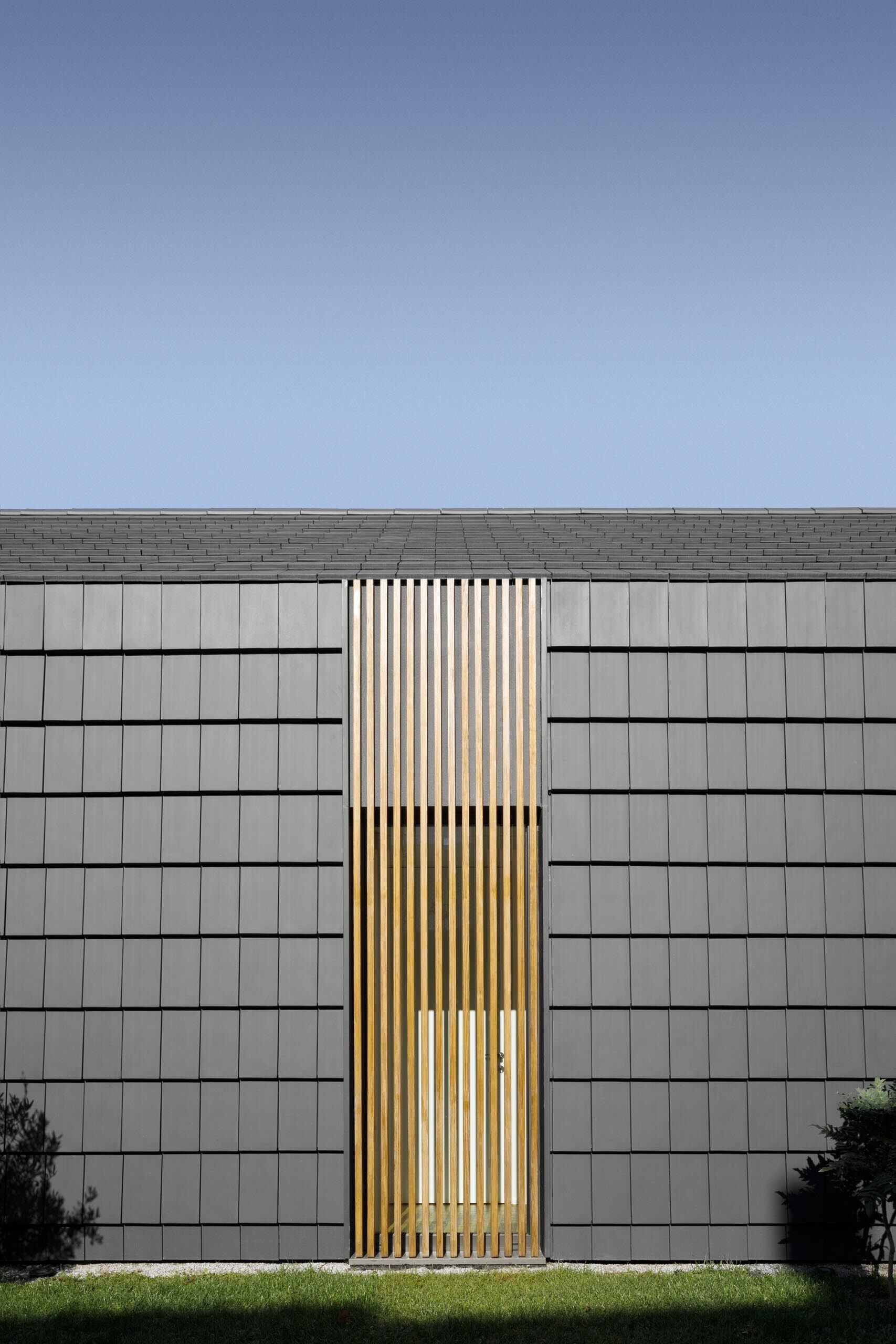
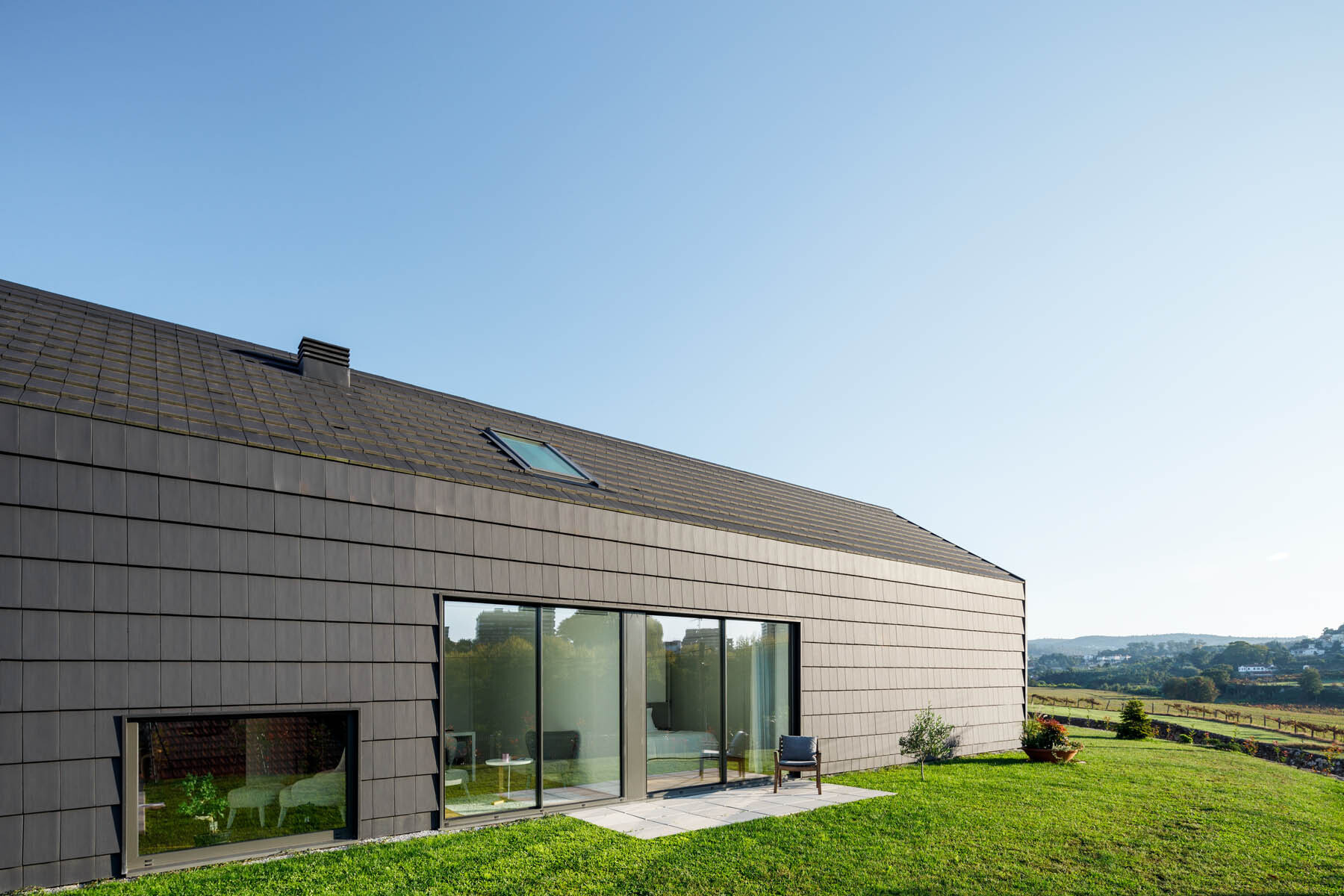
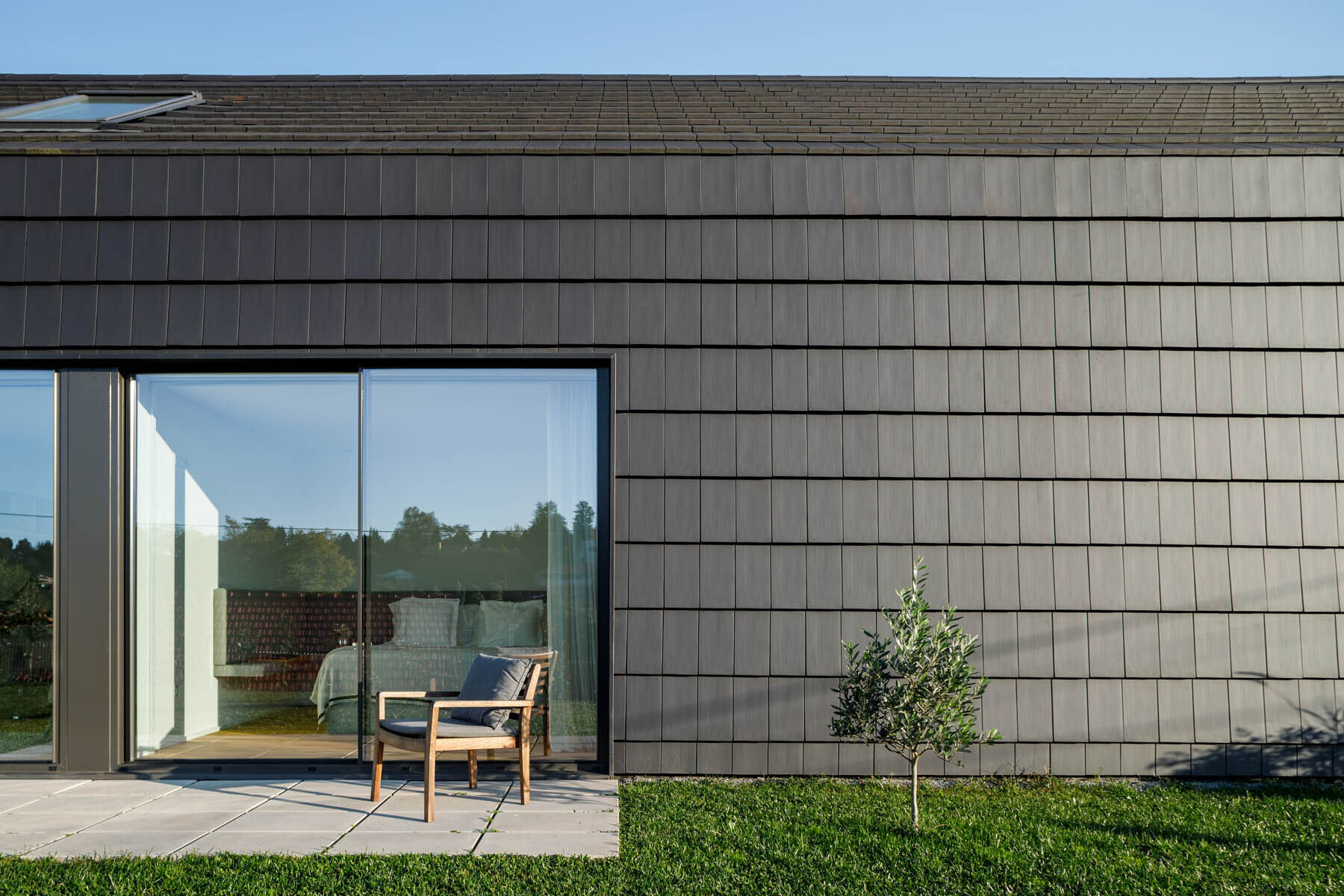
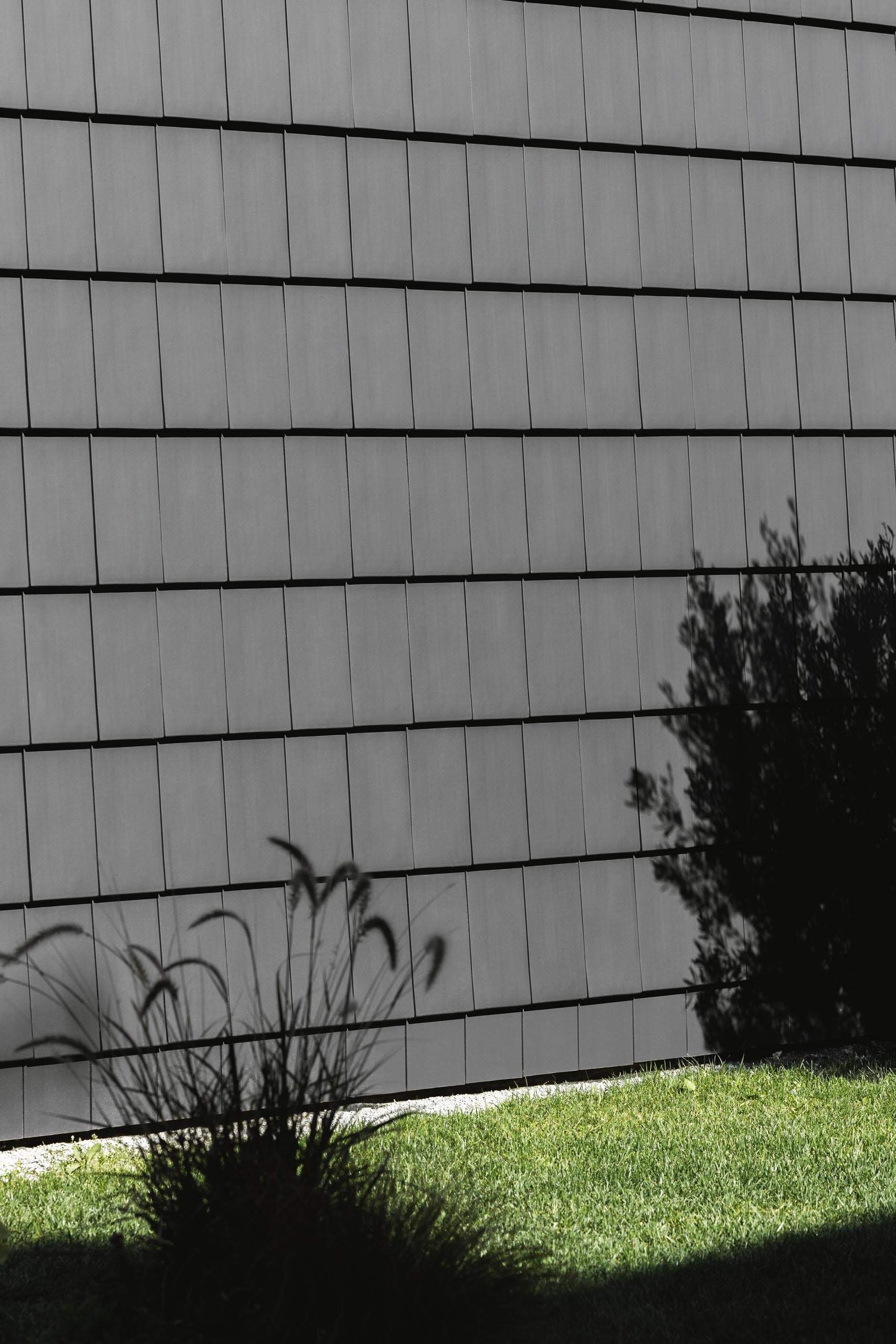
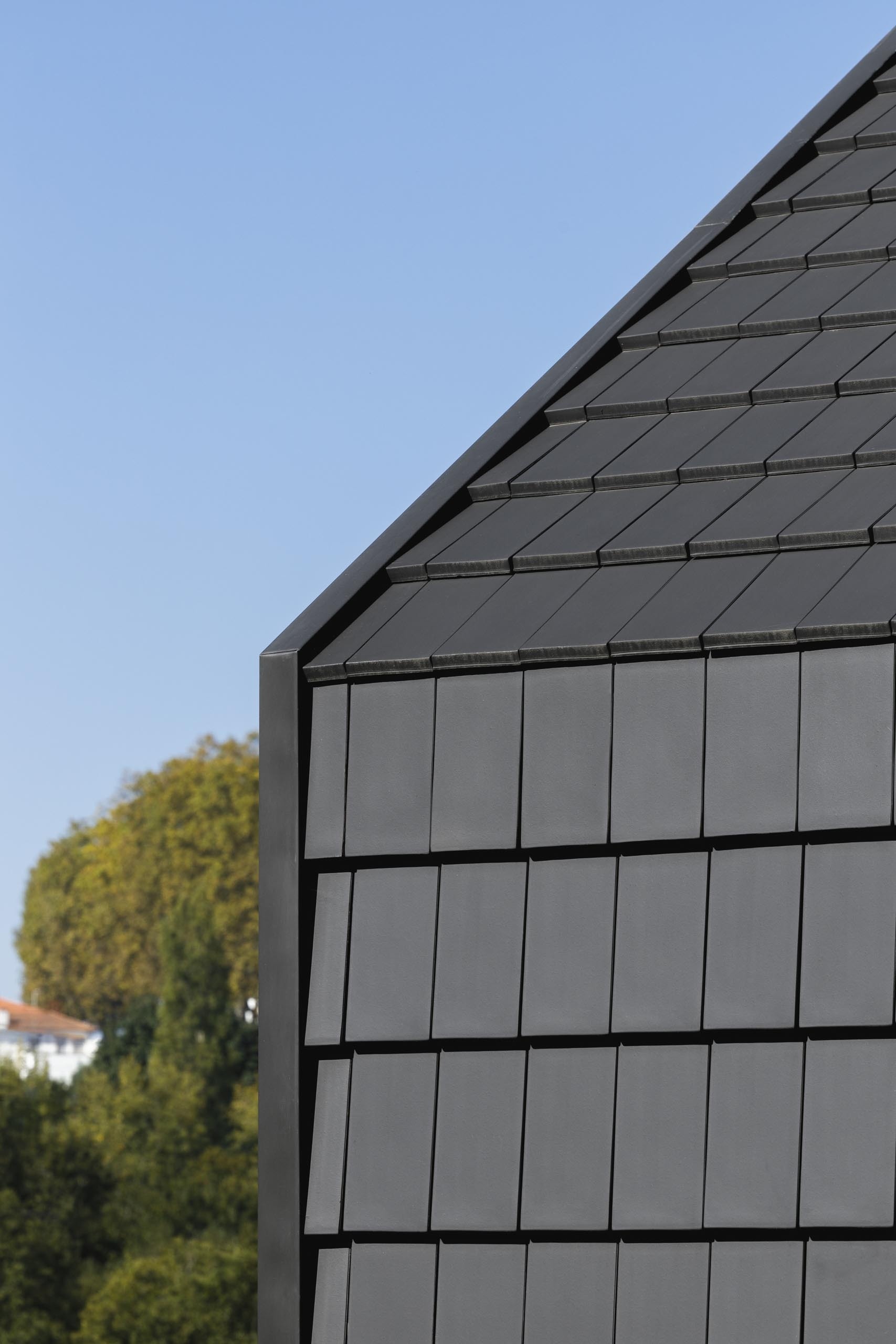
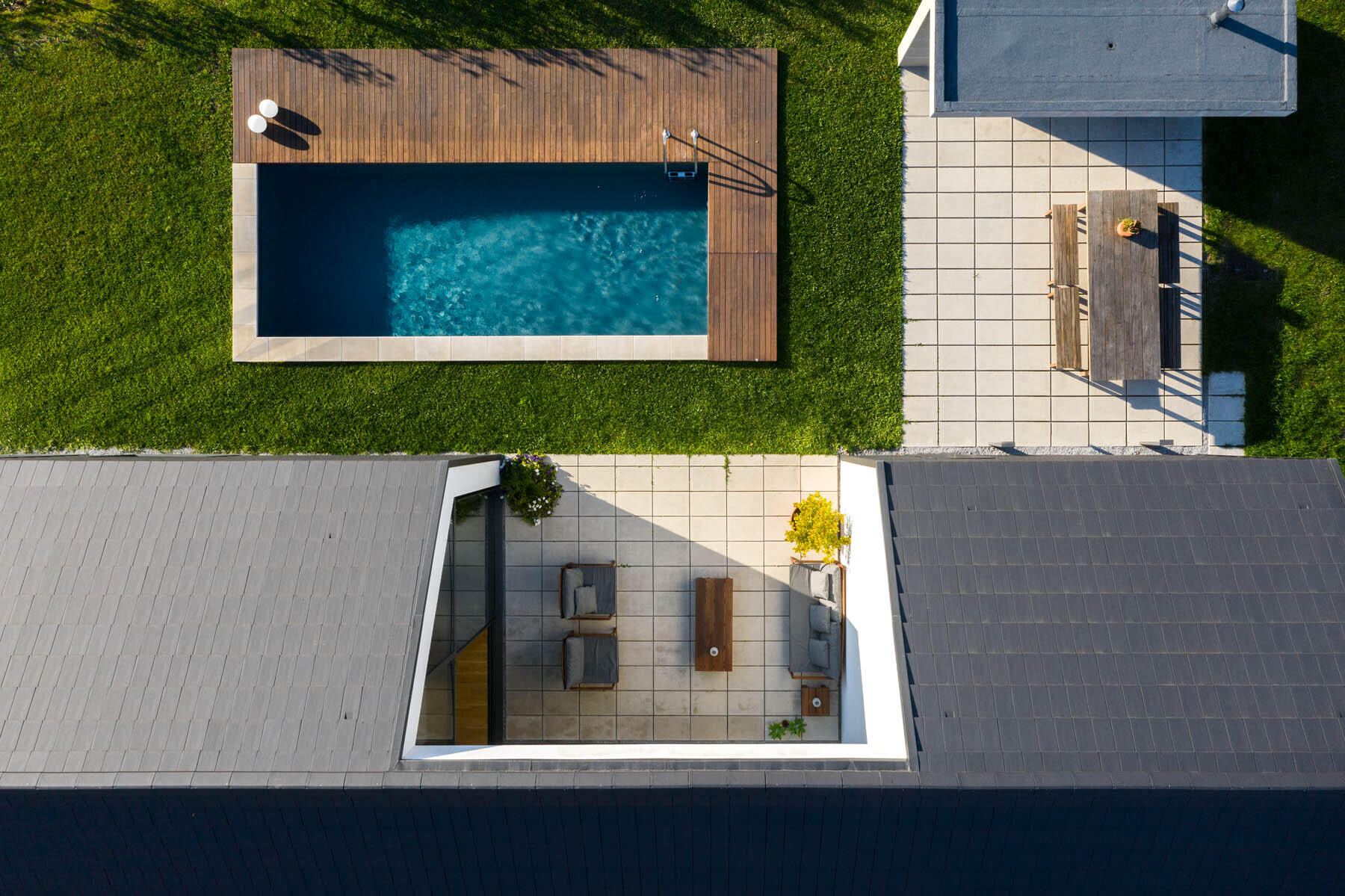
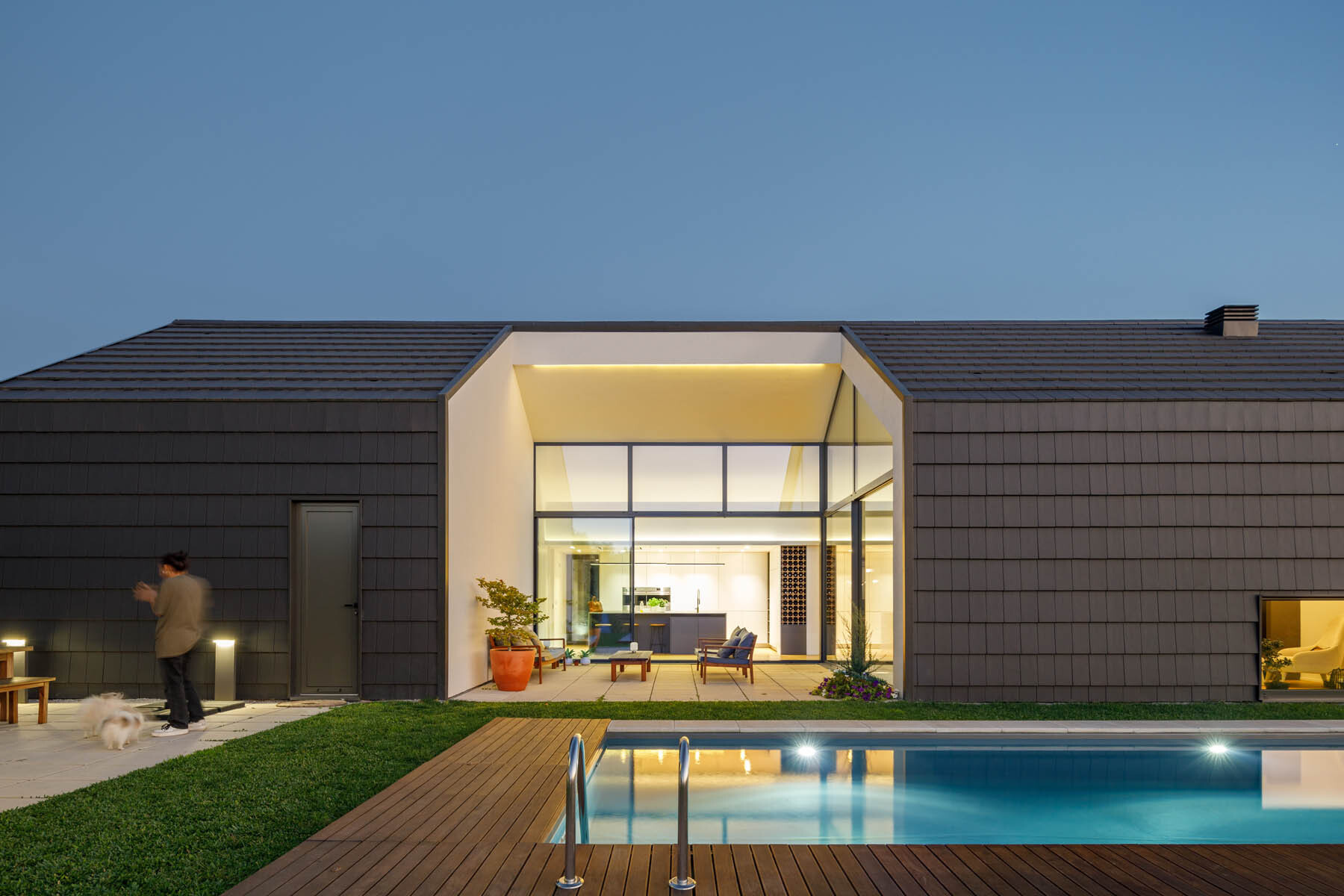
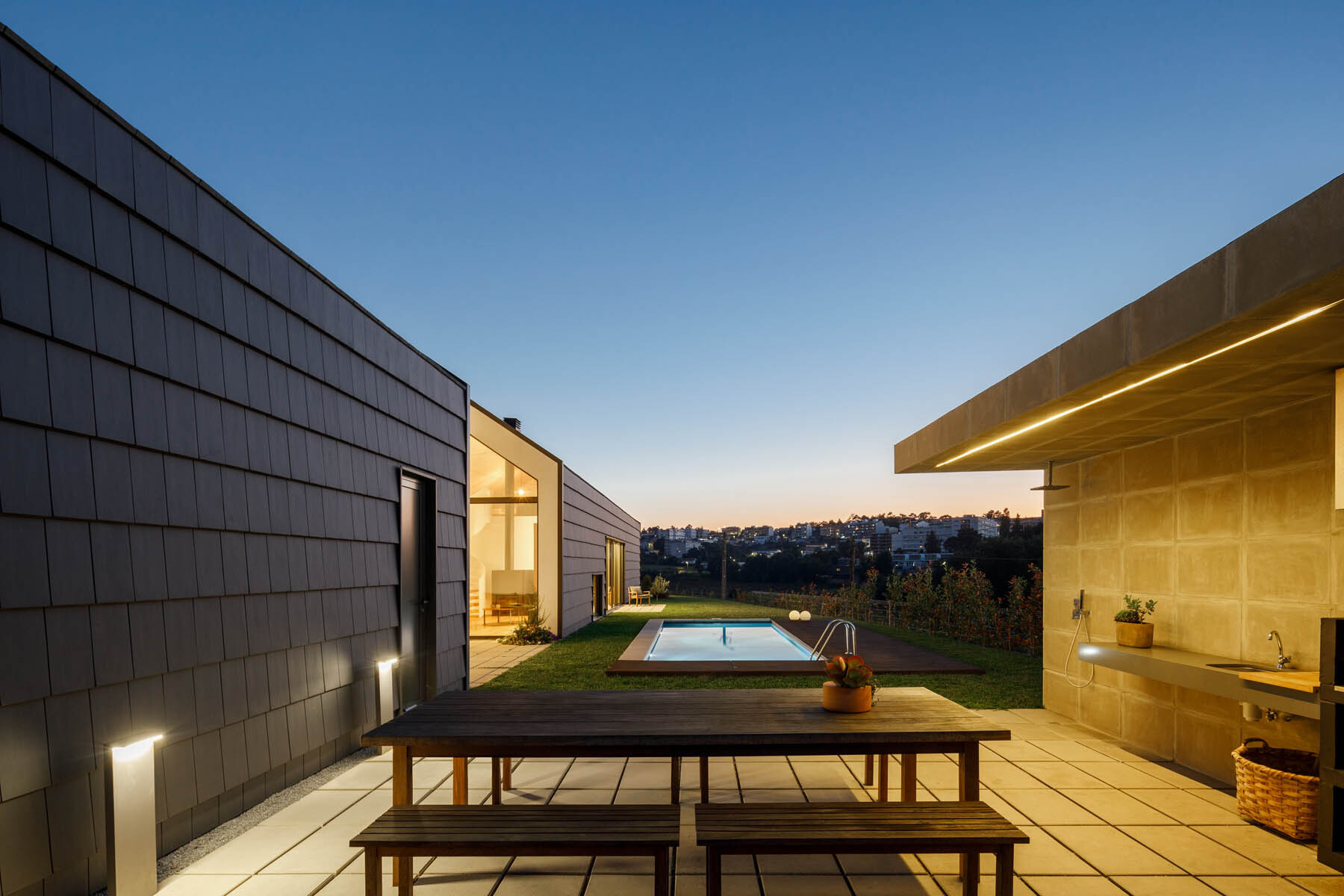
The wood is paired with black tiles that cover both the walls and the gabled roof. Together, these materials give the house its dark, graphic presence. The composition is simple, yet striking, especially against the natural backdrop. At the center, a carved-out void interrupts the volume, introducing light and openness into the plan.
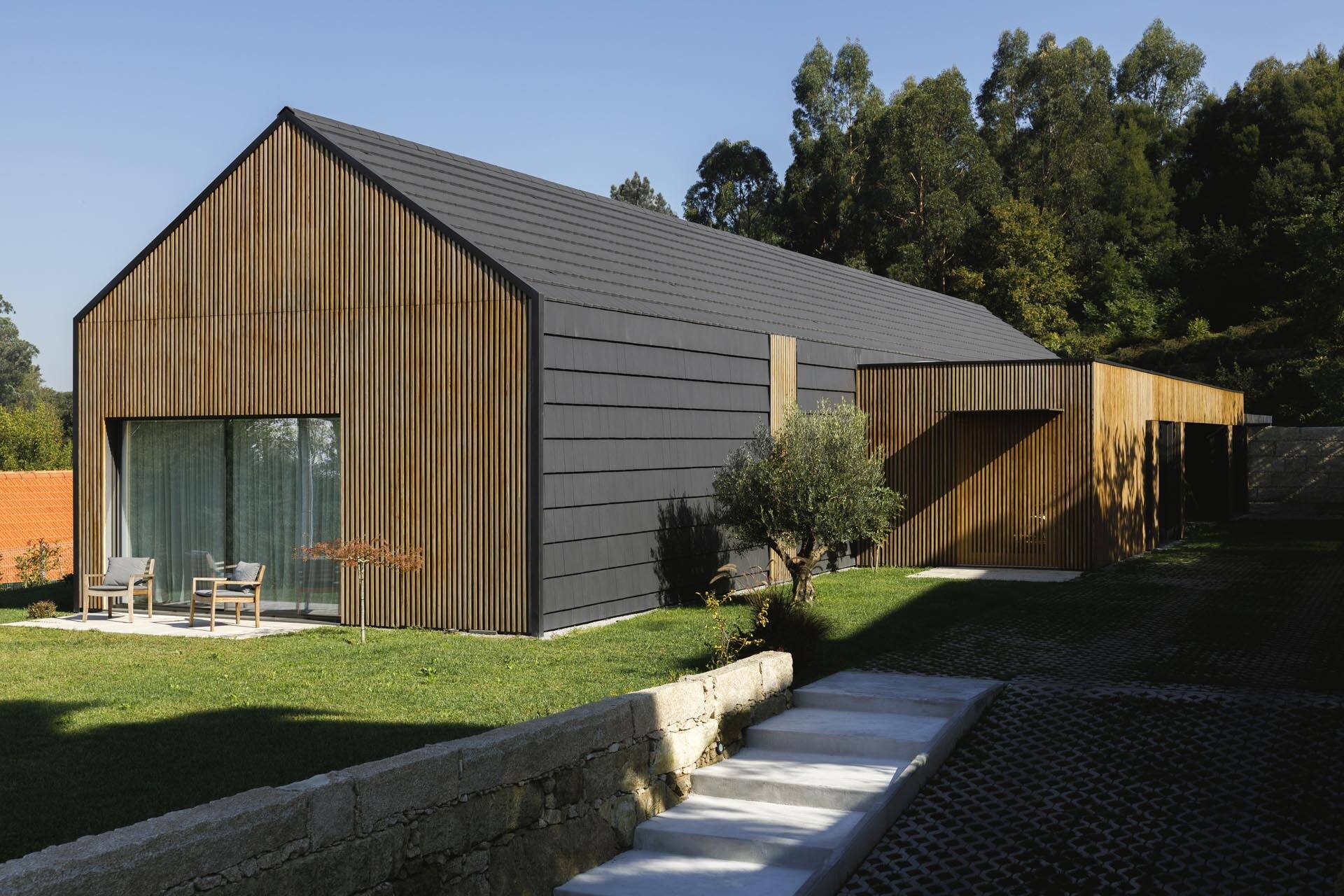
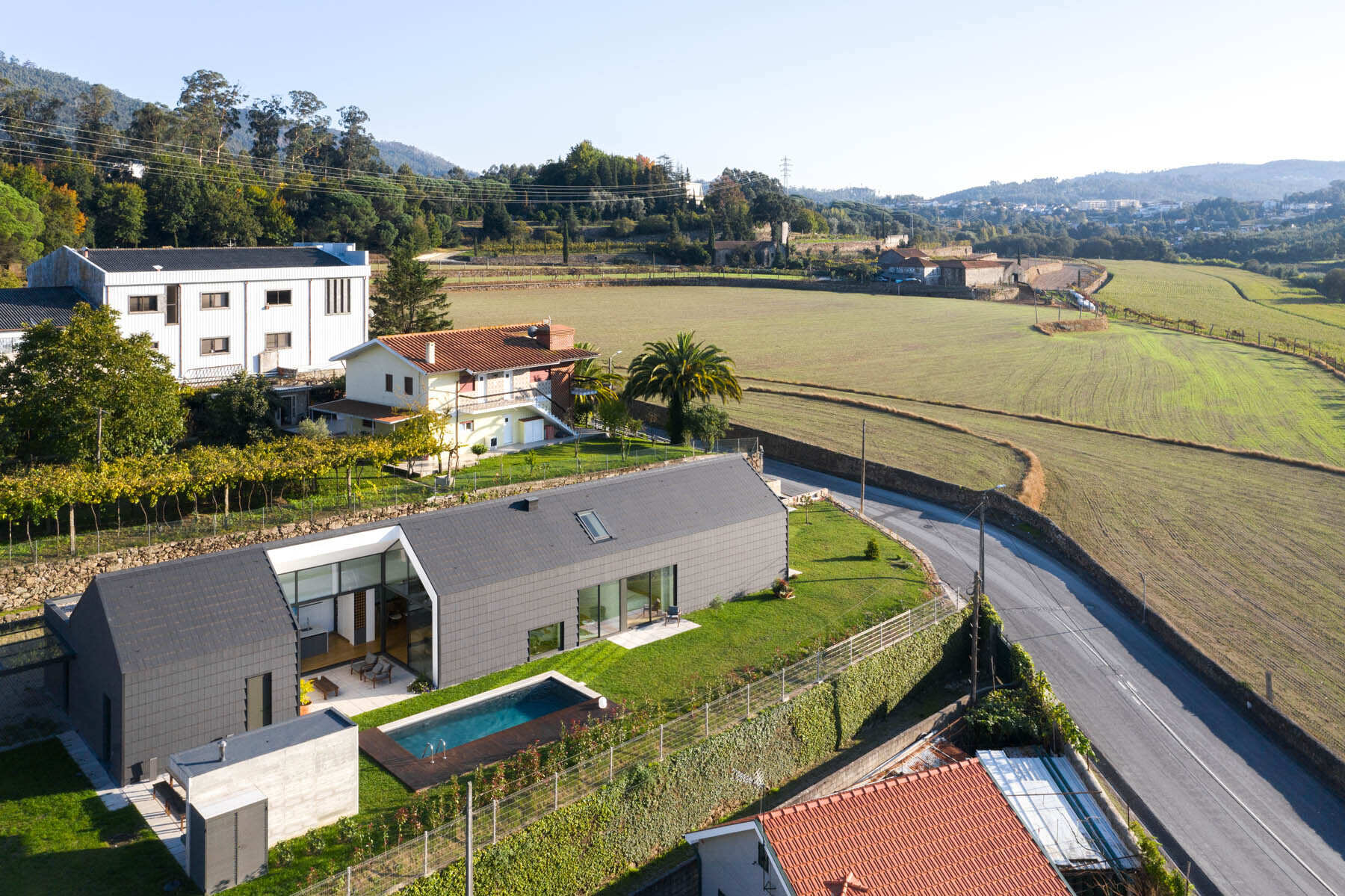
Black tiles and wood slats create a bold exterior, while a central opening breaks the volume and brings light into the home.

A Opening That Pulls the Outdoors In

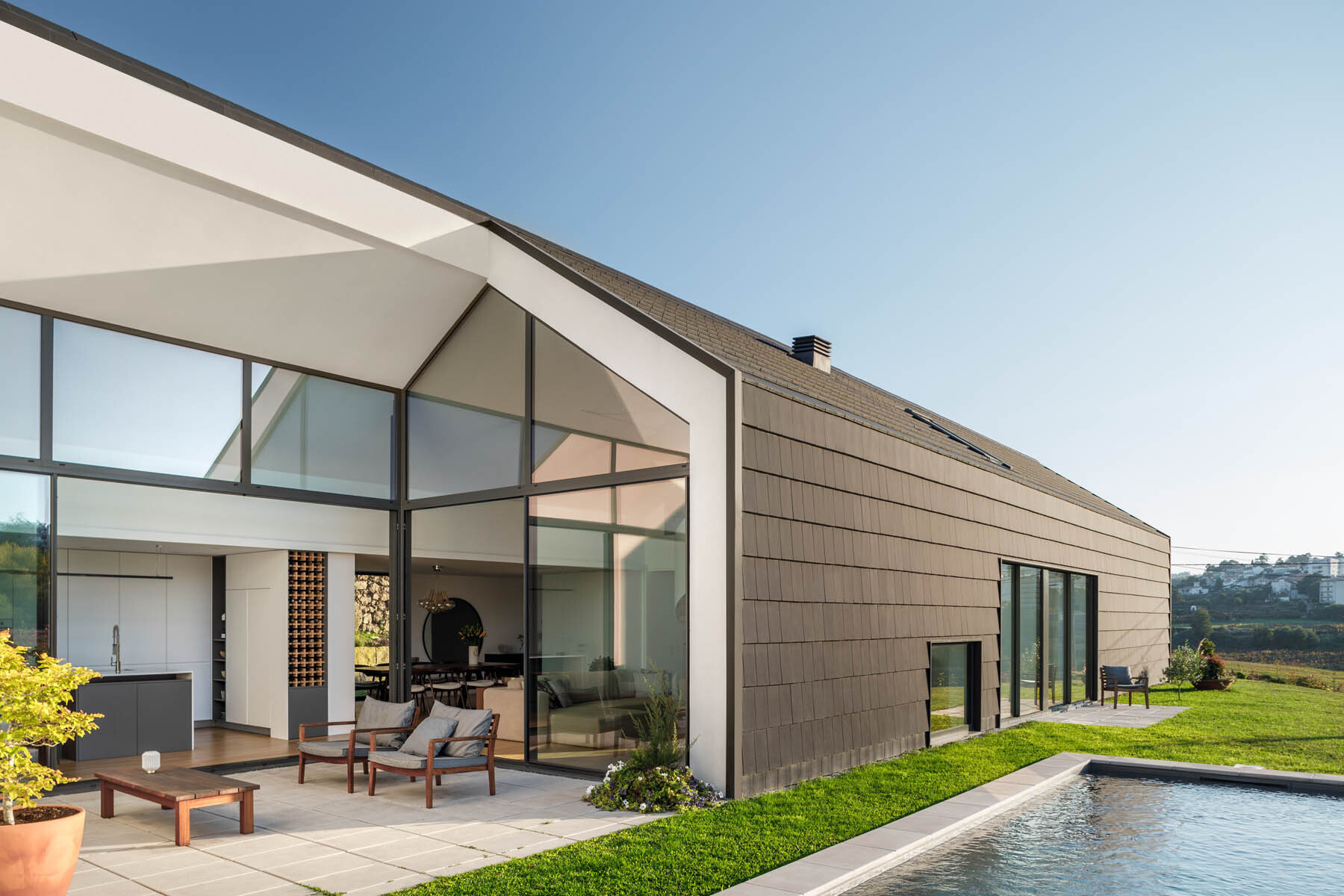
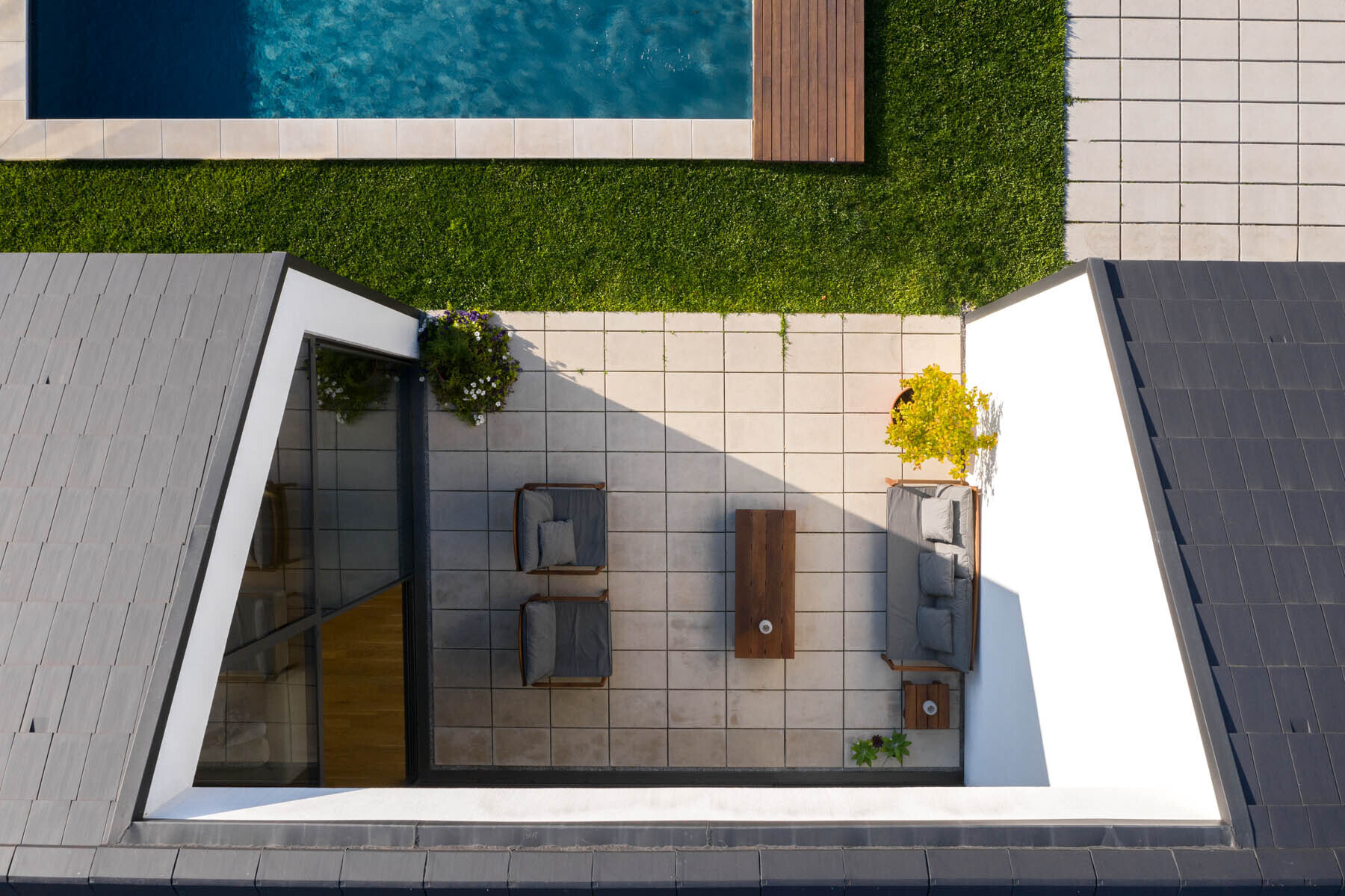
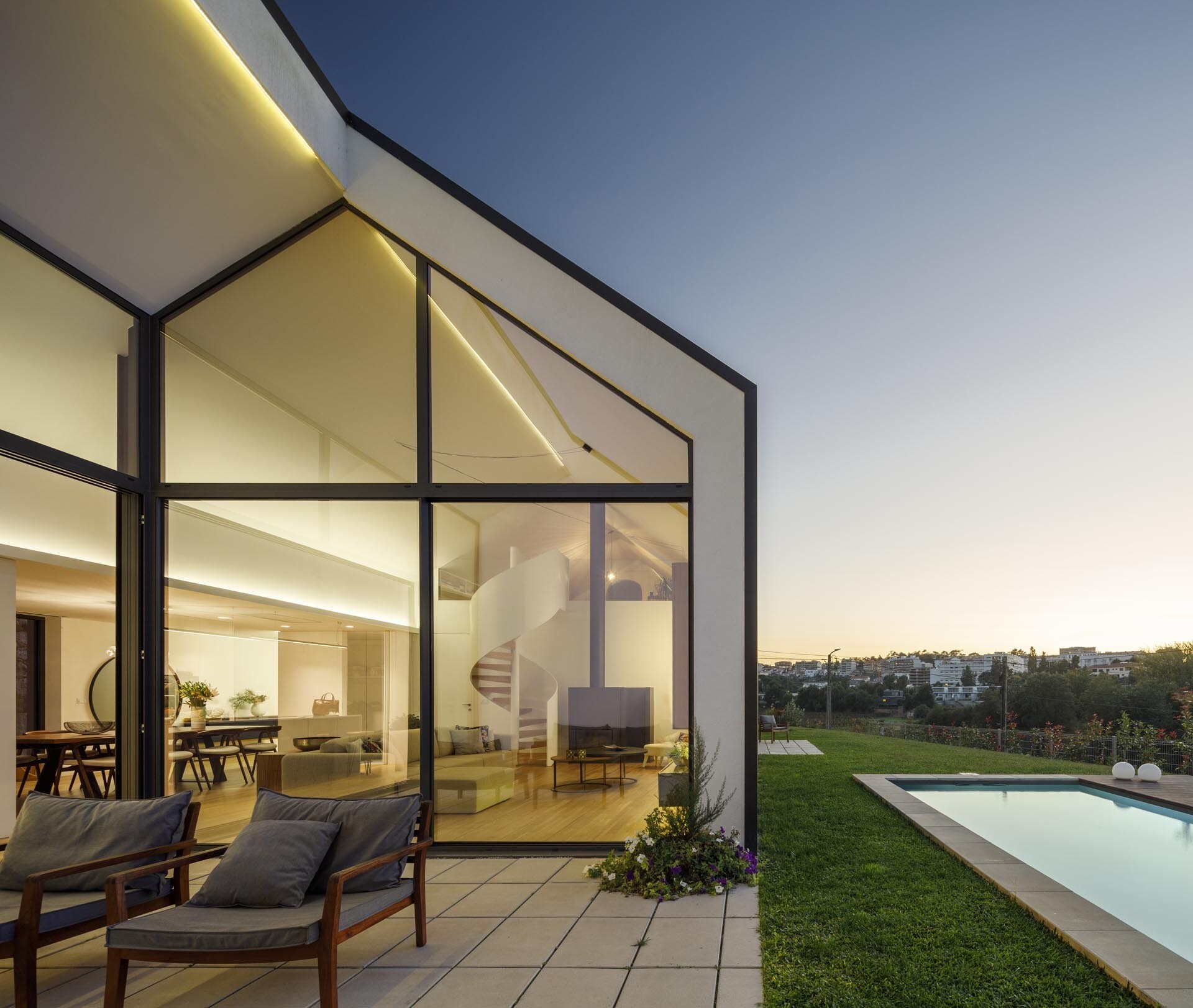
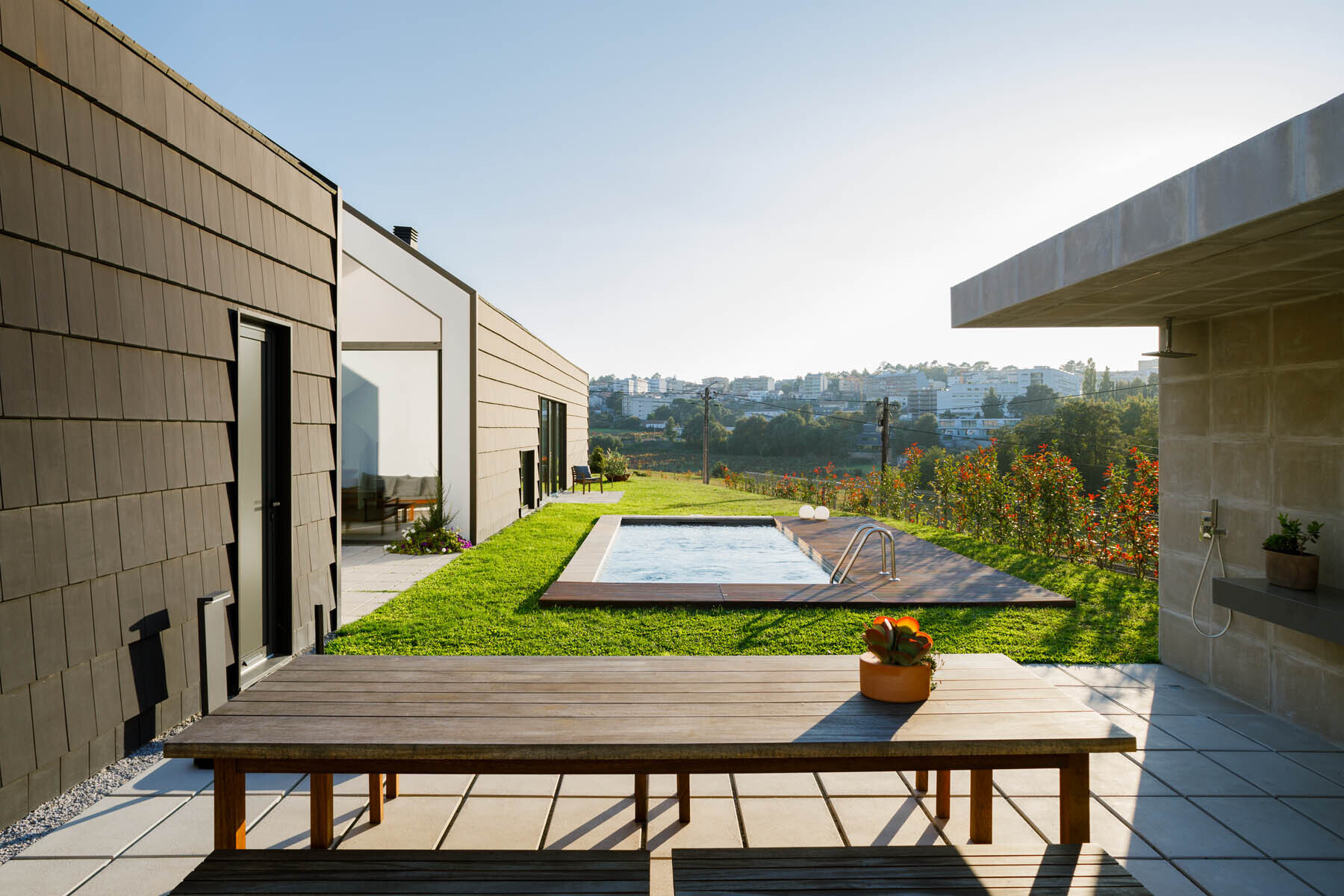
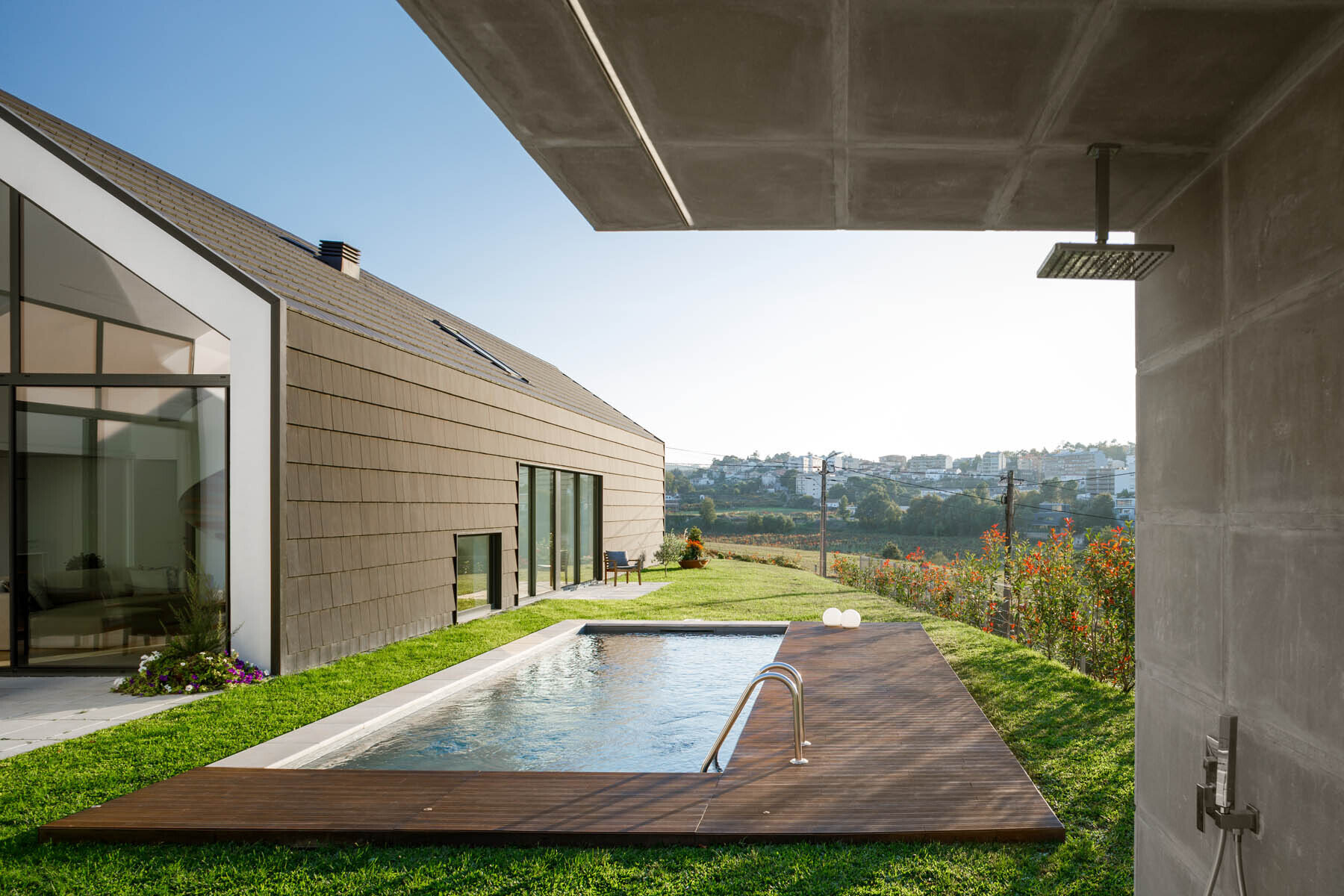
This central opening acts as an extension of the interior. Lined with white walls and glass doors, it draws the living room and kitchen outward to a patio. Beyond it, a yard unfolds with an outdoor dining area and a swimming pool. The space works as a threshold, softening the transition between inside and outside.
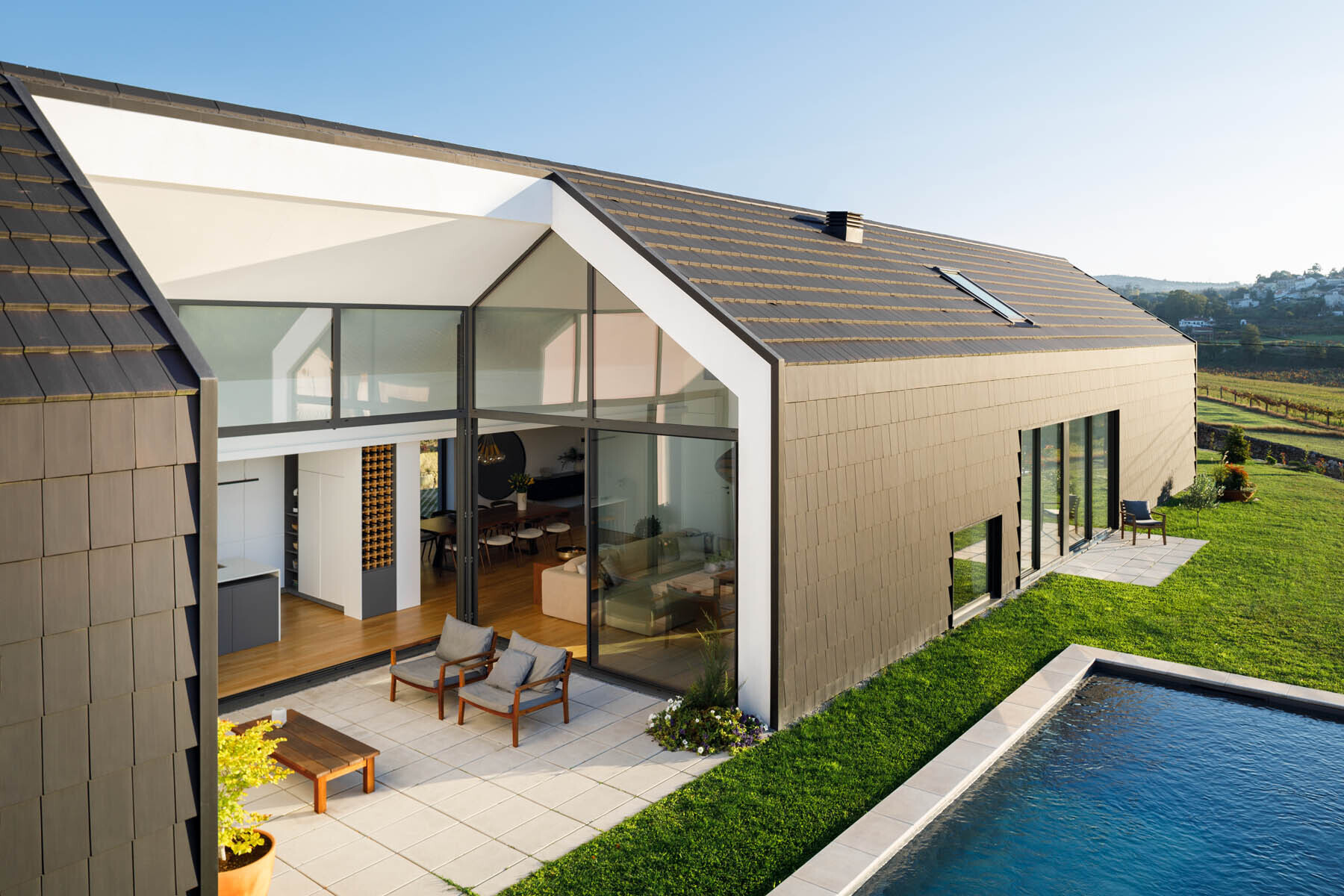
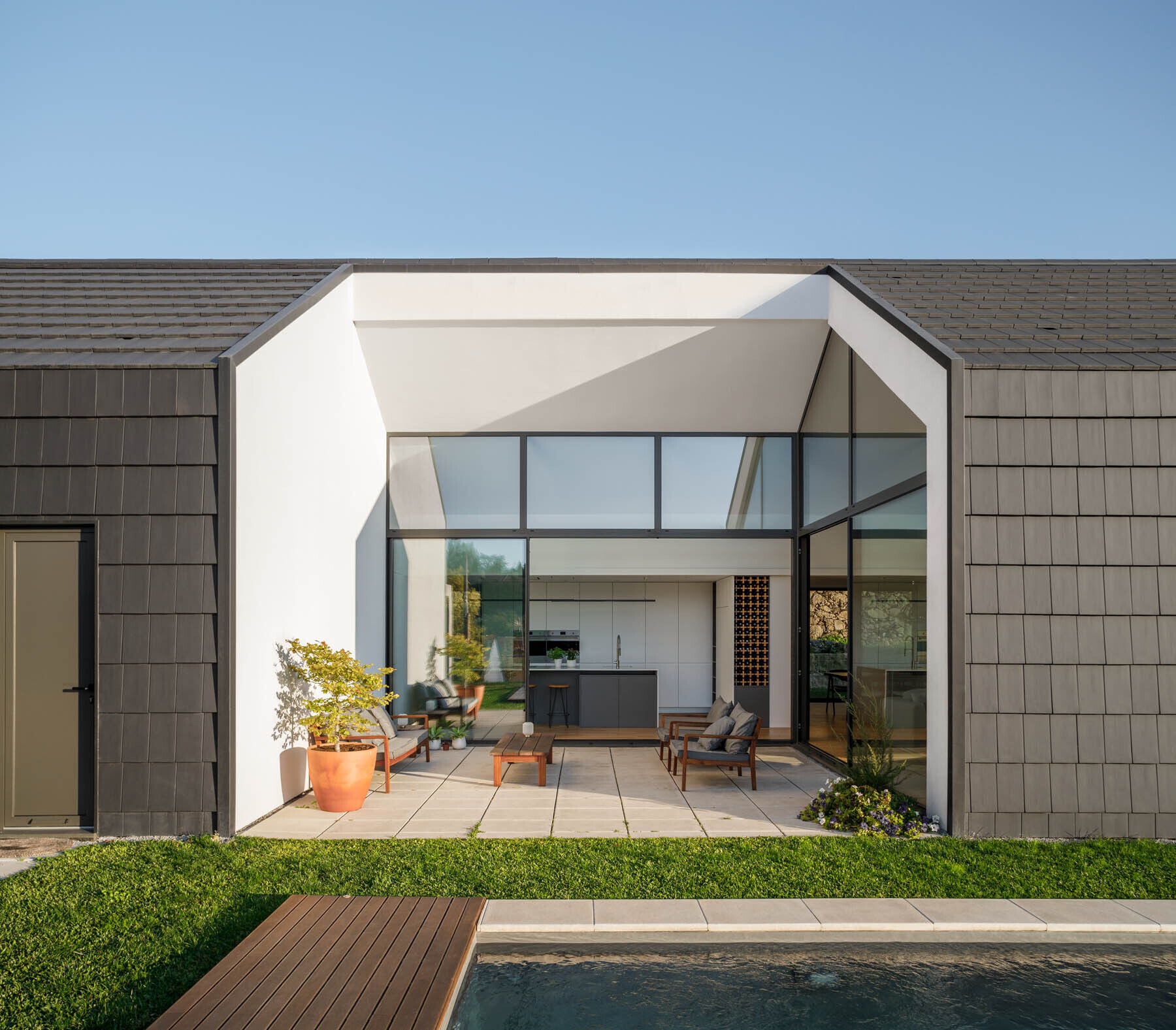
A central void opens the home to a patio, pool, and outdoor dining area, blending indoor living with open air spaces.

Volume Shaped by the Roofline

Inside the main volume, the gabled ceiling shapes the living room. The height adds a sense of openness, while the clean surfaces keep the space calm and uncluttered. Natural light moves through the room, enhanced by the openings created by the central void.
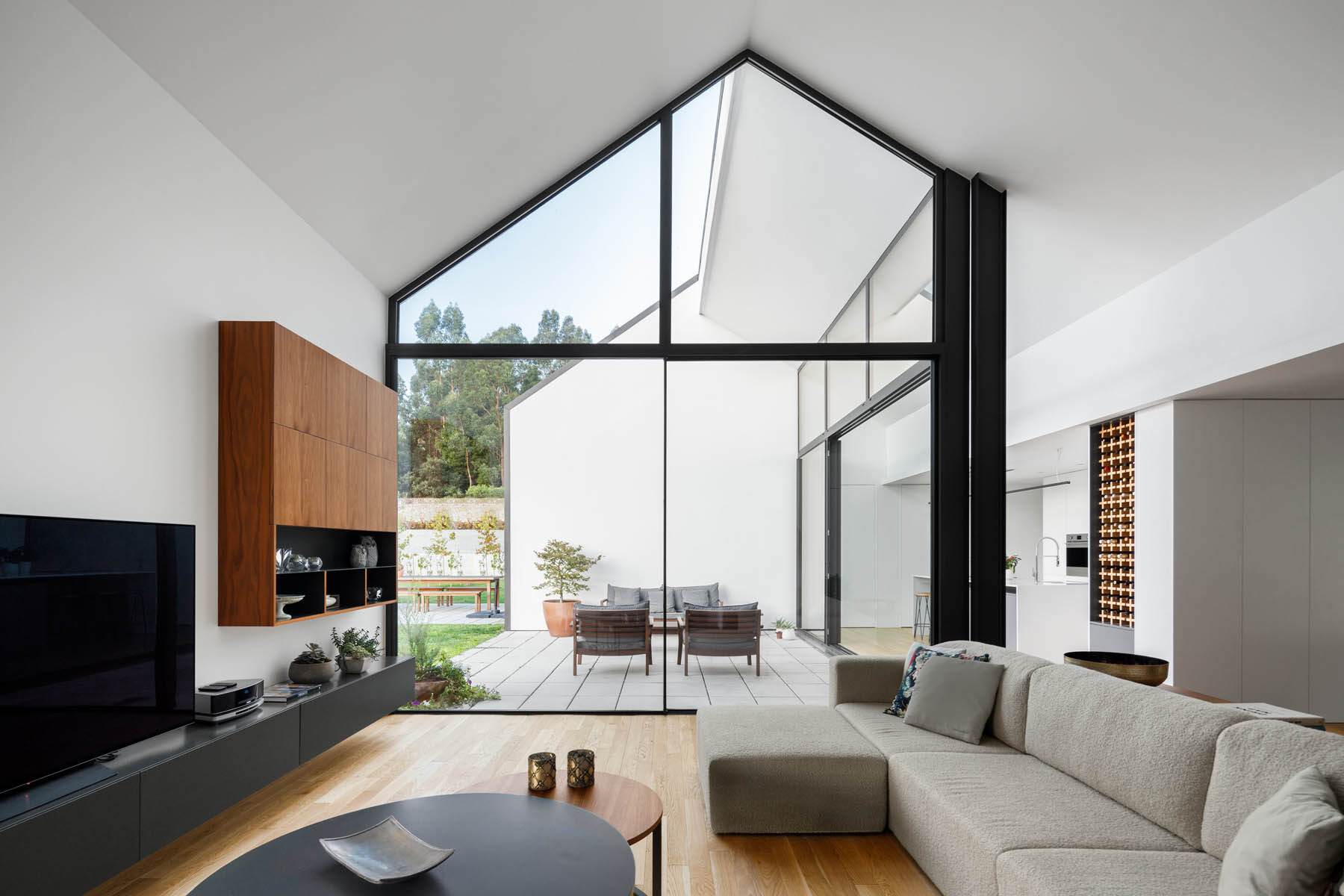
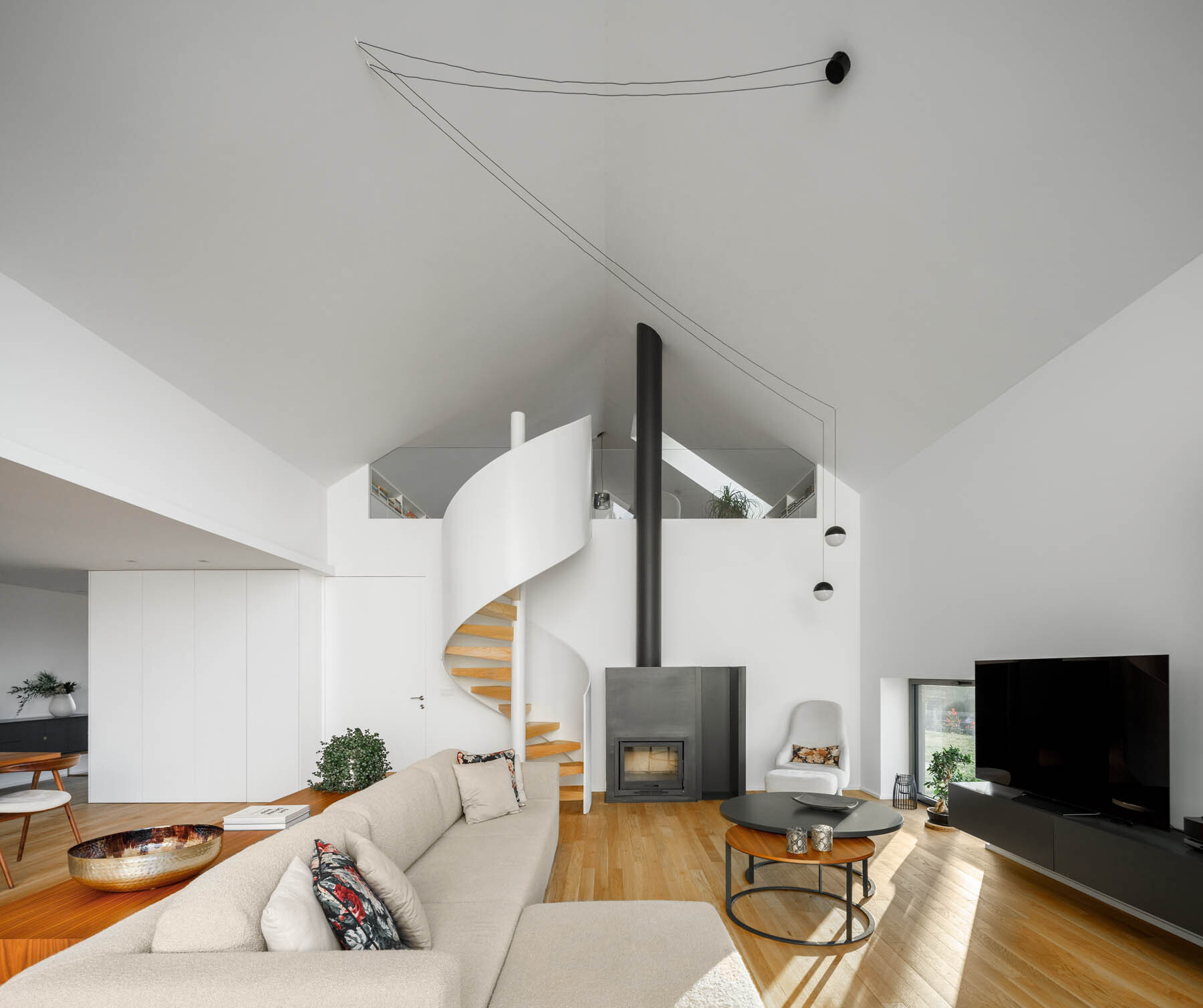
A gabled ceiling brings height and openness to the living room, with natural light filling the space from multiple directions.

A Stair That Leads to Quiet

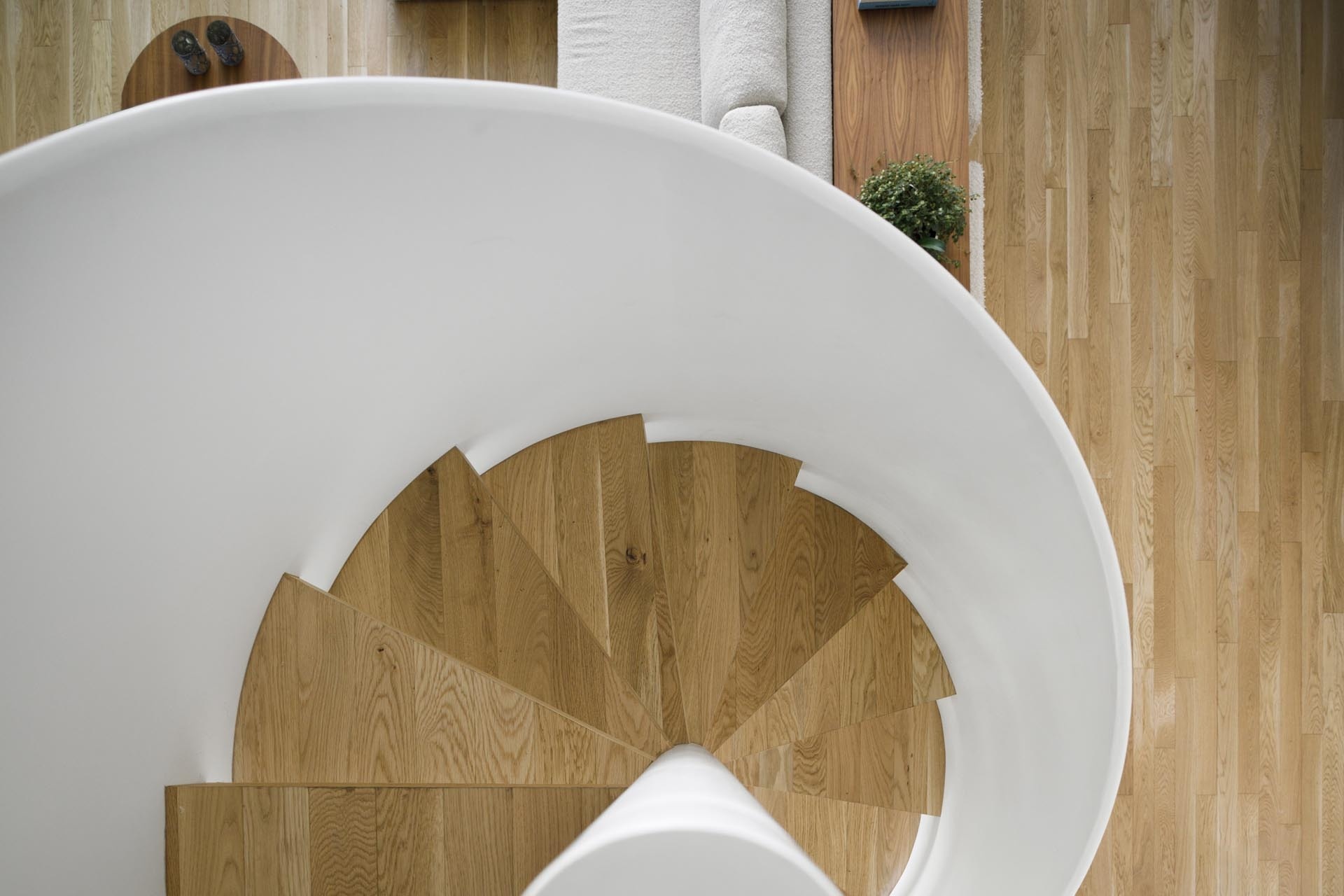
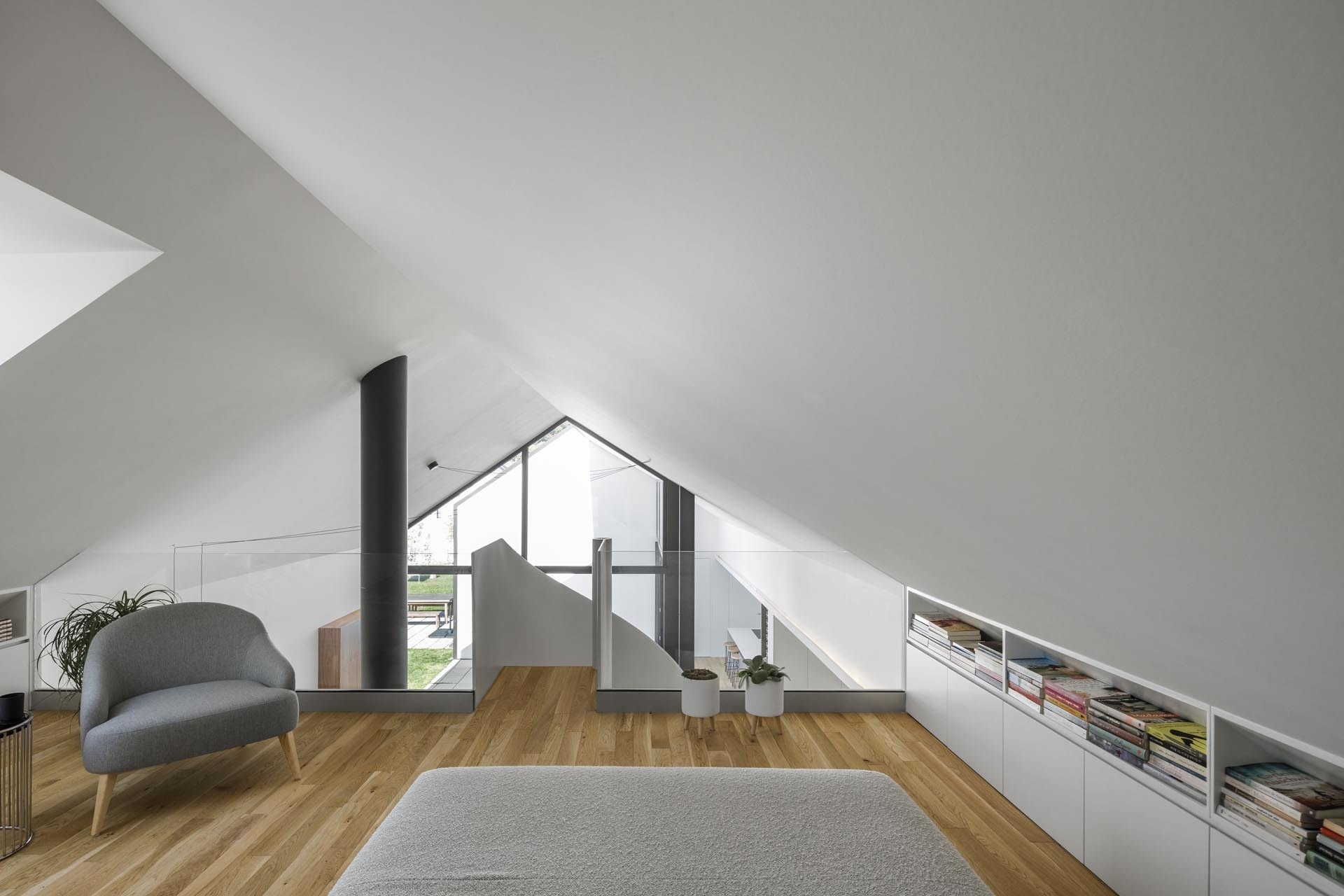
At one end of the living room, a white spiral staircase with wood treads leads upward. It reaches a lofted area tucked beneath the roof, designed as a place for reading or quiet moments. The traditional roof form allows this upper space to feel intimate without losing connection to the main living area below.
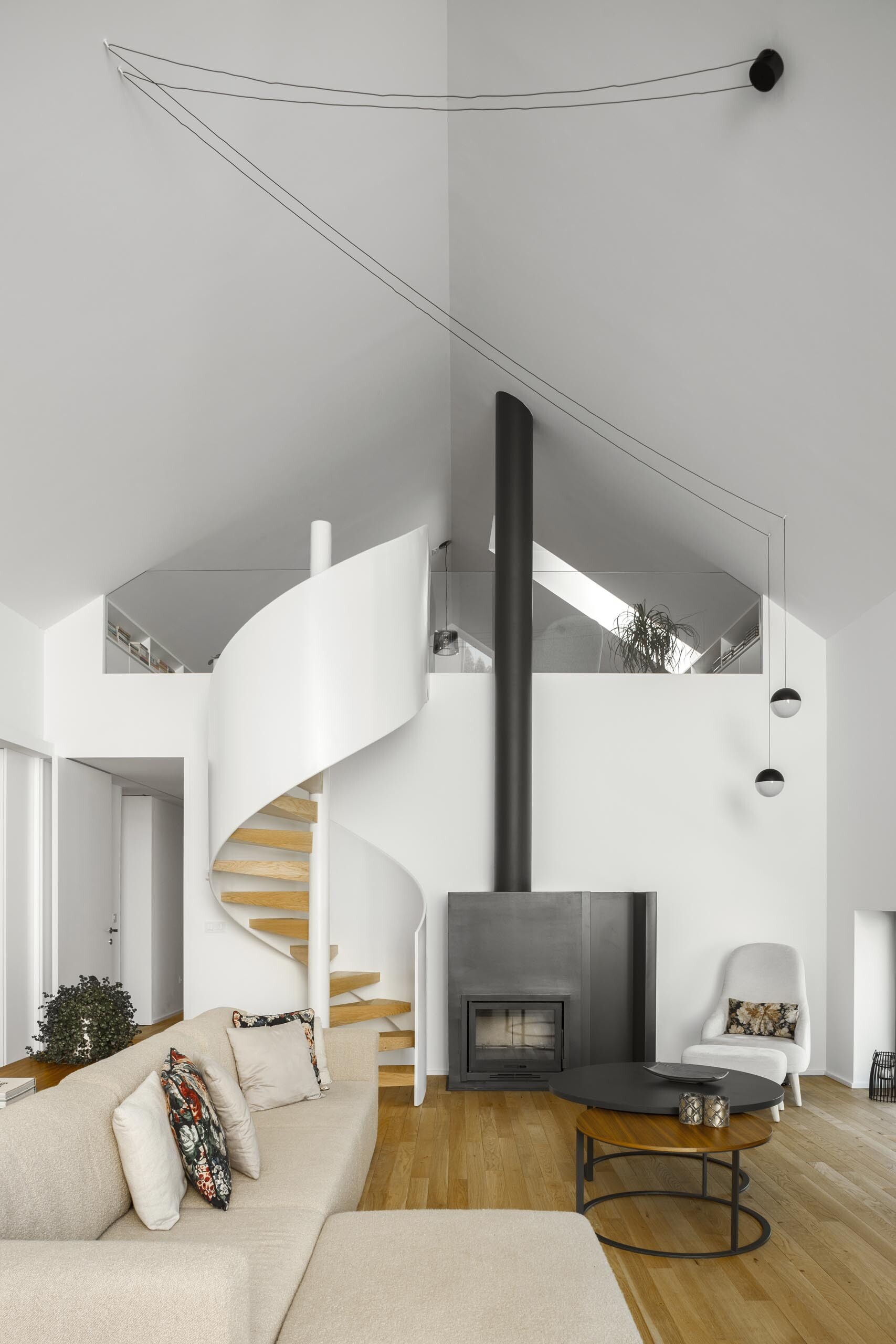
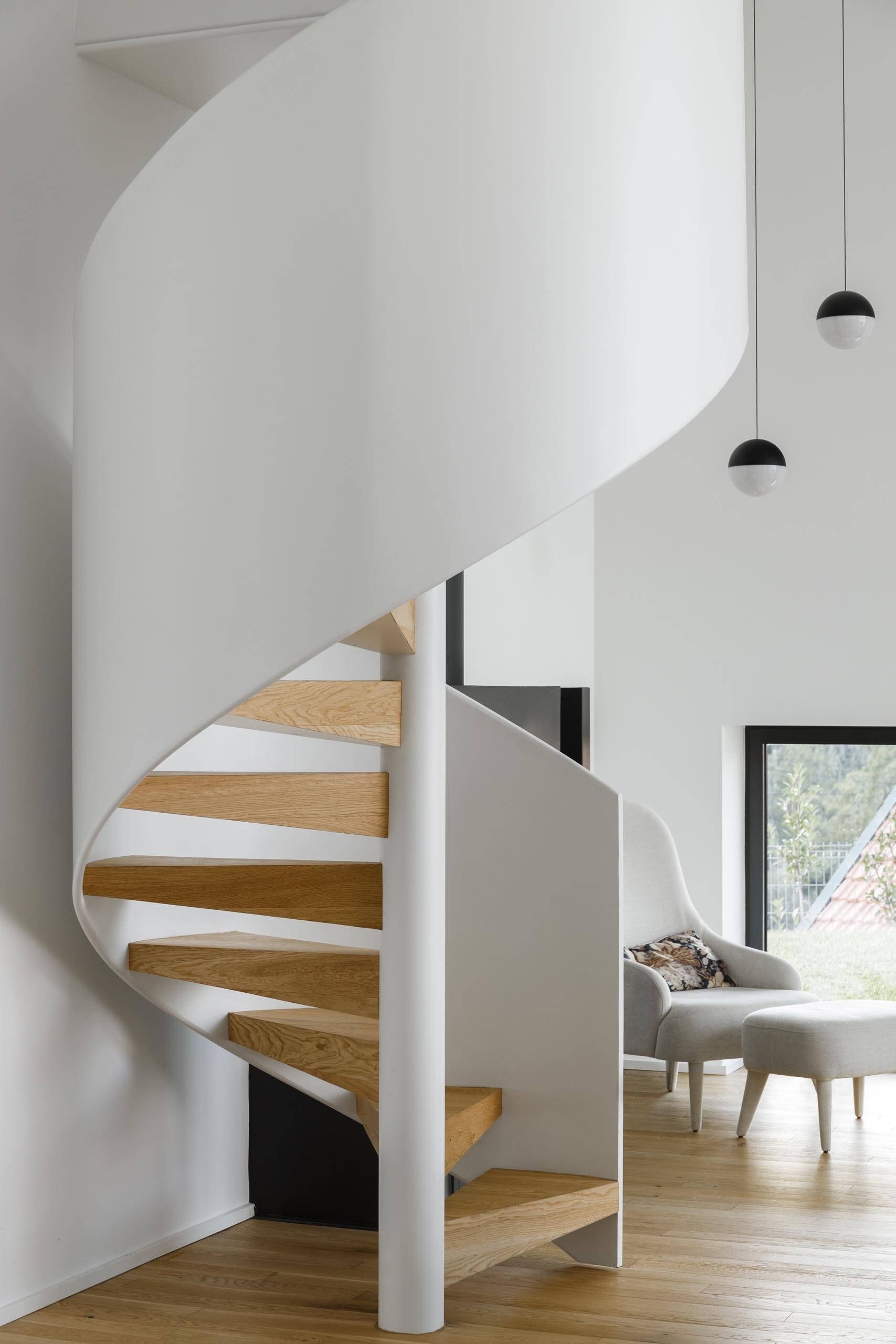
A white spiral staircase leads to a cozy loft beneath the gabled roof, offering a quiet space for reading and relaxation.

A Table Set at the Center

Just beyond the living room, the dining area is anchored by a large wood table. Upholstered chairs soften the setting, adding comfort to a space that remains visually simple. Its position keeps it close to both the kitchen and the central opening to the outdoors.
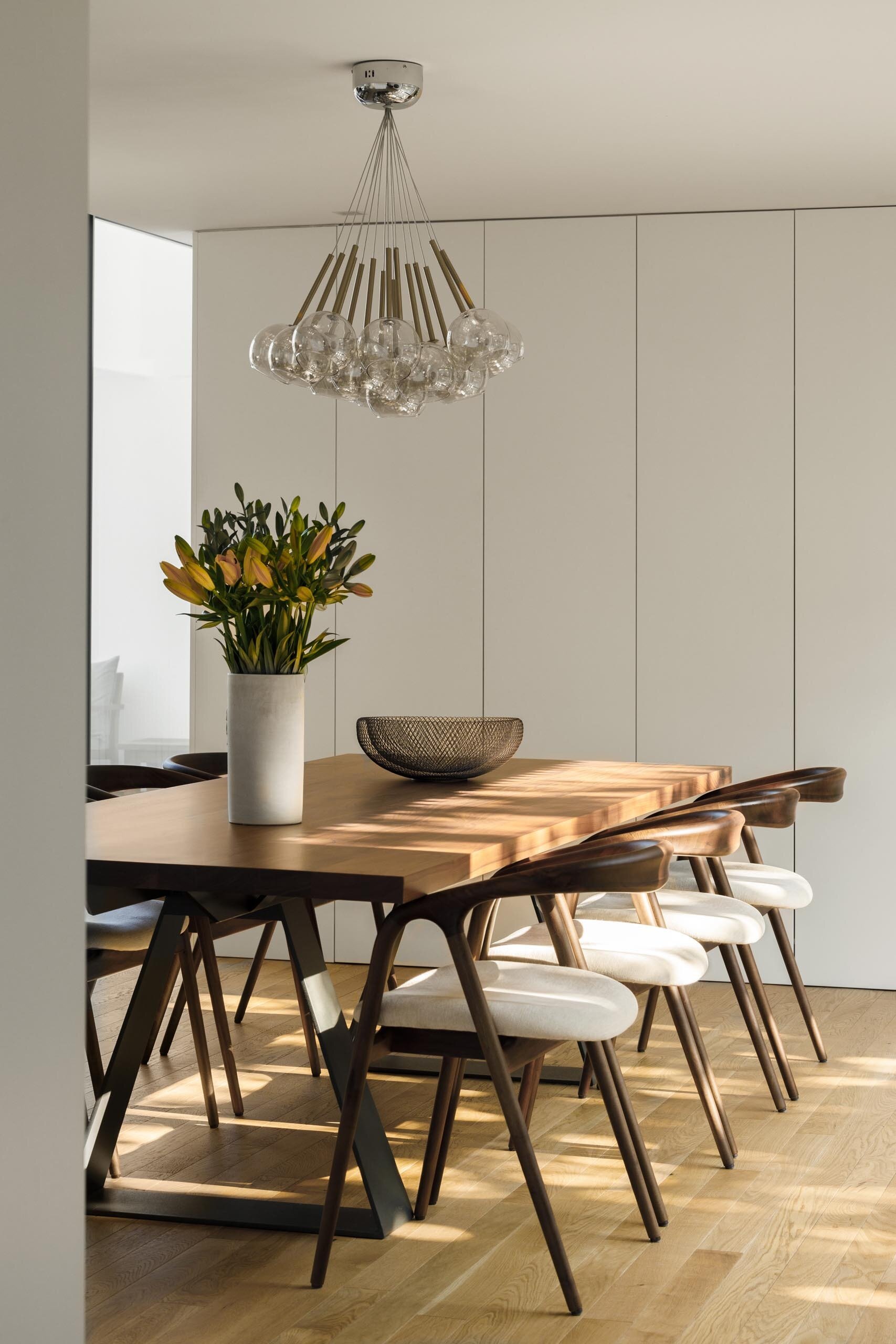
A large wood dining table and soft upholstered chairs create a warm, simple space connected to both kitchen and outdoor areas.

A Calm, Working Heart of the Home

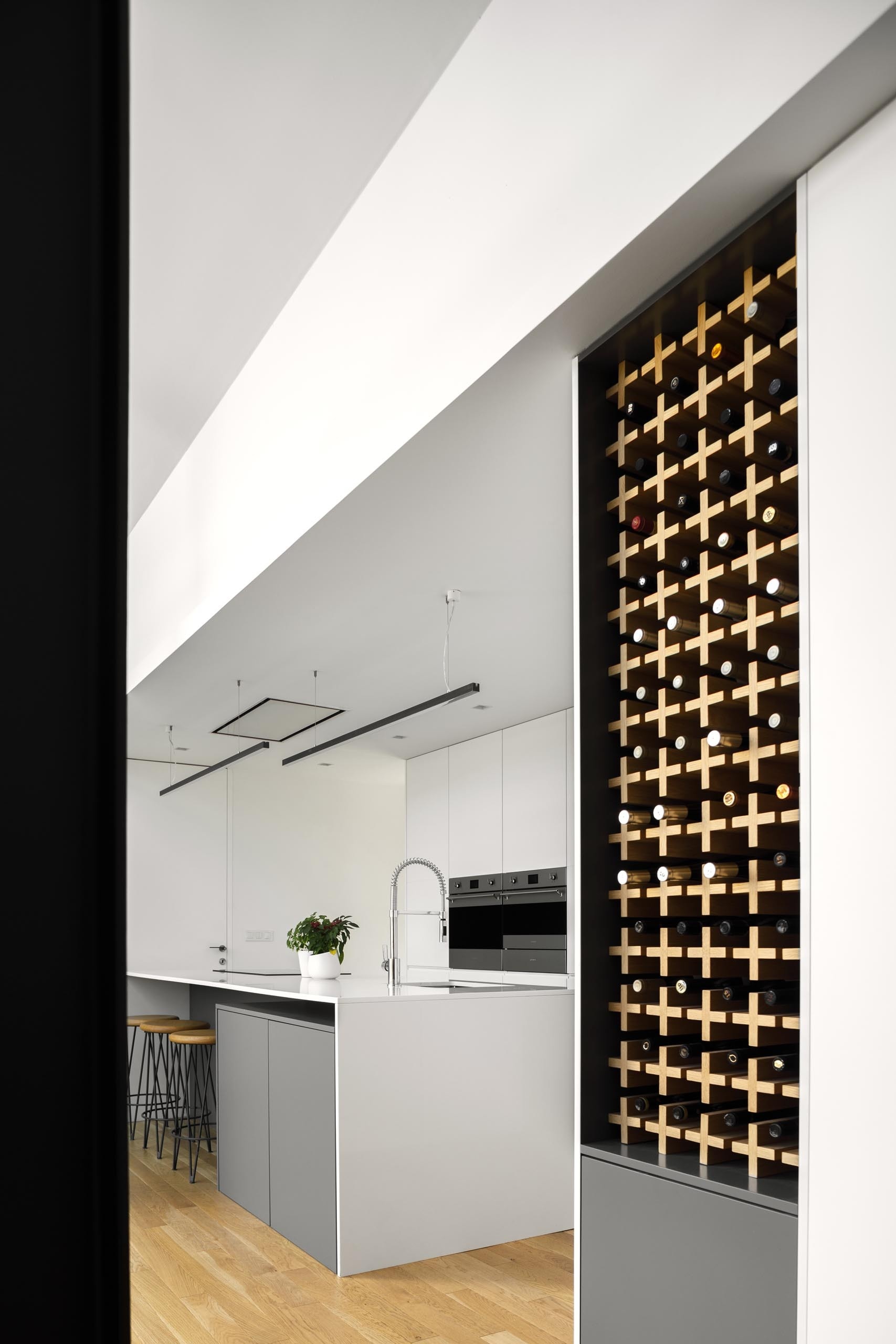
The kitchen continues the restrained palette. White cabinets and countertops create a clean backdrop, paired with linear suspension lights above. A gray island introduces a subtle contrast, while built-in wine storage is integrated into the wall.
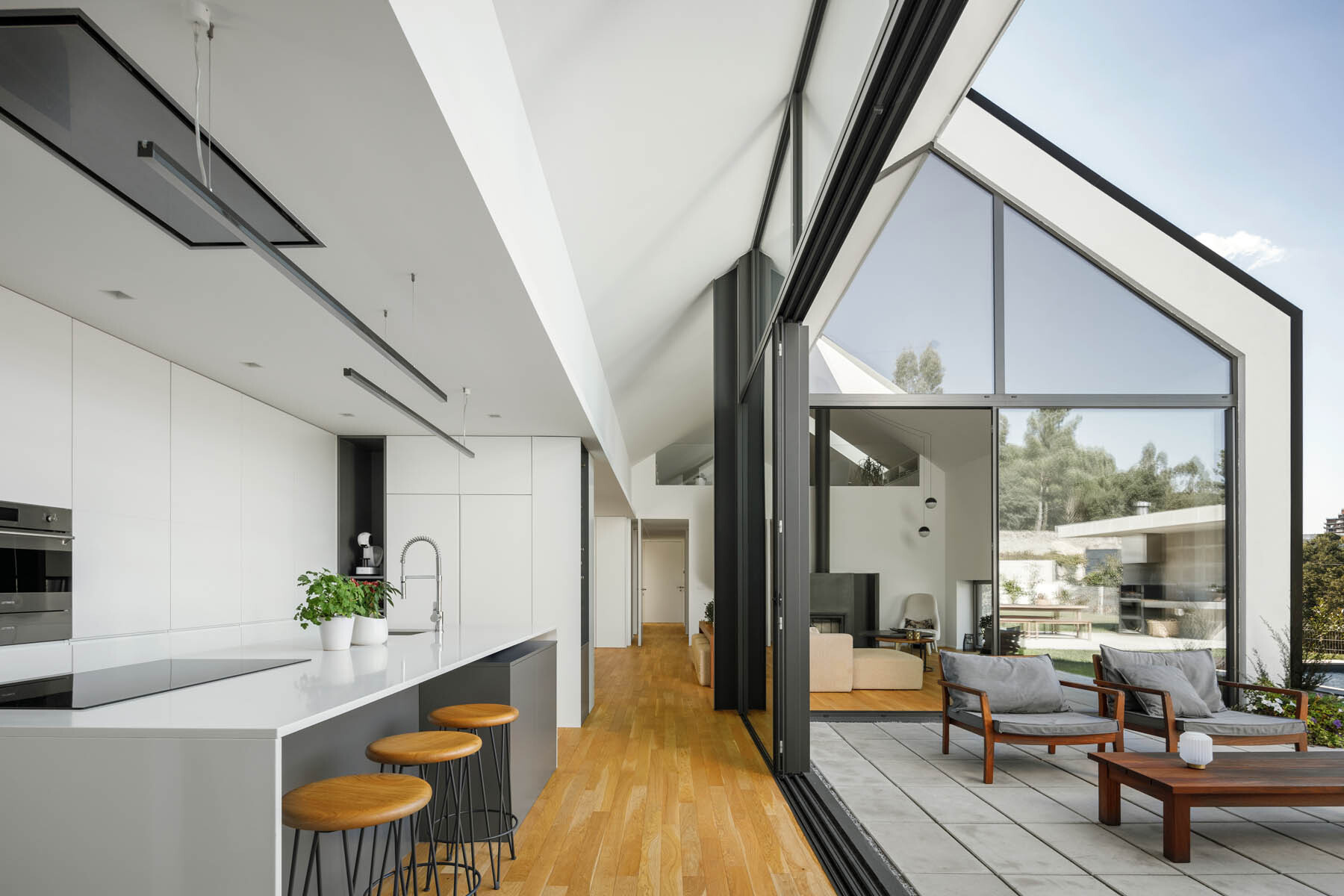
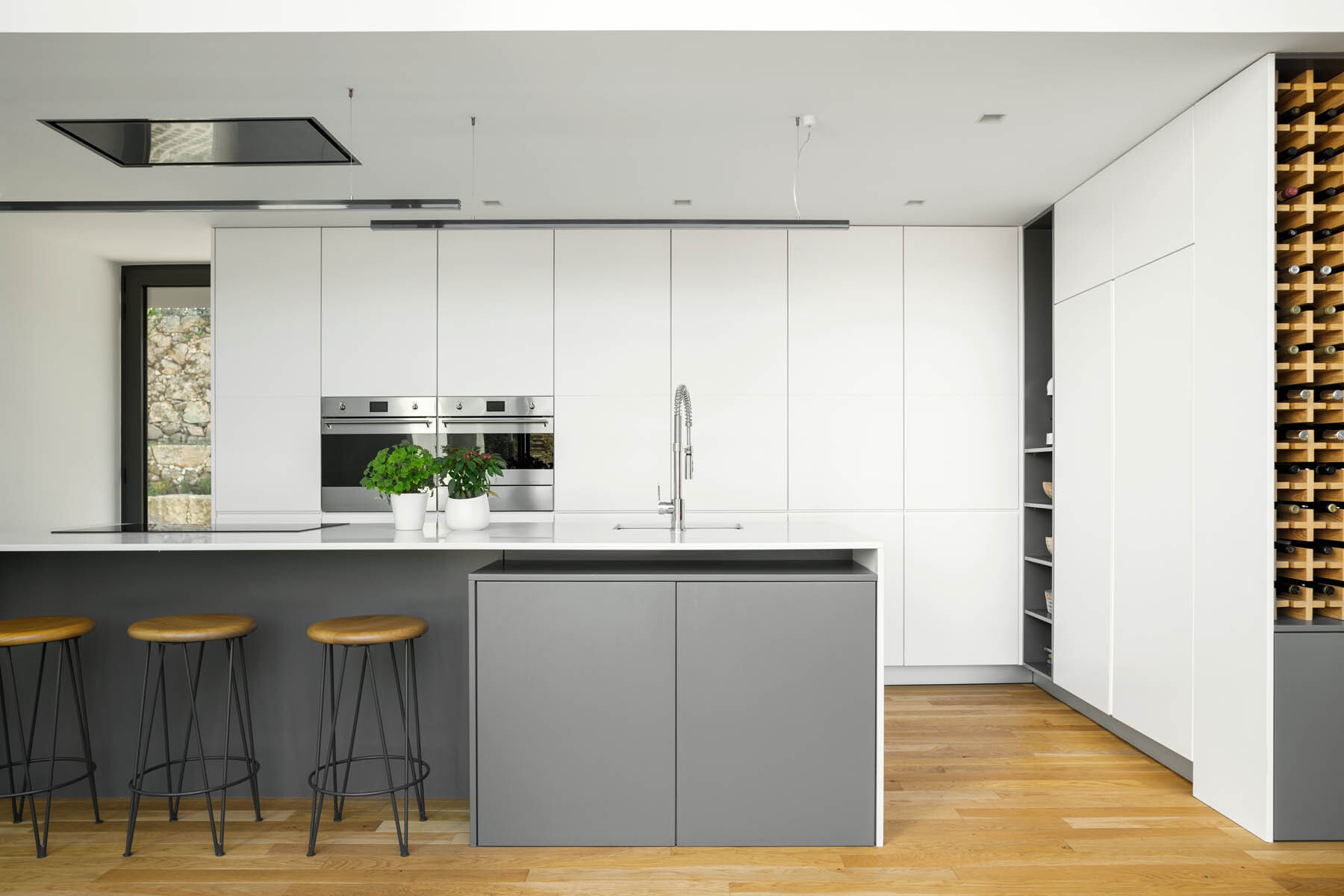
A minimalist kitchen pairs white cabinetry with a gray island and built-in wine storage for a clean and practical design.

A Path to the Private Rooms

A hallway extends from the central living areas, guiding movement toward the more private parts of the house. The layout is clear and intuitive, separating shared spaces from bedrooms and bathrooms.
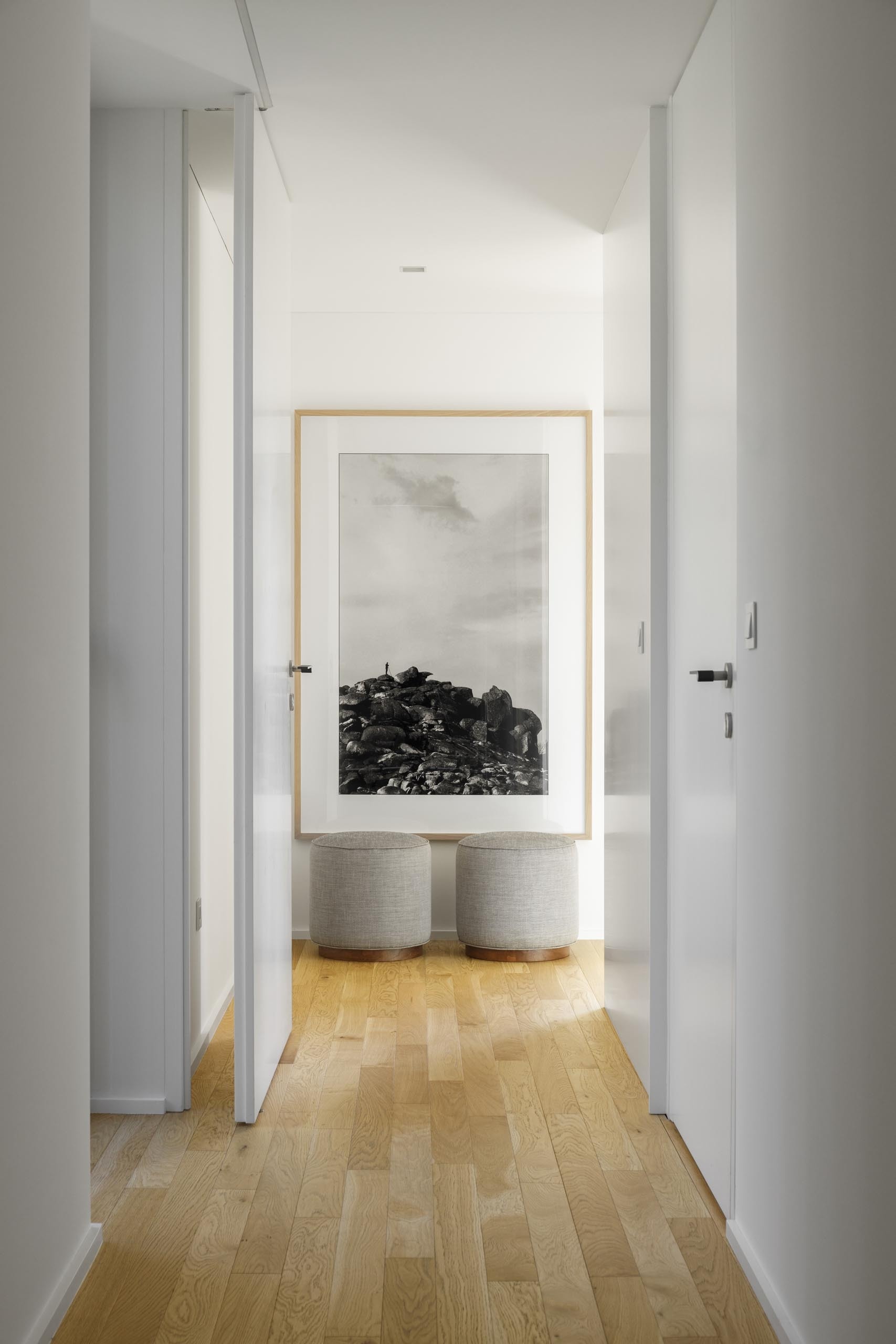
A simple hallway connects social spaces to private rooms, creating a clear and easy flow through the home.

A Softer Expression of the Exterior

In one of the bedrooms, the wood slats reappear as an interior feature. Used as an accent wall, they echo the exterior facade and bring warmth into the room. It creates a visual link between inside and out without repeating the full exterior expression.
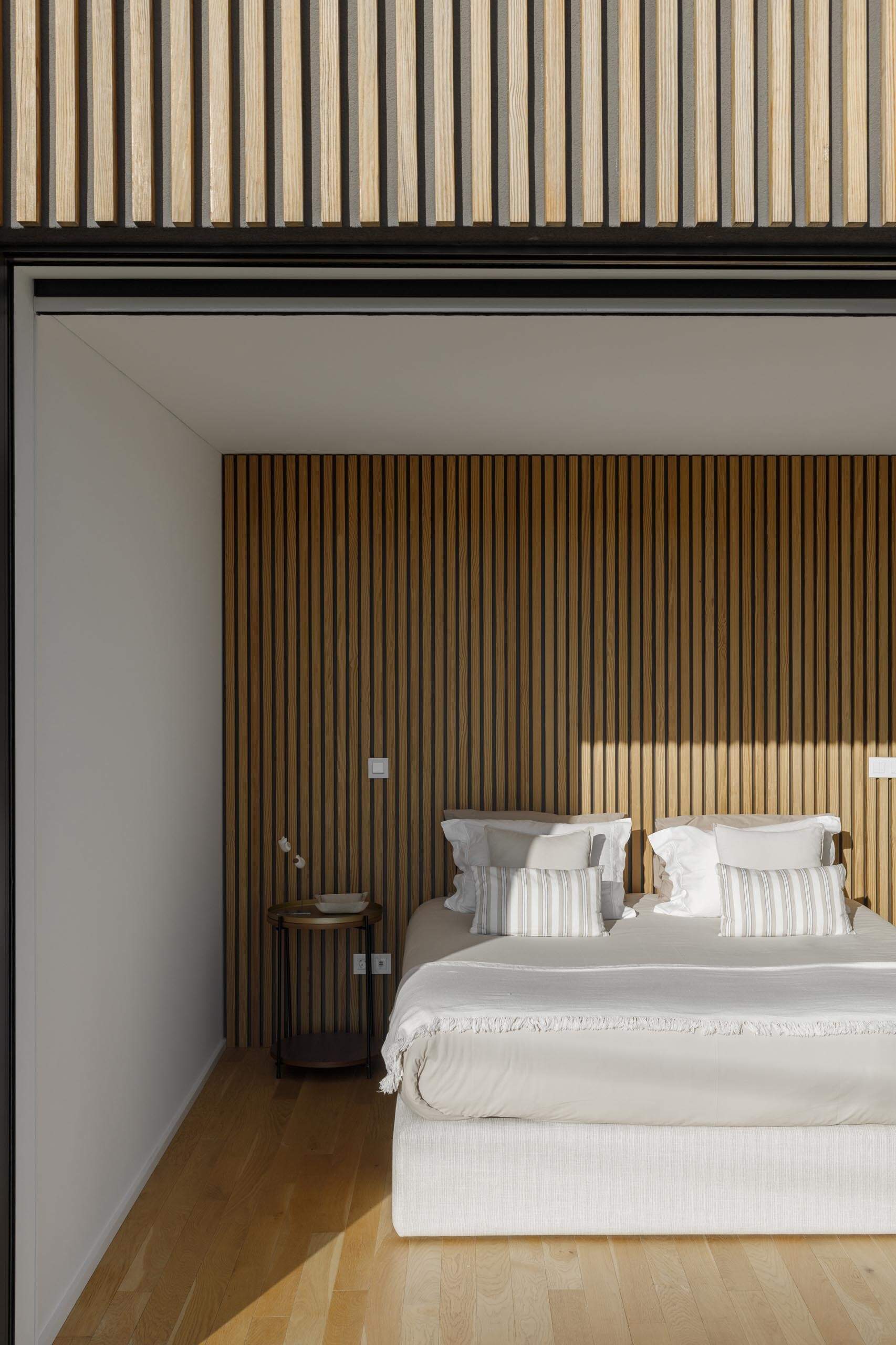
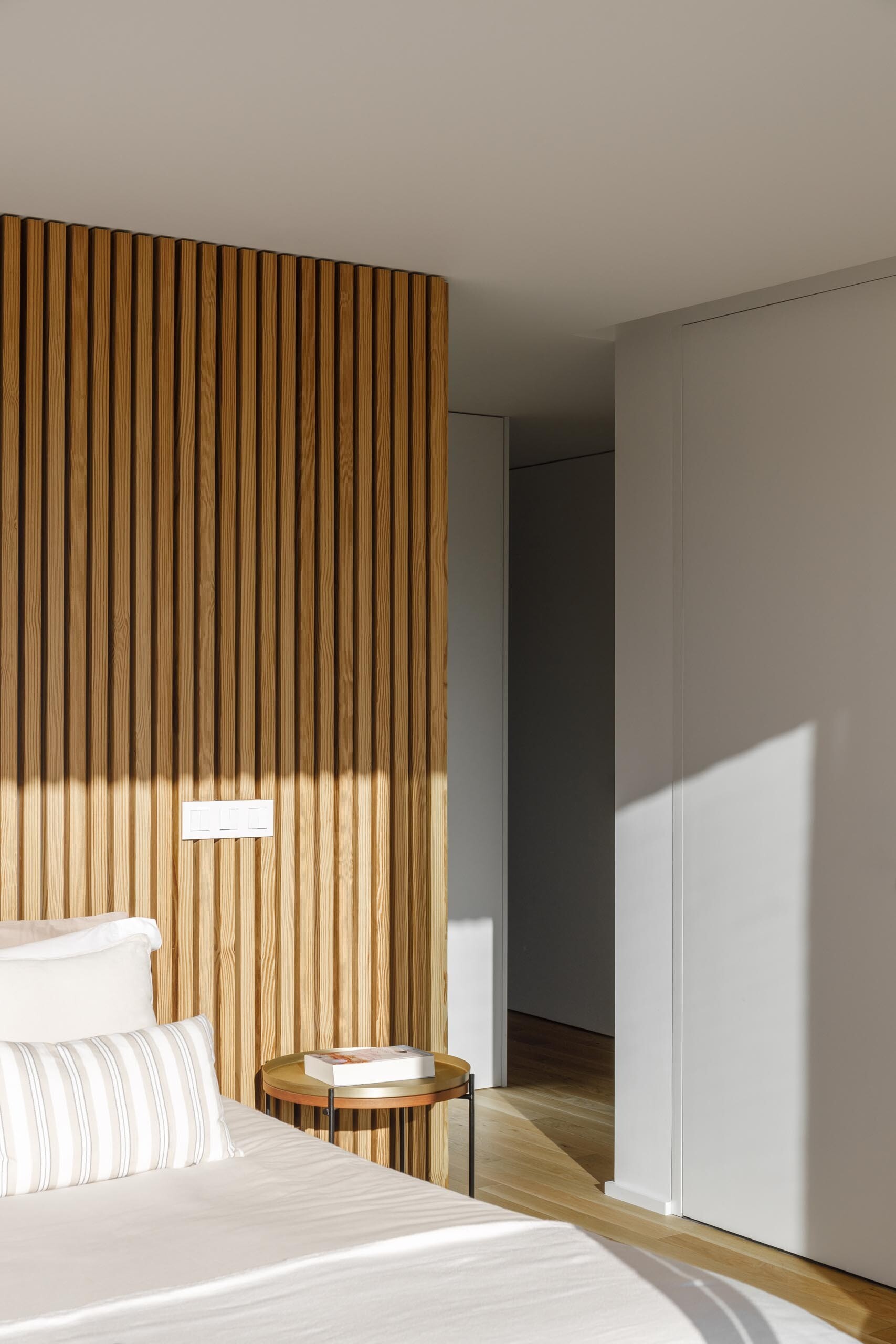
A wood slat feature wall in the bedroom reflects the exterior facade, adding warmth and texture to the interior.

Light, Reflection, and Simplicity

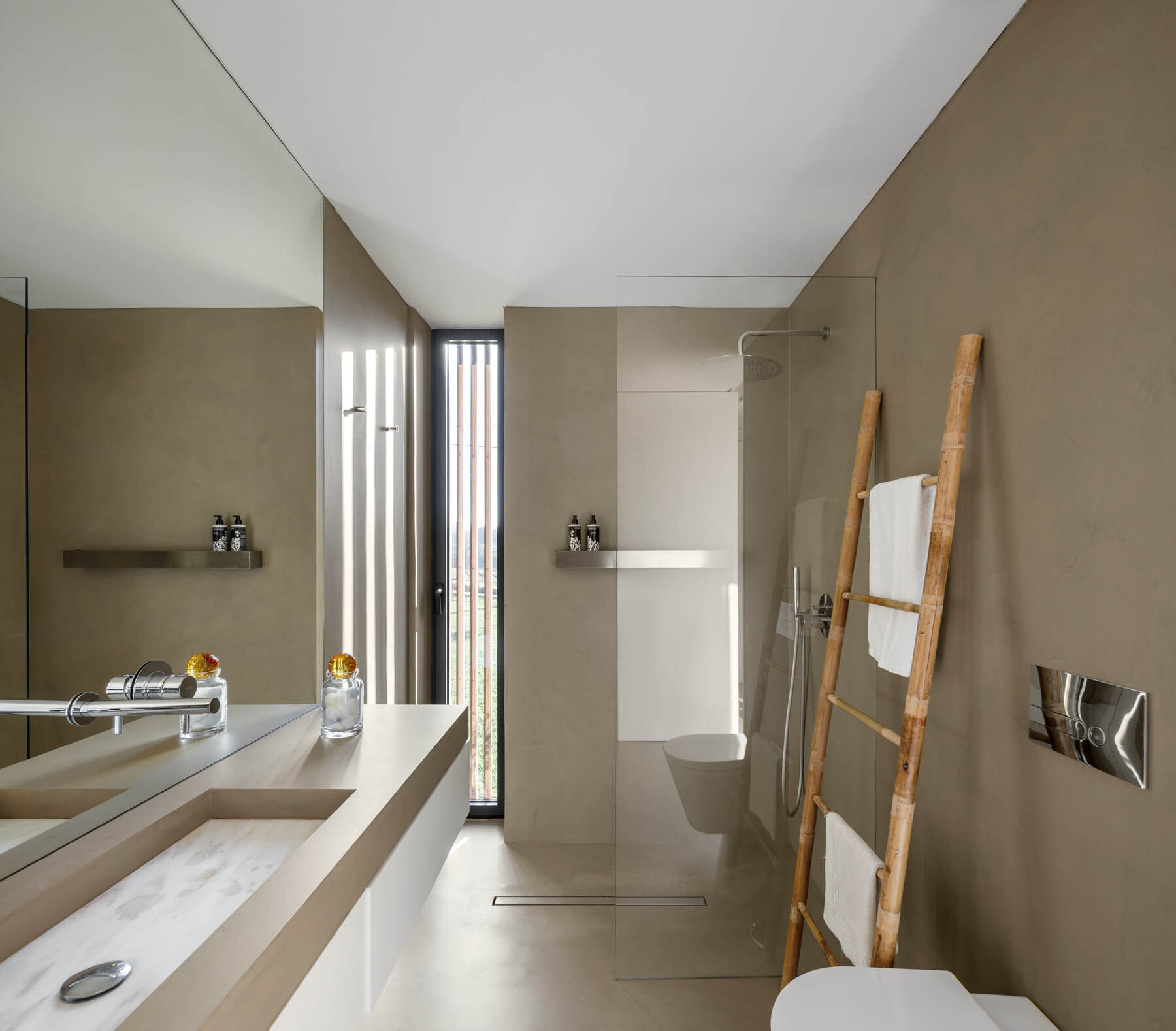
The bathrooms rely on light and reflection. Large mirrors amplify brightness, making the rooms feel more open, while built-in sinks keep the vanities clean and streamlined.
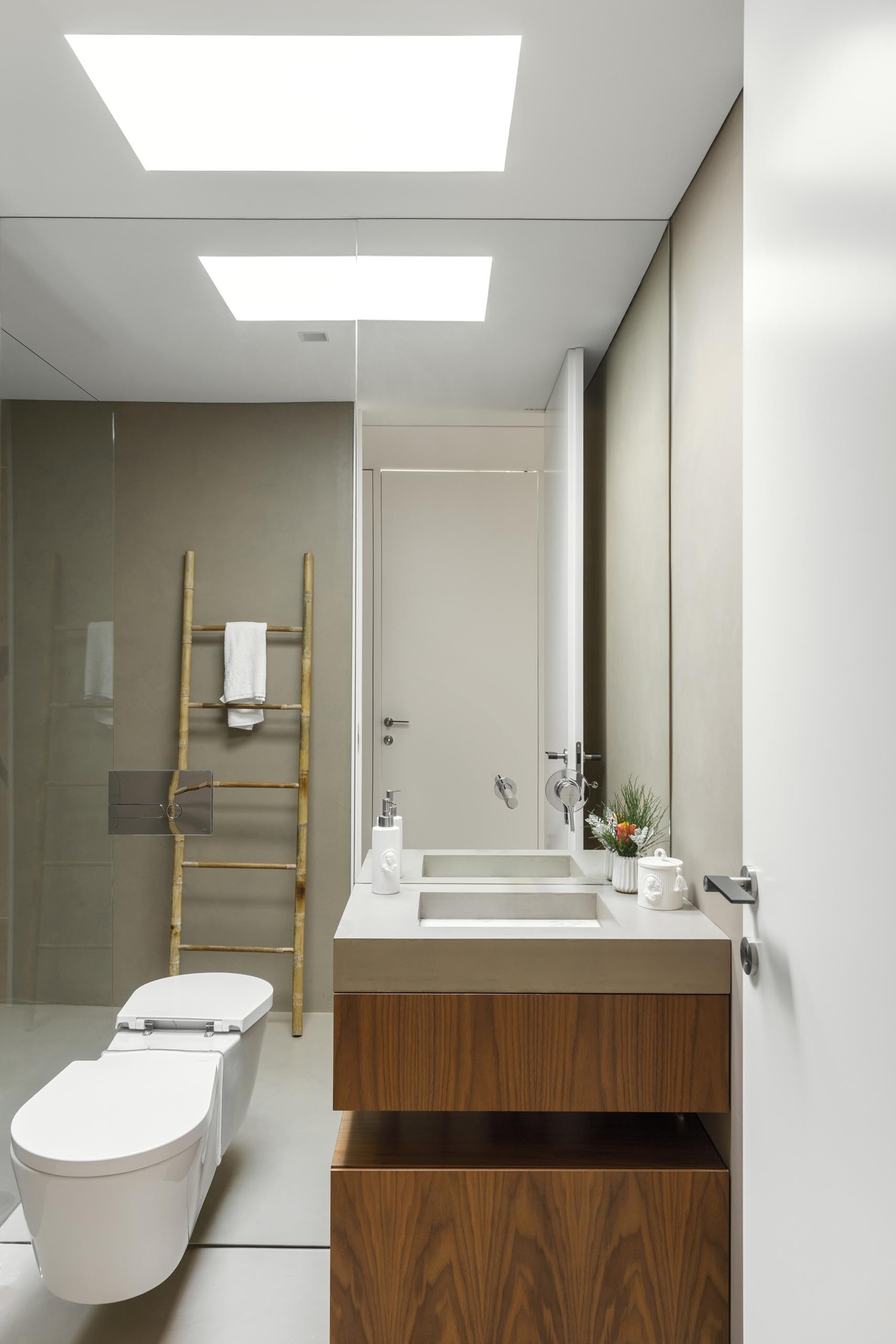
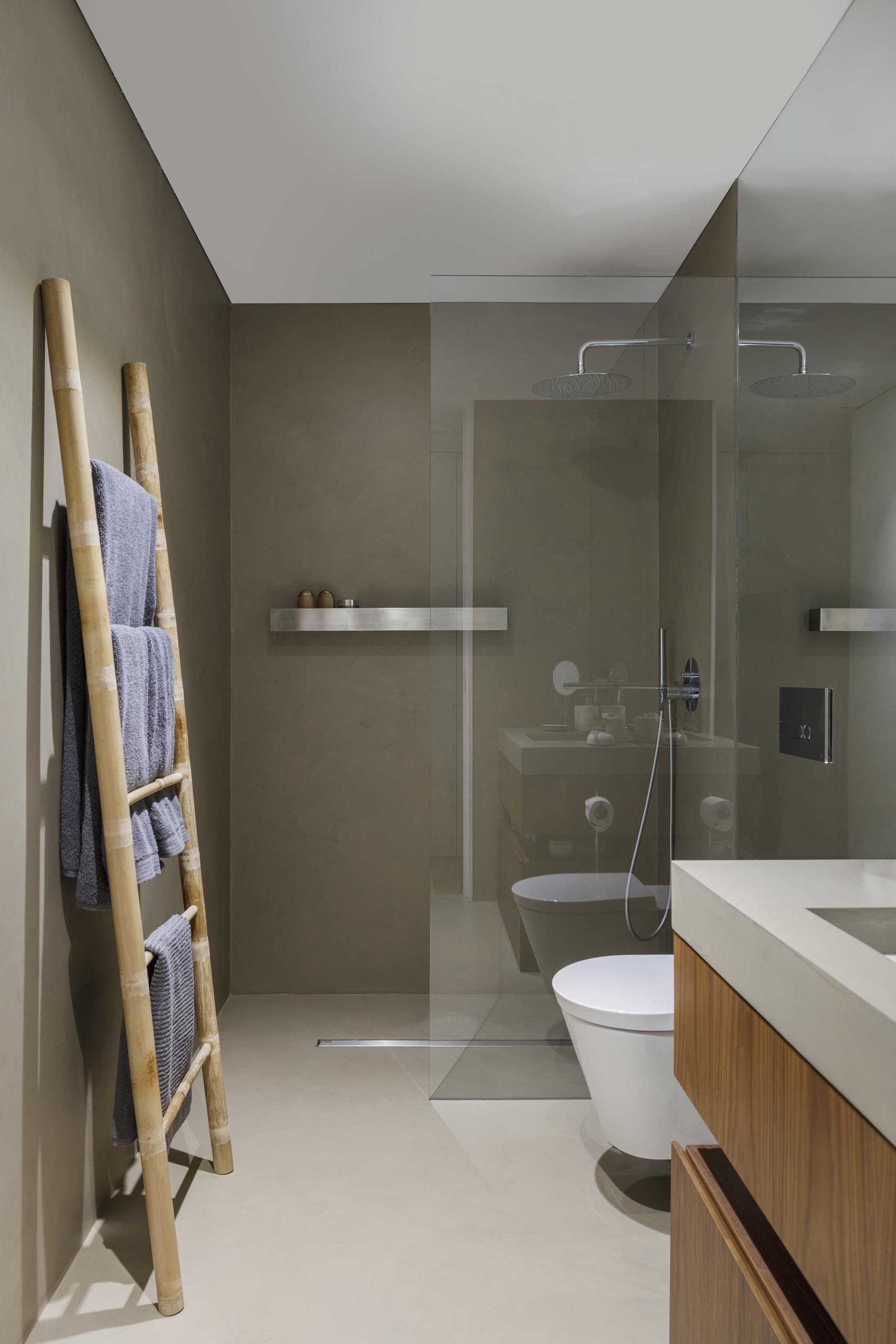
Large mirrors and built-in sinks create bright, uncluttered bathrooms that feel more spacious and refined.

From a distance, the house reads as a dark, simple form on a hill. Up close, it reveals layers, openings, and careful decisions about how space is used and experienced. By reworking the familiar shape of a Portuguese home and wrapping it in wood slats, Hous3 Arquitectura creates a house that shifts between hiding and revealing, depending on where you stand.


Photography by Ivo Tavares Studio | Architects: Hous3