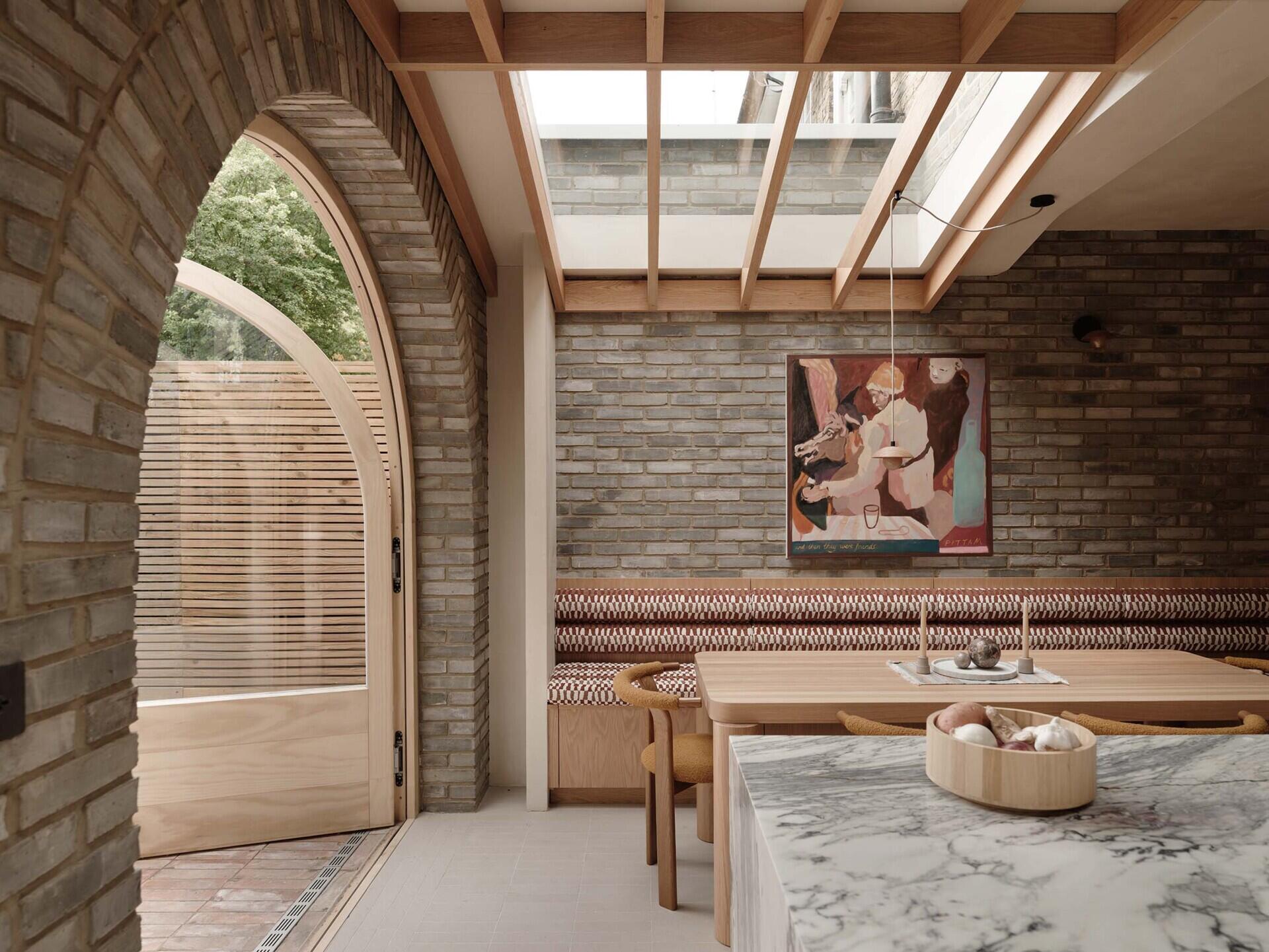
Open-plan living and Georgian character rarely align in Islington, London. This home shows how both can work together.
Hamish Vincent Design & Architecture for London redesigned a non-listed Neo Georgian house to create a more open ground floor. The result for ‘Islington House‘, is a lighter, more connected layout shaped by natural materials and a clear architectural idea.
A Neo Georgian Exterior
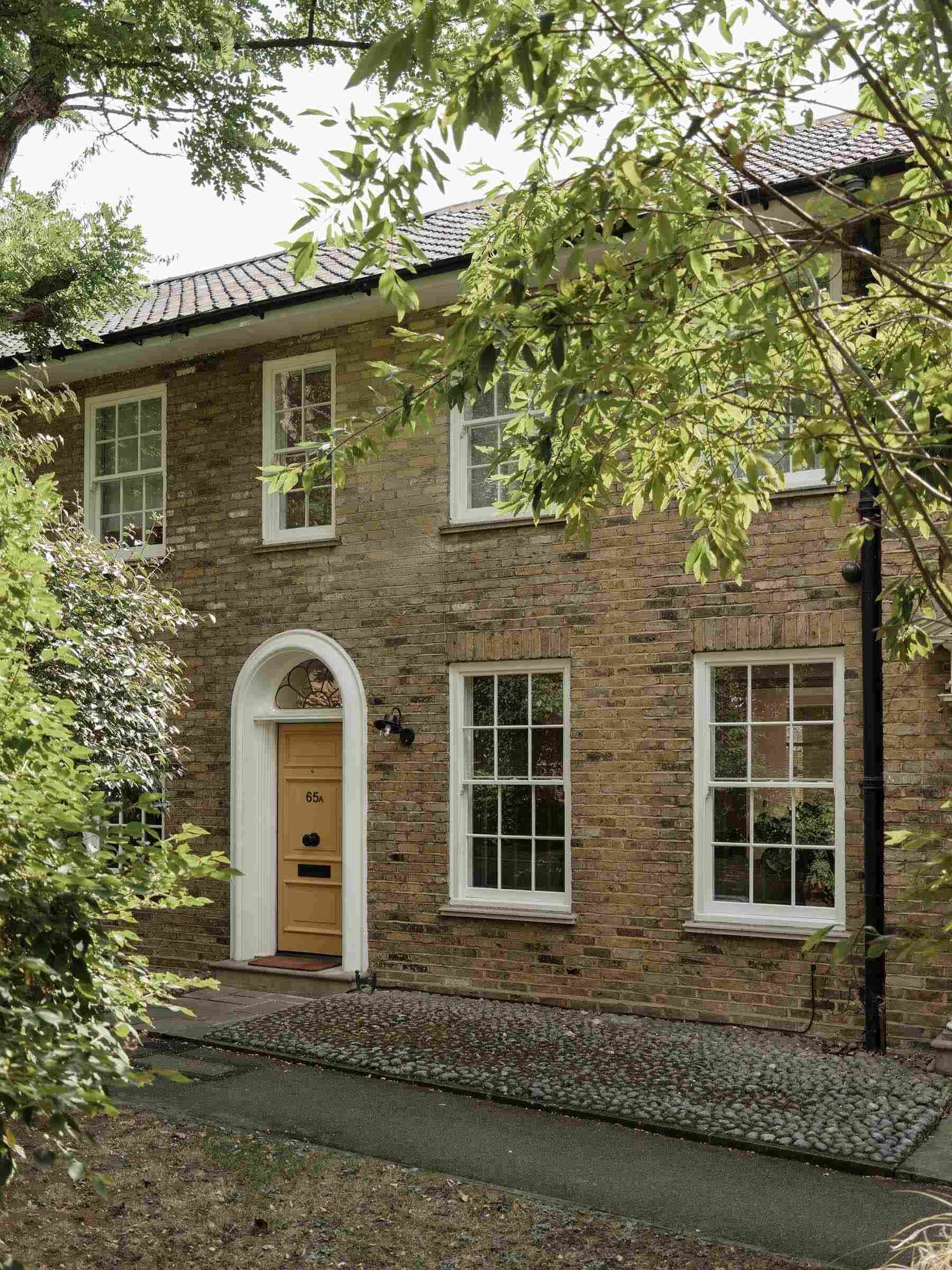
Located within the Canonbury Conservation Area on the southern side of St Paul’s Road, the house forms part of a terrace of nine post-war rebuilt homes.
Its Neo Georgian facade reflects the proportions and character of traditional London townhouses. Because the property is not listed, it offered more freedom to adapt the interior while maintaining the established streetscape.
Expanding the Ground Floor for Everyday Living
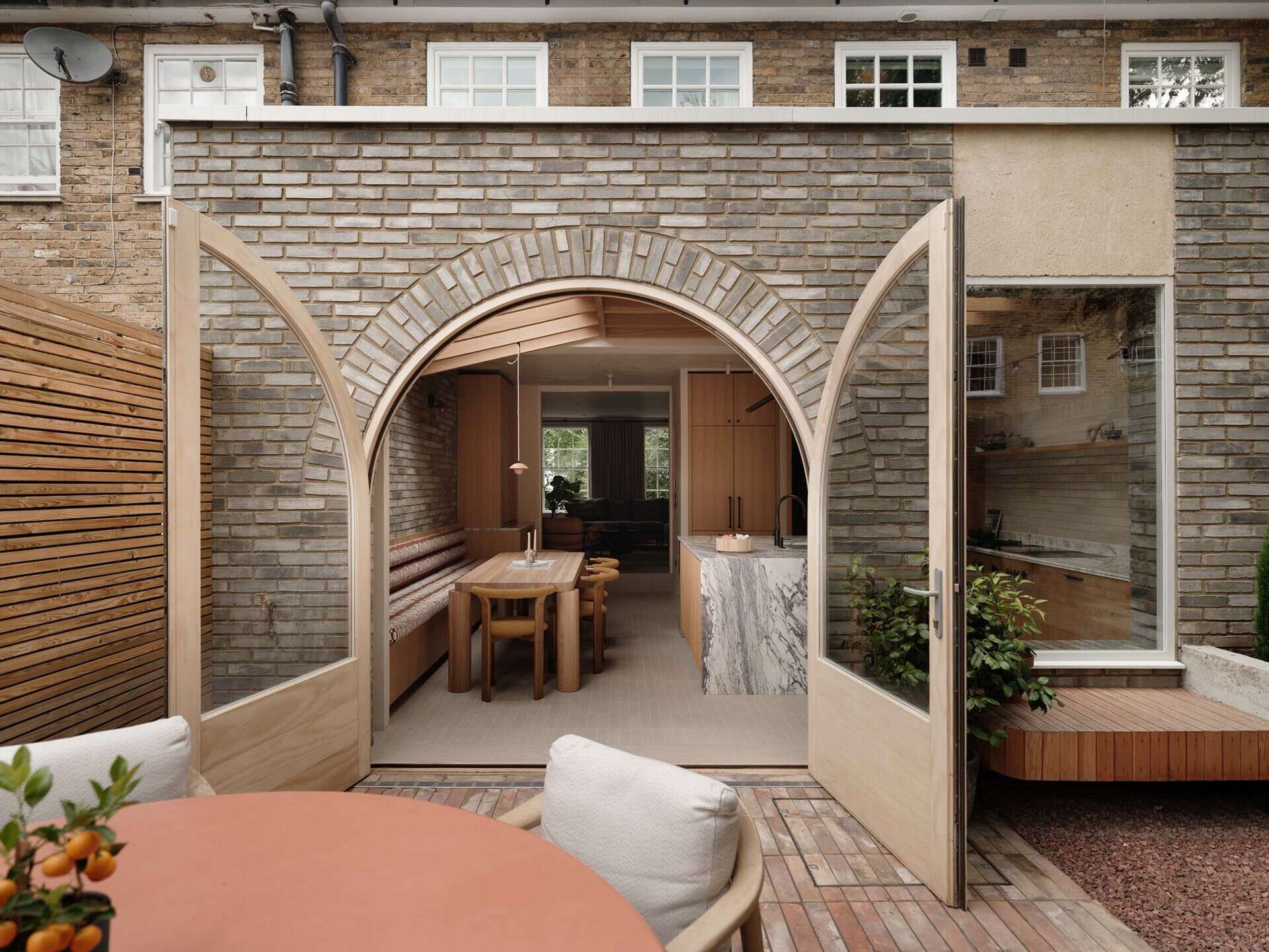
The redesign focused on increasing usable space at ground level. A new brick extension allows the kitchen, dining, and reception areas to exist as one continuous environment. This shift supports a more flexible way of living, while also introducing a new ground floor WC to improve daily function.
Soft Curves That Shape Movement Through the Home
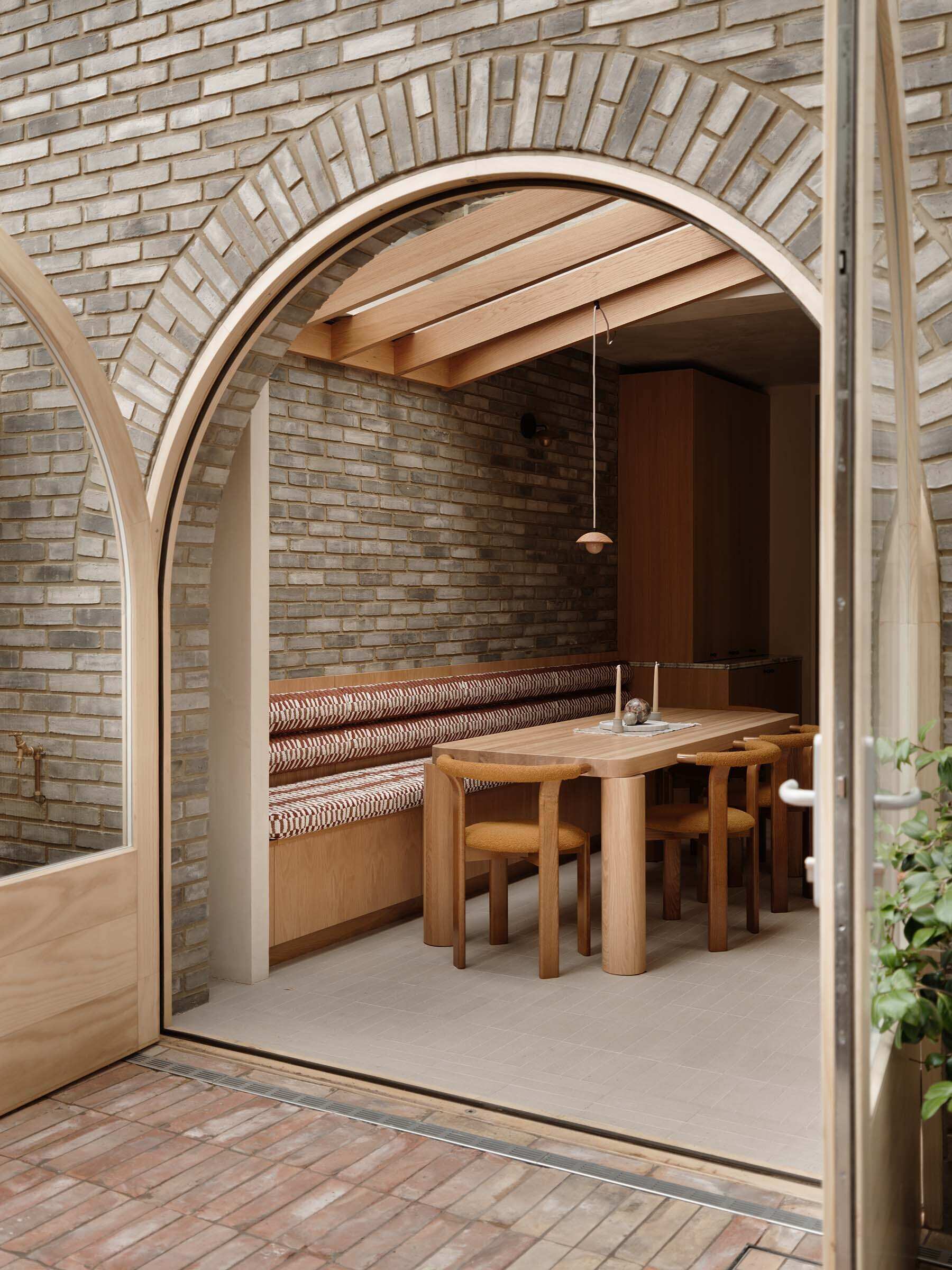
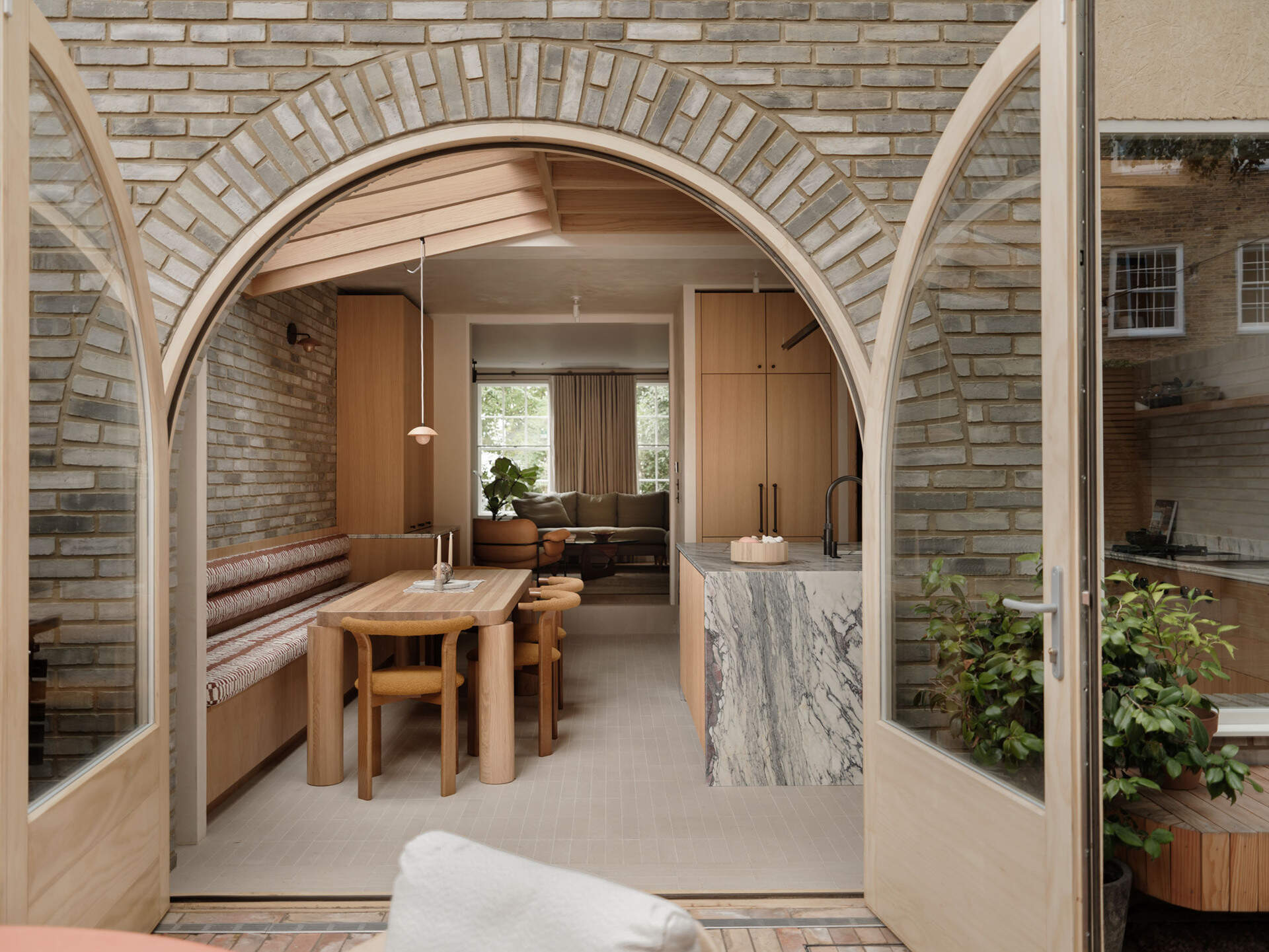
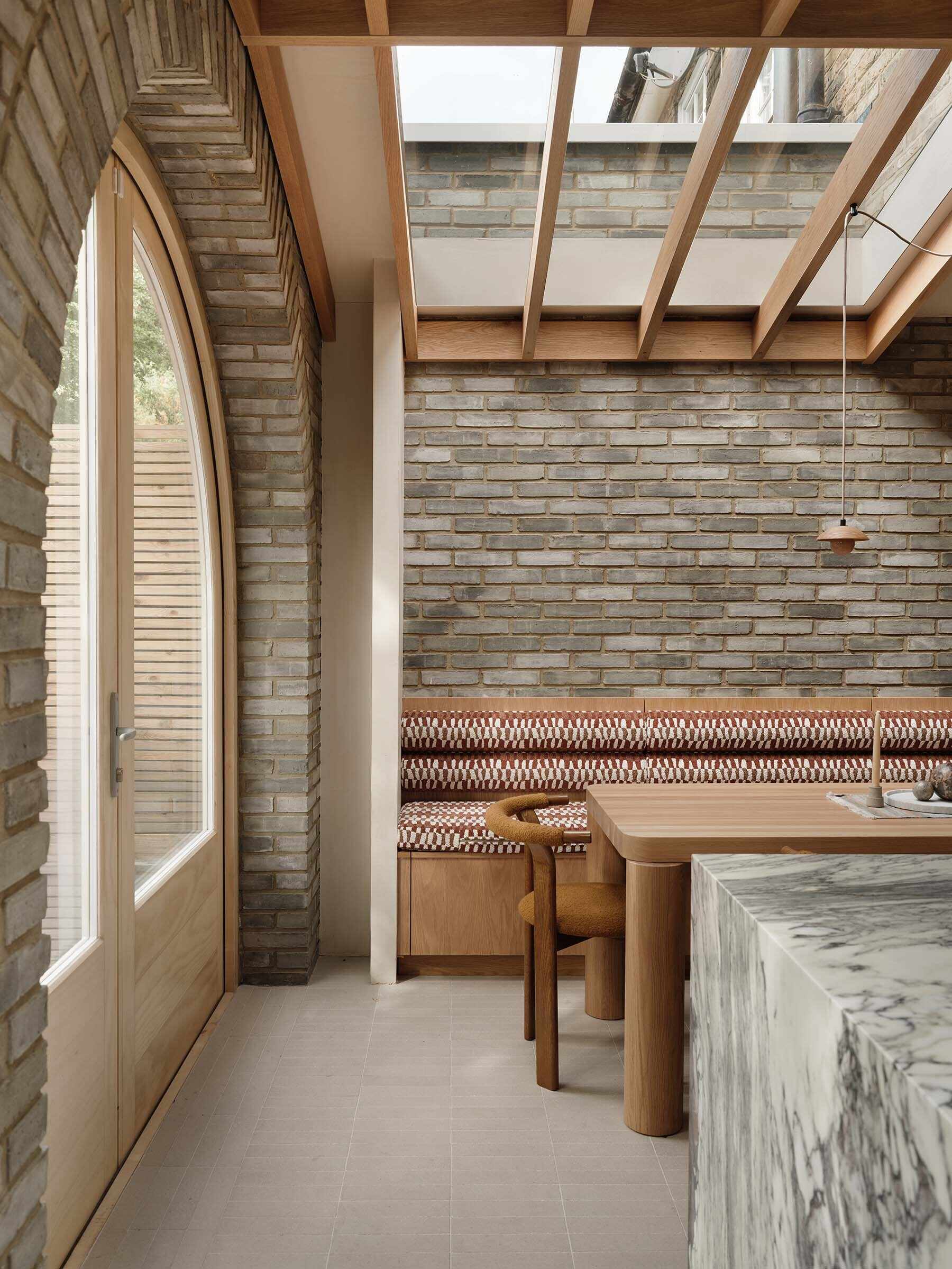
Small architectural details play a key role in shaping the interior. An arched doorway introduces a softer geometry into the plan, referencing Georgian revival elements while helping define movement between spaces without relying on full separation.
A Central Space Designed for Connection
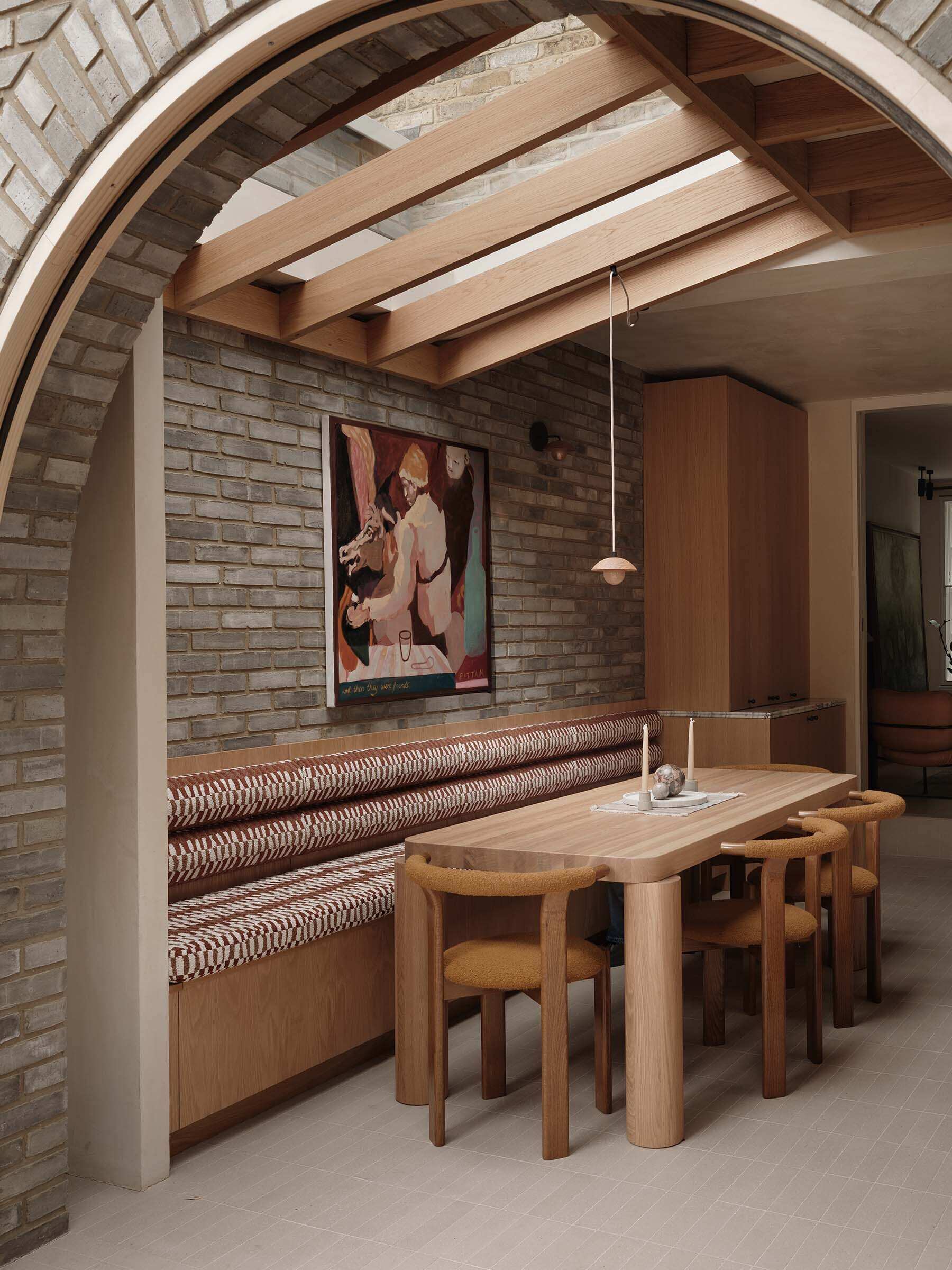
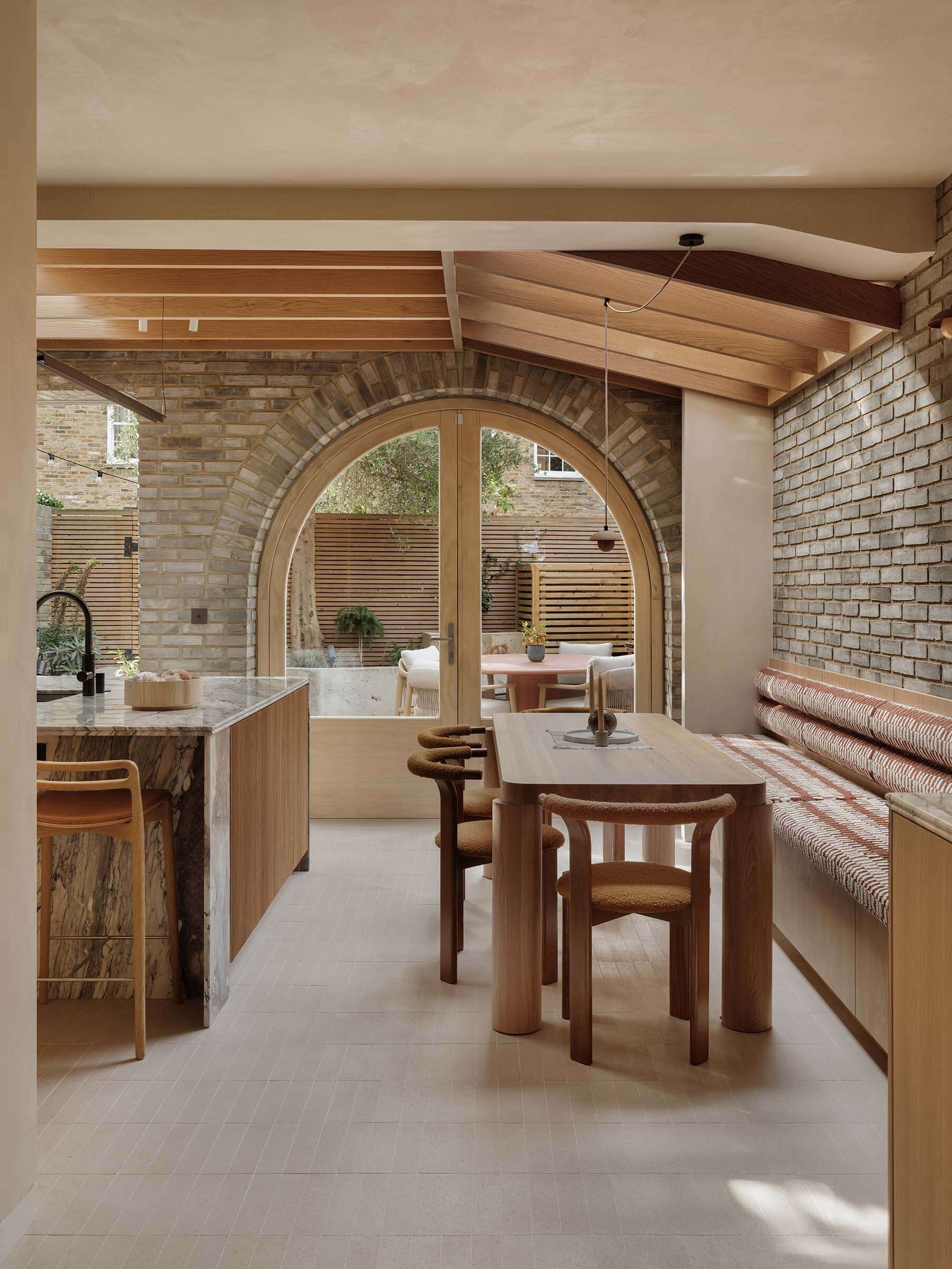
The dining area sits at the center of the open-plan arrangement. It connects directly to both the kitchen and living spaces, allowing it to function as part of a shared environment. The banquette offers seating along the wall, while skylights let natural light to fill the interior.
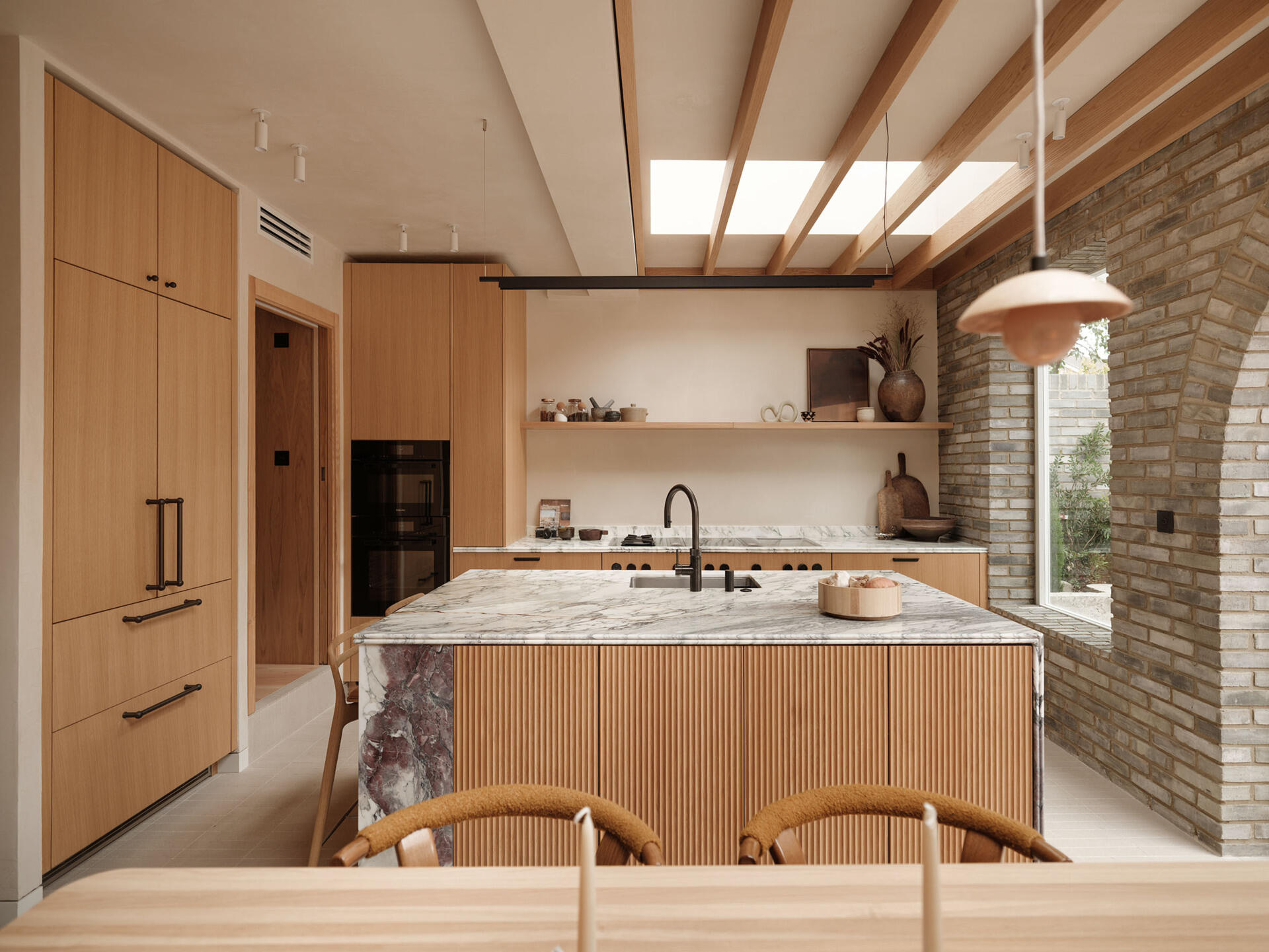
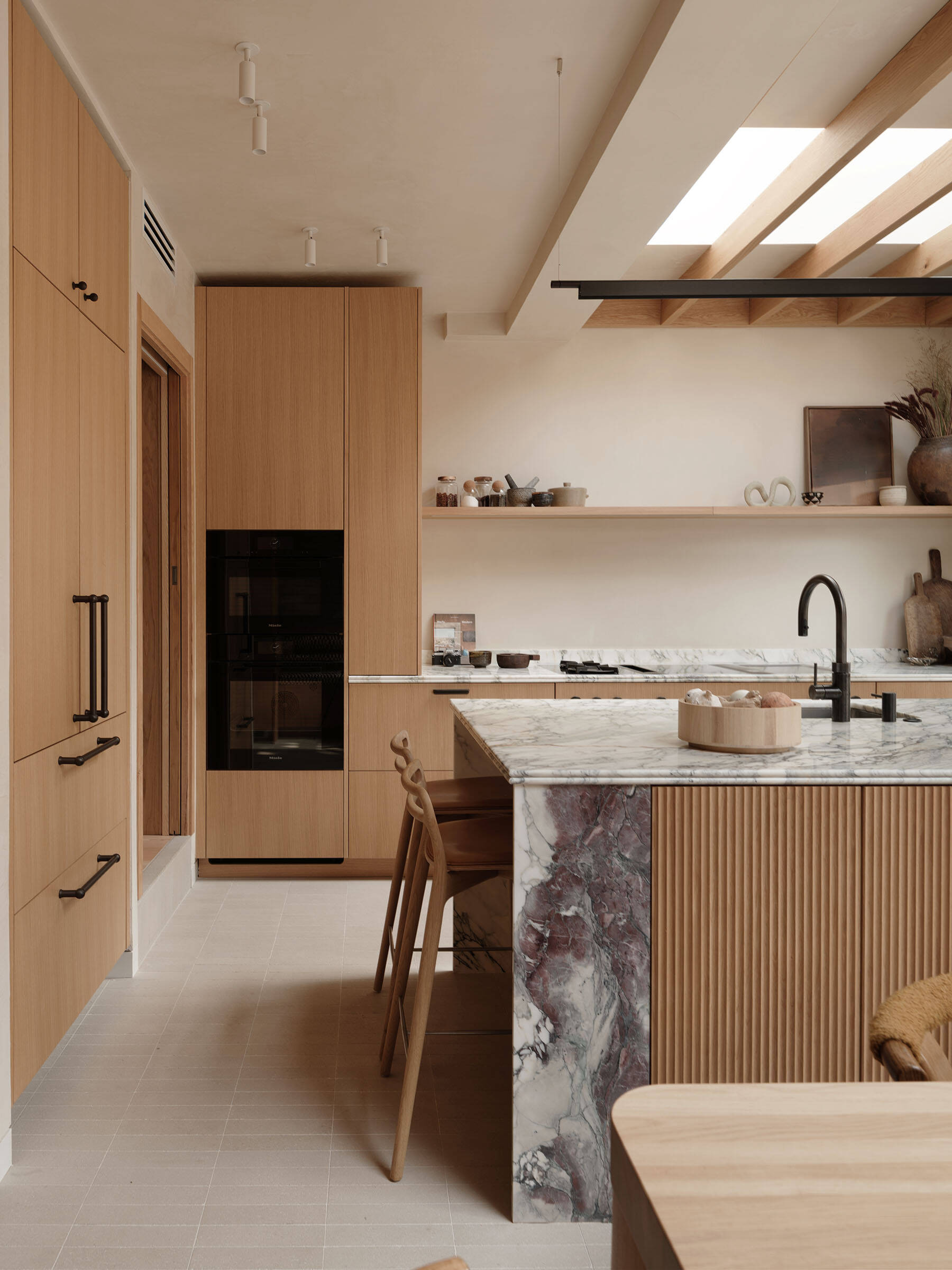
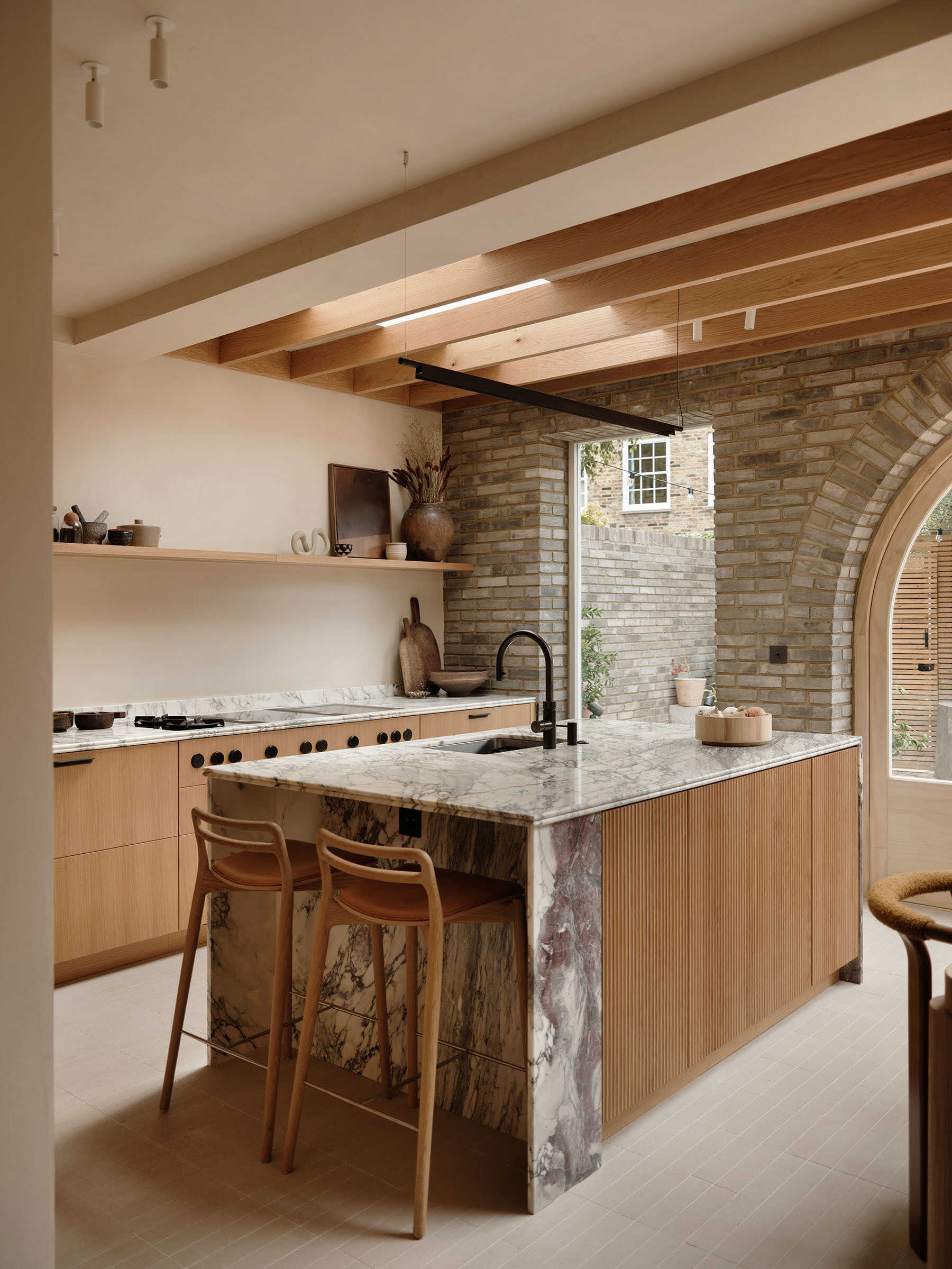
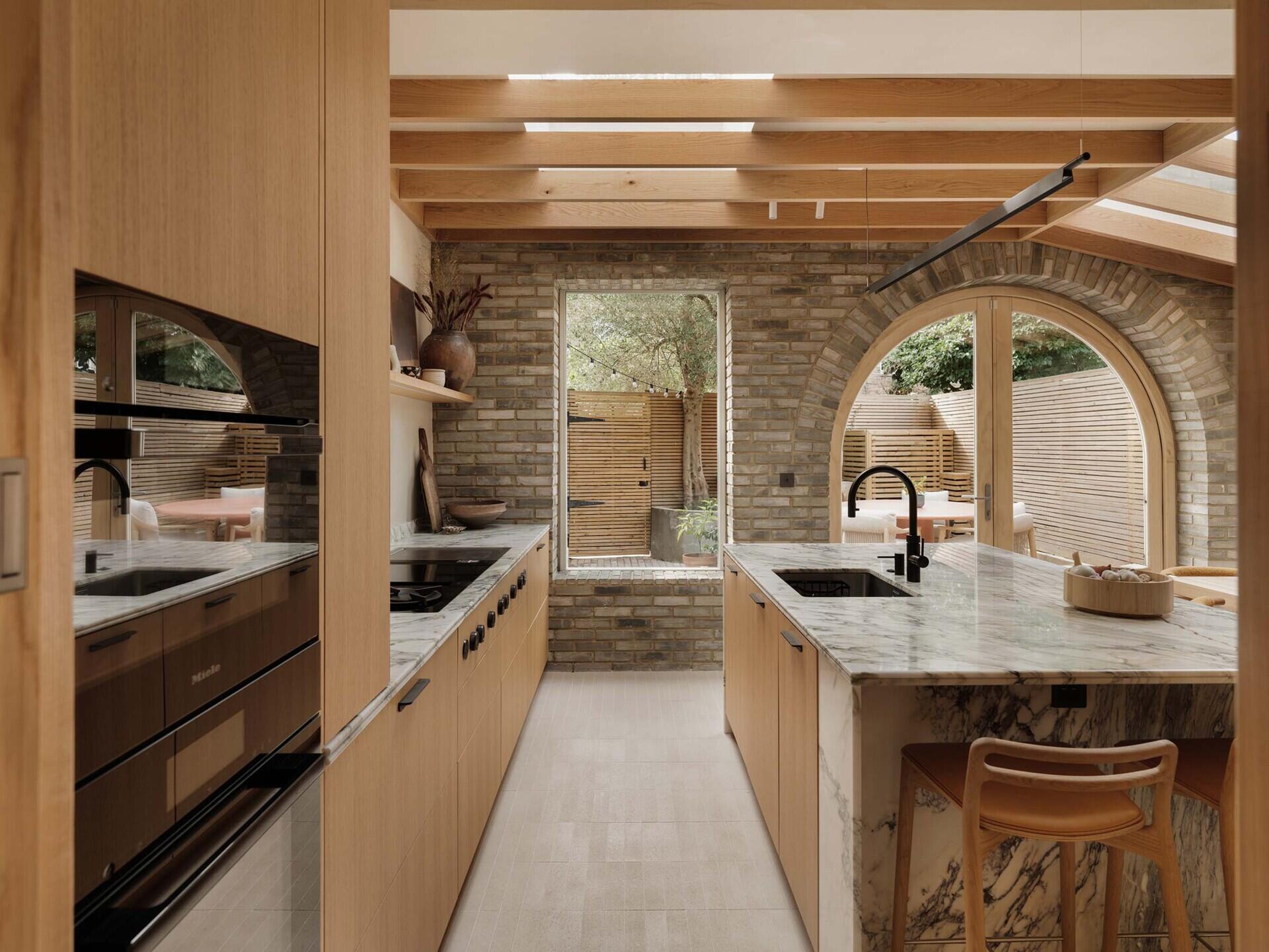
A Material-Led Kitchen That Blends Into the Architecture
The kitchen is fully integrated into the overall layout rather than treated as a separate room. A consistent material palette of timber, stone, and plaster ensures visual continuity. This approach allows the kitchen to support both everyday routines and social use without feeling disconnected from the rest of the home.
A Living Space Anchored by Vertical Volume
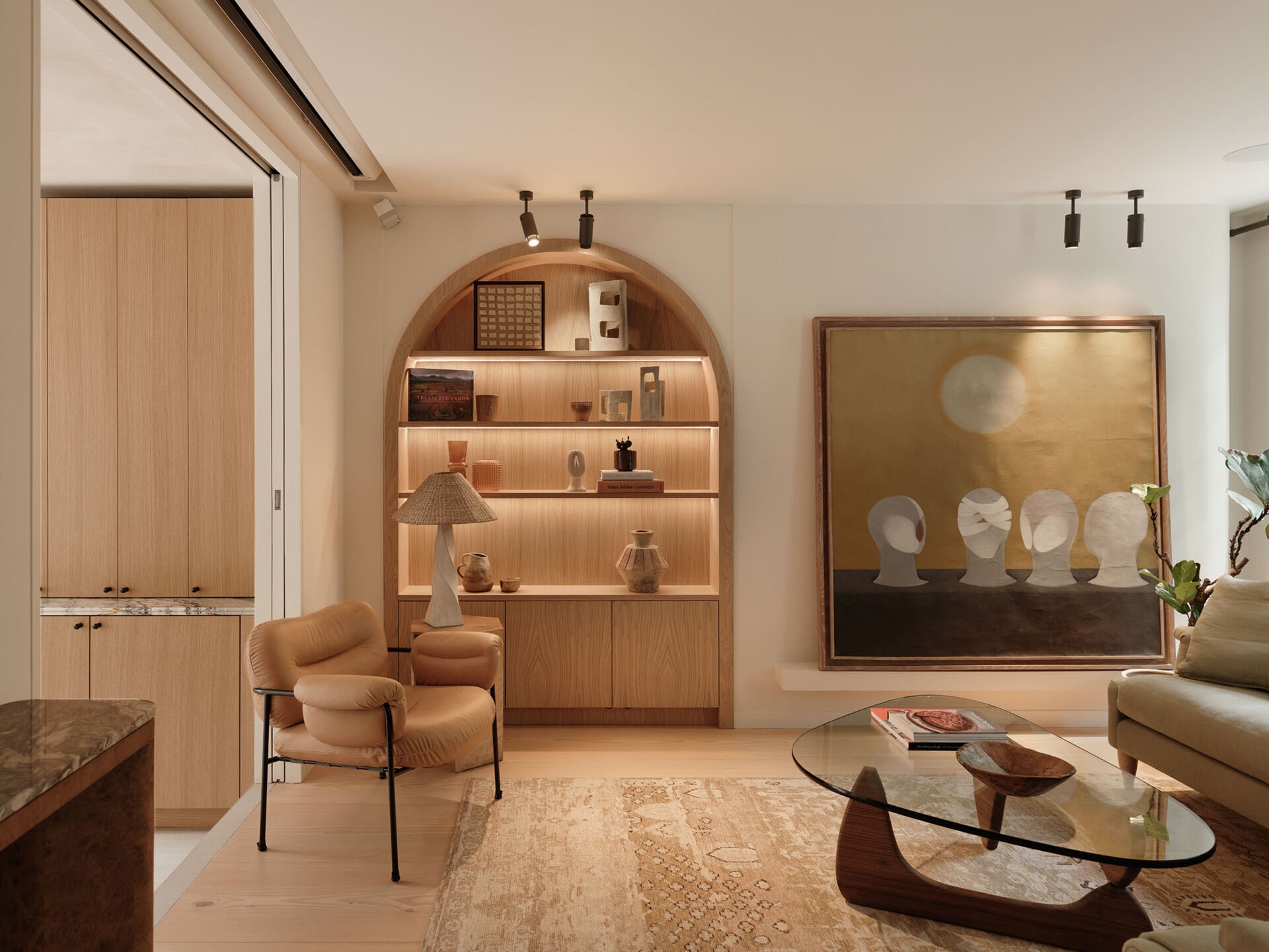
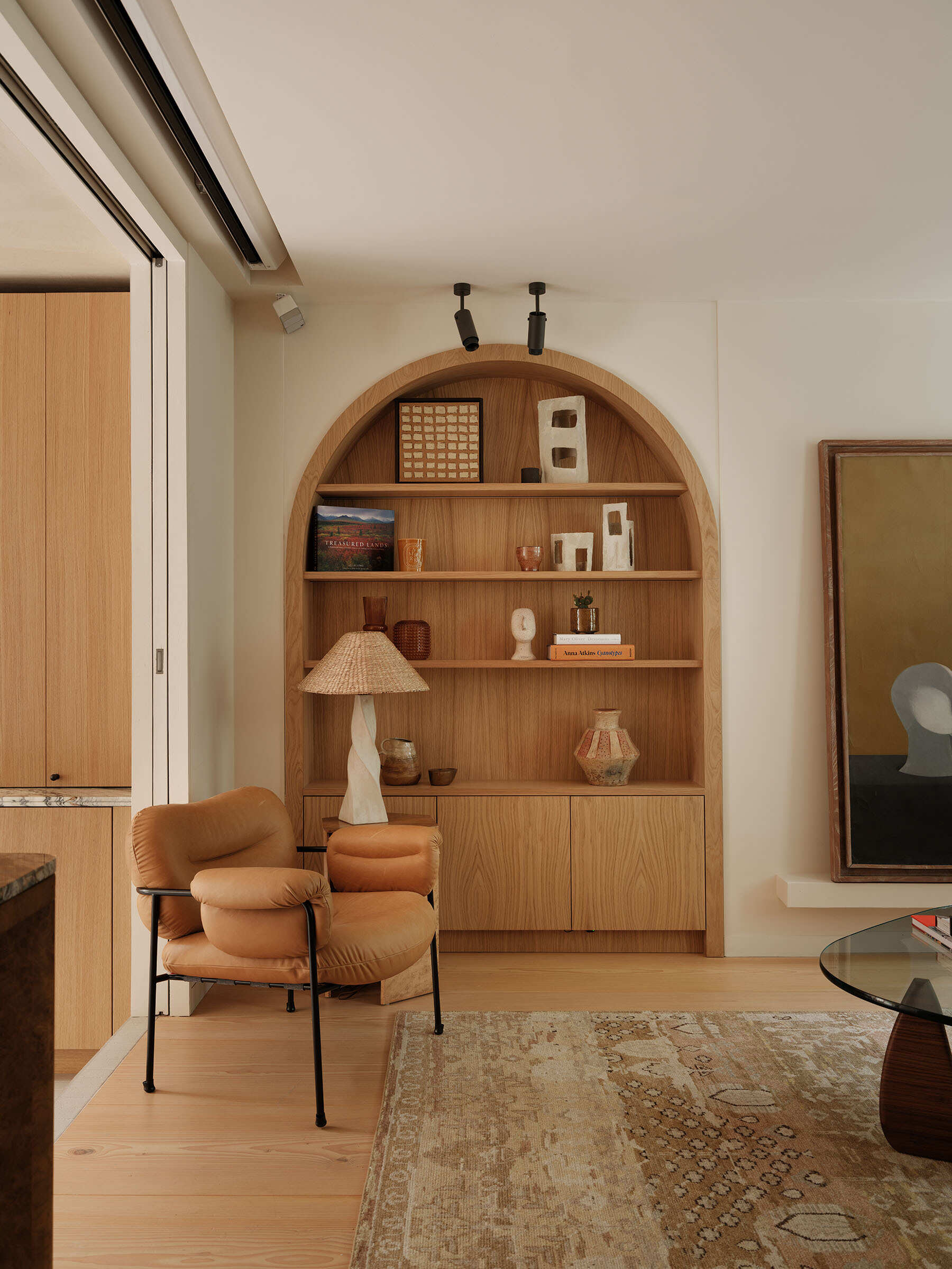
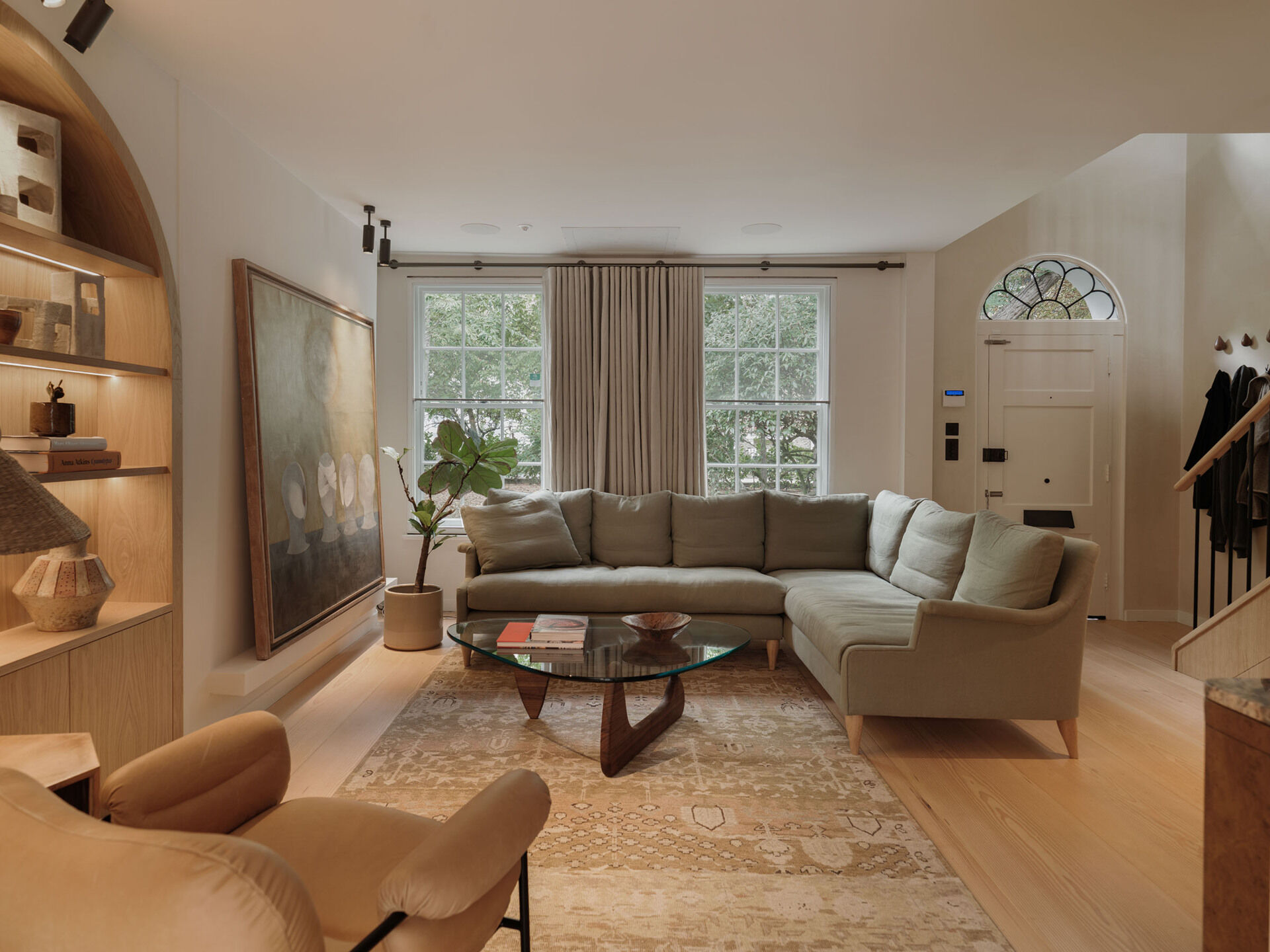
The living area benefits from the expanded footprint created by the extension. An arched shelving unit draws reference from the doors to the backyard.
The living area is also visually anchored by a vertical opening that draws light through the space and connects the ground floor to the upper levels. This relationship between floors adds a sense of openness beyond the physical footprint.
A Compact Room Defined by Texture and Warmth
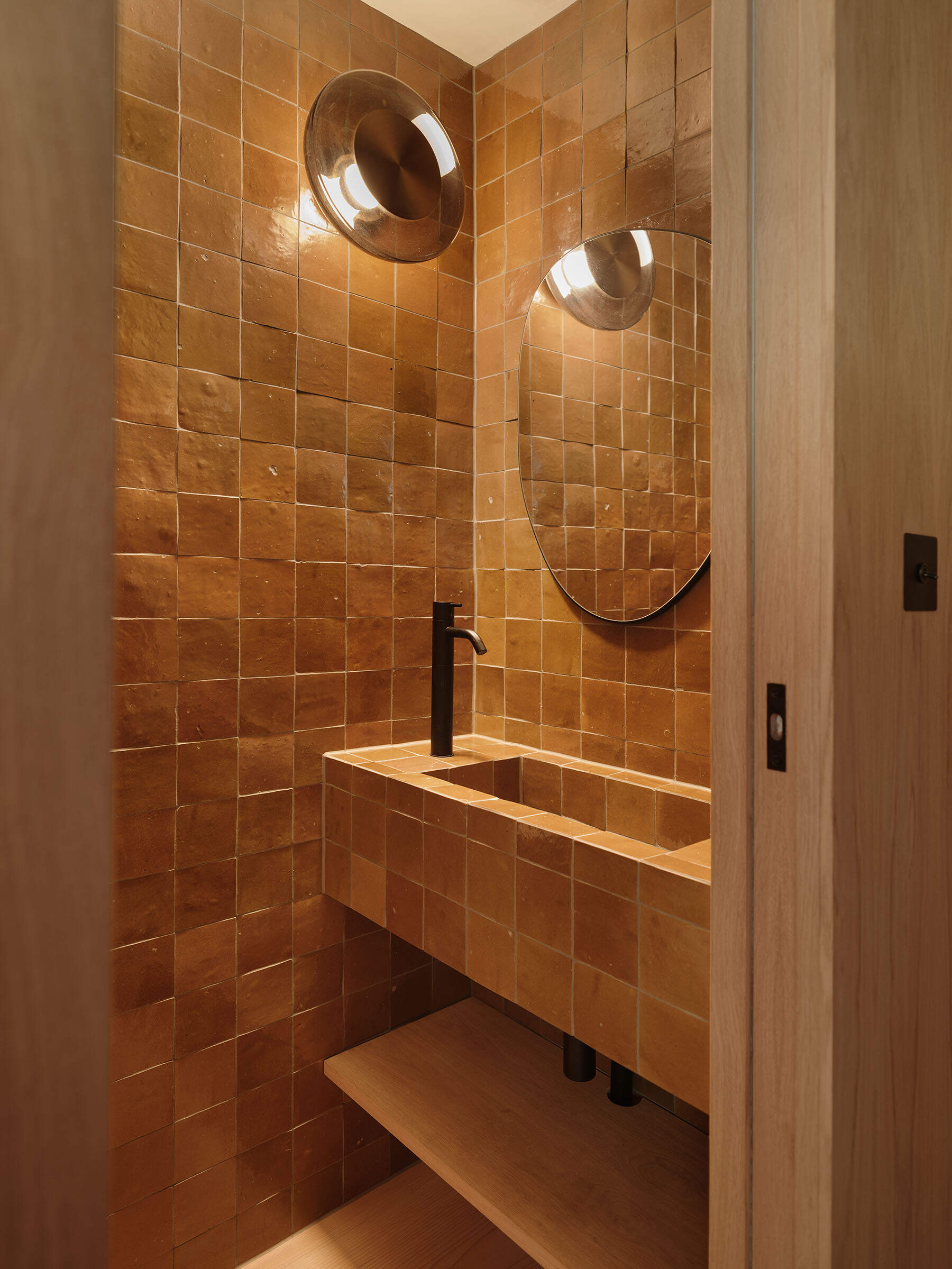
A ground floor powder room was introduced as part of the new layout. Wrapped entirely in small-format square tiles, the space feels warm and grounded, with subtle variations in tone adding depth across the walls and integrated sink.
A Sculptural Staircase That Connects Every Level
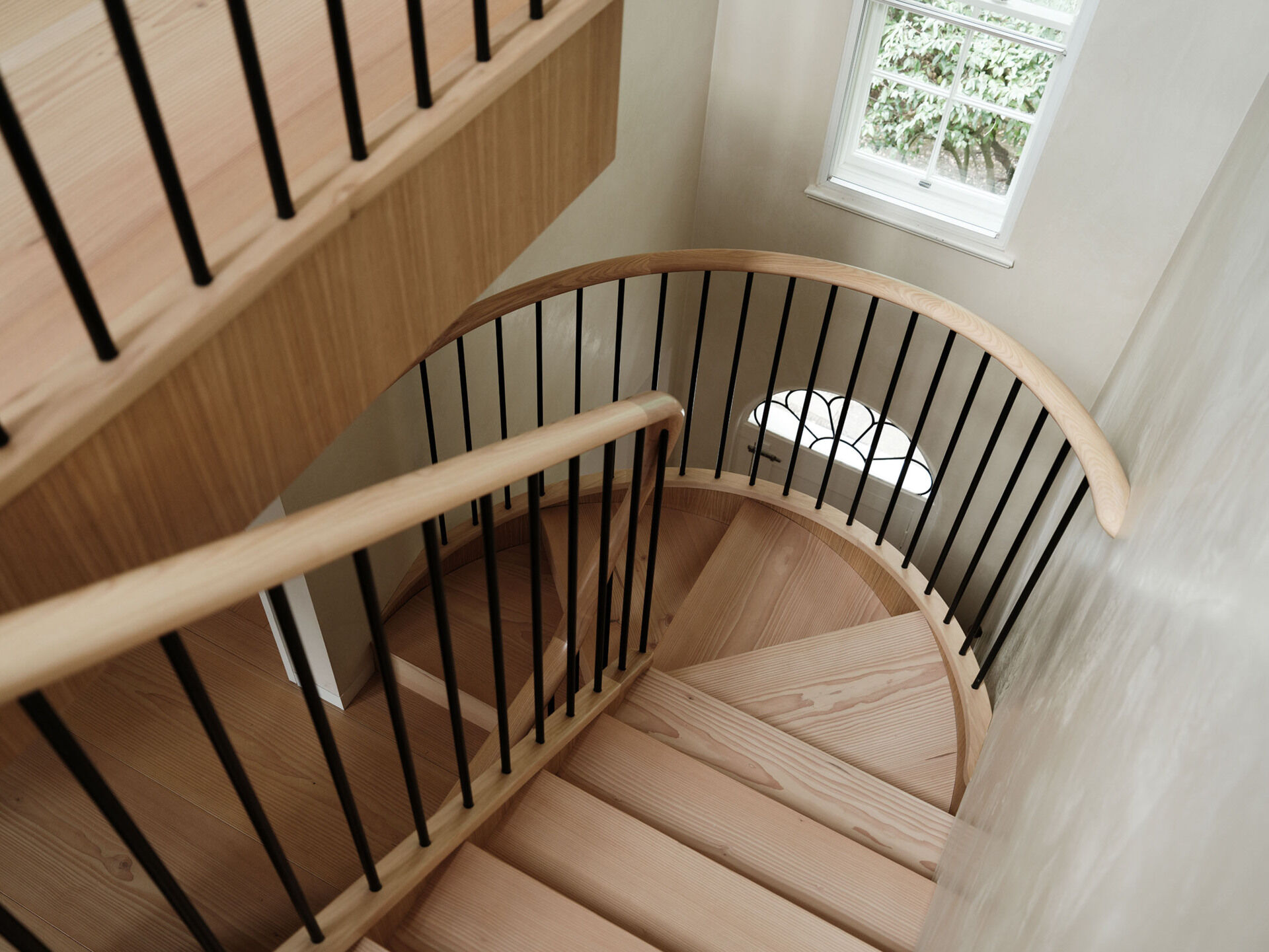
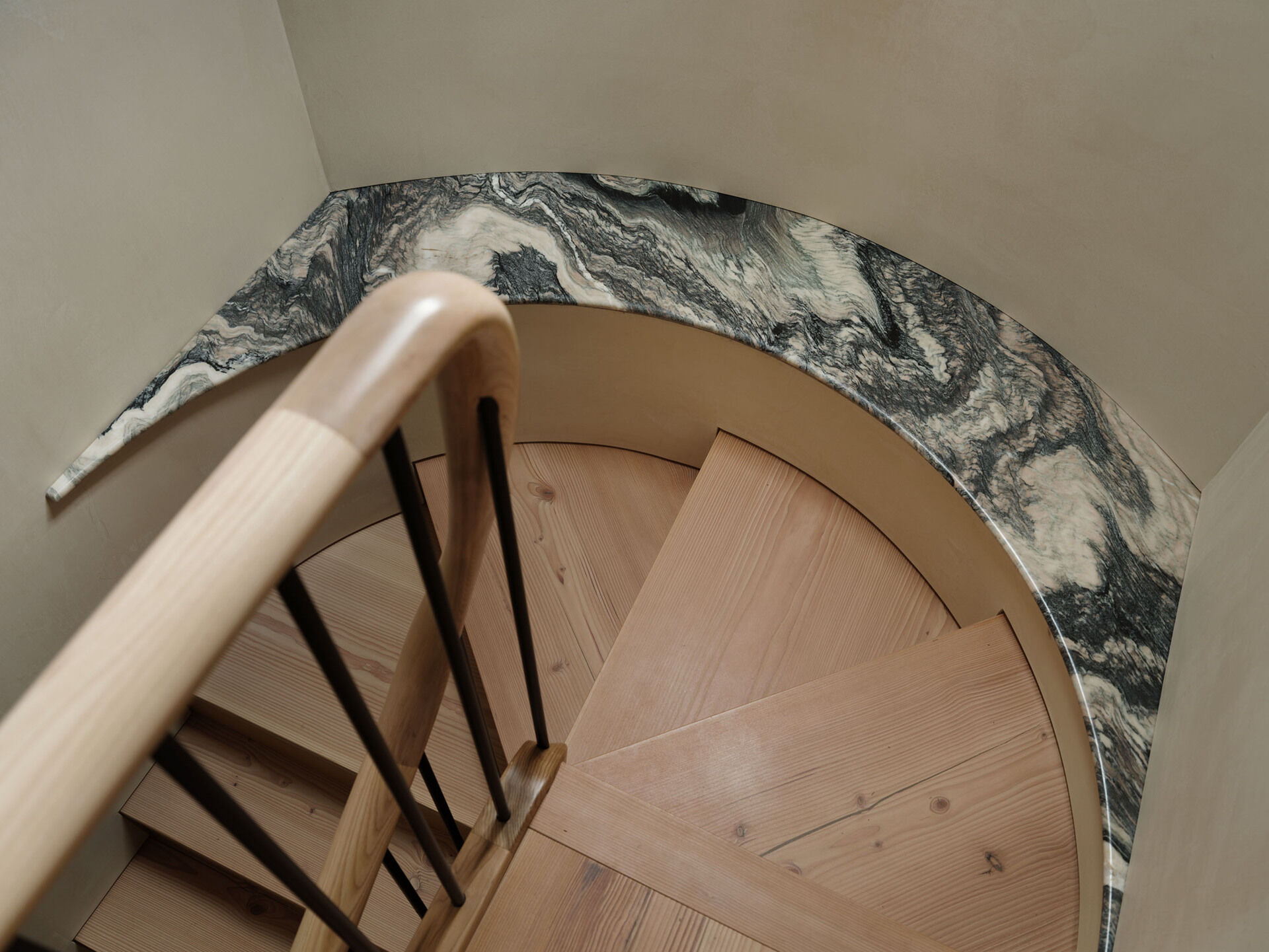
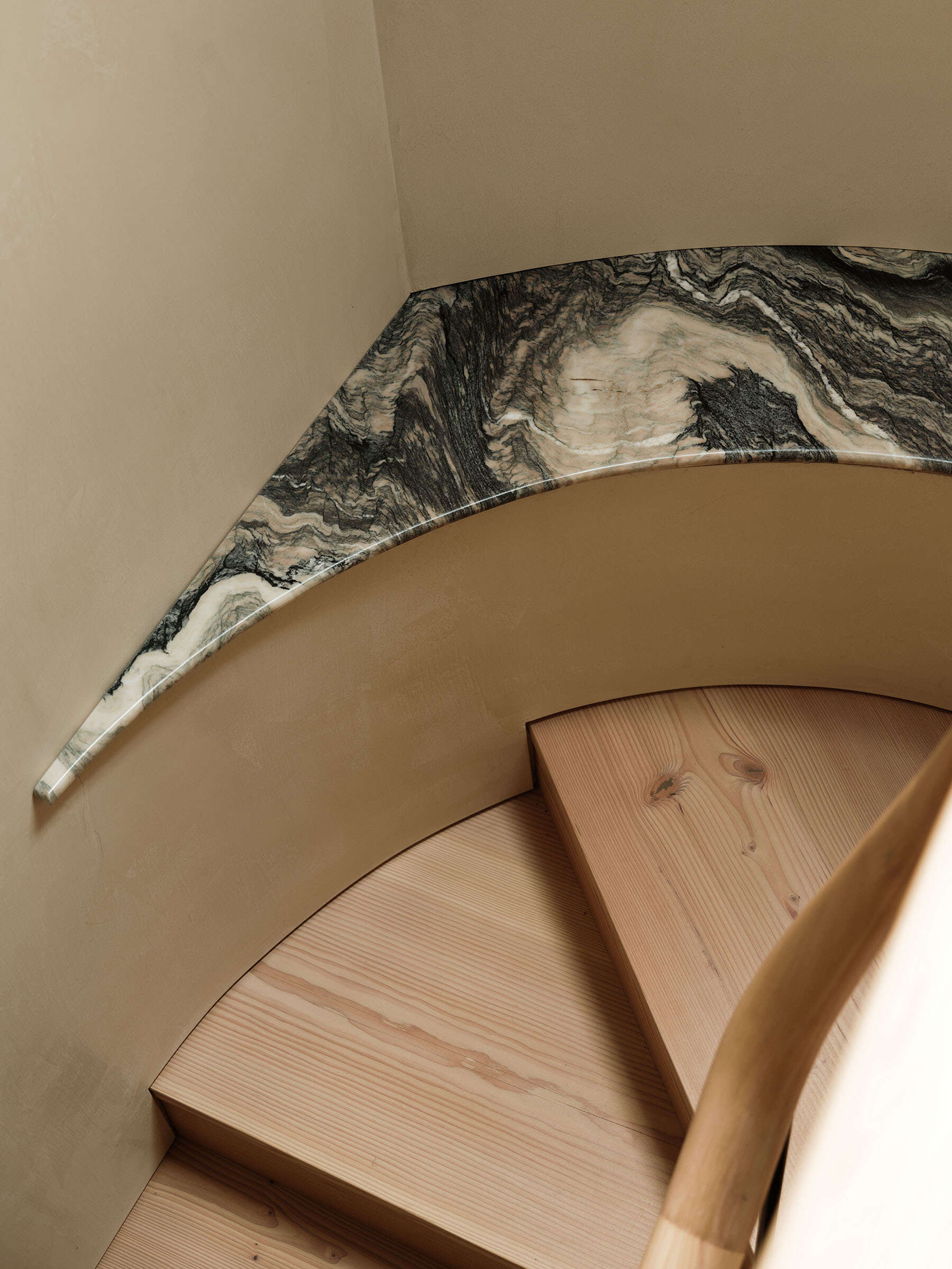
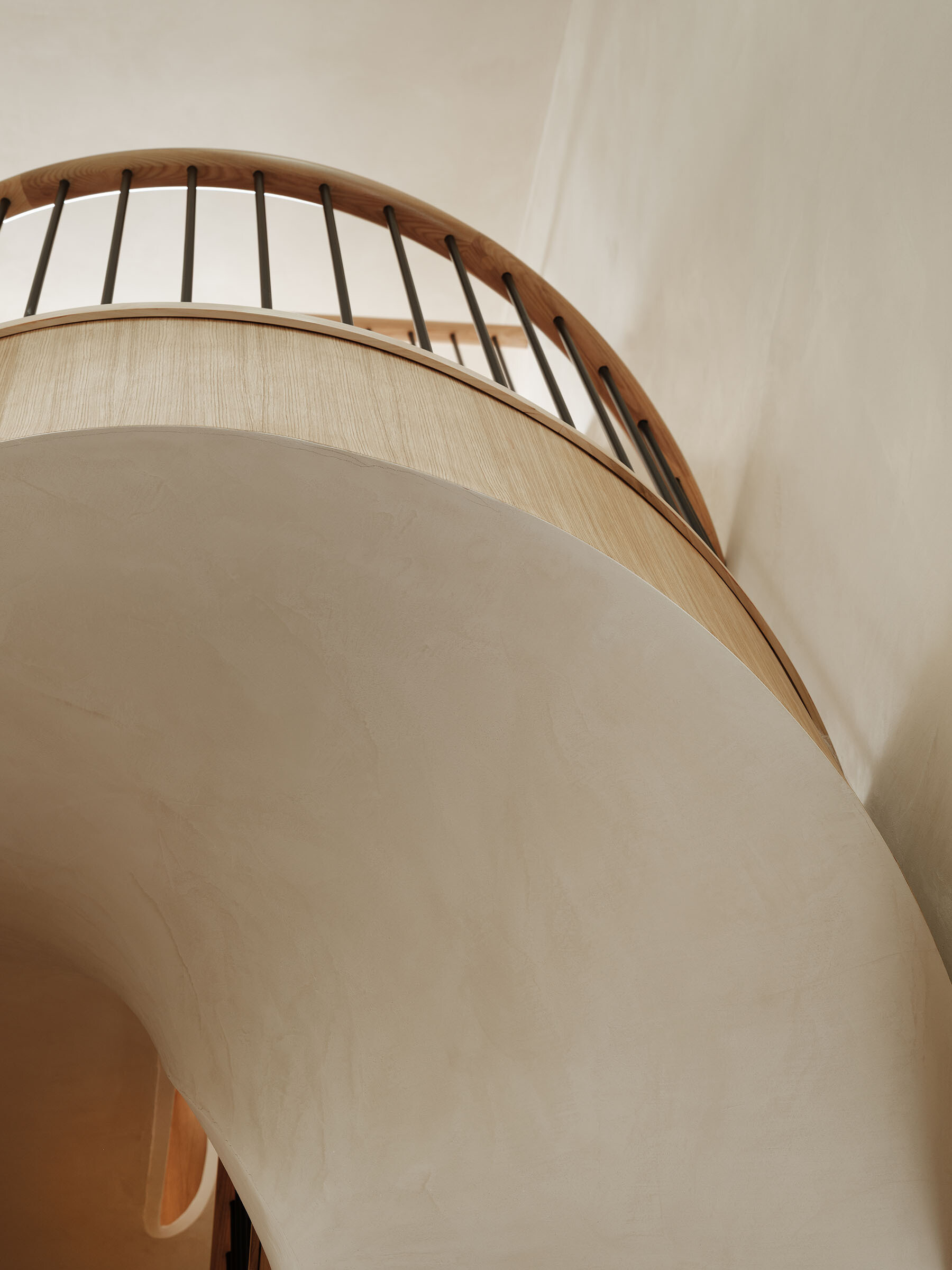
The staircase is the defining architectural element of the project. Designed as a bespoke feature with douglas fir treads and stone detailing, it rises through a three-story void. By repositioning the stair, the entrance becomes a double-height space, improving light distribution and creating a stronger connection between floors.
A Bedroom and Bathroom with Marble Details
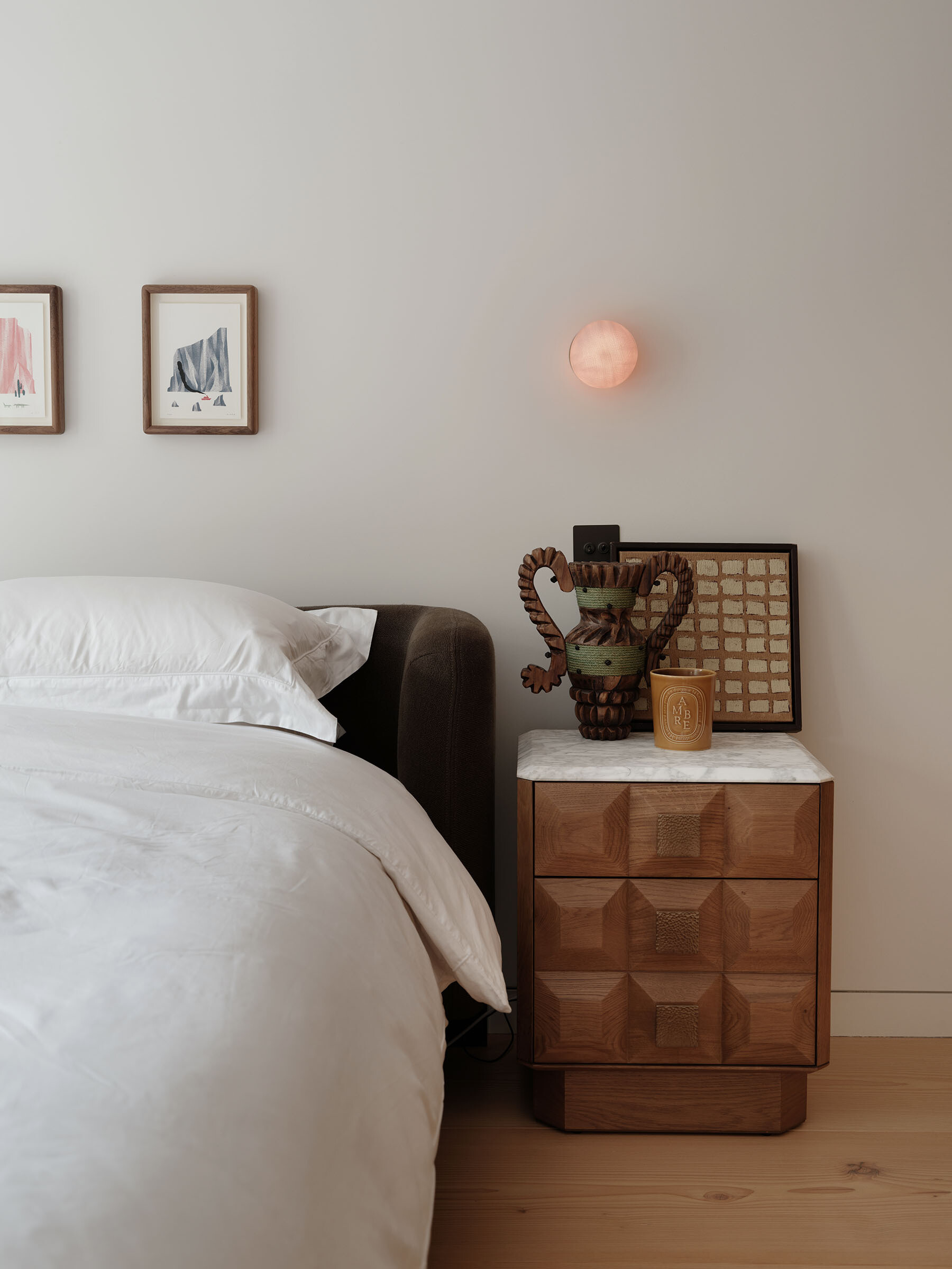
On the first floor, the primary bedroom has a simple palette of timber flooring, neutral walls, and carefully selected furniture, allowing small details to stand out. A marble-topped bedside table and warm-toned lighting introduce texture without overwhelming the space.
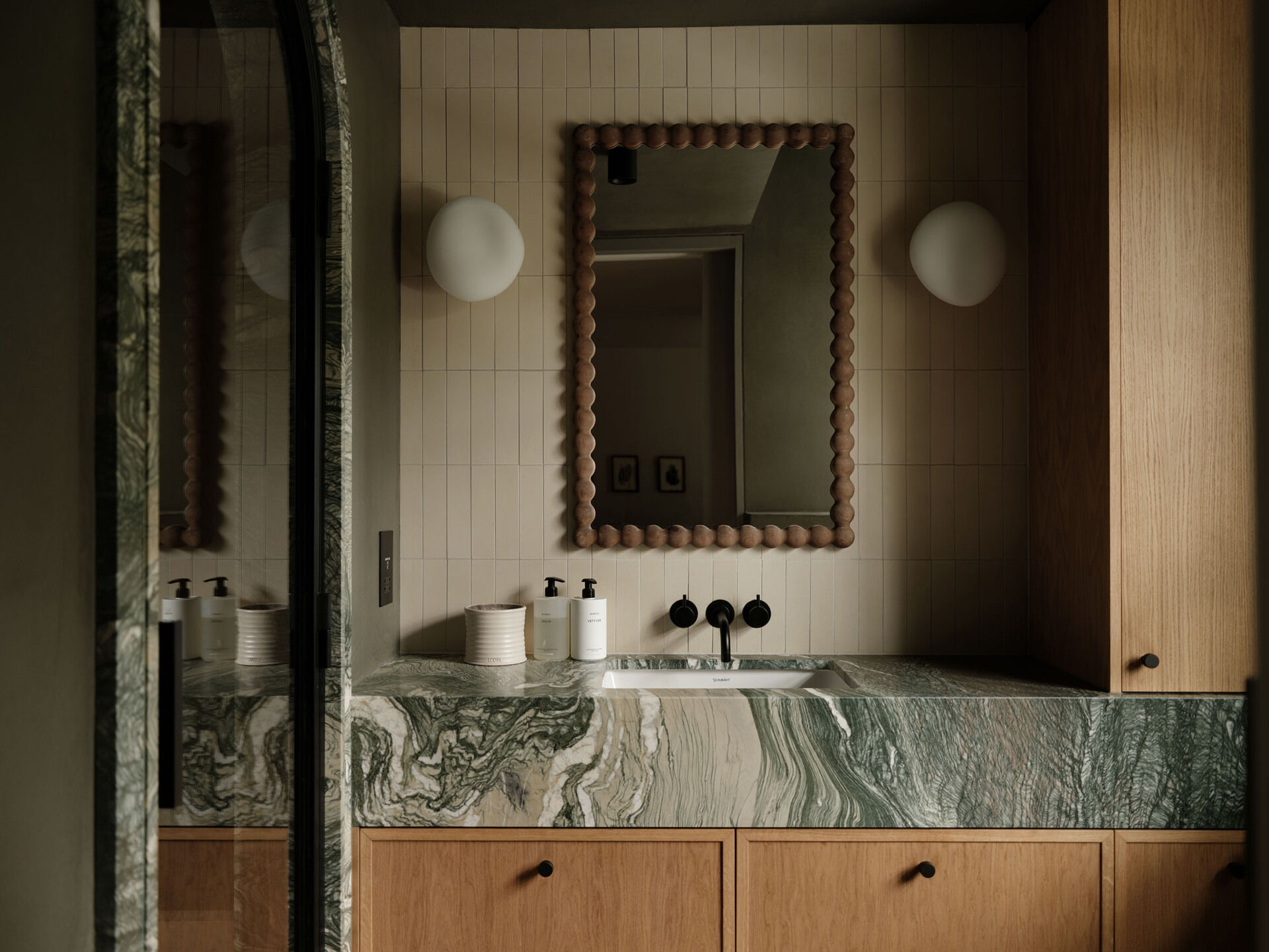
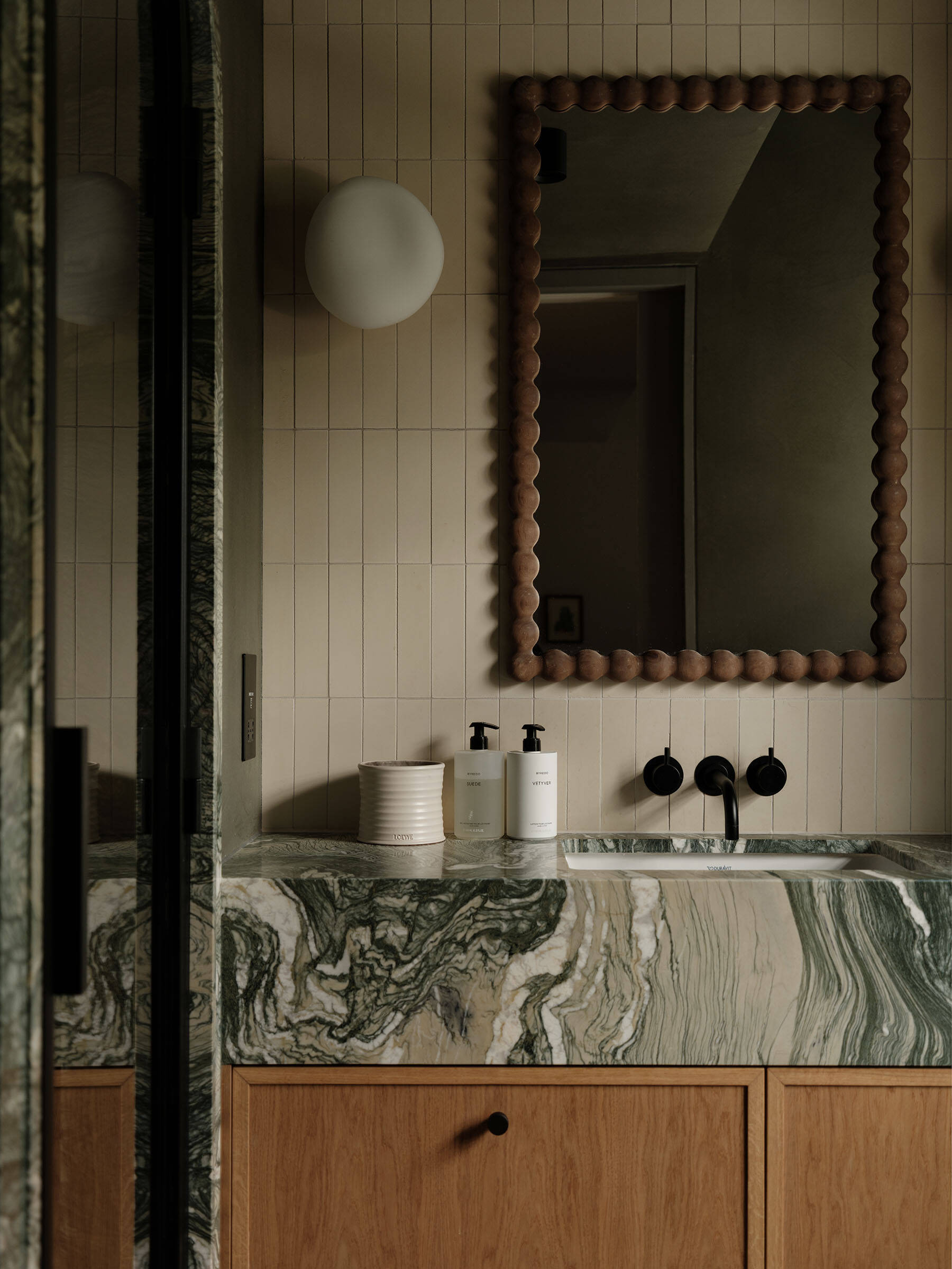
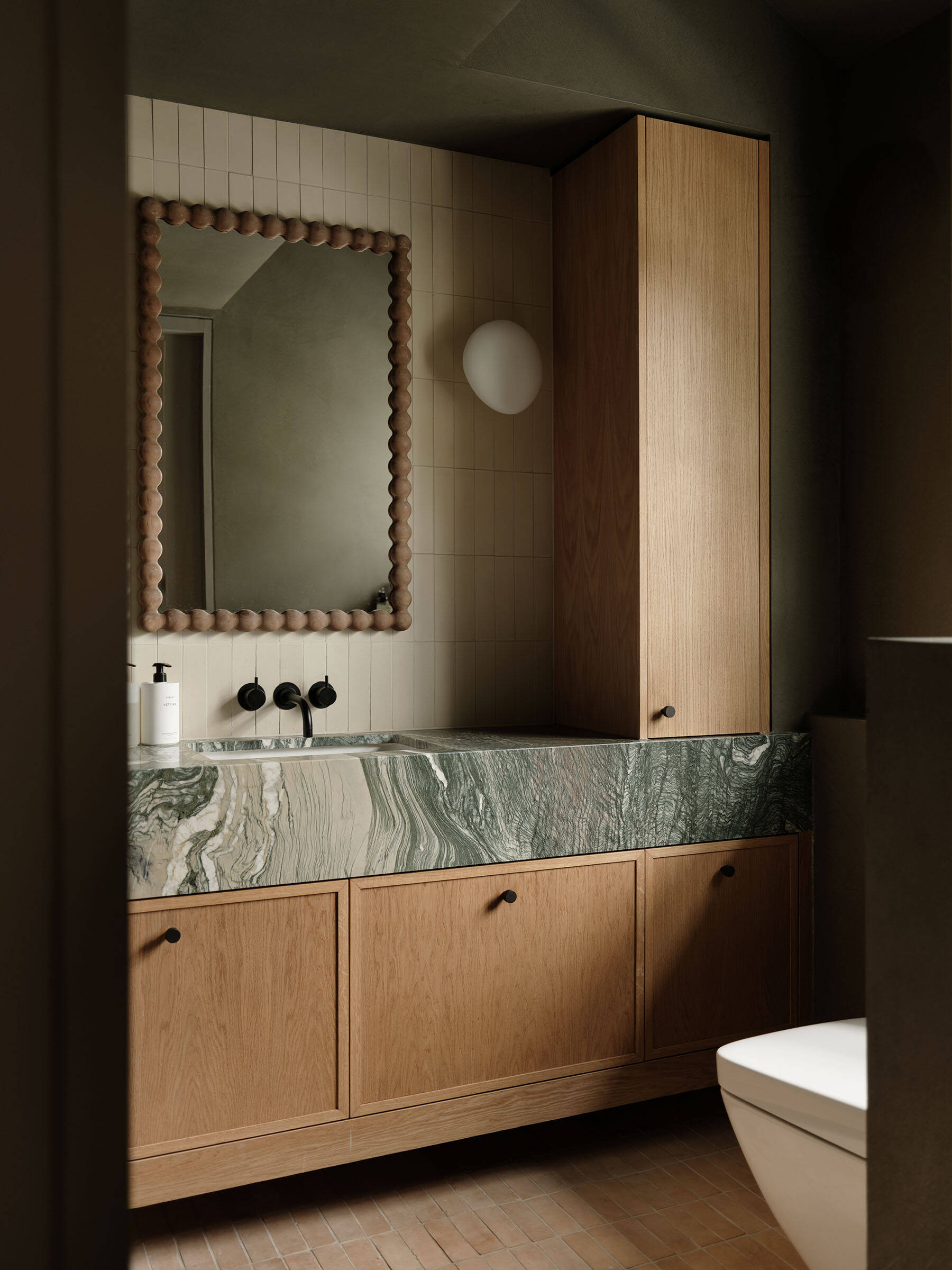
The ensuite bathroom continues this material-led approach. A marble vanity with strong natural veining anchors the room, paired with timber cabinetry and vertically laid tiles that add subtle rhythm to the walls.
By combining an open layout with a consistent material palette of lime plaster, marble, timber, and brick, the design achieves a balance between tradition and modern living, creating a home that feels both functional and cohesive.