In Seattle’s Walnut Street neighborhood, a 1931 Craftsman once felt quietly constrained, its charm intact but its footprint no longer keeping pace with a growing family. When twins arrived, bringing the household to six, the home designed for a different era began to show its limits. Tasked with reimagining the space, Wittman Estes approached the project not as a replacement, but as a careful extension, one that could hold onto the home’s historic character while introducing a more fluid, modern way of living.
The result is an expansion that stretches both upward and outward, adding 713 square feet while subtly reshaping how the house connects to itself, and to the outdoors.
A Familiar Craftsman, Subtly Reshaped
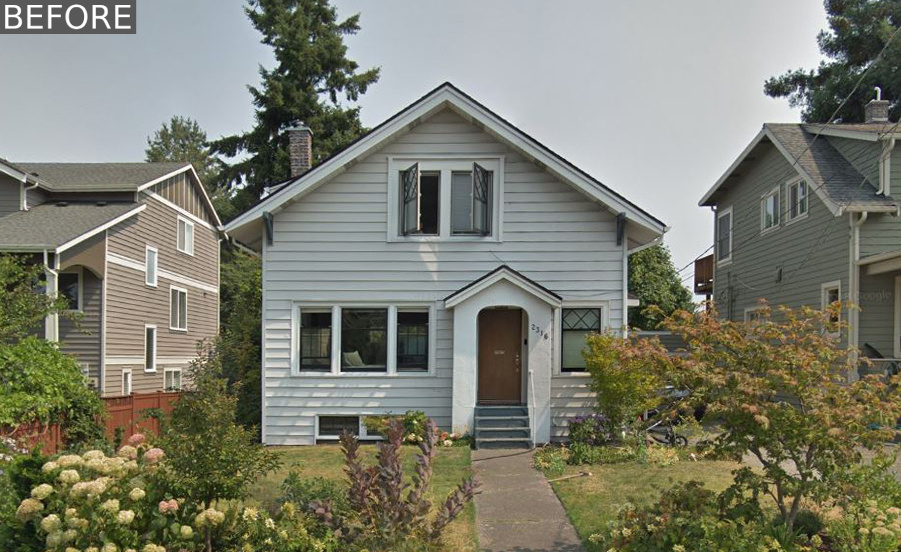
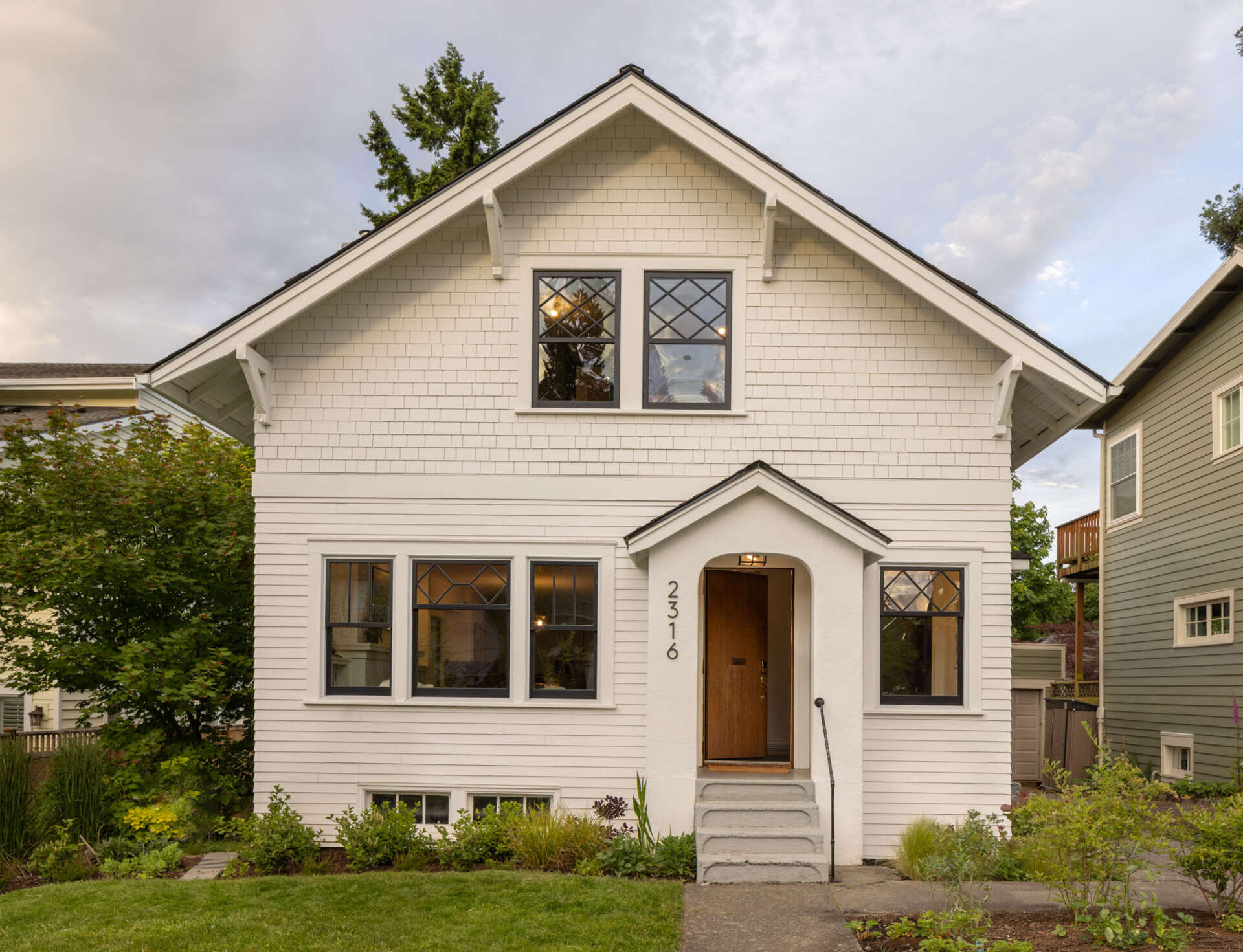
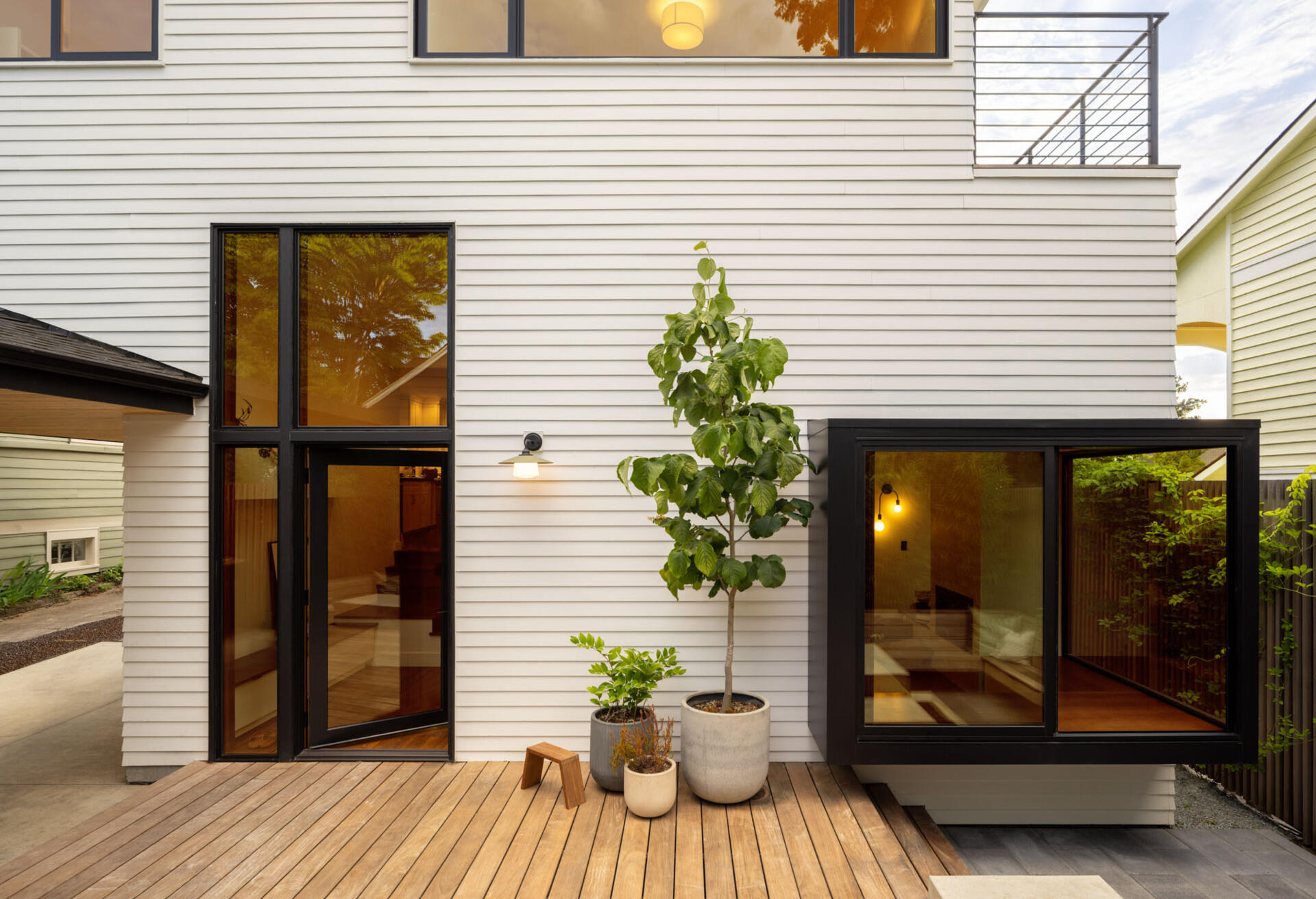
From the street, the home still reads as a Craftsman, grounded in tradition but sharpened with restraint. The updated exterior leans into that balance, pairing classic lap siding and composite shingles in a soft white with deep black trim that outlines the structure with clarity.
Where Old Interiors Begin to Open Up
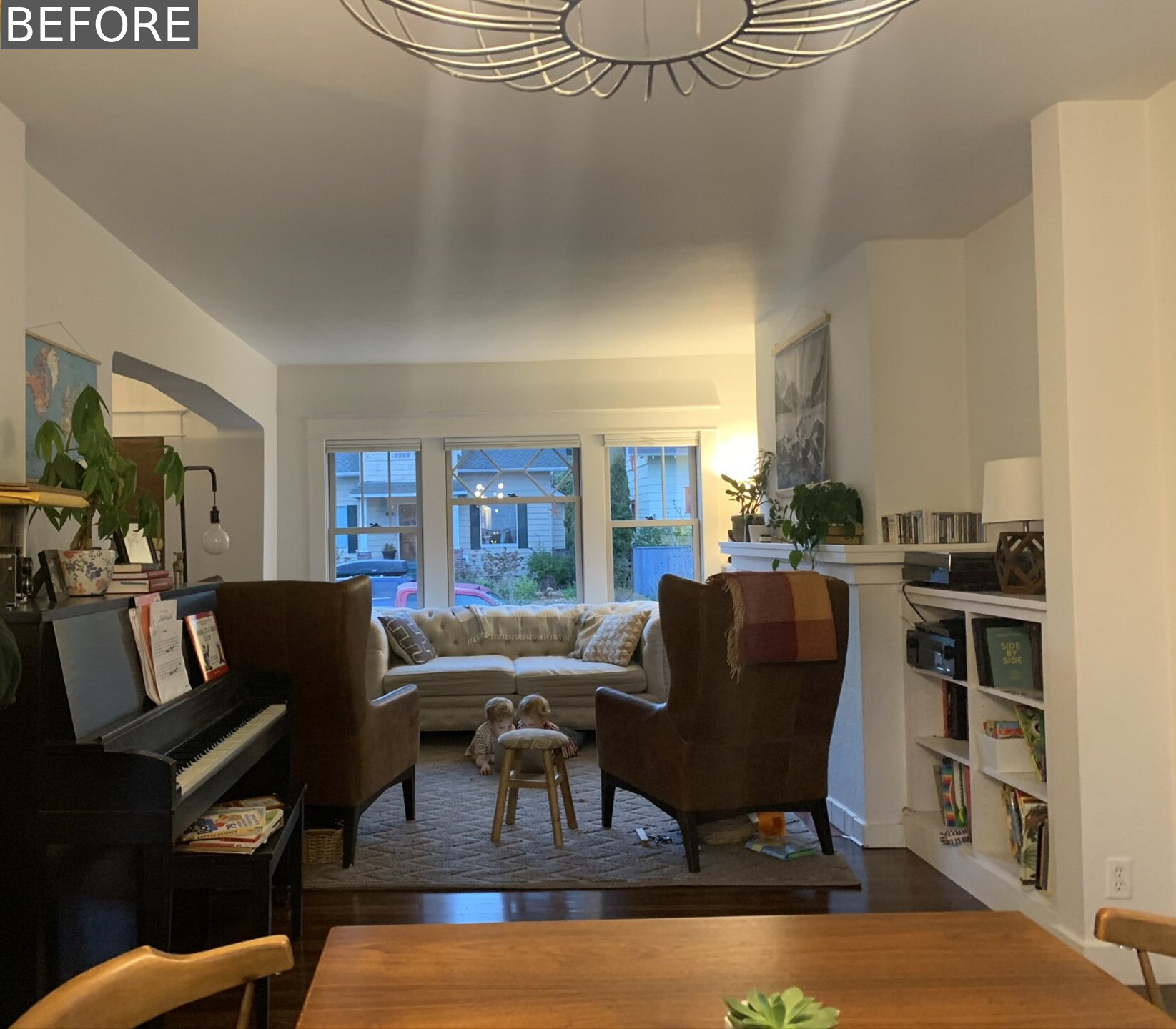
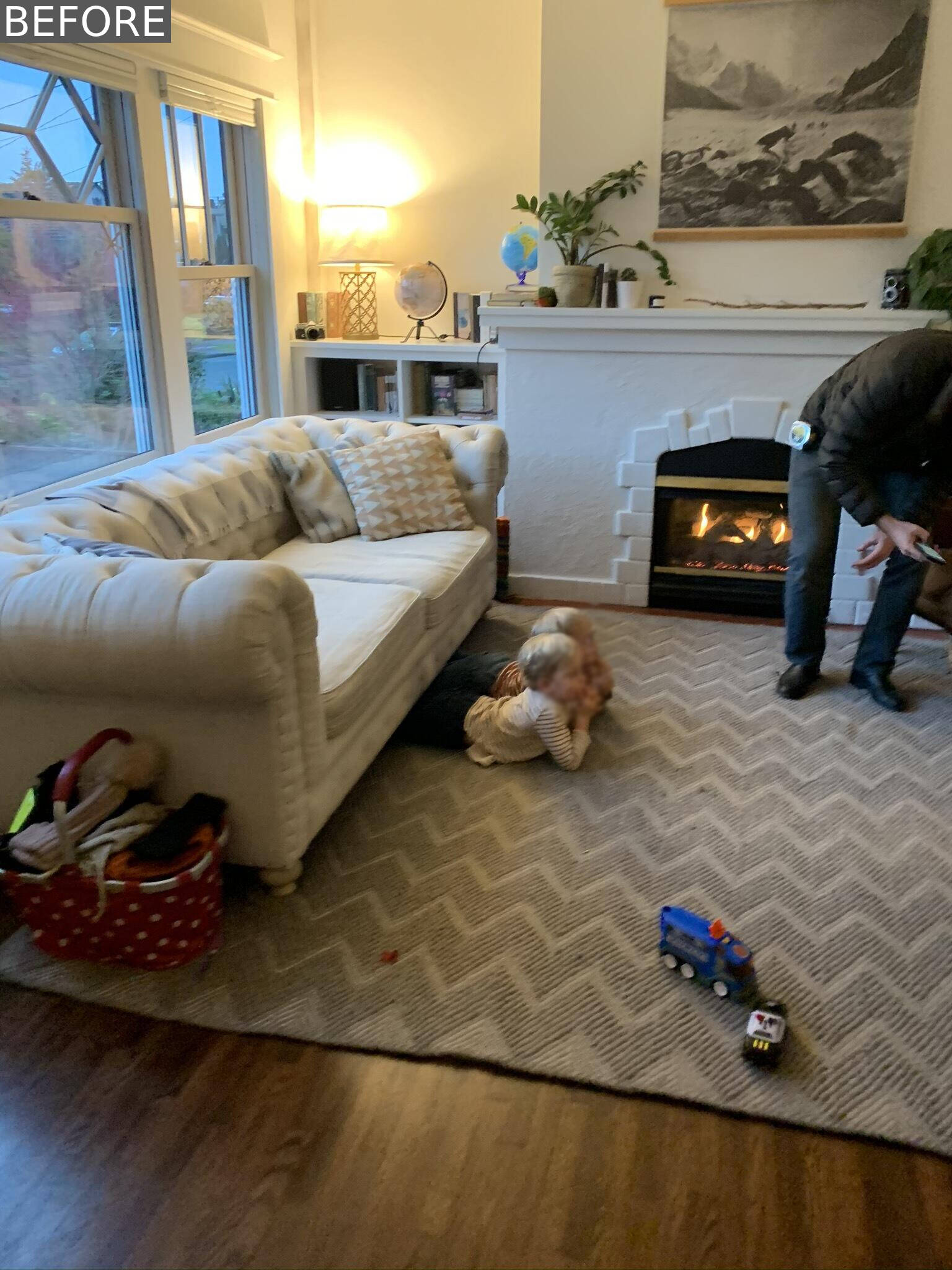
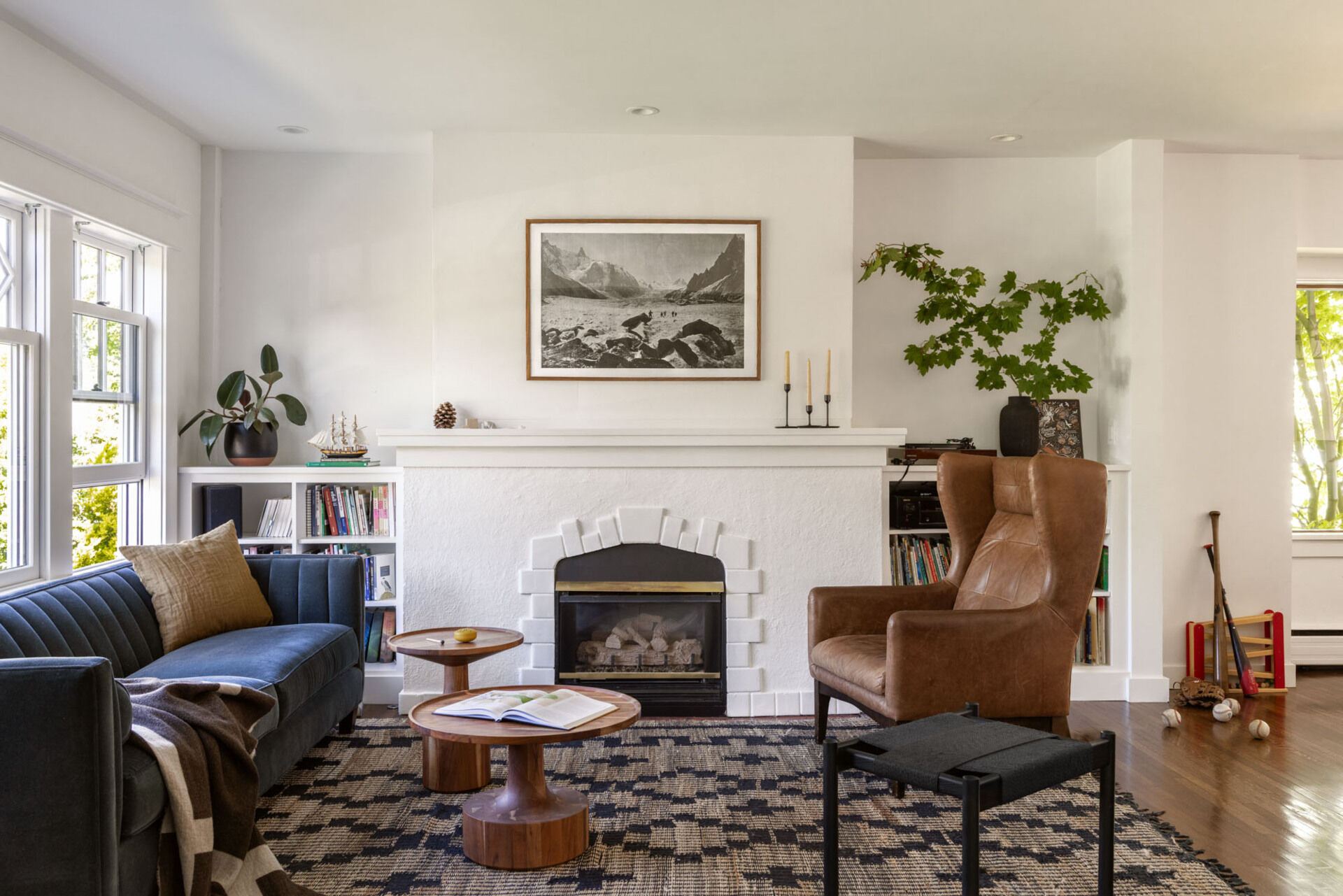
Inside, the transition from old to new is handled with care. The original interiors, once compact and segmented, now open into spaces that feel more continuous. Light moves more freely, and the palette of white walls and warm wood tones softens the boundary between past and present.
Where the house once felt closed off, the reworked parlor begins to hint at connection. It’s less about a single defined room and more about how spaces begin to speak to each other, setting the tone for what unfolds deeper into the home.
Reworking the Heart of the Home
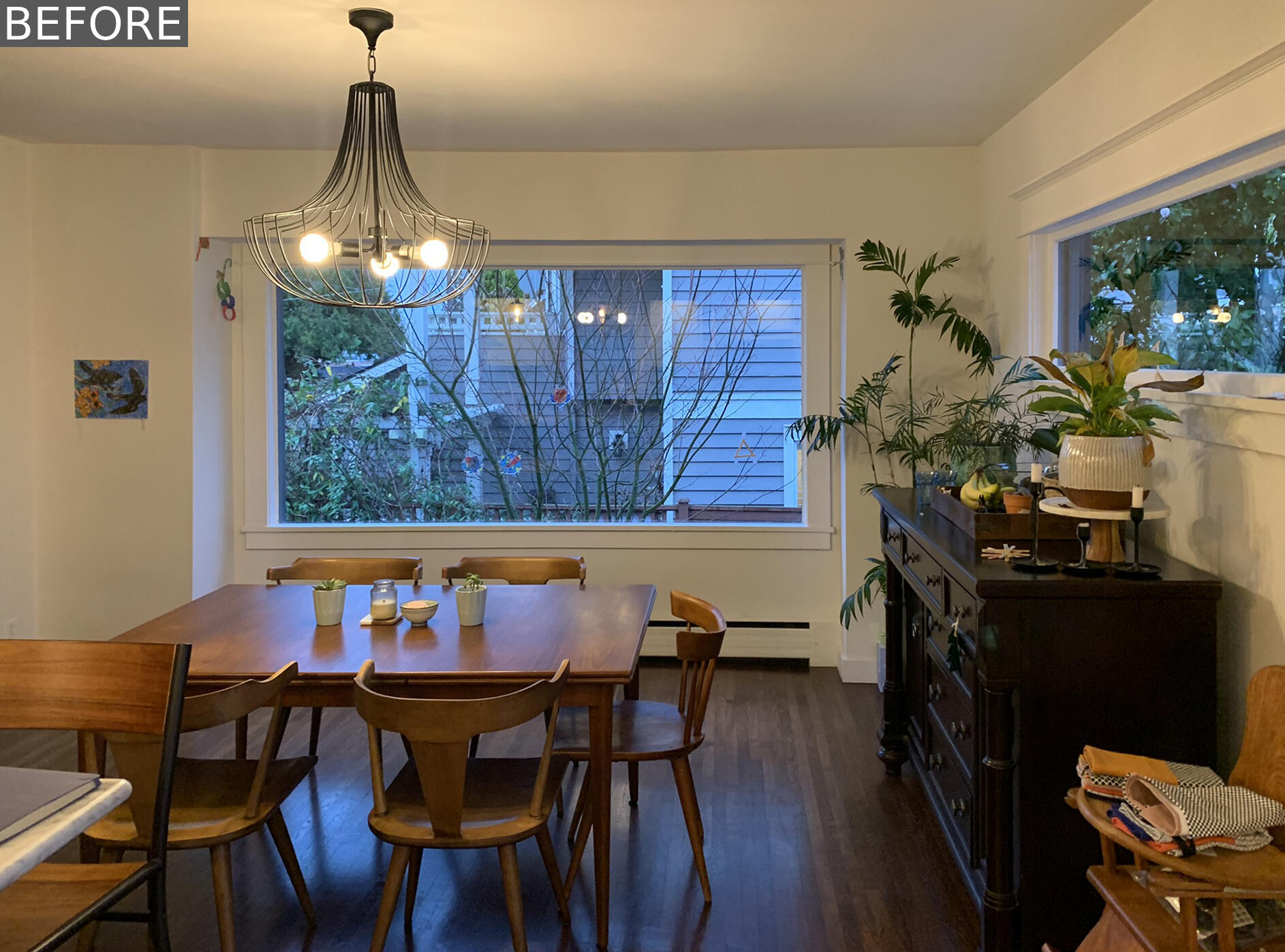
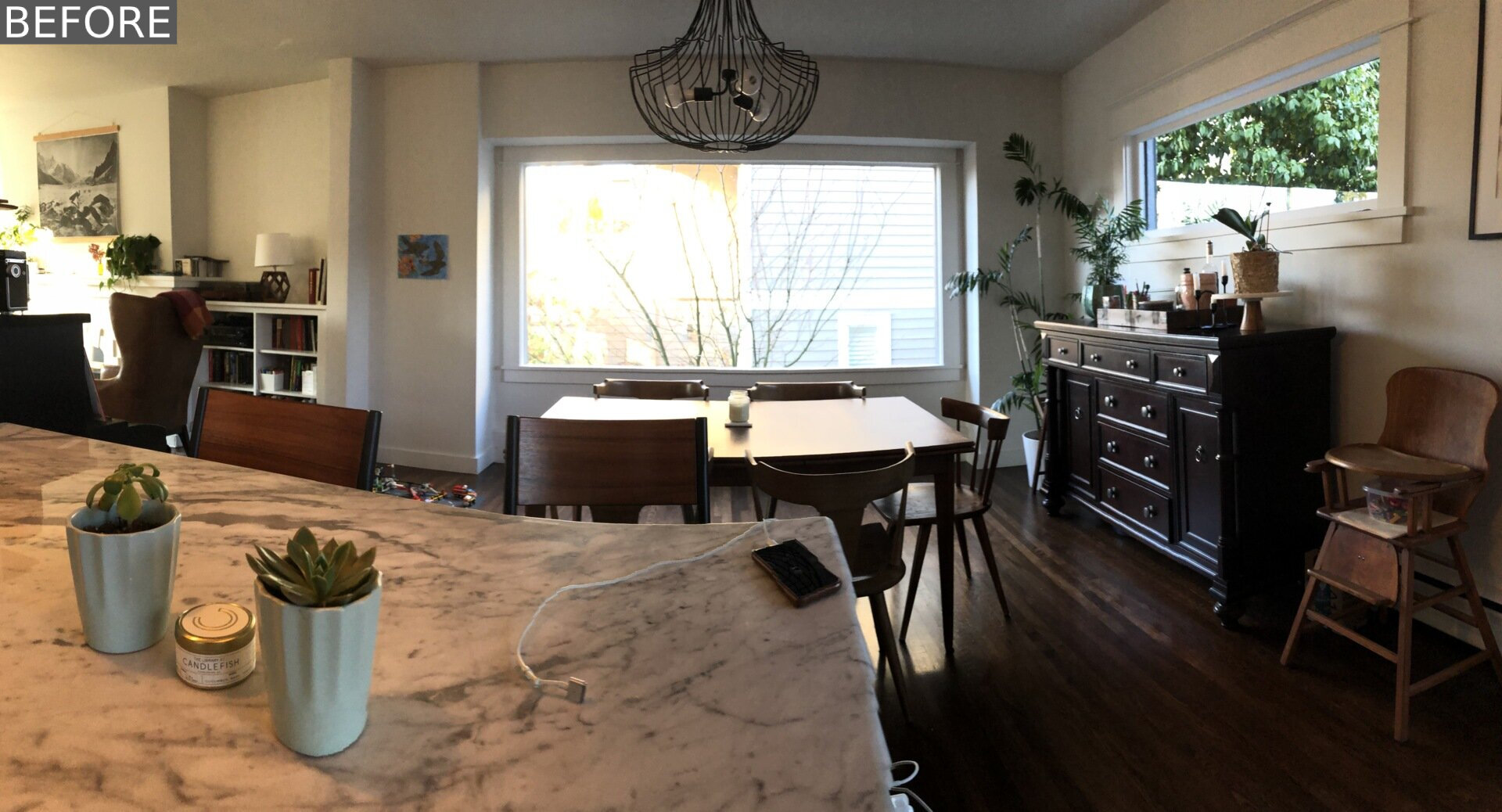
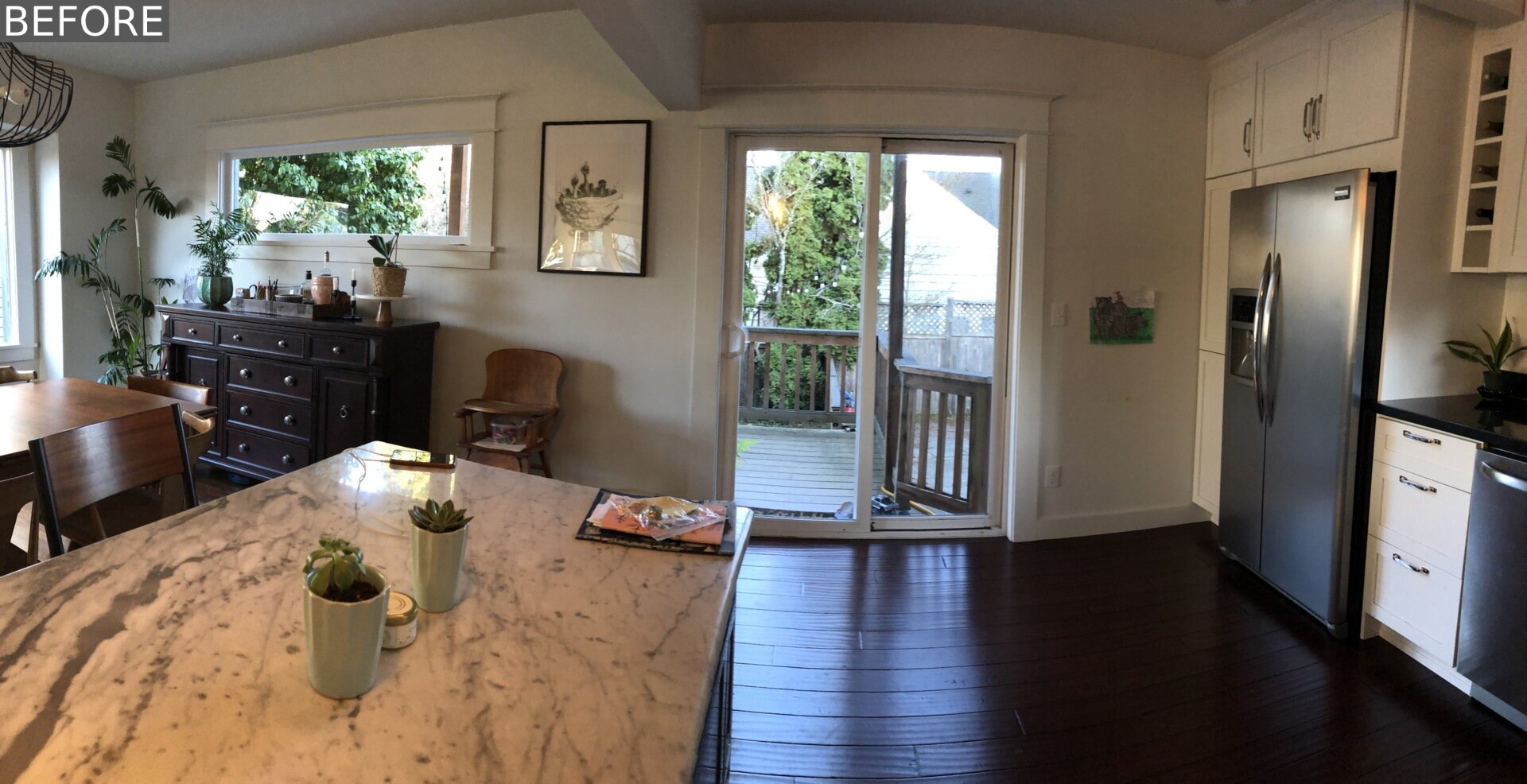
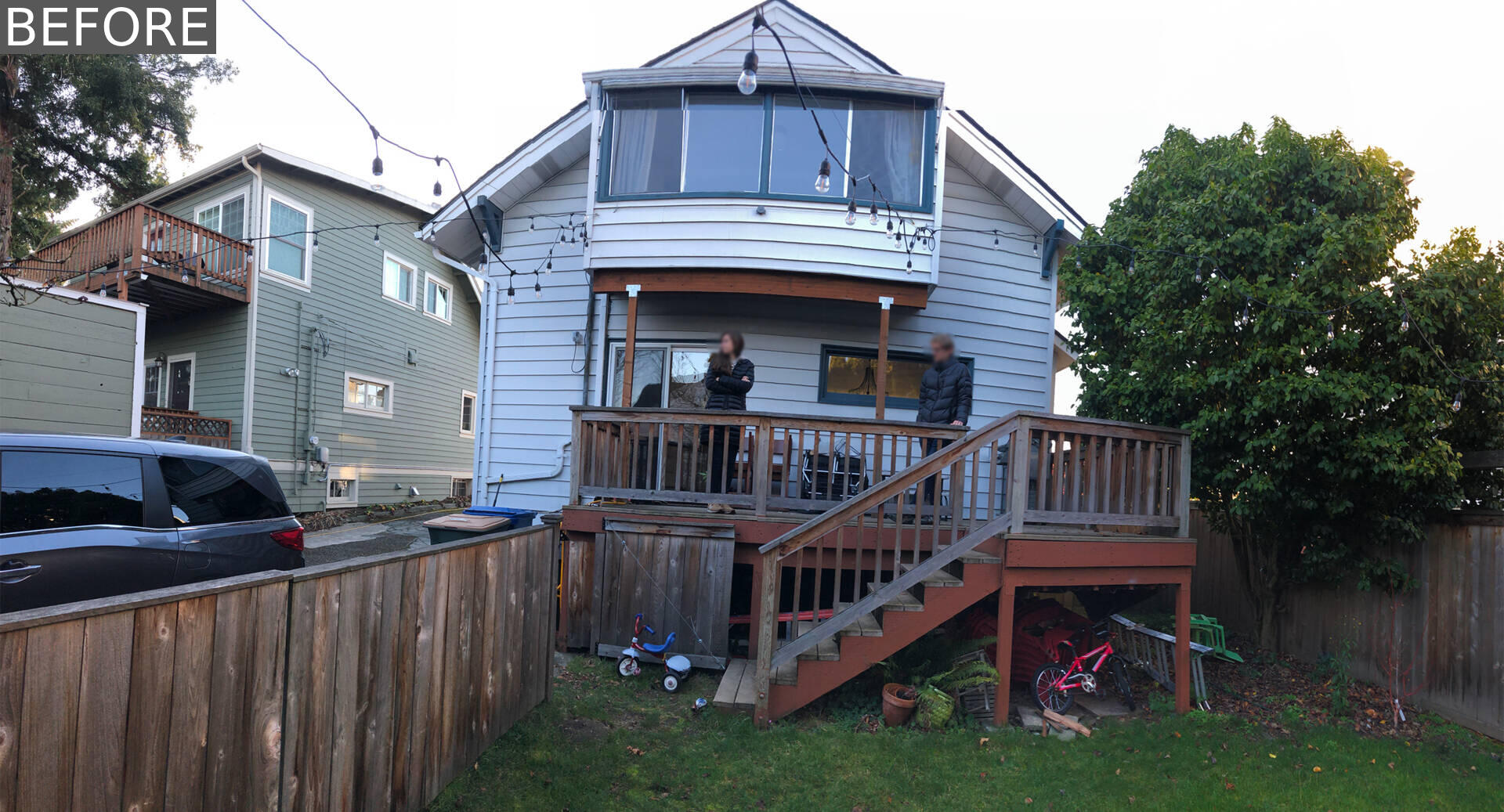
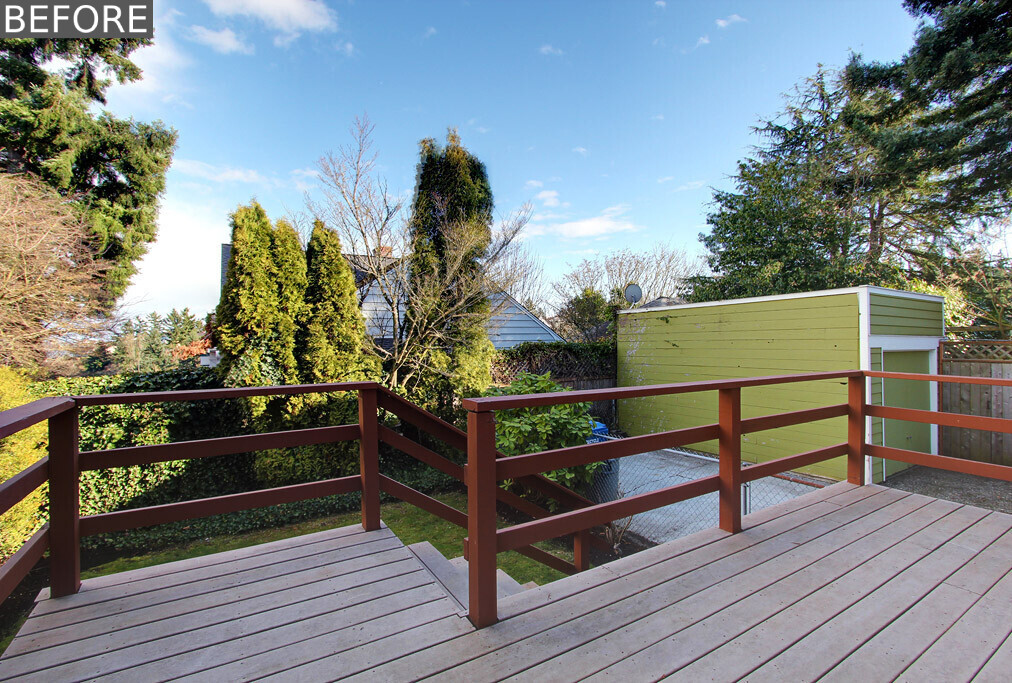
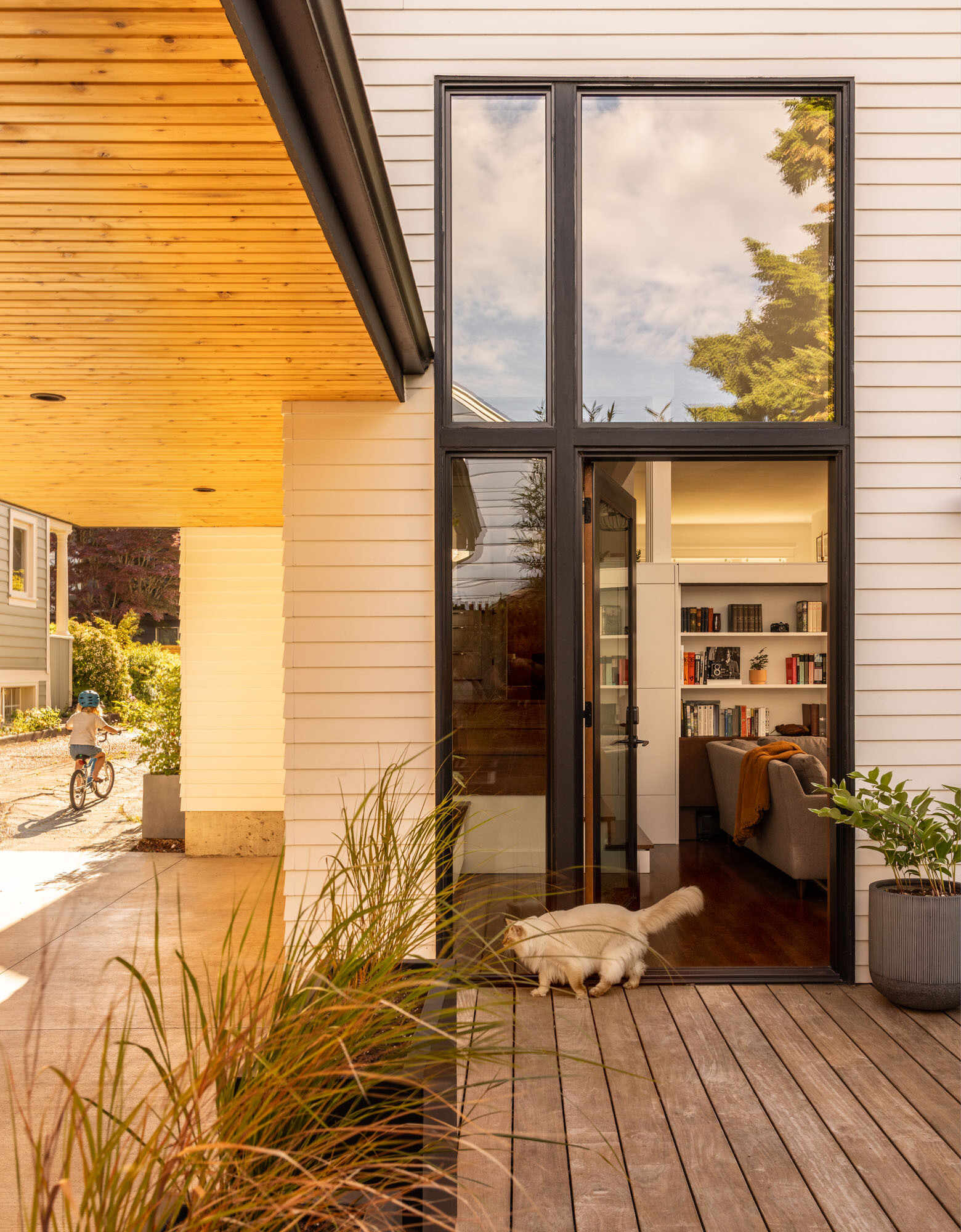
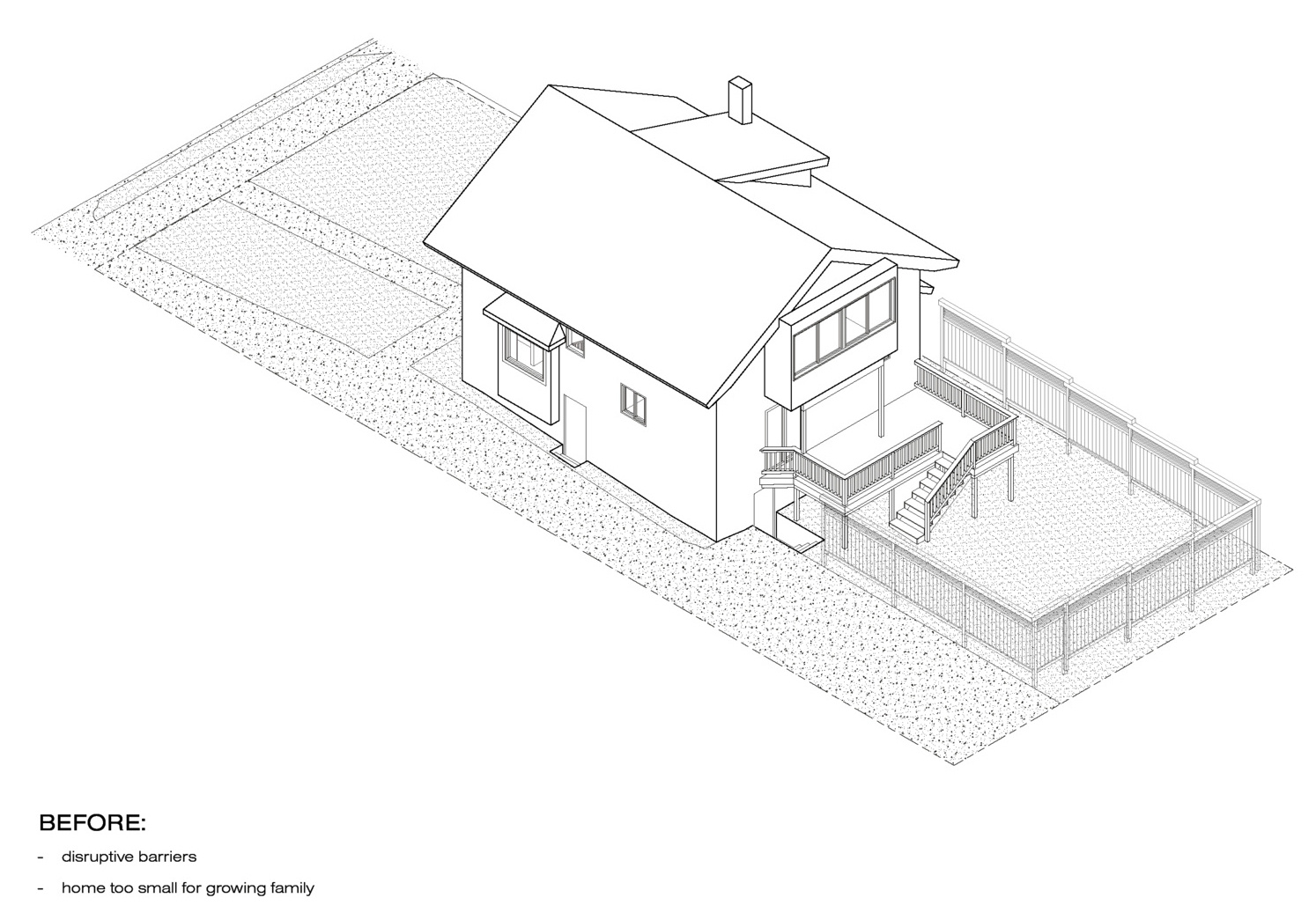
Previously, the kitchen and dining area hovered awkwardly above the ground, elevated and disconnected, opening onto a deck that interrupted rather than encouraged movement outside. That disjointed relationship has been rethought entirely.
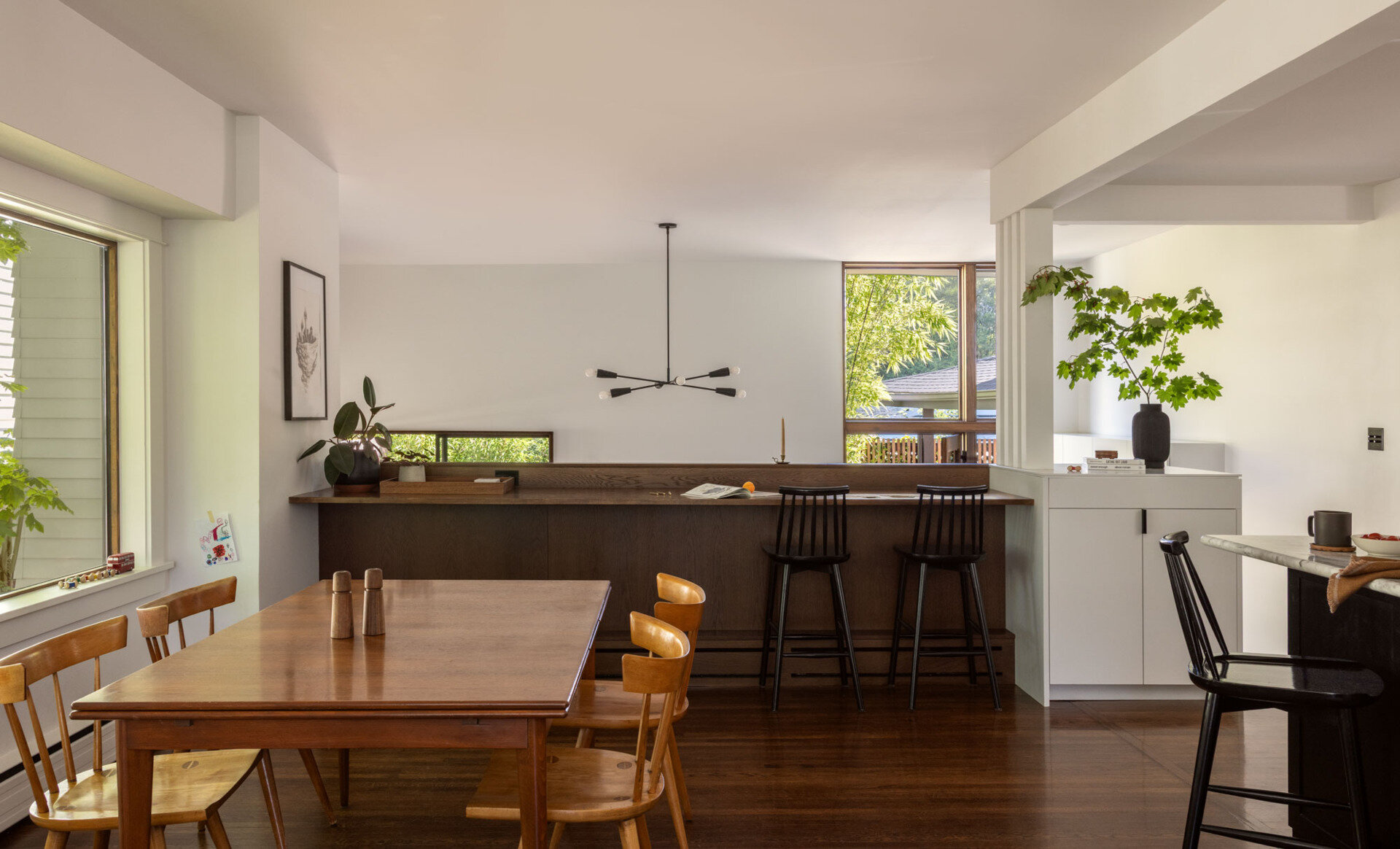
Now, the kitchen and dining area remain central, but their connection to the rest of the home and the outdoors is far more fluid. Materials like white oak flooring and clean-lined cabinetry create warmth without heaviness, while the layout encourages gathering without congestion.
A Built-In Moment Between Old and New
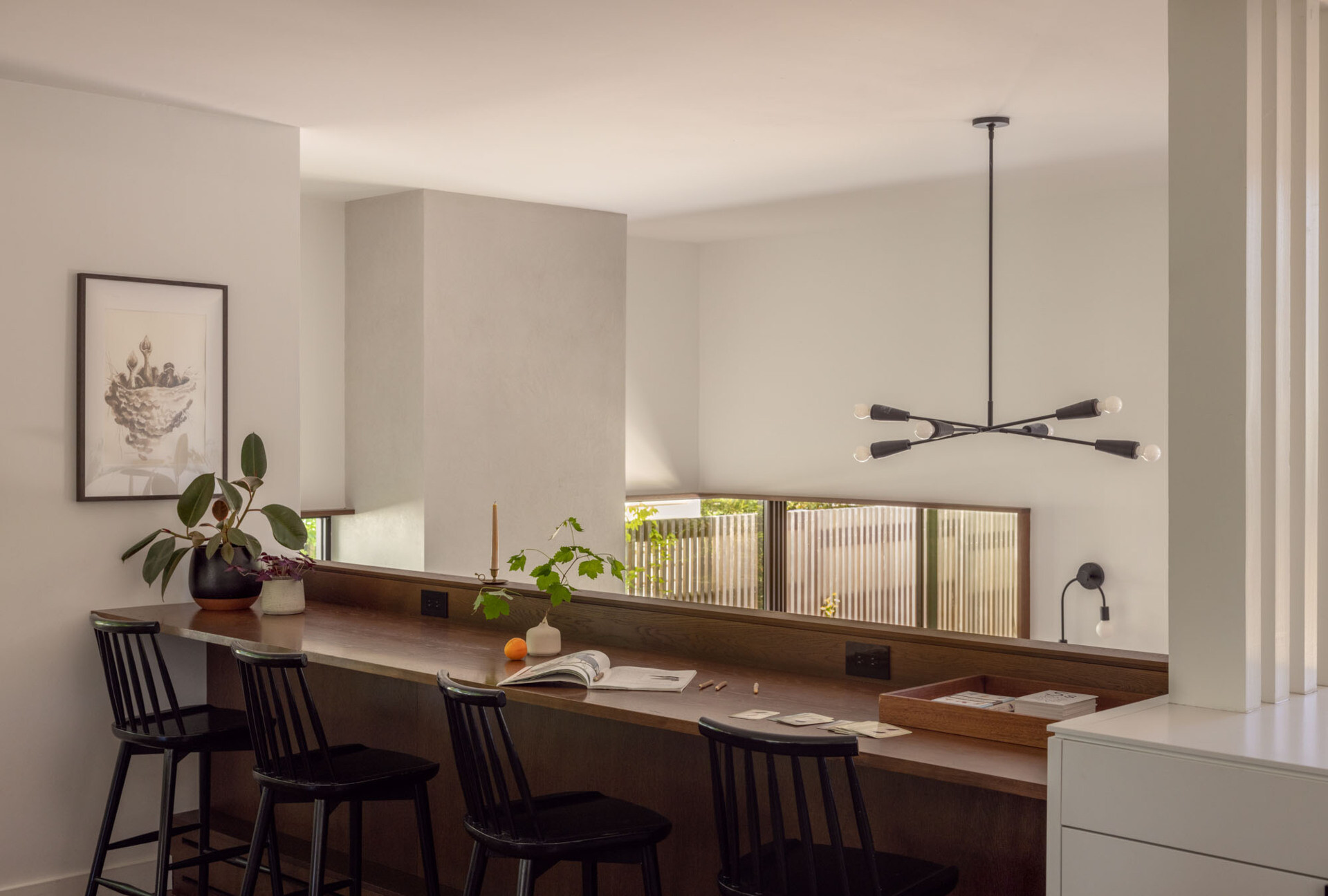
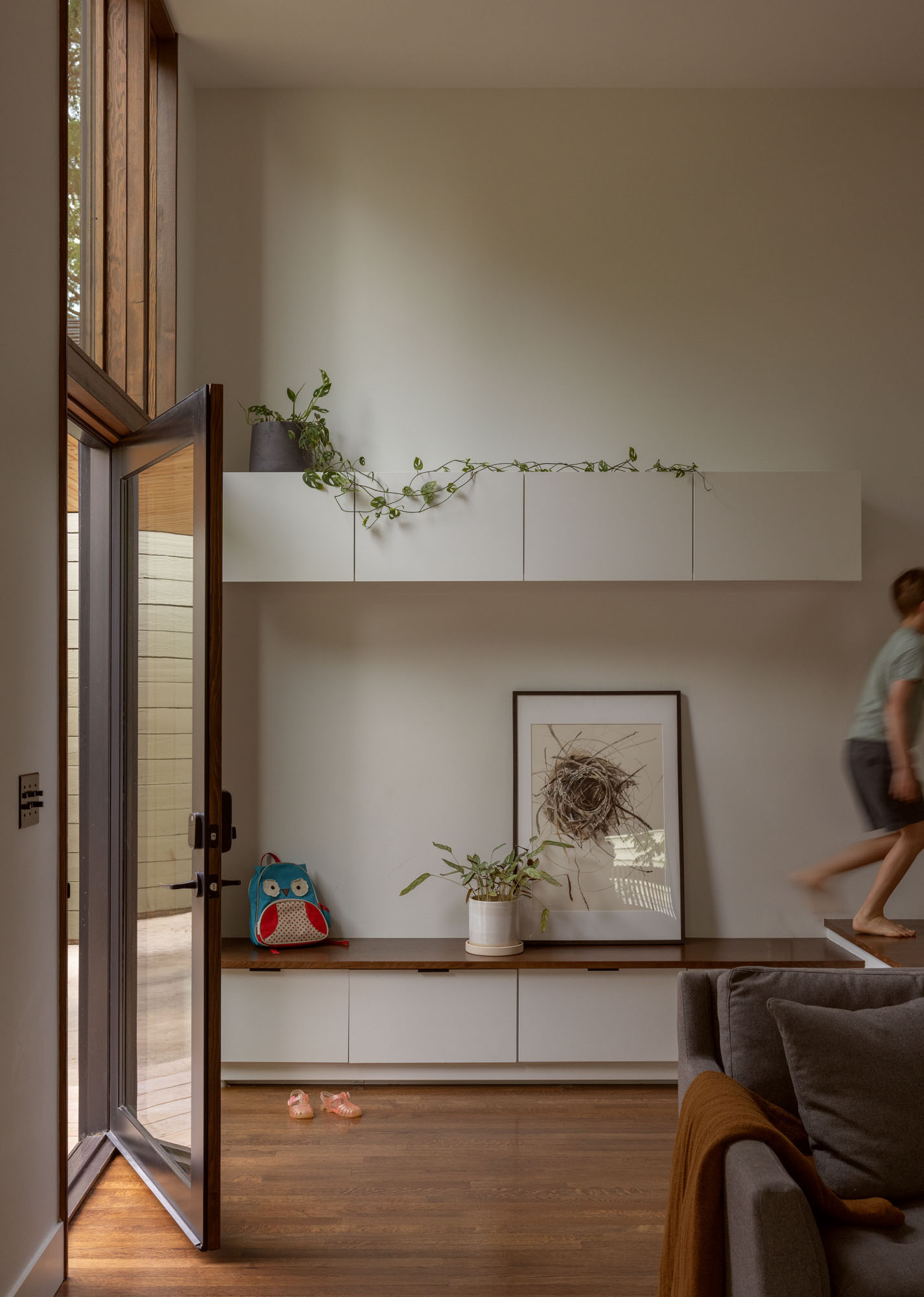
At the seam between the original house and the new addition, a built-in workbench quietly defines the transition. Part counter, part bookshelf, it becomes a practical moment within the architecture, a place for homework, projects, or simply setting things down mid-day.
This small intervention carries a larger idea. Instead of treating the addition as separate, it stitches old and new together through use. The solid white oak surface adds warmth and durability, grounding the space while reinforcing the home’s lived-in quality.
A Sunken Space That Brings Everyone Together
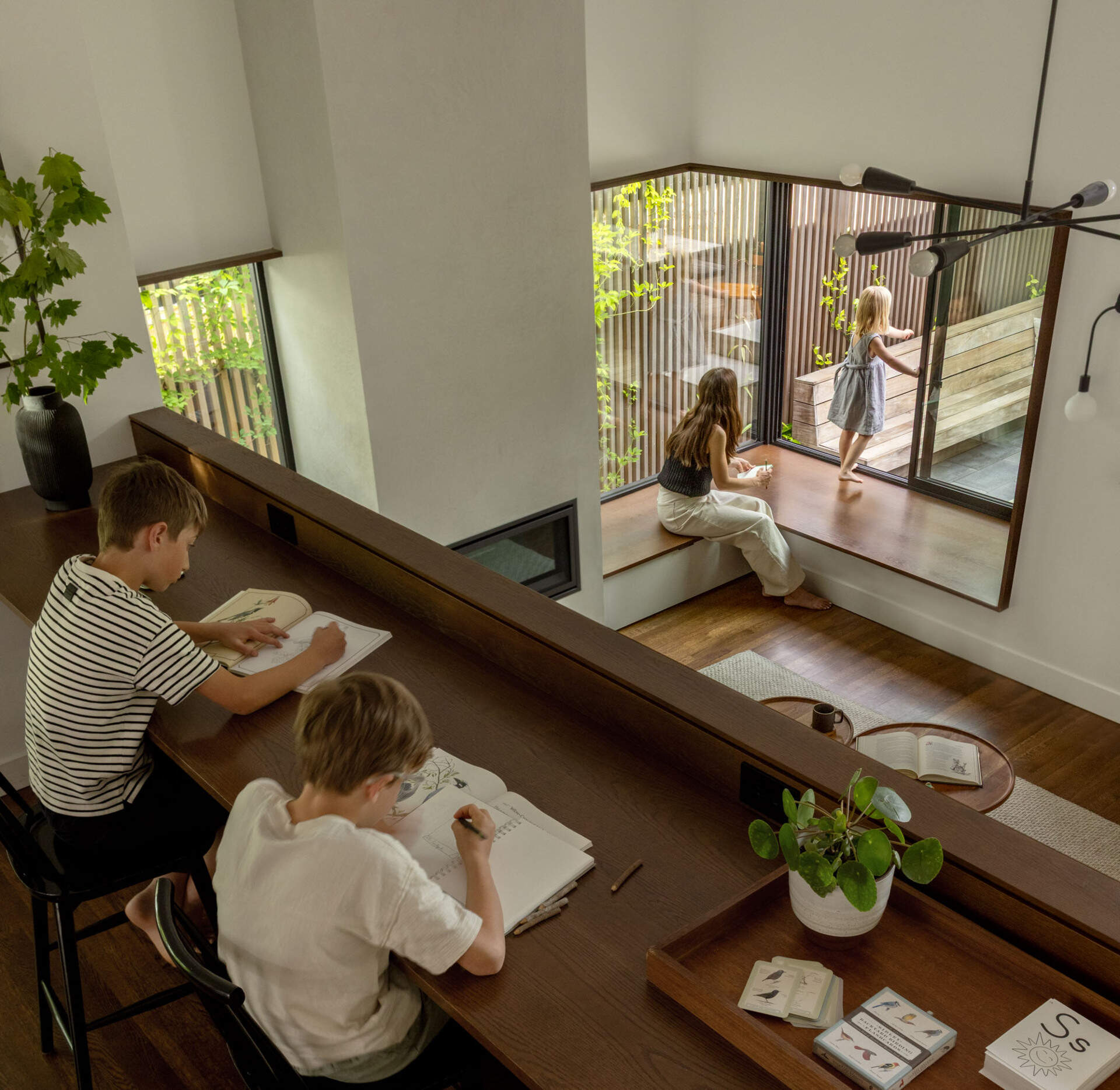
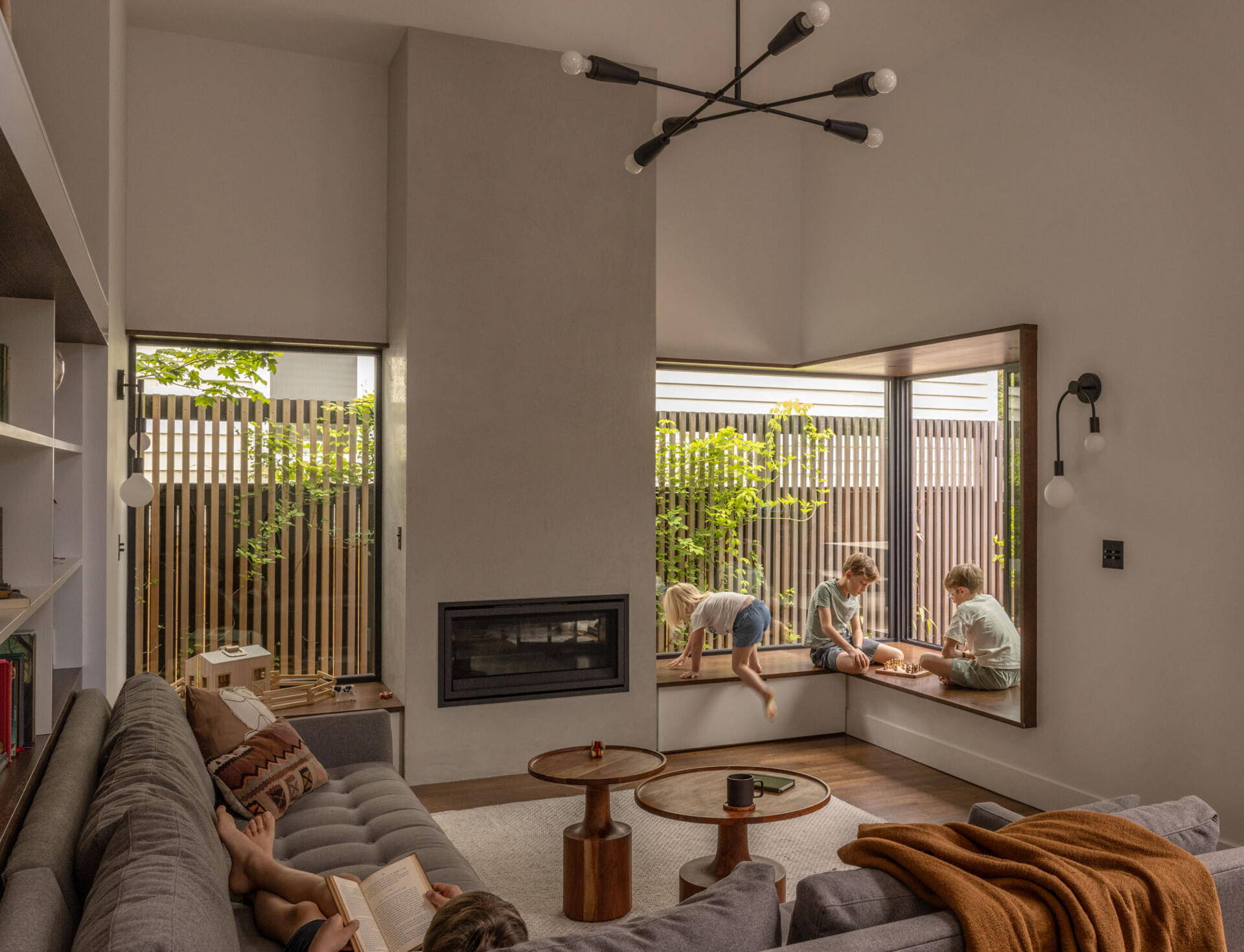
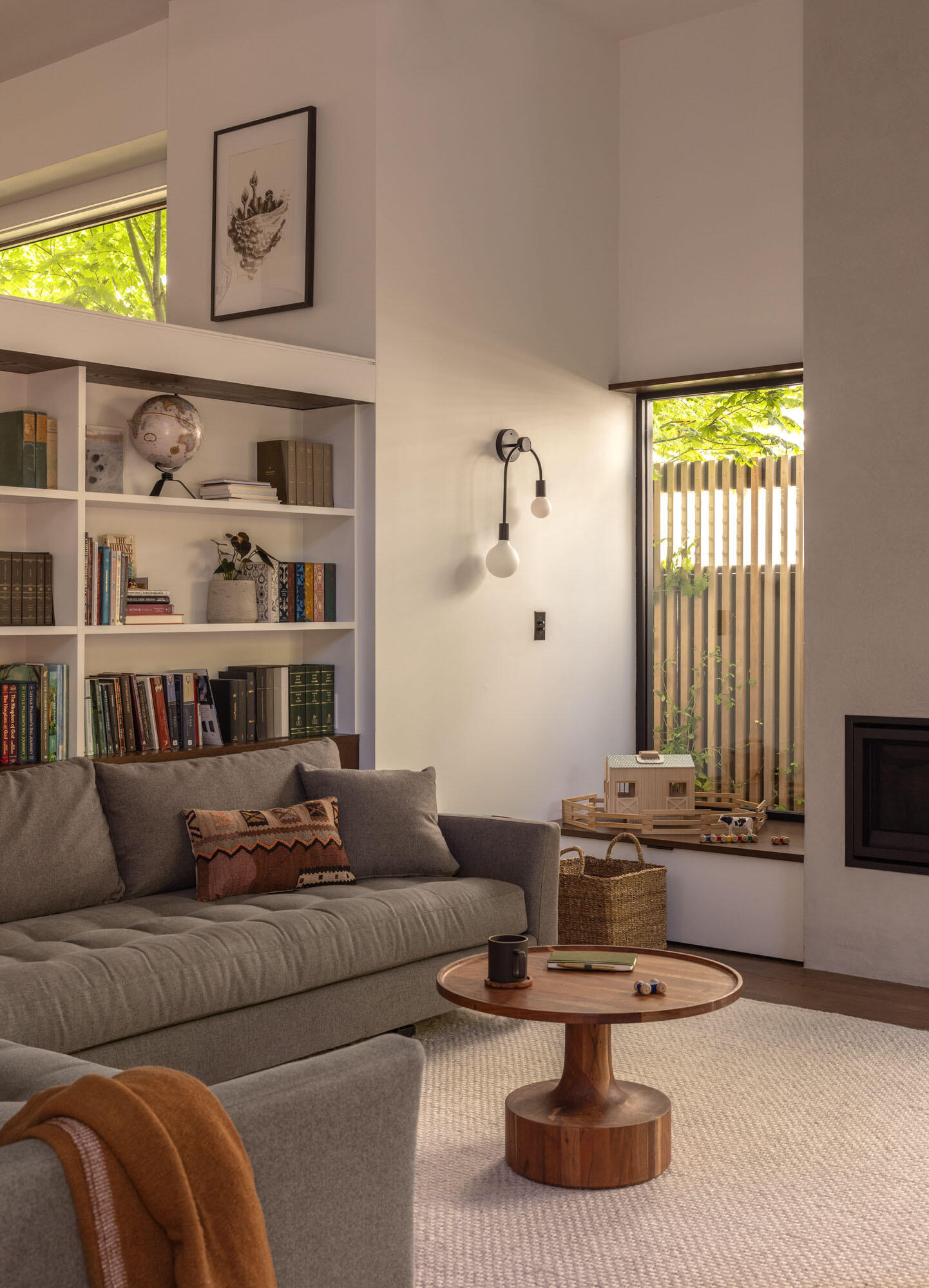
At the heart of the expansion is a sunken family room, a move that reshapes how the house is experienced. Lowering the floor creates a natural gathering point, one that feels both intimate and open.
Before, the home lacked a true communal space. Now, this room acts as the nexus, connecting the elevated kitchen and dining area to the outdoor deck and patio beyond. Custom casework keeps the space clean and functional, while a Venetian plaster fireplace adds a subtle focal point.
Turning a Tight Backyard Into a Daily Living Space
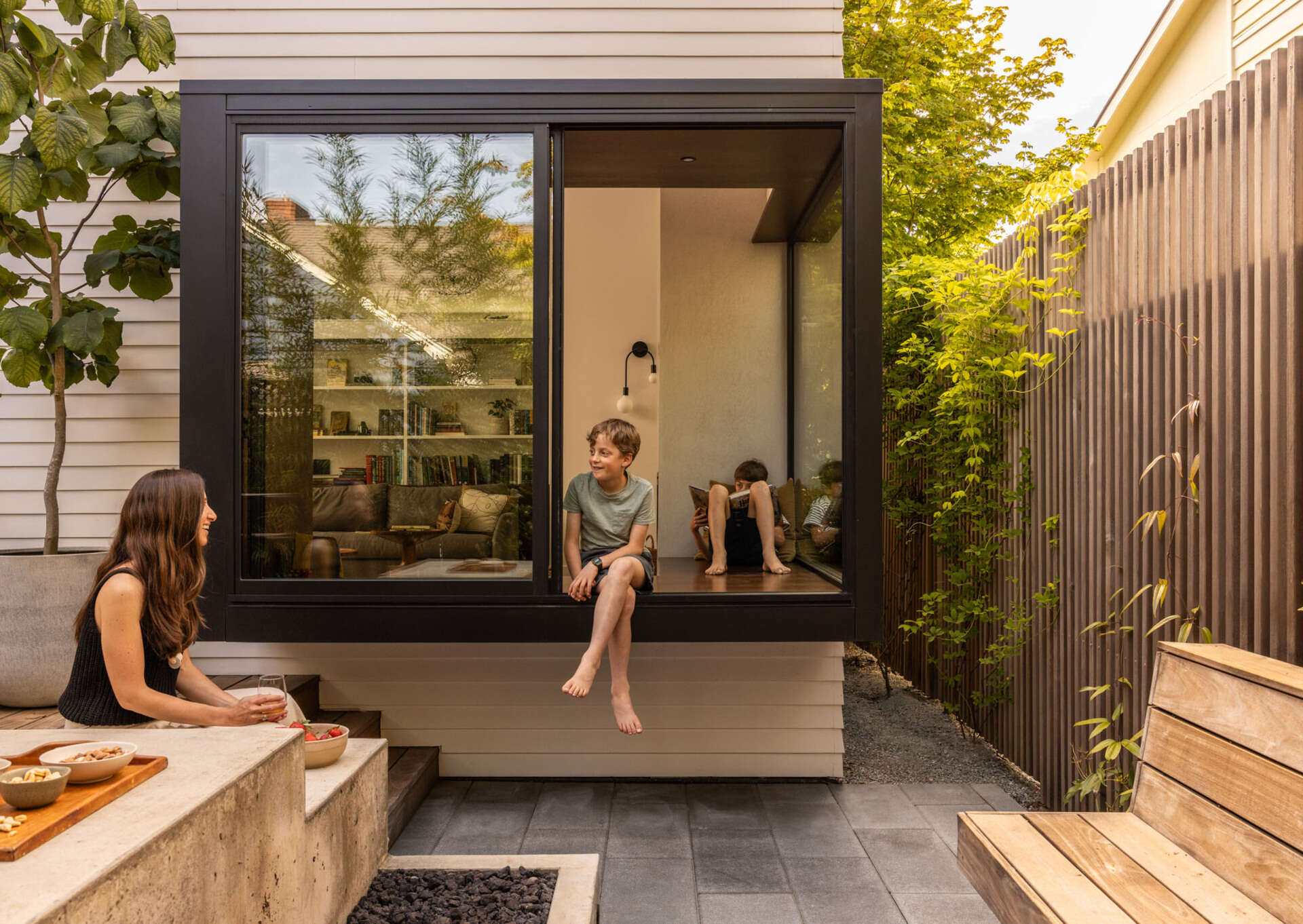
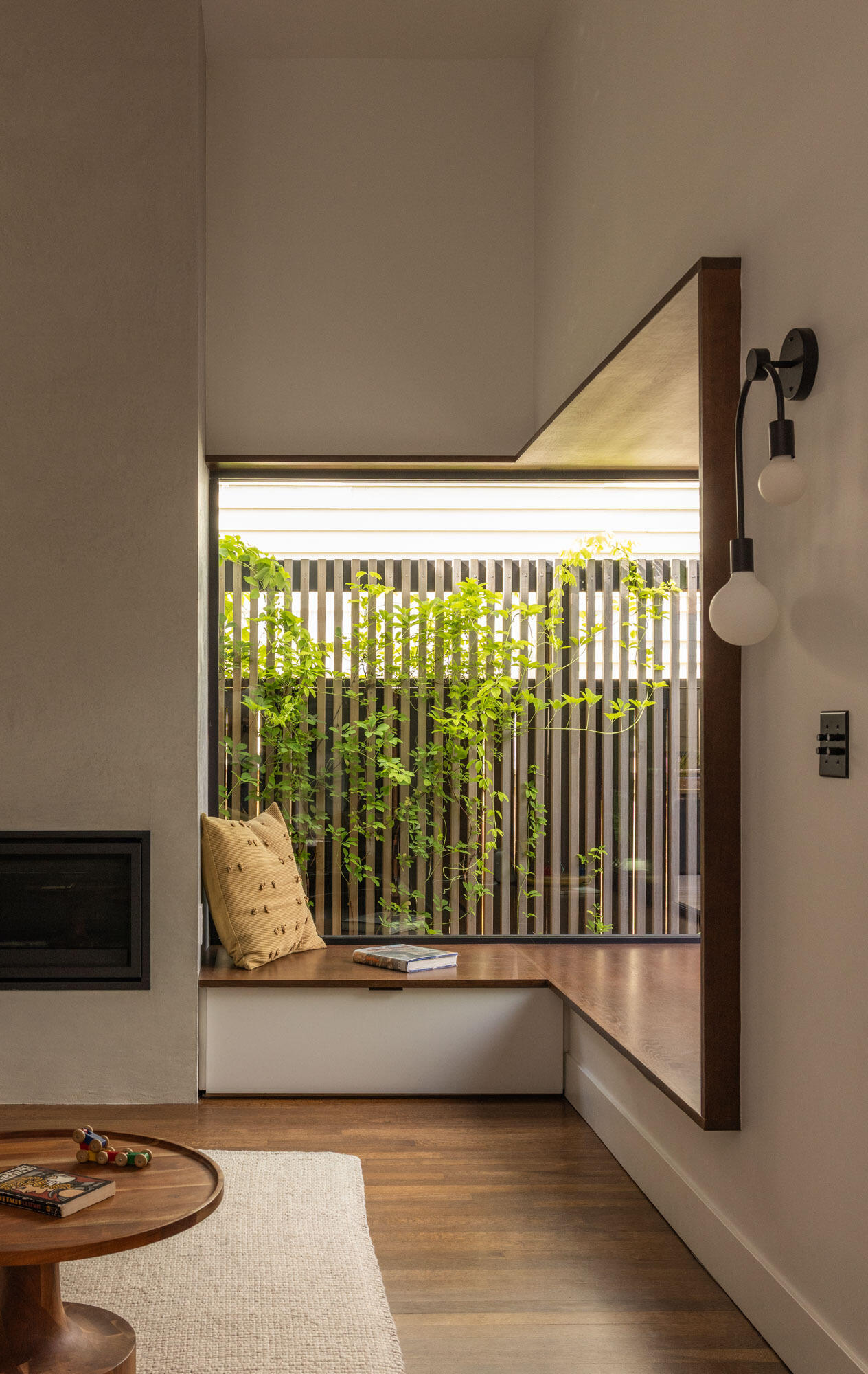
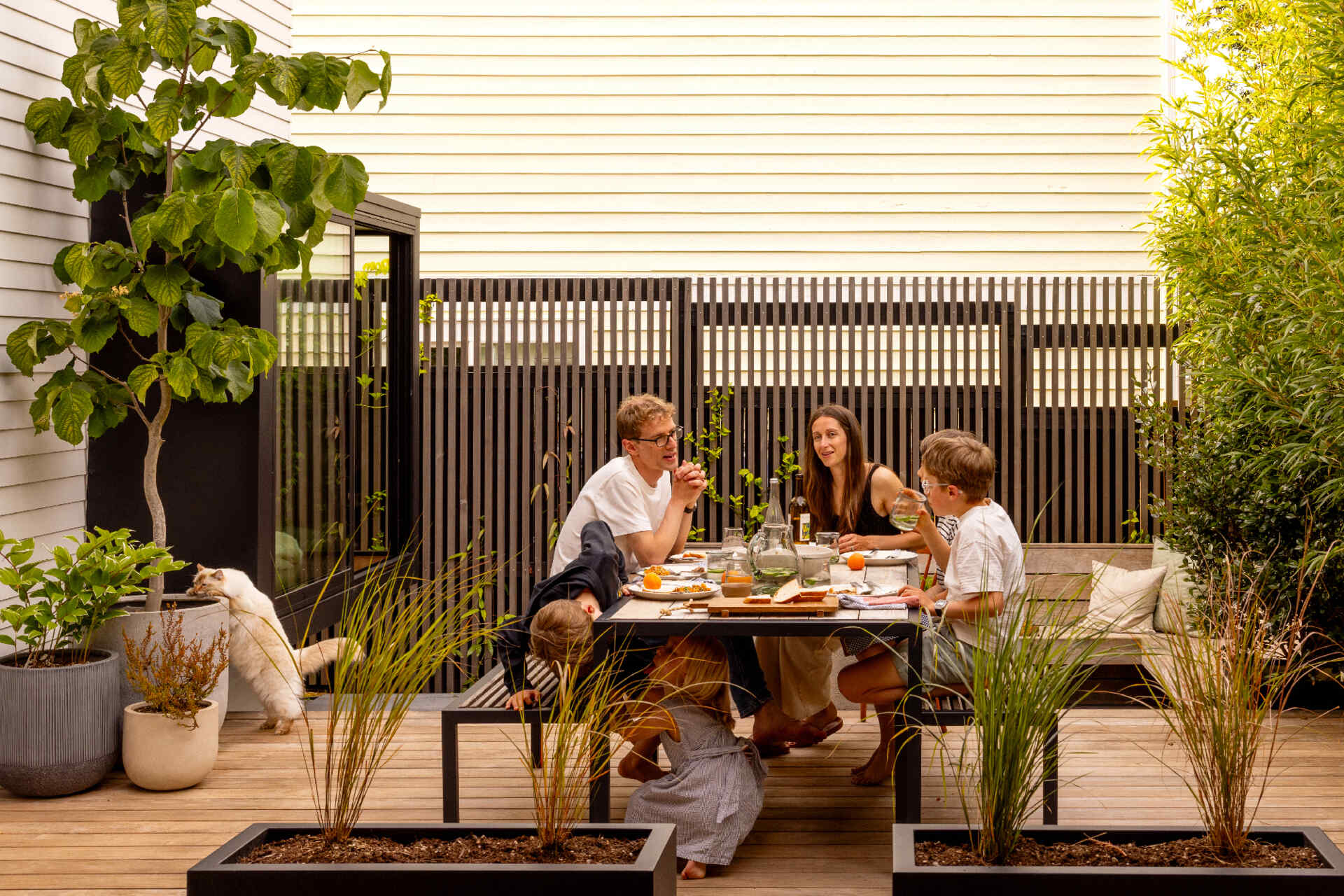
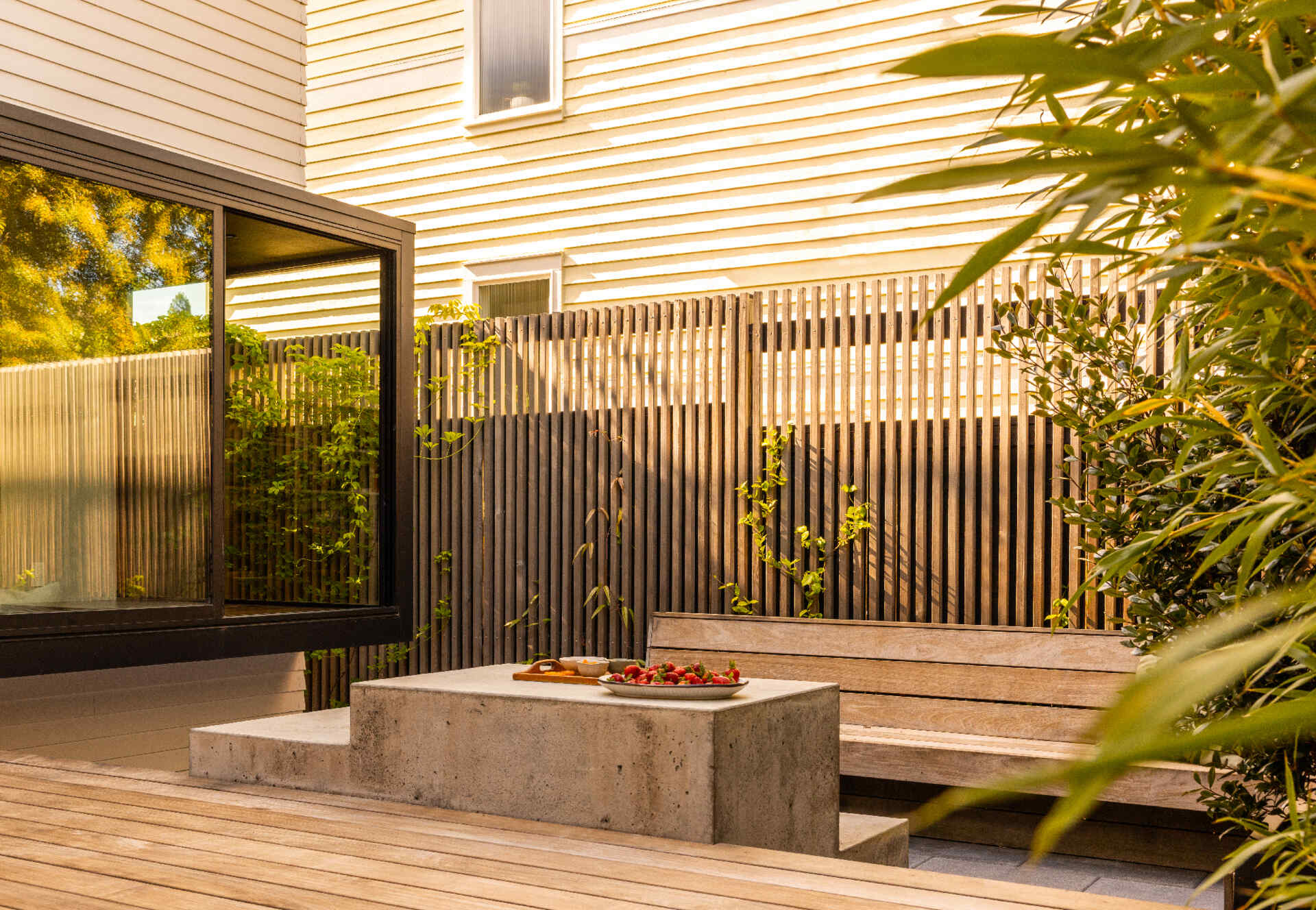
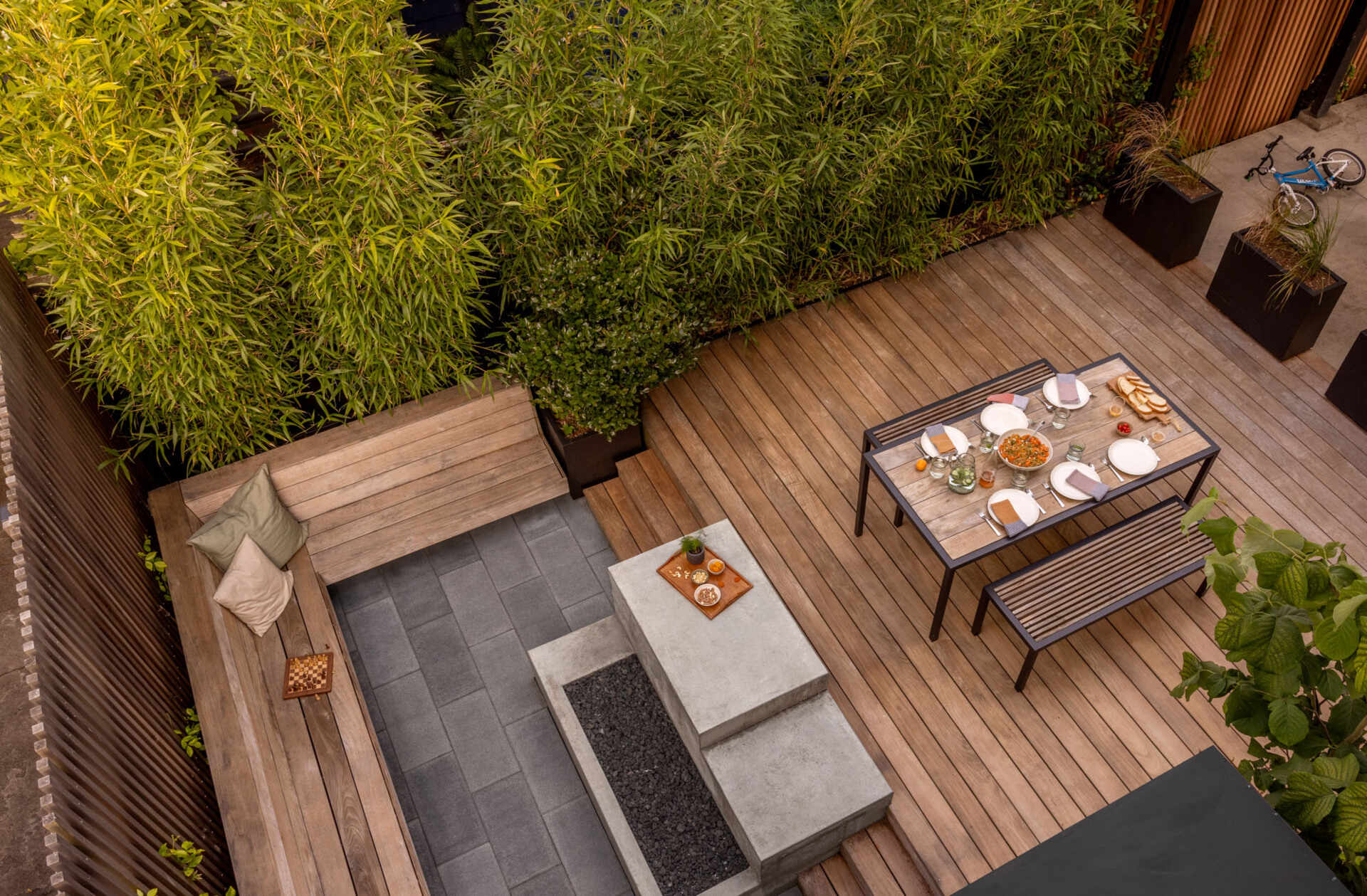
A new deck extends outward, leading to an intimate patio anchored by a built-in firepit and sunken seating. The addition of a corner bay window, designed with a sliding opening, creates a playful and direct link between inside and out. Children can move freely, passing through the window as easily as a door, blurring the boundary between the two.
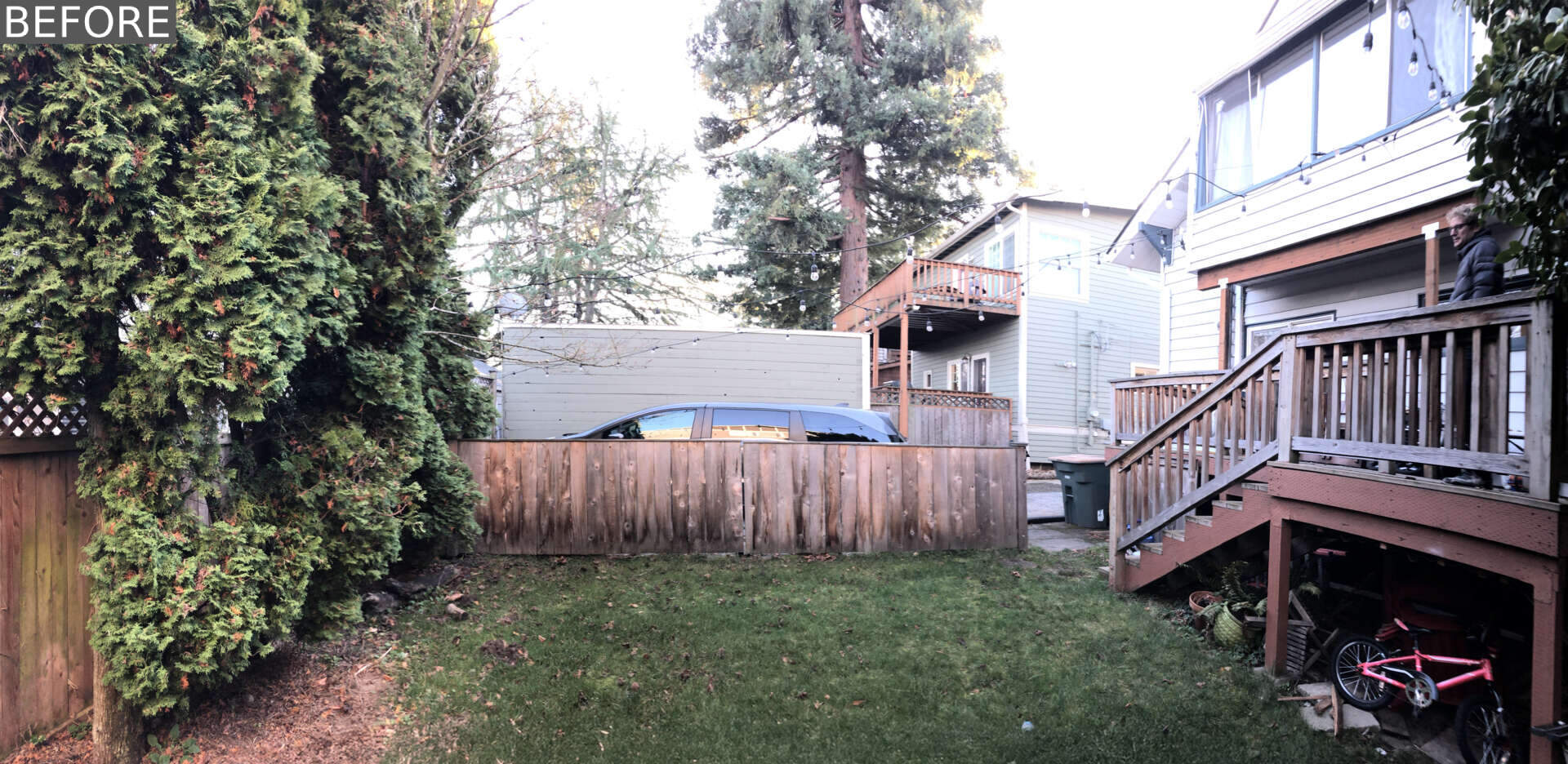
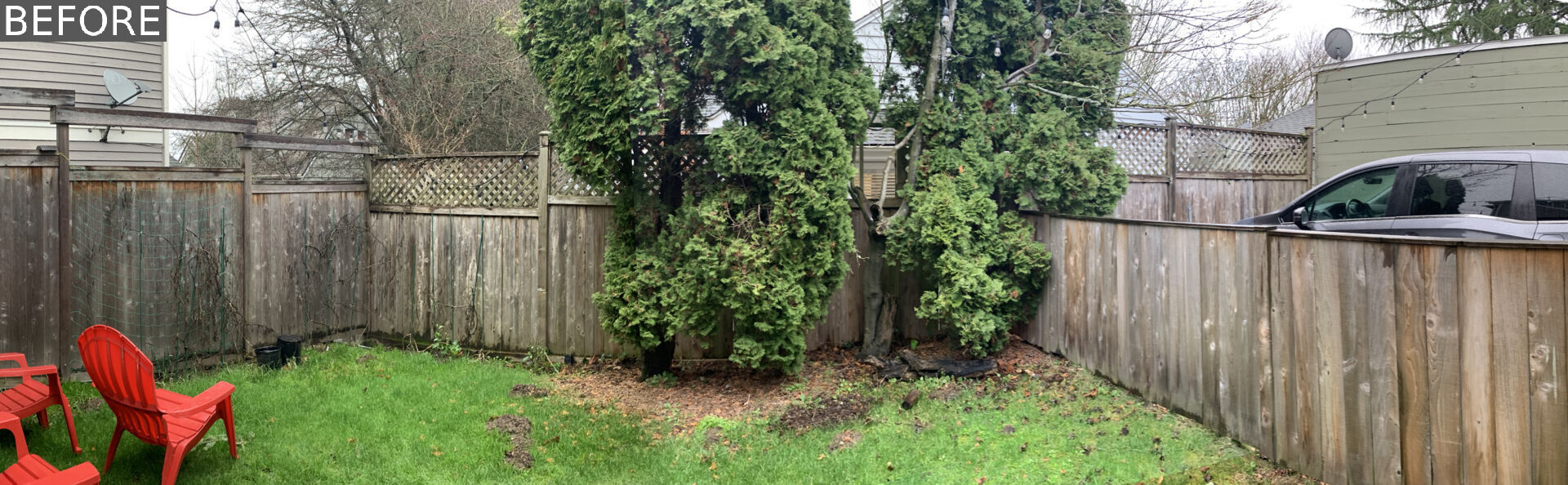
The backyard, once constrained by barriers and limited access, now feels expansive despite its compact size. Built-in benches, a new carport, and a cedar slat fence with bamboo and climbing vines create a sense of enclosure without heaviness.
Creating Space for Privacy Upstairs
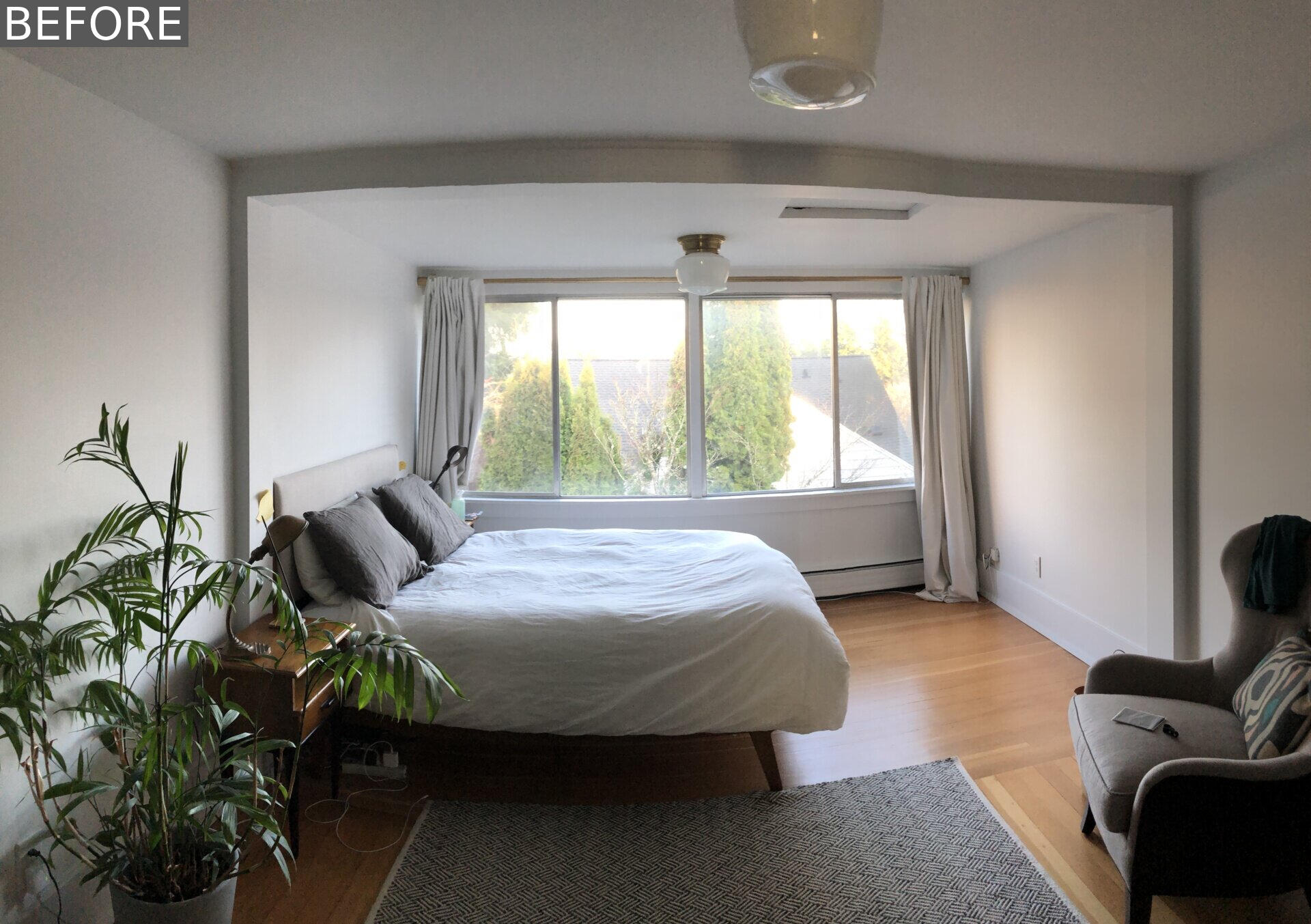
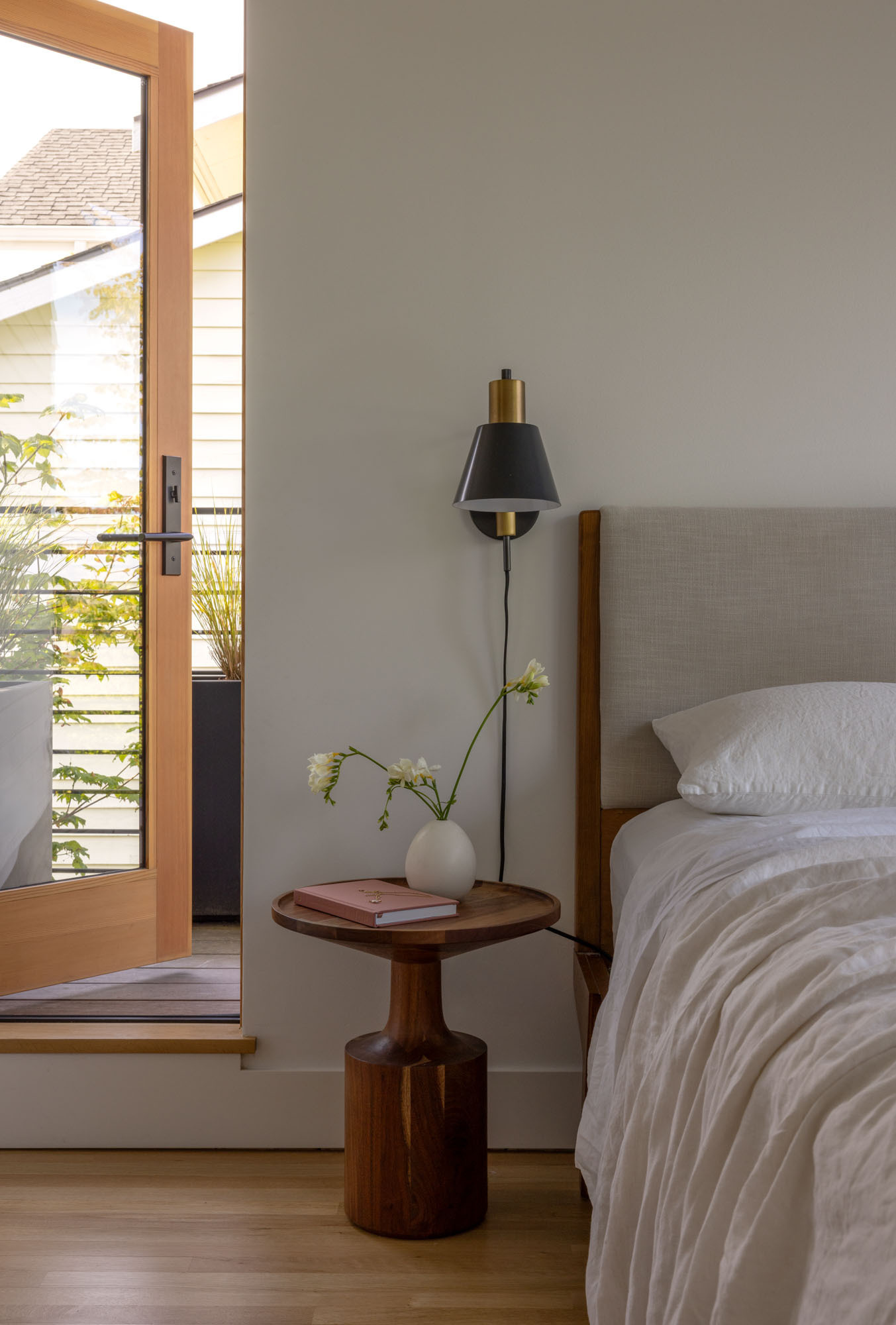
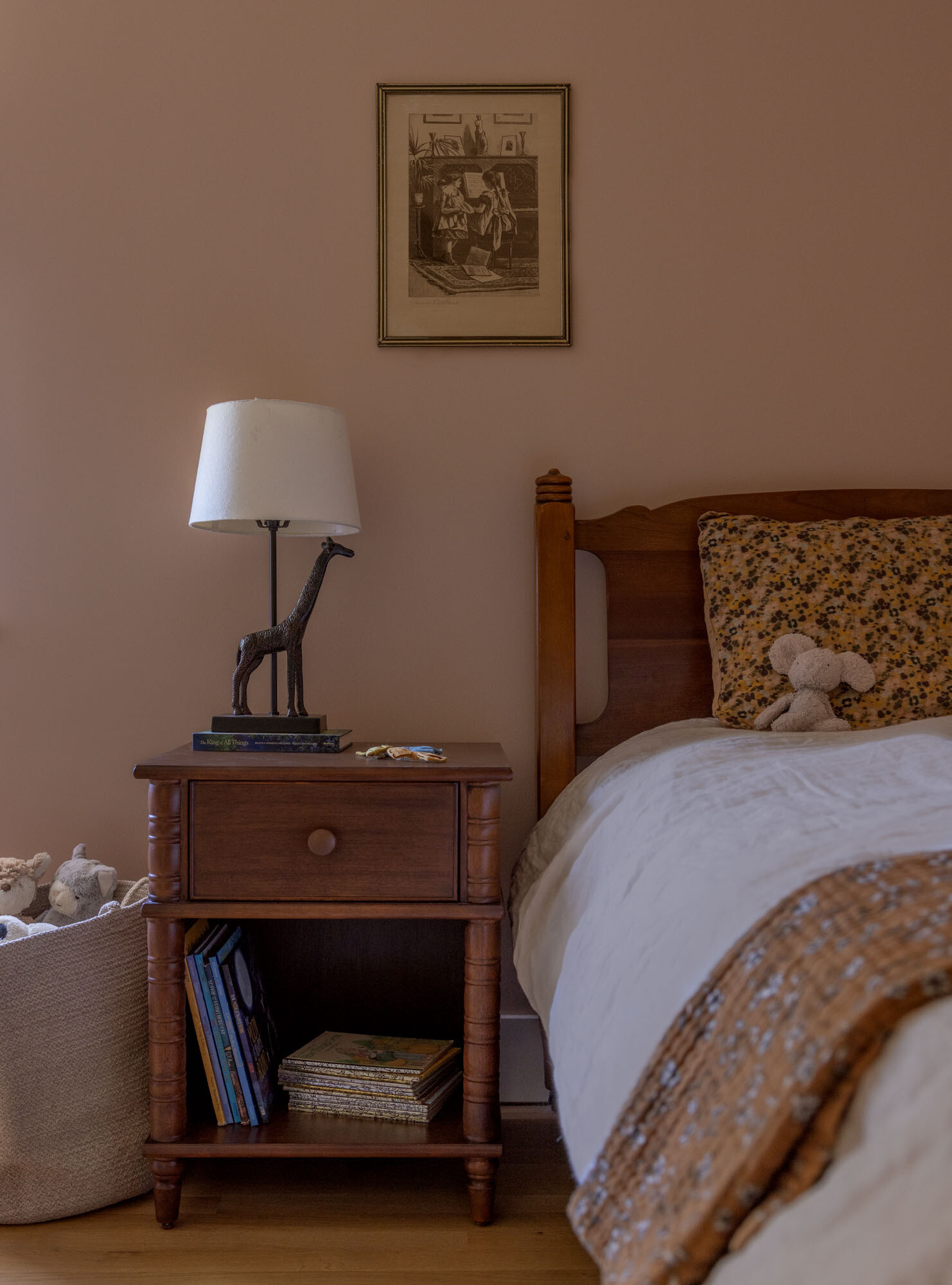
Upstairs, the expansion makes room for what the original house lacked: privacy. A new main suite introduces a quieter retreat, complete with its own balcony, while an additional bedroom helps accommodate the growing family.
The design continues the balance between modern and traditional. Soft colors, natural materials, and thoughtful proportions create rooms that feel calm and personal. Where the original house felt compressed, these new spaces offer breathing room without excess.
Layered Materials in a Calm, Functional Bath
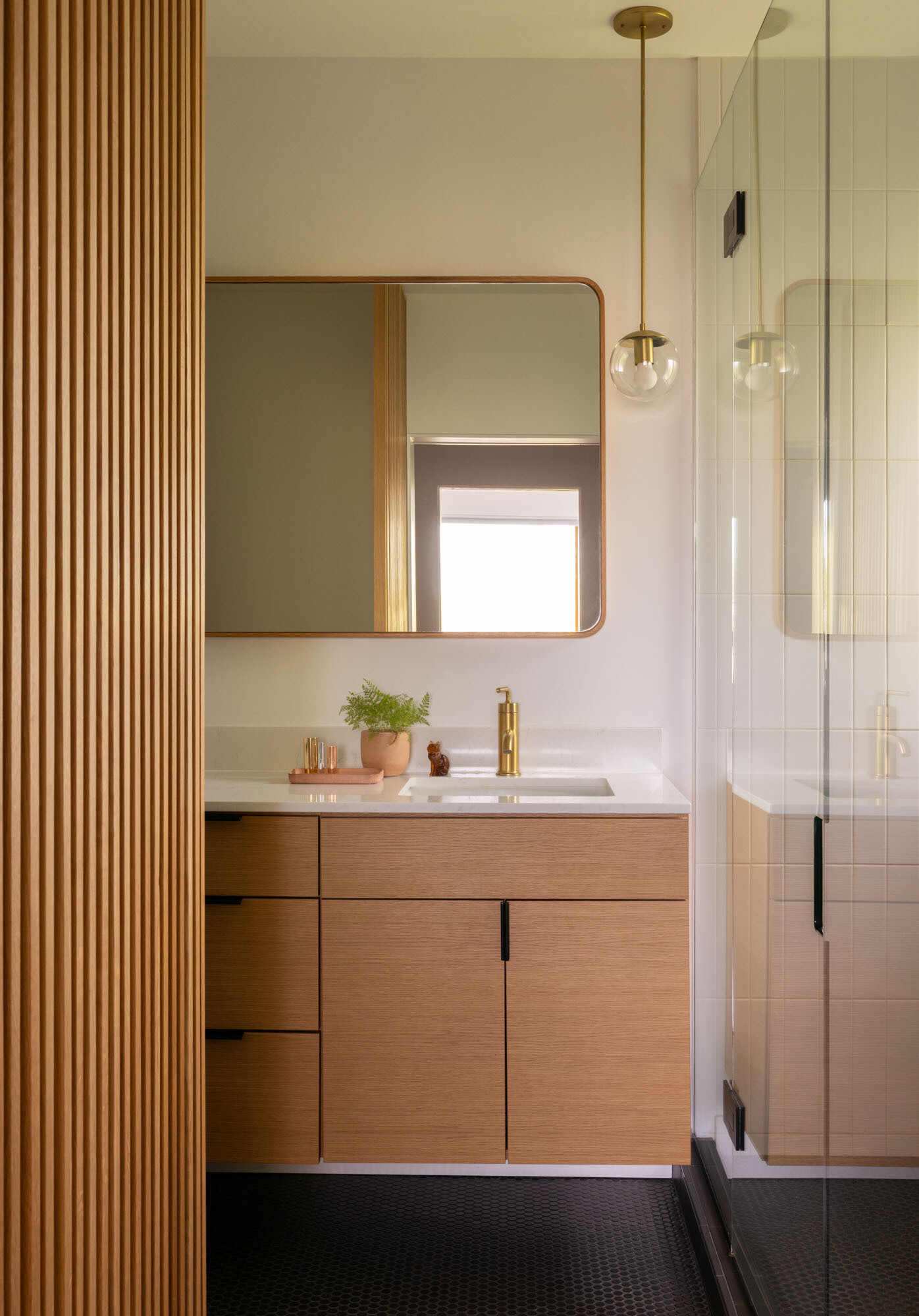
The bathroom reflects the same careful attention to material and detail. White ceramic tiles line the walls, while penny tiles in a graphite finish bring texture underfoot. A quartz vanity adds a polished surface, balanced by the warmth of white oak slats used as a subtle screen.
How the Expansion Reorganizes the Home
The diagrams and floor plans show the home has been carefully re-calibrated, where circulation flows more smoothly and each addition reinforces the whole.
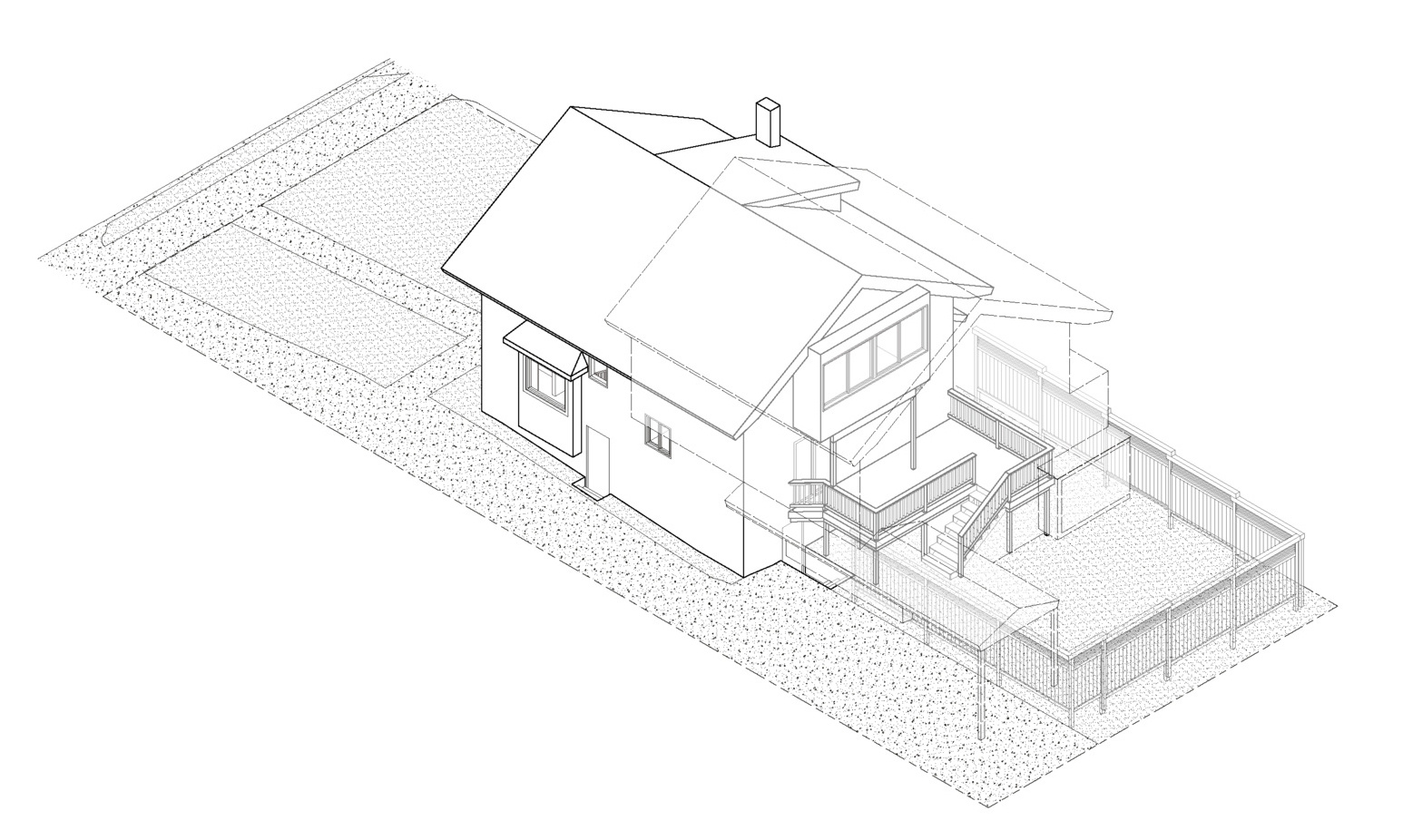
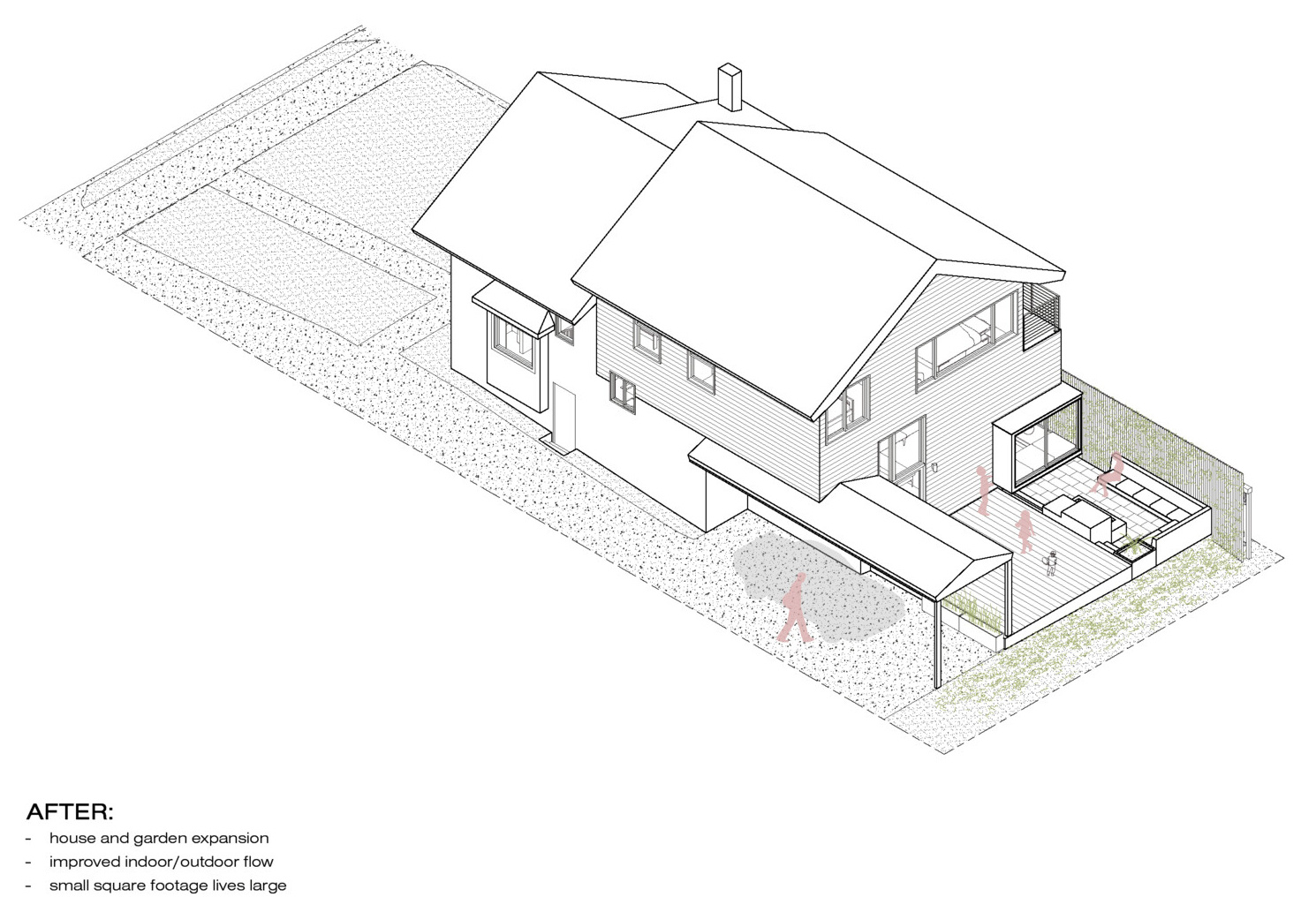
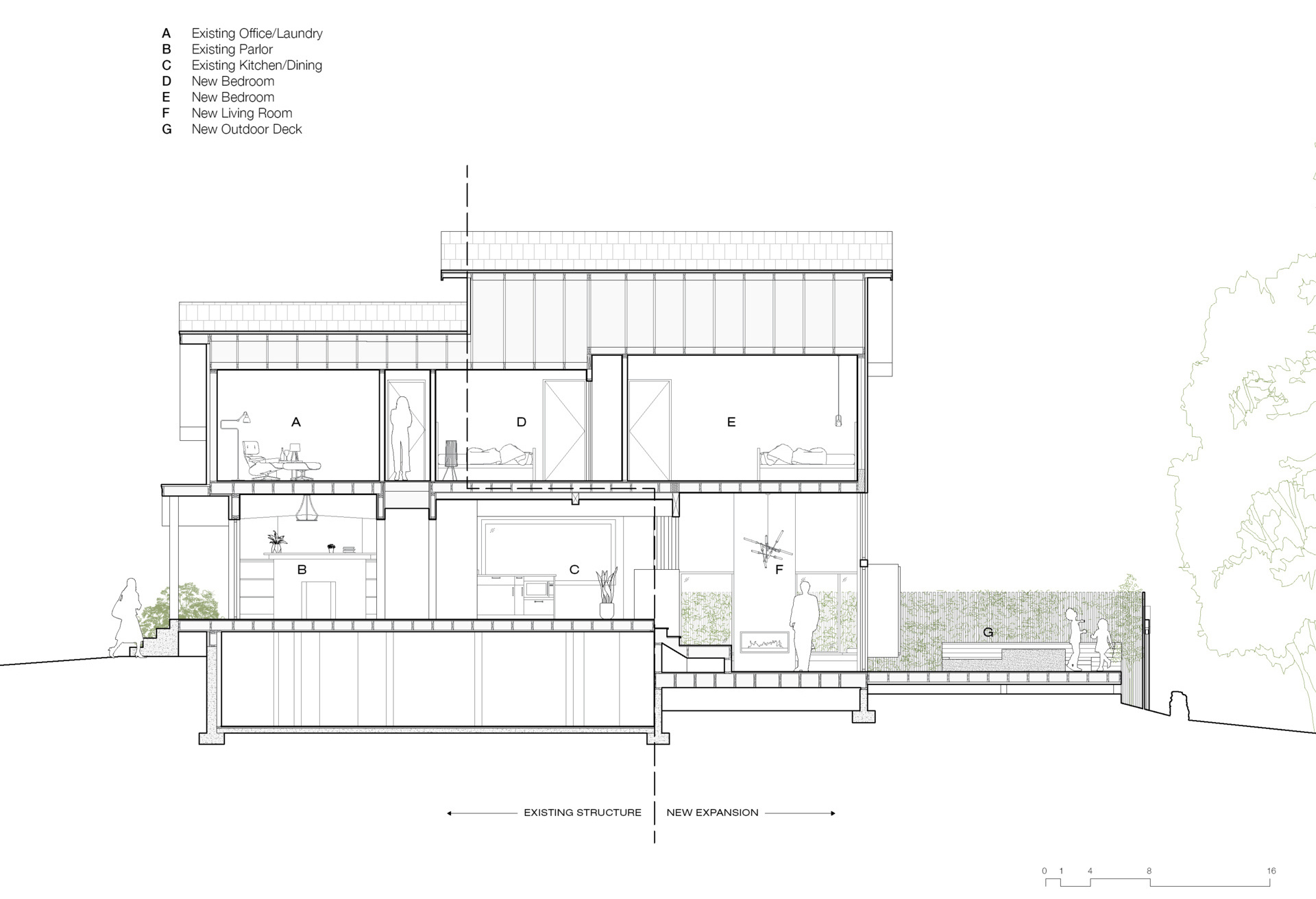
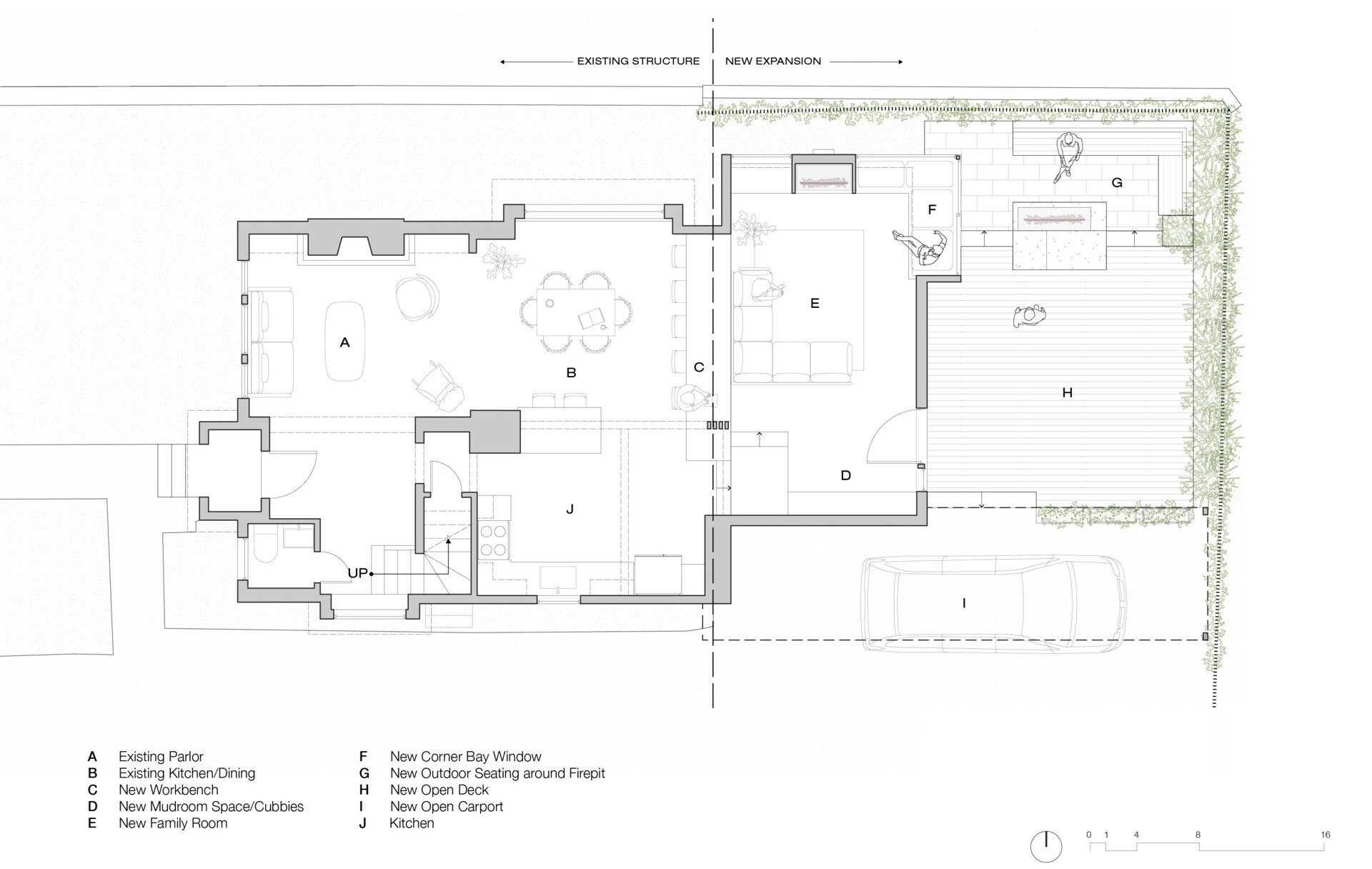
For a house that began as undersized and inward-looking, it now opens outward, adapts to a growing family, and holds both its history and its future in balance. In the end, this small expansion does exactly what it set out to do, it makes the home feel much larger than it is.