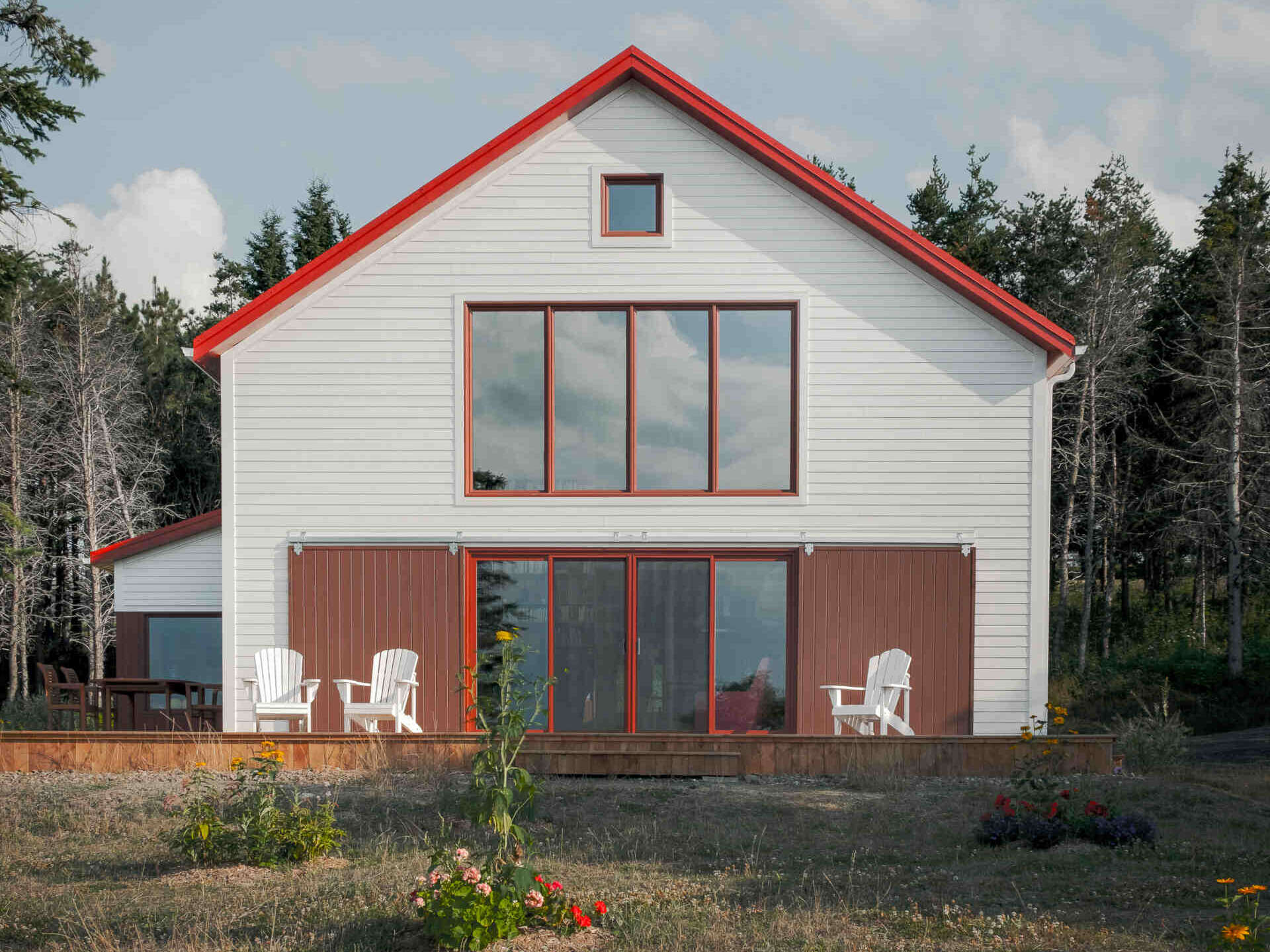
Designed by Nordais Architecture, this house reimagines a familiar coastal structure in a completely new way. Drawing from the fishing sheds once used along the Acadian and Gaspesian coasts, the project takes a practical, work-focused building type and reshapes it into a warm, light-filled family home.
Referencing the legacy of the Robin, Jones & Whitman Company, the design shifts the meaning of the original shed. What was once tied to industry is now adapted for living, with a focus on openness, flexibility, and shared space across generations.
Reworking the Shed Form
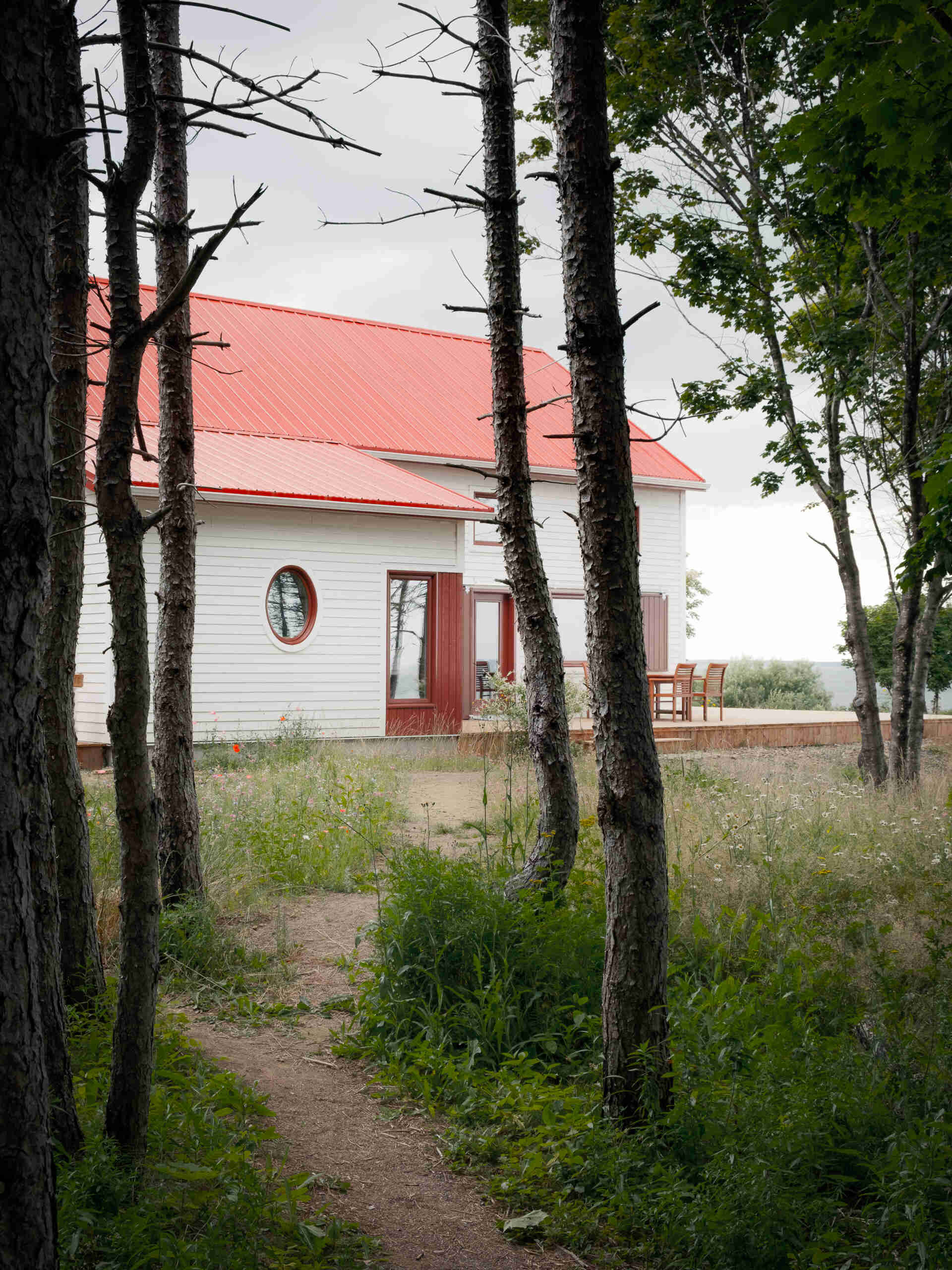
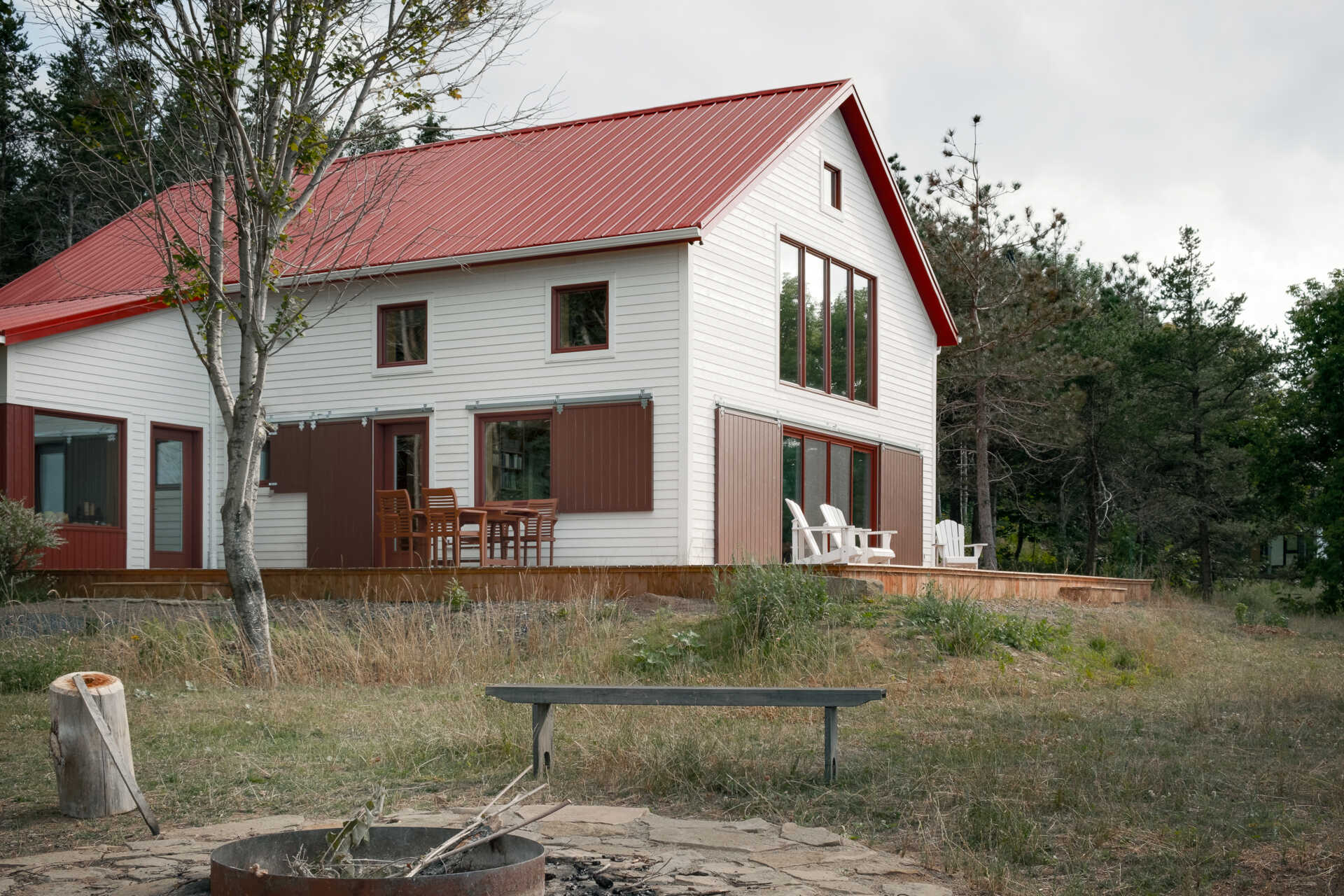
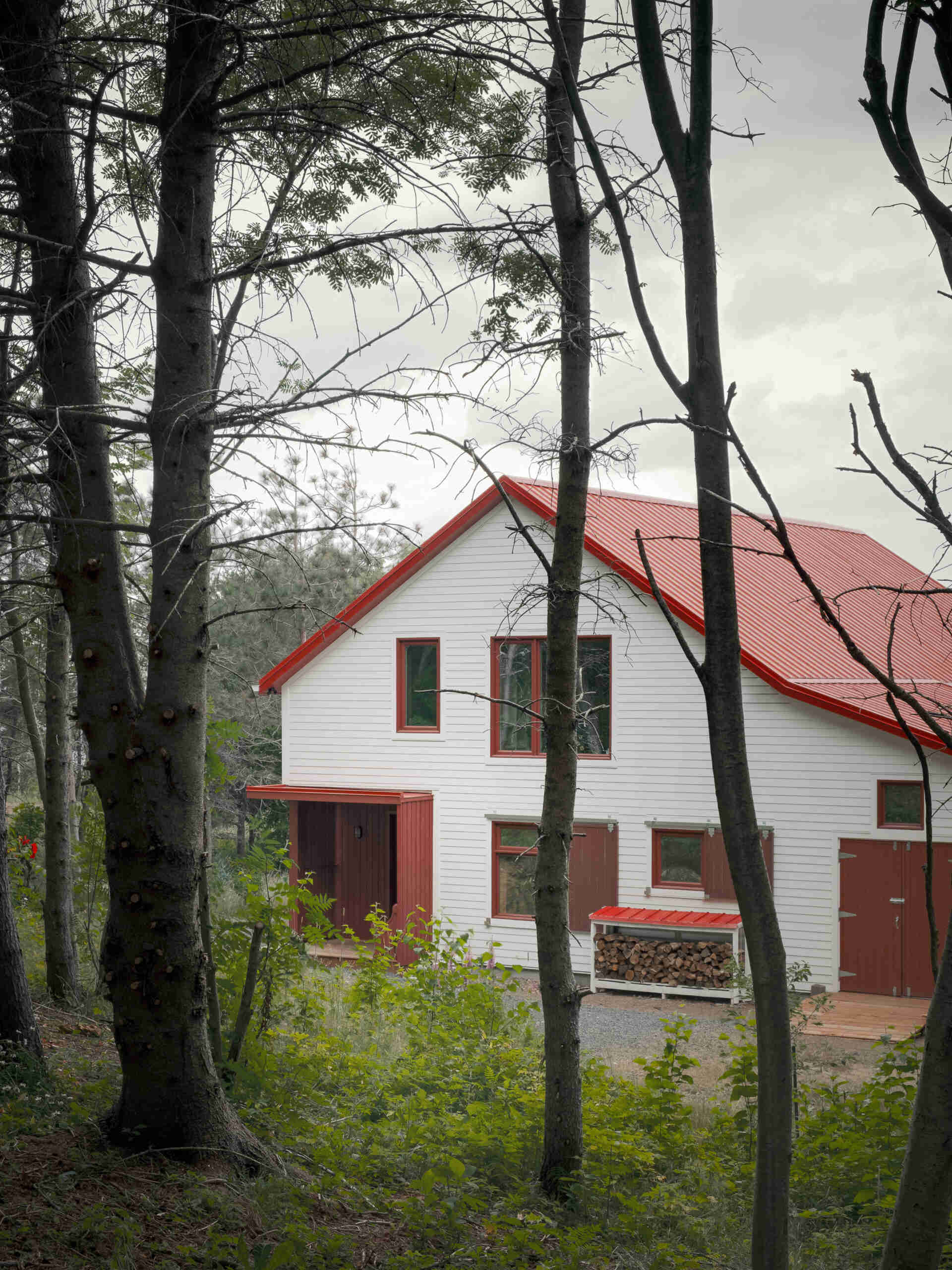
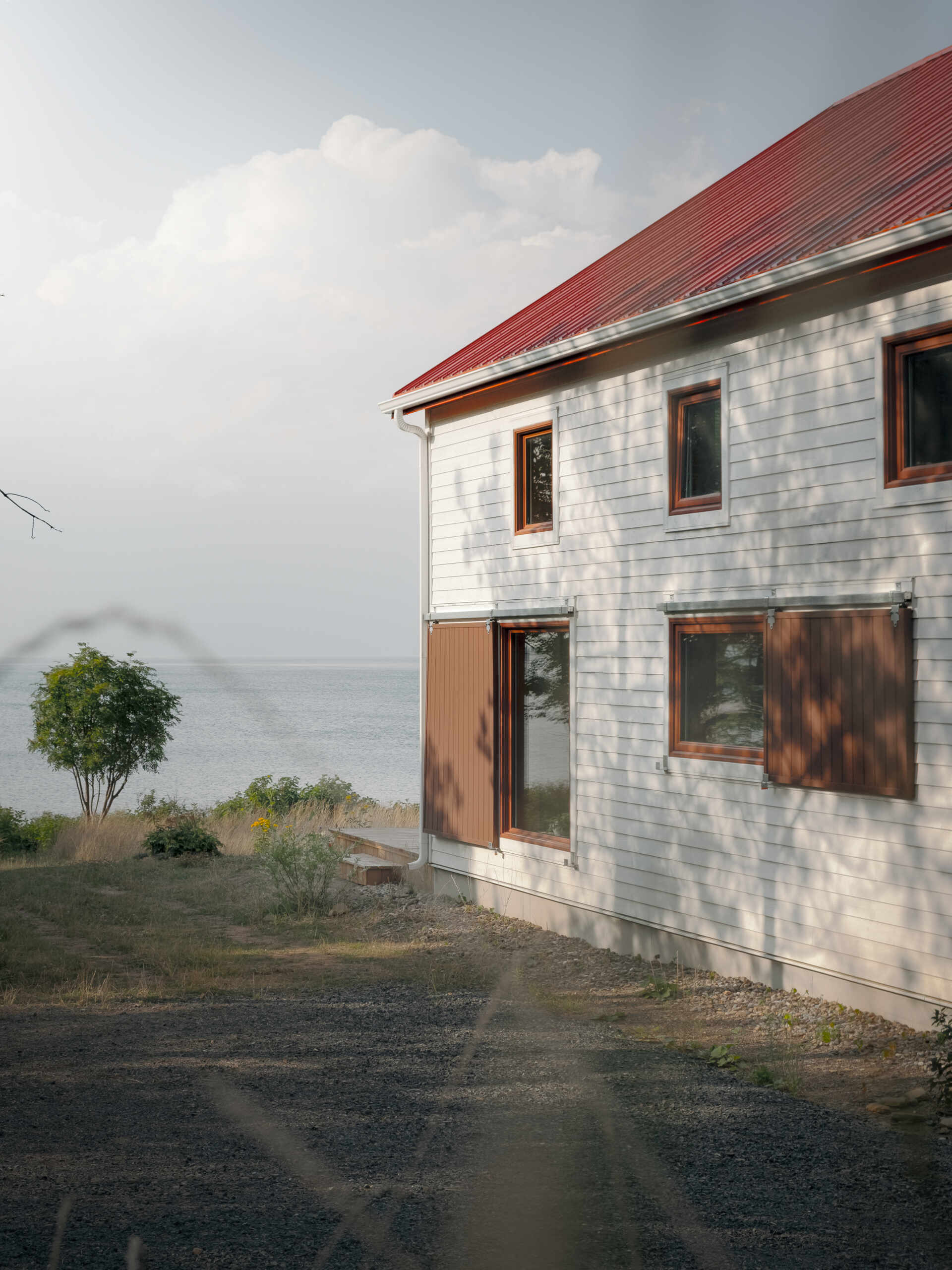
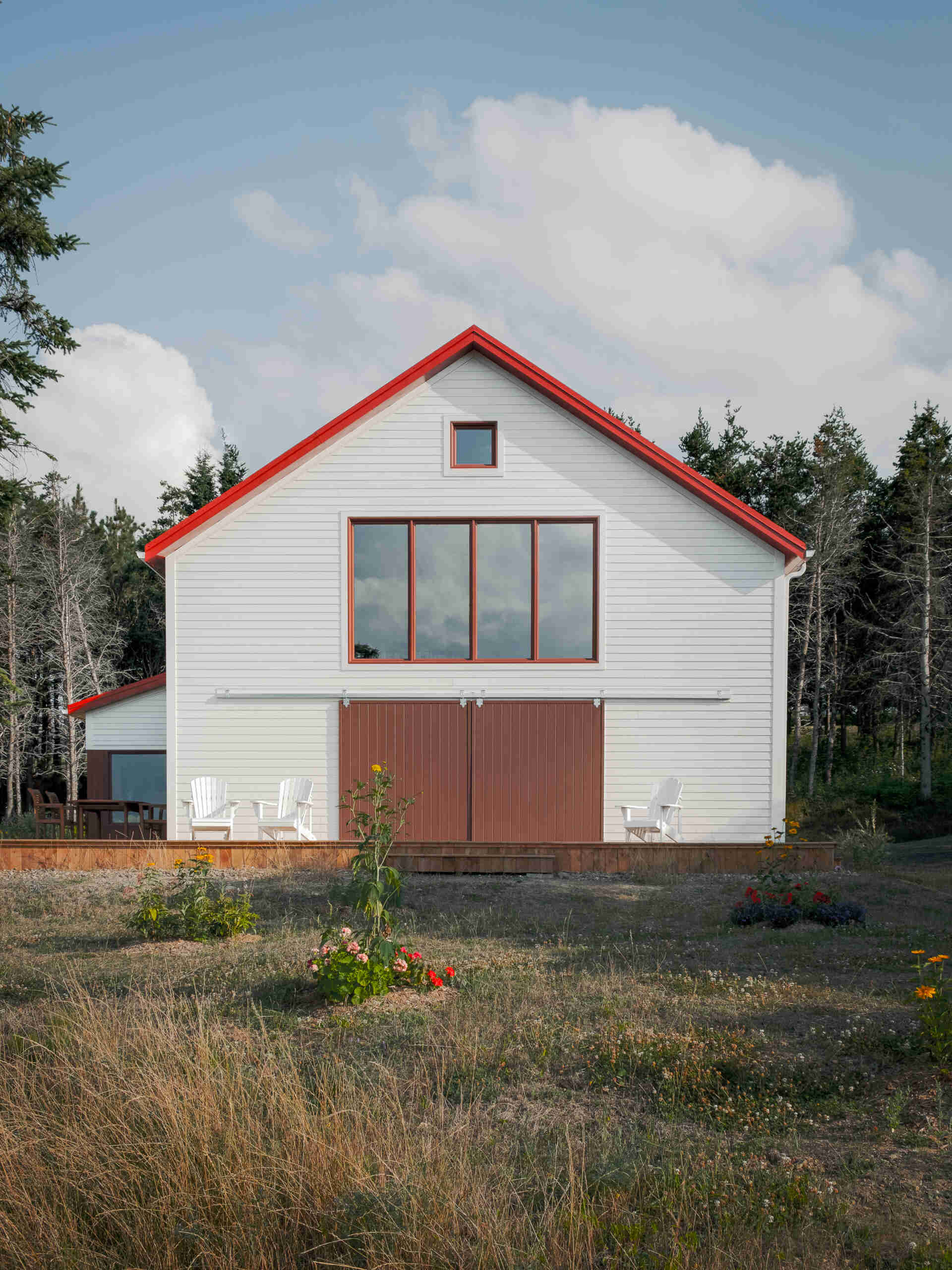
The exterior stays close to its origins, using a simple shed-like form that feels familiar yet updated. Wood and metal come together in a restrained palette, giving the house a tactile, durable finish that suits its coastal inspiration.
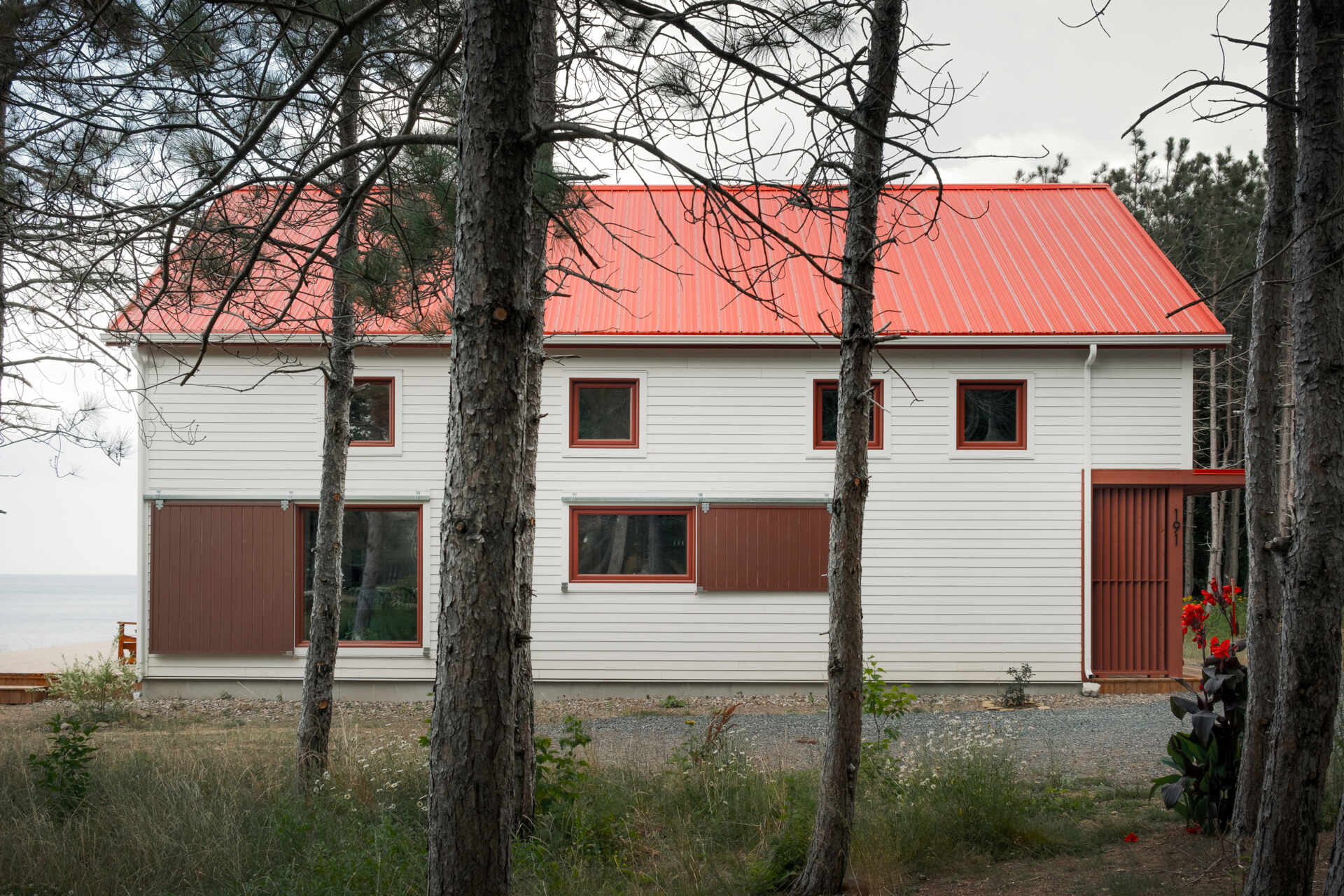
One of the most distinctive features is the use of red shutters across the ground floor. These can be closed when needed, adding both function and a strong visual identity. They also echo the look of traditional fishing structures, reinforcing the link between past and present.
Openings That Shape the Home
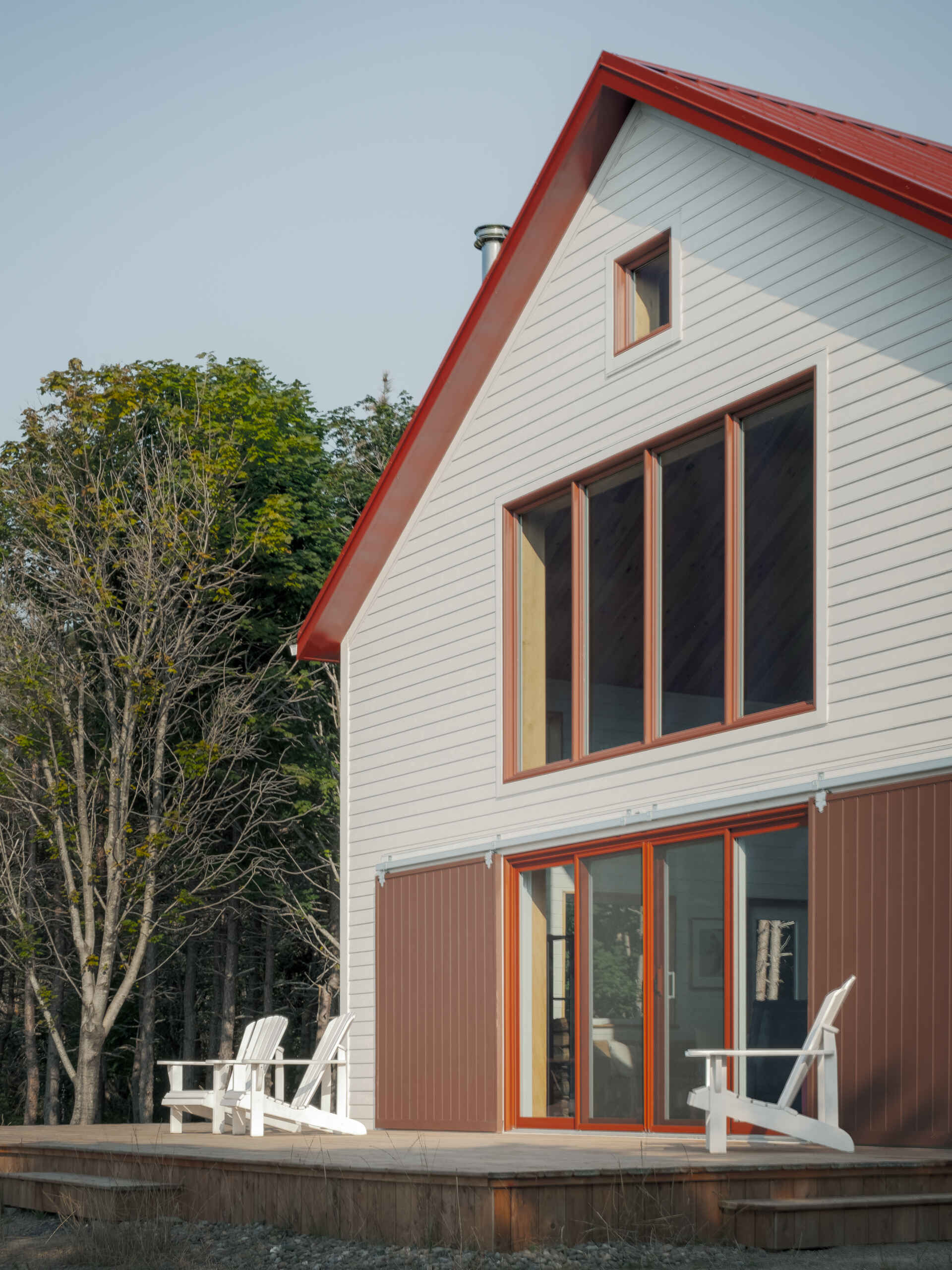
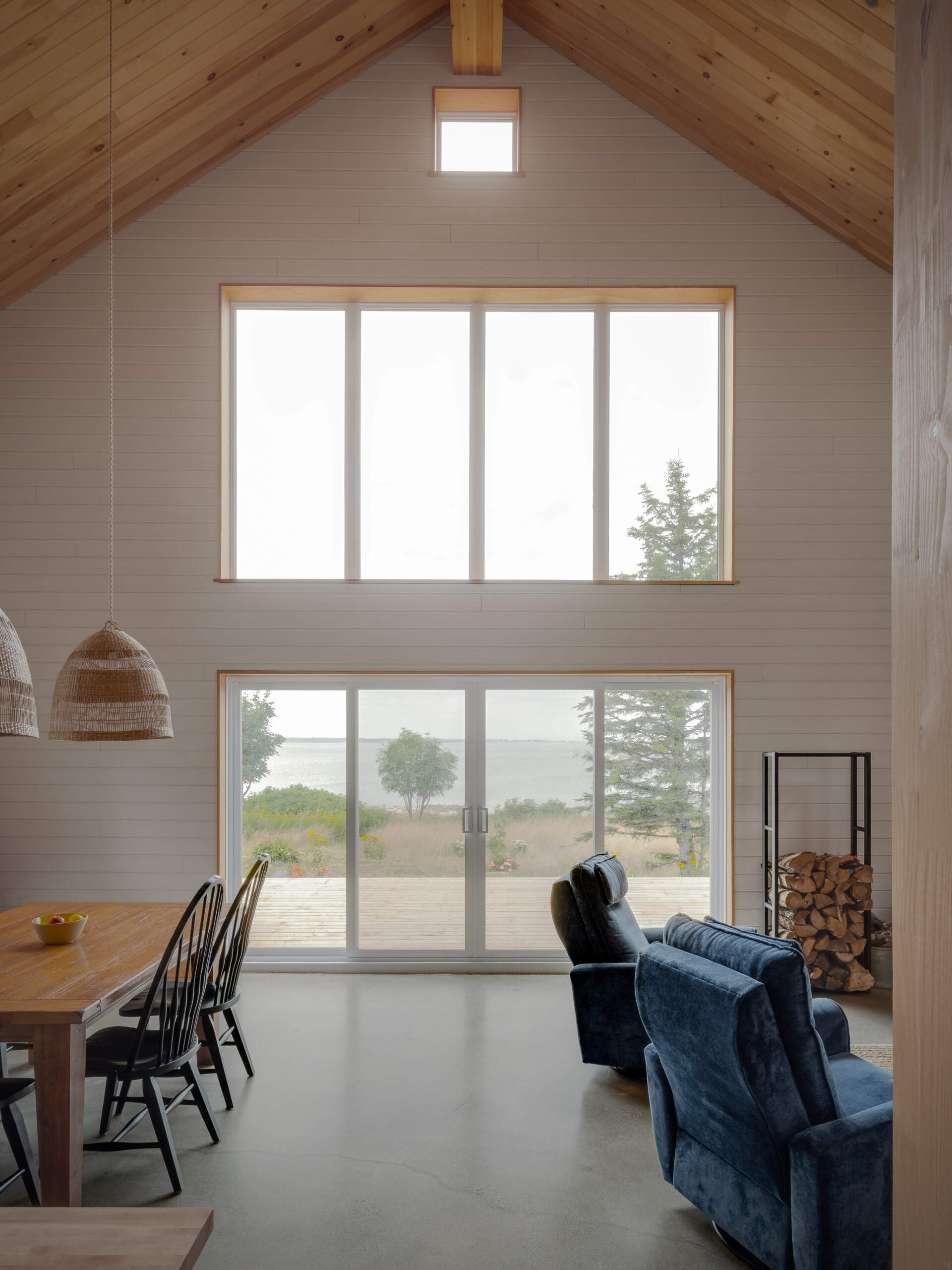
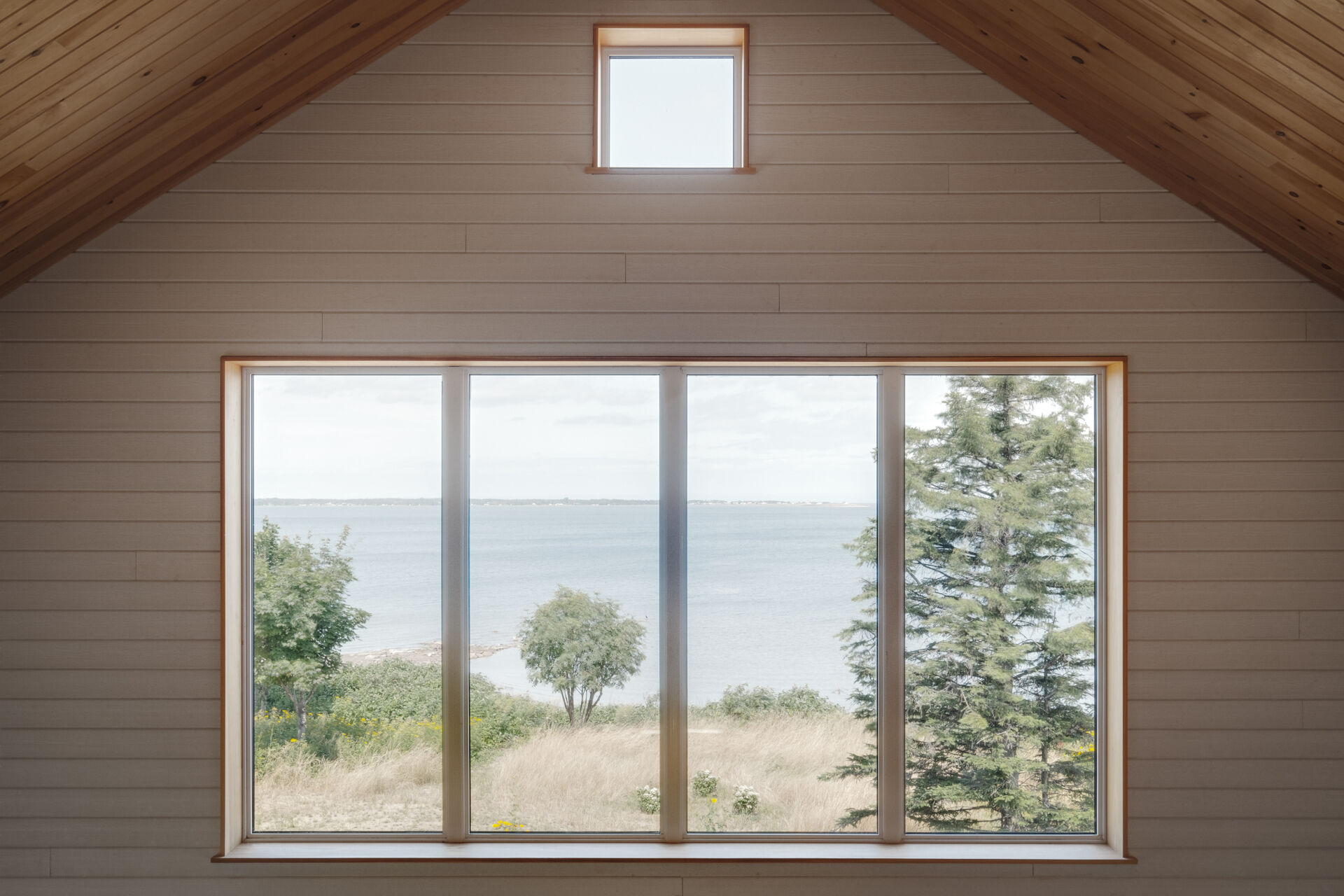
Openings are designed to bring in as much natural light as possible while maintaining a sense of structure. Large windows and sliding doors allow light to move through the interior, especially into the central living space.
They also help define how the house is used, offering easy movement between areas and reinforcing the clear, logical layout.
A Double-Height Gathering Space
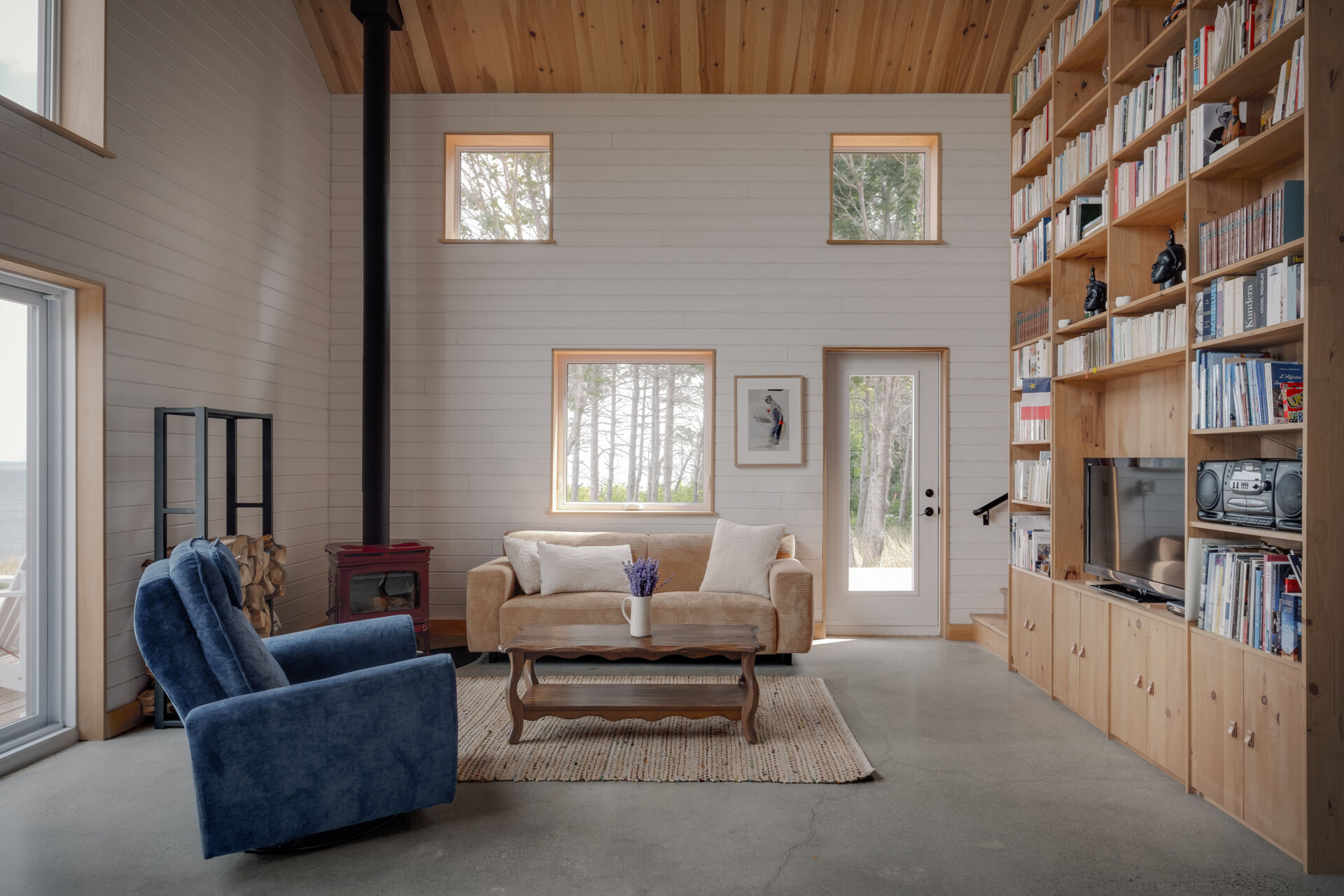
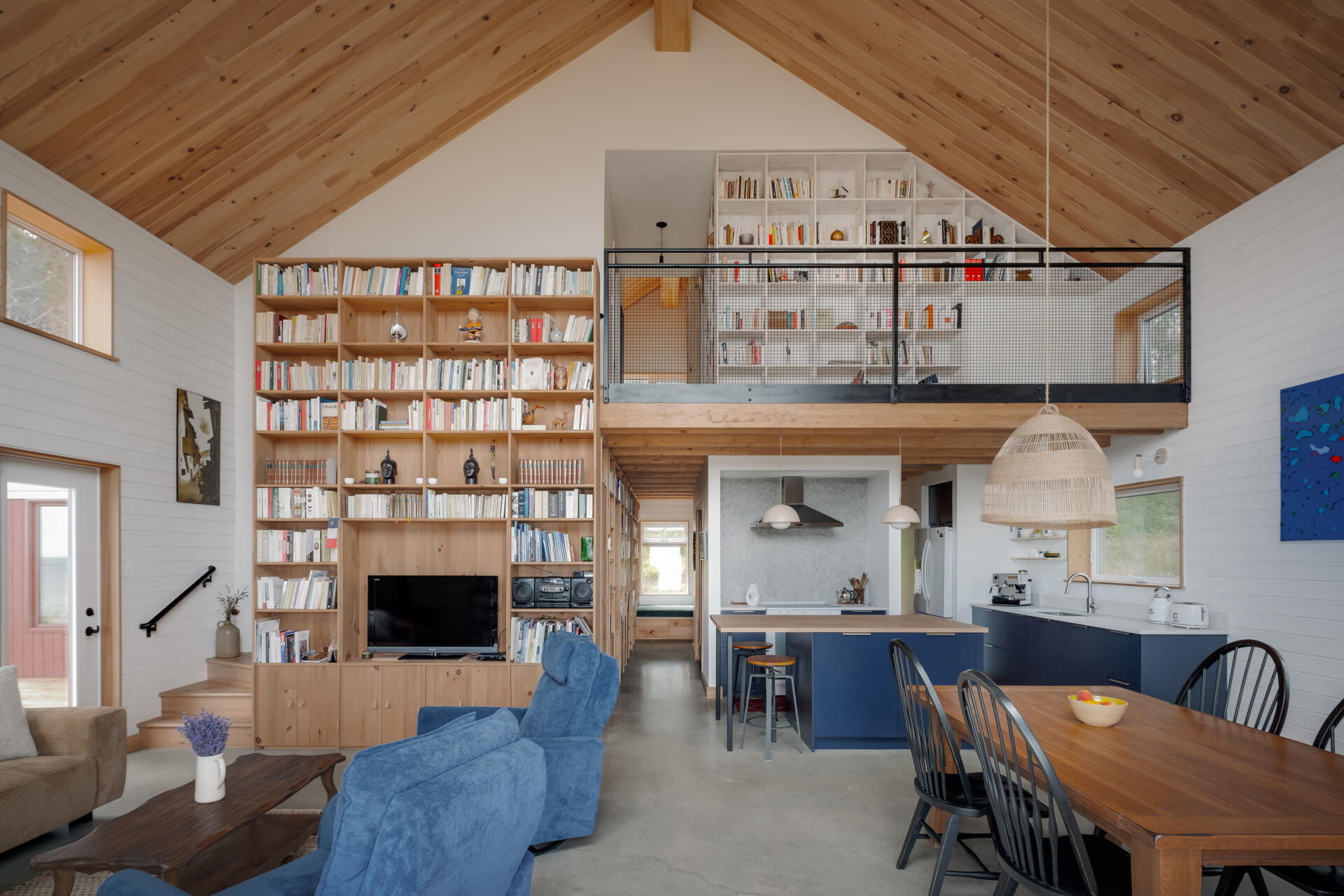
At the heart of the home is a double-height living room that feels open and generous, with light filtering in from above and across both levels.
It works as the main gathering area, where everything comes together. The vertical volume gives it presence without feeling overwhelming, making it adaptable for both quiet moments and larger family interactions.
A Natural Extension of the Living Space
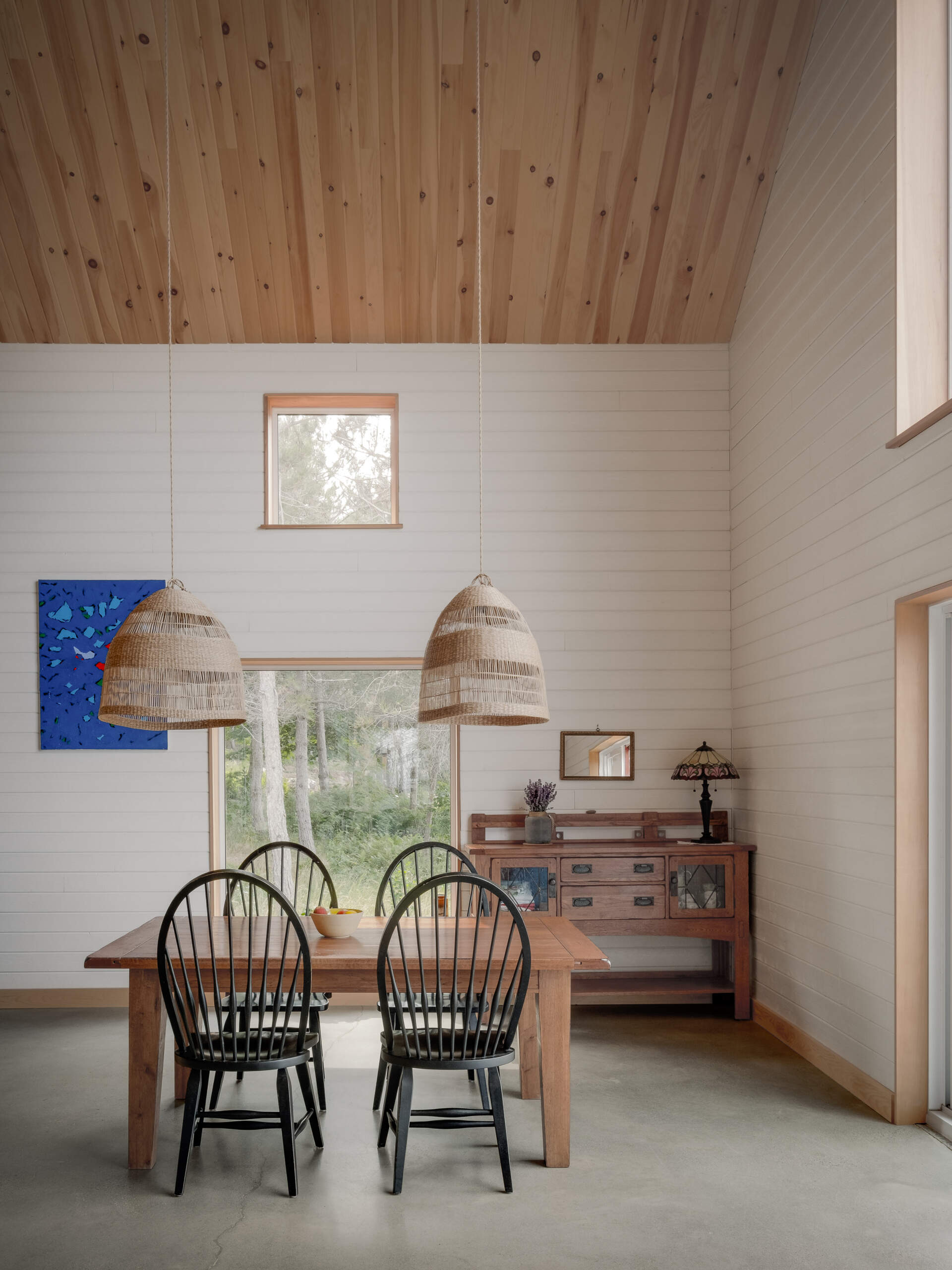
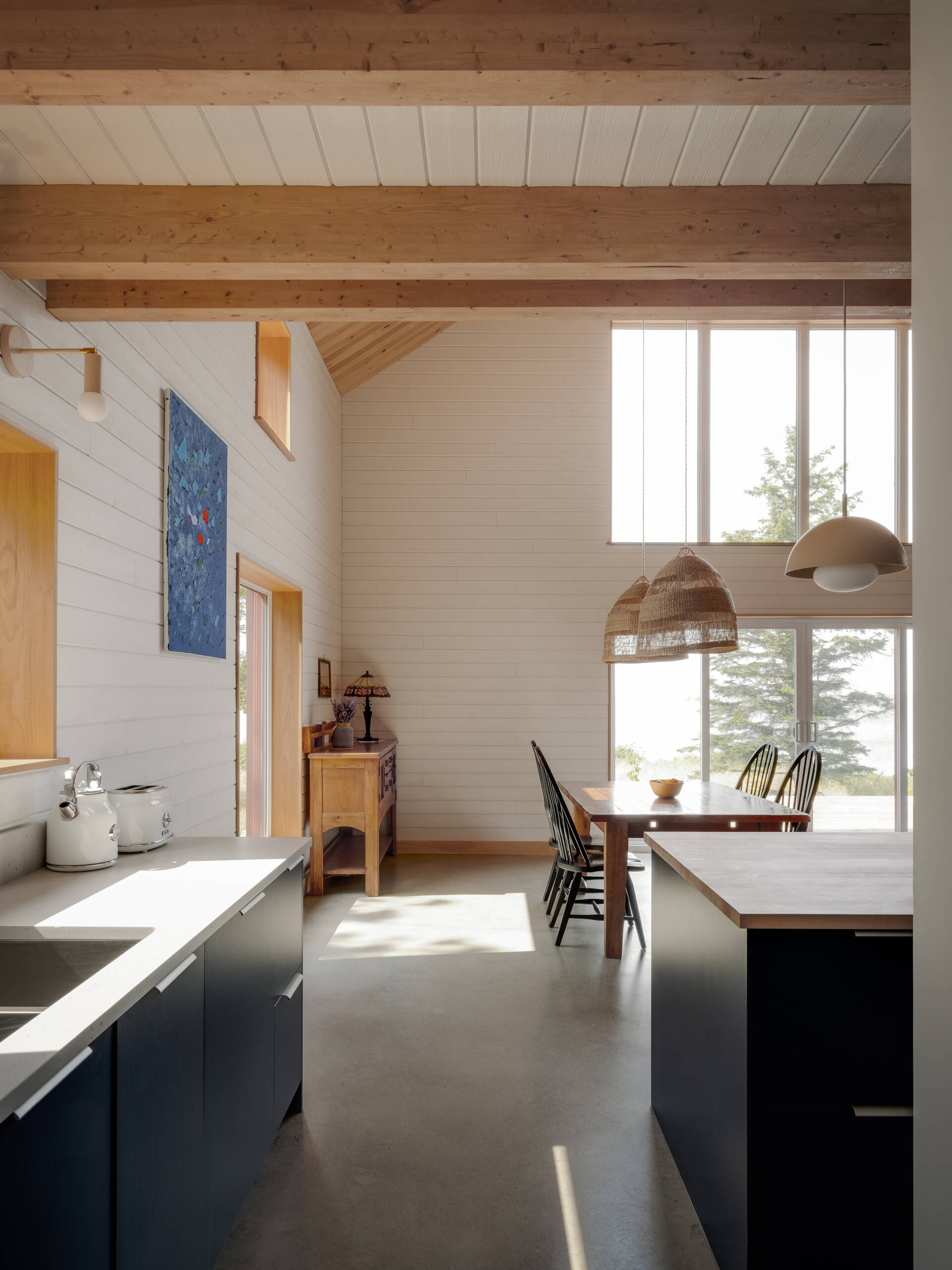
The dining area sits comfortably within the open plan, flowing directly from the living room. Its placement keeps it connected to the main space while still feeling defined, due to the large woven pendant lamps hanging above the dining table.
Anchored by a Central Spine
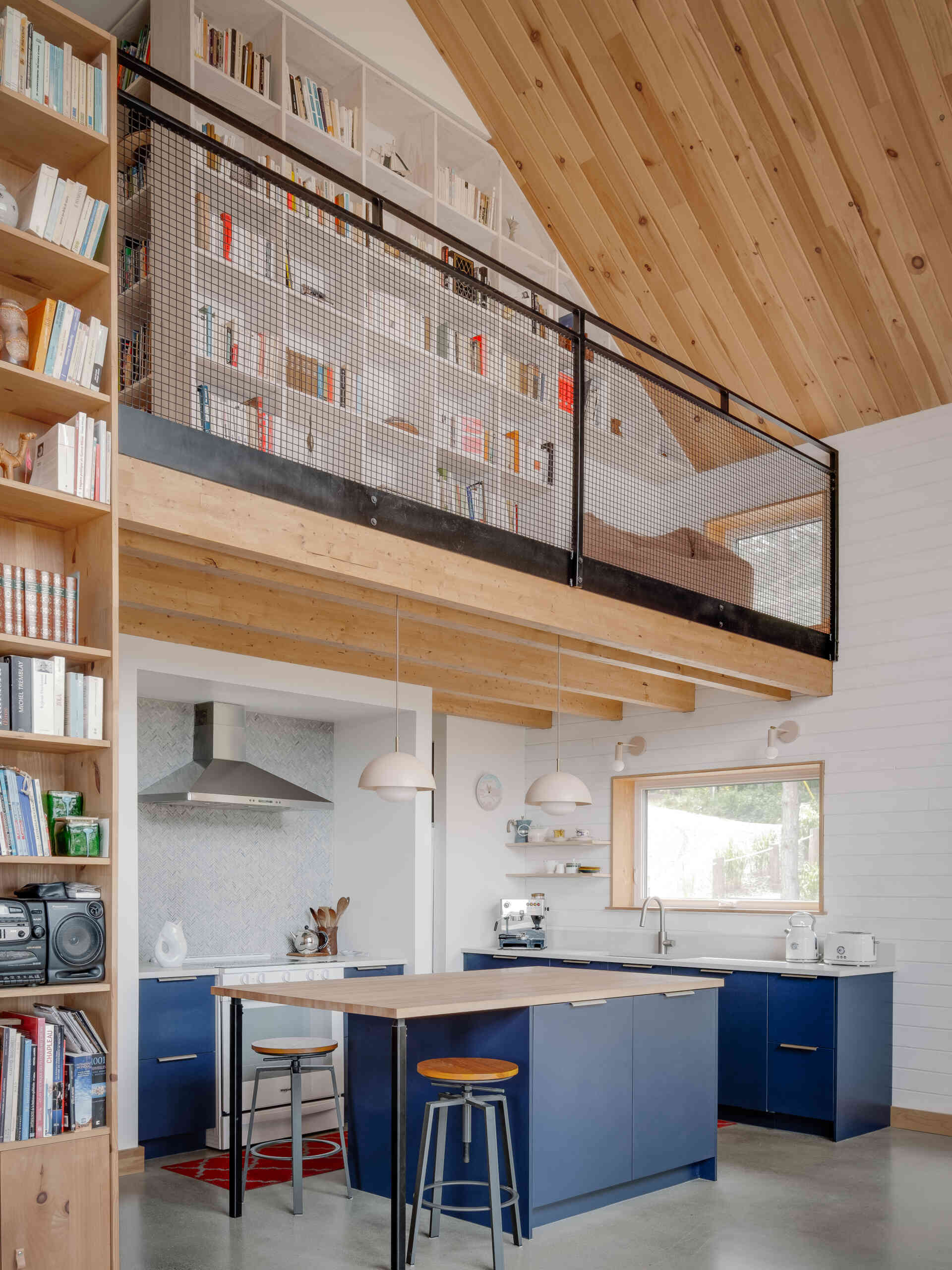
The kitchen sits neatly along the home’s central spine, holding everything together while staying visually light within the double-height space. Deep blue cabinetry grounds the room, adding contrast against the white walls and pale wood ceiling, while a simple wood-topped island brings warmth right to the center.
Quiet Transitions
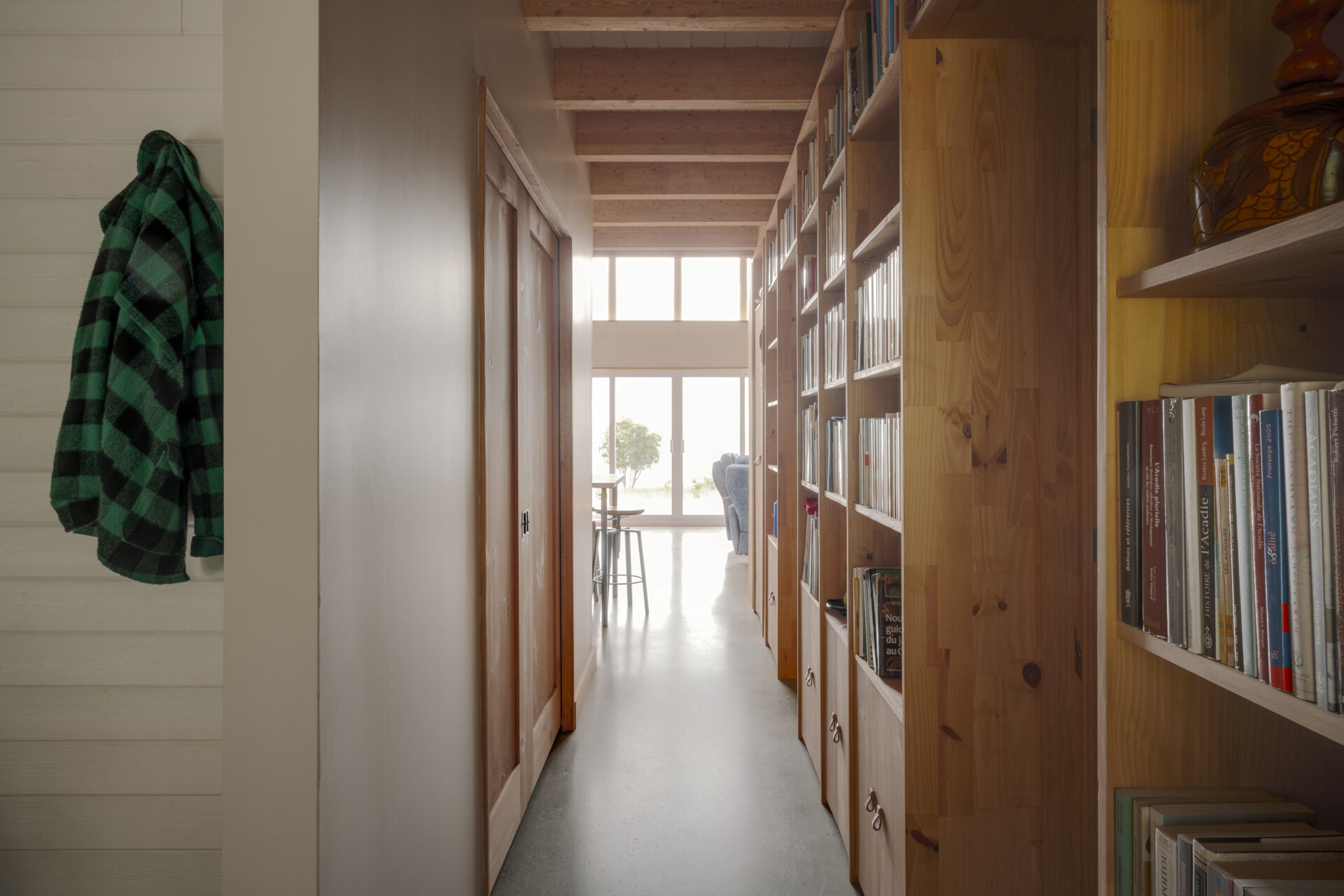
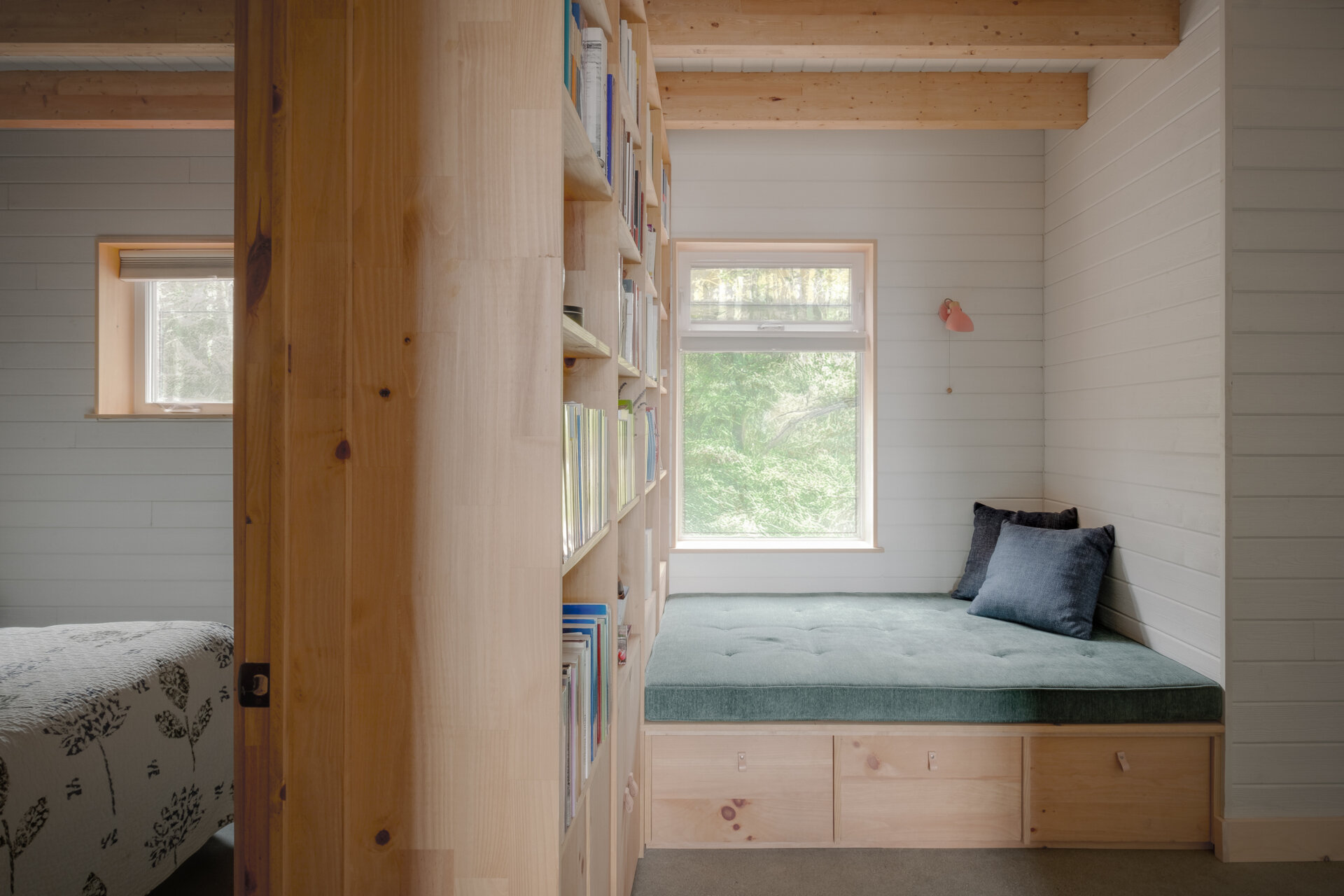
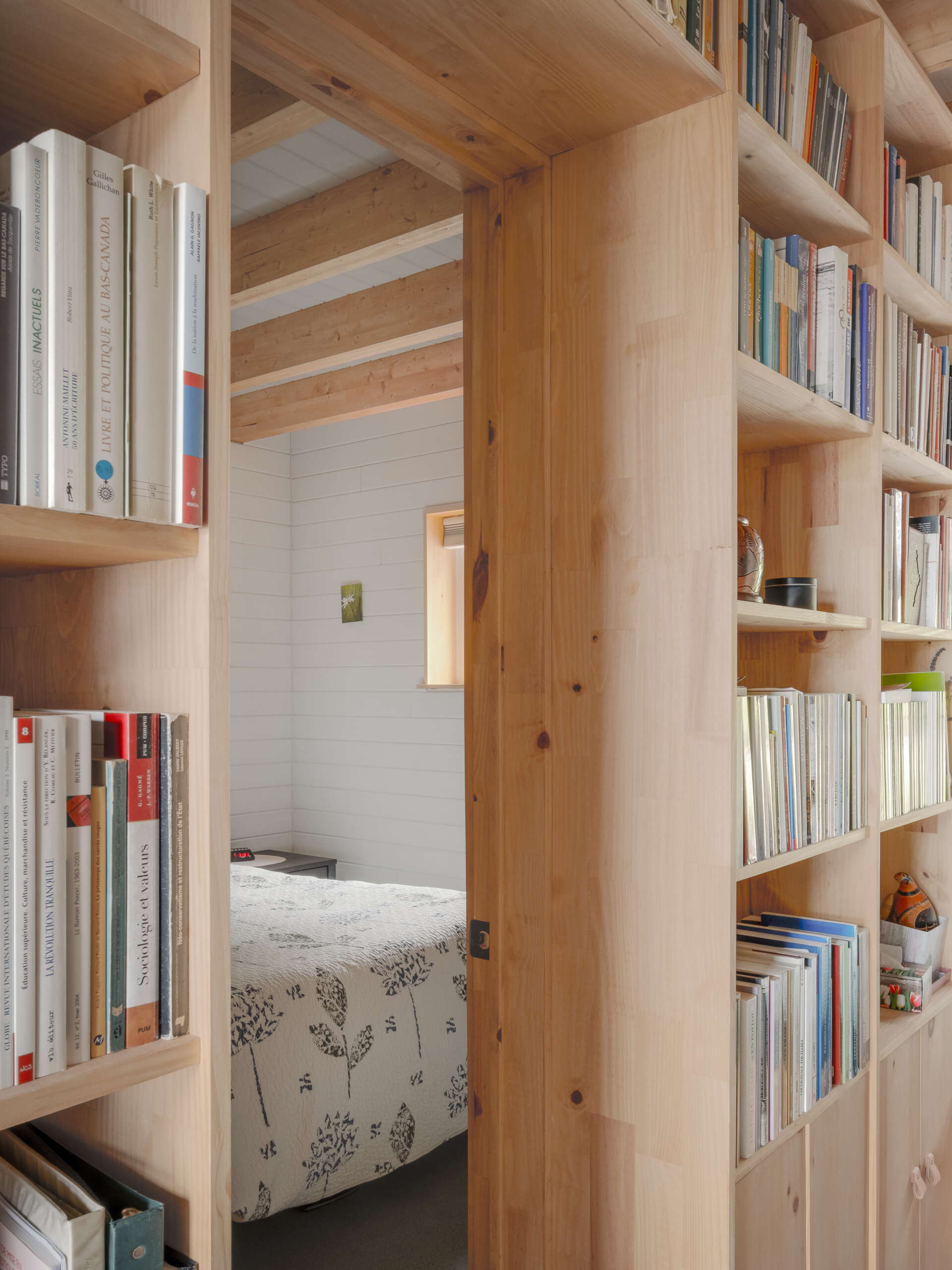
Moving through the lower level, the hallway introduces a quieter atmosphere, with a window bench creating a moment to relax or take off shoes. It acts as a transition point between shared spaces, the entryway, and the first bedroom and bathroom. Integrated shelving lines the hallway, hinting at the role reading plays throughout the house.
A Calm Private Space
The bedroom provides a more contained environment compared to the openness of the main living area. It feels grounded and quiet, offering privacy without disconnecting completely from the rest of the home.
Functional and Refined
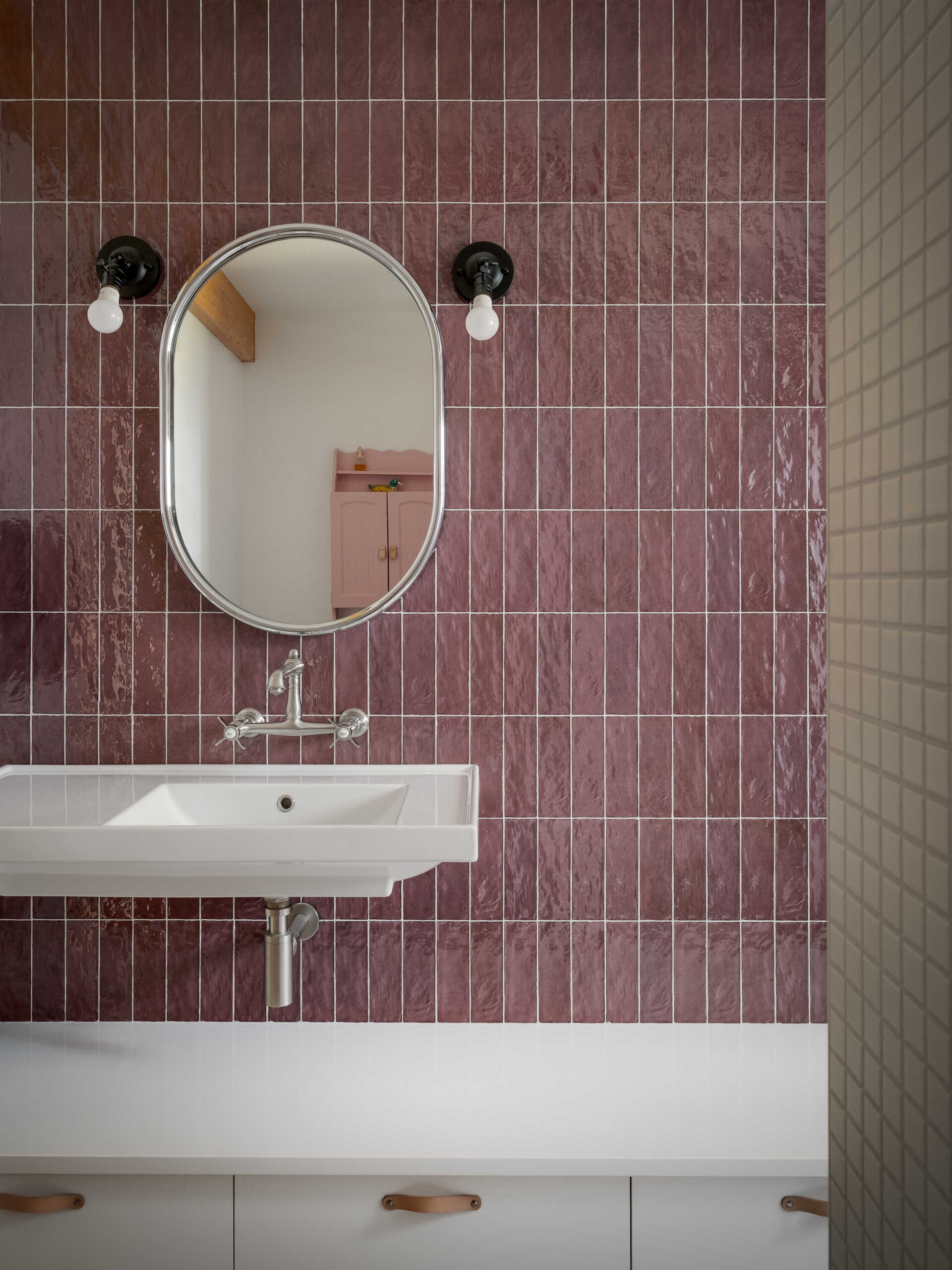
The bathroom introduces a shift in tone through color and texture. Glossy pink tiles wrap the walls, catching light and adding depth, while a wall-mounted sink keeps the floor clear, giving the room a slightly more open feel.
Moving Upward
Stairs located to the left of the living room shelving lead up to the loft level, creating a clear vertical connection between floors. As you move upward, the perspective shifts, opening views back down into the living space.
Books as Architecture
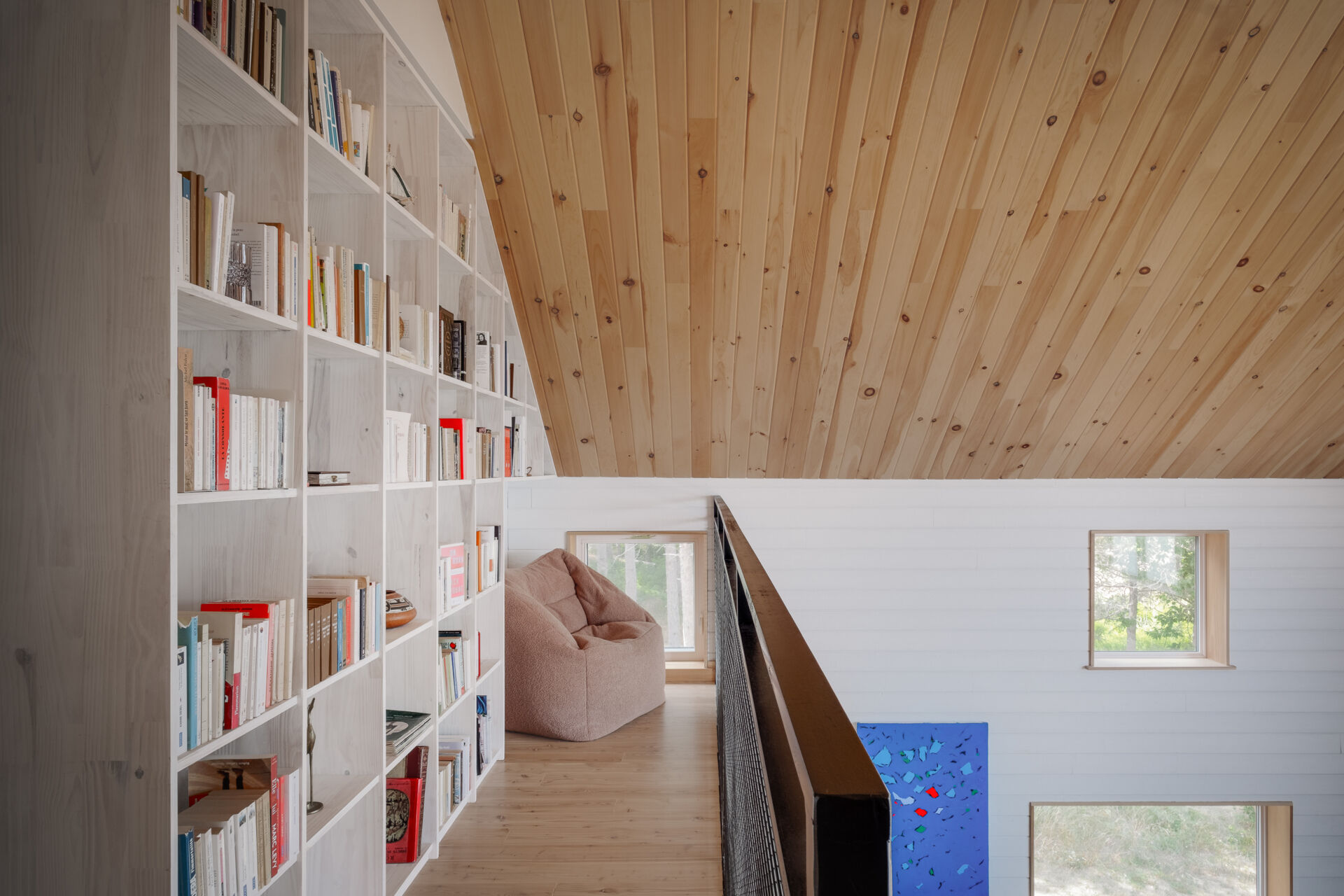
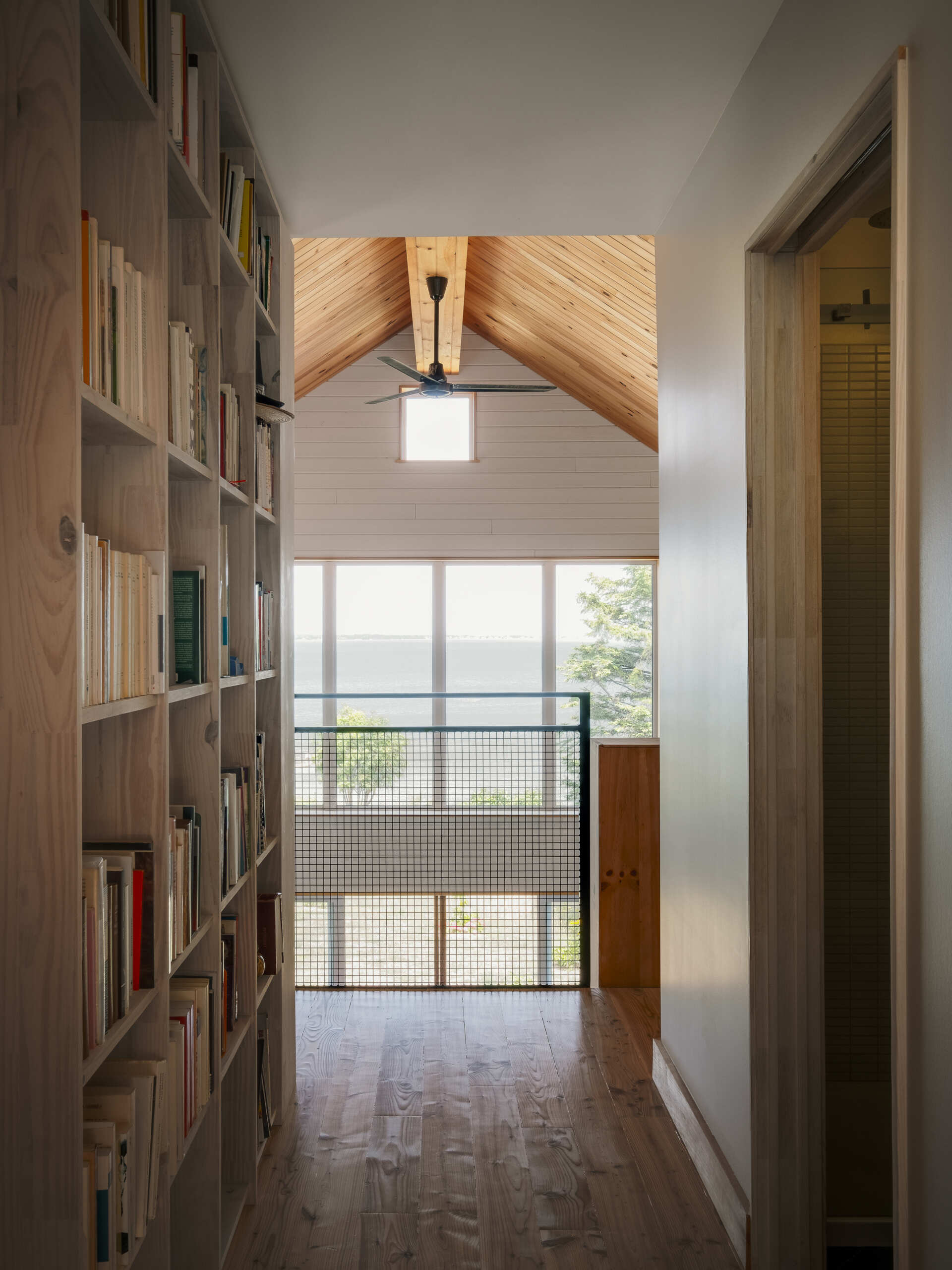
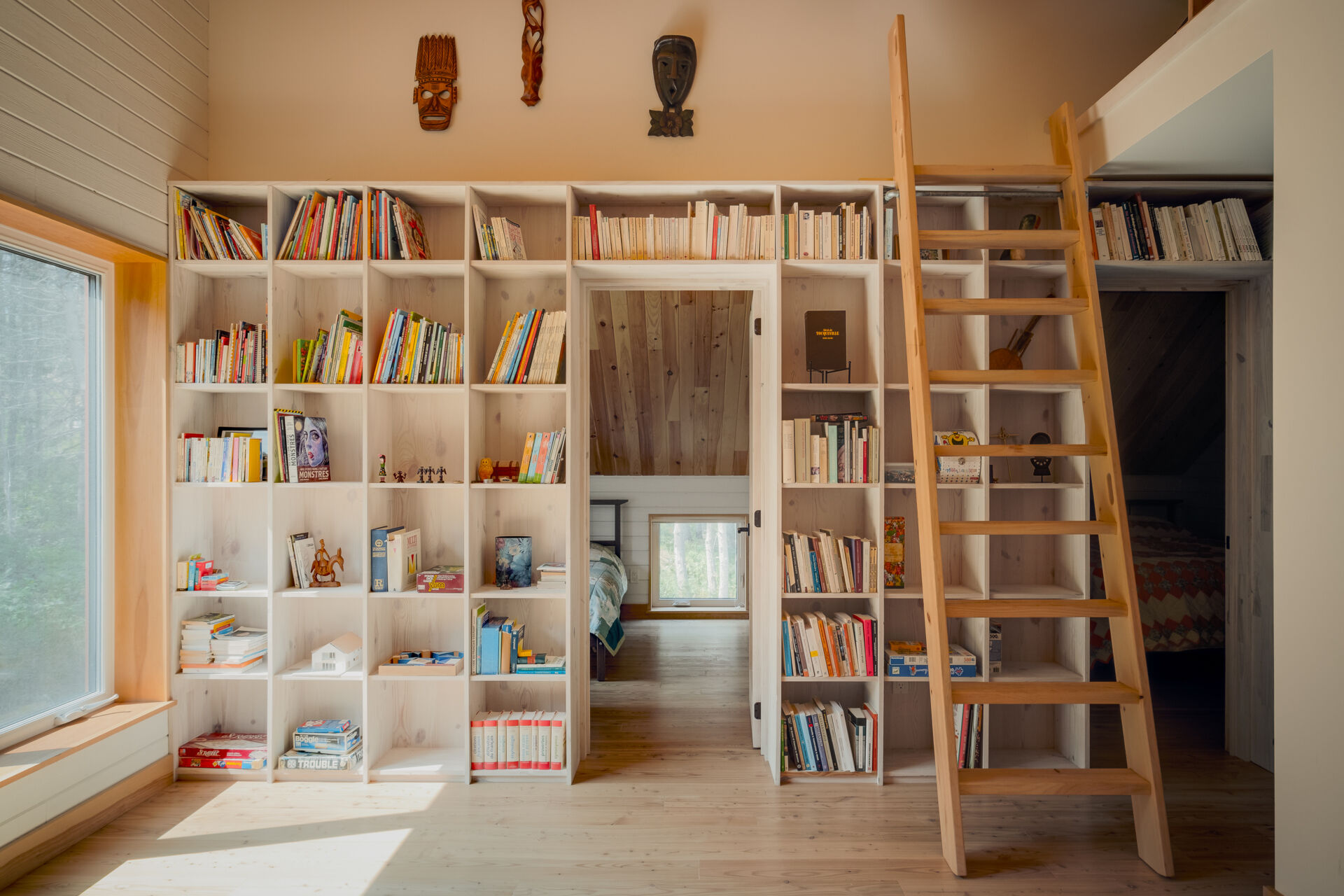
Custom solid pine bookshelves are integrated throughout, but they become especially prominent in the loft. These built-ins shape the space, creating small reading areas and subtle divisions without closing anything off. They add warmth and texture while reinforcing the importance of books within the home.
Elevated and Open
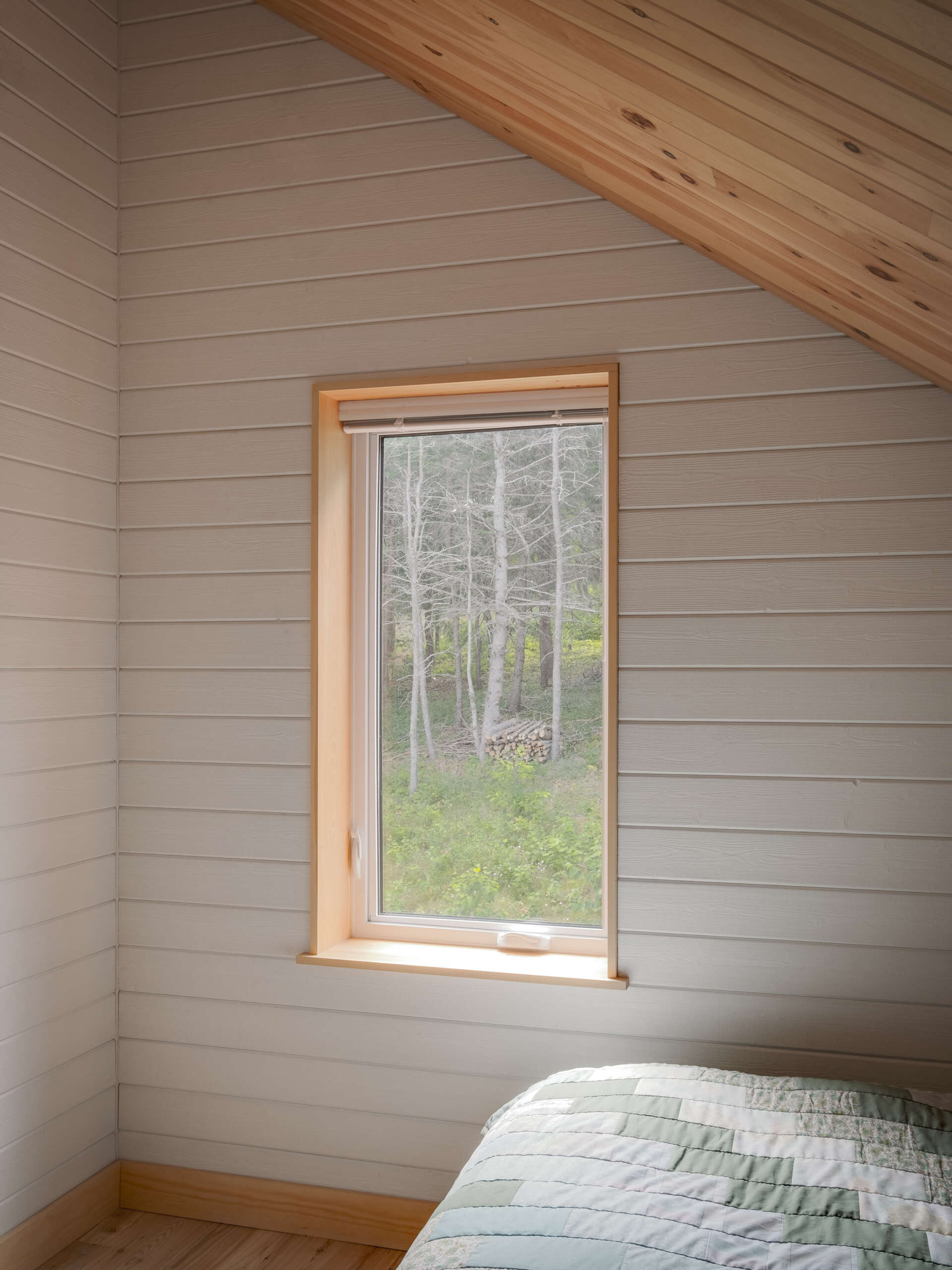
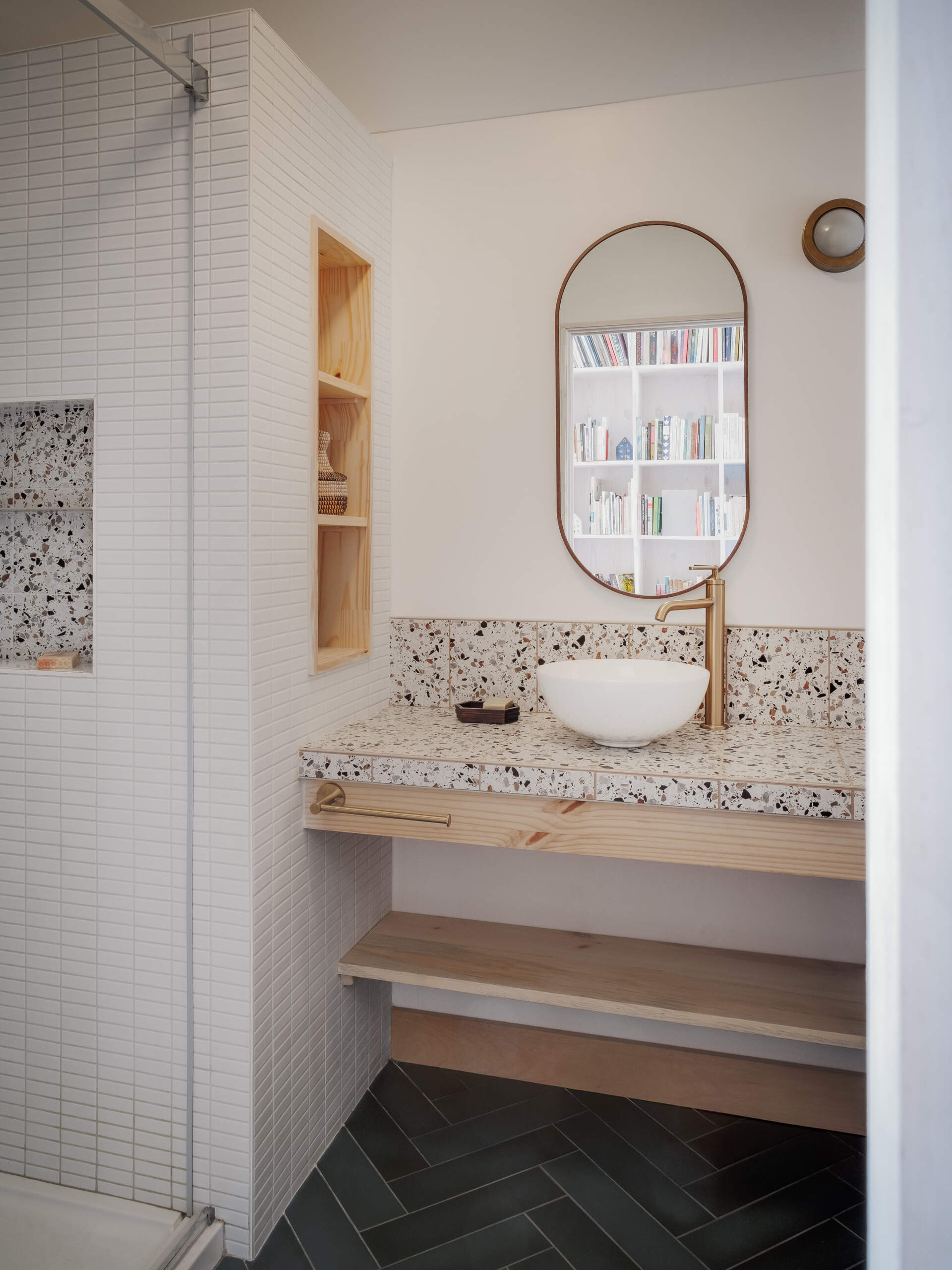
The upstairs there’s a pair of bedrooms, a bathroom, and a seating area, that all feature the same palette of wood and simple finishes that the lower level displays. This consistency helps unify the home, even as the layout shifts between levels.
Understanding the Layout
The floor plans reveal a clear and efficient organization. Each area has a defined role, yet everything remains visually and physically connected.
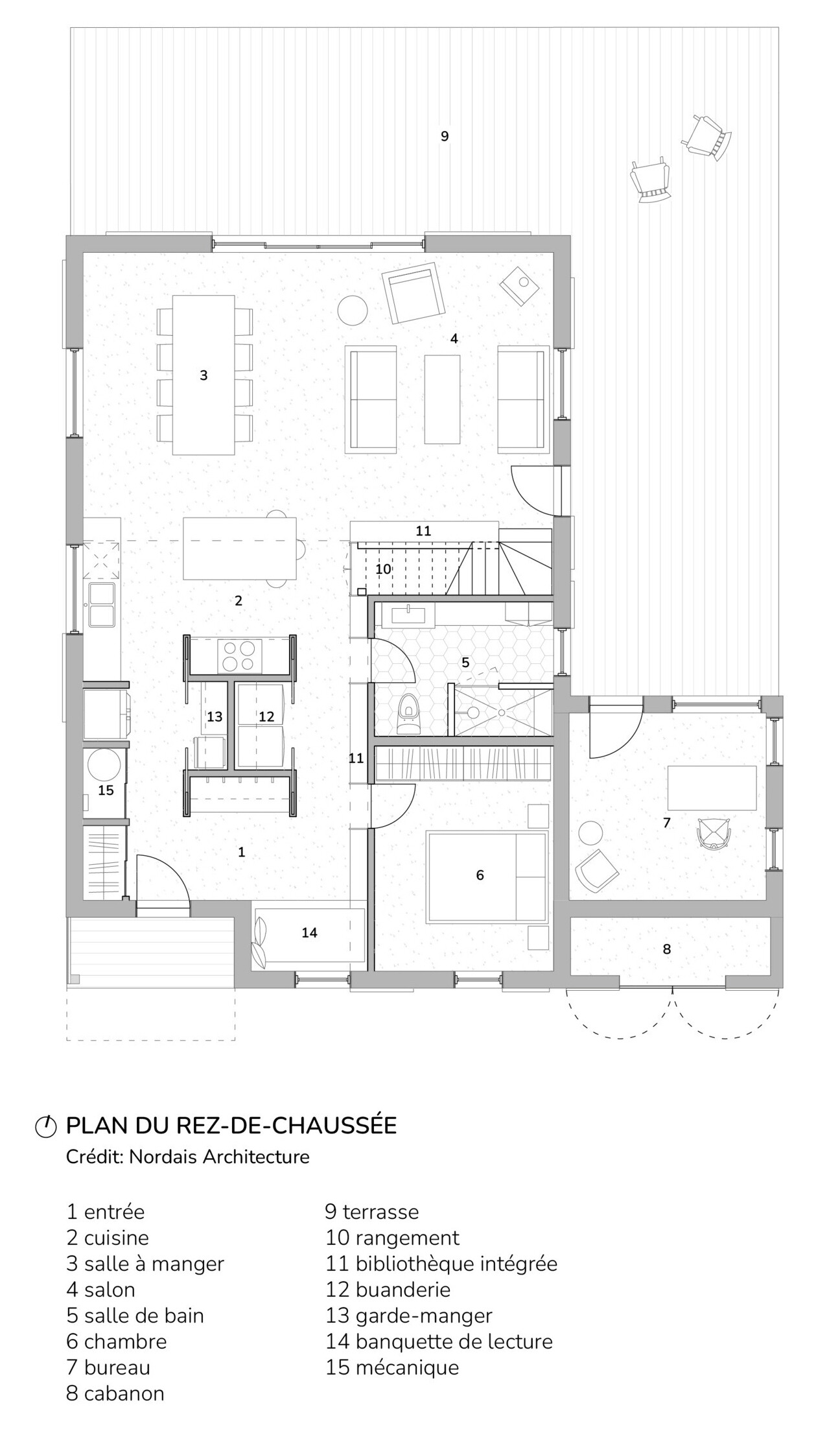
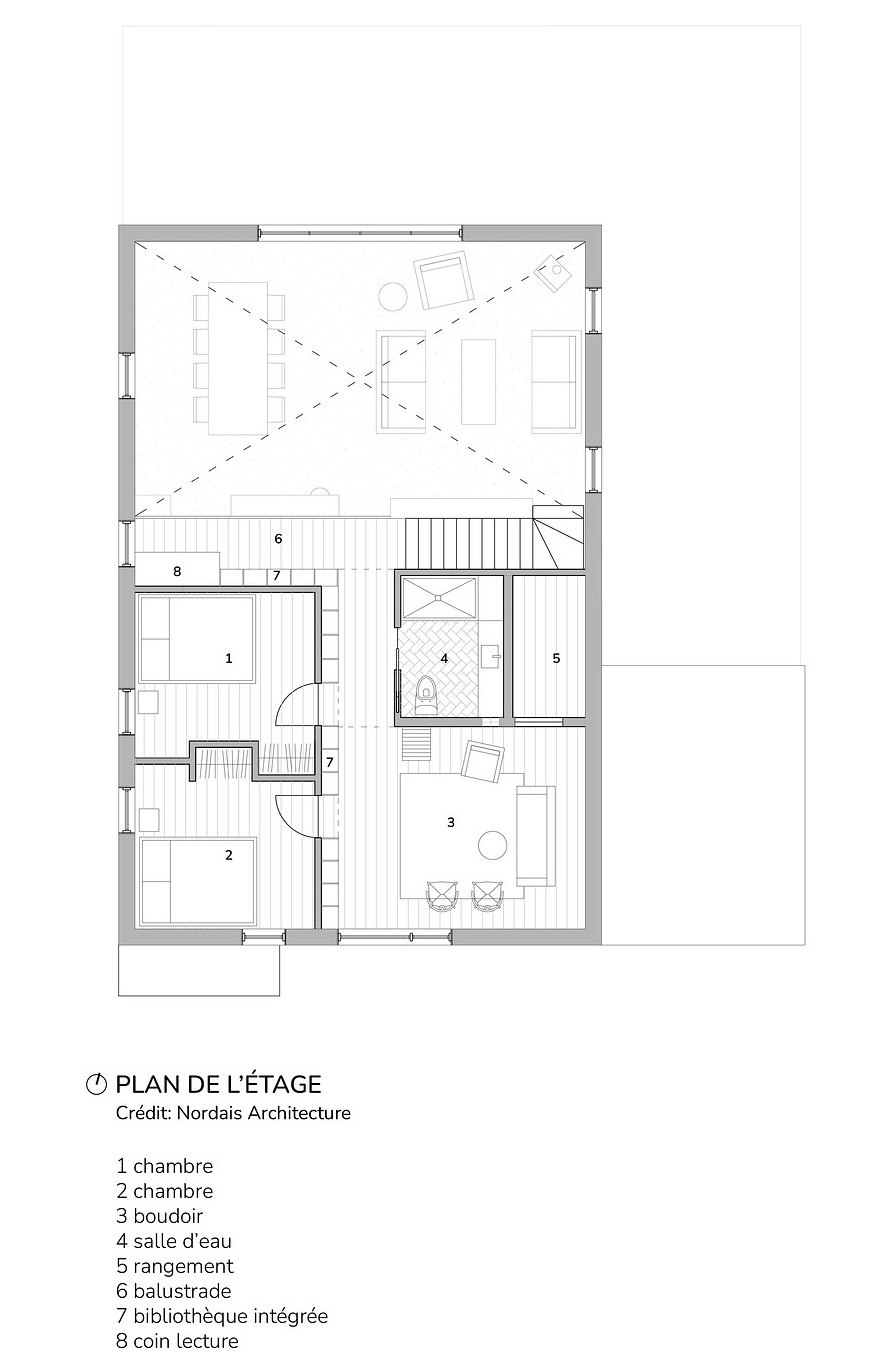
This home shows how a familiar building type can be adapted into something entirely new without losing its original character. By combining a simple form with light, material contrast, and built-in elements, Nordais Architecture has created a home that feels both grounded in history and suited to modern living.