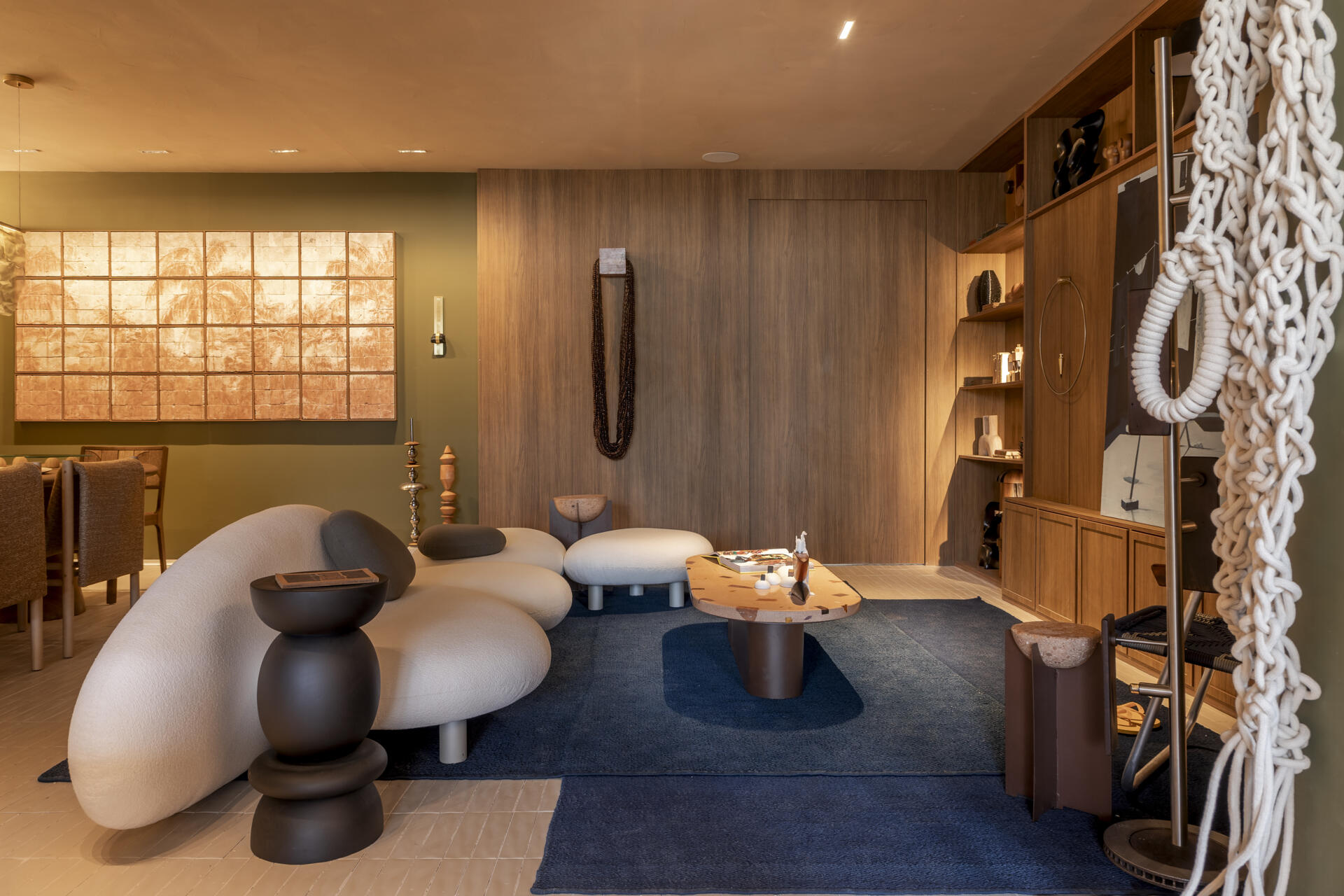
Designed by architect Paula Martins, Casa Corcovado brings the essence of Rio de Janeiro into a residential setting presented at the first Brazilian Architecture Biennial. Located within the pavilion dedicated to the Atlantic Forest biome at Ibirapuera Park, the project engages directly with one of Brazil’s most iconic natural landscapes.
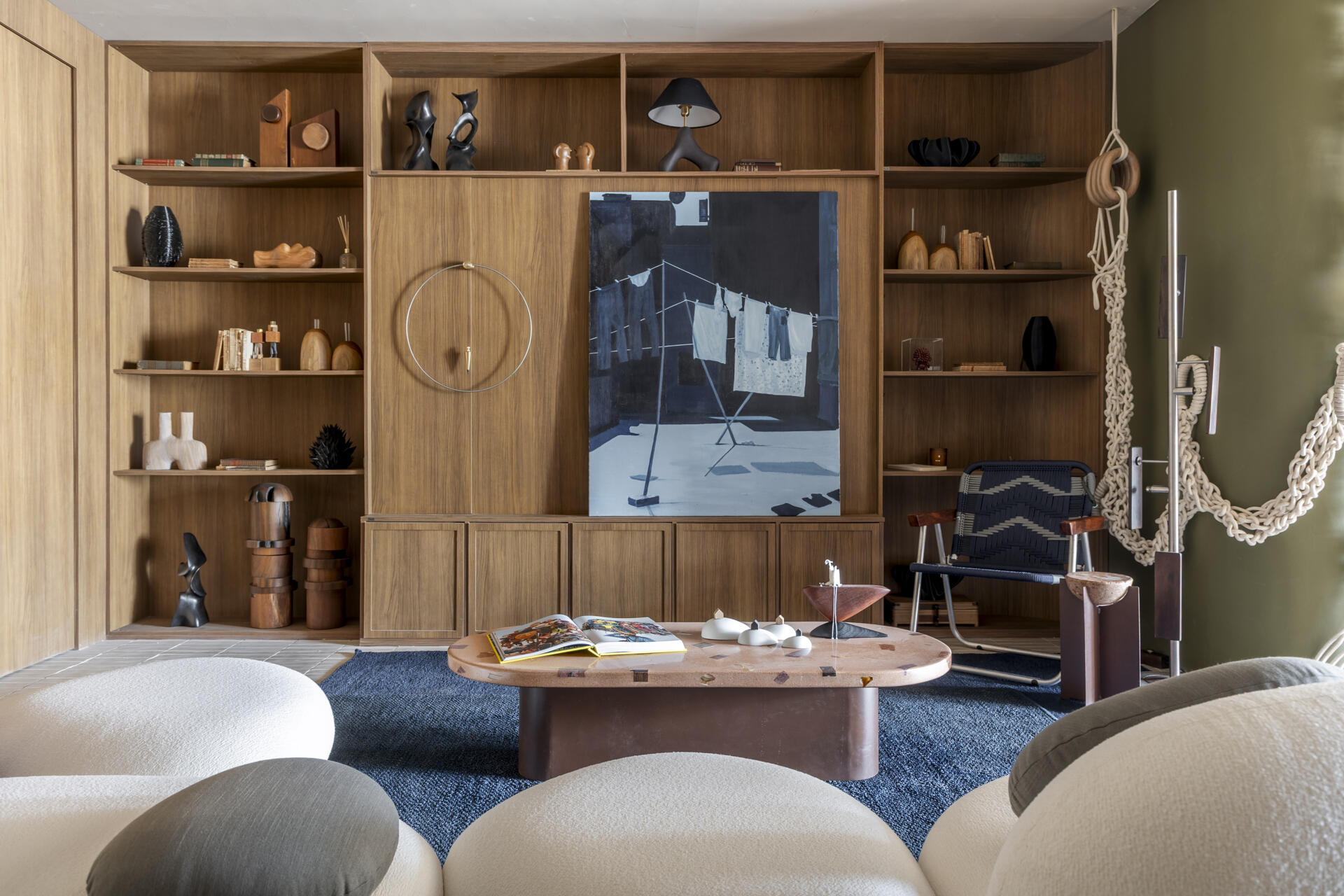
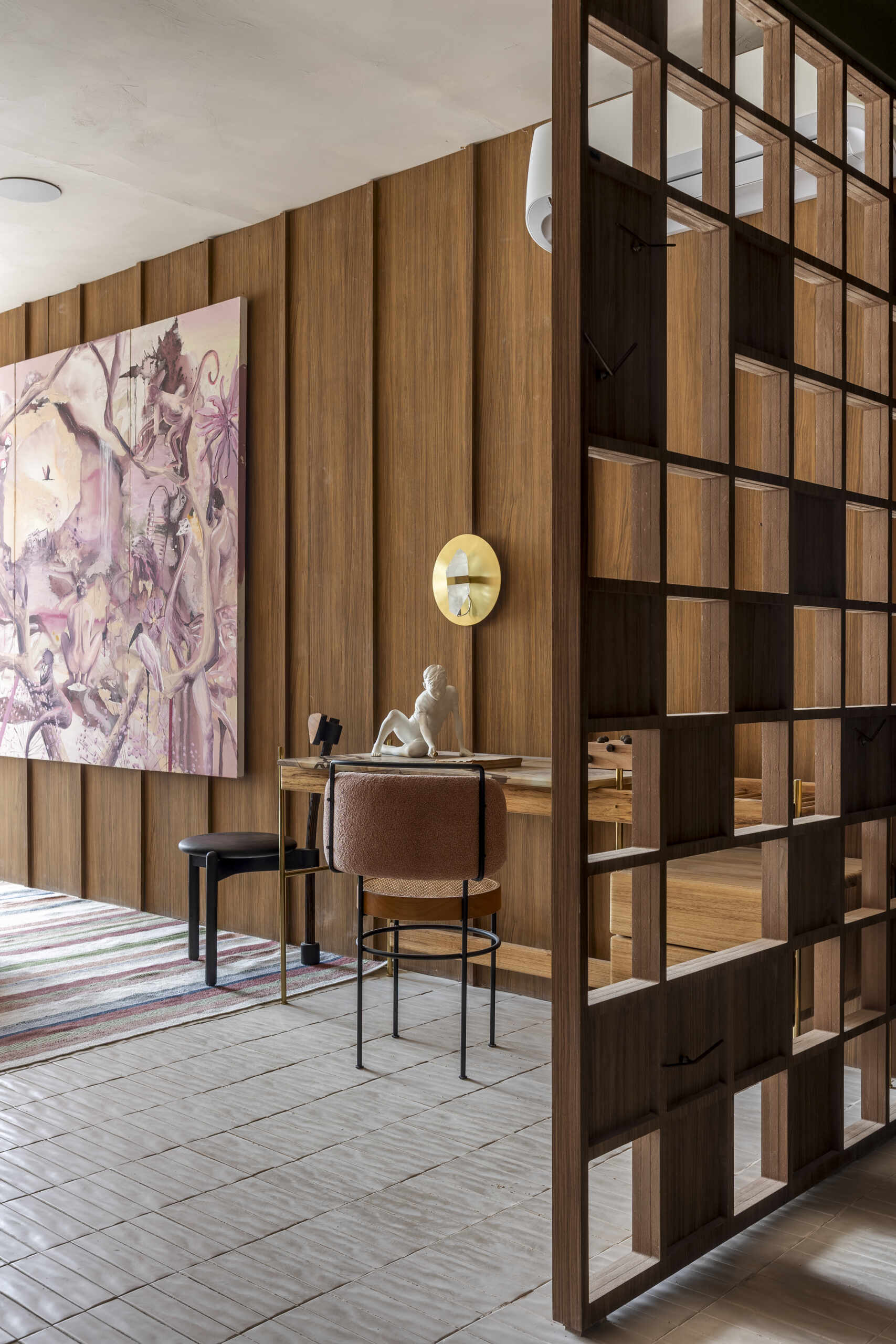
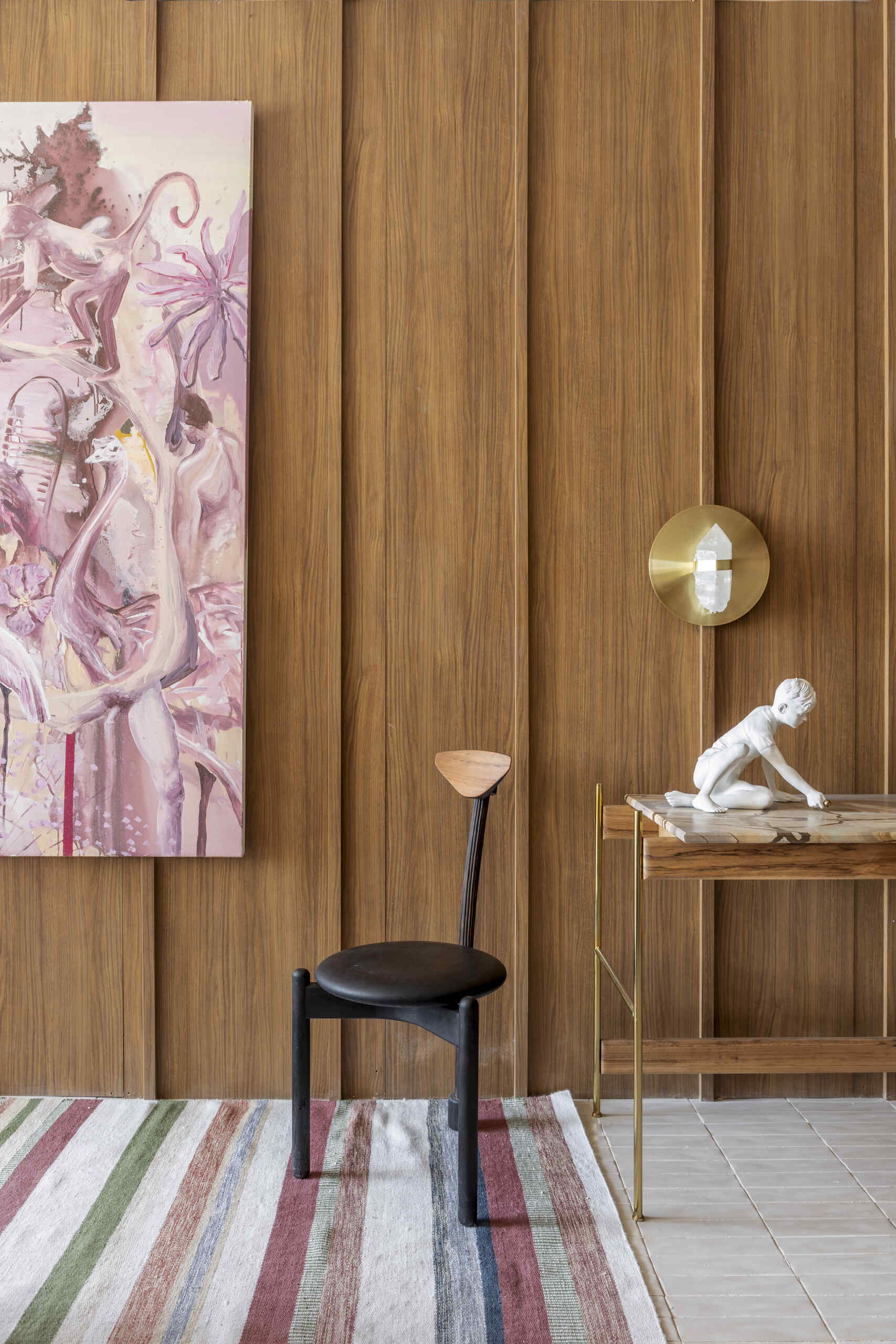
With artistic curation by Belchior Almeida and landscaping by Albite Coutinho, the apartment layers art, texture, and objects to tell a broader story of Rio’s way of living. Shelving throughout the space holds a mix of pieces from different periods and styles, forming a collection that reflects memory, contrast, and identity over time. Patterns appear across furniture, rugs, wallpapers, and finishes, adding movement and energy to the interiors.
Inspired by the connection between sea, forest, and memory, the project reimagines a Carioca atmosphere inside São Paulo. Conceived as a tribute to Laís and Vinícius, the home is designed to support hosting, cooking, and unwinding with ease. Selected as one of 27 residential proposals representing Brazilian states, Casa Corcovado demonstrates how interiors can express culture and identity through art, materials, and design choices.
Where Forest Meets Sea
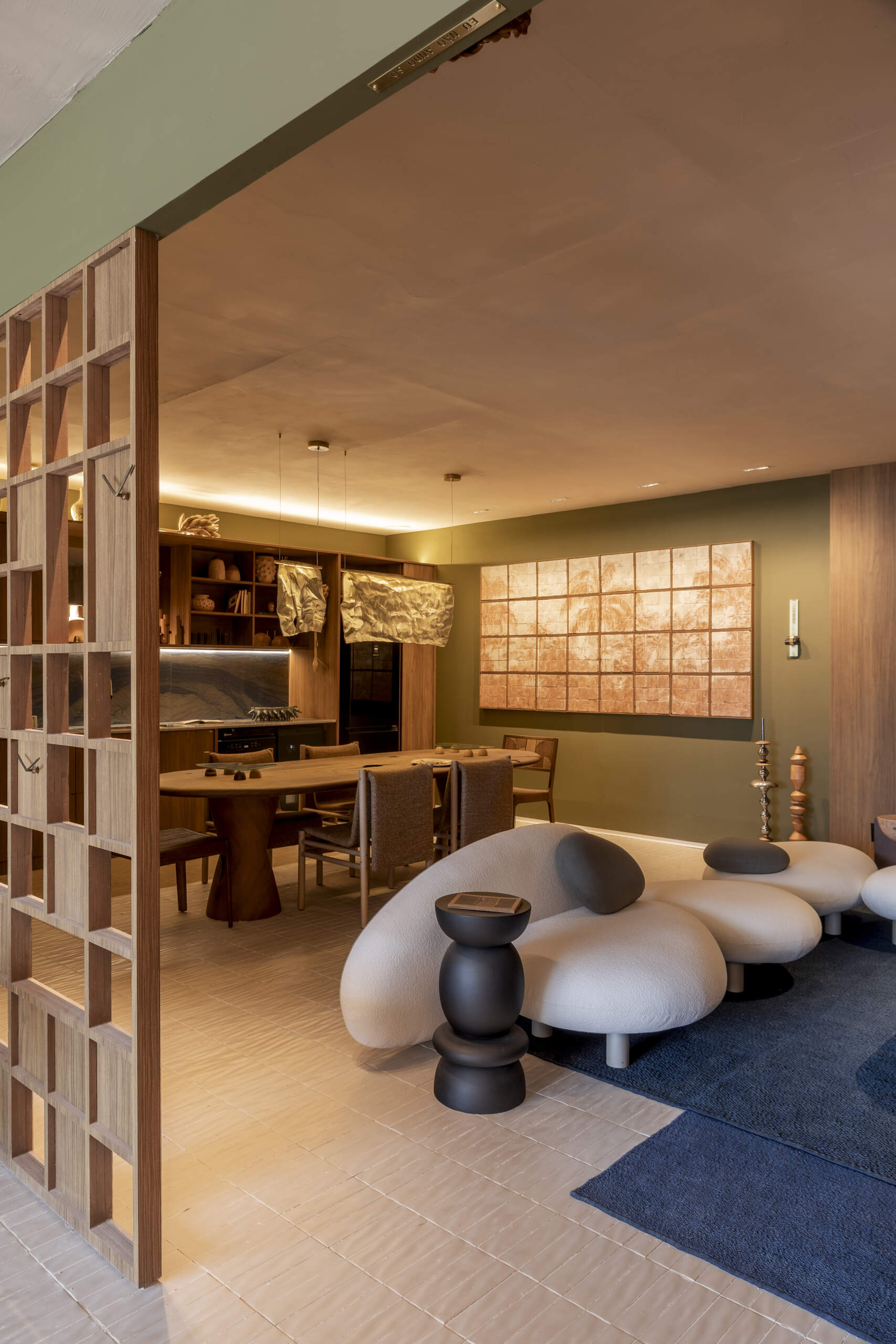
The living area introduces the project’s central idea through color and material. Shades of green and blue echo Rio’s landscape, referencing the meeting of dense forest and open coastline. Natural materials reinforce this connection, adding texture and depth across the space.
Open sightlines and easy movement between zones make the living room feel social and inviting, encouraging conversation and shared moments. This visual openness sets the tone for the rest of the home.
A Space for Gathering
Flowing directly from the living area, the dining space continues the sense of openness. It’s designed for hosting, where meals and conversations unfold without interruption.
The integration between spaces keeps everything visually connected, reinforcing the idea of the home as a place where people come together naturally.
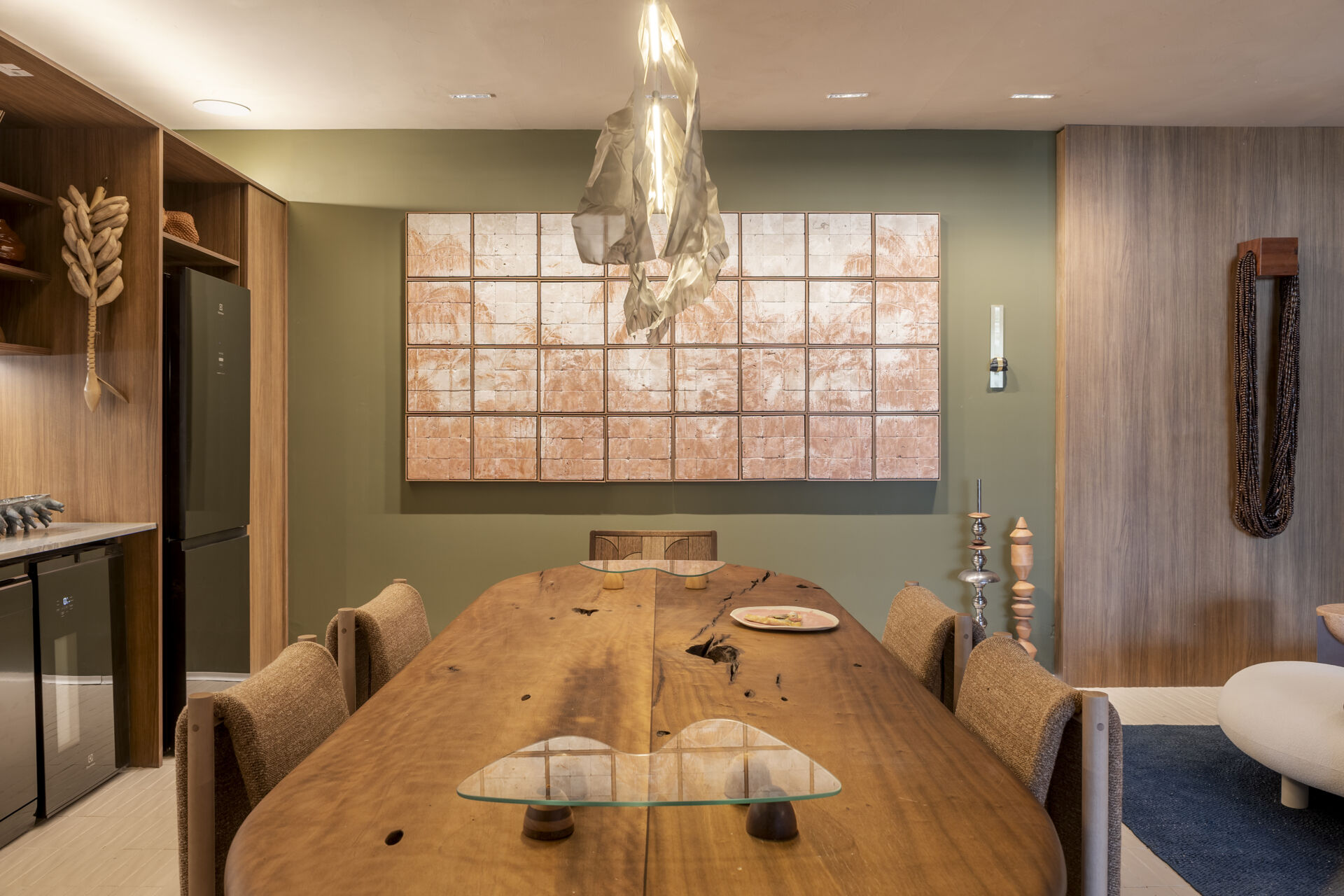
Designed for Everyday Use
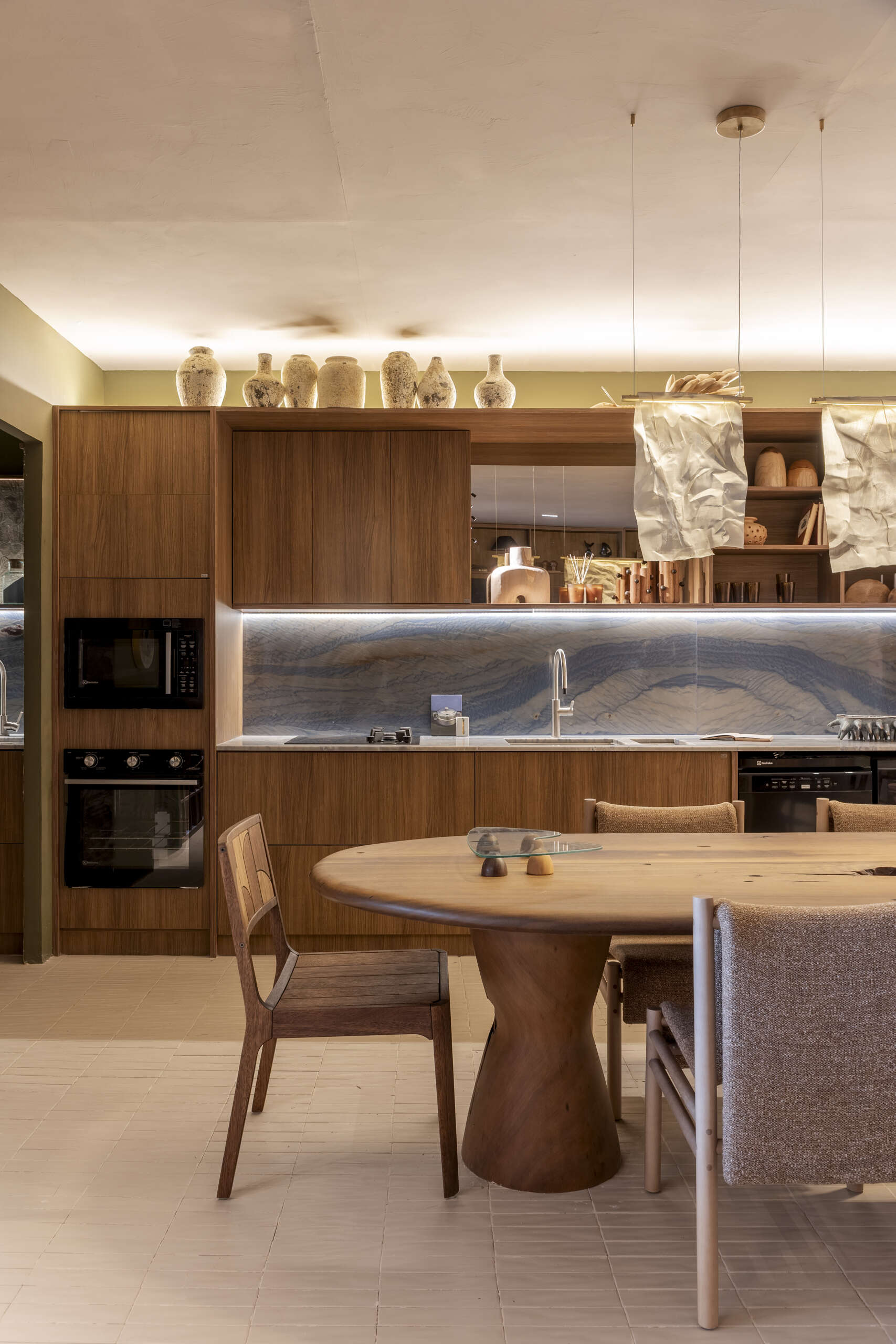
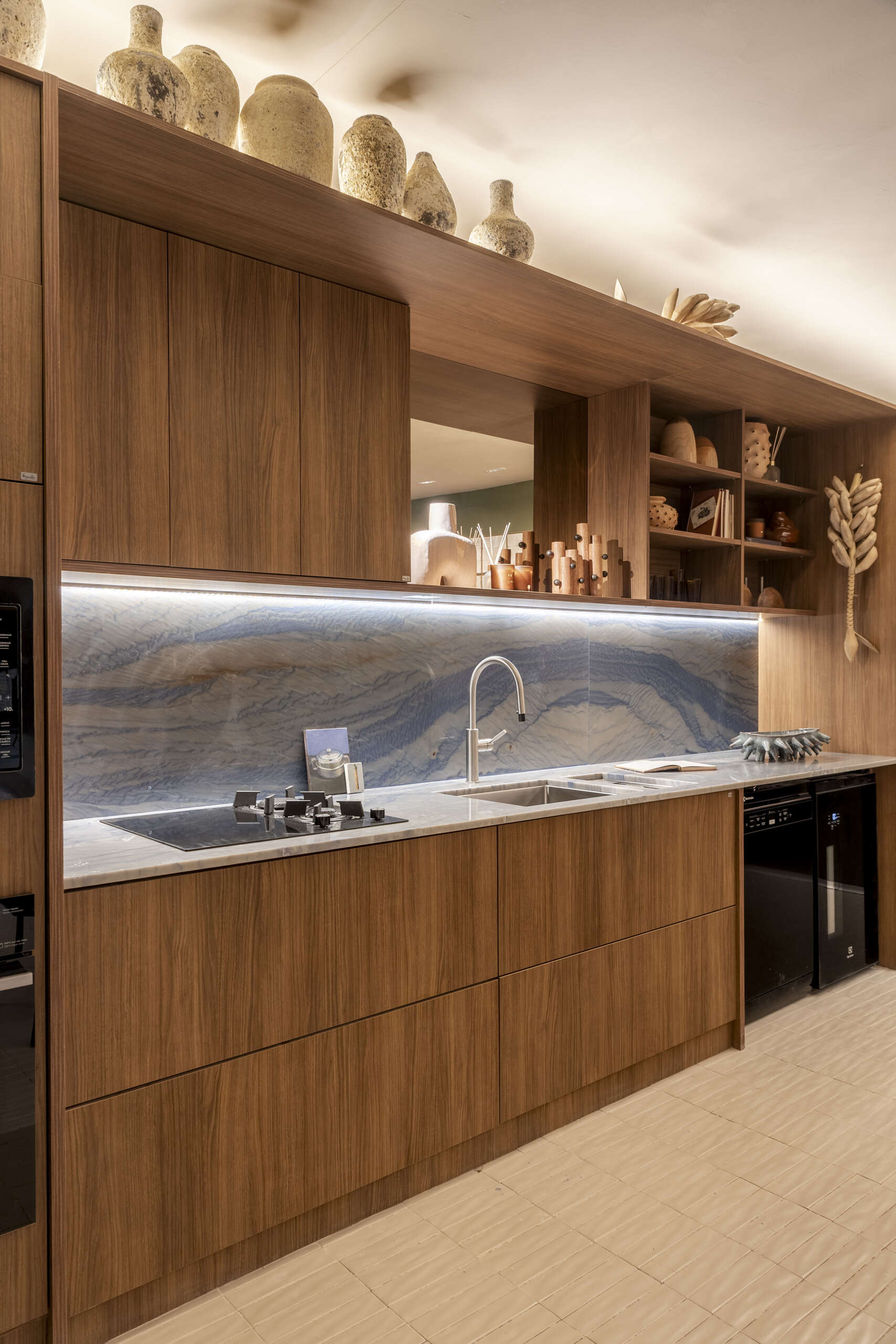
The kitchen supports the social nature of the home, positioned to stay connected with surrounding spaces. Cooking becomes part of the shared experience, not something hidden away.
Materials and finishes continue the broader palette, maintaining cohesion while supporting practical use.
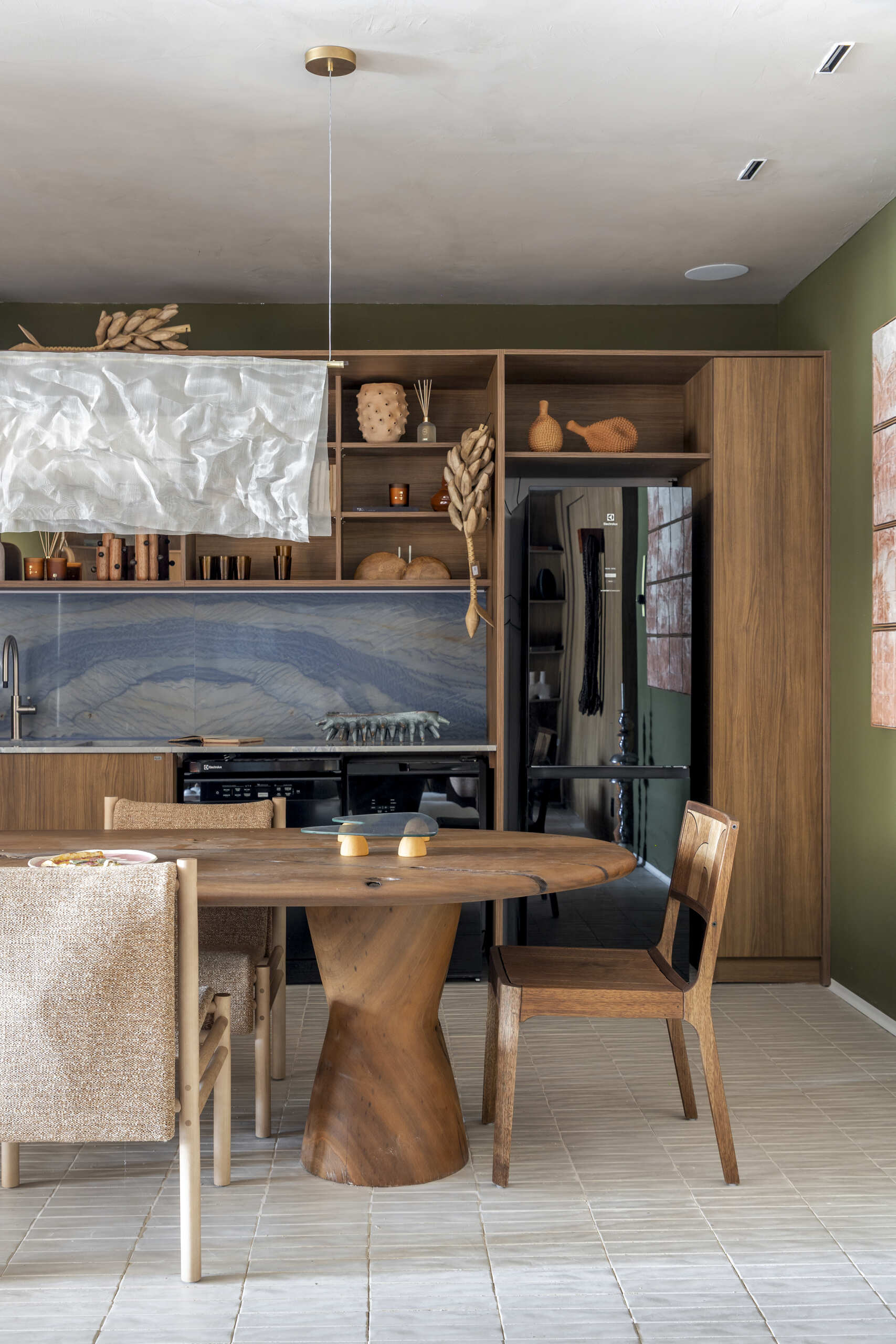
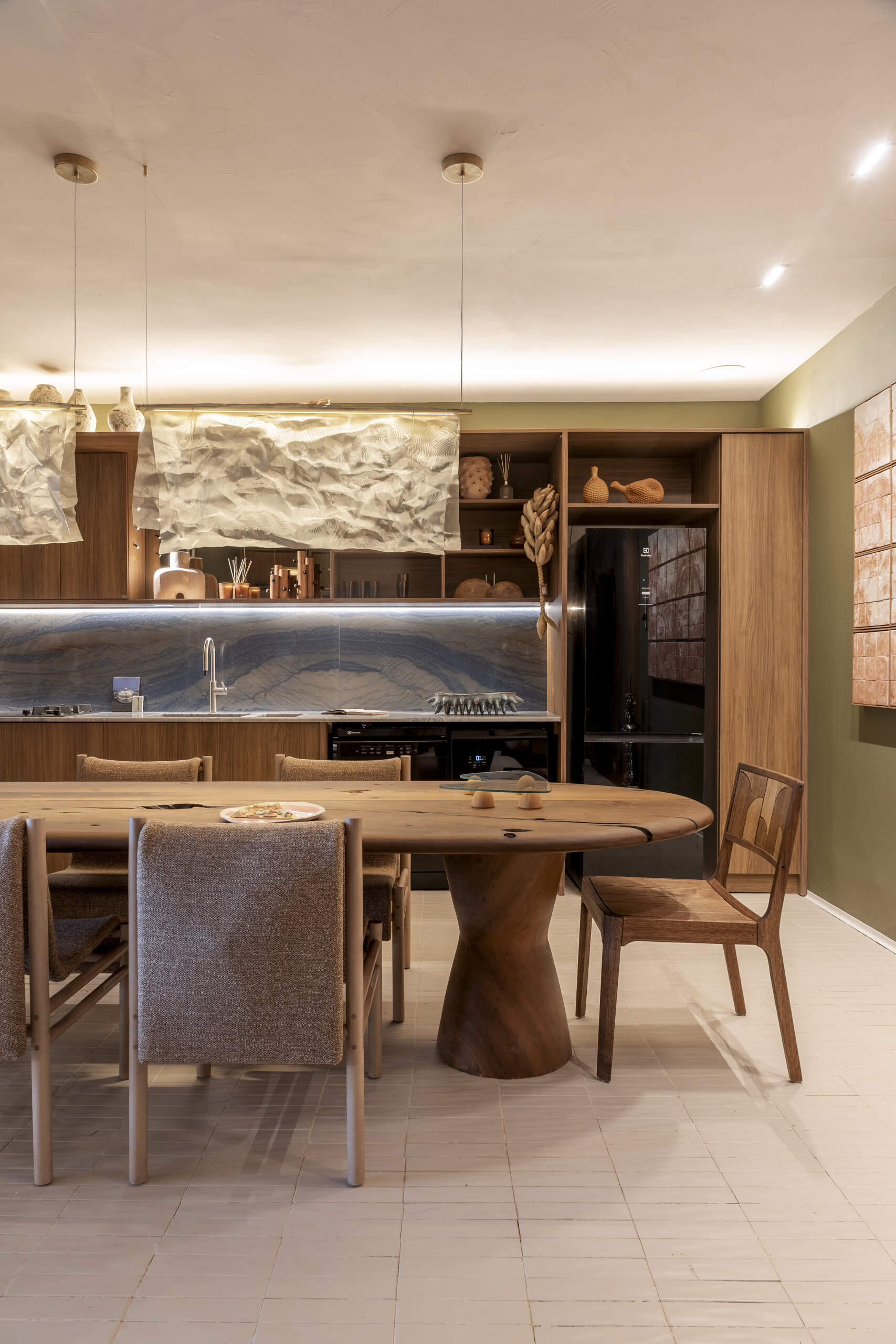
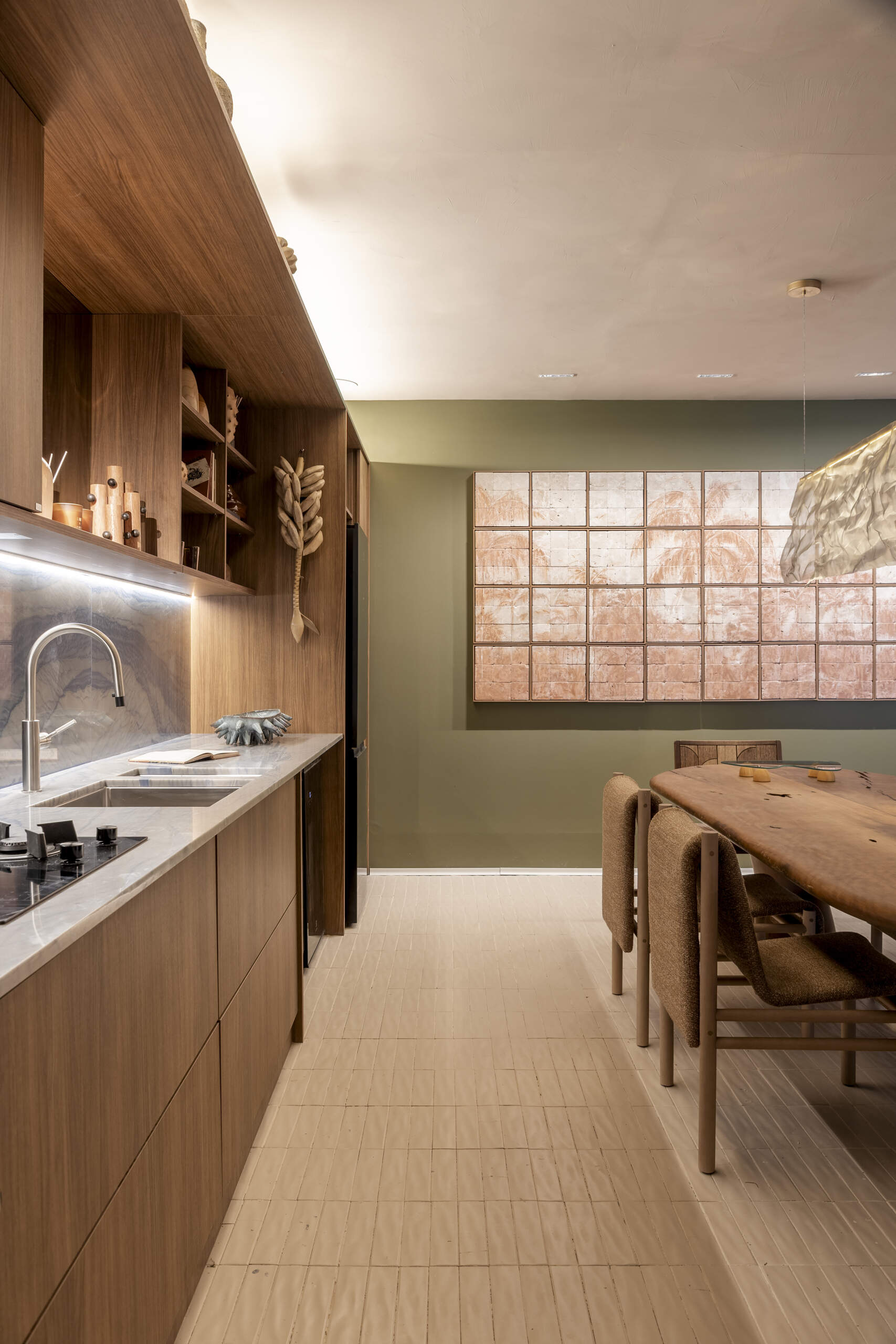
Integrated and Practical
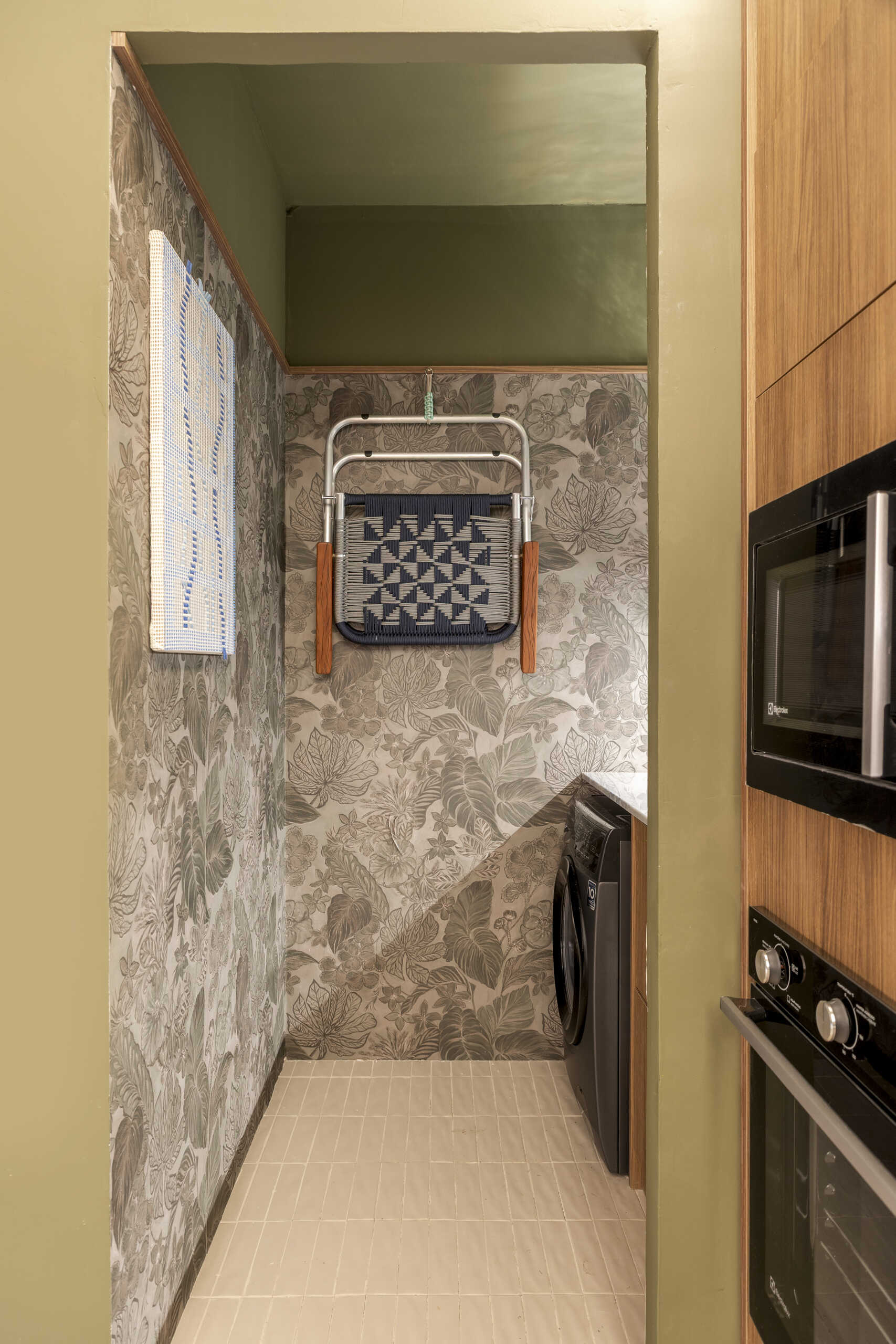
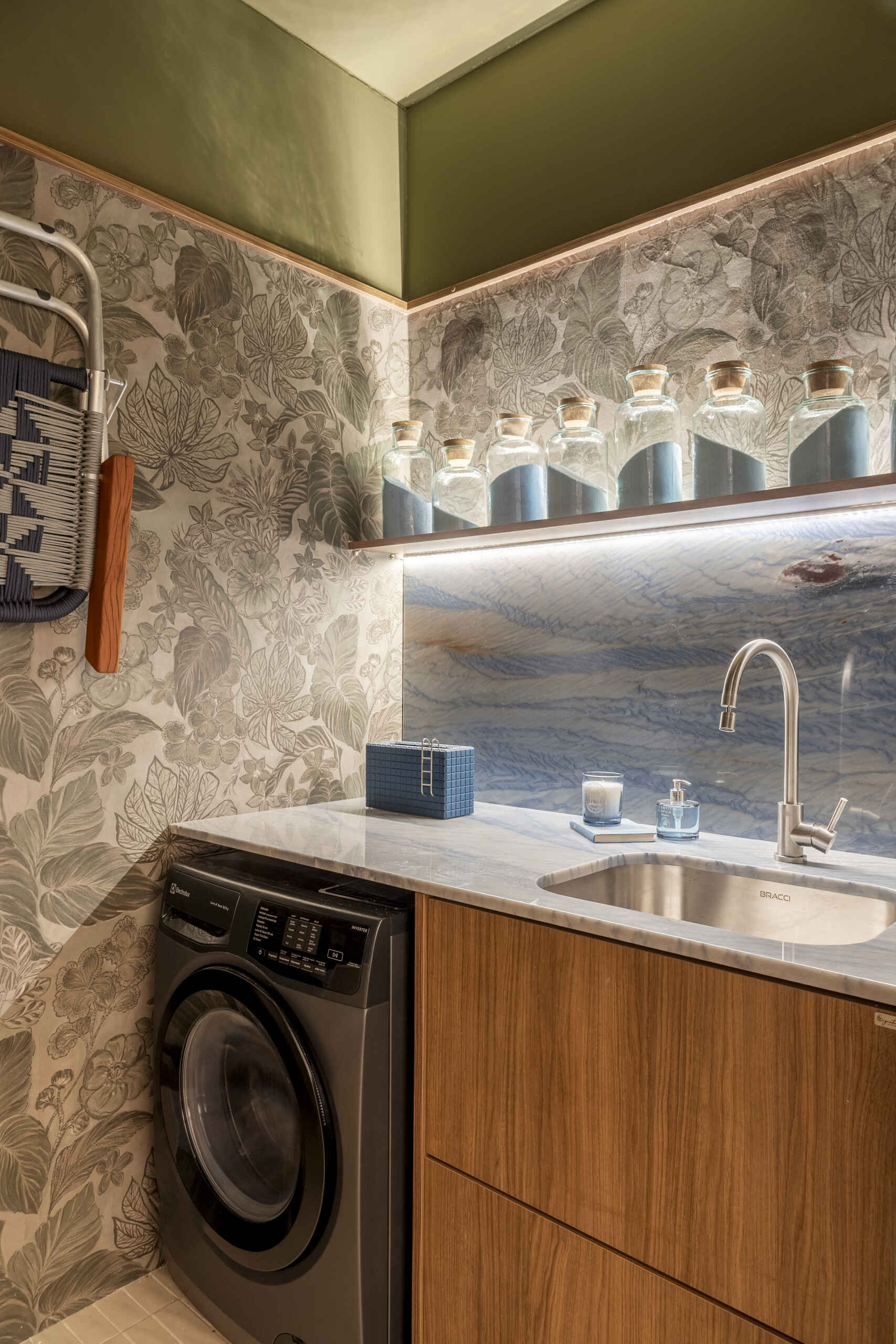
The laundry area, which is located off the kitchen and features botanical wallpaper, follows the same approach as the rest of the apartment, blending functionality with the overall design language.
A Shift in Tone
Moving into the private areas, the palette changes noticeably. Warmer tones replace the greens and blues of the social spaces, creating a softer and more restful setting. This transition marks a clear distinction between shared and private zones, using color to define how each space feels and functions.
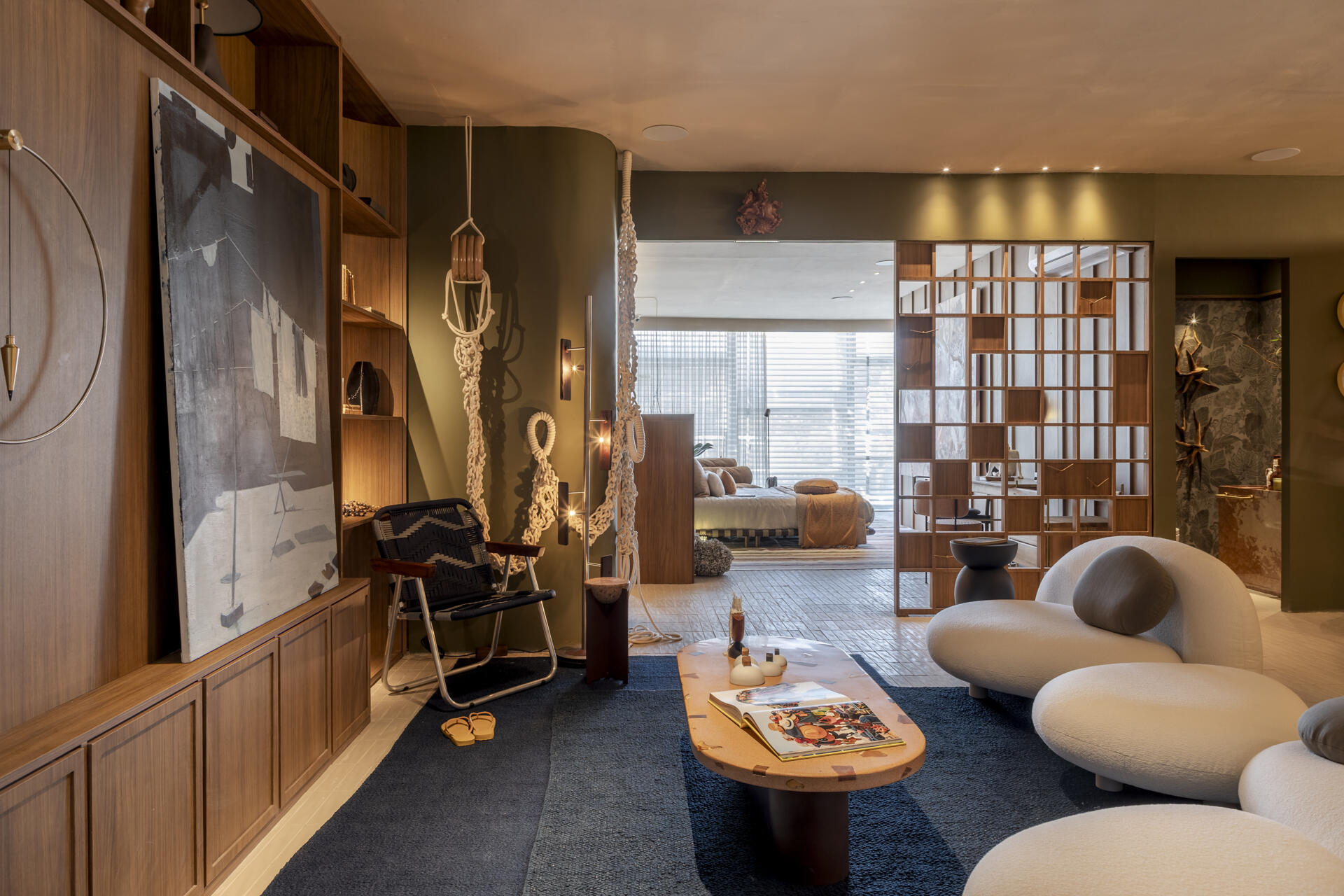
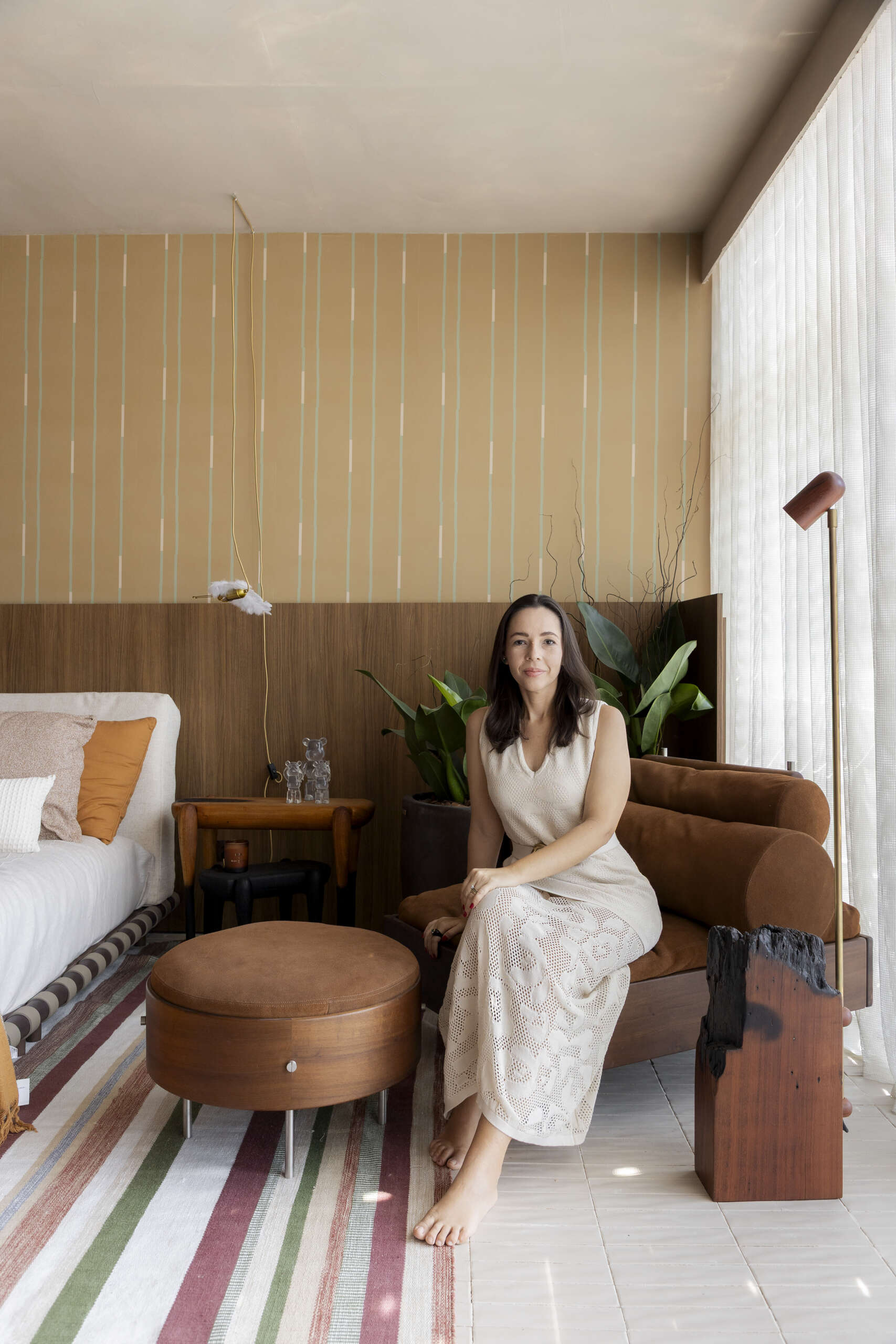
Pictured is Architect Paula Martins
Quiet and Refined
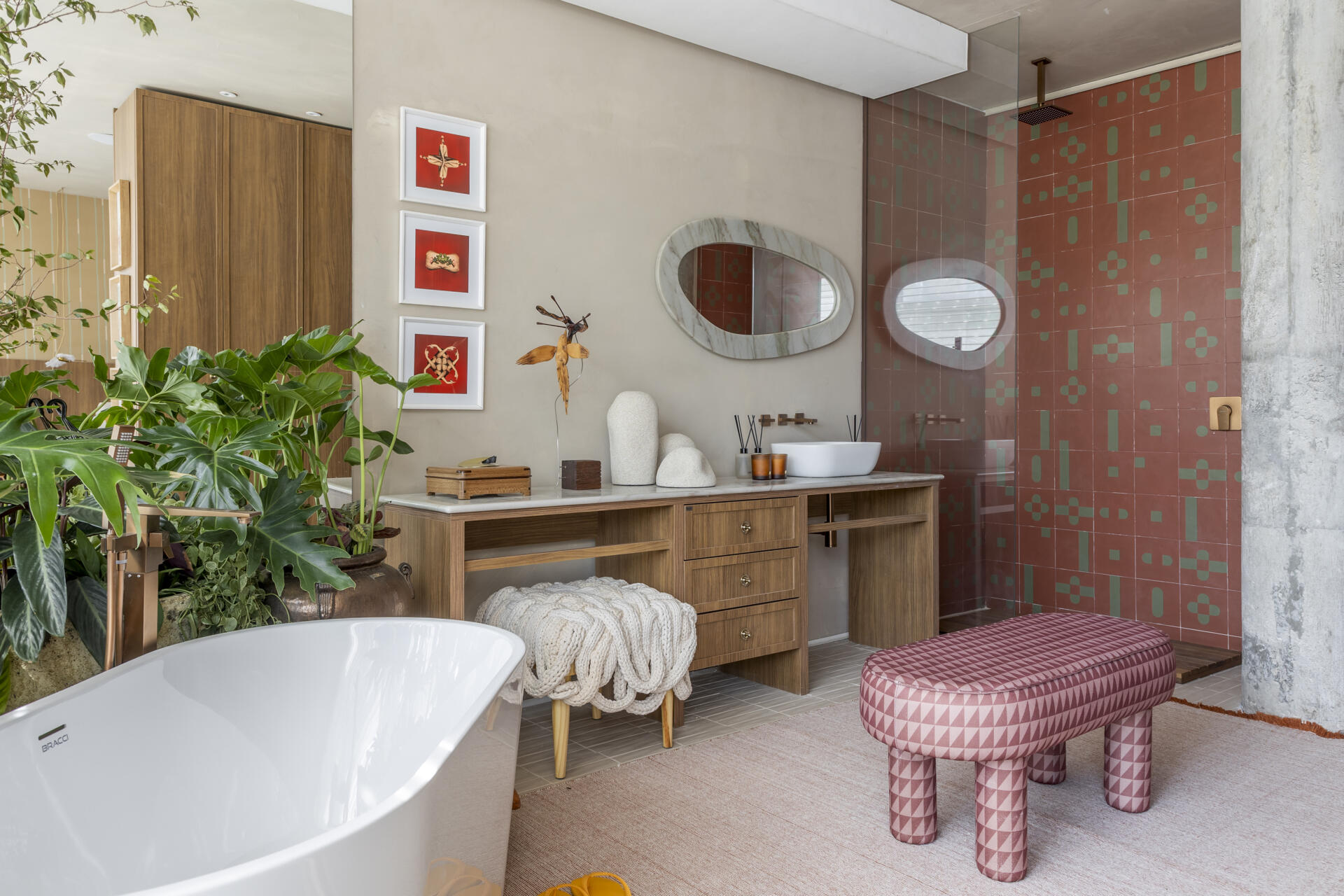
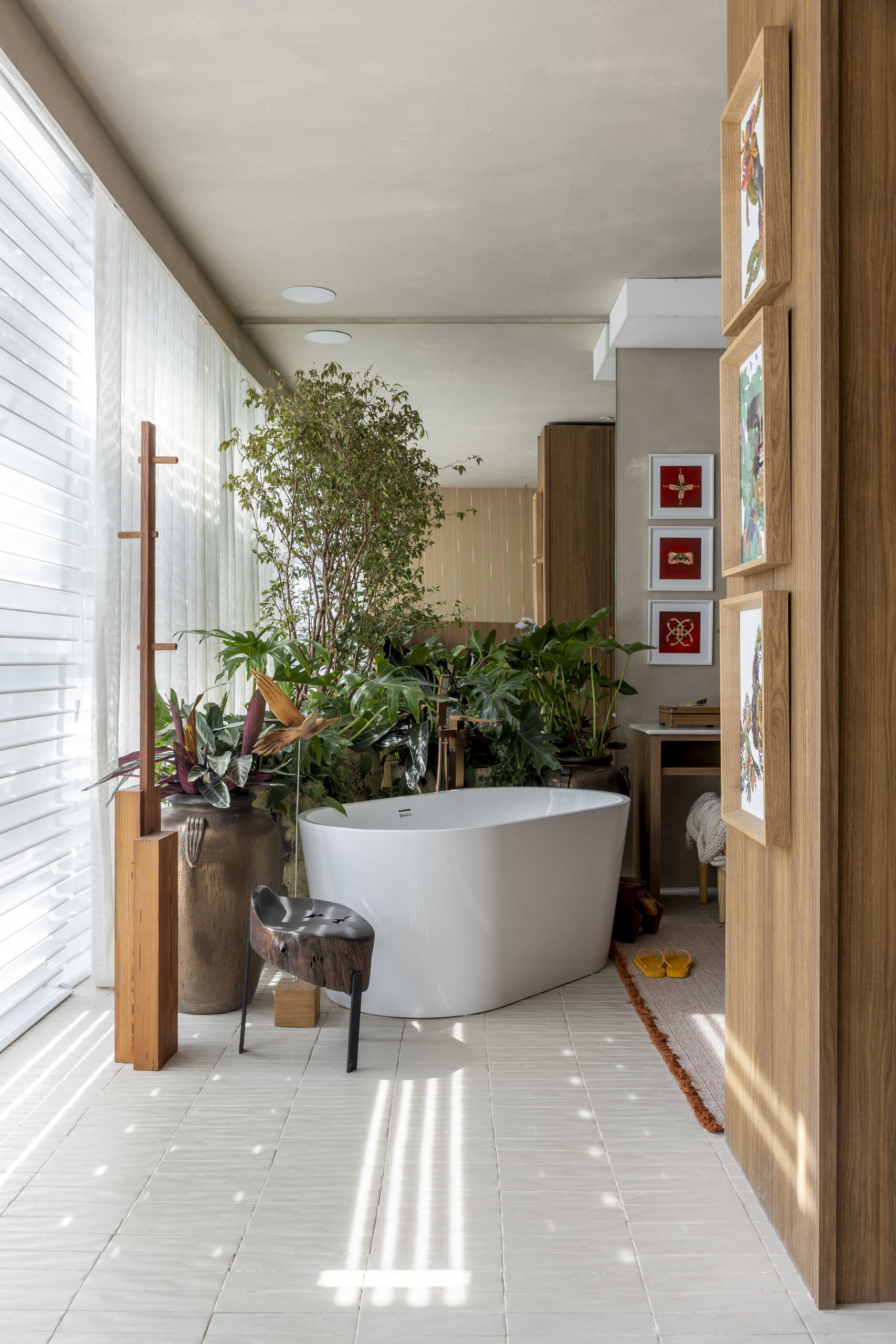
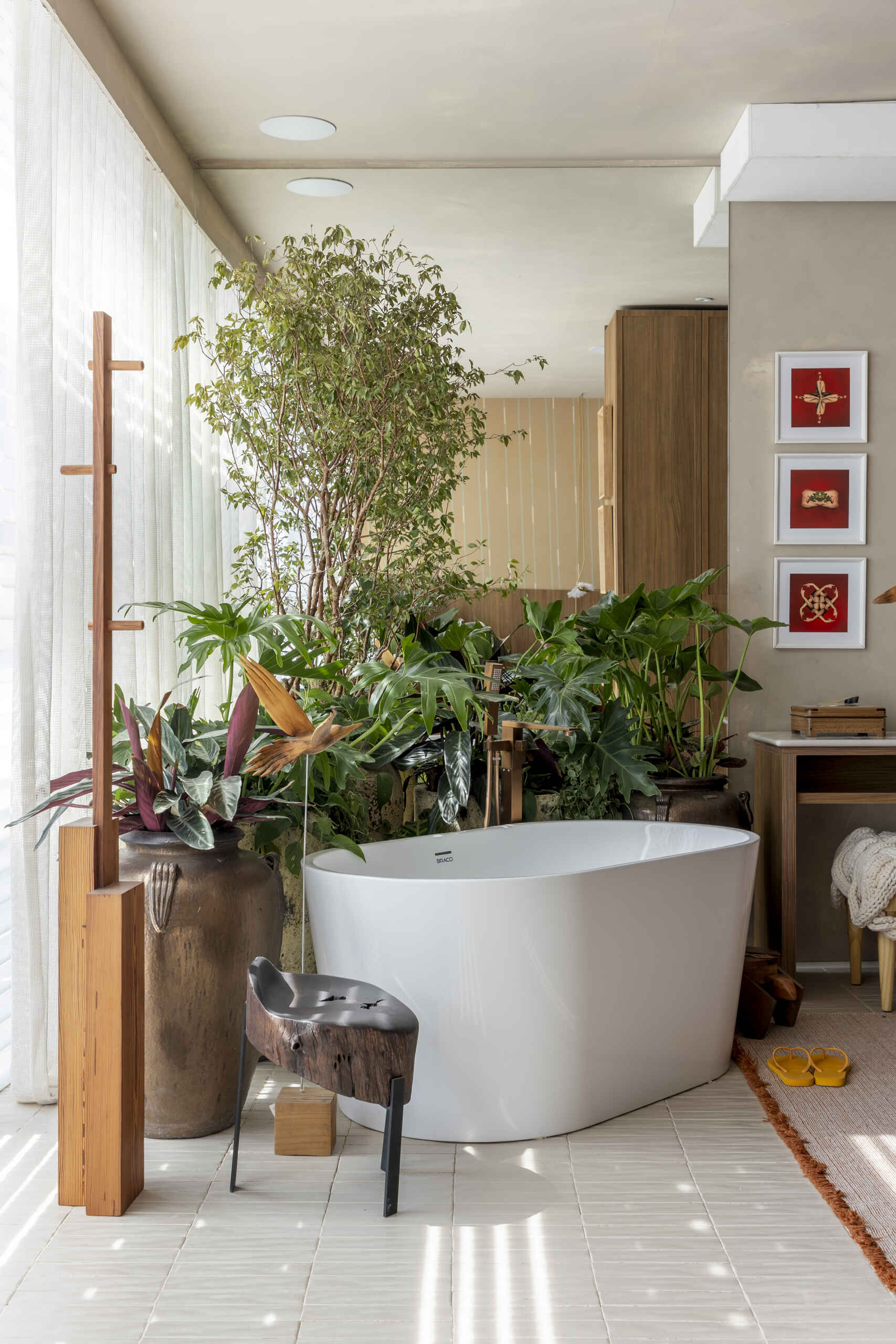
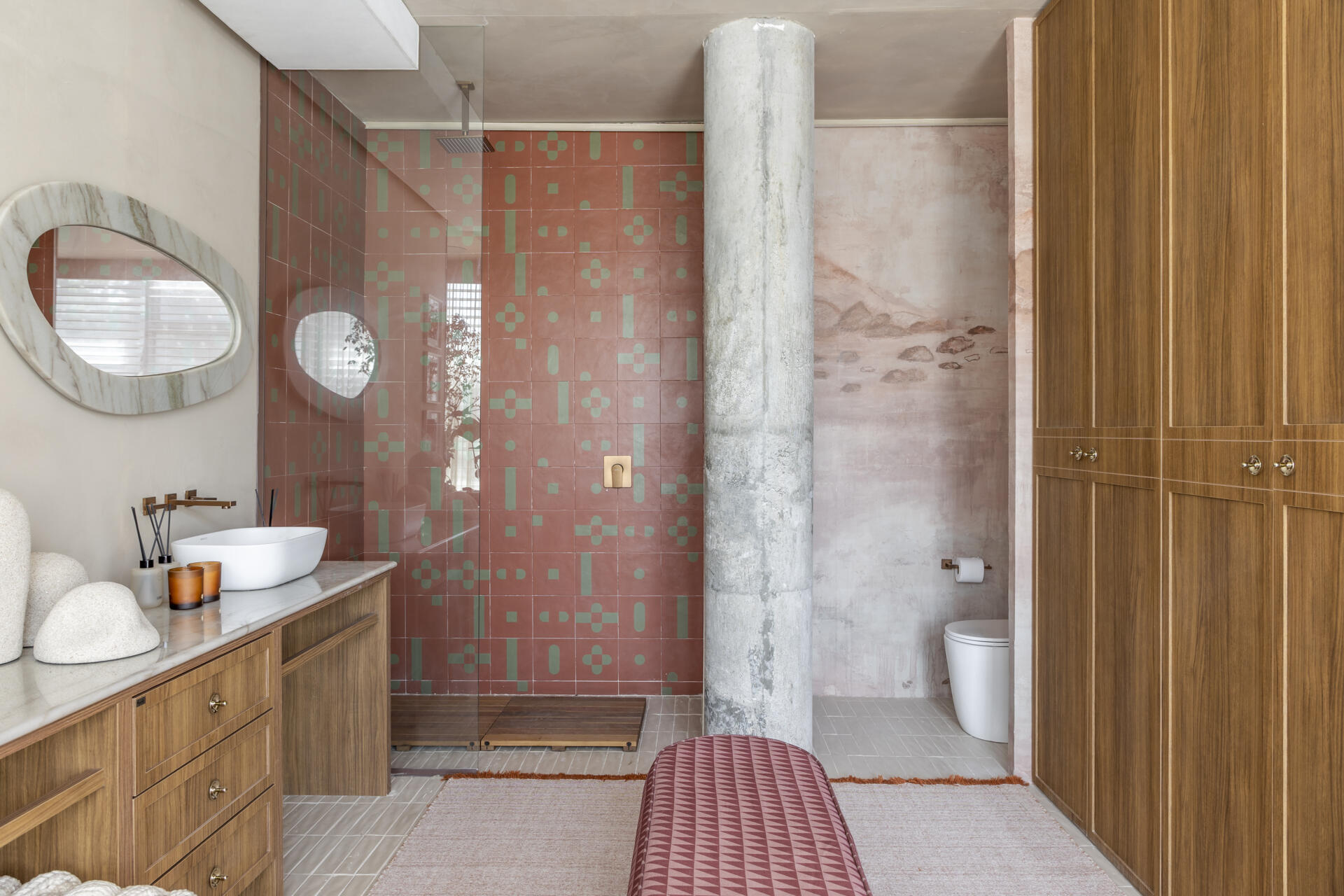
The bathroom continues the warmer palette, maintaining a sense of comfort and ease. Finishes and textures, like the use of wood and colored tiles, are used to keep the space cohesive with the bedroom, reinforcing the shift toward more intimate areas of the home, while a freestanding bathtub is positioned next to a collection of plants.
Casa Corcovado blends art, texture, and colour into a home that carries memory across distance. Every corner reflects curated choices that celebrate identity, contrast, and the layered lifestyle of Rio, making the apartment a standout at the Brazilian Architecture Biennial.