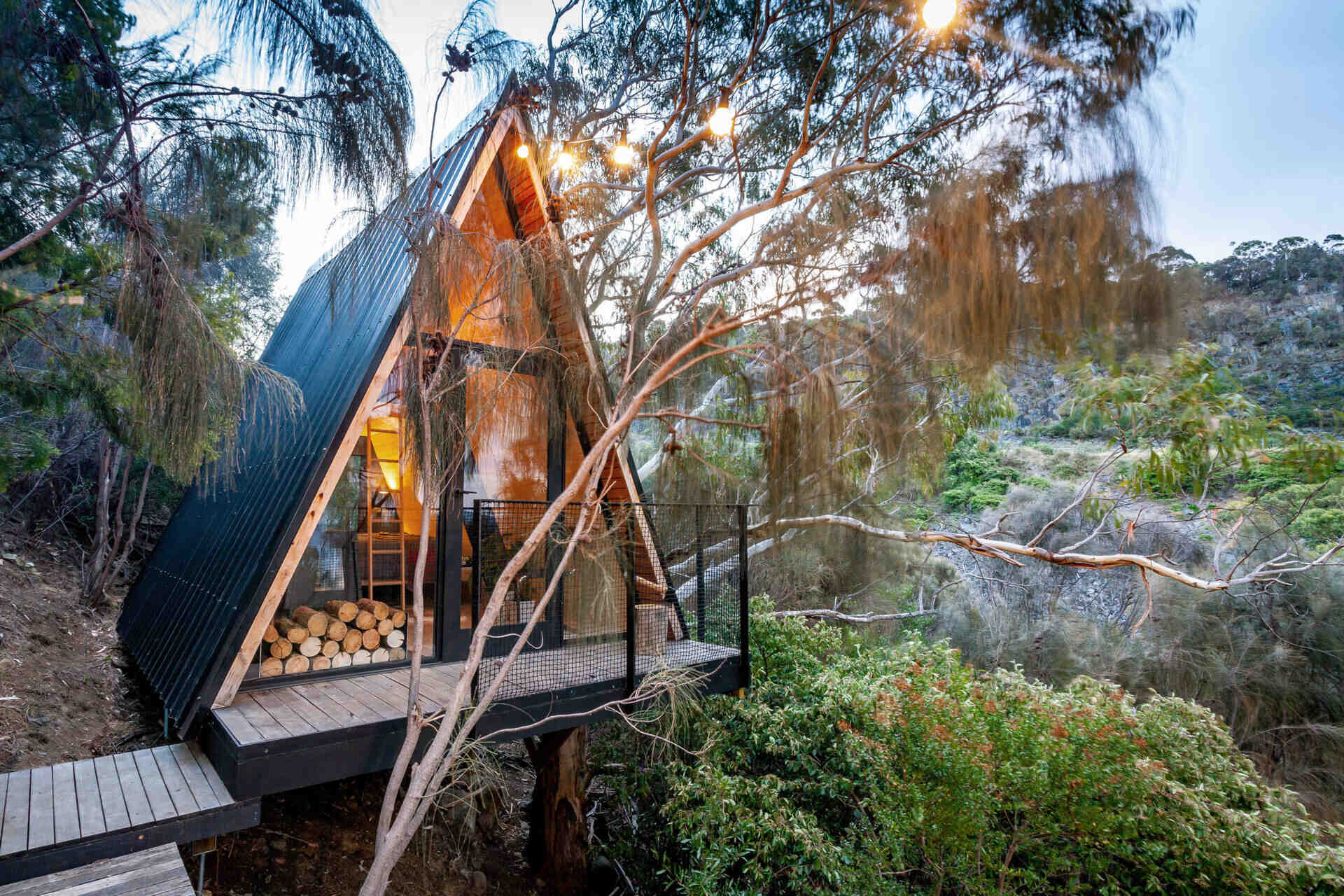
Designed by Crump Architects, this small A-framed cabin was created as a hideout for two boys and their neighborhood friends. It sits within Australian bushland, tucked between a gum tree on one side and a rising hill on the other, giving it a sense of shelter and seclusion without feeling cut off from its surroundings.
The structure feels playful from the start, positioned in a way that invites climbing, exploring, and spending long afternoons outdoors.
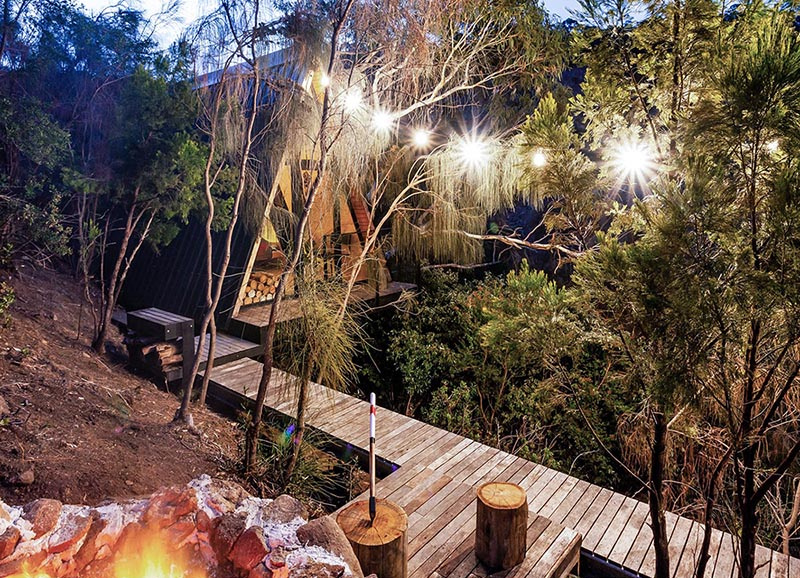
Building with What Was Available
The project leans heavily on reuse. Crump Architects approached it as a challenge to get the most out of limited resources, using materials that were already on hand or salvaged from elsewhere.
A recently demolished carport became a key source, alongside black metal roofing, plywood, celery top timber offcuts, recycled doors, and even leftover insulation from half-used bags. Each piece contributes to the cabin’s layered, practical construction.
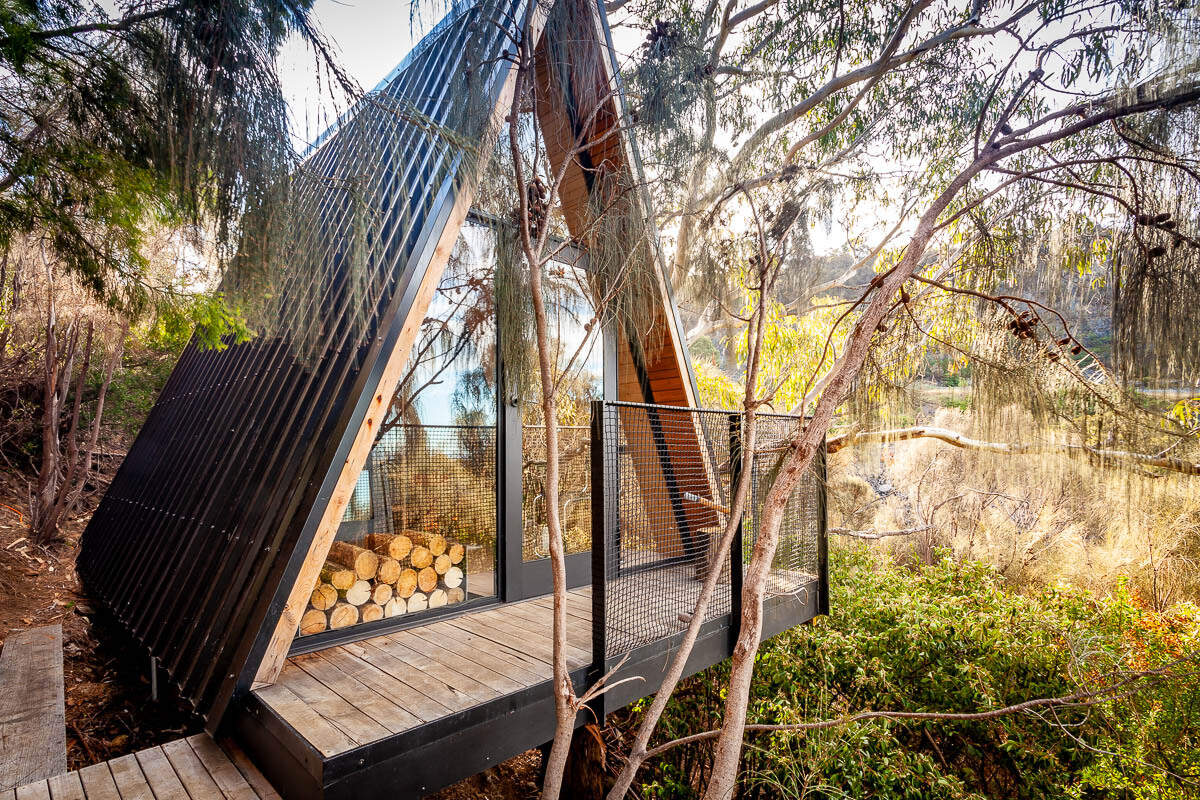
Open to Light, Air, and the View
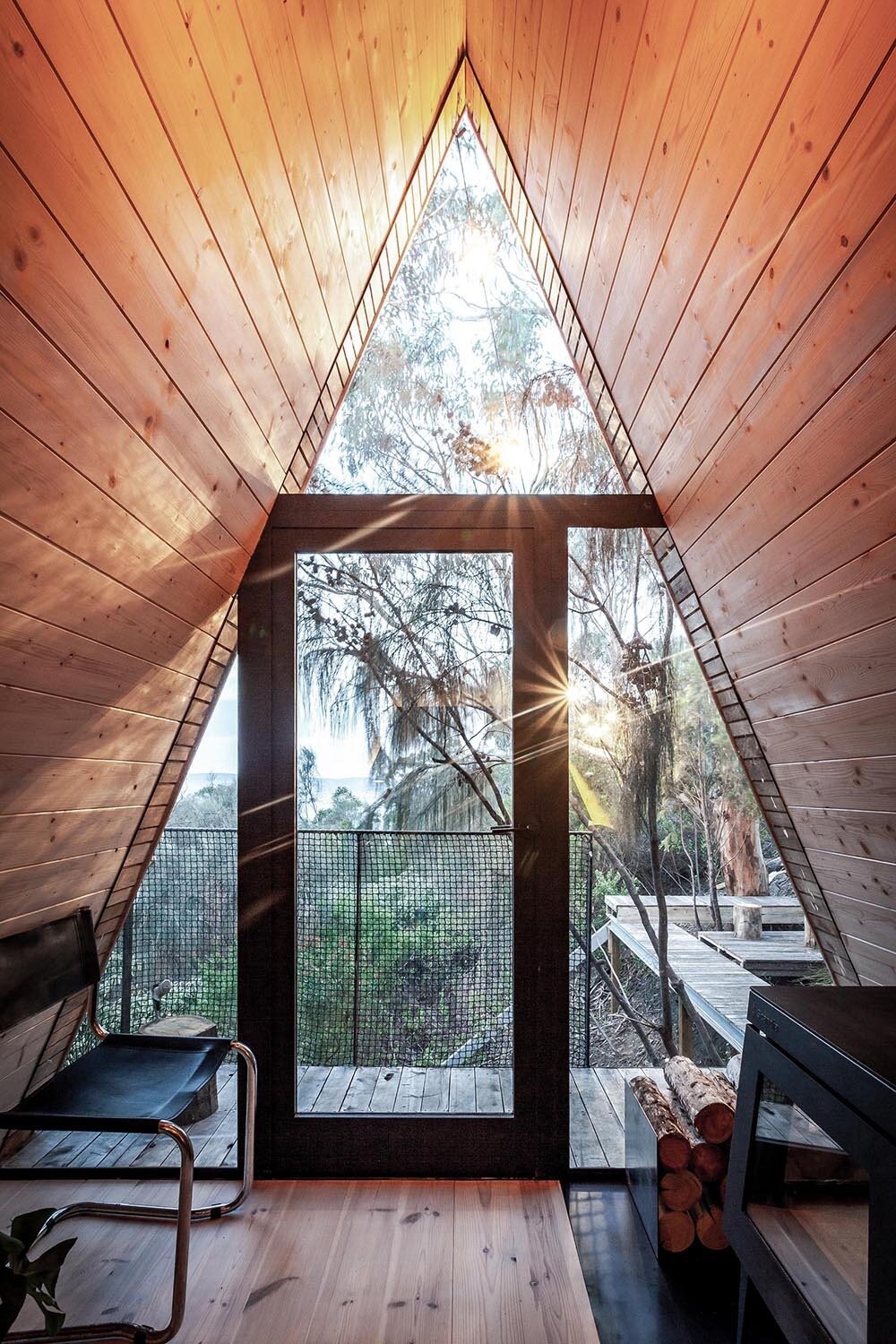
One side of the cabin opens up with a glazed facade that draws in sunlight and frames views across the landscape. It brightens the compact interior and makes the small footprint feel more open.
Above, a recycled timber door extends out from the roofline, creating a direct connection to the nearby tree. It doubles as a playful access point and a way to let in fresh air during warmer months.
This mix of openness and interaction with the outdoors gives the cabin a sense of movement, even within its simple form.
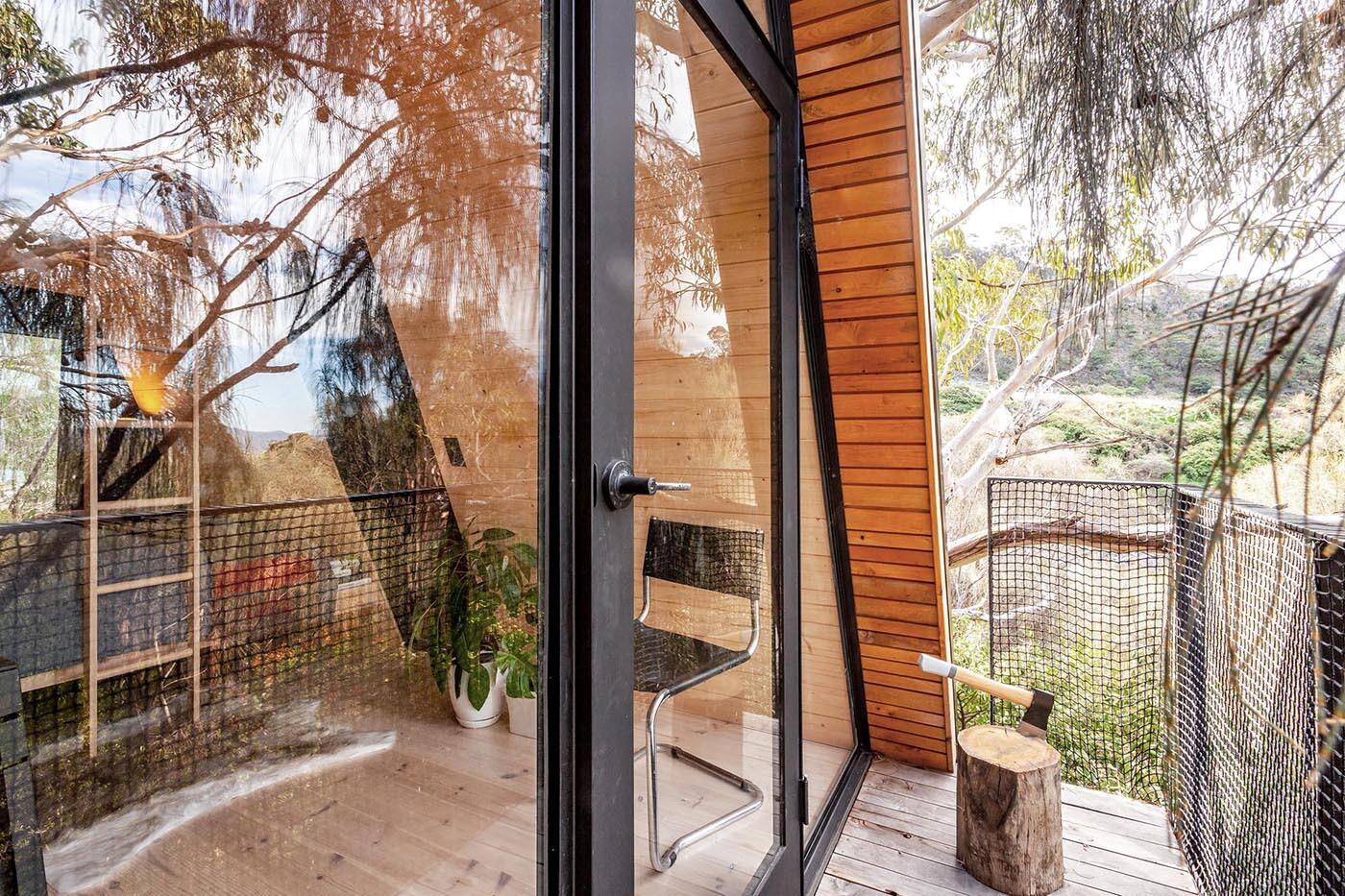
A Compact Interior That Does More
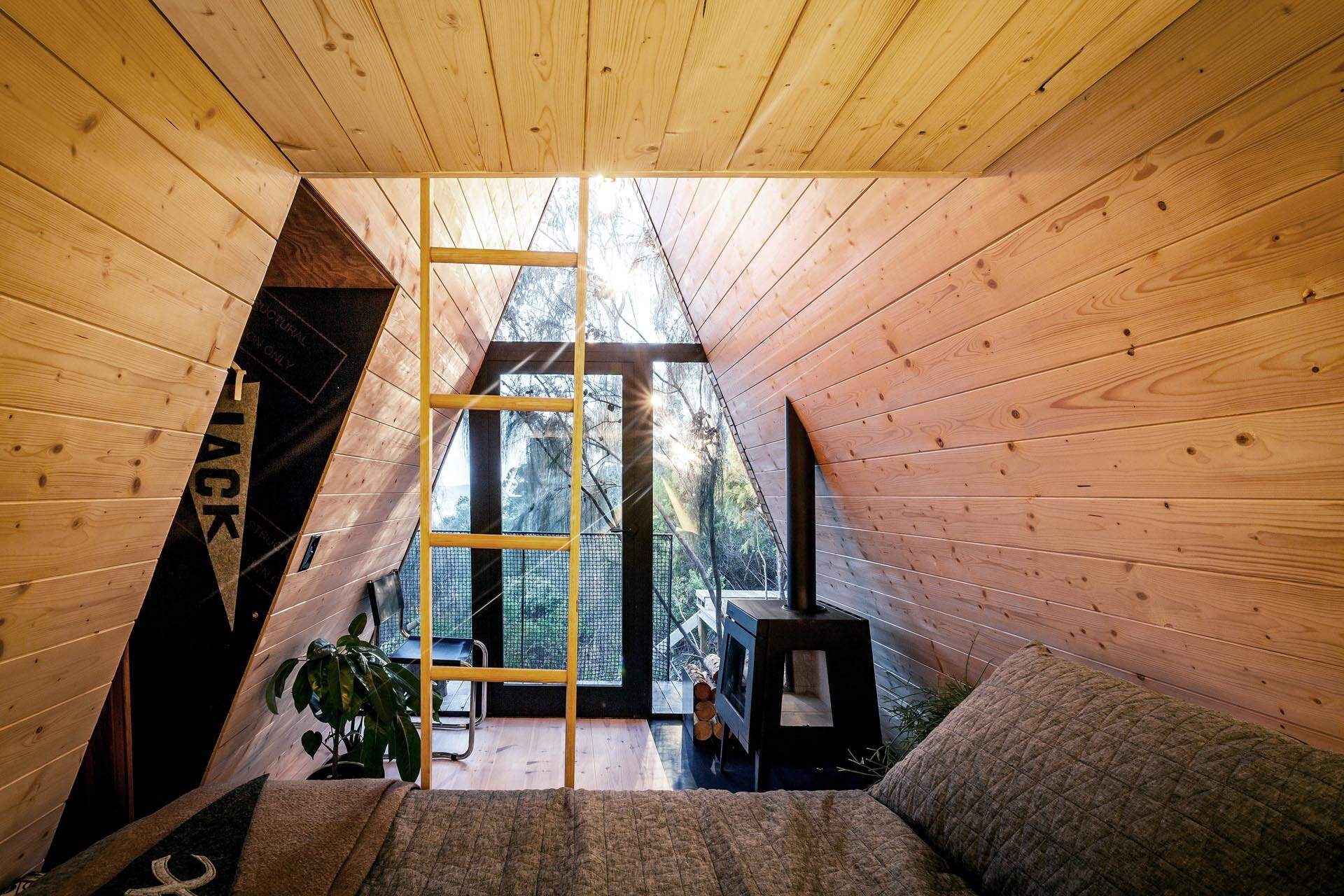
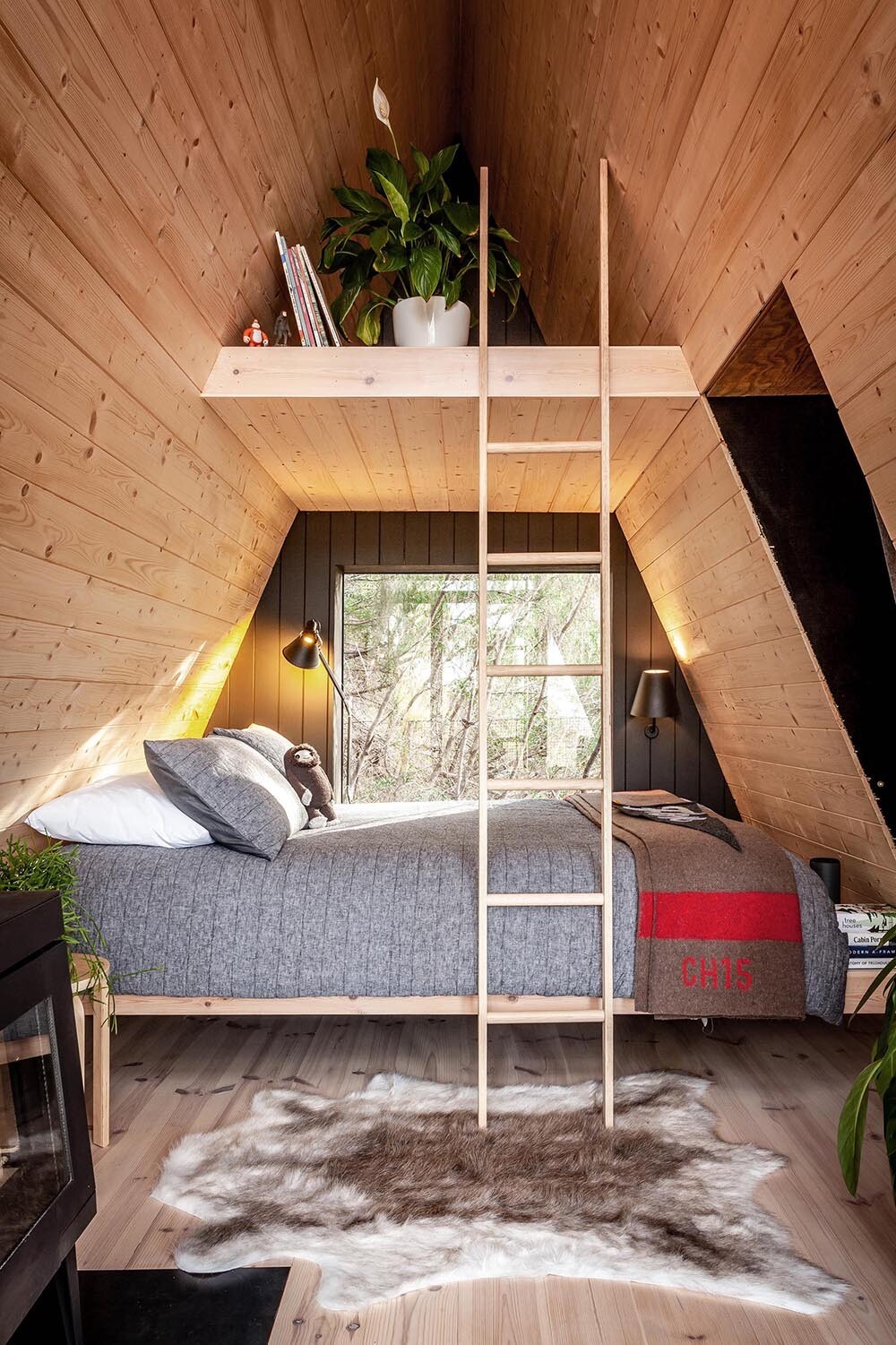
Inside, the cabin is lined in Baltic Pine, giving it a warm, cabin-like feel. The layout is compact but flexible, designed around how it will actually be used.
A sitting space anchors the room, paired with a floating daybed sized for two. There’s also a fireplace, adding comfort and making the space usable beyond just warm days.
Above, a loft creates another level to climb into, offering a spot to rest or simply hang out. The A-frame shape expands near the floor to create low, usable corners, then narrows as it rises, drawing attention upward toward the treetops and sky.
From its bushland setting to its layered interior, everything in this small cabin works together to support how it’s used. It’s a small structure with a big sense of possibility, built for climbing, resting, and making the most of its surroundings.