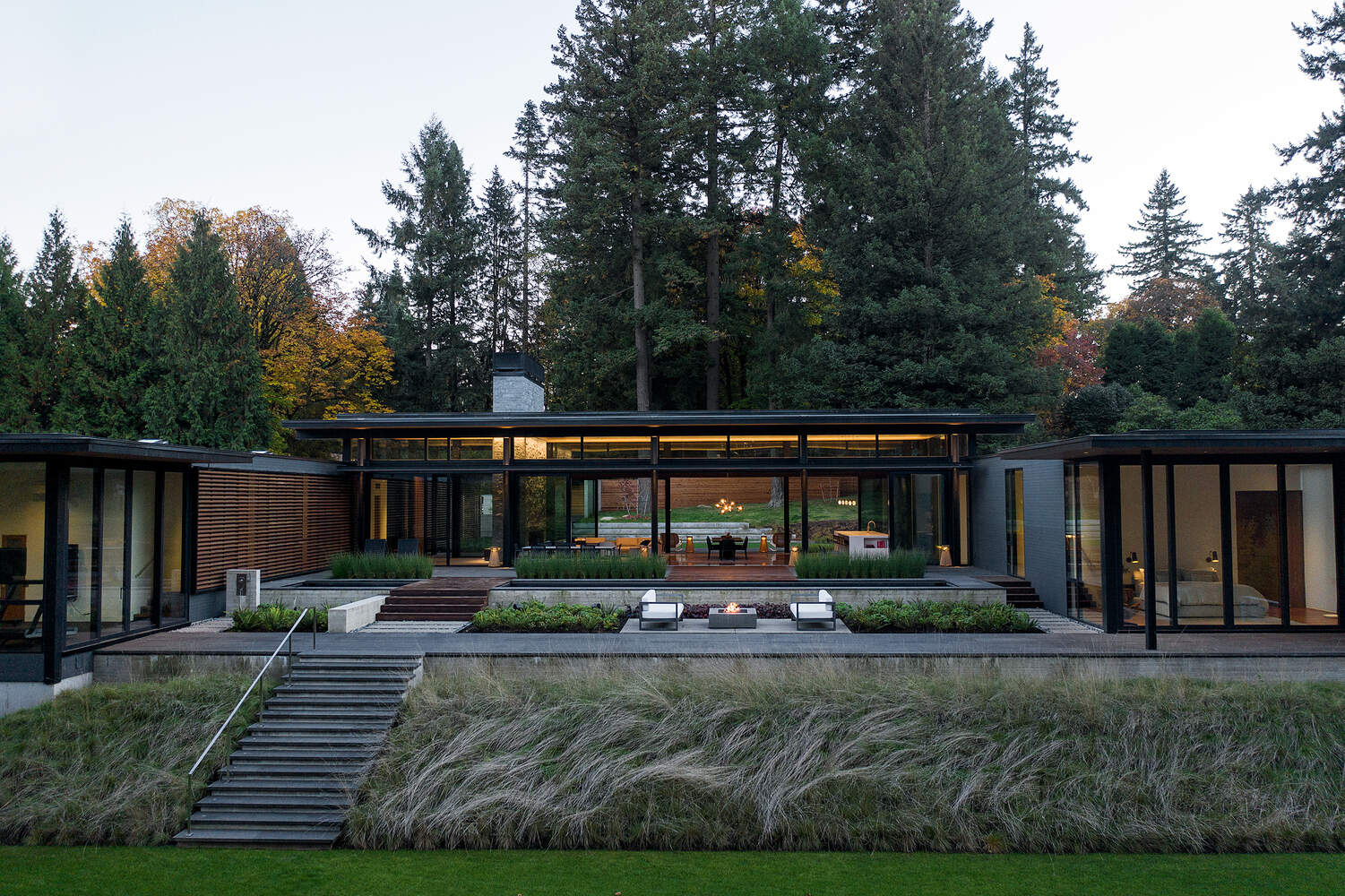
Scott Edwards Architecture completed the Glass Link House, a modern home in Portland, Oregon, designed for a family that loves entertaining, nature, and spending time together.
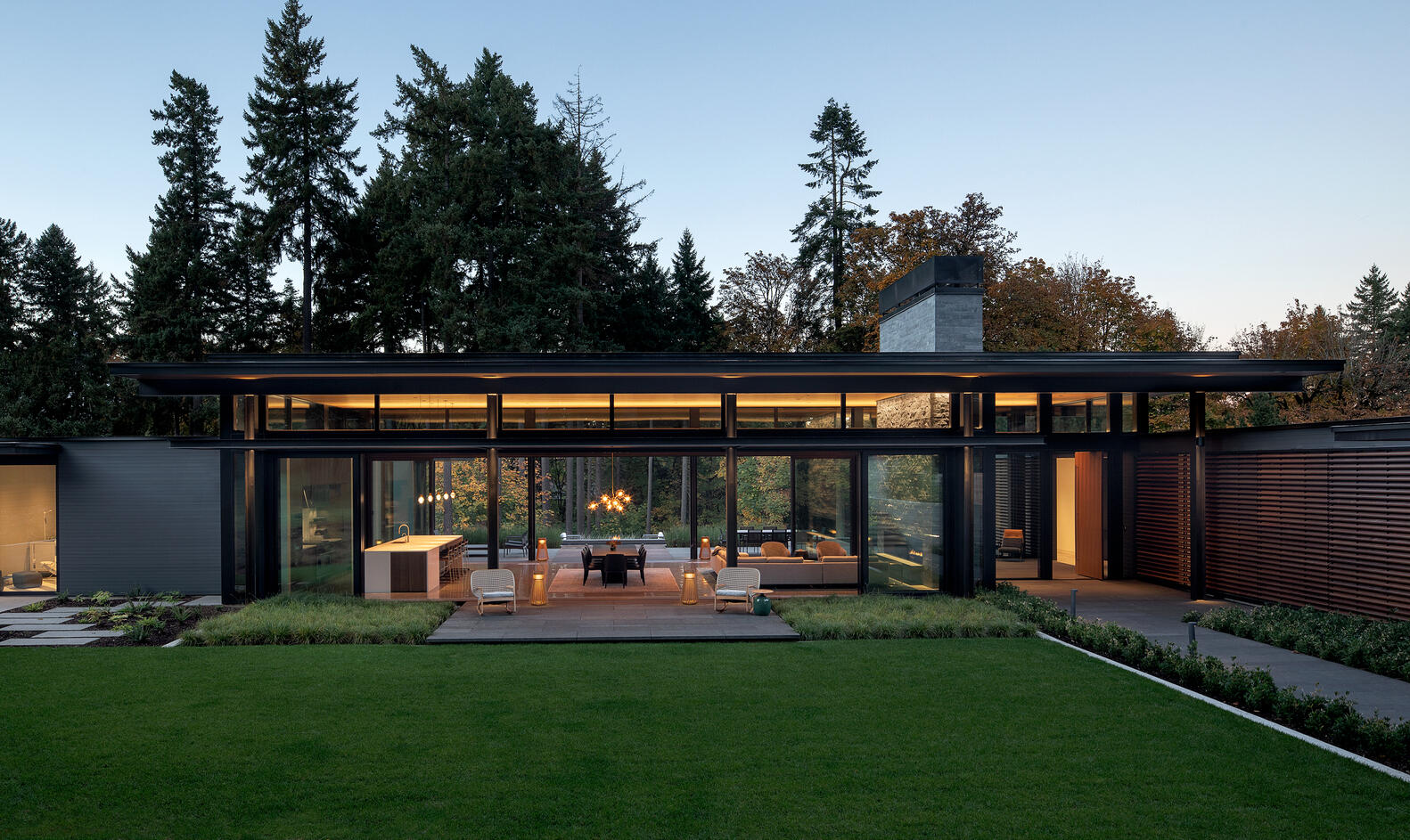
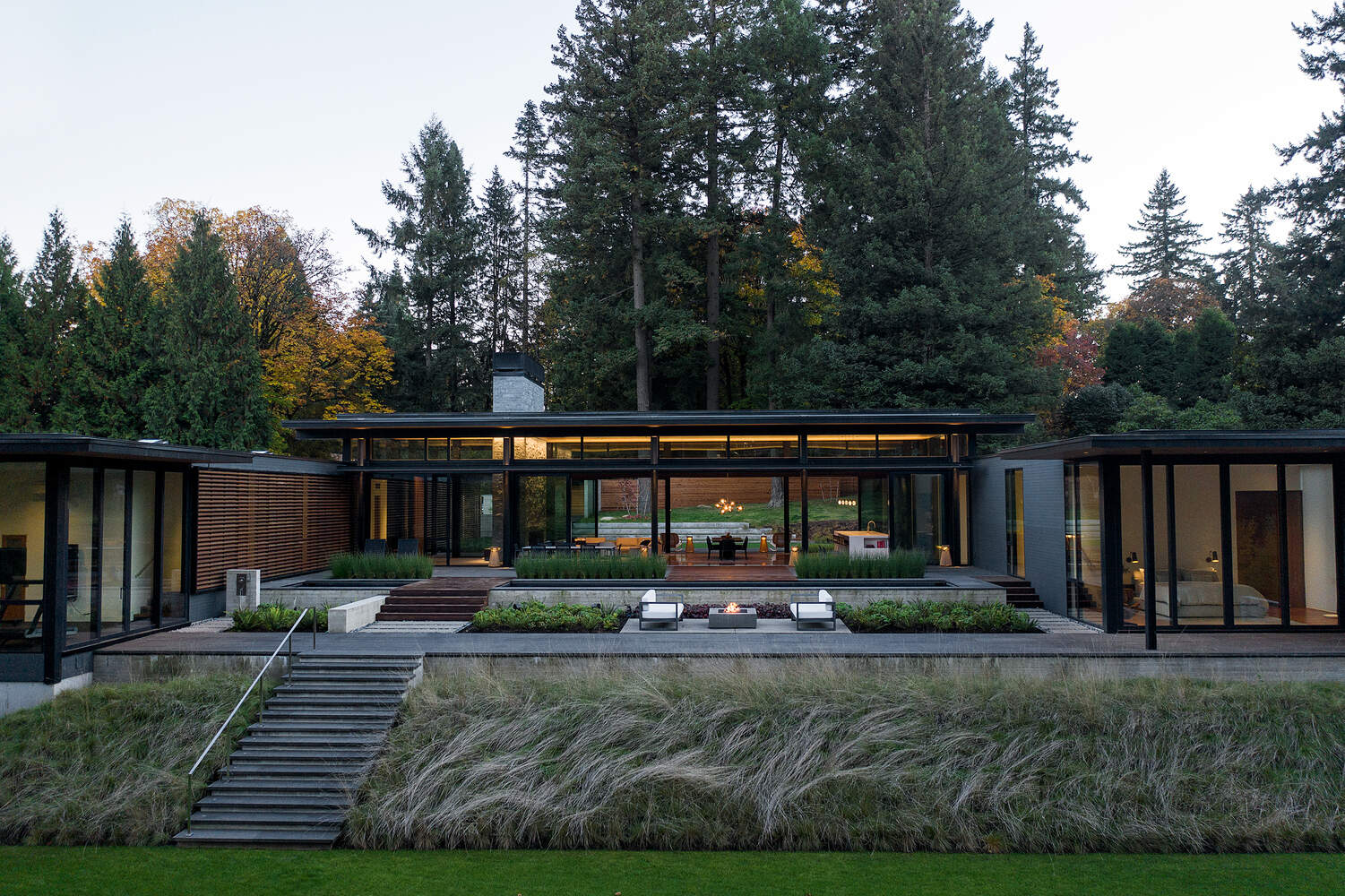
Set into a hillside and surrounded by forest, the home takes cues from both Japanese design and Pacific Northwest architecture. At its center is a striking glass pavilion with a floating roof, framed by long spans of retractable glass doors that open the entire space to the outdoors.
The layout is simple but intentional. Three main zones shape the home, a quiet wing, an active wing, and a central great room that brings everything together.
A Material Palette That Keeps It Simple
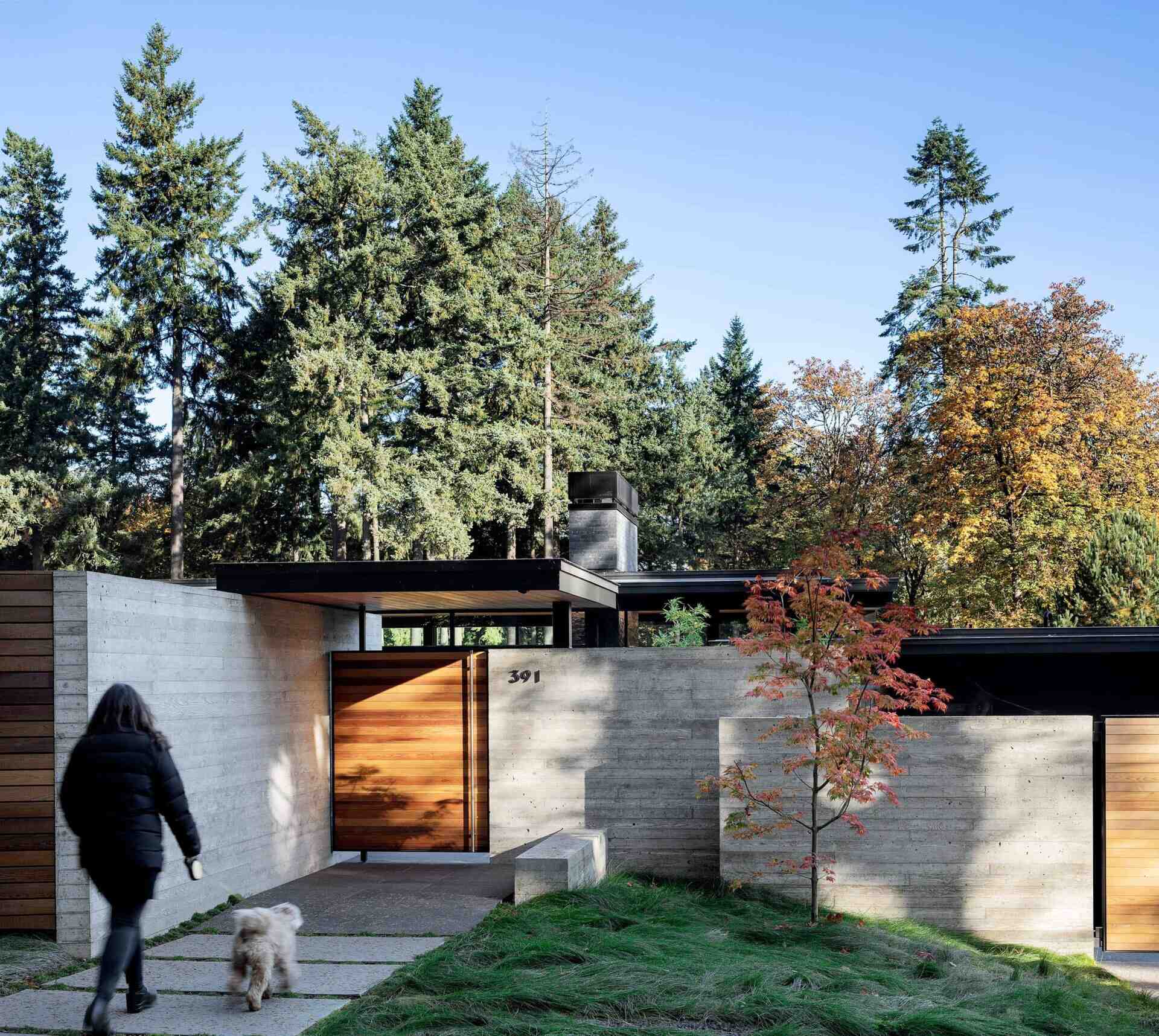
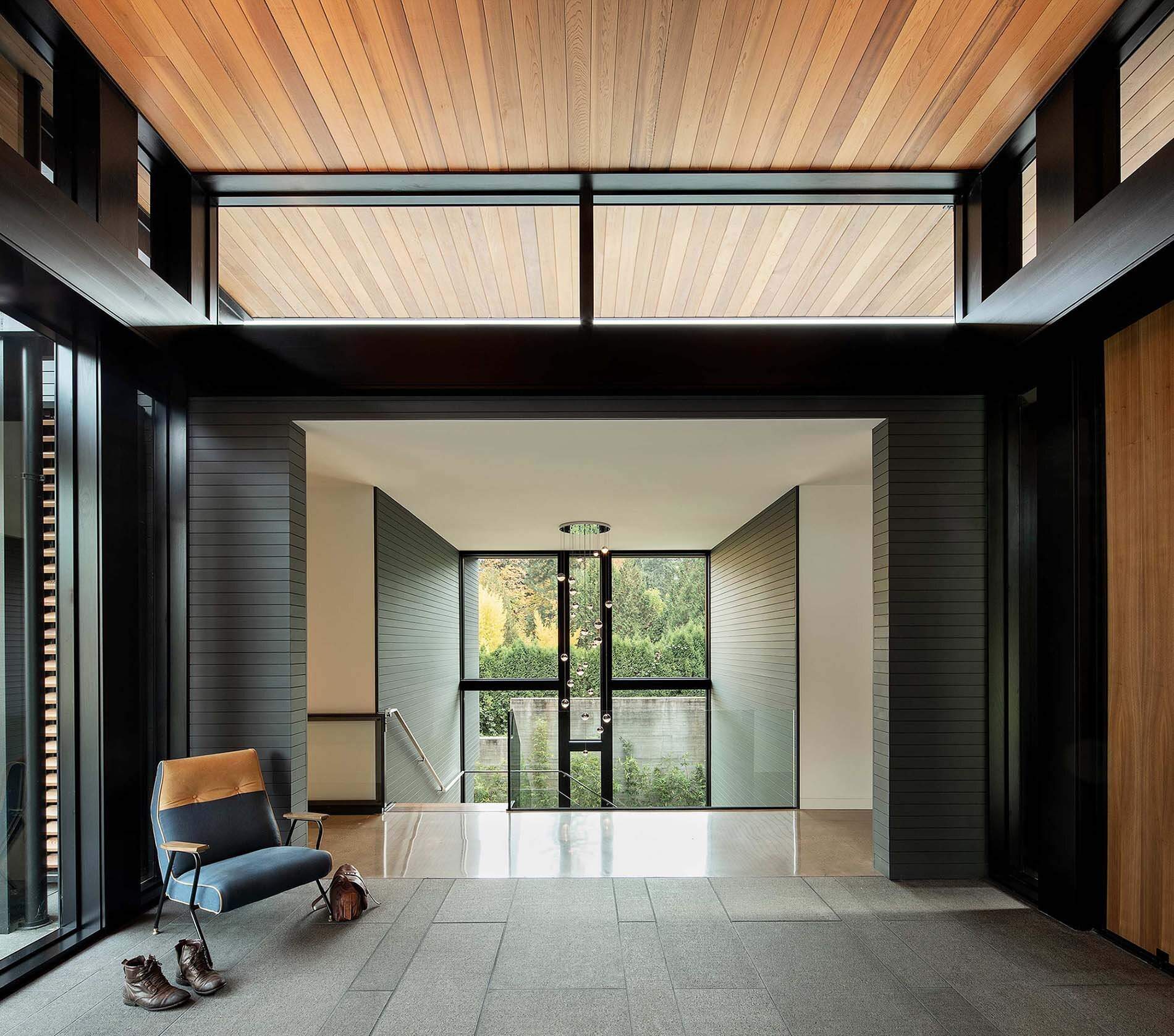
The home, which is nestled into the hillside, uses a restrained palette of wood, steel, stone, and glass. These materials give the house a clean, natural look that fits seamlessly into its forested surroundings.
Structure plays a visible role in the design. Post and beam construction creates an open framework of columns and beams, adding rhythm and clarity to the space while keeping everything visually light.
A standout feature is the central fireplace, built from Himachal Black Quartzite, which begins outside at the entry and continues inside, guiding movement into the main living space.
One Open Space That Changes Everything
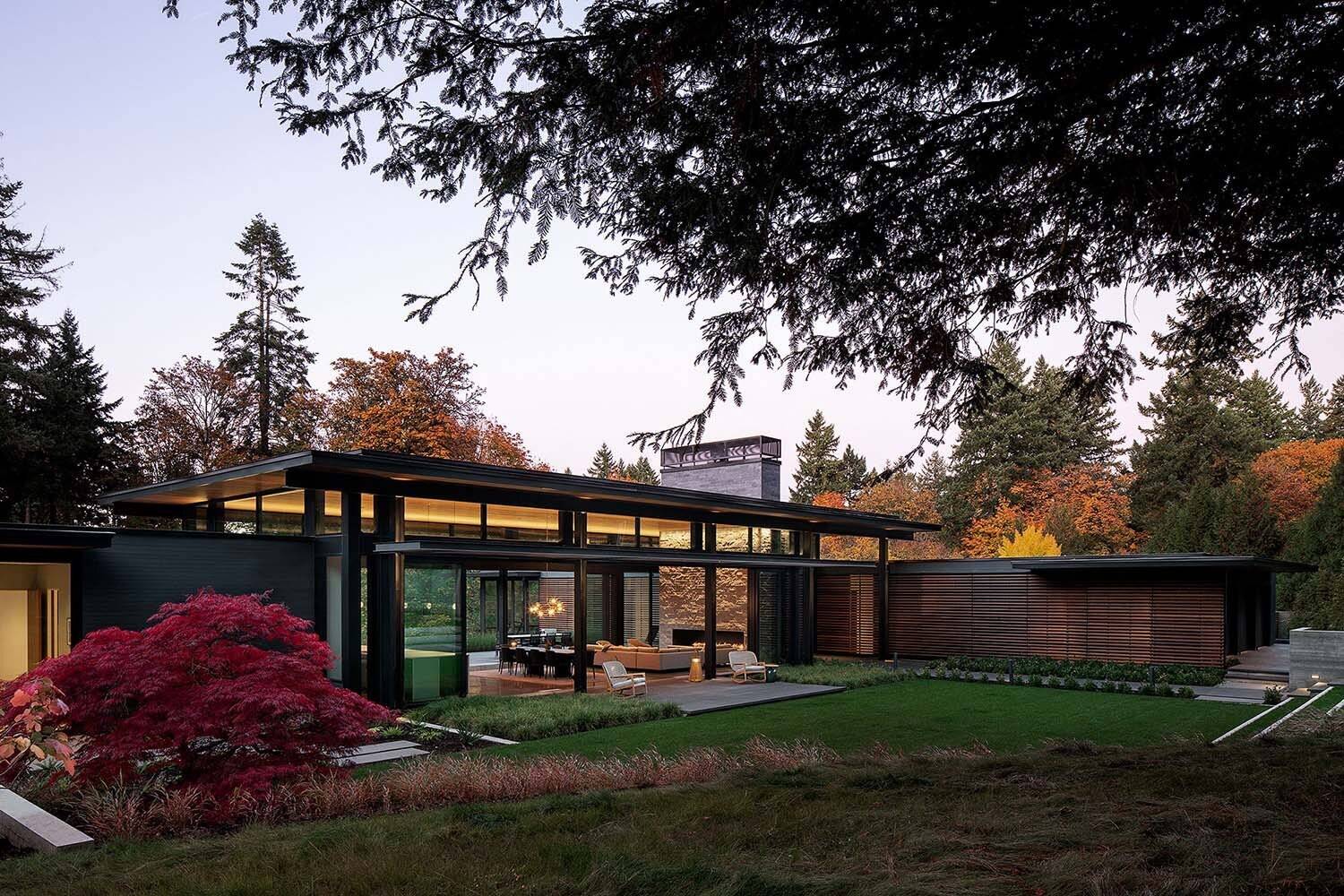
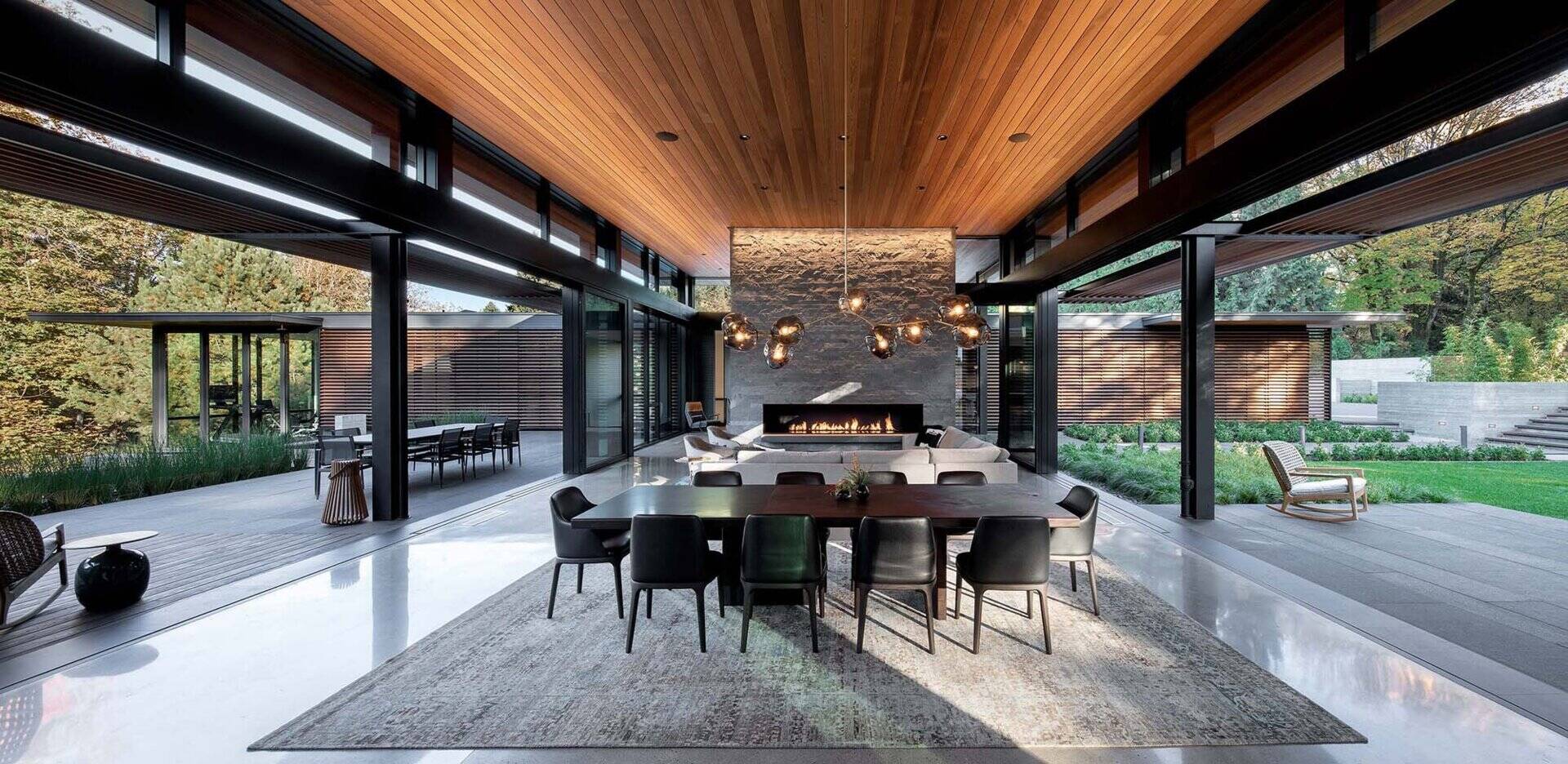
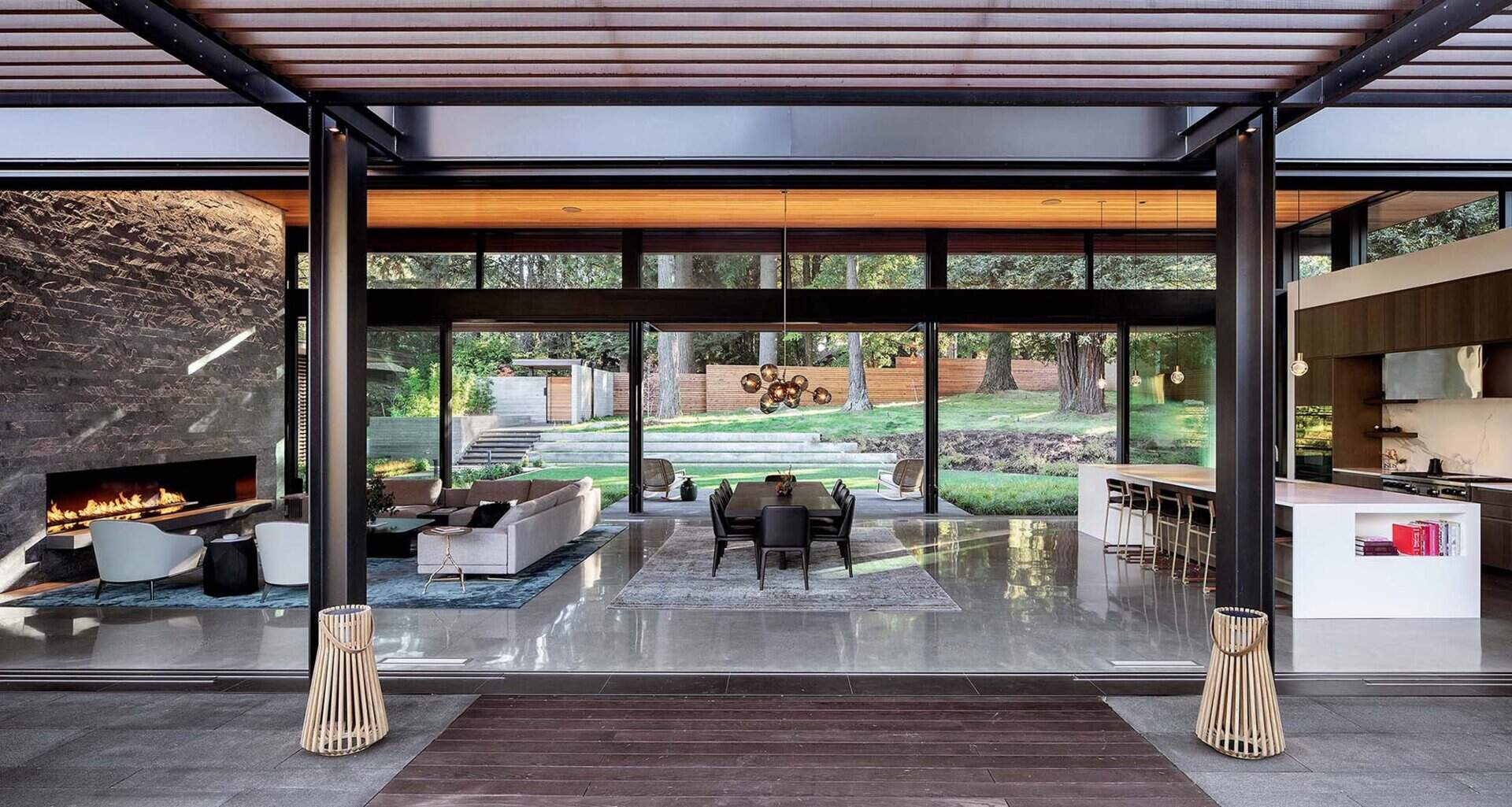
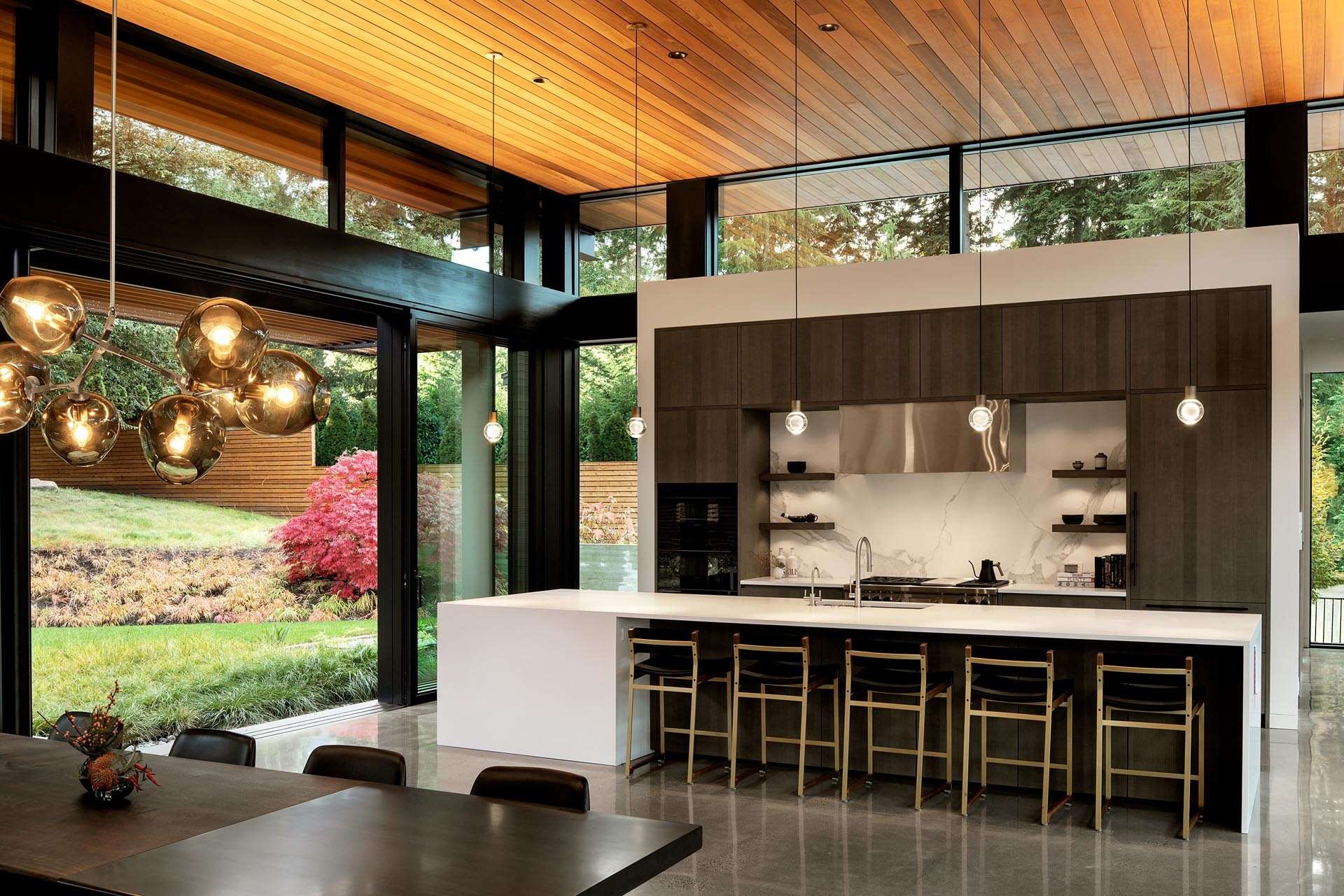
The main social areas of the home are gathered into a single open plan room. This space is defined by floor-to-ceiling retractable glass doors and expansive glass walls on both sides.
When fully opened, the great room extends outward into the courtyard, making the boundary between inside and outside almost disappear. Polished concrete floors continue seamlessly outdoors, reinforcing this connection.
With 14-foot-high glass framing views of the forest on both the north and south sides, the space feels expansive, bright, and constantly shifting with the light.
Outdoor Living at the Center
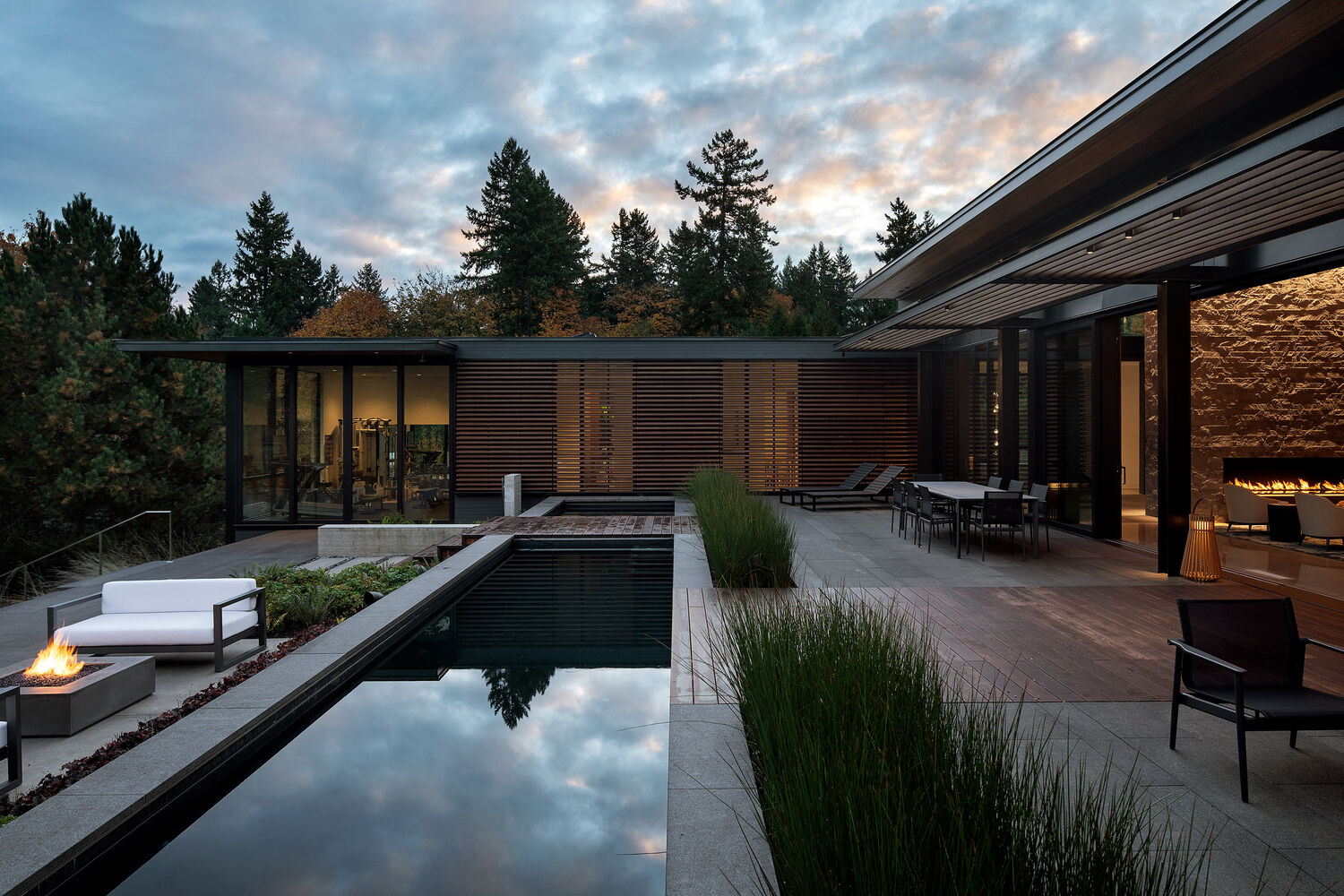
The landscaped granite terraces extend the living experience outside. Here, the family has access to a pool, spa, fire pit, and dining area, all arranged around the central courtyard.
This outdoor zone is not separate from the house. It is directly linked to the great room, making it easy to move between spaces whether hosting a gathering or enjoying a quiet evening.
The courtyard becomes the heart of the home, framed by architecture on both sides and open to the sky above.
The Restful Wing
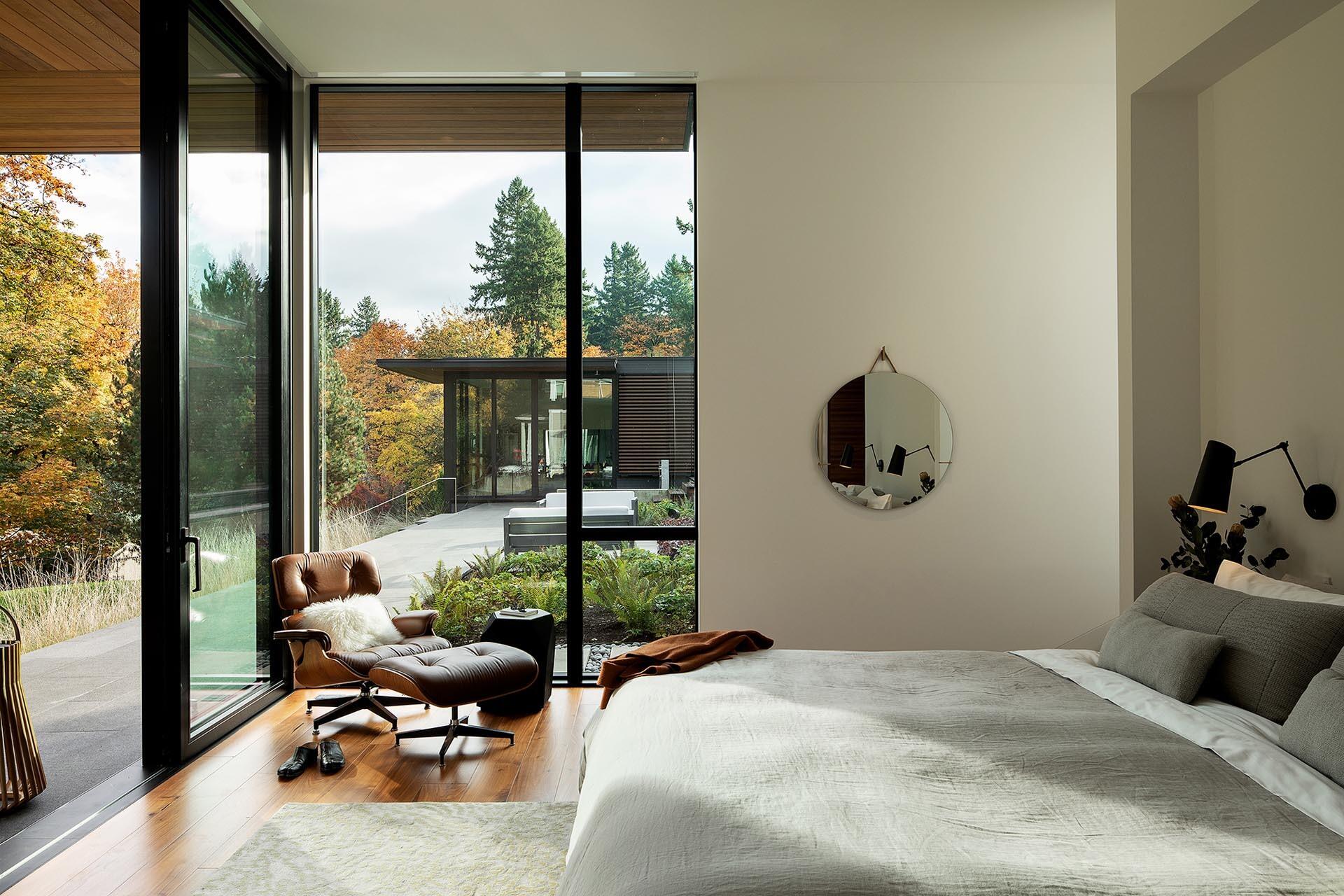
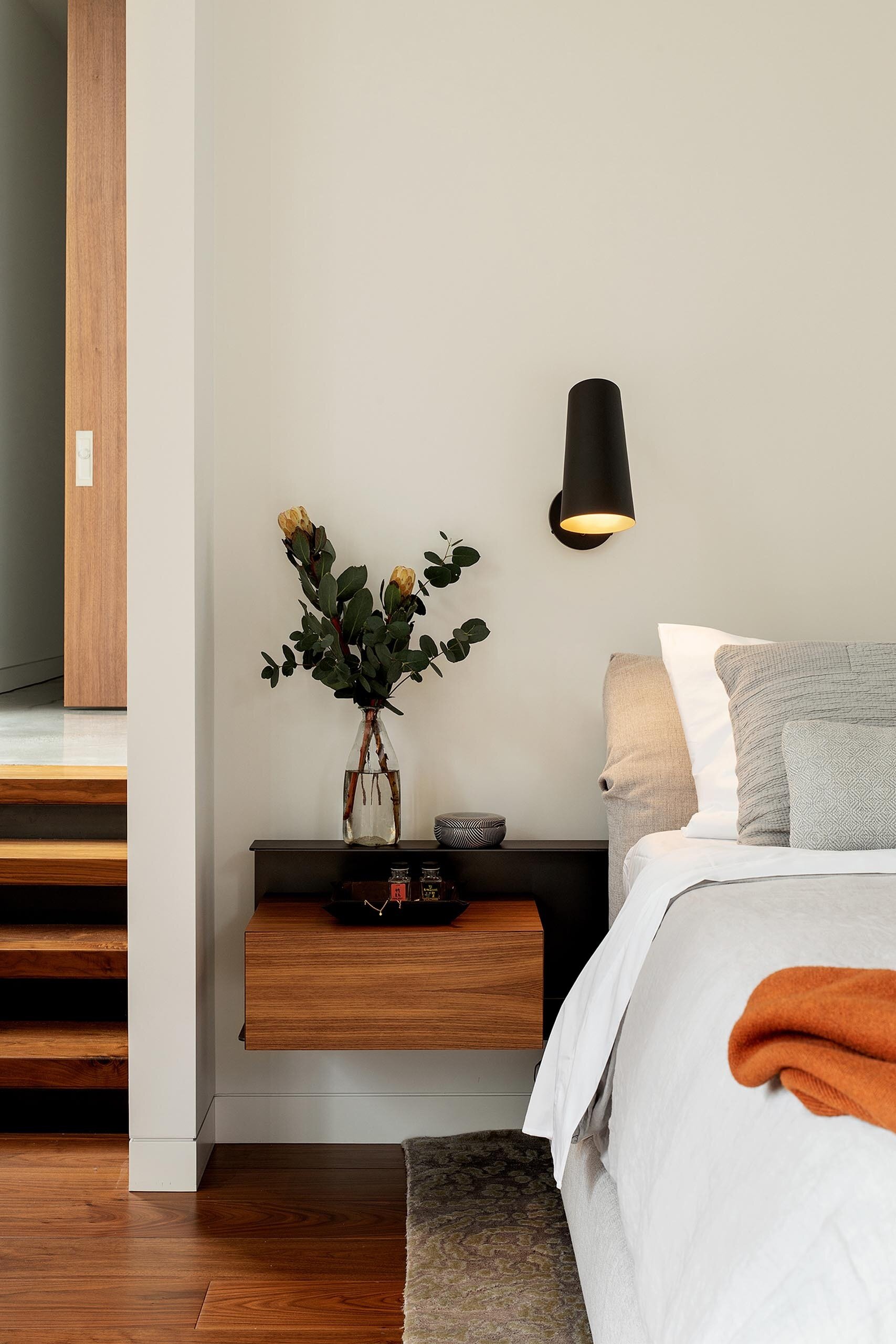
The central courtyard is flanked by two wings. The restful wing is dedicated to quieter spaces, including the kids’ bedrooms and the primary suite.
At the end of this wing, the primary bedroom is positioned to capture a framed view of the backyard, creating a sense of separation from the more active areas of the home.
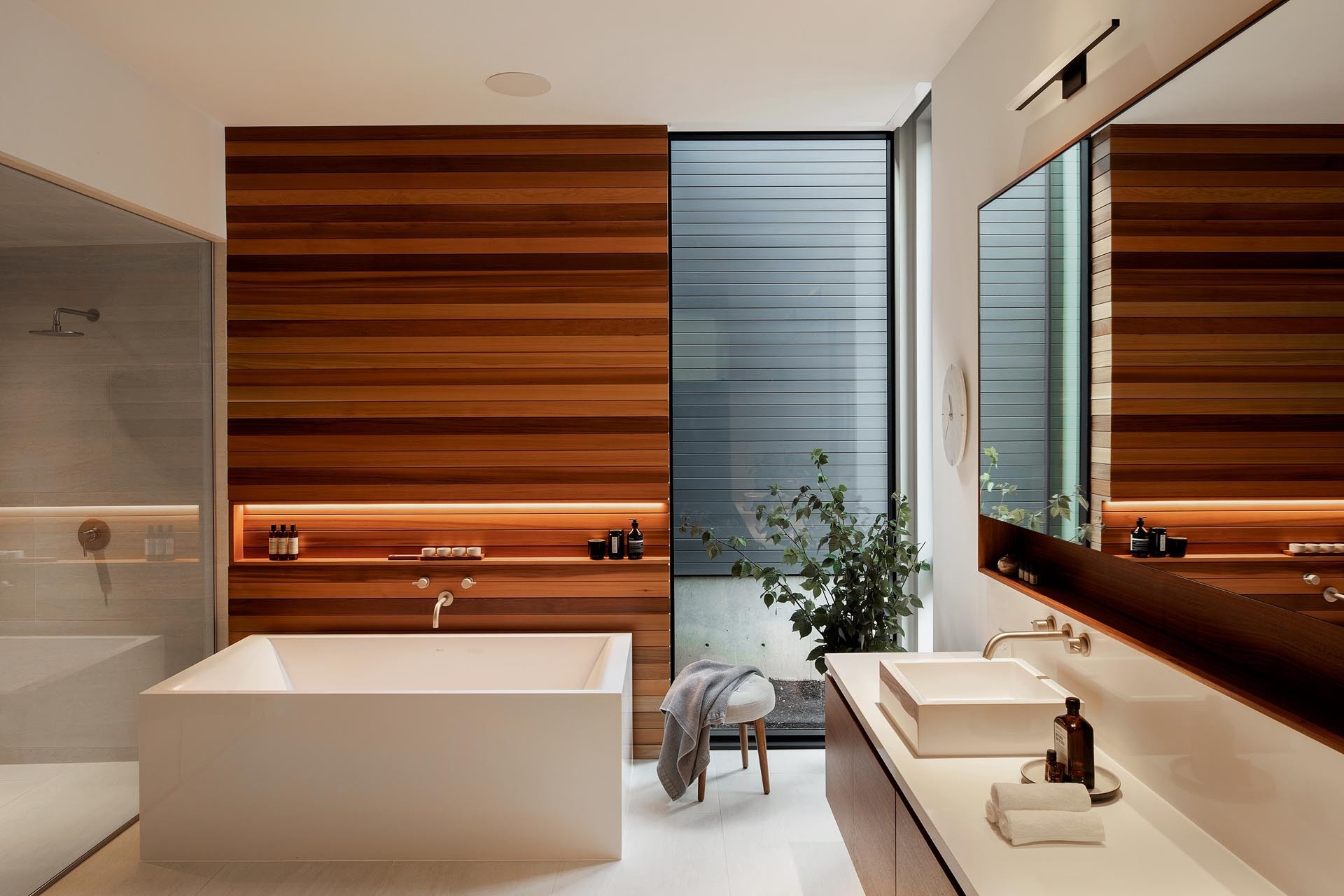
The en-suite bathroom continues this approach, featuring a warm wood accent wall with varied tones. A horizontal shelving niche with hidden lighting adds both function and subtle atmosphere.
The Active Wing
On the opposite side, the active wing brings together spaces designed for activity and entertainment. This includes a workout room with a sauna, a media room, guest bedrooms, and a dedicated wine room.
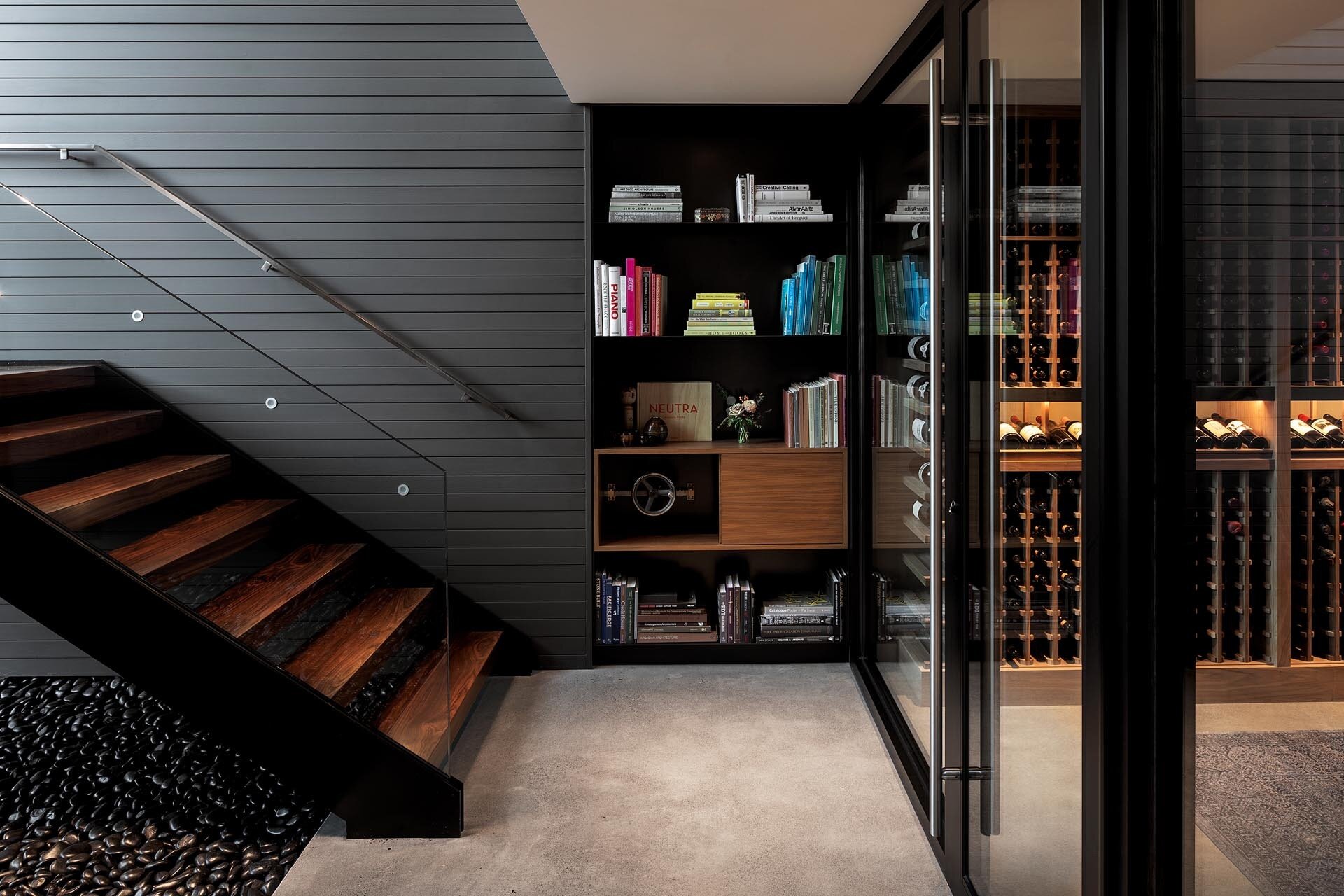
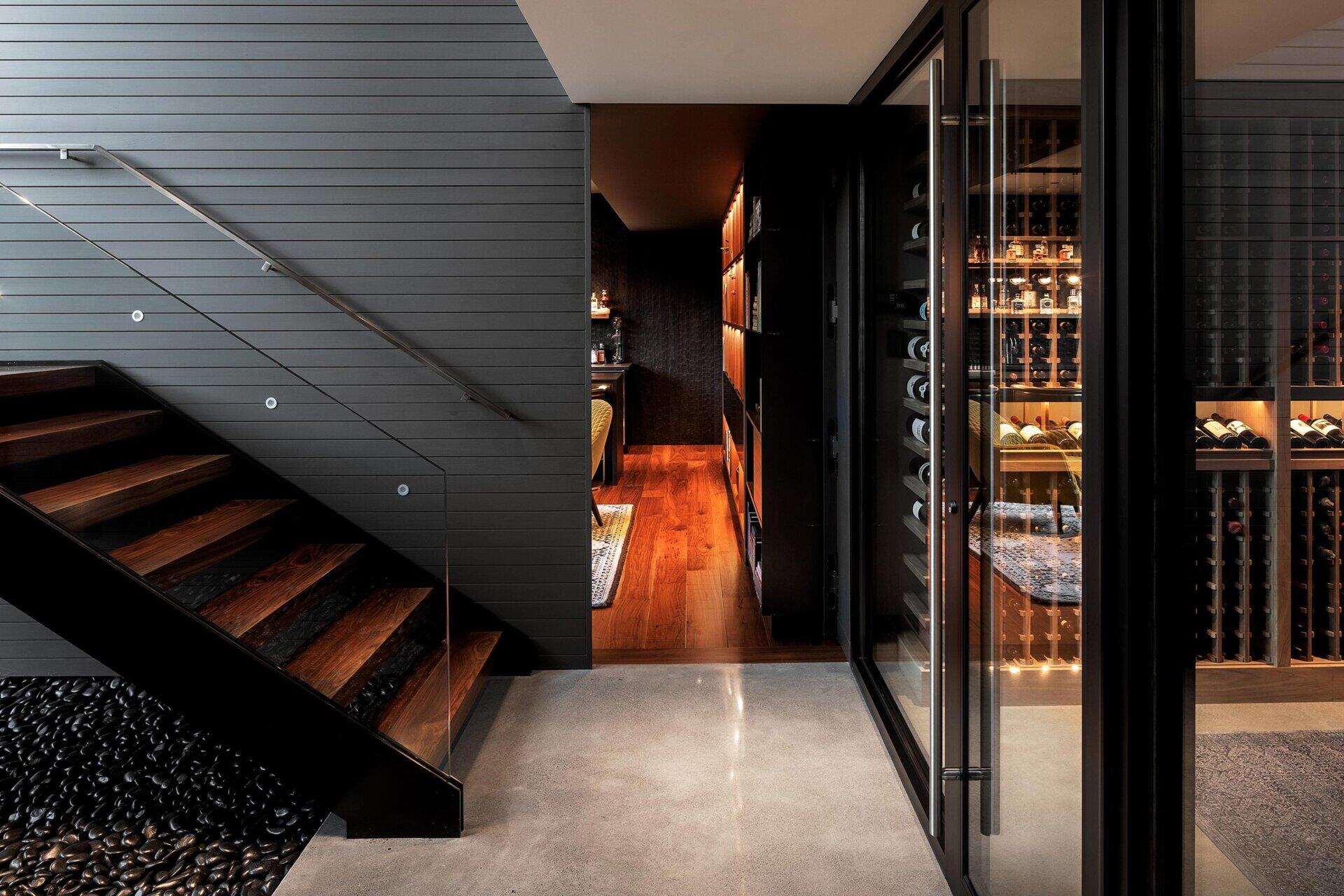
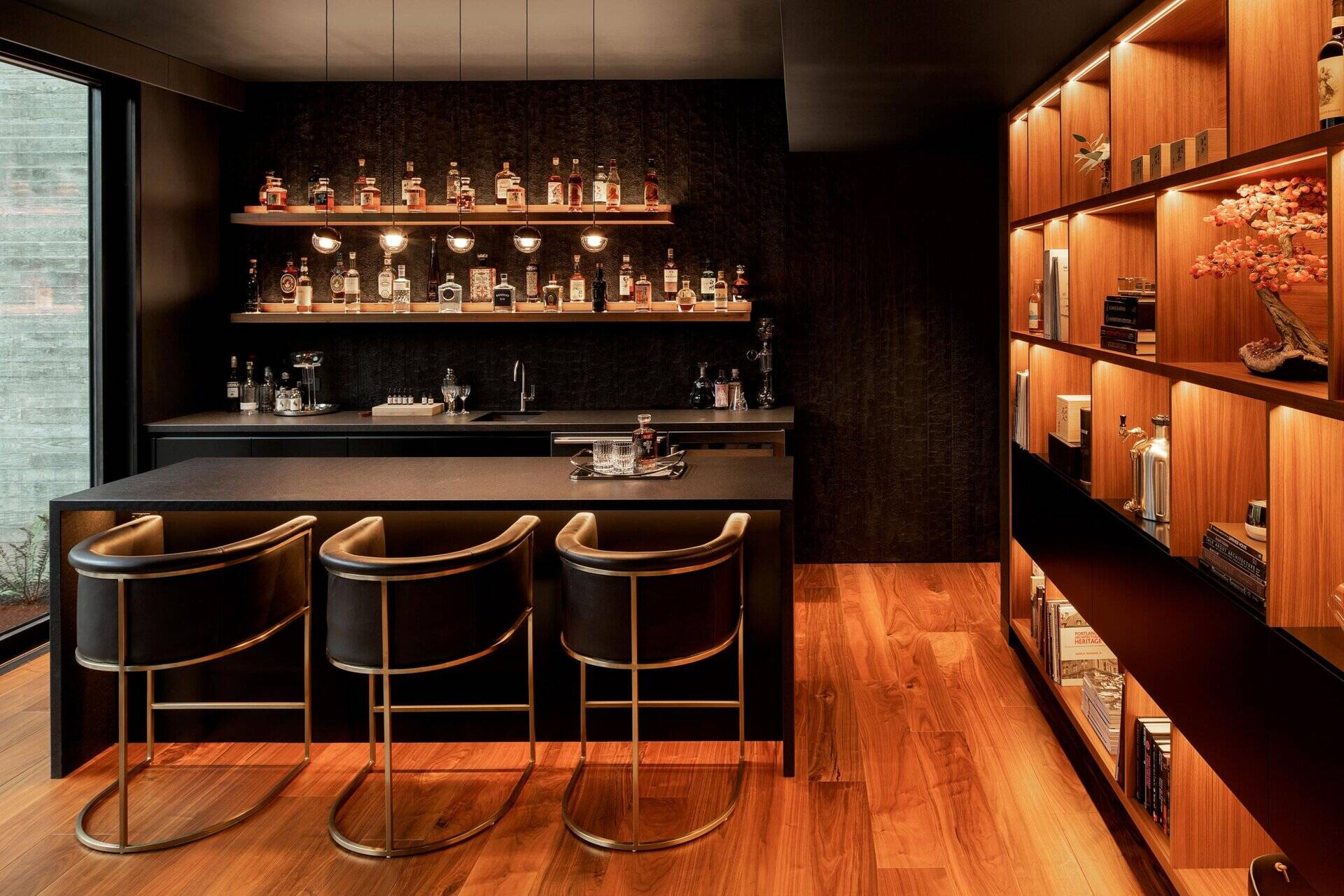
One of the most unexpected features is the hidden whiskey room. It is accessed through a secret latch concealed within a bookshelf at the bottom of the stairs, adding a playful and private element to the home.
Custom walnut wine racks elevate the wine room, adding texture and warmth while reinforcing the home’s material palette.
Glass Link House balances openness with separation, giving the family spaces to gather as well as areas to step away. The central glass pavilion connects both wings while linking the surrounding forests, creating a home that feels open, flexible, and ready for anything from large gatherings to quiet evenings. It is a design that makes full use of its setting while offering a range of experiences within a single, cohesive layout.