When architects at ADHOC took on this century-old Outremont house, the goal was clear, reshape it completely for accessibility while protecting its historic identity. Working alongside interior designer Sarah Lord and project manager Anna Rocki, the team developed a home tailored to Cait and Mikkel’s way of living.
After a spinal cord injury in 2016 left Cait partially paralyzed, everyday movement became a challenge. Finding an accessible home in Montreal proved nearly impossible, especially one that matched their city-based lifestyle. So they chose a different path, purchasing a 1907 house and transforming it from the ground up to suit their needs.
Preserving a 1907 Identity
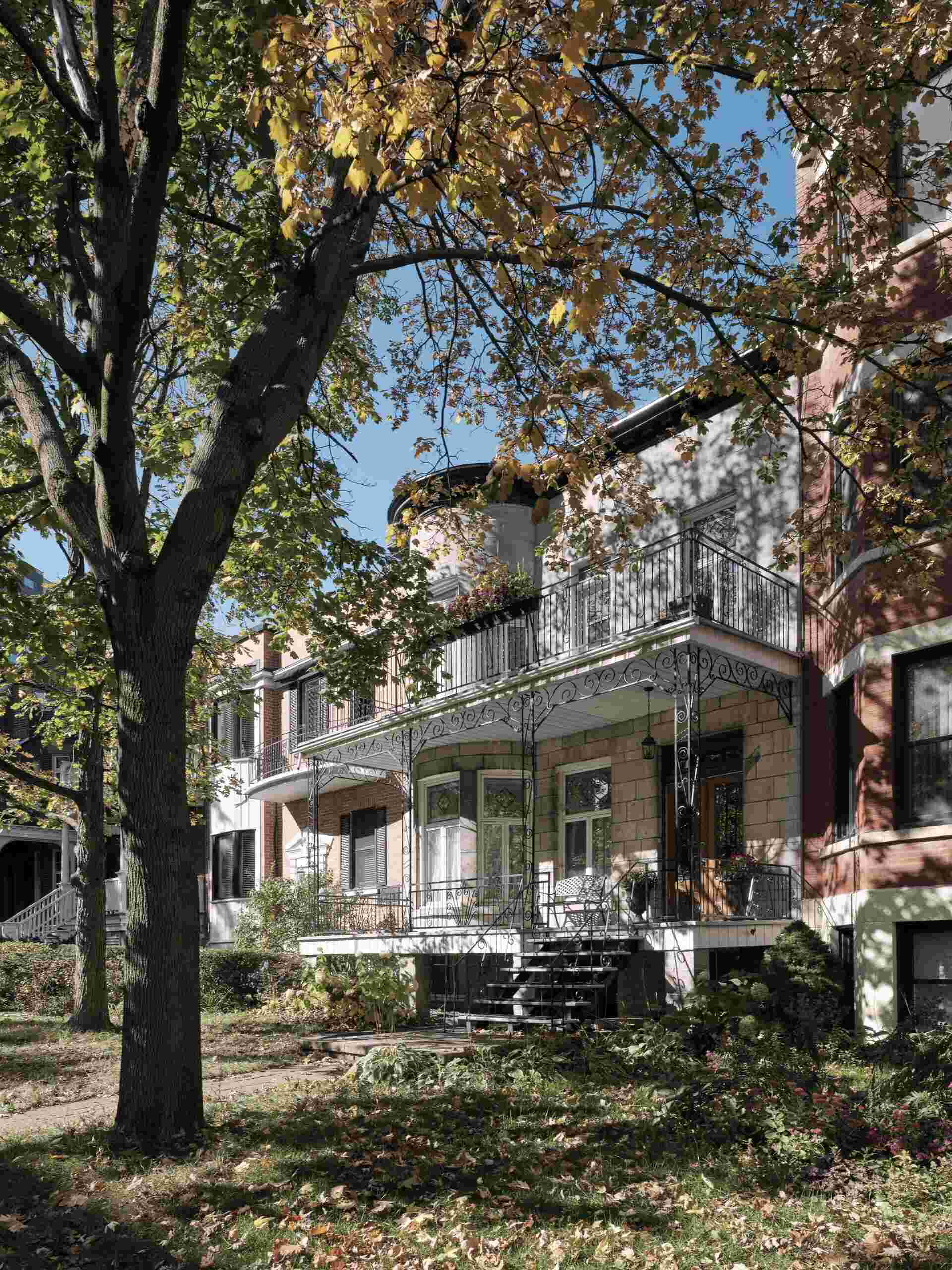
The house carries the hallmarks of early 20th-century Montreal architecture, with its elevated entrance and strong vertical proportions. Instead of altering this defining facade, the design keeps it intact, allowing the home to retain its street presence and historical character.
A Contemporary Addition That Unlocks the Home
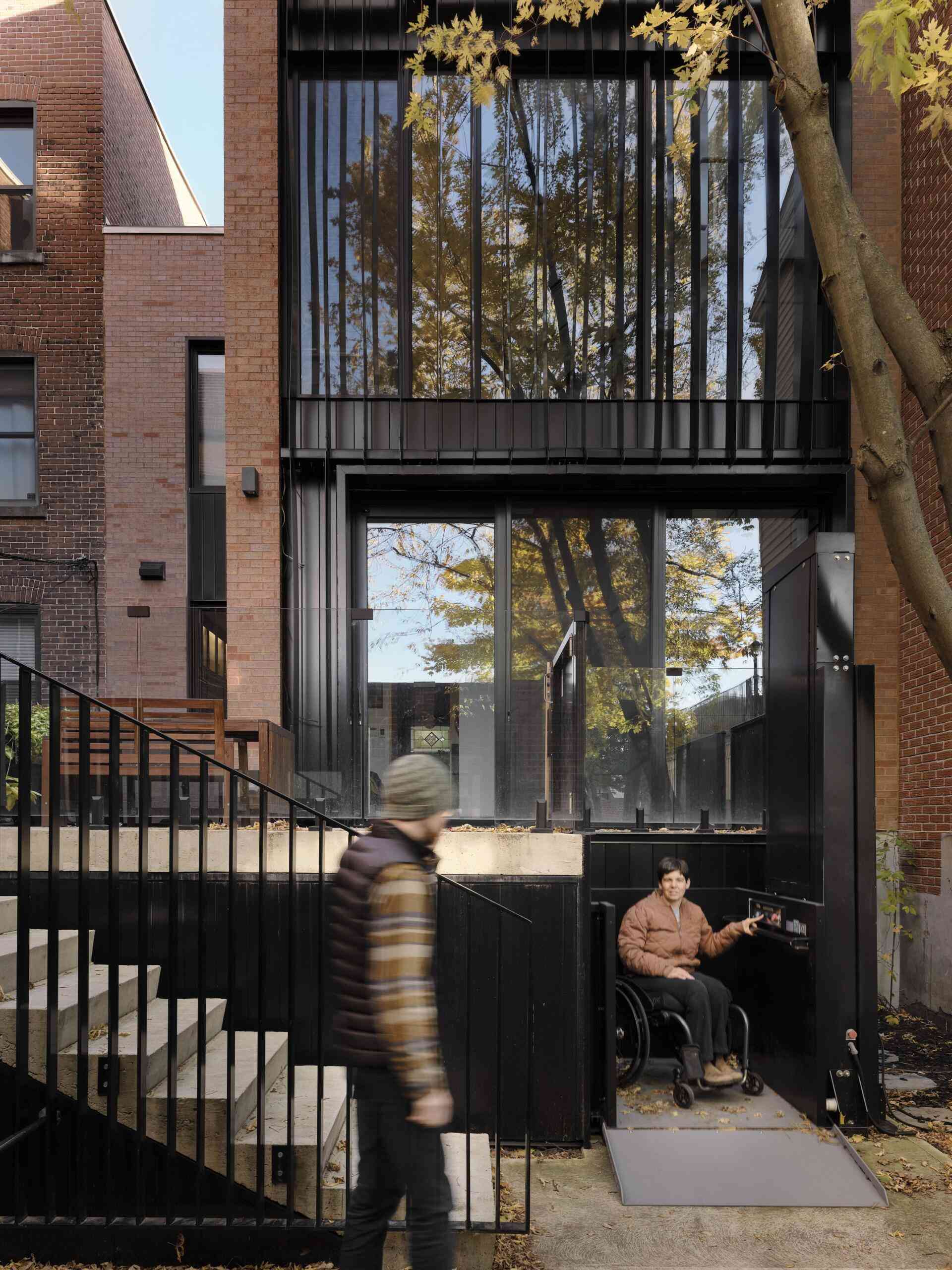
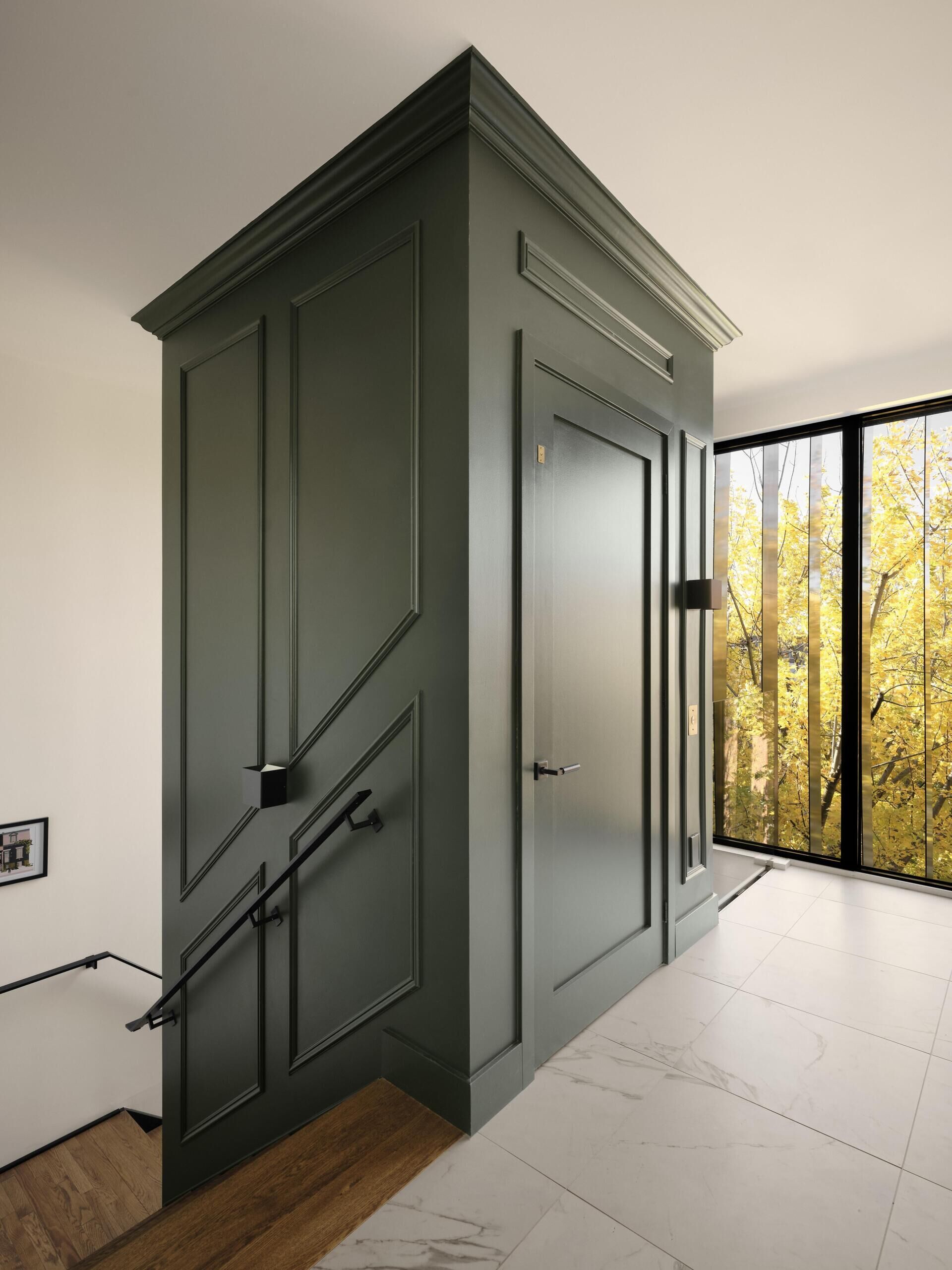
The most significant changes happen at the back. A three-storey extension introduces a vertical system that connects every level through an integrated elevator. Wrapped by a new staircase, it allows different ways of moving through the home for both seated and standing users.
This approach shifts the functional core away from the original structure, keeping the front untouched while solving accessibility across all floors.
Rethinking How You Arrive Home
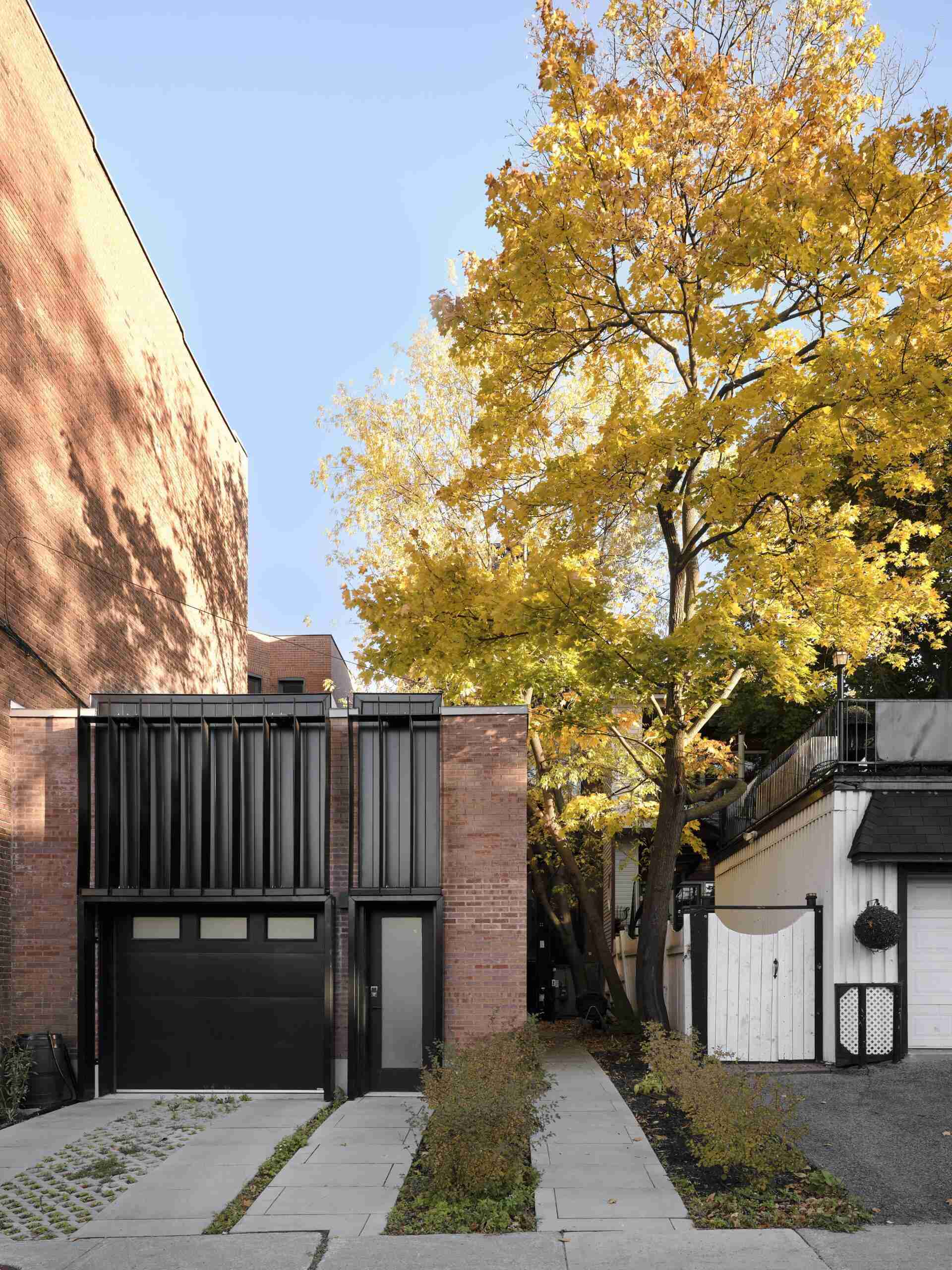
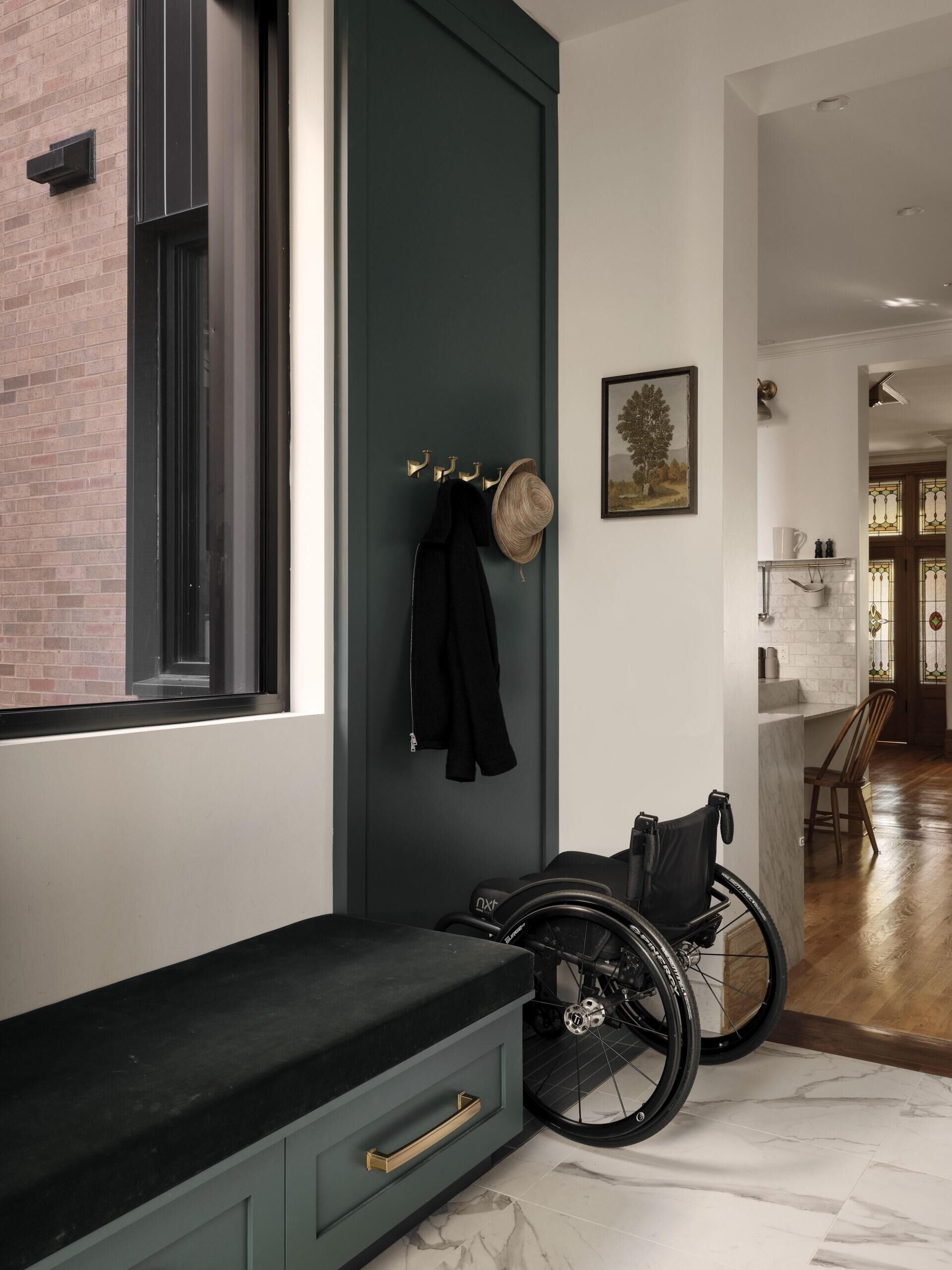
The elevated entrance typical of homes from this era often creates a barrier. Here, access is reworked through an adapted garage that replaces the former parking space, making entry smooth and direct.
A Kitchen Designed for Two Ways of Living
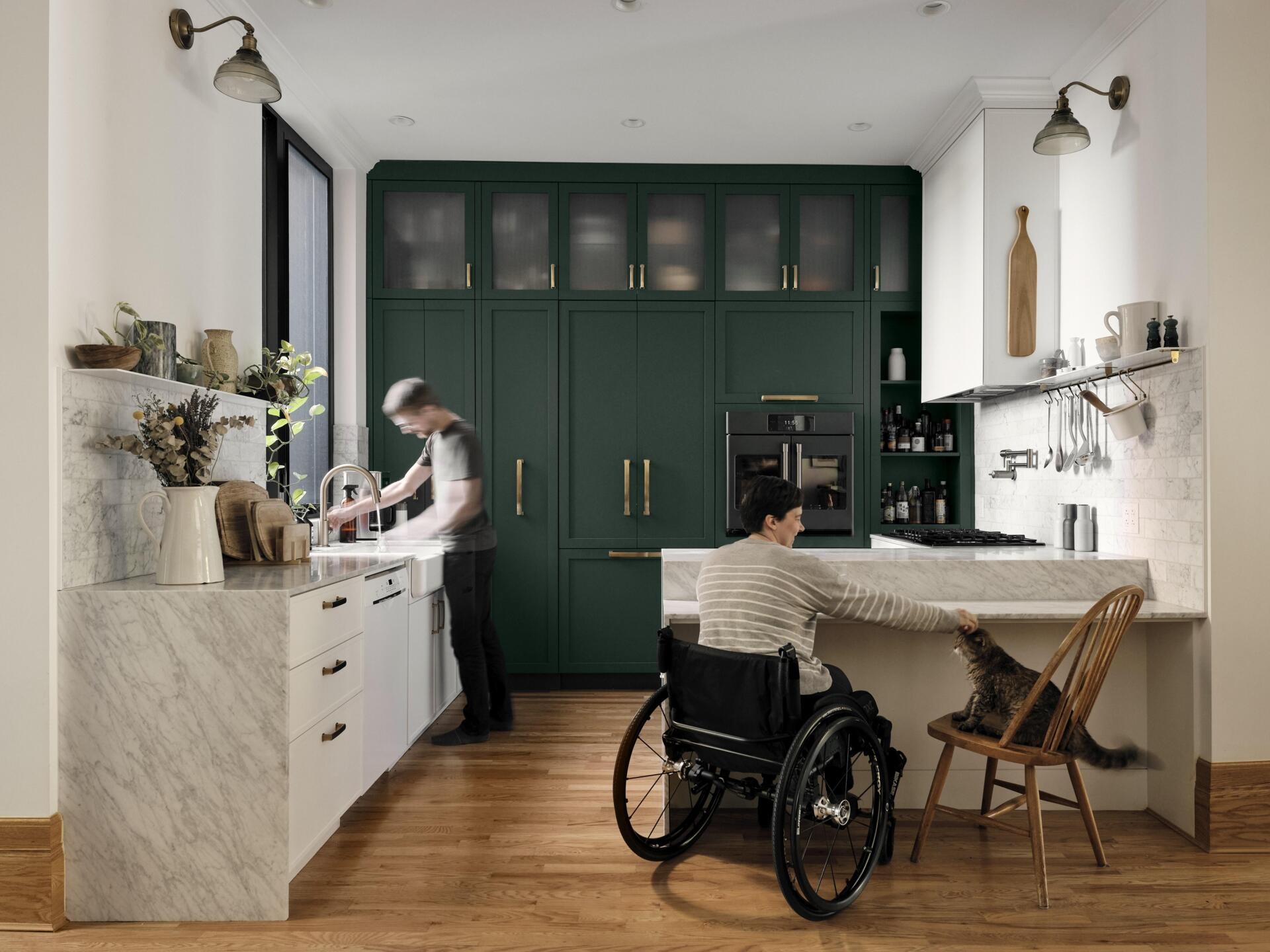
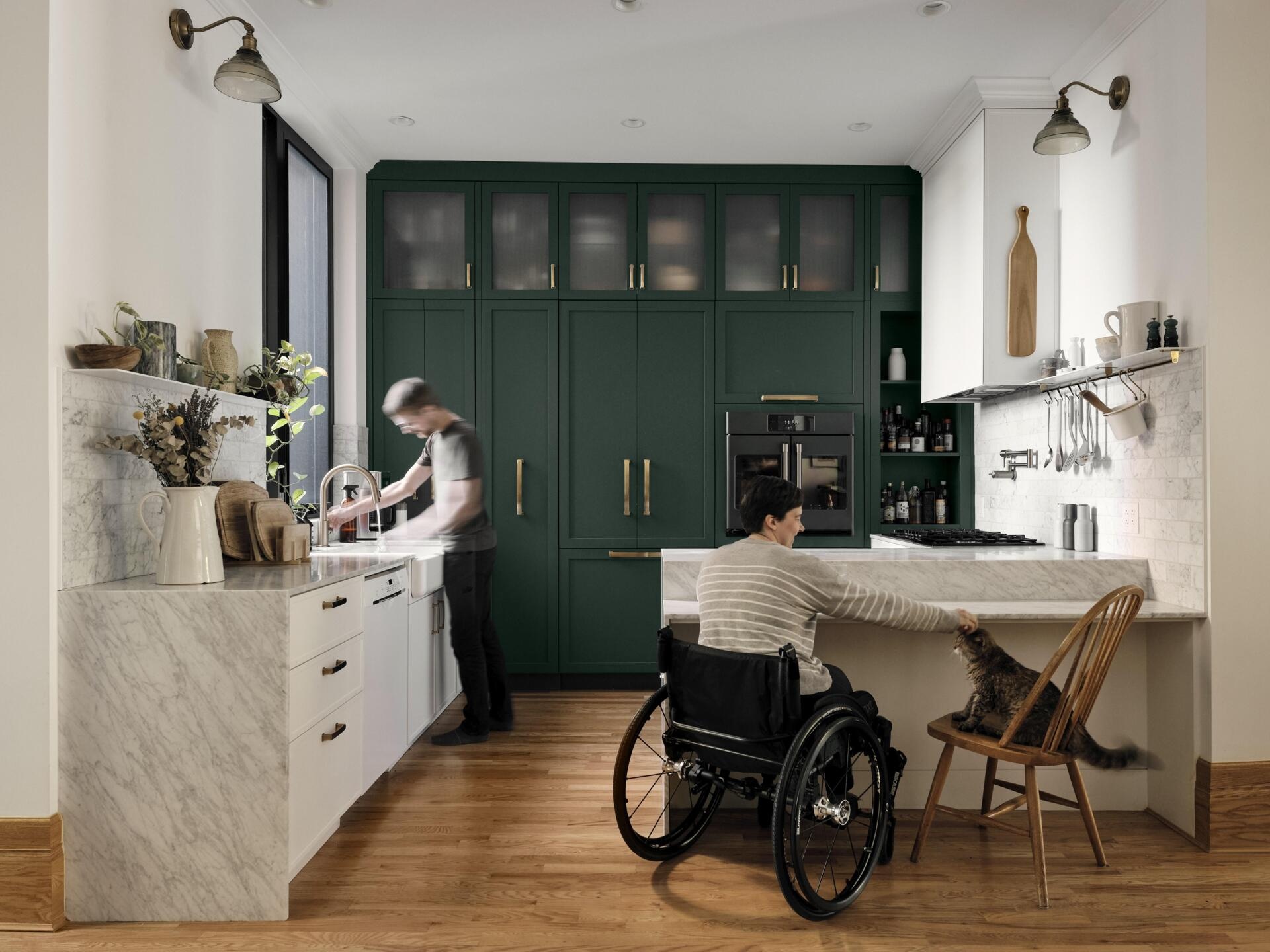
Inside, the new kitchen is organized with wider circulation paths that allow easy movement throughout. Dual-height work surfaces support both seated and standing use, making the space functional for both occupants.
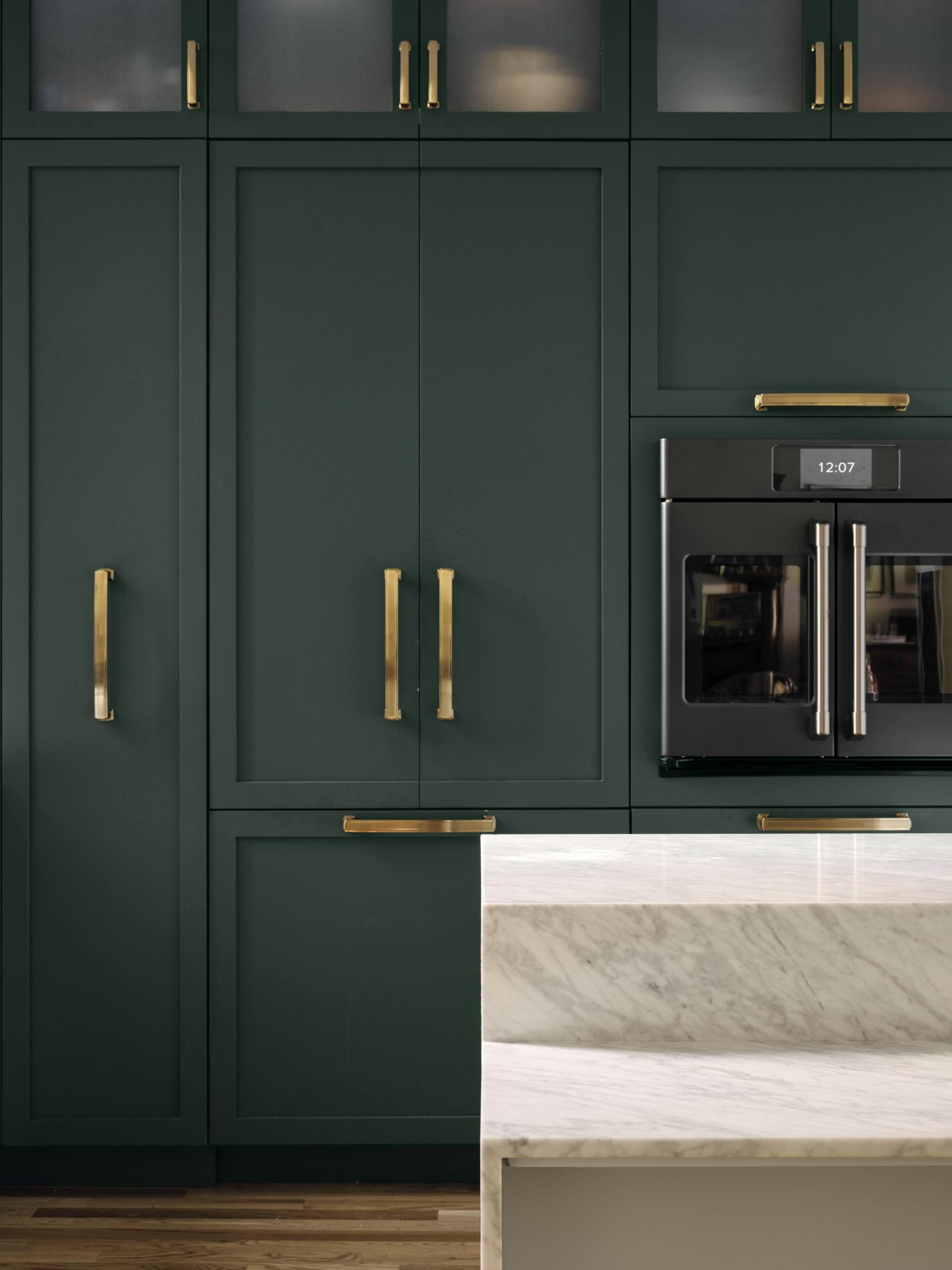
Details play a big role. Extended handles improve grip, and the oven is positioned at a height that works from a seated position. Every element is adjusted to make cooking and daily use straightforward.
A Seamless Vertical Connection
The elevator sits at the heart of the extension, linking all floors without interrupting the overall design. It is integrated into the layout so it feels like a natural part of the home, not an afterthought. Around it, the staircase offers an alternative route, creating a shared circulation system that works for everyone.
Light, Privacy, and Subtle Transitions
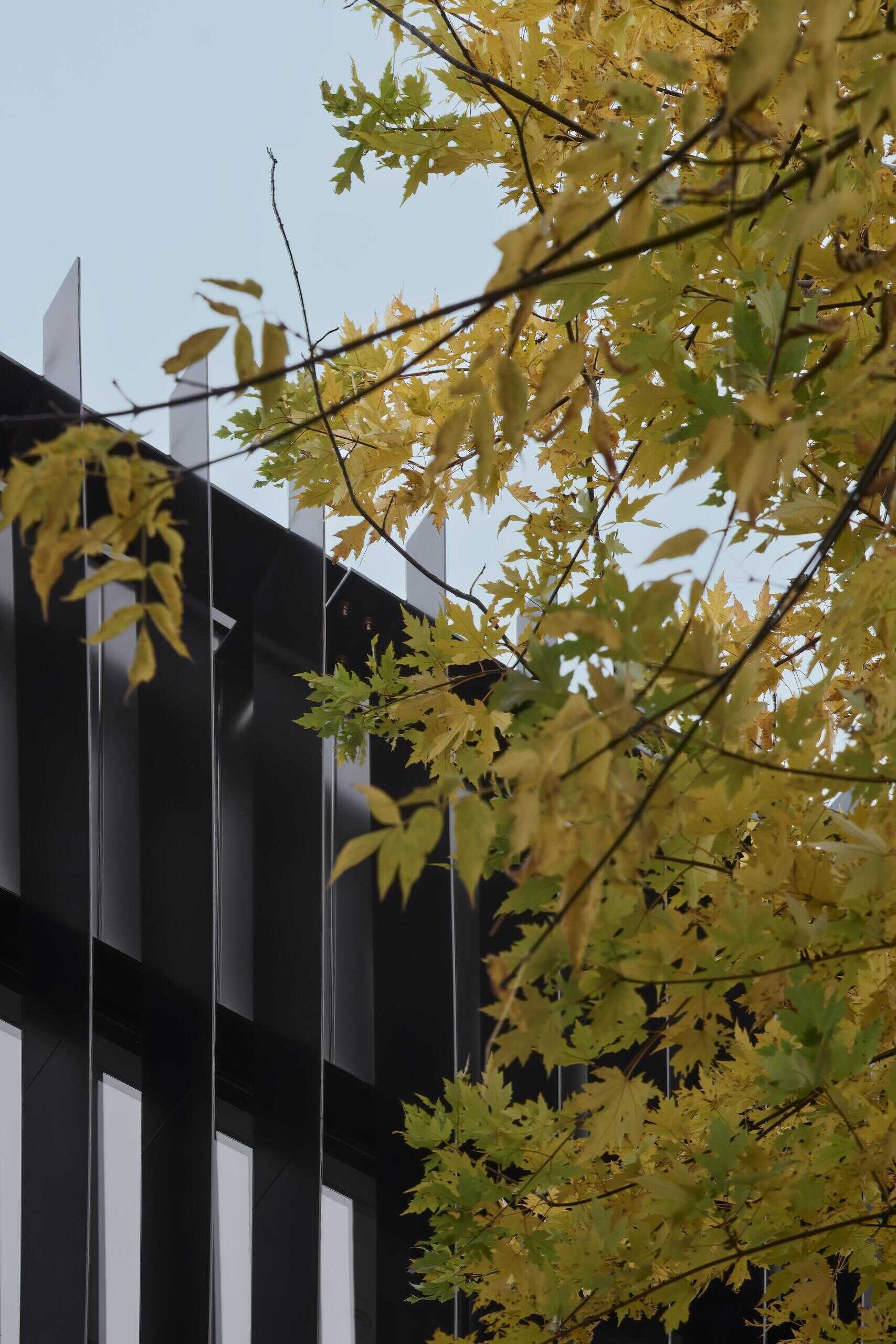
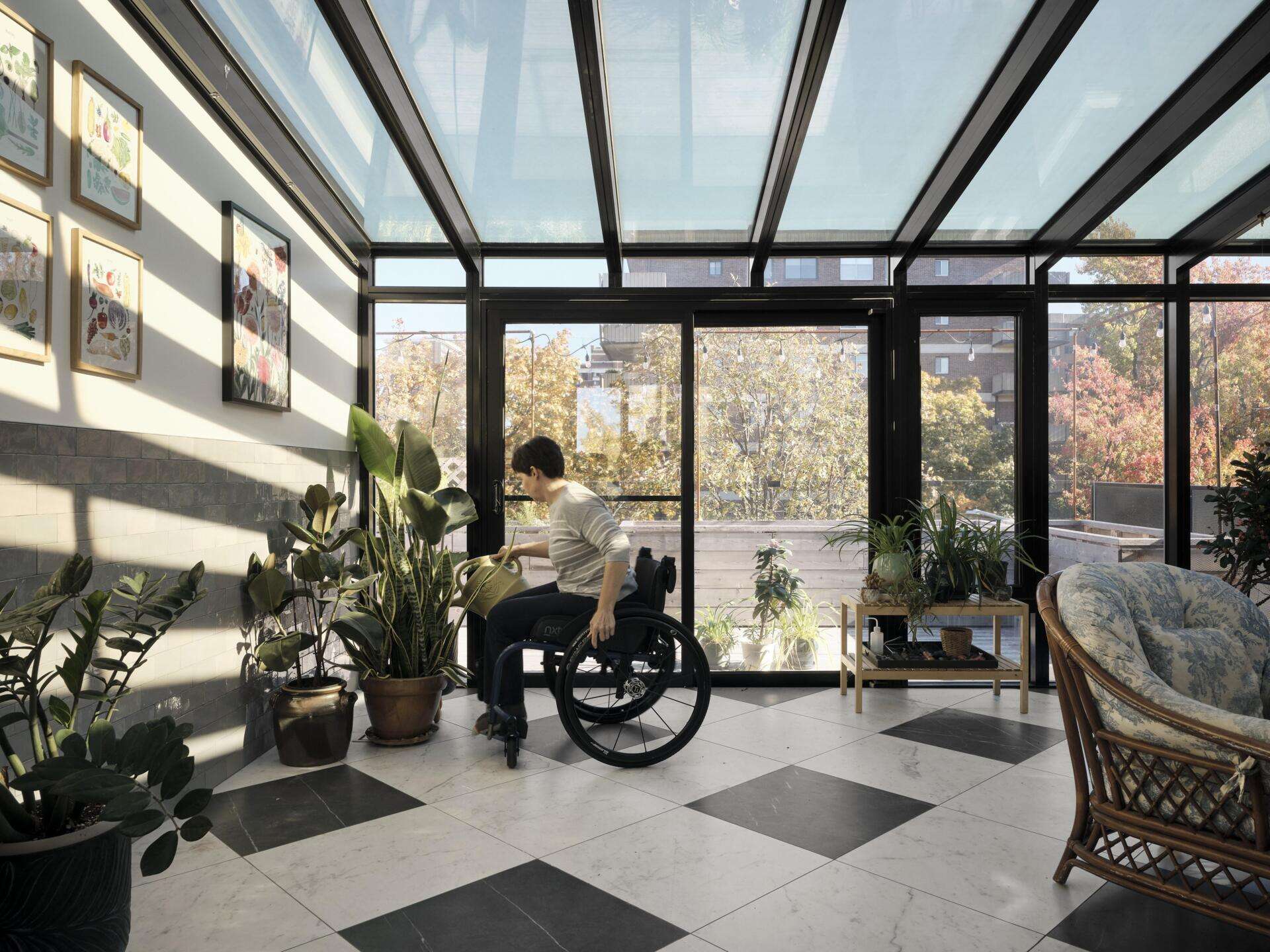
Within the extension, slatted elements filter natural light, creating a soft interplay of brightness and shadow. These features maintain privacy while adding depth to the interior spaces, while a sunroom provides a relaxed space for enjoying the natural light.
Function Built Into Every Detail
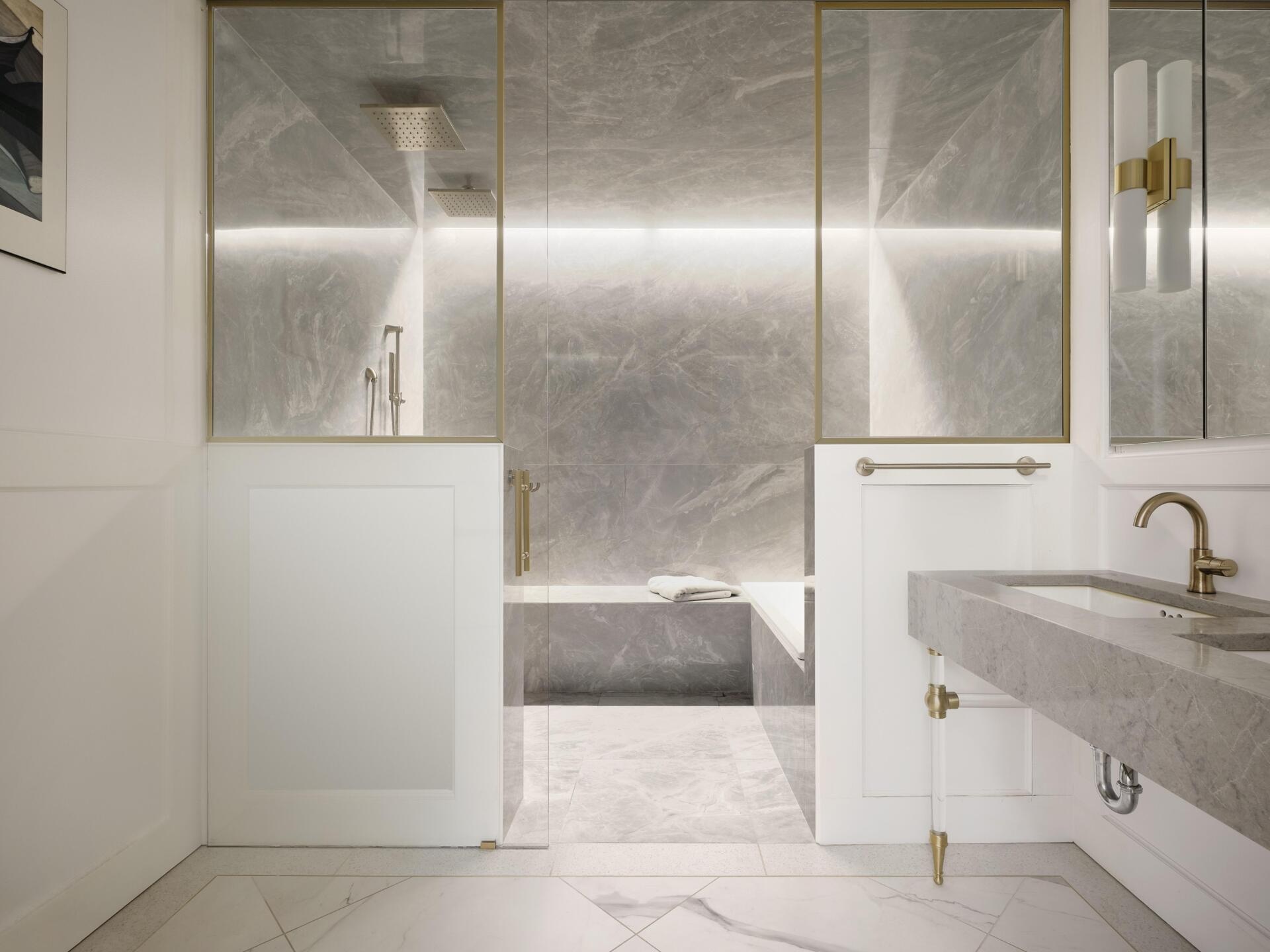
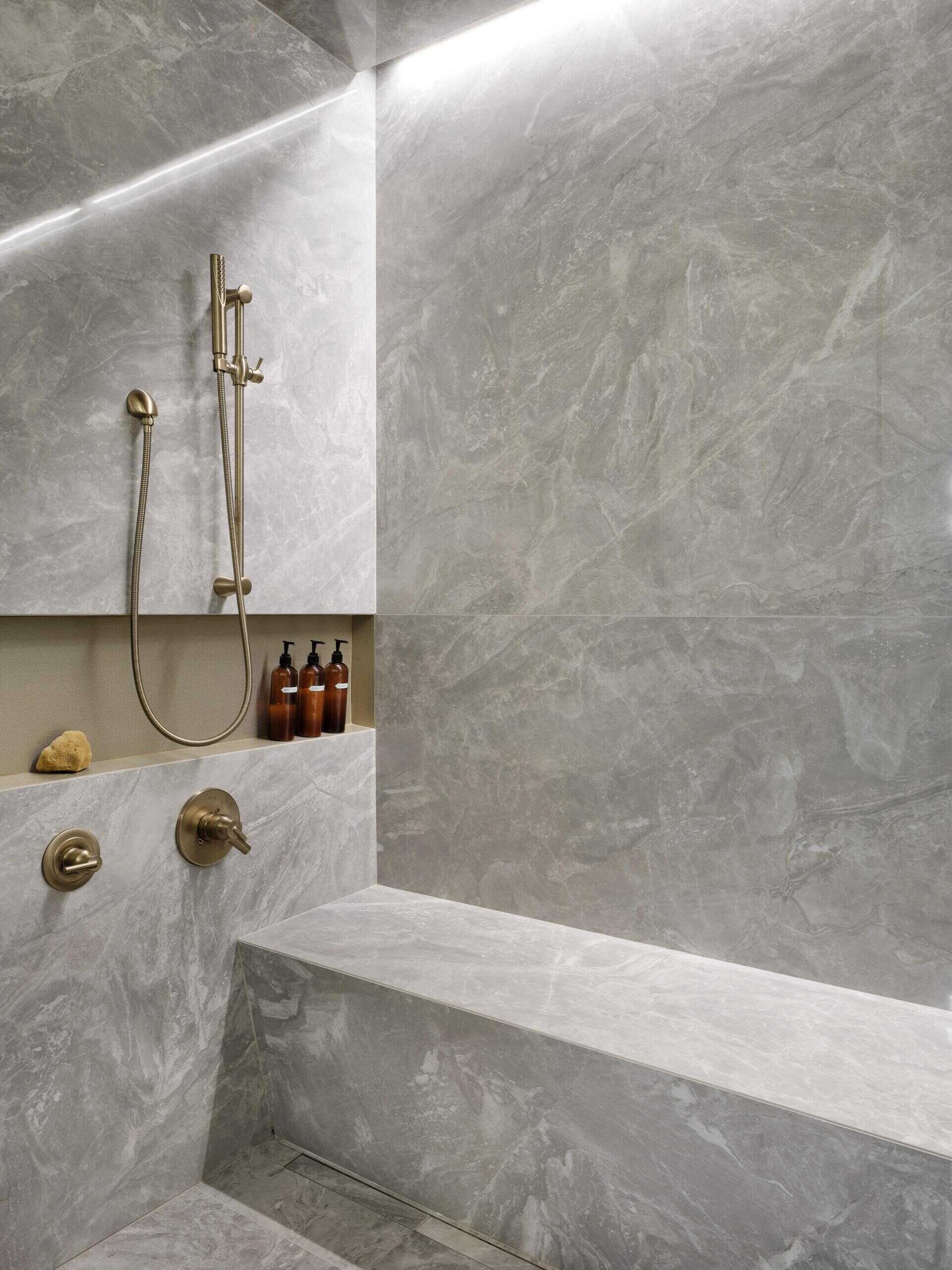
A new bathroom has been designed with a curbless showers, complete with benches for ease of use. Vanities include open space underneath to accommodate a wheelchair comfortably. Even support elements like grab bars are integrated into the design, finished in gold so they sit naturally within the overall aesthetic.
Keeping the Character
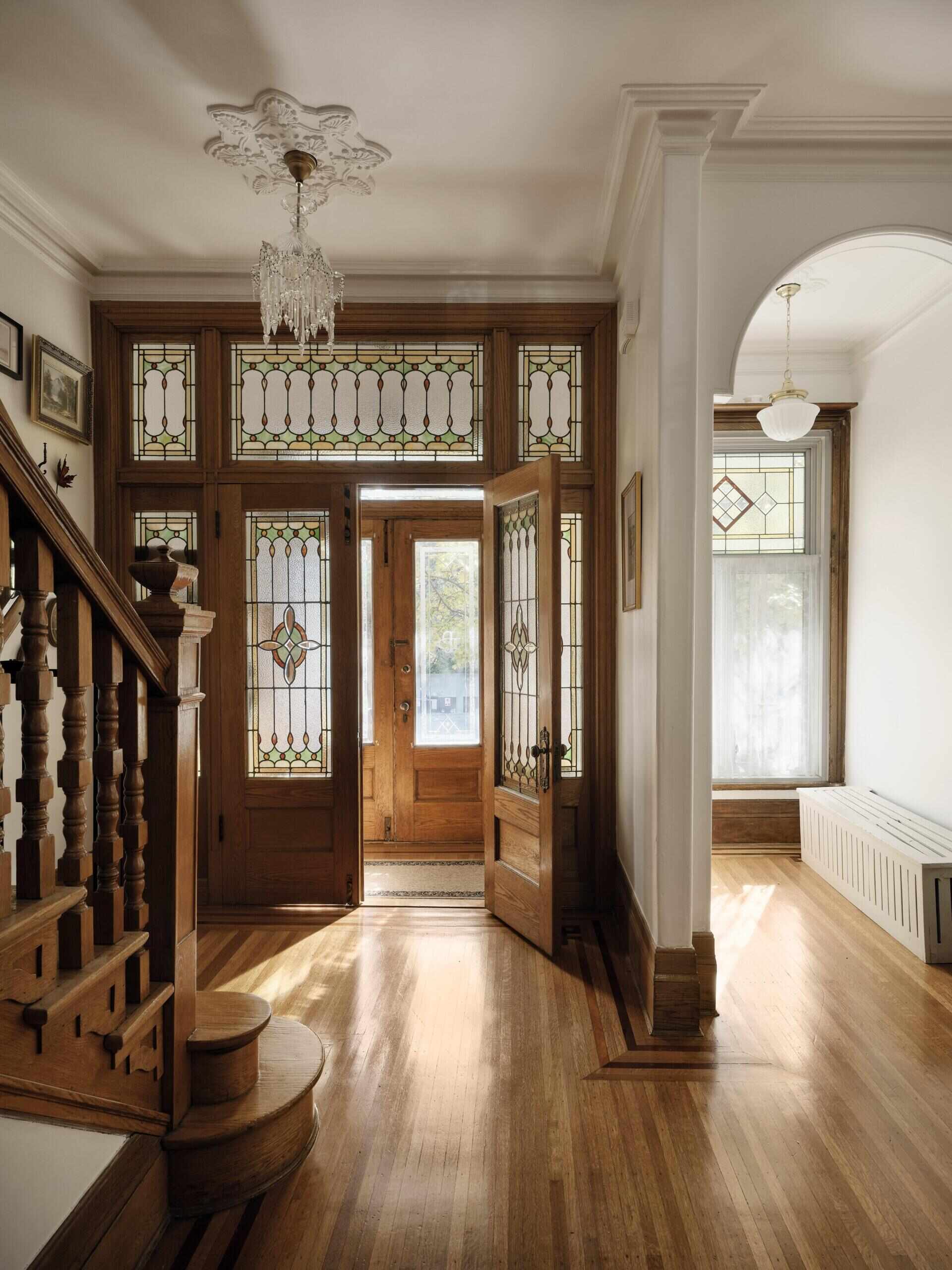
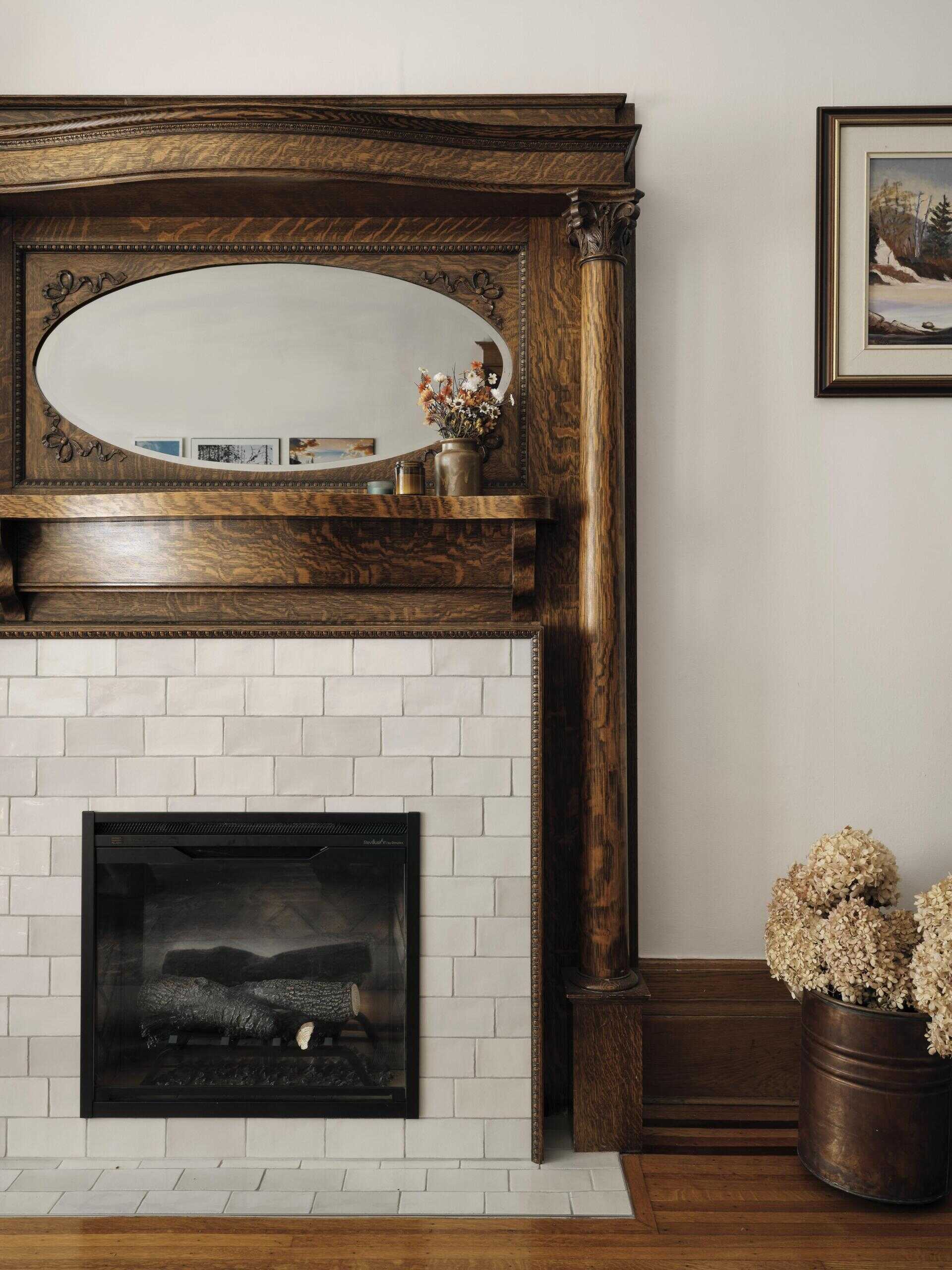
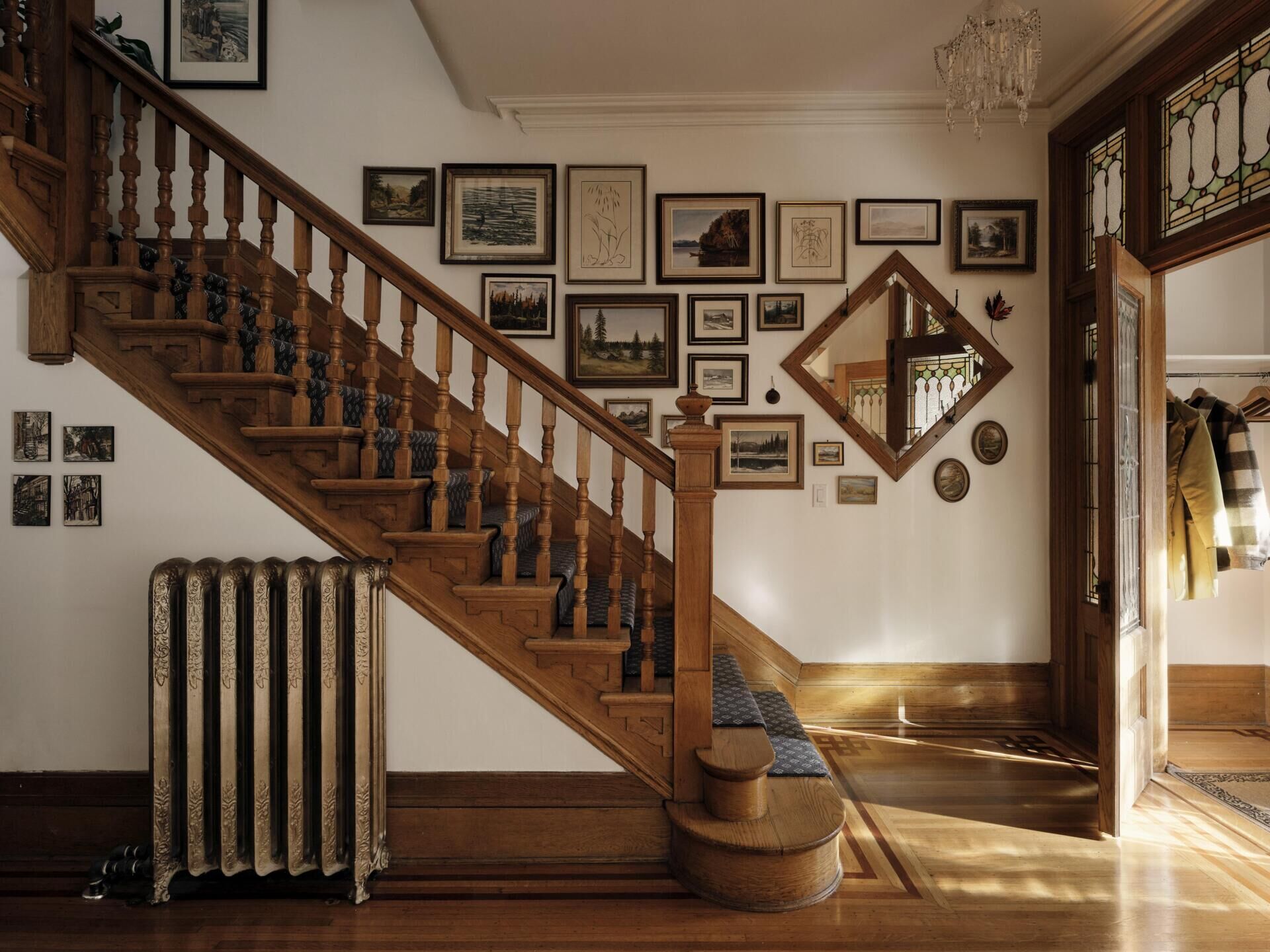
Original features such as stained glass, moldings, and woodwork were restored and remain central to the home’s identity. These details anchor the interiors and contrast with the newer interventions.
This project goes beyond solving practical challenges. Accessibility is built into every decision, from layout to material choices, shaping the home as a whole. By integrating these needs from the start, the design avoids compromise. Instead, it creates a home that works fully for its occupants while maintaining its historic presence in the city.