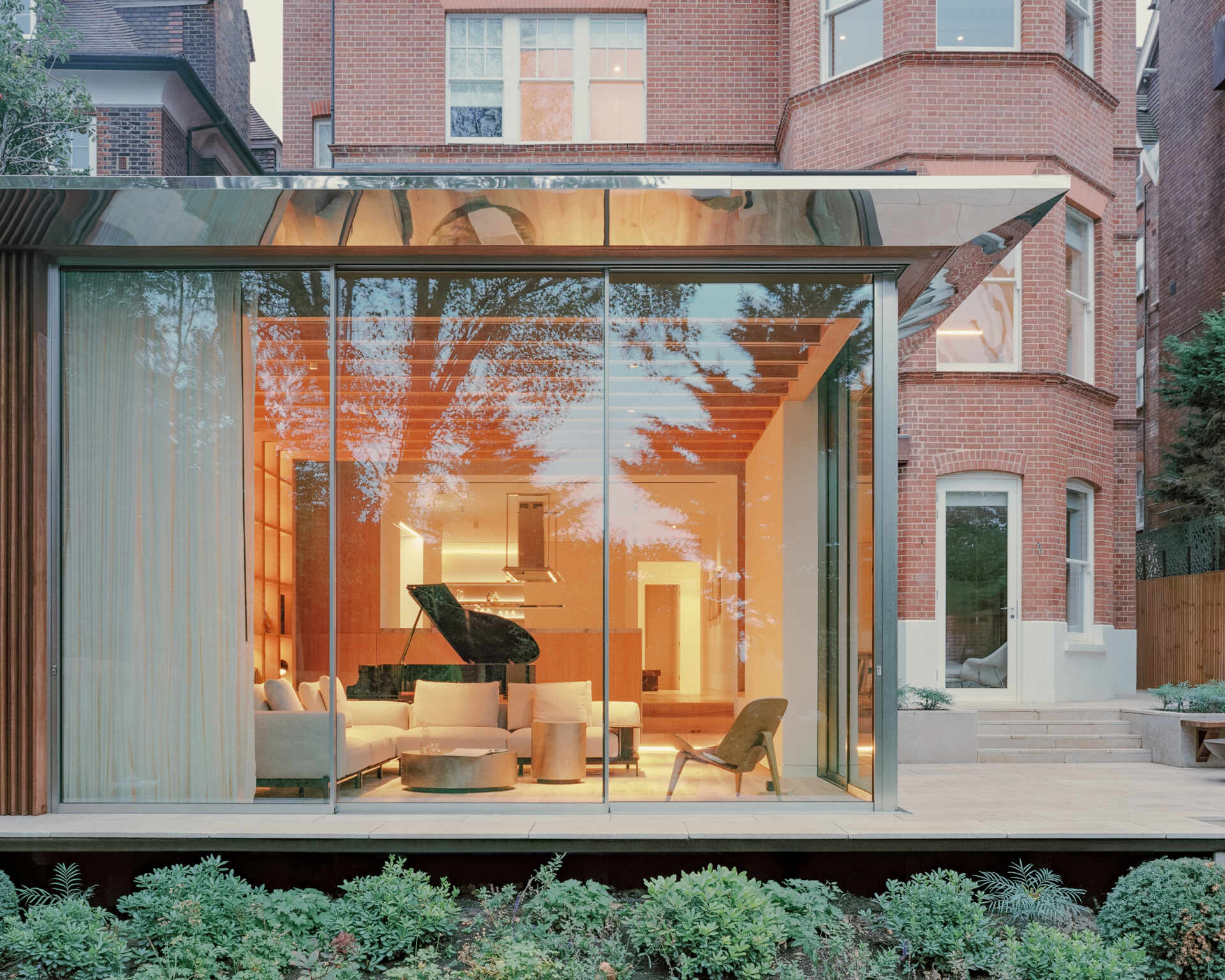
In Hampstead, London, MATA Architects reworked a detached family home into something far more engaging at ground level. Designed for a family with teenage children, the project focuses on expanding the lower ground floor while transforming how the house meets its south-facing garden. Surrounded by mature trees, the site offered privacy but also came with constraints that shaped every move.
The original house sat above the garden, disconnected by a long staircase. The redesign shifts the experience completely, bringing the main living spaces down into the landscape and opening them outward.
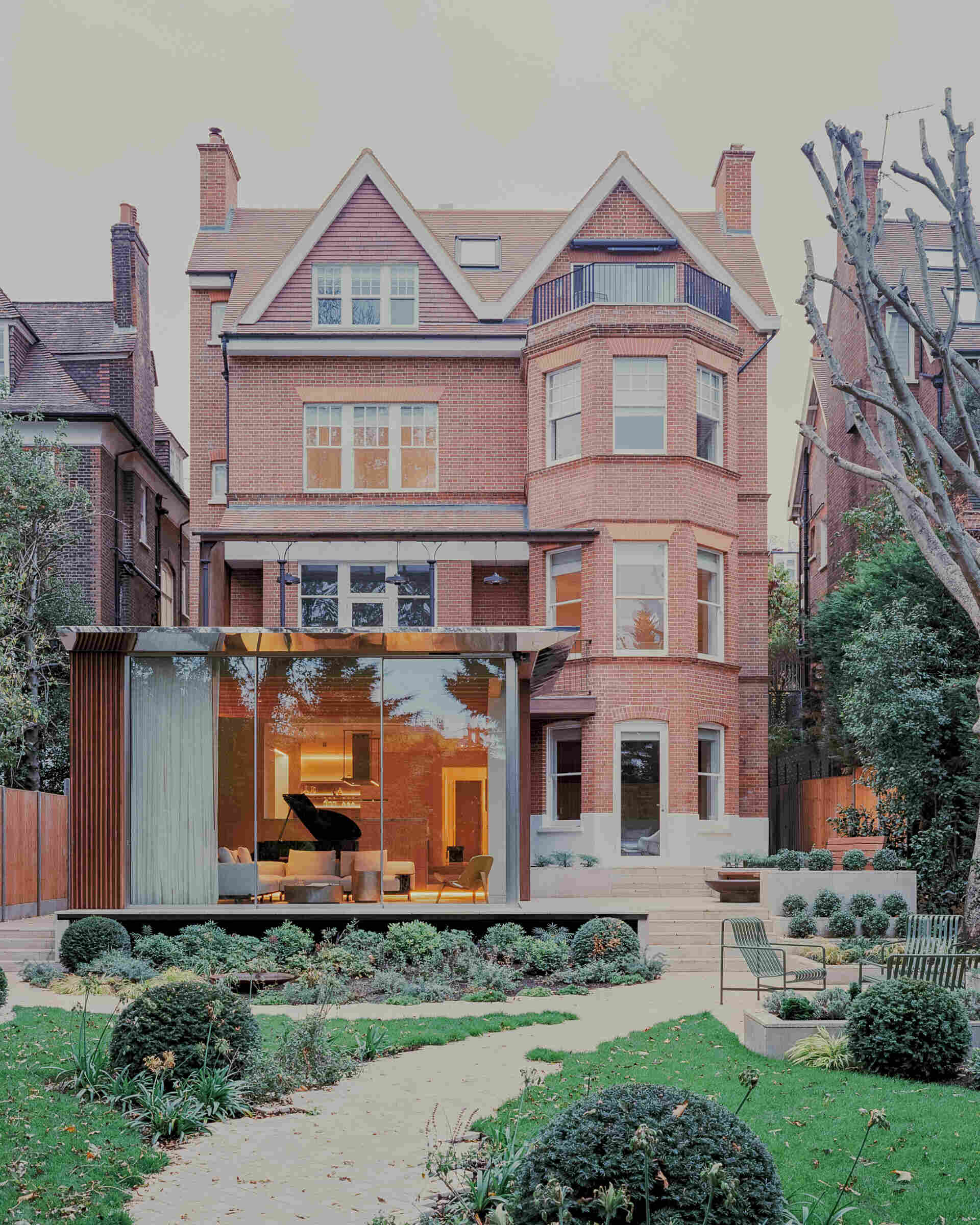
A Cascading Form That Follows The Land
The extension steps down from the existing house, dropping nearly a meter into the garden. This move increases ceiling height inside while physically pulling the living areas closer to the greenery outside.
Tree protection zones played a major role in shaping the footprint. Working with arboriculturists, the design avoids damaging root systems while still carving out new space. The result feels precise, with every edge responding to its surroundings.
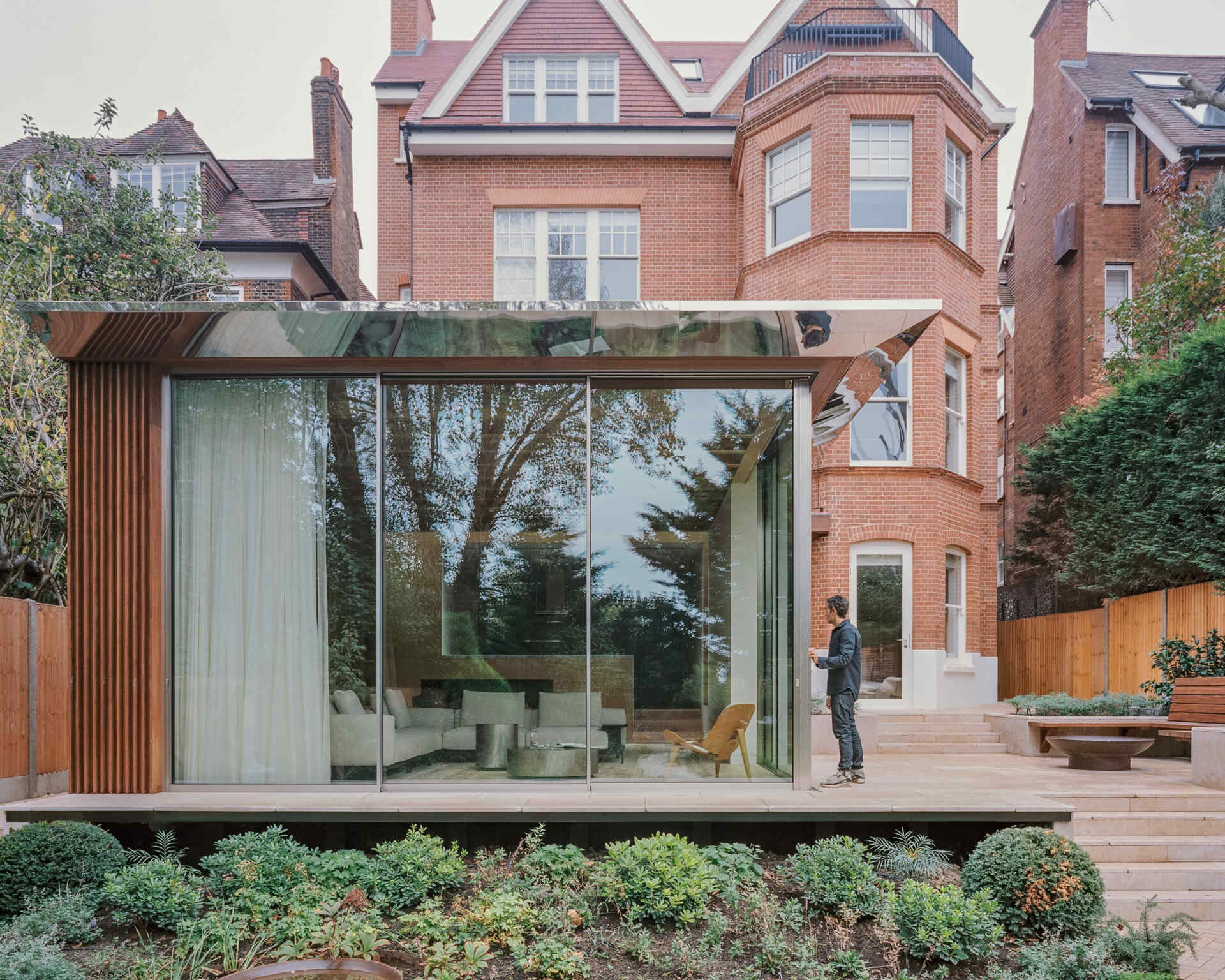
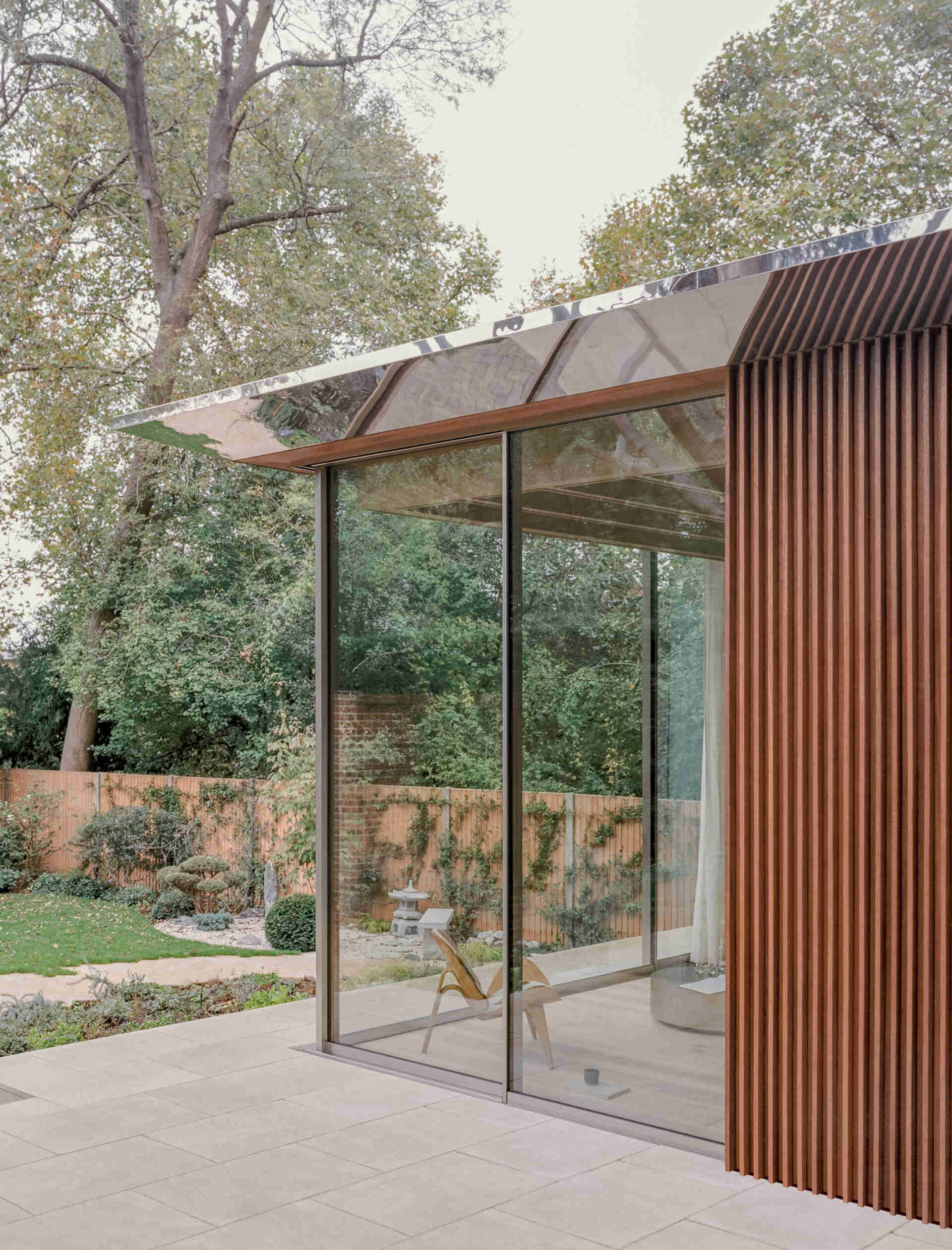
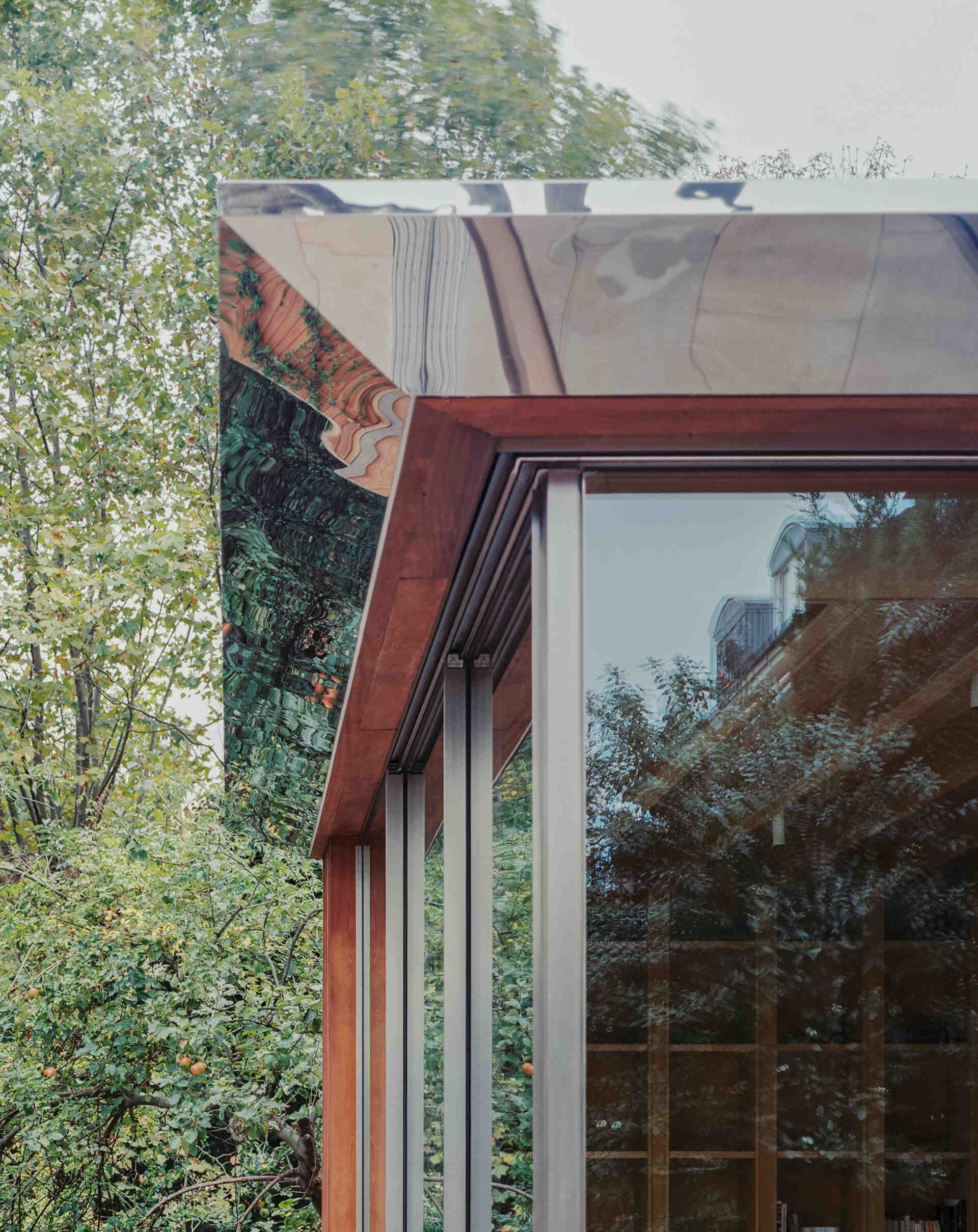
Externally, the structure is wrapped in hit-and-miss iroko hardwood battens, adding texture and depth. Above, a tapering roof extends outward, offering shade during warmer months. Its underside is finished in mirror-polished stainless steel, reflecting the trees and helping the structure visually recede into the garden.
A Fully Open Corner To The Outdoors
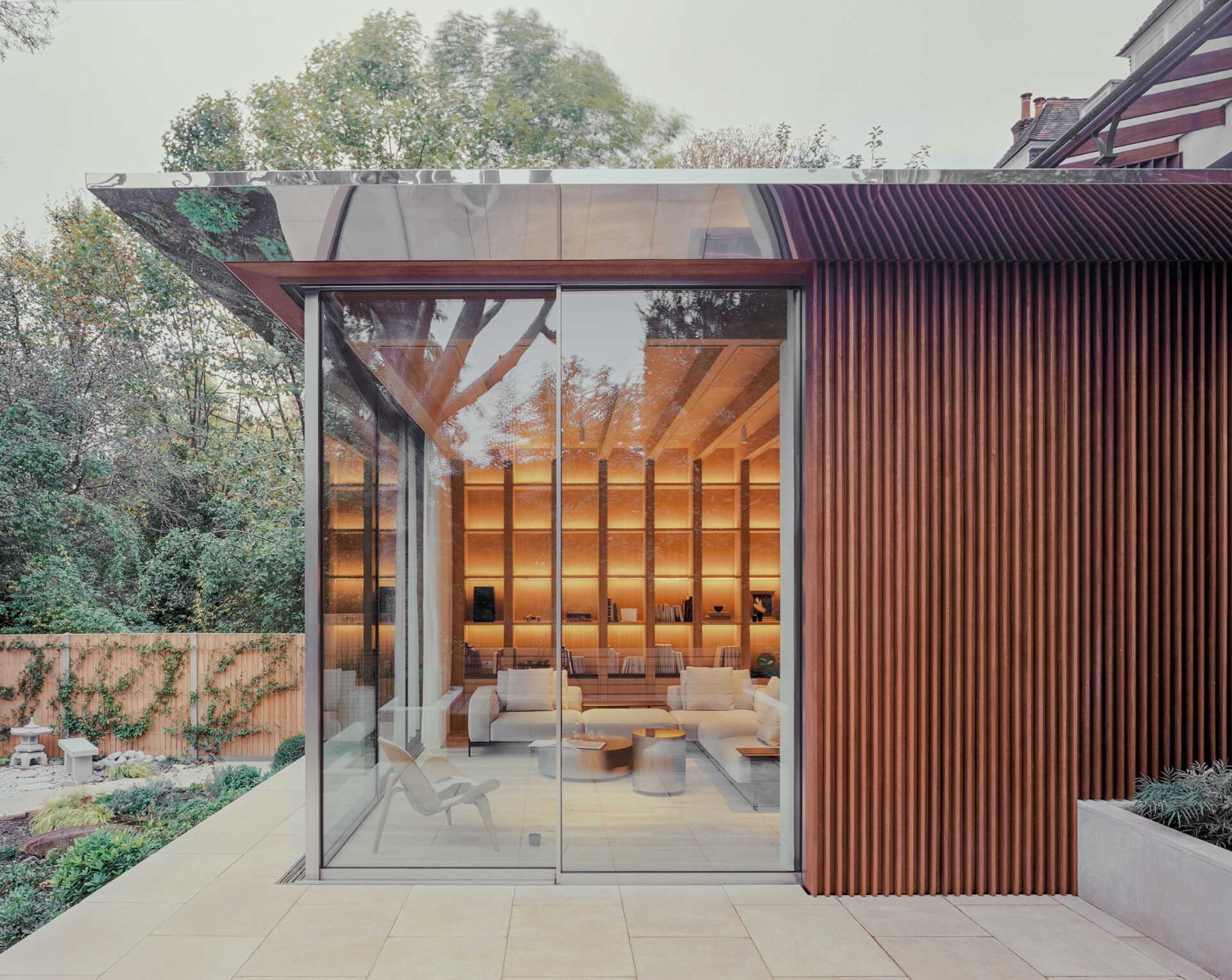
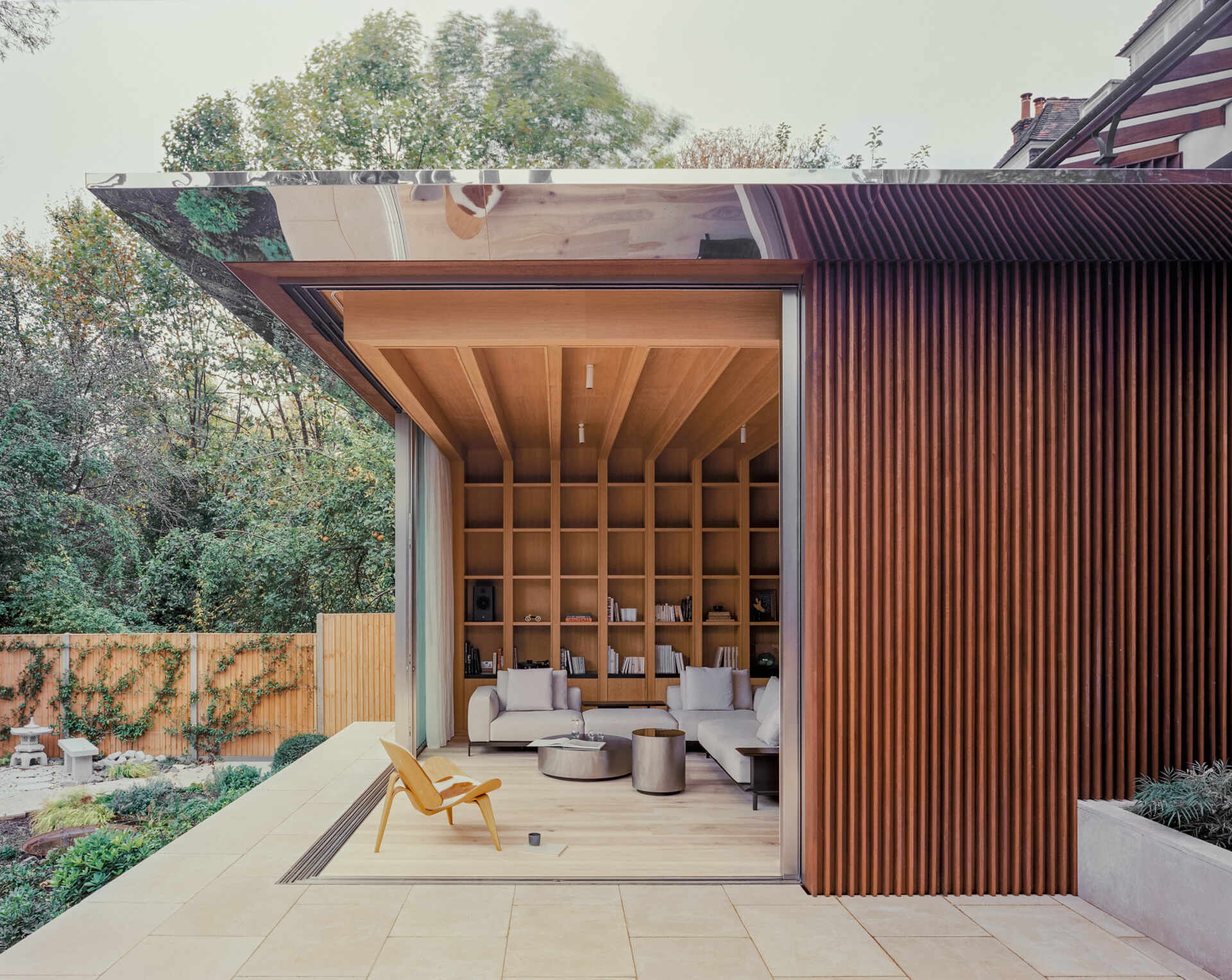
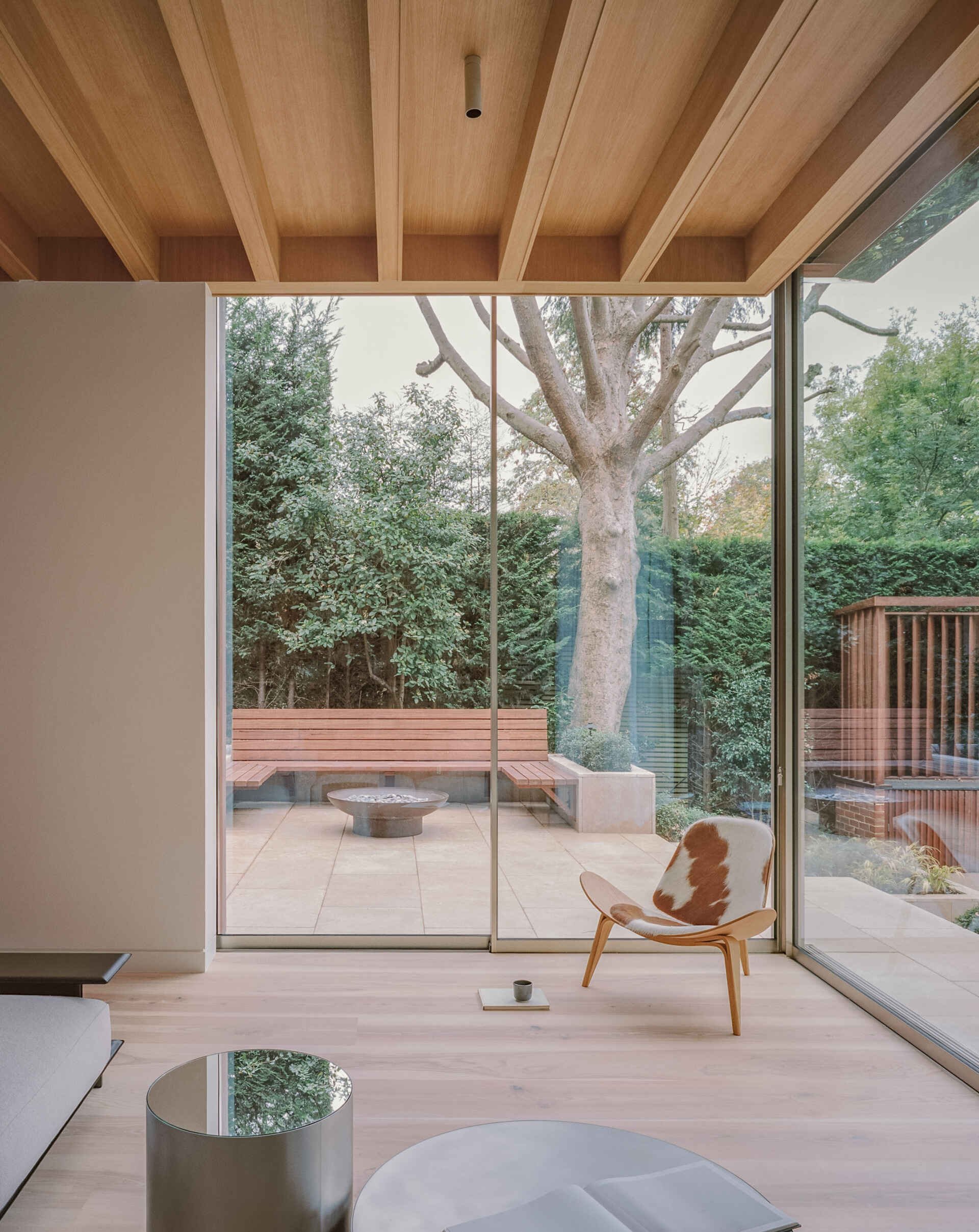
The defining feature is the open glazed corner facing the garden. Large sliding glass panels meet without structural interruption, creating a completely open corner when retracted.
This design delivers uninterrupted views across the garden while allowing the interior to spill directly onto the terrace. When closed, it maintains transparency. When open, the boundary disappears entirely.
Balancing openness with privacy and solar control was key. The overhanging roof reduces heat gain while still allowing light to pour in.
A Space Shaped By Levels And Light
The living area sits at the heart of the extension, positioned at the lowered level closest to the garden. This shift in height creates a subtle zoning effect within the open plan layout.
Natural light moves freely across the space, amplified by the full-height glazing. The connection to the garden becomes part of the experience, with greenery visible from nearly every angle.
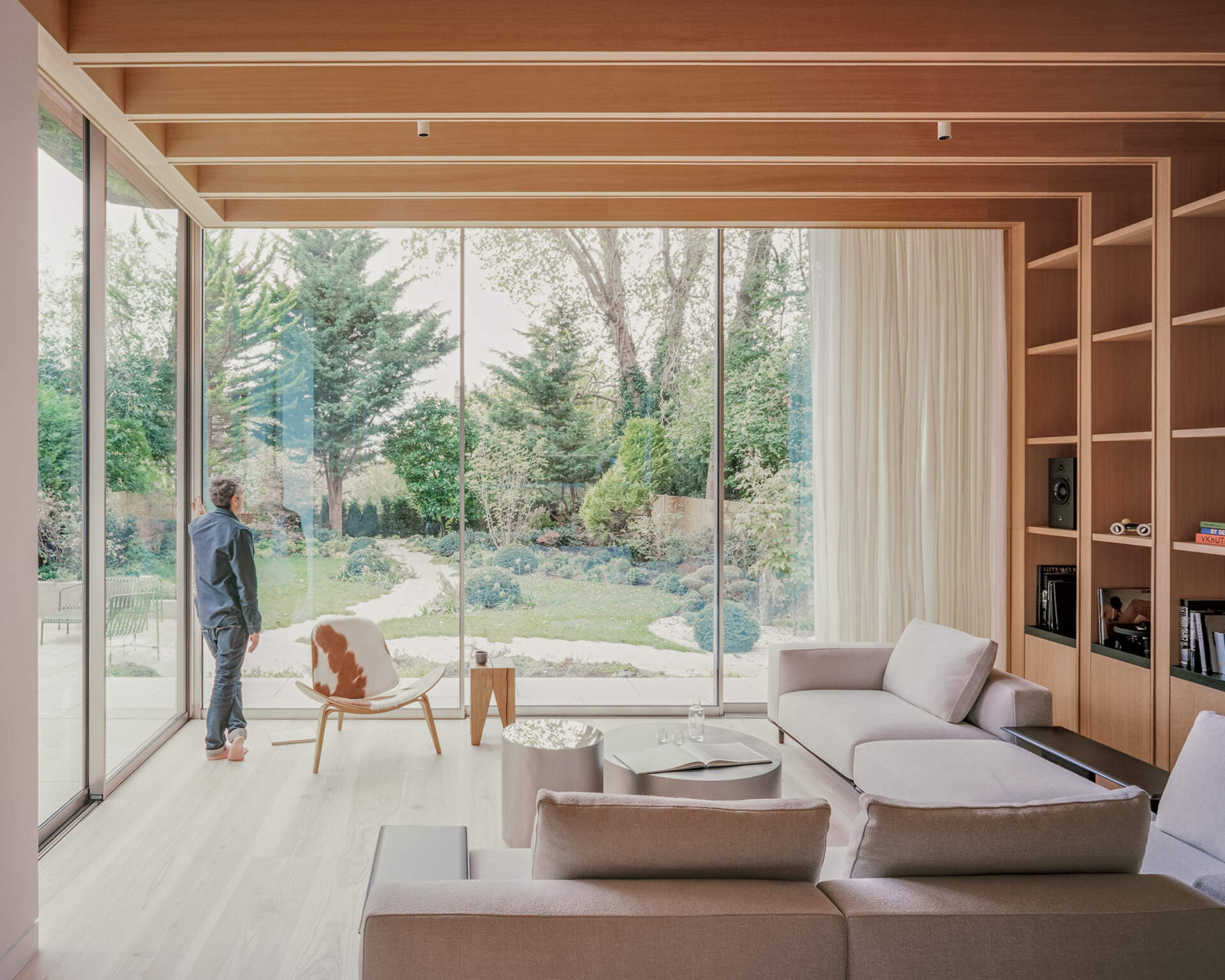
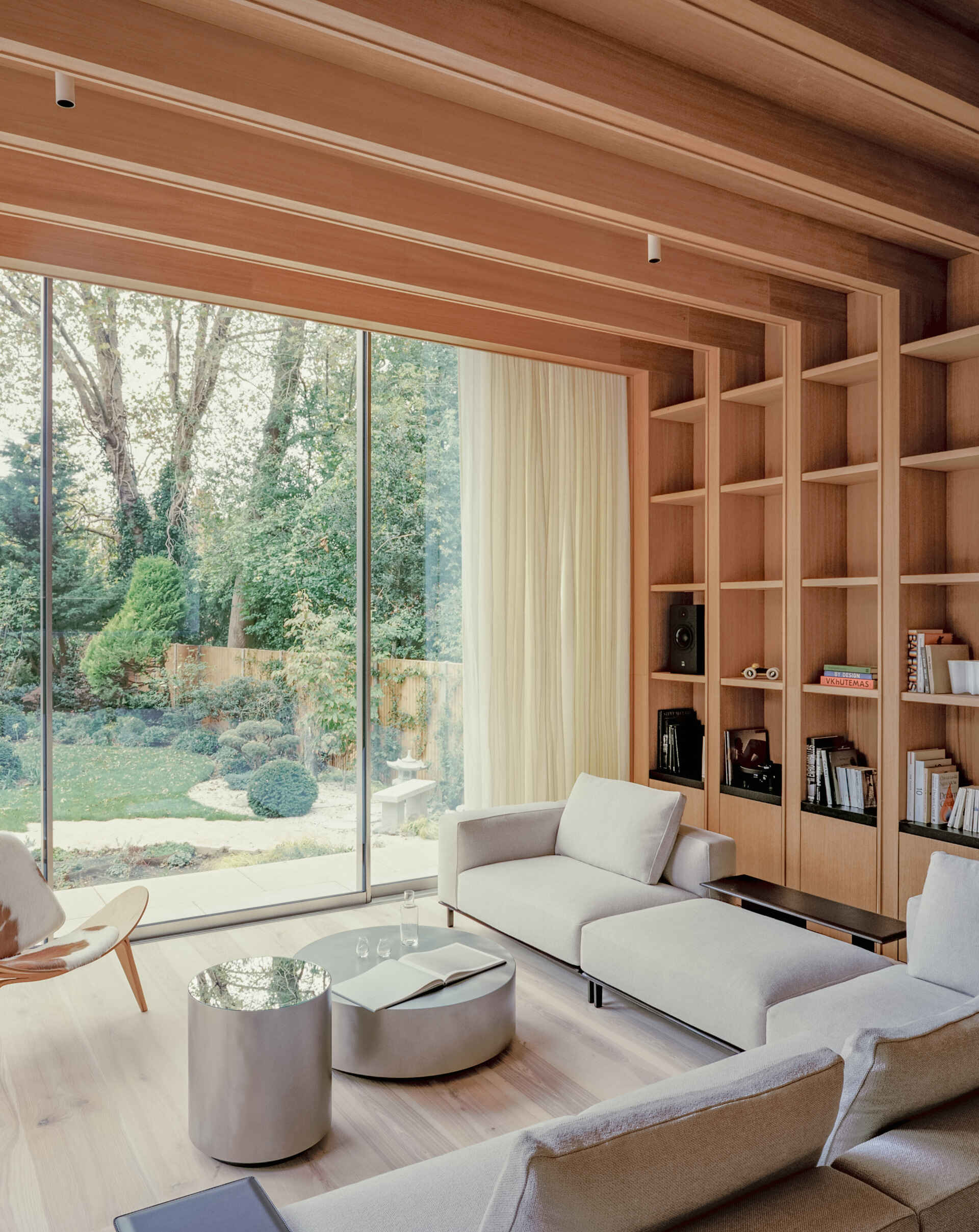
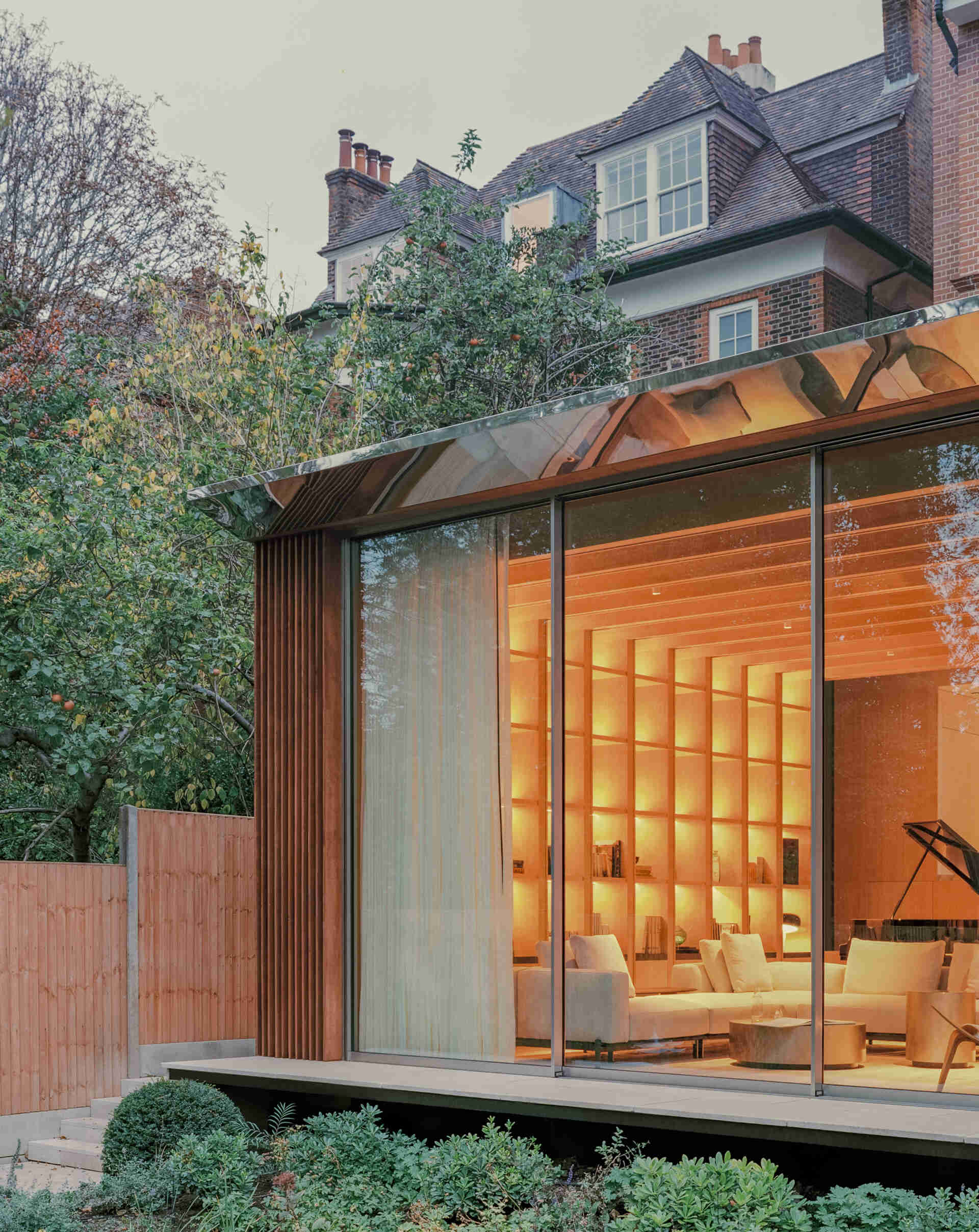
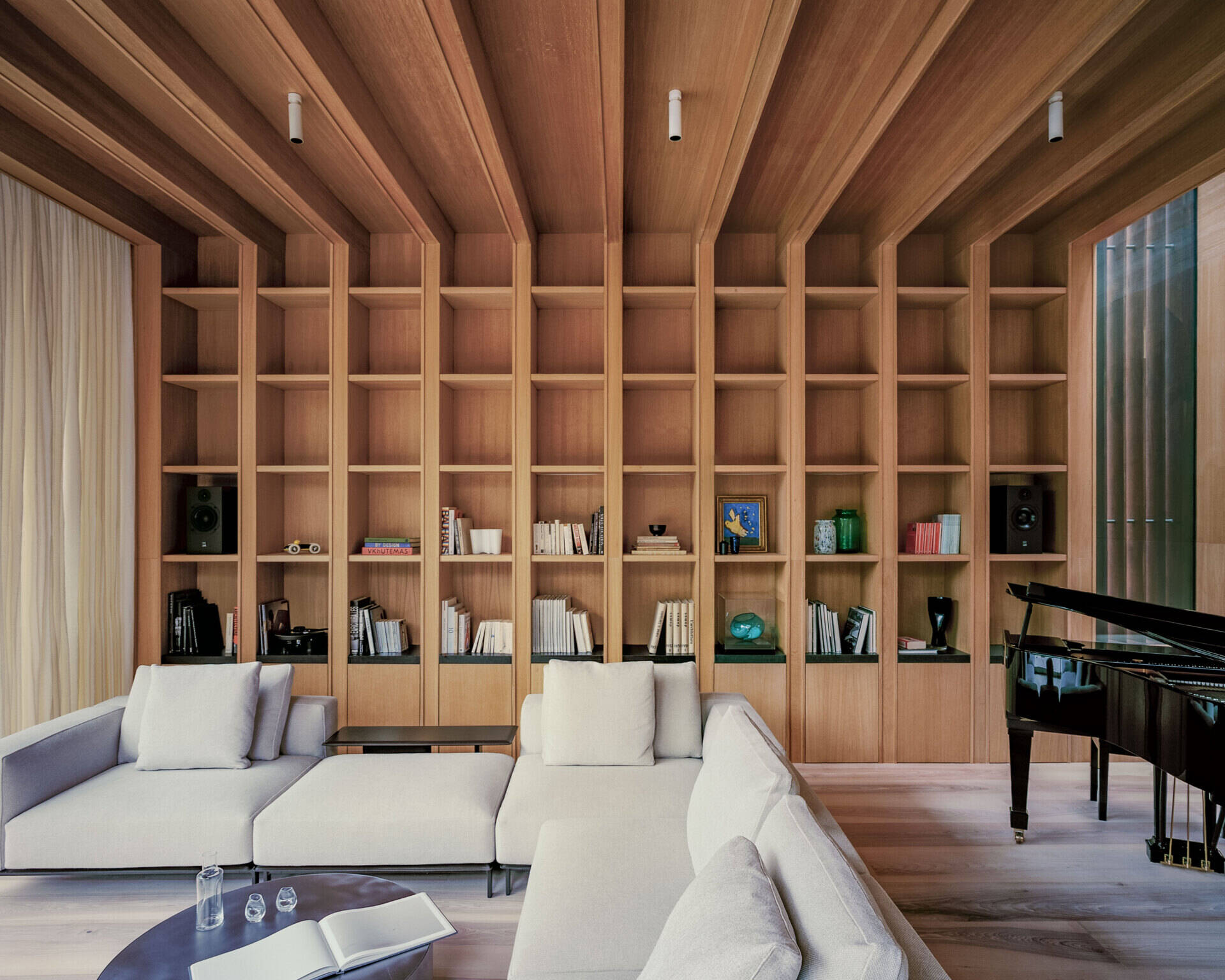
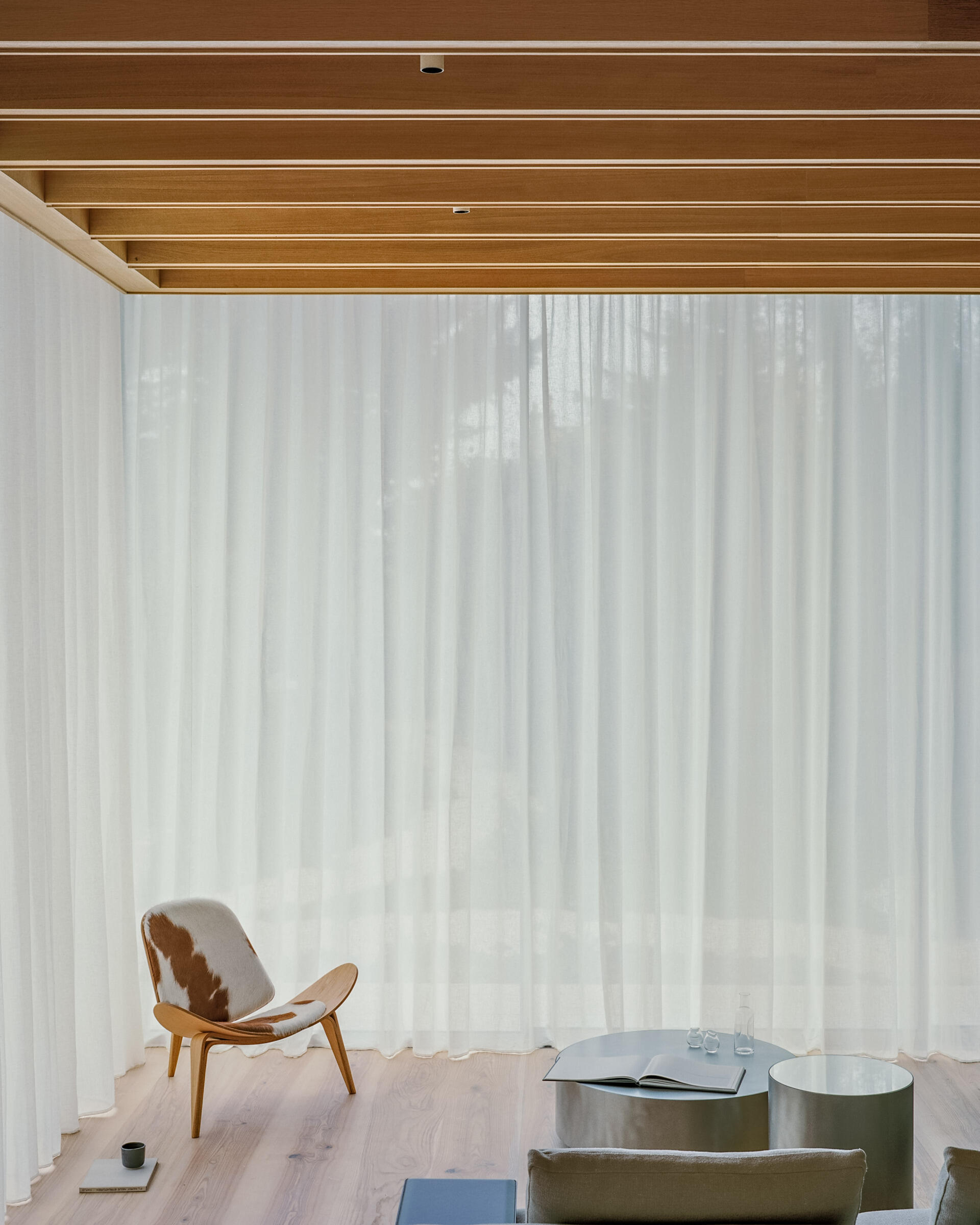
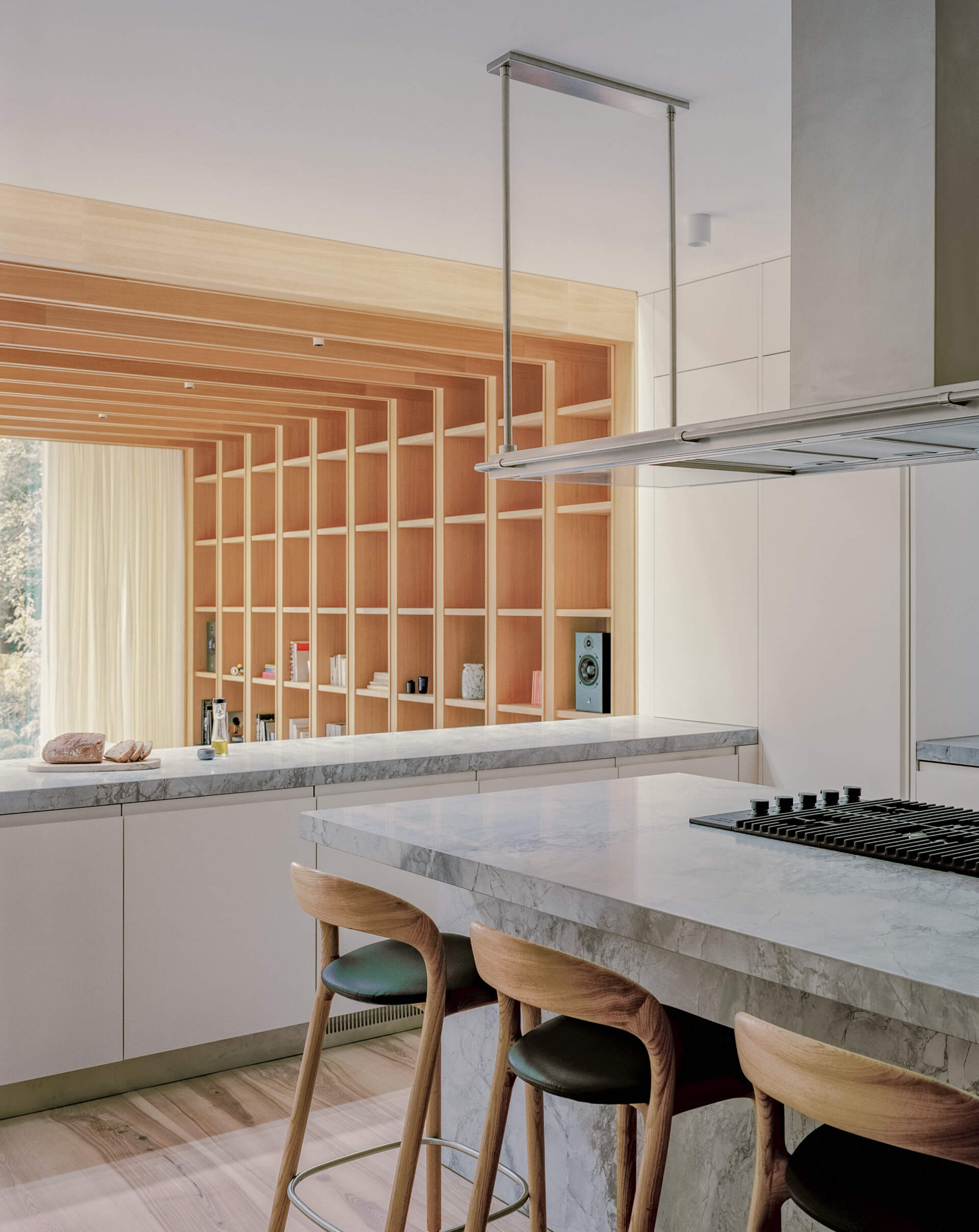
The wood shelving in the living room adds a quieter layer to the space, balancing out the openness created by the glass walls. It brings warmth against the light-filled backdrop, giving the room a more grounded feel without interrupting the view.
Integrated into the architecture, the shelving works as both storage and display, keeping the space functional while maintaining a clean look. It also helps define the living area within the open plan layout, adding a sense of structure without closing anything off.
The flooring, in Dinesen ash, adds warmth and continuity across the interior.
Stone Surfaces Meet Open Views
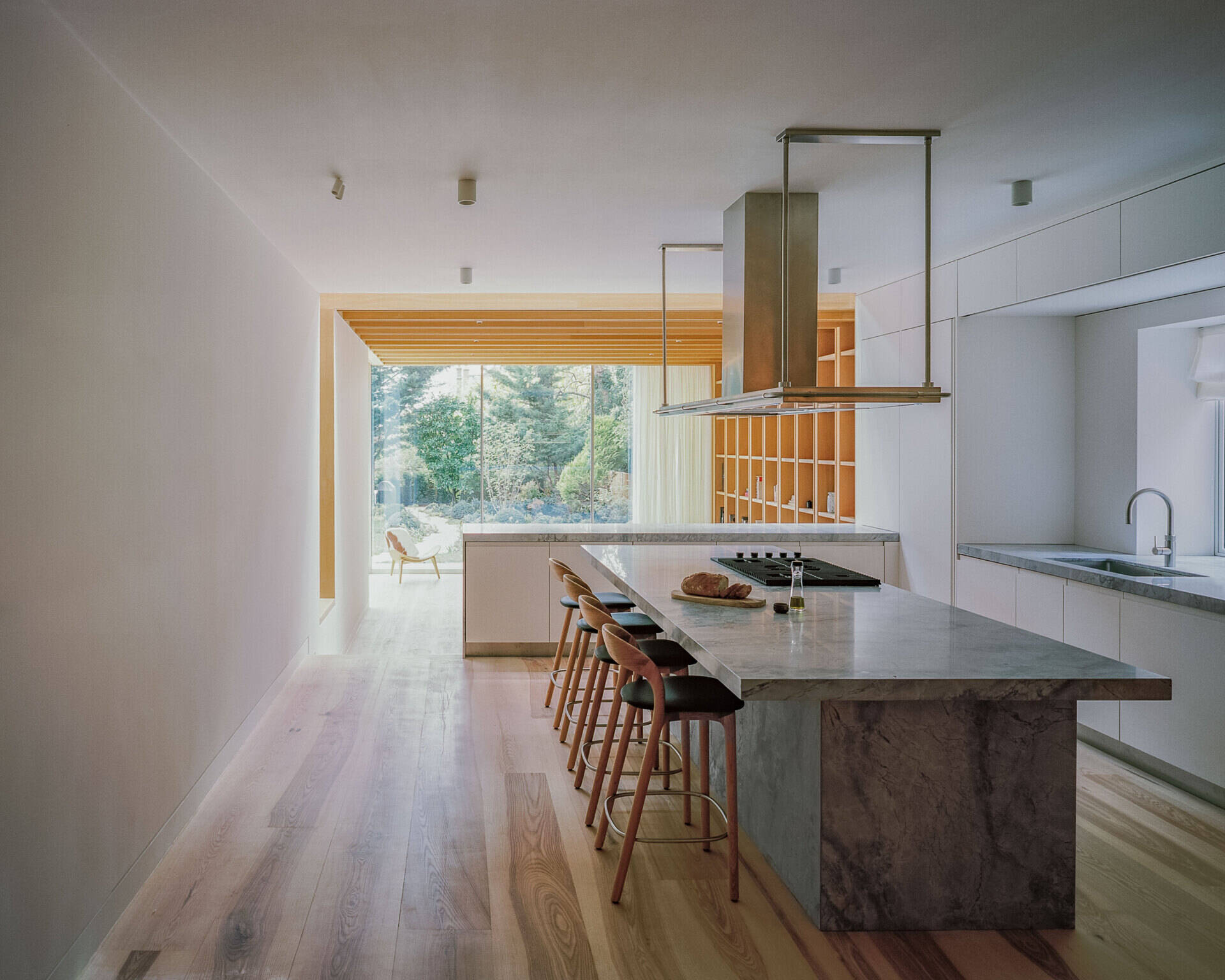
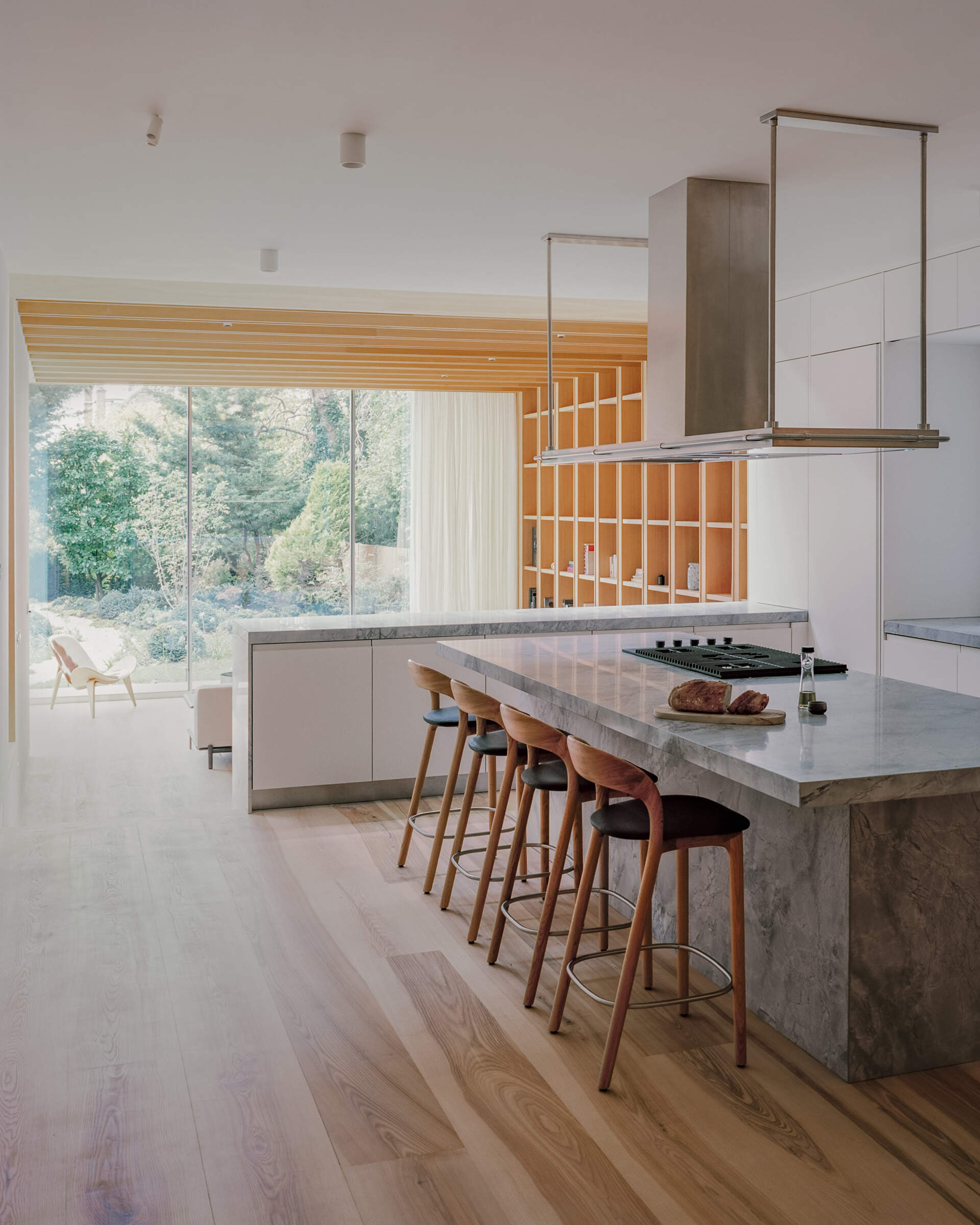
The kitchen is designed as both a functional workspace and a social anchor. A central island in Bianco Eclipse quartzite draws attention, paired with matching countertops for a cohesive look.
Positioned within the open plan layout, the kitchen benefits from direct sightlines to the garden and living area. It feels integrated, yet clearly defined through material contrast and layout.
Gathering Around Warmth And Texture
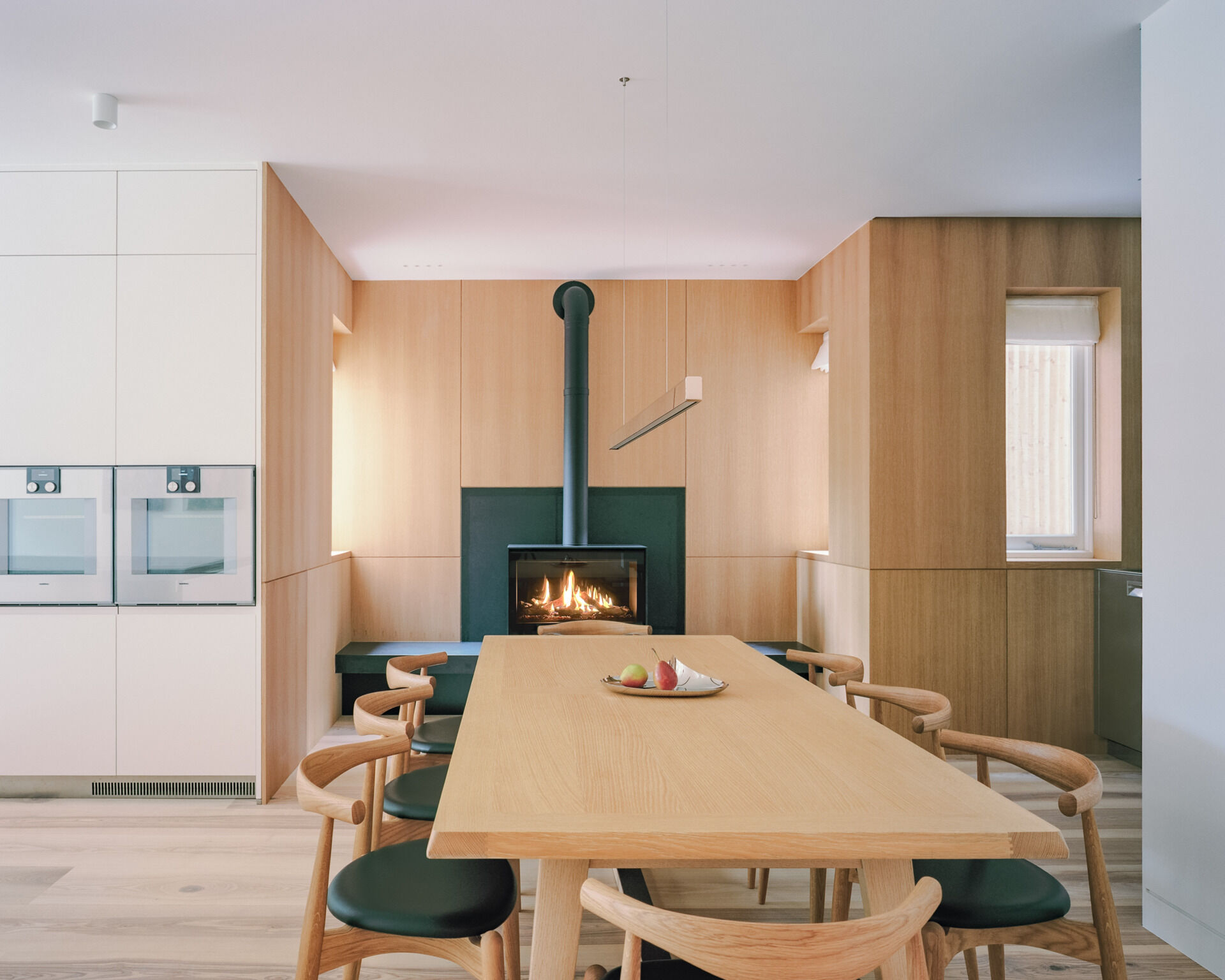
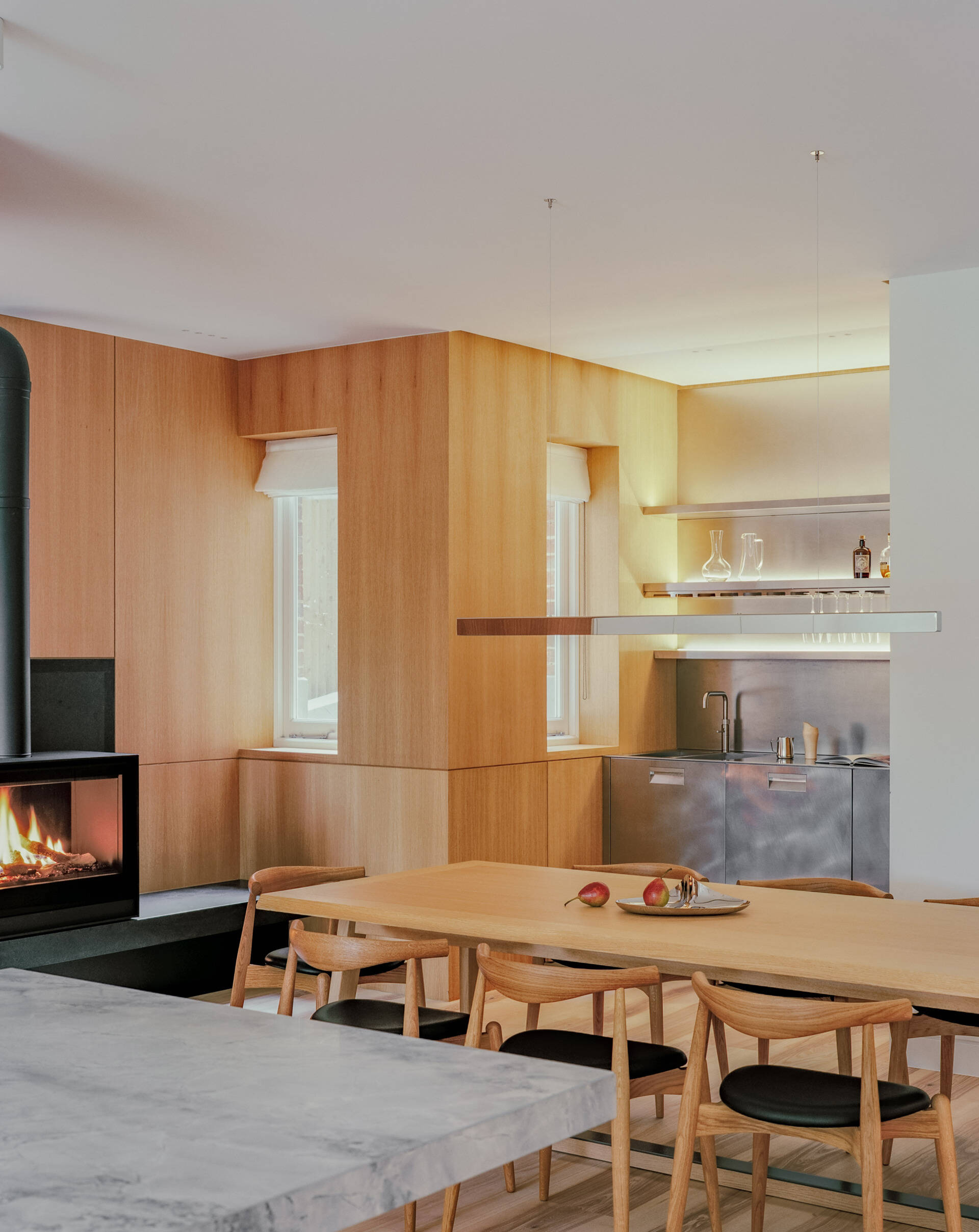
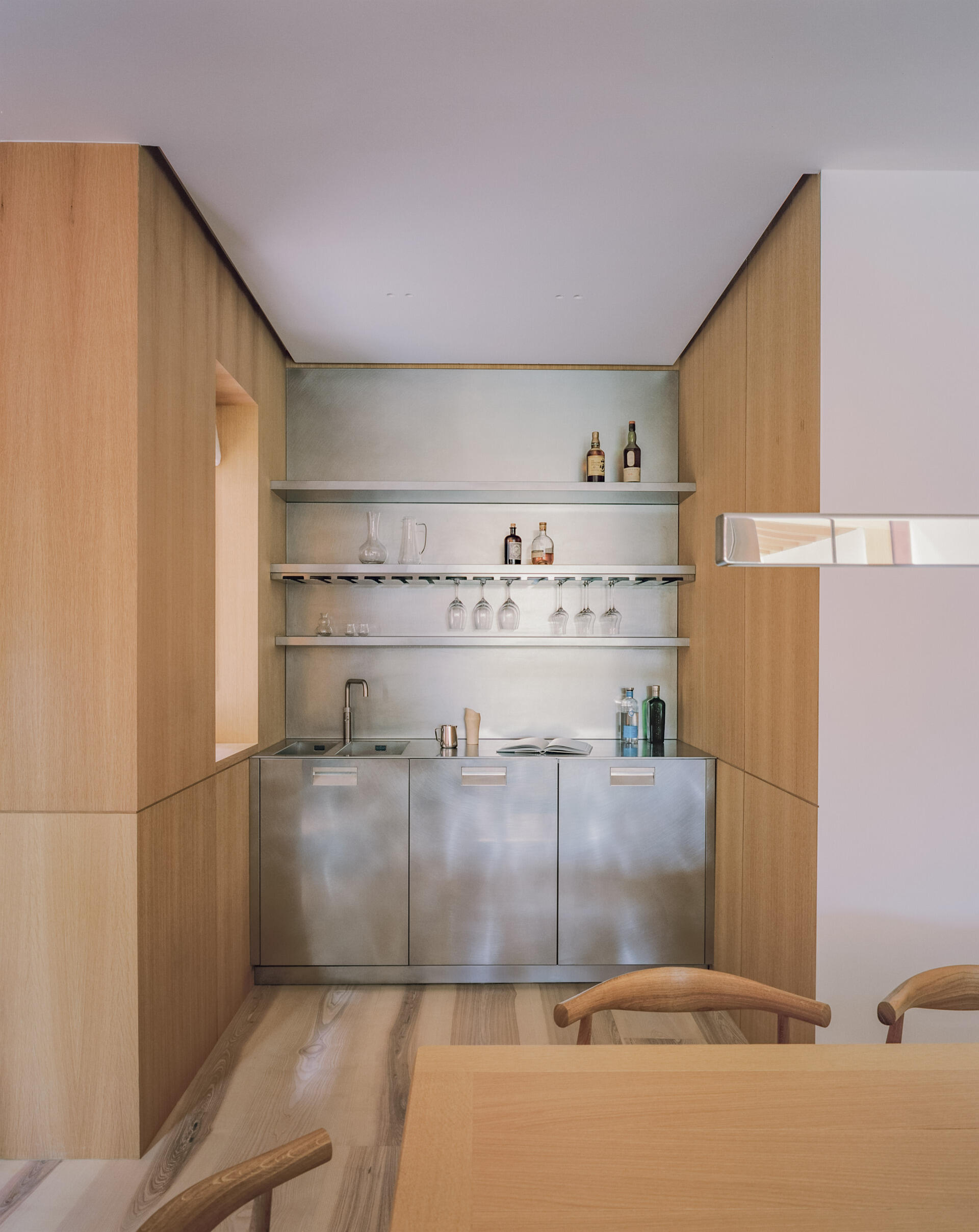
The dining space sits adjacent to the living area, forming a natural gathering point. The wood alcove and fireplace adds a sense of comfort, especially during colder months, while a dedicated bar introduces a more relaxed, social layer to the space. This combination makes the area versatile, equally suited for everyday meals or entertaining.
Compact But Refined
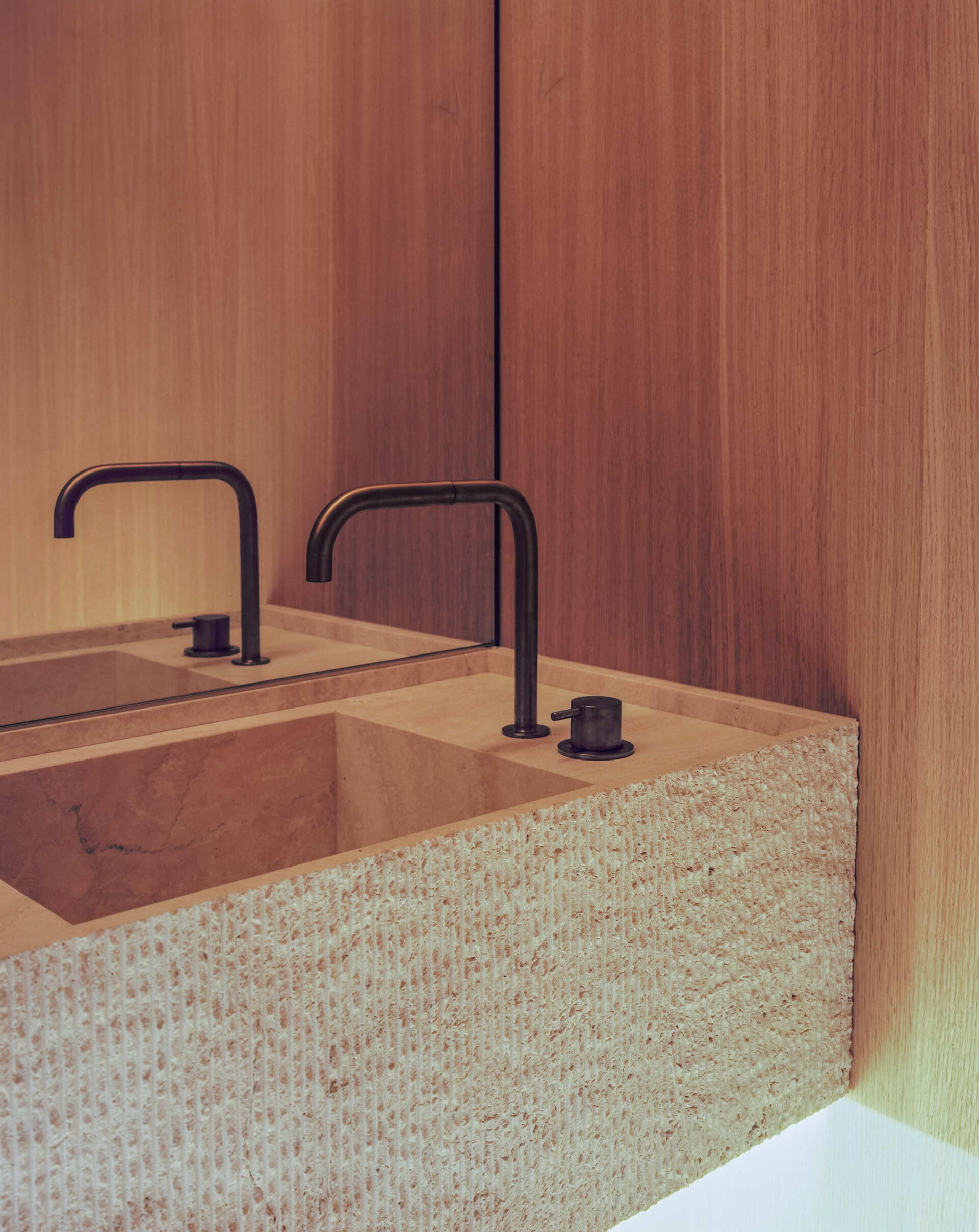
Nearby, a powder room pairs raw texture with clean detailing, centered around a sculptural stone sink, its rough exterior contrasting with the smooth basin interior. Warm wood paneling wraps the space, while subtle underlighting lifts the heavy stone, giving it a floating effect and softening the overall look.
A Private Zone With Standout Details
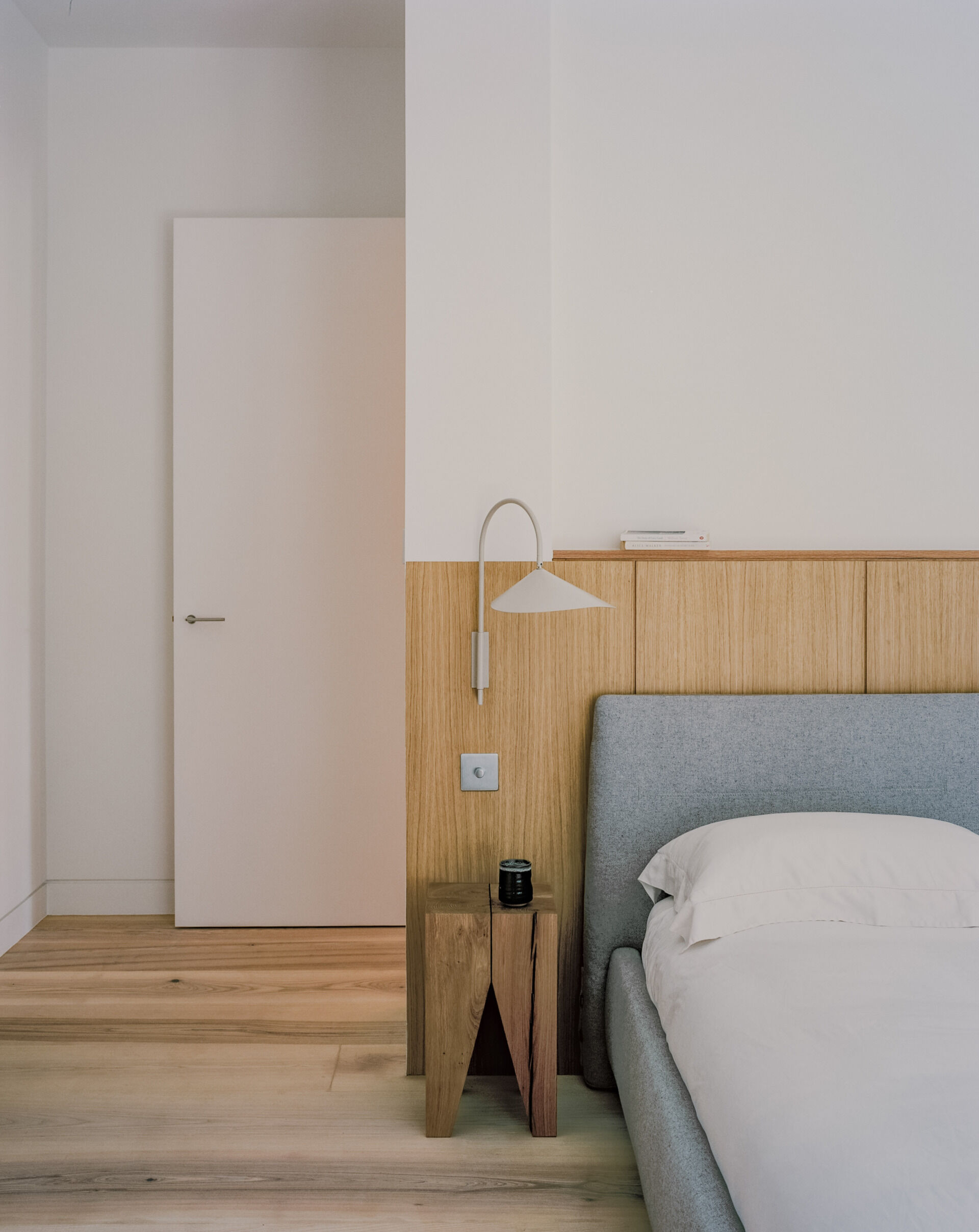
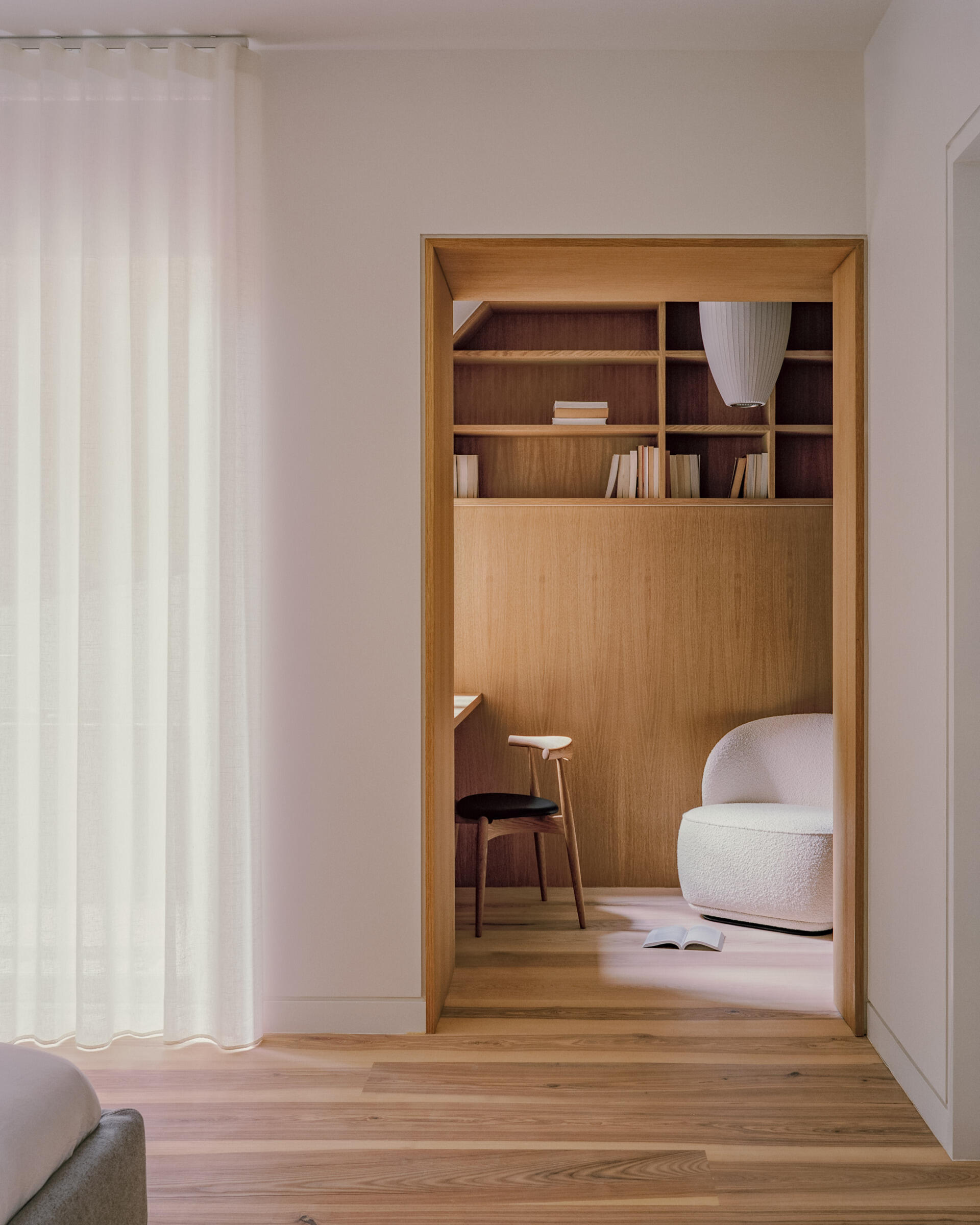
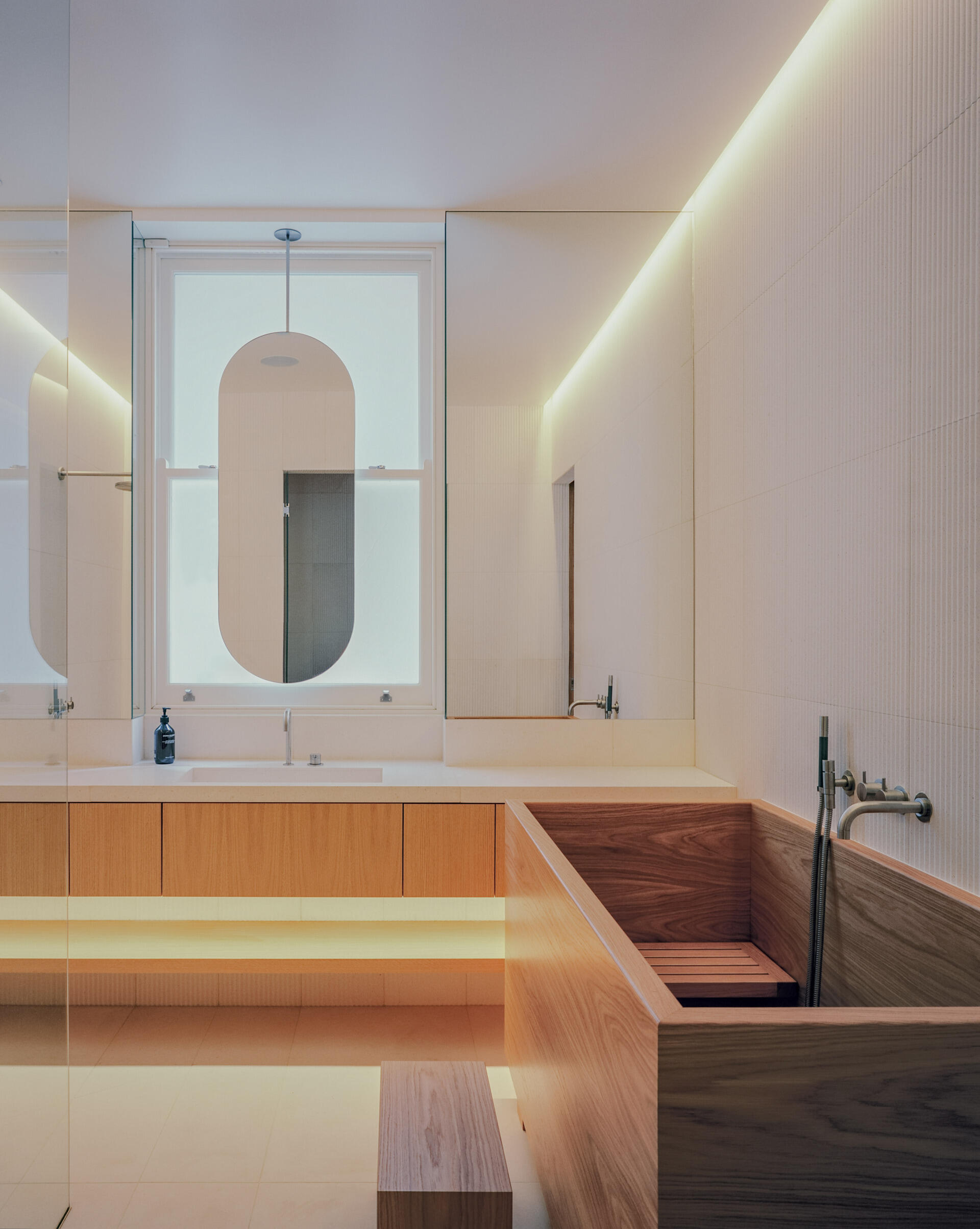
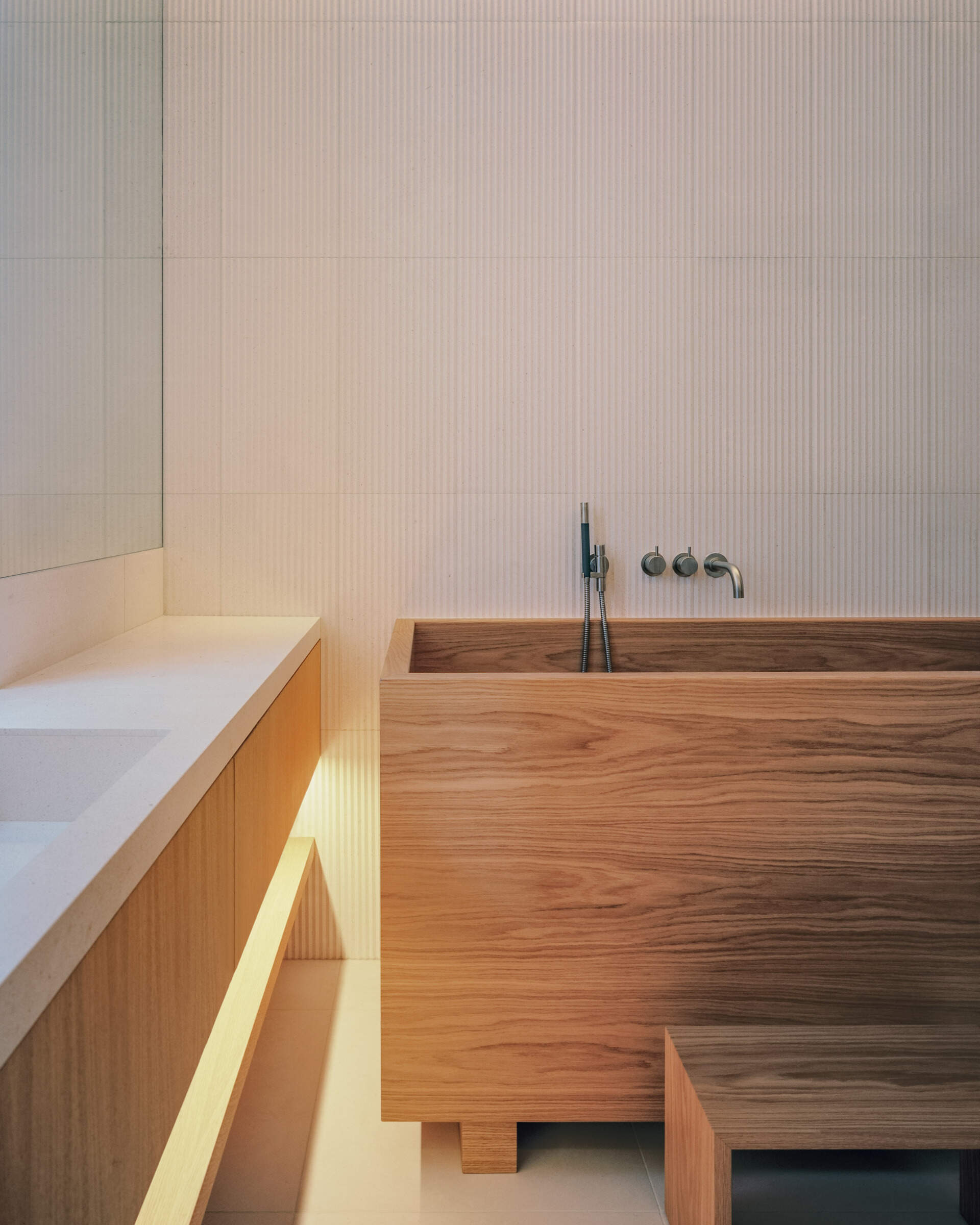
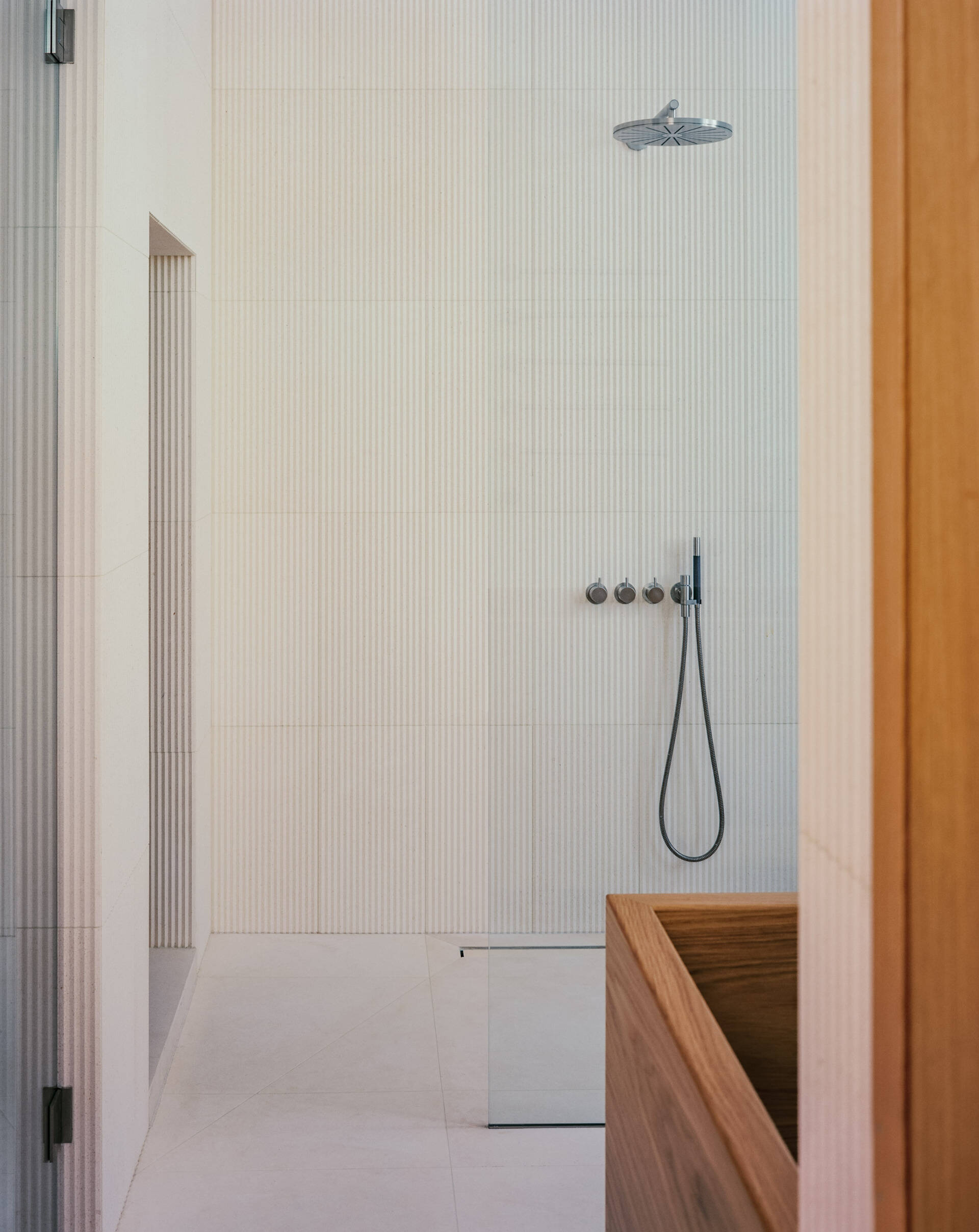
The primary suite combines sleeping, working, and bathing into one cohesive area. An integrated office provides a quiet place to focus, while the ensuite introduces a more sculptural approach. The standout feature is the wood soaking tub, paired with stainless steel fittings and concrete sinks.
A Quieter Take On Comfort
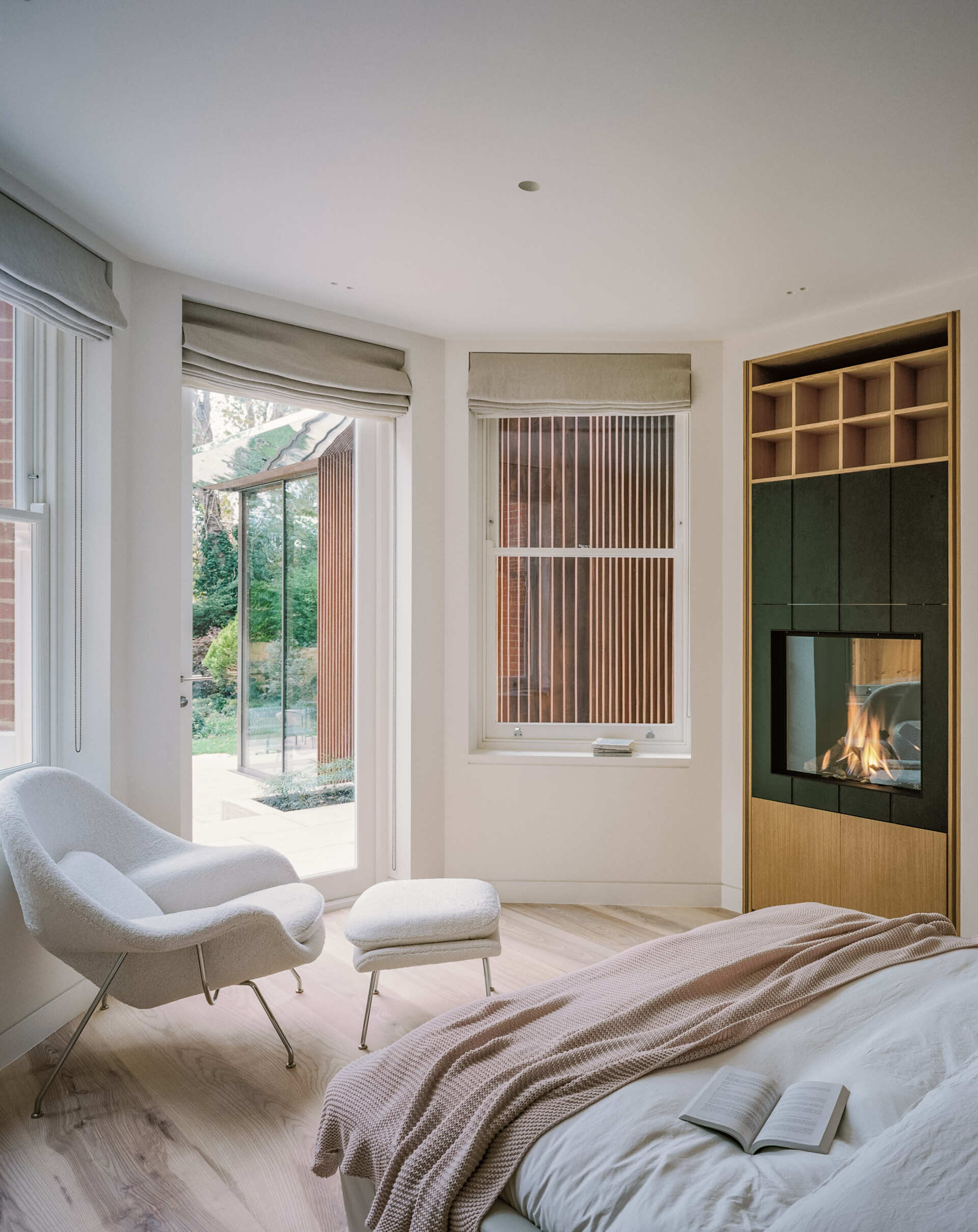
Another bedroom continues the theme of warmth with its own fireplace. This feature adds character while making the room feel more intimate. It’s a simple addition that changes how the space is used, especially during cooler seasons.
Panoramic House reshapes how a home interacts with its garden. By lowering the main living spaces and opening up an entire corner with glass, MATA Architects turned a once-separated outdoor area into a central part of the home.