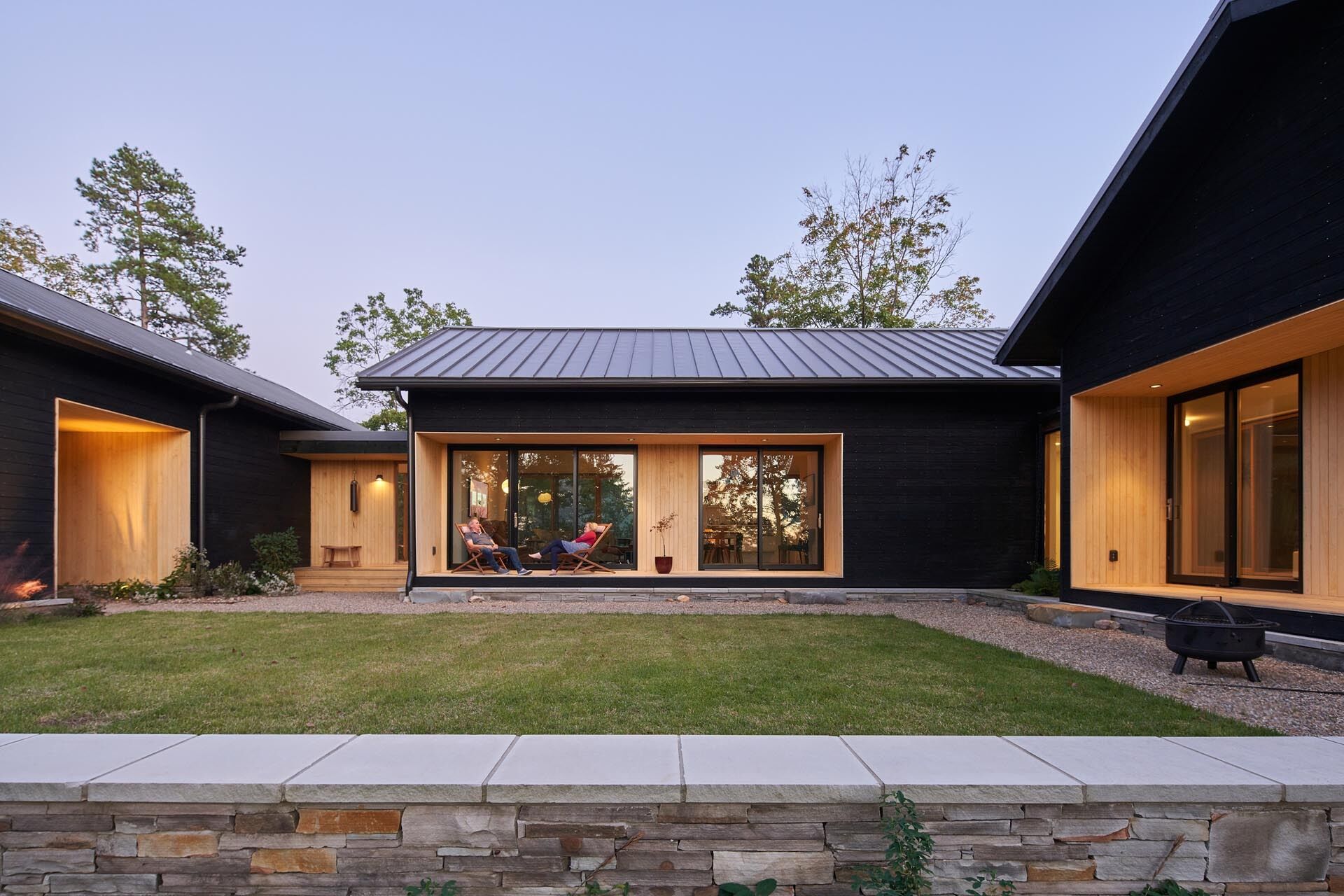
Perched along a ridge in Maryville, Tennessee, the Short Mountain House by Sanders Pace Architecture opens out to sweeping views of the Great Smoky Mountains National Park. The design stretches along the ridge to take full advantage of these long, uninterrupted sightlines.
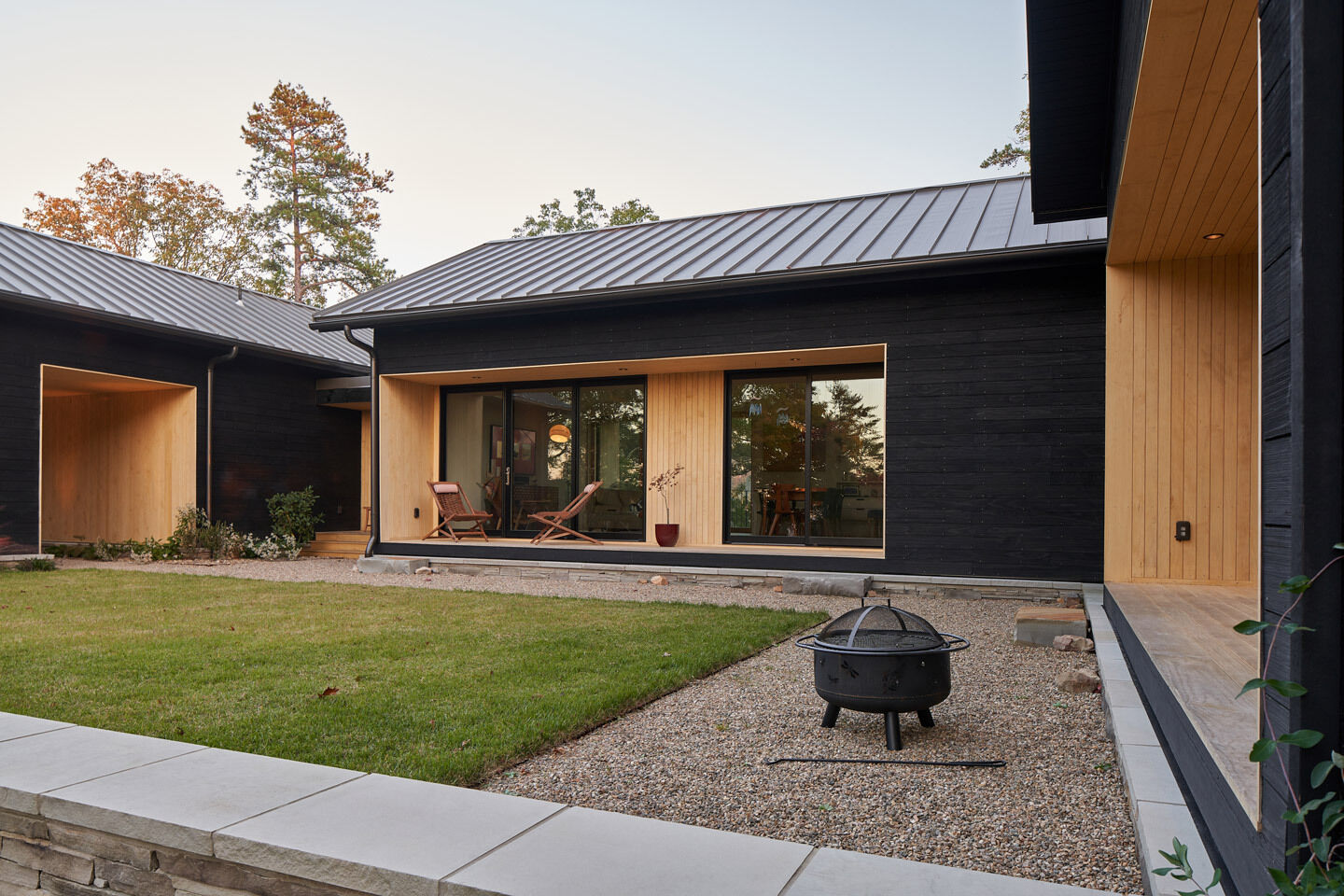
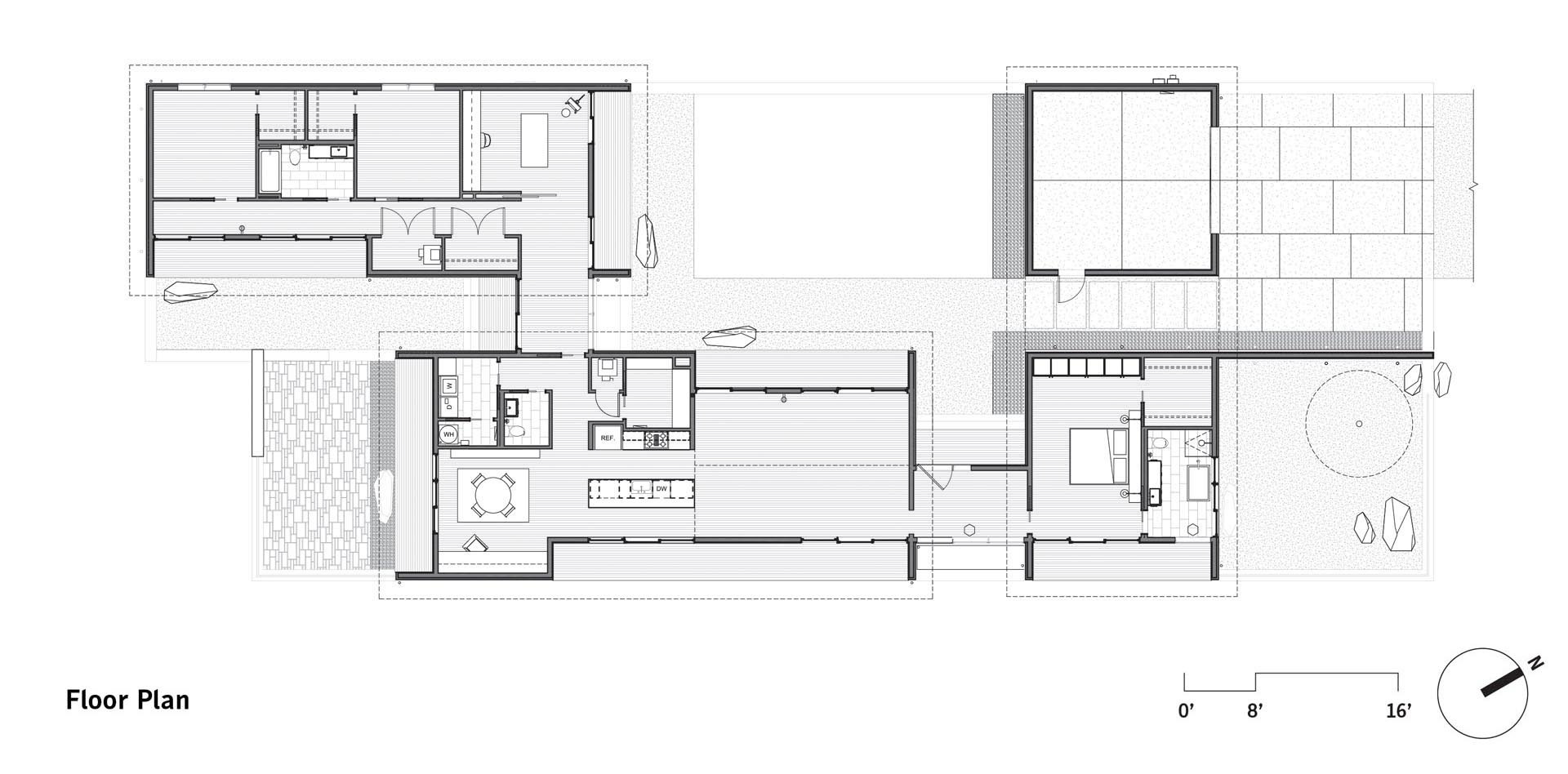
Designed for a couple with an extended out-of-town family, the house is split into three separate pavilions. This allows it to function efficiently for everyday use while still expanding when family visits, with outdoor spaces formed naturally between each structure.
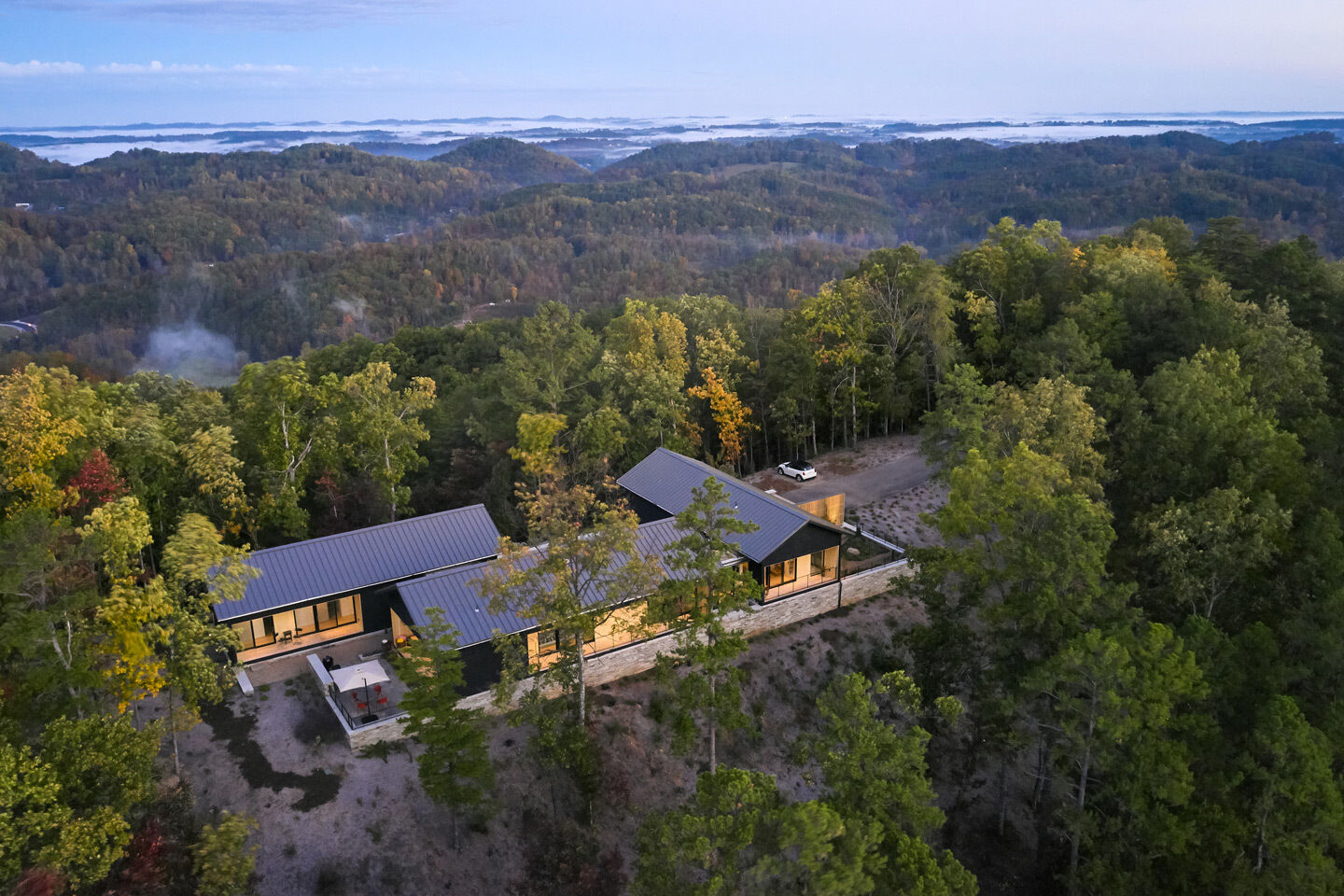
Three Pavilions, One Connected Layout
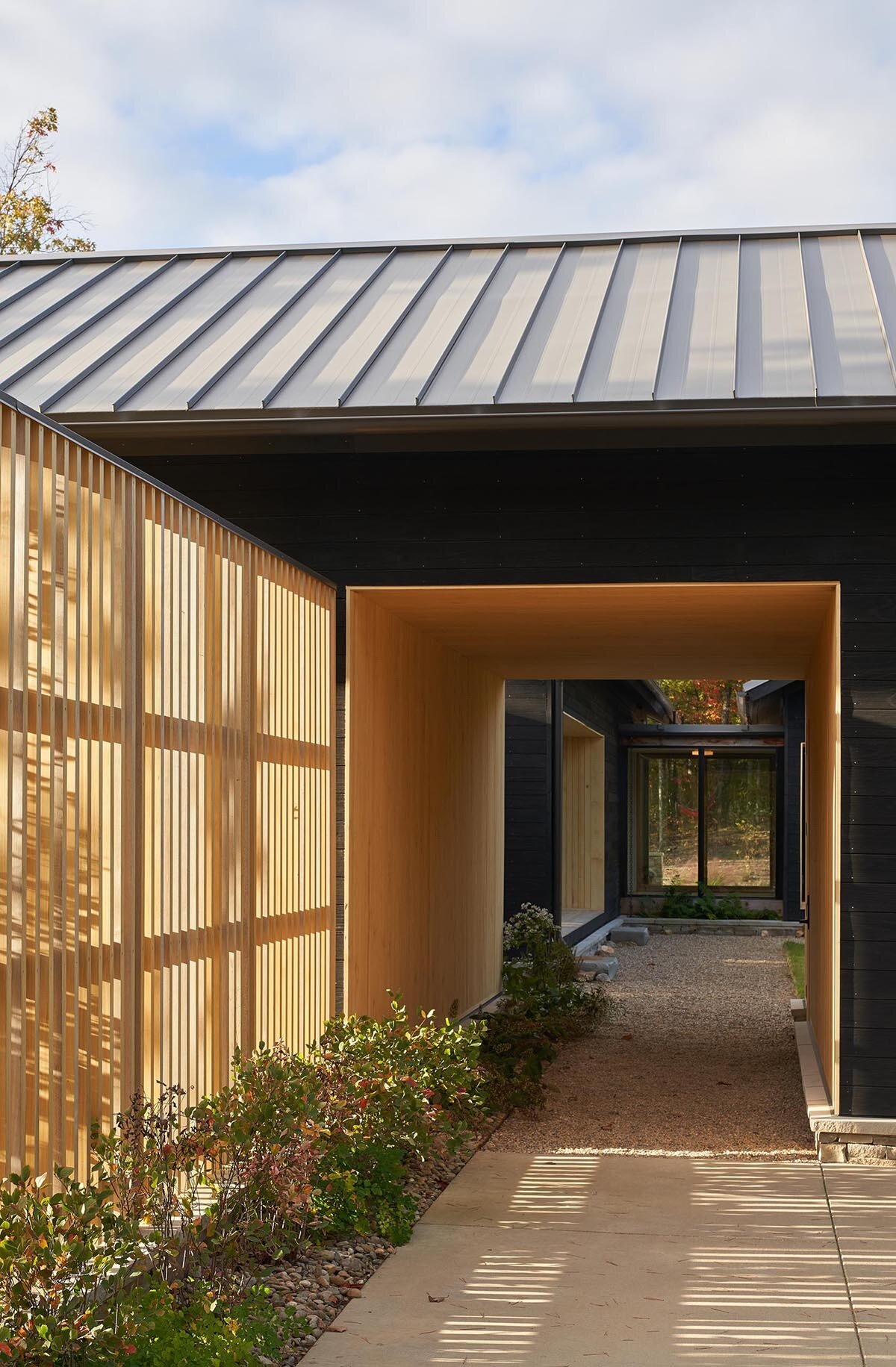
The home is organized into three distinct pavilions linked by narrow connectors that act like bridges. Moving between spaces becomes a sequence of transitions, with each pavilion offering a different function and atmosphere.
This layout separates social areas from private zones, allowing the house to scale up or down depending on how it’s used, while still maintaining a clear and cohesive flow.
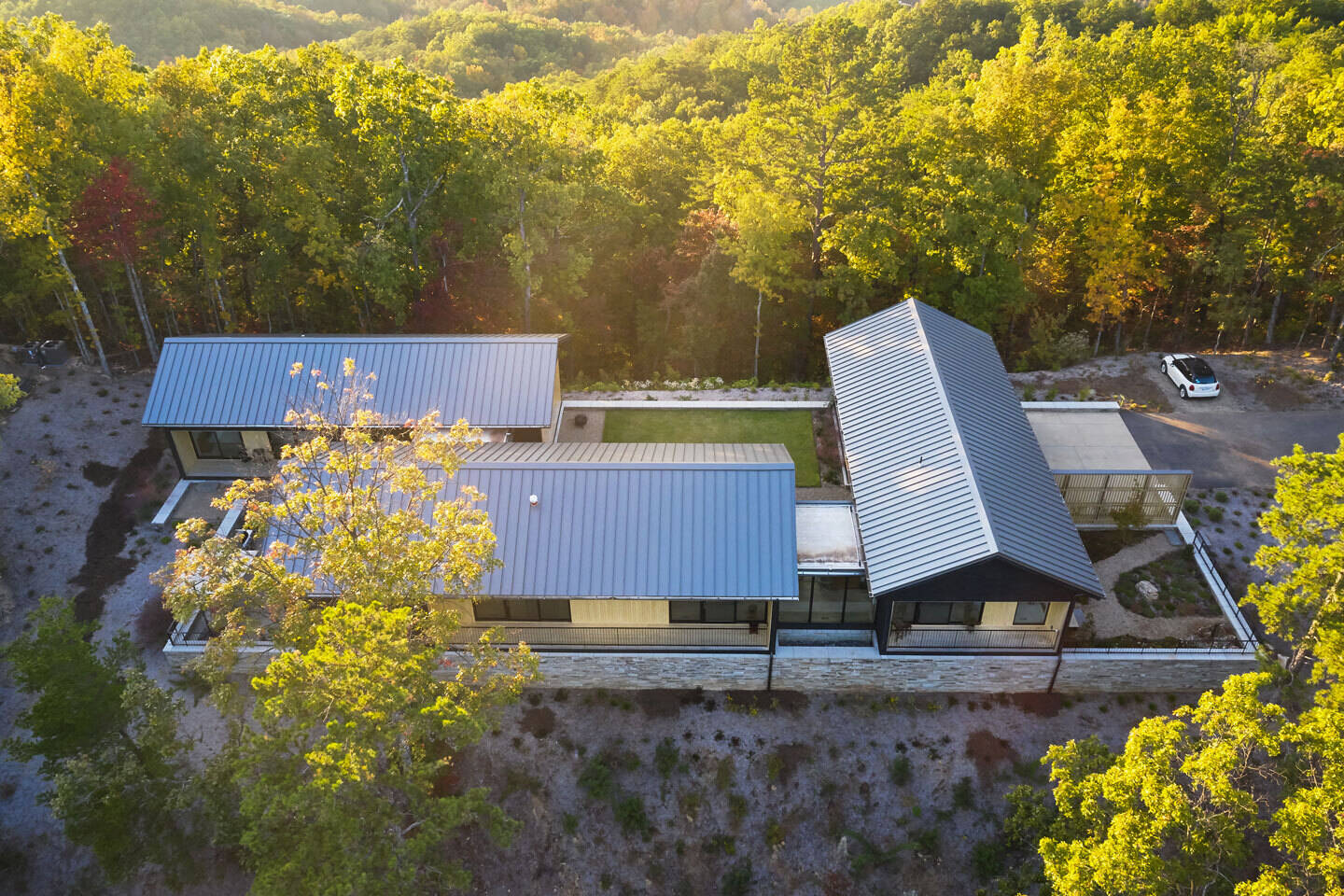
Engawa Spaces Reinterpreted
Wood-lined alcoves inspired by Japanese Engawa spaces are integrated into the exterior. These covered strips of decking run along the edges of the home, forming a transition between interior and exterior.
They also help manage sunlight, with overhangs that reduce heat gain around the large sliding glass doors while creating sheltered outdoor areas.
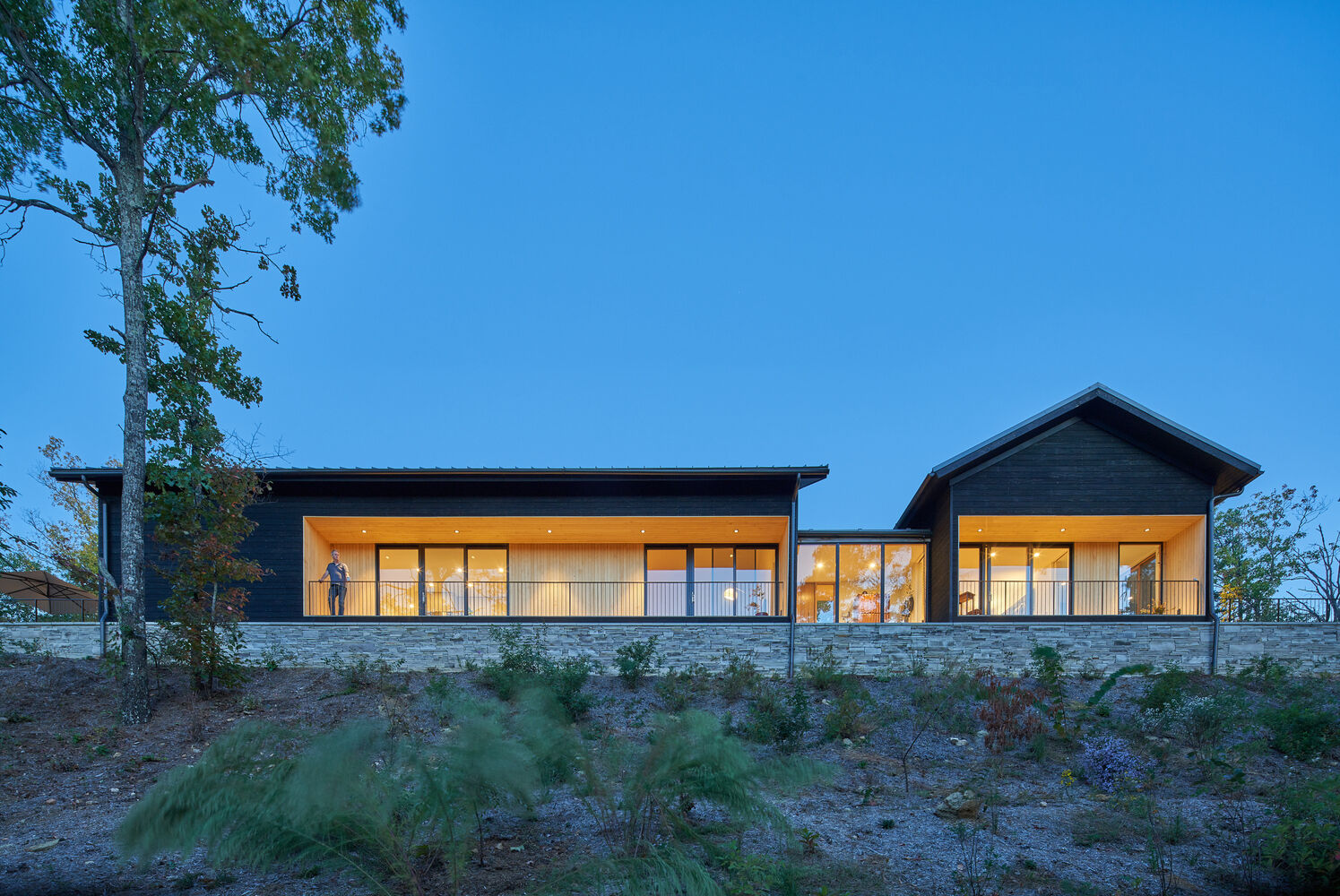
A Layered Approach to Materials
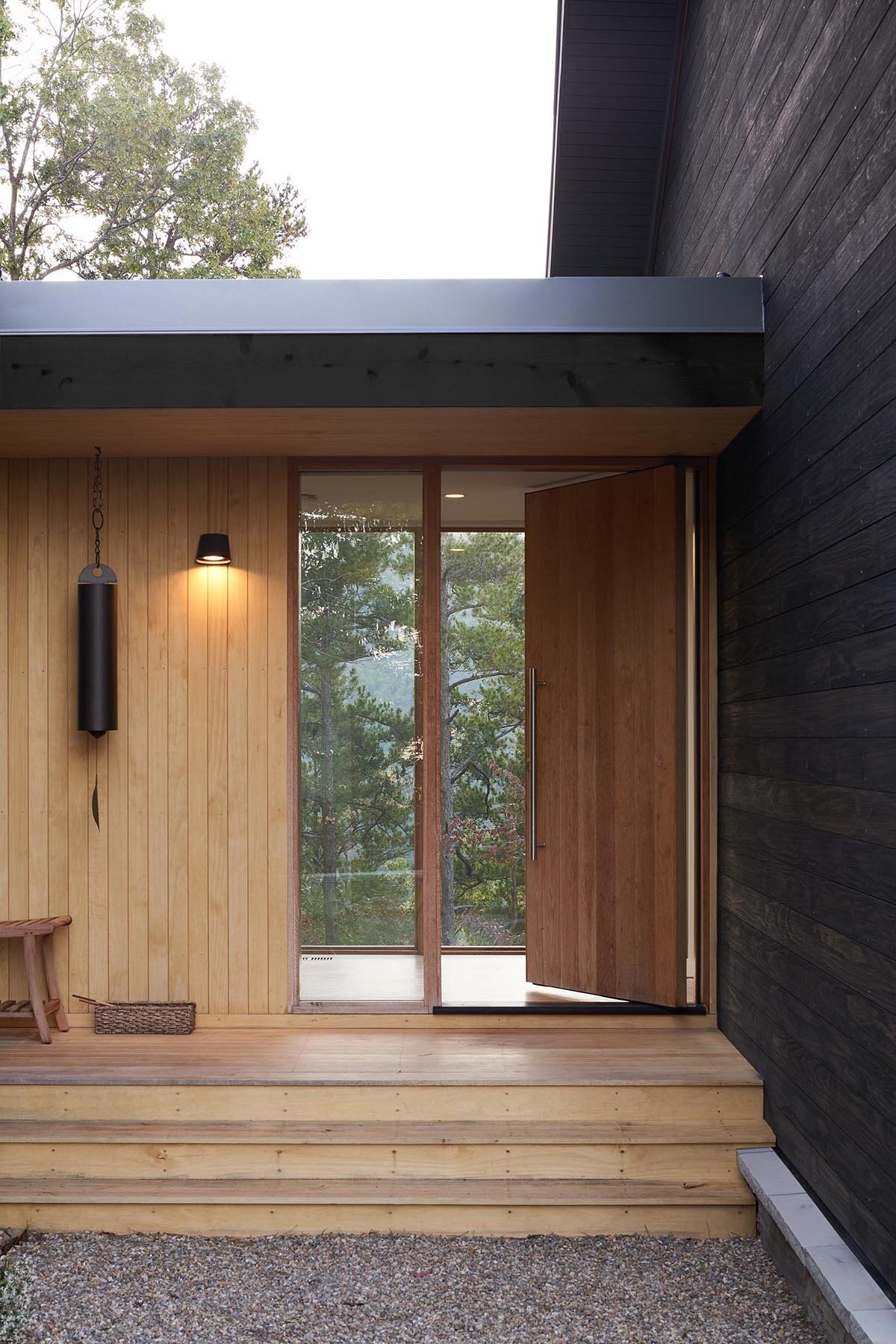
The exterior uses a restrained palette of materials, with two contrasting wood sidings defining the overall look. The primary siding is Accoya wood finished with a brushed shou sugi ban treatment, which chars the surface for durability and resistance to weather and insects.
A lighter wood is used within the Engawa spaces, creating contrast and highlighting these transitional zones, alongside stone veneer and metal roofing.
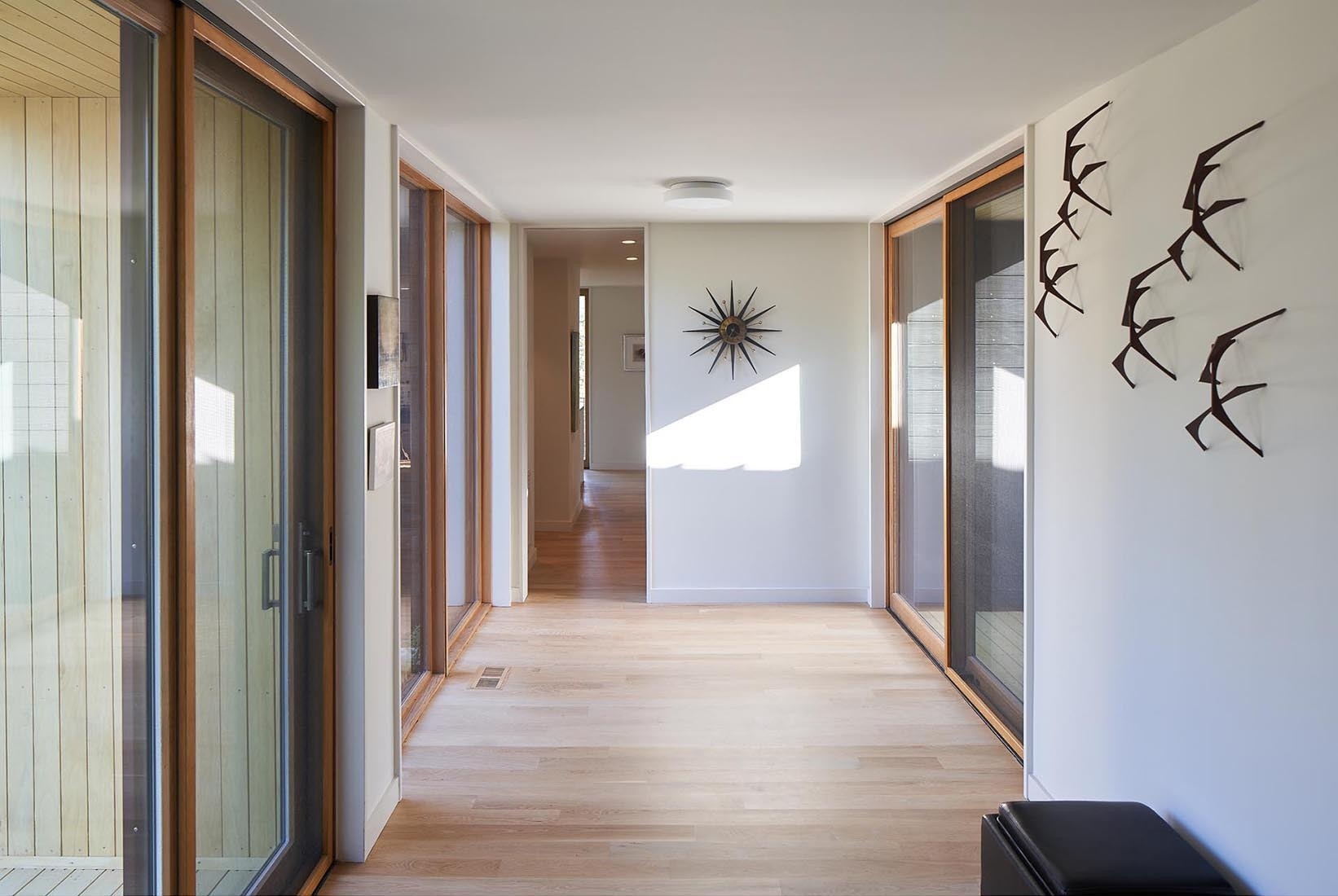
Light-Filled Hallways and Framed Views
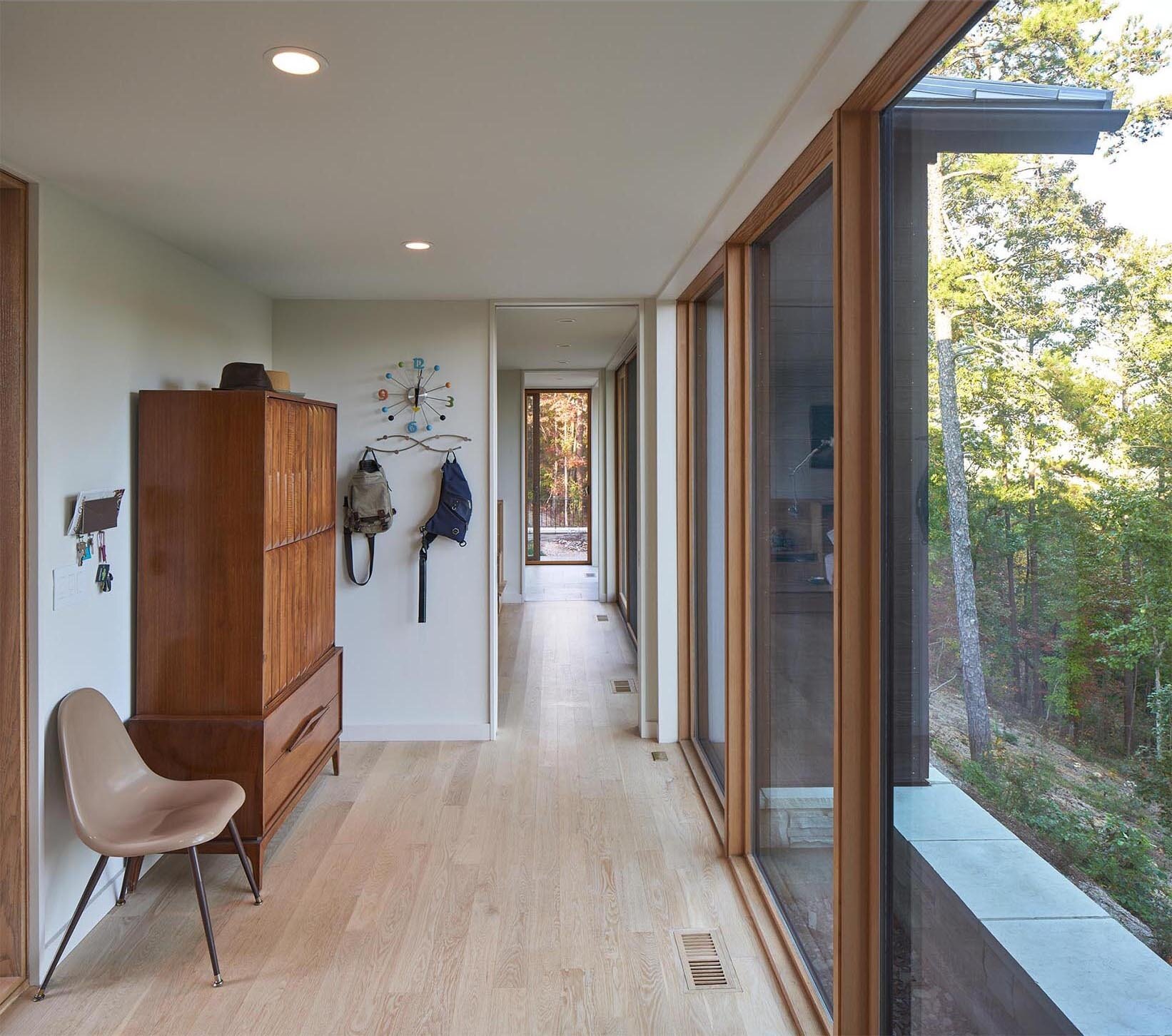
Inside, floor-to-ceiling windows line the hallways, framing views of the surrounding trees. These spaces are filled with natural light, turning circulation areas into bright, open passages.
As you move through the home, the landscape remains visible, reinforcing a constant connection to the outdoors.
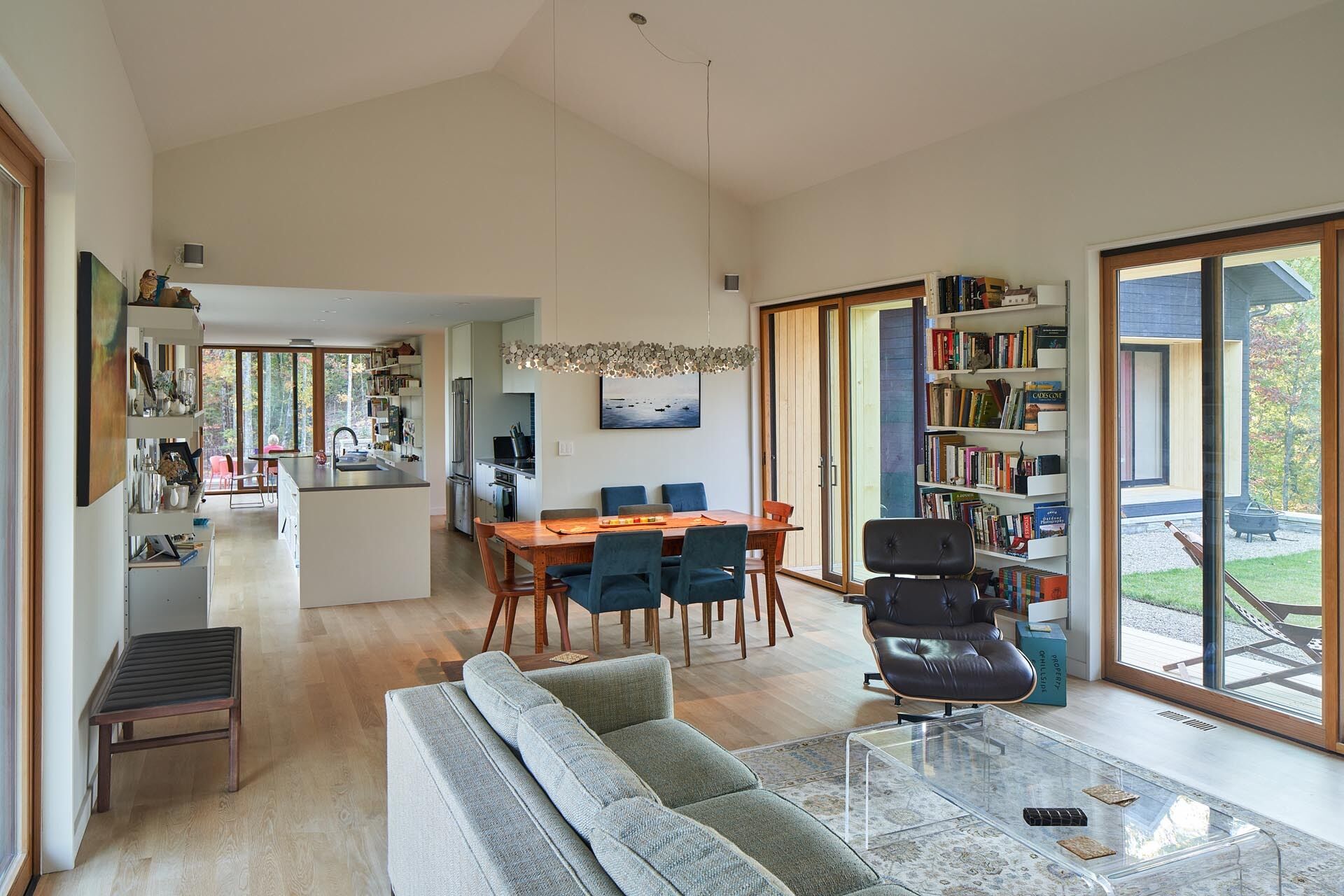
A Living Space That Opens Up
The open-plan living and dining area features a vaulted ceiling that adds height and a sense of openness. Light spreads easily throughout the space, enhancing its connection to the exterior.
Large openings and a simple material palette keep the space bright and inviting, making it a central gathering point within the home.
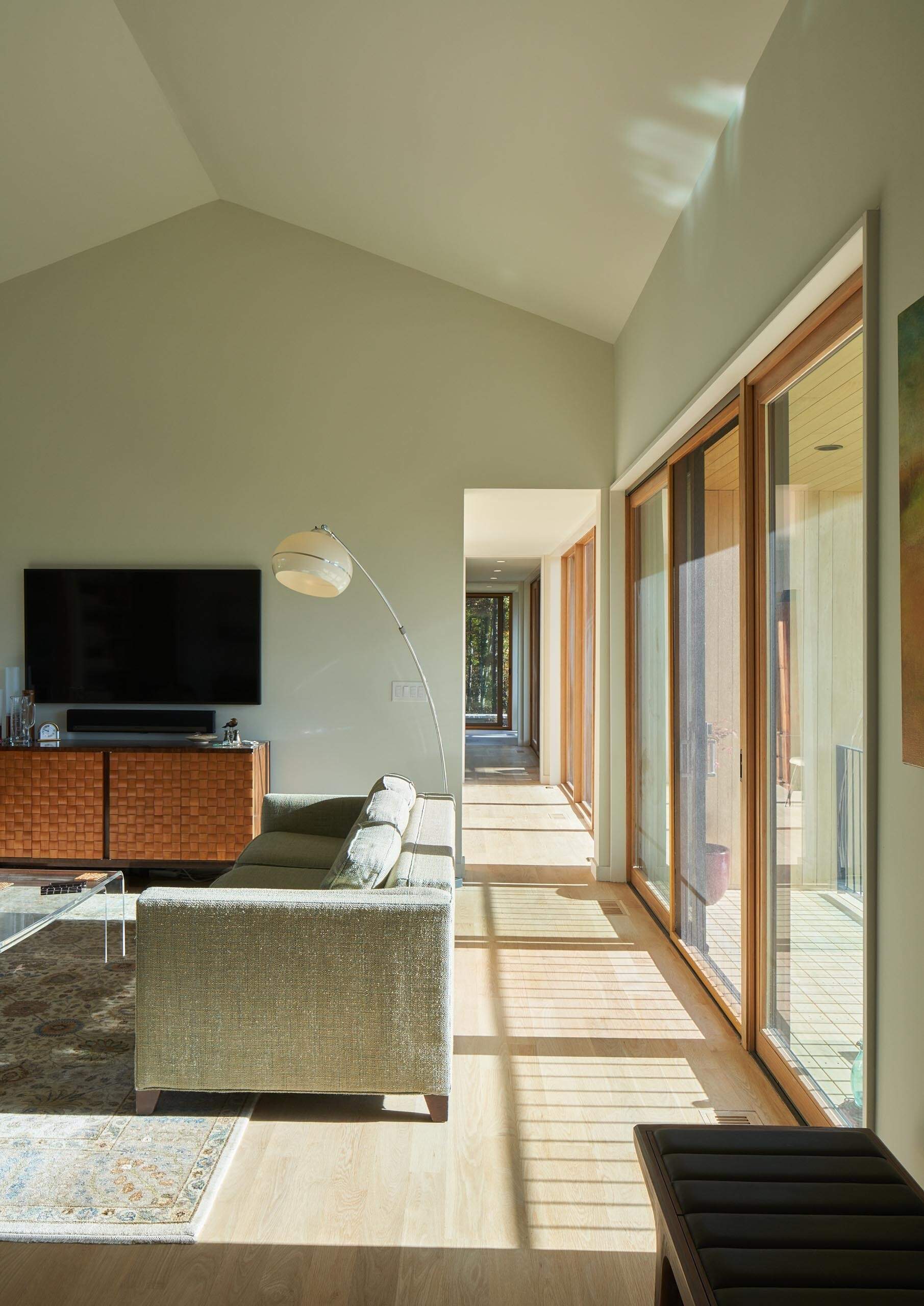
A Clear Path to Private Spaces
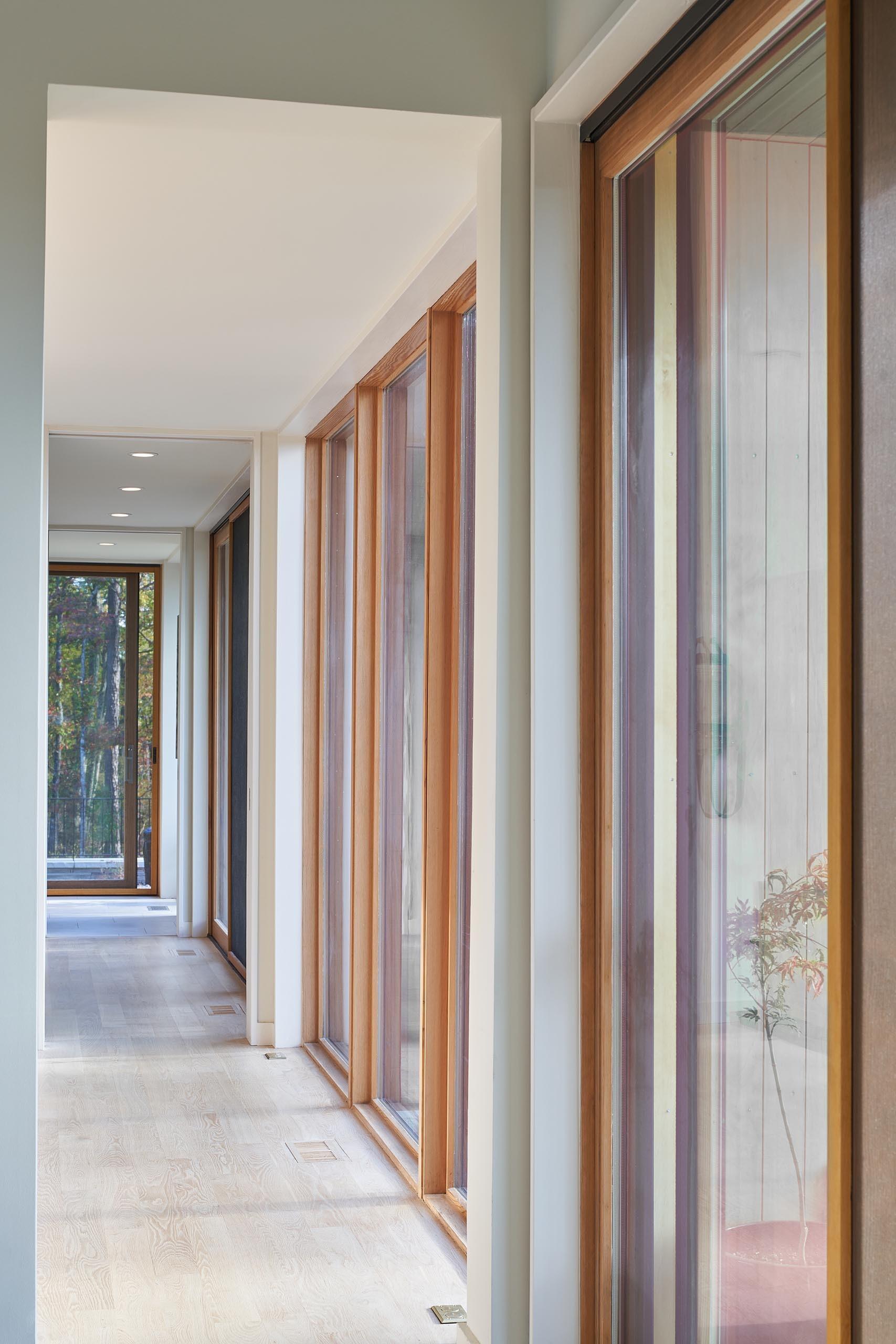
A separate hallway connects the main living areas to the bedrooms and bathrooms. This shift in layout creates a more private zone within the home.
The transition is subtle but effective, maintaining flow while clearly dividing public and private spaces.
A Bedroom With Its Own Outdoor Escape
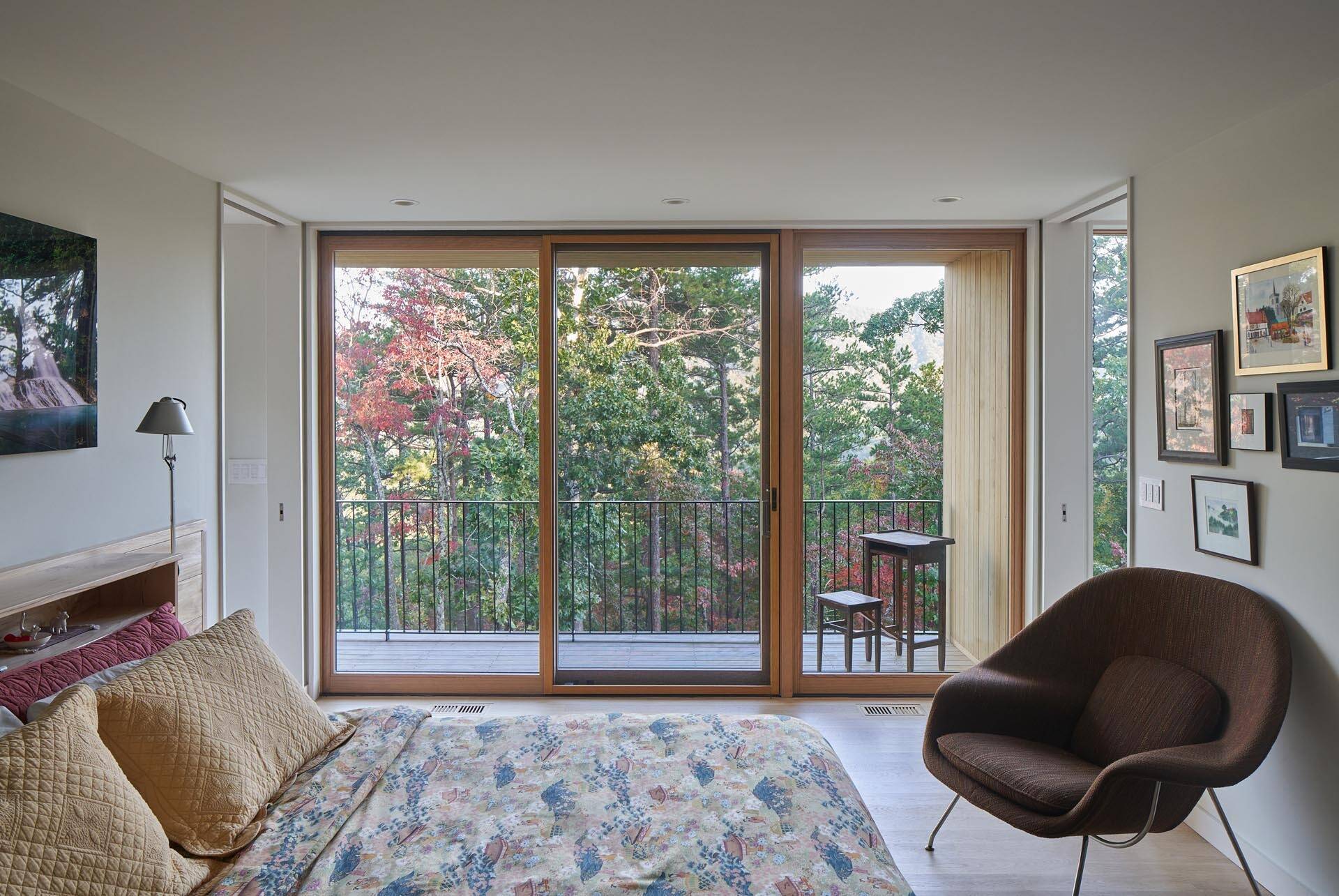
One of the bedrooms features a sliding glass door that opens directly to a private outdoor space. This creates a quiet extension of the room. It offers a more intimate connection to the landscape, separate from the shared outdoor areas between the pavilions.
A Bathroom Influenced by Japanese Design
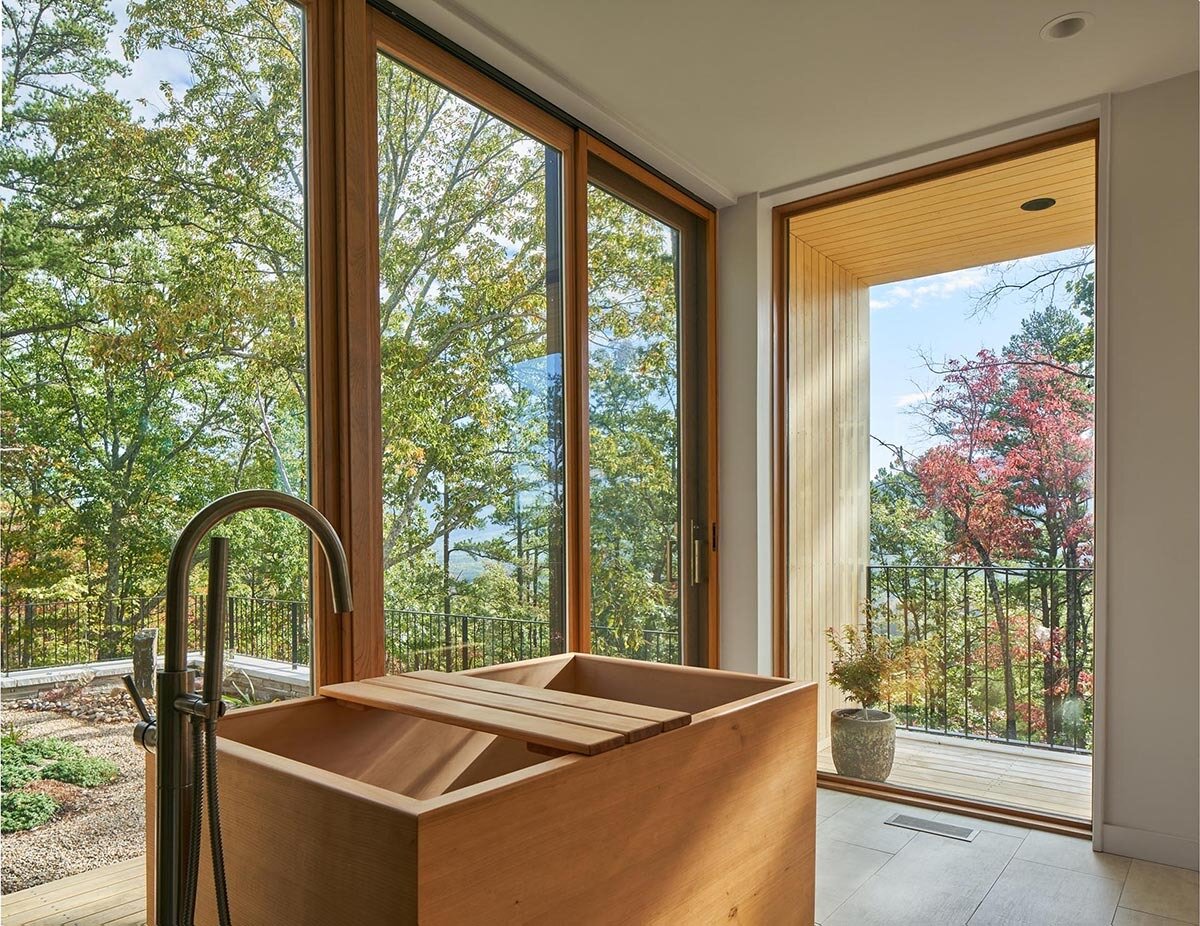
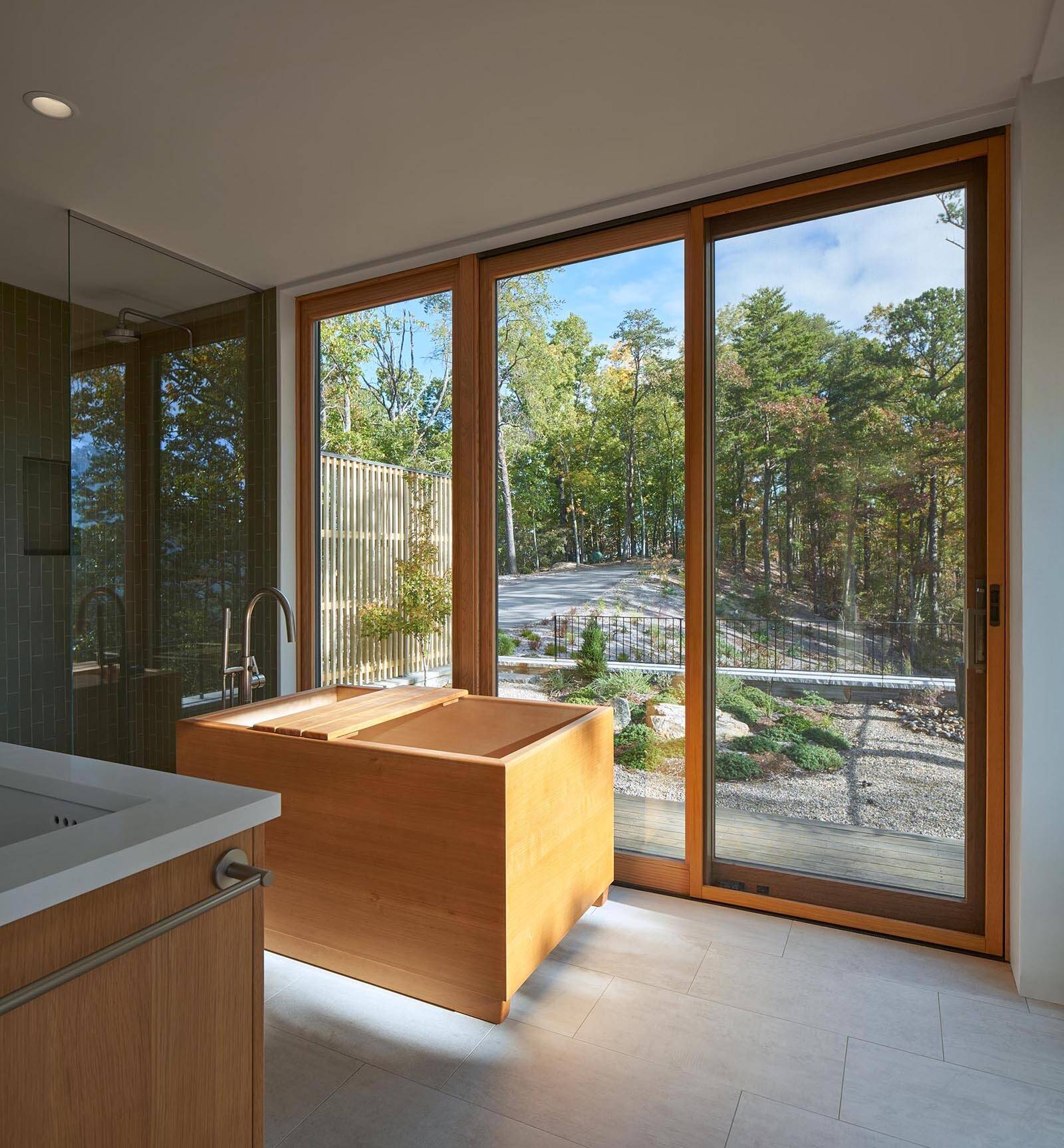
The bathroom continues the Japanese-inspired elements seen throughout the home. A deep wood soaking tub becomes the focal point of the space. Its simplicity and material choice add warmth while creating a more relaxed and immersive bathing experience.
A Floor Plan Built Around Flexibility
The floor plan highlights how the three pavilions are arranged and connected. Each structure functions independently while still forming a cohesive whole. This flexible layout allows the home to adapt easily, whether it’s being used by two people or a full extended family.
Short Mountain House is shaped by how it adapts to changing needs. The three-pavilion layout allows the home to feel compact and efficient day to day, while still opening up when family arrives.
From the contrasting wood finishes to the Engawa-inspired spaces and framed mountain views, every element works together to create a home that feels flexible, open, and easy to live in without excess.