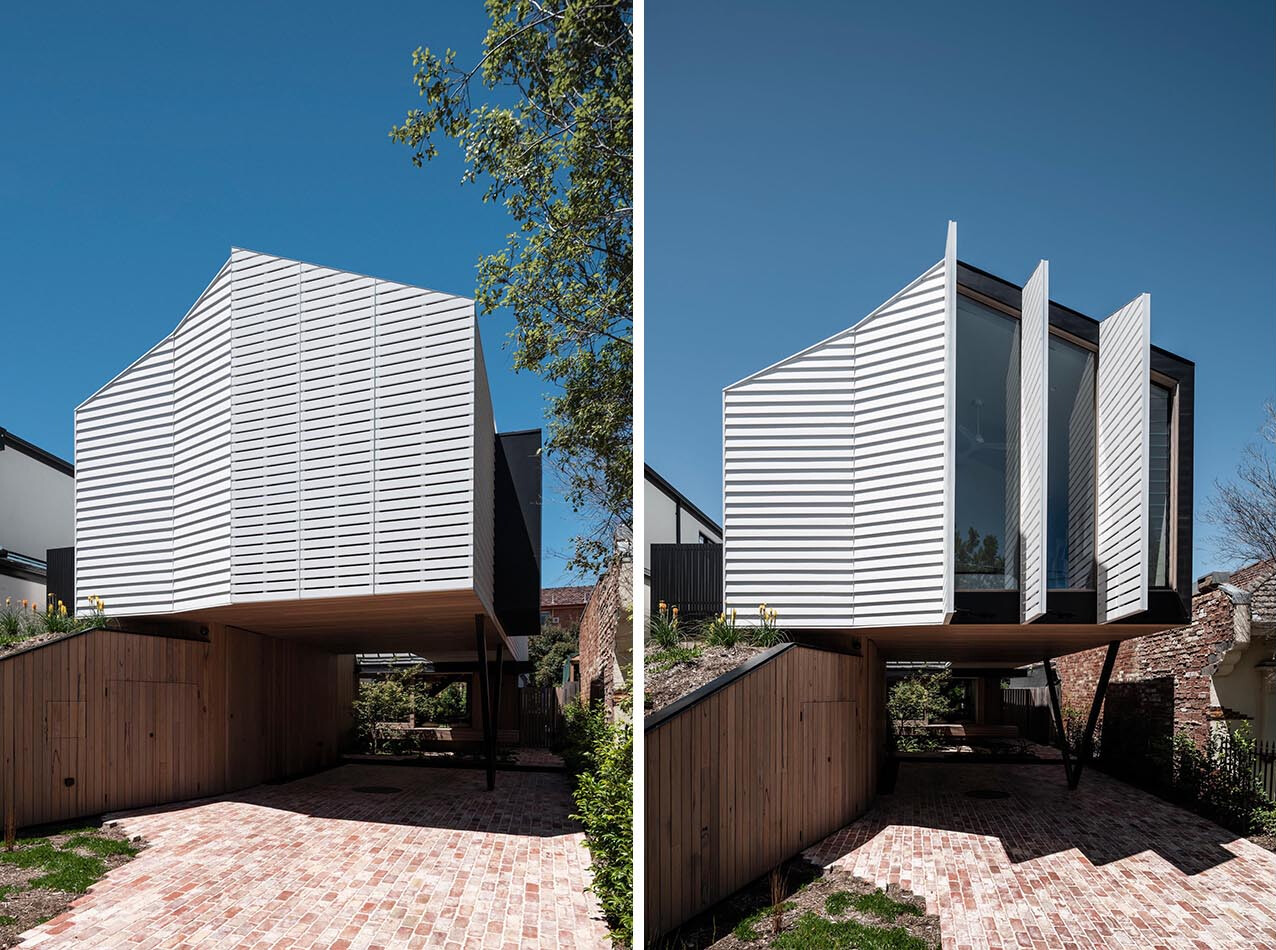
Designed by FIGR. Architecture & Design, this Australian home takes a different approach to suburban living. Instead of turning inward, it opens itself up, creating opportunities for interaction that extend beyond the site itself.
The architects set out to create a modest family home that respects its heritage surroundings while offering something new. The result is a house that invites neighbors and visitors into its orbit, using outdoor spaces and layered thresholds to encourage connection without sacrificing privacy.
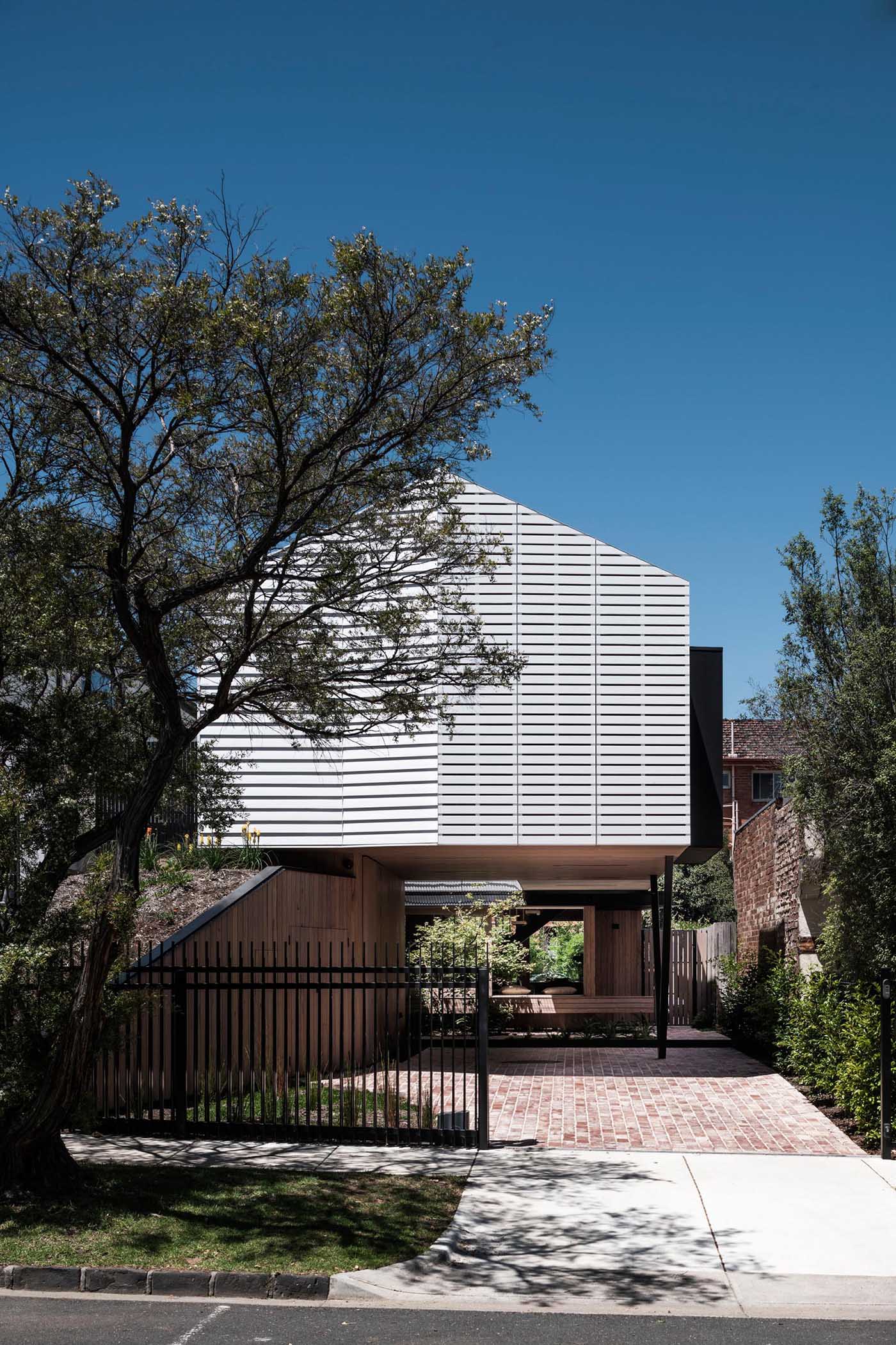
Shutters That Shape Light, Privacy, And Views
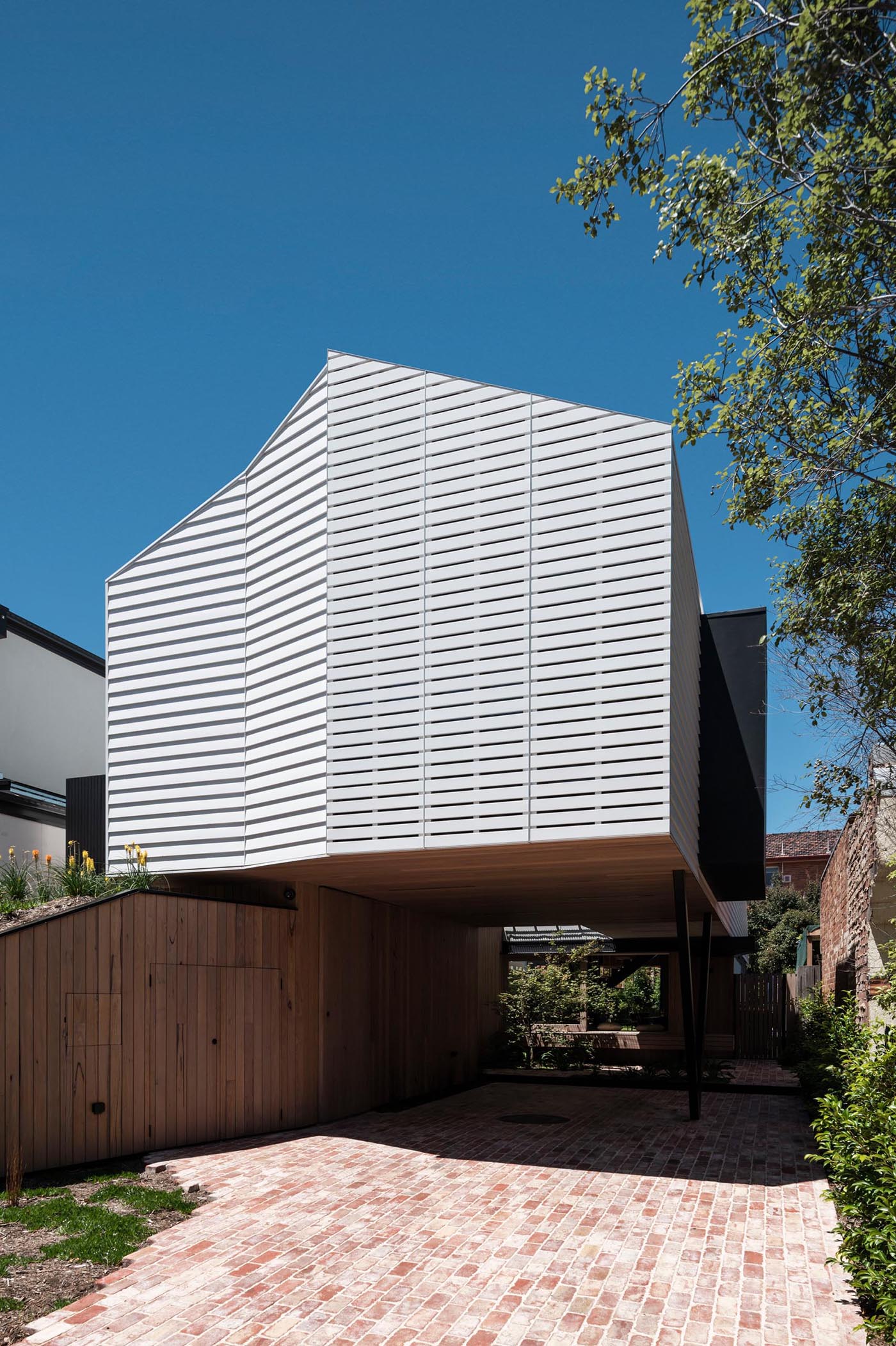
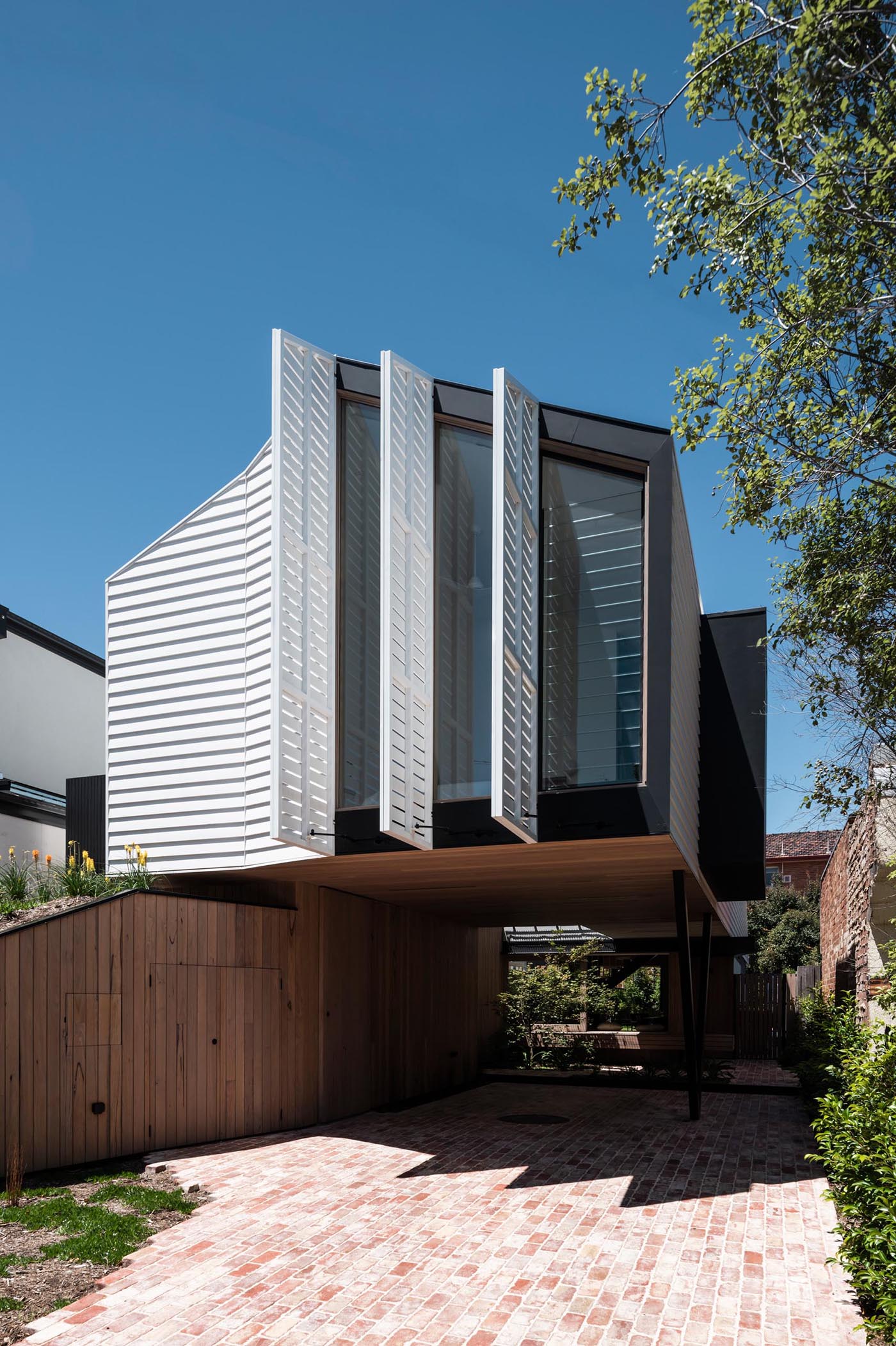
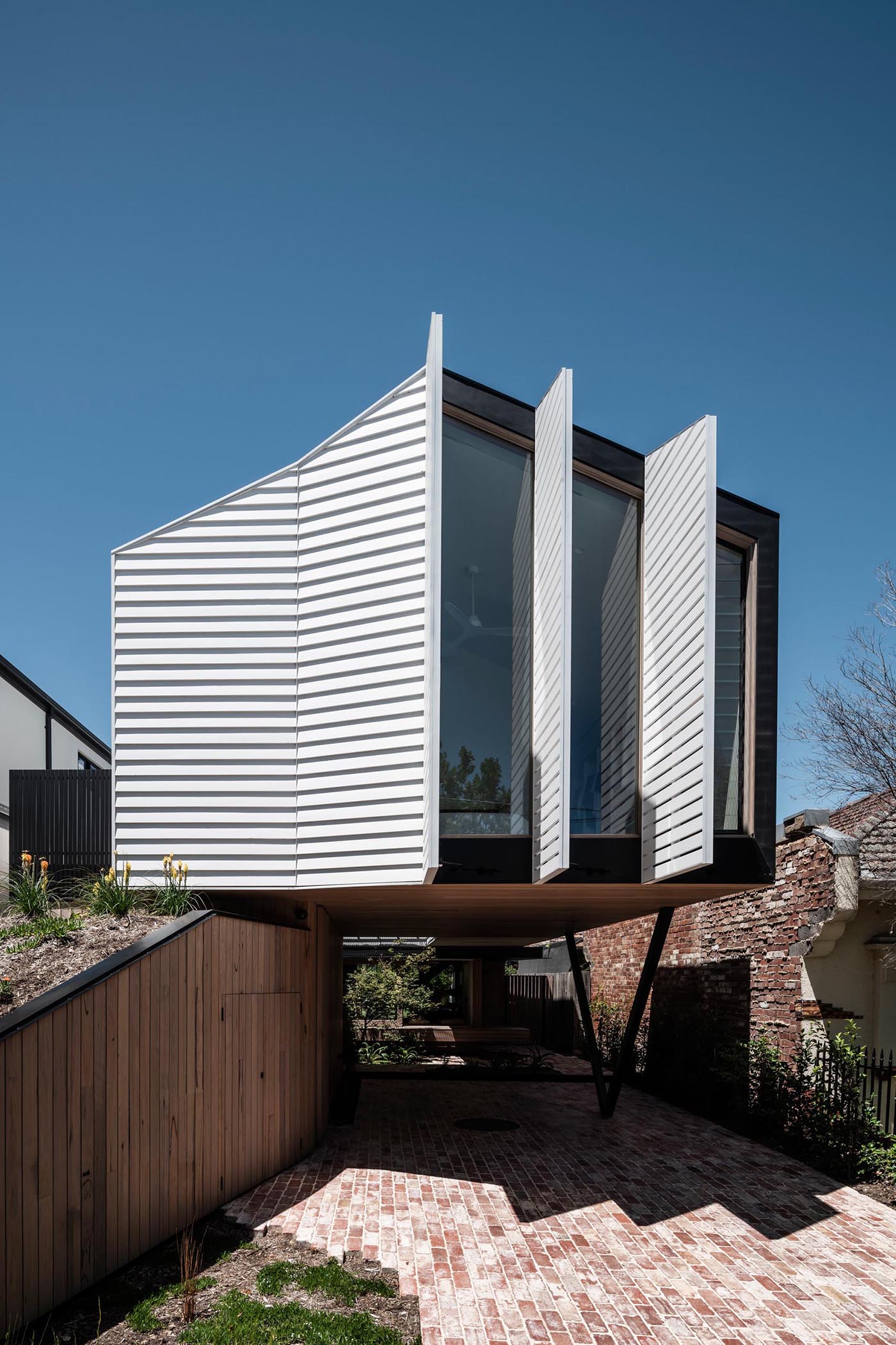
One of the most defining elements of the home is its custom-fabricated shutters. Positioned on the first floor above the carport, these mechanically operated panels are finished in white to seamlessly match the exterior.
They do more than just blend in. The shutters allow the homeowners to control sunlight, airflow, and visibility, adjusting throughout the day. From the street, they add movement and variation to the façade, while inside, they become part of the living experience.
A Bedroom That Filters Light And Privacy
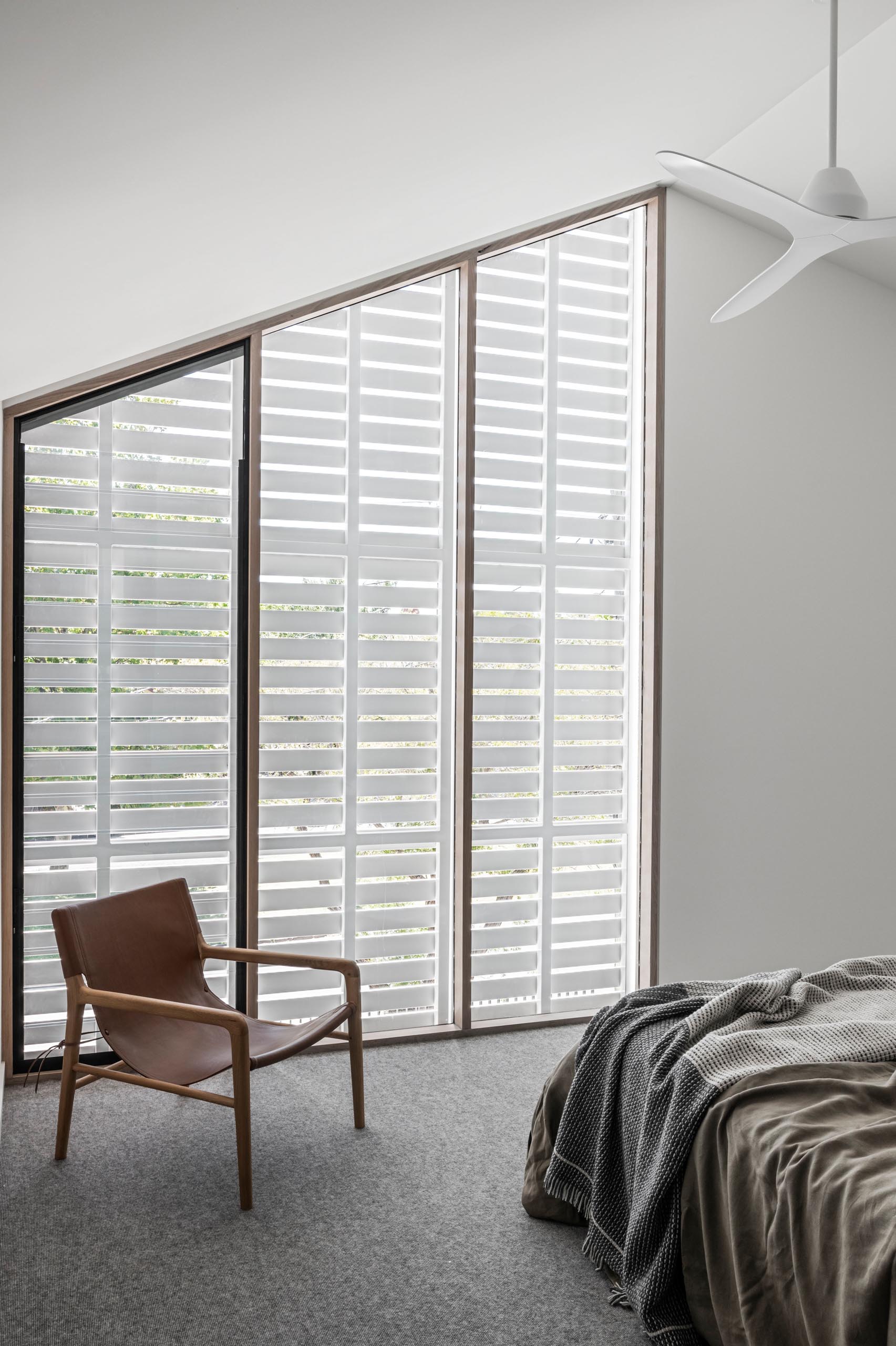
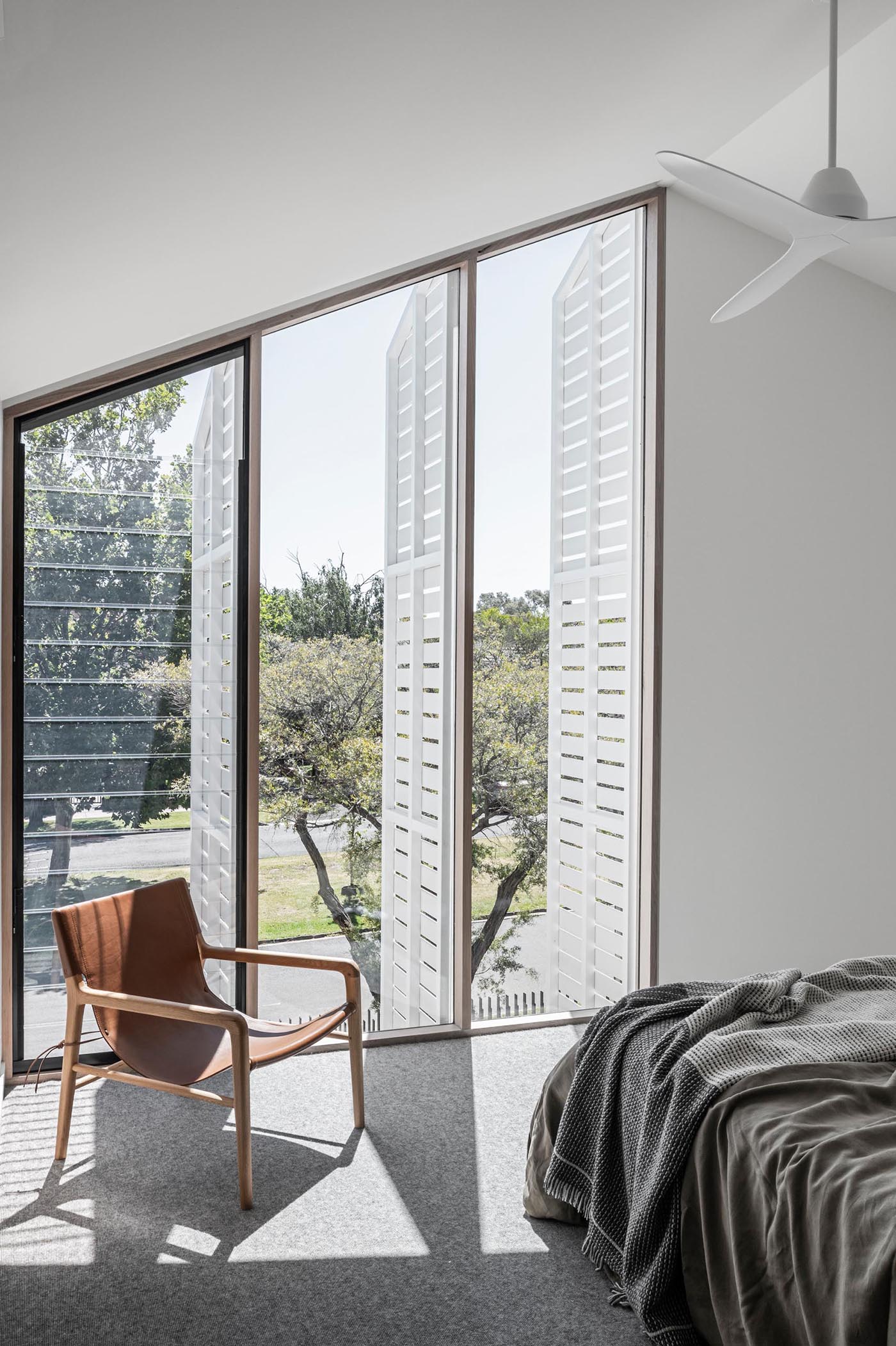
Inside, the shutters take on a softer role. In the bedroom, they create a balance between openness and seclusion.
When closed, they offer privacy without completely shutting out daylight. When opened, they allow light to filter through, shifting the atmosphere of the space and reinforcing the home’s connection to its surroundings.
A Continuous Exterior Language
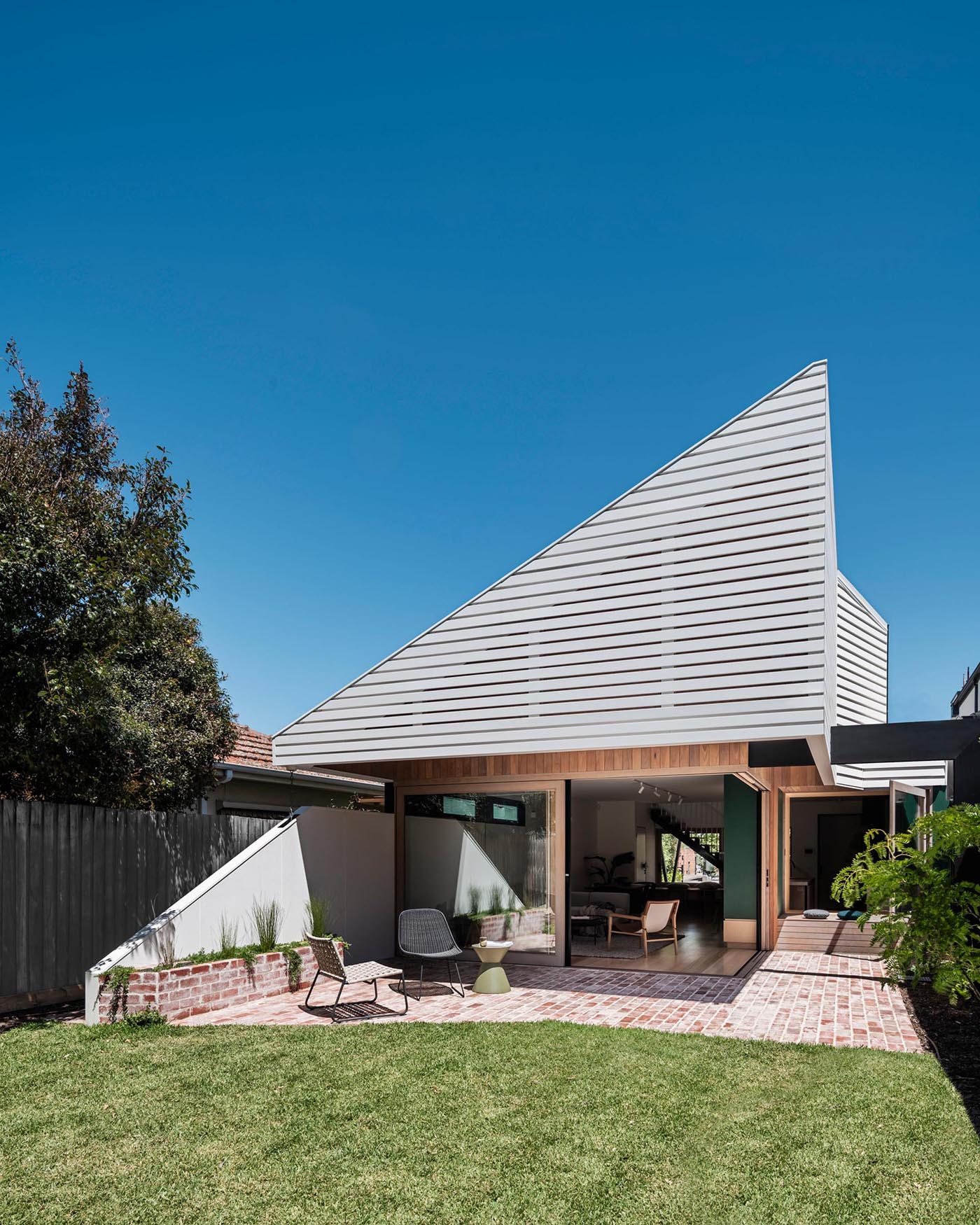
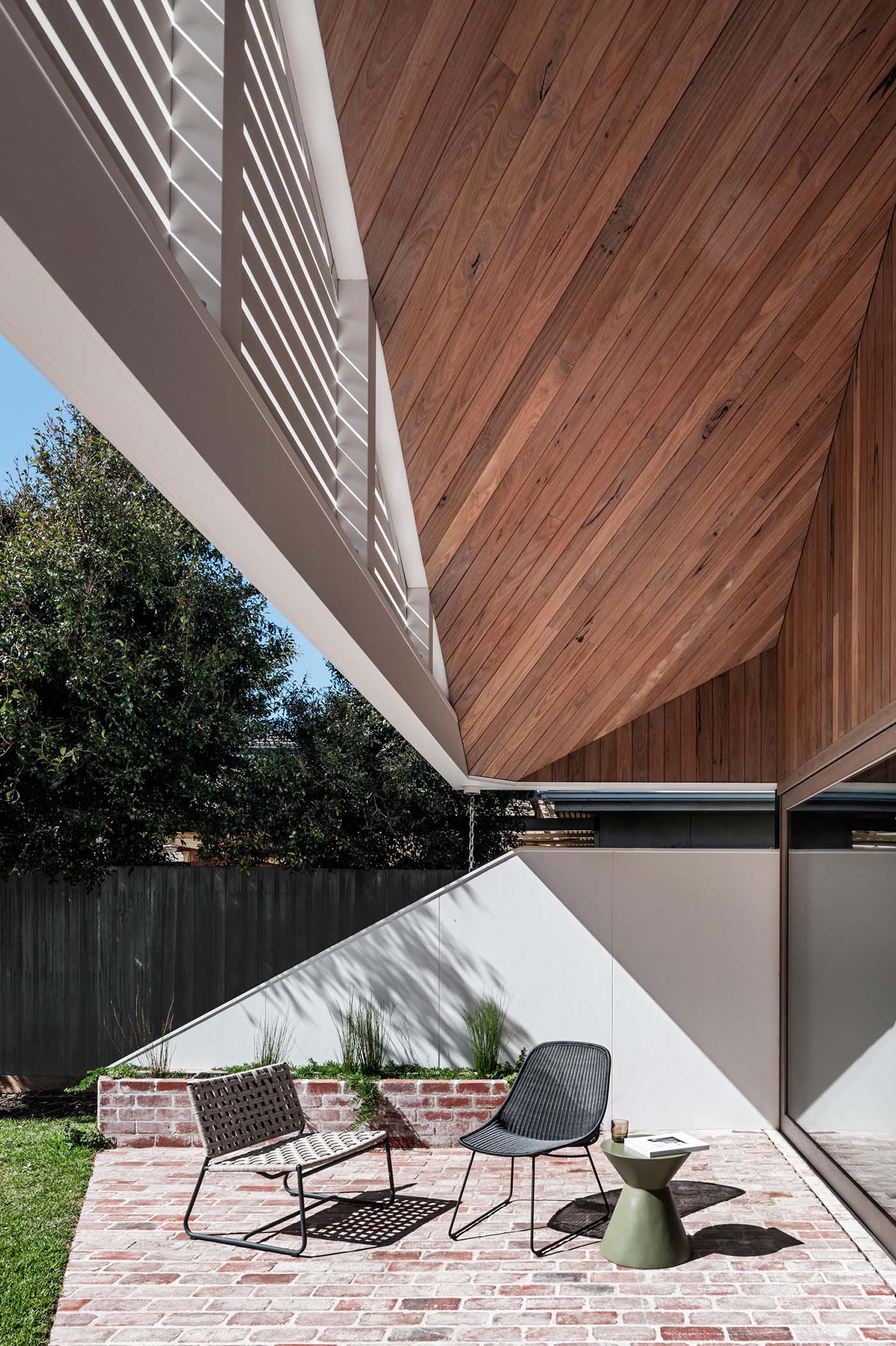
The shutters align with the home’s exterior siding, creating a cohesive look that wraps around the building. This continuity carries through to the rear, where the materials extend toward a partially shaded brick patio.
This consistency helps tie together different parts of the house, making transitions between spaces feel intentional and connected.
A Patio That Extends The Living Space
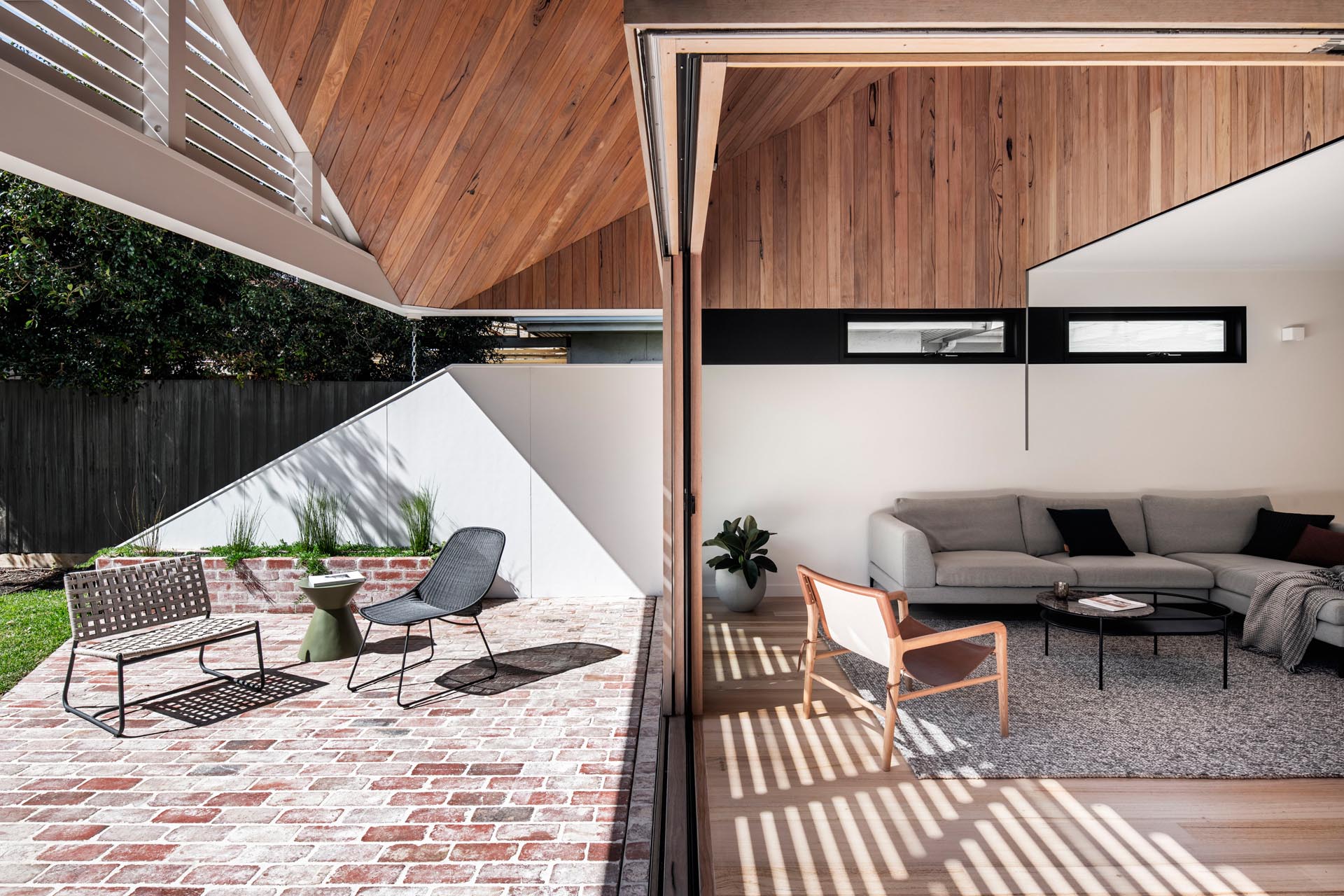
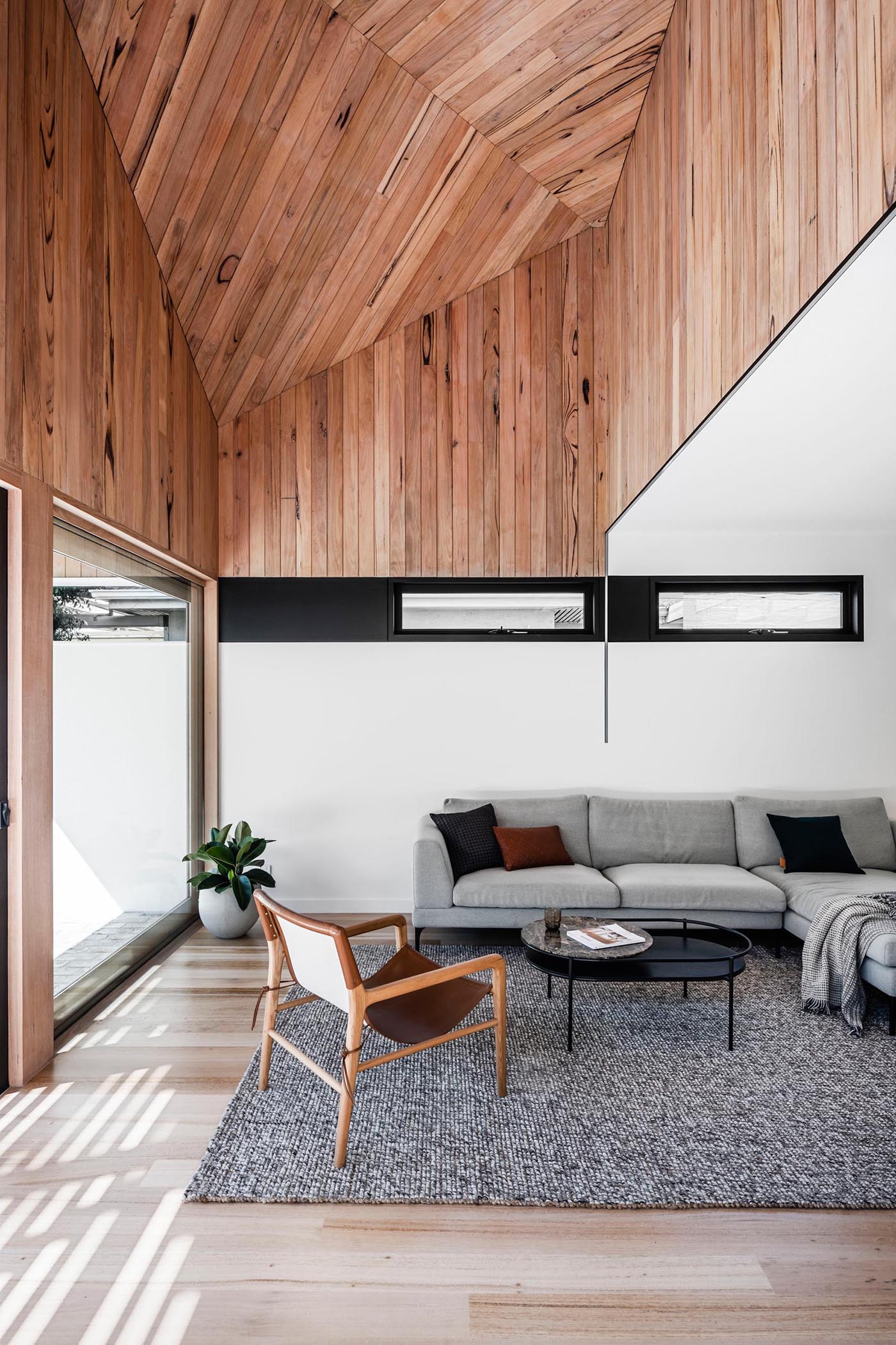
At the back of the home, sliding glass doors open the living room directly onto the patio, creating a fluid indoor and outdoor experience.
A wood ceiling stretches across both areas, visually linking them and adding warmth. The result is a space that feels larger than its footprint, where daily activities can easily spill outside.
A Kitchen Anchored By Color And Texture
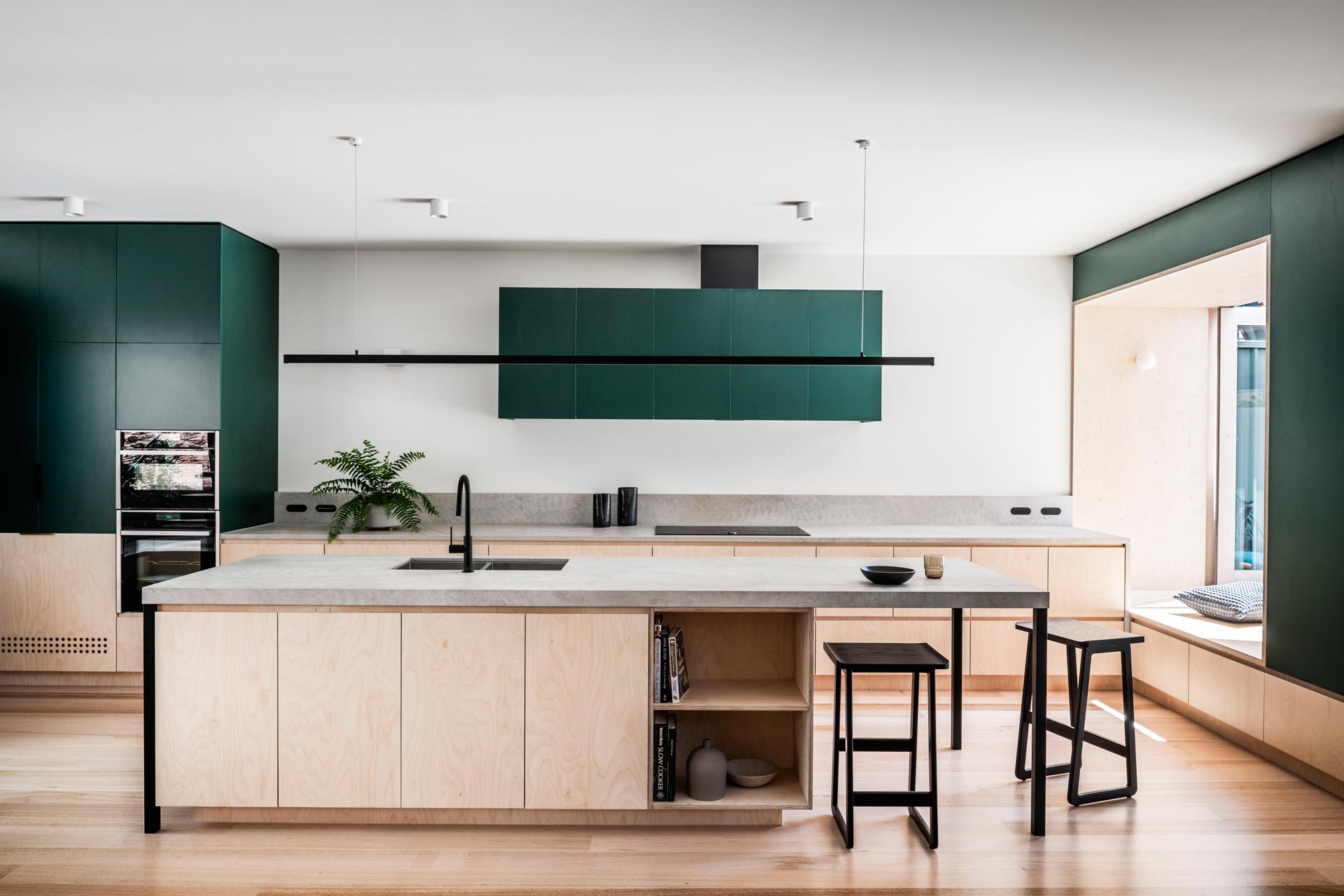
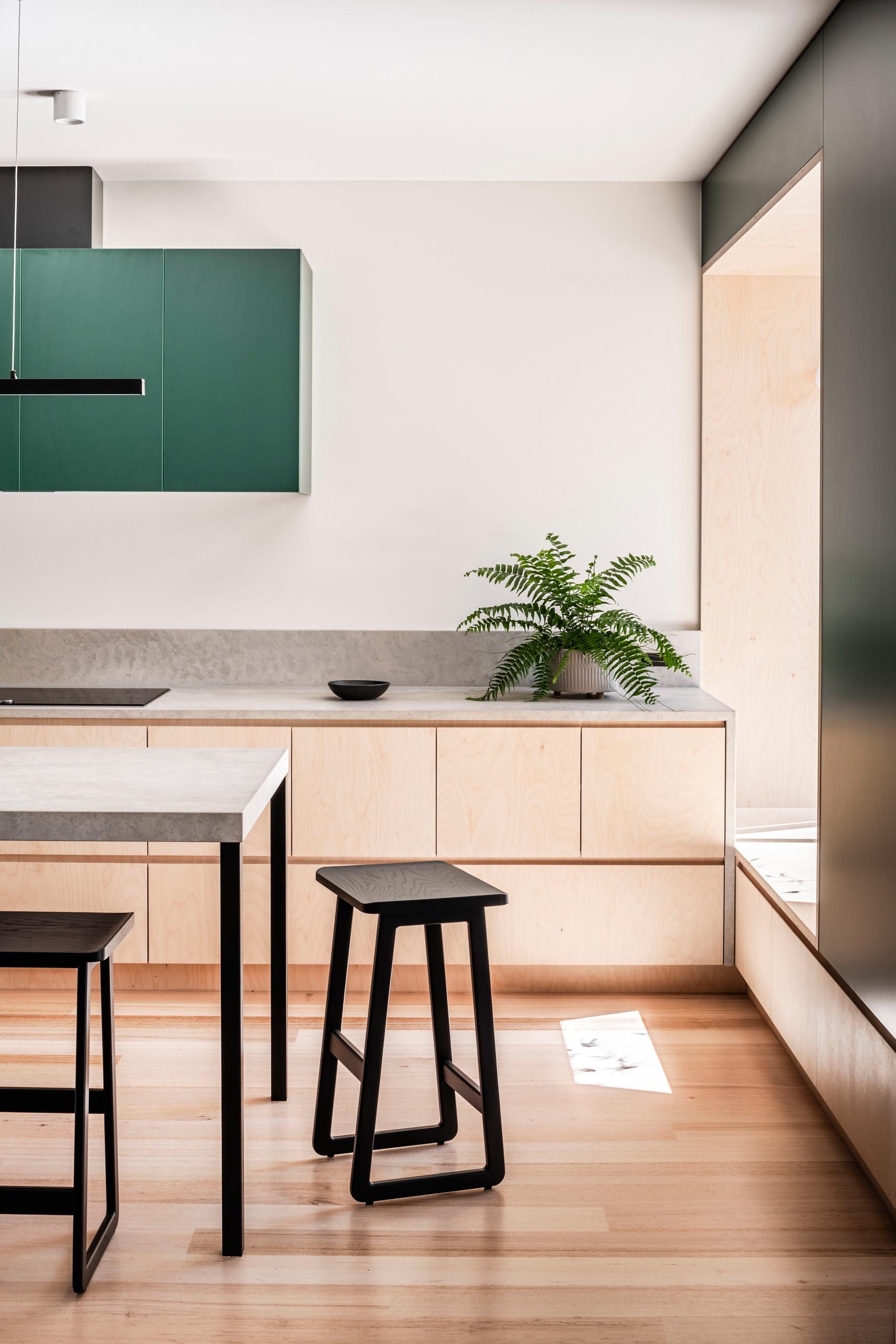
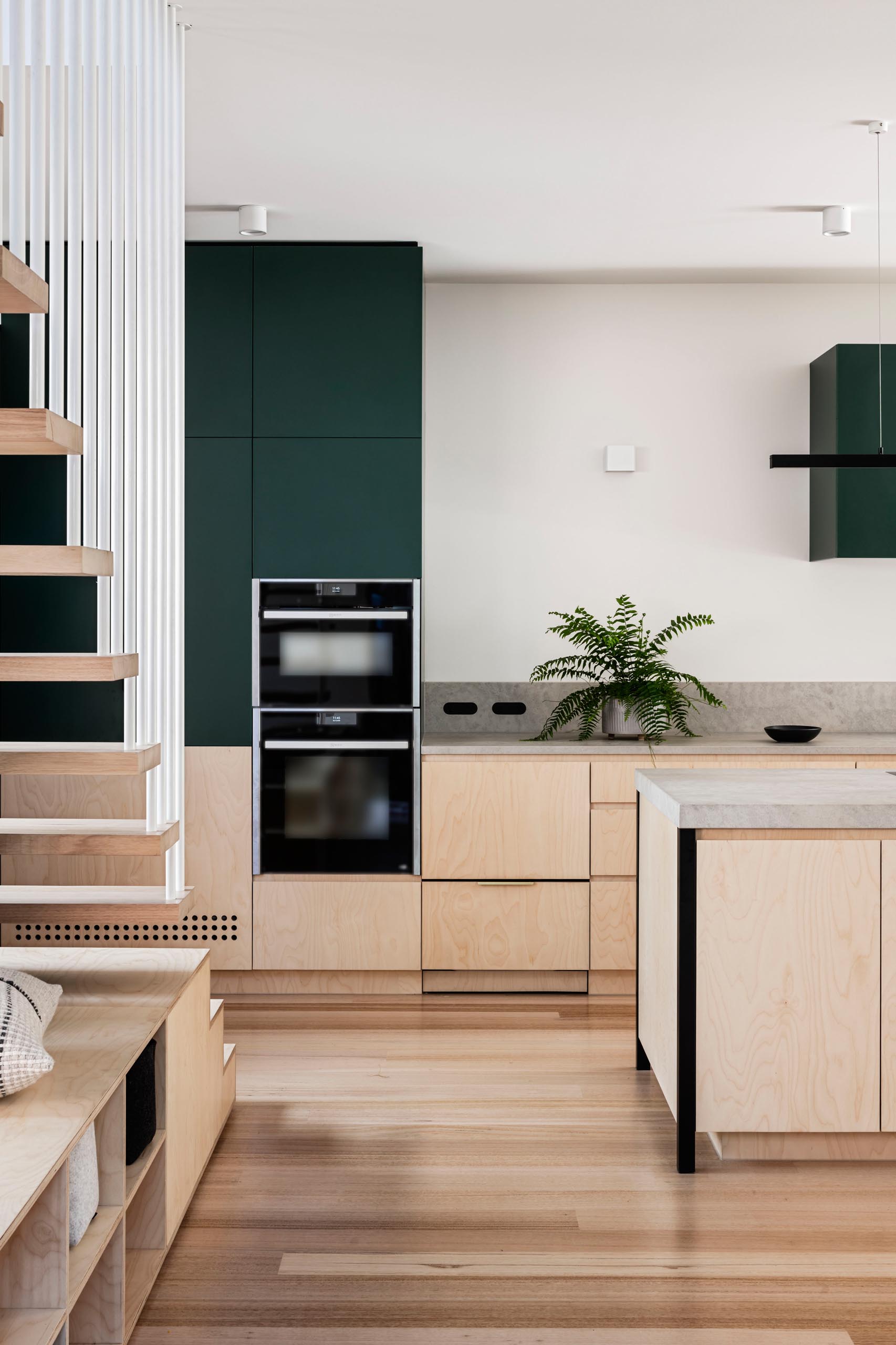
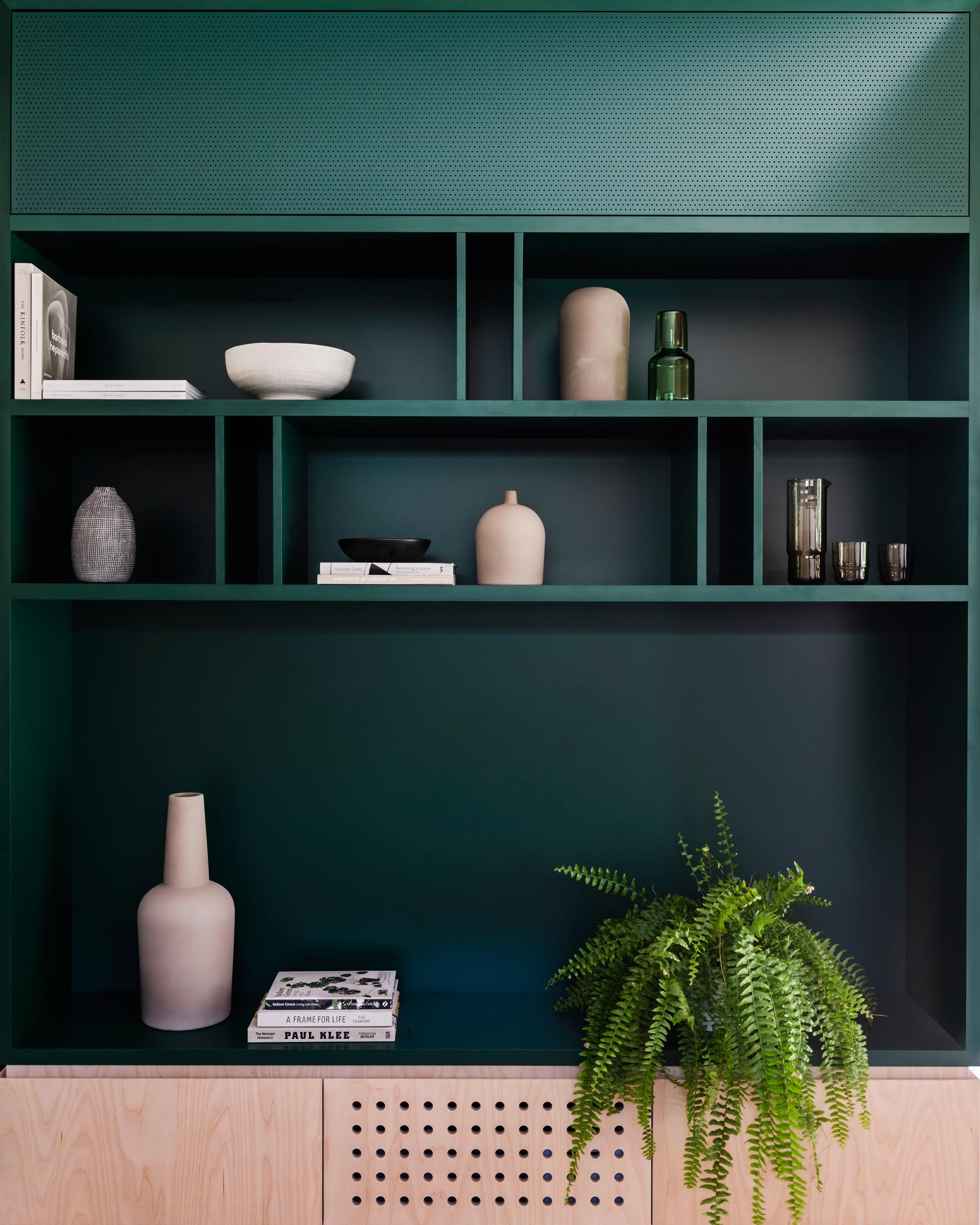
The kitchen introduces a richer palette, with deep green cabinetry paired alongside light wood finishes and gray countertops.
At the center, the island becomes a social hub, offering seating and a place to gather. It anchors the space while still allowing movement and connection to adjacent areas.
Small Spaces That Do More
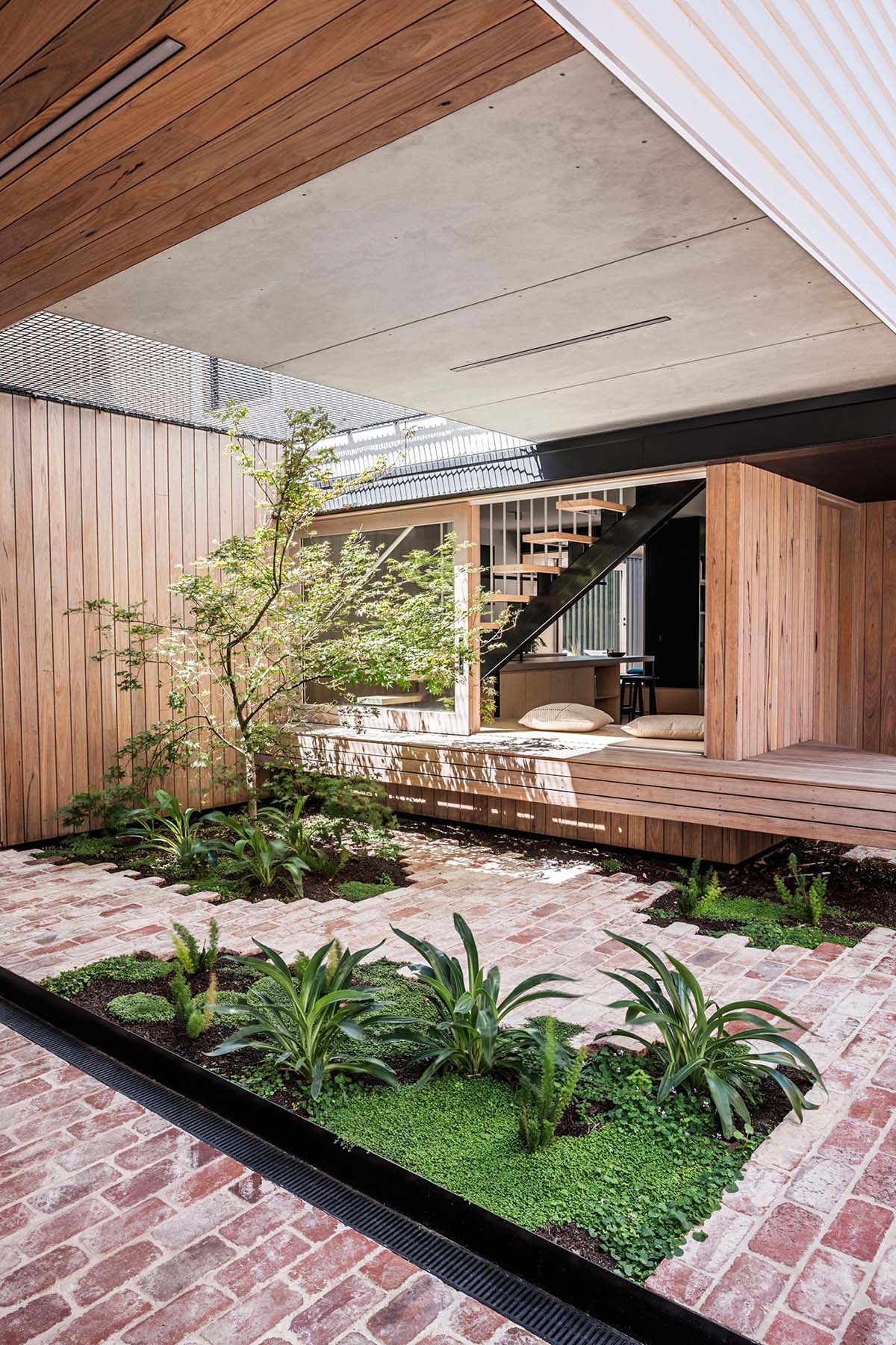
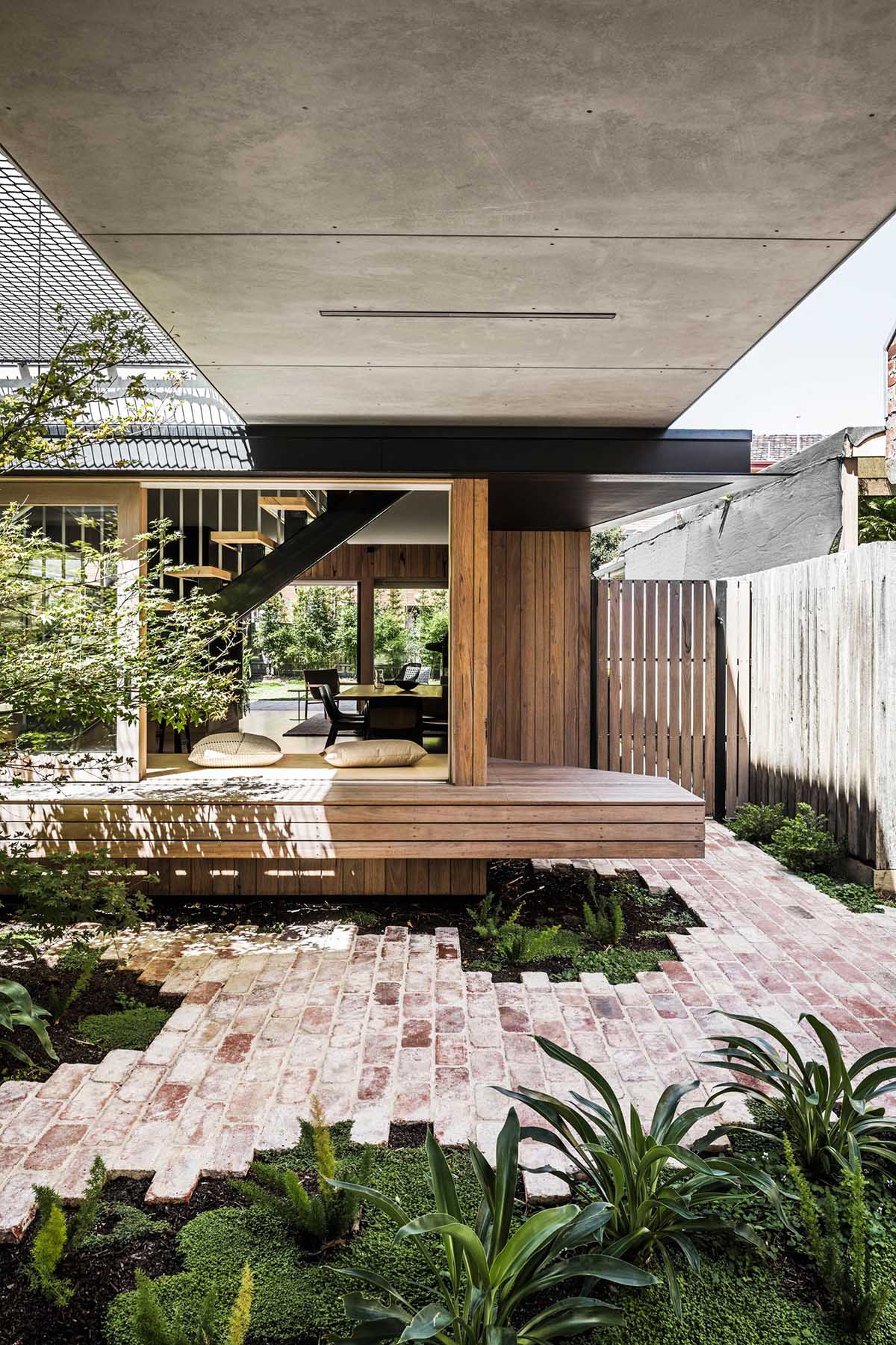
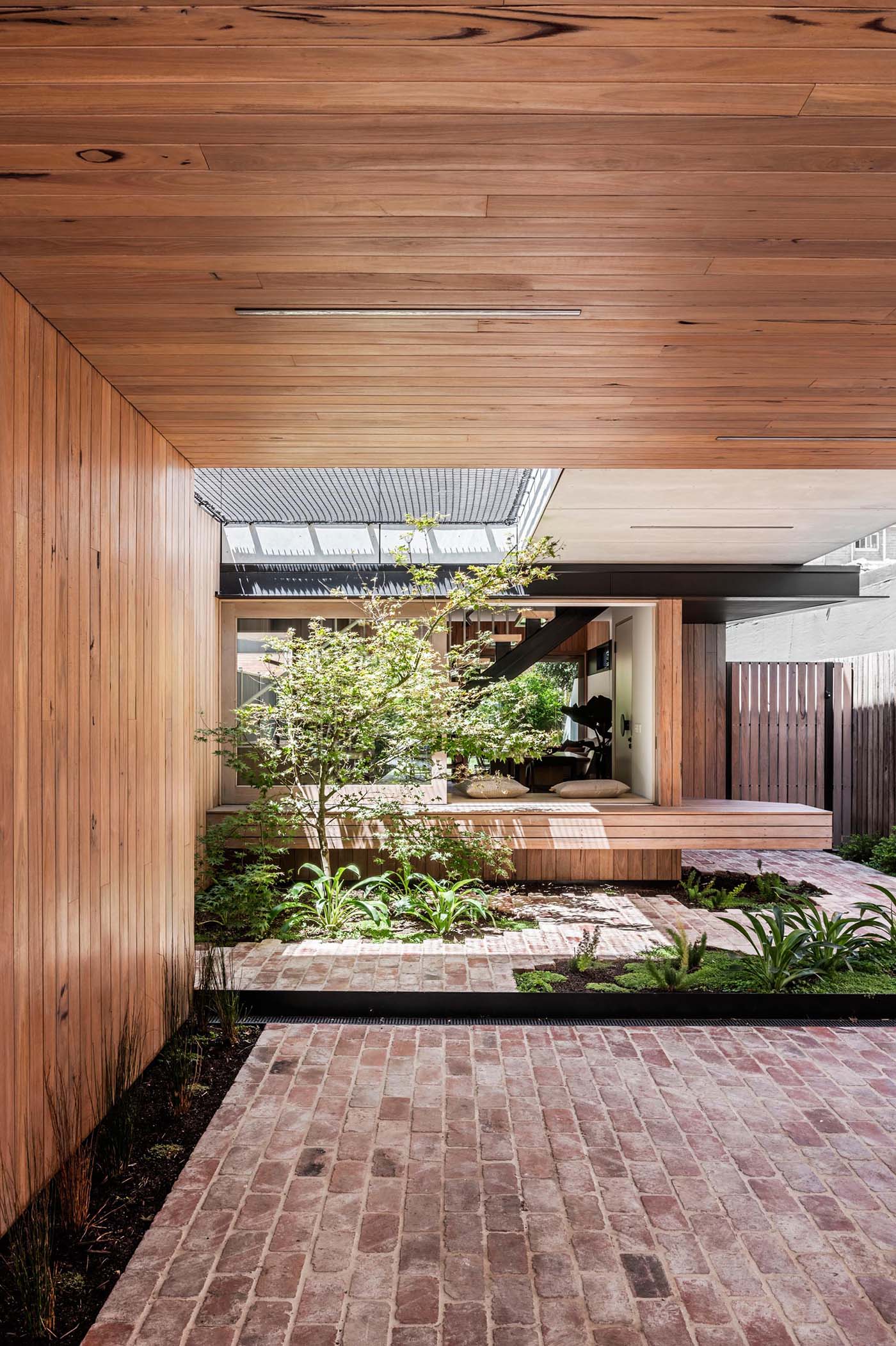
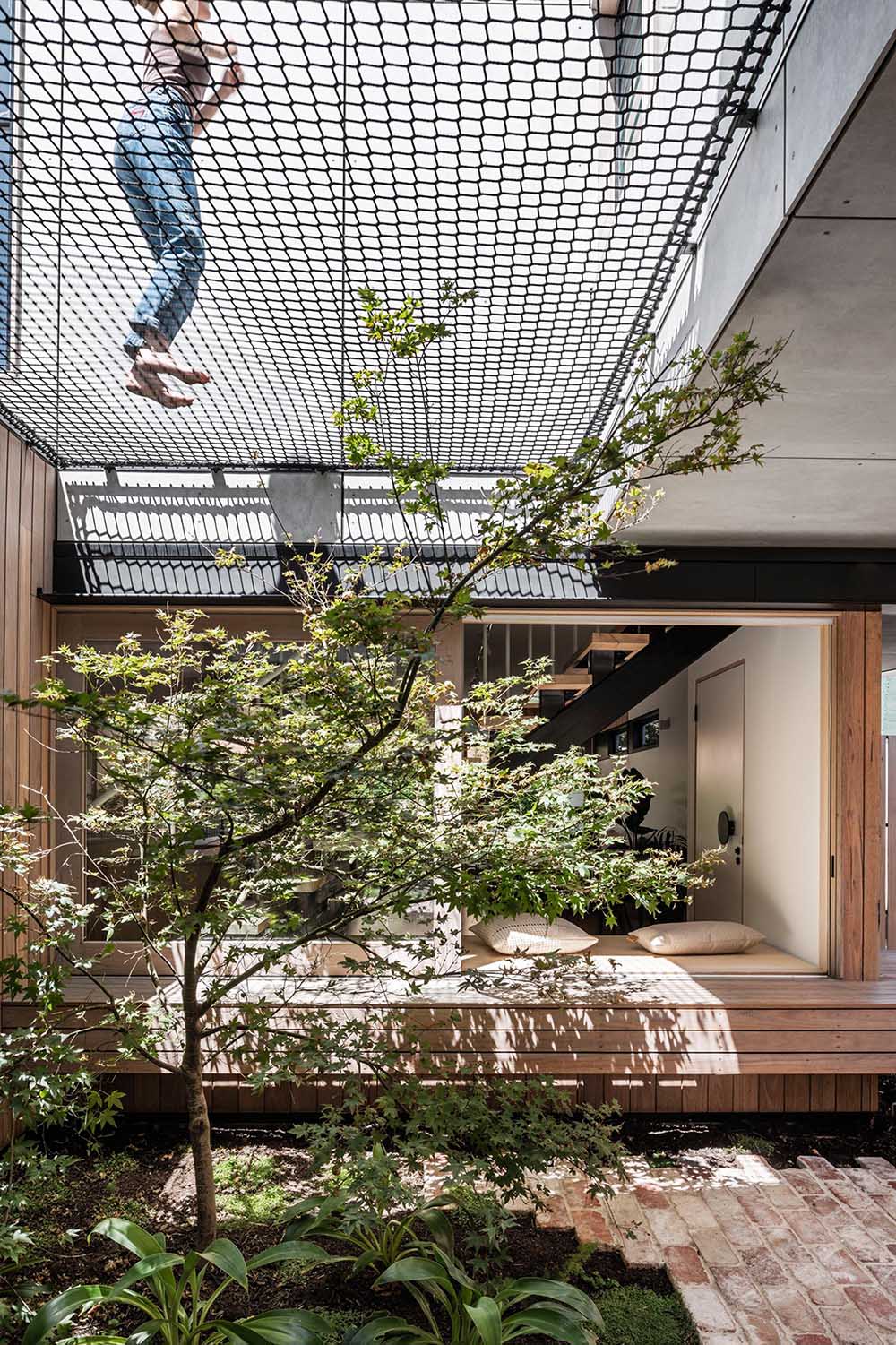
Between the interior and the carport, a compact courtyard brings in light and air. Brick surfaces frame small pockets of greenery, softening the transition and adding texture.
Above, a netted area creates an unexpected zone for relaxation. Suspended in the open space, it turns what could have been unused volume into a place to pause, stretch out, or simply enjoy the sun.
Flexible Spaces That Adapt Over Time
This idea of making the most of every space runs throughout the home. The undercroft doubles as a carport, workshop extension, and informal gathering area. Transitional zones are treated as active parts of the house, not leftover space.
Combined with garden areas at both the front and rear, the design increases permeability across the site, allowing movement, light, and activity to flow freely.
Built With Longevity And Performance In Mind
Beyond its spatial design, the home incorporates practical strategies for long-term performance. High-quality insulation, thermally broken double-glazed windows, and locally sourced materials contribute to its durability.
A Surfmist Colorbond roof helps reduce heat build-up, while its form allows for effective solar panel placement. Water from the roof is captured in a buried 5000-litre tank and reused for irrigation and toilets, supporting efficient resource use.
This home shows how much can be achieved when every part of a site is put to work. From the street-facing garden to the layered in-between spaces, each area plays a role in shaping how the home is used and experienced.
By combining adaptable features like operable shutters with flexible zones and strong indoor outdoor connections, FIGR. Architecture & Design has created a house that can shift with changing needs while staying connected to its surroundings.