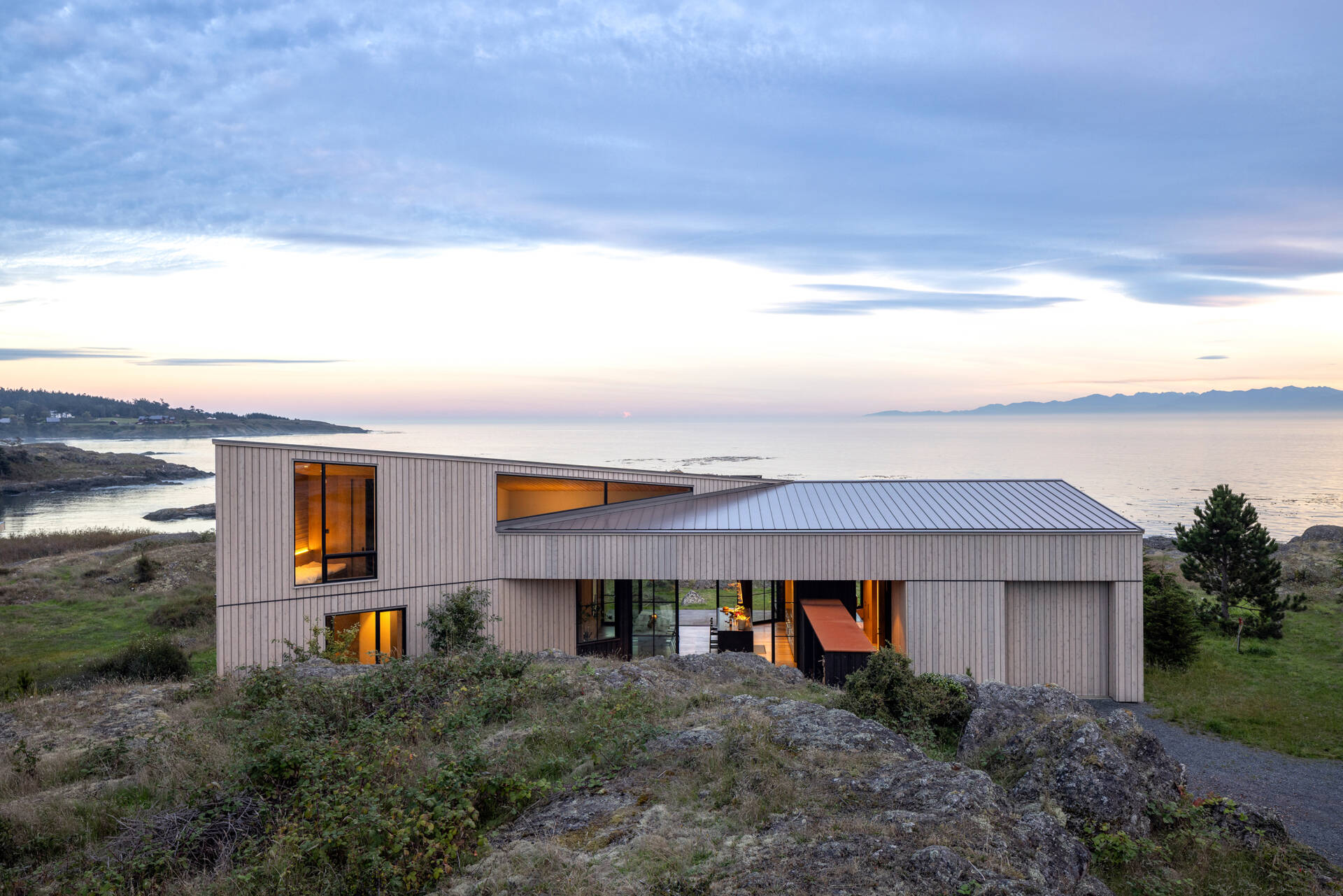
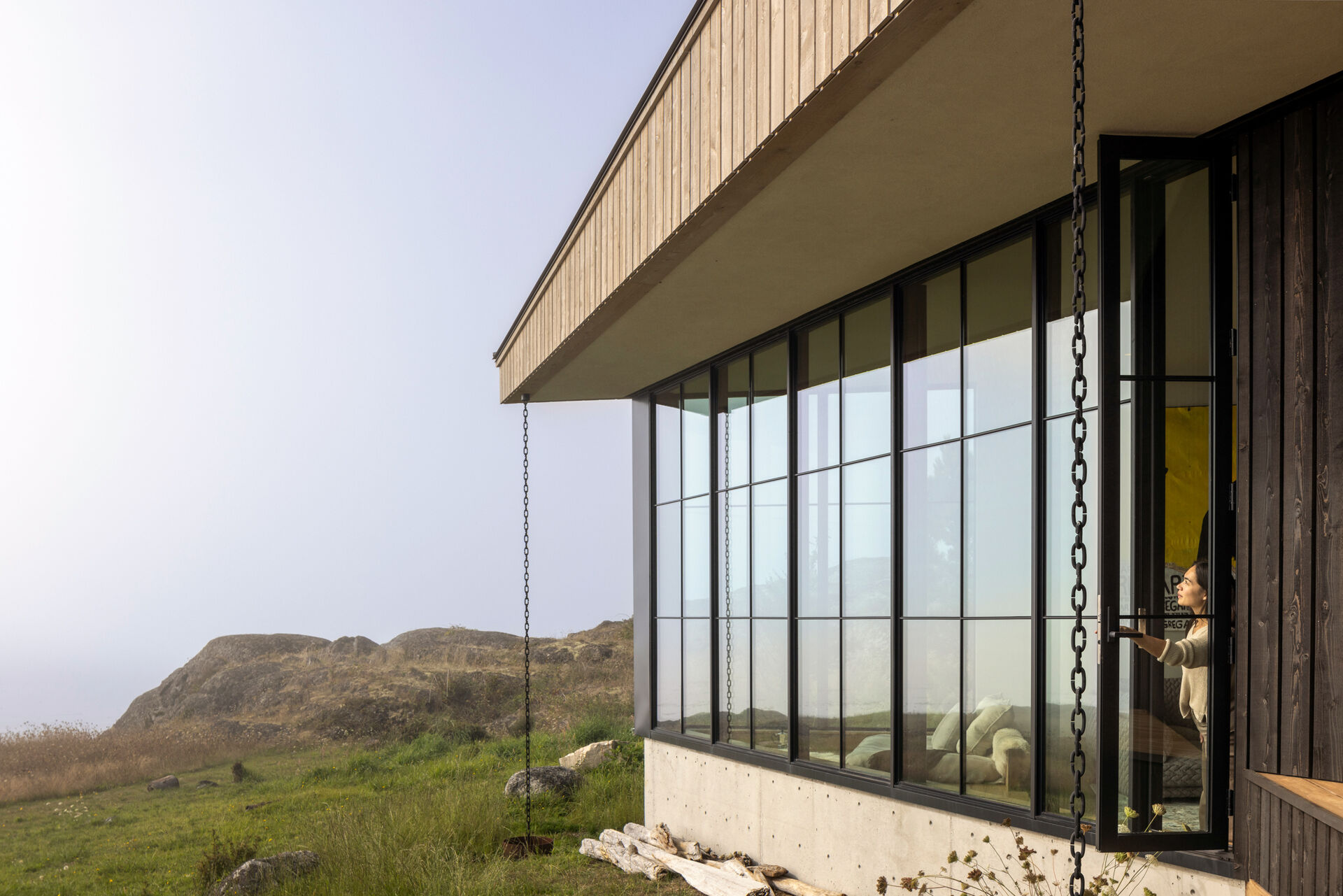
Set on the rugged edge of False Bay on San Juan Island, Washington, this modern home by Heliotrope sits right where land meets the force of the Pacific. The site faces constant exposure, with weather rolling in through the Strait of Juan de Fuca, bringing wind, salt air, and shifting light.
The clients had spent years visiting the island and wanted a place that could start as a holiday home and gradually become somewhere they could spend more time as life changed. Working closely with Heliotrope, they aligned on a design that responds directly to the landscape while also aiming for net-zero energy performance.
A Plan That Fits Between the Rocks
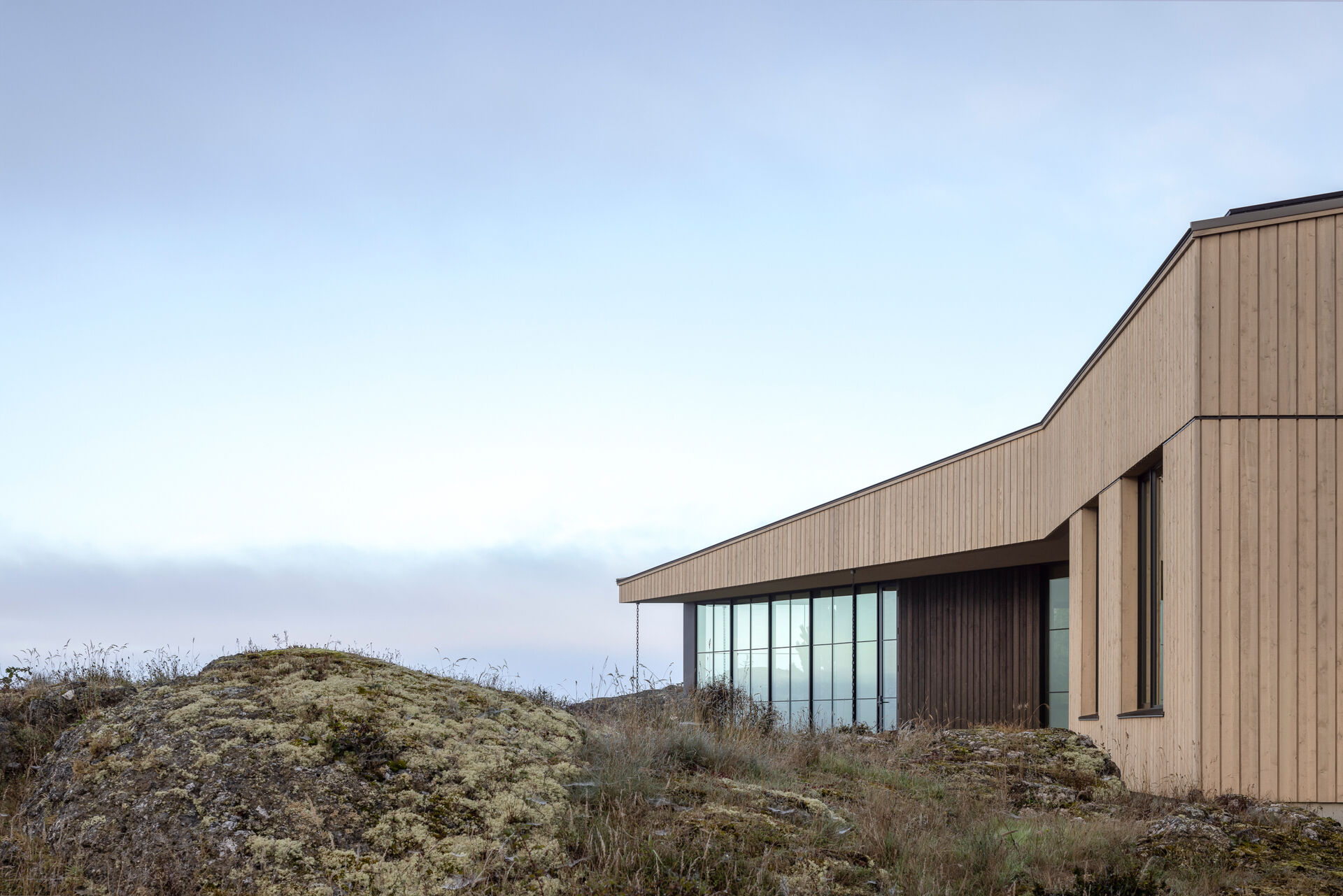
Designing here wasn’t straightforward. Large rock outcroppings across the site made placement a challenge, almost like solving a puzzle. The result is a distinctive “bowtie” footprint that tucks the home between these formations while keeping disruption to the land minimal.
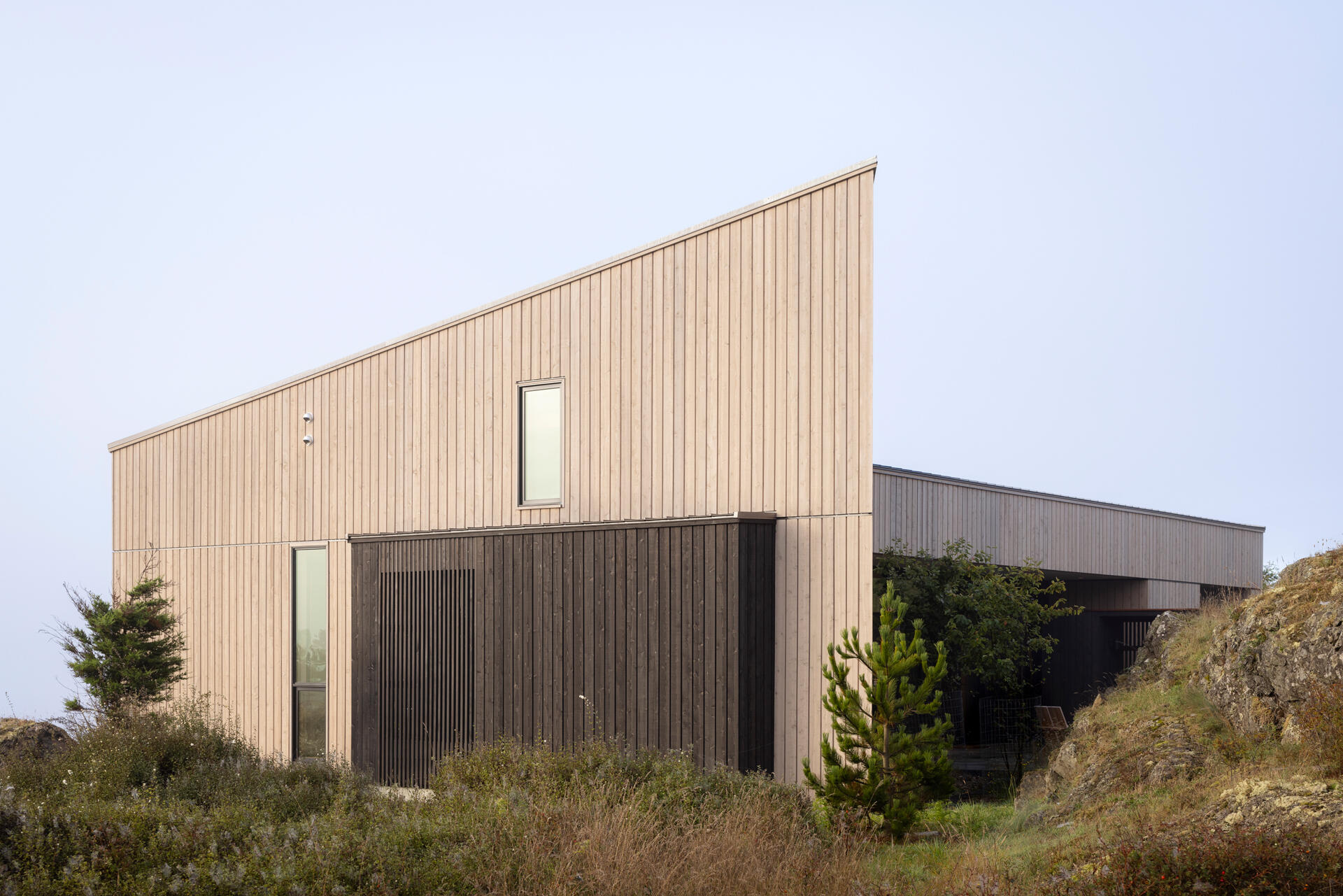
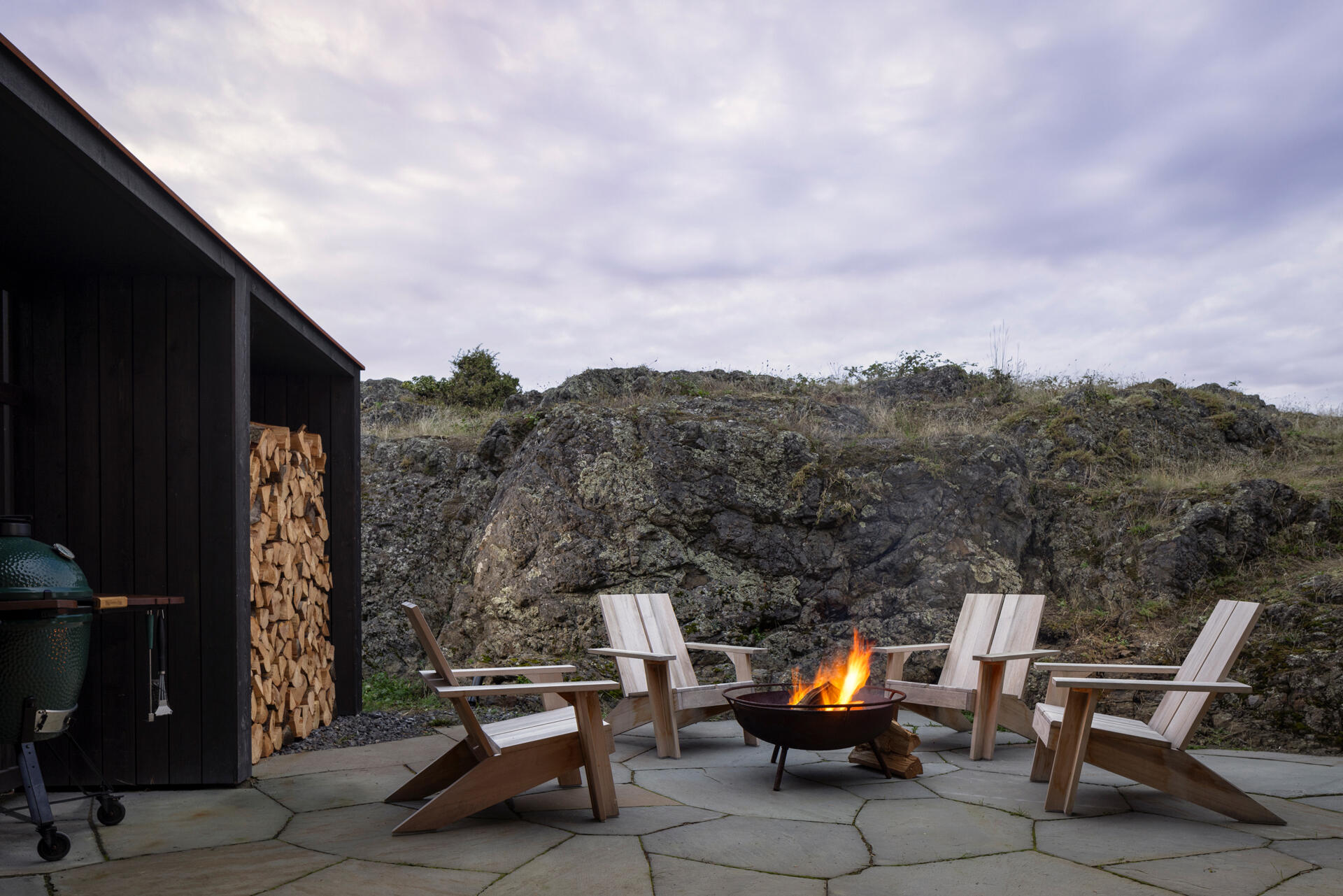
This layout does more than just fit the terrain. It creates a protected outdoor space between the house and a major rock feature, forming a natural buffer against the strong coastal winds.
With neighboring homes on either side, the design turns its focus inward and outward at the same time. Openings are directed south toward the water and north toward the rock, while the sides remain more closed off for privacy.
Weathered Tones That Echo the Coast
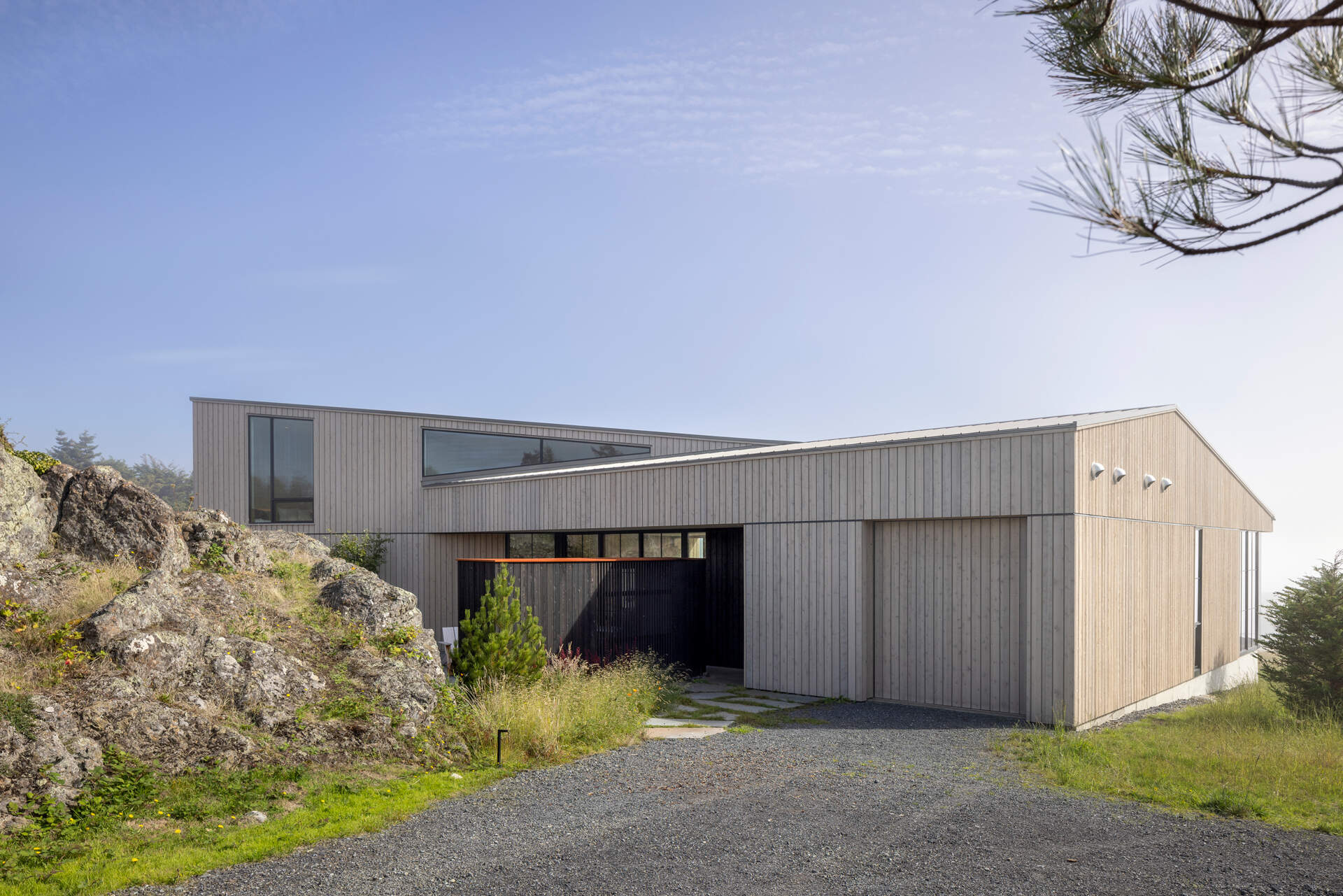
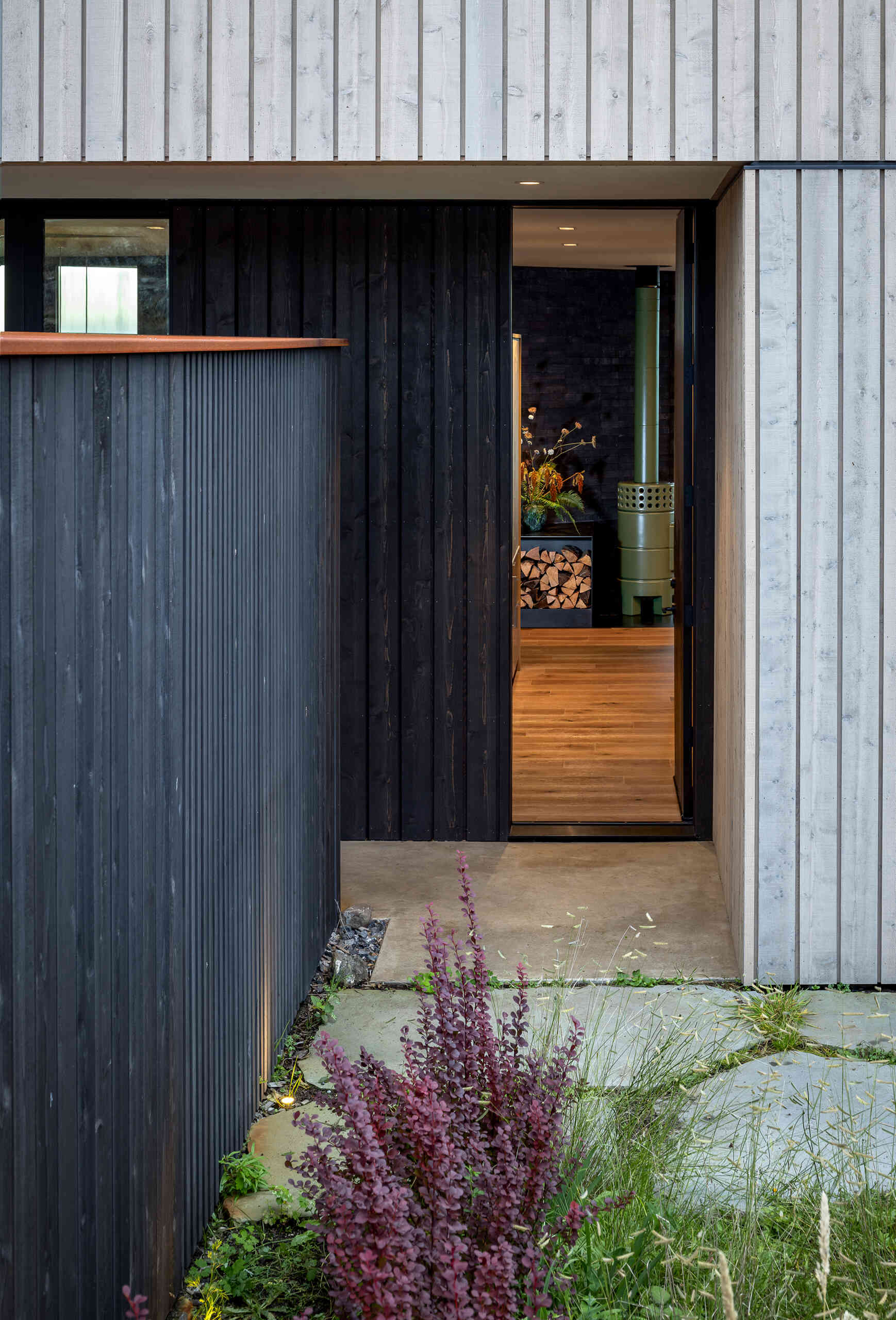
The exterior is wrapped in cedar, a choice that feels right at home in this environment. Over time, it will weather and soften, blending further into the coastal setting.
The design draws clear inspiration from the Sea Ranch development in Northern California, known for its simple forms and materials that age gracefully under harsh conditions.
Planting is minimal but purposeful. Monterey cypress and native shore pines help shield the home, while hardy grasses and cactus reflect what can actually survive in this exposed location.
Framed Views in Every Direction
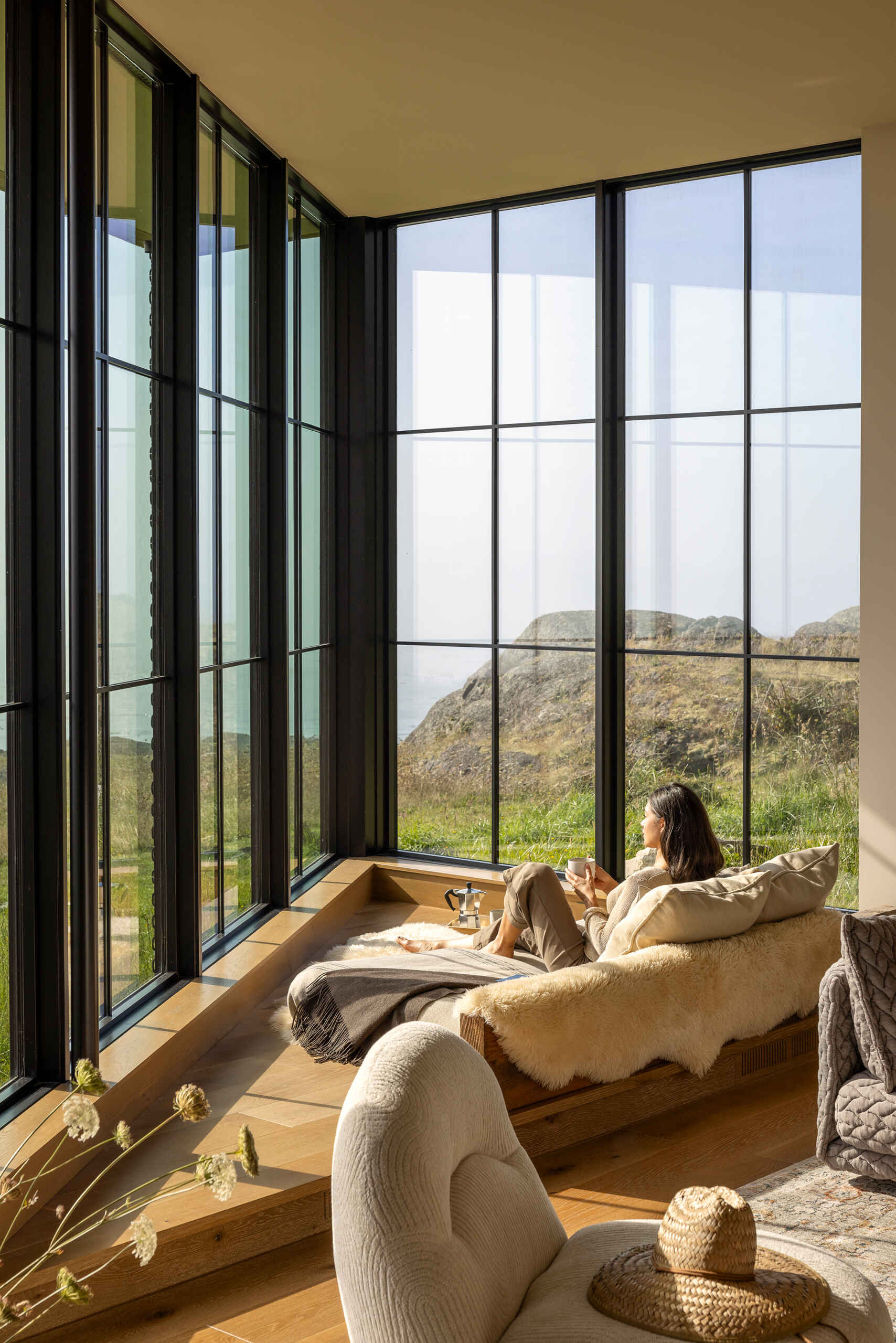
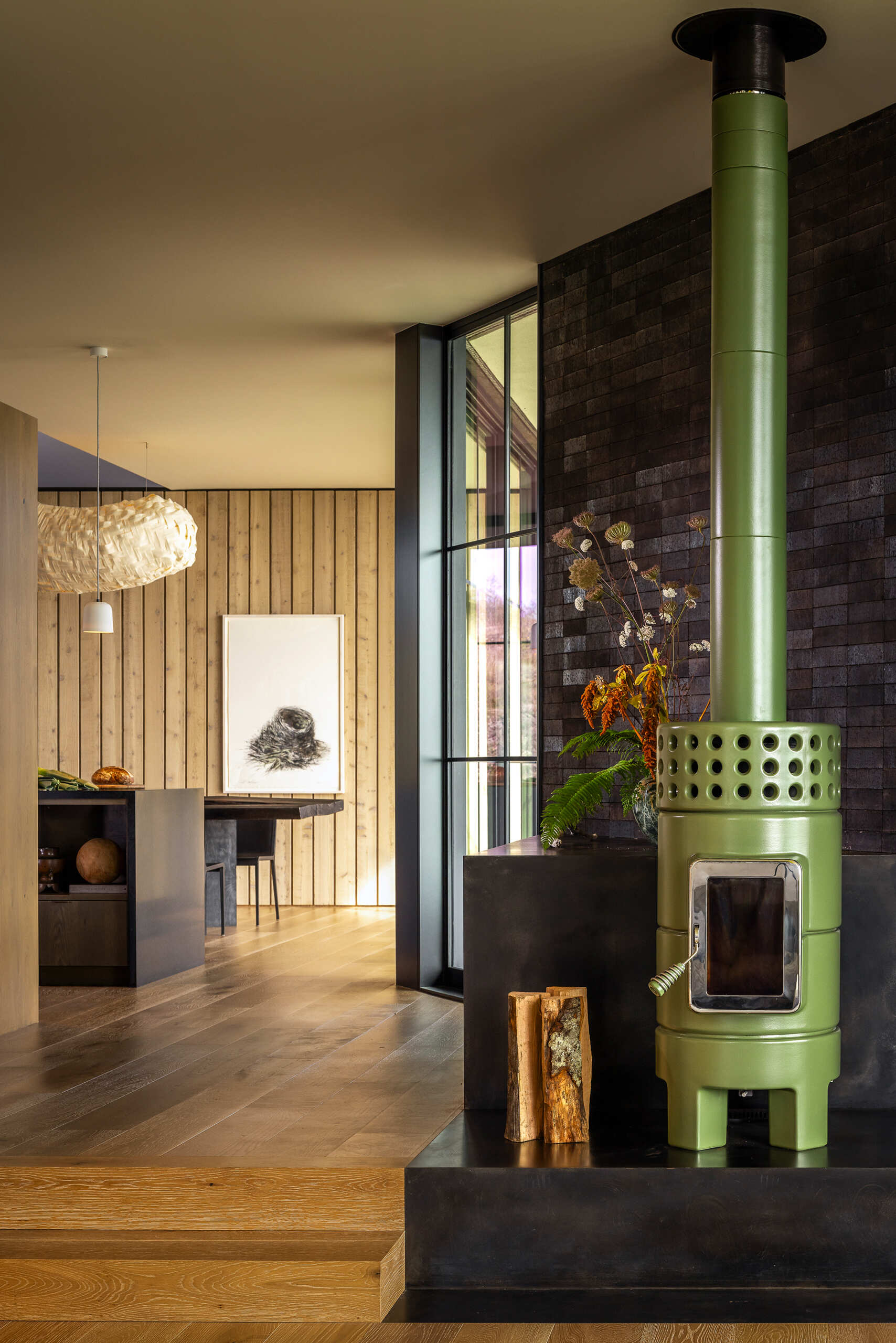
Inside, the living room is calm and neutral, with cedar and plasterboard walls paired with wood flooring and earth-toned finishes. The palette keeps the focus on what’s outside.
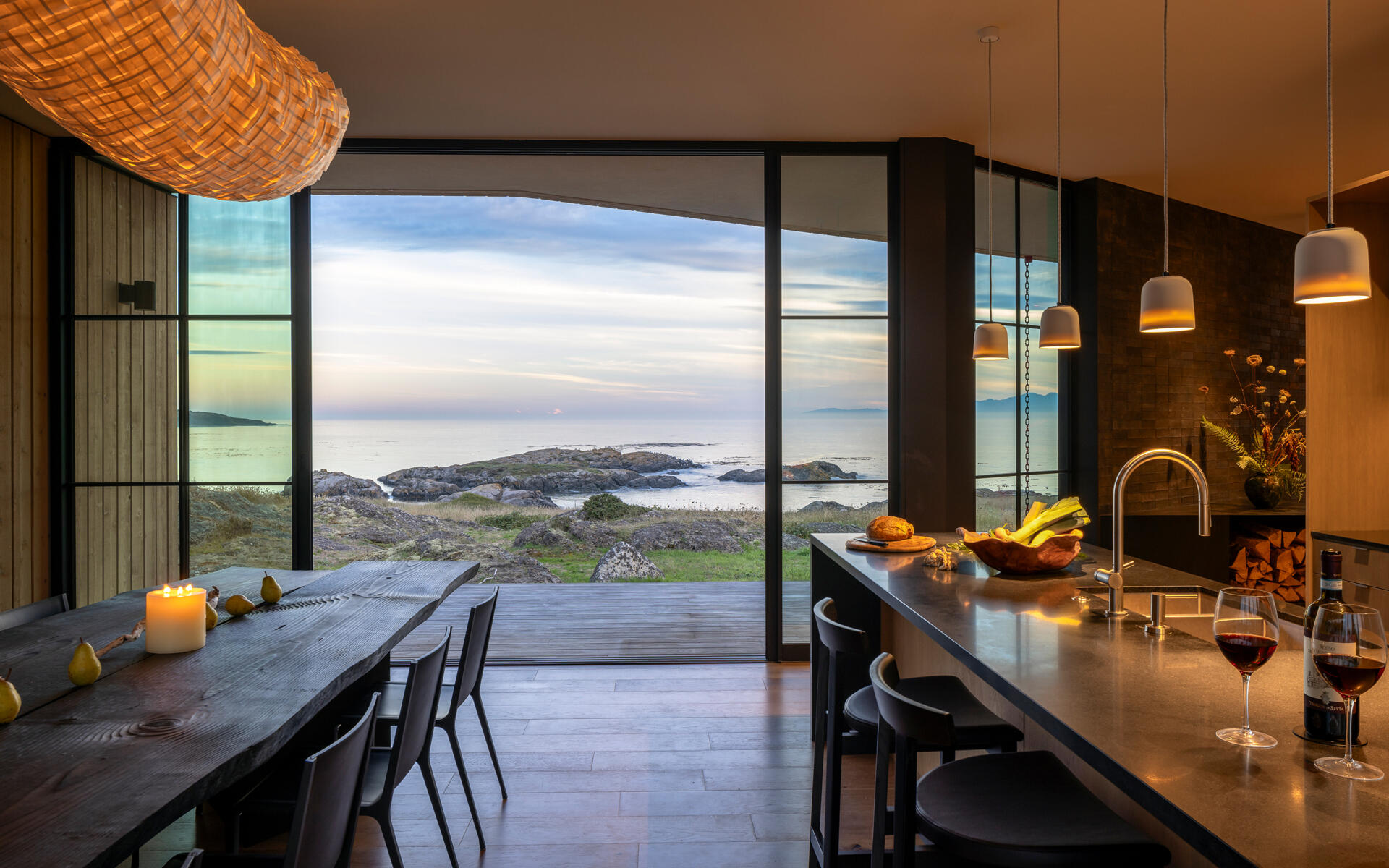
Furniture is arranged to face the views, whether that’s the open water or the sculptural rock formations nearby. Large sliding glass doors open the space entirely, allowing fresh air and ocean sounds to move freely through the home.
A Table That Anchors the Space
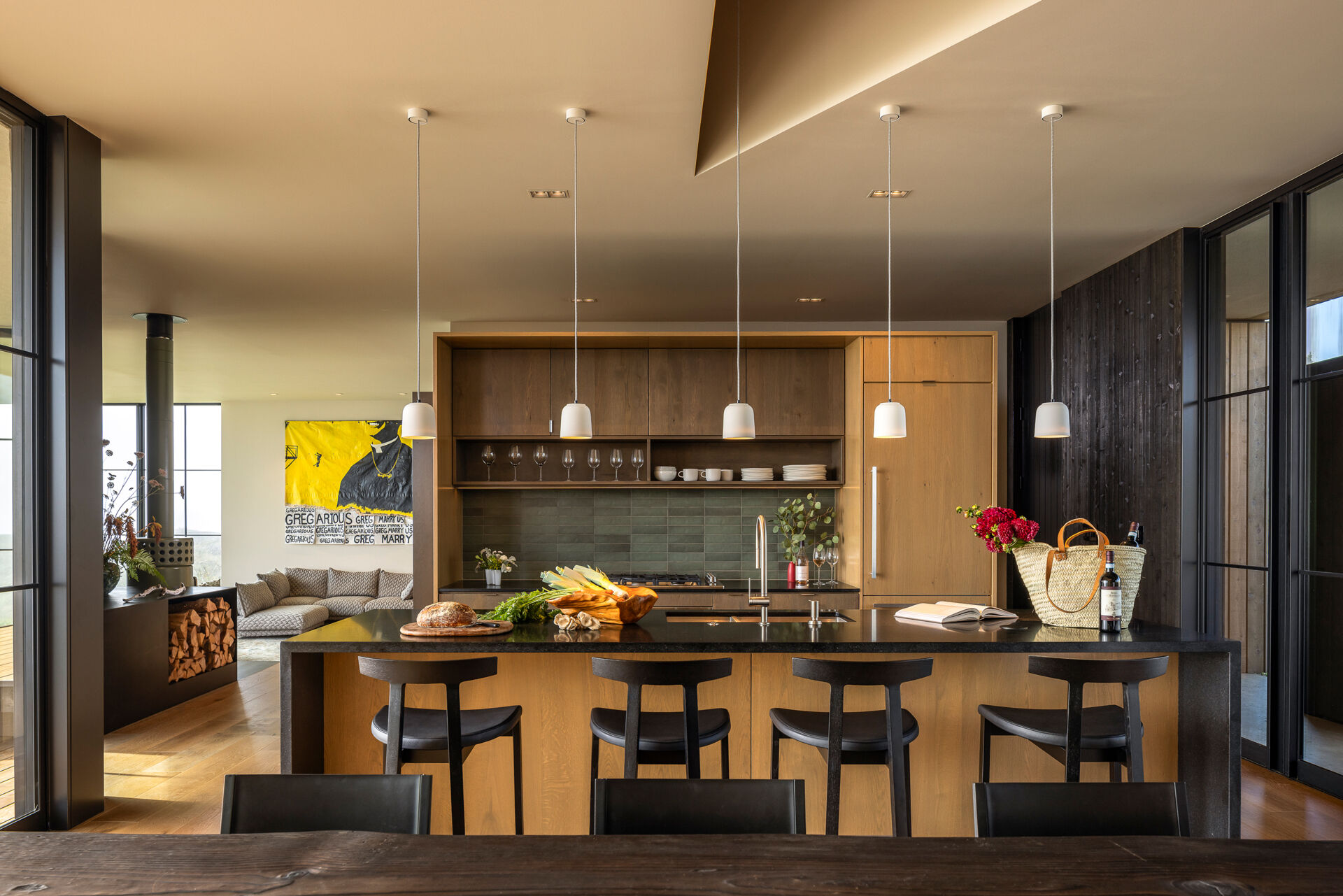
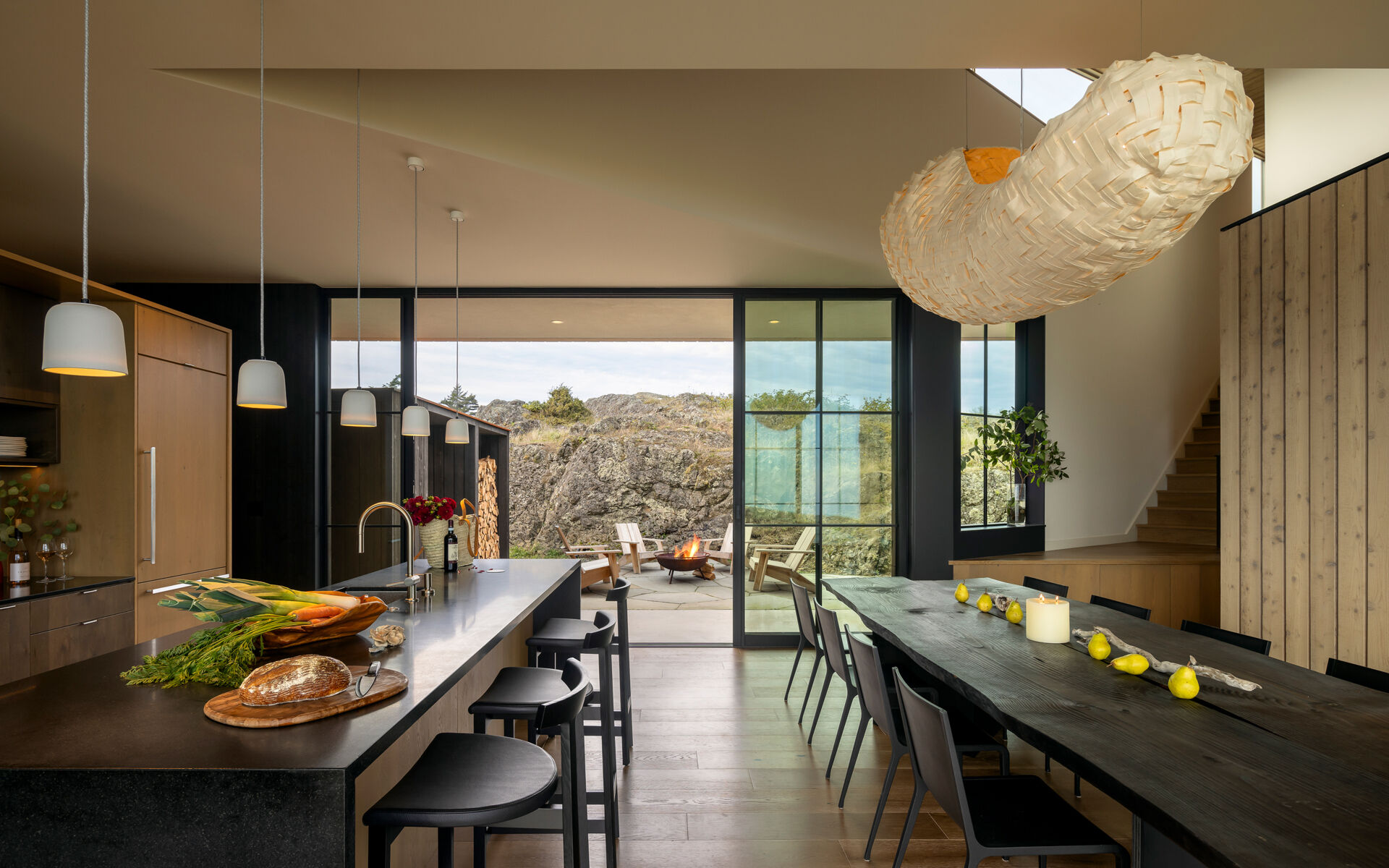
At the center of the open-plan layout sits an 11-foot carbonized wood dining table. It acts as both a gathering point and a visual link to the rugged shoreline outside.
The kitchen flows naturally from this space, keeping everything connected and open. It’s designed for hosting, whether it’s a quiet meal or a full house of guests.
A Sheltered Outdoor Room
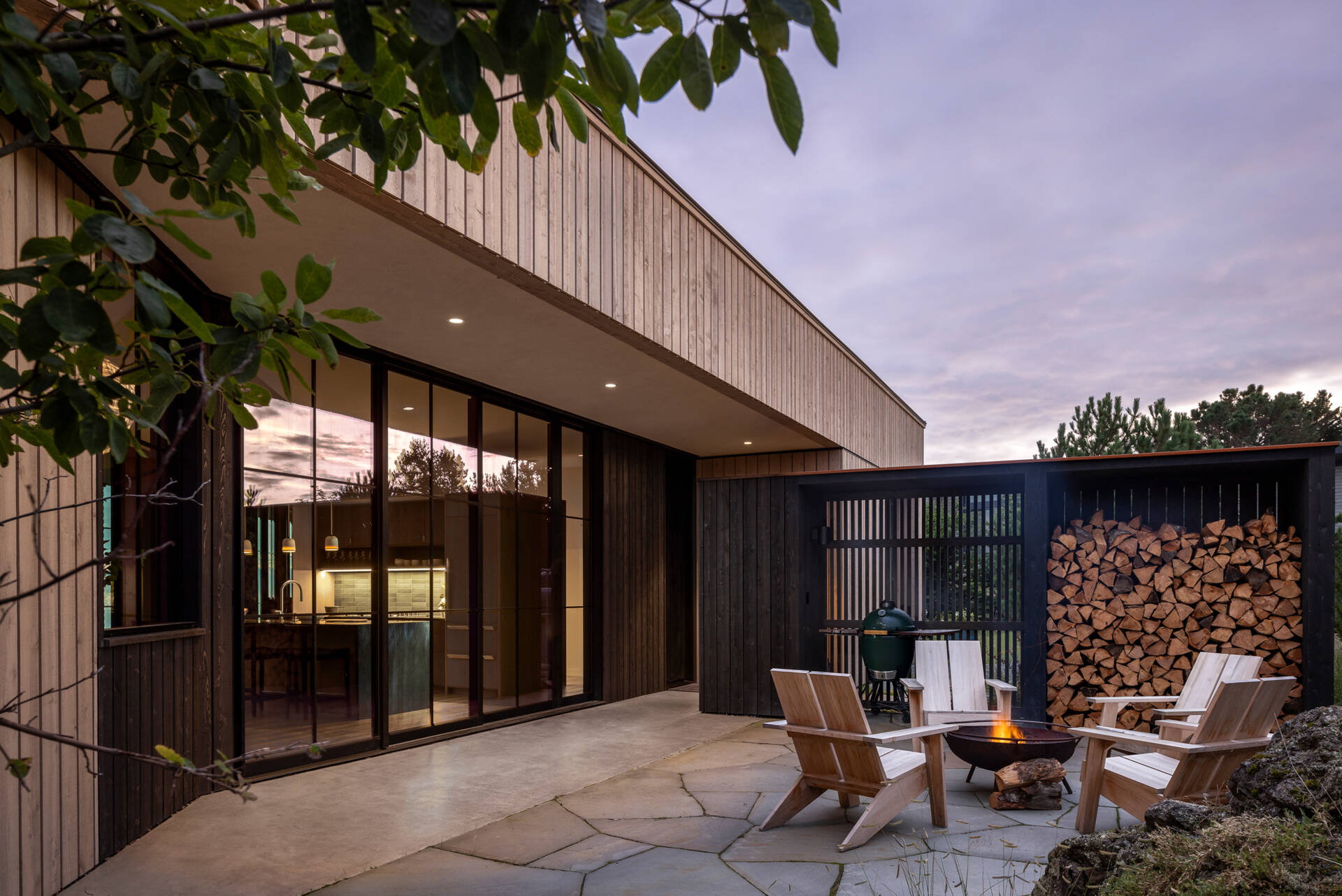
One of the most unique features of the home is the terrace formed between the house and the rock. This outdoor space is naturally protected from the wind, making it usable even in tougher weather.
It becomes an extension of the living areas, complete with a fire bowl that adds warmth and draws people outside, even as the coastal air cools.
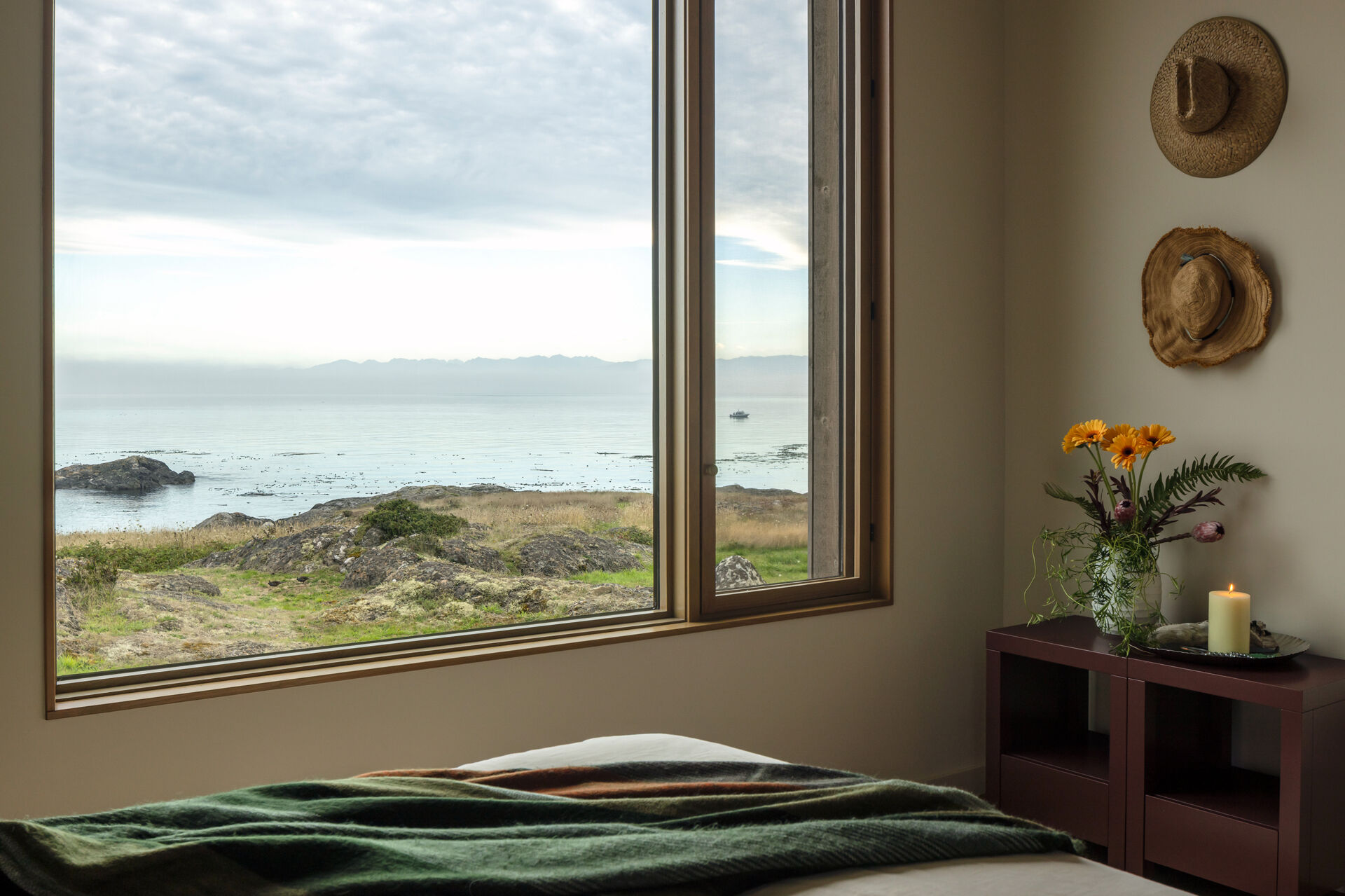
Grounded and Private
Located on the ground floor, the primary bedroom offers privacy and easy access to the main living areas. Like the rest of the home, it keeps materials simple and tones muted, letting the natural surroundings take the lead.
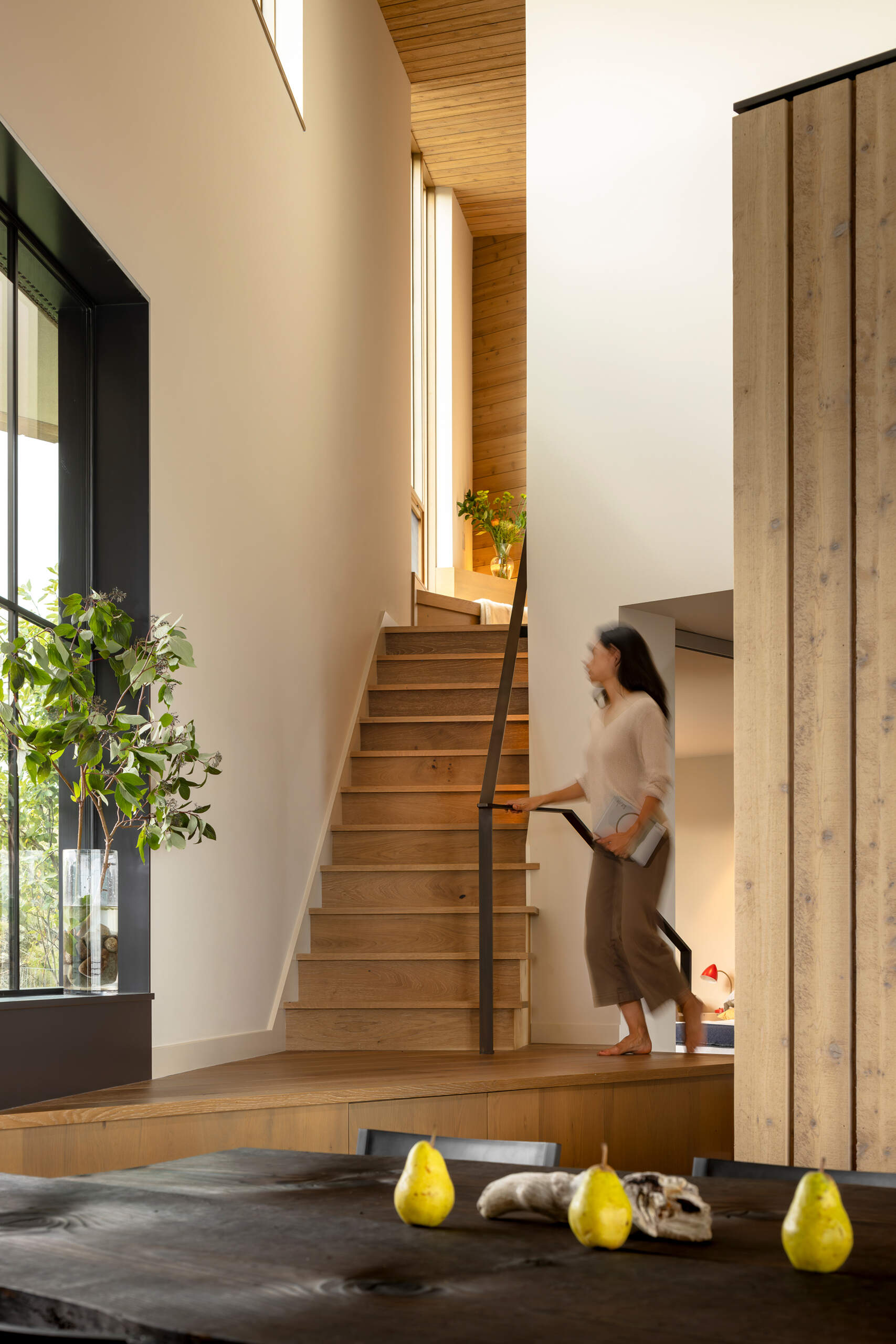
A Simple Transition Between Levels
Back inside, the stairs connect the grounded, solid feel of the lower level with the lighter, more elevated spaces above. Positioned efficiently within the plan, they maintain the clean flow of the interior without interrupting sightlines.
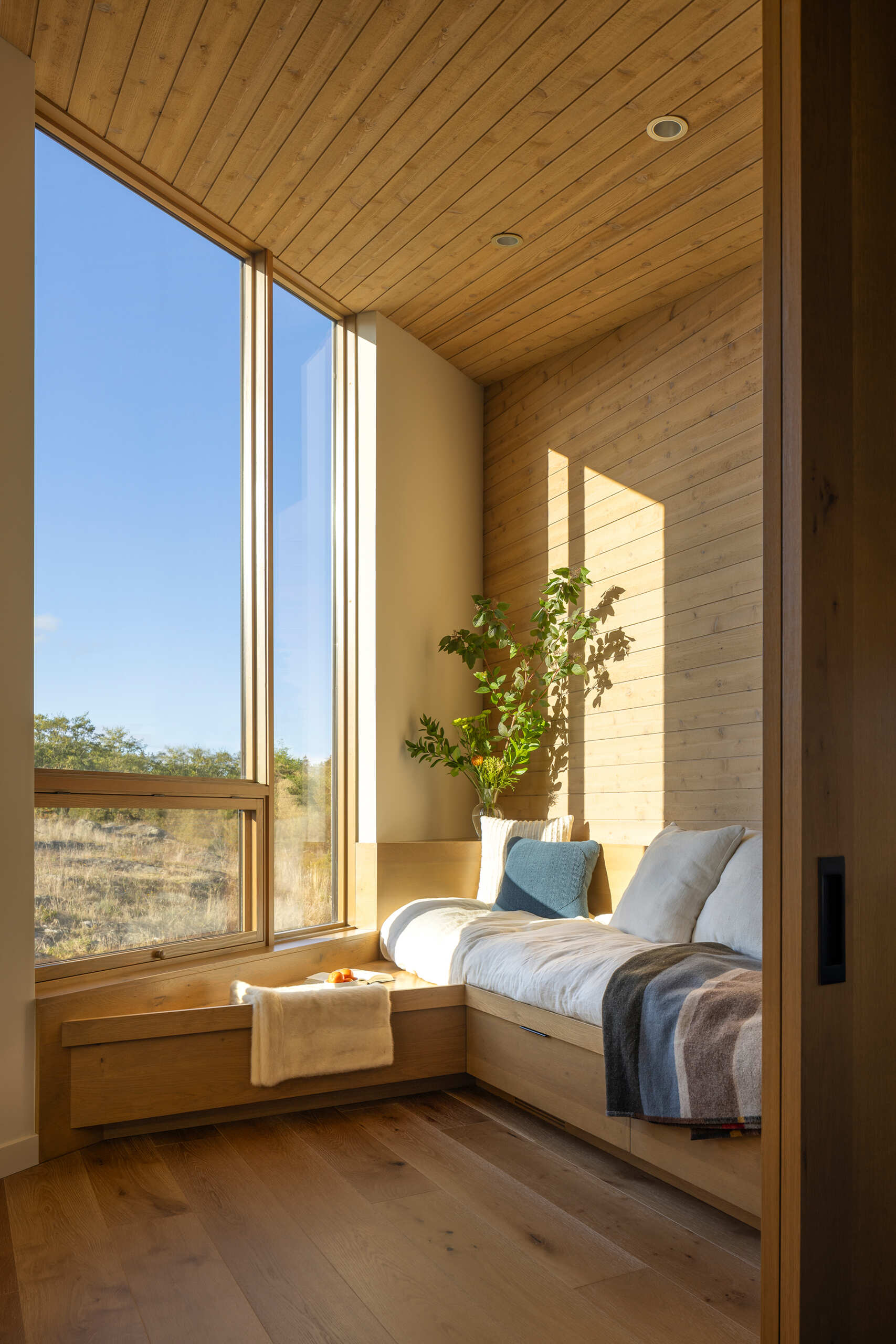
A Quiet Spot With a View
Tucked into a nook within the layout, the daybed offers a place to pause. It’s positioned to take advantage of the surrounding views, making it an easy spot to read, rest, or simply watch the changing light across the landscape.
A Loft Space Designed for Guests
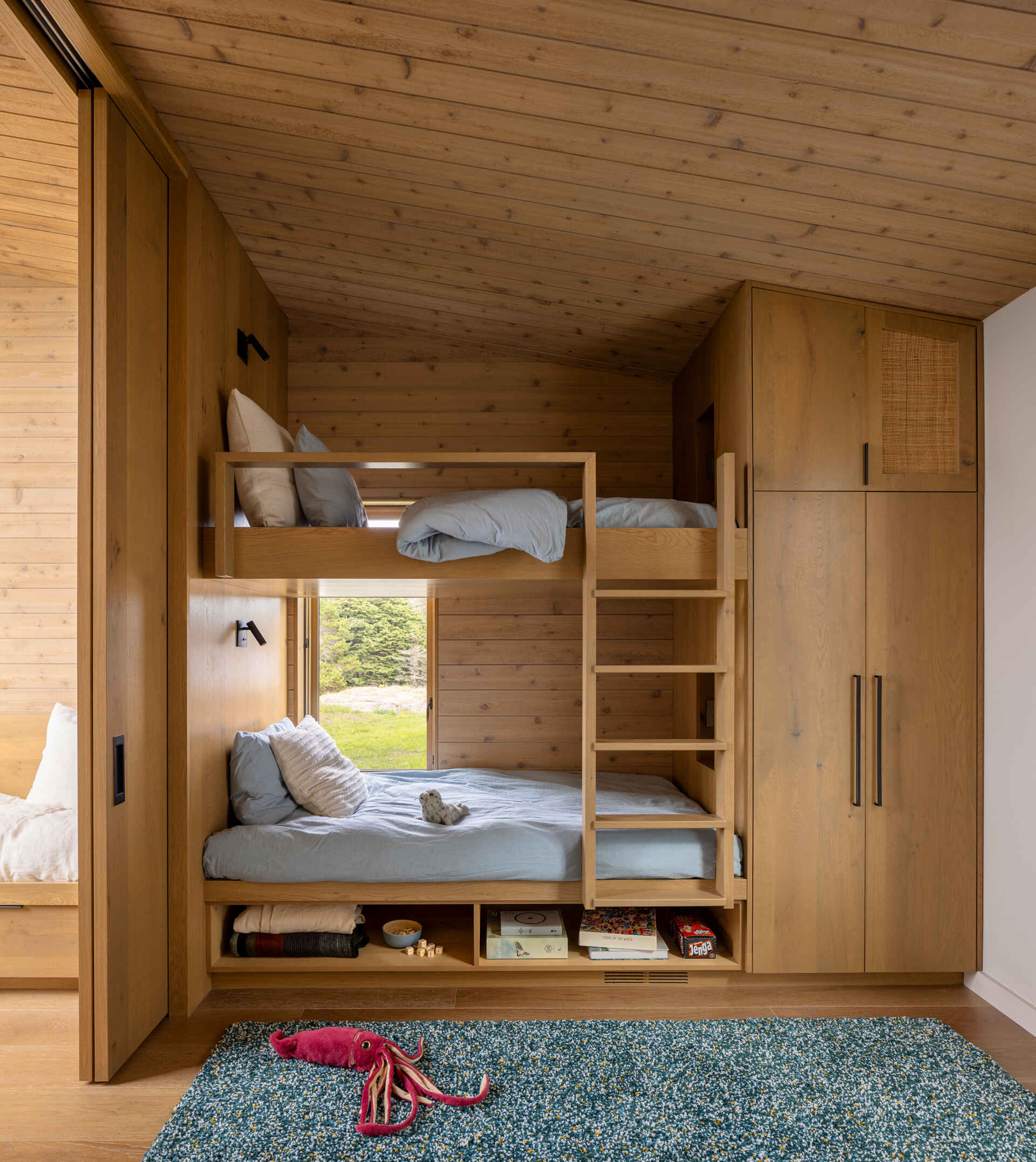
Upstairs, a loft suite includes built-in bunk beds and storage. This space looks out over the top of the rock formation, offering a completely different perspective of the site. It’s designed with flexibility in mind, perfect for hosting family or friends.
Subtle Materials, Lasting Comfort
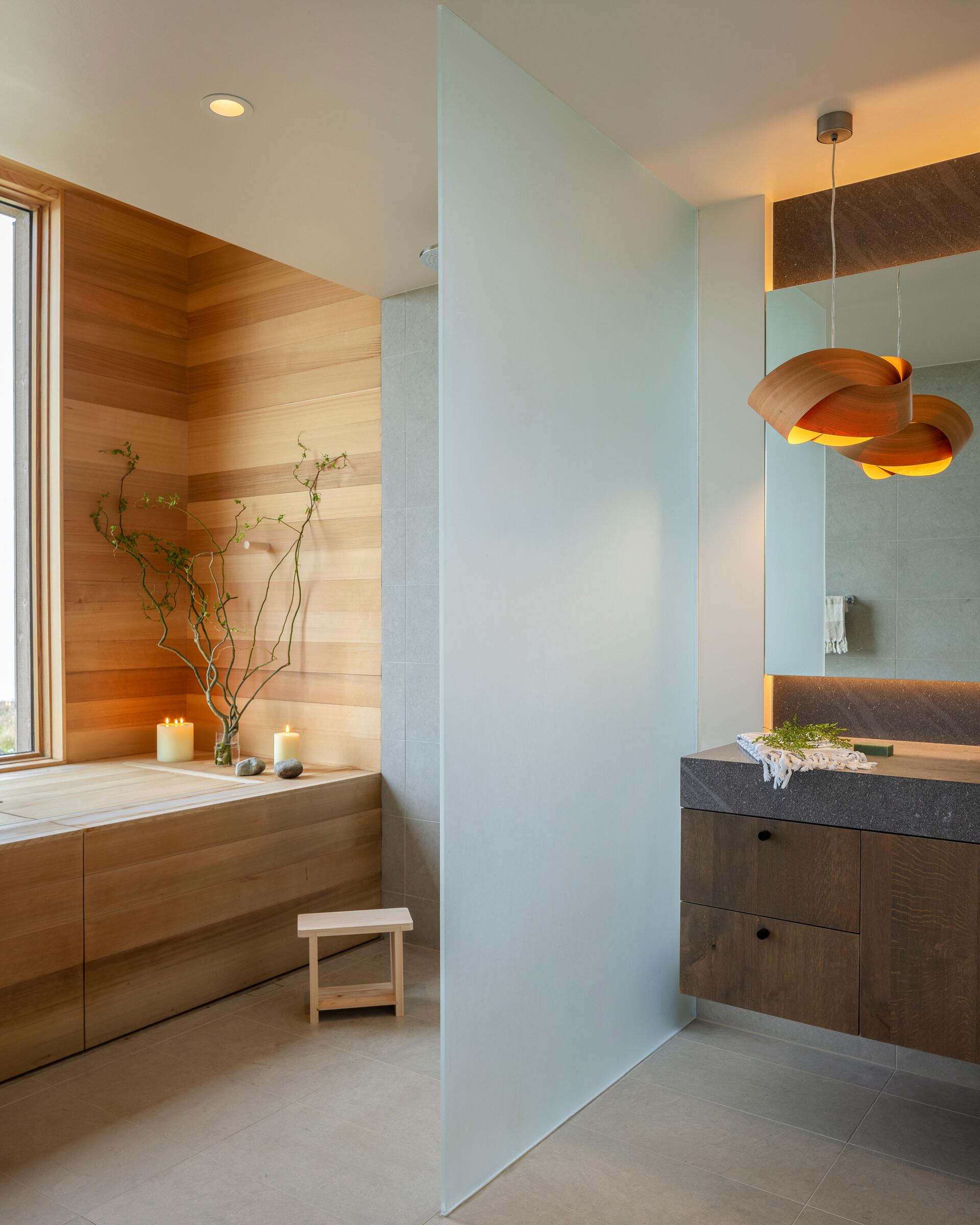
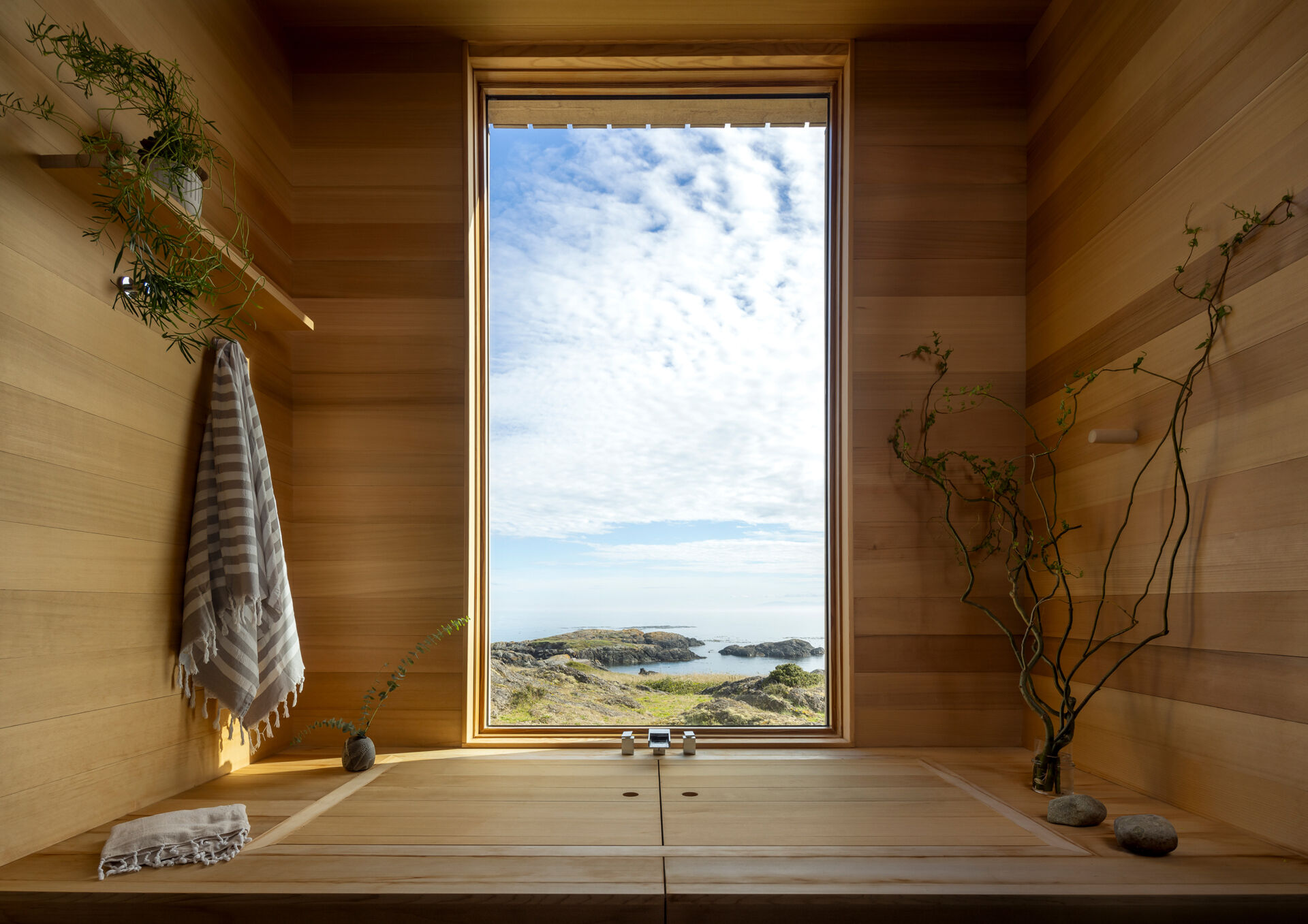
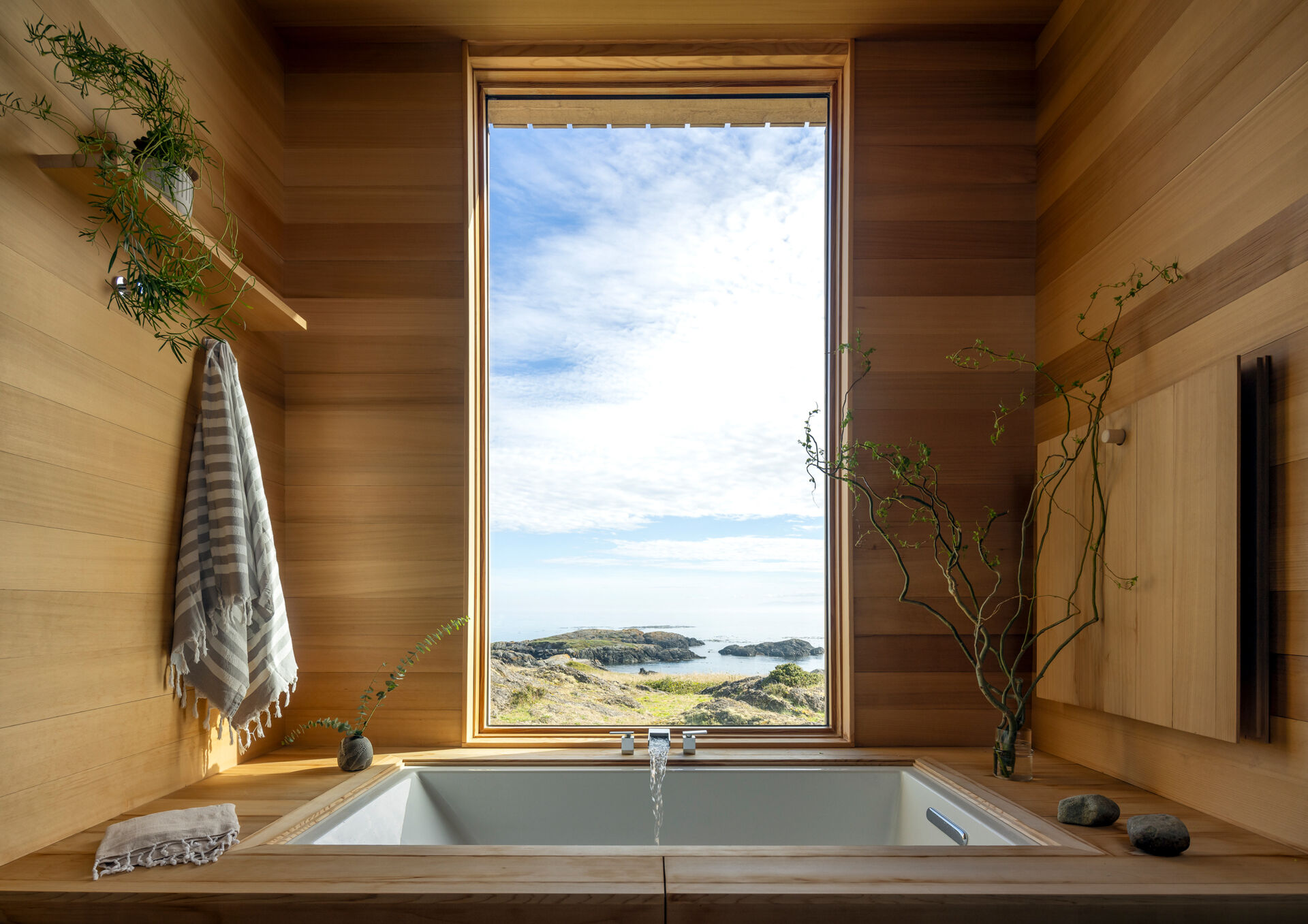
The bathroom continues the same material palette found throughout the home, with a built-in soaking tub hidden beneath a wood cover and positioned beneath the window.
This home on San Juan Island works with its surroundings, using form, materials, and placement to handle wind, exposure, and terrain. At the same time, it looks ahead. With high-performance insulation, an airtight envelope, heat-recovery ventilation, and an 8 kW solar array, the house exceeds the 2030 Challenge for energy performance.
What starts as a getaway becomes something more lasting, shaped by both the environment and the people who return to it again and again.