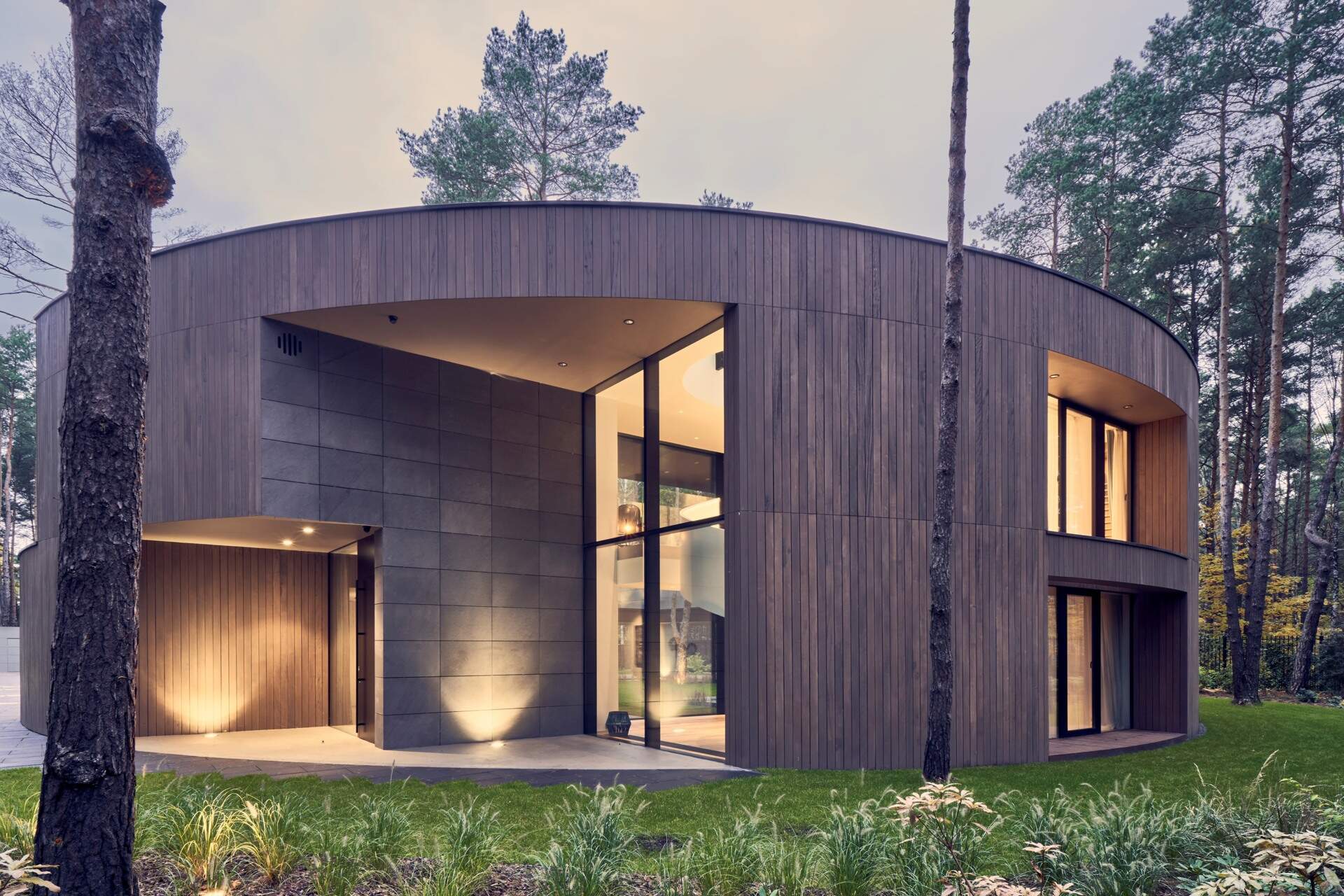
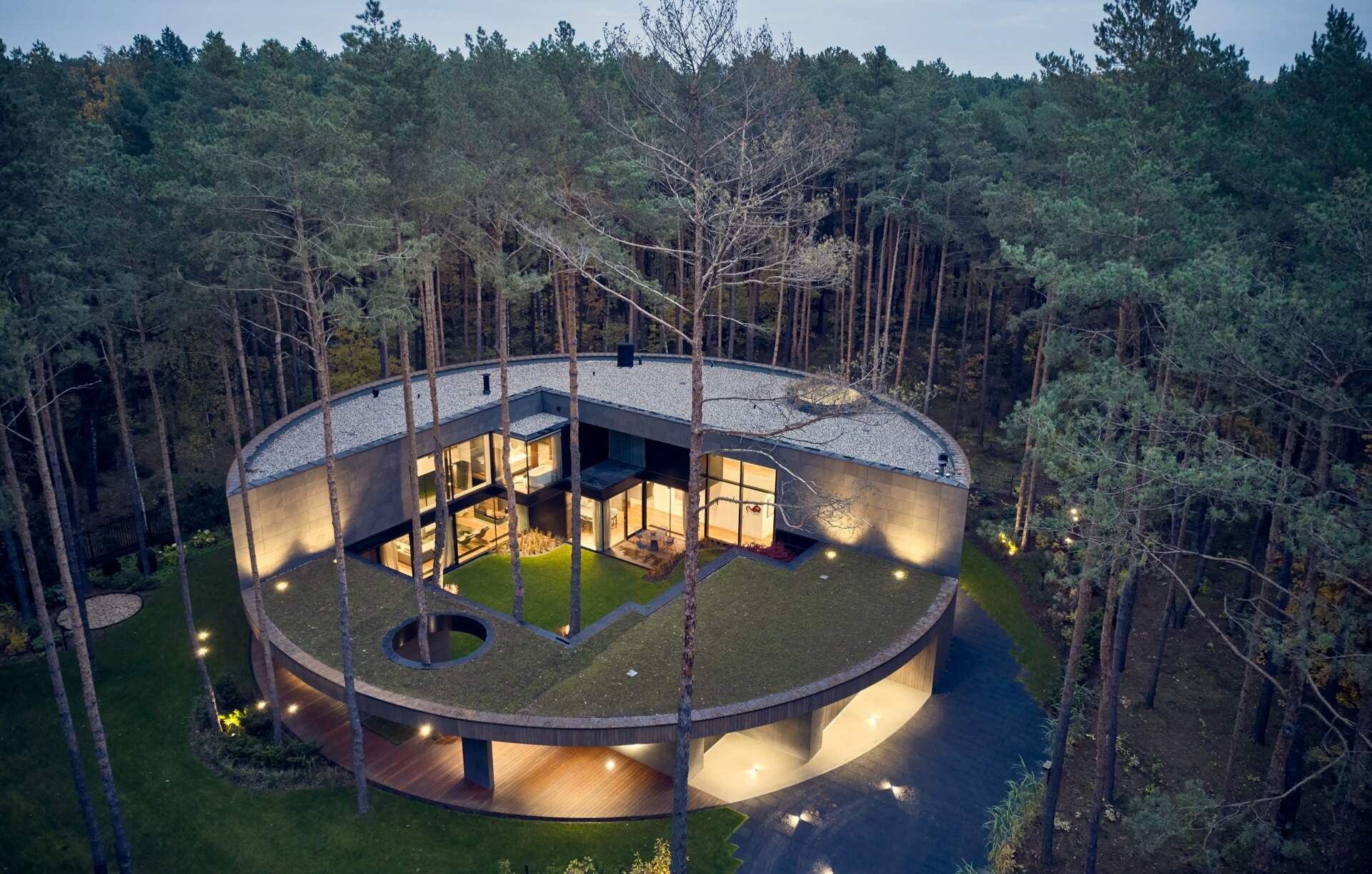
In Izabelin, Poland, surrounded by dense pine forest near Kampinos National Park, architect Przemek Olczyk of Mobius Architekci designed a home shaped by a circular idea.
Created for an art collector, the house draws from gallery spaces while staying open to nature. From the outside, large windows hint at what’s happening within, offering glimpses into a home where architecture and landscape are constantly in view.
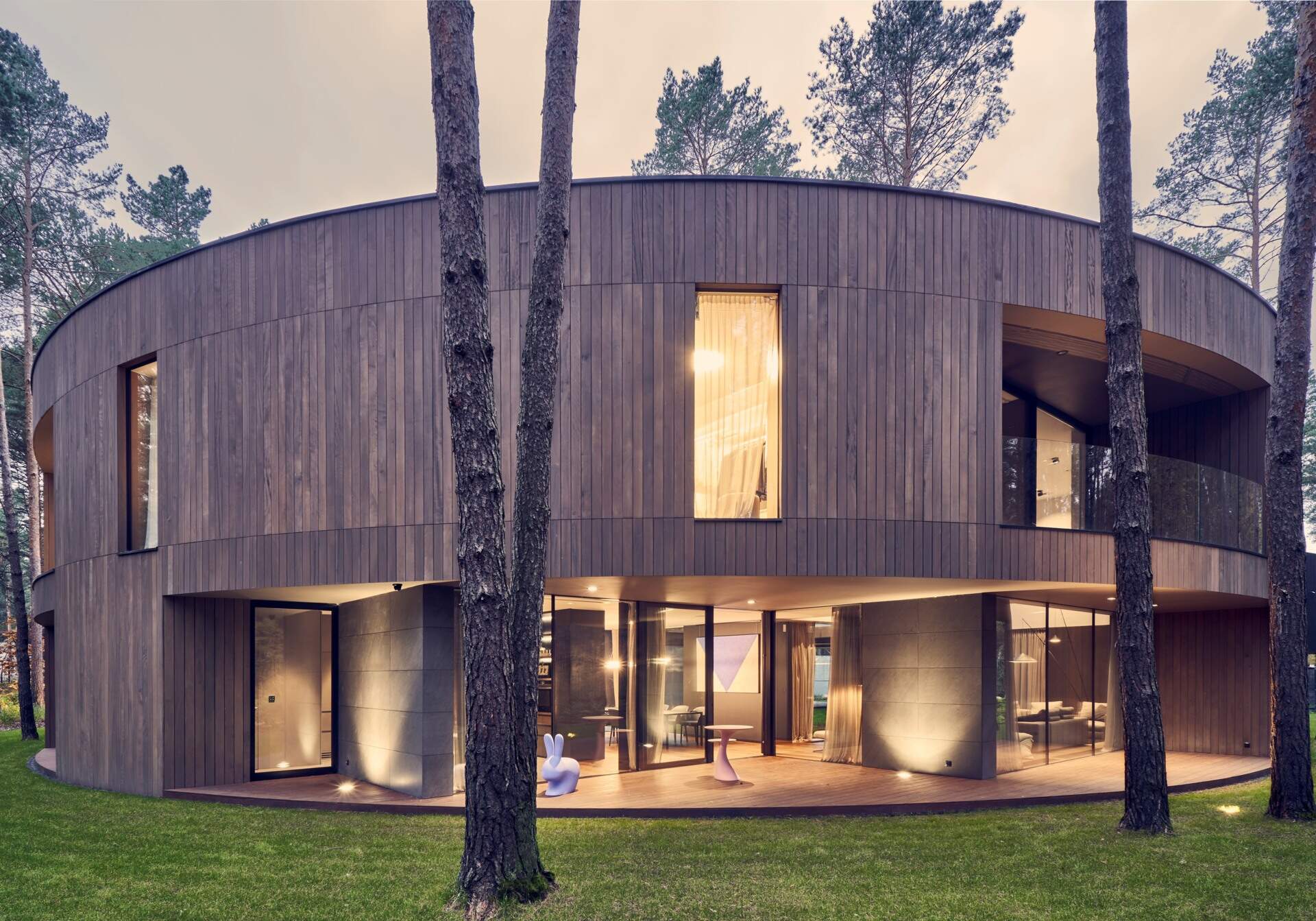
A Circular Form That Frames the Site
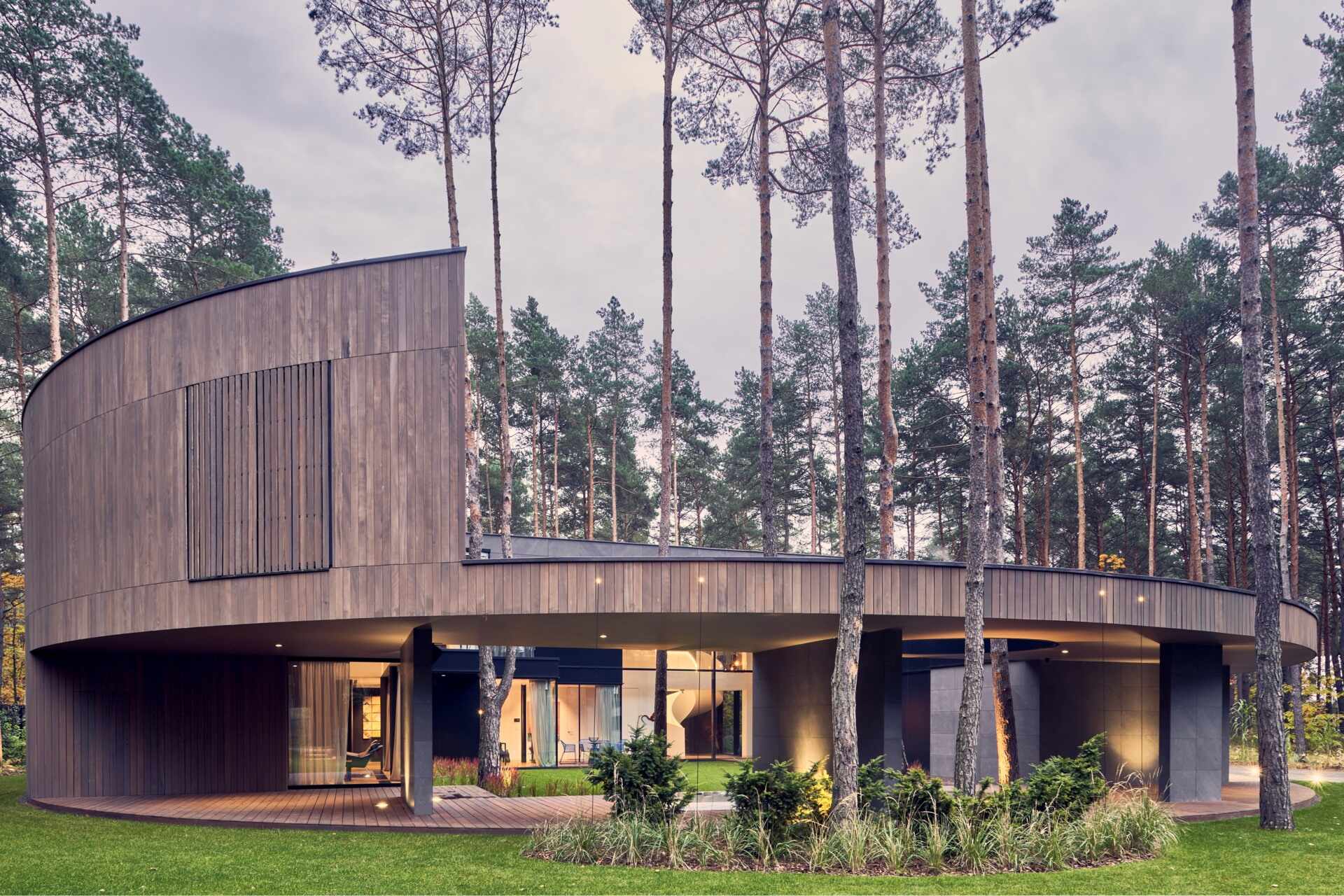
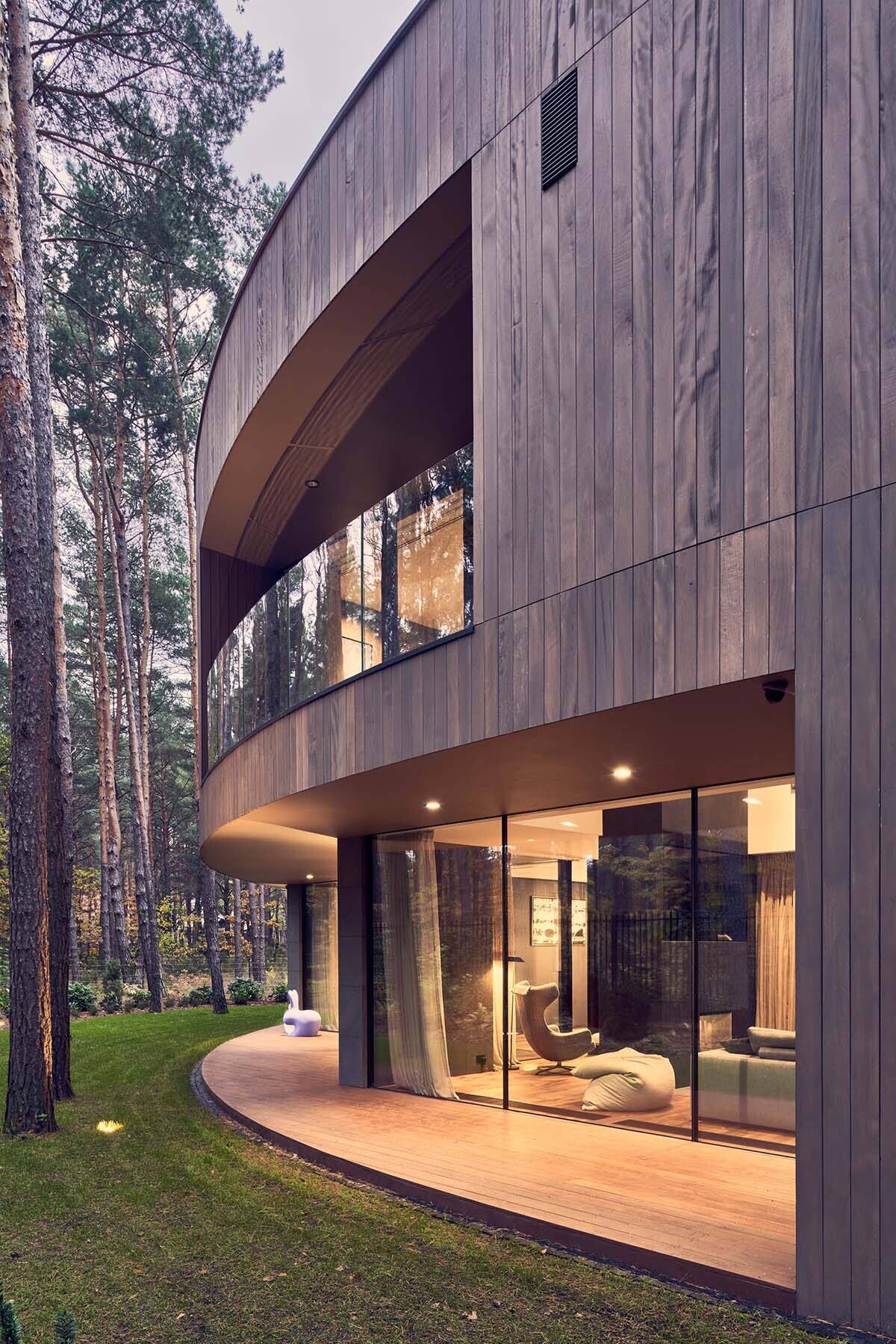
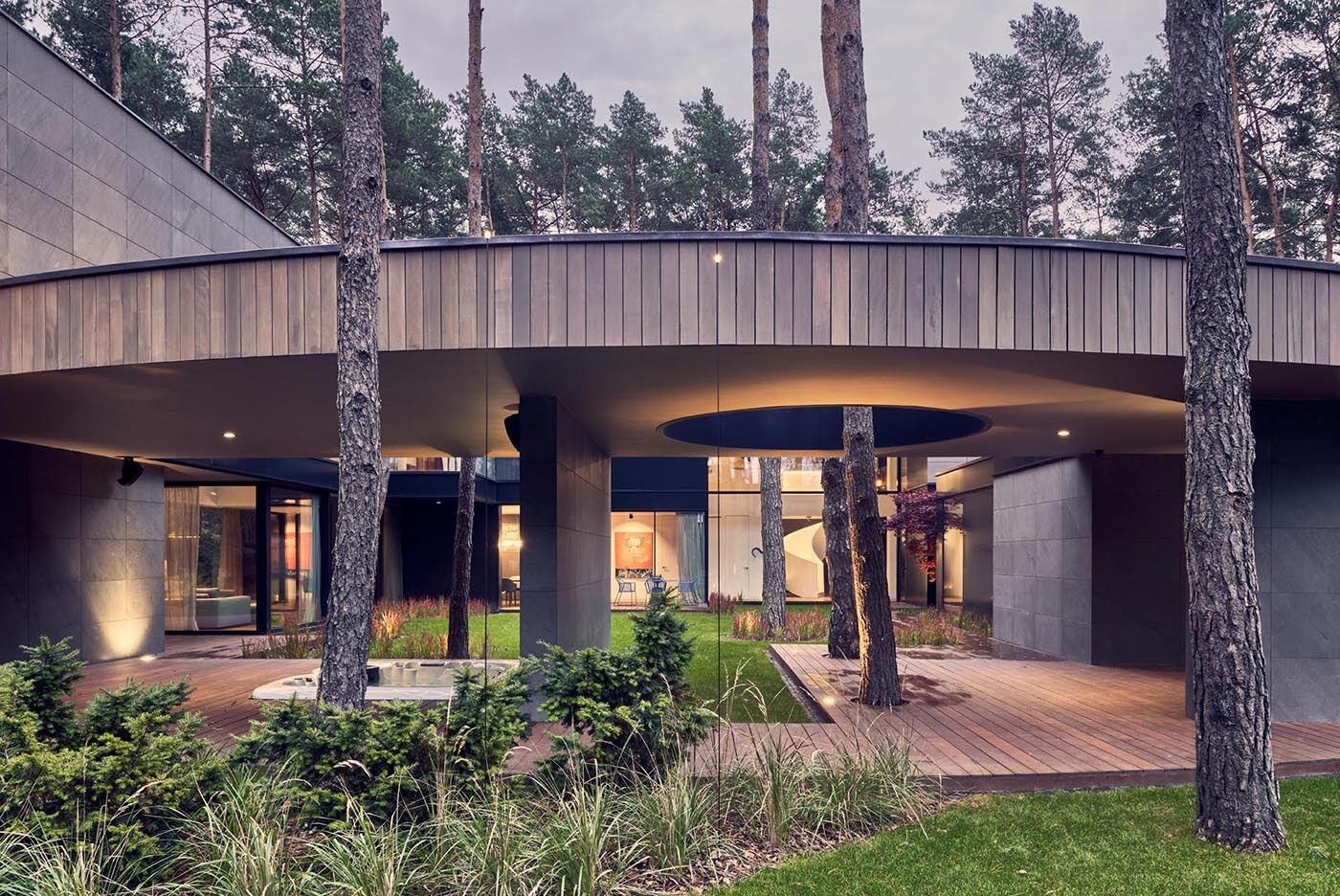
At first glance, the home’s defining feature is its oval form. An overhanging frame wraps around parts of the structure, enclosing areas like the garage and an open spa space into one continuous gesture.
The scale feels unexpected. The house is not oversized, yet the circular shape gives it a strong presence among the trees. It reads as one unified volume, softening the edges typically seen in residential design.
Wrapped in Wood and Set Among Pines
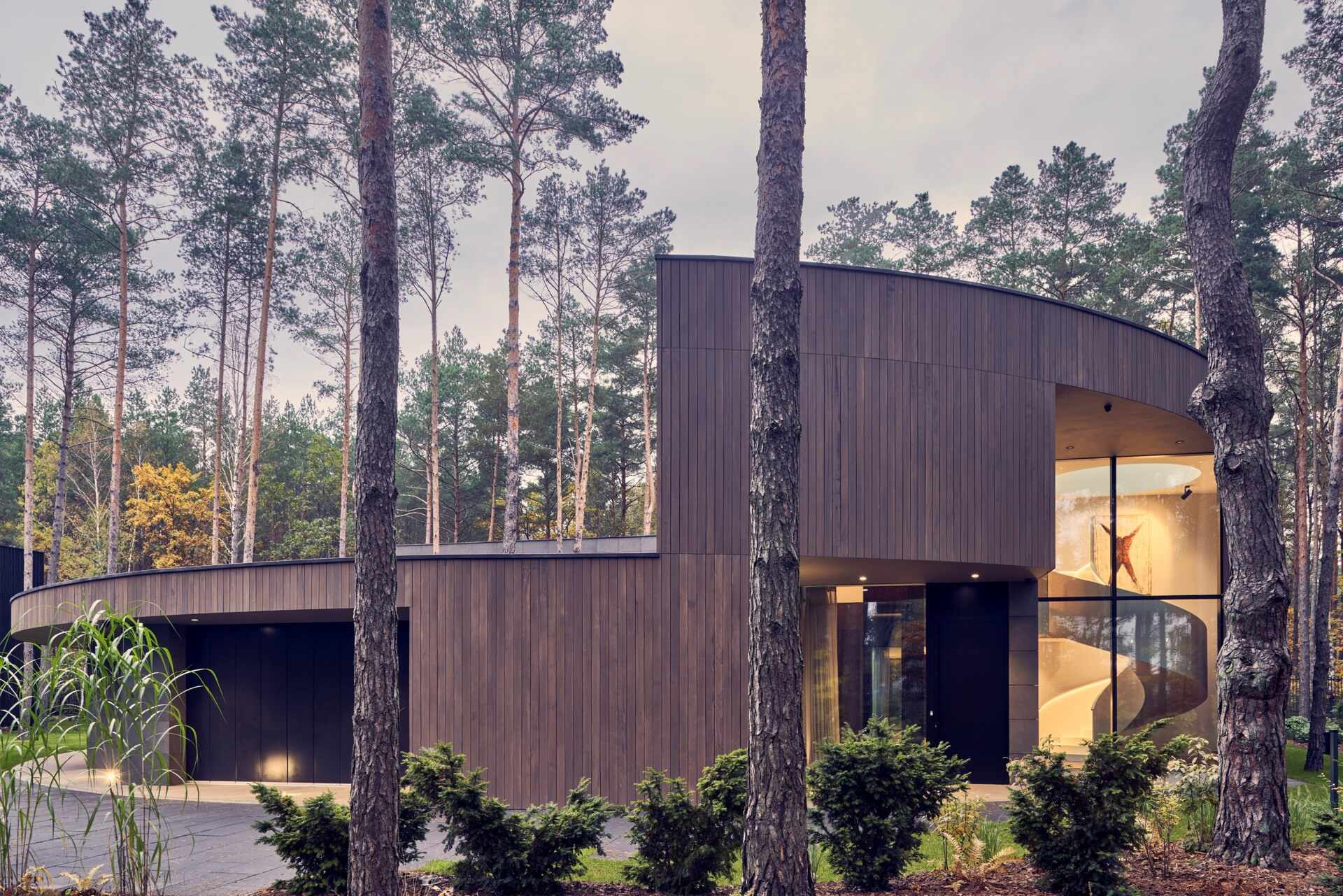
The structure is built from reinforced concrete, then clad in vertical panels of Okume wood sourced from West Africa.
This wood, smooth and free of knots, gives the exterior a refined look while helping it sit comfortably within the forest. The tone and texture align with the sandy ground, tall grasses, and surrounding pine trunks, allowing the house to visually merge with its environment.
A Home Organized by Levels
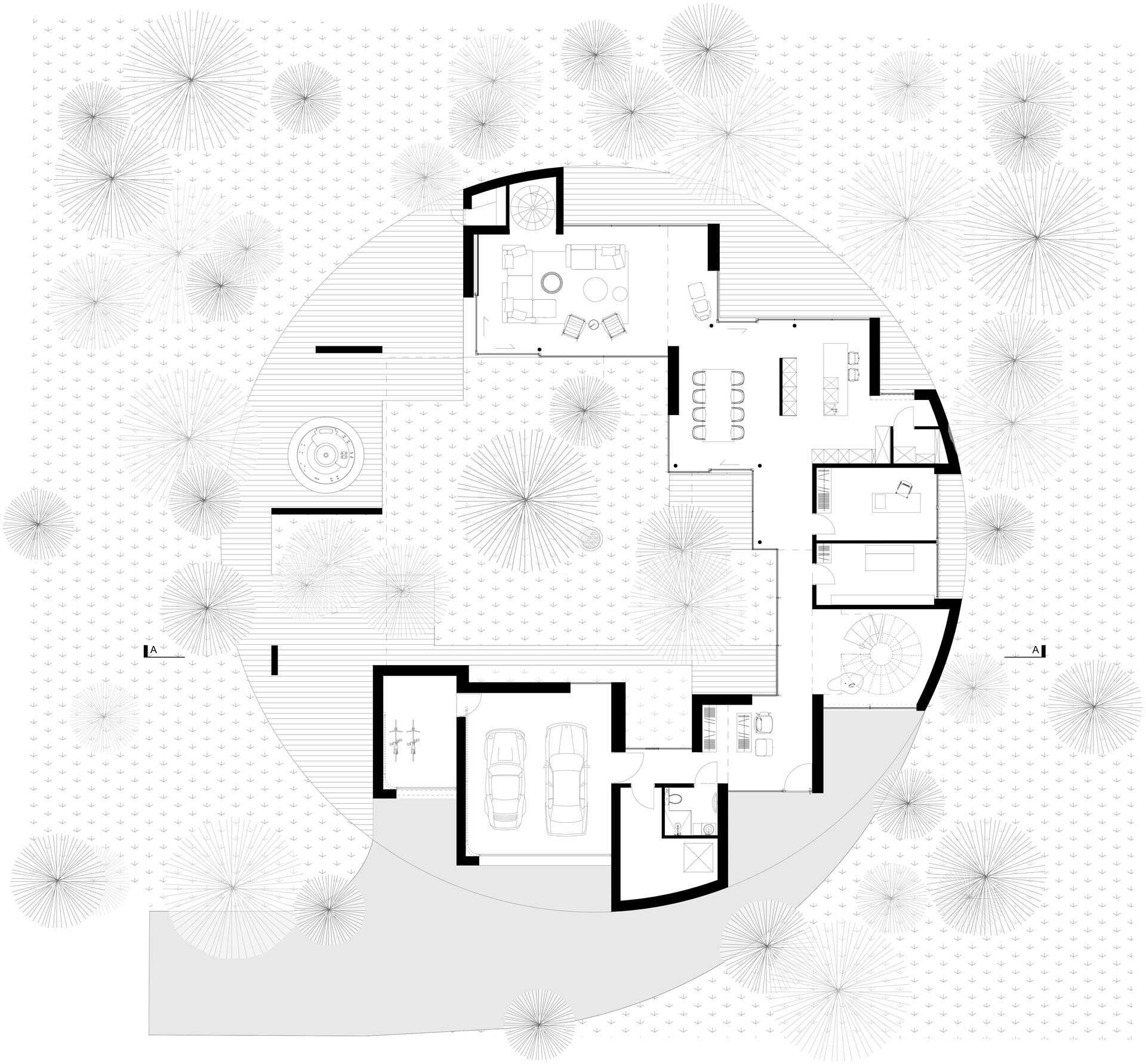
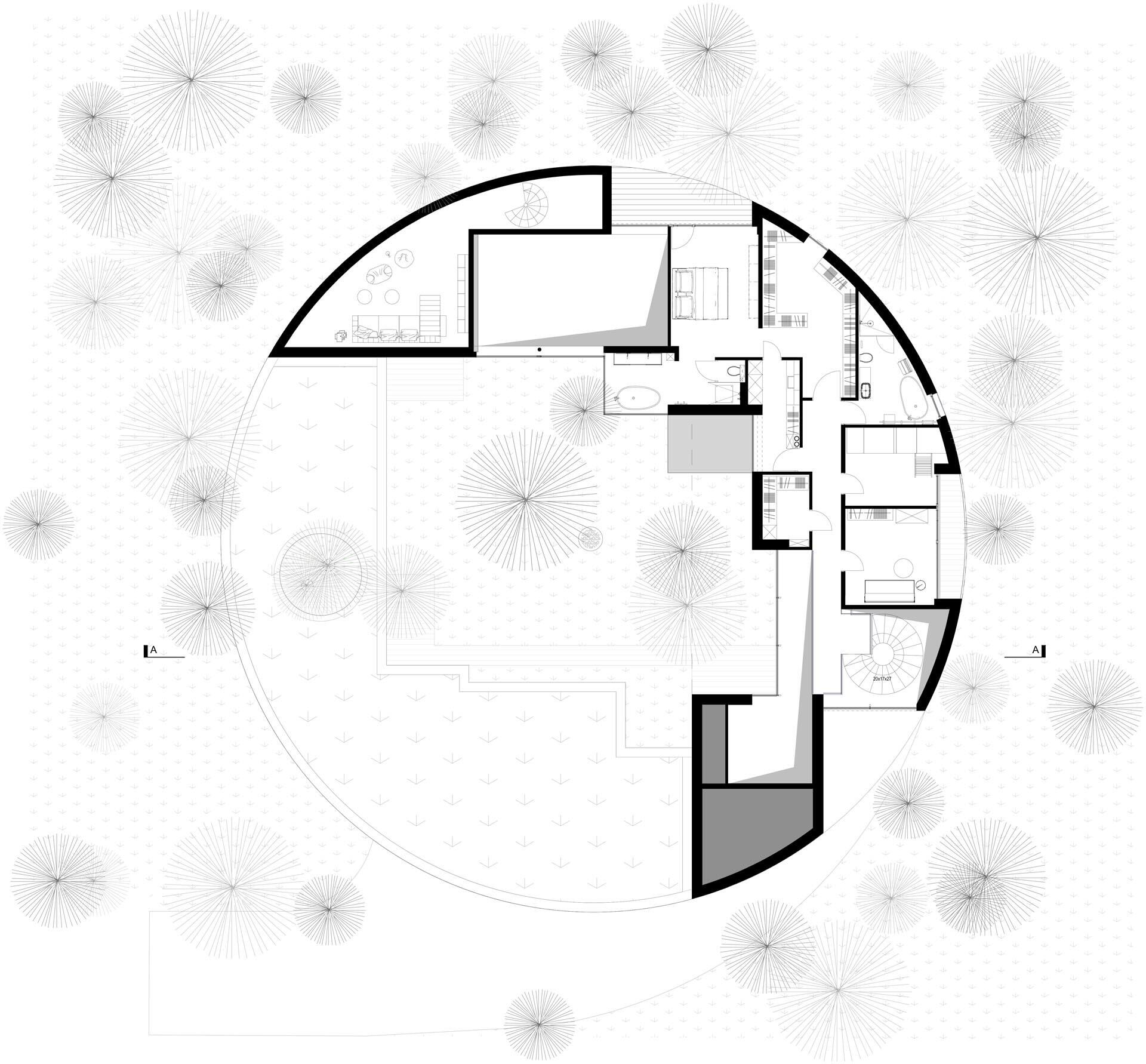
Inside, the layout is straightforward and functional. The first floor is dedicated to shared spaces. This is where daily living unfolds, with open areas designed for gathering. Upstairs, the private rooms provide separation and quiet, creating a clear distinction between social and personal zones.
This division keeps the home easy to navigate while maintaining a sense of balance between openness and privacy.
A Garden at the Center
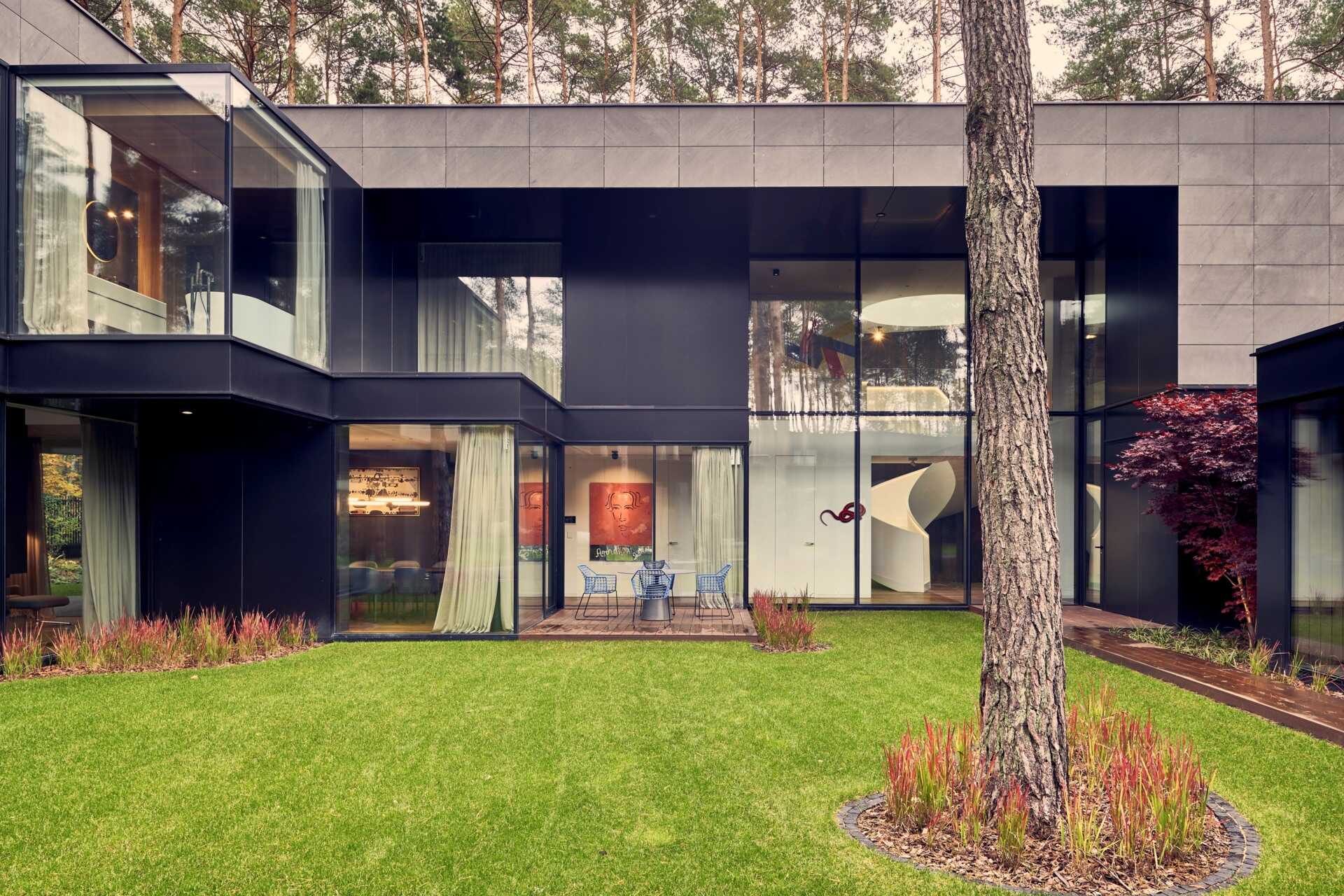
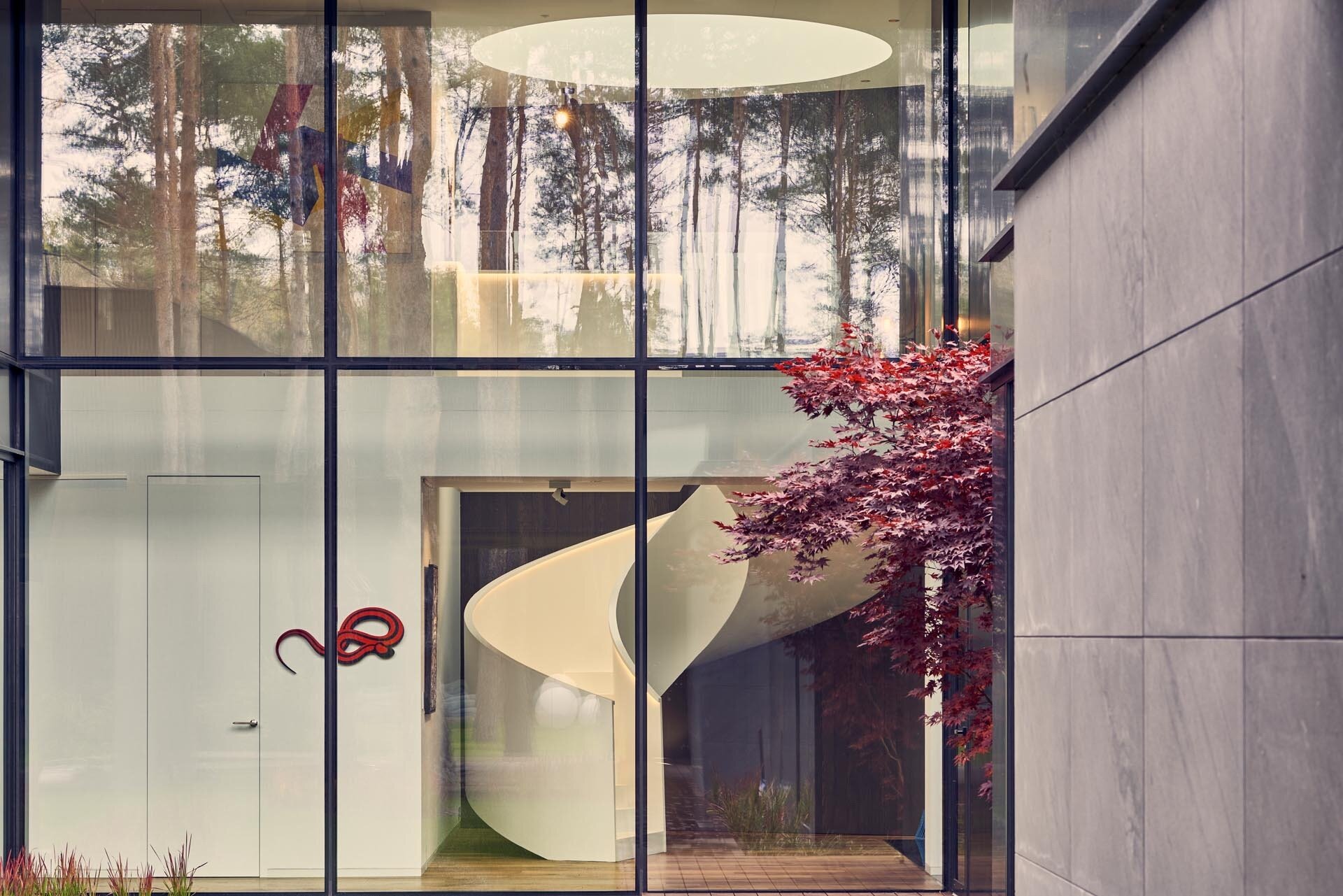
One of the most distinctive features is the central garden. Positioned within the layout, it acts as a green core that brings light and nature into the middle of the home. It also works as a visual anchor, connecting different spaces while offering a place to pause and relax.
The atrium rises upward, allowing daylight to move through the interior and creating a constant connection to the sky and surrounding trees.
Designing Like a Tree Trunk
Przemek Olczyk describes the concept as shaping the home like a large tree trunk. Rooms are carved out as pockets, forming semi-private alcoves with glazing that opens toward the forest. Moving through the house feels similar to walking between trees, with views shifting and unfolding as you go.
This approach creates variety in the interior without relying on excessive detail.
A Living Room Filled With Light
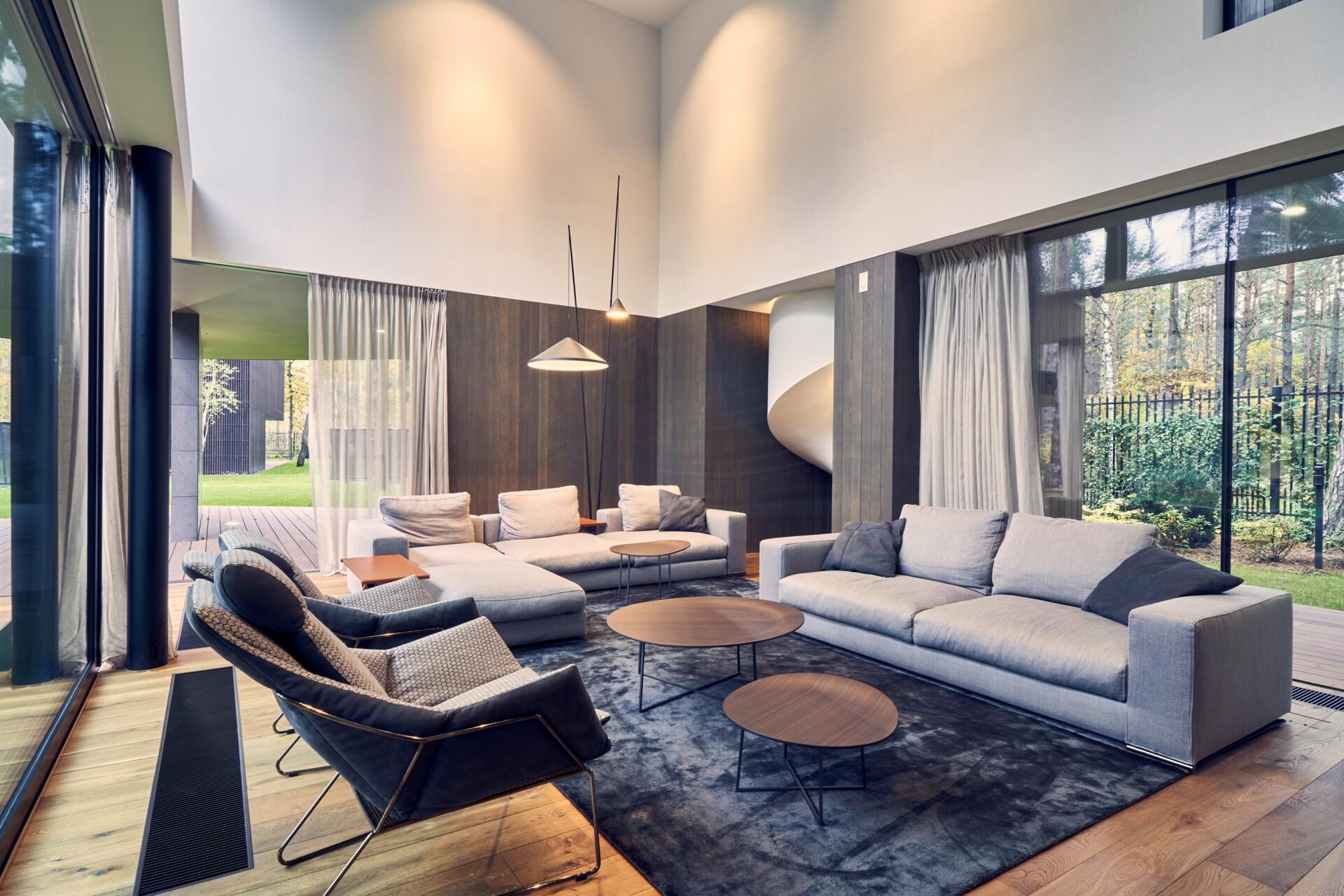
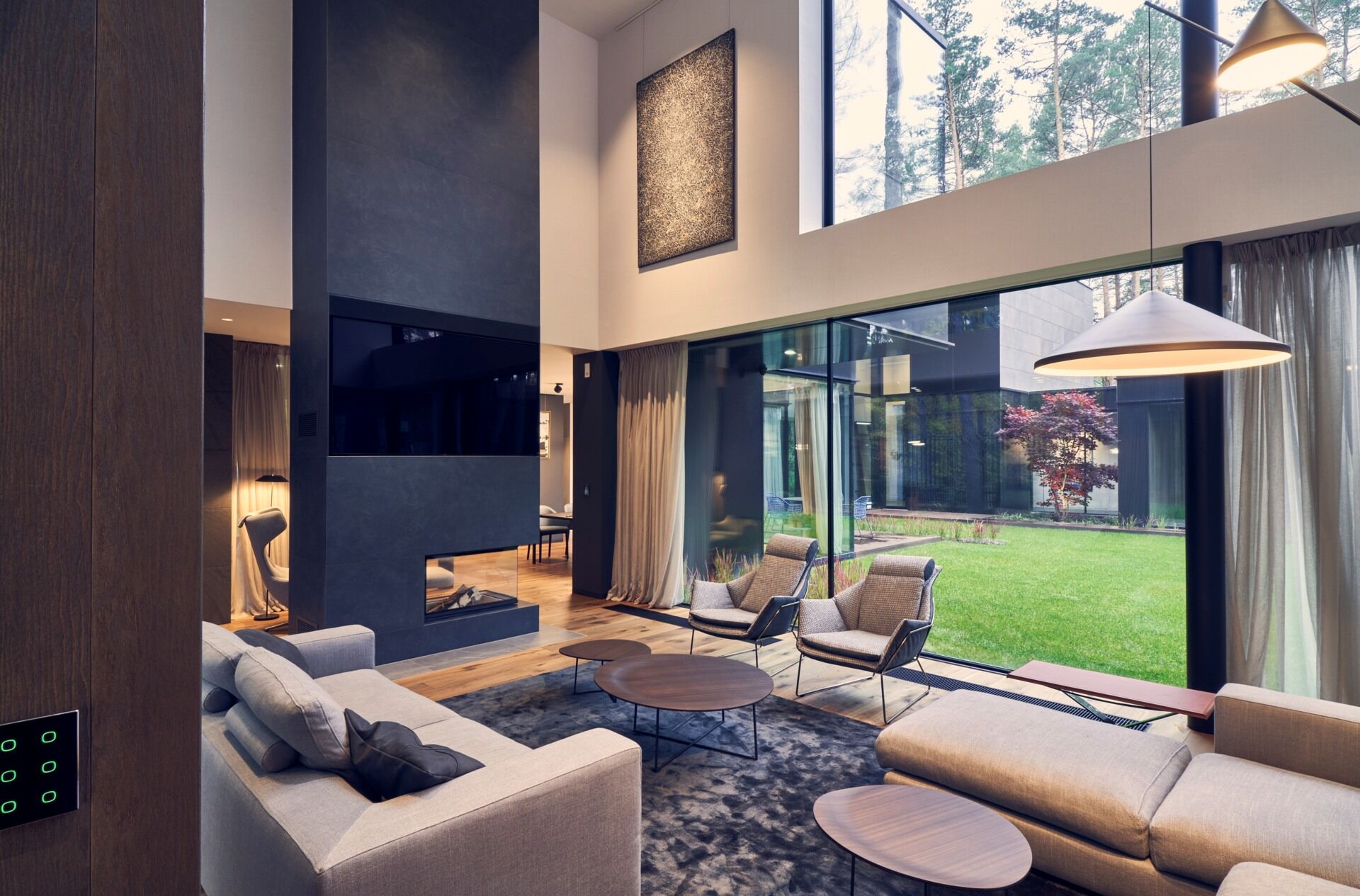
The living room highlights the home’s spatial quality. Warm wood floors run throughout, while expansive windows bring in views from every direction. A double-height ceiling adds volume, making the space feel open and connected vertically as well as horizontally.
Natural light plays a major role here, changing the atmosphere throughout the day.
Dining With the Outdoors
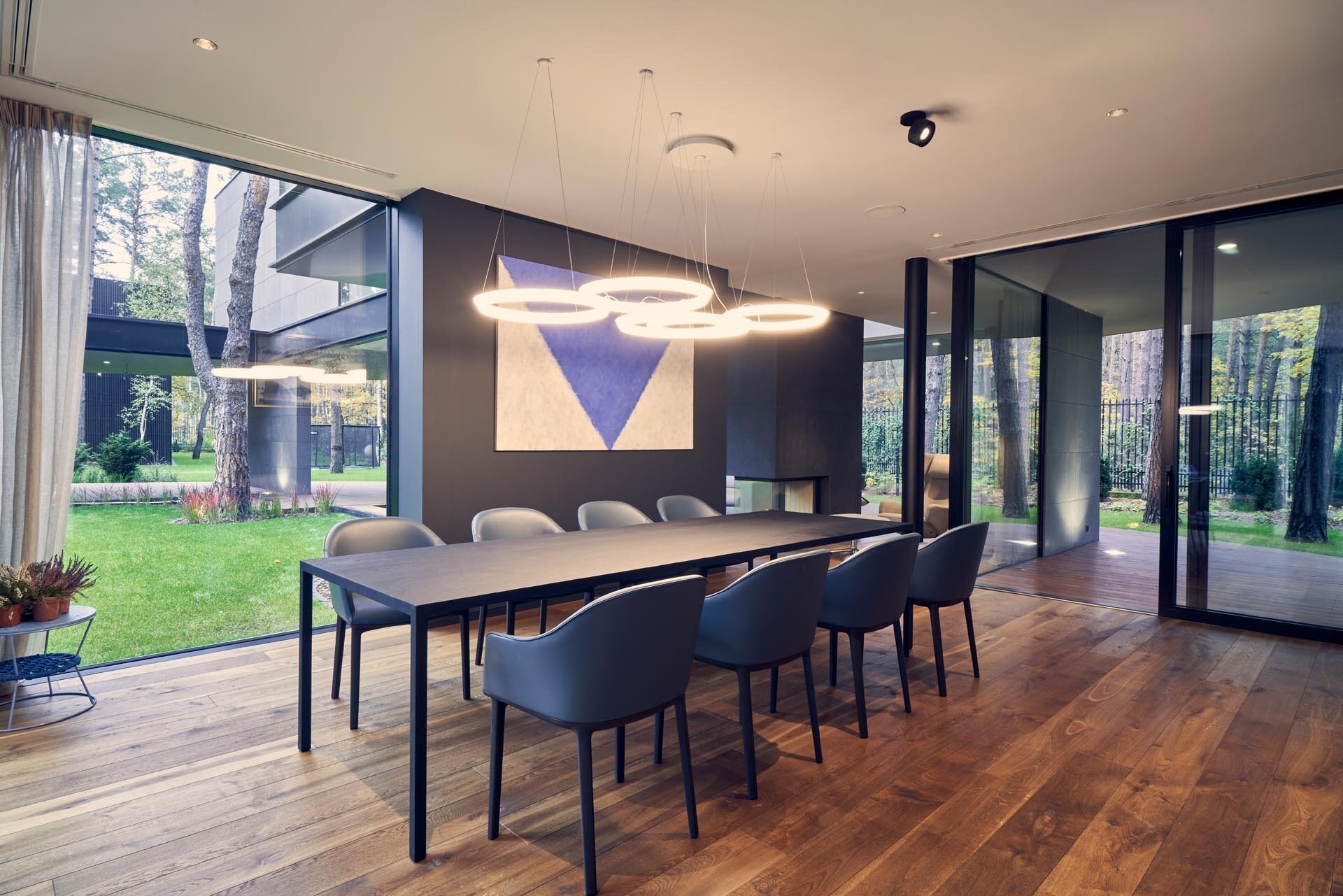
In the dining area, sliding glass doors extend the space outward. When opened, the boundary between inside and outside softens, allowing the forest air and views to become part of the experience. Lighting above the table draws attention to the dining setting, creating a focal point for gatherings.
A Sculptural Staircase as a Centerpiece
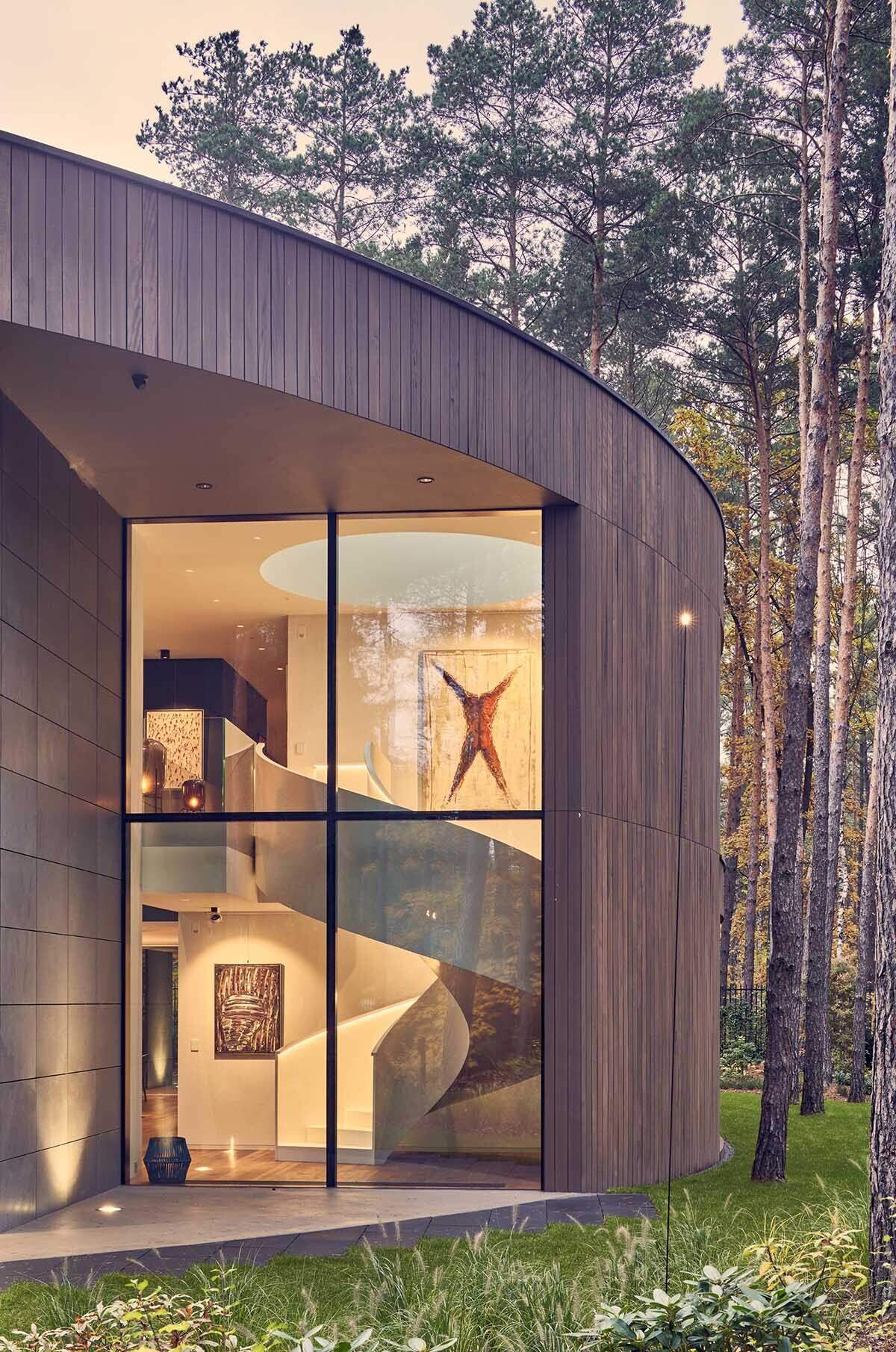
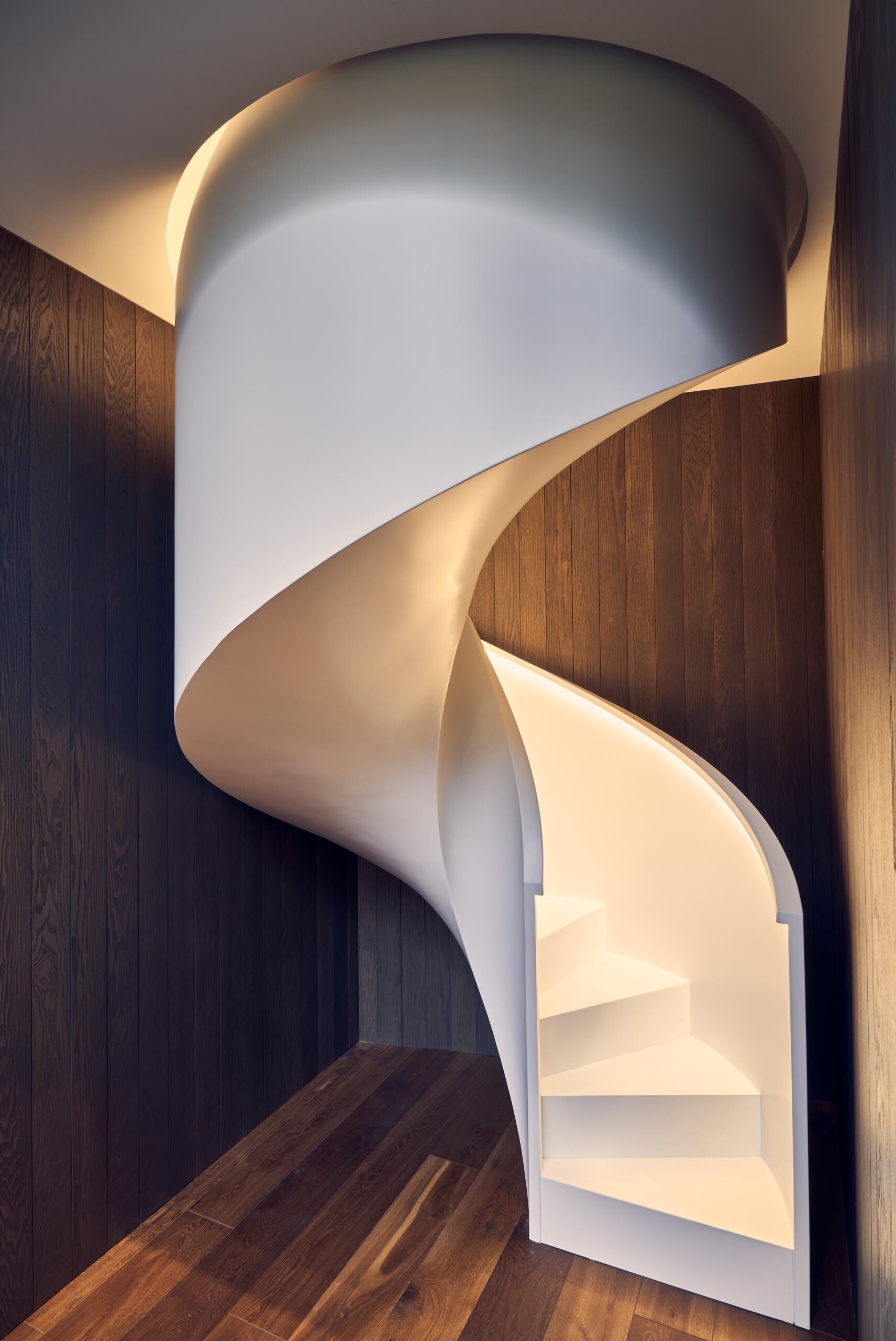
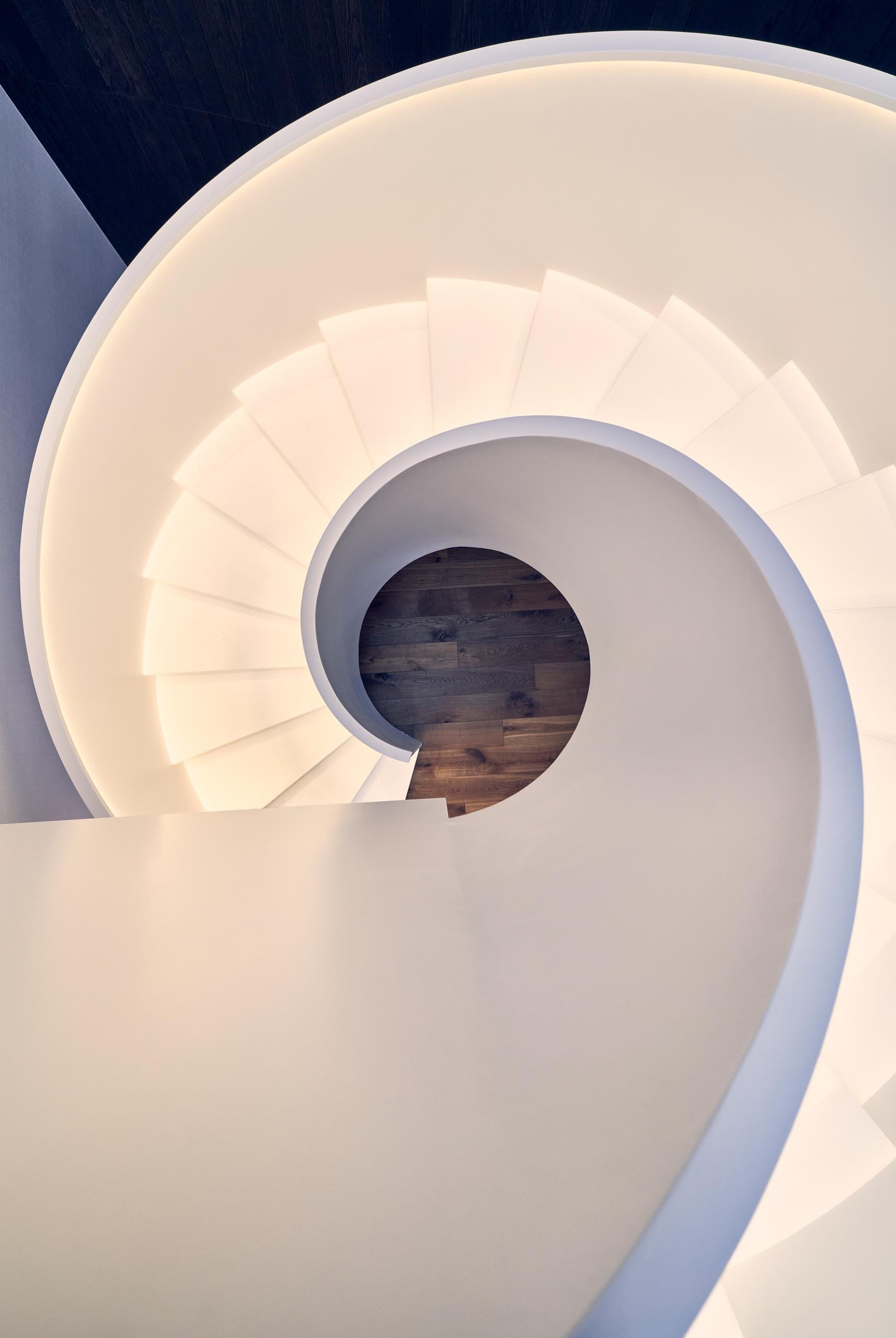
A white spiral staircase connects the two levels and stands out as a sculptural feature. Its curved form echoes the geometry of the house, reinforcing the circular theme. Hidden lighting is integrated into the design, casting a soft glow that highlights the shape and adds atmosphere to the surrounding space.
A Bathroom Framed by Views
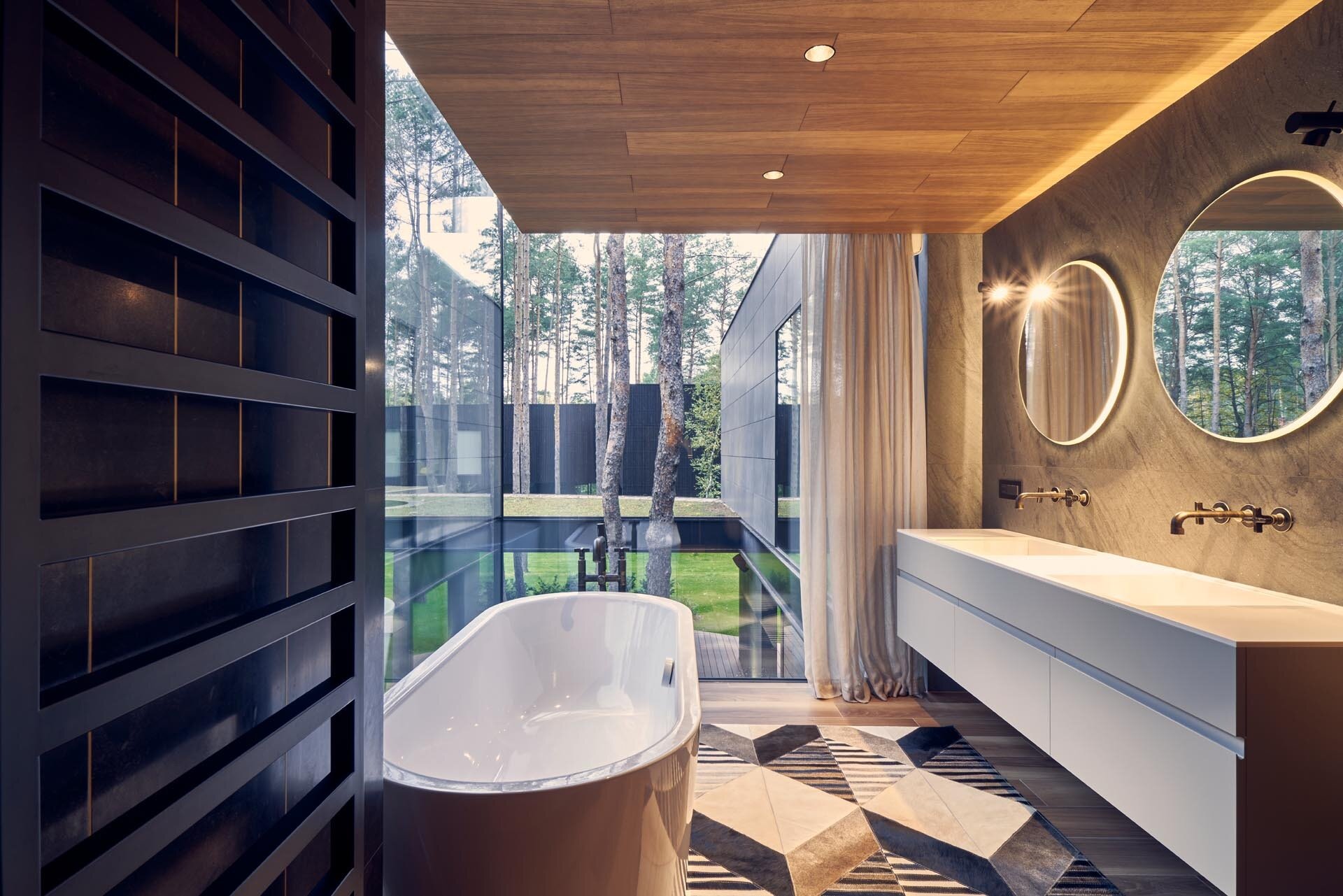
Upstairs, the bathroom continues the connection to the outdoors. Corner windows open views down into the garden below, bringing in greenery and light. A floating white vanity with double sinks keeps the space clean and minimal, while round mirrors reflect both light and landscape.
Plans and Sketches Behind the Design
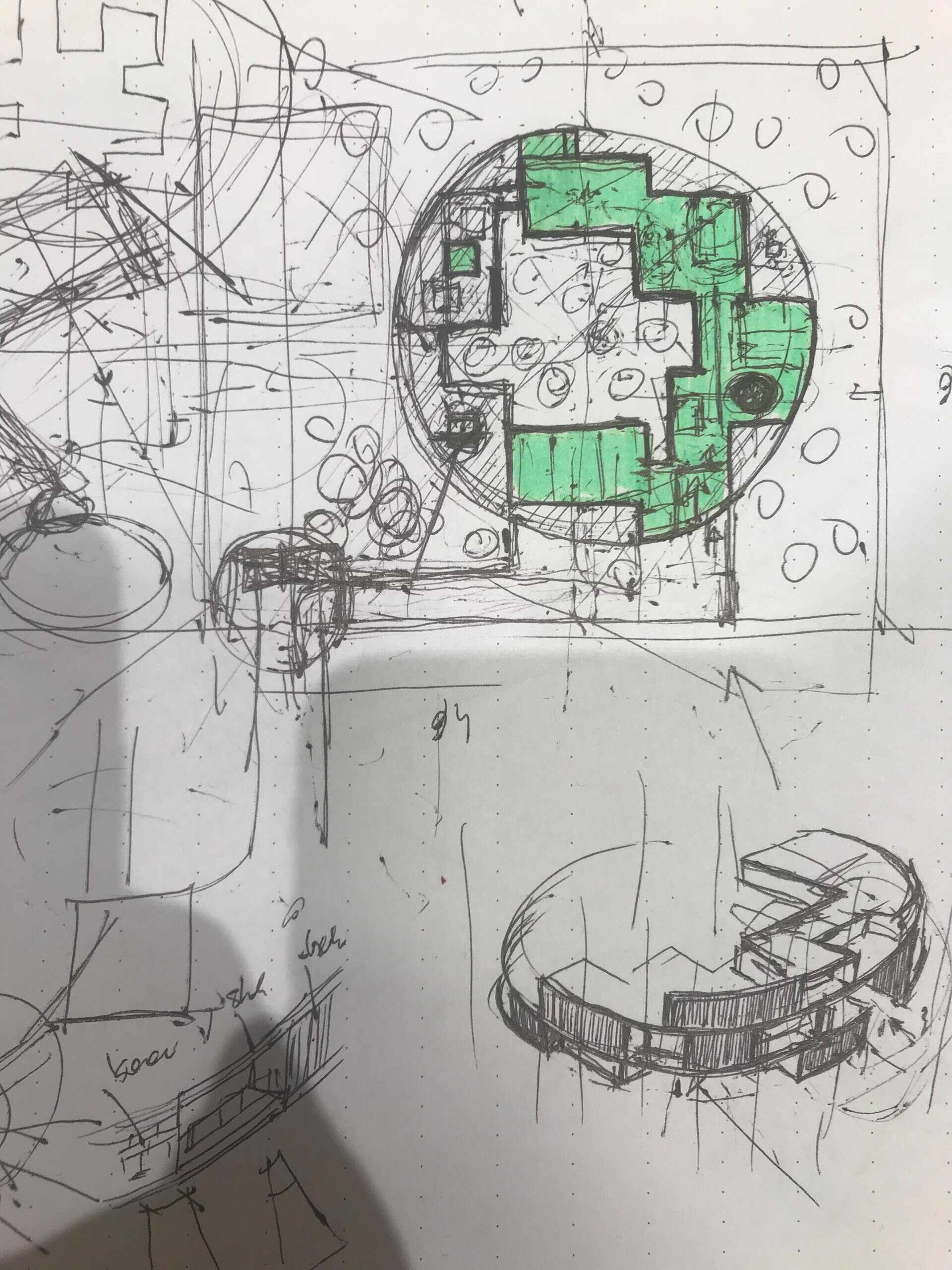
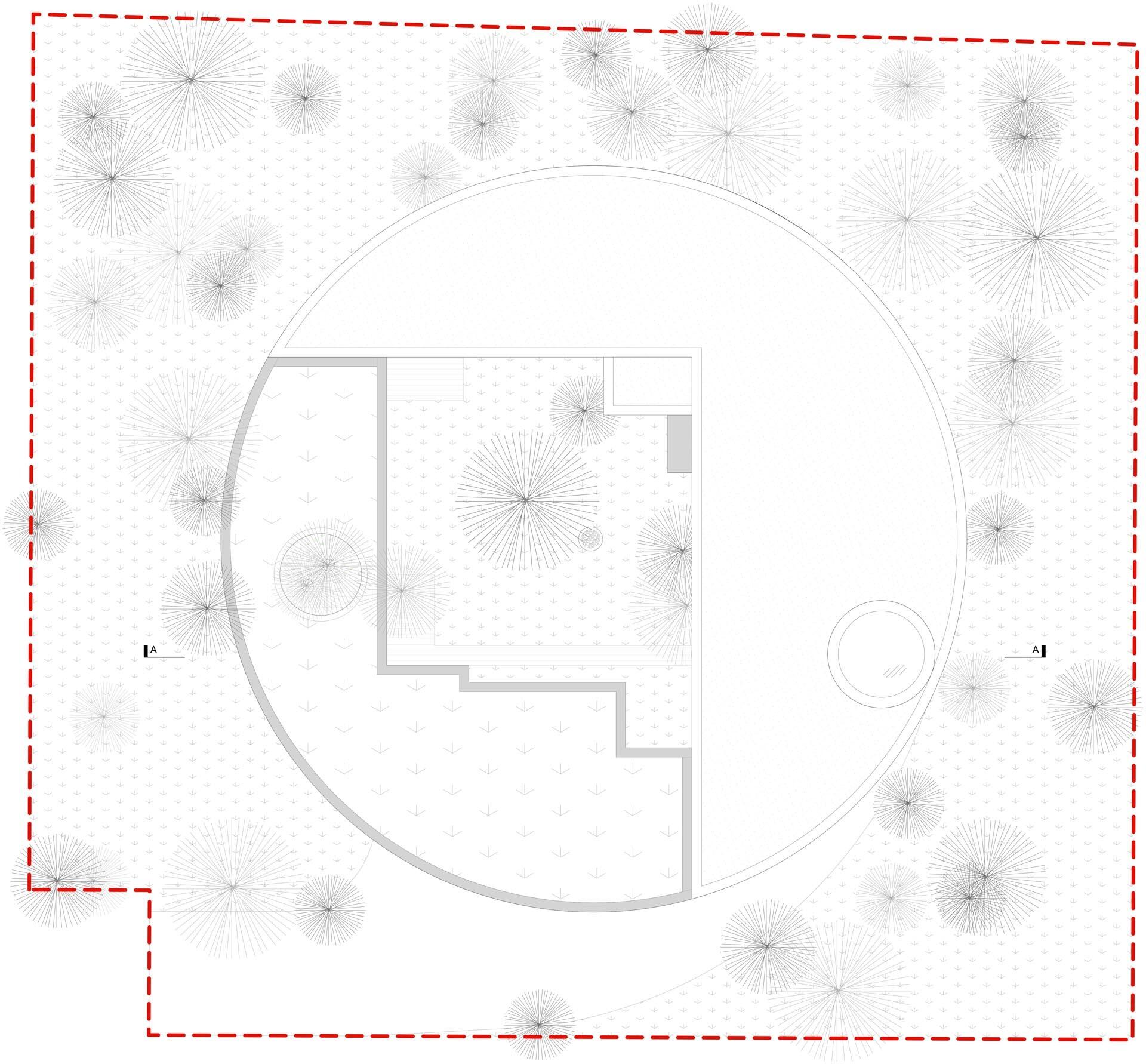
The architect’s sketches and floor plans reveal how the circular concept was developed. They show how each space fits within the overall form, from the central garden to the carved-out alcoves. The drawings make it clear that the geometry was not just aesthetic, but also key to how the home functions.
This home in Izabelin brings together a clear geometric idea, natural materials, and a layout that supports both openness and privacy.
From the central garden to the spiral staircase, each element builds on the circular concept. The result is a house that feels cohesive, with every space tied back to the original vision.