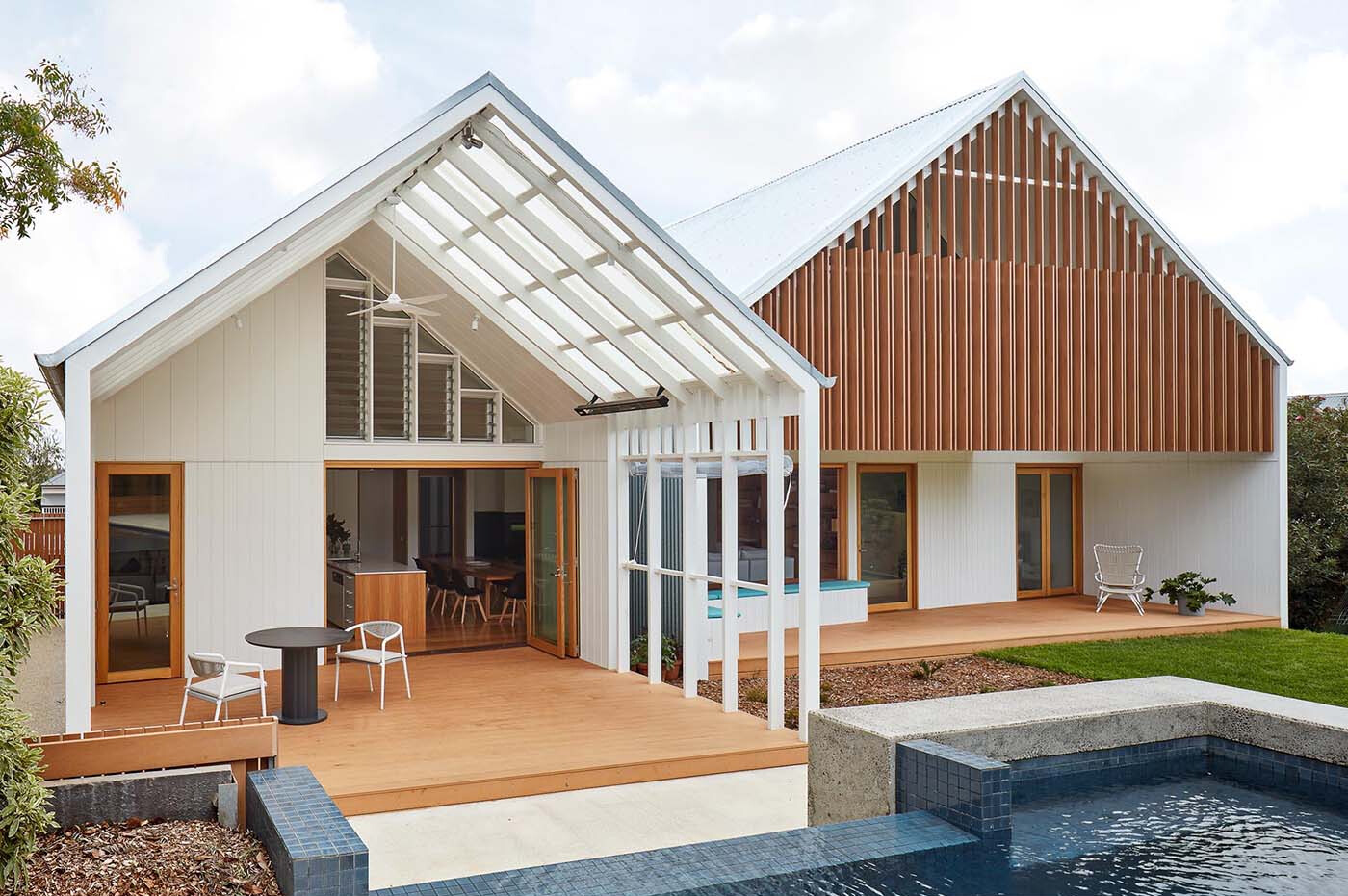
Architecture firm Mihaly Slocombe has redesigned and extended a 1913 Edwardian home in Kensington, Australia, turning it into a generous, modern space for a family of five.
Originally built when the area was still open pasture, the house has seen the neighborhood evolve around it. The new project respects that history while introducing a bold extension that expands how the home is used today. Leo and Christine, along with their three teenage sons, wanted a home that could handle busy routines while still offering moments of privacy, all with a strong connection to the backyard they love.
A Subtle Street Presence with a Bold Shift Behind
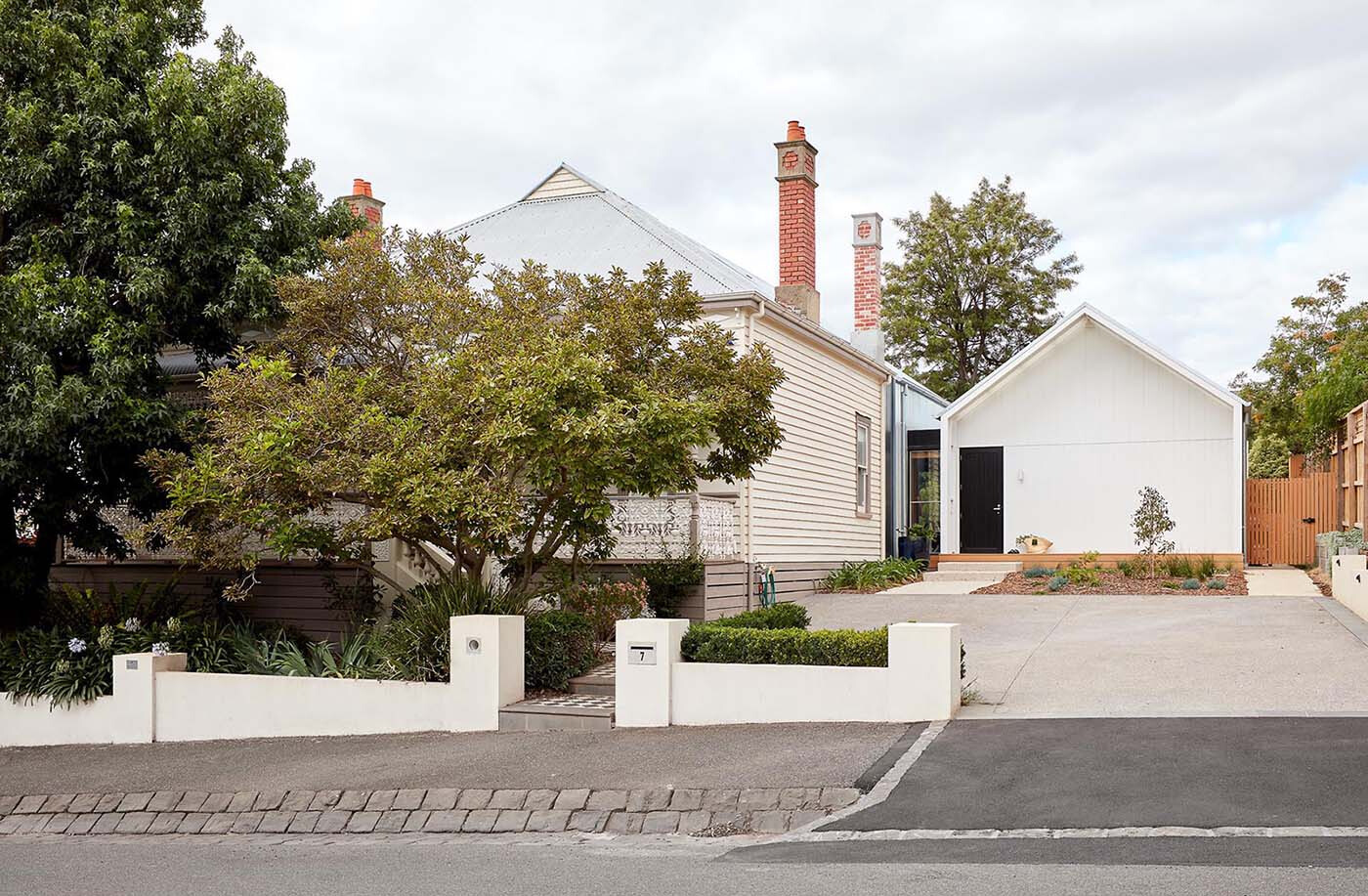
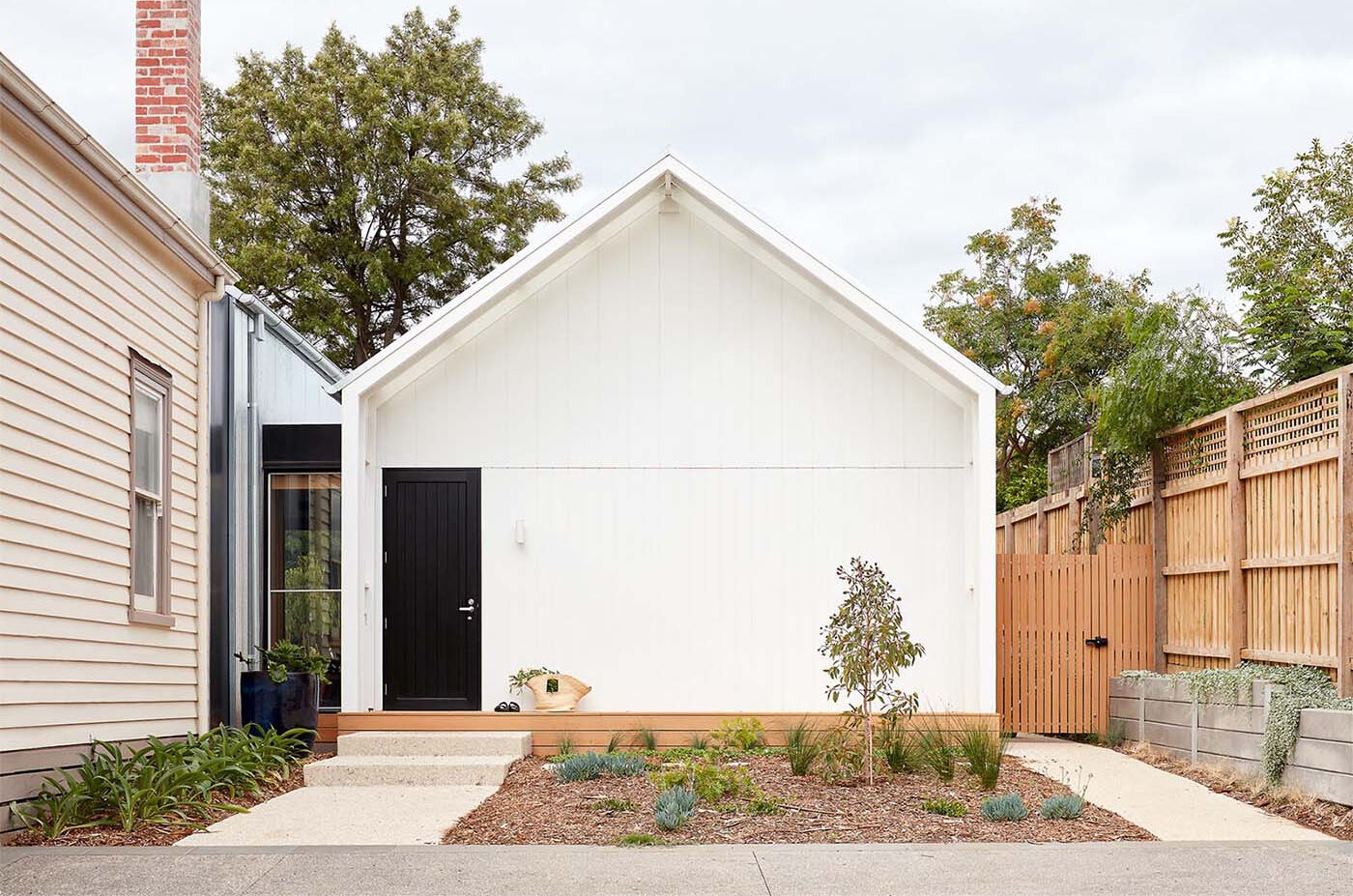
From the street, the original home still takes focus, maintaining its historic character. Look a little closer and the new setback addition begins to reveal itself, hinting at the transformation behind.
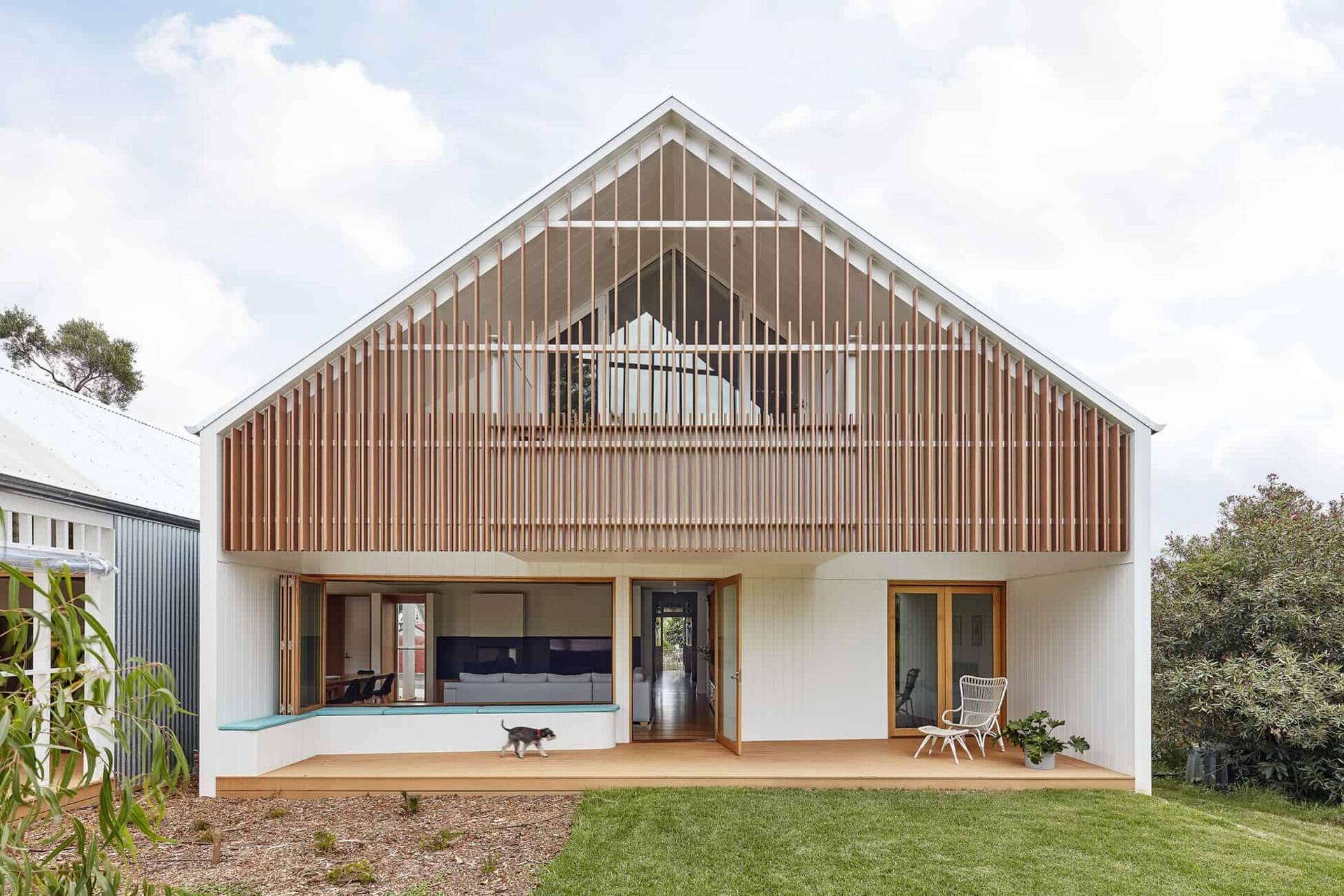
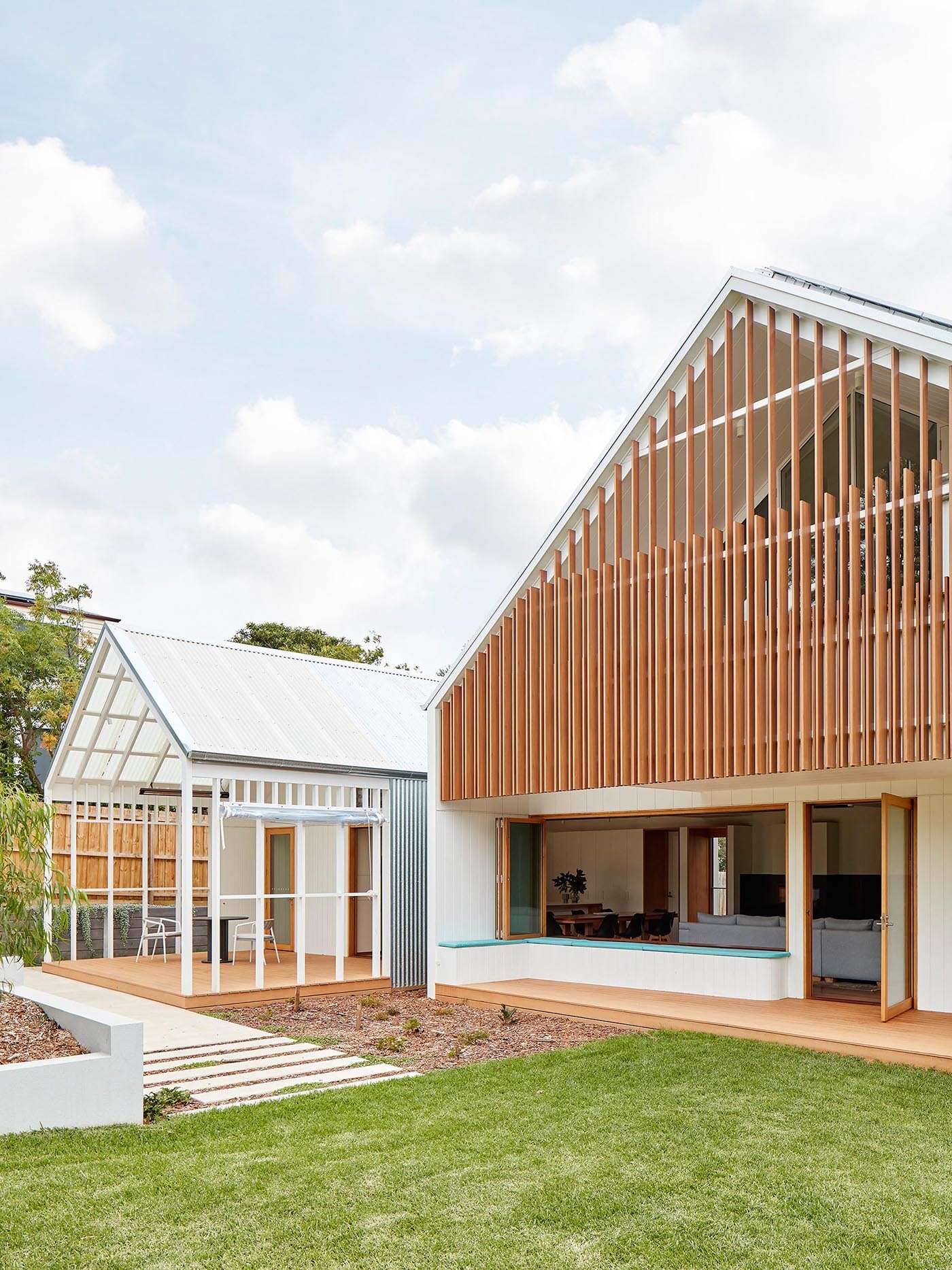
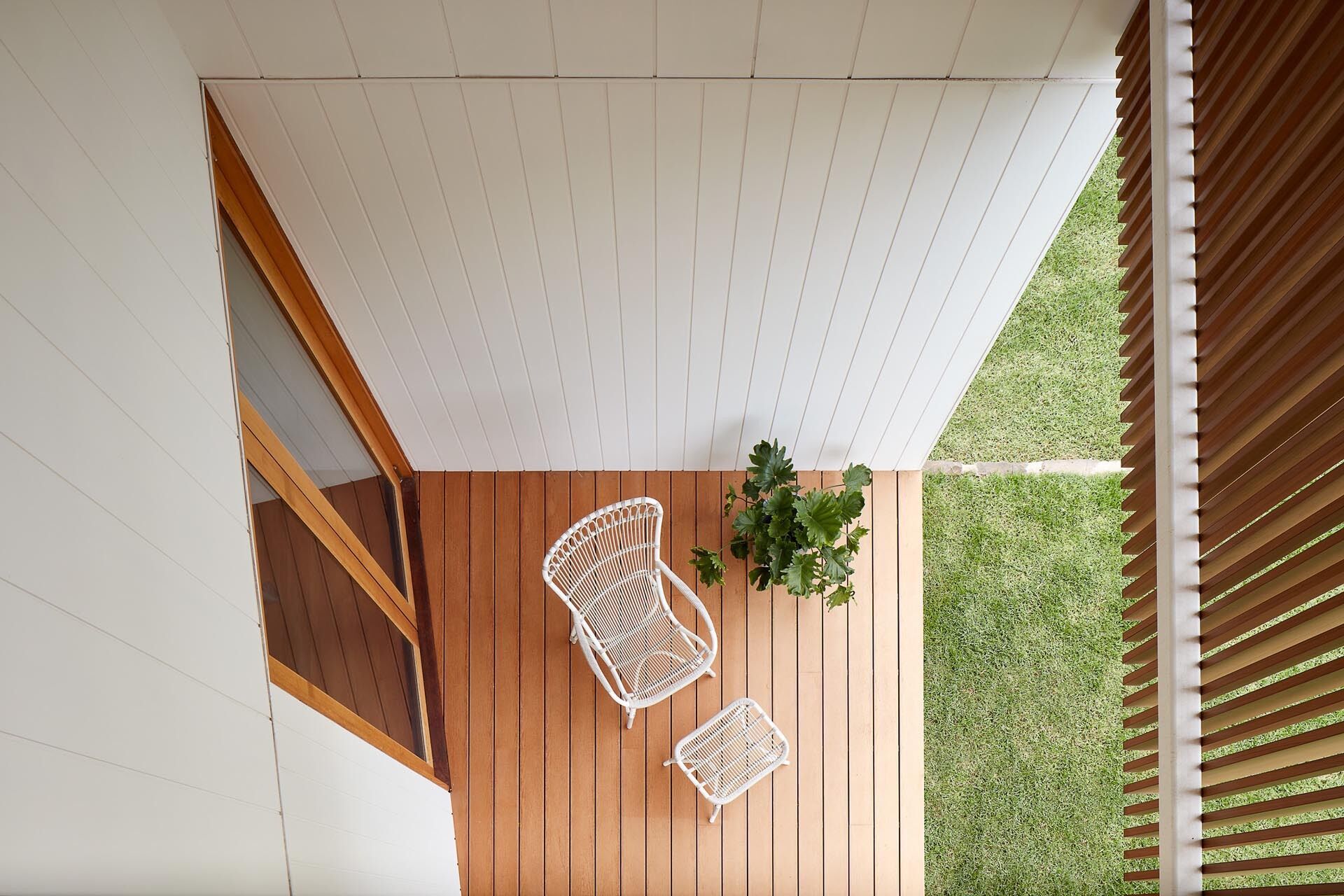
The rear of the house, once altered in the 1980s, has been completely replaced. In its place, two gabled volumes define the extension. These twin peak roofs give the project its name and create distinct zones, both inside and out. One side opens to a covered patio connected to the kitchen, while the other features a custom bench that wraps neatly around the corner, offering another place to sit, gather, or pause.
Open-Plan Living That Connects Inside and Out
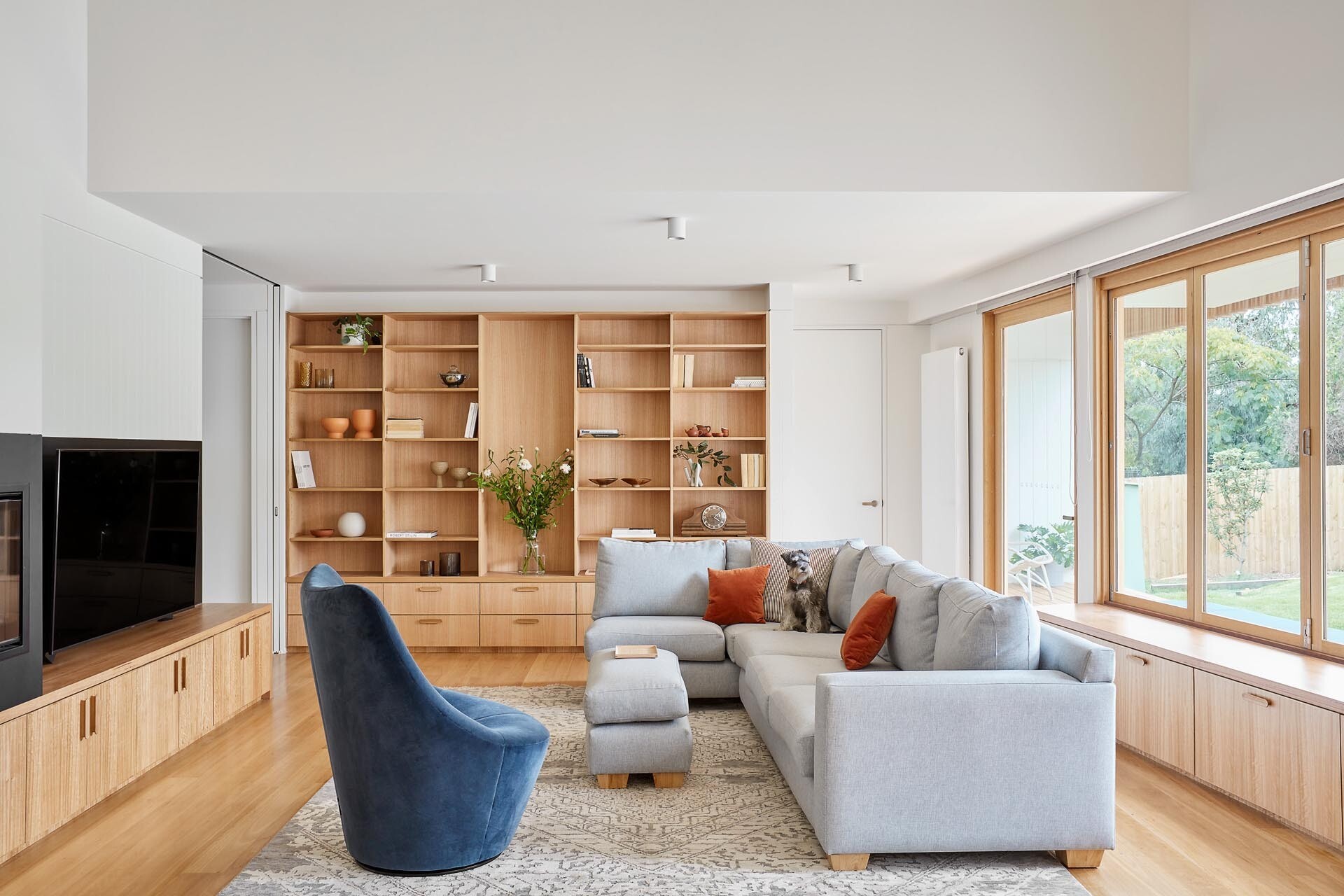
Step inside and the rear of the home opens up completely. The living room, dining area, and kitchen all sit within a single open-plan space designed for flexibility.
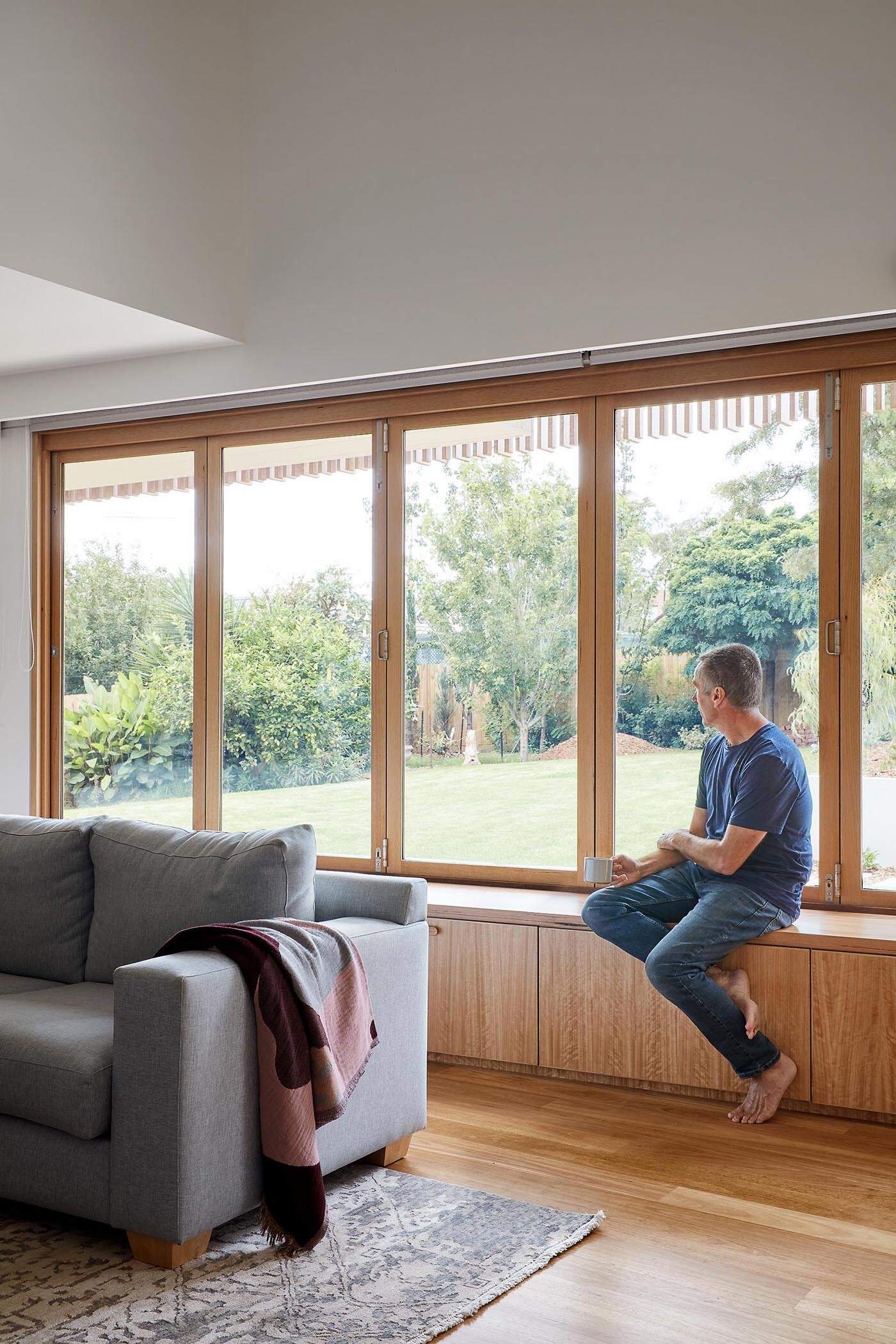
A built-in bench runs beneath a series of windows in the living room, creating a direct link to the outside. These windows open up, connecting to a matching bench on the exterior, turning the wall into a shared threshold between indoors and outdoors.
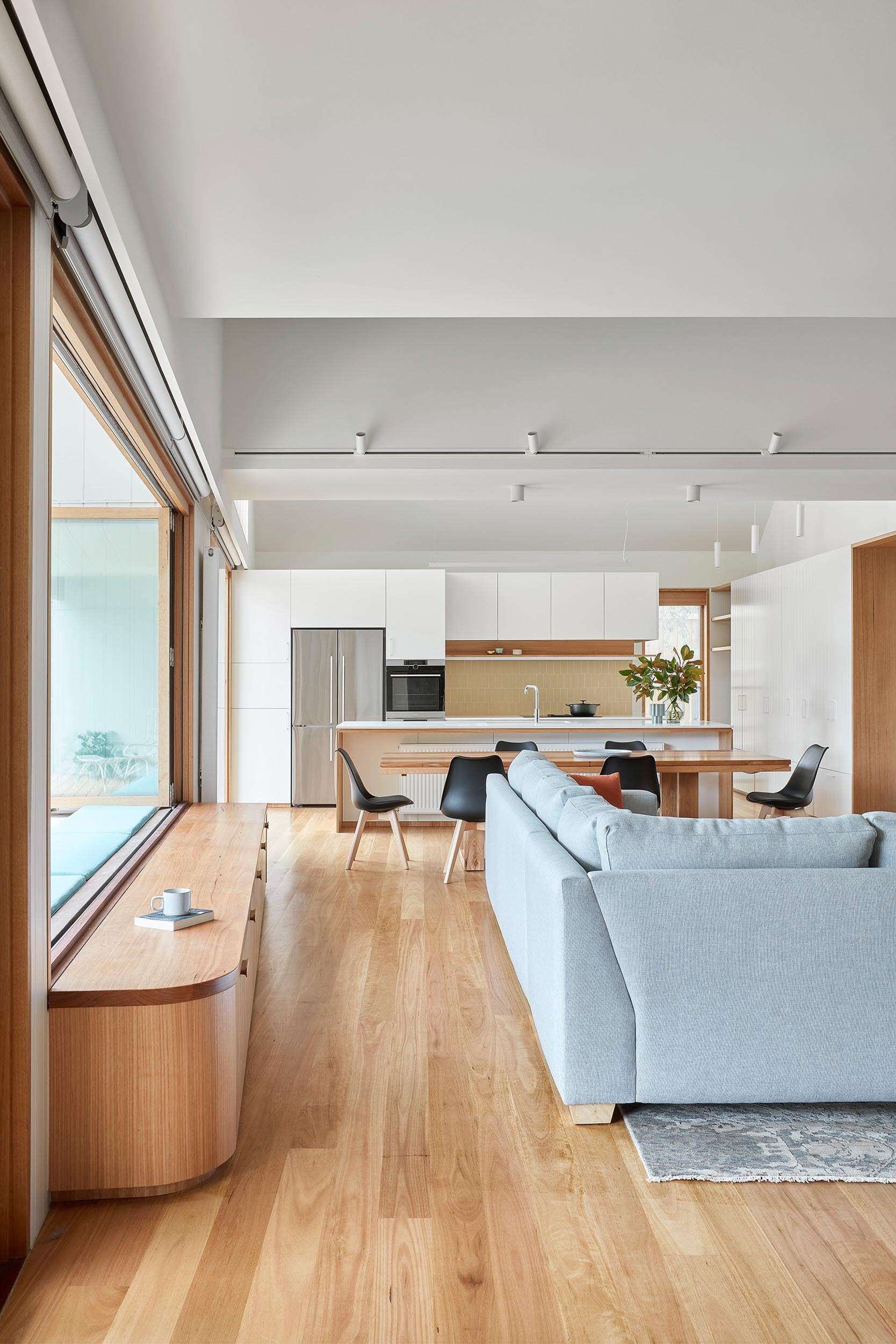
At the far end of the living space, a custom wood shelving unit with integrated drawers adds both storage and warmth. The same timber detailing continues through the bench seating and cabinetry under the television, tying the space together visually.
Private Spaces Tucked Within the Plan
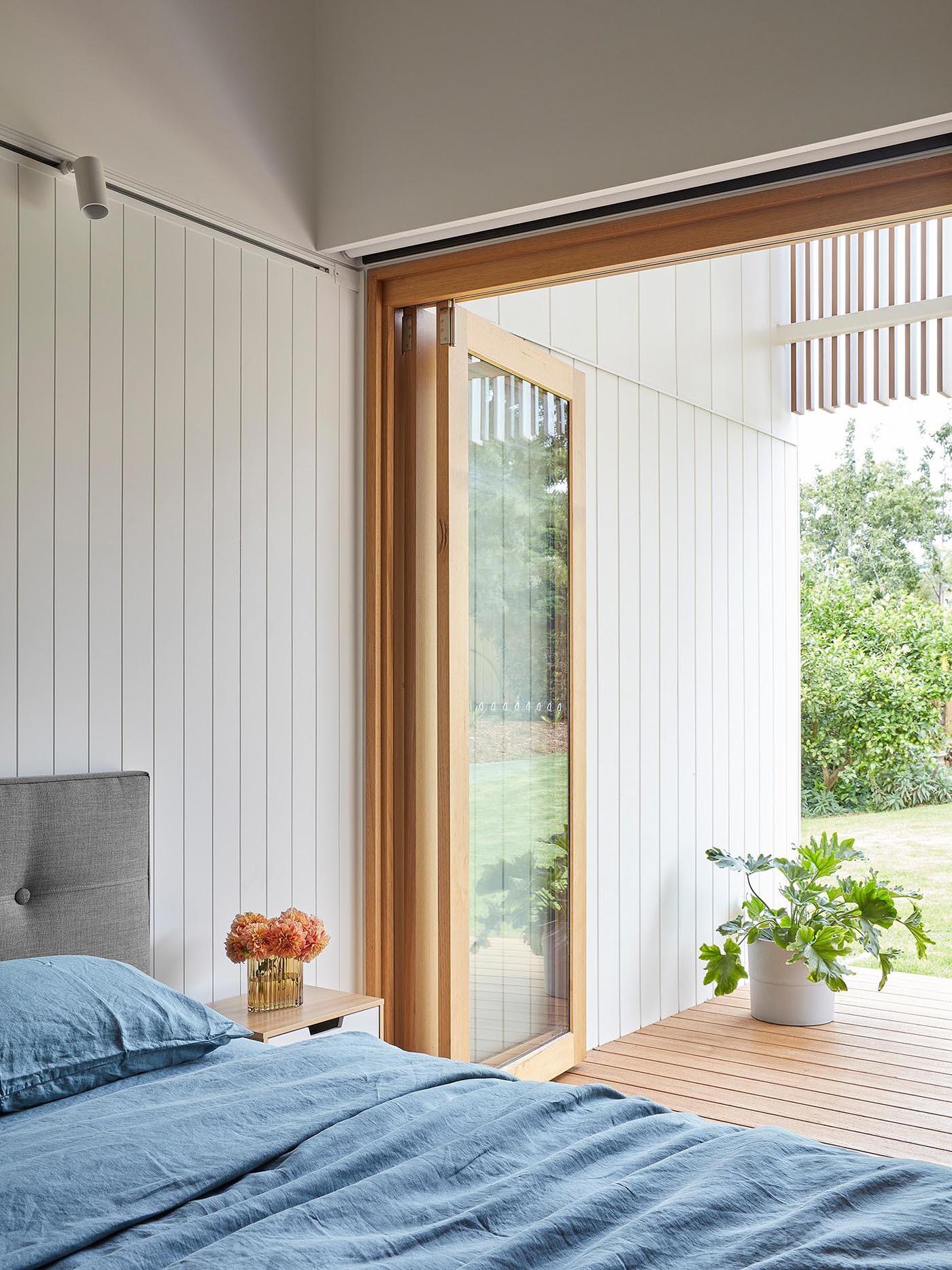
Just off the main living area, a bedroom sits discreetly behind the custom shelving. Grooved white walls run through both interior and exterior surfaces, adding texture and continuity.
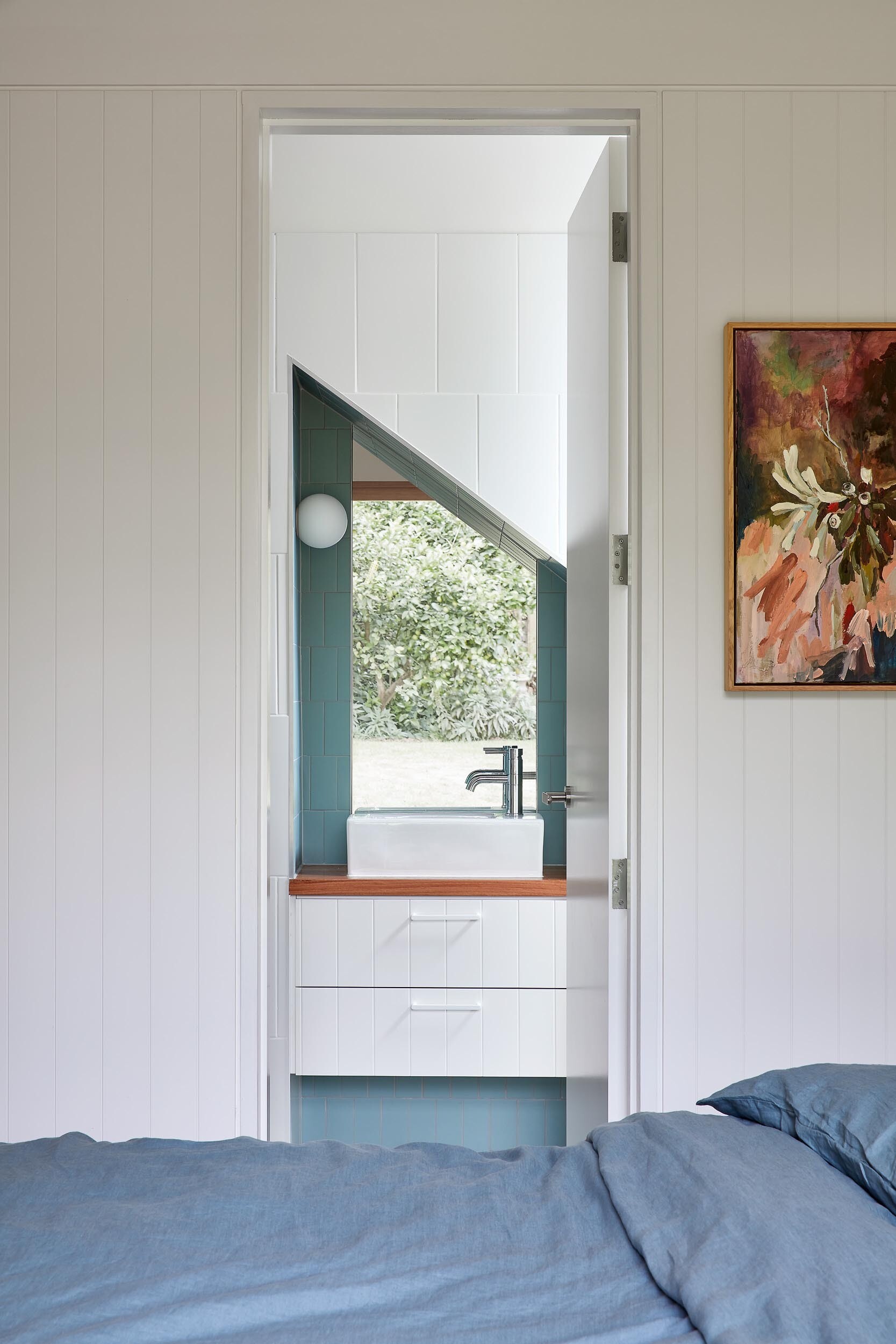
Folding wood-framed glass doors open the room directly onto the deck, extending the usable space. On the opposite side, a door leads into a private en-suite, making the room feel self-contained yet still connected to the rest of the home.
A Kitchen Designed for Everyday Use
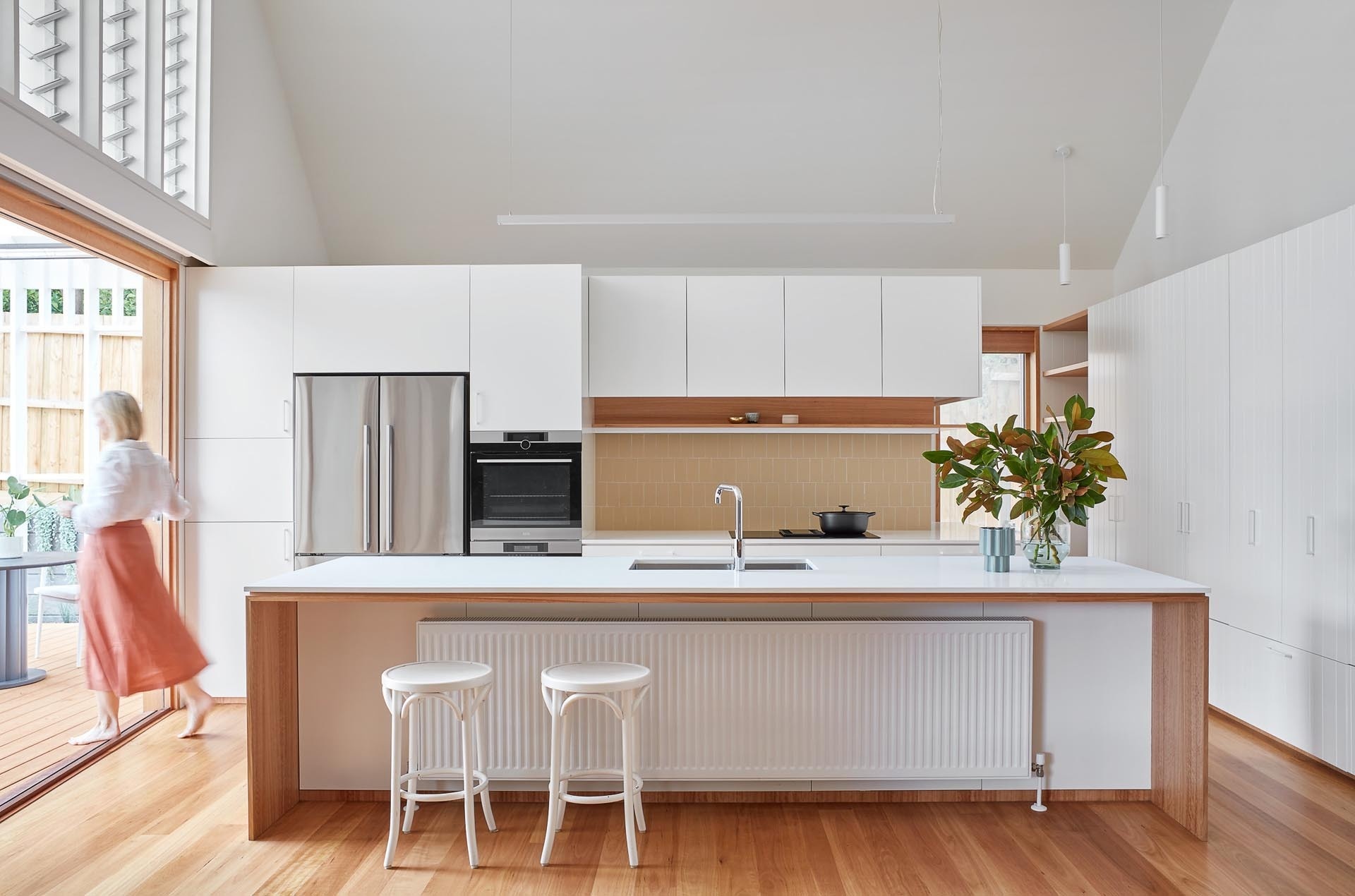
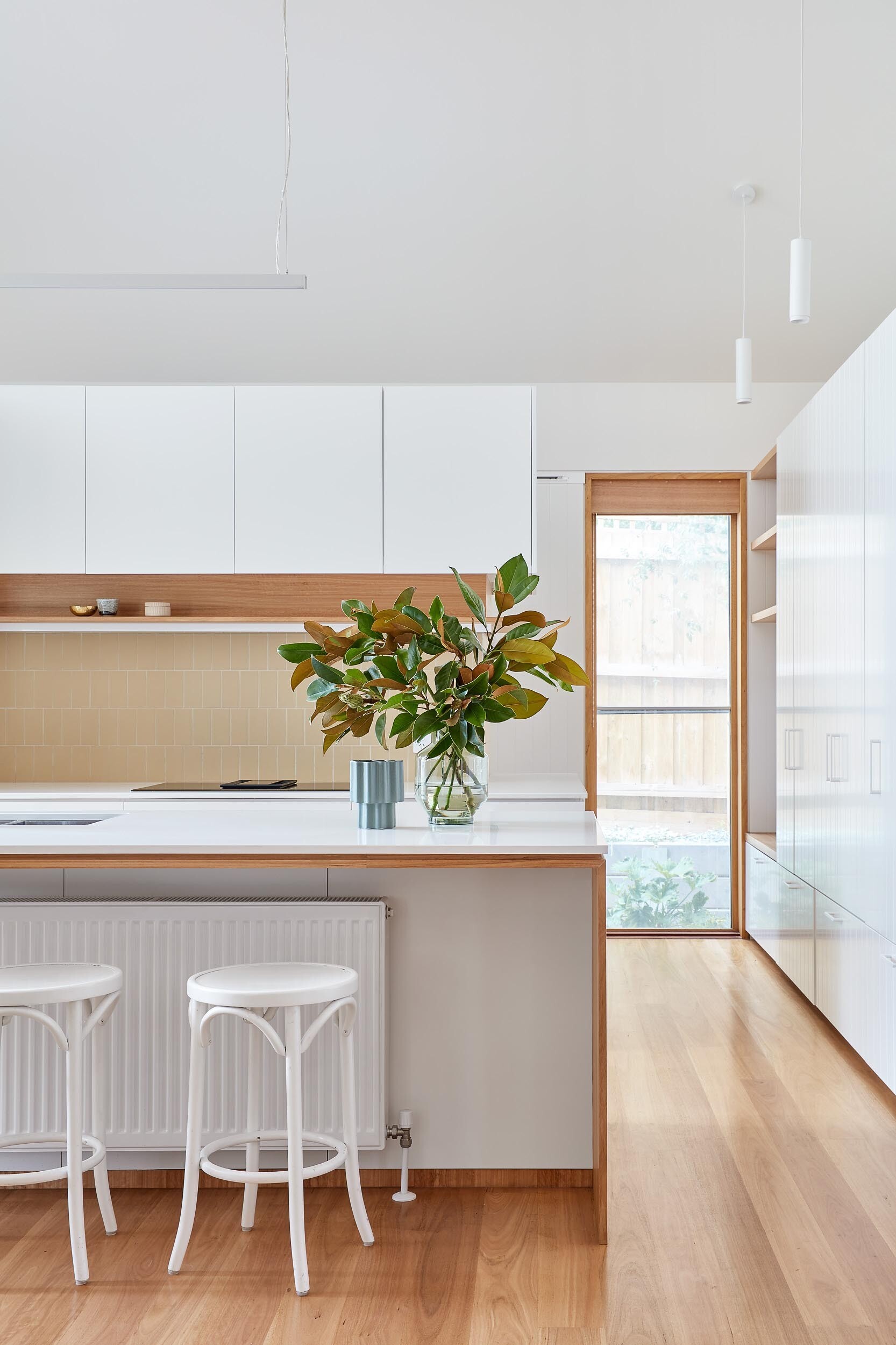
At the other end of the open-plan area, the kitchen balances simplicity with warmth. Minimalist white cabinetry is paired with Glacier White Corian countertops, while Blackbutt timber accents introduce a natural contrast.
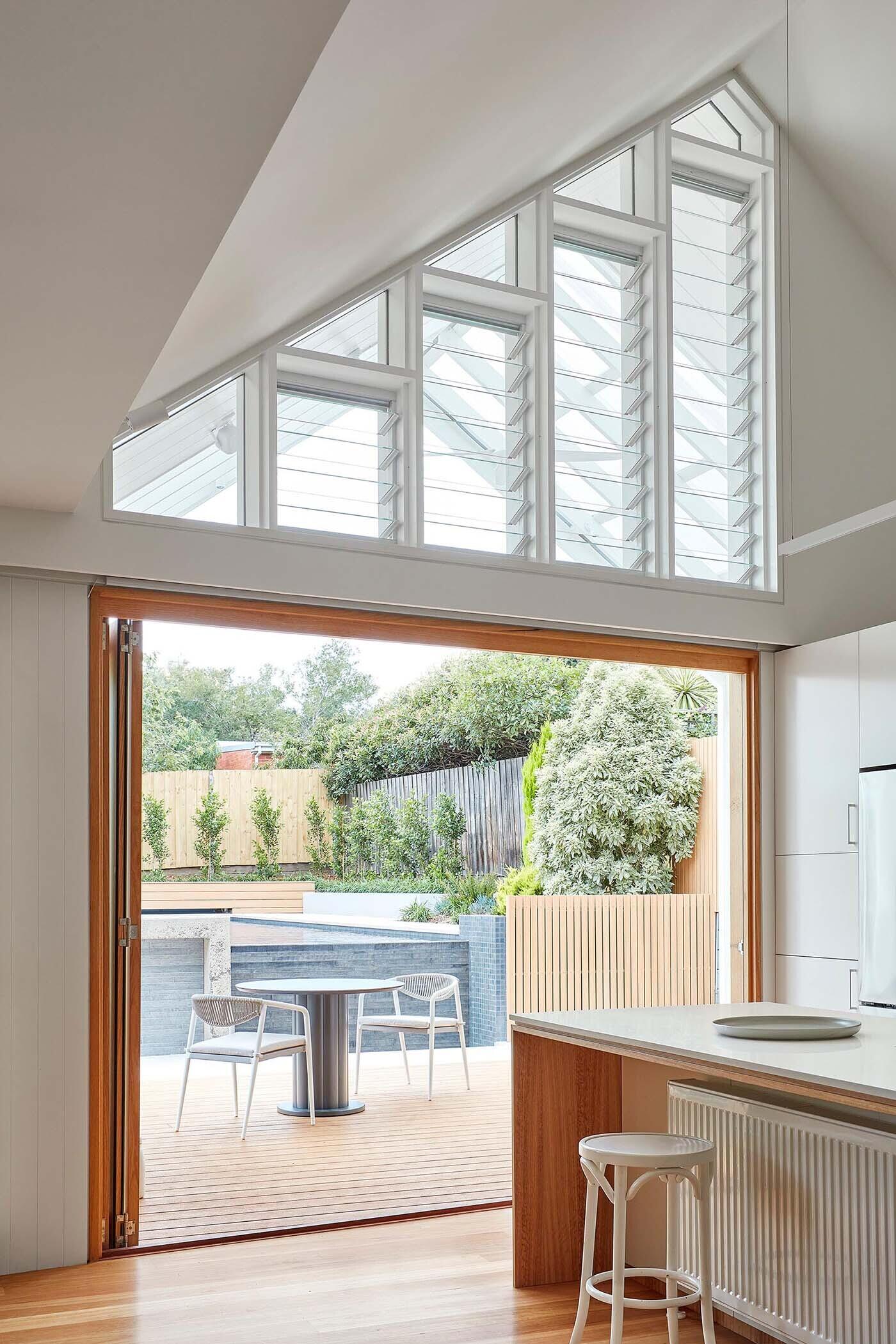
Folding glass doors sit beside the kitchen, opening to an outdoor dining area. Above, louvered windows help air move through the space, improving comfort without relying entirely on mechanical systems.
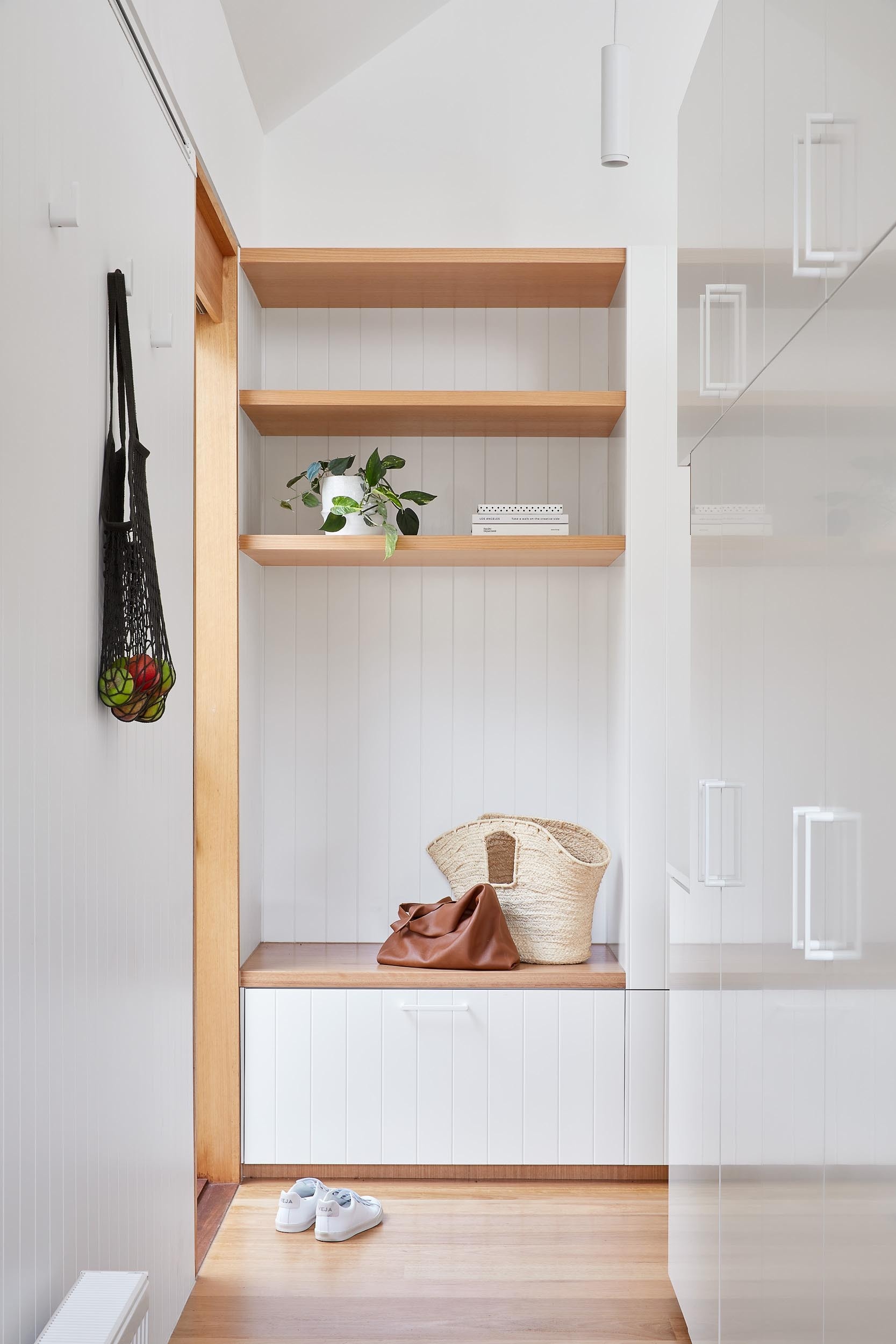
Hidden behind the main wall of cabinetry, a laundry room continues the material palette with a timber bench and open shelving, keeping utility spaces consistent with the rest of the home.
Layers of Material and Detail
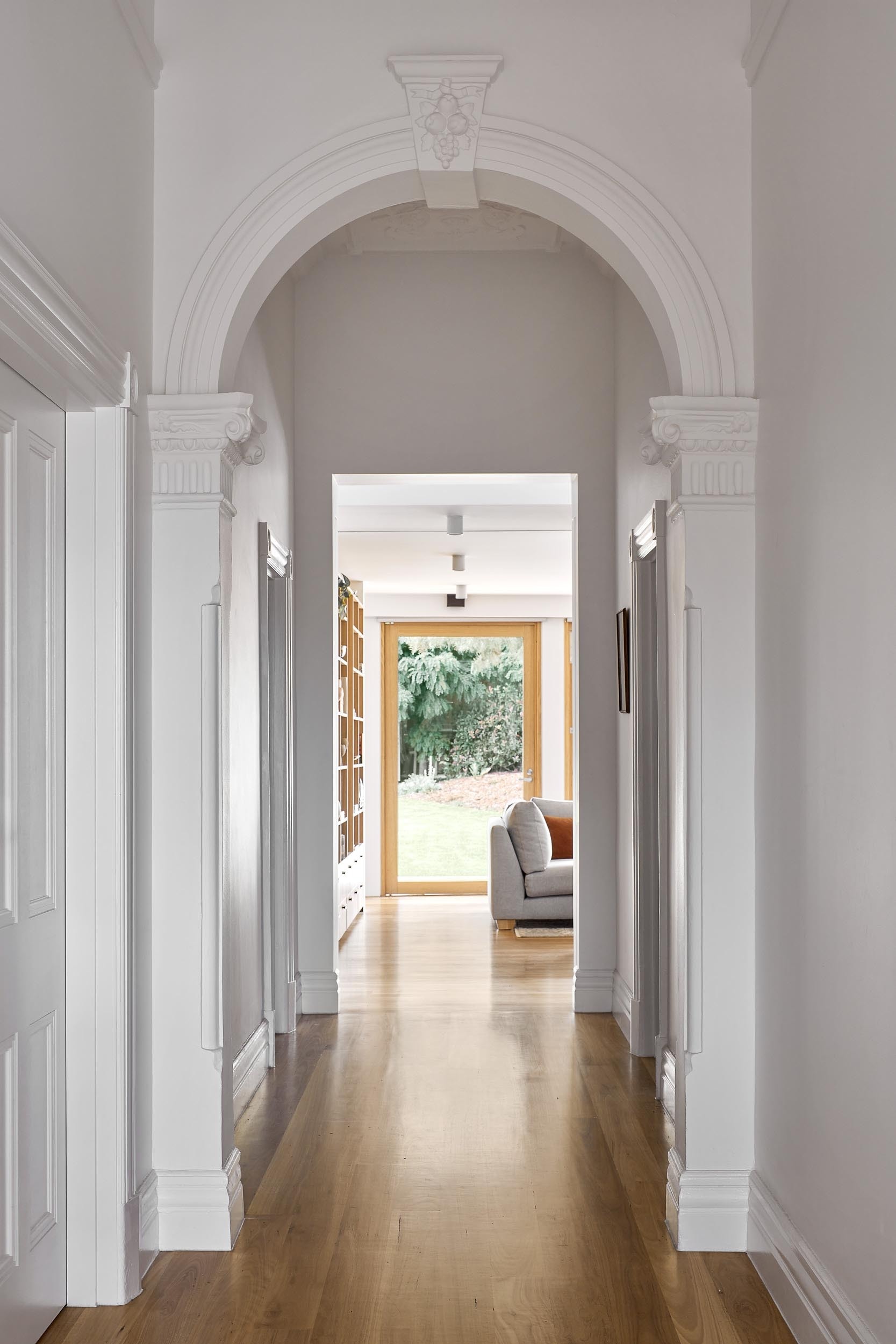
Moving through the home, the original structure reveals itself in the hallway, where older details contrast with the newer intervention. A mix of flooring adds variation underfoot, including Blackbutt timber, goat’s wool carpet, and terrazzo. These shifts help define different areas without the need for walls.
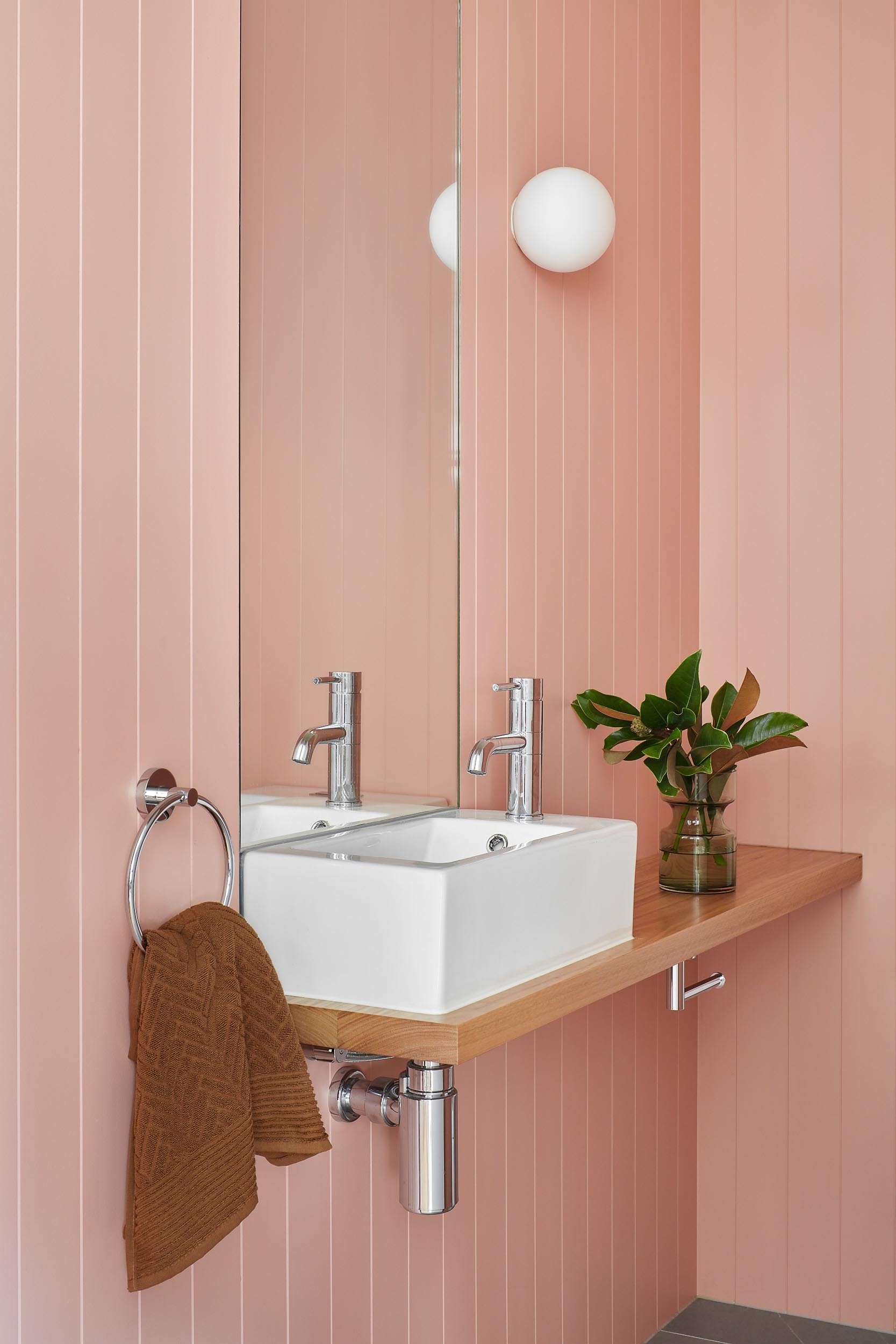
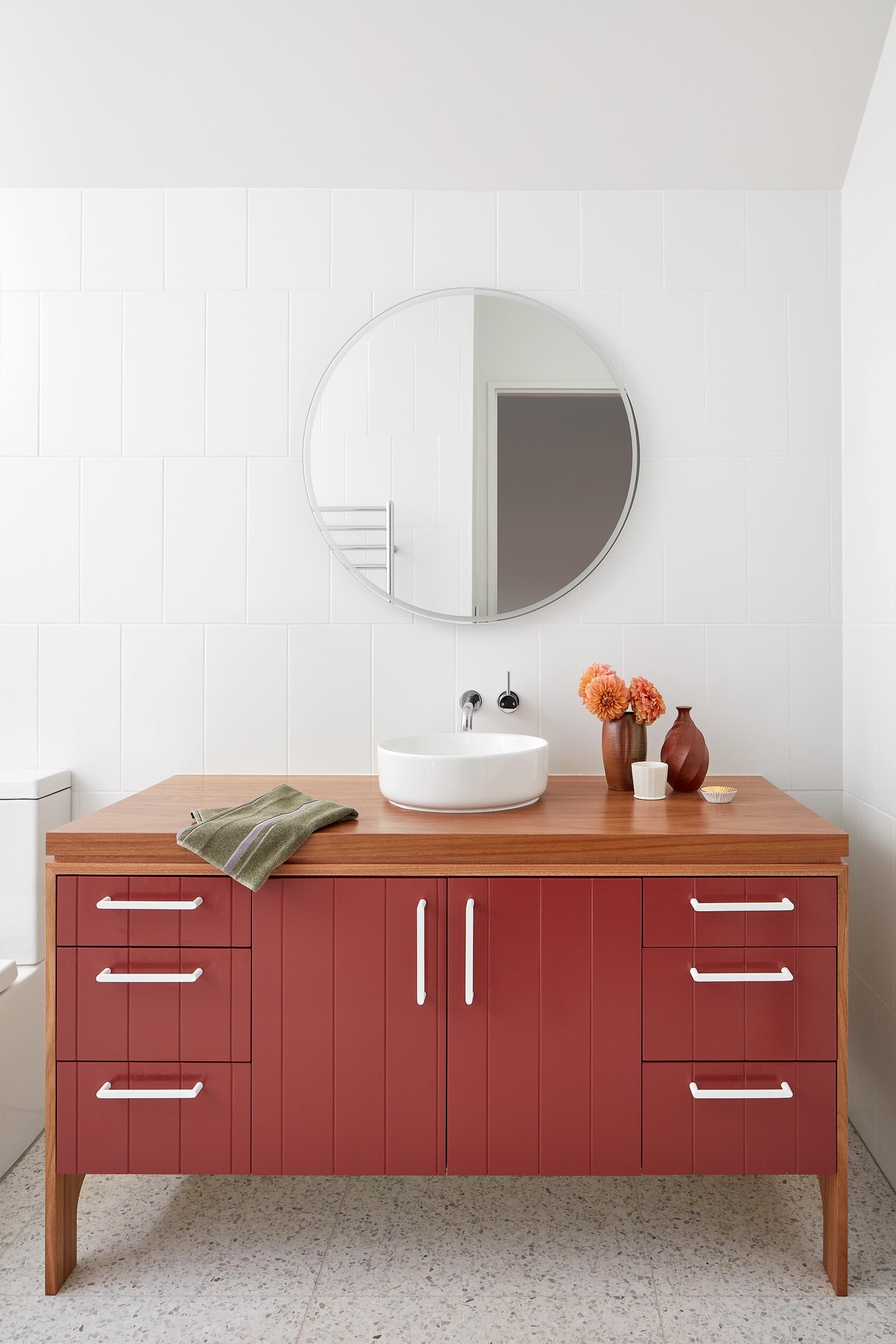
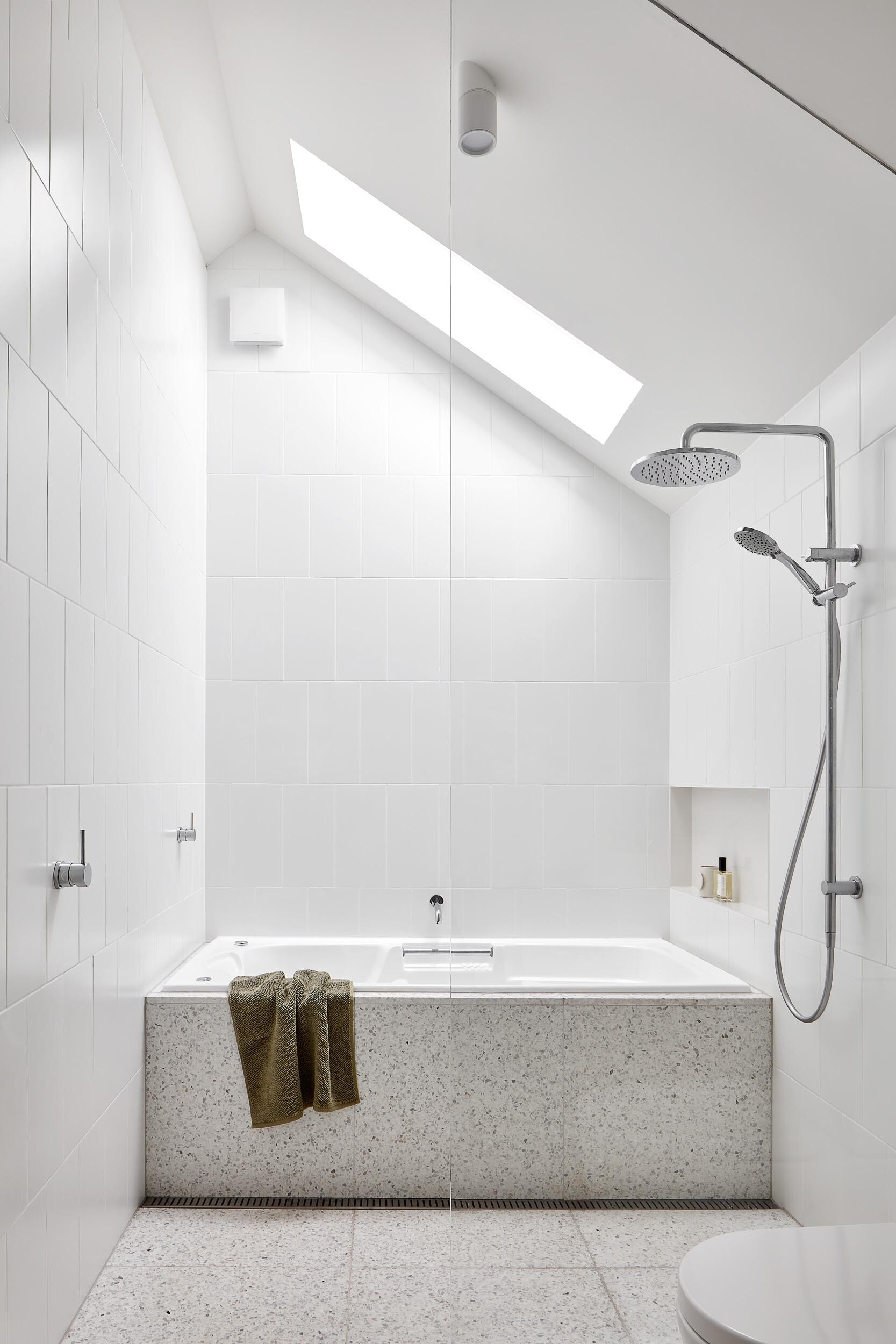
In one bathroom, soft pink walls introduce a gentle burst of color, while in another, the vanity becomes the focal point beneath a round mirror. Terrazzo continues through wet areas, extending across the shower and wrapping around the built-in bathtub.
Light, Color, and Vertical Movement
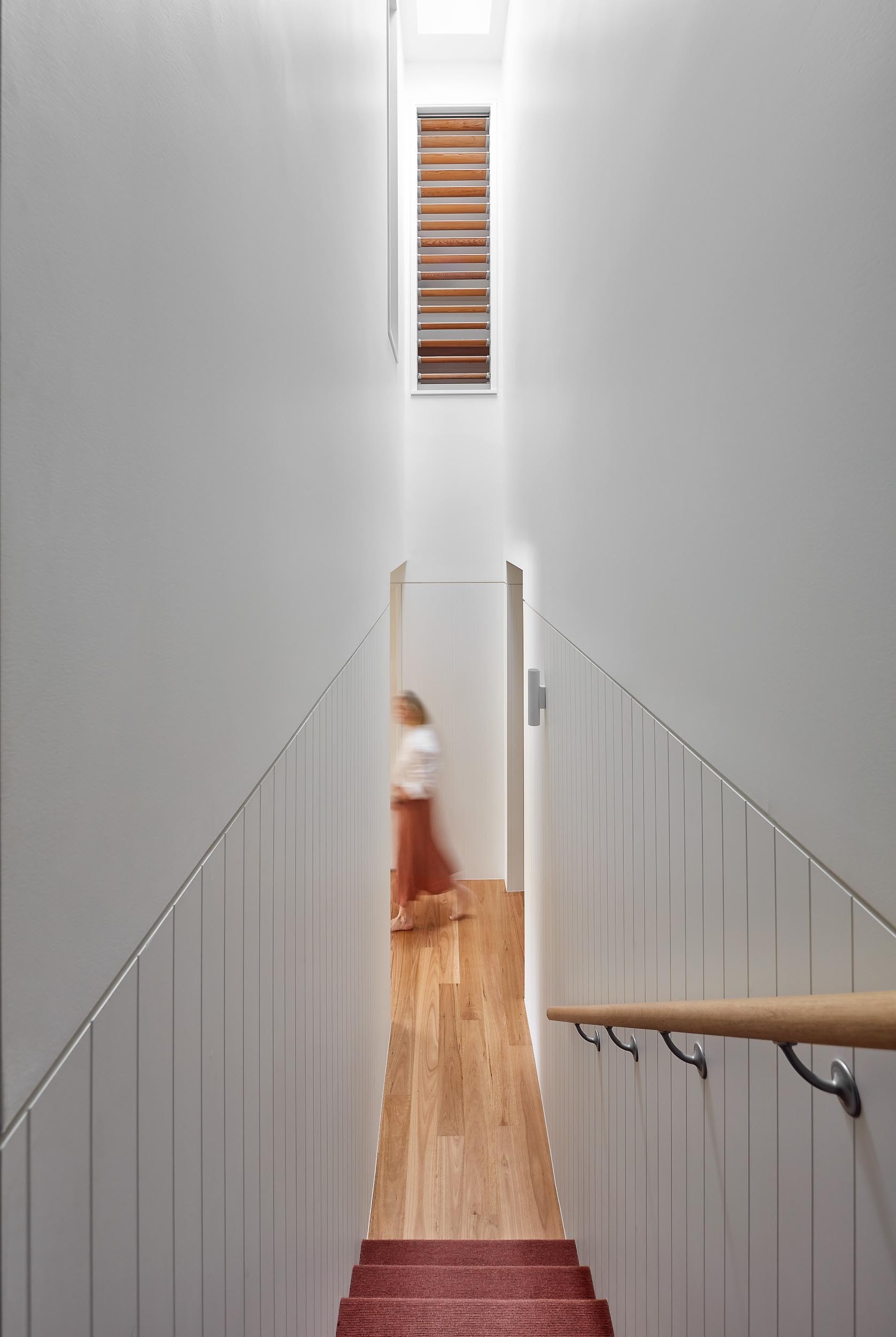
A staircase topped with a skylight brings natural light deep into the home while connecting its different levels. Upstairs and in quieter zones, spaces become more expressive. A home office features colorful carpet alongside custom-designed desks and cabinetry, while a nearby bedroom continues the same carpet, paired with floor-to-ceiling windows and a door that looks out to the backyard.
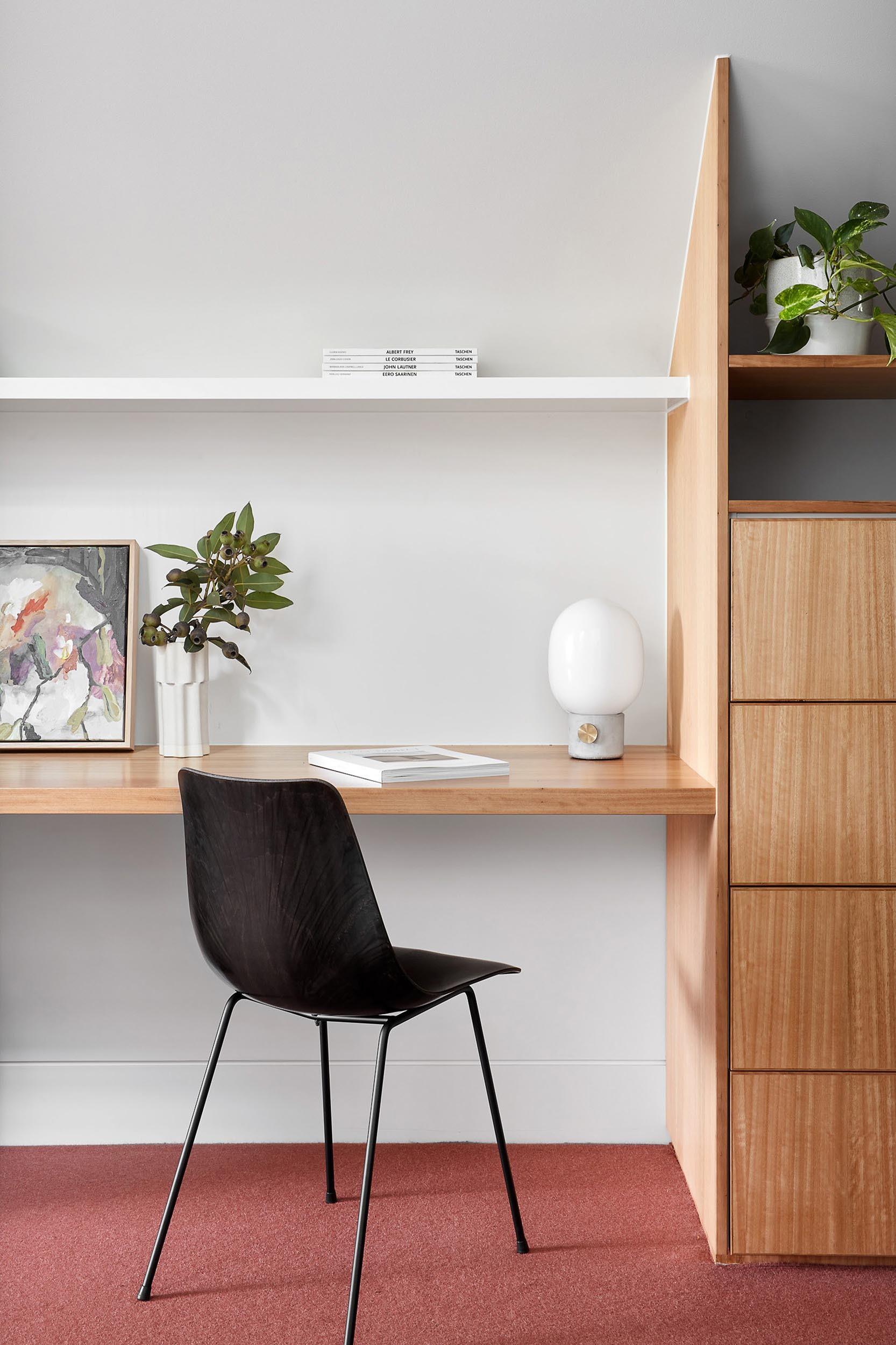
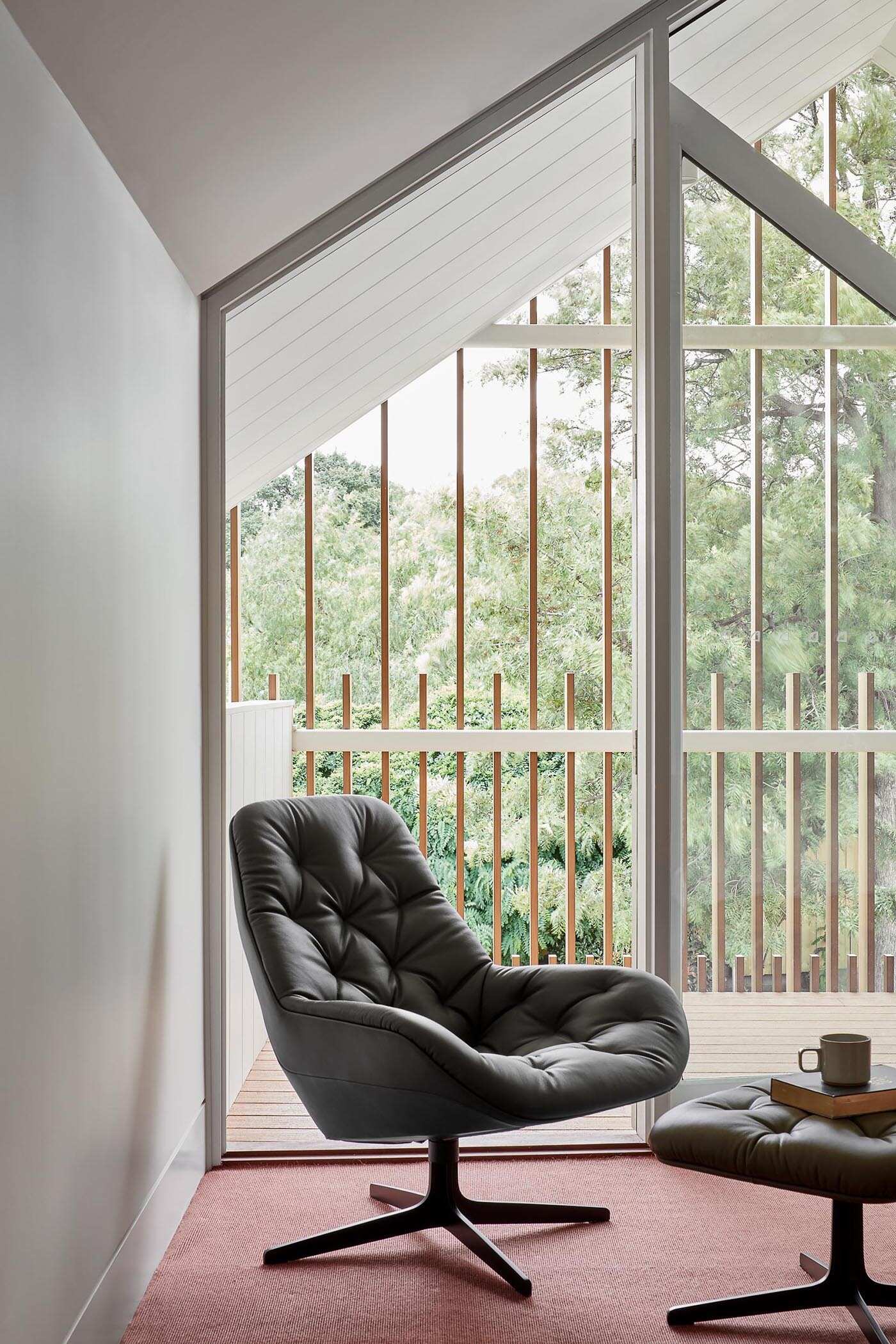
Twin Peaks House brings together the scale and character of a 1913 Edwardian home with the needs of a modern family. The twin gabled extension adds space, structure, and flexibility, while the interiors balance simplicity with warmth through material and detail.