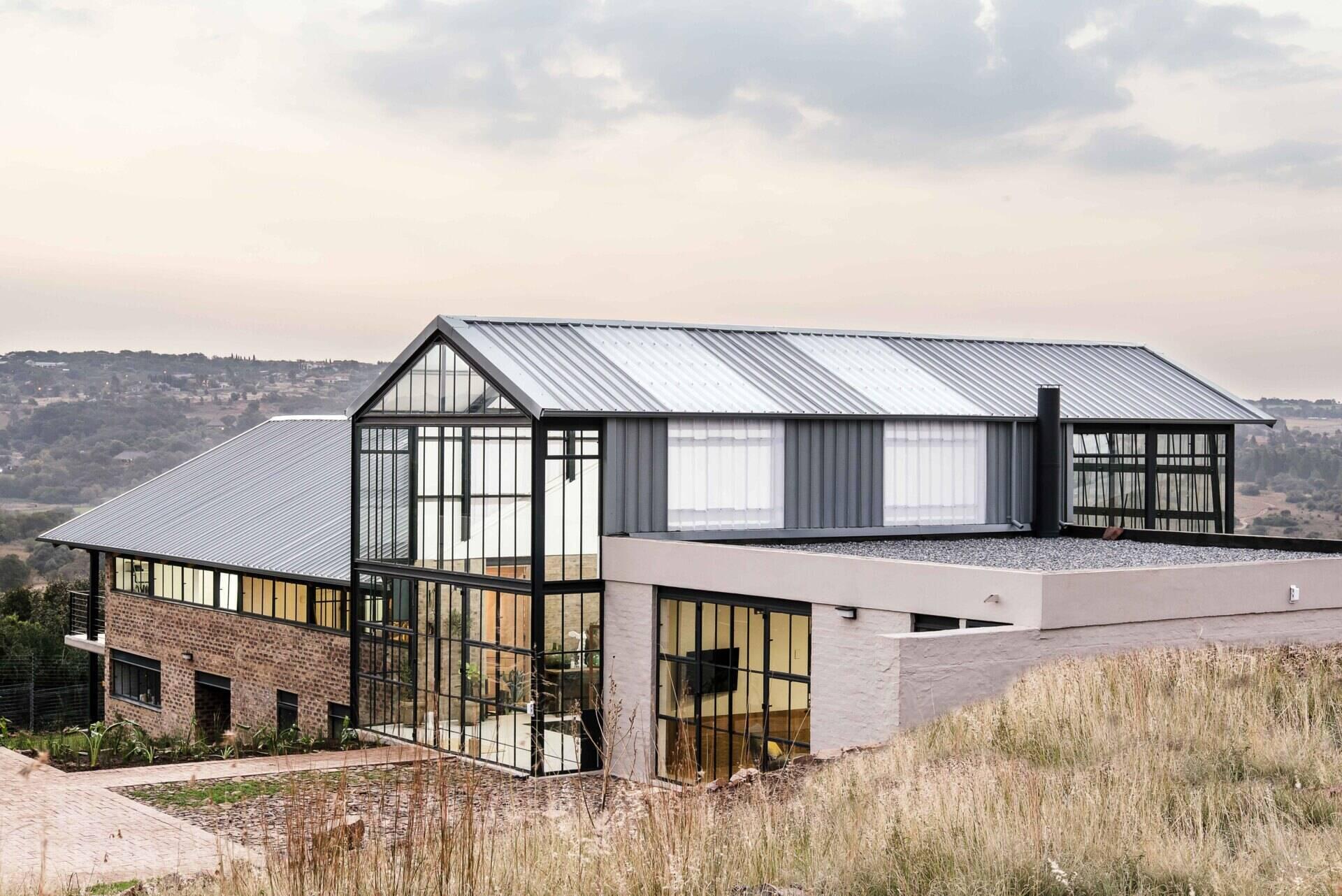
Set just outside Pretoria, South Africa, this home by architect Nadine Engelbrecht introduces a fresh way of living on an underused farm. Designed as an escape from the fast pace of city life, the house makes full use of its wide-open setting while bringing a strong architectural presence to the land.
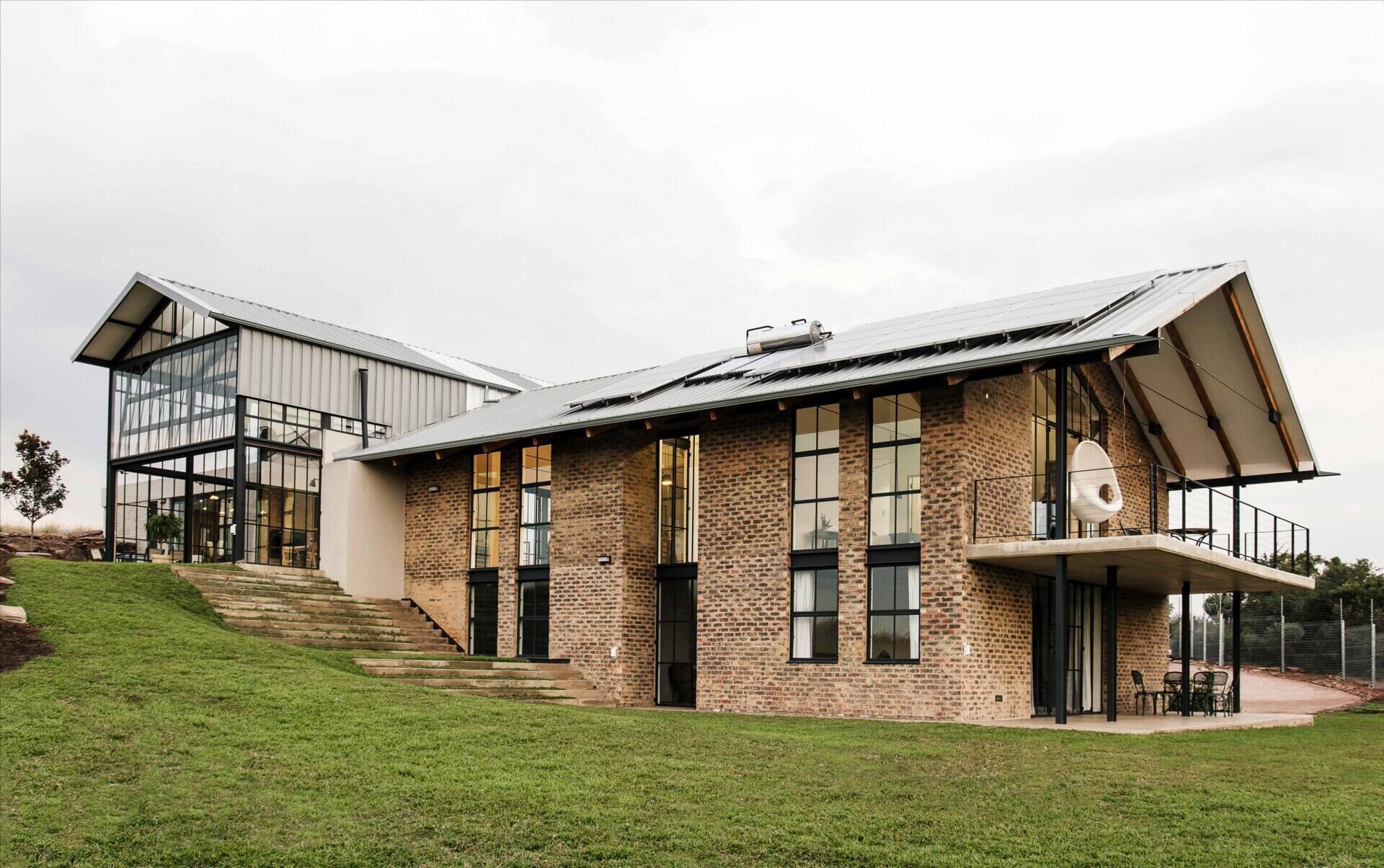
A Raw and Honest Exterior
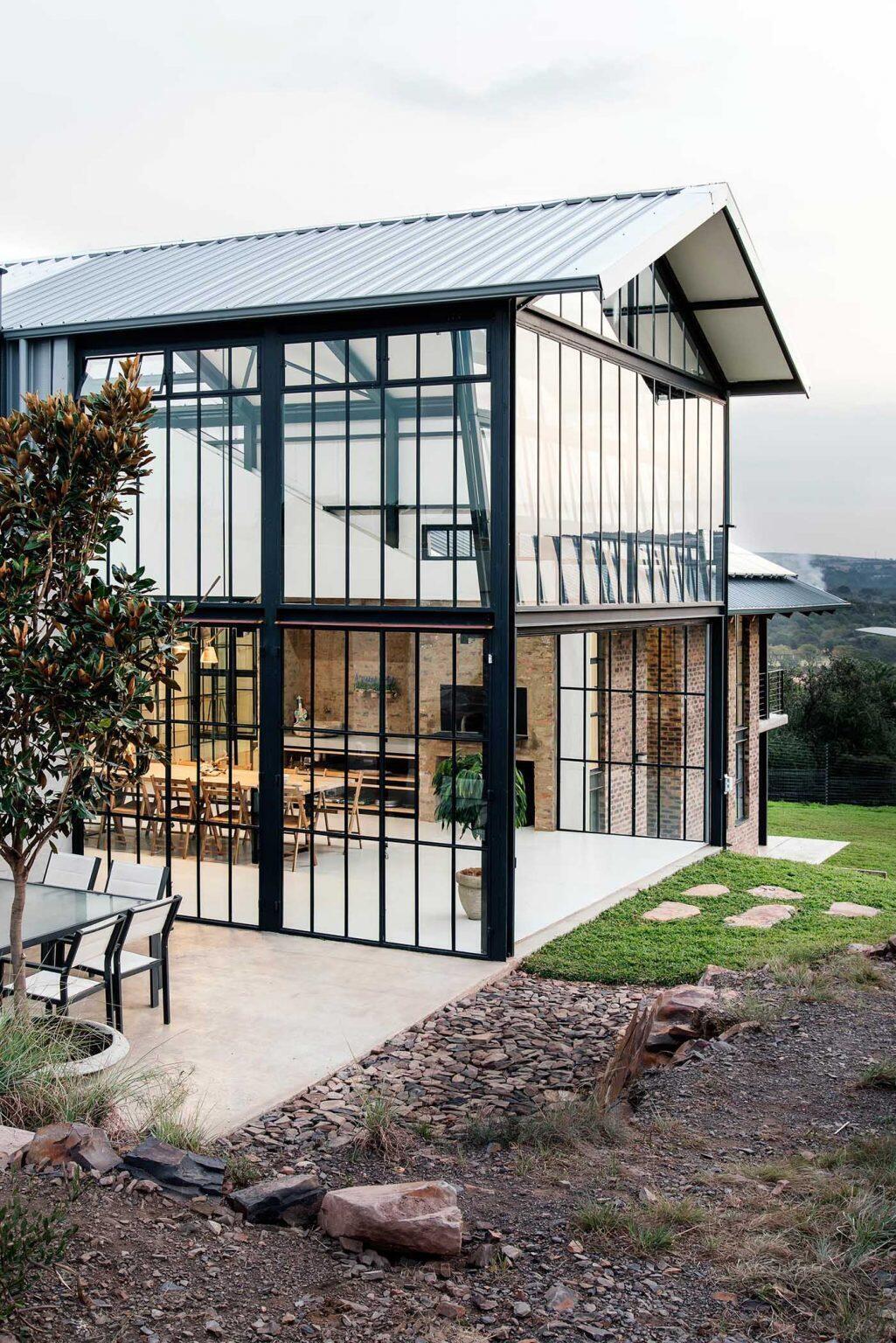
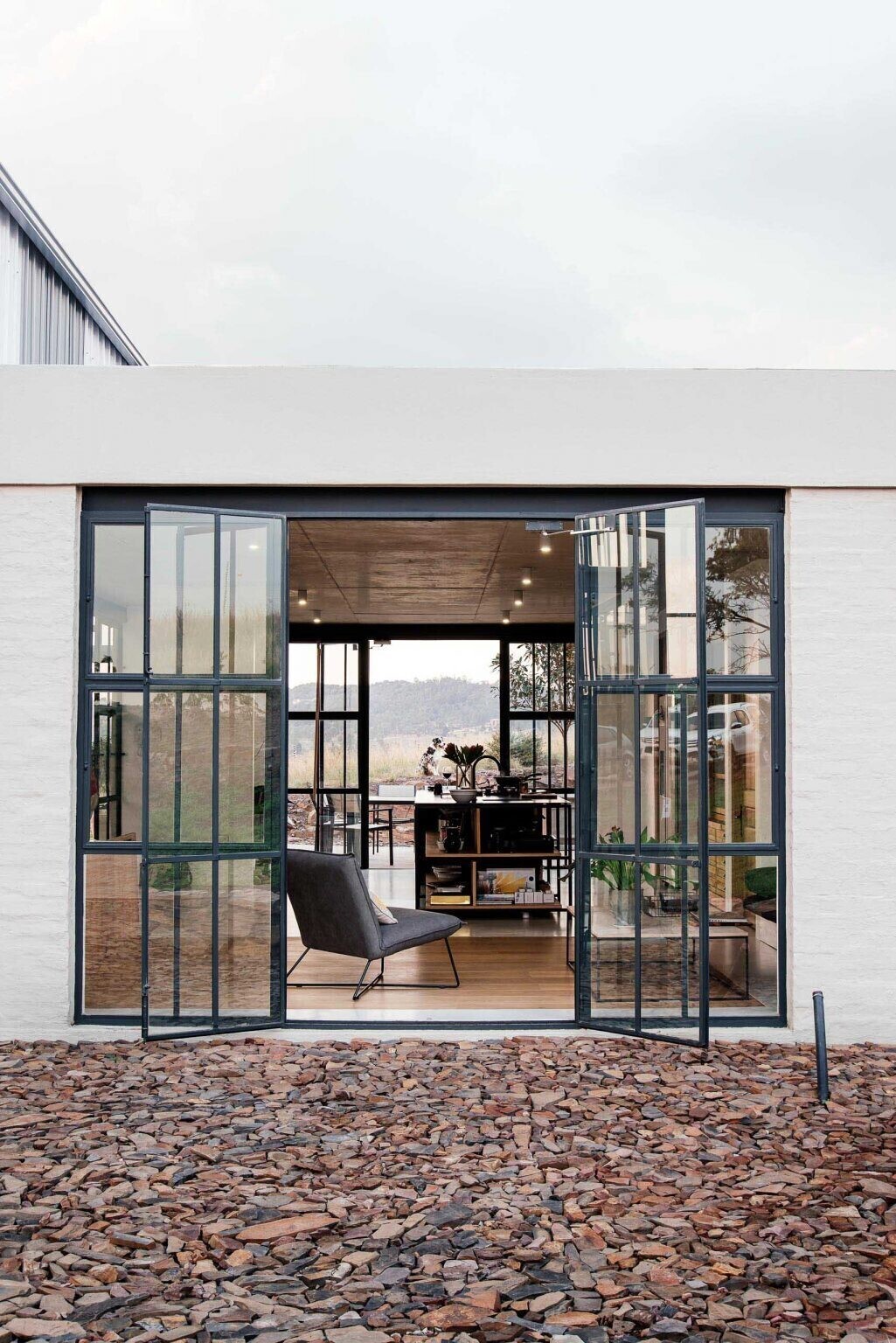
The exterior keeps things simple and durable. Cement-washed bricks, exposed steel, and concrete soffits come together in a palette that feels robust and low maintenance. There’s no need for constant upkeep here, just materials that age naturally and hold their own against the elements.
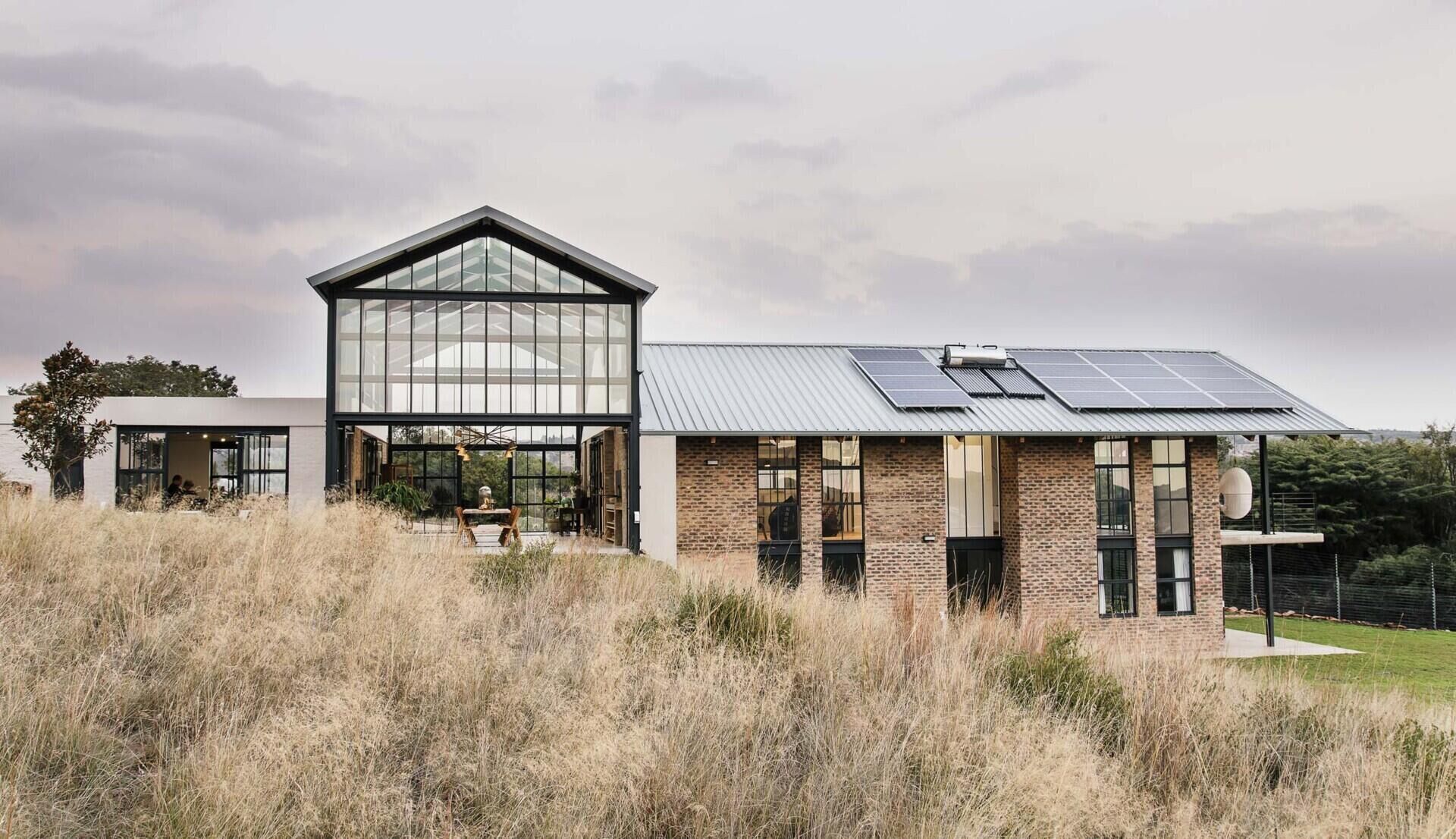
The Conservatory That Shapes Everything
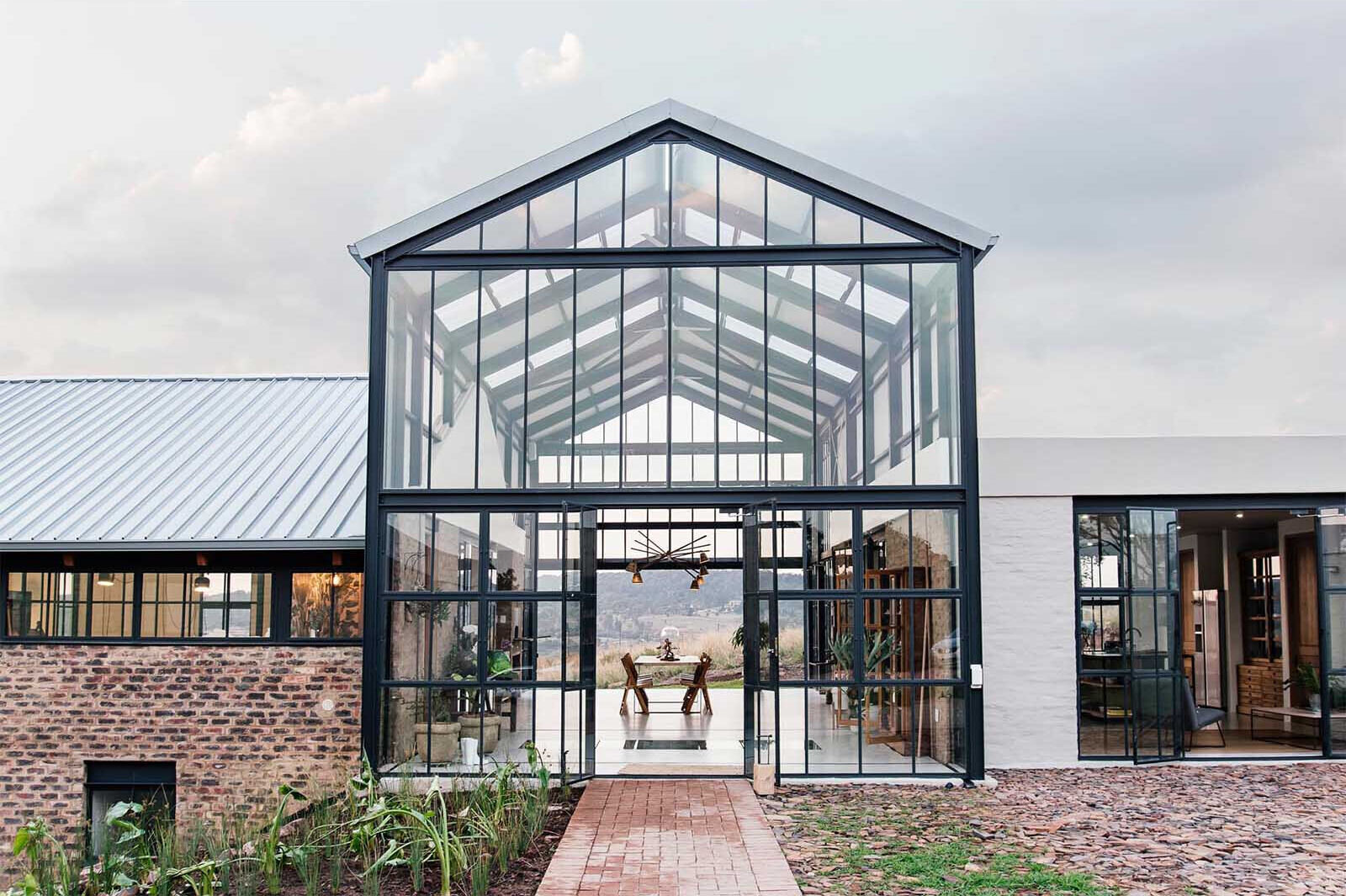
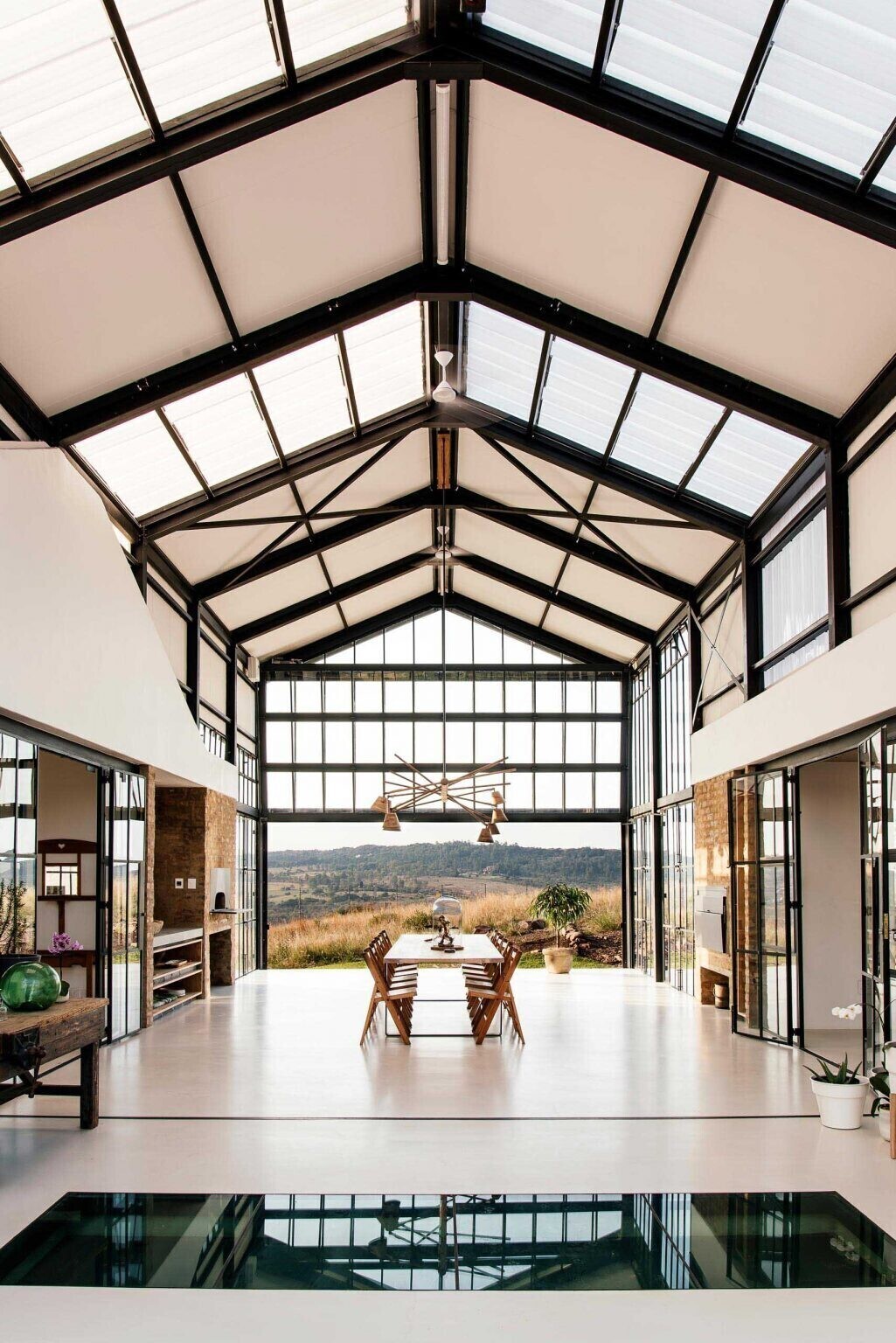
At the center of the home is a double-height conservatory that defines how the entire space works. Built with a mix of solid and translucent roof sheeting, along with insulation that supports passive climate control, it balances light, temperature, and airflow.
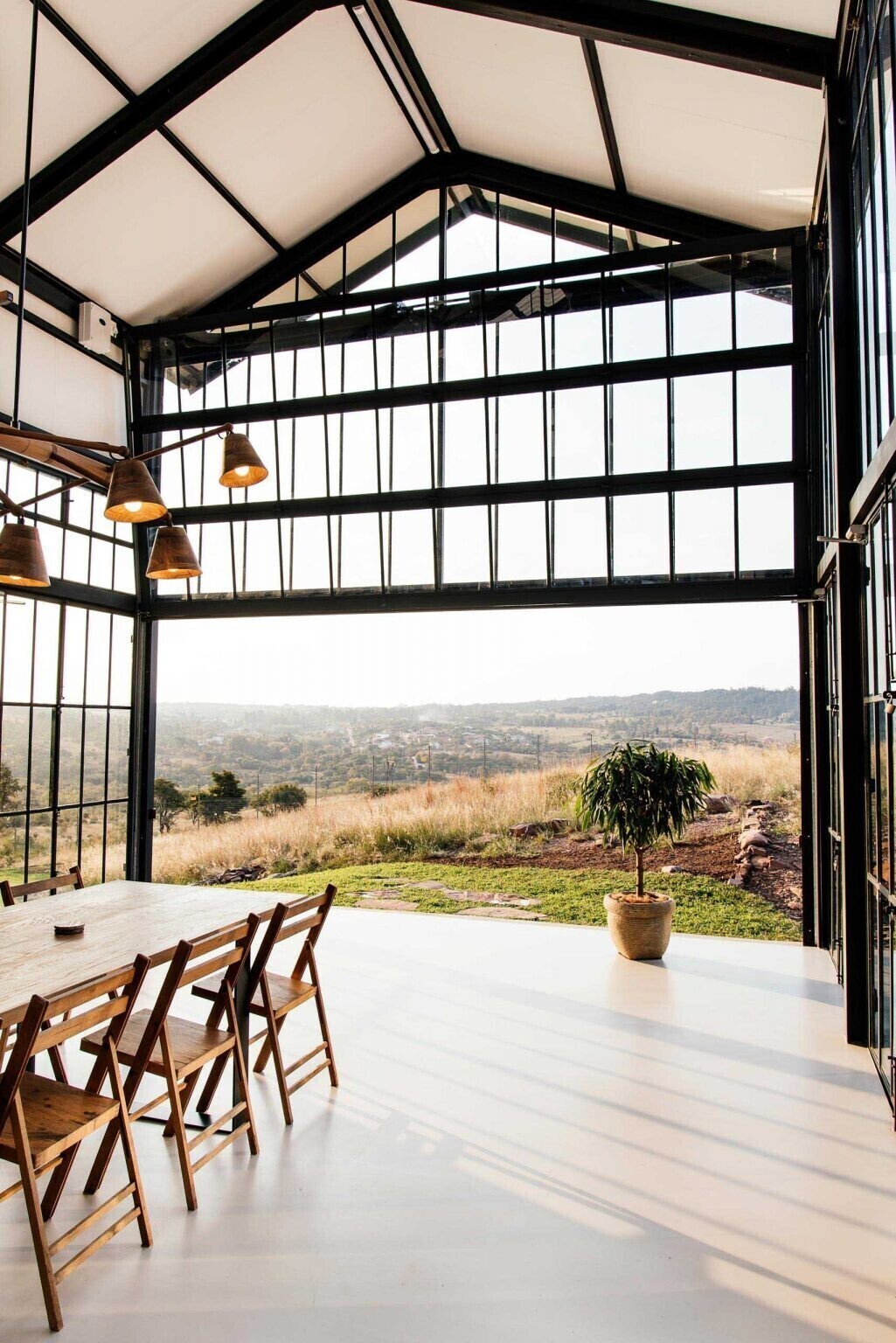
What makes it stand out is its flexibility. The space can be fully opened, allowing uninterrupted views across the landscape. Underfoot, a glass floor section offers a glimpse into the level below, adding another layer of visual connection within the home.
Small Details That Add Personality
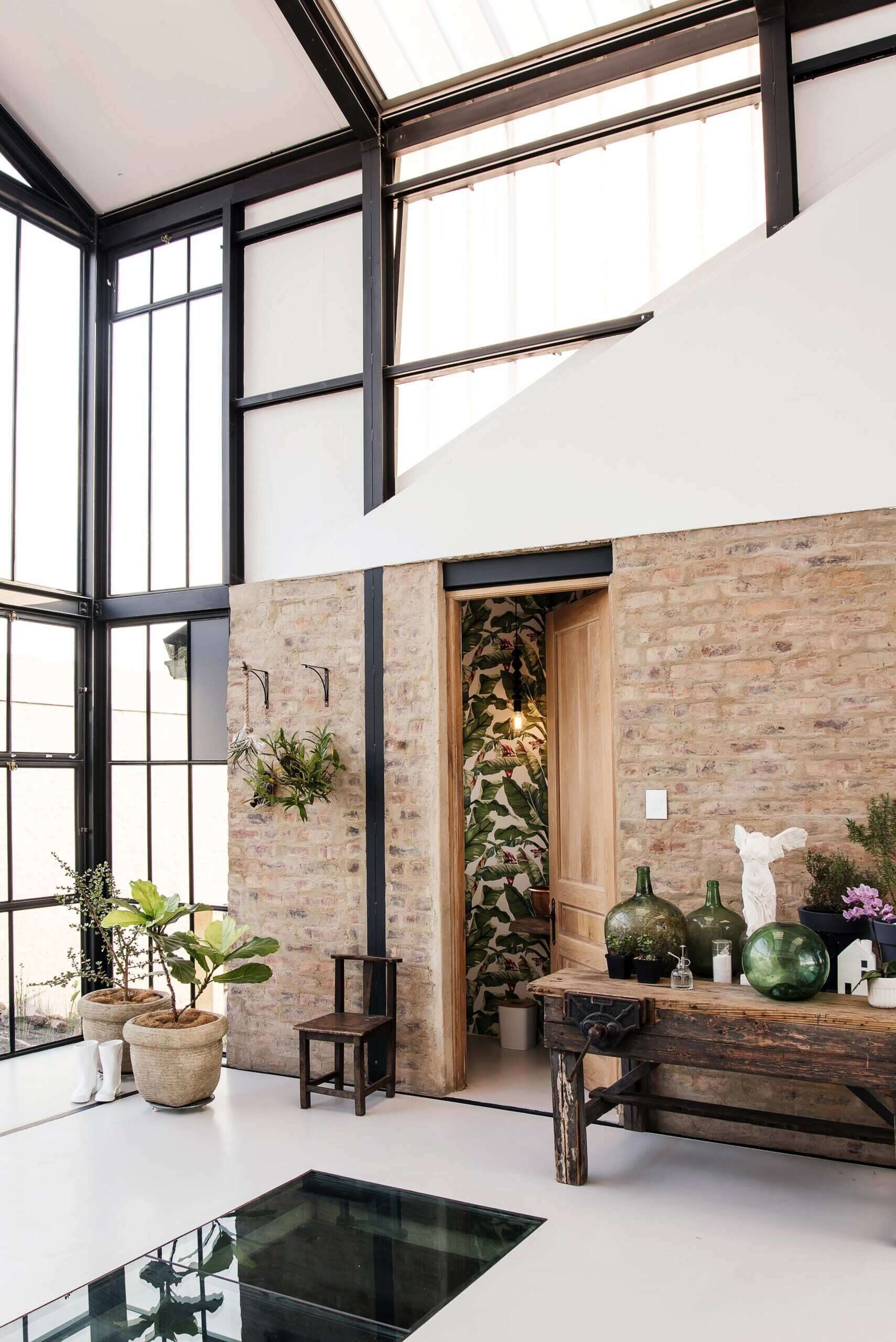
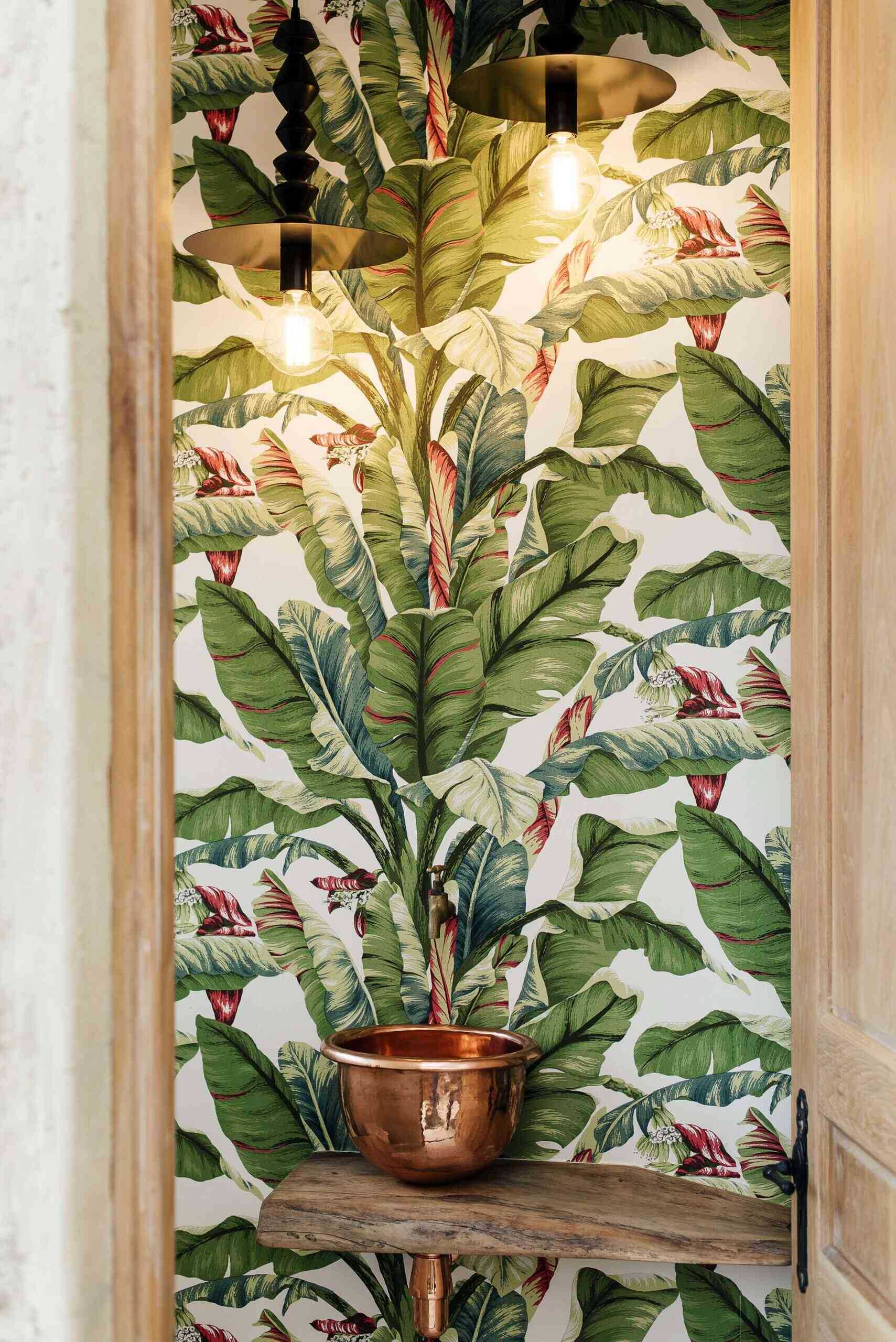
Leading off the conservatory are several doors that connect to different parts of the house. One of them opens to a compact powder room, where tropical print wallpaper introduces a playful contrast to the otherwise restrained material palette.
A Kitchen That Blends Display and Function
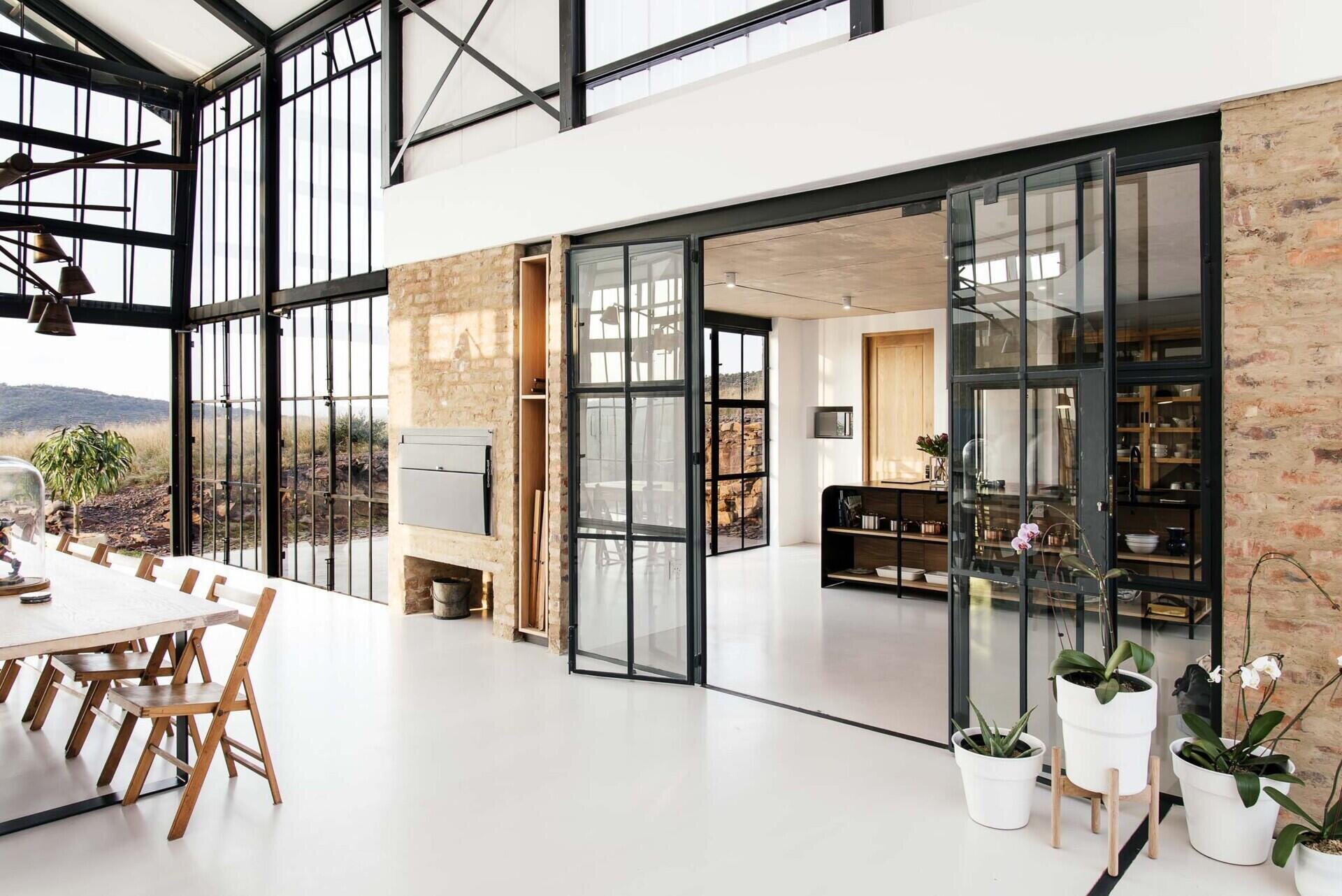
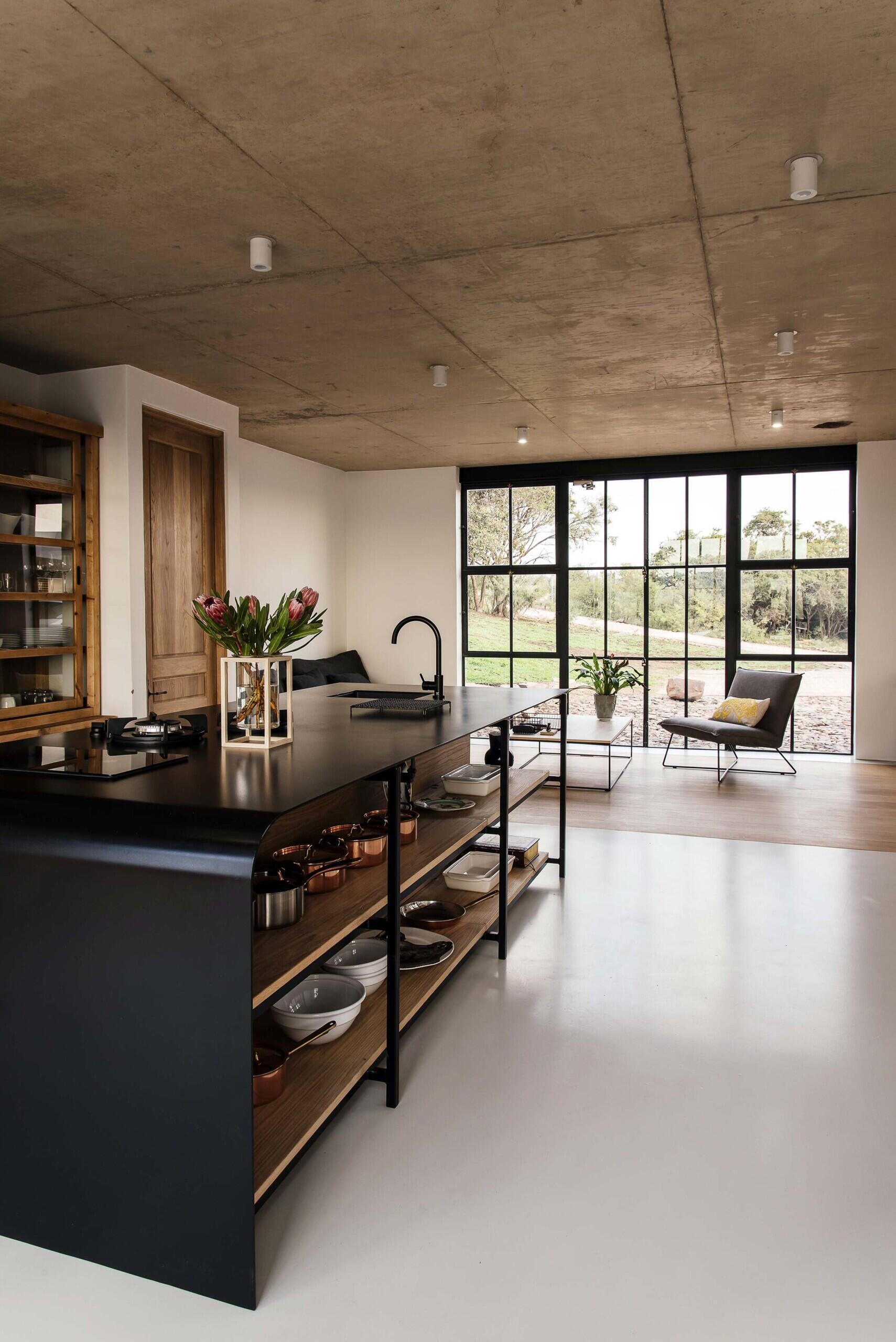
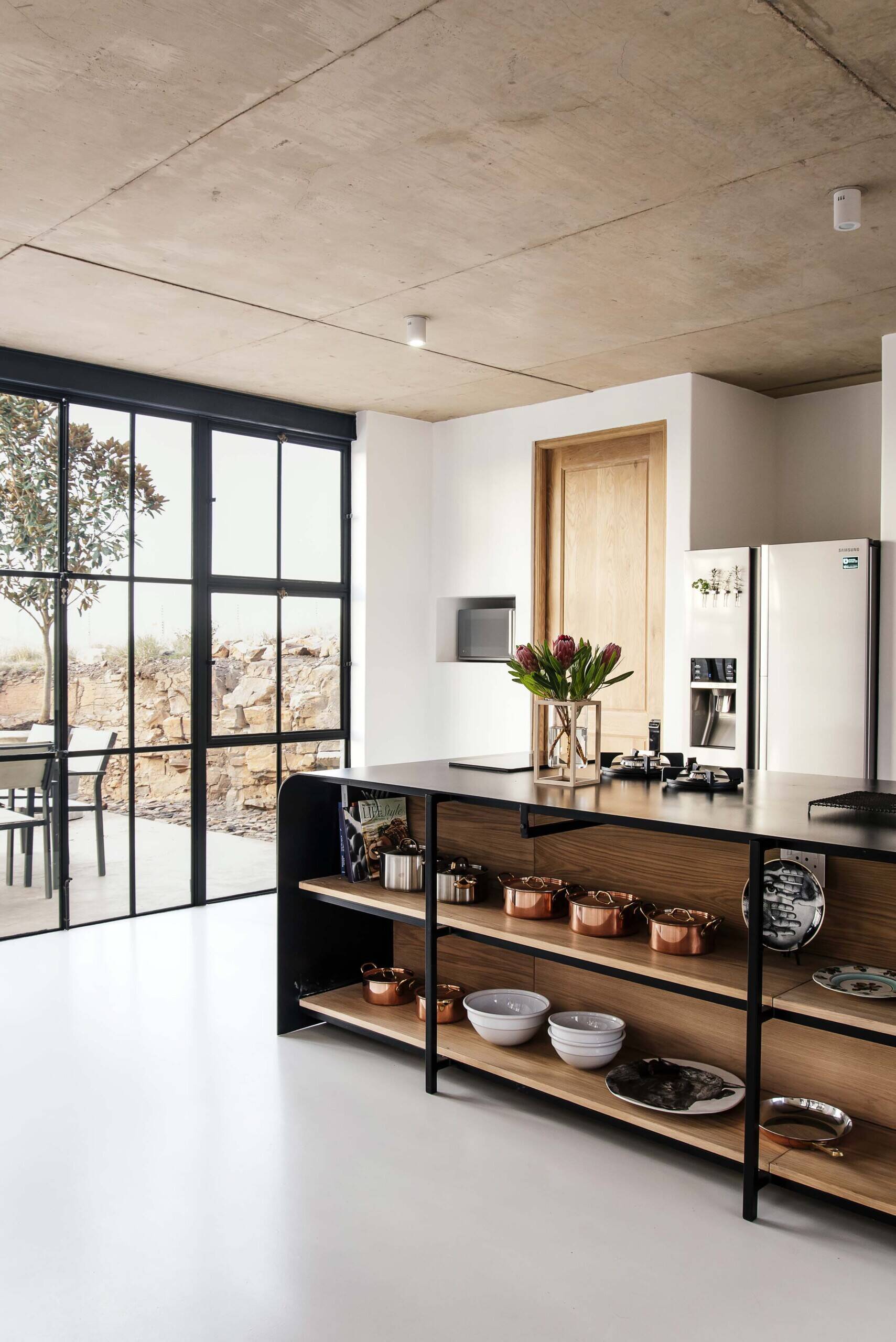
Black-framed glass doors connect the conservatory to the kitchen, where a black island becomes the focal point. Open wood shelving beneath it displays everyday items like pots, pans, and serving dishes, turning storage into part of the design.
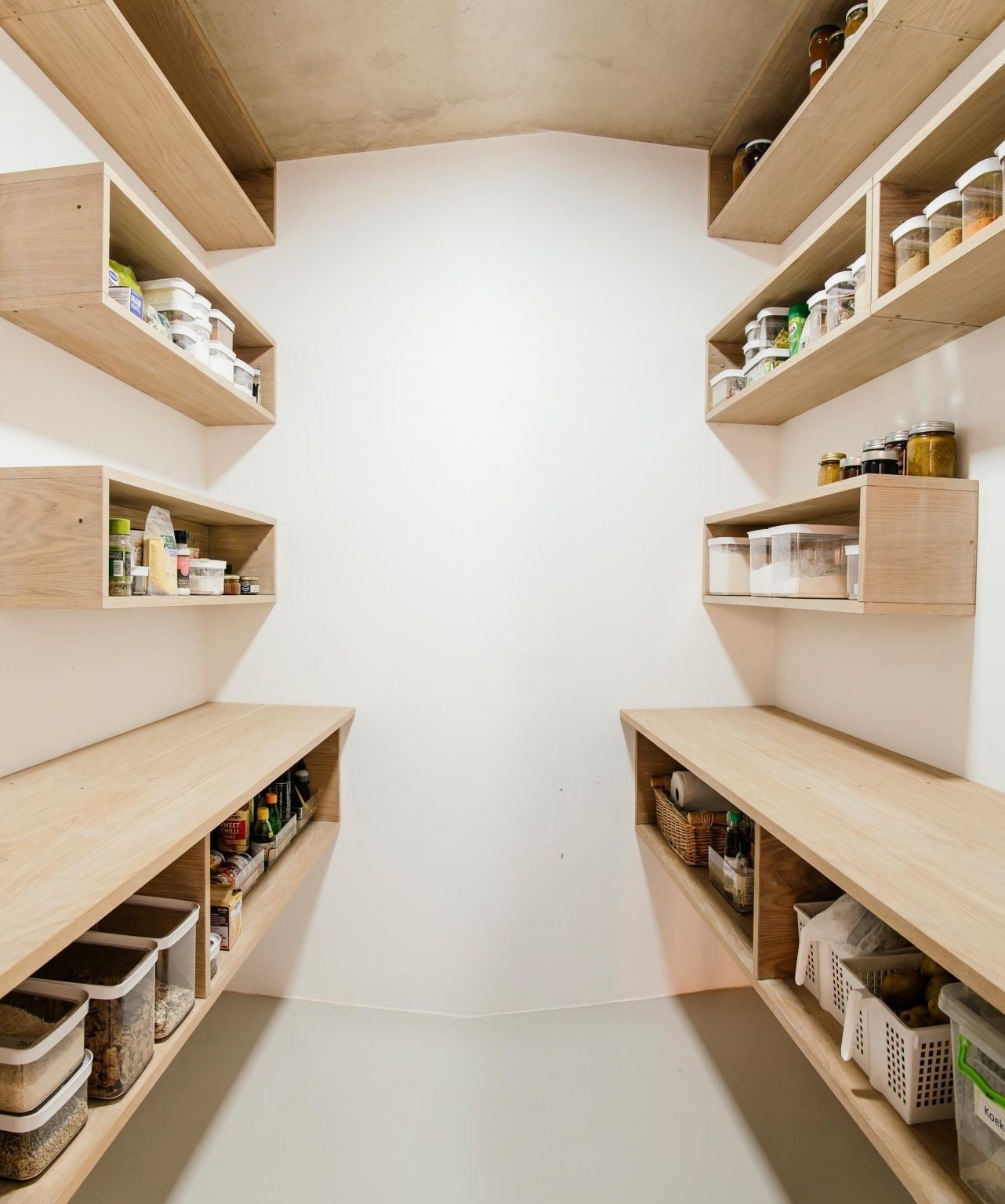
Another set of doors opens the kitchen directly to the outdoors, making movement between inside and outside effortless. A pantry lined with wooden shelves adds practical storage without losing the warm, natural feel.
A Hidden Descent to the Wine Cellar
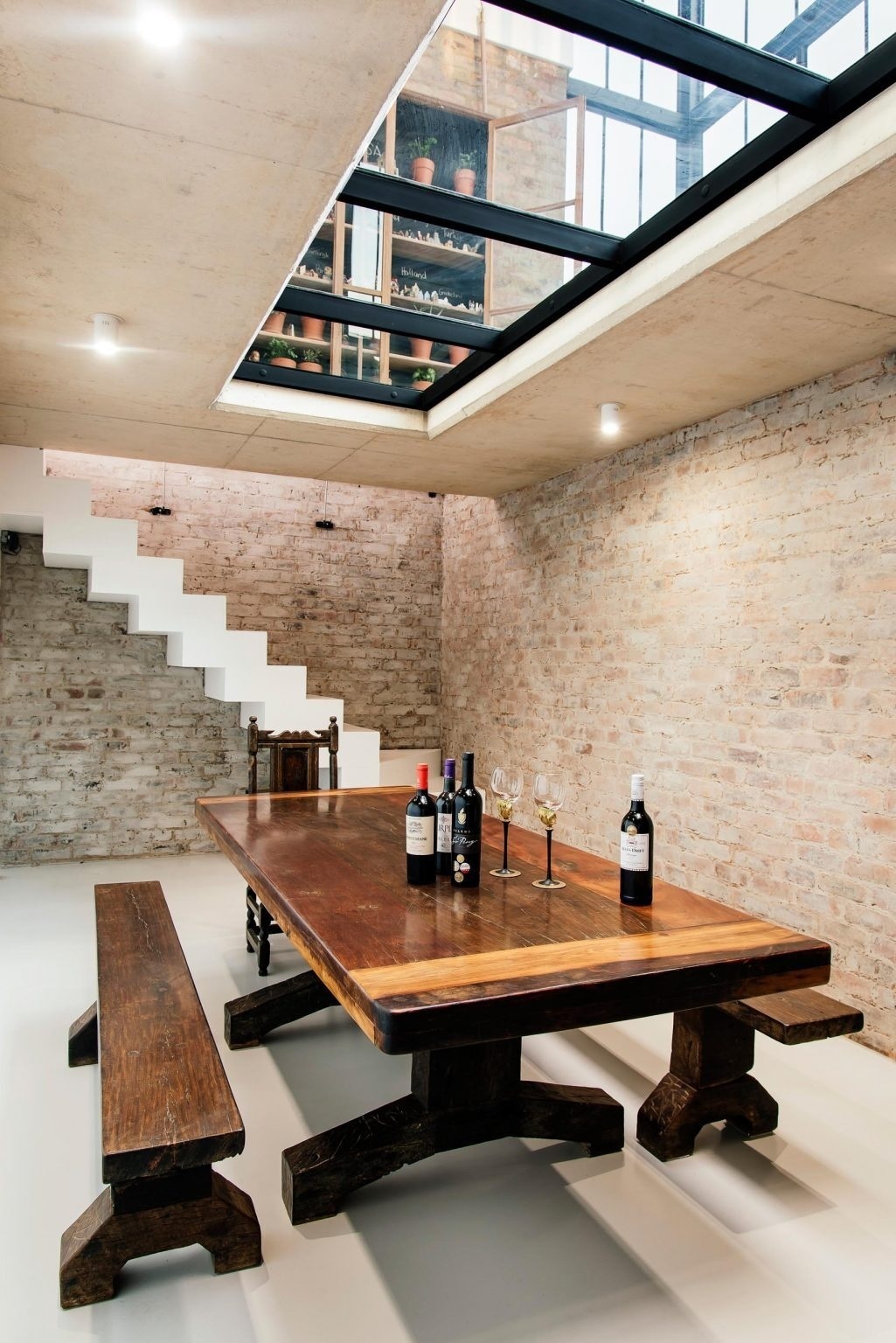
Back in the conservatory, a trap door is seamlessly integrated into the floor. It leads down to the wine cellar below, adding a sense of discovery to the home.
The space is furnished with a large wooden table built by the client, giving it a personal touch while keeping the design grounded in natural materials.
A Warm and Textured Living Area
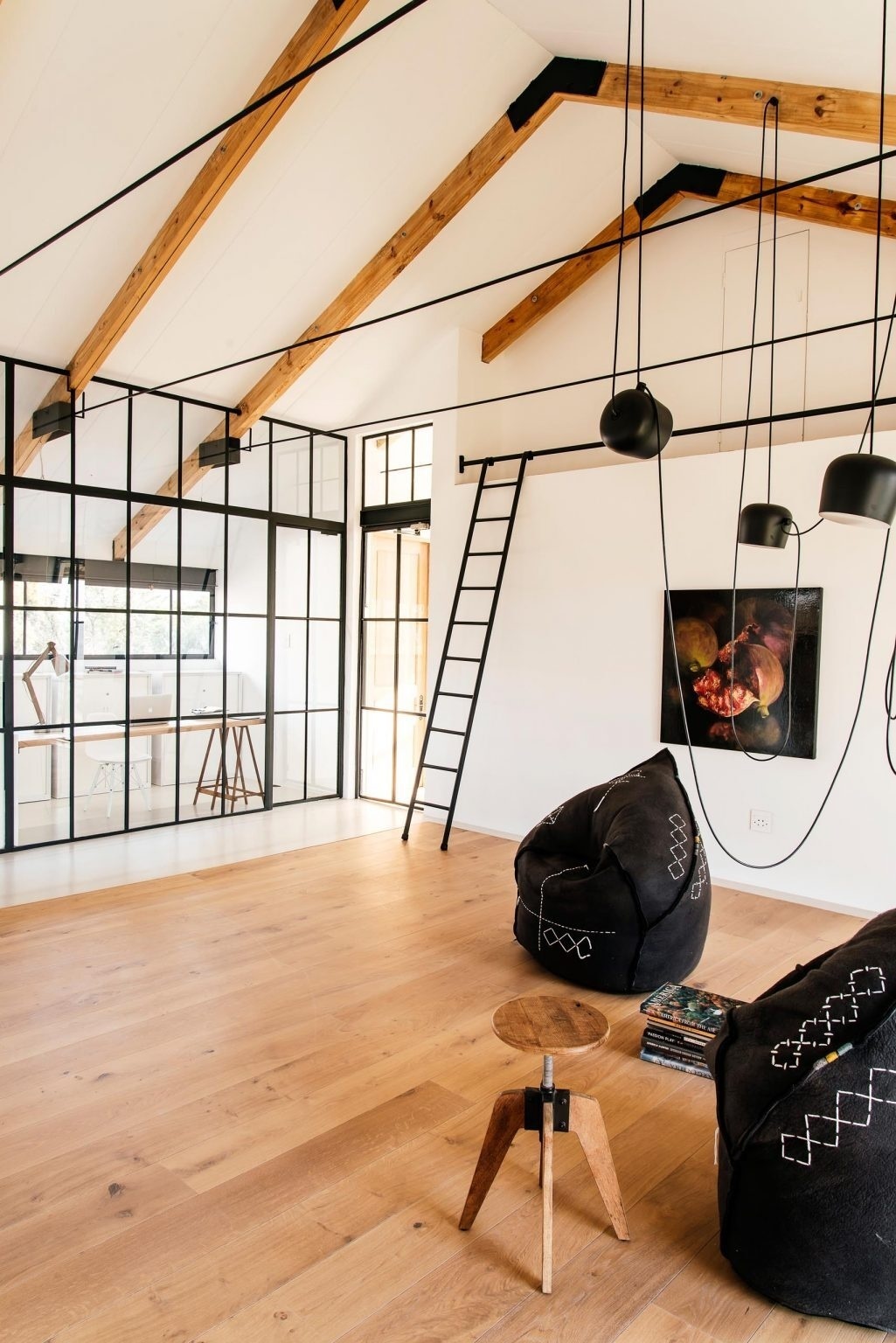
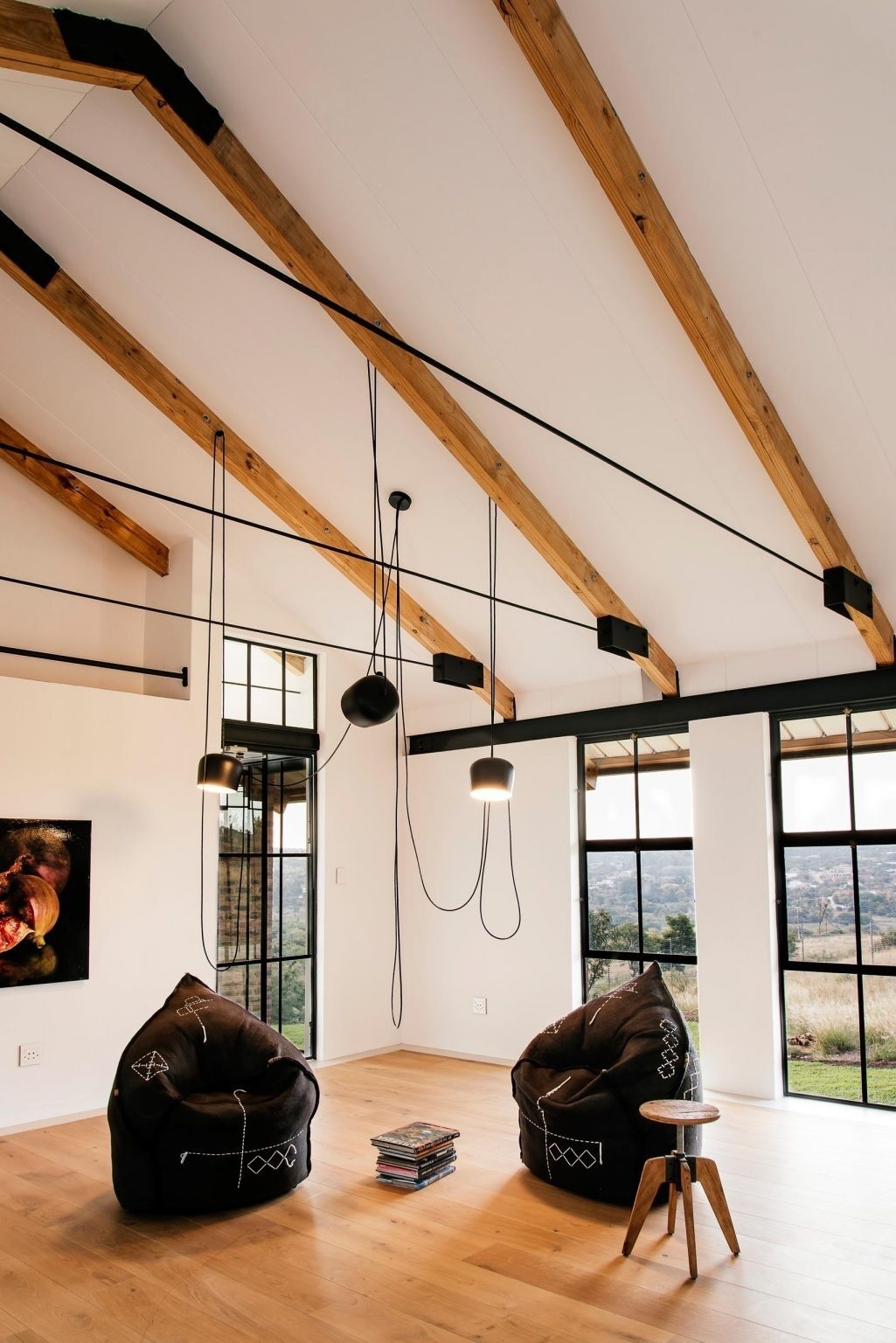
The living space brings together exposed beams, wood flooring, and a pair of black felt chairs. It’s a straightforward composition that relies on texture and contrast to create interest without overcomplicating the room.
A Glass-Enclosed Home Office
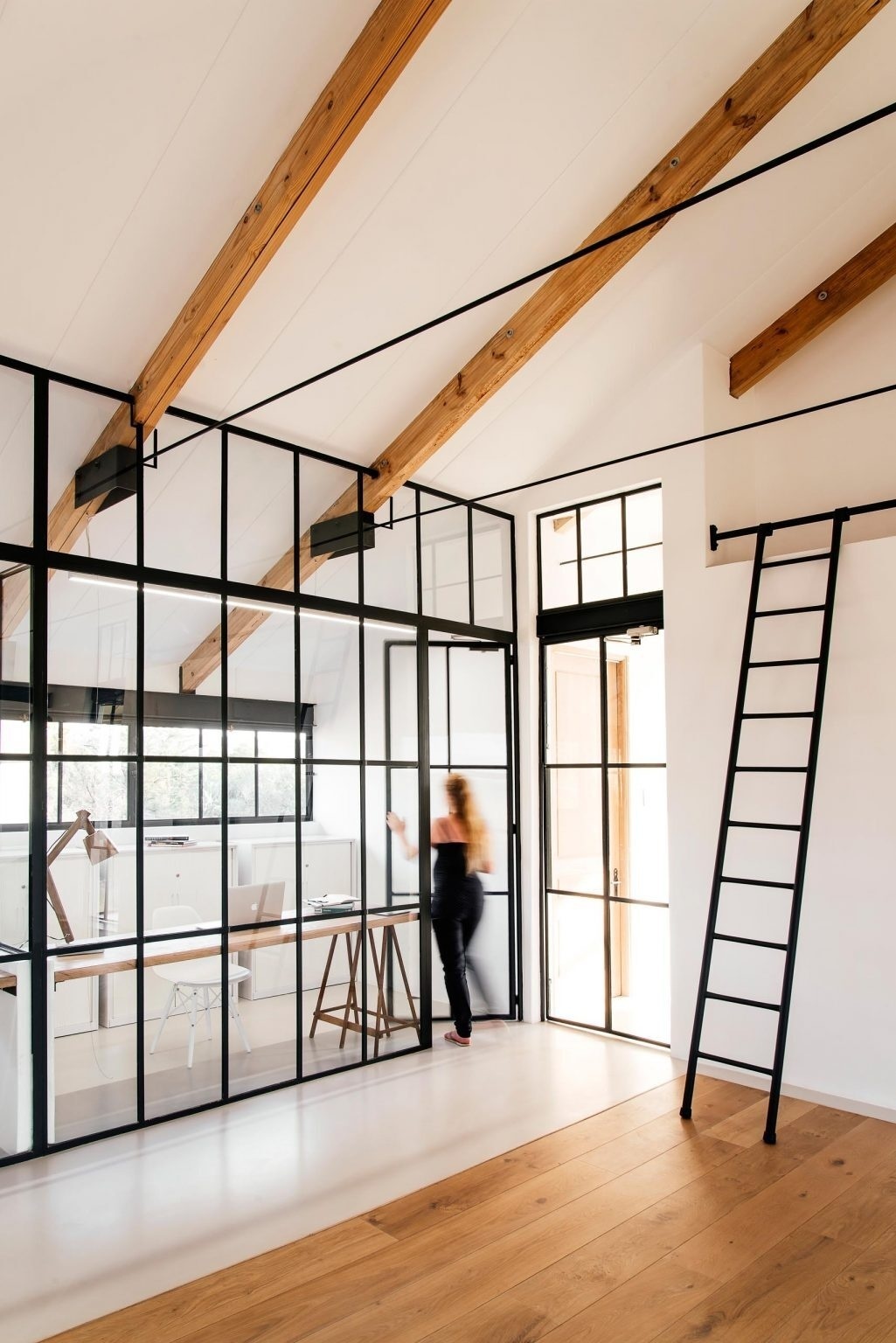
For work, there’s a home office tucked behind a glass wall. Its door blends into the surrounding surfaces, keeping the look clean and uninterrupted while still providing separation when needed.
A Bedroom Designed for Views
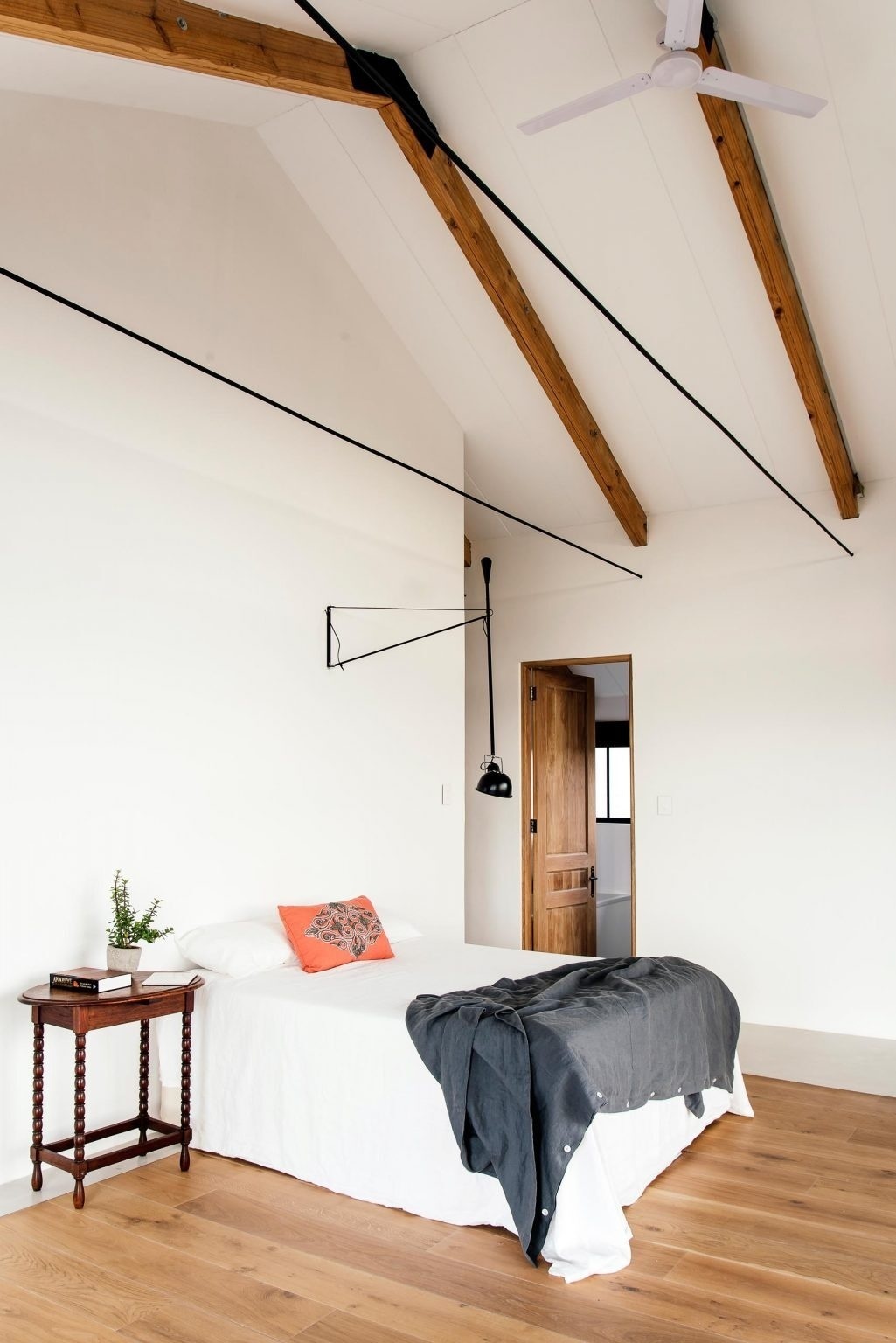
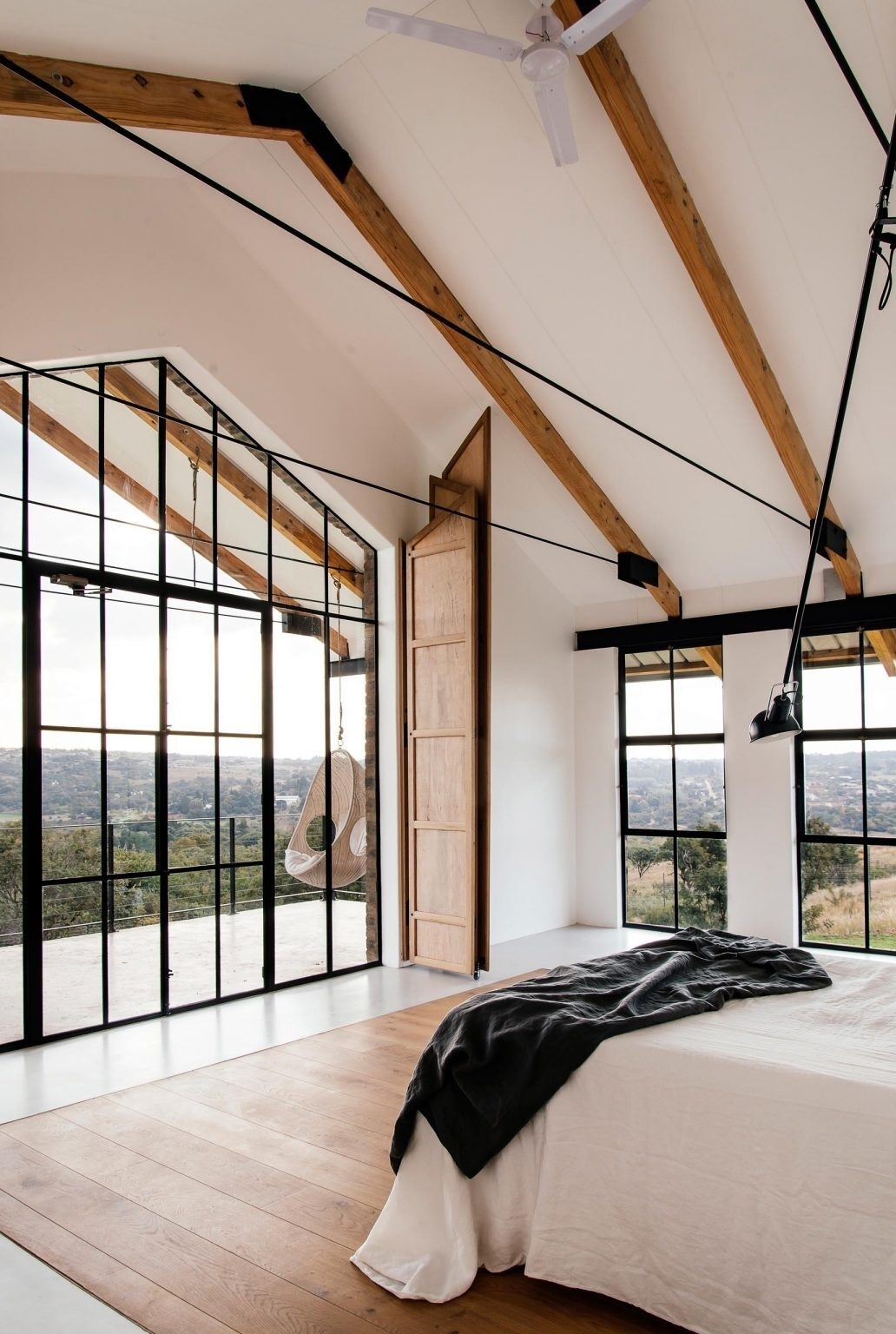
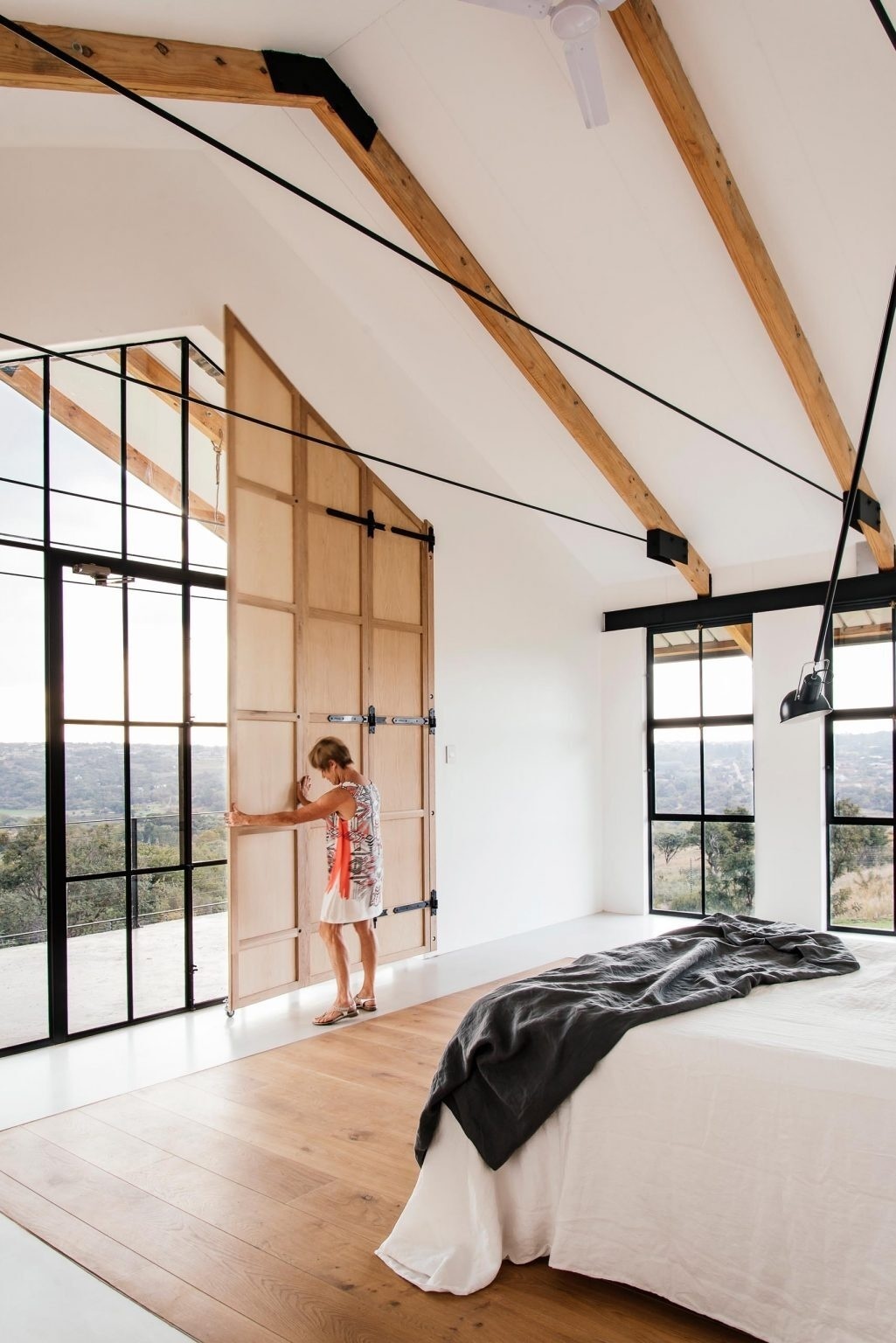
The primary bedroom keeps furnishings to a minimum, allowing the views to take over. Positioned to look into the tree canopy, it offers opportunities for bird watching, while also capturing the colors of the sunset.
An extended patio overhang and timber shutters help manage the harsh afternoon sun, making the space comfortable throughout the day.
From the central conservatory to the smaller, more private areas, each part of the house contributes to a layout that feels open, adaptable, and closely tied to its environment without over-complication.