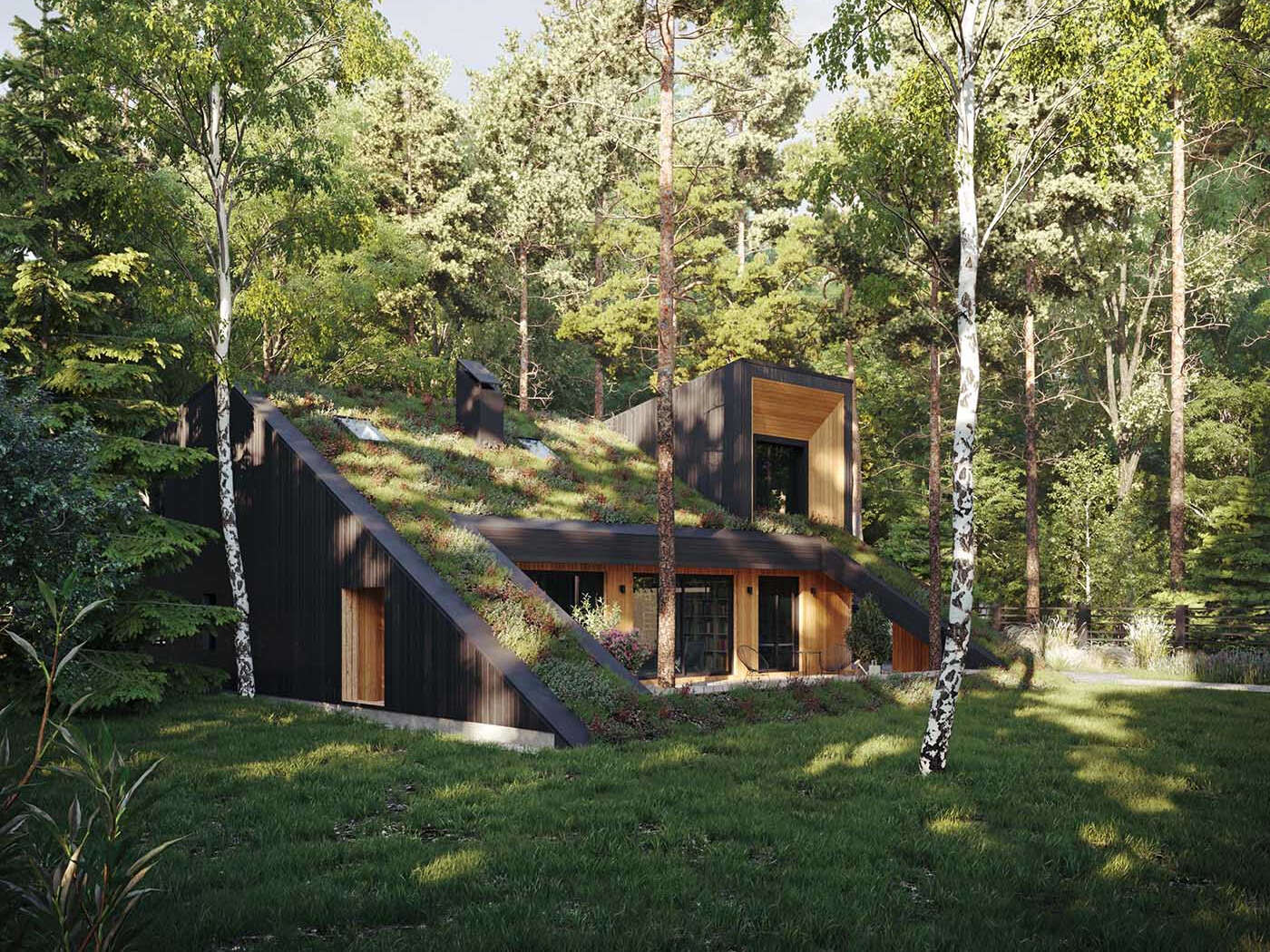
In a forest setting, Snegiri Architects have designed HillHouse as a home that visually steps back and lets the landscape take the lead. Located among existing trees, the project keeps the site intact by building around what’s already there instead of clearing it away.
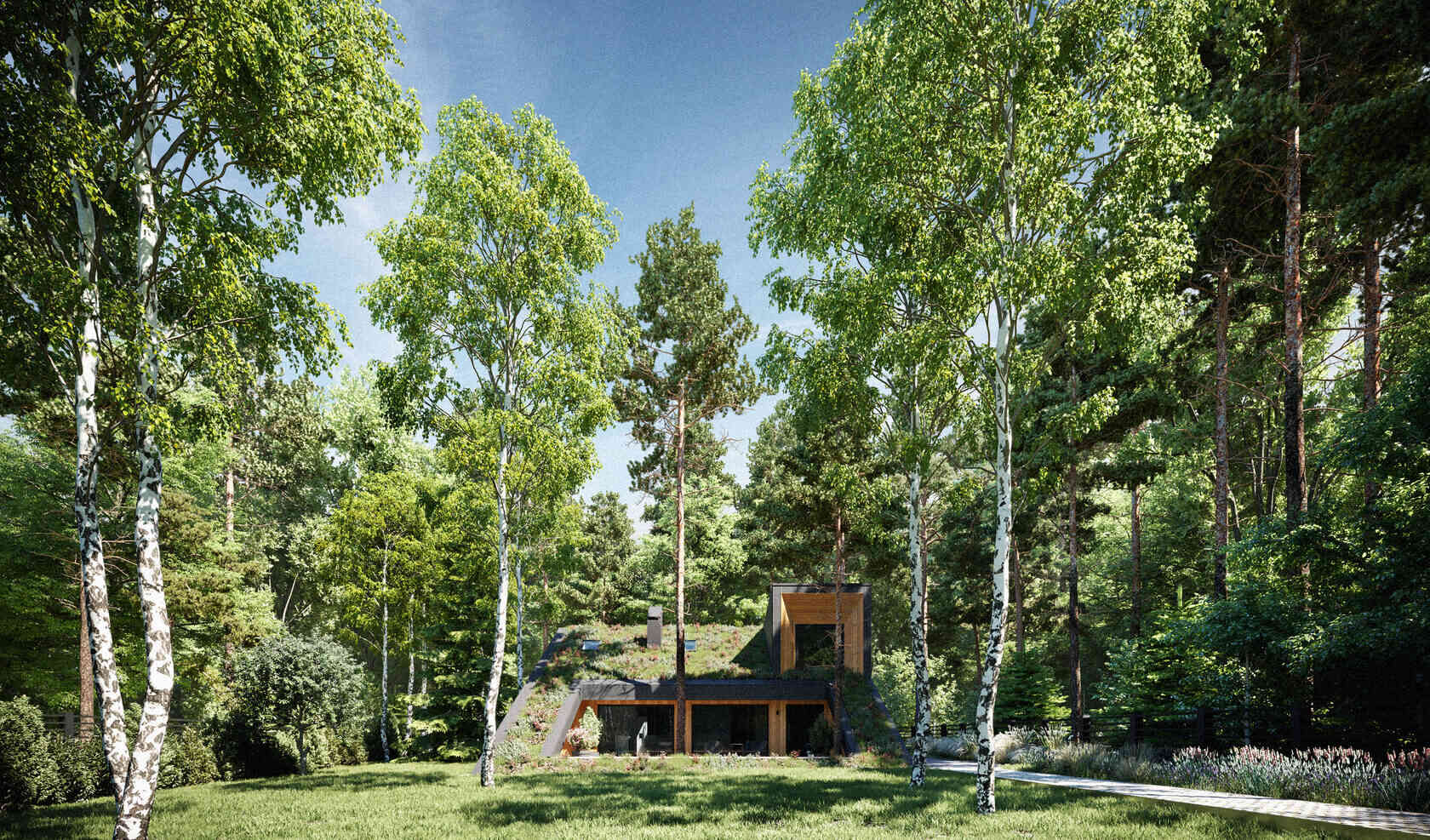
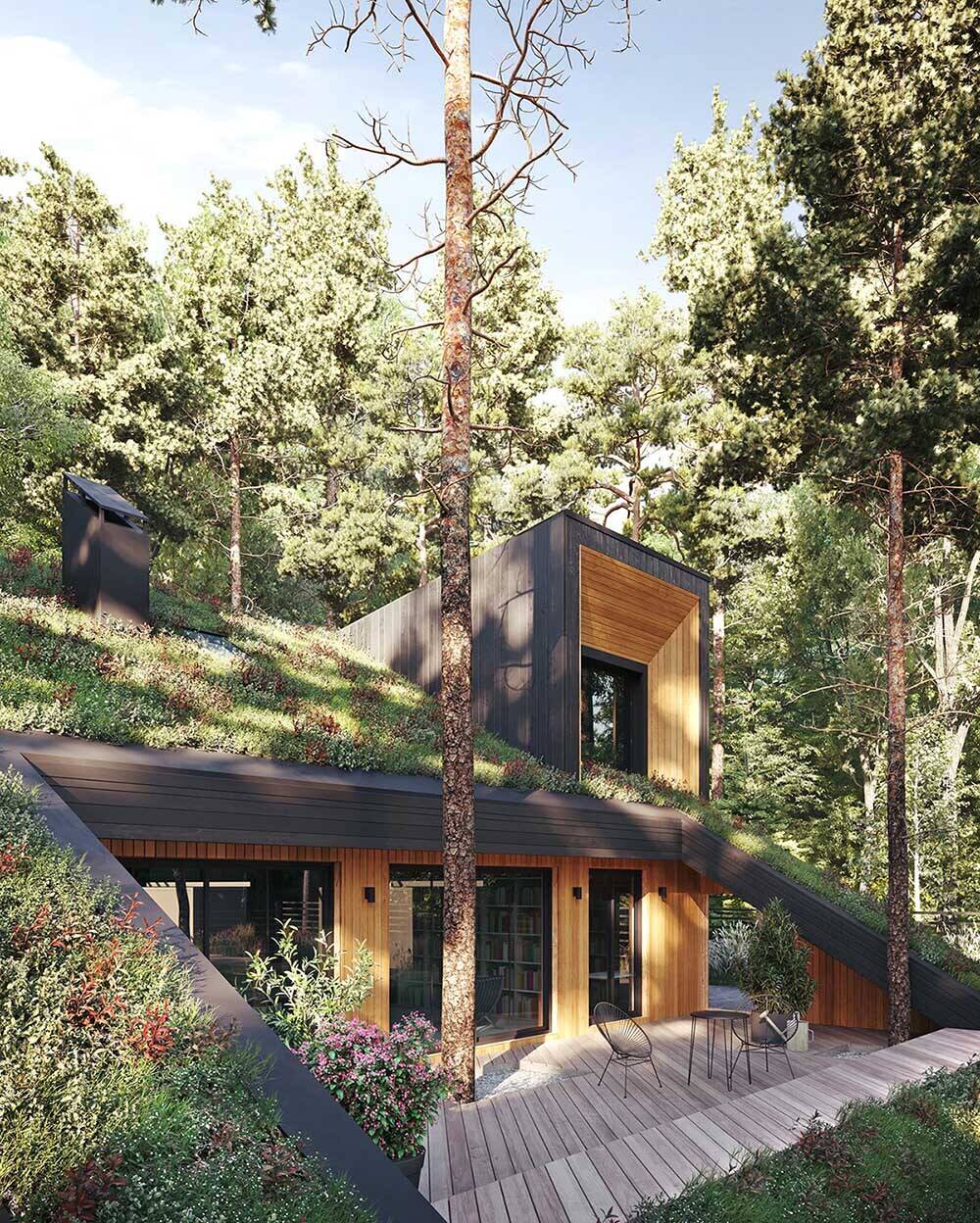
From a distance, the structure feels almost hidden. Its form follows the slope of the land, while a planted roof helps it blend into the surroundings. The goal was simple: create a home that feels like part of the terrain, not something placed on top of it.
A Roof That Becomes the Landscape
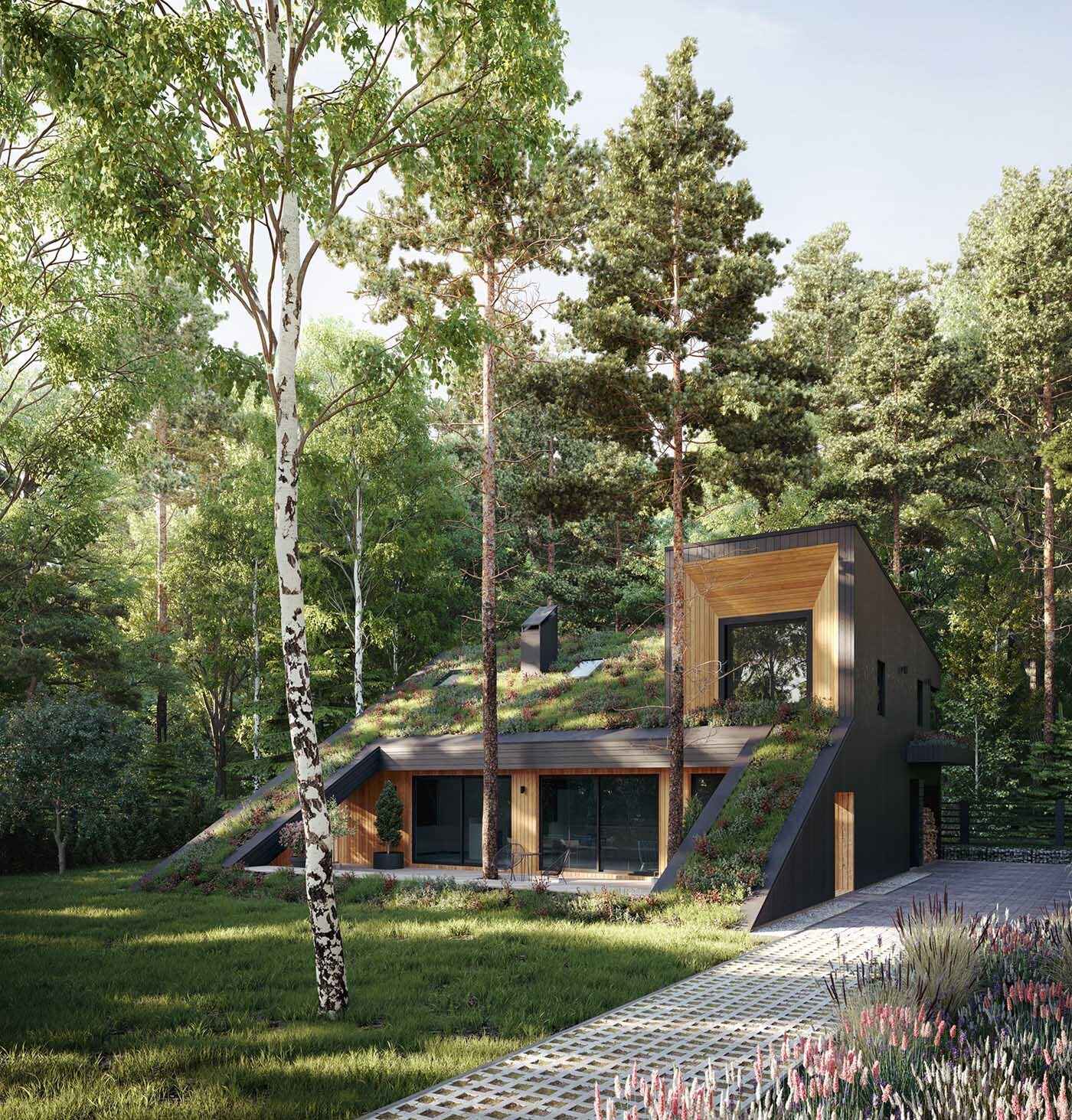
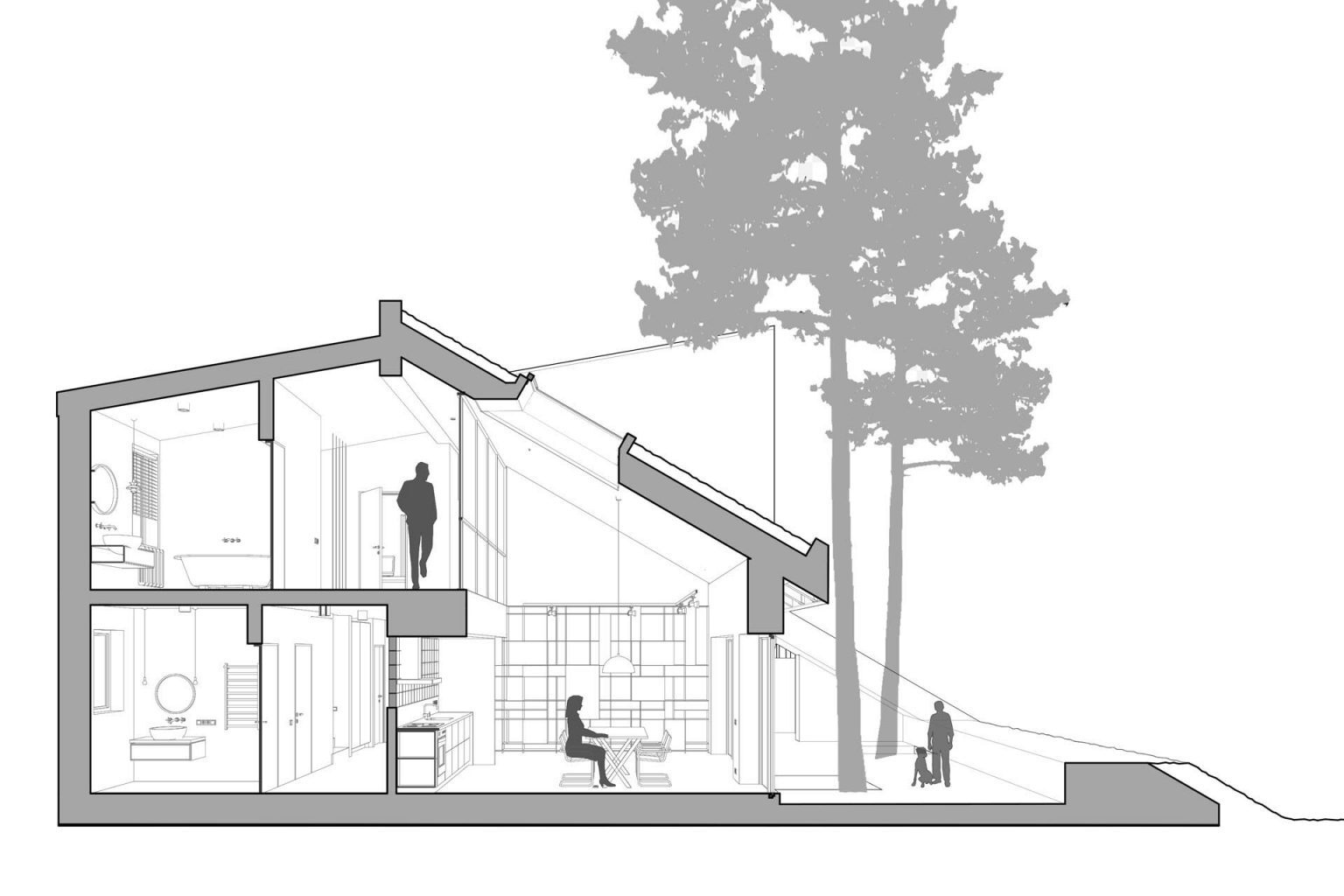
The defining move is the sloping green roof. Starting at the rear, it gradually descends toward the front of the house until it meets the ground, turning the building into an extension of the site itself.
Instead of traditional roofing, the surface is covered in a living layer of vegetation. Stonecrop and wild chamomile-like plants form a dense, low-maintenance carpet that changes with the seasons. Originally, grasses were considered, but more resilient, low-growing plants were chosen to simplify upkeep.
Designed for Sunlight and Efficiency
While the exterior keeps a low profile, the interior is oriented for comfort and light. The terrace, main living spaces, and most windows face the sunny side, bringing daylight deep into the home.
Performance plays a big role here too. The house includes energy-saving windows, a ventilation system with heat recovery, and full insulation around the structure. From the insulated foundation to the mineral wool walls, every layer is designed to handle colder conditions while maintaining efficiency.
Together, these elements allow the home to use less energy while still feeling bright and open.
A Contrast of Materials
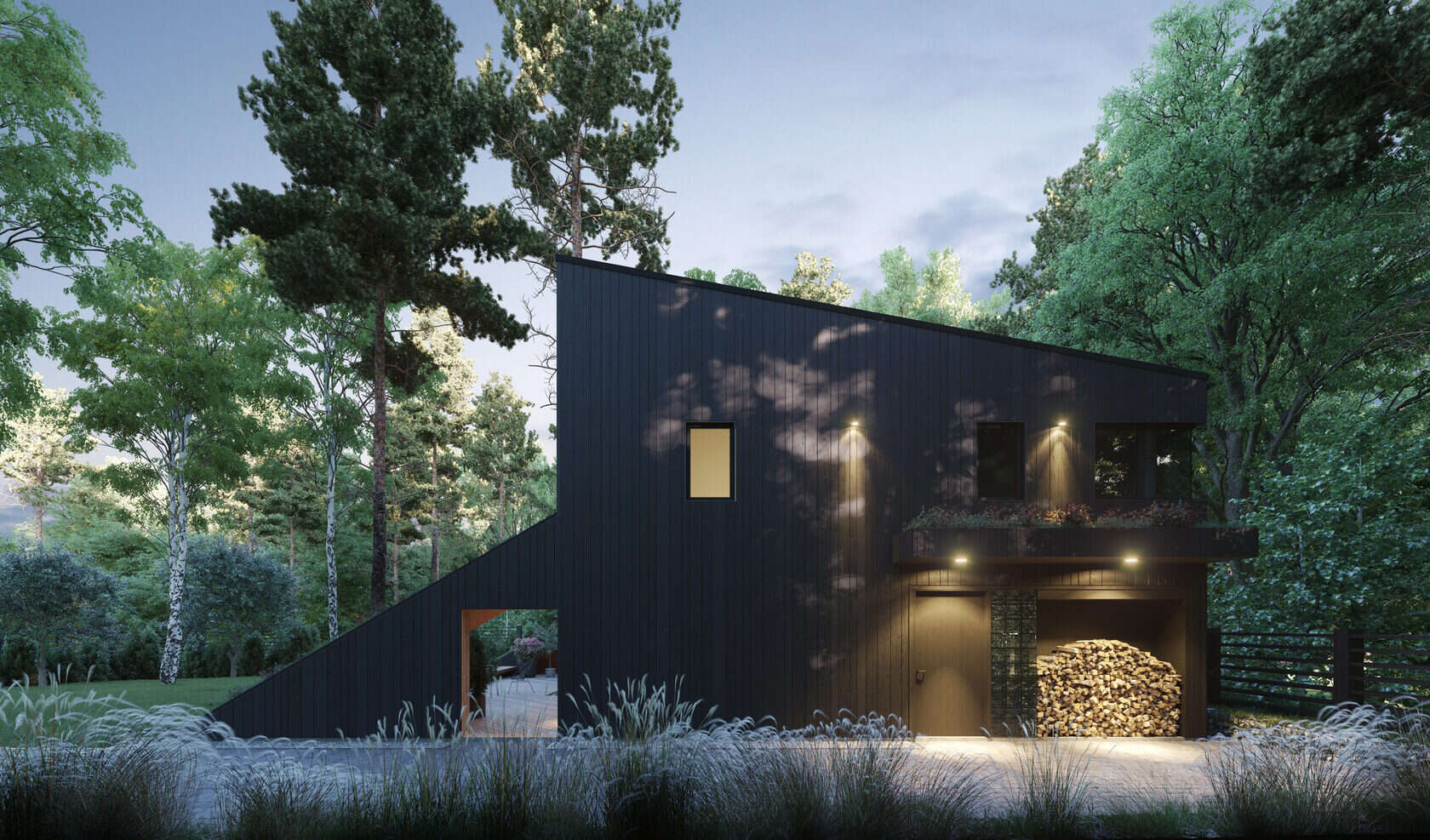
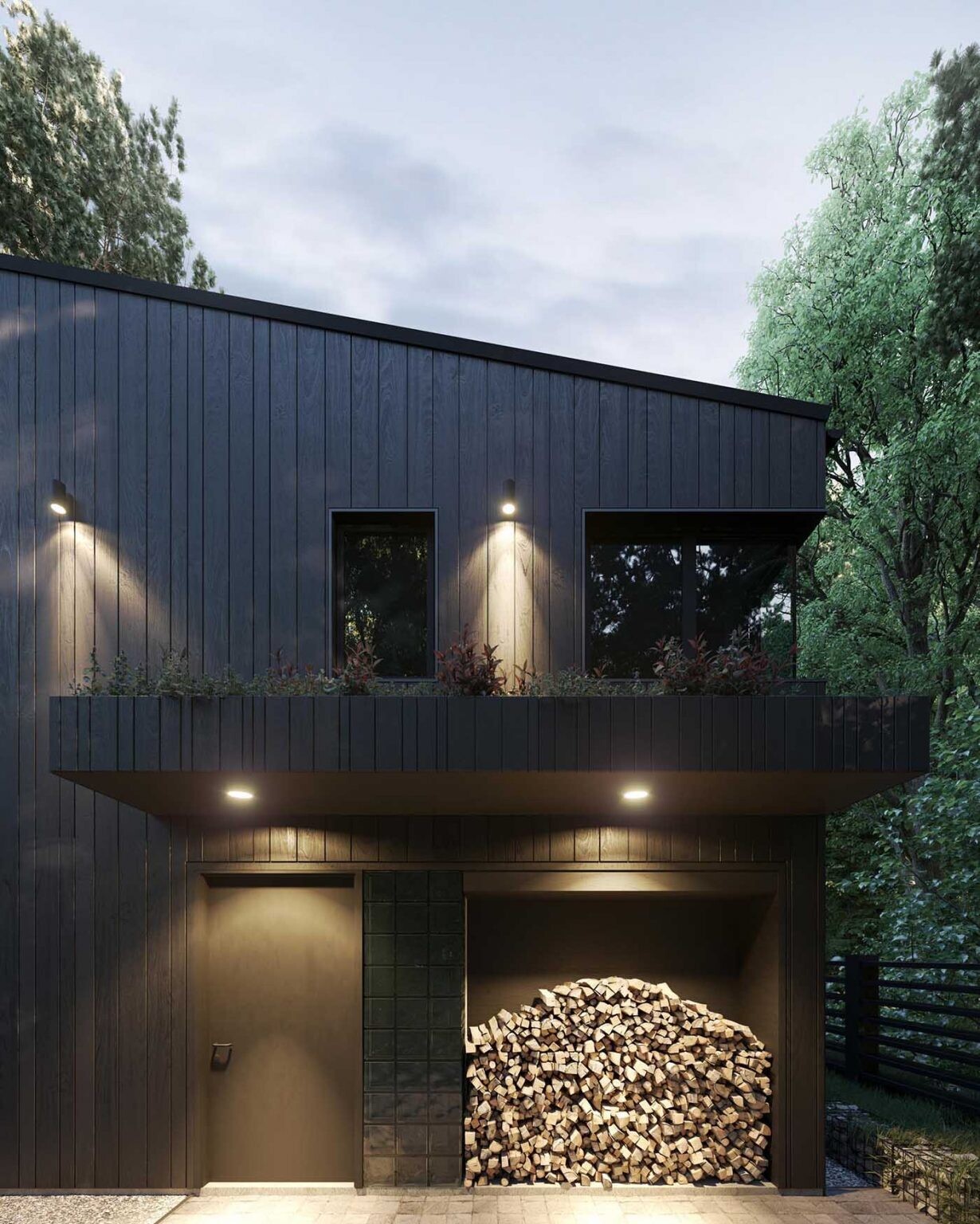
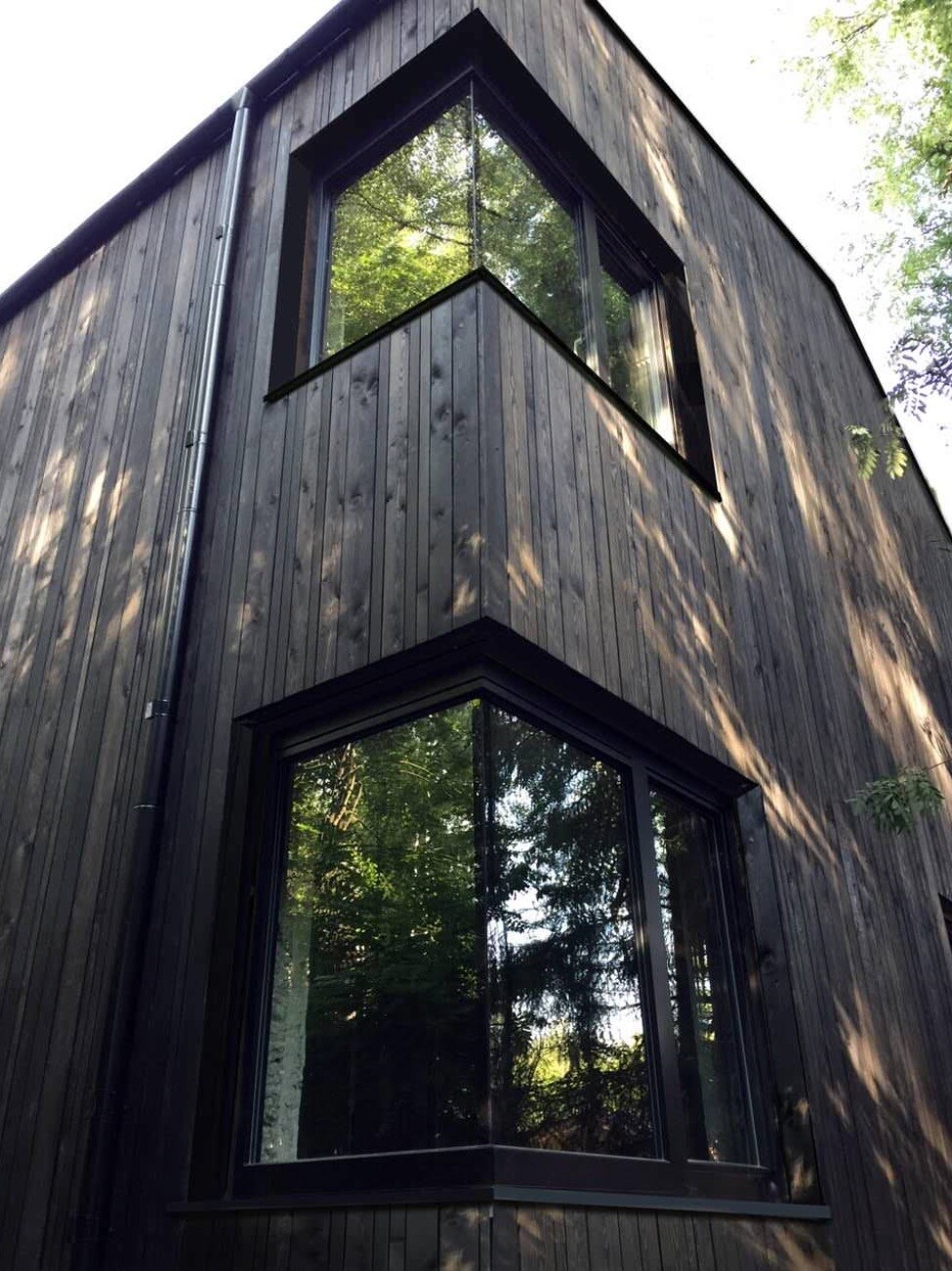
Material choices reinforce the connection to nature while adding contrast. The exterior is wrapped in dark wood cladding, giving the house a grounded, almost camouflaged appearance among the trees.
Against this, lighter wood accents introduce warmth and variation. These tones echo the surrounding forest while breaking up the darker surfaces, creating a subtle balance between blending in and standing out.
The timber is treated with natural linseed oil, adding durability while keeping the finish close to its natural state.
Warm Interiors With a Bold Twist
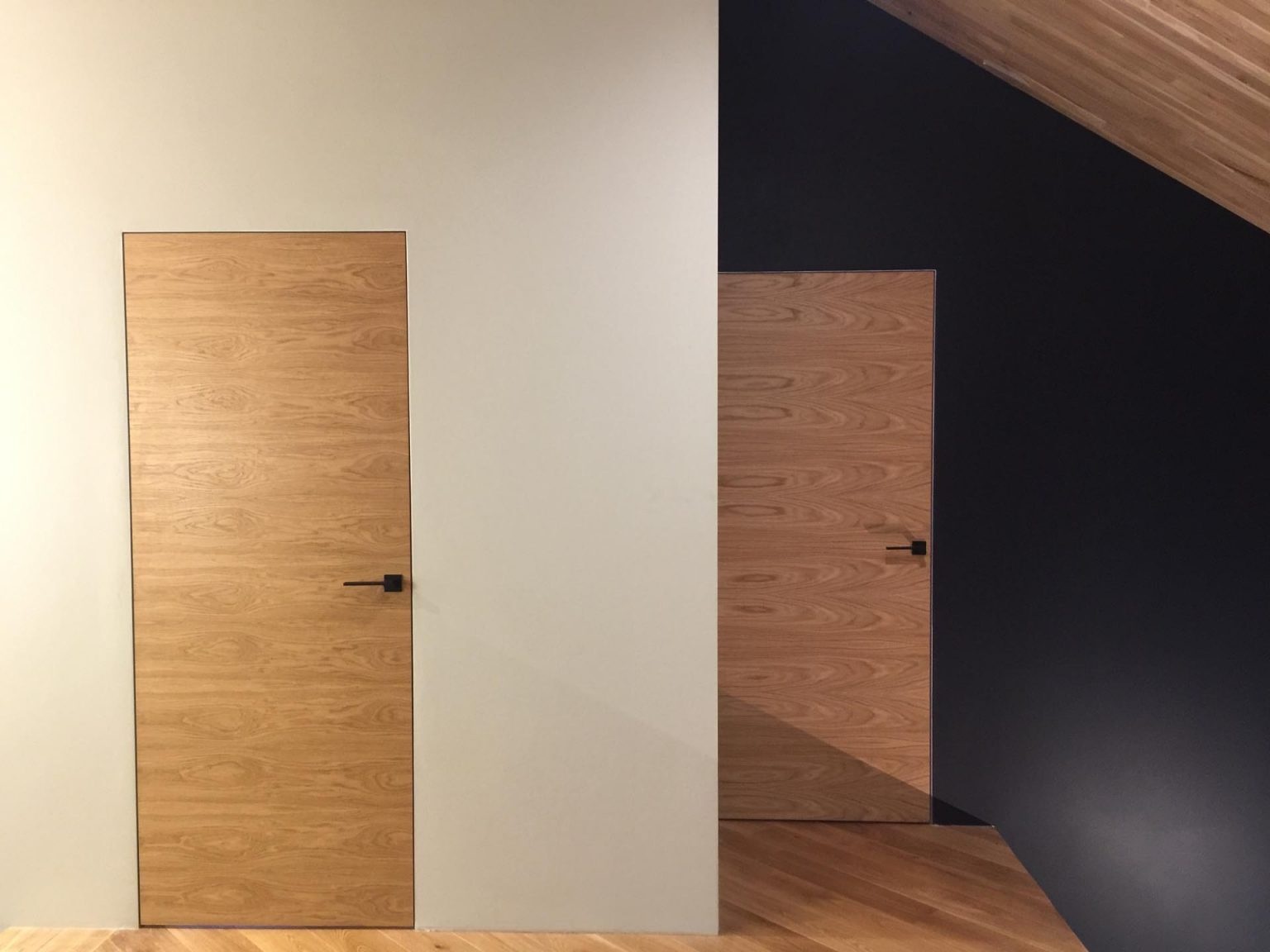
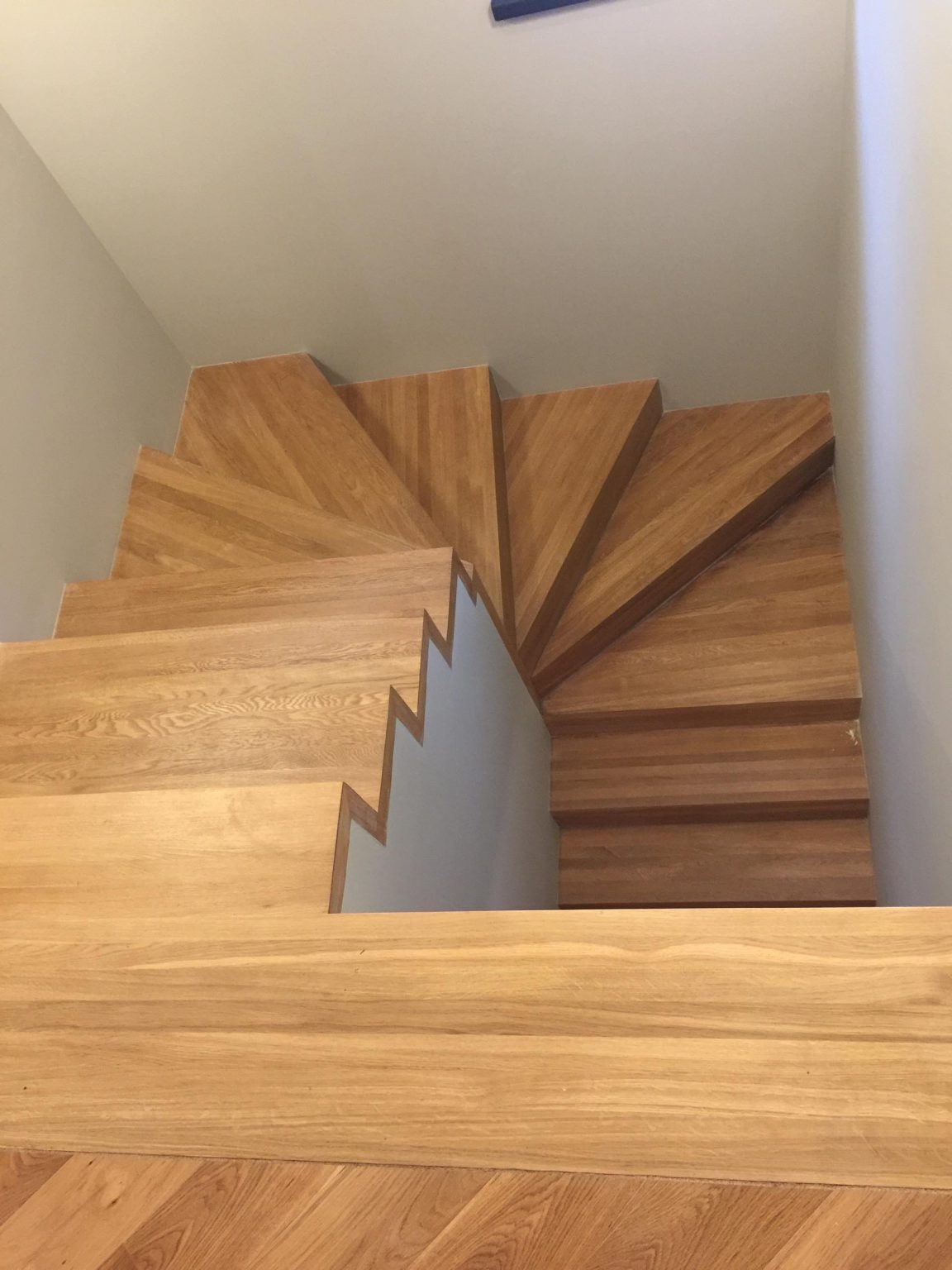
Inside, wood continues across ceilings, doors, and stairs, creating a consistent and warm atmosphere throughout the home. The material palette stays simple, letting texture and light do most of the work.
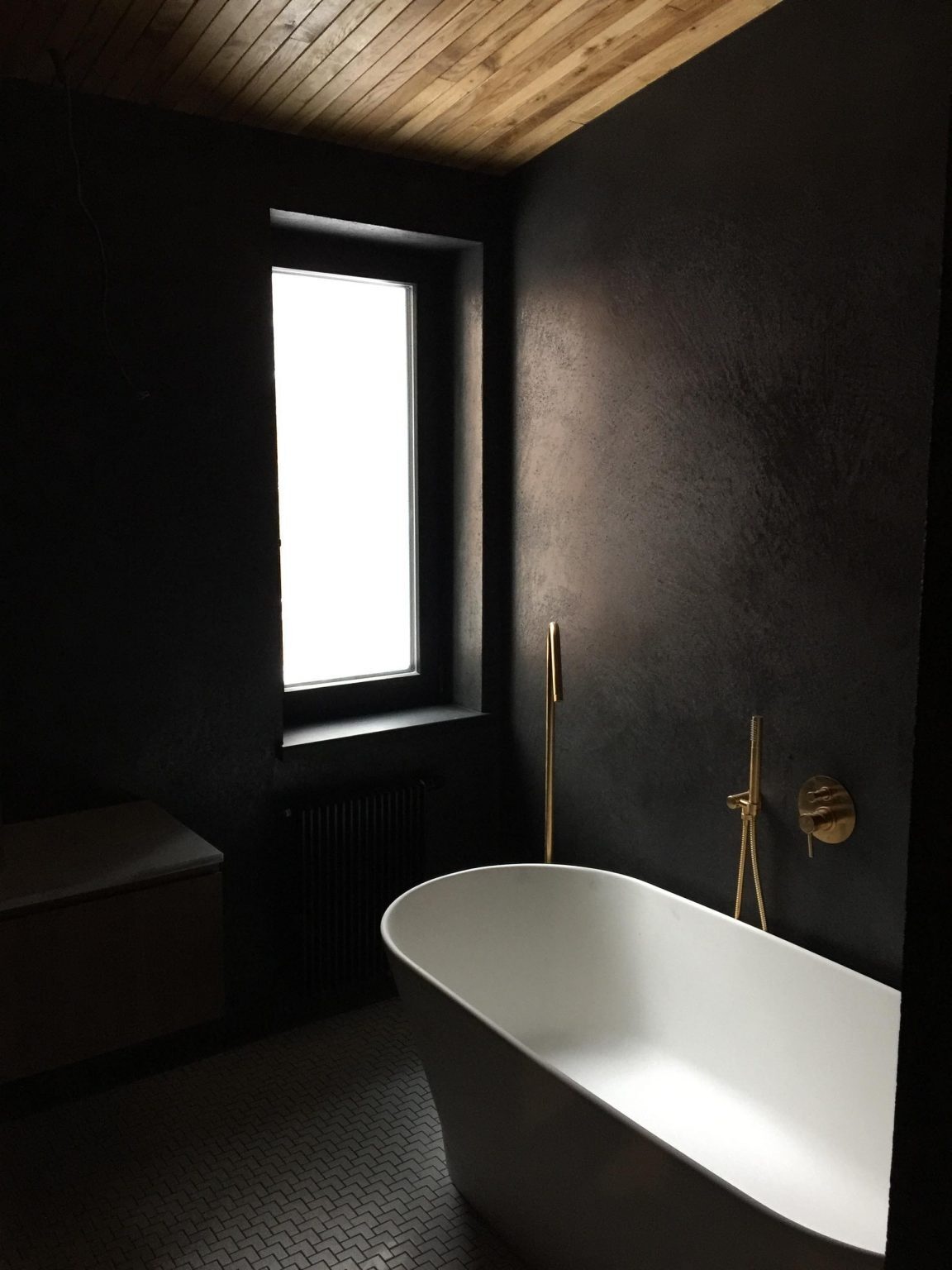
Then comes a shift in the bathroom. Black walls create a striking backdrop, sharply contrasted by a white bathtub that becomes the focal point. It’s a moment that feels more expressive compared to the rest of the interior, adding variety without overwhelming the overall design.
Section, Floor Plans And Models
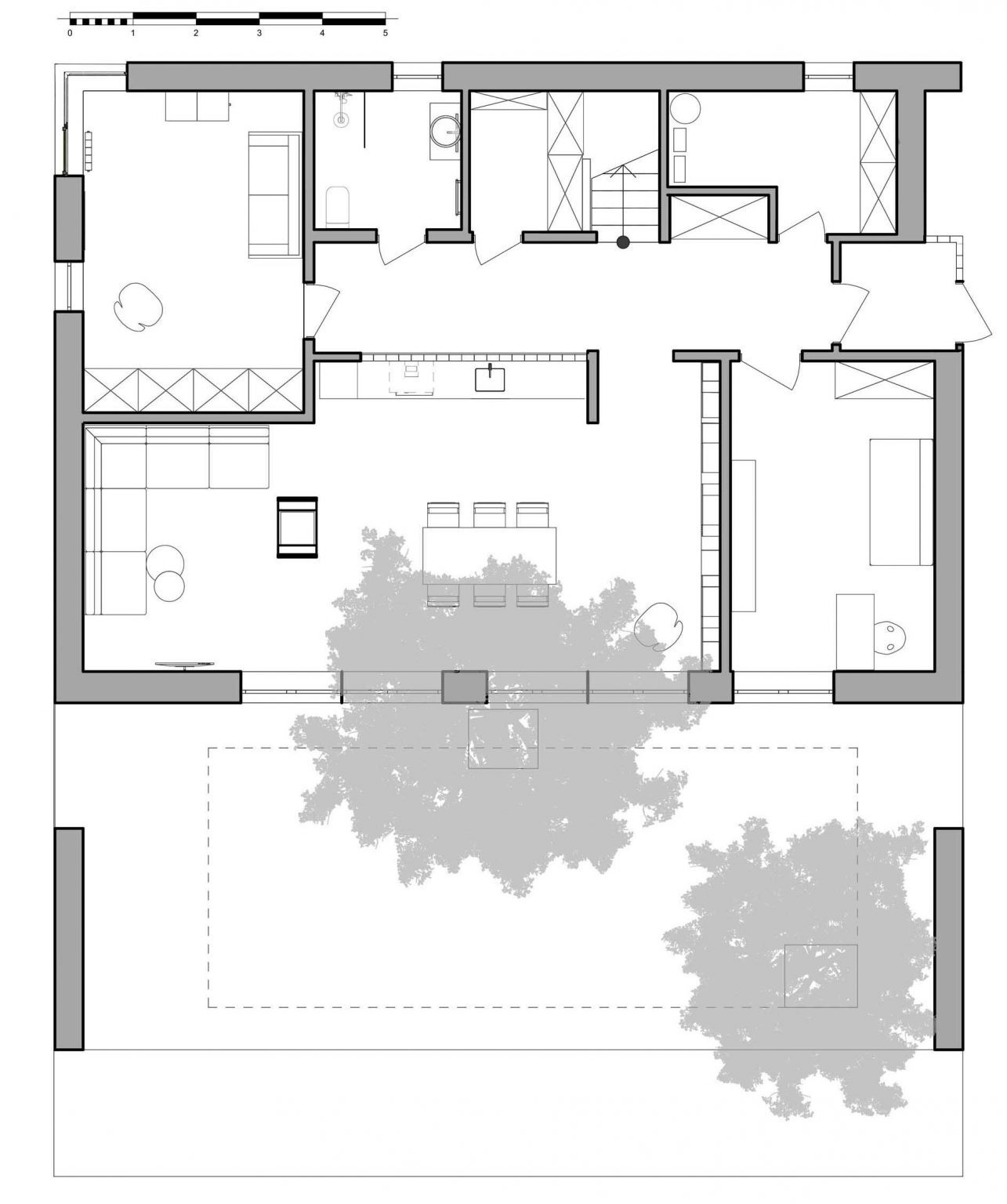
The design becomes even clearer through its technical drawings. Sections reveal how the roof transitions seamlessly into the ground, while floor plans show how spaces are arranged to follow light and orientation.
Models highlight the relationship between the house and the terrain, emphasizing how the structure sits within the slope instead of rising above it.
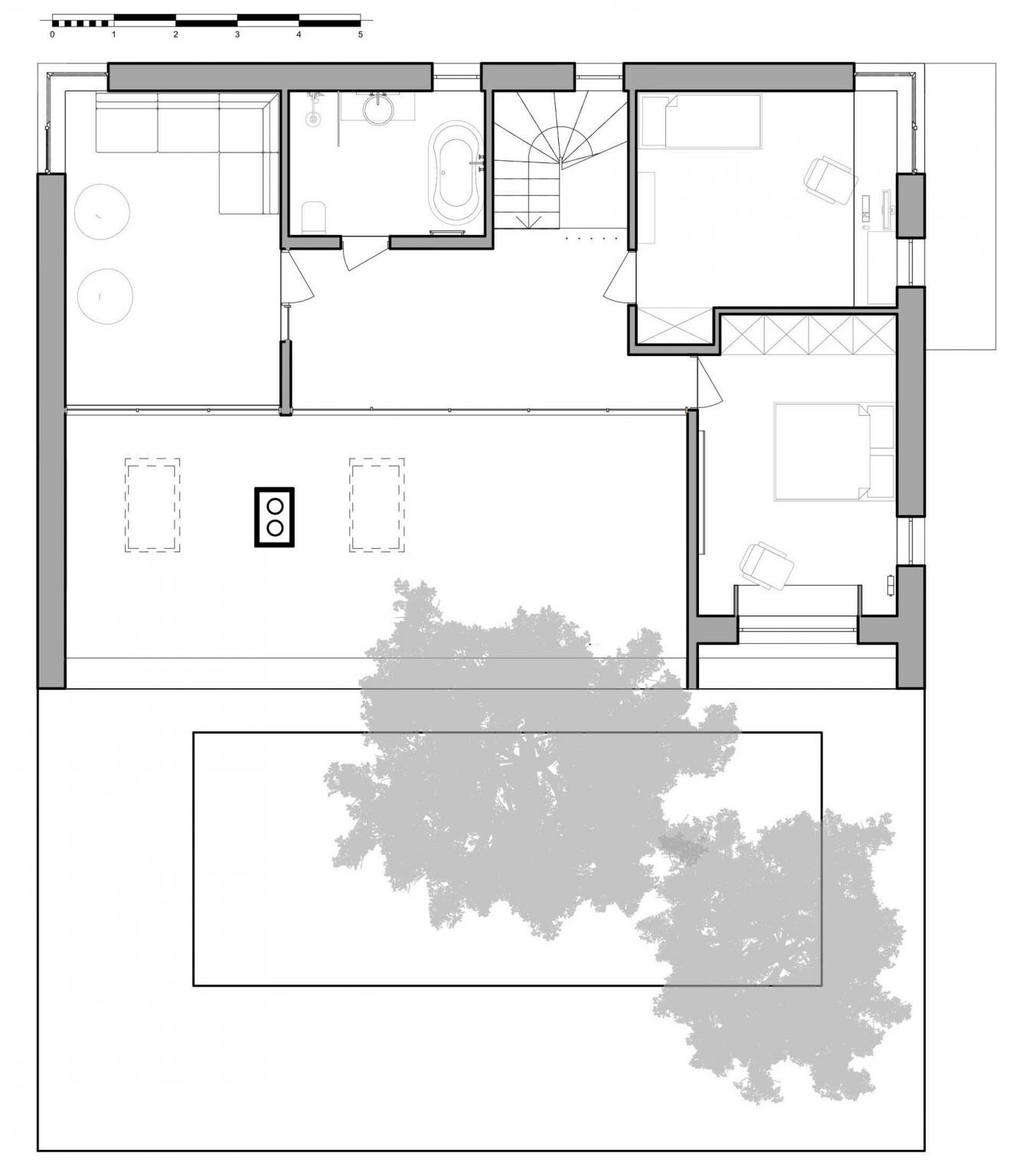
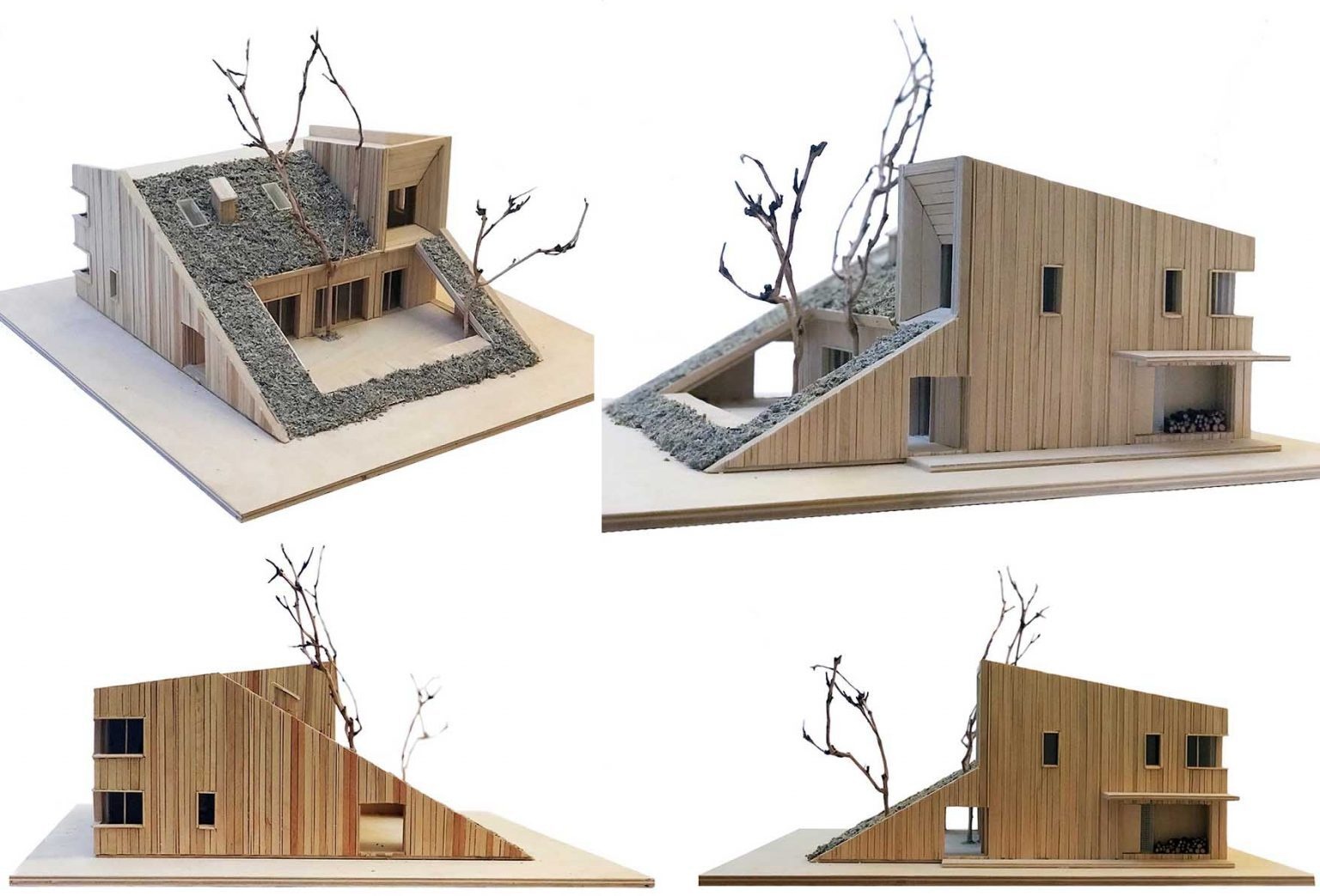
HillHouse is a quiet example of how architecture can step back and let the landscape take over visually, while still delivering a high-performing, modern home. From its planted roof to its energy-efficient systems, every decision supports a design that feels integrated, functional, and visually calm.