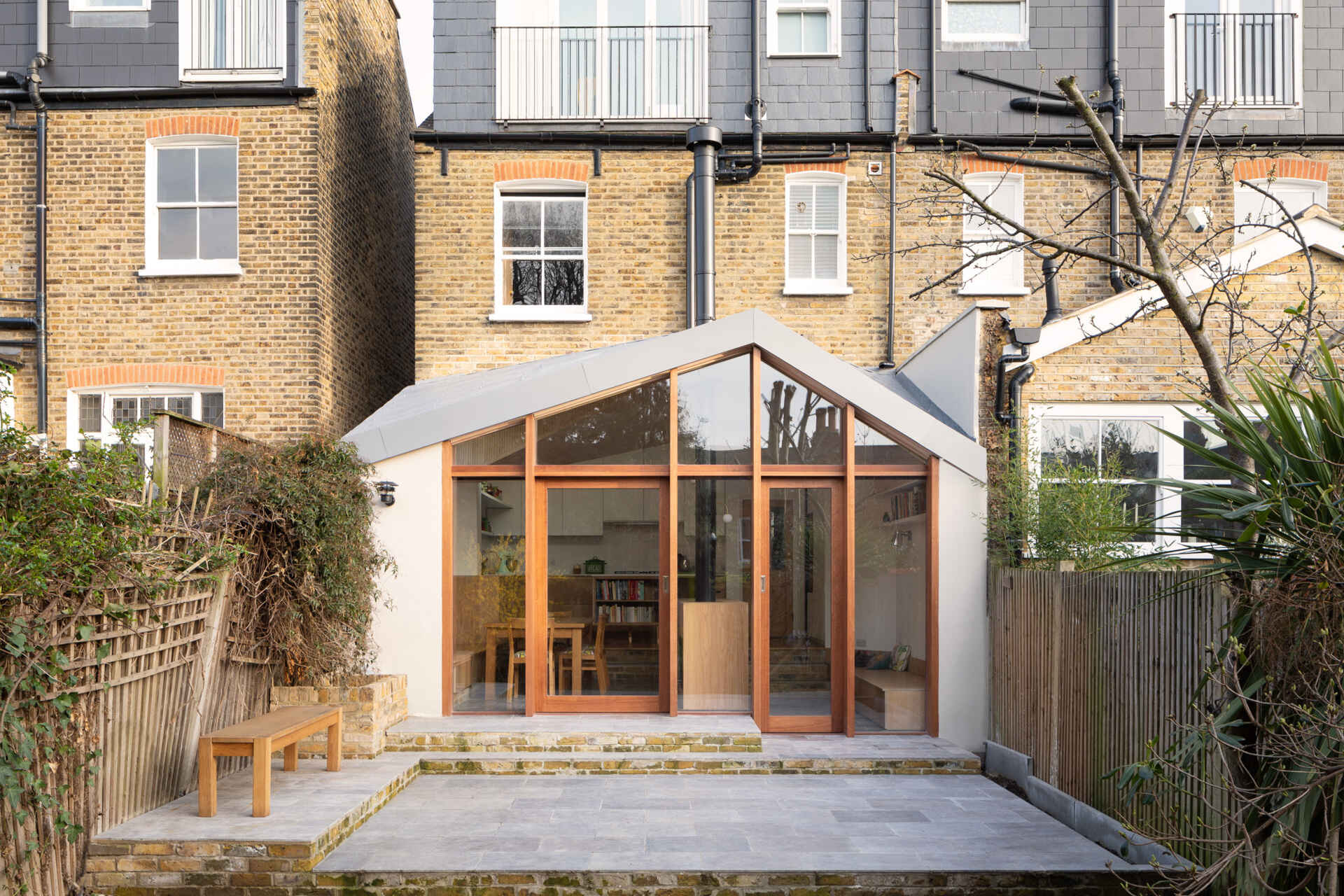
In Greater London, England, Turner Architects completed a modern extension for a growing family that needed a larger kitchen and a family room that could better connect with the garden.
The project replaced a large tree that once sat beside the original kitchen. The family loved spending time beneath it during summer, watching the seasons change through its branches, so the architects used those memories as inspiration for the design of the addition.
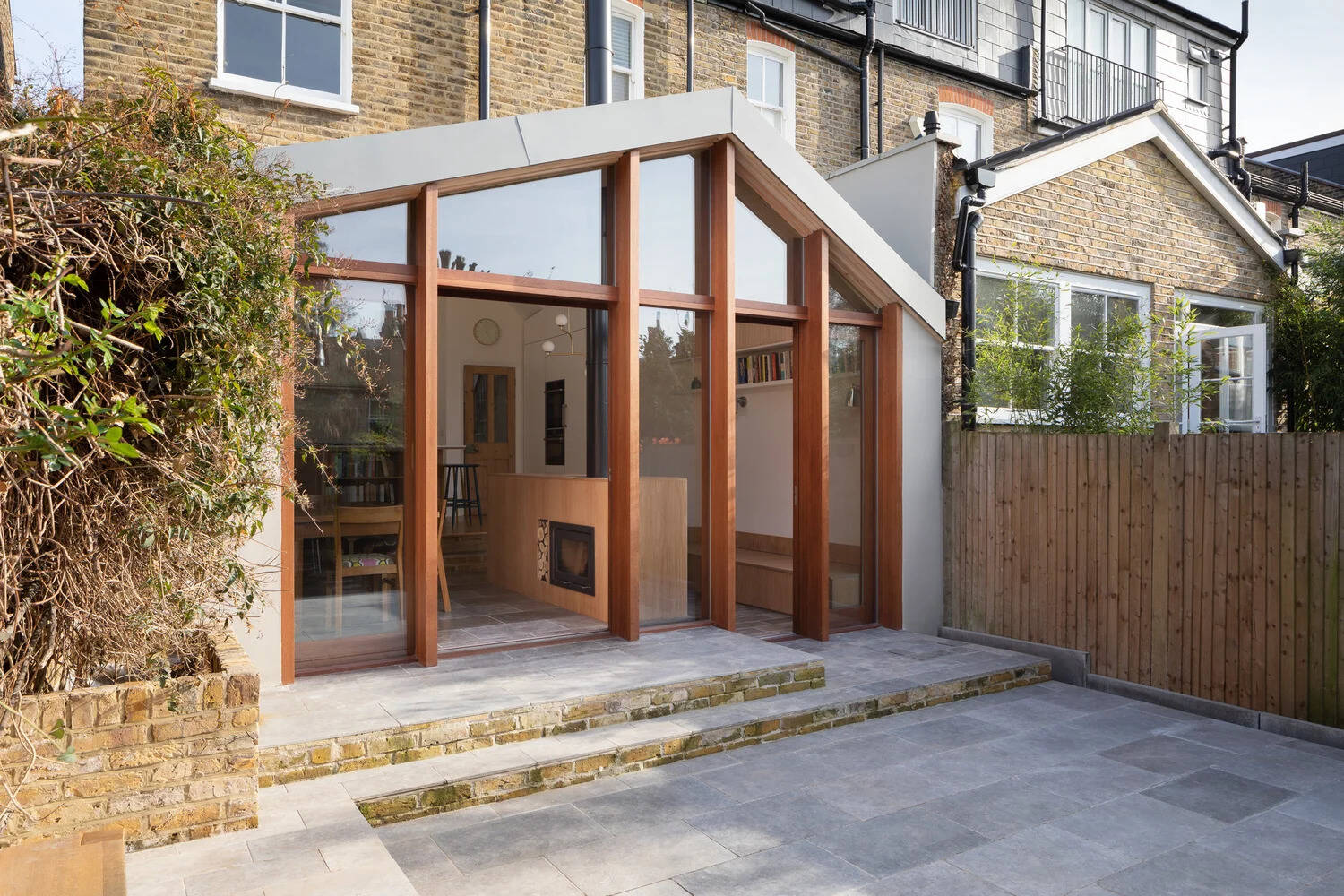
Large Windows Open The Home To The Garden
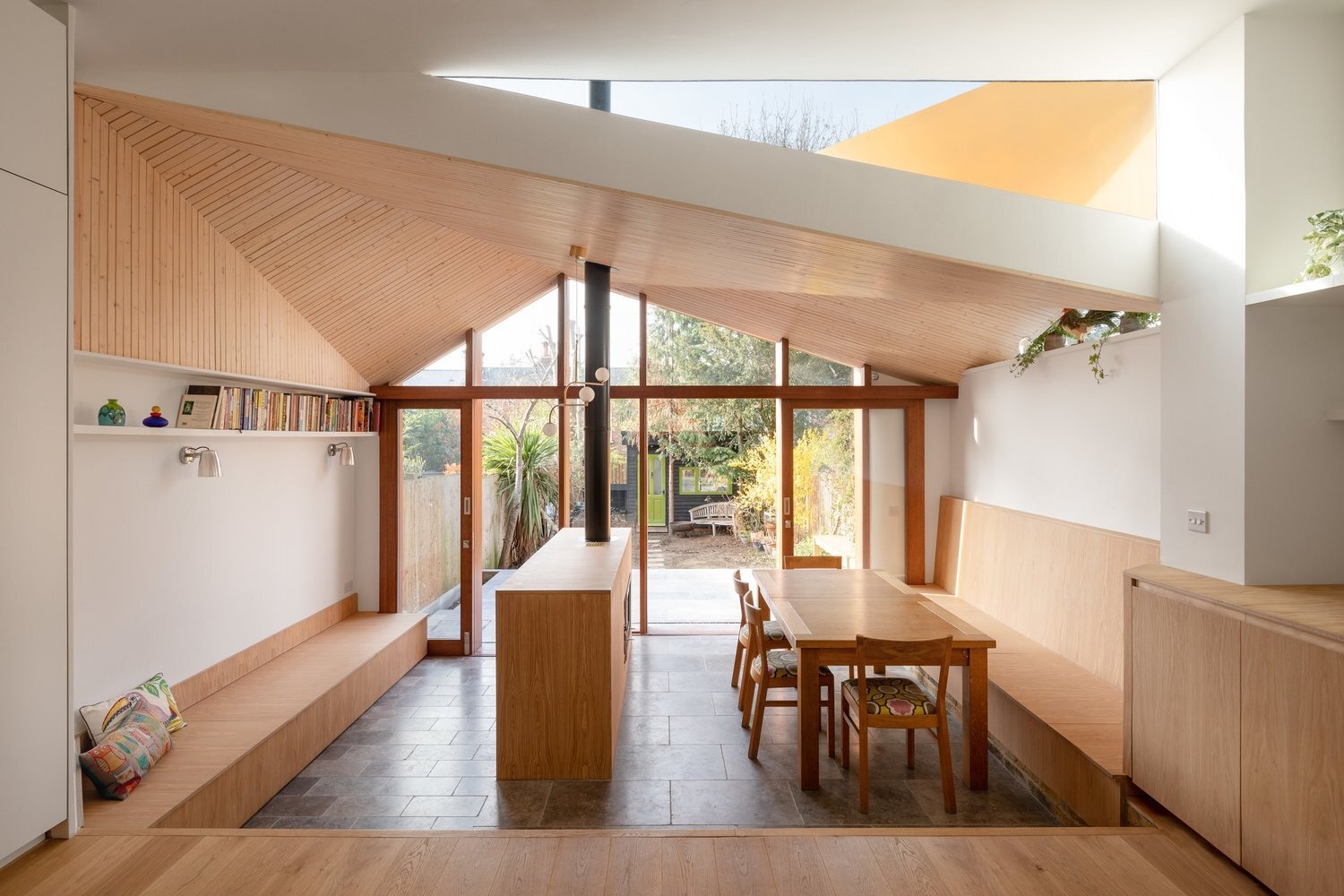
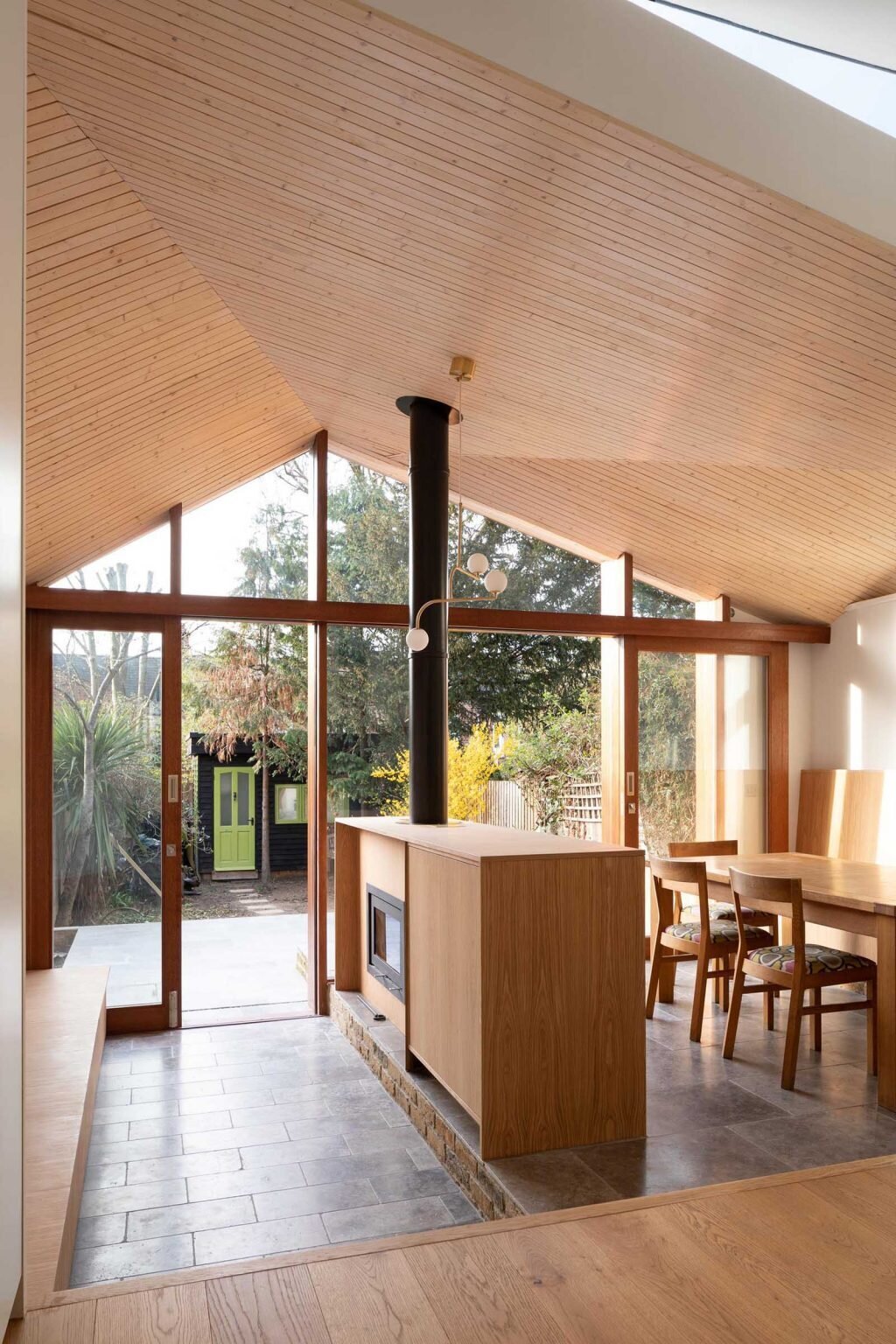
The rear extension features a wall of wood-framed windows that fills the interior with natural light while opening the home directly to the garden.
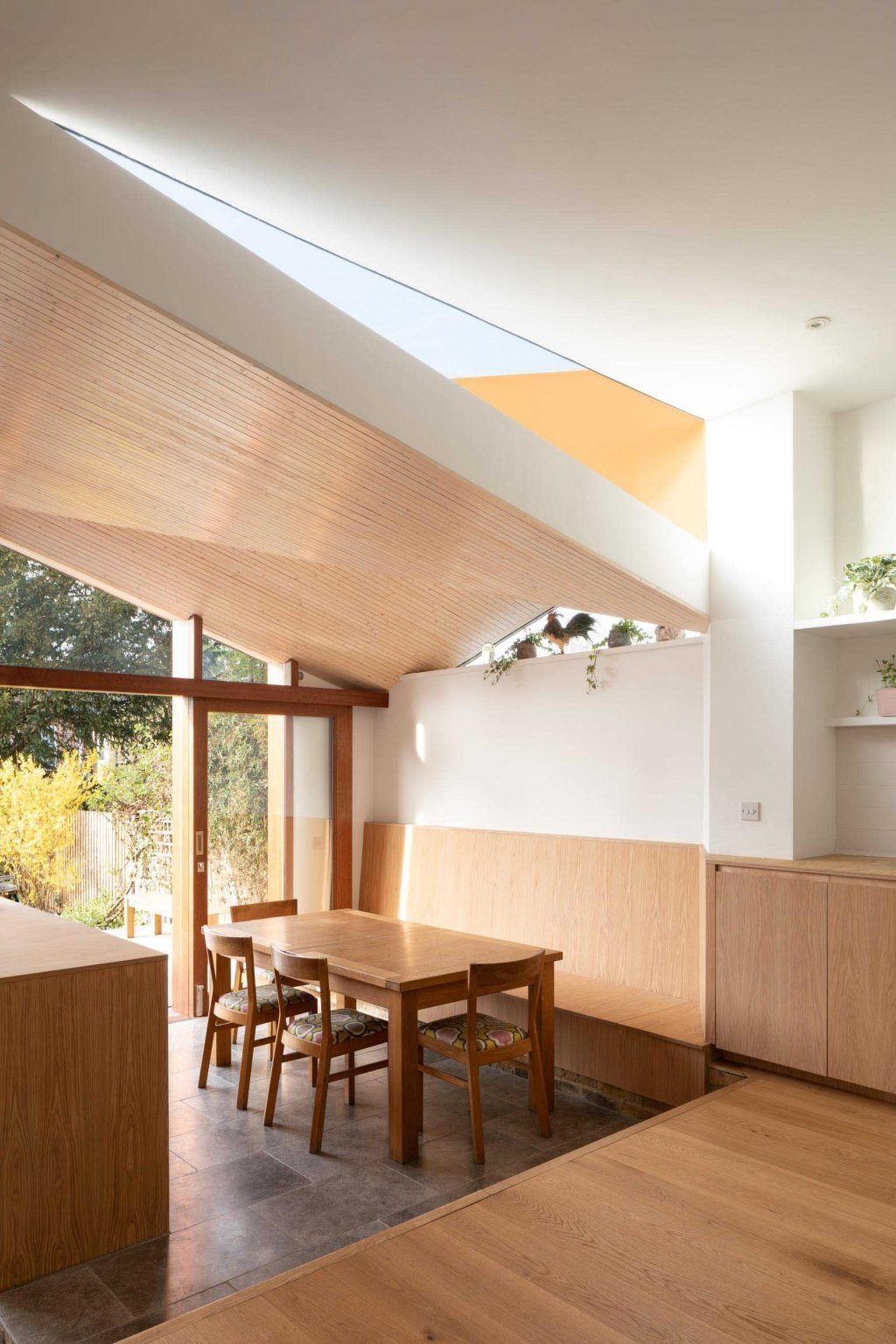
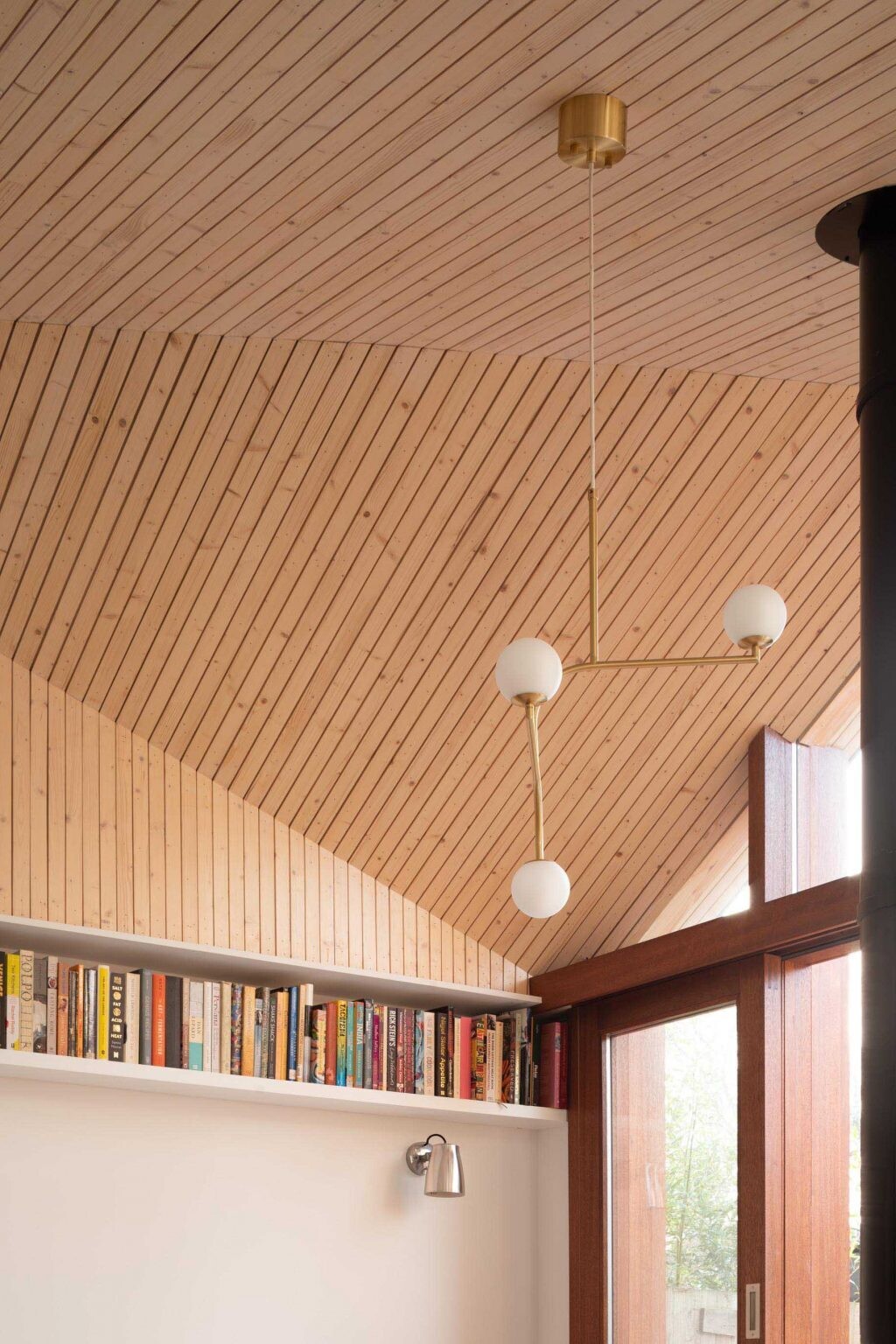
The shape of the roof also helps draw daylight deeper into the space, brightening the back of the room throughout the day and creating changing views upward toward the sky.
A Timber Ceiling Creates A Warm Interior
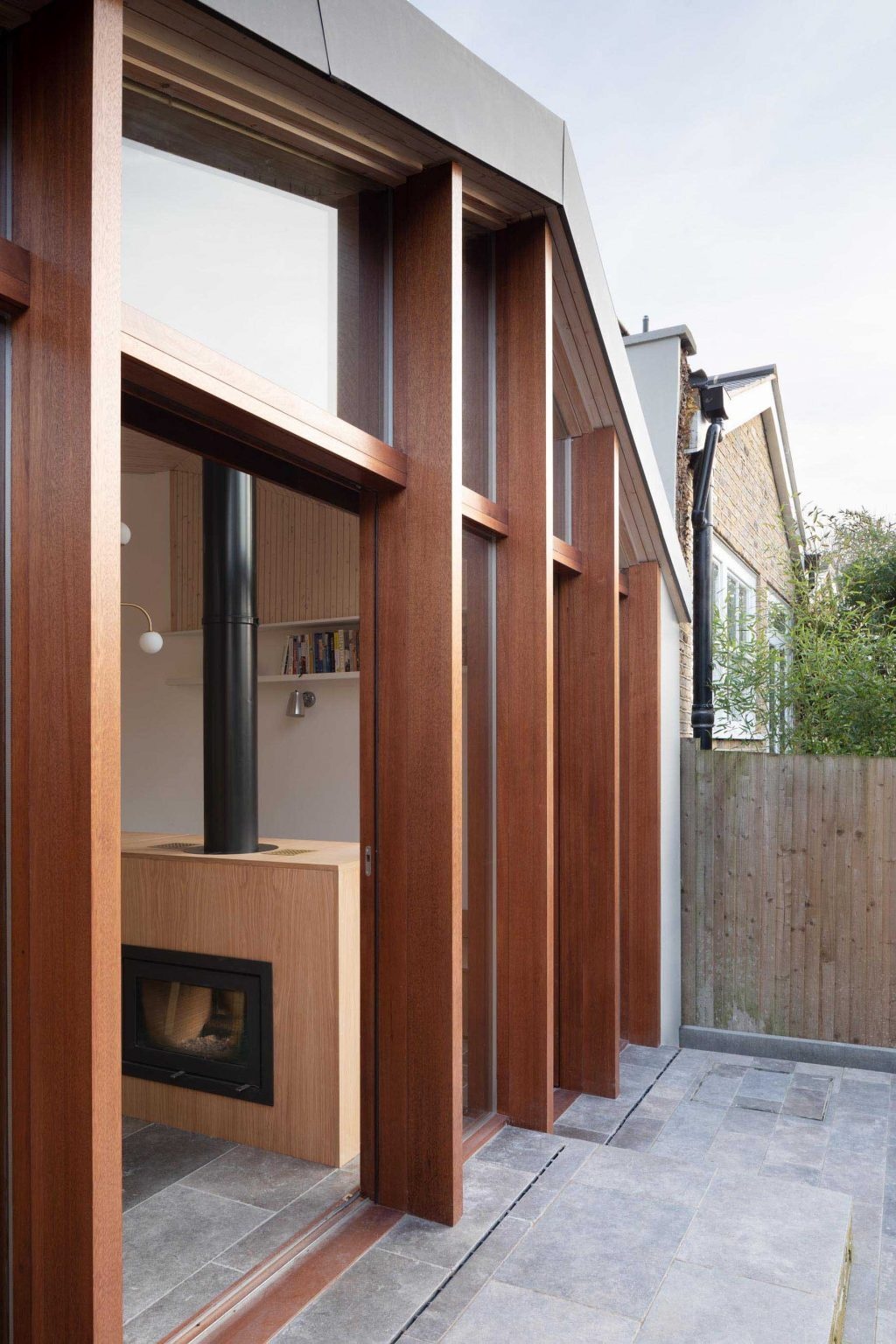
Inside, the addition includes an angled ceiling lined in pale wood that gives the interior warmth and texture. The ceiling design creates glimpses of the sky from different angles, inspired by the experience of sitting beneath tree branches and looking upward through changing light.
Split Levels Separate The Open Living Spaces
The family wanted the extension to include several connected spaces, including a kitchen, dining room, snug, and garden room.
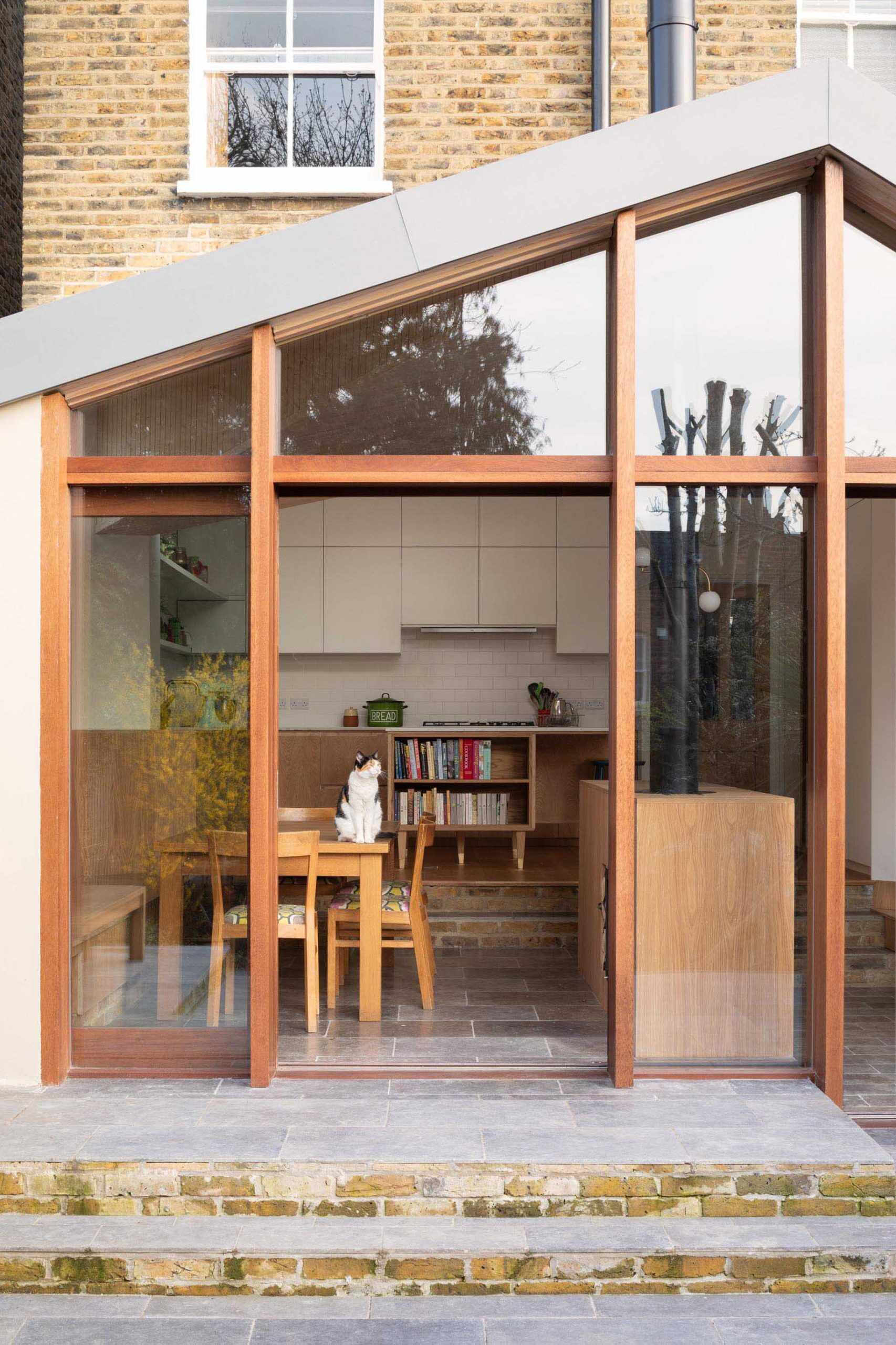
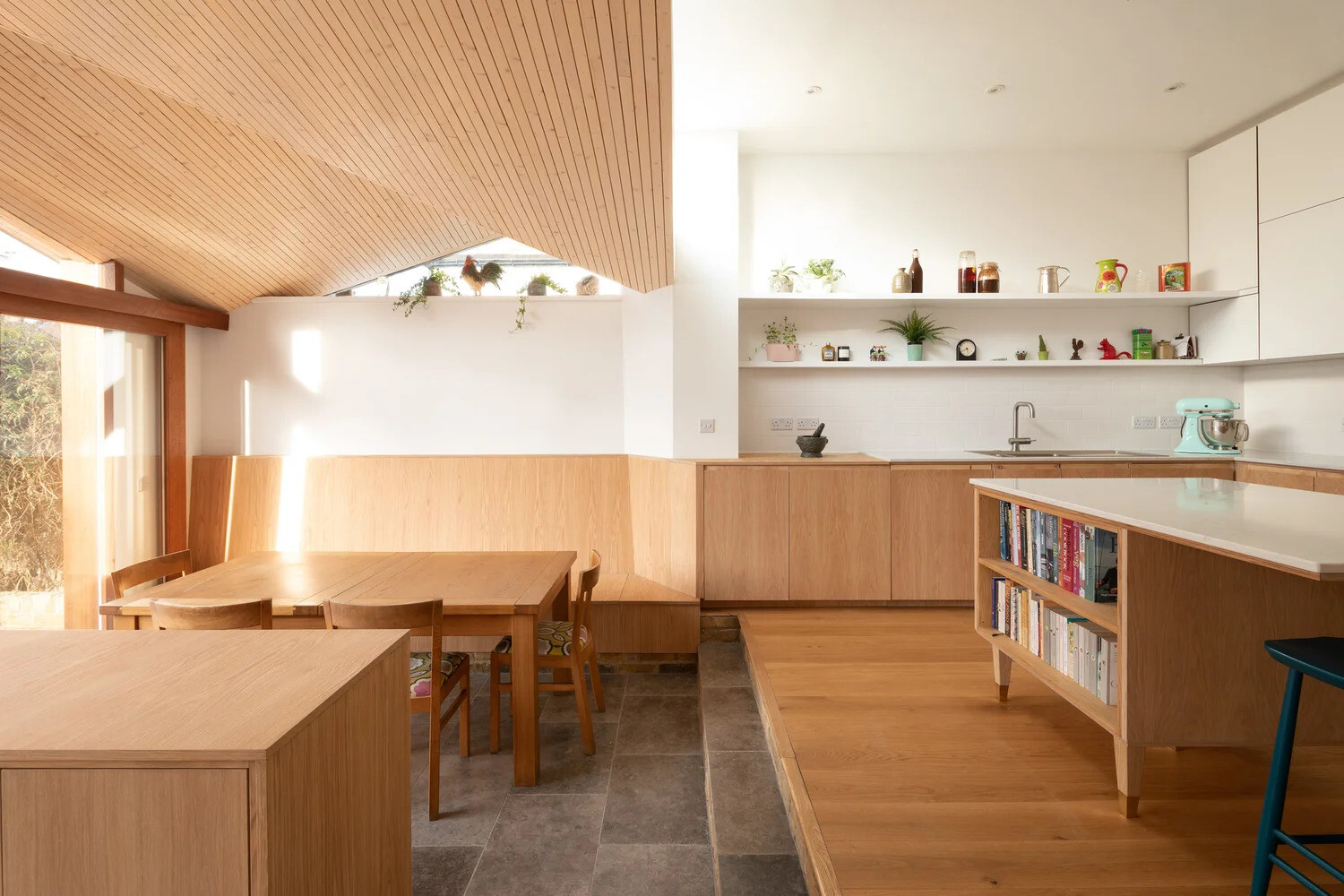
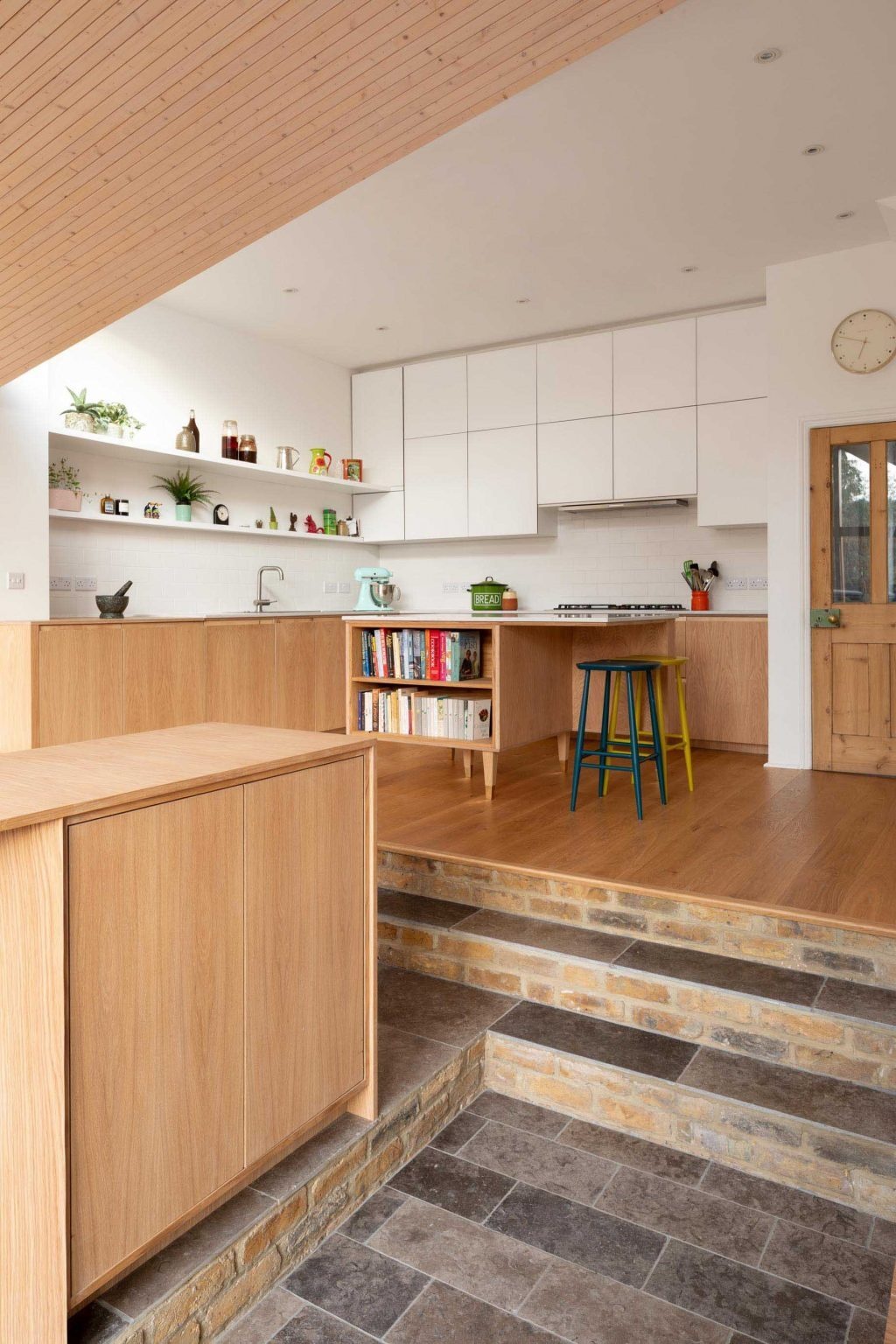
To define each area while keeping the layout open, the architects introduced stepped floor levels and changes in materials. The kitchen sits slightly elevated with timber flooring, while the dining room and snug step down onto limestone floors that continue toward the garden.
A Fireplace Cabinet Divides The Dining Area And Snug
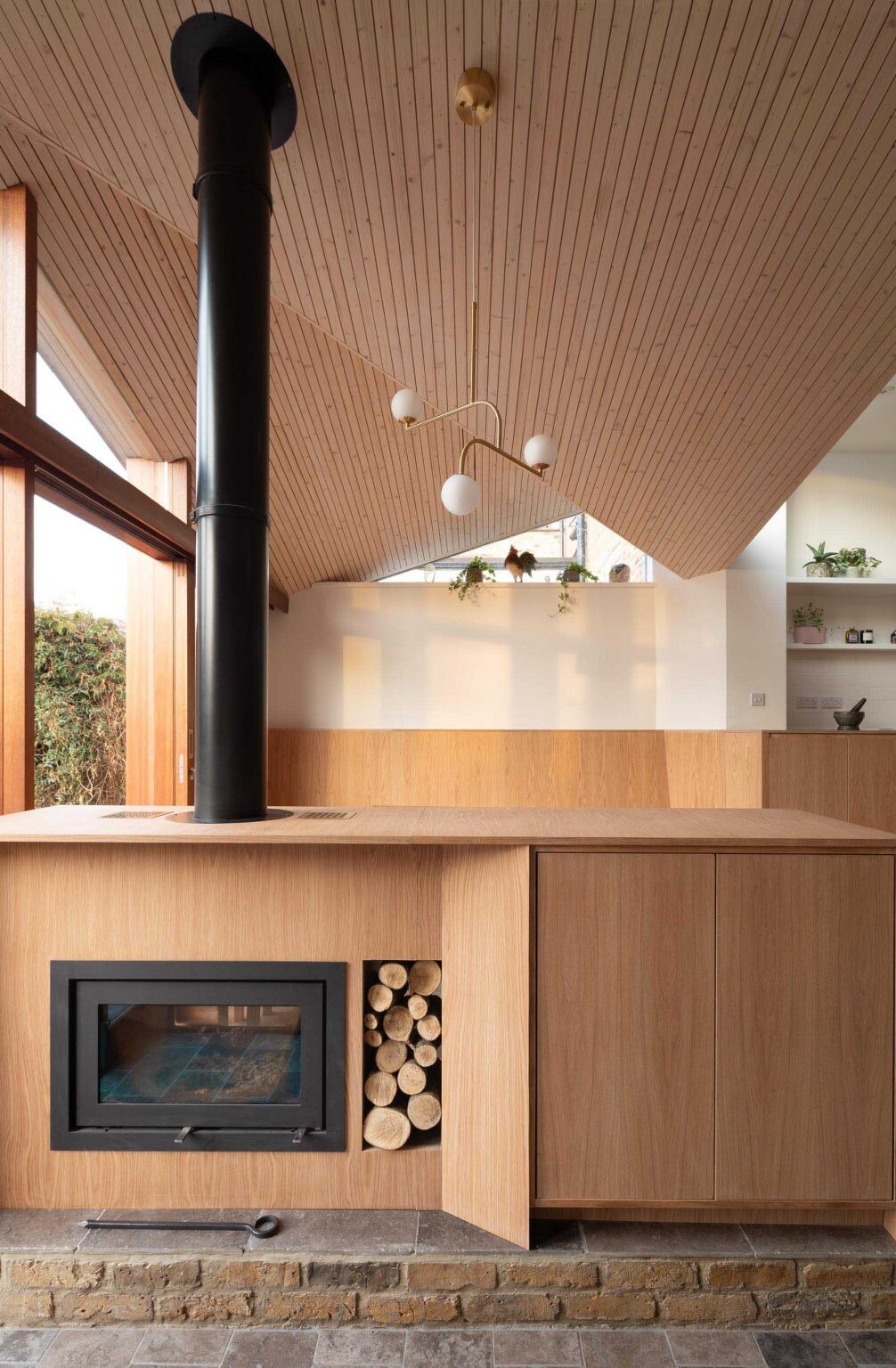
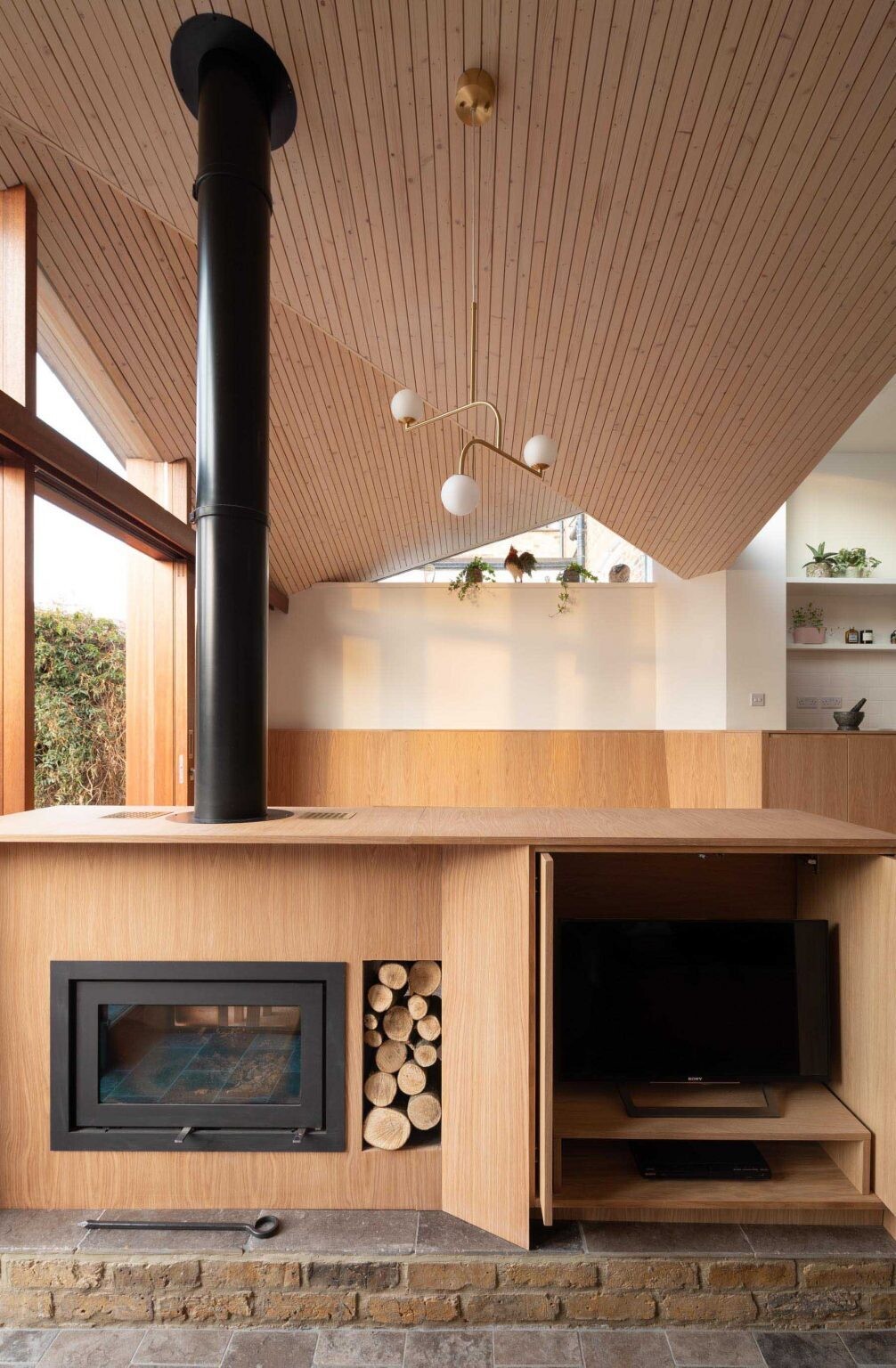
Separating the dining room and snug is a built-in cabinet that conceals both the fireplace and television. The feature creates a subtle divide between the spaces without interrupting the open feel of the extension, while also keeping the interior clean and uncluttered.
The Elevated Kitchen Combines White And Wood Finishes
Positioned above the dining area and snug, the contemporary kitchen combines minimalist white cabinets with warm wood lower cabinetry.
Open shelving and a compact island with recipe book storage add practical details, while the elevated layout gives the kitchen views across the extension and out toward the garden.
This extension by Turner Architects transforms the rear of the home into a bright and welcoming family space inspired by memories of the tree that once stood beside it.