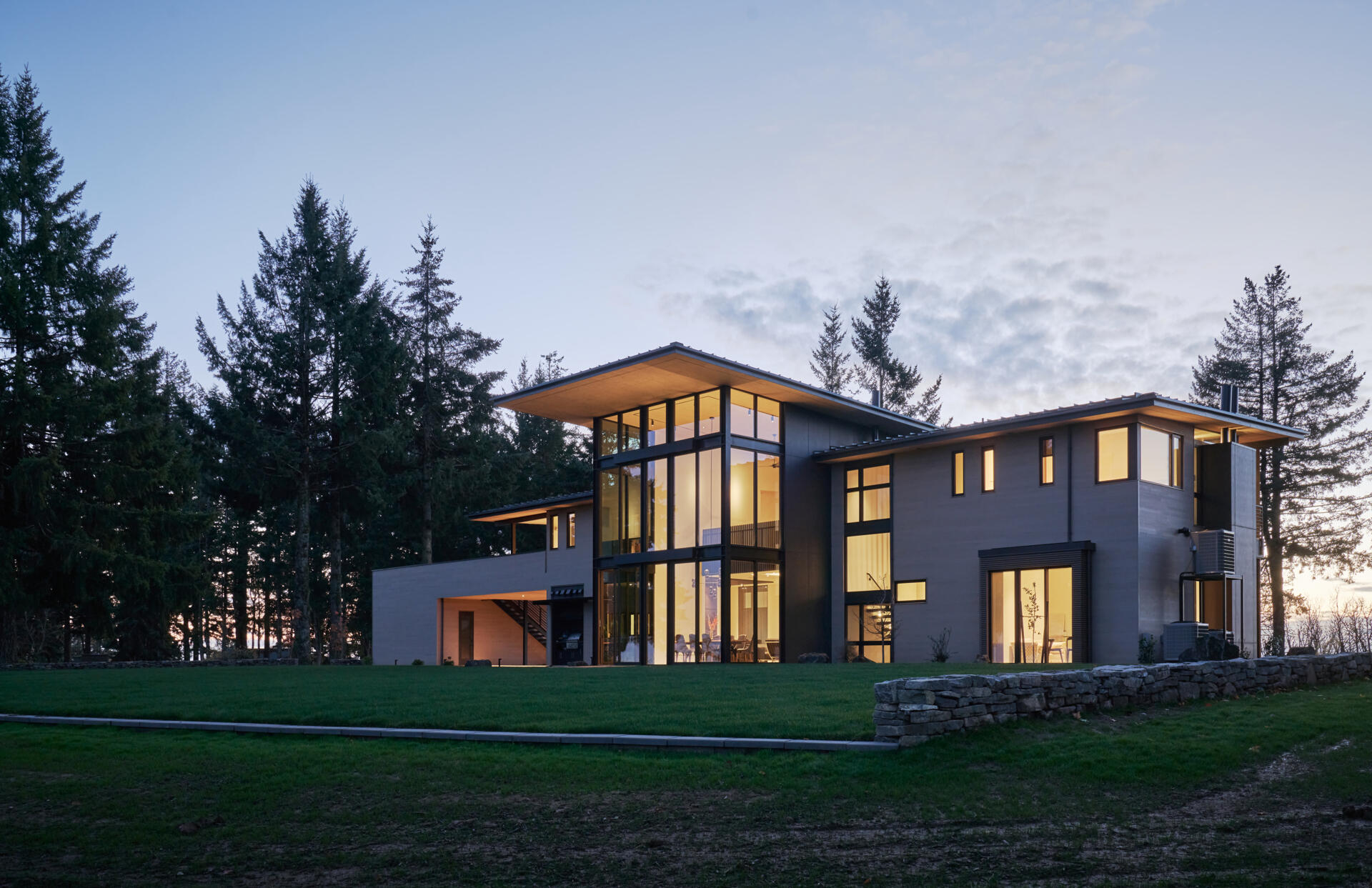
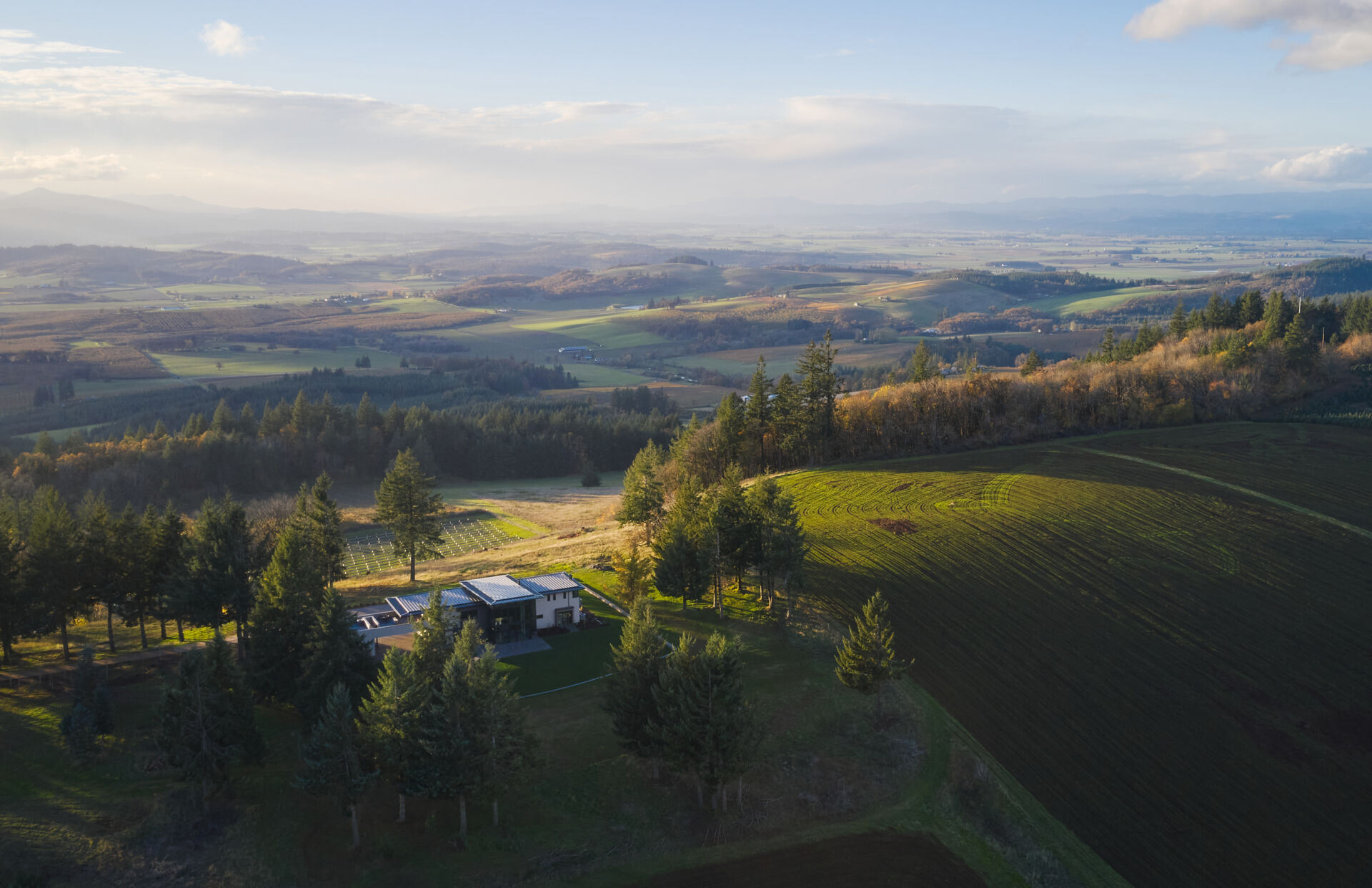
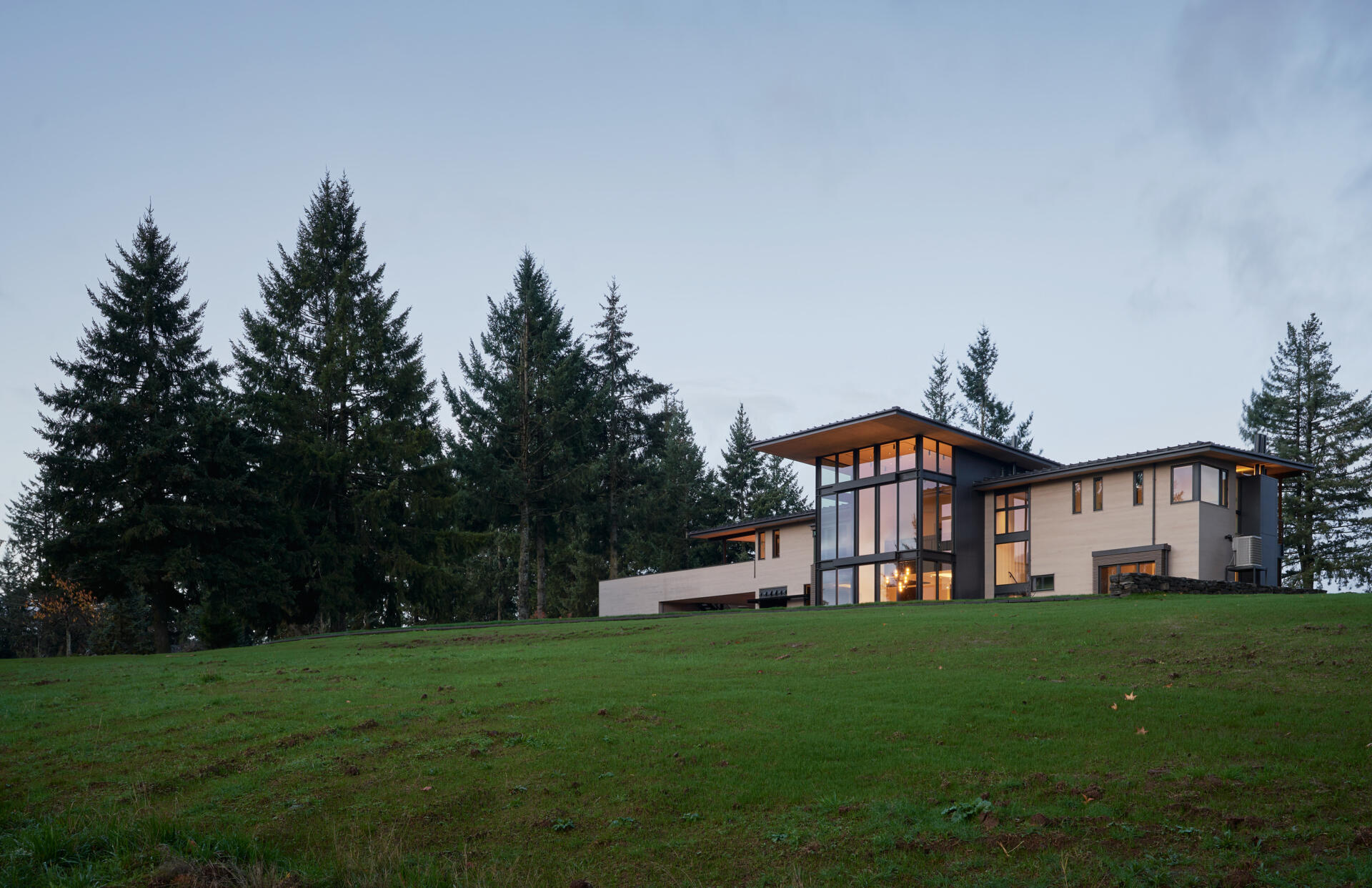
In the hills above Salem, Oregon, Eola Hills Residence by Ueda Design Studio takes full advantage of one of the region’s most spectacular locations. From its elevated position, the home overlooks the city of Salem and distant mountains to the east, while rolling vineyards and wine country stretch across the western horizon. On mornings when clouds settle into the valley below, the house seems to float above the landscape.
Designed for a family of four and their two German Shepherds, the project balances comfort, durability, and expansive views while creating a welcoming place to gather with family and friends.
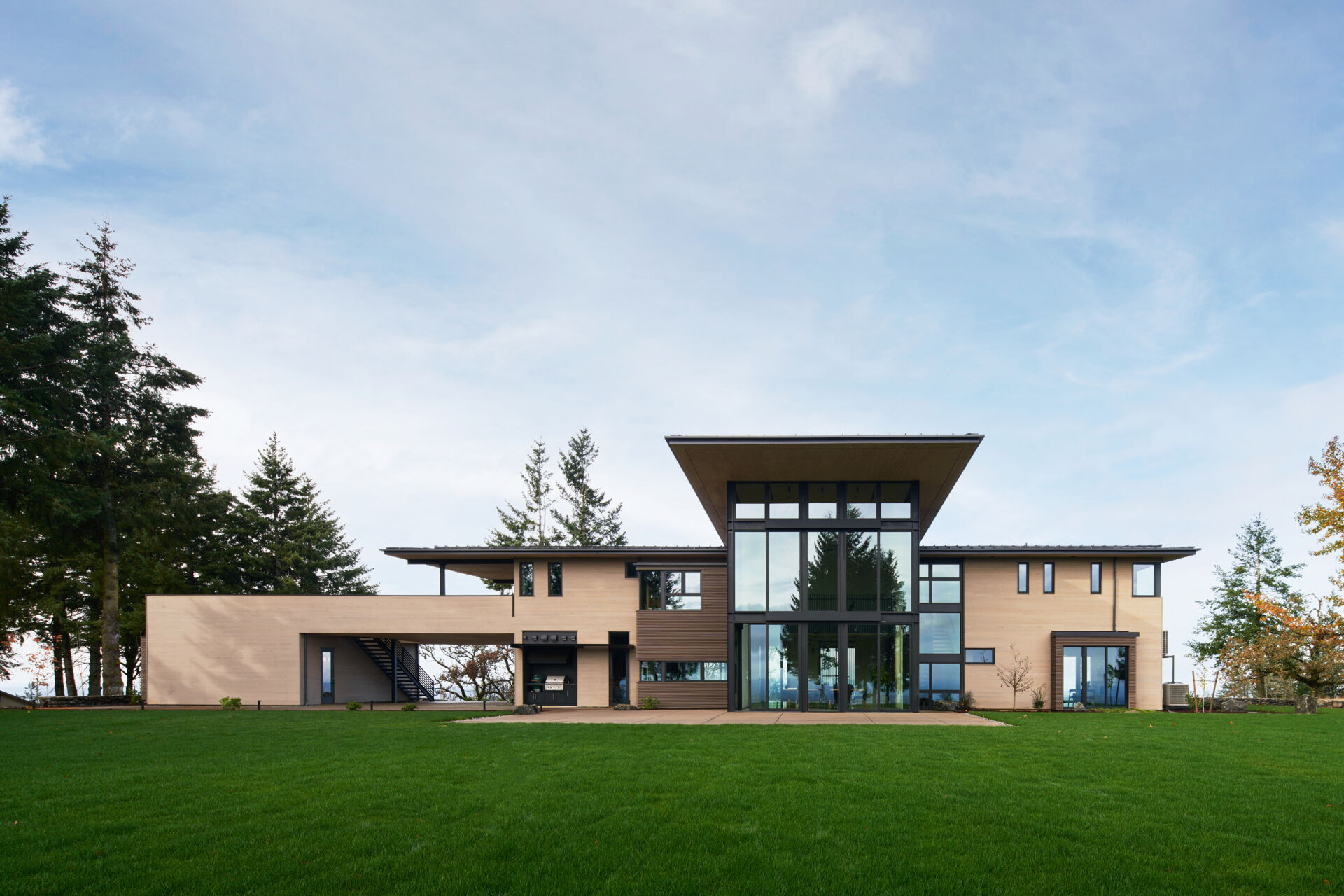
A Journey Up the Hill
The experience begins long before reaching the front door.
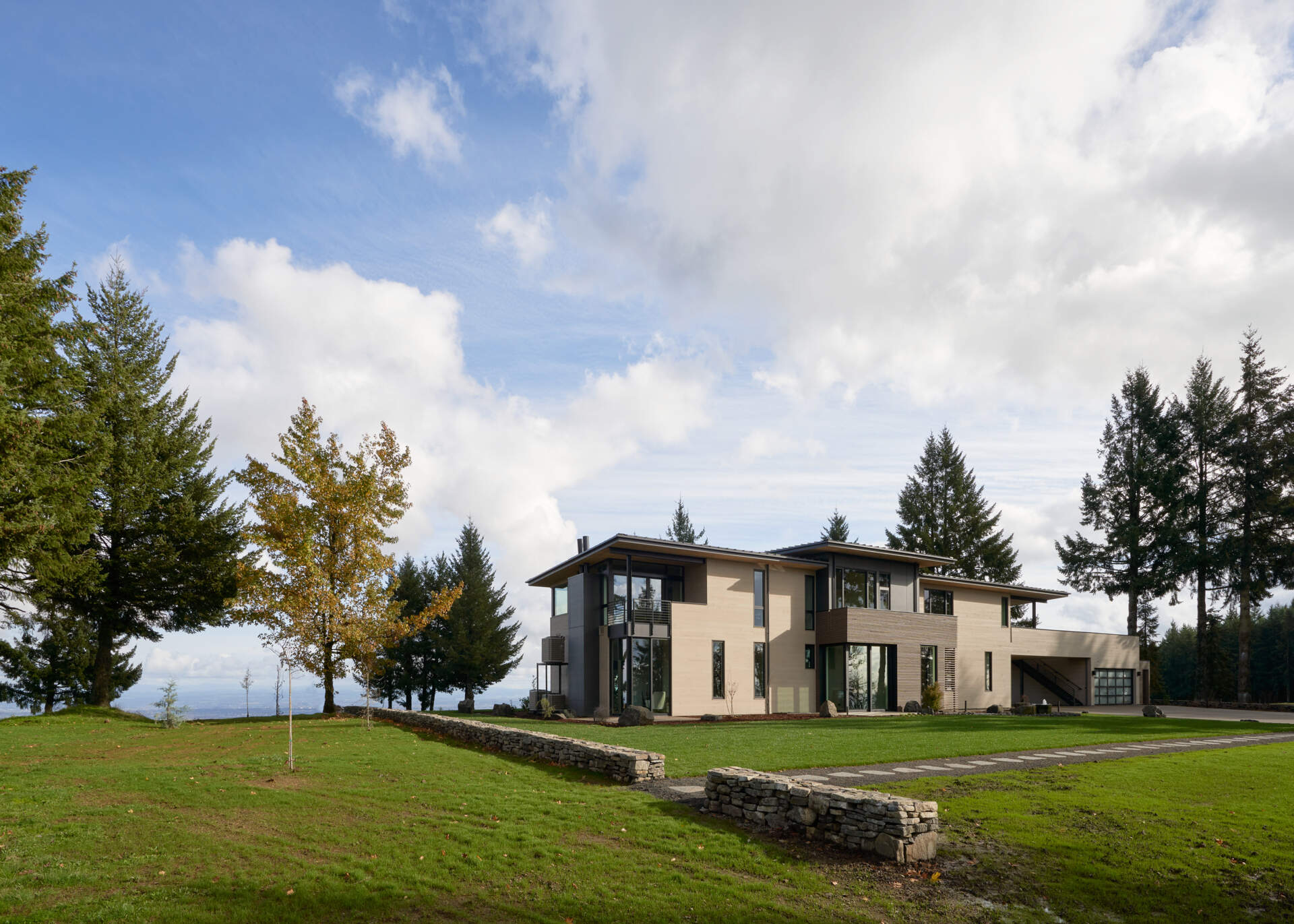
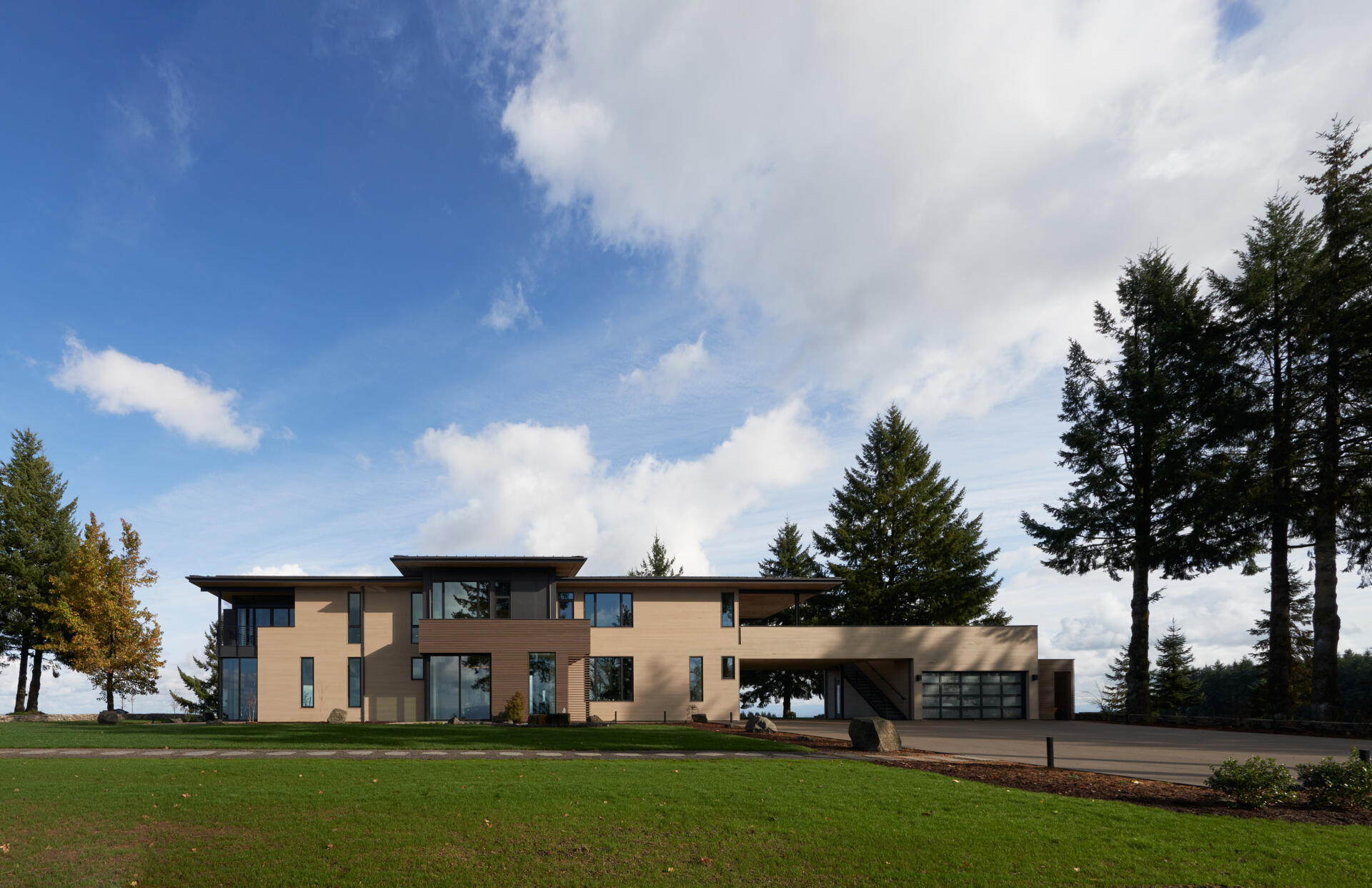
A winding mile-long driveway climbs through the landscape, offering brief glimpses of mountains, hills, and the house itself as it gradually comes into view. The sequence draws inspiration from the approach to a traditional Japanese tea house, creating a sense of anticipation along the way.
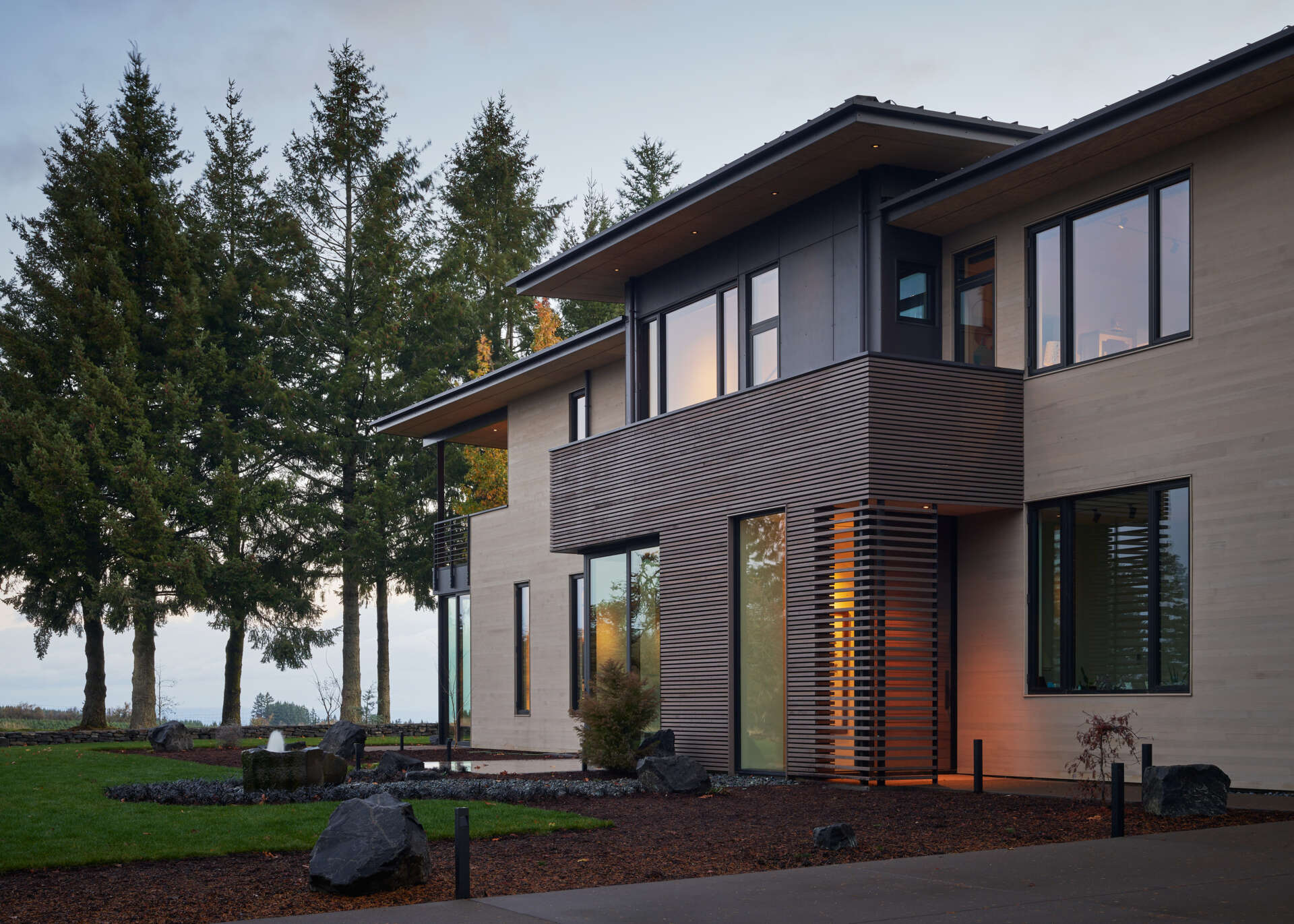
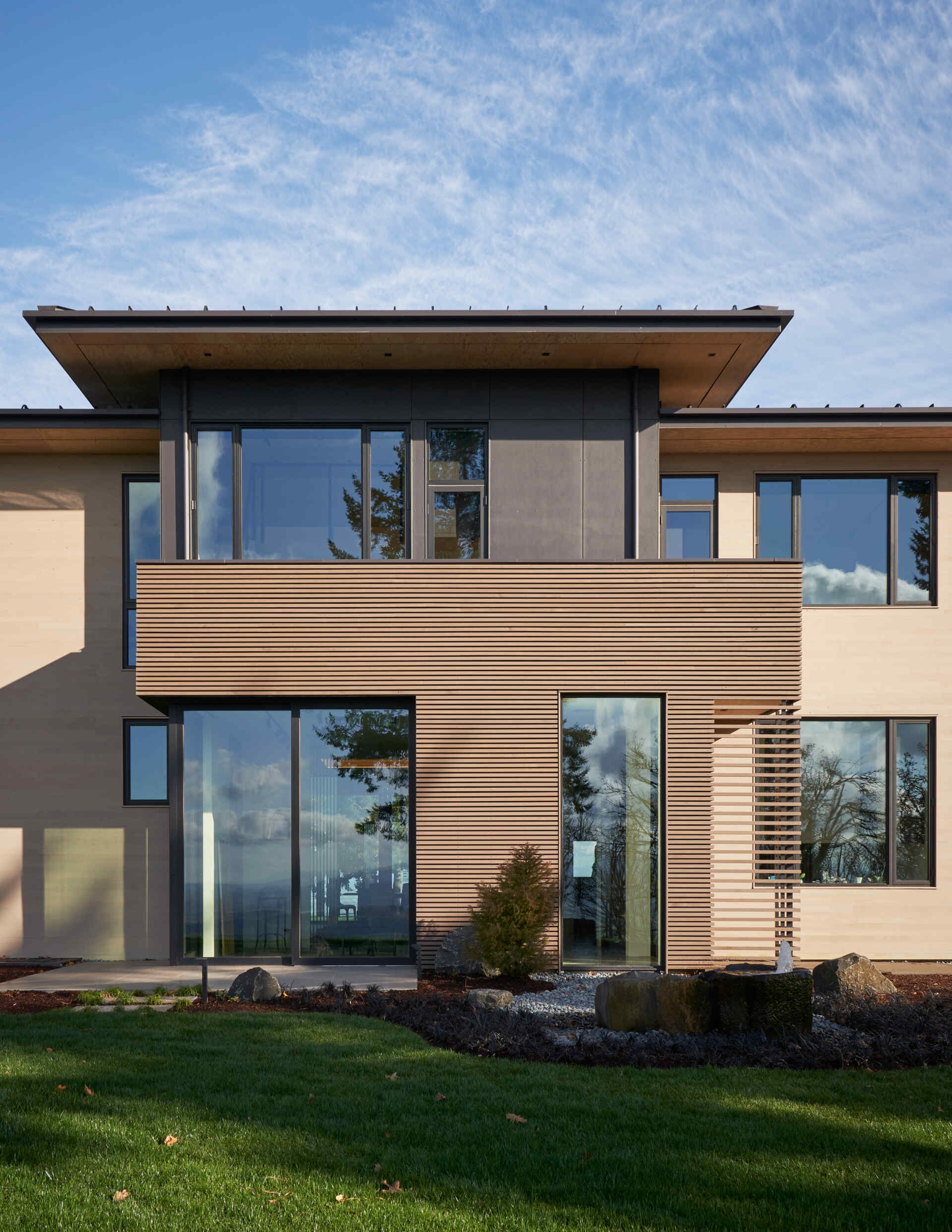
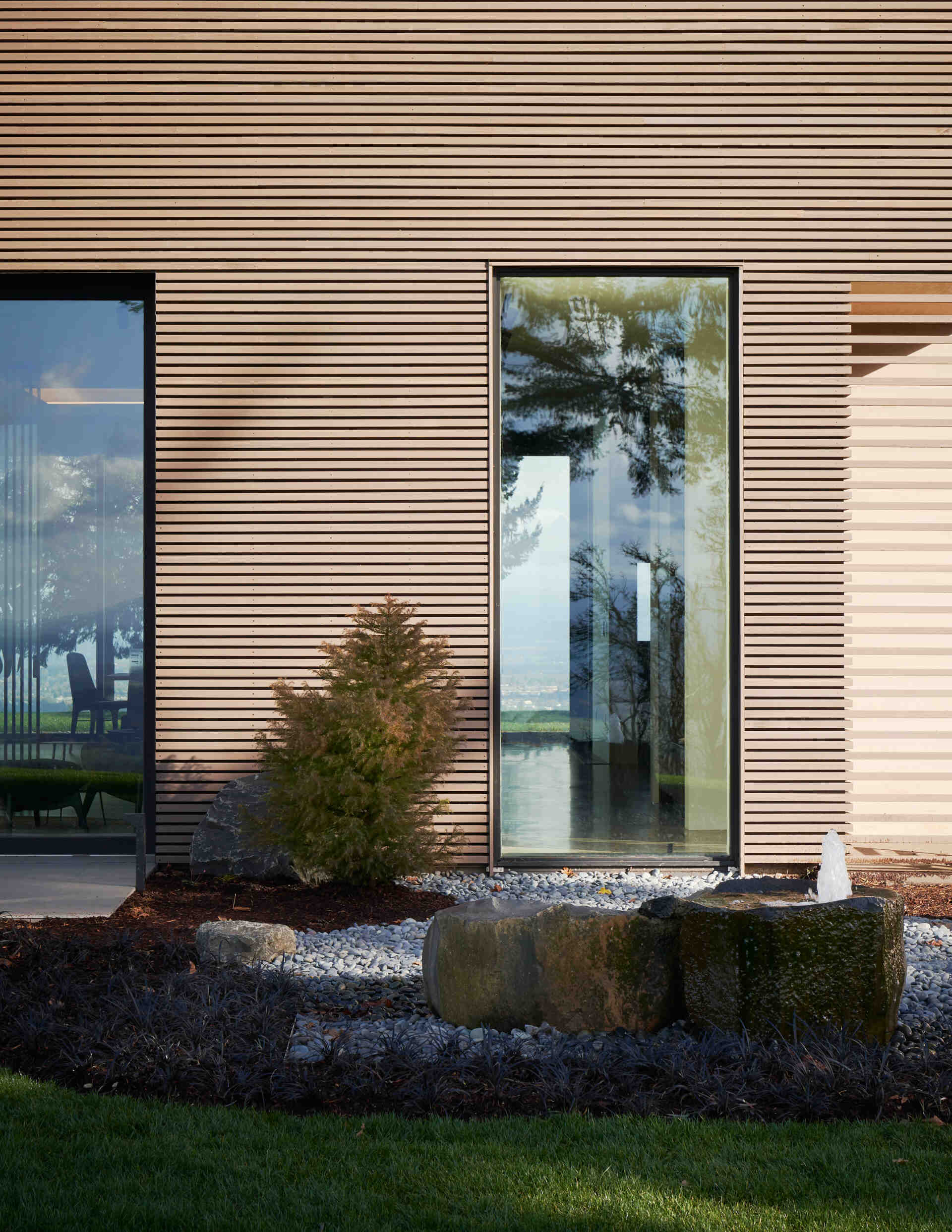
At the end of the drive, visitors arrive at a garden centered around a water fountain crafted from local boulders. The simple composition marks the transition into the home and introduces the connection between architecture and nature that appears throughout the project.
Inspired by Japanese Design Principles
The home takes cues from Japanese architecture, particularly the relationship between interior spaces, outdoor environments, and framed views.
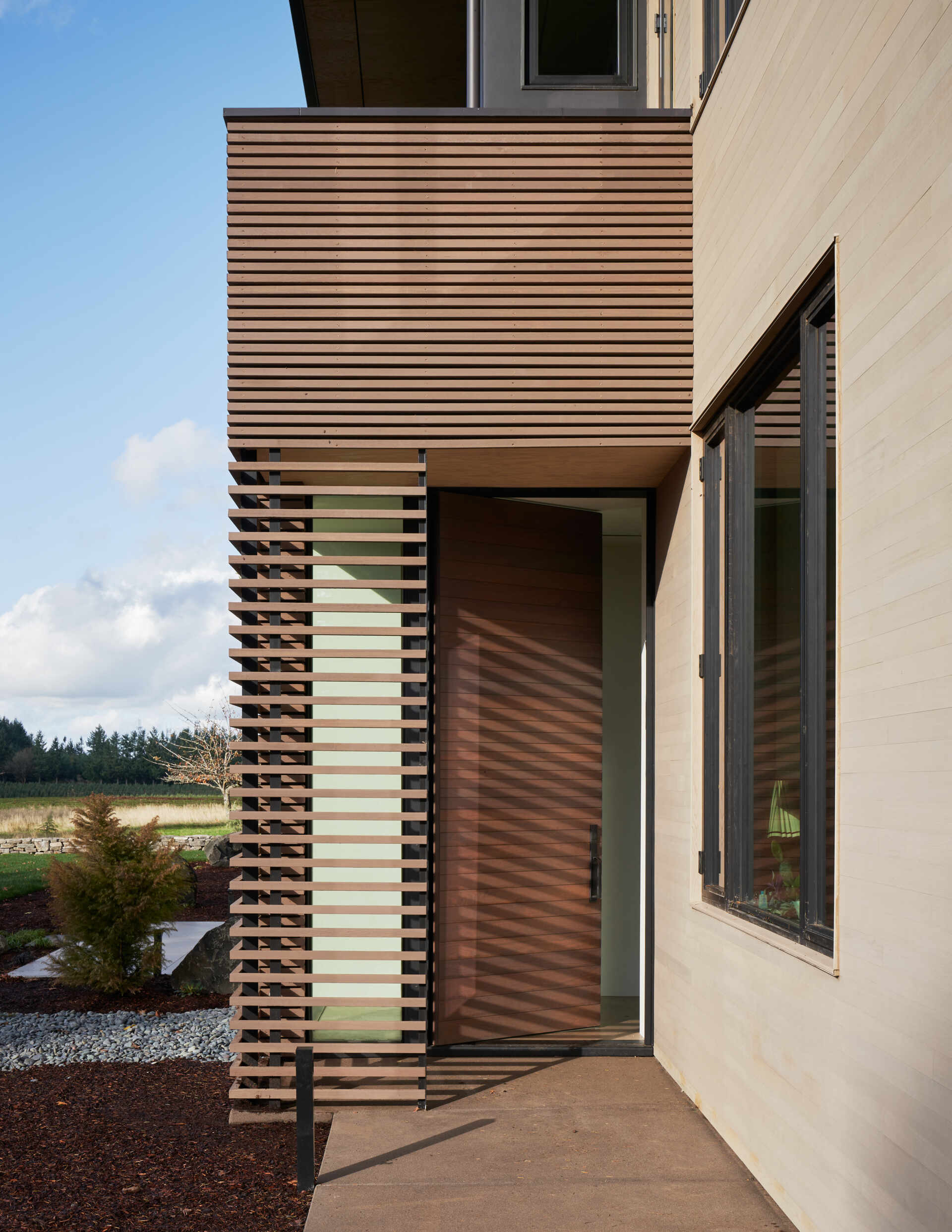
Visitors enter through a restrained foyer displaying woodblock prints. The experience changes dramatically as they move eastward through the entry sequence, where expansive views of Salem and Mt. Hood suddenly come into focus.
Throughout the residence, rooms alternate between intimate spaces and large open volumes. This contrast creates moments of discovery while keeping the home comfortable and welcoming despite its impressive size.
The Heart of the Home
At the center of the 8,000-square-foot residence is an open living, dining, and kitchen area designed for family gatherings and entertaining.
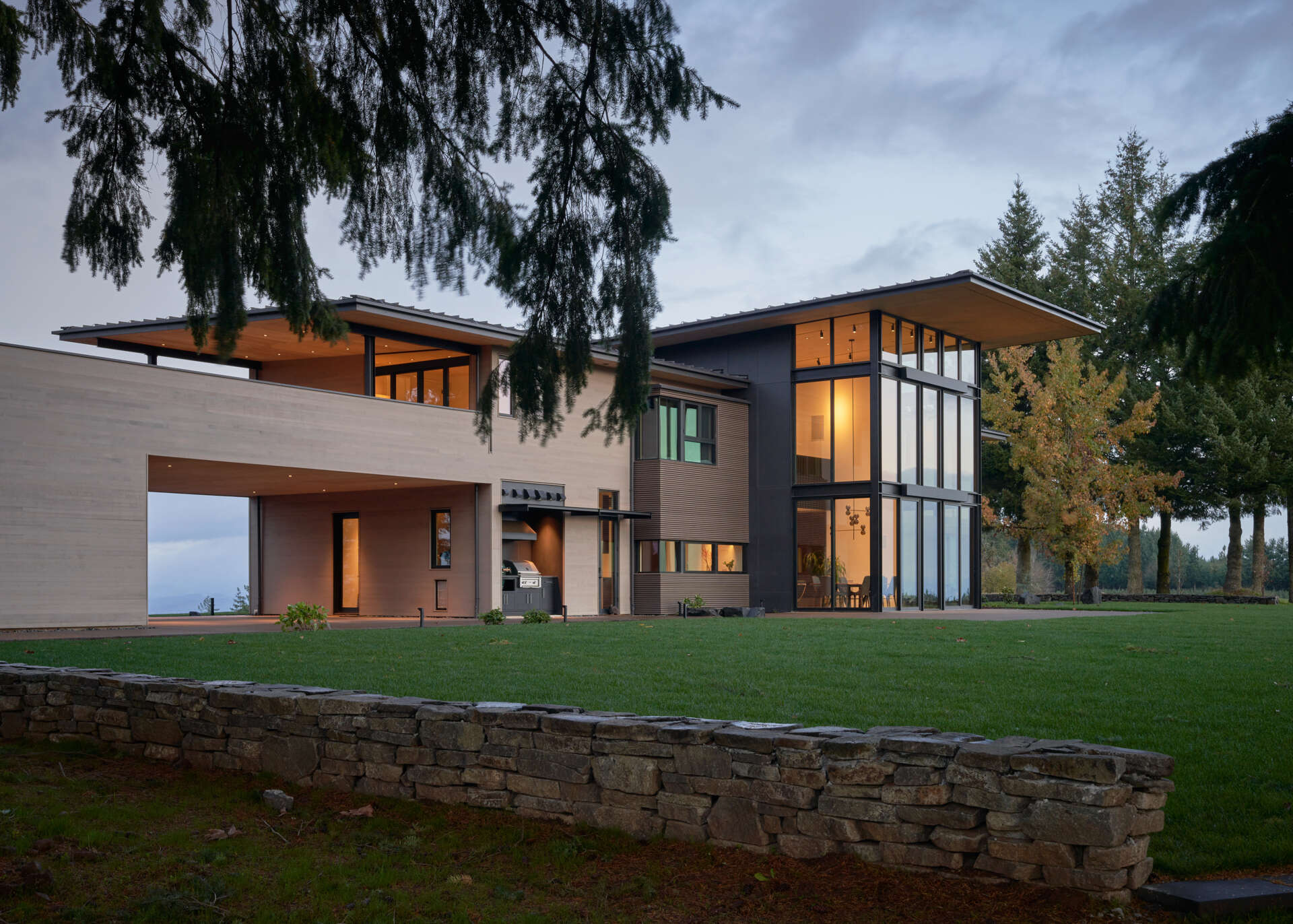
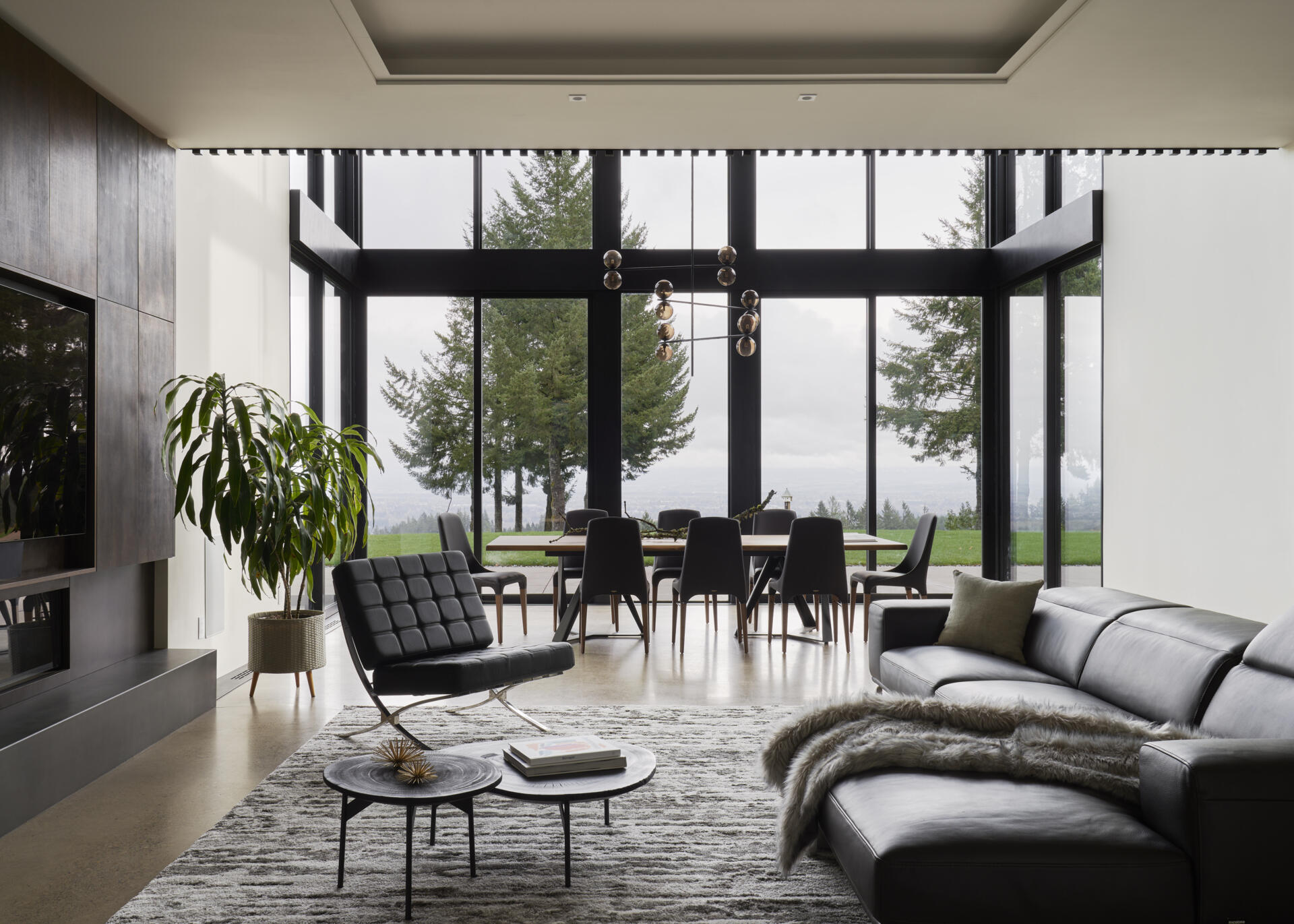
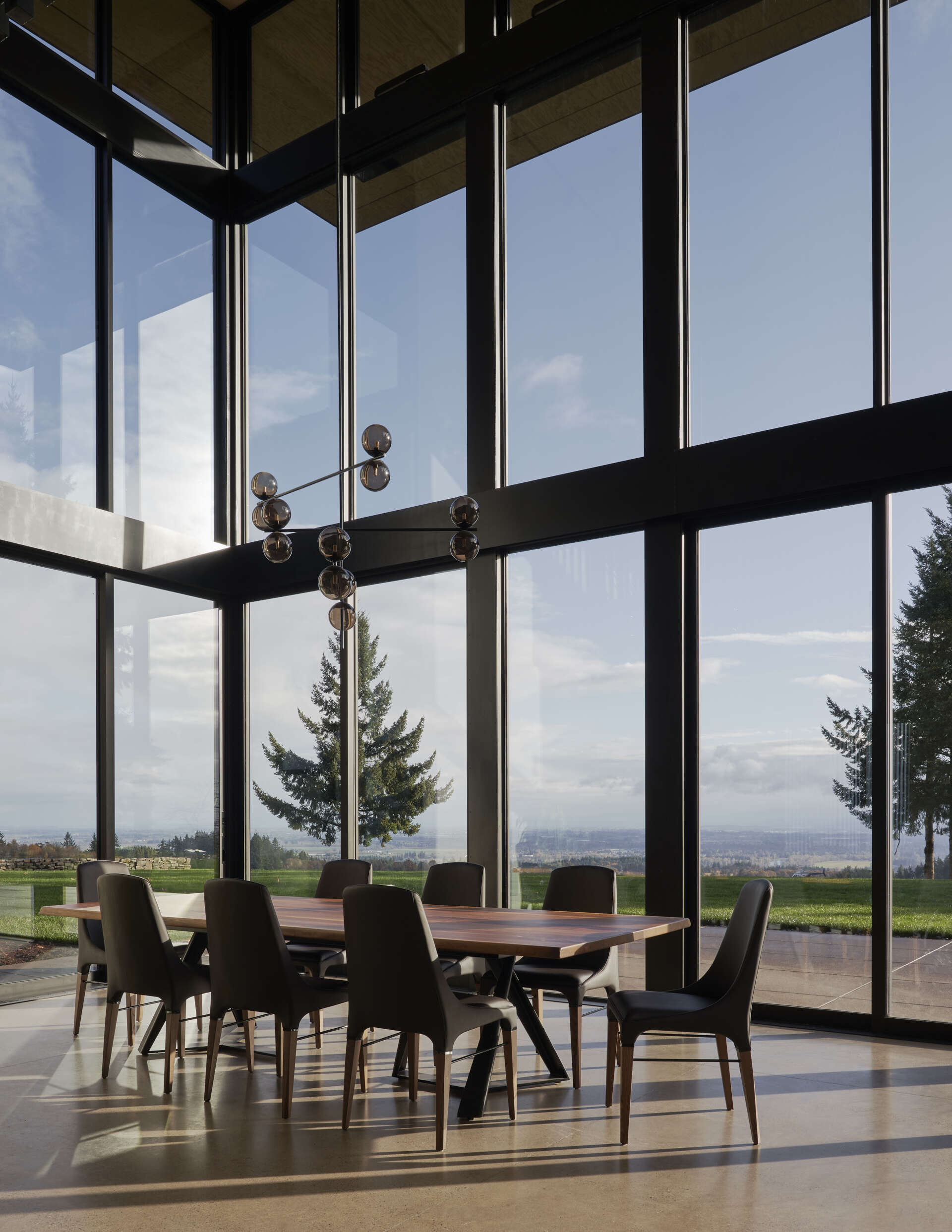
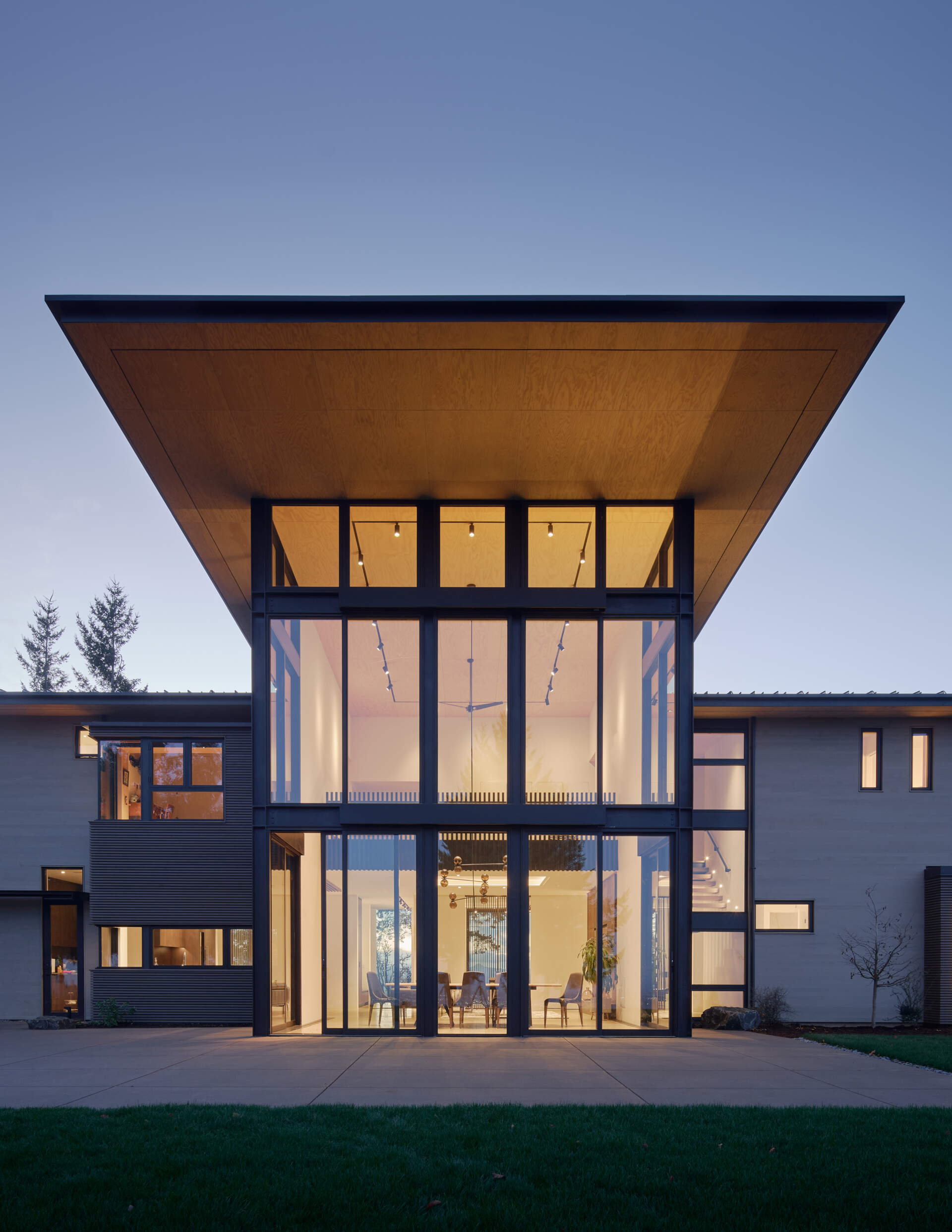
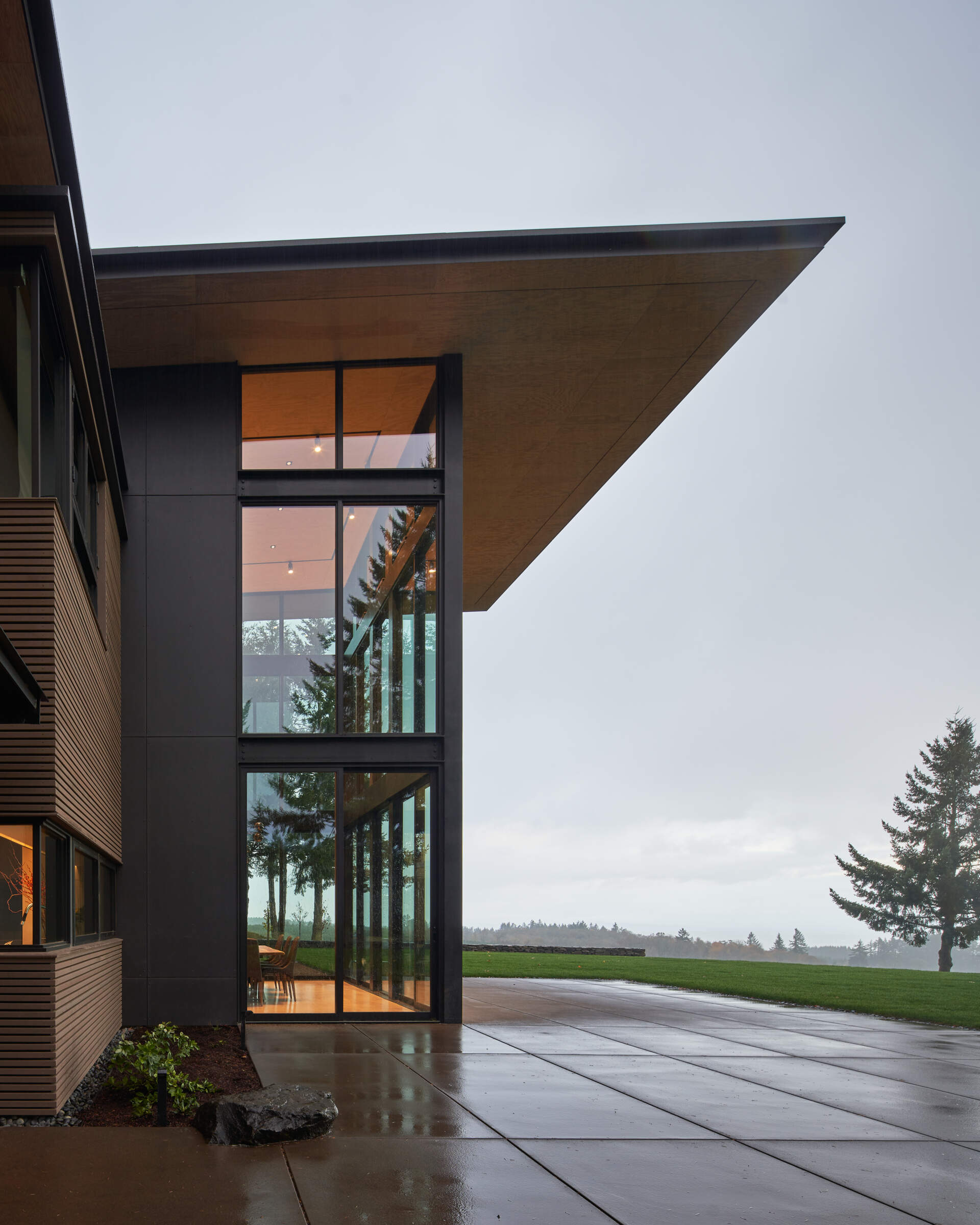
The dining room stands out immediately. A soaring 26-foot-high ceiling rises above the space, while walls of glass on three sides frame the surrounding landscape. Materials extend seamlessly across boundaries. Concrete flooring continues onto the patio, while the plywood ceiling stretches outward to form the roof overhang.
The result is an architectural composition where interior and exterior spaces feel closely linked to the surrounding views.
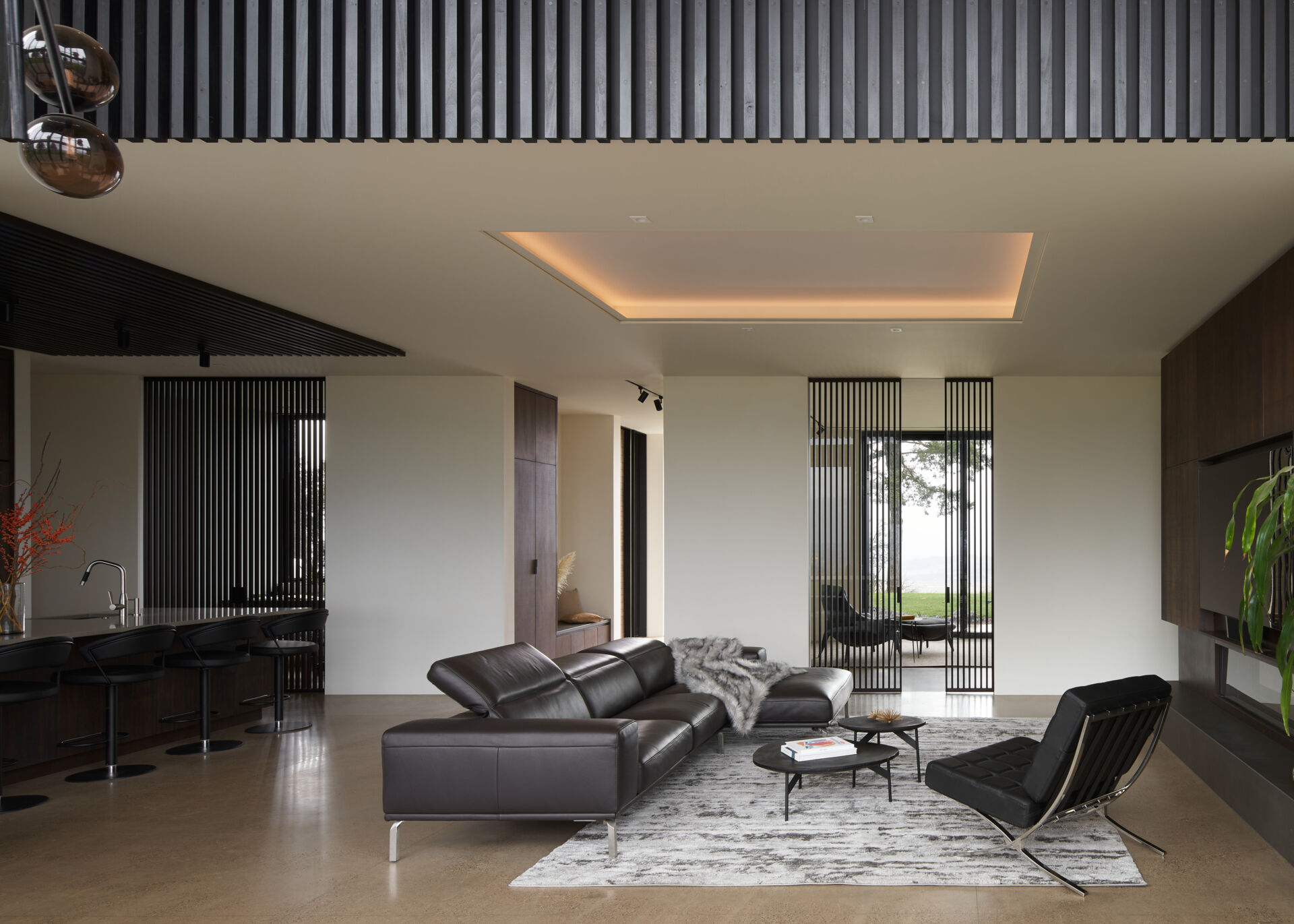
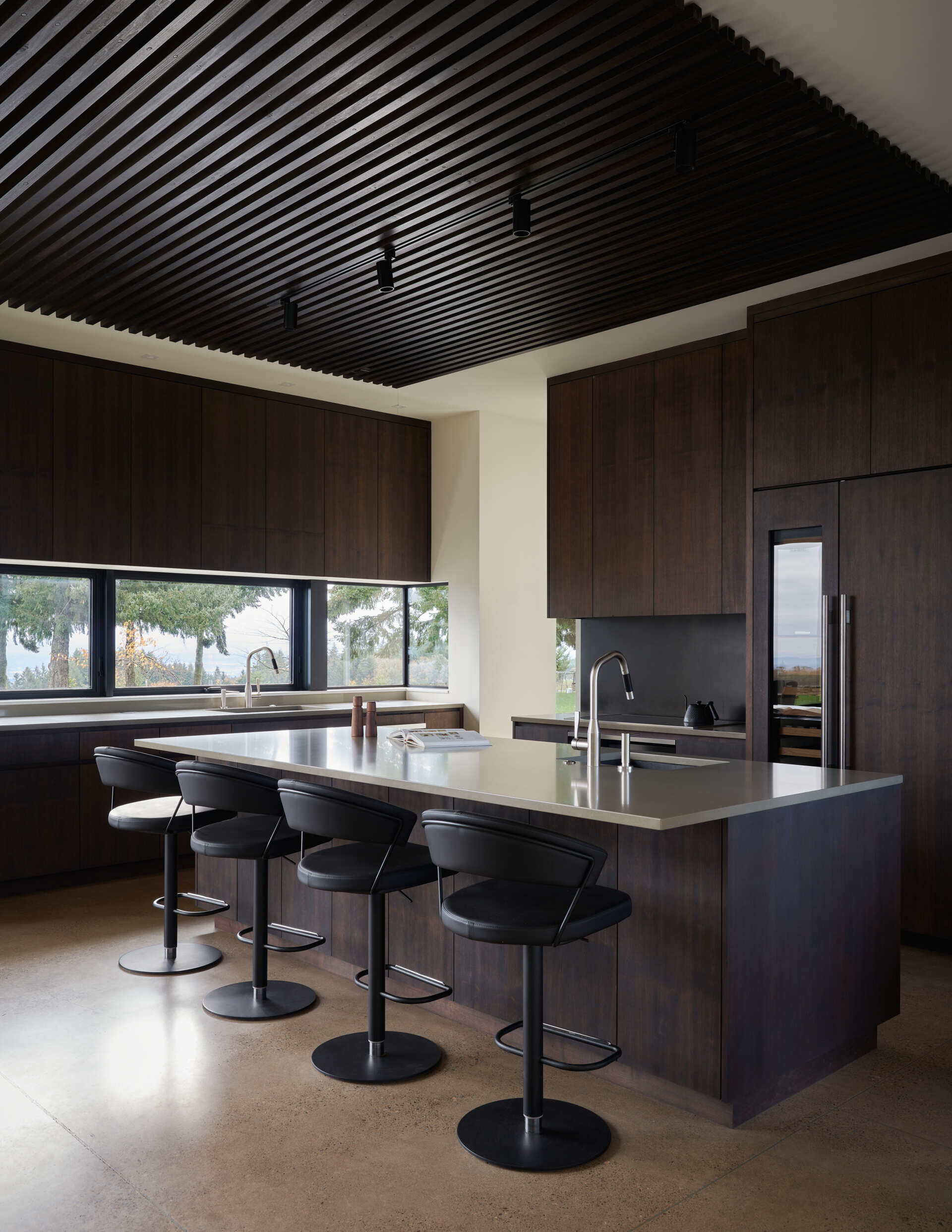
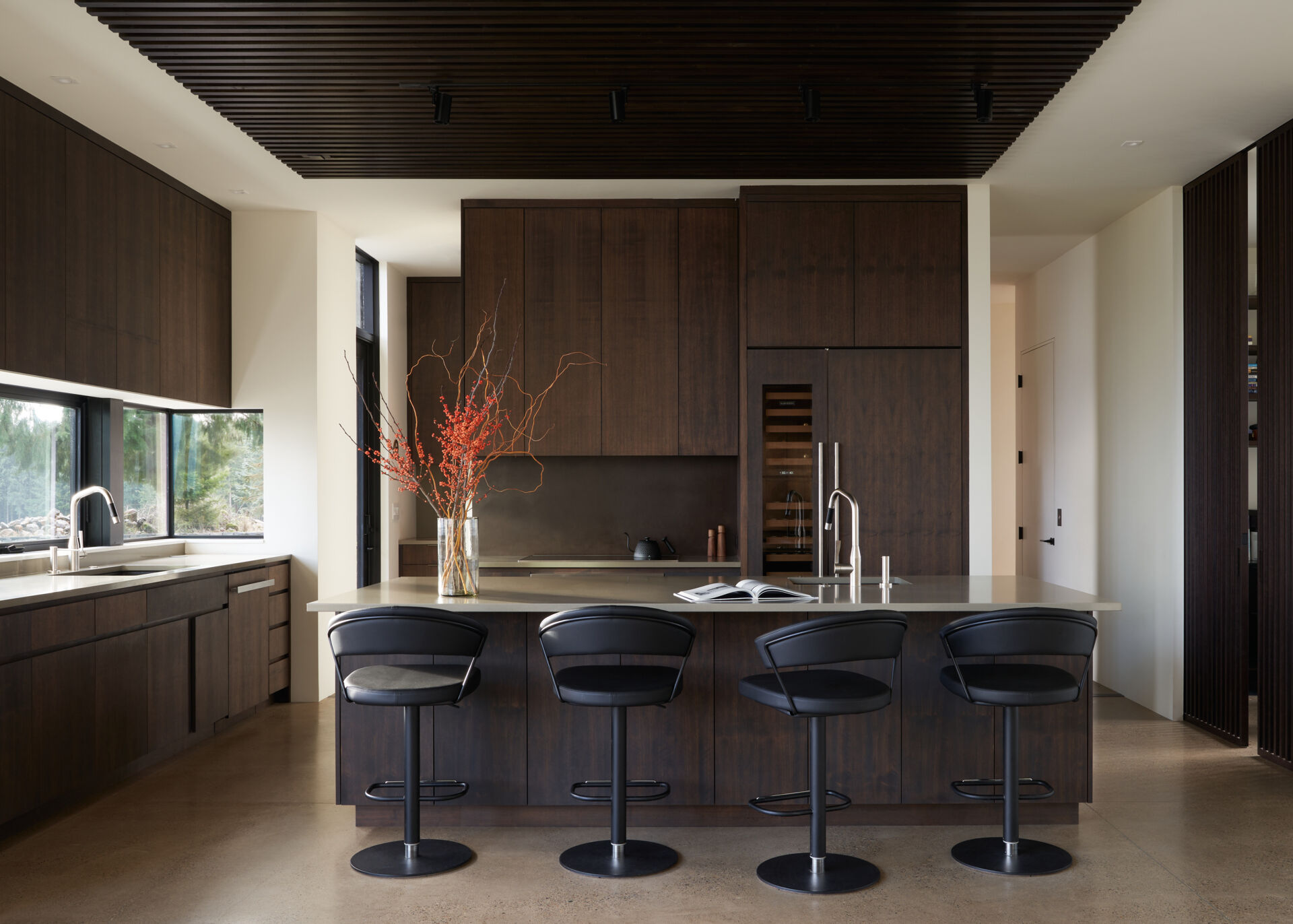
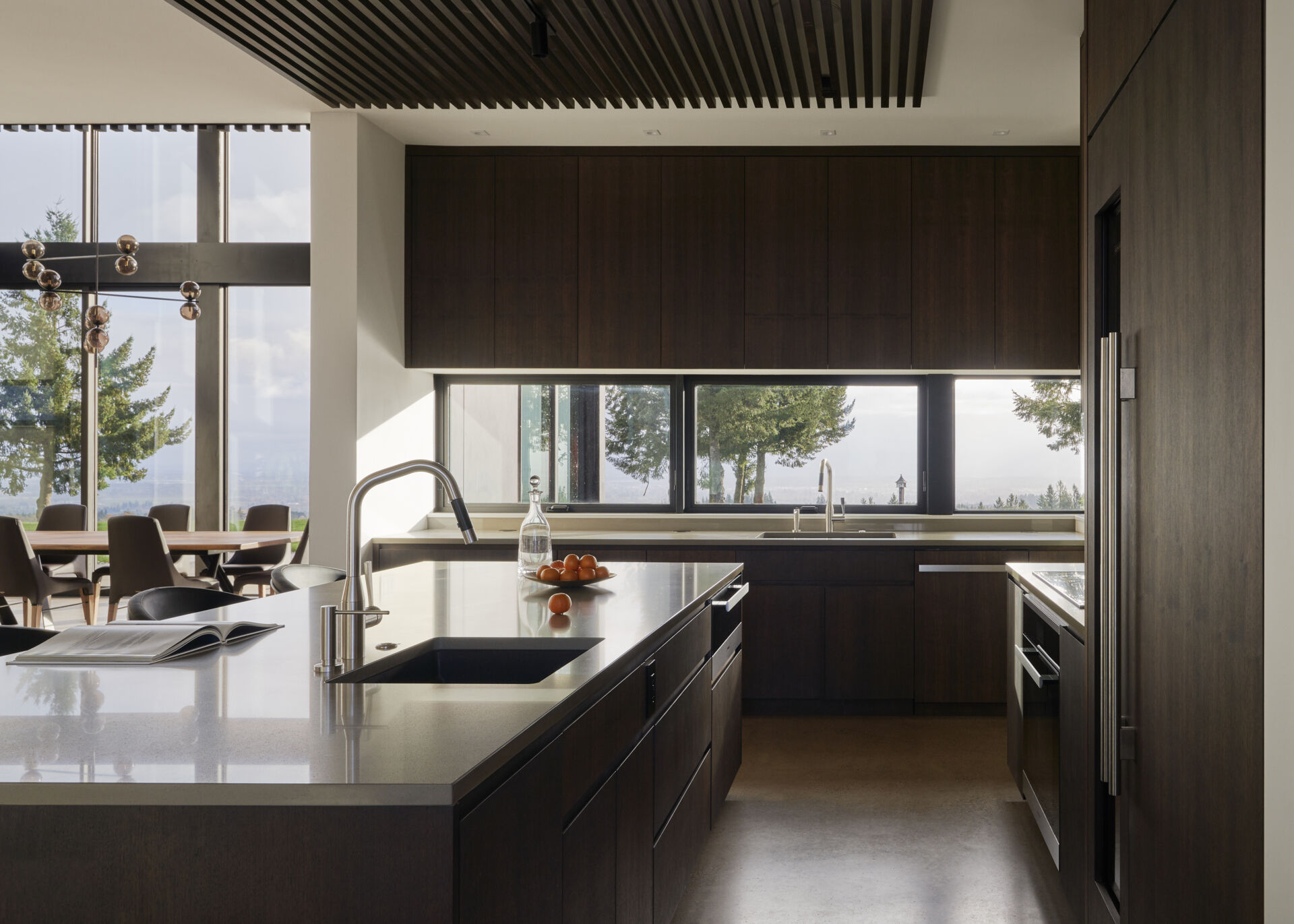
Warm, earthy materials help soften the large volumes. Dark walnut cabinetry adds richness and contrast, while metal and wood screens filter light and subtly define different zones within the open plan.
Opening the House to Wine Country
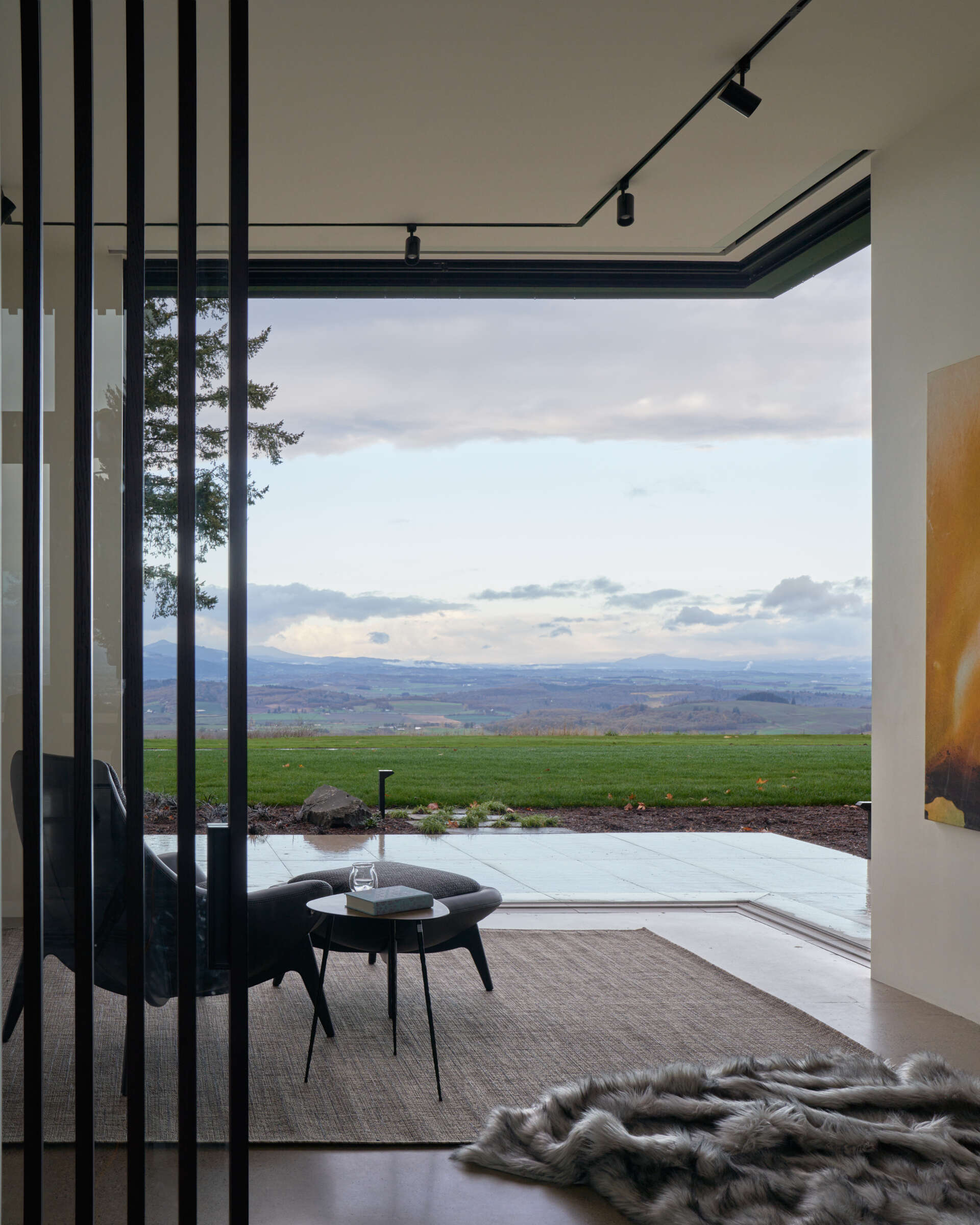
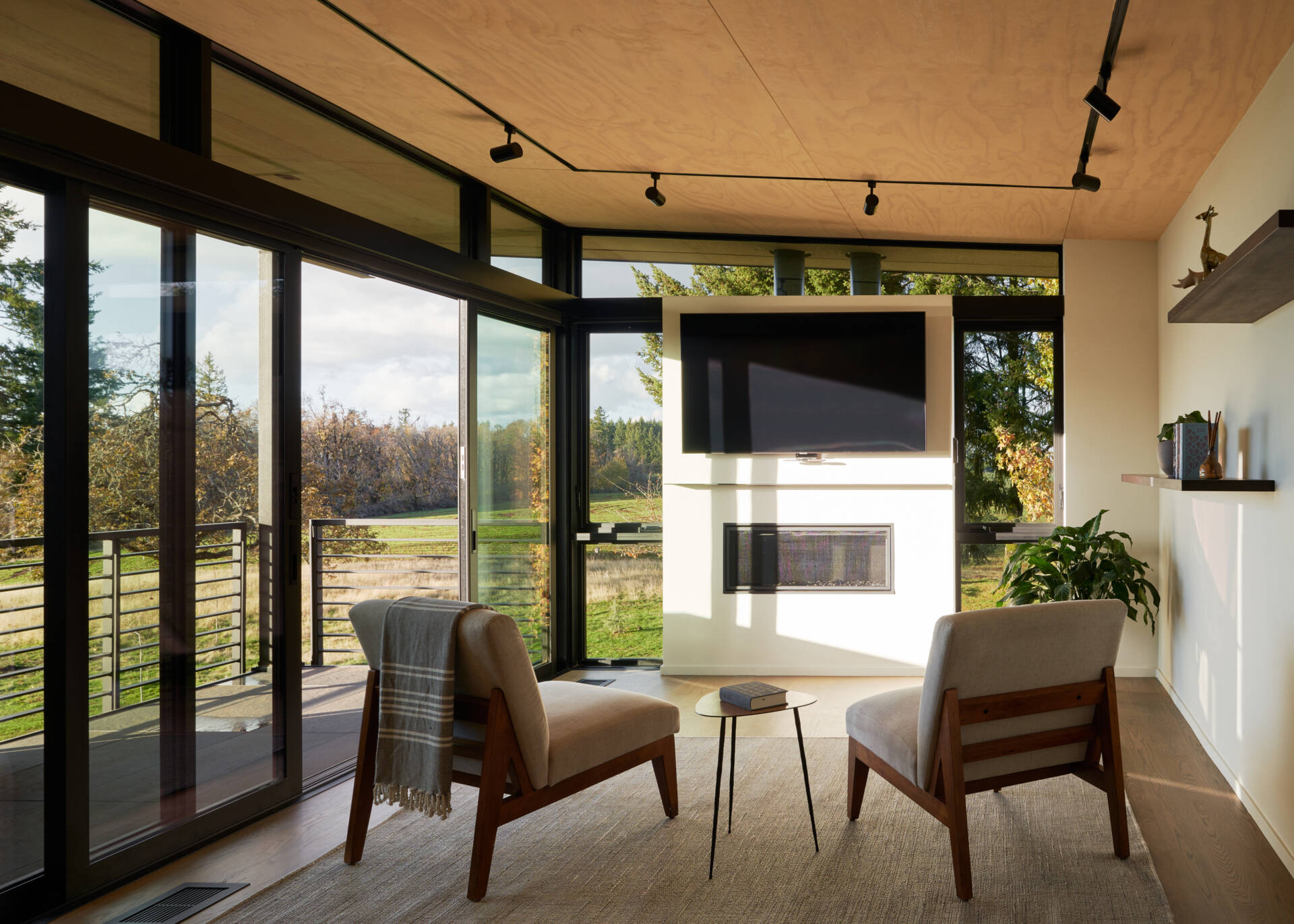
On the western side of the main living area, a lounge overlooks vineyards and rolling hills.
Large lift-and-slide corner pocket doors disappear entirely into the walls when opened. Fresh air, natural light, and sweeping views enter the room, creating an open connection to the landscape beyond.
This space has become a favorite gathering area for the homeowners, who enjoy spending time here with music, wine, and views across Oregon’s wine country.
Spaces Designed for Family Living
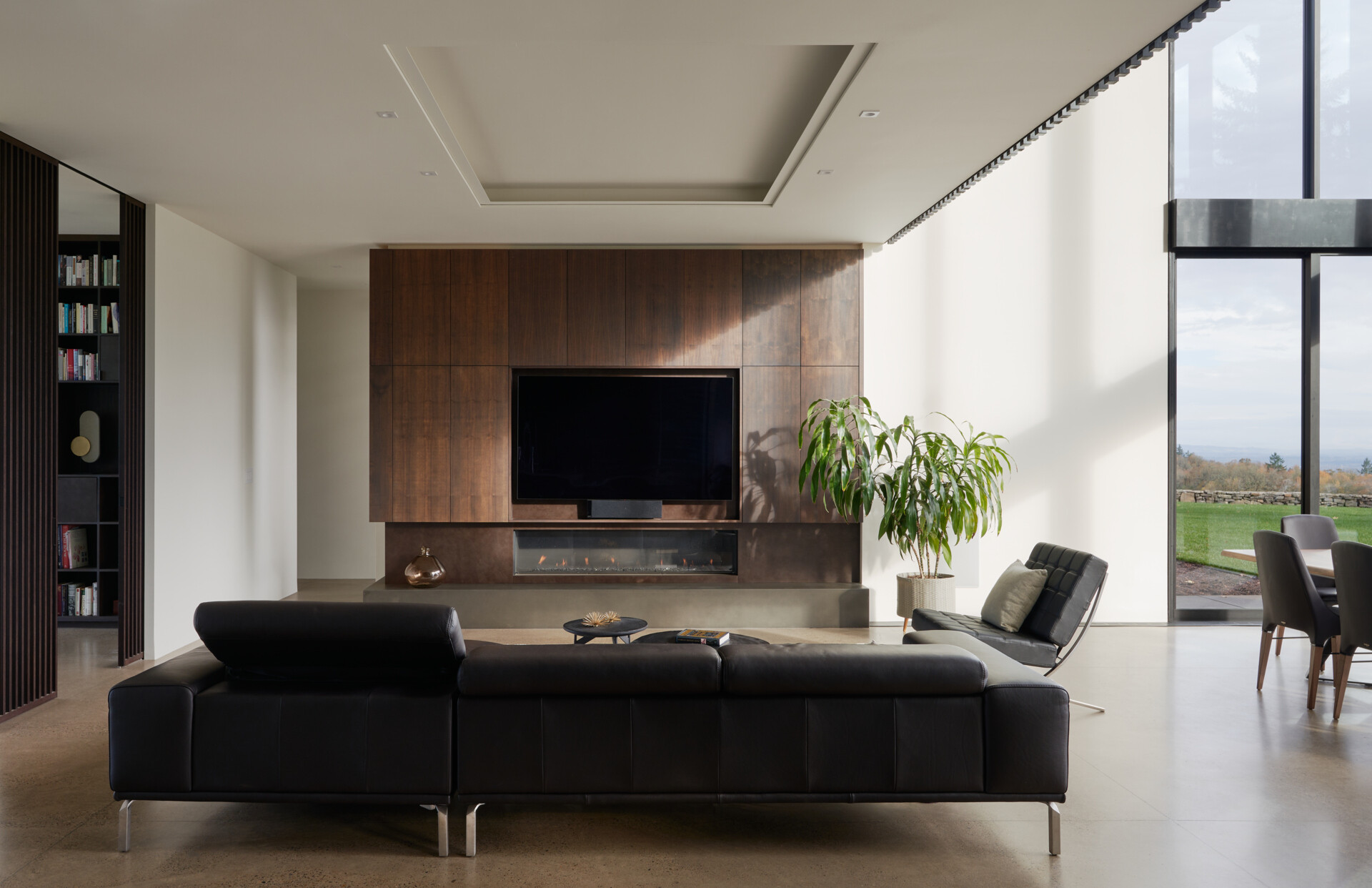
Positioned between the dining room and lounge, the living room enjoys views in both directions. Mountain vistas are visible to the east, while glazed screen pocket doors maintain visual connections toward the western hills.
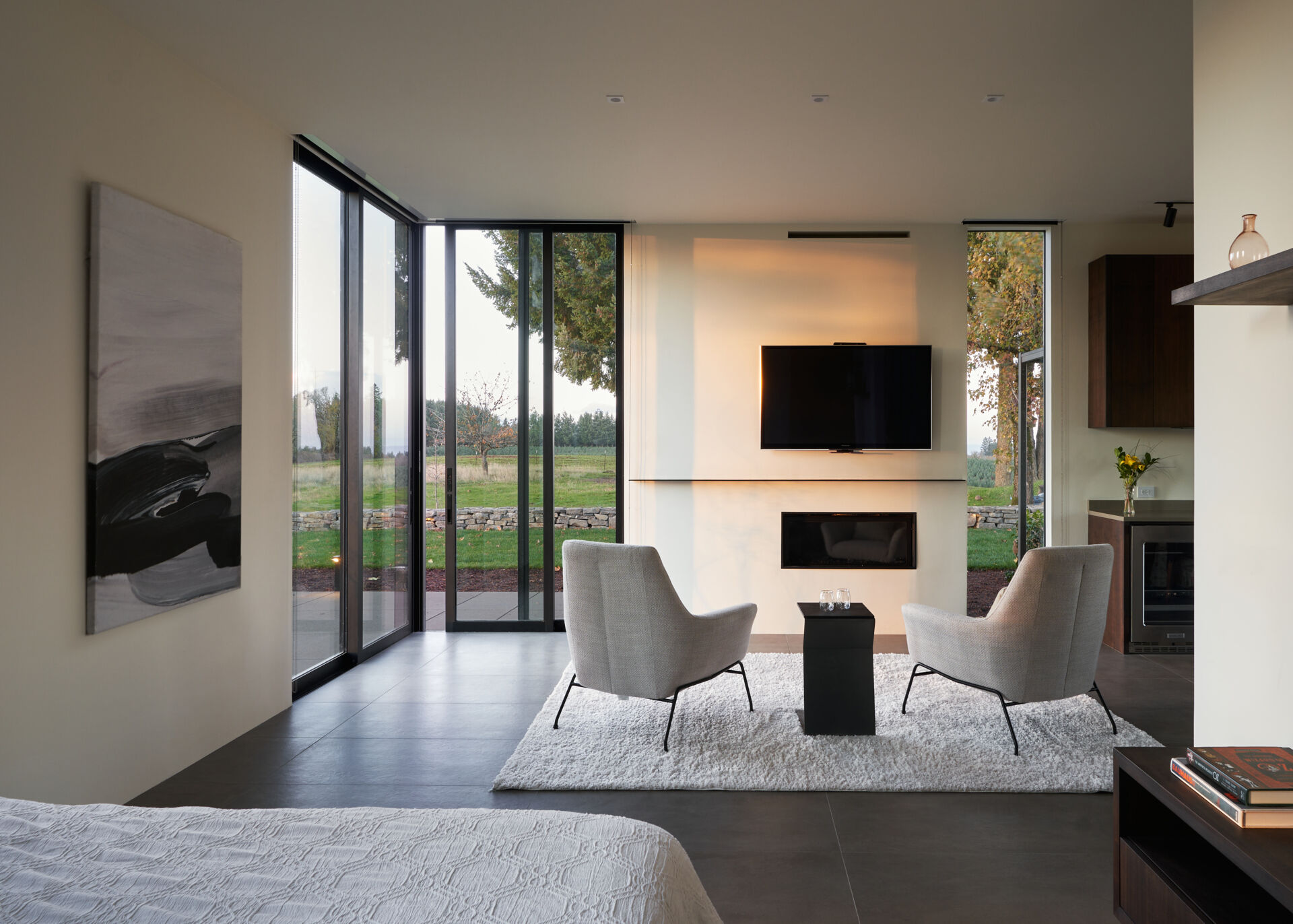
A six-foot-long fireplace and dark walnut cabinetry bring warmth to the room and create a more intimate atmosphere within the larger open-plan layout.
Nearby, the kitchen opens directly to both the dining and living areas. This arrangement allows parents to stay connected to family activities while cooking or entertaining guests. A corner window also provides views toward the driveway, making it easy to spot visitors as they approach the house.
A Sculptural Staircase
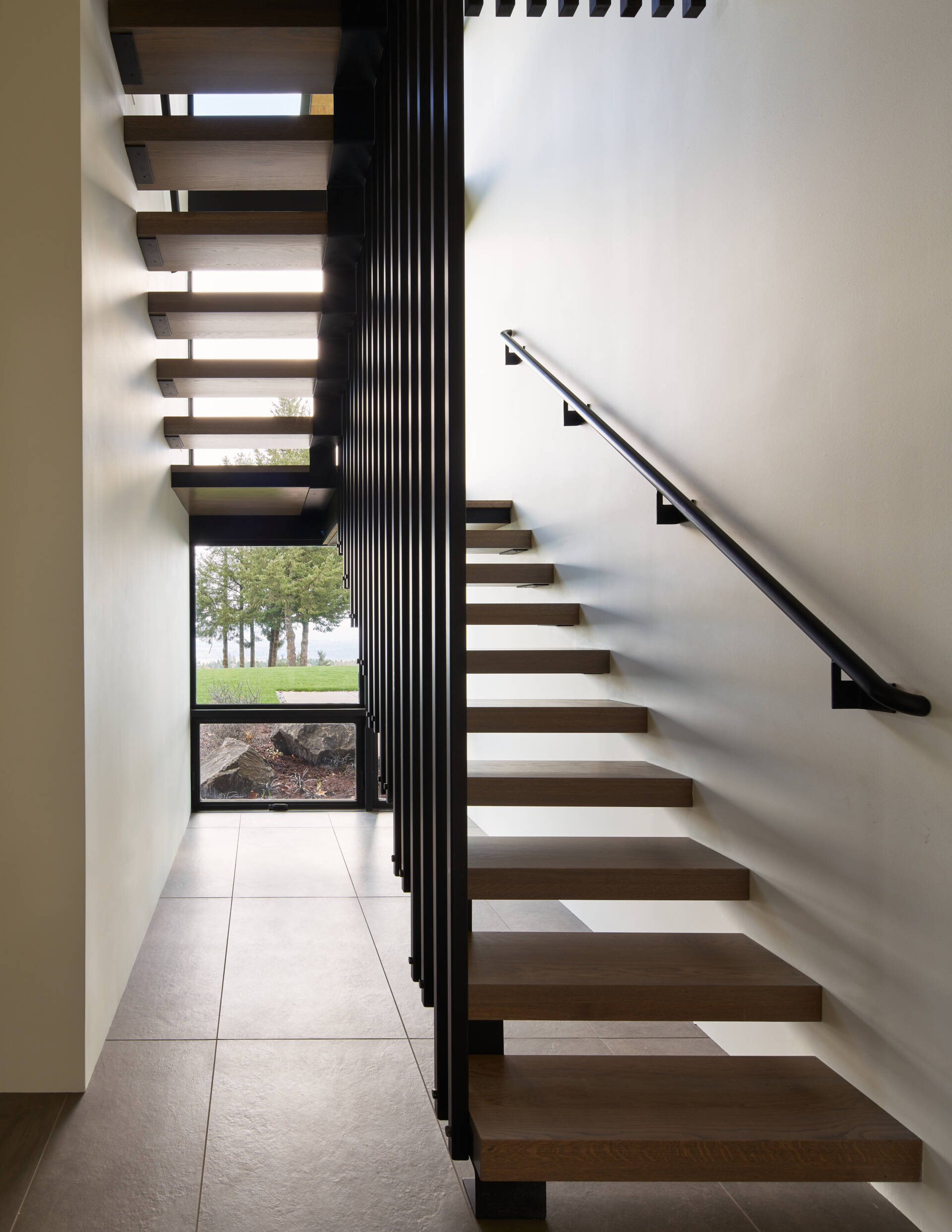
One of the home’s most striking architectural features is the suspended staircase connecting the public and private levels.
Its folded steel stringer resembles a piece of origami, providing structural support while maintaining a light appearance. Solid wood treads project outward from the steel structure, introducing warmth and texture.
Vertical steel rods complete the composition, casting shifting shadows throughout the day. The minimal structure preserves views through the space and allows natural light to travel freely between floors.
Elevated Views from Every Level
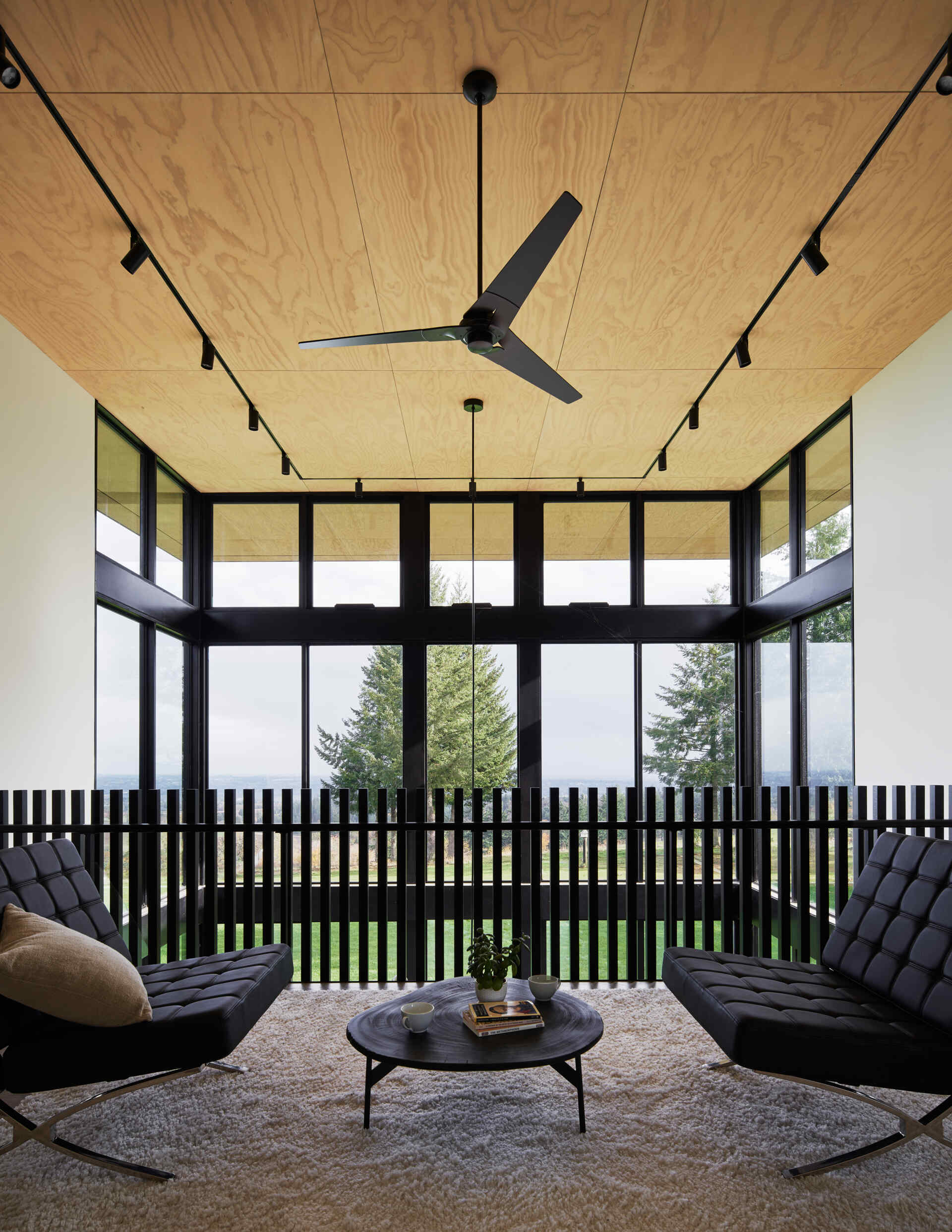
A large mezzanine overlooks the living and dining areas below and provides another vantage point toward the eastern mountains. From there, circulation continues to one of the home’s most impressive features: a covered rooftop deck.
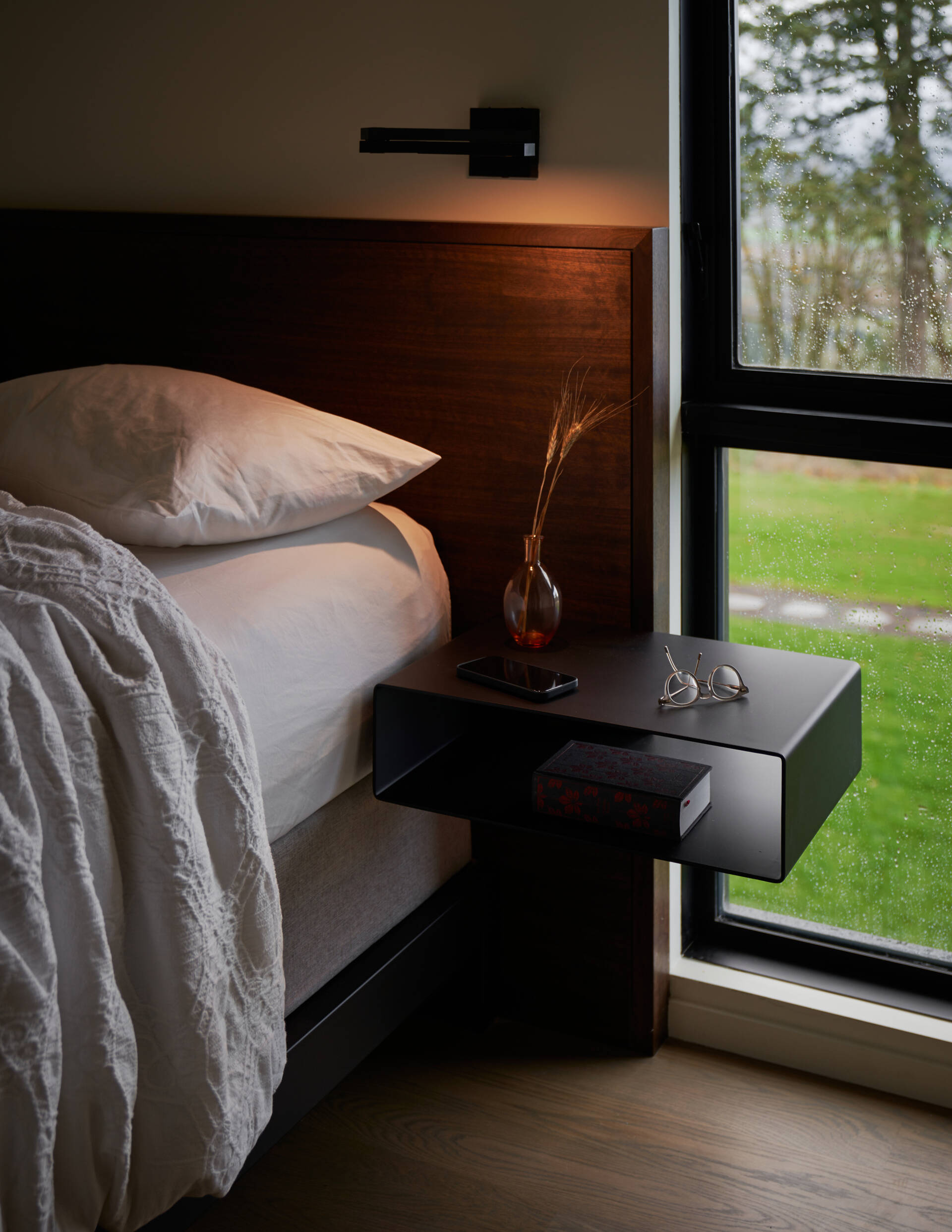
The upper floor contains the family bedrooms, all positioned to capture western views across vineyards and sunsets.
While the main level features dramatic volumes and high ceilings, the bedrooms embrace a more intimate scale. This contrast creates comfortable private spaces while maintaining strong connections to the landscape.
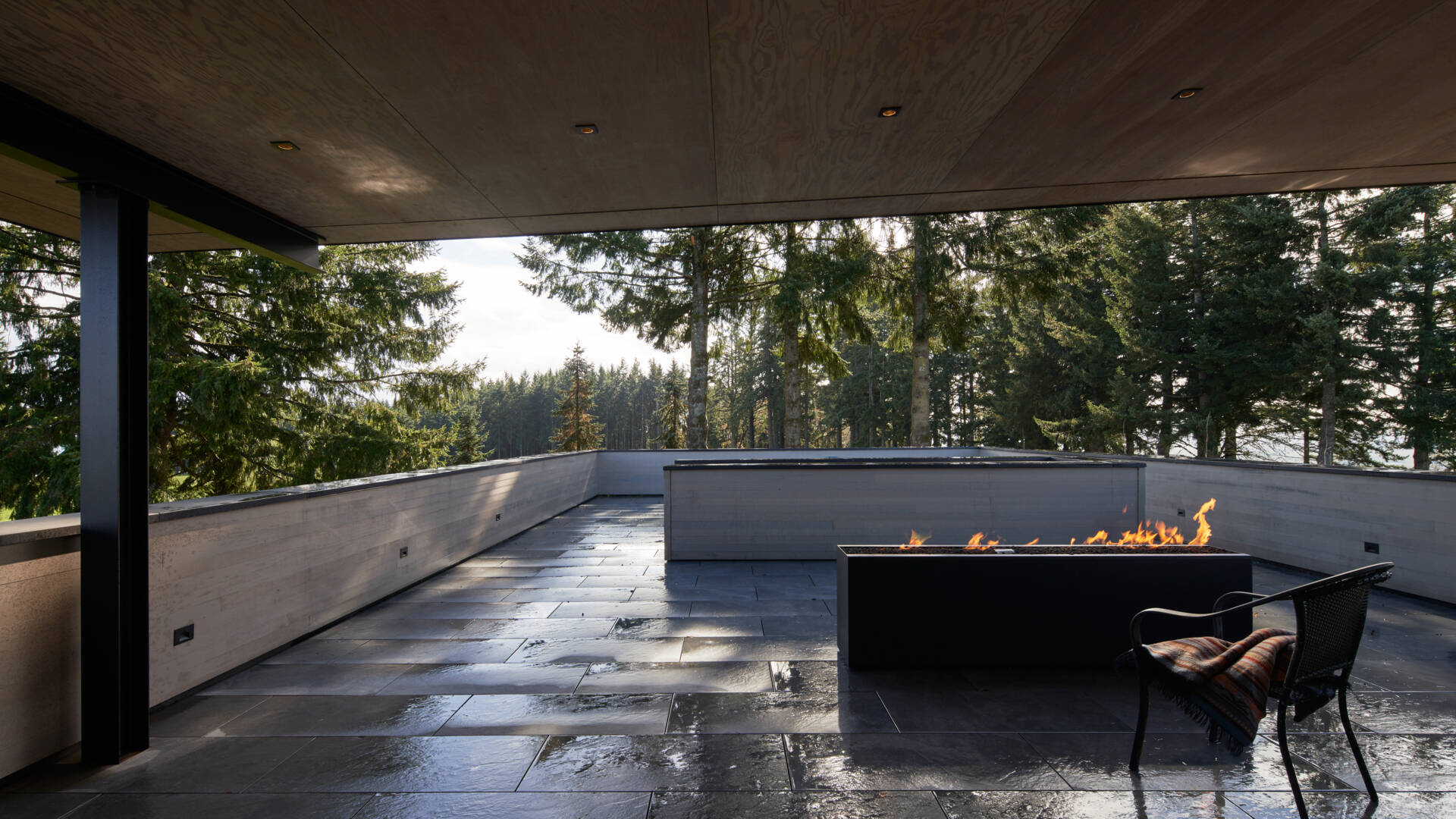
Offering 270-degree views, the rooftop space includes a fireplace and serves as an all-season entertaining area with panoramic outlooks toward both the city and wine country.
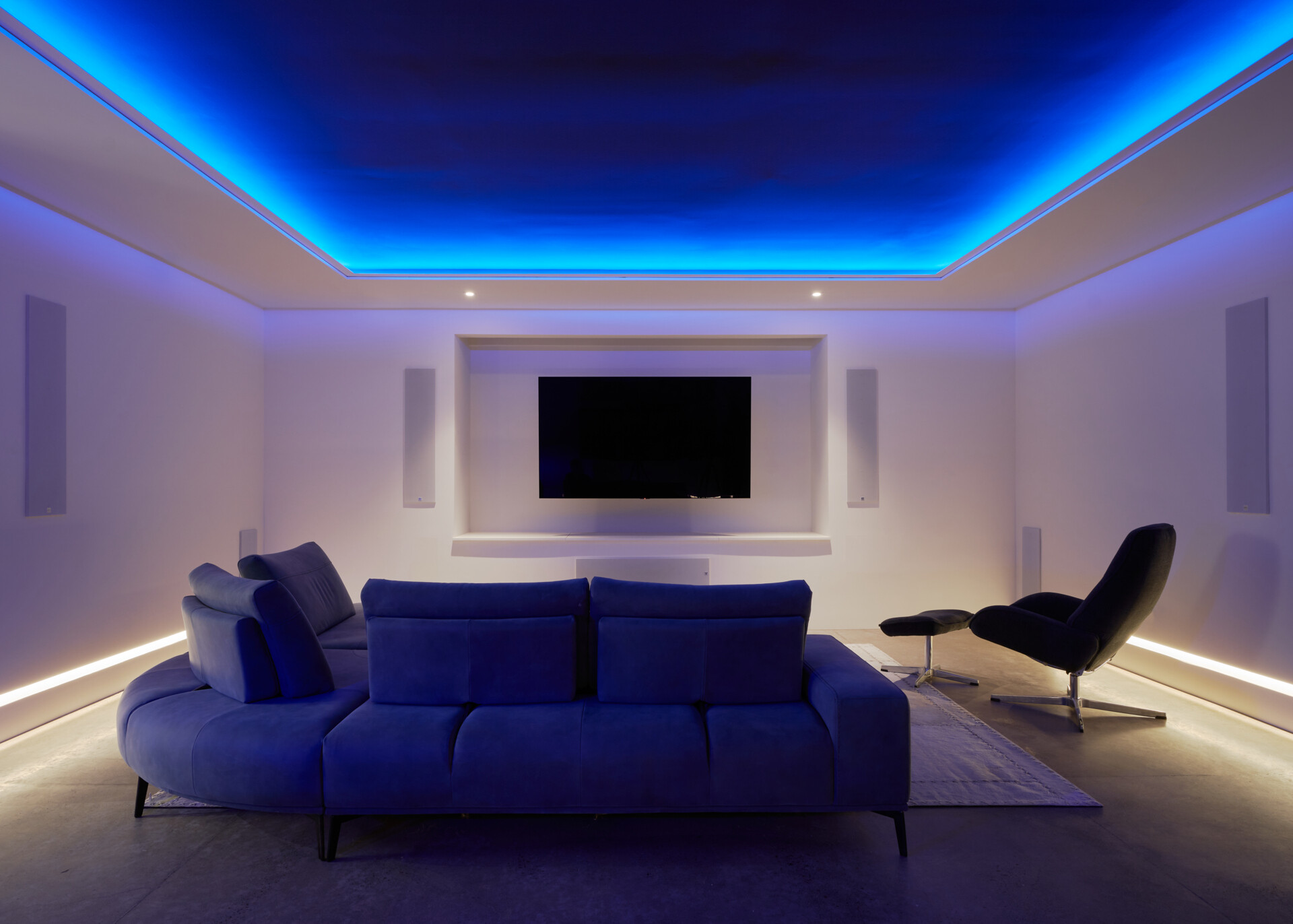
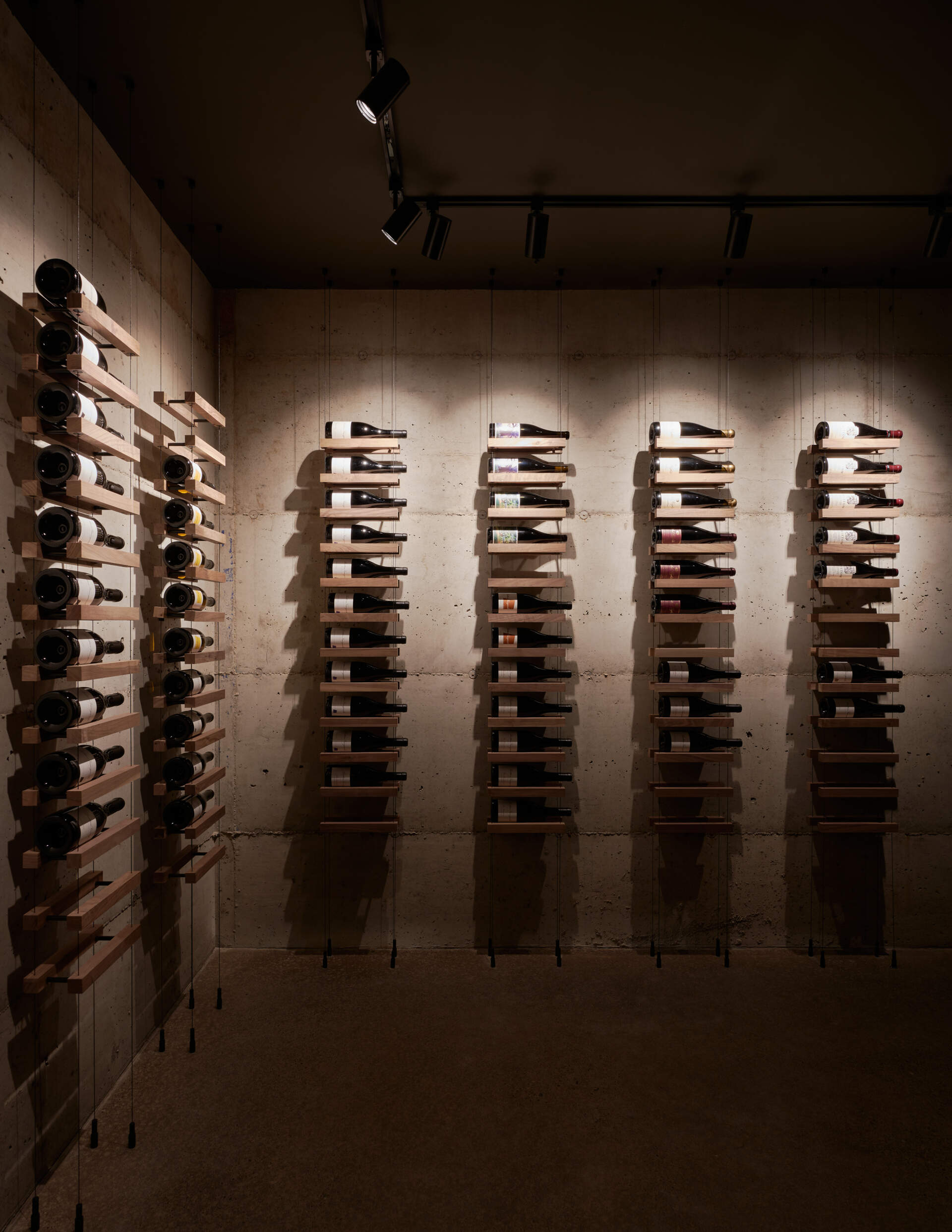
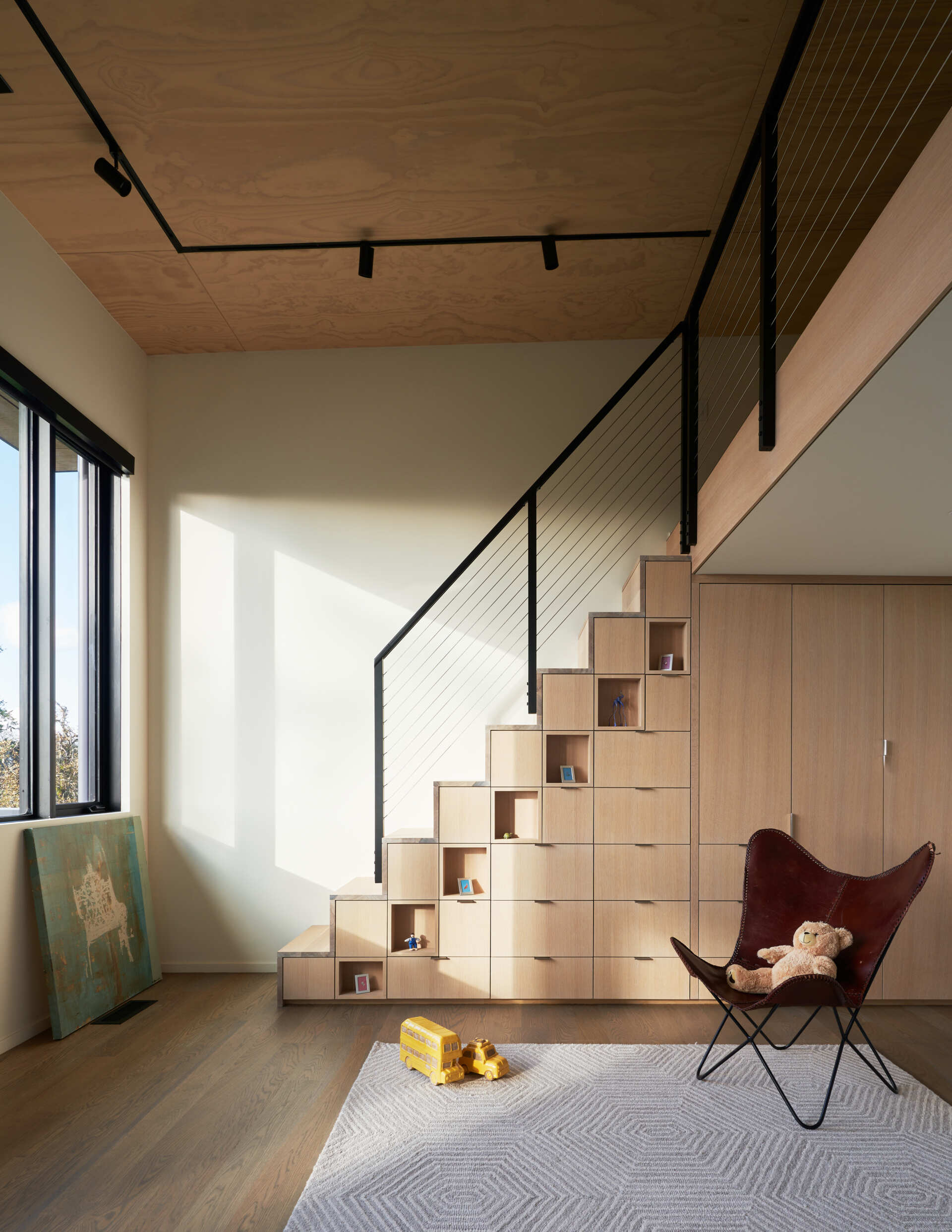
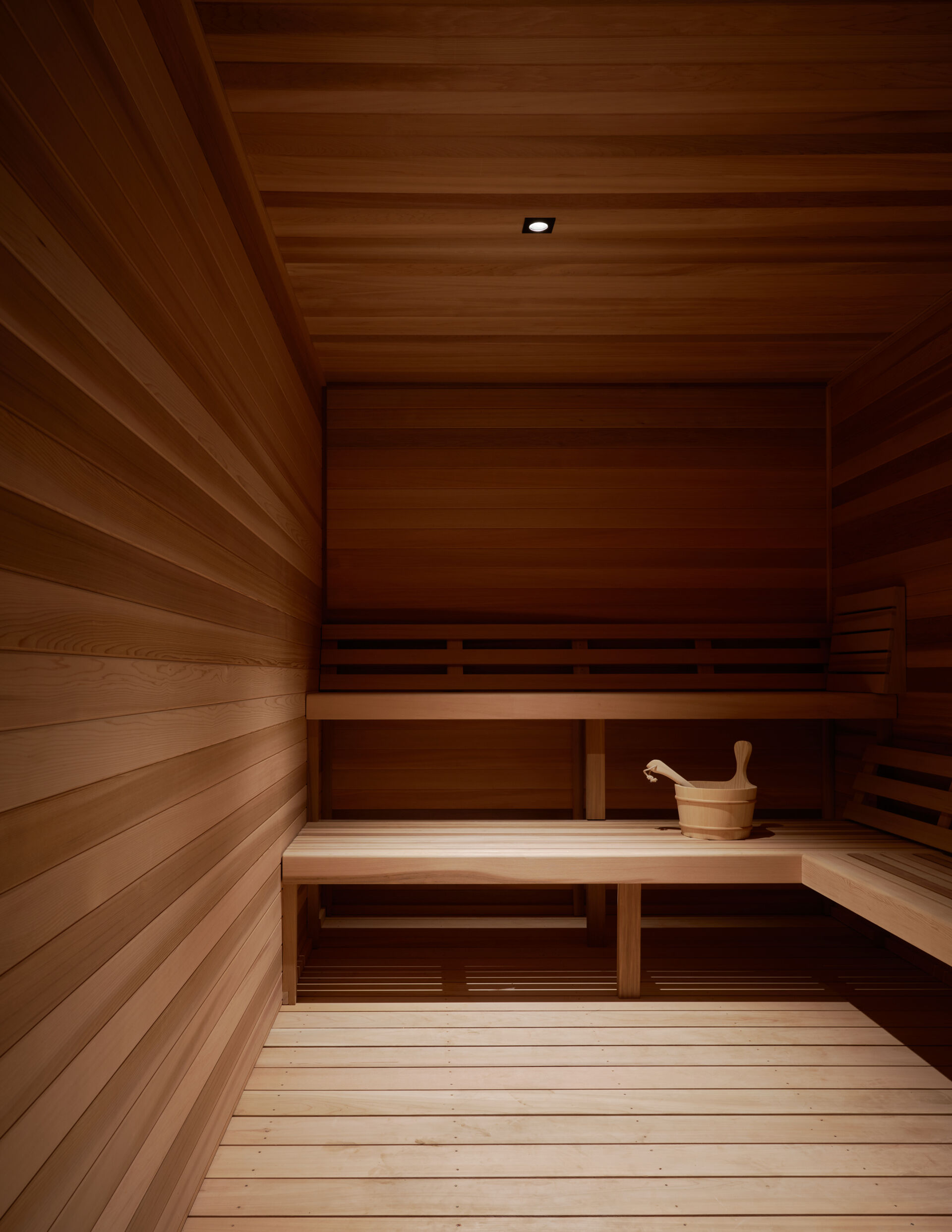
Below, the basement level expands the home’s recreational offerings with a wine room, sauna, media room, fitness area, and playroom.
Built for the Next Century
Sustainability played a major role in shaping Eola Hills Residence.
The design team focused on creating a high-performance home capable of serving future generations while minimizing maintenance requirements. Exterior materials include cedar siding, fiber cement panels, concrete, steel, and metal roofing, selected for their durability and longevity.
Continuous exterior insulation, a rainscreen system, high-performance aluminum windows, and advanced mechanical systems contribute to the home’s energy efficiency. High-efficiency heat pumps and radiant heating improve comfort throughout the year, while operable awning windows help cool the interior naturally.
Automatic exterior sunshades reduce solar heat gain during Oregon’s warmer months, helping the house remain comfortable while lowering energy demand.
Through expansive glazing, natural materials, dramatic volumes, and Japanese-inspired design influences, Ueda Design Studio has created a residence where mountain ranges, vineyards, changing weather, and family life all become part of the architectural experience.