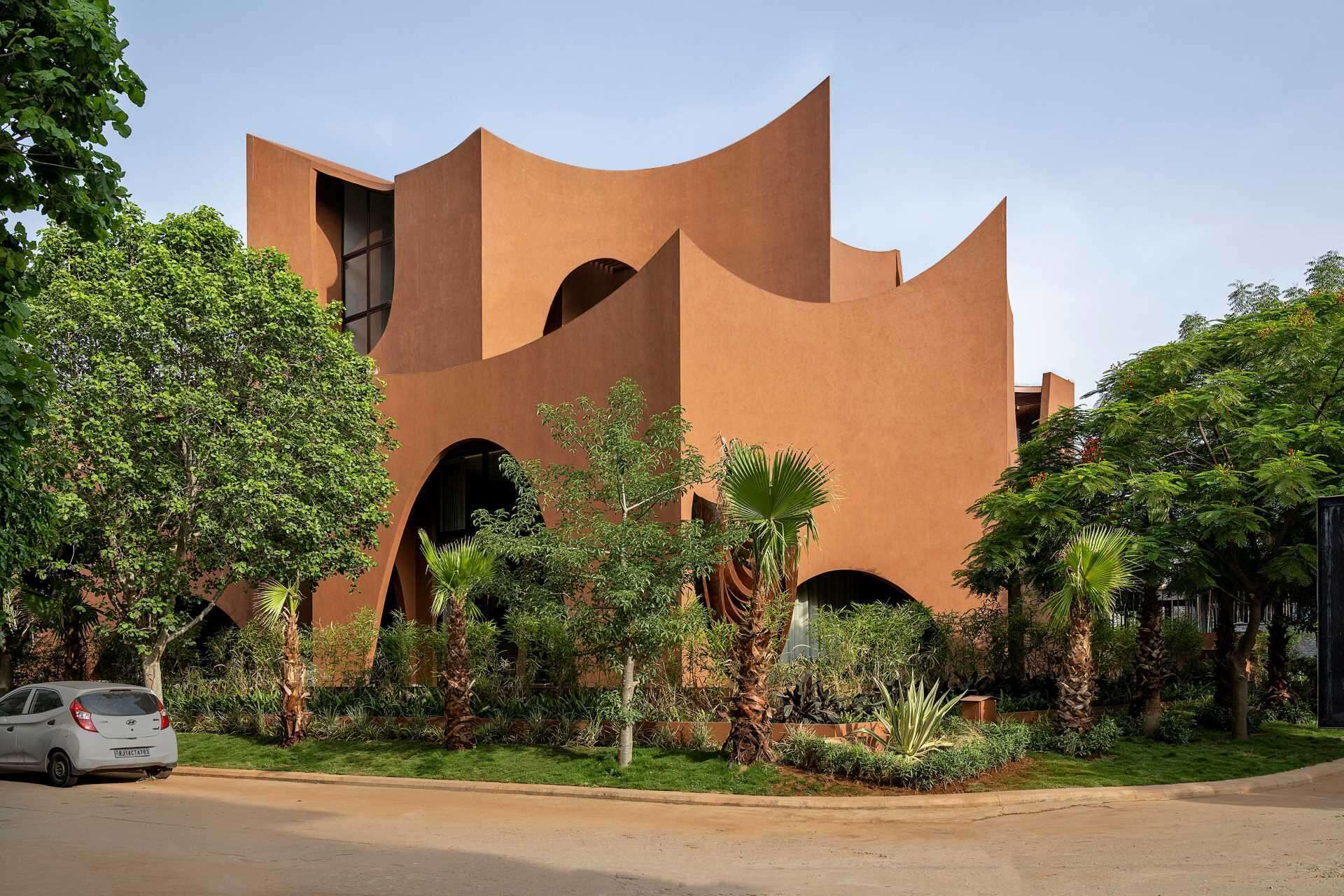
In the hot climate of Rajasthan, India, Sanjay Puri Architects designed Mirai, a sculptural family home that balances striking architecture with practical responses to its environment. Built for three generations living under one roof, the residence occupies a compact corner site and transforms climate challenges into opportunities for design.
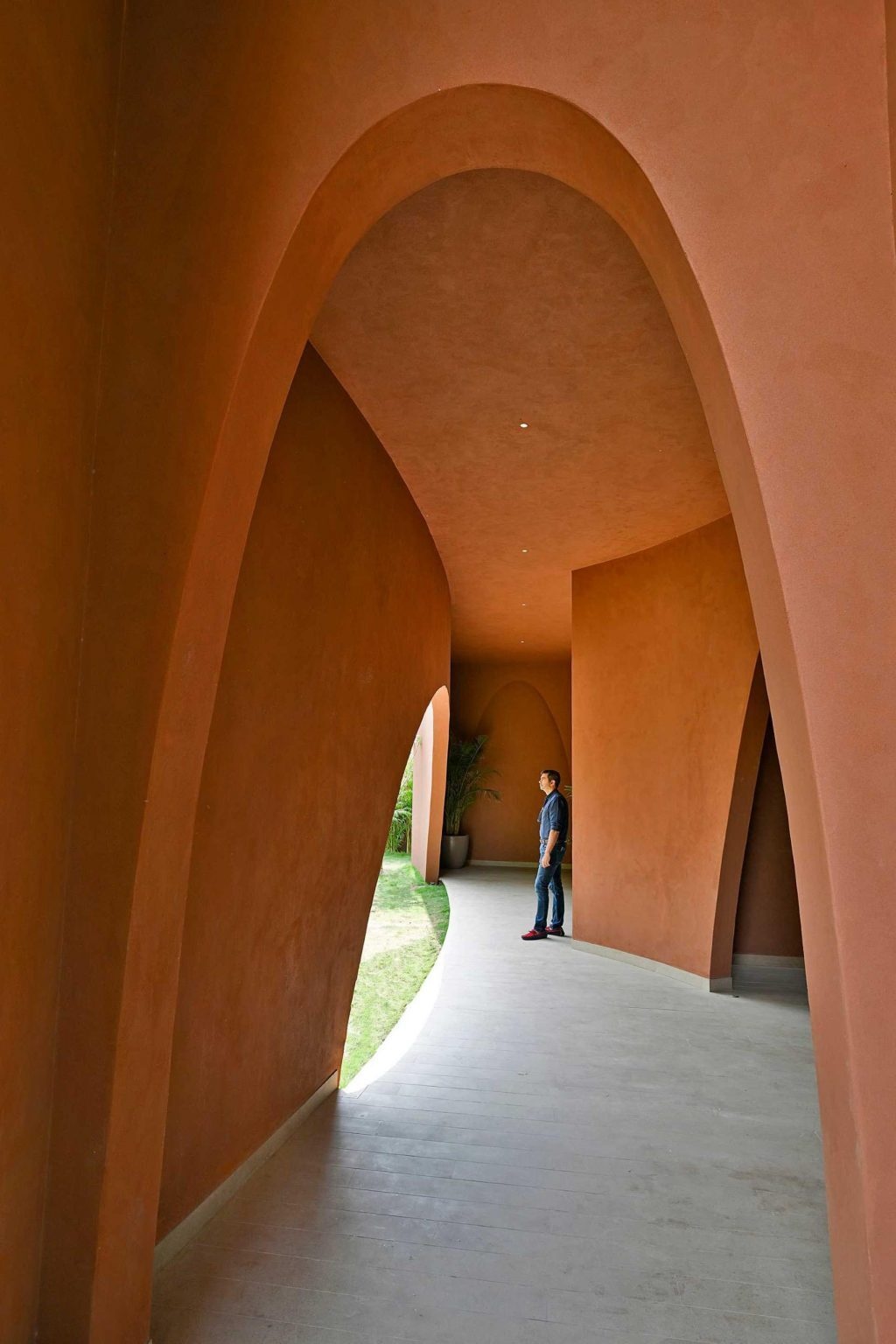
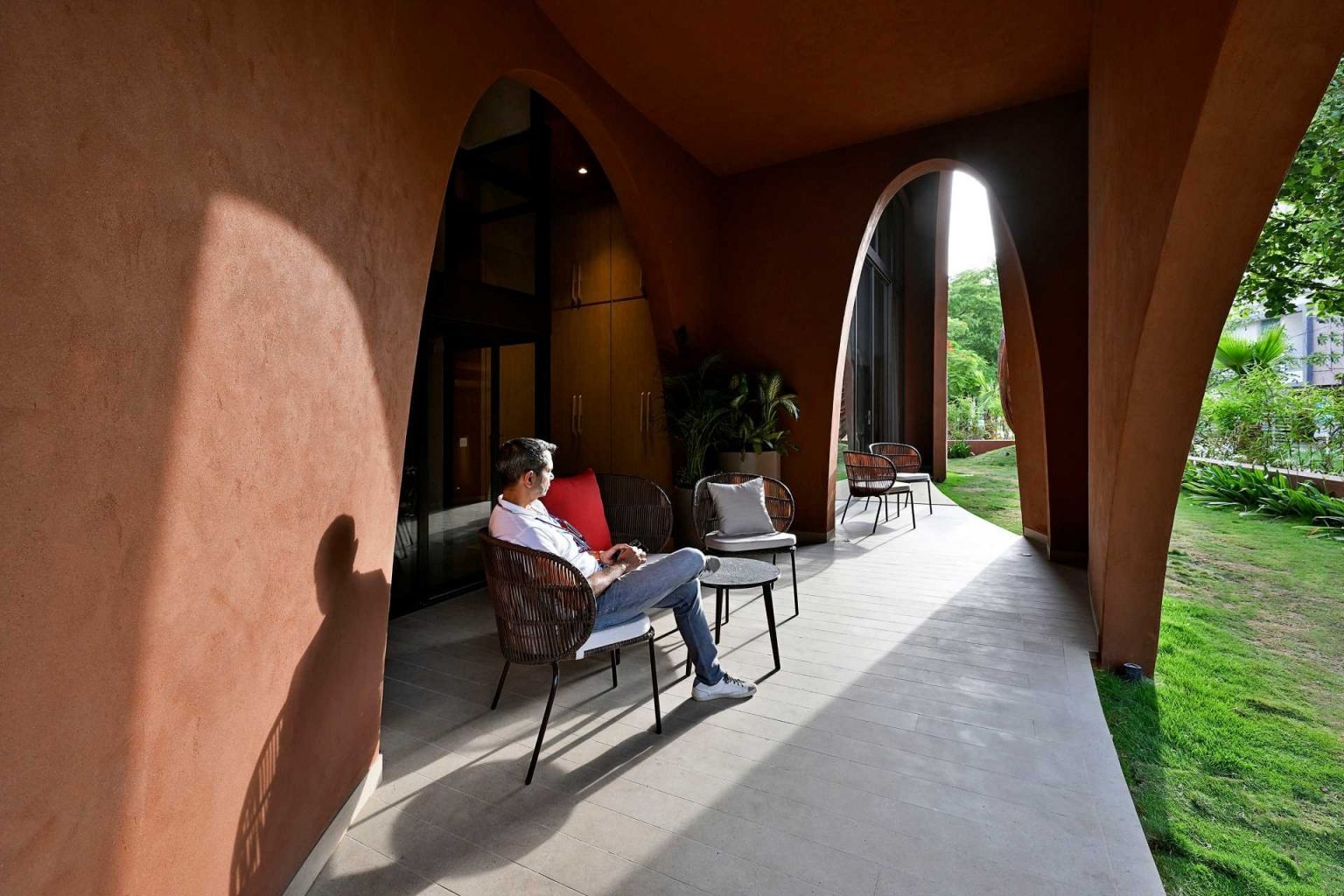
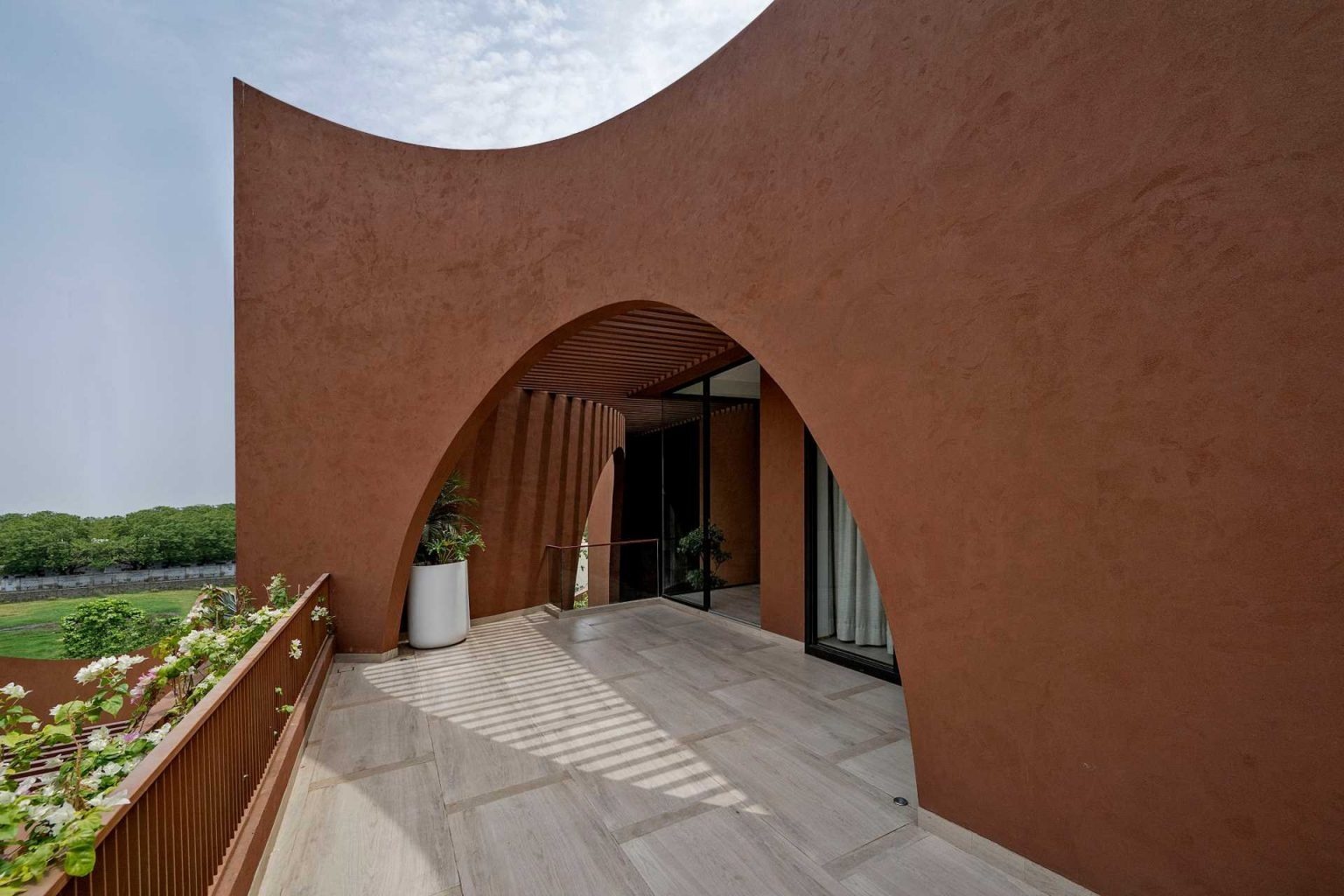
The house stands out immediately for its flowing forms and repeated arches, which appear throughout the exterior and interior. These curved openings are far more than decorative features. They help create shaded spaces, filter natural light, and contribute to a cooler indoor environment during Rajasthan’s long, intense summers.
A Corner Site Shaped by Climate
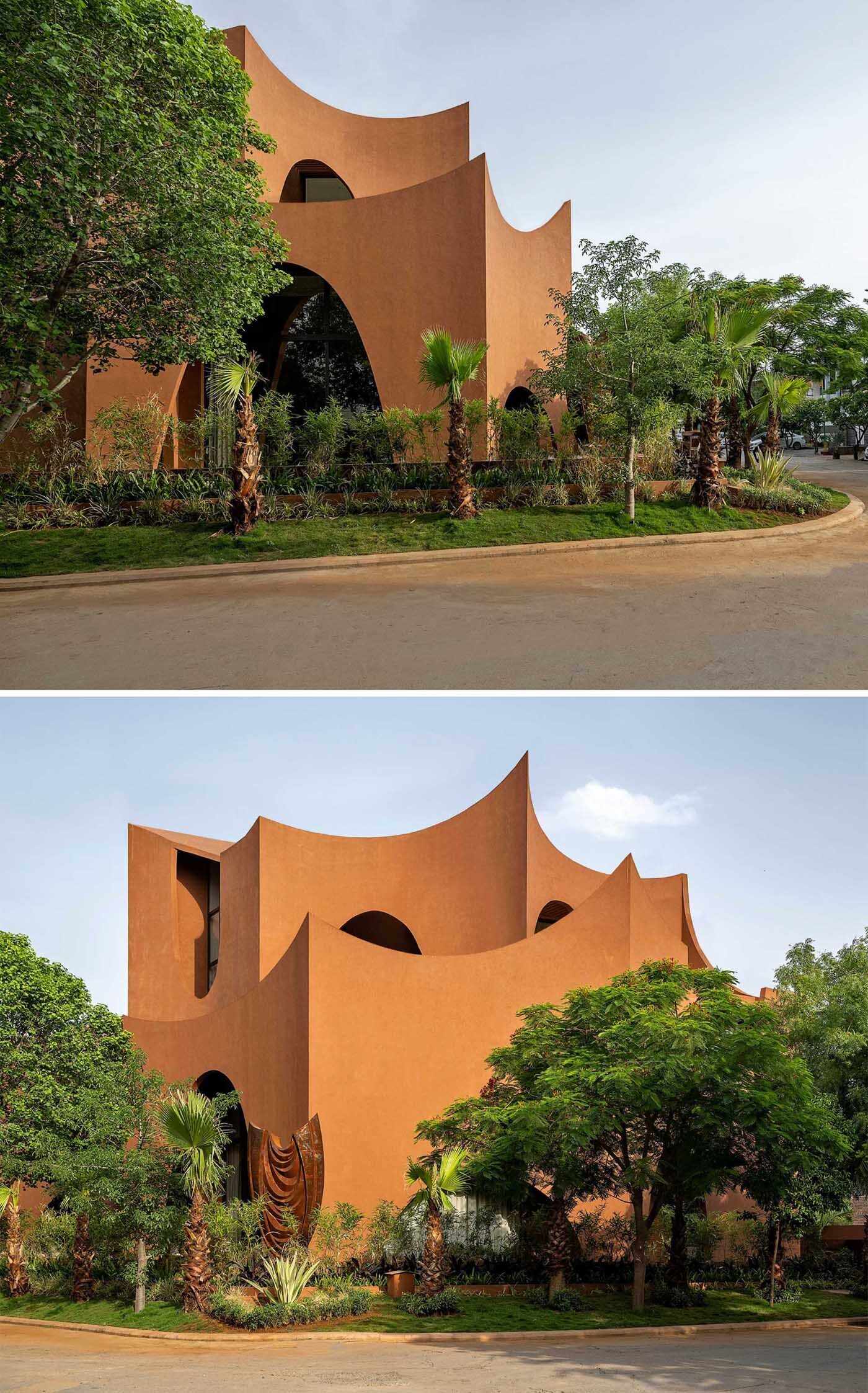
Built on a 622-square-metre corner plot within a residential villa development, the home’s design was strongly influenced by its surroundings. Future neighboring villas were planned for the southern and eastern sides, while the northern and western edges faced open streets, gardens, and mature trees.
This unique site arrangement guided the home’s layout. The more open sides of the property became opportunities to introduce sheltered outdoor areas and stronger connections to natural light and ventilation. The result is a home that responds directly to both its location and climate.
Curves That Help Keep the House Cool
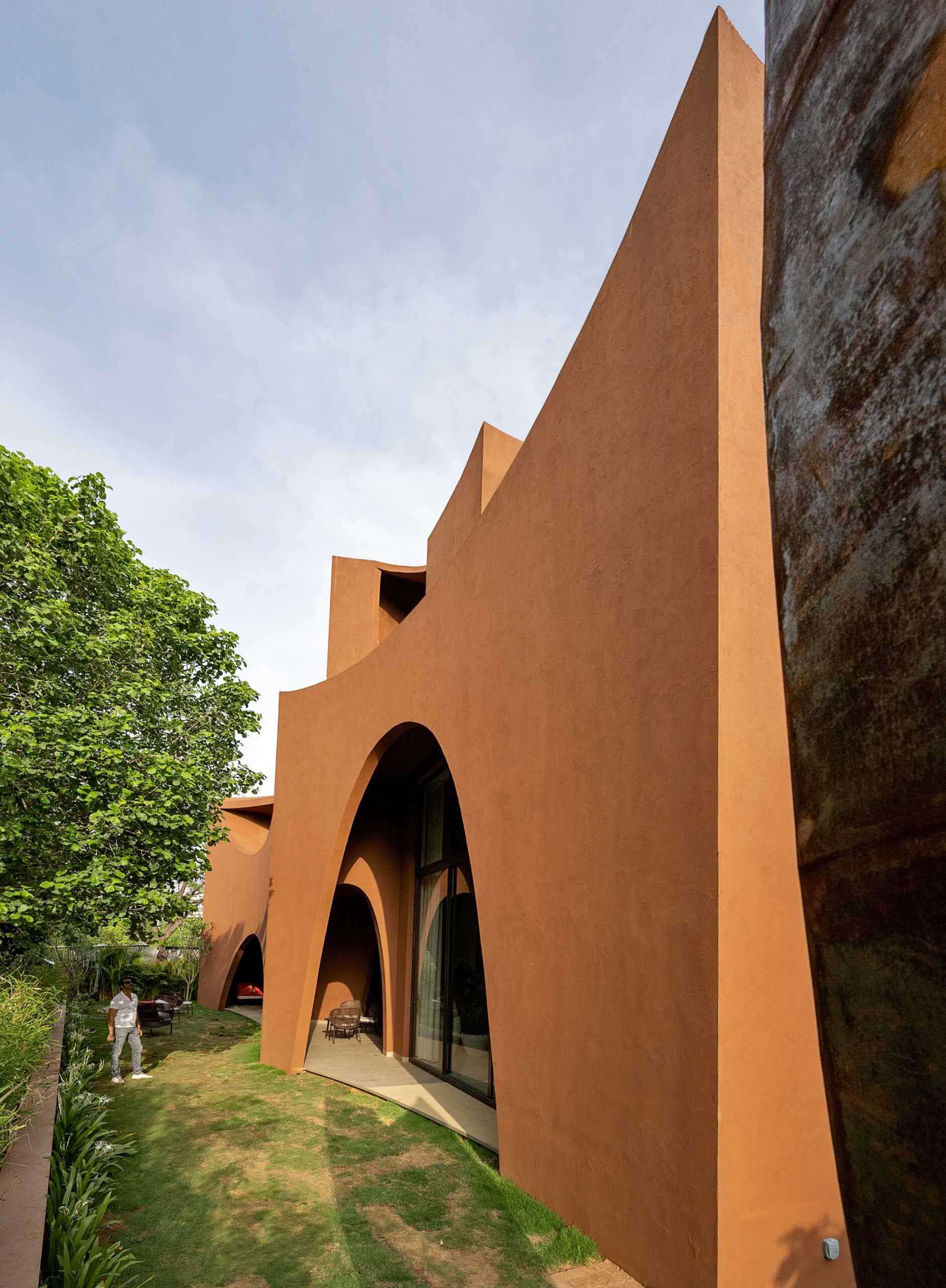
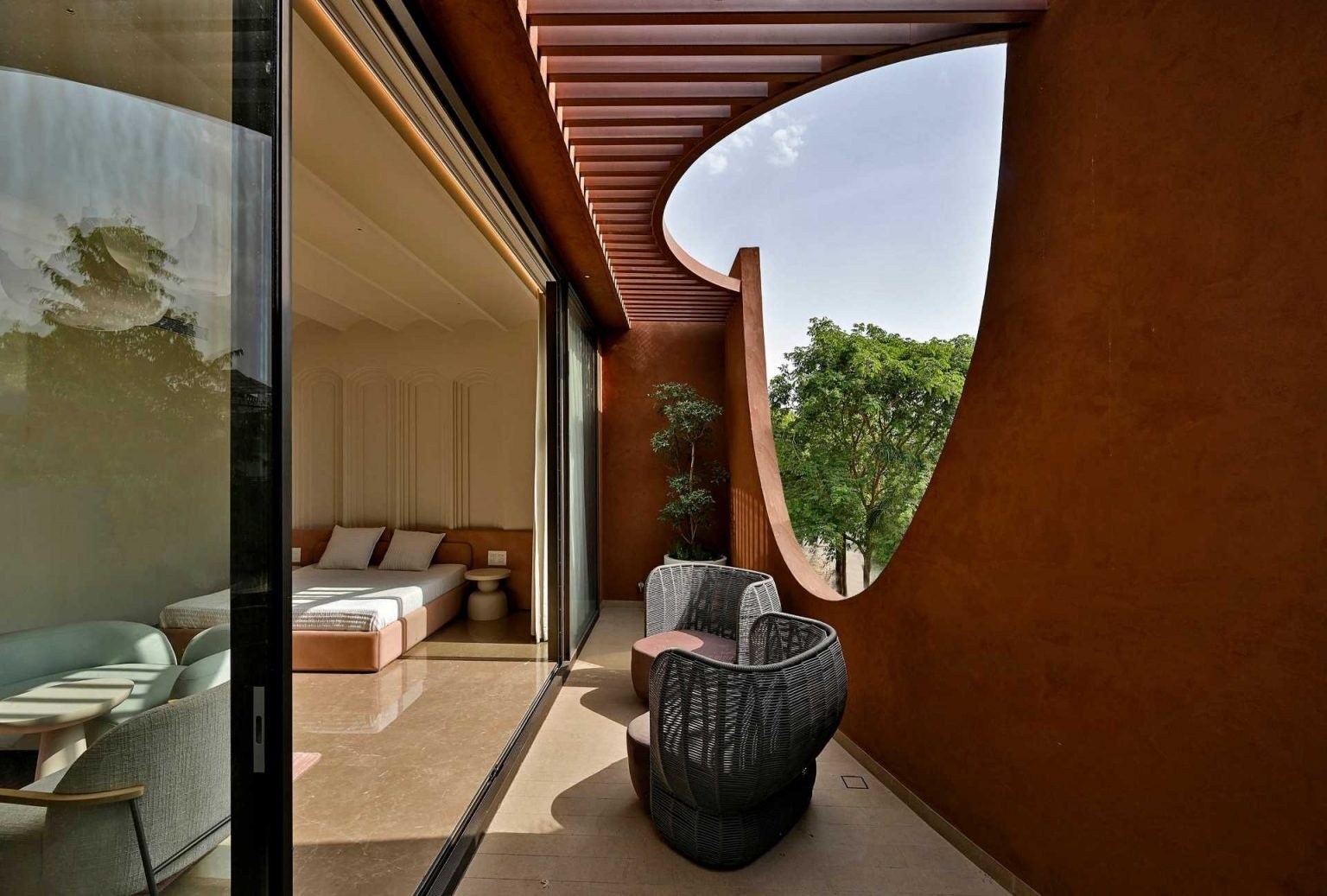
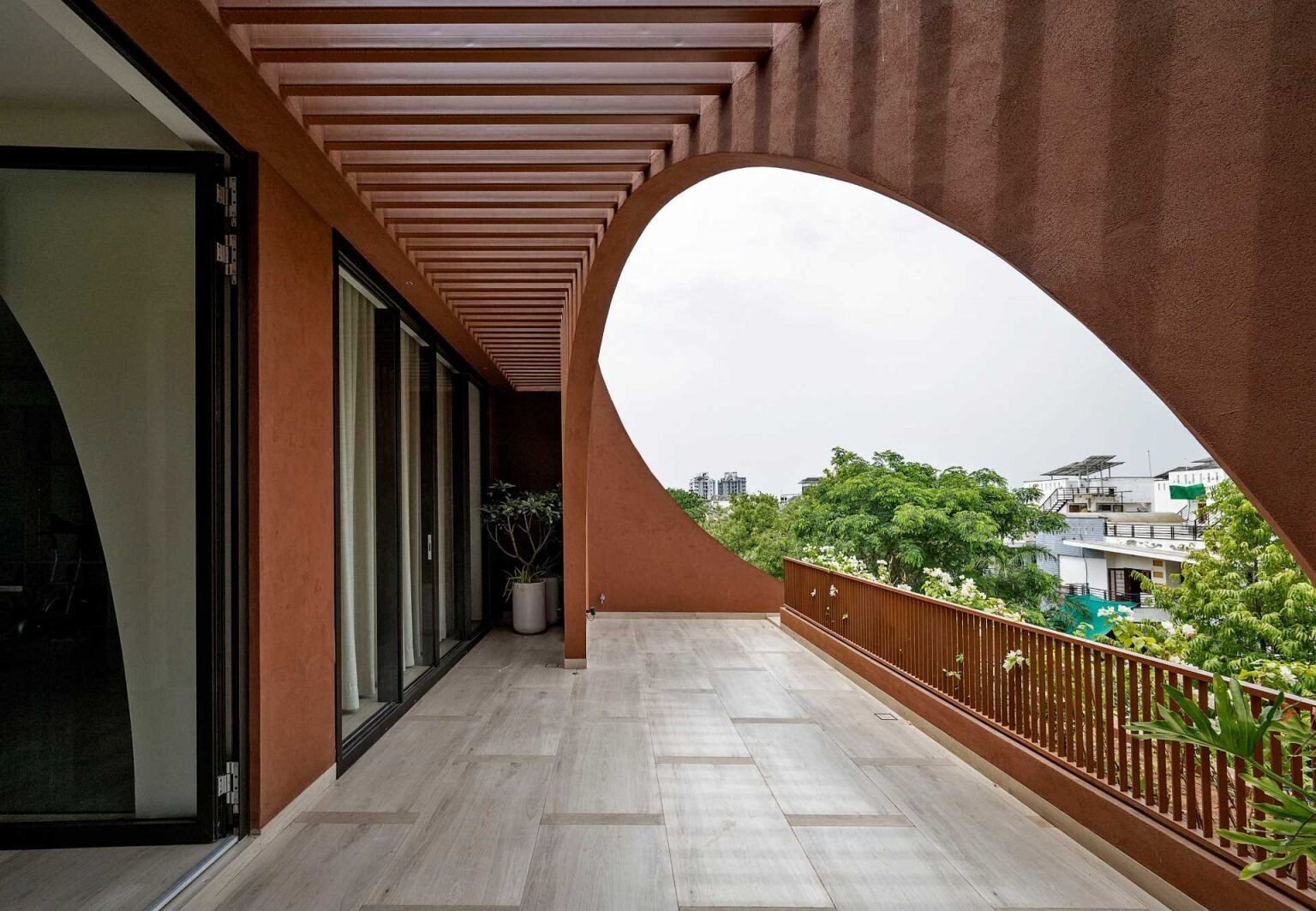
One of the most distinctive elements of the home is the curving outer envelope that wraps around the building. Punctuated by arches and recessed openings, this outer layer creates a series of semi-open spaces along the perimeter.
The recesses become deeper on the garden-facing sides, providing additional shade and protection from direct sunlight. In a region where temperatures can exceed 40°C for much of the year, these sheltered zones play an important role in reducing heat gain.
The architectural skin acts as a buffer between the outdoors and interior rooms, helping maintain cooler conditions while still allowing access to natural light and outdoor living areas.
A Home Built Around Different Volumes
Mirai unfolds across three levels and includes four bedrooms, two living rooms, a gym, and a study. What makes the interior especially interesting is the variation in ceiling heights and spatial volumes.
Bedrooms are designed as more intimate single-volume spaces, while the dining area rises dramatically through two levels. Between these extremes, the living areas occupy intermediate-height spaces that create visual connections without overwhelming scale.
This mix of volumes creates variety throughout the home, making every section feel distinct while maintaining a sense of continuity as residents move from one area to another.
Built With Local Materials and Sustainable Systems
The house was constructed with the help of local craftsmen and workers from the surrounding area. Locally sourced bricks, sandstone, and lime plaster give the home a material palette that reflects its region while reducing transportation impacts.
Environmental features were also integrated throughout the project. Water recycling systems, rainwater harvesting, and solar panels contribute to the home’s performance, helping reduce resource consumption while supporting comfortable living year-round.
Arches Bring Character to the Interiors
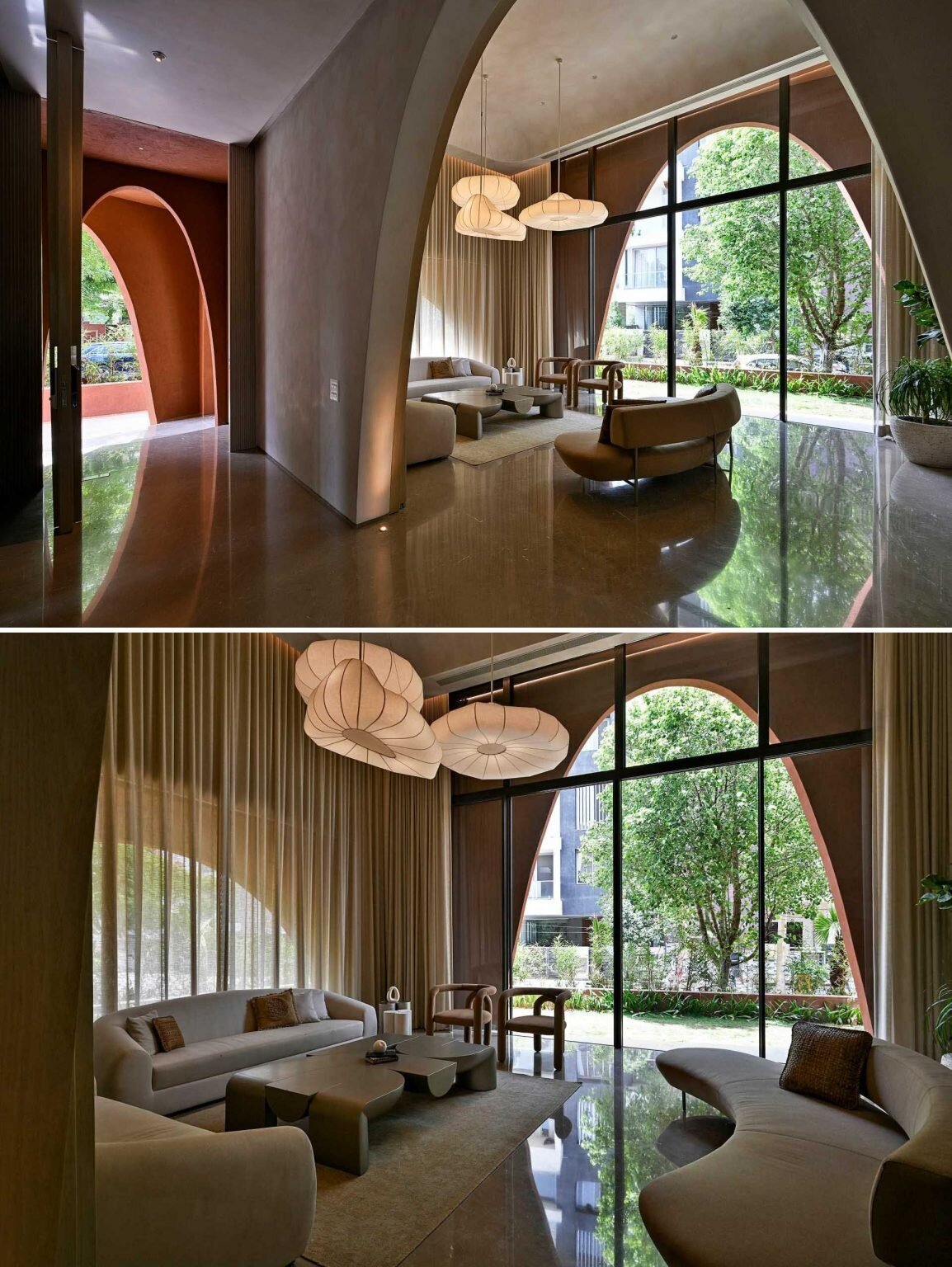
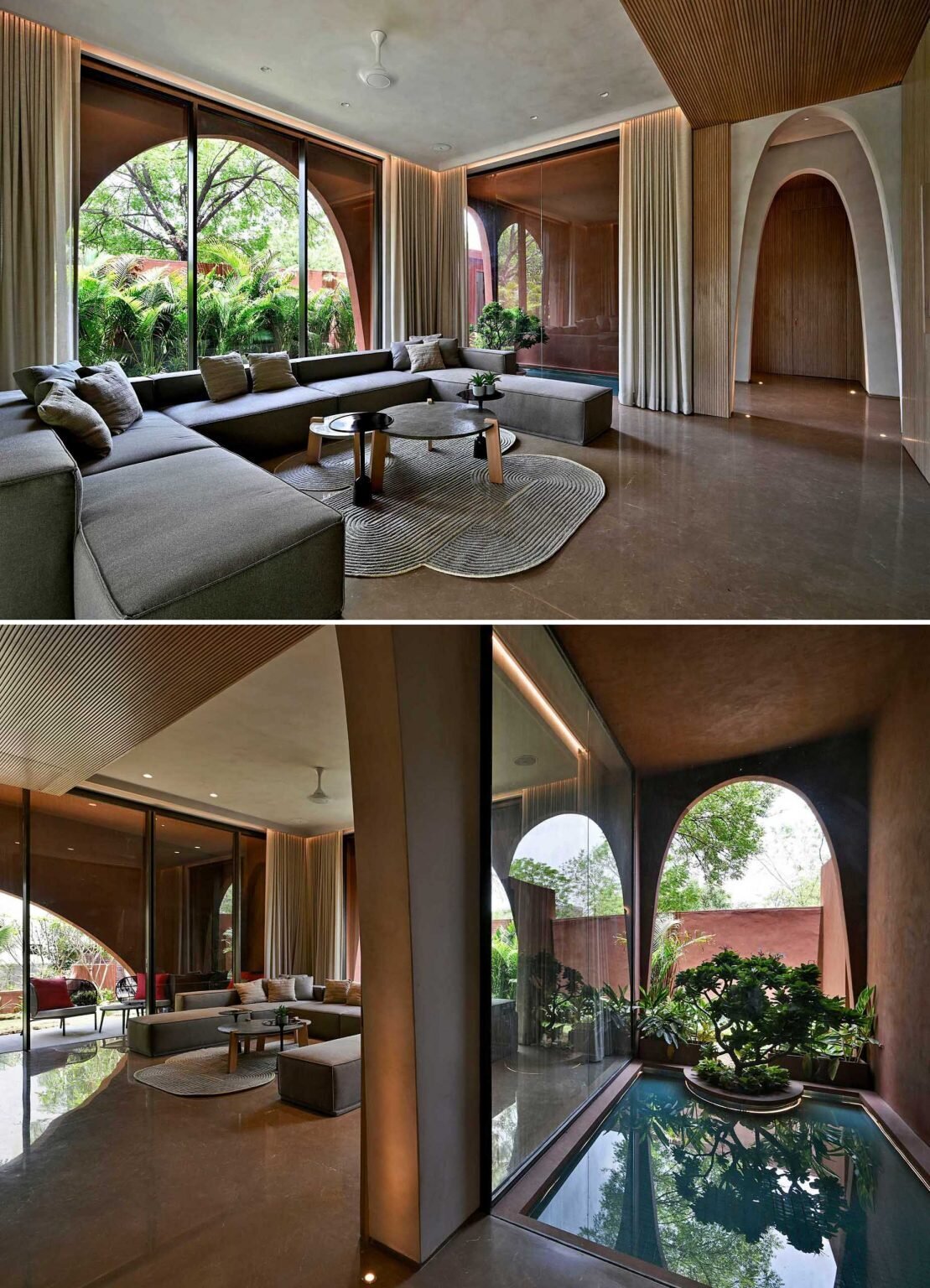
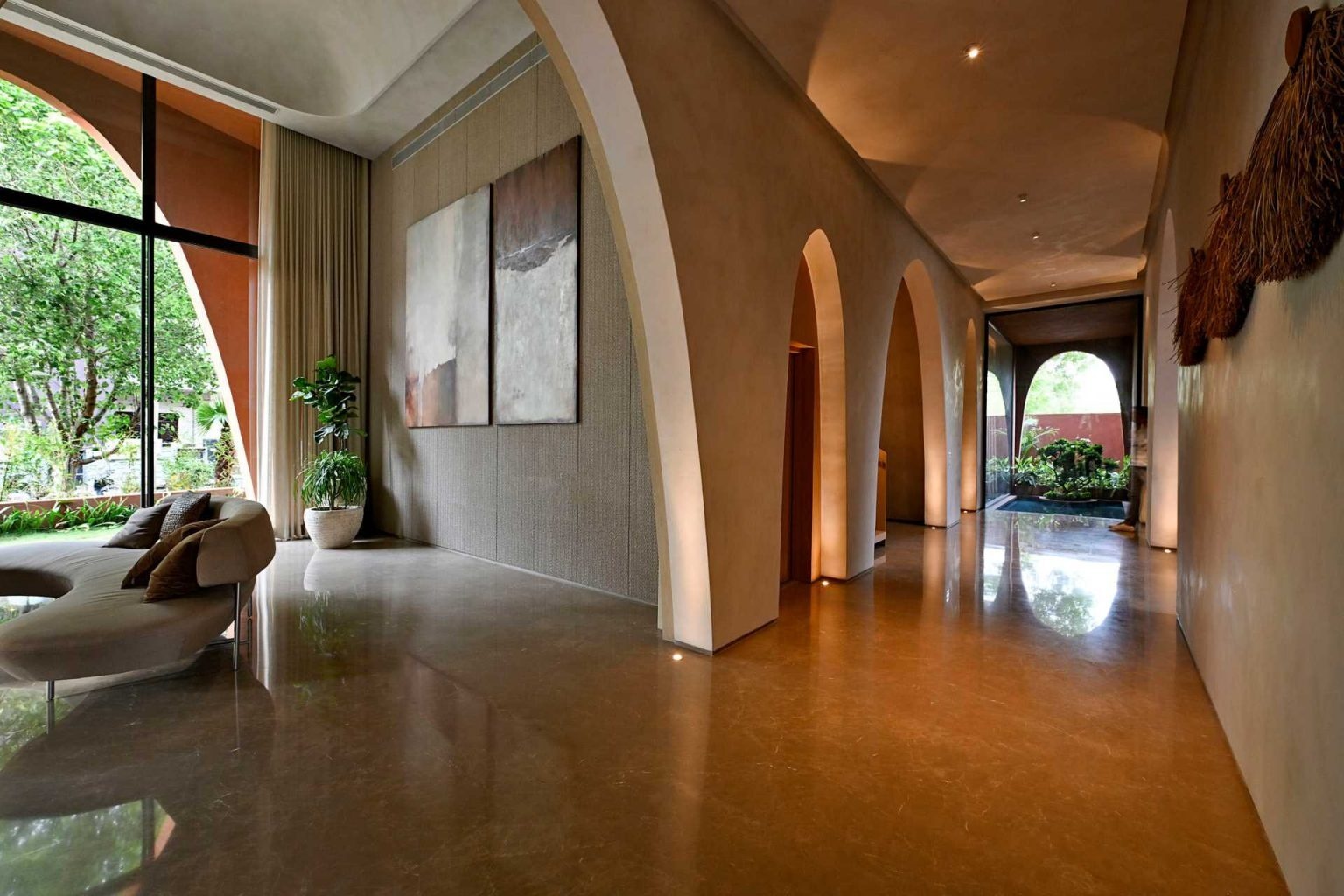
Inside the home, arches continue to define the experience. They frame views, soften transitions between rooms, and create moments of shade within the interiors.
In the living room, the curved openings help filter sunlight while creating a welcoming atmosphere. As people move through hallways and circulation spaces, the arches repeatedly appear, turning everyday movement through the home into a more engaging experience.
The curved forms also create visual consistency between the exterior architecture and the interior spaces, giving the house a strong architectural identity.
A Dining Room That Connects Multiple Levels
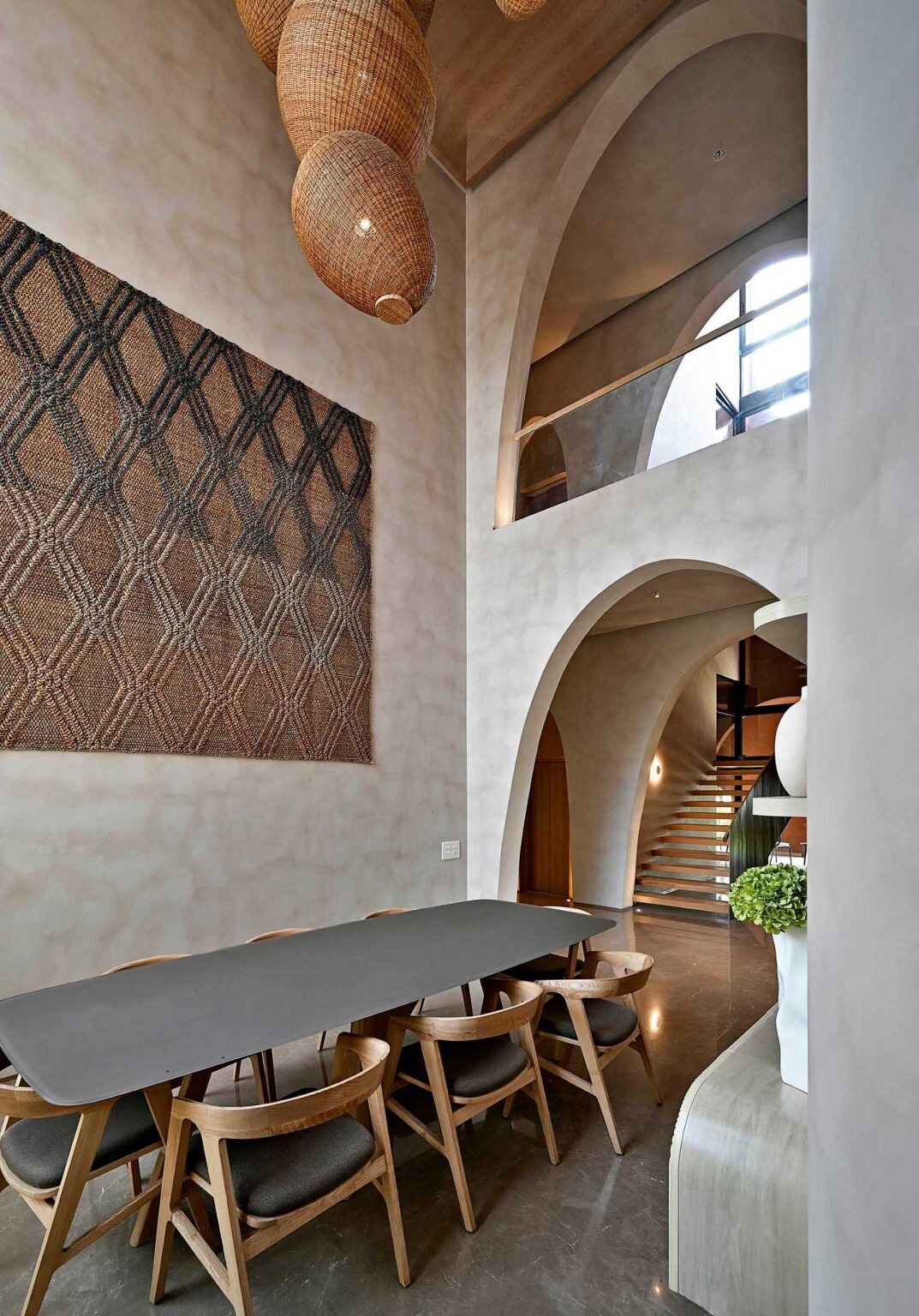
The dining room becomes one of the home’s most dramatic spaces thanks to its double-height volume. Looking upward reveals arches on multiple levels, creating a layered architectural composition that draws attention to the home’s vertical connections.
Natural light filters through these openings, highlighting the textures of the materials and emphasizing the sculptural quality of the architecture. The space becomes both a gathering point for the family and a visual anchor within the home.
A Staircase That Links the Experience
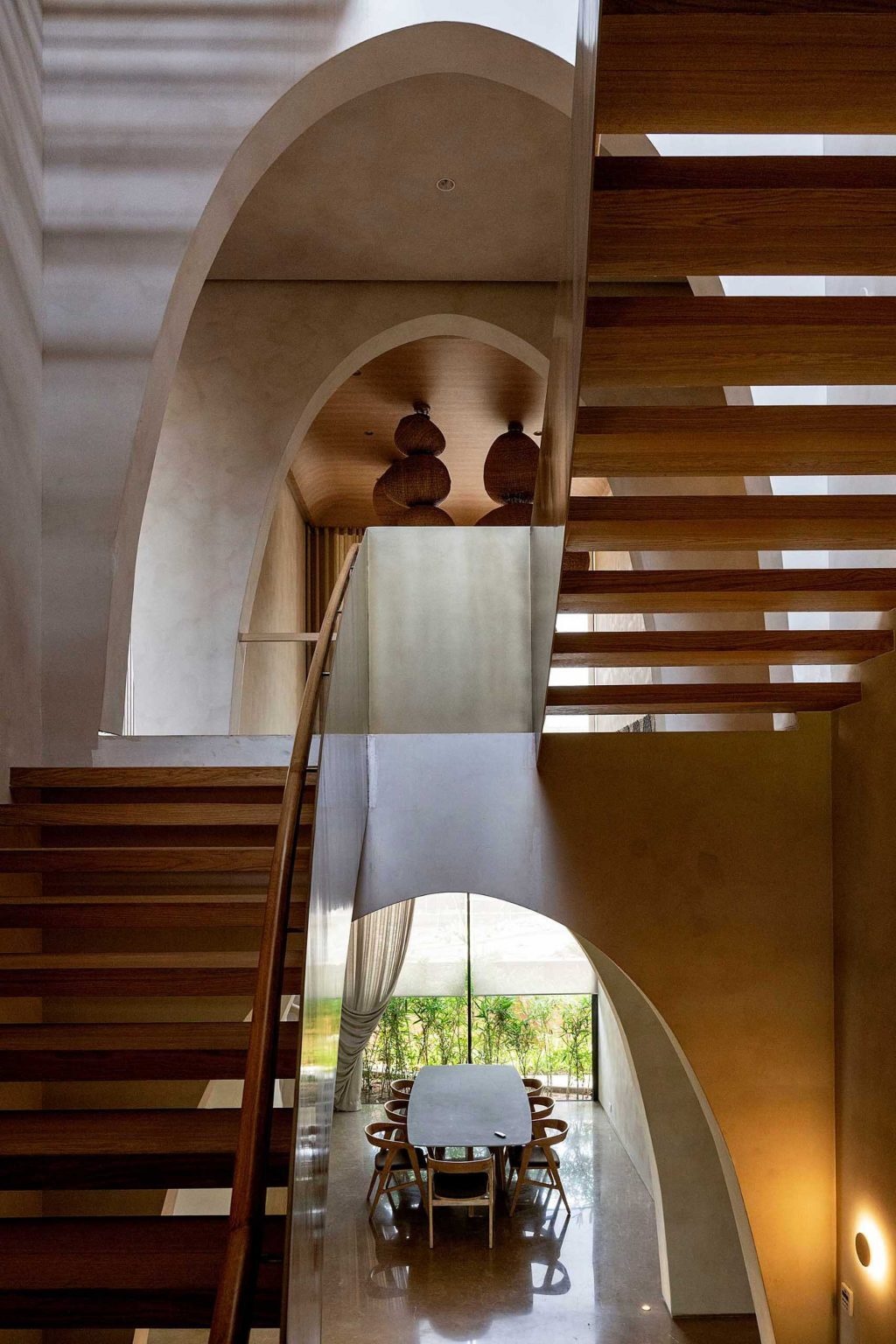
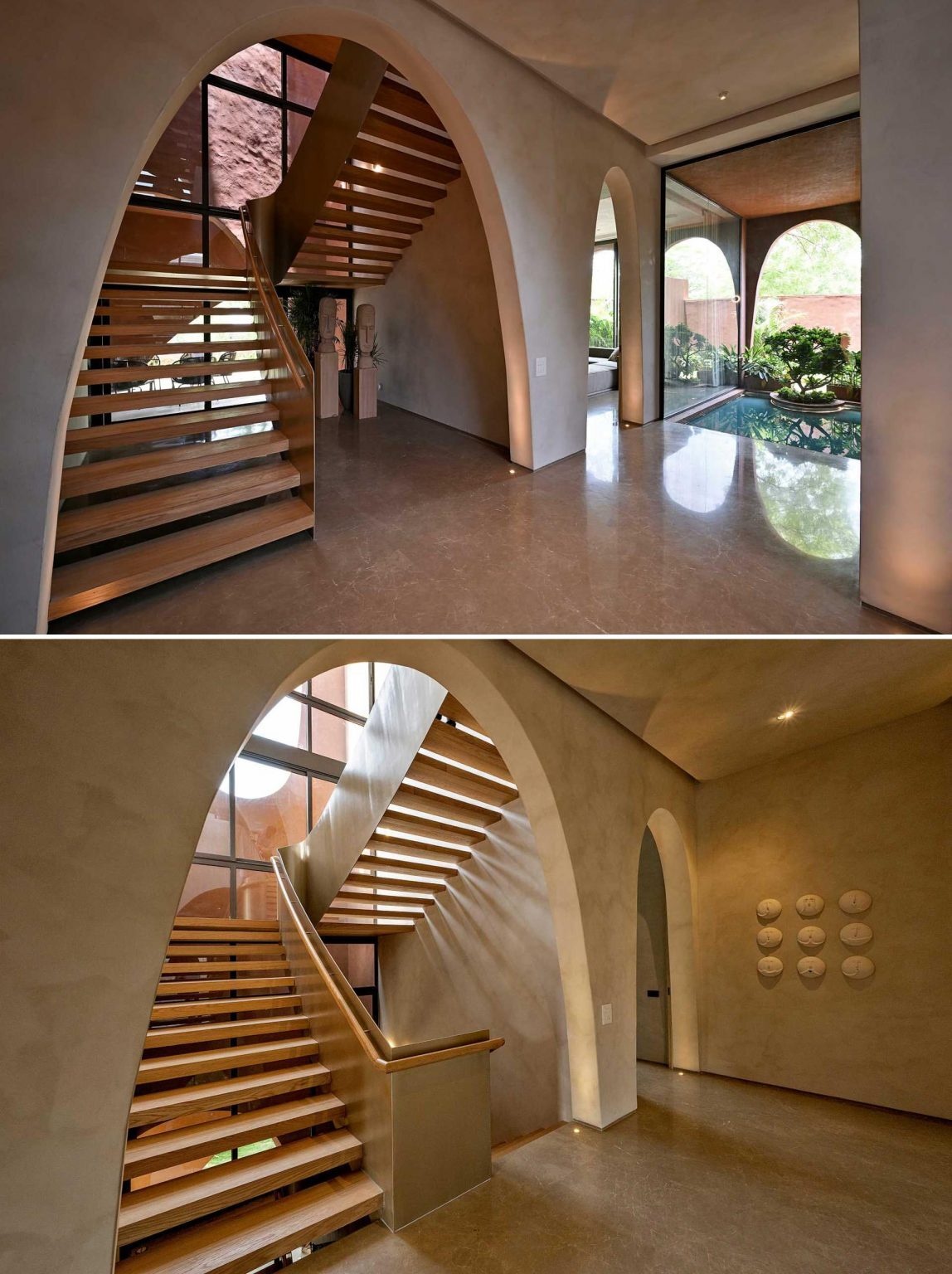
Connecting the various levels is a staircase crafted from wood and metal. More than a circulation element, it becomes part of the architectural journey through the house.
Each landing introduces another arch, creating a sequence of framed views as residents move between floors. The staircase reveals changing perspectives of the home’s volumes, making the transition from one level to another feel like an exploration of the architecture itself.
Outdoor Spaces Continue the Curved Design
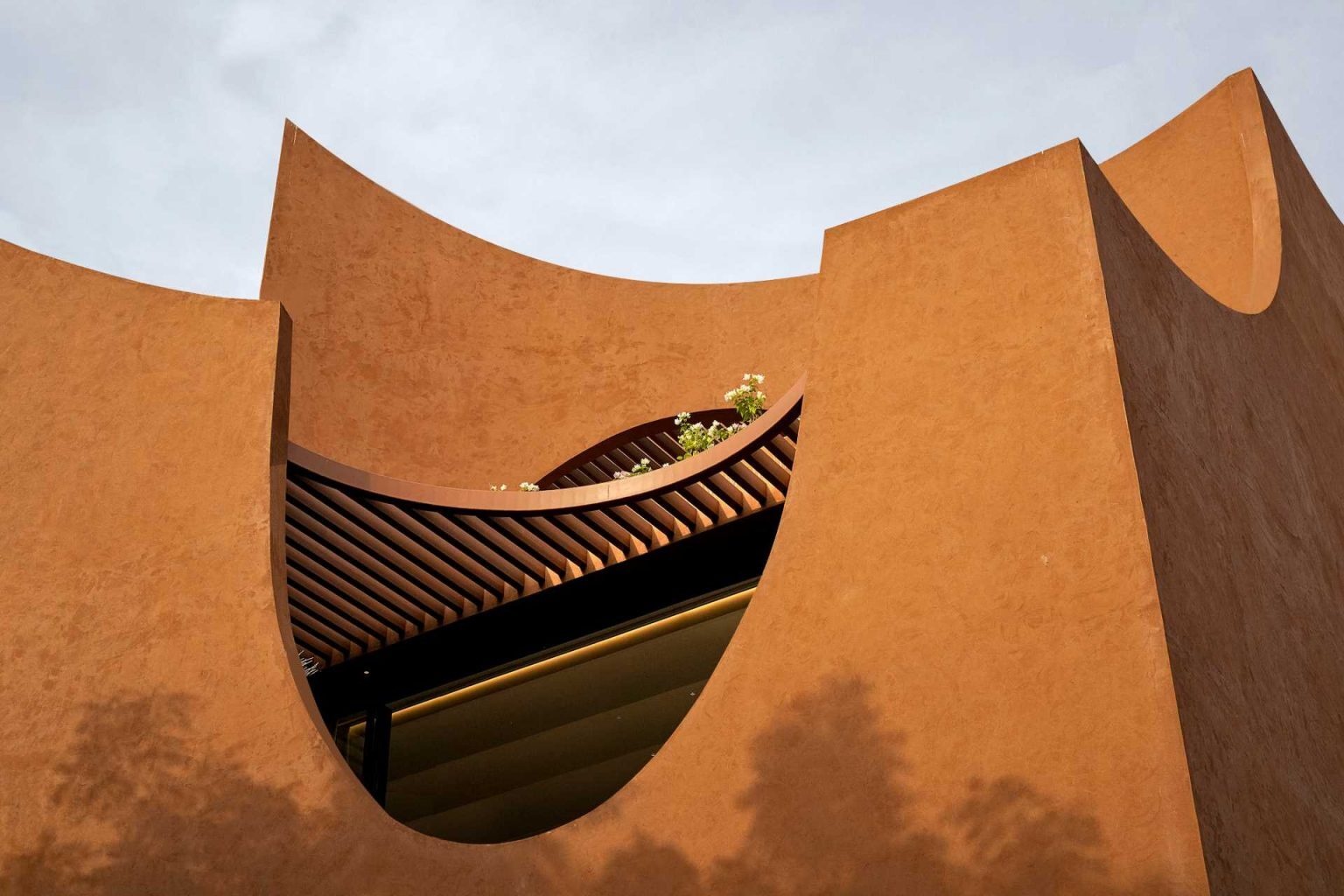
The home’s upper-level patios extend the architectural language outdoors. Here, the same curved forms seen throughout the residence shape outdoor rooms that feel protected while remaining open to the air.
These patio spaces provide additional areas for relaxation and gathering, while the arches create changing patterns of light and shadow throughout the day. The design ensures that outdoor living remains comfortable despite the challenging climate.
Through its repeating arches, layered volumes, shaded outdoor spaces, and sustainable features, this sculptural home creates a rich sequence of experiences across every level.