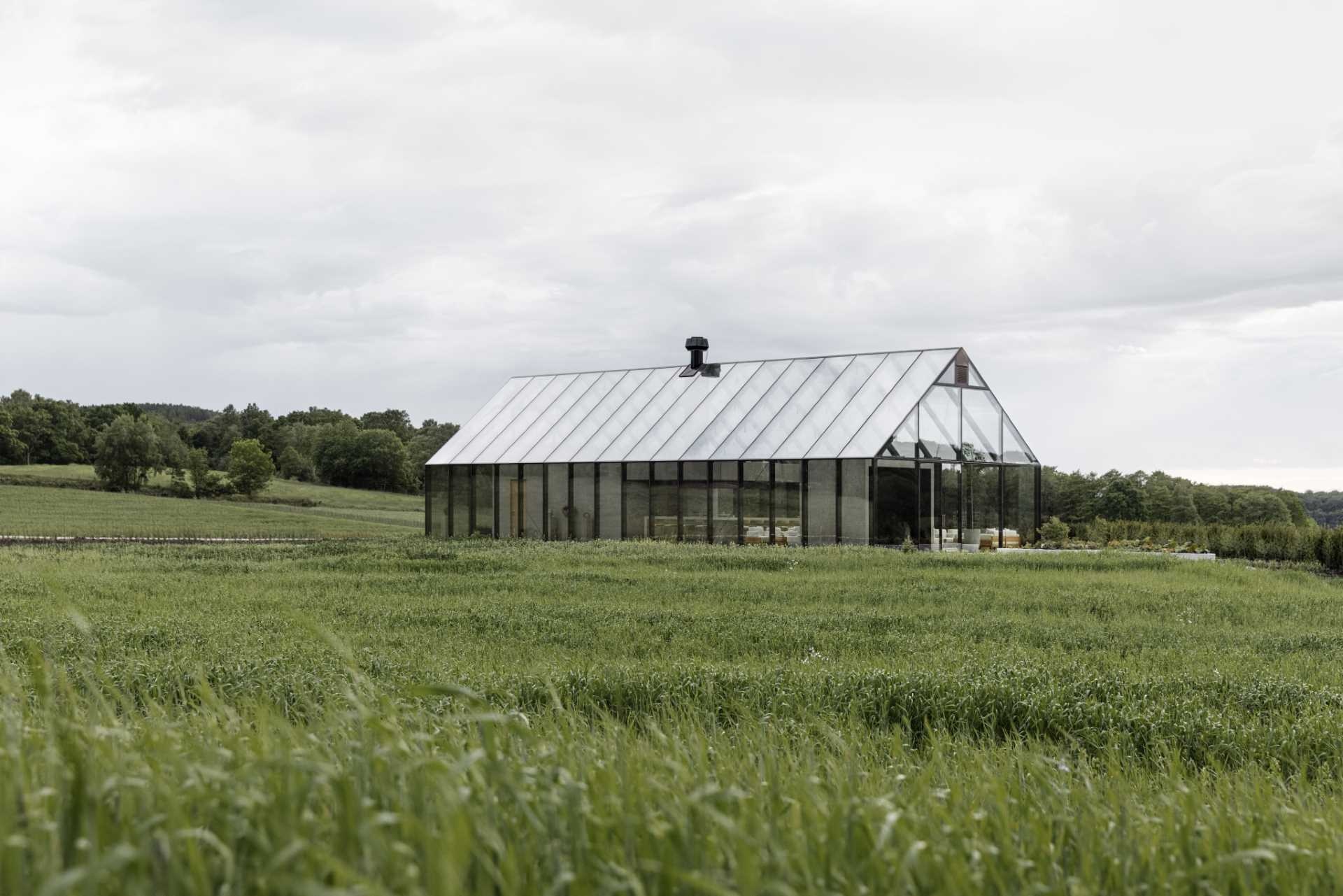
In the fields of Halland, Sweden, Norm Architects designed ÄNG, a Michelin-starred restaurant furnished by Japanese brand Karimoku. The experience begins in a glass house placed in the middle of a meadow and continues below ground, unfolding through a sequence of contrasting spaces where architecture, interiors, cuisine, wine, and art all interact within one continuous journey.
A Walk Through the Meadow Toward the Glass House
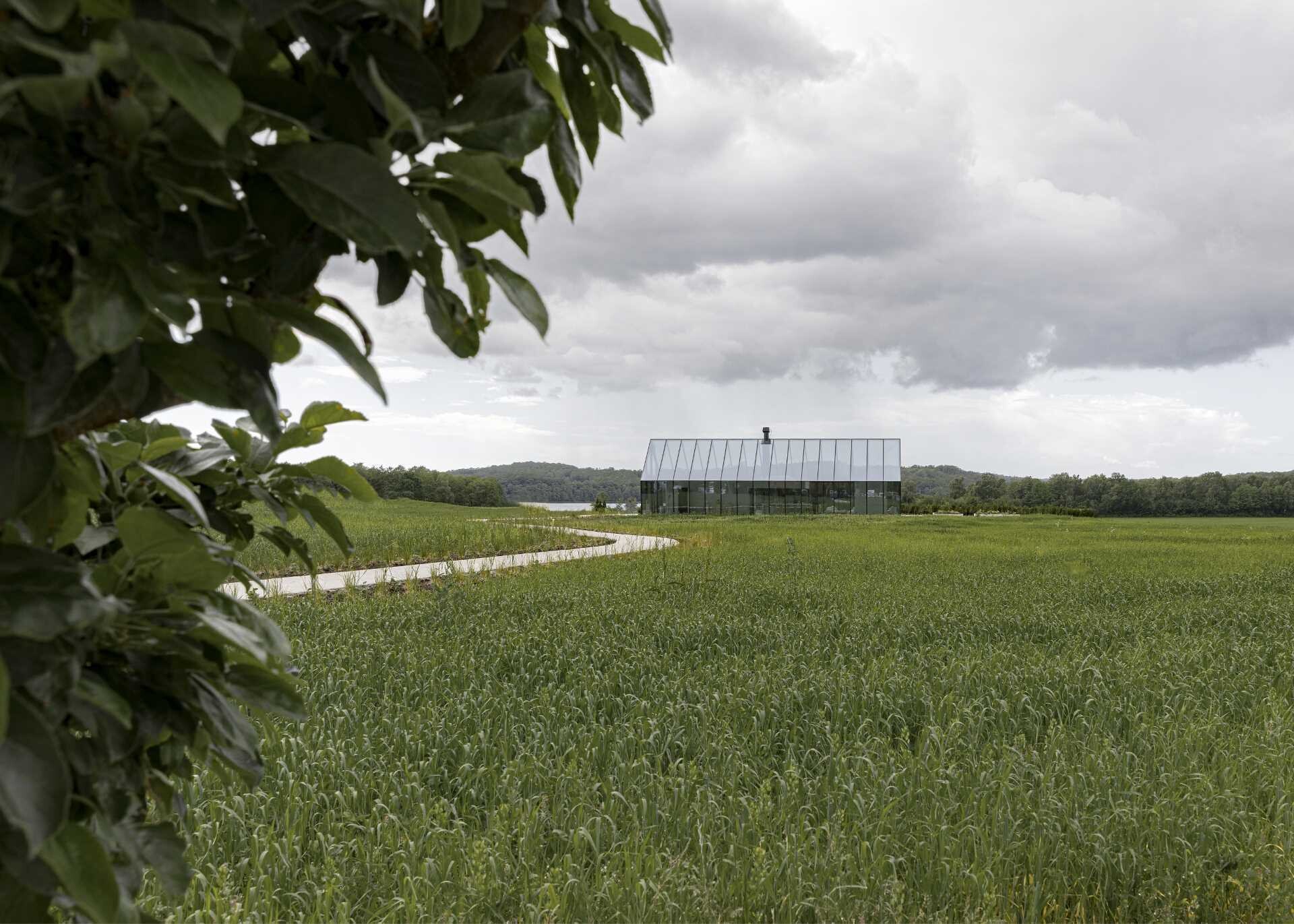
The experience begins long before reaching the building. A winding path cuts through a lush meadow filled with grasses and crops, guiding guests through an open landscape toward a glass structure standing ahead.
The glass house appears with bold black framing, sharp against the softness of the field. As guests move closer, a small herb garden near the entrance hints at the culinary focus inside. A hedge partially reveals a distant lake while keeping attention anchored on the path forward.
A Glass Structure Acting as the Entrance
The glass house serves as the entry point into the restaurant experience. Its form is precise and transparent, allowing the surrounding landscape to remain visible from every angle.
Stone flooring begins outside and continues seamlessly inside, blurring the boundary between field and interior. The structure reads like a greenhouse reinterpreted, with its iron framework placed on the inside, giving it a distinct presence within the field.
Inside the Glass House – Kitchen, Wood, and Art
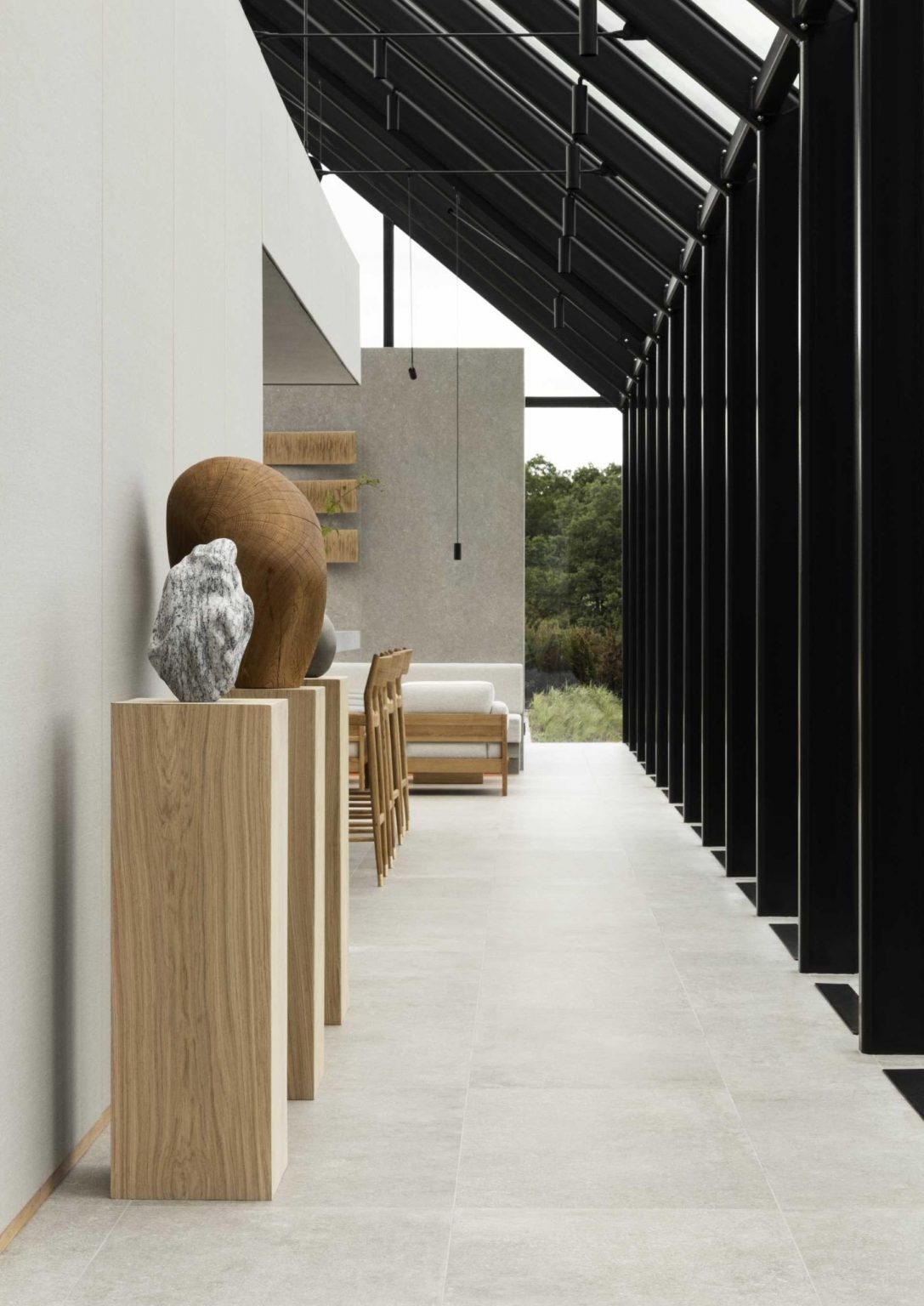
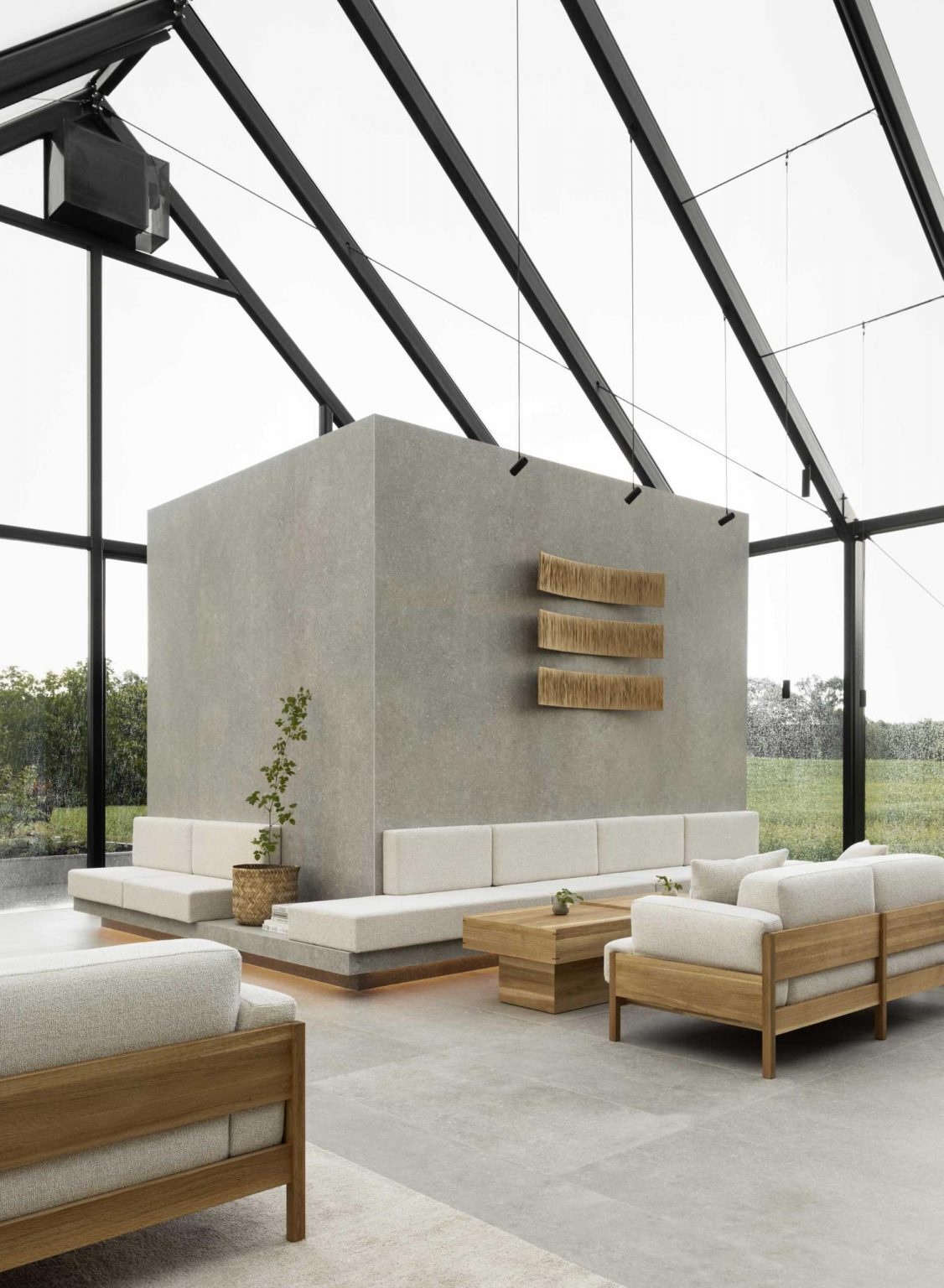
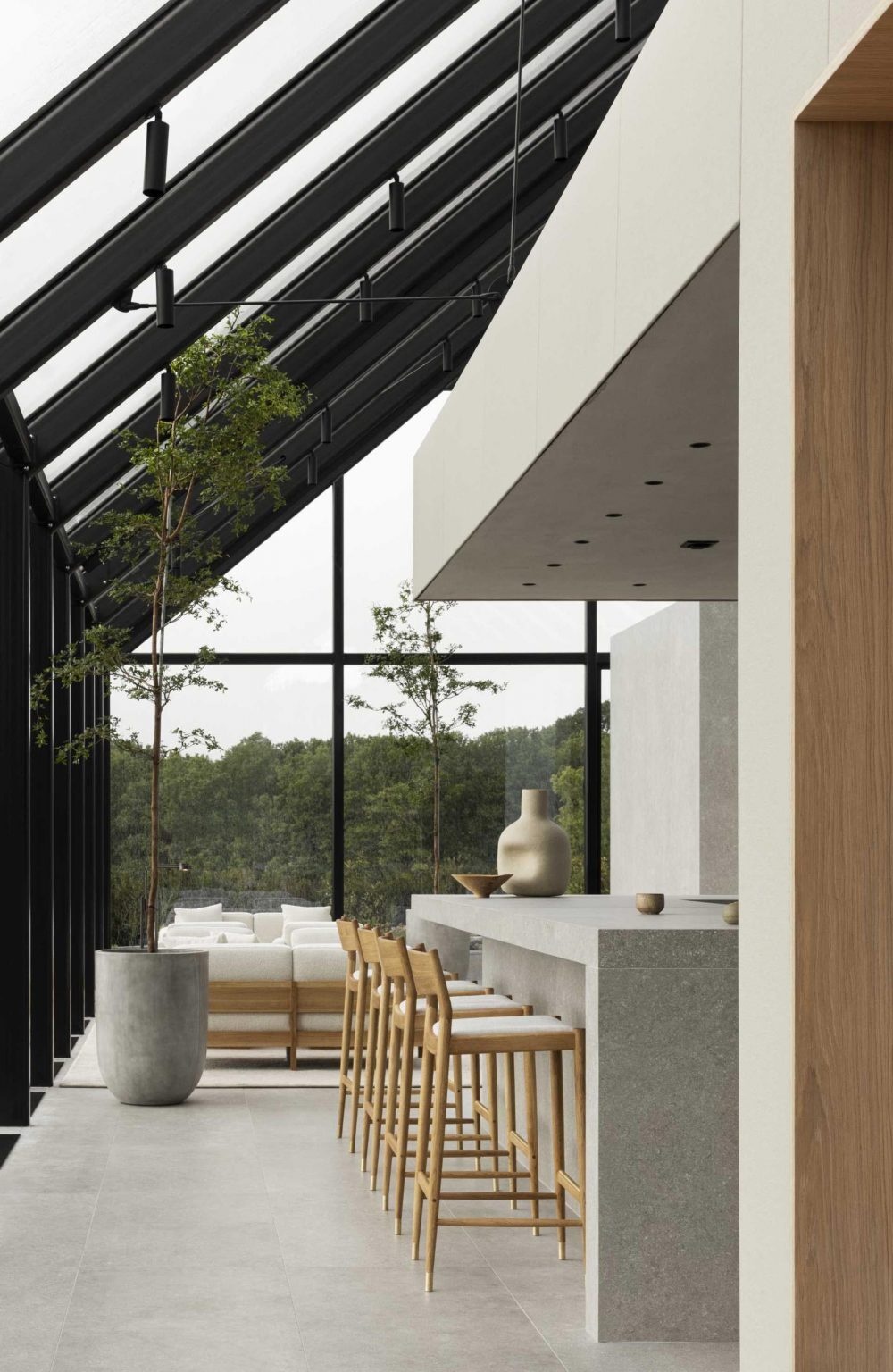
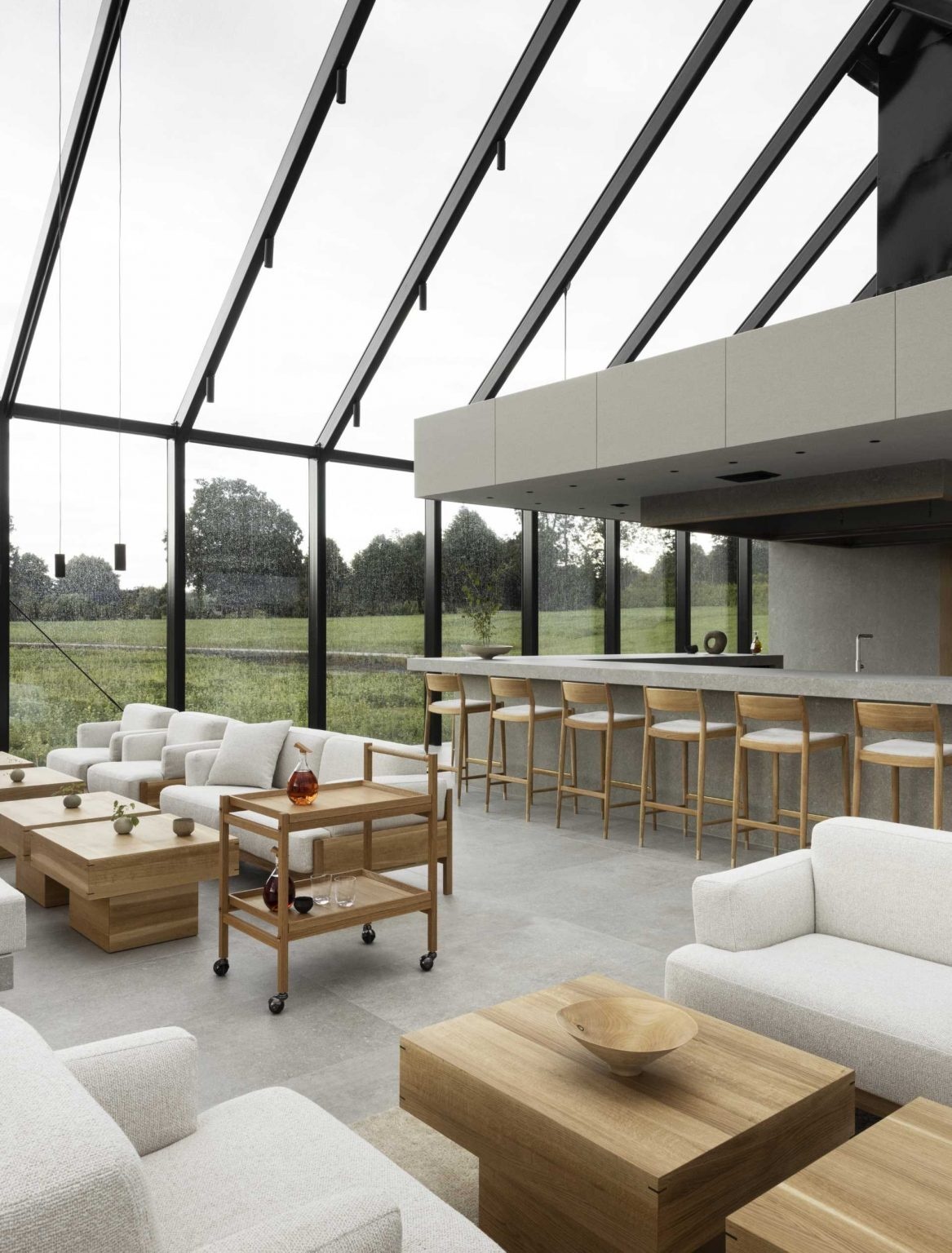
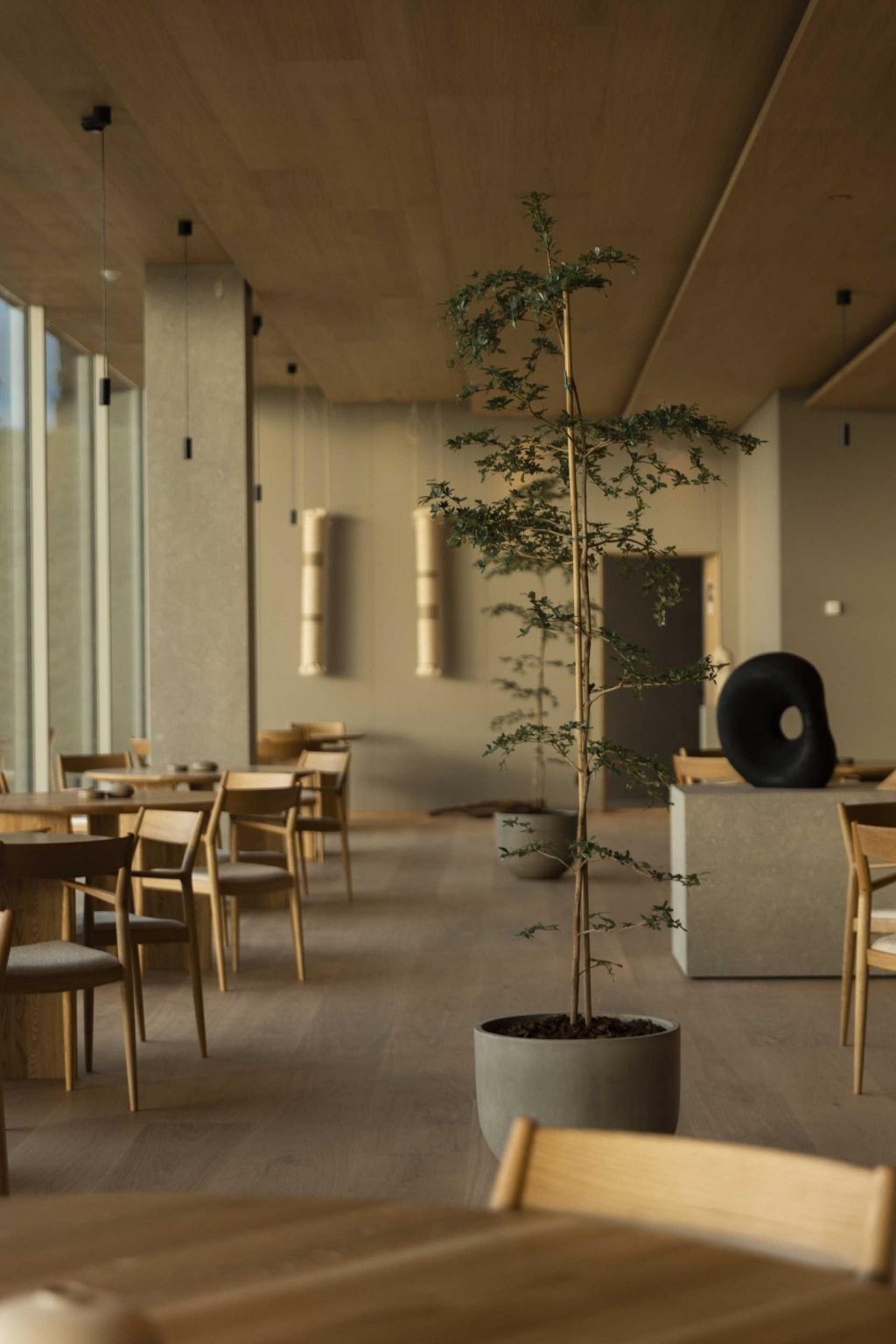
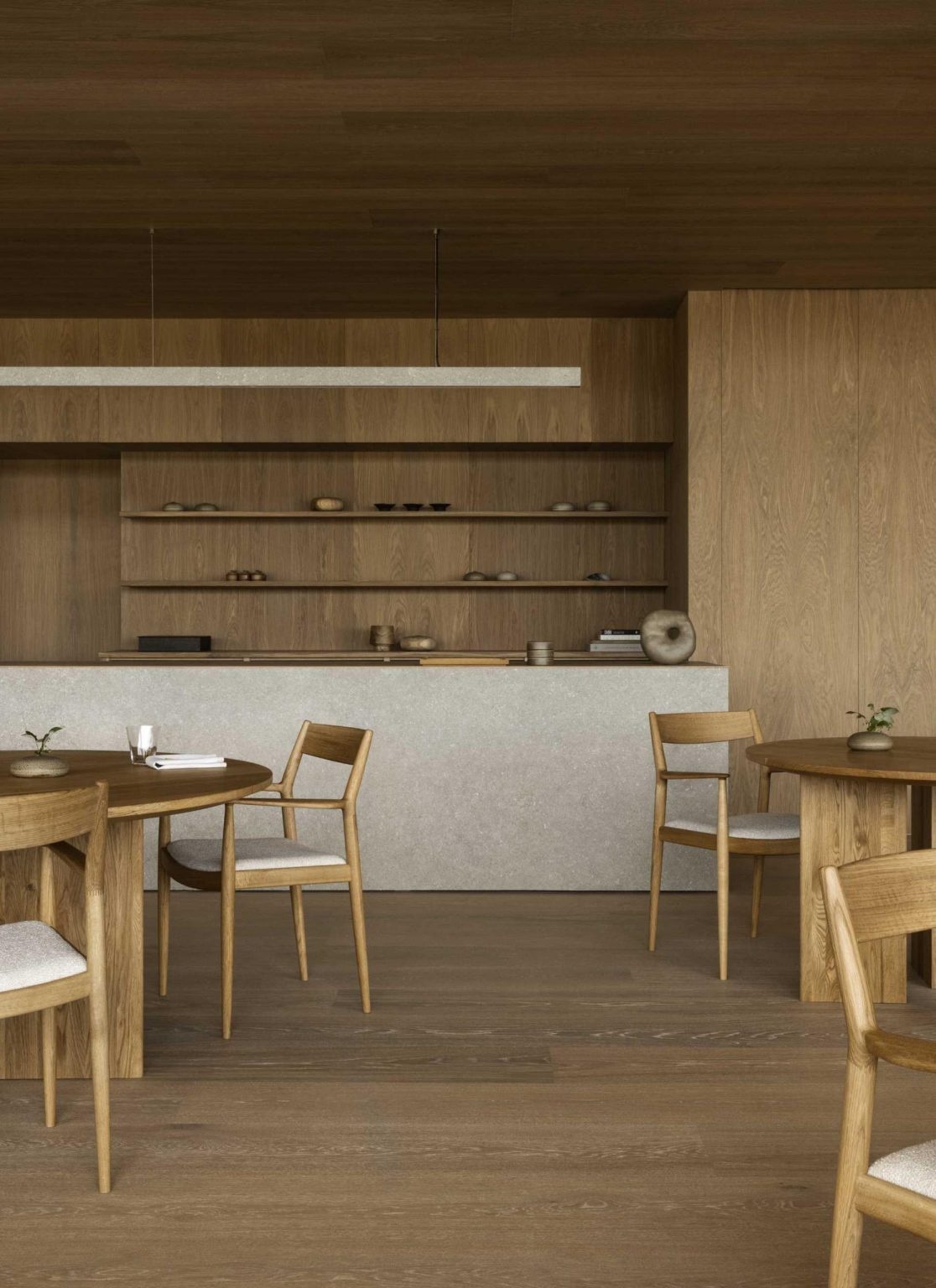
A heavy glass door opens into a space shaped by stone, wood, and glass. An open kitchen sits immediately within view, anchored by a solid stone counter that grounds the room.
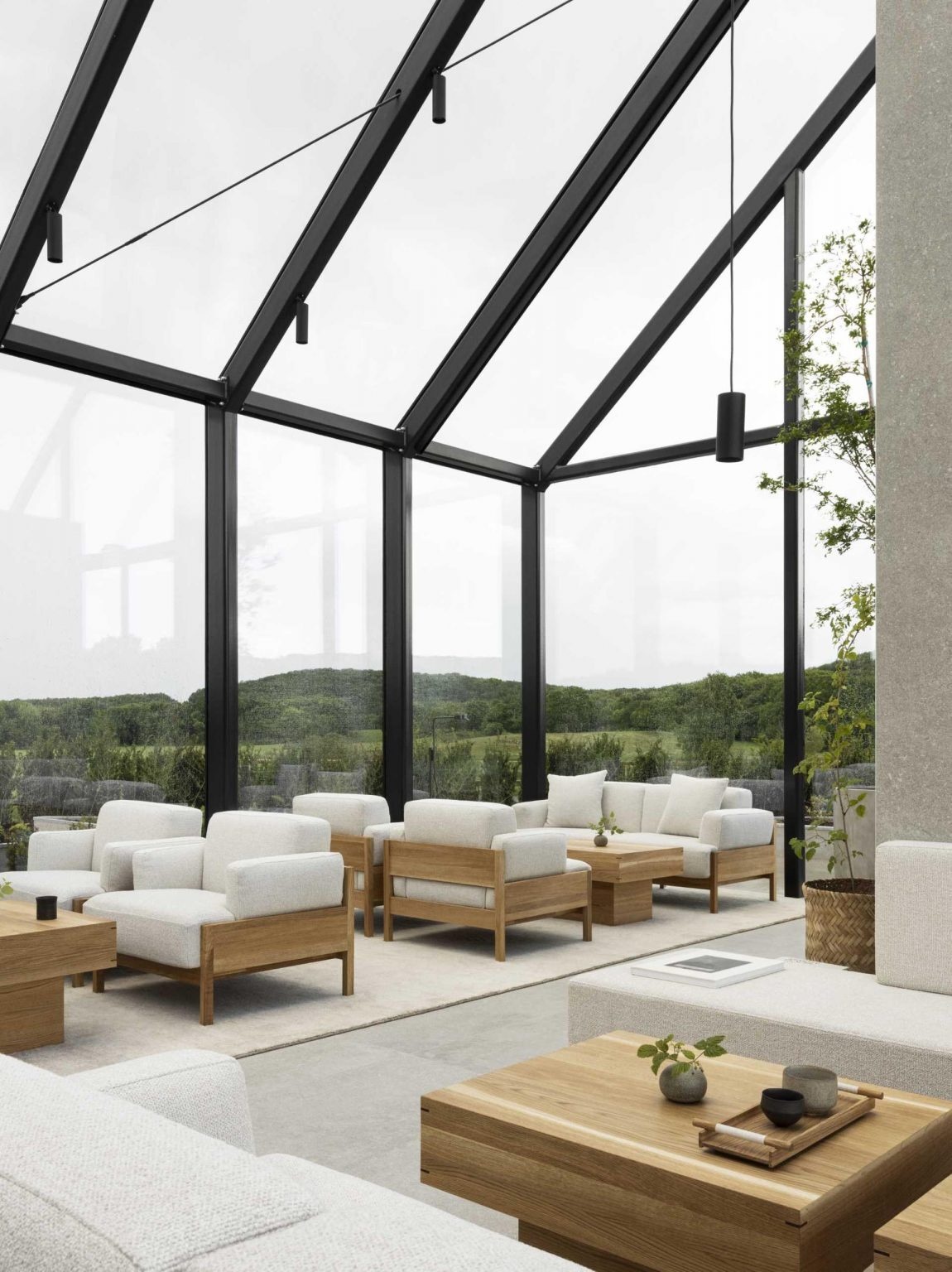
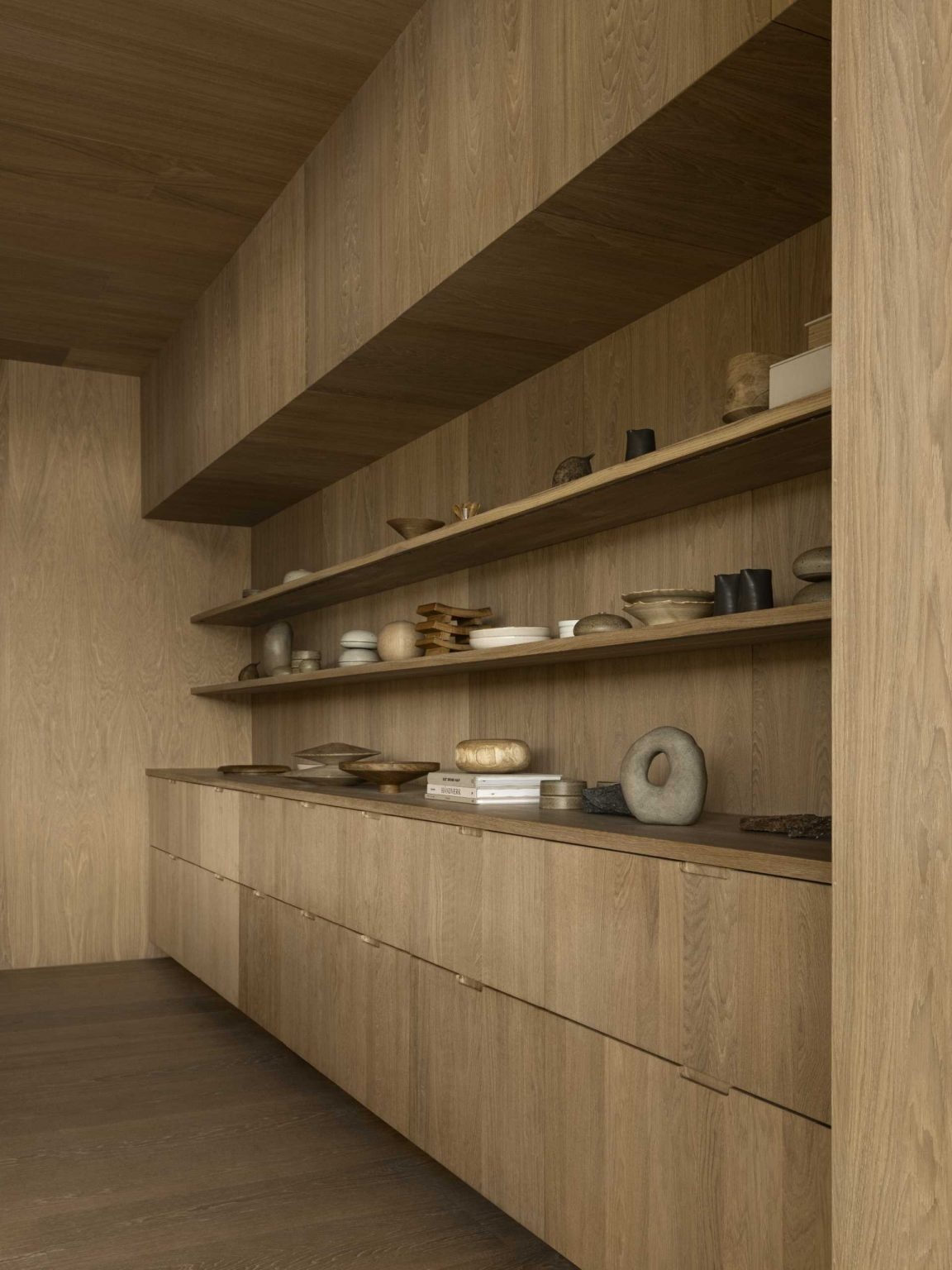
Bespoke artworks with organic forms are placed throughout the interior, introducing sculptural moments across the space. Furniture by Karimoku brings in solid wood construction with visible joinery and soft upholstery, adding warmth and tactility within the transparent structure.
A Dining Space Framed by Shifting Light
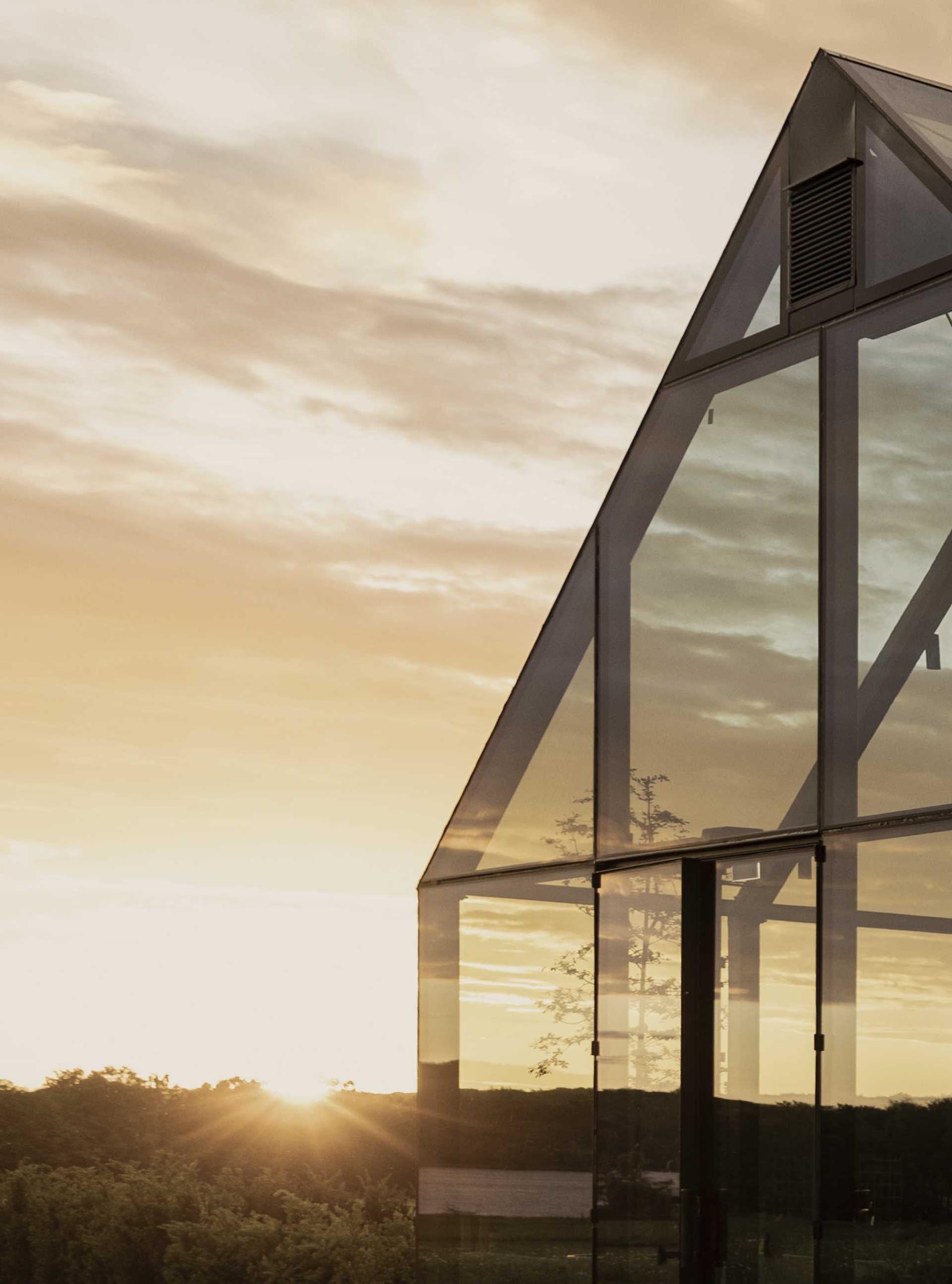
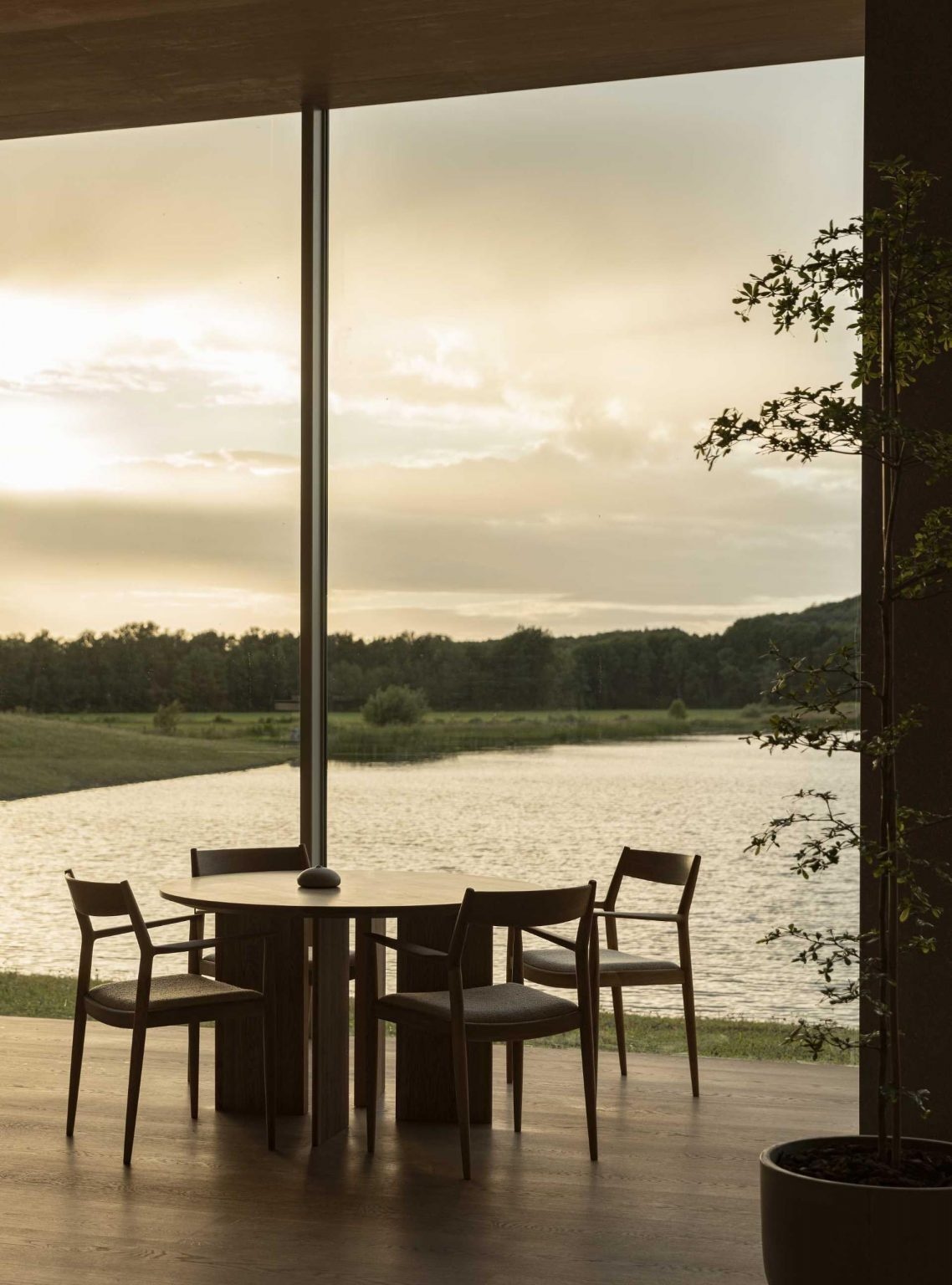
Large expanses of glass surround the dining area, keeping the meadow constantly present as part of the experience. The landscape changes throughout the day, moving from bright daylight into softer evening tones.
This shifting light becomes an active part of the space, influencing how the interior is perceived as guests move through the 19-course dining experience. The architecture maintains a constant visual link to the surrounding field while supporting a calm interior setting.
A Hidden Descent Underground
Later in the experience, a concealed elevator takes guests below ground. The transition is immediate, moving from the brightness of the glass house into a darker, enclosed environment.
The descent marks a shift in atmosphere and focus, preparing guests for a different spatial condition shaped by shadow, material, and reduced light.
Japanese Influence and Sculptural Stone Landscapes
The underground space draws inspiration from Japanese Karesansui gardens, known for their dry landscapes of raked stone and sand. Sculptural stone elements appear throughout the cellar, shaped from materials sourced in a quarry in Växjö.
The idea of yohaku-no-bi, the beauty of empty space, influences the composition of the environment. Stone, shadow, and void are given equal importance, shaping the atmosphere through restraint and spacing.
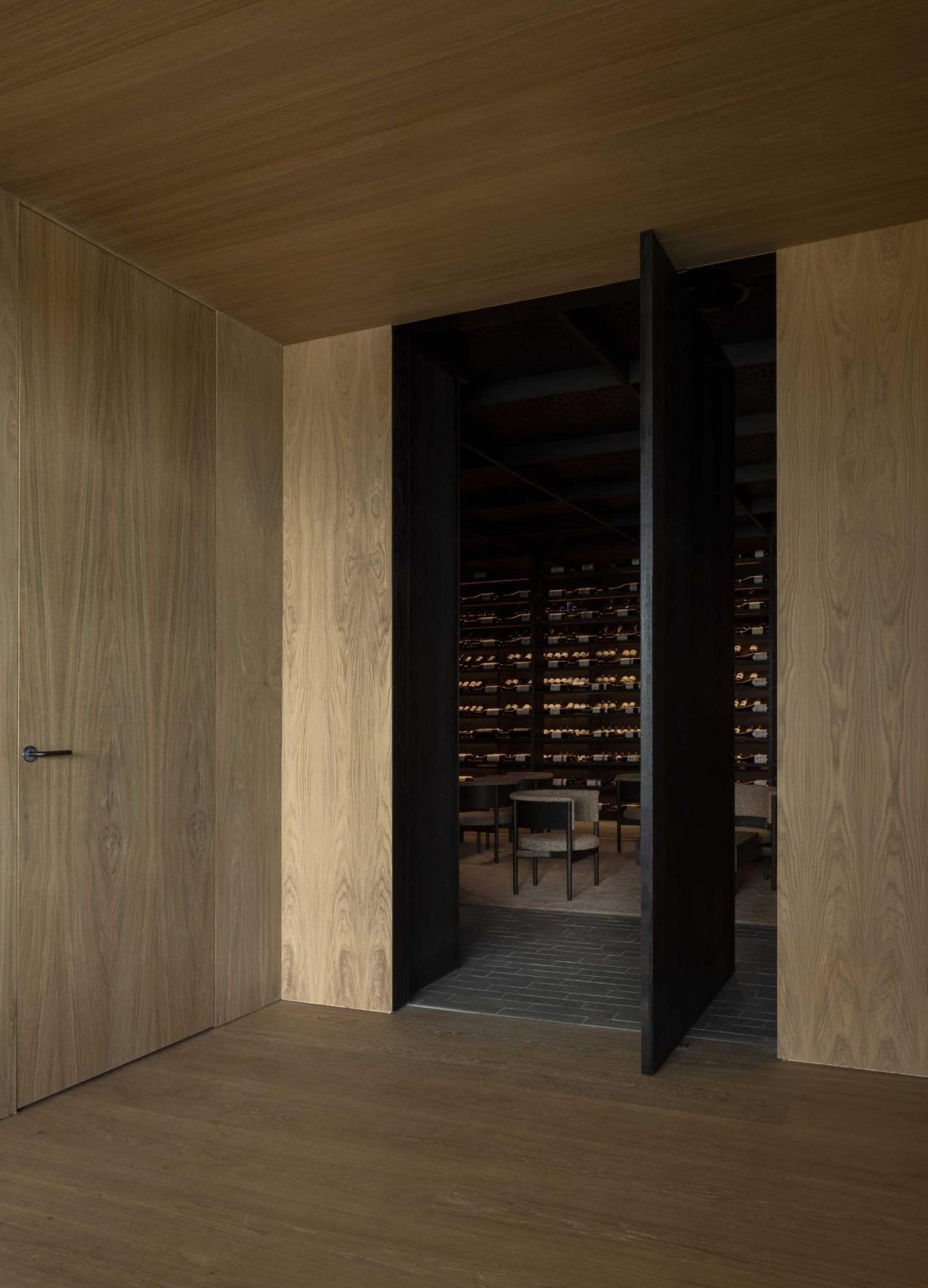
A Wine Cellar Shaped by Shadow and Contrast
The underground wine cellar is defined by stone, dim lighting, and a strong sense of enclosure. Inspired by chiaroscuro, the contrast between light and darkness shapes how the space is experienced.
As visibility softens, attention shifts toward other senses, including sound, scent, and texture. Shelving lines the space with both house-produced sparkling wines and selected French labels, creating a layered environment for exploration and selection.
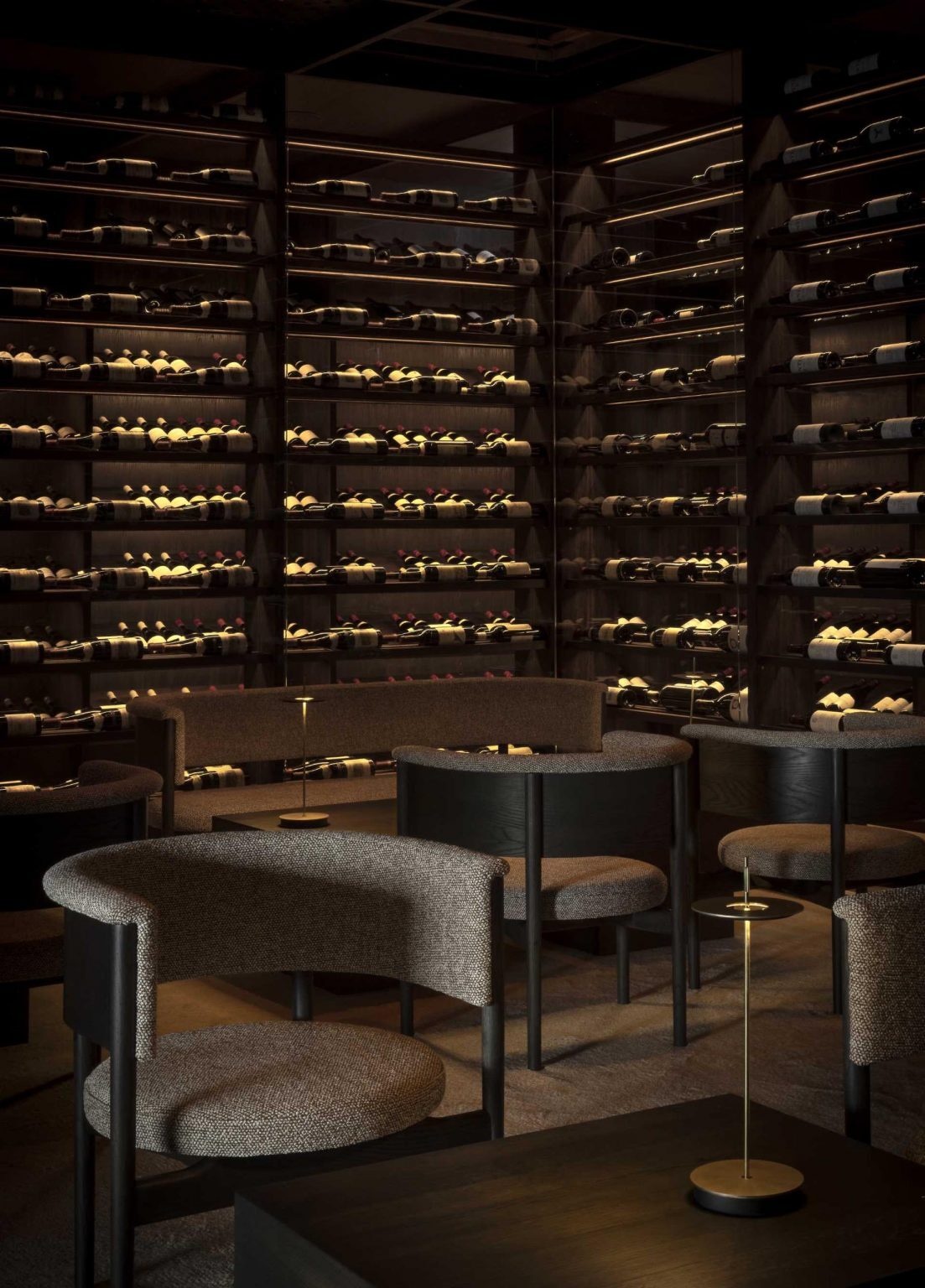
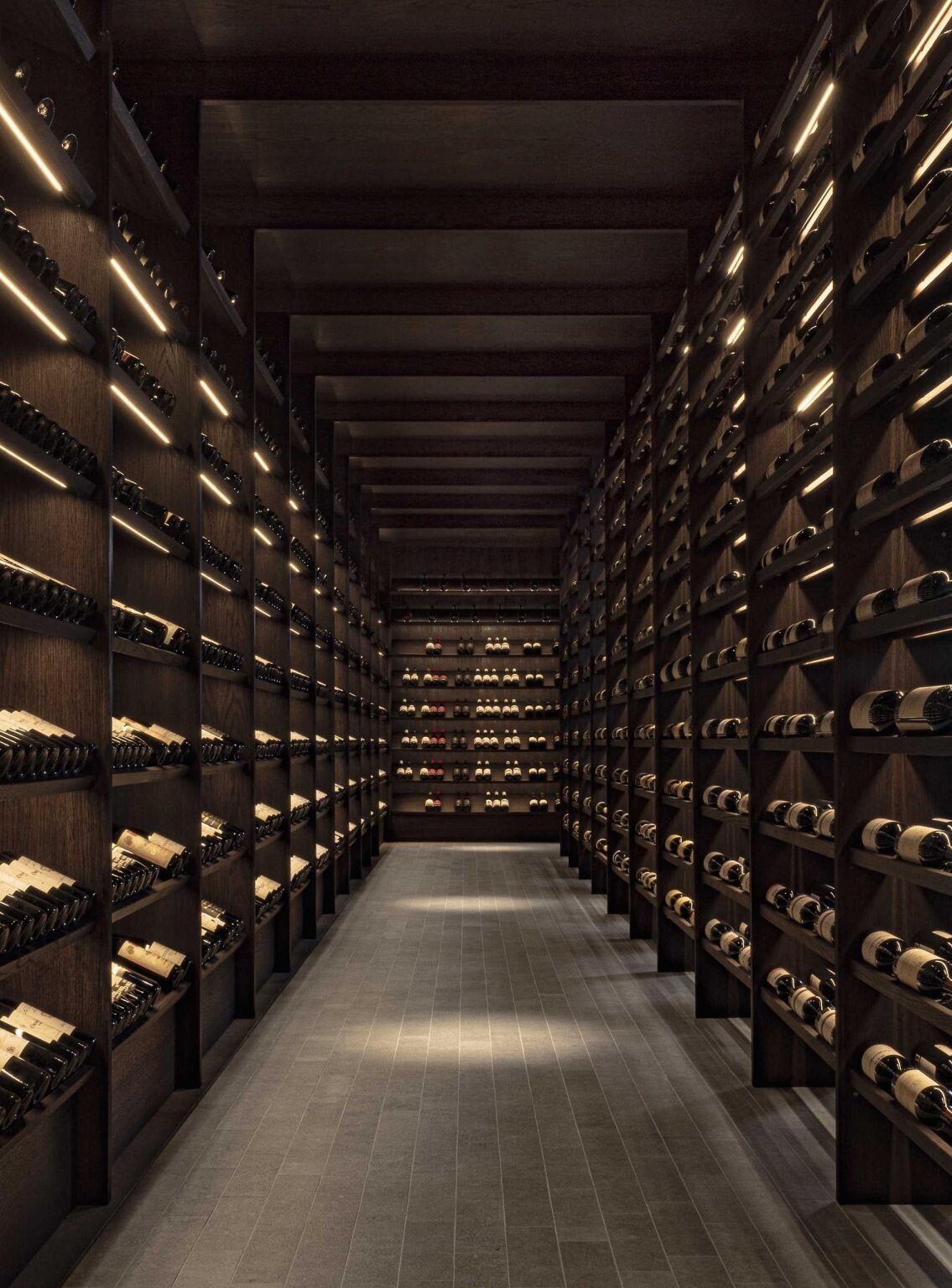
ÄNG in Halland, Sweden, designed by Norm Architects with interiors by Karimoku, moves between glass structure and underground cellar, between openness and enclosure, light and shadow. Each space transitions into the next, shaping an experience defined by architecture, material, and changing atmosphere.