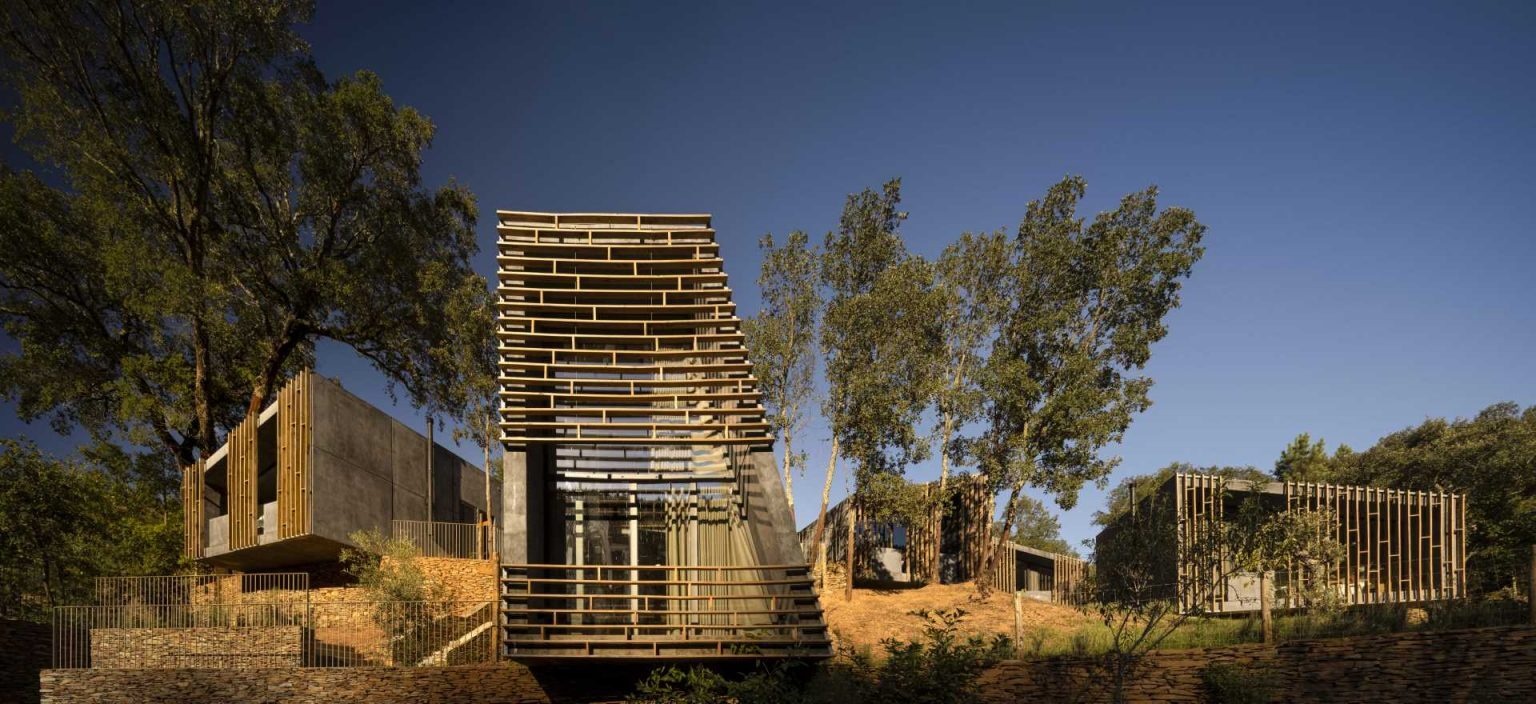
Near the village of Janarde in Portugal, architectural studio SUMMARY has completed a collection of 11 contemporary cabins scattered across a forested landscape. What began as a commission for tourist accommodation evolved into something far more versatile. Instead of creating a series of hotel-style rooms, the architects proposed small standalone houses that could function both as visitor lodging and as permanent homes.
The decision was shaped by the challenges of the site itself. Located in a rugged and isolated area, conventional construction would have been complex and expensive. Prefabricated building methods offered a practical solution, simplifying transportation, production, and assembly while making the project achievable in such a remote location.
Four Cabin Types Spread Across the Forest
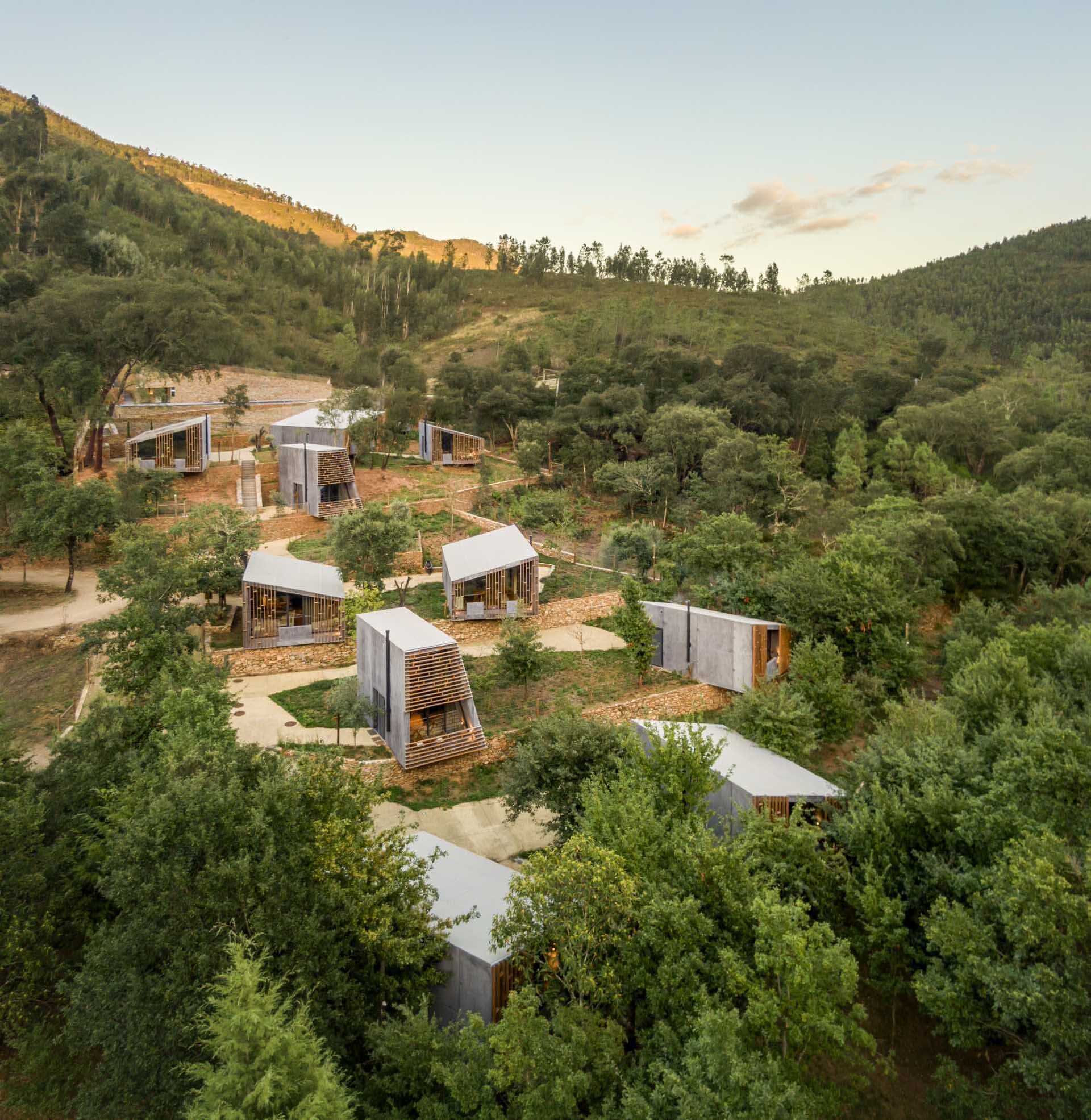
The development includes eleven cabins based on four different designs. Sizes range from a compact 301 square feet (28 square metres) to a more generous 624 square feet (58 square metres), giving the project a varied character while maintaining a consistent architectural language.
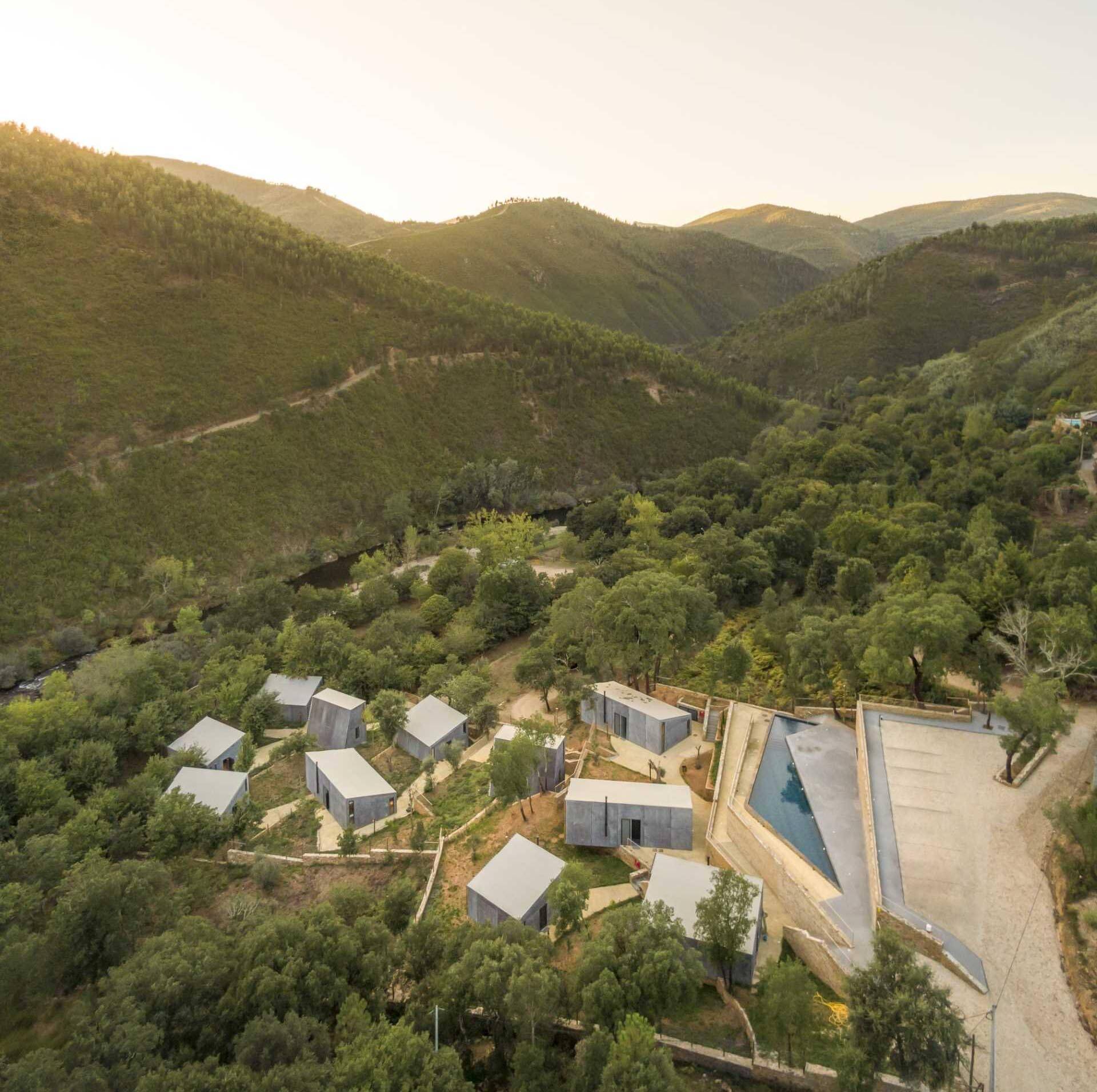
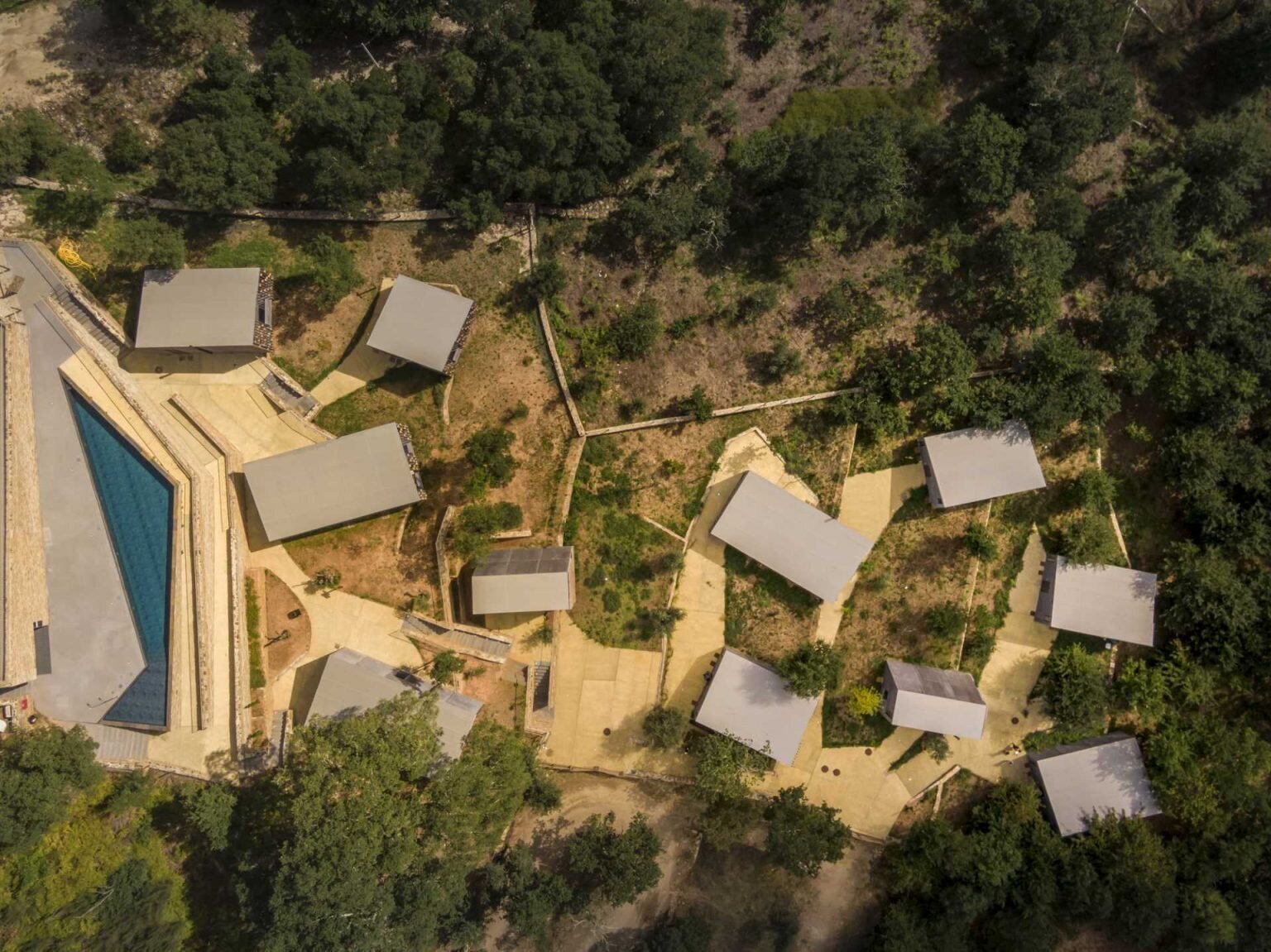
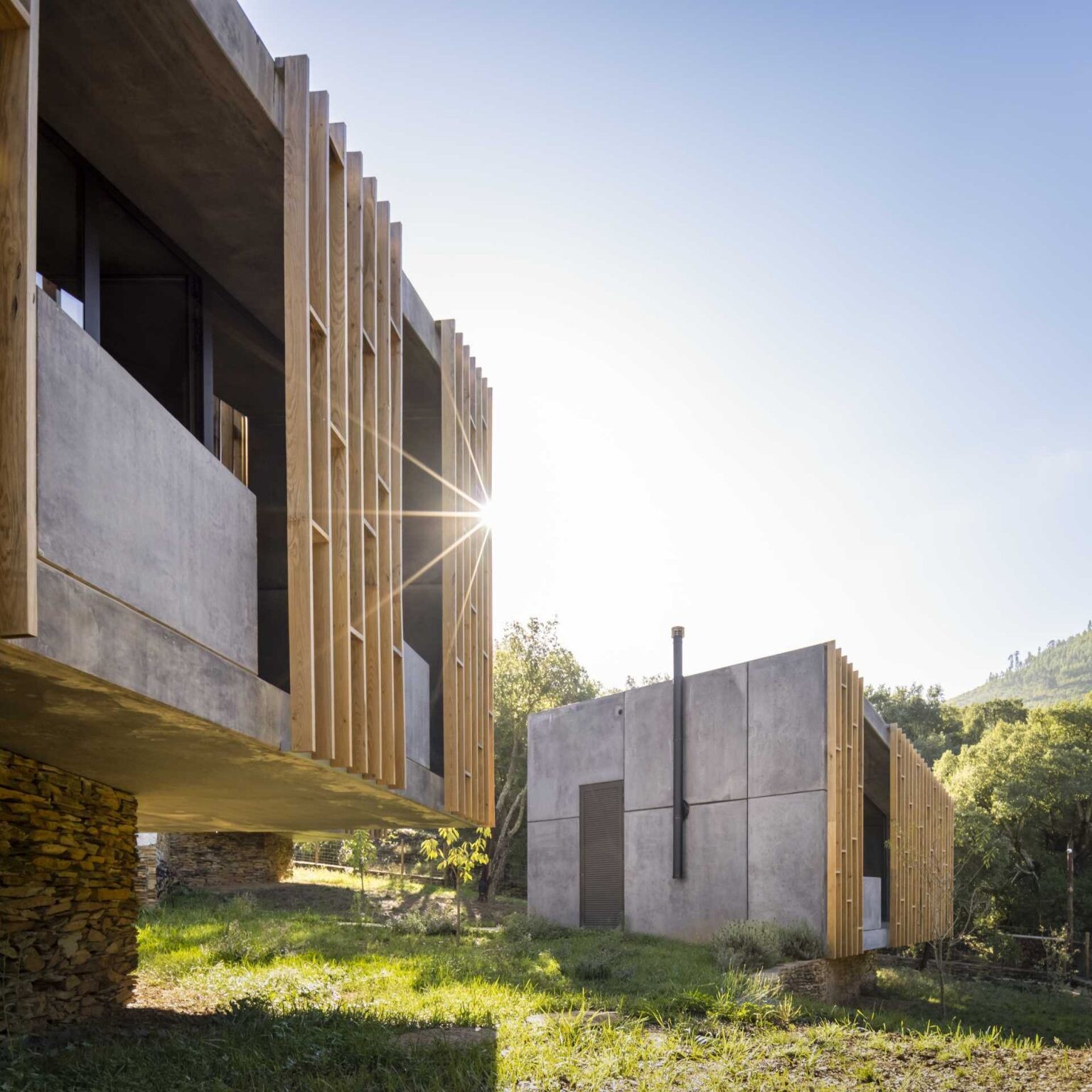
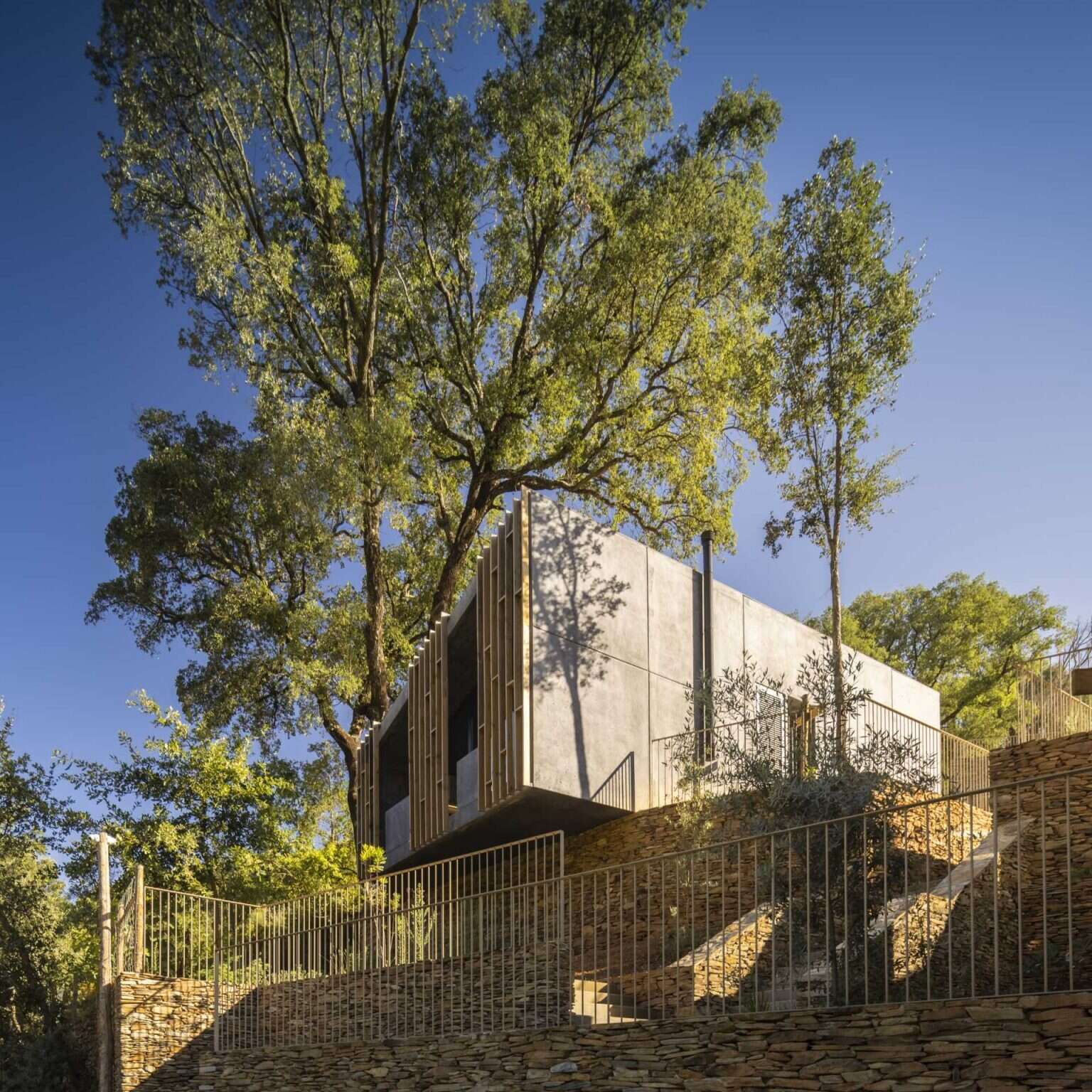
Instead of grouping the buildings together, the cabins are distributed across the property. Existing stone walls remain in place, mature trees were preserved, and the natural contours of the landscape were largely left untouched. This approach allows each cabin to feel independent while maintaining a close relationship with the forest.
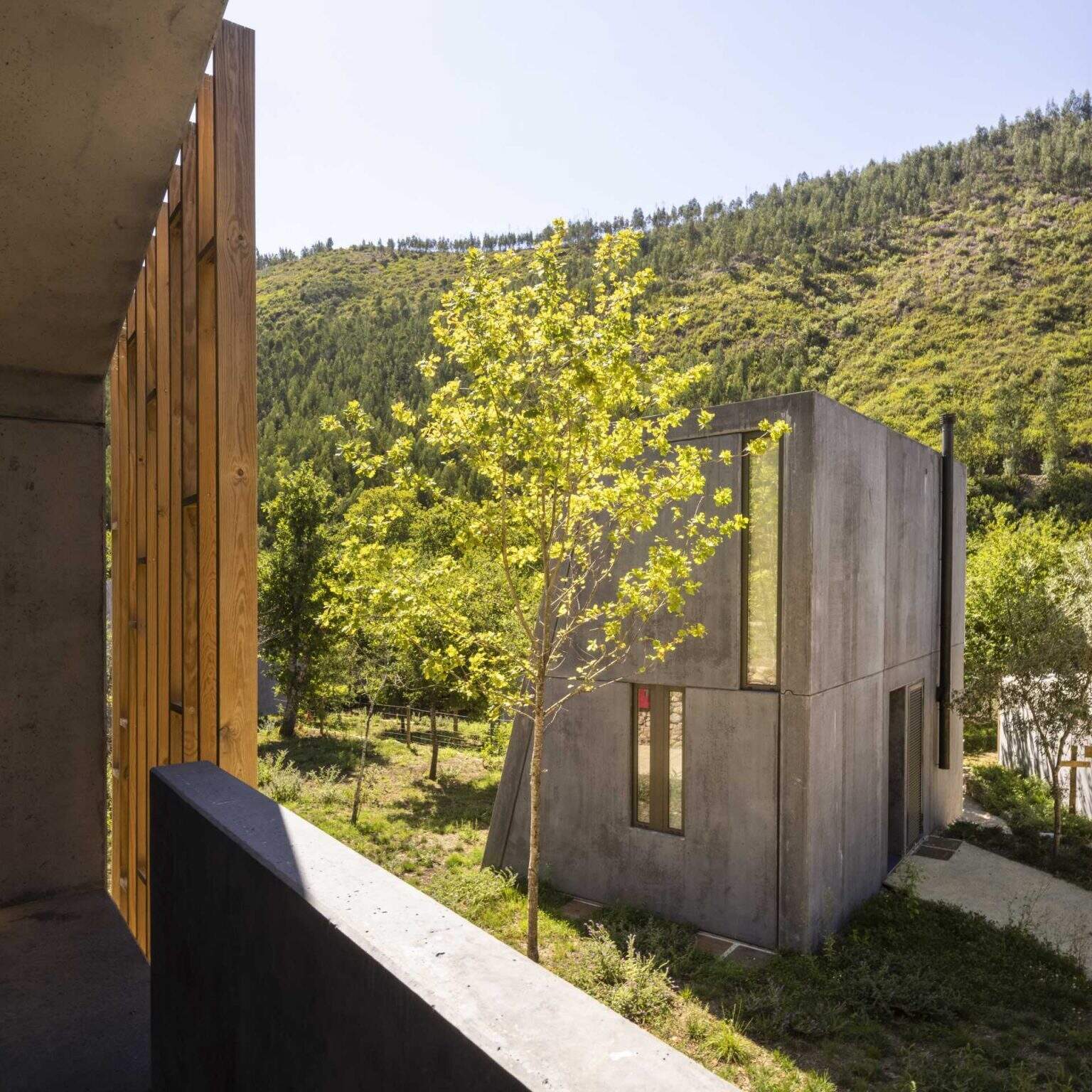
An equally important part of the layout was the positioning of the homes. Each cabin was given its own orientation, ensuring views towards the surrounding woodland and nearby river remain open and uninterrupted.
Raw Concrete Meets Timber Screens
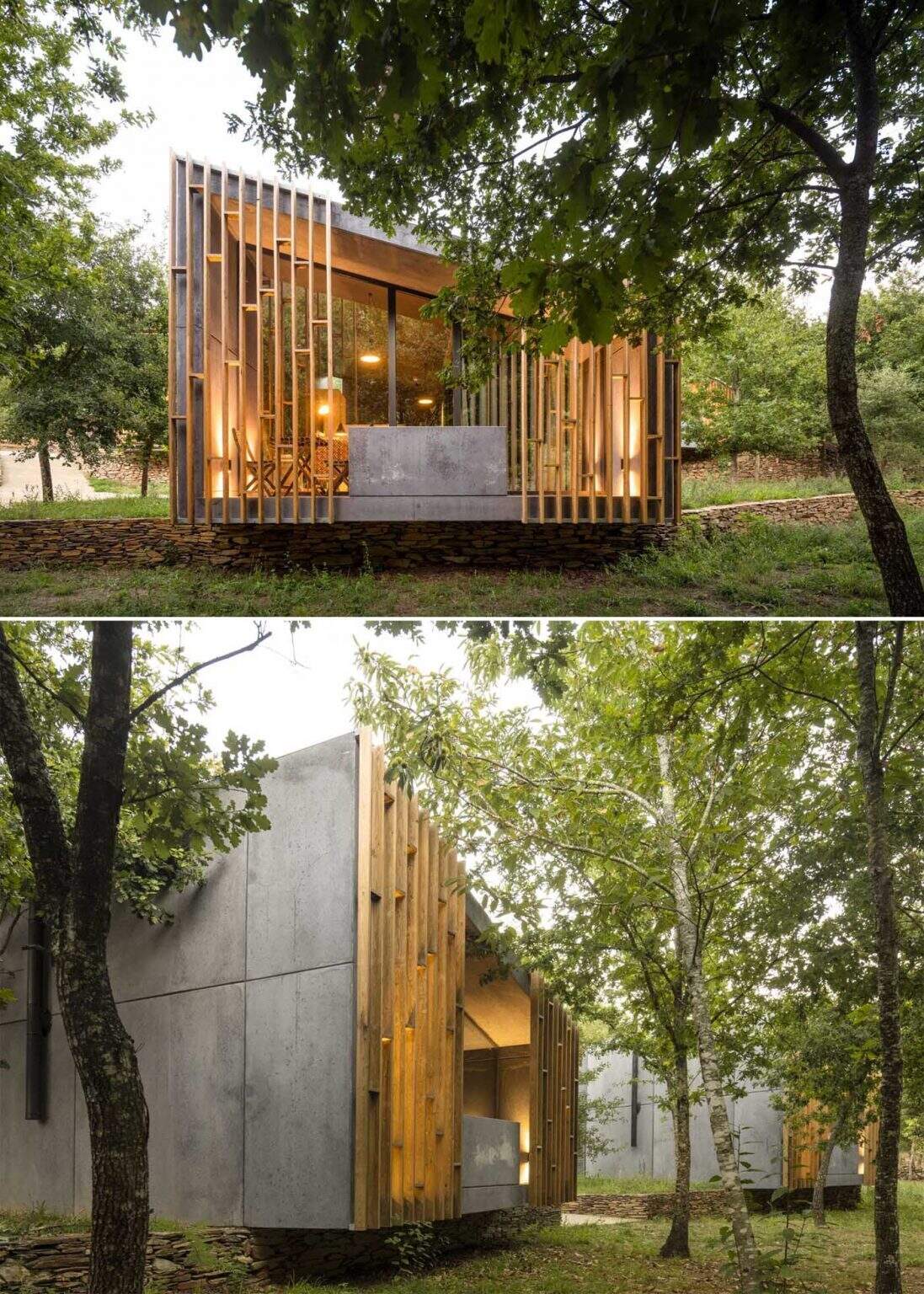
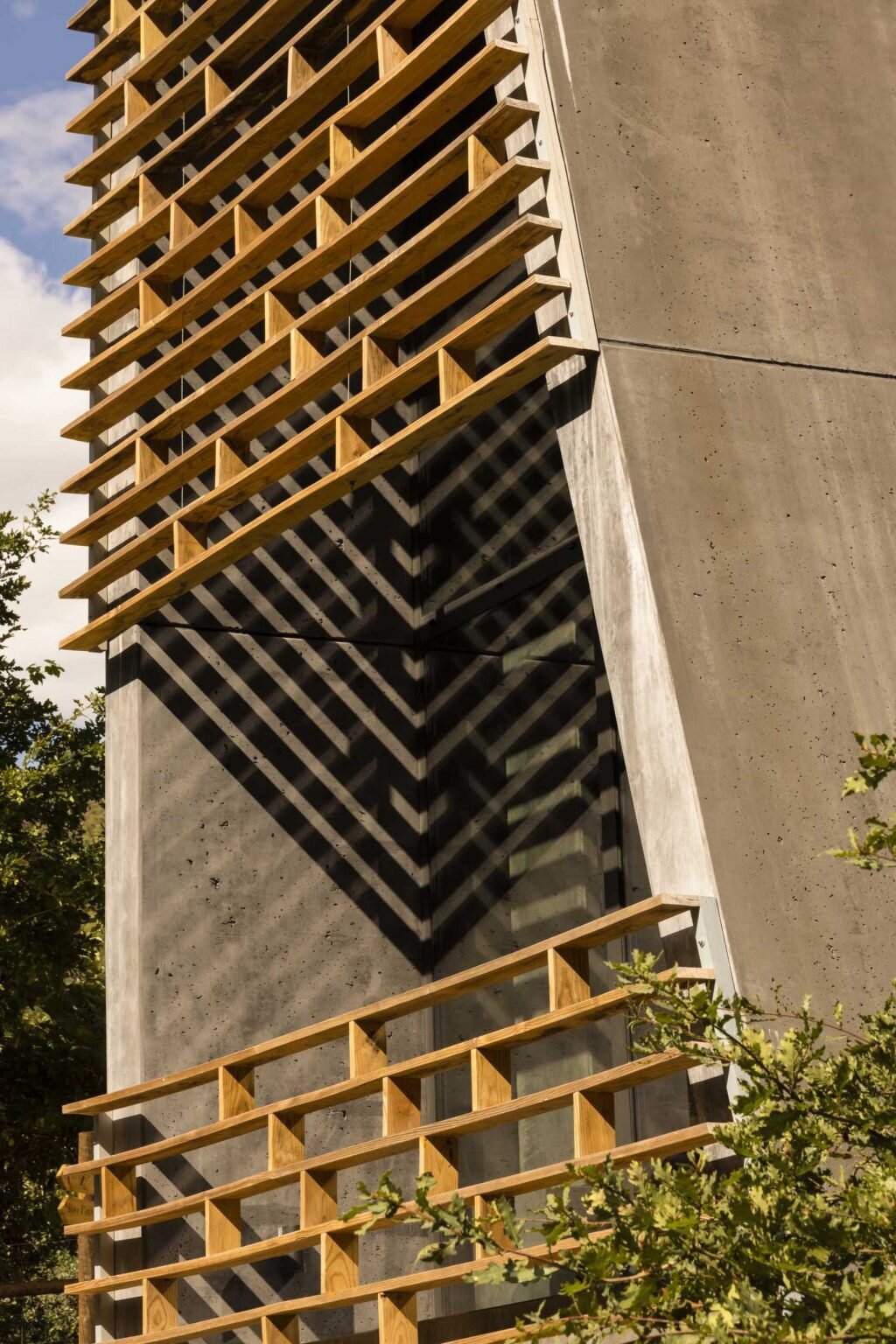
From the outside, the cabins present a simple and robust appearance. Raw concrete forms the primary structure, giving each home a durable and contemporary character suited to the rugged environment.
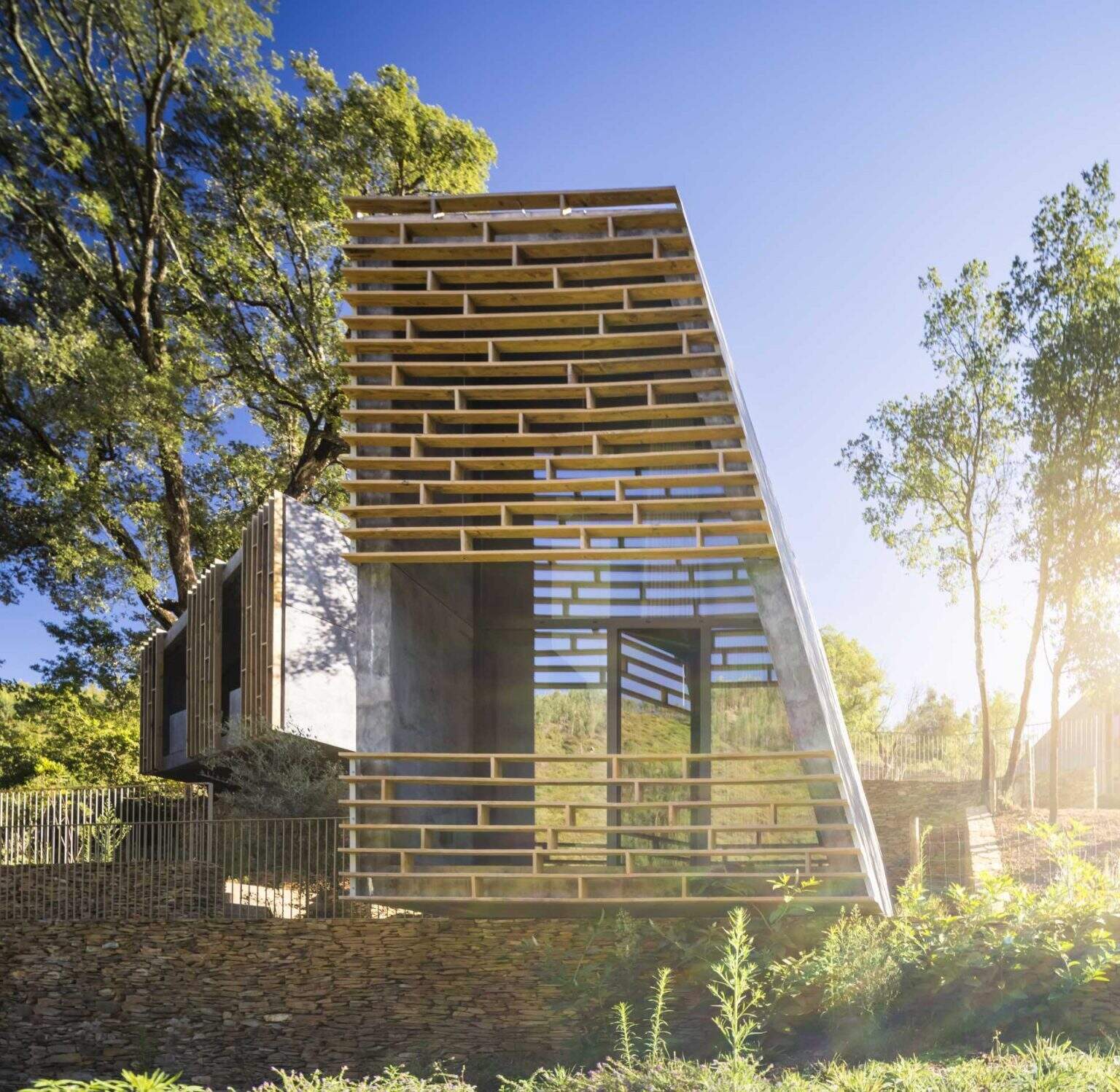
Vertical timber slats wrap portions of the buildings, introducing another layer to the design. These screens provide privacy between cabins, help create shade during warmer months, and soften the transition between the architecture and the surrounding trees. The slats also filter outward views, creating constantly changing visual connections with the landscape beyond.
Minimal Interiors Designed for Comfort
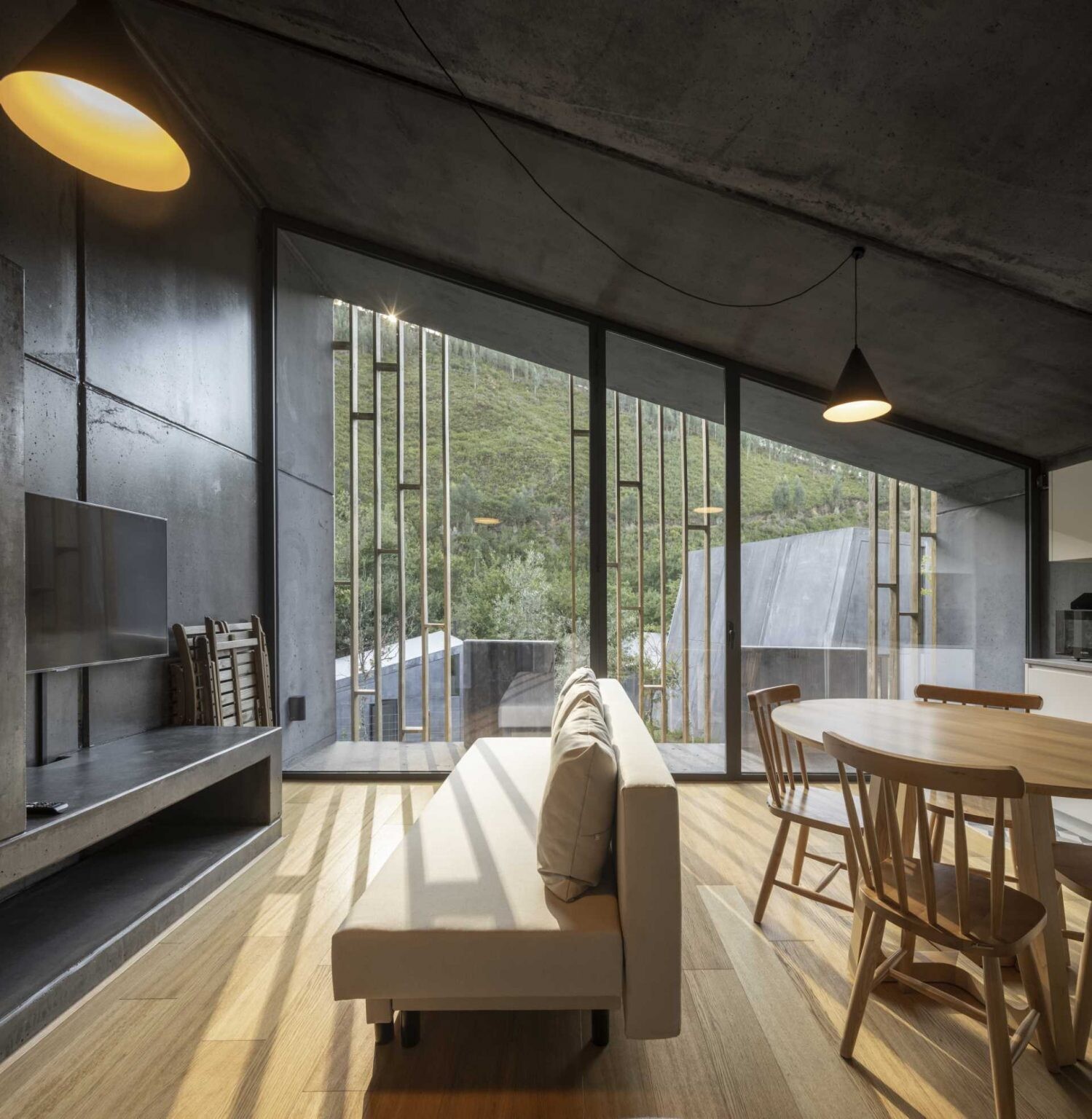
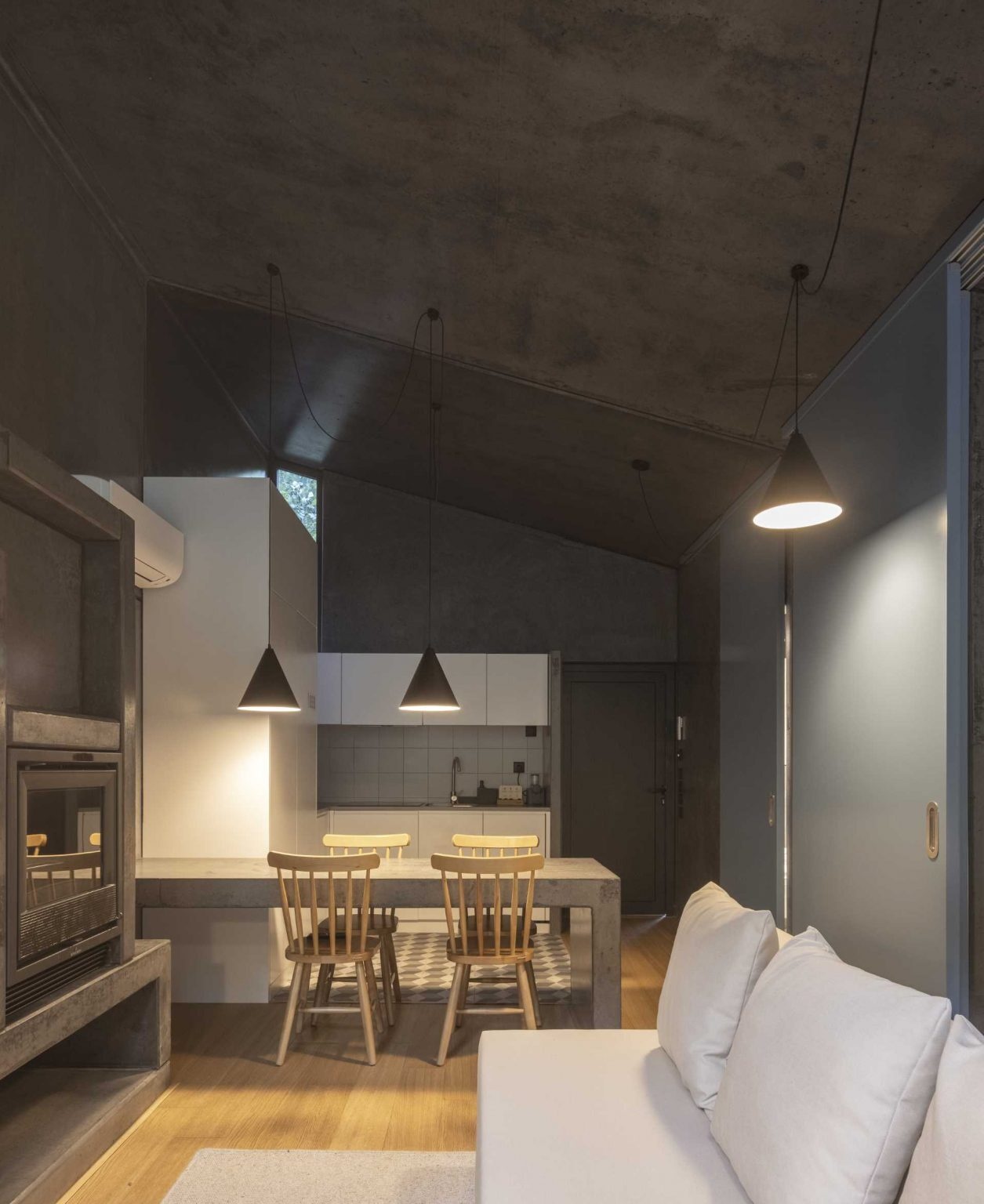
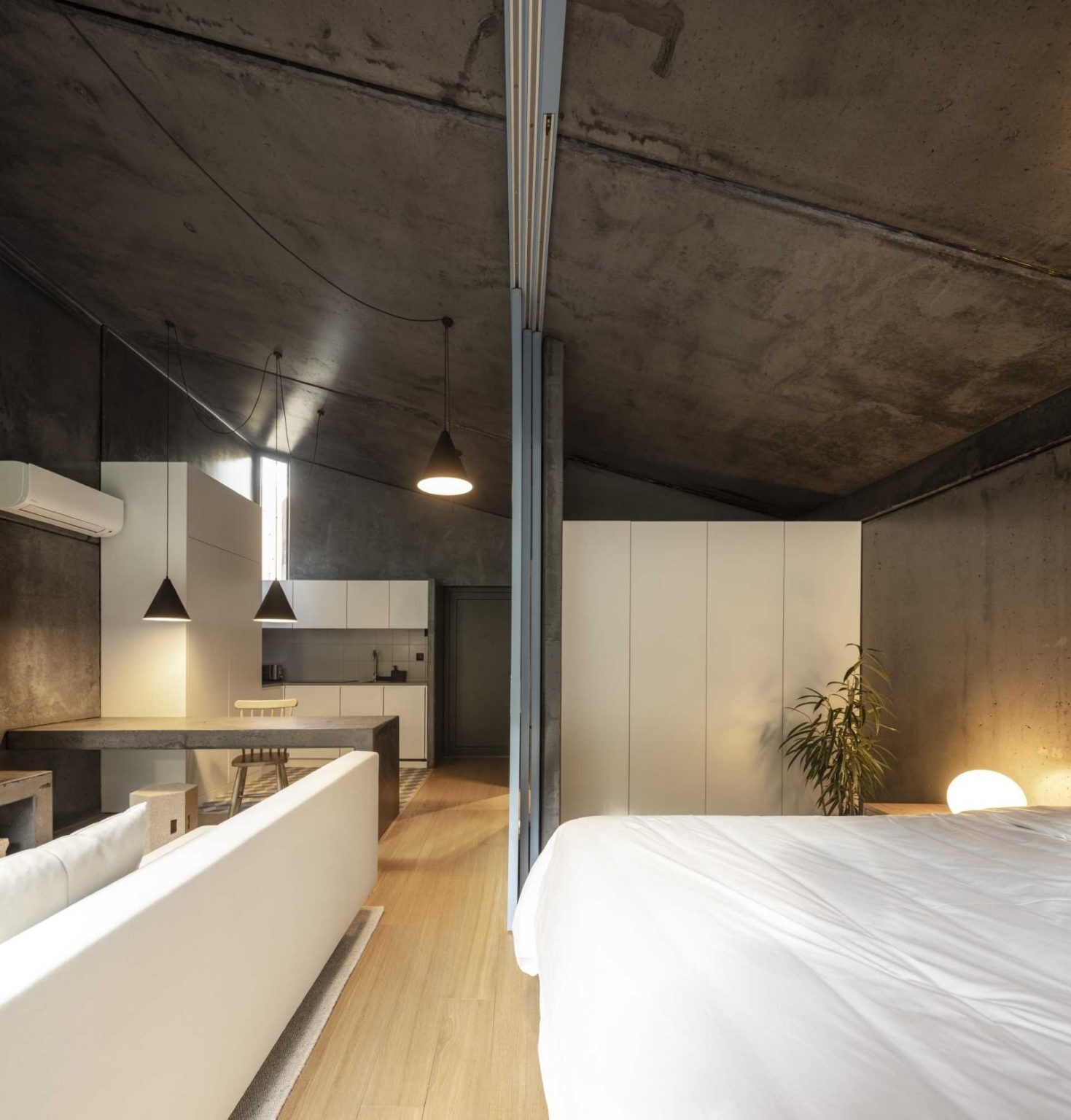
Inside, the cabins continue the project’s understated aesthetic. Timber flooring adds warmth to the concrete structures, while furnishings are intentionally minimal to keep attention focused on the surrounding scenery.
Despite their compact footprints, the cabins include all the essentials needed for short stays or longer-term occupation. Living areas, dining spaces, kitchens, bedrooms, and bathrooms are arranged efficiently, creating homes that are practical without feeling crowded.
The project’s multi-functional approach was supported by an innovative prefabrication strategy. Technical systems including water, electricity, and climate control were concentrated within a single module and then connected externally to the remaining sections of each home. Repeating this system across all eleven cabins helped speed up manufacturing and installation.
A Shared Space Above the Cabins
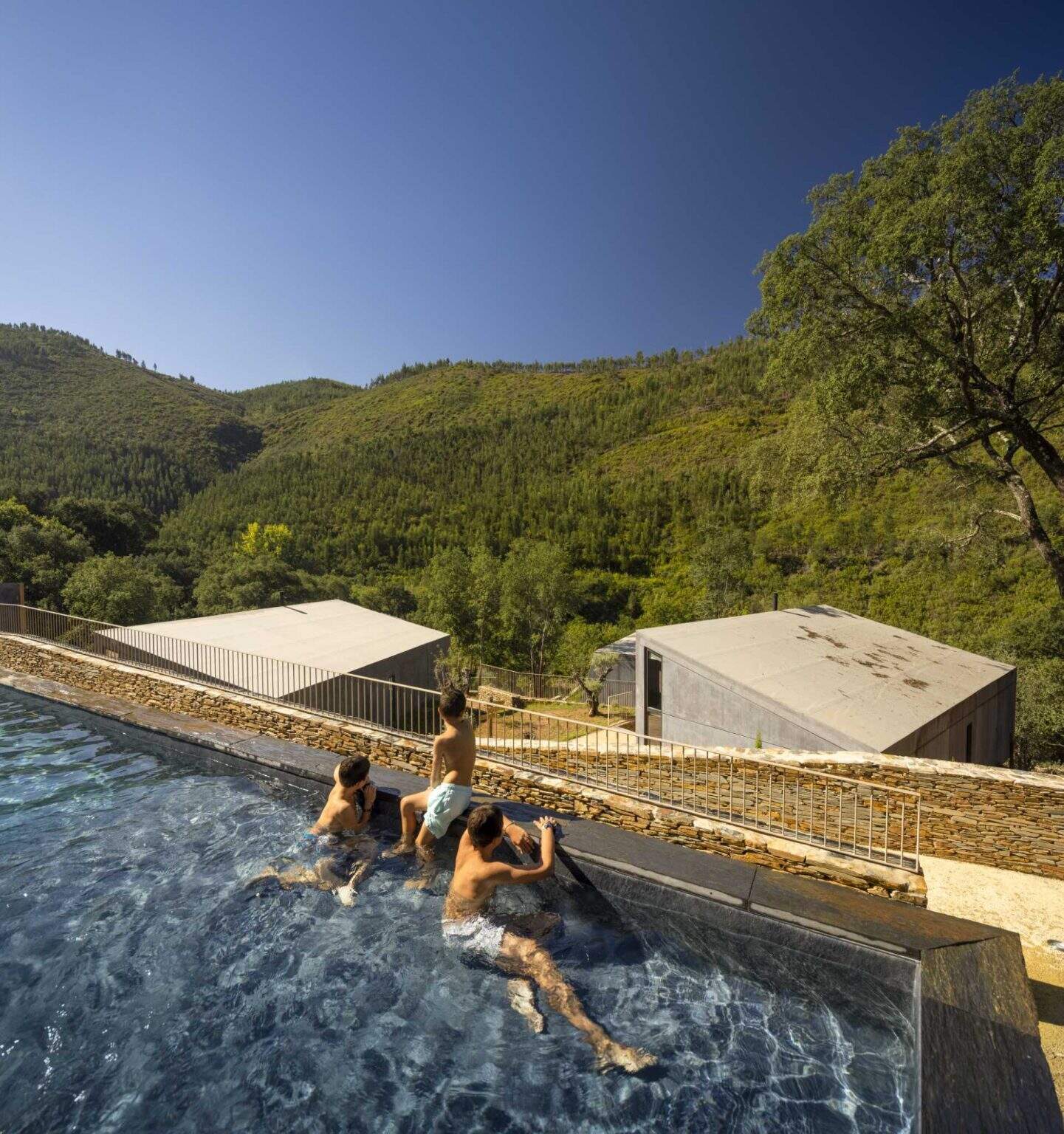
Beyond the individual homes, the development includes a swimming pool positioned above the cabins. From this elevated location, visitors can look out across the collection of buildings and the surrounding forest canopy.
The pool serves as a communal gathering point while also highlighting the overall composition of the project, where architecture, landscape, and infrastructure work together across a challenging site.
SUMMARY’s cabin project near Janarde shows how prefabricated architecture can respond to demanding locations without sacrificing quality or flexibility. By combining tourist accommodation with homes suitable for year-round living, the architects created a development that remains active throughout the seasons.