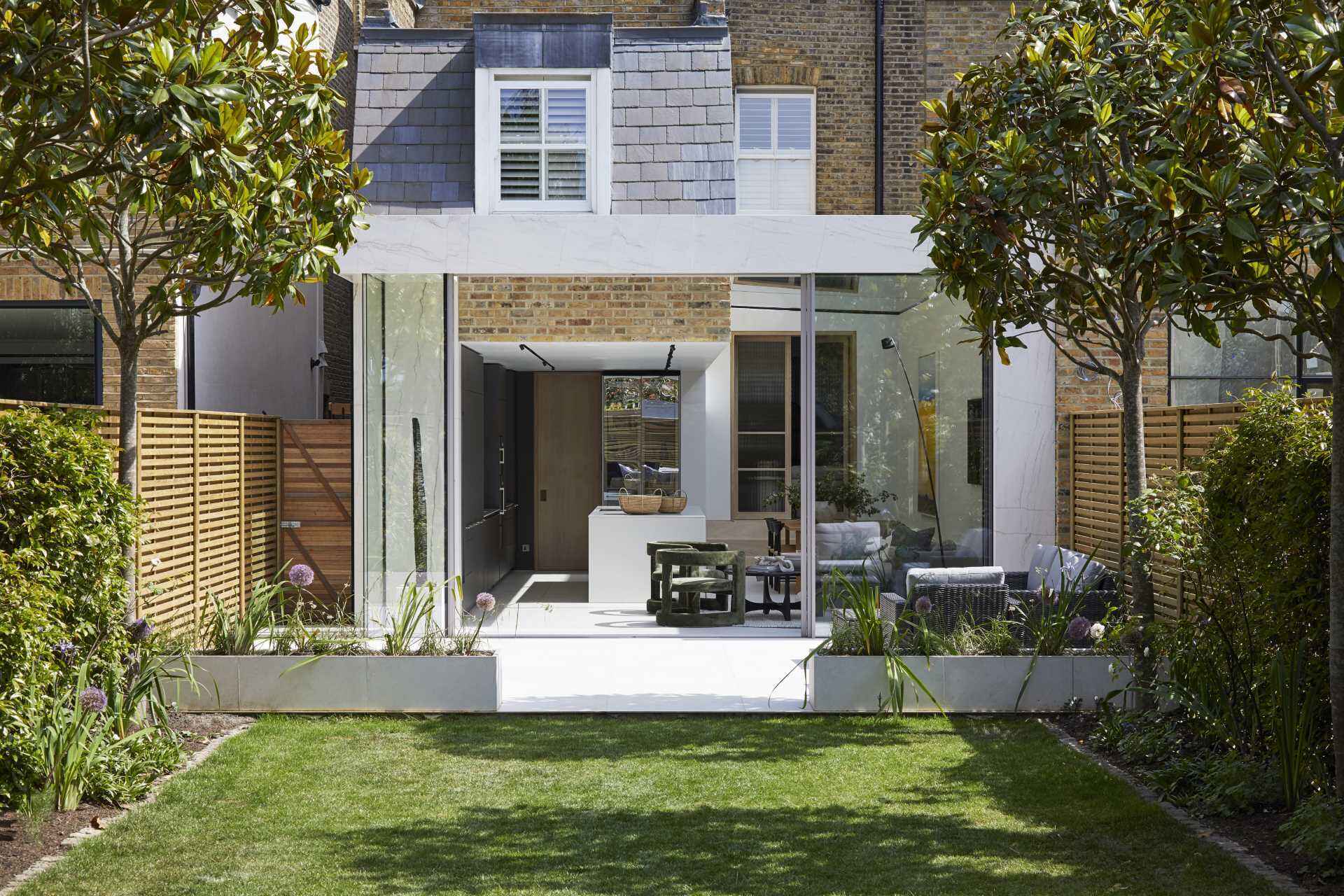
In West London, England, architecture and interiors firm Finkernagel Ross completed a rear extension for a traditional Victorian home. The project, known as Wandsworth House, was shaped by homeowners who had spent years living in the property before deciding how they wanted it to evolve.
After experiencing the house through changing seasons, shifting daylight, and everyday gatherings with family and friends, they knew exactly what was missing. Their goal wasn’t simply to add more square footage. They wanted brighter interiors, dramatic volume, and a contemporary space that would transform the way they used their home.
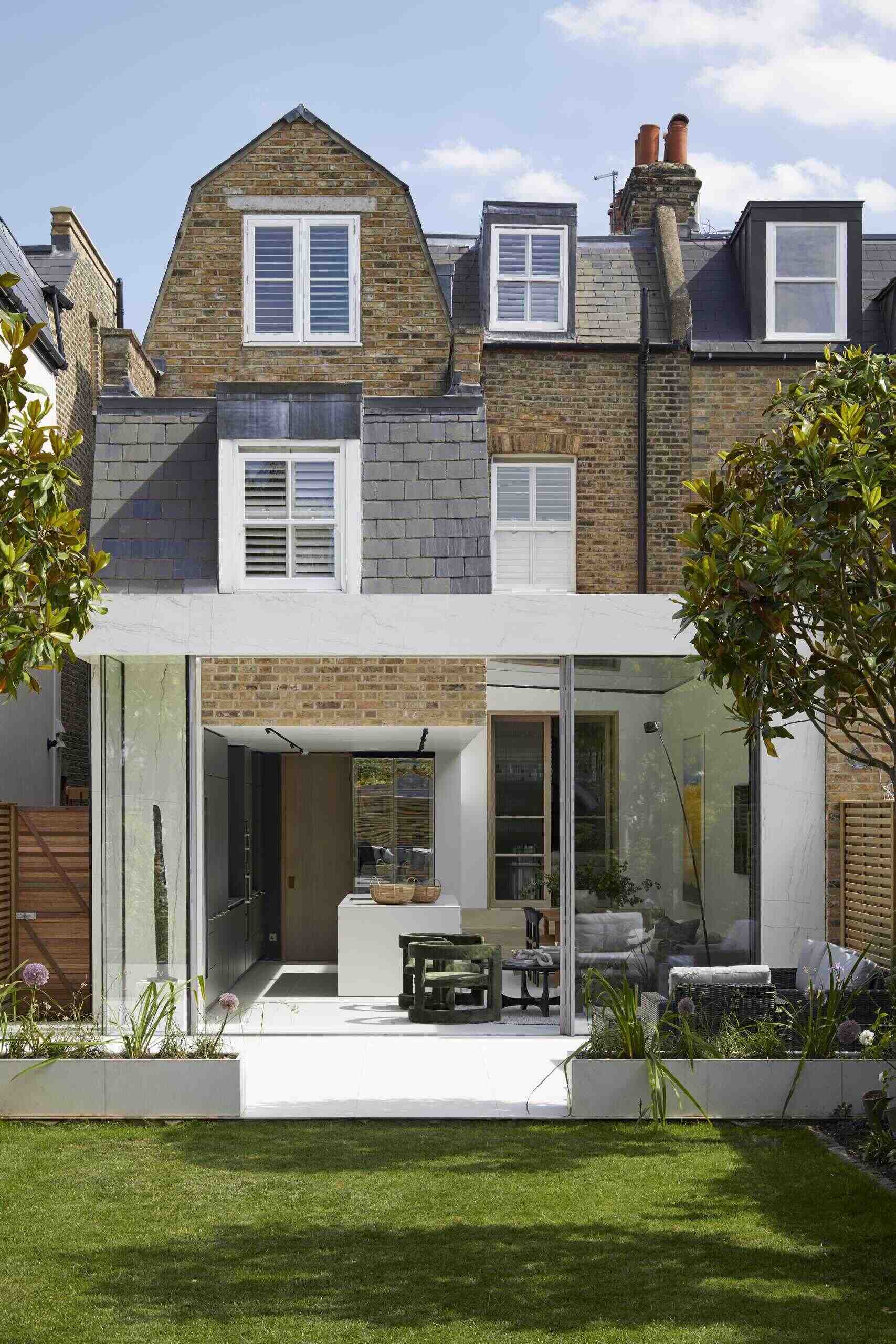
The result is a bold contrast between old and new, pairing Victorian character with a sleek extension that brings sunlight deep into the house and strengthens the connection to the garden.
Floor-to-Ceiling Glass Creates a Strong Garden Connection
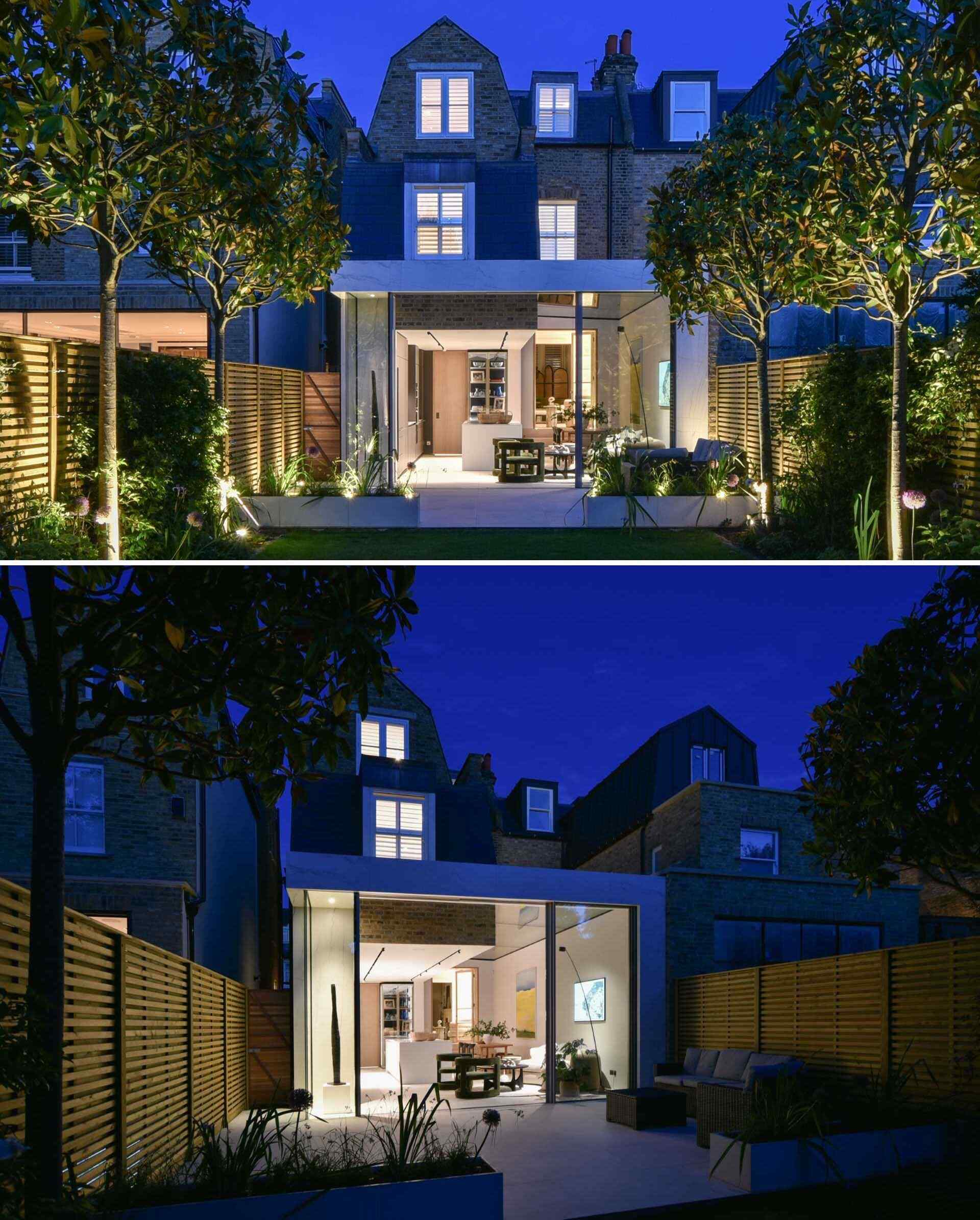
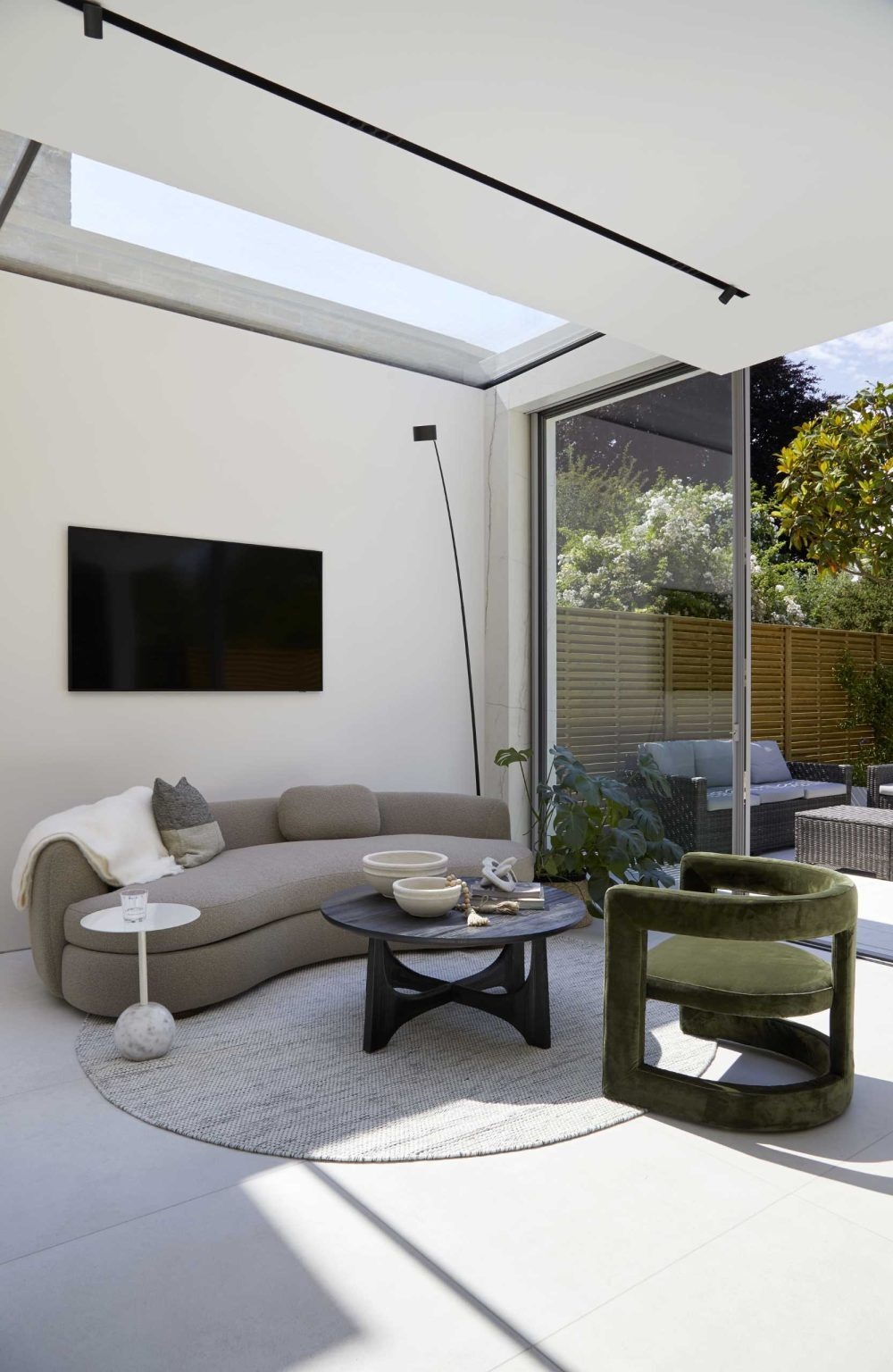
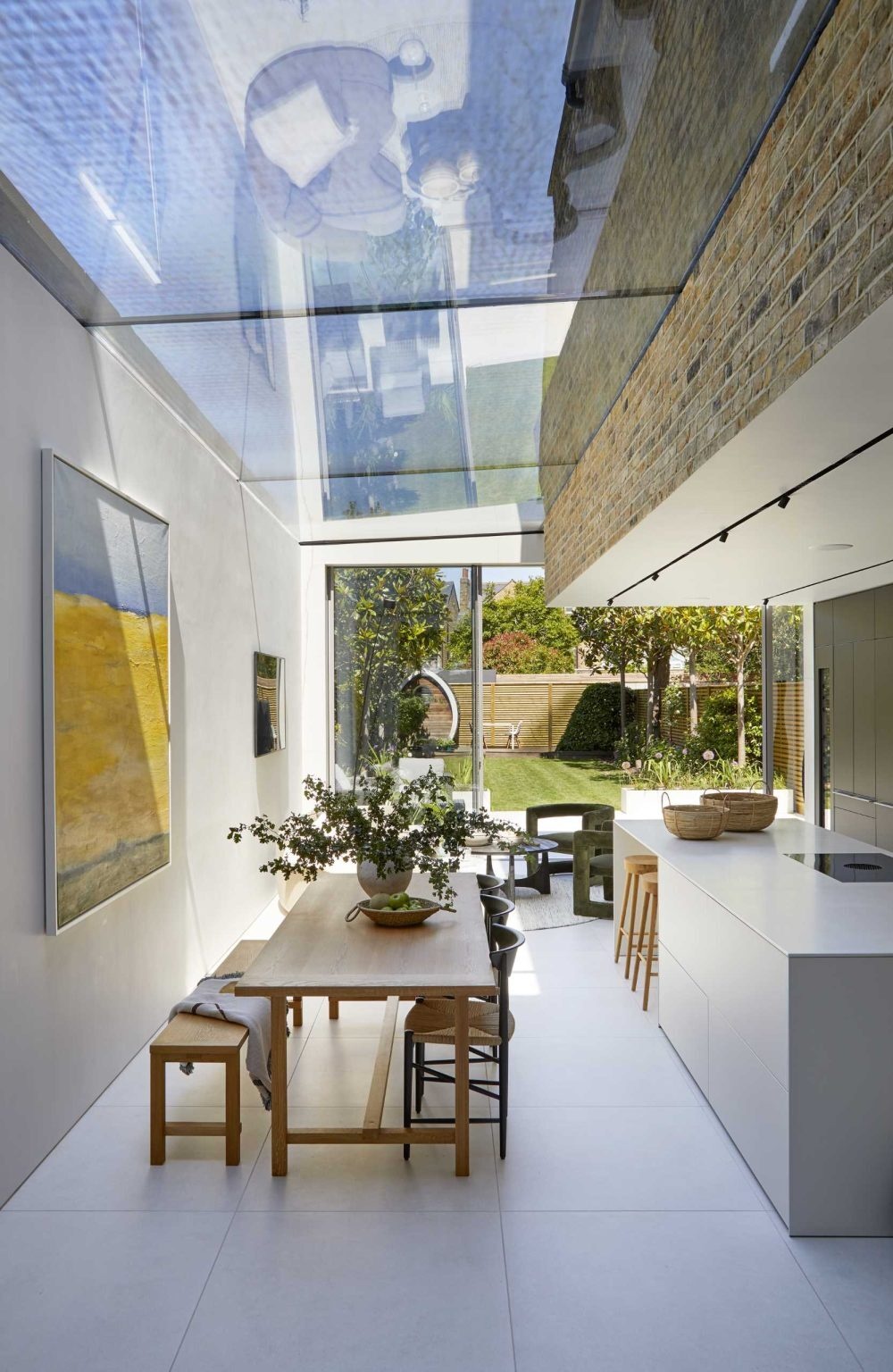
One of the most noticeable features of the extension is its relationship with the outdoor space. Large floor-to-ceiling windows line the rear elevation, while an expansive sliding glass door creates a seamless transition between the interior and the garden.
The transparent walls allow greenery to become part of the everyday experience inside the home. Throughout the day, changing weather conditions, shifting shadows, and seasonal colors provide an ever-changing backdrop for family life.
The extension was designed to feel open and unobstructed, a challenge that required innovative structural solutions. Working alongside engineers, the design team developed a system that allowed the new living spaces to remain free of visible columns, enhancing the sense of openness throughout the ex
A Skylight That Becomes the Star of the Interior
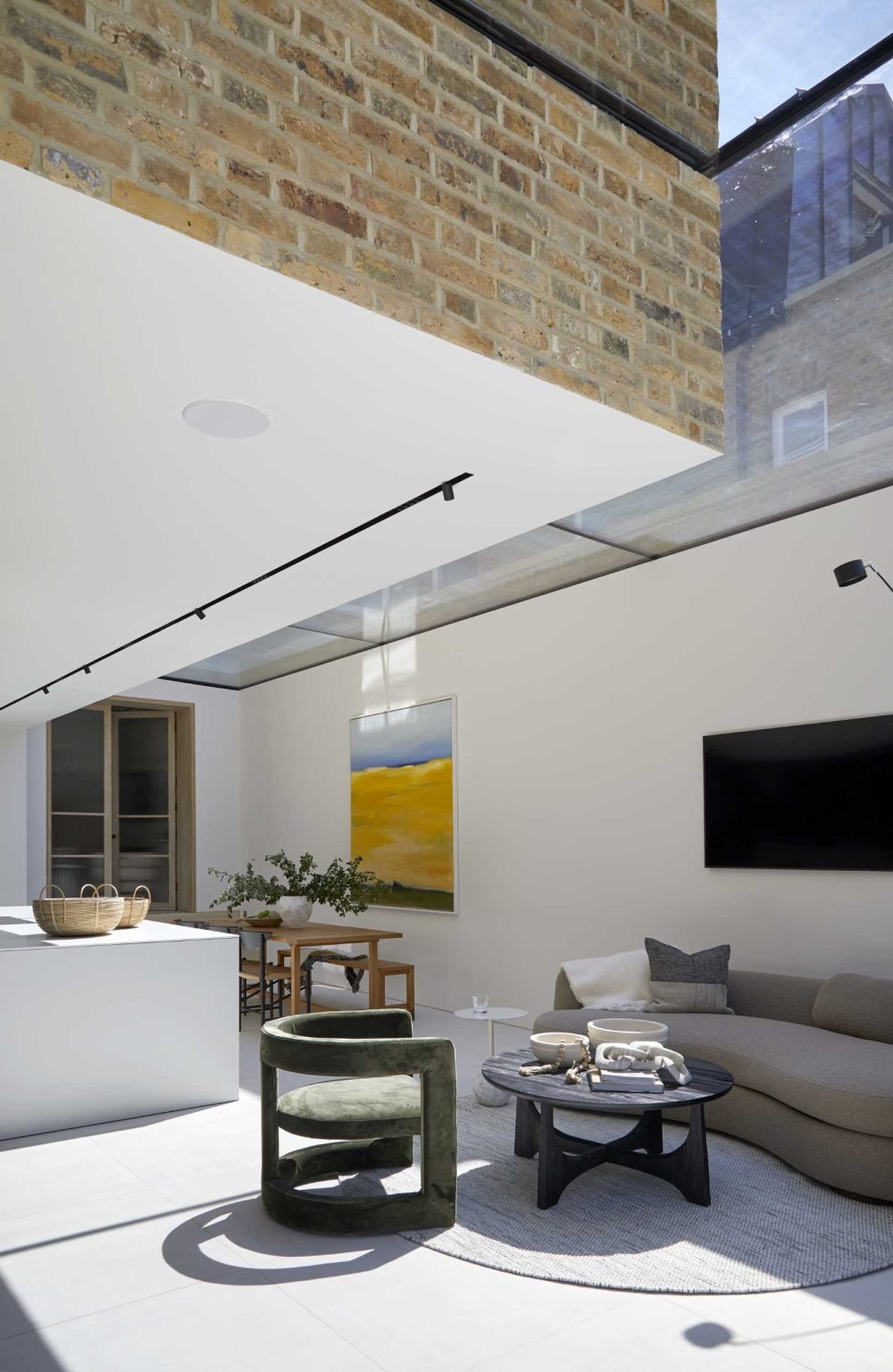
Inside the extension, the kitchen, living room, and dining area are arranged within one expansive open-plan space. While the layout is impressive, the feature that immediately draws attention is the long skylight stretching across the room.
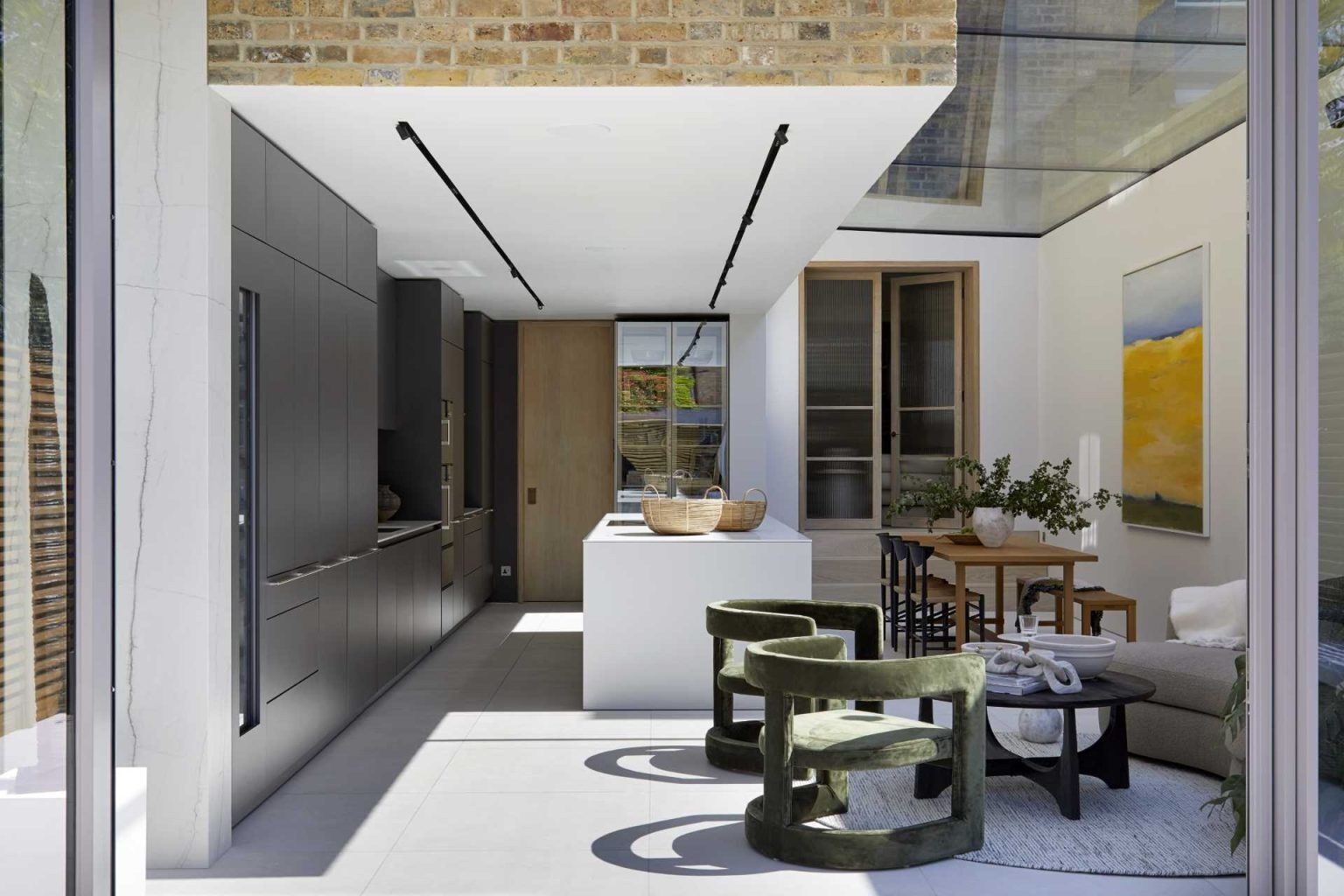
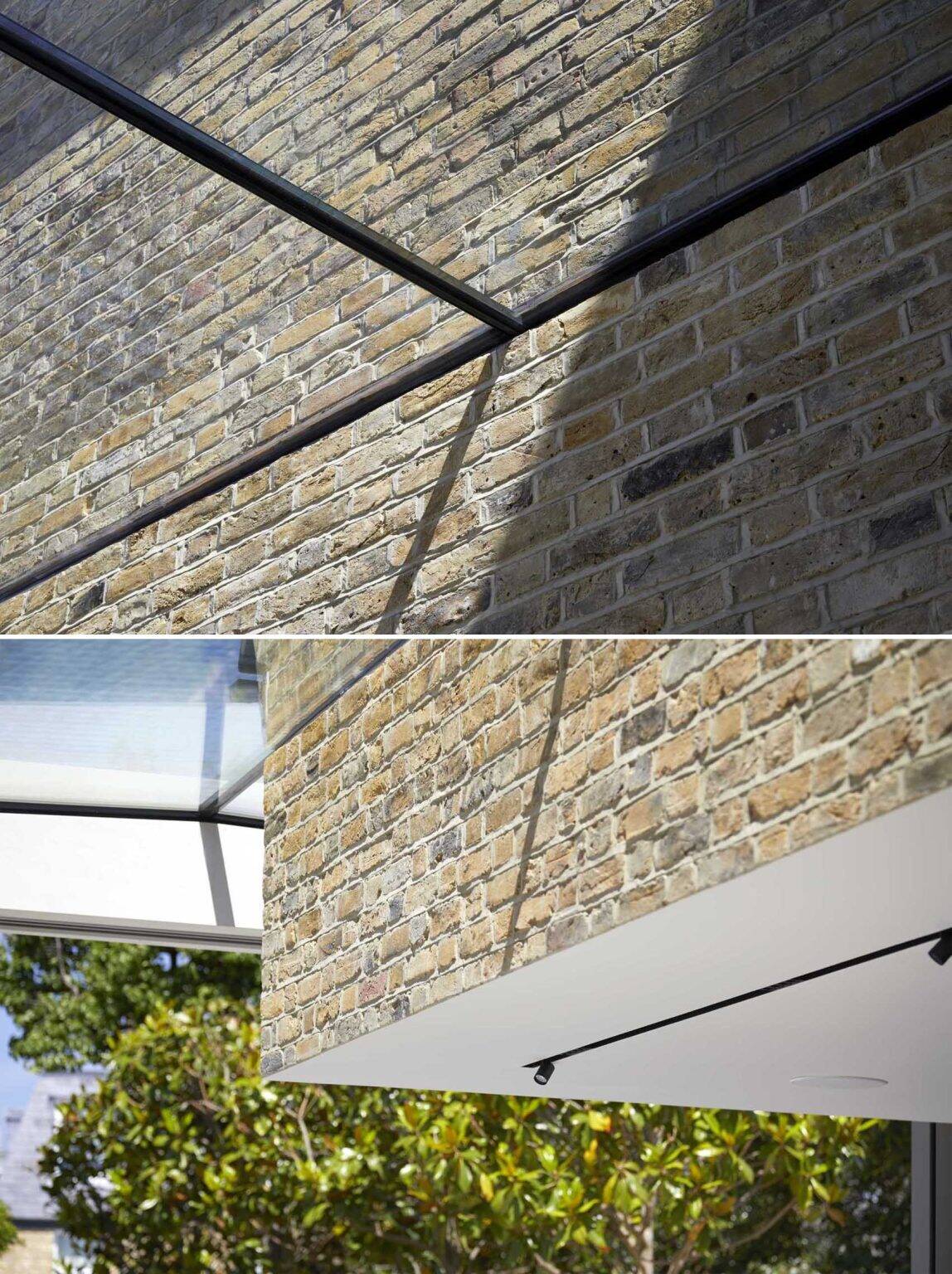
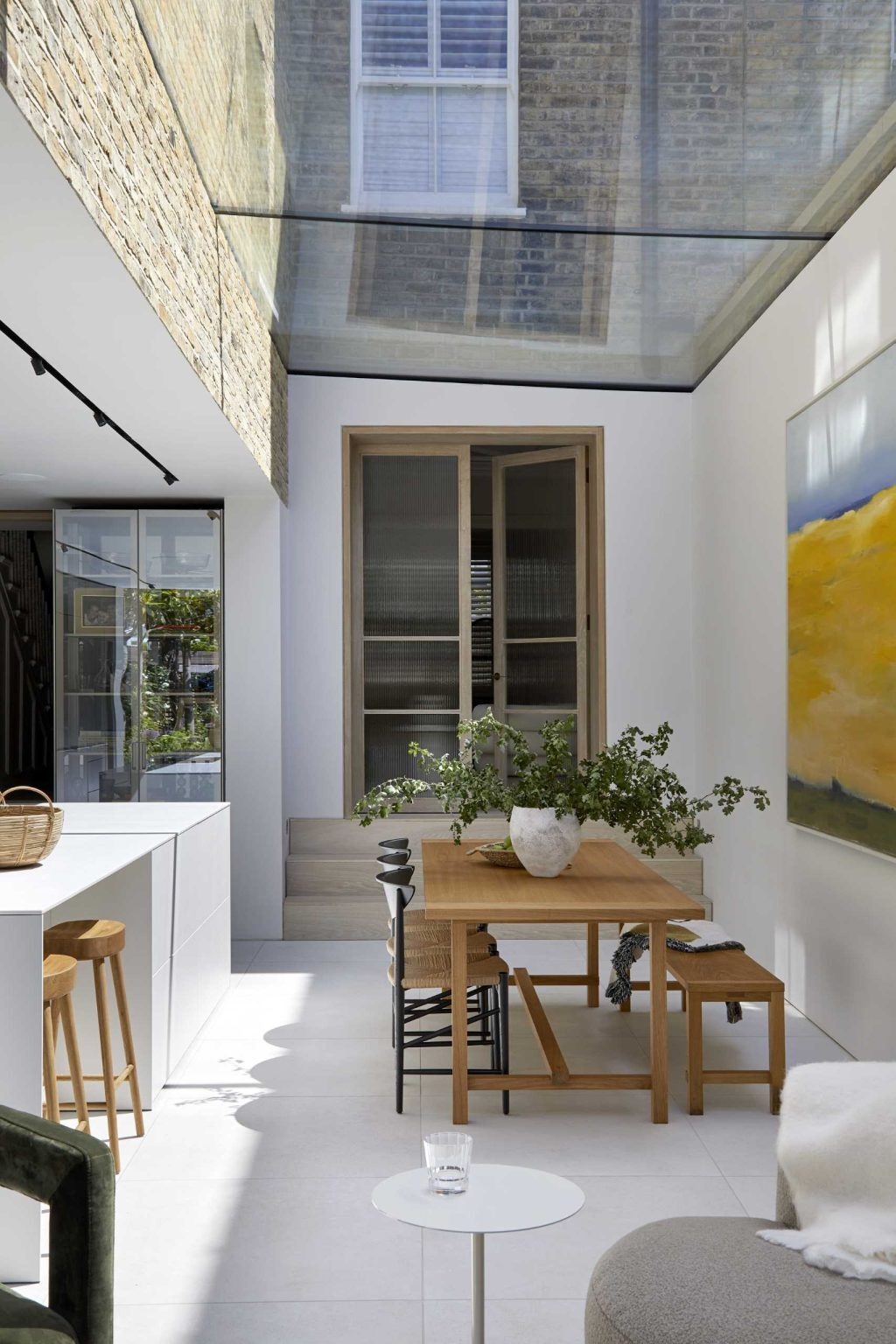
Running along one side of the extension, the skylight travels from the living area toward the dining space, introducing daylight throughout the day. It also offers an unexpected view of the original rear wall of the Victorian house, creating a visual link between the home’s past and present.
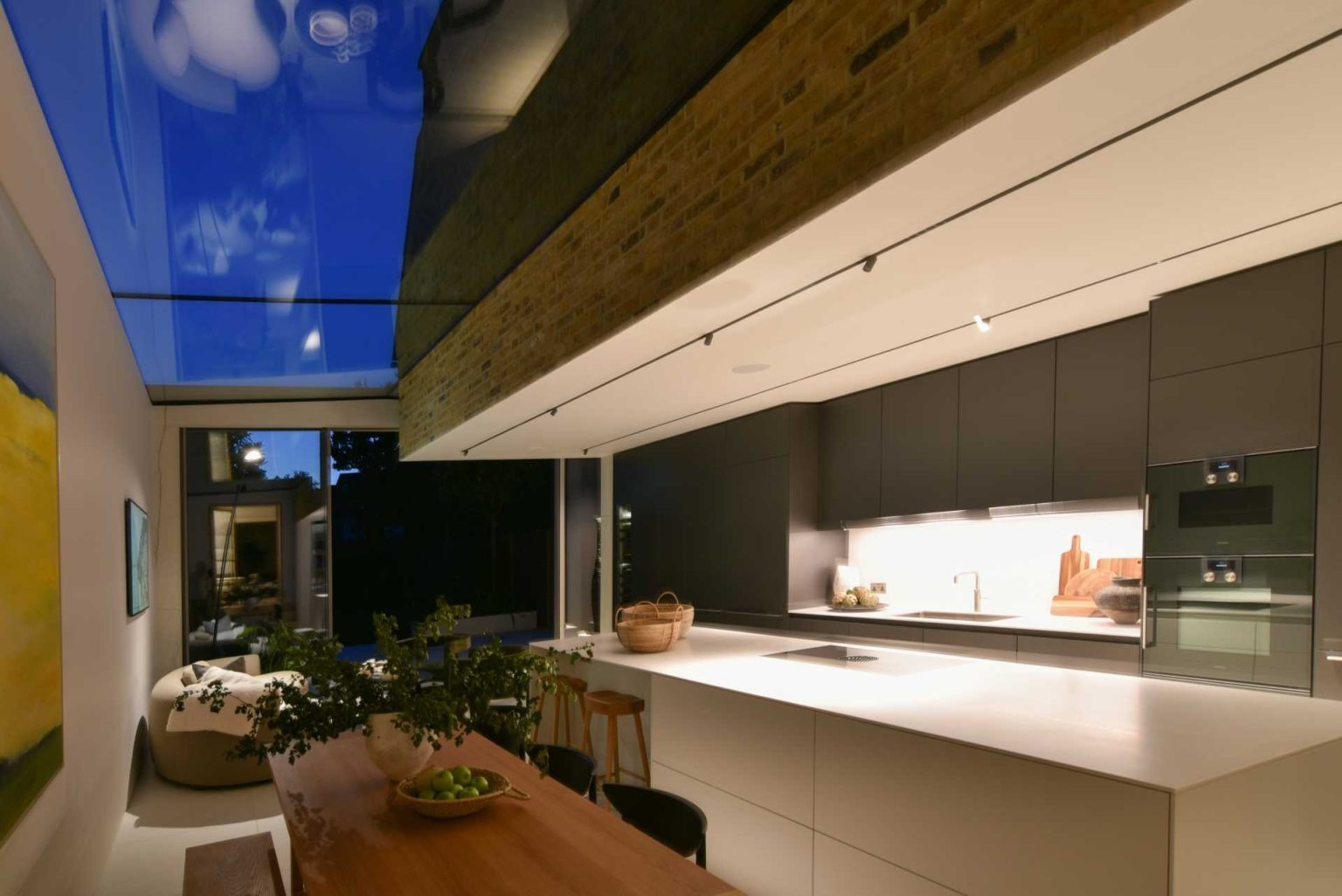
The architects enhanced the effect by wrapping parts of the upper-level structure in glass, allowing even more natural light to enter. After sunset, the skylight takes on a completely different role, offering views of the night sky and bringing a unique atmosphere to the space.
A Dining Space With Warmth and Personality
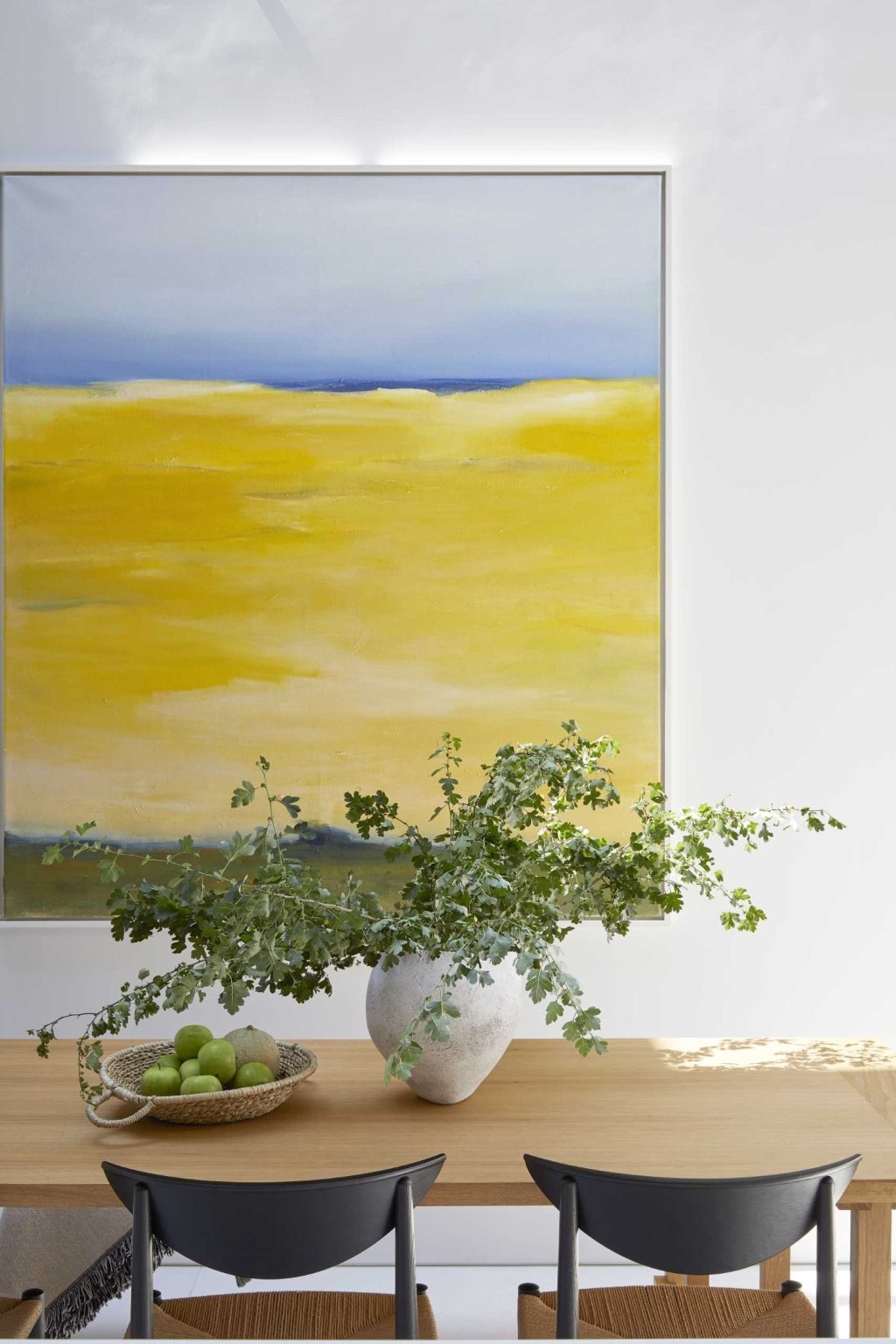
Positioned beneath the skylight, the dining area balances simplicity with character. A wooden dining table and matching bench introduce natural warmth, while dining chairs with black frames echo the contemporary finishes found elsewhere in the extension.
The room is further energized by a large colorful artwork created by Puck Steinbrecher. The vibrant piece provides a focal point and adds visual contrast against the clean architectural backdrop.
A Kitchen Built Around Contrast
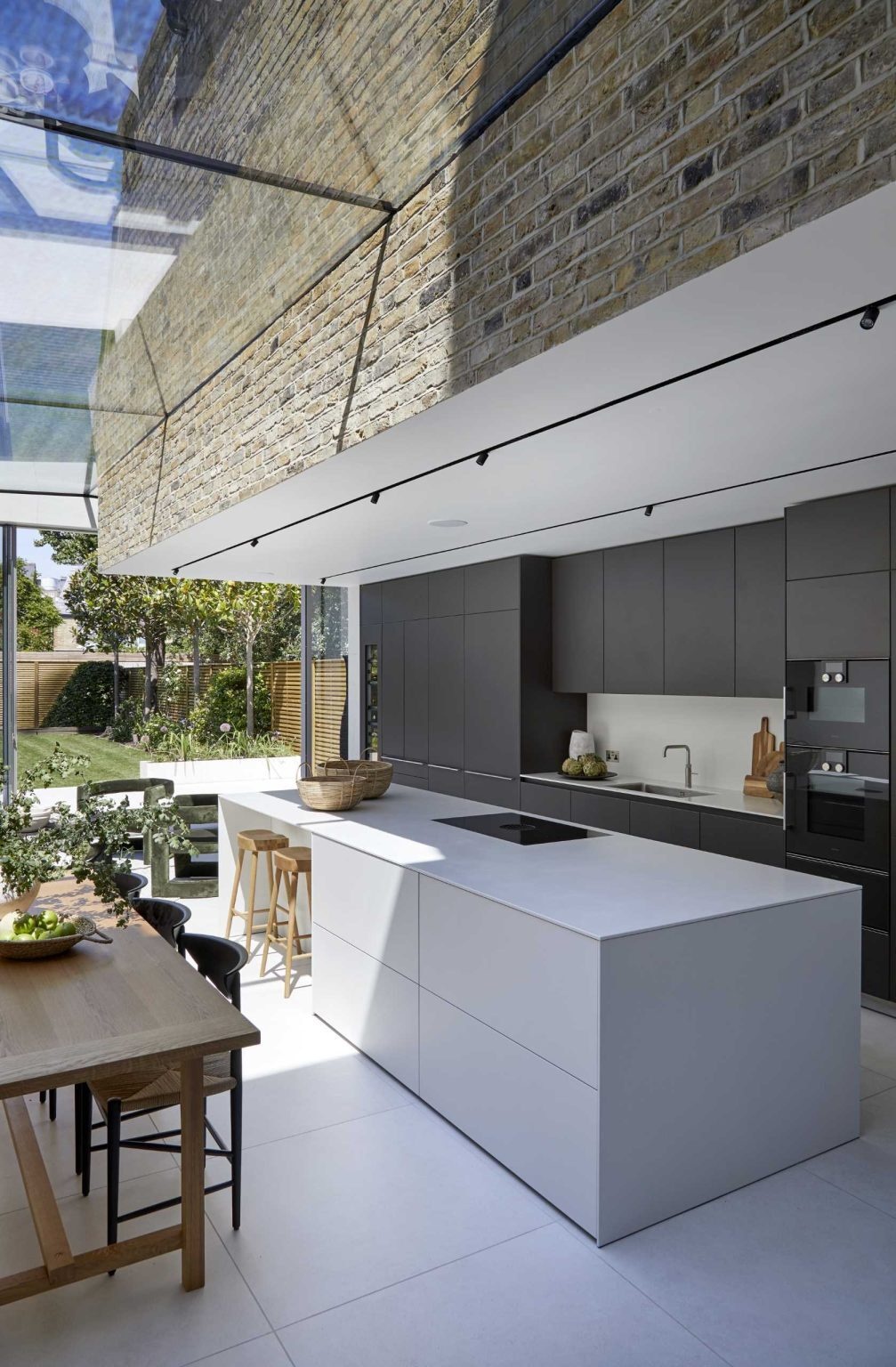
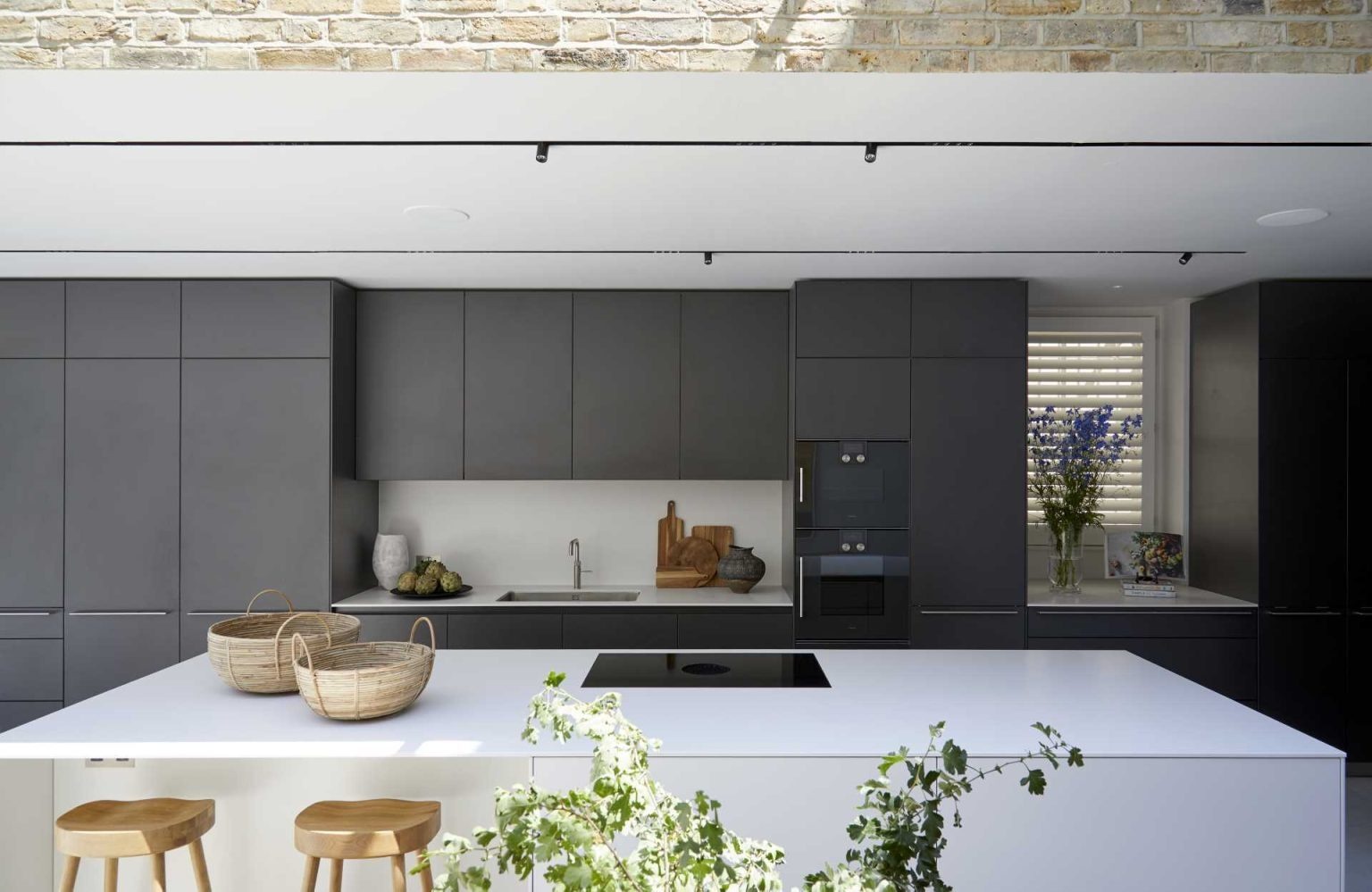
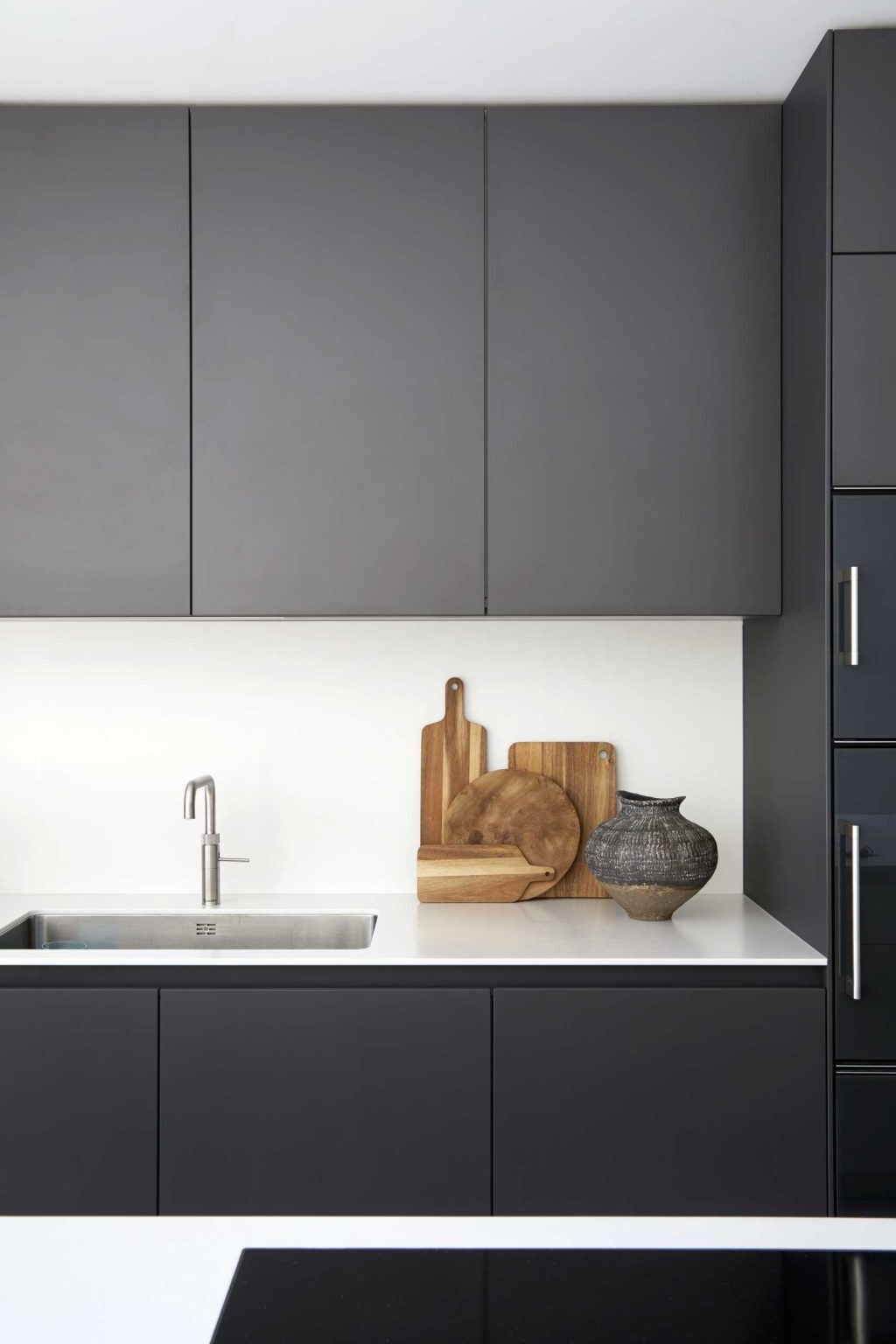
The kitchen embraces a bold material palette. Matte black cabinetry lines the walls, creating a strong visual contrast with the bright white island and matching backsplash.
This combination highlights the clean geometry of the space while giving the kitchen a sophisticated contemporary appearance. The restrained color palette also allows the natural light from the skylight and surrounding glazing to take center stage.
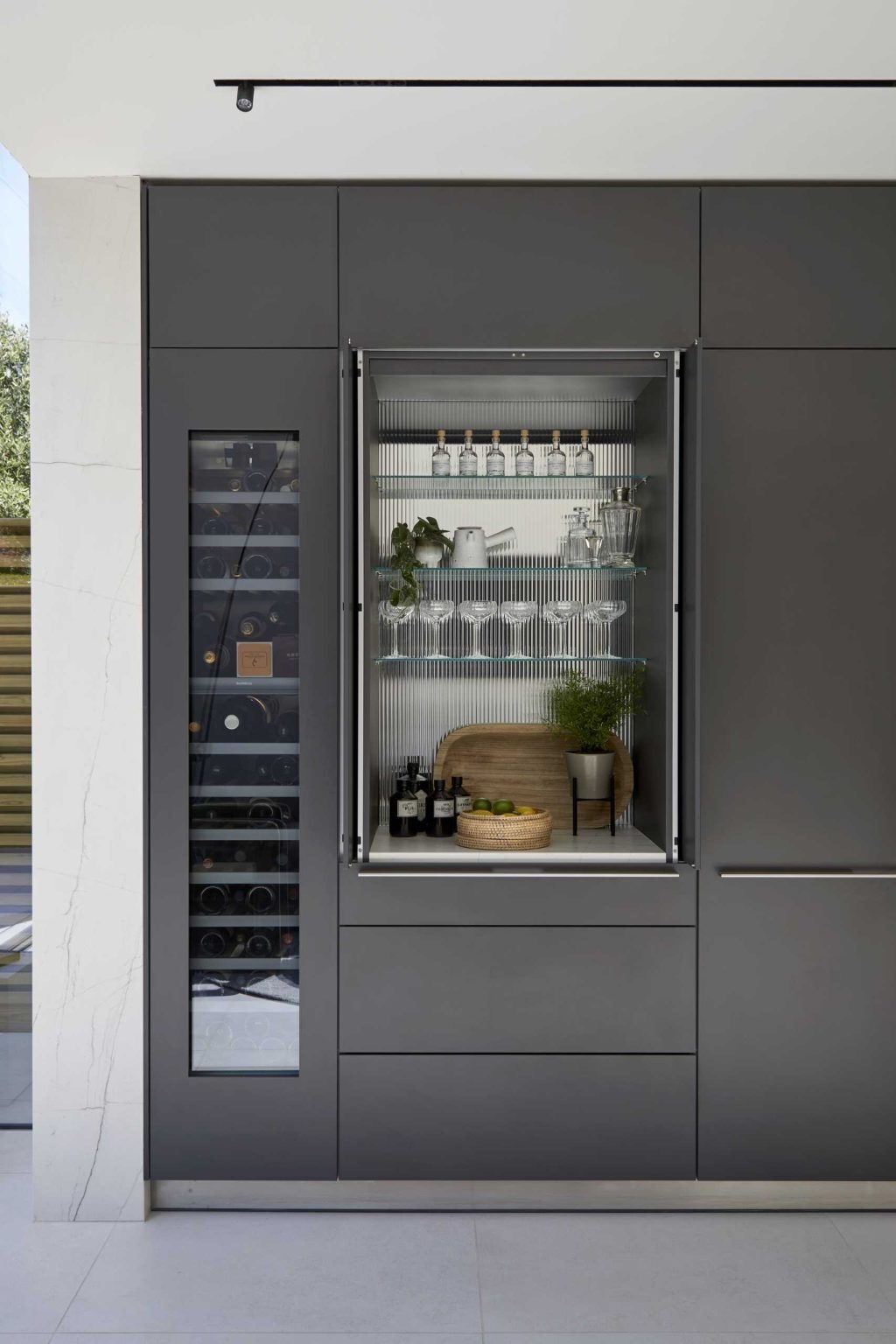
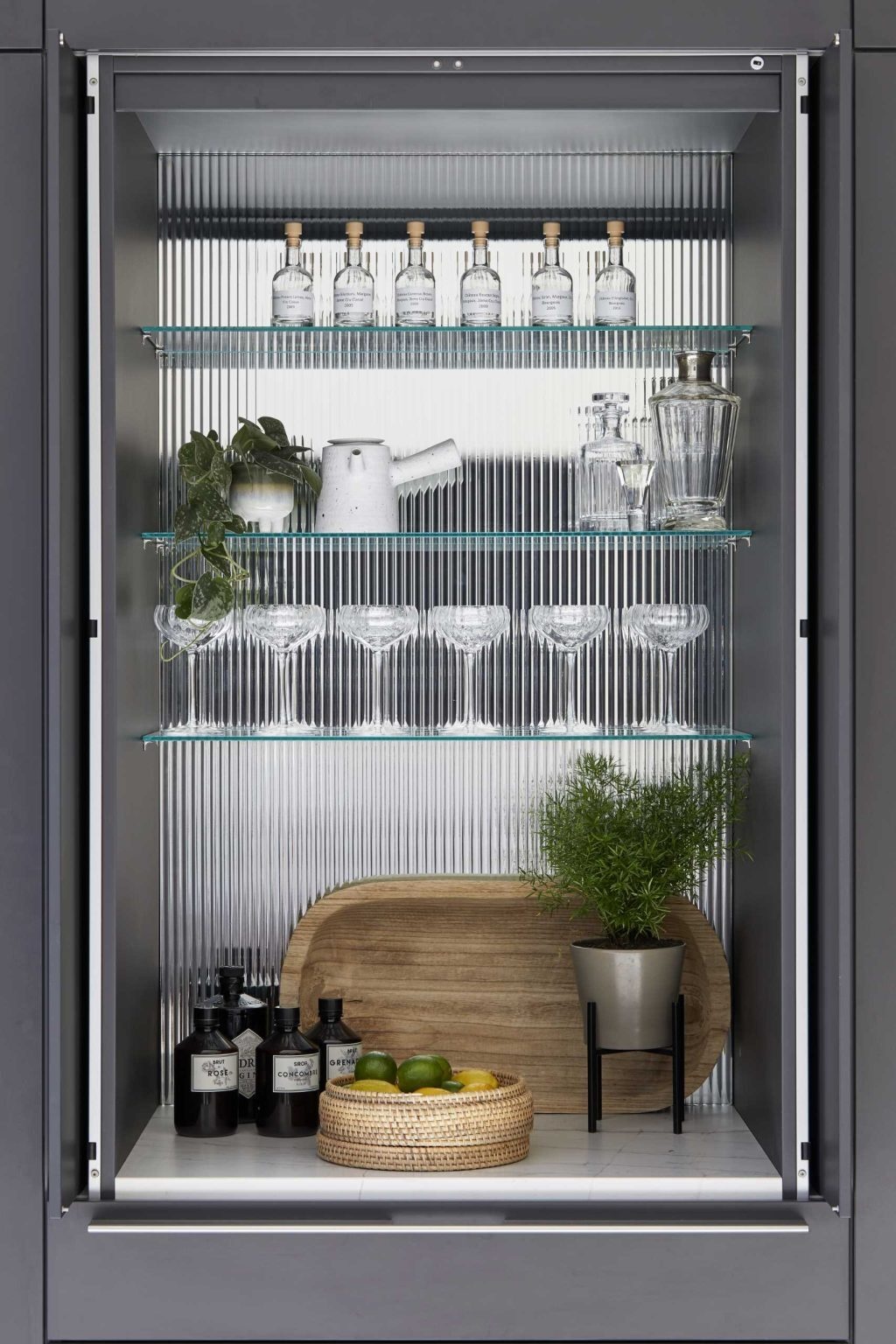
A hidden surprise is tucked inside one of the cabinets: a concealed bar complete with glass shelving. This feature adds an element of functionality and entertainment without disrupting the minimalist aesthetic.
A Seamless Transition Back to the Victorian Home
A small set of steps leads from the extension to a wood-framed doorway connecting the new addition with the original house.
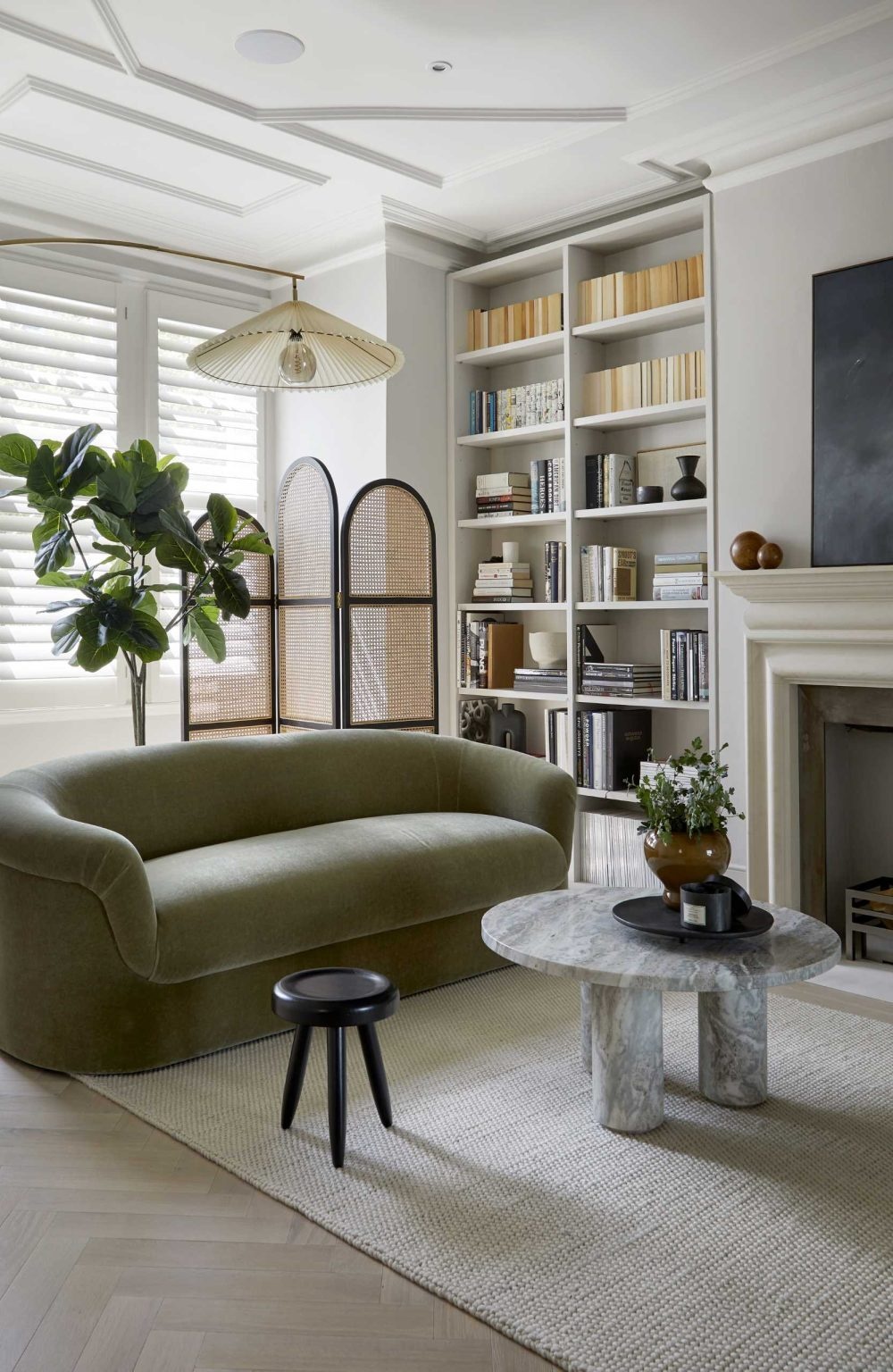
Crossing this threshold reveals a completely different atmosphere. While the extension celebrates openness and modern design, the existing Victorian rooms offer a more intimate experience.
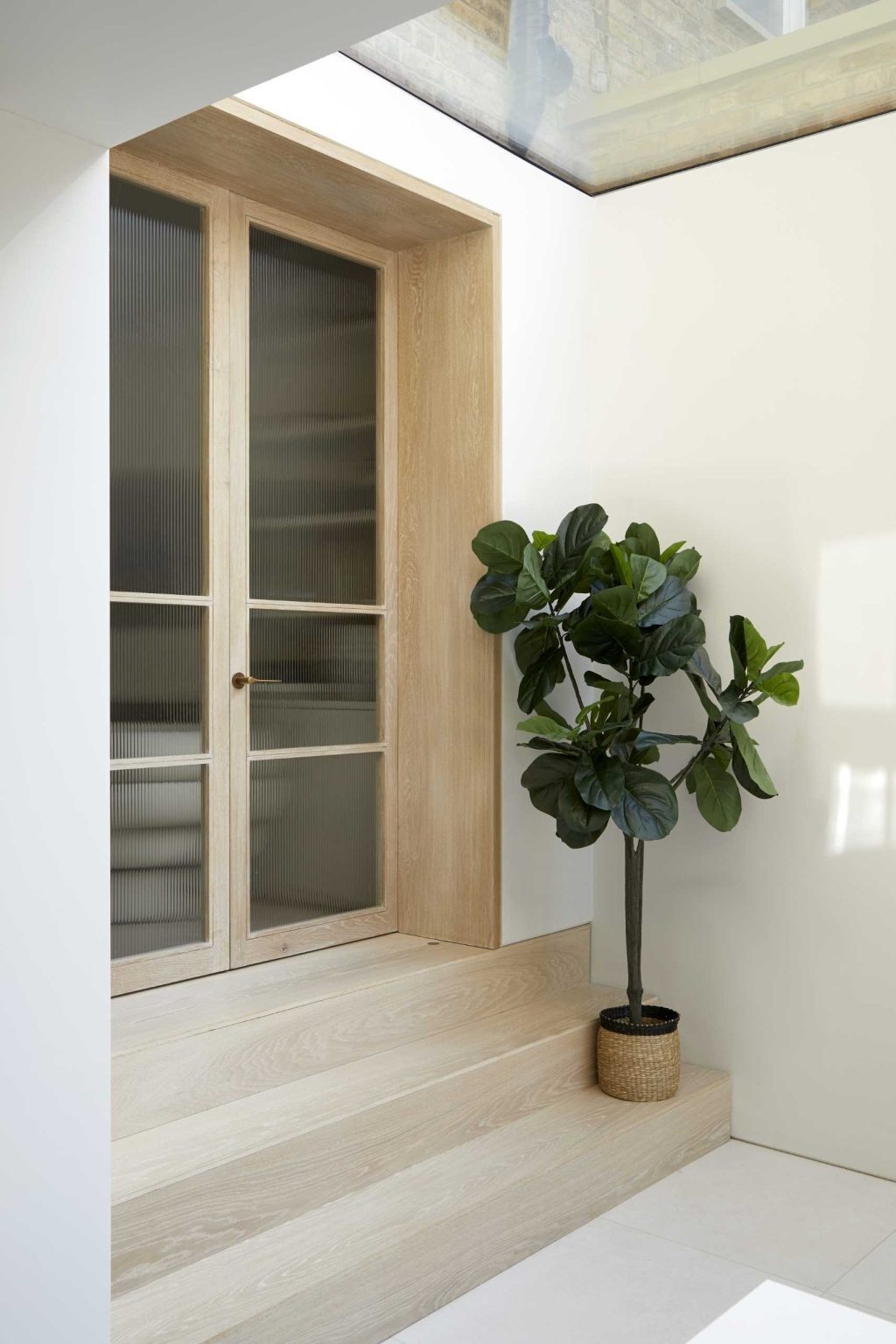
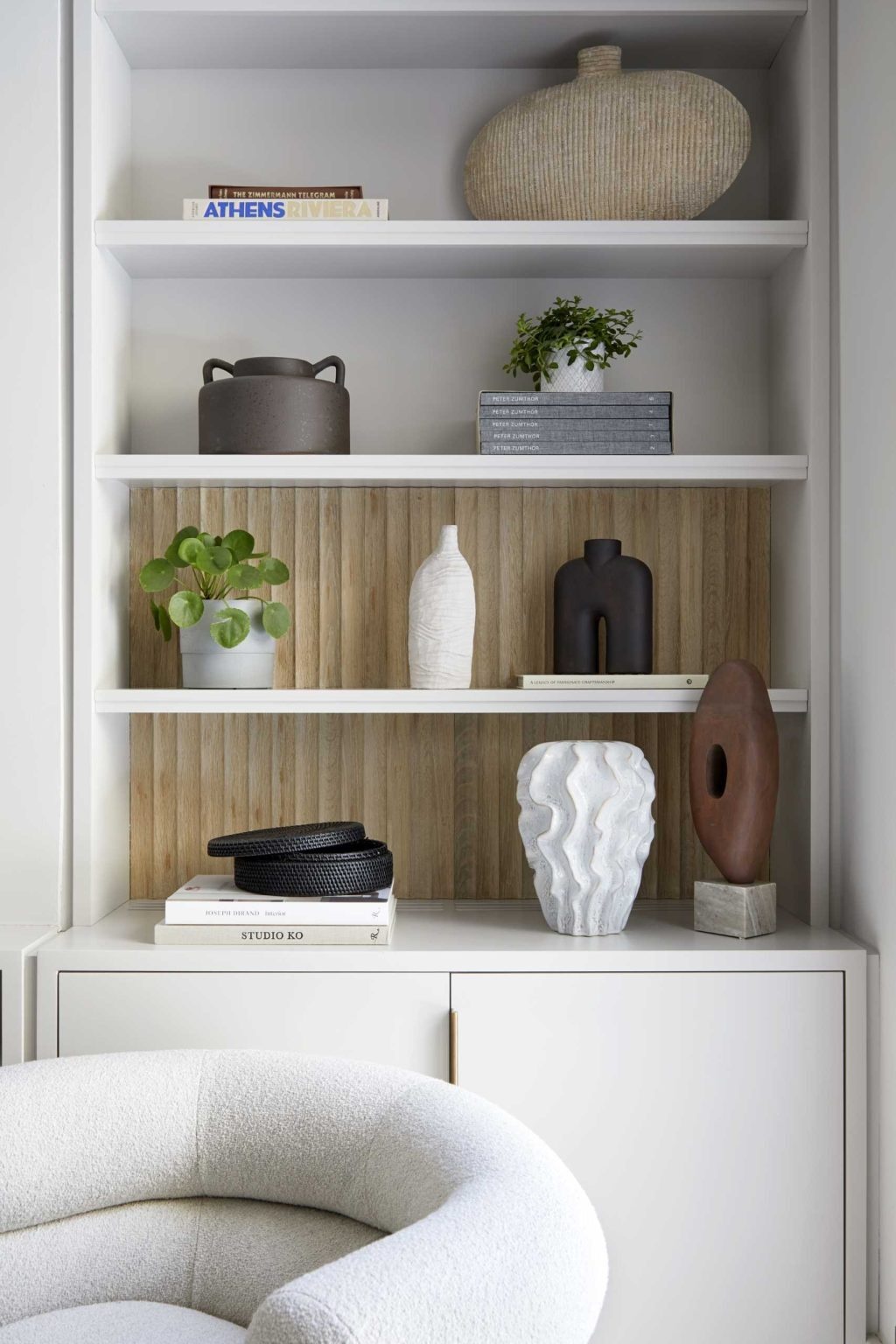
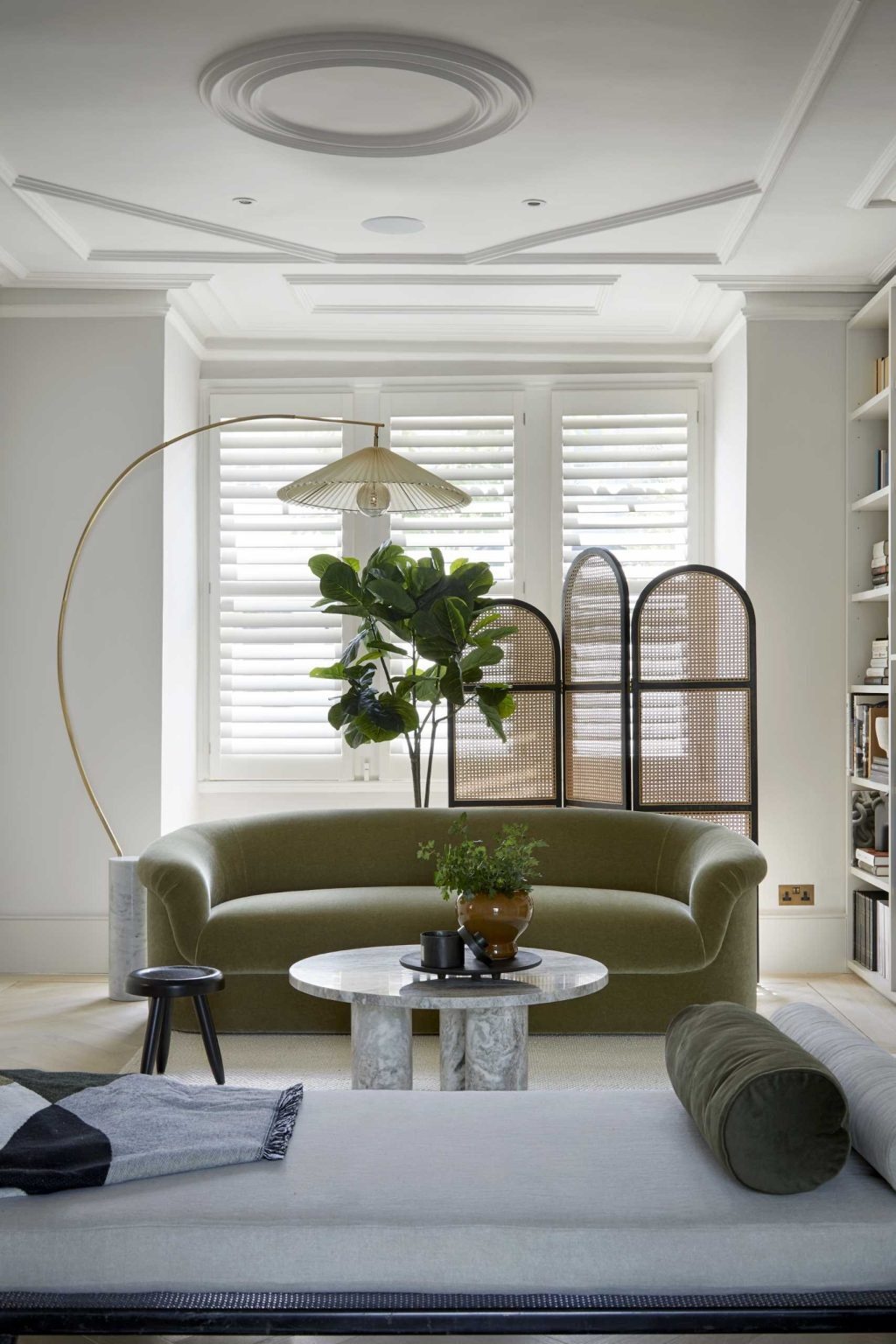
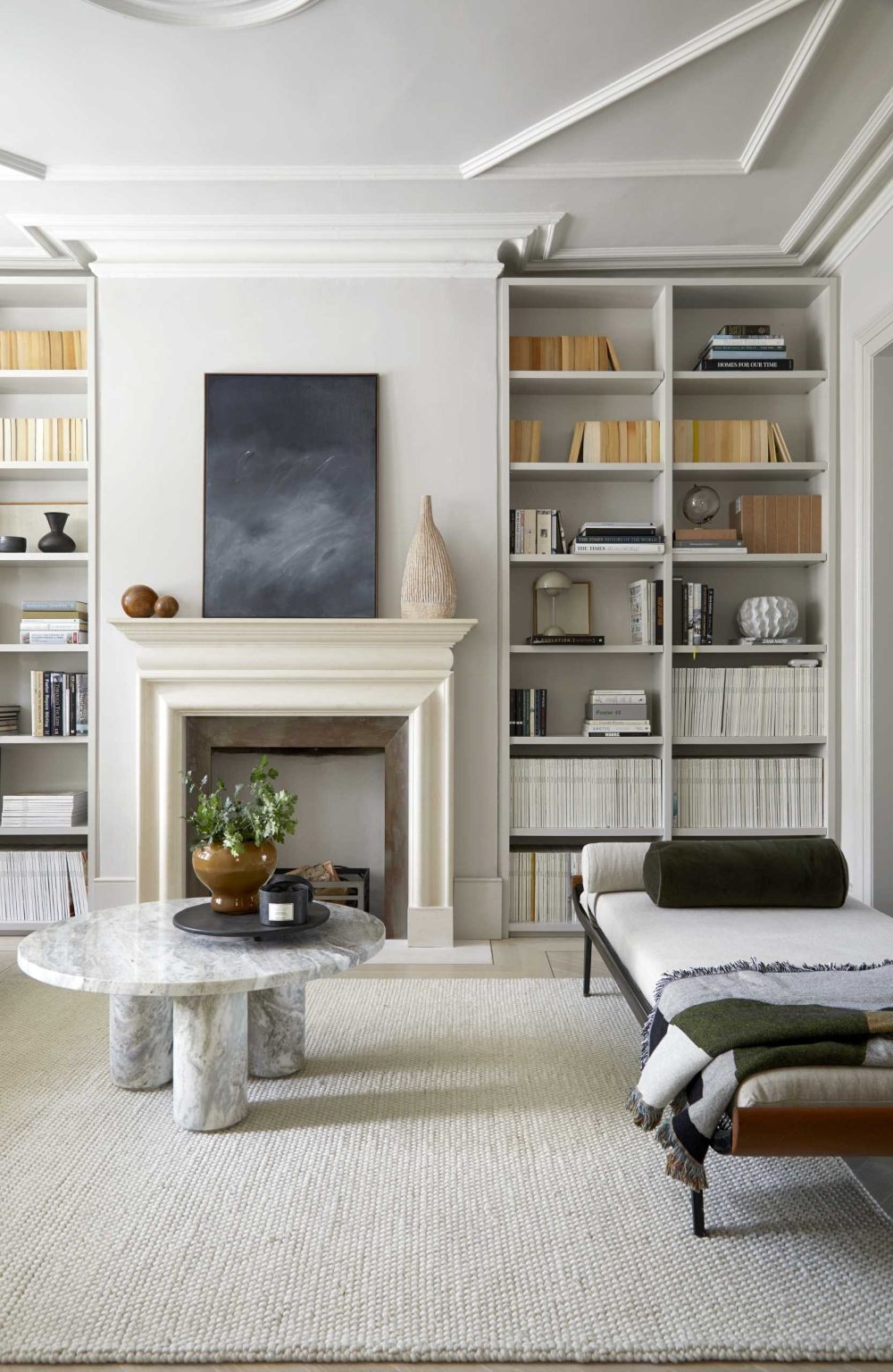
One of these spaces serves as a secondary living room, complete with built-in shelving, custom cabinetry, and comfortable furnishings. The contrast between the two areas gives homeowners the flexibility to enjoy expansive open-plan living while still having quieter rooms available within the original structure.
This balance between contemporary architecture and traditional character was exactly what the homeowners had hoped to achieve after years of living in and understanding their house.
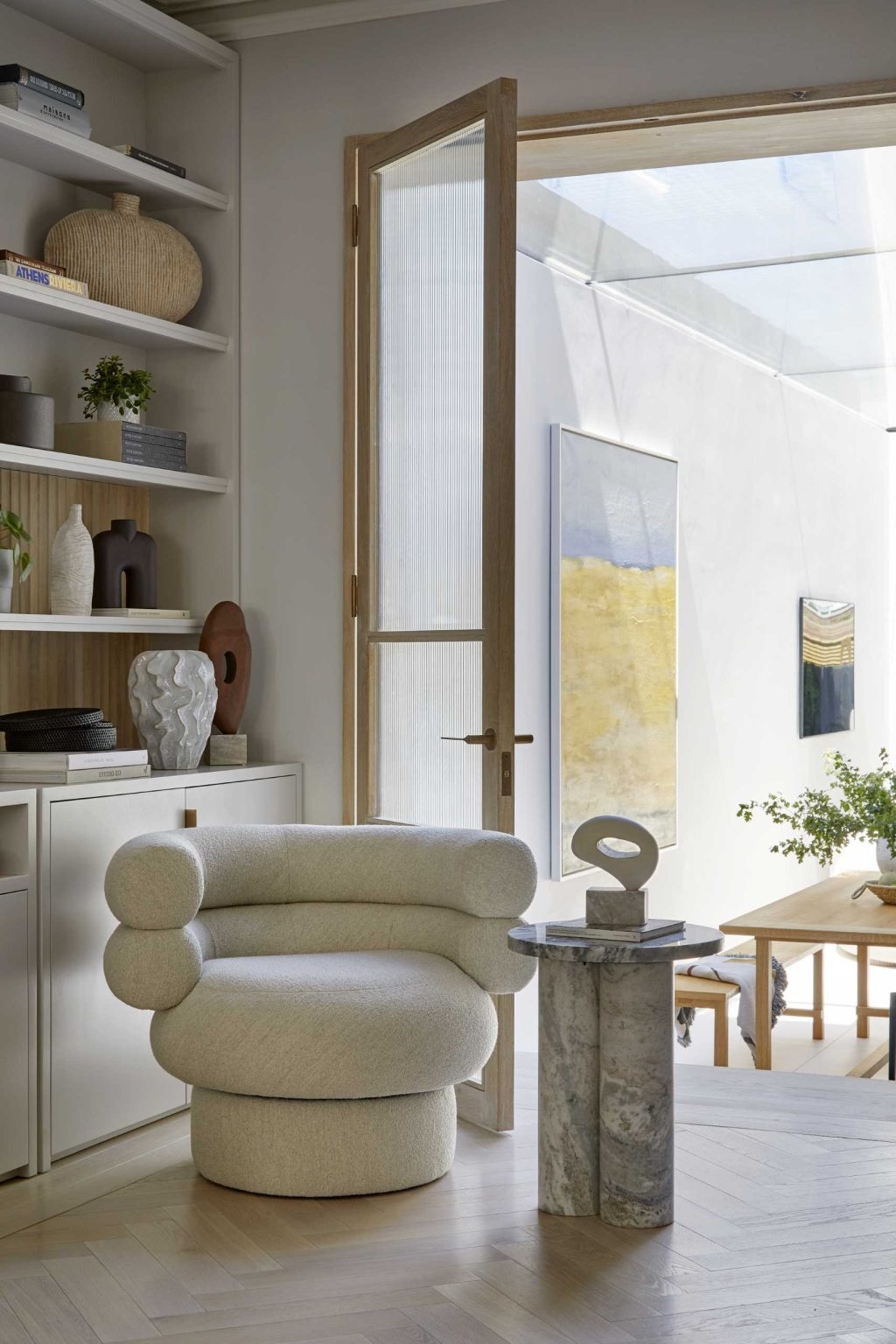
By introducing floor-to-ceiling glazing, a dramatic skylight, and open-plan living spaces, Finkernagel Ross created an addition that respects the Victorian character of the existing house while delivering the contemporary features the homeowners desired.