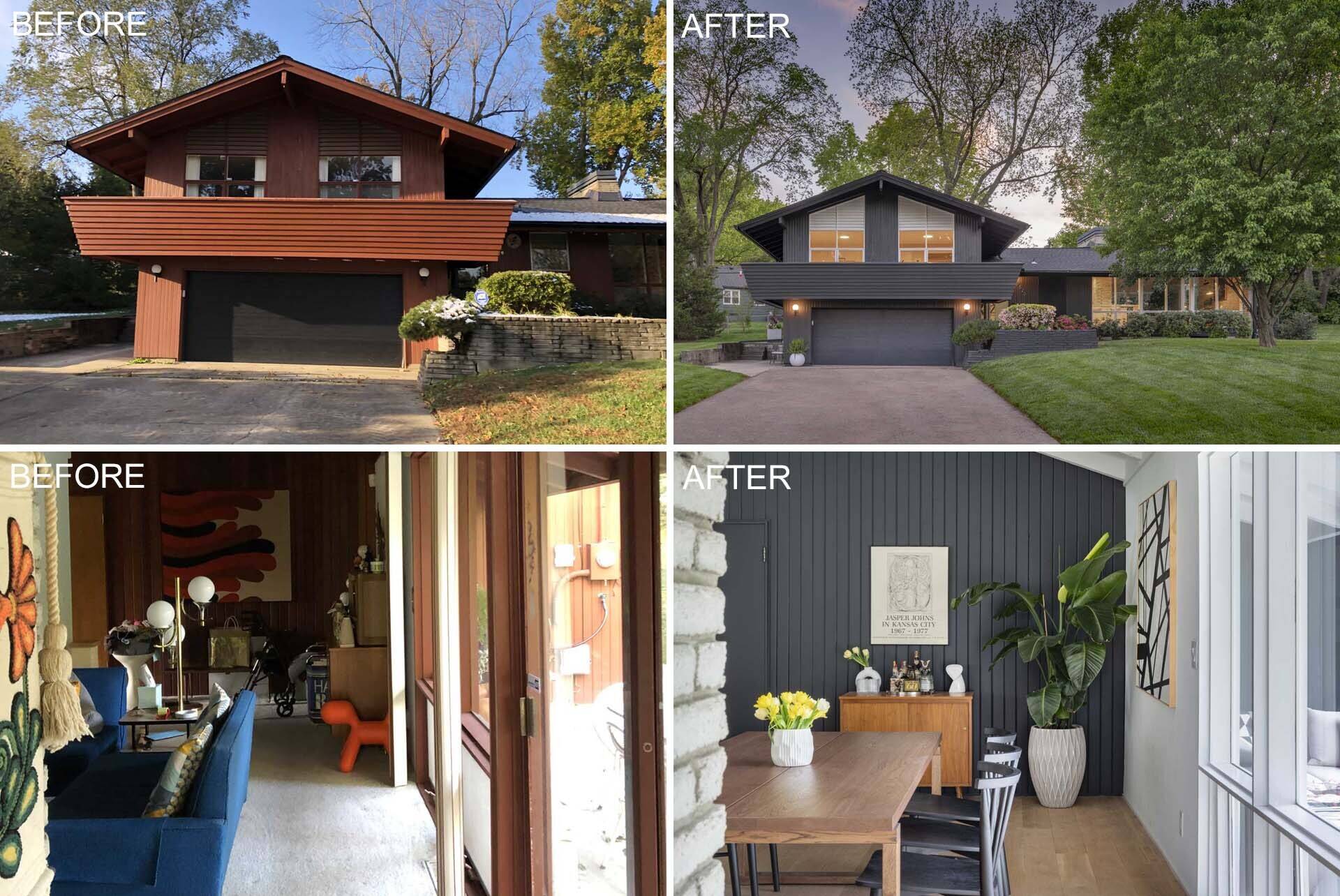
In Kansas City, Missouri, FORWARD Design | Architecture completed the renovation of a celebrated mid-century modern home known as The Mid-Western. Originally designed by Linscott, Kiene & Haylett and built in 1954, the house stood out for its innovative T-shaped split-level layout, which introduced a spacious two-story bedroom wing at a time when home design was rapidly evolving.
The house quickly gained recognition, becoming the most popular home in the 1954 Parade of Homes and later receiving national attention for its contribution to housing design. Decades later, the challenge was finding a way to preserve that history while adapting the home to contemporary living. The owner wanted the house to retain its mid-century character while creating brighter, more open spaces that felt larger and more welcoming.
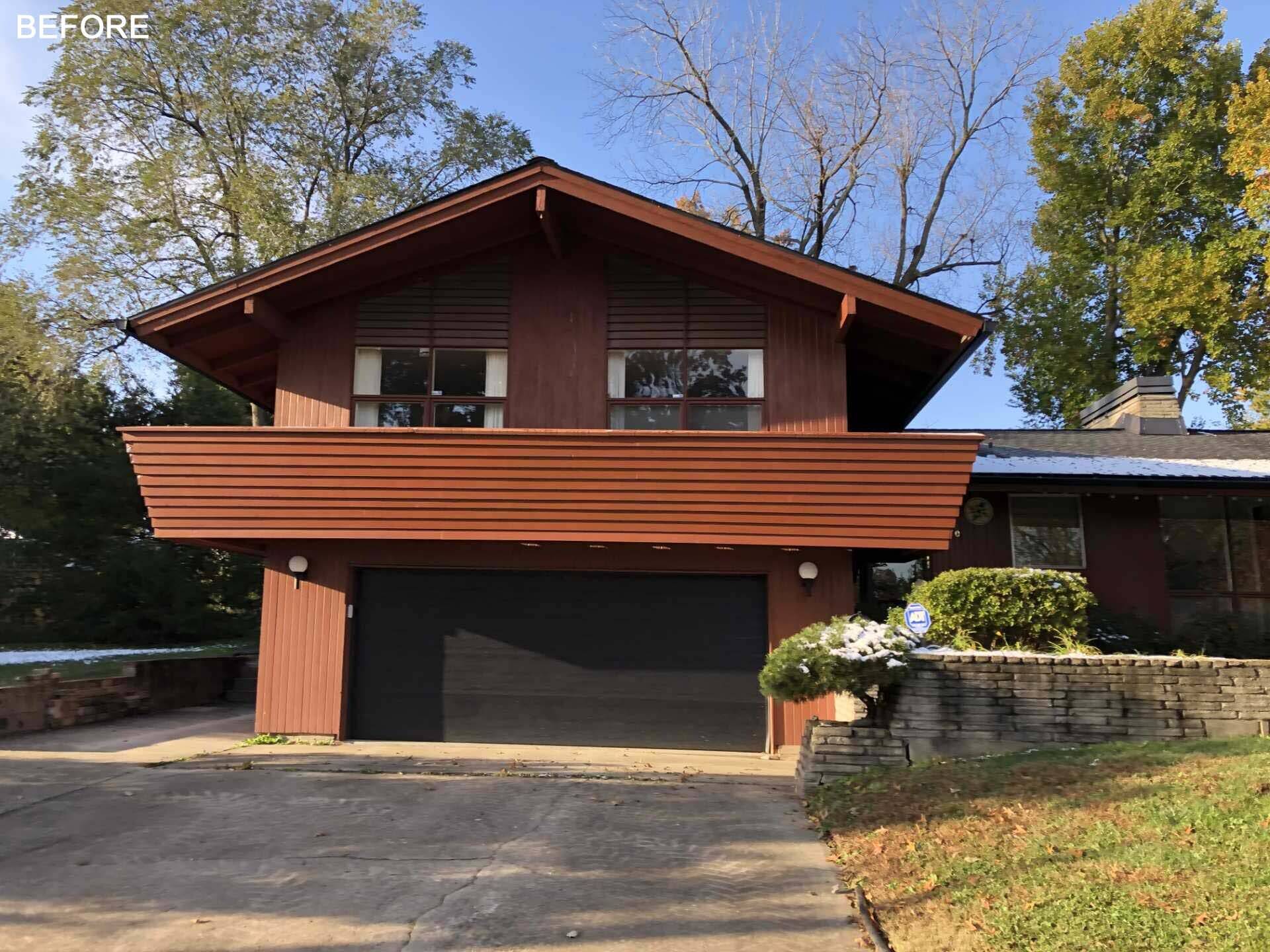
A Fresh Exterior With a Modern Presence
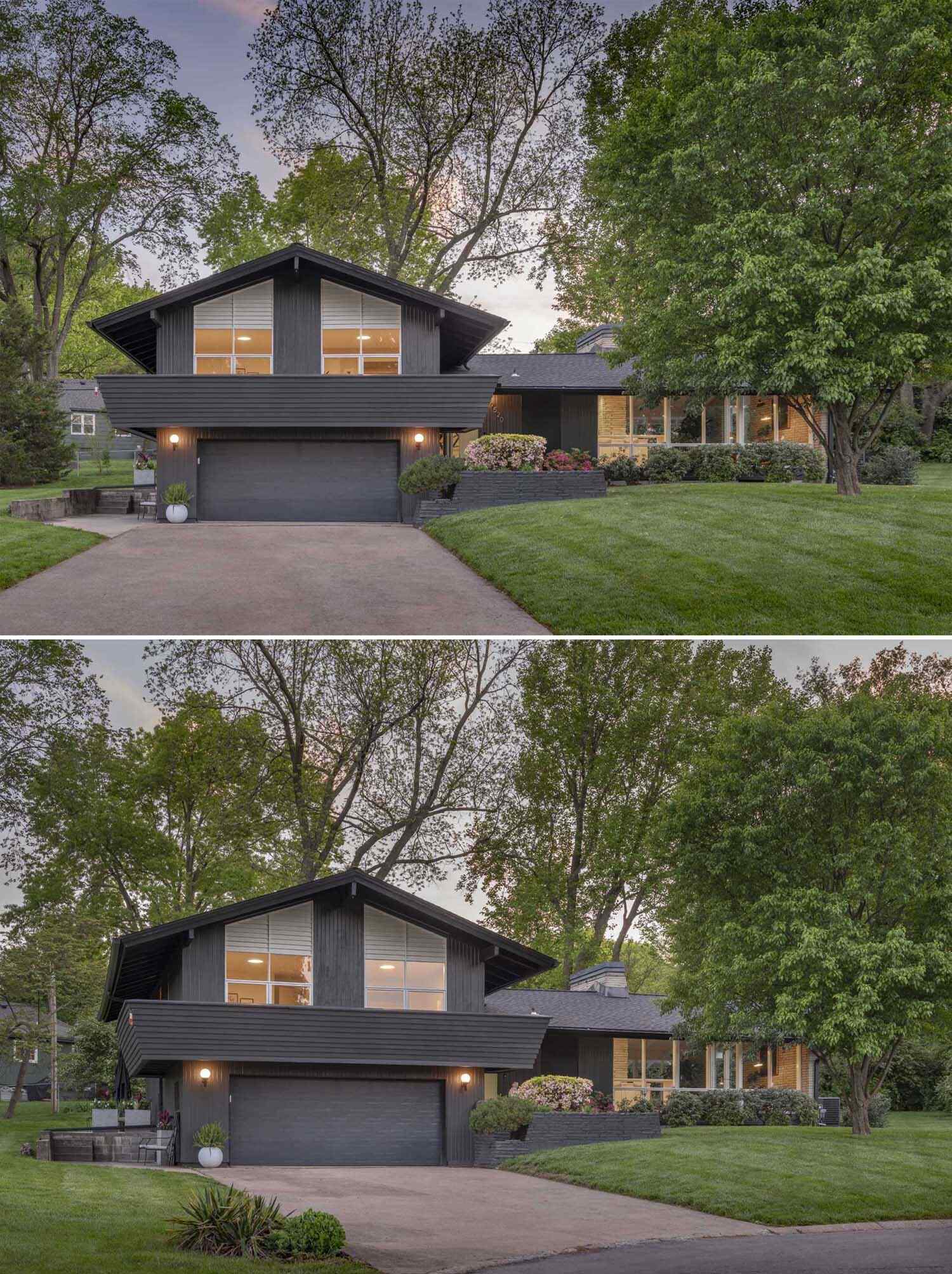
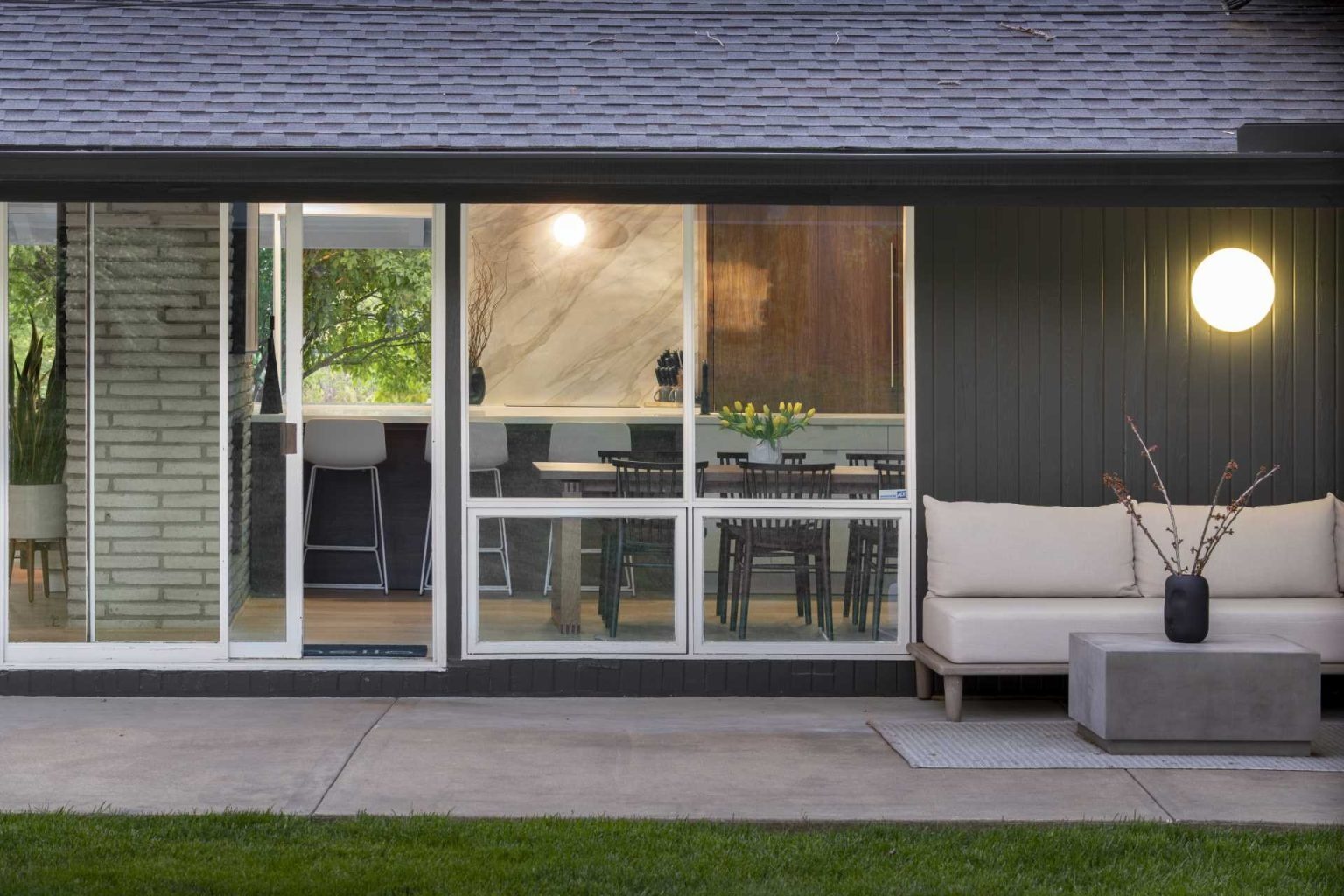
The first signs of change appear before stepping inside. The renovation introduced a dark exterior finish that immediately gives the home a more current appearance while highlighting the mature landscaping that surrounds it.
The darker palette creates contrast with the greenery and emphasizes the clean geometry that has always been part of the home’s design. While the structure remains recognizable, the updated exterior gives it a renewed sense of character that feels at home in the present day.
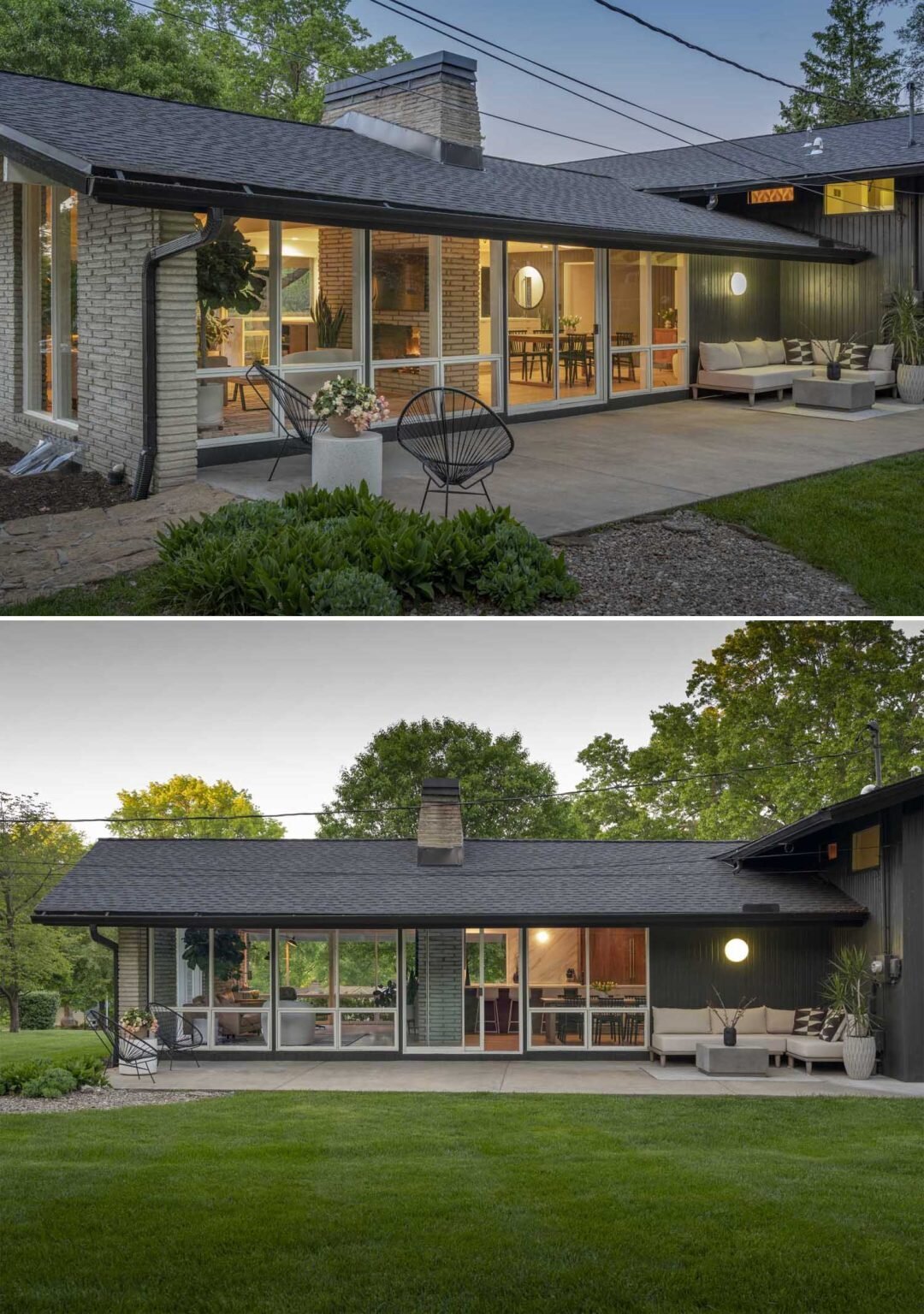
At the rear, a patio extends the living spaces outdoors. A lounge area and separate seating zone provide places to gather, relax, and enjoy the landscape. Large floor-to-ceiling windows connect the interior with the outdoor spaces, bringing sunlight deep into the home and offering uninterrupted views between inside and out.
Turning a Dark Entry Into a Bright Welcome
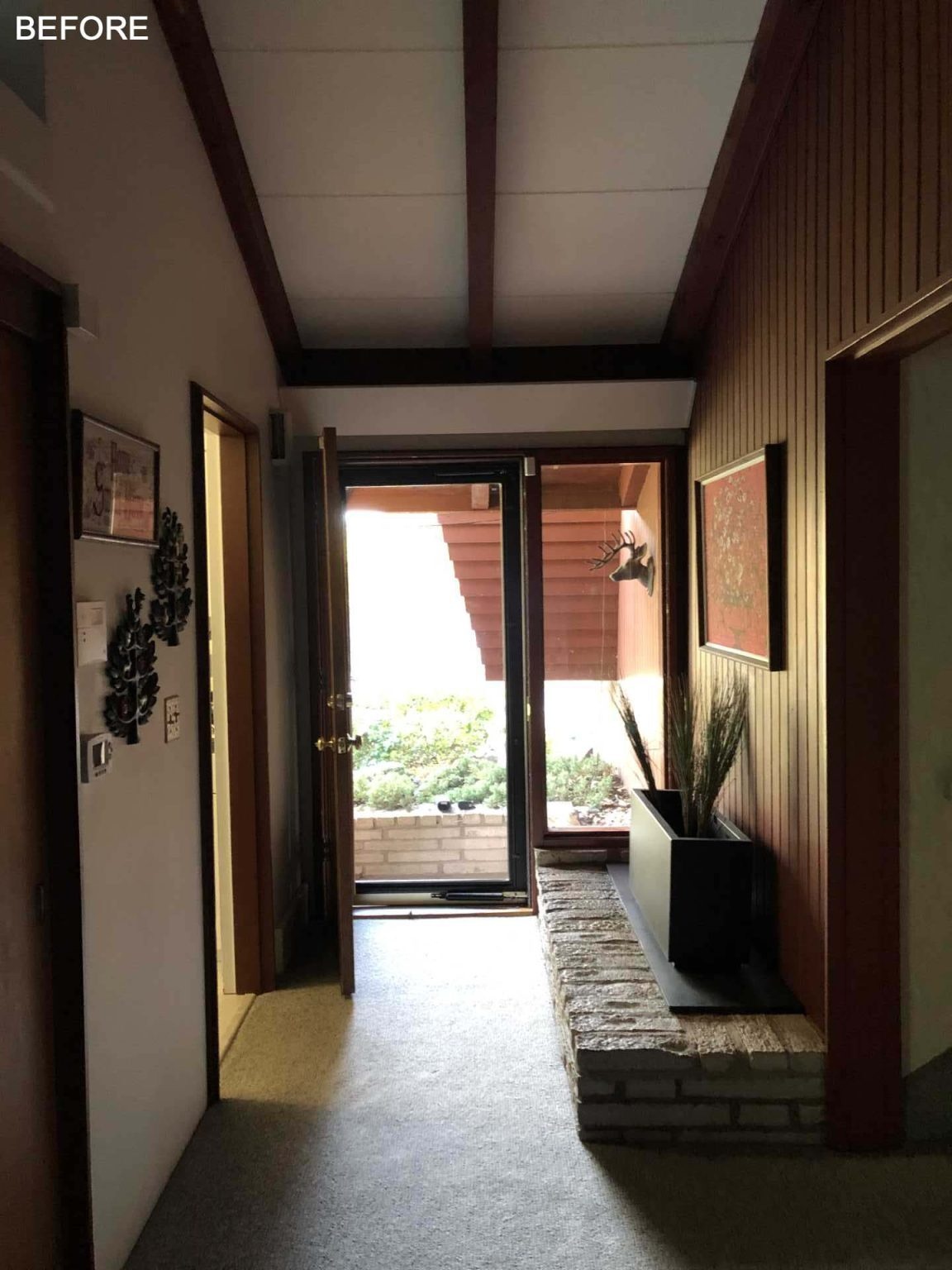
Before the renovation, the entryway felt enclosed and dim. Natural light entered primarily through the window beside the front door, leaving much of the space in shadow.
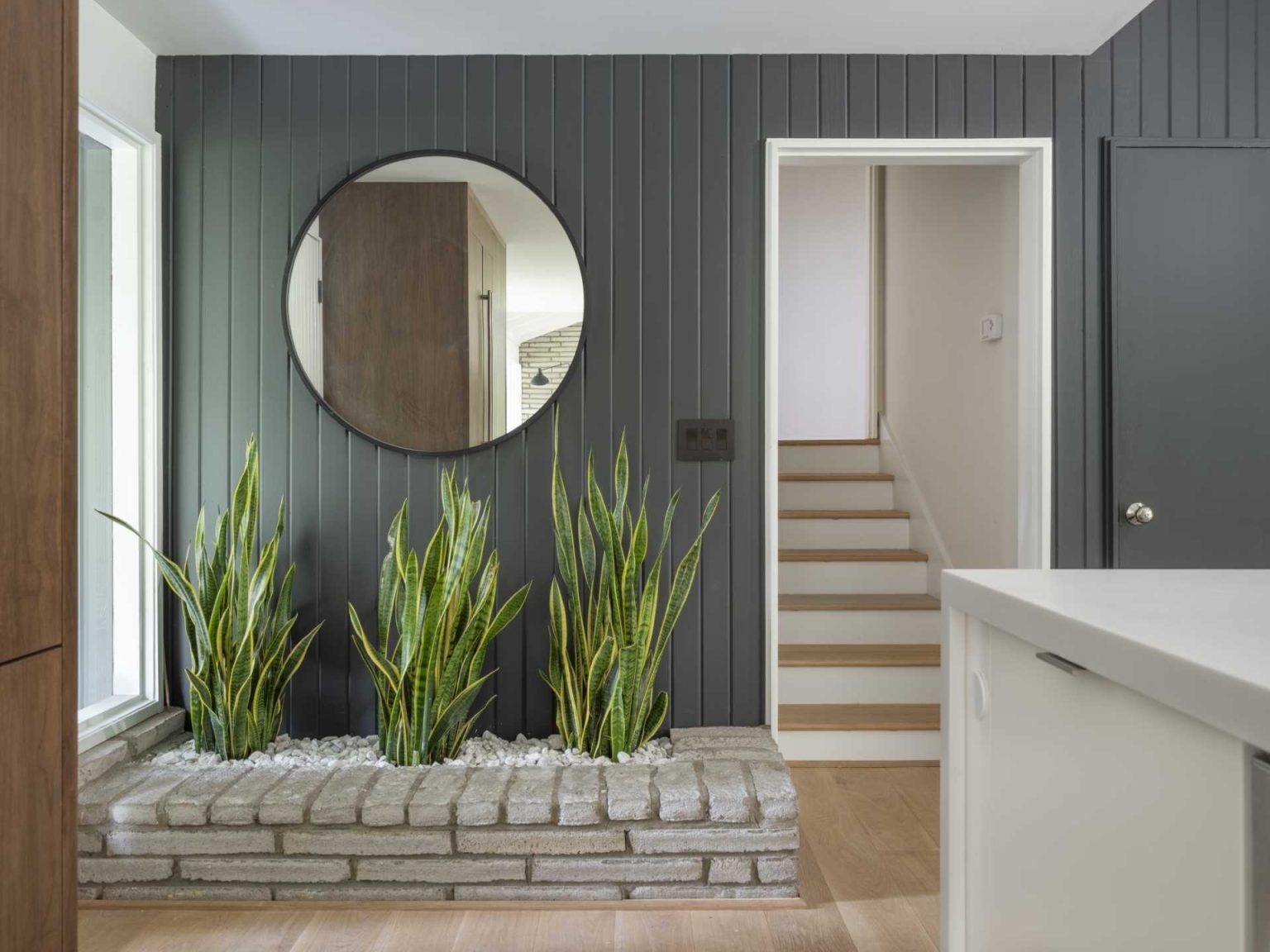
The redesign kept one of the home’s original features, a brick planter integrated into the wall, helping maintain a link to the house’s mid-century roots. Around it, the space was refreshed with grey-painted wood surfaces and light wood flooring that instantly brighten the interior.
A large round mirror adds another layer of brightness by reflecting light throughout the entry. Together, these changes create a much more inviting first impression while preserving elements that tell the story of the home’s past.
From Enclosed Rooms to Open Gathering Spaces
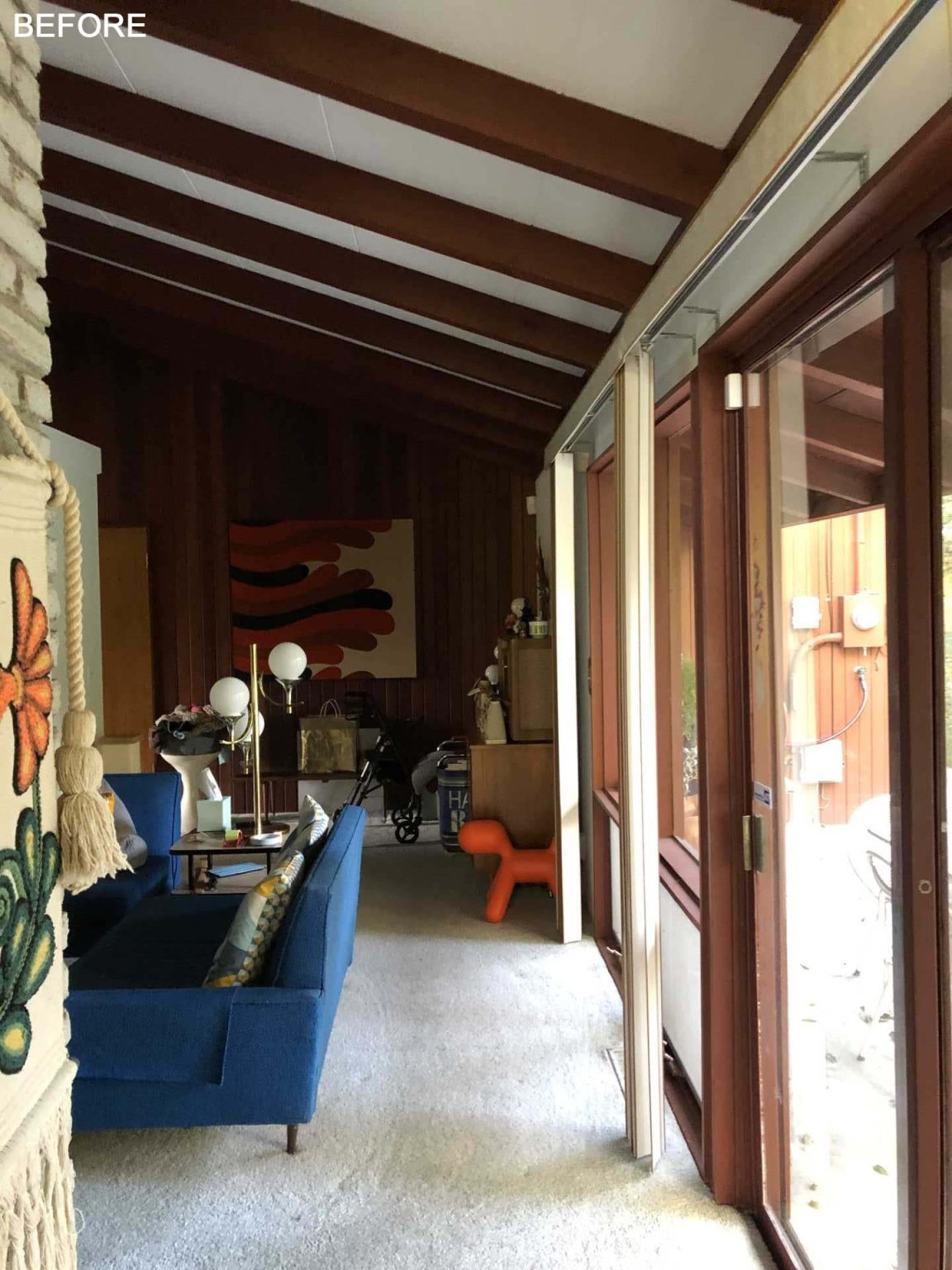
The updated entryway now offers a direct view into the kitchen and opens naturally into the dining room. This is a dramatic change from the previous layout, where darker finishes, carpeting, and heavier materials created a more enclosed atmosphere.
What was once the living room has become a bright dining space. The grey accent wall continues from the entry and provides a backdrop for a vintage-inspired wood cabinet that references the home’s mid-century origins.
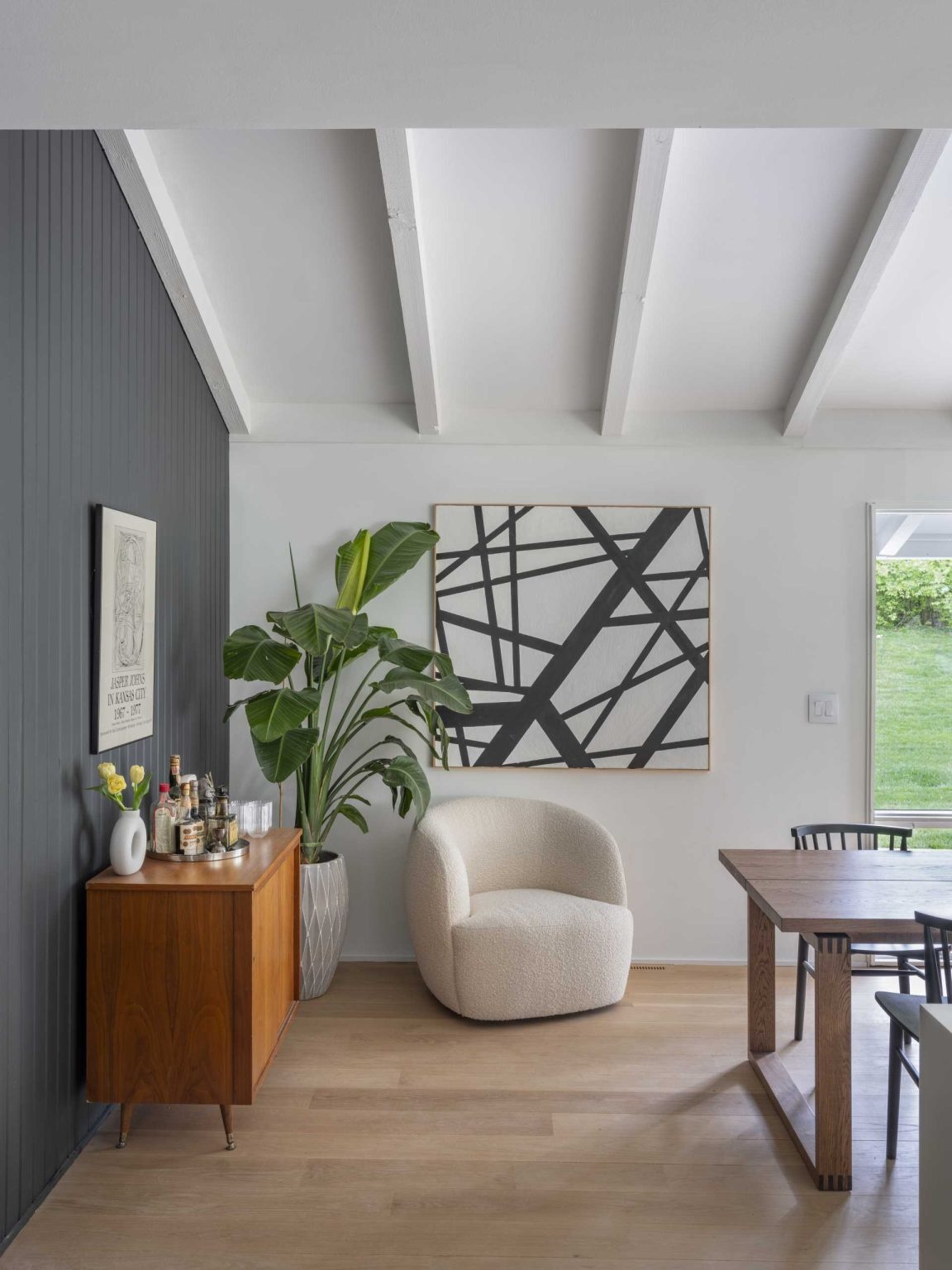
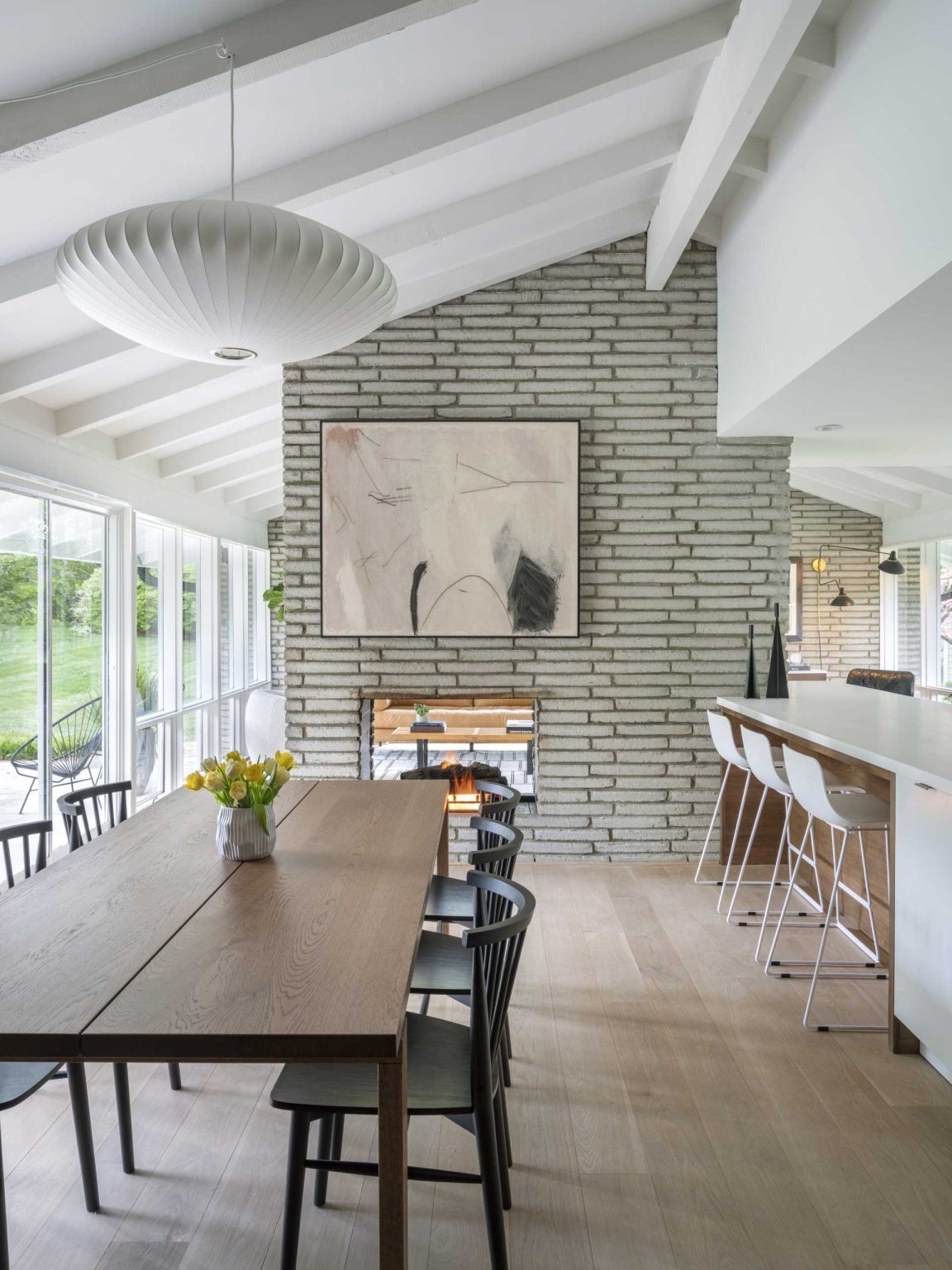
A large wood dining table anchors the room and offers ample space for entertaining and family meals. Standing between the dining and living areas is one of the home’s defining features, the original double-sided brick fireplace, which was preserved during the renovation.
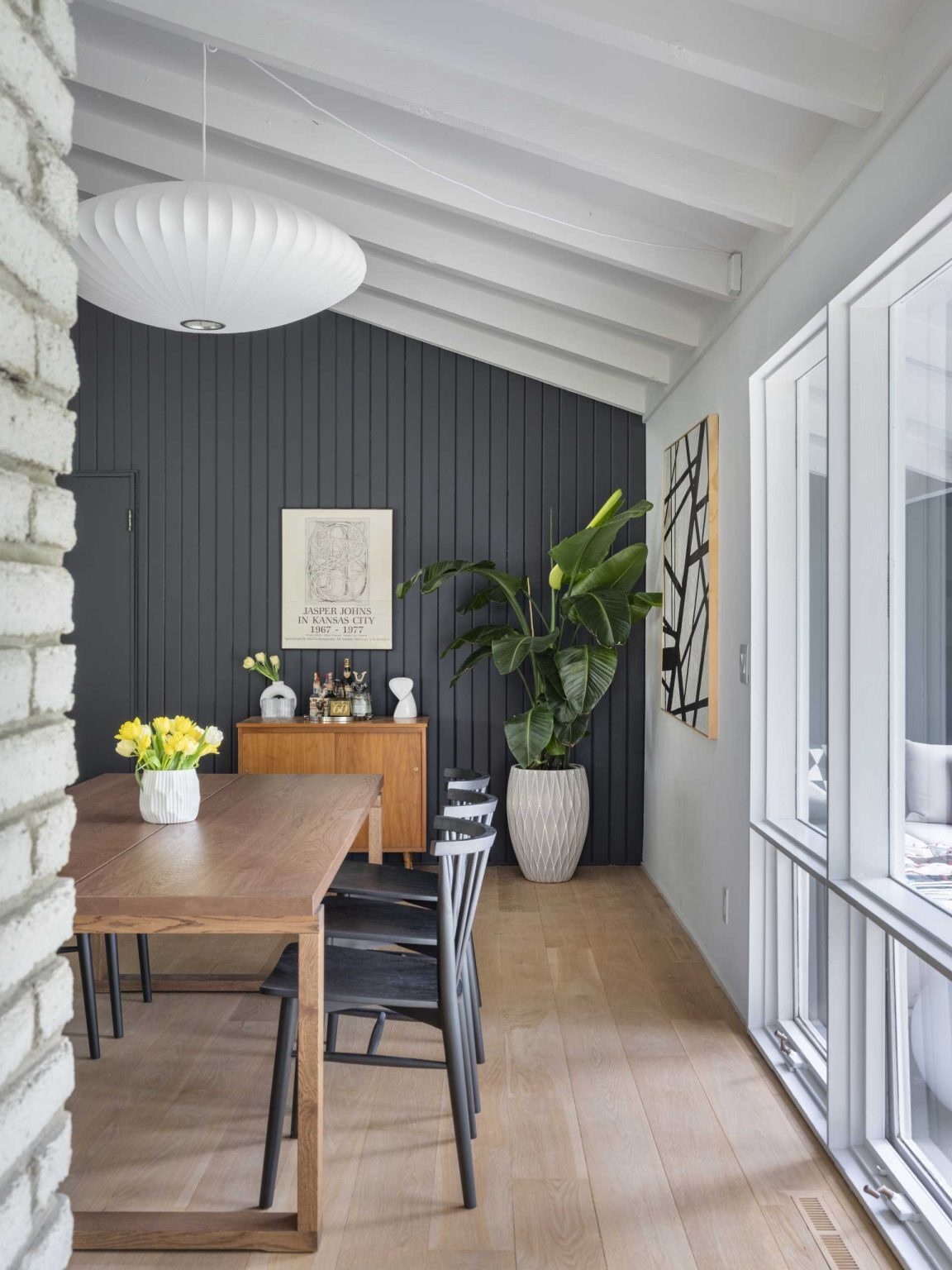
The fireplace became a key organizing element in the redesign. It helps define individual zones within the larger open-plan layout while maintaining visual connections between spaces.
A Living Room Reconnected to the Home
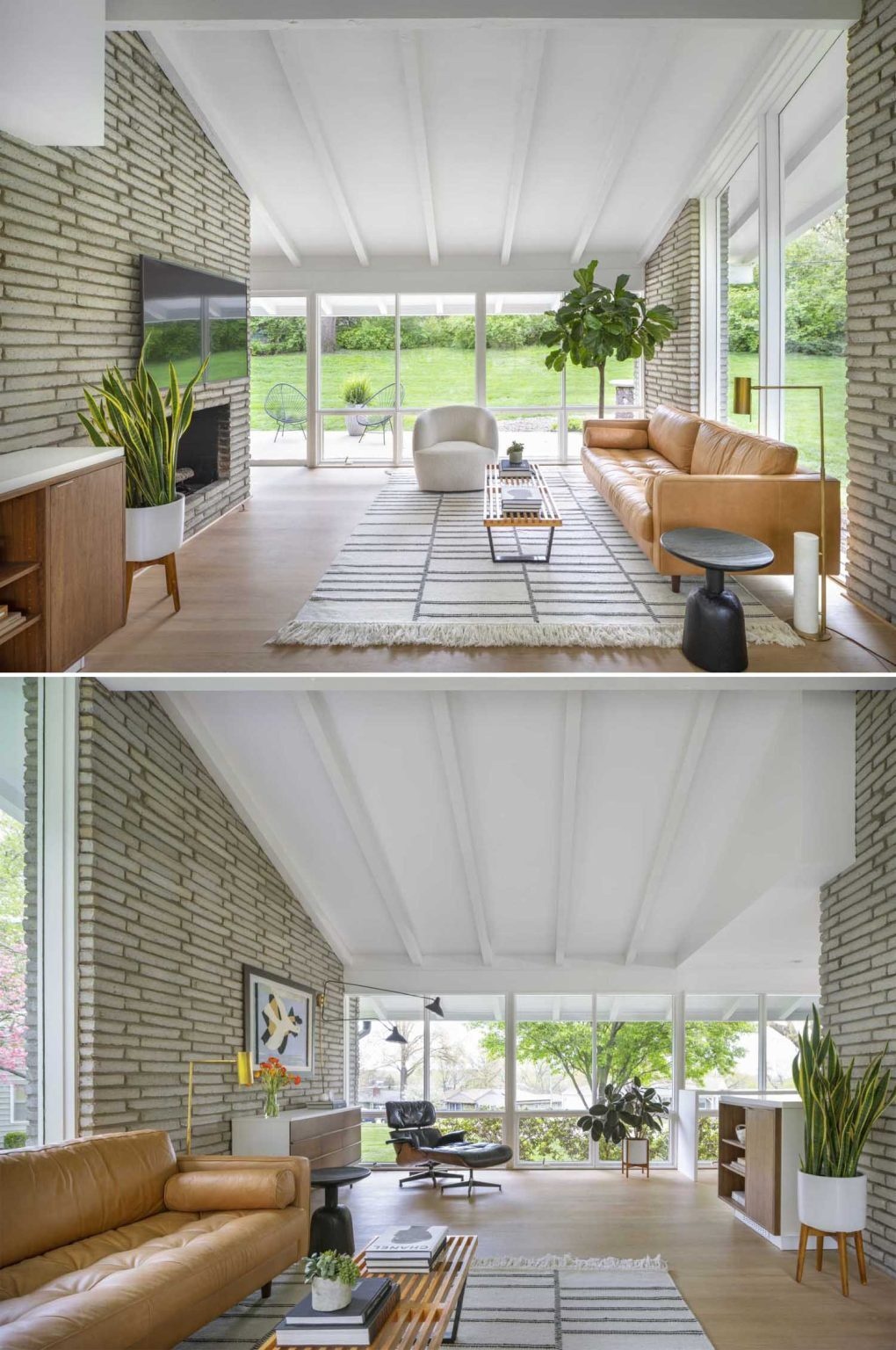
On the opposite side of the fireplace sits the living room. Prior to the renovation, this area functioned quite differently, with the fireplace serving primarily as a backdrop for a home office setup.
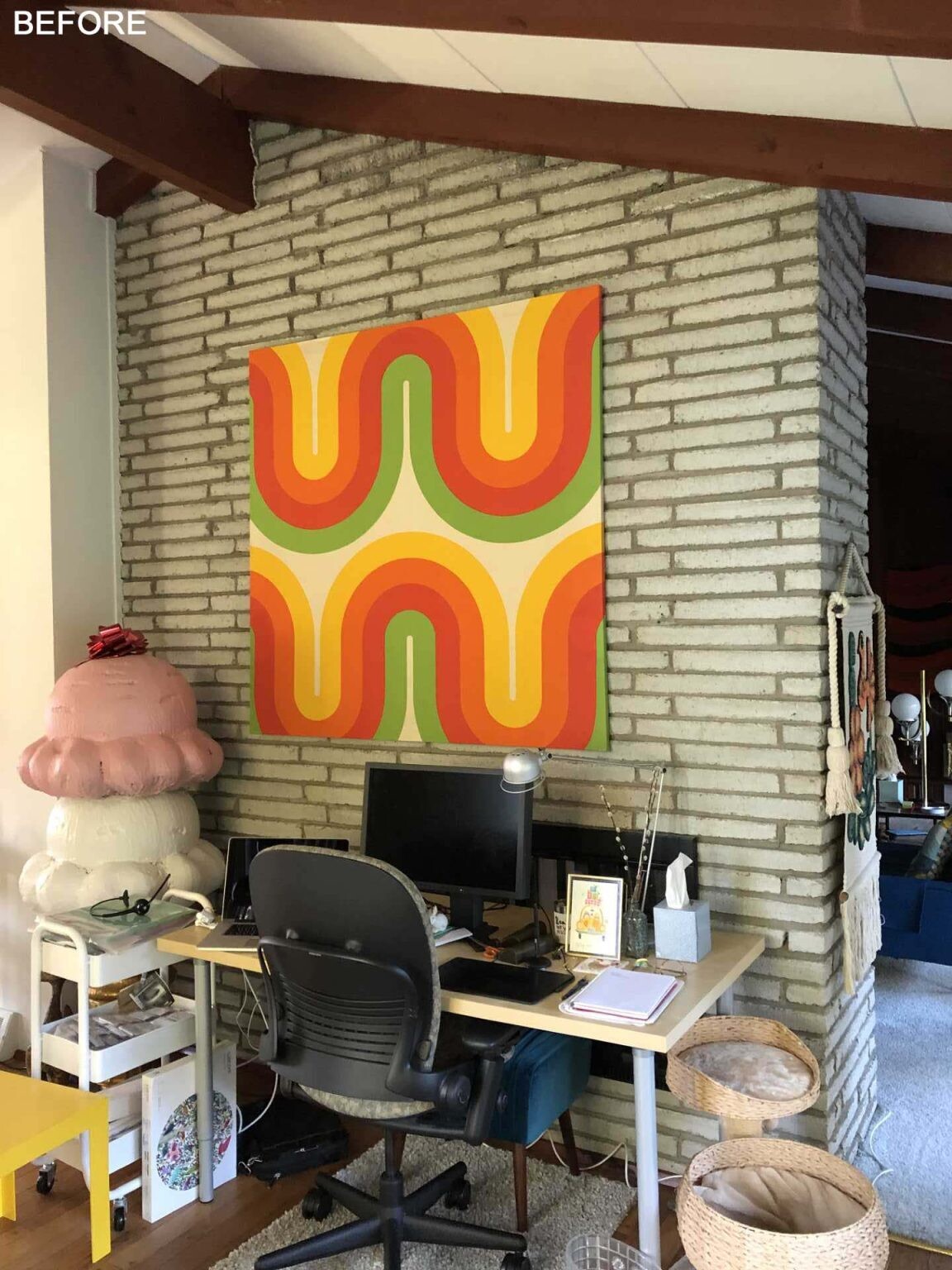
Today, the fireplace once again takes on its intended role as a focal point within the living space. Artwork that once covered the brick has been replaced with a television, allowing the fireplace itself to become part of the room’s identity once again.
The living room is intentionally simple, allowing attention to remain on the architecture, the fireplace, and the expansive views toward the patio. Natural light enters through the large windows, creating a bright atmosphere throughout the day.
Adjacent to the living room is a sitting area that overlooks the street. This secondary gathering space creates another place to relax while maintaining visual connections across the main level.
Opening Up the Kitchen
The sitting area looks directly into one of the most significant parts of the renovation: the kitchen.
Before construction began, the kitchen was separated from the rest of the home by a wall of cabinetry and a doorway connecting it to the entryway. While functional, the arrangement limited views, daylight, and interaction between spaces.
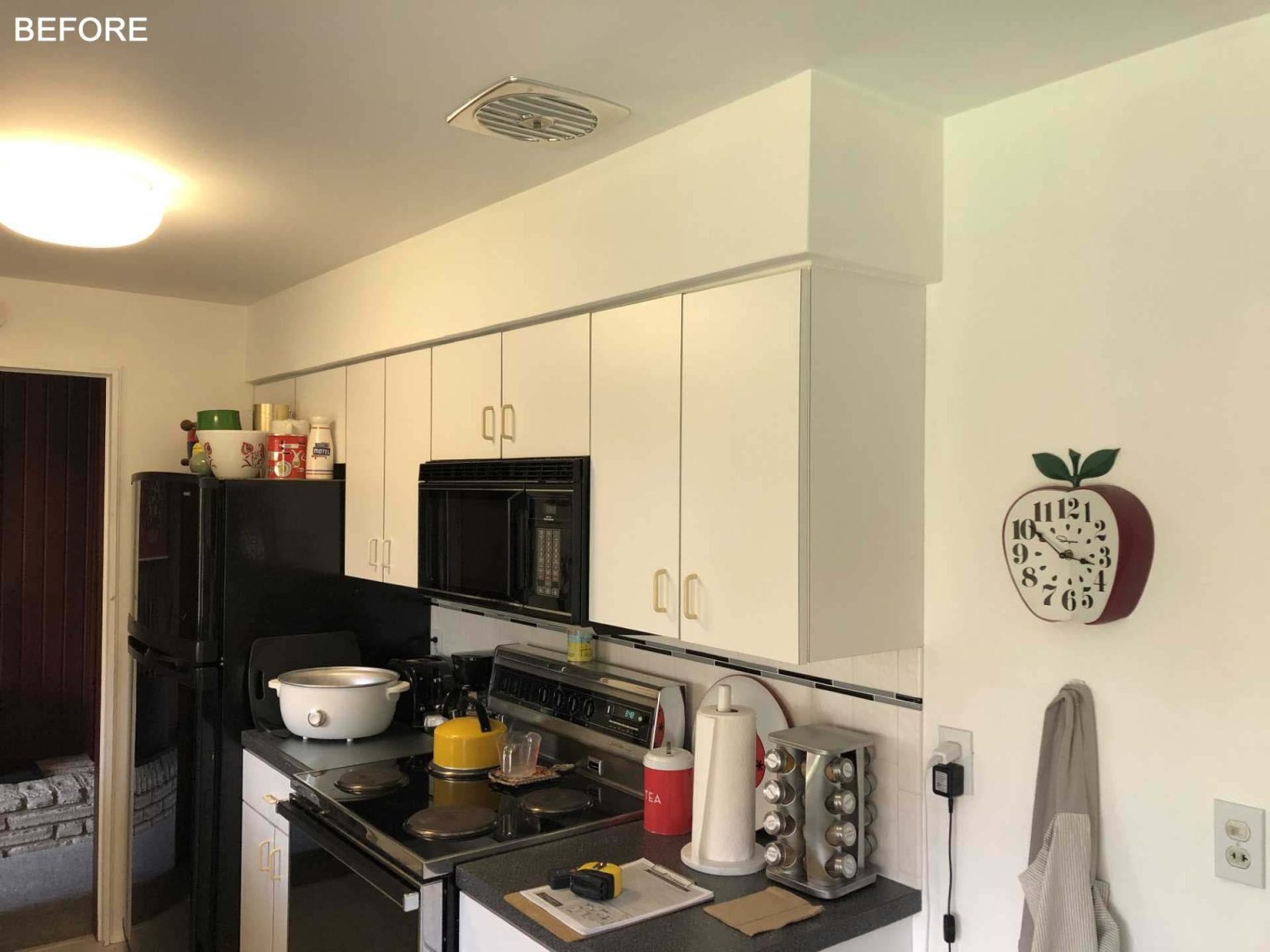
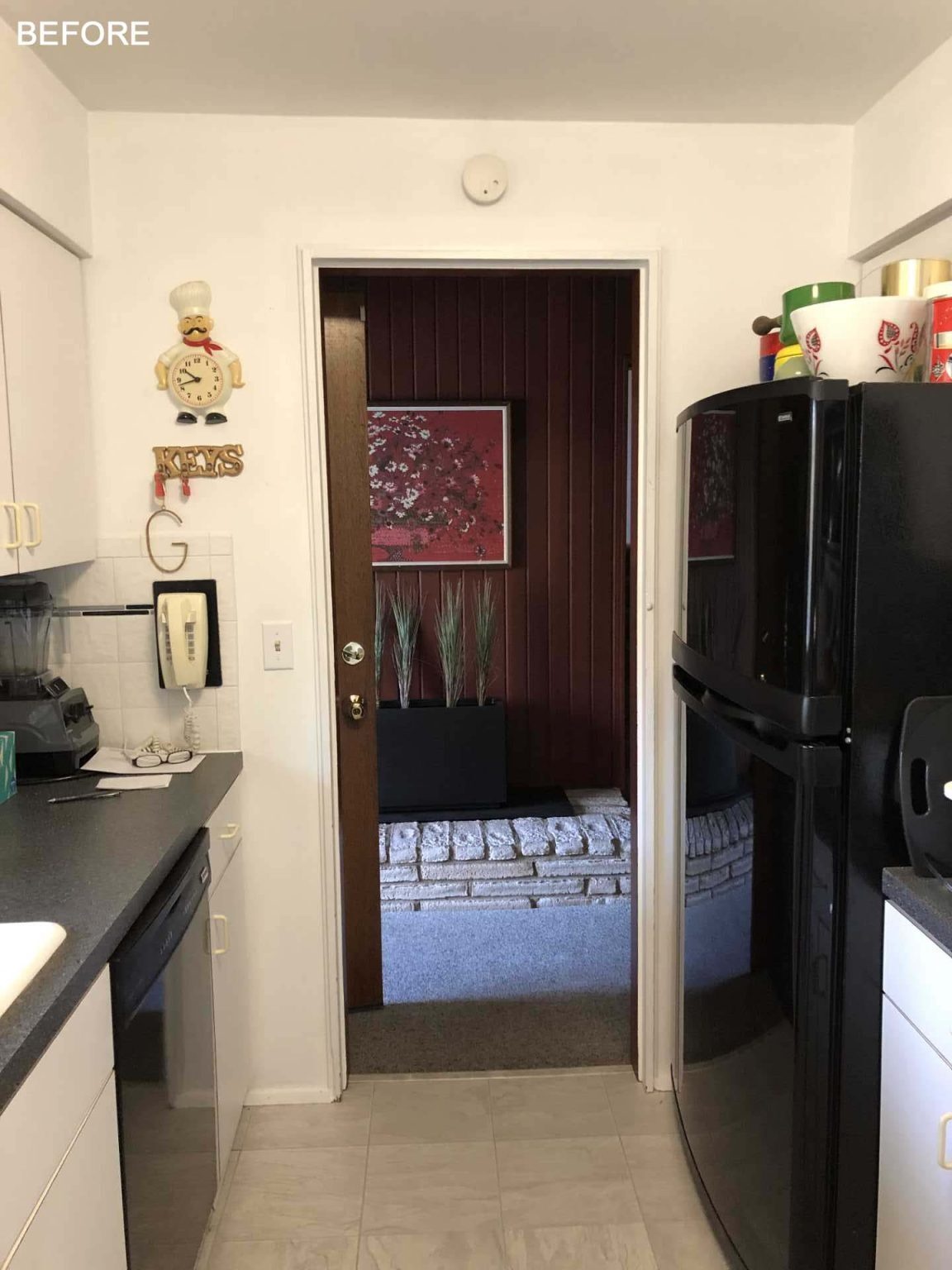
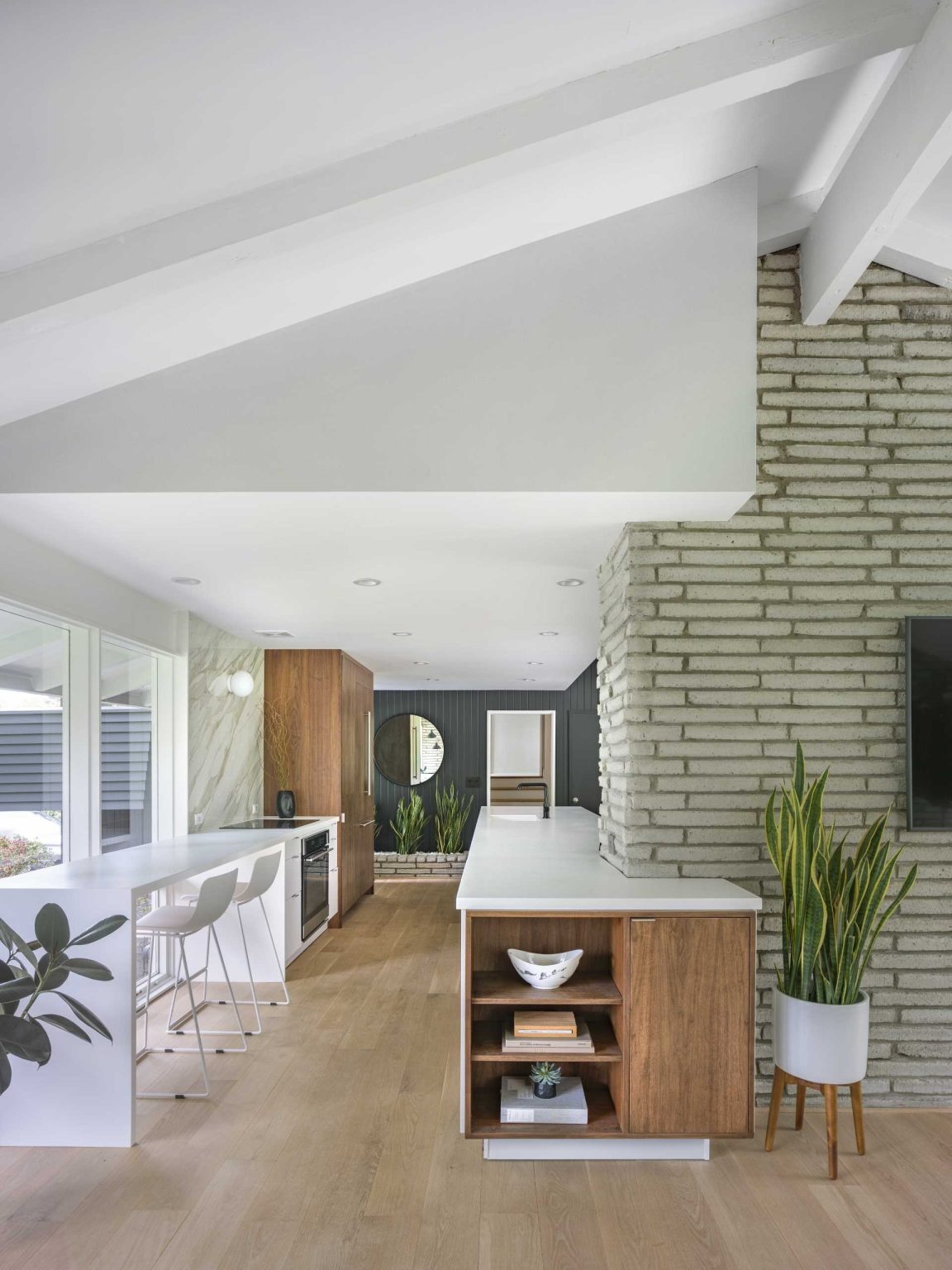
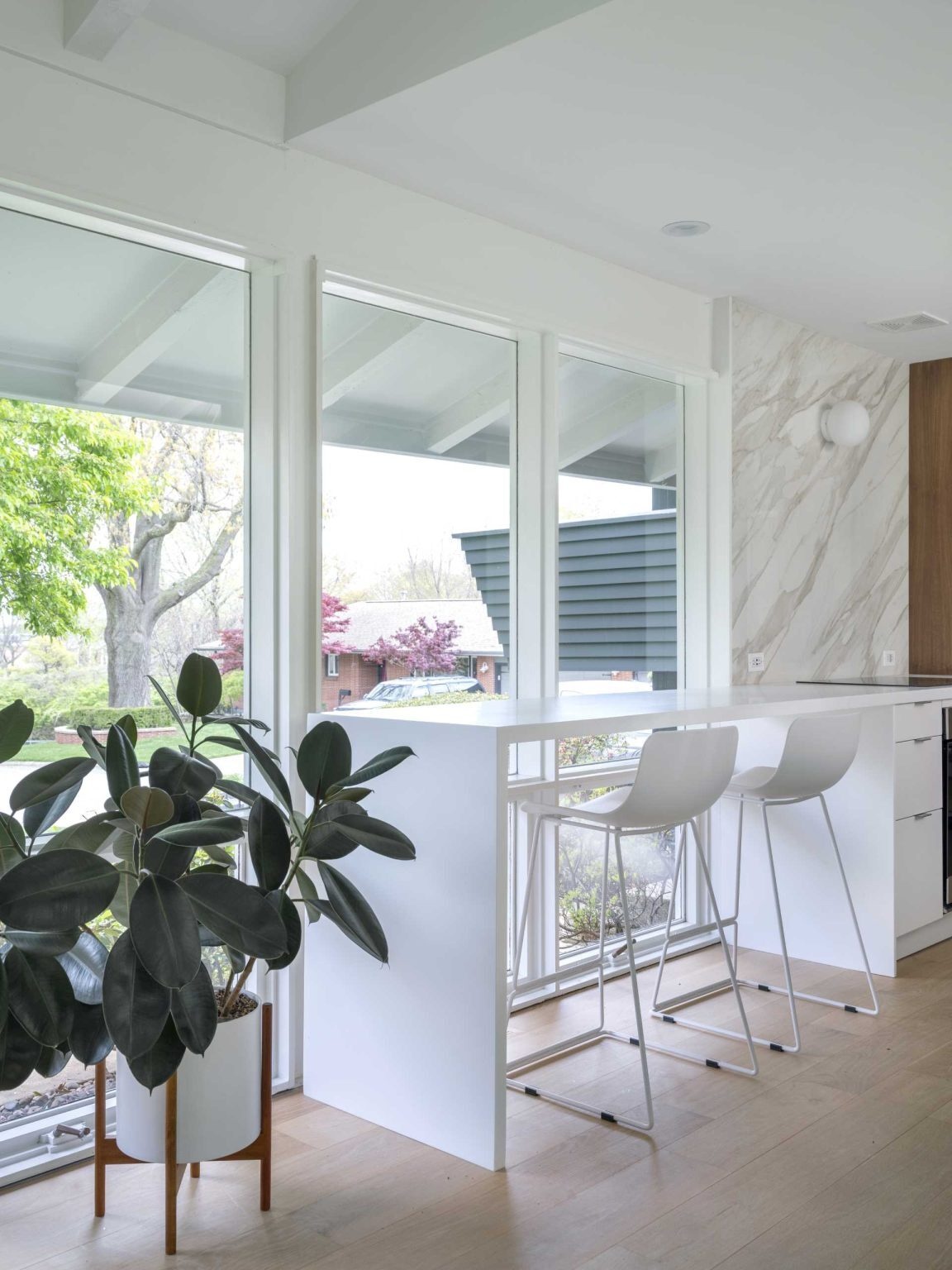
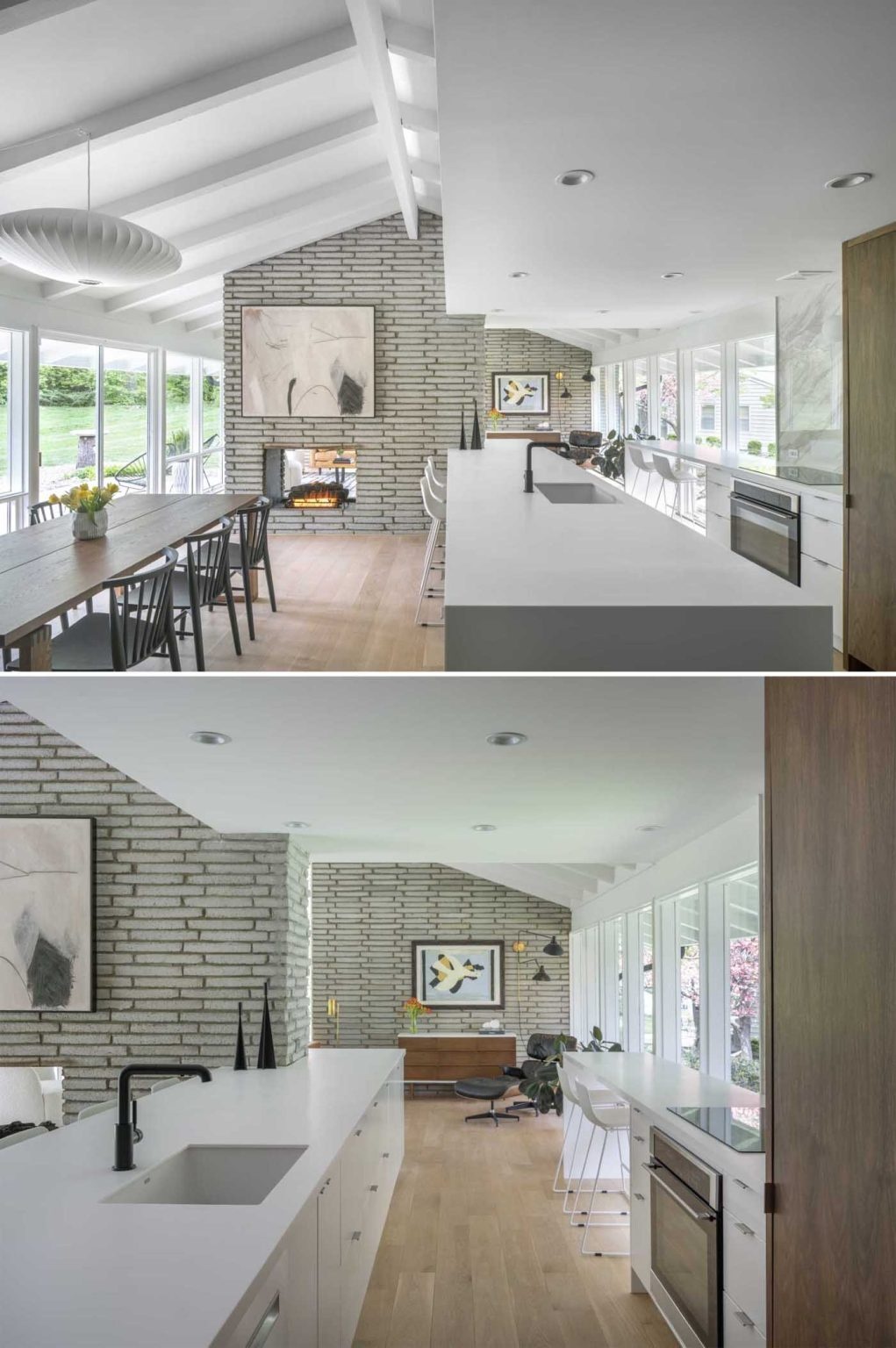
The new kitchen completely changes that experience. Long white countertops and warm wood cabinetry create a bright and welcoming environment that feels open from every angle.
One section of the kitchen has been dedicated to a bar area positioned beside the window, providing casual seating with outdoor views. On the opposite side, the countertops extend from the living room toward the dining area, wrapping around the fireplace and helping tie the entire floor plan together.
By removing barriers and creating clear sightlines, the renovation transformed the kitchen into an active part of the home’s shared living spaces while still allowing each area to maintain its own identity.
The Floor Plan That Changed Everything
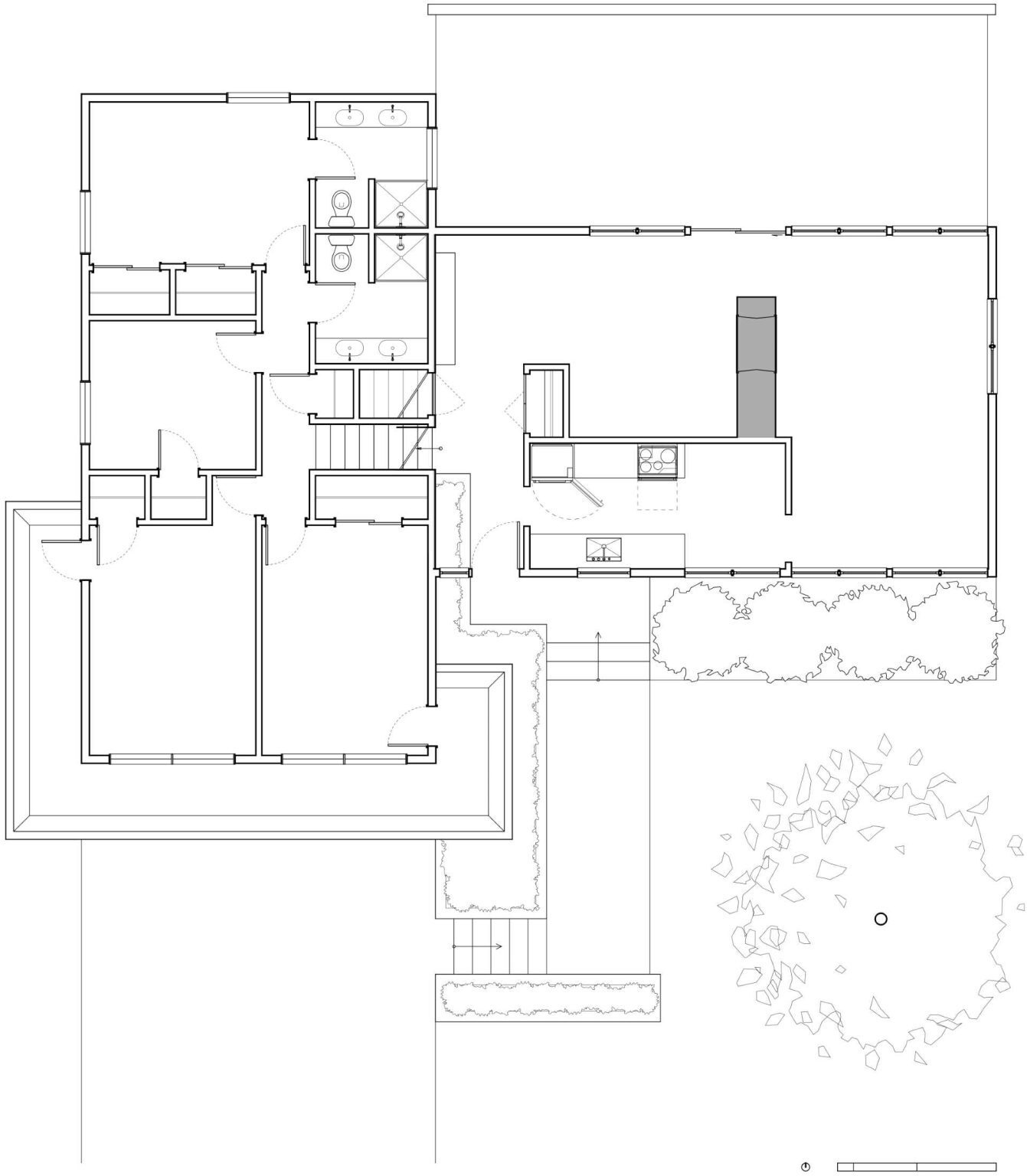
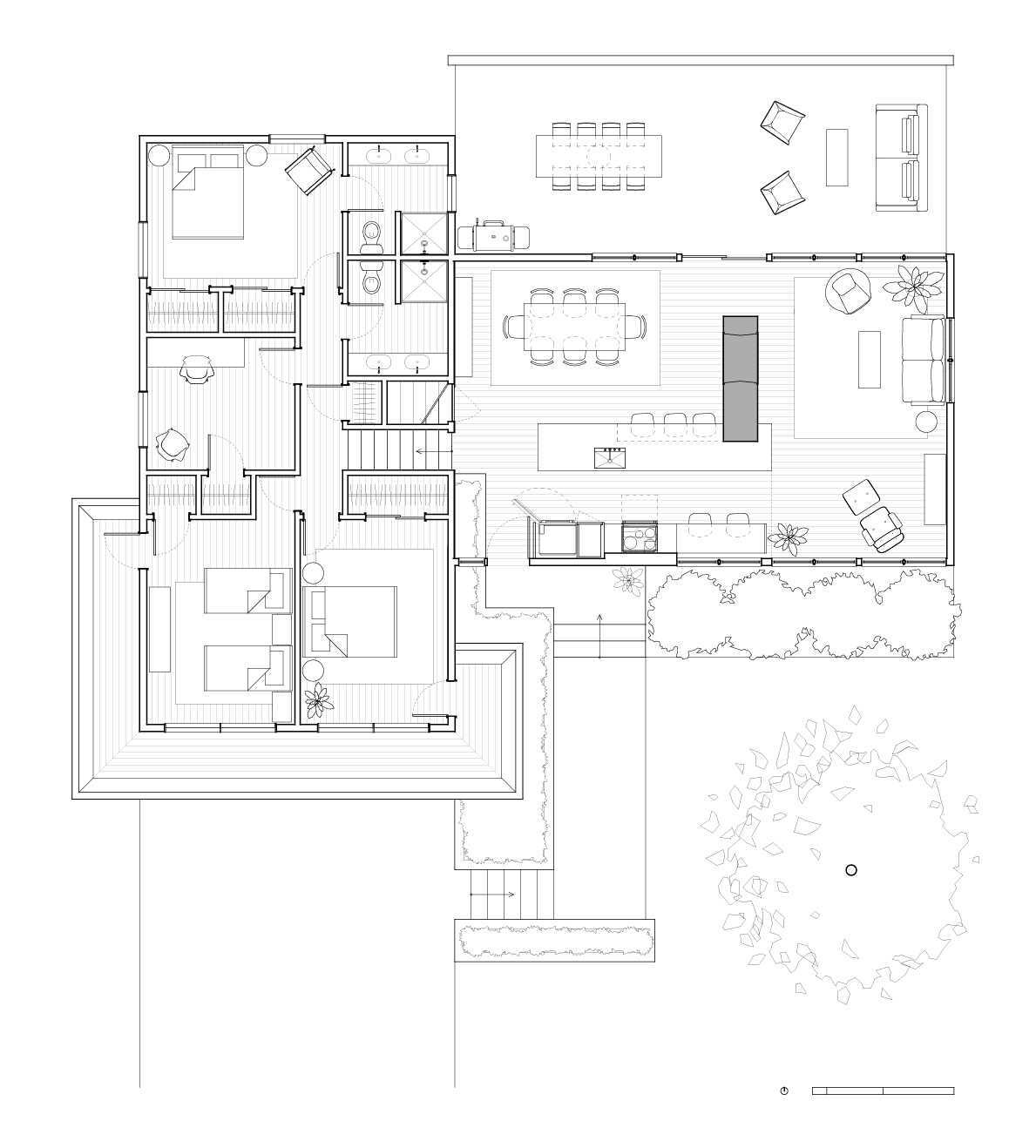
The before-and-after floor plans reveal just how significant the transformation was.
The original layout featured a kitchen that was largely isolated from the surrounding rooms. Walls, cabinetry, and doorways separated the space from the rest of the home, limiting both movement and visibility.
Following the renovation, the kitchen became integrated into the main living areas. The updated floor plan creates stronger connections between the entryway, dining room, living room, sitting area, and outdoor spaces. The result is a home that feels larger, brighter, and better suited to the way people gather and live today.
BEFORE
AFTER
The renovation of The Mid-Western shows how a historic house can evolve without losing the qualities that made it special in the first place. FORWARD Design | Architecture preserved defining features such as the double-sided brick fireplace, split-level layout, and mid-century character while introducing brighter interiors and a more open floor plan.
More than seventy years after it first captured attention as a Parade of Homes favorite, this Kansas City residence continues to prove why great design can endure across generations.