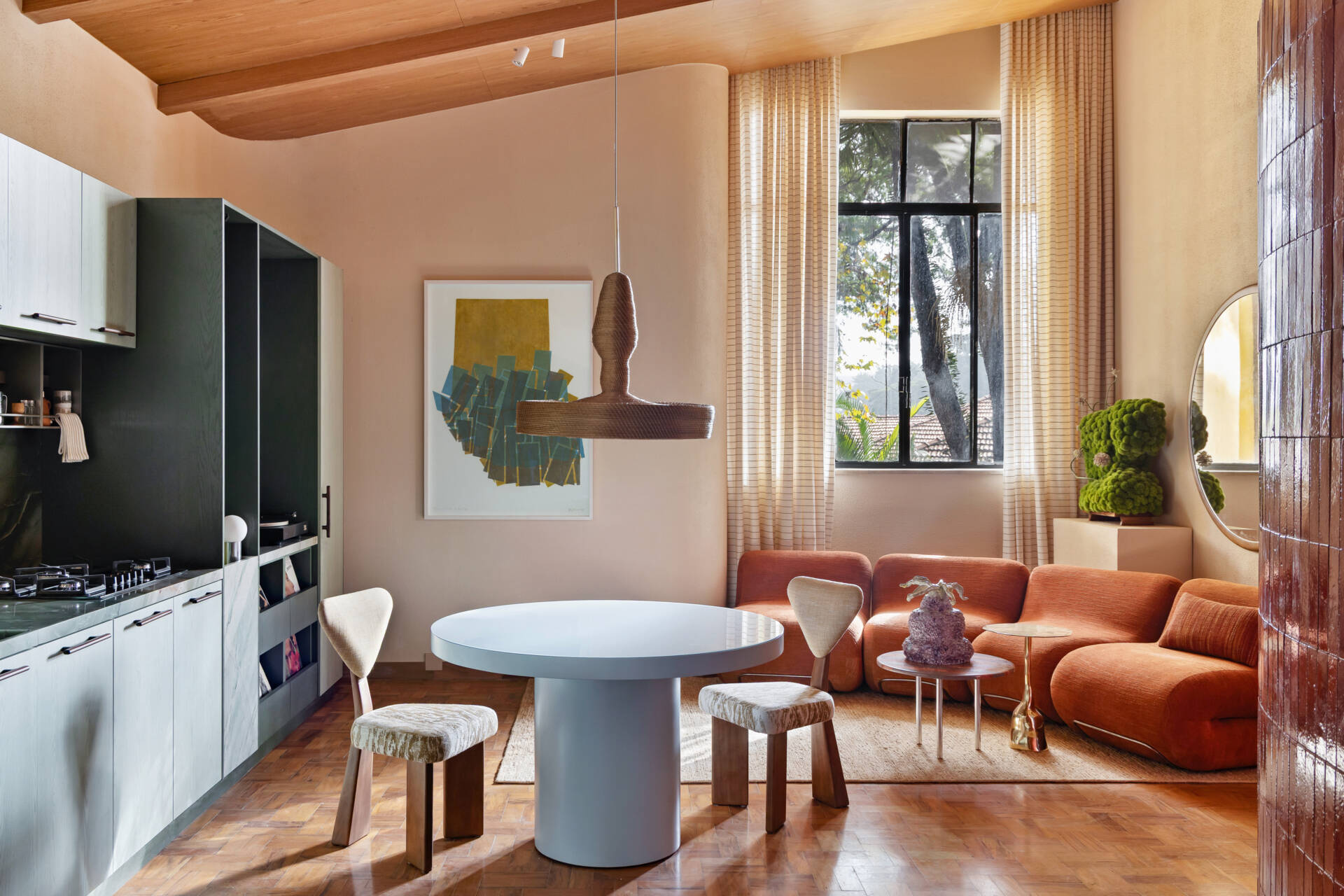
At CASACOR São Paulo, Brazilian architect Clara Nahas of Estúdio Clara Nahas presents the Semibreve Studio, a 55-square-metre installation created in partnership with Todeschini. The project explores how music can influence architecture, using the semibreve, the whole note in musical notation, as the starting point for a home unlike any other.
The concept stems from a musical composition written by the architect’s mother, a classical pianist and educator, shortly after Clara’s birth. That original handwritten score becomes a recurring presence throughout the space, linking architecture, memory, and artistic expression.
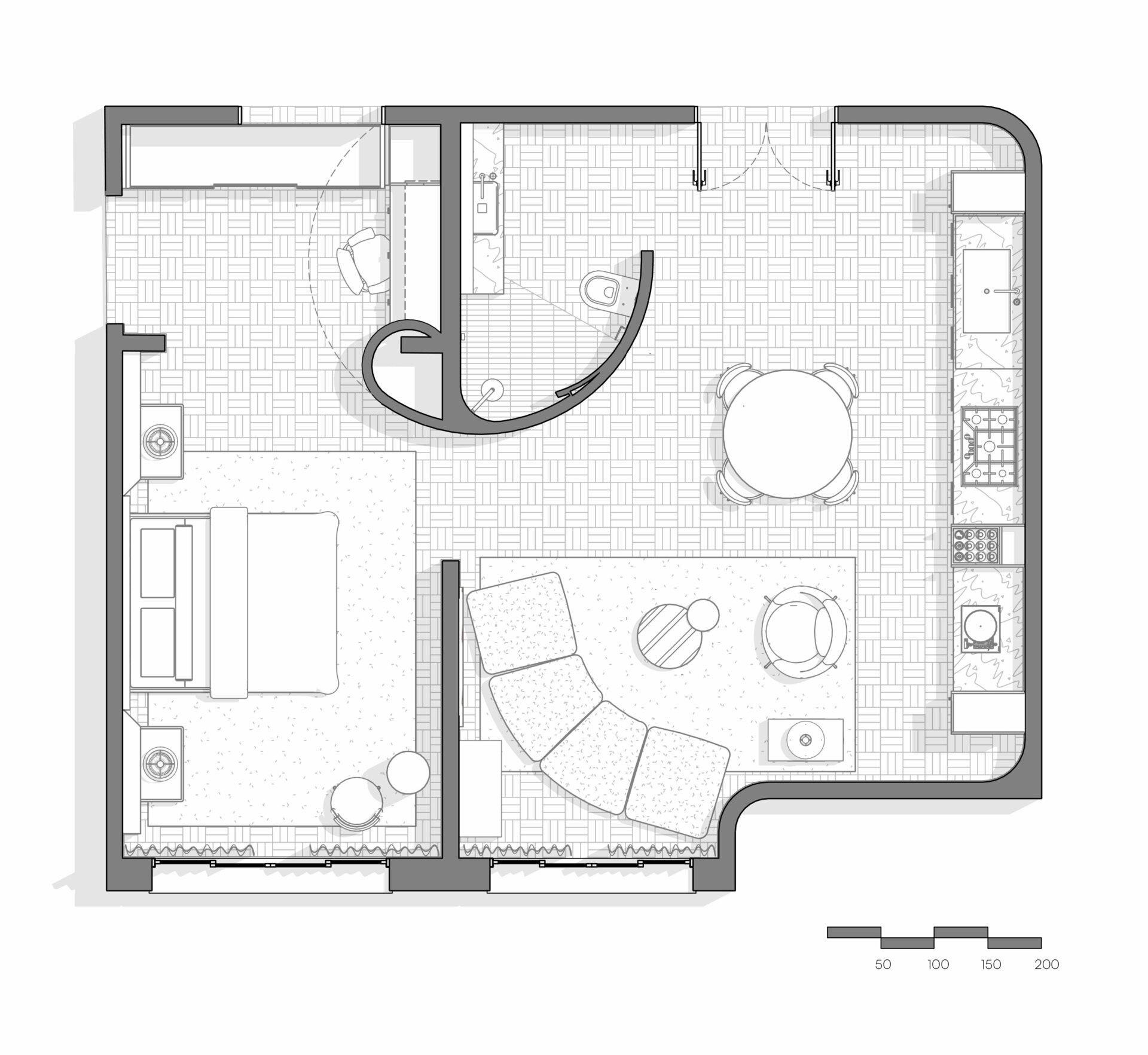
Set within an existing structure featuring restored 1920s peroba wood parquet flooring and exposed timber roof trusses, the studio combines historic character with contemporary design. Every area revolves around a striking burgundy cylindrical volume that organizes circulation while accommodating multiple functions within the compact footprint.
Kitchen and Dining United by One Continuous Form
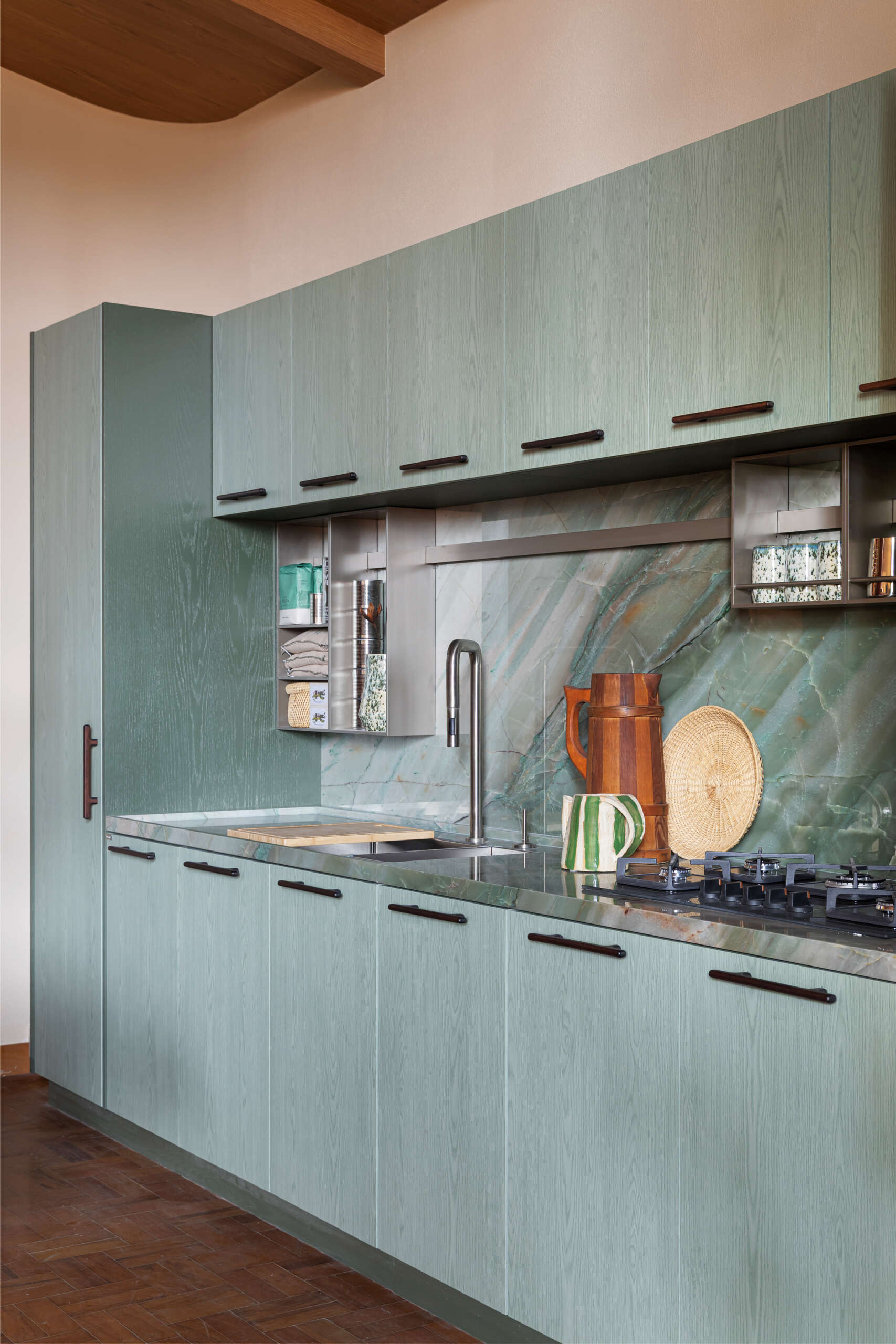
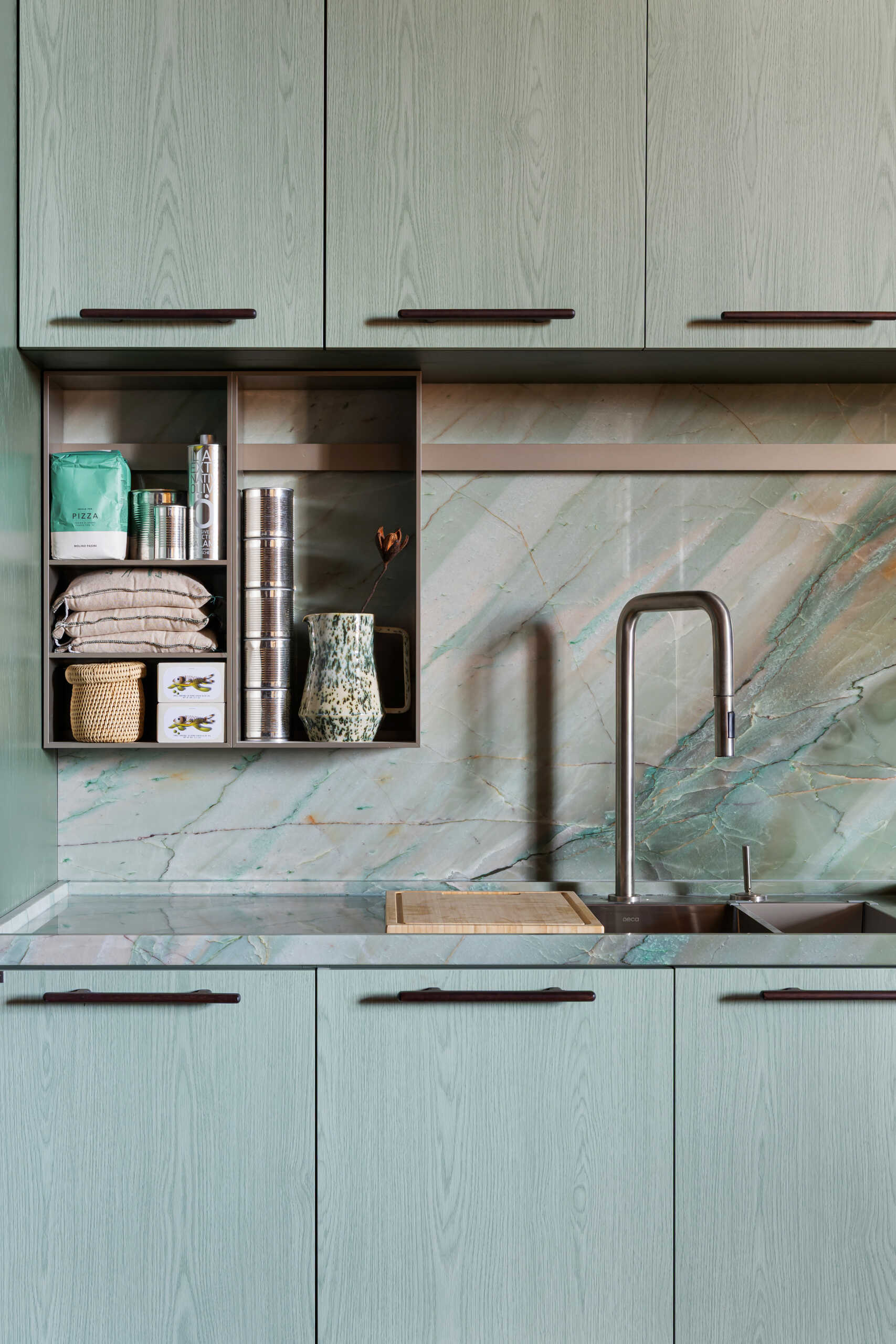
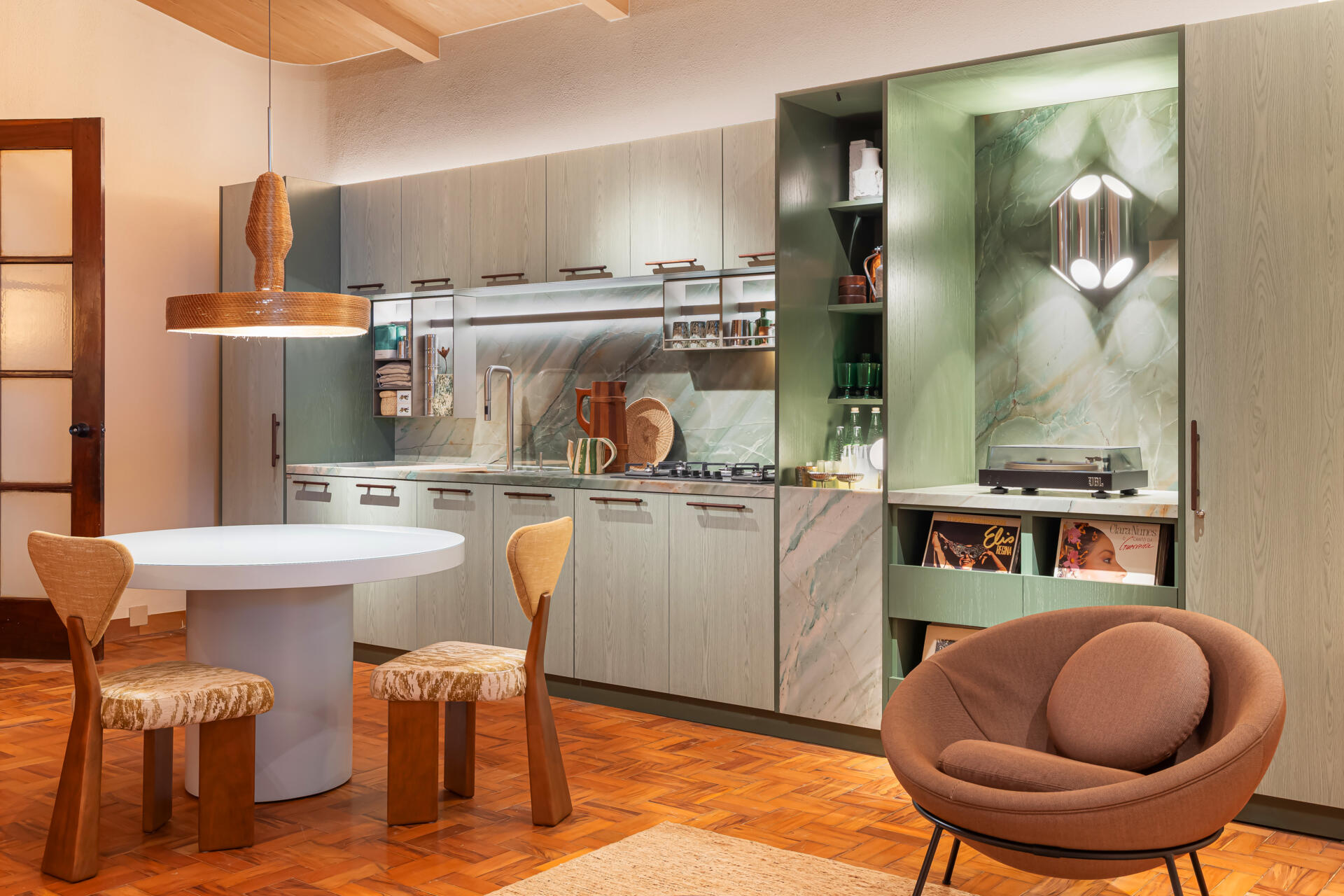
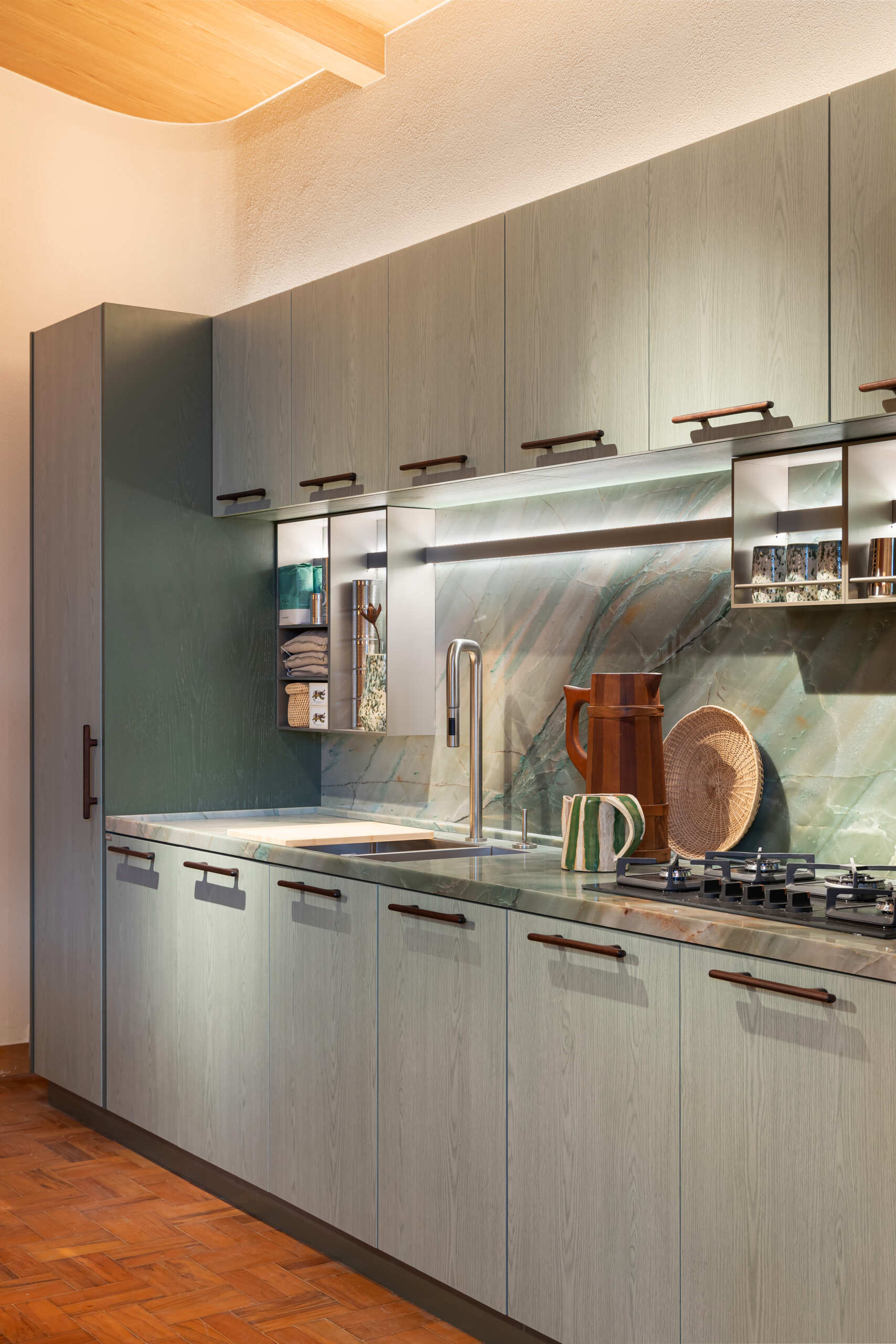
The kitchen and dining area revolve around a monolithic cabinetry installation developed by Todeschini. Finished in Giardino, a tinted natural oak veneer with a soft green tone, the cabinetry stretches across the social zone as a continuous element that connects cooking, entertaining, and listening.
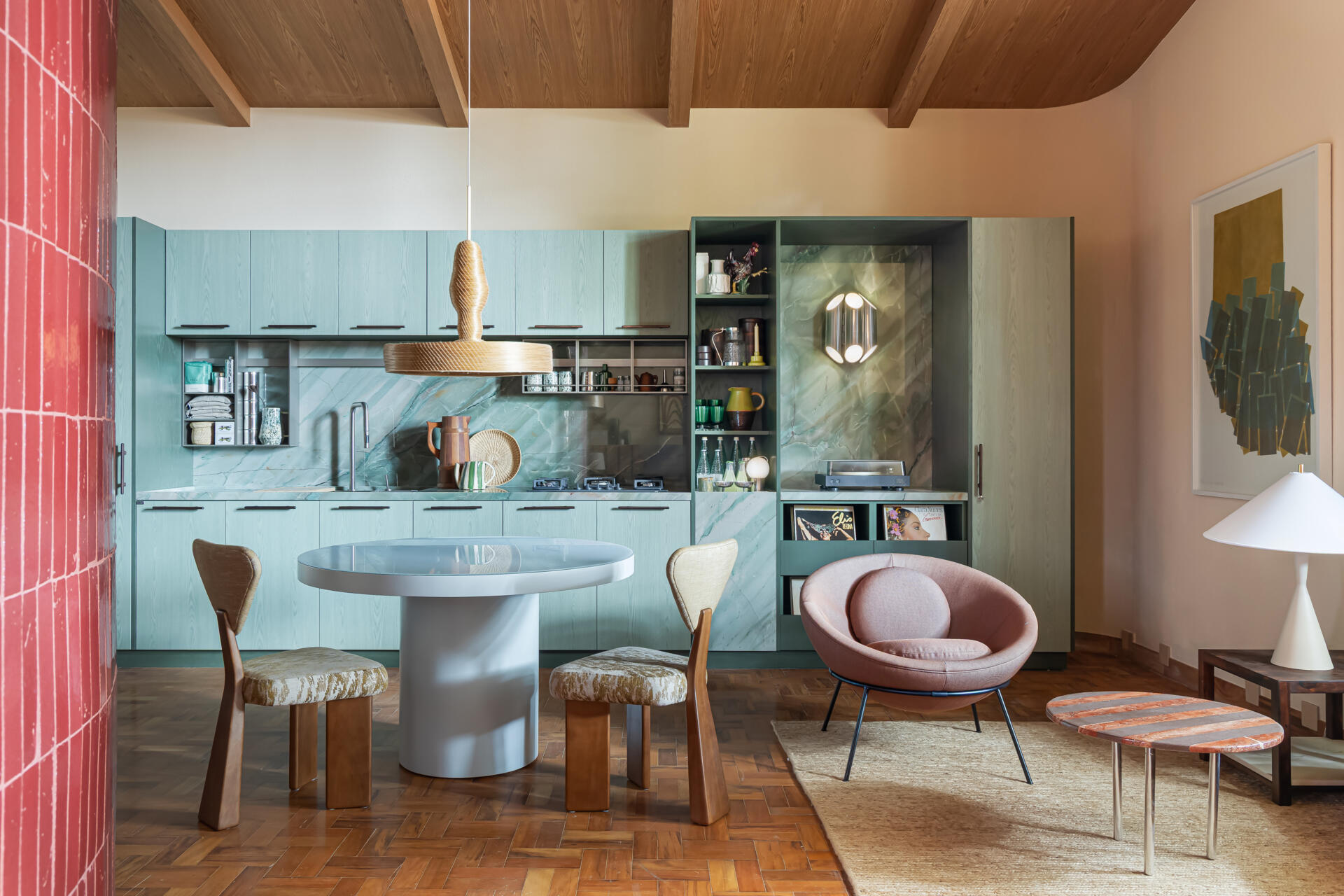
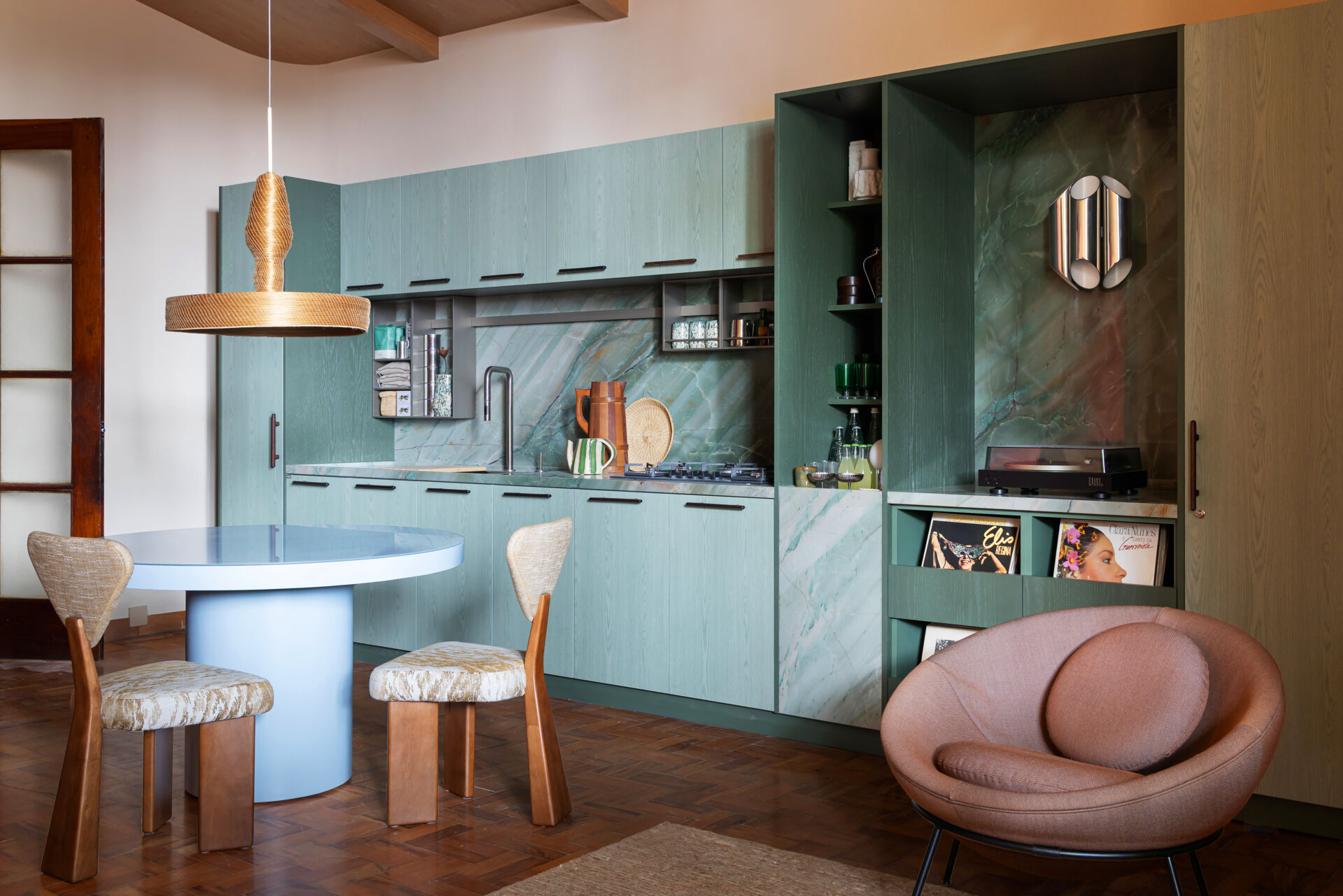
A polished Da Vinci quartzite countertop runs along the cabinetry, incorporating a bar niche and a dedicated space for a vinyl turntable. Instead of centering the room around a television, the design prioritizes music and conversation.
Nearby, the dining area celebrates the work of women in Brazilian art and design. The light blue lacquered Arezzo table introduces a fresh contrast to the green cabinetry, while Juliana Vasconcellos’ Girafa chairs bring sculptural elegance to the setting. Above, a pendant from the Jalapoeira Apurada project, handcrafted from golden grass by Quilombola artisans, adds texture and craftsmanship.
Throughout the space, furniture, artworks, and decorative pieces highlight the contributions of female designers and artists, creating a gallery-like atmosphere woven into everyday functions.
A Living Room Designed for Conversation
The living room continues the studio’s emphasis on gathering and shared experiences. The cabinetry from the kitchen extends into a social sideboard, visually connecting the entire public zone.
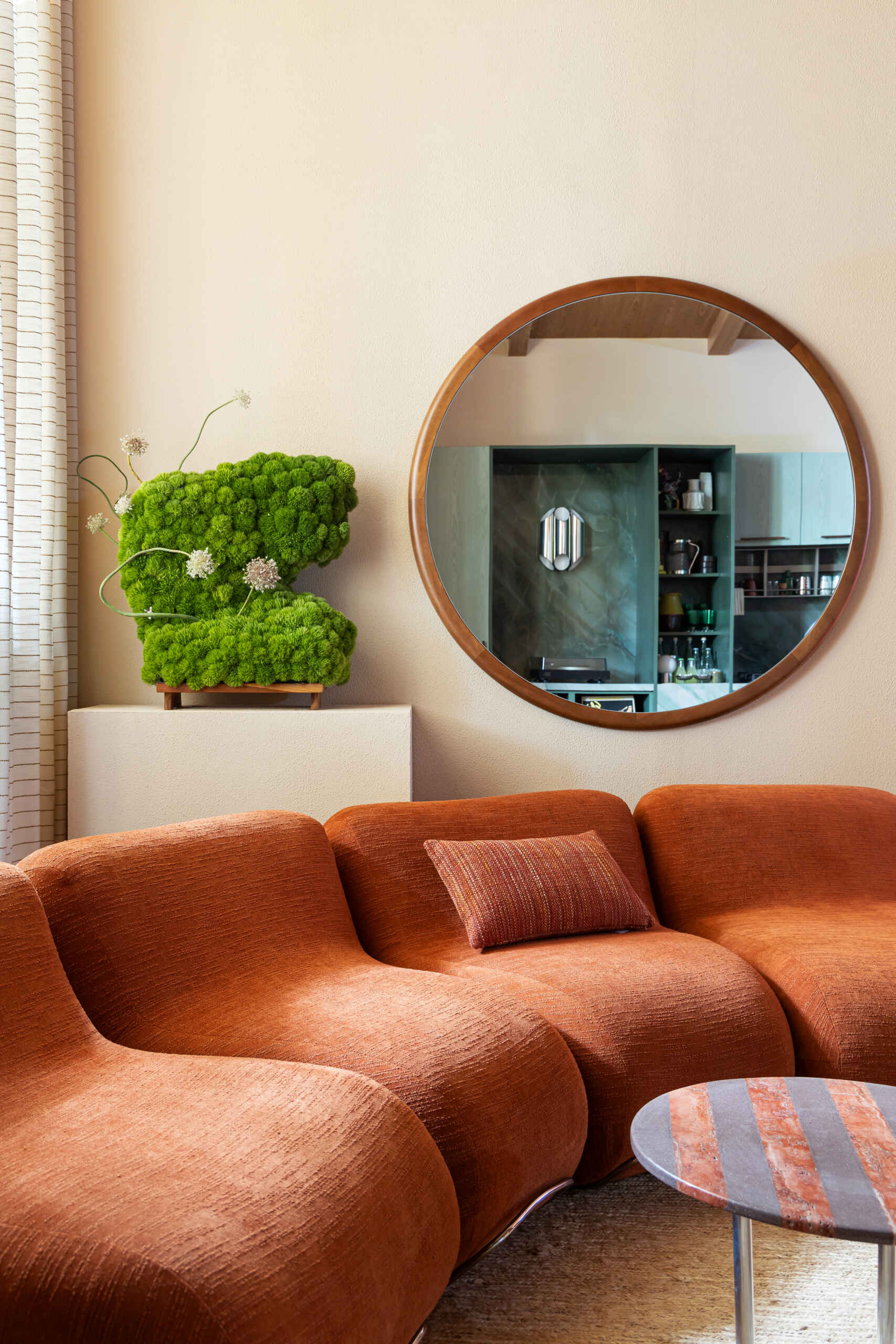
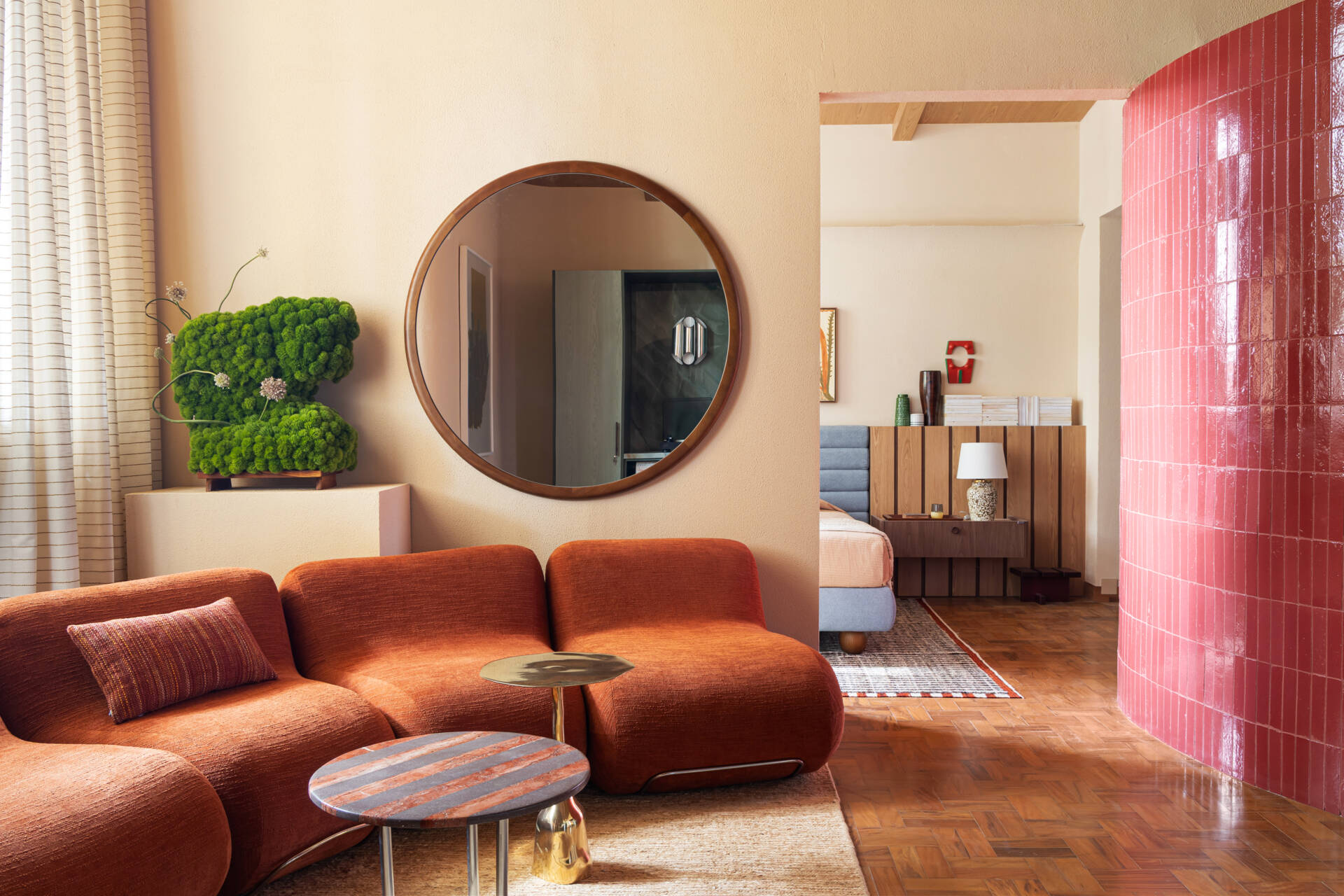
Comfort takes shape through furniture with soft, organic lines. The Amana modular sofa by Nildo José for Líder Design anchors the seating arrangement, paired with the Retalhos coffee table created through a collaboration between Assimply Studio, Maurício Arruda, and Retropy for MAU.
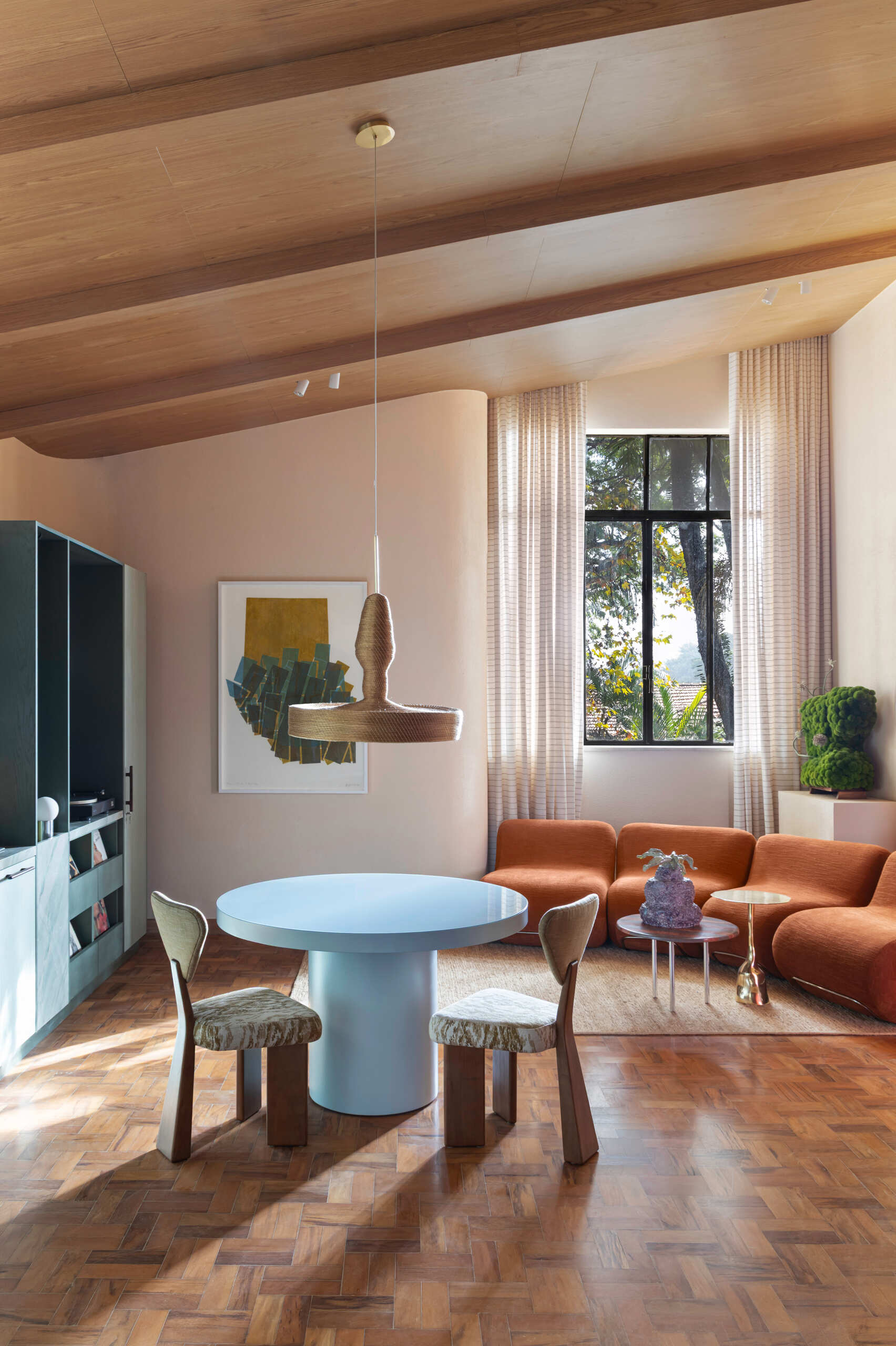
A floral sculpture displayed on a sculptural totem adds artistic presence in the background, reinforcing the curated nature of the interior.
The absence of a television shifts attention toward listening, conversation, and appreciation of the surrounding artworks. Vintage vinyl records and design objects become focal points, helping define the character of the room.
A Bedroom Framed by Light, Timber, and Original Architecture
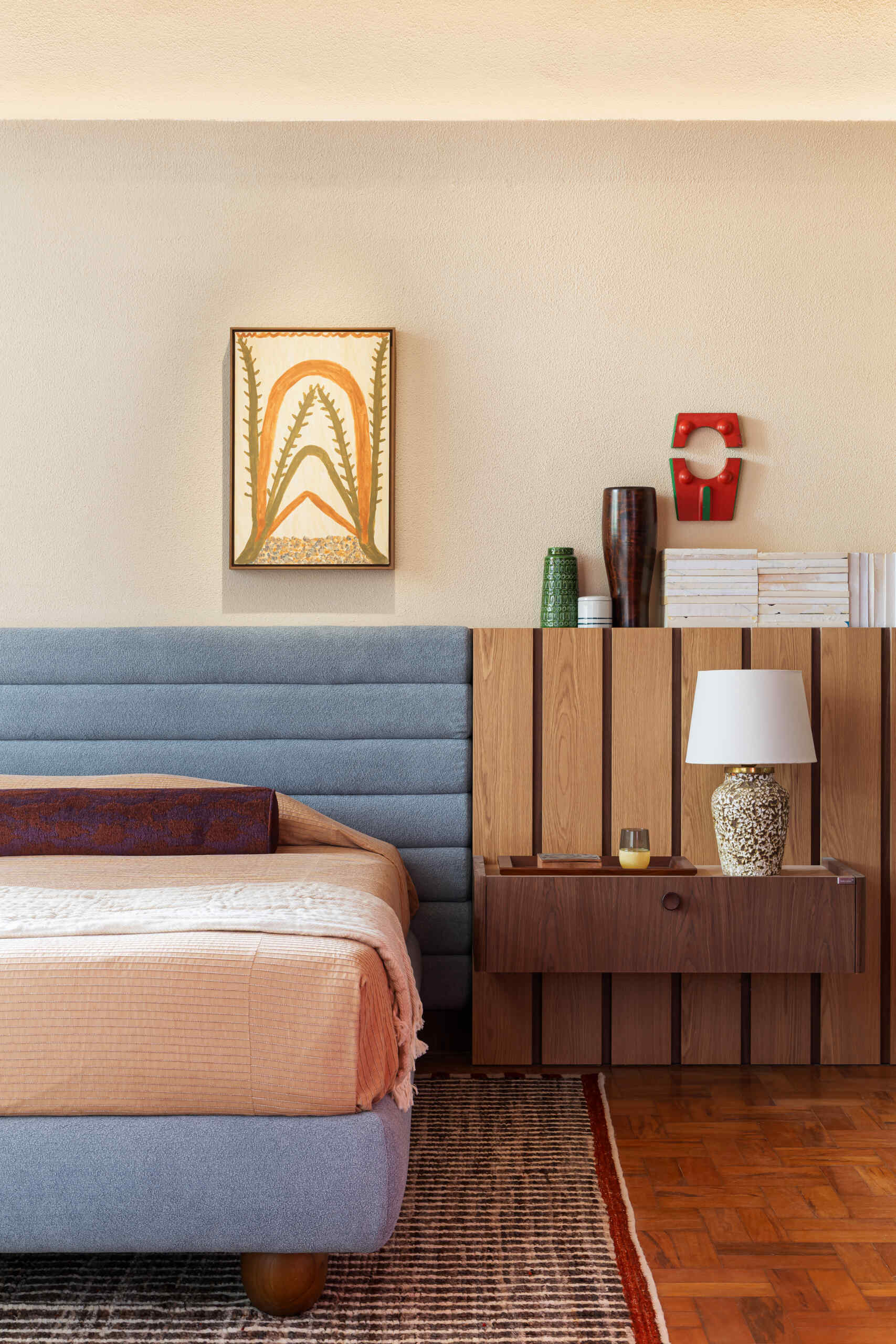
The bedroom introduces a calmer palette while maintaining the visual identity established throughout the studio. A soft blue upholstered headboard from Líder Design becomes the focal point, adding gentle color against the surrounding timber elements.
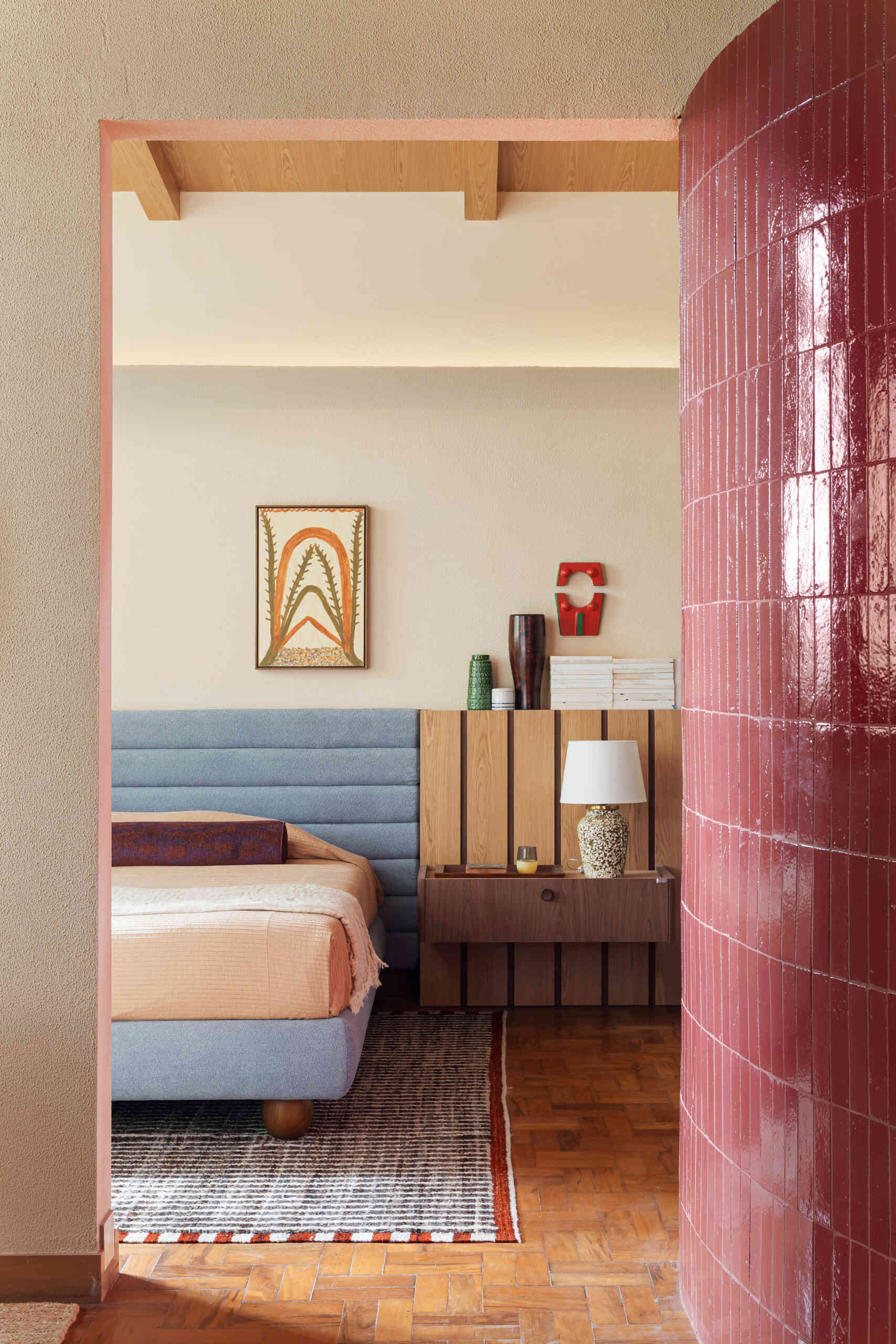
Behind it, slatted wood paneling crafted by Todeschini supports suspended bedside tables that visually lighten the composition. Vintage lamps rest atop the nightstands, while integrated ledges provide space for books and personal objects.
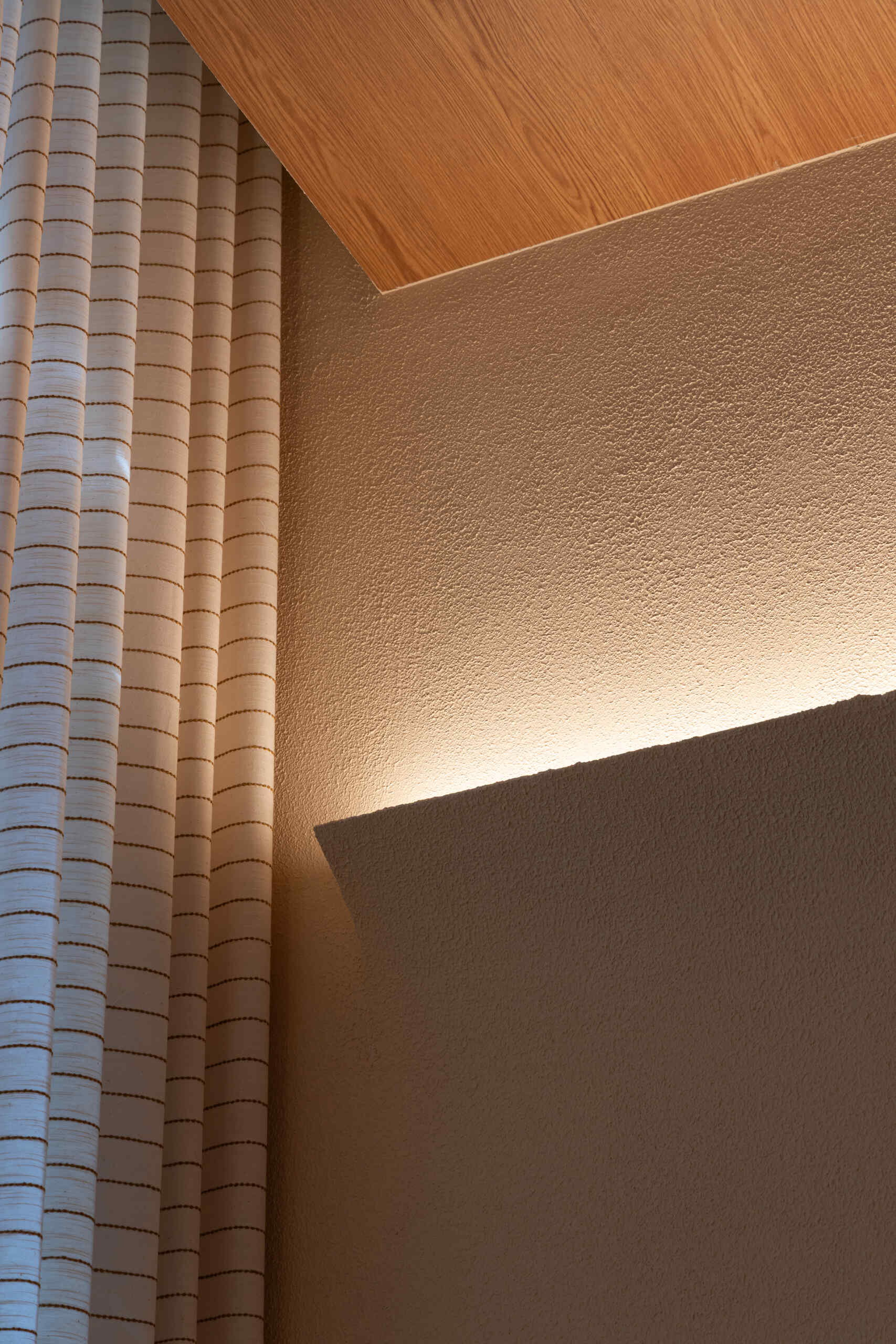
Above the bed, a curved plaster feature extends from the wall and forms a cove that washes the ceiling with indirect light. This warm illumination highlights the geometry of the sloped roof and exposed timber beams overhead.
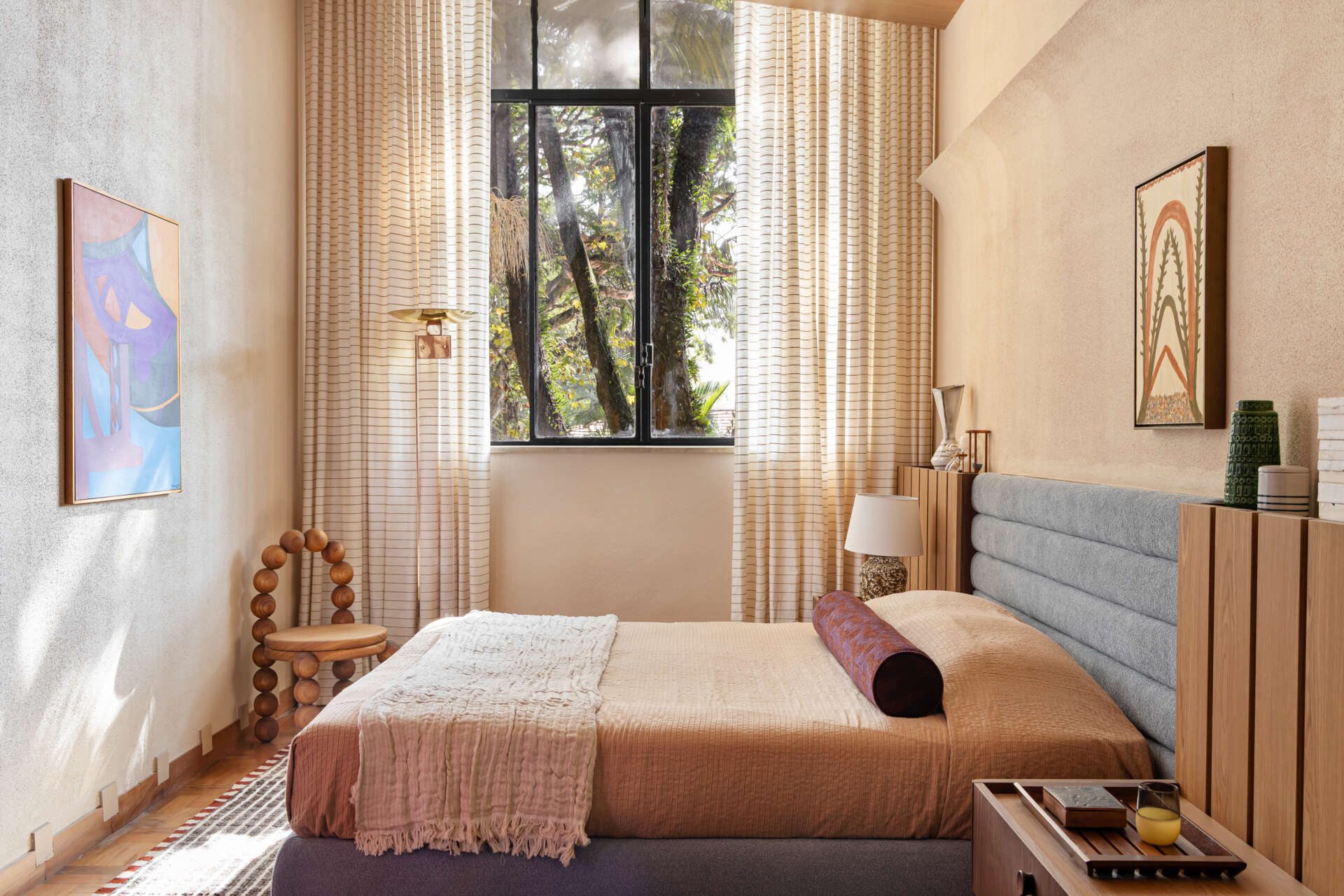
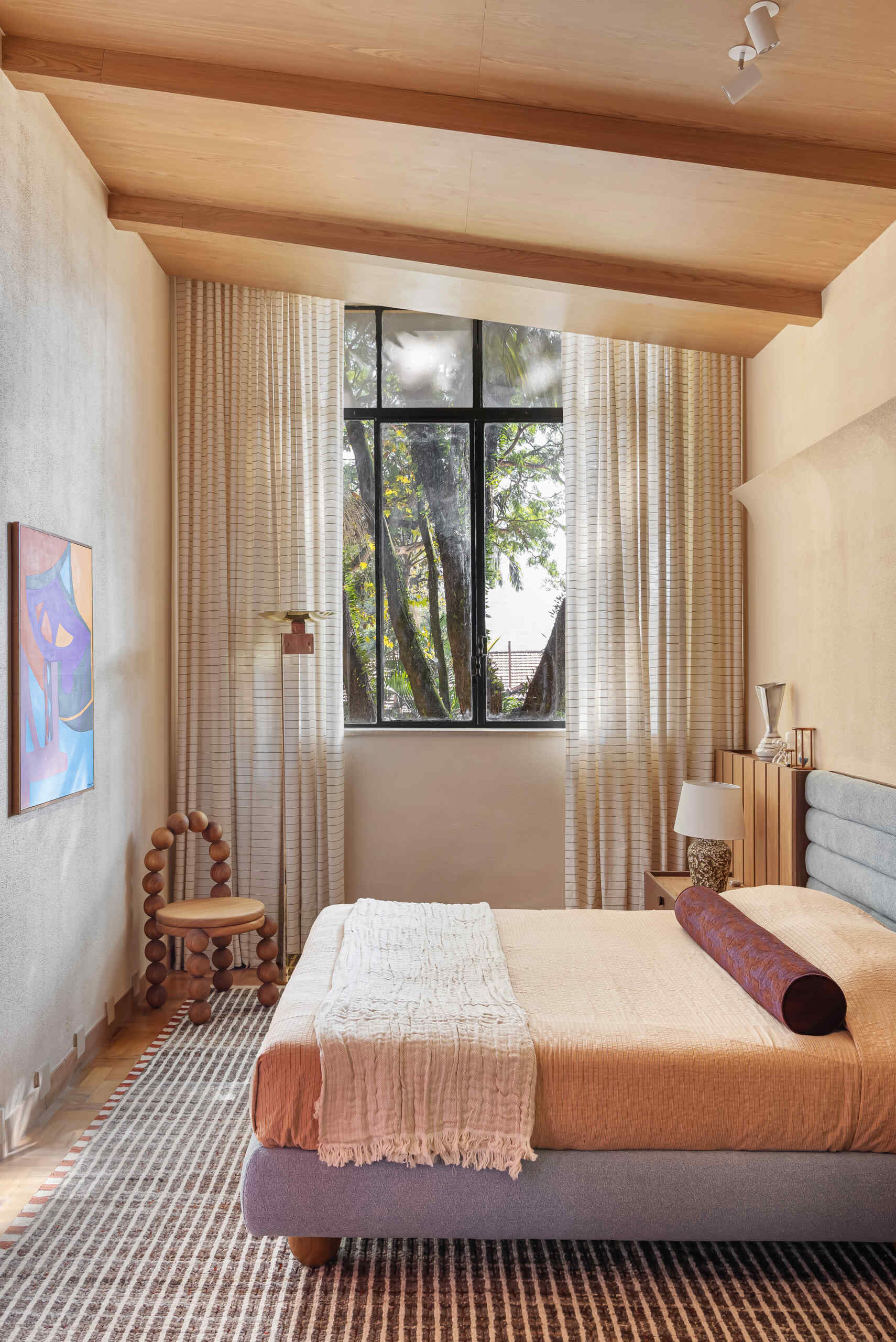
The room also celebrates the building’s original architecture. Restored parquet flooring and existing window openings preserve a sense of history, while views toward surrounding trees introduce changing natural scenery into the interior.
A Morocco Damkla rug by Botteh softens the floor beneath, adding comfort and texture to the room.
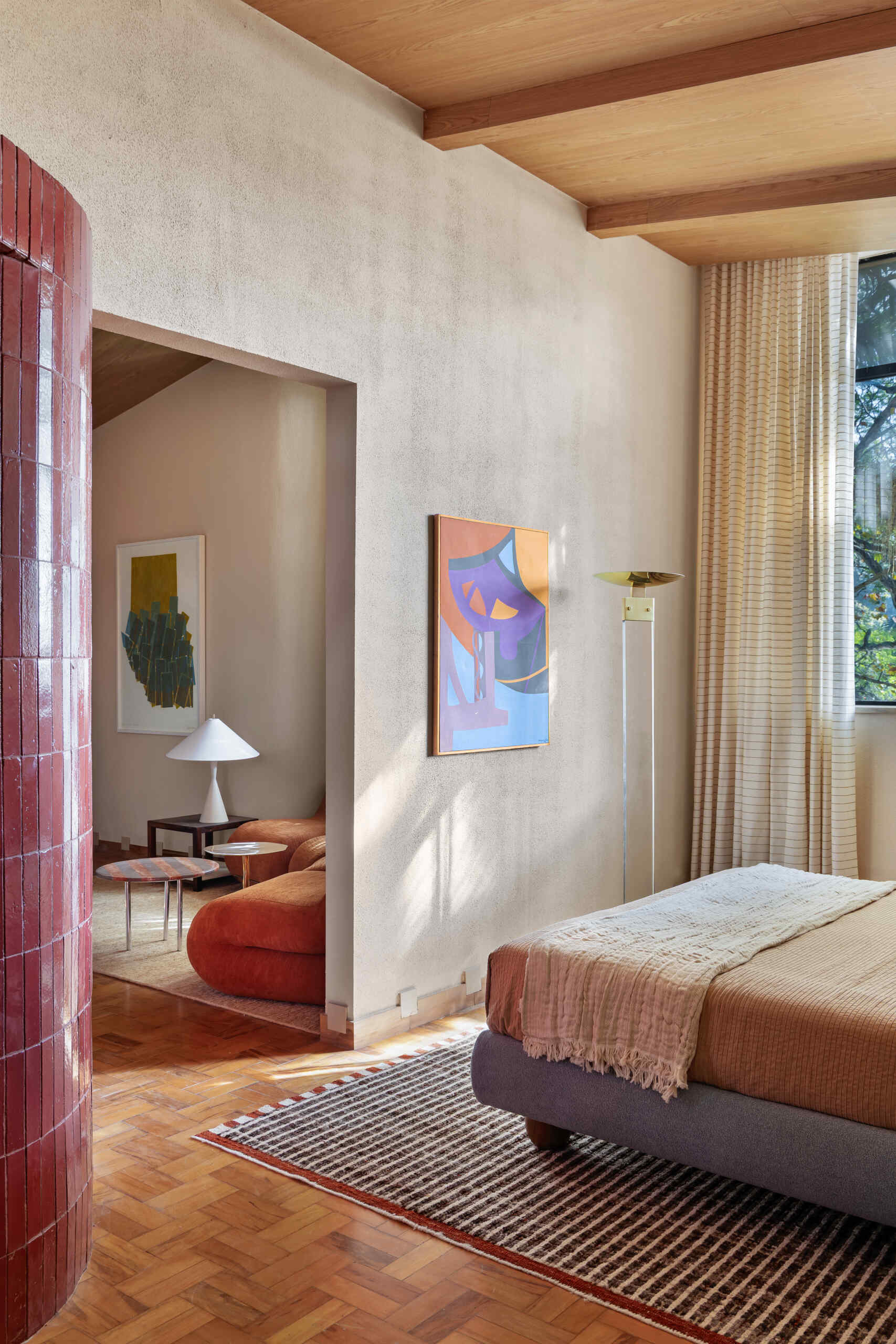
The Burgundy Tile Detail That Defines the Entire Project
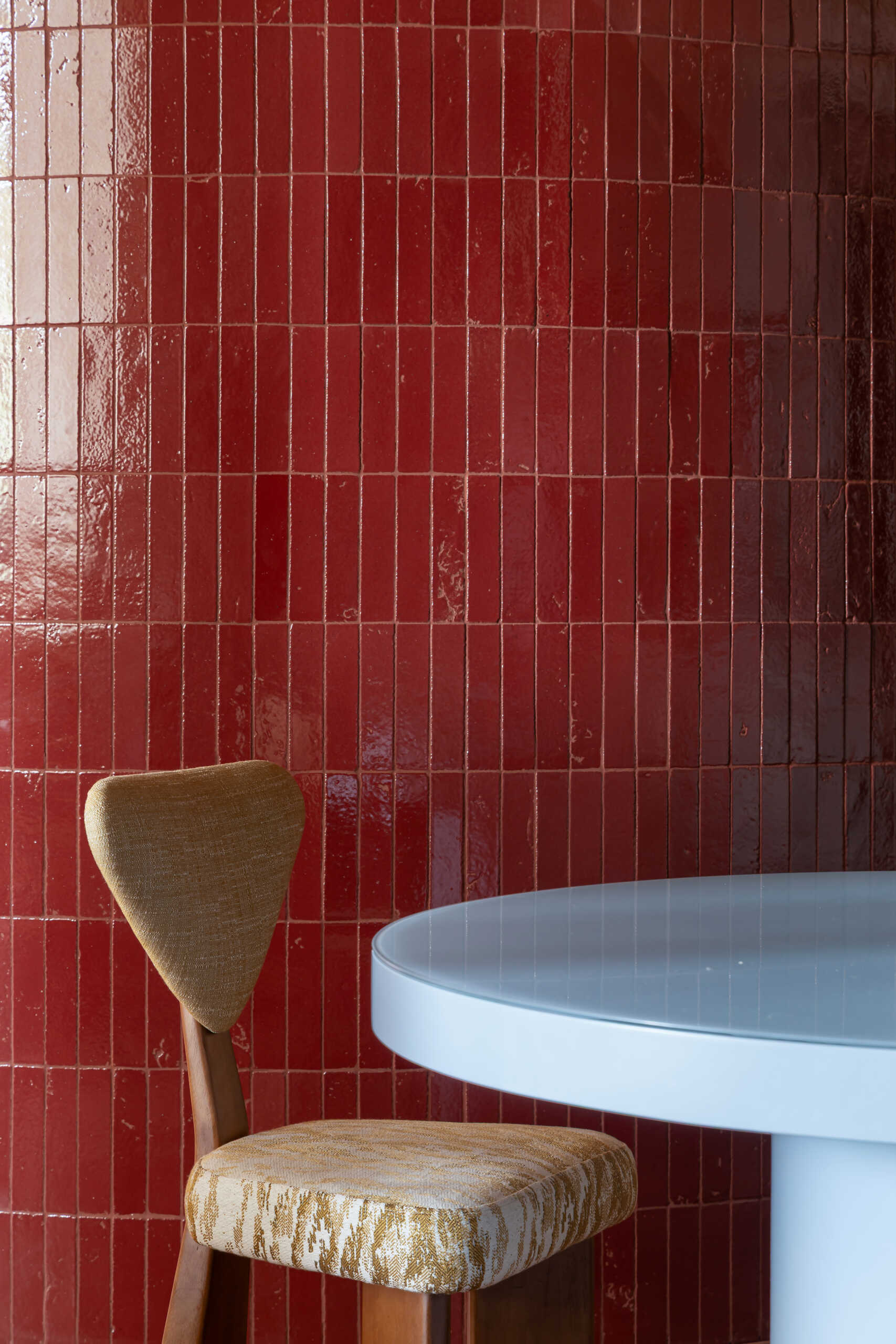
At the heart of the studio stands the project’s most recognizable feature, a cylindrical burgundy volume clad in Keramika ceramic tiles.
Positioned beneath the building’s primary structural beam, the volume establishes a clear architectural landmark without competing with the existing structure. Its height remains below the ceiling line, allowing the original architecture to remain visible.
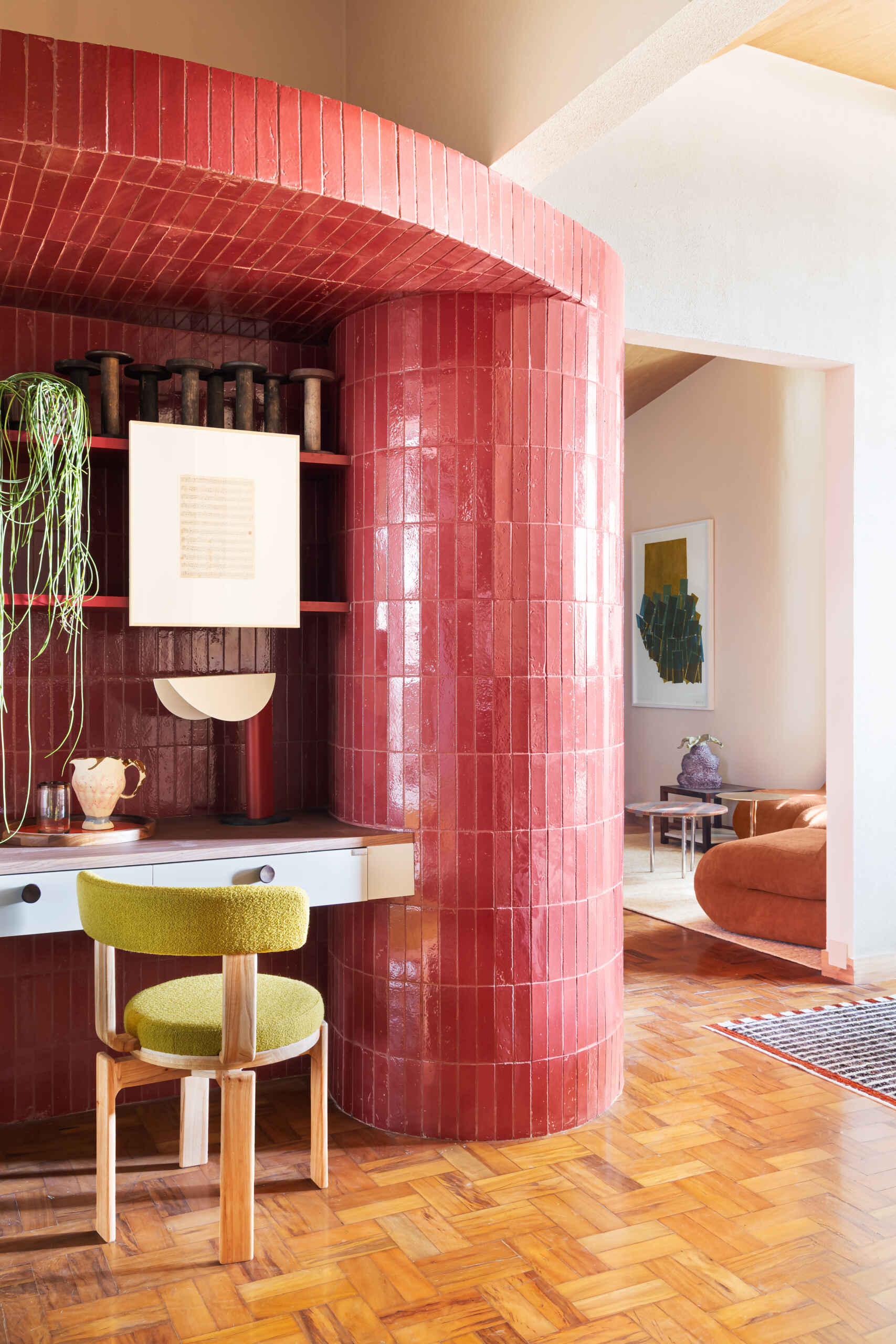
The burgundy tiles wrap the curved surface in a graphic pattern that accentuates the cylinder’s shape. The rich color introduces warmth and visual drama, while the geometry creates constantly changing perspectives as visitors move through the space.
More than a decorative gesture, the cylinder functions as the organizational anchor for the entire studio.
A Study Area Carved Into the Curve
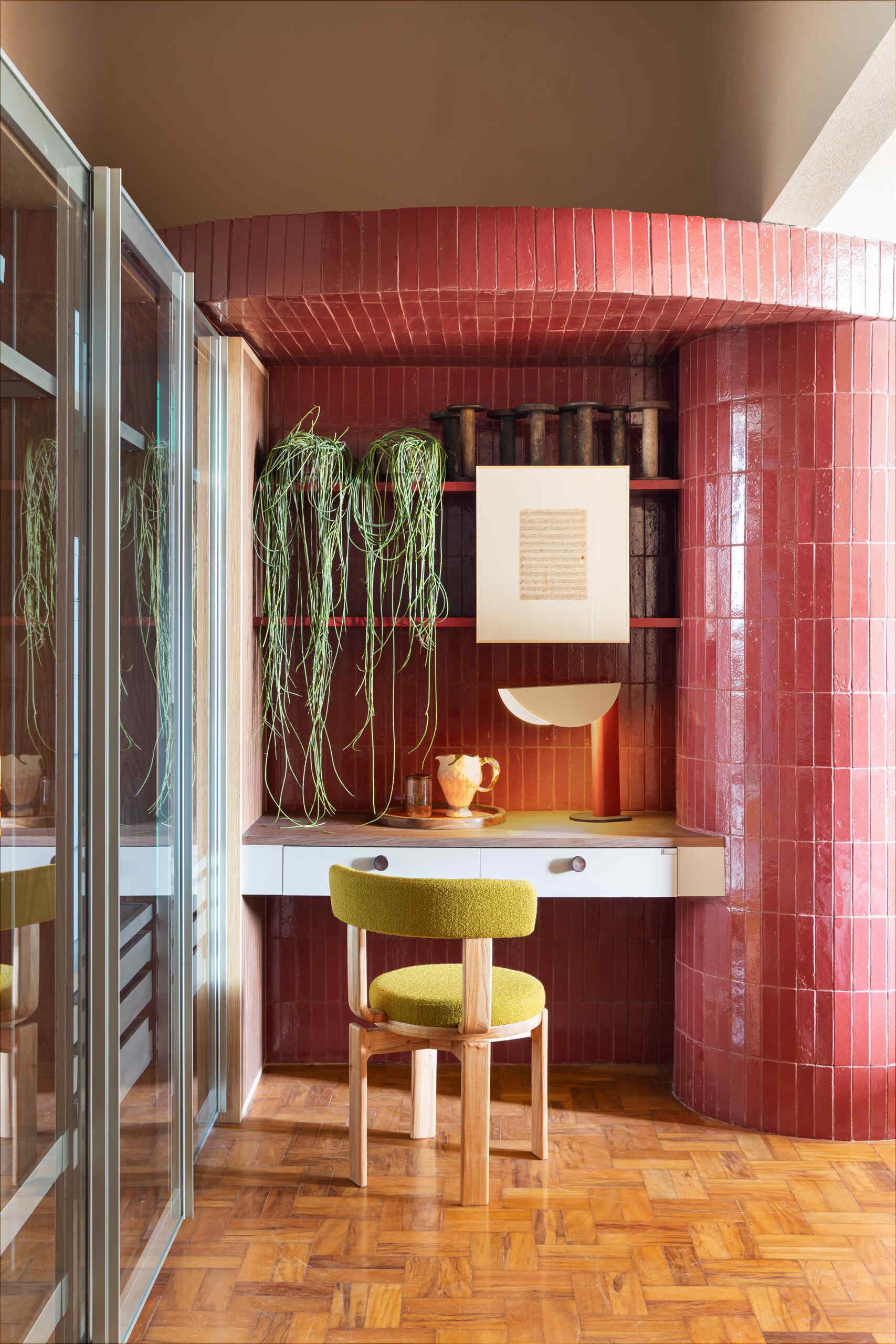
One side of the cylindrical volume transforms into a dedicated study space. Rather than introducing a separate room, the design integrates the workspace directly into the architecture.
The custom desk emerges from the curve of the cylinder, creating a fluid work surface suitable for studying, reading, or use as a vanity. The handwritten musical score that inspired the project is displayed nearby, forming what Clara Nahas describes as the studio’s lyrical axis.
A Manguezal chair and the distinctive Pelicano lamp complete the composition, adding personality without overwhelming the compact workspace.
A Bathroom Wrapped in Burgundy
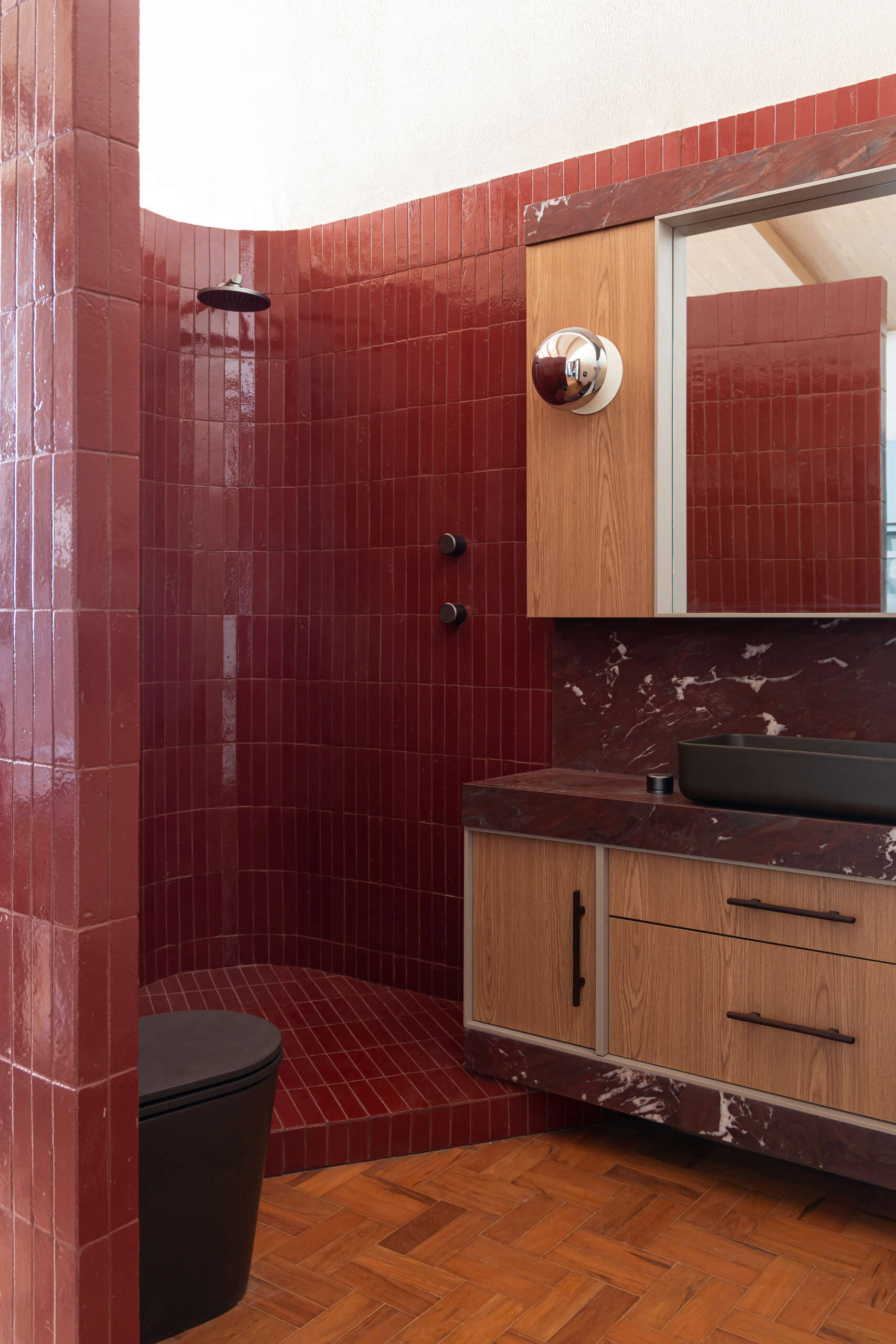
Inside the cylinder, visitors discover a dramatically different atmosphere. The burgundy color that appears externally continues into the bathroom, covering the floor and walls to create an immersive monochromatic environment.
The bold palette is balanced by honed Napoleon Bordeaux marble, which forms the countertop and backsplash. A wood-finished vanity introduces warmth, while chrome Cogumelo sconces by La Lampe frame the mirror.
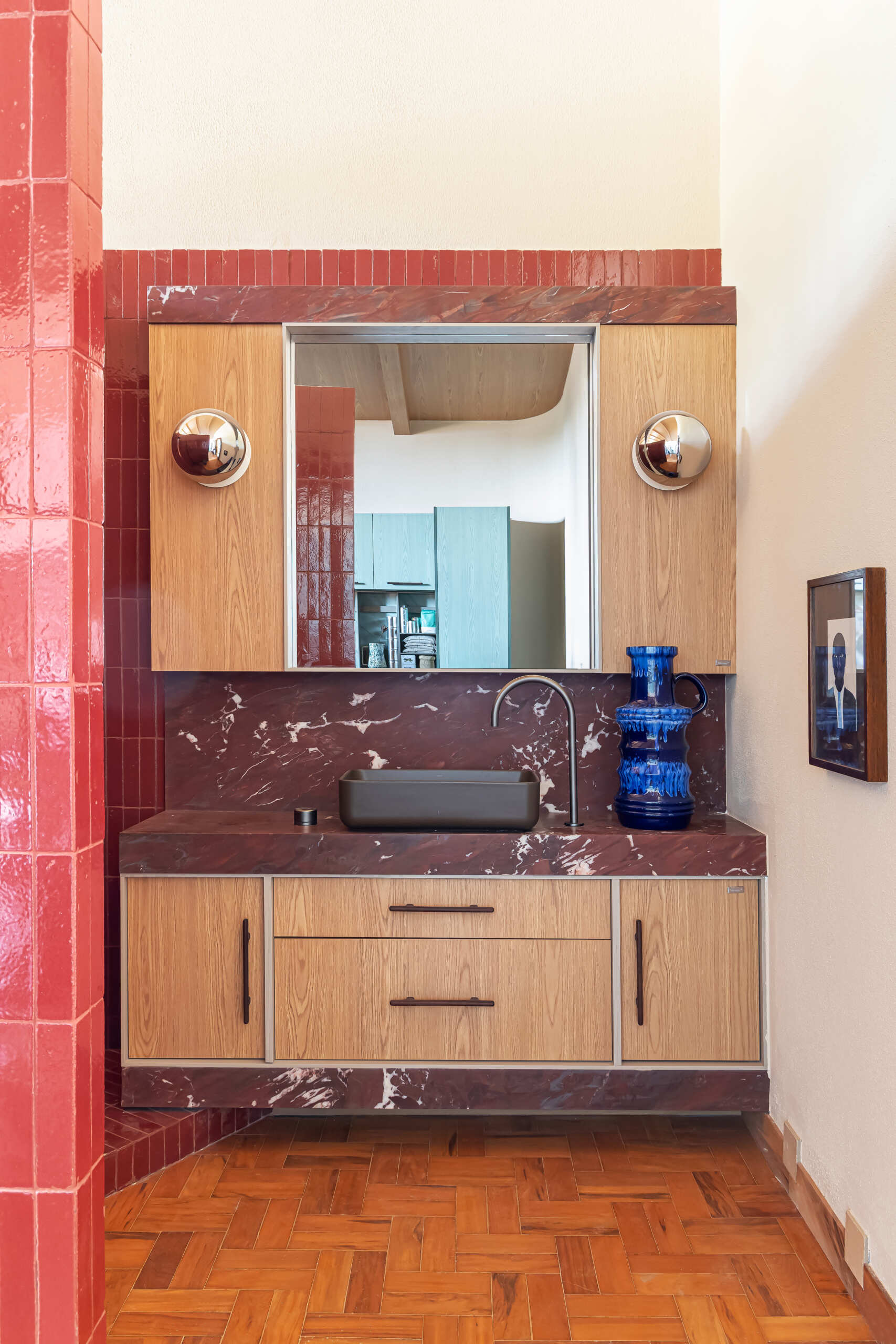
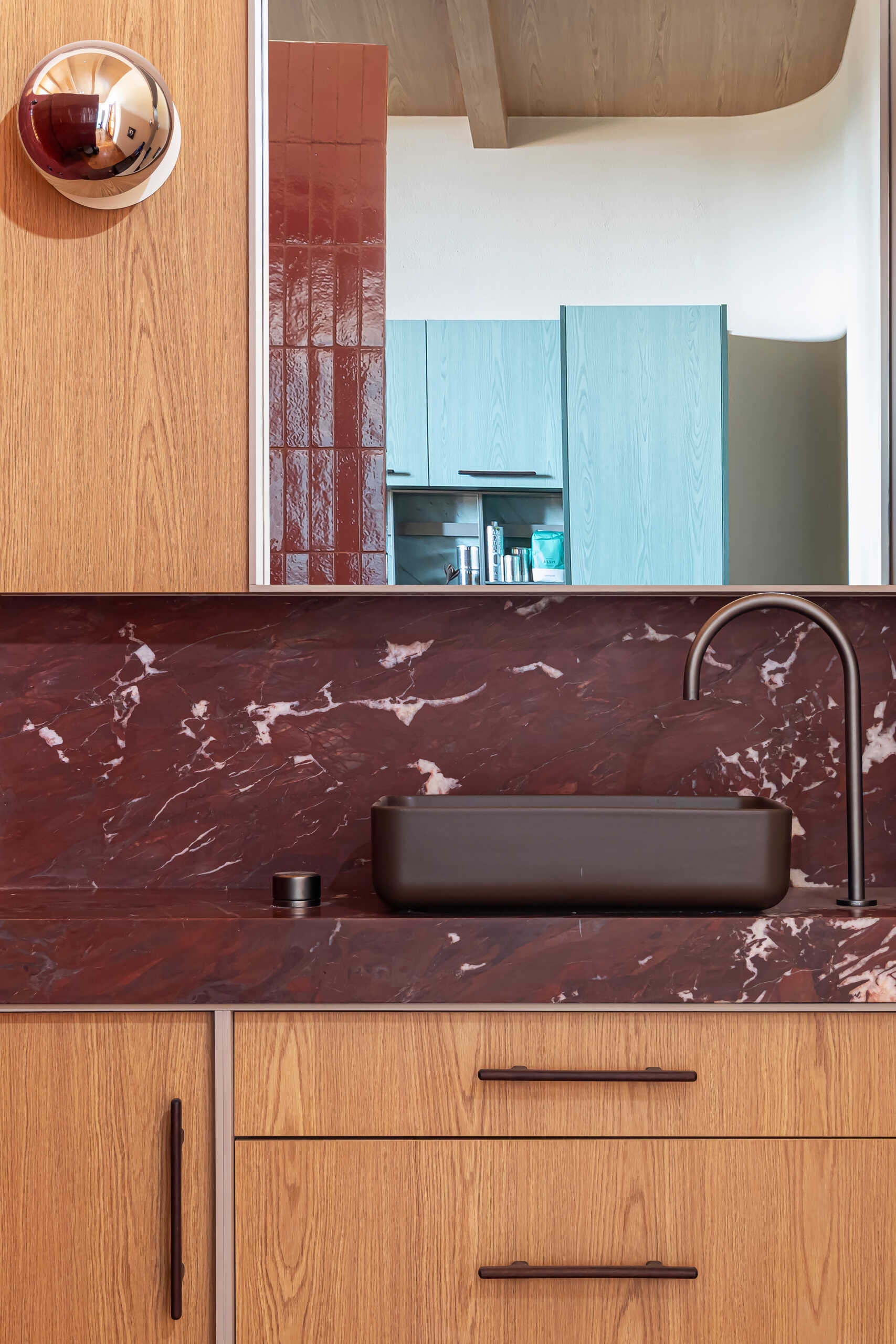
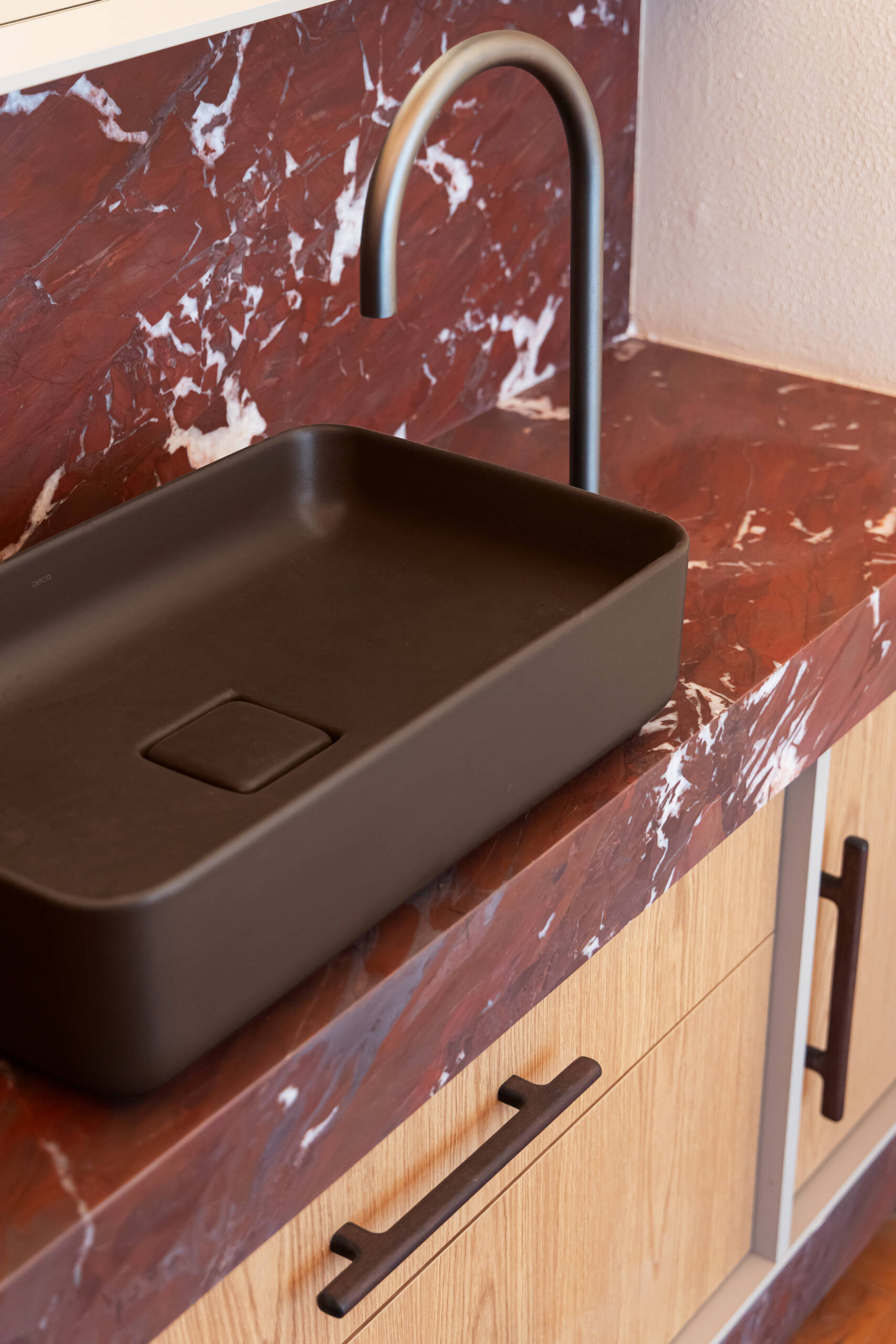
The geometry of the cylinder also shapes the shower area, which follows the curve of the floor plan. Fixtures in Deca’s Dark Antracite finish provide a darker contrast against the red surfaces.
Together, these materials create one of the studio’s most memorable spaces, transforming a functional room into a dramatic architectural experience.
Music, Memory, and Architecture in One Compact Space
With the Semibreve Studio, Clara Nahas transforms a 55-square-metre footprint into a layered exploration of architecture, music, art, and personal history. Through restored historic elements, contemporary Brazilian design, and a sculptural burgundy centerpiece, the project challenges conventional ideas about how a compact home can be organized.
Presented at CASACOR São Paulo, the studio shows how architecture can draw inspiration from unexpected sources. In this case, a single musical note becomes the foundation for an interior that celebrates listening, creativity, and the enduring influence of design across generations.