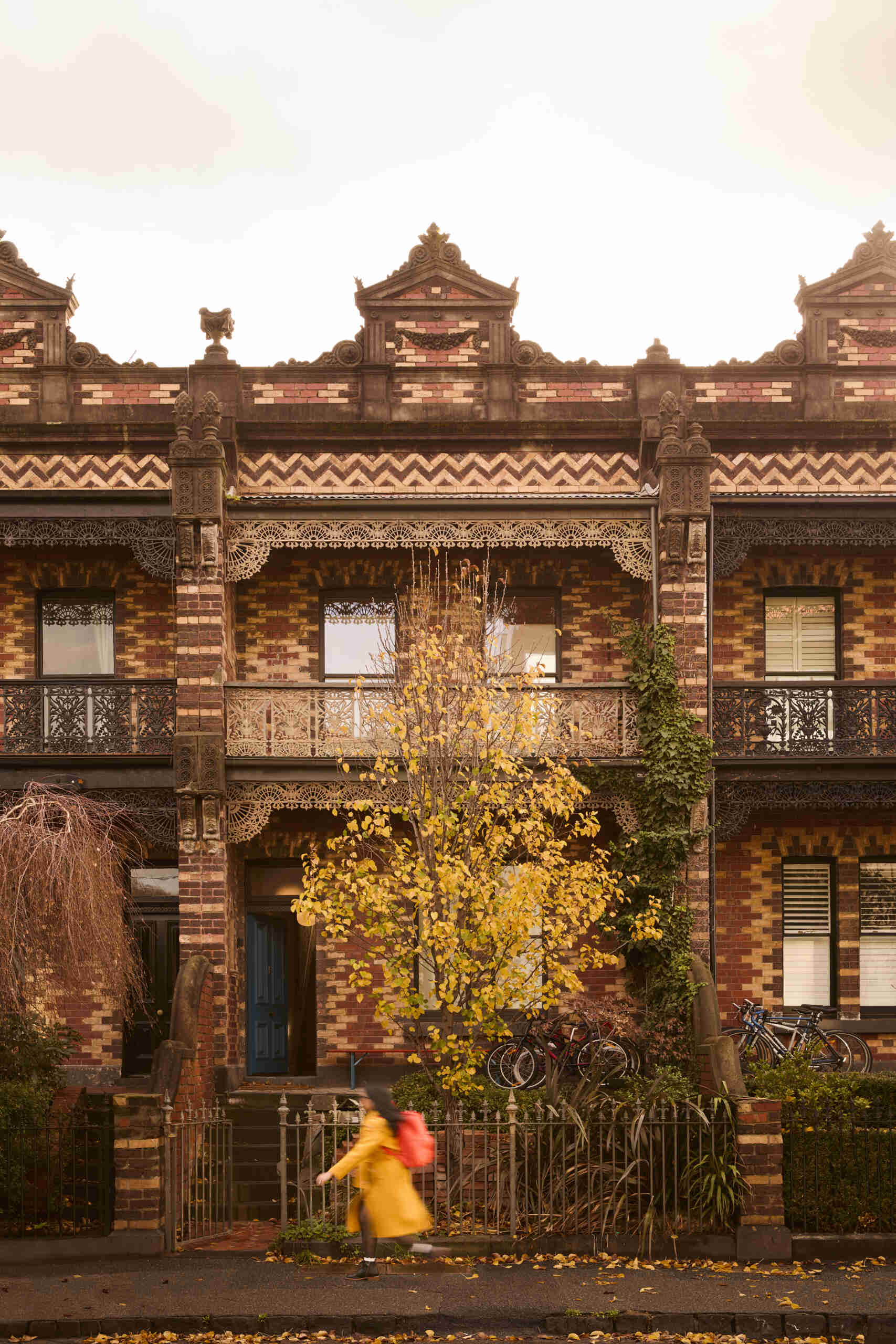
In Melbourne, Australia, a 1890s terrace has been transformed into Haiku House by Steffen Welsch Architects with interiors by Kim Kneipp. The home begins with memory, echoing the style of terrace where the clients first met, then shifts into a layered family house.
Victorian Lines, Refined Presence
From the street, the home holds onto its Victorian terrace identity. The facade keeps its original proportions while subtle restoration work brings clarity back to the brickwork and detailing. Behind this familiar frontage, the house opens into a completely reworked interior that introduces light, volume, and a new spatial rhythm without disrupting the heritage streetscape of Brunswick East.
First Impressions
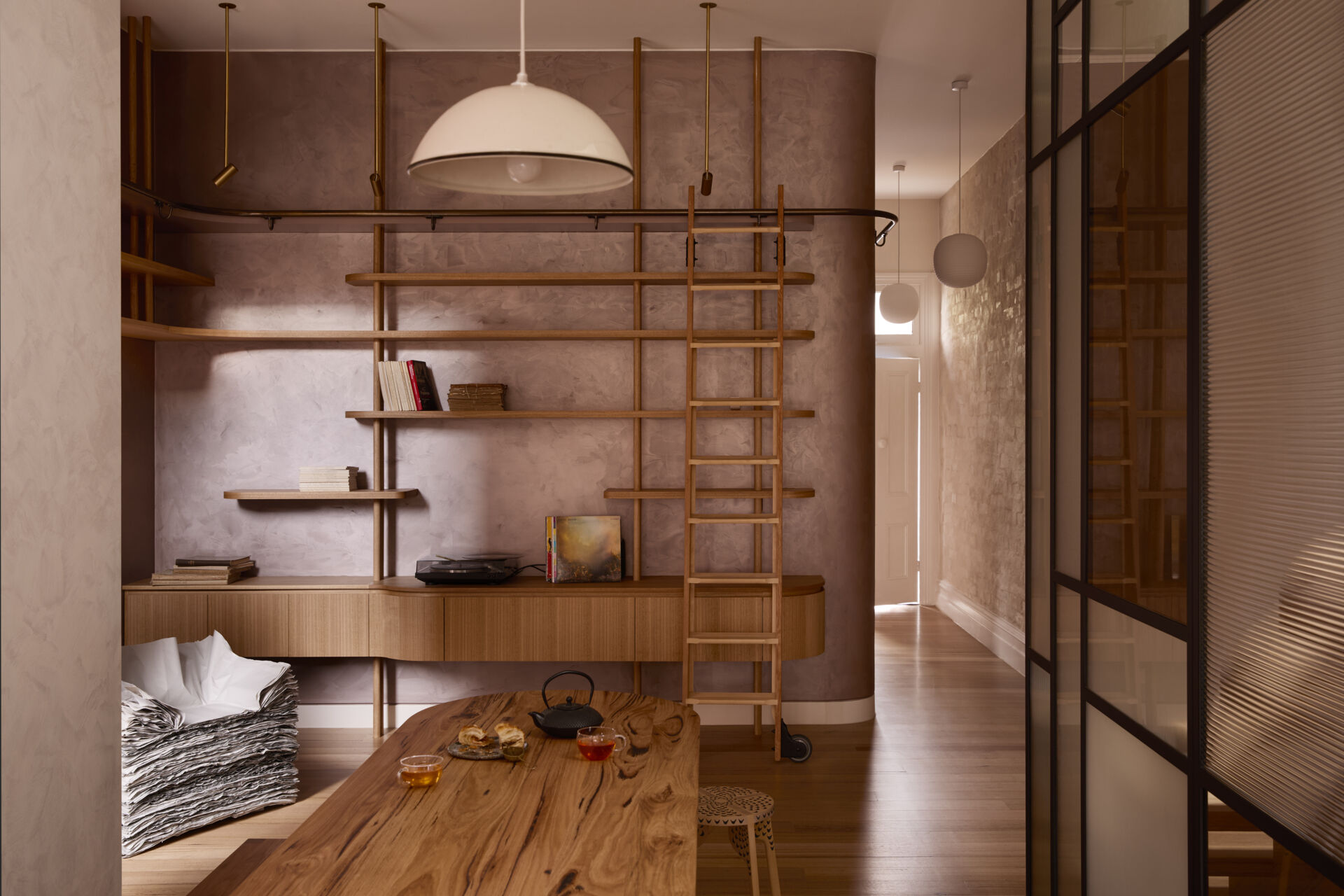
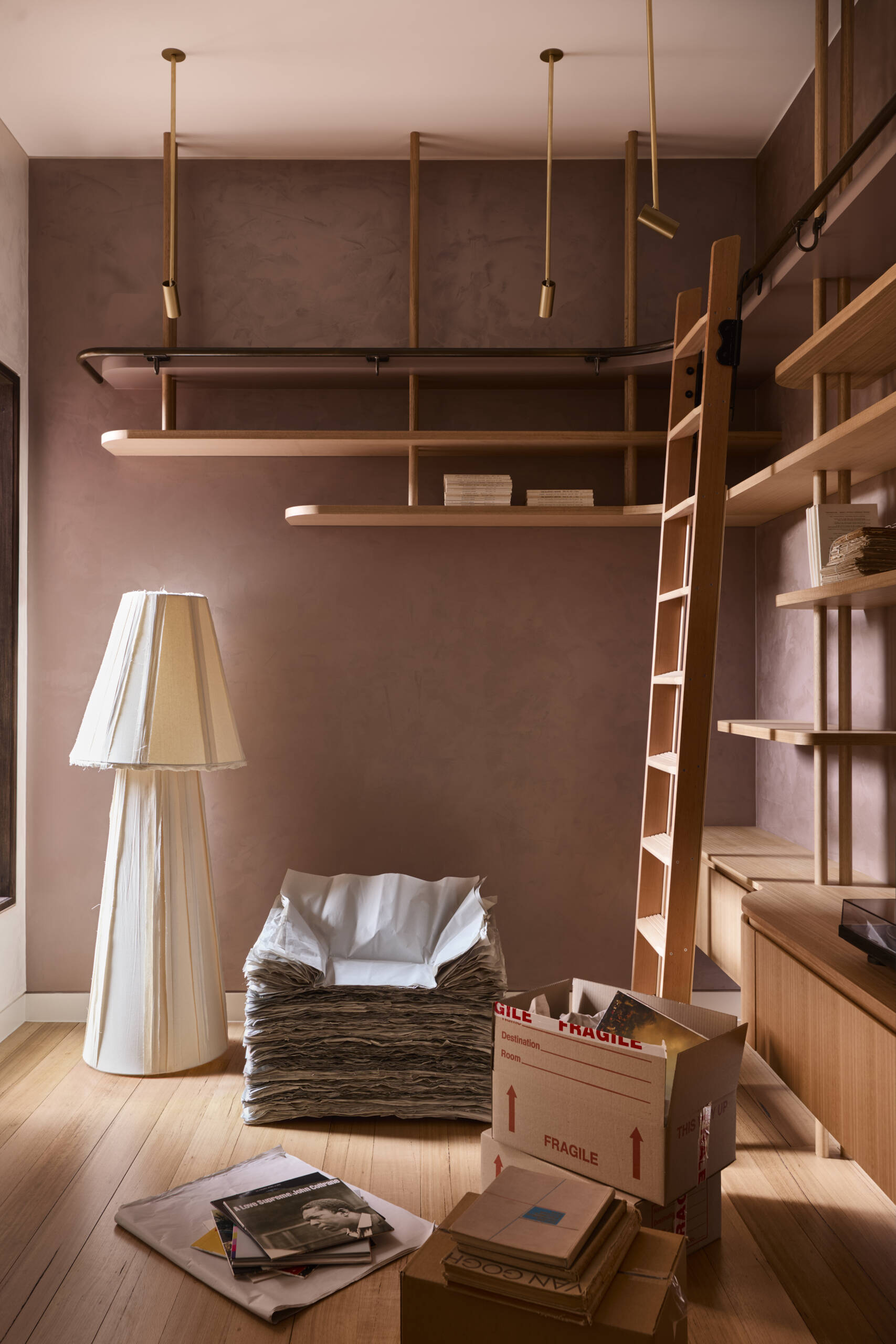
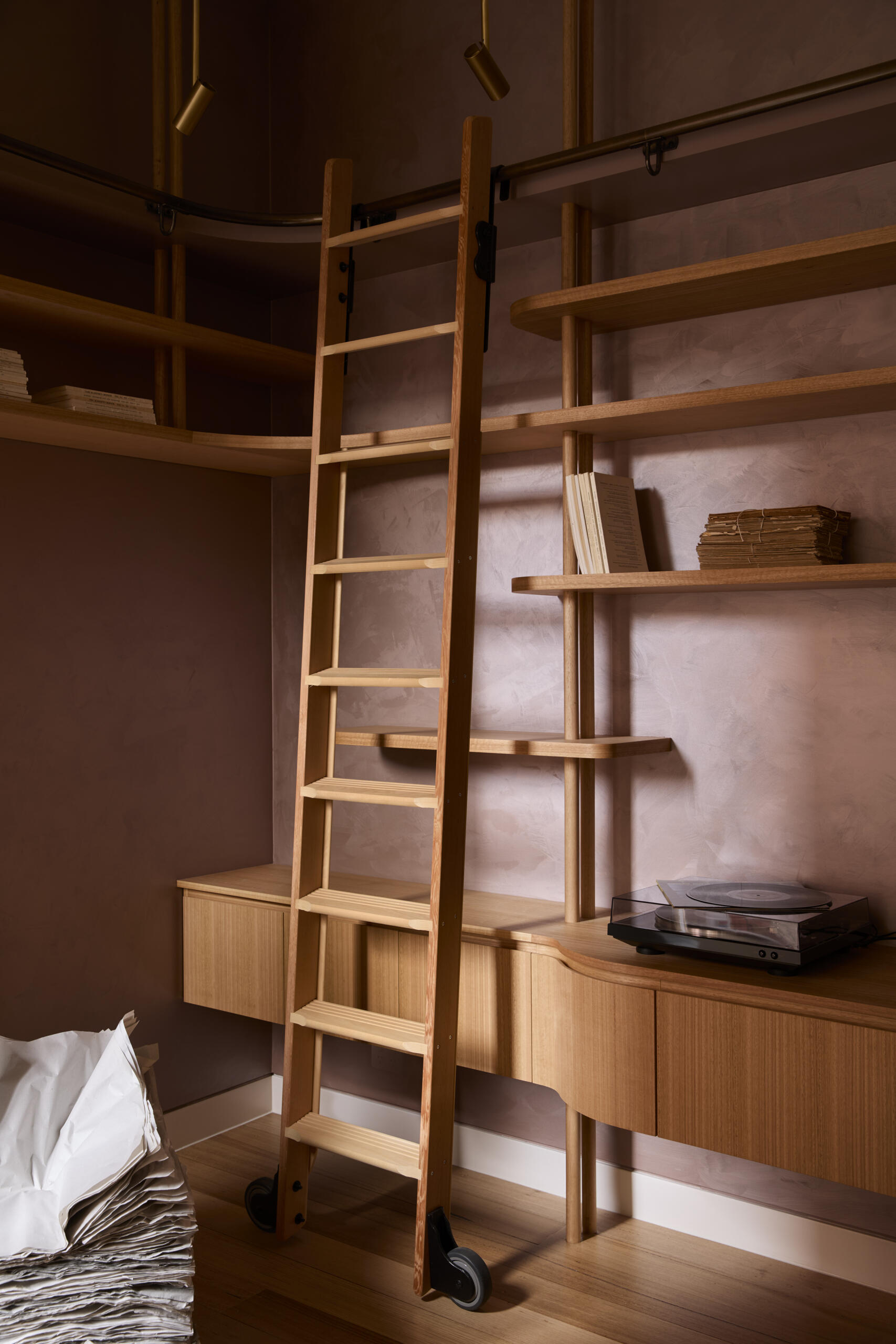
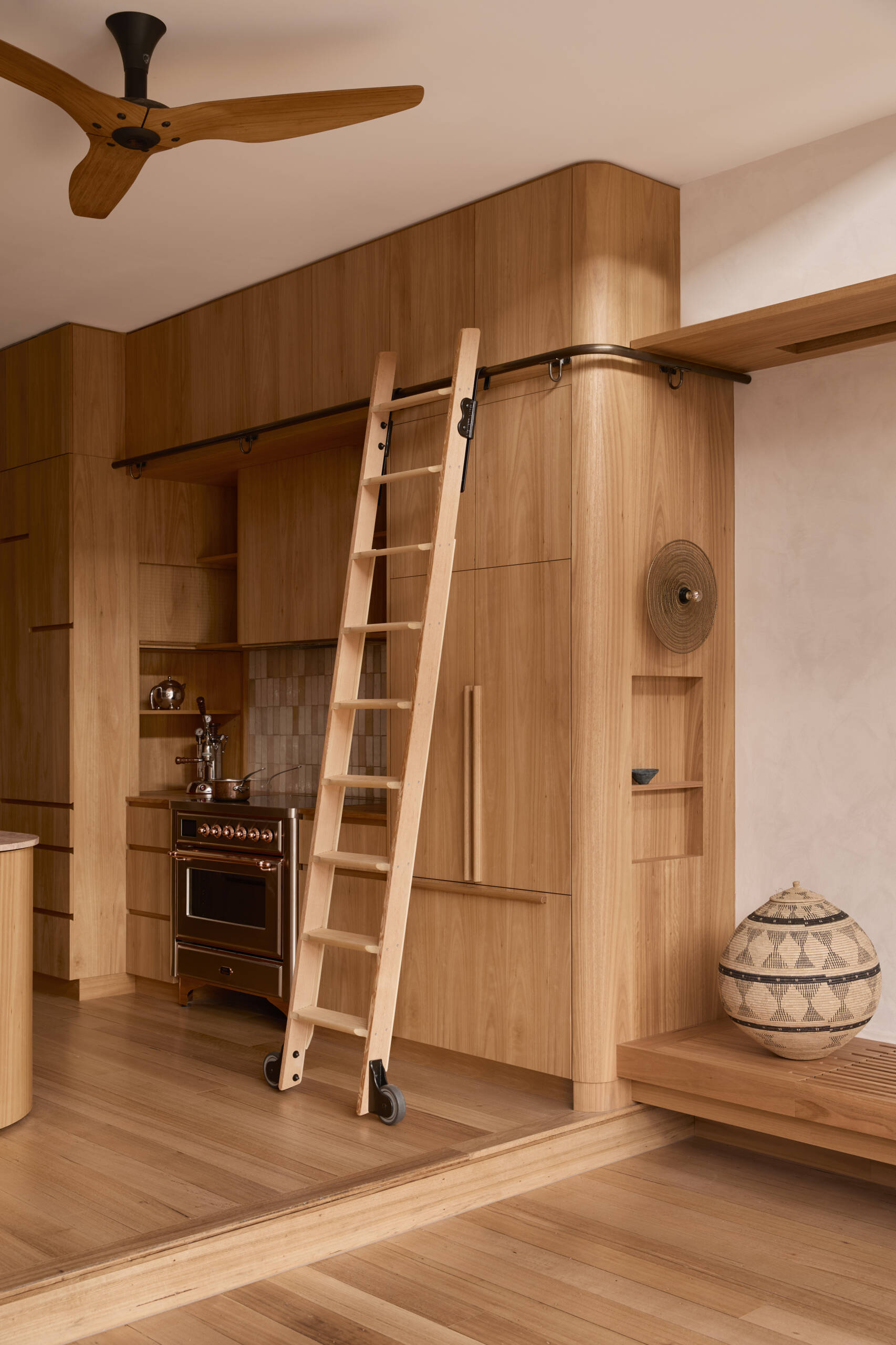
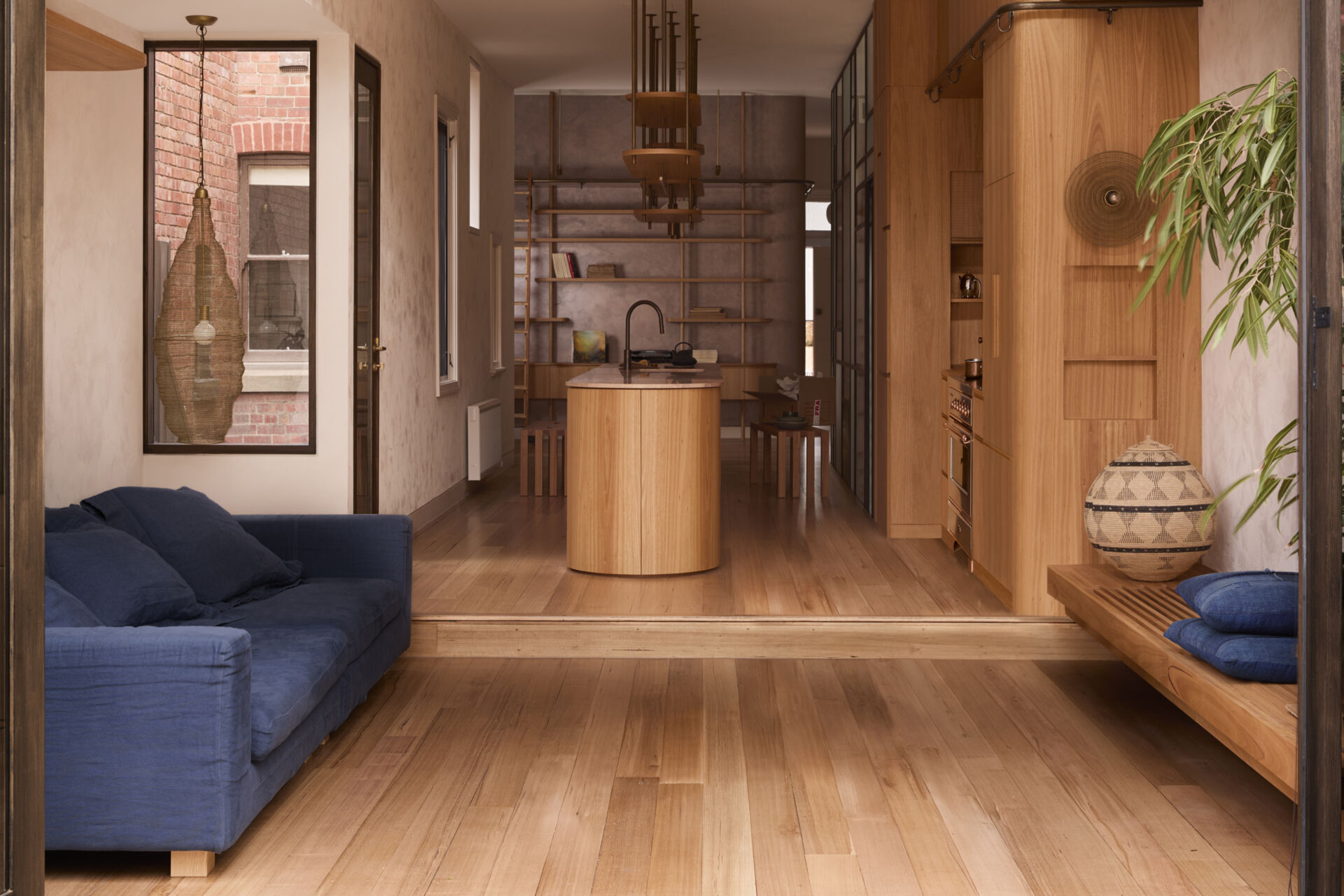
Stepping inside, the home immediately feels warm and inviting. Soft plaster walls and pale timber floors create a gentle backdrop, while in custom shelving stretches upward in the retreat nook, turning everyday storage into a standout design feature. A rolling ladder adds both function and character, making the full height of the shelving easily accessible.
Gentle pendant lighting and sculptural pieces complete the room, creating an entry that feels creative, comfortable, and effortlessly welcoming.
Bold Color in a Compact Space
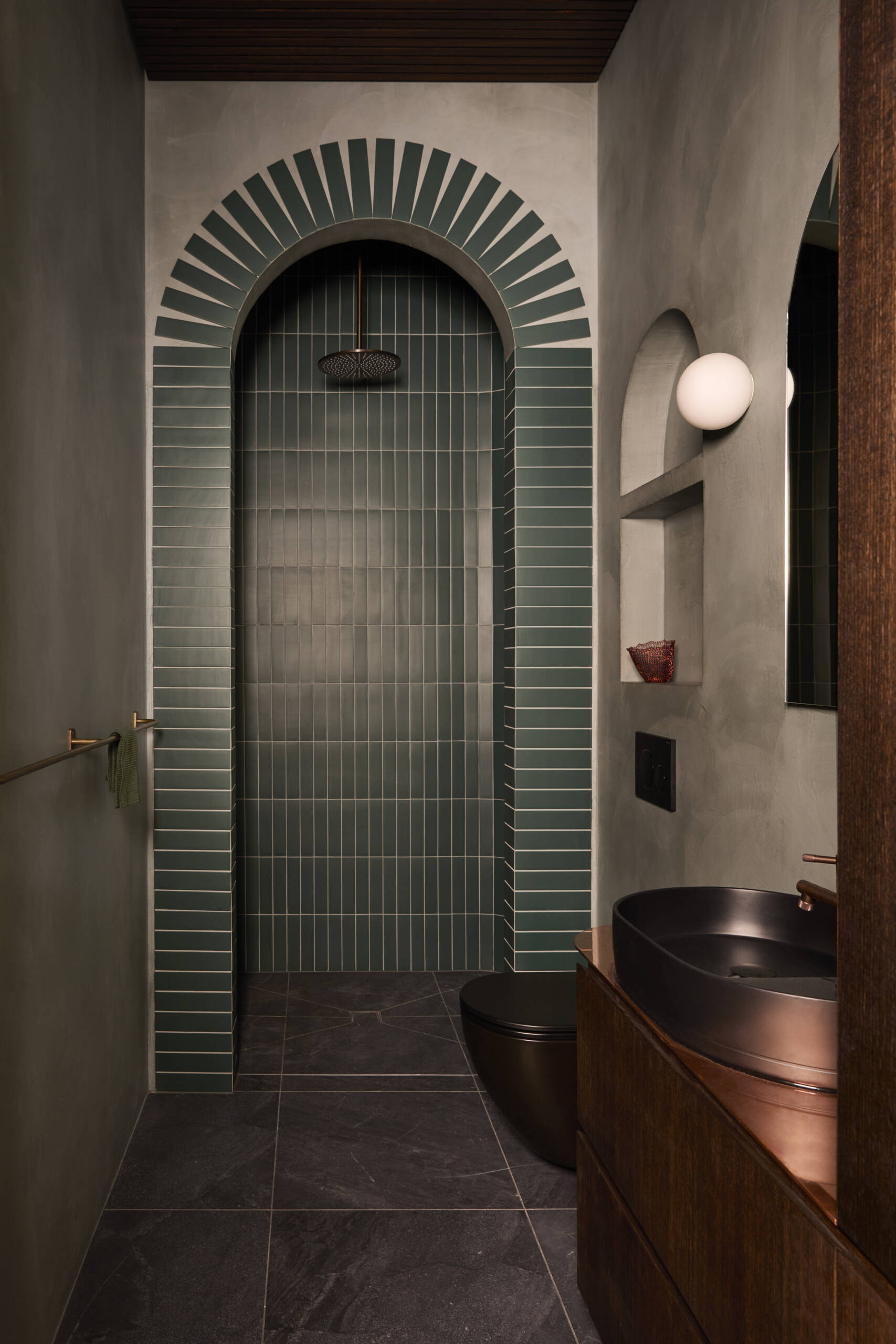
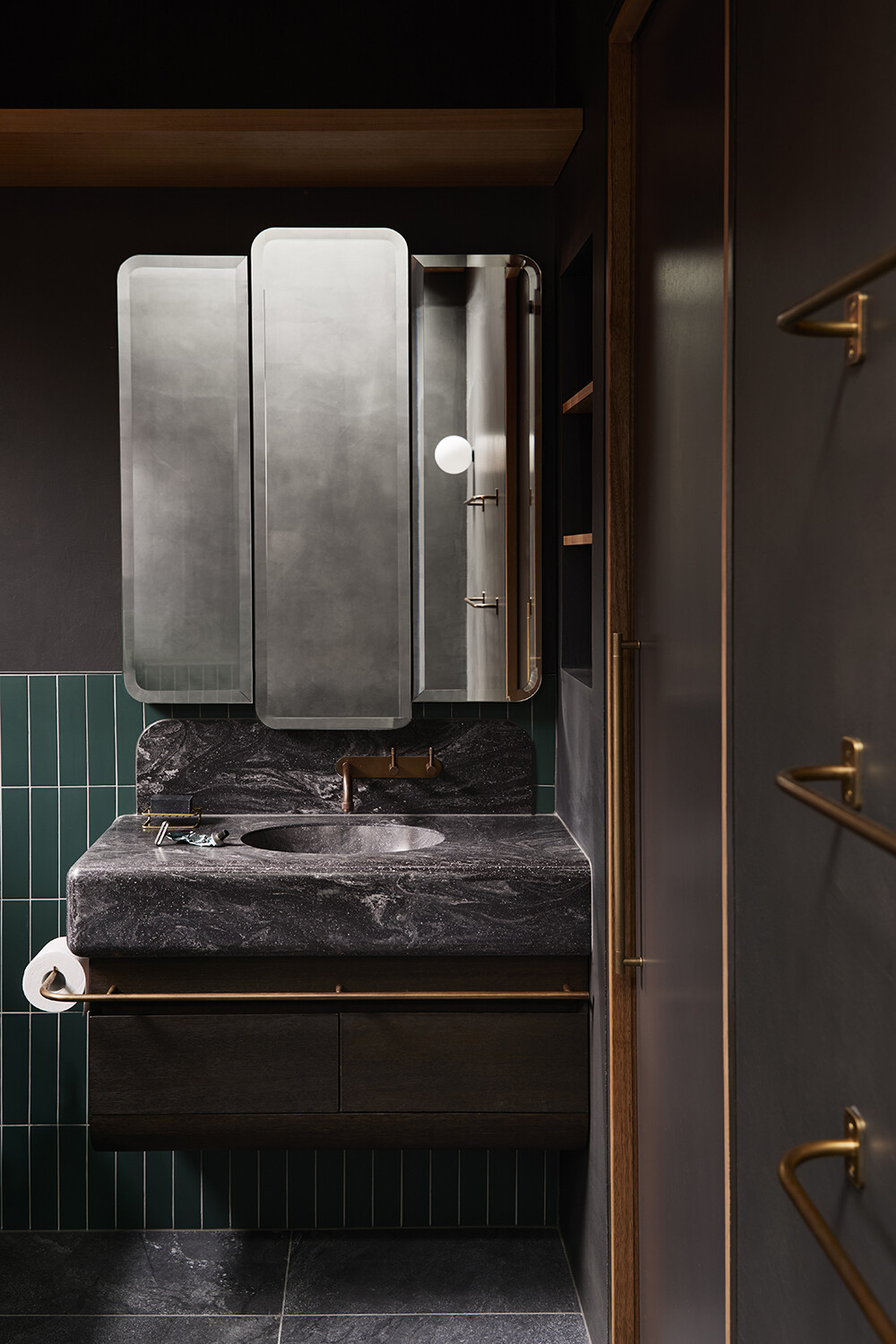
Just off the entry, the ground floor bathroom introduces a darker, more intimate mood. Deep green tiles wrap around the arched shower, creating a striking graphic feature that immediately draws the eye. Dark stone flooring, and warm timber cabinetry layer natural textures with rich color, giving the compact room plenty of depth.
A Space for Gathering and Flow
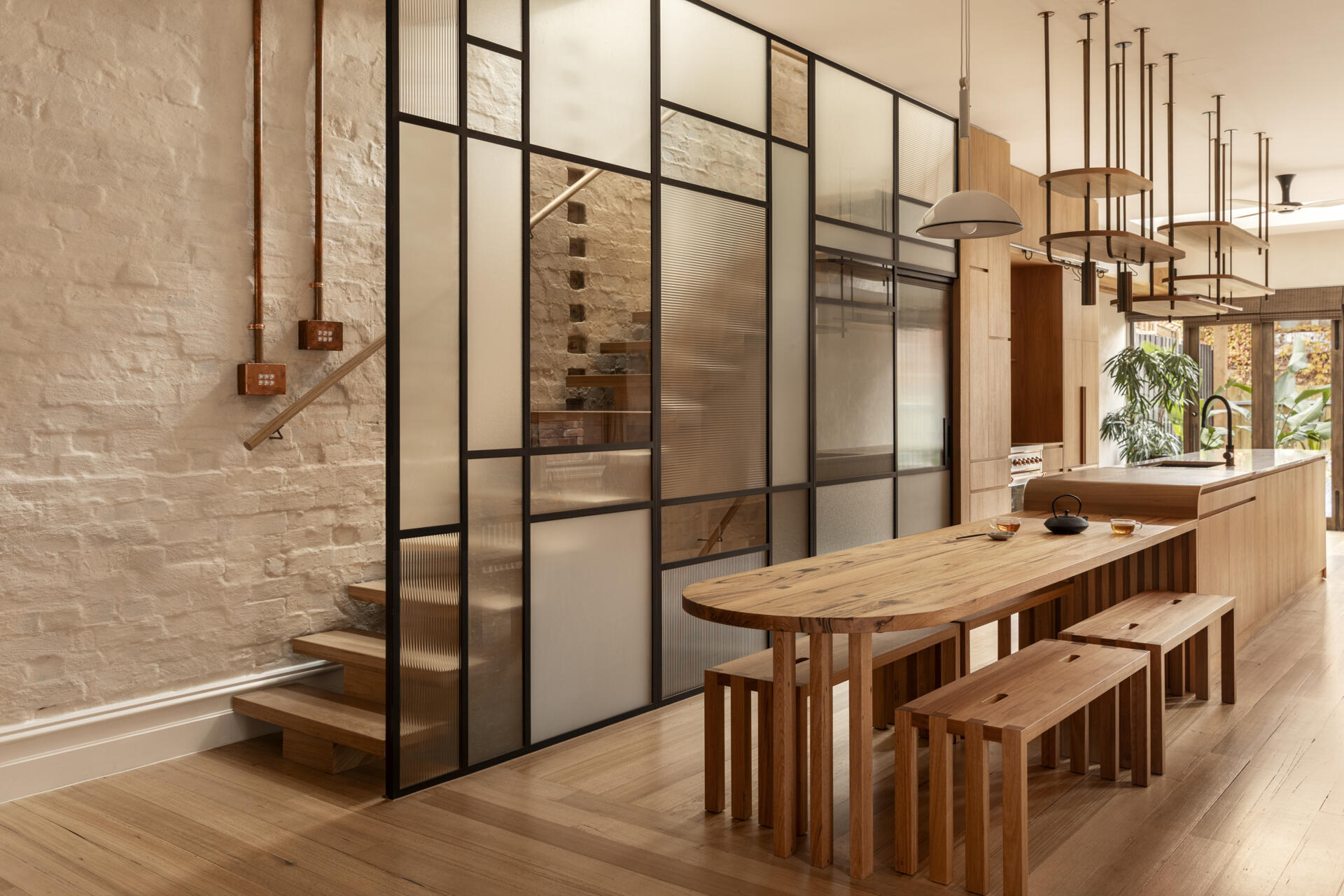
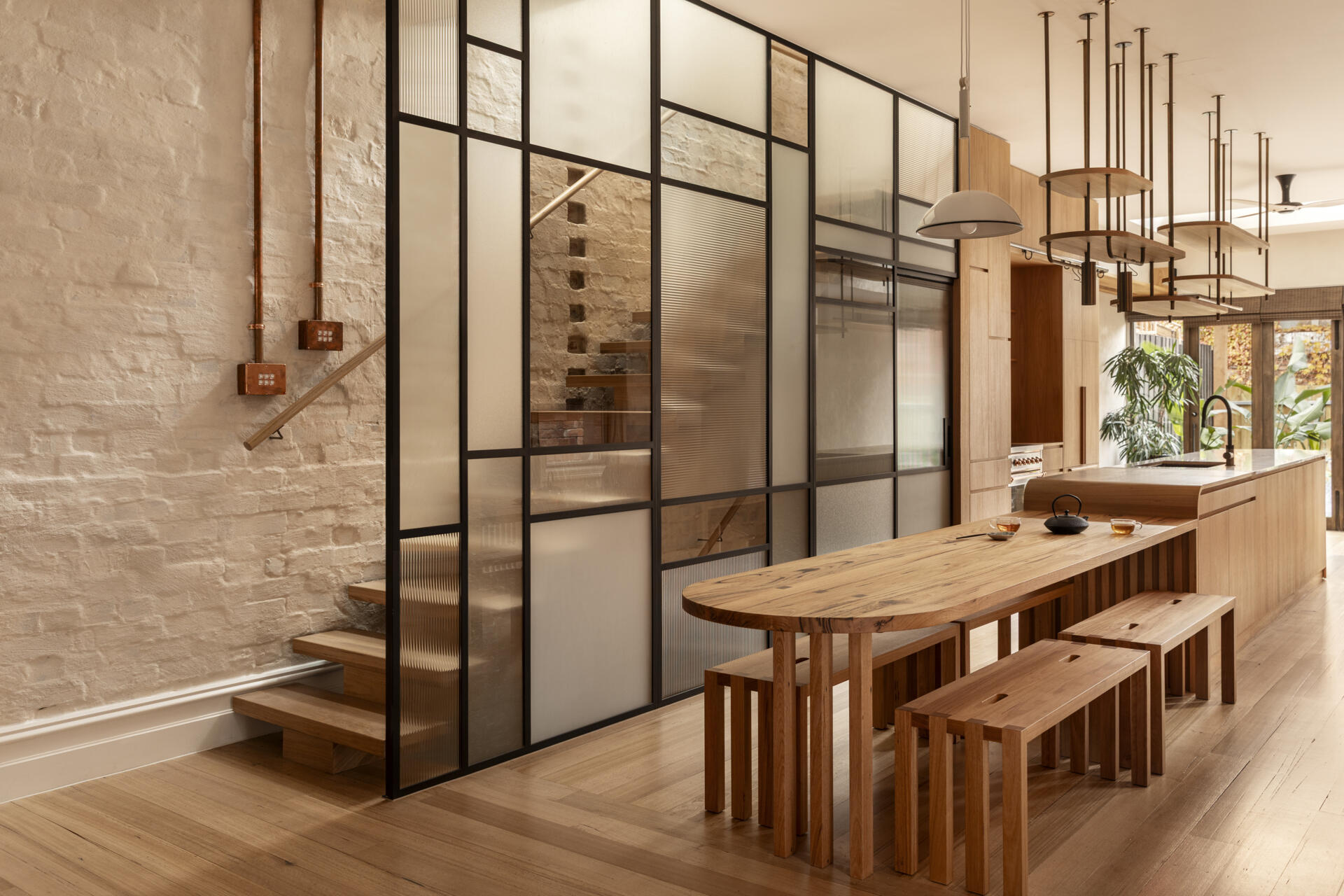
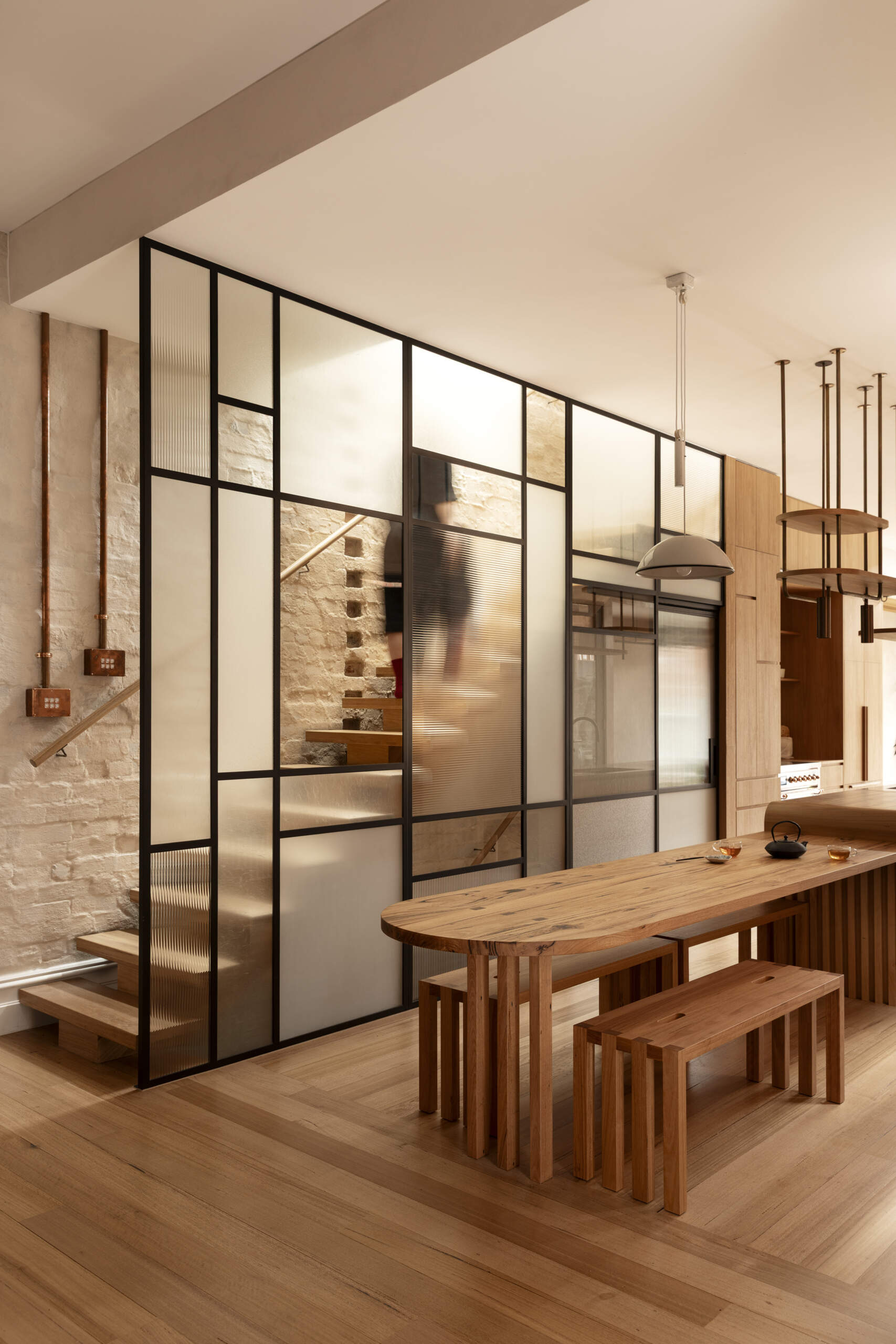
The dining area sits within the open ground floor plan, designed for shared meals and long conversations. Benches and a generous table with a curved end anchors the space, while the surrounding materials keep everything warm and grounded.
The Heart of the Home
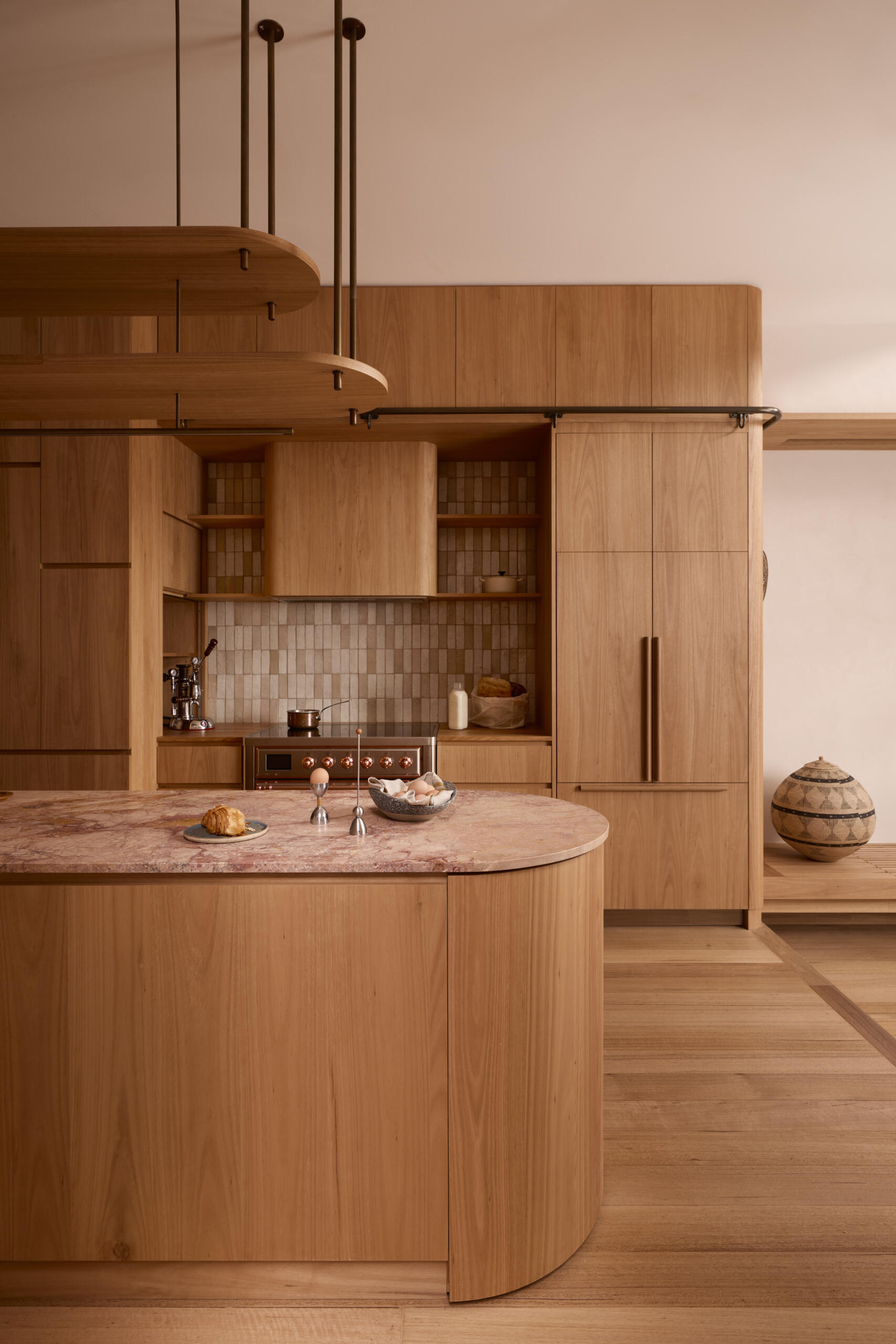
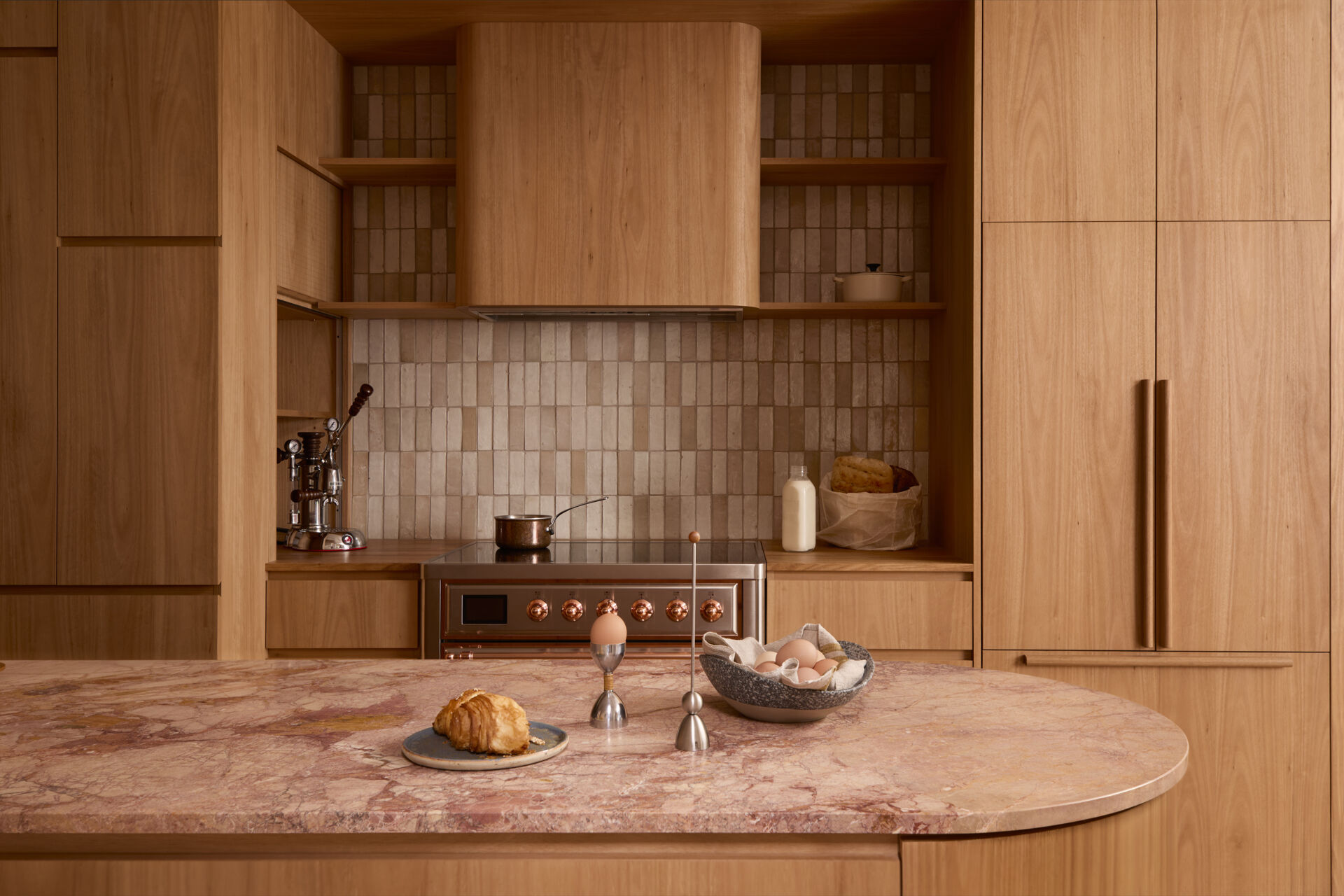
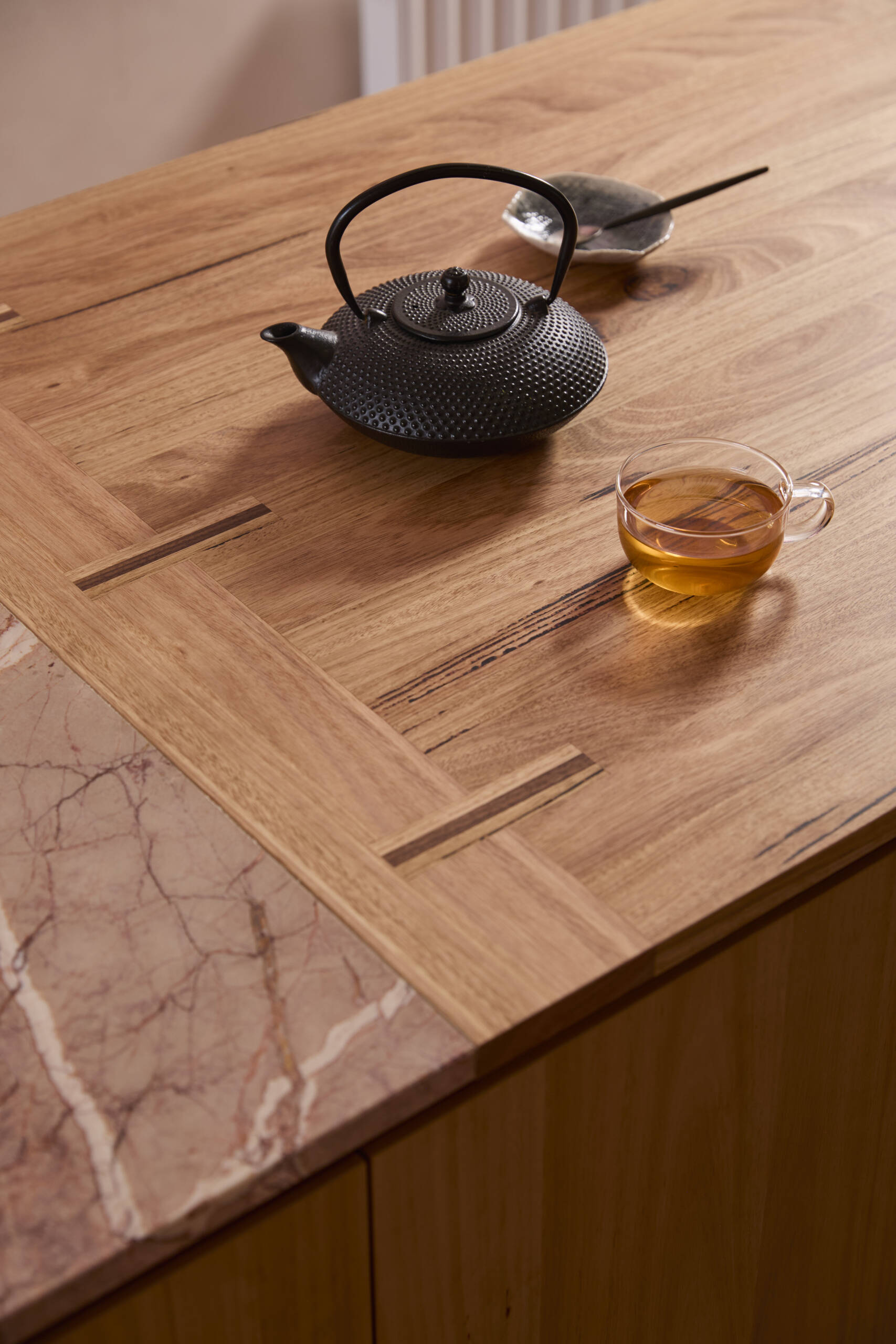
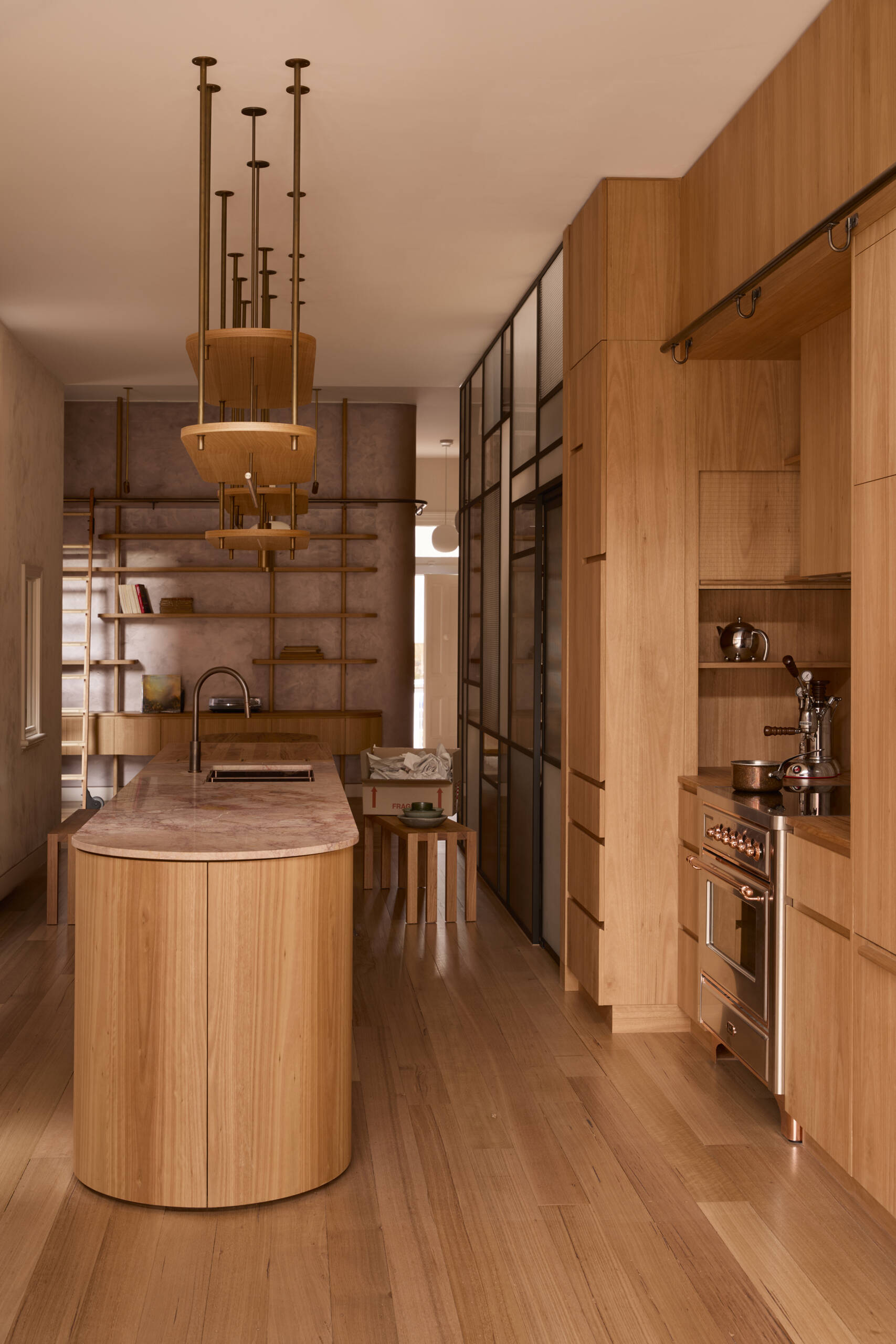
The kitchen forms the center of the home. Timber joinery, blush stone, handmade tiles, and copper detailing come together in a composition that feels tactile and expressive. It operates as both cooking space and social hub, opening directly to the lounge.
Color, Comfort, and Ease
The lounge balances softness and energy. An indigo sofa anchors the room, paired with layered textures and natural light that shifts through the day. Smaller seating moments, like a built-in bench, sit alongside it, allowing the space to flex between gathering and quiet use.
Courtyard Framed by Green
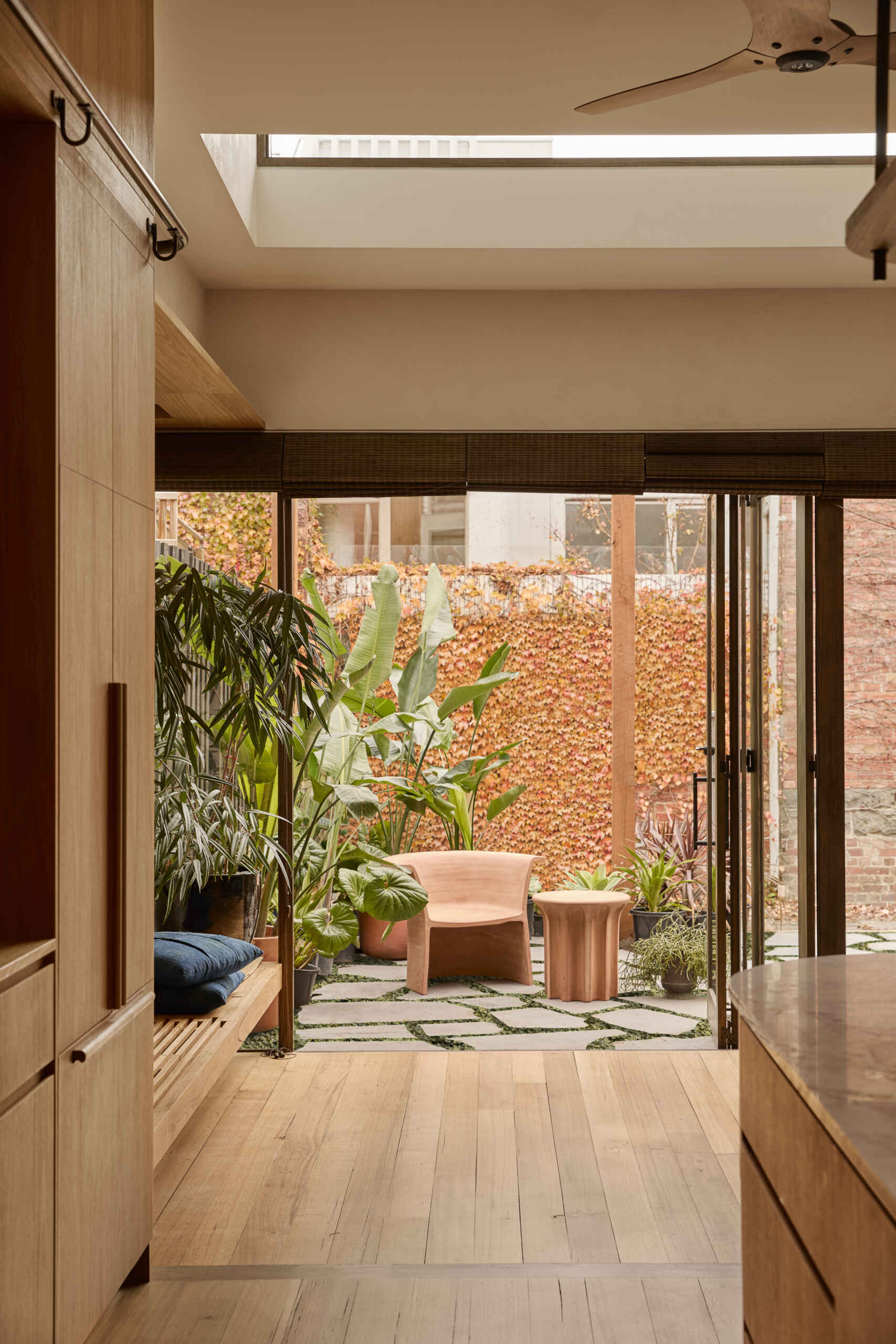
At the rear, the courtyard becomes a leafy extension of the interior. Tropical planting wraps around paved surfaces, creating a compact outdoor zone that connects directly to kitchen and dining areas. Sliding doors dissolve the boundary between inside and out.
Light Through the Center
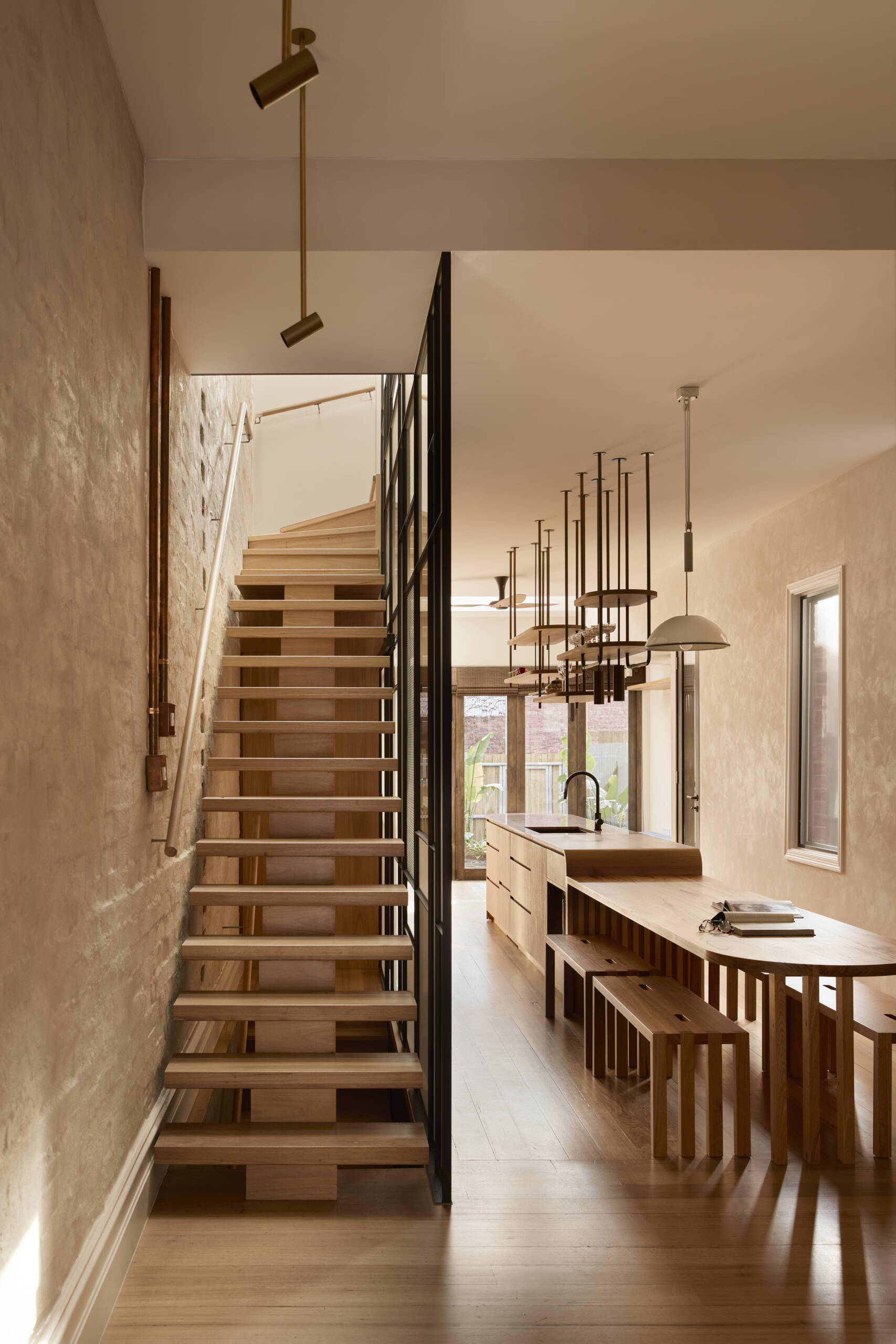
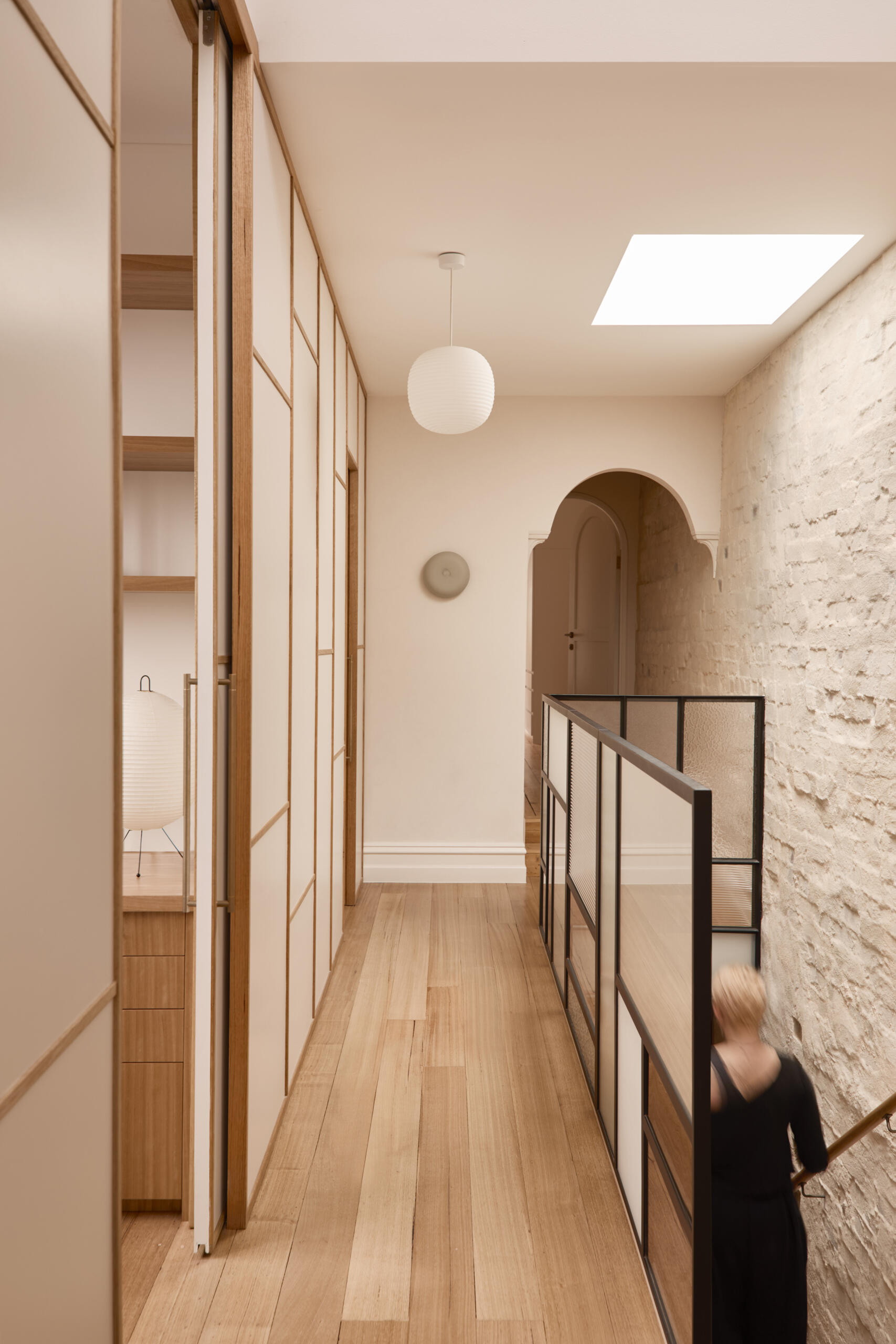
A floating timber staircase rises along a central spine, paired with a shoji-inspired glass balustrade. Above, skylights and a clerestory window draw daylight deep into the home. This vertical connection becomes one of the strongest architectural gestures in the house.
Calm Separation
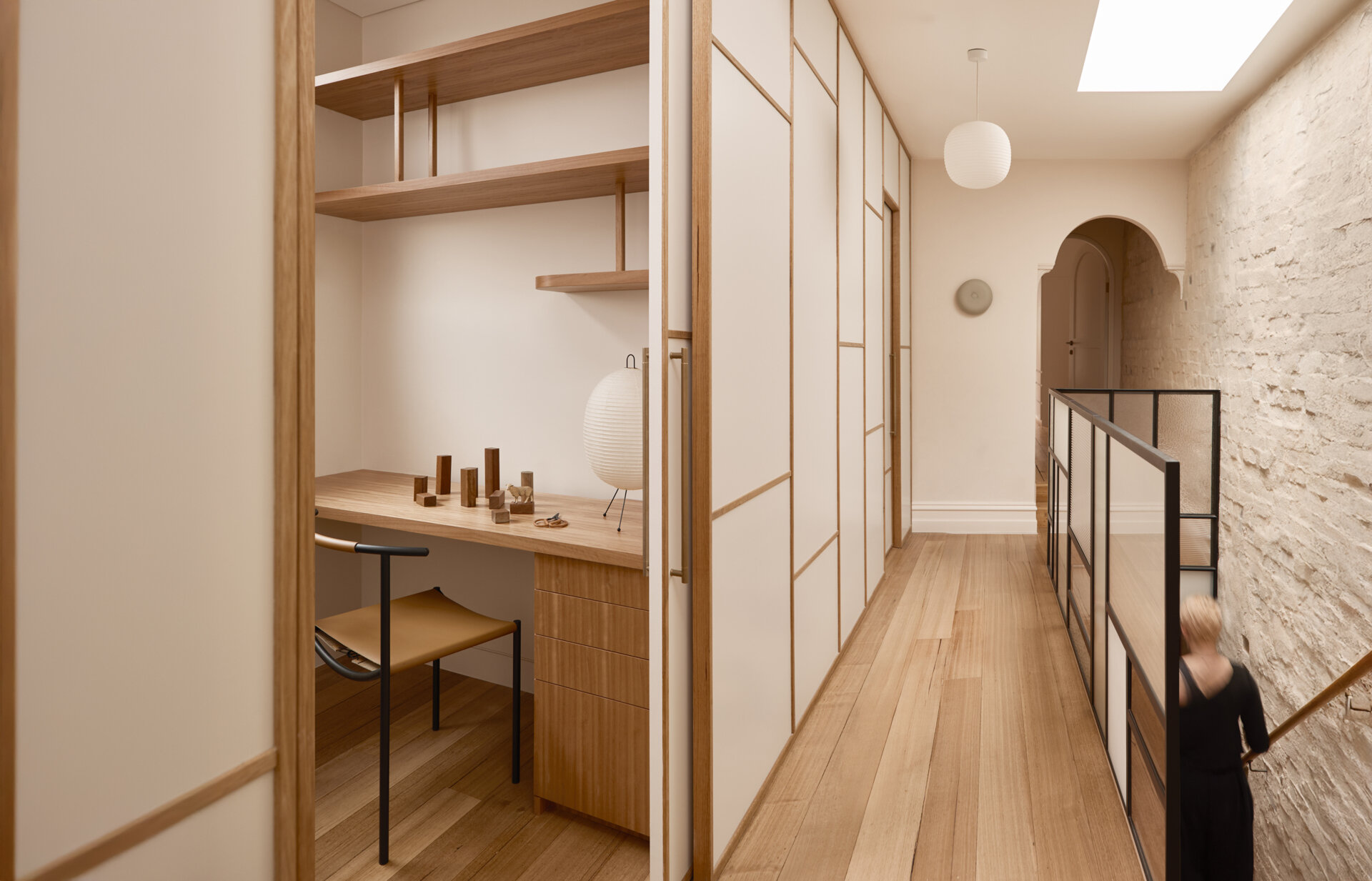
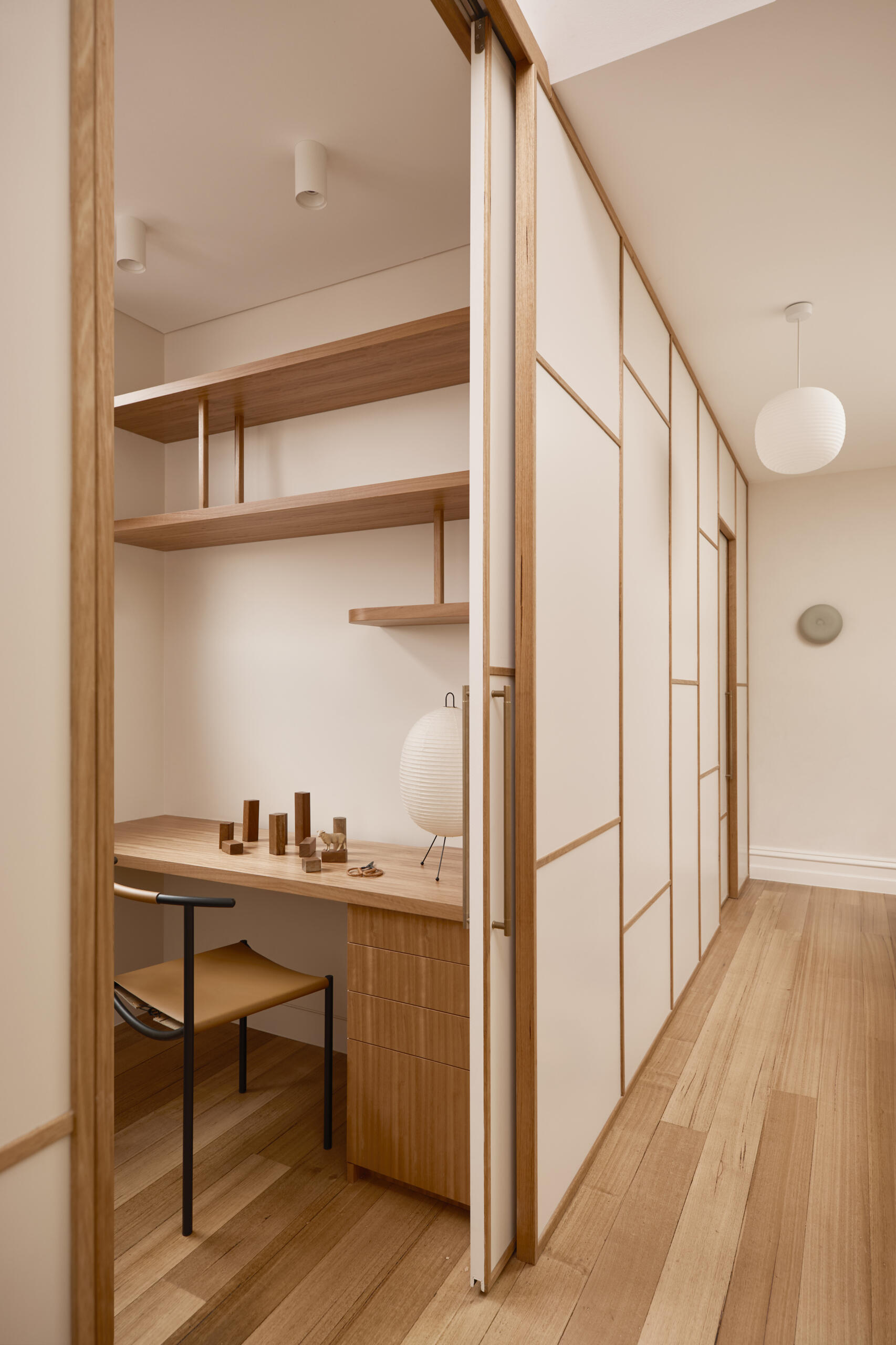
Upstairs, circulation becomes quieter. Shoji-inspired partitions define a study and concealed rooms, filtering light while maintaining openness. The hallway feels structured yet gentle, with timber and soft finishes guiding movement.
Onsen-Inspired Stillness
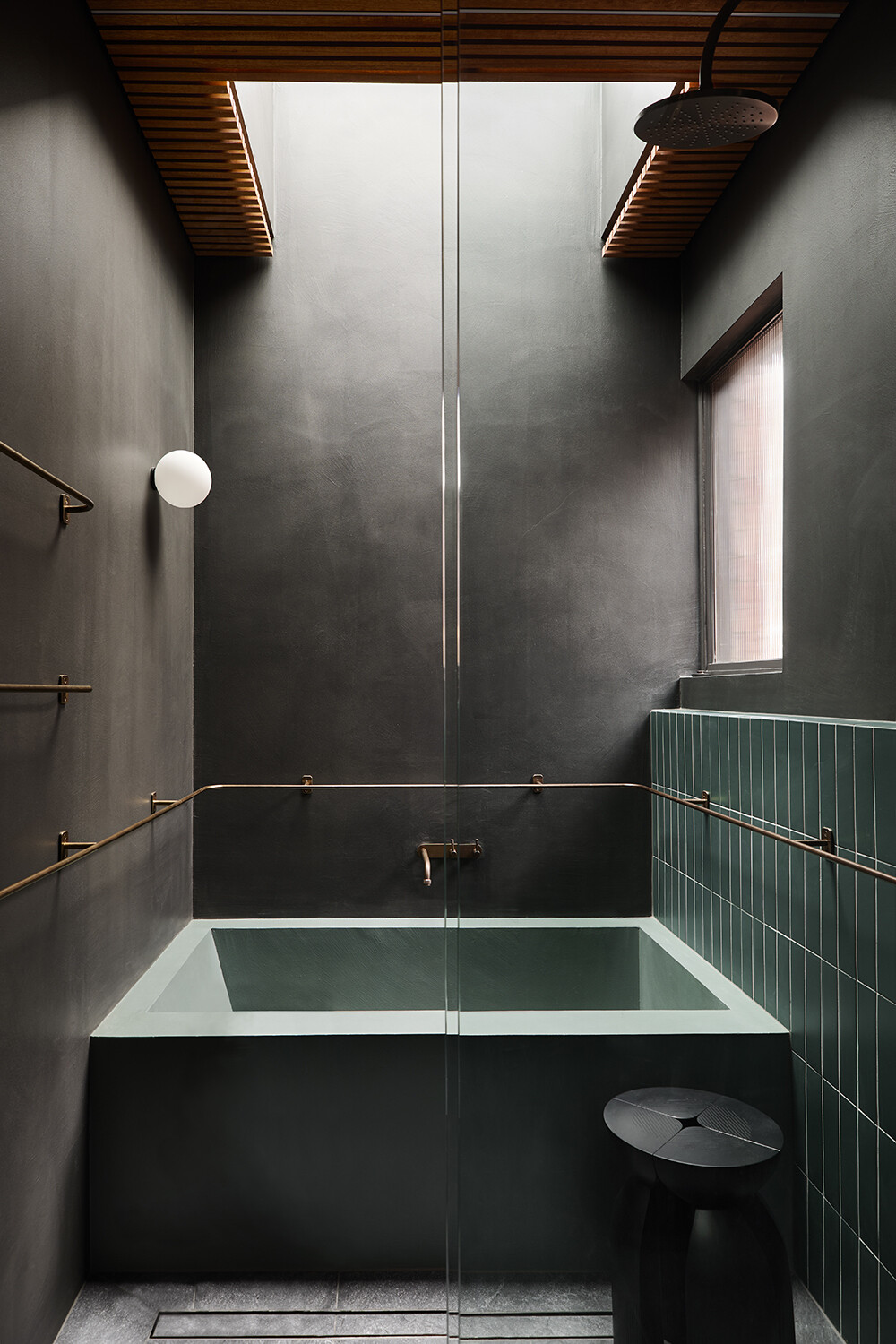
The main bathroom shifts into a dramatic sculpted space where a microcement soaking tub rises as a continuous form. Soft light and restrained surfaces create a bathing environment that feels immersive without excess detail.
Heritage Reintroduced
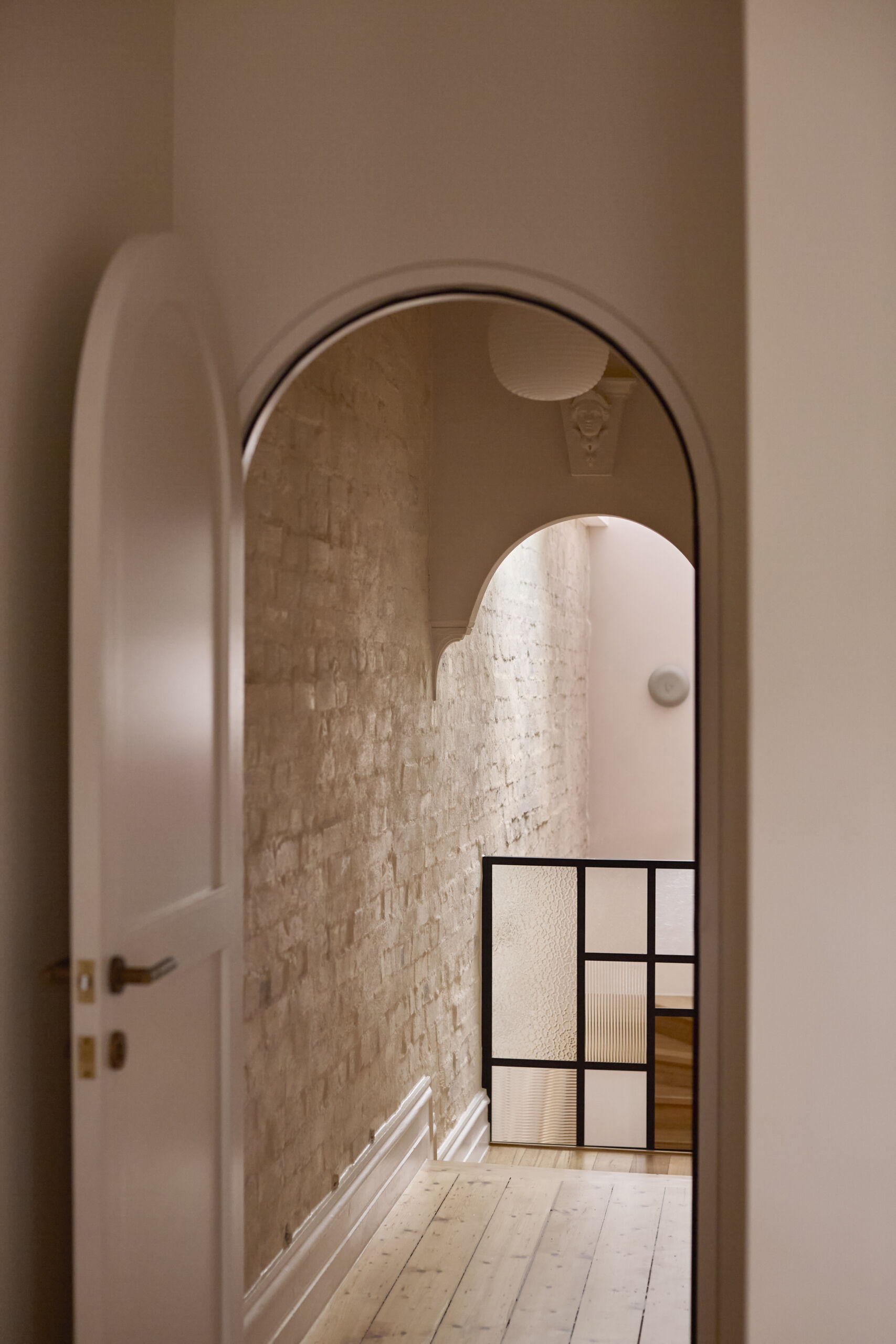
Original Victorian elements return through restored arches and a preserved plaster keystone. These details reconnect the home to its 1890s origins, sitting alongside newer interventions in timber, glass, and stone.
Reworking the Terrace Typology
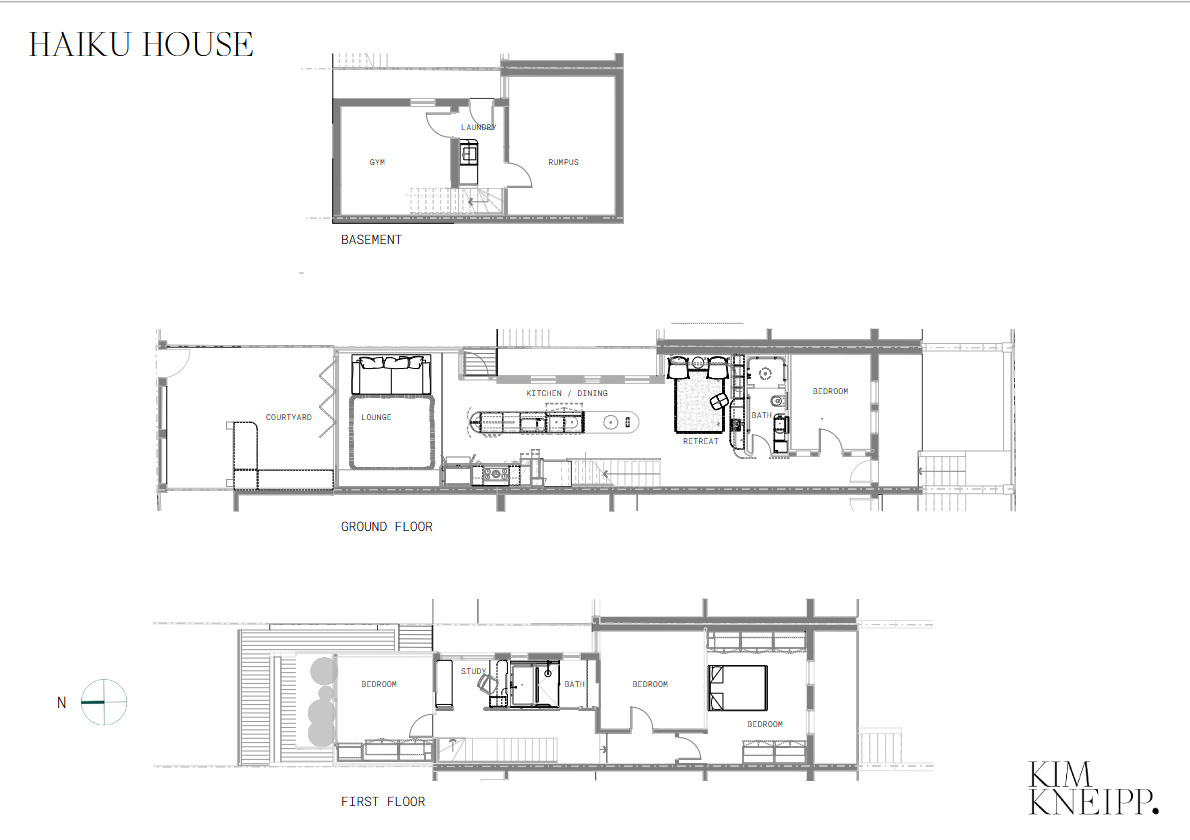
The entire layout has been rethought to improve light and movement. The repositioned staircase becomes the organizing spine, while skylights and new openings reshape how each room connects. The result is a terrace plan that feels more open without losing its structure.
Haiku House stands as a blend of heritage structure and contemporary family living in Brunswick East. Designed by Steffen Welsch Architects with interiors by Kim Kneipp, it brings together Victorian detail, Japanese influence, and natural materials.