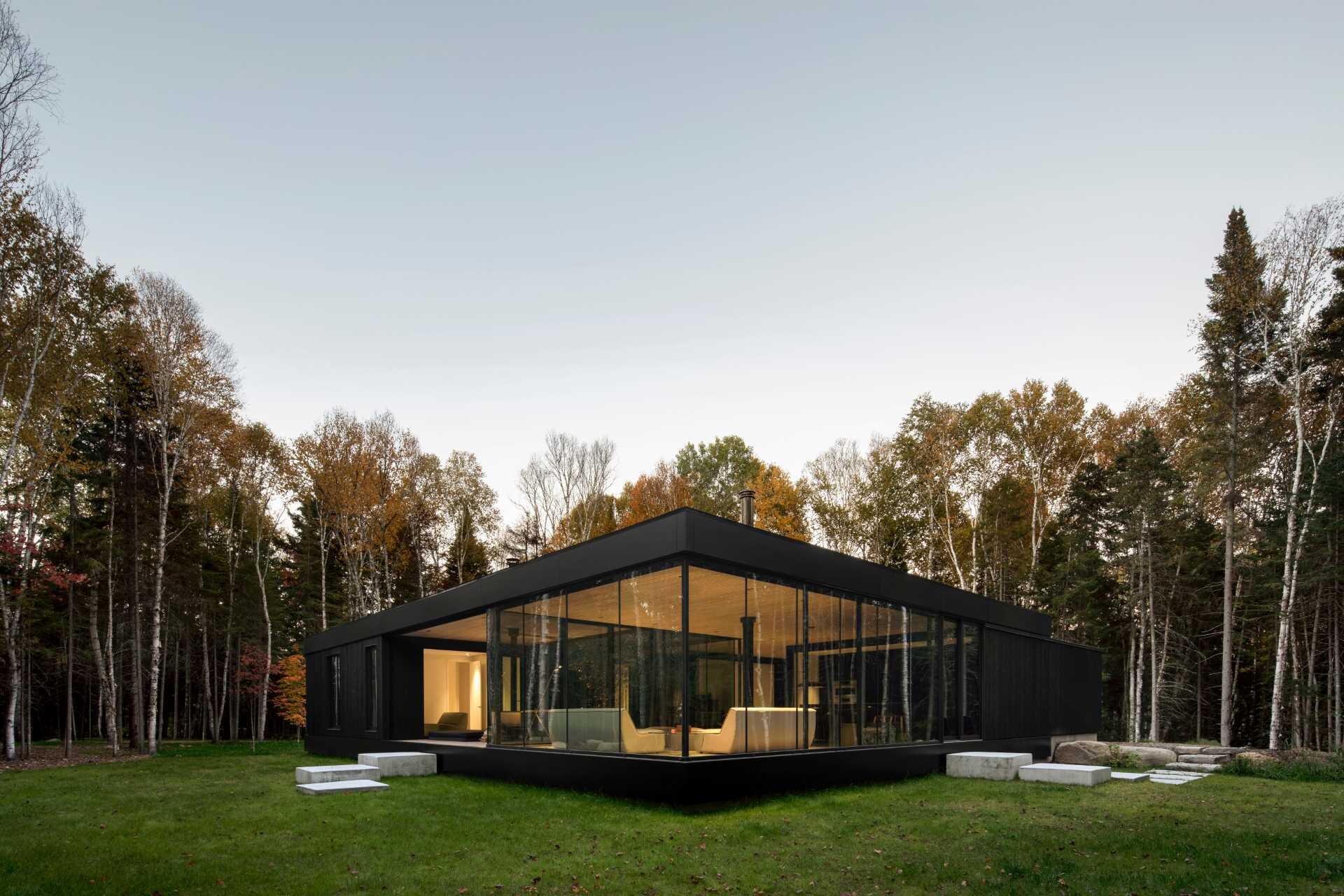
Apple Tree House by ACDF Architecture sits in Saint-Donat-de-Montcalm in Quebec’s Lanaudiere region, placed deep within a dense forest on a large private site. The home takes shape as a single-story glass residence formed through a series of interconnected boxes, opening directly into the surrounding landscape.
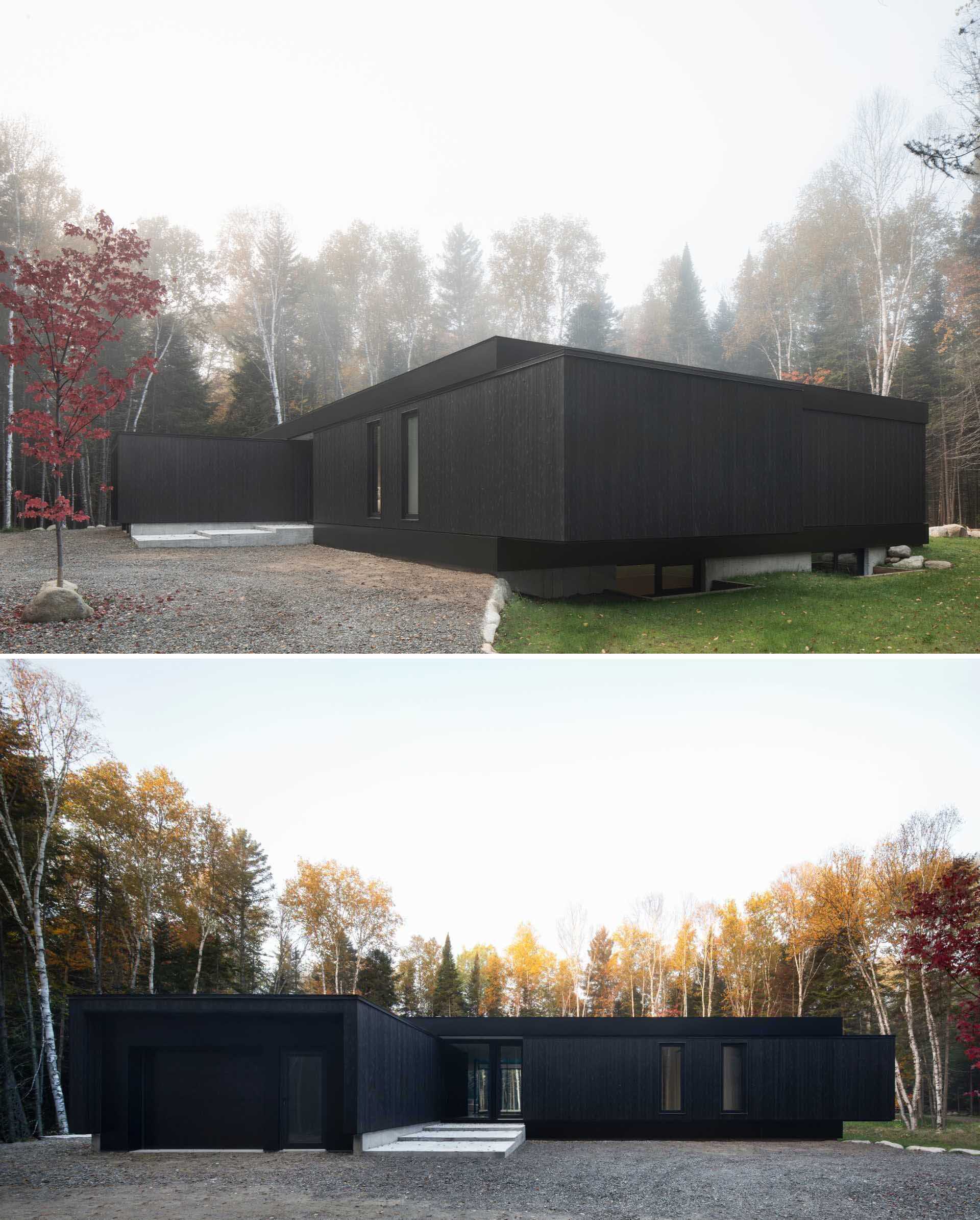
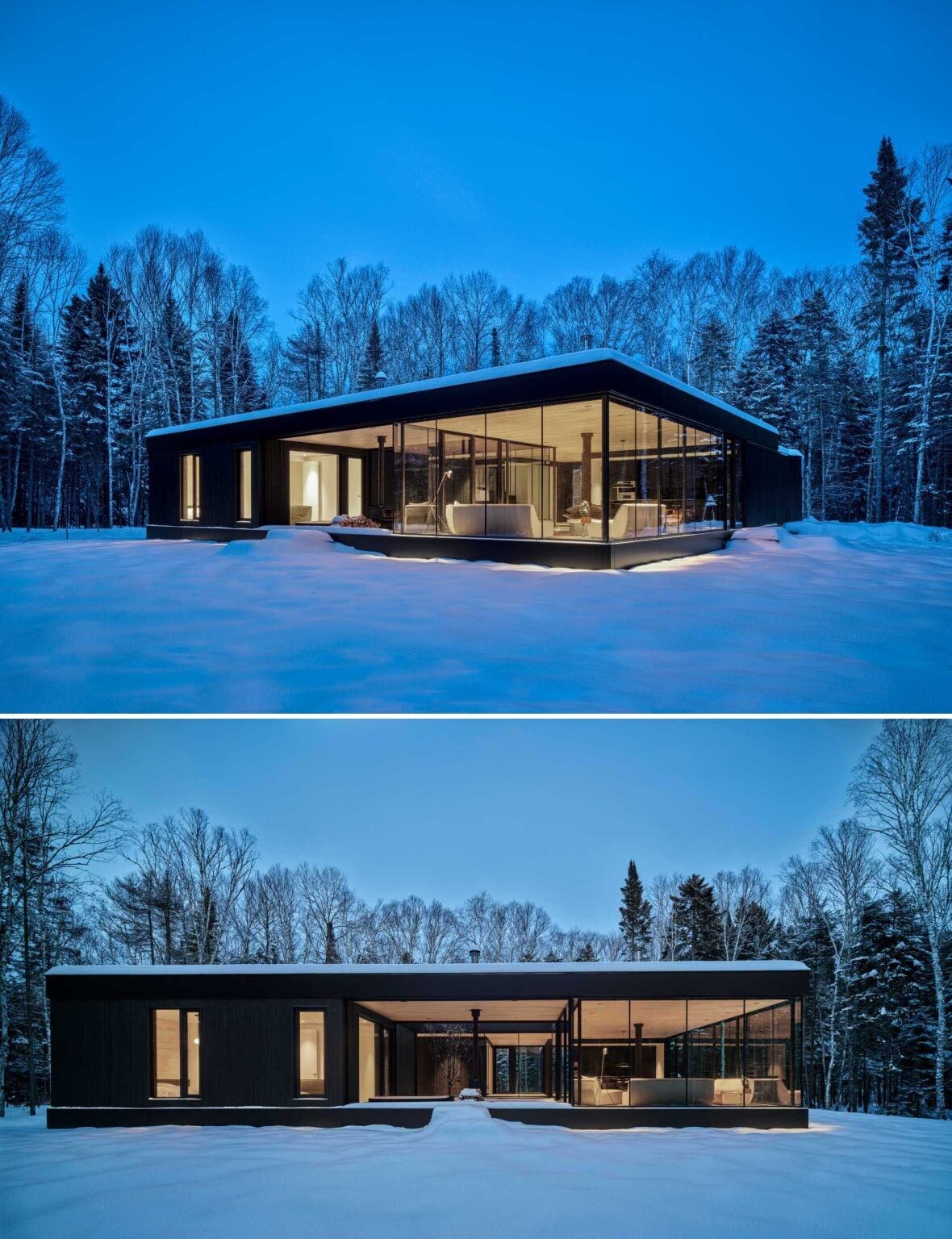
The project reflects a strong focus on openness and connection to nature, with glass walls and timber volumes arranged across a forest clearing. A striking contrast defines the home from the outside, where black metal and wood surfaces sit against the brightness of the interiors. During winter, the house becomes visually warm against the dark forest, appearing softly illuminated like a lantern.
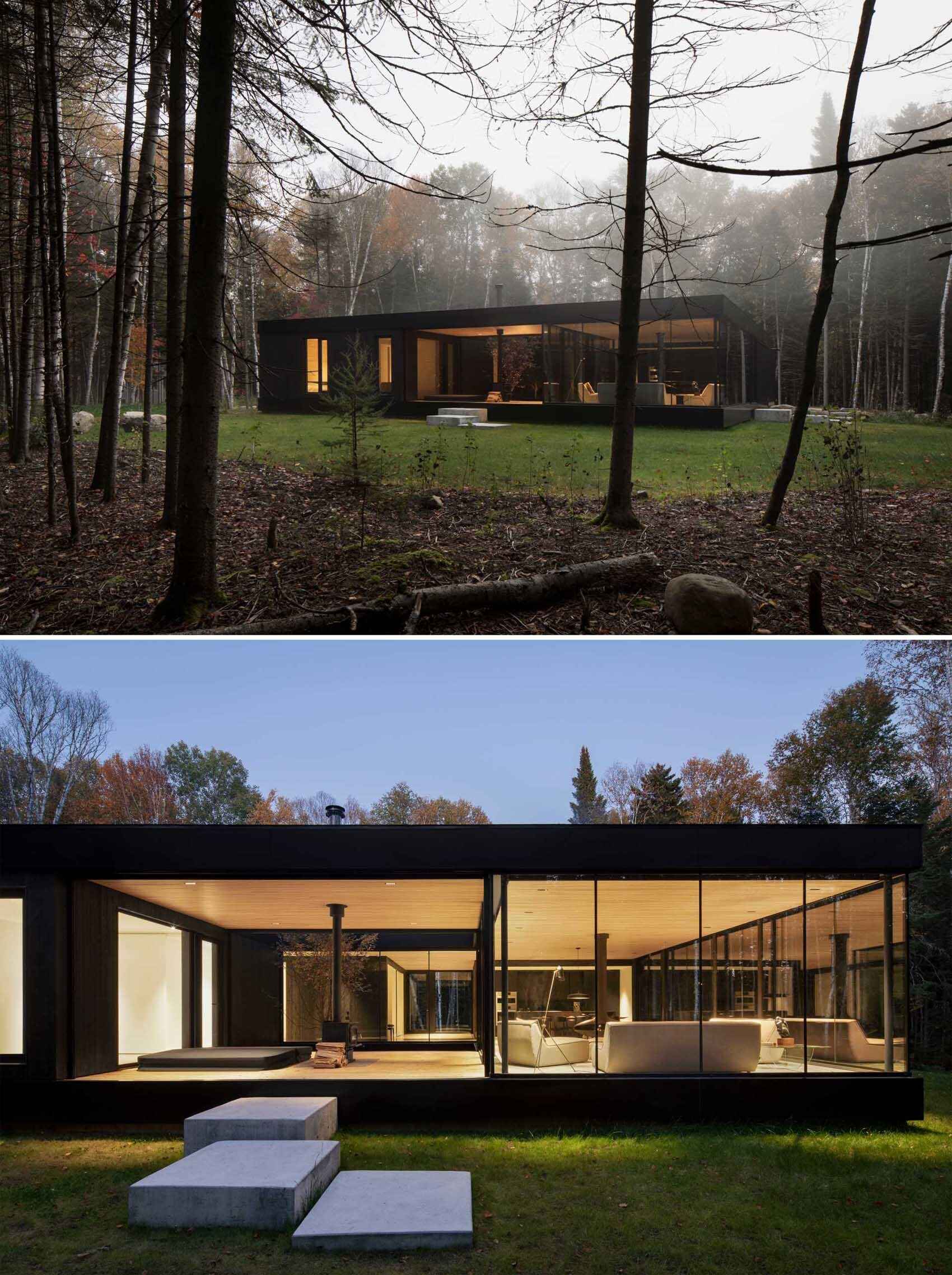
A Glass Structure Set Within Dense Forest
The house is positioned on a forested lot where tall trees surround the structure on all sides. Rather than clearing the landscape, the design allows the forest to remain visually dominant, with the home placed carefully among it.
The architecture is defined by clarity and simplicity in form, with horizontal lines, glass surfaces, and solid volumes working together. The result is a structure that reads as both open and enclosed, shifting between transparency and solidity depending on the angle and light.
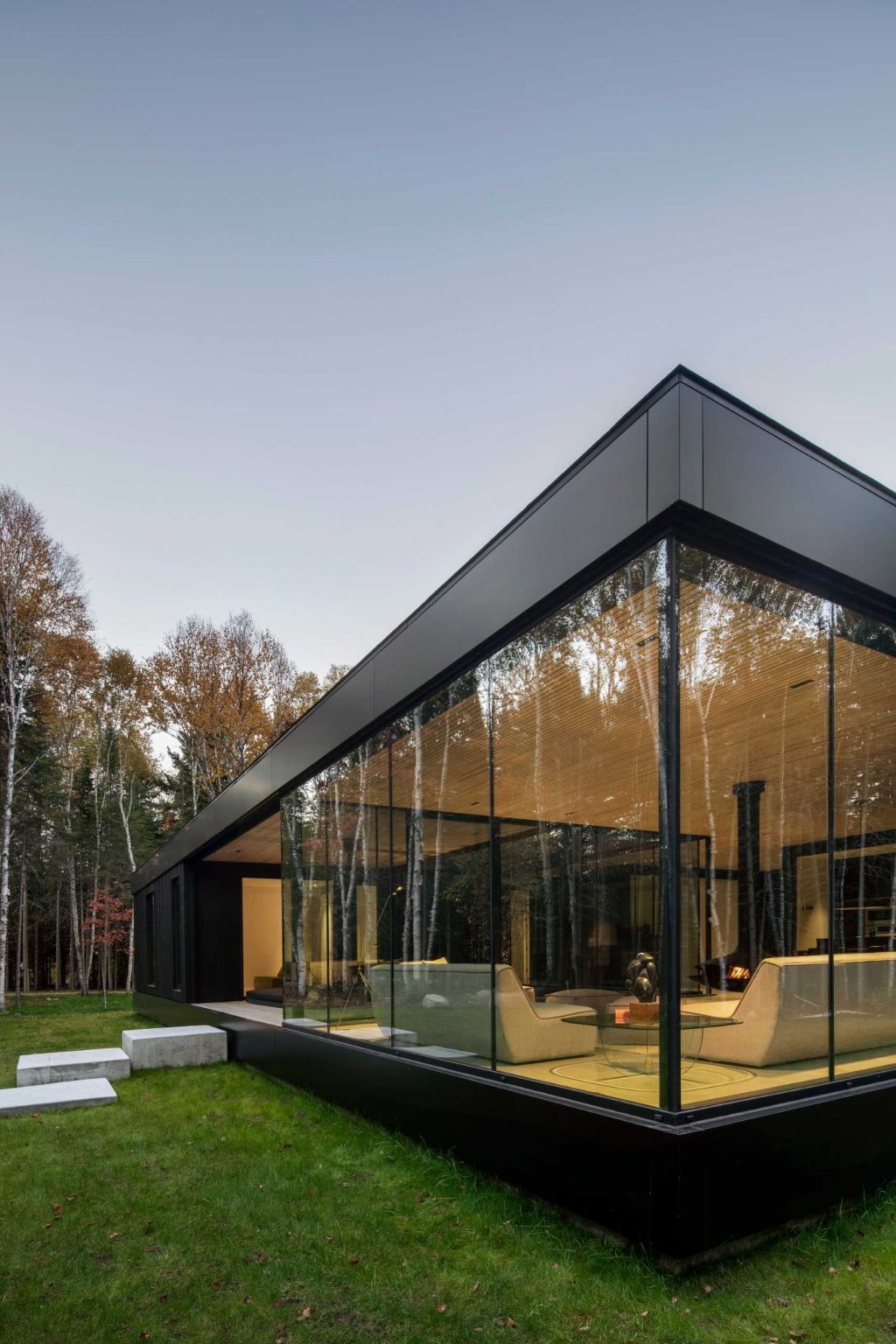
During winter, the house becomes softly illuminated against the dark forest backdrop, creating a warm presence within the landscape.
Entryway Framed by Light and Material Contrast
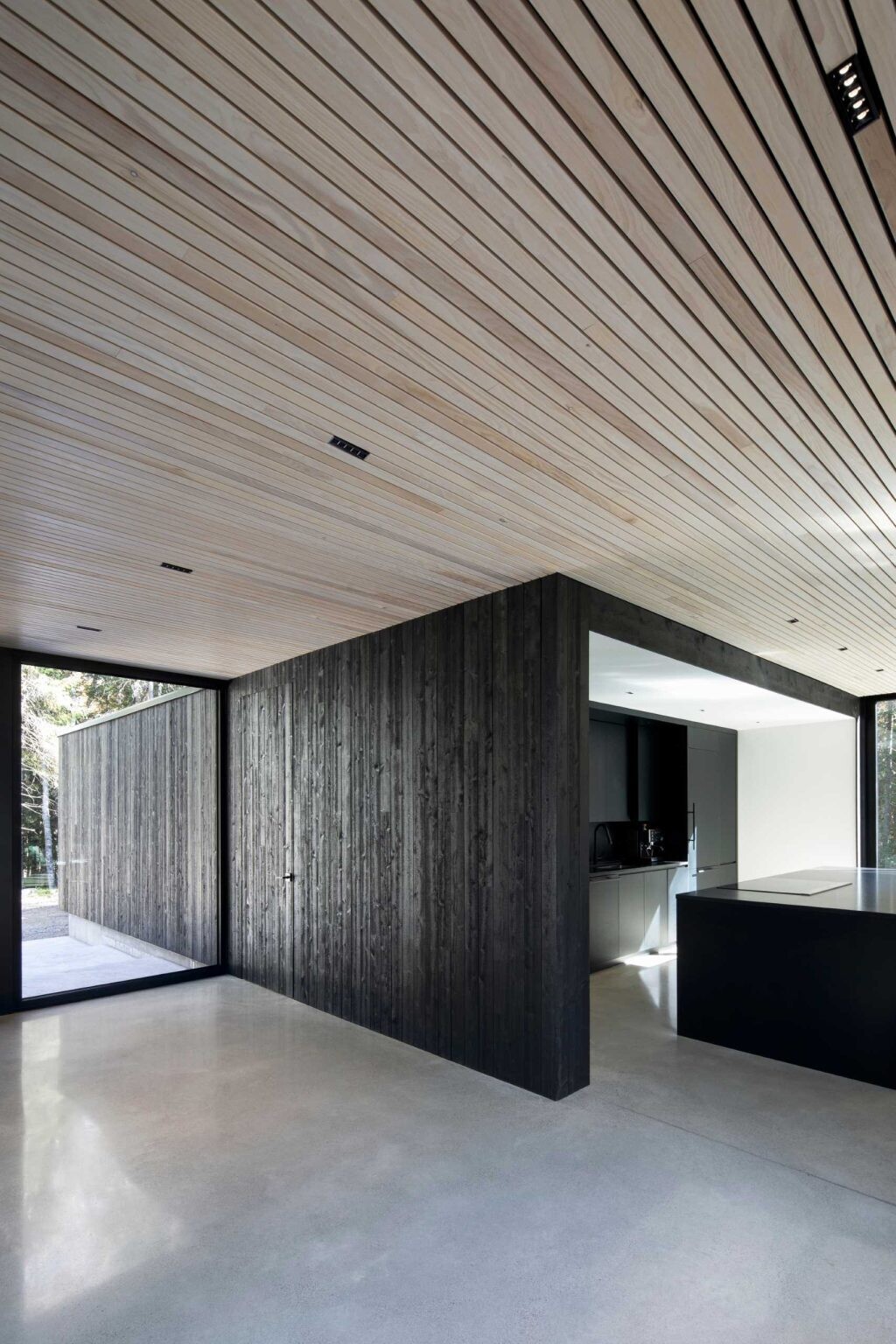
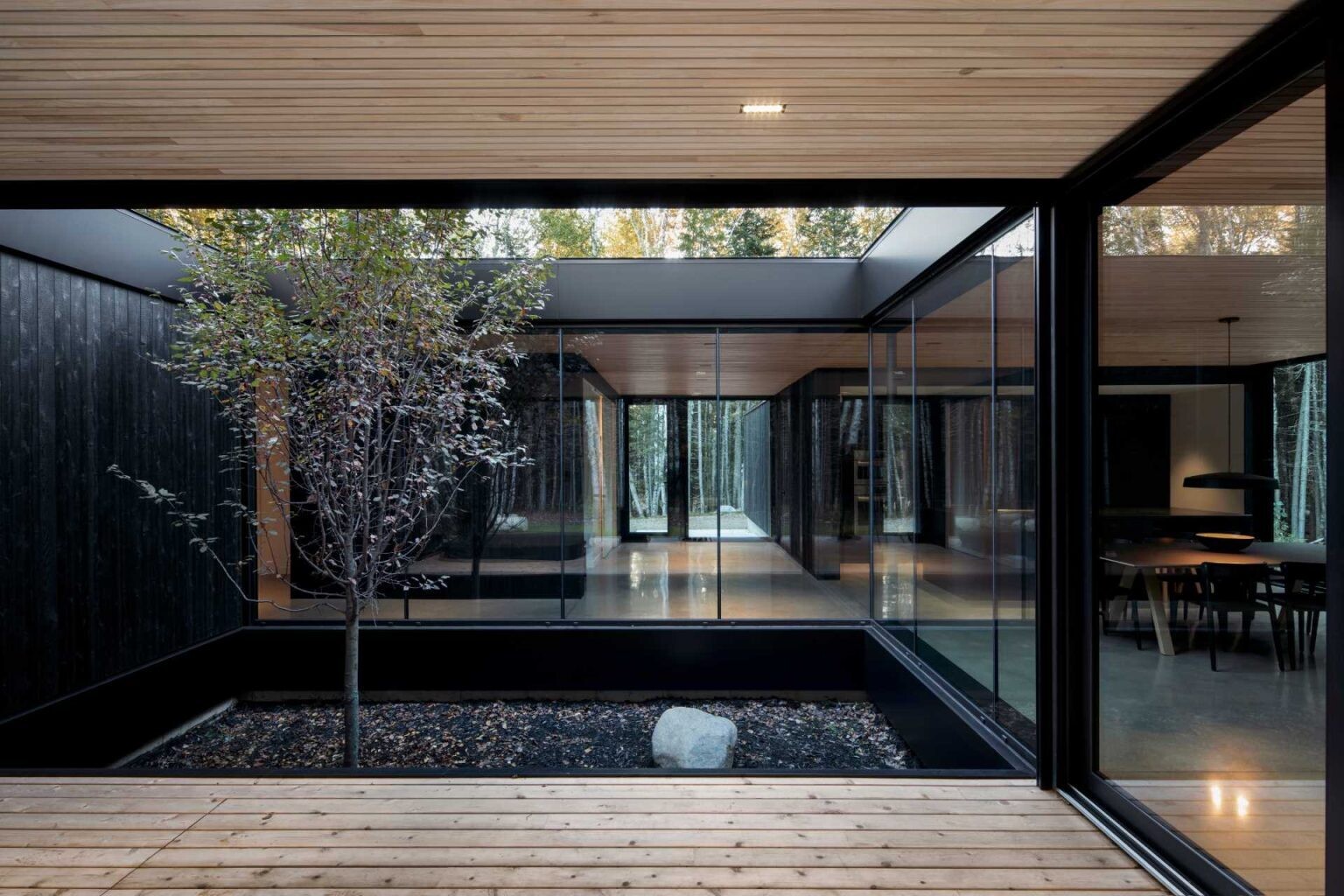
The entryway offers immediate visual access into the home, where glass surfaces provide glimpses of the interior beyond. Concrete flooring runs through the space, paired with a warm wood ceiling that softens the sharper material palette.
This combination creates a direct contrast between heavy and light surfaces, where the structure feels grounded through concrete while the ceiling introduces warmth above. The entry sets up the experience of the home as one of layered materials and open sightlines.
Kitchen Positioned Alongside the Entrance
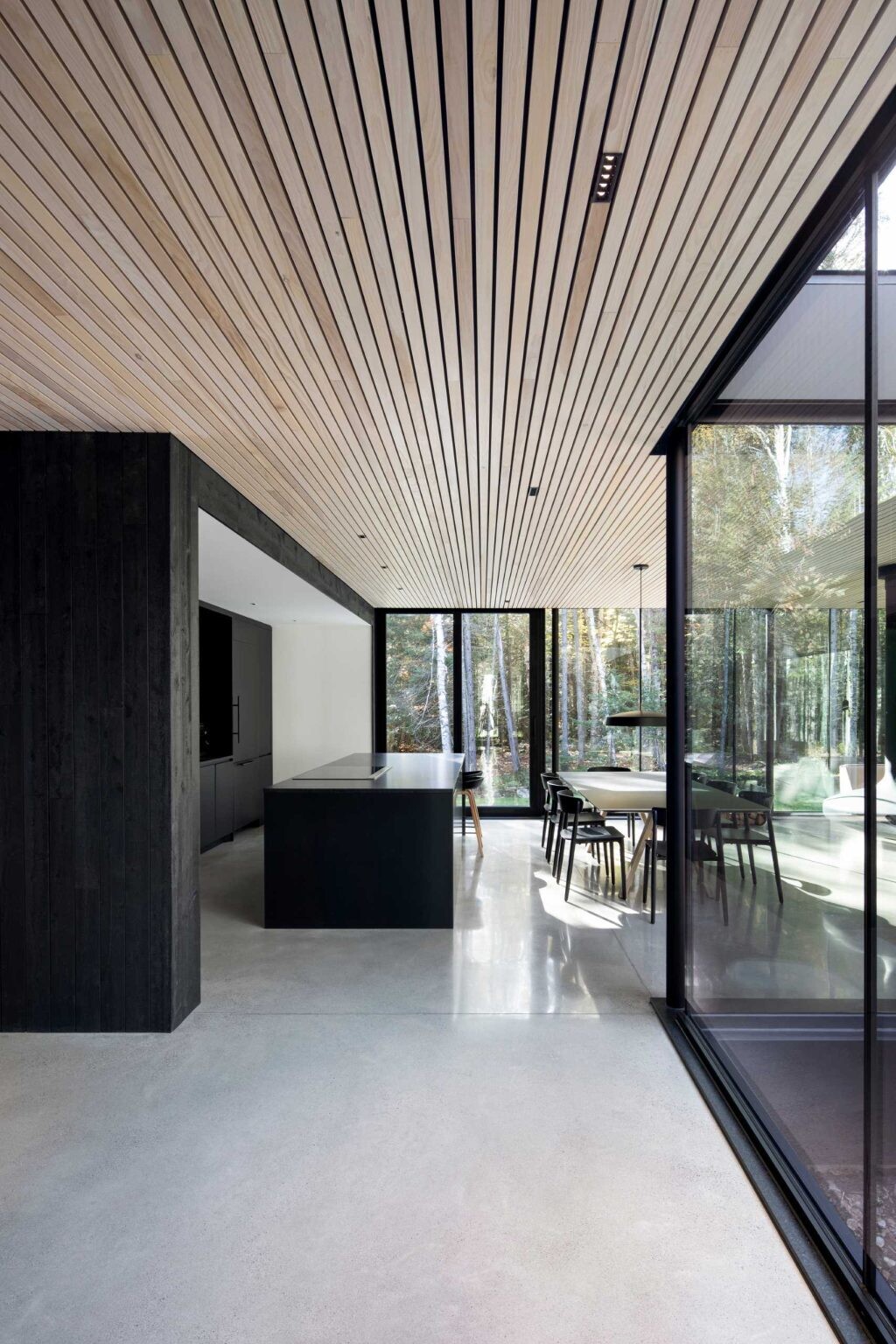
To the left of the entryway sits the kitchen, defined by minimalist black cabinetry and a central island. The design keeps surfaces clean and understated, allowing the surrounding architecture and forest views to remain visually dominant.
The kitchen opens directly toward the main living spaces, allowing clear sightlines into the dining area and living room beyond. This placement reinforces the sense of continuity across the social areas of the home.
Open Living Spaces Framed by Glass
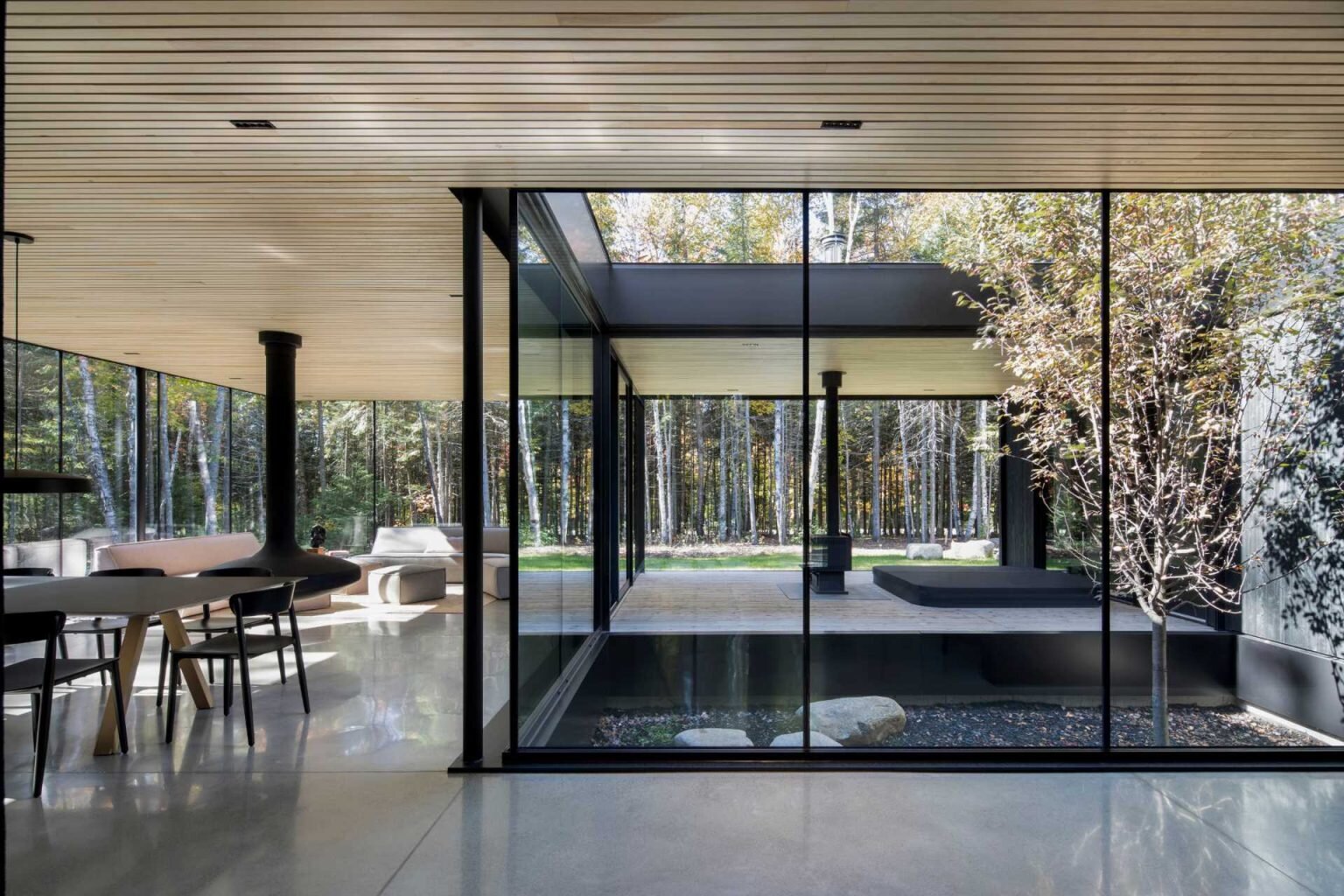
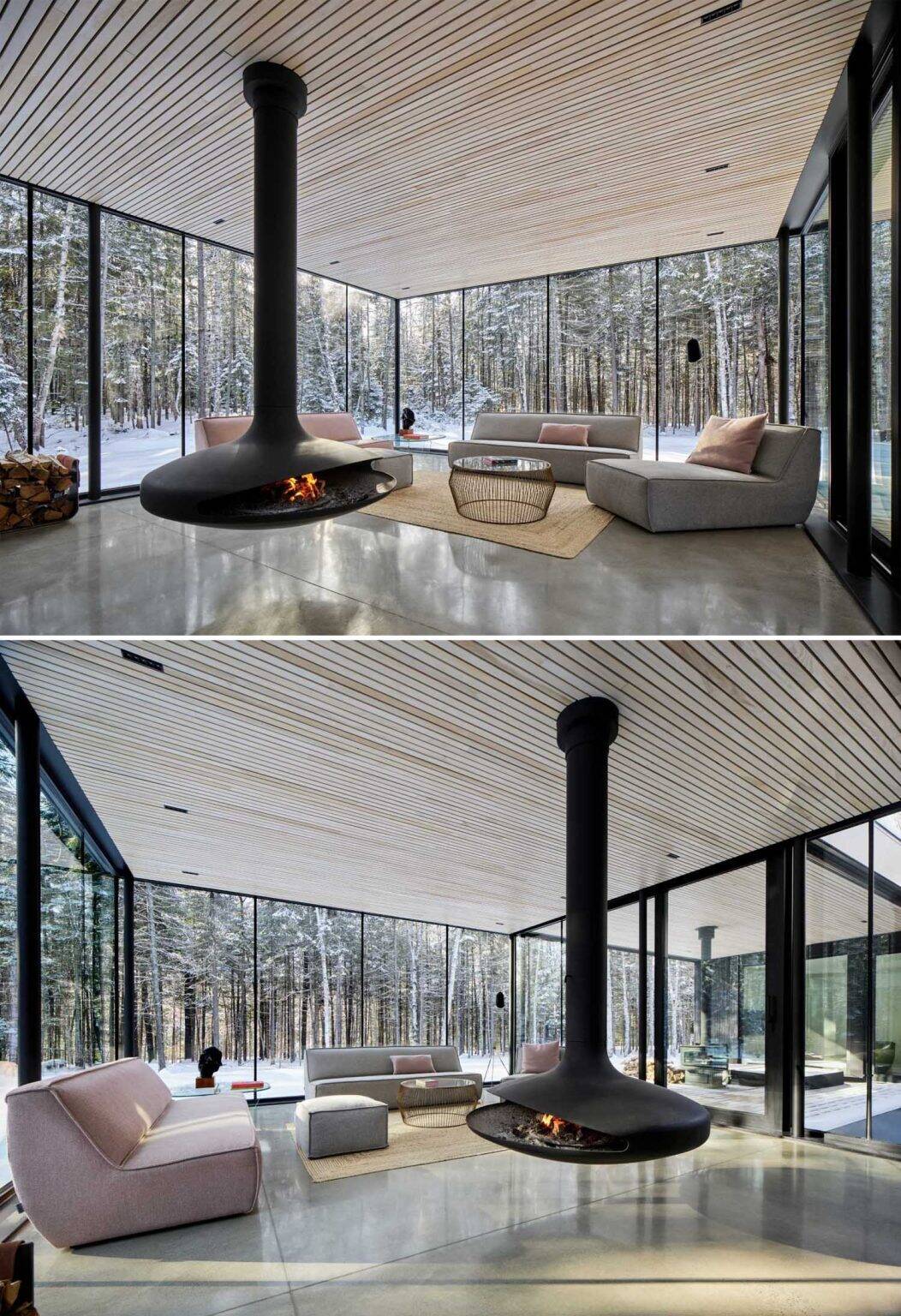
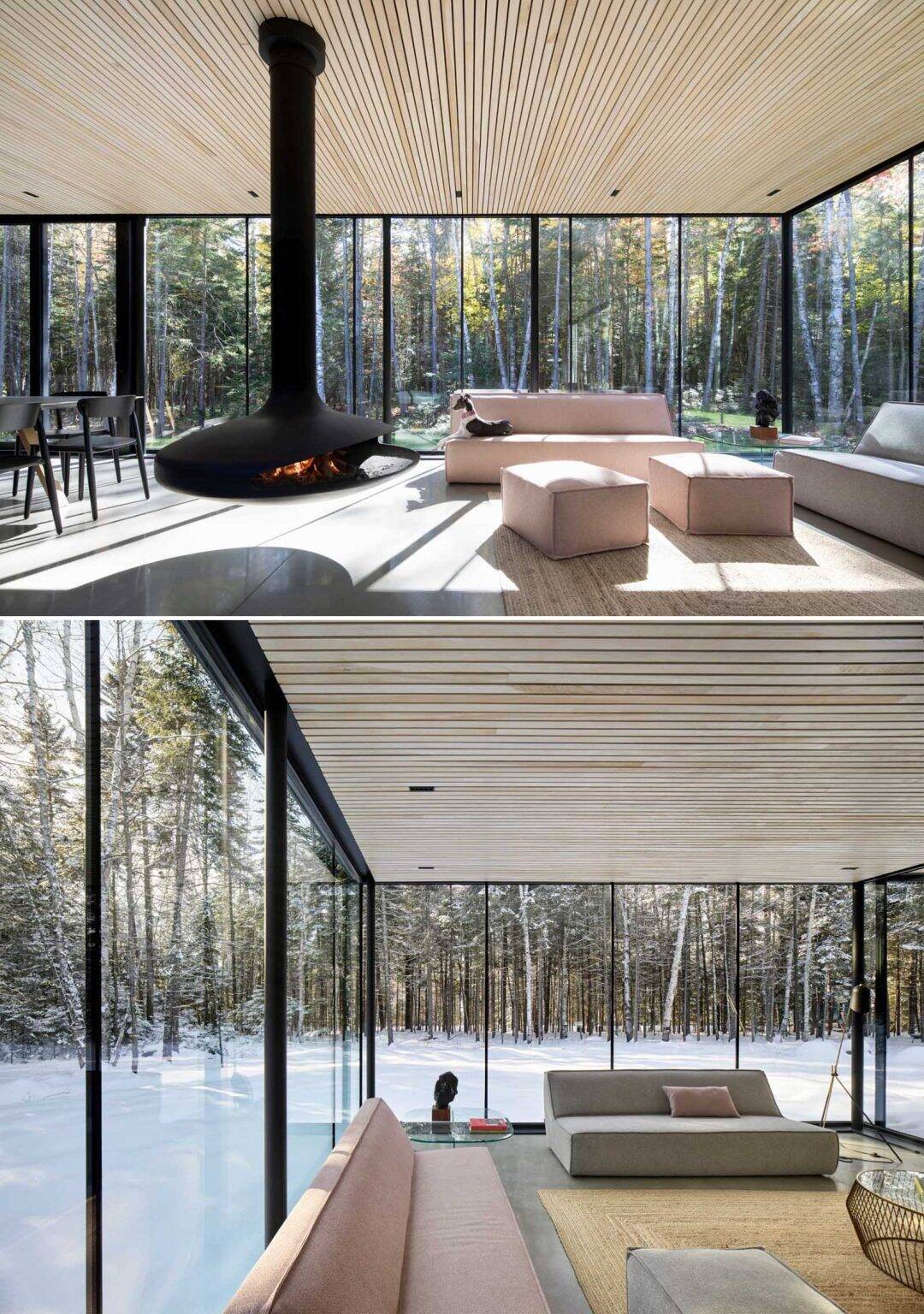
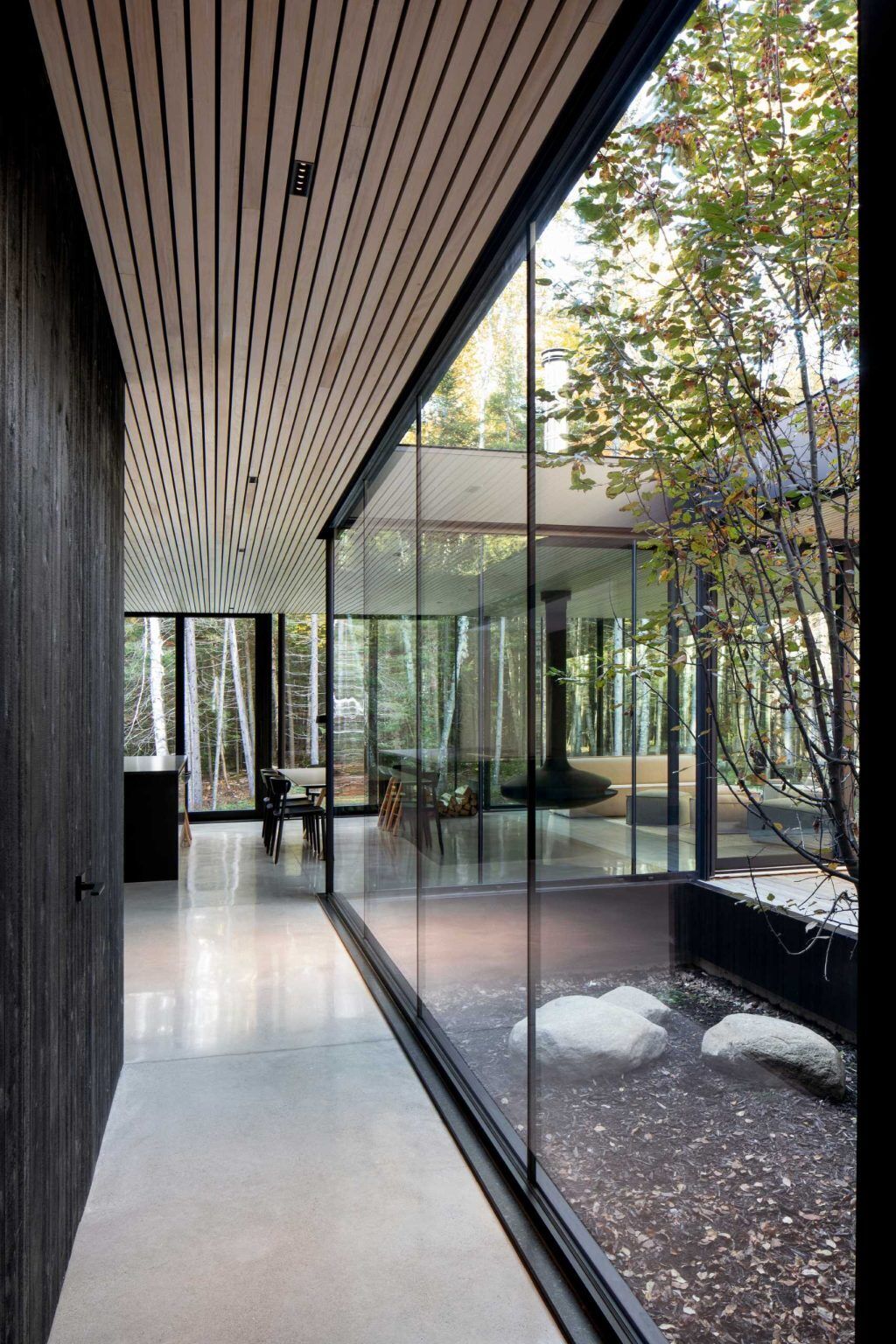
The dining and living areas extend from the kitchen into a shared open-plan space. Floor-to-ceiling glass surrounds the living room, pulling the forest directly into view from every angle.
A suspended black fireplace sits within the living area, acting as a central vertical element within the open volume. Light shifts across the interior throughout the day, changing how the space feels as the forest outside moves with the seasons.
Covered Porch Extending Into the Forest
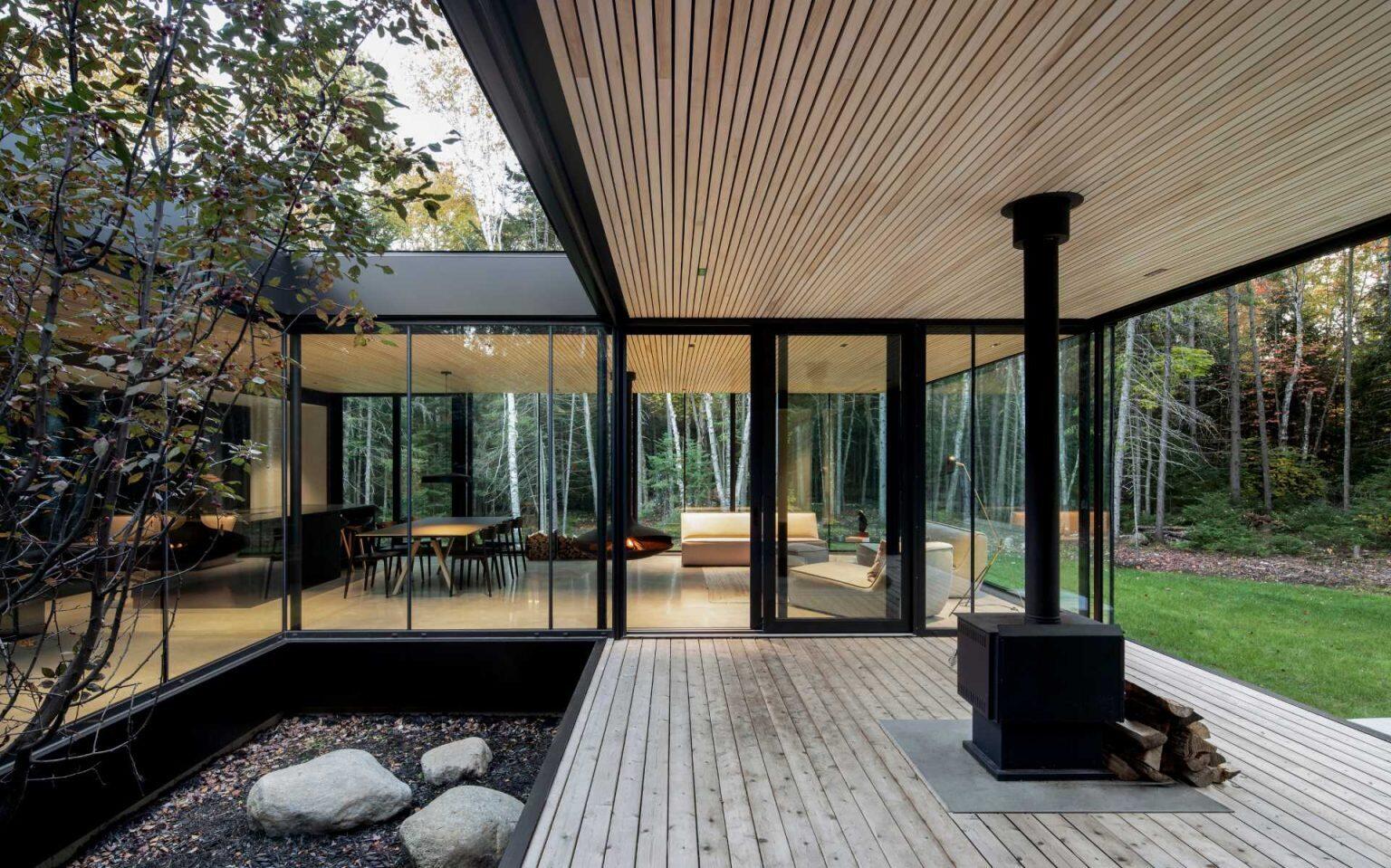
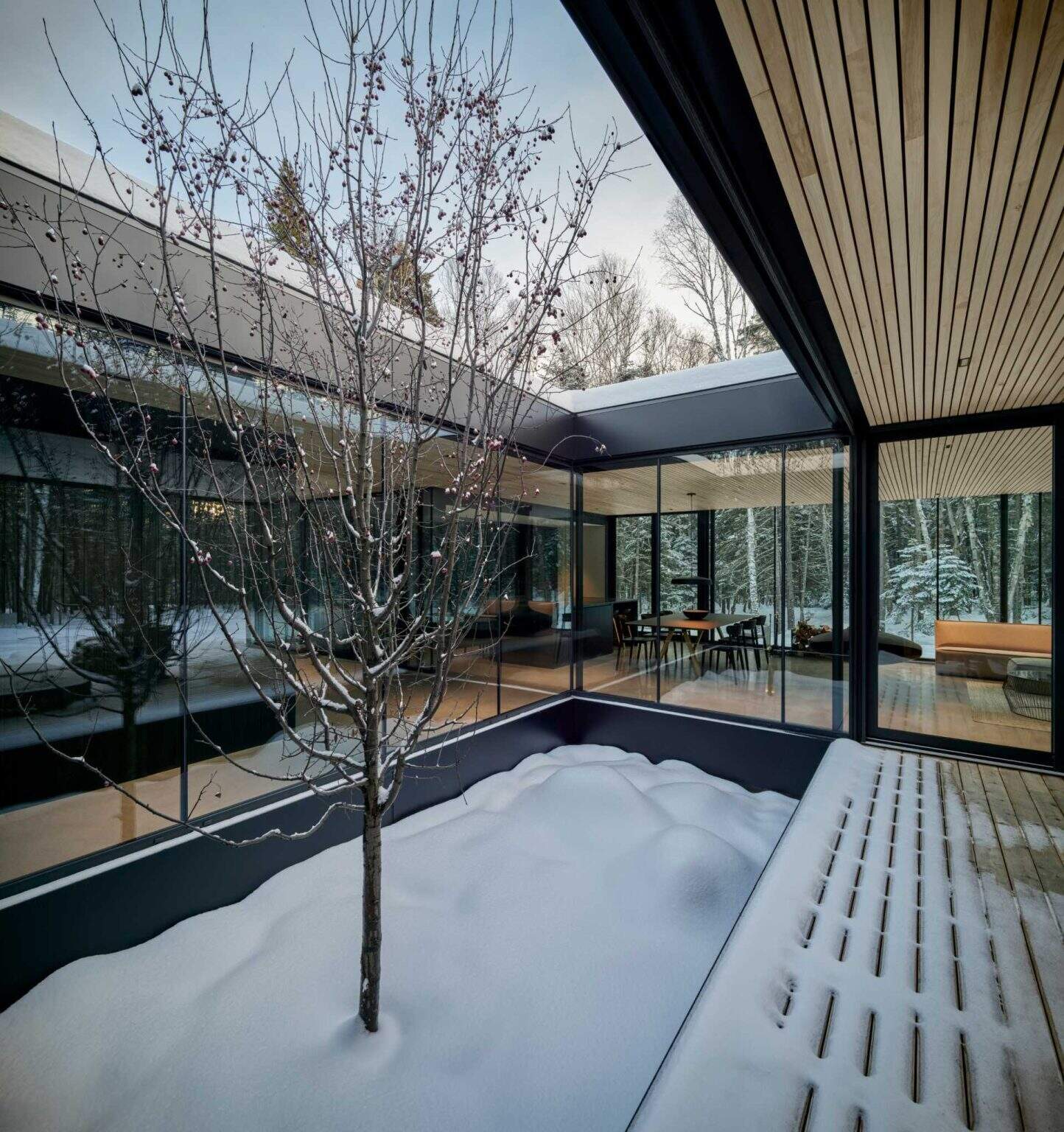
Connected to the living room, a covered porch extends outward toward the trees. This space frames direct views of the surrounding forest, acting as a transition between interior and exterior environments.
The porch provides a sheltered position within the landscape, where the forest remains fully visible while the interior warmth of the home remains present.
Circulation Between Shared and Private Zones
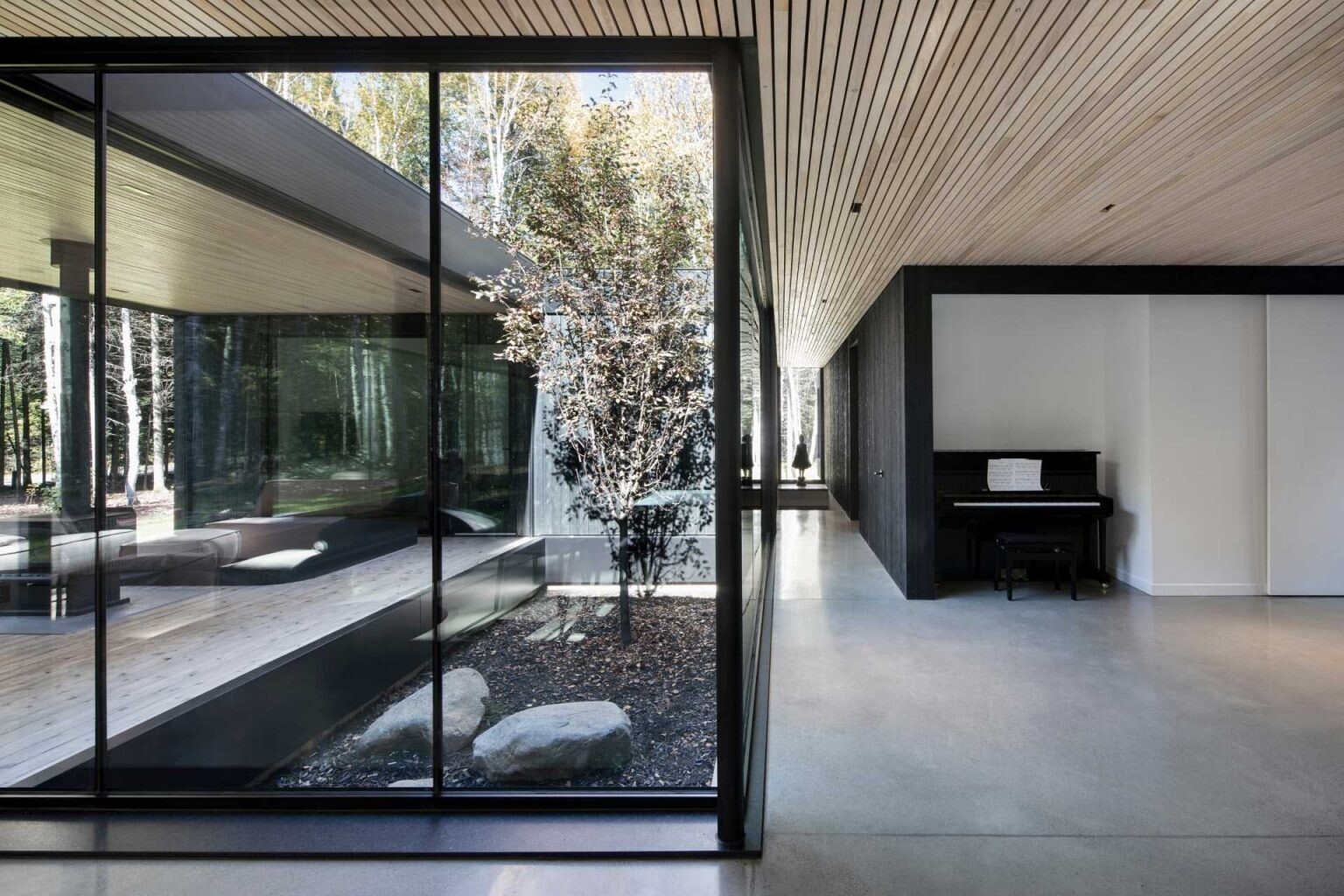
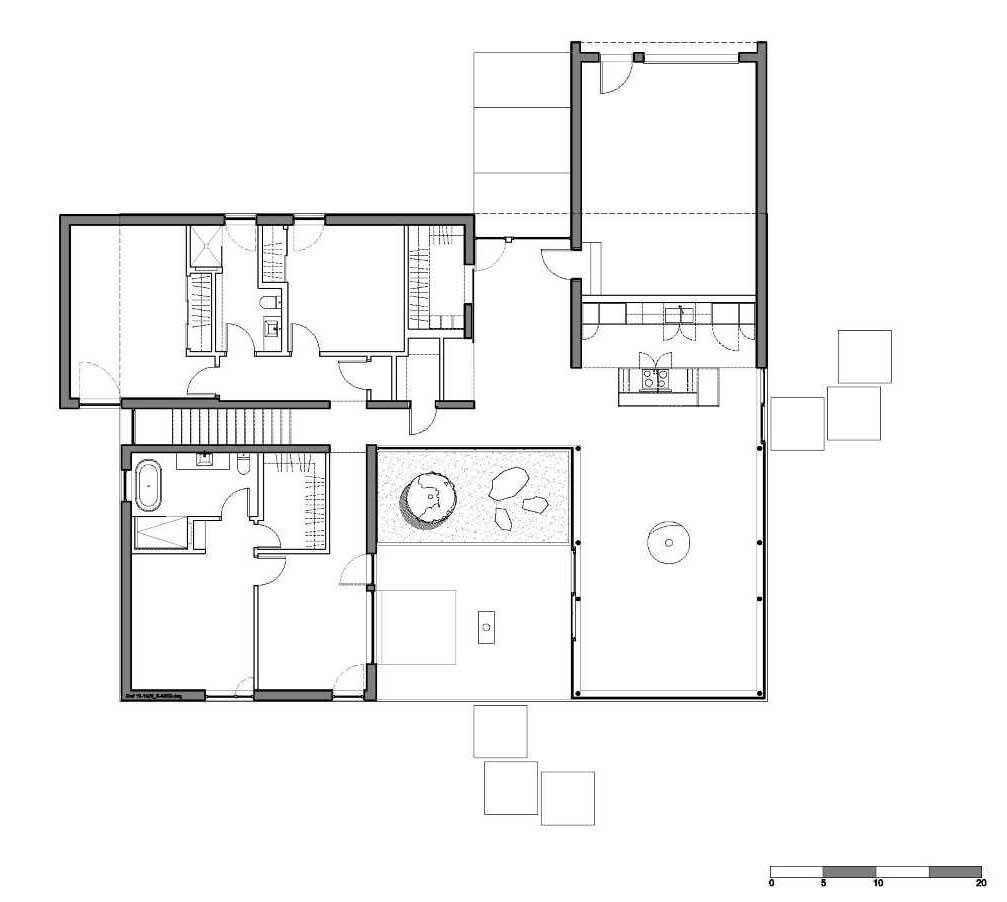
Hallways run through the house, linking the central living areas with the more private zones. These passages guide movement between social and quiet areas without interrupting the overall openness of the design.
The layout separates bedrooms and bathrooms from the main shared volume, maintaining clear zoning while preserving visual and spatial connections across the home.
Bedrooms Defined by Timber Surfaces
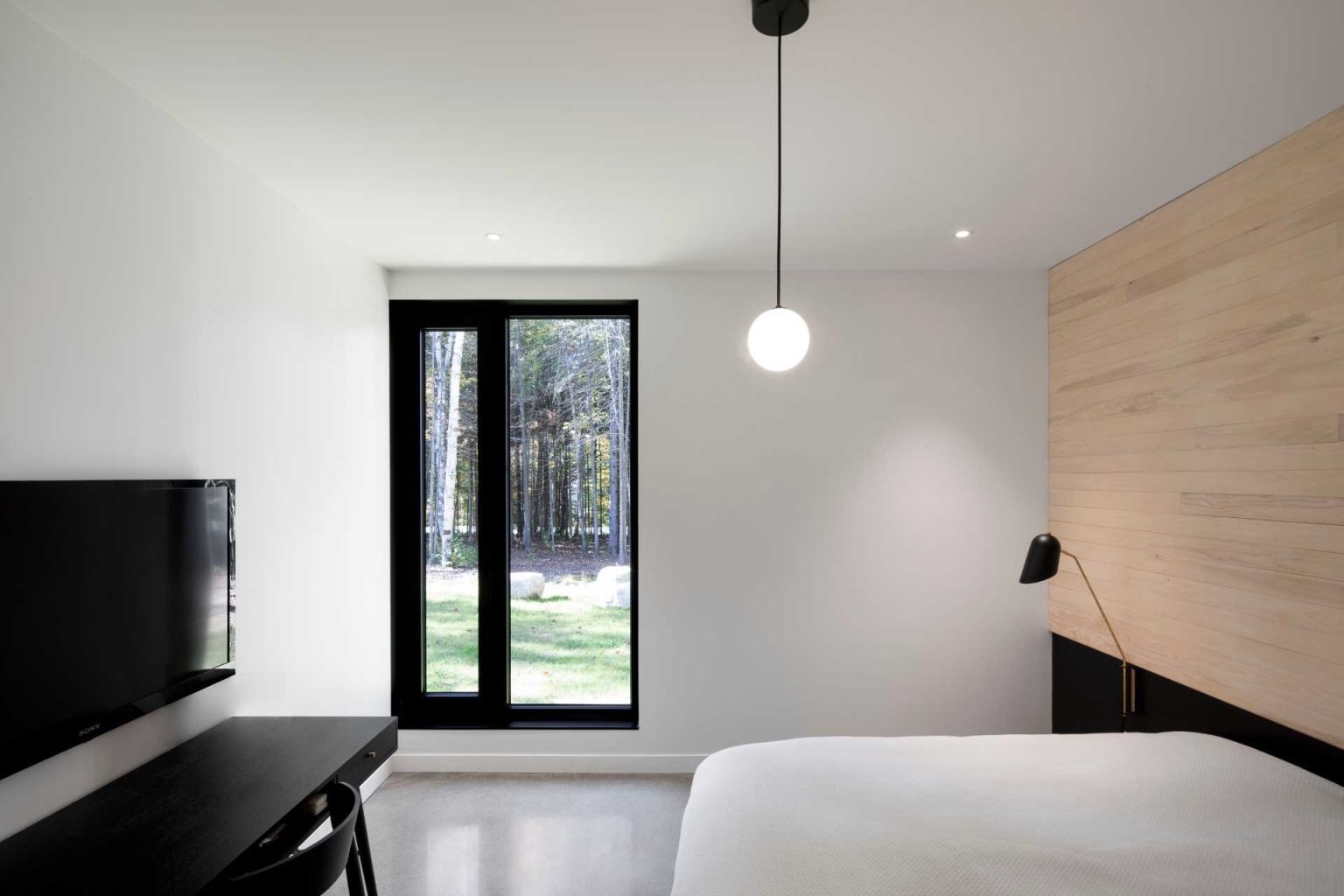
The bedroom spaces are arranged with a focus on simplicity and material warmth. One of the rooms features a wood accent wall paired with minimal furnishings, allowing the structure and materials to define the atmosphere.
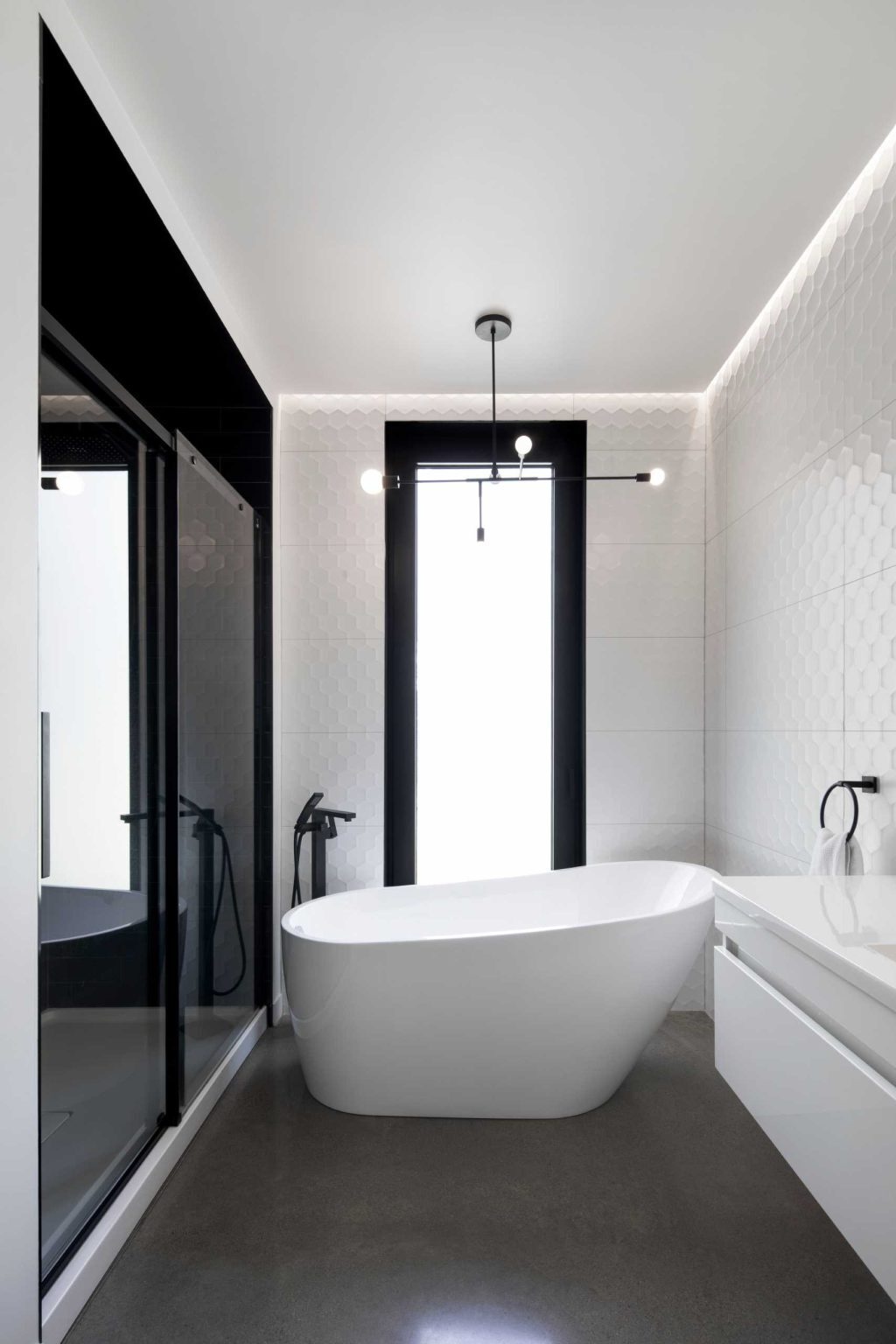
Bathrooms with Textural Wall Surfaces
The bathroom design introduces a stronger tactile quality through full-height tiled walls. These surfaces add depth and variation within a space that remains clean and minimal in layout.
A freestanding bathtub sits alongside a walk-in shower, both positioned to maintain a clear spatial flow. The result is a bathroom that contrasts smooth fixtures with textured wall finishes.
Floor Plan Organized Around Clear Zoning
The floor plan of Apple Tree House shows a clear structure where social spaces are placed in the central volume and private rooms are arranged along connected wings. This separation helps define how the home is used across different times of day.
Located in Saint-Donat-de-Montcalm in Quebec’s Lanaudiere region, the Apple Tree House brings together open living spaces, private timber volumes, and direct forest views in a single-story layout.