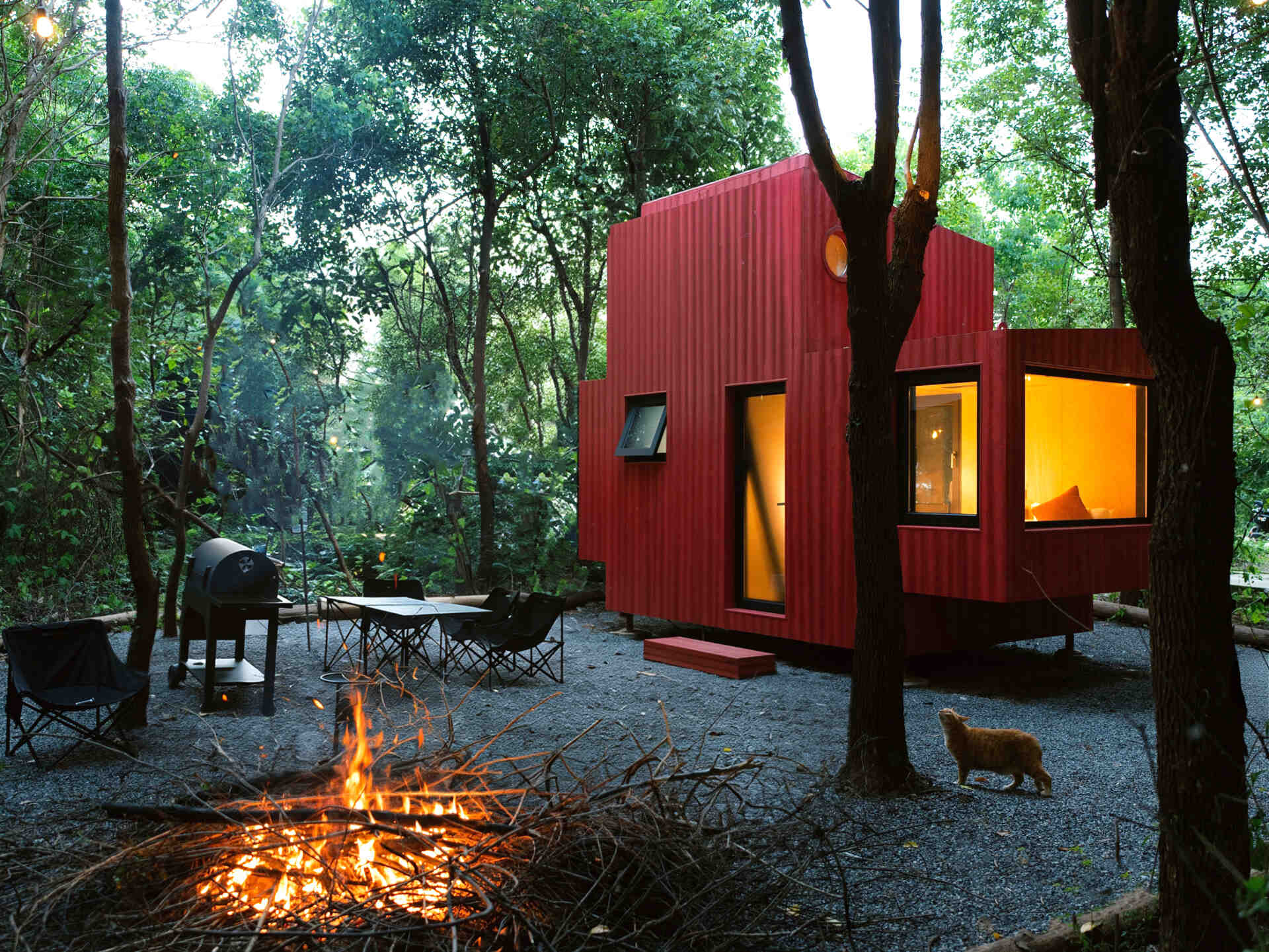
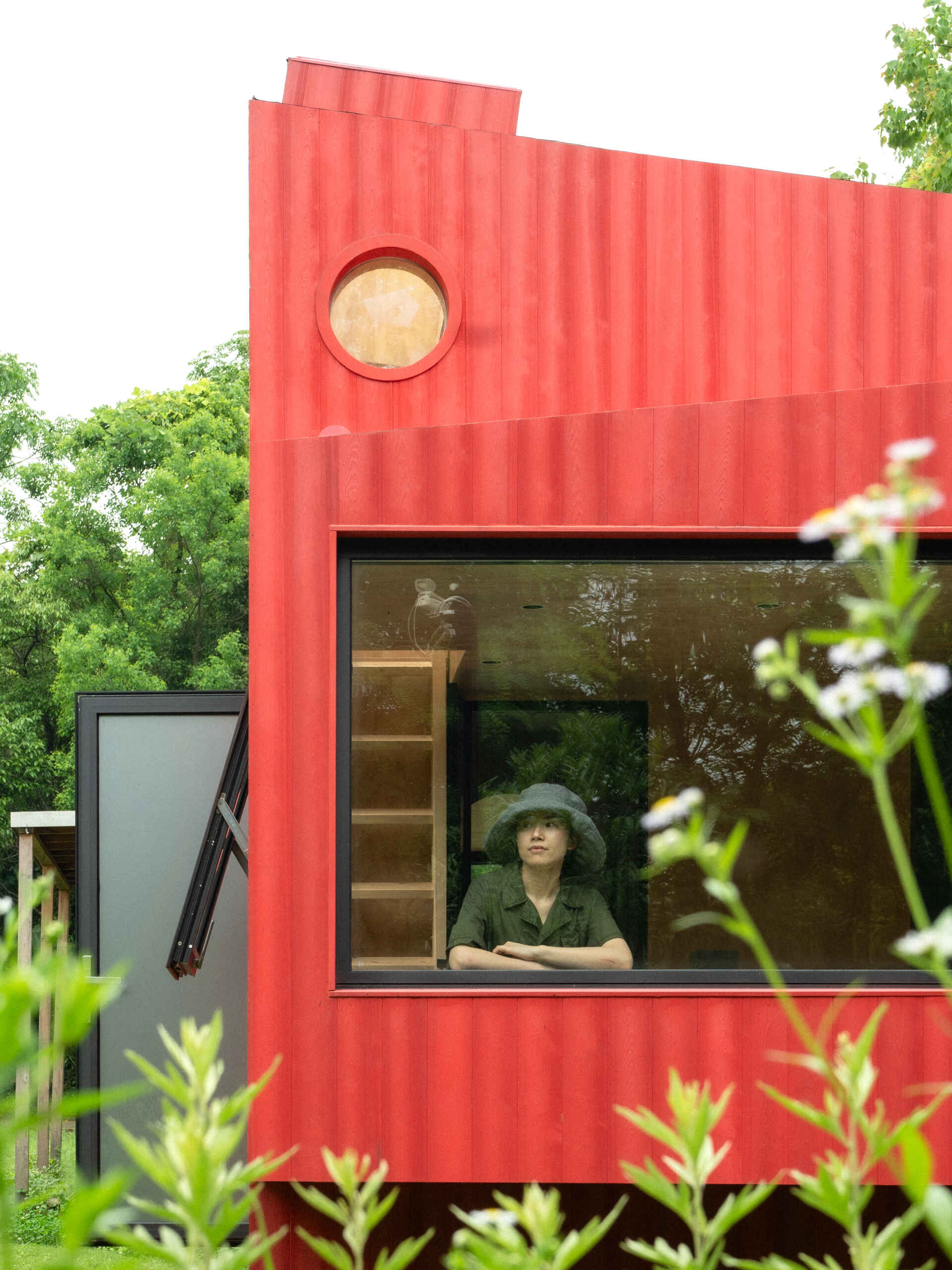
A vibrant red wooden cabin has arrived in the wilderness, but there is no ocean in sight. Designed by Wiki World, the Red Submarine Cabin is a modular dwelling created as a kind of plug-in home for the wild, combining digital fabrication with a compact timber structure designed for remote landscapes. Set within the forest, the cabin turns the familiar idea of a small woodland home into something much more playful, with circular portholes, a panoramic picture window and a loft that makes the interior feel like the inside of a tiny vessel.
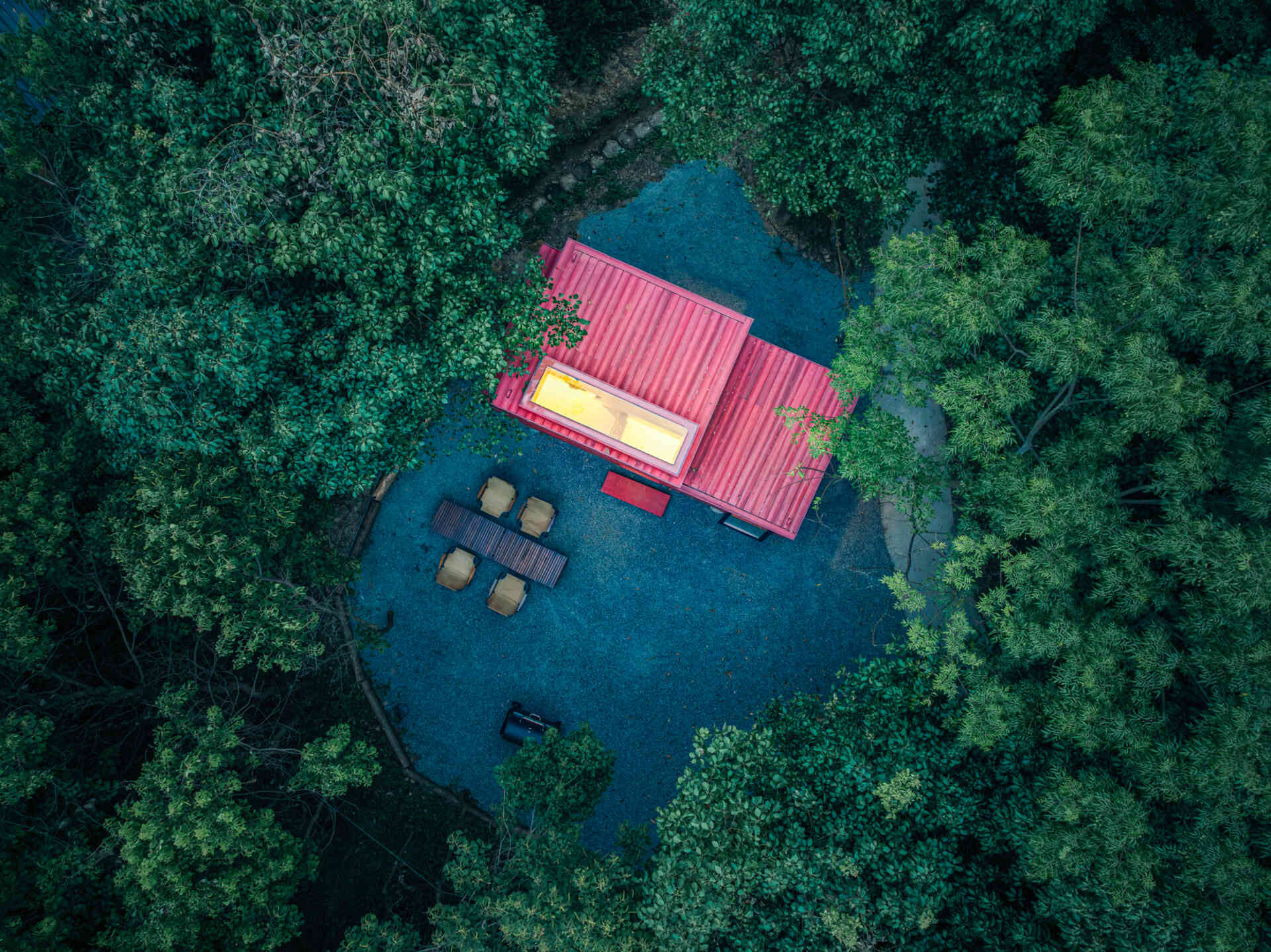
Wiki World describes the cabin as a high-performance, zero-footprint and plug-and-play dwelling, with materials and functions that can adapt to different landscapes. The concept is simple, a home can arrive in the wilderness without leaving a permanent scar on the land.
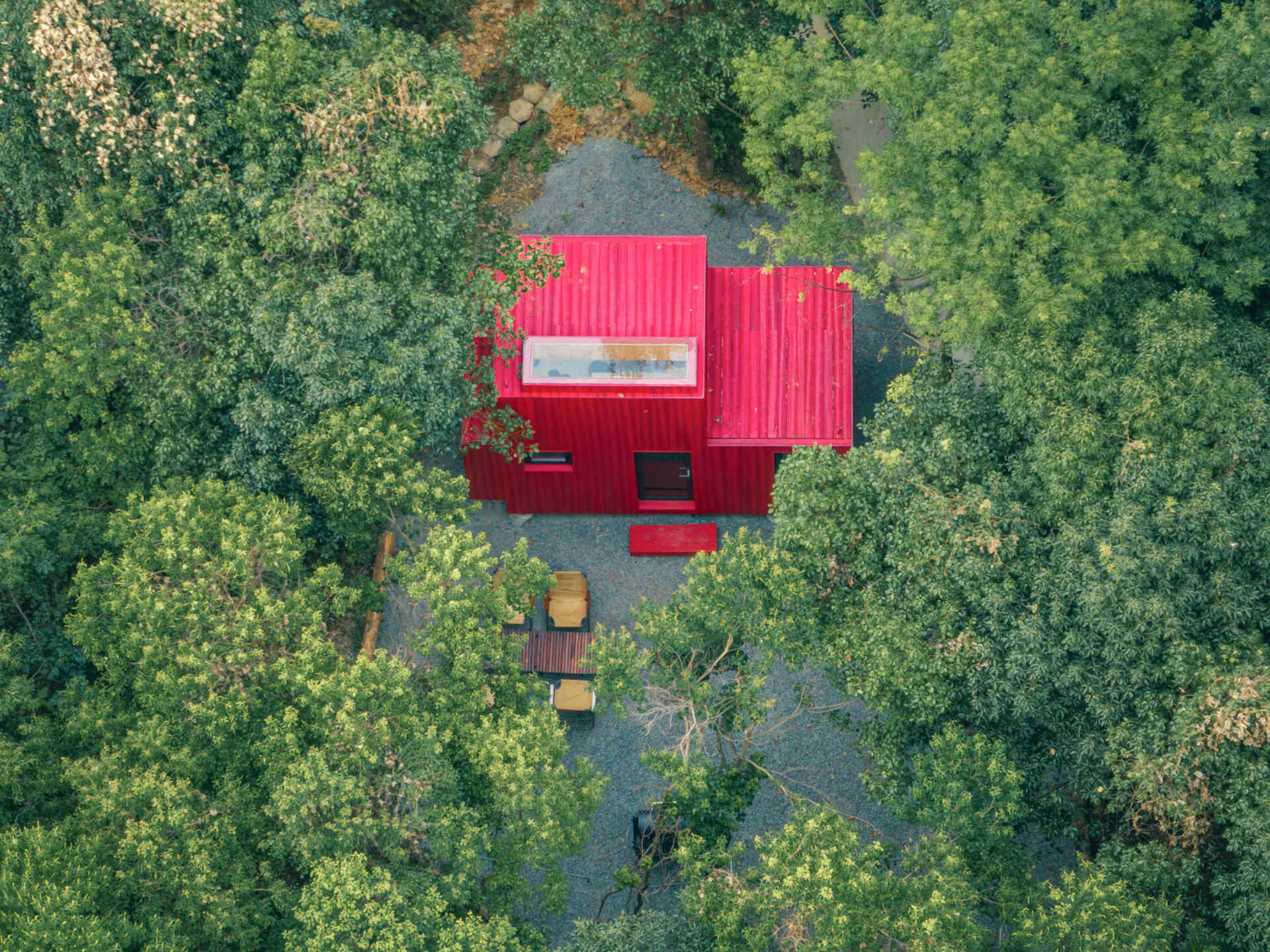
A Submarine That Never Needed the Ocean
The idea behind the Red Submarine begins with movement. Wiki World imagined a wooden submarine that could travel through forests and across the land, taking its inspiration from the feeling of drifting through nature.
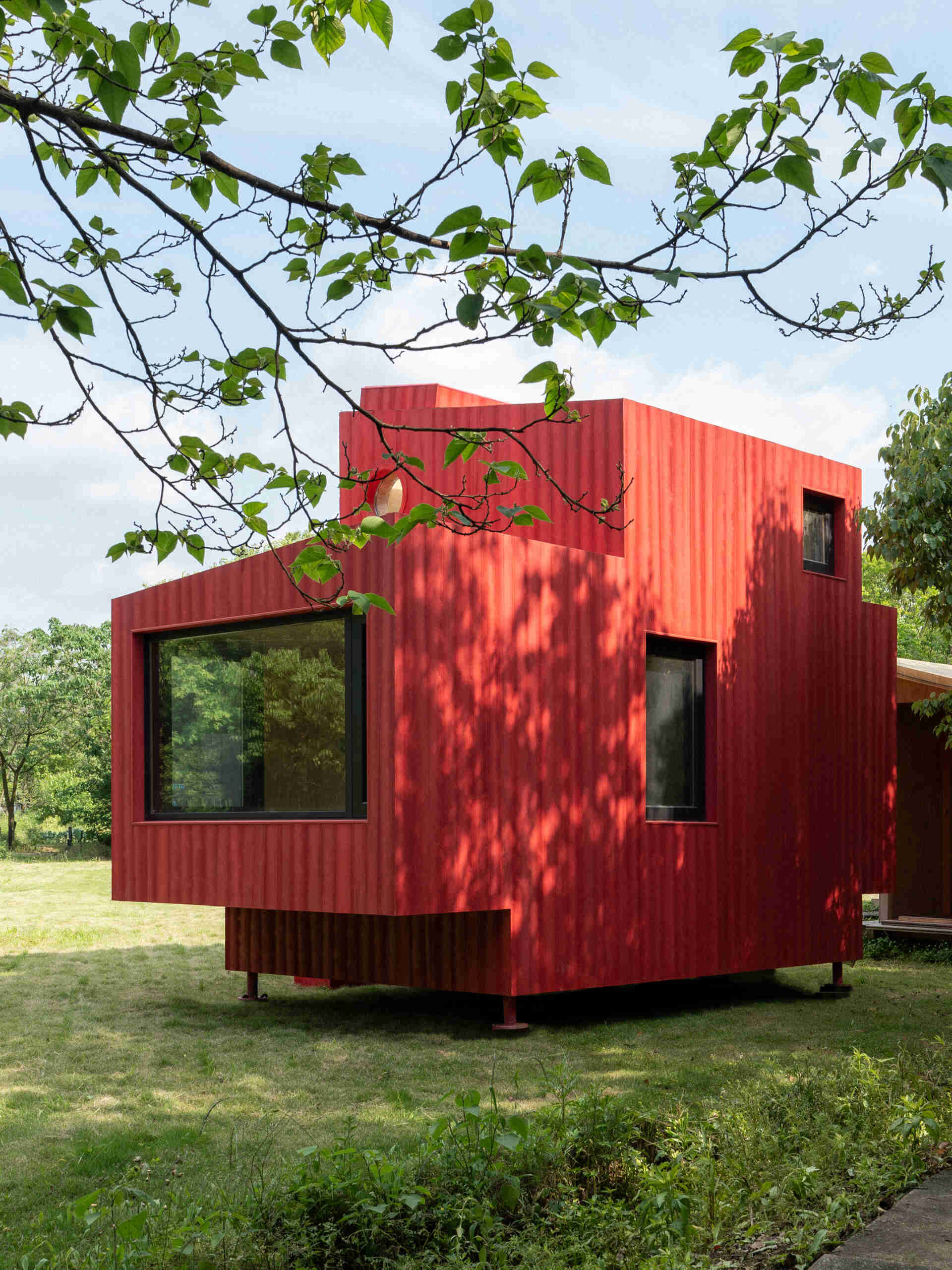
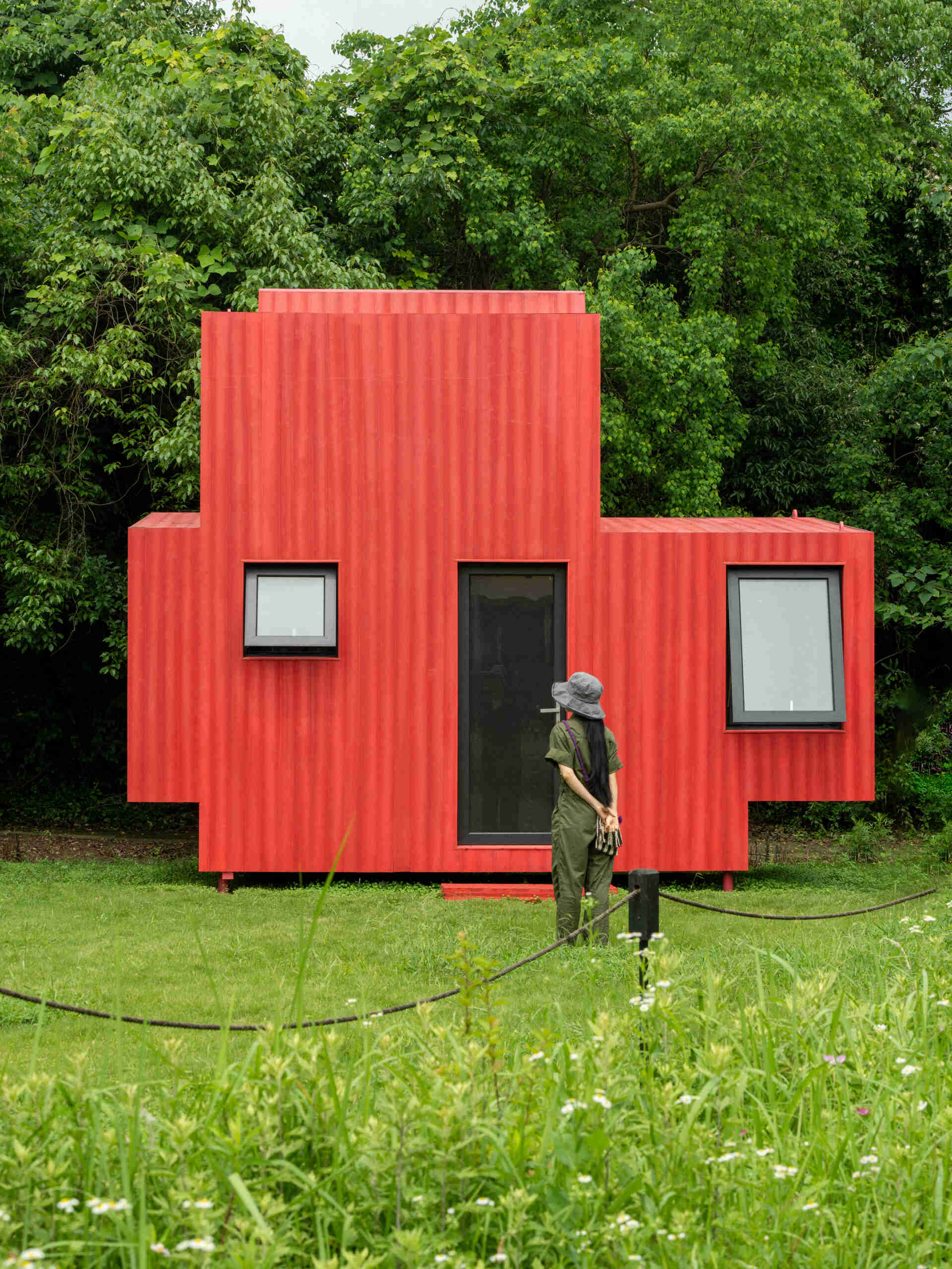
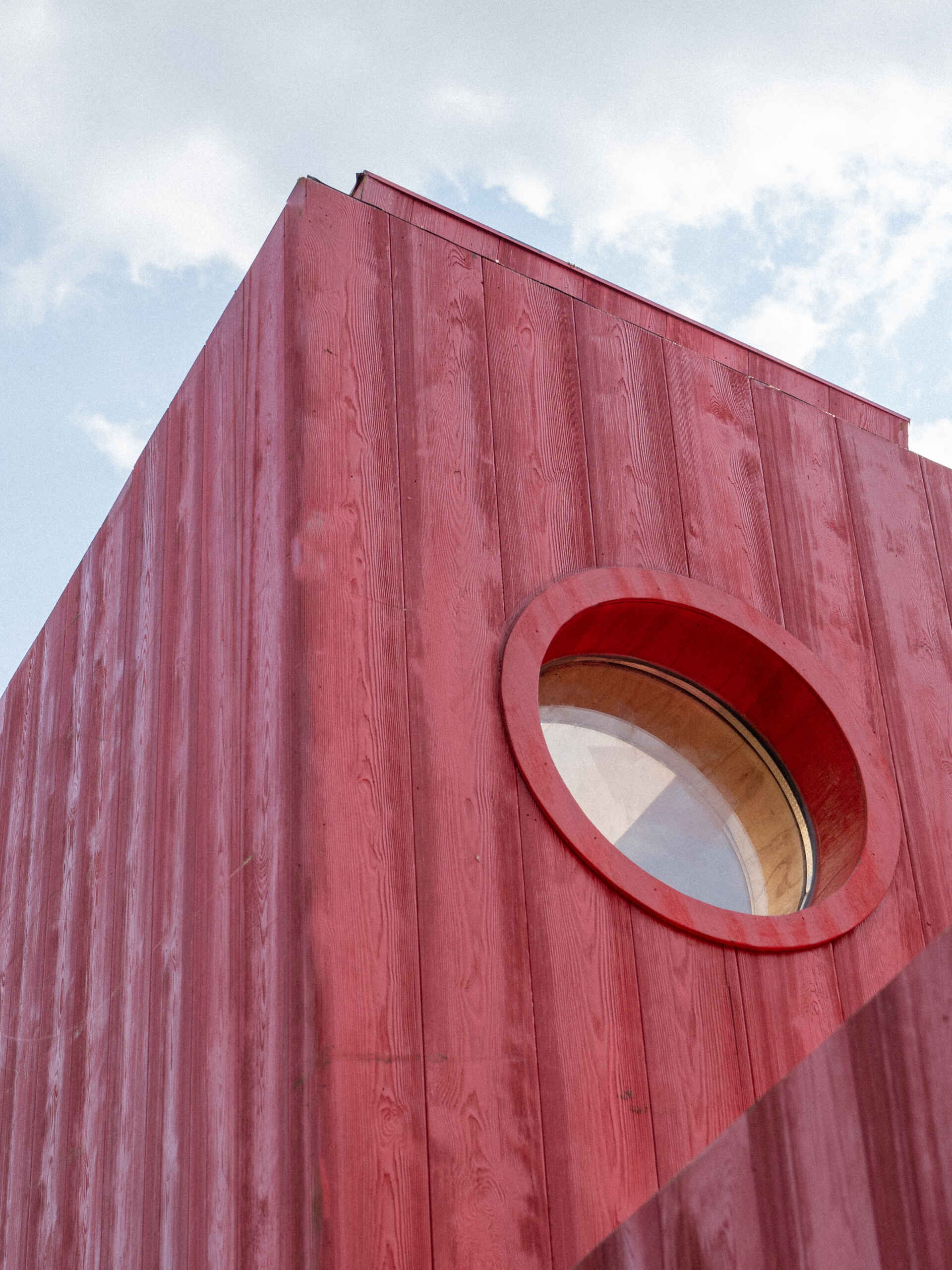
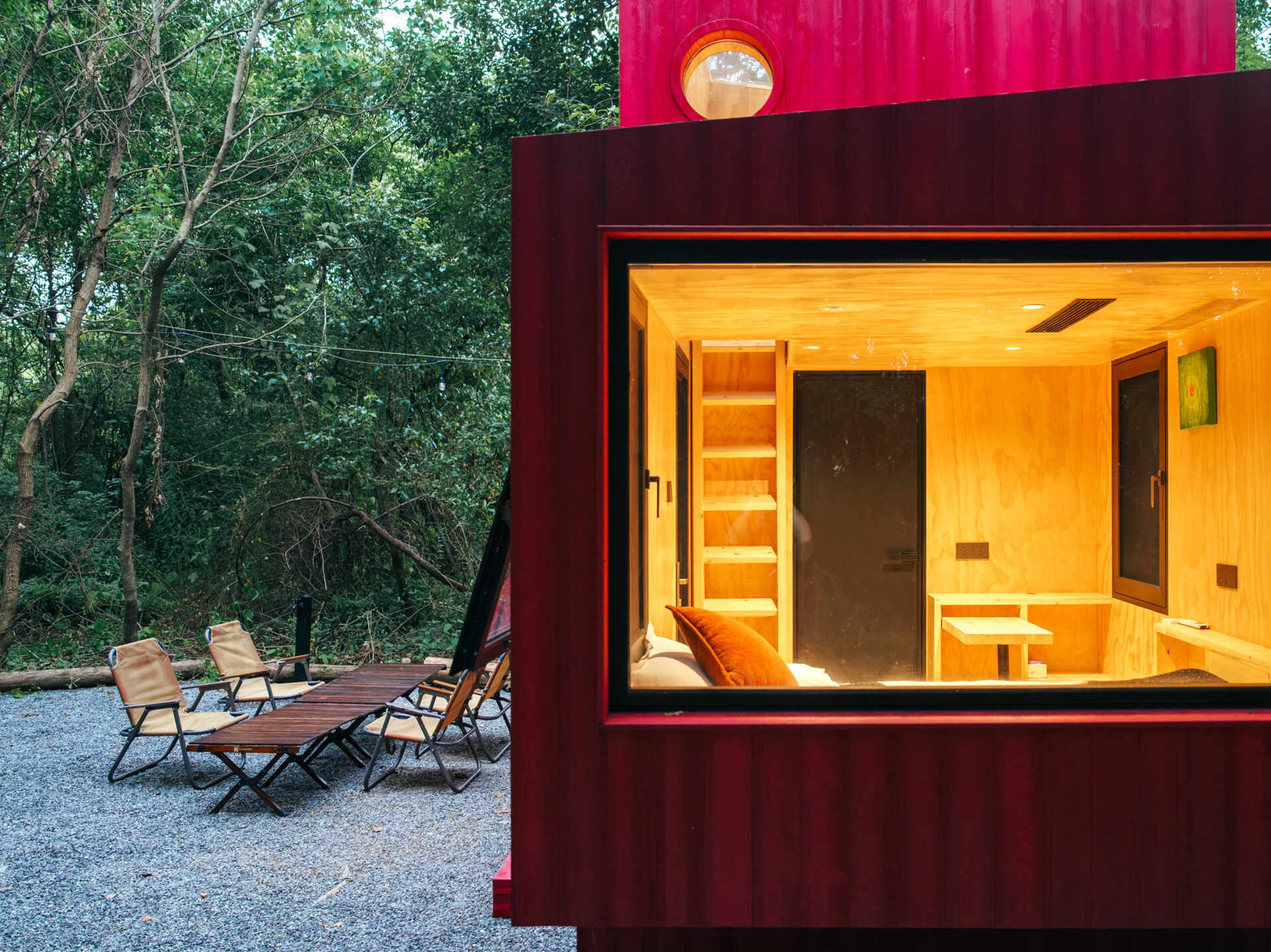
Its red exterior makes the idea immediately clear. This isn’t an attempt to make a conventional cabin disappear into the landscape. Instead, the building brings a sense of adventure into the forest, turning the home into something that feels like a vessel waiting to set off.
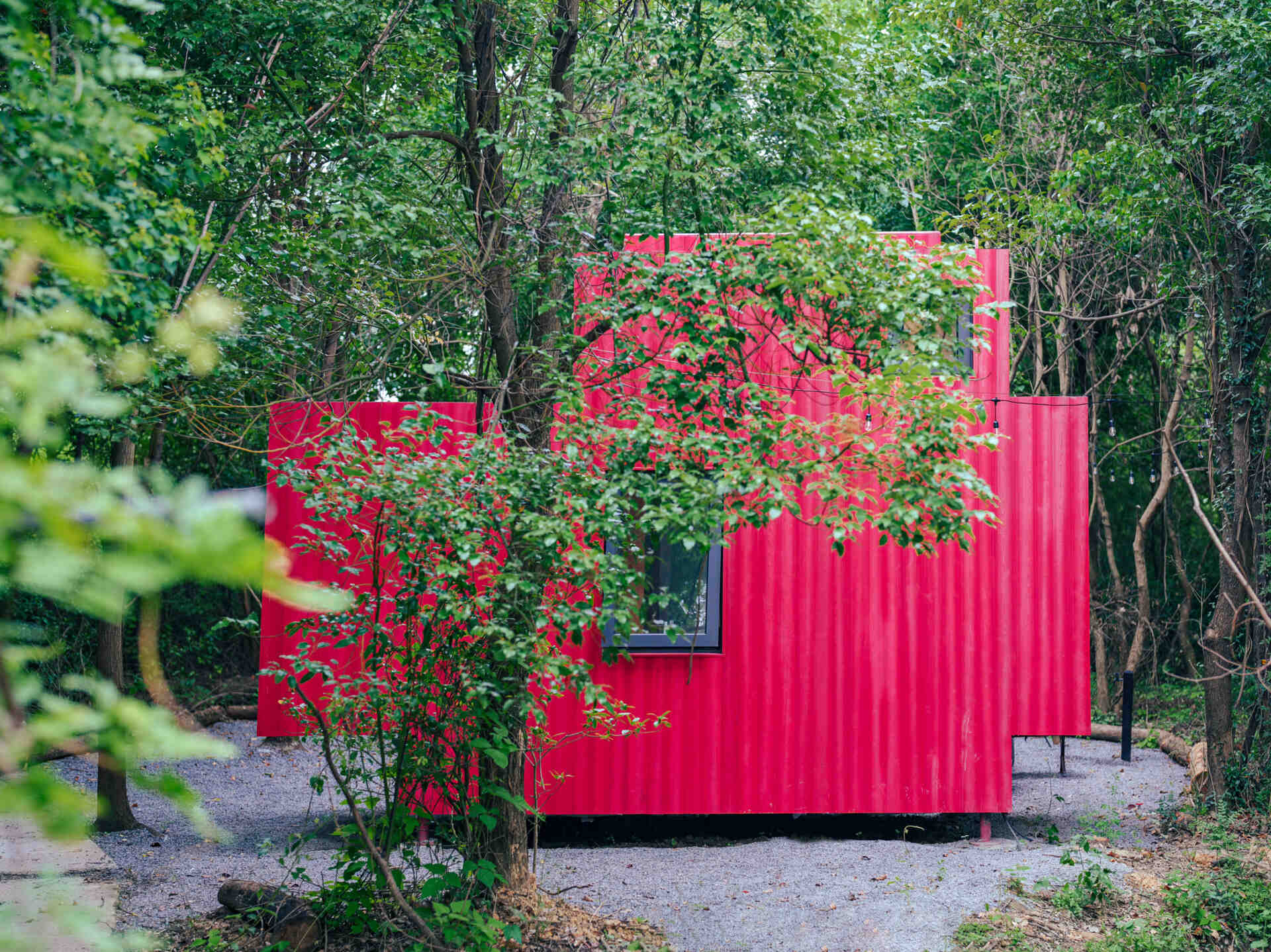
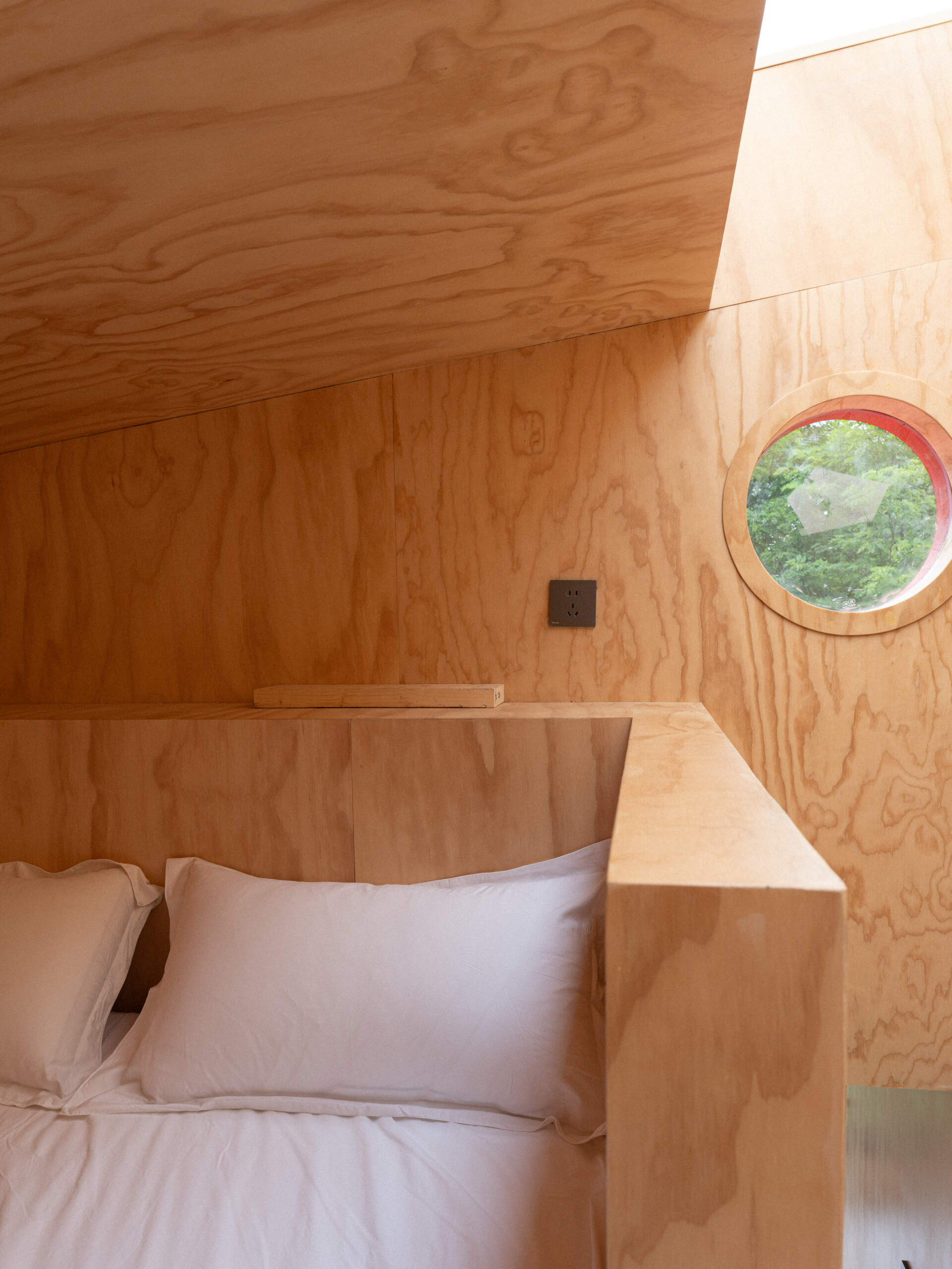
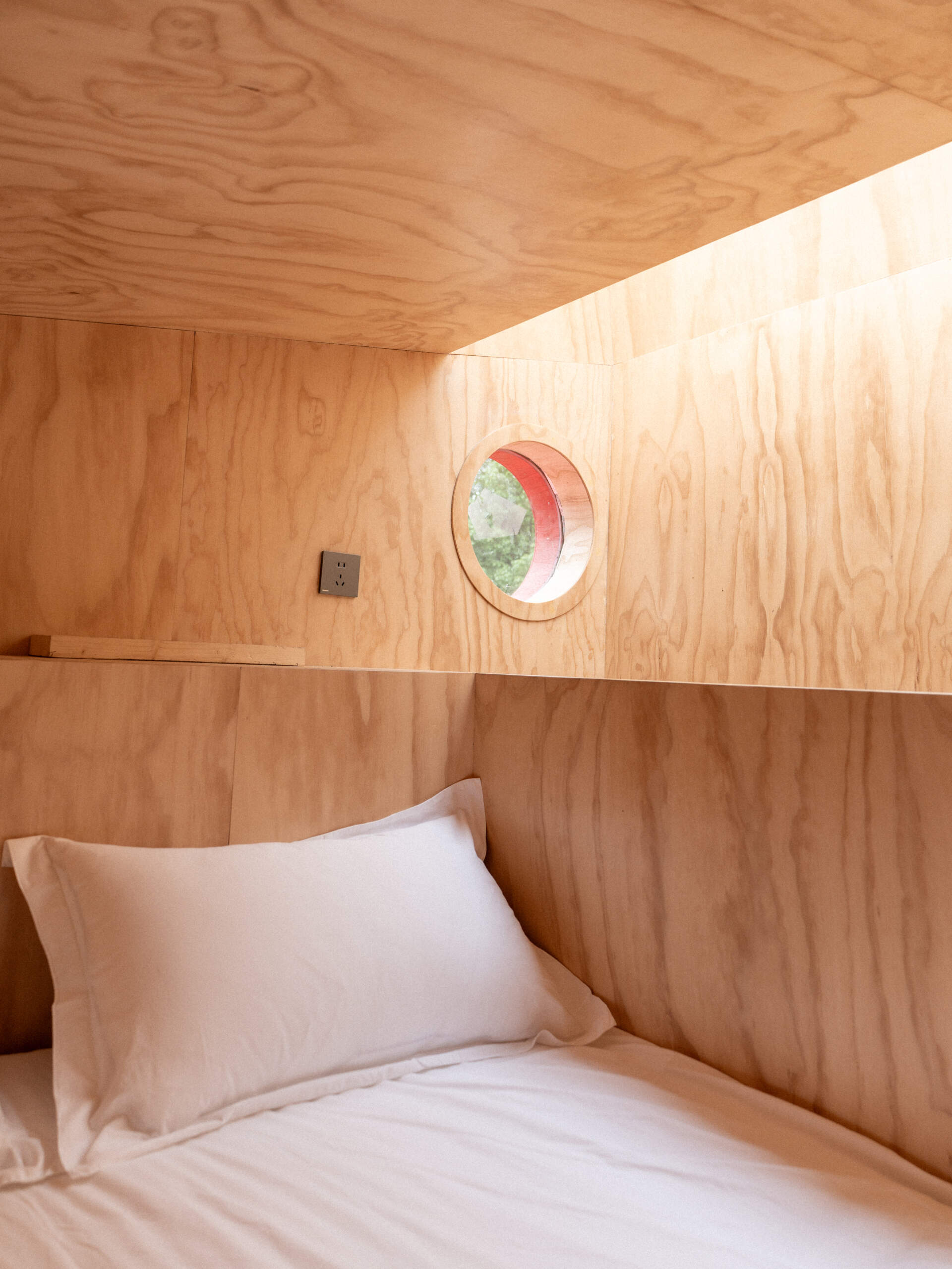
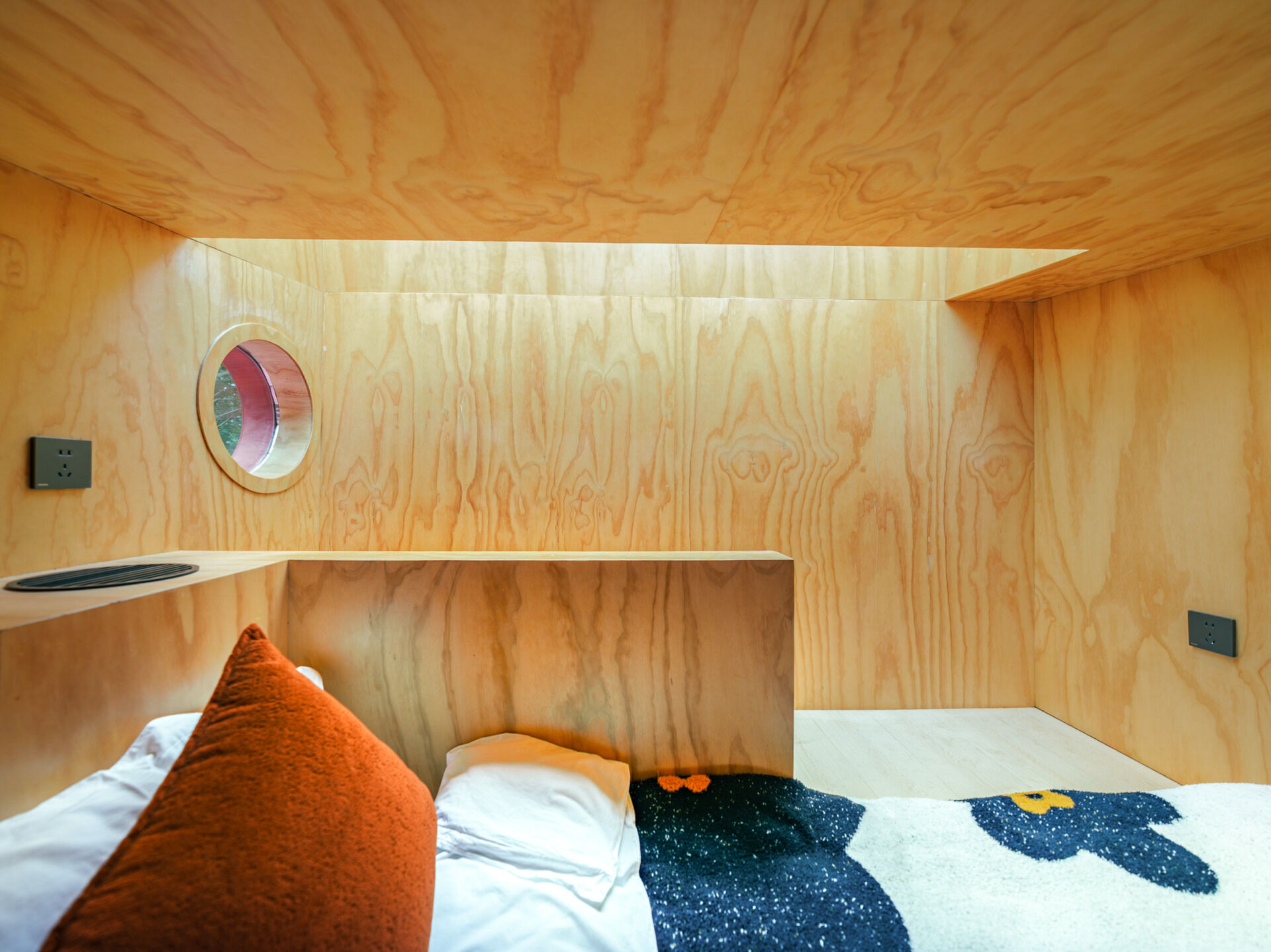
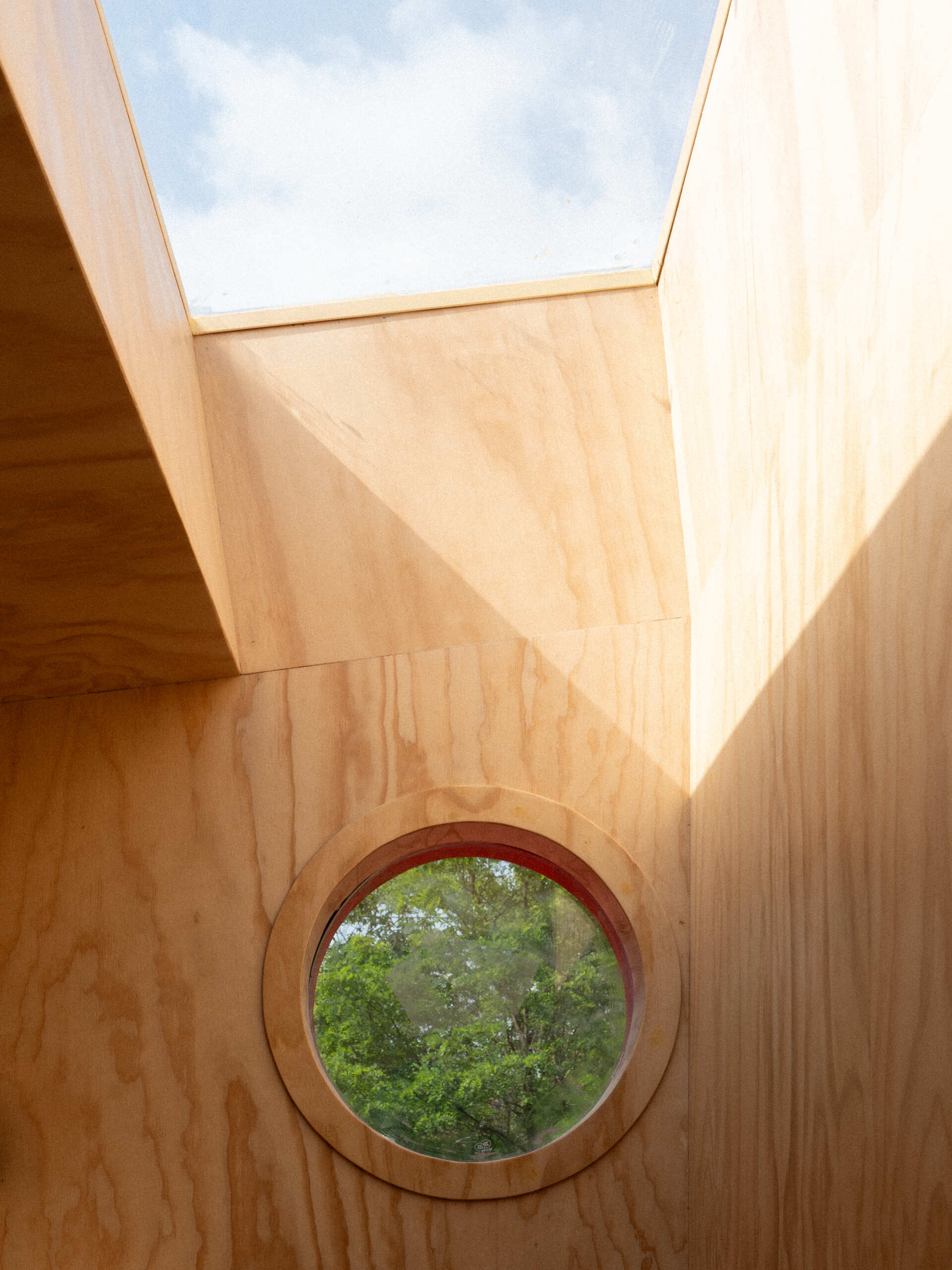
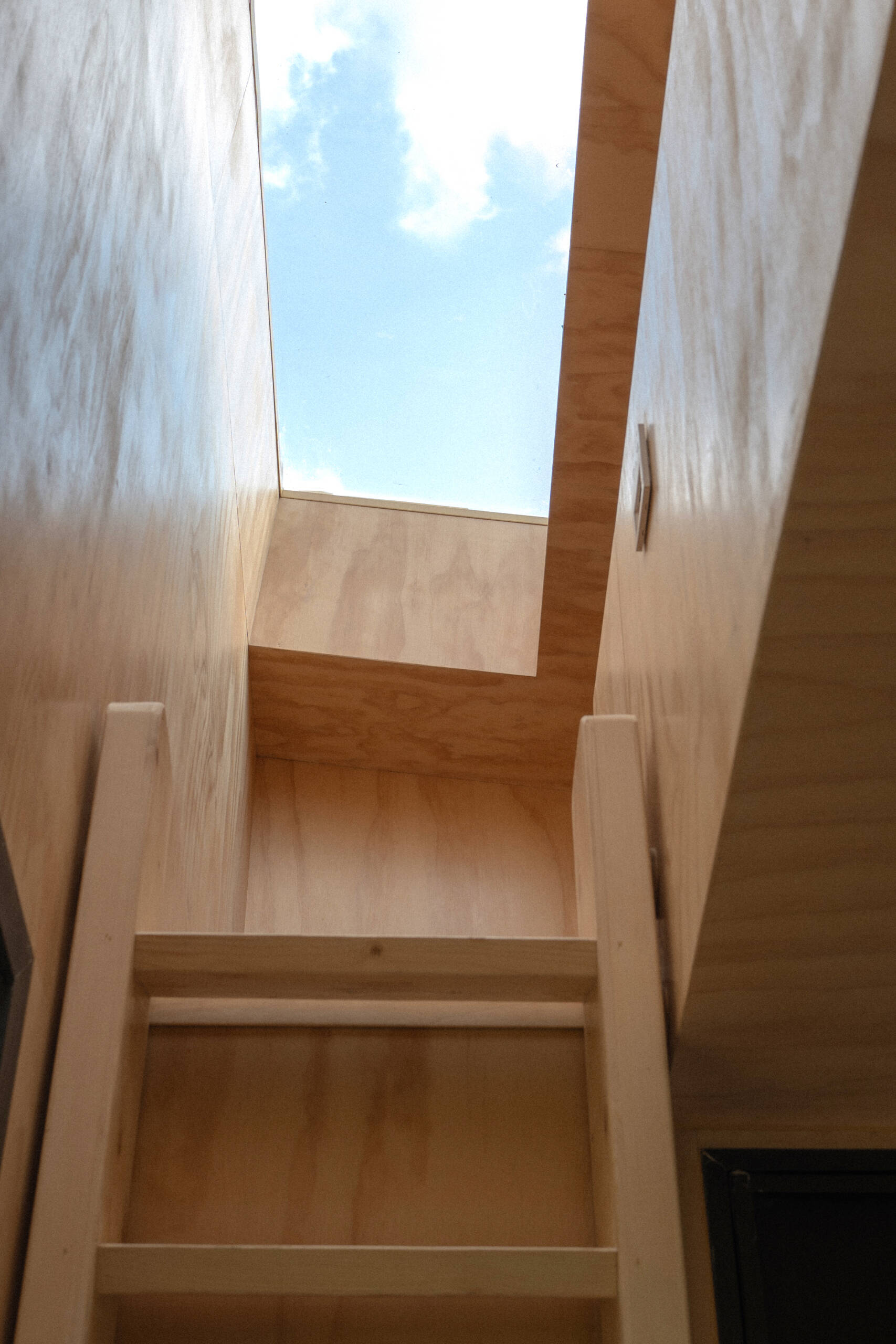
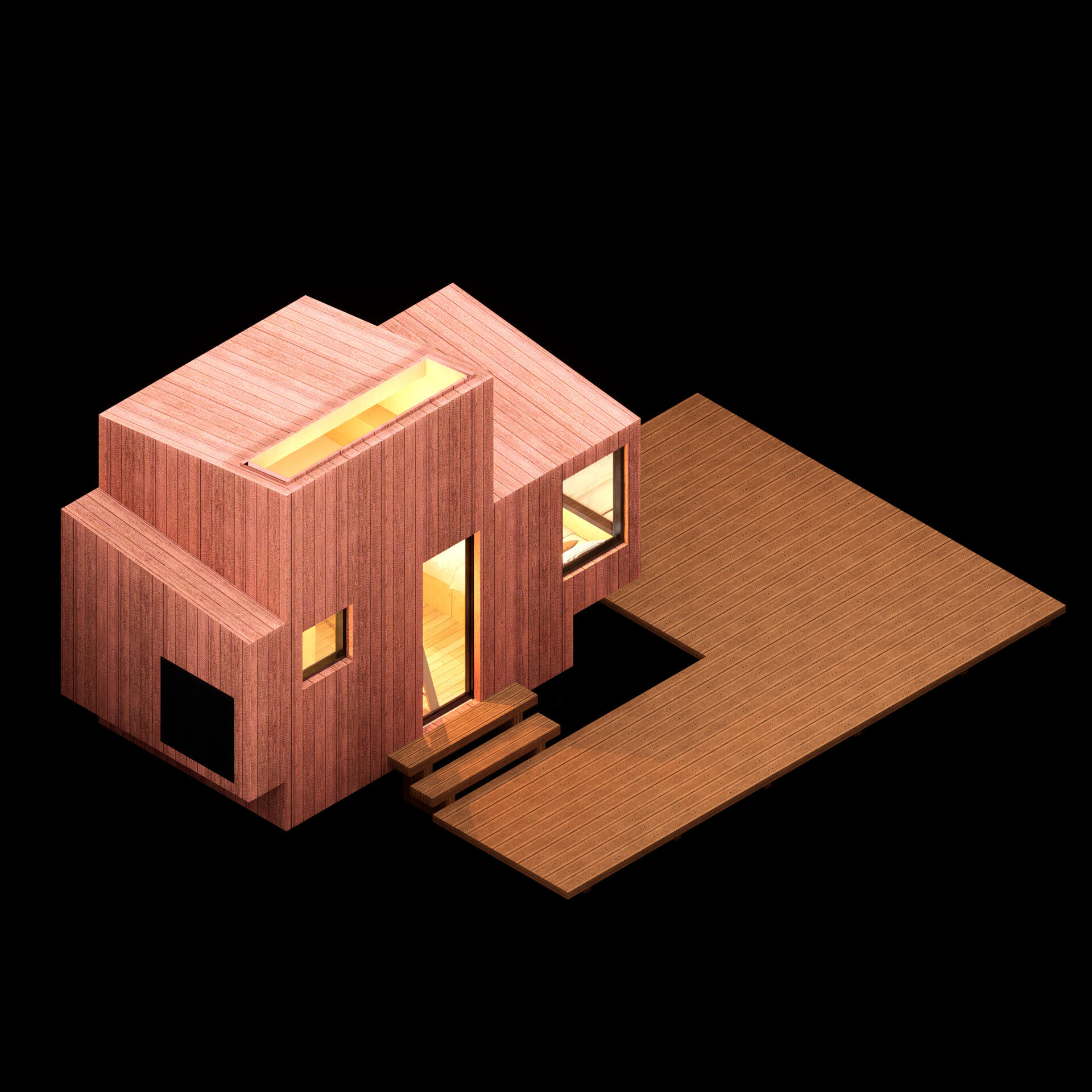
The cabin measures just over a dozen square meters, making it a compact space with a surprisingly strong sense of character. Inside, an expansive picture window opens the living room toward the forest, while a climbing ladder leads upward to a warm loft. Above the bed, a large skylight offers a direct view of the night sky.
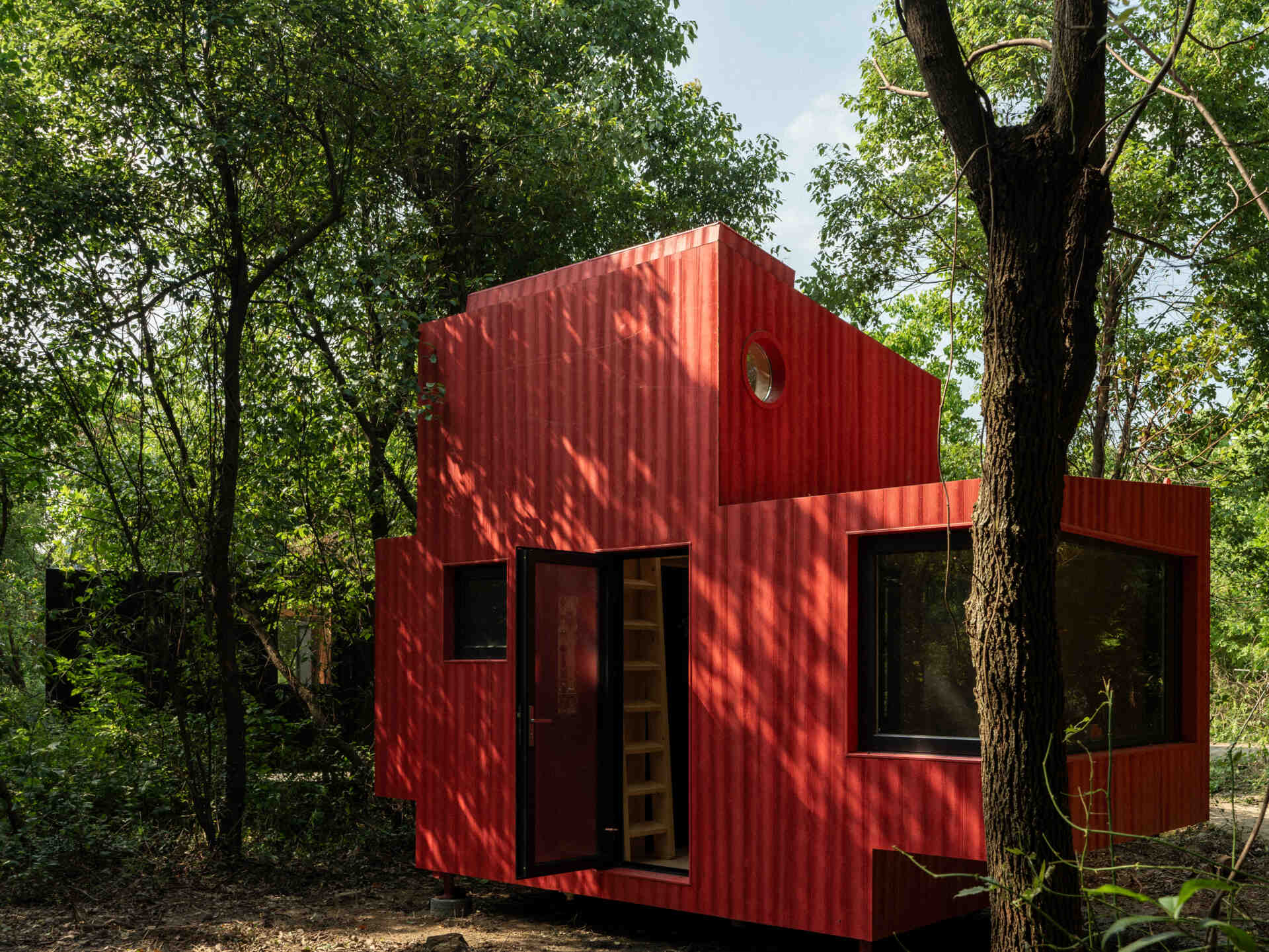
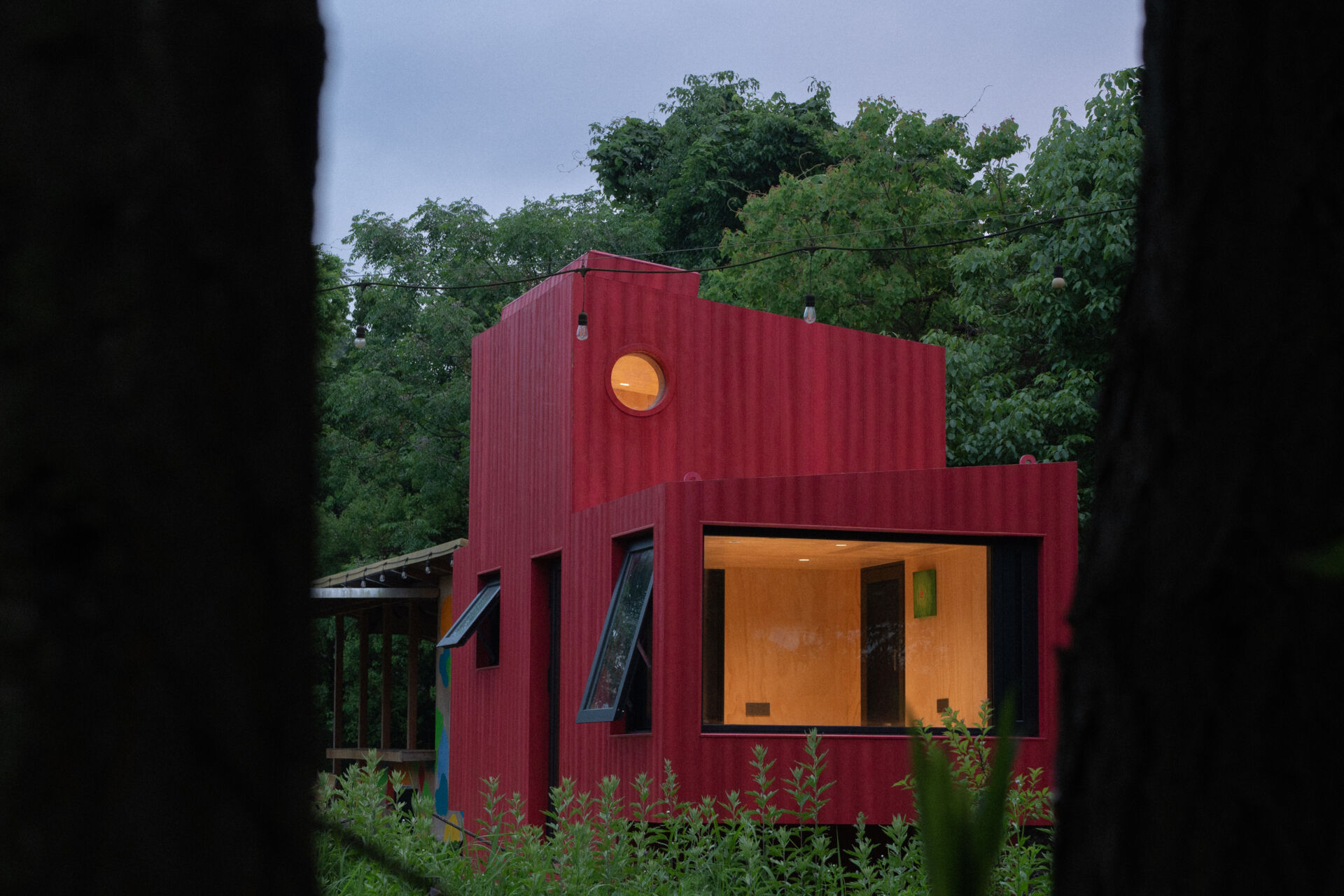
Circular portholes complete the submarine theme, giving occupants smaller, more focused views of the woodland outside.
An Idea Inspired by Fitzcarraldo
The cabin’s story also traces back to Fitzcarraldo, the film by German director Werner Herzog. The specific details of the film may have faded from memory for the designers, but one extraordinary image remained, an obsessive protagonist hauling a steamship over a hill and into the Amazon rainforest.
That surreal act of moving a vessel into an impossible landscape became an important reference for the Red Submarine Cabin.
Wiki World took that sense of adventure and translated it into architecture. Instead of a ship being dragged through the rainforest, a small red submarine becomes a place to live among the trees.
Welcome Aboard
Once inside, the cabin’s submarine character becomes even stronger.
The circular windows become portholes, the surrounding trees become waves, and the movement of wind through the forest becomes the imagined current. From the cabin, occupants can watch sunlight move across the trees and shadows shift outside the windows.
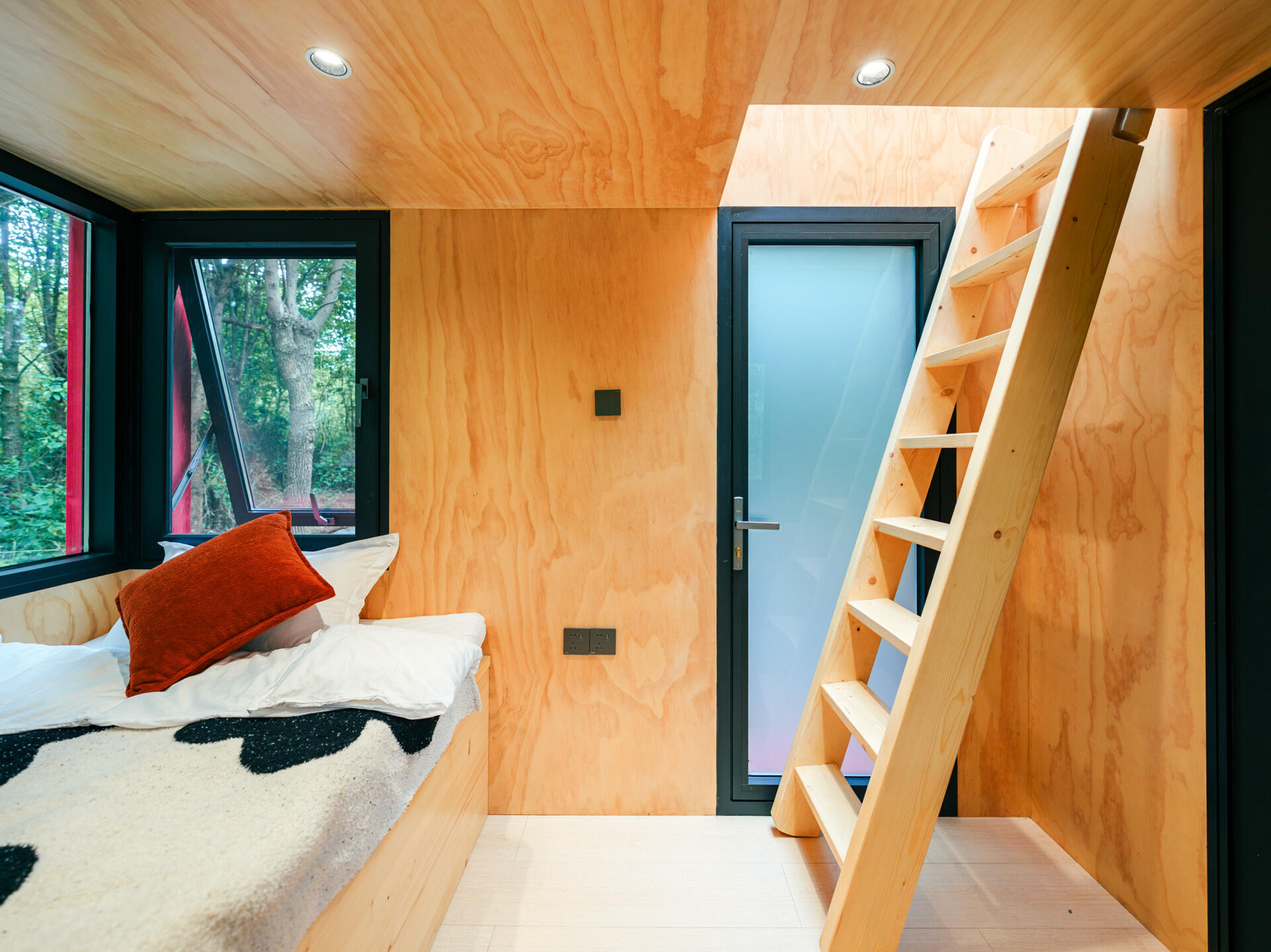
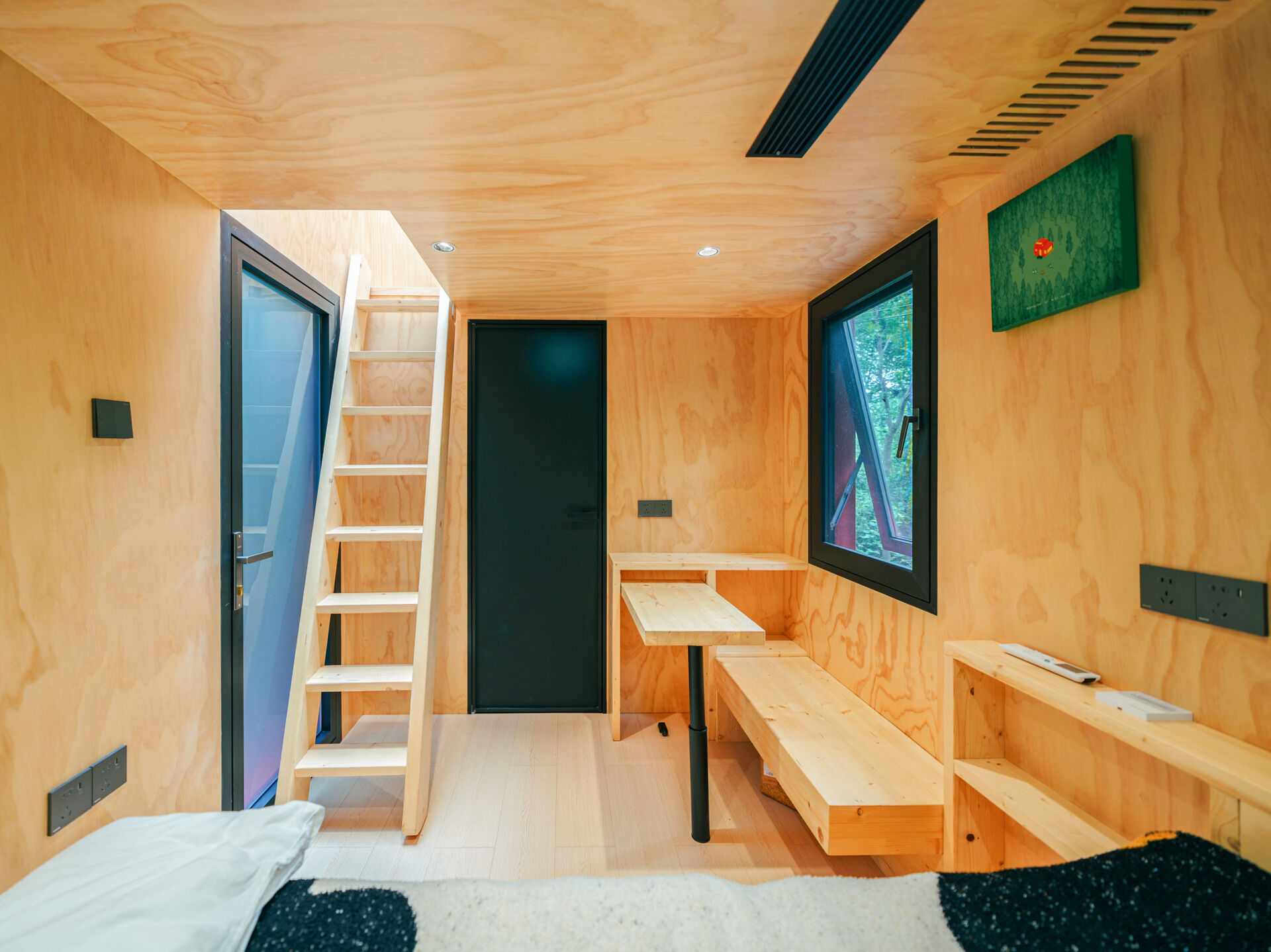
The larger picture window and circular openings create different ways of looking out. One gives a broad view of the forest, while the smaller portholes make the surrounding landscape feel more like a series of changing scenes.
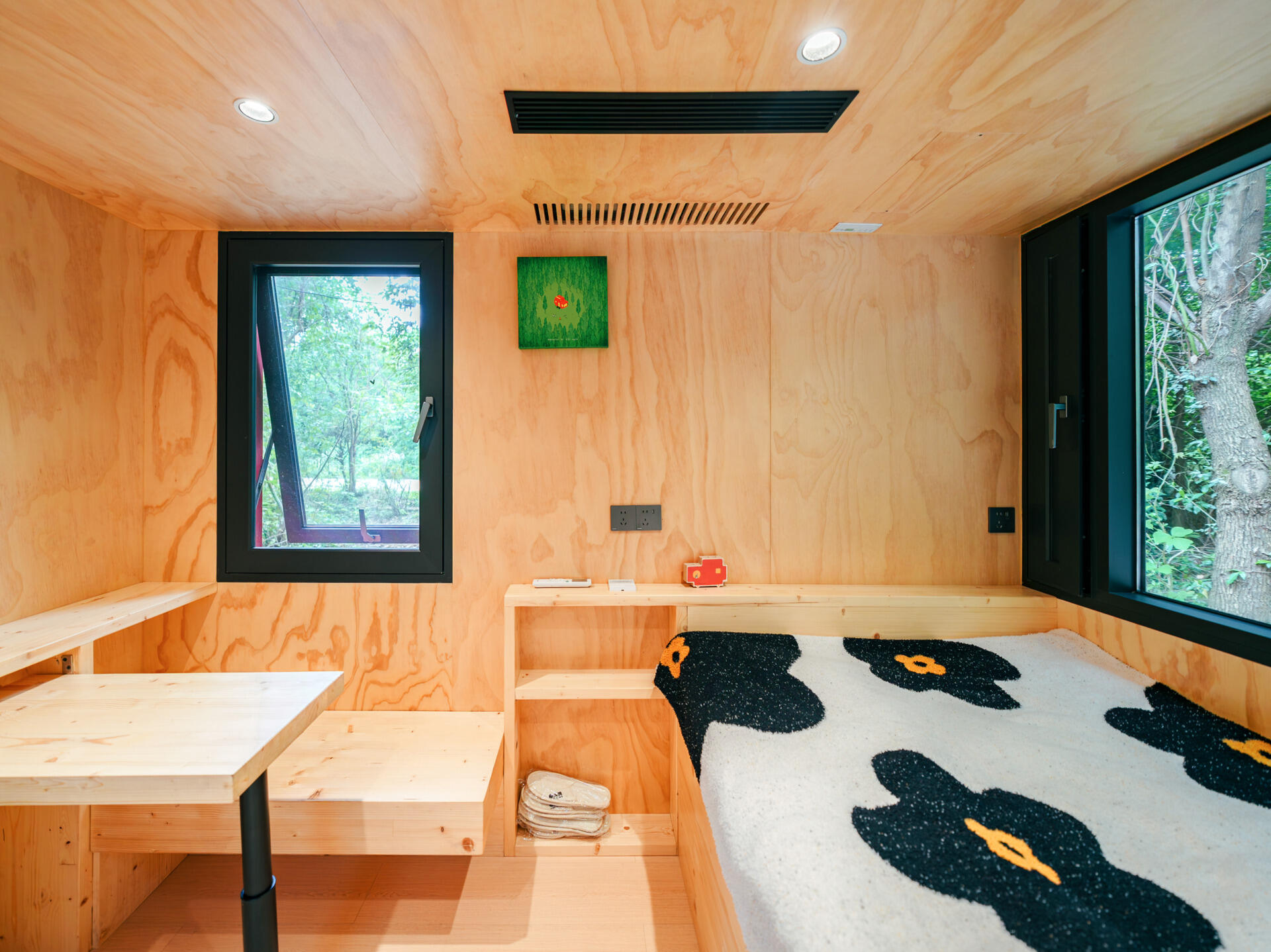
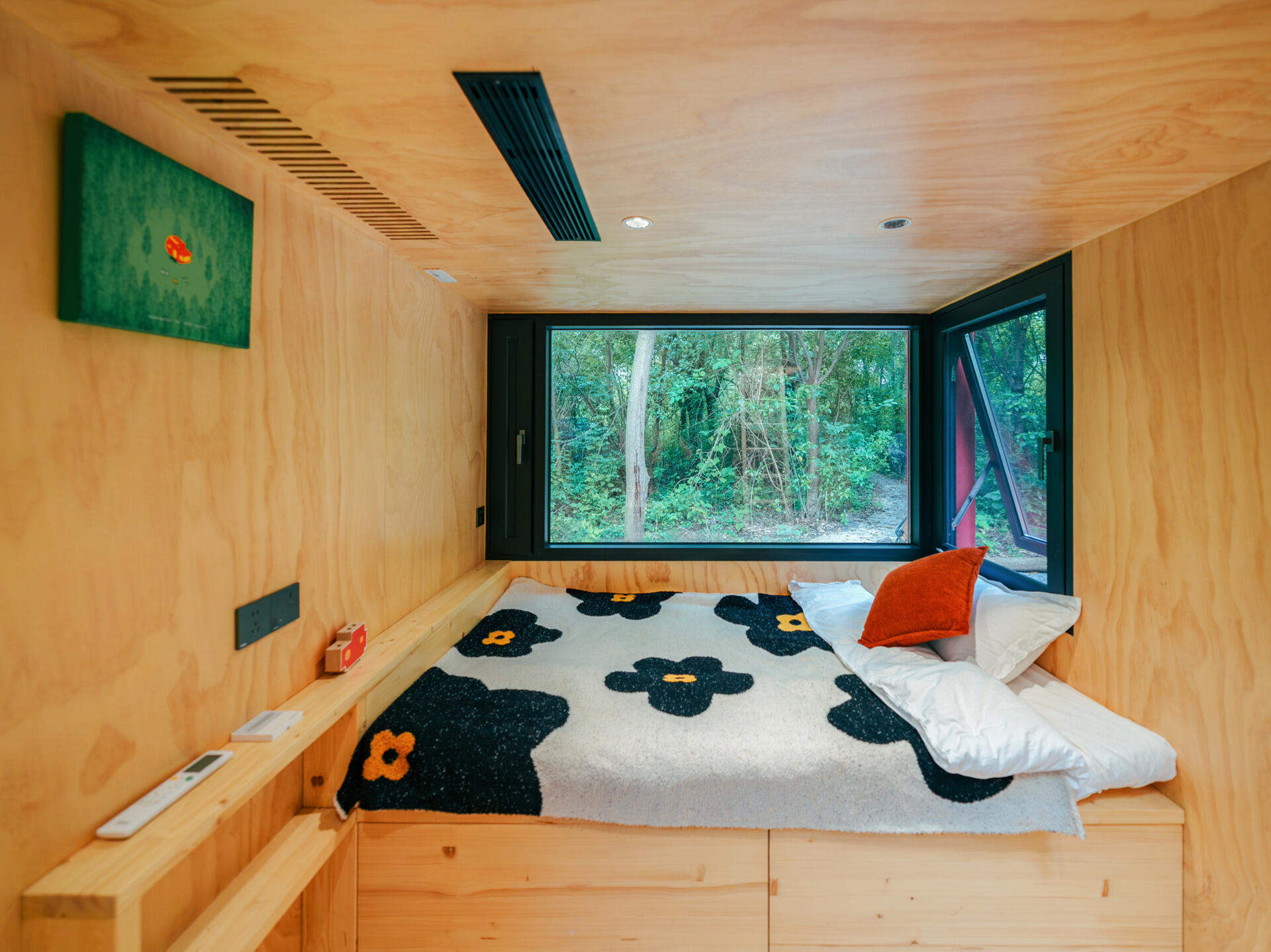
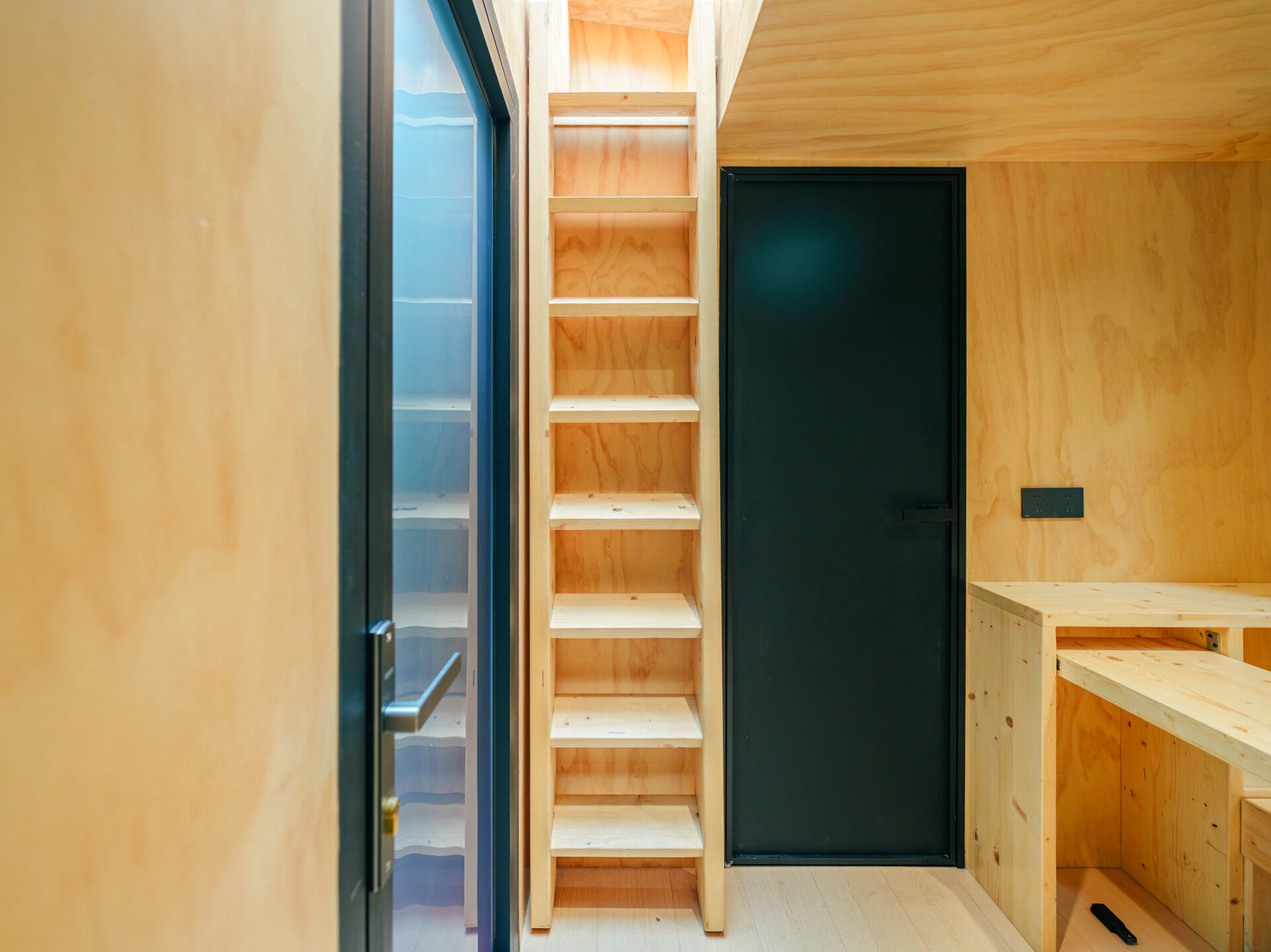
The cabin is designed to encourage a slower experience of its surroundings. Leaves change colour, birds come and go, and sunlight shifts across the woodland. From inside the red structure, these ordinary changes become part of the experience of living in the forest.
Digital Fabrication Meets Timber Construction
Behind the playful submarine concept is a highly precise construction system.
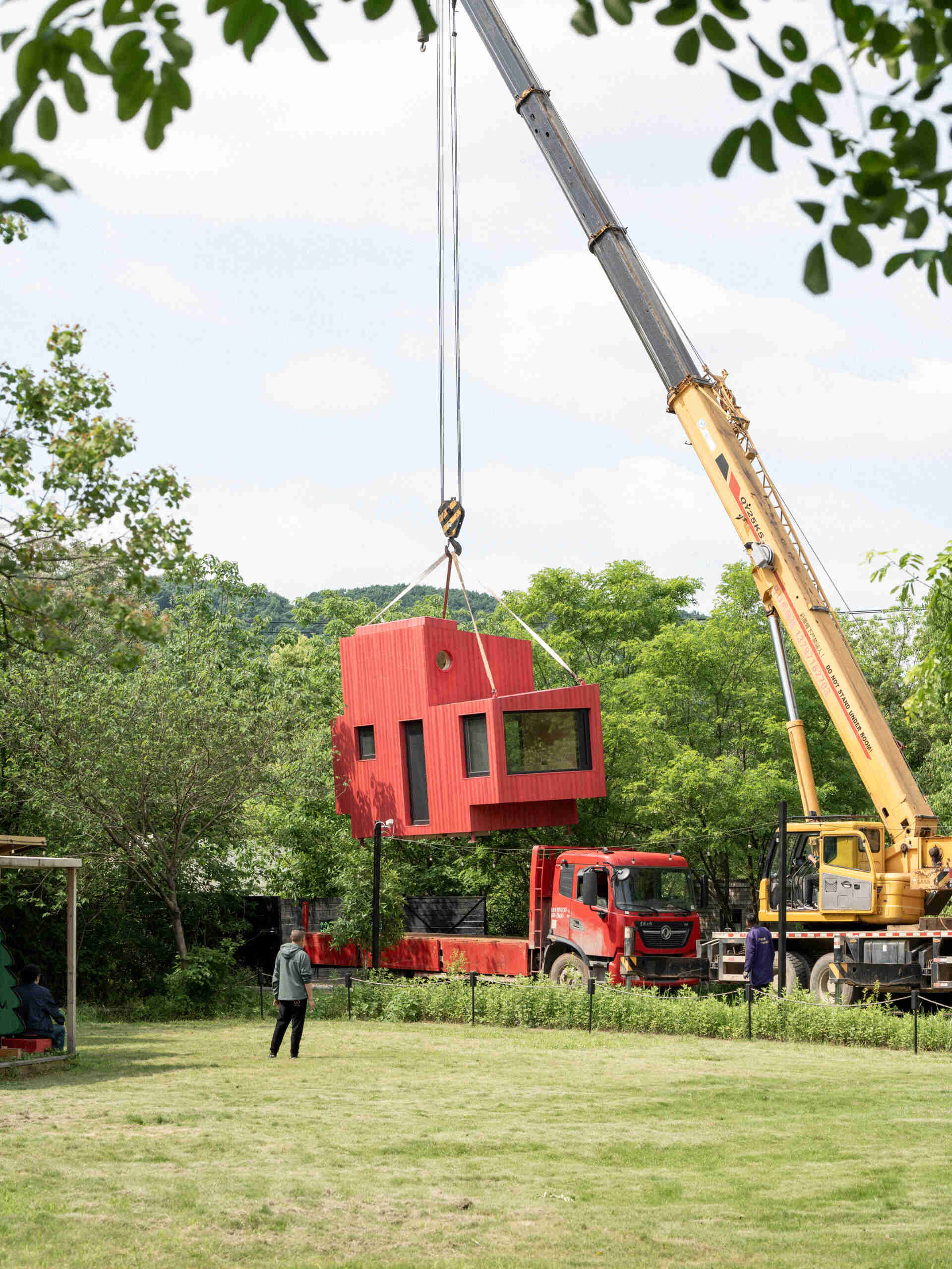
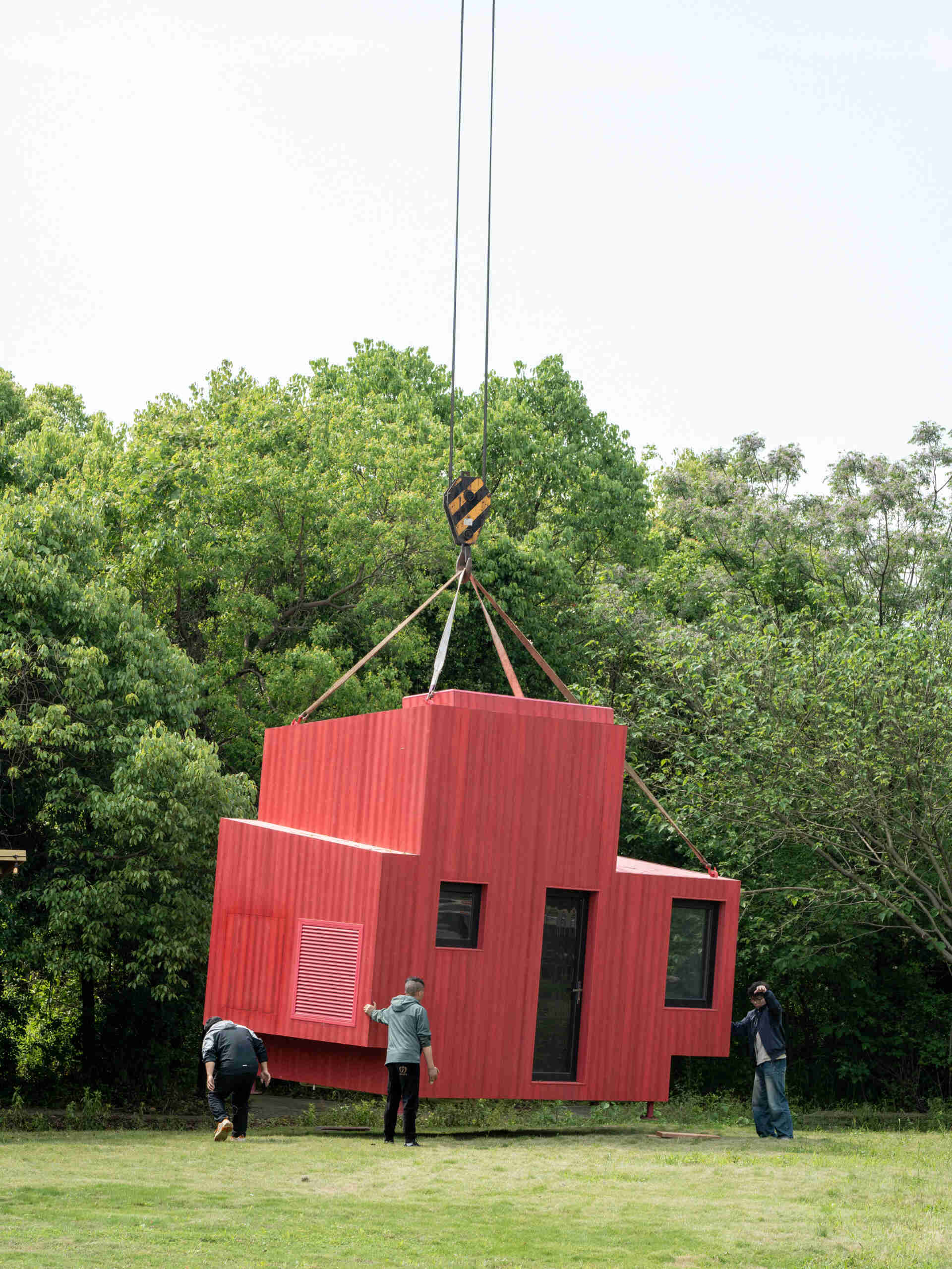
The entire building uses a glued timber structure, with each custom-shaped component and joint digitally designed and produced for the project. The pieces are manufactured for prefabricated assembly, allowing the cabin to be constructed with a high degree of precision before being put together on site.
Wiki World’s approach also opens the door to its wider idea of the Playtime Cabin. The studio sees no single standard answer for what a living space should be, allowing its cabin systems to become a framework that can be adapted and developed with users.
This combination of digital technology and timber construction gives the cabins a building-block quality. Individual components can be manufactured precisely, transported and assembled as part of a larger modular system.
Building Like Lego in the Forest
The modular idea extends into the way the cabins interact with the landscape.
Wiki World preserved the existing trees and bamboo on the site, keeping the woodland and its paths intact. The cabins are elevated above the ground, with each structure standing independently instead of relying on walls or artificial landscaping to define the site.
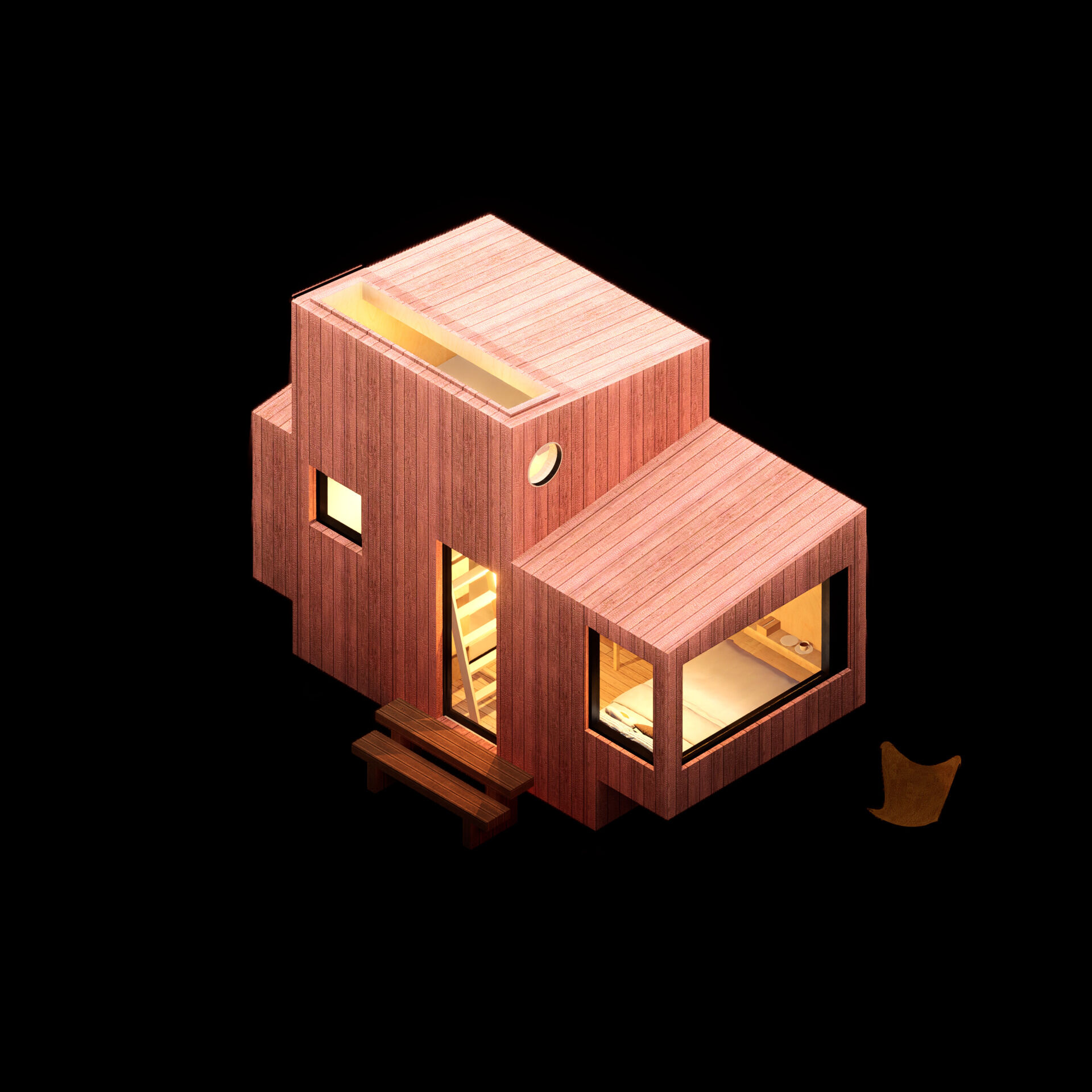
The timber cabins can be assembled using small metal components that allow the structures to be repeatedly put together and taken apart. Wiki World compares this approach to building with Lego, with small cabins functioning like building blocks within the forest.
The exterior timber boards also use a traditional technique in which the wood is hand-fired to create a carbonized surface. The result is a construction system that brings together digital precision, prefabrication and a more direct approach to building in a natural landscape.
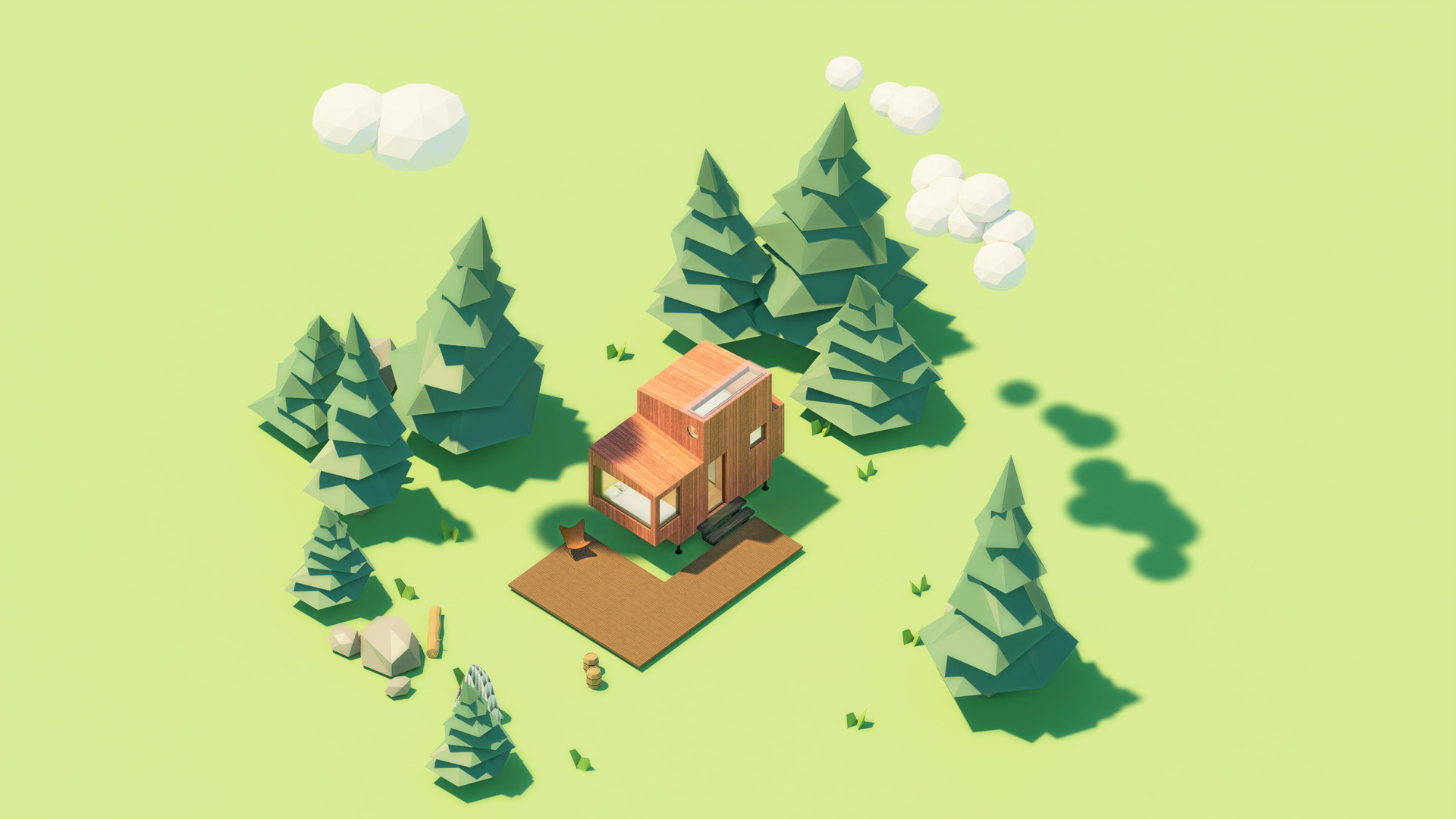
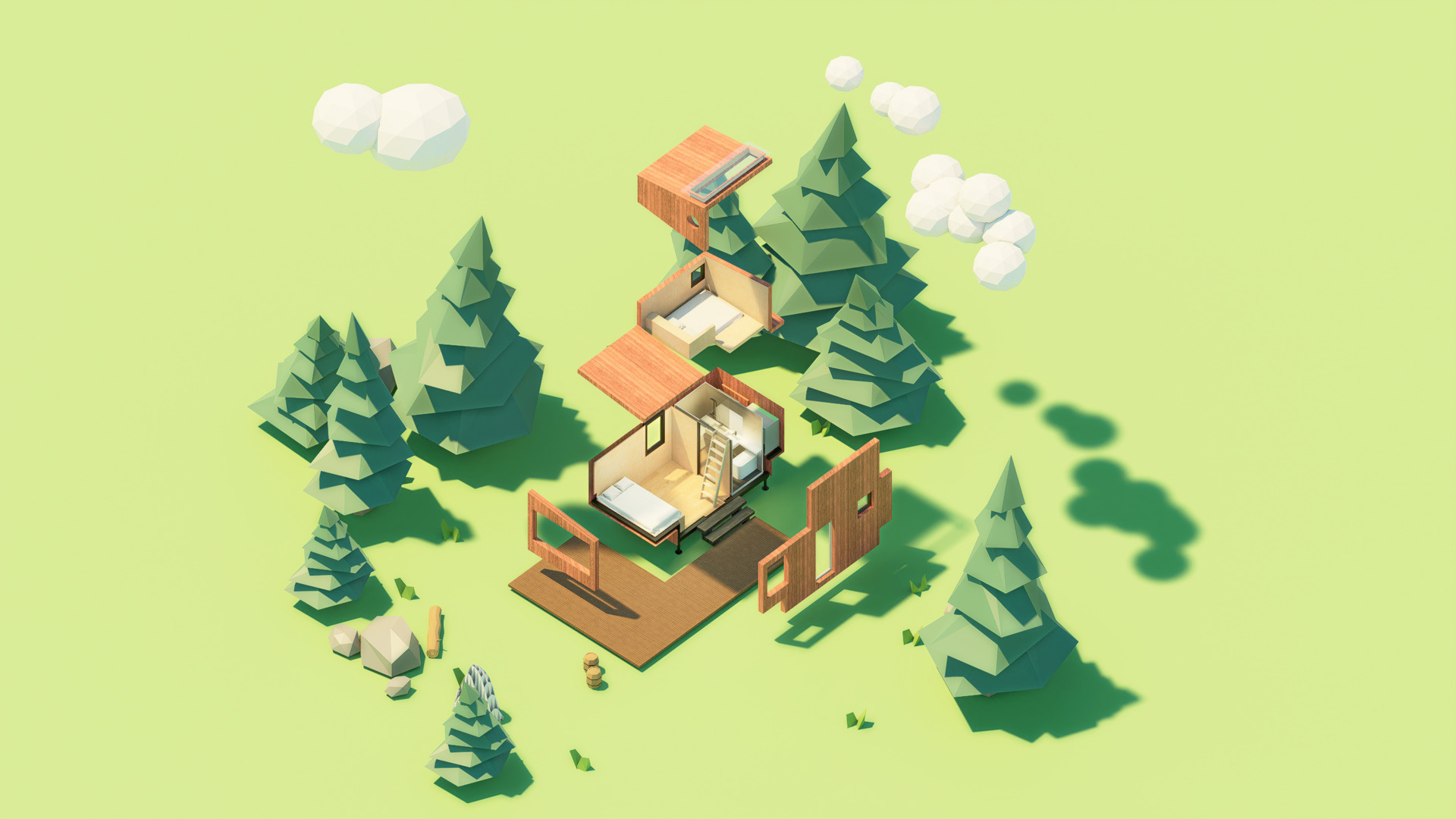
With its bold red exterior and compact timber construction, Wiki World’s Red Submarine Cabin offers a playful new take on wilderness living, creating a tiny home that feels more like a vessel drifting through the forest.