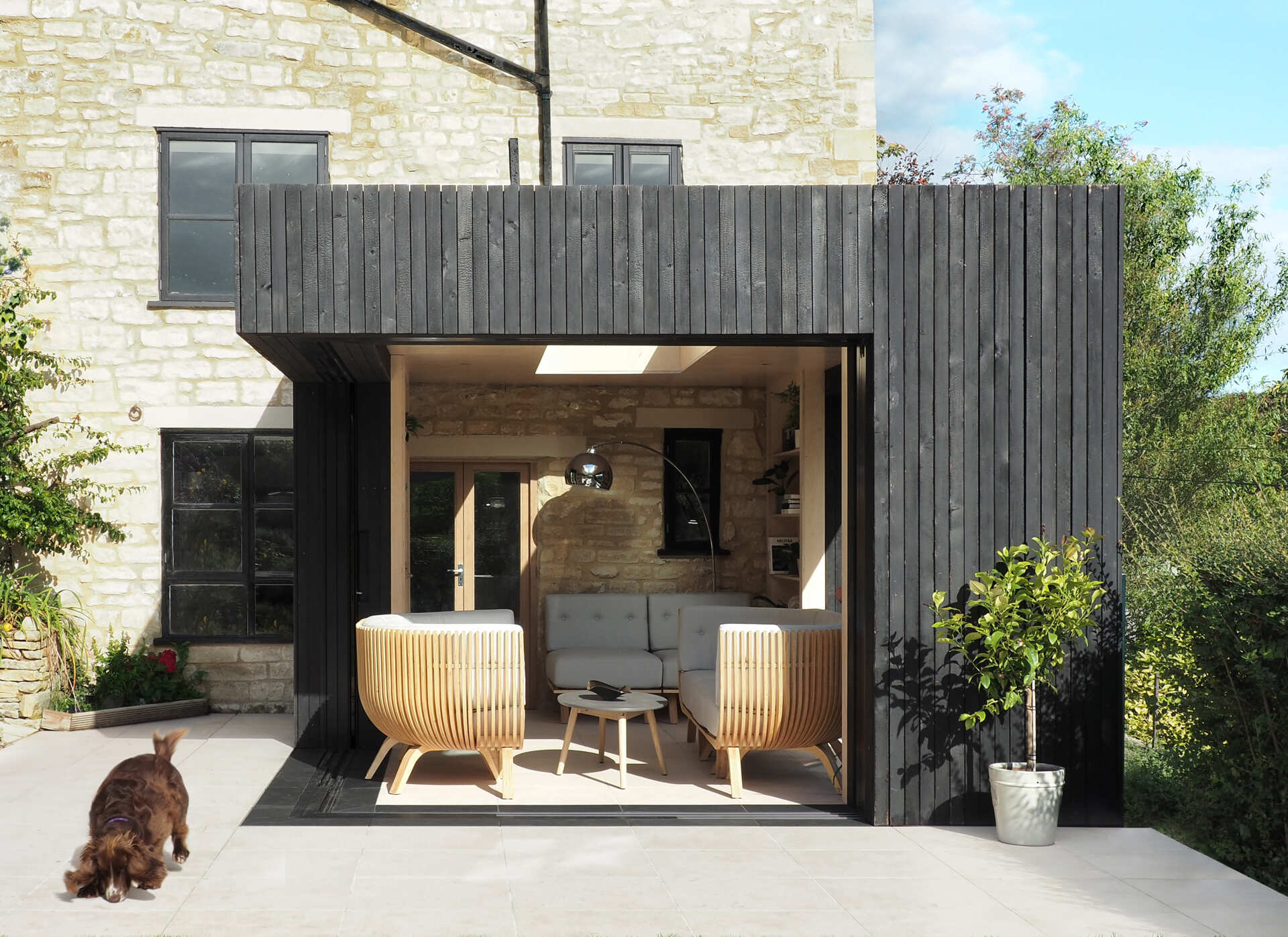
Nestled in the rolling hills of the Cotswolds, this 17th-century stone cottage received a delicate modern touch. George King Architects designed a small, single-room extension that transforms the home while respecting its historic character and the surrounding landscape.
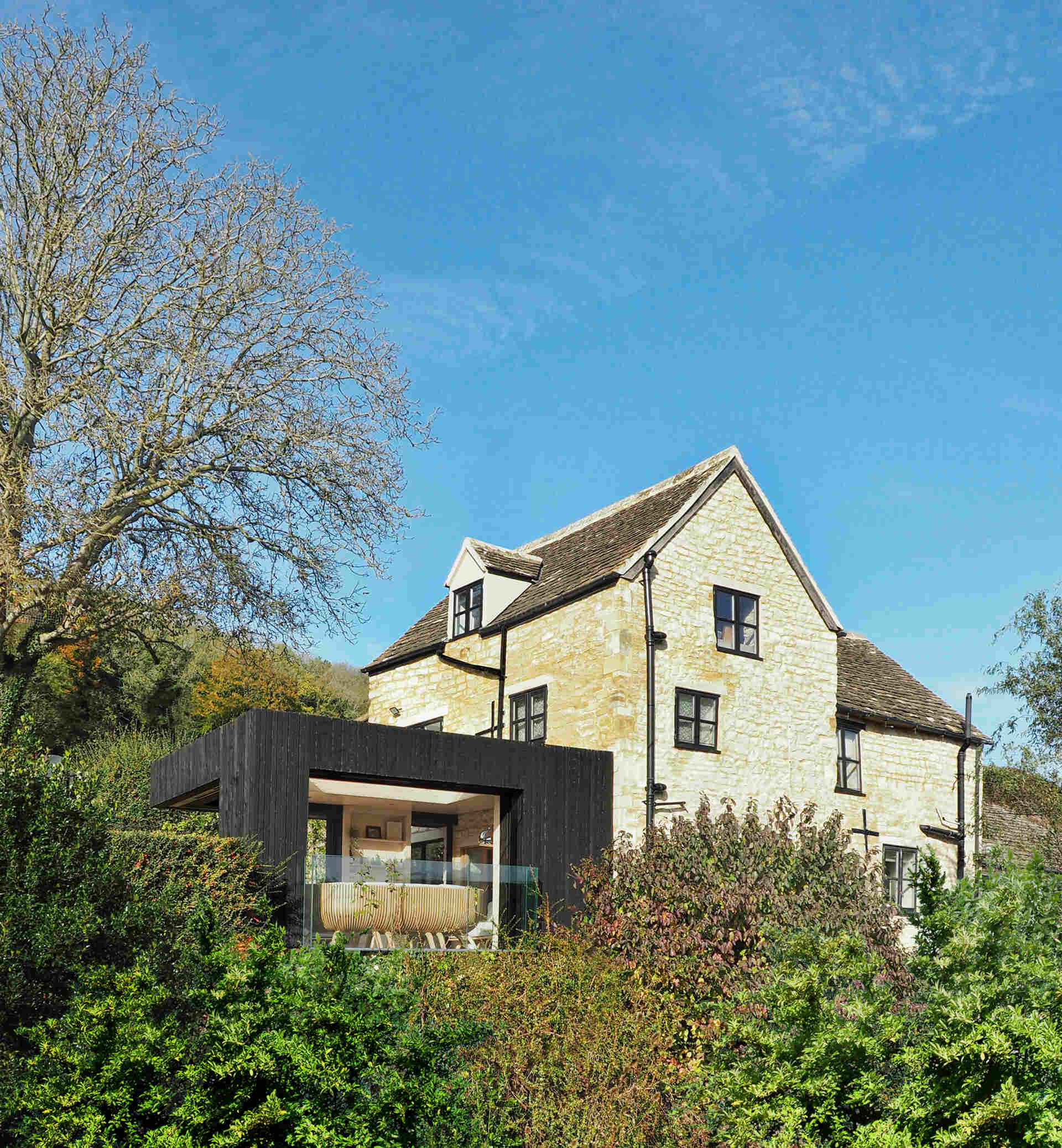
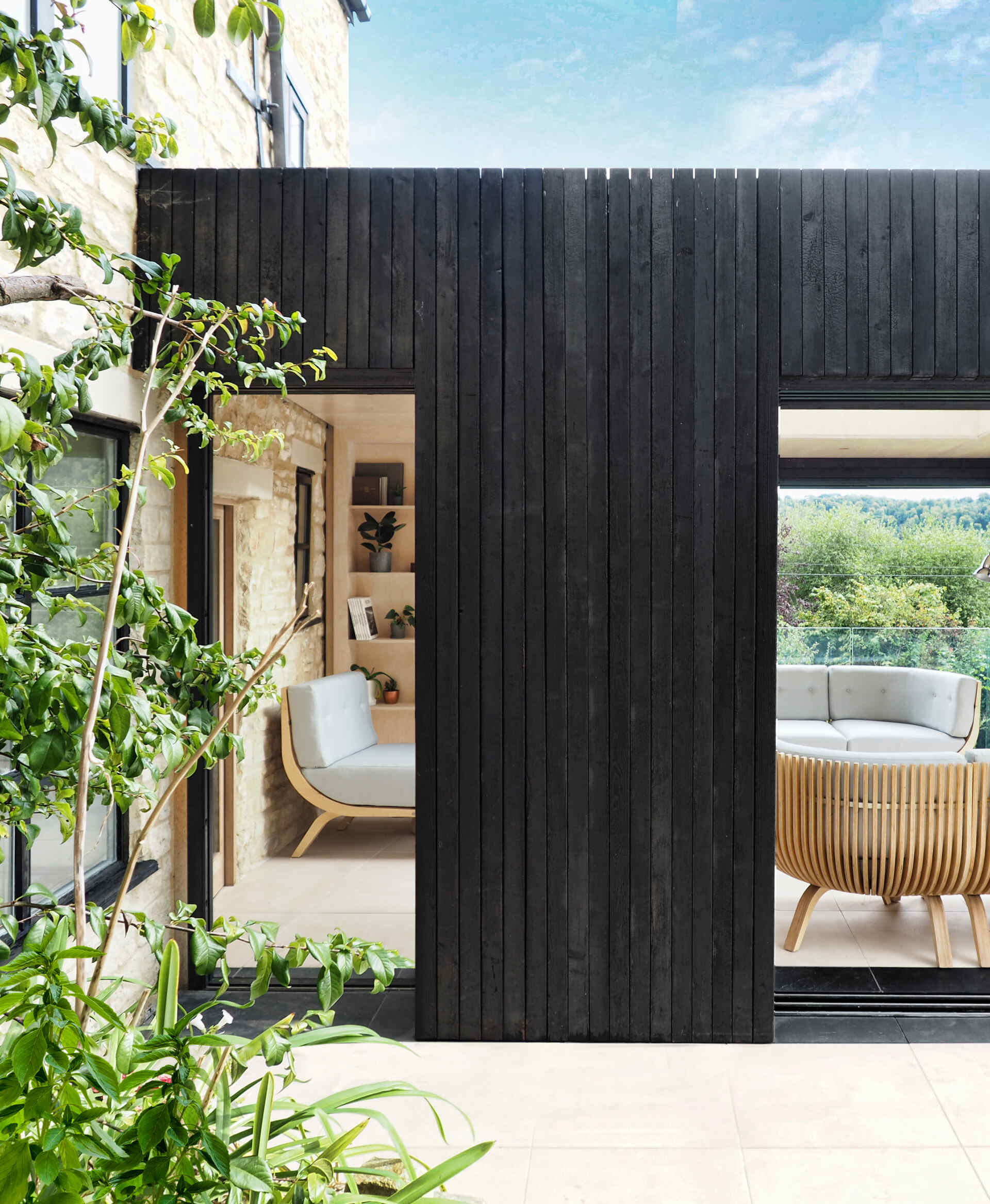
The reading room makes a striking contrast with the original stonework thanks to its charred timber siding and black door frames. Yet it also complements the cottage’s existing black window frames and Victorian ironwork, creating a careful dialogue between old and new.
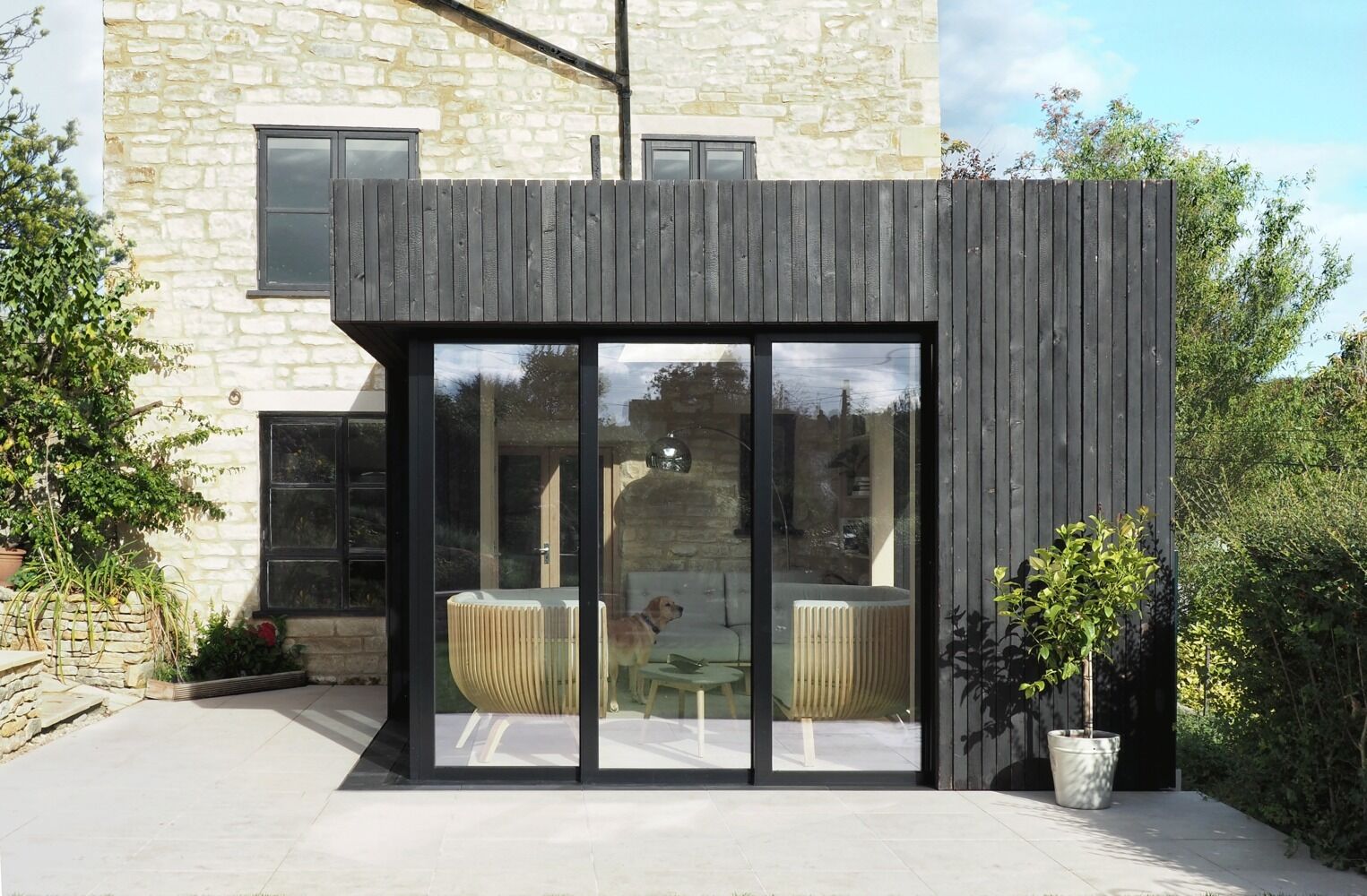
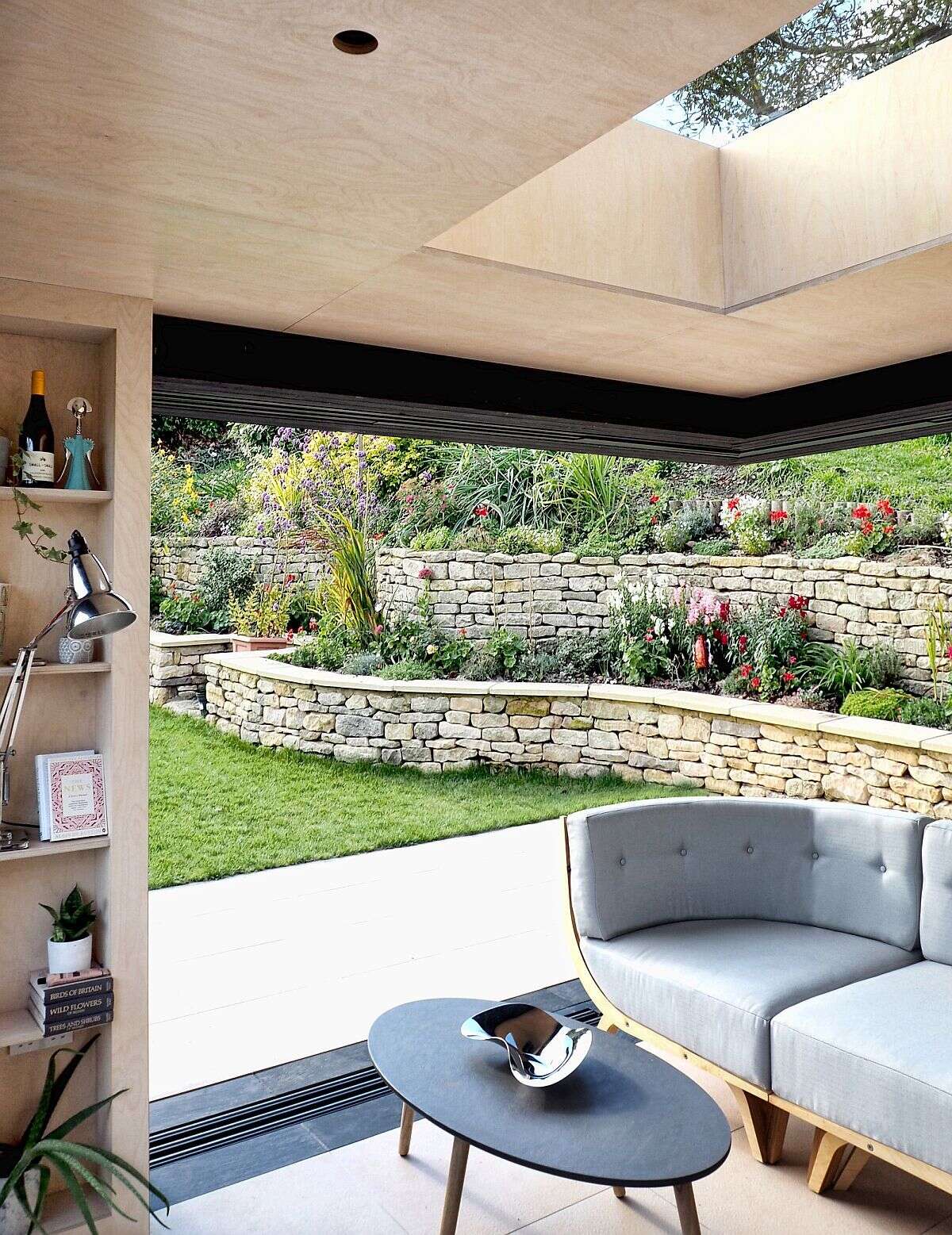
The room’s standout feature is its sliding glass doors, which can disappear completely behind three timber bookcases. These bookcases are not only storage but also structural, supporting the cantilevered roof and allowing one corner of the roof to float unsupported. When open, the room flows seamlessly into the garden, creating an outdoor living space that feels both expansive and intimate.
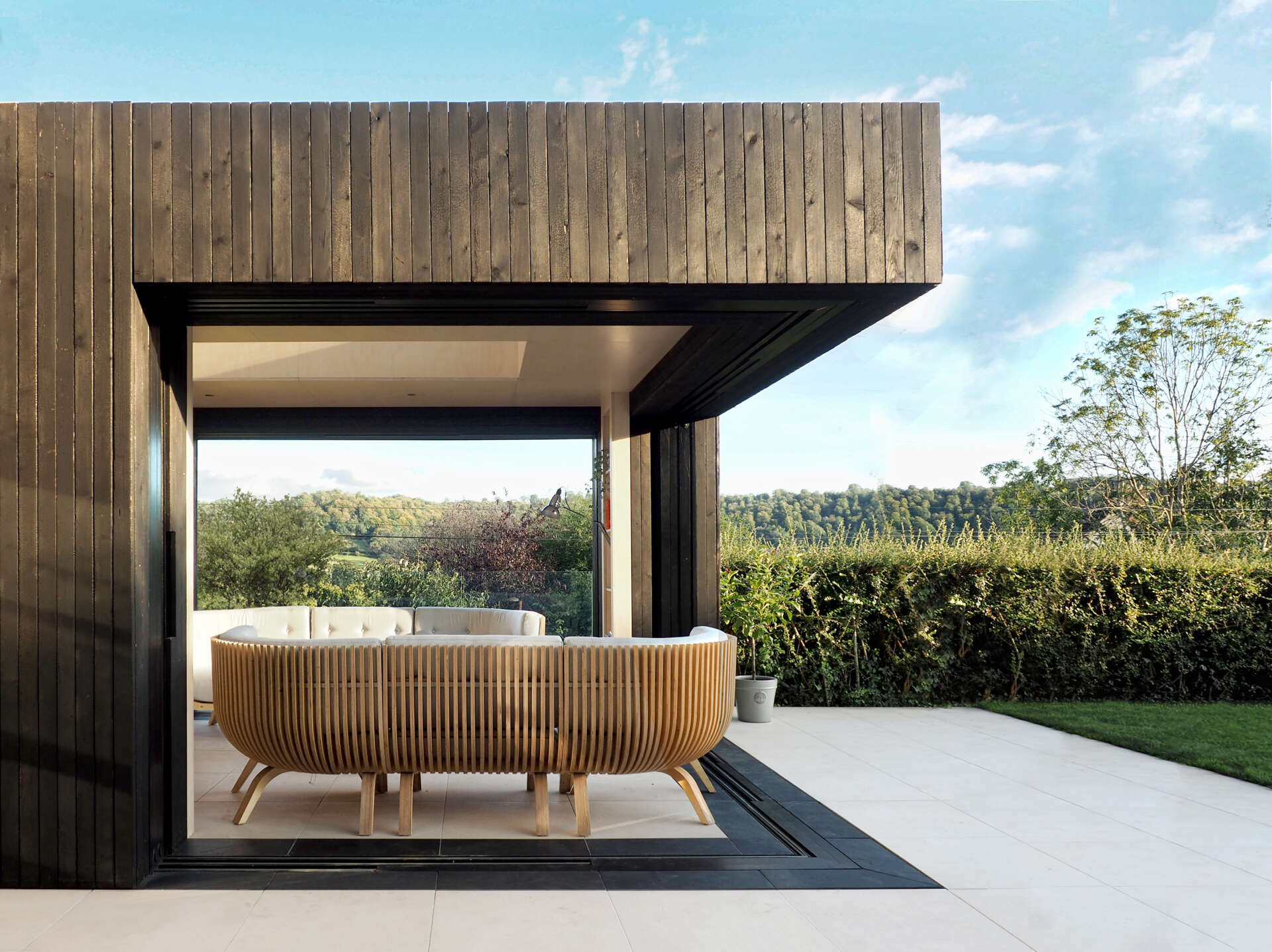
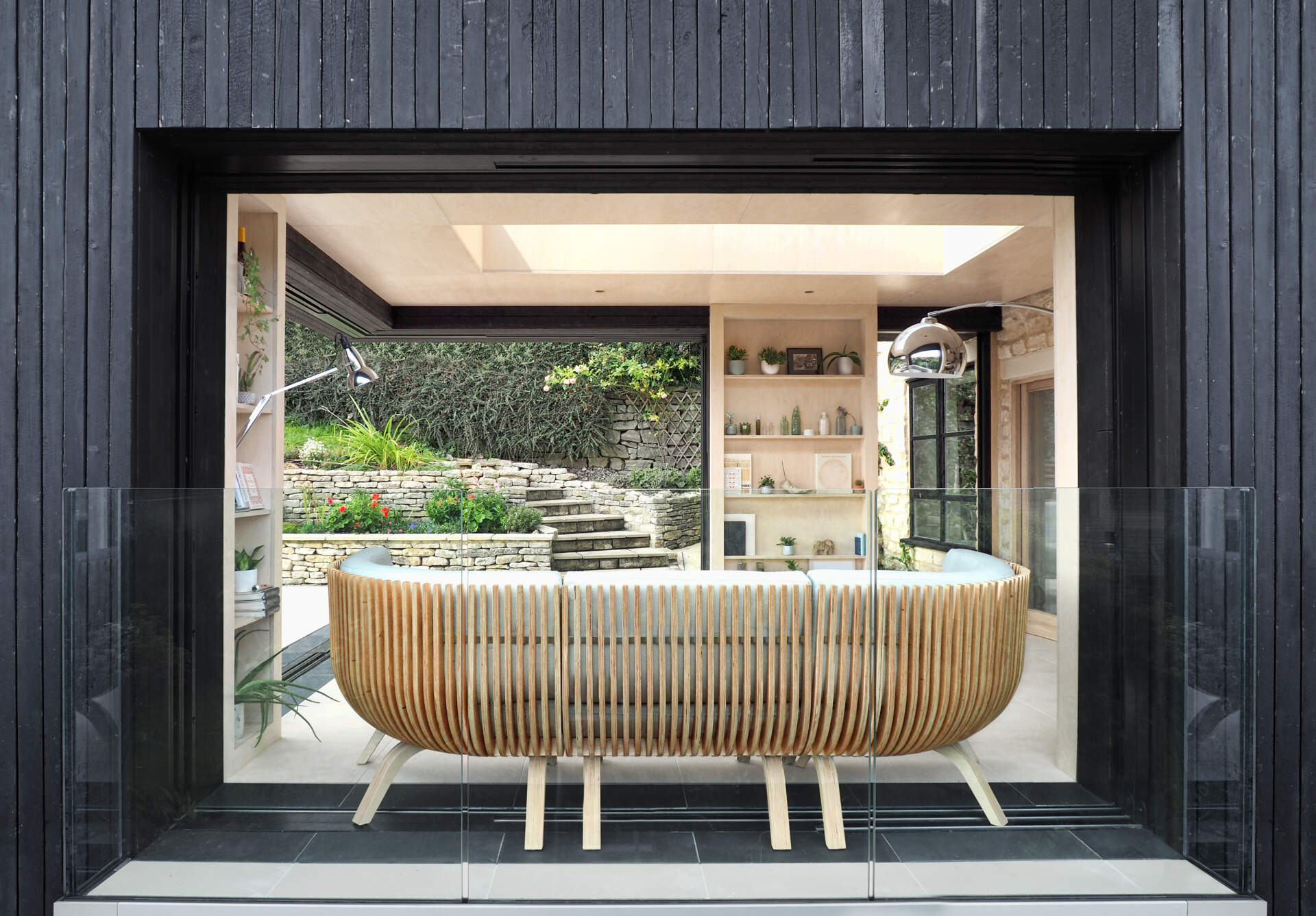
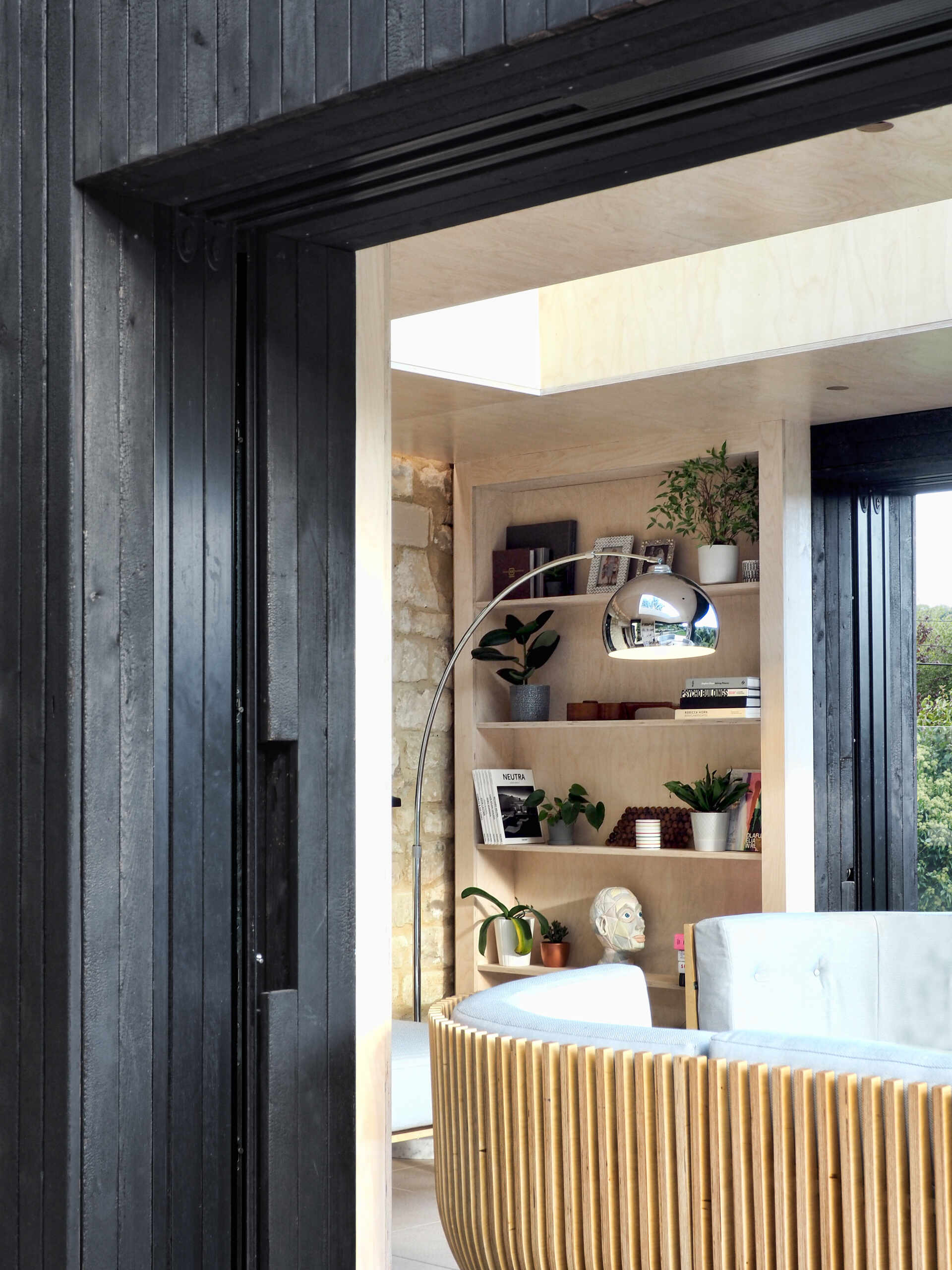
Inside, the reading room is bright and airy. Light birch plywood lines the bookcases and interior surfaces, contrasting gently with the dark exterior. A skylight enhances the natural illumination, pairing perfectly with the glass doors to make the room feel open even on cloudy days.
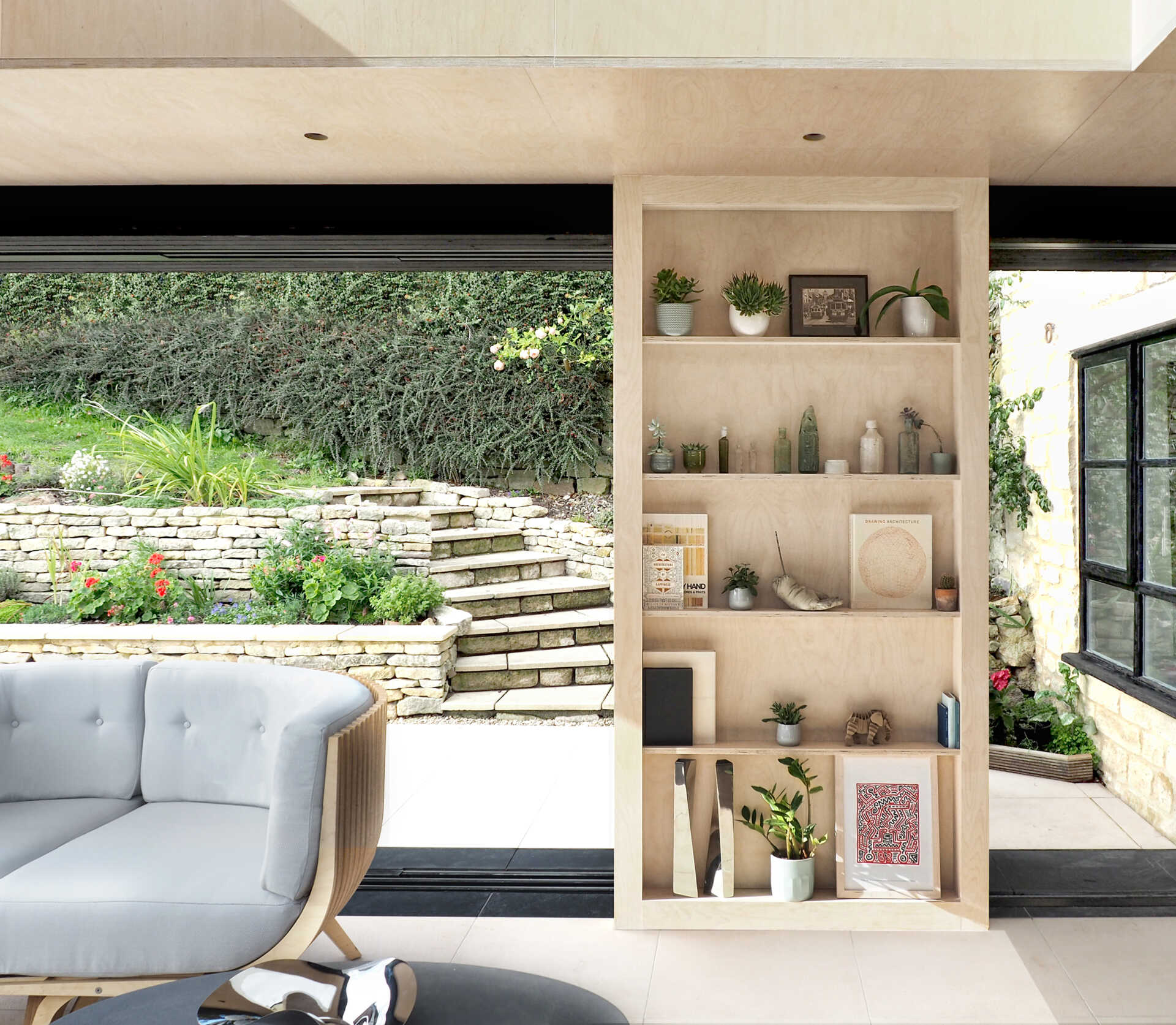
The space is furnished with modular pieces that can be configured as a chair, a sofa, or even moved outside to enjoy a sunny afternoon. This flexibility allows the room to adapt to the weather, the mood, or the moment, embodying a new kind of year-round garden room.
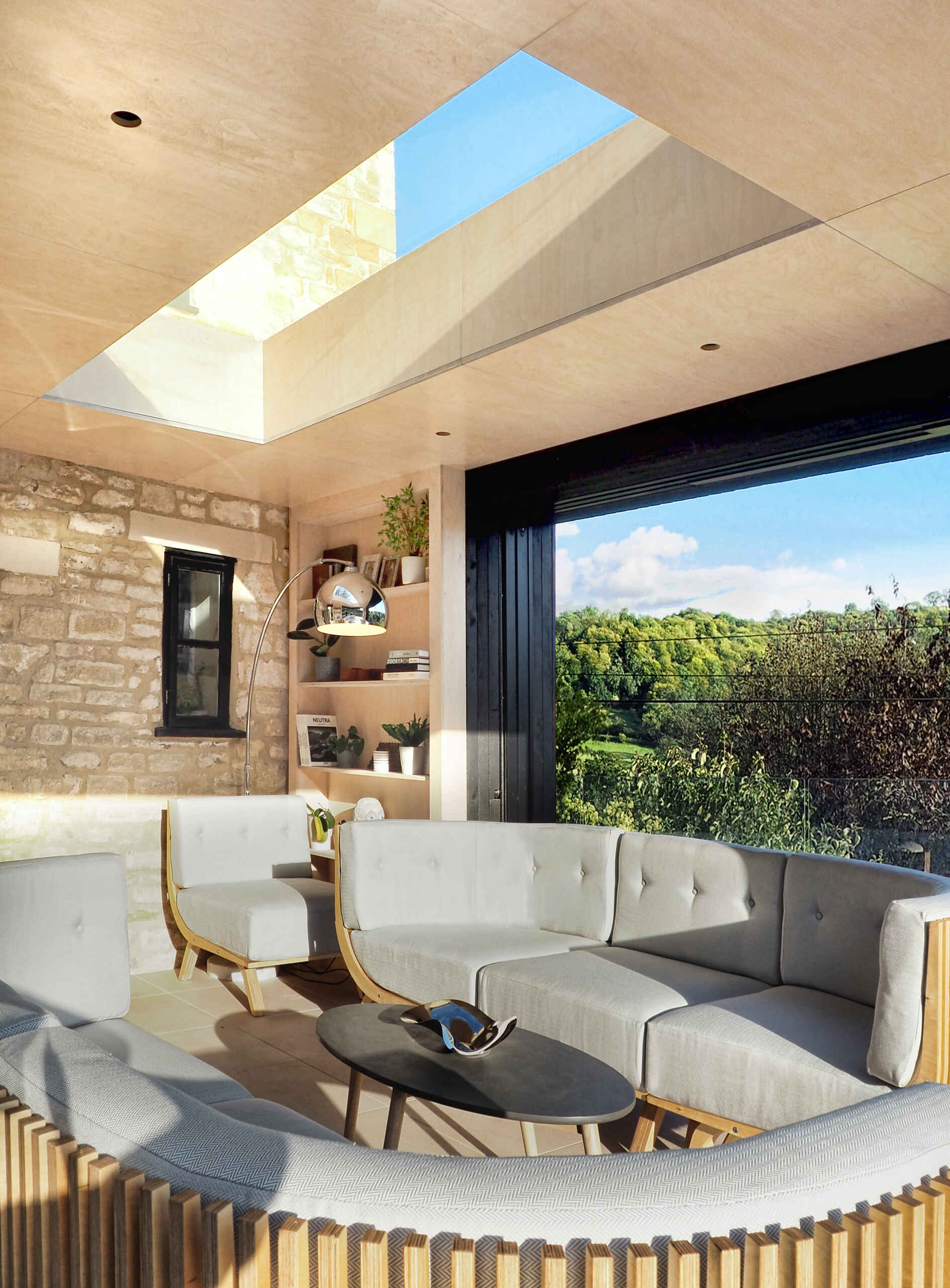
The garden itself has been reimagined to complement the extension. Landscaped terraces step down from the house, framing views across the valley and inviting a gentle dialogue between the cottage, the new reading room, and the surrounding countryside.
The architectural drawings reveal how the reading room fits alongside the 17th-century cottage, showing the disappearing glass walls, timber bookcases, and cantilevered roof.
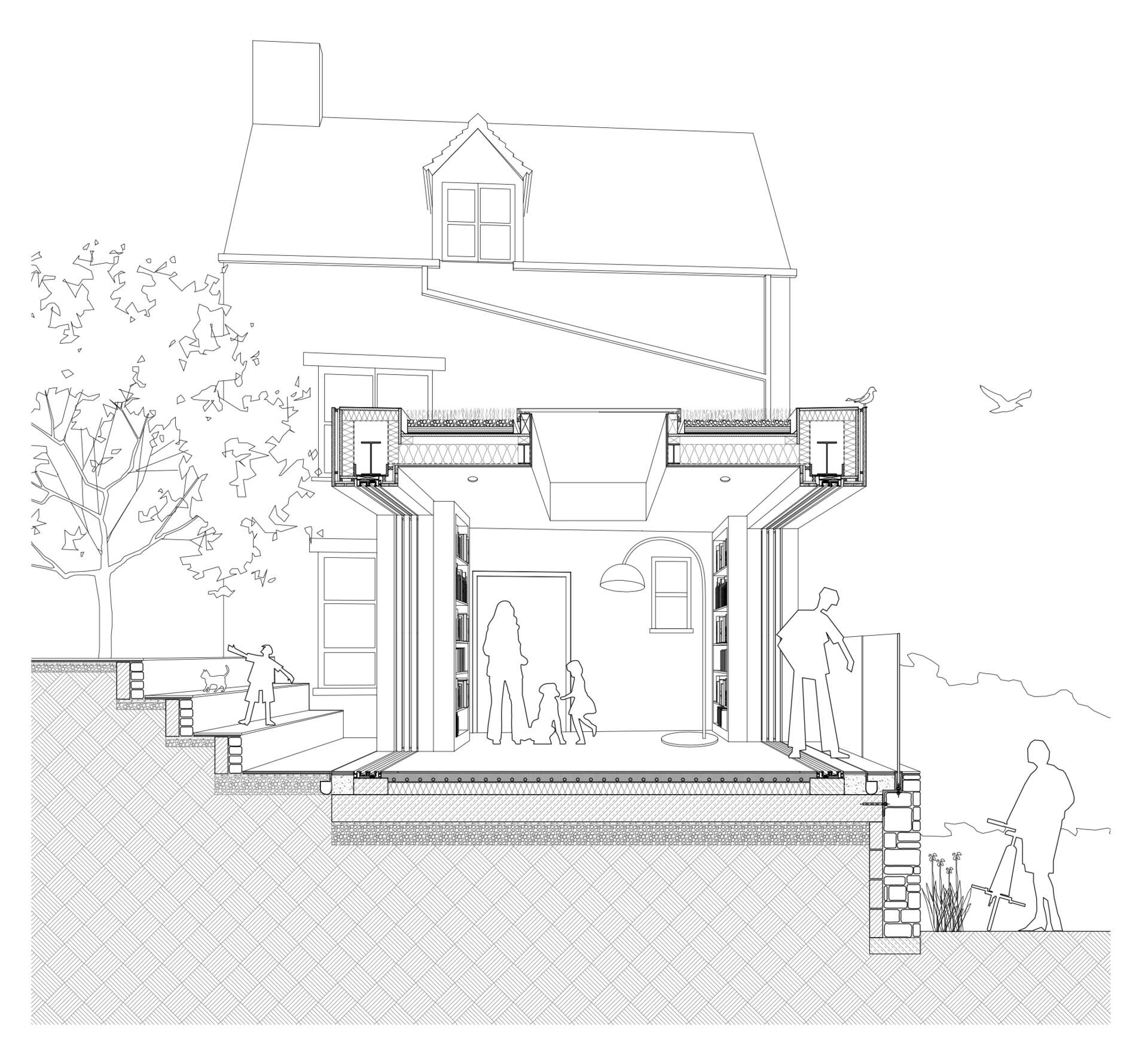
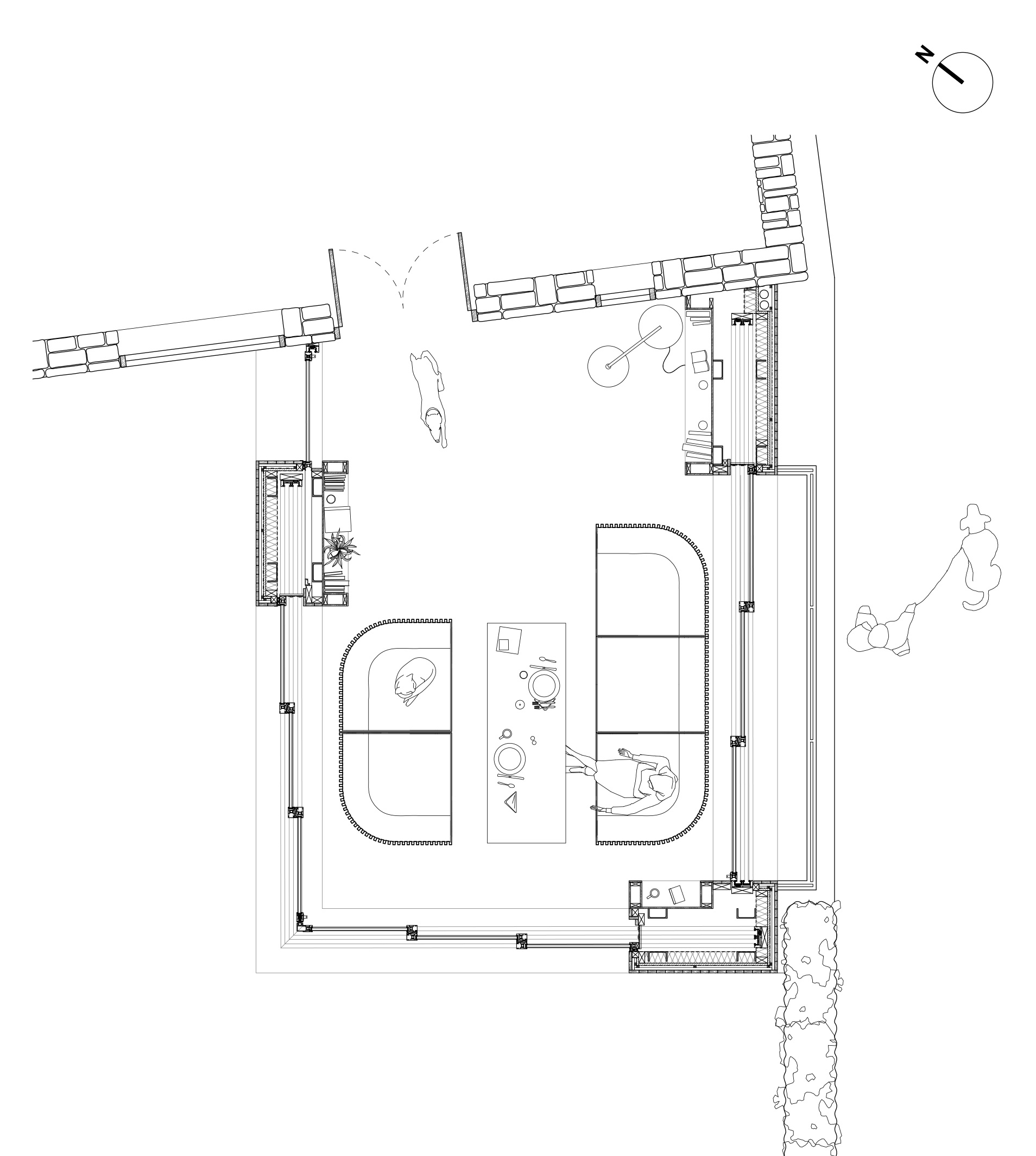
By combining charred timber, sliding glass, and bespoke modular furniture, George King Architects have created a modern reading room that feels like a natural extension of the garden. It’s a small space, but it transforms the way the cottage is experienced, proving that even modest additions can make a big impact.