In the dense center of Saigon, where narrow streets and constant movement define daily life, MIA Design Studio has completed a home designed for a client who wanted something simple but increasingly difficult to find in a growing city: comfort and convenience without leaving the urban core.
The homeowner, a woman living in one of the most condensed districts of the city, wanted a place that could offer calm while remaining connected to its surroundings. During the early design conversations, the architects focused on reducing the program to exactly what she needed, nothing more and nothing less. With fewer interior demands competing for space, the design could dedicate more room to greenery instead of scattering small decorative plants around the entrance.
A Concrete Structure Softened by Vines
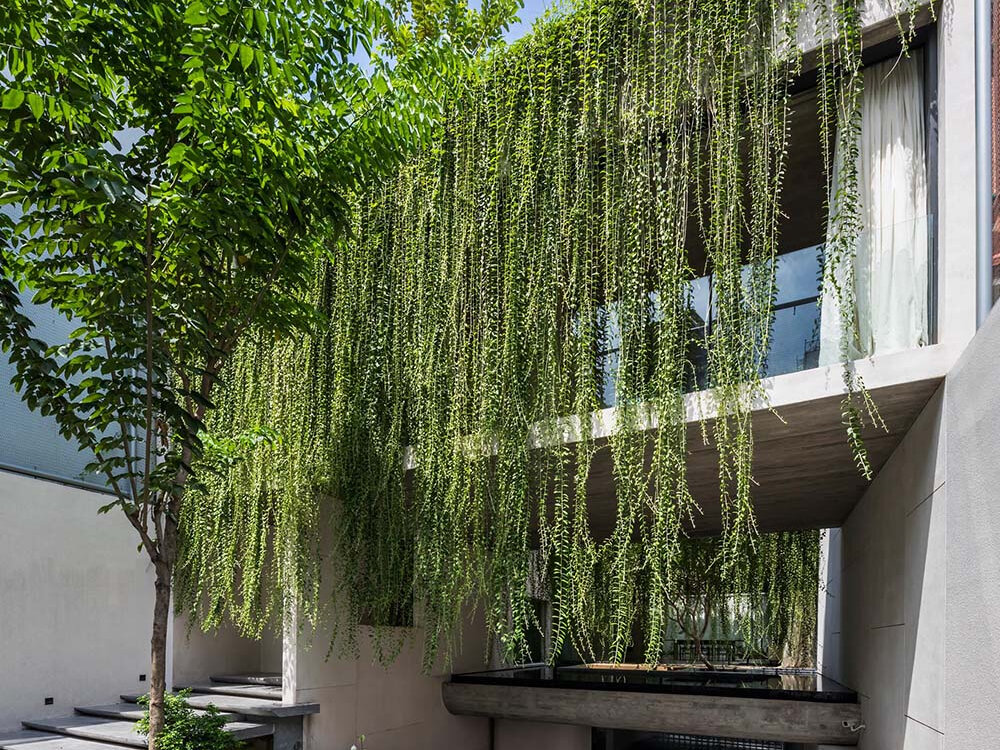
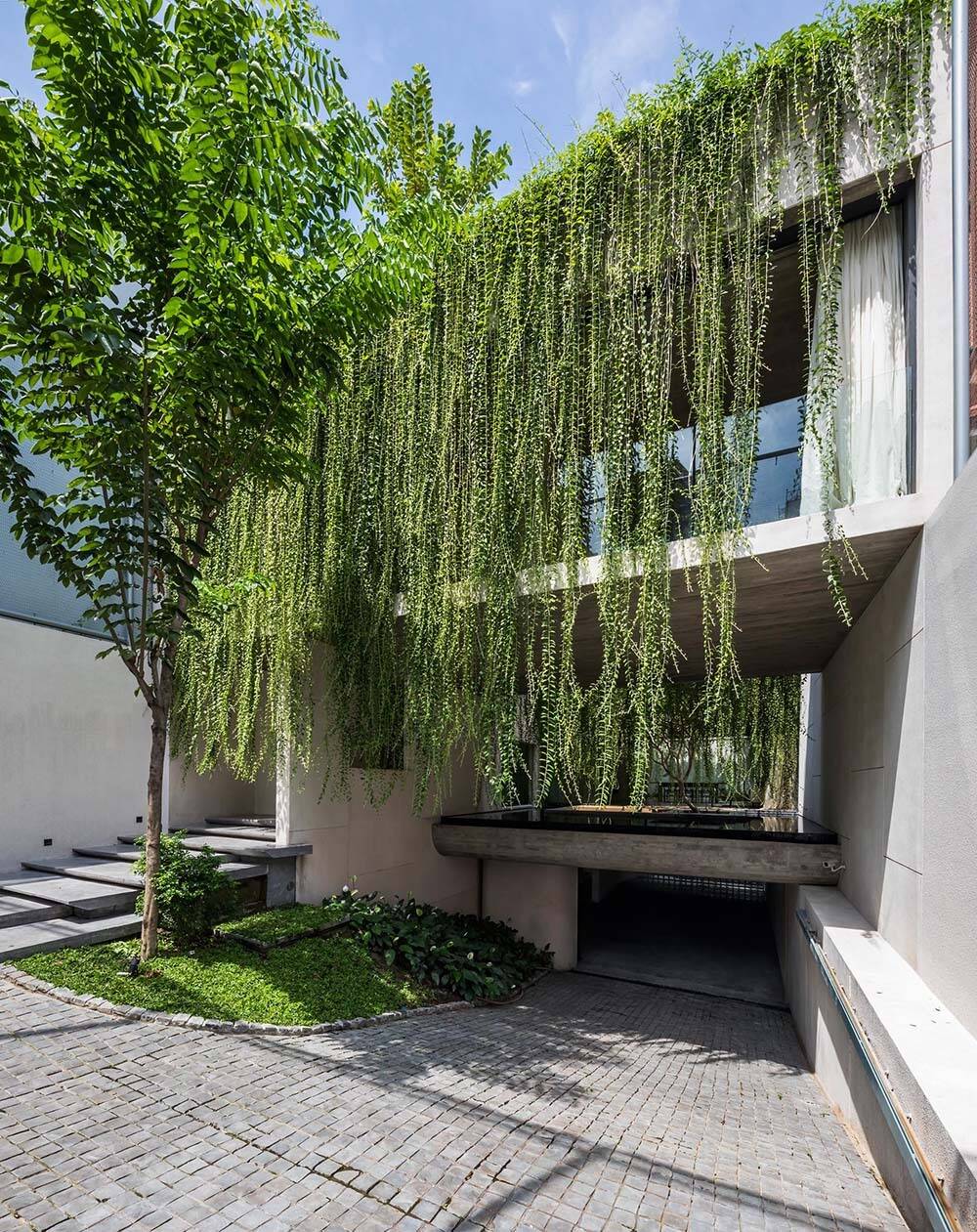
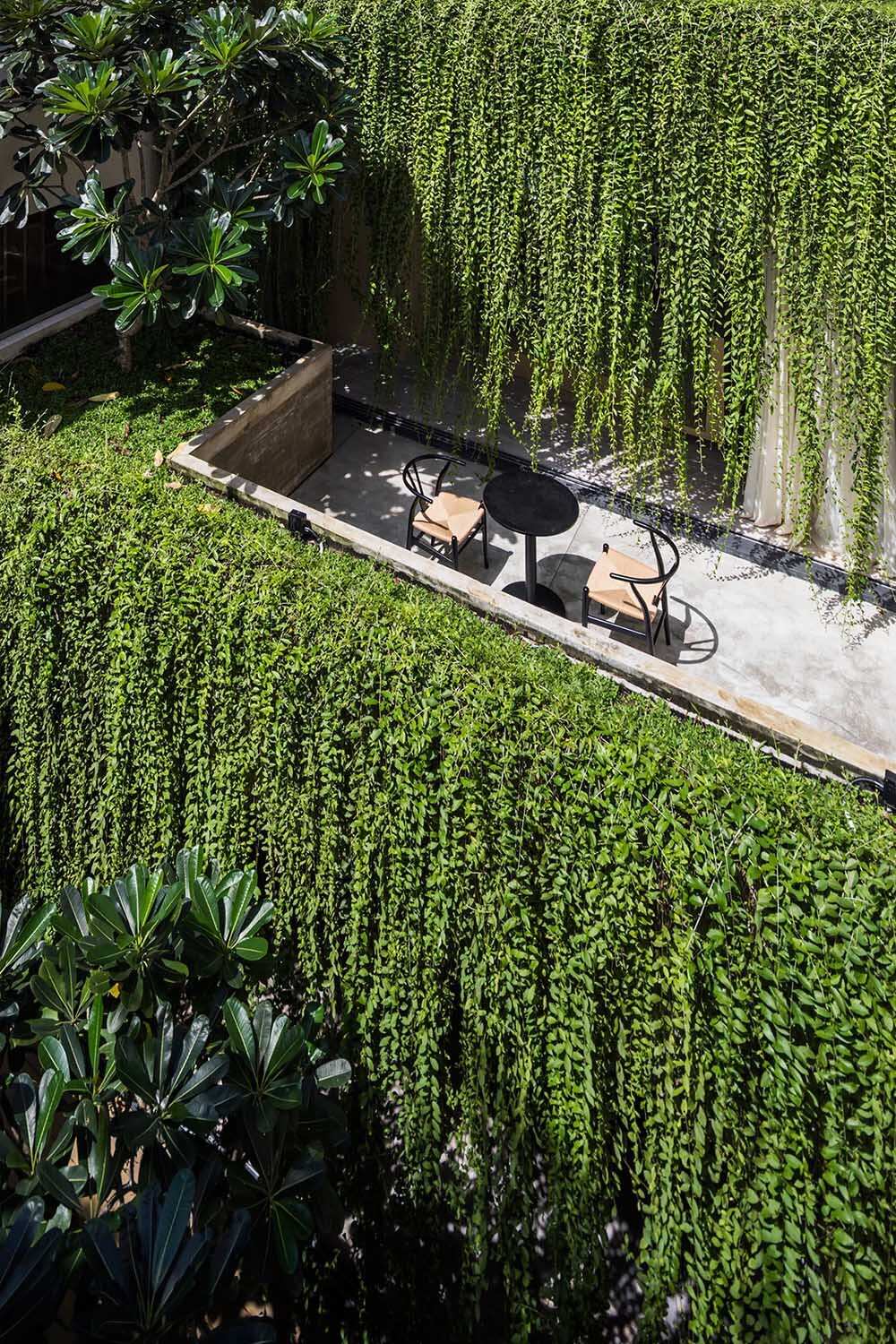
At first glance, the house reads as a simple concrete box. Its structural frame is direct and restrained, responding to the tight conditions of the surrounding city. But the concrete is not meant to dominate the experience of the home. Instead, it becomes a backdrop for something softer. Lianas, or climbing vines, gradually spread across a thin steel net that wraps parts of the structure.
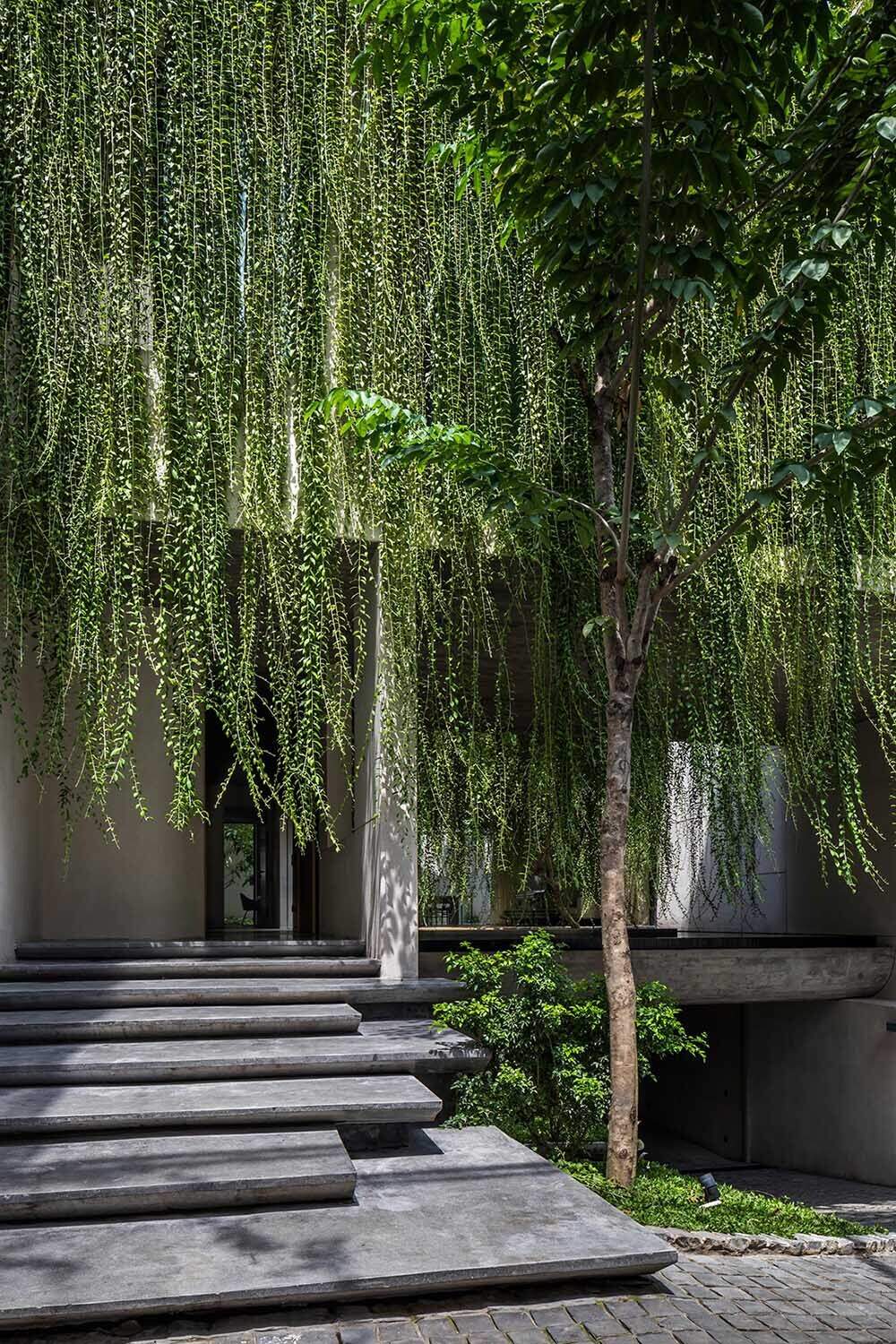
Over time, the plants will grow across the steel layer and form a living screen. The green surface hides much of the concrete and turns the exterior into a lush filter of leaves and shade.
Walking Through the House Like a Bridge
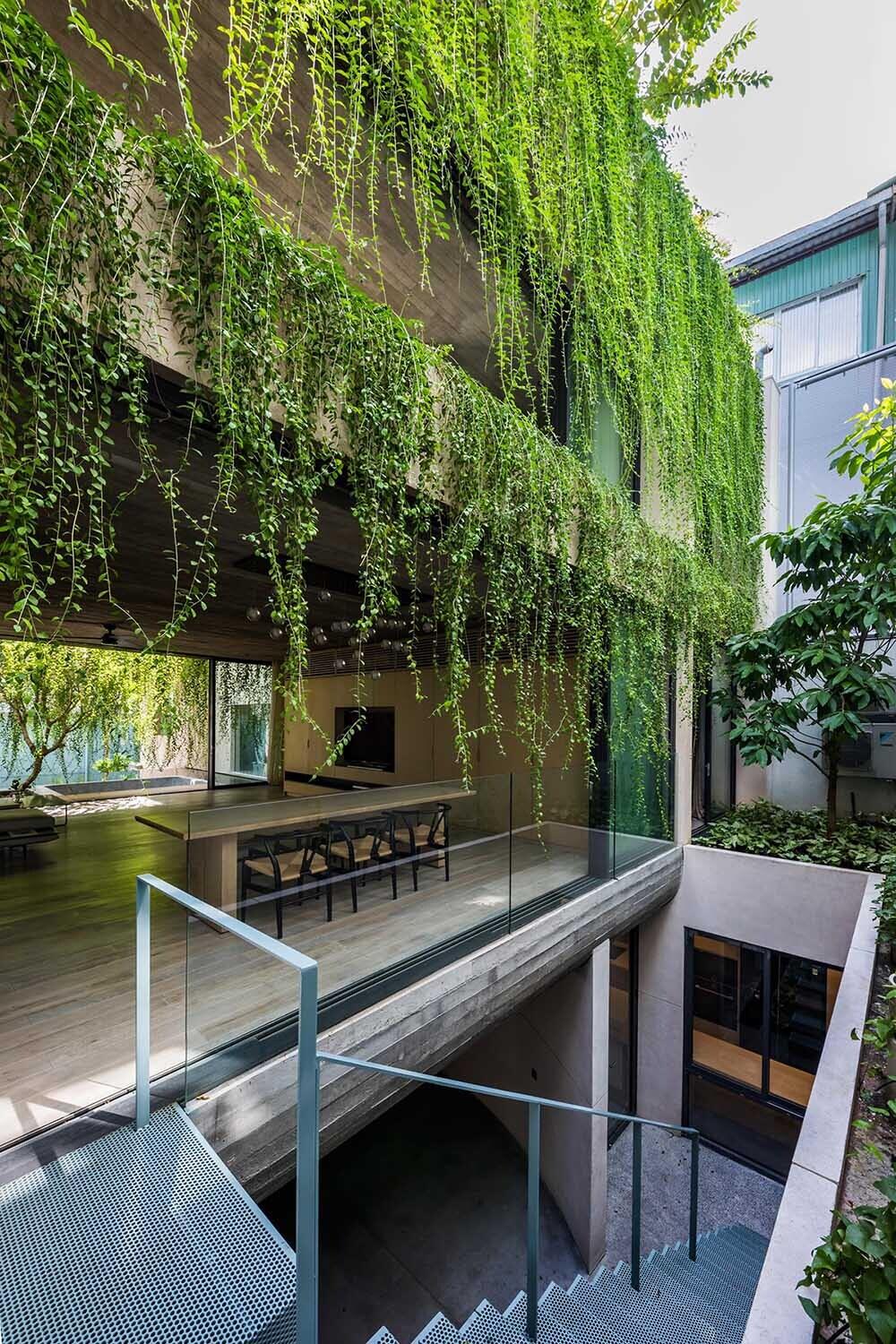
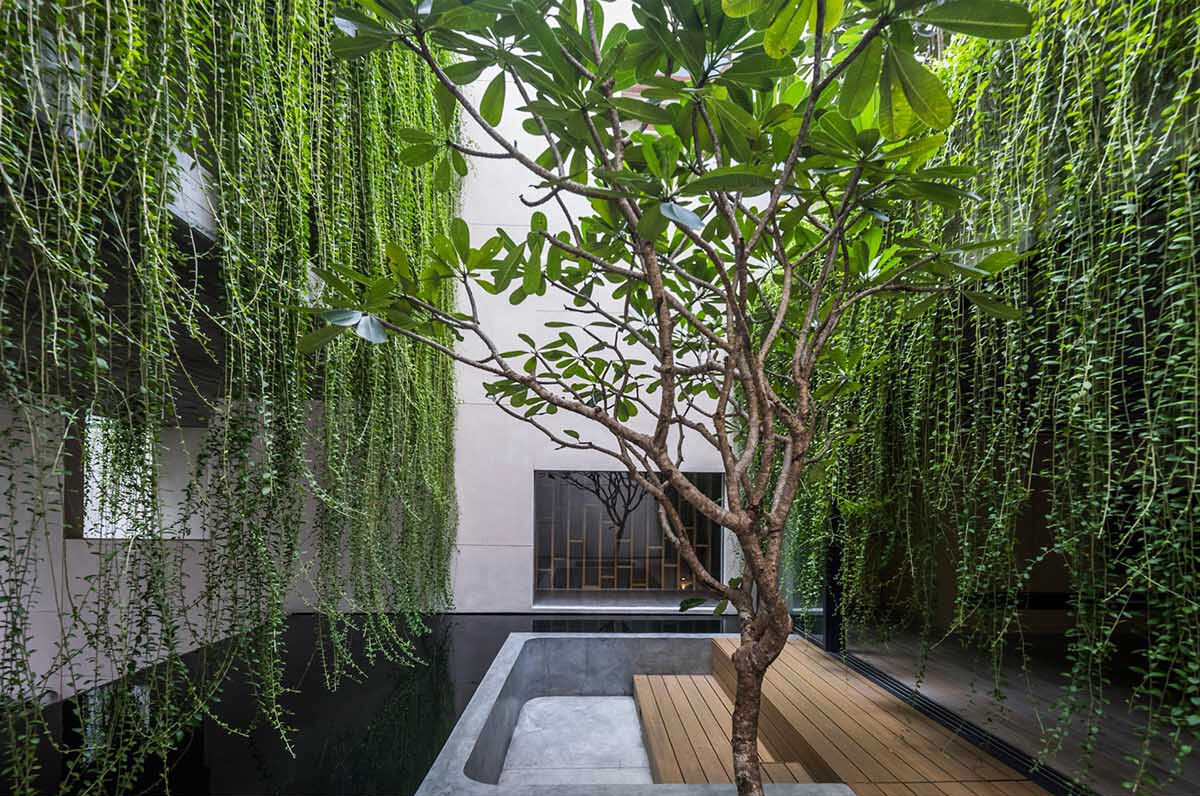
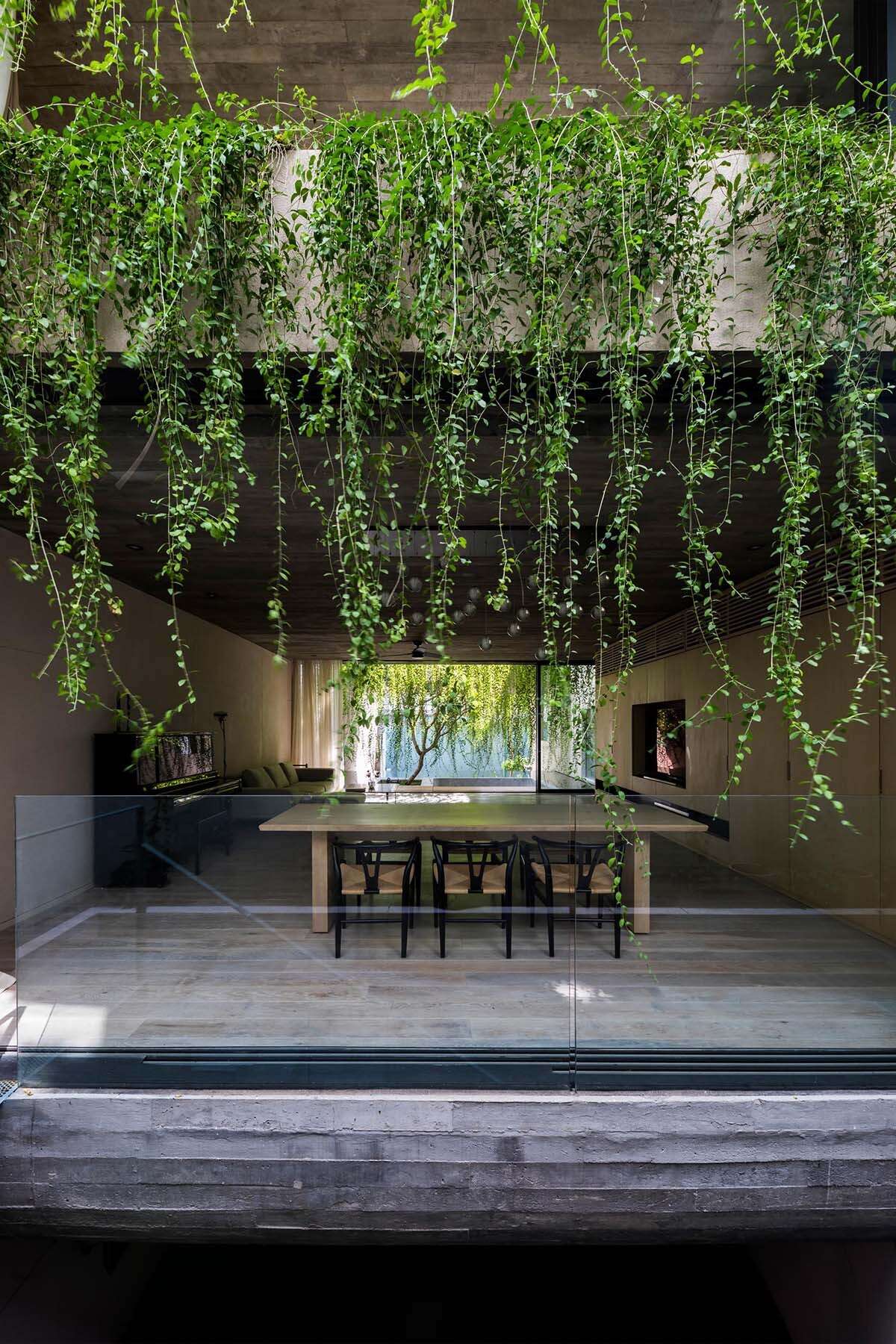
One of the defining ideas of the home is the way the living areas hover above a small garden below. Instead of placing rooms directly on the ground, the design lifts the main living spaces so they feel as though they float above the planted areas. Moving through the house becomes an experience similar to walking along small bridges.
Plants, water, and open voids occupy the space beneath and between rooms. As residents move from one part of the house to another, they cross these planted zones while light filters through leaves and openings.
A House That Opens and Closes With the Weather
Because the house sits within the busy streets of District 3, the architects looked for ways to manage the relationship between inside and outside. A roller shutter system plays an important role in that balance. On dry days, the shutters can open widely, allowing the house to connect with the surrounding alley and the movement of the neighborhood.
During rainy weather, they close to create protection while still allowing air and filtered light to pass through. The system helps the house respond to the changing climate of Saigon without losing its openness.
Light, Concrete, and Warm Wood Inside
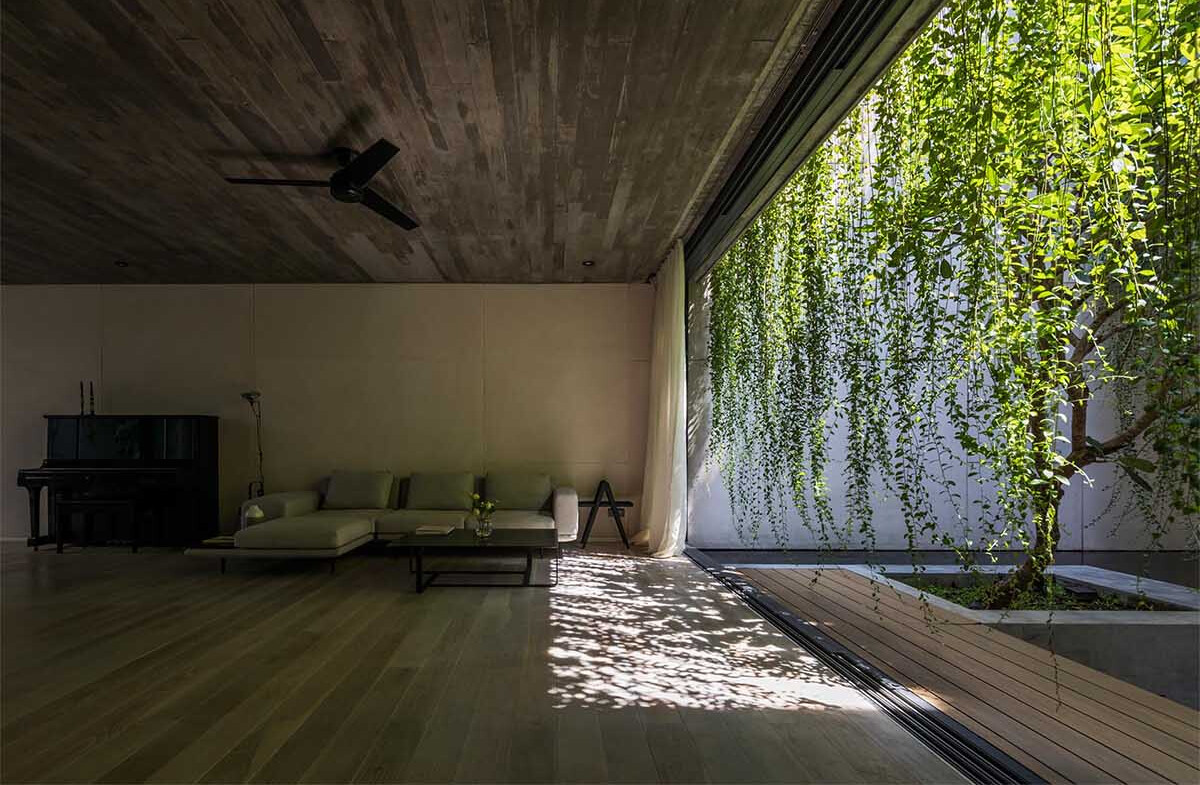
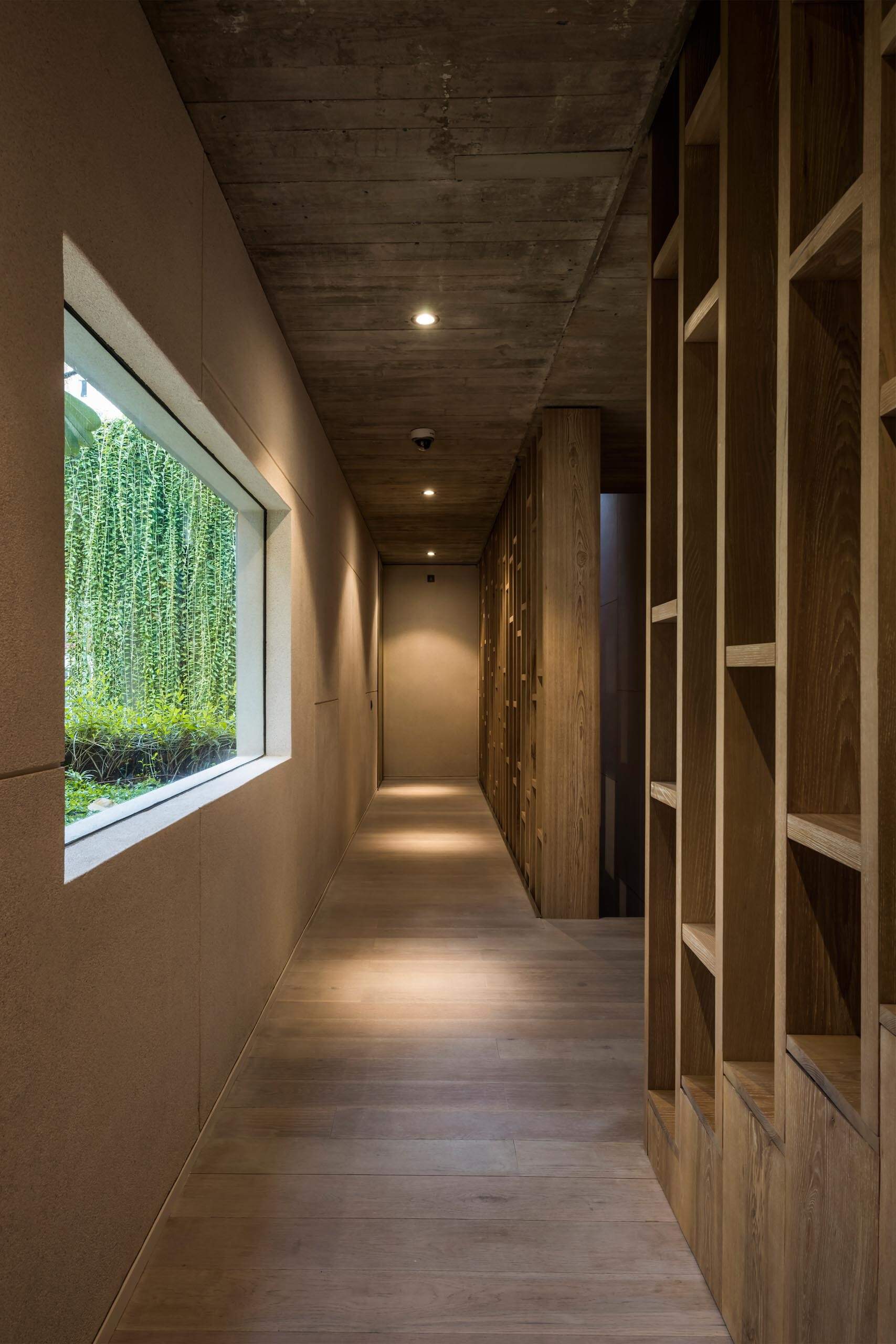
Inside the home, the raw concrete structure remains visible, giving the interior a calm and minimal character. Natural light filters through the vines and garden spaces, softening the harder materials. Shadows from leaves move across the walls during the day, adding subtle variation to the otherwise restrained palette.
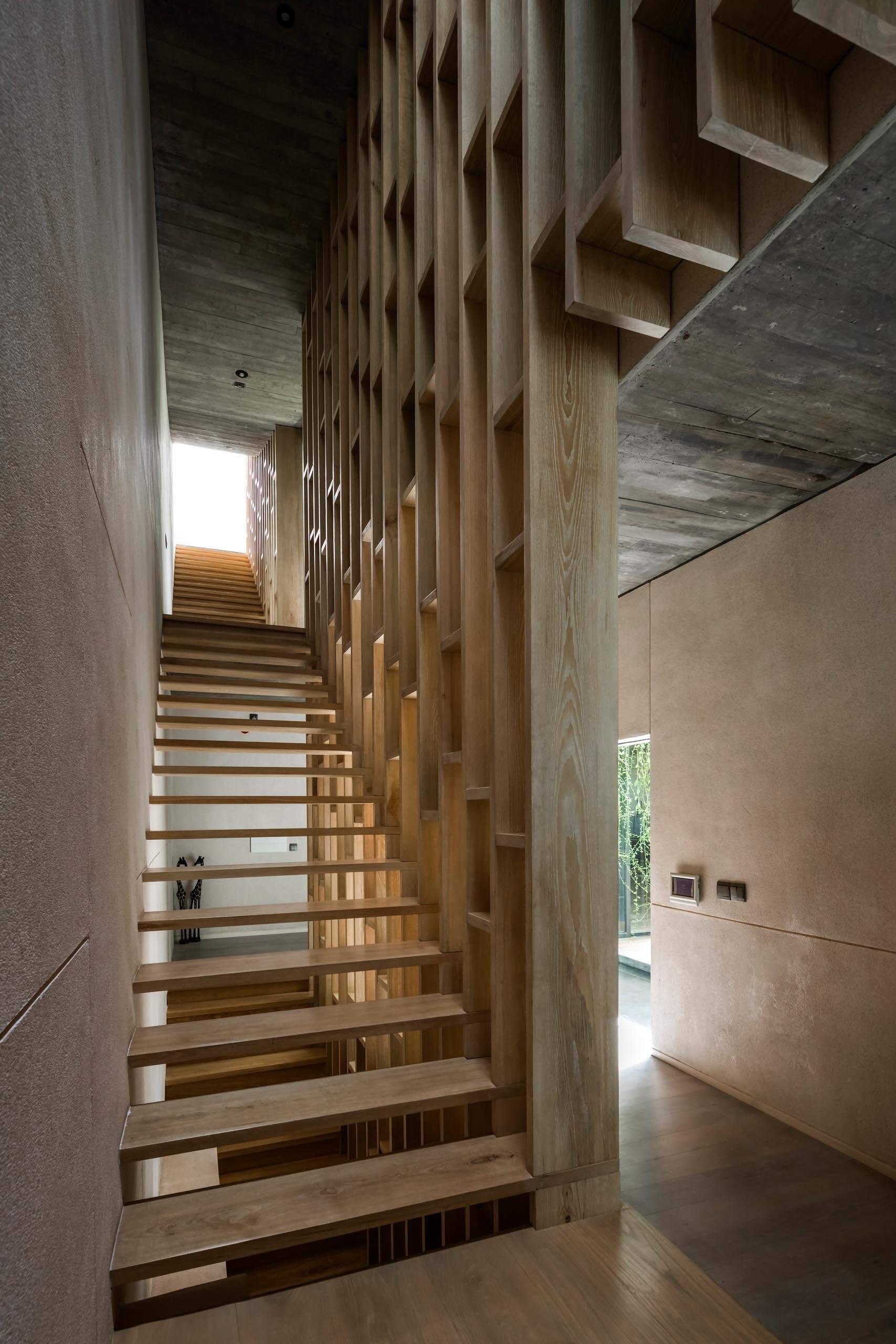
To balance the concrete, wood elements appear in key places. The staircase introduces warmth with its natural material, while the furnishings remain minimal so the architecture and plants stay at the center of the experience. The interior layers of light and shadow create a quiet contrast to the noise and density outside the house.
A Bedroom Designed for Daily Life
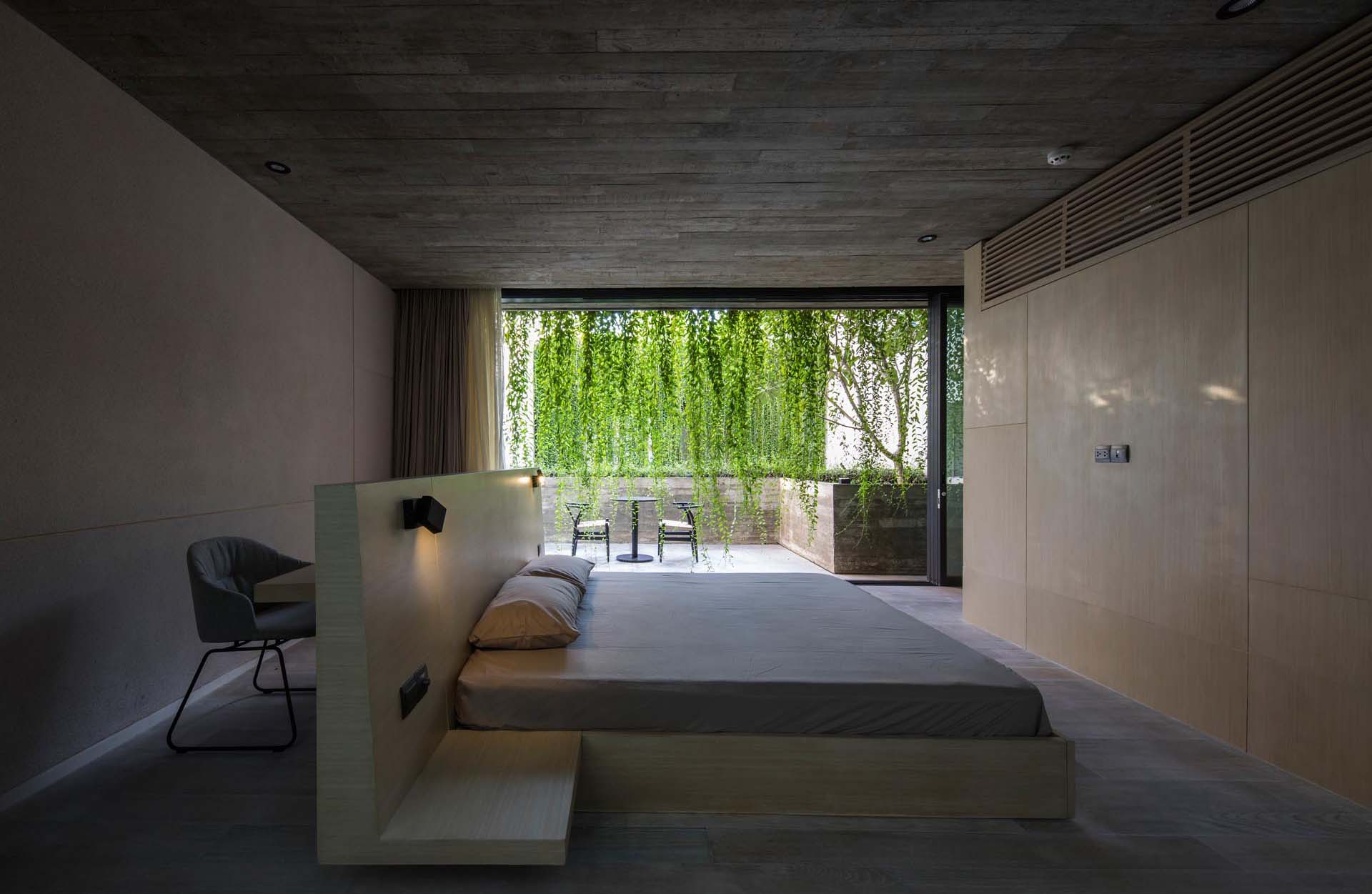
The bedroom continues the home’s practical approach to space. Instead of adding extra furniture, the custom bed frame integrates additional function. On the back side of the headboard, the structure extends to form a desk.
This simple gesture allows the room to support both rest and work without introducing more objects into the space. Like the rest of the house, the design keeps only what is necessary and lets the surrounding garden remain the focus.
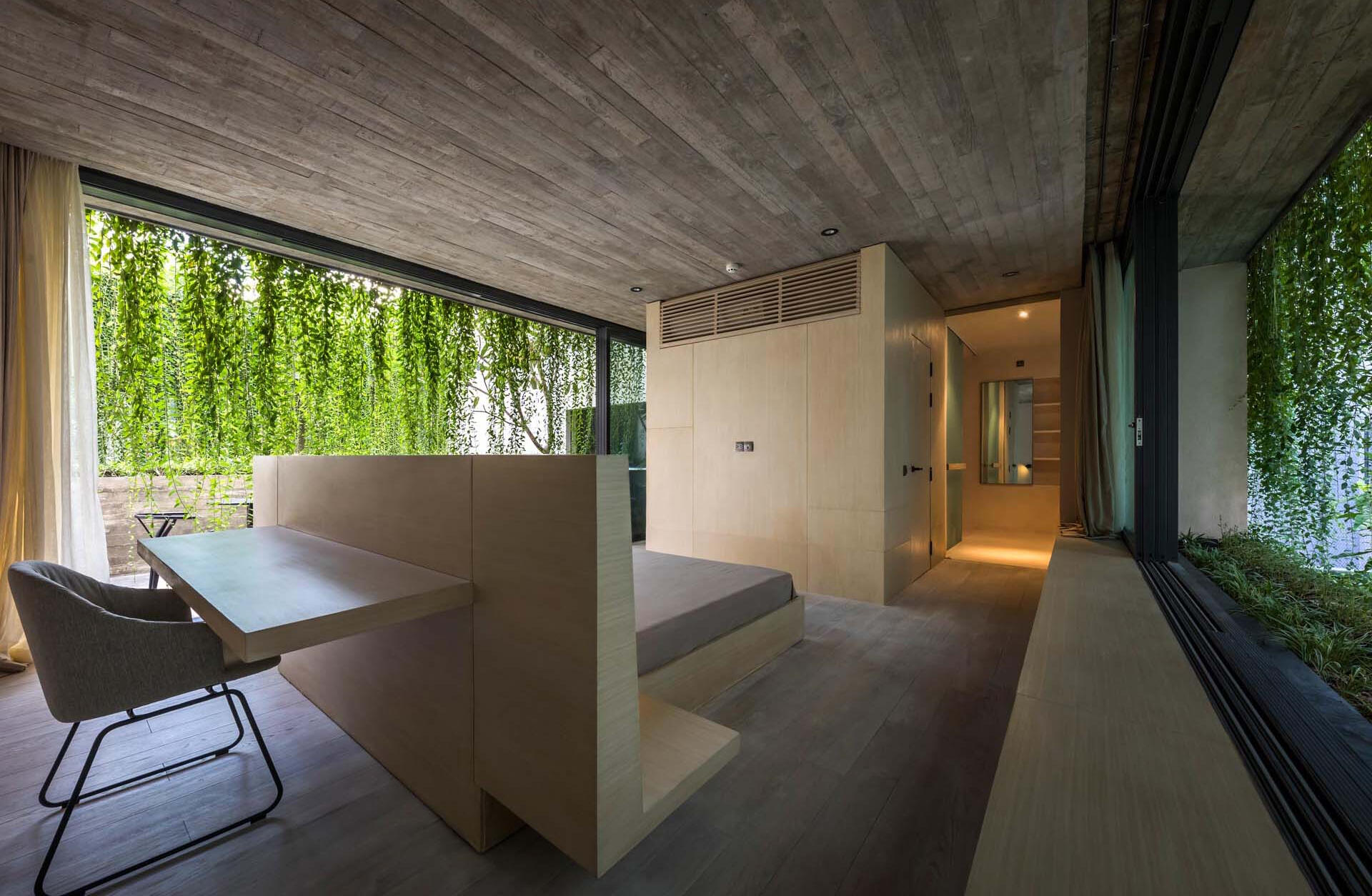
What appears as a simple concrete box from the street reveals a layered environment inside. Bridges of living space, climbing vines, and filtered daylight create a daily experience that feels connected to both the garden and the city around it.