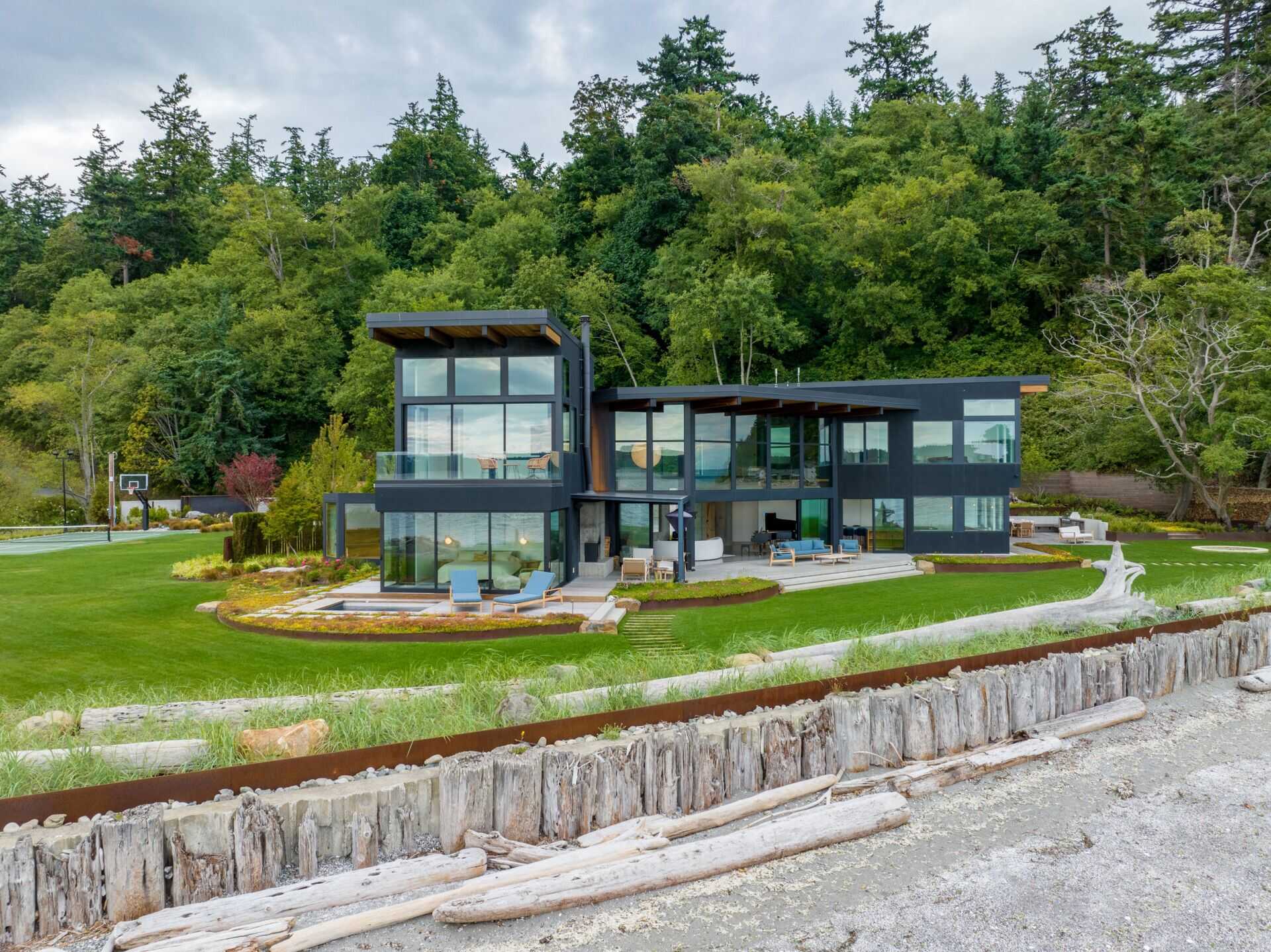
Designs Northwest Architects has completed this waterfront home on Camano Island that was shaped by challenges long before finishes were chosen. The site came with strict shoreline rules, unstable soils, and a steep hillside, all set against sweeping water views. Instead of working around those limits, the design responds directly to them. What emerged is a family gathering house where structure, layout, and materials are all driven by the realities of land and sea.
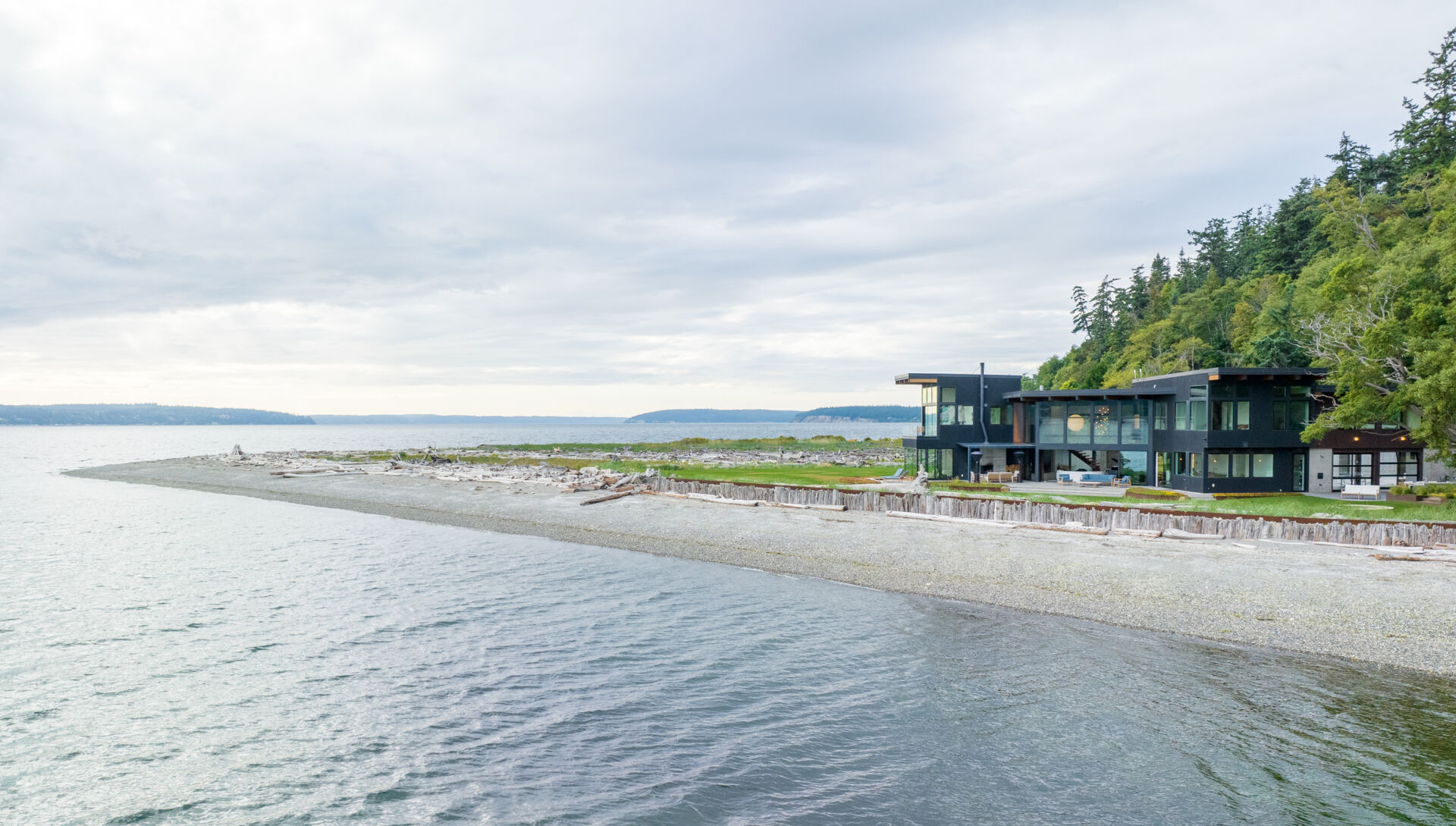
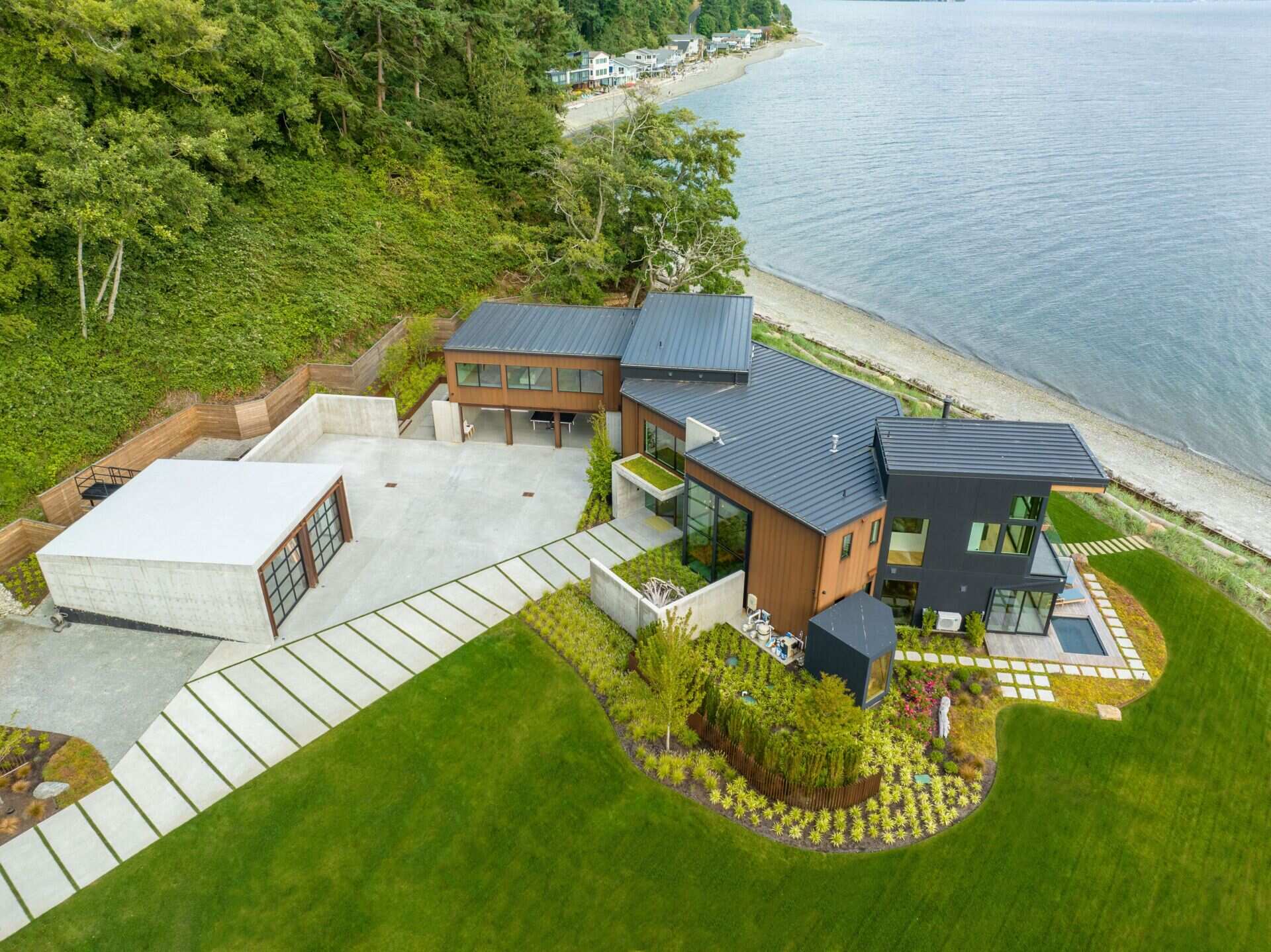
The Pebble Beach Residence sits on the southwest side of Camano Island, Washington, occupying a peninsula that reaches into Saratoga Passage and opens the home to sweeping 270 degree water views.
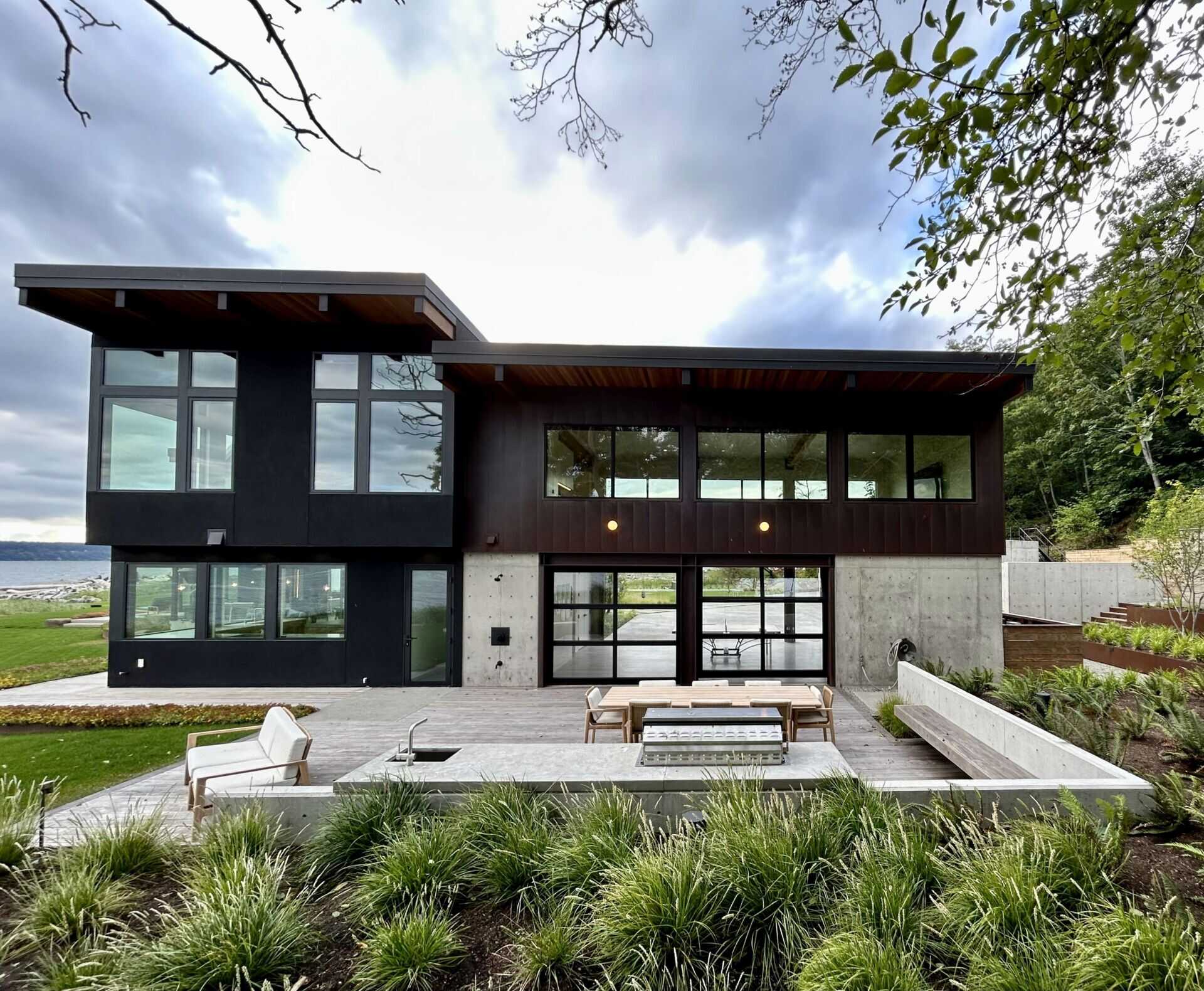
The architecture of the home is a direct response to its site and regulatory limits. Shoreline rules required a 100 foot setback from the ordinary high water mark, but the steep slope made that impossible. Because an existing house already occupied the site, approval was granted to rebuild within its original footprint. The irregular shape of that footprint now defines the form of the new home.
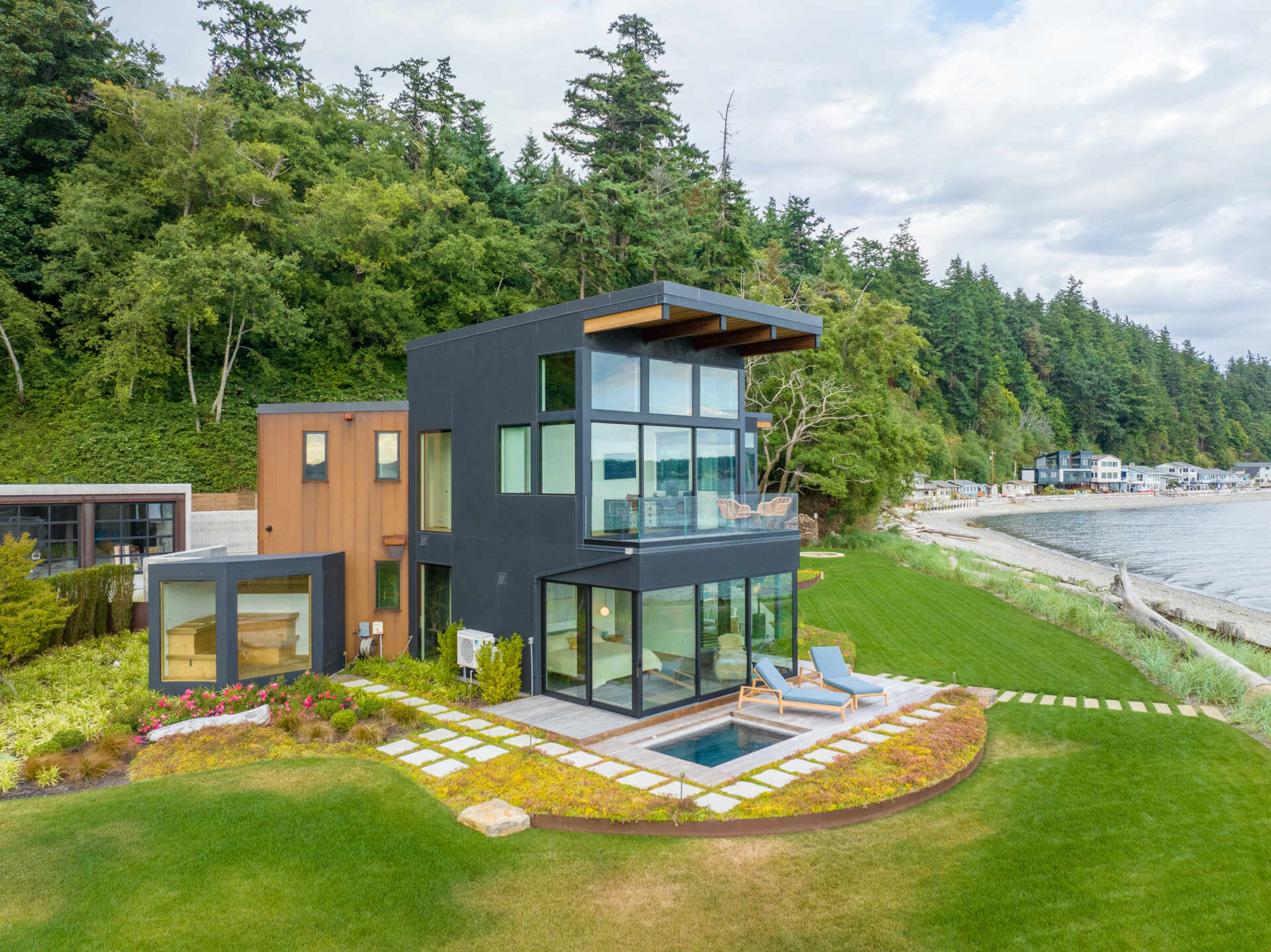
Beneath the surface, the structure is engineered to handle loose, sandy soils and seismic risk. The foundation rests on 80 pin piles driven deep until bearing capacity was reached. Additional measures address the steep hillside behind the house, including reinforced garage structures designed to withstand potential landslide events.
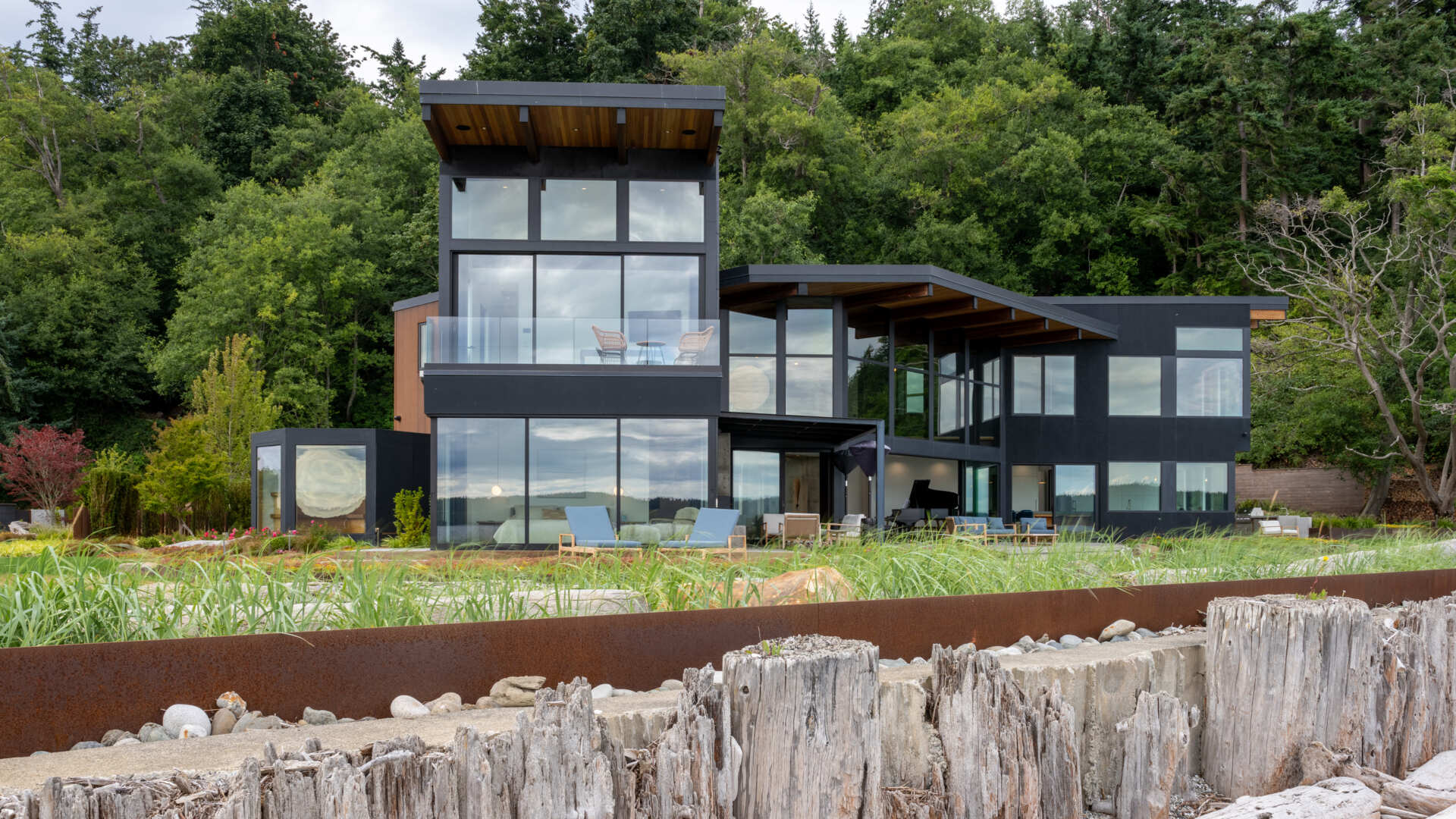
Durability guides the exterior expression. Exposed architectural concrete, corten steel, stucco, and a standing seam metal roof were selected to reduce maintenance and extend the life of the building in a harsh marine environment.
The steep hillside behind the house played a critical role in how the site was developed. Access and safety had to be carefully managed due to the slope and soil conditions. These constraints directly informed the design and engineering of the garage structures.
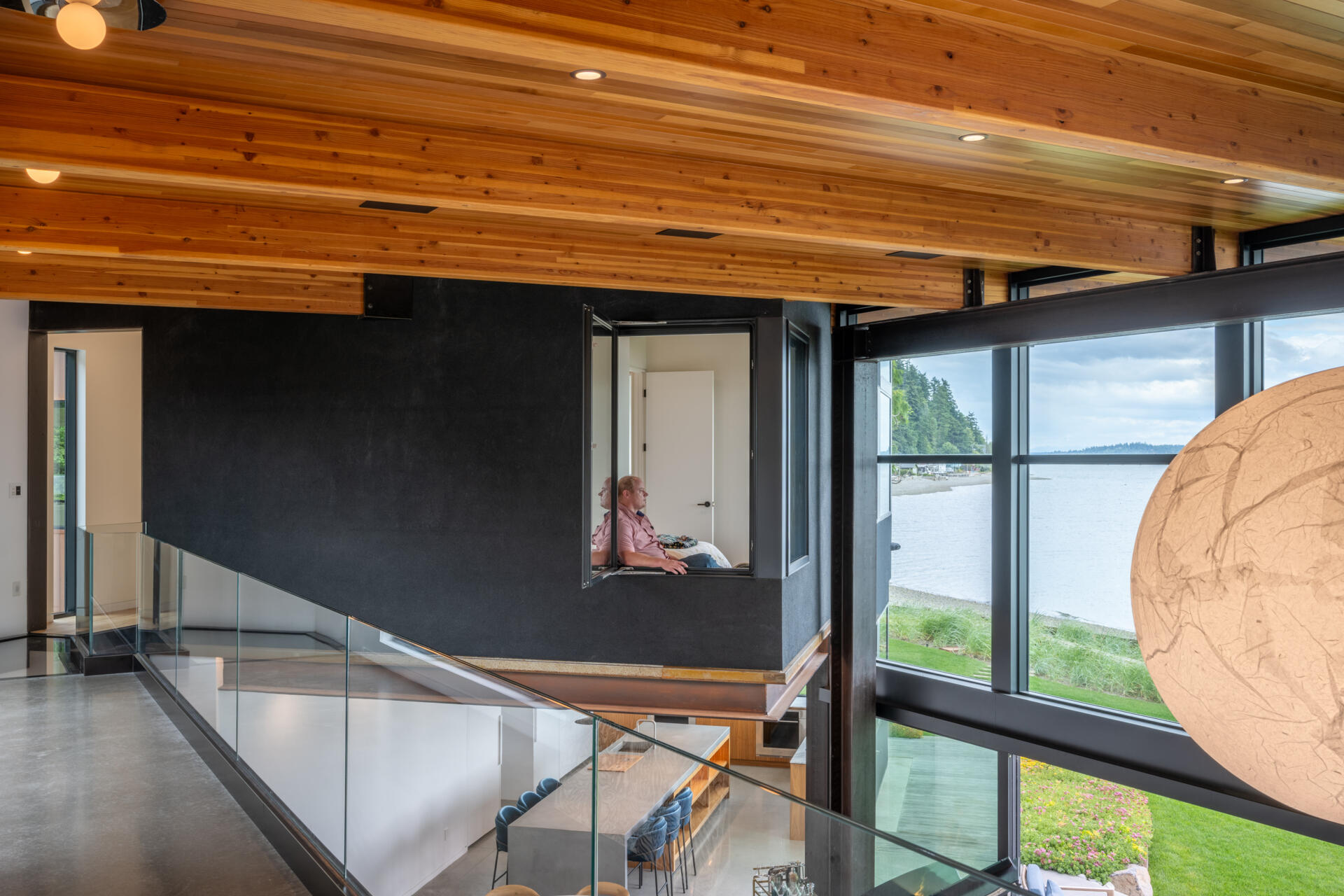
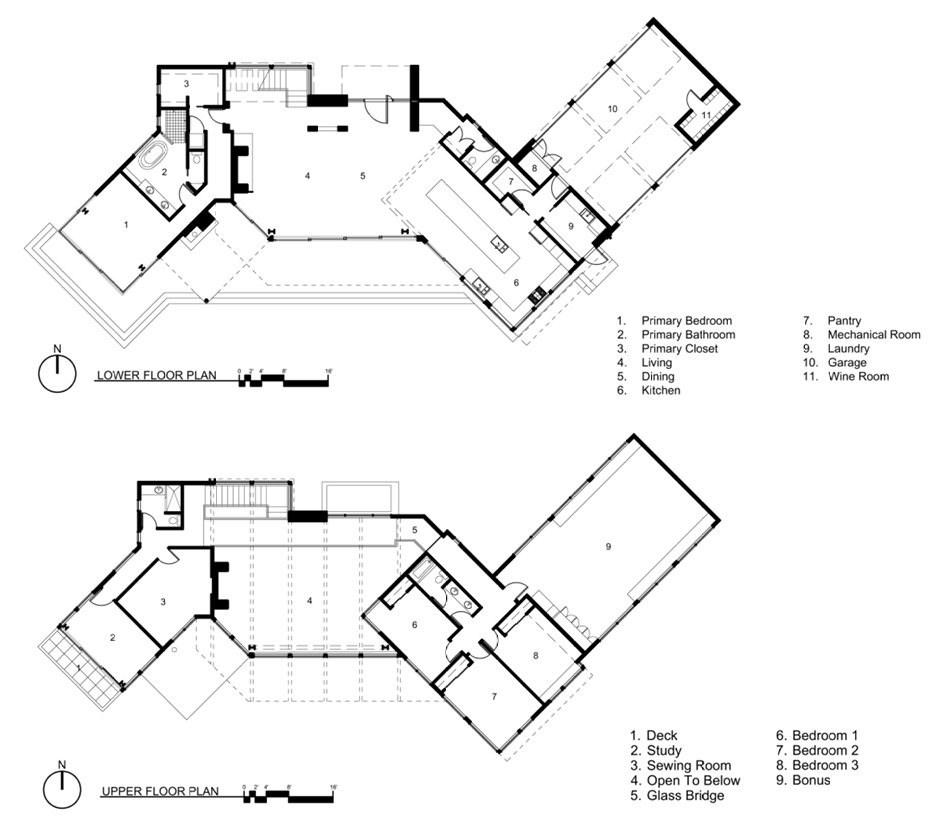
The plan is organized into two distinct wings. Children’s bedrooms and play areas occupy the southern side, while the parents’ primary suite, office, and hobby room are positioned to the north. A central great room links both sides.
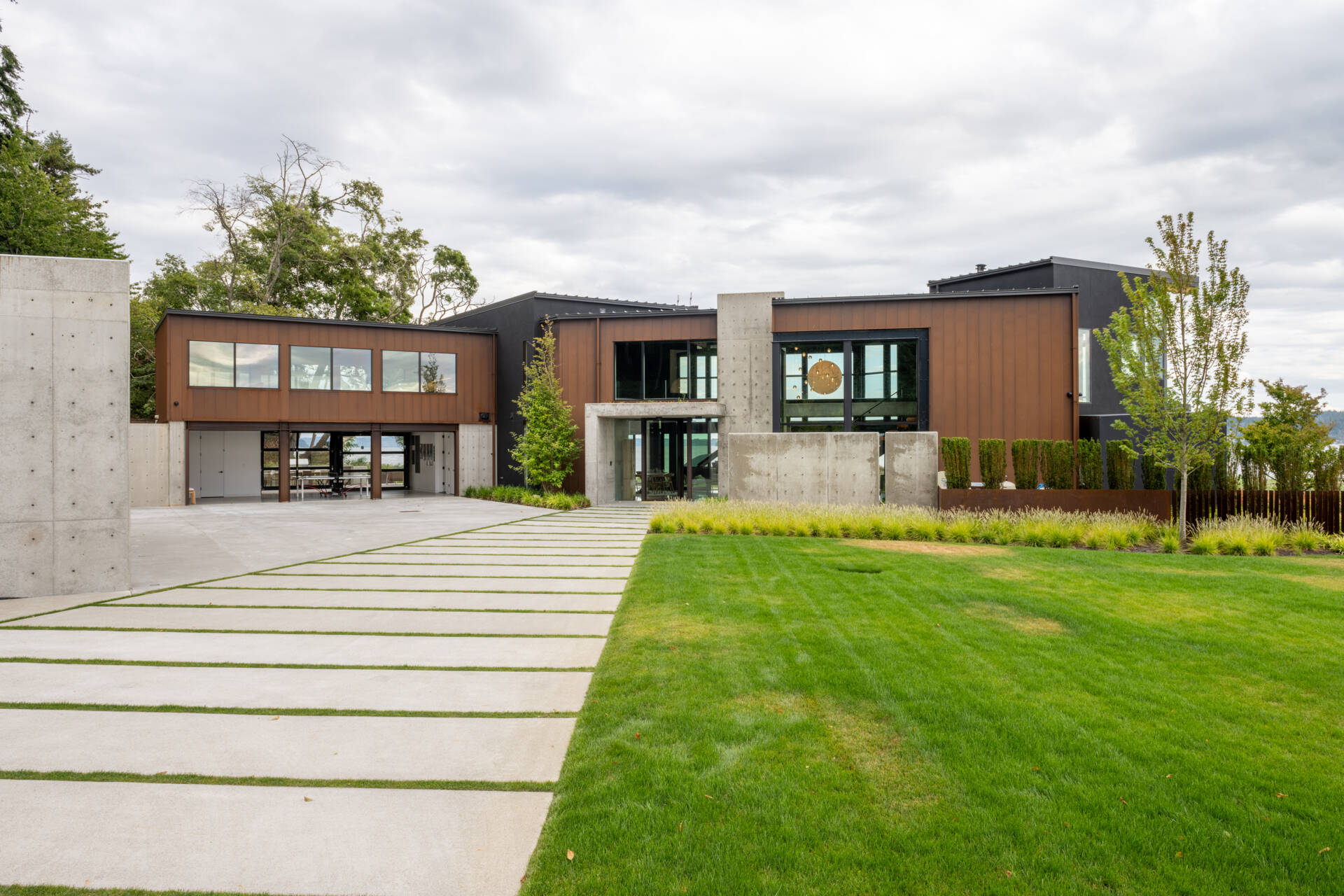
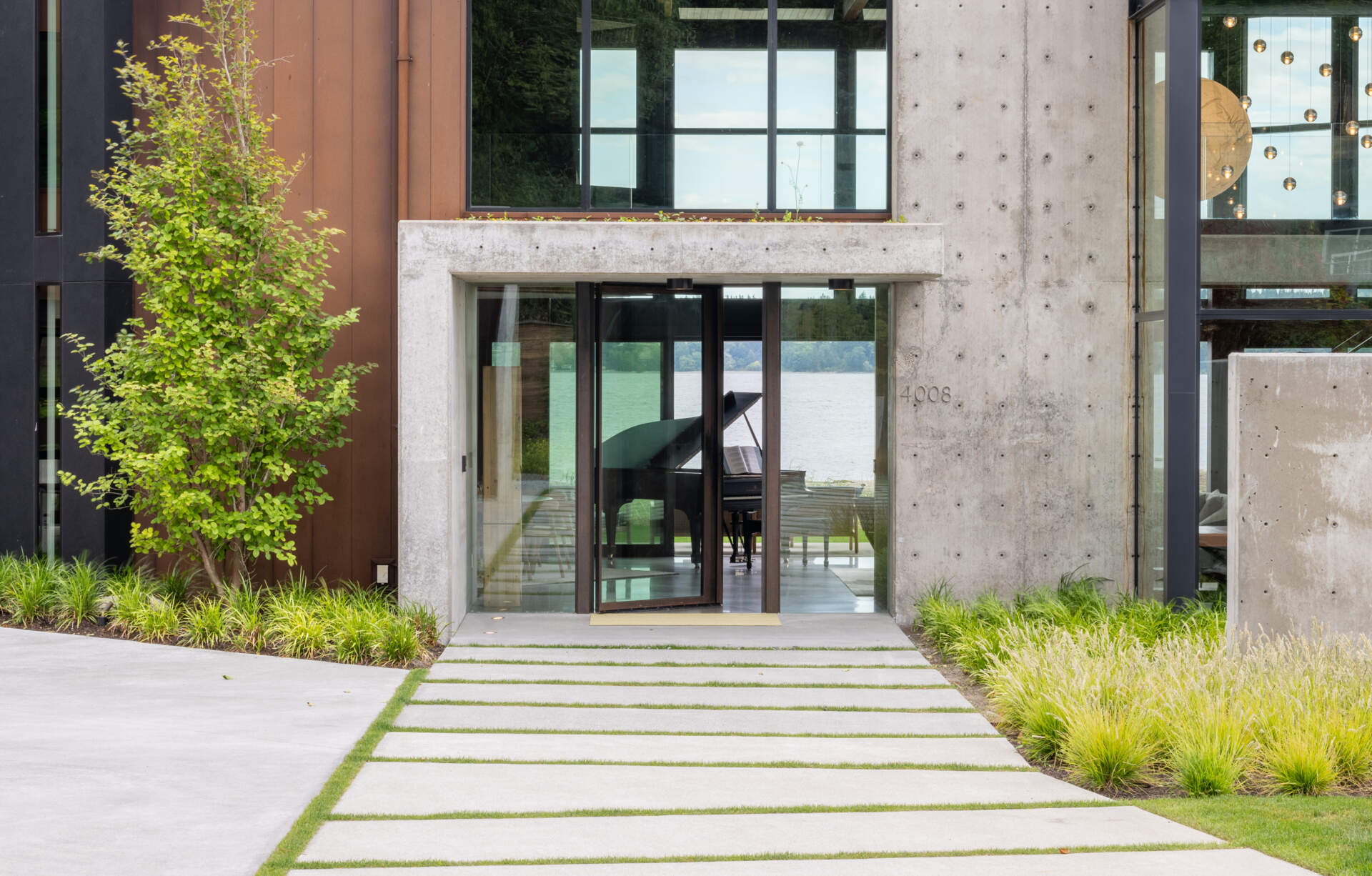
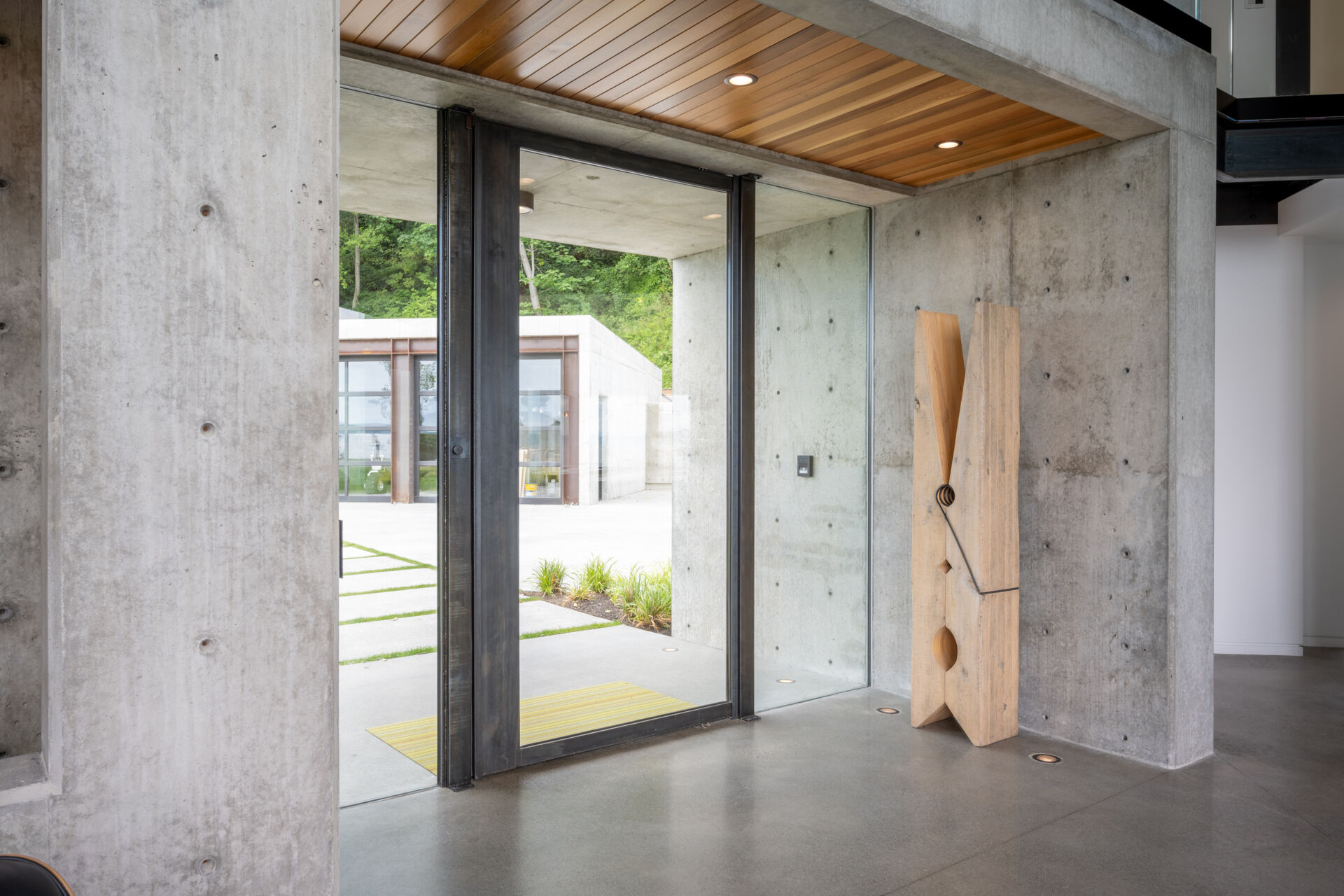
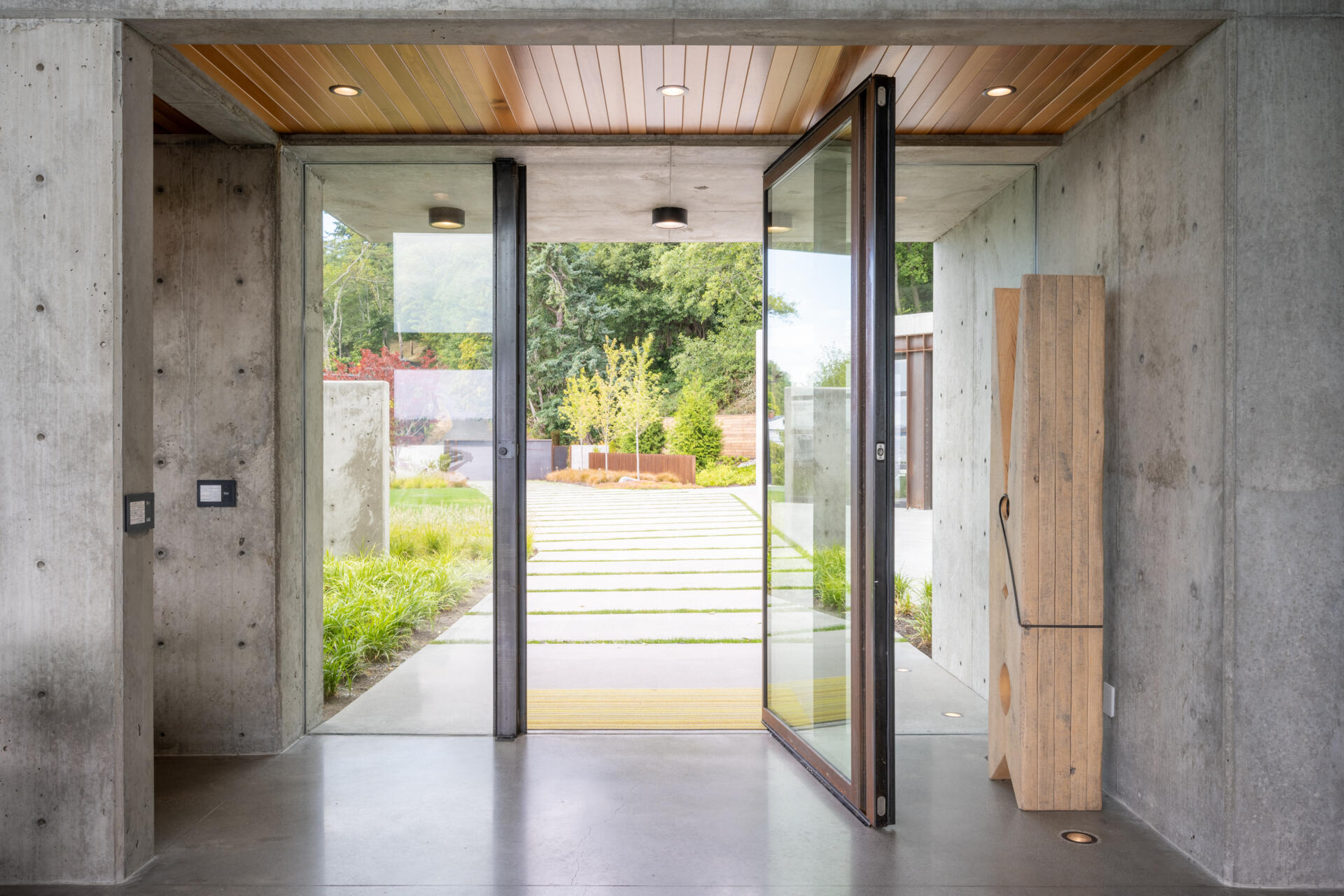
The entry is defined by exposed architectural concrete, immediately establishing the home’s material language. Above the entry sits a green roof, which becomes visible from inside the house. This moment connects the exterior landscape to the interior circulation, while a pivoting glass door welcomes visitors.
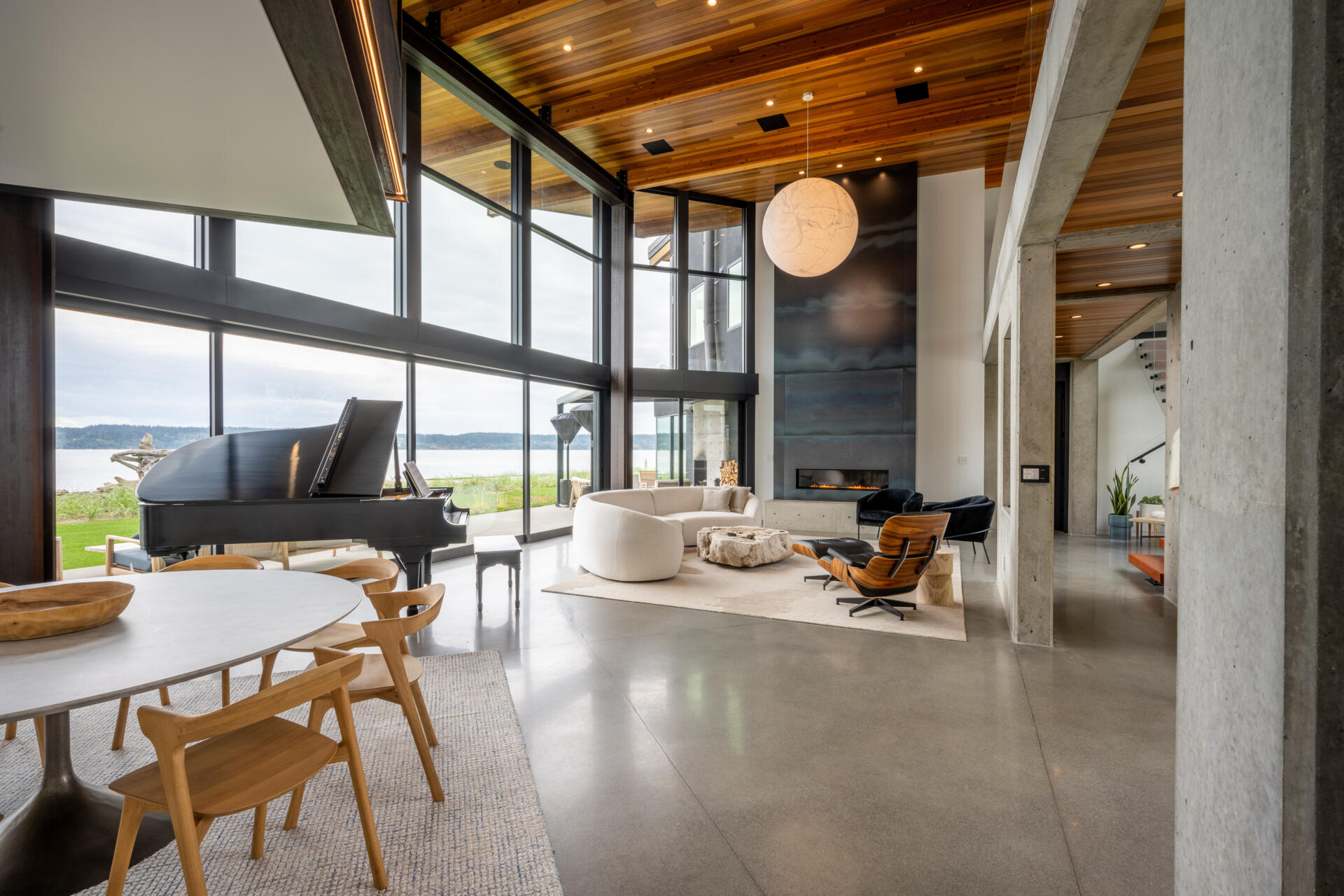
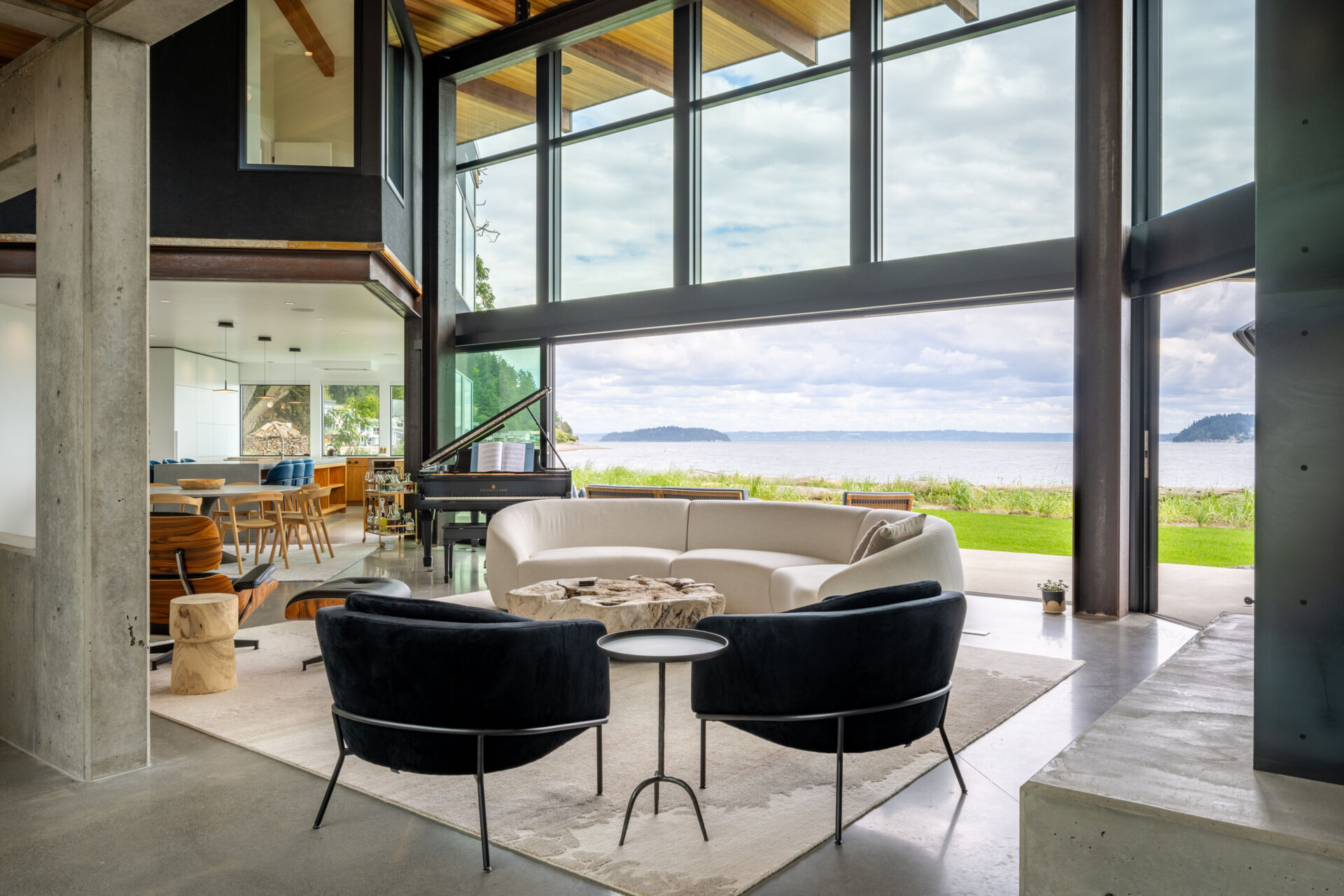
The great room functions as the social core of the house. It connects the two wings while providing a shared space for large family gatherings. Sliding glass doors open the room directly onto the waterside terrace, blurring the boundary between inside and out.
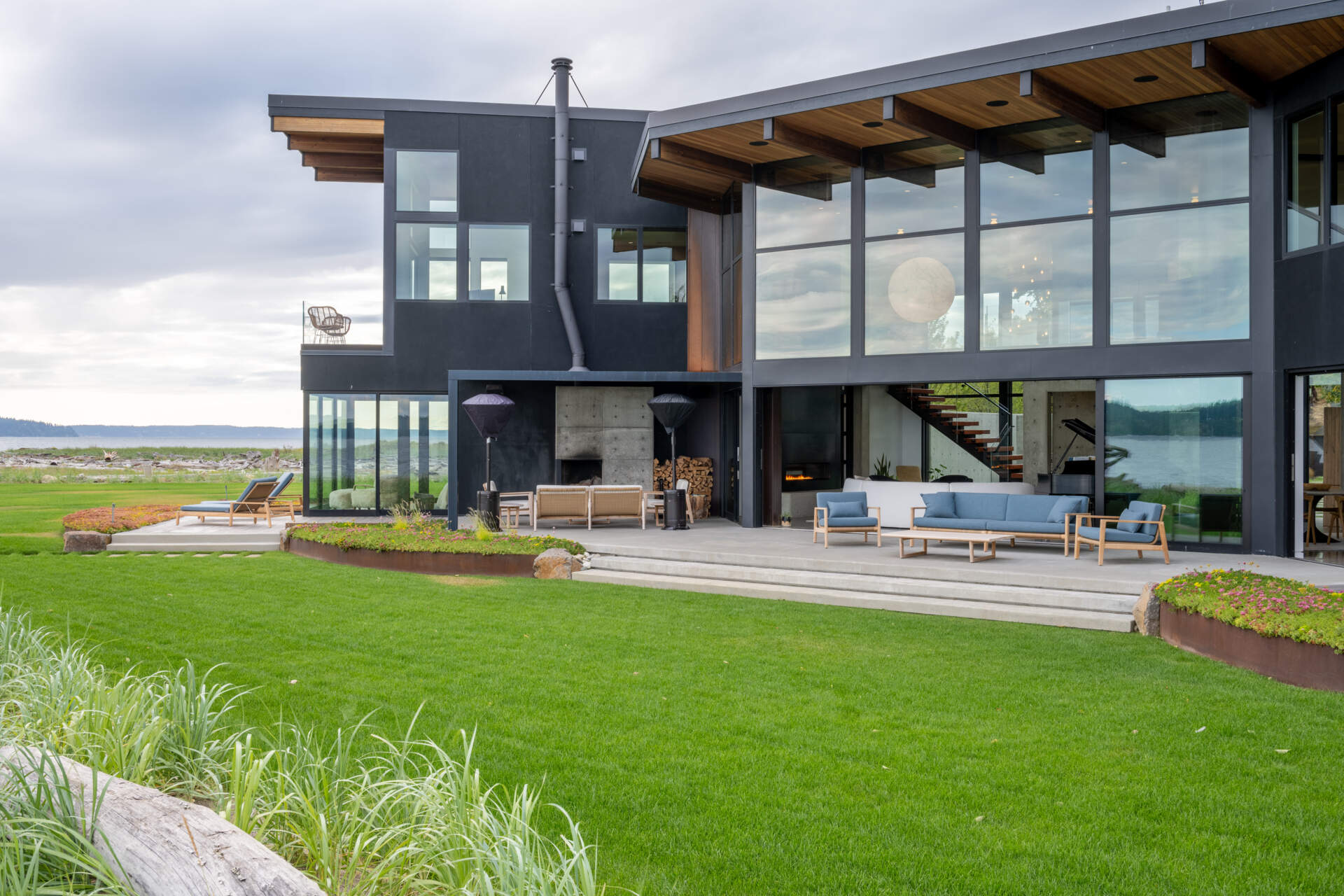
The terrace runs along the water facing side of the home and connects to an lounge with a fireplace as well as an outdoor cooking patio supports with dining area. These exterior spaces are oriented to fully engage with the peninsula setting and surrounding water.
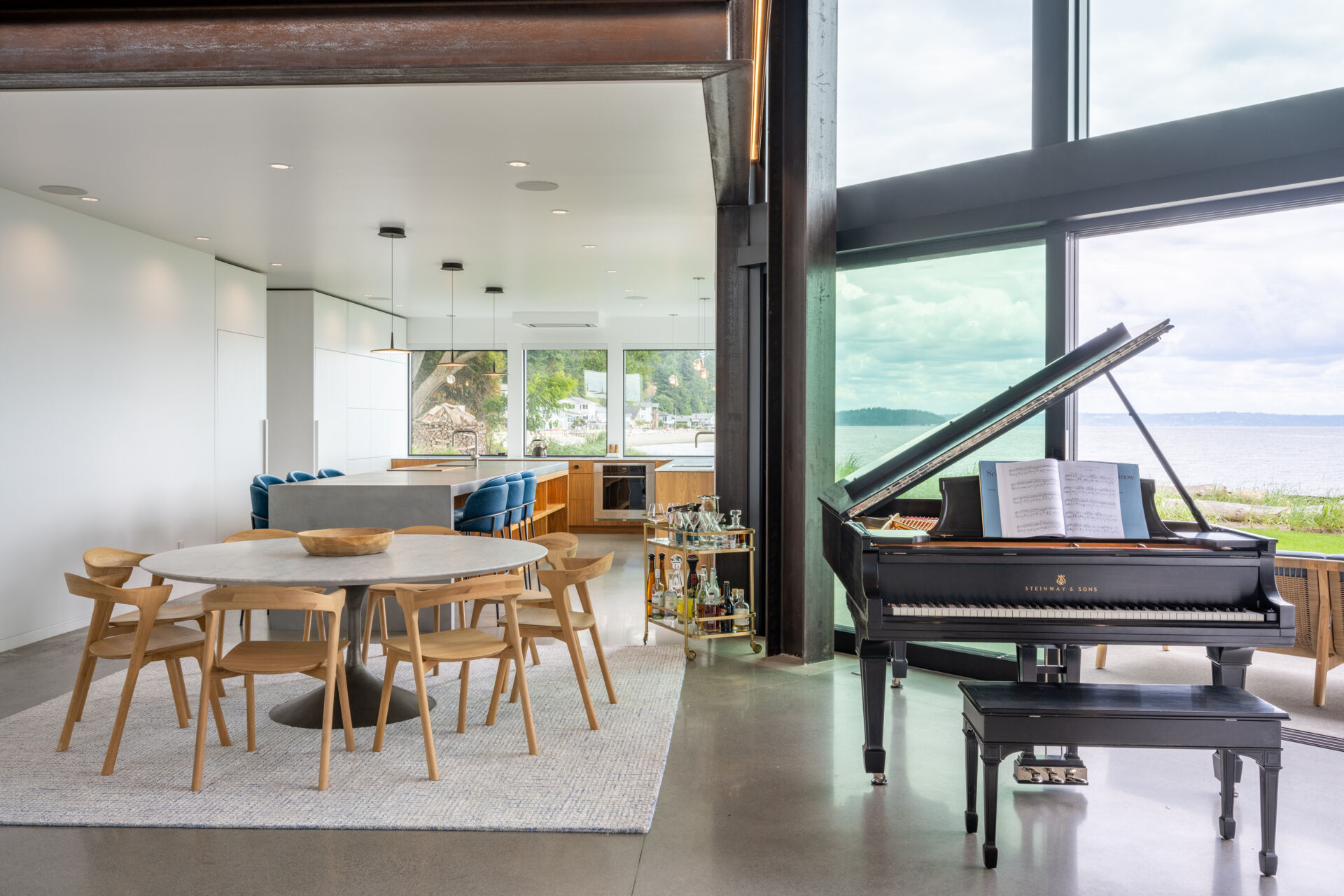
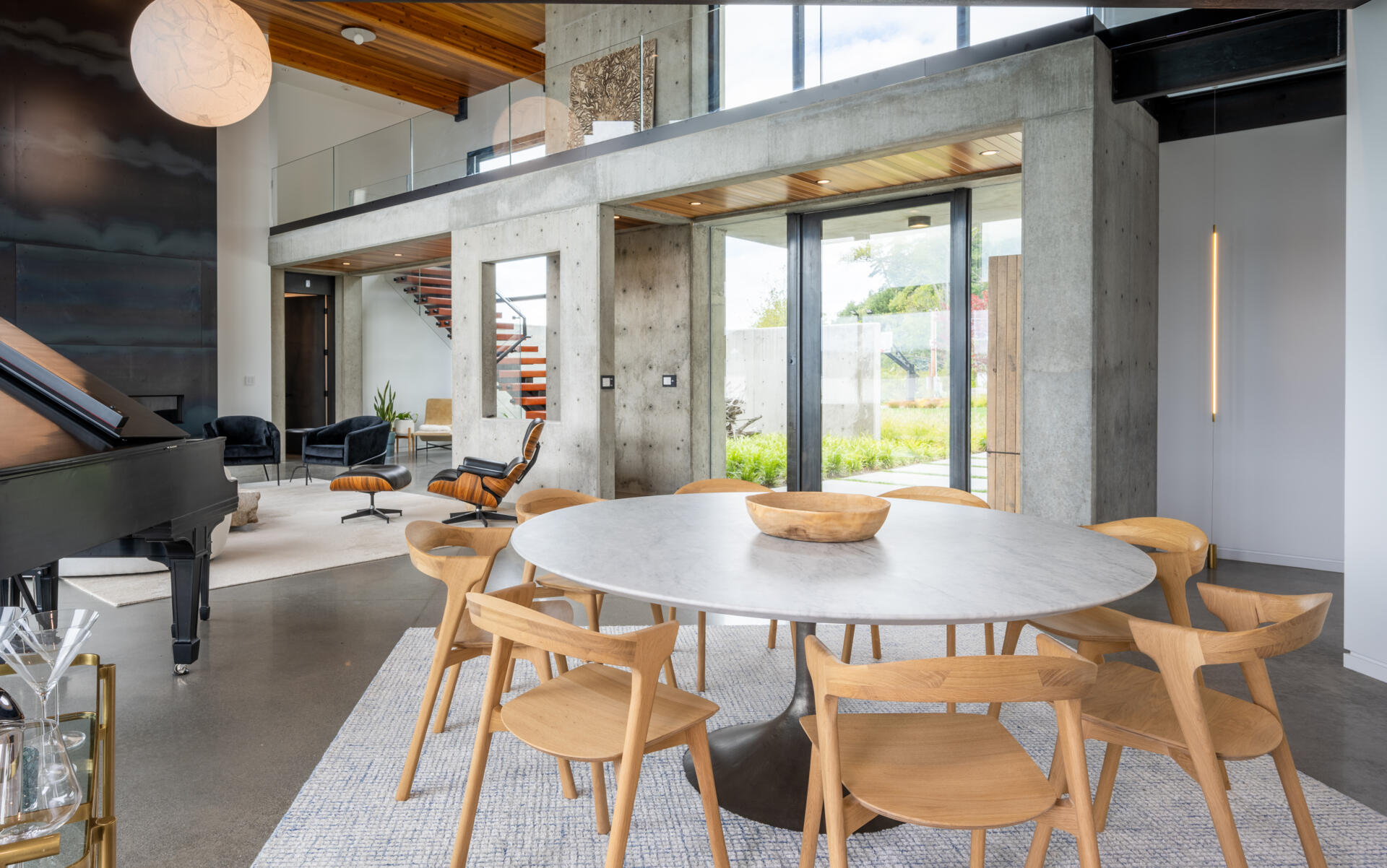
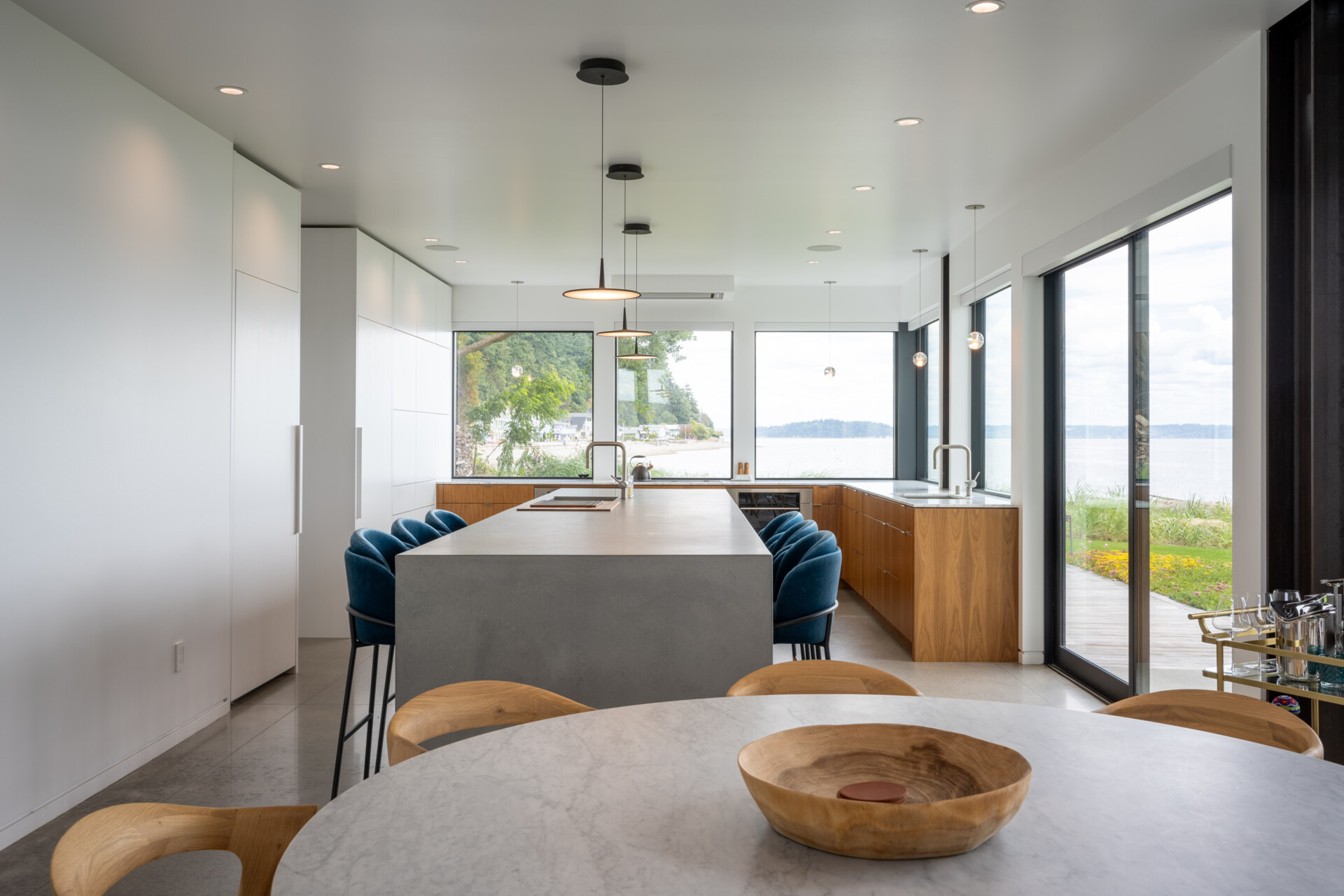
Back inside, the dining area, with its round table, is integrated into the open great room between the living room and the kitchen.
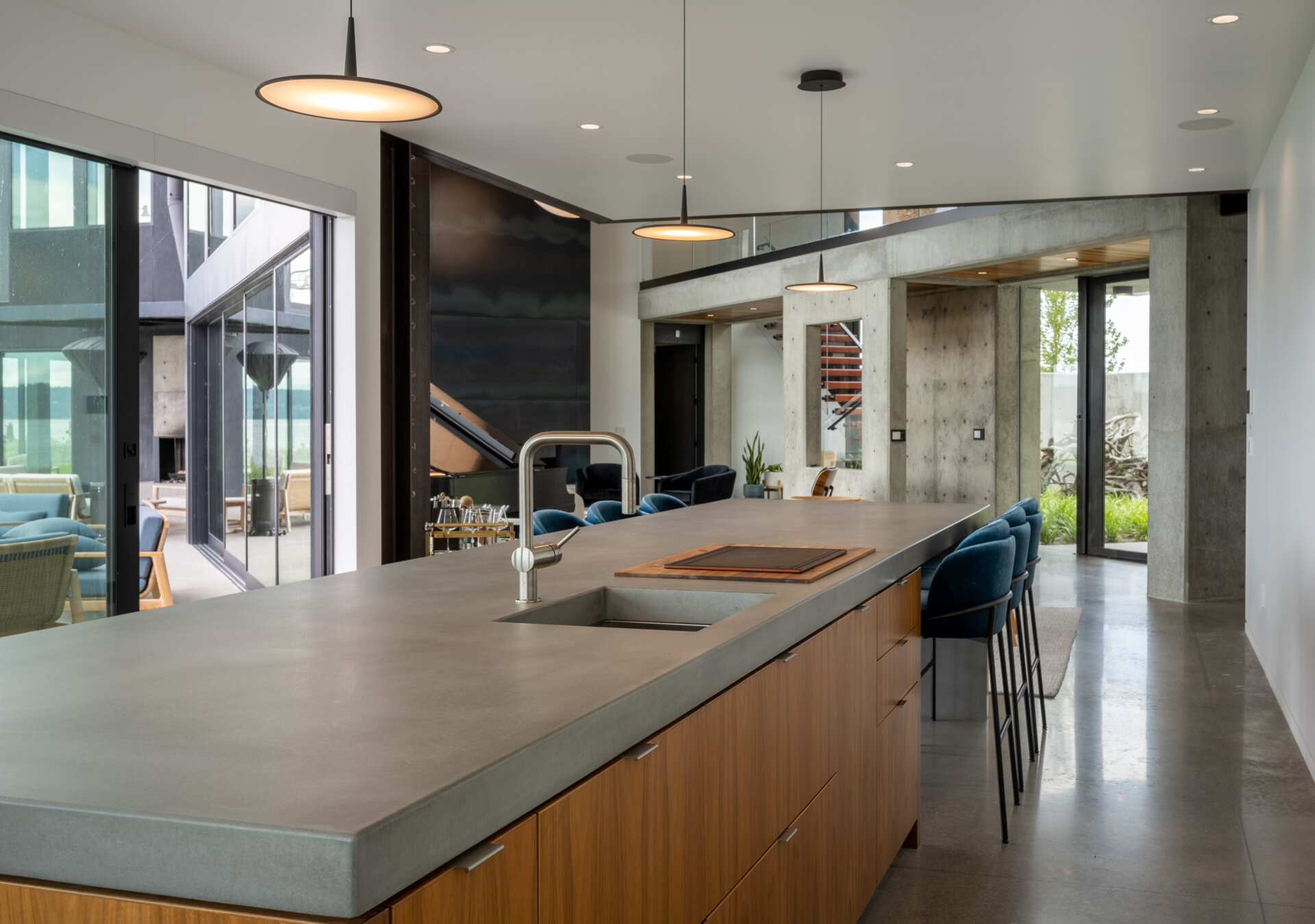
The kitchen has a long concrete island anchors the space, providing room for everyday use and casual gathering. Minimalist white cabinetry is paired with warm wood base units, keeping the palette restrained while adding subtle contrast. Floor to ceiling windows line the perimeter, drawing in natural light and uninterrupted water views.
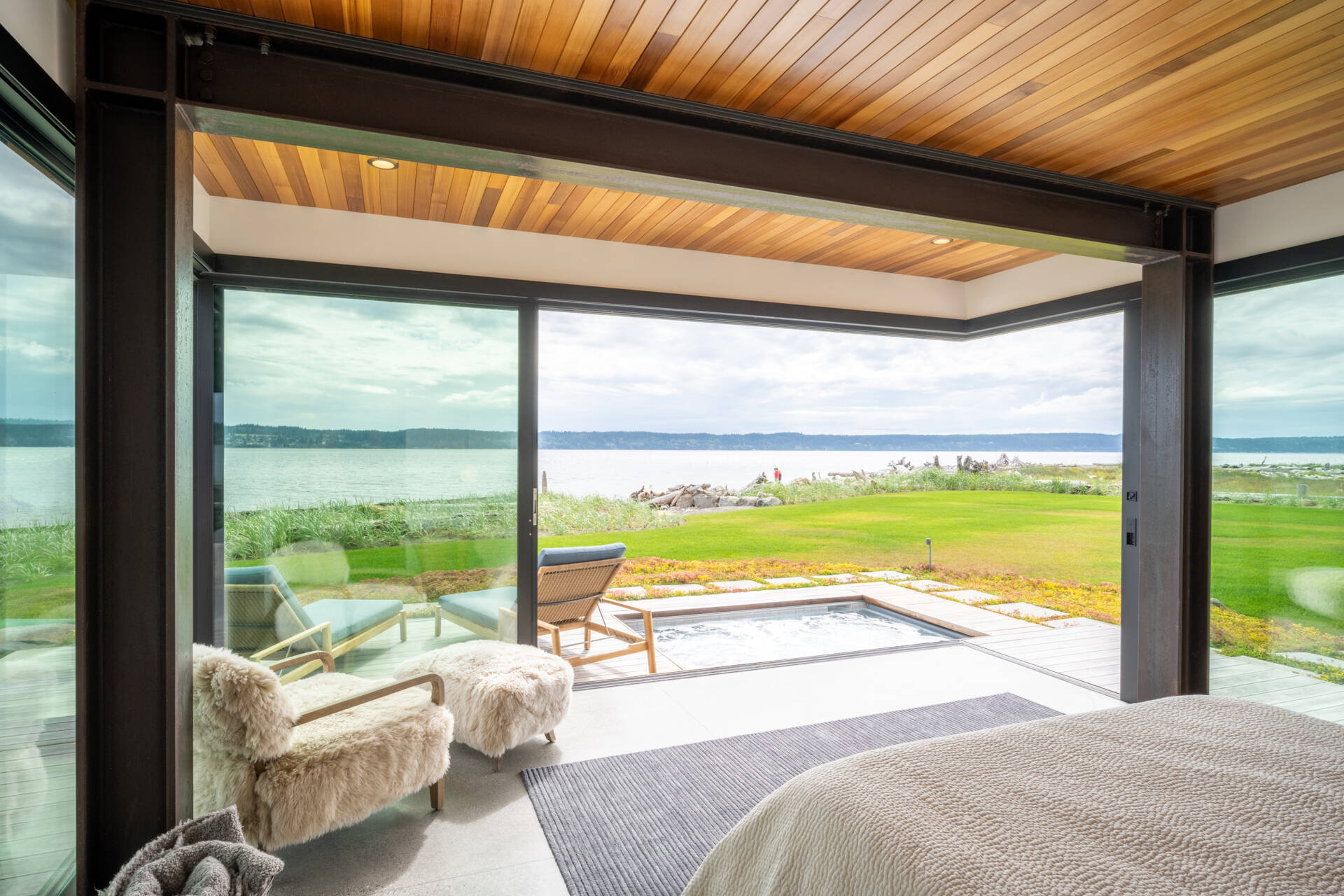
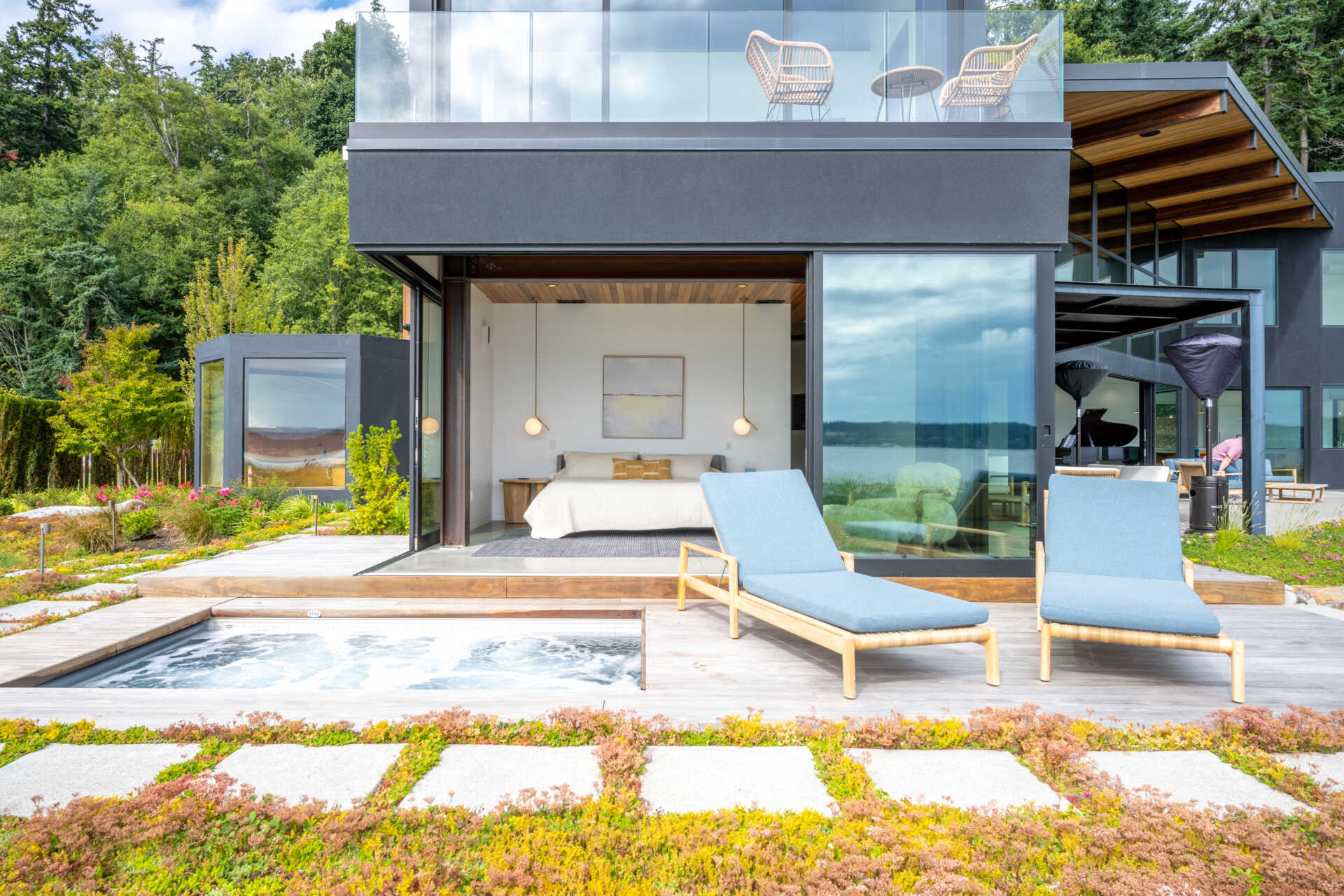
The primary suite is located in the northern wing of the house and has sliding glass walls that open to the terrace where a spa can be found.
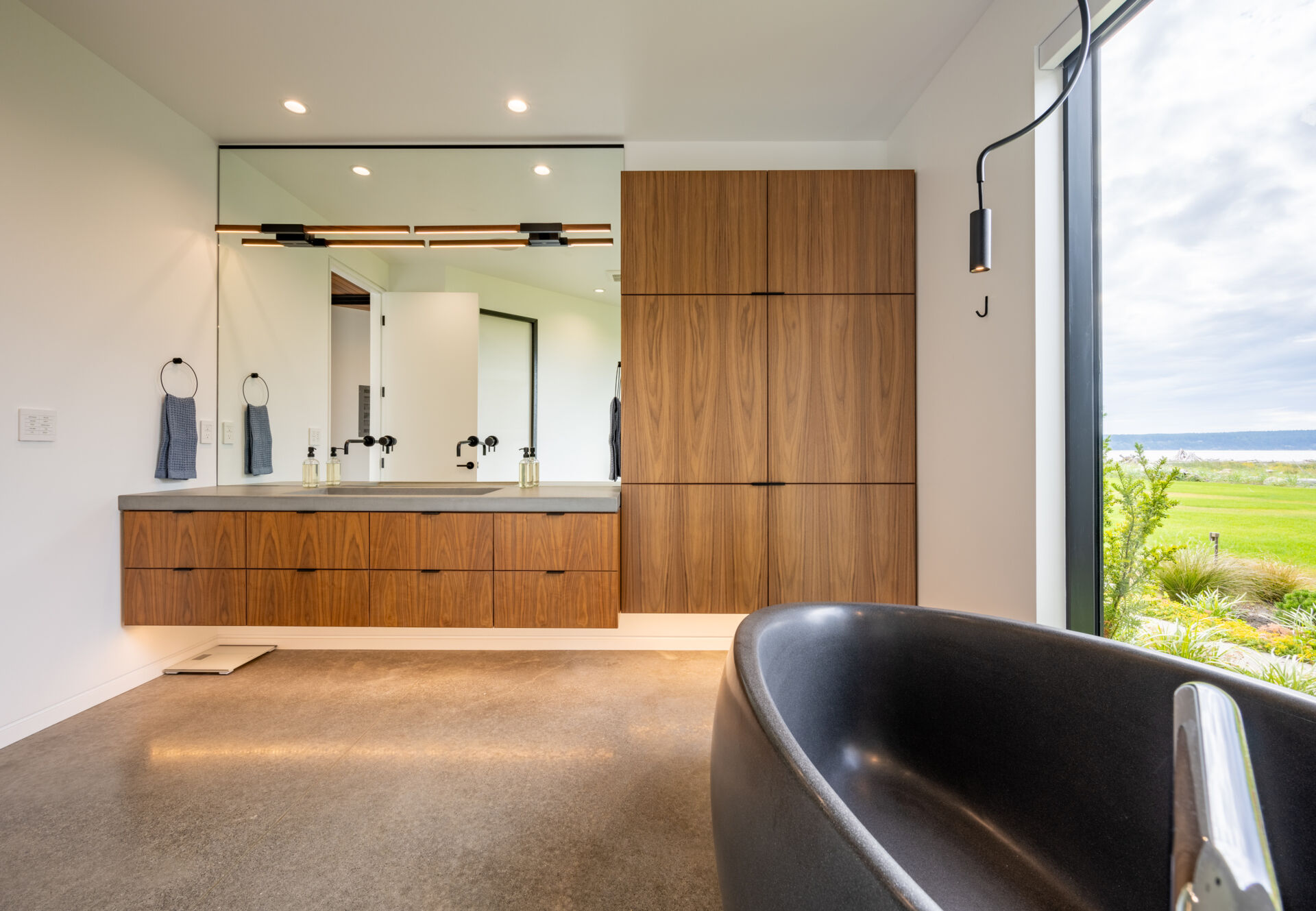
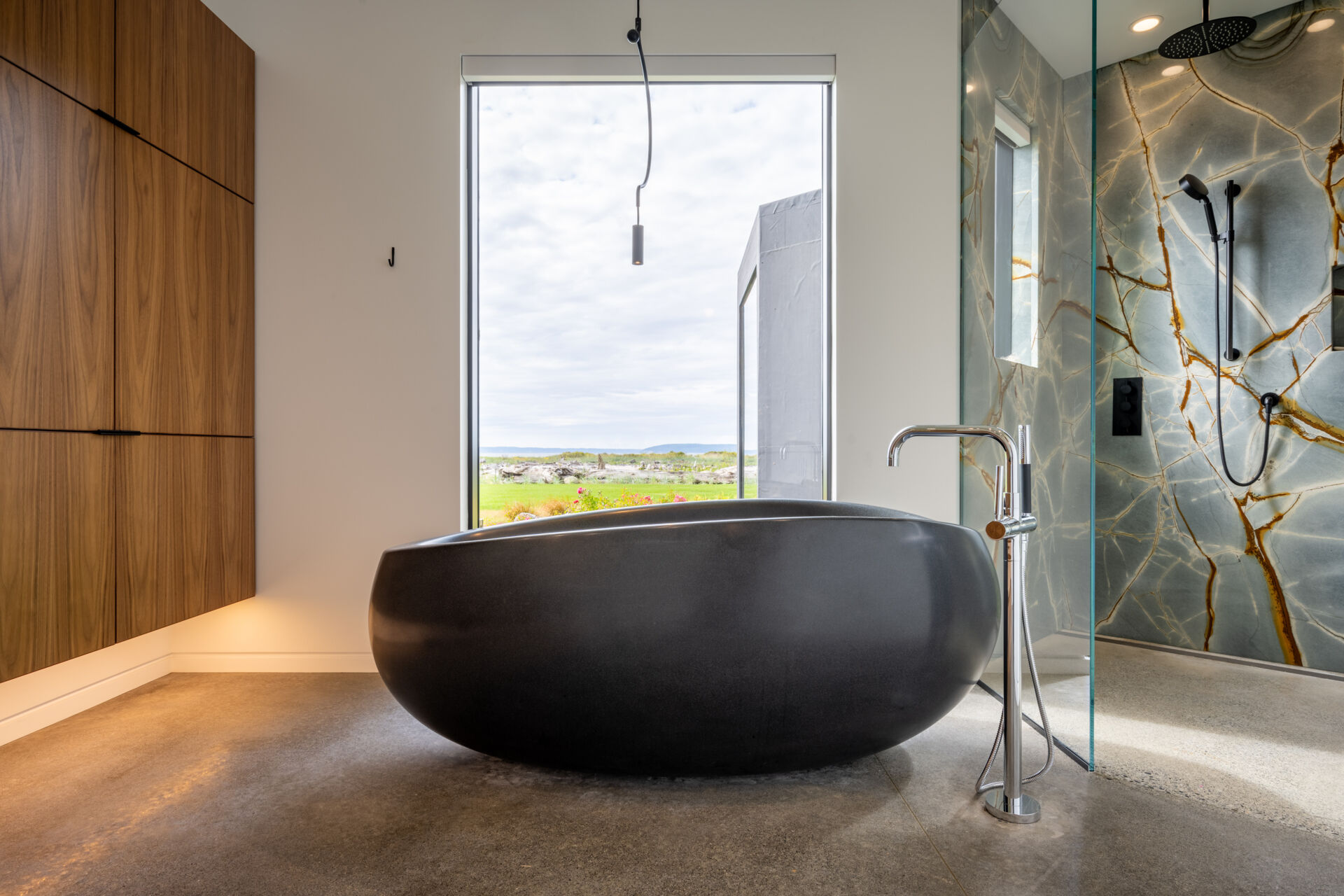
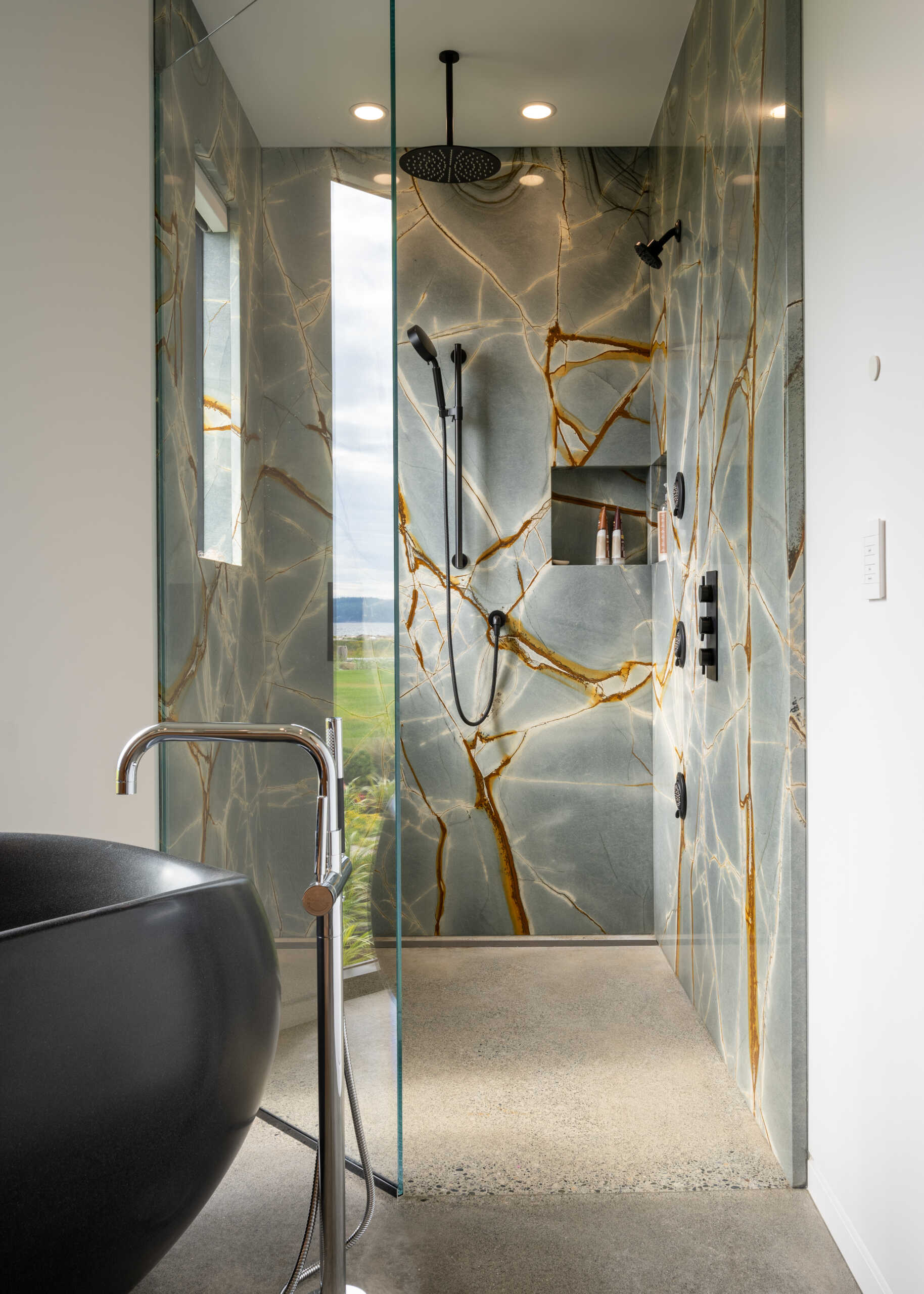
The primary bathroom includes a floating wood vanity with a freestanding sculptural black bathtub, and an eye-catching shower.
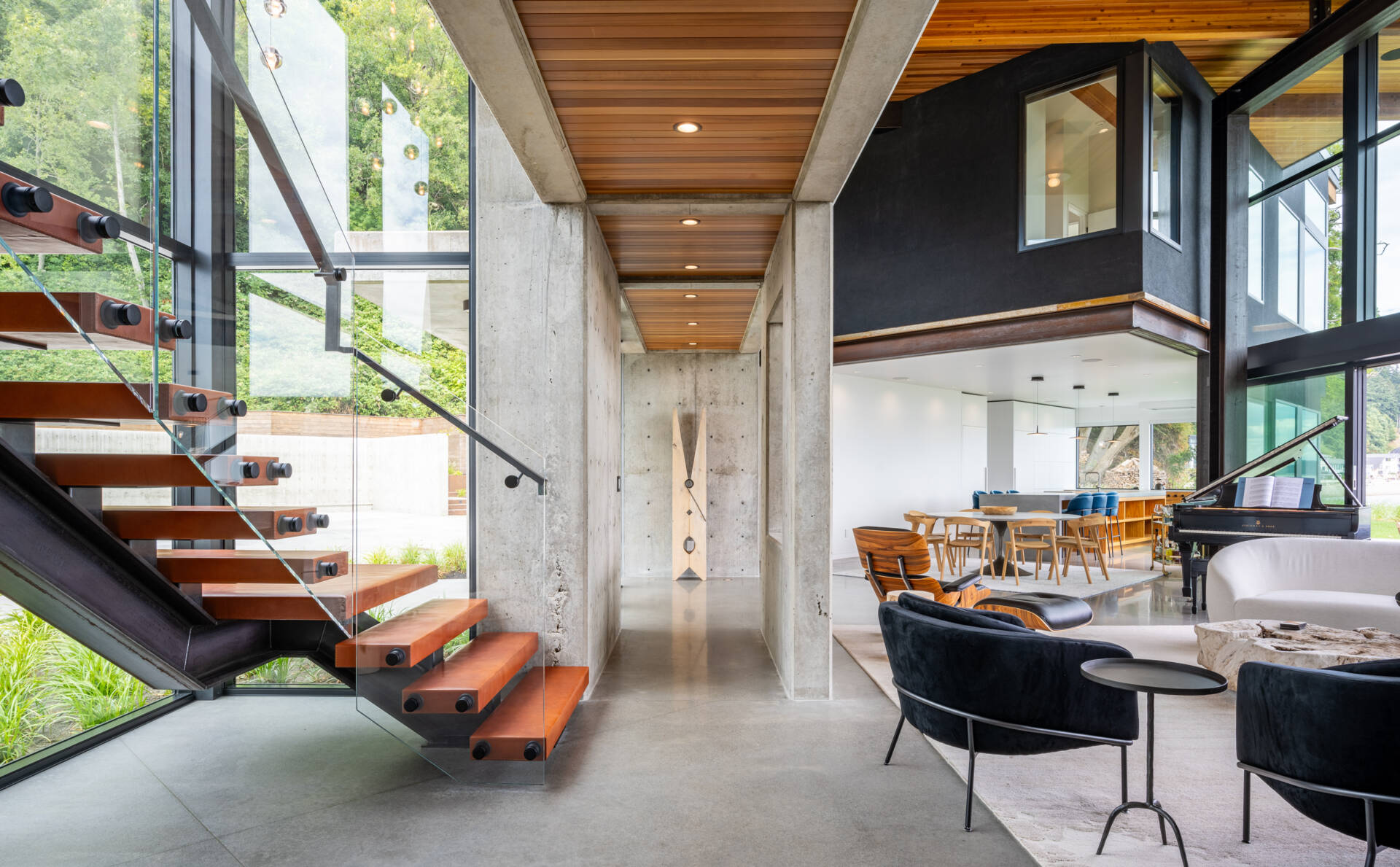
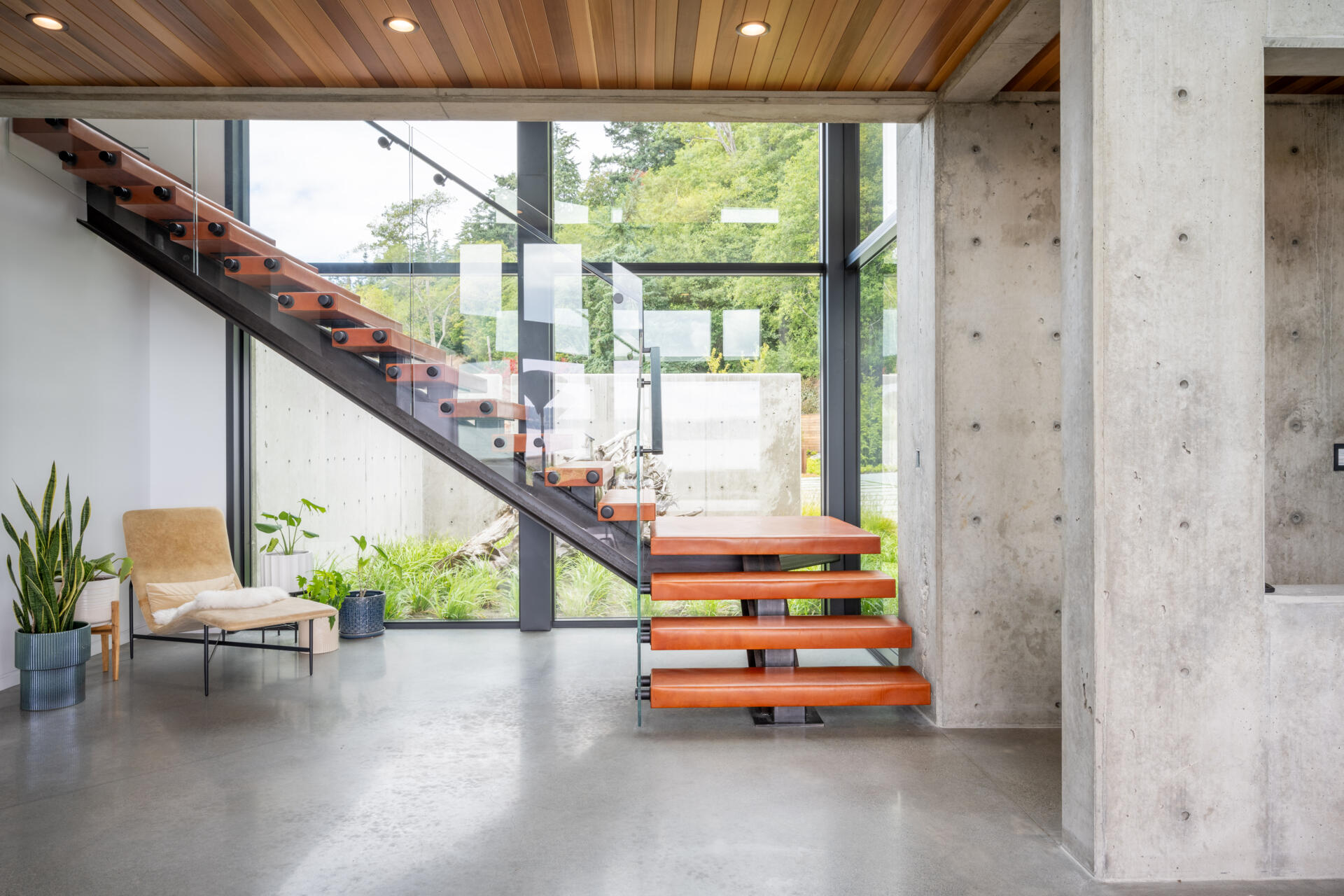
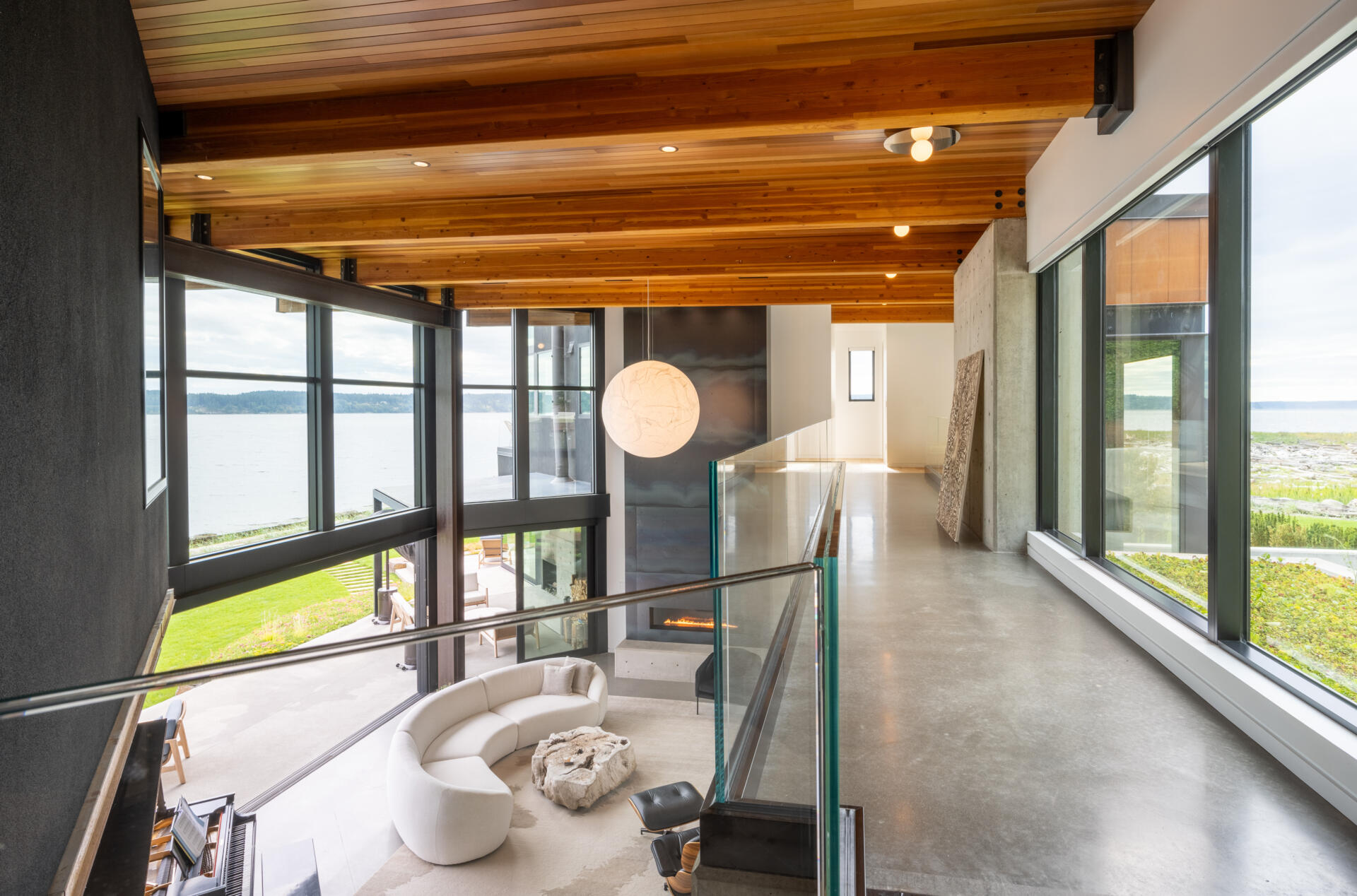
Located off the great room, the staircase is both functional and expressive. Exposed concrete and steel structure are paired with leather treads chosen by the clients, and a large light fixture adds a personal design gesture within the otherwise restrained interior.
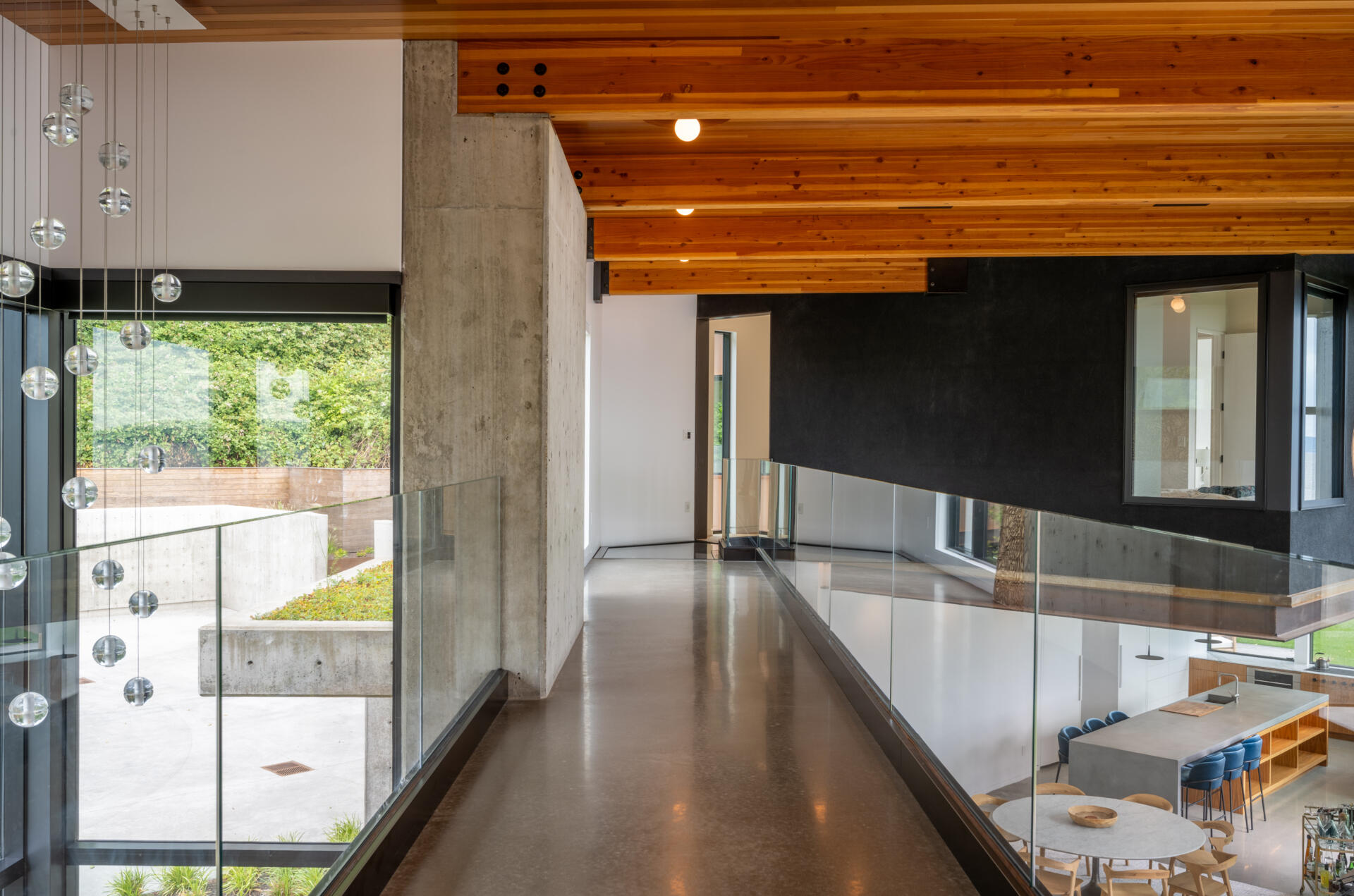
An interior bridge connects the north and south wings. From this vantage point, the green roof above the entry becomes a prominent visual element. The bridge reinforces the sense of movement and connection throughout the home.
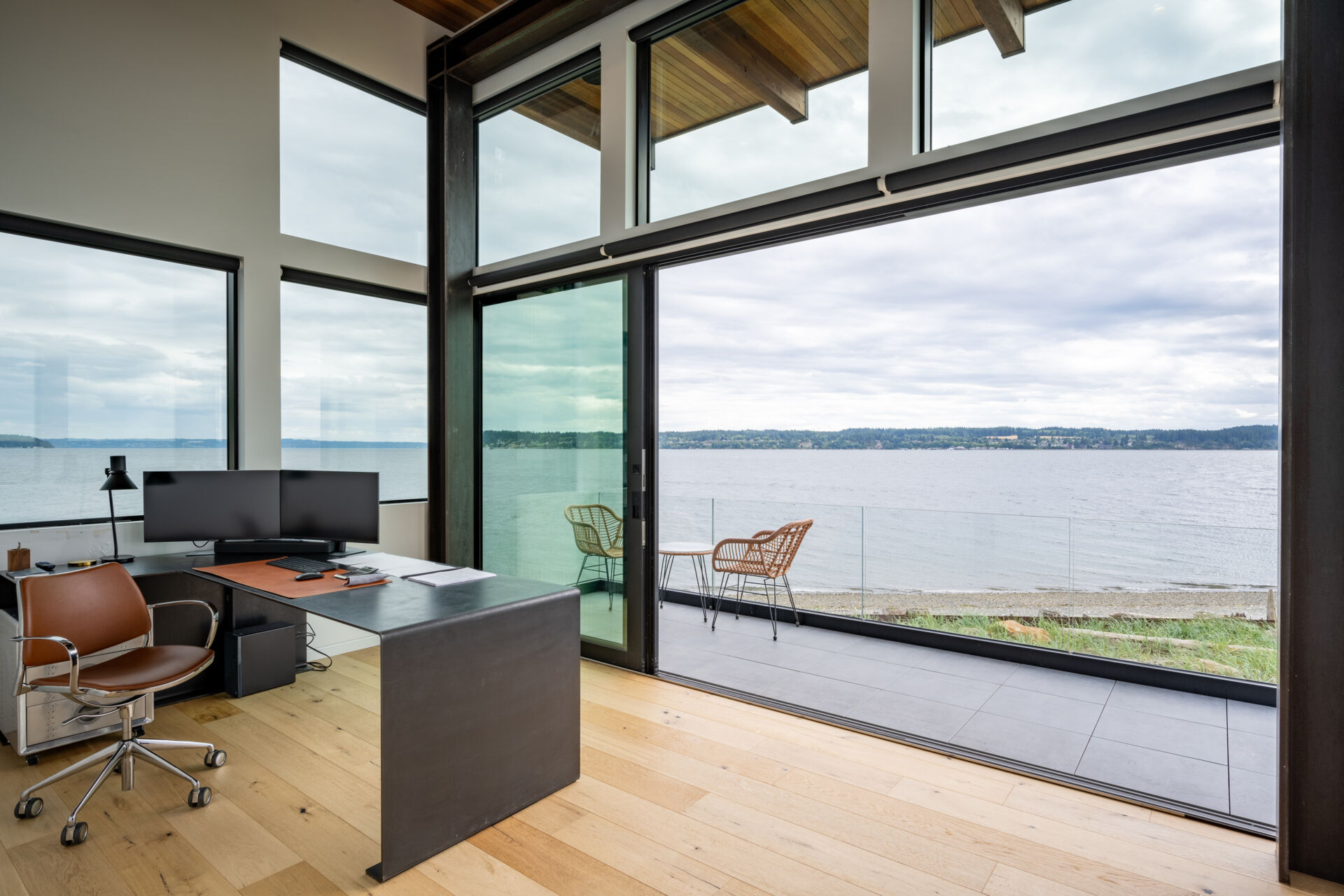
The home office is positioned within the northern wing, above the primary suite, and opens to a balcony with glass railing, providing uninterrupted views.
Children’s rooms and play areas are grouped in the southern wing. These spaces are designed to support family life while maintaining equal visual access to the surrounding water.
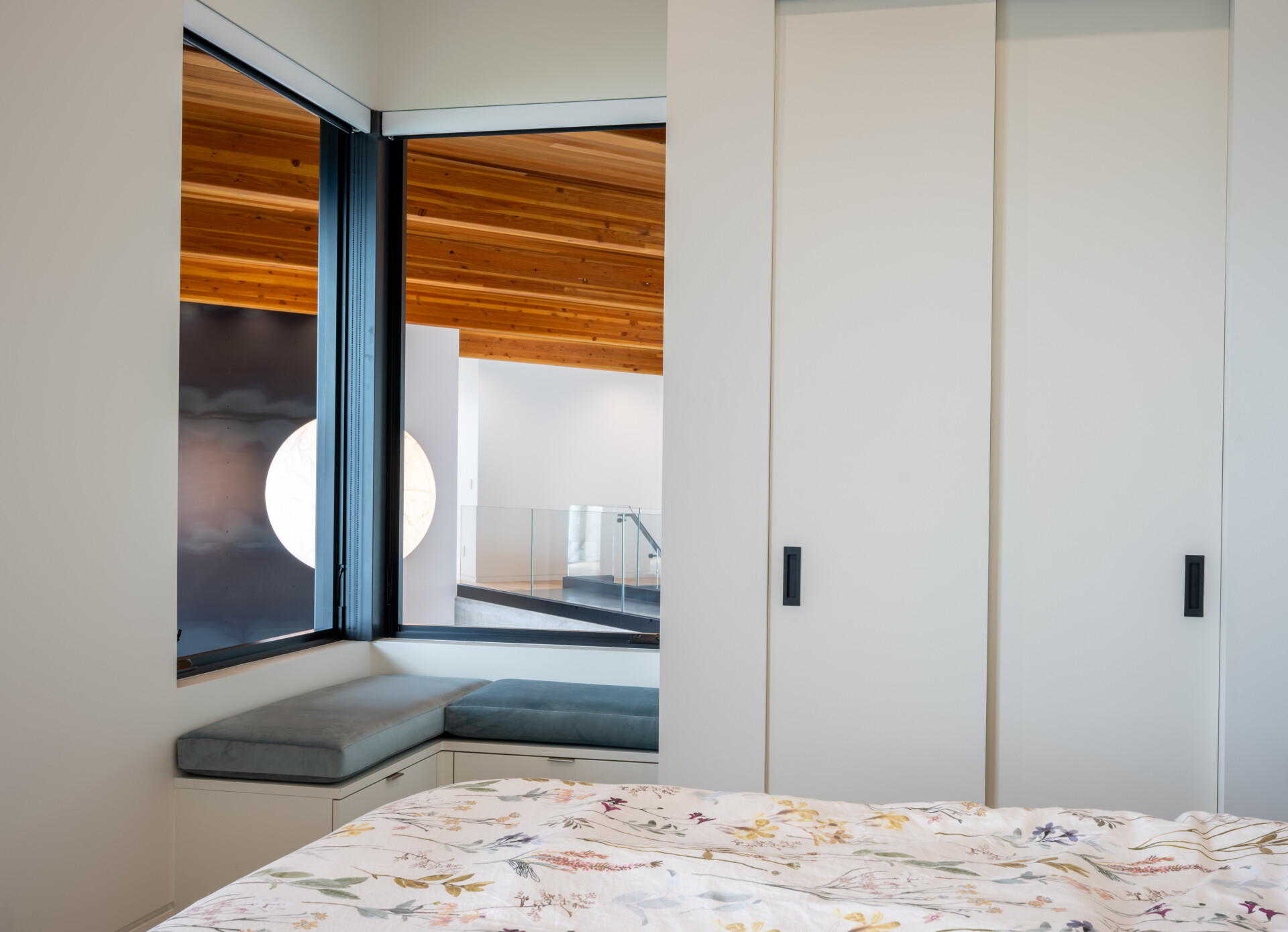
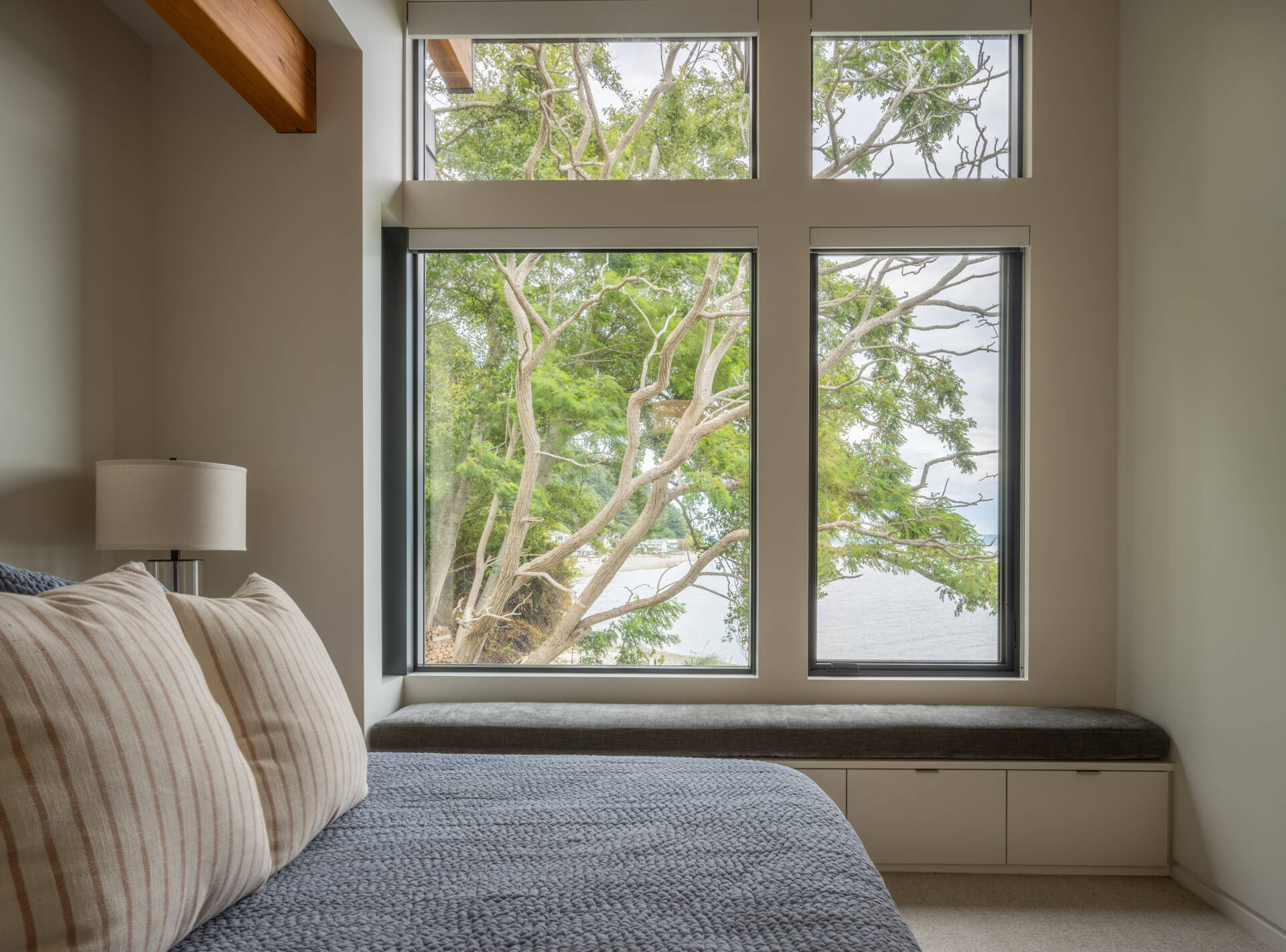
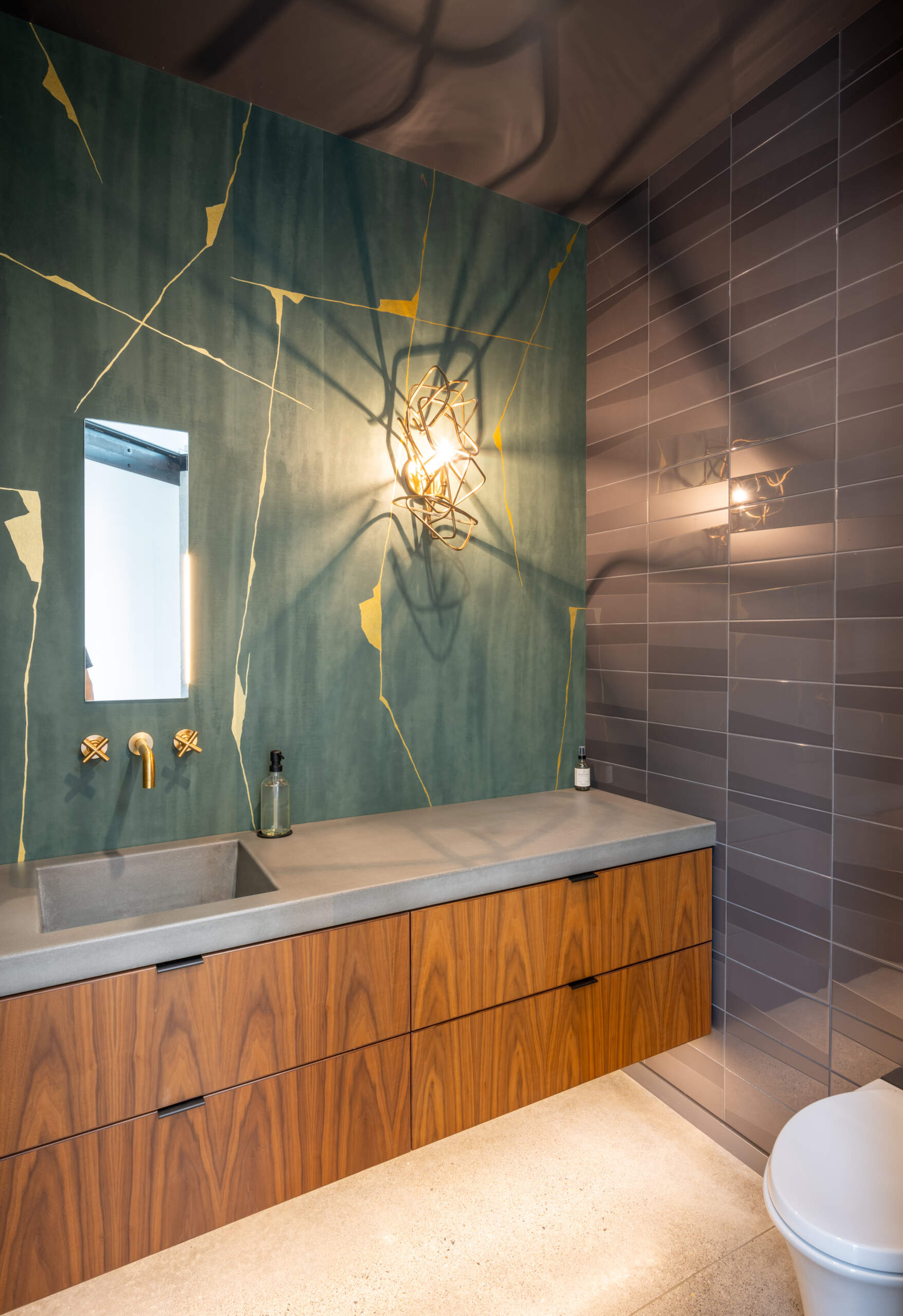
The guest bathroom, with its gold accents, follows the same durable material approach used throughout the home, like the concrete floor and counter.
Here’s a look at the floor plan showing the layout of the home.
At every level, the Pebble Beach Residence is shaped by its setting. Structural systems address seismic conditions, unstable soils, and hillside risk, while material choices support longevity along the water’s edge. Together, these decisions create a home that is as resilient as it is connected. Set firmly within its constraints, the house turns a challenging peninsula site into a durable family gathering place defined by water, structure, and time.