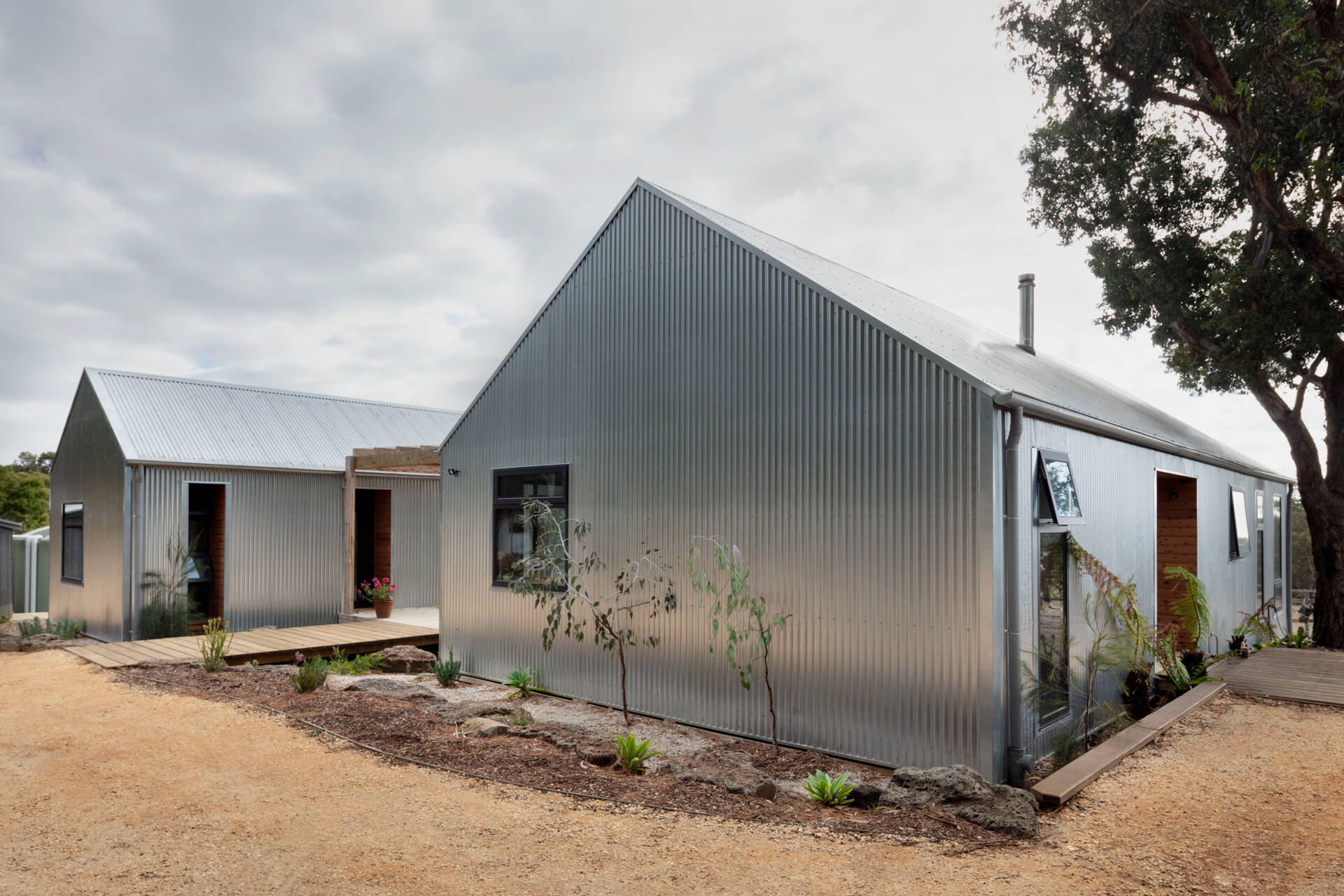
Designed by Wiesebrock Architecture, The Bellbrae House sits on a rural property along Victoria’s surf coast, shaped by years of planning for retirement living. Set between Torquay and Anglesea, the home replaces an older structure that could not be saved, while keeping key elements on site like sheds, fencing, and the existing layout footprint.
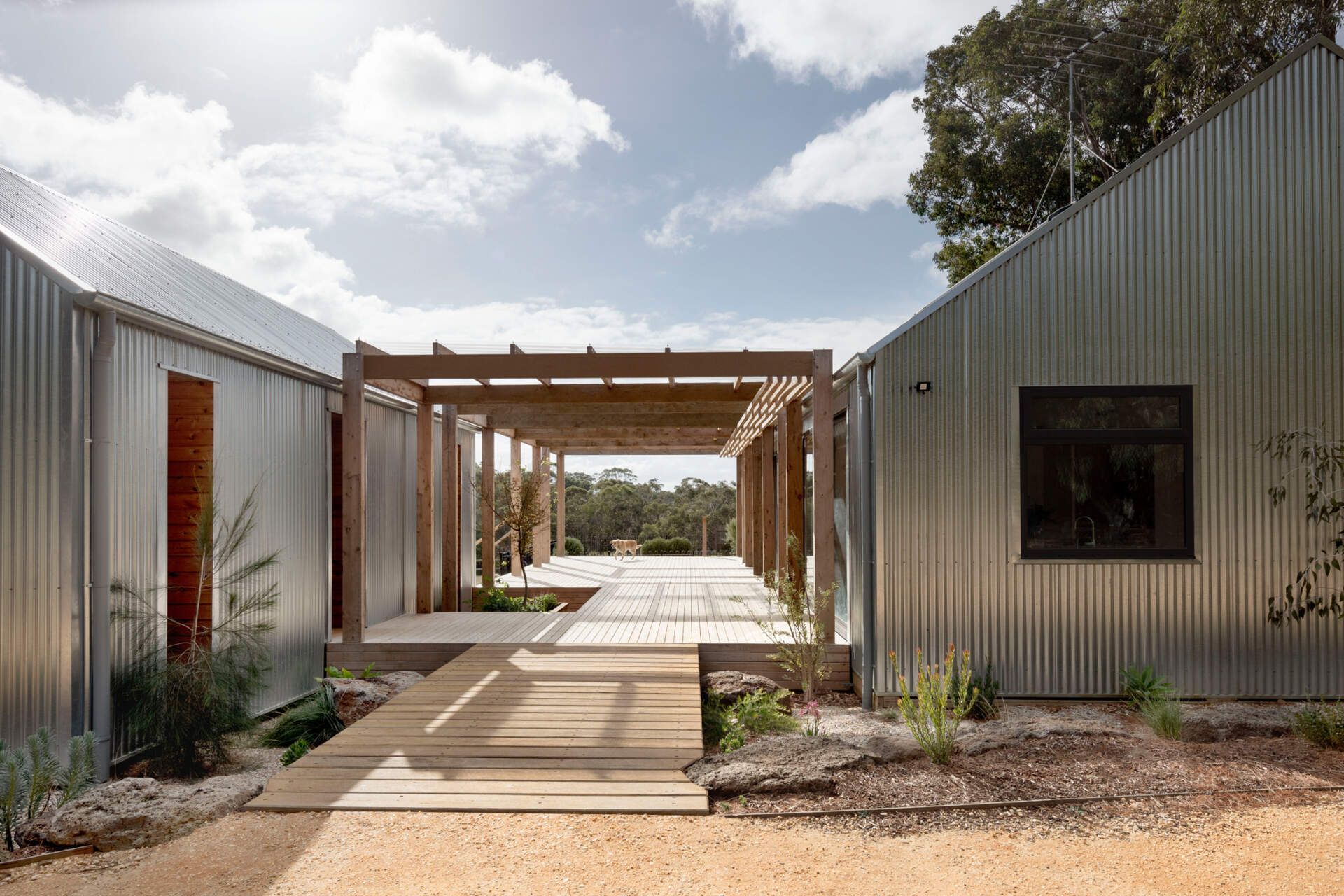
From the outset, the idea was simple: create a home that works just as well for two people as it does when family visits. The result is a layout built around two separate pavilions, linked by a generous outdoor deck.
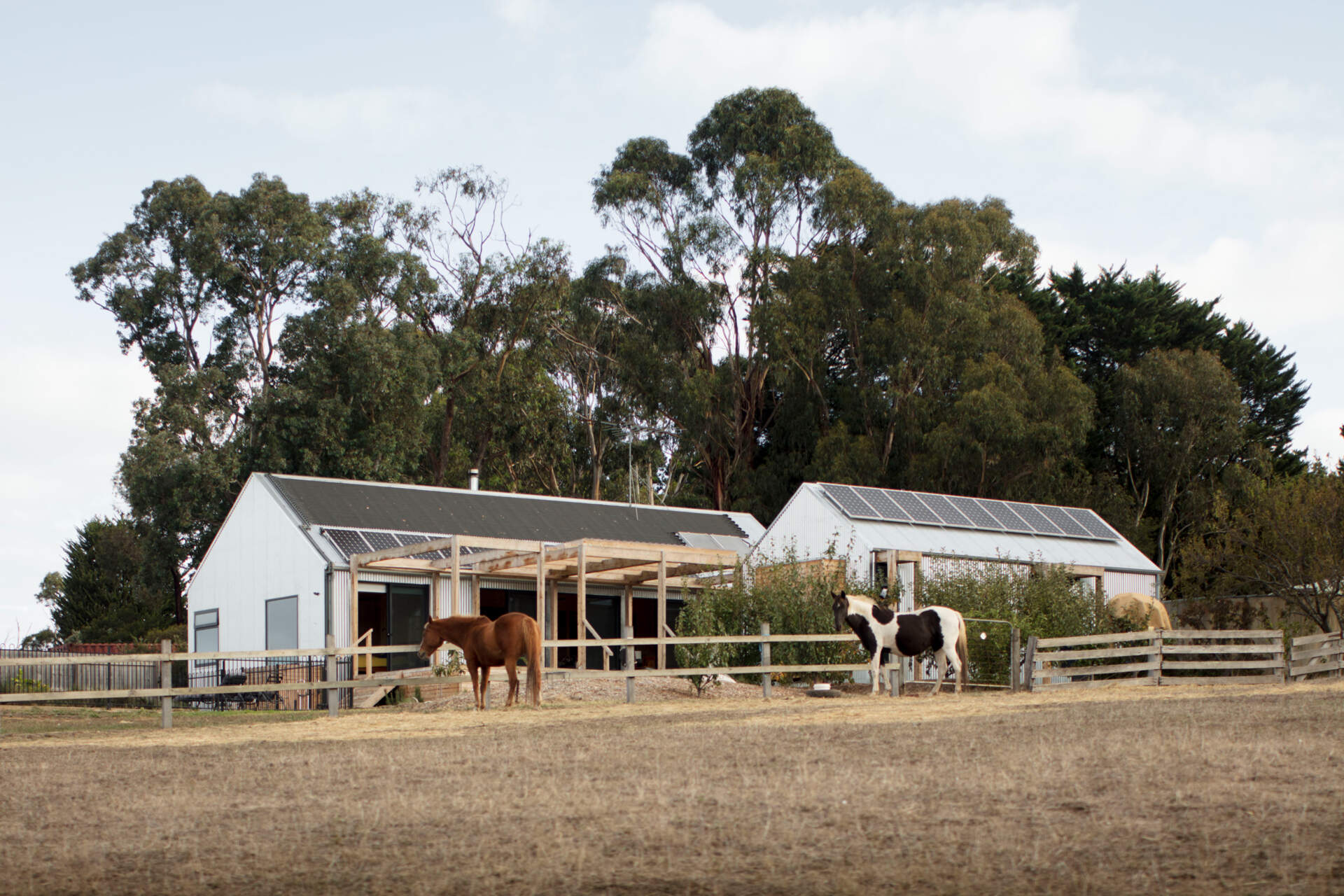
Two Pavilions, One Connected Layout
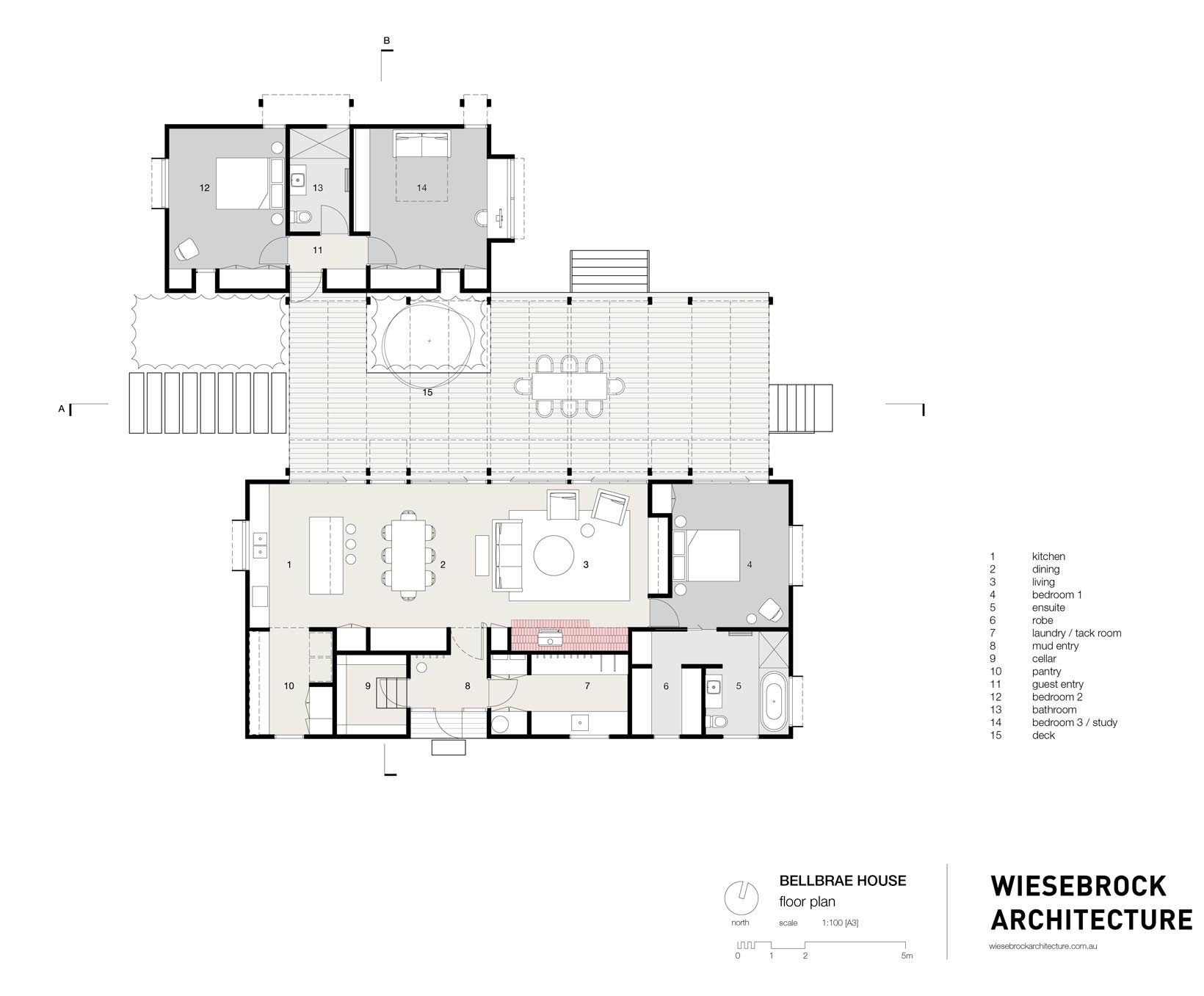
The home is split into two distinct zones. The main pavilion is where everyday living happens, with the kitchen, dining, living area, and bedroom all opening toward the north for sunlight and views.
The second pavilion sits nearby but apart, holding extra bedrooms with a shared bathroom and kitchenette. It can be closed off when not in use, making it practical for occasional stays while keeping the main house easy to manage.
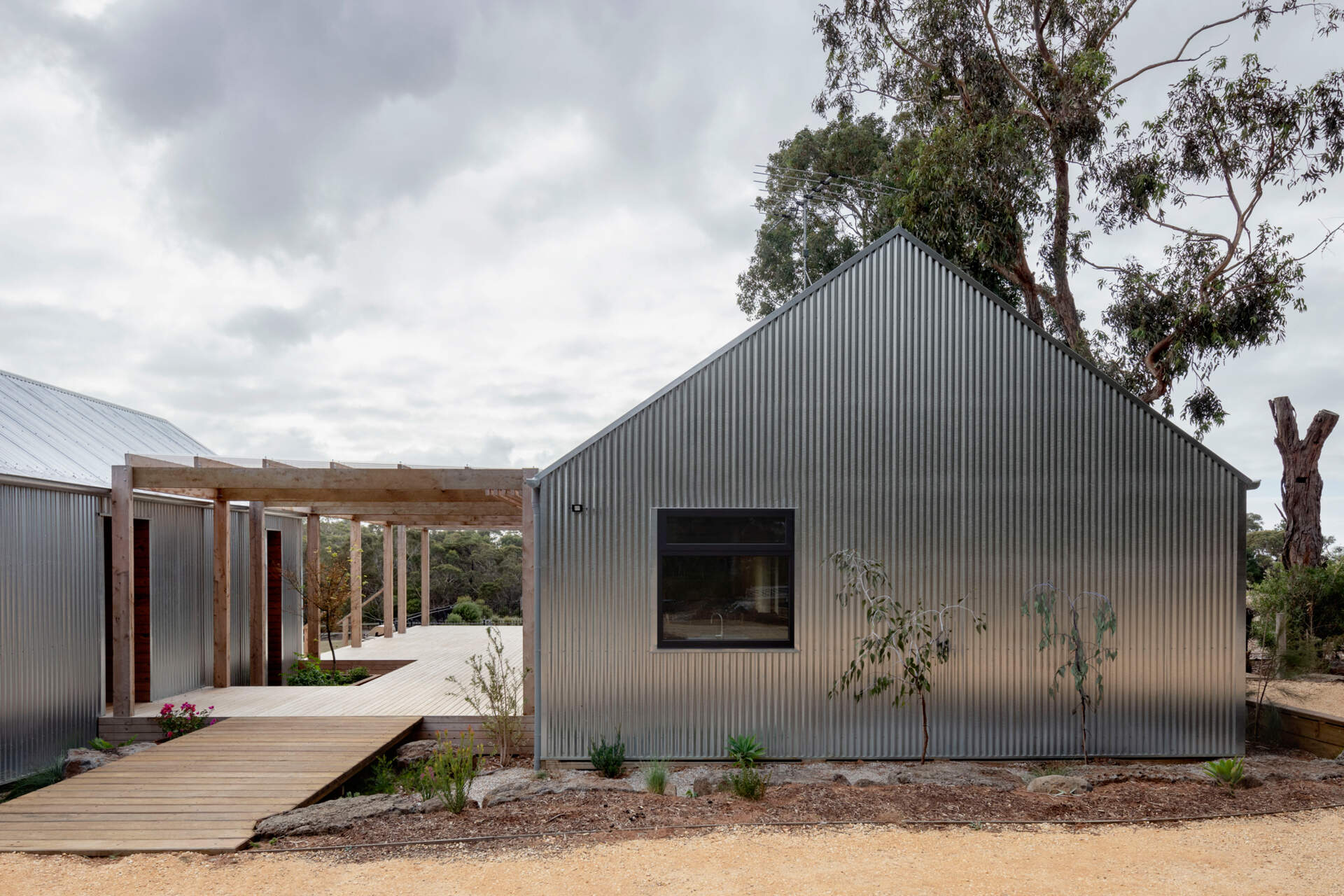
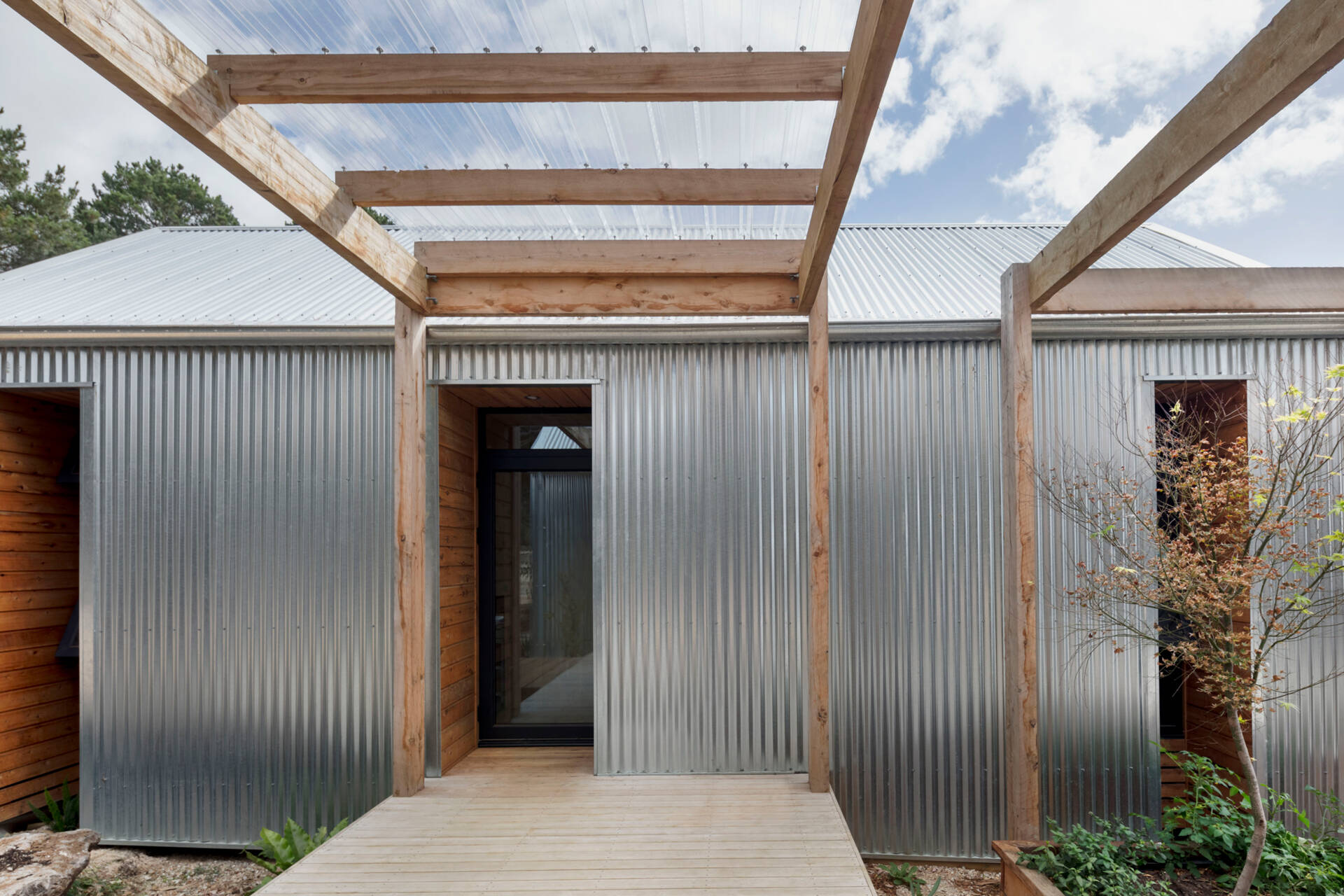
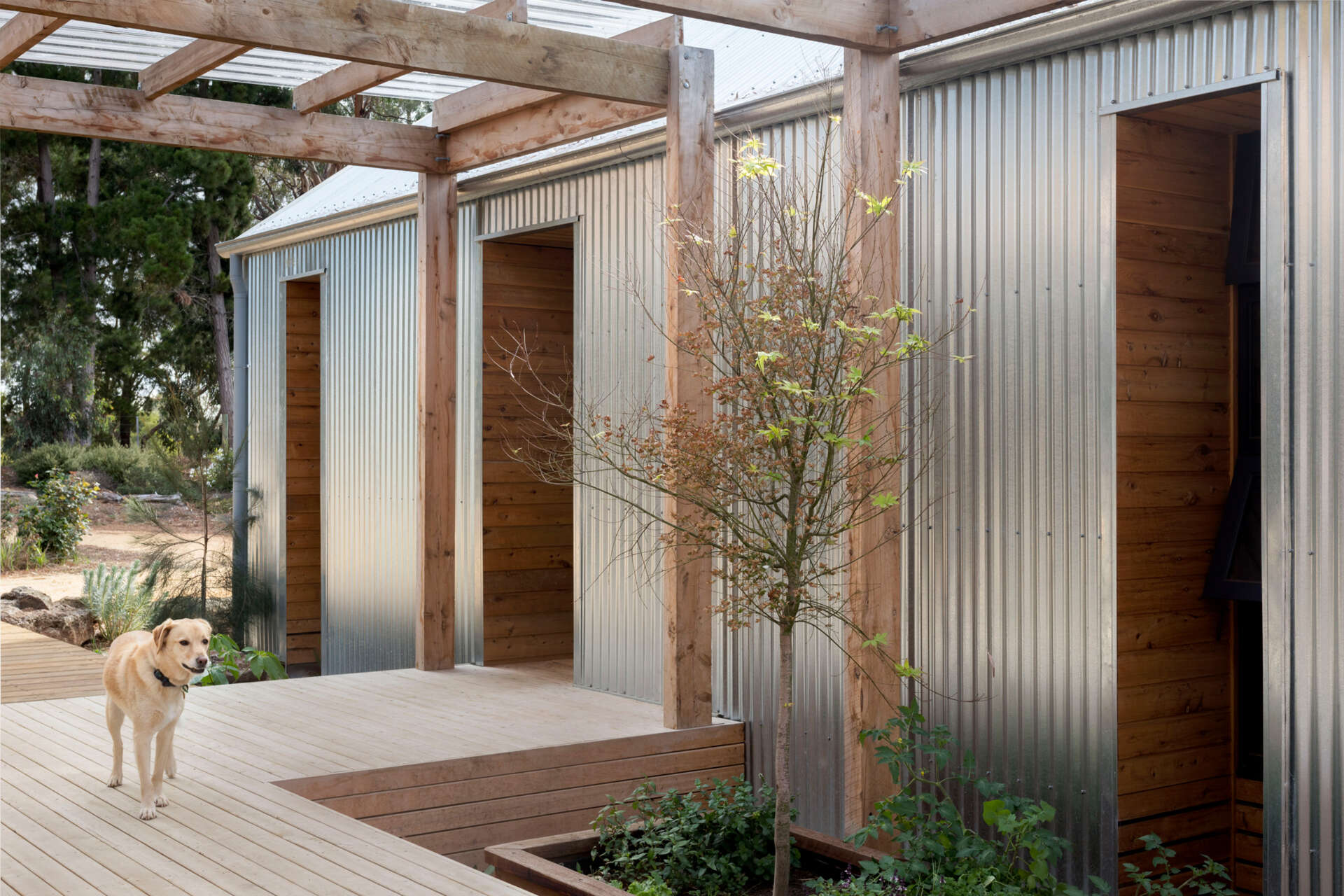
Between them, the deck becomes the central meeting point, doubling as an entry and a space for outdoor living with wide views across the valley.
A Steel Exterior That Changes Over Time
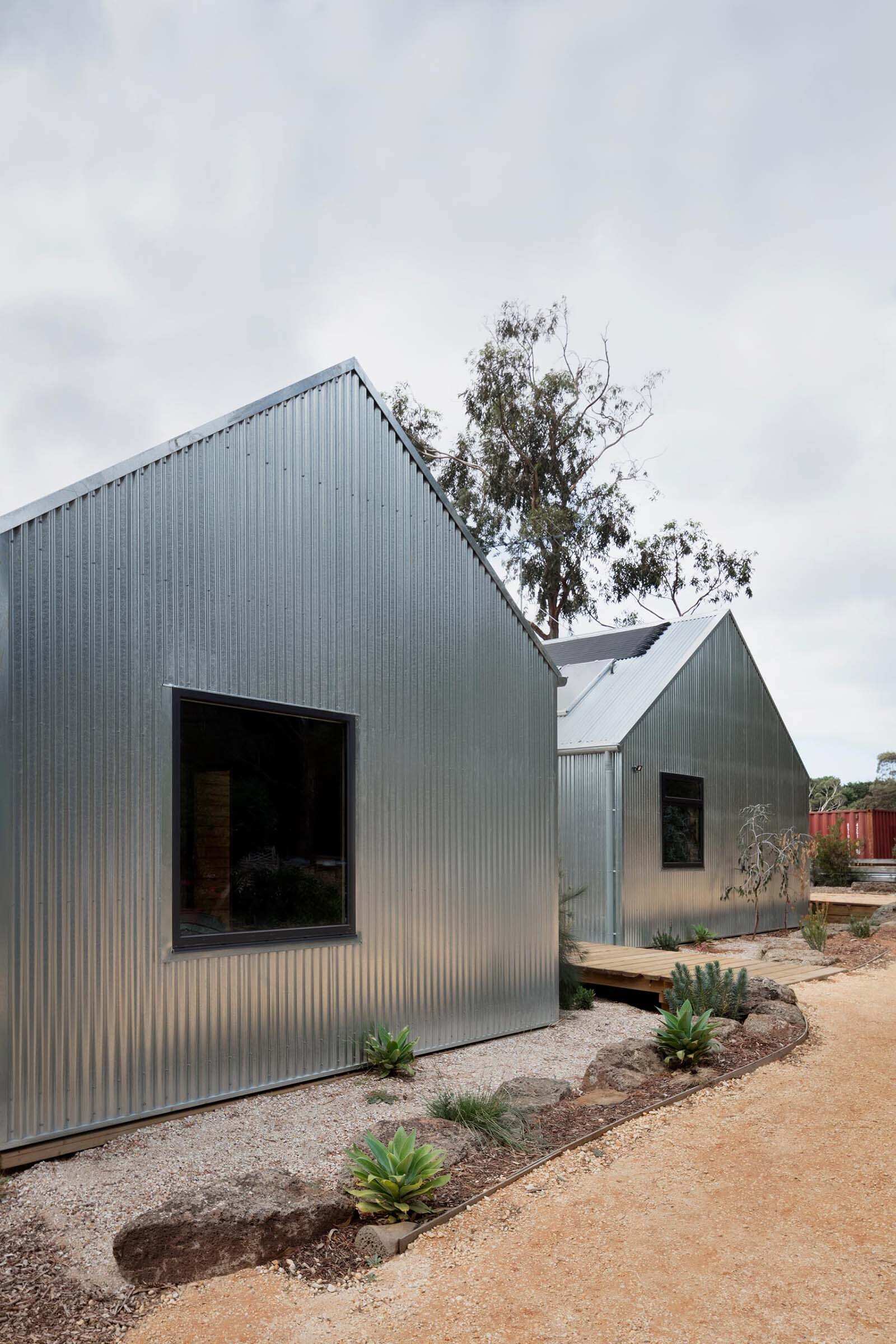
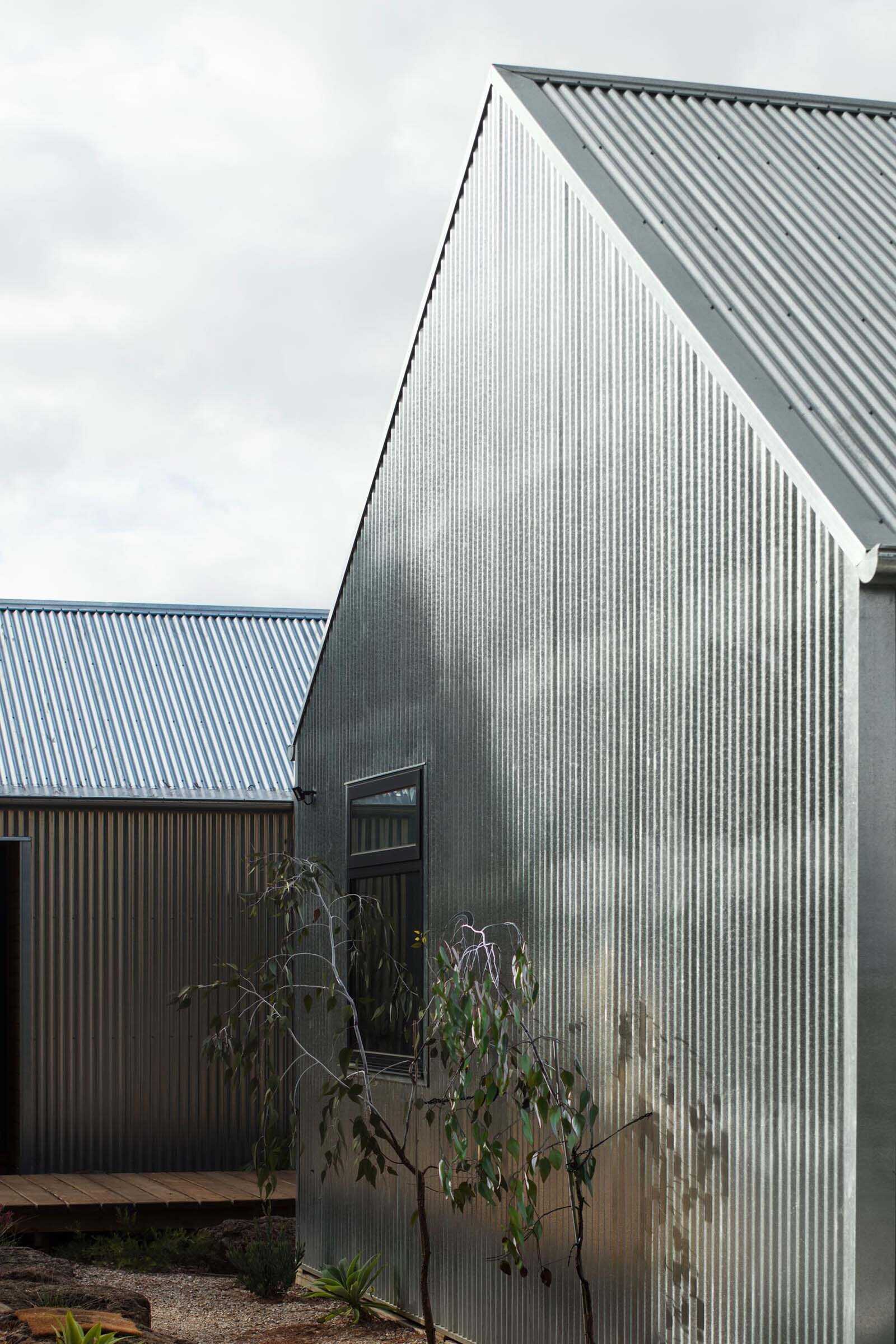
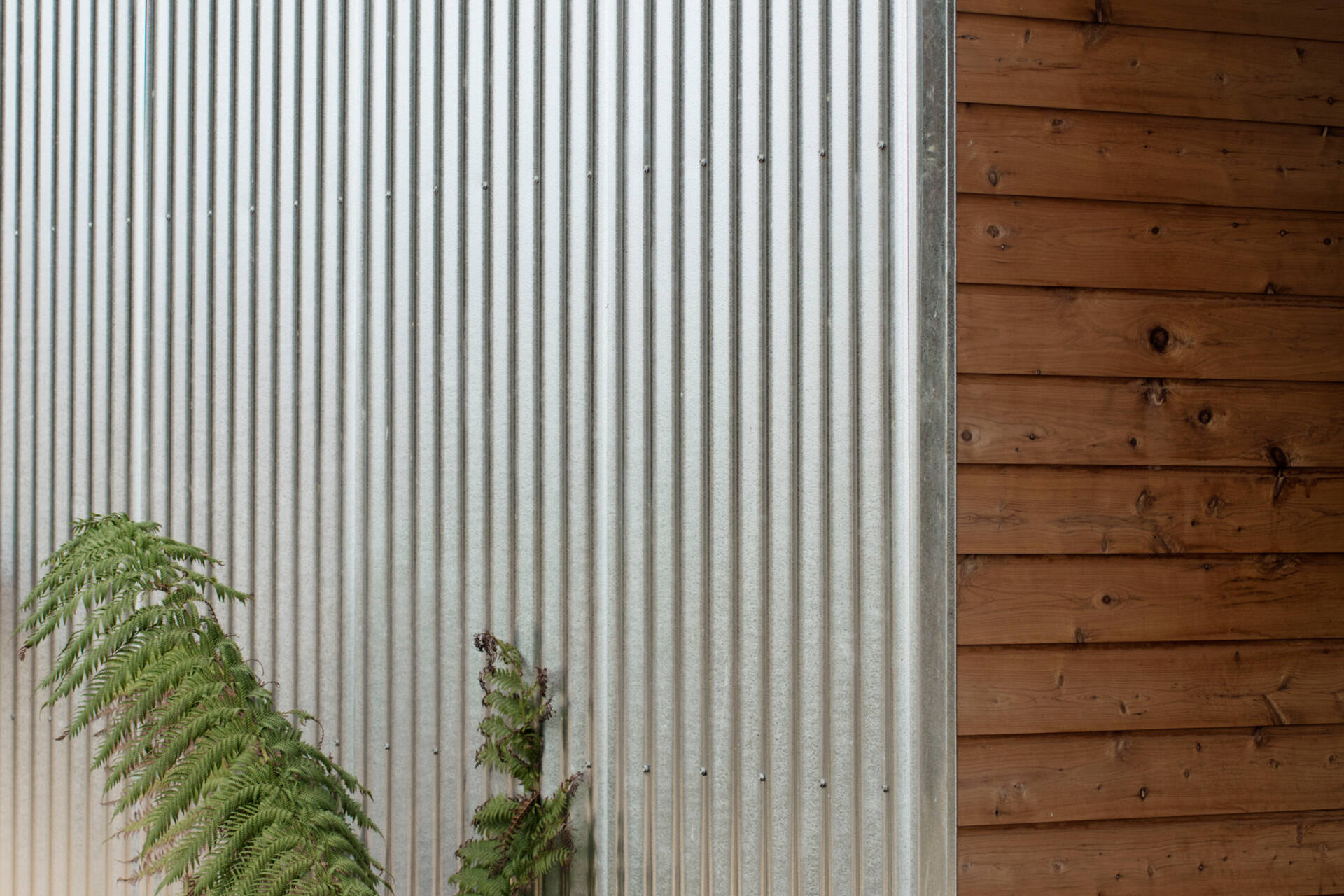
The exterior is wrapped in corrugated galvanized steel, giving the house a strong, durable shell. Over time, the finish naturally softens into a duller tone, subtly shifting the look of the home as it ages.
Beyond appearance, the material choice keeps maintenance low and avoids ongoing costs once installed, making it a practical solution for long-term living.
When paired with timber elements and black window frames, the steel exterior takes on a clean, contemporary look.
Warm Interiors Built to Last
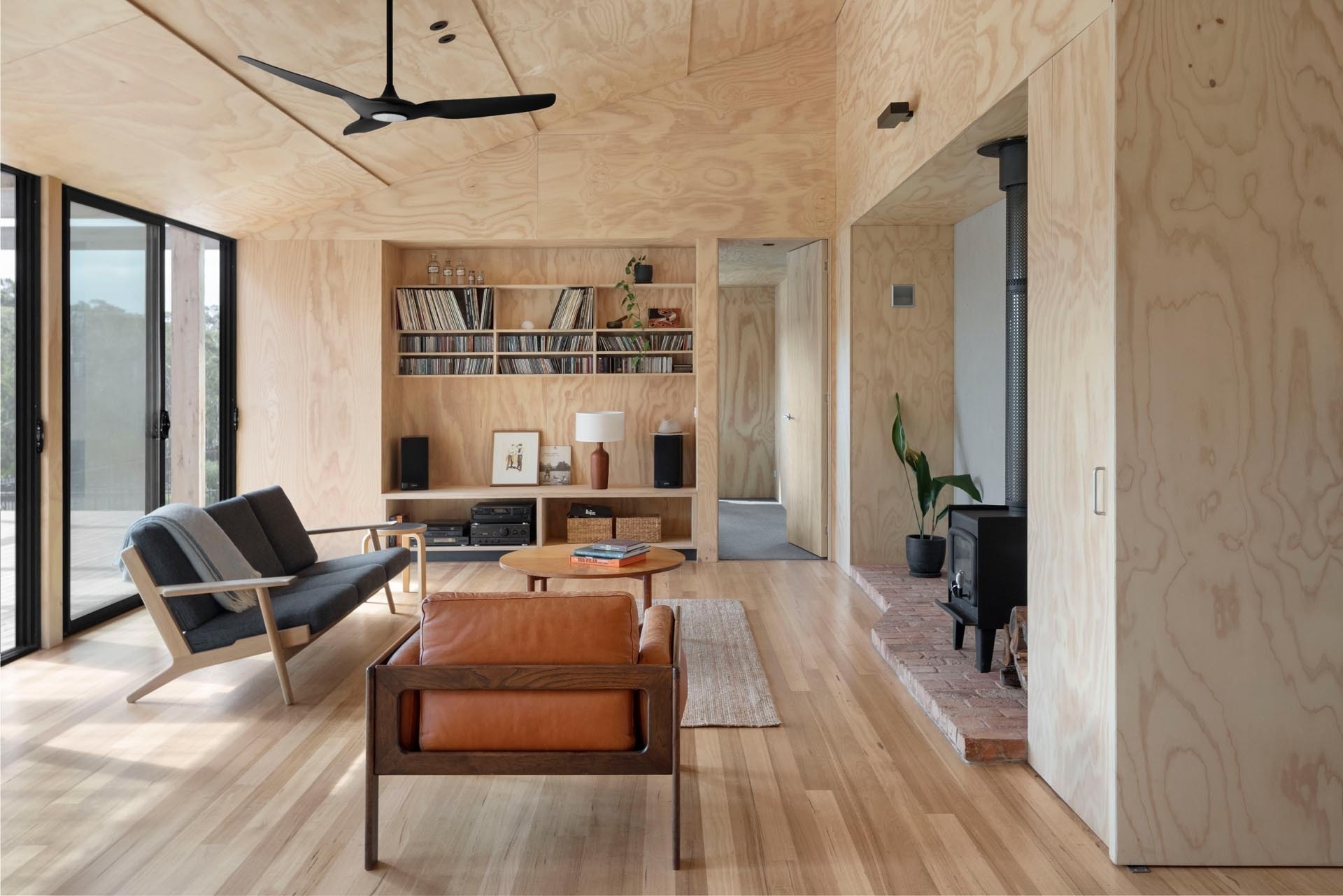
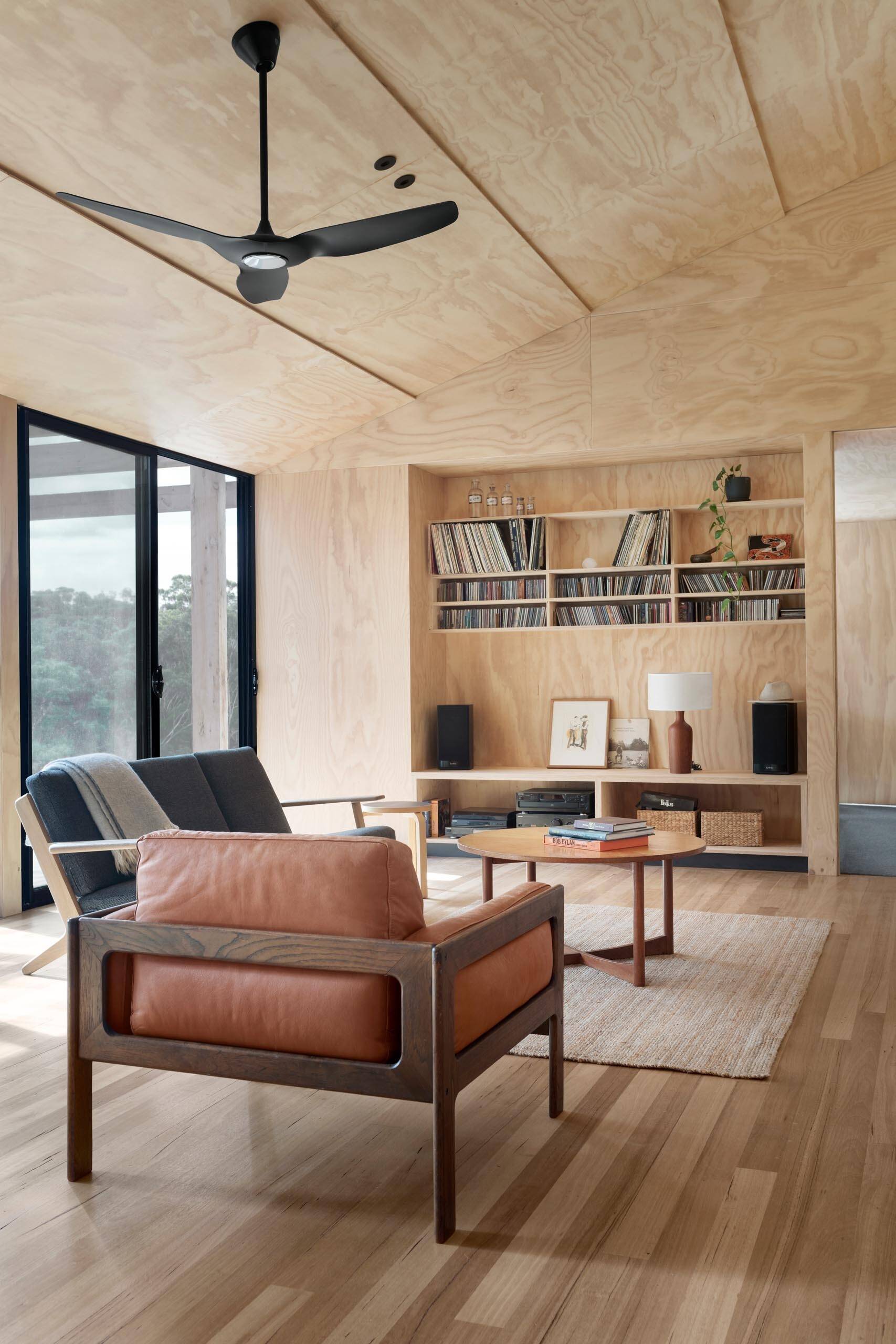
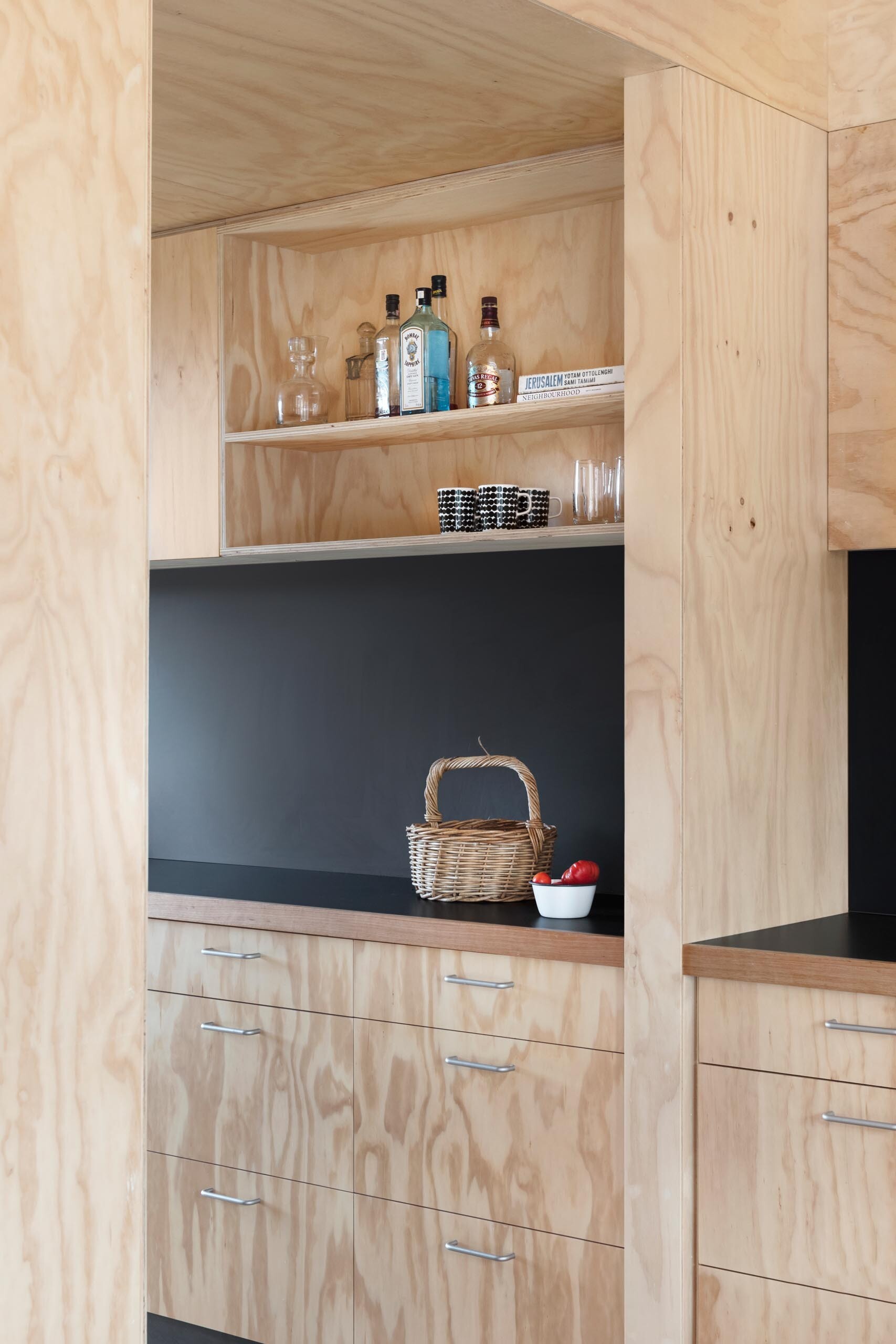
Inside, the mood shifts. Plywood lines the walls and ceilings, chosen for its ability to age naturally without the need for repainting.
In the living area, ceiling sheets are overlapped, breaking up the surface while allowing full sheets to be used without cutting. This approach reduces waste and adds subtle texture overhead.
The contrast between the steel exterior and timber interior creates a balance that feels both practical and inviting.
Reuse and Material Choices That Matter
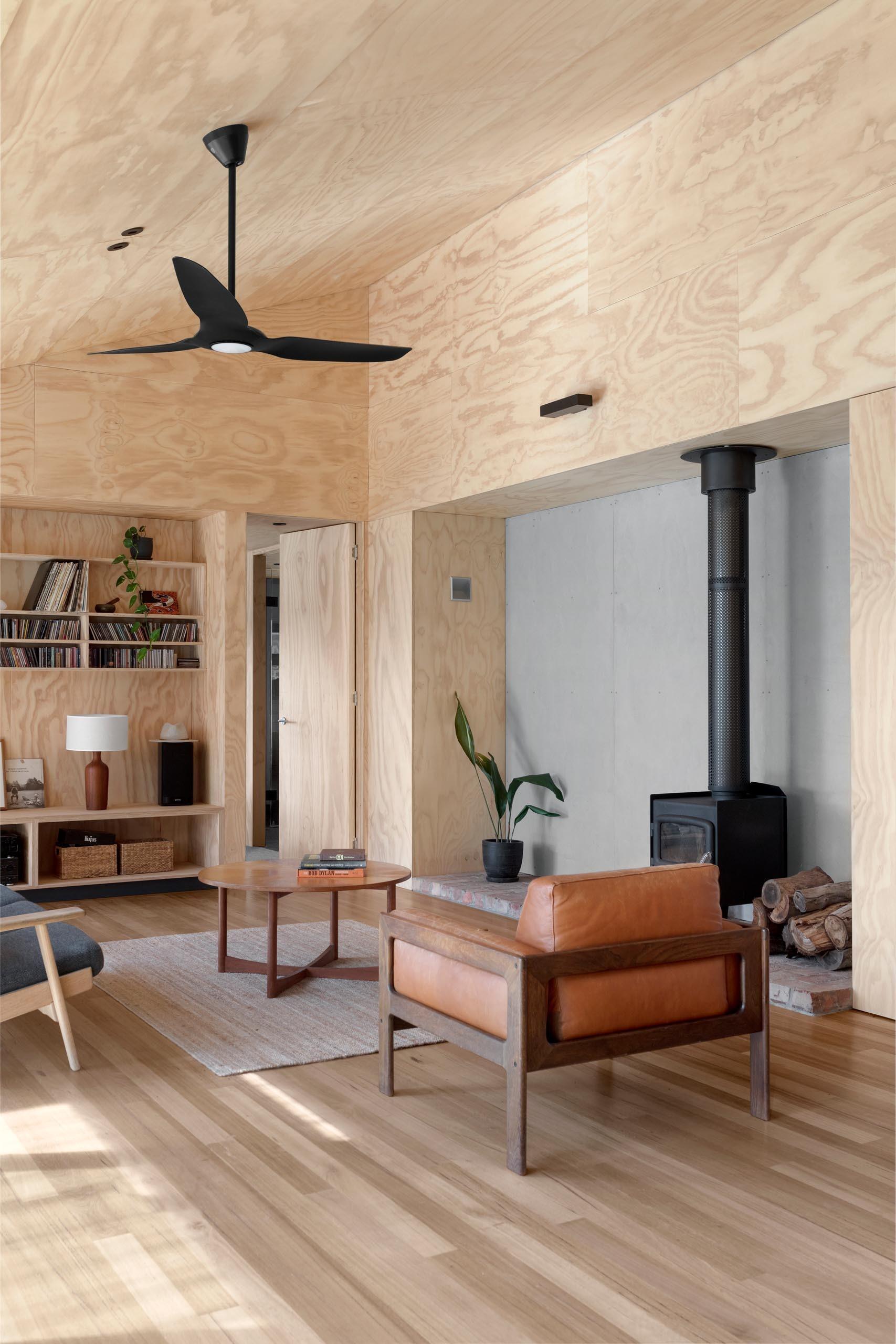
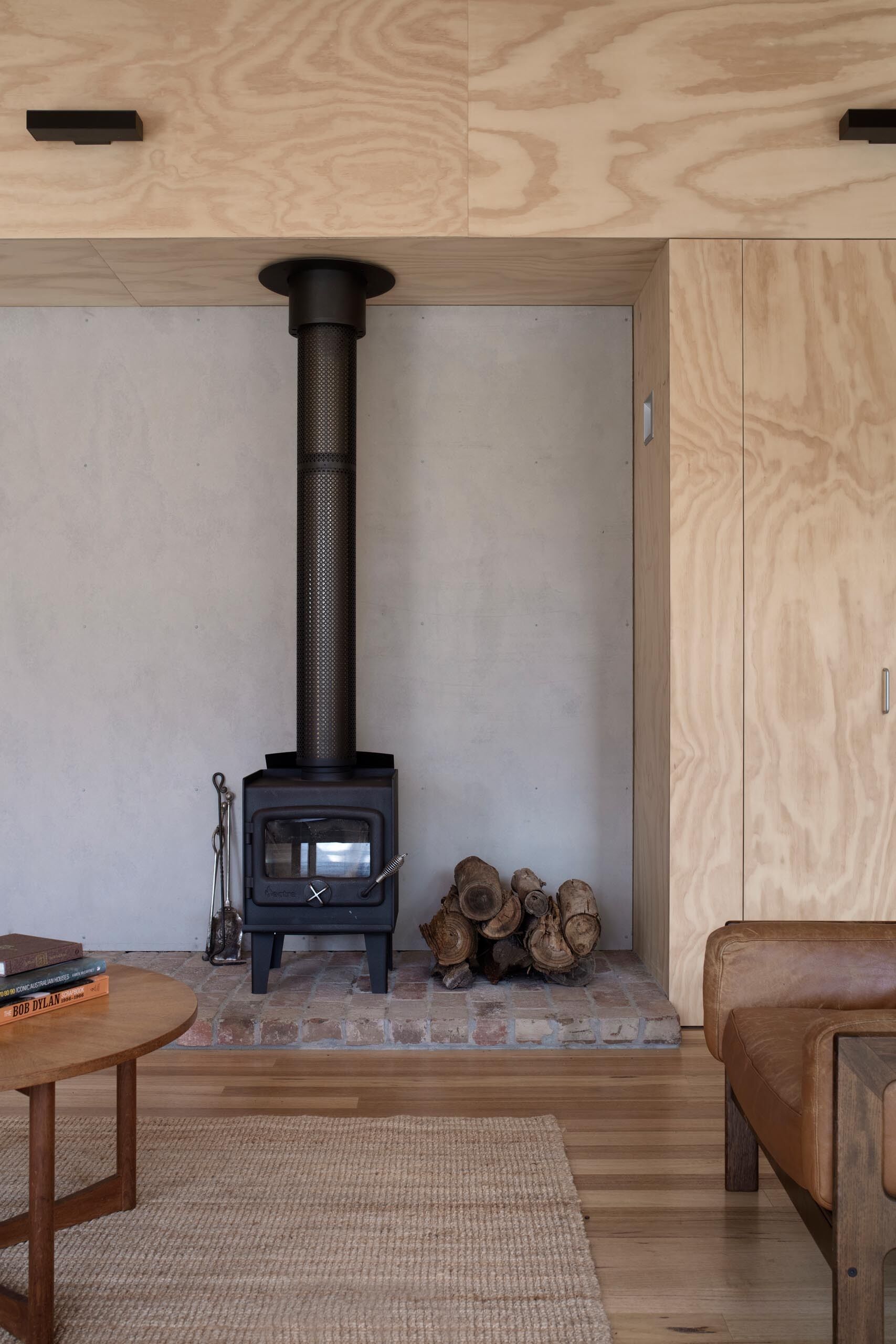
Parts of the original house live on through reused materials. Salvaged bricks form the fireplace hearth, paired with a matte black finish that ties in with the ceiling fan above.
Timber elements continue throughout, including flooring and detailing, reinforcing a consistent material palette across the home. These choices reduce waste while adding character through materials that already carry history.
A Kitchen That Blends Function and Texture
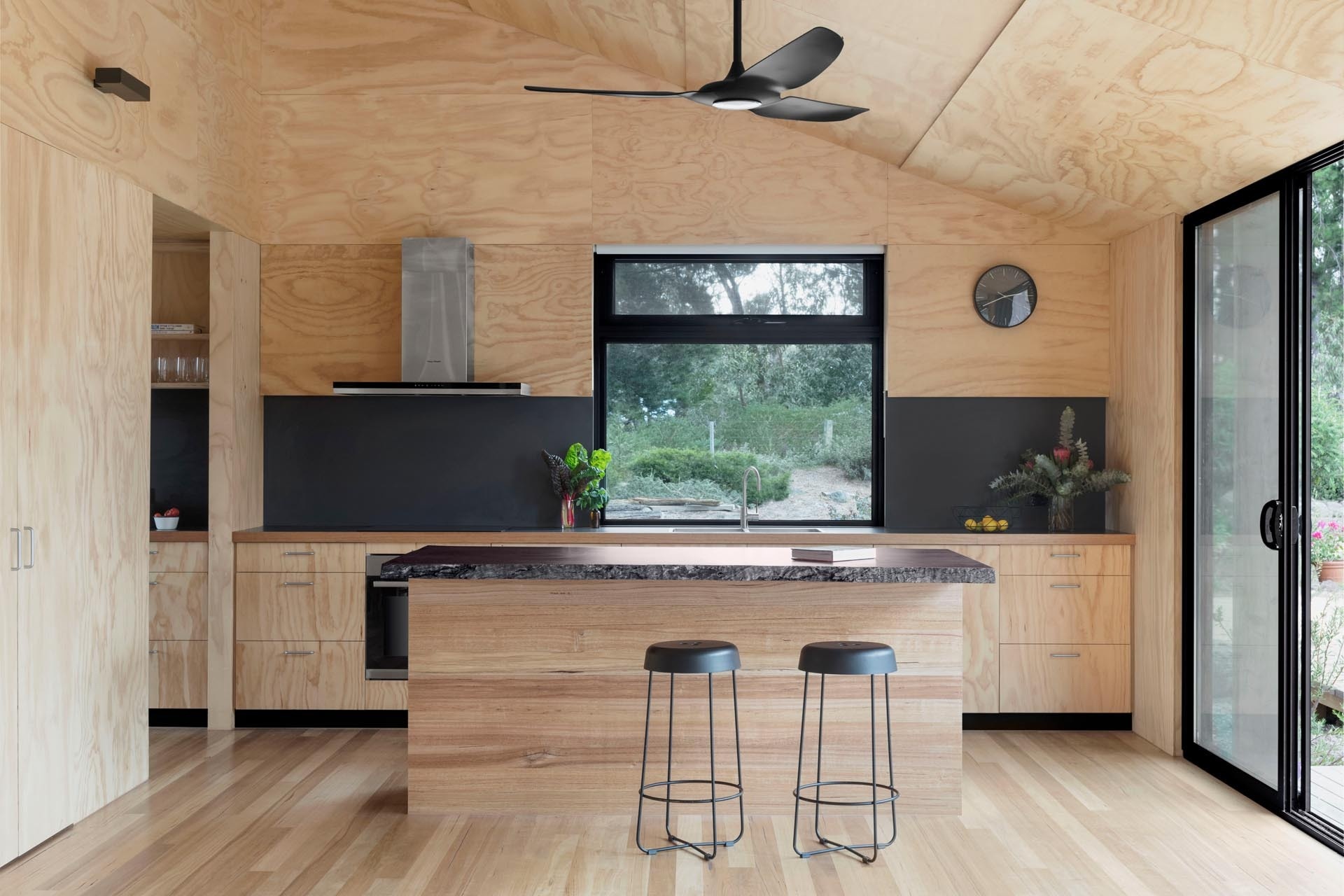
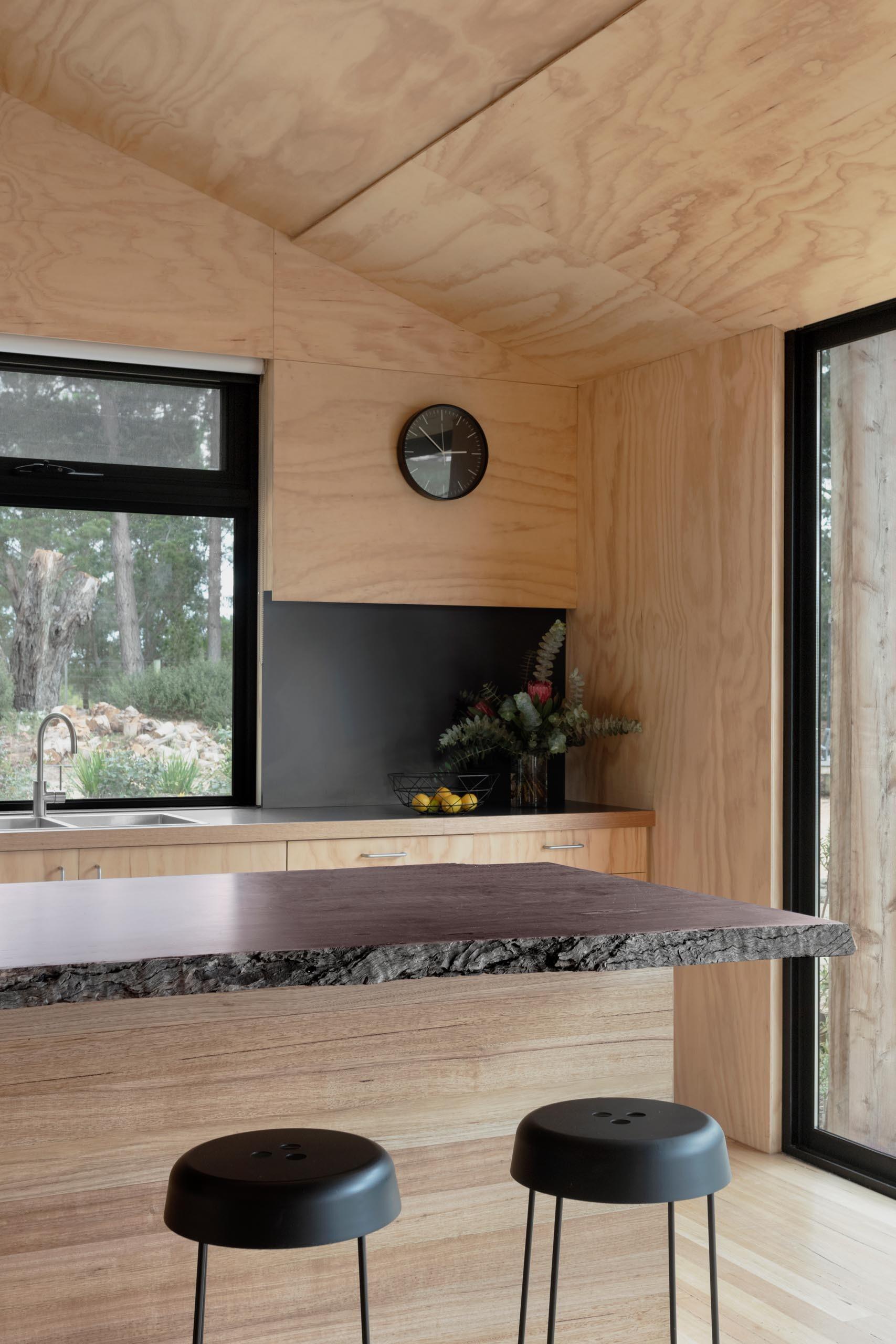
The kitchen brings together wood and matte black finishes, continuing the material language seen throughout the home.
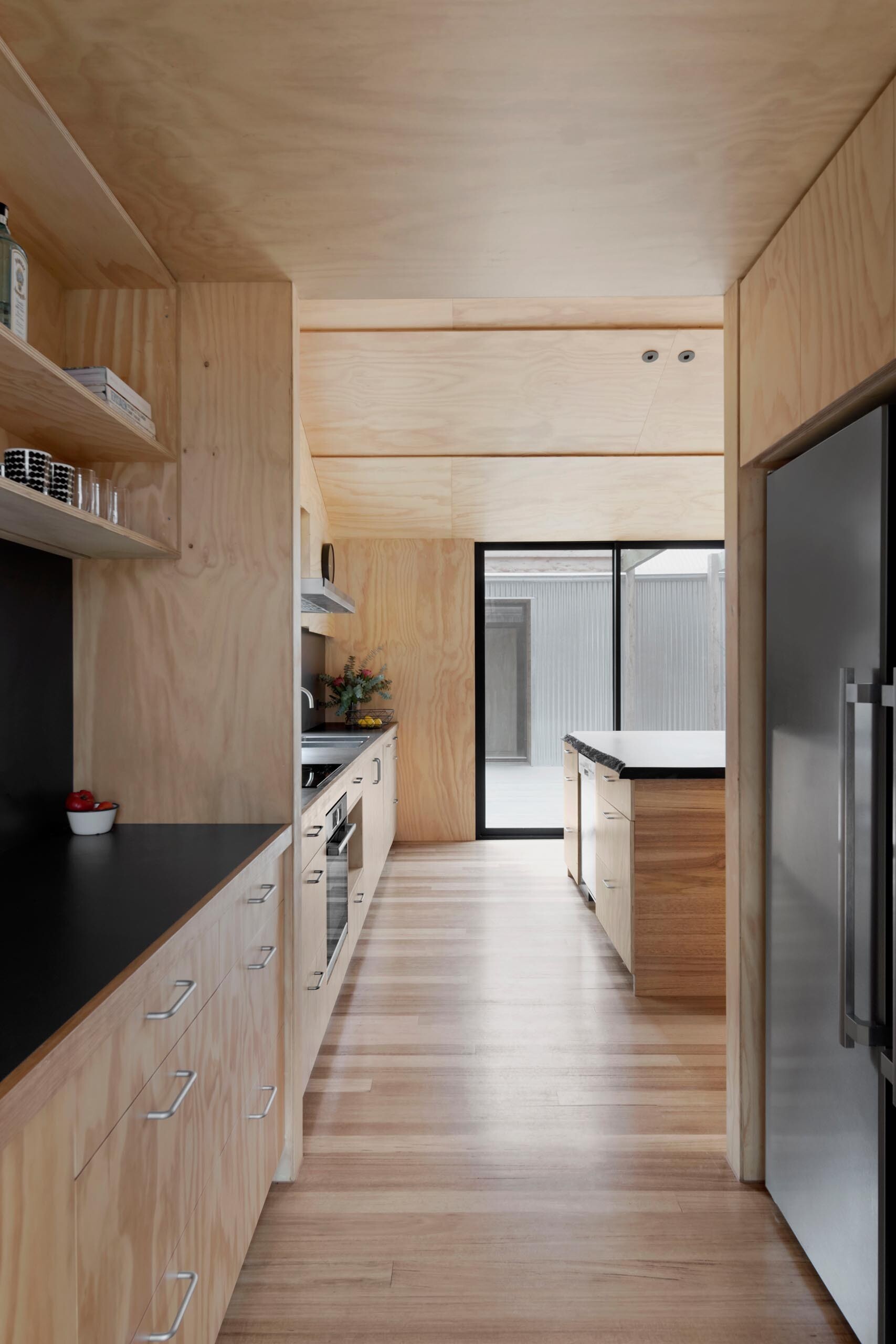
A standout feature is the island, topped with a live edge timber surface that adds extra workspace while introducing a natural focal point. Nearby, the fridge is tucked away in the pantry, keeping the main kitchen area visually clean.
Designed for Rural Living
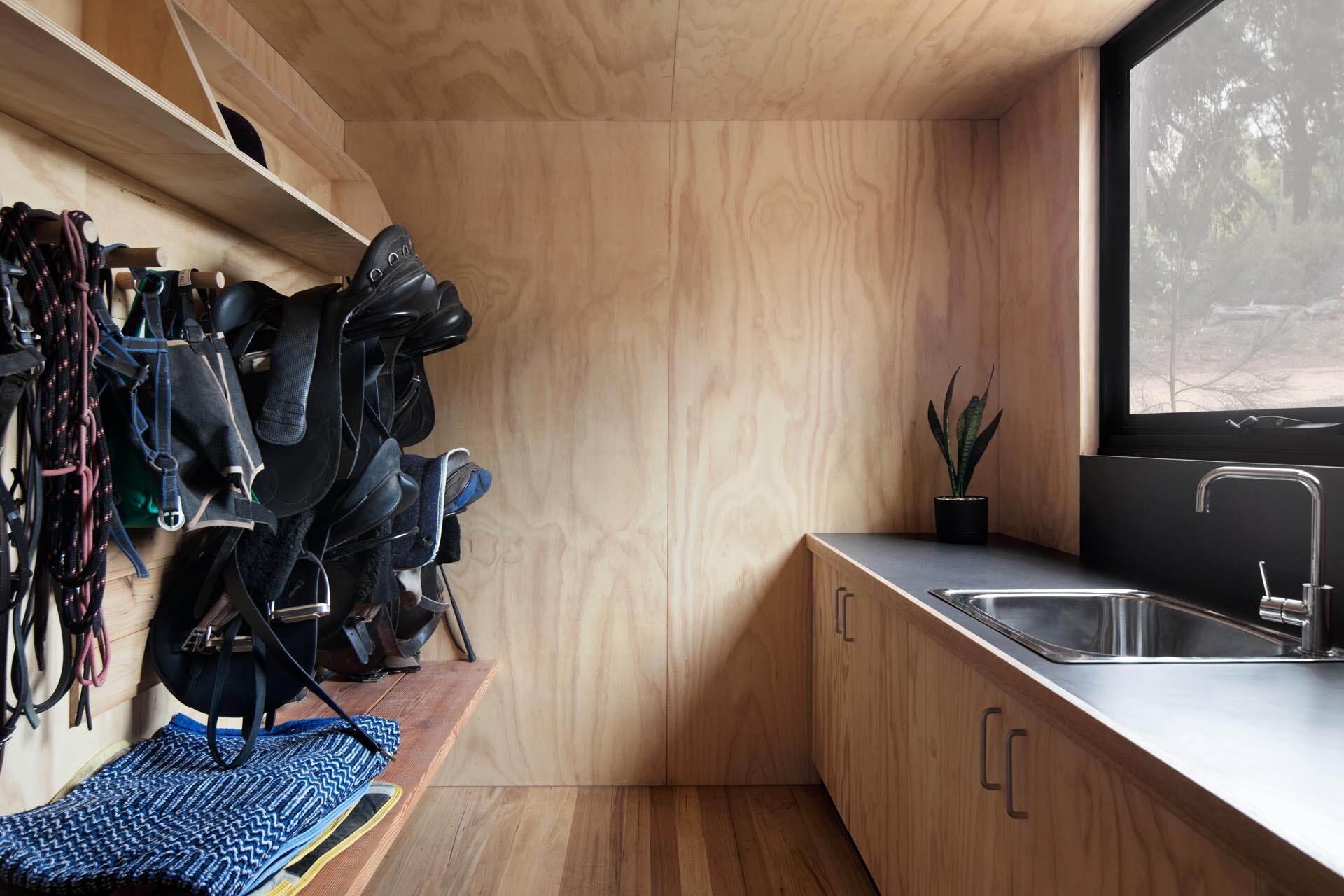
Set on a working rural property with horses, the home includes a custom tack room designed to support daily needs. Utility spaces are positioned to the south of the main pavilion, keeping practical functions separate from the primary living areas.
This layout allows the house to handle both everyday tasks and larger gatherings, from quiet weekends to hosting extended family.
Understanding the Floor Plan
The floor plan clearly shows the relationship between the two pavilions and the deck that connects them.
The main pavilion focuses on daily living, while the secondary pavilion provides a separate zone for guests. The deck sits between them, acting as both a physical link and a shared outdoor space.
It is a layout that adapts easily, whether the house is occupied by two people or filled with visitors.
The Bellbrae House brings together durability, flexibility, and simple material choices in a way that suits both everyday living and occasional gatherings. With its corrugated steel exterior and timber-lined interior, it is built to last without demanding constant upkeep.