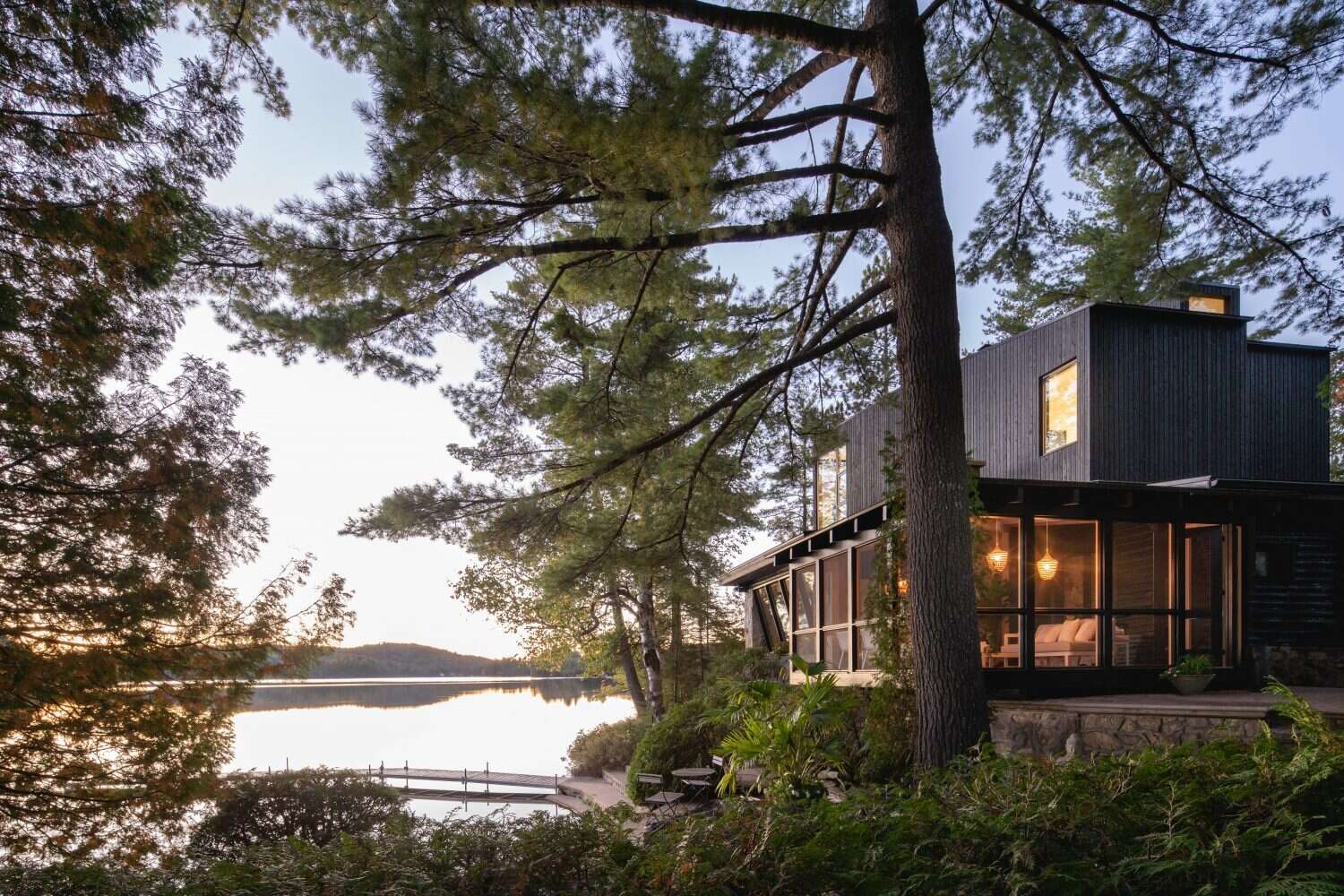
On a rocky point that reaches out into a lake in Quebec, a familiar family getaway has been carefully renovated. The log cabin, owned by the same family for four decades, recently underwent a contemporary remodel led by Paul Bernier Architecte, transforming the modest structure into a brighter, more fluid lakeside home while preserving the character that made it special in the first place.
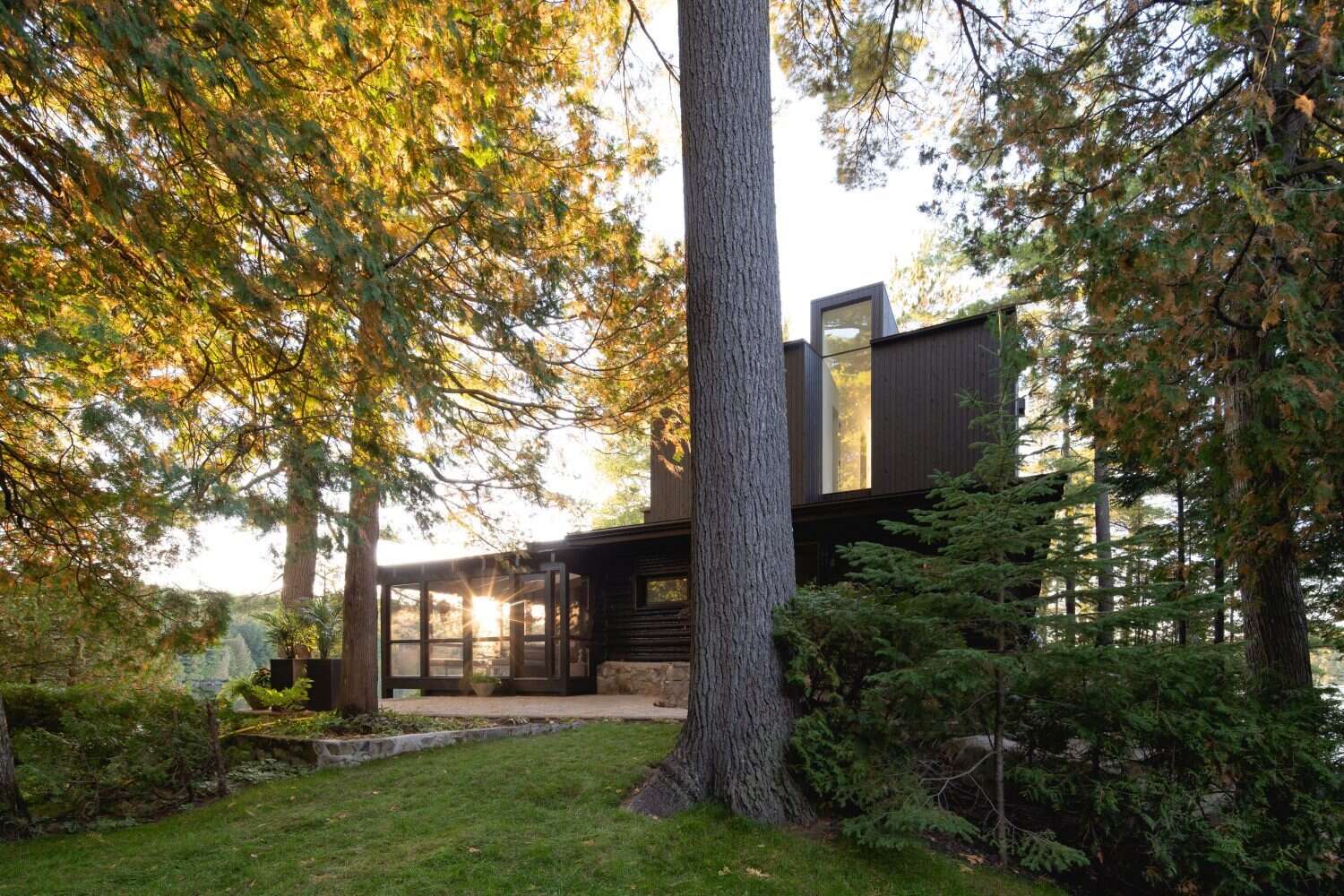
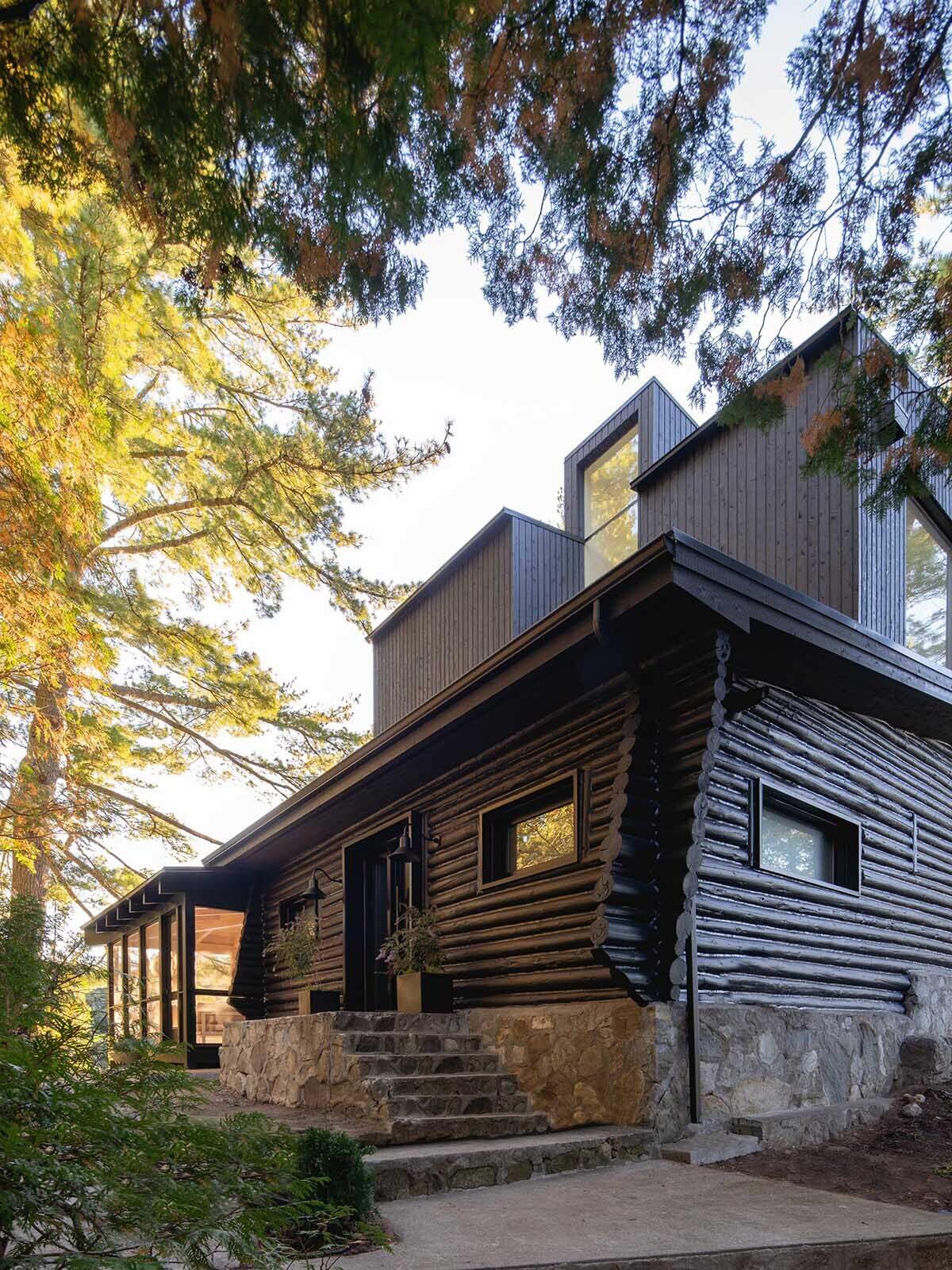
The cabin occupies a dramatic site where the land narrows and pushes into the water. Surrounded by tall pines and expansive lake views, the structure sits directly on a stone base anchored into the rock beneath it. Rather than compete with this landscape, the architects allowed the building to blend quietly into it. The dark exterior cladding and the heavy stone foundation visually tie the cabin to the rocky ground, making it appear as though it has always belonged to the point where it stands.
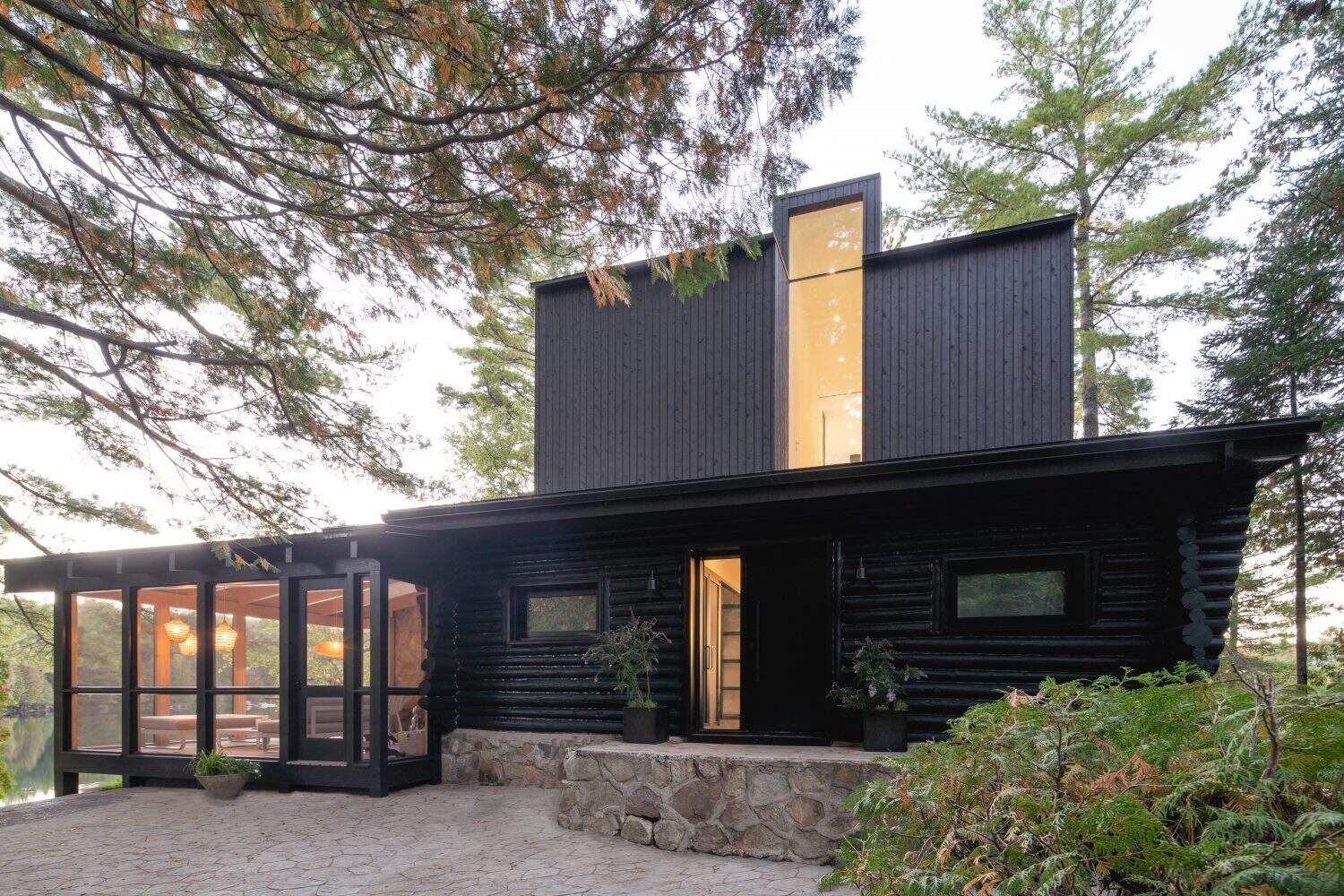
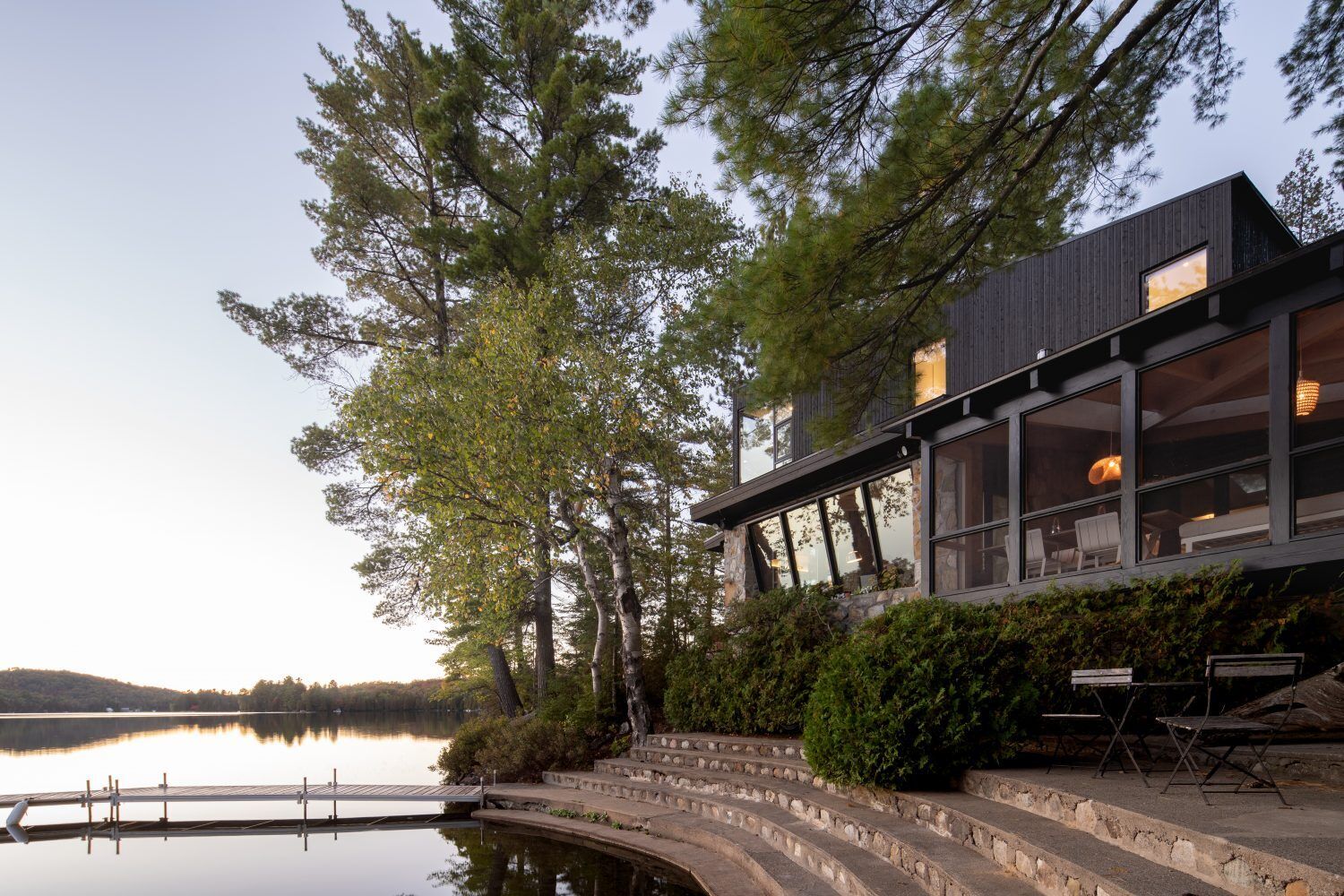
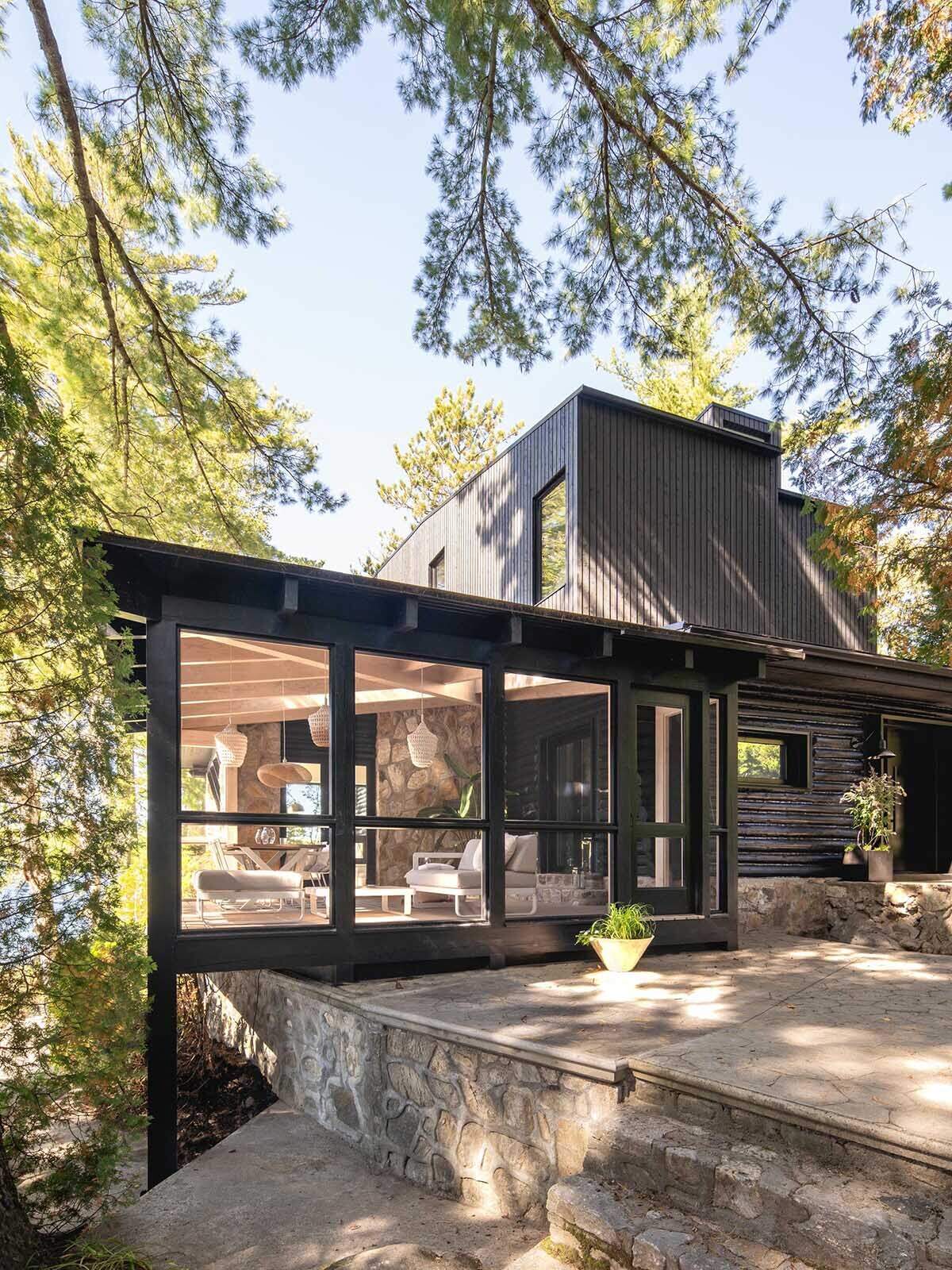
The renovation involved both restoring the original chalet and expanding it. Because the shoreline sits so close to the building, there was little opportunity to spread outward. The architects instead chose to build upward, adding a second level that introduces a contemporary presence while maintaining the spirit of the original structure. At ground level, a screened room was also added, creating a sheltered outdoor space where the owners can enjoy the lake air without leaving the comfort of the cabin.
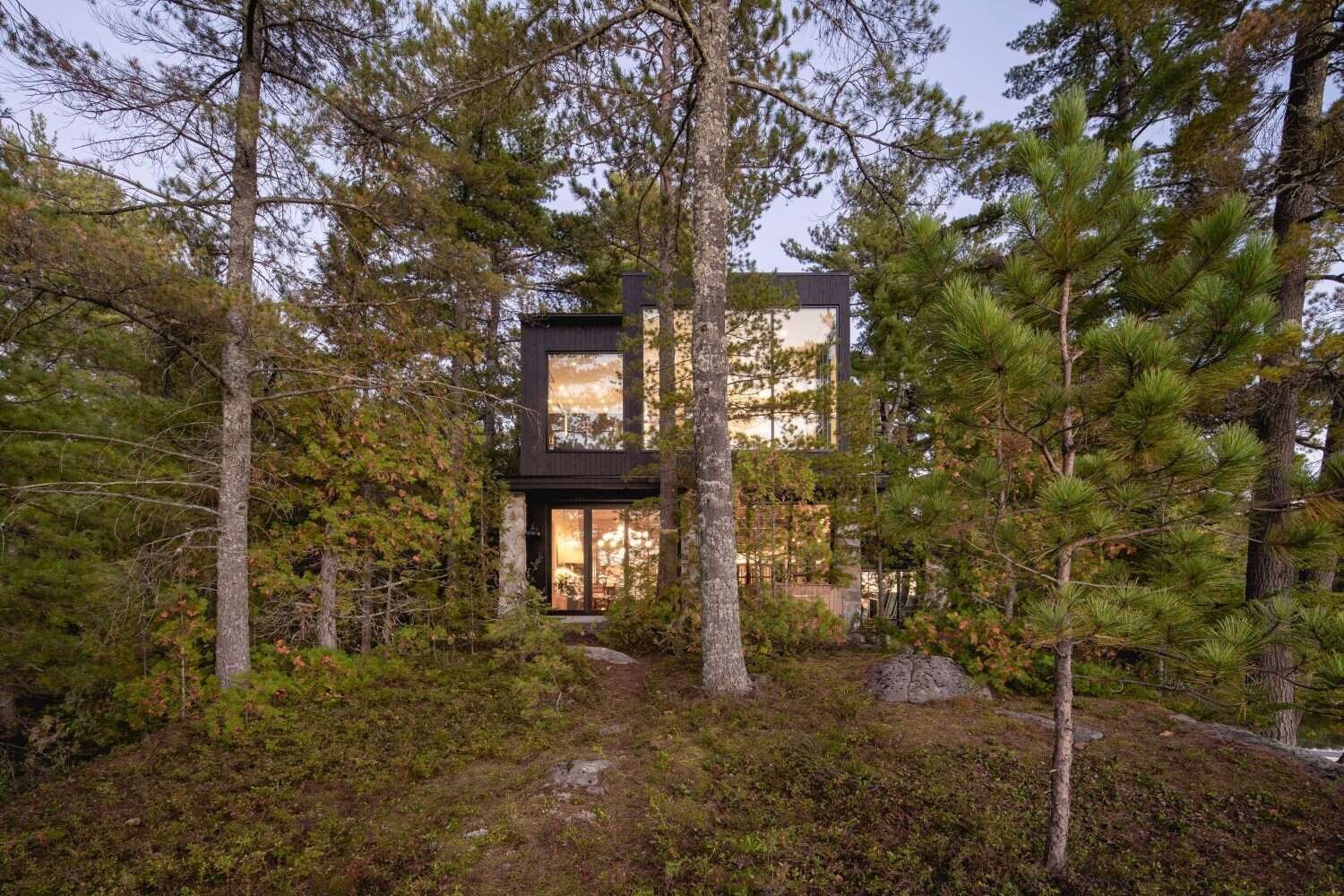
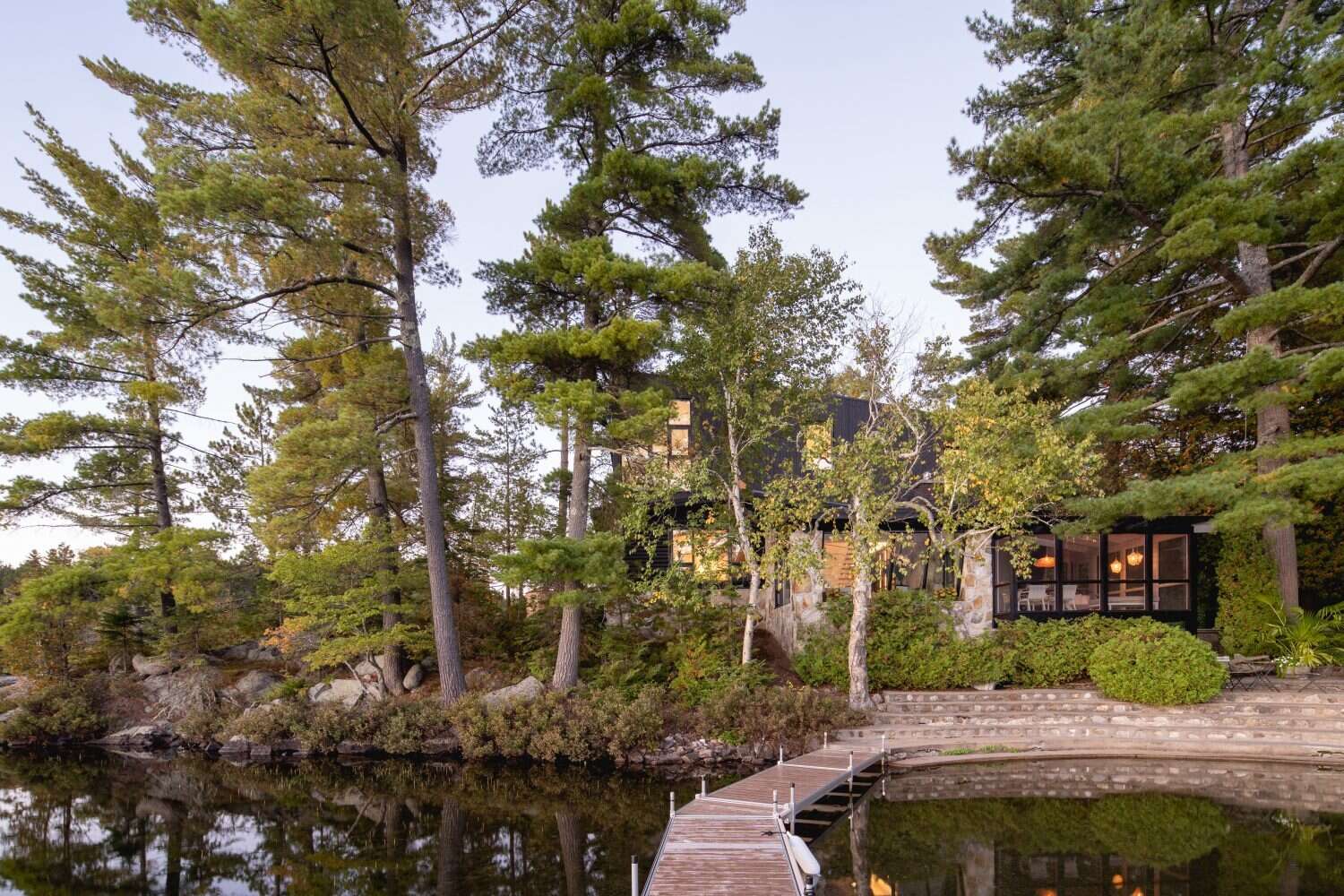
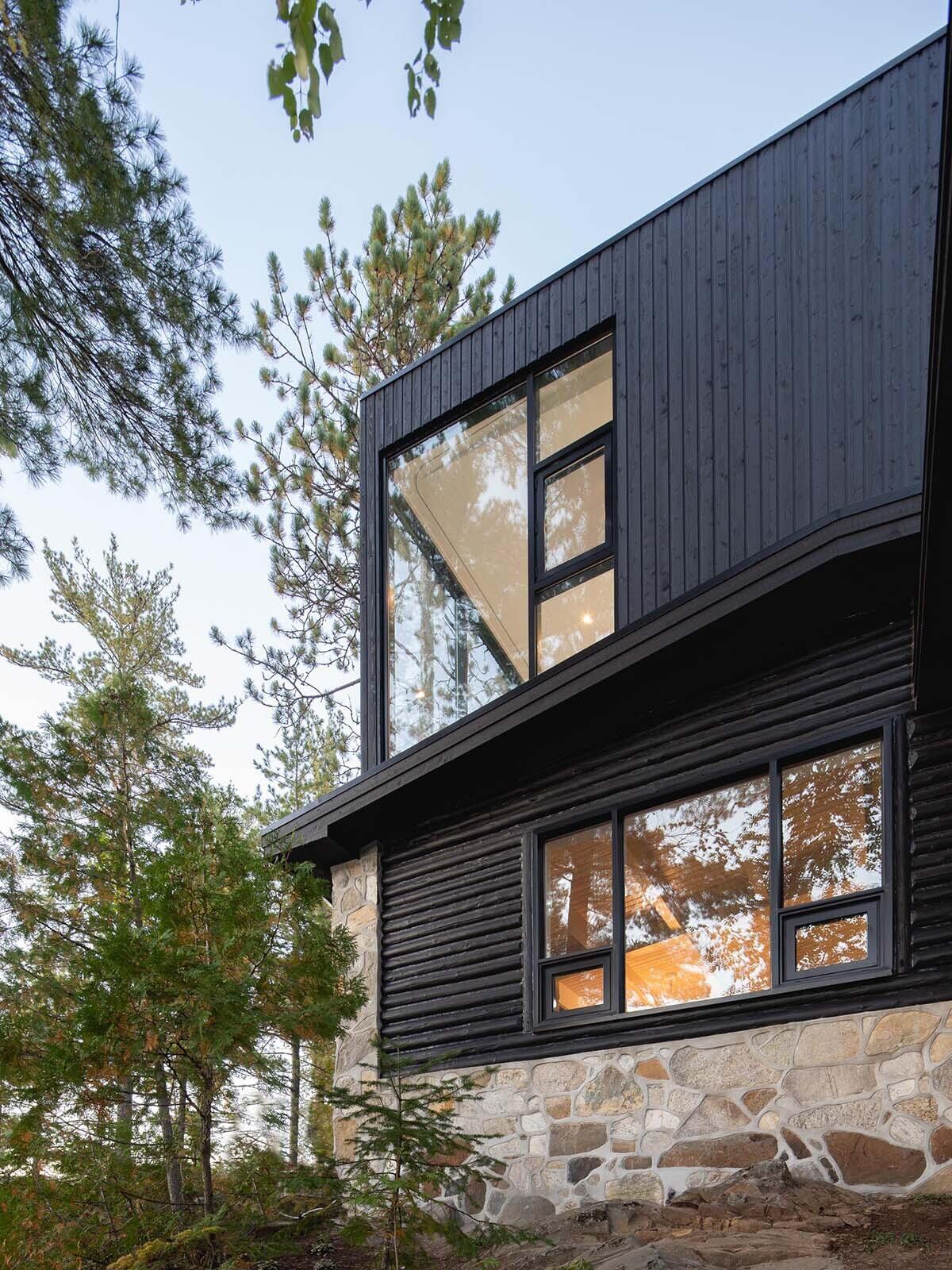
The result is a home that openly shows the meeting of two eras. The original log structure remains rustic and tactile, defined by stone and heavy timbers. Above it sits the newer addition, a simple and monolithic volume whose wood tones echo those of the chalet below. Even the roof line of the new level reflects the breaks and angles of the original sloped roof, allowing the two parts to relate to one another without trying to disguise the difference in age.
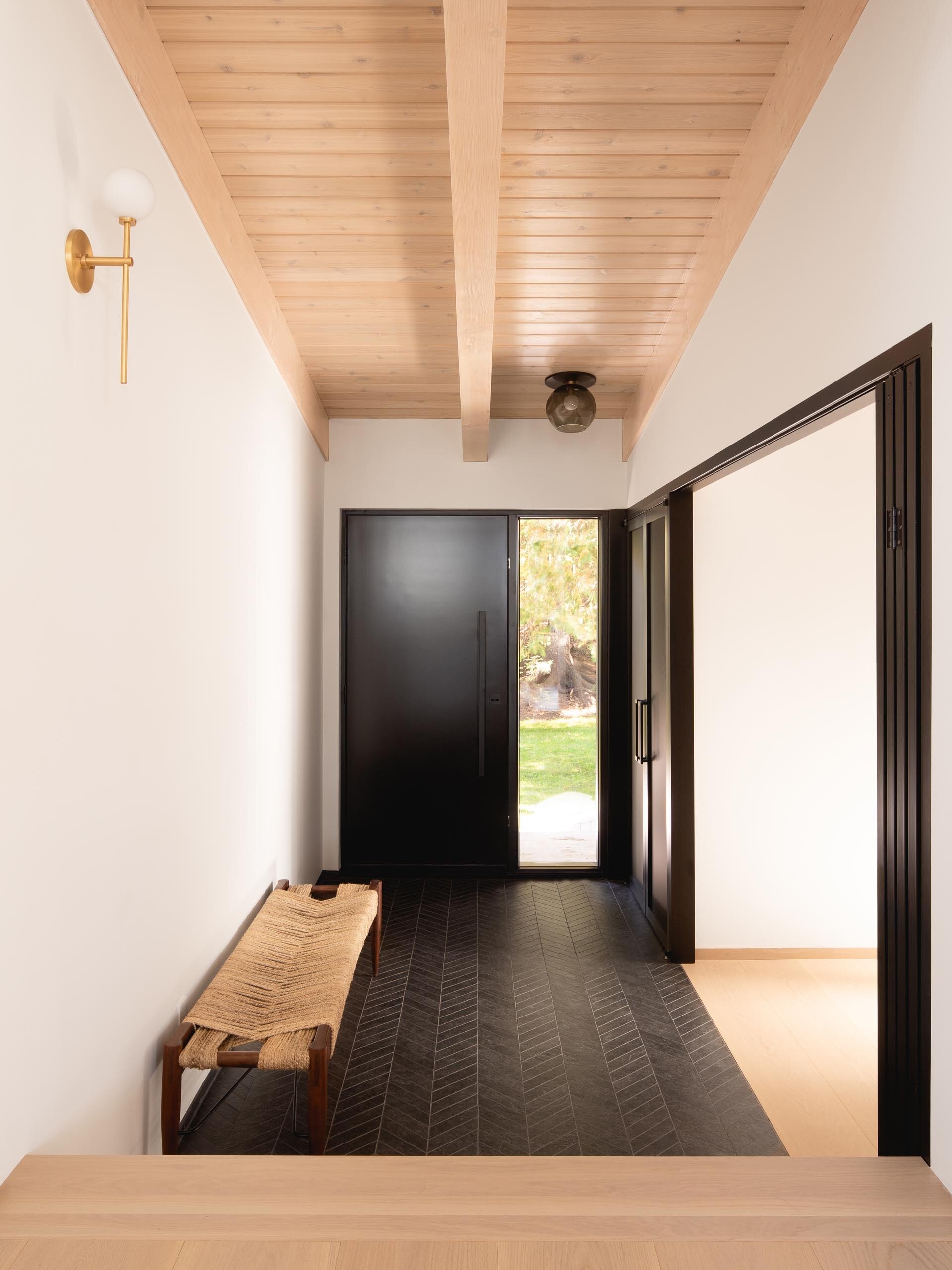
Stepping inside reveals a surprising contrast with the dark exterior. The interior opens with a bright entryway where a light wood ceiling brings warmth overhead. Underfoot, a black tile floor laid in a chevron pattern introduces a crisp graphic detail that immediately signals the blend of rustic and contemporary elements found throughout the house.
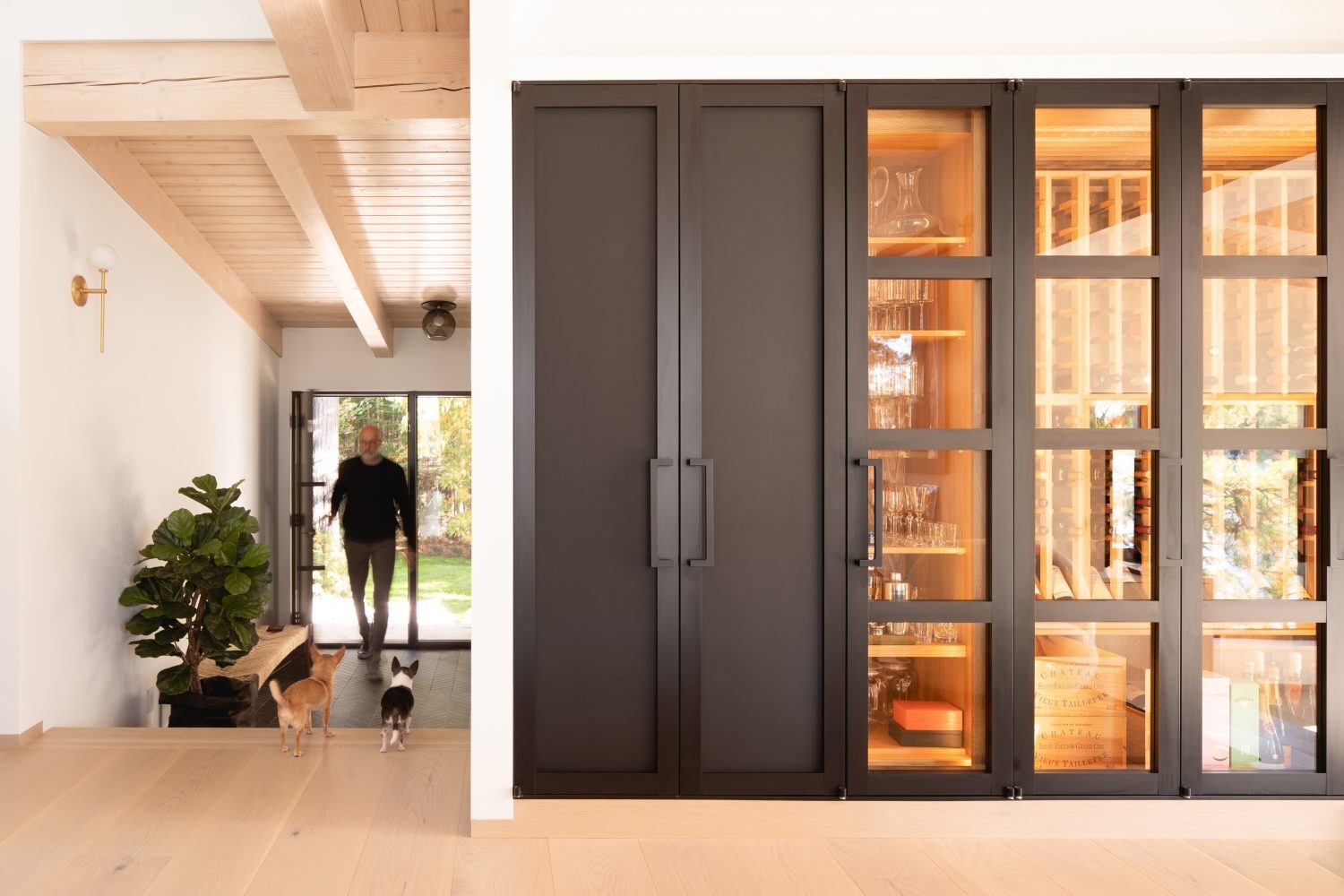
From the entry, a short set of steps leads down to the main social areas of the cabin. Along the way, a glass-enclosed wine storage area becomes an unexpected focal point. Defined by a striking black door and transparent walls, the space adds a modern architectural moment within the rustic shell of the cabin.
Just beyond it sits a small sitting area organized around a fireplace. Angled windows frame views of the surrounding trees and lake, turning the quiet corner into an intimate place to relax while remaining visually connected to the landscape outside.
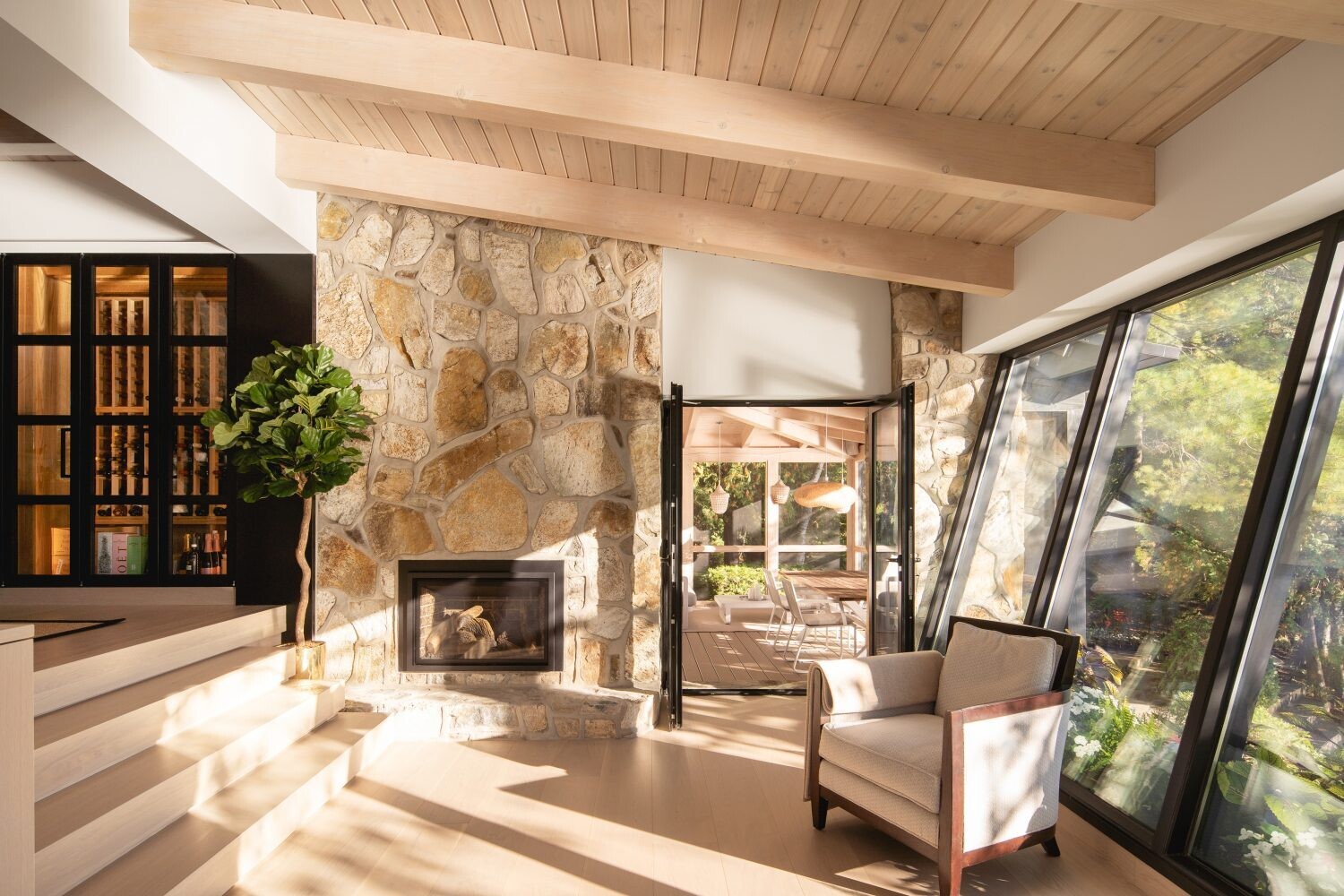
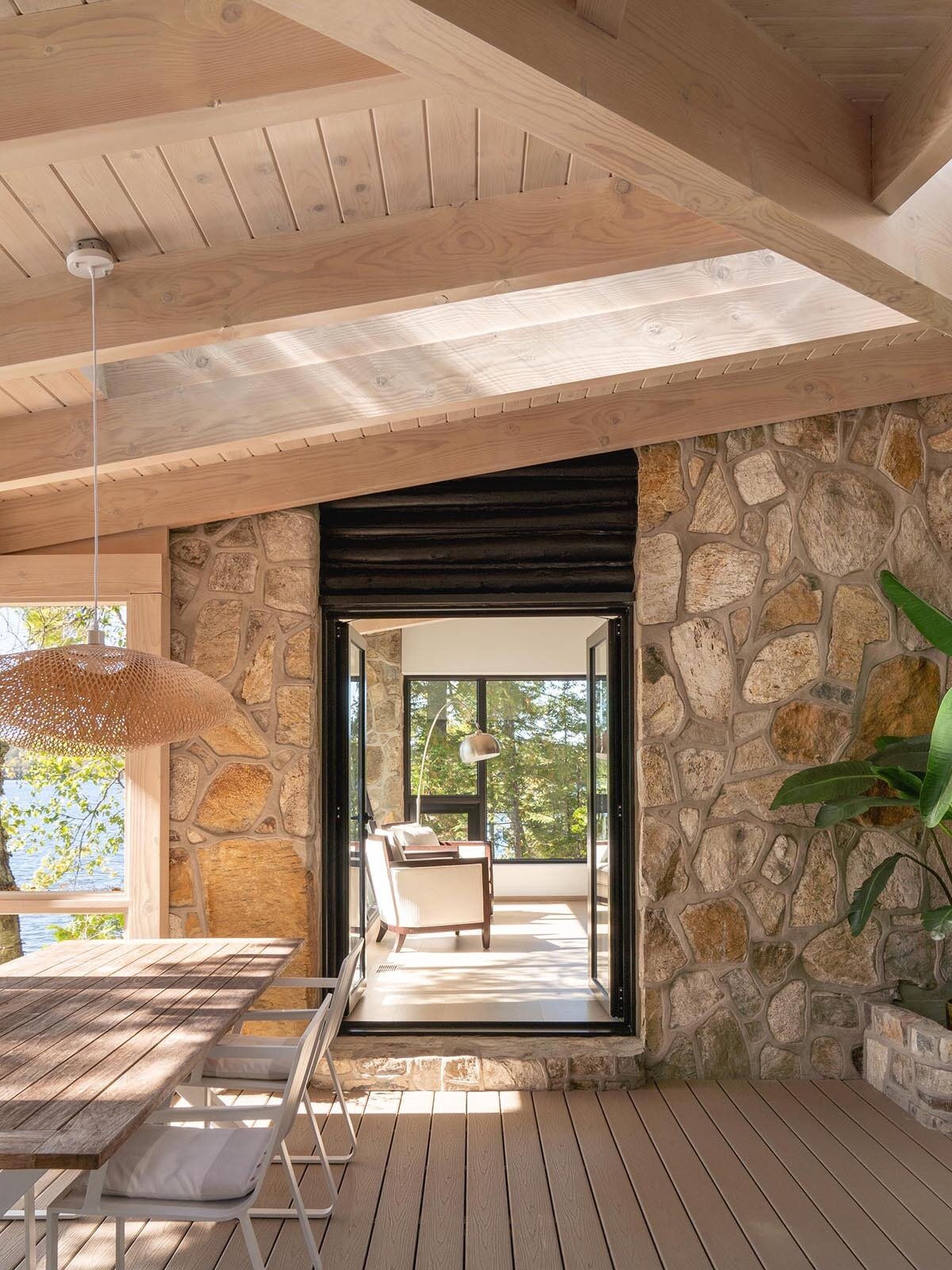
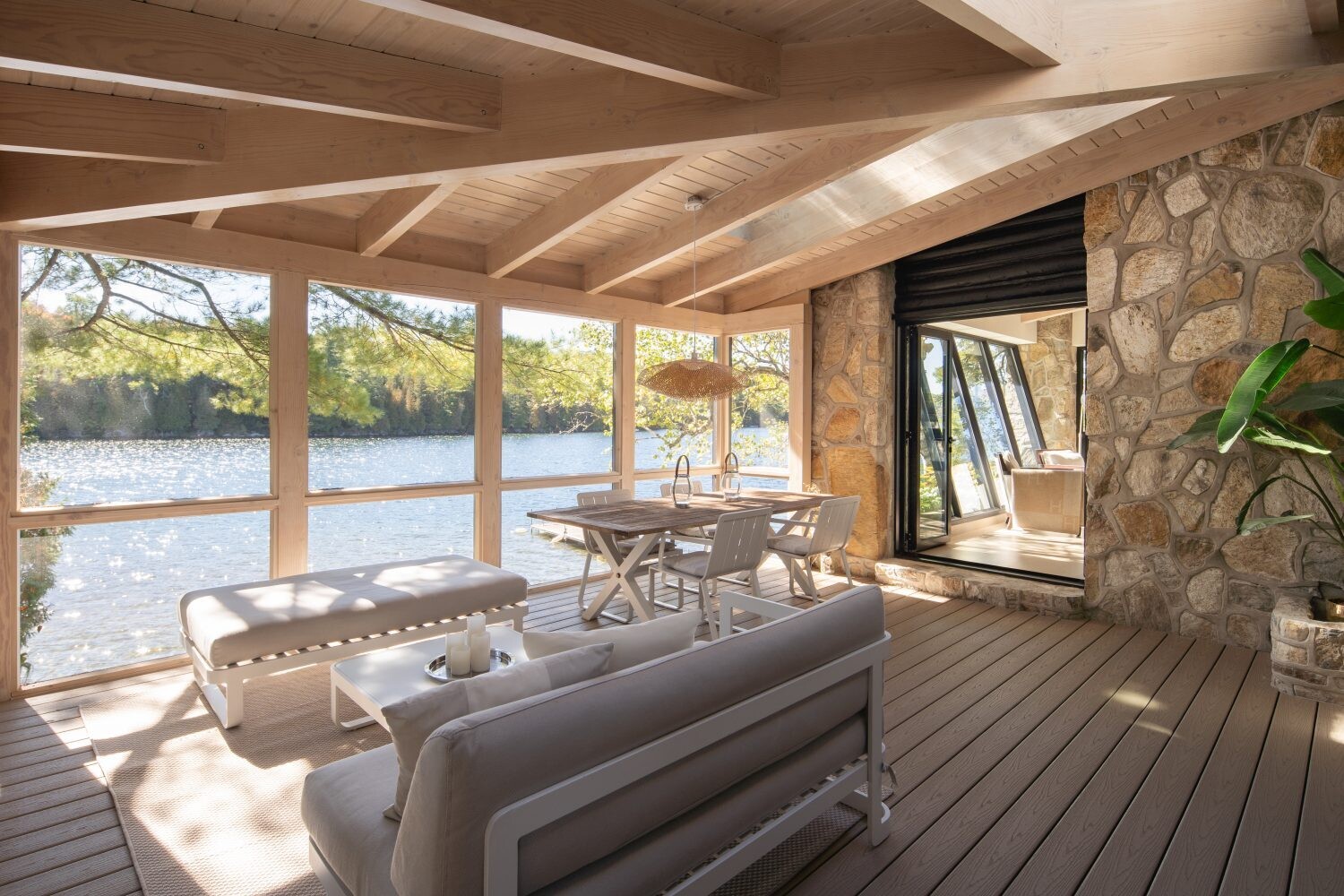
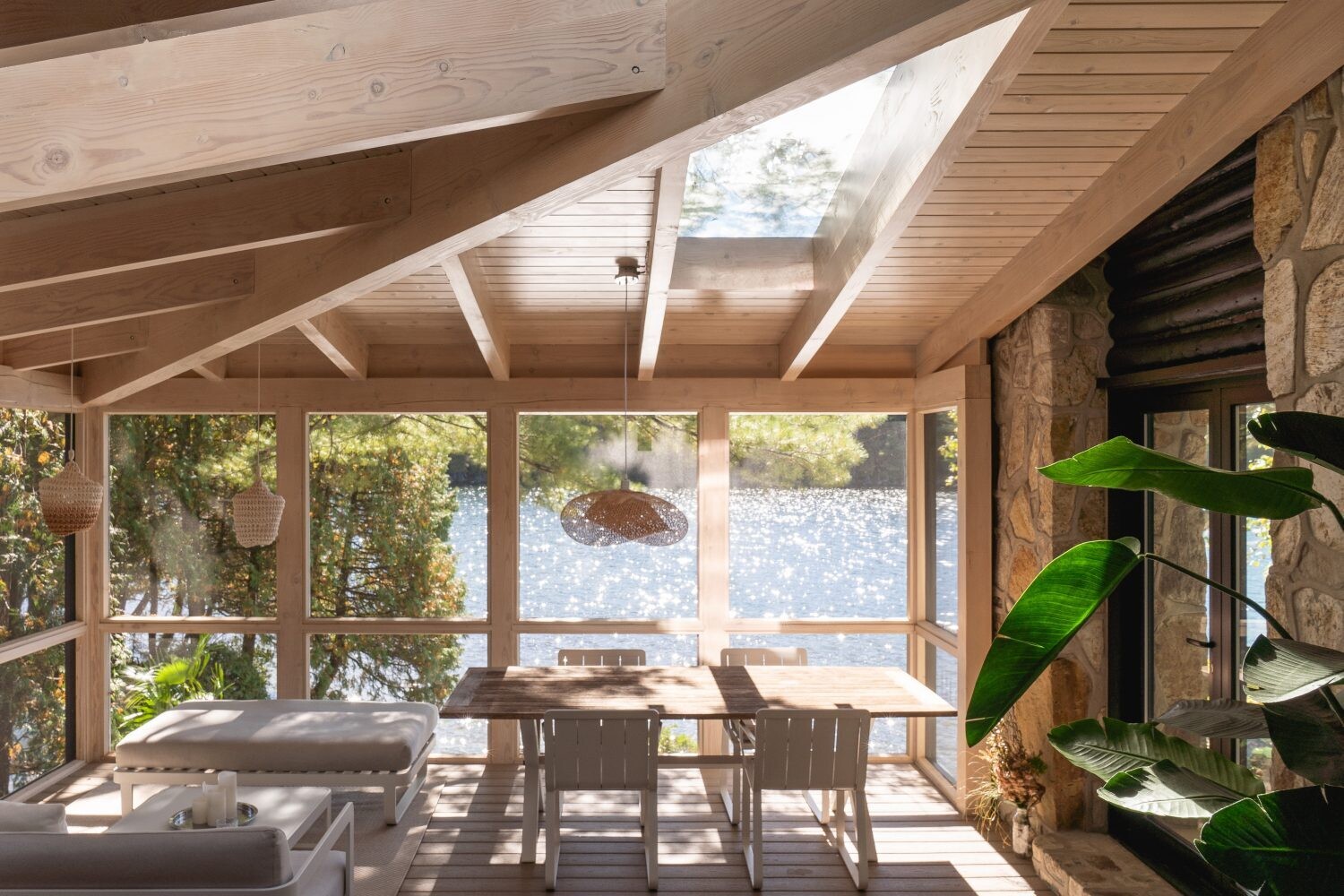
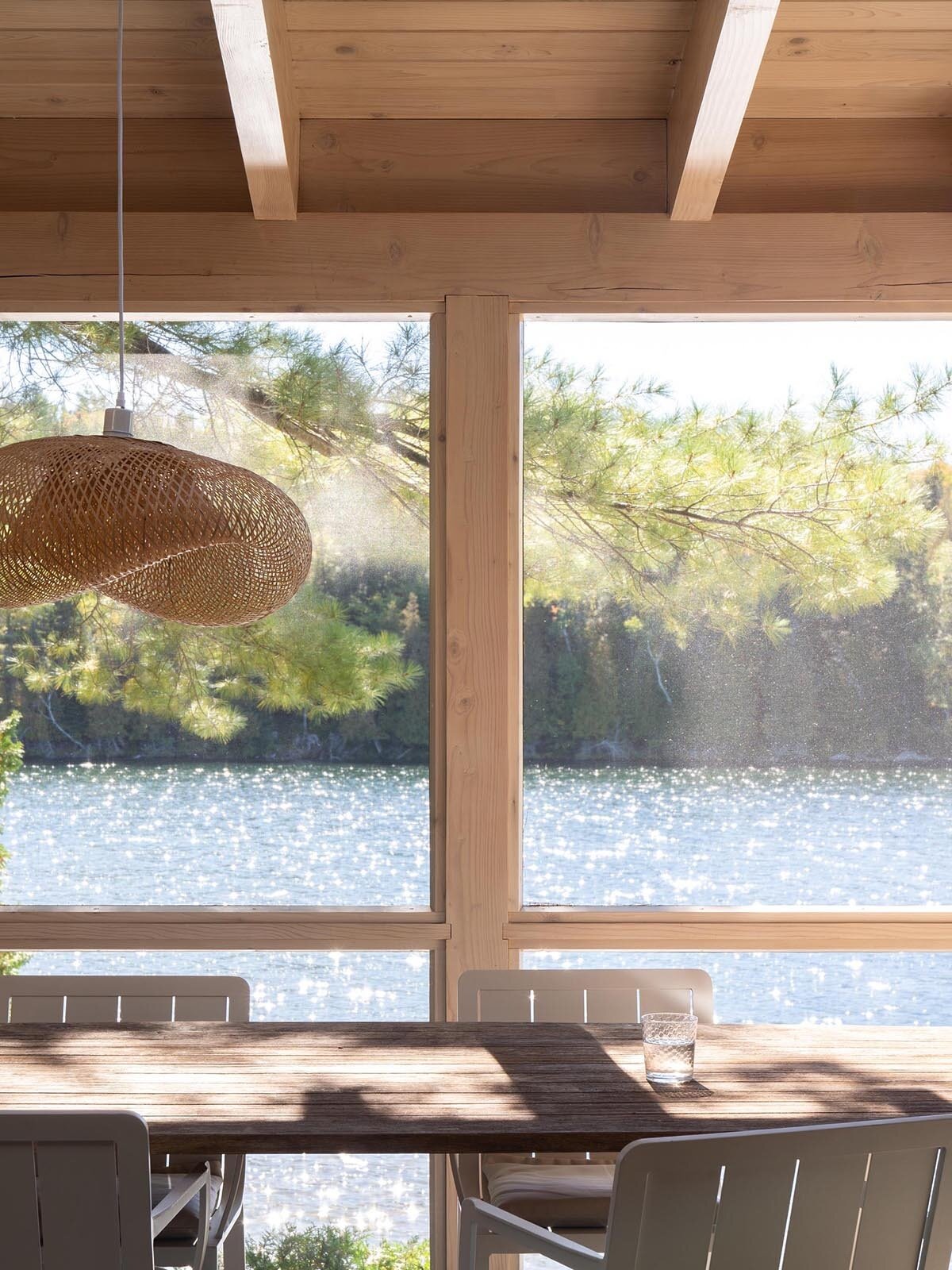
Nearby, a set of doors opens onto the screened porch that was added during the renovation. Positioned on the south side of the cabin, this room functions as an outdoor living area protected from insects while still welcoming the breeze from the lake.
Furnished with a dining table, a sofa, and a matching bench, the porch provides another place for the family to gather. It extends daily life toward the landscape while keeping the experience comfortably sheltered.
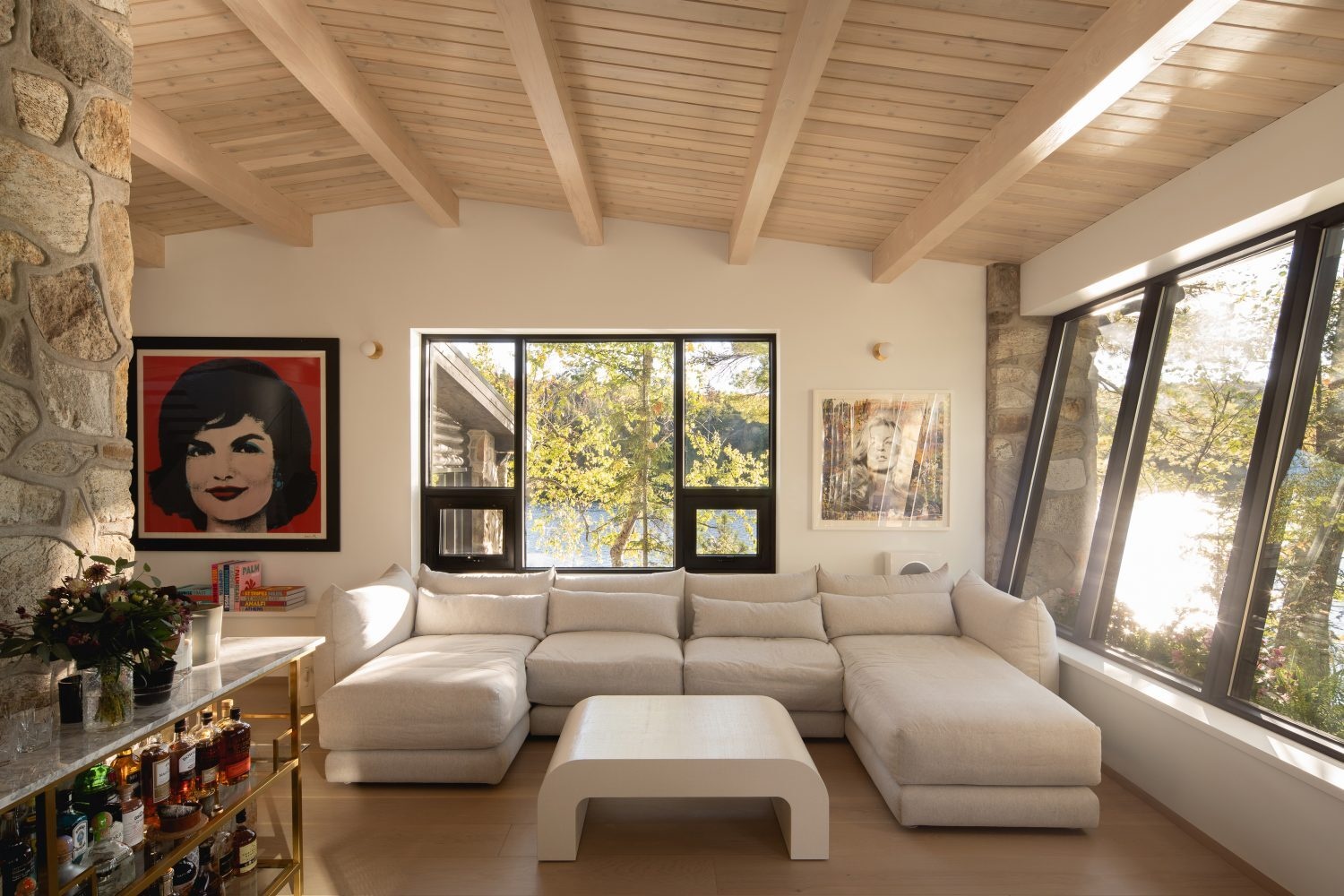
Back inside, the main living room focuses on the landscape. A generous U-shaped sofa faces the windows, allowing everyone in the room to look out toward the lake. The arrangement makes the scenery a constant presence, whether the family is relaxing, reading, or entertaining guests.
At the heart of the house, the original stone fireplace has also been restored so that it can be seen from multiple sides, and serves as a divider, separating the living room from the kitchen while keeping the overall layout open and connected.
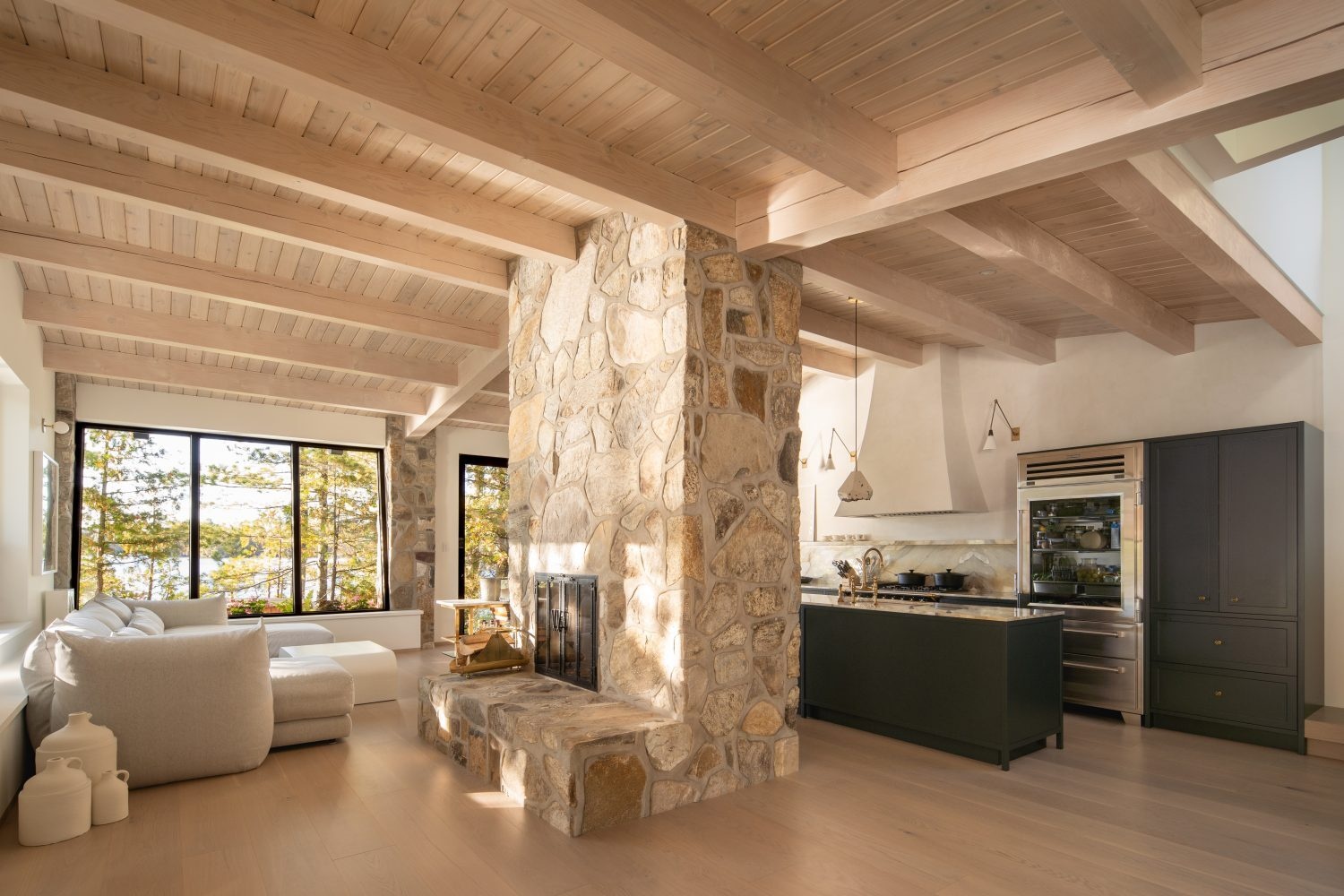
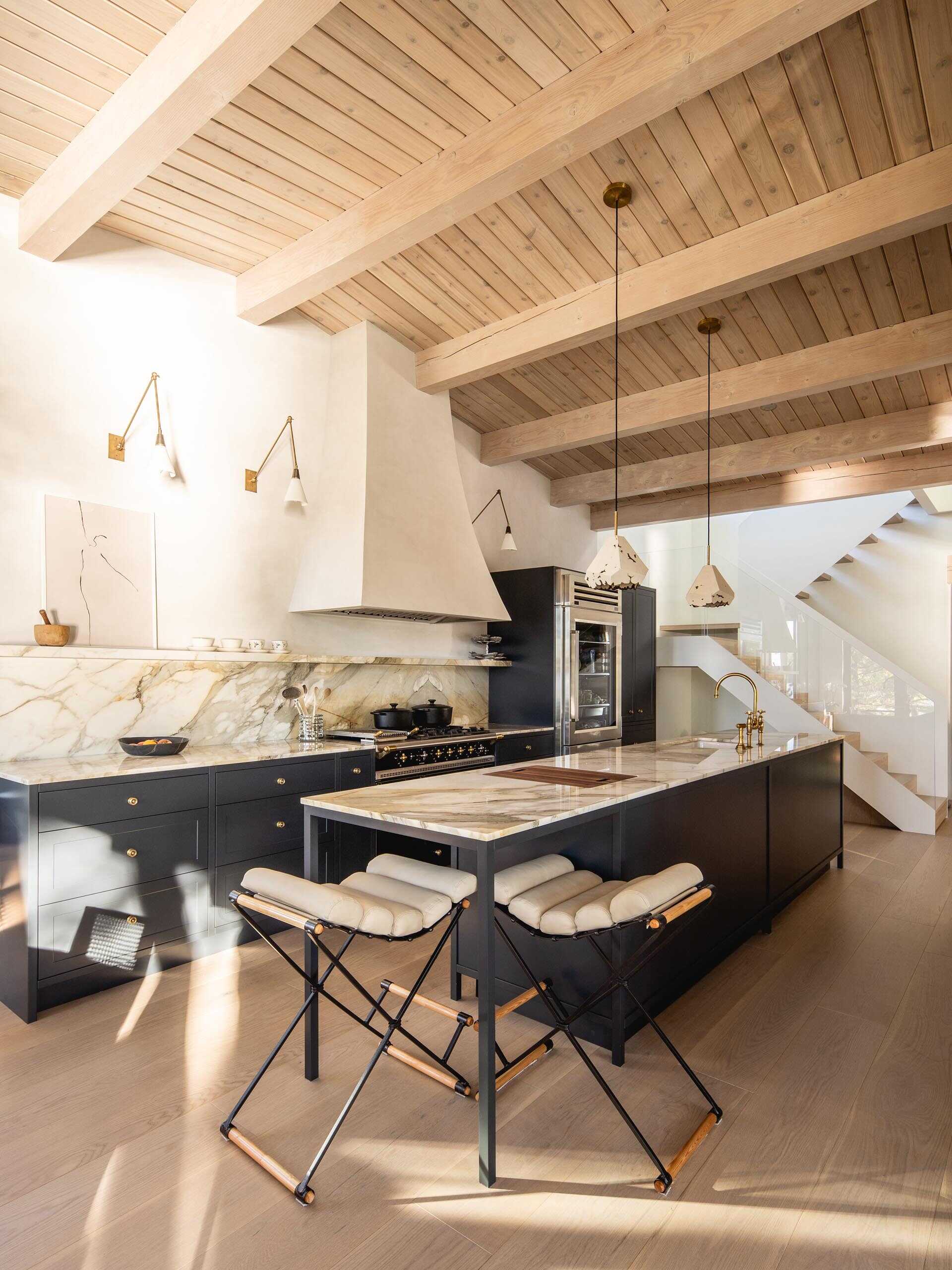
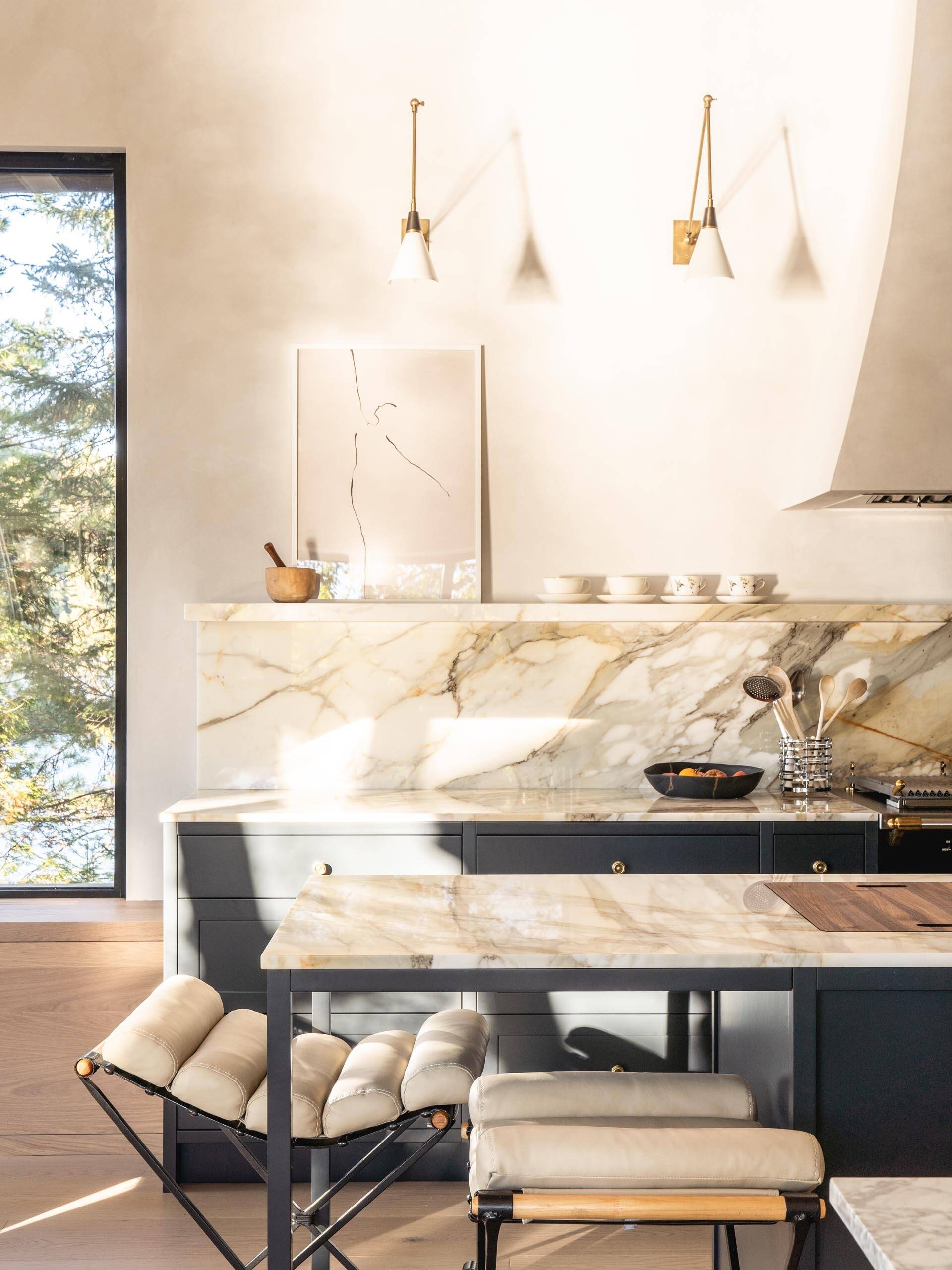
In the kitchen, the design shifts toward a more contemporary expression. Matte black cabinetry forms a strong visual base, while light-colored marble surfaces brighten the room above.
The marble countertop and backsplash reflect the natural light entering from nearby windows, helping the kitchen feel open and connected to the rest of the living spaces.
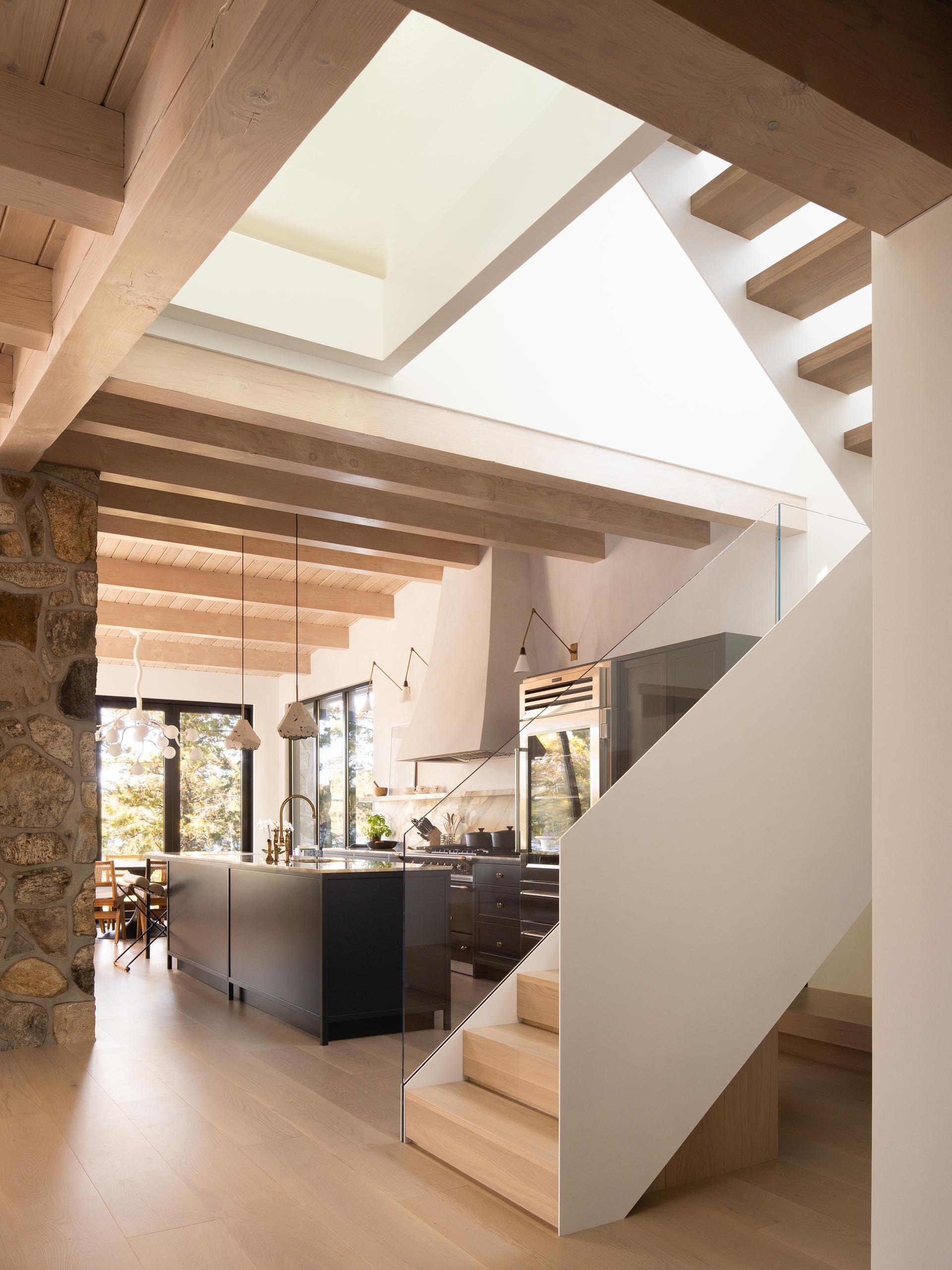
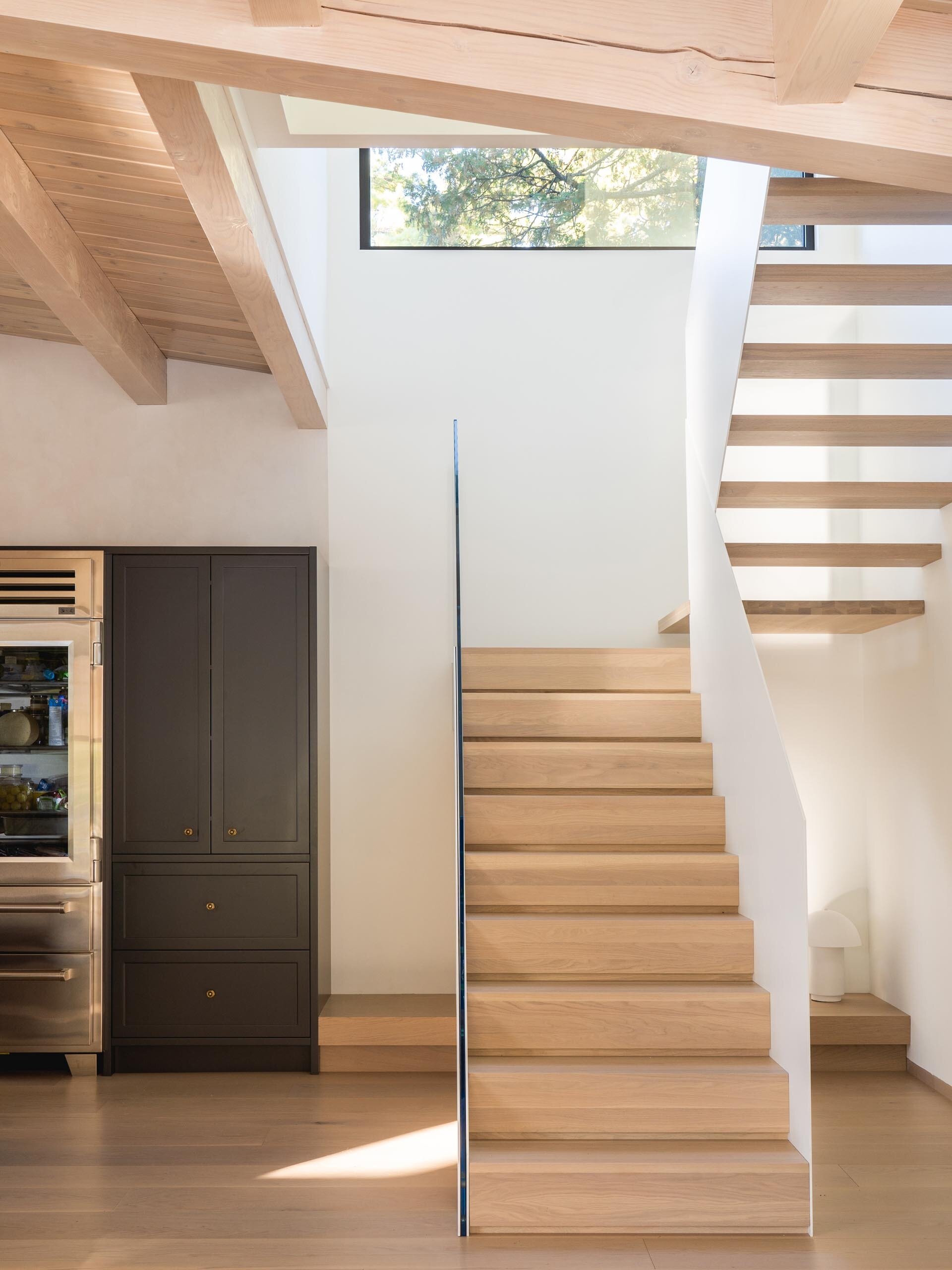
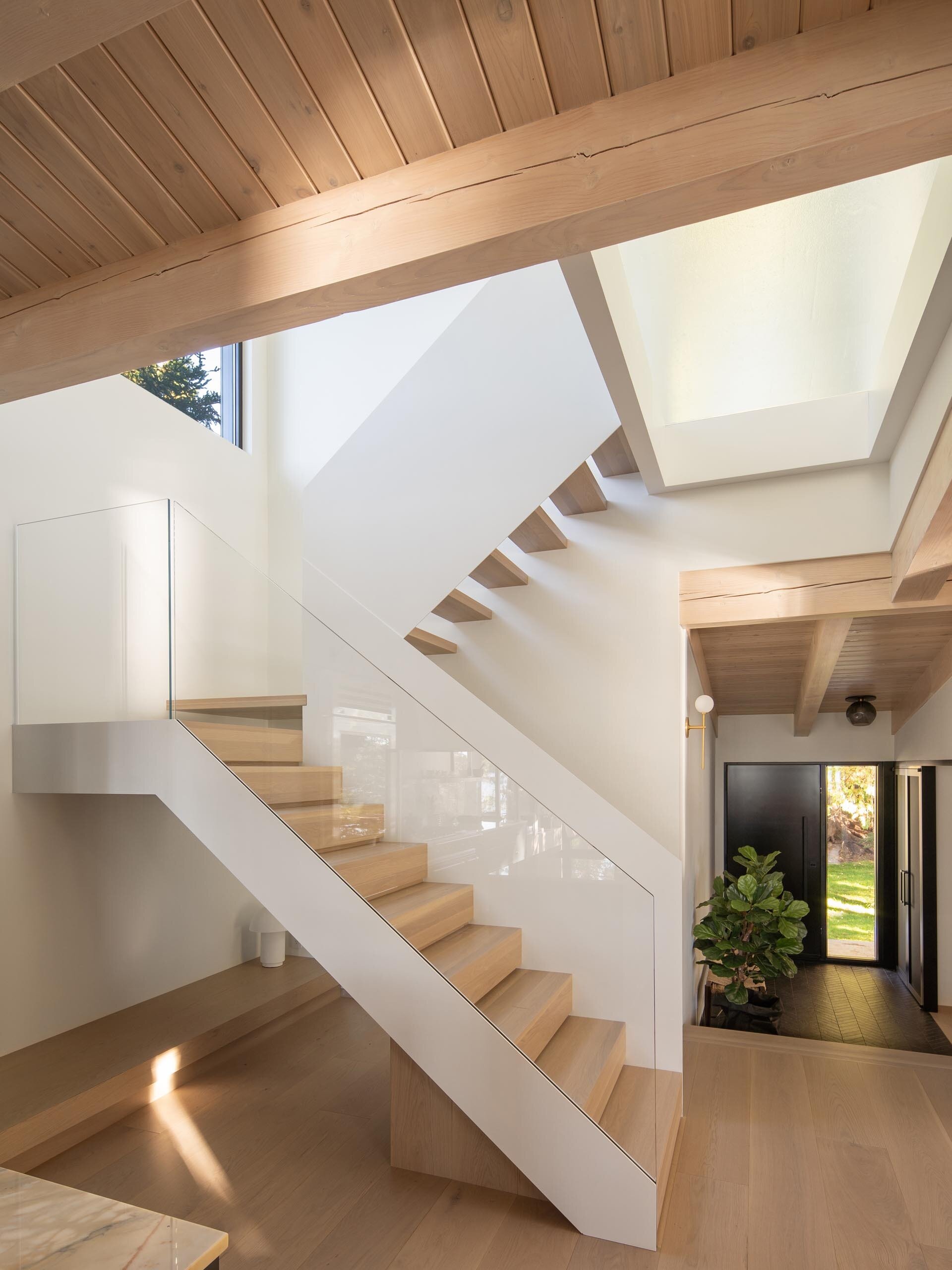
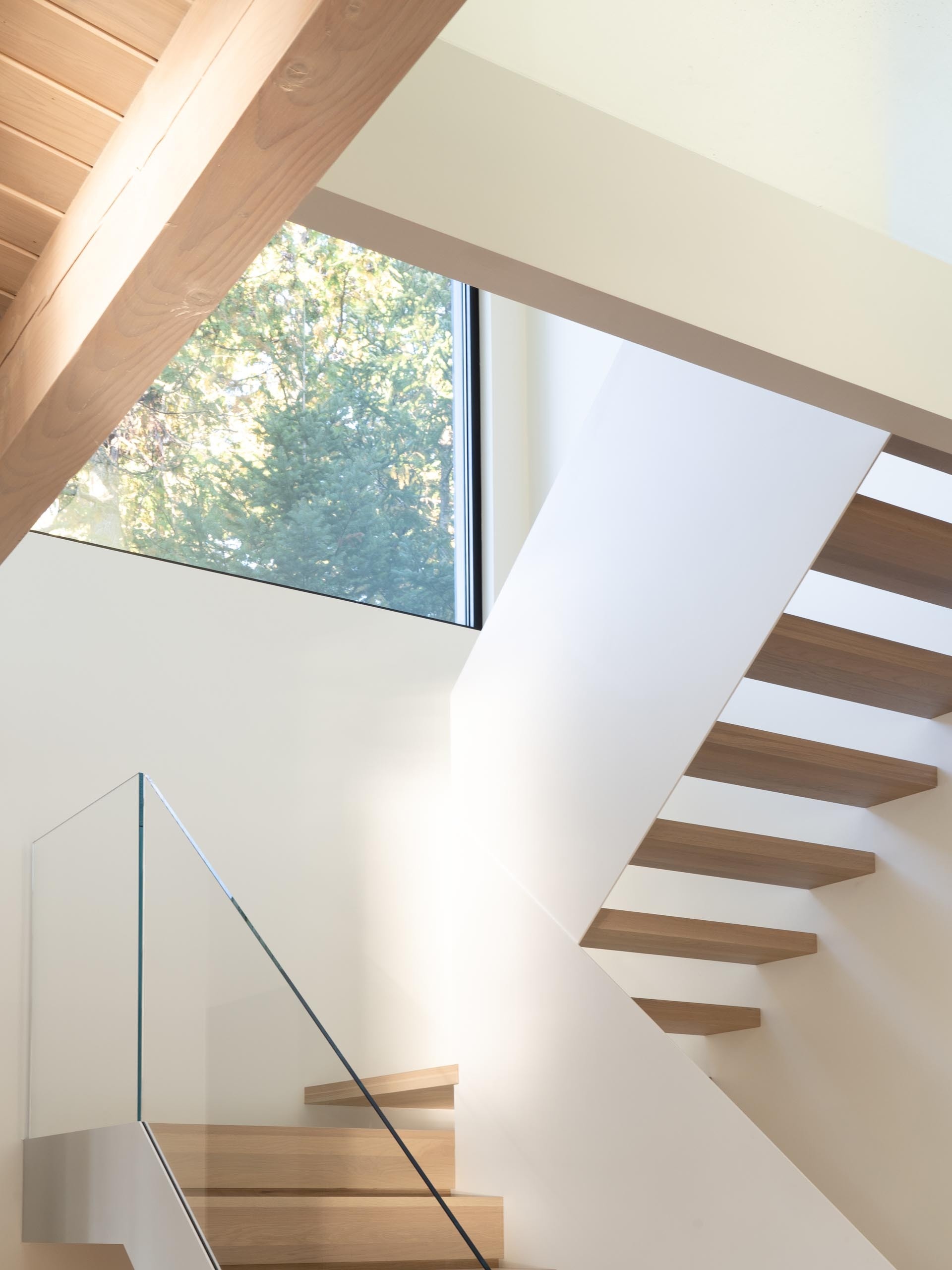
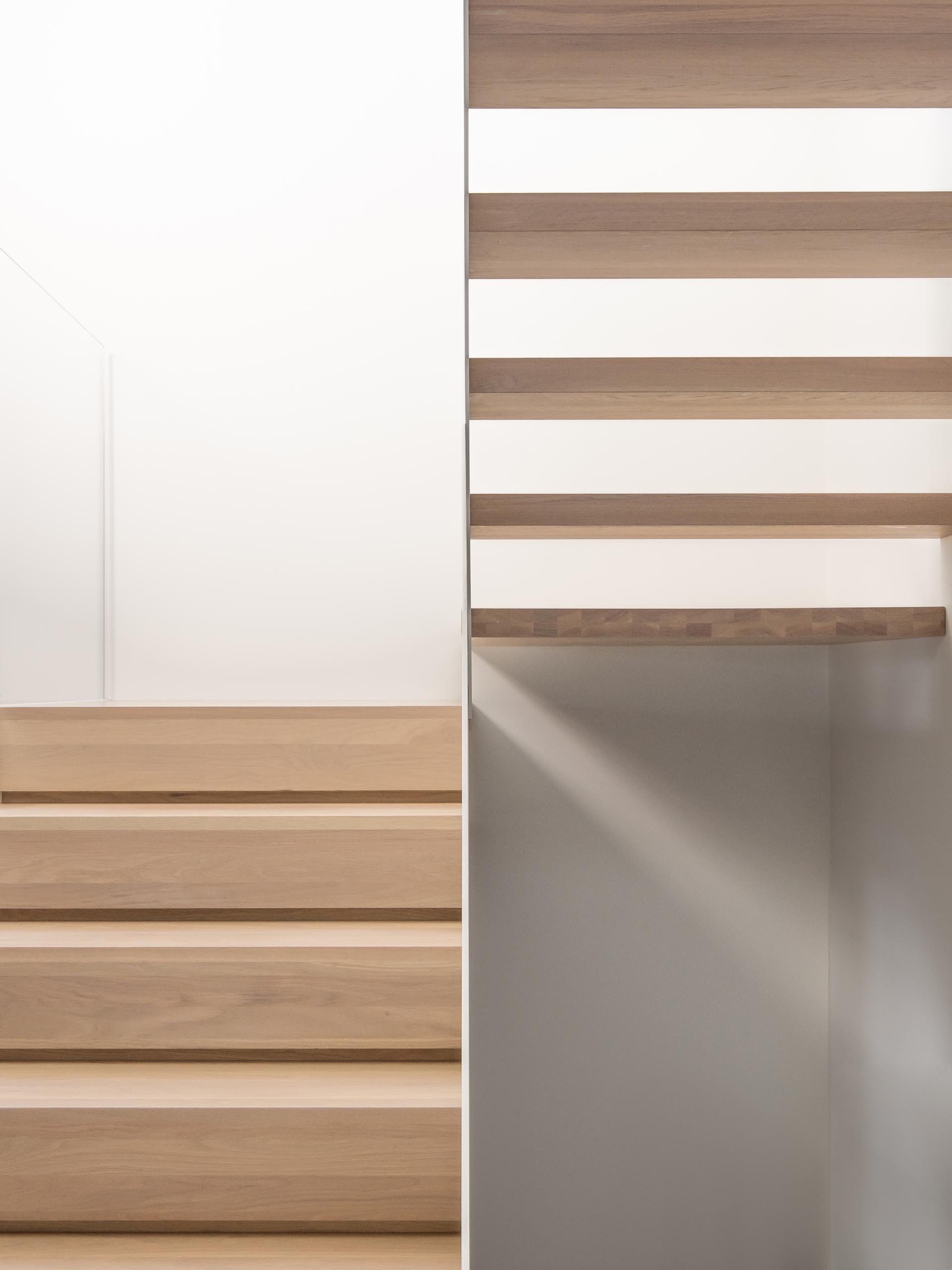
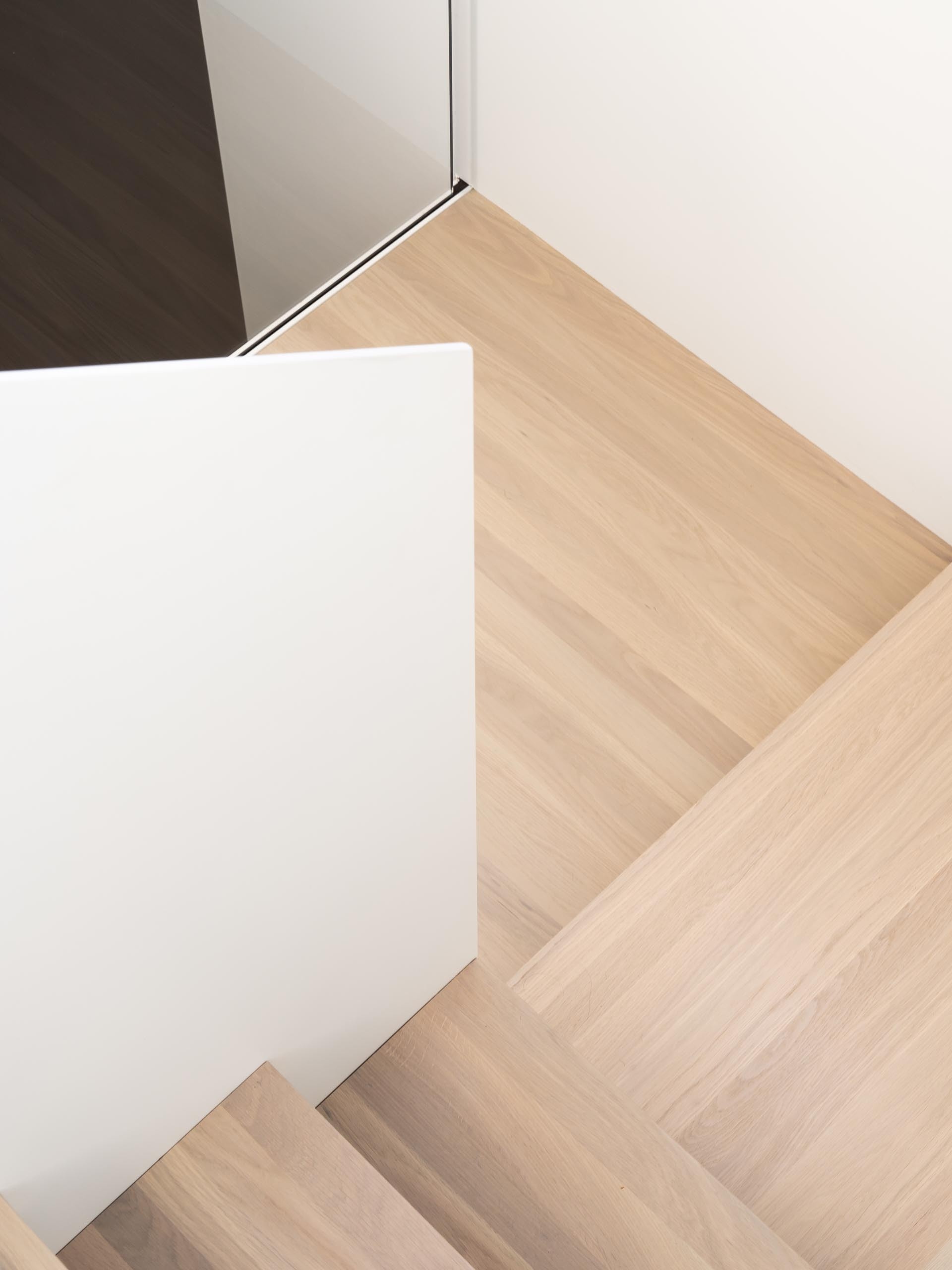
Near the kitchen, a staircase leads up to the newly added level. The structure of the stairs remains intentionally light, with a white metal frame and wood treads that echo the natural tones used elsewhere in the cabin.
A glass handrail allows daylight from nearby windows to travel through the interior rather than stopping at the staircase. Above the original structure, the new level takes advantage of an elevated vantage point that offers an exceptional view across the lake and toward the sky beyond.
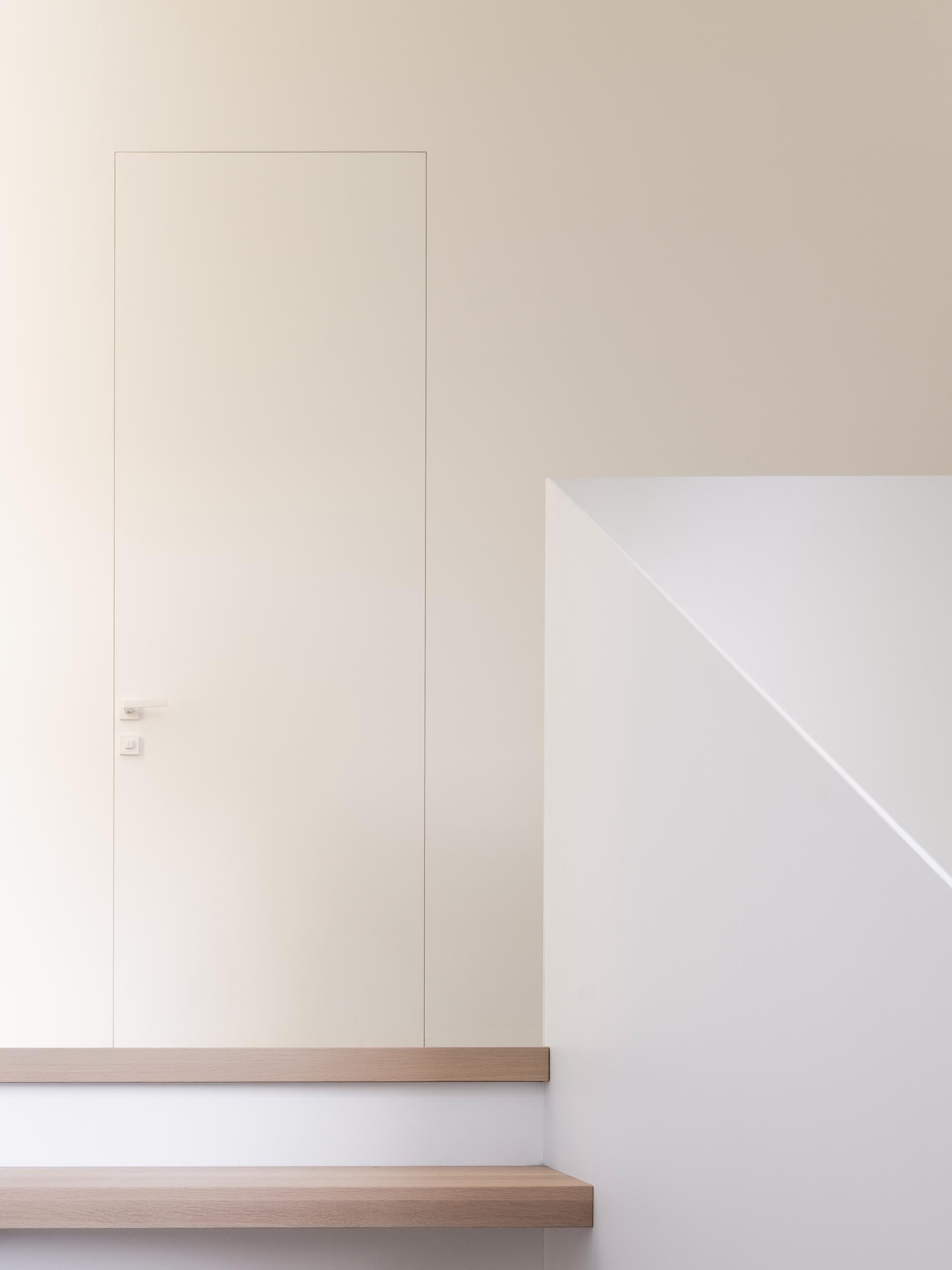
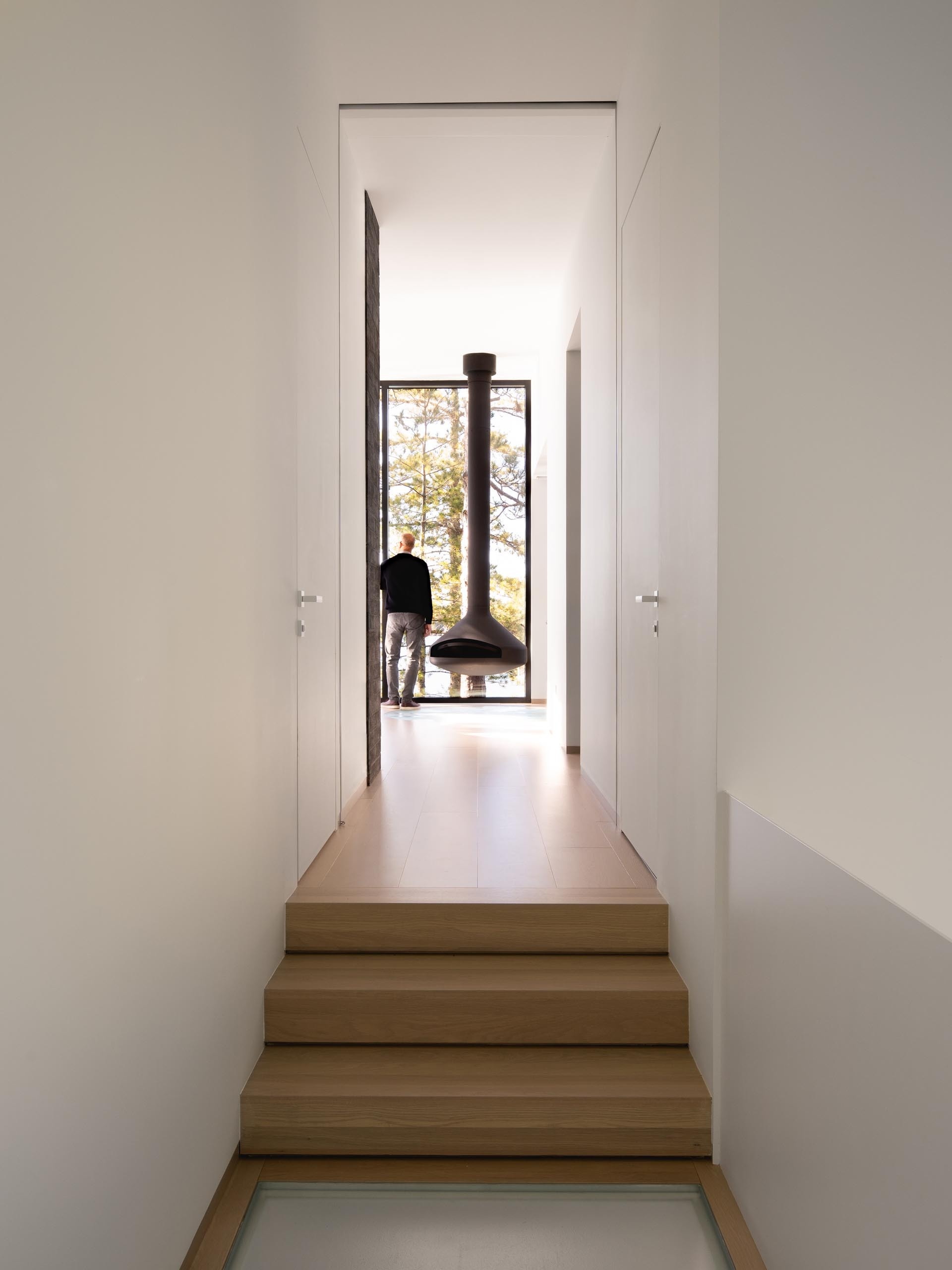
At the top of the stairs, a minimalist door frame nearly disappears into the wall, allowing the architecture to remain calm and understated. A hallway extends beyond it, where a suspended black fireplace appears in view.
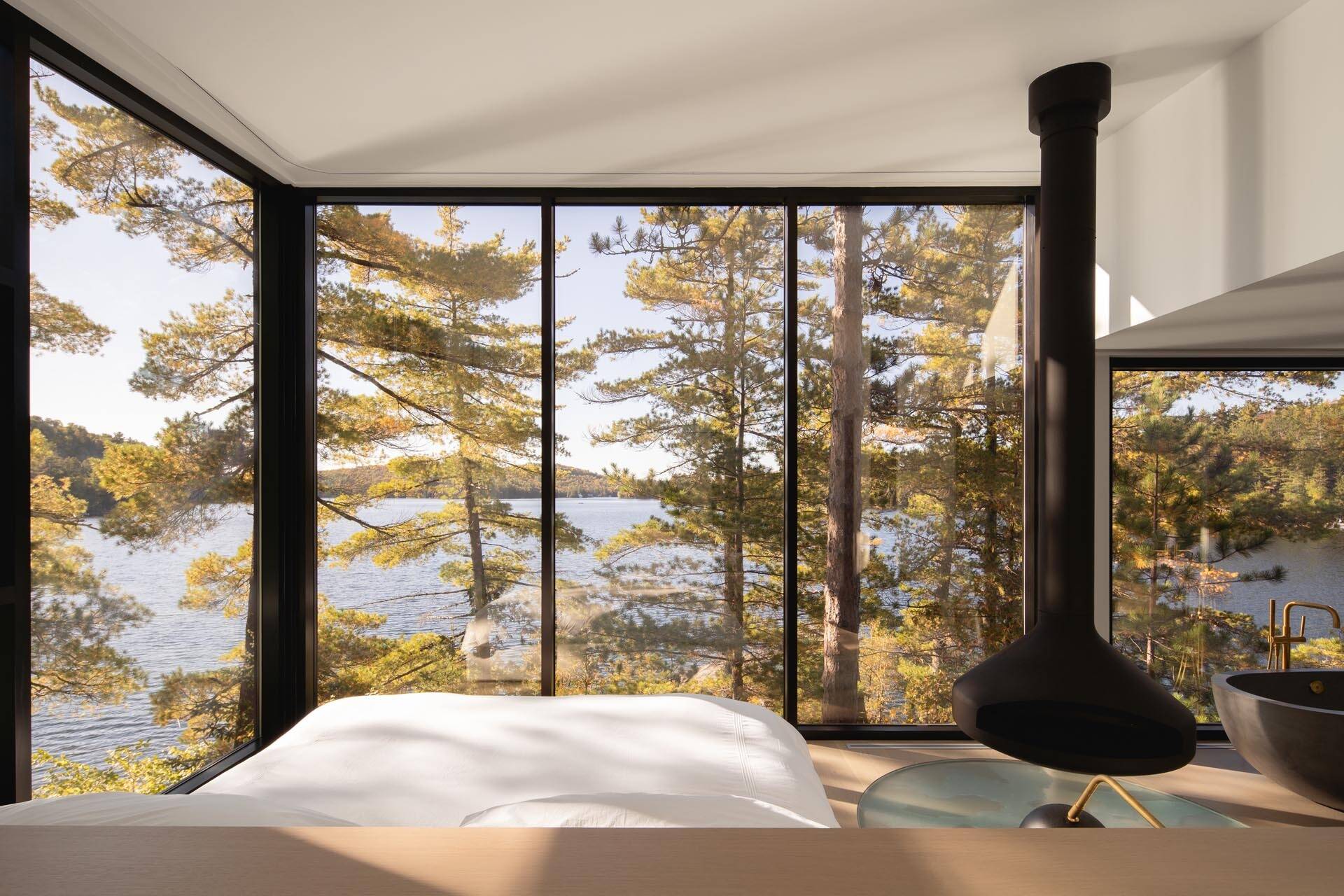
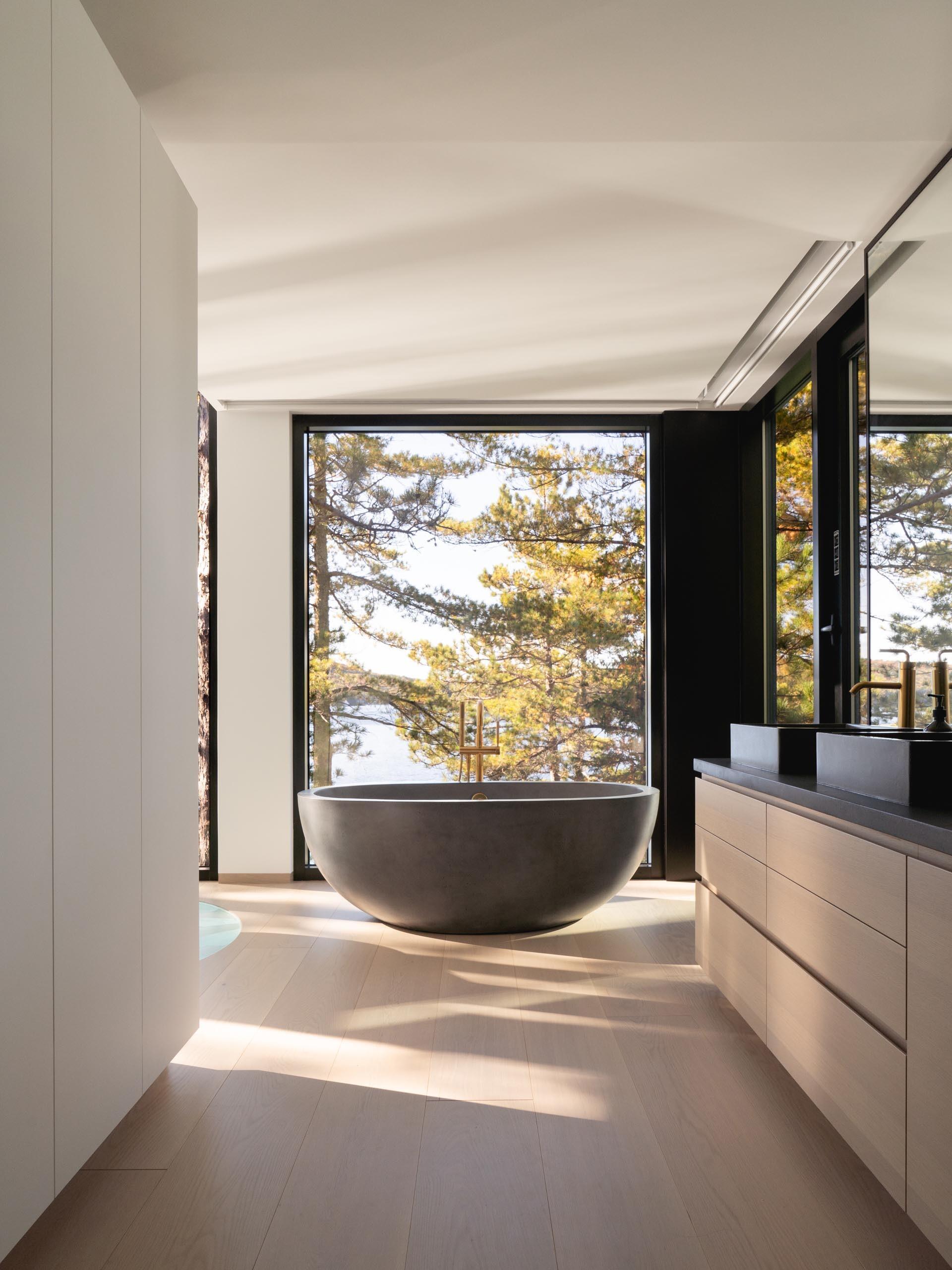
The fireplace belongs to the primary bedroom, a space designed to make the most of the elevated position created by the new addition. Floor-to-ceiling black framed windows look out across the point and the surrounding lake, bringing the landscape directly into the room.
Inside the bedroom, a freestanding bathtub sits nearby, turning the room into a place of rest that is deeply connected to its natural surroundings. From this height, the owners can take in views of the tall pine trees, the water below, and the wide sky overhead.
The renovation shows how an aging family getaway can evolve without losing its identity. By preserving the rustic elements of the original log chalet while introducing a carefully considered addition above it, the architects created a home that reflects both its past and its present.