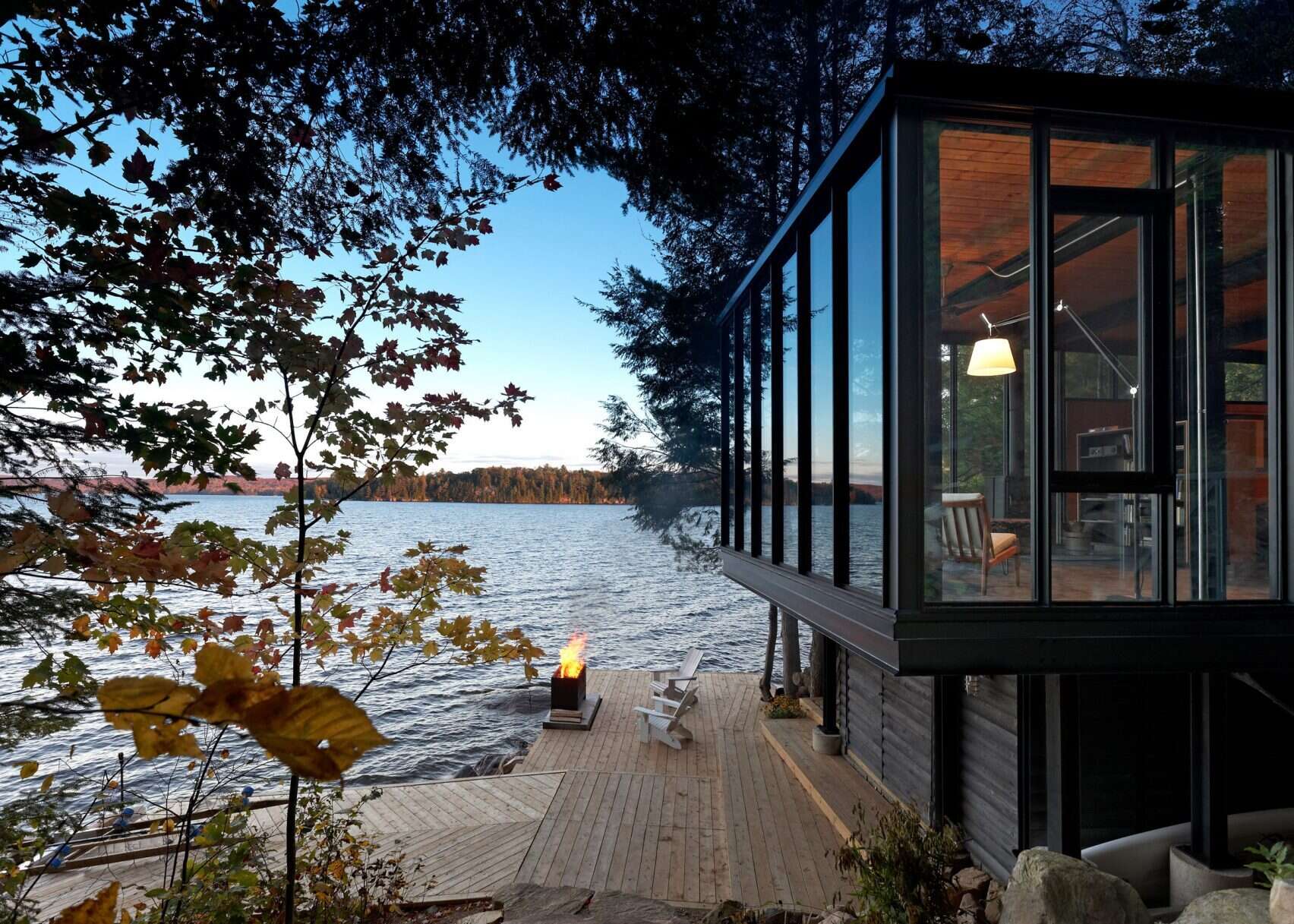
Building Arts Architects has designed a modern boathouse on the shores of Kawagama Lake in Ontario, Canada, creating a structure that quietly balances practicality and craftsmanship.
Set right at the water’s edge, the boathouse combines dry slip boat storage via a marine railway with a compact 452 square foot dwelling space above. From the outset, the project was shaped by its remote location. With no road access to the site, everything involved in the build had to arrive by water, from structural elements to finishing materials.
The architects began by carefully dismantling an existing structure on the site before constructing the new steel frame boathouse and its adjacent outdoor living features. Every system, including the structure itself, was designed to be transported by small watercraft, then moved and assembled by hand by a small labour crew. This constraint directly informed the building’s scale, detailing and construction logic.
Reaching the Living Space by Bridge
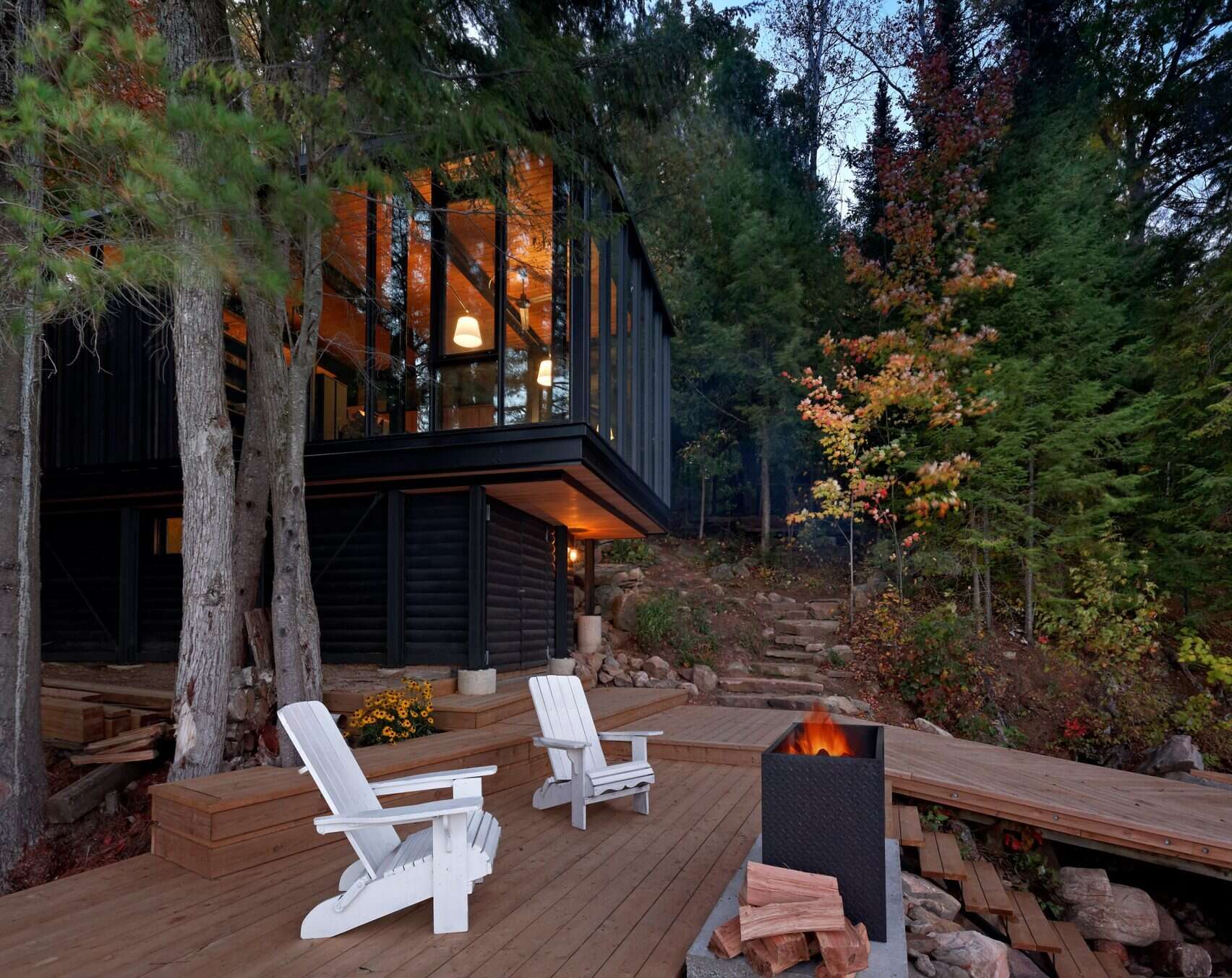
Access to the dwelling area is deliberately understated. A small bridge spans the natural topography, leading from land to the elevated interior spaces of the boathouse. Rather than flattening or reshaping the site, the design works with the existing terrain, allowing the building to sit lightly among the trees.
This elevated position offers a quiet separation between the working function of the boathouse below and the more contemplative living space above, reinforcing the idea of the structure as both utility and refuge.
A Compact Interior Focused on the Lake
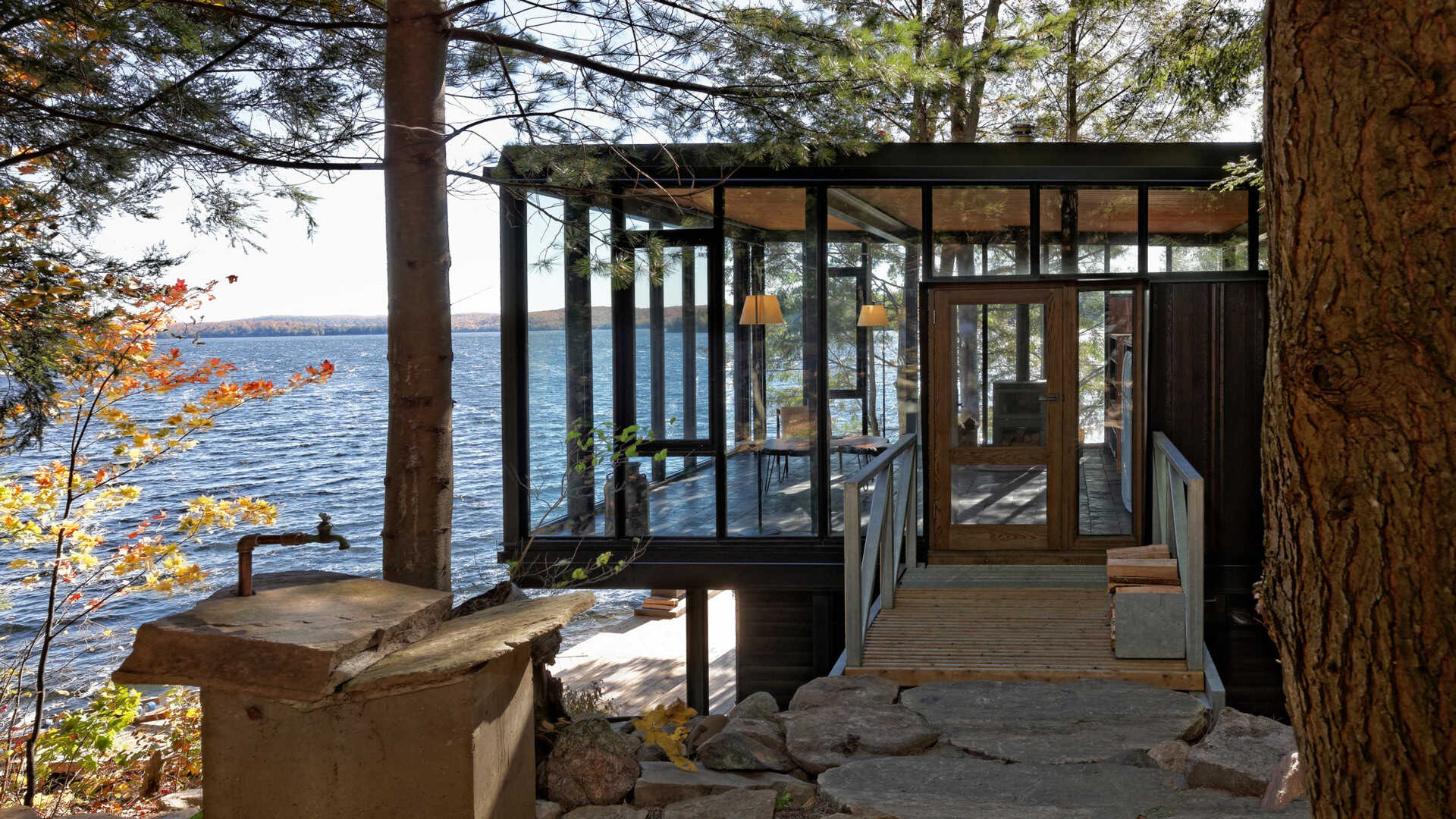
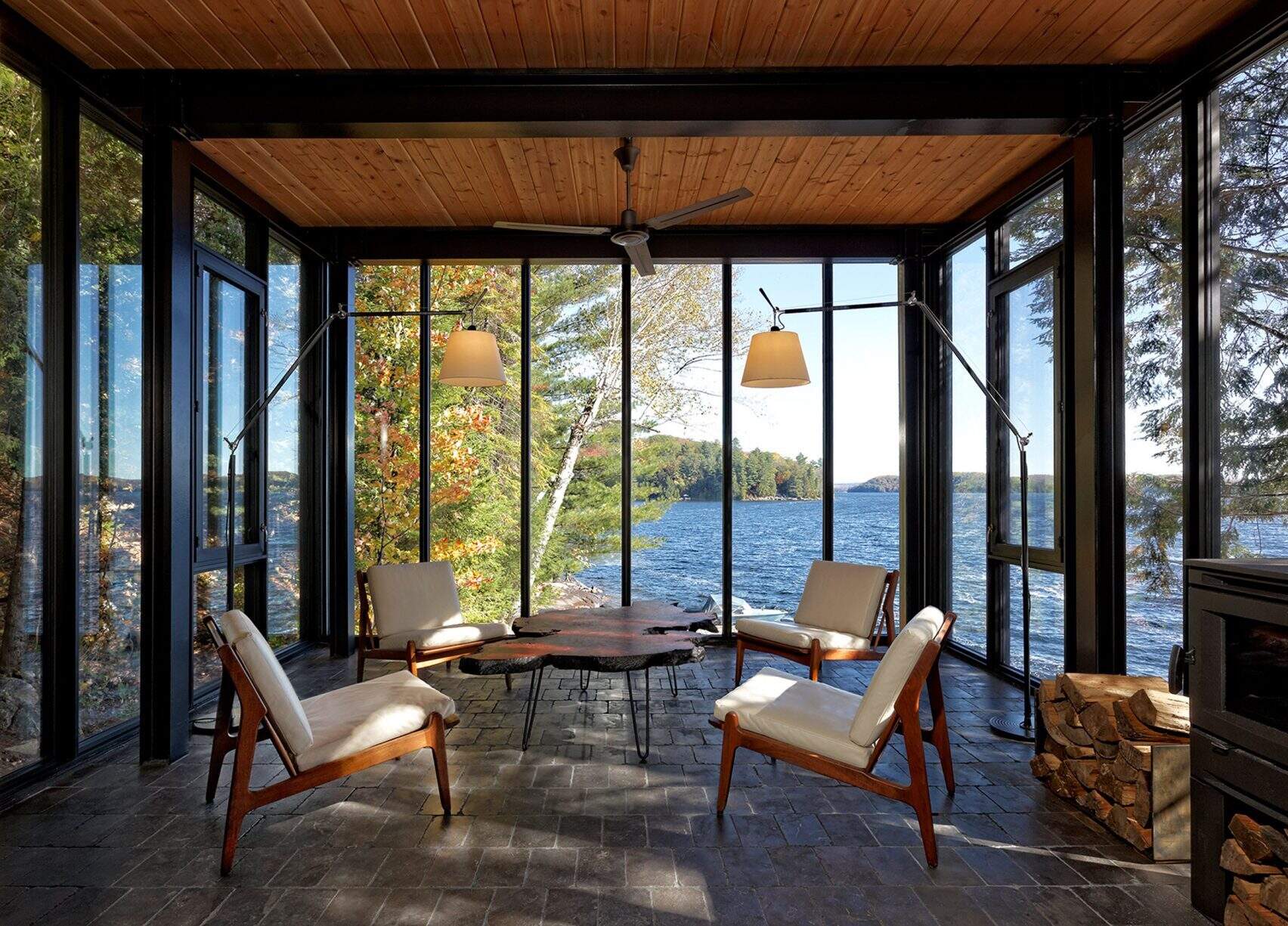
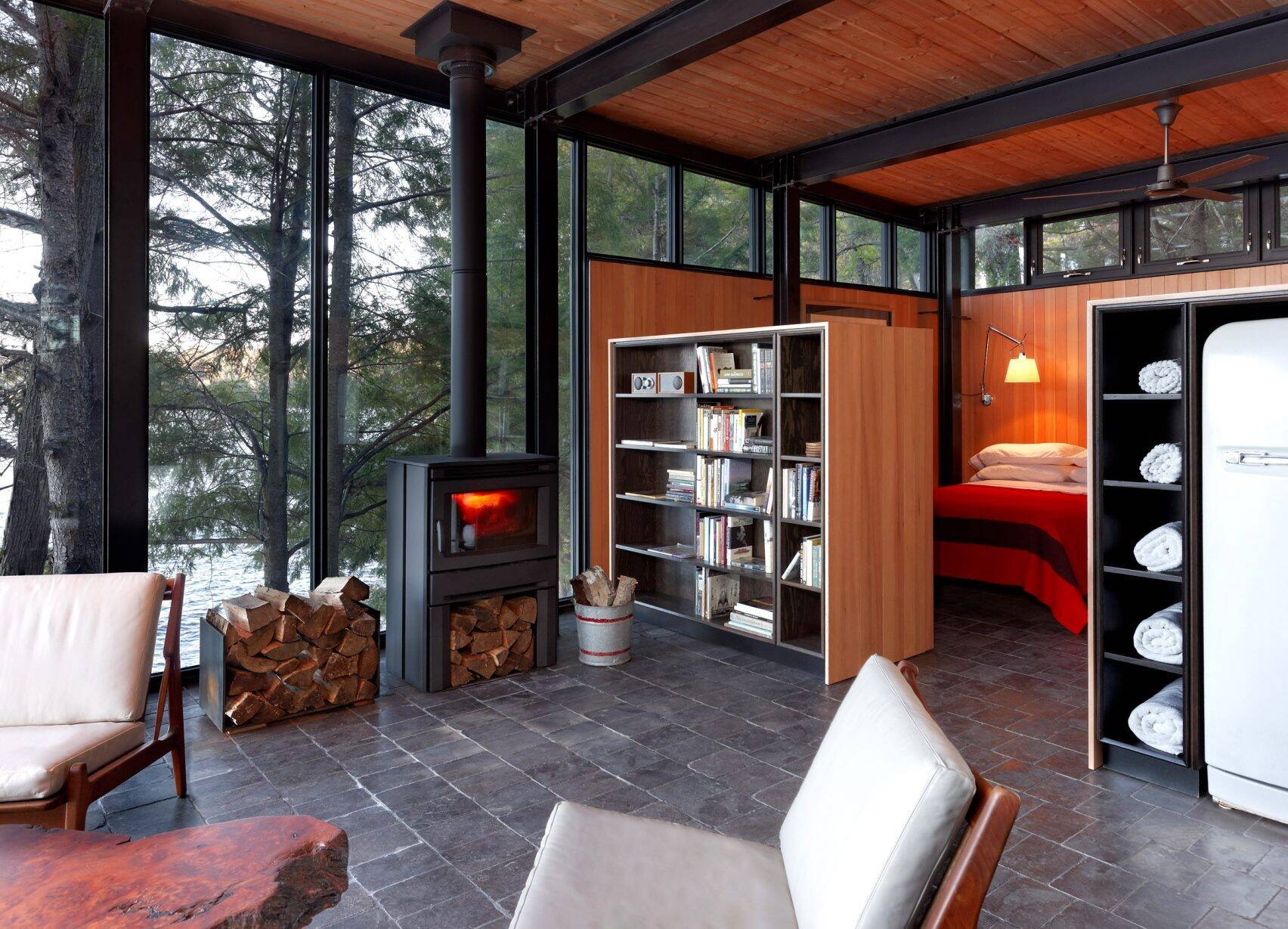
Inside, the living space is simple and efficient, designed to heighten the experience of being on the water. A small sitting area is positioned to take full advantage of the views, with floor to ceiling windows that frame the lake and surrounding forest. A fireplace anchors the space, offering warmth and comfort during cooler evenings by the water.
Sleeping Areas Defined Without Closing Off Space
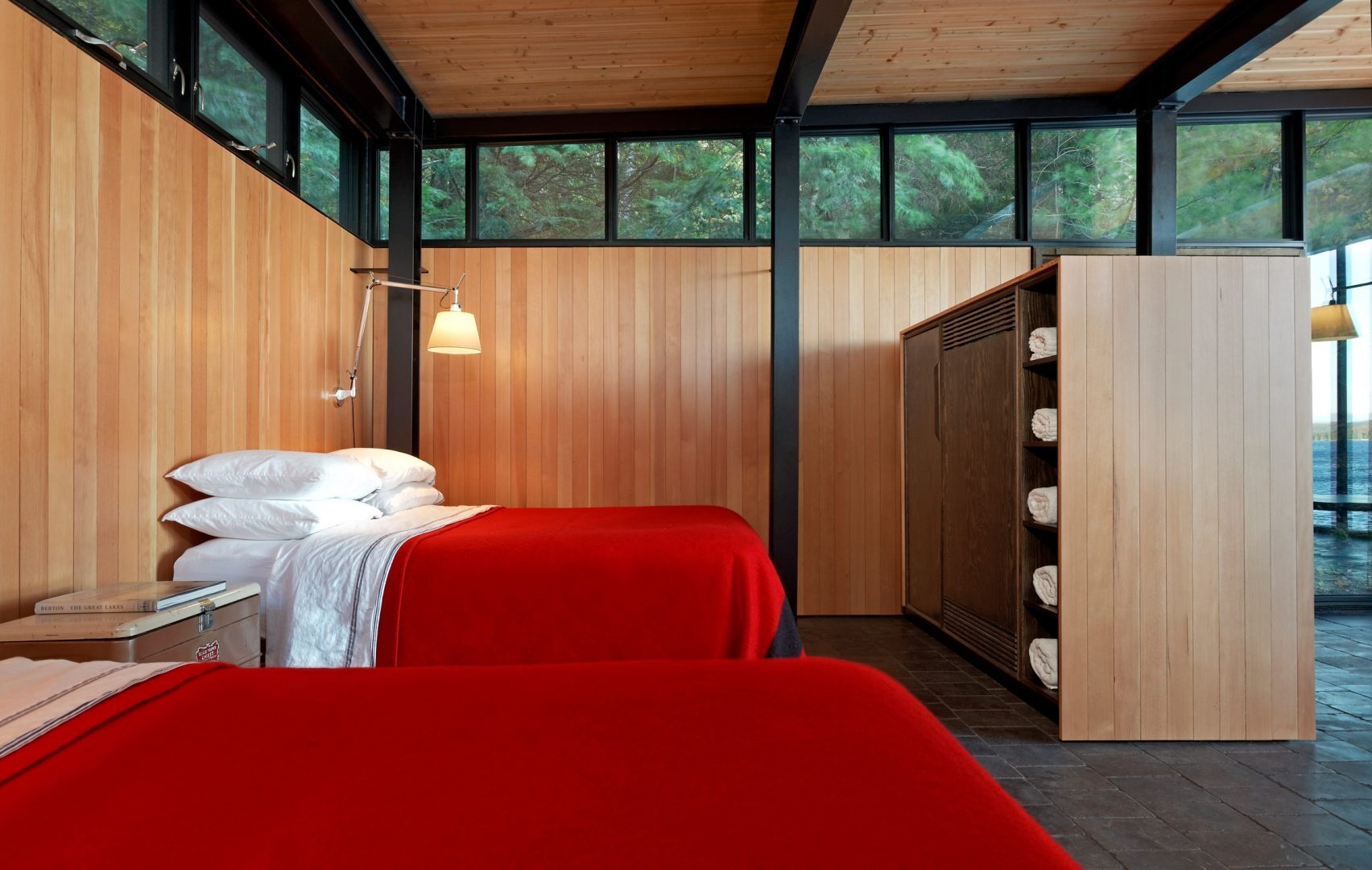
Shelving units act as subtle dividers between the sitting area and the sleeping zone, where two beds are tucked into a more private corner of the cabin. Wood lined walls provide a sense of enclosure, while clerestory windows wrap around the upper portion of the space, allowing light to filter in without sacrificing privacy. This approach keeps the interior feeling open and connected, while still offering moments of retreat within the compact plan.
Reusing Materials to Ground the Building in Its Setting
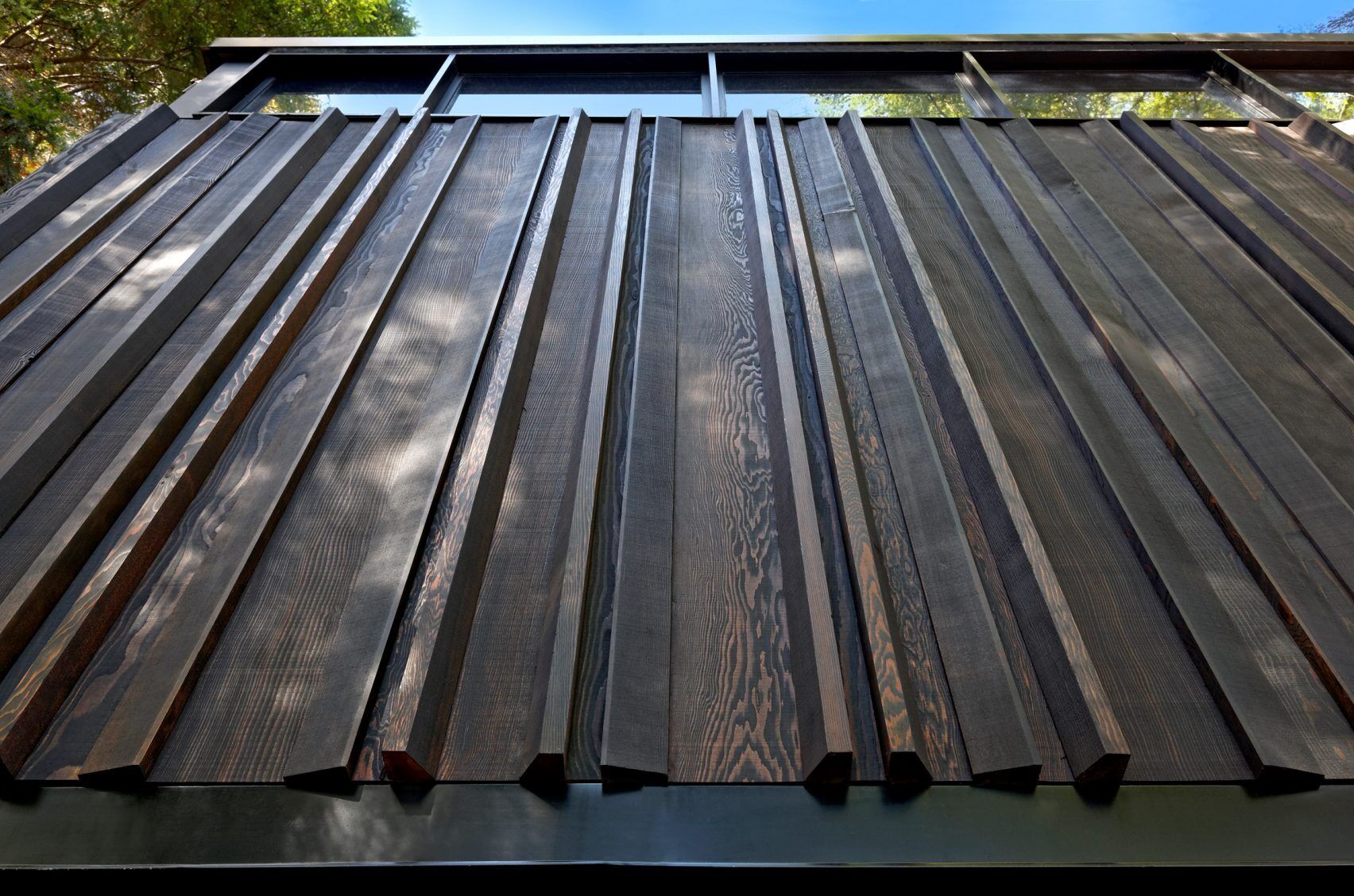
Material reuse played a key role in the project. The architects salvaged as much lumber as possible from the original structure, giving new life to materials already shaped by the site’s history. The lower level of the boathouse is clad in wood siding reclaimed from the existing building, helping the new structure feel immediately rooted in its environment.
For the upper portion, Douglas Fir was selected for its warmth and its strong association with Ontario cottage country. The choice reinforces a sense of continuity, ensuring the modern form still feels familiar within its lakeside setting.
Built without roads, assembled by hand and grounded in reused materials, the Kawagama Lake boathouse offers a modern take on lakeside living.