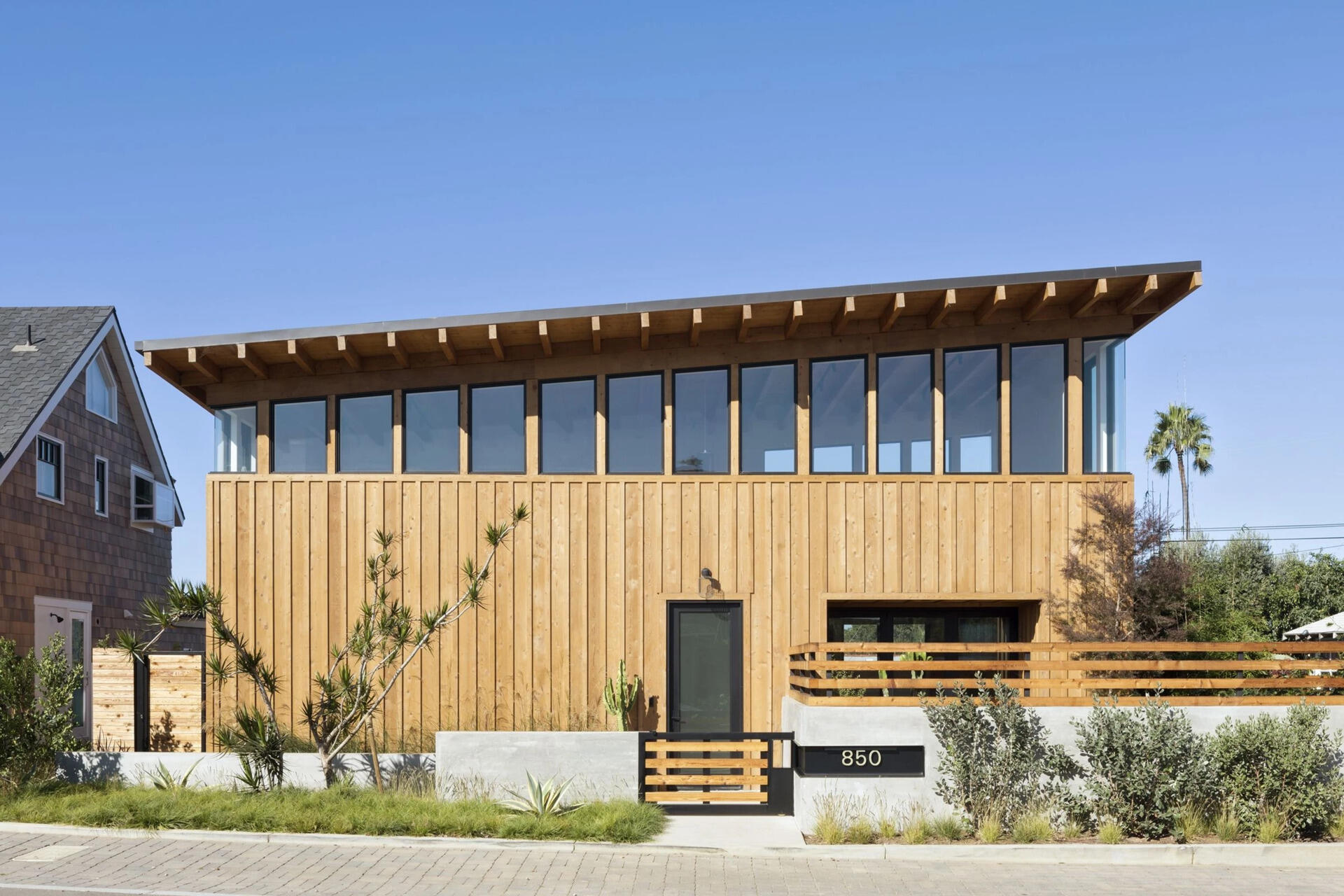
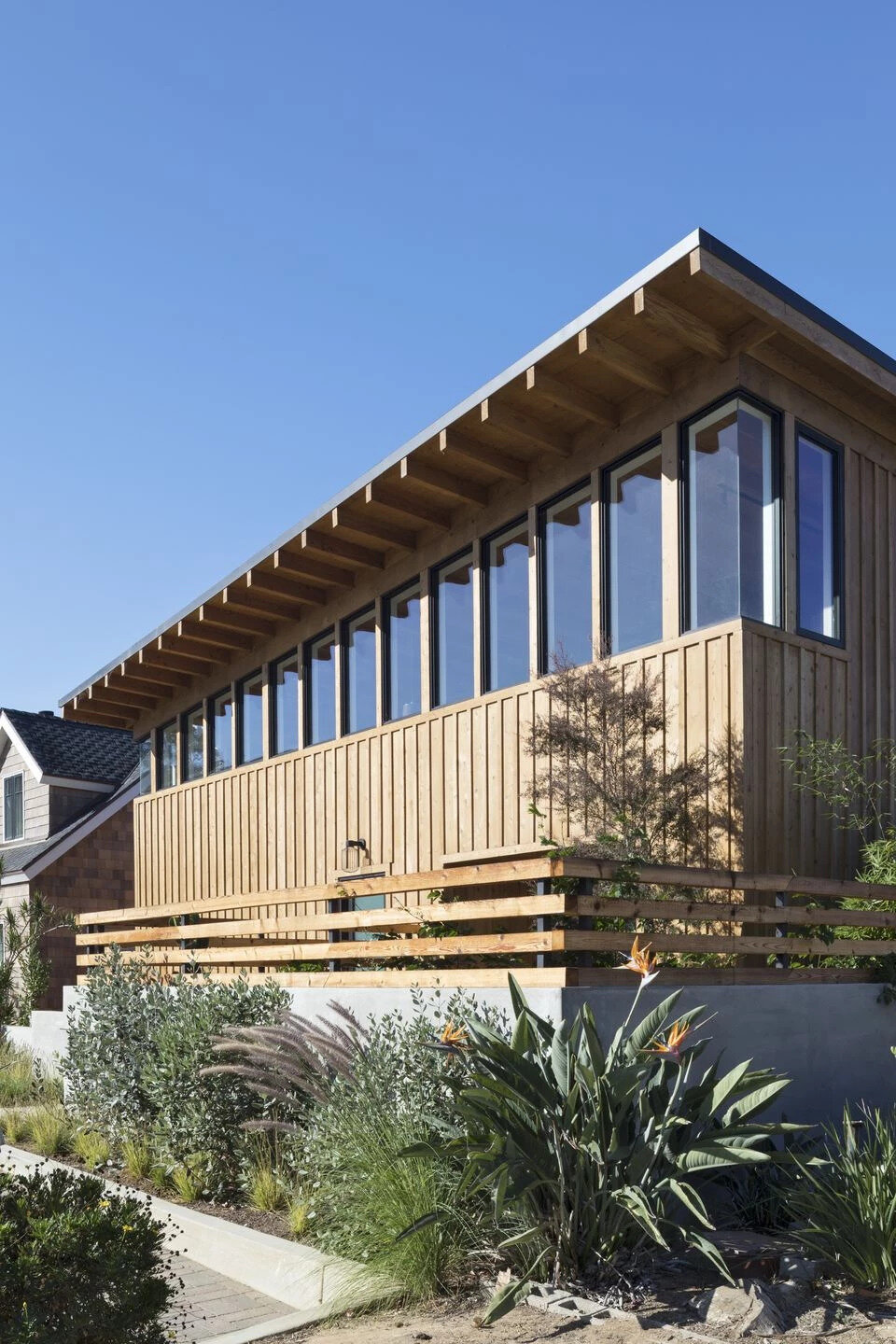
Perched on a hilltop in the Southern California coastal community of Encinitas, the Cornish House is a modern two bedroom home designed by Brett Farrow Architect. From the outside, it reads as calm and considered. Step closer and it becomes clear that every design decision has been shaped by its setting, its compact footprint, and its elevated views over the ocean.
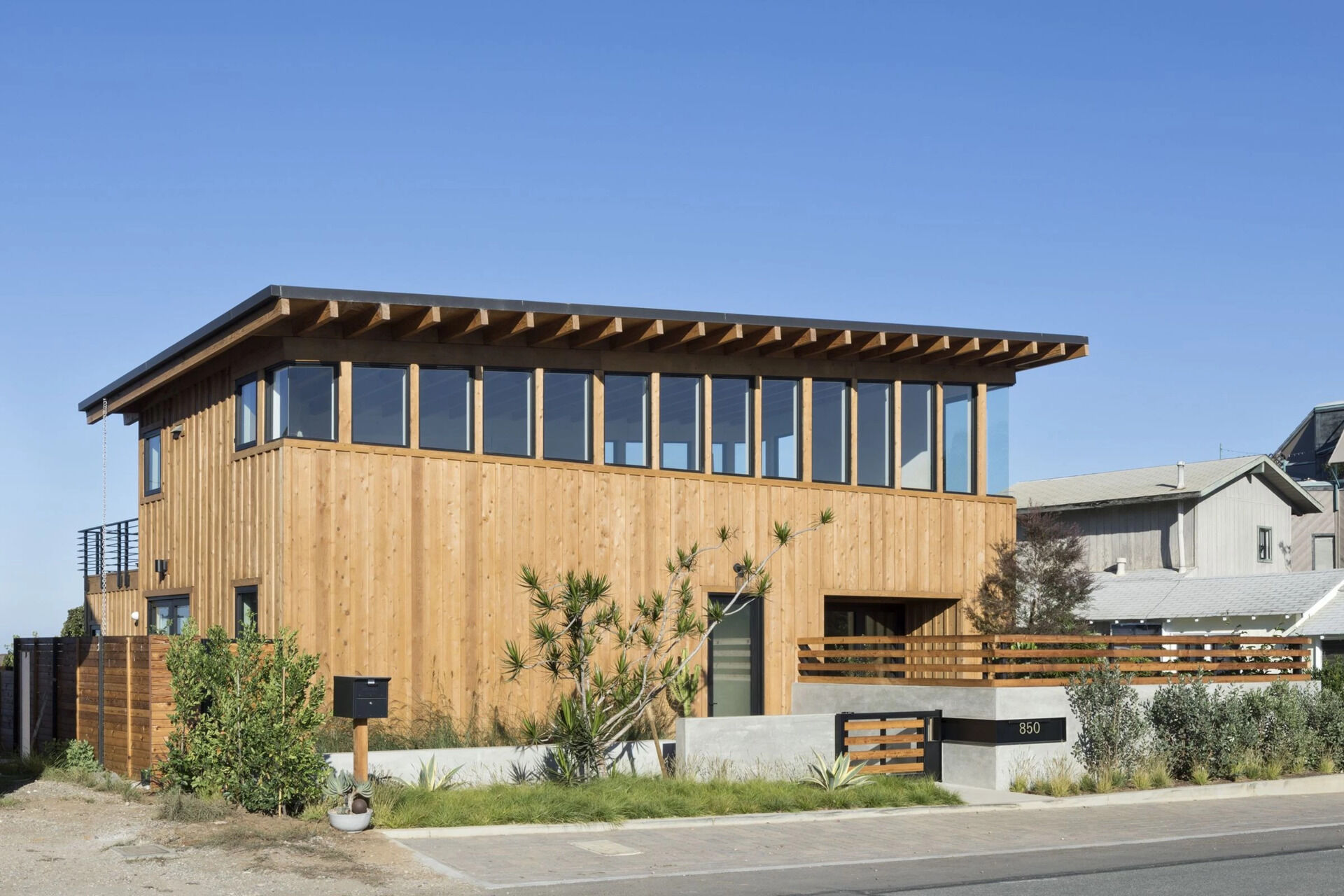
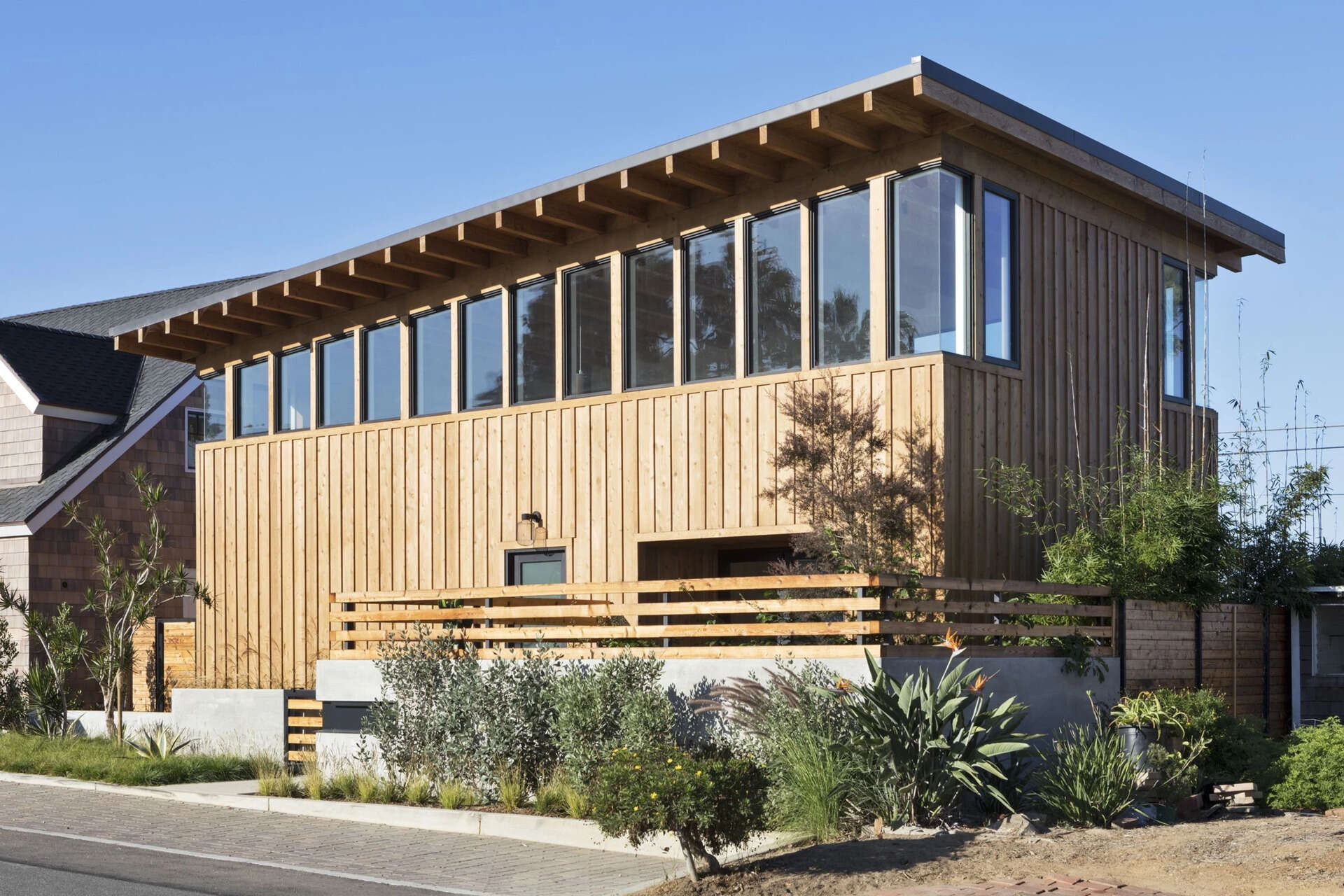
Making the Most of a Challenging Site
The Cornish House sits on a relatively small parcel of land, yet its hilltop position offers sweeping ocean views that become central to the design. Rather than fight the awkward shape of the lot, the architect embraced it, allowing the geometry of the site to influence the layout and overall form of the house.
Despite its modest size, the two bedroom home feels carefully oriented and purposeful, designed to capture views, light, and privacy without wasting space.
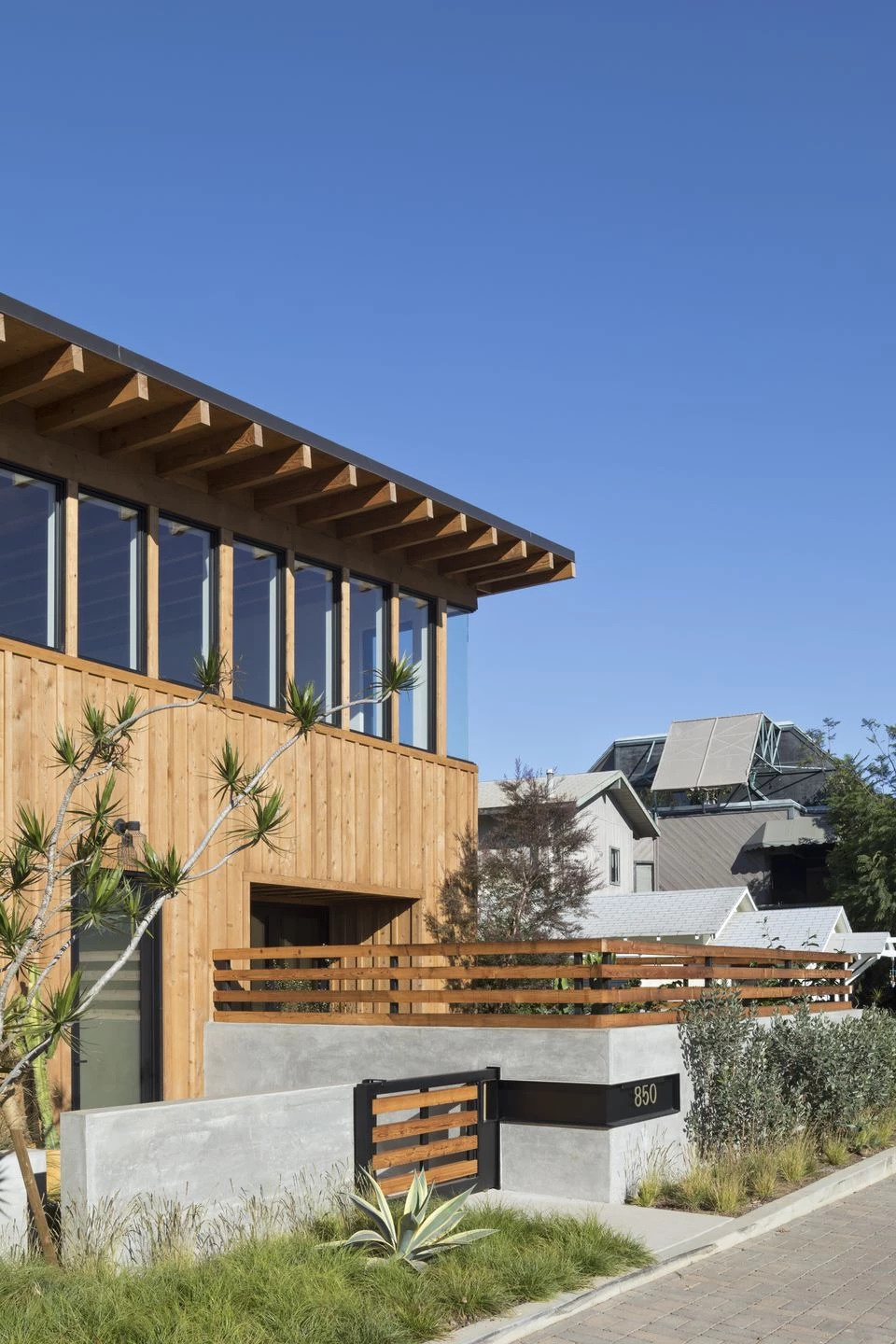
A Calm Arrival Away From the Street
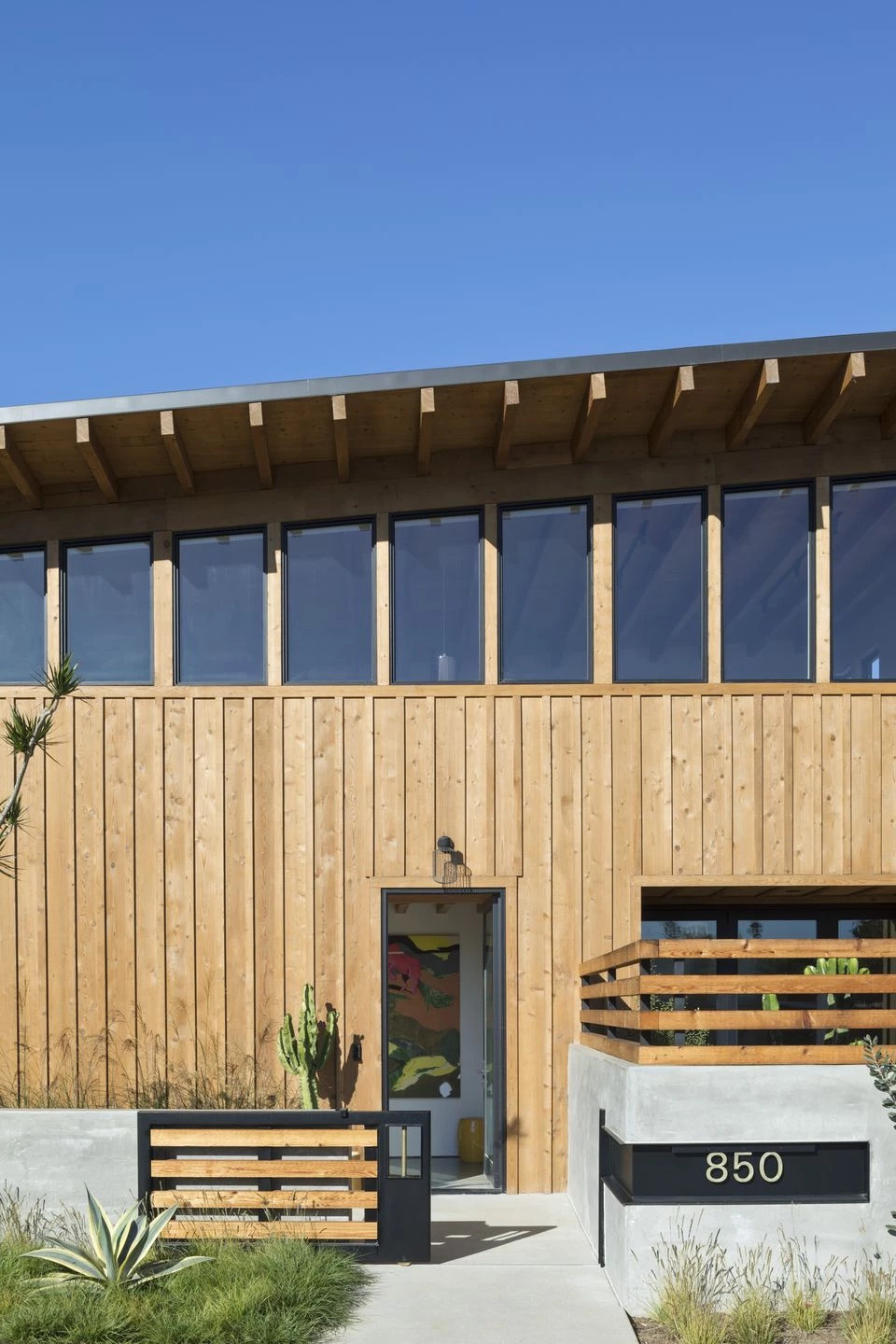
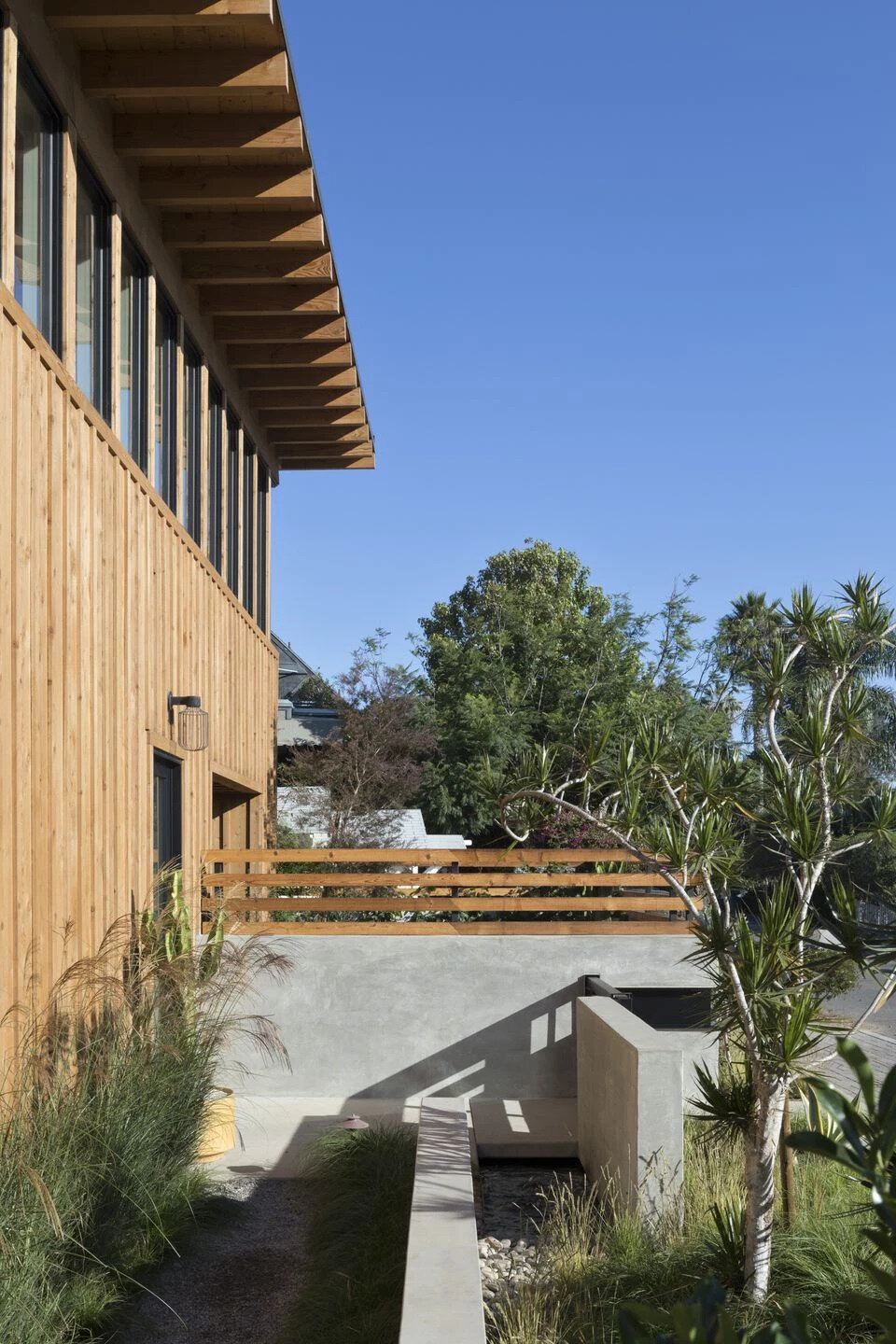
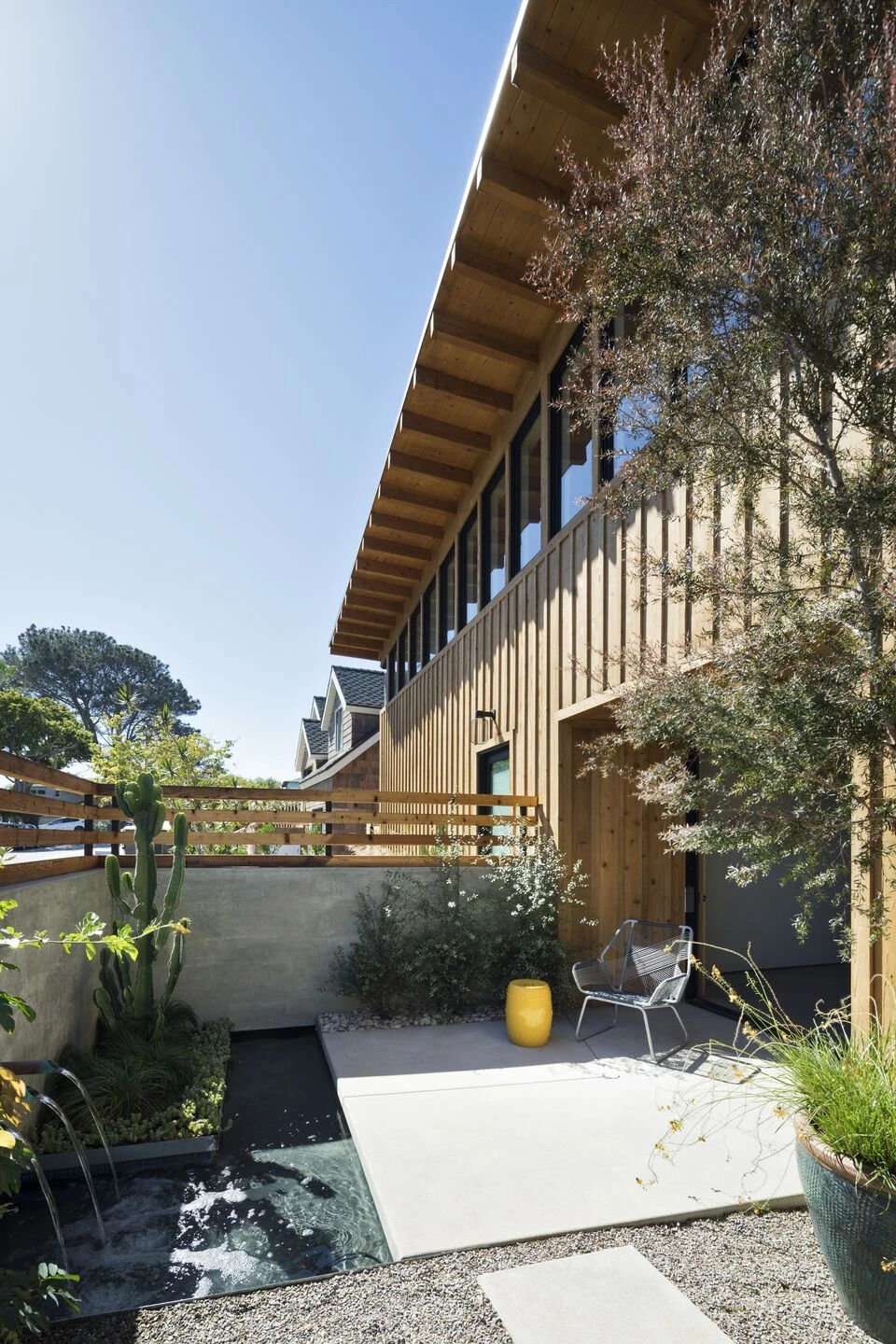
At the front of the home, a custom entry gate sets a clear boundary between the busy street and the private world beyond. Low concrete walls guide visitors inward while helping shield the house from traffic noise.
A water feature adds another layer of separation. The gentle sound creates a subtle hush that softens the transition from street to home and reinforces the quiet, contemplative feel of the garden spaces surrounding the entry.
Overhangs, Beams and Carefully Placed Windows
The architectural language of the house is immediately visible from the exterior. Large overhangs extend outward, helping manage sunlight while giving the home a strong horizontal presence. Exposed structural wood beams add warmth and texture, balancing the clean modern lines of the design.
Ribbon windows are woven into the facade, bringing in light while framing views of the surrounding landscape and reinforcing the home’s connection to its coastal environment.
Structure as a Design Feature
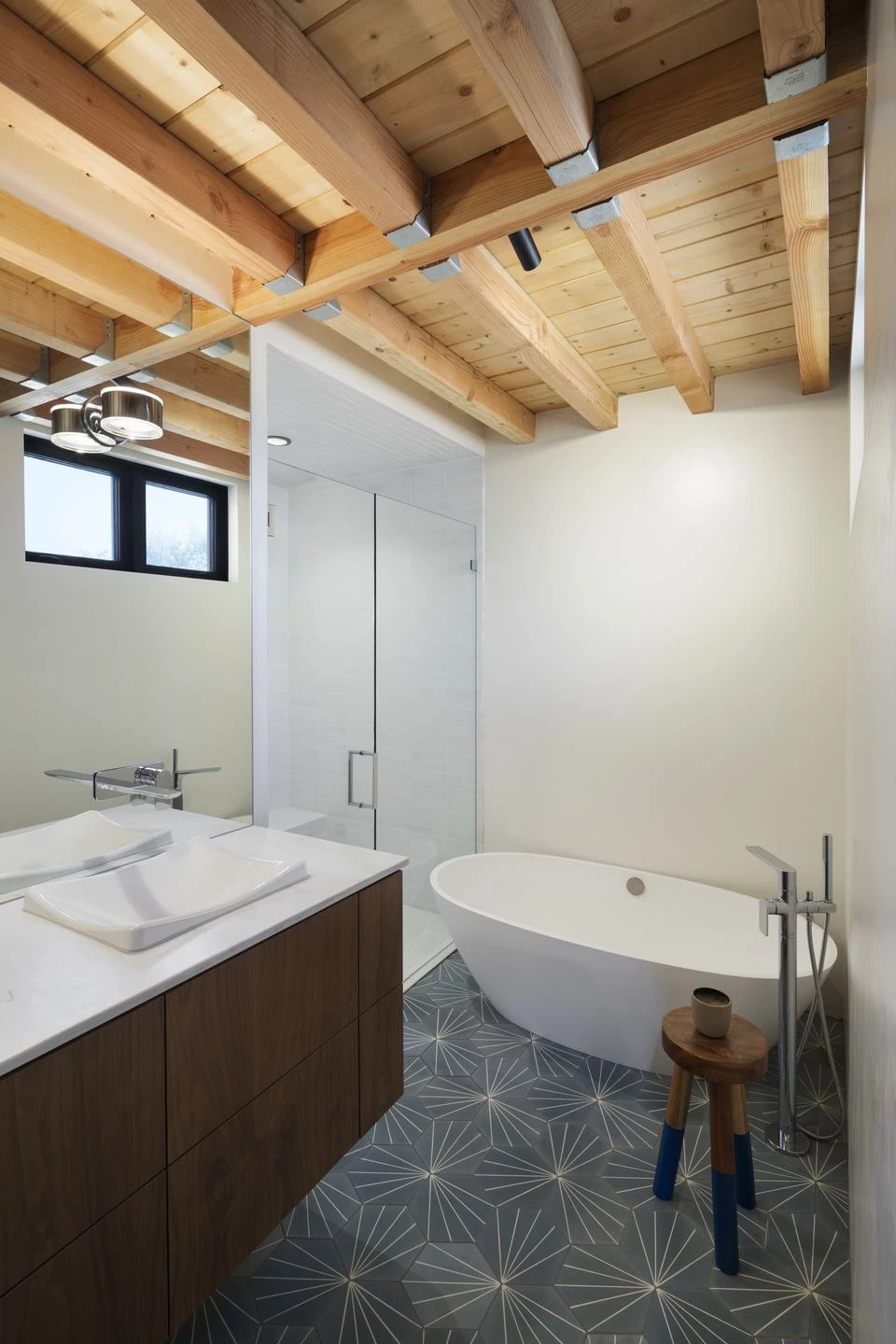
Inside the house, the structure is not hidden away. Instead, beams and supports are left exposed, becoming part of the interior character. This approach can be seen throughout the home, including in the main floor bathroom, where the ceiling structure adds depth and a sense of honesty to the space.
The result is an interior that feels grounded and authentic, where materials are allowed to speak for themselves rather than being covered or concealed.
A Reverse Floor Plan Built Around the View
To fully take advantage of the site’s elevated position, the home uses a reverse floor plan. Living, dining, and kitchen spaces are placed on the upper level, where the views are strongest and natural light is most abundant.
Downstairs, the two sleeping rooms are tucked away for privacy. Both bedrooms open directly onto their own private courtyard garden spaces, creating a quieter, more sheltered environment that contrasts with the openness above.
Light Filled Living Spaces Upstairs
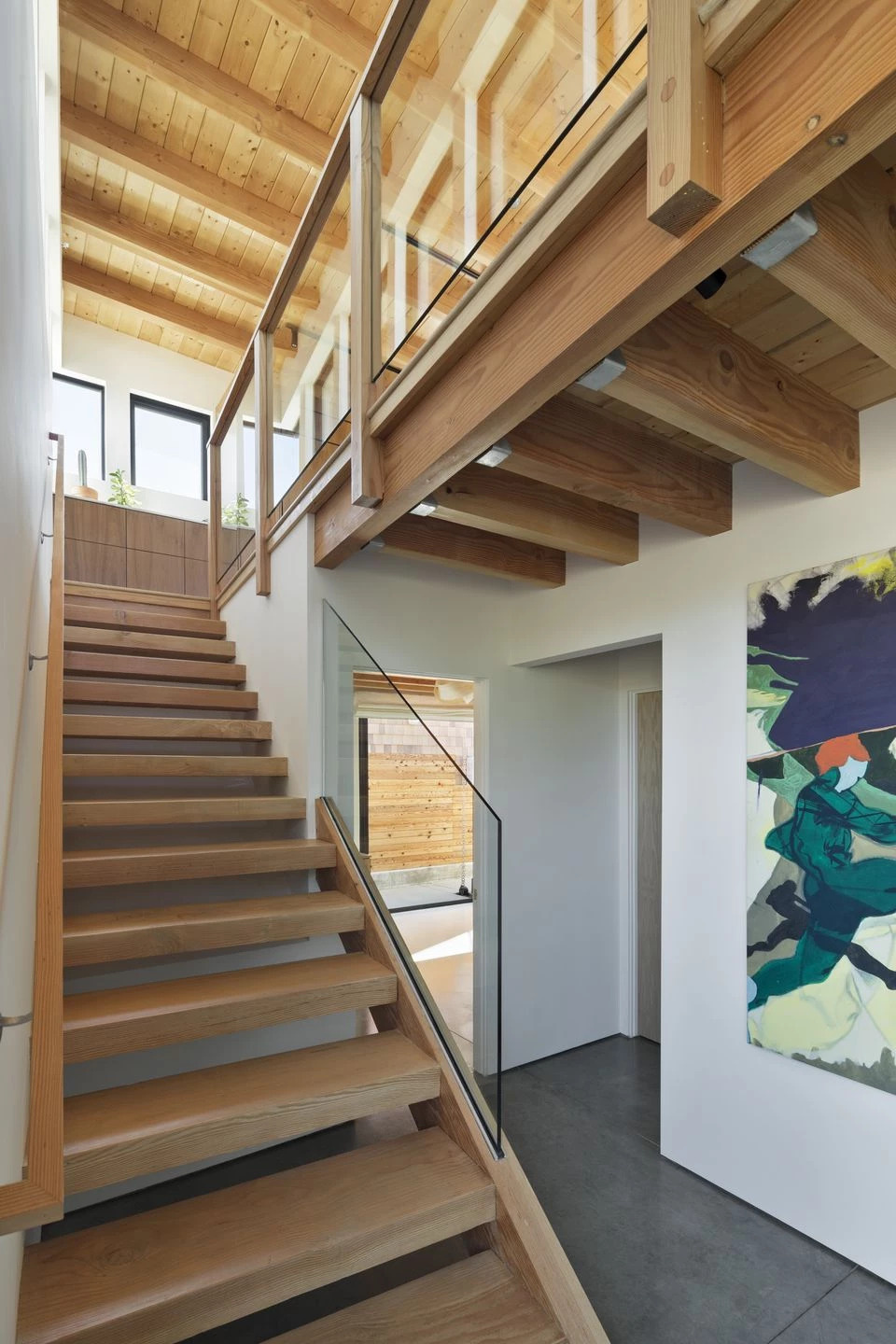
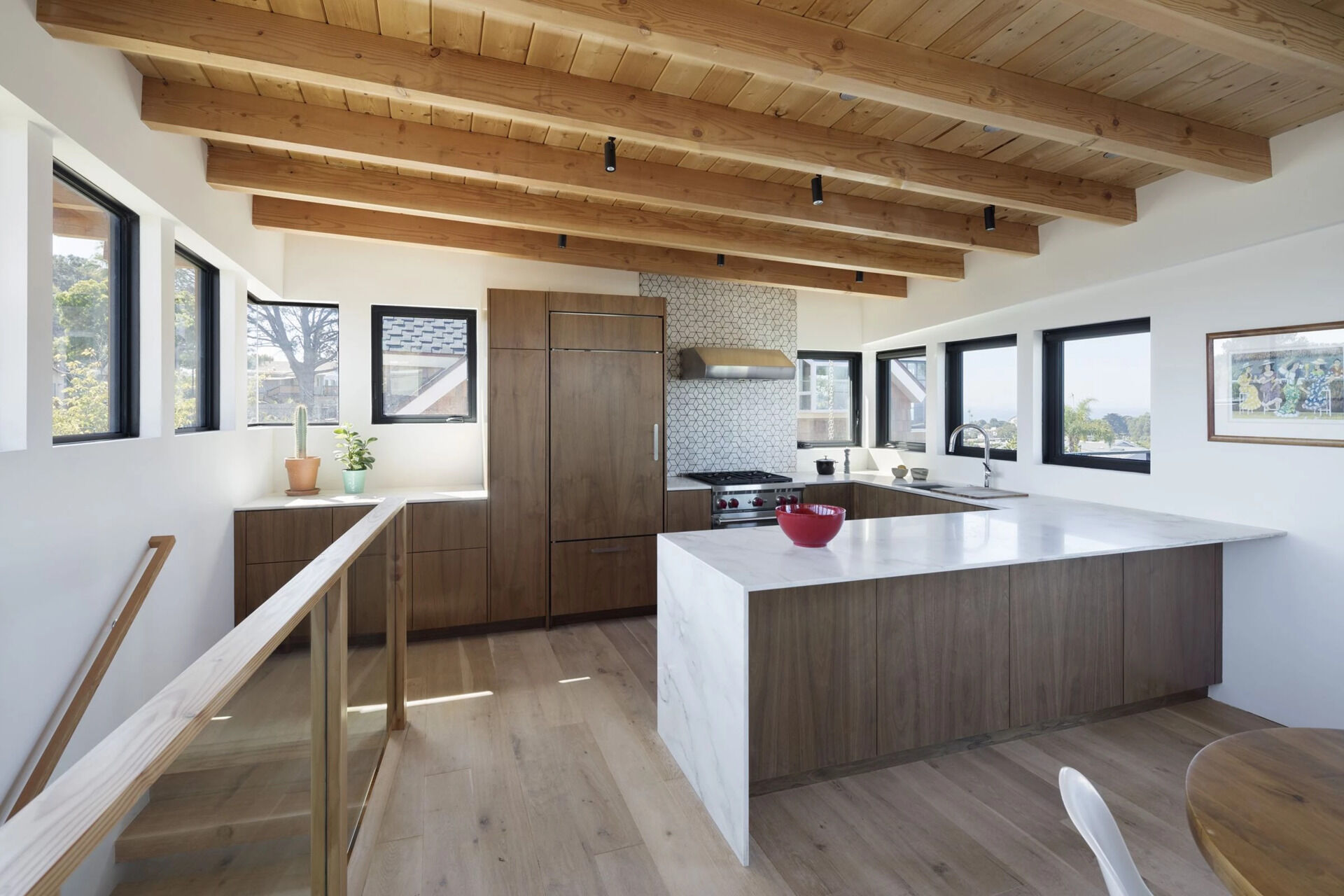
On the upper floor, bright sunlit volumes define the main living areas. Dark metal windows with tapered geometric forms frame the light, creating a strong visual contrast against the warm interior finishes.
These windows are carefully positioned to balance openness with privacy, allowing the interior to feel expansive without overexposing it to neighboring homes.
A Fireplace That Connects the Space
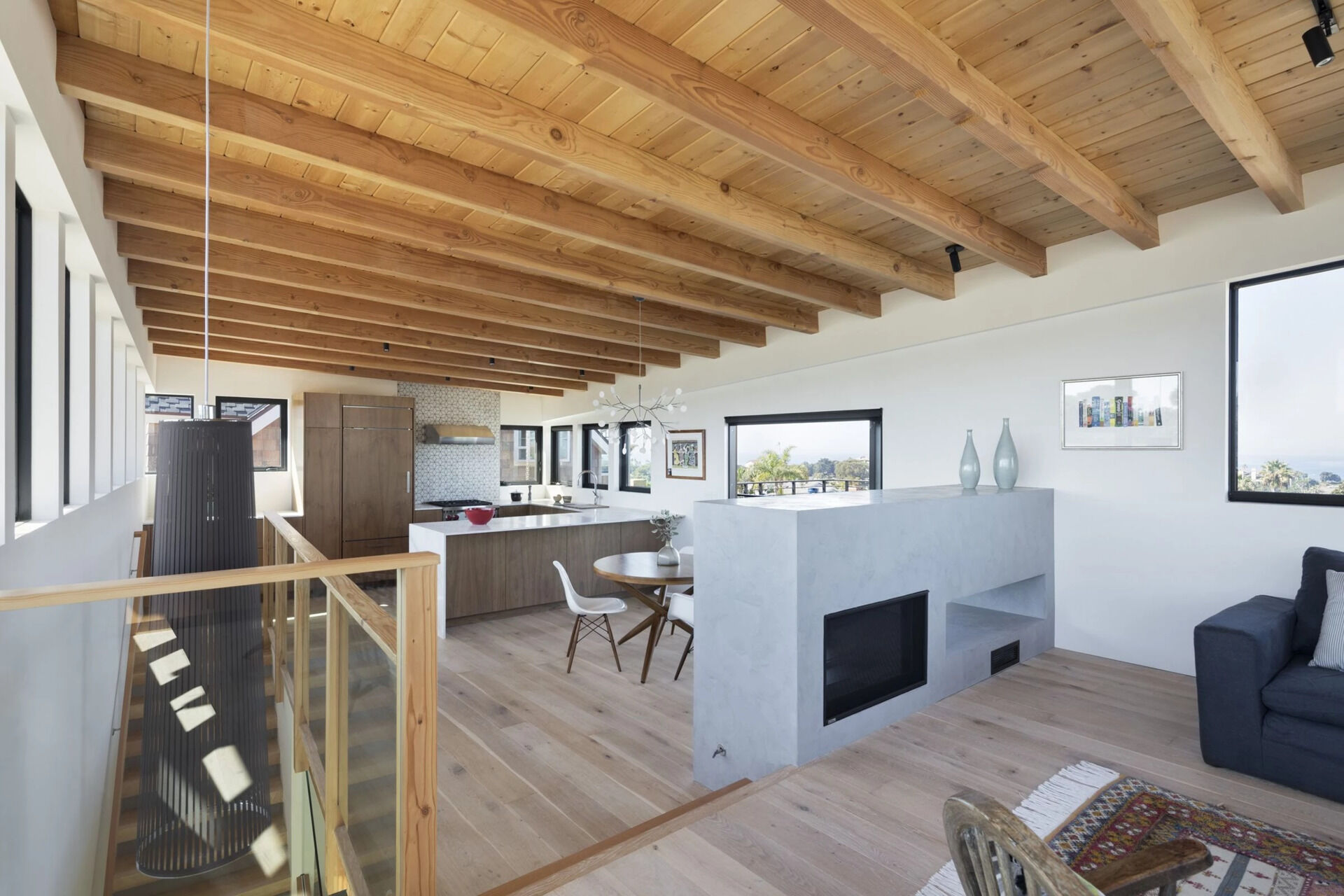
At the heart of the upper level is a double sided low fireplace that visually and physically connects the split level dining area with the living space. It acts as a subtle divider while still keeping the layout open and fluid. The fireplace also adds warmth on cooler evenings, making it possible to enjoy the coastal breezes without sacrificing comfort.
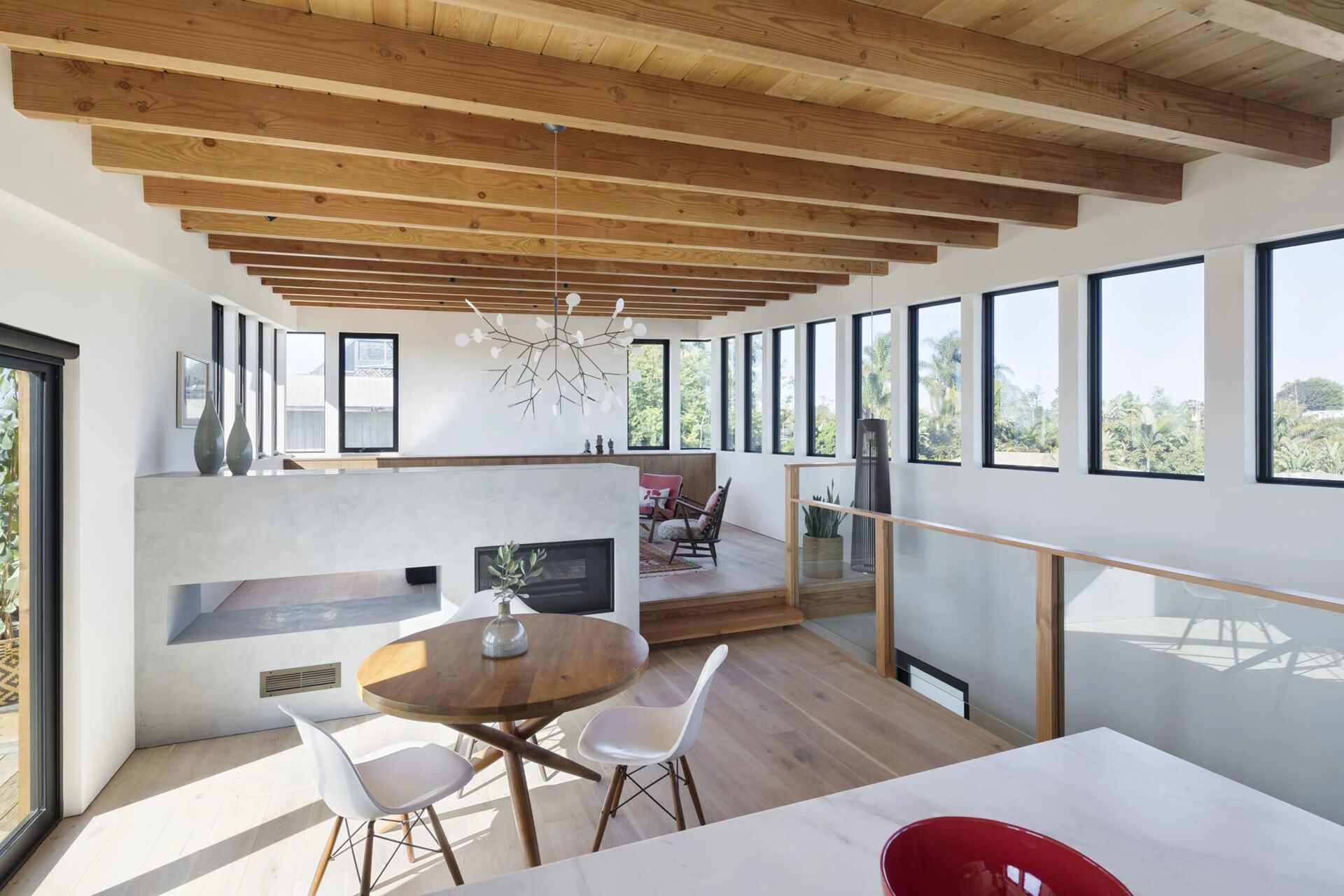
Blurring Indoors and Out
Bi folding doors extend the dining area outward onto a deck, strengthening the connection between interior and exterior spaces. When open, the deck becomes a natural extension of the living area, effectively increasing the usable footprint of the home. This outdoor space is positioned to take full advantage of the views, creating an easy flow between everyday living and the surrounding landscape.
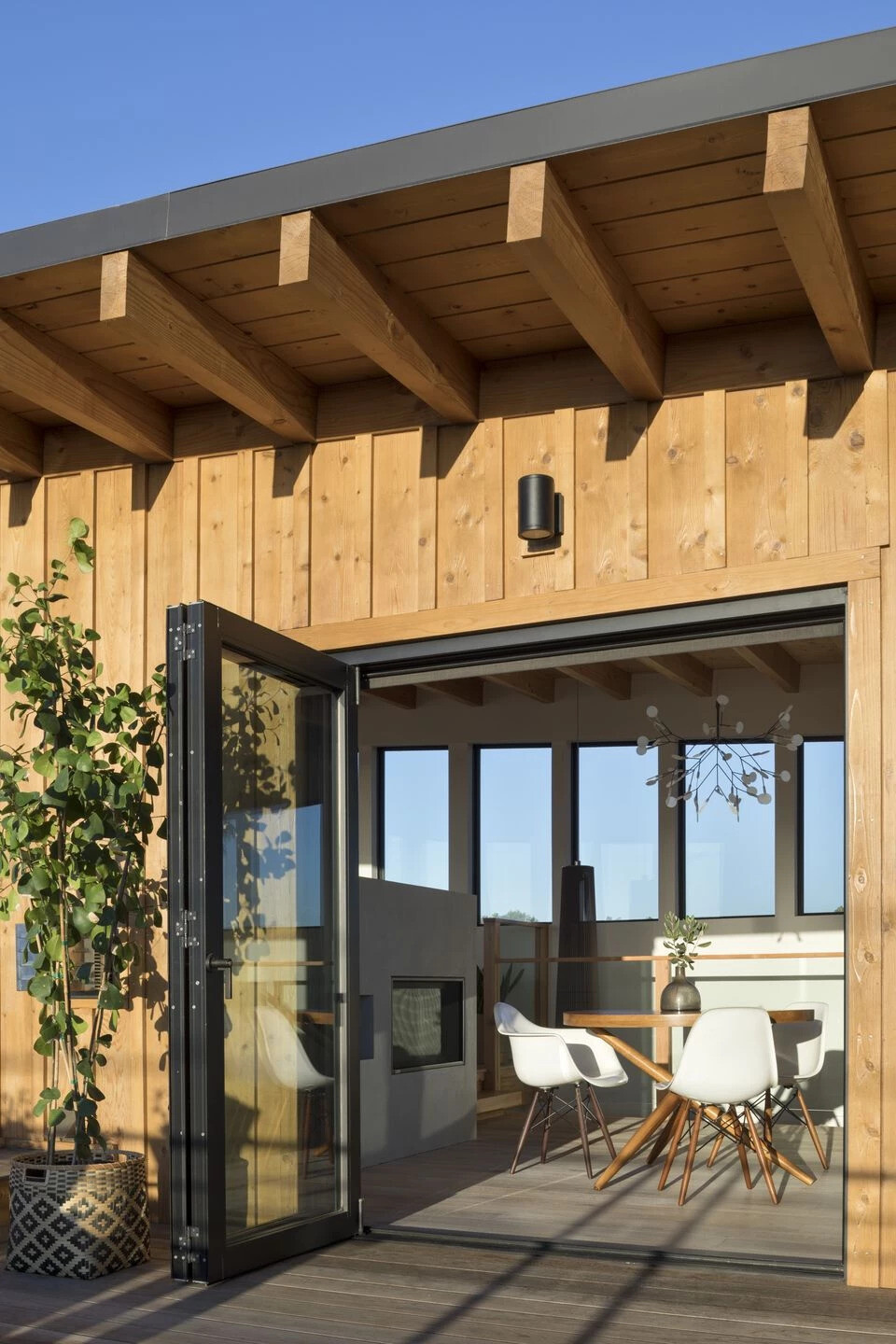
A Garage That Doubles as Outdoor Space
At the rear of the home sits the garage, discreetly integrated into the overall form of the house. Rather than being treated as a purely functional element, its rooftop has been transformed into the deck accessed from the dining room.
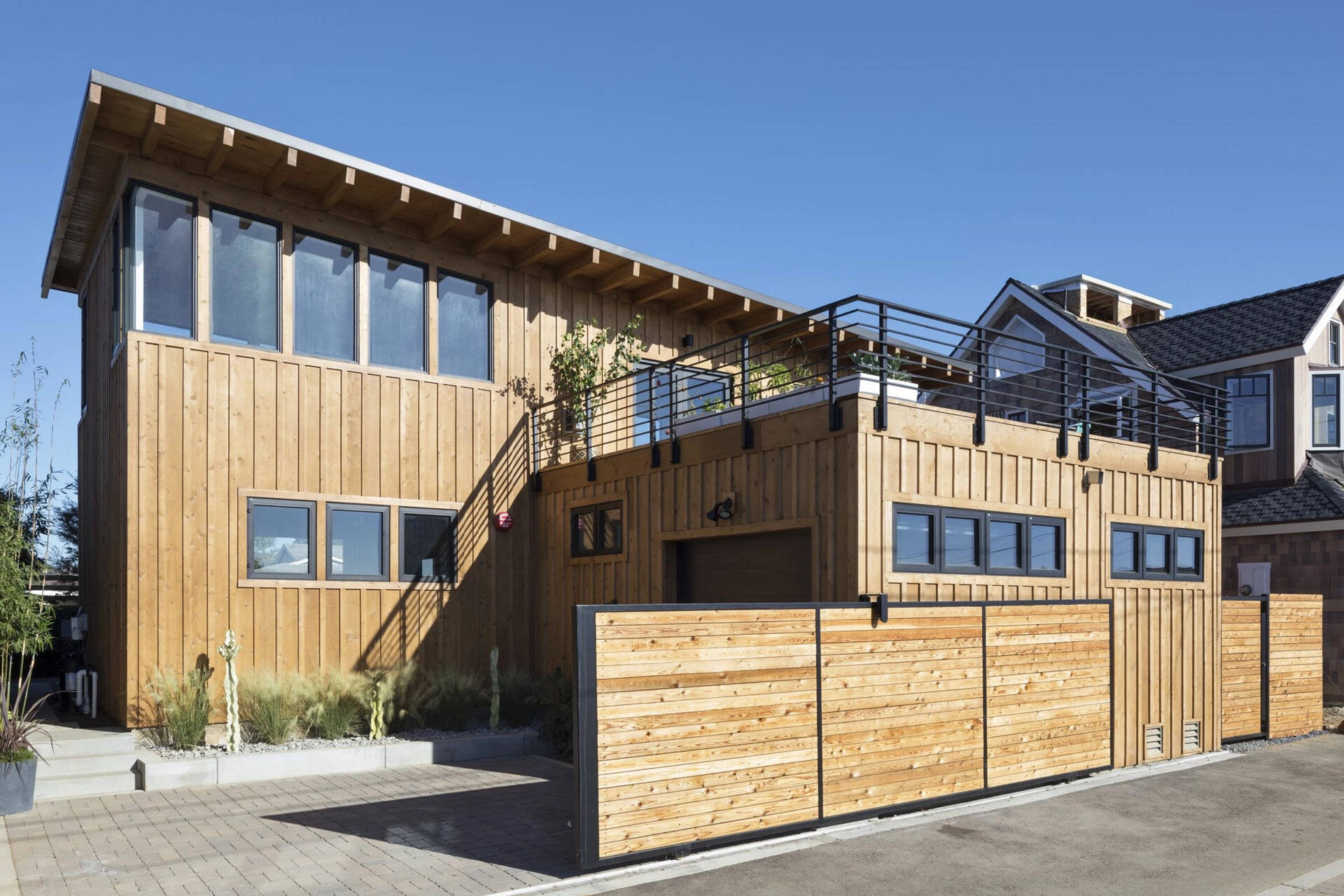
Though located in a relatively dense neighborhood, the Cornish House manages to feel both private and open. Through a reverse floor plan, exposed structure, and a careful relationship between indoor and outdoor spaces, Brett Farrow Architect has created a coastal home that feels calm and practical.